High School II High School II

High School II
Revised 2024
Unless otherwise credited, images are courtesy of WISDOM's Noster, Burgess, Tinant and Doyle families.

Home
Schooler, University Student, & Catholic Missionary:
Where Will God Take Me Next?
By Nicole Barter


Over the past year I have been living in Saskatoon and working as a missionary with Pure Witness ministries. I have had many opportunities to look at my life, past, present, and future and reflect on how God has blessed me or prepared me to follow His call. Throughout my reflection I have found many joys and regrets but despite those small regrets I have gained a greater appreciation for how He is working in my life. So, that being said, what have I discovered in my time of thought? Well, first an introduction. My name is Nicole Painchaud and I was home schooled from partway through grade 1 all the way through high school. I have one and a half university degrees, a certificate in Youth Ministry and am currently a Catholic missionary. Like many home school families I am from a large-ish family of seven children and have had the privilege to learn many skills that come with being the eldest child.
There were times in my childhood that I wanted to be in school. I heard school students make fun of home schoolers and some ill-educated adults say that home schoolers had a poor education. It sometimes made me want to go to school just to prove I would do well and that “they” were wrong; teach everyone a lesson. That desire didn’t last too long though, and I am not sure what changed
my mind. I know at one point I realized that I would be wasting a lot of my time and learning a whole lot less if I were in school. I enjoyed home schooling and learned to embrace (while not always so joyfully) the challenges that came with it.
What I liked best about home schooling is that we could really enjoy and embrace every learning opportunity when it presented itself. When Dad was building our house we were able to be a part of every little thing, including painting tar on the outside of the basement walls in late November. Everyone between the ages of four and nine had a paint brush. For anyone who doesn’t know, the tar was “slower than molasses in January”. We went through many pairs of mittens. My brothers learned how to wire and plumb a house and we all learned to drywall and do other things as we continued to finish it over the years. When my grandparents built their house the younger children in our family got to experience it, too. When our 15 passenger van broke down we could take the time off to help rebuild the engine. We traveled so much that we became able to tell when there was something wrong with the car and could usually diagnose it on the spot. I enjoyed going into Canadian Tire to ask them for a part and see the look on their face when they realized a girl knew what she was talking about.
We simply valued every learning opportunity and took the time to embrace them. This is what made home schooling so valuable. I love that all of home schooling is a learning opportunity and an adventure. From schooling in the back of the van on music lesson days in the city to finishing early and going bird watching, or researching something in the encyclopaedias, everything was an educational adventure, and quite often was presented as fun and not school. My youngest brother will play the board game, RISK, acting out battles from history books. To be honest, I don’t know if he actually knows how to play the game, but I think that acting out history is a better use for it. Growing up, we couldn’t wait to be done school just so we could play school. My youngest sister has decided that the best way to do math is to make my grandmother copy it out and then they do it at the same time.
The most important part of home schooling for me was the opportunity to learn about and actively live our faith daily. In our daily routine, we were able to include prayer, sometimes Mass, and whatever wholesome discussions and religion programs we chose. I taught in a Catholic grade 2 classroom during my student teaching practicum. I can tell you that the religion programs in the Catholic school system need a lot of added resources to bring depth into them. I love that because we home schooled, faith now permeates every area of my life. It just finds its way in somehow. If someone is having a tough day, my first reaction is to pray over them or invite them to spend time in the chapel.
All throughout our schooling we incorporated history, like the American slave trade and Underground Railroad to Canada, and would then act it out in our 2 acre forest. We once built a whole
town of forts complete with a school and a church. Then we studied Egypt, which we all hated with a passion. My mom will tell you it was pulling teeth to get us to do anything. We could not wait to finish and play outside. Once we got outside, guess what we did? Yes, we acted out everything that we refused to learn inside. That year our skating rink was flooded and we made boats and “floated down the Nile River”, trading goods like coffee, spices, rice, cloth, etc. The funny thing is that we thought we weren’t learning anything. We had no idea that we actually were. Mom eventually gave up trying to teach us about Egypt and then we started picking up the books on our own out of curiosity. So parents, if you are struggling with teaching your children something and they are fighting you the entire way, don’t worry too much about it; maybe try taking a break and then come back to it. They might take interest in it and start picking it up on their own.
For our family, life as a home educated student was very much filled with faith and held the goals of building Christian character, living the virtues, getting to heaven, and preparing for success in all areas of life, an ideal I am sure many home schooling families share. Home schooling is how we are able to train our children to love and serve the Lord, understanding and living the fullness of our faith.
This brings us to my high school years. I am proud to say that I do not have a high school diploma, and have never completed an Alberta government curriculum textbook. Not to say that it is wrong to do so, but that it is not a bad thing to not have a high school diploma. I have done portions of Alberta curriculum course work for high school Math and Chemistry, but I never completed the program because
it was not a successful option for me, and did not prepare me for the direction I wanted to take following my formal home education years. Home schooling through high school, I focussed on what I needed and what was going to prepare me for the future. Alberta Education curriculum may be for some people, and it may be their only option, but I was determined to never complete it and preferably never teach it. If you are already doing Alberta Education curriculum and it is working, or it is what you need in order to do what God is calling you to do, don’t stop; continue, because it is the path that enables you to better serve God in the future. If you are doing Alberta Education curriculum and it is not working for you and you do not absolutely need it, I encourage you to seek out other options. There are other ways to get what you need to prepare yourself for where God wants to take you. You will have more freedom to round out your education and still be very prepared for where you are to go. Most of my high school program included Music, English, Domestic Management, and important life skills. The rest was filled in through summer adventures and further research for fun. Canada is great and I would never want to leave but home schooling in the summer is a whole lot nicer than the winter! You can do a lot more! Because I did not know exactly where I was going after high school I did endup applying for English, Drama, Music, and Physical Education credits through Alberta Education by submitting proof of meeting requirements while using my own program. The positive side to this was that it helped me realize that most of my high school program was music based and that I was definitely passionate about music. Home schooling through high school continued with the method used growing up except for more academic work and responsibility, but that also
meant more opportunities. For example, I was able to work at a greenhouse when I was 15. I also learned to look at everything and find the learning opportunity that was hidden within it.
After completing high school and receiving a WISDOM High School Diploma I worked for a year to save for university and then started looking into music programs at smaller universities in Edmonton. Things are totally different now, but Concordia at the time (7 years ago) was not prepared to look at home schoolers for entrance unless they had five core courses so I determined to start looking into other options. I found my way to King’s University a few months later. They required an entrance exam. At that time, I had a great fear of exams, and taking a single exam that could risk determining my course of direction was not the road I wanted to take. Determined not to write an exam, I became determined not to go to school. But then the question came “what else could I do?” All they wanted at King’s for me to enter the Music program was grade 8 piano, grade 2 theory, and most importantly proof of English proficiency. Well the piano and theory I was already working on so that wasn’t a problem. My mom and I made a field trip to King’s University one afternoon to apply and see what they said. With me I had a portfolio of some essays and other assignments, hoping they would take those instead of requiring an exam. After interviewing me, they took two essays to submit with my application for the Dean to assess, and see if they met adequate standards. A couple of weeks later, I was accepted into the Bachelor of Music Program. It was exciting! I was going to be a university student in the fall.
It was scary but a great new adventure, until I had to write my first exam. Here I thought that I was being so sneaky in
finding every way possible to not have to write an exam, and now I still had to write an exam. I ended up doing just fine, and it wasn’t so bad after all. I did significantly well throughout university and really enjoyed much of what I was learning and working with most of the professors as well. Some of the professors that I had for just one course still recognized me a few years later in the hallway and greeted me by name. They were easy to talk to and had great interest in helping me succeed and prepare for the future. My favourite was my Music History professor because of the way he taught and presented the material. Because King’s is a Christian University, I was able to take the Catechism of the Catholic Church into theology class and quote it without being ridiculed or quote Saint John Paul the Great and Christopher West on Theology of the Body and marriage. It was a safe environment and I grew a lot. Again, I didn’t see all the growth at the time and I still find that I am unwrapping little things here and there that I can attribute as gifts I learned in my time in university studies. There were also many challenges and it was a lot of work. I ended up changing programs and doing a Bachelor of Arts in Music because I didn’t need the full Bachelor of Music to do what I was planning to do. I then planned to become a teacher in the Catholic School System, teaching Religion and Music, and then teach music on the side.
I graduated with a Bachelor of Arts Music Degree with honours with distinction in December of 2012 and worked for the remainder of that school year before going back to school with a scholarship to pursue a Bachelor of Elementary Education After-Degree. I am currently half-way through that program, in a year of a leave of absence to work as a Catholic Missionary. Throughout my university years I
received three university scholarships for recognition of my grades, two of which I turned down, one to work in ministry. I received honours in academic standing for three and a half years, and currently have a GPA of 3.9. If anyone thinks that home schoolers can’t do it, it means they just haven’t experienced it. Paul’s letter to the Philippians says that “[we] can do anything through Christ who strengthens [us]”, so if it’s God’s will and we give it our all, anything is possible.
Choosing to home school is not a choice to be lazy and defiant but to fight for what is wholesome and important: good education and character. I am sharing this with you to encourage you to not give up. Parents, do what you think it right for you, your family, and your children in order to follow what the Bible teaches in the book of Proverbs and “train up your child in the ways that they should go and they will not depart from it.” (Proverbs 22:6). Students, do not be afraid to dive in and do what it takes. Have confidence in yourself, trust God, and put in the effort. It will not be easy, but anything worth having is worth fighting for. The greatest part of the journey is that it will form you into a better person each day. I am so very grateful for the skills that my parents have passed on to me, especially now. As I go out into the world more and more, I am learning that not too many young adults have the skills that I have learned through having chores. Some people, believe it or not, do not know how to clean a bathroom, or change the bag in the vacuum cleaner. Simple things that I thought were so annoying growing up have become some of the greatest blessings. The opportunity to love, argue, and build relationships with my siblings would not have been as big if I did not home school, and now that I am living away from home I appreciate them much more. I also learned important
communication skills in the process. It is sad that not everyone may ever truly understand the richness that one can receive from a home school education.
Well, I have mentioned my journey through elementary school, high school, university and now comes missionary life. My, what a year! It has been quite a whirlwind and has allowed me the opportunity to reflect on my life as a Catholic, home schooler, sister, friend, and daughter. I am definitely more grateful for how hard my parents worked to raise me and my siblings as I realize how well they have trained me. I think they did very well because I still want to come home and I am living my faith, making it my own. Pure Witness is a youth and family ministry founded in 2011 in response to Saint John Paul the Great’s call to the New Evangelization. We are based out of Saskatoon, Saskatchewan and follow the mission to challenge Catholics to become pure witnesses of their faith by setting Christ at the heart of their lives. Through the dynamic witness of young Catholic adults we work to ‘love a generation back to Christ’. We live as missionaries for eleven months and carry out a threefold mission of community living, faith formation, and outreach. What I love most about Pure Witness is that it is a family based ministry. Pure Witness was founded by author, wife, teacher, and home school mother of 9 children, Carmen Marcoux, along with her husband James, in order to give all young people and families the opportunity to experience and actively live and grow in their faith. As I mentioned, it is a family based ministry because each child is on board with what they do, they include the entire family in their ministry in some way, and it is really a family effort. It is quite beautiful. If anyone is looking for more information about the ministry, or how to get involved, our website is
purewitness.com
If someone had told me at the beginning of the year exactly where God was going to take me, how he was going to bless me and use me, and how I was to grow, I probably would have looked at them and told them they were crazy! There is most definitely no way I would have believed them. There have been so many blessings mixed in with the tears, laughs, and struggles. God wasted no time in working in me as He rebuilt me into the young woman that He calls me to be. He is still working though, and I am glad to be on this journey with Him.
This year has included faith formation as we have listened to talks, read books, discussed faith issues, prepared for events, and participated in bible studies. We have also served in active outreach, putting on family-friendly events or retreats. Last but not least, community life. This has probably been the most challenging for me because I went from living in a family setting with children of many ages to a house of eight young adult ladies of which I was the oldest. I have most definitely received a lot of personal growth from this opportunity as I served those around me and experienced the distance of living six hours away from my family. I have learned to seek out God’s will for my life ever more fully and seek for his hidden blessings for me each day. I have been surrounded with many wonderful children, youth, and young adults within the ministry and larger community. I have really enjoyed getting to know people and see how they have grown throughout the year. I have had the opportunity to build wonderful relationships with my brothers and sisters on team and with the youth in the parish that we work in. God has placed me in such a wonderful community with so many beautiful families and great young people. It is full of youthfulness
and a thirst for the faith. To be honest it will be hard to leave at the end of the year, but I also think that this is a clear sign that I have embraced the journey that God has taken me on, and given it my all. I have gained a deeper love for my family being away from them and enjoy my time more with them when I come home. I have learned to show love in different ways to those we minister to and to fellow teammates. God has taught me how to show mercy and forgive, how to surrender and trust, and is now teaching me to receive what others have to give; that I do not always need to be serving but can receive as well. I have learned how to be less judgmental and give others a chance; ultimately being quick to choose love. Though He has taught me this throughout the year, I am still at the beginning and have much to learn throughout the years to come.
I have no idea where God is planning to take me next, but I do know that whatever it is I want with all my heart to be willing and open. At nearly 25 years old, I have many dreams. I have discerned that God is not calling me to teach in the school system at the moment and so I will continue taking a break from my university studies. I do know that I want to learn how to hear
God speak and be comfortable with silence. To enjoy life and serve God and others and to continue to be open to his will. I am passionate about family life, education, and the Catholic faith. I hope to be able to encourage home educated families, share my Catholic faith, and fight for good, Christian, wholesome education. Whatever falls into those categories I do not know, but I do know that God has the desires of my heart in mind and though things will most likely have challenges I will enjoy what he brings me to. I was thinking the other day that God can place us somewhere but we still have the freedom to choose what it will become. Whether or not it becomes the fullness of what God wants it to be depends on our level of openness to it. That is a journey that I am ready to embark on. To all parents who question whether or not their home schooling children will be prepared for their future, the answer is yes. Just keep trusting in God and seeking Him along the journey and He will take you to high places.
May God truly bless you and your family.
Nicole Barter is a WISDOM graduate and facilitator who knows that she can make a difference in the world.
What about High School?
By Ken Noster

“What about High School?”
This is a question we often hear from parents, especially fathers, of 6 or 7 year-old children. Some might ask why the father would worry about high school when the child is so young, but I believe the worry is quite reasonable. After all, parents are looking at home schooling their young child not just a year or two at a time, but as part of a long-term plan. Consequently, questions about high school are quite valid when the child is 6.
Many see high school as a specific preparation for post-secondary studies or work; a time to gather up credentials for life in the real world, and, although this may be one thing we achieve in high school, it would be a shame to be limited to this.
Although some public schooled students simply enjoy learning, they are relatively few in number. If you asked public school students if they would opt for a one-year program to gain their High School Diploma you would have plenty of takers. Most public schooled students I speak with are working to a specific end: to gain credentials. High school credits and good marks are the principal reasons for doing their homework, and the content of what they are actually learning is secondary. Most will say: “Just tell me what I have to do.”
Some parents, just like these students, see high school as a credentialgathering time, but parents considering home schooling usually are desiring something more for their children. They want their children, even high school children, to love learning, to
engage in their studies and apply it to life, to emerge capable of right thinking, leadership, and discernment. They see that the institutional system is not effectively supplying these qualities, but they don’t yet know how they will do it themselves. It is an unfortunate reaction to think that even a poor public high school program is better than failure at home, causing a person to be afraid to start. The more common response is a cautious step forward, unsure of what high school will look like but willing to move toward it incrementally.
The parents who choose to cautiously go forward begin to discover that learning is a far more flexible and natural thing than schools demonstrate. They realize that most of their best resources have to do with their relationships with their children, that learning is unavoidable, and that some wise direction and warm encouragement go a long way toward helping their children become motivated, self-directed learners. By the time their children approach high school age, they are aware that the institutional approach of 80-minute block periods and 100 credits is really quite an arbitrary way to approach learning and certainly not the most effective way. They also notice that their children are interested in the world around them, want to discuss important issues with their parents and peers, and want to make a difference. In fact, these young adults, raised in a family rather than an institution, stand
out in a crowd. They generally are well ahead of the average in developing the skills and knowledge demanded in an adult world, and this is simply because they never left the adult world. They have been educated in it all their life.
The transition from child to young adult to being an adult in the world of study and work is quite seamless for home schoolers. Even the idea of a high school graduation, even though it might be fun, is somehow an inadequate expression of their progress, for they are not leaving learning behind at the end of grade 12, and they can’t remember a time when they weren’t already part of the adult world.
What about high school? High school at home is not really different from any other stage of learning. The student is simply working at content and a level of challenge appropriate to age and maturity. The rigor and demands on time certainly are greater when reading, writing, and studying math and science at a high school level, but the student’s capacity has also increased. Just as when they were beginning the home school journey at the age of six, students continue to be challenged, encouraged, and directed by parents who have probably learned every bit as much over these years as have their children.
Advantages to Home Schooling Through the Teen Years
By Sarah Robinson
Iam the mother of 2 teen-aged children, with 4 more trailing closely behind. I remember - many years ago - being incredibly intimidated by the fact that I would eventually have to homeschool my teenage children. Will I be enough? What if I can’t figure their math problems out? Do I really know enough to homeschool a high schooler?
The truth is, I’m not enough. But, God working through me is. I sometimes can’t figure out their math problems. But, if I can’t, usually their dad can. I actually don’t know everything, but I can learn right alongside of my children. Homeschooling a teen doesn’t mean you
have to know everything. It just means that you have to know how to direct them. After all, that’s what we’ve been doing all these years anyway!
I’ve always planned to home educate my children all the way through high school. I know many families who have decided to send their children away during the high school years after many years of homeschooling them. While I don’t believe that homeschooling a high schooler is right for every family, I want to give you some great reasons to stick to the course and continue on with homeschooling in your family.
You can Cultivate Spiritual Growth
For me, one of the most important reasons that we homeschool is so that my children can have a Godly education. I want them to be able to read the Bible and see how God has been there all throughout history. I want them to grow spiritually. I want to be able to discuss with them on a daily basis why we believe what we believe. I want them to pursue ministries and help out at church.
If they were at school every day, they wouldn’t be able to take part in all of these things throughout the day. Yes, we may be able to cram it into our evenings, but would we really take the time to do it? And is that enough?
You can School at Their Own Pace
I have one teen that is ahead of her normal grade level in math and one that is behind in his normal grade level in math. Is that bad? Absolutely not. One happens to catch on to mathematical concepts rather easily. The other has always struggled with it. I love it, because we can focus on something until they get it.
Alternatively, if they get the concept really fast, they can move on quickly, not waiting around for the ‘rest of the class’ to catch up. The same goes for school in general. You could choose to have them do an extra year of school, graduating later, if you feel that it would be a benefit for them, OR you could choose to start them in online classes at a local college early so that they can get a jump on
THAT education.
The best part is that you are in control. You get to make that choice because you know your child better than anyone in the world.
You can Monitor Their Friends
How many teenage children do you know who ended up rebelling because they got mixed up with the wrong crowd? Many teens are easily influenced, and friends are very important to them. I remember when, as a teen, I would seek approval from my friends and do things I knew were wrong just so that I would be liked.
If you’re keeping your child at home, you can monitor the kinds of friends that your children are spending time with. You can invite them into your home and get to know them. Some may think this is living a “sheltered” life, but I think it’s living a protected life.
You’re protecting them until they are mature enough to make better decisions. Think of it as an umbrella. Will they always stay dry, not allowing any of that rain to get on them? Of course not. But, the longer you’re able to keep them home and direct their learning, the longer you’ll have an important influence on their lives. It’s a well-known fact that we become the most like those we spend our time with. Be a Godly example for your kids and they will emulate you as they become adults.
You can Nip Behaviour Problems in the Bud
If your kids are away from you for a good part of the day, you may not even realize that they have a rude behavioural problem. Alternatively, when you’re with them all day long, you’ll see these character flaws in the light that they should be seen in. You’ll have the opportunity to challenge them, correct them and even punish them if you have to.
I’ve known many teens who were one person while at home with their parents and a completely different person around their friends. I realize that this can still happen with the homeschooled child, but you’re more likely to catch on if they’re around you often enough.
You can Focus on What They Plan to Do as an Adult
This is certainly one of my favourite reasons for homeschooling a teenager. If they decide they want to go into a scientific field, you can easily focus
heavily on science related subjects so that they are better prepared for college. Tailoring their education based on their interests is a definite asset to the homeschooled teen!
But what if they don’t know what they want to do? You can set them up with apprenticeship opportunities, allowing them to work alongside a professional in a field that they may be considering. This will give them the opportunity to explore careers they may have never considered, allowing to decide in a hands-on sort of way if they would actually enjoy it or not.
These are just a few of the advantages of homeschooling teen-aged children. What would you add to it?
Sarah is in her 12th year of homeschooling her 6 children. Though she already has teens, she has toddlers and preschoolers, too. She loves using her crockpot so that she can focus on her kids and other home responsibilities. She blogs about life as a busy, sidetracked homeschool mom at SidetrackedSarah.com.
This article was previously featured in The WISDOM Family Magazine.
Photos submitted by Natasha Mantler & Rachel Yaceyko


Joy in the Journey Homeschooling
The Hardest Thing I've Ever Done

Ithought my college Head and Neck Anatomy class was hard. I thought studying for and passing the National Board for Dental Hygiene, all seven hours of it, was hard, too. I thought working full time and volunteering at church was hard. I thought childbirth was hard. And colic. . . . months of colic.
It was hard to surrender my child over for surgery at 9 months old. So was praying for her salvation since before she was born. Staying married during rough times is always hard.
In comparison though, homeschooling remains the hardest thing I've ever done.
And if I had the choice to make again, I'd do it in a heartbeat.
This, despite the lonely days when I thought if I didn't see another human
being over three feet tall I would scream. Despite the 547 days of phonics instruction before one of my daughters could read a four-word sentence without pausing.
Despite the buckets of tears I (we) shed over Chemistry, Algebra, and Geometry.
Despite the days when fear would grip me as I wondered if I might be singlehandedly sabotaging my children's entire academic future. Despite the days when I dealt with the same sin for the 100th time, and then had to correct it in my children as well.
If I had the choice to make again, I'd do it in a heartbeat.
I'd do it for the joy of hearing my daughter pray to receive Christ into her heart during morning devotions.
I'd do it for the pleasure of watching my daughter read all the way through Go Dog Go and knowing that I had taught her to read.
I'd do it again for the character training I received through the years. I'd do it again for the opportunity to trust God when I knew that apart from His work in our homeschool, it would not succeed. I'd do it again for the privilege of watching Him work in each of my daughter's lives as they came to understand the world through a Christian perspective.
I'd do it again for the precious gift of time. . . never enough, but SO much more than many of my friends had with their children during their growing up years.
I'd do it again for every field trip/ vacation we took to fascinating places on a shoestring budget.
I'd do it again for the chance to pray and ask God for all that we needed and watch Him provide bountifully.
I'd do it again so I could own part of their high school graduation and their college acceptance.
I'd do it again for the satisfaction of knowing that I had obeyed what God told me to do.
If I had the choice to make again, I'd do it in a heartbeat.
"I can do all things through CHRIST who gives me strength." (Phil 4:13)
Lori is pleased to share this first chapter of her new devotional book with WISDOM.
Joy in the Journey - Encouragement for Homeschooling Moms contains a devotion for every day of the week, as well as application questions, an action step, and a prayer. It’s suitable for your personal devotions or for use by your support group for meeting topic ideas.
For more, see lorihatcher.com
This article was previously featured in The WISDOM Family Magazine.
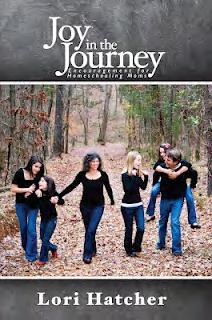
Images courtesy of Lori Hatcher.
What Box?
By Adele Johnson

We have been home schooling for 15 years, and have endured every variation of the “What do you mean you don’t follow the Alberta Education Curriculum” argument that is humanly possible. As my last two children enter their high school years, once again I find myself asking the same tired old question, “Is home schooling still the right thing for my children?” We have graduated two girls with a WISDOM transcript and portfolio, and have seen them find amazing lives all on their own, so I don’t know why I even worry about it... it must be a Mom thing. I want the best for them, but sometimes that means relinquishing control and letting them find their way all by themselves.
When our eldest daughter Robin decided that she wanted to learn sign language, I remember thinking, “We don`t even know any deaf people... what use will that be?” Our philosophy has always been to let our children pursue what interests them, and her enthusiasm for the books and teaching herself grew. I didn’t have time to learn with her, but she continued to teach herself. That spring, the local school was advertising for a teacher assistant position, preferring someone with signing experience. She applied, went for the interview, and was given the job of working with a little girl in Kindergarten who had no communication skills. For the next five years, Robin continued to take

courses as she worked, eventually challenging and passing Level 5 of Signing Exact English (SEE). She left the school after 5 years of helping this little girl to thrive. She married Tim and moved to Edmonton, where she immediately found employment in a Spruce Grove middle school, this time not as a teacher’s assistant, but solely as a transliterator for a very healthy wage. She also occasionally teaches the SEE levels, and loves her job!
Our daughter Lisa had very different interests. She loves animals and working on the farm, so she began early building up her own cow herd. She trained her own saddle horse when she was 13, and by 18 owned 30 cows. She is able to operate any machinery on our farm, and is not afraid of a hard day’s work. She began a work experience program with a local caterer which then led to full time employment, and she has become a great cook! She catered her own grad party for 60 people, and her sister’s wedding for 150 people. She married Kirk in 2010, and she loves her life! This spring they paid off their new vehicles, and are debt free apart from their home which they expect to pay off in less than five years, an amazing feat for any young married couple these days. What more could a parent hope for, but happy, responsible, prosperous children who love their lives!
I have learned to not only “think outside the box”, but to scrap the box altogether. Some children thrive in a structured school atmosphere, some don’t. Some are very self motivated, some are not. All children, however, thrive on their parents’ support, encouragement, and unconditional love... all the rest will fall into place as they find their purpose in life. Who am I to try to orchestrate my children’s dreams and purposes? Only God can do that, and He does an amazing job! So, yes, I believe we will continue our “box-less” home school experience these last three years, and I can't wait to see what happens next.
Adele and husband Ralph Johnson have been homeschooling with WISDOM for the last 15 years. Along with their full time farming operation, Adele is a singer/ songwriter who keeps her family busy with part time music ministry.
This article was previously featured in The WISDOM Family Magazine.

Home Schooling for Excellence of Character
By Lynne Cimorelli

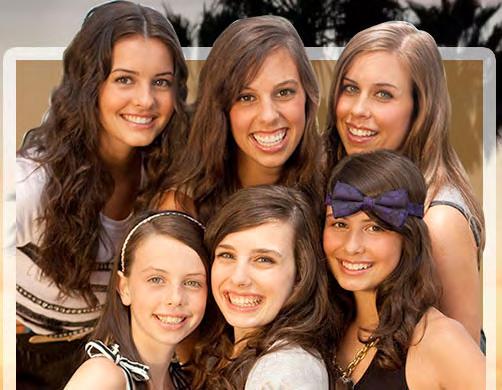
WhenI started homeschooling my first child, I had no idea I would eventually have 11 kids. I also had no idea that my six daughters would decide to form a girl band called Cimorelli (our last name), become one of the hottest groups on YouTube with 150 million views and a half million subscribers, get signed by Universal Music, and release an EP that would chart in the Top 25 on the iTunes pop charts worldwide (#6 in the US); or that we would pack up the whole family and move to Los Angeles to allow the girls to pursue their musical dreams.
Homeschooling has not only made the transition to this new life relatively smooth; I believe it has been instrumental in making it possible in the first place. Using a relaxed homeschooling style somewhere between unschooling, classical, and Charlotte Mason, our “school” is filled with lots of classics and the arts. Had they gone to a regular school, we would have been tied to full days in a classroom with nights filled with homework, leaving little time for extracurriculars. Instead, we finish our core subjects by noon most days, which leaves our afternoons and evenings open
for things like musical theater, dance, learning instruments, vocal practice, amateur film-making, photoshop, and sports like swim team, gymnastics, boxing, and a host of others. Having the free time to explore all sorts of different interests and pursue them to whatever degree of excellence desired is in my mind one of the best gifts I can give my children.
My background is musical, with a Master’s degree in Music, so it was natural that the children would learn music at an early age, although I had no particular aspirations for them. My only hope was that they would become proficient enough to take a wonderfully expressive hobby into their adult lives. The fact that the girls fell in love with it enough to be able to take it to this level is mind-boggling to me!
In 2007, they decided to form a vocal group. In 2009 they combined their musical and video-making efforts and put up a YouTube video that got 23,000 views overnight. A manager from London saw the video and picked them up within the week; and 8 months later a record deal was signed and we moved. Fortunately, I was able to graduate my three oldest girls at a young age, so they all had about two or more years of college finished when they had to take a break for all the writing and recording (another plus to homeschooling!). One of the most encouraging things, however, is how the girls have embraced the idea of being good role models and bringing some good clean fun back to the world of pop music, which has unfortunately moved farther and farther away from anything resembling family values in the
last few decades. Character has always been at the center of our homeschooling.
The five boys are also musical; the oldest one is pursuing his own musical dreams (including writing for commercials), and the others are younger, so they haven’t decided yet what they want to do, musical or otherwise. Right now they’re enjoying the beach and the other wonderful things the southern California life has to offer while scholastically focusing on their core subjects. And that is one of the other beautiful things about homeschooling — transitions can be taken at our own pace, and we have the luxury of time to experiment with whatever strikes our fancy.
If you would like to check out our music, please go to: www.youtube.com/ cimorellitheband
Lynne Cimorelli and her husband Mike have been married 25 years and live in sunny southern California, where they raise their 11 children. When not schooling or in the recording studio, they are likely to be found on the beach or exploring new areas of this vast metropolis they now call home. This article first appeared on heartofthematteronline.com.
This article was previously featured in The WISDOM Family Magazine.
Homeschool High School the 3rd Time Around
By Barbara Frank

The baby I carried on my hip while I homeschooled my first two children is now 14. It's time for me to think about how I homeschooled her older siblings when they were teens, and how I want to homeschool her now that she's reached high school age.
In reviewing what I did with my older two, my goal is to avoid what didn't work and to repeat what did. In that vein, here are a few things I've decided.
This time around in our homeschool high school, I will not:
1. Use a correspondence curriculum with prescribed course requirements and graded-bycomputer tests. I did that with my older children, and consequently they learned to memorize facts long enough to ace the test, and then forget them. That's what I did in high school, and I certainly wanted better than that for my
own children. But I was afraid to tackle my older children's home education without the guidance of a formal curriculum, nor did I have the time to design each one's ideal program because I had two younger children (including one with disabilities) who needed me. But this time around, my youngest is 12, and while he will always have developmental delays, he's much easier to care for. So I am now free to design and implement a high school curriculum tailored to my daughter's interests and future plans.
2. Use the local school district's driver education course. Both of my older children took driver's ed at the local high school, and we all agree it was a total waste of time. Since then, the school board has voted to raise the fee from $50 to $300, which makes this decision even easier, since private driving school costs about $350.
3. Cut our teenager slack on household chores because she may have a part-time job, rigorous school work, or both. We did that with the older two, and found it difficult to ever get them back in the groove of helping out at home. That's why our home-for-thesummer college student son is very little help around here.
There are also some things I did with the older two that I definitely want to do with our third-born. This time around, I will:
1. Regularly update her high school
transcript on my computer, adding every bit of volunteer work, every job, every online course, her driver's ed class, and every bit of "school work" she does that can be listed on a transcript. I will do this promptly, so I don't have to rely on my not-very-good-thesedays memory. This way, each time I need a copy of her transcript for future college applications, I can just print out an up-to-date copy from my computer.
2. Sign her up to take the ACT (actstudent.org) each year of high school, so that by junior year, she's very comfortable with it. Doing this with my older children was part of the reason they both scored very well. I already knew that high scores make teens very attractive to colleges; what I learned was that they directly lead to scholarship money.
3. Continue to encourage her to learn to use the computer (she bought a laptop with babysitting money) because she will need that skill in the future, whether she goes to college, works, starts her own business, and/or runs a household.
4. Use community and local colleges to augment her studies, as they'll provide her with classroom experience in areas I don't want to teach (#1: Chemistry!) as well as college credit.
5. Give her increasing responsibility for deciding when to do her assignments, to the point that by senior year, my involvement in her
schoolwork will center on a oncea-week meeting with her to review her assignments.
6. Do Life Prep for Homeschooled Teenagers with her during her junior and senior years of high school, because it worked so well with the older two, and because I'd like to add some resources and books to it that will be chosen just for her.
Also, as I did with her older sister, I will:
7. Give her increasing experience in cooking, cleaning and other household chores. That, combined with the babysitting she already does in our neighborhood, will help train her for that most important of all jobs, being a homemaker for the family she hopes to have someday.
8. Continue to garden and sew with her, because it gives me great joy to share such pleasurable activities with her, and because I want the time with her. I learned from the last two to treasure such times because the days pass so quickly.
Finally, in addition to all of the above, there's one more thing I will do with her that I was not able to do with her older sister:
9. I will continue to do the Mother/ Daughter study of "Women of the Bible" that we began a year ago, because it's so nice to study the Bible together, and we have had such great discussions!
These are the basics of my plan. Making these plans is kind of bittersweet, because this is my last opportunity to do our "traditional" version of high school. (My son's high school will be much different because of his delays, but will surely bring its own joys, as teaching him thus far has done.) This time around, I have a much better idea of how well homeschool high school can be done; I saw it with my older children. Thus I have a lot more confidence this time around.
I hope these tips help you as you home school your children through high school. Just remember the most important thing: enjoy these years, because they will be over before you know it.
©2006 Barbara Frank/Cardamom Publishers
Barbara Frank is the mother of four homeschooled-from-birth children ages 13-22, a freelance writer/editor, and the author of "Life Prep for Homeschooled Teenagers" and the eBook, "The Imperfect Homeschooler's Guide to Homeschooling." To visit her Web site, "The Imperfect Homeschooler," go to www.cardamompublishers.com.
This article was previously featured in The WISDOM Family Magazine.

By Paul van den Bosch
“So... why should I hire you?”
As we enjoy an Alberta springtime, we are all hoping there will be an Alberta summer of economic prosperity coming soon.
Many students – home educated and otherwise – are looking forward to the spring-times of careers and/or to summer jobs.
But with that thought comes anxiety: as a home school grad, what do I put on my resume and what do I say in a job interview? What will I say when they ask “do you have your high school diploma?” I have some ideas…
(Note: this article isn’t a comprehensive list of everything you should put in a resume or say at an interview, but simply a few ideas for you to consider and get you thinking).
1. Study to be an effective job hunter
The meaning of ‘inspire’ is related to ‘breathe in’. Breathing in is how we learn.
When you want to learn to write better, you read good writers. You ‘breathe in’ good writing.
Learning the techniques of the great artists will help you draw/paint/sculpt better. You ‘breathe in’ great art.
Seeking and finding – and keeping – a job is similar: there are techniques to observe, tips to think about, personal qualities to develop, skills to build.
To be successful, make these part of your ‘breathing exercises’, but remember to personalize this for yourself, for what
2. A resume is YOU on one page.
Unless you have years of relevant experience, don’t pad your resume with your past.
It’s natural to want to add padding, especially when you feel you don’t have a lot of experience yet. But that extra padding hides the ‘muscle’ of your strengths.
For most students, their biggest ‘selling feature’ is their enthusiasm and their character qualities. So, note accomplishments that show those qualities in your resume.
If you want to show ‘persistence’ or ‘diligence’, note that you have your grade six piano or that you’ve earned a brown belt in karate.
If you want to show your leadership qualities, mention teams you’ve played on but also teams you’ve coached, camps where you’ve been a leader.
Every employer wants to know ‘what kind of person are you?’, so use volunteer experience to illustrate positive character qualities like:
• initiative
• dependability and self-discipline
• punctuality
• ability to make own decisions, and independence
• sound judgment and common sense
• adaptability/flexibility
• honesty and integrity
• enthusiasm and mental alertness
• ability to respond positively to criticism and feedback
• respectful toward others and contributions to the team
• ability to get things done
Now you may be asking yourself: “OK, so employers want those skills and qualities. How do I get them?”
The answer is to work on them now, and the best resource on how to do that may be right in your own home: your parents. Ask about their experiences, listen to their feedback on how you can improve. (For instance, check out Part A of WISDOM’s Student Evaluation Form; it’s entitled “Character” and includes these behaviours: Obedience, Diligence, Listening Skills, Discretion, Initiative, Cooperation).
Also: keep your resume short.
During the time I was a Home Depot store manager, I read thousands of resumes.
I never read the second page of any.
If the first page didn’t capture my attention, there was no point going past that.
If the first page was good, I’d bring the candidate in for an interview.
So be concise: show who you are on one page.
Without stretching the truth, sum up your best self on that page, and consider starting with a “Personal Summary” near the top of your resume. Put your best qualities and greatest strengths right up top.
3. In the interview, hit the curveball.
Interviewers will try to rattle you, throw something at you that you don’t expect so that you can’t simply recite a memorized answer.
Expect the curve, and hit a home run with it.
One curve that’s coming, in some form or another, is this: “what is your greatest strength and your greatest weakness?”
The strength can be tailored to the position you are seeking in order to highlight the fact you are suited to that job.
But the weakness? That can throw a lot of people. We don’t want to admit to being weak. But if we don’t say something, are we being arrogant, or is it that we don’t really know ourselves?
Here’s where we can turn that weakness into a strength: “Well, I know I’m not strong in X area, but because I know that about myself, I’ve taken these steps to fix that: A, B, C.” Translation: I know myself, I know I have a weakness, but I’m working on it so that it won’t really be a weakness anymore but will become a strength.
Say that and you just hit it out of the park.
4. Show, don’t tell.
Now you can pitch a few back: use words in the interview that are meaningful to the person interviewing you and the company that may be hiring you.
Are you responding to a ‘help wanted’ ad? What kinds of qualities are they looking for? How does this company advertise itself, what phrases are used?
Use their own words to sell yourself, illustrating who you are with concrete examples that show you are that kind of person. Be specific: tell them why you want THIS job, and show – by your knowledge of the company and the position you’re applying for – that you’ve done a little homework already.
Be specific also about yourself. We would all like to say “I have great communication skills”, but you should be able to SHOW that through real-life experiences, specific things you’ve done to communicate well.
The same thing applies to other clichés. Don’t just say that you are a ‘problemsolver’, show them that by using specific examples of problems you’ve solved. Don’t simply state that you ‘have a strong work ethic’ or that you are ‘a selfstarter’, use examples to show you do.
5. Be who you are.
Yes, this means ‘be honest’ on your
resume and in the interview, but it means more: be honest with yourself too and don’t be afraid to trumpet your strengths or admit your lack of experience in some areas.
It’s OK to say you don’t have much experience in one area because you have a lot of experience in other areas: educating yourself, becoming selfdirected, knowing how to think.
State those positives, and then give your reason for knowing those things about yourself: “I know this because I was home educated.”
Consider pursuing a Parent Verified Transcript, WISDOM Diploma, or WISDOM Certificate of High School Completion so you can say, “I have a transcript or diploma or certificate of high school completion from one of the largest home education organizations in Alberta, WISDOM Home Schooling.”
If you have received these – and even if you haven’t but you do have your parents’ blessing to say that you’re a
graduate – you can clearly and proudly state that you are indeed a graduate. Perhaps you don’t have ‘credits’, but you do have ‘alternative credentials’: a portfolio of your academic accomplishments (which is not your resume but which you would have with you to back up your claims).
‘Graduate’ can be checked off on a job application, stated in an interview, and backed up by a certified Alberta teacher - your home school facilitator.
This is another way to hit that curveball: state home education as a strength.
After all this time being home educated, you can say: “I know how to think outside the box because my whole education has been outside the box!”
And that’s why I’d hire you.
Paul van den Bosch is a WISDOM facilitator and former store manager for Home Depot. During his time at HD, he read almost ten thousand resumes and conducted over five thousand job interviews.
Paths Taken
By Paul van den Bosch
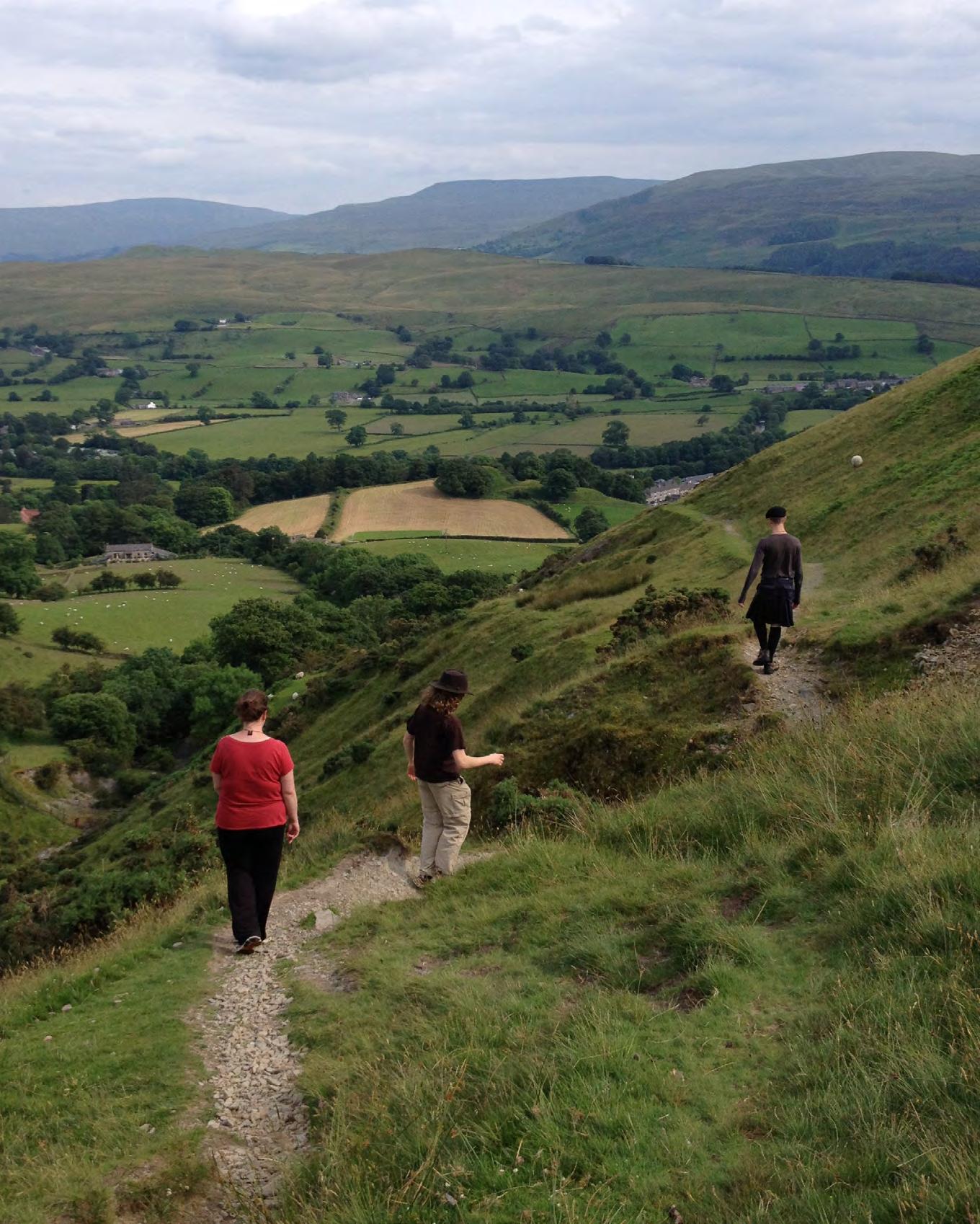
The words of poet Robert Frost are familiar to most of us:
Two roads diverged in a yellow wood, and sorry I could not travel both and be one traveller, long I stood…
-Robert Frost, The Road Not Taken
Frost’s words speak to us of decisions made and still to be made, of paths taken and not taken. We face such decisions daily. How do we choose? We might look to those who have come
this way before us although, when we look back at paths we’ve taken ourselves, we may still, like Frost, have chosen our own way because “it was grassy and wanted wear”.
Such is the lot of most home educators: we do things differently. We choose a path that ‘wants wear’ although most of the world will take the path that leads to school buildings and a standardized education.
But where have those less travelled roads taken us? As individuals, each road leads to a unique destination. Collectively, those roads have led our home educating community to a distinct and wonderful sensibility, philosophy, and outlook on the world.
As we look back over the past 20 years of WISDOM Home Schooling, there is now a generation of graduates who can speak of their educational ‘decisions made’ while a new generation looks forward to their own decisions being made today. I’ve had the privilege of being part of their journeys for the past eight years. Here are some of their paths…
(Note: All of the people in the brief sketches below are real WISDOM graduates but I’ve used initials instead of names so I don’t embarrass anyone, including myself.)
• BD wouldn’t describe himself as a great scholar. His mom could talk about the many times she had to beg and cajole him into doing the minimum amount of work to complete a page of school work. “That happened while he attended school,” his mother says, “but didn’t change when he started home schooling. At least, not at first.”
An interest in the animals on the family farm led to an interest in the science of nutrition for those animals. The scientific exploration led to more interest in chemistry and the study of chemicals led to a practical application in the oil patch.
“He couldn’t wait to get out there

with the men and get a real job. I was worried he’d start as a labourer and get to like the money too much. But he remembered more than I thought.” The knowledge BD had gained while home schooling led him to an oil patch career, true, but one above that of the average worker where he could put his chemistry knowledge to use.
• DR had an aunt who had been a doula in another country and DR had heard the stories of helping women in childbirth. DR’s mother remembers her daughter’s rapt attention to the interesting stories but even more DR’s inquisitiveness about all the details of birth.
“She wanted to know what all of the terms meant. Why did some of the mothers have trouble in labour and some didn’t? What could a doula do? She always wanted to know more and would sometimes get upset that her aunt was not allowed to do some things.”
DR covered all of the basic academic subjects all the way through her home school but went beyond the basics, especially in biology and anatomy. She specialized, as home education allows a student to do. Today DR is working on becoming a certified midwife so she can do all those things her aunt was able to do, and more.
JN started to ‘travel’ before she could ever leave home and then really travelled after she graduated. JN’s keen interest began early when she was looking at photographs her parents had taken while on a holiday in the Dominican Republic.
“It was all so different,” her mom says. “The trees and plants were so different from what we have around here. She kept asking why I dressed differently in the photos. She wanted to know what it was like.”
From family photos grew a sharp
fascination with geography and climate, especially for places far from home. JN also developed her interest in photography, submitting several photos to contests and investing time in photo techniques. Those interests became combined after JN graduated. She joined Youth With A Mission (YWAM), travelling to several countries in Central America and Asia and documenting her mission work through photographs. While doing missions work helping poorer families in developing countries, she posted photographs to a website she created and then collected the photographs - and her journal entries - into a travel book published when JN was just 24 years old.
• GN would describe herself as ‘just an average student’ (although her mother would speak of her more highly) but often felt that persistent health concerns would keep her from following her dreams. Her mom, seeing her struggle in a school setting, decided to try home schooling for both academic and health reasons.
That ‘experiment’ was quickly successful. GN’s health improved dramatically (although some symptoms return occasionally when GN experiences something particularly stressful) and her energy went up. With that improved energy came a realization that she could recall things easier and in more detail than ever before. Suddenly the girl who ‘didn’t like to learn’ wanted to read and learn… everything! She also realized she
could pursue her love of music.
Today GN is working toward a university degree in music, specializing in both voice and piano, and is one of the leads in the university choir.
• DE didn’t want to learn anything but LEGO. “He would come outside with me to work on the car,” says his father, “but it would be a real chore to get him to go back inside to do any school work for his mother. I think things changed when I lost my job and we didn’t know what we were going to do for awhile. I wasn’t out of work for long but it affected some of our kids more than others. DE could see how worried I was. He wanted to help. He would say ‘I could get a job, Dad’. But he was only 11 then. I think he could see that he needed to get a job that was really secure. I don’t remember him saying that but, after I got another job, DE really started to buckle down on his learning.”
The career path for DE hasn’t been set yet as he is in his third year at university and that’s fine with his dad. “I don’t know what he’ll be doing when he finishes but, in the meantime, he’s getting a better education than I got and he’s at a good university giving him a good moral formation. That builds on what we gave him at home.”
• For KD, a perceived weakness has become a strength. “I used to have a really hard time reading,” she recalls. “My mom spent hours helping me. I would never have
received that if I had gone to schools. I remember they called me dyslexic. But I didn’t get any extra help or anything. I didn’t know what dyslexic meant but I hated that word. I hated to read too.”
That resistance to reading was a source of frustration for both mom and daughter, but the mom wouldn’t give up. “My mom would get tired sometimes but she was so patient. She would go over things again and again. I think one of the things that really helped was when she took the first Mediated Learning workshop that WISDOM had. She came home all excited. She was saying ‘I found some things that will help you’. It turns out I am dyslexic, but that wasn’t all. Mom started doing things differently and things started to click. It was still slow but I could see she believed it would work. I wanted to make her happy so I tried. I didn’t believe at first but she did. And I started to read easier, and then it came easier. Then I got excited too.”
KD continued through high school, building her weakness into a strength which has now taken her to study learning and behaviour at the college level. “I don’t know where this will take me,” KD says, “but I’m hoping I can help others the way Mediated Learning helped me. Well, it was Mediated Learning and my mom.”
• DI had been bullied at the school he was attending. His parents switched schools. That didn’t help. “DI has several behavioural issues and some severe learning disabilities,” says his mother, “but that shouldn’t mean that he should be treated like dirt.”
His parents chose home education for DI and saw big changes right away. “It was like we turned on the sunshine and he started to bloom. He started to smile again. He was always a happy child. But he got crushed. He didn’t deserve that. He was a good boy. But not smart. We could see he wasn’t going to be a doctor. That was OK with us. We wanted him to have a good life, to find his place. If he had stayed in school, well, the only place he would have found…”. She doesn’t finish the sentence.
But DI found himself through home schooling and has now found himself a place in the world, working at running a business with two friends. “His customers always ask for him by name,” his mom says, “because they know he’ll look after every detail and make sure everything is right. Home schooling taught him that if he
worked hard he would do well.”
• CS also learned some hard lessons from the world, but she survived those lessons because of what she had learned at home. “My mom was strict with all of us but, I guess because I was the oldest, I thought I could do it on my own.”
CS left home at 18 and moved in with her boyfriend but came back home with a baby a year later.
“One day I woke up and I knew, I just knew, that my boyfriend would never be as good a father as my father was. And I also knew that I was not a good mother like my mom was. I packed up and left that day and came home. My mom was so happy.”
As she tells this, the mother is smiling and crying on the next couch.
“I didn’t know what I had. I thought that when mom would get me to help her cook or clean or change the baby’s diaper that she was getting me to do chores that she should do. But she was training me. I didn’t know that then. I just resented doing the work. But she was making sure I could look after myself.”
At this point, the daughter of CS climbs up onto her lap. “I guess she made sure I could look after others too.”
The path taken by CS was not the path her mother would have chosen for her. But home schooling helped her survive
and even thrive through difficult choices and unforeseen bumps on the road.
These stories are just a few examples of the paths taken by home educated students. There are others…
• JL, who apprenticed under his father and brother and started his own business after he finished high school at home.
• DE (no relation to the DE above), who finished all of the ‘basics’ and then focused on her art, winning a full scholarship to an art institute in British Columbia.
• SE, who studied Early Childhood Education after completing her home education and is now using her studies to help her raise her own two young children and to provide information to other young mothers in her local support group.
• AL, the eldest son in a family that moved to an acreage when he was in high school and who then discovered a love and an aptitude for agriculture, who has taken that interest to college and on to a career in New Zealand.
There are many more stories, many more examples. But I hear you asking: Are there connections running through these stories? Are there common threads in these tapestries?
There are several things that are common here besides the obvious connection to home education: freedom to choose one’s path, an interest in people and a desire to help others, a grounding in a well-rounded life and
all of life’s practical details, room to explore interests and passions, parental support through difficult decisions, time and parental patience to grow talents and creativity into careers, a solid moral foundation.
I spoke earlier of roads that have led our home educating community to a distinct and wonderful sensibility, philosophy, and outlook on the world. Individual paths, common threads.
Yes, there are roads not taken. But when I look at the stories that are being told by the lives of WISDOM graduates, I stop wondering where those other roads might lead.
I shall be telling this with a sigh somewhere ages and ages hence:
Two roads diverged in a wood, and I— I took the one less traveled by, And that has made all the difference.
-Robert Frost, The Road Not Taken
Paul van den Bosch has been a WISDOM Facilitator for over seventeen years now. He loves his family and poetry and good stories, among other things.