

Home schooling our children through high school is often challenging, and most parents feel at least some insecurity about achieving their goals. Will I ruin my kids? Will they be able to go to university? Get a job? Be happy, well-adjusted adults? WISDOM’s mission is to help you hold on to your vision and to home school all the way through high school. These inspiring and encouraging articles were previously published in The WISDOM Family Magazine, and have resonated with parents so much that we offer them again in this compilation. If you have questions about home schooling through high school, including what methods and options are available to you, please don’t hesitate to let us know. We are here to help.

Kristine Buchholtz



“Students who were admitted to Concordia this past academic year (2012-2013) under our new Homeschooled Student Admission policy did very well. Those who were admitted into Programs of Study (as opposed to Open Studies) earned an average GPA of 3.64 (an A- average). When the GPAs of the homeschoolers who were admitted into our Open Studies program were also included, the combined GPA of the two groups still averaged an impressive 3.3 (a B+ average).
“Of course there are probably quite a few other homeschoolers not included in these statistics, since those who wrote diploma exams and were thus admitted in the ‘normal’ way would not be included in the above sample. Without question, though, those who were admitted in the way designed especially for homeschoolers did extremely well.”
Dr. Jonathan Strand, Vice-President Academic Dean of Undergraduate Studies
Concordia University College of Alberta
“What? You’re homeschooling? Just for kindergarten, right? Because she is never going to be able to go to university if you don’t send her to school. How could she possibly get into any kind of postsecondary institution without going to school?”
Indeed. How could she?
By Kristine Buchholtz
That question haunted me as we officially began our homeschool journey fifteen years ago. Others reassured me, and I reassured myself again and again with their words, that it would all work out. Things were changing, I was told,

and postsecondary institutions would be more open to admitting students who did not have a bricks-and-mortar school experience…or even a governmentissued diploma. There should be no problem by the time University came around. But still I wondered, and in the midst of the busy-ness of life, I found time to fret and worry about it every now and again.
And then, in the blink of an eye, high school was upon us.
Whatever stress I had experienced previously was magnified several times now. I was overcome by an avalanche of anxiety, which was only made heavier by my eldest child who really, really, really wanted to go to a public high school –“Oh please, oh please, oh please!”
Her request threw me for a loop. Why did she want to go to school? What had I done wrong? Or had I done something right? Hadn’t a number of people told me that if I homeschooled, my kids would be eternally dependent on me, tied to my apron strings forever, unable even to tie their own shoes? So what was this? Go – somewhere else – to high school? Where is that dependence I was promised so repeatedly? (And truly, at this point there are times when I would really love to see less independence on the part of my older children. I want to say to them – and do, now that I think of it – “Come on! You were homeschooled! You’re supposed to be with ME, not out living your own lives.” Snort.)
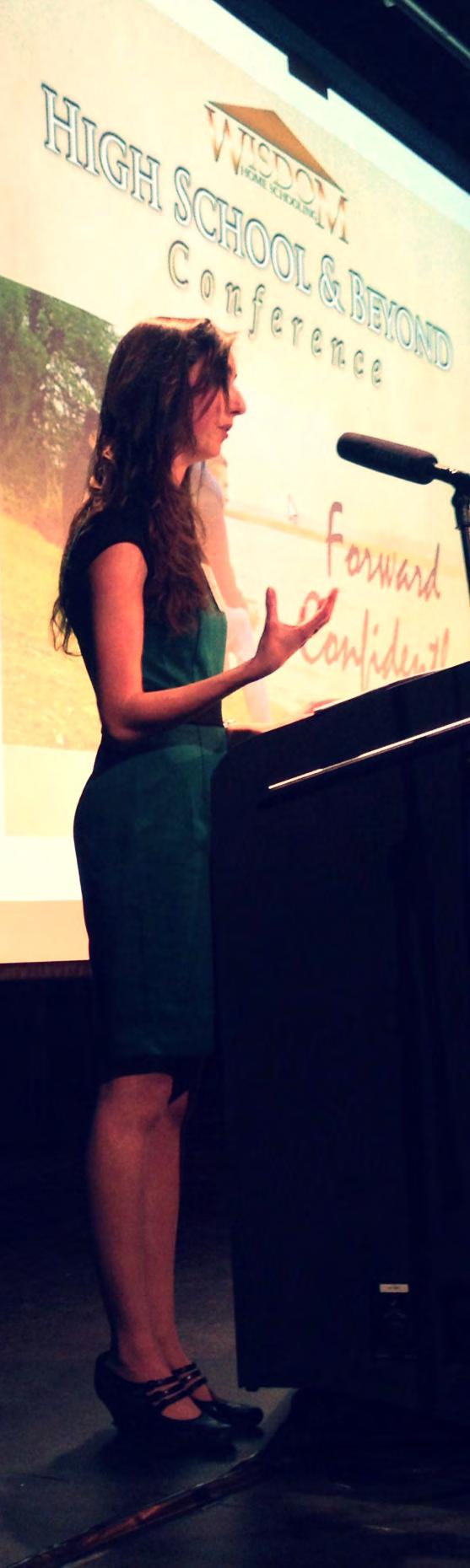
At any rate, for me, the turning point during that time occurred when I listened to a speaker at WISDOM’s
High School and Beyond Conference who asked, “Why change now? Why do something different for high school if what you’ve been doing has been working well?”
I can remember thinking, “Huh.” (Not terribly profound, I know.)
But it really did make me think. Because it seemed to me that high school was the culmination of all the years that had gone before – the zenith, the apex, the series finale! My teens were at a place in their cognitive and social development where we could have some fascinating discussions...where they were a lot of fun to be around...where they could challenge my thinking, one-on-one. Why would I give that up now - and have them give that up - so that they could do some standardized courses to get a piece of paper that would indicate they had done those standardized courses?
What’s that, you ask? Oh. What about the social aspect of high school. That’s a good question, and an important one, because once our older kids were a certain age, they really wanted (and perhaps needed?) to spend more time with other kids their age. Indeed, when I asked my daughter why she wanted to go to school so badly, her response was, “To see my friends.” Hmmm.
Now I must admit, that had she said something like “Well, Mom, it’s like this: I just don’t feel that I’m being challenged enough academically at home. I believe my intellect is capable of far greater achievements than I face with the meager opportunities you’re able to provide me (no offense intended), and I am simply never going to reach my potential here, in this

place, with you as my teacher (again, no offense intended)”…well, let’s just say such an approach may have been far more effective at making me secondguess myself than “I want to see my friends.” (But shhhh: don’t tell any of my younger kids of this potential weak spot in my homeschool mom armor.)
In response, I made a concerted effort to ensure she spent significantly more time with friends, both homeschooled and non-homeschooled. It meant more work (and less free time) for me, but it was well worth it. By the end of her Grade 10 year, she was quite content with her lot in life, and when I asked her if she still wanted to go to school, her response was a simple “Nope.”
That was four years ago. And let me tell you, hindsight is just soooo 20/20. I can see so very clearly when I look back on the past from the vantage of the present. If I’m not careful, my mind can play tricks on me and instead of remembering the endless nights spent praying and fretting during those high school years (Am I going to ruin her for life if I keep homeschooling her? Will our relationship survive over the next three years?), it simply deletes those unrealized concerns from my memory banks. In response to my attempts to remember what I was so worried about – or to recall that I even had been worried! – my mind proclaims, “Worried? Nah! We weren’t worried. Why do you think we were worried? We knew everything was going to turn out fine!”
Lies. All lies. :)
Back then, I didn’t know everything was
going to turn out fine. The future was – and remains, actually – a dark, hazy cloud of Mysterious Unknown. But I knew that God had called us to embark on this homeschooling journey, and we had no sense that He was calling us to something different now. And I knew that even though I didn’t know what was in the future, I did know Who was in that future with me…and for me, that makes all the difference in the world. (At least, when I remember that little detail, it does!)
At any rate, we researched, we prayed, we talked to others, we talked to each other, we prayed some more, my daughter eventually realized that her dad and I were going to continue to stand firm, and we continued on with homeschooling. We had friends whose daughter had earned her Alberta High School Diploma as they homeschooled, and they shared their opinion with us that “If you don’t absolutely have to earn credits, don’t do it. It’s a tedious and painful process.” And so after more discussion with one another and with our facilitator, we took the plunge: high school with no credits, and with no government-issued diploma as the goal. Yikes!
So far, our high school experiment –which is really just a continuation of the homeschool adventure to which our Lord called us so many years ago – has, in fact, turned out fine. My daughter finished her first year at Concordia University College in Edmonton this spring, and she did very well. She was admitted via a portfolio, with no high school credits. And I’m so glad (now) that we did it that way. Her high school experience was far

richer, and more relaxed, than it would have been had we gone the credit route. And I actually suspect it was in a certain sense easier to get into Concordia via portfolio than it would have been had we gone a different direction with her high school education. (Make no mistake: compiling her portfolio was a significant amount of work, but her overall high school experience ended up having a very different flavor and pace than it would have had, if she had been earning 100 credits for an Alberta High School Diploma.)
For her “homeschool Grade 12 English,” she opted to take English 211 and 212 through Athabasca University, and that transferred to Concordia just fine. (Before she took those courses, we confirmed that they would indeed transfer. For instance, had she been planning to attend King’s – another institution that is very open to admitting homeschooled students via portfolio –she would have needed to take a different Athabasca English course.) I freely admit that the Athabasca courses were, in short, the most painful part of her high school experience because: a) English is not the type of course that translates well into a correspondence course (I like to think of English classes as “book clubs” where students are dissecting literature together, rather than reading about other people’s dissections alone in their bedroom. Blah.); and b) she only scored in the 80% range, which she found more than a bit mortifying.
However, those English courses:
a) did help her to develop her
analytical skills;
b) demonstrated unequivocally to Concordia that she was capable of college-level work; and
c) I think they also helped to humble her a bit. So they weren’t all bad. :)
Unfortunately, our oldest son wasn’t interested in going to King’s or Concordia and had his heart set on NAIT. At this point, NAIT does not have a homeschool entrance policy that allows for portfolios (although I’ve heard they’re considering it), so we had to earn certain credits for him. (Ugh. This is how I know my daughter’s experience was richer and more relaxed, and that’s with my son earning just the necessary credits, not all 100 of them!) The registrar at NAIT had assured me that if the requirements for a program were English 30, Math 20, etc., then those specific courses were all that I would need... but I was still a bit concerned that we would find out differently once our son actually applied.
Of course, given that the program our son was applying for was extremely competitive, I wasn’t holding my breath that he was going to be admitted, homeschooled or not homeschooled. Almost everyone we had talked to who was familiar with this program told us to not expect to get in on the first attempt. A regular refrain at our house was, “Plan B, son. You need a Plan B. What are you going to do in the meantime if (cough –when – cough) you don’t get in?”
I’m happy to report that, much to our shock and surprise, our son was admitted, and that our information from

NAIT was indeed accurate, because he had only the credits he needed – no more, no less.
Again, research is an important part when seeking admittance to any postsecondary institution. Our son took a couple of night courses at NAIT that were offered by the program he hoped to be admitted to one day. This was valuable because a) it helped him to confirm that this was an area that did indeed interest him, and b) it also got his “foot in the door” and I believe probably played very strongly in his favor when he applied for admission. As well, instead of doing the requisite two Career Investigation interviews, he conducted seven. (I still wish NAIT would develop an entrance policy that allowed for portfolios, though.)
I was also surprised to learn recently that it is apparently not necessary to earn even a single credit in order to be admitted into the U of A. The U of A representative at the AHEA Conference this past April told me that a homeschool student can simply write the diploma exams in the five 30-level courses required for entrance into his/her program of choice. That could simplify the process significantly, and (as it’s possible to challenge the diploma exams without doing the same coursework) requires no credits to be earned. Alternatively, our daughter has a couple of homeschooled friends who entered Concordia via portfolio, studied there for a year, and then transferred to the U of A. She has shown no interest in following suit at this point, but it’s comforting to know that such a course of action is an option.
I think…no, actually I know…that sometimes (!) I panicked unnecessarily about the whole postsecondary thing. I can see clearly now that homeschooling has not been an insurmountable obstacle (so far) to our kids’ admission to postsecondary institutions, and I am leaning towards the opinion that it has actually been advantageous. Certainly our daughter’s homeschool education itself has served her well during her first year at Concordia. I have heard it said that homeschooled kids are the type of student postsecondary institutions want because they tend to be self-motivated, independent learners; if a student has those traits, then whether he or she has a diploma, or even a single credit, pales in significance.
And in the end, forming self-motivated and independent learners is a large part of what homeschooling has been about for our family, credits or no credits.
Add in family, faith and freedom, stir well, bake in the home through Grade 12 (or until done), and release from the pan to follow God’s call on their own lives… with family relationships still intact and stronger than ever.
A recipe for success if ever I heard one. Taste, and see that it is good.
Kristine Buchholtz continues to teach and bake at her home in central Alberta.
By Brianne Adrian
My name is Brianne Adrian. I graduated from home education, and hold a Bachelor of Education through the University of Alberta. I currently teach Montessori Grade One at a Catholic School in Grande Prairie, Alberta.
We have a new EA at our school and she was supervising the kindergarten playground with me yesterday. I turned my back for a second to walk the other way and a little one fell off the slide. He was fine, but as we were talking the EA mentioned that she had been a geriatric nurse for 20 years. She said she used to think her job was so stressful, but she couldn’t believe the responsibility that was on teachers; that one person can be in charge of 25 little kids at a time. I looked at her and exclaimed “I know, RIGHT? Like who made this up?!” Yet, in being homeschooled, moments like these are just a continuation of my life (crowd
control). Like most homeschoolers, I come from a larger-than-average family, and am the oldest of 5 children. Turn your back and someone falls down the stairs. You just pick them up and keep going. This is how we roll.
In homeschooling, you have the potential to have the best education possible – use it to your advantage! I was homeschooled from Grade 1-12, and decided to take the Classical Education route through high school. This was definitely the best option for me. I do want to point out that in my profession many of my colleagues were not classically educated (or homeschooled) and are brilliant people. I am always cautious when
it comes to cause/effect, especially in relation to success, as there are always many factors! I am not necessarily saying that this is the magic formula for every case, but I do believe that it provides a very balanced education that gives you a good shot at long term success.
Not too long ago I was at a Professional Development Seminar and as they spoke about their educational ideals I felt giddy inside because I kept thinking “THIS was my experience! THIS was my high school education!” They were talking about a concept called “21st Century Education” - I will explain that in a minute. The main point of this article is how homeschooling
contributed to success in my studies, my career, and in life in general so I will try to stick to that outline as much as possible!
What is a classical education? My high school education largely consisted of WISDOM’s Online Courses, such as the Great Books courses, the Writing courses, Latin, Euclid’s Elements, Politics, Ancient Music, Ancient Science, etc. Socratic Discussion is the basis of these courses and it not only gave me an outlet to express my ideas and have them challenged but also prepared me for my college courses. When I went to college I kept wondering when the “hard stuff” would begin! (Except for Math – more on that later.) I’ll admit that in college I was often disappointed at the lack of meaningful discussion, and the sweeping generalizations that were made. I remember being in a college English class and thinking that Mr. Rajotte (a WISDOM tutor) would not approve of some of the ideas that were being tossed around and taken as truth! It was incredible how many of the “arguments” people made didn’t seem to use logic or reason at all.
Keys to success in study
I have narrowed the keys to success in study to three words:
Independence, discipline, and time management.
Independence. Be in the driver’s seat
of your education. In a public high school, students are learning passively. They are aware of the wasted time, and in my general experience talking to students in high school, they don’t know how they’re going to use anything they are learning when they’re done anyway. And seriously, how can you practice independence when you’re always being chased around for assignments?
When I went to college people would ask me how the transition was from homeschooling to college. I realize that one of the reasons it was so smooth was because I was used to being in the driver’s seat of my education. In college, nobody chases you around for assignments; you receive a list of due dates during the first week, and if you need any help outside of class time you need to make your own appointments at a time that works for your professor (and not necessarily the bus schedule).
Discipline. This is fairly straight forward. Make a goal and carry it out. Do it, even if you don’t want to.
Time Management. There are deadlines in life. Manage your time so you can get your work done and have fun too. This is important; many articles have been written on effectiveness and productivity in regards to work, so when we think of “time management” we don’t always remember that it is important to schedule in fun and down time as well. That’s another asset of homeschooling
– you work, and then play. You can concentrate because your learning is concentrated. You know it will be over and you can have more fun after if you hurry up and stay focused! I have found I work best at night; I set my schedule for doing report cards, etc. so I can work for a few hours after dinner. People work better in their prime time; discover when your “prime time” is and schedule your life around it!
If you can develop these three skills in high school, you are set. These skills develop naturally in homeschooling and especially in classical education.
Keys to success at work/career
A big idea in the world of education right now is “21st Century Education”. There are various models and acronyms for this but they mainly revolve around the “4C’s” – Creativity, Critical Thinking, Collaboration, and Communication. These are things that employers are looking for so it is best to start practicing them now!
Creativity and Innovation
• Brainstorming, Creating ideas, Evaluating ideas
• Viewing failure as part of the process. Failure is not a show stopper!
It is so easy to say “accept failure and move on” but when I was in college I struggled with a math course. I was one of the first homeschoolers in our
area to get accepted into college, and I’ll admit I felt a certain amount of pressure to get straight A’s, etc. (Y’know, all those studies your mom read to you about homeschoolers scoring above average and all that.) Throughout the semester my math grades were steadily declining. A couple of people thought I should maybe drop the course, but I had unshakeable hope. (An aside: I was at a conference called “RiseUp” last year and we had to write a six-word memoir, which is basically your life summed up in 6 words. I realized that mine was “Don’t know what I can’t do”. That is totally me. I always always think I can do it.)
Anyway – I didn’t drop the course. The final for this math course was worth 40% so I figured I still had a chance. On Christmas-Eve-Eve I looked online for my grades and saw I got a big red F in math. (It actually was red.) I was just shocked. I didn’t want to tell my parents. I felt like I let homeschoolers, everywhere, down. I didn’t know if I should even tell anyone. But I’ll have you know that the next semester I did take it again and got a B. It was funny though, because the professor would look at my work and half the time she couldn’t figure out how I got the right answer since it wasn’t always the formula she taught. I guess I was being a creative problem solver! (Or I’m secretly a genius.) The reason I tell this story is that sometimes we need to give people the permission to fail. I have talked to quite a few young homeschoolers where the only
thing keeping them from pursuing post-secondary education is the fear of failure. My favorite part of the story is that I got over my pride and kept going; I even kept a high GPA that year, and almost made the Dean’s List that semester despite the failed course due to high grades in other classes! (I did make the Dean’s list the next semester.) Looking back, that fail was good for my character as well. Overall, learning comes fairly easily to me; I love to learn and honestly think I can learn anything if I put my mind to it. Failing that course made me a better teacher in that I know firsthand what it was like to try and try and try and still fail, then try all over again and succeed. That’s the main point! Failing is part of success.
• Listening to another’s ideas and evaluating it
• Listening to another’s view without letting it change your own (using your reasoning and logic)
Collaboration
• Working effectively and respectfully with diverse teams
• Being flexible; valuing the “other”; sometimes taking the lesser part.
Communication
• Communicating your ideas in a manner that is respectful.
The WISDOM Online Courses really helped with communication skills. Many times we would debate really controversial issues in class. Being avid debaters, some of us would like to play the devil’s advocate. Other times the topic of religion would come up and we learned to be respectful and sensitive to others while maintaining our own integrity.
Although these “4 C’s” sound complicated, they also develop naturally in the homeschool setting. The diversity of opinion and the ways we were taught to respectfully talk through issues and communicate our ideas in the WISDOM Online Courses prepared me for communicating in the workforce. In the last month I have had meetings with child psychologists, principals, speech pathologists, parents, and have read a variety of medical and ed psych reports. Good communication skills have been a great asset in these types of situations.
Much of my success has come from having the ability to learn. It sounds too simplistic to mention but it has been one of my greatest assets. One of my mentor teachers at the school I work at has told me a few times, “YOU can LEARN! You want it!” I think that is a big part of authentic learning as well – wanting it. You will always learn more about something you are passionate about.
Homeschooling provided me with time to figure out who I was and what made me come alive. It challenged me to a closer relationship with God and helped me to become a better version of myself. It gave me time to pursue different hobbies and find out what I liked to do in my free time.
My top three hobbies are country dance, piano and travel. All these things take time and money, and this effectively kept me out of trouble as well! I love to learn. There is an app for the iPhone called “Zite”. It is essentially a personalized magazine; you download it, check off your interests and whenever you choose to open the app the latest articles on the

topics that you chose come up. It is an easy and quick way to stay updated on your interests (psychology, technology, cooking, etc.)!
Looking back, homeschooling has given me a well-rounded perspective and a sense of humor so that I don’t take myself or life too seriously. Homeschooling has made me very flexible; this alone has been an asset because you’re able to put up with so much change and not let it bother you. (In fact, the ability to cope with last minute changes and being flexible in regard to scheduling came up very positively in one of my teaching evaluations.) Of course sometimes you have to watch it, because you can get the short end of the stick simply because people know you can handle it! At the same time you can handle it and it really isn’t a big deal.
Often people don’t realize what a treasure they have in someone who has been homeschooled. And even moreso, we as homeschoolers don’t realize that what we have to offer is so very valuable in the workplace and life in general.
I wish you all the best as you navigate high school. Move forward with confidence!
Brianne is from Grande Prairie, AB. She was home schooled from grade 1-12 and received her B.Ed from the U of A in 2011. She enjoys teaching Montessori Grade One and is always up for an adventure!
By Laura Dostaler
I’ve been with WISDOM Home
Schooling for all thirteen years of my education. I say thirteen because after finishing grade ‘12’ at eighteen I was given the option of doing one more year. One more year of funding for my learning? I said yes.
I have not thought of it until now, five years later, that saying yes was such an odd thing to do. If you compare it to the formal education system, thirteen years of schooling in Alberta would have been ‘embarrassing’ because it would have meant that you’d failed a year along the way (my father failed an early grade and had to stay an extra year, but this later allowed him to meet my mother when she was attending university). An ‘extra’ year of high school would mean that you
didn’t ‘get something’, that you were ‘behind’. It would never mean that you enjoyed learning and wanted another year to do it.
In fact, though I am twenty-three and not attending any form of formal schooling I still consider myself a ‘home schooler’ much as one would state their country of origin, political party or religion.
My education has never finished; it continues now as much as when I was eight or fourteen. Some days less, some days more as I pursue that which interests or fascinates me. When people ask if I’m a student or not I say I’m not in school but I’m doing self-studies. I imagine I will always answer that way.
That, right there, is why I believe in home schooling. You are not only giving your children the gift of an education, but of a lifestyle.
What could be a better gift to our children than the gift of the love of life? Curiosity? Wonder? The freedom to pursue what interests them, the ability to pursue it, the underlying belief that they can learn and do whatever they set their minds to?
Our society has such set beliefs on what Education must look like that we have lost the purpose of it. Everyone (okay, most) can read and write now, everyone has access to books and, through computers, whatever subject you can think of! No longer do we have to send our children ten miles down the road to the red school building to be taught by the one person in the village who can read. What’s more, we (as a society) have lost the one true underlining fact of ourselves and our children. Children learn. They naturally want to. It doesn’t have to be “forced” upon them, structured and measured, broken down until they hate it. Children learn.
Schools, once places of learning, have turned into huge, convenient babysitting facilities where you can drop your kids off and pick them up again at the end of the day. (I will stop now to say I have the highest respect for teachers and what they do day in and day out. There’s no way I’d be able to handle that many kids in one spot! I’m saying the system is flawed.) You know what my university friend said to me the other day? “I didn’t learn anything at school today.” And it wasn’t due to lack of her attention; the teachers were simply going over what had already been covered. How sad is that statement? I didn’t learn anything at school. Six hours of an intelligent,
wanting to learn, individual’s time gone.
You know what my best ‘formal’ education experience was? Motorcycle school! I attended this program after I moved out. Everyone there wanted to learn, every teacher wanted to teach. There was verbal, visual, written and hands on learning all in the same course - they wanted you to succeed! I finished it thinking, “Wow, if school was like that I’d go!” Or my first aid class, our teacher was so into it, so passionate about it, that for the first time I thought, “I would be happy learning how to be a doctor if he was my teacher.”
That’s how our education system should be, our secondary education, everything. Schools could be public facilities that everyone has access to, teachers that are passionate about teaching and students wanting to learn. Could you imagine? Instead of money-making, grademeasuring, weeding-out system, momand-dad-are-busy-so-they-drop-you-off facilities, they could be places where one went to learn.
This is the gift you can give your children. Maybe there aren’t many (or any?) public places of learning as grand as a university filled with people passionate about learning and teaching with experts on all subjects (the public library is the closest thing I can think of to this), but you can create this facility in your home. All it takes is the understanding of one principle... that children want to learn.
Laura Dostaler is a WISDOM graduate who currently lives in Calgary, Alberta. She considers herself an Athlete, Artist and Author. She is an advocate for ‘home schooling’ ‘freeschooling’ and anything that keeps the light lit in kids’ eyes. She has been with WISDOM since 1997.
She would like to thank WISDOM for making her home education possible.
By Anna Kristina Schultz
“What do you want to do when you grow up?” Oh, it can be a dreaded question that fills you with wonder or fear. As kids, we gleefully brush off the impending weightiness of this question with dream-filled innocence: a policeman, farmer, teacher, astronaut, superhero or Prime Minister. When I was 6, I scribbled that I wanted to be a teacher like my mom. Even though my little-girl-idea did indeed come to pass some 17 years later, I pushed that notion aside with dreams of becoming an astronaut then an archeologist then a politician then a missionary and so on. I took so many career tests in high school, one of which concluded I should become a philosopher. “Oh, lovely!” I thought. “Now I just need to go find a cave, write on the walls and die before I make an impact on the world!” While
I outwardly smirked with sarcasm, inside, I struggled with the reality of my future.
Twelve wonderful years have come and gone since I graduated from homeschooling. I’ve received two university degrees, worked various jobs, traveled the world, met my husband and moved to another country, and in that time I’ve met countless people who have chosen a path in life that they can call their own. Cultivating a sense of discernment is truly a lifelong pursuit. By gleaning insight from various stories as well as from my own experiences, I’ve gathered ten things that helped me actively choose my future.
1. Pray. More than wanting to make myself happy, I wanted to do what God wanted me to do. I prayed for a neon sign on the side of the road telling me which road to take. Without realizing it, I began to position myself to stop dreaming because I didn’t want to make the wrong choice. In retrospect, I know this is exactly the opposite of the mindset God wished me to have. Think of it this way: picture God holding a tray of many exciting options in front of you. He can’t hand you one, but He lets you look them over. You pick up one and look at Him. He smiles back at you and says “Awesome! Let’s go on this adventure!” One day, you may set that option back down and choose another, but it’s you that has to choose. Prayer is a
powerful provider of courage and hope. In essence, we can observe Jesus himself, who didn’t come into the fullness of His calling until He was thirty. Yet, He was always about His Father’s business. Waiting to come into your own fullness is very difficult, but within the waiting and choosing be about His business.
2. Listen to the voices you trust. I never consciously planned on becoming a teacher until after my first university degree was over. Yet, the path I felt called to at the time was a public school teacher. Without the encouragement, guidance, support and discerning voices of my family and friends, it would have been hard to pursue this choice. Asking for second opinions and receiving feedback
as you choose a path allows you to glean a wealth of knowledge you can’t gather on your own. Weigh the perspectives and listen to what resonates with your own heart. If you feel called to forge new paths that have not been traversed by your own family and friends, remember that all careers started that way!
3. Get out of your comfort zone. One thing I was certain of post high school was that I had a deep desire to travel. I can testify to saying that taking a ‘gap year’ was the best thing I could have done while I was waiting to discover what career path I should take. I went to a mission conference in Edmonton, Alberta, and spoke to a few mission organizations about their programs. Operation Mobilization was the first to respond to my inquest and set me up to go join a base in Birmingham, UK. The months I spent there enabled me to learn so much more about my passions and myself. Getting out of my comfort zone gave me irreversible insight into my next steps for the future. It was there that I learned that I loved to teach people English as a second language. It was a springboard into my career. When I got home, I started my first degree with Athabasca University and later followed with a teaching degree at The King’s University. Traveling allowed me to grow as an individual, see God’s heart in different places, and it planted within me the firm truth that God will take care of
me no matter where He leads me.
4. Make time for your hobbies. For me, I love to write. It was my ‘safe place’ in high school and I made sure I kept writing no matter where I ended up. It brought me a sense of stability throughout all my life’s twists and turns. I felt the world was overwhelmingly full of possibilities, but I knew I didn’t need to abandon what brought me peace just because I was leaving home and changing up my regular routine. You never know, but it’s just like the kindness of God to give us talents and desires that often flow into careers. So, nurture what you love to do!
5. Save money. I carried on with getting local jobs while I was in high school to make money and gain experience for a future I was still unsure of. If you too are unsure of what to do straight out of high school, get a paying job that allows you to gather new skills, build a resume and grow your bank account. Save and create goals for that money – be it a car, a home, post-secondary education, travel or tools (like a laptop, camera or drill bits). Share your financial goals with your parents or a close friend so they can also help you be accountable in the long run. Celebrate when you reach a goal, and keep forming new ones! It’s a practical, lifelong, worthwhile habit.
6. Love what you do. I heard a quote “I’d rather live to work then work to live” a long time ago and it stuck with me. If you try something and it absolutely kills you inside, think about why you are doing it. My dad would chime in here and say, “Why do I do the things I do and who do I do them for?” Truthfully, if you do not love or even like what you are doing or where you are headed, the longevity and sustainability of the path is probably not there. Don’t feel trapped; career, degree, job changes do happen often. But, ask yourself, as you do when you are exercising: are you feeling a burn (muscles growing), or is it pain (something is wrong)? Is it something where you are being refined and you need to push through it, or is it something that is hurting you? While not all of us can make a career out of something we absolutely love, you won’t regret pursuing a career that enables you to work within your strengths. Happily, there is a growing job market for ‘specialty’ jobs out there, so do some research into what you are passionate about.
7. Get ready for trial and error. It’s a part of life. I never like to fail, but the best lessons and strengthening come from learning through failure. You tried it and it didn’t work out. Give yourself liberty to forgive yourself and your circumstances. It is ok. Don’t be afraid. Errors allow us to hone our skills, redirect our
paths and lead us to make the appropriate changes we need.
8. Bloom where you are planted. I believe there is a restlessness inside of me that wants to pout at this saying, but it’s a realistic piece of wisdom. While you may be unsure of what path to take, how can you make where you are right now ‘beautiful’? You may take over the family business or get married and start a family soon – these are noble callings! You may stay in the same town or city your whole life – great! I know so many influential people who have stayed in the same area they were born and raised, and rather than becoming stagnant and ineffective are leaving legacies of change, love and joy. Even if you are discontented, ask the Lord what His thoughts are for you being right where you are. Every place is a place to impact the world – your world – for the better. Ask God to give you creative thoughts on how you can reach your community.
9. Never stop learning. I don’t mean you need to go to college or university, though I did and I loved all the opportunities and information I gleaned there. But, experience often outdoes degrees. Try something new – learn a new skill and refine old ones. You may just uncover something that lights you up! Help out at the soup kitchen or learn a new language. It all goes into your bank of living a full life.
10. Remember to rest. Choosing a path after high school is an active, tiring thing. In the midst of it all you still are a human being! Give yourself time and space to rest and actively deal with any fear that you may have about the next step. Practicing it now while you are young will only benefit you in the future. I struggled with unhealthy amounts of stress in part because I did not rest. Stress, worry, and fear kill our passion and it hurts us deep down inside.
As a simple ‘been there and done that’ note, please take care of yourself and get back to the heart of the matter: God has called you for such a time as this – this century, this year, this month, today! He has awesome plans for you and wants to see you thrive and accomplish amazing things. You are His child and He loves to see you dream, and try, and achieve.
Anna Kristina Schultz is an author and the winner of several writing awards.
By Cat Testa
,
noun. Definition: when a person quits their full time paid employment to pursue post-secondary education or training. That’s me!
All jokes aside, I sometimes question the sanity of my decision last fall to quit a good living and pay lots of money to attend university. What made me decide to do that? Well, that’s kind of a long story. And that story involves a process more important than “dis-earnment”discernment!
Discernment is rather a scary word, at least to me. I think it gets thrown around a lot for the benefit of high schoolers and new grads. In that context it is usually referring to the process of figuring out life and career goals and making important decisions about the future. Discernment is a very important component in decision making. I hope this article will provide some encouragement and practical ideas to anyone thinking about their discernment, especially high schoolers and grads.
Before my graduation in 2014 I thought
a lot about what kind of career I would have, if and where I would attend post-secondary, etc. In high school I loved music and art, as well as writing and literature. But which one should I choose? Should I pursue music and become a renowned viola soloist and teacher? Or should I be a writer? Maybe I would write the next Lord of the Rings! All I had to do was pick and choose the one I liked best! Based on the fact that I had taught music before and was about to do some Suzuki violin teacher training, I decided I should be a violist. I had missed the deadlines for university applications so I decided I would move to Edmonton for a year where I could find a great teacher and also acquire a larger student body. Discernment complete. Easy peezy lemon squeezy, right? Alas, no. Difficult difficult lemon difficult. It was miserable. I wanted to go home by Christmastime. I was sick and tired, and very lonely. I quit playing viola, and only stayed to finish the year with my handful of students. Never mind becoming a violist. It was too hard, I couldn’t do it. So I crawled back home with my tail between my legs, defeated.
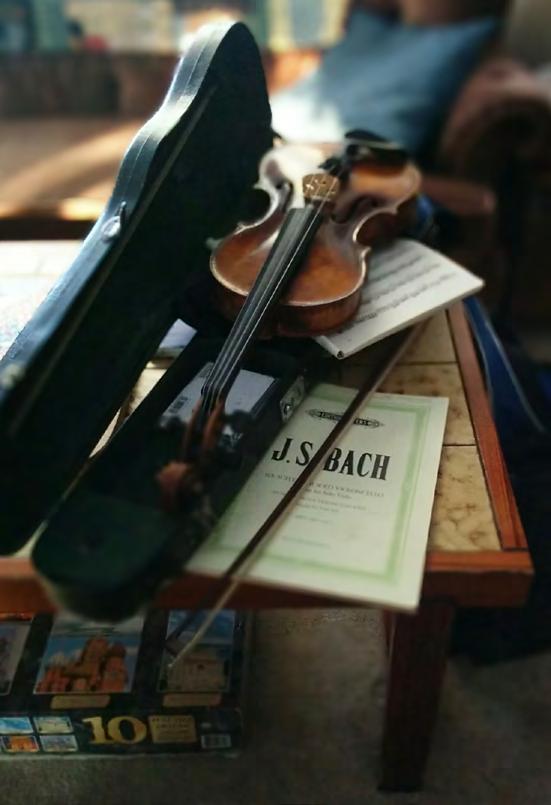
At this point, I had the wrong view of discernment. I thought that discernment was limited to decision making. I had made a decision, acted on it, and failed. I must have made the wrong discernment.
After that, I wasn’t sure what to do anymore. I felt like I couldn’t do music anymore, because my previous discernment had been “incorrect”. I worked part time at a Michaels for a while, which was nice but not at all fulfilling. I also started teaching violin again after a year, more for financial reasons than actual desire to teach. Then I heard about a position opening up at WISDOM. I was a little wary about leaving home again but hey, a full time job was pretty appealing. I applied and got the job, moving to a little home in Derwent. Despite the craziness at the end of 2016 (which began 2 weeks after I started working at WISDOM), it was a very important and happy year. I fondly cherish the attitudes of love, service and solidarity that I experienced.
Working in such a supportive environment made me start to think
about discernment again. This time I approached it in a different way. Somehow my perception of myself and of my place in the world had shifted to a more wholesome outlook. Rather than seeing discernment as a one-time decision between specific options, I thought of it rather as a combination of self-assessment, accumulated experience, research and most importantly, dialogue. Here’s a quick breakdown of these components:
Knowing yourself thoroughly is key to successful discernment. Ask yourself: What are my talents? What are my likes and dislikes, strengths and weaknesses? What do I want to improve about myself? What does success mean to me? Think about these on your own, and discuss them with someone you trust. Be very honest with yourself, and don’t be shy about celebrating the things you excel in!
In Britain, it’s customary and encouraged for young adults to take a gap year between high school and post-secondary. In North America, the pressure is on to know what your entire adult life is going to look like the moment you graduate. As homeschoolers, we probably don’t face as much of that pressure from our families, but in our society there is still that message that everything must be “figured out” as soon as possible. I ended up having three years between my graduation and the time I started postsecondary, and I don’t regret it. Having a
few different jobs and experiences helped me with self-assessment - after a while I realised that certain things I thought I disliked were only so because of how I experienced them. At Michaels, I thought I disliked working with people, but later I realised what I really disliked was working with people in a retail environment. Giving yourself time to mature and experience some different things will only help you later.
This component mostly applies to specific considerations of career/other options. Once you’ve thought about what your talents and passions are, you might start considering kinds of careers you might like and which universities to go to. Do lots of research. Web searches are a great starting point, but the best way to learn about a specific career is by talking to someone employed in that area. Set up tours and information sessions with the schools/institutions you might be interested in. Keep in mind that postsecondary is not mandatory! A degree is not a passport to a career.
The most important and necessary kind of dialogue is prayer. If you want to follow God and earnestly open yourself to Him, He will guide you. Even if you don’t open yourself to Him, He’ll still guide you anyway. It’s also important to have lots of dialogue with your family and friends. Talk to them about the things you want to do, and listen to their wisdom, encouragement, and ideas. You don’t have to do everything by yourself.
The most important thing to keep in mind is that discernment is ongoing. It doesn’t end once you make a decision. Circumstances change and we must be constantly thinking and discerning. Keep in mind that you are allowed to change your mind. I thought I had failed at being a musician so I couldn’t do it anymore. Now I’ve changed my mind. I still want to be a violist and teacher, and this time I have the benefit of a more wholesome and balanced take on discernment… disearnment notwithstanding!
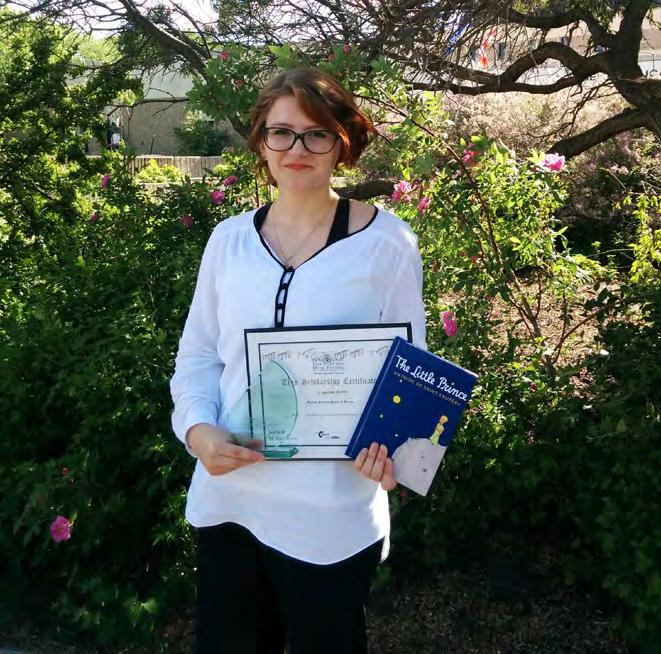
Cat Testa is a WISDOM graduate, violin and viola teacher and aspiring violist from a small town in Alberta.
By Dale Aalbers

Asa young person it can be very intimidating making life-altering decisions, especially if you are unsure of what your future might look like. As the saying goes, “the world is your oyster.” Yet, as a young person we are growing up in an age where our peers (and even we ourselves) struggle with commitment and finding a sense of belonging while searching for meaning. As a teenager, we wrestle with the question, “what am I supposed to do after high school?” There are even bigger questions including, “what should I do with my life?”
These questions posed challenges for me, but I knew that I loved learning and wanted to pursue post-secondary
education. My educational journey took me across the country and even included studying abroad. These varying experiences seemed almost disjointed at times but they continued to add data to help me more fully discover God’s plan for my life. In every stage of my life, especially since leaving home, I have grown and developed, seeking to use every day as an opportunity to become more fully the man God is calling me to be.
When discerning and trying to think about your future there are many different questions, including:
• What do I think God is calling me to?
• What brings me the most joy?
• What brings the most glory to God?
• What am I most passionate about?
• What school options are there?
• What do I need to do to meet the requirements?
• Do I enjoy meeting new people and travelling abroad or on a ministry team?
• Would I want to start an apprenticeship program and see where it takes me?
• What am I most afraid of?
• Has anything been recently proposed to me?
• What do my parents, friends and other mentors think about my plans?
• Do they have any ideas?
• Have I thought outside the box and do I have any ideas about creating possible opportunities?
• If money is holding me back, is there someone, or a group of people that might be willing to invest in me or offer me a loan to pursue my dream?
Personally, I have several friends who have taken a year off to work and save money before engaging in schooling or travel. Indeed there are many different questions and options to consider. However, all of these questions ultimately lead to action.
Some active tools for discernment and choosing a career/life/study path:
• Engage in prayer and seek spiritual guidance.
• Ask questions and talk/journal about thoughts, feelings, and opportunities.
• Visit a campus/ministry/job/ apprenticeship and learn more about it.
• Try out an option before fully committing to it.
• Talk with people who are attending a school or alumni of a program you’re interested in.
• Find out the requirements for something you’re interested in, and apply. (Indeed there are many options but if you don’t apply, this idea can’t come to fruition.)
• Seek the input of family and friends by talking to them and bouncing ideas off of them.
• Ask “what am I good at and what do I enjoy doing? Does the decision I am making give me peace?”
• Engage in the present moment while continuing to grow and learn.
Whatever option you choose, ground yourself with good friends and a supportive community. Find ways that you will be supported and encouraged in your faith. The decision about what path to take can change; we can regroup and restart if something doesn’t work out.
Our world needs people who are passionate, loving, caring, authentic and genuine. Are you willing to walk farther into the unknown? It can be a challenge, but it is a real joy to find out your purpose and become the best person you can be.
The eldest of three WISDOM grads, Dale has had many opportunities to learn in different cultures and through travel.