


The success of a home school depends greatly on a unified approach by both parents. When a father is supportive of, present to and engaged in the home education, children show marked improvement in motivation and achievement.
Unless otherwise credited, images are courtesy of WISDOM's Noster, Burgess, Tinant and Doyle families.

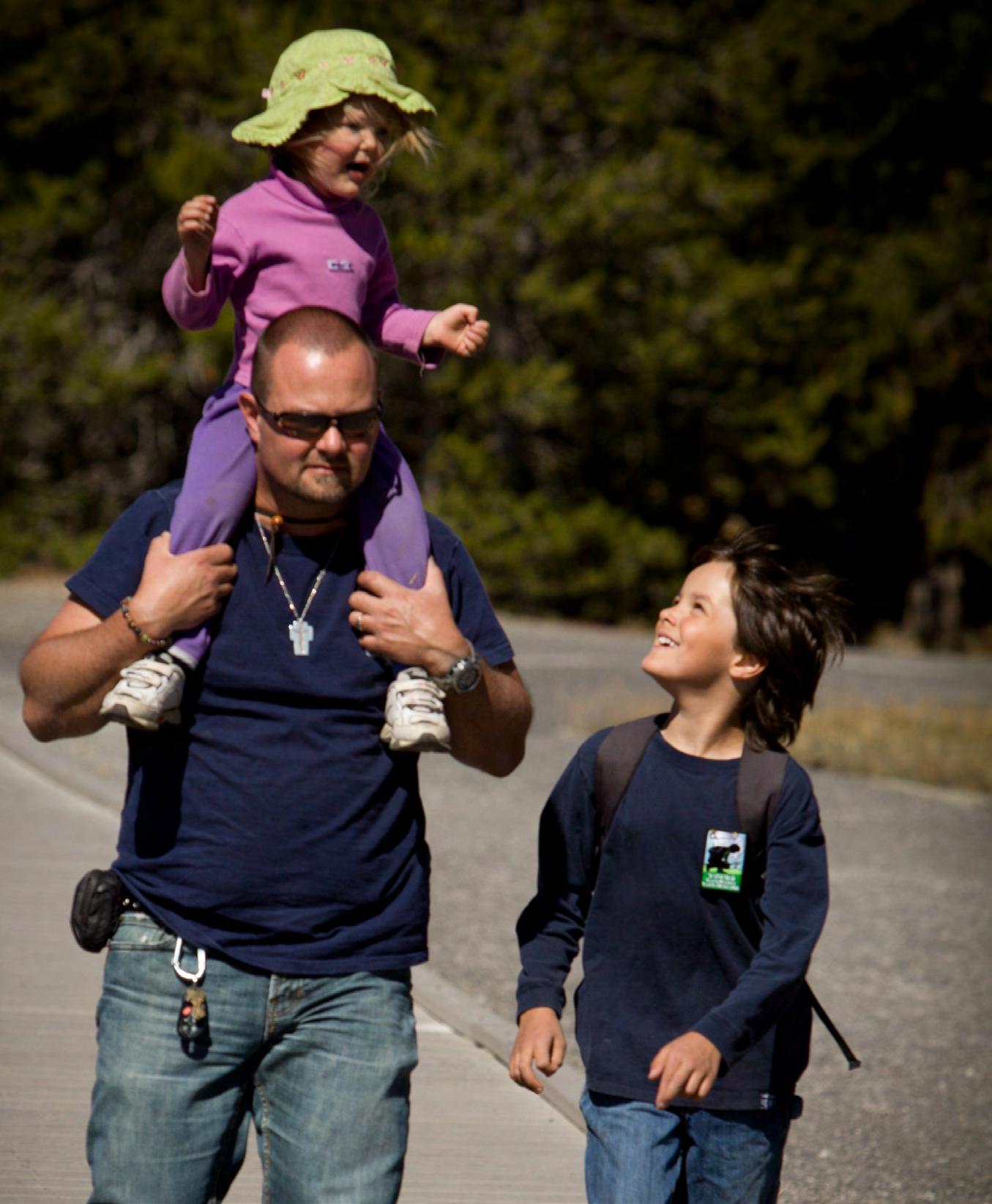
Iam a home school dad. In fact, I have several T-shirts that proudly proclaim that fact. My wife and I have two sons, currently aged 20 and 15, who have always been home schooled. The older one has graduated from home school. I am also a minister, and because I can set my schedule with a fair degree of flexibility, I have usually taken our two sons to the office with me each morning to do the majority of their formal
By Wayne S. Walker
studying and academic work. Then, after going home for lunch, they finished up and did other things at the house in the afternoon. We started doing that when the older son began his formal studies for reasons that were almost a necessity then, and we continued to do it because we liked it.
Not every home schooling father can be as actively and personally involved in
his children’s education as I have been privileged to be, but I do believe that every home school dad needs to be as actively and personally involved in his children’s education as he can be. The purpose of this article is not to tell you what you have to do to be a good home schooling father, because every family is different. However, I do want to offer some advice for home school dads that I hope you will find helpful.
Home schooling fathers should be leaders in their homes, including their children’s education. Of course, leadership is not the same as dictatorship. For example, one way a home school dad can be more involved in his children’s education is in the area of helping to choose curriculum. It may be that Mom feels perfectly competent to choose curriculum and that you are quite willing to let her do so. That is fine. However, sometimes curriculum choices can be a bit daunting and stressful for moms. Since Mom will likely be doing most of the teaching in the majority of instances, it would probably not be a good idea for Dad to walk in with a catalogue; drop it in front of Mom; say, “Here is the curriculum that you will be using”; and then walk out! However, it might be good for Mom and Dad to sit down, look over the curriculum choices, and select what they, together, feel is the best choice. If Mom is a little unsure about one program or the other, Dad can make suggestions and strive gently to lead in the direction that he feels is best.
A home schooling father should also offer support to his wife in her role as a teacher. Since Mom will likely be doing the majority of the instruction, Dad needs to do whatever he can to help
prevent the problem of burnout. One way to support Mom’s efforts is for Dad to do what he can around the house. If Mom is going to spend a great deal of time teaching the children, she will not have as much time to clean, cook, and do other household chores as she would if she were sending the children off to school and had the day to herself. Don’t expect to come home every day to find an immaculate house, dinner ready on the table, and an affectionate little woman. I know that you are probably tired when you get home from work, but think how tired Mom is from doing both housework and home schooling. It would not kill us to throw in a load of laundry every now and then!
Another way that a husband can support his wife in their home schooling is to be as involved as possible in the instruction. Maybe Mom does not feel competent in mathematics, science, or whatever, and you do. Let Mom work with the kids on the subjects that are better for her, and you can help with whatever she cannot do when you get home, which will give you an opportunity to be more directly and personally involved with your children anyway. You could also use your day off or a weekend to take the kids on a “field trip” of some sort to give Mom some time alone to regroup and renew her strength.
Home school dads should protect their families. We recognize the need to protect them physically, but there are other forms of protection that are important too. Sometimes home schooling parents are accused of being “over-protective.” This accusation frosts me. We do not let young children play on busy streets or under sinks with chemicals, because they need to be
protected from such dangers until they are old enough to handle them. In the same way, we also need to protect them emotionally and socially until they have developed sufficient maturity to deal with various situations. As a father, in order to provide this protection, exercise some control over what is allowed in the home and what the children are permitted to do.
Also, Dad should protect his wife. Since she does most of what people see as “home schooling,” when there are criticisms, she will likely bear the brunt of them. However, when that happens, Dad should step in, serve as a buffer for his wife, and say: “We have decided together that we are going to home school our children. My wife is doing exactly what I want her to do, so if you have any criticism, direct it to me.”
A home school dad should recognize the need for preparation. Home education (or any education, for that matter) is more than just learning academics. It is preparation for life. Sons need to know that when they grow up they
will be responsible for providing for their families. Of course, they should be taught the basic skills that will allow them to be properly trained for their life’s work, but they also need to be trained in values such as honesty, hard work, and frugality. A father is in the best position to teach and model these traits to his sons. Spending time with them to discern their strengths and weaknesses will equip a father to serve as a kind of “guidance counselor” as his sons begin to think about what they want to do with their lives. I have no daughters, but if I did I would not think of trying to train them in homemaking skills; that is certainly an area where a wife can excel. But I would try to help my daughters, both by instruction and example, to choose husbands who will honor them and be good fathers to their own children.
Home schooling fathers should be examples to their families and especially to their children. On the one hand, we realize that we are not perfect. Yet we need to be careful and not use this as an excuse to say “Do as I say and not as I
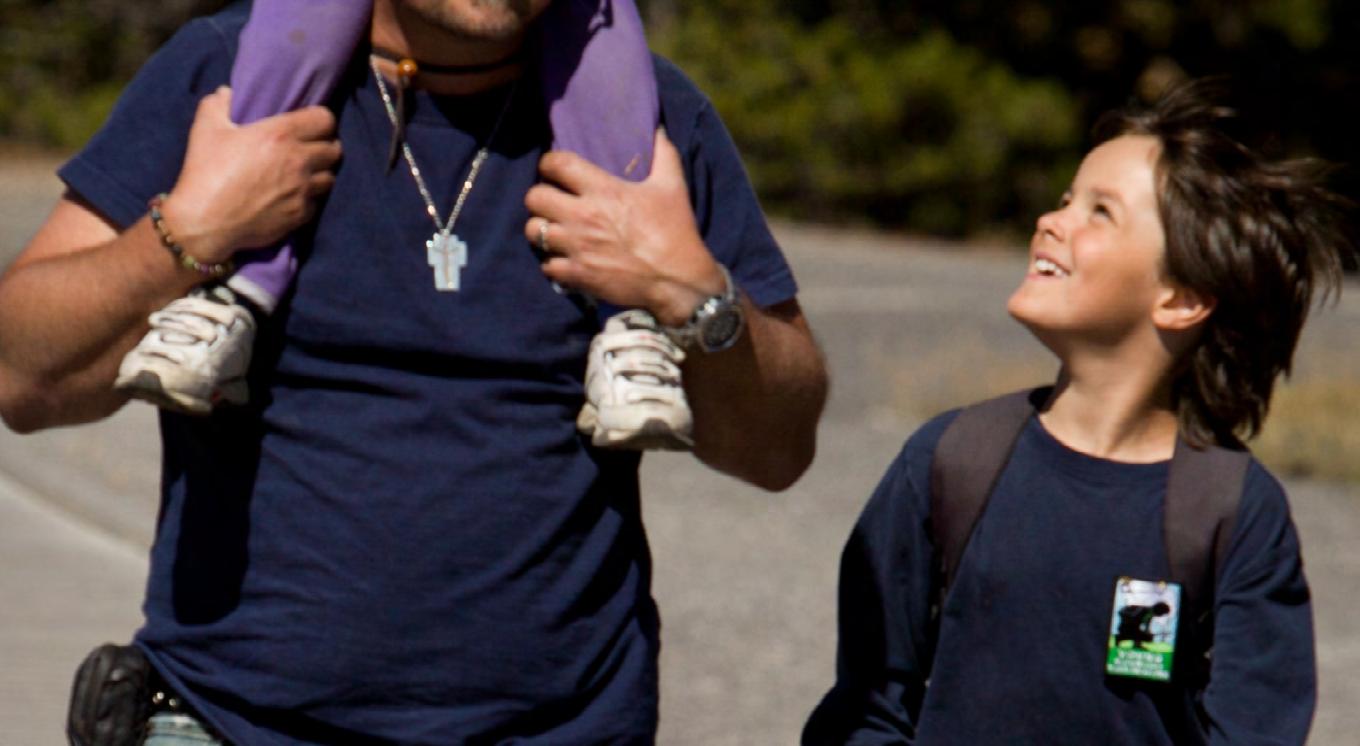
photo by Christine Twardzik
do.” If we don’t want our children to lie to us, we must not tell them to say that we are not home when the phone rings. If we don’t want them to cheat others, we must not fudge on our income taxes. No, we are not perfect, but even in our imperfections we can serve as examples.
One of my weaknesses is anger. I do not fly off the handle quickly, but if I am tired or a little stressed, and on top of that am having trouble with one of the boys not doing his work properly, I can become frustrated and in anger say something I shouldn’t. Then I have to stop, tell myself that this is probably not the most important thing in the world, and apologize for losing my temper. Then we have hugs and kisses. In doing this, I am showing by my example that, no, I’m not perfect, but I’m trying to improve and grow, even as my children need to improve and grow.
Finally, a home schooling father should exercise discipline. We usually use the word discipline to indicate punishment. It means more than that. In fact, everything we do in training our children, including “home education,” is part of discipline, the aim of which is to “disciple” our children and help them to develop self-discipline. However, the concept of discipline does include punishment when necessary. If Mom is going to spend her day trying to teach the children, she shouldn’t have to spend a lot of that time correcting unruly children. Therefore, the children need to know that if they act up for Mom, they will have to answer to Dad when he gets home. And they need to know that serious infractions will most assuredly receive swift and certain retribution. With this kind of assurance, Mom can
then devote her time to instruction and encouragement. Each family will have to work out forms of punishment that will best meet its needs, but it is important for both Mom and Dad to be in agreement about whatever it is and then try to be consistent.
Yes, dads, you can and should be an important part of your home school, both in the academics and in the general home school life. So, it’s up to you to look at the basic principles identified in this article and work together with your wife to determine how best to implement them in your family.
Some have drawn a comparison between home school and regular school by saying that Mom is the teacher; Dad is the principal, superintendent, and headmaster; and together they are the school board. Thus, when Dad comes home and gives Mom a big hug and kiss, they can say that it was a sweet school board meeting!
And that brings up my final observation. I believe that it was Theodore Hesburg who is credited with the saying that the best thing a father can do for his children is to love their mother. That should be the guiding principle for a home school dad.
Wayne S. Walker, originally from Highland County, Ohio, is a minister and home schooling father who currently lives and works in Salem, IL, with his wife Karen and their two sons, Mark and Jeremy, who have always been home schooled. This article originally appeared in the Fall 2011 issue of The Old Schoolhouse® Magazine, and it was carried on Crosswalk.com. It is reprinted here with the author’s express permission.
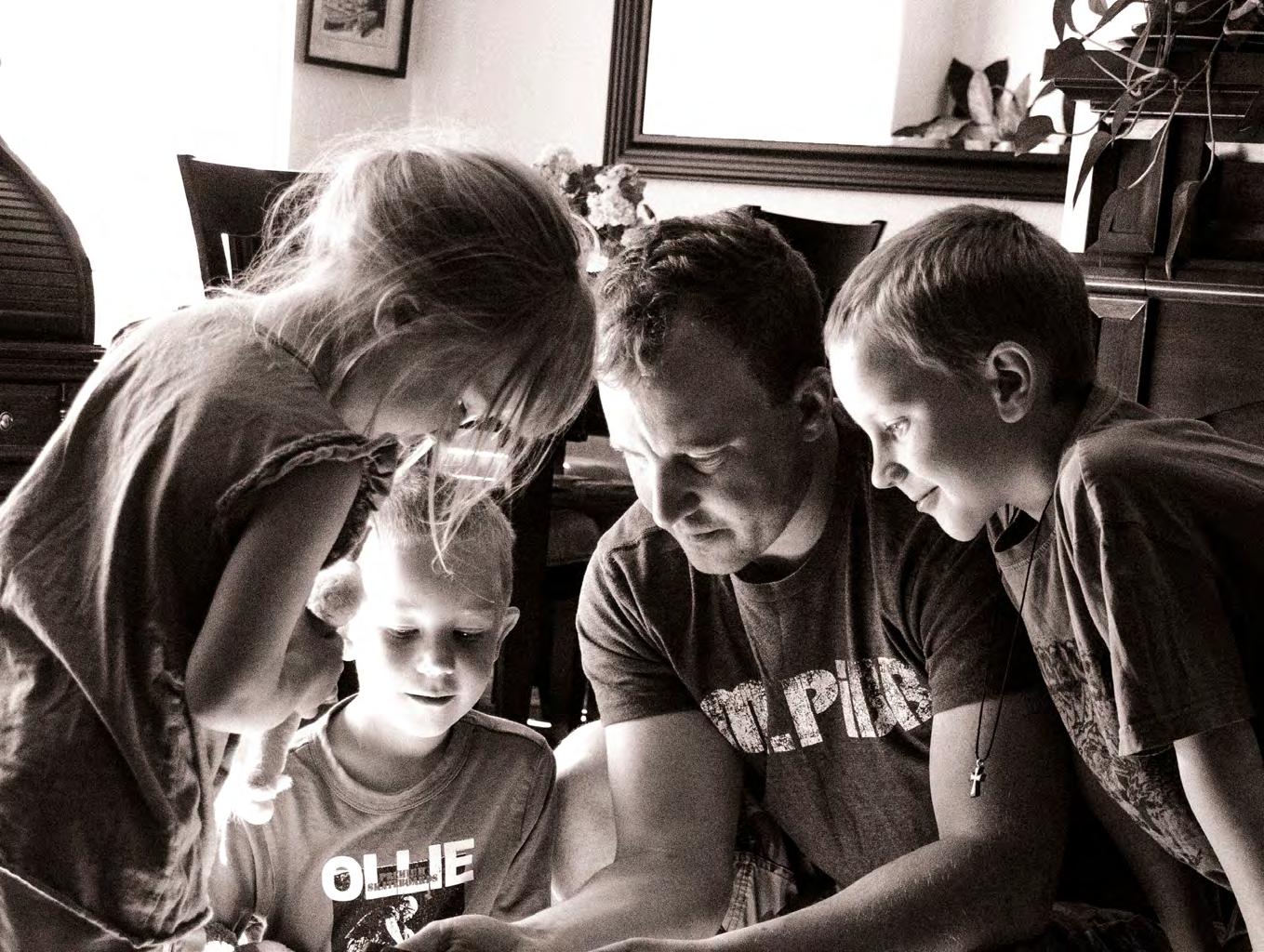
Reading aloud on a daily basis can sap your strength. Every afternoon - you feel a little bit more tired when you have to start reading aloud. It starts building up. A fight breaks out among your children over which book will be chosen for a read aloud tonight... You have to convince your hyperactive audience to settle down... Andgetting through just the first page... I won’t get you started on that one. These are all challenges that can take twenty to thirty minutes of preparations on a good day. Many things conspire to make reading aloud an unbearable daily chore.
By Read Aloud Dad
But don’t give up. We all face these challenges. I do too. But there is a silver lining that makes it all much easier.
As my twins get older, reading aloud involves more trials and struggles. Not less. One child can be fully focused, but if the other one isn’t - the read aloud session soon goes downhill for all involved. I know what you are asking yourself sometimes: If reading aloud is supposed to be a source of fulfillment and satisfaction, why does it rob my strength and energy so often? This happens easily, especially if your listeners lose connection with the story.
One tactic I employ when reading chapter books: I always re-read the last
page or half-page of what we last read a day or two ago. And then I also sum up the situation before we continue reading. It makes it easier for the listener to get back in the mood of the story and to re-connect.
Let me share another trick of the trade. We never read one chapter book at a time. Kids can get bored easily. The same old story, day in and day out –can be a bit too much for them. So we usually read three or four chapter books at the same time (not the same day!).
For example, right now we are reading (concurrently):
a. The Story of Doctor Dolittle
b. The Castle of Adventure
c. Christopher Mouse: The Tale of a Small Traveler, and
d. any given book from the Horrid Henry collection.
This is without mentioning the Jack and Annie books from the Magic Tree House boxed set.
And this works perfectly. Boredom is banished to a distant realm, as every day we read a “fresh” chapter book. This may be a recipe that does not work for other families, but I find it is perfect for our household.
Every parent can have the desire to read daily. It comes from within. But inspiration comes from around us. You cannot read aloud to your kids for the long haul without inspiration. My true sources of inspiration are
other parents. Parents who just do it. People who lead by example.
I am still a newcomer to this game. I’ve been reading aloud for the past three or four years. But I am inspired by so many parents and grandparents who leave comments on my blog, telling me how they read to their kids until they left their homes or how they are reading to their grandchildren now.
Sadly, in my day-to-day life, I do not know other dads who read aloud to their kids on a daily basis. I’m not saying that they don’t - I just never hear anyone telling me about it. There is no read aloud excitement among many parents. People around me do not know that I am “the Read Aloud Dad”, so the topic of reading aloud never crops up spontaneously. My friends know that I like to read aloud to my kids. But that’s it. No one else tells me they are doing it. OK, admittedly I also do not have much of a social life these days - so my sample is not so large. That is why what I told you before is true - YOU really inspire me. I crave this inspiration. I need real people to inspire me. Take, for example, Lauren, a mom of two who says that “few things are more important than taking time to snuggle up and read a good book with our kids”.
Lauren left me a very inspiring message, and her words helped me to connect again with my own motivation for daily reading aloud. Her dedication is inspiring. Lauren is not just a great mom who reads to her kids - but she also has a wonderful children’s book
blog that is deep, critical and earnest. Her blog - 365 Great Children’s Books - is guaranteed to fire you up for reading for as long as you need! What a wonderful tribute to children’s books and reading. Lauren has reached Day (book) 197 - so you have a treasure trove of great books reviewed on her blog! Lauren’s inspiration is infectious!
Give an incredible gift to your child - one word at a time. So, my friends, if you find yourself doubting whether your reading aloud really matters, don’t worry - it is normal. I find myself doubting the quality of my efforts all the time. But usually for a brief period.
Everyone needs inspiration. Reading aloud is like counting steps with a pedometer. If you keep looking at the screen, you will be discouraged. It takes time to reach ten thousand steps. It usually seems to last much longer if you keep glancing at the screen.
The trick with reading aloud is to find your source of inspiration and focus on the next ten minutes. And that is just what it takes to change a life.
Just ten minutes a day, every day. To inspire a young human being.
Read Aloud Dad is a super-hero who reads the best children's books to his twins. Daily.
Yet, Read Aloud Dad didn't always have his super powers:
"I was a poor dad for the first two years after my twins were born in 2007, as I didn't read to them and did not speak to them a lot.
One night everything changed and I became the Read Aloud Dad and built up an enormous library of children's books in our home.
Who am I in everyday life? I'm not a special person. I could be any father."
Yes, Read Aloud Dad may be your next door neighbor, or the mailman, or your old college friend from Detroit, or an unemployed guy in Miami, or the pizza delivery guy, or George Clooney or the governor of your state. But, it doesn't matter. What really matters is you.
Are you a Read Aloud Dad?



Warning: this article contains swear words.
By Paul van den Bosch

Well, swear words in my family, anyway.
In my family, as in most families, there are certain words which my children have learned not to say around grandparents or pastors.
There are other words which they just don’t say ever.
Those words include ‘stupid’, ‘dumb’, and ‘I don’t care’.
The first two words in that little list (and there are others that equal them) may be used to hurt another person. In our North American society that is how those words are usually used. So Mary and I decided years ago that
those words were ‘swear words’ in our home.
What about the phrase ‘I don’t care’ (which I’ll refer to as ‘IDC’ from here on)?
What does IDC really mean?
Here is a translation: IDC means that I am saying “I’m too cool/smart/ sophisticated/important to let another person affect me. I’m above that. I’m too big to let anything going on around me touch me.”
Further: “I’m not only above THAT but I’m above YOU.”
Can you think of the last time you said
Maybe it was at work and a co-worker asked you if you wanted a coffee. Maybe it was in a restaurant and the waiter asked you if you wanted your drinks now or with the meal. Maybe one of your children asked you if you wanted a picture they were making for you coloured in blue or green.
A small thing, those three words. But important. And when we say them, we feel important. We are showing the coworker or the waiter or the child that we hold the power in the conversation, we have the edge, we make the decisions (but, by saying IDC, we say that this particular decision is beneath us).
Think I’m reading too much into three little words?
Think again of other times you said IDC.
Were you speaking to someone you love? Were you angry at the time? Were you speaking about something important, or at least something that the other person felt was important? What were you really saying?
IDC is the truly the opposite of ‘I love you’.
I know that, if I take it to its ultimate expression, IDC is placing me on an island or on a distant star.
Think of the unhappy people that C. S. Lewis speaks of, isolated from each other, in ‘The Great Divorce’.
Or consider these words by John Donne, from 1624: “No man is an island, entire of itself. ... Any man's
death diminishes me, because I am involved in mankind; and therefore never send to know for whom the bell tolls; it tolls for thee.”
Now contrast Donne’s view with a more modern one. Here’s a quotation from the movie ‘About a Boy’ (released in 2002): “All men are islands. And what's more, this is the time to be one.
This is an island age. A hundred years ago, for example, you had to depend on other people. No one had TV or CDs or DVDs or home espresso makers. As a matter of fact they didn't have anything cool. Whereas now you can make yourself a little island paradise”.
That doesn’t mean our modern age is without some wisdom. (Allow me to say that 1976 is part of the modern age).
One of my all-time favourite records (yes, vinyl records) was released in 1976: ‘Songs in the Key of Life” by Stevie Wonder. Here’s a quotation from the song ‘As’: “So make sure when you say you're in it but not of it, You're not helping to make this earth a place sometimes called Hell…”.
At the time, I didn’t know what Stevie meant. I didn’t know a lot of things. ‘Being in it but not of it’? What did that mean? I was right here. How could I not be in it or of it?
I know a little more now.
I know the times when I draw back so I don’t get hurt. I know the times I keep to myself to protect my feelings or my pride. I know that when I say IDC I am saying “I am not a part of this, I am not of this
world, and you can’t touch me”.
I remember another song from a few years before that. Paul Simon, from 1965: “I am a rock, I am an island.”
Perhaps an island sounds good to you right now, a tropical island. It is snowing as I write this and it has been a blustery day in Central Alberta.
As you read this, it may be another day like that: cold, post-Christmas, and a winter that seems like it will last another 57 weeks.
But if you are a home schooling dad, as I am, this is not the time to mentally drift off to an island.
This is not the time for IDC. This is the time for an RSVP. And even a ‘respondez’ if I don’t feel like it.
For example, there are times when my wife is tired or discouraged and I am not very helpful at all.
I get grumpy with the kids, usually over something very minor. I ask about all of the areas where the kids are struggling so my wife thinks that is all I see. I use excuses like “I’m tired” or “I don’t really know how you’re doing the home schooling with the kids” and I retreat when I should engage.
I don’t seem to be on the same page that she is on because I choose to be somewhere else. I make things more difficult for her by not making it clear that I think home schooling is the right thing to do.
When my wife says “I can’t”, she is asking for my ear and my heart and my words
to say: “I know. But I think you can. I think home schooling is working.”
I know that with my actions and my attitudes and my words I can say IDC or ‘I love you’.
And I still do the wrong thing more times than I want to admit.
So here’s a chance for me to RSVP.
We are in this world. Today. Here and now.
We might wish that we had been born in John Donne’s time – or William Shakespeare’s time or Adam’s time. (Yes, Adam’s time: “If I’d been around then I would’ve shown that serpent a thing or two!”).
But today is all we have.
And today we live in an age of sound bites and slick little phrases on our coffee cups: Be present. Show up. Live in the moment.
These phrases aren’t bad, actually. What they are saying is this: Care!
Or put another way: Respond!
Now you might stop to insert your own disclaimer here: I’m too busy, There are too many things to do, I’m already involved in many projects, What difference will it make if I respond, What difference will it make if I care, What difference will it make if I speak up?
It might make all the difference in the world…
Here is one way it might make a difference: Those who spoke up years ago for home schooling in Alberta made a difference. We are still enjoying that difference today. (And we need to be ready to speak up to make a similar difference tomorrow when home schooling comes under provincial review again soon).
Here’s another way it might make a difference: Your wife will remember that you said ‘I love you’ when it would have been easy not to.
A response is required of all of us, an RSVP to fathers.
When we are in the middle of our winter of discontent, will we add to the burden of our home schooling wives or lighten it?
Will we keep asking for tangible proof of ‘student progress’ for our children or look to the growth in our children’s character?
Will we choose an easy path of IDC or will we choose to care, to respond, to love, to be hurt, and to lay down our lives for those we love?
Let me quote Stevie Wonder again. These are the very next words in the song ‘As’, right after the ones quoted above: “Change your words into truth and then change that truth into love, And maybe our children's grandchildren and their great-great grandchildren will tell…”.
Paul van den Bosch is a WISDOM Facilitator and a home schooling father. He and his wife Mary have seven children.



“What can I do?” This is a question which I have asked myself, and one I’ve heard other fathers ask regarding home schooling. As I have traveled and visited families over the years, I have learned much about what other fathers are doing to assist with their children’s learning. I am writing this article to present an insight that I have been privileged to have had shared with me. It is my hope that this suggestion, by no means new, will increase the fruitfulness of your family life as well as enhance your children’s learning.
It has been said that nothing is accomplished without prayer, and so this is where we must begin to answer the
By Glenn Spiess
question, “What can I do?” Prayer must be central to our lives; in fact, our lives must become a prayer. Prayer brings us into relationship with God and it is in prayer that God calls us to embark upon a journey with him. Imagine, God, Creator of heaven and earth, calling us to journey with Him on a path leading to true happiness. Relationships are not singular but rather plural in nature and as such require participation from all those involved. We must speak to God and we must listen to God in the many ways he uses to communicate with us. God is a mystery and so too are the methods he uses to speak to us. However, as we draw closer to him through prayer we become more aware of the multitude of ways he
communicates to us, such as through our senses, intellect, conscience, through others, our worship and Scripture to name just a few. As we take time to listen we can begin to hear God’s voice, discovering what he has in store for us and where he wants to lead us. As we pray, we nurture our relationship with God- which in turn enhances the way in which we relate to others, particularly our spouse. One form of prayer is to meditate on a passage of Scripture; I was blessed to have a friend suggest the following passages from Ephesians, to prayerfully meditate upon.
“Husbands, love your wives, even as Christ loved the church and handed himself over for her to sanctify her, cleansing her in the bath of water by means of the word; that he might present to himself the Church in all her glory, without spot or wrinkle or any such thing, that she might be holy and without blemish.” -Ephesians 5:25-27
It may be presumptuous to say but I think most men are attracted to beauty. I think St. Paul is aware of this reality and wishes to capitalize on it when he writes, “that he might present to himself… in splendour, without spot or wrinkle or any such thing, that she might be holy and without blemish.” Have you ever made or heard the comment that, “She is more beautiful than on the day I married her”? Perhaps an outsider’s thoughts would reflect the sentiment, “How can this be? Doesn’t he see the bags under her eyes, the extra weight etc that weren’t there 5, 10, 20 years ago?” However, the beauty that the husband sees first is interior; the observer sees only the
exterior. This interior beauty is what I believe St. Paul is speaking about, he is speaking about a beauty not visible to the human eye, but rather a beauty found in the soul. A beautiful soul is more attractive than any physical appearance; in fact beauty of spirit overwhelms the physical, transforming it into something unimaginable.
You might ask, “What does all this talk about beauty have to do with family life and home schooling?” Here it is: the reality I just presented should lead us to imitate Christ, which will ultimately enhance the way in which we relate to our spouse. Remember that as we pray, we nurture our relationship with God, enabling us to relate to others more effectively. By meditating on this scripture we see revealed to us that which God has done for us through his Son. He has made us his bride and has cleansed us, making us holy and without blemish. Our response to God’s grace should be to assist in our spouse’s growth in holiness. How? St. Paul goes on to write:
“So (also) husbands should love their wives as their own bodies. He who loves his wife loves himself. For no one hates his own flesh but rather nourishes and cherishes it, even as Christ does the church, because we are members of his body. “For this reason a man shall leave (his) father and (his) mother and be joined to his wife, and the two shall become one flesh.” This is a great mystery, but I speak in reference to Christ and the church. In any case, each one of you should love his wife as himself, and the wife should respect her husband.” -Ephesians 5:28-33
We should pay particular attention to the words, “the two shall become one flesh.” These words speak of unity. Unity is God’s plan for his people, a unity so close and intimate that it is impossible to separate. Unity is an essential ingredient in family life, and home schooling, stemming from an emptying of oneself as exemplified by Jesus himself. St. Paul gives us practical ways for unity to be made present by “nourishing and cherishing” one another, “even as Christ does the church.” We cannot give what we do not have. We cannot nourish others if we ourselves have not been nourished. The food we receive from God stems from our own relationship with him, uniting our daily journey with Him and rooting it in prayer. God in turn pours His life into us, which can then be emptied out to our spouse, creating the beauty and unity that St. Paul speaks of.
As you can see these Scripture passages are packed with wisdom and insight
which alone can transform our whole family life and home school experience. Prayer is the vehicle to begin this transformation. Prayer is a practical way in which we can assist with the home schooling of our children. As we open ourselves to a relationship with God, keep in mind that he will be taking us on a journey. Like every expedition we take here on earth there is a cost… in this case, to relinquish our own life not to our demise but to bring us to the fullness of life he promised and destined us for.
Glenn seeks to serve home school families by encouraging them in their capacity to form their children and achieve the goals that have been placed on their minds and hearts. The success Glenn and his wife have found in preparing their children for a future after home schooling only serves to strengthen their conviction that home schooling has been one of the best decisions they have ever made for their family.

Dr. Justin Coulson
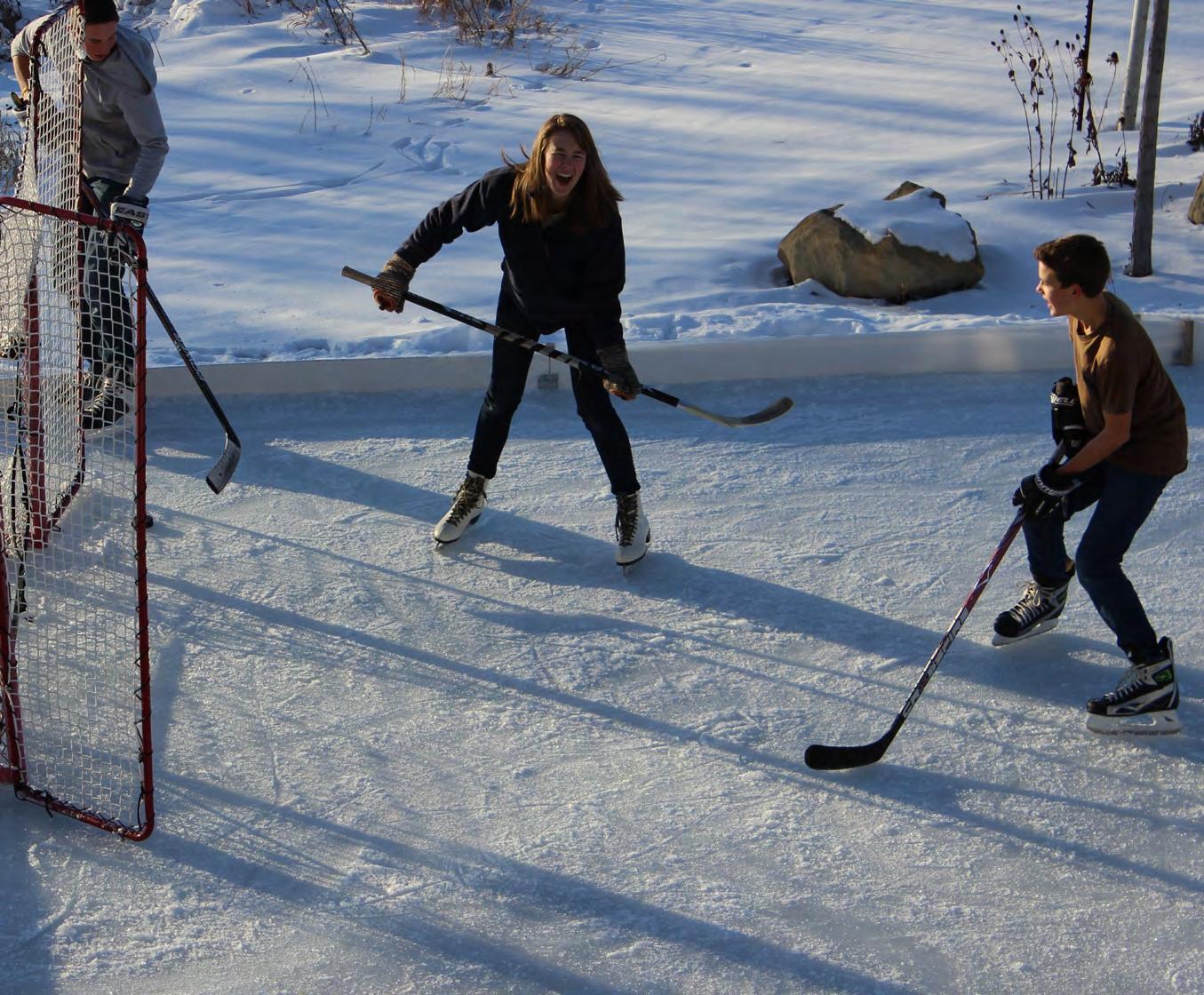
Idon’t remember who said it first, but the best way to stop sibling rivalry and sibling squabbles is—to not have siblings.
Too late? Same here.
Have your children drawn an imaginary (or real) line down the middle of their room or in the back seat of the car and said, “You stay on your side or I’ll tear your arms off!”?
Or have you heard your children whine:
“He’s touching me!”
“Make him stop looking at me!”
“She’s teasing me!”
“Stop it. I don’t like it! I’m telling on you.”
My favorite sibling complaint was shared
by a tired, patient dad in a conference I attended years ago. One of his children complained to their mom: “Mom, he’s breathing my air!”
Kids fight. They drive one another mad. They get in each other’s way. Parents ask me how to stop it and why it’s happening. My response: How old were you when you stopped fighting with your siblings? Many adults confess that they still experience conflict with their siblings even though they’re in their 30’s or 40’s and live 1,000 miles apart. Christmas dinners are a perfect example.
I love what P. J. O’Rourke said: “Anybody can have one kid—but going from one kid to two is like going from owning a dog to running a zoo.”
With all of this as a backdrop, we need
to acknowledge that preventing sibling conflict is almost impossible, but we can do a handful of things to reduce how often it occurs, and how bad it gets. No, you don’t need to buy one of everything for each child! Sharing is part of being in a family.
Instead, try these tips:
1. Give individual attention to all of your children. It will never be quite equal. But when someone needs it, be there for them. (Remember, many girls like to be face to face, while many boys prefer side-by-side.)
2. When everyone needs attention and individual triage isn’t possible, either use distraction or do something together.
3. Be aware of the triggers (Hunger, Anger, Loneliness, Tiredness) and intervene early. If the children are tired and hungry, keep them separated if you can!
4. Make sure the big ones don’t become parents to the little ones. “You’re not the boss of me!” means that someone may be over-exerting their authority and parents need to be more present.
5. Be clear on your limits: “We are respectful. We speak nicely.”
6. Avoid smacking. This models aggression and violence to our children. They’re more likely to repeat it.
7. Teach children to soothe themselves. Staring at the sky, breathing, counting back from 1000 in 3’s, dig a hole in the sandpit (or snow) to bury your anger, draw your frustration, or
listen to music. Each of these ideas can help a child relax.
8. If you can name it, you can tame it. If you sense a child is becoming frustrated, name it. This will help them know their emotions are normal and can be dealt with positively.
9. Teach and model empathy.
10. Remember that it’s tough being a sibling, especially when you’re young. Older siblings often ridicule and torment younger siblings. This is painful for anyone.
Every parent with more than one child— in fact, every human in a relationship— will experience some form of conflict, particularly with those closest to us. Conflict is not always bad. It allows us to re-examine habits and priorities and gives us the possibility of progress. But it can be a problem if we don’t use it to improve.
When children fight with one another, stay calm, be clear, and show empathy. They’re acting up because of the way that they feel. Help them feel better, and they’ll act better.
Then, invite them to think about how their behavior is impacting others. As they see how what they did affected others, you can help them to identify better ways to act towards one another, and slowly move towards making family life happier for everyone.
Dr. Justin Coulson is a parenting researcher, author, and speaker. He is the author of the new book, 21 Days to a Happier Family. This post originally appeared on happyfamilies.com.au and has been reprinted with permission.
By Randy Kopp
Ihaveasked the question, “Who has inspired me the most in my life?” Well, there are certainly some people who come to mind. With a turbulent childhood and unstable family, unfortunately, it was not my father or mother or even my siblings. Instead, it was some men and a high school friend who truly had a significant influence upon my life.
The first one who really motivated me was my Mathematics teacher and badminton coach in high school.
Mr. Probert was friendly, well-liked as a teacher and willing to play badminton each Friday after school with a bunch of students. What particularly inspired me was his passing on to me badminton skills and game strategies to the point where in my last year, I was able to finally begin winning games against him. He had helped me develop my skills better. He even encouraged me in another way. My classmates urged me to play high school football in my senior year, but I was uneasy
about doing that. I was reluctant to join the team for fear of having poor grades before heading for university in the fall. When I talked to Mr. Probert, he didn’t think it would affect my studies that much and so I played football, passed my exams better than I thought and went on to further studies in spite of my worries.
The second person was one of my high school friends. We played football together and I noticed his courage in practices. In drills, Gordon would attempt to tackle someone much taller and heavier than he or I. I wouldn’t do that! He also took an interest in my life and was concerned about my spiritual condition. I had always assumed that I was a Christian because I believed my good deeds would outweigh my bad ones. It was through Gordon’s patient influence and friendship that I eventually met the Lord Jesus Christ and Jesus became the third and most inspiring person of all in my life.
I must mention another man, Tom, who mentored me while attending university. He inspired me by his generosity. Soon after marrying the beautiful woman I met while attending university, he and his family decided to give us their car! We were newly married and moving from Ontario to Alberta, but had little money and no car of our own. That example of love has never been forgotten.
Furthermore, I would be amiss to not mention two other fictitious men who have truly inspired me as well. One was a man, named Atticus Finch, a lawyer in the southern United States who courageously but unsuccessfully defended a black man accused of rape (To Kill a Mockingbird, Harper Lee). The second was Jean Valjean, who went to prison for stealing a loaf of bread for his sister’s family (Les Miserables, Victor Hugo). Like Jesus, both men faced shame and ugly ridicule in standing for the truth.
Recently my wife and I attended a week-long Bible retreat and the main subject was Jesus Christ as we studied the Letter to the Hebrews. What became clearer to me was that the Lord Jesus, as my great High Priest, was also behind the scenes, always fully aware of my needs, using people and events to remind me of His presence, picking me up when I would fall, defending me before my Father, disciplining me to the limits of my endurance, helping me face my gripping fears, nudging me ahead along my life’s journey and revealing more of His astounding character to me.
It was this passage of Scripture in Hebrews that gave me more insight into the journey or race He has entered me into.
“Therefore, since we have so great a cloud of witnesses surrounding us, let us also lay aside every encumbrance
and the sin which so easily entangles us, and let us run with endurance the race that is set before us, fixing our eyes on Jesus, the author and perfector of faith, who for the joy set before Him endured the cross, despising the shame, and has sat down at the right hand of the throne of God. For consider Him who endured such hostility by sinners against himself, so that you will not grow weary and lose heart. You have not yet resisted to the point of shedding blood in your striving against sin; and you have forgotten the exhortation which is addressed to you as sons, “my son, do not regard lightly the discipline of the LORD, nor faint when you are reproved by Him, for those whom the LORD loves He disciplines, and He scourges every son whom He receives.” -Hebrews 12:1-6 NAS
I have found myself to be something like an onion. Layers of encumbrances or weights have been peeled off as time passes. For years I allowed myself to work too long at my job and with church responsibilities at the expense of my relationship with my wife and family, those whom I am called to love here most of all. My wife and children just wouldn’t see me much. However, the Lord used my wife, difficult work and church circumstances to show me that it was time to let go of those things. He revealed and exposed some of the invisible weights that I carried around. In short, I left teaching, was removed from the church and began a trial run at facilitating. As I reflect back now, there were many
things that my Heavenly Father used to get my eyes focused back on his Son, Jesus, as He continued to patiently reveal himself to me and peel off another layer of sin, pride or selfishness.
Running the race. Hmm, that is a good way of describing it. My life is much like a marathon race alluded to in Hebrews 12. I am running with a number of hats: father, husband, brother, friend, facilitator, and citizen of this province and country. As I run, I am reminded that my Lord is always present with me. He wants me to keep up to the pace that He’s set for me. And finally, he doesn’t want me to grow weary with discouragement, but always have in mind his finish line, which is my solid assurance that I will see Him one day.
In conclusion, I have been inspired by some people who have crossed my path, but the Lord Jesus, who has never left me, provides his quiet presence, patient discipline and loving care each day of my life. May you also find Him to be your greatest inspiration as He crafts and navigates significant people and events in your life.
Randy Kopp is a longtime WISDOM facilitator, citizen, brother, friend, father, and husband. He and his wife make their home near Edson.