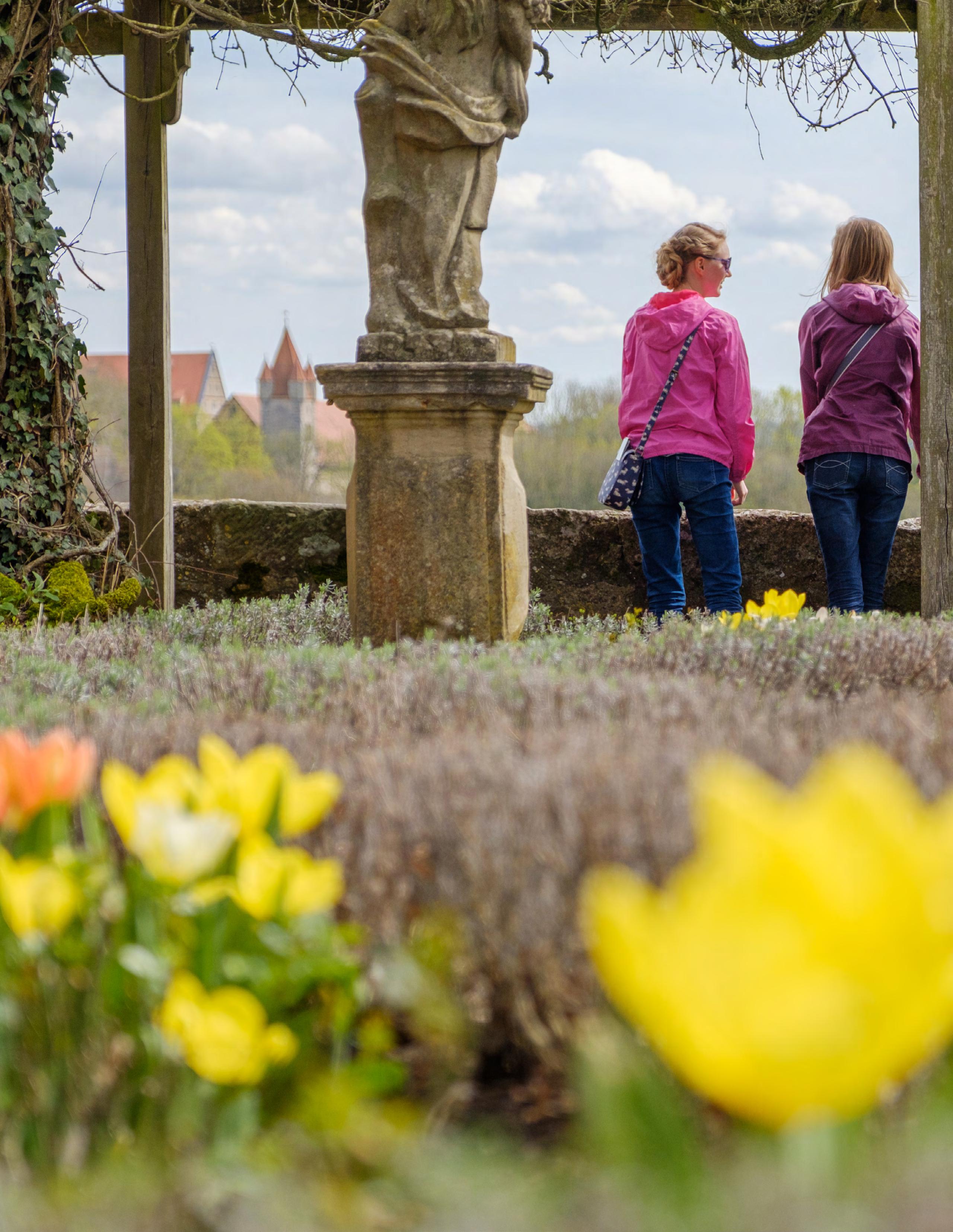
Roots
The Gilbertine Academy Administration
Principal, Head of School
Kenneth Noster
Associate Principal, Home Education
Simon Noster
Associate Principal, Campus Programs
Troy Lamoureux
Secretary Treasurer Vic Wiens
Chief Operating Officer
TobyLauren Burgess
Office Manager
Rae LaRocque
High School Advisor
Christian Bekolay
High School Credit Advisor
Desmond Kilgannon
Office Staff:
Home School Consultants
Carolyn Fast
Janice Laurence
Terry Yaceyko
Administrative Assistants
Haley Bruce
Jennifer Laszlo
Amy Myshak
Henrietta Neilson
Office Assistants
Helen Burgess
Hannah Hoekstra
Finance Manager
Melissa McEachern
Senior Accounts Manager
& Systems Developer
Saul Noster
Family Funding Team Lead
Taylor Laurence
Family Funding
Systems Maintenance
Dylan Kwasnycia
Finance Assistant
Jim Burgess
Data Manager
Janelle Mailhot
Data Assistant
Abigail Mailhot
Events Director
Marlane Noster
Events Coordinator
Kyra Tinant
Athletics Director
John Hoekstra
Socratic Dialogue
Online Program Manager
Nicole Noster
Graphic Designer
Naomi Doyle
Mediated Learning
Program Manager
Dynamic Assessment
John Hoekstra
jhoekstra@wisdomhomeschooling.com
High School Subject Specialists
Desmond Kilgannon (Math, Sciences)
Joe Pollock (Chemistry)
Andrew Siebert (Humanities)
For contact information, see wisdomhomeschooling.com > About > The Team
WISDOM Home Schooling is a registered trade name of The
The


Phone: (780) 741-2113
Toll Free: (877) 425-8546
Box 78
Derwent, AB T0B 1C0
with questions: office@wisdomhomeschooling.com with contributions to the WISDOM Magazine: magazine@wisdomhomeschooling.com
Publisher: WISDOM Home Schooling
Content/Editor /Desktop: TobyLauren Burgess
Desktop / Design:
Naomi Doyle
2 wisdomhomeschooling.com
Facilitators:
Michele Barter (780) 363-3740
Nicole Barter (780) 660-9602
Joan Bishop (780) 878-5380
Carrie Friesen (780) 217-4006
Rachelle Godin (780) 349-1827
Liz Gurnett (780) 349-1577
Sherri Hufnagel (587) 598-9344
Nola Hutchinson (780) 781-2527
Anella Jantz (587) 297-1992
Desmond Kilgannon (780) 225-6688
Randy Kopp (780) 723-5382
Gordon Loewen (587) 298-7565
Taylore Maschmeye (780) 270-0460
Mark Meakes (780) 231-6594
Simon Noster (780) 581-8885
Sue Peachment (403) 994-1963
Joe & Diane Pollock (403) 931-3884
Kim Schultz (780) 623-2886
Louis Sehn (403) 581-3444
Glenn Spiess (639) 894-0470
Michelle St. Laurent (780) 862-2277
Paul van den Bosch (403) 358-4497
Catherine van Kampen (403) 845-2923
Parent Support Council
To reach the chairman: psc@wisdomhomeschooling.com Bios and email addresses of PSC are on our website.
Northwest
Georg & Gayle Beinert
Menno & Margaret Knelsen
Central
Darrel & Kristine Buchholtz
Sheldon & Sharon Kok
Don & Bo Reid
South
Cameron & Tanya Harrison
David & Suzanne Knoch
Jeremy & Cheree Quantz
Fairview La Crête
Edmonton St. Albert St. Albert
Innisfail
Raymond Innisfail
Content: WISDOM publishes articles by many individual authors. The opinions of the writers are not necessarily those of WISDOM. We reserve the right to decline any submission.

(780) 835-8722 (780) 928-3008
(780) 417-3025 (780) 460-4468 (780) 460-2275
(403) 800-2739
(403) 752-5536
(780) 841-0065
Photography:
Unless otherwise credited, photography is courtesy of the Noster, Burgess, Tinant, and Doyle families. The people appearing in photos throughout this publication do not endorse any specific product, service, cause, association or endeavour. Images and photos are for illustratve purposes only.
Gilbertine Insitute.
Gilbertine Academy, Calgary, is an independent school operated by The Gilbertine Institute.
First Things
May/June 2022
Greetings:
Spring is here, and with that comes the wonder of watching new seeds take root in our gardens and fields. It is also a great time to reflect on how we can best nurture and grow the roots of relationship and learning in our families, helping our children develop excellent foundations and the capacity to “dig deep” to find the nutrients they need to be successful.
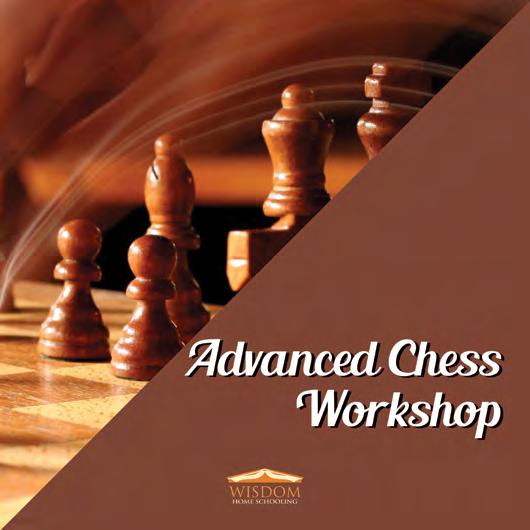
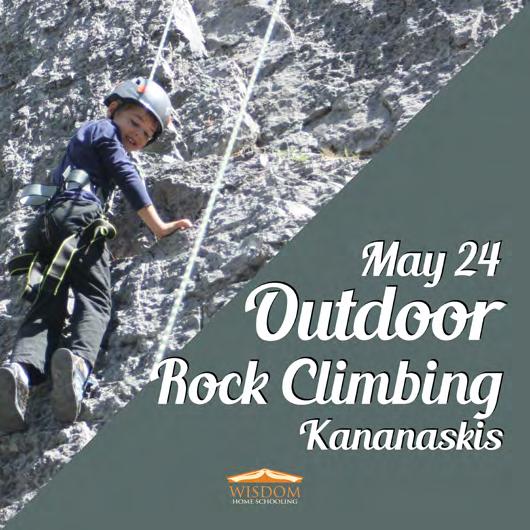
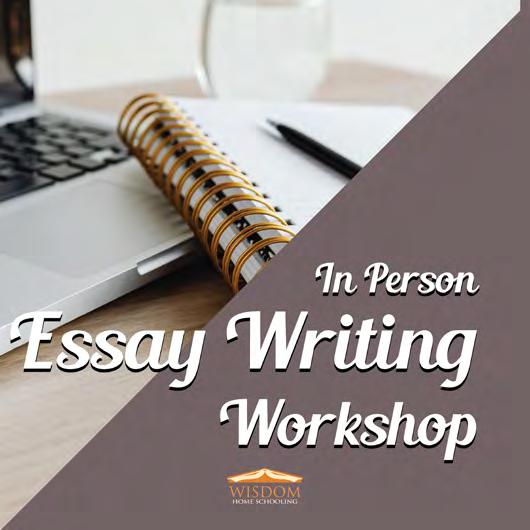
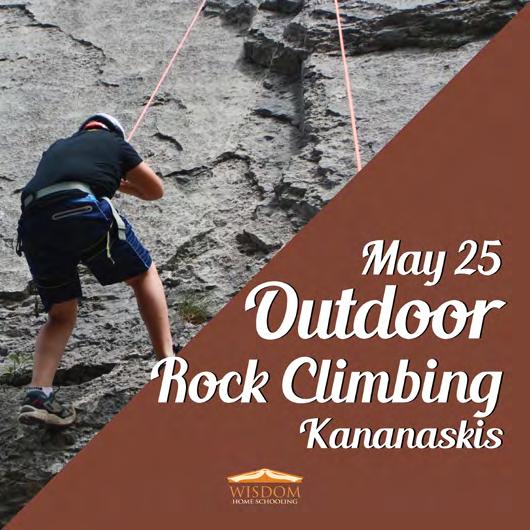
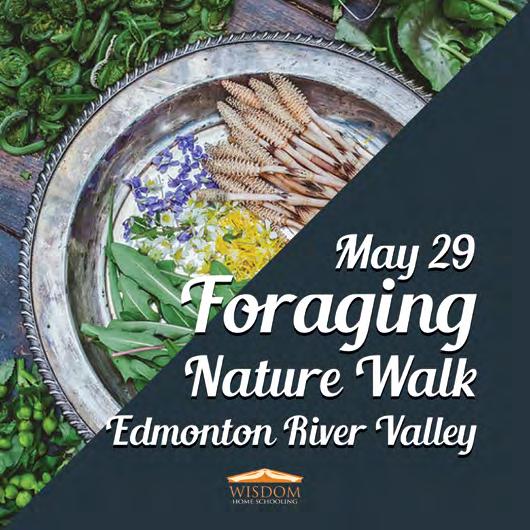
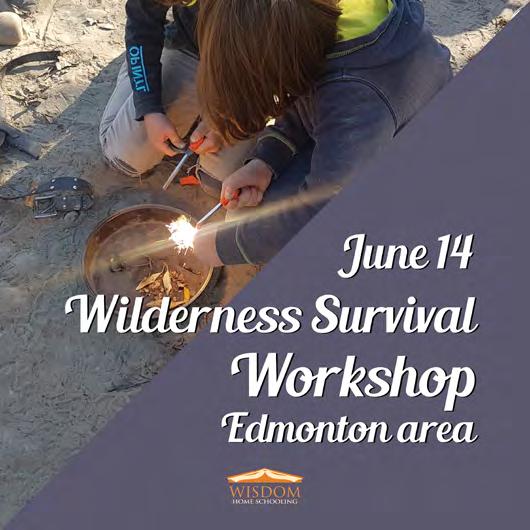
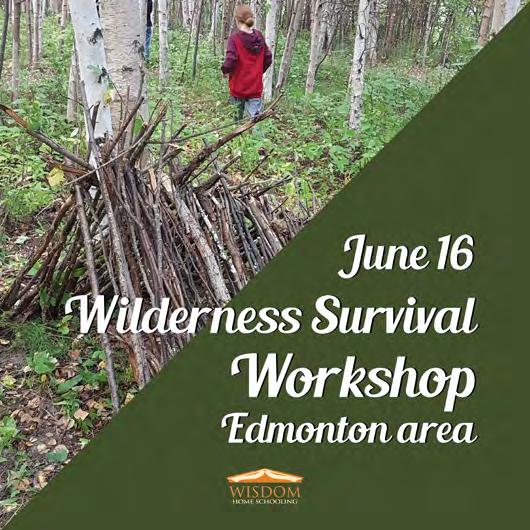
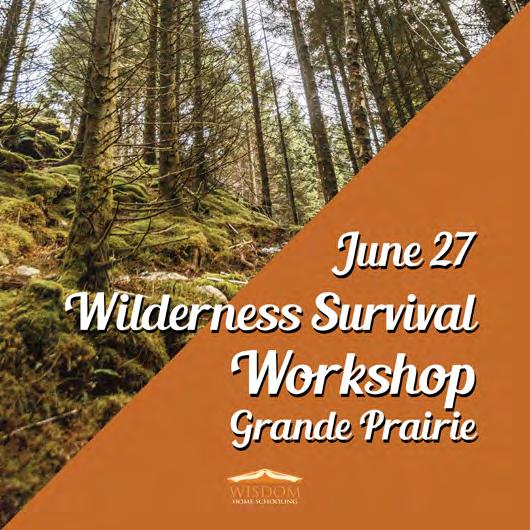
With spring and summer come WISDOM Camps and Events! Check out the “Events” page on the WISDOM website in order to learn more about the exciting opportunities that are available to you. In addition to workshops (such as rock climbing or foraging), you will find information on Spring Socials and Information Sessions.
The Fall Term of our Socratic Dialogue Online Program is open for registration as of early May. Many are quite popular and fill up quickly, so don’t delay to make your choices.
Funding deadlines: send your receipts and completed Expense Form to us as soon as possible, no later than May 31st for reimbursement on July 15. Purchase Orders (POs) are available until May 20th. If you have unspent funding from this year, do not worry, it will be automatically carried over and will be available to you for a second year.
If you have unspent funding from last year (2020-2021), do your best to use it now. Unspent funding cannot be carried over into a third academic year, but will expire and be automatically returned to Alberta Education unless otherwise allocated. If you have unspent funding that will expire at the end of this academic year, please consider filling out the AB Education form to Transfer Unspent Funding to our school in order to be used for student supports. The form, and further information is available on our website under Funding>Transfer Unclaimed Funds. The deadline to submit this form is June 30th.
AHA is hosting a Used Book/Curriculum Sale in Calgary on Tuesday May 10th, 6-8 PM at Lakeview Community Association 6110 34 ST, Calgary. Admission is free, but to rent a table ($21) visit albertahomeschooling.ca. On the AHA website, you will also find political updates, and information about home education advocacy.
AHEA is having a Trade Fair on June 3-4 at the Westerner in Red Deer. Come by the WISDOM booth to say hi, we would love to see you. Save on shipping and order a WISDOM hoodie/mug/etc. in advance and pick it up at our booth! Because of the late date of the Trade Fair, POs will NOT be available. More information is available at aheaonline.com.
We are encouraging early planning, including renotification of your intent to home educate with us next year. Every family who is re-notified and has submitted their Education Program Plans by the end of May will be entered into a June 1st draw for $200 toward educational resources.
WISDOM is hosting a virtual Graduation Celebration on May 28th. Grads: send a brief biography and photo by May 20th in order to be featured in the grad slideshow and our July magazine. Also, make sure to order grad hoodies and tassels before May 20th
At the end of this school year, parents of grade 12 students may wish to request transcripts of parent awarded marks and recognition of High School Completion. Please find more information our website under Forms > Transcript/Completion Certificate Request.
I hope that you take every opportunity that you can find in the coming days and weeks to enjoy the great outdoors with your families.
Simon Noster, Associate Principal of Home Education simon@wisdomhomeschooling.com


Roots
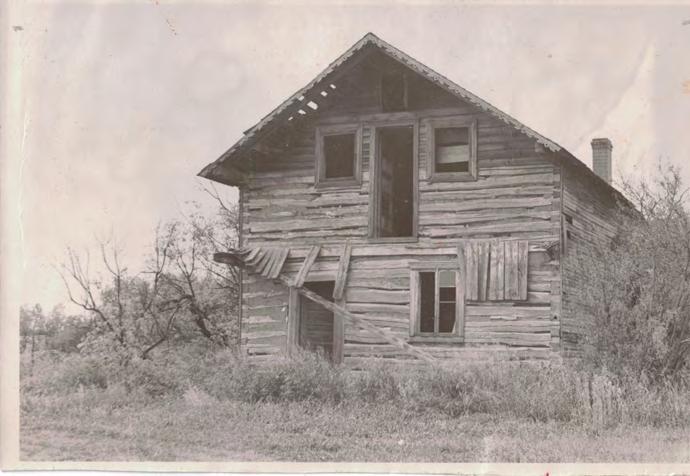
People with deep roots tend to value history, and those who read history know that times like ours have happened before; times when true history is denied and faux history is created. Some call it propaganda, others brainwashing, still others might define it as social engineering. The one thing all these terms have in common is a desire to control people by manipulating what they hear and believe. We are surrounded by evidence of very effective re-writing of history, some older and some very recent, but people who maintain a personal connection with history through their roots, their community roots but especially their family roots, are less easily fooled and controlled.
A couple of examples of manipulation of history might be helpful; one that changes some history that is 70 years old, and one that changes the history of the past few months.
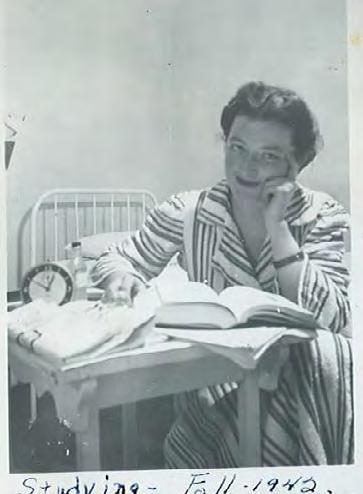
After World War II, Anne Frank’s diary was published by her father, Otto. It quickly became a best-seller and remained on the reading list of many students over the past 7 decades. Over that time-period, there were individuals who publicly claimed that the book was a forgery, with the purpose of denying the Holocaust. Anne’s father, incensed by this blatant deviation from the truth, persevered in legal action until his death in 1980.
This January, a few truckers who disagreed with the cross-border vaccine mandate organized a convoy that crossed the country to the nation’s capital. Thousands of people converged from all over Canada to support the right to freely choose vaccinations and to protest government overreach. Another group gathered in southern Alberta. Members of our community participated at both locations and returned with glowing reports of the
unity, charity, and personal selfrestraint that was demonstrated by protesters. Meanwhile, it was surprising to see how many people, who had remained comfortably at home, believed the exact opposite about the truckers’ gatherings. Media had done an effective job of spinning this historical event in their own way rather than simply reporting what had actually transpired.
If people who value their family roots tend to value accurate history, it makes sense to involve family history as part of our home school curriculum. What do family roots look like? How far back can families go? Some people know stories about their great-grandparents, but not much beyond. Other families are blessed with an individual or two who are tenacious about digging up family history.
My own family has been blessed with a bit of both. On my father’s side, there seemed
By Ken Noster
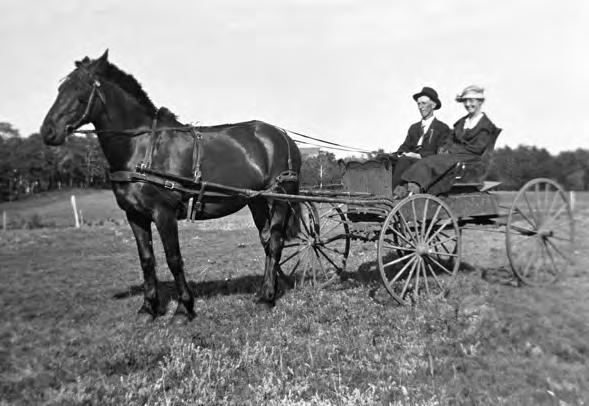
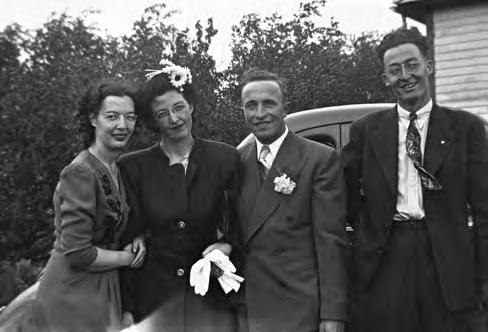
to have been a pretty decisive break with Europe when they emigrated to Canada early in the 20th century. Family members didn’t talk much about Europe, and even the stories about their early life in Canada were relatively few and far between. Physical hardship may have had something to do with the relative silence, and broken relationships likely played a role as well, but there may be other contributing factors.
Although my father’s family demonstrated loyalty to one another and to their neighbours and possessed a deep awareness of the importance of reputation, while valuing their faith and basic education, most of them were not what you would call people of letters. They didn’t write down their impressions, memories, or even diaries, and correspondence with others was both infrequent and pragmatic.
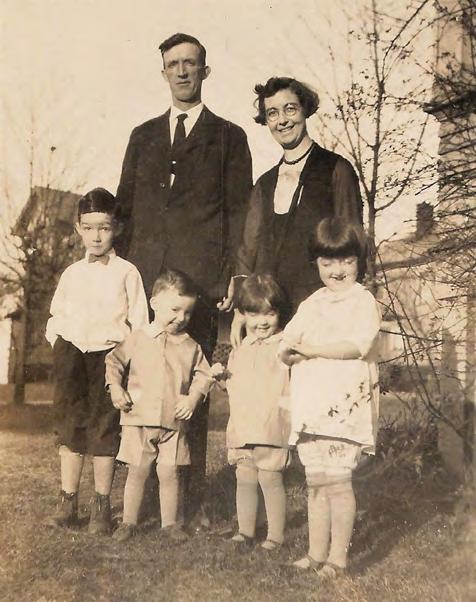
On the other hand, my mother’s family demonstrated a significantly different approach to life. They did write letters, many of which are still in the hands of family members. They also recorded impressions and memories, and even wrote stories and histories. While Dad’s family was struggling to survive on their homestead in the Canadian West, Mom’s eastern USA forebears were training as doctors, nurses, teachers and pastors and travelling to Africa and the Middle East to contribute years of their lives to missionary work. They read lots of books and were what you would call people of letters.
In more recent times, most of the members of Mom’s family have taken interest in family history. Even before genealogy was a popular pastime, this family could trace its lineage back to the 1700’s in the USA and further back in Scotland. Over the past 40 years, two family members have been able to probe many more details about the extended family in the USA and trace the Scottish clan as far back as Robert the Bruce.
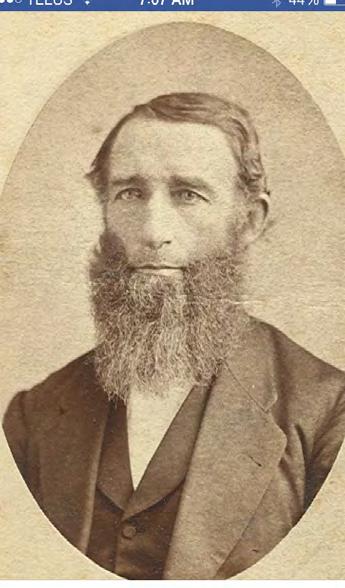
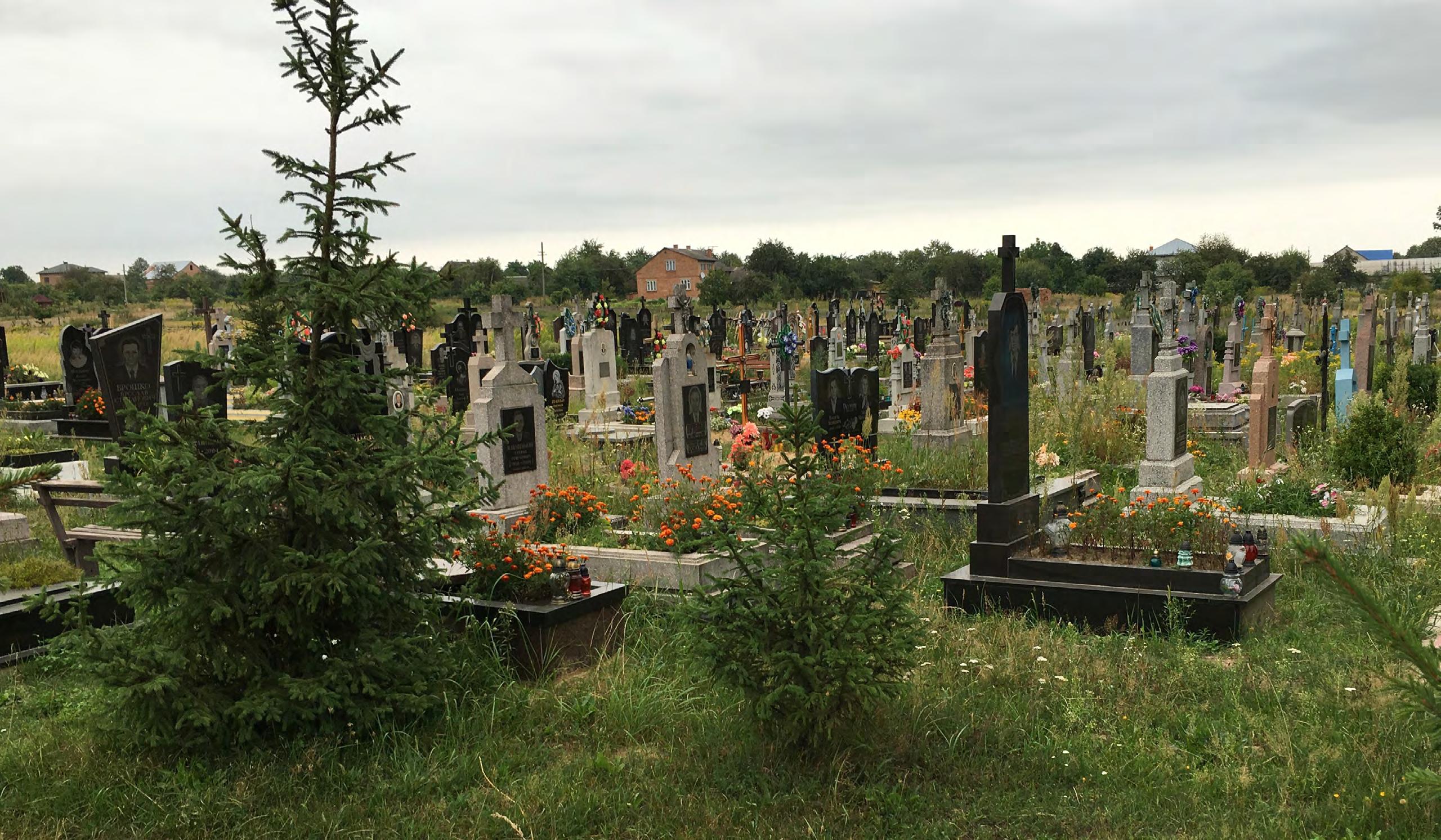
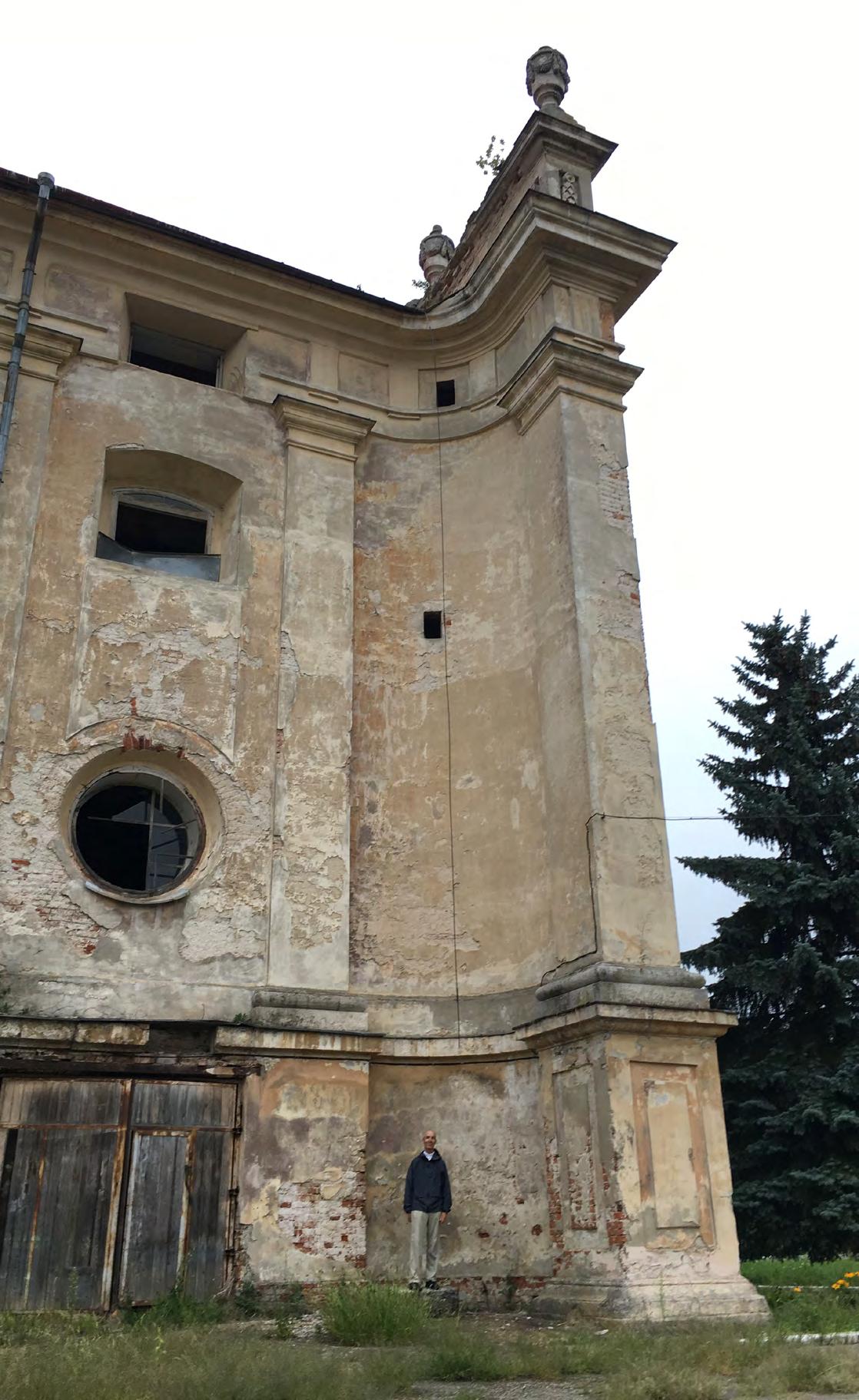
With regard to research, I find Mom’s family pretty impressive, but that does not mean Dad’s hasn’t been an influence in providing a sense of our roots. Unable to depend on keeners to do the research, I had to travel to Europe myself, seek out the village from where Dad’s forebears departed, tromp through cemeteries, and search out family names. I was pleasantly surprised by what I learned and what relatives I met and, most of all, I gained a compelling feel for my roots there. Another surprise was that extended family in Canada had already done the trek ahead of
me. I came away recognizing that even though this side of the family has provided fewer years of recorded history, the powerful sense of belonging was of great significance.
Those are significant roots, and the effect on young members of the family is positive. Knowing where you’ve come from provides a sense of personal connection with distant places in the world, even if you have never visited them. These are places where our forebears invested their lives, studied, worked, and died. A part of us is there, and the communities, the cultures, and the faith of those places belong to us, while a piece of us belongs to them.
Whether we can go back many generations or just a few, there is value in learning what we can about our roots and the people who walked the earth, nurtured children, formed communities, passed on their faith and values, and made our very life possible. Not only do we gain a better idea of who we are, but our roots provide an important step in opening our minds and hearts to the world. It is much easier to see the foreigner as our brother or sister if we have already experienced our personal connection with people and places far away and different from us. The degree to which we grow to appreciate our roots is the degree to which we will value, respect, and support cultures beyond our own. We will come to know and value them, and we will come to better know and value ourselves. Meanwhile, we will have knowledge of and a personal connection with elements of history that we may no longer read in books or hear from the media.
Connection with our roots gives us historical and cultural insight at the same time as it provides us with a discerning eye. We may become inclined to appreciate the truths in “old wives’ tales” and the falsehood of polished presentations. We may rely more on our forebears and neighbours than the professional purveyor of news and history. We may look deeper and more broadly for the evidence of history than what is presented by the common sources, and we may raise up families of people who will discern carefully and think well. As people with deep roots
who value history, we know that times like ours have happened before.
Kenneth Noster and his wife Marlane live near Derwent, Alberta on their certified organic farm. In addition to his role as Head of Schools, Ken also contributes to his faith community as a deacon. Ken and Marlane home educated their 6 children through high school. Those of their eighteen grandchildren who are schoolaged are also WISDOM students.
Notes to Myself


Roots

thankfully, it soon became clear to

By Marlane Noster

me how very shallow it was. Within the first couple of years of home schooling, I began to realize that if I wanted to invest in my children’s education I needed to go much deeper, and to me that was more like putting down a deeper root: a tap root. As the years progressed and I
became confident by experiencing my children’s healthy development, I began to gain the confidence to attach some secondary and tertiary roots to the tap root by creatively expanding what we were doing and filling out in greater depth and breadth the things we were learning.
At the time when I had begun my home school journey it had been a reaction to a situation as opposed to a vision for the future. So, in came the books from the school, which interrupted my day in a way that called for some large adjustments, especially in my heart. Thank goodness that we had begun in February and had only a half a year to complete before a summer break. That summer provided a time to inform myself about the many options that lay before me: an abundance of resources and insight into an array of teaching styles as I prepared for the year ahead. Going forward, the first full year of home schooling still followed a fairly shallow approach as I continued to get to know my children’s learning needs.
Oh my: the options of books available to home schoolers and the ancillary materials were almost overwhelming, as I picked up so many resources that I soon learned I could never fully use.
As my family continued to grow and mature, and I began to develop a simple flow of action, I was able to focus on deeper learning, realizing which things needed some perseverance and which things provided more intuitive learning for each child. I was developing that tap root, my children were growing in relation with one another, and their learning was beginning to serve them well.
The secondary and tertiary roots that were added to the tap roots were the

joyful learnings that were added to each subject we were studying. For example, when we were studying Italy we added the music of Vivaldi and his story in Venice and a study of the culture, including their yearly masquerade with their fabulous masks, and the architecture of the city built on stilts. Of course, Italian menus were a great delight. These added elements of learning, attached to the core learning, in beautiful and memorable ways. We maintained our deep tap roots with the core learning while enriching them and freshening them with the secondary and tertiary roots of delightful learning experiences.
Looking back, I am very grateful for the grace that prevented me from wasting my children’s learning and growth by remaining in the shallow roots of the school curriculum. I am also grateful that, once I discovered
the tap roots of excellent core learning, I didn’t remain there, but pressed on to the rich and rewarding learning that comes from the fun aspects of learning. Today, I can clearly see the positive results of the fun part of learning, perhaps the very best. Our adult children carry with them not only the central things they learned but also the aesthetic value of the things that schools would never have the time or inclination to provide. Those secondary and tertiary extensions of the tap root are what bring in all the nutrients, and the health of the plant provides obvious evidence.
Marlane Noster is WISDOM's co-founder and Events Director. When she's not in the office, she dedicates time to her church, community and her family, including her six children and eighteen grandchildren.
Mediated Learning
MediatedLearning
If we were to give you a definition of the word “Root”, which is a noun, it means something that is an origin or source, the “essential core” or HEART, could you easily connect that to your own homeschool? What about your program plan?
What if we asked you “What is the root of learning?” and “How have you incorporated that into your teaching?” as it relates to your home education program plan? Would you have known the answer to that is Cognitive Function? You might be wondering “What now, is cognitive function? Do I HAVE to know that in order to teach my kids at home? How and where do I put that in my program plan?”
Cognitive function derives from the term “cognition” which is simply our learning, our thinking, reasoning, remembering, problem-solving, decision making, and attention. And do you HAVE to know that in order to teach at home? We would say YES!!! It’s essential. But it’s not difficult,
or too complex. In fact, it simplifies everything!
Because, essentially, and we know we can ALL agree on this: what we really want to teach our kids is HOW to learn. So, the question we should ask ourselves each year when making our plans for homeschooling, rather than “WHAT do we learn?” is “HOW do we learn to learn this year?” That is the question.
And, what’s the answer? How do we go from “what to learn” to “learning how to learn”? As a parent, the root goal should always be to teach your children to learn how to learn. Most of us are products of a school system that put emphasis on content rather than process, so it is understandable that this is all we know. It is what we think because it’s likely what we were taught to think about education in that system. And, this program plan that I have to create for my homeschool… it asks me “What will the subjects be?” So, how do we possibly
get around that?
By Michelle McLay
In reality, the subjects will always be changing. We can’t say what subject we should teach today that we know with absolute certainty will even be relevant 5, 10 or 15 years from now. BUT THE ROOT of learning will never change. The root of learning is developing cognitive function. It’s the process. And there is a way to develop that program plan, which meets the AB Education requirements, but still also allows you, the parent and authority in your home school, the freedom to teach how to learn! We must start first by developing good roots, good cognition, and making that the focus of our plan.
Why would we want to do that, you ask? Because, teaching our students how to learn not only meets the Home Education Regulations Student Learner Outcomes (meaning progress over 12 years!) but also develops those characteristics that every independent learner needs, a few
of which are motivation (the right kind!), perseverance, sense of competence, and accepting change in the brain (Student: “I really can learn and have grown my IQ!”). And you simply cannot do that as effectively and efficiently as you could by focusing on subjects and scope and sequence (fancy term for “table of contents”) in your curriculum or resources.
In fact, it is essential to have good cognitive function first, in order to learn any content well. We have to have good cognition first in order to read and write, solve math, think critically about science and history, and all the other things we might wish for our children to learn. Isn’t it better then, to teach our children how to learn, so that they can go out into the world and learn all that they need to learn, whenever and wherever they might need to?
What about that struggling student? Where does this fit with them?
When we look at students with learning challenges, we want to get to the root cause of those learning difficulties, to know whether they’re cognitive or behavioural. Reuven Feuerstein, renowned developmental, and cognitive Psychologist and expert in cognitive modifiability, says “Cognition and behaviour are two sides of the same coin”. The root cause of these struggles tells us the approach that’s needed, how to recognize which cognitive functions are strong and which are weak, and then we proceed with strengthening weaker cognitive function and aligning positive emotional criteria in learning that can cause blocking behaviour, so that we are teaching our students how to learn. How to become independent learners.
Here’s the beautiful thing about our brains, and leading scientific evidence backs this up – ALL brains can learn. All brains can be changed. In fact, all brains are constantly wiring and re-wiring themselves all the time. These studies have shown that we can interact with our students in very intentional ways to bring about practical change that can even be seen in medical imaging technology! Yes, friends! And
we do that by focusing on the root of all learning. Cognitive function.
When we teach our children how to learn, they learn anything they need to know better than if we were just teaching them what to learn. We also want to teach them how to think critically of all that they’re learning, so that they know whether what they are learning is true, or not. IF we’re simply teaching them what to learn, we’re not developing those critical thinking skills they need when they go out into the world, to be able to have discernment and be able to stand firm on the Truth they’ve learned, to be able to know and understand it well enough to logically defend it.
WISDOM’s Mediated Learning team’s mandate is for all parents to understand the effectiveness of using Mediated Learning as a tool, a proven method for delivering content within the resources and curriculum you’ve chosen to use in your own homeschool. So that you are not only “covering the subjects” but using those subjects to develop and strengthen the root of all learning in your home, growing and changing your child’s brain and their
cognition. Their cognitive function. So that you are teaching them HOW to learn as best you can.
Parents, please join us in our on-line classroom for live interactive workshops, understanding the core principles of and practicing Mediated Learning, to recognize how all brains learn, and how best to teach your students how to “learn to learn”...
Because “…learning how to learn is the most important thing to do in a world of total change.”
~ Reuven Feuerstein, 1921 - 2014
Michelle McLay home schooled her boys through high school, planning many educational adventures all the way through their school years. She and her husband Scott live in Edmonton.
For more information on the program, and workshops beginning in the Fall, go to wisdomhomeschooling.com and click on Resources > Mediated Learning.
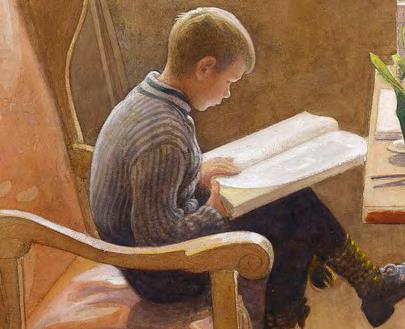
images: Esbjörn at the Study Corner By Carl Larsson - 1912

Plants and Words and … Life Plants and Words and … Life Plants and Words and … Life
By Paul van den Bosch



Man: Money is the root of all evil, you know.
Thief: Correct. So I’m making you more virtuous by taking that evil away from you.
Man (looking at map): Well, I’ve found the town of Money but I don’t see any route to Allevil.
Man: Is it possible to make regular beer from root beer?
Scientist: Certainly. Just pour the root beer into a square cup.
Enough joking around…
When I started thinking about the theme for this month - roots - some images came to mind… Inspiring messages of “roots and wings”. A novel by Alex Haley. Red mitts and touques from a company with that name. Then
came some other ideas…
Plants…
Plants cannot exist without roots. Just as the part of the plant that is above ground is necessary for the gathering of some of life’s necessary nutrients and also warmth from sunshine, so roots are necessary for the gathering of other nutrients below ground, for the finding of water and the stability of the plant. We may not see these roots. Sometimes the plant above ground is cut and harvested or simply cut and thrown away. We forget that the roots are still there (just as we humans can forget some of our own history only to discover memories long dormant). The root is out of sight and therefore out of our minds. Some roots can remain dormant. They can be fed below the surface and can appear dormant only to spring to life again when the time is right.
Roots are necessary, but only part of the complete plant. They are a starting point but not the complete organism, just as our human traditions form a historical root from which we can grow. The root provides a solid place for the plant to grow up strong, to spread out its branches, to bear fruit. The root provides that stability.
Root words…
The English has some big words, doesn’t it? My father used to call these “expensive words”. When I was a teen and I had discovered a new word with many syllables – I think “serendipitous” was one – I would try to slide such a word into casual conversation to show how smart I was. My dad would give me a look and say, “That’s an expensive word for a Thursday afternoon.” I knew what that look meant: That’s good but don’t go thinking too much of yourself now.
I still like learning new words today but now it’s just for the pleasure of discovering new treasures in a rich language. Many of those “expensive words” sounded impressive because they were simply long compound words constructed from simple root words. Some of these root words (from Greek and Latin, for example) are pieces of words that are not words on their own. An example is the Greek root “gno” meaning “to learn, to discern, to know”. That’s not an English word on its own but from it we get such English words as agnostic and ignorant.
Sign in garden store: “Ask our gnomes. They know.”
A Latin example is the root word “manu”, meaning “hand”. That doesn’t stand on its own as an English word, but from it, we get the English words manuscript and manual.
Reluctant student: Does manu rhyme with canoe?
Irritated PE instructor: Yes, because you need to use your hands to manually get this canoe moving, so start paddling!
Some root words can stand on their own (and if you are a Greek or Latin scholar and I don’t have these meanings exactly correct, mea culpa)…
Examples:
The Greek word “graph” which means “to write”.
The Greek root word “photo” which means “light”.
The Latin word “Audi” which means “small German car”, or so I’ve heard.
These root words can be built upon but it is the roots that
provide the core meaning to any larger expensive structure that gets added.
Our lives…
Like plants (with roots that give us stability) and words (with roots that can be added to as linguists add prefixes and suffixes to create compound words) we need to have roots in our lives. Some of those roots can be hidden and dormant even for long periods of time. But we don’t exist without those roots. Our roots are where we started, like them or not. Our roots are what we reach down toward to gain nutrients and guidance from our past. Our roots are where we can seek water during our dry periods. Our roots provide a core meaning to our lives and, upon that, we can build the structure of our future.
We are not simply the product of our roots, of course, but those roots do help define us. From those roots, those core meanings, we stretch out branches and grow fruit. We add stems and our lives bring forth flowers in bloom. We may also put up large branches and flashy flowers to distract others and even ourselves if we feel guilt or shame about what lies beneath, but those are just distractions, expensive words used to show off. Sometimes, we may feel “uprooted” or (because we are dissatisfied with the roots we were given when we were being raised) we may wish to “put down new roots”. There are many varieties of flowers and we may wish to change ourselves from roses (because we don’t like our own thorns) into sweeter smelling carnations. But it is unlikely for a flower to become an oak tree or for a dandelion to become a grapevine. If you have ever tried to dig one up you know how deep the roots of a dandelion go.
So we can uproot ourselves and put roots down in a different place from where we were, but the roots that we are putting down are still ours. Sometimes we find ourselves rooted in a difficult spot, like a poplar tree that seems to be growing straight out of the side of a rock or a scrubby little pine tree barely hanging onto a rocky ledge.
Why is it there?
It has anchored itself in a difficult spot. If it had a choice, would it choose to be rooted somewhere else? Perhaps. But perhaps not.
“I have a wonderful view of a mountain and I overlook clear water here, so why would I want to go anywhere else?”
Other times we may feel like new young spruce trees almost ready to become a Christmas tree for some family. We poke through the spring snow and see larger trees around us and we glimpse great mountains in the distance and we feel small and insignificant. But the future holds great promise so we continue to grow.
We bloom where life has planted us.
We may take our place as part of the great forest, or we may become a beloved Christmas tree, and these (and other possible futures) may happen because there are many things we can’t control. God, grant us the serenity to accept these things we can’t change. And also, God, give us the courage as we change the things we can.
We may want to add prefixes and suffixes to our own particular root words and our lives certainly do make those additions. But we get to choose what to add. Sometimes we feel we have outgrown our roots. We
wish to change the meaning of our own lives, just as a prefix or a suffix can modify the meaning of the root word. But that root word still contains a core truth, a deeper meaning that points to something constant beyond itself.
There are some useful questions to ask here…
What are your prefixes, and what are your suffixes?
What are your true roots?
What are the anchors of your life, those things that give you stability?
What is truly important?
What truly gives you life?
How are you fed morally and spiritually?
What connects you to your deepest truth?
What causes you to reach up to a power greater than yourself?
Your roots are your connection to your past, to those things that you hold most deeply. Like a plant, we are anchored and given stability. Like words, we have core values that we can use to reach beyond ourselves. Roots are our solid ground where we are planted and also what allow us to reach for spiritual truth beyond ourselves.
Paul van den Bosch is a WISDOM facilitator who has taken routes to places unknown and has also taken roots to words unknown.
Photos Courtesy of Paul van den Bosch

Roots Matter Roots Matter
By Terry Yaceyko
Roots(definition – the bottom or supporting part of something)
I can remember my farm roots. I grew up on a beautiful farm about an hour or so away. I totally took farm life for granted. It was just what we did. Fresh air, horses, cows, crops, and more. What a lovely life. One of my favorite set of memories is riding horses. I rode a squatty little pinto named Patches, while my younger sister rode a big, black horse named Spice.
Once we were in upper elementary grades, we could take the horses and ride anywhere we wanted on my dad’s property – which included part of a river valley. Lots of pastureland with cows. A quiet lake full of trout. A culvert under a road that always overflowed when the beaver filled it up with branches and logs. A river to ride across to the other pasture if you really wanted to go for a long ride. (And the river was great for the horses to cool off in, too!)
Sunday afternoons often included a family drive in the afternoon down to the lake and then up the road to check if the beavers had filled up the culvert again (and they always had!) It was always very satisfying to get the culvert emptied of branches / dirt and running freely again. My sister and I loved riding in the back of the truck home singing / shouting “There’s a Hole in My Bucket, Dear Liza.”
To be honest, my roots from this era include the importance of family and a stronghold of depression in my life. (I also struggled with fear and had a lot of issues with going to school. I was pretty shy. I would have LOVED to have been homeschooled, but that wasn’t an option back then.)
My husband, Richard, and I have a lot of roots together, too. We met at our church youth group, went to Bible College together for a year and have enjoyed being best friends for many years. We have had
our struggles, too – I often joke that we've been happily married for 37 years (although we have been married for 39 years)! It’s wonderful to know that we have worked through different issues and come out on the other side to being happy together. I openly share that because, when we were struggling, I didn’t know one other couple that had struggled and made it through to being happy again – no one seems to share that part of married life. Anyway, we made it through and are still happy together! God can restore your marriage. How do I know that? He restored ours.
We married young. He was a mature 24 year old and I was a naive 19 year old. (And no, two do not live cheaper than one, as my dad always said! Smile) I’m so thankful for the roots of faith in our lives as well. Bringing our girls up in the church and a Christian home – as best we could. We were of one mind regarding our faith and that root was strong. My roots from

this era include the importance of family, being purposefully married, overcoming the stronghold of depression in my life (including living by facts not feelings), enjoying life, and the importance (or value) of children.
I love the roots of homeschooling in our lives. Deciding to homeschool our children was the one best decision Richard and I ever made regarding our family and children. It turned our focus towards home – rather than outward towards school. That was pivotal for me. I never dreamed that the initial decision we made for our oldest daughter would turn into a lifelong exercise in homeschooling our children. It’s probably good I didn’t know what lay ahead, but oh, the fun we had together. Although we started off ‘schooly’, it didn’t take long to detour into the roots of Delight Directed, Charlotte Mason, Unit Studies, Eclectic home schooling. And oh, we enjoyed the delight of following the interests of our children.
education, the delight of learning, the joy of being together day in and day out (with moments and sometimes days of frustration, to be honest), the importance of read-alouds, the value of little ones in our lives, gathering together with other homeschoolers, sharing our faith with our children and so much more. These roots are still of great value to me.
Those roots were deep and strong.
I never say marriage or homeschooling will be easy. Nothing worthwhile is easy, but both are worth the effort of doing well.

I also think of the roots of our Home School Support Group and the ladies that laughed and cried together over the past 30 years – and how much support and encouragement came out of those meetings. I thank God for each one of them.
We also enjoyed so many gatherings with like minded homeschooling friends and family. I was thrilled to have a sister that started homeschooling their children the year before Richard and I started to homeschool. And the roots of my sister’s homeschool blessed our homeschool. There is nothing like spending time together with friends and family of like mind. I think of the McFadzeans, Douglass, Zayacs, Wilsons, Valleaus, Hendricks, Marthinsens, Grangers, Laurences, Diesers, and so many more that were part of our homeschool journey – and the roots of our homeschool tree.
Some of our root activities included Country Days, Craft Afternoons, Movie Discussions, Holiday Parties, informal gatherings and so much more. We always loved getting together for a good Show & Tell time (after a Country Day) and then potluck snacks while the moms visited a mile a minute and the kids played. Oh, the roots from this era are still momentous to me – the value of home
I thank God for the roots of WISDOM Home Schooling and the part they have played in our Home School Journey. Right from the beginning of our homeschool journey, WISDOM connected with us. We appreciated our facilitators, loved the magazine, and loved volunteering for the WISDOM PAC (Parent Advisory Council – now the PSC: Parent Support Council). Our roots with WISDOM are deep and strong, too.
What are the roots of homeschooling for me? Geography (my dad loved geography, rocks and traveling), History, Writing, Reading, Math, Money Management, Arts and Crafts, Baking, Nature Walks, togetherness and so much more. I also love being hospitable and hosting events with friends and family – a root grown deep by watching my mom’s hospitality through the years. I love passing on these roots to our grandchildren.
What are your roots? Are you grounded deep and firm?
A friend shared a testimony about driving a bulldozer. He could take down trees that were thickly planted with no problem. Their roots were shallow. BUT he shared about the one tree in the middle of a pasture that he tried to bull doze. It took a lot of time and effort for him to do that.
Have you gone (or are you going) through a dry season or a struggle right now? The key words in that sentence are, “going through”. Don’t stop or give up. Get through to the other side and rest. A homeschool friend shares now and then that every homeschool year is different. There is no normal year. I found that to be true in my life, too. I must admit that I don’t often thank God for the struggles in my life, but I do know the struggles are when I grow in my faith and in love. I have struggled my way through miscarriages of very wanted children, an extended family issue that rocked my faith to the bone, marriage issues, not enough money at the end of the month, parenting issues and more. Every one of these issues have helped the roots of my personal life and faith grow deep.
I will even say the events of the last couple of years have strengthened my roots, too. Early on, I felt knocked off my feet and my faith faltered a little, but as time went on, and I began to focus on faith (not fear), my foundation/roots began growing stronger. Even this will not knock me down. I will trust God.
More than ever, I understand how Roots Matter. As you look into the uncertain future – perhaps wondering about homeschooling, current events and more, continue building your foundation and roots. They will keep you (and your family) strong in the days ahead.
Terry Yaceyko and her husband Richard live in Vermilion, where they homeschooled their four girls through high school. Now, Terry loves supporting homeschoolers from the WISDM office as she finds fun learning resources for her grandchildren.
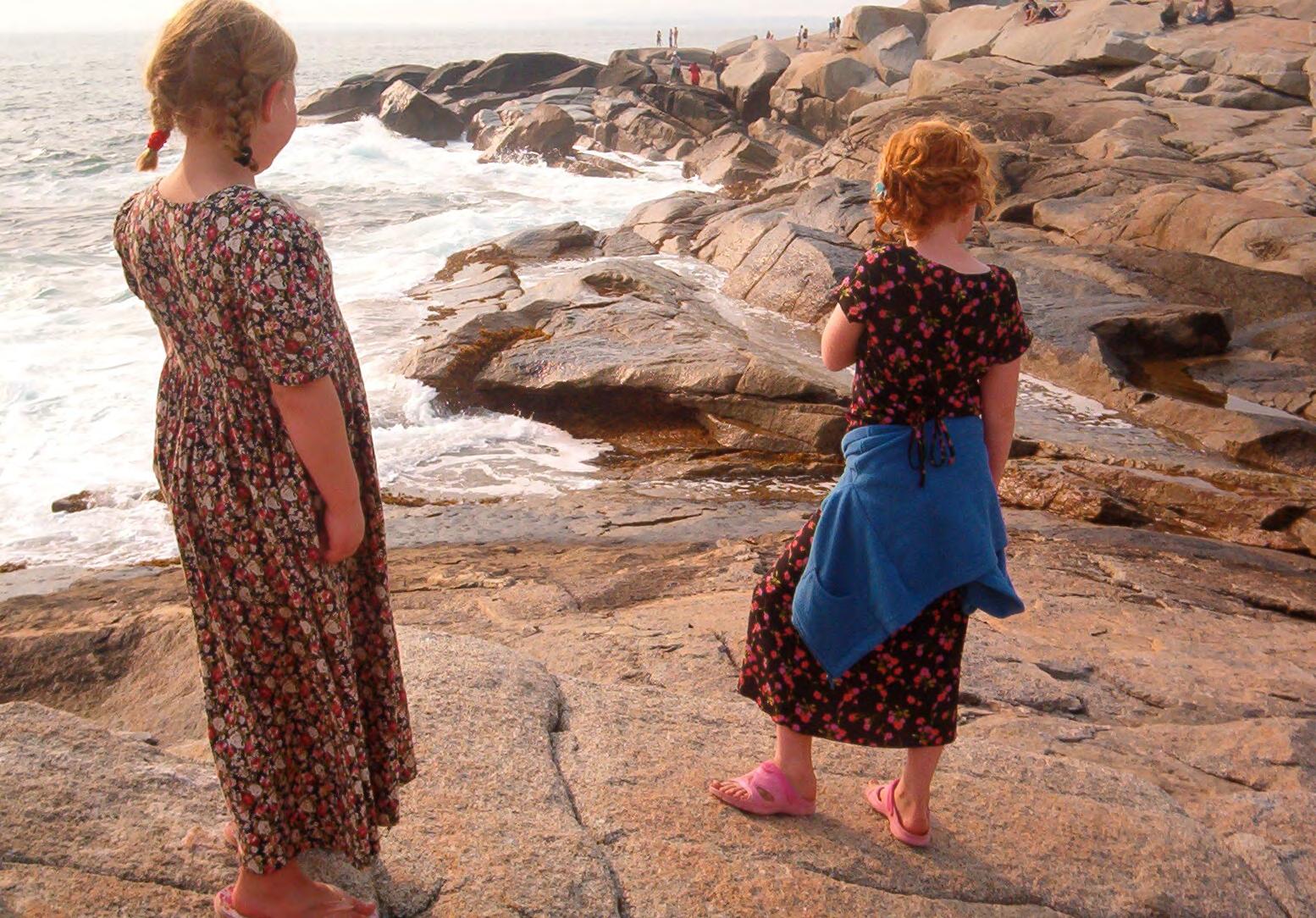
Photos Courtesy of the Yaceyko Family
Home School Experiences
Making Meaning by Cultivating Our Roots
by David Snider
Asa theatre artist and educator, I’ve always been curious to hear the stories of the people sitting in the audience. I wonder at the wealth of experiences they have that resonate with the play or musical I’m a part of telling. Even as a kid, I was the one who stayed inside (when the other cousins had gone out to play) to listen to my Uncle Jimmy’s hilarious stories of growing up.
Because of my keen interest, in addition to performing and directing I often facilitate groups to exchange true stories. I welcome all voices to speak and listen generously. Without fail, there is an “instant community” formed, where folks from different walks of life recognize the universality, and uniqueness, of the human experience.
I want to encourage the families of WISDOM’s learning community to take the opportunity, while it is available to you, to ask your relatives and friends to share stories of life experiences. This is a means not just to identify our roots, but to cultivate them. To be specific, through the intergenerational exchange of our stories, we make meaning. The time invested nourishes our sense of belonging, feeling valued, and we can move forward carrying the wisdom (and yes, sometimes the foolishness) of those who came before us. The examples of others help shape who we become.
Now that I’m 52, I’m finding a growing sense of connection to my grandpa, Abraham Shoemaker. I’m surprised how often he has been coming to mind lately. Perhaps it’s because I’m verging on the “empty nest” season where I could be a grandparent
(although I’m sure my sons don’t yet have that on their agendas). I remember setting a phone visit with him, a few years before he passed away at almost 97, to ask him to tell me some of his stories. I had heard that he had a motorcycle, but I learned that he left his Pennsylvania farm at age 16 on that motorcycle to escape bullying from his older brothers. And further, that he worked his way across the U.S. to California over two years as a migrant worker on farms. I also learned that the Shoemakers, of Pennsylvania Dutch tradition, first came to the United States in 1680. My grandpa’s character of courage, sense of adventure, and his corny sense of humour are finding their place in me.
I mentioned my sons, now 18 and 20. When they were small, we had a bedtime ritual that started with, “Tell us a story of when you were a little boy, and make it troublesome!” There were all kinds of memories to share, from mischievous shenanigans like getting caught “borrowing” a yard ornament from the neighbours at age 6, to the painful parts of growing up, like witnessing the death of my dear dog Chippy, hit by a passing car in front of our house when I was 12. It wasn’t always the best way to calm them for sleep, but we are all the richer for having shared the stories. Knowing my sons know many of my stories fortifies me now, as I grieve letting go of those little boys and I champion them as young men. It also thrusts me forward to embrace the great privilege of growing older.
And I wish the same for all of you, at whatever stage of life and learning you are in. Let’s move forward in the hope that if we tend to our roots by sharing our stories, the abundance of produce, and by that I mean Meaning, makes us rich indeed.
Photos Courtesy of David Snider
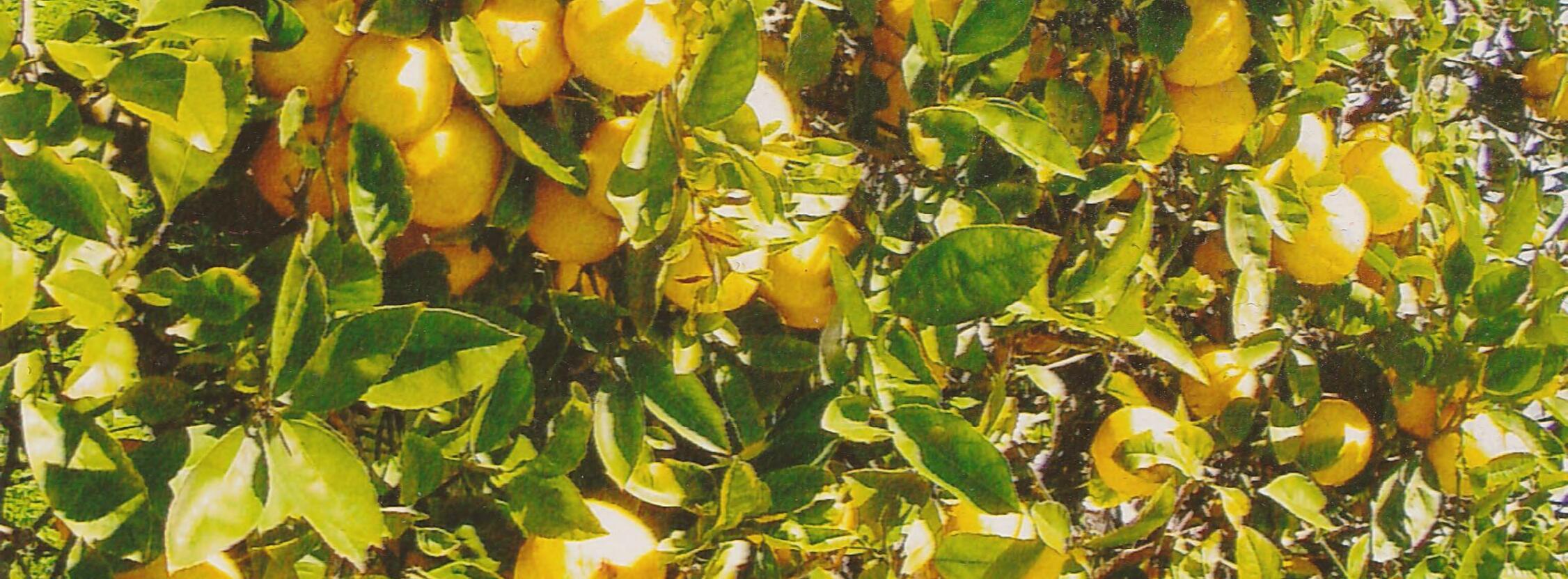
P.S. Speaking of an abundance of produce, the photos of lemons and oranges are of trees in my Grandpa Shoemaker’s backyard in California, taken during our last visit together.
P.P.S. I hope to teach a workshop this Fall, for WISDOM families, about exchanging true stories.
David had the opportunity to teach three online drama-based classes for WISDOM this year (Finding Your Voices, Mini-Scene Study with Calvin & Hobbes, and Introduction to Sound Design). In a recent conversation with Marlane Noster and Kyra Tinant, looking ahead to online and inperson offerings for the Fall, the intrinsic values of participating in Drama, including increasing our capacity for empathy by “walking in another’s shoes”, sparked these thoughts about connecting to our roots. David is a professional theatre artist and educator based in Rosebud, Alberta, with over twenty years of acting, directing and sound design experience. He is also currently the Lead Director for the Canadian Badlands Passion Play, an epic outdoor production coming this July in Drumheller.


Building a BuildingHomeschoolCommunity a HomeschoolCommunity
SimpleBy Michelle McLay

steps for hosting events… to plan or not to plan… it’s not even a question!! OF COURSE you should plan!
There were two “million-dollar, goldplated” pieces of advice we got when we first started homeschooling. The first was to have a written Family Vision or Mission Statement hung somewhere for us & our scholars to see, daily. Did I say golden? I meant this was priceless! For tips on creating your own Family Vision Statement, reach out to WISDOM’s Mediated Learning team for resources, or attend any of our online parent workshops.
The second was that, if you want community, friendships, field trips,
events & homeschool gatherings for your children, don’t wait for someone else to organize them. Pick events that your kids are excited about, and experiences you are passionate about sharing with your kids, invite others to join & then “just do it!” (Swoooosh)! This was solid advice that we took to heart and which we kept simple. To loosely paraphrase Kevin Kostner in Field of Dreams, “If you plan it, they will come.” And it was true!
Planning events is easier than it seems, and it’s a process that gets easier every time you do it. I hear you, those of you saying you don’t like or need to plan, you’d rather be spontaneous. Let me (boldly) say, the most successful spontaneity is

best supported with a plan, because they are not incompatible with each other. I bet you didn’t realize you do engage in planning, even when you’re spontaneous. It’s also true what Benjamin Franklin said, “if we fail to plan, we are planning to fail.”
The first thing to do is just start! But you do need some tools. Gather the following to begin:
*NB: I make no apologies here, I’m an “old school analog planner”, but if you like, adjust this with the appropriate technology (calendar apps, etc.) that work best for you.
1. (In advance) Get information pamphlets and brochures on all things, locations, activities and events, nearby historic sites, etc., from your local information spots (town office, community centre, museums, tourism centre), that residents AND tourists to your area must-see, visit, or do. This is just a starting place for creativity & idea generating.
2. Planner or calendar of some sort with room for notes. OR, simply a piece of paper if that’s all you’ve got.
3. Pencils, eraser, highlighter (okay, I’m a stationery nut, so I also used postit notes, stickers, sparkle glue and colored pens, anything to help make this extra fun for me too, but all you REALLY need is a pencil).
Home School Tips


4. If you’ve got one (but totally optional), whiteboard or paper-roll on an easel and markers, for recording your family & independent brainstorming session.
Half the work is coming up with ideas, and I know you’ll be great at this! You are a homeschool parent, after all, and no matter what you think, I believe you are created to be creative! And so are your children. You’ve got this!
After gathering your supplies, gather your children! Schedule a short “home school event planning meeting” in your calendar, for you and your children to attend - 2030 minutes tops! You can even do this brainstorming session over lunch. Set out favourite treats, snacks and beverages; it only takes a moment to make it special!
Now, collaboratively curate a list of places to go, things to do, adventures to be had, and people to see. For inspiration, refer to your previously acquired packets or online resources. For example, search your browser for “family adventures in [insert local area, or province]” or get creative with “free things to do in …”, or “off the beaten trail things to do in …”, or “places for field trips in …”, be sure to scroll through the lower results so as not to miss unique recommendations.
Use your homeschool curriculum topics for ideas, make a list of real-life learning
opportunities related to the content, that you can participate in with your students and other families, to “take learning off the page”. For example, if you’re studying the Middle Ages, you might plan a morning at an archery lane to learn about and experience using a bow and arrow, or find a blacksmith to show your group how blades are forged, or host a costumed potluck medieval feast.
Once you have event ideas, it’s a matter of consulting your own calendar, matching an event to a date that works for your family. Reality Check: no matter how much you try, you won’t find a date that
works for everyone, so choose the date that best works for your family (since you’re planning) and people will adjust their calendars if they’re interested in attending.
If you are having trouble seeing where this might fit in a busy homeschool calendar, consider that these events are just as valuable as book learning, so perhaps you will consider setting paper and pens aside one or two days per month in exchange for trips and gatherings, which can be illustrated or written about by your students later too!
Next, check those dates and all questions that you can think of related to your event with the location or venue you need, adjust dates if needed. Ask for details on “guided v. unguided” tours, material or equipment needed or supplied, lessons, minimum/ maximum age requirements, if chaperones are needed, ask for availability on various group sizes (maximum attendance limitations?), is pricing discounted for school groups (yes, you may book as a group of WISDOM families for discounts), if insurance is required for booking (more on that below), etc. Make notes in your planner.
Some events require registration fees, rental, deposit, or commitment in advance. You can gauge interest before finalizing by “putting it out there” in advance, that


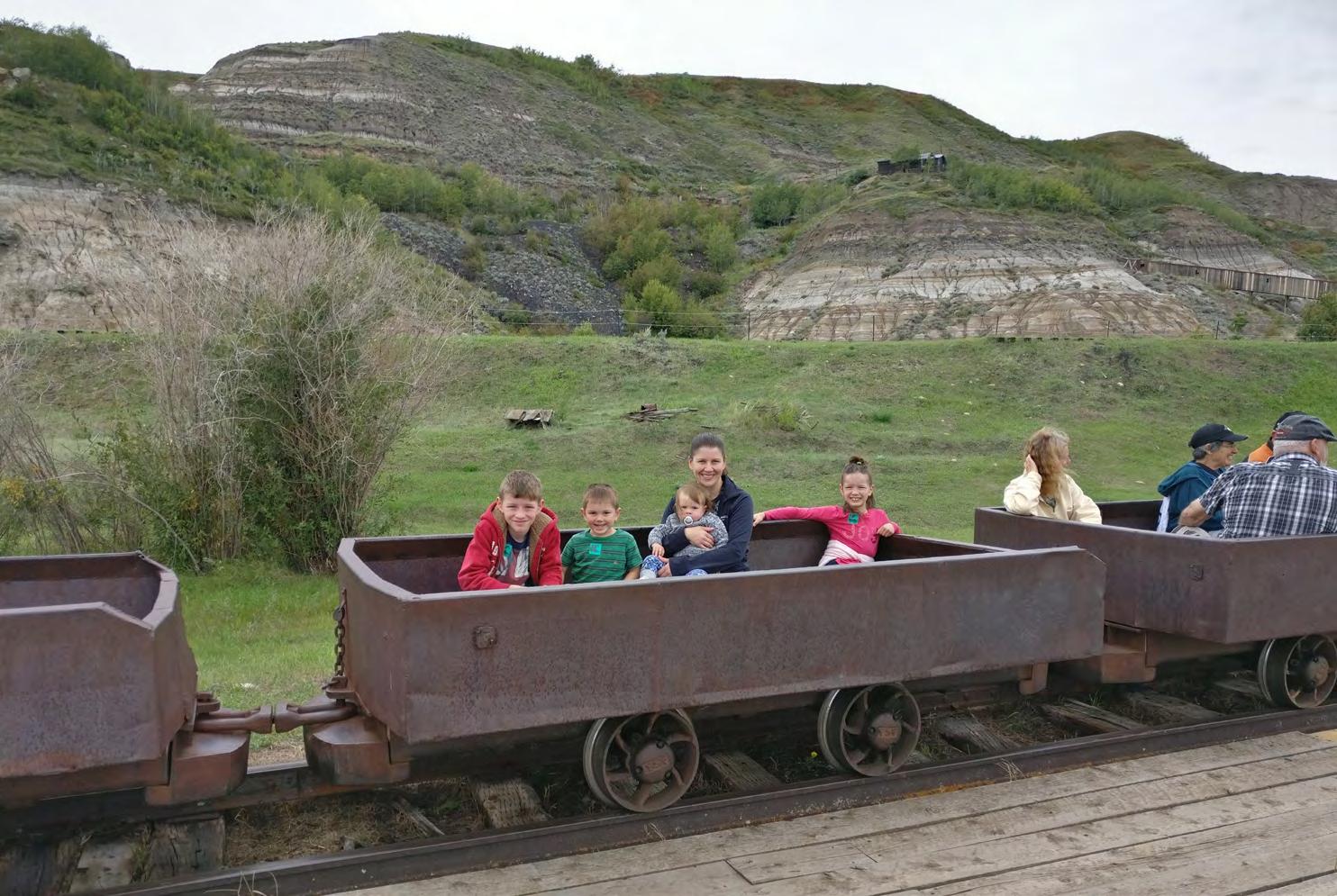
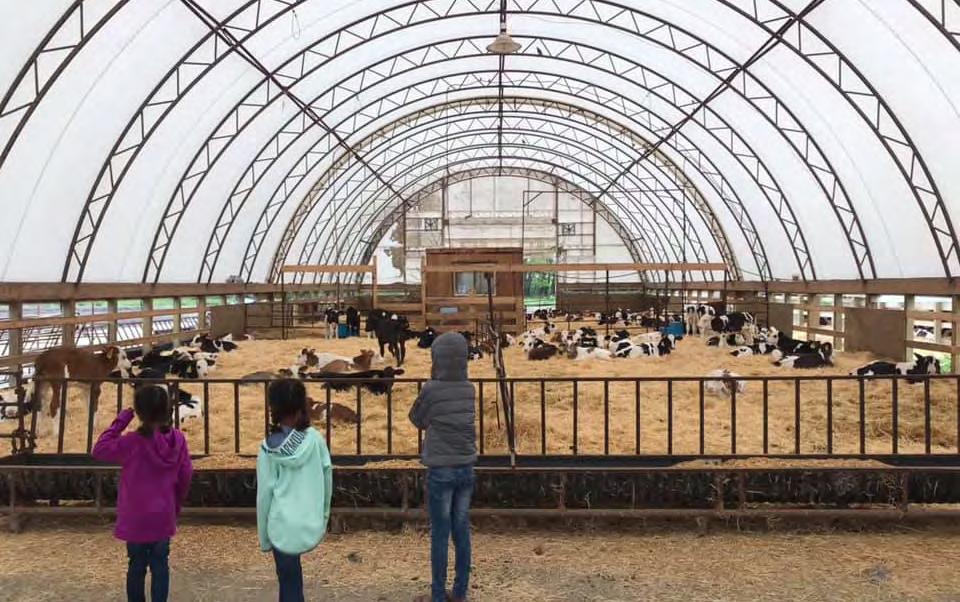
Isinger, Sarah - Atlas Coal Mine Museum
Zacharias, Sharlene - Tire Swing

you’re organizing this event and which date(s) you hope to secure. Get word out by emailing your local homeschool support group(s), check out WISDOM’s website “Resources” tab for the most upto-date list of groups, or wherever you might connect (google chats, social media etc.). “The more the merrier” is really true, and I guarantee even if other families aren’t currently studying the same topic(s), it will be interesting for many to join, and might even inspire them to follow bunny trails of their own for further learning adventures.
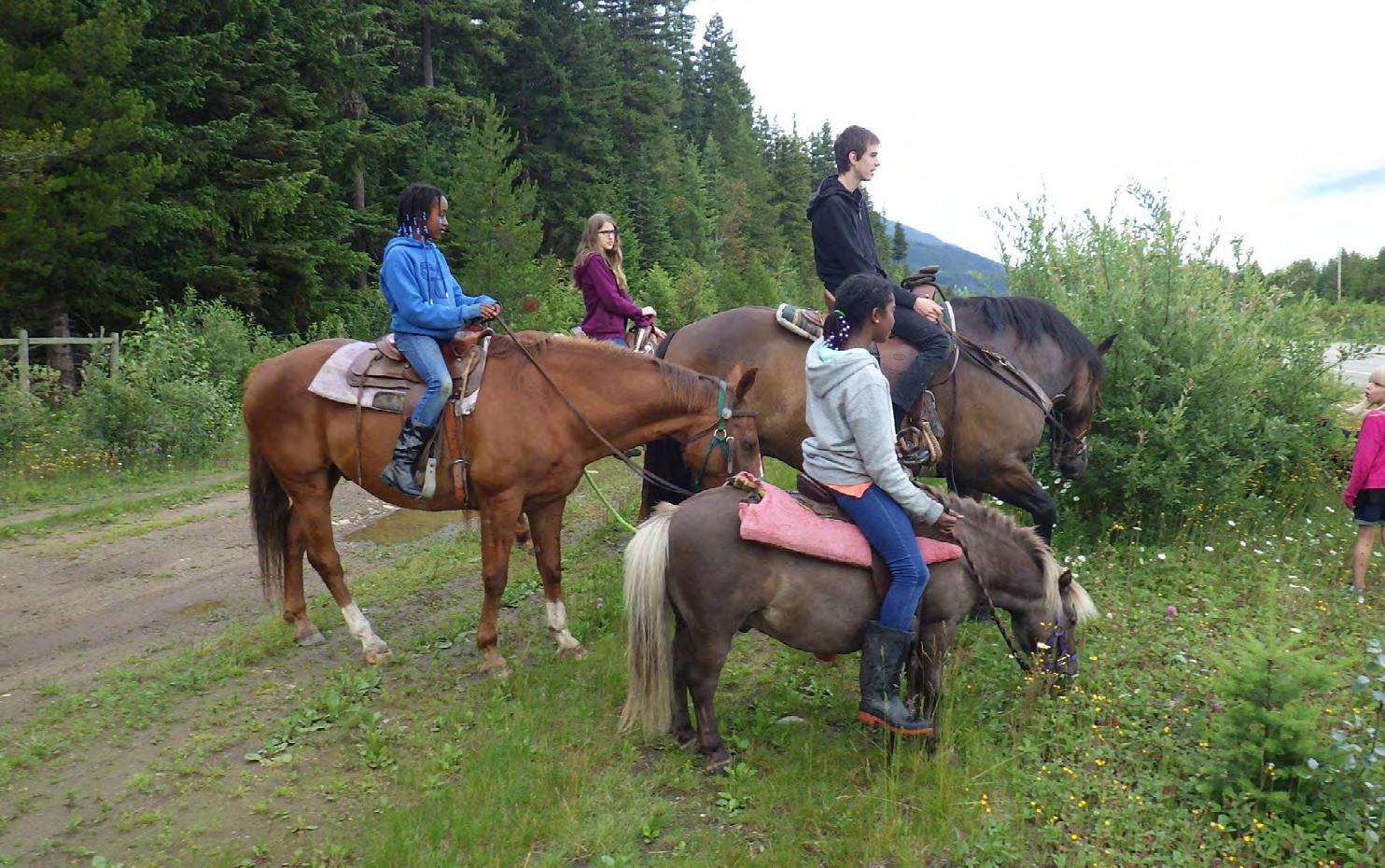
For events needing payment in advance, it is best to obtain a cost for the group or venue, and calculate how much per student, based on if you are booking a certain group size. For an archery event, when I asked for interest I heard back from parents that a little more than 20 students were interested. The range we used had 5 target lanes, we didn’t want the kids standing around too much, so we planned on booking 10 students per session, for 2 sessions on that day. I took the total cost for the rental and divided it by 20, and advised parents there were 18 spots available (keep space for your kids!) and that registration was “*non-refundable & first come first reserved” those who paid first secured their seats. I asked for cash in advance or they could e-transfer me their per-kiddo fees by a certain date. This helped ensure no additional out-of-pocket costs for me,
other than my own per-child registration fees. Once I had the number of children and payment needed, I booked the facility and provided a proportioned receipt to families for their funding reimbursement, when possible.
If appropriate, be clear in advance that if families are unable to attend, they can make arrangements themselves for other families to come in their place (unless you have a waiting list and are willing to do this work), and they would also be responsible for arranging to collect the fees they paid directly from the family that is attending in their place, should they choose to.
Communicate (usually by email) to all of your registered families once the event is booked or confirmed, and again 3-5 days in advance, with event details (time, location and anything else they need to know). Then attend and enjoy your event! Take photos and document this adventure, ask your children to tell you something new they’ve learned and what they enjoyed most, and record this assessment of learning. But, mostly have fun! And then plan another event! And, another event!
HSLDA member families MAY have access to comprehensive liability insurance coverage for group events. There are limitations and exclusions, so please check at HSLDA’s website under Insurance FAQs


at the member log-in or give them a call for guidance and assistance.
There’s an added bonus to planning events - in addition to all the fun and community connections it will bring to your homeschool adventure! It’s an excellent (very meaningful) way to teach your children goal planning skills, which are a necessary cognitive function required for independent learning! So, “two birds with one stone”, perhaps? Yes, even the planning part can be “life-learning” for your students, and I encourage you to document time spent planning with your students and incorporate it into your annual assessments for progress in cognitive development, teaching your children HOW to learn. Plus, fun!! May you be blessed with a lot of fun and new friends through your planned events!
Michelle McLay home schooled her boys through high school, planning many educational adventures all the way through their school years. She and her husband Scott live in Edmonton.
Karuhije, Theresa - Field Trip
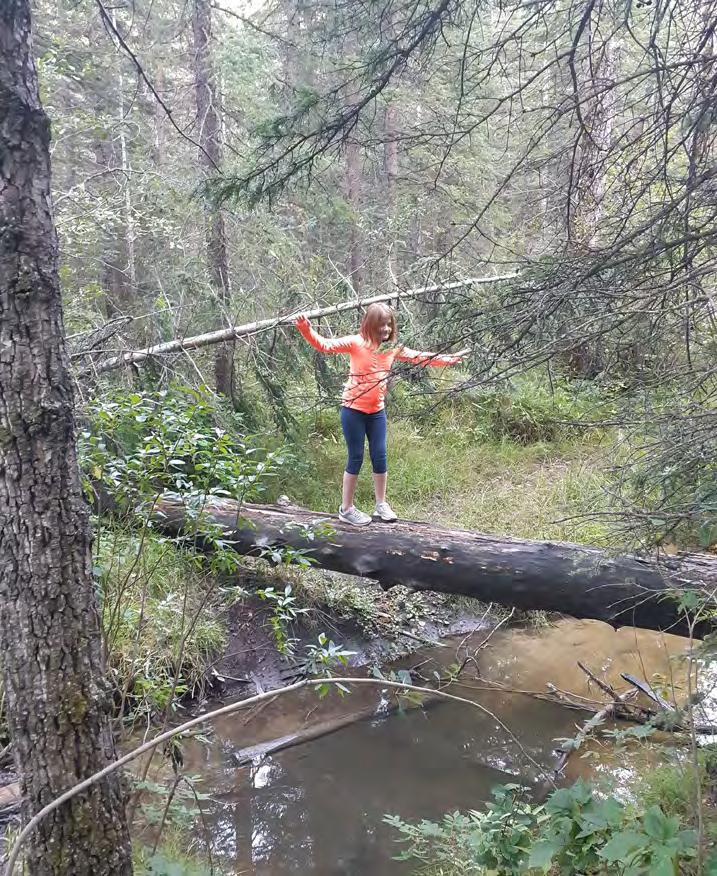
Walker, Kimberly - Child walking on log
Penpal Club Club
Teresa N, 15

I love reading, watching movies, being outside, crafts and cooking and baking. I live in Lethbridge, Alberta, with my Dad, Mom, two sisters, and two brothers. I don't have a lot of friends, so !'m especially excited to get to know you! =)
Parley L, 6
My name is Parley. I am 6 years old. I like to play drums and guitar and shoot my bow and arrows. I hope I get a pen pal!
Everett A, 8
I really like minecraft. I have 2 dogs. I hope to get a snake for a pet. I am 8 years old. I also like lego and geography. I hope to have a penpal soon. Sincerely, Everett.
Esra B, 7
I like to play Lego. I have 2 cats and 2 bunnies. I like playing outside, on the trampoline.I really would like a Pen Pal.
Aaron K, 12
To join

You are invited to write to any Pen Pal Club member listed here! To join the Club, please send a short letter of introduction (like those posted here) to the WISDOM office, along with a note giving parental permission.
You may also ask your parent to email office@wisdomhomeschooling.com.
Aislynn
M, 10

My Name is Aaron. My favorite subject is Math. I like to play LEGO, chess and checkers. I'm the oldest of two boys and three girls. My birthday is in November. I hope I get someone!
Cassandra R, 12
I live on a farm and have 1 younger sister, 3 cats (one lives outside) and 15 chickens. I ABSOLUTELY LOVE my chickens! We always hold and snuggle them too. Soon we are going to hatch chicks and I'm SO excited! Here are some of my favorite things to do. Loom, play with my cat, play minecraft and take our chickens on dates! Hope to hear from a pen pal soon! Love Cassandra.
Nicolas B, 11
I am 11 years old. I like playing with puppies and cats. Also I play the piano. I like to play video games a lot. I hope to be your pen pal soon.
I am really hoping to have a penpal. I love the outdoors. I love animals (I want to be a vet when I grow up). I love playing the piano, drawing or working with crafts. I am in gymnastics and martial arts and have one younger brother who is 5. I love playing with him.
Ivanna Y, 10
I'm 10 years old and turning 11 in October. I really like to write letters. I have 4 siblings, a dog and used to have a cat, but I'm hoping to get a new one. I play minecraft, and even have a server. I play piano, and really like baking. I really want to get a pen pal.
Etta I, 7
I have an older brother and a younger brother. We have 3 dogs and 1 cat. I like to paint, play roblox, put makeup on, I like to read, swim and I love the west Edmonton mall waterpark! I hope we can be penpals!
Hazel B, 6
Hi. I’m Hazel. I am 6 years old. I like to play barbies and I love the colour pink. My favourite animal is a horse. My favourite food is shrimp. I have the best big sister! I would like to be your friend.


Haidan Z, 12
Hi. I’m Haidan. I am 12 and love to draw. I have new glasses and really enjoy playing video games and watching movies. I collect vintage dolls and like crafting. I’m really hoping to get a pen pal I can write to ;)
If you'd like to be a pen-pal of someone listed here, please send your first letter to:
[Penpal name]
c/o WISDOM Pen Pal Club Box 78
Derwent, AB T0B 1C0

Financial Literacy
Withrecent research stating that the average Millennial has over $20,000 in student loan debt, a credit card balance of $2000 and that they owe over $10,000 on their vehicles, the outlook can seem pretty grim for those just starting out on their financial journeys. As parents, we want nothing more than to raise kids who are rock star adults, kids who are thriving spiritually, in their relationships,work, and with their money. But with financial numbers like these, giving your kids the money foundation they need to live the life of their dreams can be enough to keep any parent up at night.
WISDOM Home School contributor
Matt Matheson knows exactly what it’s like to feel that way. As a dad of 3 (9, 6, and 2), and a husband to a wife working on post graduate work, and with a job as a Christian school Principal, he knew that if his wife and he were going to give their kids the financial foundation they need to thrive, he was going to have to do it on his own.
With 15 years of classroom experience and a Masters in Education, Matt went to work developing a curriculum to equip the next generation to win with money.
It started at home teaching his daughter and son the basics about money, but quickly expanded to include teaching a personal finance class in his school. As a nationally published personal finance writer with articles and insights appearing in places like Yahoo, the Huffington Post and Reader’s Digest, Matt was able to combine his financial knowledge, educational expertise, classroom experience, and parenting insights to build a series of highly engaging lessons designed to bring the joy back to parents struggling to raise money geniuses.
And now WISDOM has teamed up with Matt to offer families an exclusive deal on his Family Money School Courses. The courses, which include a parentdirected course for kids under 12 and a self-directed one especially for teens, are designed to help both kids and parents navigate the seemingly complex world of money.
At the end of the day, as a parent you want to know that you’ve done everything you can to give your kids the financial foundation they need to thrive with money before they leave the nest. And the courses from Family Money School make that simple.

For special pricing for your family, go to: familymoneyschool.com/ courses/wisdom-promo.

A Reconsideration
Once, while in Oxford and over a surprisingly unharried lunch, I was speaking to a literature student and attempting—somewhat vainly, I can only imagine—to display my familiarity with the vast oeuvre of English literary masterpieces. Although I considered myself moderately well read, having played a rather intense game of catch-up on classics’ reading lists after a childhood spent primarily on the back of a horse, I’ve still read a only handful of Shakespeare’s plays, a few works by Jane Austen, and have yet to finish a Dickens novel longer than The Christmas Carol. Nonetheless, when my recent acquaintance asked me to guess what is largely considered the “Greatest British Novel,” I boldly ventured a guess.
“Ulysses,” I proposed. I’d never read James Joyce’s epic novel, but in my history student estimation, length is often accompanied by preeminence. So why not? (Because he’s Irish, my brain should have chided me at the time. Ah, well. Live and learn.)
“Guess again.”
I’d never been a fan of guessing games to begin with, and scoring a point wrong certainly didn’t help the matter. Still, I racked my brain and offered another: “Jane Eyre.”
IS CLASSIC LITERATURE ELITIST?
By Chelsia R. Van Hierden

“Something by Shakespeare, Dickens, or Austen?” I asked, effectively making fifty-eight guesses all at once. Still no luck. At this point I capitulated. “What is it?”
“Middlemarch,” she said.
“Middlemarch,” I repeated, though with a note of skepticism in my voice that made it obvious I’d never read the book.
Yes, Middlemarch. This was not simply an opinion reserved to the echelons of Oxford academe, but, I would later learn, was also the conclusion of a broad poll of international literary critics conducted by the BBC in 2015. I should not have been so surprised. While my acquaintance waxed poetic about the richness of George Eliot’s literary technique, the nuanced complexity of her emotional depictions, the transcendent quality of her deeply personal narrative, I listened with as much rapt attention as a history student hardpressed by deadlines can muster. Then, lunch finished, we parted ways.
I have since purchased a copy of Middlemarch—second hand for two dollars at a used-book shop, spattered with the underlines and commentaries of a previous owner—which has done a five-star job collecting dust on my bookshelf ever since.
Subtext: I have yet to read it. It seems I suffer from that tendency to approach classics as best described by Mark Twain: “A classic is something everyone wants to have read and nobody wants to read.”
The assumption behind this is nearly too obvious to be stated: classics are challenging to read and therefore impossible to enjoy. In short, they’re boring. The perceived difficulty of classic literature underscores the aversion many of us have to delving into those hefty tomes. My own experience with War and Peace was far more war than peace, and a battle I retreated from halfway through. The idea that classic books are drier than Mississippi during prohibition is one to which I can often relate. Yet, accompanying it is a perception which is subtly more nefarious, less often articulated yet no less significant as a result. I speak of the presumed snobbery of classical literature.
To a certain extent, such a designation rings with a chime of truth. Literacy having been a privilege reserved to the elite (mostly men) throughout the greater part of history, the luxury of reading, let alone reading without practical purpose—for (gasp!) pleasure— is one few could previously afford. In our century, wherein Western civilization boasts unprecedented literacy, reading has become commonplace, with a proliferation of books so overwhelming that the concept of a modern classic rapidly begins to lose its meaning.
Wrong again. We’d reached the point where I was asking for hints.
Those books which have survived from periods preceding our own, having been deemed by the democracy of mankind to possess sufficient transcendent meaning so as to be worth sharing and preserving, now make up the collectanea we deem “the classics.” Their deputation to classrooms, lecture halls, and esoteric doctoral degrees has only augmented the view of classical literature as elitist. Classic literature, one begins to think, is what is studied by bespectacled students at Oxford and Cambridge (which it is), rather than what is read for pleasure but the average layperson (which it ought to be).
This perception, however, remains fundamentally mistaken. Quite to the contrary, classic literature is not nearly so elitist as one might imagine, but is intrinsically and irrevocably democratic, representing the collective taste of generations of readers— those dead as much as those living. As G.K. Chesterton so thoughtfully defends legend, we may also defend classic literature: on the basis of tradition. As he writes, “Tradition may be defined as an extension of the franchise. Tradition means giving votes to the most obscure of all classes, our ancestors. It is the democracy of the dead. Tradition refuses to submit to the small and arrogant oligarchy of those who merely happen to be waking about.” And therein lies the democratic richness of literary tradition, in which the oligarchic elitism of any single generation is subverted in favour of the shared democracy of humanity across space and time. Those books which remain are those which have survived the discriminating taste of the collective. Revolution may subvert the tyranny of a single man, but tradition overthrows all tyrants at once.
Further undercutting the notion of literary elitism is the now sweeping accessibility of classic literature. Thousands of years worth of literature has now entered the literal and literary public domain. Where once a work may have been reserved to a choice audience—to the initiates, to the educated, to the wealthy—an irreversible emancipation has taken hold, spurring a timeless dialogue between the author and his or her audience— an audience not of the elite, but of common people of every age, race, gender, and class. This conversation is indiscriminate. Whoever chooses to read a classic work becomes a part
of it, for the author, regardless of intent, has produced a volume which has expanded beyond its own pages, creating a timeless and universal experience: a shared dialogue between readers who speak a hundred different languages and live at a hundred different times.
Even so, the argument that is often levelled against classic literature is that it remains, even now, a genre dominated by the works of “dead white men.” What their being dead has to do with it I cannot fathom, and it seems a rather strange cruelty to deride someone for their misfortune of not being alive (Would it be better if they were living white men, I always wonder?). Their whiteness, on the other hand, is taken to underscore a lack of diversity in the canon. Though there is truth in this criticism, I might offer the reminder that as classical literature has historically been understood as Western classical literature, it would only stand to reason that the bulk of it, at least into the 19th century, would in fact be written by Europeans and those of such ancestry. That most of these European writers were also men is simply an unfortunate historical reality, given that as late as the Middle Ages it is estimated that as few as 1% of all women were literate (and only about 10% of men, we should acknowledge). Women’s inclusion in the canon of classical literature has, unsurprisingly, accompanied growing literacy rates and the advance of suffrage. It is worth reminding ourselves that George Eliot, author of Britain’s greatest novel, was known to her friends as Mary Ann Evans.
Progress aside, to scorn classic literature on the basis of it being dead, white, and male is as historically naïve as it is unhelpful. To then arbitrarily extend such a judgement to the entire canon of classics is ironically elitist itself. An aristocrat deems everyone else inferior on the basis of class. A reviler of the classics does so on the basis of race and gender. Both are guilty of generalizations on the basis of peripheral categorizations, and both lack historical perspective.
History has the final say. Today, as the definition of a classic has broadened, we have seen increased heterogeneity in the continually growing canon, as well as the inclusion of nonWestern works from centuries past, which
have long boasted preeminence outside of the Western world, from the Mahābhārata to Murasaki Shikibu’s The Tale of Genji. The canon, it would first appear, has followed much the same progressive trajectory as liberal society. Yet, quite the opposite may be argued—classic literature has not followed liberal society; it has helped forge it. Many ideas now perceived as dated or backwards were stepping-stones towards a more liberal and emancipated society. Even antediluvian values were once contemporary. Our society, such as it is, serves as the best measure of the progress made by those preceding it— progress often first framed by the works of each society’s thinkers.
There remains a further danger in deeming classic literature as elitist, and this is of course the danger that by doing so it will become precisely that. If abandoned by the democratic readership and reserved only to the echelons of academia, it will by necessity become increasingly oligarchic—even aristocratic. That the classics are not elitist is not an inevitability. It is a tenuous reality, contingent upon the enjoyment of the classics by the democracy of common readers. In this sense, the classics are like all truly democratic institutions: if they are not guarded, they will transform, and we may find that the transformation is precisely what we feared all along.
Chelsia is a scholar, a writer, and a lover of old books. She graduated from the University of Oxford in 2019 with her Master's degree in Jewish Studies in the Graeco-Roman Period. When she isn't studying the ancient world, she is either sequestered to her office with a cup of tea and an unfinished manuscript, or off sedating her perpetual wanderlust.
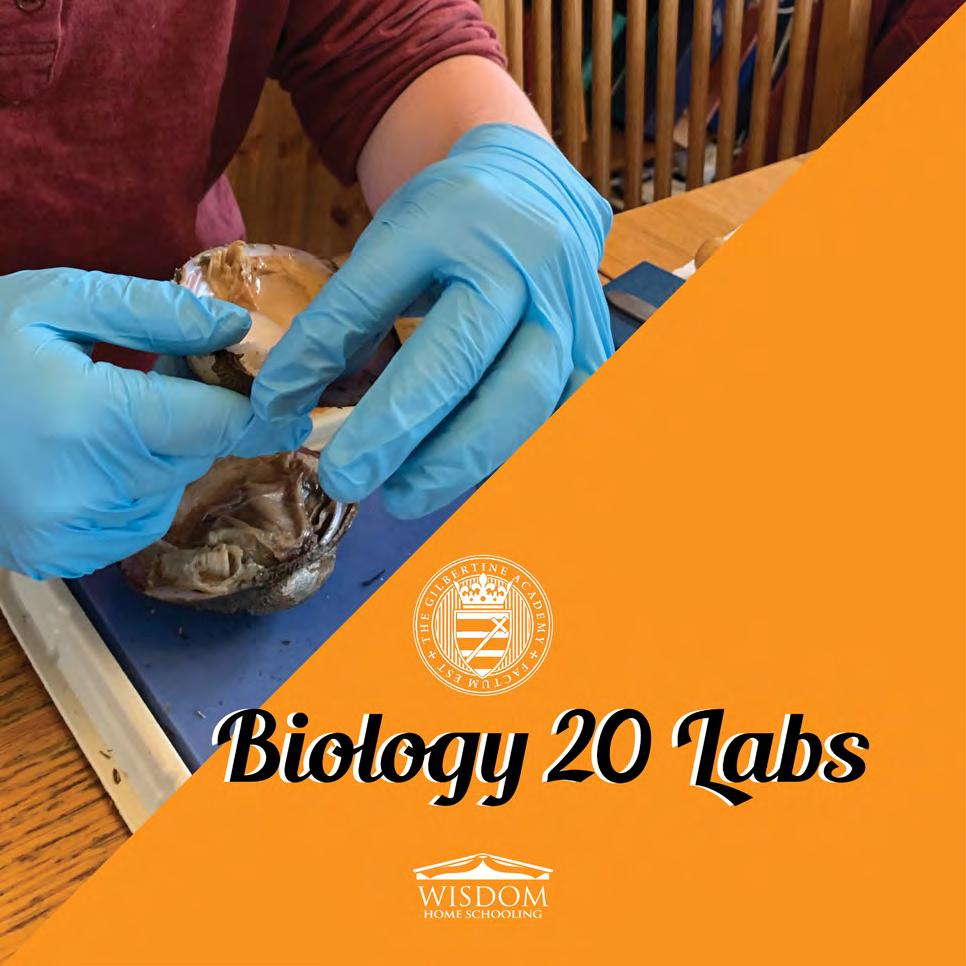
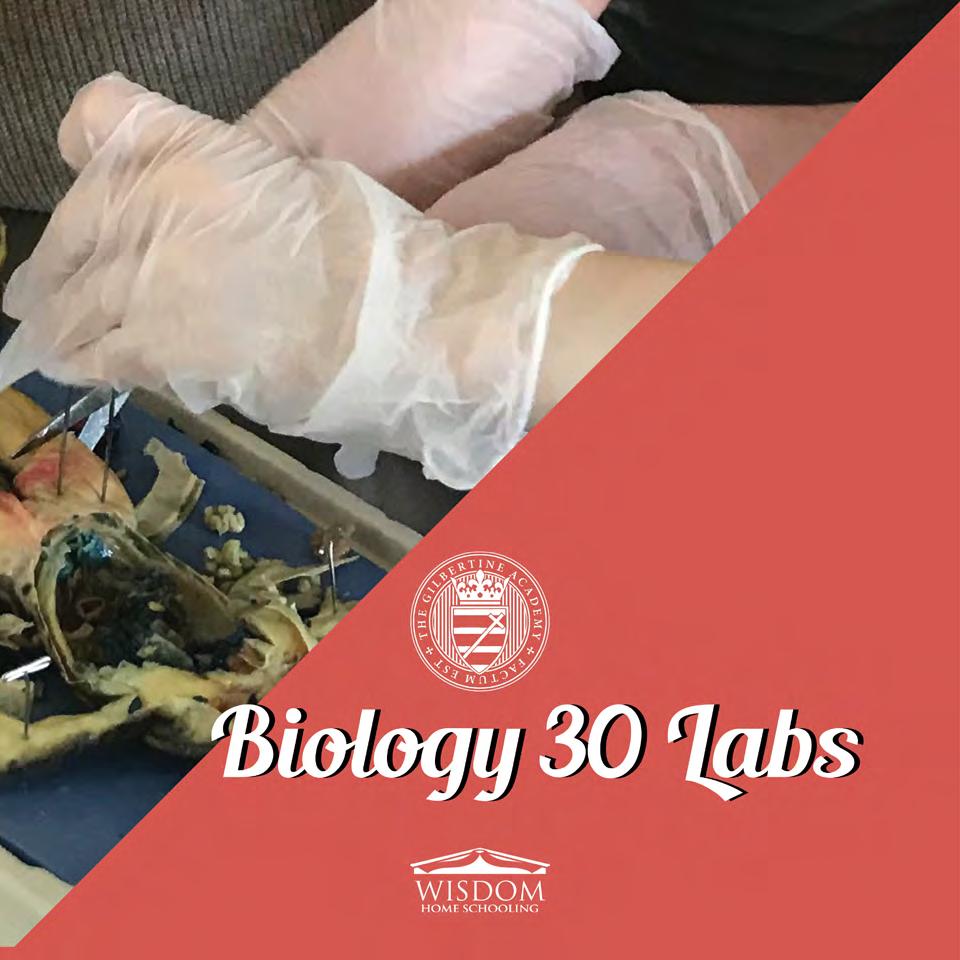


Join The Gilbertine Academy high school students for 10 sessions of Biology labs! Whether you're working toward Biology credits or want to have a solid understanding of labs, this is an excellent opportunity for your student.
Each workshop will involve preparation and 5 online assessments, and 5 sessions in-person at The Gilbertine Academy, Calgary Inglewood. (If you are from outside of Calgary, consider driving in once-a-month to make this work for your family.) Register at wisdomhomeschooling.com > events > high school. Limited space available - register soon!
Students in the Biology Laboratory 2022-2023 seminar will gain experience in using the scientific method, laboratory skills, and lab write ups.
In Biology 20, students will: consider and analyze evidence for and against the theory of evolution; explore photosynthesis and cellular respiration (isolation of chlorophyll); begin integrating human systems (fetal pig dissection); and better understand the human respiratory and circulatory systems (lung function testing).
In Biology 30, students will: study the neurological system (cow or sheep brain and eye dissection); the endocrine system (case studies); the reproductive system (bovine organ dissection); molecular genetics (strawberry DNA extraction); and carry out meaningful exercises that will assist them in their diploma

In both Biology 20 and 30, students will be expected to do a small online pre-lab assessment to ensure adequate preparation. The dates for both the online component and the lab are here.




Events

La Crete
Spring Social
When: Sunday, April 24th
Where: ten minutes south of La Crete
For information or to RSVP, email Kim: kim@wisdomhomeschooling.com or Paul: paul@wisdomhomeschooling.com
Edmonton
Spring Social
Join us for a Snack and Chat!
When: Sunday, May 15, 1-4pm
Where: Rundle Park, Edmonton (RSVP for specifics)
Open to all current WISDOM home schooling families and those considering home schooling! Come connect with other home schoolers and members of the WISDOM team, and find out more about how WISDOM can serve your family best. WISDOM will provide coffee and lemonade.

Share WISDOM −events−
Family Gatherings, Information Sessions, Open Houses
Please bring: a snack to share, lawn chairs, lawn games or sports equipment
RSVP by May 14th email michele@wisdomhomeschooling. com 780-991-5965 or carrie.f@wisdomhomeschooling.com 780-217-4006
Red Deer
Spring Social Potluck & Baseball Game
When: Sunday, May 15th, 3-6pm
Where: Bower Kin Community Centre, 85 Boyce St. Red Deer
If you live anywhere close to the Red Deer area and if you home school (or if you are thinking about it), please join us!
Join other home schooling families and WISDOM Facilitators Sue Peachment, Catherine van Kampen, and Paul van den Bosch for food, conversation, and a baseball game (weather permitting). WISDOM will bring beverages and a main course.
Please bring: a main course and a salad or side dish to share, and bring your baseball gloves too!
For information or to RSVP, call or text Paul at 403-358-4497 or email paul@wisdomhomeschooling.com
Pickardville
Home School Spring Social & Information Night
When: Monday, May 16, 6:30-8:30 pm
Where: Pickardville Community Hall, 4902-50 Ave, Pickardville, AB
Current home schooling families and those contemplating home schooling are welcome! Visit with other home schoolers and members of the WISDOM team, and find out more about how WISDOM Home Schooling can serve you best. Snacks and drinks will be provided.
RSVP by May 13 to Rachelle Godin at 780-349-6063 or email rachelle@wisdomhomeschooling.com

You are invited to attend family gatherings across the province! We invite you to bring any friends who are contemplating home educating. Meet friends, learn home schooling techniques and network with the WISDOM team. Some events include socials for the whole family, while others are adult-only information sessions.
RSVP by filling out the free registration on our website, wisdomhomeschooling.com
> Events > Open Houses, or contact the event host.

Thorhild Spring Social Fun In The Park
When: Sunday, May 29th 1-4pm (weather permitting)
Where: Thorhild Playground (by the pool)
Open to all homeschooling families in the Thorhild County and surrounding area as well as those considering homeschooling! Come connect with other homeschoolers and get to know who is in your area. Maybe you know someone who is interested in learning more about homeschooling. Bring them along for some family fun.
Students are invited to bring a display or project that they have worked on this year to celebrate their learning achievement and encourage other homeschoolers.
Cookies and Juice will be provided
Please bring: lawn chairs, lawn games or sports equipment (there is a basketball court and green space in addition to the playground)
RSVP
nicole.b@wisdomhomeschooling.com 780-660-9602
Sturgeon County Spring Social Fun In The Sun
When: Sunday, June 5 1-4pm
Where: Pinewood Community Hall (directions will be given upon RSVP)
Open to all homeschooling families in the Sturgeon County area and surrounding towns (Redwater, Gibbons, BonAccord, Legal, Morinville) as well as, those considering homeschooling! Come connect with other homeschoolers and get to know who is in your area. Maybe you know someone who is interested in learning more about homeschooling. Bring them along for some family fun.
Students are invited to bring a display or project that they have worked on this year to celebrate their learning achievement and encourage other homeschoolers.
Cookies and Juice will be provided
Please bring: lawn chairs, lawn games
or sports equipment
RSVP
nicole.b@wisdomhomeschooling.com
780-660-9602
Redwater
Spring Social Place and time TBA
Information and RSVP: Nicole Barter at 780-660-9602 or nicole.b@wisdomhomeschooling.com
More events coming in Calgary, Grande Prairie, Fairview, Athabasca, Lac La Biche, Lakeland, Medicine Hat, Lethbridge, Fort McMurray and more.
Contact your facilitator, or check the WISDOM Website under Events > Open Houses for information.


2022 G raduation C eremony
May 28, 1:30 pm
Online via Zoom
Short program and graduate slideshow with names and photos of grads. You may choose to follow this with your own celebration.
Grads, register by May 15
Guests, register by May 23.
Registration on the WISDOM website.
Registration includes uploading your photo for the grad slideshow. The format is up to you - choose a casual photo that expresses your personality or your formal grad shots.

July WISDOM Family Magazine Graduate Feature
Grads, may we feature you in the magazine?
Names of our 2022 graduates will be listed in the July WISDOM Family magazine. We will also include photos and short bios from as many of you as possible. Send these to magazine@wisdomhomeschooling.com by May 20. Submissions may be edited for clarity or length.
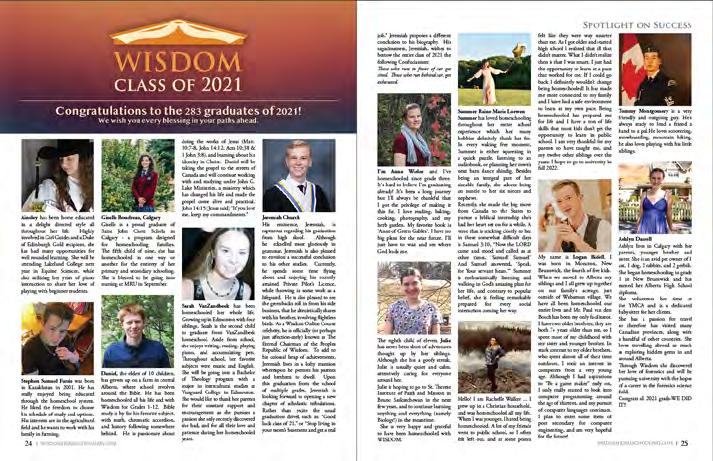

If we do not hear from you, you will not be listed.

Go to wisdomhomeschooling.com > Forms > Transcript/Completion Certificate Request
You may choose to give a percentage or a letter grade to each course, and you may list grades 1012 or only 12.
In order to provide as much time as possible to complete these, please submit your request as soon as possible.





Farewell:

MIcHelle Mclay
Mediated Learning Advisor
Michelle, keenly interested for over 35 years in cognitive modifiability and how the brain learns best, first formally learned about Mediated Learning through the WISDOM community in 2009.
She has been an eager ambassador of the method since, seeing firsthand the significant and positive impact for her family beyond their home school walls. Michelle and her husband Scott graduated their 2 “outside-of-the-box” learners from WISDOM in 2018 (both boys have since been successfully adulting in the world). Michelle deeply enjoyed her position on WISDOM's Mediated Learning team, training and encouraging parents through parent workshops, to teach their children how to be mediators themselves. Her passion for home education shone through in all her interactions with parents, and she joyfully coached many to great success. Michelle is now off to new adventures, and we wish her all the best!

JennIfer laSzlO
Administrative Assistant
jennifer@wisdomhomeschooling.com
Home schooled for part of her own school years, Jennifer and her husband made the decision to homeschool their own 7 children. Their eldest graduated in 2021, and Jennifer still has lots of years ahead as a home school mom!
With her past work as an office manager and bookkeeper for a large window covering company, she is an ideal addition to our team. She recently joined our office as a part time administrative assistant, moving seamlessly from data work to proctoring exams and answering your calls.


JOSHua StrOMberg Manager's Assistant
Joshua began with WISDOM as a Family Funding Associate, but quickly showed his adaptive strengths and was scooped up to work as the Office Manager's Assistant. Joshua's history as a creatively home educated student made him a great asset to the team. Part of his home school experience included working as a young teen with his dad at the Fort George and Buckingham House interpretive centre, where he showcased great pride in his Metis heritage. As a busy home school dad, he was able to relate to our families as he helped with various concerns, particularly related to high school at home. Joshua made the tough decision to change careers to something that will not involve as long a commute, and will serve his family's needs in this season. We will greatly miss his fun-loving personality and his consistency in offering to step in and help, whether with making coffee or shovelling the sidewalk. Our team will miss you, Josh - all the best as you go ahead!
A Warm Welcome: Congratulations:
cHrIStIan bekOlay
High School Advisor
christian@wisdomhomeschooling.com
JanIce laurence Home School Consultant
janice@wisdomhomeschooling.com
As a home schooling mama of 10 for over 22 years, with seven graduated now, Janice has a wealth of perspective on what works (and what doesn't) in a very busy home schooling environment. She can happily answer your questions and be an empathetic ear, whether you're calling about elementary, high school, or keeping little ones engaged while home schooling older children. With a strong passion for home schooling as the primary means of rescuing our culture, coupled with past office experience, Janice is a perfect addition to the WISDOM team! She joins us part-time in mid-May, and we look forward to working with her.

Christian has worked for WISDOM for years in many capacities, from Family Funding Associate to Home School Consultant to Administrative Assistant. His passion for home education, years of experience with WISDOM, and cheerful willingness to serve the home school community has made him a natural fit for the High School Advisor role. We are very blessed to have Christian in our office and pleased he accepted the position.

Blessed by Chess!
Just a few short months ago, on a bit of a whim, my two sons (9 and 13 years old), decided to give chess a try. I’d seen an email from Wisdom about an upcoming online class taught by a Top 5 Chess Player in Quebec, Steven Bloom. I ran the idea by my boys. They were open to it, so I registered them. I’m writing this to encourage anyone whose children are willing, to give these classes a try!
After the first class, my boys were hooked. It was more than a new game that was revealed to them. It was a new way of thinking, a new way of being.
The game of chess presents a myriad of ongoing options - countless possibilities, much like the game of life. You can definitely play both without a clear idea of what you want or how you might get there. But knowing what your ultimate goal is and having a strategy or two in mind on how you might reach it, can prove so much more meaningful and fulfilling.
Although having a plan can help, chess is fraught with unexpected twists and turns, many of which won’t go your way. It commands perseverance and flexibility in thought. I’ve noticed my sons developing in both arenas. Chess is teaching them that even when things aren't going their way, there is often something they can do to mitigate their predicament...and that a solution can actually be really fun to discover! Things can turn around.
Chess requires a broad perspective. You need to keep the big picture in mind - you need to constantly check in. Whenever something changes, you need to reassess your plan and evaluate whether it is still your preferred course of action. Tunnel vision can easily be your demise.
Chess is full of letting go. Some things have to be sacrificed, or traded in, for the bigger goal to be attained. And sometimes this trading isn’t instantaneous. My boys are learning to let go in the short term in order to reap even greater benefits in the long run. Sometimes, delayed gratification can be well worth the wait! That's not an easy lesson to teach with words alone, but chess brings it to life!
My boys used to procrastinate. The game of chess is helping them internalize the life lesson that sometimes they have to get certain things they may not want to do out of the way to clear the path of obstructions in order to reach the desired outcome. This concept has generalized to real life situations. Less-favoured activities, such as certain
I wanted to take a moment to say thank you to all who contribute and collaborate to make this magazine available. It is such an encouragement to me. I throughly enjoyed reading Emma's (a.k.a. Elnora Silverfish) tales of Pirate studies and all that it taught her about homeschooling.
The "Generosity of Time", was a 'timely' read for me as well. I'm so grateful these individuals have taken the time to share from their hearts and experiences. Please pass along my sincere thanks.
Sincerely,
Christina J

schoolwork and chores, are now getting done without so much resistance!
Chess players shake hands before they play chess. They often say “good game” at the end. The game is infused with good sportsmanship, which permeates impressionable minds.
It is also a highly portable form of fun! We pack up our folding chess board everywhere we go now. It keeps young minds engaged anywhere, anytime!
Inspired by the online tournaments Steven Bloom hosts for his students, one of my sons took the initiative to figure out how to organize tournaments of his own. He’s gathering his own group of online chess enthusiasts from around the world, and enjoys planning and hosting free free tournaments for them. He’s learned a lot about geography and time zones in his planning of these events.
Chess is so much more than a game. It's a vehicle through which things like logical thinking, planning ahead, dancing with the unpredictable, reframing undesired situations and keeping the longview in mind can be introduced to your child in a fun and engaging way. It's "life-skill" learning disguised as fun and games! What a blessing it has been for our family.
Thank you to Steven Bloom for making chess so accessible to children!
In their own words, my sons have these things to say:
"Chess has improved my thinking. Steven is very patient." (Tejas, 9 yrs)
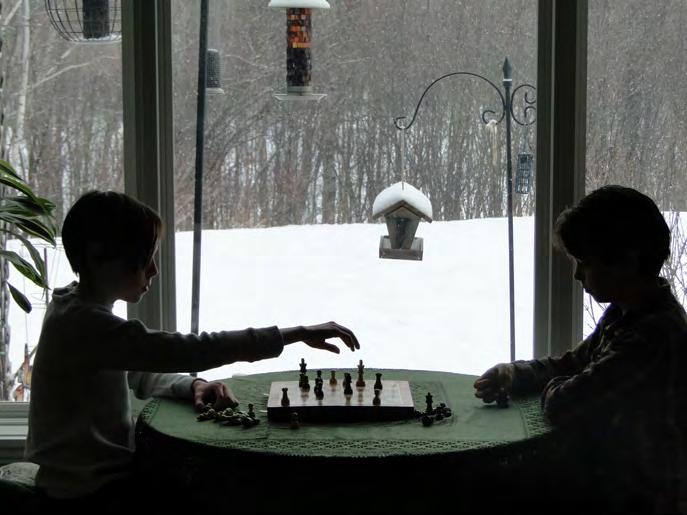
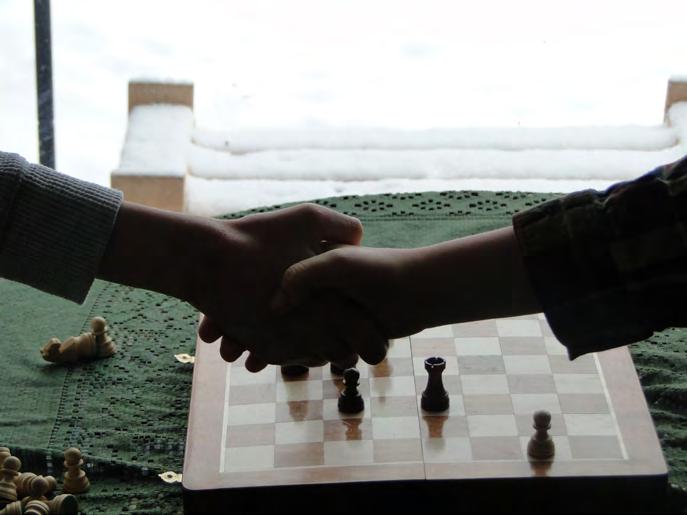
"Chess has been a lot of fun. It's improved my ability to plan ahead. Steven Bloom is a really good teacher. Everything is laid out in an easy-to-understand way." (Jonah, 13 yrs)
Jessica Swick-Binette






Find The Pencil
Find the symbol above hidden somewhere in the magazine and email us to tell us what page number it is on - we will enter you in a draw for a fun prize.
Draw held on May 31! magazine@wisdomhomeschooling.com











WISDOM calendar 2022
May

Beginner Ballroom Dance workshop, Edmonton
20 Submission deadline for July WISDOM Family Magazine. Theme: Philosophy
20 Last day to use WISDOM Purchase Orders for 2021-2022 school year
Rock Climbing Day Camp - Kananaskis 28 WISDOM Grad celebration, online
29 Foraging Nature Walk, Edmonton 31 Renotify and submit your EPP(s) by today to be entered in a draw for $200 31 Last post-mark date for mailing in Resource Refund Claims, to be refunded in July
June
July

August
If you have a student working toward a course challenge for credits this year, those dates and deadlines can be accessed via your facilitator.
website also offers online information and registration for workshops, courses, BBQs and camps; some not listed above.

Finding Help
· Call us at 780-741-2113 or 877-425-8546 · · Email us at office@wisdomhomeschooling.com ·
Funding
The funding year is now open. You may submit receipts at any time throughout the year. Receipts received on the last business day of each month are processed for the last business day of the following month. You may make educational purchases for next year right now, and submit receipts for reimbursement at any time throughout the year. Half of the year's funding is available to claim beginning in September, and the remaining half becomes available in April. The final deadline for submitting receipts is the last business day of May.
Read the Funding Policy, also found on our website under Resources > Funding.
Purchase orders (direct billing from available funding) are also available - more information on our website.
Funding questions may be directed to us at w
A note on emails
We always respond to emails. If you do not receive a reply from us within two weeks, we did not receive it. Please send it to us again.
When you Call Us
Call us at 780-741-2113 or toll free at 1-877-425-8546
We take calls between 9 and 4, Monday through Friday, with an hour off at noon.
If you reach our voicemail, you may enter the extension of anyone in the office at any time during the greeting. To speak to a home school consultant, dial 1. To speak to a member of the funding team, dial 2. To leave a general message, stay on the line or dial 3.
We endeavour to return calls as quickly as possible. If you do not hear back from us within two business days, it may be because the message didn't come through clearly, so please call again.
Connect with WISDOM families
We offer many ways to connect with the larger WISDOM community, from camps and workshops, to our Social Networking phone and email list, to a Facebook Group just for WISDOM parents. Email the office with your Facebook email and we will add you to our Facebook support group, or send a request to join on Facebook.

Subscribe to The WISDOM Family Magazine
(The Magazine is free to WISDOM families.)
□ Option A - paper subscription ($30 in Canada, $44 in USA)
□ Option B - digital subscription, delivered to your email inbox ($18) Where should we send it?
Name:
Address: Phone Number:
Email:
Method of Payment:
□ Cheque payable to WISDOM Home Schooling
□ E-transfer to billing@wisdomhomeschooling.com
□ VISA/MasterCard
Number
Expiry
Name on Card
□ This is a gift subscription
Detach form and send with payment to WISDOM Home Schooling, Box 78, Derwent, AB T0B 1C0. You may also request subscriptions by emailing magazine@wisdomhomeschooling.com