WISDOM Home Schooling is a registered trade name of The
Phone: (780) 741-2113
Toll Free: (877) 425-8546
with questions:
Box 78
Derwent, AB T0B 1C0
office@wisdomhomeschooling.com
with contributions to the WISDOM Magazine: magazine@wisdomhomeschooling.com
Publisher: WISDOM Home Schooling
Content/Editor /Desktop: TobyLauren Burgess
Desktop / Design:
Naomi Doyle
2 wisdomhomeschooling.com
Events Director
Marlane Noster
Events Coordinator
Kyra Tinant
Athletics Director
John Hoekstra
Socratic Dialogue Online Program Manager
Nicole Noster
Graphic Designer
Naomi Doyle
Mediated Learning
Program Manager
Dynamic Assessment
John Hoekstra
Mediated Learning Advisor & Educational Therapist
Lora Cardinal
High School Subject Specialists
Lydie Delli Santi (French Language)
Peter Weidman (Math, Sciences)
Pierre-Andre Beaudoin (Chemistry)
Andrew Siebert (Humanities)
Facilitators:
Michele Barter (780) 363-3740
Nicole Barter (780) 660-9602
Pierre-Andre Beaudoin (780) 239-0381
Joan Bishop (780) 878-5380
Carrie Friesen (780) 217-4006
Rachelle Godin (780) 349-1827
Liz Gurnett (780) 349-1577
Sherri Hufnagel (587) 598-9344
Nola Hutchinson (780) 781-2527
Anella Jantz (587) 297-1992
Desmond Kilgannon (780) 225-6688
Randy Kopp (780) 723-5382
Gordon Loewen (587) 298-7565
Taylore Maschmeyer (780) 270-0460
Mark Meakes (780) 231-6594
Simon Noster (780) 581-8885
Sue Peachment (403) 994-1963
Kim Schultz (780) 623-2886
Louis Sehn (403) 581-3444
Glenn Spiess (639) 894-0470
Michelle St. Laurent (780) 862-2277
Brian Taje (780) 312-4525
Paul van den Bosch (403) 358-4497
Catherine van Kampen (403) 845-2923
Peter Weidman (780) 223-2414
Parent Support Council
To reach the chairman: psc@wisdomhomeschooling.com Bios and email addresses of PSC are on our website.
Northwest
Georg & Gayle Beinert
Menno & Margaret Knelsen
Central
Darrel & Kristine Buchholtz
Sheldon & Sharon Kok
Don & Bo Reid
South
Cameron & Tanya Harrison
Jeremy & Cheree Quantz
Content:
Fairview La Crête
(780) 835-8722 (780) 928-3008
(780) 417-3025 (780) 460-4468 (780) 460-2275
(403) 800-2739 (780) 841-0065
WISDOM publishes articles by many individual authors. The opinions of the writers are not necessarily those of WISDOM. We reserve the right to decline any submission, and to edit those submissions we accept for accuracy, clarity & length.
Photography:
Unless otherwise credited, photography is courtesy of the Noster, Burgess, Tinant, and Doyle families. The people appearing in photos throughout this publication do not endorse any specific product, service, cause, association or endeavour. Images and photos are for illustrative purposes only.
Gilbertine Insitute.
The Gilbertine Academy, Calgary, is an independent school operated by The Gilbertine Institute.
First Things
January 2023
Merry Christmas and Happy New Year!
I hope that you have had a restful and joyous holiday season, filled with quality family time.
The WISDOM office will re-open January 9, and we look forward to connecting with you at that time. Your facilitator will be phoning you sometime during January and February, but if you could use some advice or support sooner please feel free to contact your facilitator before they contact you.
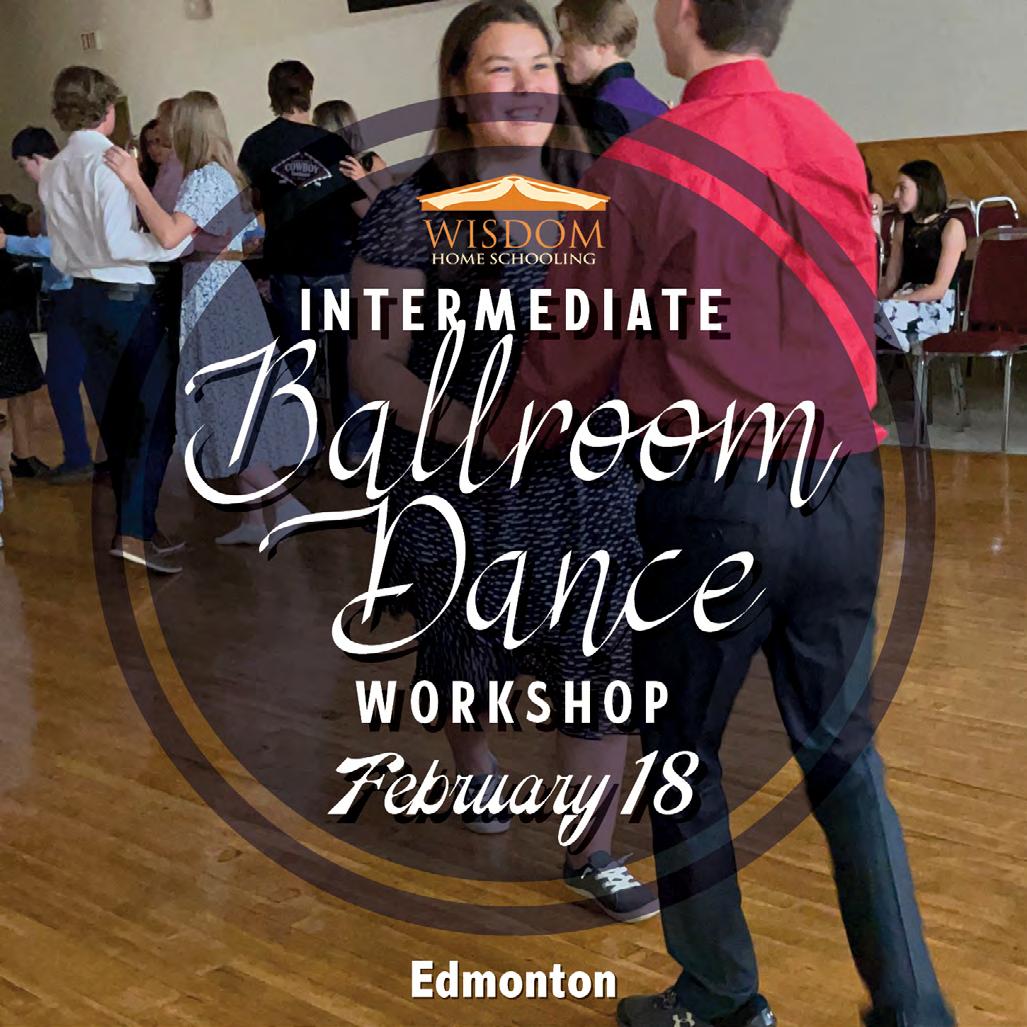
We are excited to bring back the in-person WISDOM High School & Beyond Conference in Edmonton on March 31 and April 1. The weekend will begin with a used curriculum sale on Friday, followed by an evening social and guided ballroom dance to help our families get to know each other. On Saturday we will be at NAIT; sessions will focus on home schooling through high school with Healthy Confidence. Find more information in this magazine, and check our website under Events > High School to find full details and register.
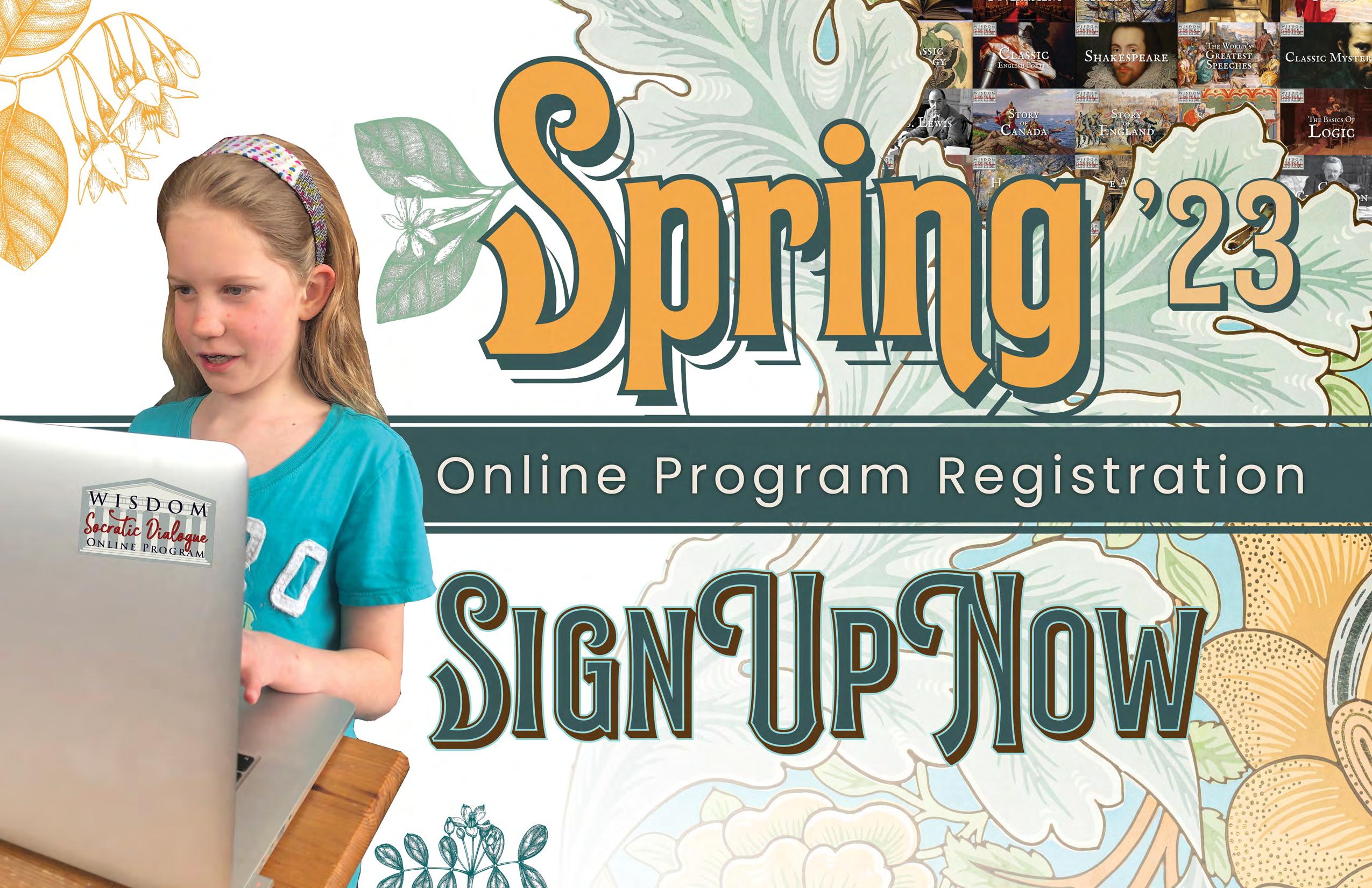
Sign up for the Spring Term of our Socratic Dialogue Online Program via our website – registration will close at the end of day on January 14. If a course you wished to register for is full, please do get on the waiting list to be first in line if a spot opens before the term begins.
We will be adding more opportunities around the province, so check back often. We welcome your feedback to events@wisdomhomeschooling.com on what types of workshops you would like to see in your region. Often, the very best events and workshops are grassroots; if you see a need, try and fill it and we will do our best to support your venture.
Renotification for the 2023-2024 school year will open in the coming months, and we will let you know when you can access the form in your Parent Portal. We will once again be entering those who notify early into draws for great prizes; stay tuned to find out more details!
Remember that our families access approved EPPs, evaluations, and funding balance/refund information through the Parent Portal. Get in touch with data@ wisdomhomeschooling.com if you encounter any difficulty.
We pray for your needs each day, usually at 3:00pm. Do share any specific prayer requests with us, and join us in praying for other families.
Blessings on your home,
Now is a great time to take a look at other WISDOM events and workshops that will be available in 2023. Simon Noster, Associate Principal of Home Education simon@wisdomhomeschooling.com
We are excited to announce that Open Parachute has recently developed a Home Education youth mental health program. This program uses documentary stories of real youth sharing their stories of overcoming challenges in order to teach practical mental health skills to children and adolescents. This is a parent-directed resource that you can use to help your child navigate any struggles that they have faced or that they may face in the future. As a parent, you can decide which lessons your child engages with, and you also have access to separate parent resources to assist you in supporting the mental health of your child.
There are lessons across the age range, and we are so excited to be able to provide this resource for you at no cost for this school year.
Further details to follow, along with information on accessing these resources, which will be available in the coming weeks.
Above: Courtesy of Carol Provins
Grace
By Ken Noster
“There but by the grace of God go I.” These were the words of St. Augustine, and I have often found myself repeating them. Augustine used these words when tempted to be critical of someone else, and they apply to us every time
we are tempted to criticize. First, we don’t know all the details, so criticism is rash. Second, if it were not for the grace of God, I would be a lot worse than I am and certainly worse than this other person seems to be.
We and our children are very fortunate to be raised in an environment that teaches us right from wrong, good from evil, and truth from deceit. In most cases, though not all, it’s our grandparents and parents who have formed us. To a greater or lesser extent,
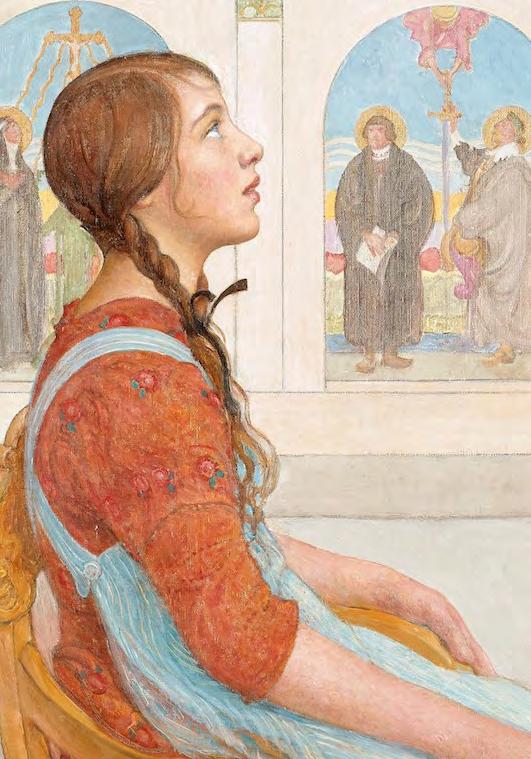
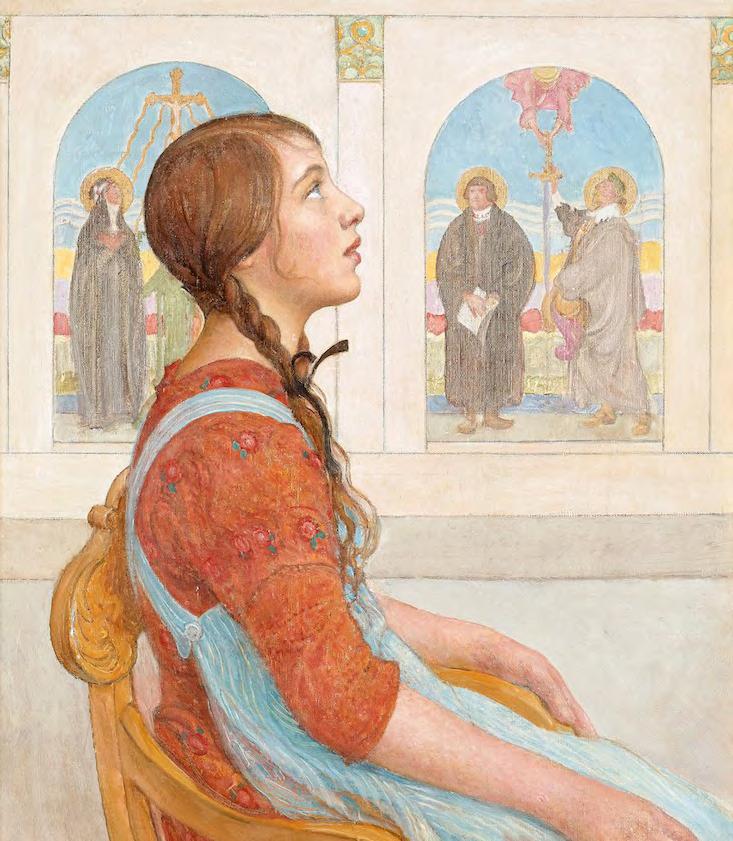
Revelation Carl Larsson - 1917
our community, extended family, and friends have had an impact, and we can sometimes clearly see the consequences of the most positive of those impacts. Although we have the freedom to make choices, to accept or block what we are being taught, most of the personal formation we receive is freely given to us by grace. Grace is extended to us, often without any merit of our own.
Having received something by grace, we logically recognize that it is somehow greater than us. Yes, these graces form us into who we become but, by virtue of the fact that we have received them freely, we carry a certain responsibility to give them freely to others. Perhaps we can most easily recognize grace in action when we look at parenting. By grace we have been parented freely and we in turn by the same grace freely parent our children. We don’t parent because we have to (although it may sometimes feel that way), we extend this grace of parenting to our children because we first have been graced; we have received something greater than ourselves that longs to be passed on to someone else.
What stirs inside us to be passed on to someone else isn’t necessarily identical to what we have received. For example, someone who as a child has received the grace of good parenting may not as an adult have been given the gift of children. The graces we extend to others need not be at all like the graces we have received, but they need to be graces, and that is the beauty of grace.
No two lives are the same, no two generations are the same, and we aren’t called to necessarily replicate what we have received; the greater thing we are called to is extending grace, and all the better if it doesn’t look identical to what we’ve received. If our extending of grace looks identical to the grace we have received, perhaps we could get lulled into just paying forward a duty. Such a repayment could tempt a person to count the cost against the previous gain and come to a point of believing: “There, I’ve paid my debt to society, and I am done; all paid up.”
Grace can never be “all paid up,” for grace is so much bigger than the benefits we have received or given. By recognizing the constant graces we receive throughout our life and desiring to continually extend grace to others, we move beyond the things themselves. We develop gratitude for all the undeserved graces and we develop a desire to be people of grace.
The lives around us that we most admire are lived by people of grace and, although we may attribute many good works to them they can’t be defined only be what they do. The things they do are only manifestations of the grace they freely receive and freely give. Not easy, but most rewarding is a life of grace.
Kenneth Noster and his wife Marlane live near Derwent, Alberta on their certified organic farm. In addition to his role as Head of School, Ken also contributes to his faith community as a deacon. Ken and Marlane home educated their 6 children through high school. Those of their eighteen grandchildren who are school-aged are also WISDOM students.
Notes to Myself
IlikeGrace Grace
By Marlane Noster
this definition of grace [grace 3a Webster’s Third New International Dictionary]: a disposition to kindness, favour, clemency or compassion; benign (gracious) goodwill.
As parents, and especially as home schooling parents, we realize the need to make careful choices, and we want our home environment to be a place of grace. We are aware that we have been gifted with a child or children and it is within our duty as parents to form these individuals until they are ready to embrace the future. Especially in the early years, I tried many ways of forming our children, but it then became clear that grace is the means by which we have the greatest influence on our children. A term I like to use is ‘passport’; the means by which a child allows me to enter into his or her heart. If a parent becomes known as a person who extends grace, the child will be less inclined to defensiveness and more inclined to listen, to copy, and to desire personal change. Do I have the passport to my child’s heart?
It takes a long time and great patience to walk a child from irresponsibility to responsibility, and it is tempting to
want to fast-track directly to results. It is possible to force surface results without gaining permanent ground in the child’s formation. I could declare a consequence and demand change; case closed and issue over. Would that actually effect real change? If by grace I extend mercy when a child is distracted in their duties, and I graciously bring them back into focus, I am giving the child security in our relationship.
Security is important. As a child, I often experienced inadequacies and lack of the inner resources I needed in order to respond to experiences in ways that would help me develop as a wellbalanced person. I was left insecure at times when some confidence would have made a big difference. As a parent, if I extend grace to a child, I know I am making it possible for the child to address his or her inadequacies and lack of inner resources with the confidence of knowing that I am right here. They know I am willing to help navigate, providing the assurance that no matter how much time it takes or how many mistakes are involved, we will succeed.
Some things don’t change. What I as a child most needed from my family was
grace in the form of compassion and understanding when facing challenges. These are the very things my own children needed. I now see them functioning as parents and modelling grace toward their own children. It is guaranteed that difficulties and personal challenges will arise for everyone who grows from childhood and on through adult life. I know that those difficulties and challenges will be turned into opportunities for growth if the child can face them with the sure knowledge that their parents are nearby, extending grace and encouragement.
Though we are all imperfect parents, we can strive to become gentle, forgiving, understanding, loving, encouraging parents that a child would not wish to hurt. This environment of grace allows a relationship to flourish, so that when there is a tug of war or when there is tension, we remember grace, and obstacles can be surmounted.
Marlane Noster is WISDOM's co-founder and Events Director. When she's not in the office, she dedicates time to her church, community and her family, including her six children and eighteen grandchildren.
A Graceful Dance
By Lora Cardinal
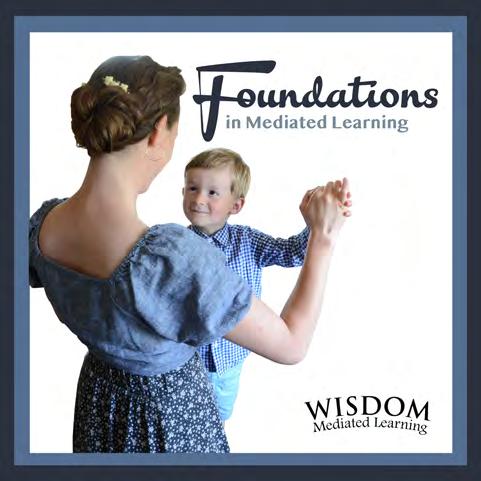
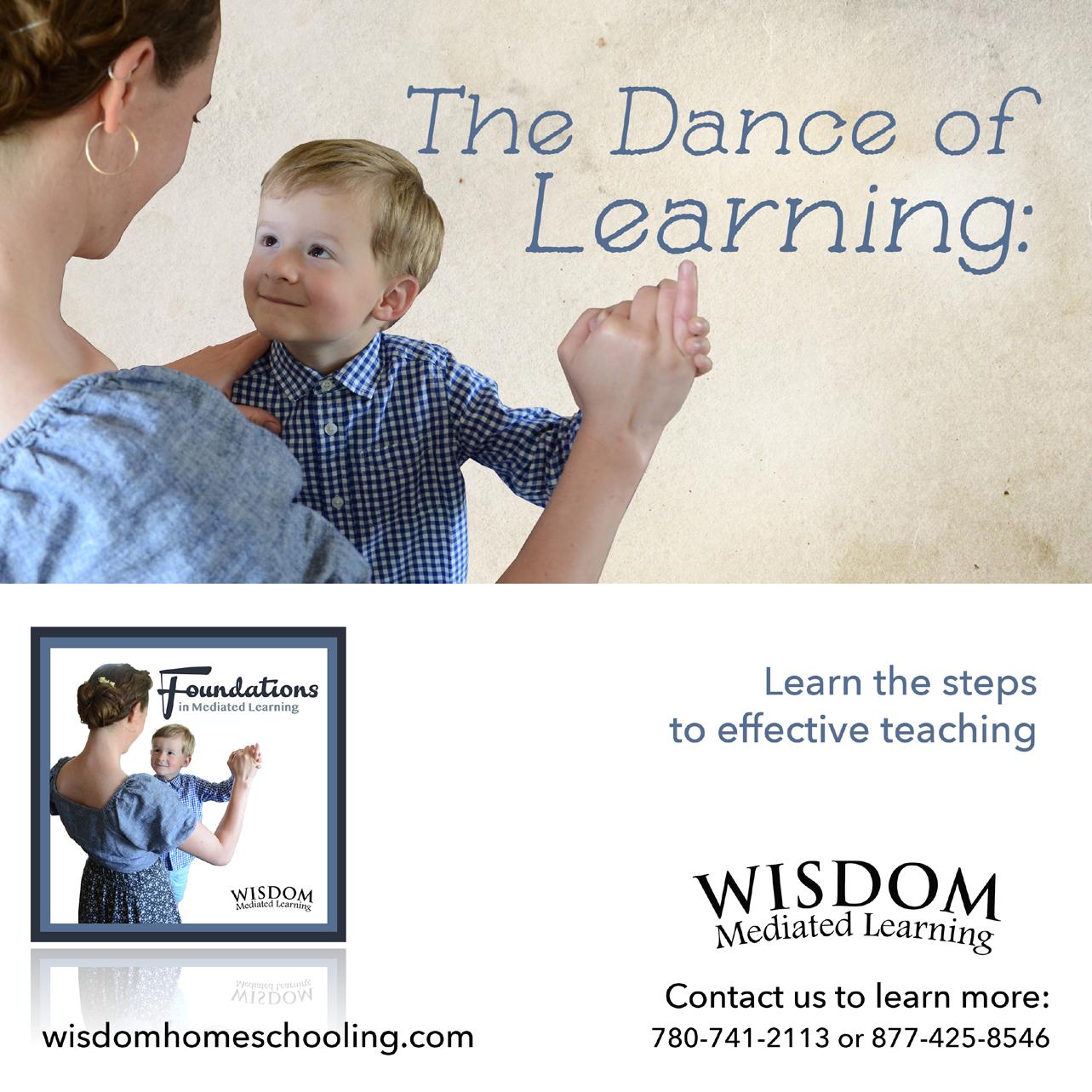
Thetopic of grace is a beautiful one, as it has rich and varied definitions and multiple uses. The word grace carries with it elements of elegance and etiquette, and brings to mind images of music, flowers, and dance. The Foundations Workshop is subtitled ‘The Dance of Learning.’ This name is fitting. The mediated learning interaction has the graceful elements of a dance and weaves through its valuable elements as a graceful dance does. Parents that choose to home school their child or children already have the intrinsic skills required for mediation. The workshops, however, will enhance, develop, and vitalize these skills.
One method of implementing the dance of learning is the use of stories. This method can bring a sense of wonder,
interest, reflection, and response for a family. Stories help build attachment, impart a strong sense of belonging, and are a way to pass on knowledge. As we learn in the Foundations workshop, the dialogue is kept moving through process questions. These questions are a way to deepen the conversation and provide meaning, interest, reflection, and a desire to learn. Each person is given the gift of time to reflect and speak. It is interesting to sit at the table and enjoy the varied reflections and responses, as there might be surprises for everyone involved. When everyone has a chance to be heard, great insights may be brought forth. The story below is an example of how the topic of grace may be introduced and how the process of questioning is expands the topic, making it feel alive.
I once heard the story of a beautiful speech given by a holocaust survivor. At the end of her speech, she was asked to share what she thought was the most memorable, or impactful story of her experience. She spoke of a girl she was friends with, and how they were just teenagers at the time. They had just been recently liberated after World War II and placed in the Displaced Person’s Camp. As they were wandering outside the camp they came across a Nazi S.S. Soldier. Many of these soldiers were on the run. They were running from dire consequences and prosecution. These soldiers were starving, had not slept for days, were unclean, and wandering in the woods. She asked the audience, “How would you feel if you were a survivor, a young girl, recently liberated from these people this man represents? These soldiers were responsible for killing your mother, father, sisters, brothers, and millions of your people. Now, there he stands, exhausted, disheveled, starving, and sick.” She then explained how frightened she felt, and how she was ready to run, but she noticed her friend was not frightened. She noticed her friend had reached into her pocket, and given this man a piece of bread (Mort Fertel, 2020).
The subsequent question this presenter asked is an excellent example of a process question, bringing in personal meaning. She asked the audience, “How would you feel if you were a survivor, recently liberated from the people this man represents?” What responses would there be? What further conversations could result from the responses? How does this story relate to grace? What other questions could be asked?
Mediated Learning
Upon personal reflection, the characters of this story shone forth, but the most touching perception was the action of her friend, as it shows the beautiful power of grace. Further thoughts include how grace may even outshine courage, as courage may need grace to motivate the will into action. Then the thought evolved further, as an inquiry. If grace is able to motivate the will to act beyond all understanding, then would forgiving the unforgivable and loving the enemy now be possible? This train of thought shows the strength that grace may carry, and how it can be a powerful and incomprehensible motivator of the will.
Another way to instill interaction, meaning, and interest in any subject matter is the use of crafts. This is engaging for all involved and for all ages. With this topic on grace, many crafts or ideas are possible. Ideas may include crafting pom-pom or paper flowers, having a graceful dance program, or music recital, creating a poem, or telling a story. The sky is the limit!
The Mediated Learning Workshops are a valuable resource for every member of the family. Remember to shine! Your partner is waiting and the music is playing. It’s your time to dance.
Lora Cardinal feels blessed to be able to apply her skills and education in the WISDOM Mediated Learning program. Home school parents already have intrinsic teaching and mediational skills. Providing families with tools to enhance, develop, and vitalize these skills is rewarding. Witnessing the drive, determination, and love home school parents and their children have is inspiring. Lora belongs to the ‘Alumni’ of WISDOM home school mums, and her three grown sons are now embarking on the next phases of this wide world of opportunity. Lora’s interests are ever-expanding, and her love of reading has overflowed the space in her bookshelves.
High School Workshop: [April.17,24,May.1] [June.5,12,19]
I am a homeschooling mom to my two teen daughters. We have been homeschooling for nearly eight years now. I enjoy incorporating a variety of fun days, incorporating an assortment of subjects together. It gives us a break from regular book work and I find my kids learn best in hands on activities. One thing I like to do often in our homeschooling journey is “fun days” where we pick a destination, country, or time era and make food, learning about that time in history or culture and doing activities. We do these fun activities monthly and sometimes our projects (or experiments as we like to call them) can run a day or two, maybe a week or even months.
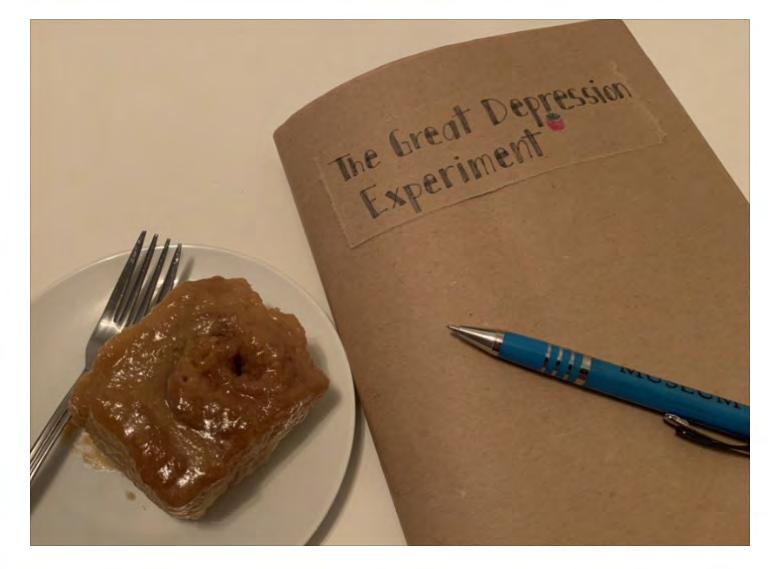
In July, we began to learn about the Great Depression, which led to a discussion about economy, recession, rising prices, increasing unemployment, economic collapse, tariffs and taxes, the stock market crash of 1929 and the result of all of these factors together. We learned about what happened around the world as well as in Canada during the Great Depression. We discussed what we would do if we were to experience something like this in our world today. It was a good way to think about cause and effect and how what we do today impacts our tomorrow. To further our learning experience, we decided to do the "Great Depression Experiment" which we initially decided to follow for a month. This included learning all
By Ann-Marie Hum
about the consequences of the Great Depression, the cultural implications it had, how it affected people in the city versus those who lived in the country, the food that was eaten, the cost of living, food rationing, gardening, the clothes they wore, hair and fashion and so on. A big part of our experiment was learning about food costs, spending as little as possible and cooking at home with no eating out and little to no processed foods. We discussed what may be difficult like avoiding our electronic devices and what would be easy like cooking yummy meals at home.
To start, we created a journal to take notes, record recipes, and a place to
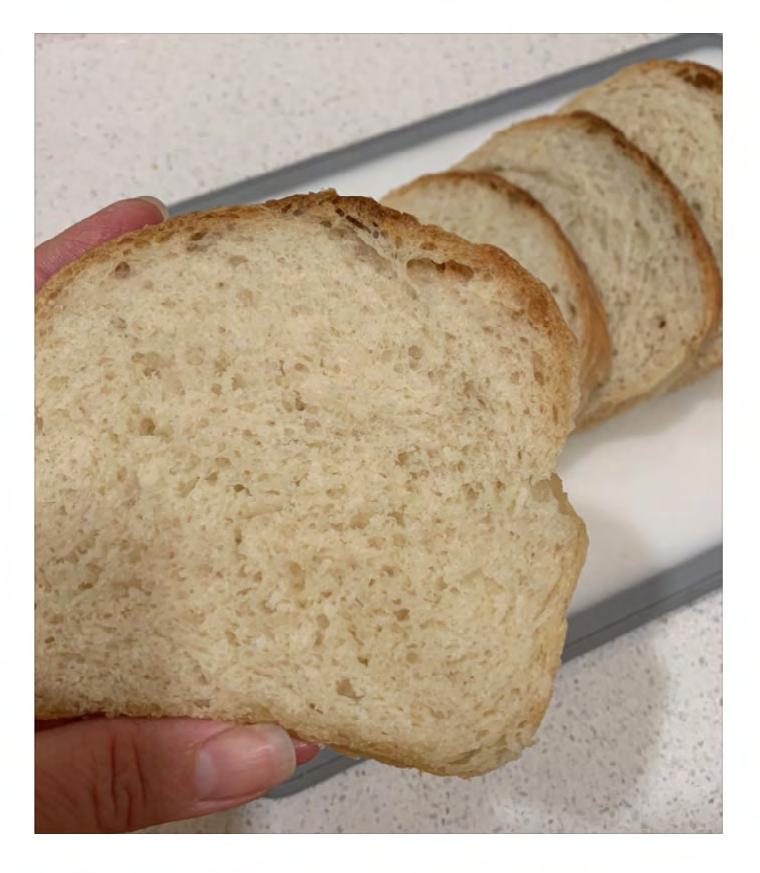
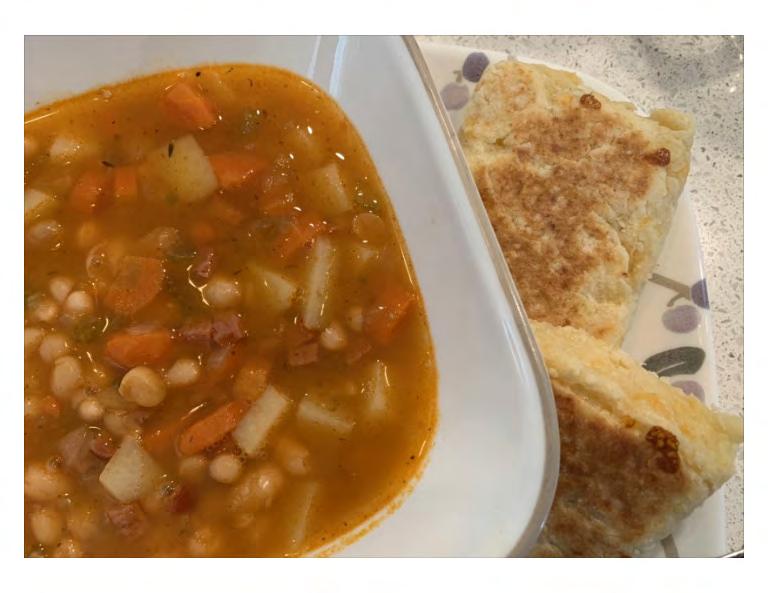
journal our thoughts, photos and experiences. We cooked hearty old fashioned meals that used up leftovers, reduced food waste, used up vegetables before they went bad, used local seasonal ingredients and ingredients that would have been used often during that period because they were cheap- like beans, potatoes and flour that could be turned into an array of meals. Meat was a side or used as flavouring since it was expensive then. Soups and stews were often cooked as it was an easy way to stretch a handful of vegetables, rice or noodles and a bit of meat. Bread was served at every meal because it was a filler. Having a bowl of soup or stew with a slice of bread was a simple yet frugal way to feed a large hungry family on few ingredients — just like the Bean & Ham Soup that we enjoyed with biscuits.
We watched various documentaries and videos like “Great Depression Cooking with Clara” on YouTube where she shares her perspective of living through that time. It taught us what it was actually like for someone to live through the Great Depression, the importance of family working together and staying positive and faithful to God in trying times. And we loved her simple recipes and took delight in recreating many of them, and of course listening to her interesting stories from that era. My daughters also found and used recipes from the Great Depression, like Depression Bread that has only 3 ingredients!
We took interest in learning about the hair styles and fashion of the time and did our best to look the part. Women often wore mid-calf skirts and dresses or flowy pants that resembled skirts and many women sewed dresses for their
daughters from flour sacks. It became so popular that companies began printing designs and including patterns on the flour sacks. This helped the flour companies sell more flour and helped women sew cost-effective dresses. Men wore suits and older boys wore trousers and button down shirts while younger boys wore “buster-suits.”
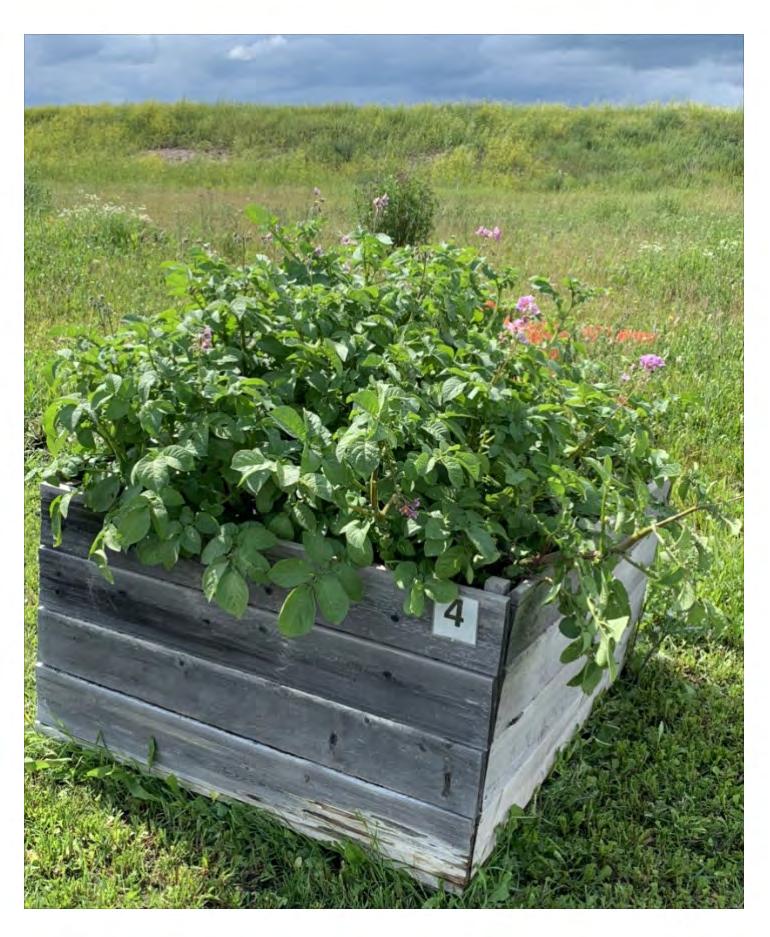
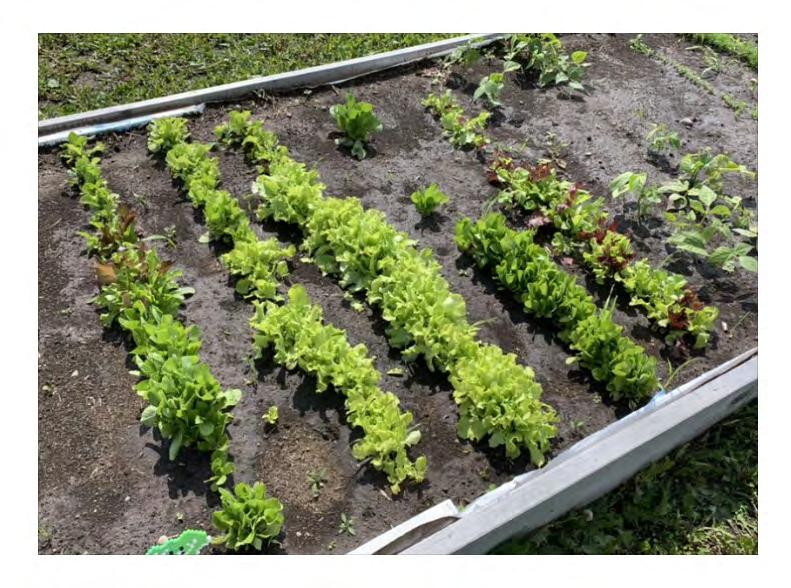
We gardened all summer and understood the importance of gardening during the Great Depression as well as the value of victory gardens during World War II. It helped families that could not afford much to grow their own vegetables like potatoes, carrots, peppers and greens to feed their hungry families and cut down on costs. Many foraged also, but since we are inexperienced in foraging, we stuck to vegetable gardening in our community garden.
Now that winter has arrived and the house isn’t so hot, we will continue our “Depression Days” — delicious home cooked meals, time with family, journaling, grocery budgets and all the learning possibilities that lie ahead.
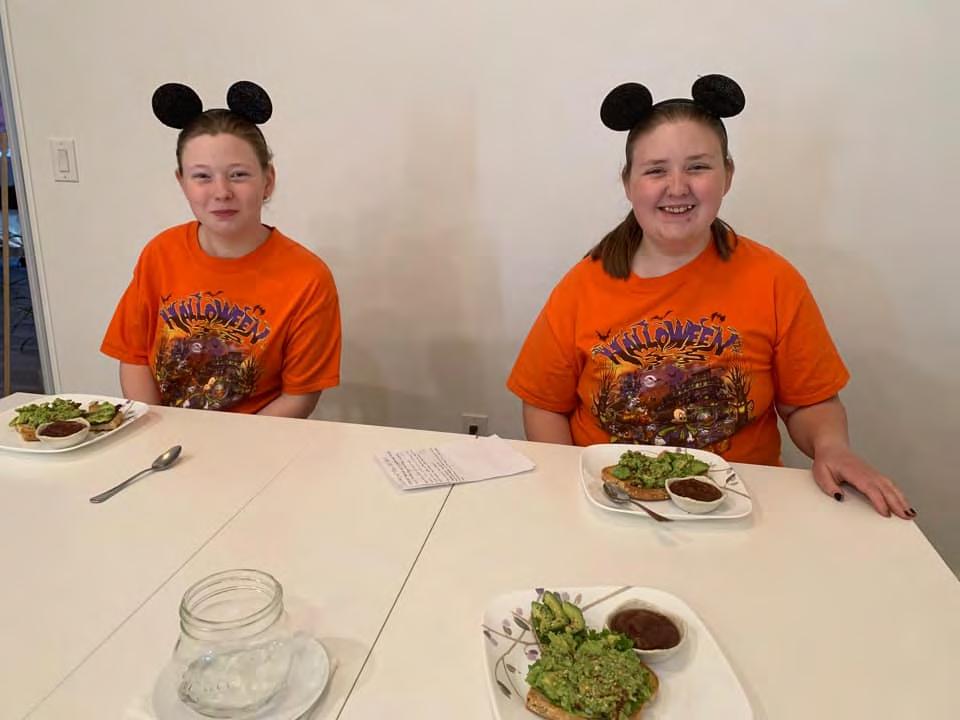
In October we chose Disneyland. My girls planned the menu, we shopped, cooked from scratch, and played Disney-themed games. The games all have some type of learning in them like puzzles in which they need to problem solve, figure out how to accomplish a task and other critical thinking tasks. My girls also created and cut out Mickey heads from paper in an assortment of colours to hide around the house in which we searched for these “hidden Mickeys!” It’s so much fun!
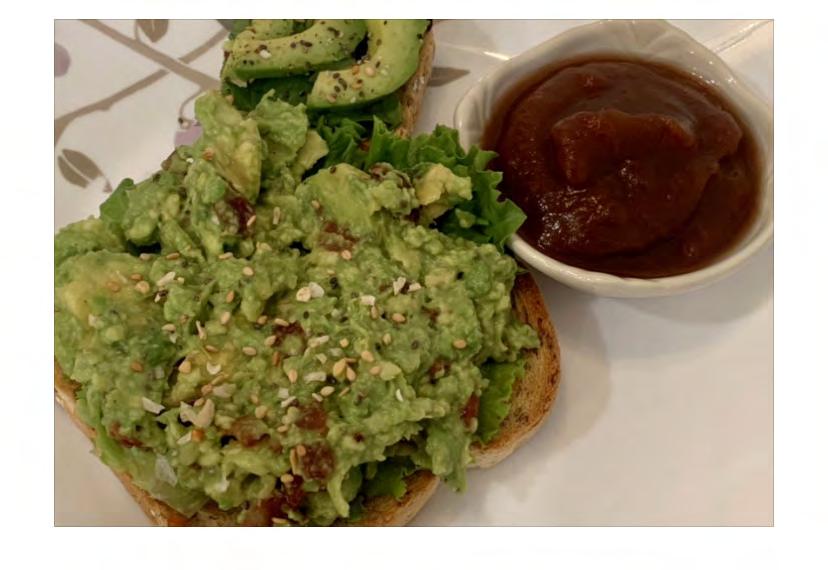
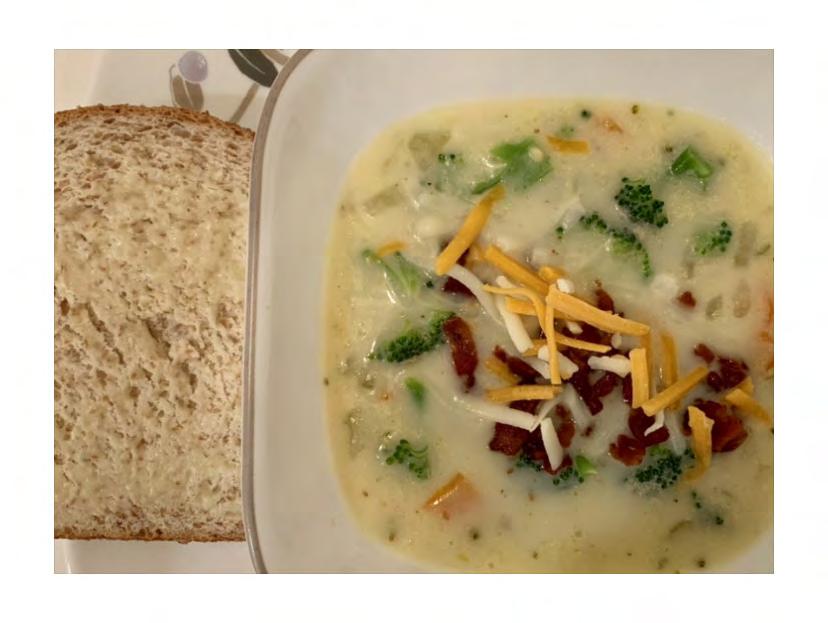
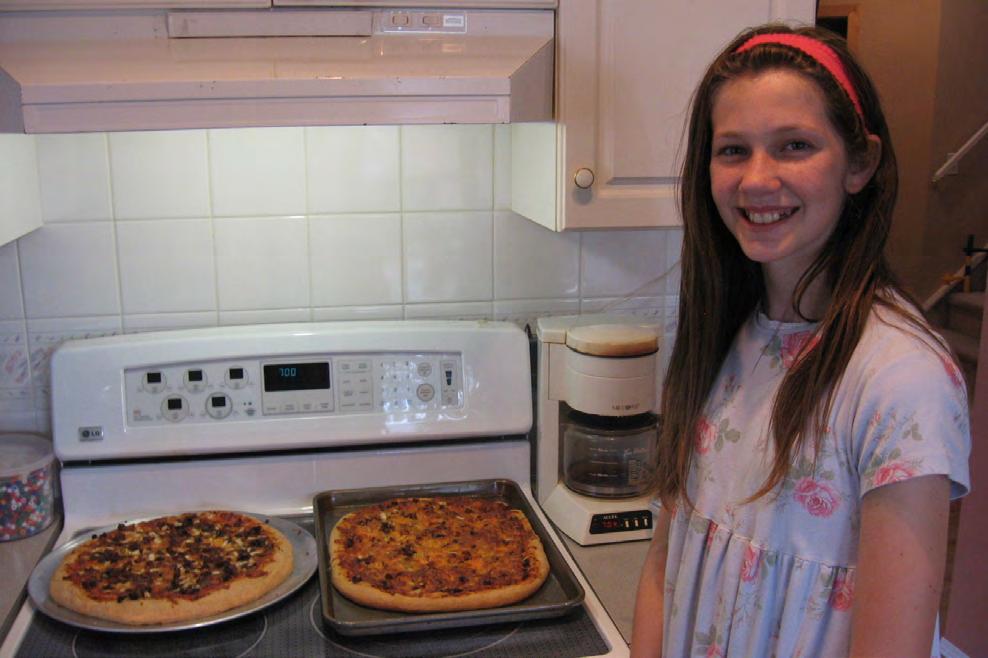
My girls planned our breakfast, lunch and dinner menus based off of the menus found around the Disneyland Park. They searched online for what they would like to have and then we came up with our own version like Avocado Toast served with homemade apple butter. We made other delicious goodies like churros, milkshakes, fried pickles, fruit salads, and soups like tomato soup with grilled cheese and cheesy broccoli soup. All meals we make from scratch. I think it’s important that my kids learn how to cook and bake various foods from all sorts of places and time eras! And it’s a wonderful way to get kids in the kitchen and learn history! They always enjoy what they help prepare! We play our Disney games, then cook the planned meal together. It teaches them cooking, budgets, meal planning and grocery shopping, money and so much more!
Then we play some more, cook more and end our day with more games, activities like writing assignments or a Disney movie. Even teens need fun days!
I welcome our “days” whether it’s our Great Depression Days, Pioneer Days, Disney Days, ‘40’s Days or Cultural Days from around the world like learning about Holidays from around the world. I look forward to our next adventure… Who knows where our dinner may take us next!
Ann-Marie loves integrating her love of cooking, baking and history into their homeschooling journey. Her love of good old fashioned cooking is why she blogs, and she enjoys her work as an Epicure Consultant. Ann-Marie says that the best part about their family’s homeschooling journey is that they can learn about anything they want to!
GraceisanAction
ByPaulvandenBosch
Afriend of mine has spent the last several years working on an ambitious program of self improvement. That’s not exactly the way she would describe it and in fact she would likely argue with me on that definition.
The program she has set for herself, as she would describe it, is one of self-acceptance and life-acceptance. The selfacceptance part, a plan she has undertaken with God’s assistance, is helping her to come to a place of peace
where she no longer regrets past actions. “My past is my past and I can’t change it. I will learn to accept my past as part of my personal history. I can use it as a reminder to grow and do better in the future.”
The life acceptance part is realizing that, as hard as we may try, there are many things in this life and in this world that we can’t control (nor should we try) and can’t change. We would often like other adults to behave differently than they do but their lives are their own to live. Whether it is the behaviour of others or the changeable weather, the world is the way it is and we can choose to struggle against that or we can choose to accept it. That doesn’t mean that we can’t work for change, of course, and we will get to that in a moment.
My friend’s goal, as she puts it, is to be “a person of grace and dignity.” A lofty goal, I said, so lofty that I had to look up the meaning of both of those words. There are several definitions of grace, and the Merriam-Webster dictionary starts with grace given to us by God: unmerited divine assistance given to humans for their regeneration or sanctification. That Godgiven grace can then translate into human qualities, aspects of someone’s character or personality, so that they have a disposition to act with kindness, courtesy, or clemency; a charming or attractive trait or characteristic; the quality or state of being considerate or thoughtful.
When I think of someone having such character or personality traits – a person of grace - and especially if I were to see any such traits in myself, my mind quickly
returns to the first definition and especially focuses on the word unmerited.
Anything good in my life is unmerited. A gift from God. I did nothing to deserve it. In that sense, ALL grace is divine. Now at some point a person who knows a thing or two about English grammar will have the thought that all of the definitions mentioned were definitions of grace as a noun. And the thought will be “In your title, you say that grace is an action. If grace is an action, then that would be a verb, no?” Quite right, technically speaking.
My answer may not please the grammartitians (is that a word?) but it’s this: grace, like love, only has meaning when it has been put into action. In other words, grace only has meaning as a noun when it is used as a verb. Grace, just like love, is just a word on a page unless it is used, unless it is active, unless it becomes a positive force in our lives and, by extension, in the lives of others.
Let me go back to some of the words in the definitions of grace just above.
Act with kindness.
Being considerate
How would we know that grace was working in someone’s life? By their actions. We could see grace being exhibited by what the person was doing. A character
quality come to life. Or rather, brought to life, brought to life through the unmerited and unearned actions of God and then brought to further life through a human being acting on that God-given gift.
I asked my friend: how will you know you are a person of grace and dignity?
Her answer: “Others will see it, and I will see it, in my actions.”
What actions? What kind of actions? Actions that are particularly graceful or dignified in someway?
“I will simply do the right thing for the right reason without any desire for praise or recognition.”
Well, when you put it like that, it sounds easy! “Not easy. But simple.” Simple, meaning not complicated. I can see that. But changing who I am doesn’t sound easy at all. “It’s simple and not complicated and can be accomplished over time by following some uncomplicated steps. But, you’re right, it’s not easy. It will be a lifelong process for me. If I try to do it on my own, I will fail. I could only do it with God’s help. I will put in the work I have to do, trying to make the best decisions and then take the best actions in every moment. But, at the same time, God will do for me what I can’t do for myself.”
God will do for you what
you can’t do for yourself? “If I do the best things for the right reasons then I am opening myself to divine grace working in my life. That divine grace will work on me and help me and improve me in ways that I’m not aware of and can’t even imagine. That grace, that divine assistance, will do things to me and for me. But this will not happen without me. I have to be a willing participant. I have to take action.”
There’s that definition above again: unmerited divine assistance given to humans for their regeneration or sanctification. Unmerited assistance. I didn’t earn God’s grace. It was - and is - simply given to me. It’s that simple?
“Yep.”
OK. But shouldn’t I be working to make the world a better place? Aren't there some things that I shouldn’t just simply accept? “I want the world to be a better place. I can and should work toward making it so. Where do I start? I can begin with myself. Making myself a better person. A person of grace and dignity.”
That sounds like the quotation usually attributed to Mahatma Gandhi (although he actually didn’t say it): Be the change you want to see in the world" (or "wish to see")
“He didn’t say it? Well, it sure sounds like something he would say.”
After my conversation with my friend was done, I also looked up dignity. The meaning includes a sense of pride in one’s self, self-respect; the state or quality of being worthy of honour and respect. The state of being worthy? How do you achieve that state? I would say, similar to how grace and love are defined above, that dignity is a noun that only takes on meaning when it is practised or put into action. You can only achieve a state of being by performing actions in line with that state. Or, as my friend puts it: “I will have self-esteem if I perform esteemable acts.”
But what if I don’t want to do that? What if I don’t feel like getting up in the morning? What if I don’t feel like being of service to my fellow humans? That’s where the unmerited grace is truly a gift from our God who is not only all-seeing and all-powerful but all-loving. That grace is given to us. No charge. A gift. It is God acting for our benefit. We don’t merit such a gift. God gives it to us anyway. Love in action. And if we can do our best to align ourselves with the will of our God, we can and we will become better people.
People of grace and dignity.
Paul van den Bosch is a WISDOM facilitator who knows many people who put grace into action every day of their lives.
Old Fashioned Skills in a Fast-Paced World
Blacksmithing & Knife Building
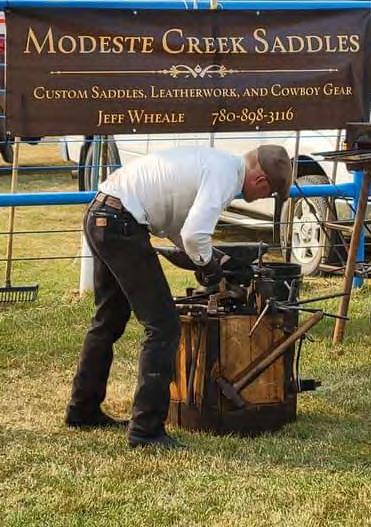
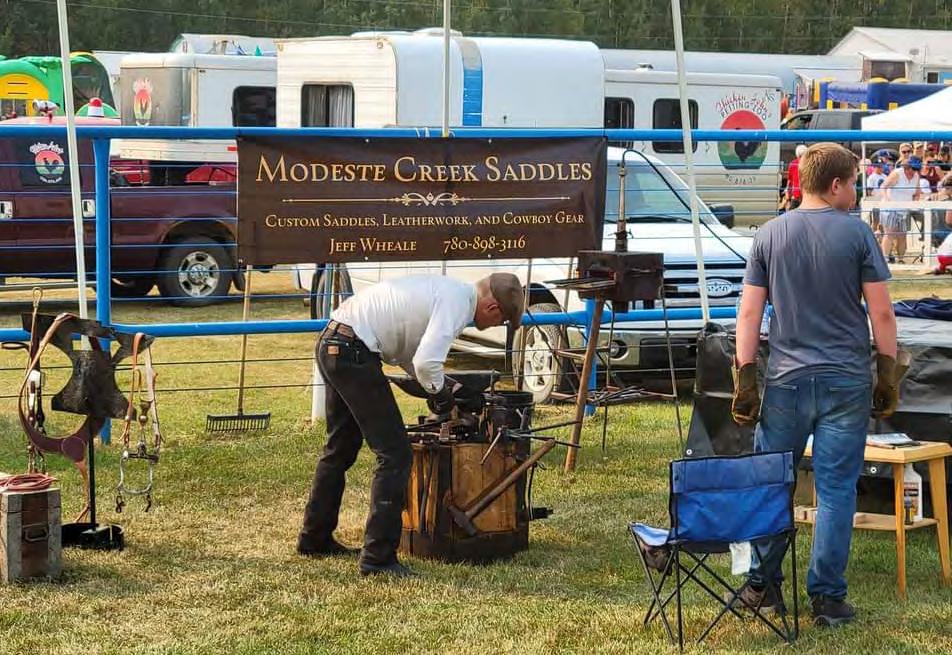
Modeste Creek Saddles & Forge
By Krista Wheale
I’msure we can all agree that in today's fast paced world, convenience is the norm. Today we can order groceries online, have anything shipped overnight to our doors, and have all the information we could ever want at our fingertipsliterally carried around in our pockets. In a world where we can stream endless hours of entertainment, the effort and hard work of learning traditional skills might seem old fashioned or even unnecessary. But to our family, these skills offer invaluable insight into ourselves, our abilities and offer us a type of growth and learning that can never be done in front of a screen.
Learning patience and perseverance when things don’t happen automatically, learning tenacity and follow-through when things go wrong, and feeling the
glow of accomplishment and pride when you look at your finished product are just some of the benefits to learning these old fashioned skills. Over the past few years, there has been a resurgence in people wanting to go back and learn traditional skills and practices of our forefathers. We can see it in many areas, from simple sourdough baking, to gardening and permaculture, animal husbandry, food preservation, traditional medicine, outdoor and survival skills, black smithing and more.
Learning these skills has been a passion of ours for many years. From as young as my husband Jeff can remember, he thought he was born in the wrong century. He found more in common within the pages of Louis Lamour’s ‘Sacketts’ than any activities done in regular life.
Growing up on a farm fostered that, and his interests were encouraged by his family. His grandpa taught him blacksmithing at the forge before he was 10, and his grandma shared her passion for leatherwork. His father and uncles taught him outdoor survival and took him on horseback pack-trips throughout his childhood. At 17, he went guiding for outfits in the NWT and later, he made a living coyboying at large ranches and grazing reserves. Our lives may look unconventional to some, but some of the richest moments we’ve had are when we are following our passions and using the talents God gave us.
Jeff started out just building his own saddles and custom gear and knives, and then we started building for others who loved the craftmanship and unique items
we offered. That naturally progressed into people asking for classes as they wanted to try their hand at these skills. Our family has been able to turn this passion and our old-fashioned skill set into real businesses, and we couldn't be more grateful.
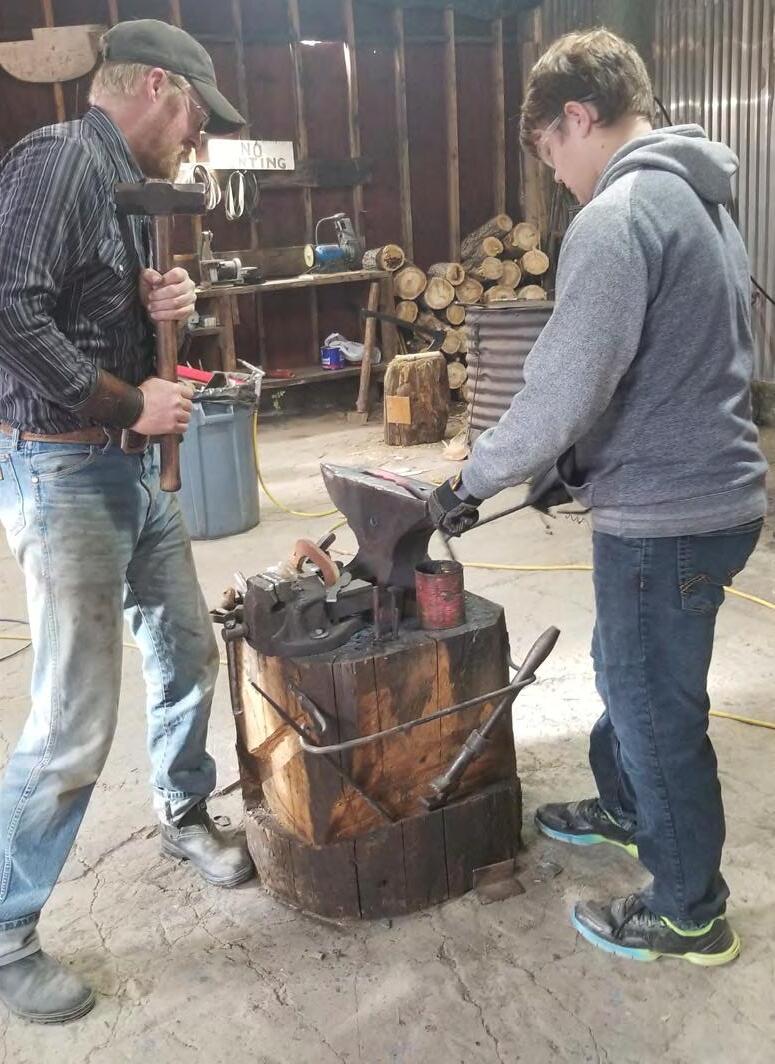
Homeschooling our own children has been one of our biggest challenges and wonderful blessings we’ve had. It has also really brought to our attention all the life-skills we want our children to learn and foster in our family. We see the immense value to students and families and hold smaller classes to allow for younger students than most other forges. We do this as well as teaching parent/ child classes, which are always so fun.
Home School Experiences
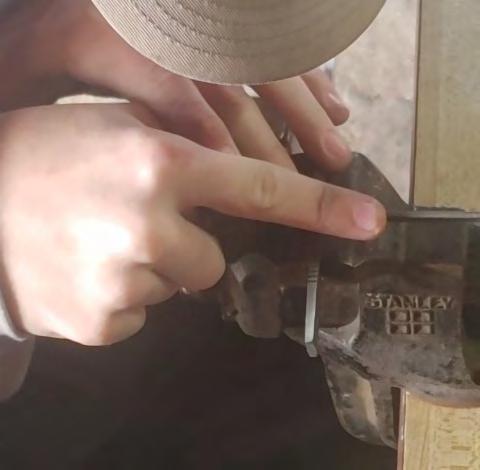
Our classes are a bit different than some others you might find. Nowadays many forges build knives out of flat steel or blanks. There is nothing wrong with that, but we want to be as traditional as we can, so we start out with a chunk of steel that is flattened and molded by students. This is the way blacksmiths would have built knives 200 years ago; we just get to use better tools and electricity. So, it's probably a bit easier on the arms.
We also feel blessed to be able to offer other families the opportunity to learn these skills in a safe and exciting environment. Jeff still coyboys full time, but we have opened up our shop and forge for monthly knife building classes. We also offer occasional leatherworking, and speciality forge classes, such as a tomahawk building class and tool building class. Classes are taught in our on-farm forge and safety and fun are our top priorities. Jeff has a great eye and a gentle way of teaching. We want people to experience traditional forge work and leave proud of their pieces. In our careers and on our homeschool journey, we have seen the immense value in learning life skills, traditional and often forgotten
methods of working/creating and living with resources we have available locally.
We host monthly knife-building classes and others throughout the year. We are located on the west side of Pigeon Lake, AB. We offer camping or have contacts for a great B&B just down the road. Our area has some amazing lakes and provincial parks within 15 minutes, so families often check out the lakes, cross country trails and other local amenities and have a great weekend.
Even if blacksmithing isn’t your thing, we’d love to encourage you to pick up one of the many seemingly old-fashioned skills for your kids and family to learn. It is amazing what it can do for your children and the richness it will bring to their lives as their passion comes to life in front of their eyes.
Jeff and Krista Wheale are a WISDOM family who run Modeste Creek Saddles and Forge in Winfield, Alberta. If you interested in more information, or would like to take a class, please check out modestecreeksaddles.com for more information. Their family would love to see you out at the Forge!
My JourneyHomeschool
By Korae Nottveit
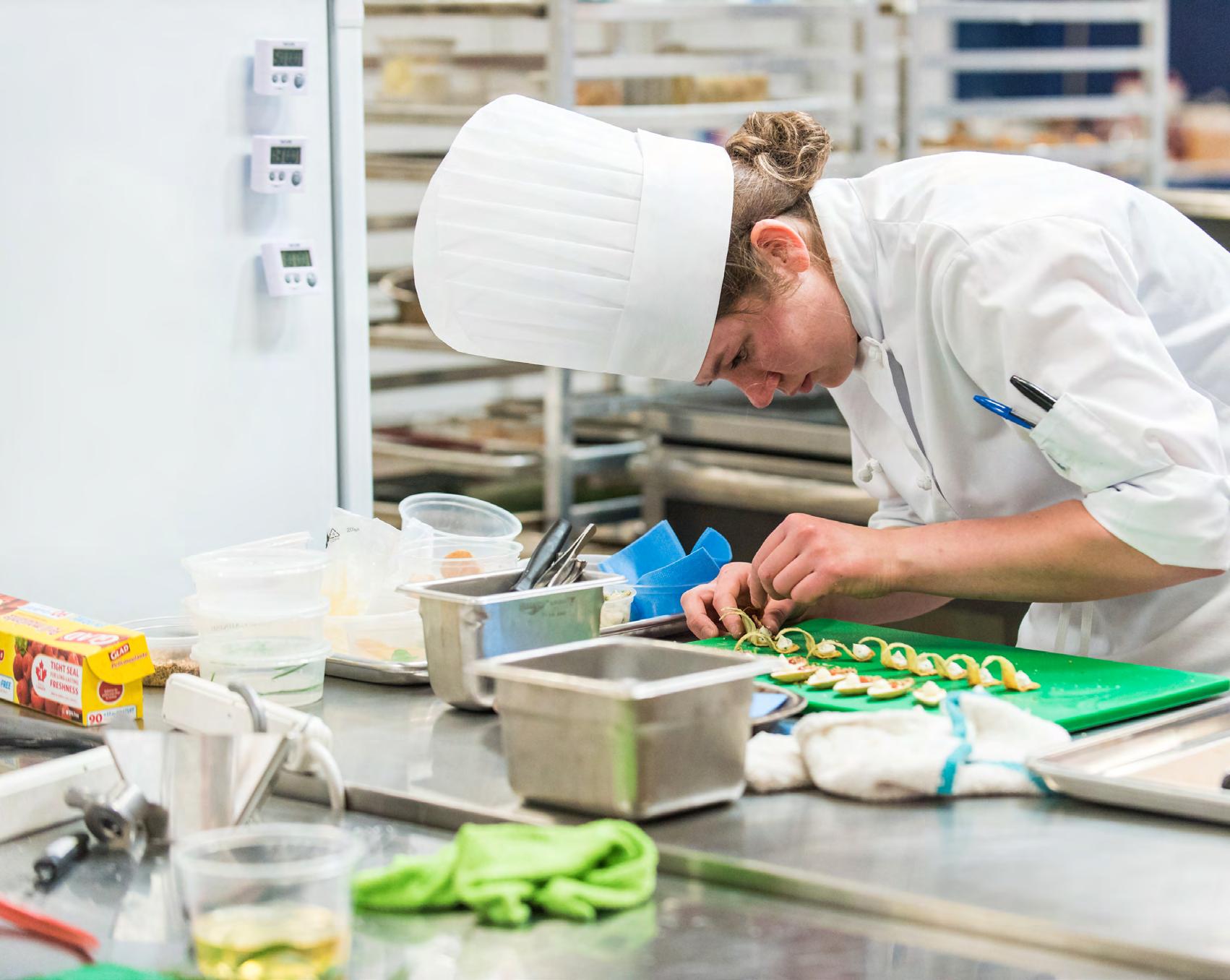
I was educated at home all the way from Kindergarten to the completion of Grade 12. I grew up with 7 siblings, and as the third oldest, helping take care of younger siblings was a part of my life. At lunch and dinner, I was paired with one sibling and would always take care of them before myself. This little lesson growing up is a key part of the Hospitality Industry. My school schedule included helping with lunch and dinner prep a couple days of the week. My mom taught me all the fundamentals of cooking. At seven years old, I knew how
to properly open an avocado or dice a pepper - tasks that seem easy, but once I got to culinary school, some students had no idea how to do that.
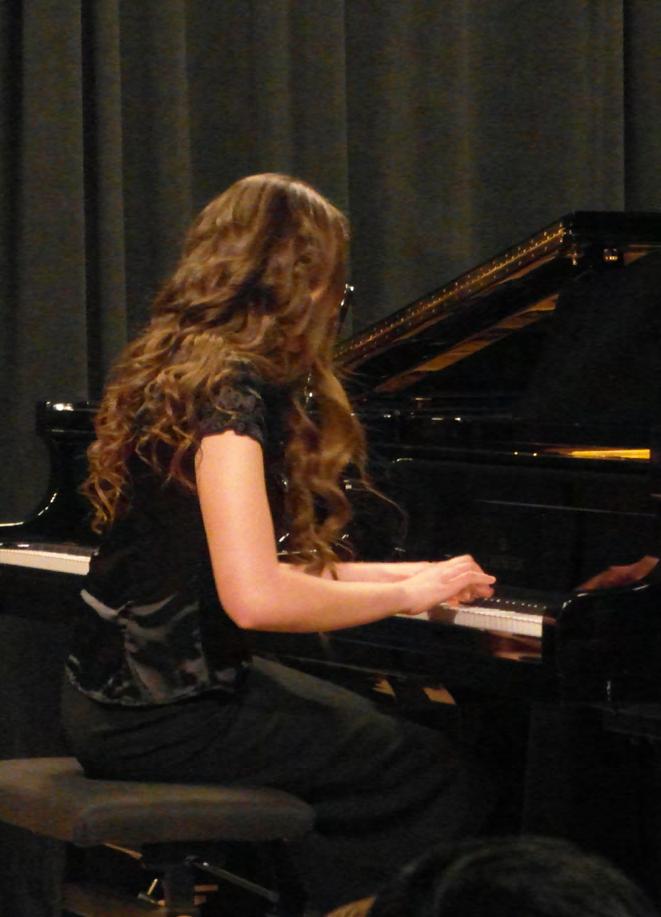
Another aspect of my home education included music. I took piano from ages 5 to 17. By the time I was training for the Grade 10 Royal Conservatory exam, I practiced repetition, playing the same songs and scales over and over again. Another focus was keeping my wrists relaxed, an important skill for a pianist or it can lead to wrist issues. My piano
teacher organized recitals which were always nerve-wracking because I didn’t like performing in front of crowds. Training for piano helped massively when it came to cooking competitions, whether through repetitive practice, relaxing my wrists, or cooking in front of people.
Since my daily schedule was tutorstyled, I had the freedom to take a day off during the week to do extracurricular activities whenever an opportunity presented itself. Whether this was
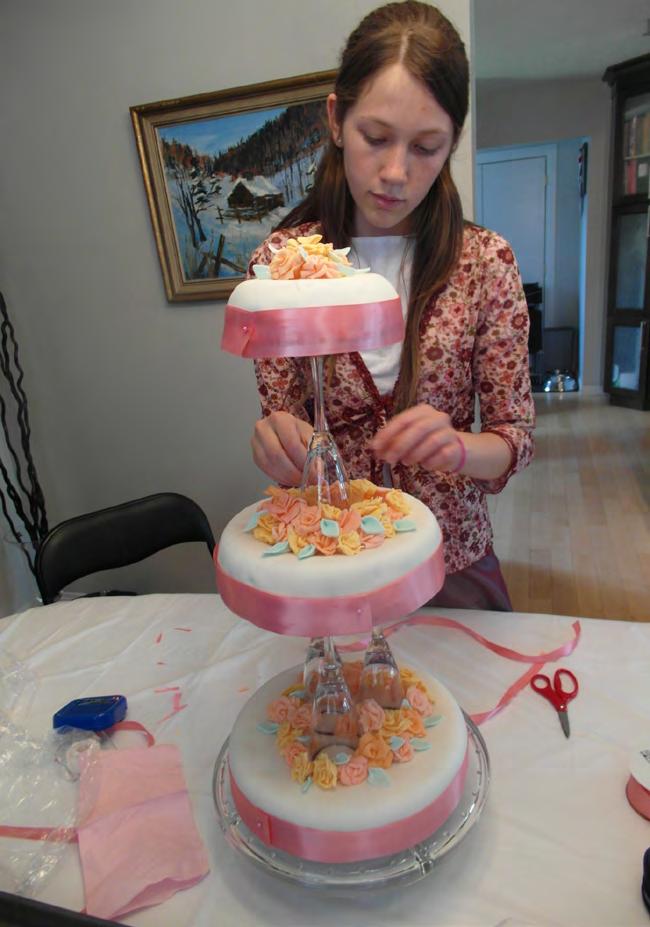
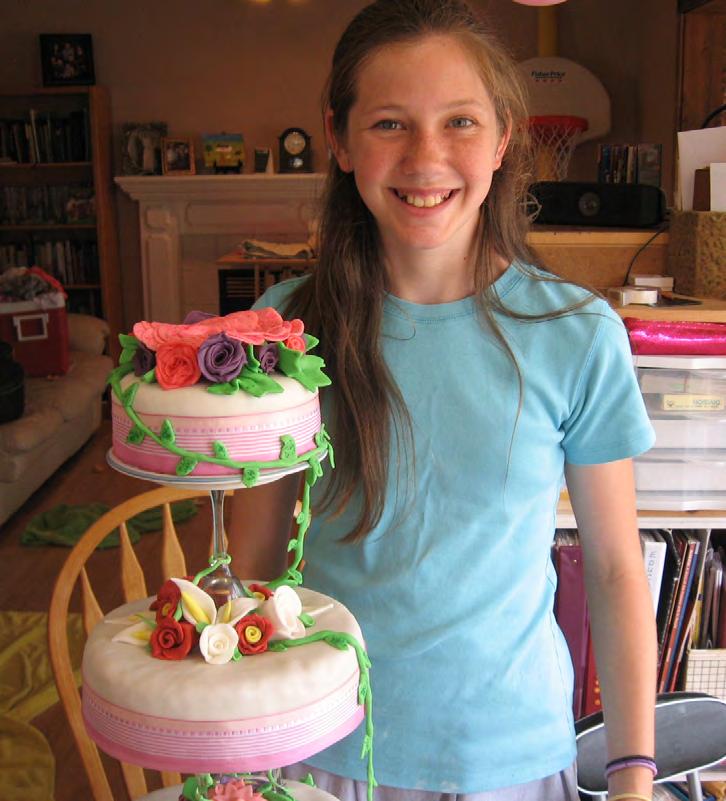
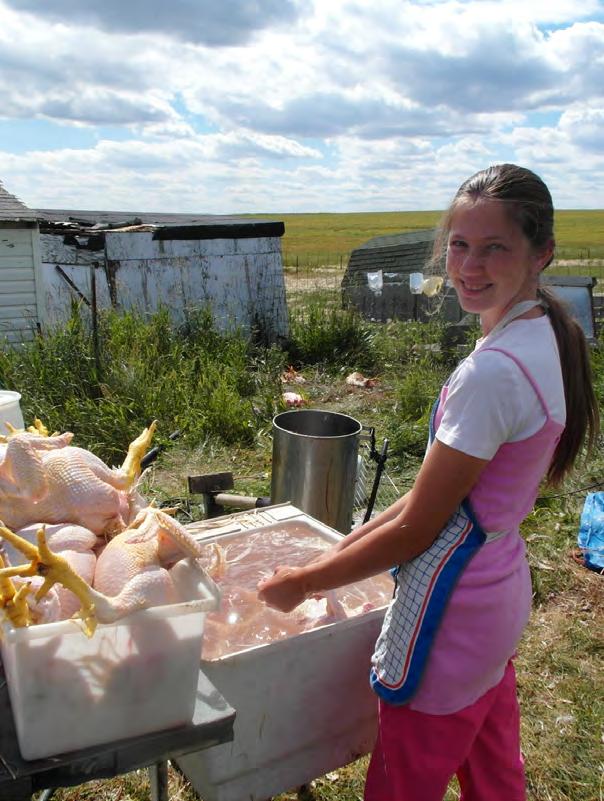
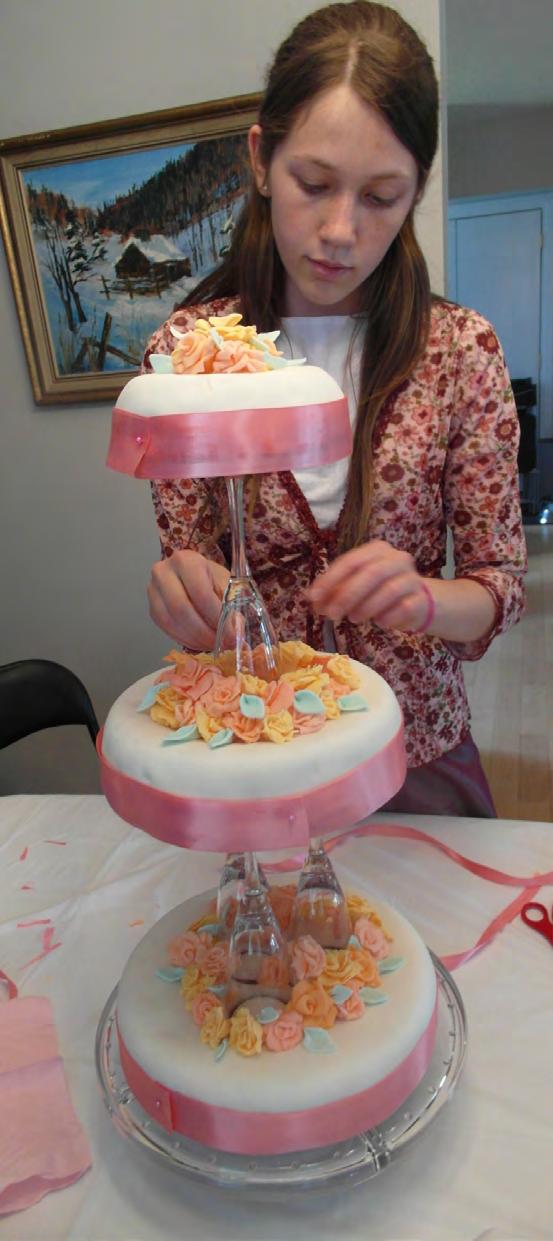
baking a cake for a baby shower, helping friends butcher chickens, or helping my mom cook meals for the neighbours, it wouldn’t have been possible to do if I wasn’t educated at home.
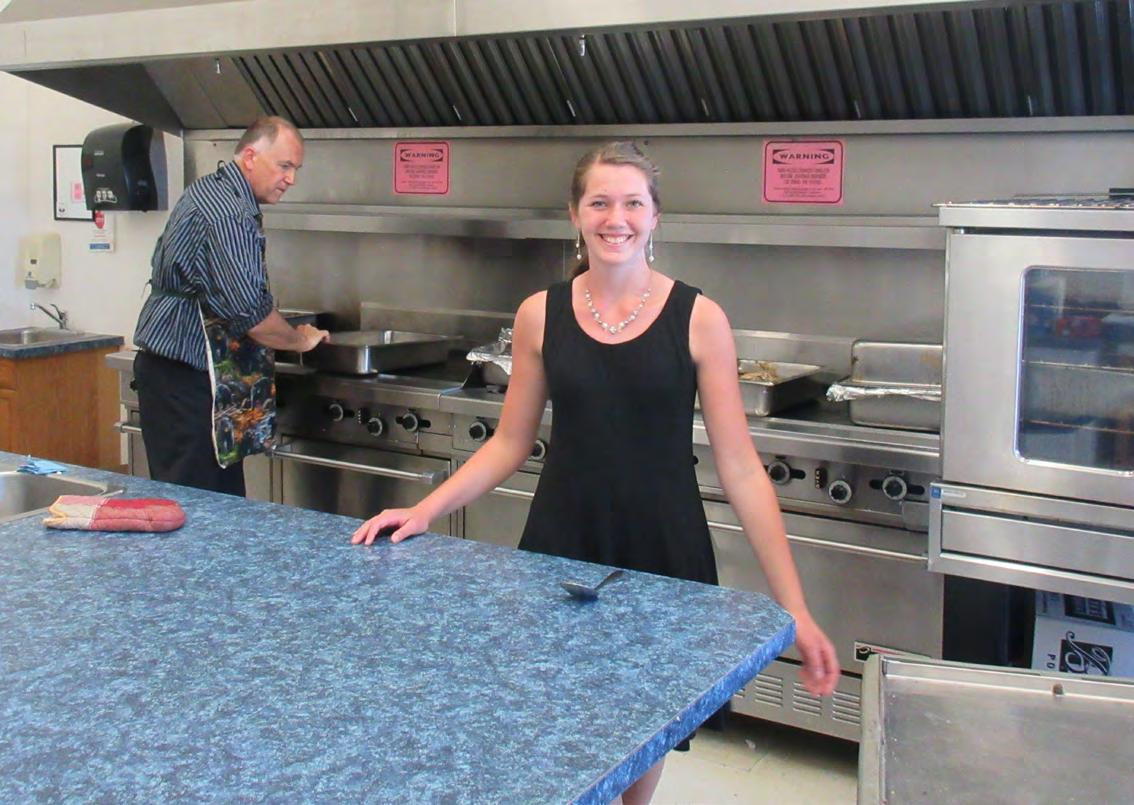
Being in the home school community, I was able to meet and make friends in all age groups. When I was 15, I remember spending time with my older friends, who had a place of their own and cooked together. During one particular evening, my friend and I cooked a large meal for the whole group. Once dinner was served, I realized I wasn’t hungry anymore and didn’t feel like eating… but when I observed everyone else enjoying dinner, that feeling of making other people happy started the idea of going into culinary school. As a result of being connected with an extensive home school community, I was often asked to help in catering weddings or graduations, which built my culinary experience even more.
Looking back, I recognize there are so many experiences that led me to become the person I am today. I know if I hadn’t been educated at home, most of these wouldn’t have been possible. I learned the importance of diligence, initiative, determination, stress management, leadership, and selflessness.
During the past four years, since my
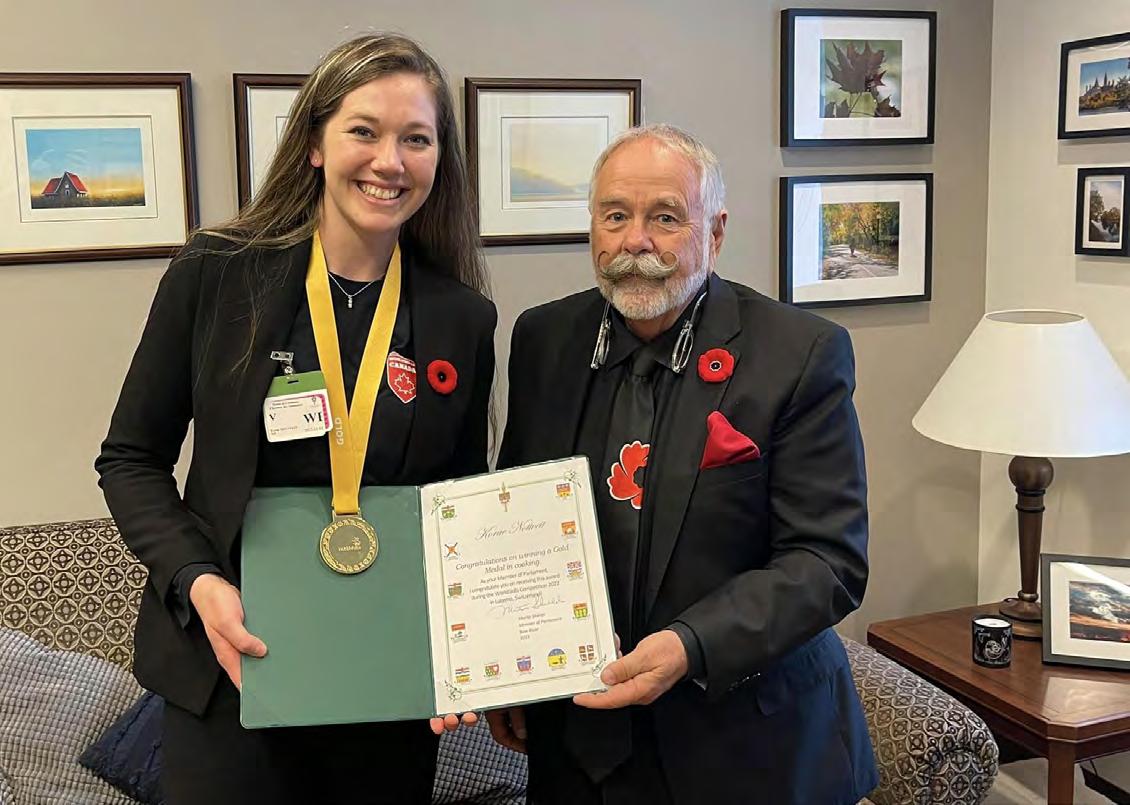
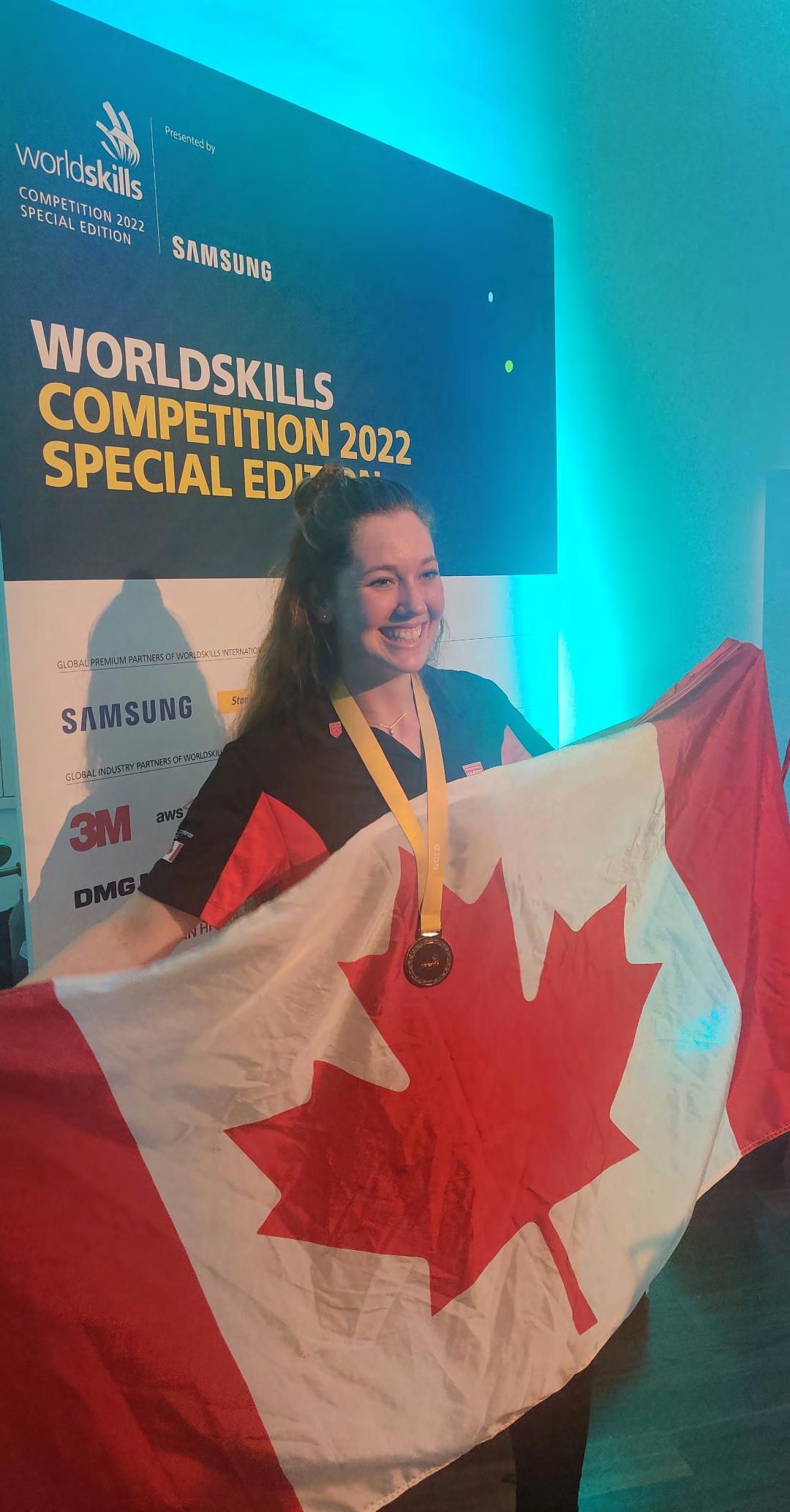
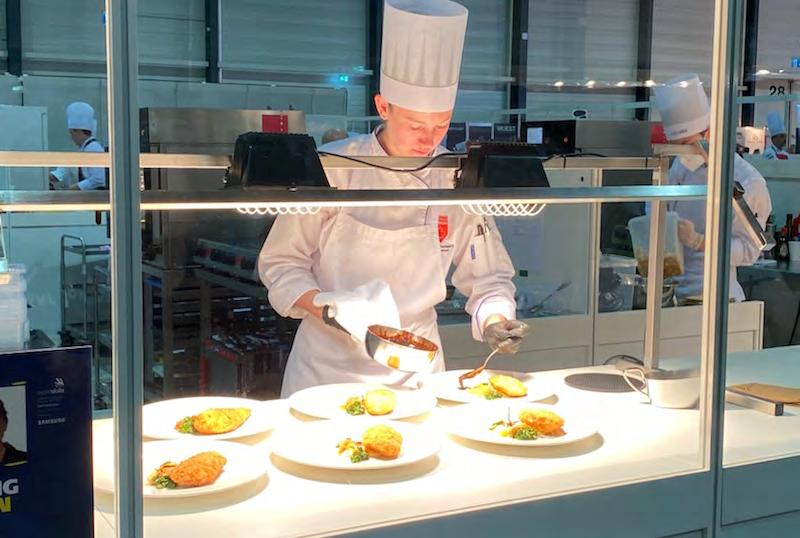
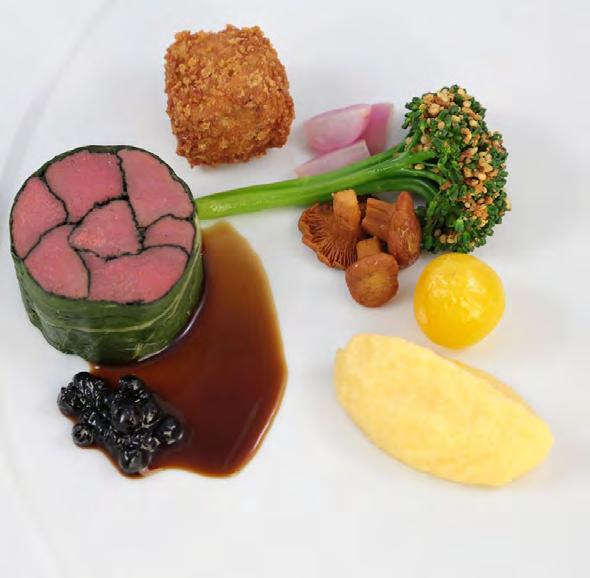
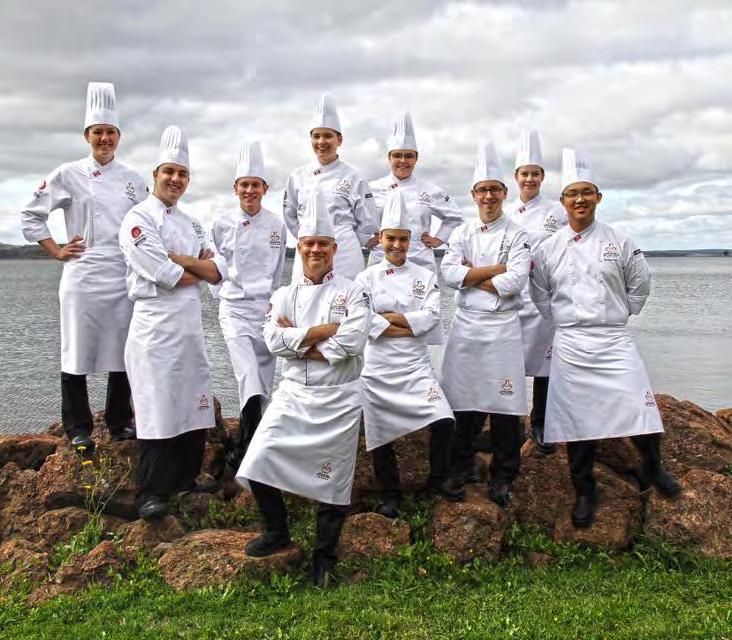
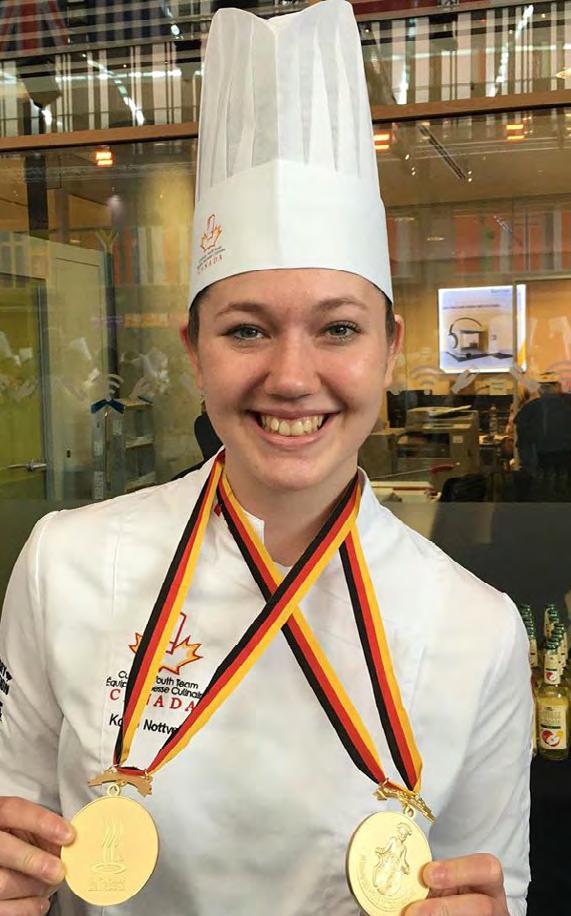
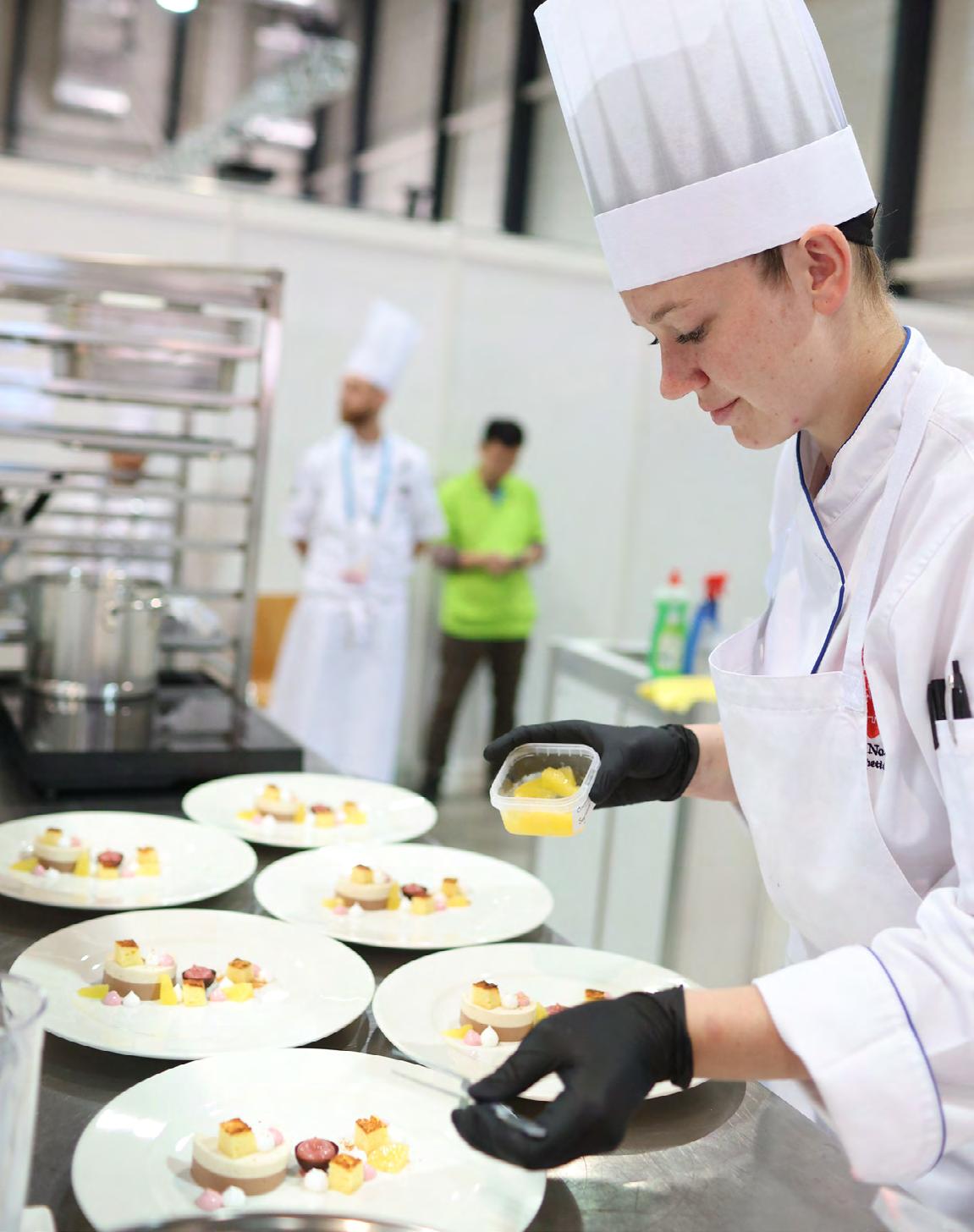
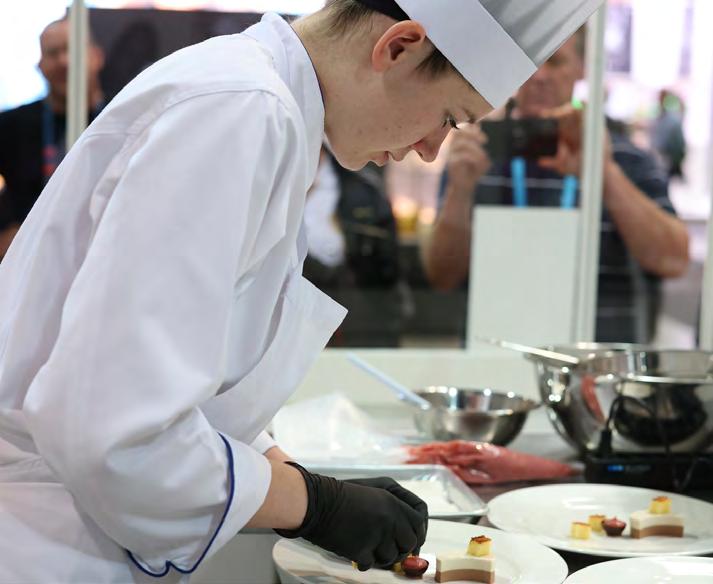
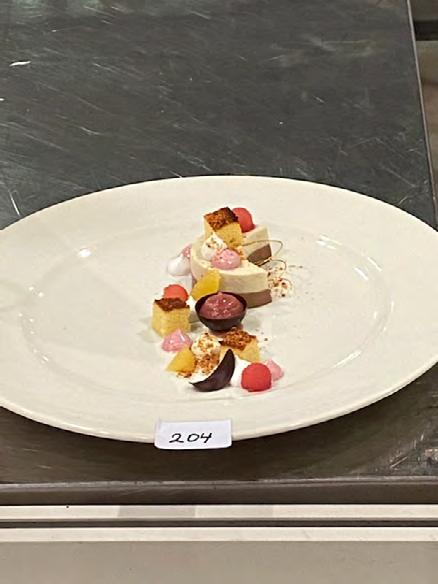
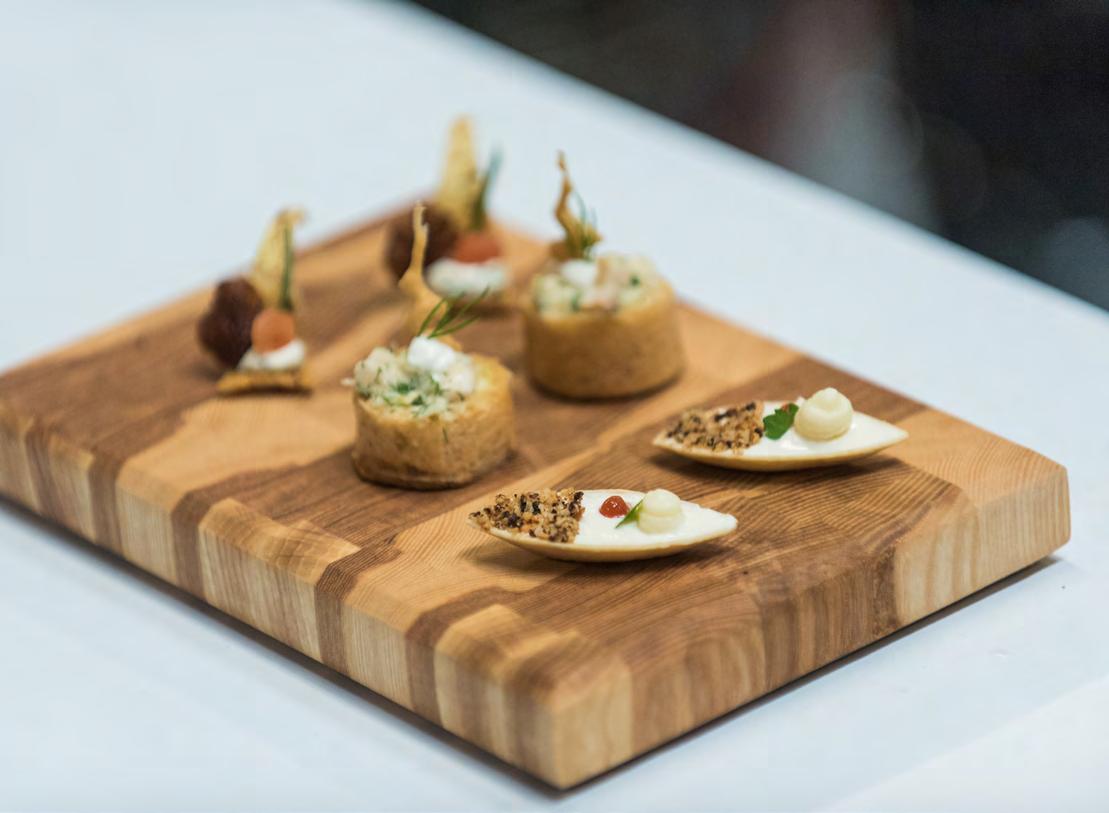
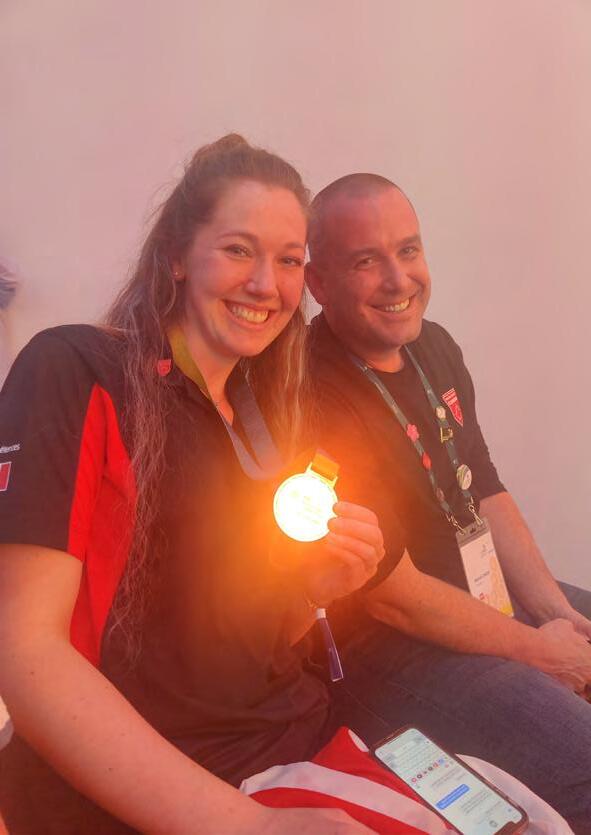
graduation from the Professional Cooking program at SAIT, I have been training and competing in culinary competitions while pursuing a successful culinary career. A highlight was joining the Canadian Youth Culinary Olympic Team and traveling to Germany to bring home two Gold Medals for Canada. This year, I qualified for the WorldSkills 2022 Competition in Switzerland for Cooking, allowing me to finally test myself against the best young chefs in the world. In Europe, culinary students start training around age 15, whereas in
Canada, students don’t begin until age 17 or 18. This definitely gives Europe a head start on the culinary track. However, I was able to be on the same playing field as them because of how I was raised and educated. I ended up bringing home a Gold Medal in Culinary for Canada, the second Gold in the past 46-year competition’s history, and the first World Gold Medal for Alberta.
WISDOM Grad Wins at WorldSkills 2022
The Home Education journey takes thousands of steps of endurance and faith. Phil and I wanted our children to have a solid, tutor-styled academic education. We chose
curriculum that was selfdirected for the secondary grades, incremental, and when applicable, Christianbased. Essay writing in the five-paragraph format was essential. Our library is
By Mona Nottveit
extensive and Korae read prolifically. I also had oral reading time with our children for many years.
Because our home was
extremely busy and filled with beautiful children, Korae followed a strictly timed schedule when she was younger that was based on several scheduling templates we gleaned
Spotlight on Success
from publishers of homeeducating resources; in high school, her schedule transformed into a selfdirected checklist that she accomplished by the end of each day.
Our eldest son knew he wanted to apply for Engineering at the University of Calgary, so he chose to take the high school diploma courses required for entrance into that discipline, without a
diploma. In Korae’s case, she decided she wanted an Alberta Diploma to keep her future options open, and also in case she left the province. Korae followed traditional methods of study until she was ready
to challenge the grade 12 Alberta Diploma courses. This was split between two years, grades 11 and 12, so she could fully focus on each diploma course.
Korae had to achieve 100 credits to achieve the
Spotlight on Success
diploma: she completed these with Religious Studies, Special Projects, Work Experience, General, Choral, and Instrumental Music, and Physical Education. Rae learned to fill out various journals/ logs/ sheets to get supervisor approval for all of these courses. This meant Korae worked part-time at a Seniors Residence in the dining room and kitchen, she achieved the Grade 10 Royal Conservatory of Music Certification, which
allowed her to play for the Airdrie Interdenominational Choir and Orchestra and other various musical performances. She also participated in community service to seniors, she volunteered and was staff at the Calgary Pregnancy Care Centre, and she played recreational sports all throughout Calgary and Airdrie.
We wanted our children to learn as many life skills as they could, and keep as many options open as
possible. We prayed that the Holy Spirit would lead their futures to where He wanted them (it is His job, not ours).
Korae achieved a high enough GPA, combined with community service records, to be awarded the Scotiabank Entrance Scholarship into SAIT. This freed up her personal funds to take a school trip to Europe and learn more about their cuisine. As parents, our role in her education now became
supportive, which meant administration, helping with passport procedures, editing Korae’s applications, prayer, hugs, free food that she did NOT cook…
Korae’s route to becoming the World’s Top Junior Chef has been filled with complete dedication on her part. This did not come easily. For many years at home, she made self-discipline a habit. Her post-secondary time was consumed with either volunteering, studying at SAIT, training,
or working at a restaurant evenings and weekends. When the WorldSkills 2022 Competition Special Edition was announced in Switzerland, Korae was ready to compete - and she did what no other female or Albertan has ever done in the 46-year history of WorldSkills… she won Gold and became the
World’s Top Junior Chef.
We are so thankful for the freedom and privilege of educating our children at home. It has made the world of difference for Korae because she has used her time wisely.
“And let us not be weary in well doing: for in due season we shall reap, if we faint not.”
(Galatians 6:9)
Country of the Week Country of the Week
By Chandra Mahabir
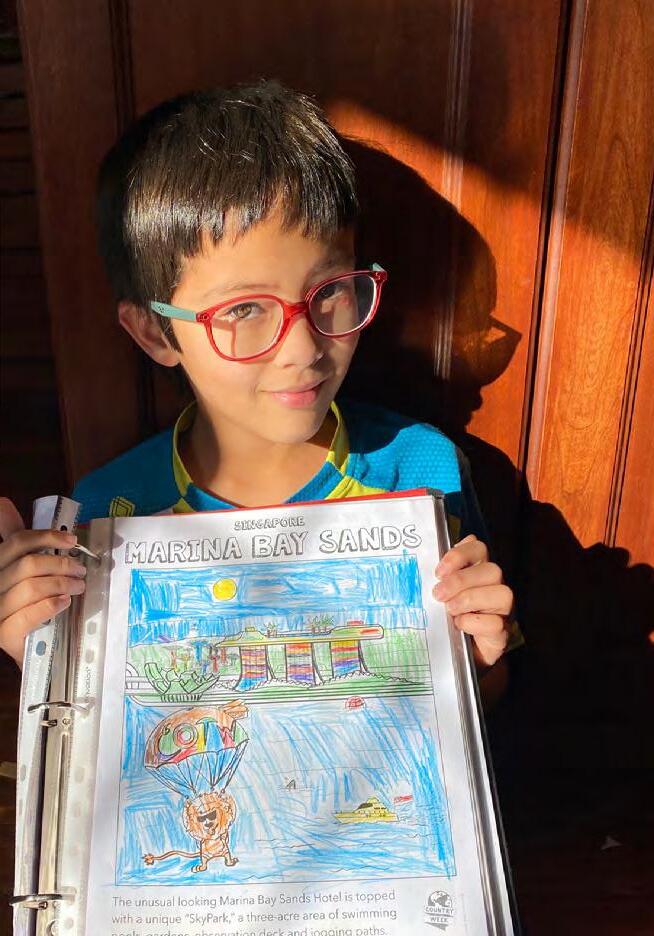
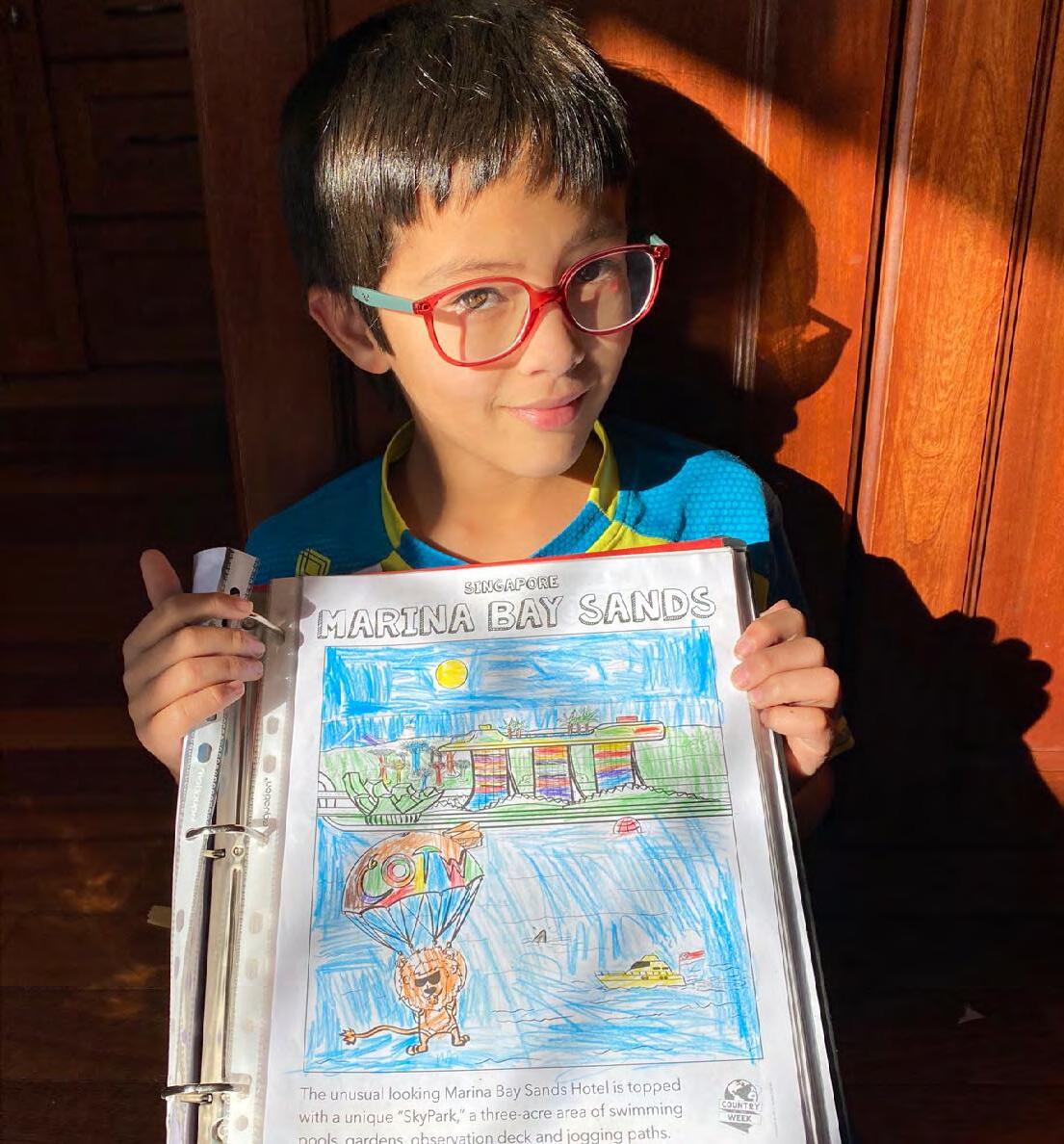
Didanyone read the title and panic, thinking to themselves “I’m not teaching geography!”? Having homeschooled for just over three years, I am still fighting the occasional wave of insecurity that I might not be sufficiently educating my children. I am continuously evaluating available resources and, more importantly, asking myself what do I really want my children to learn? I was fortunate to come across Dave Ternier’s program “Country of the Week” and after more than a year of weekly countries, my children are just as excited about the program as they were when they got their first “country of the week”.
I have put the program information upfront in the article for those with limited time that are just skimming this magazine, likely to be called off to household emergency within the next minute or two. The remainder of the article is simply my thoughts on the program and how the program has worked for us in our life.
What is “Country of the Week”? It is a very well named program, as each week, you are provided information on one
country. The information includes a weekly colourful cover page, a worksheet with the country’s flag to colour and a space to write what the child has learned, a selection of internet videos and other items. All items are delivered electronically so you will need a printer. The category of “other items” includes things that are not included with every country. Some examples are worksheets (crossword searches, word puzzles, dot-to-dots, themed colouring pages), recipes, country game cards, and country fact cards. The regular price of the program is $5/month or $48/year. (See the bottom of this article for a special pricing trial period Dave has graciously created for WISDOM!). Details about the program are available at: https://www.countryoftheweek.world/
I was initially attracted to the Country of the Week program because learning about world countries appealed to me. I suspect at the start, I could probably name about 50 countries, having a multicultural background and having travelled internationally occasionally. Since the Country of the Week program would include 200 countries, I was curious. I acquired the basics for the program - a binder for each child, a wall map of the world, and access to a coloured printer. Since this program was essentially a complete unknown to me, I signed up a few weeks before I planned to share it with the children so that I could review the material first. Dave had developed the program for his two girls (ages 5 and 7 at the time), but I was going to throw three boys, Miles (10), Mikko (7) and Lawrence (4), into it. I was curious if it was robust enough to work for our family.
I won’t spoil the surprise of finding out which country is first, but I was hooked immediately. It was a county that I had visited, knew well from history studies, spoke some of the language and was eager to share with the family. What I loved about the material presented was that it was not the overhyped information that I knew. The facts were listed on the cover sheet (capital, languages, population, location) but the video links provided an appreciation of some of the more unique aspects of the country. This country is fairly well known so I was curious to see if the same quality of information would be presented for lesser-known countries. I was not disappointed.
Each country we explored was presented in a refreshingly
positive light. There have been some countries that I knew only from news stories documenting war and genocides. Through Country of the Week, we have learned about their joy in daily life, unique creations and interesting environments. At some point, my children will learn more about the negative side of these countries but I am so happy to be able to have them learn the wonderful things first.
I’ve been keeping my own binder with the countries sorted by continent. It gives me a nice place to keep interesting stories specific to cultures or locations. For example, one of my story-a-day calendars had a lovely paragraph about a sports team covering their tattoos to be respectful of the nation where they played. Instead of being a random tidbit, this story will be incorporated into the larger picture of this country when it is our “country of the week”. From a dollar store, an otherwise unremarkable rubber stamp has become our “on-time” stamp, reserved only for pages completed the week we studied the country. I like that I can use my time to accommodate the unique interest of my boys, such as exploring rail transit, because the basic template for the country has been provided. I am also enjoying seeing how others are customizing their experiences (documented on the Facebook site) and I am continually inspired by their posts. I was particularly amazed by a story repeated here, and also on the WISDOM Facebook Page, about the ongoing story of a family from Quebec who are taking their children on a journey to see the world before the children lose their eyesight to a rare genetic disorder.
After several countries have been completed, basic game cards with flags and the country fact cards are available. We have used them for quiet games like “Memory” and rowdier games that involve snatching a country card that matches a particular qualification (starts with the letter “A”, English is a primary language, has stars on their flag, or anything else that comes to mind). The latter game can be rather animated if the cards are spread around the room.
And speaking of strangers, this program has also provided a great link for turning strangers into friends and reconnecting with some friends that have become strangers during the isolation of the last two years. We now had a reason to reach out to friends who visited a particular country, friends who have dual citizenships, and a military neighbor who was assigned a tour of duty half way around the world. We went to local ethnic restaurants and bakeries where my kids eagerly chatted about their country of the week and made new friends.
This is one program that, despite being about four years in length, I don’t feel the need to rush for imaginary deadlines. There are no wrap ups before Christmas, evaluation points, or units to complete before vacation. Throughout the first year, Dave provides suggestion for those that have missed several weeks on how to catchup and shows pictures of his own family doing just that. We have occasionally done a “country of the day” but usually I just plan to take this program with me. We have taken this program on vacations and family visits. As long as I have either access to an internet device (or have printed off a few pages beforehand), it is easy entertainment for the kids. I suspect some strangers watching the videos over my kids’ shoulders in the airport in Toronto imagined we were going to much more exotic places than Eastern Canada.
We are also developing a better sense of our place in the world. Through this program, my children explore living conditions, culture, manmade and natural wonders, and even the way children travel to school, presented in small pieces each week. While they are learning that we are blessed to live in Canada, they are also learning that the world is an exciting place filled with many good people who love their home. This is exactly the geography course for which I was looking. In our lifetime, political boundaries may change but cultural traditions, natural and manmade wonders, and the love of life are everywhere. The lessons being learned from this program go beyond a list of facts and define the world in terms of experiences and adventures.
Special offer for WISDOM Home Schooling families
First Month for $1
Or One year for $39 (35% off) www.countryoftheweek.world/WISDOM
Home school Tips for Teaching Many Thoughts from WISDOM Moms Home school Tips for Teaching Many Thoughts from WISDOM Moms
Okay here are some of my thoughts, which may differ from others but work for me (mama of 7, grades 2-12).
1. Gather your thoughts. Generals don’t go into battle without a plan. They don’t allow their troops to dictate that plan. They make a plan, and while they do have to make changes in the moment, they try to stick to it.
2. Make sure you are giving yourself time to think. To plan. To re-evaluate your plan. (You can always change it! You are the one with the eraser.) Be sure you start your day with time where no one needs you. A five-minute coffee in a quiet spot may be all you get, but take it!
3. Don’t sweat the small stuff. Is someone having trouble focusing on math? Let them take the day off. Tomorrow may be better. Are the kids on screens because you’ve been on the phone with doctors/ etc all morning? Maybe today is a day off school. They learn all the time. Curriculum completion is not the only
way they learn. Remember: you made the plan and you can change it as needed.
4. Don’t curriculum shop. Curriculum like Gather Round, though it looks sweet and like “everything you ever wanted” are impossible for my family, with seven grades at once. It is so momintensive that I would have a nervous breakdown trying to do it all. I like Teaching Textbooks, Apologia, and others that are laid out well and child led. Child led means there is time for mom to go around and assist as needed. They are their own teachers, they take control of their own learning, and you facilitate, help, support and cheer them on. Mom doesn’t stay up all night printing off things or dancing around with prep. Open and go is my motto. This isn’t for everyone, but I really believe in empowerment of children and youth in self-education.
Parenting many is a lot of work. Sounds like you are doing a great job - you can identify your individual kids’ strengths and struggles and that will help.
We always had our kids (6 children with a 9-year age gap) write out their goals for the year. That gave us a starting point on where to put our energy. Remember you don’t have to make all the same benchmarks they would in school. Encourage your kids to improve where they are. Eg my kids were not big writers, so if at the start of every year they were able to write me something (essay, book report, movie review…) that showed they could accomplish the work in what I said was an age/ grade appropriate level then we didn’t worry about all the different assignments out there.
Also, we started taking advantage of the online classes offered through WISDOM. They were a big help and the kids learned so much.
Leslie Mae Currell
Finally. You don’t have to do it all. It’s okay if it is not okay. Some years are hard. Gosh, right now two of my kids are pretty sick. I’m playing nurse, mama and housekeeper and just can’t add school teacher to it. So today, maybe even this week, we may just let it all go. But I promise you they are still learning and growing. This is hard. For everyone, but especially large families who juggle so much, just know you aren’t alone.
Cathy Eklund
When life gets hard, I would strip our routines to the basics: animal chores, a math lesson, read aloud time and physical activity. Once we are bonded again, then add in some additional learning. For a child with learning challenges, 5 minutes of formal lesson time may be all you get.
Edith Tabler
Hello, Mother of 7 here!
I agree with everything Cathy E said. This is from my experience and perspective. Hopefully this helps!
1. For our family, Gather Round or all together curriculums have never worked. They sounded great and we loved the “idea” however I realized very quickly they did not meet the individual needs of my students in our family.
2. I appreciate good curriculum that I can open and Go! Especially ones with video lessons. (Math U See, Essentials in Writing & Essentials in Literature.) For me this is an asset because each student can maximize their learning time by starting their own lesson, without needing to wait for me to finish teaching someone else. This frees me up to be able to float around to each student and give them one on one time/ attention exactly where they need it, without preventing me from getting to somebody else because I am teaching the entire lesson myself. We balance math and language arts which are video lesson and mostly independent with science, spelling and history where I get involved more.
3. Routine
I find kids in general thrive on routine. They are comforted and calm down when they know exactly what to expect. What I mean by this is we start school with math, then we do language arts, then spelling, Reading Time, science, then history, and our day is over. This still allows me to be flexible and spontaneous as necessary. We can choose to do an outdoor sport or activity or take a day off. It’s about balance for me. When things are going awry usually something is out of balance. For me it’s very important to maintain a simple structure the kids can follow independently. They know what to do. I can be working with one of their siblings without holding anyone up.
4. Once our daily learning is completed it still allows plenty of time for personal interests, sports, art, music.
5. It is amazing for me to witness children thrive when they take charge of their learning. If someone is struggling, slow down and meet them where they’re at patiently - don’t use terms like ‘behind’ or ‘below grade level’. Do help them meet the learning challenge and
reach the desired level or goal. They will learn where they are at and will learn better if you meet them there. They will take off when they grasp the concept and will be thrilled once they’ve mastered it.
6. From my experience kids love things they are good at. In my experience kids hate learning when they’re not understanding something. For me if I wanted my students to love learning I had to set them up to be good at it. For some that meant choosing a curriculum a little more advanced and faster paced. For others it meant meeting them where they were at, slowing down and troubleshooting what was going wrong so they could build the skills. I have found success and all my children do love to learn. Though that did not come easy at first.
7. When things get busy we focus on math and language arts only.
8. I try to set priorities and goals.
There are so many great curriculums out there! My favourite:
• Math U See (Math Canada)
• Essentials in Writing & Essentials in Literature
• Spelling you see or All about Spelling
• Apologia Science
• Neo Science - more work on my part
• S&S learning materials- Canadian map, geography, social studies ect.
• Catholic Text Book project (grades 7+)
• For a beginning reader (K or grade 1) my favourite curriculum is
• Learning Language Arts Through Literature: Blue Book. I think the whole series is excellent but way too mom-intensive for me to get through everybody in this program so we switch to essentials in writing after we’ve completed the blue book curriculum. (K or grade 1)
Stephanie Paul
The ABC’s of Internet Safety
By Tarah Stock
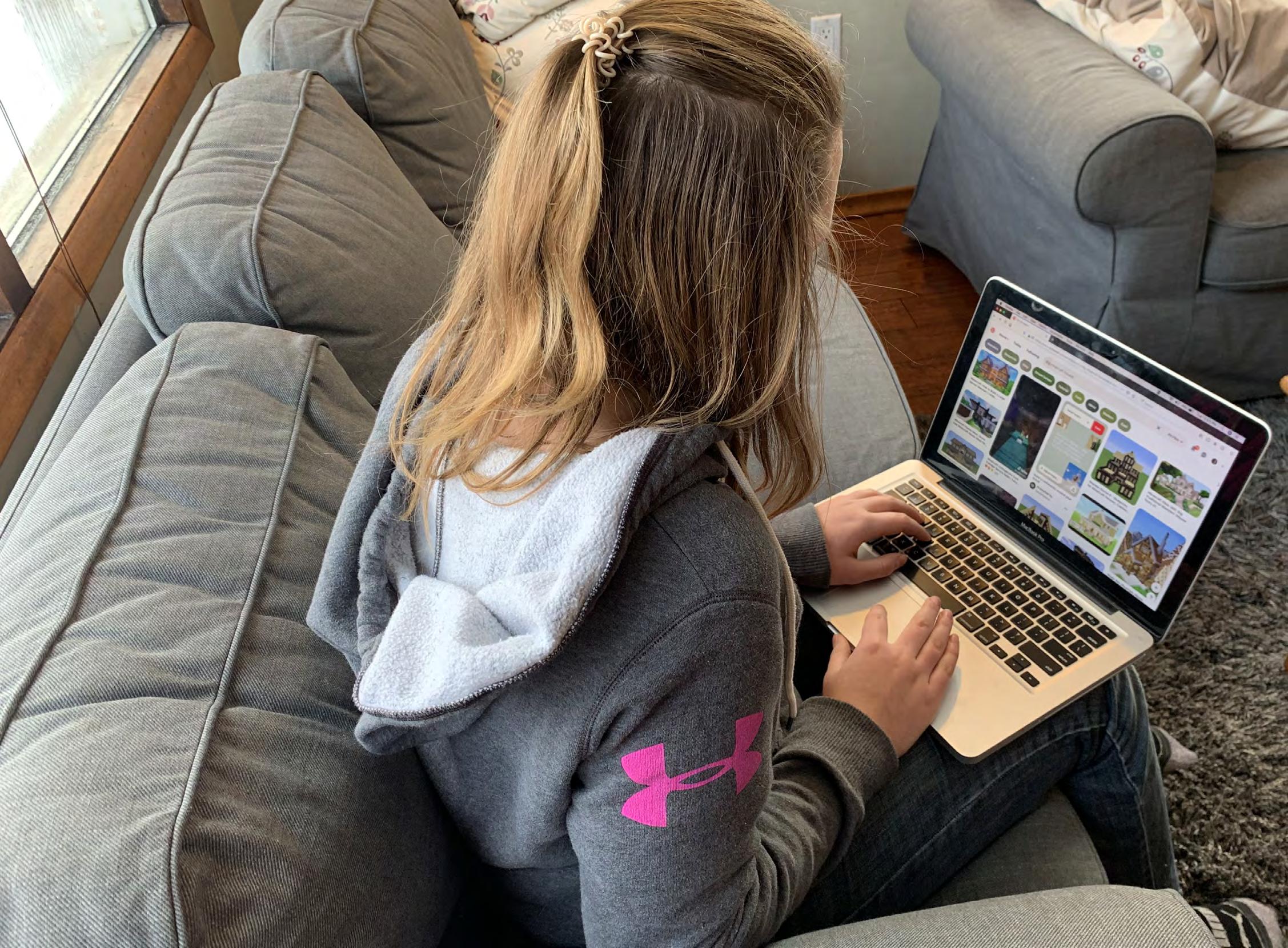
Like it or not, we live in a digital age. The Internet is shaping our society and phone use is forming our families. The average teen spends most of their waking hours in front of a screen. Half of Canadian kids between the ages of seven and eleven own a smartphone. While many homeschool families resist the pull of technology, more and more are embracing it.
Most likely, if your home has wi-fi or your smart phone has data, your child has access to a whole new world beyond the safety you provide—or they will soon. How to keep them safe and help them develop the life skills needed to navigate this ever-changing frontier is the ever-growing concern. Every family needs an Internet safety plan (ISP).
Since the digital landscape expands and reconfigures daily, there are essentially three key components every ISP should
include: awareness, blocking and monitoring software, and ongoing conversations. These are the ABC’s of Internet safety--the foundational and interdependent elements of a strong, effective plan. While there are no guarantees and no ISP is fool-proof, these components (when kept current and continuous) are a family’s best defense against online dangers.
AWARENESS
What are the potential threats associated with the devices, applications and websites your child accesses?
New research comes out daily showing the prevalence of sexual exploitation, the impact of social media, the pervasiveness of advertising, and the effects of digital media on child development. Whether children are on a gaming device, smart
phone or computer, parents must be made aware of issues their children could encounter and the significance of their potential impact. The following sites provide information to help parents get an accurate picture of the current digital landscape:
internetsafety101.org
protectkidsonline.ca
commonsensemedia.org
awiredfamily.com
Beyond conducting regular research, a good ISP involves routine family assessments. Have you recently taken time to find out what technology and applications your children access, when, and for how long? Thankfully, the technology in the next plan component makes that job easier.
BLOCKING & MONITORING
How do you filter and keep track of the content your child sees and how much time they spend online?
No homeschool parent has the time to constantly watch what their child is doing and experiencing online-especially when that child is capable of working independently. Although many devices have parental controls in place (and hopefully, these have been properly configured), they do not keep search engines, marketers, and strangers from choosing what to show your child. If you want to decide what content your child sees (or know about it after the fact), third party hardware or software is needed.
Axis, a tech-savvy faith-based organization, annually produces A Parent’s Guide to Internet Filtering and Monitoring to explain and provide specifics about the latest information on technology available to parents. Among their top software recommendations are:
Canopy
Qustodio
Kaspersky Safe Kids
Norton Family
Covenant Eyes
These software companies are subscription based and constantly updating. They provide advanced options for filtering content and setting time controls. They also provide activity logs. While free filtering software exists, it is not recommended. Free software is unreliable, typically sells user data, and is often the source of computer viruses. Choosing a paid option most suitable to your present budget and tech environment is an essential part of a good ISP.
CONVERSATIONS
What happens when technology fails to protect?
While capable and effective, none of the above technologies can be fully relied upon to protect our children. At some point our kids will encounter one of the many dangers that exist online. Will they recognize it? If they do, one of two things can happen: either they will keep quiet and continue heading into dangerous territory, or they will come to us. Having open communication between parents and children is the most effective form of Internet safety.
Whether our children are able to identify threats and what they choose to do about it will largely depend on the kinds of conversations taking place. As with all areas of home education, parenting is paramount. Here, too, the
ultimate safety of our children hinges on our ability to create and maintain a healthy environment for ongoing communication.
Sometimes, maintaining this final component of an ISP can be most challenging. It is difficult to know how and what to communicate about sensitive matters at each different stage of development. The important thing is to regularly set aside time and create space for Internet safety conversations. If you are uncertain of what to say or how to say it, look for tips on the blogs of the sites mentioned in this article or do a quick Internet search of your own. It’s the most important part of an ISP and suggestions are everywhere.
Tarah Stock and her husband Peter home school their 4 children in Ontario. This article first appeared in the HSLDA Canada magazine, and is reprinted with permission.
image source: kaboompics
High School & Beyond Conference
Healthy Confidence
Join us for two days to connect with fellow home schoolers and navigate high school at home. Hear from others who have experienced hardships and victories in their journeys, and connect with post-secondary institutions actively seeking home schooled grads, including our host: NAIT. You have reason for confidence, though it comes with good plans and hard work. Come, join us, and make good plans!
March 31, 2023
Northmount Hall
• Used Curriculum Sale
1:00 to 5:00 PM
• High School Conference Dance 7:00 to 10:00 PM (Email office@wisdomhomeschooling.com to find out how to register YOUR used curriculum for sale!)
April 1, 2023
NAIT
Plenary Sessions : Healthy Confidence
Confidence Through Readiness
Confidence to Step Into the Unknown
Prepare for Post-Secondary Study and Work by hearing:
• Fellow Home Schoolers
• High School Grads - Confidence in your Journey
• Parent Panel – Confidence in Sending Forth & Success Stories Interact with Post-Secondary Institutions – Come Study with Us
Facilitators, staff and more at the WISDOM High School Booth
Calling All WISDOM Grads!
WISDOM wants to engage our alumni and are looking for an opportunity to get together with you this year.
We would love to hear your feedback on what sort of gathering you'd most enjoy.
We would also like to invite you to encourage and inspire WISDOM students for our High School & Beyond Conference
We want YOU to share a photo of you and a paragraph telling us where you are and what you have been up to since graduating high school. This will be shared with the WISDOM family to offer encouragement to those currently navigating their homeschool journey.
Your story will be posted at our 2023 High School Conference, entitled “Confidence”, on March 31 and April 1 in Edmonton.
Email your submission to alumni@wisdomhomeschooling.com
To join
You are invited to write to any Pen Pal Club member listed here!
To join the Club, please send a short letter of introduction (like those posted here) to the WISDOM office, along with a note giving parental permission. You may also ask your parent to email office@wisdomhomeschooling.com.
Devyn W, 10
Hello, my name is Devyn and I am a 10 year old girl who likes to draw, read, paint, and play board games. Sometimes I like to cook. My favorite color is violet. It's fun to make friends. I love to meet new people. If you want to chat, you can write a letter back.
Violet M, 12
I live near Spruce Grove on an acreage and I have 3 guinea pigs. I enjoy playing guitar and some Xbox in my spare time. It would be nice to have a pen pal friend.
Chorus M, 10
Hi, my name is Chorus and I am ten years old. I live on a farm and we have lots of animals. I like to learn and read, I also like to knit and crochet. I have two sisters and one brother, they are all younger than me.
Dahlia M, 8
I like to play Roblox and I like painting. I have a little brother named Will, he is 6. I am a fan of Oilers. I don’t have any pets yet. I have always loved dancing hip hop, ballet, and jazz. I hope you can be my pen pal!
Penpal Club Penpal Club
Gianna B, 9
My favorite animal is a horse and I love to read. I also like to bake and do art. I live on a farm by Valleyview and I love to ride the quad. I'm very silly and I love to joke around. I hope you'll choose me for your pen pal!
Millie S, 9
I am a bright, fun girl named Millie. I like blue and am terribly silly. In the day I will play with my LEGO and stay with my books and my sisters "tranquilly".
My name is Cayden and I am 12 years old. I live near Pigeon Lake and have two younger siblings who are five and one. I don't have a lot of friends because I just moved so it would be nice to have a pen pal.
Elaina F,
16
I enjoy reading, swimming, skating, and hiking in the mountains. I am passionate about cooking and baking, and I love doing anything outdoors with my family. We are learning homestead skills and are very excited about it! I hope to hear from a pen pal soon.
Prudence M, 8
I like music and play the piano. I like cute fluffy things and cool mythical creatures. I have two dogs and a pet hamster. I like to play with my sister and I like to paint. I like reading and right now I'm reading The Dragon Masters series. I'd love to have a pen pal to write to. Hope to hear from you soon!
Zoe M, 10
I like animals and mythical creatures. I want to be a biologist/zoologist and specialize in herpetology, the study of reptiles and amphibians, when I grow up. I have two dogs and a pet hamster. I enjoy nature and nature walks and I love the outdoors. I have one younger sister and we are best friends. I would love to have some pen pal friends. Hope to hear from you soon!
If you'd like to be a pen-pal of someone listed here, please send your first letter to:
[Penpal name]
c/o WISDOM Pen Pal Club Box 78
Derwent, AB T0B 1C0
Hello TobyLauren,
This isn't a comfort meal but a comfort drink and I happen to be drinking it right now. We drink this as soon as the weather turns cold. We call it moon milk. (We love the moon.)
I use almond milk with added coconut cream but my kids prefer cows milk with a pat of butter on top. I make it to taste but will give an idea of how much of each spice we use.
2 cups milk of choice
3 bay leaves
1/4t fresh grated nutmeg
1/2t vanilla
1/2t ground ginger or one thumb length fresh ginger, grated 1/2t ground turmeric Sweeten to taste. Honey is the best but maple syrup is also good.
Topped with a dash of cinnamon before serving.
Simmer milk with all ingredients on medium low until hot. Remove bay leaves and strain if using fresh ginger.
Serve with dash of cinnamon. Yummy with peanut butter/honey sandwiches. Great around the campfire or on a walk in the woods. I have also topped my own with a dash of cayenne pepper and even fresh black pepper.
Yum! I hope you like it.
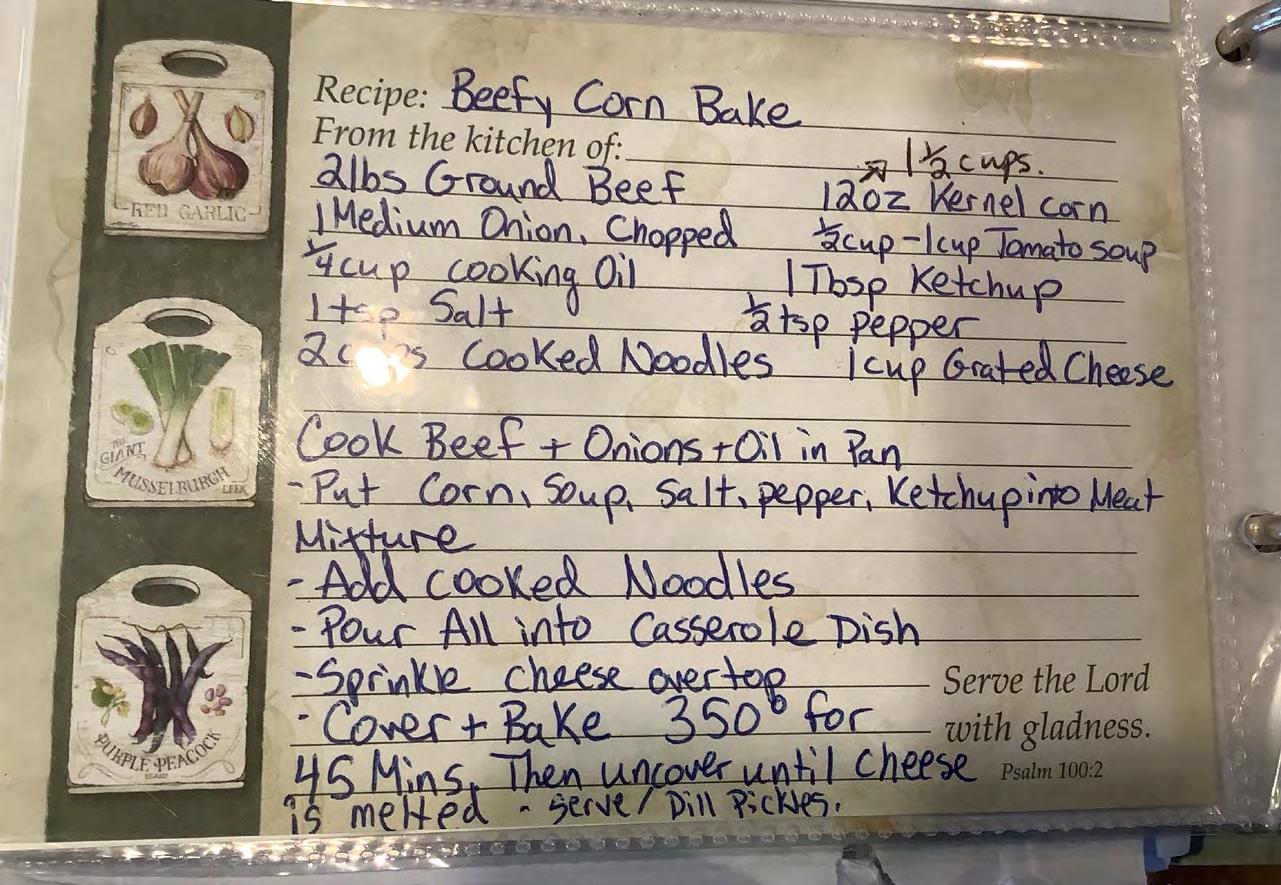
My mom used to make it for myself and my brothers though hers is called “Beef and Corn
Over the years the name has transformed but the recipe remains the same.
Best, Chrysann
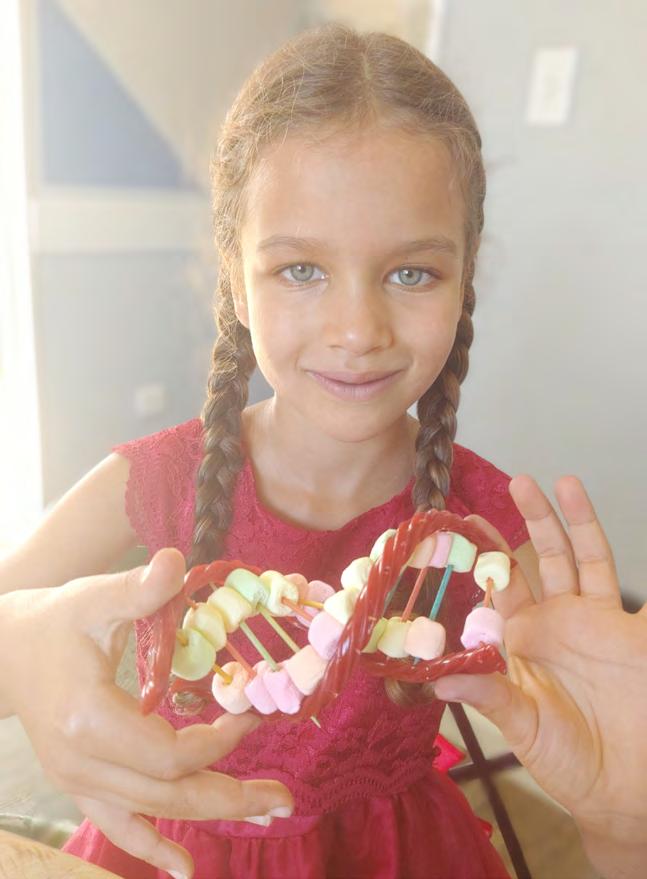
Candy DNA by Seraphina B.
The best and most favourite comfort food that our whole family eats is “Beefy Corn Bake”
Bake”.
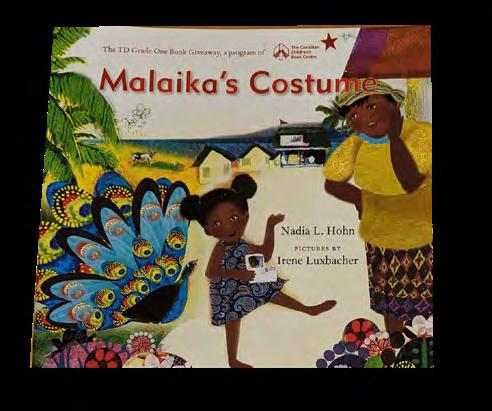
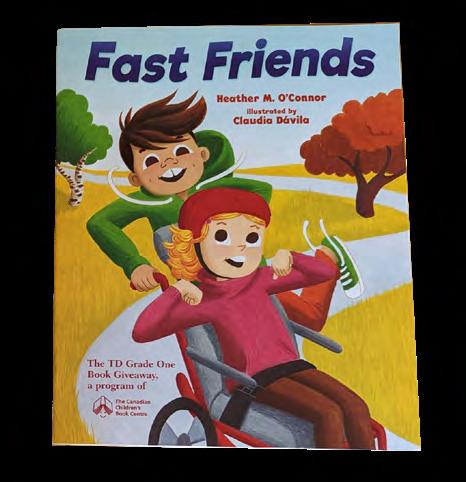
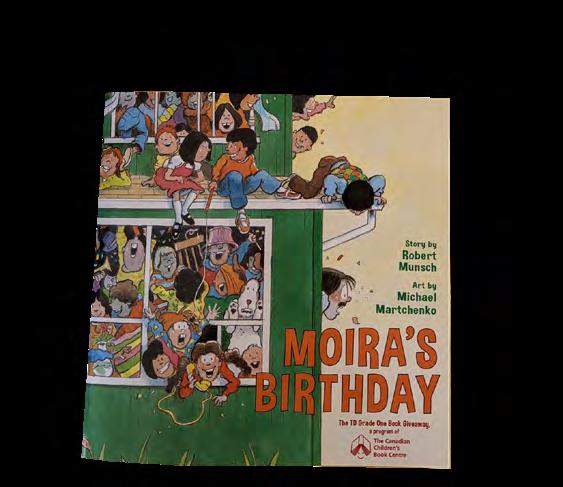
Alberta Homeschooling Association has secured the TD/Canadian Chil dren’s Book Centre Grade One giveaway books!
3 Free Books for all Kindergarten, Grade 1 and 2 Home Education Students in Alberta Moira's Birthday, By Robert Munsch, AND Malaika's Costume, by Nadia Holm, AND Fast Friends, by Heather M. O’Conner.
The 3 books are free but we need to mail them out to you at a cost of $7 for all THREE books.
Please let us know if you would like the French version. www.albertahomeschooling.ca
Find the symbol the magazine number it is on
Draw magazine@wisdomhomeschooling.com
Find The Pencil
magazine@wisdomhomeschooling.com
January February
March April
Finding Help
· Call us at 780-741-2113 or 877-425-8546 · · Email us at office@wisdomhomeschooling.com ·
Funding
The funding year is now open. You may access the first 50% of your funding by using purchase orders, or you may submit receipts by mail or by using our new ONLINE receipt submitter.
Go to wisdomhomeschooling.com/funding or read the funding handbook for more information.
A note on emails
We always respond to emails. If you do not receive a reply from us within two weeks, we did not receive it. Please send it to us again.
When you Call Us
Call us at 780-741-2113 or toll free at 1-877-425-8546
We take calls between 9 and 4, Monday through Friday, with an hour off at noon.
If you reach our voicemail, you may enter the extension of anyone in the office at any time during the greeting. To speak to a home school
consultant, dial 1. To speak to a member of the funding team, dial 2. To leave a general message, stay on the line or dial 3.
We endeavour to return calls as quickly as possible. If you do not hear back from us within two business days, it may be because the message didn't come through clearly, so please call again.
Connect with WISDOM families
We offer many ways to connect with the larger WISDOM community, from camps and workshops, to our Social Networking phone and email list, to a Facebook Group just for WISDOM parents. Email the office with your Facebook email and we will add you to our Facebook support group, or send a request to join on Facebook.
Subscribe to The WISDOM Family Magazine
(The Magazine is free to WISDOM families.)
□ Option A - paper subscription ($30 in Canada, $44 in USA)
□ Option B - digital subscription, delivered to your email inbox ($18)
Where should we send it?
Name:
Address: Phone Number:
Email:
Method of Payment:
□ Cheque payable to WISDOM Home Schooling
□ E-transfer to billing@wisdomhomeschooling.com
□ VISA/MasterCard Number
Expiry
Name on Card
□ This is a gift subscription Detach form and send with payment to WISDOM Home Schooling, Box 78, Derwent, AB T0B 1C0. You may also request subscriptions by emailing magazine@wisdomhomeschooling.com