For contact information, see wisdomhomeschooling.com > About > The Team
The
independent school operated by The Gilbertine Institute.
Phone: (780) 741-2113
Toll Free: (877) 425-8546
with questions: office@wisdomhomeschooling.com with contributions to the WISDOM Magazine: magazine@wisdomhomeschooling.com
Publisher:
WISDOM Home Schooling
Content/Editor /Desktop:
TobyLauren Burgess, Rebecca Bekolay
Desktop / Design:
Naomi Doyle
wisdomhomeschooling.com
North
Georg & Gayle Beinert
Menno & Margaret Knelsen
Central
Darrel & Kristine Buchholtz
Theresa & Vince Holden
Michael & Victoria Hutchinson
Sheldon & Sharon Kok
Don & Bo Reid
Cory & Sierra Rotchford
Peter & Kathleen Wing
South
Neil & Julie Aragon
Greg & Rebecca Joncas
Joe & Diane Pollock
Kris & Amanda Watson
Content:
WISDOM publishes articles by many Individual authors. The opinions of the writers are not necessarily those of WISDOM. We reserve the right to decline any submission, and to edit those submissions we accept for accuracy, clarity & length.
Unless otherwise credited, photography is courtesy of the Noster, Burgess, Tinant, and Doyle families. The people appearing in photos throughout this publication do not endorse any specific product, service, cause, association or endeavour. Images and photos are for illustrative purposes only.
WISDOM Home Schooling is a registered trade name of The Gilbertine Institute.
Gilbertine Academy, Calgary, is an
First Things
September / October 2025
Greetings:
As we celebrate 30 years of WISDOM support for home education in Alberta, we have an opportunity to reflect on what we have learned from our collective experience, and look into the future. Perhaps even another 30 years. Where will our children be in 30 years? What will our political and social climate be like in 30 years? What can we do now, to help prepare our children to be a force for good in the world, 30 years from now? These are great questions to ask ourselves, our spouses, and our children, and will make for fascinating conversations; who knows, maybe they will affect the course of the future.
The beginning of the year is a great time to review what parental responsibility means in supervised home education. Your Education Program Plan is a key document, with which you take control of what, when, and how your child will learn this year. Your Facilitator is a resource, a source of support, and helps you meet the requirements of home educating in Alberta. Although you as the parent are responsible for assessing the learning of your child (do keep dated samples of work!), your facilitator will visit twice each year to complete an evaluation of the progress and achievement of your child in relation to their EPP goals, and will give you advice if they notice an opportunity for improvement.
Assessment should not be a scary thing, but an opportunity to discover how we learn best. Armed with this information, we can lean into our strengths and use our educational freedom to pursue methods and resources that are most effective.
You can use your home education funding for that with an internal Purchase Order. On the topic of funding, did you know that you can send in receipts now and look forward to your first home education resource refund in October?
Fall Family Gatherings will be ongoing in September and October. These social events are a great way to connect with other home schooling families in your area. Register on the WISDOM website under Events > Fall Gatherings.
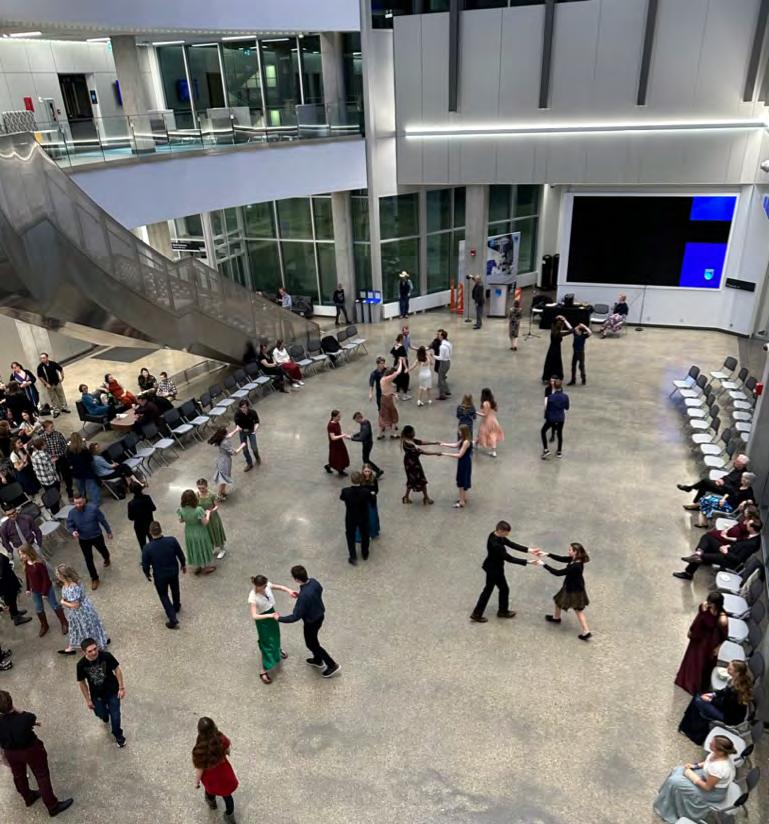
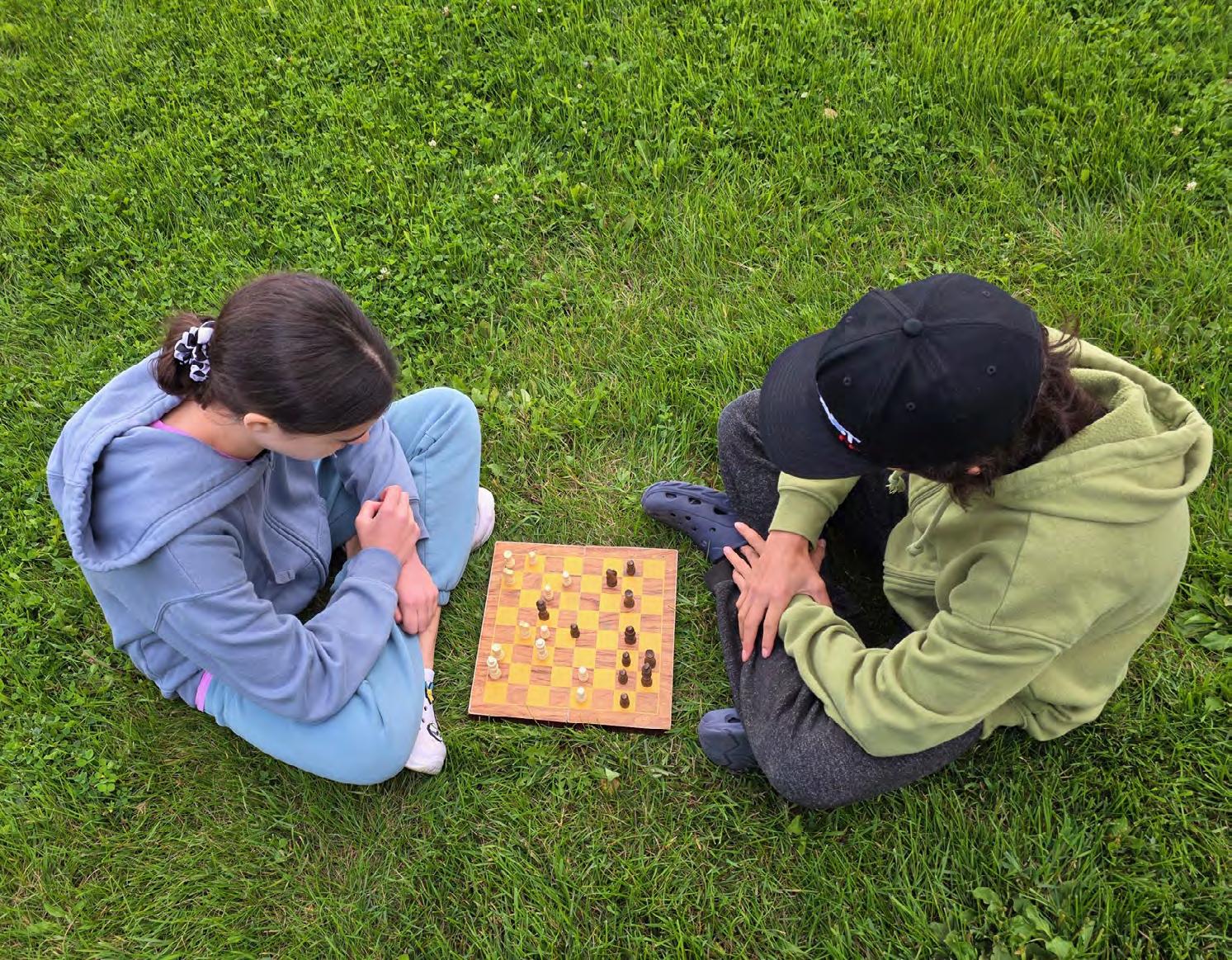
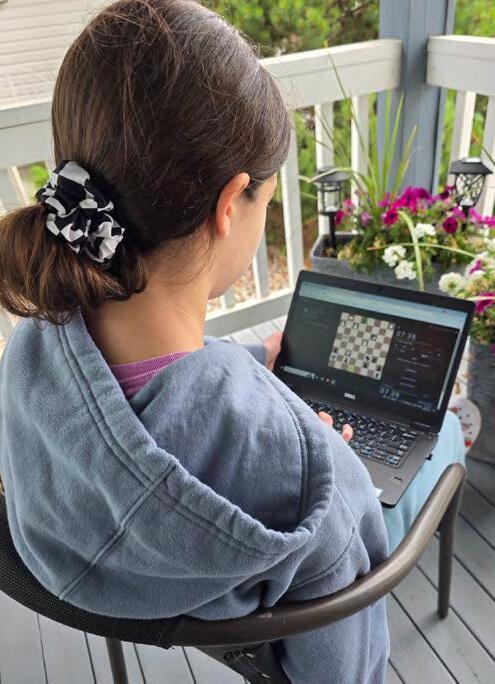
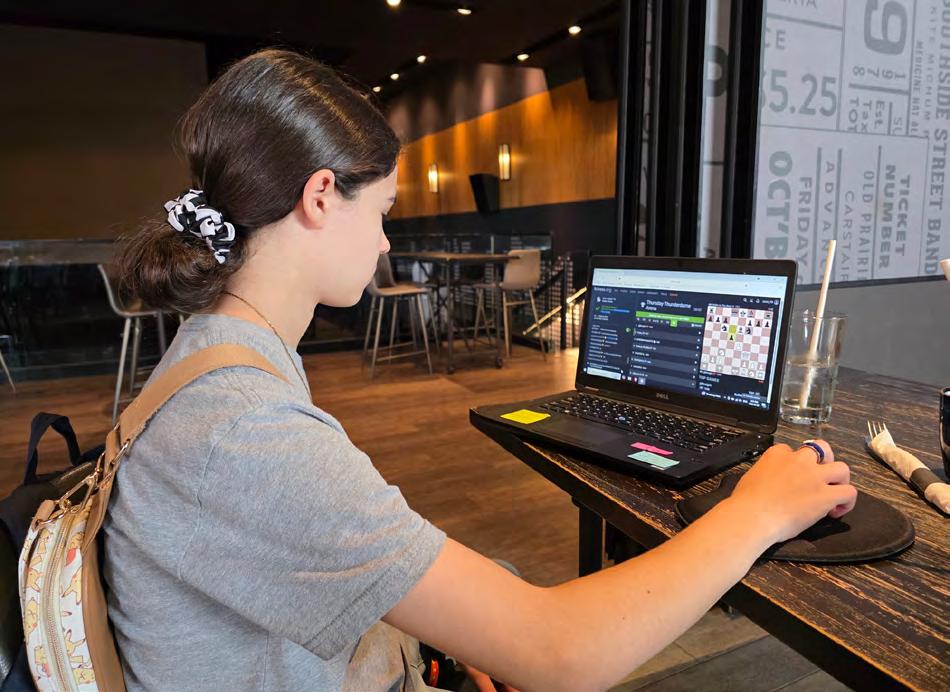
WISDOM workshops are taking place throughout the province and online. Workshops range from survival skills, ballroom dance, and our ever popular online chess. Register or find more information on the WISDOM website under Events > Workshops.
Our annual High School & Beyond Conference will be held on March 27-28, 2026. Watch for an eNews announcement, or keep an eye on our website for more information.
The WISDOM Alumni Association exists to connect alumni for peer support and networking opportunities. If you know of any WISDOM graduates or alumni parents, encourage them to sign up for the alumni mailing list by visiting About > Alumni on our website.
The WISDOM Socratic Dialogue Online Program first term is well underway, but Spring Term Registration is just around the corner, opening on October 15th. These courses fill up quickly; be sure to visit our website and look over the options so that you are ready to select your choices when course registration opens.
WISDOM is pleased to support optional external assessments, especially the Classic Learning Test. The Classic Learning ) is a post-secondary entrance exam, created as an (the defacto College/University entrance exams in the USA) and is now recognized at many post-secondary institutions across the United States, and a recognized the value of formative assessment, and created multiple tests for students in . These tests are conducted online, and WISDOM exam one of our students takes. Learn more at www.cltexam.com and visit the WISDOM website under Resources > External > Classic Simon Noster,
Your facilitator and the WISDOM office staff are here to support and encourage you. Do feel free to call or email with questions or concerns.
Our office staff pause to pray at 3:00 PM each day. If you have an intention that you wish to have included, please email office@wisdomhomeschooling.com
Principal, Home Education
simon@wisdomhomeschooling.com
Write for The WISDOM Family:
Do you have something to share? We welcome you to submit articles for many of our columns, to be considered for publishing. Also, if you come across an excellent article or blog, please share it with us. We will contact authors for reprint permission.
out our website under
> WISDOM Magazine for columns and upcoming themes and deadlines. Send submissions to magazine@wisdomhomeschooling.com.
On Building Noah's Ark Wonder
By Kenneth Noster
Iwonderabout a lot of things relative to learning, so now I am about to wonder out loud. The reader may find my wondering annoying, or maybe not. Perhaps wonder will be encouraged. In either event, my purpose is not to criticize any one approach to home schooling nor to elevate another. Mostly, the intent is to wonder about wondering, its value, and the ways it can be nurtured and used well.
How often are children told to stop daydreaming and get back to work? After all, we have a Math book to get through, a book report to write, a spelling lesson, grammar.... We all know the feeling that we aren’t getting enough done, but I wonder why we feel that way. Who says we have to get particular things done instead of others? Are our tasks coming from our good planning, are they suited to each child, or are they coming from something external; perhaps our impression of what school “should look like” or “what they expect” whoever “they” may be. It is worth considering that wonder itself is an important element of our curriculum and can produce results superior to scores, grades, and checked boxes.
What is happening in the head of the child who is daydreaming? Is he thinking about the fort he wants to build, is she considering
life in a treehouse, is he just admiring the rugged look of an old poplar tree and wondering about the many creatures that have sheltered in its shade over its history, is she wondering why she was created? Rather than “quit daydreaming”, wouldn’t a better approach be to ask, “What are you thinking about?” My mother used to say: “Penny for your thoughts?” Often, I got to tell her about my thoughts, sometimes simple, sometimes fearful, often thoughts that led to conversations. I wished for more time like this with my mother, but the lion’s share of my wondering time occurred in school when I looked out the window rather than at the blackboard. My teachers never said, “Penny for your thoughts,” so we missed out on some good conversations.
It shouldn’t be necessary to discourage wonder in order to learn skills and memorize timetables; can’t the two happen in the same mind? Granted, I learned my phonics, timetables, spelling rules, history, geography, science, trigonometry, physics formulas, chemistry periodic tables, badminton, volleyball, basketball, and baseball by focussing on the task at hand. A person can’t be eternally distracted, but one certainly can bring wonder into the very task of doing difficult things. You see, once wonder
becomes a way of being, it doesn’t need to stop when we concentrate on details, skills, memorization, and learn to apply these things to real life.
The school system’s military roots provide a focus on accomplishing tasks, checking boxes, and proving the curriculum has been covered. Is it possible that our drive to get through the curriculum sometimes leaves us with a “get it done” attitude? Many times, I’ve heard home schoolers talk about getting their school work done so they could go out and play, or work on a hobby, or read a book. Is it possible that the desired activity is actually providing more value than the curriculum?
Home schooling parents are blessed with abundant opportunities to cultivate wonder in their children; why not make the most of it? Quite possibly, it could be the greatest advantage of learning at home.
Kenneth Noster and his wife Marlane live near Derwent, Alberta on their certified organic farm. In addition to his role as Head of School, Ken also contributes to his faith community as a deacon. Ken and Marlane home educated their 6 children through high school. Those of their nineteen grandchildren who are school-aged are also home schooled.
Allrich experience provides an element of wonder that should be encouraged and cultivated and, all through life, our ability to think deeply about anything requires wonder. We have a need for wonder, yet we live in a world that may fail to keep it alive and nurture it. For our part, being home schoolers, we have abundant chances to stimulate wonder in our children. I have found that a good dose of wonder not only teaches its own lessons, but it also serves to stimulate a healthy interest that serves other forms of learning. Of course, wonder can be present anywhere, but nature is a realm where opportunities for wonder are abundant.
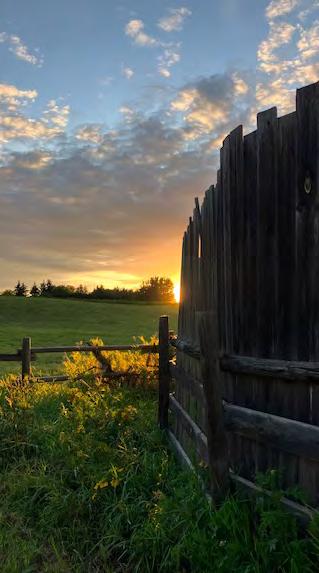
Nature is a great teacher and her classroom often requires that a person slow right down and pay attention to details. It may require driving out of the city, but imagine taking the time to watch the changing interplay of shapes and colours as you watch a sunset or sunrise from beginning to end.
While out in the country, take the opportunity to lie on a hill and gaze at the night sky. I find this is best with a good warm snowsuit on a winter night, no insects, the hush created by the snow, and a crystal clear night sky. Talk is optional; the best part is silent wonder.
Pause in the early morning to wonder about the surface tension of dewdrops hanging on a fresh spider web, itself articulately formed with painstaking accuracy.
Look at a leaf, the tree’s factory, and wonder about how nutrients flow all the way from the roots to the leaves at the top of a tall tree and all the way back again to feed the roots.
As I write this, I wonder why that bird has been sitting on the same branch for the past hour, chirping every half minute or so while flapping its wings and tail.
The one aspect of nature that constantly fills me with wonder is the complex relationship between each creature and its environment. People find flowers beautiful to behold, but bees are attracted by patterns and shapes we don’t notice. Trees communicate with one another, cattle stimulate microbial activity in the soil by tugging on the grass they eat, and mushroom mycelia can appear dormant for centuries, until their perfect fruiting conditions occur.
Human relationships too are part of that complex interplay of causes and effects. Simply being proximate to someone causes brain activity
Nature Nurtures Wonder Nature Nurtures Wonder
By Marlane Noster
that doesn’t occur when they are on facetime or zoom, and we are able to stimulate wonder in a person with only a few encouraging words.
With the right affirmation or questioning, we can cause our child to wonder: “How am I unique?” “Do you think I could do that?” “I had no idea I was so precious to you.”
Our best home schooling memories spring from the opportunities we took to stimulate wonder by going beyond the ordinary. We used our rural environment a lot, but there is wonder in cities too. Doing school in the blanket fort under the table or on the grass in the park is sort of like reading in a lean-to made of dead trees or in a treehouse. No matter where you live, the simple wonder of watching ants gather food can spark great conversation.
Take opportunities to delve into environments rich with wonder whenever you can. Go camping, canoe on a river or stream, climb a mountain, visit a farm.... Moments of wonder will continue to teach and are sure to stimulate interest, and interest is the key that each of us needs in order to desire learning anything and everything.
Marlane Noster is WISDOM's co-founder and Events Director. When she's not in the office, she dedicates time to her church, community and her family, including her six children and nineteen grandchildren.
Mediated Learning
AsThe Gentle Gift of “I Wonder” Reconnecting to the Heart in Homeschooling
By Lora Cardinal
I look back on the years I spent home schooling my boys, I find myself thinking, “If only I had known about wonder statements back then.” This simple shift in language holds such potential to nurture curiosity, ease anxiety, and deepen connection. It offers a gentle way to foster inquiry without pressure, an approach that invites both thinking and feeling. If you are still in the midst of your home schooling journey, I hope Dr. Brenna Hick’s idea becomes as meaningful for you as I believe it would have been for me.
In the daily demands of home schooling, where so much rests on our shoulders, it is easy to focus on outcomes. Did they finish the worksheet? Did they understand the concept? Are they staying on track? These kinds of questions, though practical, often keep us at the surface. When we rely too
heavily on questions meant to evaluate, we can miss the deeper invitation to connect. To connect not only with our child’s thoughts, but with their heart, their emotions, and the quiet work of the Holy Spirit within them.
That is where “I wonder” comes in.
Young Children Live in Their Heart
Children, especially younger ones, “live from their hearts” (Dr. B. Hicks Podcast, Aug 19, 2021) They dwell fully in their bodies, in their senses, in the immediate experience of life. Their responses are emotional before they are logical. To reach their heads, to help them develop cognitive thinking and problemsolving, we first need to meet them in the heart-space.
“I wonder” statements do just that.
They do not create conflict with the feeling heart. Instead, they honor it. They acknowledge emotion without judgment.
“I wonder what made that story so exciting for you.” “I wonder how you felt when your tower fell down.” These statements make space for processing, security, and connection. They are doors that are gentle, open, and inviting.
The Role of Wonder in Mediated Learning
In Mediated Learning, we believe deeply in the value of questions. Good questions ignite thought. They prompt discovery. They train the brain to engage. But for the child who is anxious, overwhelmed, or young, those pointed questions can sometimes feel more like pressure or conflict.
This is where beginning with a wonder statement can be transformational.
Instead of saying, “What will you do next in your project?” try, “I wonder what you’re curious to try next.”
Instead of asking, “Why didn’t you finish your work?” try, “I wonder if something made it hard to get started today.”
These shifts do not replace the importance of questions. They open a door to them. Wonder statements prepare the ground so that inquiry feels like invitation, not interrogation. They gently guide children into a reflective space where real thinking can occur. This is not less effective. It is more effective because it is grounded in trust.
When the Day Is Hard
Not every home schooling day feels inspired. Some days are filled with frustration, tears, and resistance. On those days, the last thing
we need is more discipline or correction. But even in those moments, wonder is a soft landing.
Instead of asking, “Why can’t you get this right?” try, “I wonder what part of this feels hard today.”
Instead of saying, “Stop complaining and finish your work,” try, “I wonder what would help you right now.”
These statements do not dismiss responsibility, but they create a foundation of connection. And connection makes correction more effective. Connection attaches our hearts to theirs. When a child feels emotionally connected and secure, their brain becomes available for learning.
And that is what we truly want.
A Place of Grace, Not Pressure
As home school parents, we wear many hats: educator, caregiver, coach, and comforter. These different roles can be exhausting. It often pulls us toward the urgent rather than the important.
“Did you finish your assignment?”
“What did you learn today?”
“How are you going to fix this mistake?”
These are the urgent questions that fill our days. They have their place, but if they become the only way we engage, we begin to train our children to respond to pressure rather than wonder.
Instead, try using more positive and inspiring phrases:
“I wonder what part of this was the most fun for you.”
“I wonder how we can see God’s hand in creation on our walk.”
“I wonder what you’re proud of today.”
These statements shift the tone from pressure to presence.
Wonder as a Spiritual Gift
Wonder is not just educational. It is spiritual. It is the hush that falls over a child who spots a robin outside the window. It is the awe that leads to worship.
“I wonder if God is trying to show us
something through this.”
“I wonder how He made those stars shine so brightly.”
“I wonder what it means to trust Him with this challenge.”
When we use “I wonder” in a spiritual sense, we stop acting like the ones with all the answers and start modeling what it looks like to seek truth with humility. We become co-learners, not just instructors. And in doing so, we invite our children into a deeper awareness, not just of the world around them, but of the God who created it.
Wonder Transforms Everything
Home schooling is not just about academics. It is about discipling hearts. It is about shaping souls who love what is true, good, and beautiful. That shaping does not happen through pressure or performance. It happens through grace.
“I wonder” statements are more than a communication strategy. They are a way of leading our children gently and wisely into both understanding and relationship, a relationship with each other and with God.
So whether you are just beginning your home school journey or, like me, looking back with a mix of joy and longing, take heart. It is never too late to begin leading with wonder.
You may be surprised at what you discover. Not just in your child, but in yourself.
Let wonder be the doorway to their heart.
Lora Cardinal feels blessed to be able to apply her skills and education in the WISDOM Mediated Learning program. Home school parents already have intrinsic teaching and mediational skills. Providing families with tools to enhance, develop, and vitalize these skills is rewarding. Witnessing the drive, determination, and love home school parents and their children have is inspiring. Lora belongs to the ‘Alumni’ of WISDOM home school mums, and her three grown sons are now embarking on the next phases of this wide world of opportunity. Lora’s interests are ever-expanding, and her love of reading has overflowed the space in her bookshelves.
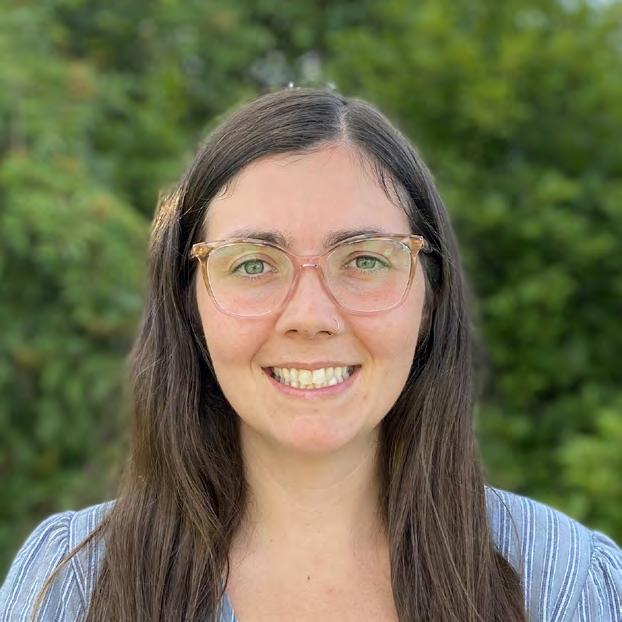
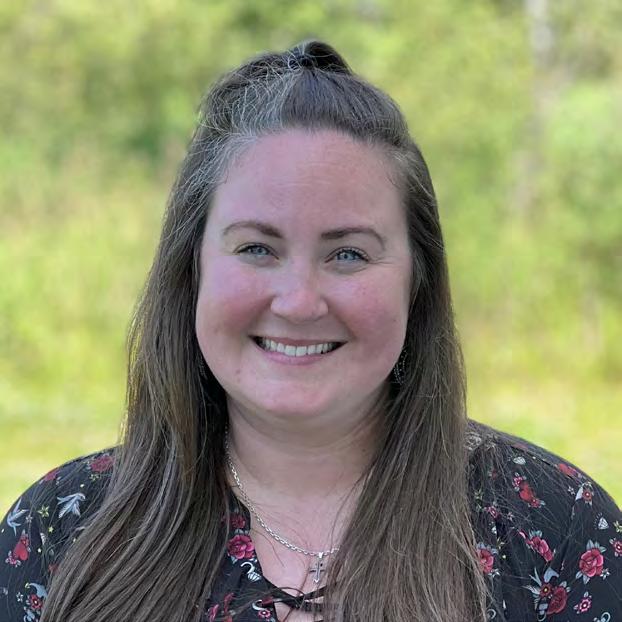
After over 30 applicants and many interviews, we happily welcomed four new facilitators to the WISDOM Team in August. Read their full bios on the WISDOM website under About > The Team.
Madysan Buchholtz
Madysan is a WISDOM graduate (K-12) who cherished the opportunity to grow closer together as a family with her parents and three siblings, while also building up her faith in God. As a traditional home schooling student, she loved having the chance to explore and learn in God’s creation. Madysan took a number of online courses that WISDOM offered throughout her high school years. Being accepted to Concordia University of Edmonton in 2016, Madysan completed a Bachelor of Arts Degree in 2020 and an AfterDegree in Education in 2023. Madysan also competed as a student athlete in curling, winning medals at both the provincial (ACAC) and national (CCAA) levels. She is married to a fellow WISDOM Alum Josh and together they welcomed their first child Leon to the world in July 2024. Going forward, Madysan hopes to continue being an advocate for choice in education and supporting parents.
Meghan Lupien
Meghan Lupien is new to WISDOM; however, home schooling has been an integral part of her life. She is the oldest of seven children and was home schooled by her parents from Grade 2 straight through to graduating high school. After earning her Bachelor of Arts in English Language and Literature from Brock University in Ontario, she taught abroad in Seoul, South Korea, and fell in love with classroom teaching. She felt called to the vocation of teaching and returned to Canada to earn her Bachelor of Education from the University of Prince Edward Island. She received the opportunity to teach as well as serve as a vice principal in one of the northernmost communities of the Beaufort Delta in the Northwest Territories—the small hamlet of Ulukhaktok. Living above the Arctic Circle, she was welcomed by the community, experienced its kindness and resilience, and shared in the opportunities offered by the land and people. Though her time in the high Arctic has come to a close, Meghan is looking forward to supporting families in achieving their goals, to seeing trees again, and to spending more time with her own family while following the purposes the Lord sets before her.
Dominique Skuban
Dominique grew up on her family farm in Westlock County, Alberta. Her passion for home schooling started at a young age as she was home schooled with WISDOM Home Schooling from K-12.. From books to the barn, Dominique attributes her passions and faith to her home education, allowing her to authentically discover and develop herself. After high school, Dominique ventured to Washington, DC for two years to do mission work. She then attended St. Therese Institute of Faith and Mission for three years of study in Theology, Philosophy, and Scripture. Dominique has recently received her Bachelor of Secondary Education with a major in English and a minor in Health. She feels beyond blessed to have the opportunity to accompany families in their homeschool journeys. Dominique enjoys anything related to farm life and has a passion for interior decorating. In her free time, she enjoys her horses, gardening, or DIY projects. She also has a natural passion for sports thanks to her 6 brothers! She is an active member of her church and community. She serves on multiple boards and is a volunteer firefighter.
Christine Stankiewicz
Christine was born and raised in Sherwood Park, Alberta, and attended traditional school from grades K-12. During a job exploration assignment, she declared definitively that she would NOT become a teacher and went on to enrol in the Human Ecology Department at the U of A, earning her degree with a major in Family Studies. The first part time job she landed upon graduation was… teaching preschool. Four years later Christine completed her Bachelor of Education After Degree. She taught in Mundare, Alberta for 6 years before leaving the public school system to raise her family in Edmonton. She launched and operated a preschool of her own for seven years.
In Fall of 2020, Christine and her family made the jump to homeschooling with WISDOM and have not looked back! She is currently leading her now teenaged boys through their junior and senior high education. She is passionate about the positive influence of parent directed education and excited for the opportunity to assist other families in succeeding during their home school journeys.
September/October Birthdays
September 3, 2014 — Kylie Z
Enjoys piano, drawing, and playing outside.
September 3, 2016 — Shianne Z
Like making friends, singing, and reading.
September 6, 2015 — Shaelyn D
Loves playing with her younger brothers, reading, and playing with dolls.
September 11, 2010 — Justin Z
Enjoys hockey, video games, and hunting.
September 14, 2018 — Isaac K
Likes playing at the park, going to the beach, sports cars, and concrete construction.
September 16, 2017 — Luke P
Loves Hot Wheels, playing piano, and drawing.
September 21, 2012 — Tyrone E
He loves rc, race cars, astronomy and reading.
September 27, 2013 — Nathan T
Loves Lego, reading, and creating things with his hands.
October 5, 2011 — Christopher A
Loves sports, being outside, reading, and playing with friends. He is very curious and always asking questions and looking for answers.
October 12, 2016 — Lucas T
Interested in Power Rangers, fishing, and Lego.
October 15, 2014 — Sarah L
Loves fantasy stories, cooking, and fashion.
October 30, 2015 — Dominic T
Loves the outdoors, being read to, and pretending he is a ninja.
Join Our Birthday Club!
Write to us with your child's name, age, 2-3 things they're interested in, and their birthdate. We will print them just like we do in the Penpal Club, but instead of an ongoing penpal commitment, this gives other kids a chance to send yours a birthday card!
(Please send this to us at least 3 months before your child's birthday, so we can get them printed in time.)
October 7, 2010 — Arianna F
Enjoys writing stories, playing piano and violin, and anything to do with God.
Penpal Club
Charity W, 7
My birthday is May 11. I have two favourite things to do: watch my budgies and imagine my stories. The reason I do not play LEGO is because it is modern. My favourite thing is nature. I also like the elves of Tolkien's Lothlorien.
Alicia D, 10
Hi! I have 1 brother, 4 sisters, a sister-in-law, and a niece! My hobbies are: swimming, writing, reading, playing, and jumping on the trampoline. I love "The Warriors" books and "Babysitter's Club". I'd love a penpal!
Savannah R, 7
Hi! I love to play ringette. Some of my other favourite things are gym class, creating art, and playing with my big brother, sister, and friends. We live around Spruce Grove and have 1 dog and 2 cats.
Tobias B, 7
Hello! I enjoy running, playing foosball, and making my little brothers laugh.
Raeleigh W, 9
My name is Rae and I live on a farm. My favourite animal is a horse. I have 3 sisters and I like the ukulele. I hope to hear from you soon.
Dionte P, 10
I like to hunt. I love lego. I have one older brother and two younger brothers! I love to cook and bake. I love to do airsoft and do tricks on a trampoline. I like to experiment with bugs. I hope to get a good penpal friend.
Leif M, 10
Hi! I like lego, driving our skidoo, riding on farm equipment, diamond dots, and building with popsicle sticks. I have 3 sisters and I am the second oldest.
Kylie Z, 10
Hi! I like to draw, paint, play piano, and bake. My favourite animals are kittens. My favourite colours are orange and yellow. I know two languages, German and English. I would like to go on a trip one day.
Olivia W, 9
Hello! I have 3 sisters, 2 cats, and lots of chickens. My favourite colour is pink. I like playing outside with my sisters and I love reading. I hope to be pen pals with you!
Bria F, 5
Hi! I want a pen pal. I would like to play with somebody. My favourite thing is going outside. I like sleeping by myself. I will want to write to you sometime! I love birthdays! I love painting and playing games. I have 3 sisters and 2 brothers. I like playing with them. I hope to get a good pen pal friend!
Shianne Z, 8
Guten tag! I love singing, baking, driving our quad, and playing piano. In the summer I like camping, fishing, and hiking. In winter I like skating, sledding, and drinking hot chocolate. I have three sisters and two brothers. I would adore a pen pal!
Leah V, 12
Hi! I am glad to be able to write to any of you who respond. First let me introduce myself. I like to crochet, draw manga, sleep, play Nintendo, and be with my dog. I'm a YouTube Shorts kid, a church kid, and I love to watch Blue Box, Kataro Lives Alone, Nailed It, Is it Cake, Saiki K, The Amazing Digital Circus, and many more.
To join
You are invited to write to any Penpal Club member listed here! To join the Club, please send a short letter of introduction (like those posted here) to the WISDOM office, along with a note giving parental permission.
You may also ask your parent to email office@wisdomhomeschooling.com.
If you'd like to be a penpal of someone listed here, please send your first letter to:
[Penpal name]
℅ WISDOM Penpal Club Box 78
Derwent, AB T0B 1C0
Could a Slight Schedule-Switch Work Wonders For You? J
By Kari Patterson
Onesimple schedule-switch worked wonders for us.
One of the main reasons we homeschool is to have the freedom and flexibility to “go with” what life brings and what needs and situations present themselves, so we’re far from rigid. But though it’s fluid, we definitely have our daily routine, and I love it.
Except when I don’t love it because I hate it.
I mean this: For me, there was this particular time of day I hated. Almost always. The time when we transitioned from our morning routine (chores, breakfast, etc.) into formal learning, namely MATH. It seemed that every book I read said, “Do math first thing in the morning, when children’s minds are fresh.”
Bright-eyed and bushy-tailed, right?
But every day, even though I knew my son knew the material, we would struggle. He would space off. Blank-stare for ten minutes at the simplest subtraction problems I knew he knew. I would push.
He would cry.
Some would say, “Don’t worry about it! Just let him study what he loves.” If the subject were something peripheral perhaps I wouldn’t mind. But math matters! Some would say, “It’s the curriculum! Get a new curriculum.” Certainly there are times to switch approaches altogether (and I may at some point), but I liked our curriculum. So I did what many a desperate mom has done before me.
Prayed!
And then something rather obvious occurred to me: My son is not a morning person. So why were we doing our most focused (and most challenging) material first thing, groggy-eyed and grumpy-tailed? Then I did something else many a desperate mom has done before me.
Googled.
And interestingly, there is some research finding that time of day does greatly impact certain students’ ability to learn. And isn’t one of the benefits of
homeschooling the ability to cater curriculum to each child’s needs?
Now, for those of us early-risers whose usual answer to everything is work harder, get up earlier, quit complaining, it can feel like a copout or really excessive catering to a child’s every whim. I didn’t want to do that. The world doesn’t revolve around whether or not you’re cheerful before 8 a.m. But I most certainly wasn’t cheerful after waging the math-war each morning, so it was worth a try.
To my surprise, it worked. When I suggested afternoon-school to my son, his eyes widened, incredulous. It seemed too good to be true. “You mean, in the morning I get to play?”
“Yes, after your chores you can read and play. We’ll do math after lunch.”
To my delight he spent his mornings doing what kids do best — learning as they play. He read encyclopedias and whole novels in one sitting, played outside with sticks and rocks and imagined worlds at war. He did his own thing, mostly ignoring me. (Read:
my house got clean!) Then after lunch, when he was full of fun and food, I brought out the math book.
He did his lesson in record time. Not just once, but over and over. Now, I’m not saying it’s perfect, but way fewer blank stares, way fewer frustrations, way fewer tears.
All this to say, as you pencil in your schedule for the coming school-year, consider circadian rhythms. It might just take a slight schedule-switch to work wonders for your struggling student… and you.
For links and more info, read the original article here: simplehomeschool. net/schedule
Kari Patterson and her family are unschooling, church-planting, smoothie-drinking, frugal-living weirdos from Oregon. As a 2nd generation homeschooler, Kari enthusiastically espouses the same delight-directed method her mother did in the 80s. She celebrates life’s messy glory over at Sacred Mundane. karipatterson.com AND find out more at the Simple Homeschool simplehomeschool.net, too.
KindSomeof Wonderful
By Paul van den Bosch
“I know I can’t express This feeling of tenderness There’s so much I wanna say But the right words just don’t come my way…”
- Some Kind of Wonderful, written by Gerry Goffin and Carole King, sung by The Drifters, 1961
When my wife and I were much younger— when we were new parents, and our eldest child was not yet of “school age” (although, really, doesn’t home schooling begin at birth, or perhaps even before?)—it was an almost daily occurrence that, after the baby nursed, it would be my turn to take over. I would wrap the baby up in a blanket and go for a walk until the child finally went to sleep.
I found that babies not only liked the motion of being walked to sleep, but they also liked being sung to sleep. When our eldest was a baby, she got Christmas carols year-round because those were the only songs I knew by heart. My musical repertoire expanded as our family grew, and there were several songs that became favourites to both the singer and the listener on these walks…
“Some Kind of Wonderful” by the Drifters. “Stardust” by Hoagy Carmichael (which begins with the wistful aching words ‘Sometimes I wonder…’).
“What a Wonderful World” by Sam Cooke.
There were songs of celebration and joy, but there were many more songs of a yearning sadness…
“Somewhere Over the Rainbow” as sung by Judy Garland.
“Every Time We Say Goodbye” written by Cole Porter, although my favourite version is sung by Natalie Cole.
“But Not for Me” written by George and Ira Gershwin and sung by Bing Crosby.
I learned all of these songs by heart (which wasn’t difficult considering I sang many songs hundreds of times). I was thinking recently about the ones that I hold closest to my heart and they are the ones that, as described above, are those filled with that yearning sadness.
I think that such songs capture what is the essential human emotion, that of melancholy. We humans yearn for the divine and search for it and reach for it but, in our lifetime, we don’t quite reach it. It will only be experienced once we pass from this life to the next, and our acceptance of that fact, that part of our human equation is limited, can fill us with a great melancholy indeed.
There is another human emotion that accompanies and balances our melancholy. While we don’t understand the divine, we are inspired by it. We wonder. Just as we yearn for something beyond our grasp and so feel the melancholy limits of our humanity, so we come into contact daily with things we don’t understand, things that amaze and astound us. This happens almost every day because, for all the things that have been discovered and explained by science, we humans know that there is a great deal beyond our understanding.
Children ask how things do what they do, and why.
Too often, grownups don’t know the answers and don’t want to look silly by admitting they don’t know.
It is very important for young people to keep their sense of wonder and keep asking why.
I’m a child myself, in the sense that I’m still looking.
- Interview with Stephen Hawking, physicist, 2007
The fact that there is so much beyond human understanding doesn’t make us stop wanting to understand, of course. Think back to when your children were young, when they started asking “why?”. They started when they were barely toddlers, and they are still asking that question today just as we are, regardless of our age.
We want to understand and we are often frustrated that there is no easy explanation nor any concrete solution that we can learn simply through our senses of seeing and hearing or through the use of our reason. Some of the greatest things that we can’t
understand are the spiritual mysteries.
For Christians, there are many of these…
The appearance of an angel telling a virgin she was going to be the mother of God.
Her son, turning ordinary water into glorious wine.
That same son dying so that we sinful humans don’t have to die.
These are the big spiritual mysteries, but our children, especially the inquisitive ones (and I’ve known so many inquisitive home schooling students that I now think it’s perhaps redundant to speak of home schooling students as engaged and inquisitive and curious) come up with small mysteries every day.
What makes the sun shine?
Why is the sky blue?
Why don’t I get sick if I eat mouldy blue cheese?
Do I have a guardian angel?
What does it mean to love?
Well, I wonder, wonder, wonder, oh who –Who?
Who wrote the book of love?
- The Book of Love, a song by the Monotones, 1958
I know, when I speak to parents who are new in their home schooling journey, that there can be a fear of not knowing the answer when their child asks a question. I understand that fear: children, especially when they are very little, look up to us as adults and parents as if we are all-knowing and all-seeing. (I now know that there was truly only one all-seeing person and that was my mother especially when I was doing something wrong, but that’s another story…)
As children grow a little bit older, they will become even more inquisitive, and there will come a day when we won’t know the answer to a question. If that day hasn’t come for you yet, I want to encourage you: that day will be a magic day! When your child asks a
question and you don’t know the answer, it is wonderful (and very freeing) to admit you don’t know.
But you don’t stop there. As parents, there is a wonderful bonding moment that comes when we can finally say “I don’t know, but let’s go find out together”. Your home schooling journey is now an adventure that you take together, and admitting you don’t know everything is when it really begins. You embark on a journey of wonder. There will be questions that don’t have answers. There will be mysteries, some of them solvable, and some of them destined to remain mysteries. It will occasionally be difficult for us, because we are human, to accept that there will be things that we can’t know.
But just as there is a magic moment in admitting that we don’t know, there is also great magic in accepting that there are things we really can’t know. There is a joy in that sense of wonder that this world is bigger than we can possibly fit into our limited brains. It’s OK to ask the big questions without ever getting an answer…
How big is the universe and what really is out there anyway?
What really happens after we die?
What does it mean to truly love?
I hope you aren’t expecting me to answer those questions because, although I’ve certainly thought about them, I know they are beyond what I can possibly know as a human being and way beyond what I could put into words. I may know a little bit about love, but I don’t think I will ever get to the understanding of the depth of the love that brought God to earth as a human being so that he might die so that I wouldn’t have to die. That’s beyond my understanding. And that’s OK. I don’t have to understand everything. I can accept that there are mysteries. Even small mysteries that a three-year-old might ask…
Why do tigers have stripes? Why are otters always happy?
Why is your hair grey in some places in your beard?
I don’t have answers for these. But it’s great fun to talk to a three-year-old when they ask such questions. Accepting the fact that I don’t know fills me with an awe and a joy that God filled this world with amazing people and things. God’s creation is beyond what my words can describe—it’s ‘some kind of wonderful’—but I can sit and contemplate and realize: it’s truly a wonderful world.
Wonder.
Yearning for what is beyond my grasp may fill me with melancholy. But considering the amazing majesty that fills our world, including our home province of Alberta, I am filled with wonder.
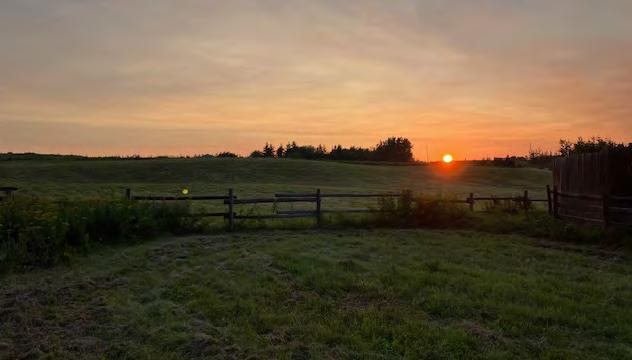
Consider the snow-capped immensity of the Rocky Mountains. Feel the glowing orange of a Prairie sunset. Swim in the roaring thunder of rapids and waterfalls of some rivers and enjoy the quiet drift of a leisurely kayak trip on some other rivers.
All spiritual life begins with a sense of wonder, and nature is a window into that wonder.
- Richard Louv, Last Child in the Woods, 2013
As we continue through our home schooling journeys and teach our children to meditate on and to pray to the divine (even if this occasionally fills them with a yearning sadness) we can also fill them with an eyeswide-open joy at the wonders of God’s creation.
What a wonderful world.
Thank you, Sam Cooke, for singing that wonderful song.
Thank you, God, for that sense of wonder.
Paul van den Bosch is a WISDOM facilitator who continues to wonder how he got here.
Photos courtesy of Paul van den Bosch
The Wonder of a Reset G
By Nadene Esterhuizen
Areset is a wonderful way of restoring rest in our lives. Our days are a rhythm of routines that form resets: waking and sleeping, eating and working. When homeschooling and raising young children, it
is vital to reset throughout the day and especially, I find, at the end of the day.
Make it a habit to clean up and pack away at the end of each day. Involve everyone, even
toddlers, as they pack away the toys, books and papers, clear tables and surfaces, tidy up and move furniture back into place. My young kids loved to sing Barney’s clean up song, “Clean up, clean up, everybody,
everywhere ….” as they packed away their toys before bath time. This prepares a clean slate for the next day.
May I offer some practical advice to moms with young children?
1. Make it fun! Sing songs, play upbeat music, talk with an accent or silly voice instead of barking out instructions, Think of fun ways to toss soft toys into baskets, scoot small objects with a dustpan, find and pack items by colour, hide a special toy secretly and ask them to see if they can find it while tidying.
2. Work together – Teams, partners, or helpers make the job easier. Assign an older child with a younger child.
3. Simple, predictable schedule – young children feel secure with routines and schedules and love repetition. Use what works again and again! Keep it simple. When your days are too full, with too many outside the home activities, children become stressed and start to resist and refuse routines. Pare back your activities and stay home to reset for at least 3 days to re-establish basic routines.
4. Use a timer – Set a timer for 5 minutes to 15 minutes to do a chore or clear
a room or pack things away. There is so much momentum created when children know that there is very little time left.
5. Use rewards – “Yes, you can go play outside—as soon as you pack all these blocks into the basket/as soon as we have cleared the carpet/as soon as you have put these things away.” Food, snacks and drinks make lovely rewards. I would prepare some popcorn and a DVD for afternoon rewards. Free time, play time, outdoors time, and playing with friends are all marvelous options in lieu of screen time. Screen time is a very powerful reward tool if not over-used or abused.
6. Do it all through the day – young toddlers create constant chaos. Clean and pack away as they move on to the next thing. This way you aren’t left with every room filled with scattered toys and stuff.
7. Get physical – let your young child get rid of some energy by skipping rope, jumping on a minitrampoline, or swinging on the swing set . While they play, you can reset the room for the next activity.
8. Let them choose – ask your child where they would like to start: “Do you want to clean the carpet or the table?” Giving your child
options makes them feel that they can take charge.
Early morning quiet time is a crucial reset for me. I love to wake and spend time alone before the family wake up and the demands of the day begin. Sitting at a clear desk, with calm and quiet, I focus on my spiritual walk, journal, read the Word and pray. I would also spend time planning and writing out my to-do lists. Here’s a wonderful verse that spiritually resets my heart!
“Because of the Lord’s great love, we are not consumed, for his compassions never fail. They are new every morning; great is your faithfulness. I say to myself, ‘The Lord is my portion; therefore I will wait for him.’” (Lamentations 3:22-24)
When homeschooling, I found that my children loved to come to their schoolroom that was tidy and ready, rather than flounder through chaos, mess and muddles. I loved to surprise my kids with new lessons, new books, posters or art materials laid out ready for them. As a professional school teacher, I learned that preparation was essential to good classroom discipline, and it is the same when homeschooling. A mom who is lost in mess and confusion, hunting for the CD or book, gives her children time to play, chatter and even disappear before the lesson starts! After the last lesson, I would rather spend 15 minutes filing and packing away my papers, books and school prep
in the late afternoon than arrive at my cluttered desk the next day and feel overwhelmed before I even start.
Meals form natural resets and homeschooling allows for these times to be family times. In our family, we would all help prepare the food and then eat together before the children that were responsible for certain chores cleared the table, washed the dishes and cleaned off work surfaces. Meal planning when I used our slow cooker meant that I prepared the main meal early in the day and it would simmer away while I worked and taught.
Late afternoons before bath time was a big reset when my children were young. The children helped take washing off the line, fold laundry, and pack clothing away. We often sorted and folded laundry while watching a DVD. Then bedrooms were tidied and they all went to have a bath. Bath time was a wonderful time to calm everyone down, preparing for evening and bedtime. After supper, we had readaloud time, bedtime routines and one-on-one with the kids before we ended the day.
Reset your house at night. Before I go to bed, I spend a few moments in the lounge and fluff up pillows, fold blankets and take any coffee mugs to the kitchen before switching out the lights. I loved to have my kitchen work surfaces cleared and cleaned off. Any dishes or mugs that didn’t make the
evening dishwasher round, I would quickly rinse or, on a “bad” night, simply soak them in the sink. I would check the bathrooms and tidy up, hang up or straighten bath towels. Then I would go to bed feeling as if my home was in order. (I used to follow the FlyLady routine for many years.)
An intimate evening reset is a wonderful habit. My children and I wrote special notes to each other. I love to spend time chatting with my hubby, giving thanks for the day, planning for the next day and the week ahead, problem-solving, finding perspective, talking about finances, business, dreams, wishes, and praying together. Being intimate is the most rewarding way to reset and end each day.
For links and more info, read the original article here: practicalpages. wordpress.com/2023/07/03/thewonder-of-a-reset-practical-tips/
Nadene Esterhuizen - I love to encourage, equip and inspire homeschool parents in their homeschooling journey. My Charlotte Mason–inspired blog is a treasure trove of practical tips, art & projects, free pages & and high quality educational packages. I am a South African farmer’s wife, mom to 5 now adult children, and a granny to several gorgeous grandchildren. As a veteran homeschool teacher, I loved homeschooling my three daughters from toddler to graduation. In our more than 23 years of homeschooling, we mostly used literature-based curriculums following Charlotte Mason’s principles. Find out more at Practical Pages practicalpages. wordpress.com
The WISDOM Alumni Association is a community of WISDOM graduates and parents of WISDOM graduates who share the experience and values of homeschooling and desire to support one another. This Association gives alumni the opportunity to play an important role in the advancement of WISDOM Home Schooling. Become a member today!
WISDOM Canteen
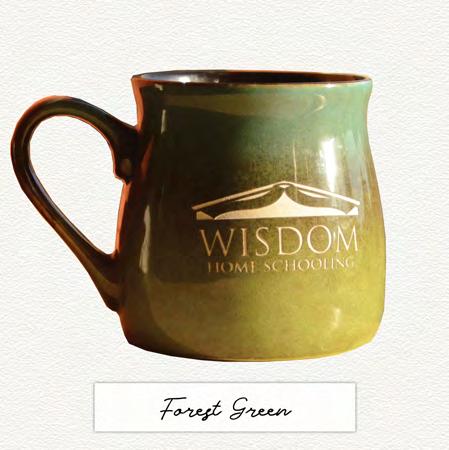
WISDOM Mug
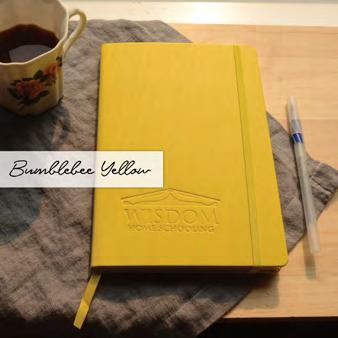
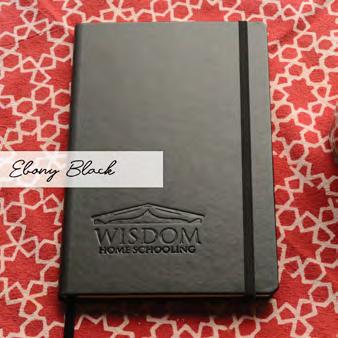
WISDOM Journal
WISDOM Elemental Tumbler 40oz
WISDOM Hat -Adult
WISDOM Hat-Youth
WISDOM Toque
FREEDOM Sweater
Infinity Scarf
Polo Shirt -Adult
WISDOM Hoodie -Adult
WISDOM Hoodie Zip-Up -Adult
WISDOM Hoodie -Youth
WISDOM Hoodie Zip-Up -Youth Cooking With WISDOM II
The Importance Of Embracing The Unknown
Overview:
Life never goes according to plan. Learn the importance of leaning into whatever God presents and embracing the unknown.
When homeschoolers are asked their favorite things about homeschooling, one of the number one answers given is we love the flexibility. Even in states (or provinces) with a lot of regulations, the homeschool lifestyle provides a lot more flexibility and freedom than any other.
The freedom to include religious and character training that matches whatever our family believes without interference from the government.
The ability to provide a unique education for our kids, taking into consideration the ways they learn best, their strengths and weaknesses, and even more learning about the subjects they’re interested in.
A flexible schedule which allows us to choose an earlier or later starting time, how many hours a day and days a week we will teach, and whether we will take summers off or opt to teach all year long and take off days/weeks throughout the year.
This allows families to do lessons around a parent’s long work hours, to travel as a family rather than having a father or mother have to leave them behind if they have a job which takes them on the road, to take vacations off-season to save money and not have to fight crowds, and so many other benefits.
Have a child whose brain doesn’t work well until after lunch? No problem.
Have an early riser who finishes all of his or her lessons before 10 am? That works, too!
As you can see, flexibility is an amazing blessing. However, that same
By Michelle Caskey
freedom and flexibility can be hard to adapt to – especially for people who tend to be naturally on the rigid side. Like me.
I’ve always been a rule follower. A planner. I love looking ahead to come up with lists and schedules and checklist after checklist. And I love checking things off of those lists, too.
I’m one of those people who will add things I just completed to my list, just for the pleasure of checking them off!
As I look back, however, I can see how God has been working on me to look at my plans less and to take advantage of whatever situation He presents to us. And how when I’m willing to loosen my grip, the experience will be so much better than what it would have been otherwise.
One summer, my husband and I learned that lesson in a big way. We had planned a family vacation in the Wisconsin Dells at the end of August. My dad owns a time-share, and he was generous enough to give us a week’s worth of points so that we could take a vacation on a budget.
I was excited because I hadn’t even been to Wisconsin since I was a young child. So, in my usual style, I made detailed plans for our vacation months in advance. I poured over maps and blogs and various other resources to determine what we would do while we were on our trip.
Planning things is often more fun for me than actually doing them. And I love having things to look forward to doing.
As August approached, however, it became apparent that some of my plans were going to have to change. My sons were 17 and 18 and, for the first time, they were not looking forward to heading out on the family vacation with us. They were reluctant to leave their friends for that long.
They also weren’t excited about being jammed into our family car, which isn’t comfortable for all four of us anymore with my sons’ heights. But they were willing to stay home and hold down the fort, which included taking care of our cats while we were gone.
So, we modified our plans slightly and decided to leave them at home while my husband and I headed off on our own. We live next door to my in-laws and several other family members, so we knew there was plenty of help nearby if they needed anything while we were gone.
It was bittersweet as we headed out on vacation without our sons for the first time. But it was a beautiful, sunny day, and we had a great time driving around to the other side of Lake Michigan and into Wisconsin.
Just the two of us for the first time in a long time.
When we made it to our hotel in the Dells, we were relieved to have reached our destination. We eagerly enter the lobby and gave our name… only to find out that they didn’t have a reservation for us that week.
After several phone calls and a lot of confused looks, we were told my dad had accidentally made our reservations for October rather than August. And the resort was full, so there was no way for us to stay there that week.
So, here we were, a minimum of six hours away from home with nowhere to stay. At that moment, we had a choice. Should we turn around and go home – and perhaps come back in October?
That enabled us to explore the Porcupine Mountains, Copper Harbor, the ghost town in Fayette, and so much more. It was one of the best vacations we’d ever had, and it only happened because we let go of the plans that we had made for ourselves and embraced the seemingly broken situation that was presented to us.
That same type of thing has happened to us over and over in the 17 years that we home educated our sons. Year after year, I came up with elaborate plans only to have outside forces or different interests from my sons that knocked my plans off-kilter.
Each time, I had to decide whether I should fight to stay on track or to lean in and embrace the change. And each time I made the decision to let go of my elaborate plans and at least modify them to meet the demands placed on us or the needs of my family, we were blessed.
Every year there are plenty of forces against homeschoolers. People who want to make it harder for us to teach our children at home. Or who are trying to add more hoops for us to jump through.
"Imagine the blessings we would have missed out on if we hadn't embraced the uncertainty of homeschooling and taken the road less traveled."
Or should we take advantage of the situation we found ourselves in and embrace the unknown?
My husband came up with a great idea to throw ourselves into the situation and to just go with it. We headed to the nearest McDonald’s so that we’d have some Wi-Fi, grabbed some fries and a shake, and pulled up Google Maps.
We saw we were about fours away from Escanaba, Michigan, and that if we were willing to jump back in the car for a few more hours, we could turn our vacation into an entire week of exploring the Upper Peninsula, which is something we’d always dreamed of doing.
We threw our plans out the window and ended up completely playing it by ear for the week. We chose our destination and activities day by day, depending on where we could find affordable lodging, rather than coming up with an entire plan for the week.
When we face uncertainty, we are always better off if we try to learn the lessons God is trying to teach us through all of this. To embrace the flexibility we have as homeschoolers and to allow God to bless us in ways we never imagined.
My advice as a seasoned homeschooler is to make plans as best we can, but also to keep our eyes and our minds open for the opportunities that God is trying to present to us.
Imagine the blessings we would have missed out on if we hadn’t embraced the uncertainty of homeschooling and taken the road less traveled.
If we’re willing to embrace the unknown and lean into the situations that present themselves, this could end up being our very best year yet – even though it may be nothing like what we would have planned.
For links and more info, read the original article here: www.homeschool-your-boys.com/ embracing-the-unknown
Michelle Caskey - I’m here because I want to encourage and inspire you as you both parent and/or homeschool your boys. Being a mom to boys can be hard! Homeschooling boys can be even harder. As a mom of two teenage boys who I’ve been homeschooling since the beginning, I’m here to tell you that having sons is a blessing. And it is possible to connect with them and to enjoy spending your days with them. My desire is that Homeschool Your Boys will be a place where parents are inspired to teach their sons in a way which will most engage their minds and their hearts. Find out more at Homeschool Your Boys! homeschool-your-boys.com
Home School Experiences
From Air Conditioning to Loving nAture Study
By Sonya Shafer
Forthose of us who didn’t grow up with a love of nature, the idea of nature study sounds like a wonderful thing, something we want to give our children. But we might find ourselves at a loss once we step outside that front door. Or we might have all those nature journals in tow with us, but when our children’s faces turn expectantly toward us, what do we say? What do we do? Well, let’s get specific. Joining me today is my friend Amber O’Neal Johnston.
Sonya: You were a self-avowed lover of air conditioning when you grew up, is that right?
Amber: Yes, that’s totally me. I would say this is one of the most intimidating parts of a Charlotte Mason education for me. It was the idea of intentionally going outside and staying there.
Sonya: I grew up in the country and
we spent a lot of time outside, but it wasn’t studying nature. I mean, I could recognize the red-winged blackbirds because they were all over the place, but it wasn’t like I knew all of the birds and all of the flowers and all of the weeds. We didn’t look at it that way. We were just out there playing.
Amber: For me, it wasn’t even that. So time outside was spent from the car to the building, from the building to the car, and outside was—in my family culture—something to be avoided. And so, this idea that I would spend time outside, that was layer one. And then to actually study the things that I saw out there was a whole other layer. And I wanted that desperately for my kids. But a lot of times in this community, we can tend to assume that people are starting from a certain place. It’s great for someone to acknowledge—and I’ll be the first—that they started from zero,
not knowing anything. I remember someone suggesting, why don’t you guys just go on a short hike? And I was like, where do you do that? And she said, just go to the trailhead and walk, and then you guys can meander. I was like, where is a trailhead? Point me in the direction! I need you to talk to me as if I don’t know anything.
I know how to go to the playground in the park. It was boring. After my kids were 2 or 3, they were tired of that. They were looking for expansion. And one of the best things I did was join a nature group. I did that because I had no idea what else to do. The mom who was in charge of that was a Charlotte Mason mom, and she led us so well. She became a mentor without even knowing it. I was watching her, listening to what she said and how they did things. And I was like, this isn’t half bad. This is actually not difficult. I think I’m having fun. I’m not
sure yet. But that was our entry point into this.
Sonya: So what were some of the key things that you learned from this mentor? I’m assuming it was that you don’t have to be the fountainhead of all knowledge when you’re out there, because some of us just aren’t. And we can’t fool our kids into thinking, “Oh yeah, we know all about this,” when we have no clue.
Amber: Yes. She was really good at allowing the children to lead the exploration. She actually did know a lot about nature, but you wouldn’t necessarily know it, being out there with us. She wasn’t walking around giving lessons. But we were meandering a little bit, and she might point towards something interesting or say, “What do you think you might find over here, kids?” And they would go and explore and come up with something, and they would ask questions and she would say, “What do you think about that?” or “How do you think we could find out?” And sometimes she would give the answer. She would say, “Oh, I grew up with a tree like that in my yard, and I know that’s a such and such.” And I thought that was great because it was natural. It allowed the kids to come up with some of their own learning and understanding and asking questions, even though I knew that she knew the answer to everything that they asked. So that was one key takeaway. Also, we brought our nature journals with us, and it just seemed so natural to sit down and, instead of creating an art project— which is what I had seen from the nature journals I looked at—to me, as someone who is not an artist…
Sonya: Well, if you look at The Country Diary of an Edwardian Lady, it’s like, why even try?
Amber: Yeah, so it’s like, forget it, I’m never going to get there. But instead, she told the kids, “Oh, we want to make sure that we are noting this, and noticing and remembering.” And she said it’s almost
like taking notes in picture form. That opened my eyes so much. I can do that. I can investigate and explore something and make note of it. And so she led the kids through that and nobody was like, “Oh, mine doesn’t look good, mine’s ugly,” because she said, “We’re not out here to become world-famous artists. We’re naturalists and we’re taking notes for what we’re exploring.”
So those are the types of things I learned along the way. Each time we would go outside, my anxiety would go down more and more and more. And then it just took repetition. It took going out there, time and time again, and every time I went outside with my kids, I felt more and more confident. And eventually I found myself actually knowing the name of that flower. I used to just be like, blue flower, red flower, pink flower. And so now I actually do know the name of that flower, but it was because we really loved it. And then we went home and talked about it and we looked it up. And then we had a relationship with that flower. I still didn’t know the names of the other ones, but little by little I learned more. I noticed that we got to know our area very well. But even now when I take the kids and we have an opportunity in another locale to get outside, we are back at ground zero. We don’t know these trees. We don’t know these
this topography. And it’s something to start over and learn anew. But it’s been revolutionary for me, because I got to see how you really could start from nothing and work your way up to really feeling like you have a grasp on things in an enjoyable way.
Sonya: So what attitudes did you have to pay attention to in yourself in order to make that transition?
Amber: It was talking myself out of feeling inadequate and feeling like I had to have an answer for everything my kids asked me, because I really didn’t know anything. “Mom, what kind of tree is this?” I would be like, “A big one.” So I would just say, “I don’t know, but let’s see. I know if we pay attention to the bark, and we look at the type of leaves, and I know where we are, we’re kind of in this area of Georgia, let’s make notes in our nature journal and we can go home and we can look it up.” And then we started bringing our Georgia field guides with us, and we were able to identify stuff out in the wild. But it wasn’t always about identification either. Sometimes we were just absorbing. We weren’t trying to necessarily name something or figure out all the things about it, but we were observing. Especially when we returned to the our favorite places in different seasons, the
Home School Experiences
water?” Even I was like, “Oh, the creek bed’s dry. I didn’t know it was going to do that.” We’re noting it down, during these months that the creek bed is dry. There’s no water running, and we know there was water in there last time. So it became a lot more natural when I let go of the feelings of inadequacy, especially comparing myself to other Charlotte Mason moms, who seemed like they had Comstock’s book memorized. I was like, “Well, I’m here with my kids, and that’s all I have to offer today.”
Sonya: Yes. I know that Charlotte talks about being curious along with your children, that an attitude of curiosity and an openness to learn alongside them can be a huge thing.
Amber: That’s great advice in every area, not just nature study, but in all of the things that we do. And it’s good for our kids to see that what I can give my kids is enthusiasm and interest. I can show them that I’m curious, but I cannot always give them knowledge that I don’t have. I don’t know the answer to all the questions, and they have a lot of questions. But I can come alongside them, and we can talk about it, see what we can figure out, get their ideas. We can go find experts to find answers and all of those things. I think that’s part of learning and growing together. That’s part of homeschooling for us. It’s that we’re doing this together and we’re exploring ideas, not necessarily that I know everything and I’m going to tell them all the answers.
Sonya: Which is the opposite of a Charlotte Mason education anyway. One thing that has stood out to me in our whole conversation here, starting with your mentor and her approach to this tree, is that she talked about her relationship with the tree: “Oh yeah, I had that in my yard when I was growing up.” And it was all based on an idea and a relationship. The facts came after that. So when you’re out there in nature study, especially if you feel inadequate, a lot of times that’s baggage from the way we were educated—if you want to use that
term—with the emphasis on knowing facts. So when we’re out in nature, it’s like, well I don’t know what facts to tell my child about this particular nature friend. And we let that stop us, instead of coming at it from an idea standpoint: What ideas can we grasp about this? How does it speak to our imagination? What does it remind us of? What does it make us think of? And then using those ideas to motivate us to learn more. Charlotte Mason talked about wondering with our children. So I wonder if that whole sense of inadequacy stems from focusing on the facts versus the ideas and the relationships.
Amber: And we tend to see other people, and it seems like they know a lot of facts. But what we’re missing is the story behind it, how they arrived there. So now, all these years later, someone could be with me and think, “Amber knows a lot of facts about the trees and the flora and fauna in her area.” And I would laugh at that. But also I would say I didn’t sit there and just memorize it. I didn’t go to a class to do this, but it came through our repeated exposure to the same things and our curiosity of finding this out or drawing this and then wondering, “What is it that we’ve drawn?” It’s very powerful and it has moved over, outside of our lessons, into other aspects of our family life. So we’ve become campers. That’s something I never did growing up. We have paddleboards, we’re out in the canoe, and we have rafts. So these ideas of our family just recreating outside have also been informed by our lessons and the time we have spent in nature. Because the more we were there, the more comfortable we felt, and it was drawing us in. We have a greater desire to be outside, whether it’s formal study, or just relaxation, enjoyment. So it’s done a lot for our family beyond just the lesson that we may have initially started with.
Sonya: About a year and a couple of months ago, we got a bird feeder that sticks on the window. We put it right there at our dining room window and we filled it up with peanuts and
sunflower seeds and said, “Okay, let’s see what happens.” First two weeks, nothing happened. But then, one by one, these little critters started coming, with little wings and little beaks. We knew a few of them. But over time—and I’m hearing this with your experience—it’s not suddenly that the light comes on and we know it all. It is just little touches, consistent touches. Over time, you start to form these relations. And as we watched these birds, ideas would come to us. It wasn’t so much, “I need to know this bird’s name” as “this one acts like this.” I’m curious; well, let’s find out what his name is and if he’s going to be around for a while. I haven’t seen this one. Where do you think it might have gone? So then that started driving us to the bird guide to find out the names of these. Well, I never thought much about it. It was just a hobby. We do this every time we eat a meal, we watch the birds. And we watch them push each other off and we watch the nuthatches, who will pick up the seed and then flick it over the side onto the ground. Why do they always do that? And the other ones, the chickadees, will just take it and fly up to the branch up above and then hold it with their little feet and peck at it with their beaks. So fast forward to a couple of months ago, after we’d been doing this for about a year, I found out that another musician in our church loves birds. He’s a birder, if you want to call it that. So we started talking about it, and he said, “Well, what birds have you seen on your feeder?” And I started to name them, and I kept naming them, and his eyes were getting bigger and bigger. And he said, “That’s a lot of birds and you know the names to all of those.” And I was just as dumbfounded as he. How did I know that? It just built up over time. But it was all based on that relationship and the ideas of getting to know these nature friends. I didn’t set out to memorize all of these bird names and even their calls; we’re starting to get familiar with those too. I was sitting at breakfast this morning and looked out, and there was a phoebe on one of the feeders, and we’ve been watching for those phoebes and get so excited about
them when we see them. So I have to remember to tell my youngest that I saw a phoebe this morning, because she’ll want to know. She keeps track of which dates we see them.
Amber: And that’s what I see with the kids, the enthusiasm of wanting to know. I think that is part of the point— to be out in Creation and to want to know, to wonder, as you said, about the things that you see, to be curious. And there’s a certain amount of delight. We have deer that come at dawn and dusk every day; they pass right through our yard, every single day, And the kids say, “Mom, every single day you act like you’ve never seen it before.” And I said, “Because there’s just something that’s still exciting.” I still feel that little flutter inside when I see them. And the whole family gathers and I’m thinking, “You’re talking about me, but you’re over here too.” So we just stand there and watch them go back and forth. And it does awaken something and gives you the idea that you want to know more
about this creature or you want to learn about their world in the same way we sometimes do with people. Plants and animals can bring up that curiosity as well. I think for me, the biggest thing is for moms to walk away knowing that today is not forever. And even if you’re starting at 0, or -10 like me, it’s not a race and there’s no number to get to. It’s the type of thing where we’re always going to grow in the directions that we choose to go. Your kids are fine going out with someone who knows nothing, and they will still get what was meant for them in those times.
Sonya: And we’ll be setting up a lifelong enjoyment for them too. Because even as we continue on in that direction, they will be able to continue on and learn more for themselves.
Amber: Which is a gift, right? Even beyond your lessons. It’s just a life gift.
Sonya: Yes. That’s great. Thanks.
For links and more info, read the original article here: simplycharlottemason.com/blog/ loving-nature-study
Sonya Shafer is a popular homeschool speaker and writer, specializing in the Charlotte Mason Method. She has been on an adventure for more than 20 years studying, researching, practicing, and teaching Charlotte’s gentle and effective methods of education. Her passion for homeschooling her own four daughters grew into helping others and then into Simply Charlotte Mason, which publishes her many books and provides a place of practical encouragement to homeschoolers. The above article was originally published at simplycharlottemason.com and was reprinted with permission.
By Jamie C. Martin
There’s SO much information online these days for homeschoolers to access. #majorunderstatement
Much of it centers around helping you choose curriculum, set schedules, and create productive routines.
Today, however, I wanted to focus on five JOYS that await you this back
to school season, whether you’re a sudden, unexpected home educator or homeschooling has been your plan all along.
I pray that keeping an eye out for these magical moments will help you through both the good and the bad days that will inevitably come. And even if you’ve been
homeschooling a decade or more like I have, you have these to look forward to again this year!
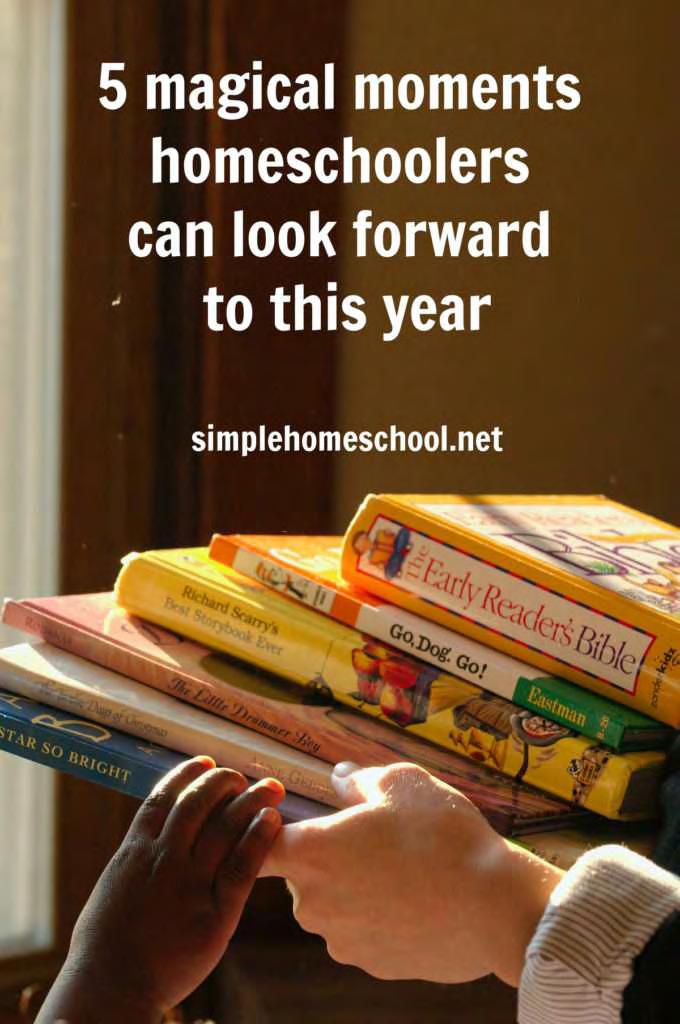
5 magical moments homeschoolers can look forward to this year
1. A magical read-aloud moment
If you’ve researched homeschooling much, you’ve likely read about the importance of reading aloud, and how it can be an incredibly powerful and simple way to help our kids learn. But if you’ve been trying to integrate reading-aloud into your days, particularly with more than one child, you’ve likely seen for yourself that it isn’t always picture perfect.
A good friend of mine, who uses a literature-based curriculum, jokes about the day years ago when she called her kids to the table for readaloud time, and one frustratingly replied, “When I grow up I’m never reading another book again!” This was not exactly the family bonding and love of learning atmosphere she had hoped for! I can personally remember many read-aloud sessions where sibling torture and vacant stares predominated, where I wondered if any of my three children were even paying attention.
But then suddenly, unexpectedly, magic happens. Everyone is engaged, on the edge of their seat. Everyone begs for one more page or chapter. And it hits you, “This! This is why I do what I do!”
You can never predict when that moment will appear, but eventually, it will. And it’s exhilarating.
2. A magical learning moment
“SLOW – KIDS AT PLAY.”
As we walked around the block one school morning a decade ago, my son Jonathan read those words from a neighborhood sign. He hadn’t had any reading lessons yet, and I had no idea that he could do it.
I was there. I heard every sweet syllable.
Just like watching our kids take their first steps or hearing them say “Mama” for the first time, learning “firsts” are equally magical, and they can happen no matter the age of your child.
You might see your son read for the first time or watch your daughter write her first sentence.
Perhaps there’s an area of struggle that is grueling for both you and your child, and a burst of insight strikes out of nowhere. He gets it, where before he was stuck.
And you? You were the one who helped him. It doesn’t get any better than that!
Or maybe you’ll see a child develop a passion for a subject or topic –one that she never would have had time for if she had been at school. Suddenly she’s investing hours in her own learning, without you having to prompt or give reminders at all.
Slowly, you glimpse her natural love of learning, the one she always had as a curious toddler and preschooler, returning. It makes all the hard work
3. A magical emotional moment
Sometime this year, there will be tears. Yours and theirs. Some of those tears will come on the really hard days that make their way to each of us in this life with its challenges.
But others will be healing tears. Because of the extra hours homeschooling gives to families, important internal issues that might have gone unnoticed will rise to the surface sooner.
There are simply fewer places to hide or stuff them down.
One morning, you might find a child or teen crying. You’ll take a deep breath and summon the patience to
4. A magical moment of protection
At least once this year, you’ll hear about something going on at the school down the street – whichever school your children would be attending if you weren’t home educating.
It could be bullying, or stress over upcoming standardized tests. It could even be something much more serious, unexpected, and tragic, like the call I received years ago about the devastating school shooting in our neighborhood.
You’ll hang up the phone or log off the computer and look at your child, happily playing with a Lego village on the floor. Safe and oblivious to whatever is going on.
And you’ll give thanks.
5. A magical family moment
When I had three elementary-aged children, they couldn’t seem to spend five minutes in each other’s
presence without engaging in some form of sibling squabble.
Very close in age, there inevitably seemed a competition underway to see who could come out on top, who had the most power.
But now and then there would also be magic. One day we returned from a field trip and I left the kids to play outside for a while.
When I looked out the window, I saw all of them playing, kindly, together. I grabbed my camera to go document the magic. Years later, this photo is still one of my heart’s treasures!
This magic can also happen with your extended family (or those who feel like family, whether or not you’re actually related). Homeschooling allows relatives to get involved, to be a part of our kids’ educations.
That day when you watch your mom on Zoom, doing a read aloud or sharing one of her own passions with your children, will be a moment
you’ll cherish forever.
Homeschooling can be hard, yes. Make no mistake about that.
But you’re also entering a year of adventure!
I pray that each day brings you a little gift, one that reminds you that all you’re doing on behalf of your children deeply matters, and that no one else is equipped to do it quite like you can.
For links and more info, read the original article here: simplehomeschool.net/forward
Jamie C. Martin - I’m a highly sensitive, introverted mom who loves the countryside, writing, traveling, and reading. Some of my favorite authors: Louisa May Alcott, Jane Austen, L.M. Montgomery, and Laura Ingalls Wilder. I never planned to become a homeschooling mom, but stumbled into it when doing some initial research into educational options for our kids. Often the best things in life are unplanned, aren’t they? I love the advantages homeschooling gives my kids, and this lifestyle fits perfectly with who we are as a family. Find out more at the Simple Homeschool simplehomeschool.net
Photos courtesy of: Jamie C. Martin
WISDOM's Online Chess Workshops
Inearly 2022 Sophia joined her first WISDOM chess workshop with Steven Bloom and wow are we so grateful that she did. Sophia has always had an interest in chess. She would play against dad and her big brother but was wanting to learn more. Zoom workshops were super new for us but she quickly caught on and was so excited to learn all about chess. After class Sophia would just want to keep practicing the new concepts she just learned in class. She started bringing her chess board to homeschool meetups and family gatherings.
Fast forward to today, chess class and weekly chess tournaments with Steven Bloom are a huge highlight of her week. She has grown and continues to grow so much in chess concepts, tactics and strategies! Her rating is at an all time high. Her confidence and love for chess just keeps blooming. She still packs her chess board everywhere she goes looking for her next opponent or a friend to teach.
Steven Bloom has a true passion for chess! He's patient, positive, dedicated, knowledgeable and funny! He's an incredible teacher.
Stephanie M
Resources, Reviews, & The Rest
It’sBy Jennifer Bly
no secret that I love writing. When I was in school, language arts was one of my favourite subjects. But teaching language arts can be overwhelming. After all, there are so many facets to this subject. From spelling, to grammar, to punctuation, and composing written works… there’s a lot to cover.
Here are some suggestions for how to craft a dynamic language arts program for your child:
Frequency of Lessons. We do our language arts lessons daily. However, the activities are always fresh and exciting.
Favorite Curriculum. We rotate through a few curriculum books to keep the learning
3. Bob Jones. The format of the Bob Jones curriculum is fabulous. The chapters alternate in their focus. For example, one chapter teaches the foundations of writing (i.e verbs, adjectives, pronouns, etc.), while the next chapter focuses on a writing project.
Writing Projects
Every month I like to focus on a different type of writing (for instance, in the month of September we may focus on descriptive writing). I find with this approach, my children have enough time to completely explore each particular form of writing.
Here is a list of types of writing projects you can give to your children:
• creative writing
• business (formal) letters
• friendly (informal) letters
Language Arts Fun
We also include fun language arts games and activities in our school days. Here are some of the activities we enjoy:
• Scrabble
• Boggle
• Bananagrams
• Crossword puzzles
• Word search puzzles
Another way to make writing fun is to set up a writing table with special paper, pens, envelopes, a dictionary, thesaurus, etc. You may be surprised by the works your child creates when they can use different writing tools!
As you can see, it’s easy to pull together a dynamic language arts program. There are many resources available to young children and plenty of opportunities to practice their writing skills.
lively. The following curriculum is what we like to use:
1. All About Spelling. All About Spelling, is by far, one of my favourite spelling curriculums. While it requires hands-on parental involvement, it effectively teaches children the many “rules” of spelling. I love how thorough it is.
2. Editor in Chief. Once a week, I present a section from Editor in Chief. This curriculum encourages children to look for (and correct) errors in writing. I find it especially good for the child who resists self-editing. It subtly demonstrates the importance of editing.
• compare and contrast essay
• narrative essay
• research report
• poetry
• procedural writing
• book report
• descriptive writing
If your child struggles with content ideas, I encourage you to check out WriteShop. We’re subscribed to their newsletter and every month we get a month’s worth of writing prompts delivered via email. The writing prompts can inspire even the most reluctant writer!
For links and more info, read the original article here: thedeliberatemom.com/dynamiclanguage-arts-program
Jennifer Bly - Let me introduce myself. I’m Jennifer and I’m the creator of The Deliberate Mom. When I started this blog, I made many lists of what it should be named. As I deliberated, I realized that I, for the most part, am a deliberate person. I take my time, I ponder, I reflect, I negotiate, and when I act, it is with deliberate intent. As a mother, I’m especially deliberate. From the activities I do with my children, to the food I provide, I’m intentional. However, over the years I’ve learned that being a deliberate mom is not about perfection but rather intention. The articles you will find here on The Deliberate Mom fit into four main categories: Parenting, Homemaking, Faith and Homeschooling. Come find out more at The Deliberate Mom thedeliberatemom.com
Photos courtesy of: Jennifer Bly
Library Support, Fun and Connections
By Terry Yaceyko
Whiledoing research for specific home school support groups in specific areas this year, I noticed that often, I would do a search for a home school support group in a specific town or city, and a library for that area would come up as well.
Oh, my, how lovely it was to see a library hosting events for home schoolers and being so home school friendly. It triggered my curiosity, and I did a little more research to quickly find out that there were a few libraries around the province that are very home school friendly – just from what I could see from their Facebook Pages.
I began to email Alberta librarians and ask a few questions about how they supported home schoolers in their communities. I ended up emailing 125 librarians around the province and got positive, detailed responses from almost 50 of them. Other librarians requested to see the responses – which I hope will lead to more libraries being home school friendly and providing home school activities for the home school families in their area.
Why am I writing an article about this? Because I think it is huge and could positively affect WISDOM Home Schoolers around the province – providing more opportunities for connections and home school support.
Below are some of the results from some of the libraries polled. Hopefully there are some ideas that you could suggest to your library that could happen in your area.
Many librarians would LOVE to hear what activities home schoolers would like in their areas. Many responded with that comment. (Also, think about volunteering on your local Friends of the Library Board or Library Board itself. My husband has volunteered for years in our area. Some of us might be concerned about what is being offered or displayed at times in our local library. Volunteering is a good way to positively affect what is in our libraries. AND the more we request good quality books through inter-library loans, the more good quality books will be bought.)
75% of librarians responding provided free space for home schoolers to gather—often during the day for a “Home School Hangout” for
teens, or for other activities. About the same number of libraries would buy books that home schoolers in their areas would request.
About 50% had home school clubs or workshops running regularly – BUT some librarians commented that they needed to know what home school families wanted as activities so they could organize those activities. (It’s also important to support the activities that you want to have so that they continue to run.) Science activities and experiments at the library are appreciated by home school parents. (We need more of these!) AND it was interesting to hear from several home school moms who are now librarians (who are very friendly to home schoolers! Smile)
Oh, and it didn’t really seem to matter whether the libraries were big or small. Some small or medium-sized libraries had some very creative ideas and activities for home schoolers, while some big libraries had less.
Coaldale
• Our library has a Plan of Service goal to meet the needs of our local home school community.
• We have Home School Programming on Demand – this is a menu of 6-8 programs we will offer at no charge, that changes quarterly. Parents need just email our program coordinator with the program they are interested in (charcoal drawing, science experiments, coding, embroidery, creative writing, etc..) and let us know the age of students attending and how many. They can book with other families or just their own and we will accommodate a day and time that works for the home school family as well as our schedule.
• Home School Science Exhibition – we host a science fair-like event at our library, providing home school students’ tables spread out around the library to showcase their science projects. We invite the public and members of the community to come to view the students’ projects and ask questions to reinforce learning.
• Exhibitions. We call it an exhibition since there is no judging or 1st, 2nd, 3rd prizes, however, we do have science kit prizes that all home schoolers that participate are entered to win. After the exhibition, we provide the students with lunch and we invite Destination Exploration from the University to come and do STEM activities with the home schoolers. It’s 2 hours of instruction and so much fun. Our home school parents say it’s the event they look forward to all year.
• We are really engaged with our home school community and are happy to provide them with programs and resources that suit their needs!
Cold Lake
(The below aren’t necessarily just for home schoolers, but would be activities that home schoolers might be interested in.)
• Coloring Contests - Pages are available to pick up at each branch on the first opening day of each month. All ages can enter. Entries will be on display in the window at the North Branch for the duration of each month.
• Spice & Tea Club - On the first Tuesday of every month, come to either branch of the library to pick up a free loose tea or spice kit. An information sheet and recipe suggestion come with each kit. Email pictures of what you make by the last day of the month for a chance to win a prize.
• Cookbook Club - Each member picks a recipe from the books on display (or one of their own) and they bring in the dish to share. The result is a potluck with lots of talk about cooking and recipes and how to improve them.
Fort McMurray
• We offer Educator Cards to certified home schools. With an educator card, teachers can request several titles to supplement their classroom library, focus on a topic of study, or materials for a specific age group using the Classroom Collection Request form. We will drop off the materials to the school and pick them up when the class is finished with them. Orders may include specific titles or authors, or requests for general subjects pertaining to a certain age group or reading level.
• We offer a bimonthly program specific to just home school patrons. The program consists of STEAM, Library Tours, Crafts, Arts, Themed Days, book clubs, etc.
Fort Saskatchewan
• Specific to the WISDOM community, the Fort Saskatchewan Public Library offers monthly home school clubs. Families can register (or go on the waitlist) for each month they want to attend. These run from September to June with one group for younger kids and one group for older kids. Our home school club programs are STEAM centered and monthly topics have included areas like robotics/coding, building and engineering, music and art, and many different science topics.
• In May, we are also offering a special session for home school parents on the different K-12 e-resources that are available for folks with a Fort Saskatchewan Public Library card.
Fort Vermilion
• The home schoolers in our area gather at the library twice a month. The organizer of the group does all the planning with each date having a different theme. The library itself doesn’t plan anything for them. We allow them to use our space and if they want/need specific books/items we will buy them. They all love it!
Hardisty
• We’re more than just a library—we’re a welcoming space for home schoolers, families, learners of all ages, and anyone who wants to connect, create, or just hang out.
• Reading for Kiddos - Our most-loved home school program! Join us for engaging read-alouds, book-inspired crafts, and a cozy reading space perfect for curious young minds.
• Ongoing Home Schooler Support: Hands-On Workshops for kids, teens, and families, Home Schooler’s Hangout – regular meetups to connect and learn, Free Gathering Space – ideal for co-ops, study groups, and meetups.
Innisfail
• What Innisfail Public Library has done (past and present): Monthly, for all ages: programming learning the 7 Forms of Art, Pen Pals partnering with another library in our system, Home School Hangouts, home school parent input nights, and programming learning The Wonders of the World (natural and manmade).
• Home School Hangout was in the beginning phase of our programs offered as a way for the students to get to know one another before regular programing began. The students would play board games, build Lego etc.
Lac La Biche
Our library offers educator cards to home schoolers. With this card folks can request box loans, where library staff will put together books for the patron on specific topics.
Mannville
• Our library has been talking to Home School parents for years, hoping to make a partnership we can come together to grow and support. We are not being well utilized. We have a great little space, friendly staff and a very supportive Board. We can offer our community and surrounding area with so much; we just need to start the conversation!
New Sarepta
• I’m very excited to see how you are supporting home schoolers!! I wish we could help more but we are in a public high school. We have home schoolers come in for books and are more than happy to order books or kits for them. We are hoping to move out and have our own stand-alone library in the future and then we will focus on the home schoolers.
Olds
We’re so glad you reached out to learn about our programs and supports for home school families! Here’s some of what we offer:
• Our popular weekly STEM programs: Little STEM (ages 6-8) and Big STEM (ages 9-12), are a hit with home schoolers! A weekly Lego Club. Meeting rooms are available for your home schooling needs.
• Our helpful Math Mentors program offering tutoring every Wednesday.
• Reading challenges, like our “100 Books Before Graduation” program where students can earn prizes.
• Creative monthly teen workshops (we recently decorated cupcakes and are now making fairy gardens!).
• Our Library of Things, packed with unique resources beyond books, such as telescopes, tools, musical instruments, and craft kits – perfect for home schoolers.
Onoway
• Home School Games Afternoon/Lego Afternoon – we do these occasionally and we have a Stay & Play center that has robots, Minecraft blocks, and wooden structures that can be used at any time.
• We have just recently started working with the home school groups in our area to try and set up some activities at the library and so far they have been very successful.
Peace River
• We partner with Peace River School Division’s Home Schooling Board for “Home School Nerf Wars” four times per year, a program which all home schoolers in the area are invited to attend, regardless of which school board they are registered with.
• We hosted three sessions of a “Skill Sharing and Leadership” workshop series, in which local home schoolers ran their own workshops sharing their favorite skills with others. Our afterschool clubs are open to all children, and many home schoolers join us for these activities.
• There is a process to submit book requests to our Library Technician, who handles all of the purchasing for circulation materials. She has purchased book series that cater to the home schooling community, including BOB Books and Life of Fred Math.
• We love being a strong resource to the home schooling community in our area.
Penhold
• We hired a high school student to teach 3D Printing, Makerspace and Lego. All three programs were highly successful. Having a young man who is responsible and a great role model really encouraged the use of the programs by the home school families.
• We hired a high school student to teach an Art Program and Digital Doodles.
• The home school group in our area has access to many programs and are a busy group. We are glad we can complement what is out there and create a relationship with the library for families.
Red Deer
• So pleased you contacted the Red Deer Public Library! We have tried several times to bring home schoolers into the library and
have had poor attendance for these programs. If you have a recommendation for a program, please contact us.
Sheep River
• We don’t offer any formal programs or events for home schoolers, but we do make the facility available if they want to come in as a group and do some activities or just have a library day. Home schoolers also qualify for free family membership, the cost of which is covered by a local business for any family that has school age children.
Slave Lake
• Although we do not offer anything directly for the home schoolers in our region, we do have space, can possibly order them books, and they can join any of our regular programs. We can work with them directly if they have any ideas as we are always open to new ideas and expanding our services.
Smoky Lake
• I had one home school family where I upped the max limit of books they can borrow at a time— that is something we are willing to work with. We are always open to new ideas and helping any way we can, so if there is any need in the homeschooling community that we are not currently meeting, you are always more than welcome to contact us to see if it could be possible.
St. Albert
• Yes, we absolutely support Home Schoolers in our community in all the ways you have listed. We also support a locally organized annual Home Schoolers Picnic in St. Albert. At this event, we aim to spread the word about all the ways home school families can use the library programs and collections. Tours can be booked for groups, including home school families if they want information and instruction on a specific topic.
Stettler
• We do have a local home schooling group/association in the area. Over the years we have done a few activities and have made our space available for them to meet. We haven’t done a great deal with them recently and I don’t know if they still meet as a group or not. It might be a good time to start planning some activities for the home school group in the fall and see if we can get something going at the library again.
St. Paul
• Our involvement with the home school groups has always been a bit parent driven.
• We have quite a few families that frequent the library for their books related to their curriculum needs. We love it when they make suggestions to add to our collection and do our best to bring in or purchase what they need.
• We have run a few painting classes just for the home school families in our community.
• Also, with the help of one of the moms, we started the Reading Cafe program; reading skills for kids 6 to 12
• I think it is great idea to have a community resource for home school families. Even though we have not had success in the past doing specific home school programs it is something we are always willing to try if the need arises.
Sylvan Lake
• I collaborated this year with a group of home school families coordinated by “Home School from the Lake.” I went out to Birchcliff to the “Home Schooling Hub” every second Thursday to do Book Buddies - including reading and an activity. We’ve offered a similar program at the library here in Sylvan Lake. This was requested by the Home School Hub families! As the new program coordinator here in Sylvan Lake (and a former home school mom) I am always looking for ways to collaborate with home schooling families!
Tofield
• We don’t currently have any programming or resources specifically for the home schoolers in our community. We would be very happy to chat with interested families about setting up programs.
Two Hills
• At present, our interaction with home school families is limited to loaning & ordering materials to support their lesson plans. We also print and copy materials appropriately. We help families submit materials to their agencies by fax & email.
• We would love to engage with and support home school families.
Valleyview
• Our library has supported home schoolers for many years. The type of support usually depends on the families in our area who are currently home schooling and their needs. In past years, we have had active groups of parents who used to meet weekly for get-togethers. In recent years, we mostly provide materials to support their curriculum or entertainment needs.
Vermilion
• The meeting room at our library is great for board game meetups (you can take a board game from the library) visits, and home school consultations. The meeting room is free to use for up to 2 hours and can be booked online on our website.
• Home schoolers can also request “enhanced” account privileges if they have a good track record for borrowing and need more than the standard 25 items per account limit
• We’ve never done a specific home school-oriented Lego event as we try to be more universal in our targets. But home school families often are the primary attendees.
• VPL’s mission is to connect our community by providing and promoting library and information resources in a welcoming and accessible public space. VPL delivers on this mission to Home schoolers through flexible book borrowing policies which has resulted in strong circulation figures and library usage. The top 5 borrowers for the past 10 years consistently feature home school folk.
Vulcan
• We mainly support local home schoolers by fulfilling hold requests and assisting to access inter-library loans, but we also have a small section of our junior nonfiction arranged especially with home schoolers in mind – resources organized by curriculum subjects. We have quiet spaces and computer areas that are used for study and research and connection. We have literacy backpacks available for loan with different themes. We have reading, play and craft areas.
Wainwright
• We provide a weekly time (1 5 hours long), which we call Home School Connection, where we provide the space and invite home school families to meet and work together. This weekly gathering is self-led by the families and once a month, we facilitate the session.
Water Valley
• We are a very small library but we have a sizable home school community in the area that we service. All of our programming runs on Fridays, and is attended almost exclusively by home school families
• Because we are such a small library, programs are often supported by a volunteer who is passionate about seeing the program run. Currently most of our programming is for students who are 12 years +, because that is the age group the volunteer prefers to work with. If someone is interested is working with a younger group, I am always happy to meet with them and discuss options for getting their program running.
Wetaskiwin
• We have regular daily programs for a variety of ages that are listed on the program calendar on our website. Currently one of our weekly offerings is for home school families. This is the Home School Hangout which happens on Thursdays from 2–3 pm.
• As far as unique collection items that home school families may be interested in, we have the following: Novel study kits for grade 6, 7, and 8, Children’s Literacy Kits, Yoto Players and cards, Board Games
Whitecourt
• Home school families are an independent bunch, the most effective way to go is to let families take the lead and come to us with their needs and ideas. For example, recently we were approached (and accommodated) a home school material Drop and Swap.
• A regular Home Schooler’s Hangout/Home School Hour? Have not done before and has never been requested. Would be open to it.
I found this so encouraging to read and hope you did, too! I also hope you all are taking advantage of the friendly home school libraries in your area. There are so many ways to connect as home schoolers in our local communities – one of which is your local library’s home school activities!
Fall Family Gatherings 2025
You are invited to attend family gatherings across the province! These social-style events are open to all current WISDOM Home Schooling families. Meet friends, visit with other home schoolers and members of the WISDOM team, and find out more about how WISDOM can serve you best.
RSVP by filling out the free registration on our website, wisdomhomeschooling.com > Events > WISDOM Family Gatherings or contact the event host.
Westlock & Area Fall Social Gathering
When: Sunday, September 7, 2025, 4 - 8 pm
Where: Bethel Bible Camp - 10 minutes west of Westlock, Alberta
What: We will enjoy a meal together as well as have an information time, door prizes, games and socializing. We will provide hot dogs, buns, condiments and beverages.
Please bring: Potluck sides, salads or desserts to share with the group. You are welcome to bring lawn games, board games, or lawn chairs if you would like.
RSVP by September 7, 2025 to (or if you have any questions, please contact):
Liz Gurnett 780-349-1577 or email liz@wisdomhomeschooling.com
Rachelle Godin 780-349-1827 or email rachelle@wisdomhomeschooling.com
A Day at the Beach
When: Thursday, September 18th, 2025
Where: Sylvan Lake
What: Games, picnic, bathing (weather permitting)
Please bring: picnic, lawn chairs, picnic blankets, baseball gloves and ball, lawn games, sunscreen, hats, swimsuits, towels. We will provide drinks and an ice cream treat.
RSVP by September 12, 2025 to (or if you have any questions, please contact): Lydie Delli Santi 403-392-9209 or email lydie@wisdomhomeschooling.com
Medicine Hat Fall BBQ
When: Thursday, September 18, 2025 at 4 - 8 pm.
Where: Kin Coulee Kinette Picnic Shelter
What: Spend time with other homeschoolers and members of the WISDOM team, ask questions and find out more about how WISDOM can serve you best. We will provide burgers, hot dogs and water. There will be games and door prizes available and the kids always come up with more fun ways to play.
Please bring: a potluck side, salad or dessert, and lawn chairs. Feel free to bring any yard/lawn or board games to play with the group!
RSVP to (or if you have any questions, please contact):
Tiffany Arnold 403-866-7822 or email tiffany@wisdomhomeschooling.com
Brian Taje 780-312-4525 or email brian@wisdomhomeschooling.com
Lakeland & Area Family Gathering
When: Friday, September 19, 2025 at 5:00 - 8:00 PM
Where: Clandonald Community Hall, Clandonald Alberta
What: Sandwich supper and Games
Please Bring: Sandwiches for your own family (or a simple meal to fit what your particular food needs are.) A nutritious finger food to share with other families. We’ll provide the coffee, juice, water and snacks. Games (Please choose family appropriate ones.)
RSVP by September 17, 2025 to (or if you have any questions, please contact):
Peter Weidman by email at peter@wisdomhomeschooling.com
Glenn Spiess by email at glenn@wisdomhomeschooling.com
Dunvegan Bridge Fall BBQ/Potluck
When: Sunday, September 21st from 1 - 5 pm
Where: Dunvegan Bridge (between Rycroft and Fairview, just north of the bridge crossing the Peace River).
Please bring: salads and desserts and - of course! - WATER BALLOONS!!!
This is your chance to soak a WISDOM Facilitator!
A BBQ main course, fixings, and beverages will be provided by WISDOM.
RSVP to (or if you have any questions, please contact):
Paul van den Bosch 403-358-4497 or email paul@wisdomhomeschooling.com
Edmonton & Area Fall Social Gathering
When: Sunday, September 21, 2025, from 4 - 8 pm
Where: Meadowlodge Bible Camp (MBC), near Cooking Lake Alberta
What: Visit with other home schoolers and members of the WISDOM team, and find out more about how WISDOM can serve you best.
We will provide hamburgers, hot dogs, buns, condiments and beverages. We will enjoy a meal together as well as have an information time, door prizes, games and socializing. This event will run rain or shine. Similar to other years, families who wish to set up a table to sell baking, crafts or curriculum are welcome to do so.
Please email Liz Gurnett with details.
Please bring: For the meal, please bring potluck sides, salads or desserts to share with the group. You are welcome to bring lawn games, board games, and lawn chairs.
RSVP by September 21, 2025 to (or if you have any questions, please contact):
Liz Gurnett by text at 780-349-1577 or email liz@wisdomhomeschooling.com
Carrie Friesen by text 780-217-4006 or email carrie@wisdomhomeschooling.com
Mike and Michele Barter by text at 780-363-3740 or email at michele@wisdomhomeschooling.com
Taylore Maschmeyer by text at 780-270-0460 or email at taylore@wisdomhomeschooling.com
Pierre-Andre Beaudoin by text at 780-239-0381 or email at pierre-andre@wisdomhomeschooling.com
Lethbridge & Area Fall Social Gathering
When: Monday, September 29, 2025, 4 - 8 pm
Where: John Martin Recreation Centre - located in Pavan Park
What: Visit with other home schoolers and members of the WISDOM team, and find out more about how WISDOM can serve you best.
WISDOM will provide hamburgers, hot dogs, buns, condiments and beverages. We will enjoy a meal together as well as have an information time, door prizes, games and socializing. This event will run rain or shine.
Please bring: potluck sides, salads or desserts to share with the group. You are welcome to bring lawn games, board games, and lawn chairs.
RSVP by September 29, 2025 to (or if you have any questions, please contact):
Liz Gurnett by text at 780-349-1577 or email liz@wisdomhomeschooling.com
Brian Taje 780-312-4525 or email brian@wisdomhomeschooling.com
Events
Calgary Family Gathering
When: Wednesday, October 1, 2025, 5:00 - 8:00 pm
Where: Renfrew Community Hall - 811 Radford Rd NE, Calgary, AB
What: Join current homeschooling families for an evening of socializing while playing Minute to Win It Games or cheering on the teams and having supper together. Members of the WISDOM team will be present to answer questions and help you connect with other WISDOM families. We will supply the main supper dish and dessert.
Please bring: We ask that you bring a potluck side to share. If you’d like to sit outside, please bring lawn chairs. We also welcome board/card games to play while we visit.
RSVP by October 1, 2025 to (or if you have any questions, please contact):
Liz Gurnett 780-349-1577 or email liz@wisdomhomeschooling.com
Carrie Friesen 780-217-4006 or email carrie@wisdomhomeschooling.com
Fort Vermilion/High Level/La Crete Fall Gathering
When: Sunday, September 14, 4 - 7 pm
Where: TBA
What: Potluck
Please bring: a salad or side dish and a dessert to share.
RSVP to/Questions?:
Margaret Knelsen 780-926-6556
Paul van den Bosch 403-358-4497
Kim or Dan Schultz 780-404-3356
Athabasca/Lac La Biche/Plamondon Fall Gathering
When: Thursday, September 11, 1 - 4 pm
Where: Atmore Community Hall, Atmore
What: Fun and Games
Please bring: Outdoor games and/or indoor board games depending on the weather.
RSVP to/Questions?:
Kim Schultz kim@wisdomhomeschooling.com
Fort McMurray Fall Gathering
When: Thursday, September 25, 1 - 4 pm
Where: Doug Barnes Cabin, Tamarack Way, Fort McMurray
What: Fun and Games
Please bring: Outdoor games and/or indoor board games depending on the weather.
RSVP to/Questions?:
Kim or Dan Schultz 780-404-3356
Gordon Loewen 587-298-7565
Wabamun Lake Provincial Park Family Gathering
When: Friday, September 12th, starting at 5:30 p m
Where: Wabamun Lake Provincial Park (near the playground)
What: Picnic, family games, meet new families
WISDOM will provide water, Bubly, fruit and meat platters, and sweets. Please bring your own main course (fire pits are available depending on fire bans) and lawn chairs or a blanket to sit on. Family games. A chance to meet some of our Facilitators and ask questions. Connect with other families from the area.
Please RSVP by September 8, 2025 For information or to RSVP:
Desmond Kilgannon desmond@wisdomhomeschooling.com
Randy Kopp randy@wisdomhomeschooling.com
WISDOM Science Laboratory Seminars New & Improved for 2025-2028!
Register early; limited spots available.
WISDOM Science Laboratory Seminars offer hands-on, experiment-driven learning to deepen students' understanding of key scientific principles. With updated content for 2025-2026, these engaging seminars provide essential lab experience in Chemistry, Physics, and Biology, supporting course credit challenges and advanced studies. Spaces are limited—register early!
General Physical Science Lab Seminars
(5 sessions - Sept. to Jan) This program will develop the student’s understanding and skills with the scientific method in the realm of Introductory Chemistry and Physics as they study and conduct experiments regarding Matter and Motion. This lab seminar will serve as the prerequisite for the Senior Chemistry and Physics Lab Seminar.
Senior Physics Lab Seminars
(4 sessions - Feb. to June) This program further develops the student’s understanding and skills with the scientific method as they study and conduct experiments regarding: Conservation of Mechanical Energy; Dynamics; Electrical Fields; and Optics. This lab seminar could serve as a support to the Physics 20 and/or Physics 30 course credit challenge. (Prerequisite: General Physical Science Lab Seminar)
Senior Chemistry Lab Seminars
(4 sessions - Feb. to June) This program will further develop the student’s understanding and skills with the scientific method as they study and conduct experiments regarding: Ideal Gas Laws; Stoichiometry; Titrations; and Oxidation/Redox reactions. This lab seminar could serve as a support to the Chemistry 20 and/or Chemistry 30 course credit challenge. (Prerequisite: The General Physical Science Lab Seminar)
Biology 20 Lab Seminars
(4 Sessions - Sept. to Jan.) This program will develop the student’s understanding and skills with the scientific method in the realm of Biology as they study and conduct experiments regarding: Evolution (from a Christian perspective); Photosynthesis; General Anatomical Systems (Fetal Pig Dissection); and Pulmonary Functioning. This lab seminar could serve as a support to the Biology 20 course credit challenge.
Biology 30 Laboratory Seminar
(4 Sessions - Feb. to June.) This program will the develop student’s understanding and skills with the scientific method in the realm of Biology as they study and conduct experiments regarding: The Neurological System (Dissection of Sheep’s Brain); Endocrine System, Reproductive System (Pregnant Sow Reproductive Tract Dissection); Genetics. This lab seminar could serve as a support to the Biology 30 course credit challenge.
Are you a WISDOM Parent, Student or Alumni?
Join our new private business directory to share your business or service with other WISDOM families and alumni. Whether you own a large company or a small service, or a student with crafts or service to share, we welcome you to join the directory.
And even better, your next plumber or window washer could be a WISDOM member!
Listings will be password protected and available to WISDOM families and alumni, so you can access it to support fellow WISDOM businesses.
Join here: wisdomhomeschooling.com/bizdir
Our youngest is nine, and she sets up for school each morning with a dozen or two stuffed animals, and then proceeds to work through her lessons with them. Usually she designates a teacher, and then has the stuffy read the material, and then different students respond to answer the questions. Sometimes it slows things down too much, and we had to draw the line at the stuffies doing her penmanship for her..... and of course, sometimes all they want to do is play make believe, and what's a poor nine year old to do in face of the overwhelming majority? ��
David S
A few years ago when my oldest, Kasey, was preparing for her English 30-1 diploma, she took a WISDOM workshop with Kathy Royce on how to ace your diploma essay. It was life changing for Kasey! Mrs. Royce took her from ~60% work to ~90% work in the time of the workshop and has helped her proof all of her essays and personal statements for her veterinary applications. (She is attending the veterinary school in the fall in Edinburgh, Scotland!!) We are so grateful for her.
Thanks so much!
Angie W
Home ScHool
September
20 labs
(Calgary) 18 Use Purchase Orders (for up to half of your annual funding, 2nd half available for PO use in January. PO use ends mid-May.)
October
November
December
Various online and in person workshops throughout September and October, to be announced on our website and in each month's e-newsletter.
Are you receiving our e-newsletter?
If not, please make sure wisdomhomeschooling.com is on your email's safe list, and get in touch with our office to make sure we have the correct email address for you.
Finding Help
· Call us at 780-741-2113 or 1-877-425-8546 · · Email us at office@wisdomhomeschooling.com ·
Funding
The funding year opens for submissions now! Submit digitally or by postal mail and be reimbursed the following month. The first reimbursement will occur in October. You may access purchase orders for direct billing at select vendors, starting on September 18
Go to wisdomhomeschooling.com/funding for more.
Questions? Email finance@wisdomhomeschooling.com or call 877-425-8546 x 2 during business hours.
A note on emails
We always respond to emails. If you do not receive a reply from us within two weeks, we did not receive it. Please send it to us again.
When you Call Us
Call us at 780-741-2113 or toll free at 1-877-425-8546
We take calls between 9 and 4, Monday through Friday, with an hour off at noon.
If you reach our voicemail, you may enter the extension of anyone in the office at any time during the greeting. To speak to a home school consultant, dial 1. To speak to a member of the funding team, dial 2. To leave a general message, stay on the line or dial 3.
We endeavour to return calls as quickly as possible. If you do not hear back from us within two business days, it may be because the message didn't come through clearly, so please call again.
Connect with WISDOM families
We offer many ways to connect with the larger WISDOM community, from events and workshops, to our Social Networking phone and email list, to Facebook Groups just for WISDOM parents. This year, we are working to add local WISDOM communities around Alberta! For more information on events, email events@wisdomhomeschooling.com. For local community connection, email terry@wisdomhomeschooling.com.
Subscribe to The WISDOM Family Magazine
(The Magazine is free to WISDOM families.)
□ Option A - paper subscription ($30 in Canada, $44 in USA)
□ Option B - digital subscription, delivered to your email inbox ($18)