In-Person Schedule: Tuesdays & Thursdays | 8.05 AM to 4.00 PM
Division of Students:
Primary Division Gr. 1 2
Beginner Division Gr. 3 4
Junior Division Gr. 5 6
Intermediate Division Gr. 7−8
Senior Division Gr. 9 11
Welcome to Holy House.
We’re a Catholic liberal arts programme in the English schooling tradition where your children will grow in mind, heart, & soul.
Therefore with full right the Church promotes letters, science, art in so far as necessary or helpful to Christian education, in addition to her work for the salvation of souls: founding and maintaining schools and institutions adapted to every branch of learning and degree of culture.[13] Nor may even physical culture, as it is called, be considered outside the range of her maternal supervision, for the reason that it also is a means which may help or harm Christian education. And this work of the Church in every branch of culture is of immense benefit to families and nations which without Christ are lost…
Divini Illius Magistri 21-22
Programme Overview:
Grades 1-8: Shared Responsibility. Holy House Edmonton will assume all legal responsibility for instruction in English Language Arts, Catholic Studies (Course Title: Catholic Culture, Catechism & Church History), and Latin. Enrichment courses will be offered in Choir, Science, Art, and Physical Education. These courses can be listed on families’ EPPs as part of the fulfillment for their plan of home studies, in consultation with their facilitator.
Grades 9-12: Full Programme, Paper-Based Distance Learning. In 2026-27, Holy House will offer an accredited high school Senior Division Grade 9-11 classroom, with Grade 12 to be added next year. The programme will be held in-person on Tuesdays and Thursdays; Mondays, Wednesdays, and Fridays will focus on independent in-home learning with support available from teachers during office hours or by appointment. Holy House Edmonton’s high school programme will fulfill requirements for the Alberta High School Diploma.
OuR APostoL ate
The Holy House of Our Lady and St. Benedict is an accredited independent school serving Grades 1 through 11 administered by the Gilbertine Institute, which includes WISDOM Home Schooling, The Holy House of Our Lady & St. John, The Gilbertine Academy, and Villa Spiritus.
Our school is under the authority of the Very Reverend Robert-Charles Bengry GSmp, Magister of the Companions of St. Gilbert, and the Reverend Kenneth Noster, Head of School of the Gilbertine Institute.
Holy House & the Gilbertines
Our school takes its name from the Holy House of Walsingham, a replica of the Blessed Virgin Mary’s house built in the eleventh century on the pattern of a vision given to Richeldis de Faverches, a devout noblewoman and widow known as the Lady of the Manor of Little Walsingham. The site housed one of the most important devotional objects in medieval England, the statue of Our Lady of Walsingham, as well as several chapels and the necessary accommodations and hospices for pilgrims who came to the location. For hundreds of years, the Holy House served as one of medieval England’s most important pilgrimage sites, standing as a model of the way the sacred and domestic can come together to nurture body and soul in a single physical space This legacy provides a natural inspiration for a Catholic liberal arts school, where learning, moral formation, and communal care are intertwined, and students grow as scholars, virtuous members of Church and society, and future inhabitants of the Father’s mansions with many rooms.
The daily rhythm of the school is informed by the spirituality of another tradition which combines the secular and domestic, the Companions of St. Gilbert of Sempringham (GSmp). The companions serve as a modern revival of the Order of Sempringham, which was founded by St. Gilbert in 1131 to address the spiritual and social needs of his time. The only religious order native to England, the Gilbertines are also the Church’s only “double order,” in which men and women, both religious and lay, live out their various vocations under the auspices of a shared rule, prayer life, and work. Drawing on the Augustinian and Benedictine traditions and influenced by Cistercian practice, Gilbertine spirituality emphasises ordered charity, intellectual formation, obedience, and mutual responsibility, particularly in service to education and the pastoral care of souls. This pattern of life and purpose provides solid groundwork for a Catholic school in the English tradition, where a spirituality developed over centuries provides the daily rhythms that structure prayer, study, and appreciation of all the goods in this life in anticipation of their fulfillment in the next.
A Monastic Rhythm in a Lay Life
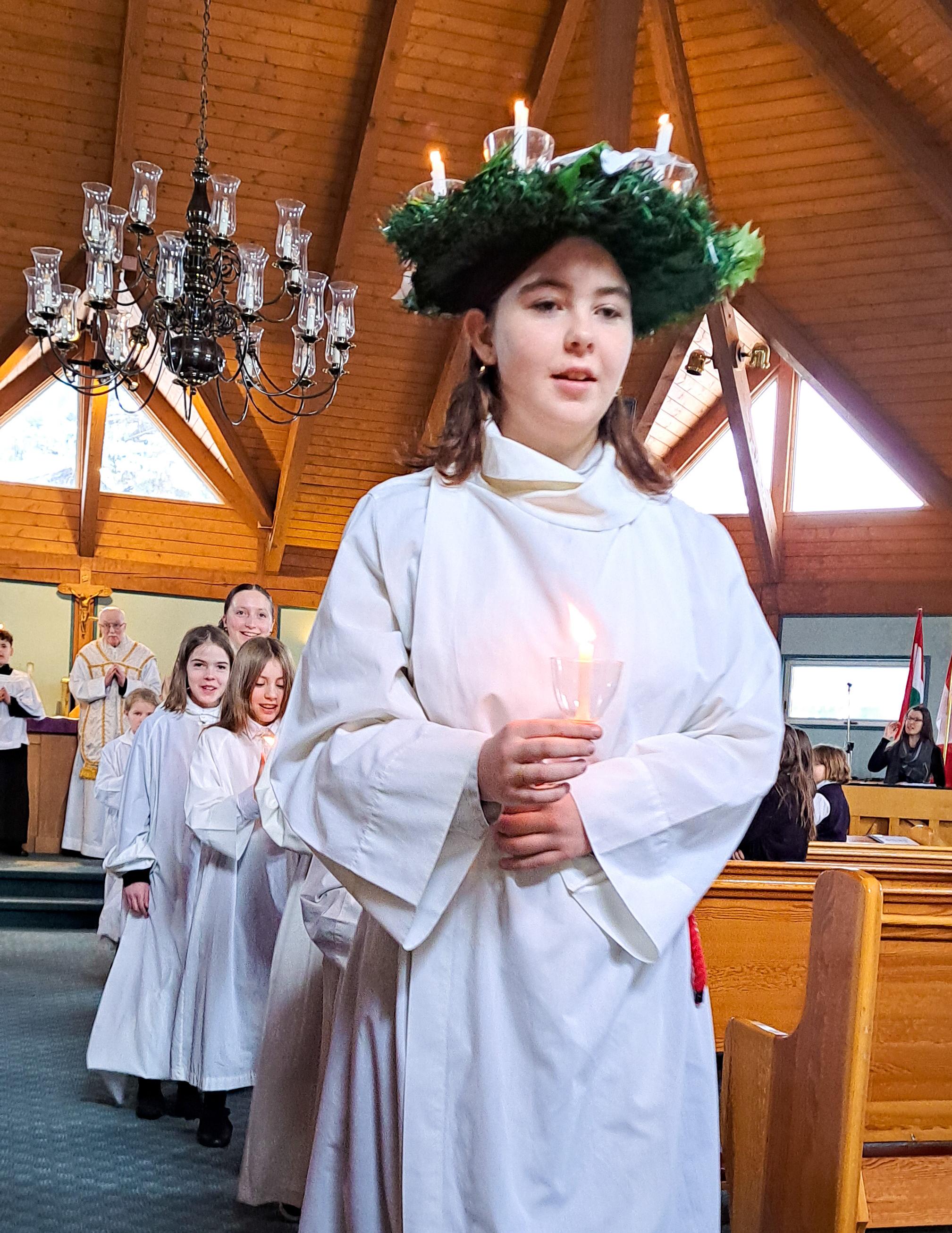
In light of our spiritual inheritance from the Gilbertines, our school incorporates elements of the monastic rhythm which can also nourish a lay life. Our schools draw on elements of the cloistered day, beginning with Mattins and ending with Evensong. Our school rules also strive to imitate the rules of medieval monastic orders in a manner appropriate to each classroom and the vision of the school as a whole. As in the medieval monastery, the life of the Church spills out of the chapel and into studies, informing classwork as teachers and staff encourage students to embrace a sacramental world-view ordered towards union with the Triune God. Through both our prayers and our work, we learn about the Good, the True, and the Beautiful to which we join ourselves to the Blessed Sacrament.
In light of our spiritual inheritance from Our Lady of Walsingham, our school strives to provide a place to which students journey in support of the domestic learning environment. Holy House seeks to integrate
home, school, and Church by demonstrating how students, parents, teachers, authors, and clergy work in their proper spheres towards a common end. Rigorous on-site classroom instruction, clear directions for home work, and studies which include and are designed to dovetail with parent and clerical efforts engender respect for the role each person plays in the Divine household.
These efforts find their expression in our Shared Responsibility Programme in Grades 1-8 and our Distance Learning Programme in Grades 9-12
“The whole fruit of their [educational] endeavors should consist in the testimony of God and a good conscience. Thus they will be inwardly calm and at peace and neither stirred by praise of flatterers nor stung by the follies of unlearned mockers of learning.”
St. Thomas More
Letter to William Gonell
Faith Formation
Our course of studies equips students to grow and thrive in a world that is often hostile to our Catholic faith. We assist their spiritual, human, and academic formation. Because education is more than the transfer of knowledge and skills, we work with parents to help form the whole person as a beloved child of God with a supernatural destiny, in the pursuit of truth, beauty and holiness. The environment of Holy House aims to allow each child to mature academically, spiritually, socially and emotionally, as strong, resilient and engaged Catholics equipped for sainthood.
Character Formation
“If faith is like the root, charity is like the sap that nourishes the trunk and rises into the branches, the network of virtues, to produce the delicious fruit of good works" (Servais Pinckaers, O.P.; Morality: The Catholic View, South Bend, St. Augustine Press, 2001).
Holy House’s cultivation of faith naturally leads to a cultivation of virtue. Students in our programmes receive instruction in the classical understanding of the virtues as dispositions which arise out of habits built over time by means of repeated choiceworthy actions. This understanding is animated anew by the wisdom of the Church, as demonstrated in Scripture, the documents of the Magisterium, and the lives of the saints, which recognise the integral role grace plays in the development of good character.
Students study one virtue a month, and consider the ways it is cultivated in everyday life through examples found in literature, Scripture, poetry, and history both sacred and secular, as well as, in the higher divisions, the way it has been understood and applied through the disciplines of philosophy and theology. Students are also shown how to live virtuous lives in the school setting, as faculty and staff strive to demonstrate these habits, aid students in identifying them in their
classmates, and think through how to develop them in their own right.
Holy House’s goal in its virtue programme is that its students may understand along with the Catechism that “A virtue is an habitual and firm disposition to do the good… it allows the person not only to perform good acts, but to give the best of himself. The virtuous person tends toward the good with all his sensory and spiritual powers; he pursues the good and chooses it in concrete actions" (see CCC 1803).
Academic Excellence & Integration
Our curriculum adopts a cyclic study of history and an integrated approach to all subjects. Just as the source of Truth, Beauty, and Goodness is one divine being subsisting in three persons, so we study these same transcendentals as present in individual disciplines grounded in one reality.
The programme seeks to pursue truth wherever it is found, honouring the genuine achievements of scientists, poets, and philosophers throughout history. As Saint Augustine exhorts, “let every good and true Christian understand that wherever truth may be found, it belongs to his Master” (Augustine, De doctrina christiana II.18). Similarly, Saint Basil the Great writes that “after the manner of bees must we use these writings, for the bees do not visit all the flowers without discrimination, nor indeed do they seek to carry away entire those upon which they light, but rather, having taken so much as is adapted to their needs, they let the rest go. So we, if wise, shall take from heathen books whatever befits us and is allied to the truth” in order to make the honey that flows from the rock (St. Basil, Address to Young Men on the Right Use of Greek Literature, ch. 4).
Grades 1 - 8:
shared
Responsibility: A Partnership with Parents
As a Shared Responsibility programme, Holy House aims to be a home at school that harmonises with schooling at home by offering direction and support in both environments. The programme assumes full responsibility in some areas of learning and offers support in others, but in all areas upholds high standards of instruction and
Grades 9 - 12:
communication so that domains of responsibility and support remain clear. Holy House strives to maintain an atmosphere in which students learn the joy of intellectual inquiry as an end-in-itself and also develop the habits and virtues needed for serious study and personal growth.
Fitting for this World, Training for Another
At the high school level, The Holy House of Our Lady and St. Benedict seeks to equip students to take a more active and independent role in their learning as they work toward completing requirements of an Alberta High School diploma. Home at school and schooling at home take on new dimensions as students become more responsible for preparing for in-person days, participating in learning and discussion in the classroom, and bringing both of these spheres of activity to fruition via assessment and enrichment. Holy House recognises that students
must be prepared to participate responsibly in the larger societies of Church, nation, and world, and seeks to aid parents in preparing their students to understand, evaluate, and join social discourse and life in its many forms.
All education is to be founded on Revealed Truth… to fit men for this world while it train[s] them for another.
St. John Henry Newman, The Rise and Progress of Universities
In keeping with Catholic tradition, Holy House recognises four pillars of Catholic education:
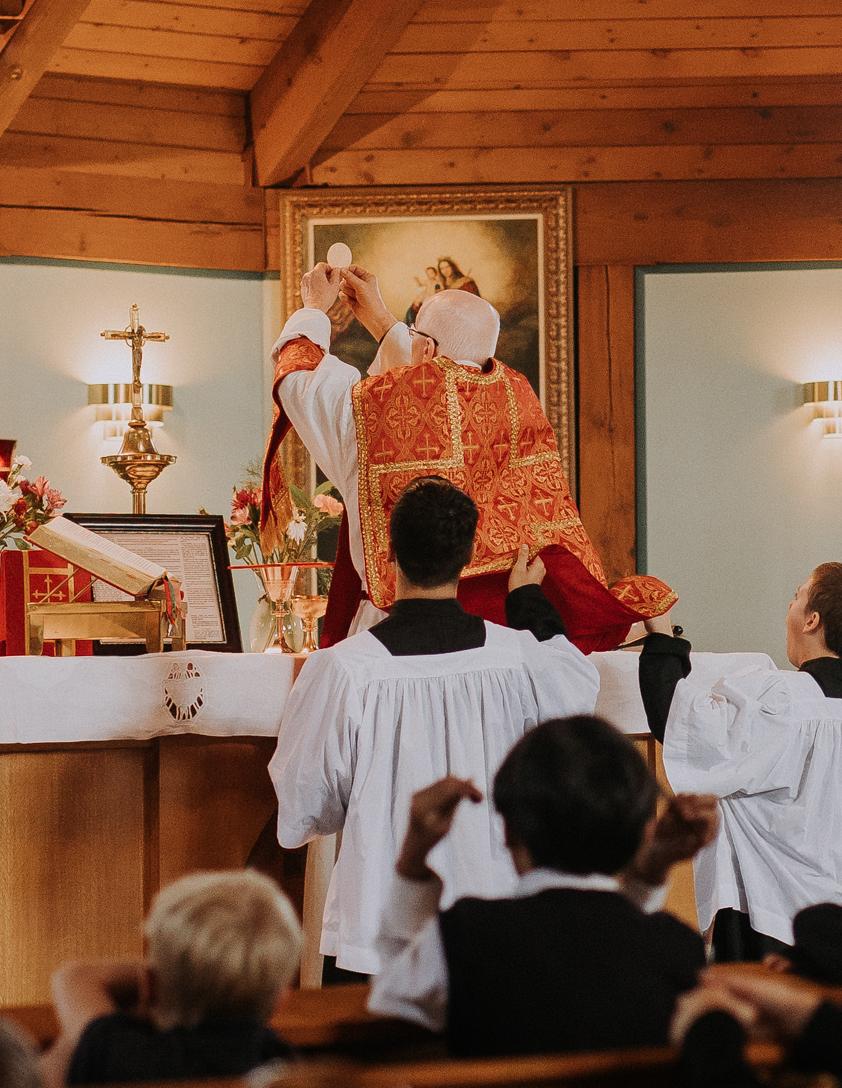
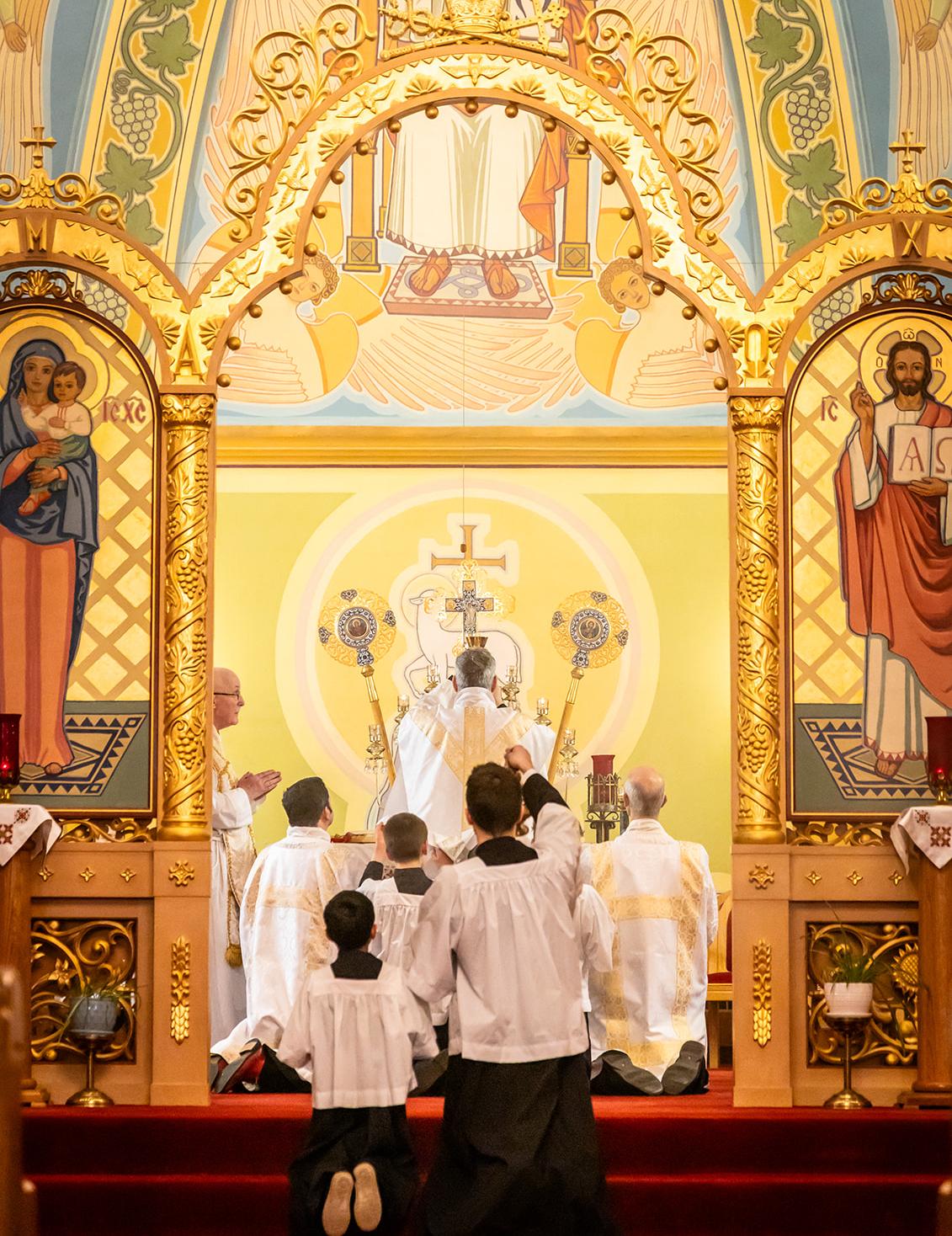
I . Sacred Worship: Primacy is given to the daily celebration of the liturgical life of the Church, since the first education of the soul is conducted not by programmes, but by the Word of God and sacramental grace. The entire day and school year is therefore punctuated by prayer, with the Holy Mass, as the most important class of the day.
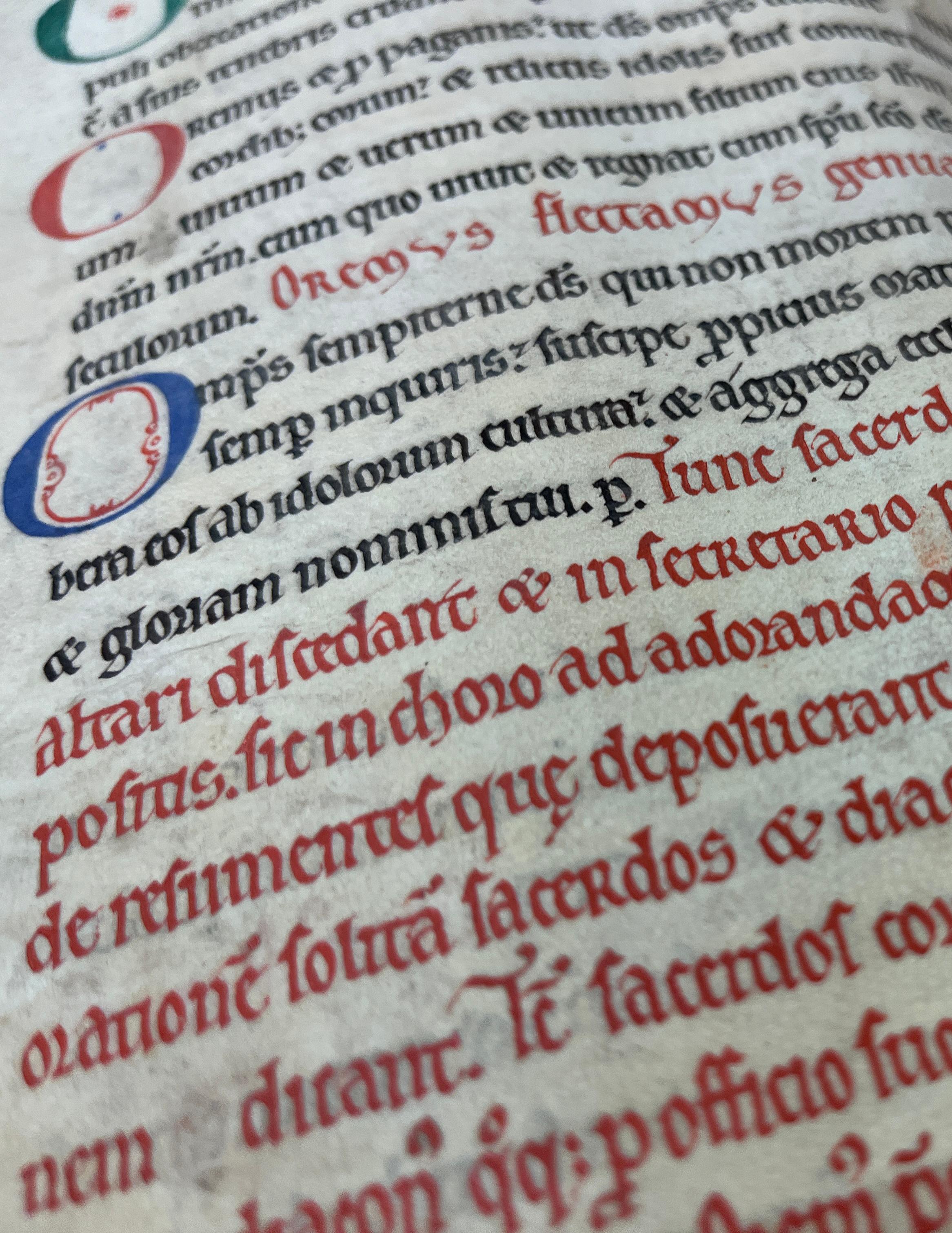
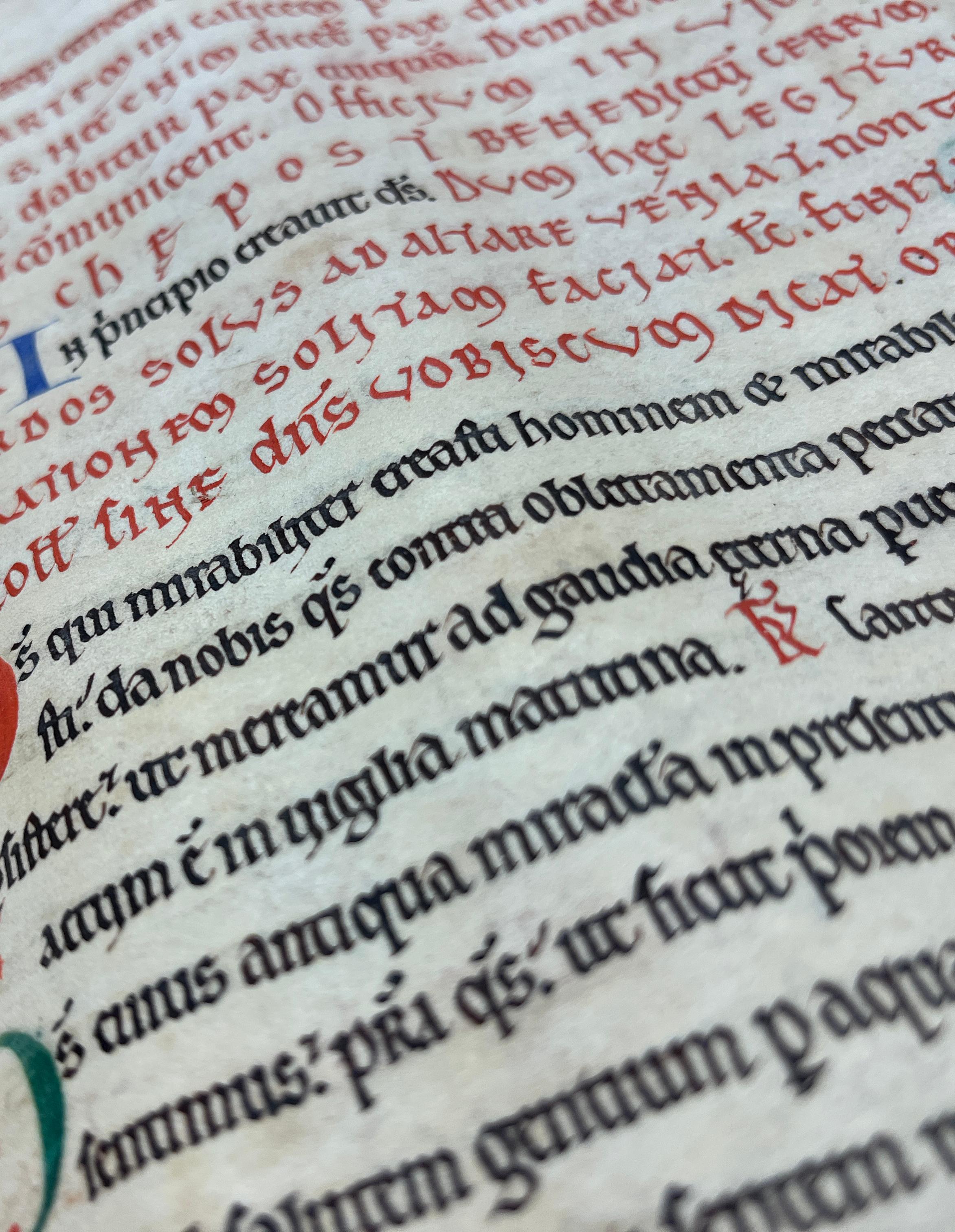
II . Sacred Wisdom: Our students are immersed in the excellence of the Catholic Classical Liberal Arts tradition which fosters the intellectual and moral virtues needed for serious study, for living a Christian life of discipleship, and for sharing the Catholic Faith. Academic rigour in the liberal arts is essential to the formation of rational, free, and virtuous persons, we therefore ensure a firm grounding in literature, grammar, science, and other core subjects.
Catholic Education
The Four Pillars of Classical
III . Sacred Music: Music is an integral part of the patrimony of English Christianity, and is therefore central to the curriculum of Holy House. It provides a point of integration for the other core subjects but is more than that: our music programmes educate the very soul.
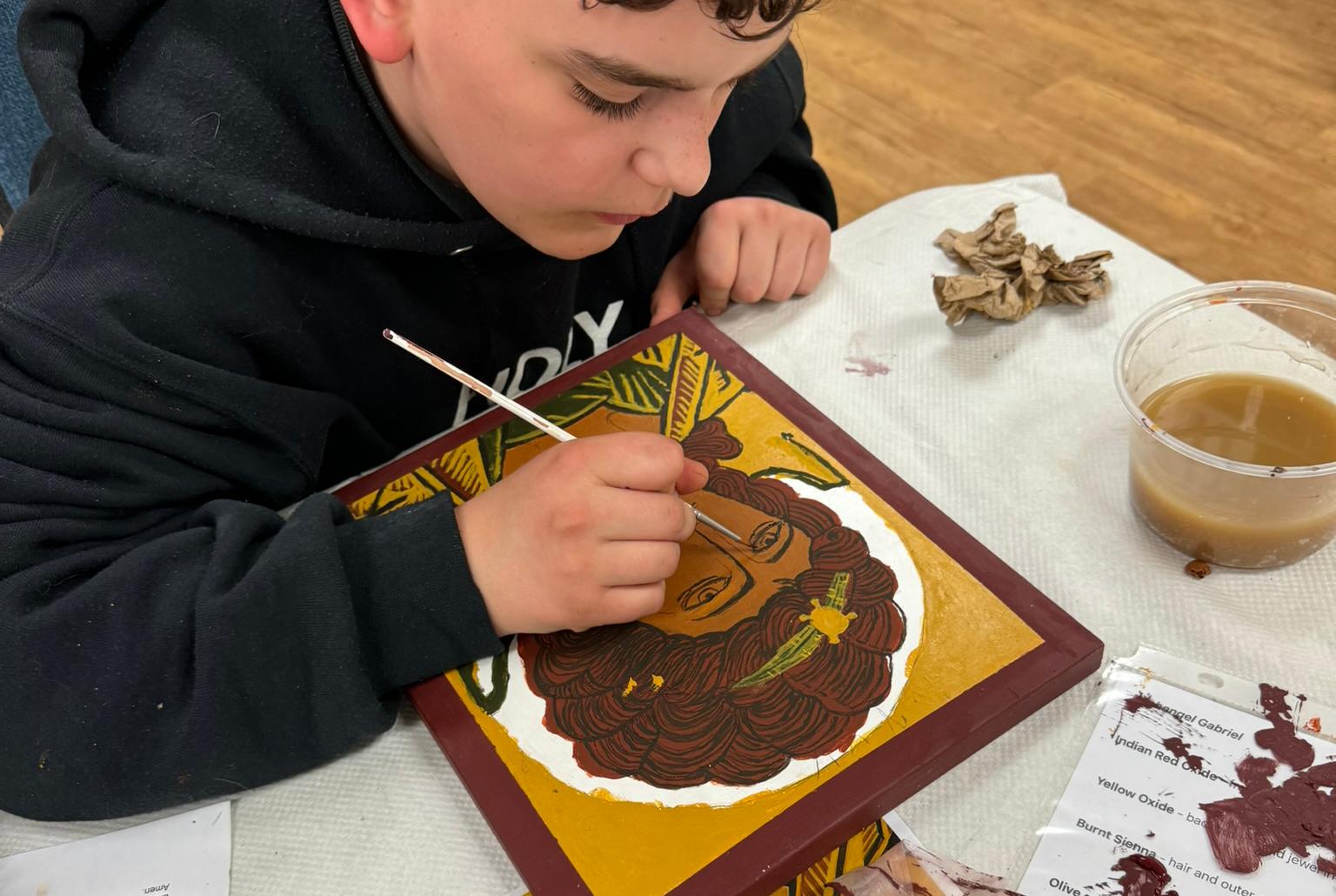
IV. Sacred Art: The great treasury of our Catholic faith contained in our sacred arts and architecture can be accessed only through competent visual literacy skills. By learning to draw more carefully, we learn to see more carefully. Accordingly, we ensure every student is visually literate, with drawing and painting treated as foundational skills essential for both the appreciation and creation of art.
The object of education is to teach us to love what is beautiful.
Socrates
Division Overview
Our Shared Responsibility and Distance Learning programmes find expression in a series of multi-grade classrooms that serve distinct phases in a student’s educational development.
Primary Division: Grade 1 & 2
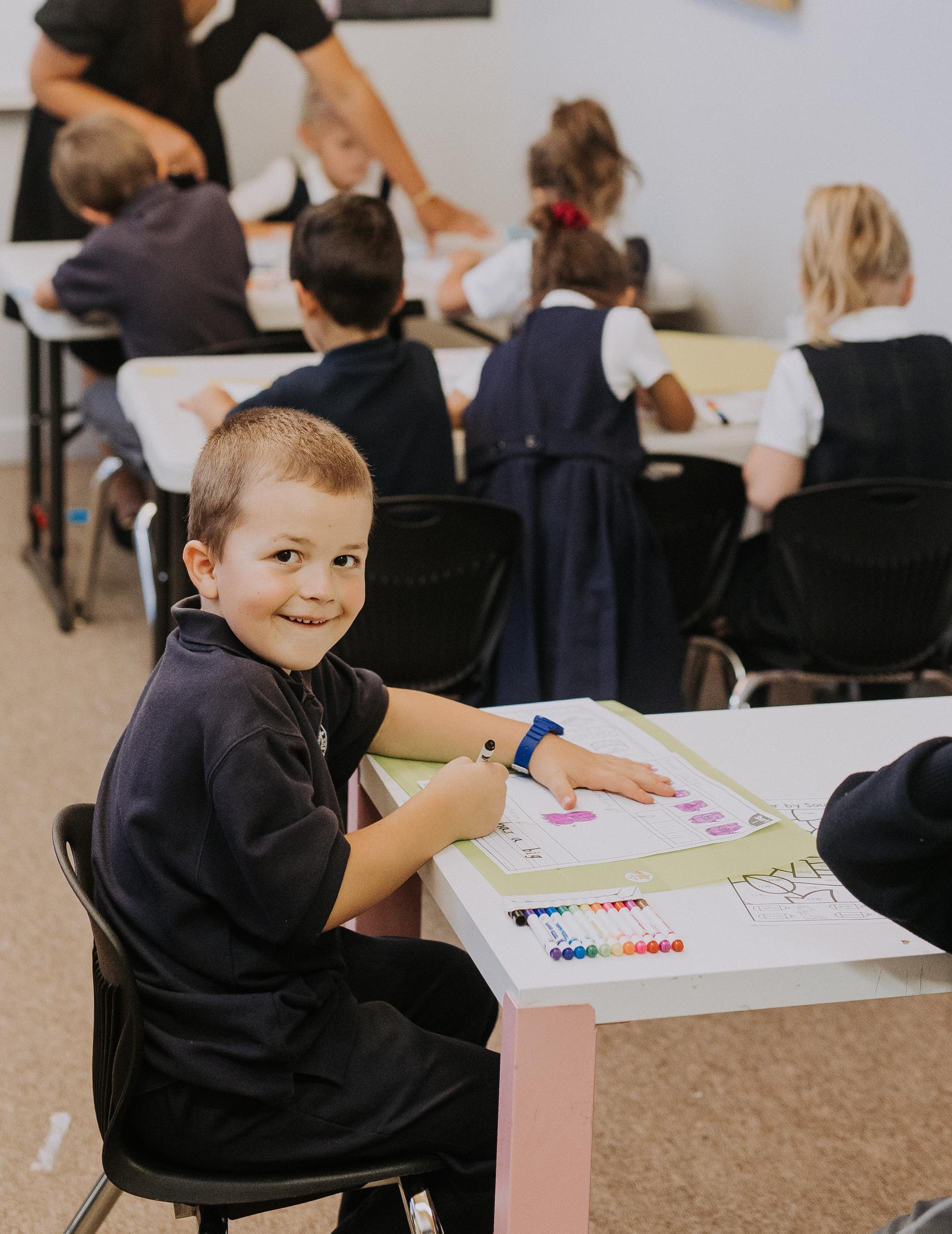
Classes for Holy House’s youngest students aim to introduce students to the rich liturgical and academic rhythms which characterise Holy House, to foster an awareness of history and a love of literature and learning in general, and to support parents in teaching basic literacy skills.
Beginner Division: Grade 3 & 4
The Beginner Division provides a transition period for students who are not yet reading and writing with the fluency necessary to accomplish the goals of the Junior Division, yet who have the maturity to begin engaging with the same classic literature and historical themes as the older students. Students in this division will build their spelling, printing/cursive, and pre-writing skills through direct instruction, literature studies, and guided narration work.
Junior & Intermediate Divisions: Grade 5-8
Students in the Junior (Grades 5-6) and Intermediate (Grades 7-9) divisions are expected to read and write fluently so they can explore, discuss, and respond to literature, history, and science texts with a high level of independent engagement. Junior and Intermediate students likewise may share some classes together and separate into smaller groups for other classes, depending on their experience and skill level in each subject.
Senior
Division: Grades 9-11 (Grade 12 in subsequent year)
Students in the Senior Division are expected to have mastered the basic skills of reading, writing, and discussing in order to facilitate engagement with the material they study at a more mature level. The skills of reading to organise the text in one’s mind, find key passages, and interpret, as well as writing and discussing to build and communicate complex ideas, will be developed.
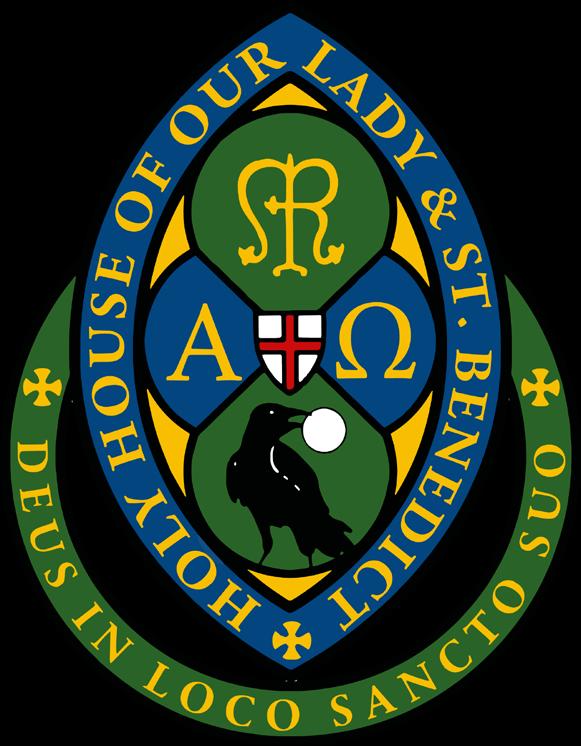
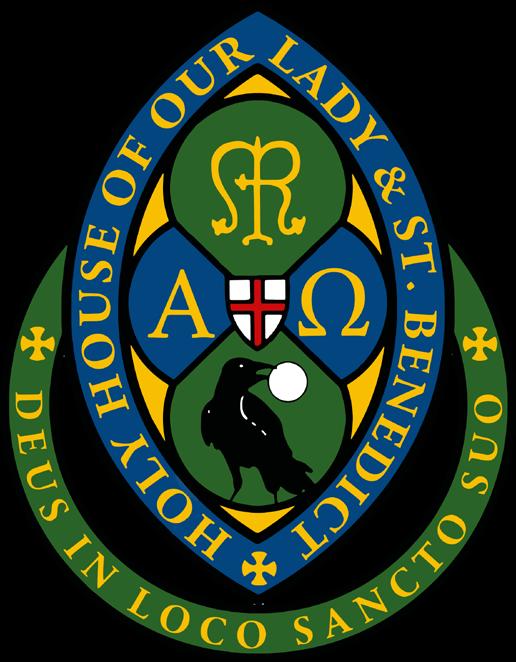
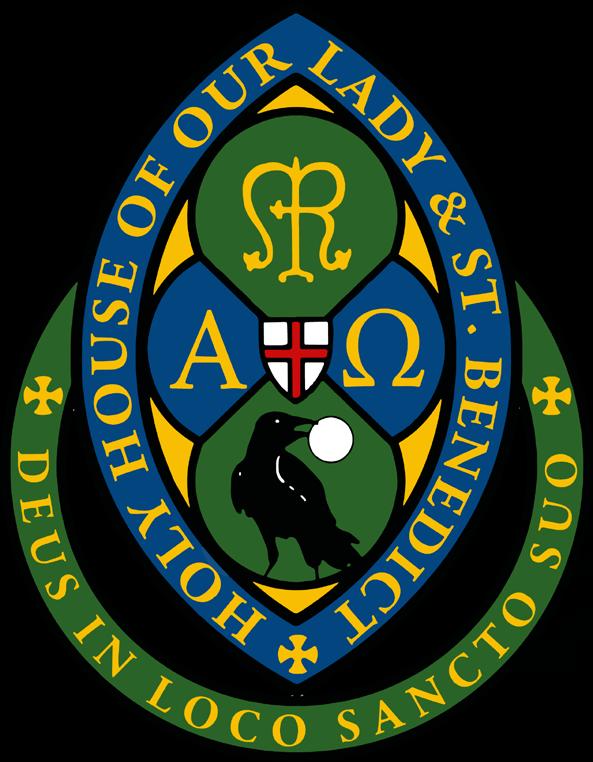
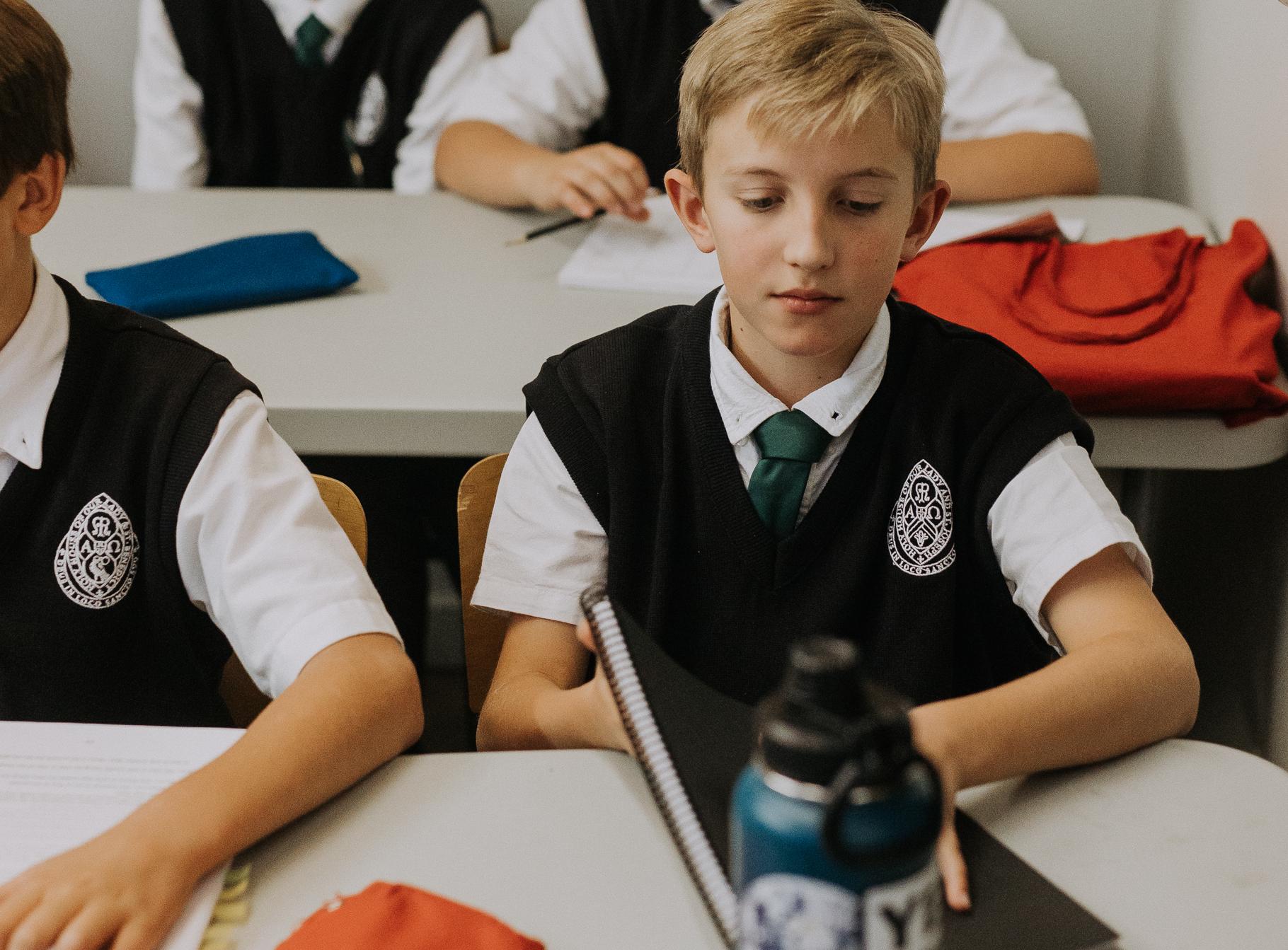
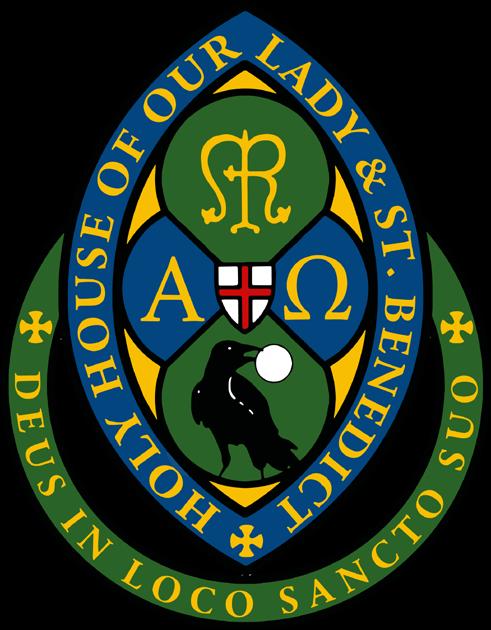
Badges worn on clothing became popular (especially in England) in the late Middle Ages to show association. Today this tradition has most notably survived as a badge on school uniforms. While some schools use a Coat of Arms for this purpose, Holy House follows the more traditional para-heraldic practice. Our badge has four basic elements: the Marian cypher which represents Mary the Mother of our Lord; the raven with bread as a symbol of our patron St. Benedict; the Alpha and Omega representing Christ but also alluding to our classical educational tradition; the arms of St. George: the Anglican patrimony as a treasure to share.
The Marian cypher or monogram is in the top quarter. The letters ‘M’ and ‘R’ mean “Maria Regina (Queen).” This design can be traced back to the eleventh century. The three points on each of the ends of the monogram remind us of the Holy Trinity.
Below is the black raven holding a disc of white bread. St. Benedict, the father of Western monasticism, was nearly poisoned — betrayed by some for which he cared. The raven, sent by God, swooped down and took the poisoned bread before he could eat, saving his life. The symbol reminds us that we are cared for, especially in times of hostility and danger.
The left and right quarters show the Alpha and Omega, the first and last letters of the Greek alphabet. These are appropriate for any Christian school because it reminds us most of all of the Lord Jesus’ words in Revelation 1:8, “I am Alpha and Omega, the beginning and the ending, saith the Lord, which is, and which was, and which is to come, the Almighty.”
Finally, at the centre, we have a shield with the cross upon it. By this symbol we are reminded that our only protection is Jesus Christ Himself. The style of the shield recalls St. George, who was martyred during the Diocletian persecution of AD 303. He refused to recant his Christian faith and his earthly life was taken from him, though of course not his eternal life. St. George’s cross and shield have become associated with the English Church and the Anglican patrimony which we preserve and celebrate at Holy House.
There are three other crosses found on the badge that remind us both of the Holy Trinity and of Calvary, where Jesus was crucified with the two thieves. We are reminded that Jesus said, “If any man will come after me, let him deny himself, and take up his cross, and follow me” (Matthew 16:24). Each of us, like the two thieves, has a choice to make: do we reject Christ, or do we choose Him as the good thief did? “Jesus said unto him, Verily I say unto thee, to-day shalt thou be with me in paradise” (Luke 23:43). This is our ultimate hope for all of our students and is really the goal for the education they receive at Holy House: that they would choose to follow Jesus and live with Him forever in joy and felicity.