For contact information, see wisdomhomeschooling.com > About > The Team
WISDOM Home Schooling is a registered trade name of The Gilbertine Institute. The Gilbertine Academy, Calgary, is an independent school operated by The Gilbertine Institute.
Phone: (780) 741-2113
Toll Free: (877) 425-8546
with questions: office@wisdomhomeschooling.com with contributions to the WISDOM Magazine: magazine@wisdomhomeschooling.com
To reach the chairman: pac@wisdomhomeschooling.com Bios and email addresses of PAC are on our website.
Fairview
Fort McMurray
Menno & Margaret Knelsen
Central
Darrel & Kristine Buchholtz
Sheldon & Sharon Kok
Don & Bo Reid
Cory & Sierra Rotchford
South
Cameron & Tanya Harrison
Joe & Diane Pollock
Jeremy & Cheree Quantz
Content:
WISDOM publishes articles by many Individual authors. The opinions of the writers are not necessarily those of WISDOM. We reserve the right to decline any submission, and to edit those submissions we accept for accuracy, clarity & length.
Unless otherwise credited, photography is courtesy of the Noster, Burgess, Tinant, and Doyle families. The people appearing in photos throughout this publication do not endorse any specific product, service, cause, association or endeavour. Images and photos are for illustrative purposes only.
First Things
November/December 2023
Greetings:
I hope that your family has enjoyed the beautiful extended fall weather, and have taken many opportunities to study science by exploring nature.
By now you may have already met with your Facilitator for a fall visit. We are blessed with our team, and hope that you love your Facilitator as much as we do! Remember to keep dated samples of work; not only does the Home Education Regulation require it, but it helps you to track progress, which can be a source of great encouragement.
The WISDOM Social Network List is a means by which WISDOM families can connect with each other. If you opted to be a part of the Social Network List when notifying, you will receive a copy of the list soon. If you opted out of joining the list at the time of notification, you may contact the WISDOM office to join it at any time.
Foundry Studios is located in central Edmonton, and provides a space for home schoolers to gather together for classes, crafts, and socialization. Visit foundrystudios.ca/home/ to discover their offerings, and keep an eye out for WISDOM events at Foundry Studios in the near future!
We are working on adding WISDOM family gatherings all over Alberta. Check the Events section of our website for more information. You may be contacted by members of the WISDOM Parent Advisory Council to inform you about events in your area.
Registration for the Socratic Dialogue Online Program’s Spring Term is open now. If your desired course is “full”, please do join the waiting list; in response to sufficient interest we strive to open new sections whenever possible. Check our website for these courses and a list of online workshops offered over the next few months.
The WISDOM High School Conference will be on March 22-23, 2024, in Edmonton. The theme is “Make It Count”, and sessions will provide inspiration and practical advice on how to get the most out of high school at home, no matter which path you
choose. The conference will include post-secondary institutions who are eager to recruit our graduates. Visit them in our full exhibit hall alongside booths featuring potential employers, and more.
Do you know any WISDOM Alumni? We are inviting our past graduates to an Alumni Banquet on March 22 in Edmonton. Tell all of your WISDOM alumni friends to go to High School > Alumni on our website for more information!
The Alberta Home Education Association posts homeschooling support, information and political updates on their website, aheaonline.com, and has scheduled the 2024 home school convention for May 30th to June 1st. Consider supporting their good work by becoming a regular donor. Similarly, the Alberta Homeschooling Association advocates for home schoolers and provides helpful information at albertahomeschooling.ca.
If you are not familiar with the Home School Legal Defense Association, you should check out their website: hslda.ca. Being a member not only offers targeted legal protection, but benefits including insurance coverage. A related organization, the Canadian Centre for Home Education cche.ca/ aims to help home schooling families thrive through research and support. Visit homeschool.today for great information and free resources.
The Gideons are faithful in their desire to send New Testaments to home schooled students, and we will be mailing them to Grade 5 students in the new year. If you prefer that your child not receive a Bible, please let us know by January 8th – email office@ wisdomhomeschooling.com.
Our office stops daily to pray for you. Let us know your specific requests, and please pray for us too.
Blessings on your home,
Simon Noster, Associate Principal of Home Education simon@wisdomhomeschooling.com
Important:
Up to 50% of your home education funding may be claimed now, using purchase orders or by submitting receipts. Please go to wisdomhomeschooling.com/funding or refer to the Funding Handbook to learn how to submit receipts by mail or online.
On Building Noah's Ark
Dedication
By Ken Noster
Dedication, hmm, reminds me of a song from the sixties by the Mamas and the Papas, Dedicated to the One I Love. It also brings to mind the dedications I’ve read in the opening pages of many books, be it a novel, a theological study, or a philosophical work. The author dedicates the book to someone who has served as an inspiration or, very often, the spouse who has carried
the weight of home and family life while the author was slaving away at the book. Both of these types of dedication are similar to those that apply to everyone; yes, to members of ordinary families who aren’t performers and don’t write books. These are valuable dedications and so are the dedications of personal time and attention.
First, the song:
“Whisper a little prayer for me my baby...This is dedicated to the one I love.”
It is a fitting song for a performer to sing, since most performers spend significant time on the road. Consequently, the loved ones who remain at home are remote, both by location and relationship. The most important aspects of marriage and family life rely upon the presence of all family members and, when someone is missing, the others experience loss. Consequently, the singer who is on tour dedicates songs, joys, sufferings, and prayers to the beloved who remain at home, and the family members at home dedicate their prayers, joys, and sufferings to the beloved one who is away. Dedication is a way of connecting with the ones we miss; we purposefully connect our experience with theirs. This isn’t just a nice idea but a deep-seated need; a need to attach ourselves in our current situation to someone who is vitally
important to us but not present.
These situations benefit from dedication in a couple of ways. First of all, there is great value in the absent parent, usually the father, holding in his heart the members of the family in thought and prayer throughout the work of his day. The father needs the presence of his family and, by dedicating his thoughts and work to them, he keeps his wife and children close. This changes the way he labours, and it becomes easier for him to appreciate the value of the work he is providing on their behalf. It can take the edge off difficulties, since he isn’t alone: he is dedicated to his children and wife, and they are dedicated to him.
The second way these situations benefit from dedication is that the absent family member, by having been present to the family in the act of dedication throughout the period of absence becomes more likely to experience increased empathy towards the needs of the family members upon returning to them. This can make for a reuniting that is more intimate and joyful, even though it may be at the end of a long, hard day.
In most cases among home schooling families, at least one parent must leave home each day to work. This is the most common way that a parent’s presence is missed, though being gone is not the only way we can be absent.
The reality of not being present can apply to someone who remains physically located in the family home but is engrossed in work that really makes the person distant. It often
happens that the parent who works from home is physically present to the family but applies the majority of attention to something other than the family. Working from home is an advantage for parents who want to be with their family, yet the cost of the work can’t be underestimated. For example, farming made it possible for me to be at home but, apart from when children were following me around in my tasks or riding on the tractor or combine with me, my work distracted me from my family. There is a great deal to accomplish each day on a farm, and much of it simply drew me away from my wife and children. Mothers who work from home face the same challenge: they are able to be present in in their home, but their attention is drawn elsewhere, and their children experience the absence.
Whether it is a parent off at work or working from home, we benefit greatly from short moments of remembering to dedicate to our beloved ones a particular struggle, some joy, a glimpse of beauty, old gruelling hardships, new challenges, and many other things. Dedication of our experiences can serve to change our appreciation of life, of love, and of our family.
But what about applying our dedication to a concrete action?
What if, at the end of each day, the parent who has been away were to choose one child and dedicate 10 minutes to that person alone? Imagine the anticipation by the child, and consider the impact. Though tired, a parent is able to run the last leg of the journey of the day and spend the time needed to enquire after one child’s day, appreciate that
child’s work and learning, and share a bit of the parent’s own experiences of the day.
Whether it is the artist on tour or the husband/wife/father/mother engaged in research and writing or an abundance of other duties, it is easy to be drawn away from our family. Dedicating to our spouse and children all the aspects of our work with its joys and sorrows, and dedicating our prayers and our appreciation, provide effects that run deeper than we know, both in us and in our beloved spouse and children. And, certainly, 10 minutes of dedicated time for one child each day will revolutionize the life of our children.
Thus, it is a good idea to recall the song by the Mamas and the Papas and take every opportunity to dedicate each aspect of our day to the “ones we love,” and put in the effort of our last sprint at the end of the day to follow up with concrete dedicated time with one child. And when all the children are tucked in bed, dedicated time with our spouse gives our day the completion it needs. No matter how tired we are, the last moments belong to the one we married: dedicated to the one I love.
Kenneth Noster and his wife Marlane live near Derwent, Alberta on their certified organic farm. In addition to his role as Head of School, Ken also contributes to his faith community as a deacon. Ken and Marlane home educated their 6 children through high school. Those of their eighteen grandchildren who are school-aged are also WISDOM students.
Notes to Myself
By Marlane Noster
Dedication Dedication Dedication
I came across this definition of dedication: “A devoting of time or setting aside time for a particular purpose,” and this definition seems to be something I can talk about.
Depending upon how much time and energy we possess, combined with the level of importance we give to various things, we can be dedicated to a number of different things at the same time, each with its
own level of importance.
Making a lot of money, being the best at sports, being famous, becoming beautiful, being respected, being comfortable... and the list goes on. It seems quite natural to want to dedicate ourselves to achieving these things, but what about the flip side? What about dedicating our time and energy to not-so-notable, difficult, even painful, but very worthwhile things? More
about that later but, first, let’s look at the things so many of us strive to accomplish.
Many of us invest time and opportunities to be certain that we will make at least sufficient money to pay the bills with a bit of buffer. Others spend a great deal of time dedicated to climbing the corporate ladder, leaving very little time for any other endeavors. Those of us who have any athletic
ability might dedicate time to improving in a given sport and enjoying the game, while others dedicate many years of their lives to becoming the best in their field. Being famous is a desire many of us don’t even outwardly display, but, unfortunately, we hold it just the same. Most of us want to at least be acknowledged for what we have accomplished, but others dedicate their lives to becoming ‘the face,’
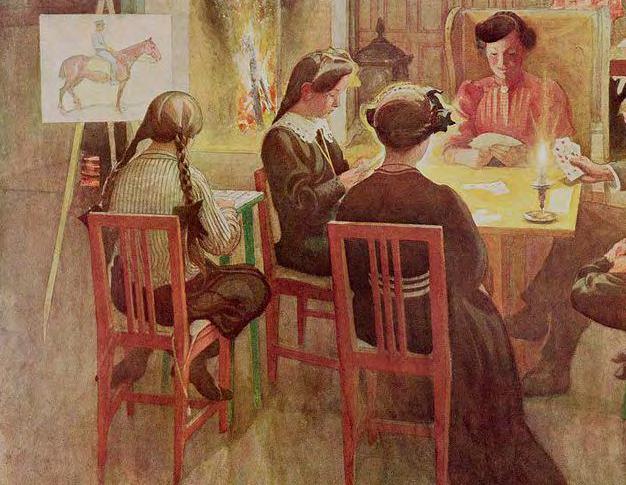
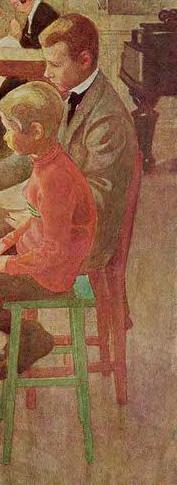
Image: Christias Holidays By Carl Larsson 1909
‘the voice,’ ‘the actor,’ ‘the star,’ ‘the leader,’ and so on. Becoming beautiful is highly supported by the marketplace. The beauty industry is absolutely huge. Many people spend hours achieving just the right look. (I will be bold and say as well that so much of how we perceive we ought to look is foretold, even dictated by the industry, in how we wear our clothes and tie our hair, and in which eyebrows are in
season.) This is not to say that we should neglect our appearance or not be at our best, but we are wise to avoid an extreme investment of money and time.
When first married, Ken and I dedicated over a decade to acting and theatre touring across the country. We devoted our lives to being creative and especially enjoyed working together as a couple. When our children began arriving, I set time aside for motherhood amidst continuing to perform. As more children arrived on the scene, we recognized the need to carefully discern our future and consider a lifestyle that was not nearly as glorious. We realized that people will invest in the things they desire to best achieve, and they work very hard at accomplishing those achievements, but what about dedicating our time to a worthwhile effort that will put us in the trenches, perhaps for decades?
We had to honestly admit that our discernment was directing us towards this worthwhile dedication. Balancing the gains against the losses, we chose to lay a foundation for our children and our family life. We could have continued a
successful career and put in the relatively minimum effort demanded by family life with a nanny, but we opted to make the decision to give our family life the full dedication it requires.
We opted for raising our family in a joyful learning environment, where forming each person was of ultimate importance. We wanted to delight in achievements small and great, to model values and faith, and to gently correct when necessary. (I will confess that I failed at always being gentle in my correction, but asking forgiveness is a wonderful gift to all.) Having made the first difficult decision, to move from a celebrity lifestyle to a very ordinary one, it became easier to take the next step and willingly accept the responsibility and sacrifice of home schooling and embracing the training, forming, educating, and inspiring of each of our children. We began to dedicate our time and attention to spending a great many years in working to create an ambiance that would grow the heart, mind, and health of each member of the family. There were dry times, there were hard times, there were tearful times and yet, through all this, it was possible for us to persevere,
primarily because we had made a decision to dedicate ourselves to this way of life.
As I reflect on our years of teaching and forming our children, I realize that there were two reasons we could be successful. The first was the grace of God, and the second was our dedication to this way of life. These made it possible for us to devote the time, not only to form each of our children, but to form ourselves as well. As our children became adults and I emerged from the trenches, I became very much aware of how much I had gained. My dedication to my children and our family life had served me no less than anyone else. Today, the most precious gifts that we are aware of are the precious relationships with our family, and I constantly admire in our children the powerful effects that dedication (the devoting or setting aside of time) can provide... by the grace of God.
Marlane Noster is WISDOM's co-founder and Events Director. When she's not in the office, she dedicates time to her church, community and her family, including her six children and eighteen grandchildren.
Dedicated to Yet
By John Hoekstra
Homeschooling can be hard and it’s even harder when you have a child with learning struggles. When your suspicions percolate into the realization that there is “something going on that’s not the norm with this child,” it’s hard. It’s even harder when it’s not a realization but an actual person telling you, and that person is a professional trained to diagnose learning struggles.
This is what. Look past the label rather than looking at the label.
Look past the label and dedicate yourself and your child to “yet.” Don’t look at the label and let that define them, define who they are. Don’t let “They can’t because of their _____________” be your belief for their future.
Today there are lots of labels, ADHD, OCD, ODD, Dyslexia, Autism, Speech/ Language delays, etc. Whether you look at labels as a positive or negative is irrelevant. Look past the label. Look at yourself, look at your belief. Your belief will drive your action towards a passive acceptance approach which is a fixed mindset, or an active modification approach which is a growth mindset. What you believe, you will model, and what you model, your child will perceive and pick up.
Looking past the label is saying “Despite ____________, they will be successful.” It’s looking past the label and saying “Yet, they can’t do it yet.”
When the professionals, in our case, the prep program teacher, the psychologist, the speech therapist, and the occupational therapist in the big meeting to determine The Course of Action for Your Child tell you “This is the worse case of ADHD we’ve seen,” that’s a freight train coming in at 100. This was what we experienced as parents.
So, there you are lying on your back, looking up into the darkness of the tunnel between the rails after you just got run over by the freight train labeled __________ and asking, “Now what?”
The learning path you’ve been on with this child has turned into a dim tunnel and you’ve been looking for the way out, a way to help this child. It’s why you are sitting in that office of the professional in the first place, and this is not the light at the end of the tunnel, it’s a freight train coming in at 100 and that freight train is labeled __________. Fill in the blank. You could fill it in with “Dyslexia” or perhaps “ADHD” or even “Autism.”
It’s an active modification approach, believing and knowing that because change is possible, we dedicate our efforts towards change, towards “yet.” It’s having a growth mindset and knowing that we can make change. It’s instilling in that child the belief they can change, instilling in that child a growth mindset. We are looking beyond the present and knowing that with dedication, teaching, and time (lots) they will succeed, they will go from can’t to can.
Dedication to the belief in “yet” is not unrealistic or just wishful “fuzzy bunnies” thinking. It’s backed by science. We know now that the brain is always changing, adapting. It’s called neuroplasticity. You can grow in intelligence.
I wish I knew about neuroplasticity sooner, because when we were in the thick of it, lying there in the dark
Image courtesy of Hannah Taillieu
between the rails, we didn’t know. I wish we knew about “active modification” and “growth mindset.” I wish I knew that with a few concepts and tools we can make actual physical cognitive change, that you can grow a child’s intelligence. Not knowing made the journey out of the tunnel much harder.
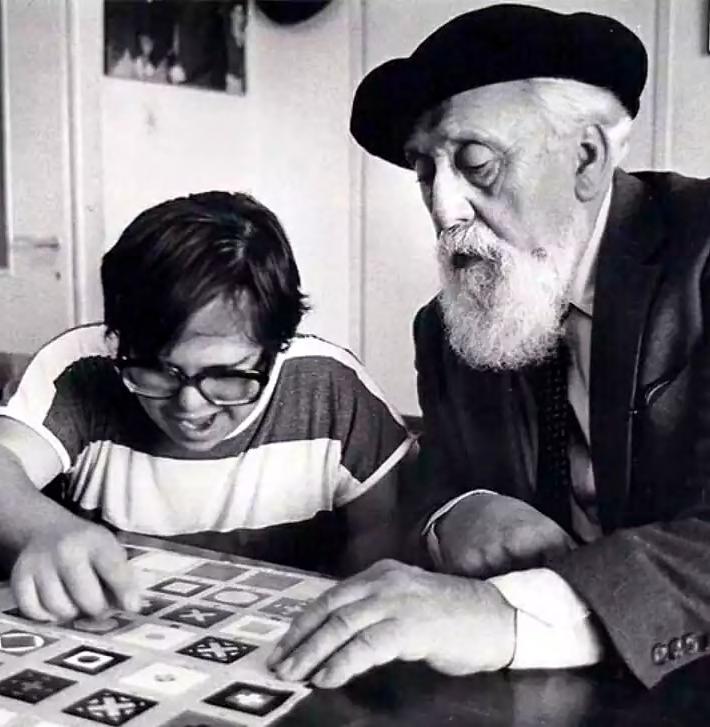
There were a few individuals who knew a long time ago that intelligence is not fixed. Reuven Feuerstein was one of them. He called it Structural Cognitive Modifiability. He knew from the results he was seeing with children who were written off in the 1950’s that the brain could be modified on a physical structural level that changed an individual’s cognition, their ability to think better and to overcome obstacles that others believed were impossible. To grow in intelligence. It seems so obvious today with the fact of neuroplasticity and brain scans with the technology we have. But it wasn’t always that way. Before the late 1960’s, the idea of the brain being able to change on a structural level was not accepted. The paradigm of thought was that intelligence was fixed. We know better now, and we have the technology to prove it too.
Having a growth mindset is important for all your children, not just those that have struggles. Do your children have a growth mindset? Do they say or think any of these?
“I think you’re either born good at something or not.”
“I feel bad when others are good at something, and I’m not.”
“I’m either good at something or not, and I can’t change that.”
“Feedback doesn’t matter; I’m either right or wrong.”
“I don’t want to do things I’m not already good at.”
These are clues to their mindset, and they are indications of a fixed mindset. If you’re not sure where they are in regard to mindset, ask them. What do they think intelligence is? Can you get smarter?
“I can keep getting smarter and better at things if I try.”
“I can learn new stuff throughout my life, not just when I’m a kid.”
“I can do things I haven’t done before if I work hard and try my best.”
“It’s okay to make mistakes; they’re how I learn and grow.”
“I can get better at things if I practice and learn.”
“Feedback helps me learn and do better.”
That is growth mindset thinking.
You can change their mindset if it’s a fixed mindset. There are resources available to change their thinking. It’s not simple and you can’t just tell them “Hey, your brain can get smarter when you try harder.” It requires you to educate yourself on strategies and change your own way of thinking and the feedback you’re giving them. You may not have all the info and knowledge “yet” to help them, but you can learn it. It’s worth it, your children are worth it.
“Belief is necessary for action.”
Mediated Learning
REUVEN FEUERSTEIN (1921-2014) was an Israeli clinical, developmental, and cognitive psychologist that worked in the field of child development for 50 + years. Nominated for the Nobel Peace Prize in 2012. Founder of Mediated Learning Experience, Instrumental Enrichment, Dynamic Assessment.
If you would like to learn more about how to bring out your innate teaching skills and teach your children to have a growth mindset, take in a Mediated Learning online workshop.
There are also good online resources available to help you learn and teach your children about a growth mindset.
Khan Academy has a free lesson plan that’s really good which you can find here:
Here is another good resource for free, I like free:
mindsetworks.com/free-resources/
Look past the label. Dedicate yourself and your children to “yet.”
Godspeed.
John Hoekstra is WISDOM's Mediated Learning Program Director. He develops workshops, provides Dynamic Assessments, and leads the ML team in finding resources to help parents stay in the dance of learning. John and his family live near Derwent, and they love beekeeping and enjoying outdoor sports together.
By Jennifer Bly
Doyou want to be a calm mom but constantly feel like you’re out of control? Here are some tips for becoming the calm mom you long to be.
Before I had children, I had this amazing picture of what kind of mom I would be. I envisioned myself as a calm mom. I imagined an even-tempered woman who would always speak in a slow and even tone. Basically, I pictured myself as a female Mr. Rogers.
Was I in for a surprise!
Am I crazy to think that I could ever be a calm mom? A calm mom… it could almost be an oxymoron, couldn’t it?
Over the last decade of parenting, I’ve been on a journey to become the best mom I could be. This adventure of parenting two children has refined me. I’ve had my share of struggles. In fact, I went through a time when I yelled at my children. I’ve also struggled with balancing the demands of homeschooling, working, homemaking, and parenting. As I felt the pull of all these demands, I floundered in my role as mom. I was far from calm, yet I yearned for it with all my being.
Do you wish you could be a calm mom too?
I don’t know if I’ve mellowed in my age. Maybe it’s that I’ve
begun to feel more comfortable in my role as a mom. Regardless, over the past year, my parenting style has become calmer. As a deliberate and reflective mom, I’ve contemplated this shift in my parenting style. I’ve come to some conclusions about how I arrived here. These insights may help you as you try to become a calm mom too.
ADEQUATE SELF-CARE
Moms are notorious for putting their needs on hold. After all, when children are vying for your attention, the dishes are dirty, and there’s a looming deadline at work, something has to give, right?!
But by ignoring self-care, we’re only whittling away at the calm and peace within ourselves. Eventually we’ll snap.
Self-care is one of the simplest ways to maintain our sense of calm. Plus, it doesn’t need loads of money or demand time away from your family. In fact, one of the biggest obstacles to proper selfcare is that we’ve bought into the beautiful, “Instagram version” of self-care. We’ve learned to identify self-care as a weekend away at the beach or a day at a spa.
Unfortunately, this kind of self-care won’t sustain you. The type of self-care that I’m talking about is far less glamorous, but has much more impact. It includes activities like:
• Eating healthy snacks.
• Going to bed a half-hour earlier.
• Taking breaks from social media.
• Writing in your journal.
• Reading.
• Prayer and/or meditation.
• Taking a bath or a shower.
• Daily exercising.
• Choosing water over soda.
• Talking with a good friend.
Little actions like these are easy, simple, and the effects last a lot longer.
BE PRESENT
I can’t tell you how many times I rewrote this particular point. We’ve all heard the importance of being present many times. In fact, the advice to “be present” almost seems cliché, but there’s no other way to define the action of living in the here and now. When you’re present, you’re not dwelling on the mistakes of the
past or worrying about the unknowns of the future. By not living our present moments, our reactions tend to be more emotional, and our emotions play a huge part in how calm we are. For example, imagine my child asked for a cookie and I’ve told her not to take one until after supper. But then I discover that she took a cookie anyway. If I don’t live this moment in the present, my reaction to my child’s disobedience may get out of control.
Living in the past: She’s done this time and time again! What am I doing wrong? I’m failing as a mom.
Living in the future: She stole again! I’m worried this child is going to end up in jail. She’ll ruin her life because she can’t stop stealing. By not being present, there’s a tangible threat that the discipline of my daughter may go overboard.
Yet if I act in the present and deal with today’s behaviour of my daughter stealing the cookie, it’s easier to control my emotions. By being present, this act of disobedience isn’t loaded with the emotions of failing my child (or her grim future as a convicted cookie thief).
KNOW YOUR TRIGGERS
If you want to be a calm mom, it’s important to know what fires you up. Everyone has a trigger that threatens to disrupt their calm. For instance, I get easily frustrated when I’m interrupted while engaged in a work project. Since I know this is one of my triggers, I plan accordingly. For instance, I might schedule my work for first thing in the morning before the kids wake up.
OWN YOUR FEELINGS
The last secret to being a calm mom is to own your feelings.
As mentioned before, our emotions play a huge role in our sense of calm. In fact, if left unchecked, emotions can hijack our calm. That’s why it’s necessary that we own our feelings.
HOW DO WE OWN OUR FEELINGS?
1. Don’t take your child’s behaviour personally. When our feelings get wrapped up in what our children do, we’re allowing others (and circumstances) to control how we feel.
2. Take responsibility of your feelings. My daughter didn’t “make” me frustrated. I’m frustrated over my daughter’s behaviour. These emotions intensified when my brain started to imagine a scenario of visiting my child in jail ten years from now.
3. Label your feelings as they occur. Be specific. Try to stay away from terms like happy, sad, or angry. Get descriptive in labeling your feelings. For example, with my cookie
stealing child, instead of saying I’m angry, I could say that I’m disappointed, frustrated, or overwhelmed.
4. Evaluate your feelings. Once you’ve labelled your feelings, try to evaluate them without judgment (aka: that little voice at the back of your head that only has crummy things to say about you).
5. Decide how to control your feelings. This is especially important if we’re distressed or infuriated. Avoid navigating the situation while emotions are heightened. A few minutes alone, or some time spent journaling may help you claim some calm.
6. Be honest about your feelings. When you see your feelings for what they are and share the truth of your feelings with others, you prevent negativity from building up within you.
Our feelings and emotions are a huge part of what makes us human. We need to own our feelings and avoid imposing our feelings on others (i.e. If I’m miserable, you should be miserable too).
PRACTICE BEING A CALM MOM
Being a calm mom takes practice. You’re not going to be calm overnight. You will need to practice these tips on a daily basis. Over time, you’ll realize that you’re calmer than you were months before.
Give it a shot! Try these tips and let me know if they help you to be a calmer mom.
Jennifer Bly is the author of My Kitchen, My Classroom: An Introduction to Homeschool and the creator of The Deliberate Mom. She loves to write about parenting, homeschooling, and her faith. Jennifer has a BAHSA with a specialization in Early Learning in Child Care and resides in Edmonton with her husband and two daughters. You can find more of her articles at thedeliberatemom.com.
Images source: thedeliberatemom.com.
Dedication
“Oh,great, there’s accidents all over the city,” I muttered, not realizing I said it out loud while setting my GPS for the rink and worrying if I’d still make it on time. “Mom, can you drive on the ice?” came the worried reply. “Of course,” I laughed, kind of surprised at the unexpected concern. “I’ve been driving to hockey games for well over a decade.” My defenceman relaxed in the passenger seat and closed his eyes, trusting his momma and leaving me with my own thoughts as I drove.
I’ve always told my kids we represent homeschooling to all the strangers that have asked the same questions over and over; the “no school today?” inquiry. How we answer is the impression they will have of all homeschoolers. I skid a bit starting at an icy intersection because my oldest drove my truck earlier and took it out of 4x4. “What about socialization.” I put it into 4 high and keep slow and steady on the gas. I pass a car in the ditch. “I could never homeschool my kids.” I slow down to pass the police car and tow truck; my passenger stirs at the flashing red and blue lights. “You aren’t going to keep homeschooling in high school, right? You’ll send them back to school?” I pick up speed once the road is clear. The snow is coming down faster now, swirling in a disorientating pattern across the road. A box curriculum doesn’t work, there’s tears of frustration, challenges, sleepless nights, hours searching the internet, researching studies, the bookshelf is getting full.
I’m forging a new path through the snow. “But you use the Alberta curriculum, don’t you?” No, I don’t. My kids don’t fit in the box, and I don’t want them to. My goal for my children is to give them the opportunity to develop their gifts and talents while providing the freedom to explore their interests, knowing they are supported and loved by our family.
Suddenly the road disappears in a drift of snow and I’m driving blind by instinct. It was 14 years ago this month when I pulled my children from school. The teacher told me to stop trying to help them at home. But the institutional school method wasn’t working for my children, they were frustrated, and I was increasingly disenchanted the more involved I got in the school system. My second child came home after school in grade 2 and told me they hate books and hate reading. They no longer loved learning and I was not ok with the direction that was going. The school told me they can’t help the “cracks” kids falls through sometimes. I gave my notice. There’s not going to be any cracks on my watch.
There’s a snow plow up ahead of me. Veteran homeschooling parents are clearing the road with homeschool conferences, homeschool support groups. The wind picks up, pushing on my truck. Pressure mounts, “put them in public school, it would be easier for you.” It would be easier for me, but
Dedication
By Adrienne Menzak
not better for them. My heart urges me to keep going. The tires lose contact briefly. Black ice. You can’t see it, but you can feel it, alert to the danger. Someone comments that any struggle my kids have is entirely my fault for doing a poor job. As if public school kids never have challenges?
Oblivious to the hazard my passenger suddenly says, “Mom you can use that thing that drives automatically you know. Why don’t you use it?” “Cruise control?” I ask. “That’s it, why don’t you use cruise control? You keep changing speed.” “I prefer to be in control of the speed at all times so I can adjust immediately when needed,” I reply. “You can still hit the brakes,” I get told. “Yes, I know,” I respond to my young teen. But life experience has taught me what happens when you hit the brakes on ice or restrict yourself to slamming back into the ridged walls of a teacher directed program. I’m the driver on this adventure because no one else knows my children like I do. No one else knew their every kick, every turn, every hiccup right there under my heart for those 9 months before anyone got to gaze at their cherublike newborn faces.
We pass a few more vehicles in the ditch and I’m watching to make sure I don’t miss my exit. “But do they graduate, can they get into college?” I pull safely into the parking lot with a respectable 45 minutes to go before the game. Earlier in the day I was waiting for one of my kids at their music
lesson when an email came through. We are challenging the government exams for course credits, and it’s been a long week of going to a proctor to write them. Math was first. I open the email, it’s a mark of excellence. I burst into tears because I walked the whole distance beside the work that went into that achievement. And the one that hated reading? Not only won’t stop reading now, but they also quote the Iliad and Shakespeare, wrote a book last summer with a sibling, and learned two second languages. I put my old truck into park, and I begin to let my passengers off at their destinations.
I originally wrote this reflection late one night in December 2021. I’ve since graduated my parent directed homeschoolers with university offers of acceptance and multiple scholarships. With children attending postsecondary and children homeschooling through high school, I am still dedicated, although admittedly a bit sleep deprived from the late nights and early morning wake ups, including the recent one when my eyes were still closed and I heard a familiar voice say, “Mom, what are you doing?” Seriously kid? I was sleeping. “Mom, who’s Dean? He put me on his list.”
Adrienne Menzak is a homeschool mom and lifelong equestrian whose days are packed with drinking coffee, driving to youth sports, educating, and studying.
Images from unsplash
By Belinda Letchford
Irecently found a list in my parenting notes, a list I wrote of life skills for teens to master before they leave home. It seems an appropriate thing for me to be looking at now since our kids are leaving home bit by bit.
It is too late to do much about these things right now – not when the packing boxes are out, and the plane tickets are booked. This list is more helpful to parents of young teens. Start teaching these life skills to your teens now, so that when they are ready to leave home, they will indeed be ready.
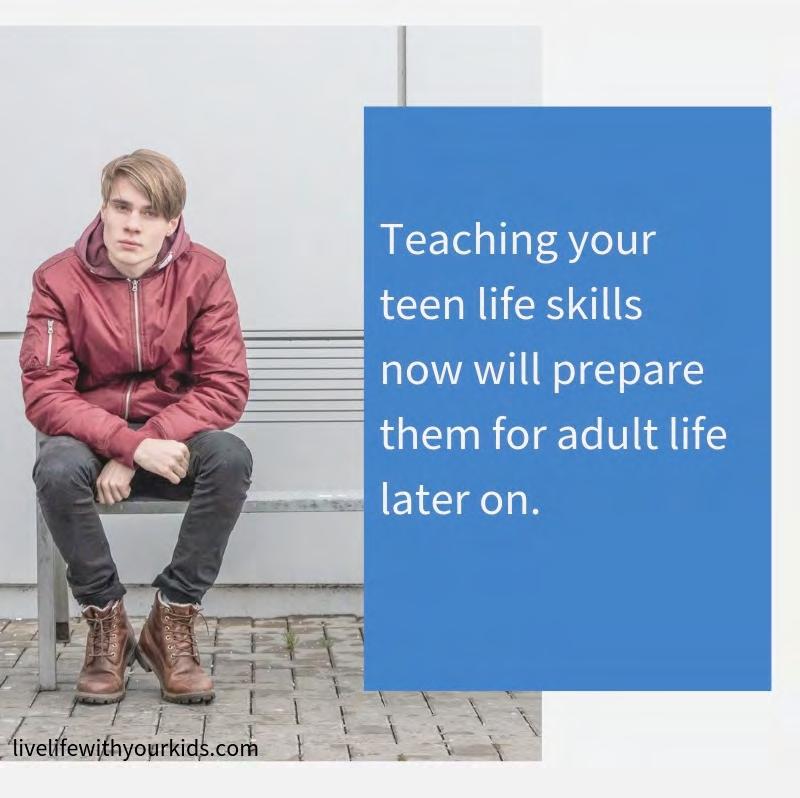
Teaching your teen life skills now will prepare them for adult life.
In family life it is easy for nearly every one of these life skills to slip under the radar. As parents it is easy for us to do these things for our family and forget that our teens need to do these things for themselves. The benefit of family life is that as a teen learns these things, they make mistakes, but we are there to be a safety net; not always rescuing them (but maybe sometimes our love and grace will mean we rescue them) but just as importantly guiding them (and loving them) through the mistakes and the consequences of their mistakes.
As always there is a four-step process to learning:
1–we model
2–we teach and instruct
3–we stand beside and let them practice (being ready to help)
4–we expect them to do it on their own
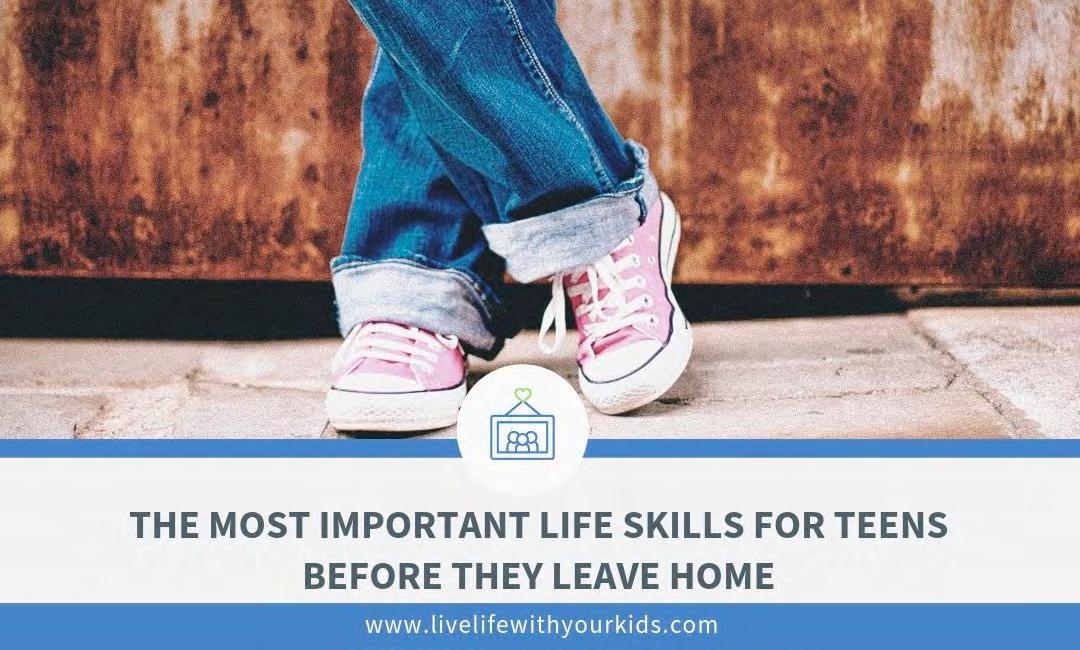
The Most Important Life Skills for Teens Before They Leave Home:
1. Manage their time
Managing our time is pivotal as an adult. Teens can take responsibility for what they do in their day – from when they wake up and go to bed, to what they do with their day. The more responsibility they have for their activities, the more they will learn to be responsible.
Learn: To use a calendar/diary and a to-do list.
2. Manage their money
A teen needs to be able to work for an income, which opens the opportunity to learn to manage their money. Each family will handle what a teen has to be responsible to pay for once they start earning an income, but you need to consider things like board/food, internet/phone, clothing, entertainment, fuel etc.
Learn: To open a bank account, online payment accounts like PayPal, apps to manage their bank account on their phone, budgeting, balancing their books, taxes. Understand credit cards, debit cards, bank loans and repayments.
3. Filling out forms
Filling out forms is overwhelming, and though many forms can be filled out online, there are still many situations where pen and paper are required. A teen should be able to fill out forms for joining a club, opening a bank account, collecting the mail, and as they get older, car insurance, bank loans and travel papers.
One aspect of this is establishing their personal formal identification by applying for a bank account, Driver’s Licence, passport, etc.
Learn: To read the details on a form, follow instructions, have a signature.
4. Make appointments
Whether you make appointments via a phone or online, a teen needs to learn to pick up the phone (so many are used to just texting), state what they need and match what appointments are available with times that suit their schedule.
Learn: To talk on a telephone (don’t laugh – kids aren’t as used to this as we might think), answer questions confidently, and conclude a phone call.
5. Go to the doctor (solo)
At some point a teen needs to be able to go to a doctor, dentist, physio, etc. on their own. (This, of course, also incorporates making appointments, filling out forms, and managing their time.)
Learn: To know their body, their health, and their needs, ask questions about their healthcare, answer questions about their health, and buy and manage medication.
6. Organize important papers
At least by the time a teen has their own bank account they should have an organized place to keep their ‘Important Papers’: Bank Statements, Passport, Receipts for Driver’s Licence, etc. These days so much of this is online, so they need to know how to access this information.
Learn: To set up a filing system for important papers. To know how passwords work, and how to access important information online.
7. Go to a restaurant
It doesn’t matter what type of restaurant, but our teens need to be comfortable to place their order and pay for it. They also need to know how to offer to pay for someone else, and to be thankful when someone pays for them. Ordering at a restaurant, paying for a meal, letting someone else know they are covering the bill, and accepting graciously when someone pays for them are all important life skills.
Learn: To read a menu, decide on a meal, speak confidently when placing an order, learn to speak up when a mistake has been made, and learn to pay the bill.
8. Travel independently
Different families will have different experiences, but whatever the context of travel is in your family, make sure your teen can do it on their own. Travelling by car, bike, bus, train, air – each aspect of travel has its own processes and safety issues. Our teens need to be confident to get around by themselves.
Learn: To look after a vehicle, to plan an outing/trip, to book tickets, to read a map and timetables. Learn to ask for directions and help when needed. Be aware of stranger danger, but not scared of engaging with strangers.
9. Buy clothes and shoes
Even if you are still paying for your teens’ clothes, they need to learn to be able to make choices, understand the cost of clothing, and know how to pay with both cash and credit card. Even if you don’t use credit cards, they still need the process explained to them. (These skills can be taught when buying many items, but I have found it also important for teens to learn to understand their ‘style’ in clothes so there is an added level here.)
Learn: To make choices in a store, to stay within a budget, to return items, and their rights in doing so.
10. Use technology
This might sound obvious when our teens are very comfortable using technology, but do they know the process of buying a phone or computer and then setting it up? With technology also comes social media use with its safety and integrity issues.
Learn: To buy and set up new technology, how to set up and protect online accounts/identification, learn to use email (this
is a business skill even though our kids don’t use it that much in their personal lives). Learn how to use social media well.
11. Introduce themselves
Our teens will start to find themselves in more and more situations where they need to introduce themselves as an individual, separate from one of the kids of the family. They need to know how to introduce their name and to shake hands. They need to know how to introduce other people.
Learn: To shake hands and introduce themselves and others. Learn to talk about themselves in a job interview. Learn to write a resume.
12. Understand follow up
So much of what we do as an adult requires that we follow through until the task is done. We ask for a quote, and it doesn’t come, so we phone and follow up until the quote is done. This is a big one for taking on responsibility, and it instills a mindset that involves many other life skills. The mindset is: even if you’ve asked someone to do something for you, it is still your responsibility until it is done.
Learn: When you delegate a task, you are not delegating responsibility. Learn to follow up by phoning, emailing, or texting if you have not heard back from someone. When someone communicates with you – reply. Learn to send RSVPs, even for casual invites.
13. Organize a social gathering
Play dates soon evolve into ‘hanging out’ – a big part of a teen’s life. It is important for teens to learn how to be social themselves, but also how to create a space where others can be relaxed and social too. They may initiate just a ‘hang out,’ or they may organize a party or outing. They need to understand invitations, preparation of the venue, food, and how to pull it all together.
Learn: To plan different types of social gatherings/events, including hanging out, games nights, birthday parties, coffee dates. Learn how to look for the person on the edges and how to be a friend.
14. Cook
My goal has been for my kids to know how to cook seven basic meals and one dessert (this is simply my goal, no special reason!). They need to know how to cook healthy meals while balancing work/study.
Learn: To cook.
15. Maintain Possessions
This is probably the first of all these life skills that a child can learn, but we need to keep increasing their ability to look after a home and any other possessions until they are well and truly able to be completely responsible by themselves.
Learn: To clean the house, grocery shop, do the laundry, and maintain the yard and car.
Belinda and her huband, Peter, live in the far north-west of Australia on a small farm. They have four adult children whom they homeschooled right the way through. Over this time Belinda has taught and supported women both face to face and online. Her heart is to encourage families to be intentional, relational and heart focused in all areas of family living. She continues to do this in her new season of life – as her kids leave home one by one leaving her with more time. During their homeschool years Belinda had an eclectic style where she chose resources to meet her chidren’s needs, abilities and talents and at the same time making the most of their family life as a learning opportunity. You can catch up with Belinda on her blog & newsletter or social media: Website: livelifewithyourkids.com
Instagram: Instagram.com/belindaletchford
Facebook: facebook.com/livelifewithyourkids
Image source: livelifewithyourkids.com
Teens Are Scary, and Other Lies I Once Believed
By Jamie C. Martin
Iwas terrified of homeschooling teenagers. I mean, who wouldn’t be? All I saw on television and in movies confirmed it as a dreaded age – when once sweet and loving little ones transformed into hormonal monsters who would just as easily scream at you as talk to you. They seemed…scary.
Prefer to listen instead?
It’s weird because I remember what I longed for as a teen myself: a listening, nonjudgmental ear, protection from problems too big for me to solve alone, and someone who believed in and respected me.
But today’s teens, according to pop culture, are a different breed: purposeless, lacking dedication and motivation, only interested in self, faces constantly aimed down at a screen.
You can’t even get them to look up.
I wish I could go back and tell myself to relax. It turns out that interesting children turn into interesting teens, who long for the same things I once did, and struggle with the same things I once struggled with.
I don’t mean to imply that this phase of parenting is all roses and buttercups. NOT a bit. It definitely has had scary moments. Each stage of motherhood has its own trials, and adolescence is no exception. The stakes are higher, and everything feels dialed up.
During this season in our family’s life we’ve navigated significant learning struggles, attention and mood difficulties, depression and anxiety, suicidality, healing from trauma, as well as the typical hormonal fluctuations biologically common at this age.
But that’s where “relationship-centered homeschooling” has thrown us a lifeline again and again.
With that as your foundation you have something solid to build on. Something to go back to even when it feels as though everything around you has started to crumble. Because of what we’ve constructed for our kids, no cracks can grow large enough for them to fall through.
While we’re on the subject of my misconceptions regarding teenagers, here are a few other lies I once believed:
Teens Are Scary, and Other Lies I Once Believed
1. They don’t like learning.
This stereotype comes from the overall lack of control most teens have when it comes to their education. If you’re at an age where your body and brain long for independence and autonomy, but you’re forced to spend six hours each day in a building where much of your day is scripted, plus extra hours doing required work just to go back the next morning and do it again, would you like learning?
It’s kind of like being surprised that prisoners don’t like prison. That’s why home education offers a rare opportunity for teens to enjoy learning and focus on their areas of interest.
It’s a partnership, not a prescription.
2. They don’t want your help.
Every person on the planet wants to feel respected. Modernday teenagers know that society looks down upon them and expects nothing good from them, which ends up becoming a self-fulfilling prophecy.
As author Rachel Macy Stafford wrote, “Feeling seen and heard enables human beings to reach their highest potential.” Those who make us feel seen and heard are those we naturally turn to for help.
Homeschooling gives parents the chance to contribute to this role, instead of solely peers.
3. They are only interested in screens.
I’ve had to slowly accept this: Screens are everywhere. In spite of my inner resistance to that fact, this is the world our teens are inheriting. Instead of wishing it away, let’s do everything possible to prepare them for it.
Young people of every generation always embrace new technologies first, as you might remember from your past. As parents, however, we can provide healthy boundaries around screens, use parental controls wisely, research the tv shows and movies they’re interested in, and offer alternatives that get a teen off screens and into life.
This means we must put down our own screens to engage with them, however!
Let’s make sure they understand the risks and the attention economy by watching and discussing the issue regularly, and also pointing out when someone has publicly suffered the sad consequences of poor online choices.
4. They think they know it all.
Teenagers in modern society are frozen between two worlds: desperately wanting to be “taken seriously” while knowing fully that compared to the adults in their lives, they lack power.
And what happens in nations where citizens feel powerless? They assert their limited power and eventually revolt.
The same is true on an individual level, resulting in this “know it all” grasping-at-power technique. But if we can slowly transfer real power when we sense they’re ready, they might push back just a little less.
And if we can model humility when it comes to our mistakes and all that we don’t know, they’ll be more likely to do the same.
5. They don’t care about the world.
During adolescence introspective thinking becomes more refined in the brain, meaning that a teen’s focus naturally turns inward at this point in development. But too much inward focus comes with its own dark downside, as rising mental health statistics continue to showcase.
Interestingly, research shows that up-and-coming generations care just as much, if not more, about shaping a better world than past ones. The sense of powerlessness I mentioned above, however, can make it feel as though there’s nothing they can do to make change happen.
But when we model purposeful and meaningful living, we offer them outlets for developing and activating their compassion, through well-chosen books read together and
separately, daily pitching in around the house, financial giving, family prayer, and local (or global) volunteer opportunities.
Not only do these opportunities allow them to make their individual worlds a better place, they also break up the natural self-concern that can otherwise run rampant at this age.
No, teens are not as scary as I once believed. They’re maturing young men and women trying to find their way. Unique individuals with strengths, weaknesses, and a calling. We can help, providing our relationships remain strong.
The current structure of our society undervalues them, which can make them undervalue themselves. But we have a beautiful opportunity to speak value and life into this short, meaningful season.
Home education has given us the time to make relationships our top priority, and even with the many challenges that have come along the way, I have no regrets.
About Jamie C. Martin
Jamie is an introverted mom of three, who loves books, tea, and people (not always in that order), and avoids answering the phone when possible. She co-founded SimpleHomeschool.net in 2010 and began IntrovertedMoms.com in 2020.
Jamie is the author of four books, including Give Your Child the World (reached #9 on Amazon›s Top 100 Best Sellers list), and her latest release, Introverted Mom (an ECPA bestseller). Her work has been featured by LeVar Burton of Reading Rainbow, The Washington Post, Parents, Today Parenting, and Psychology Today. simplehomeschool.net
Images in this article are courtesy of Jamie C. Martin
I dedicate this…
By Paul van den Bosch
Hereis one of several definitions of the word “dedication,” this one from the Cambridge Dictionary: (Noun) - a statement that says in whose honour something has been written, made, performed, etc.
With that in mind, I dedicate this article to…
The single mum who isn’t sure where the next rent payment is coming from, but is very sure that home schooling her children is the right thing to do.
The third generation farmer who worries about the price of new farm equipment (and the cost of maintaining it) but wants his children to feel connected to the land, just as he feels connected to it.
He and his family are giving children roots in the soil of the history of past generations.
The students who are learning to discipline themselves to get their work done, even when no one is watching.
The big city family on a tight budget that scrupulously saves small amounts of money so that they can all have tickets
to live theatre, visits to museums and science centers, trips to interesting sights, family vacations. They don’t go anywhere too far or too exotic, but they spend time together and build warm happy memories.
The parents who said “there is no way I am ever going to home school my children” but were open-minded enough to see when home schooling was clearly the best option.
The family that packs up everything they own and leaves the big city, because they are sure that learning traditional skills – beekeeping, carding wool, making your own yogurt, gunsmithing and blacksmithing, tending vines that (yes, even in Alberta) bring grapes, farming and home schooling, sewing and leatherworking – is the best way to provide skills so that children can thrive into the next century.
The students who make some money by starting their own business as part of their home schooling.
The family that moves into the city so that they can be connected to elderly grandparents, so that the wisdom of the elders can be passed on to the children, so that connections that pass through the generations can be strengthened, so that the children can learn the value of service to others, and so that the elderly are truly valued.
The large families who make ends meet by stretching resources through handme-down clothes, as well as hand-medown textbooks. Such families are also
wonderful examples of hand-me-down knowledge and skills, with the older children looking after the younger children, teaching them life skills and providing an example of responsibility and obedience.
This article is also dedicated to…
Home schooling parents who give their children a firm foundation in the moral beliefs of the parents.
Families that make sacrifices every day in order to save for the things that will inspire their children – a really good telescope to gaze at the stars, for example – and for things that can bring out hidden talent: musical instruments and art supplies. Sacrifices are made to afford music lessons and art lessons too.
Families that clearly see that they don’t “raise children” but “raise adults,” the adults of the future who will be the leaders of this country.
Students who, when they get to high school, choose a richer experience, rather than simply doing the least amount required. Part of that richer experience is assisting parents with the home education of younger siblings.
Home schooling parents who have persisted in home schooling, even when other members of their family (grandparents, aunts, uncles, and other family relations) were naysayers about home education. Some of those family relations have come around to now support home schooling because they see the character benefits in home school graduates.
Families, who so strongly see the value of each child, that they not only are home schooling their own children but also adding to their family through adoption and by being foster parents.
Students who challenge themselves to do more than the minimum, to stretch their talents as far as they can go, to be persistent when tasks are difficult, to do their work well, even when it’s a subject they don’t enjoy.
Families that see children as “complete people” and not just as receptacles for pouring in facts and data. Such families clearly see, although academics is not ignored, of course, that there is so much more to be learned in terms of character development, growth in faith, mastery of life skills, expansion of perspective, the integration of a holy and healthy worldview.
Parents who only speak one language, but see the importance of learning a second or third language and so make sure that their kids get the resources they need to learn and also come into contact with those who speak other languages.
Families that see that it is important that parents are not only teachers and instructors, but that the parents
are learners themselves. Such parents have learned that home schooling is a lifestyle, a true family adventure, a path that doesn’t always run straight and sometimes includes some rocks and stones but a path that ultimately leads to glorious mountain views.
This is also dedicated to…
Parents who are concerned that they’re not doing enough for their children. (Yes, that’s all of us.)
Parents who aren’t sure about home schooling, but want to do the best thing for their children and so they are taking a leap of faith. (You’re doing the best thing.)
The single dad who is taking a pay cut so that he can work from home and continue to home school his children.
Small families who make time to ensure their home schooled children have plenty of opportunities to meet, play with and, yes, socialize with other children.
The mum and dad who are looking forward to grandchildren because all of their home schooled children have now graduated and moved out. The walls of their home echo with all of the love that
filled their home for a generation. Those echoes of love are now being heard in the homes of their children and – soon – grandchildren.
The parents who feel ordinary, unqualified, under-educated, and criticized by those who don’t understand home schooling. Those parents are often tired, sometimes discouraged, and occasionally frustrated.
They are also persistent beyond anyone’s expectations, encouraged by an immense love for their children, and possessing a deep resiliency to keep bouncing back.
They continue walking on a difficult path with acceptance of the imperfections in themselves and in their children and develop a sense of humour that brings them back when life is difficult.
Maybe you are some of these things, or none of these things.
If you’re home schooling, I salute your dedication.
This article is dedicated to the everyday heroes all around us.
Paul van den Bosch is a dedicated WISDOM Facilitator.
Images courtesy of Paul van den Bosch
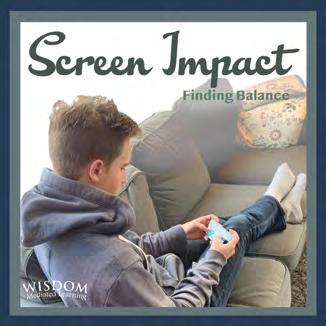
A question posted on the WISDOM Facebook Page recently. The answers were so good, we thought they would encourage other WISDOM Families!
• Emily R - Don’t own them….
• Melissa H - Lock the devices in the safe.
• Sarah C - Not starting the habit is probably the easiest. But my best tips to reduce screen-time are:
• use timers to set healthy limits.
• have pre-determined times of day that screens are allowed.
• always consider ‘what is my child or myself missing by being on a screen right now?’ Maybe it’s missing building a relationship, experiencing an event, a learning opportunity. It can be very motivating and eye-opening to consider what we are missing instead of just ‘trying to reduce screen-time.’
• Chelsea R - During school days, no screens M-F. During summer holidays they have a checklist to do before screens are allowed (reading, outside play, creating, chores, etc.). My boys have some days that they work hard and complete their list quickly, but most days they play and don’t complete it till late afternoon. It helps put their minds on other things they enjoy.
• Melissa B - We have a house rule that it is only on the weekends after chores are done. Over the summer, it will also be dependent on doing some reading and/or math practice…
• Sarah P - We do electronics, whether phone games or movies, on weekends only (until mid-teens). Doing weekends only makes it very clear cut. 1 movie usually equals 3 episodes plus 30min-1 hour of games (device or Wii) per day.
• If it’s a rainy day, M-F, then they can watch educational or Christian for the same period of time. They have to finish school, read from a book, and do something creative first though.
• Wii physical exercise is a go any day of the week with no real limits unless bad attitudes break out.
• I don’t think saying no devices / electronics is necessarily the most practical. Teaching them limits is setting them up for future success. It would be more beneficial to teach how THEY can plan their day with other activities. I have a 17-year-old that battled addictive behaviour towards them, but when she hit age 14-15, she started to pick up how to limit herself or know she’d gone over her healthy limit. She still must keep an eye on her weekly reports and access what apps are taking up her time. That’s healthier to me than having no devices, otherwise when they need them as teens, they will struggle alongside peers at work who don’t look up from them or have actual conversations.
• Amy M - Keep limits to a minimum (our rule is ‘turn them off at 10pm’) to prevent it from becoming a fixation as a limited resource. Play/watch with them to prevent love banks from running low. Remind them to do body checks (“How do your eyes feel?” “Are you hungry/thirsty?” “Do you have to use the bathroom?”).
• We have found that our kids have become good at regulating themselves. They’re much more likely to say yes to friends (or
me!) when they’re invited to do other things because they know they’re free to come back to it whenever.
• Kimberly W - We try not to restrict too much but try to teach healthy habits and help them to balance their lives. The more you restrict something, the more you want it.
• We have 7 grown children, and 4 still living at home. The kids have chores, their schoolwork, reading, coloring, building (LEGO, etc.), playing outside, and more. We make sure they are choosing all these things.
• I hope that makes sense. We have also never had any huge issues with screen time, or children having meltdowns when they couldn’t have it.
• Our kids will be adults one day and will have to make the choices themselves. If they have been restricted all their lives, they may go the opposite direction the first chance they get.
• The harder we hang on and control, the harder they will pull away.
• Don’t get me wrong, we have limited screen time, we have kicked them off of them and told them to head outside, but we have the big talks with them and teach balance and allllllllll the other things they could be doing.We also don’t allow them in their bedrooms, although sometimes they have listened to music with them while cleaning their rooms or folding/putting their laundry away.
• Leanne S - Time limits on all of their favourite apps has been my goto. Once they reach it, they are done for the day.
• Terri S - Kicking them outside.
• Judith S - My kids earn screentime with chores, schoolwork, and good deeds. For every 15 minutes spent doing one of those things, I award them 5 minutes of screentime. The house has never been cleaner, and the schoolwork has never been completed so quickly and with such enthusiasm. Lol. They’re always seeking out something they can do to earn screentime. They can also bank their time for a fun sleepover weekend with friends. This way it’s not about parent control, the control is in their hands with parental guidance, and they learn that working hard = earning something they want.
• Erin D - Just say no. Kids don’t know how to be bored anymore – ‘go outside.’
• Suzanne S - Don’t turn the screens on ��. Honestly, it changes our sons’ behaviors so much. I make sure they have limitless access to books, crafts, games and outside. It worked for those of us who grew up before the ‘screens on’ era so I figure my children will benefit from it too.
Penpal Club
Madalyn P, 13
I come from a family of 12 children. I like biking, going for walks, rollerblading, and since winter is coming I'm looking forward to all kinds of winter activities.
Judah H, 9
I like building anything with LEGO, especially cars, and creating worlds in Minecraft. I live in Beaverlodge with my family. I have 1 cat, 3 frogs, and 2 goldfish.
Selena M, 10
I am new to Canada. I am a Canadian citizen but born in Cairo, Egypt. I came here to Canada with my Dad. I speak Arabic and English.I like to be active and enjoy Roblox. I would like to make more friends. We live in Lethbridge. I enjoy singing and want to learn to play piano.
Teresa N, 17
I love God, my family, reading books, eating chocolate, watching movies, listening to music, crafting, baking, and organizing! I would love to make some good long lasting friendships!
Caleb B, 8
I am in grade 3. I like dragons and Minecraft. I have 4 pets; a rabbit named Cinnabun, a bearded dragon named Oscar, a cat named Fluffy, and a dog named Diamond. I am doing creative writing this year where I get to write my own stories. So far I have written two stories about dragons. I hope you will be my pen pal!
Dakota S, 13
I live on a farm. I like to do computer coding, build things outside, and ride horses. We have a dog named Denali, 4 cats, 3 horses and since I live on a farm, lots of cows!
Della B, 7
I love catching frogs and playing down by the creek. I live on a farm in northern Alberta. We have 2 pigs, 19 hens, 1 rooster, 1 dog, and 2 cats. I like hunting and fishing and I also love to go exploring in the forest. I love playing with sticky gooey slime! I'd love to be your pen pal!
Paula M, 8
Hi, I like to ride my bike. My bike is purple. I like to go camping. My favorite color is turquoise. I like reading Little Bear and Frog and Toad. Hope to hear from you soon and have a wonderful day!
Lucia M, 8
I am going to the Family Life Conference. I would love to have a pen pal. My favorite color is turquoise and the primary colors. I love summer.
Nicodemus (Nico) F, 8
Hello my name is Nico. I have one brother and he is 5. I live in Edmonton. I like to play video games. I like Lego. I hope you write soon.
To join
You are invited to write to any Pen Pal Club member listed here!
To join the Club, please send a short letter of introduction (like those posted here) to the WISDOM office, along with a note giving parental permission. You may also ask your parent to email office@wisdomhomeschooling.com.
If you'd like to be a pen-pal of someone listed here, please send your first letter to:
[Penpal name] c/o WISDOM Pen Pal Club Box 78 Derwent, AB T0B 1C0
6 Benefits of Short Lessons R
By Sonya Shafer
BENEFIT #1: Short Lessons Encourage The Habit Of Attention
It’s human nature. If you know that you have all day to tidy the house before company arrives, that task can expand to take all day. You think about other things; you get distracted doing other things; and before you know it, the job stretches out over several hours. If, however, you know that company is arriving in one hour, what happens to your focus? Suddenly your mind zeros in on the task at hand, and you get it done in that time limit.
“Short lessons.” It’s a phrase often heard in Charlotte Mason circles, and it’s an important principle of teaching a child in the Charlotte Mason way. But as always, that one component is part of the bigger picture. So, let’s take a few minutes to dig a little deeper into short lessons and talk about what all they encompass as part of a Charlotte Mason approach.
Let’s start by discussing why Charlotte Mason used short lessons. What are the benefits? I can think of six to begin with.
It’s the same with short lessons. Knowing that there is a time limit helps your student focus on the task at hand. “Now is the time to give your full attention to the history reading. You have only a few minutes, so don’t miss it.”
As Charlotte put it, “The power of reading with perfect attention will not be gained by the child who is allowed to moon over his lessons.” Home Education: Charlotte Mason’s Original Home Schooling Series, Volume 1, p. 230.
Here’s a practical tip: As you set that time limit, be sure to keep your student’s capabilities in mind. You want to find the sweet spot that creates a sense of positive urgency but doesn’t cross the line into anxious stress. When a person is stressed, it’s hard for her mind to receive new ideas.
BENEFIT #2: Short Lessons Align With a Child’s Natural Development
When used correctly, short lessons grow with your student, leveling up as she is ready. And that gradual process is a natural fit over the years of schooling. Take a look at the lesson length guidelines that Charlotte used with her students.
Grades 1–3: 20 minutes maximum
Grades 4–6: 30 minutes maximum
Grades 7–9: 45 minutes maximum
Grades 10–12: 45-60 minutes maximum
Keep in mind that those numbers are maximum lengths; many lessons were shorter than that. Charlotte knew children! It makes so much sense to have mostly 10 or 15-minute lessons for early elementary-age children. Their natural tendency is to move and to explore and learn about a great many different things over the course of a morning. Those short lesson times can be especially helpful to the youngest students who are making the transition from informal learning during the preschool years to formal lessons during the elementary years.
But remember that those short lessons are also cultivating the habit of attention in those students. As they cultivate that habit over a few years, the lessons then get lengthened, just a little, and they get a few more years to adjust to that higher expectation, even as they are growing and maturing and beginning to study subjects more in-depth. It’s a natural process.
BENEFIT #3: Short Lessons Prevent Brain Fatigue
It’s easy to get carried away and think that more is always better: If a short lesson is good, then a longer one must be better. But that is not the case. We are dealing with living human beings, and all human beings have limits.
Once the brain is over fatigued, it hits its limit. It can’t learn anything more in that moment. Think of it like a sponge that is saturated; it can’t hold any more water until it processes the water that’s there. Or think of it like a fuse. Our brains are made with a natural fuse that shuts off when it’s overloaded so that it can have time to recover.
You’ve probably experienced this if you’ve stayed up late to try and keep pushing on a paper that you need to write or a book
that you need to finish reading or some other learning project. Somehow we think that if we just keep pushing, we will be able to keep learning. But once you hit that saturation point, it’s over. And even the moments leading up to that saturation point are very difficult, aren’t they? But if you simply set that paper or that book aside, let your brain recover, and then go at it again later when you’re refreshed, the experience is completely different. It’s much easier to focus and comprehend. The learning goes much more smoothly and efficiently.
Charlotte wanted children to learn when their brains were fresh, for one of her goals was that they would find learning delightful, not a drudgery. So, she didn’t want to overtax their brains to the point of fatigue.
But rather than take a bunch of breaks, which would make the lessons drag out over the whole day, plus have to deal with trying to get the children’s attention back after the break and ready for the next lesson—rather than doing that, she came up with a brilliant idea. She alternated the types of lessons in order to use different parts of the brain. With this strategy, the learning can keep going, but no one part of the brain gets over fatigued—because first we work with the numbers part of the brain, for example, doing a math lesson; then we do a read-and-narrate type lesson that involves the words part of the brain; then we look at a picture or we listen to music; then we do a few minutes of handwriting.
By alternating the type of lessons in the sequence, the students are able to keep going without overtaxing any particular part of their brains. Here’s how Charlotte described it for that first level, grades 1–3:
The lessons are short, seldom more than twenty minutes in length for children under eight; and this, for two or three reasons. The sense that there is not much time for his sums or his reading, keeps the child’s wits on the alert and helps to fix his attention; he has time to learn just so much of any one subject as it is good for him to take in at once: and if the lessons be judiciously alternated—sums first, say, while the brain is quite fresh; then writing, or reading—some more or less mechanical exercise, by way of a rest; and so on, the program varying a little from day to day, but the same principle throughout—a ‘thinking’ lesson first, and a ‘painstaking’ lesson to follow,—the child gets through his morning lessons without any sign of weariness.
Home Education, p. 142.
BENEFIT #4: Short Lessons Allow You To Spread A Feast Of Ideas
As Charlotte mentioned in that quote we just read, each day’s program varies a little from day to day. Her heart-cry was a broad and generous education for all the children. She wanted them to have art and music and poetry and handicrafts and nature study and hymn singing along with history and science and math and language arts and such. She wanted their education to be the spreading of a feast of ideas—a wide feast!
Many of those lovely subjects don’t have to take a lengthy lesson time to be included in your school schedule. Picture study takes only 10 or 15 minutes once a week. It takes about 5 minutes to read a poem and enjoy it together or to sing a hymn once or twice a week. Music study takes about 15 minutes too. Handicrafts and nature study and art instruction can be enjoyed during the afternoons after morning lessons are done, just once a week for each.
You can include a wide number of subjects by using short lessons. Charlotte explained that “Not the number of subjects but the hours of work bring fatigue to the scholar.” A Philosophy Of Education: Charlotte Mason’s Original Home Schooling Series, Volume 6, p. 158.
By tucking those beautiful short lessons here and there during a week, your students are able to receive a wide variety of subjects and ideas; and those short, constant touches add up over the years.
BENEFIT #5: Short Lessons Protect Necessary Time For Students To Process
In this fast-paced world, we are losing our ability to ponder, to ruminate on ideas, to turn them around in our minds and look at them from different angles. That kind of thinking comes most readily in quiet moments, when your mind is relaxed. Perhaps your hands are busy, but you don’t have external input coming at you. You are alone with your thoughts, and you can process them and make friends with them for yourself. That’s a gift that short lessons can give.
When formal lessons are done before lunch, afternoons are left open for thinking, processing, and even expanding on what was taken in during the morning. The beauty of this schedule is that it respects each child as a person and allows her to form relations with the ideas that stood out to her. And part of forming relations is having the opportunity to think about them for yourself. Short lessons protect that time and give that opportunity.
BENEFIT #6: Short Lessons Preserve A Positive Attitude Toward Learning
Children come into this world with a natural desire to learn. Look at a toddler or a preschooler and you see a child who is constantly exploring, experimenting, testing, and processing. It’s natural. But too often we school that out of them. When children are required to sit and listen or read and memorize a list of facts all day, they gradually lose that natural curiosity. The joy of learning dries up. But with short lessons that focus on a wide variety of ideas— that present living thought that the student is encouraged to form a personal relationship with—that natural love of learning is preserved, and the student doesn’t dread school each day.
Charlotte testified, “We are able to get through a greater variety of subjects, and through more work in each subject, in a shorter time than is usually allowed, because children taught in this way get the habit of close attention and are carried on by steady interest.” School Education: Charlotte Mason’s Original Home Schooling Series, Volume 3, p. 240.
So, there are many advantages to short lessons. But let me give you a qualifier: Short lessons can be powerful . . . when used in the right way. It’s not just about the amount of time you spend on a lesson, it’s about how you use that time. A short lesson that is a fact-dump will not yield the same benefits as a short
lesson that is filled with living ideas. A short multiple-choice quiz will not yield the same benefits as a short narration lesson. The methods you use during the short lessons matter as much as the length of those lessons.
TWO REMINDERS
So, let’s wrap up with two reminders. These are things you probably already know, but I just want to remind you of them as you put short lessons into practice.
REMINDER #1: It's Not About The Information
Often, people who panic about the idea of short lessons are thinking, “I don’t have enough time to dispense all of the information I need to during a short lesson.” But a Charlotte Mason education is not about information, it is about relations. A short lesson can stimulate your student to form a relationship with God, with God’s creation and His natural laws, with others, or with herself. And once that relationship is in place, your student can continue to develop it for the rest of his life.
So, your goal is not to dispense all of the information available on any given subject. Your goal is to help your student begin a relationship with the person or object or event and then provide opportunity later to expand on that relationship.
Education is the science of relations.
REMINDER #2: Focus On Quality Over Quantity
You know from experience that the longer you work at a particular task, with no break or let up, the easier it is to care less about how well you’re doing it and more about just getting it done. In other words, to become careless. During the short lessons, you are encouraging your student to set up a habit of giving her best effort to the task at hand. That effort won’t be over-taxing, because the lesson times are short; but you are focusing on quality, not quantity.
When you think about it, short lessons really have a long-range perspective. Students who have formed relationships with people, past and present, and with the objects and natural laws that surround them—and have done this in less stressful, short, focused times—are more likely to want to keep pursuing and
developing those relationships throughout their lives—to keep learning about them. Likewise, students who have practiced skills in short, concentrated time segments are less likely to burn out on those skills, less likely to develop bad habits of sloppiness and inaccuracy, and more likely to develop habits of giving their best effort and their focused attention. And those developing relationships and good habits continue throughout life.
Don’t be fooled: short lessons have a long-range purpose.
Originally published at simplycharlottemason.com. Reprinted by permission.
Sonya Shafer is a popular homeschool speaker and writer, specializing in the Charlotte Mason Method. She has been on an adventure for more than 20 years, studying, researching, practicing, and teaching Charlotte’s gentle and effective methods of education. Her passion for homeschooling her own four daughters grew into helping others and then into Simply Charlotte Mason, which publishes her many books and provides a place of practical encouragement to homeschoolers at simplycharlottemason.com.
TOP 3 WAYS TO DEAL WITH HOMESCHOOL DOUBTS
By Kari Patterson
My poor Dutch didn’t know what hit him.
An incoming Sophomore, Dutch was doing well in school, just back from an awesome cross-country road trip with his family, working a couple days a week doing yard-work for a nearby family, practicing driving, and enjoying a summer of swimming and relaxing by the river.
Just the week before, out the blue, he’d said, “I just love this world.” Happy kid.
Enter psycho-mom who suddenly (unbeknownst to him) has become gripped with fear and doubt that we’re not doing enough. I began the cycle of questions in my head.
What if he doesn’t get into college? What if he doesn’t get a scholarship and college is too expensive? Is he getting enough extra-curricular experience?
What if I’m doing it all wrong?
It’s so easy to talk someone else off the ledge. How many times have I sat opposite another mama and reassured her that everything would be fine, encouraged her to trust her mama’s instincts and well-researched choices, to stay the course and trust the process?
Blah blah blah.
All of that goes out the window when the finish line is in sight, when this kid is actually going to launch out into this world and has to make a living. We can’t just watch butterflies and do nature walks all day.
Where is Charlotte Mason when I need her?!!
*Breathe*
After tossing an overwhelmingly long list of extra requirements at Dutch, which he managed to dodge, I came to my senses and returned to what I know.
Image source: Kaboompics
I returned to the things that help me deal with homeschool doubts in a healthy manner. That is what I am sharing with you today.
Top 3 ways to deal with homeschool doubts
1. Sort out your own emotions/fears/anxieties
The reality was the 6-month mark of my mom’s death hit me surprisingly hard. I was missing her, sad thinking of Dutch growing up and her not seeing the great young man he’s become. She was his biggest cheerleader through all the hard years navigating Aspergers.
This led to sadness about Dutch leaving home, which led to anxiety about a project we’re working on, which led to concerns about finances, which led to worries about paying for college, which led … you get the idea.
I had to sit down and map out exactly what I was feeling. Where was I overwhelmed? Where was I lonely?
Where was I scared? What was I trying to “fix” by heaping more up on my son?
2. Objectively identify any real areas of lack/weakness
I say real because, as always, we have to come back to our core values and not allow the mainstream noise to dictate what matters. My husband was so helpful in this, reminding me that our son’s character is what matters most, and in this we couldn’t be more proud of him.
He is honest, hard-working, selfless, kind, self-controlled, respectful. Rejoice in this!
In addition to this, are there some concrete areas where improvement is necessary? If so, view them as objectively as possible, identify those and tackle one at a time.
Don’t overwhelm the student with all the items. Make a plan for the year that can address the issues in reasonable ways.
3. Take joy in your child
I recently read a book (ok, read part of a book) about joy and the authors explored the idea that joy is primarily relational We experience joy when someone takes joy in us. When we walk in a room and someone lights up, genuinely happy we are there–that’s joy.
When someone is obviously delighted in who we are and loves being with us–that’s joy.
Homeschool doubts can rob us of enjoying our children. This robs them of joy as well.
Anxieties, worries, fears–they cloud our vision from seeing those delightfully awkward, funny, freckle-faced goofy kids we just adore.
Perhaps the best compliment I have ever received was from a stranger in the store, where I had all my kids in tow. She smiled and said, “I can tell you love being a mom.”
No matter what they score on their SATs, I want my children to be convinced that I loved being their mom and enjoyed the years I had them at home.
So, friends, if you have had days plagued with homeschool doubts, please know you’re not alone. Take these top 3 ways today and use them to navigate yourself through homeschool doubts to a more peaceful place.
Kari Patterson and her family live out in the woods of the Pacific Northwest. As a 2nd-generation homeschooler she espouses the same philosophy her own mom did in the 80s: Cultivate a love for learning and one's education will never end. She bakes bread, brews kombucha, speaks at conferences & writes at Sacred Mundane. Her new book Sacred Mundane is available now.
image below courtesy of Kari Patterson
Sights of Canada
By Barbara Janman
Education and learning have been incorporated into my life for the past 60 years or so. Travel and being Canadian are two additional passions near and dear to my heart.
In 2015, after an empty search for Canadian-based creative gifts for my great nieces, Tyler-Ann, Dyllon, and Morgyn, I had an epiphany - I could create a book especially for them about Alberta, their home province. It would take them on a fun, creative journey and they could subtly learn more about their environment.
When I think of Canadian girls, I do not think of princesses or fairies, I think of intelligent, capable, creative, ambitious women. I wanted a book to which they could relate.
My first thought was “how hard can this be?” My Mom used to say, “If you want to, you will.” With my new idea in hand, I embarked on a new path of learning and discovery, for myself and for the kids. It was never my intention to take this project public, nor for it to become so large. I am an introvert, and
yet here we are, taking it forward, one step at a time. Soon we formed a company, Colourful Travels Inc., with our series of books entitled Sights of Canada.
The creation of these books has been a wonderful experience for me, and for my partner and husband, Bill. He is my support system and cheerleader. Navigating the challenges of the print and publishing world, manoeuvring through the channels of public exposure, and learning direct and indirect sales have all made for quite the learning experience. We have met the most marvelous and helpful people. Our faith in humanity has been restored. After “Alberta” was completed, my new mission was to create seven activity books. I wanted them to be entertaining, educational, allowing everyone to write their own story, be creative, and have a keepsake of their Canadian experiences. I have one more book left to create which will complete this series, “Quebec.”
The Sights of Canada activity books take you on a journey of places, events, animals, birds, and insects in each provincial
area of our majestic country. As Willie Nelson said in his 1980’s country classic “On the Road Again,” you might be introduced and directed to places that you’ve never been, and you’ll see things you might never see again.
The narratives include poetry, stories, facts about the picture, and sometimes additional places to see in the nearby countryside. The ideas for my sketches came from friends, places we have personally travelled, from my childhood growing up on the farm in southern Saskatchewan, and from my reflections about places I would like to visit in the future.
This series of multi-purpose books are activity books designed so that each person, young or mature, can be artistically expressive, creative, accomplished, remember trips and family times while travelling, and have a very personal keepsake when the activity books are completed.
Each book may touch on geography, history, poetry, natural conservation, culture, flora, and fauna. They are meant, first, to be a fun activity book, then perhaps as a generational interactive book, from grandparents to grandchildren or caregiver to patient, or just for self enjoyment to strengthen bonds, pass down incredible stories, and keep the fires burning. They are a source of stimulating conversation, creativity, or simply, of calming mindfulness.
The pictures can be embellished and personalized by the individual. Write and record the 5 W’s, who, what, where, when, why and of course, how, in your book. Humour makes a wonderful addition when woven into your sojourn.
We launched the first three books and hosted a colouring methods presentation at the Kerby Centre in Calgary, Alberta, a seniors advocate organization. The books were very well received, and the seniors loved chatting about and remembering the places they had travelled or lived, the animals they saw, and learning new methods of colouring and making their pictures more professional. We have enjoyed presenting these books at home school conferences, where they have been received with enthusiasm. Teachers have suggested that these books could become resource material in our public educational system. We are working on new avenues of distribution.
The second editions of my series of activity books will include many of the ideas offered by parents, home school associations, and many others who have critiques of these books. The improvements include crosswords, sudokus, and word associations.
I have not completed my bucket list and I do not believe there is an end to that list. Around every corner, every new day, a new idea presents itself and new discovery is waiting. Retirement has been rewarding in the joy of creation. I’m thankful for all the new experiences and wonderful people who have joined our team to make my epiphany a realization. I really hope the remainder of my retirement continues to be as rewarding and stimulating as the past several years have been. Thank you so much CANADA!
Visit the author/creator, Barbara Janman on her website, www.colourfultravels.com image source: colourfultravels.com
2023 Fall Workshop Schedule
Subject to Change
Screen Impact
One session with optional session
December 5 One Hour WS Afternoon 2:00pm–3:00pm
December 12 One Hour Optional (Addition if parent requests)
WS Afternoon 2:00pm–3:00pm
Speech/Language
one session
November 8 Evening 7:00 pm – 8:00 pm
Reading/Math
two sessions
October 12-24 Afternoon 1:30pm–3:30pm
November 2-9 Afternoon 1:30pm–3:00pm
Behaviour
three sessions
November 23-30-Dec. 7 Evening 7:00pm–9:00pm
✎
Find The Pencil
Find the symbol above hidden somewhere the magazine and email us to tell us number it is on - we will enter you in a fun prize.
The draw held on January 8 when returns from Christmas holidays. magazine@wisdomhomeschooling.com
Pencil somewhere in us what page in a draw for when our office holidays. magazine@wisdomhomeschooling.com
Finding Help
· Call us at 780-741-2113 or 1-877-425-8546 · · Email us at office@wisdomhomeschooling.com ·
Funding
The funding year is open, with up to 50% of the year's funding available now. You may access purchase orders for direct billing at select vendors throughout the school year until late May, or you may submit receipts at any time until May 31. We process receipts and send out reimbursements monthly from September through May. To submit an expense claim, complete the Expense Claim form and submit by mail, or use our online receipt submitter!
Go to wisdomhomeschooling.com/funding or read the funding handbook for more information.
Would you like an updated paper copy of the funding handbook? We would be happy to send you one.
Questions? Email finance@wisdomhomeschooling.com
A note on emails
We always respond to emails. If you do not receive a reply from us within two weeks, we did not receive it. Please send it to us again.
When you Call Us
Call us at 780-741-2113 or toll free at 1-877-425-8546
We take calls between 9 and 4, Monday through Friday, with an hour off at noon.
If you reach our voicemail, you may enter the extension of anyone in the office at any time during the greeting. To speak to a home school consultant, dial 1. To speak to a member of the funding team, dial 2. To leave a general message, stay on the line or dial 3.
We endeavour to return calls as quickly as possible. If you do not hear back from us within two business days, it may be because the message didn't come through clearly, so please call again.
Connect with WISDOM families
We offer many ways to connect with the larger WISDOM community, from events and workshops, to our Social Networking phone and email list, to Facebook Groups just for WISDOM parents. This year, we are working to add local WISDOM communities around Alberta! For more information on events, email events@wisdomhomeschooling.com. For local community connection, email terry@wisdomhomeschooling.com.
Subscribe to The WISDOM Family Magazine
(The Magazine is free to WISDOM families.)
□ Option A - paper subscription ($30 in Canada, $44 in USA)
□ Option B - digital subscription, delivered to your email inbox ($18) Where should we send it?