
Family
Laughter
The Gilbertine Academy Administration
Principal, Head of School
Kenneth Noster
Associate Principal,
Home Education
Simon Noster
Associate Principal of Gilbertine Academy
Yvan Beaudoin
Secretary Treasurer
Vic Wiens
Chief Operating Officer
TobyLauren Burgess
Office Manager
Rae LaRocque
High School Advisor
Christian Bekolay
High School Credit Advisor
Desmond Kilgannon
IT Systems Administrator
Levi Breederland
Graphic Designer
Naomi Doyle

Office Staff:
Home School Consultants
Janice Laurence
Peter Weidman
Terry Yaceyko
Administrative Assistants
Jennifer Laszlo
Amy Burkey
Julia Yaceyko
Office Assistant
Helen Burgess
Finance Manager
Melissa McEachern
Finance Assistant
Henrietta Neilson
Family Funding Team Lead
Taylor Laurence
Family Funding Assistants
Thomas Laurence
Ezra Noster
Family Funding
Systems Maintenance
Dylan Kwasnycia
Accounts Receivable
Jim Burgess
Development Director
Saul Noster
Development Assistant
Joshua Bruce
Data Manager
Janelle Mailhot
Data Assistant
Abigail Laurence
SIS Data Entry Clerks
Hannah Hoekstra
Anthony Laszlo
Events Director
Marlane Noster
Events Coordinator
Kyra Tinant
Athletics Director
John Hoekstra
Socratic Dialogue Online Program Manager
Nicole Noster
Mediated Learning Program Manager Dynamic
Assessment
John Hoekstra
Mediated Learning
Advisor & Educational Therapist
Lora Cardinal
High School Subject Specialists
Pierre-Andre Beaudoin (Chemistry)
Rhonda Caluttung (English)
Lydie Delli Santi (French, Spanish)
James Rauch (Latin)
Joy Ronald (Social Studies)
Peter Weidman (Math, Sciences)
For contact information, see wisdomhomeschooling.com > About > The Team

WISDOM Home Schooling is a registered trade name of The Gilbertine Institute. The Gilbertine Academy, Calgary, is an independent school operated by The Gilbertine Institute.


Phone: (780) 741-2113
Toll Free: (877) 425-8546
with questions: office@wisdomhomeschooling.com with contributions to the WISDOM Magazine: magazine@wisdomhomeschooling.com
Publisher: WISDOM Home Schooling
Content/Editor /Desktop:
TobyLauren Burgess & Amy Burkey
Desktop / Design:
Naomi Doyle
wisdomhomeschooling.com
Facilitators:
Michele Barter (780) 363-3740
Pierre-Andre Beaudoin (780) 239-0381
Joan Bishop (780) 878-5380
Rhonda Caluttung (403) 846-0404
Lydie Delli Santi (403) 392-9209
Carrie Friesen (780) 217-4006
Simon Friesen (587) 222-1790
Rachelle Godin (780) 349-1827
Liz Gurnett (780) 349-1577
Nola Hutchinson (780) 781-2527
Anella Jantz (587) 297-1992
Desmond Kilgannon (780) 225-6688
Randy Kopp (780) 723-5382
Gordon Loewen (587) 298-7565
Taylore Maschmeyer (780) 270-0460
Mark Meakes (780) 231-6594
Simon Noster (780) 581-8885
Sue Peachment (403) 994-1963
Joy Ronald (780) 278-5557
Kim Schultz (780) 623-2886
Louis Sehn (403) 581-3444
Glenn Spiess (639) 894-0470
Brian Taje (780) 312-4525
Paul van den Bosch (403) 358-4497
Catherine van Kampen (403) 845-2923
Peter Weidman (780) 223-2414

North
Georg & Gayle Beinert
Rene & Karen Godin
Parent Advisory Council
To reach the chairman: pac@wisdomhomeschooling.com Bios and email addresses of PAC are on our website.
Fairview
Fort McMurray
Menno & Margaret Knelsen
Central
Darrel & Kristine Buchholtz
Sheldon & Sharon Kok
Don & Bo Reid
Cory & Sierra Rotchford
South
Cameron & Tanya Harrison
Joe & Diane Pollock
Jeremy & Cheree Quantz
Content:

WISDOM publishes articles by many Individual authors. The opinions of the writers are not necessarily those of WISDOM. We reserve the right to decline any submission, and to edit those submissions we accept for accuracy, clarity & length.
La Crête
Sherwood Park
St. Albert St. Albert
Edmonton
Innisfail
Calgary area
Innisfail
(780) 835-8722 (587) 644-1825 (780) 928-3008
(780) 417-3025 (780) 460-4468 (780) 460-2275 (780) 934-3156
(403) 800-2739 (403) 931-3884 (780) 841-0065
Photography:
Unless otherwise credited, photography is courtesy of the Noster, Burgess, Tinant, and Doyle families. The people appearing in photos throughout this publication do not endorse any specific product, service, cause, association or endeavour. Images and photos are for illustrative purposes only.

First Things
May/June 2024

Greetings to your family,
There is nothing like welcoming another spring in Alberta; the signs of new life remind us of great opportunity and possibility. As a northern farmer, I sometimes look with longing to the south where there is more than one growing season each year, more than one chance to see if a cropping experiment worked, if a weed management plan was effective, if crops respond fruitfully to my efforts. We can feel the same way about homeschooling; often, we need to be patient and allow our choices for our children’s programs to play out to determine their fruit. Although it can feel like we only get one homeschool growing season each year when we purchase our resources, we do have an opportunity to pivot when we recognize the need to shift goals, priorities, or resources more rapidly in response to our children’s needs. Ultimately, our job is to do our best with the time given us. As you enjoy the spring weather, be inspired by the possibilities, and open to trying new things, either this year, or next.
The WISDOM Spring Socials and Information Sessions may present a great opportunity to be inspired by others. Take a look at our website to see what options exist in your area. Facilitators enjoy hosting these events in order to bring WISDOM families together and to provide a welcoming space for new families who might be interested in homeschooling. Feel free to bring inquiring friends to these gatherings in order to meet wonderful homeschoolers and learn more about what it is like to embrace this form of education. Visit our website to find more information and to register for these events: wisdomhomeschooling.com/events/wisdom-family-gatherings
Many options for WISDOM Events continue into the spring. Bird Watching gatherings, Survival workshops, Foraging walks, and Ballroom Dance lessons are just a few examples of what we are offering across the province. Please visit the WISDOM Events page of our website to discover what is being offered and when these opportunities are happening in your area. wisdomhomeschooling. com/events/in-person-events
Registration for the Socratic Dialogue Online Program fall courses opens in the second week of May. These courses are intended to be a form of classical enrichment to your home education program; take a look through over 30 course options in literature, history, philosophy, politics, writing, and grammar. Popular courses fill quickly, so do secure your child’s spot in a course early if you would like to guarantee that they can take the course this fall. A year schedule of which courses are being offered in each term is also available on the Fall Course Listing page of our website. wisdomhomeschooling.com/ courses/fall
The funding deadline is upon us. Send your receipts and completed Expense Forms to us as soon as possible, no later than May 31st for reimbursement on July 15. Purchase Orders (POs) are usually available until the end of May, and this year, they will be available June 1 so that you may use them at the AHEA Convention. If from this year, do not worry, it will be


please do your best spend it now, since it expires this year. Everyone with unspent expiring carryover will receive a DocuSign document from our office with a request for you to consider transferring expiring, unclaimed funding to support home education programs within our school. All expired funds that are not transferred to our school will be returned to Alberta Education.
The AHEA Convention (Alberta Home Education Association) is running from May 30 – June 1 in Red Deer at Westerner Park. Their theme is “Home Educate with Confidence”, and registration is currently open. WISDOM will have a booth at the conference, so if you are able to attend, please stop by and say hi! Save on shipping and order a WISDOM hoodie/mug/etc. in advance and pick it up at our booth. WISDOM POs will be available for curriculum shopping, provided that you have funding remaining. Find complete information at aheaonline.com
We encourage early planning, including re-notification of your intent to home educate with us next year. Every family who is renotified by May 31 will be entered into a June 1st draw for $200 toward educational resources. BONUS: Get TWO entries on June 1 if your EPP is submitted to your facilitator by the end of May.
WISDOM is hosting a Celebratory Grande Ball in honour of WISDOM’s Graduates of 2024. Graduating students, their families and friends are invited to join us for this potluck and dance on May 25 in Spruce Grove. Enjoy this opportunity to get together with other grad families, learn a few basic ballroom steps, and celebrate with your family and friends! Learn more and register on the WISDOM website under In-Person Events.
We feature WISDOM Graduates in the July magazine; please send a brief biography and photo by May 20th in order to be included. Also, make sure to order graduation hoodies and tassels by May 15th. Parents of grade 12 students may wish to request transcripts of parent awarded marks and recognition of high school completion by means of a WISDOM Diploma or Certificate of Completion. Please find more information on our website under Resources > High School.
WISDOM has launched an Alumni Association! We had an excellent turnout to our March 22nd Alumni Gala, and an Alumni Association Executive was formed at that event. Graduates, in order to stay in touch, and learn more about what the Alumni Association will do, please register as alumni through our website under About > Alumni, and encourage your Alumni friends and family to do the same.

Simon Noster, Associate Principal of
Home
Education simon@wisdomhomeschooling.com


Write for The WISDOM Family:
you have something to share? We welcome you to submit articles for many of our columns, to be considered for
Also, if you come across an excellent article or blog, please share it with us.
will contact authors for reprint permission.
Send submissions to magazine@wisdomhomeschooling.com.
Laughter

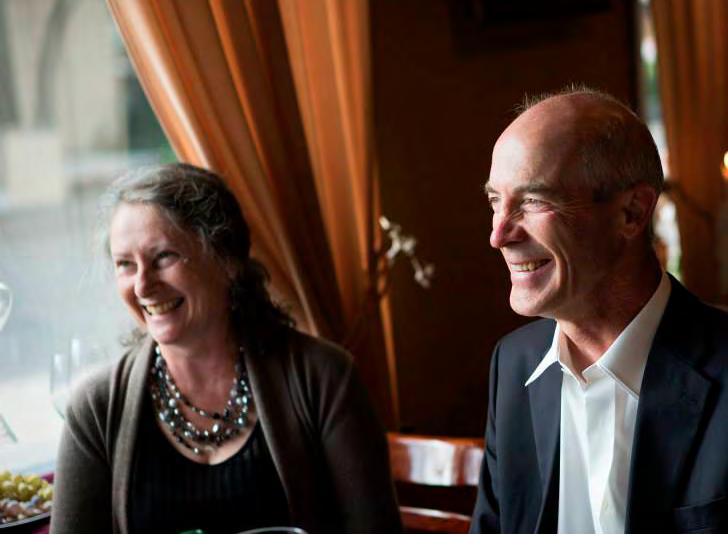
By Kenneth Noster
Iphoneda friend the other day, and when she heard my voice she laughed. I immediately began laughing too, for it was infectious, and at the sound of my laughter she laughed even harder. What a rollicking beginning to a relatively short phone call. When I asked, she couldn’t tell me exactly why she had laughed; it just happened. It seems laughter is like that; it can catch us by surprise.
Upon thinking about laughter, what becomes immediately apparent is that some people seem to laugh a lot and some not so much. It begs the question as to why one person would laugh at something while another would not?
No doubt there are many valid reasons, but I will do just some minor probing.
When I was a child there was a
blacksmith in our community named Mike, who was continually telling terrible jokes that simply were not funny, but the man himself was infectious. By the time he would be halfway through telling a joke, he would be laughing so hard he could barely continue, but he would press on, tears rolling down his red cheeks. Everyone standing around him would also start to laugh and, by the time the joke was done, Mike would be howling with laughter, and no one could resist. Often you couldn’t even hear the punch line, but it really didn’t matter; Mike got you going as though the joke had been absolutely hilarious. Mike was well known in the region as one who had a rare sense of humour that was extremely easy to trigger, and many wondered why, because everyone knew that there had to be something very compelling that amounted to more
than the substance of his dreadful jokes. I never did know much about Mike’s background or his life but, now that I think about it, I’m wondering if Mike had endured significant suffering. I say this because of another man, named Peter, who also had a great sense of humour and whose background I did know about.
Peter was born in a quiet but joyful German community in Russia. Following the Russian Revolution, Peter’s family endured the arrest of their community’s men and the subsequent starvation of the women and children (Peter was very young), and everything was taken away from them. It was miraculous that Peter survived to adulthood, but then he was conscripted into the Russian army during WWII, captured by Germany and, prior to
escaping to Canada, was slated to be shot by Stalin’s home guard. By the time he was 30 years of age, he had suffered a great deal more than most would experience in a lifetime, and yet he had a marvellous sense of humour. Peter would never miss an opportunity for a laugh.
The notion of laughing in the midst of suffering brings to mind a particularly horrible time, when the whole world came crashing down upon a small staff of workers. They worked long hours in the face of significant opposition in order to get things back on track, enduring scathing media, dreadful politics, and sneering neighbours. They were highly aware that all their efforts could be for naught, but they pressed on, and they laughed. They seemed to be able to see the humour in big things and small ones, and the air was resplendent with genuine laughter.
I checked some research, and it’s evident that even the laughter specialists don’t really know all that much about it. They know more about how it affects us than about where it comes from, so I will propose a theory or two, based on experience. I’m certain there is much more to laughter than will be illustrated by my observations but, by taking a look at some elements of suffering, one can see how it could help form a person to laugh more easily.
One effect of suffering is the way it alerts us to the precarious nature of our life, and this awareness, viewed realistically, helps us see our life and the world around us with fresh eyes. Things that previously seemed important become reduced in importance, and things that we may have tended to ignore grow in importance. Most of all, through suffering we are able to take ourselves less seriously and see some of the actions and attitudes of others in a new light.
Much more of life becomes laughable. Note, that I wrote: “viewed realistically,” since some people react to suffering in quite the opposite way, allowing the “precarious nature of our life” to be a source of despair, not insight.
So, it would appear that suffering on its own is not enough, but easy laughter is more likely to emerge among people who are able to accept that there is merit in suffering and, as a result, they are actually able to benefit from their suffering and certainly are able to laugh. This could all be true, but what about the people who have not suffered greatly, yet are prone to laughter? What about the friend who couldn’t contain herself at the mere sound of my voice? Could the very opposite exist? Could it be possible that whether or not suffering disposes a person to laughter, the more important take-away is that a person’s propensity to laughter is the very quality that allows that person to suffer well?
Early this evening, I laughed unexpectedly and was asked why. “Well,” I answered, “I dropped this handful of meeting notes on the floor by my desk and, while I was bent over trying to pick them up in some semblance of order, the keyboard tray rolled out and hit me on the head.” Why did I laugh? Well, it was funny. The one mishap of dropping the pages was mildly frustrating, but the second mishap was simply too much; it moved the situation from ordinary clumsiness into the realm of the absurd.
An eye for the absurd certainly elicits laughter in my case; in fact, it always has. From as early as grade 3, I remember pointing out examples of absurdity in the normal life at school and, thankfully, most of my teachers were men with a sense of humour, who actually saw the benefit of laughing with me. There is no doubt that over the years I have been equally annoying, a fact that was asserted
clearly by my grade 4 teacher, but that tenuous balance between eliciting laughter from others versus drawing their disapproval has remained forever present. Too often I have found myself to be the only person laughing at terribly funny moments at a movie theatre, only to sometimes have people turn around and tell me to be quiet. I have resisted laughing at the fact that they had missed the humour, because that wouldn’t be nice, but I did realize that maybe I was better suited to expressing myself freely while watching movies at home; my growing family seemed to possess the same sense of humour, catching not only the obvious but also the subtle and perhaps even unintentionally humorous moments.
Well, we laugh a lot, not only our family but also our co-workers, our community, our groups of all kinds. By grace, I’ve been surrounded by people who enjoy laughter, and I feel very much at peace in their company. It seems that if people can laugh together, they can grow a little better at trusting one another. They can grow in their humility with one another and increase their appreciation of the laughable aspects of themselves. Really, I can’t think of any good reason not to laugh. We laugh when meeting new people and we laugh in the company of old friends; we even laugh when conducting job interviews. Some people laugh a lot and some laugh a little; I still don’t know enough about why this is the case, but I do know that I would recommend laughing a lot.
Kenneth Noster and his wife Marlane live near Derwent, Alberta on their certified organic farm. In addition to his role as Head of School, Ken also contributes to his faith community as a deacon. Ken and Marlane home educated their 6 children through high school. Those of their eighteen grandchildren who are school-aged are also WISDOM students.

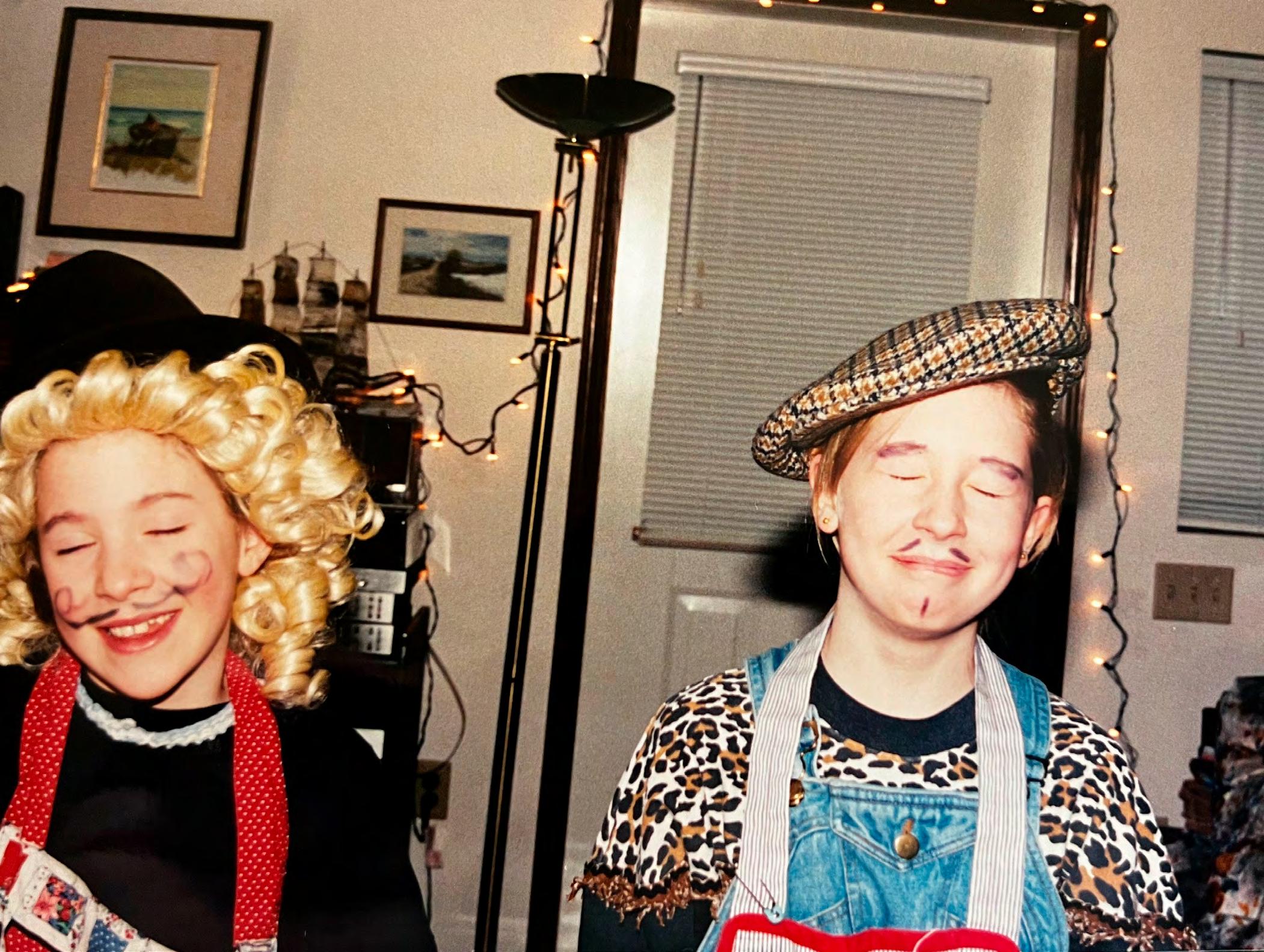
Laughter: an audible expression of mirth, joy, derision, embarrassment, or fright.
Mirth: joyous sport or entertainment accompanied by laughter.
Joy: emotion caused by wellbeing, success, the prospect of enjoying who or what one loves.
Derision: sarcastic laugh.
Embarrassment: the resemblance of laughter.
Fright: a tight sound exhaled in an audible expression.
Probably I am like most other people
Laughter
By Marlane Noster

in that I have expressed each of these different types of laughter over the years. As with many things, the less enjoyable situations tend to come to mind immediately, so I’ll get those off my chest first.
I have had frightening situations where I thought I could laugh myself out of trouble. It was not at all joyful for me, so clearly the laughter had nothing to do with mirth or joy. Laughter had emerged from an emotional source, showing me that the laughter itself isn’t necessarily tied to positive feelings.
Less extreme than fear is embarrassment. I have expressed many an embarrassed laugh. One
example that comes to mind is a time when, at the age of 17, I was working in the produce department of a large grocery store, and a delivery man handed me a paper and pen. I signed the paper and returned it to him, and then he held out his hand. Presuming that he wanted to shake my hand, I reached out, firmly grasped his hand, and gave it a healthy shake. He looked at me with surprise and said, “my pen please.” Embarrassed laughter exploded from me.
Another embarrassing incident occurred at a very formal event where I was introduced to an important elderly gentleman, and as I politely said, “pleased to meet you,”
he leaned his cheek down towards me. Of course, it made perfect sense to me that I was to kiss it, so I did. Immediately, contrary to what I had expected, the gentleman’s face flushed with surprise. As it turned out, the poor man was hard of hearing, and it was not his cheek but his ear that he was extending to me. Well, the whole room was immediately filled with laughter. Some of the laughter was mirthful sport, some seethed with derisive sarcasm, but my own laughter was true embarrassment, and I certainly did not find it to be joyful.
While reflecting upon these and other experiences, I realize that many of my early experiences of laughter lacked joy and mirth, and resided more in the realm of fear, embarrassment, and derision. At first, I found these experiences difficult, even hurtful on occasion, but over time I learned that it was best to not take myself too seriously, and rather to be willing to laugh at myself. I realized that I need not have my pride bruised, for I was who I was, and I did what I did, and I had the choice to laugh at any or all of it. I admit though, it was a long journey to that place where I could let go of my insecurities and join the fun.
As we began teaching our children in our homeschool journey, it was important that we applied what we had been learning in our own life experiences. We became careful to coach appropriate laughter, illustrating the hurt that would come from laughing at someone, making fun of them. We demonstrated the joy that comes from sharing laughter with someone. We guided our children
to be joyful: joyful in gratitude for all the good around them, joyful at good relationships, joyful at the completion of a successful project, joyful in work and play. Our playing took the form of everything from simple activities to stupendous ones, and much laughter ensued in the process. Our children created worlds and played characters they invented or characters from books they had read, made up little operas and plays, told stories and laughed with glee on the trampoline. Our home was one of joyous creativity. We laughed and cheered as we engaged in various games.
Notes
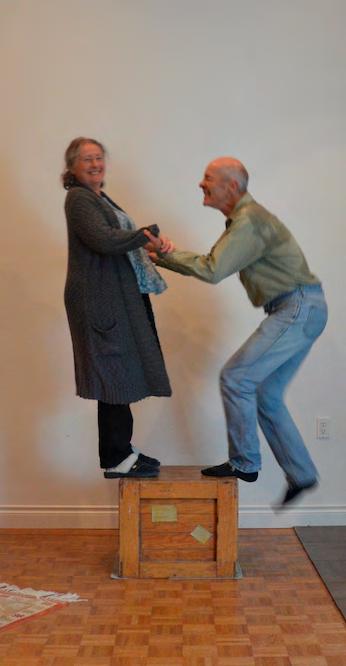
One year, we staged an event for the sake of my brother-in-law, who was missing a much anticipated and historic event that occurred annually in his Scottish hometown. Building upon what he had relayed to us, we fashioned a full day event that consisted of a parade, an afternoon BBQ, a formal dinner (gowns and suits) and a dance. Over the course of a few years this event became much anticipated in our family and among our friends. For over a decade, it provided all of us with a great deal of laughter and joy.
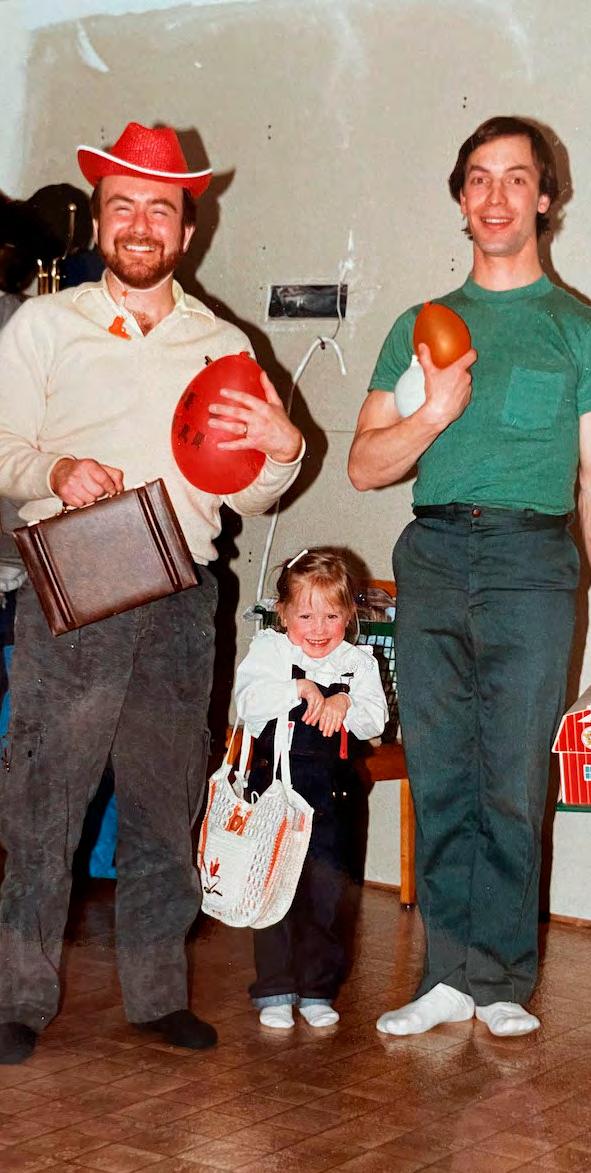

Laughter in our home and certainly in our family life was to become an important dynamic for us. We learned that our own happiness and that of others increases greatly the more our laughter is shared. I must say that, to this day, our family laughs easily and freely, and the laughter is of the variety I love most: mirth and joy.
Marlane Noster is WISDOM's co-founder and Events Director. When she's not in the office, she dedicates time to her church, community and her family, including her six children and eighteen grandchildren.
Mediated Learning

Home Schooling: Laughter & Mediated Learning
By John Hoekstra
Home
schooling. It’s like juggling
Vaseline smeared flaming torches while riding a unicycle on loose gravel— exciting, challenging, and at times terrifying, especially when you see in your peripheral vision the neighbour’s psycho Rottweiler tearing out of the yard after you. But within the chaos and comedy, home schooling with an open mind is a journey that can combine laughter and seriousness in a unique and worthwhile way, especially when Mediated Learning is part of the equation. So, let’s look at the laughable, serious, and wonderful journey of home schooling a little bit.
Let’s start with the fun side of home schooling, shall we? You’re trying to teach your child algebra, and they respond with the “deer in headlights”
stare that says, “Why are there letters in math?” It’s precious moments like these that affirm you’ve made a great decision to home school, and you wonder if maybe it should be called “homecooked” (as your brain melts down) rather than “homeschooled”. Or how about the maddening memory phenomena where they can’t remember something you just read, but after watching a movie you hear all the actor’s lines for days on end, especially the lines you can’t even remember.
But fear not, because Mediated Learning is here to save the day. With its focus on guiding and enhancing learning experiences, Mediated Learning turns even the most baffling math concepts into engaging puzzles to solve. Suddenly,
algebra isn’t just about x’s and y’s; it’s a thrilling adventure in problem-solving and critical thinking. Okay, that was perhaps a little rich (I perceive your eyerolls and groans), but it is also true; stick with me.
Of course, home schooling isn’t just about academics. It’s also about life skills, like time management, responsibility, and the psychological gymnastics of convincing your child that wearing pajamas all day is not a suitable wardrobe choice and then once you have achieved success in that arena, they point out all the people at Costco wearing pajama pants.
And let’s not forget about those socialization challenges that come from doing school different and from concerned relatives and fellow citizens (cough, cough). Here’s a few ringdingers:
• The “What’s a Lunch Bell?” Moment – a consequence of lots of freedom, shame on you.
• The “Too Much Information” Parenting Slip-Up – did you really just tell them you dissected a frog in the kitchen and they are building a tree fort 15 feet up?
• The “Overenthusiastic Home School” Debater – your child passionately arguing about obscure historical facts or scientific theories, while other irritated non-home school parents try and Google (on the sly) if it’s accurate… and you are secretly so proud.
• The “Tour Guide Blunder” –the awkwardness of your child correcting the museum or tour guide, numerous times… and on the inside you are super proud.
• The “What grade are they in?”
Question – you haven’t got a clue and while you formulate a response your child blurts out “What are grades?”
On the serious side, home schooling is a commitment, a responsibility, and a journey towards excellence. Home schooling parents wear many hats: educator, mentor, coach, Sherlock and occasionally (occasional is in direct proportion to quantity of siblings, btw) referee in sibling squabbles. We’re striving to provide a well-rounded education that prepares our children for the world beyond our homes while knowing that “home” is the most important thing.
There’s also another hat you can wear, the Mediated Learning hat. Mediated Learning plays a crucial role in the goal towards excellence. It’s about creating meaningful learning experiences, fostering independence, and instilling a love of learning that extends far beyond the confines of a textbook. It’s about equipping our children with the skills they need to navigate a rapidly changing world with confidence and curiosity. It’s giving them the skills on “how to learn” rather than “what to learn”. Seriously, with things changing so rapidly who knows what the “what to learn” is going to be in ten years?
Mediated Learning brings out your innate teaching skills towards the goal of excellence. It’s coming between the child and the learning. It’s putting on the “Master Teacher” hat when the learning becomes a struggle, and you have to figure out what is causing that struggle. And once you know what Mediated Learning is and how to apply it to your home and home school you get to deal with these:
• The “Is It Like Meditating?” Misconception – other parents assuming it involves sitting crosslegged, somehow connected with Yoga, chanting educational mantras, and achieving enlightenment through algebra (not possible according to one of my girls).
• The “Mediated Tech Mix-Up” – you explain Mediated Learning to a techie friend who then proceeds to recommend a series of meditation apps and mindfulness podcasts, convinced they know what Mediated Learning is.
• The “Mediated Meditation Concern” – During a social gathering, your child excitedly tells their friend about Mediated Learning, and your friends awkwardly try to warn you about the dangers of transcendental meditation.
Another plus of home schooling is the freedom and variety we can utilize when it comes to learning opportunities outside the home. While traditional schools have structured outings to museums and historical sites, homeschoolers can take a more creative approach. From exploring local parks and nature trails to turning a trip to the zoo or aquarium into a biology lesson, every day is an opportunity for adventure, discovery, and plunging in and getting our hands dirty (speaking to Dad here about the dirty hands, sorry Mom). Did I mention all the WISDOM events?... time to sign up “by cracky” (line from a Roy Rogers movie, see what I mean).
• The “Mediated What?” Confusion – when a well-meaning relative asks about your home schooling approach and you excitedly mention Mediated Learning, only to be met with a blank stare and the question, “Is that some kind of new meditation?”
But perhaps the most rewarding aspect of home schooling is experiencing those “aha” moments – the moments when everything clicks into place, when a difficult concept is finally understood, when a passion is ignited. It’s like watching a flower bloom before your eyes, and you realize that all the laughter, tears, and chaos of home schooling are worth it for these precious moments of growth, learning and understanding. It’s seeing the fine individuals they grow up to become.
Home schooling needs a unique blend of humour and seriousness, a balancing act that requires dedication, patience, and a healthy dose of Mediated Learning, I dare say. It’s a journey filled with laughter, learning, and love – a journey that will have its ups and downs, but ultimately leads to a brighter future for our children and our society. So, to all the home schooling families out there, keep laughing, keep learning, and remember that the best lessons are often the ones that make us smile.

Did I mention that you can learn all about Mediated Learning through the workshops WISDOM offers online? Sign-up today, “young whippersnapper” (yes, we’re going through a Roy Rogers movie phase).
Godspeed,
John.
John Hoekstra is WISDOM's Mediated Learning Program Director. He develops workshops, provides Dynamic Assessments, and leads the ML team in finding resources to help parents stay in the dance of learning. John and his family live near Derwent, and they love beekeeping and enjoying outdoor sports together.
By Terry Yaceyko
By Terry Yaceyko
Posted on the WISDOM Facebook Page. It connected well with parents, we thought we would share it here, too. Originally written as a response to a post about why to keep homeschooling.
Have you written down your reasons WHY you decided to homeschool your children in the first place?
It’s actually a very powerful tool. Our oldest daughter went to kindergarten for one year – that experience “alone” kept us homeschooling for 26 years.
All of us have different, very personal reasons why we started homeschooling. Once you write YOUR reasons down, it’s a powerful document that will help you keep homeschooling on the bad days.
Because there will be bad days. Sometimes even bad weeks, and once in a while, you might even experience a bad month or three.
I never say homeschooling will be easy, but it is definitely WORTH it.
I’m a very verbal proponent of parent directed homeschooling.
BUT I’ve also been in the trenches and suffered (tbh) as a homeschool mom.
• We lived on one income most of the time.
• We had four girls so there were a LOT of hormones in the house most of the time.
Why to Continue Homeschooling Why to Continue Homeschooling
• My husband and I (and our girls) are strong minded people. We got loud sometimes (and it wasn’t always pleasant).
• One of our daughters and I struggled *a lot* during her high school years.
• Wow, I even struggled getting everything done (whoops, I never got everything done – I juggled homeschooling, keeping the house clean, AND making meals - and mostly did what I could to keep things running.)
• Oh, and I babysat for years while homeschooling to add a little cushion to our budget. (That wasn’t always fun.)
• We even did renovations on a few houses for 5 or 6 years while homeschooling (that was especially not fun for me).
• Oh, and I really loved the 6 months where two of our girls were squabbling so much, I had to have them do their
chores on different floors so *I* could keep homeschooling (and stay sane).
Why do I share the above? Because even though all of those were serious trials in my life, we kept homeschooling.
I knew even though homeschooling / parenting / life was hard at times, we were committed to homeschooling. Period.
(The list I wrote about why we started homeschooling often reminded me nothing had changed – even though we / I was struggling with parenting / homeschooling at times.)
Someone told me years ago, if you haven’t been in school in the last 5 years, you have no idea how much it has changed. Sure, we struggled sometimes with our homeschool, but I knew putting our children in school wouldn’t fix the issues – we would just have different issues.
Copy Work
By Jaime Roberts
(As posted on Facebook. Printed with permission.)

Copy work.
Sigh.
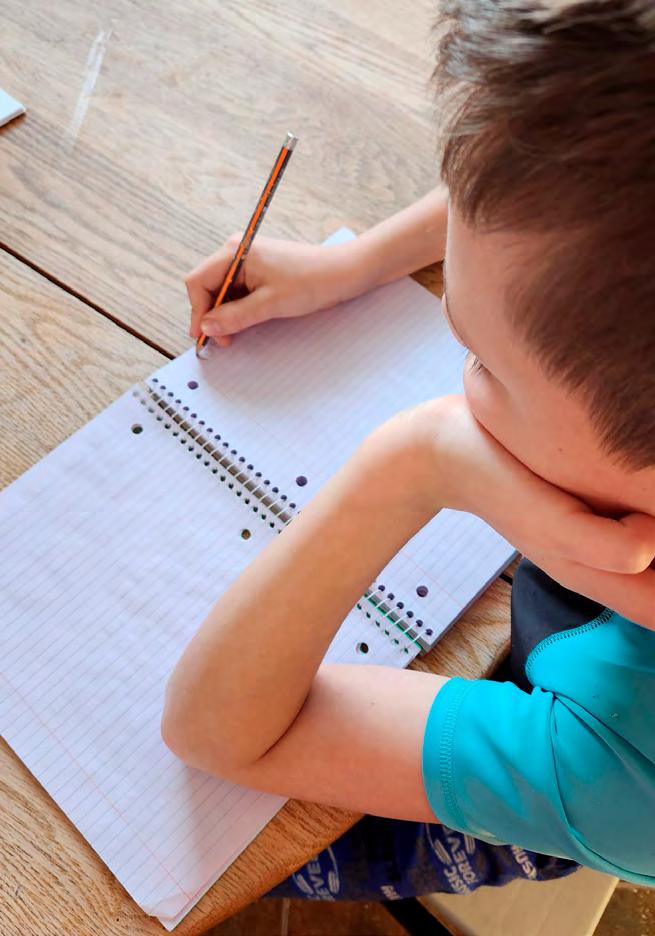
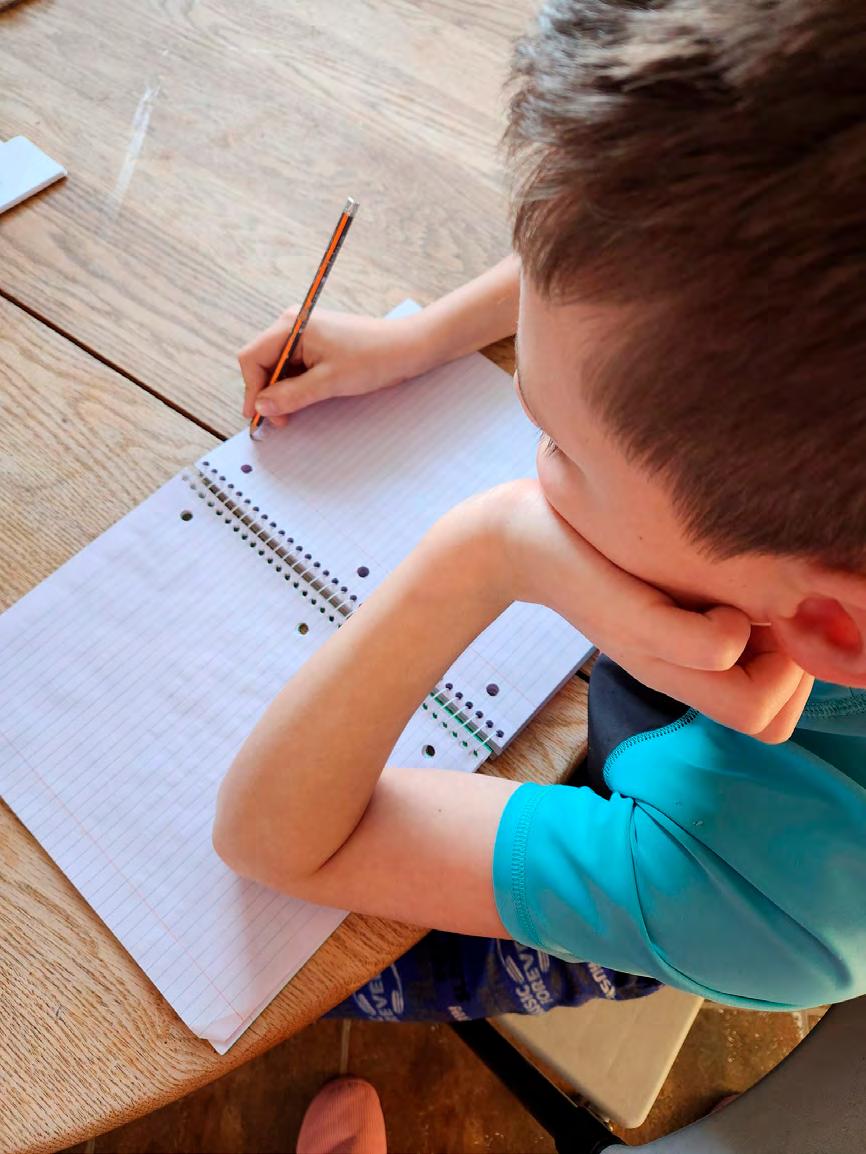
The bane of my last two children’s existence (10yo and 9yo boys). They hate practicing penmanship!
But...
We had a breakthrough, so I thought I’d share. They love to be in the kitchen and are always pretending to write cookbooks with illustrations.
So, I took this love and ran with it.
I write out a fairly simple recipe to accomplish, then they copy it into a notebook designated as a cookbook.
We make the recipe that day, then take a photo and print it out. (I just have a super simple photo printer from Temu.)
They love the promise of making a cookbook and food, and I love that they will do copy work with minimal complaint.


Images courtesy of Jaime Roberts


By Belinda Letchford
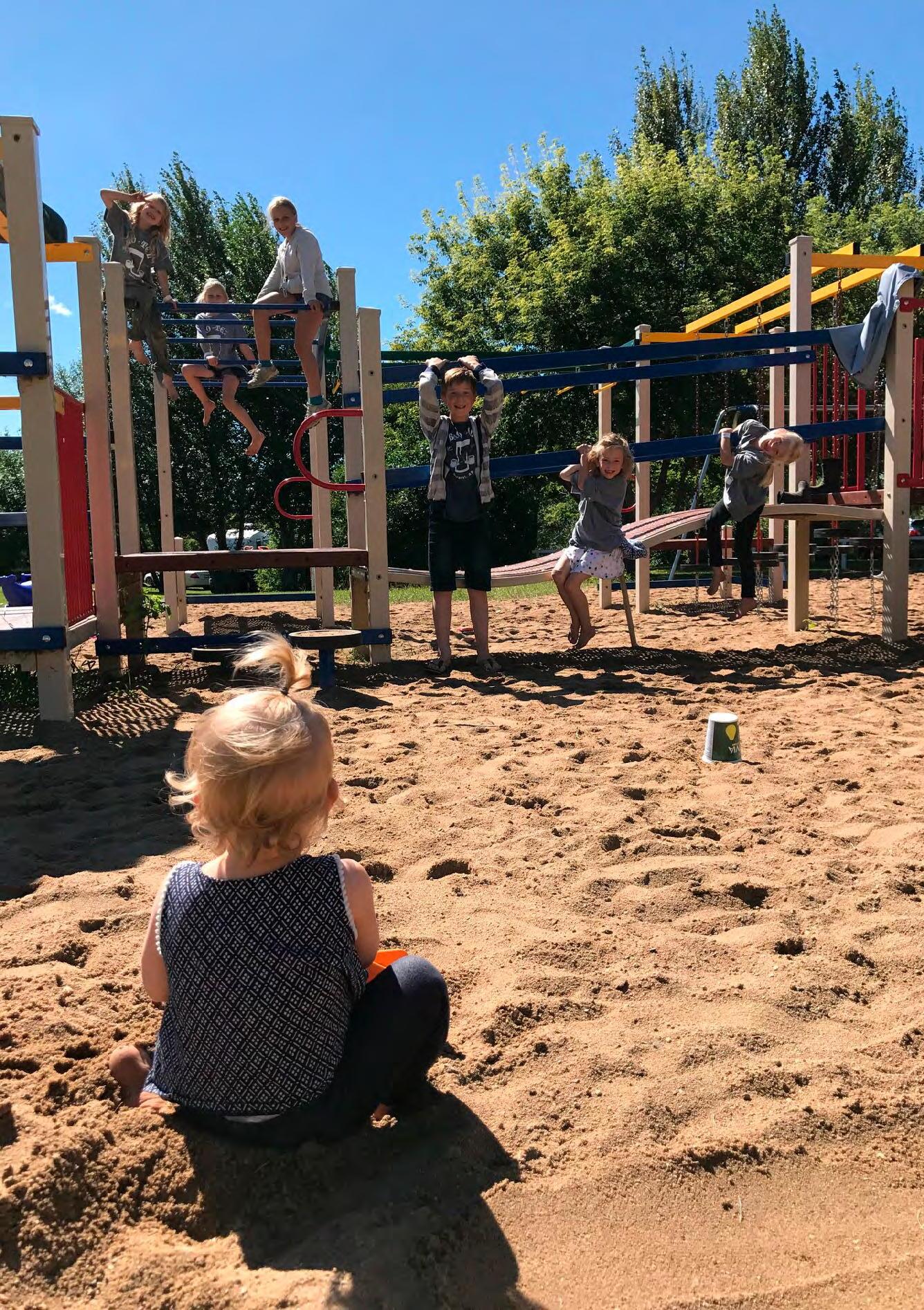
AsI look at our grown family one thing that characterises our family life is laughter – we laugh a lot.
Though I like the idea of deep and meaningful conversation around the dinner table, more often than not, we dissolve into laughter at the silliest of things. I love hearing my kids sharing funnies with each other, or laughing over a shared memory. We enjoy sharp wit and play on words (especially now that the children are older), we joke, we do silly things – laughter is just a part of us.
Laughter is a key ingredient for a healthy family life. It maintains perspective and lightens the load. It creates memories and builds relationships. Is laughter happening in your home?
When was the last time you had a good laugh with your kids? With your spouse?
Encourage humour in your home
There are many ways that we can encourage laughing in our home – and each family will do this differently – but here are a few ideas to think about:
• Enjoy life yourself – do you have down time where you can relax and enjoy?
• Share funny stories – stories from your day, previous times of your life, or stories you have read.
• Encourage the children to read aloud something they have found funny in their book – enjoy a moment together.
• Have a joke book lying around – I know this can be painful, but it is good medicine!
• Watch funny movies – not only is this a relaxing time together as a family, but you are also building memories. Your family will incorporate what they have seen/ heard into your family life and the laughter will be relived.
Be people focused not task focused
When we are task-oriented, the job just must be done – NOW! The task is the most important thing and everything else needs to wait. Alternatively, when we are
people focused, we can still get the job done, but we are aware of relationship issues. We are aware of how the other person is feeling, of how they are coping, of what they have on their hearts. When we allow for human interaction, even when we are working, we will start to hear humour in our home. There will be laughter as someone thinks of something funny they read, or a joke they must share or something silly that just happened to them (like finding the dishcloth in the fridge!).
Let their humour grow
It has been a joy to us to see humour develop in our family. When the kids were babies and we blew raspberries on their big round tummies, their laughter was pure delight. When they were toddlers, I never ceased to be amazed at the calming quality of the giggles at bath time. Somewhere between 4 and 6 they started telling jokes – they weren’t funny jokes, but we laughed anyway because they were so funny thinking they were telling funny jokes! As their vocabulary and ability to use words increased, not only did their jokes start to be funny

but they started to appreciate play on words for themselves. They began to understand what makes a good joke. One of the funniest things to a parent is for the kids to suddenly get the hidden layers of humour in kids’ movies!
Laugh at yourself
My children have never been comfortable with the TV show, “Funniest Home Videos,” as they see people getting hurt and people laughing at this. I have appreciated their sensitivity in this area. But in the home, I do silly things – just yesterday I was crossing a very narrow board across the water channel. It wobbled, I nearly lost my balance, and I shrieked as I scrambled to solid ground. My kids thought this was a scream –there was only about 3” of water in the channel but I carried on as if a crocodile was about to snap (or so they told me). This was family laughter. I laughed at myself, and they laughed with me. This is such a big thing – to learn the difference between laughing at someone and laughing with them. I was laughing at what I did – they laughed with me.
Humour can cross the line
That old line, “I was only joking” just isn’t an acceptable response when humour crosses the line. When does humour cross the line?
• When the laughter is directed at someone, not with them.
• When a practical joke leads to injury – either physical or emotional.
• When silliness distracts people from doing the right thing.
• When there is an immoral component.
As our children grow and enjoy humour more and more, we must teach them to be appropriate and to be sensitive to other people at all times. Being on the receiving end of a joke can be hard for a child to learn as well. Many times, they will feel that people are laughing at them. While people need to learn sensitivity in these situations, the child can learn the joy of making people laugh. It is a contribution that we can all make to the people in our lives.
Humour is Relational
When we laugh something happens to our insides (endorphins is probably the scientific word!) – it changes our perspective which changes our attitude, which changes our actions. Laughing also builds and strengthens relationships because for that moment in time we are either building a memory or reliving a memory.
I hope you find something to laugh about with your kids today.
Family Humour and Character
Humour, like everything in our life, has a balance. There are some things that are funny – and there are some things that are not. As parents, we need to teach our children to be aware of that line. One of the ways that they will learn to walk that line is by being sensitive to others – by being aware of how others around them are feeling and then to adjust their actions accordingly.
To teach sensitivity – or any value-based response – I would teach my kids the name (in this case, sensitivity), I’d talk about what it means, and what it looks like in their life. We would often focus on that character trait for a month or so, making an effort to be extra aware

of opportunities that highlight that response and helping them grow in understanding and in practice.
One such situation where we taught sensitivity was when the kids went through a stage (and they all did) of delighting in giving people frights. They would jump out from behind a corner, they would sneak up on you from behind, they would pop up from behind the furniture with this almighty noise –and if they were close enough to you, they would jolt you as well, doubling the effect of their giving you a fright. This isn’t always funny! So, we would talk through issues of sensitivity and being aware of when such a joke would be appropriate or when to refrain.
Family life gives us so much opportunity to school our kids in character.
Belinda Letchford - The heart is the place where we process and hold our beliefs, values and knowledge – which in turn affect our choices, our actions, attitude and will. The Bible says –out of the heart flows all of life. What a privilege to teach, encourage, and train our children’s hearts. That being said – our influence will come as we live true to our own convictions and passions. My desire for you is that you build relationships with your kids, teach and train the heart, and use the whole of life to teach faith, character and life skills to your kids. I help parents raise their children to have faith, character and lifeskills so that they can live a full and purposeful life. Find out more at the Heart Focused Blog belindaletchford.com
Images courtesy of Belinda Letchford

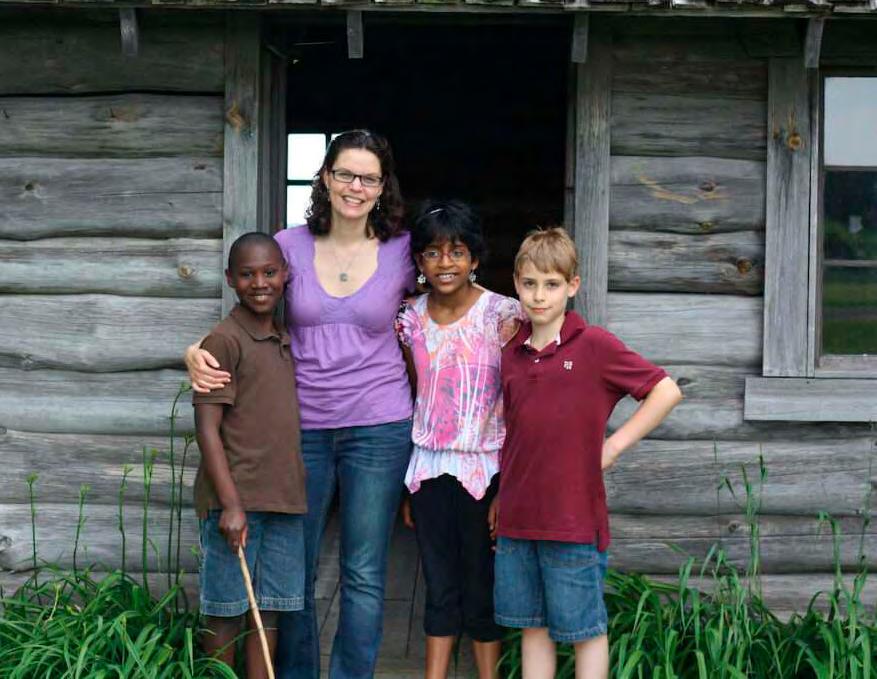
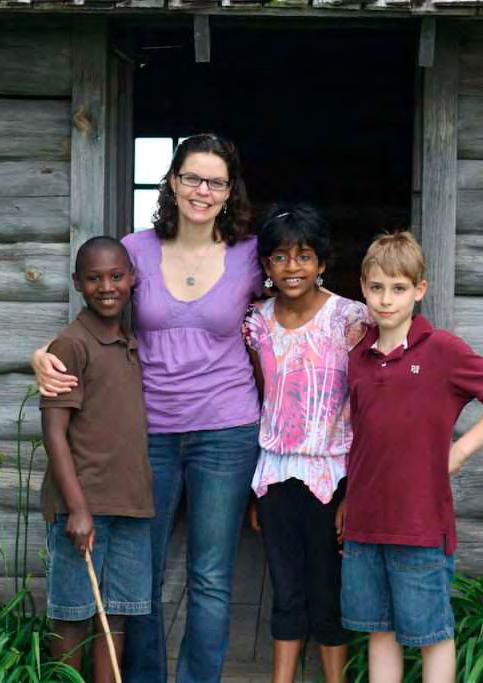
In 2014 on our Little House road trip – the days are LONG but the years are short
Y’all, I put my son on the school bus this morning…and then sobbed.
Not because it was the wrong thing to do; I know in my bones it couldn’t be more right. But because this whole summer has been a series of small endings, and this morning was the final one.
My homeschooling journey of 15 years is officially over.
I’m so proud of all three of my “no-longer-kid” kids:
• Trishna (age 20), learning so much about herself and the world as she works in her first job.
• Jonathan (age 19), on tour with the Jonas Brothers as their Lighting Director through the end of 2023.
• Elijah (age 18), beginning our town’s school program for special needs students ages 18-22.
Each one of them has stepped out of their comfort zones in





new ways this year and has continued developing their unique skills, gifts, and potential – does it get any better than that as a parent?!
At my homeschool retirement party back in June, I shared with our closest friends a reflection I’d written to give a snapshot of all of the highs and lows that come with the journey of home education.
I Am: On Crying in the Shower/Ending the Homeschooling Journey
I cry in the shower. There’s a certain spot where I lean my forehead, watch tears join the water stream, flow as one down the glass. I want to quit. Instead I get a towel, prepare for another day. I tell myself, “10 years from now, I’ll be glad I kept going,” And I am.
I rest my childhood copy of Farmer Boy on the counter, surrounded by flour, rolling pin and messes waiting for later. The scent of apple turnovers, like Ma used to make, infiltrates




up the book and read to captivated ears. “10 years from now this will be nothing more than a memory," I remind myself. And it is.
I sit next to a child at the table and wonder what’s wrong.
Sensing I should ask, I also just want to get this assignment done. I inhale impatience, exhale a question: “Is something bothering you?”
Out it comes: the fear, the worry, the burden. I can’t fix it, but I can half its weight.
“10 years from now I’ll be glad I stopped the lesson,” I tell myself. And I am.
I glance out the window to see childhood innocence in motion. On the tree swing, a colorful dress-up cape flutters with each push, kite’s tail caught by the wind.
I stop the dishes, pick up my camera, head outside.
“10 years from now I will still treasure this moment.” And I do.
I passed Weary two miles ago and can’t check off another box. Declaring it movie day, sofas and thick blankets become our desks and chairs as favorite stories take shape before us.
Chatter ceases for at least a minute, as I sip Earl Grey and rest
“10 years from now, “ I convinced myself, “I’ll be relieved I pressed pause on this day.” And I am.
I close the read aloud as an impromptu theatre production
They grab props, costumes, and each other: one the villain, the
I fulfill my role as audience, then gently segue to a new activity before fighting erupts.
“10 years from now I’ll remember this performance, made for And I do.
I pray downstairs as shouts descend one floor above, derailing my beautifully laid-out plans.
Surrounded by comfort objects: Bible, books, earplugs, I ask God for the millionth time: “Am I doing anything right for these
Once again he whispers words I once again try to believe: “10 years from now, you’ll clearly see the impact your work has made on their lives.” And I can.
A lifetime of daily memories thread together on a string, but not the glimmering garland of pearls you’d want decorating
Ours is rough and ragged, bitter and sweet forever fused together. My moments of inadequacy match those of plenty, yet my loaves and fish multiply.
I’m there for every first word read, milestone reached, lesson
By God’s grace I longed to give them the education I never received. And I have.
I go back in time, slide a note under the door to the discouraged mom stepping out of the shower.
“10 years from now,” it reads, “the thousands of snapshots of delight, sorrow, laughter, sacrifice, and growth will be worth it, but not just for your kids…
You will have evolved into a completely different, much stronger person.”
And I am.
Jamie C. Martin - I’m a highly sensitive, introverted mom who loves the countryside, writing, traveling, and reading. Some of my favorite authors: Louisa May Alcott, Jane Austen, L.M. Montgomery, and Laura Ingalls Wilder. I never planned to become a homeschooling mom, but stumbled into it when doing some initial research into educational options for our kids. Often the best things in life are unplanned, aren’t they? I love the advantages homeschooling gives my kids, and this lifestyle fits perfectly with who we are as a family. Find out more at the Simple Homeschool simplehomeschool.net
Images courtesy of Jamie C. Martin
Did You Have a Good Home school Year?

By Sonya Shafer

Atthe end of a school year, it’s common (and beneficial) to look back at those previous months of work and do a little mental review: Was it a good home school year? If not, why not? If so, what made it a success? Of course, every year is going to have its ups and downs, its triumphs and its challenges, but overall, how did it go? That’s the question we often ponder. But the answer heavily depends on what you’re looking for, how you define success. I want to share what Charlotte Mason encouraged you to look for as you consider whether you had a good year.
Most of us start a school year with great hopes and plans. This is the year that _____ is going to happen. This is the year that little Joey is going to learn his times tables, or finish Algebra II, or whatever. But perhaps you got to the end of the year and things didn’t go as you had planned or envisioned. Maybe things took an unexpected turn because of an extended illness or a move. Maybe you experienced a home disaster that upended everything for months. Or perhaps you walked through a season of grief from a loss or joy from a new arrival—both of which require a lot of energy and time.
Life happens. And when you’re home schooling, that life happens very close to the schoolwork because it’s all taking place in the same location with the same people all day long. If you’re basing your idea of a successful school year on the number of books that you finished or the number of checkboxes that you were able to check off, you might be disappointed when you look back.
But, my friend, those things are only means to an end. The goal is not just to finish a book. You might read every single page and none of it sticks in your student’s mind. The goal is not just to check off every assignment. Checking it off doesn’t mean anybody learned anything. They might have, but you have to look at more than just the checklist to evaluate whether it was a good year.
Where do you look? The books and checklists and assignments all are tools to use toward the main goal, and that main goal—the one thing that you’re looking for in each student—is growth. Did my student grow? In what ways did she grow?
Now notice, I didn’t say “Did my student grow to this specific level?” She might not have grown as far or as fast as you
wanted her to. But remember “the child is a person,” and part of respecting that unique individual is feeding her mind and heart and allowing her to grow at her own pace without the pressure of comparison to other unique individuals. So rather than fix your eyes on the finish line you were hoping to get to and obsessing over how far short your student fell from that goal, I encourage you to shift your gaze to the starting line, where your student started at the beginning of the school year and look at how far she came along the track. Did she grow?
Sometimes it’s hard to focus on growth, because it’s not as easy to see that as it is to see the checkmarks in the planner or the finished books on the shelf. So how do we look for growth?
Charlotte gave us some guidance when she wrote,
“We must bear in mind that growth, physical, intellectual, moral, spiritual, is the sole end of education.”
The Story of Charlotte Mason, p. 231
So think through those four areas.

PHYSICAL GROWTH
First, did your student grow physically? That might include a growth spurt in height, but I think it also includes that student’s relationship with herself. Did she come to a new realization about herself this year or gain a new skill in caring for herself? My youngest with special needs is now able to do her own laundry without reminding. That’s growth in a physical skill! Perhaps your student learned a new physical skill. Or maybe she strengthened a relation that she had already started about how her will works or how her conscience needs good instruction or how good habits set her up for success. Did she grow in perception of herself and how she is fearfully and wonderfully made by her loving Heavenly Father? There are so many ways our children can grow in this area.
INTELLECTUAL GROWTH
Second, think about how your student grew intellectually. Did he grasp some ideas about how the universe around him works? About God’s irrefragable laws in arithmetic or geometry? About the seasons and the laws of science? Most likely he didn’t grasp every single detail in every single lesson, but which ideas nestled into his heart and expanded his mind? In what ways did he grow intellectually?
Now, if you had expectations that your student would complete a certain course or learn a certain body of information, it’s tempting to look at what was not accomplished. But remember, education is not about how many ideas he did not grasp; it’s about which ones he did grab onto for his own possession. “We do not say he will remember all he knows, but, to use a phrase of Jane Austen’s, he will have had his ‘imagination warmed’ in many regions of knowledge” (School Education, p. 243). That’s intellectual growth.
MORAL GROWTH
What about moral growth? That’s the third area to look at. In what ways have you seen your student grow in her relationships with others: respecting those who are different from her; forming her opinions justly and after careful thought; showing kindness, generosity, and candor in conversations; embracing timeless principles and wisdom from the past and the present? These are only some of the ways that a person might grow in relation with other people. None of us is perfect in this area of life, even as adults. So, look at this area with grace-filled eyes and see in what ways your student has grown morally over the past year.
SPIRITUAL GROWTH
The fourth area in which to look for growth is spiritually. Did your student grow in his relationship with God? Look for growth in the aspects that Peter laid out in 2 Peter 1: make every effort to add to your faith, virtue; and to virtue, knowledge; and to knowledge, selfcontrol; and to self-control, steadfastness; and to steadfastness, godliness; and to godliness, brotherly affection; and to brotherly affection, love. In other words, look for ways that your student is growing in trusting God, doing what is right, learning more about God, controlling his passions, persevering instead of giving up, honoring God, giving grace to others, and loving well.
You might be thinking, “But what does loving others and trusting God have to do with my student’s education?”
Everything. It has everything to do with your student’s education, because you are educating the whole person, not just a brain. The ideas from the books and the checked-off assignments are only some of the tools that contribute to educating your child. Life experiences contribute
greatly. The atmosphere of your home, the ideas that you live out and discuss every day during life experiences—those comprise at least one-third of your child’s education as a person. The habits that you help your child to develop contribute another third to his personal education. The ideas that other people in your community share contribute to it. The time spent outside in God’s creation contributes to it.
Chances are you haven’t documented all of those contributions all year, but they matter greatly. Don’t get stuck looking only at what you have written down in your planner. Your student has grown in many ways—physically, intellectually, morally, spiritually, in his relation with himself, with the universe around him, with others, and with God. If you want to know if you’ve had a good year, lift your eyes and look at the bigger picture.
“We must bear in mind that growth . . . is the sole end of education.” Look for the growth—celebrate growth—and you’ll see that it was, indeed, a good year.
Sonya Shafer is a popular home school speaker and writer, specializing in the Charlotte Mason Method. She has been on an adventure for more than 20 years studying, researching, practicing, and teaching Charlotte’s gentle and effective methods of education. Her passion for home schooling her own four daughters grew into helping others and then into Simply Charlotte Mason, which publishes her many books and provides a place of practical encouragement to home schoolers. The above article was originally published at simplycharlottemason. com and was reprinted with permission.

Image source: Kaboompics

By Paul van den Bosch
Laughing All The Way Laughing All The Way

Whydo we laugh? The answer will change depending on who you ask. Scientists have reasons for why we laugh and they also have physiological details about what is going on when we laugh. Philosophers can tell us where laughter fits in our worldview. Politicians know they should include humour in speeches if they want to win votes. Comedians and playwrights make their living finding ways to make us laugh.
When we look at the people around us, we know there will be some who will look at a situation and grouse, “that’s not funny!”. But I think few people would disagree with me that our lives can be improved by adding more laughter. And more dogs. And more pictures of dogs laughing. Here are some arguments for laughing more….
Laughter is perspective
There’s a man I know who thinks the apocalypse is going to happen any day now.
But he’s got sense of humour about it. He makes jokes like there’s no tomorrow.
There was a draw at work and I won a small prize: $100.
I decided to donate a quarter of it to Charity. She thanked me and I still have $99.75.
Life – and especially home schooling – can often appear to be one unexpected event after another. As much as we try to control things, strange events happen every day. The basement floods. That home school science experiment went a little awry (but we got the fire out quickly so that was a learning experience too). The phone rings and it’s a home school friend who has a “quick question”.
How will we react to those things? Something unexpected may cause us to feel alarm and so we pull back in fear. An unforeseen event may cause us to blow up in anger and we can feel a lingering resentment afterwards. We may try to shrug things off and carry on with determination and our teeth locked together in an attitude of endurance. We can also do our best to look at the quirks and foibles of life with an attitude of bemused acceptance so that, more often than not, we can look at life and see the humour in it. Laughing at life with acceptance takes practice and I often find that the laughter comes after I have already felt the fear and anger. But the more often I look at life with laughter, the brighter each day seems, the more joyous this world
appears, the more tolerant I am of others around me… and myself, too.
Laughter is happiness
I just got a new pair of shoes and one of the shoes wasn’t right.
Yesterday I spotted an albino Dalmation. I used a magic marker.
I know that you might say here that laughter is a SIGN of happiness. You would be correct. But while laughter can come after you feel happy, happiness can also come once you start laughing. For instance, have you ever had an experience like this? You are in a group of people and something unexpected happens and, at first, no one reacts. Then someone starts laughing. Soon, the entire group is laughing. The unexpected event could have caused anxiety or anger, but, because of one person’s laughter, the mood of happiness spread to others.
Our laughter can do that. Laughter lightens our mood, as well as the moods of others. Doctors tell us that laughter reduces our stress, helps alleviate pain, strengthens our immune system, increases blood flow (good for the heart), and helps us to relax. Knowing that laughter helps me relax and is good for my heart increases my happiness and I hope it will increase yours as well.
Laughter is connection
I went to this joke website and found a joke about the constellation Orion's Belt.
But I decided not to tell it to you because it only got three stars.
What do Alexander the Great and Winnie the Pooh have in common?
Same middle name.
At this point you’ve read a few jokes that I’ve included as part of this article. Maybe you thought some of them were mildly amusing. Perhaps you rolled your eyes at some of them. But, most likely, you didn’t laugh out loud at any of them. The reason for that is that solitary activities don’t lend themselves to laughing out loud. Reading is a solitary activity for most of us and you are likely reading this article silently to yourself. So…. you didn’t laugh.
Probably.
The opposite is also true: when we are with
a group, we tend to lend our voices to the pleasure of the group. Sometimes we do that because we want others to know they are welcome in our crowd. Sometimes we do it because we are nervous whether WE are welcome in a particular crowd. But, either way, laughter is something that connects us to others. Connecting with other humans is a life-affirming thing to do.
Laughter is socialization
I had to go to the optometrist to get my glasses fixed yesterday.
You know who I bumped into on the way?
Everybody.
There’s a friend of mine that keeps getting concussions.
He lives really close to me.
Just a stone’s throw away.
Once we have connected to a group, what are the expectations of that group? What are the expectations of the larger society that we live in? We learn some of the answers to those questions through laughter. If any of the jokes that I have told in this article offend you in some way, your action might be to take me aside and say tell me why such a joke was inappropriate. That is how we “socialize” each other: we let each other know what’s OK and what’s not OK. Parents do this with children all the time.
When one of my children does something and I laugh, that child has learned that whatever they did was an acceptable thing to do. Laughter signifies approval. We try things out and we learn how to behave. Laughter is one of the ways we know that our behaviour is acceptable.
Laughter is cooperation
A friend of mine says his garden vegetables grow better when he talks to them.
So… Jack and the beans talk.
Have you ever tried blindfolded target shooting?
You should try it.
You don’t know what you’re missing.
Once I see, through your laughter, that I am accepted in your group, I will tailor my behaviour to fit the group. I will attempt, either overtly or subtly, to continue to gain approval. I will hope that I can continue to
make you laugh. I am saying, in effect, that I am cooperating with the group and agreeing with the group conscience on the collective aims and goals that the group has.
These aims and goals may be unspoken, of course, which is why laughter is so important to determine what the unwritten rules of the group are. Once I have a sense of those rules, I will either agree (and therefore cooperate) or I will leave the group. Our collective laughter is a sign of cooperation.
Laughter is joy
What do you get when you cross a snail and a porcupine?
A slow poke.
What’s the difference between an eggplant and a rabbit?
For starters, they’re both purple.
Except for the rabbit.
Joy may sound similar to what I noted above that “laughter is happiness”. But joy is more than happiness. Joy is looking at life with a clear-eyed acceptance and knowing that not every moment can be happy. Joy is knowing that there is a great deal of pain and discomfort in our lives and that I can react in several ways to that pain. Some of the pain can’t be helped or changed and so I try to serenely accept the pain I can’t change. Some of the pain in life CAN be altered or improved in some way, and, when I see that change is possible, I pray for the courage to take action.
Either way, there is pain in life. Knowing that there is pain in life doesn’t have to discourage me. It can mean that I see the pain, but I can also see that there is so much more to life than the pain. When I see the small flicker of light in the darkness, I can laugh with pleasure and see that the darkness will not extinguish my joy, that life is in fact full of joy. I can laugh through the pain. My laughter can spread joy and that joy will come back to me through others.
Laughter is strength
I drank some invisible ink this morning. I’ve spent the whole day at the emergency room waiting to be seen.
When I was a boy, there was a song that we would sing occasionally in church. One of the lines was this: “God loves a cheerful giver, so give it all you’ve got!” In the face of pain and grief, laughter not only helps us deal with that pain and see the joy in life, but it shows to others that we are resilient and stronger than today’s setback. Sometimes laughter shows our resilience to ourselves as well. When we can laugh in the face of a difficult situation, we are not saying that pain is a laughing matter, nor are we saying that we shouldn’t feel those deeper feelings of grief and disappointment. But laughter tells others – and we tell ourselves – that we are not going to wallow in this misery. We can move on from here. We can see the ray of heavenly sunshine and take comfort and smile.
Laughter shows that we are stronger than we thought we were.
Sometimes it’s OK not to laugh
Yes, there are times when it would be best not to laugh. A funeral is likely one of those times. There are also times when we wish to make a serious point instead of making a joke. Let me do that here by quoting poet W. H. Auden who spoke of the task of the poet in the world: Follow, poet, follow right, To the bottom of the night,
With your unconstraining voice, Still persuade us to rejoice.
- W. H. Auden, from his poem In Memory of W.B. Yeats, 1940
Whether we feel we are experiencing “the bottom of the night” of our lives or whether we are feeling unconstrained in happiness and pleasure, (or perhaps we are somewhere in the middle), we can still rejoice in this life, in God’s creation.
We can laugh.
Paul van den Bosch is a WISDOM Facilitator who is serious about laughing. He is young at heart (although slightly older in other places).
Did you hear about the baby potato that wasn’t sure he wanted to be a potato? He was a hesitater.

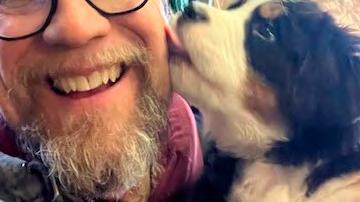
Images courtesy of Paul van den Bosch

Faroff on the horizon thick, dark, foreboding clouds had been gathering.
The two boys lay collapsed on the raft, far too exhausted to hope for a better future. The sharp wind was intensifying, and waves were beginning to escalate extremely quickly. Nehemiah could not even see the shore through his teary eyes and the ascending waves. The mighty winds blew as hard as they could from every direction imaginable, carrying
at a shocking pace the thick, dark clouds, hinting at a rough future for the two friends. Waves built up all around them, towering over the raft, daunting the boys who couldn’t see any hope in their grave situation. The mounting waves filled Nehemiah with dread as he suddenly saw them like daunting tombstones in a giant watery cemetery. This must be my grave! Nehemiah thought with horror as icy wave after icy wave washed over the deck of the little raft, submerging the raft time after time, freezing them both.
Nehemiah closed his eyes, trying to block out all the problems around him: the water, the noise, and all his thoughts. It did not work. He could not fully ignore or forget the disaster that encircled him. As he tried to forget his thoughts, they were only amplified. This bucking raft is going to flip. It can’t stay upright in all this! The waves are much too strong. Oh, this is awful. I am going to die! There is no hope left. I knew that I should have never got onto the raft in the first place. Water brings nothing but trouble!
The gale winds blew with all their might, forming enormous waves and deep troughs. The whole, angry ocean seemed to have one goal: to submerge the little vulnerable raft. The deep, dense, foreboding clouds rolled with a clap of thunder and a flash of lightning over the entire sea. The sky could not be seen. The boys were plunged into utter darkness just like when you flip a light switch.
Heavy rain pelted down and swept like a solid wall of water across the surface of the ocean, soaking the already drenched boys to the bone yet again. The wind and the waves escalated, and the raft was thrown over the top of towering waves, flying like a stone from a catapult through the thick, wet air.
“No!” Nehemiah screamed as loudly as he could, clinging to the rope handle that Daniel had made earlier. “Why me?”
Daniel clung as tightly as his weary arms could hold on to the rope, not able to hear or see Nehemiah, despite that he, likewise, was clinging to the rope right beside him. Lightning



flashed all around them, lighting up their surroundings and making the ever-rising waves look terrifyingly horrible. Thunder rolled overhead, wind wailed, and the waves crashed around them, deafening the boys.
The sea was wild.
The raft was flung over the top of the waves time after time again. The raft rose higher and higher on an enormous wave, then suddenly fell over the top, down, down. The waves poured down onto it, forcing the raft far under the water. The raft fought to make it to the surface, but the waves kept pushing it down, holding it down for much longer than Nehemiah or Daniel felt like they could hold their breath as they desperately clung to the raft. After what felt like an eternity, the raft surfaced, giving the boys a moment to breathe. A breath of air, thick and saturated, heavy with water; the only thing they did not want!
The rain became heavier, and a powerful torrent flooded down on the two boys, soaking absolutely everything in its path. The storm was ferociously intensifying in the utter darkness. Could this day get any worse for the two boys, or was death their only hope?
The foaming ocean roared all around them. The two boys held on to the rope as tightly as they possibly could, knowing that if they let go they would fall off and drown in the ferocious, voracious, icy water. The cold and the drenching rain chilled both the boys to the bone. Wave after wave of frigid water washed over and around them. The
cold, mighty winds blew all about them, shifting the waves and making countless more. The raft was thrown over the tops of terrifyingly large waves, flying through the dense air and heavy rain, and then hitting the water forcefully with a spray and a splash.
Wild, wilful waves threw the raft farther into the unknown, under and then over the water, again and again. The raft was flung about so wildly that the boys were not even sure that they could hold on to it. Both boys wondered, Will this storm ever stop?
As the raft flew through the heavy air, one of the handles that Daniel was holding onto snapped! From the corner of his eye, Nehemiah saw the rope break and Daniel desperately trying to grasp at the raft as he was yanked off of his only hope of survival by the waves that crashed down on them.
“Hold on to me!” Nehemiah yelled as he let go of one of his handholds and grabbed Daniel’s hand, pulling him with all his strength back onto the raft. Daniel held tightly to Nehemiah with one hand as he seized the remaining rope with his right hand, relieved that he still had a sliver of hope, but shocked that Nehemiah had reached for him.
Terrified, Nehemiah and Daniel held onto the raft with one hand each, and to each other with their remaining hands. Lying close together, the two boys kept as warm as they possibly could. They tried not to fall asleep on the cold, slippery raft, knowing that they would die if they did not get warm soon or if they fell off the raft.
The storm intensified, raining more and more violently. The waves doubled their crests, rising to legendary heights. The winds were like tsunami wind: the most dreaded thing on the ocean. They tore at everything in their path. The storm never ceased over their heads, and the lightning and the thunder struck at the same time. Lightning flashed all around them, constantly lighting up the sky, throwing ugly glares in the darkness of the savage, ravenous storm.
The boys were drenched. The driving rain drove them into despair. An enormous wave lifted them higher and higher and higher until they were far over the heads of every other wave; then, as the raft crested the very climax of the wave, it fell, toppling down, down, down, down the other side. They were blown by the biting wind just far enough out of the grasp of the crashing wave. They had no strength left. They could hold on no longer. As the boys slid off the raft, desperately clutching at it but not able to get a hold of it, they were flooded with a gripping fear of certain death at a new level that they had not experienced before. The hungry, dark water loomed frothing and wild before them as they fell towards it, closer and closer, until with a jar and spray, they hit a sandy beach.
Neither stirred.
Jonathan Pond is 14 years old and lives in Edmonton with his parents and 4 siblings. He loves going on adventures and being outside, and really enjoys gardening. He had a lot of fun writing the story this excerpt is from in the WISDOM Creative Writing course, and hopes you all enjoy reading it as much as he enjoyed creating it.



Image courtesy of Jonathan Pond
Home School Experiences

How to Take Kids to Museums
By The Homeschool Historian
(Facebook Post on December 7, 2023)




Want to take your kids to museums but have no idea how to start? This post is for you.
*Tips for Immersive History-Related Experiences*
Historical sites, reenactments, museums, and other immersive experiences provide an amazing opportunity for kids (and adults!) to
(1) develop historical empathy,
(2) experience the past in a physical, tangible way, not just from a book,
(3) give a point of reference for future study,
(4) develop questioning and observational skills they will use their entire lives, and
(5) normalize the past as a place which provides meaningful experiences. In other words: immersive history helps create life-long learners.
Here are some tips to make the most of the experience:
1. Know the lay of the land. Nothing is more of a timewaster than having no idea where everything is, especially when you have little ones. Research the event or place before you go and download a map: check out the titles of the exhibits or names of the activities so you have an idea of what’s offered and where.
2. Don’t hurry them along. Please don’t do this. These experiences should build, layer upon layer, in a way that invites them to learn and experience—not be rushed through it. Maybe they won’t stop where you hope they would. Maybe they’re pouring over details that seem silly to you. All of that is more than ok!
3. This goes hand in hand with #2: don’t expect too much. Don’t expect too much of them (what they’ll enjoy or what they immediately retain) and don’t expect too much of the experience (if it’s not as thrilling as you thought). We can’t really time travel, and as great as immersive experiences are, they’re not exactly the real thing. Try to have realistic expectations set for the whole experience.
4. One of the greatest aspects of historical immersion is giving your child the ability to ask questions and know where to find the answers: this will (or should) last their entire life. Historical immersion is a great place to introduce and practice this! If they have a question and you don’t know the answer, respond with something like “Oh that’s a great question. Let’s go find out together” (and then find a docent or a reenactor who can help).
5. Be realistic about their age and attention span. Don’t plan something during nap time and then get frustrated that your child “ruins” your plans (it’s me—I did this early on). If they’re four, expect them to act like it. If they’re eight, expect more from them (except in the cases of children with disabilities or restrictions). If you know they tend to melt down in large crowds, maybe a Saturday at a major historical site at peak season isn’t the greatest place to be.
6. Model behavior you want to normalize:
• Read placards
• Comment on the display/etc. out loud rather than in your head (ex: “I never realized women wore those kinds of dresses during that time,” or “I wonder how long it took to make that sword.”) This gives an awesome example for kids that their parents don’t know everything, and they still have questions and want to learn, too.
• Keep your voice quiet in solemn areas or where people are studying, be respectful of others, don’t touch things you aren’t supposed to, etc.
• Know how to act in a tour situation: don’t ask questions until the docent or tour guide is finished giving his/her presentation of an area (unless they pause and ask for questions), don’t keep your hand raised while they’re talking, don’t have a lengthy debate with a docent (especially if there are others on the tour with you— this is unbelievably rude and has happened to us several times), and don’t allude to the fact that you know more than the docent (even if you do). Docents and tour guides are very often volunteers who love the subject matter so much that they are literally giving up their free time to share it with you. Demonstrate proper etiquette so your children can learn how to behave.
7. Only give homework or a project to your child after the event if you know they will enjoy it. (This doesn’t apply to teachers in a public school situation—they often have to give assignments like these, and as was explained in my post about my first historical field trip as an elementary student, it turned out great for me. For
other kids, not so much.) I’ve never made my kids write an essay about what they learned, because I know they would hate it and then anything we experienced together would be tainted. (Your kids may be totally different.) Bottom line: you want history to be exciting, real, and stimulate questions. If a writing assignment does that for your child—great. If not, you may be poisoning their experience and ensuring they’ll be less excited the next time. (Note: Older students are a little different.)
8. On the drive home, rather than ask “what did you learn today?” ask questions like these:
• Did you like anything about the ______ exhibit?
• My favorite part was the costumes. Did you have a favorite part?
• I can’t believe people used to __________! What do you think about that?
• Would you ever go back to that time if time travel was possible? Why/why not?
• If we could bring _____________ to the 21st Century, what do you think he/she would think of life here today?
• Hey, did you guys notice the food they were making over the fire? Would you eat something like that? Do we have something similar at our house?
Questions like this help foster question-driven historical thinking which is a crucial element in good history. They also help develop critical thinking and historical empathy, which will help shape their future history education.
9. Lastly, I highly recommend having a reminder of your time: a framed picture, a token from the gift shop, the map or program, something! Having a reminder will keep the memories to the forefront, and it will remind them that learning about the past can be FUN. It also continues to normalize the idea that your family actively pursues historical experiences as a part of your family culture: “this is something we do as a family, and we’re all learning together when we do.” Go early, go often.
Holly (The Homeschool Historian) - Hi! I’m Holly, the Homeschool Historian, and I write history curriculum & guides for homeschoolers. I’m passionate about the past: how we interpret it, how we perceive it, and how we write and talk about it. I believe in fairness and balance in historical interpretation, especially in a culture in which these elements are hard to come by.
When I’m not homeschooling or dragging my family to historical sites, you can find me knitting (terribly), taking walks in the woods, and dreaming about autumn. Find out more at The Homeschool Historian thehomeschoolhistorian.com
Homeschoolers Can Have Yearbooks Too!
By Jennifer Bly
Sometimes, as a homeschool mom, I wish my children could experience certain things that brick-and-mortar school kids experience… like yearbooks. I want my kids to have yearbooks too. Well guess what… they can! Homeschool yearbooks are easy to assemble and are a wonderful keepsake.
This article is going to give you some simple and practical ideas for assembling homeschool yearbooks. Are you ready? Let’s dive in, shall we?
HOMESCHOOL YEARBOOKS
A yearbook is a must-have for homeschoolers and here’s why:
• It’s a great way to document learning.
• A homeschool yearbook is a fabulous keepsake.
• It’s a wonderful way to inspire you (especially after a rough homeschool day).
• In the future, your children can look back and be nostalgic about their homeschool years.
• It captures field trips, projects, friends, and activities during that time in your child’s life.
HOW TO CREATE A HOMESCHOOL YEARBOOK
The best homeschool yearbook is full of pictures. So, if you’re not taking loads of photos yet, hop to it!
WHAT
KIND OF PICTURES SHOULD YOU INCLUDE?
Here are some great ideas of what kind of photos to take during the year.
FIRST DAY OF “HOMESCHOOL” PHOTO
Yes, you can also pose your child with a sign that indicates what grade they’re going into! Those photos aren’t just for
kids who go to brick-and-mortar schools!
FIELD TRIPS
Make sure to snap photos on all the field trips you attend.
CO-OP EVENTS
If you attend a homeschool co-op, snap some photos of the activities there (check first to make sure that photos are allowed). If your child has some best buddies at the co-op, ask their parent’s permission to take a picture of them together.
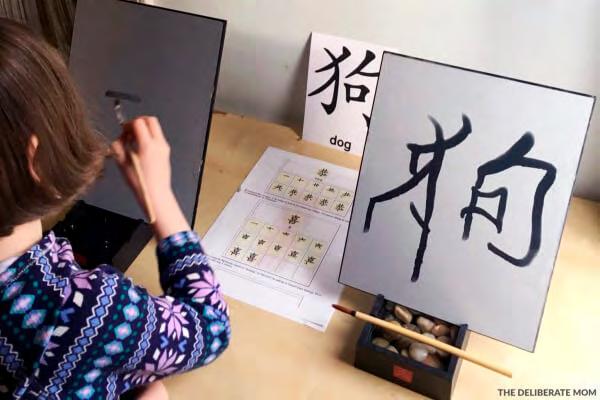
SPECIAL HOMESCHOOL ACTIVITIES
Did you mummify a chicken with your child? Perhaps you made an erupting volcano? Or maybe your children put on a skit? Take pictures of all those special homeschool activities.
CAPTURE THE MUNDANE TOO
As nice as it is to look at all those extraspecial activities, it’s wonderful to capture the mundane, basic moments too. Take pictures of your children solving equations or working on a writing project.
TAKE SOME PICTURES OF YOU
Set up a tripod and snap some pictures of you reading to your children or working
on an experiment with them. Your children (and you) will love having those photos to look back on!
COMPLETED PROJECTS
The yearbook is a great way to document some of the special projects your children worked on. Whether it’s a painting or handicraft they completed, a sculpture they made, or a poem they wrote… take photos of their work!
HOW TO ASSEMBLE HOMESCHOOL YEARBOOKS
Select your photos and write up a small caption to include with the photo. Dates are handy but not necessary. Just make sure you complete your yearbook every year and have the year on the outside of the book.
You can place your photos in an album OR you can make a photobook online! I make all of our yearbooks with Chatbooks (https://chatbooks. com/). I find it’s the easiest and simplest way to assemble our yearbooks.
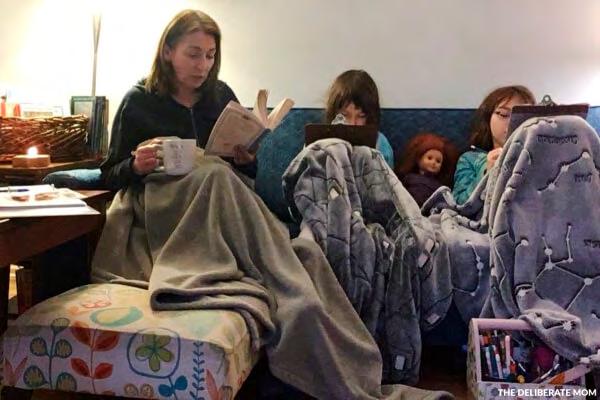
USING CHATBOOKS TO MAKE HOMESCHOOL YEARBOOKS
The best part about Chatbooks is they have an app you can install on your phone.
When I take a picture that I want to include in the yearbook, I pop it in the app and quickly write up the caption.
All year long I add to the yearbook. This way the yearbook is never an overwhelming project at the end of the year because I’ve picked away at it for ten months.
Once we’ve wrapped up our year, I order the Chatbook and voila! The book arrives in the mail a few weeks later.
I love that I can stack our yearbooks easily and the children can sit down and look through them at any time.
Plus, with the Chatbooks account, my previous books are kept on file. So, if a book gets damaged, the kids can’t bear to share it, or the grandparents want a copy, I can simply order another yearbook with the click of a button.
Easy peasy, right?!
Jennifer Bly - Let me introduce myself. I’m Jennifer and I’m the creator of The Deliberate Mom.
When I started this blog, I made many lists of what it should be named. As I deliberated, I realized that I, for the most part, am a deliberate person. I take my time, I ponder, I reflect, I negotiate, and when I act, it is with deliberate intent.
As a mother, I’m especially deliberate. From the activities I do with my children, to the food I provide, I’m intentional. However, over the years I’ve learned that being a deliberate mom is not about perfection but rather intention. The articles you will find here on The Deliberate Mom fit into four main categories: Parenting, Homemaking, Faith and Homeschooling. Come find out more at The Deliberate Mom thedeliberatemom.com
Images courtesy of Jennifer Bly

Why Should We Study Insects?
By Sonya Shafer
They’re little, they’re fast, sometimes they can be downright pesky. Now I’m not talking about your kids, I’m talking about insects. We know we should study them as part of our nature study and our science curriculum, but why should we study insects? What is it about insects that can get us excited and want to study more about them? Joining me is my friend Karen Smith to talk about why we study insects.
Sonya: Karen, if we talk about insects, I know you’re the expert to answer why on Earth should we study them. I often refer to things that we study in nature as “nature friends,” and I remember recently, one mom called me out on that: “A mosquito is not a nature friend.”
Karen: Well, yes, it is.
Sonya: And that’s why we’re here. Why would you call it a friend? What is it about insects that we need to keep in mind?
Karen: Well, just briefly, in the case of a mosquito, you may not like them, but they are very necessary for your livelihood. Yes, we don’t like it when they bite us, but they are an essential part of the food chain in the ecosystem. Apart from that, the biggest reason that we should study insects is because they’re part of God’s creation.
Sonya: That’s true. There was a reason that He made them.
Karen: Many reasons, but yes. Anything that’s a part of God’s creation we should study at some point in our lives. We should get to know the things that God created. He created these things for our benefit.
Sonya: And we learn more about Him by looking at what He designed and made. Just like you can learn about a person by looking at what kind of art he produces or what kind of food she cooks or what kind of handicraft he does. It tells you about that person.
Karen: Yes, about that person, what he likes, what he doesn’t like.
Sonya: How he thinks.
Karen: That sort of a thing, yes. So yes, they’re part of creation, so we should study them just from that, but if you need more reasons, I have more.
Sonya: That’s a good one to start with, but give us more.
Karen: Insects are very interesting. I know most people go, “Ew a bug, why do we want that? Let’s kill it.”
Sonya: They crawl around, they bite you, and you’re done.
Karen: But there is such a wide variety of insects. There is everything from ants to beetles to butterflies to bees to various hopping insects, and that only scratches the surface of what is out there. There is such a great variety, so get to know some of those varieties, or as many as you can.
Sonya: You’re not going to run out of things to study.
Karen: Yes, there are more insects than any other creature on earth. And I don’t just mean there-are-a-million-mosquitoesliving-in-your-backyard type thing, there are more species of insects than any other creature on Earth. Scientists have named and discovered about one million species of insects.
Sonya: Wow.
Karen: A conservative estimate of four million are left undiscovered, so you have the opportunity, by studying insects, to maybe discover one that has not been discovered before. So, isn’t that a good reason?
Sonya: That’s a good reason.
Karen: They are also easy to find and easy to study. They live virtually everywhere on the earth, from the poles, to the tropics, and everywhere in between. The only place that they have not found any insects yet, living, would be the oceans.
Sonya: Oh, interesting.
Karen: Anywhere you live, there are insects to study. So, no excuses. Another reason to study insects is that we cannot live without them.
Sonya: Now that’s interesting, tell me more about that.
Karen: I briefly mentioned that the mosquitoes are part of the food chain and part of the whole ecosystem. If you eliminated mosquitoes, we’d be in trouble. Insects pollinate our plants. They are what help us to have fruits and vegetables for us to eat. They also break down waste, so we do not live in a garbage dump because of insects. Many insects take care of things that are dead and other wastes that are produced by other animals. So those are good reasons. We can’t live without them. It’s a good thing to study them.
Sonya: That’s true. Nice. What else?
Karen: There are different ways that they benefit humans. We talked about pollination, they do that, and break down waste and dead things. Some insects actually aerate our soil for us. Ants make tunnels, so they aerate the soil. They are a food source. In some parts of the world, they do eat insects. As Americans, we’re a bit put off by that. Some might think it’s a novelty to have a lollipop with some insect in it. They might think that that’s a great thing, kind of fun, but in other parts of the world, they are a food source for them. That’s what they live on.
Sonya: I’ve been reading about the rise of eating crickets. And I mean, it’s nothing new, if you think back, John the Baptist ate locusts and wild honey.
Karen: Yes. I have a friend who has been in a country in Africa, and they eat caterpillars there.
Sonya: So, there are places where they are food source.
Karen: Some insects are used to control other insects that are pests to our plants.
Sonya: You do this in your garden, don’t you?
Karen: Well, I plant things, or I let things grow, that will draw the beneficial insects that will help take care of the ones that are pests in my garden, yes. They don’t take care of all of them, but they do help. So yes, you want those insects to come and help with that. Farmers want them to help control pests. It’s a useful thing for us. That’s how we benefit from them. They’re also a resource for different products that we use. Silk is something we get from insects.
Sonya: That’s true. Silkworms.
Karen: Floor polish comes from insects. Ink can come from insects. Varnish can come from insects. Beeswax. Most people are familiar with beeswax. So those are things that we get from insects. Insects provide us with those.
Sonya: There are a lot of reasons here I hadn’t thought about before.
Karen: Insects can be used to help solve crimes. Different insects. I don’t want to gross anybody out, but if there’s a murder, different insects will come at different times, so they can predict how long a body has been decomposing based upon what insects are found there.
Sonya: So, it’s a part of forensics.
Karen: Yes. It can help solve crimes in that way. We have actually made products based upon what we see insects doing in nature. An example would be antifreeze. Antifreeze was invented because some insects use a type of antifreeze to keep themselves from freezing in the wintertime.
Sonya: Really? Wow.
Karen: Another thing: Velcro. Their legs have it; the person who invented Velcro studied insects and noticed how things worked. Burrs are another thing from nature that’s also connected to Velcro.
Sonya: But also insects’ legs.
Karen: Yes, and the way they worked. And chainsaws, of all things; how insects can chew through things and how their jaws work was instrumental in inventing chainsaws. One other thing. Genetic studies. Scientists often will use fruit flies to study genetics in humans. I recently read about a study where they’re studying fruit flies to see what characteristics a father passes on to his children. So, they’re studying the fruit flies to learn how humans pass different characteristics on to their children through the father. Those are more reasons to study insects. It’s a fascinating world. They are fascinating creatures. You don’t have to get up close and personal. You can study them from a distance if you want, especially the scarier ones.
Sonya: I know we talked previously about when your child is afraid of a certain insect or nature friend, or if you are, and how to help with that. Not force it, but how to help, because sometimes insects, especially as I mentioned, they’re fast and they’re little.
Karen: And some can bite or sting. And that can be scary. But they’re still fascinating creatures to study.
Sonya: And it seems like it all comes back around to your first reason. All these things you talked about are showing God’s design and handiwork, and how He created insects to operate in this world. It all ties back to His creation.
Karen: Yes. I have a quote I’d like to share. I actually found it at the beginning of a chapter in a book on insects. This is from James Rennie, who wrote Insect Architecture, published in 1857. He stated, “It can never be too strongly impressed upon a mind anxious for the acquisition of knowledge, that the commonest things by which we are surrounded are deserving of minute and careful attention.”
Sonya: The commonest things.
Karen: The commonest things are insects. They’re all around us, found everywhere except the oceans. They’re easy to study and I love how he says, “it cannot be too strongly impressed upon the mind anxious for the acquisition of knowledge.”
Sonya: Yes, and too often if our minds, as parents, are not anxious to learn more about insects, it’s going to be hard to get our kids interested in it as well.
Karen: Yes. If we don’t care, our children are not going to care, or most likely are not going to. Sometimes you have a child who cares about things that you don’t, and that’s good, because they’re individuals, but many times, what we’re interested in our children will take an interest in, too, because they see us learning more about those things.
Sonya: Fascinating ideas, and I’m sure you have included a lot of great living books about insects in your Living Science book list (https://simplycharlottemason.com/planning/curriculumguide/individual-graded-subjects/living-science-books/) on our website. And many of those are written into the science courses that you have written as well. They are a good opportunity to supplement nature study and learn about some of these aspects that you mentioned that you can’t necessarily know just by observing the insects.
Sonya Shafer is a popular homeschool speaker and writer, specializing in the Charlotte Mason Method. She has been on an adventure for more than 20 years studying, researching, practicing, and teaching Charlotte’s gentle and effective methods of education. Her passion for homeschooling her own four daughters grew into helping others and then into Simply Charlotte Mason, which publishes her many books and provides a place of practical encouragement to homeschoolers. The above article was originally published at simplycharlottemason.com and was reprinted with permission.







Kids That Kids30+ TipsWiggle That 30+ TipsWiggle
Homeschooling
is the perfect place for wrigglers and movers to learn! Somehow, we have learnt that in the so-called “perfect education world” young children should sit still, rapturously attentive, quietly absorbing, and only responding “normally” as expected. But guess what, most young kids just can’t sit still, keep quiet for long or respond only in the way that they “should”.


act out her memory verses. She whispered and talked to herself while she worked on her studies. She was learning! She just had to move in order to do so.


By Nadene Esterhuizen
As a first-time mom I remember feeling a sinking, cold self-consciousness when my young 2-year-old daughter stood and danced around instead of sitting and beating her little wooden sticks on drums exactly as suggested during a toddler’s workshop. But a wonderful wise mother shared her wisdom, and she gently reminded me to let my child express herself, be herself and enjoy the learning experience. I needed this encouragement, because, in my idealism and ignorance, I thought my child was not learning the way she should.
Many years later, when I started to homeschool my youngest daughter, I realised that I had a “wriggler” who just couldn’t sit quietly while she listened and learnt. So instead of frustrating her, I allowed her to hang upside down when she listened to a read aloud. I gave her space to move and act out the nursery rhymes to remember the words. If she wiggled and squiggled on her seat when she faced some sort of challenge, I encouraged her to go jump on the mini trampoline for a minute to bounce the jittery anxiety out of her system. She needed to move and stand on her chair to recite her poems, and she had to
Educationalists call the wigglyneed-to-move-in-order-to-learnkids kinesthetic learners (en. wikipedia.org/wiki/ Kinesthetic_learning)

But essentially all young children need to move their bodies to learn. This is why action songs are so popular with toddlers and young children. This is why young kids need concrete things to use and play with as they learn.
Make provision for your young child’s wiggles!
Here are 30+ practical tips & activities
Classroom strategies
1. Keep your lessons short and sweet — Thank you Charlotte Mason! Young children have about a 10-minute attention span. Lessons that are any longer may cause their wiggles and frustration to build up.
2. Give them permission and redirect their energy towards specific physical activities such as jumping or skipping with a rope, but use a timer or just one song before they quickly return to their seat to work.
3. Alternate seat-work lessons with
physical lessons. E.g., Stand and clap and actions for Bible song — sit for Bible story. Jump and skip-count on the mini trampoline — then sit to do Maths lesson. Arrow bean bag game on the mat — then Handwriting lesson. Quick hopscotch — then Spelling or Phonics lesson. Teatime and gross motor activities outside — then cuddle on the couch for read aloud. Do a hands-on activity while listening to a long chapter read aloud. This variety will also prevent boredom and meltdowns.
4. Place a mini trampoline in the school room and encourage quick bouncing just before fine motor work such as handwriting, or difficult mental work such as maths or spelling. Let them jump and call out their skip counting

Home School Tips
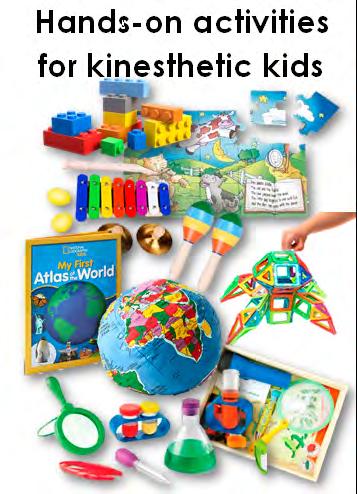
timer and them back to the seat to start the next activity.
5. Use a gym ball instead of a chair for seat work. Make sure that it is the correct height — that they can sit with their feet flat, and knees bent at 90 degrees and that their elbow can be placed flat on the table at 90 degrees. The ball stimulates core and balance muscles and allows constant movement and regulation. Obviously don’t allow wild rocking. You can place the ball inside a small hoop to prevent the ball rolling away when they stand up.
6. Provide a balance pillow for your child’s seat. You can also use this for balance games on the floor. A balance pillow also stimulates the core muscles and tiny movements for balance.
8. Place a foam rubber mat on the play area floor for other physical games such as sit ups.
9. Use bean bags for tossing, throwing, balancing, placing in directions with the arrow chart (practicalpages. wordpress.com/2016/07/05/practicaltip-arrow-chart/).

10. Sing action songs that encourage clapping and actions.
11. Use a timer on a phone or desktop computer to regulate seat work or the quick, fun activities.
12. Provide a bottle of water to sip during learning. Many kids need to sip water to calm and help them focus when learning new or difficult work.
Use manipulatives for Maths, Phonics, Handwriting & Spelling
1. Use Maths wheels (practicalpages. wordpress.com/free-pages/maths/) and Maths counting, shape and block apparatus to learn Maths concepts, practice drill work and solve Maths problems.


7. Use a rubber flexaband (exercise band) as a foot rest on their seat (for photos, visit my Handwriting page, practicalpages.wordpress.com/freepages/handwriting/). This is great if the chair is slightly too high for them to place both feet on the floor. They can stabilise their core and still enjoy the sway, bounce or resistance of the band under their feet.
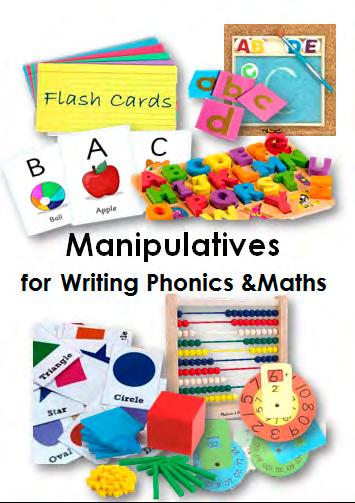
2. Make flashcards, sliding strips or folding flap books for phonics and spelling.
3. Use sandpaper for young children to trace over letters when learning to write.
4. Use hula hoops, ropes, and balls to create huge letter shapes on the floor.
5. Use puzzle pieces, cutouts, felt board shapes & letters, white boards, magnetic letters or Scrabble tiles for spelling and phonics.
Plan Hands-on Activities
1. Do hands-on activities while listening to a read aloud or learning their lessons.
2. Let them build models, make 3D models or maps.
3. Create dioramas.
4. Draw and colour in and then turn these illustrations into finger puppets (practicalpages.wordpress. com/2010/09/17/finger-puppets/).

5. Use Legos or Baker’s Clay to create objects related to the theme.
6. Go on field trips and educational outings wherever possible.
7. Let young children play with playdough or Legos while listening to stories or lessons.
8. Print and paste a coloured picture related to the story or theme onto some cardstock and cut this into puzzle shapes. Let your child build puzzles while listening to a read aloud.
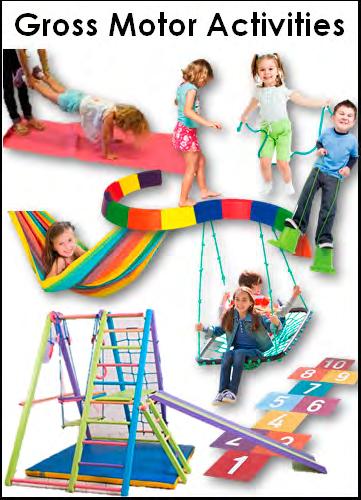

9. Do Science experiments and provide equipment and strategies for your child to lead their own investigations (practicalpages. wordpress. com/2014/08/02/childled-science-experiments/).
10. Provide a nature study kit & journal and encourage daily time for exploration outdoors in nature.
11. Use a globe and atlas when studying Social Studies and Geography. Let your children pin and mark a large map on display.
12. Use dress-up clothes and encourage your child to act out stories, plays and poems in Social Studies or Literature. A basket with some long skirts and bonnets, aprons, hats, cloaks and waistcoats provides endless options and most young children love to act!
13. Video record your child and play the movie back so that they can enjoy their re-enactments and plays.
14. Read and download or order my 100+ Narration ideas booklet (practicalpages.wordpress. com/2017/08/04/narration-ideasbooklet/). This eBook contains stacks of different activities that would suit kinesthetic learners!

Outdoor Gross Motor Activities
1. Stimulate vestibular activities (the brain’s ability to track spatial movement) and encourage your child to lie and swing in a hammock or sit on a swing. Encourage both the forward and back and sideways movements as well as hanging upside down or on their tummies.
2. Play some physical games in between lessons which require lots of physical effort such as wheelbarrows — where mom holds their feet and the child walks on their hands across the room.
3. Throw and catch and roll and kick balls. Add a variety of different types of balls for these games such as large beach balls, soft squishy balls, or bouncy balls.
4. Teach them to skip and let them skip and call out maths counting or rhyming skipping songs.
5. Draw chalk hopscotch or chalk ladders on your patio floor for obstacle courses or hopping and balance games.
6. Do some brain gym exercises especially actions that cross the midline.
7. Ensure regular play time using a jungle gym and include monkey rings, ropes, slides, and ladders. Encourage lots of gross motor activities every day.
Homeschool is the perfect place to allow the freedom your child needs to move in order to learn and to work off their natural energy and excitement.
Don’t worry that it may seem that your child may never learn to sit still. As they mature, your child will gradually learn
to self-regulate and control themselves more and more. In fact, these days, many modern offices have standing desks, walking treadmills and open plan spaces for movement so that employees are encouraged to move more while working!
However, if you believe that your child has real concentration and/or behavioural issues, I highly recommend that you consider taking your child to an occupational therapist for an evaluation. They often suggest fun exercises and play strategies to use at home and school. If your child requires sessions with the OT, just remember that the therapy sessions are not forever. In almost all cases, as your child improves, they will no longer need ongoing therapy.
Mom, you are your child’s best advocate and facilitator. Your job is to find what works for your child and to encourage them to learn in the way that suits them best. Be encouraged when your child is different! This “different child” is exactly what the Lord planned as His best instrument to shape and change you. He wants you to learn to love what is, to love unconditionally and to love without needing to change the other. This is a work of grace.
So, breathe in and out slowly and deeply, and then trust the Lord to show you what your child needs right now and ask Him to show you how to support and encourage your wriggly child!
And don’t forget to have fun! Your child certainly is having fun!
Blessings and much grace, Nadene Nadene Esterhuizen - I love to encourage, equip and inspire homeschool parents in their homeschooling journey. My Charlotte Mason–inspired blog is a treasure trove of practical tips, art & projects, free pages & and high quality educational packages. I am a South African farmer’s wife, mom to 5 now adult children, and a granny to several gorgeous grandchildren. As a veteran homeschool teacher, I loved homeschooling my three daughters from toddler to graduation. In our more than 23 years of homeschooling, we mostly used literature-based curriculums following Charlotte Mason’s principles. Find out more at Practical Pages practicalpages.wordpress.com



KonMari for Gameschooling
By Jamie Erickson
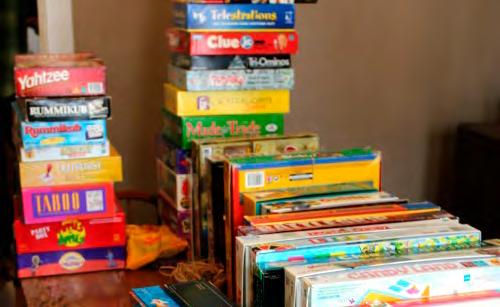
Acouple of months ago when I knew I’d be heading out to speak at a homeschool convention, I wigged out just a wee-little bit. My normal convention M.O. has always been to lug a few new-tous games home in hopes of cultivating some learning through gameschooling. The only problem was the game closet was congested and cluttered. Every inch of shelf space was littered with game boxes, decks of cards, and random play pieces that had all gone rogue.
Trying to cram one more game into that closet would have been a lot like the feeling I got last week when I accidentally
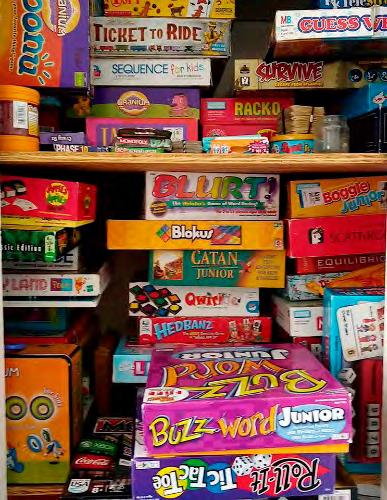
ended up trying to squeeze my 37-year-old-self into my daughter’s jeans. (It was a tragic laundry folding accident that did not end well for those girlsized 14s. By the time I had the jaws of life release me from those pants, I could almost hear the cotton begging for mercy. No fabric should ever have to work that hard.)
But I digress. Back to the game closet conundrum of 2017...
As I stared bleakly at the stuffed shelves, I knew something had to be done. If I wanted to be able to purchase a few more games at the convention, I would need to get that closet under control. In doing so, I’d make our gameschooling days so much more enjoyable; the kids would be able to easily find the games they were looking for and would hopefully be able to put them back in a way that didn’t require a crowbar and all-of-my-patience. As I began to develop a closet game plan (no pun intended), I vaguely remembered a few suggestions for organizing games in The Life-Changing Magic of Tidying Up, a book I had read last year. I
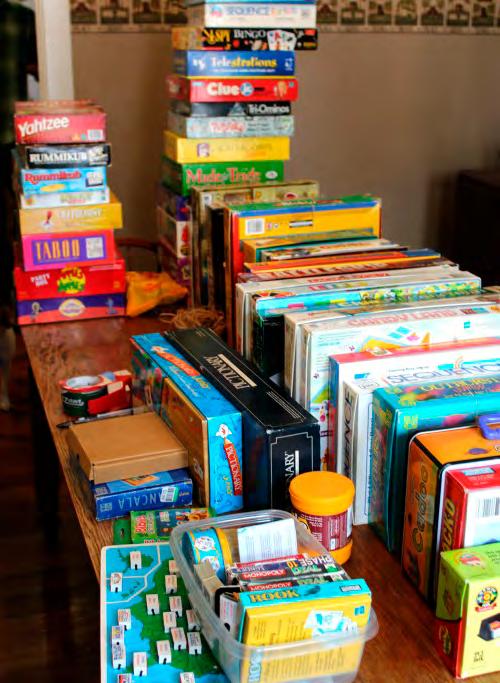
pulled up my big girl pants and decided to spend a Saturday morning “changing my life”... or tidying up. (Apparently, they are one and the same.)
So, I dove in and went all KonMari on those bad boys.
Simple Steps to KonMari for Gameschooling
Physically touch every single game
Because I’m a recovering rule follower, I obeyed the #1 mandate of Japanese-style decluttering, as dictated in the book. I brought out every single game we owned and made a big pile of them on my dining room table. I touched them all so that I’d know exactly what games we actually had. In doing so, I saw that we owned not one but three different versions of Boggle Jr. I kept one and set the other two aside. (Don’t get me wrong, Boggle Jr. is a great game for teaching the basics of spelling, but three versions might be overkill.)
I naively thought that organizing all the games would only eat away a couple of hours. But once I started pulling out boxes, I watched as the dining room began filling up with children all eager to play games that had been buried for months in the dark recesses of the closet.
I pulled out games and took a pause to play a few rounds of this or that with a few of my kids.
Every time I unearthed a new game, we played...
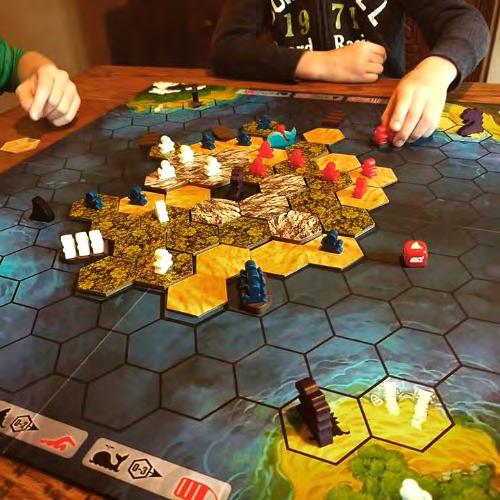
And played...
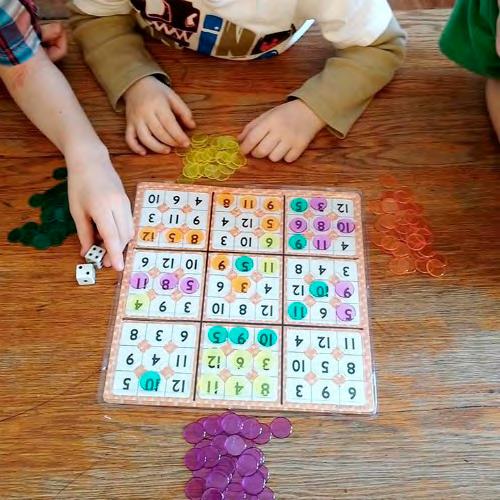
And played.
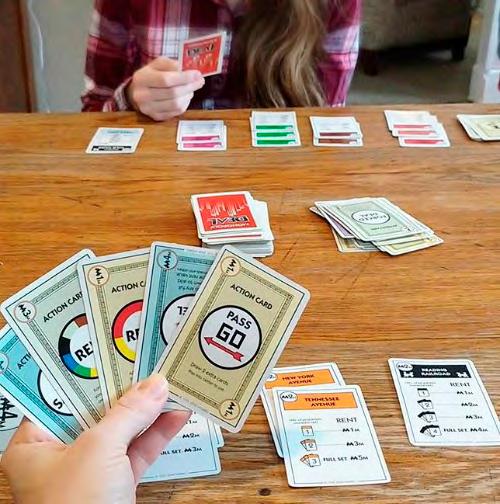
And the day just sort of slipped by. In all that play, the kids practiced math facts, strategized, read game directions, racked up countless vocabulary words, and learned to barter like early American colonists.
My oldest kids and I played all our favorites like Survive: Escape from Atlantis, Ticket to Ride, and Buzz Word Jr. And I even got to sneak in a few games with just my youngest like Rivers, Roads & Rails, Rack-O, and TENZI. It was a day for sneaky learning. It was a day for gameschooling.
But, in between all the fun, I was slowly KonMari-ing my way to a cleaner closet.
Keep only what brings you joy
When I had all the games pulled out, I could see at a glance which games I wanted to keep and which games would have to go.
We had duplicates. We had games that never got played with. We had games that we had just simply outgrown. None of these made the cut. I piled
all the outcasts in a donation bag guilt-free knowing that in saying NO to those games, I was making room to say YES to others. I only kept the games that brought joy to our gameschool.
Then it was time to roll up my sleeves and get serious.
Repair, refurb, & reorganize
I opened up every single box and reorganized the pieces. I bound game cards with rubber bands, placed little plastic parts into Ziplock bags, and tucked everything neatly inside the correct compartments and place holders. I used some packaging tape to reinforce a few ripped game boxes and wrapped really rickety ones with rubber bands.

I placed smaller games and decks of cards like Monopoly Deal and Dutch Blitz upright inside a plastic shoe box so that labels were facing out and each game could be easily identified.
Store boxes horizontally
Like most, I’ve always stored my games in vertical piles which have resulted in squished and distorted boxes. Not only has this shortened the shelf life of each game, it has also made it really difficult to get to the games we wanted to play. One giant stack of games always seemed to become a sad game of Jenga when we tried to pull one out of the pile.
The KonMari method insists that games be stored horizontally so that all the game titles can be easily read and the boxes can just be slid out of the shelf individually.
In order to do that, I first organized the game boxes a
bit by size and shape. Long rectangular ones were placed on one shelf. Shorter, squareshaped ones were placed on another. I tried to keep our most-played-with favorites in
the center of the shelf for easy access. I then placed smaller boxes on top of the longer rectangular ones. I knew this was not ideal but felt that it was the lesser of two evils. (Don’t tell Marie Kondo, the creator of the KonMari method. It’ll be our little secret.)
By the end of a gamefilled weekend, I had not only cleaned up our closet, but had also made room for American Timeline, Catan, and Animalogic, three games I ended up buying at the homeschool convention just weeks later.
Now when one of my kids gets the notion to learn through games, he or she can just slide the game right out of its spot. The empty space left by the game makes it super easy to return the game to its rightful place.
A clutter-free closet has become a useable closet. And games have become school once again.
Jamie Erickson - Jamie left her big city life to follow love all the way to a real-life Mayberry. After earning her Bachelor's degree in elementary education, working for the nation's leading homeschooling curriculum company, and teaching in a traditional classroom, she had babies... lots of them...and decided to point her gaze towards home. When she's not curating memories, hoarding vintage books, or playing ringmaster to her own live-in circus of seven, she can be found writing, speaking, and trying to stay warm in the upper midwest. Be sure to check out Jamie's latest book, Homeschool Bravely: How to Squash Doubt, Trust God, and Teach Your Child With Confidence. Find out more at The Unlikely Homeschool theunlikelyhomeschool.com
Images courtesy of Jamie Erickson


Penpal Club

Elaina F, 18
Hi! I would love to talk to some older teens! My passions are reading, writing, dance, art, and learning to homestead. I enjoy playing piano and have 5 younger siblings. I hope to hear from you soon!
Hannah B, 14
I live in Calgary and I'm an only child, my favorite color is blue. I love reading books, exploring nature, drawing, playing video games and music. And I also love playing card games. I'm also currently trying to learn to skateboard. I have 2 pets: 1 dog, her name is Pepper, and a hamster, his name is King Kevin. I hope someone writes soon!
Lizzy H, 13
Heyyy, my name is Lizzy! I live in a small community just west of Edmonton. A few fun facts about me. I want a pet cow that I can just love and SQUEEZE! I love animals. Also, Mom and Dad say I have a joy filled heart! I can't wait to hear from you!!!


Gunnr U, 12
I live in Alberta with two older brothers, one older sister and one younger sister. My hobbies are ants and bugs. I love to go outside and look at bugs. When I go outside I like to bounce on the trampoline and use a magnifying glass to burn stuff. I like to play with LEGO. I keep pet ants. It is my favorite hobby. I would love to have a pen pal that loves bugs as much as me.
Chorus M, 12
I live on a farm. My favorite colors are blue, green, and purple. I like to read, knit, and draw. I also like stickers and house plants. I have a brother and 2 sisters. I am the oldest. Hope you can be my pen pal.
Caius F, 5
Hello! This is Caius. I was wondering if there are any friends that I could have. I like going outside. I like playing Hide and Seek. I like running in circles and circles.
Mary L, 11
I like to knit and crochet. I have 9 siblings, 4 brothers and 5 sisters, and I am the youngest. I have 4 nieces and 2 nephews. Hope to hear from you soon!
Addison C, 11
I live in Drayton Valley. I like Minecraft and to play LEGO. I am kind of crafty . I have two dogs. My birthday is March 1. I like video games and I love dogs. I know how to play the piano and I hope some one wants to be my pen pal.
Caleb B, 9
I like dragons, creative writing, space rockets, playing farm and designing farming model layouts, and I love animals. I have two dogs and one cat. My favorite season is summer because we ride our bikes to the river and take the dogs for a swim. This spring I am going to plant my own garden! I plan to grow peas, radish, kale, and spinach. Will you be my penpal?
Leif M, 9
I live on a farm. I like to work with cows, play Lego, build stuff with old boards, and ride in big farm equipment. My favorite colors are green and brown. I have 3 sisters. I also like to ride my bike. Hope you can be my pen pal.
Kate H, 9
I like to go in the woods and ride my quad. I have 2 siblings and 4 cats! My favorite color is blue. I also play ringette. I'm looking for a pen pal : )
Samuel G, 8
I like Pokemon. I actually collect Pokemon cards, I like cats , and I like drawing. I very much hope we can be pen pals : D
Isaac Y, 8
I love LEGO, sledding, and reading. I would love to be anyone's pen pal.
Adele C, 8
My favourite colour is blue. I like to play Minecraft and LEGO and dolls. I have two dogs.

Marla J, 7
I have two siblings. I love listening to music and dancing to it. My favorite colors are pink and purple and I really like drawing pictures. Please be my pen pal!
Adam L, 7
I love dinosaurs, cars, and oranges. I like to play soccer outside and I like riding my bike.
To join
You are invited to write to any Pen Pal Club member listed here!
To join the Club, please send a short letter of introduction (like those posted here) to the WISDOM office, along with a note giving parental permission. You may also ask your parent to email office@wisdomhomeschooling.com.
If you'd like to be a pen-pal of someone listed here, please send your first letter to:
[Penpal name] c/o WISDOM Pen Pal Club Box 78 Derwent, AB T0B 1C0

Write to us with your child's name, age, 2-3 things they're interested in, and their birthdate. We will print them just like we do in the Pen Pal Club, but instead of an ongoing pen pal commitment, this gives other kids a chance to send yours a birthday card!
(Please send this to us at least 3 months before your child's birthday, so we can get them printed in time.)
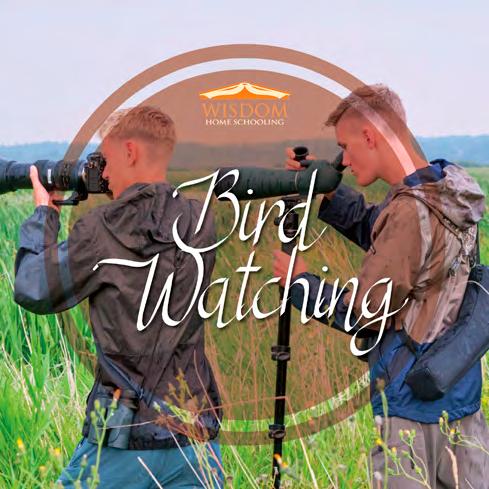
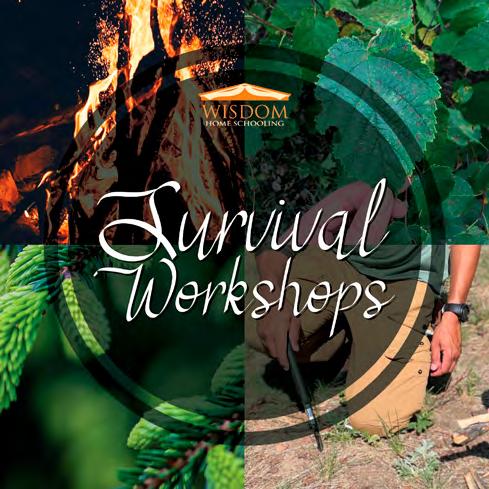
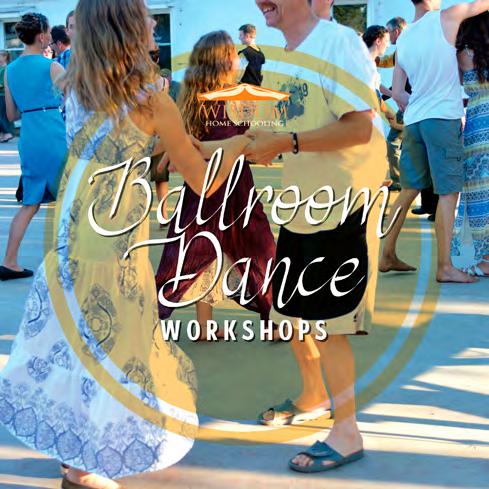



Bird Watching
• May 4 Introduction to Bird Watching St. Albert I
• May 4 Intermediate Bird Watching St. Albert C
• May 6 Introduction to Bird Watching Edmonton J & O
Survival Workshops
• May 8 Survival: Fire Building Calgary A
• May 14 Survival: Fire Building Lethbridge B
• May 23-24 Survival: Grande Prairie Series
• May 27 Survival: Fire Building Myrnam C
• May 28 Survival: Fire Building Edmonton D
• May 29 Survival: Fire Building Stony Plain E
• May 30 Survival: Fire Building Drayton Valley F
• May 31 Survival: Fire Building Red Deer G
• June 10 Survival: Spring Foraging/Spruce Tip Tea Calgary A
• June 11 Survival: Spring Foraging/Spruce Tip Tea Lethbridge B
• June 17 Survival: Spring Foraging/Spruce Tip Tea Red Deer C
• June 18 Survival: Spring Foraging/Spruce Tip Tea Drayton Valley D
• June 19 Survival: Spring Foraging/Spruce Tip Tea Stony Plain E
• June 25 Survival: Spring Foraging/Spruce Tip Tea Edmonton F
• June 26 Survival: Spring Foraging/Spruce Tip Tea Myrnam G
Ballroom Dance
• May 11 Beginner Ballroom Dance Workshop Grande Prairie
• May 25 Celebratory Grande Ball
Chess Workshops
• May 20-Jun 24 Fundamentals of Chess X - All Ages
• May 21-Jun 25 Fundamentals of Chess Y - All Ages
• May 23-Jun 27 Chess: Advanced Continuation Class Q - All Ages

Webinars
• May 6 Mastering Digital Document Management B
• May 16 Portfolio Workshop D
• May 21 How to Build a Digital Portfolio
• May 23 AI Awareness for Parents Webinar C
Foraging Walks
• May 31 Foraging Walks Edmonton D & E
• June 3-4 Foraging Walks Derwent F & G
• June 5 Foraging Walk Iron River H
• June 7 Foraging Walks Edmonton J & K
• June 8 Foraging Walk Athabasca L
• June 9 Foraging Walk Peace River M
• June 10 Foraging Walk Grande Prairie N
• June 11 Foraging Walk Hinton O
• June 12 Foraging Walk Drayton Valley P
• June 15-16 Foraging Walks Fort McMurray Q & R
• June 21 Foraging Walk Stauffer S
• June 22-24 Foraging Walk Calgary T & U & V
• June 24 Foraging Walk Kananaskis W
• June 25 Foraging Walk Pincher Creek X
• June 26 Foraging Walk Lethbridge Y
• June 27 Foraging Walk Medicine Hat Z
• June 28 Foraging Walk Castor A
• June 29-30 Foraging Walks Red Deer B & C
• July 5 Foraging Walks Edmonton D & E




ShareWISDOM 2024


Family Gatherings, Information Sessions, Open Houses
You are invited to attend family gatherings across the province!
We invite your family to attend the social-style events, and you may also bring friends who are contemplating home educating. Meet friends, learn home schooling techniques and network with the WISDOM team. Some events include socials for the whole family, while others are adult-only information sessions.
RSVP by filling out the free registration on our website, wisdomhomeschooling.com Events > WISDOM Family Gatherings or contact the event host.
Open Houses
Spruce Grove & Area
Spring Social & Information Night
When: Thursday, May 9, 2024, 6:30-8:30pm
Where: Tri Leisure Centre, 221 Jennifer Heil Way, Spruce Grove
Details: Coffee, water, and snacks will be provided. Activities for younger children and door prizes included. If you have any questions, please contact:
Randy Kopp
randy@wisdomhomeschooling.com
Desmond Kilgannon desmond@wisdomhomeschooling.com

Spring Socials
Medicine Hat
Spring Social
When: Monday, May 13, 4-8pm
Where: Kinette Picnic Shelter, Kin Coulee Park
What: BBQ with potluck. We will provide meat, buns, condiments, and water.
Please bring: Potluck side dish and dessert, lawn chairs, balls, games, etc.
If you have any questions, please contact:

Louis Sehn 403-581-3444 or louis@wisdomhomeschooling.com
This event will be co-hosted by: Simon Friesen
simon.f@wisdomhomeschooling.com
Fort McMurray
Spring Social
When: Friday, May 24, 1-4 pm
Where: Gregoire Lake Provincial Park, 128 Greenway Pl, Fort McMurray
What: Outdoor activities (not including swimming)
Please bring: Potluck lunch to share and outdoor weather-appropriate clothing.
RSVP to (or if you have any questions, please contact):
Karen Godin 587-644-1825 or godinfamily@gmail.com
Kim Schultz 780-404-3356 or kim@wisdomhomeschooling.com
Gordon Loewen gordon@wisdomhomeschooling.com
Edmonton
& Area Ice Cream Social
When: Sunday, May 26, 2-4pm
Where: Rundle Park, Edmonton, Site #TBA
Bring: Lawn chairs & lawn games
Details: Please join us for an afternoon Ice Cream Social. Drinks and Ice Cream provided. Please email with specific dietary requirements and we will do our best to accommodate.
If you have any questions, please contact:
Taylore Maschmeyer
taylore@wisdomhomeschooling.com
This event will be co-hosted by: Michele Barter michele@wisdomhomeschooling.com
Carrie Friesen
carrie@wisdomhomeschooling.com
Liz Gurnett
liz@wisdomhomeschooling.com
Joy Ronald joy@wisdomhomeschooling.com
Events
Grande Prairie & Area
Spring Social
When: Sunday, May 26, 2024, 2-4pm
Where: Kleskun Hills Campground, 41060 Twp Road 724 (located between Grande Prairie and Bezanson)
Details: Cookies and Lemonade at Kleskun Hills Campground area. Please bring a lawn chair and some cookies to share. Bring a friend! Cancelled if raining.
If you have any questions, please contact:
Anella Jantz 587-297-1992 or anella@wisdomhomeschooling.com
This event will be co-hosted by other WISDOM facilitators.
Lethbridge
& Area Spring Social
When: Monday, May 27, 2024, 4-8pm
Where: John Martin Recreation Centre (located in Pavan Park)
Details: WISDOM will provide hamburgers, hot dogs, buns, condiments, and beverages. We will enjoy a meal together as well as have an information time, door prizes, games, and socializing. This event will run rain or shine.
Please bring: Potluck sides, salads and/or desserts to share with the group. (Please note: if you have a highly restrictive diet, feel free to bring your own food if you wish.) There are many activities to enjoy at the facility, but you are welcome to bring other lawn games, board games, or lawn chairs if you would like.
RSVP by May 24, 2024.
If you have any questions or for late registrations, please contact: Liz Gurnett by text at 780-780-349-1577 or email at liz@wisdomhomeschooling.com
This event will be co-hosted by other WISDOM facilitators.

Calgary
& Area Spring Social
When: Tuesday, May 28, 2024, 9:30am-5pm
Where: Heritage Park, Calgary – see map for details (link below)
Cost: $5/person for those who pre-register through the WISDOM website and be sure to indicate the appropriate age category for each individual attending; children 2 years and under are free. Note: Please register online even if you have an annual membership, there will be no additional charges.
Note: regular gate admission will be required for those who do not preregister through the WISDOM website.
Directions: For a map of Heritage Park, please visit: heritagepark.ca/map
What: This is a wonderful opportunity to enjoy a day at Canada's largest living history museum with other homeschoolers.
Details: Families will meet at the gate at 9:30am sharp!
(Note: If unforeseen circumstances arise and you are going to be late, please text Carrie or Liz with your name, the number of people and your arrival time, and we will try to make alternate arrangements for your family. This will be helpful, so the group is not waiting unnecessarily. Thank you for your cooperation.)
Schedule: 9:30am – Group will meet in Town Square, just outside the admission gate. After group enters, families can tour around.
12:30-1:30pm – Group will meet at the Fair Grounds, in the green space for lunch. Watch for the balloons. Lunch will not be provided. There will be WISDOM pamphlets and information available.
1:30pm – Your family can tour the remainder of the park.
5:00pm – Park closes and event ends. Please bring: A picnic lunch for your own family, water bottles, sunscreen, hats, and whatever you need to be outside for the day. There are a number of stores and restaurants to

buy souvenirs and food on site. You are also able to pre-purchase a “Tasty Treat” coupon when you register online through WISDOM for $3.50+GST. (The Tasty Treat Coupon will give you a choice of one treat, either 2 cookies, 1 ice cream cone, 1 bag of popcorn or 1 candy floss.)
RSVP by May 20, 2024.
If you have any questions or for late registrations, please contact: Carrie Friesen by text at 780-217-4006 or email at carrie@wisdomhomeschooling.com
Liz Gurnett by text at 780-349-1577 or email at liz@wisdomhomeschooling.com
Athabasca/Plamondon/ Lac La Biche
Spring Social
When: Wednesday, May 29, 1-4 pm
Where: The Bold Centre, Lac La Biche
What: Indoor activities
Please bring: Indoor runners
RSVP by May 28, 2024, to (or if you have any questions, please contact):
Amy Kucherawy akucherawy@gmail.com
Kim Schultz 780-404-3356 or kim@wisdomhomeschooling.com
Westlock
& Area Spring Social
When: Sunday, June 9, 2024, 4-8pm
Where: Bethel Bible Camp (10 minutes west of Westlock)
Directions: For directions to Bethel Bible Camp, please visit: bethelbiblecamp.ca/directions/ Details: WISDOM will provide hot


dogs, buns, condiments, and beverages. We will enjoy a meal together as well as have an information time, door prizes, games, and socializing. This event will run rain or shine.
Please bring: Potluck sides, salads, or desserts to share with the group. (Please note: if you have a highly restrictive diet, feel free to bring your own food if you wish.) There are many activities to enjoy at the facility, but you are welcome to bring other lawn games, board games, or lawn chairs if you would like.
RSVP by June 6, 2024.
If you have any questions or for late registrations, please contact:
Liz Gurnett by text at 780-349-1577 or email at liz@wisdomhomeschooling.com
This event will be co-hosted by: Rachelle Godin rachelle@wisdomhomeschooling.com
Vermilion
& Area Spring Social
When: Friday, June 14, 2024, 1-4pm
Where: Chatsworth Farm
Details: WISDOM is hosting a farm tour at Chatsworth Farm near Vermilion. Come see all the amazing happenings of life on the farm! Join us for the day to meet the Wasylik family, see where your food comes from, learn more about farming, and enjoy a day out reconnecting with nature. You'll be able to see cattle, sheep, pigs and poultry, including some of the spring/early summer babies; guided garden tours will also be available. WISDOM will be
own lawn chairs and picnic blankets. Dress for the farm, with closed-toed shoes, layers, a hat (good for sun AND rain!), and water bottles; you can refill your water bottles at the farm hydrant. Also bring sunscreen, insect repellent, and hand sanitizer. Portapotties are available onsite.
Farm products are available for purchase, so you might want to bring some cash and a cooler for farm fresh eggs, beef, lamb, pork, and flour. Cost: $20 per family (WISDOM will sponsor the remaining cost per family)
RSVP by May 31, 2024.
If you have any questions or for late registrations, please contact:
Peter Weidman by text at 780-581-1601 or email at peter@wisdomhomeschooling.com
This event will be co-hosted by: Glenn Spiess glenn@wisdomhomeschooling.com
Pierre-Andre Beaudoin pierre-andre@wisdomhomeschooling.com
Simon Noster simon@wisdomhomeschooling.com
Camrose
Area Spring Social
When: Saturday, June 22, 2024, 3-7pm
Where: Central Community Hall, 224045 Twp Rd 472, Gwynne
What: Please join us for visiting, homeschooling discussion, a family baseball game, other games, and a potluck supper (begins at 5pm).
Please bring: A main dish and side dish or dessert. No nuts of any kind, please. (Food allergies/preferences, please bring your own food, to be safe.) Be sure to bring lawn chairs, baseball gloves (if you have any) and bats, and any outdoor game equipment you would like to bring. WISDOM will provide beverages, plates, cutlery, and cups.
If you have any questions or for late registrations, please contact:
Joan Bishop joan@wisdomhomeschooling.com
Nola Hutchinson nola@wisdomhomeschooling.com
Simon Friesen simon.f@wisdomhomeschooling.com
Past Events:
• High Level/Fort Vermilion/La Crete & Area Spring Social April 14, 3-7pm
• Red Deer & Area Spring Social April 21, 3-6pm





Graduation Signs

July
Celebrate your graduate!
Download these signs FOR FREE from our website and print to place on your lawn or in a
Available in 8.5x11 and 11x17

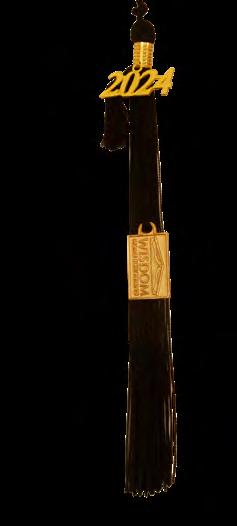
WISDOM Family Magazine Graduate Feature
Grads, may we feature you in the magazine?
Names of our 2024 graduates will be listed in the July WISDOM Family magazine. We will also include photos and short bios from as many of you as possible. Send these to magazine@wisdomhomeschooling.com by May 20. Submissions may be edited for clarity or length.
If we do not hear from you, you will not be listed.

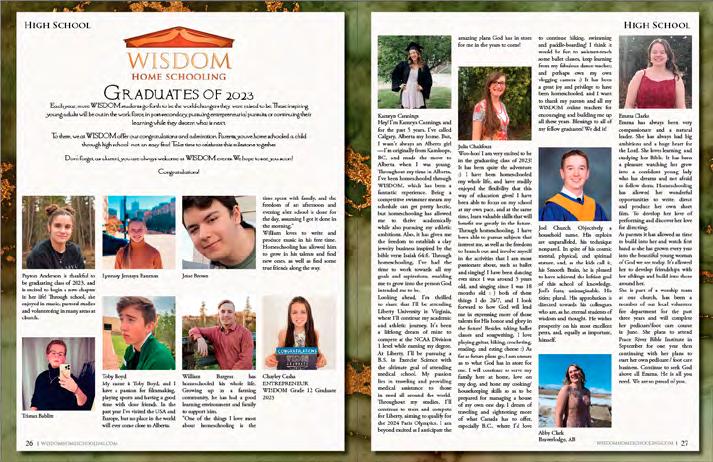

In order to provide as much time as possible to complete these, please submit your request as soon as possible.


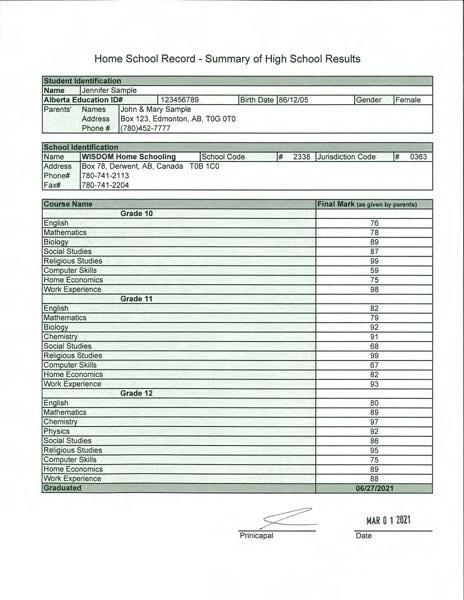









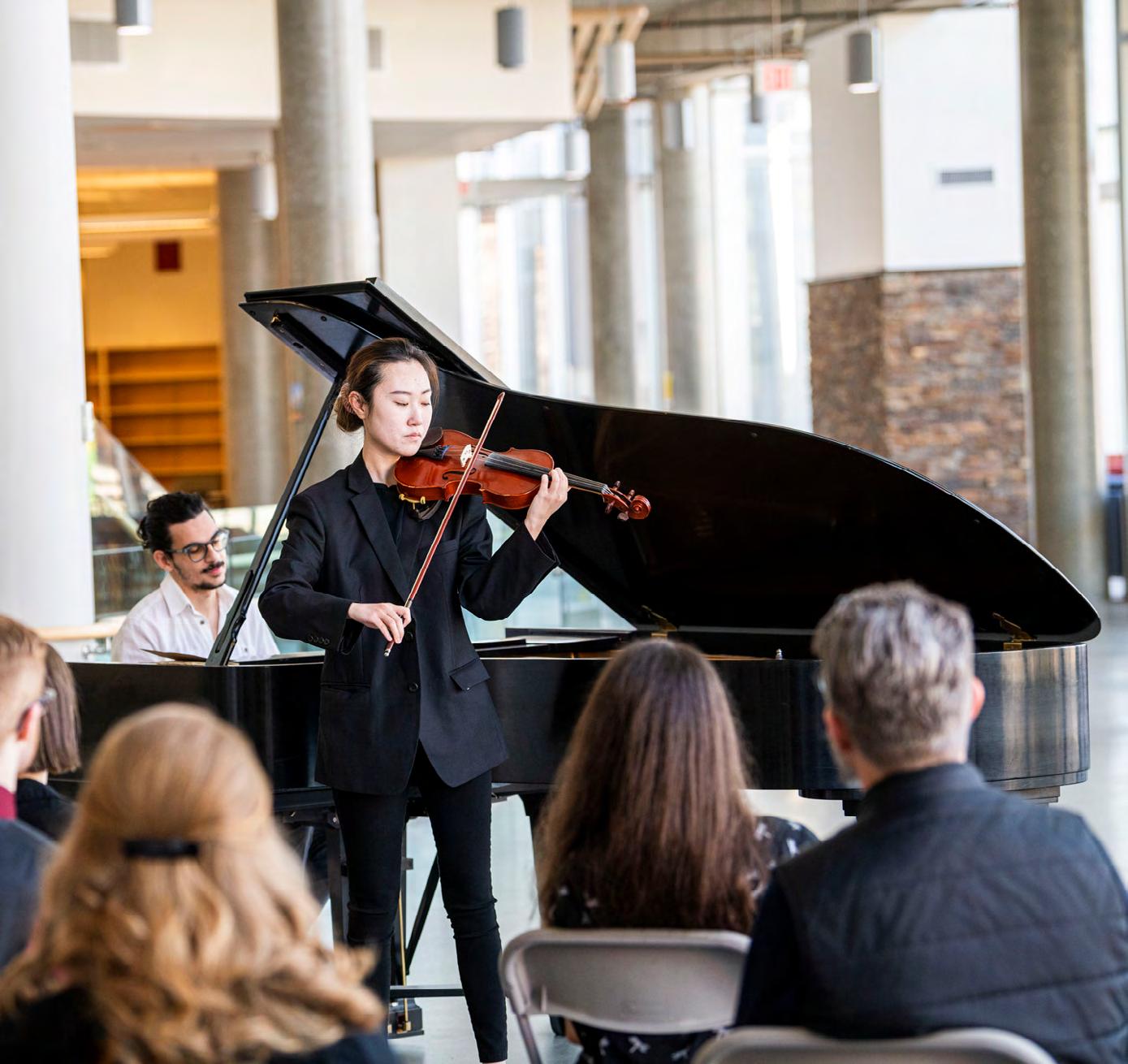



May
June
July
August
Finding Help
· Call us at 780-741-2113 or 1-877-425-8546 · · Email us at office@wisdomhomeschooling.com ·
Funding
The funding year closes May 31. You may access purchase orders for direct billing at select vendors, or you may submit receipts at any time until May 31 via our secure online submitter or by mail (mail submissions must be post-marked no later than May 31, so ask them to stamp it in your presence; don't put it in the mailbox). We will process the final reimbursement on July 15 (give it up to 3 business days to hit your account).
Go to wisdomhomeschooling.com/funding or read the funding handbook for more information.
Would you like an updated paper copy of the funding handbook? We would be happy to send you one.
Questions? Email finance@wisdomhomeschooling.com
A note on emails
We always respond to emails. If you do not receive a reply from us within two weeks, we did not receive it. Please send it to us again.
When you Call Us
Call us at 780-741-2113 or toll free at 1-877-425-8546
We take calls between 9 and 4, Monday through Friday, with an hour off at noon.
If you reach our voicemail, you may enter the extension of anyone in the office at any time during the greeting. To speak to a home school consultant, dial 1. To speak to a member of the funding team, dial 2. To leave a general message, stay on the line or dial 3.
We endeavour to return calls as quickly as possible. If you do not hear back from us within two business days, it may be because the message didn't come through clearly, so please call again.
Connect with WISDOM families
We offer many ways to connect with the larger WISDOM community, from events and workshops, to our Social Networking phone and email list, to Facebook Groups just for WISDOM parents. This year, we are working to add local WISDOM communities around Alberta! For more information on events, email events@wisdomhomeschooling.com. For local community connection, email terry@wisdomhomeschooling.com.

Subscribe to The WISDOM Family Magazine
(The Magazine is free to WISDOM families.)
□ Option A - paper subscription ($30 in Canada, $44 in USA)
□ Option B - digital subscription, delivered to your email inbox ($18) Where should we send it?
Name:
Address:
Phone Number:
Email:
Method of Payment:
□ Cheque payable to WISDOM Home Schooling
□ E-transfer to billing@wisdomhomeschooling.com
□ VISA/MasterCard Number
Expiry
Name on Card
□ This is a gift subscription
Detach form and send with payment to WISDOM Home Schooling, Box 78, Derwent, AB T0B 1C0. You may also request subscriptions by emailing magazine@wisdomhomeschooling.com