WISDOM Home Schooling is a registered trade name of The Gilbertine Institute. The Gilbertine Academy, Calgary, is an independent school operated by The Gilbertine Institute.
Phone: (780) 741-2113
Toll Free: (877) 425-8546
with questions: office@wisdomhomeschooling.com with contributions to the WISDOM Magazine: magazine@wisdomhomeschooling.com
Publisher:
WISDOM Home Schooling
Content/Editor /Desktop:
TobyLauren Burgess & Amy Burkey
Desktop / Design:
Naomi Doyle
wisdomhomeschooling.com
Data Manager
Janelle Mailhot
Data Assistant
Anthony Laszlo
Events Director
Marlane Noster
Events Coordinator
Kyra Tinant
Socratic Dialogue
Online Program Manager
Nicole Noster
Mediated Learning
Advisor & Educational Therapist
Lora Cardinal
High School Subject Specialists
Pierre-Andre Beaudoin (Chemistry)
Rhonda Caluttung (English & Social Studies)
Lydie Delli Santi (French, Spanish)
James Rauch (Latin)
Peter Weidman (Math, Sciences)
Facilitators:
Tiffany Arnold (403) 866-7822
Michele Barter (780) 363-3740
Pierre-Andre Beaudoin (780) 239-0381
Joan Bishop (780) 878-5380
Rhonda Caluttung (403) 846-0404
Lydie Delli Santi (403) 392-9209
Carrie Friesen (780) 217-4006
Simon Friesen (587) 222-1790
Rachelle Godin (780) 349-1827
Liz Gurnett (780) 349-1577
Nola Hutchinson (780) 781-2527
Anella Jantz (587) 297-1992
Desmond Kilgannon (780) 225-6688
Randy Kopp (780) 723-5382
Gordon Loewen (587) 298-7565
Taylore Maschmeyer (780) 270-0460
Mark Meakes (780) 231-6594
Kyla Mould (306) 716-6328
Simon Noster (780) 581-8885
Sue Peachment (403) 994-1963
Joy Ronald (780) 278-5557
Kim Schultz (780) 623-2886
Glenn Spiess (639) 894-0470
Brian Taje (780) 312-4525
Paul van den Bosch (403) 358-4497
Catherine van Kampen (403) 845-2923
Peter Weidman (780) 223-2414
North
Georg & Gayle Beinert
Rene & Karen Godin
Parent Advisory Council
To reach the chairman: pac@wisdomhomeschooling.com Bios and email addresses of PAC are on our website.
Menno & Margaret Knelsen
Central
Darrel & Kristine Buchholtz
Theresa & Vince Holden
Michael & Victoria Hutchinson
Sheldon & Sharon Kok
Don & Bo Reid
Sheldon & Kim Richter
Cory & Sierra Rotchford
Peter & Kathleen Wing
South
Neil & Julie Aragon
Greg & Rebecca Joncas
Joe & Diane Pollock
Kris & Amanda Watson
Content:
WISDOM publishes articles by many Individual authors. The opinions of the writers are not necessarily those of WISDOM. We reserve the right to decline any submission, and to edit those submissions we accept for accuracy, clarity & length.
Unless otherwise credited, photography is courtesy of the Noster, Burgess, Tinant, and Doyle families. The people appearing in photos throughout this publication do not endorse any specific product, service, cause, association or endeavour. Images and photos are for illustrative purposes only.
First Things
March/April
Greetings to your family:
As we enter into the season of spring facilitator visits, we have an exciting opportunity to look back on all that has been accomplished thus far. It is a great time for encouragement, as well as a chance to refocus our time and energy in order to finish the year at our best.
The WISDOM website
Check back often to look for new additions and information. In particular, visit our website to learn about new events, both online and in-person.
This magazine contains information on Houses, and Information Sessions. Contact your Facilitator for further details, or visit
Our WISDOM High School & Beyond Conference is upon us; join us at a new venue, the Spruce Grove Alliance Church, on April 4-5. Our theme is “Chart Your Course” featuring guest speaker Dr. Brian Ray! Participate in interactive sessions, meet colleges and post-secondary institutions eager to connect with homeschoolers, and discover diverse career opportunities. We are almost full; learn more by visiting wisdomhomeschooling.com/conference.
There are several other good home school conferences coming up; consider attending one of these to listen to inspirational talks, browse or purchase curriculum, and find connection with other homeschoolers. The Western Canadian Catholic Home School Conference will be in Edmonton from March 6-8 wcchsc.net, and The Alberta Home Education Association (AHEA) convention will be held in Red Deer from May 29-31 aheaonline.org.
We are pleased to recognize the completion of high school studies for our 2025 Graduates. Please visit High School > Class of 2025 to find local graduation events, or connect with
Just visit schoolcloud.ca/login and in a few clicks you will be done. Remember, there are monthly draws for $200 gift certificates to be used for WISDOM workshops, courses, events or at favourite homeschool vendors. Everyone who has renotified will be entered once each month from now until June; the sooner you renotify, the more chances you have to win!
To celebrate WISDOM’s 30th Anniversary, we are inviting families to write for the May/June WISDOM Family Magazine, and to join us at our Anniversary Family Camp from June 19-22 at Battle Lake. Find more information on both of those things in this magazine, and register on our website.
Our office stops to pray for you every day at 3:00 pm. Your special requests are honoured.
Blessings on your home,
Simon Noster, Principal, Home Education simon@wisdomhomeschooling.com
TransiTions:
Congratulations to Julia Yaceyko on her promotion to Manager's Assistant. We are grateful for her hard work in our office.
Huge thanks to Lora Cardinal for stepping into the leadership of the Mediated Learning program, as well as taking point on our athletics program. Lora is keeping very busy running both programs as well as continuing to offer educational assessments and 1:1 coaching to parents.
Write for The WISDOM Family: Do you have something to share? We welcome you to submit articles for many of our columns, to be considered for publishing. Also, if you come across an excellent article or blog, please share it with us. We will contact authors for reprint permission.
out our website under Resources > WISDOM Magazine for columns and upcoming themes and deadlines. Send submissions to magazine@wisdomhomeschooling.com.
Over40 years ago, I learned a good lesson about choice, and it has served many situations in the years since then. The lesson resided in the simple truth that there are consequences to every choice, making it necessary to always look at both sides of the question that lies before us.
We were building our house. Of course, we had considered many choices before we got close to construction, and our choices were very well served by a most excellent planning tool: LEGO. Over the course of over 3 years, we used LEGO to build, re-build, alter, and refine a scale model of our future home. We even built our furniture to scale (with LEGO) so we could see how it would
fit in the space. By imagining what it would be like to be tiny people functioning in this house, we were able to get a good feel for the place. Many versions were discarded before we were finally comfortable “living” a couple of months in our final “house.”
Then, it was time to draw a plan and begin building the real version. We hired an experienced, almost retired, builder to help us, a man who would become known by our children as a favorite family friend, even though we had but one child at that point. The carpenter’s name was Ken... a good name that led to many light-hearted versions of K&K construction.
One benefit of building your own home is that you can make decisions as you go, sometimes accommodating ease of construction, and sometimes taking initiatives you hadn’t previously considered. These sorts of decisions were the means by which Ken taught and reinforced one of his best lessons for me. His comment was simple: “Everything has a trade-off.”
The first time I heard this from him, I was considering making a bedroom closet a little bigger. Of course I could make it bigger, but what was the tradeoff? What would have to necessarily be smaller? Was it worth it? Make a choice, and then live with it.
By Kenneth Noster
Over the course of that Summer, many opportunities arose where Marlane and I could consider alterations to our floorplan, and each time we learned to give equal time and consideration to each side of the idea, not just what we wanted to gain but also what we were willing to lose. These practical consequences provided us with very concrete experiences of trade-off that could be applied to other aspects of our lives.
One practical application involved spending. For example, it might seem appealing to make a purchase, since we currently have enough money to do so, but what is the trade-off? Initially, it means there will be less money available for other desired purchases
that might come up. In the longer term, it means we are committed to what we now own, which limits our access to a better version or better idea that might come along.
An important application involved our time. Each day has only so many minutes, and the time we decide to assign to one thing limits the time we have left for something else. It helped us pay more careful attention to planning our days and then being cautious about letting lesser goods crowd out some greater goods. We need to continually re-visit the awareness of how easily we can initiate a trade-off without even meaning to do so. Prime thieves in this are the internet and social media. If they
aren’t kept carefully within bounds, they easily grow, and greater goods no longer have room in our day.
We attempted to help our children order their lives with valuable use of time by affirming a hierarchy of good things. Of course they, like us, failed often enough, but they did eventually learn to identify their values and choose to order their time accordingly. It started simply with, “when you want to choose to stay up later in the evening, consider the consequence in the morning, because the cow must be milked at 7:00, whether or not you feel rested.” In time, they were able to mature in their ability to prioritize prayer, study, work, leisure, and in adulthood they continue to daily work at choosing well, for it truly is work.
If we don’t work at choosing well, that too is a choice, but it is one that lacks the wisdom of considering the tradeoff. What is lost if we aren’t daily working at making good choices? Going with the flow might seem appealing for a while but, before long, it demonstrates its trade-off: living a life dictated by others and increasingly distant from the things we hold to be of greatest value. Choice is among our greatest gifts; it needs to be cherished and used well.
Kenneth Noster and his wife Marlane live near Derwent, Alberta on their certified organic farm. In addition to his role as Head of School, Ken also contributes to his faith community as a deacon. Ken and Marlane home educated their 6 children through high school. Those of their nineteen grandchildren who are school-aged are also home schooled.
I have no Choice
By Marlane Noster
“Ihave
no choice!” We’ve often heard this, and we may have used the expression ourselves a few times. Of course, we do have a choice, even if the only choice is one of attitude. Reflecting on this truth has had a profound effect on me and has been helpful as I navigate the many types of choices that life offers us. I just wish I’d grasped this wisdom earlier in my life.
When we began homeschooling it certainly was a situation demanding that we make a choice. We knew the necessity of moving away from our daughter’s difficult situation at school, and the choice that seemed most reasonable for her and for us was to homeschool. Actually, this was no dilemma involving a decision between choices but truly the only choice. Oh, would that I had heard at that time the wonderful advice to choose a positive attitude rather than a fearful, tense one, wrought with concerns about this new venture while being pregnant with my fourth child and thrust into teaching without the benefit of curriculum, other than the books pressed into my hands by the school.
Half a year later we became aware of the world of choices when we discovered curricula written for homeschoolers. Oh my, the choices, the choices almost became overwhelming as we tried to pick, or single out and select curriculum that would serve our family well. I could have done better choosing an attitude that was not overwrought with strain, as things proceeded to work out far better than they had seemed they would. We gradually became able to refine our ability to choose the right curriculum to suit the needs of each child and at that to recognize that these choices were short term and could quickly change.
Then there came the growing pains of living together 24 hours a day and 7 days a week and all year long! Wishing I was somewhere else could not be a choice. I could only choose to live the moment and to live it well.
Even when a healthy pattern of family life gradually emerged, with a good rhythm of study, chores and play, and relationships were becoming more mature, there were still those moments when someone got squeezed mentally, physically or emotionally and the result was neither sweet nor pretty. With the aid of some well-advised reading and some well-placed advice, I learned to be able to choose the attitude that best served the ‘hurt’ by teaching them that they too could learn to choose attitudes of kindness, forgiveness, and self-control.
We are all older now, and we are still falling into situations where we are quick to assume we have no choice. You have no choice? Of course you do, even if your only choice is your attitude.
Marlane Noster is WISDOM's co-founder and Events Director. When she's not in the office, she dedicates time to her church, community and her family, including her six children and nineteen grandchildren.
Home schooling: High School & Beyond Conference
April 4-5, 2025
Spruce Grove
Join us for an inspiring conference designed to empower parents and students as you navigate homeschooling through high school and beyond! Discover potential routes to your adult life, backed by compelling data that supports your choice to home school through high school.
We’ll share strategies for achieving excellence in your homeschooling journey. Hear from experts, educators, and successful homeschool graduates. Visit our exhibit hall and engage with post-secondary institutions, career representatives and learn about essential life skills. Connect with fellow homeschoolers, meet the WISDOM team, and get answers to your questions!
Parents and students, age 12+
Conference Registration is Open! More details at wisdomhomeschooling.com/conference.
Mediated Learning
The Brain’s Bridge
By Lora Cardinal
Every day, we make countless decisions, some big, some small, but one of the most fundamental choices we make involves our body: left, right, or both? Now, don’t be fooled, this isn’t just about which hand to use to grab your favorite game piece. This decision plays a pivotal role in how we navigate the world, particularly when it comes to the coordination of our hands and brains.
For children, developing the ability to use both hands together, which we call bimanual coordination, is essential for a wide range of activities. These include typing, building with blocks, crafting, playing an instrument, washing dishes, cooking, tying shoes, driving (well, eventually!), and playing sports. The ability to synchronize both hands allows children to complete tasks efficiently and confidently, forming the foundation for independence and future success in many life skills. So, really, no pressure!
The Corpus Callosum:
Imagine a bustling highway that connects two cities, each with its own distinct characteristics and needs. This highway allows traffic (information) to flow freely
between them, ensuring that both cities can work in harmony. In the brain, this “highway” is known as the corpus callosum, a bundle of nerve fibers connecting the left and right hemispheres.
Just like the highway facilitates the movement of goods and services between cities, the corpus callosum ensures seamless communication between both sides of the brain. This vital structure plays a central role in coordinating movements across the body, enabling us to perform complex tasks that require both hands working together, like typing, playing an instrument, or tying shoelaces.
Here’s the exciting part: A recent study has shown that the corpus callosum is not only responsible for physical coordination but also plays a major role in language development! The study found that children with larger volumes in certain subsections of the corpus callosum showed increased connectivity in the brain’s language network. Specifically, larger volumes in the posterior, midposterior, and central subsections of the corpus callosum were linked to better verbal fluency and vocabulary. The better the corpus callosum connection,
the better the child’s language abilities. These kids not only excelled at bimanual coordination, but they were also better at verbal span tasks. Verbal span refers to the ability to remember and repeat a sequence of words or numbers in the same order, reflecting short-term memory and language processing skills. It’s impressive how well their brains multitask!
Strengthening the Corpus Callosum:
The corpus callosum is still developing in young children. But don’t worry, crossbody exercises are here to help. These exercises help strengthen this vital neural pathway, improving coordination and fine motor skills. Over time, this leads to better motor coordination, cognitive abilities, and confidence.
For children with developmental challenges, cross-body exercises can be a game changer. These activities do more than improve motor coordination; they also play a key role in supporting brain function and helping with cognitive development. By encouraging the brain to integrate the left and right hemispheres, cross-body activities help strengthen neural connections, leading to improved
focus, spatial awareness, and the ability to perform complex tasks. Whether it’s through drawing sideways figure 8s or engaging in cross-crawl movements, these exercises offer a fun, effective tool for fostering growth in both motor skills and brain function, setting children on the path to success.
Some children may feel dizzy or nauseous when performing cross-body exercises, and that’s okay! This is a sign that their brain is working hard to strengthen the connections between the two hemispheres. If this happens, don’t worry. Just take it slow and gradually increase the duration as they improve. For a gentler version of the exercise, have them sit down to reduce any discomfort. Remember, it’s all about progress, not perfection! However, if you notice significant difficulty or persistent issues with the exercises, it’s a good idea to seek guidance from a medical professional, as there may be underlying factors to consider.
Cross-Body Exercises:
Cross-body exercises like drawing sideways figure 8s and doing crosscrawl movements are not only fun, but they also help boost brainpower! These activities help stimulate both sides of the body, engaging the corpus callosum and ultimately improving bimanual coordination. Let’s break it down:
1. Drawing Sideways Figure 8s (∞)
Here’s a simple but effective exercise to get those brain cells firing: draw sideways figure 8s. In this exercise, children draw a shoulder-width sideways figure 8 in the air, on paper, or on a dry-erase board with their right hand while crossing the body. Then, they repeat the same movement with their left hand. What’s happening here? This action crosses the midline of the body, which is crucial for developing bimanual coordination. As the brain works to synchronize
the movements, it strengthens the communication between the left and right hemispheres. Bonus points: it also helps with motor planning and spatial awareness.
2. Cross-Crawl Movements
Another fun exercise is the crosscrawl. Don’t worry, it’s not about crawling on all fours. In this exercise, children alternate bringing their left elbow to their right knee and right elbow to their left knee, mimicking the natural pattern their body uses when walking. This activity gets the brain to decide how to use both sides of the body, strengthening motor skills and improving coordination.
The Brain
Here’s where it gets really interesting. Every time a child engages in a crossbody activity, their brain faces a critical decision: “Do I use the left hand, the right hand, or both?” This isn’t just a matter of preference; it requires the coordination of multiple brain regions. The left hemisphere controls the right side of the body, while the right hemisphere controls the left side. When both sides need to work together, the brain has to integrate information quickly, and that’s where the corpus callosum comes in, facilitating this powerful communication.
In short, cross-body exercises are like brain gym sessions, giving kids plenty of opportunities to strengthen the pathways between the two hemispheres. The result? Better bimanual coordination, allowing children to complete tasks more efficiently and effectively.
Takeaways
The choice between left, right, or both may seem simple, but it holds a lot of weight when it comes to how we interact with the world. For children, practicing cross-body exercises isn’t just a fun way to
Mediated Learning
pass the time. It’s an opportunity to build vital skills that will serve them throughout their lives. By integrating both sides of the body, these exercises strengthen communication between the left and right hemispheres, improving bimanual coordination, motor skills, cognitive development, and even language abilities!
So, next time your child faces the age-old question of left, right, or both, remember, it’s not just about which hand to use. It’s about helping them develop the skills they need for a lifetime of success!
References:
Adzani, N. A., Awanis, A., & Ariyanti, L. (2023). Effectiveness of Providing Brain Gym on Gross Motor Development in Preschool Children. FISIO MU: Physiotherapy Evidences, 5(1), 33–41. doi.org/10.23917/fisiomu.v5i1.2239
Bartha‐Doering, L., Kollndorfer, K., Schwartz, E., Fischmeister, F. Ph. S., Alexopoulos, J., Langs, G., Prayer, D., Kasprian, G., & Seidl, R. (2020). The Role of the Corpus Callosum in Language Network Connectivity in Children. Developmental Science, 24(2). doi.org/10.1111/desc.13031
Gooijers, J., & Swinnen, S. P. (2014). Interactions between Brain Structure and Behavior: The Corpus Callosum and Bimanual Coordination. Neuroscience & Biobehavioral Reviews, 43, 1-19. www. sciencedirect.com/science/article/abs/pii/ S014976341400061X
Shaffer, D. R., & Kipp, K. (2014). Developmental Psychology: Childhood and Adolescence. Wadsworth/Cengage Learning.
Lora Cardinal feels blessed to be able to apply her skills and education in the WISDOM Mediated Learning program. Home school parents already have intrinsic teaching and mediational skills. Providing families with tools to enhance, develop, and vitalize these skills is rewarding. Witnessing the drive, determination, and love home school parents and their children have is inspiring. Lora belongs to the ‘Alumni’ of WISDOM home school mums, and her three grown sons are now embarking on the next phases of this wide world of opportunity. Lora’s interests are ever-expanding, and her love of reading has overflowed the space in her bookshelves.
7 Must DoEnd of Year Tasks for Homeschool Moms
By Michelle Caskey
If you’re following the traditional school calendar, like we are, we’ve nearly made it to the end of the school year! If you’re anything like me, you may have a tendency to feel a bit crispy around the edges as we approach May. Sometimes our homeschooling years can feel long…a bit too long even.
Before you hang up your hat for the summer, however, there are some things you should plan to do to end your year successfully.
7 Must Do Homeschool End of Year Tasks:
1. Celebrate
This is an easy one for some of us to skip. If we’re completely fried at the end of the year, the last thing we want to do is to add something else to our calendar. However, it’s important for us to celebrate the accomplishments of our kiddos. Hopefully, they’ve worked just as hard as you have. A great way to motivate them to continue working hard in the coming years is to give them recognition for a job well done.
Have a graduation ceremony, throw a party, host an open house, consider a grandparents’ day so your kids can show off, go on a vacation or a special field trip. Try to do something memorable to commemorate the end of your homeschooling year.
Even if you continue to do some sort of schoolwork over
the summer, you will want to occasionally celebrate your children’s accomplishments.
2. Record-keeping
Right now, you may think you will never forget what your children have done during the year. In a few years, however, I guarantee you won’t remember everything. Here are some of the things you might want to record:
• Subjects studied by each child (including grades, tests, special projects or papers written)
• Books read or listened to (including audio books)
• Movies watched
• Field trips that were taken
• Extracurricular activities
• Volunteer hours
• Special Awards
It’s even more important to keep track of your children’s accomplishments if they are in their high school years.
I like to keep track of some of this information each week, such as books they are reading. If I don’t write these things
down as they’re doing them, I’ll never be able to keep track of them all. For other things, such as field trips or extracurricular activities, I can simply look back over our calendar at the end of the year.
You may also want to gather some photos of different things your child has done throughout the year. These can be put into a scrapbook or simply stored on a CD or in a folder on your hard drive. It doesn’t matter as long as you know where to find them in the future.
3. Evaluate your year
What did you think about your curriculum choices? Should you continue along the same path next year or find something else which might work better? Do you need to consult with other homeschool moms or experts? Do you feel like your child is learning? Can you identify any strong or weak areas for each child?
4. Talk to kids about what they think
Take time to talk to each of your children one-on-one. What did they think about the school year? Do they have any areas of interest they would like to further explore? Are there any changes they’d like to make next year? Are they having any struggles they’d like to discuss?
5. Talk to your spouse
Take all of the information you have gathered and have an end of year conference with your spouse. Tell him about your hopes and fears for each child. Talk about your struggles. Ask for advice. Pray together about any changes you may need to make.
6. Plan for next year
Using your state (or provincial) requirements, the interests of your children, and their learning styles, come up with a plan for each child for the coming year. You may want to get a rough idea in place at the beginning of the summer and order any materials you might need. Then, once the next year is a bit closer and you’ve had a chance to rest, start coming up with a more detailed plan for the coming year. Don’t over-complicate it!
7. Take a break of some sort
Depending on your homeschooling schedule, you may be gearing up to take the entire summer off or you may just take a day or a week here and there throughout the year. There is no one right way to take breaks – but be sure that you take them. It’s easy to burn yourself or your kids out if you try to keep on working constantly without ever taking
any time off. God created us to work on 6 days and to rest on the 7th. We shouldn’t feel guilty about taking occasional breaks.
The years can feel long for homeschooling moms, but if we complete the above 7 tasks at the end of each year, we will have the best possible opportunity to remember what has been accomplished, to evaluate learning, and to craft an amazing coming year for yourself and your kids!
For links and more info, read the original article here: homeschool-your-boys.com/homeschool-end-of-year/
Michelle Caskey - I’m here because I want to encourage and inspire you as you both parent and/or homeschool your boys. Being a mom to boys can be hard! Homeschooling boys can be even harder. As a mom of two teenage boys who I’ve been homeschooling since the beginning, I’m here to tell you that having sons is a blessing. And it is possible to connect with them and to enjoy spending your days with them. My desire is that Homeschool Your Boys will be a place where parents are inspired to teach their sons in a way which will most engage their minds and their hearts. Find out more at Homeschool Your Boys! homeschool-your-boys.com
Above photos courtesy of Michelle Caskey
Parent Talk single PArent homeschooling tiPs From someone Who hAs Been there
By Nicki Truesdell
Moms(and dads), I’m writing this post straight from the heart. I have been a single mother, and I have never forgotten that time in my life. It was the hardest thing I’ve done. I learned a lot during that time, including plenty about single parent homeschooling. Let me share with you how possible it is, and how many ways there are to make it work.
When my oldest daughters were 6 and 2, I made the decision to run away from my abusive (then) husband. It was a difficult decision, and when I made it, it happened in less than a day. With the help of family members and close friends, I packed up everything I could, put most of our belongings in storage, and went to stay in a house my parents were building for their retirement. I had a car, but no job or money.
I did not set out to prove that single parent homeschooling was possible. I was already a homeschool mom. You see, I was homeschooled as a kid, and was convicted and determined to homeschool my own children. I hadn’t planned on divorce, or being a single mom, but that’s exactly where I found myself. My convictions about raising my children didn’t change, so I had to figure out how to continue homeschooling.
Let me tell you, it was more about survival than thriving. If you’re a single parent, you probably know exactly what I mean. I didn’t feel like a powerful woman, full of strength and prowess. I was tired, broke, lonely, and always behind. And yet, I knew that education at home was the best way. That was non-negotiable. So, day by day, I
set about earning money, providing for our needs, and keeping my girls at home.
Since those years, I have remarried and had three more children. The difficult single parent years are behind me, but the memories are not. And I now have so many friends who have also found themselves in the same precarious position I did, and have seen even more creative ways for single parents to homeschool.
There are a few key ideas you must understand: first, that anyone can homeschool, and that it does not take 12 years to educate a child. In fact, you need to de-school your mind as much as possible. Toss out your ideas of the school day and the school year. Homeschooling takes so much less time to accomplish than the typical public school day. All of these concepts are addressed fully in my book, Anyone Can Homeschool, but I’ll give you the basic vision here.
Anyone cAn homeschool
A single parent, a working parent, a family on a tight budget, two working parents, even grandparents – I really mean that anyone can homeschool. I can tell you this from experience in my own life, and from watching many other families, from all backgrounds and in all walks of life, educate their children at home. The system we know in America today has made us believe that only certified experts can teach a child, but that’s just not true. There are hundreds of wonderful resources available for every budget, every age, every kind of parent, every crazy schedule, and every learning challenge. If you’re not aware
of the amazing homeschool curriculum market, you might just be shocked! Whatever you need, it’s out there.
it does not tAke 12 yeArs to educAte A child
This has been my mantra for several years. I learned it the hard way in my working and single mom years, when we missed weeks and months of school time. I thought we were so far behind sometimes. But after my two girls graduated, I looked back and realized how those gaps in time didn’t hurt them at all. Now my younger three children are reaping the benefits of this concept.
You’re probably thinking, “I can’t teach my child for 6-7 hours a day and still work. There’s no way I can homeschool.” Luckily, you don’t have to copy the public system. The beauty of homeschooling is in its freedom! Many subjects take 30 minutes or less at home (especially for younger kids) as opposed to the hour that is devoted to each subject in school. A lot of time is wasted on busy work and unnecessary topics. Understanding this concept will help you to understand how single parenting and homeschooling can work with just about any work schedule.
The 12-year system is a fairly modern one and is completely unnecessary.
the FinAnciAl chAllenge
This, to me, is the biggest concern. It’s not about finding or affording curriculum. The major issue is income. Single parent households are one-income households. This parent usually holds a full-time job to support the family. And this makes childcare an important thing to consider, especially with younger children. Who will watch the children while mom or dad work? Some parents receive no child support, or if they do, it’s not enough to be a full-time parent.
The good news is that there are several options available to the single homeschooling parent. No two families will look the same. There is not one answer for everyone. Younger children definitely need care and supervision. This might come in the form of hired sitters, willing
family members, active support groups, a flexible boss, working from home, or a mix of many options.
When I was on this particular part of my homeschooling journey, I did many different things: worked flexible odd jobs where my children could accompany me, worked part time and hired a sitter to come to my home, worked extra on the weekends my girls were with their dad, worked from home, and started a business. I kept trying new things, and it was quite the juggling act.
The most important thing I can stress here is that your faith in God must be strong. You cannot fear the future. If you have the conviction that your children do not belong in the public school system, like I did, you will find a way (or many ways). Trusting in our own power and our own strength always disappoints. I learned about this kind of faith through these single mom years (and not just because of homeschooling) and my walk with God grew deeper and stronger than I could have imagined.
curriculum
Thankfully, we live in the golden age of homeschool curriculum. The internet has made such a big difference for single parent homeschool families and the ability to keep up their education. Look at all of your options and consider two things: budget and time. Your budget will be a big part of this decision but be assured that there are many free and low-cost curriculum options available.
Time is a bigger factor. You will need to consider your work schedule and the ages of your children. Younger children need supervision and plenty of help. This is where finding a really great sitter comes in handy. If you can reach out to your local homeschool community, you might very well find a homeschooling mom who needs some extra income, or a homeschooled teen or recent graduate. They make the best sitter/homeschool helper combinations! The possibility of help with schoolwork is going to make this so much easier on you and your children!
Parent Talk
What if you have teens? It’s a bit easier, as far as curriculum goes. They are often more independent, and online classes make this very possible.
Check and see if there is a homeschool co-op in your area. A co-op that allows children to be dropped off can provide some extracurricular activities and/or academic help. For some parents, this works great with a part-time job. The more active your homeschool community is, the more options there are likely to be, such as weekly math classes, tutoring, and various cooperatives. Ask about special concessions for single parent families! Many groups are willing to work with this need by making an exception for drop-offs or giving discounts. If your group doesn’t do this, you can certainly request it!
A suPPort netWork
Support is so important for homeschooling parents, and even more so for a single parent. The ideal situation is an extended family who is supportive and helpful, as well as a church family and homeschool support group nearby. I was fortunate enough to have all three in my single parent years. I belonged to a church with many other homeschoolers, and as a second-generation homeschooler, my family was very experienced in this lifestyle.
However, I know this is not the case for everyone. If your family doesn’t help or support you, seek community elsewhere. Find a local in-person support group. Online groups are helpful and informative, but there is nothing like getting to know people by visiting, meeting at the park, and letting your family get to know other families intimately. This can be hard work if you’re new to homeschooling. Just press through. Be open and candid about your desire for support. If you don’t find a supportive group, keep looking and praying. You might even consider starting a group!
emotionAl suPPort For your children
While you need support for yourself, your children will need it, too.
This is why I was so adamant that my girls would not be sent to school. They had just lived through separation and divorce, which was quite a dramatic change in their little worlds. I wanted to be with them as much as possible, instead of sending them off to day care and school for the first time ever. So, while our lives were pretty hard during this time, I had the privilege of being right beside them most of the time. If they were having an emotional day, I was the one to comfort them. On the hard days, we didn’t even worry about schoolwork. We walked to the park, fed the ducks, or watched a movie together. I understood exactly what they were going through, and they had the security of a loving parent right when they needed it.
Though we were broke most of the time, and I was tired all of the time, I do not regret one moment of single parent homeschooling. I do not regret the time I had with my girls. They are both adults now, and despite these early hardships, they are happy and well-adjusted young ladies. God definitely restores the years the locusts have eaten (Joel 2:25).
it is hArd, And it is Worth it
My years spent single parent homeschooling were some I will never forget. I promised myself I would not. It takes a strong vision of discipleship, time management, and can be a huge sacrifice, but 20 years later I can promise you that it is worth it all. Remember that there is not just one effective way to homeschool; there are many. Your family will look different from others, and that’s okay.
For links and more info, read the original article here: nickitruesdell.com/singleparent-homeschooling-tips-from-someone-who-has-been-there/
Nicki Truesdell - Christian. Wife. Mother of two sons and three daughters. Author, blogger, speaker, and book lover. Second-generation homeschooler. This blog has been my space to share all things Christian parenting, homeschooling, and conservative issues since 2009. I believe in bold truth-telling, biblical womanhood, and discipleship parenting. Find out more at Nicki Truesdell nickitruesdell.com
Photos courtesy of Nicki Truesdell
Theselast few weeks have been such a good opportunity for me to trust what I feel as a parent teaching my kids.
I have 2 kids that I homeschool. The first example is with my 9-year-old. We had been trying a book in September that he just wasn’t really getting. Something was just not computing. “It’s just not time yet. He will get there when the time is right.” I felt that thought so strongly in my soul. So, I put the book away until this week. My gosh he was ready! And loves it. I’m so grateful I listened to the thought that came my way.
The other one was with my 8-year-old. We had been doing Apologia Math. I love it and love how well it worked for my 9-year-old. Honestly, with my 8-year-old it felt like every time we picked up the book it was pulling teeth. I was beginning to hate it. I had bought Jump Math for her next book but in my head, I didn’t want to switch over because we weren’t
By Jocelyn Miller
done the Apologia book. Once again, a strong thought came to me. “It’s okay to make the switch now. She doesn’t have to be finished to make the change.” So, I put Apologia to the side and we picked up the Jump Math book. We’ve been doing it for about a month now. I love it for her and most importantly, SHE loves it! It’s her favourite book to do every day. She’s always asking to do more. She’s walking around creating math equations, doing independent work on her own and will recite math facts as we snuggle at night. It’s been the best switch.
So many times, I have heard “Well, you’re not a teacher, how can you teach them?” from family, friends, random people when they realize that I’m a homeschooler. My husband is a teacher, and I will often hear, “Well, if you cannot do it then your husband is a teacher and he can do it” or my not so favourite, “Your husband is a teacher, you can ask him to make sure everything you’re teaching your kids goes
along with school standards.” This week, the most important thing I realized, that I’ve learned many times before, but it just strengthens me: “I’m my kids’ mom. I’m given gifts from God to help my kids learn in many ways. He loves me, believes in me just like He loves my kids and believes in my kids. I am their mom and will have promptings that will help better them not just in life but in school.”
So, if you’re a homeschooling parent who is struggling and just needs encouragement, I hope this will give you the encouragement to keep going. If you’re struggling, pray. You will have answers to prayers and the answers may be different for each of your kids. You matter so much to your kids. You’re incredibly capable.
Jocelyn Miller is a mom to 5 fabulous kids. She is in her 6th year of homeschooling. She believes that all kids learn in a manner that is unique to them and all kids are incredibly capable of doing what they put their mind to.
March/April Birthdays
March 3, 2012 — Hunter B
Likes jumping on the trampoline, reading, and video games.
March 10, 2014 — Holly L
Likes drawing, cats and lego. Favourite colours are purple and mint.
March 11, 2012 — Geraldine M
Likes stickers, the colour purple, crafts, writing letters, and playing piano.
March 24, 2010 — Amelia E
Likes writing stories, and reading and loves animals.
March 26, 2014 — Dionte P
Loves lego, playing piano, reading books, and hunting.
April 3, 2017 — Adam L
Likes cars, trucks, lego, and dinosaurs and his favourite colour is blue.
April 18, 2013 — Jannea D
Loves baking, crafts, and learning to crochet.
April 19, 2012 — Erica Z
Likes reading, writing, and baking.
Send a Birthday Card!
Send a birthday card to any of the children below to: [Child's name]
c/o WISDOM Birthday Club Box 78
Derwent, AB T0B 1C0
Join Our Birthday Club!
Write to us with your child's name, age, 2-3 things they're interested in, and their birthdate. We will print them just like we do in the Pen Pal Club, but instead of an ongoing pen pal commitment, this gives other kids a chance to send yours a birthday card!
April 27, 2016 — Chase A
Likes playing outside, playing video games, doing karate.
April 29, 2013 — Faith R
Loves to make slime, knitting, cooking, and baking.
(Please send this to us at least 3 months before your child's birthday, so we can get them printed in time.)
Penpal Club Club
Liam N, 12
I live in Bow Island, Alberta. I have an older and younger brother. My hobbies are writing, LEGO, being outside, riding bikes, cooking, reading, and video games. I don't have many friends, so I'd like a good pen pal!
Gunnr U, 12
I live in Alberta with two older brothers, one older sister and one younger sister. My hobbies are ants and bugs. I love to go outside and look at bugs. When I go outside I like to bounce on the trampoline and use a magnifying glass to burn stuff. I like to play with LEGO. I keep pet ants. It is my favorite hobby. I would love to have a pen pal that loves bugs as much as me.
Aspen M, 8
I live on a farm. I like to colour and do cart wheels. I love all colours. My favourite animal is a rabbit. I like strawberry ice cream. I also like to ride my bike. I hope to hear from you soon!
Dionte P, 10
I like to hunt. I love LEGOs. I have one older brother and two younger brothers! I love to cook and bake. I love to do airsoft and do tricks on a trampoline. I like to experiment with bugs. I hope to get a good pen pal friend.
Ambrose D, 7
I am a happy, energetic, noisy kid. I like learning to build things, swinging in my hammock (pretending it's a boat), colouring, building with LEGO, journaling, and riding my bike. I really, really want a pen pal!
To join
You are invited to write to any Pen Pal Club member listed here!
To join the Club, please send a short letter of introduction (like those posted here) to the WISDOM office, along with a note giving parental permission.
You may also ask your parent to email office@wisdomhomeschooling.com.
If you'd like to be a pen-pal of someone listed here, please send your first letter to:
[Penpal name]
c/o WISDOM Pen Pal Club Box 78
Derwent, AB T0B 1C0
By Jennifer Bly
DO YOU WANT YOUR CHILDREN TO BE EAGER HOMESCHOOLERS?
We opened our books and from the collective groan, I could tell my children weren’t too happy to be back to their homeschool routine. My bubble of excitement deflated because I knew this would be a battle to get back into the groove of learning.
Do you have moments like these too?
As homeschooling parents, we want our children to be eager homeschoolers. We want to see an enthusiasm and a desire to learn, but how do we do that? Here are 6 little things you can do to create eager homeschoolers.
WHAT CAN YOU DO TO CREATE EAGER HOMESCHOOLERS?
HAVE A PLAN
If there’s one thing I want to emphasize the most, it’s to have a plan. Always have an idea of what you want to accomplish on a given day. I encourage you to leave room for rabbit trails and spontaneity, but have a goal for the day.
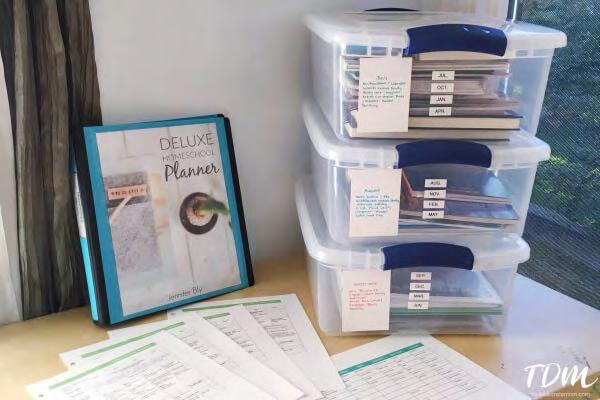
If you have trouble keeping your inspiration and ideas in one place, you might want to try using a planner. The Deluxe Homeschool Planner has all the sheets you need to plan (and document) your children’s learning.
READ ALOUD
If you think your children are too old to have read-aloud time, think again. Sarah Mackenzie’s book, The Read Aloud Family: Making Meaningful and Lasting Connections With Your Kids highlights the beauty of reading aloud to children of all ages.
Read aloud time is something that will excite and inspire your homeschoolers. They will be eager to join you to find out what happens next in the story. My children request that we read aloud first thing in the morning because they ALWAYS want to know where the plot of the story is headed. I love their excitement. Plus, I use
that excitement to my benefit, by bridging into our other subjects afterwards.
USE LEARNING PROVOCATIONS
Learning provocations are another delightful way to create eager homeschoolers. Often this strategy is overlooked, but it works beautifully with children of all ages.
The Deliberate Mom has an article about learning provocations that is a fantastic resource to explore the idea of using provocations in your homeschool.
BE EXCITED
An excited teacher makes for excited students. If you have no passion or joy for what you’re teaching, then how can you expect your children to be eager to learn?
If you’re lacking excitement, perhaps you need to take a break, have coffee with a close homeschooling friend, or attend a homeschool conference.
DO SOMETHING NEW
A great way to have eager homeschoolers is to do something new! Maybe you do today’s lessons outside in the backyard? Or perhaps you take a field trip to your local museum? Simply sitting in a different room of the house can create a new eagerness for your homeschoolers as well.
CHILD-LED DISCOVERY
One of the easiest ways to create eager homeschoolers is to allow ample time for child-led discovery. So, if you’re reading a book and a child asks about something you’ve read, look up the topic together. Borrow books about this subject and help them find all the answers to their questions.
I use child-led discovery often with my children. We’ve explored trees, clouds, butterflies, ants, and even historical events like the Frank Slide, the Titanic, and the Halifax Explosion by following “rabbit trails” of interest from my children.
Another wonderful aspect about child-led learning is they retain the information a lot better because it’s of interest to THEM!
WANT EAGER HOMESCHOOLERS?
If you want eager homeschoolers, I encourage you to try some of these strategies.
For links and more info, read the original article here: thedeliberatemom.com/create-eager-homeschoolers
Jennifer Bly - Let me introduce myself. I’m Jennifer and I’m the creator of The Deliberate Mom.
When I started this blog, I made many lists of what it should be named. As I deliberated, I realized that I, for the most part, am a deliberate person. I take my time, I ponder, I reflect, I negotiate, and when I act, it is with deliberate intent.
As a mother, I’m especially deliberate. From the activities I do with my children, to the food I provide, I’m intentional. However, over the years I’ve learned that being a deliberate mom is not about perfection but rather intention. The articles you will find here on The Deliberate Mom fit into four main categories: Parenting, Homemaking, Faith and Homeschooling. Come find out more at The Deliberate Mom thedeliberatemom.com
Photos courtesy of Jennifer Bly
The Choice to Homeschool
By Anonymous
Recently, I encountered the criticism that homeschoolers, specifically traditional parent-directed homeschoolers, were hurting and hindering their children by choosing to homeschool them. How would I respond, I wondered, from my personal experience as a homeschool graduate and alumni?
My parents chose to homeschool our family when I was a wee thing. It seemed the most natural thing in the world to me when I was young; Mom and I still did fun activities and crafts together, but they were more educational, and our time together had more structure. While my younger sibling was playing with toys, I was learning to count, connecting the alphabet with nouns I knew, studying nature, starting piano lessons, and more excited than ever for our weekly library visits. I was thrilled!
Then came the age when I became ‘aware’ that we were homeschooling, and that it was ‘different.’ The adults I had happily socialized with when we went to town – grocery clerks, the baker, librarian, and random family acquaintances – eagerly asked me “Where are you going to school?” or, if I was seen during school hours, “Why aren’t you in school?” I learned quickly not to say, “I don’t go to school,” and to add a fun fact about what I was learning that day. This usually satisfied
people, or at least ensured they didn’t ask too many follow up questions. It didn’t stop our extended family and friends from airing their opinions and questions, however. How I dreaded the gatherings where we’d have to answer skill-testing questions from well-meaning relatives, or the feeling, when we visited our in-school cousins, that we were somehow inferior. In contrast, I felt a silent kinship with other families we saw out and about during school hours, and would smile shyly, knowing they might be homeschoolers too.
I wonder now how my parents felt about those interactions. Did it bother them that time spent with family and friends carried the weight of proving ourselves as homeschoolers? Together, they had made the choice that mom would be our primary educator, while dad worked to provide for our family. Did Mom ever wonder about those long hours teaching us, instead of pursuing her own work and interests? How did Dad feel when he thought about us during work hours, or when we showed him what we had learned at the end of the day? As homeschoolers, we were the anomaly in my dad’s family and amongst his coworkers. My mom’s friends didn’t have many kids, let alone homeschool them. My parents’ choice to homeschool necessarily had its ripple effects on their
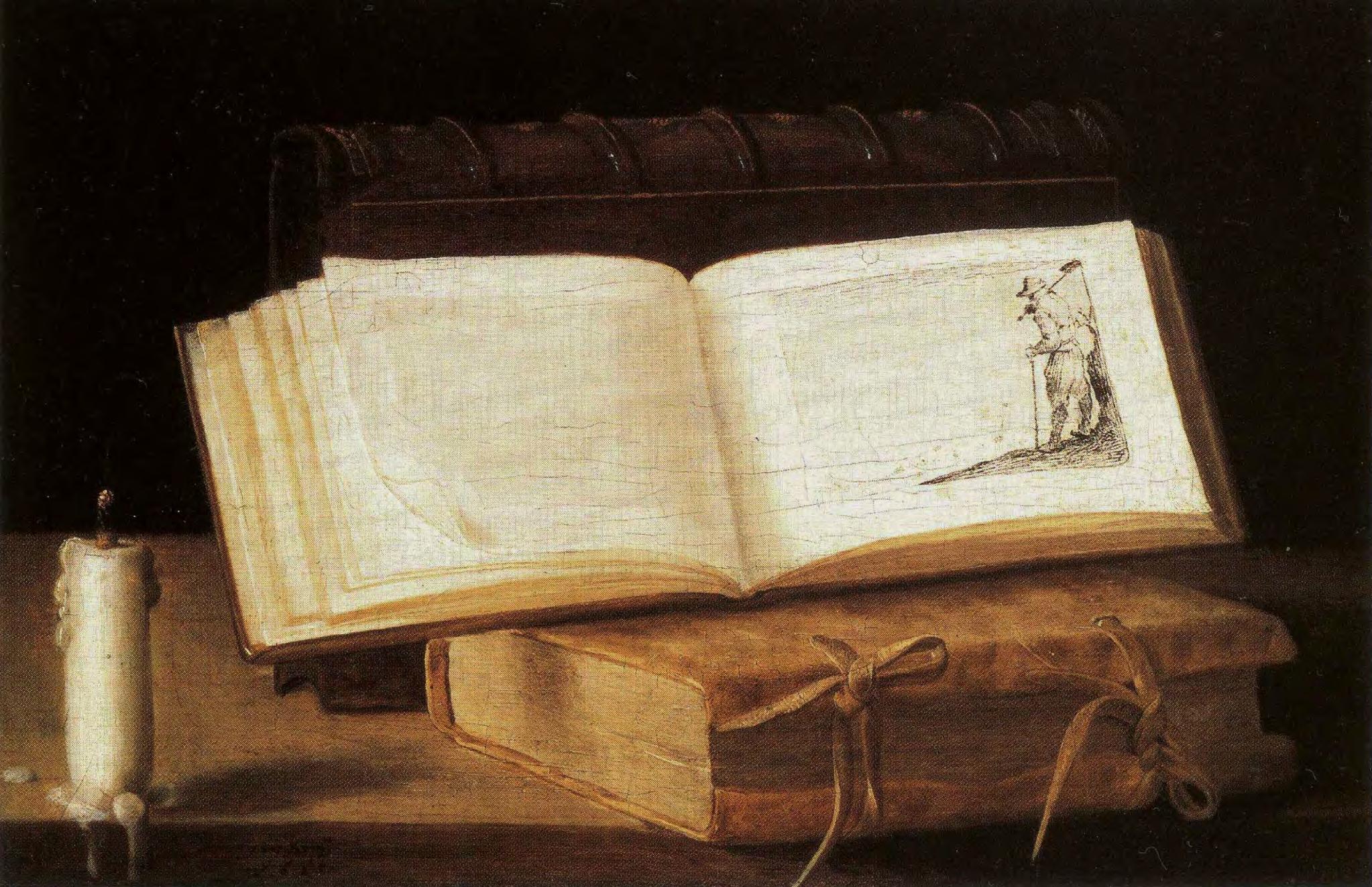
Books Sébastien Stoskopff
support system. I realize now that my parents not only chose to homeschool, but that their choice was probably made over and over again. Wrapped up in that choice was their sacrificial love to will our good as children, over and above their own comfort, support, and even relationships with others.
The fact that I’m only now musing about this, years after graduating from homeschooling, tells me something else about my parents. Their choice to homeschool was not a half-hearted decision. When it came to being parents, they were all in. Education was an extension of the way they gifted us with their time, talent, and treasures. Academics and family values flowed together naturally in our home, if not always easily. When I think about my time as a homeschooler, it is our family life, of which education was a holistic part, that first comes to mind, not the people who doubted us. My parents never made us feel that homeschooling was a burden. Sure, there were arguments about school and occasional tears as we struggled with or against our homework. We had our good and bad moments, like every family. But oh, did we grow together too. I would not have predicted that our family bonds would still remain so strong. I look at my parents now as courageous individuals, swimming upstream with their family. They trusted in their choice to homeschool while they waited patiently to see if the decision would bear fruit. Perhaps I am biased, but I think it did.
Homeschooling equipped me with a passionate love for learning, one that has served me in good stead throughout my academic and personal life. I personally did not follow the route to obtain an Alberta High School Diploma, although many of my peers did. I found alternate pathways to enter postsecondary education instead. There, I realized homeschooling gave me an edge: the capacity to study independently and to motivate myself to complete a task, intellectual or otherwise. This was especially evident when I switched to online classes during the pandemic. I excelled, while other classmates floundered, because I knew how to do the work on my own. Homeschooling also allowed me the freedom to be self-taught (not that my parents didn’t teach me, but I found the time and desire to teach myself other subjects, too). I cannot believe how many college classes and life situations have required this skill! Not only do I desire to learn, but I know how to learn, a skill honed by homeschooling.
Homeschooling set me up to be successful, but more importantly, it taught me how to be happy. I know the pathways to success that the world offers, and I have pursued some of them. Yet – and call it homeschooler free-thinking – I am not dependent upon worldly success for contentment with my life.
I find happiness in my values (many of them instilled during my time at home), my family, work, intellectual, spiritual, and personal pursuits.
On a side note, I think many of our family and friends have come around to the idea of homeschooling. They don’t entirely get it, but they see the value it had for our family. They marvelled and said ‘of course’ at my good college grades, and they are always eager to find out what I’m up to now, as I may or may not have more adventures to share about than those other cousins…
So, if I could respond to the criticism about homeschooling not helping children, I would admit that homeschooling isn’t for everybody. Not all parents have the ability, time, or calling to be home educators. But for those of you who do believe you are called to homeschool, I commend you. The people around you may or may not believe in your decision. As the graduate of home educating parents, however, I thank you, parents, for your courageous choice.
This anonymous alumni homeschooled with WISDOM all the way through. As an alumni, she continues to cheer on WISDOM's mission while remaining grateful for her parents' choice to home educate.
Islands &Rope
By Paul van den Bosch
“Haveyou ever heard of ‘Desert Island Discs’?”
“I don’t think so.”
“It’s a radio show broadcast in England on the BBC. It’s been running since the Second World War right up to today. Every week they bring in a different celebrity and they ask that person to choose eight discs to bring with them to a desert island.” “Discs?”
“Eight audio recordings. When the show started back in the 1940s, the discs were vinyl records. Nowadays, you choose eight recordings to bring with you.”
“Must be a fancy desert island with a good stereo.”
“Yeah, I guess. You also get to bring the Bible and the complete works of Shakespeare and one other book of your choice. Oh, and you get to bring one luxury item too.”
“I think the luxury item that I would bring would be a yacht to take me off the island when I want to.”
“Sorry but that’s against the rules. You can’t have any communication with the outside world. And you can’t bring any method of getting off the island with you either.”
“So I’m stuck there forever. OK. That means some difficult choices. Like the ones I want to talk to you about, by the way. Well, if I can get only one luxury item on this island, I would bring a lot of really rich chocolate!”
“Sounds like a reasonable choice. But before you tell me anything else that you would bring, I want you to just think about the concept of being on a desert island alone for the rest of your life. I remember when I first thought about what I would bring, I realized that there were some favourite audio records that I really liked but that I only
listened to maybe twice a year. When I made my list, I chose not to bring those ones but to bring recordings that I could listen to every day. The records that I put on my list were records that I knew that I would never get tired of. I think it’s like you with Gorgonzola cheese. I know that’s your favourite cheese, but you only eat it about twice a year. But other cheeses, like cheddar or Parmesan, you eat several times a week.”
“Yeah, I can see that.”
“So the things that I wanted to have with me were things that I loved, yes, but things that I knew that I would never NOT love. Does that make sense?”
“Sure.”
“When I was thinking about what things I would bring with me to this desert island, I had two other thoughts. The first was that the things I wanted with me weren’t things at all, but people. The rules of the radio show don’t permit you to bring anybody with you, but what if you could? Who would you bring? Would you bring somebody famous that you’ve always wanted to meet? Would you bring someone who is a really good conversationalist? Would you bring your pastor or some sort of spiritual advisor, someone who would help you grow morally and spiritually?”
“I would bring my wife and kids.”
“Ah, but what if you can only bring one of them. Which one would you choose?”
“That’s cheating! You said I could bring eight!”
“If they were just audio recordings. But if they were people, I would probably let you bring just one.”
“I don’t think I would want to make that choice.”
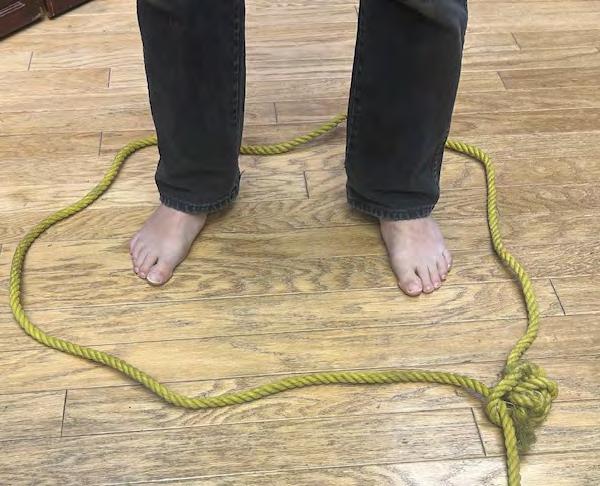
“It would be a tough choice, no question about that. But that’s the kind of choice we make every day, isn’t it? I don’t mean that we’re going to be castaways and marooned on a private desert island. But we are, in a sense, our own islands. What I mean is, I feel like, as I’m walking around in my own life, that I am my own little island of awareness. I am aware of the bathroom when I’m in there brushing my teeth. I’m aware of turning on the kettle when I go into the kitchen. It’s like I’m this moveable island and other people can visit me on that island and I can visit them on theirs. Or look at it this way: you know a cowboy with a rope lariat? A circle of rope that he’s going to throw around the neck of the calf? Imagine you have a circle of rope around you all the time. It’s like a circle on the ground that moves with you. Other people can step inside the rope and talk to you and then step out again. But it’s your little circle of awareness. Can you see that?”
“Yeah, I think so. “
“OK. So what do you want in that circle?”
“Well I probably don’t want any calves or any other wild animals in my lariat!”
“Right! Although some people actually might want that. That’s the
great thing! What you want inside your circle of awareness and circle of influence is up to you. Just like it’s up to every individual person. That’s the way God made us, with free will. God gave us the ability to choose. So if you don’t want wild animals inside your moveable circle, what do you want?”
“Well, ummmm. You said it was moveable so that means what’s inside can change, right?”
“Yes. The things that are inside your circle are the things that you choose to keep inside that circle, whether you make the circle large or small. I’m thinking that those things that you want to have inside your circle on a more permanent basis are the things that you not only like and care about but things that are good for you. That includes people that are good for you. People that you love and who love you.”
“And those people wouldn’t change.”
“Right. So then the people and the things that you put into your circle and keep in your circle are going to be people and things that fit your philosophy of life. If you’re someone who wants to show their toughness or their wildness, then maybe they would have that calf or maybe even a wild bull inside their circle. If you value other things, you’ll make different choices.”
“Well I did tell you that I had some important choices to make.”
“I know. And you want to make the right choices. But which choices are right for you? Can I tell you some things that work for me when I need to make hard choices?”
“Sure. And it will still be my choice whether I listen to you or not, right?”
“Of course. First, do you mind telling me what you are making choices about?”
“Well, you know we’ve decided to home school our kids. I’m really feeling burdened about doing the right thing with our home schooling. I don’t want to mess them up, you know? I want to make sure the kids are prepared for adulthood. I want to make sure they have whatever academics they need. But even more than that, I want to make sure they are really good people. People of good character. Do you know what I’m aiming at?”
“Yeah, my wife and I went through the same discussions and decisions when we decided to home school our children. That was a few years ago now ‘cause ours are not children anymore. So it’s really good that you are thinking about this now, before your children grow up. I wasn’t sure what to do so I did some reading about how to make good decisions. I think one of the best pieces of advice came from a book by Father Michael Scanlan. I remember there were five parts to making a good choice. The first step was one that got me to do a lot of praying and Bible reading also. I had to think about and pray about what God’s will was for my life and our family’s life. What was the ‘big picture’, you know, and how does this one decision fit into that picture? God had given me the gift of being the father of my family. I really felt a lot of responsibility. I wanted to do the right thing. Since I knew that God was smarter than me, I knew that meant doing God’s will and not mine.”
“That might be a tough one for me. I like getting my own way.”
“So do I. Which is actually the second step. In every decision I need to make, the question is this: does my action bring me closer to God or farther away? The closer I am, the easier it is to know and do God’s will.”
“Well, I know the decision to home school our kids is already bringing us closer to God every day. It felt like it was a good decision that was part of a positive pattern.”
“Yes, of course, and that’s the third step! When I think about a decision I have to make, I need to ask myself if the spiritual guidance and direction in prayer that I’m getting is the same spiritual guidance and direction that has led me along the right path up until now? In my case, I know when I’m off doing my own will because I feel turmoil and anxiety and confusion. But I know that God doesn’t work in turmoil or by making me upset. So when I feel calm and peaceful about a decision, even if I know it’s going to be hard, I know that is the Lord directing me in that direction.
Then the fourth and fifth steps usually come after I’ve made a tentative decision. The fourth step is confirmation from outside myself, and the fifth step is confirmation from within. Whenever I have to make a difficult decision and then I’ve made a tentative decision in my mind, I know it’s the right move when certain Bible passages speak to me, or my wife tells me what she’s been thinking and it agrees with what I’ve been thinking, or a friend of mine will call and without knowing it confirm what I had already planned to do. The fifth step is that, once I’ve made that tentative decision, I feel excited and energized about putting the decision into action. It’s like, when I pray, my heart starts to burn inside me knowing that I’m doing the right thing. And I keep praying all the way.”
“Thanks for telling me all of that. Islands and ropes and five steps. Hmmmm. You know, you’ve already helped me, without you even knowing it. When you just talked about how step four includes having a friend call you and confirm things with you, you just did that for me. Something you said confirmed what I was thinking. Thank you for being a good friend. You’ve helped me make some decisions already.”
Paul van den Bosch is a WISDOM Facilitator. The book he references here is What Does God Want? A Practical Guide to Making Decisions by Fr. Michael Scanlan.
By Belinda Letchford
Oneof the easiest ways for natural learning to be part of our family life is to learn from books. We learn from reading the Bible, reading fiction and reading non-fiction. In this day and age of entertainment, it is easy to think that we read books for the story alone – and there are times that this is true – but most good stories have something we can learn from.
We Learn from Stories
From stories (fiction or non-fiction) we can learn:
• History – the actions of people
• Science – to understand the natural world
• Worldview – how our beliefs affect our actions
• Character – how to respond to people or situations
• Thinking and reasoning – to see agendas, biases, logic, and develop the ability to defend your beliefs
• Creativity – how the author uses words to communicate ideas and to see different styles of writing
Learn to Respond to What You Read
One of the things we need to clarify before we can learn from a book is, “What is the purpose of this book?” We can gain purpose from reading the front and back covers – what is this book about
and what do I expect to gain from reading it? This purpose needs to be clearly stated as the child starts to read a book, though real learning may not be limited to that aspect.
When we realise that reading a book is like having a conversation with the author, we start interacting. If the author was standing in front of me, I would ask a question, and he would answer. I would challenge his presumptions, and he would defend his perspective. Unfortunately, I don’t have the opportunity to meet many authors face to face, so these conversations need to happen either in my head or on paper. When we have a thought about something, a question from what we have read, or a reaction of any type, we are interacting with the author or content.
I expect my children to keep a Reading Journal, especially for the books they read as a part of their education, though my hope is that this becomes a habit and they will write as they read any book. My encouragement is for them to write after every reading session – especially their reading time after lunch.
Writing helps clarify our thoughts, and cements things into our longer-term memory. By writing notes to themselves, they can start to see a thread of inquiry that comes from having this discussion with the author. I also expect them to write a report/ essay on at least one subject when they finish reading the book.
12 Ways You Can Respond to a Book
We have been looking at different things that we can record in our Reading Journal:
1. Record important information – this can be done as a brainstorm with words scattered all over a piece of paper, it can be done as a mind map, or a list. How they record it and what is important to them will differ for each student.
2. Look for key words – find the main idea – create a summary.
3. KWL Chart – this chart gets you to ask yourself 3 main questions: What I Know, What I Want to know, and What I Learnt (about the given subject). This is a good one to start with at the beginning of a book and fill in as you go.
4. Cause and Effect or If/Then – record your observations of consequences of actions or beliefs.
5. Compare and Contrast – this is often done in a Venn
diagram, though it can be done as a list.
6. Character Trait Chart – list “4” things your character did, describe his character/values, what can you learn from him and his actions.
7. List unknown words – look up in the dictionary and use in a sentence.
8. Ask a question – and if the author doesn’t answer it go look somewhere else: an atlas, encyclopedia, or the internet (research). Write about the answers you find in your Reading Journal, and don’t forget to record your sources.
9. Copy-write – or recreate artistically a quote or sentence you liked. Or you could use a two-column format – record a direct quote/sentence, etc. in one column and then respond in the other.
10. Draw or doodle – focus on something that you remember, a significant event, or emotion. Or think about your response – how does what you read make you feel, reflect on, or what to remember.
11. Reflect – do you agree/disagree, like it, connect with it or not. Does it remind you of something? Explore why you have these feelings about this topic or sentence.
12. Respond – how has this book changed you, changed what you know, believe or how you act. Has the character in your book been an inspiration, a role model, or someone to avoid? Why?
There is a great Squidoo page on Reading Journals that is particularly helpful to younger years, as my prompts here are probably worded for the older child.
One of the biggest benefits for keeping a Reading Journal as you read a book is that it provides opportunity to process information, and come the end of the book, the student has some original thoughts to write about. When I ask for a report at the end of reading a book, I don’t really want a regurgitated book report – I could read plenty of reviews online if I just wanted to find out what the book was about. I want to see learning happening in my child’s life. I want to see them interacting with ideas and knowledge.
When they start thinking and engaging with a book, they are learning to identify key ideas and arguments. They can summarise based on key details they have recorded; they can use quotes they have highlighted to support their ideas. Their writing becomes not only more interesting, but it becomes their knowledge. This is true learning.
Start Teaching Your Children to Respond When They Read
Regardless of the age of your children, you can teach your
children to respond (to engage, think, respond) to the books they are reading. To learn to respond in an intentional way, I set aside a few weeks to teach the skills of thinking while reading and responding in their Reading Journals.
I selected 12 picture books from our shelves, and each day I read a picture book, we focused on one type of response (from the list above). At this stage, my kids were already reading and studying independently in some subject areas, but we used a picture book to make this whole process simplified – once they gained the skill in an easy setting, they could build the mental strength and skill to apply to any book they were reading.
Mind you, I love a good picture book, and my kids, regardless of age, can engage with the story! Each day we would take one of those 12 ideas and ‘write’ in our Reading Journal.
One more thought –
I would encourage you to keep a reading journal as well, and to learn to do so by joining in as you read these 12 picture books to your kids. You will benefit from this in two ways. Firstly, your own mind will be stimulated as you learn to think as you read. Secondly, your children will delight in seeing you as a role model of life-long learning!
For links and more info, read the original article here: belindaletchford.com/2012/11/learn-respond-books/
Belinda Letchford - The heart is the place where we process and hold our beliefs, values and knowledge – which in turn affect our choices, our actions, attitude and will. The Bible says – out of the heart flows all of life. What a privilege to teach, encourage, and train our children’s hearts. That being said – our influence will come as we live true to our own convictions and passions. My desire for you is that you build relationships with your kids, teach and train the heart, and use the whole of life to teach faith, character and life skills to your kids. I help parents raise their children to have faith, character and life skills so that they can live a full and purposeful life. Find out more at the Heart Focused Blog belindaletchford.com/blog
Photos courtesy of Belinda Letchford
Igniting a Passion for Verse
By Jamie Erickson
The thought of poetry used to make my boys cringe. Verse seemed too fluffy...too girly...too fancy for their liking. But besides being a wonderful way to improve verbal and cognitive skills, memorizing and reciting poetry is a natural way to learn proper syntax and grammar patterns. It expands vocabulary and improves writing skills. And, what’s more, it is a central presence in every culture all over the world and throughout history.
All very good reasons why THIS momma was determined to steer the opinions of her boys and ignite a passion for poetry in each of her kids!
As it turns out, cultivating that love is as easy as pie!
It all started with a simple comment tossed out while listening to the radio one day.
“How did you like that poem?” I asked casually.
“Huh?” came their reply.
“You know, a song is really just a poem set to music” I said... and opened up a whole new world.
From there, we began talking about poems and how often we see them and hear them in our daily lives...in songs, in Scripture, in television commercial jingles, in the narrative of some of our favorite children’s books (Cat in the Hat, anyone?), in nursery rhymes, and on and on...
I gathered up some of my favorite children’s poetry collections and began strewing them about here and there...reading excerpts every now and again during our days. They were a mixed-bag of humorous and witty AND somber and thoughtful selections... but mostly humorous and witty.
Great Poetry ColleCtions
Now We Are Six by A.A. Milne
When We Were Very Young by A.A. Milne
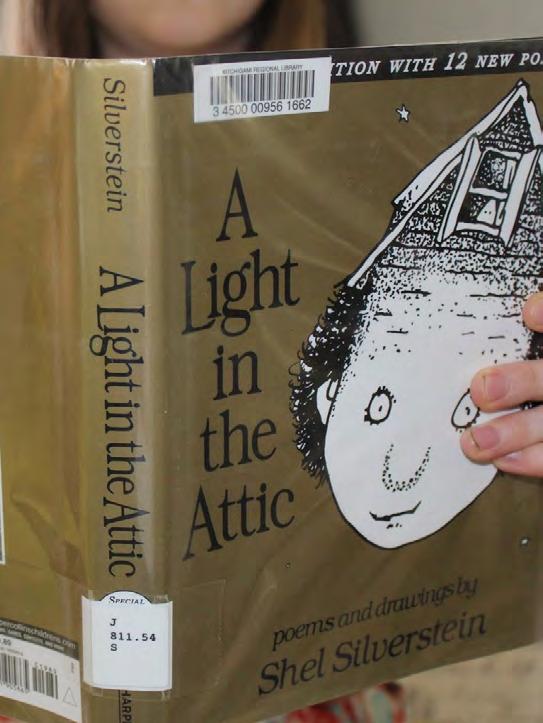
A Light in the Attic by Shel Silverstein
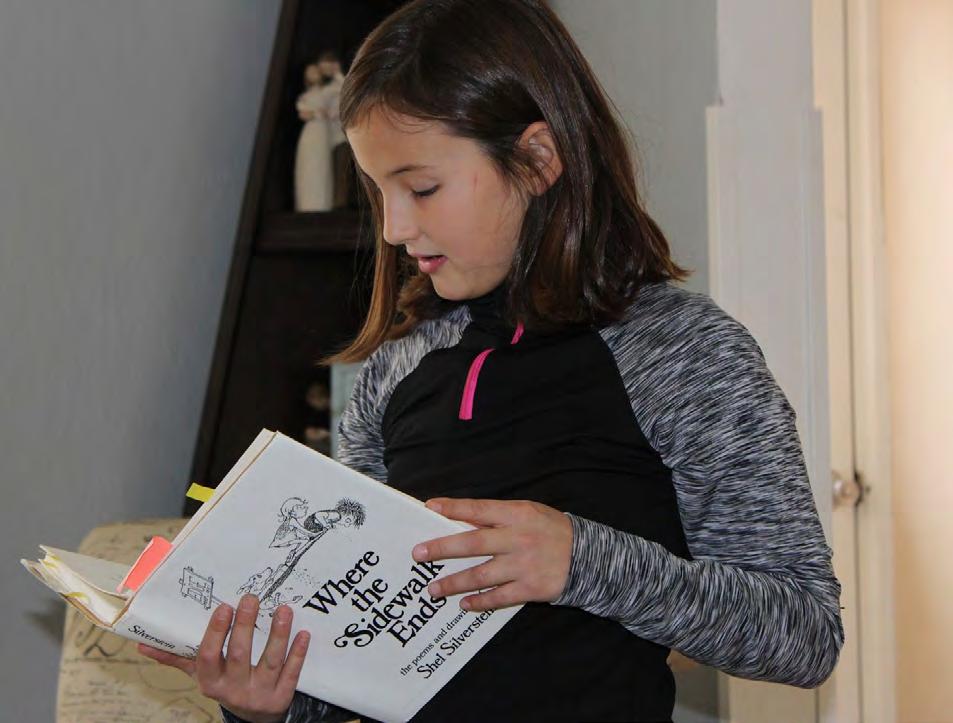
Where the Sidewalk Ends by Shel Silverstein
Poems and Prayers for the Very Young by Martha Alexander
The Random House Book of Poetry for Children by Prelutsky & Lobel
The 20th Century Children’s Poetry Treasury by Prelutsky & So
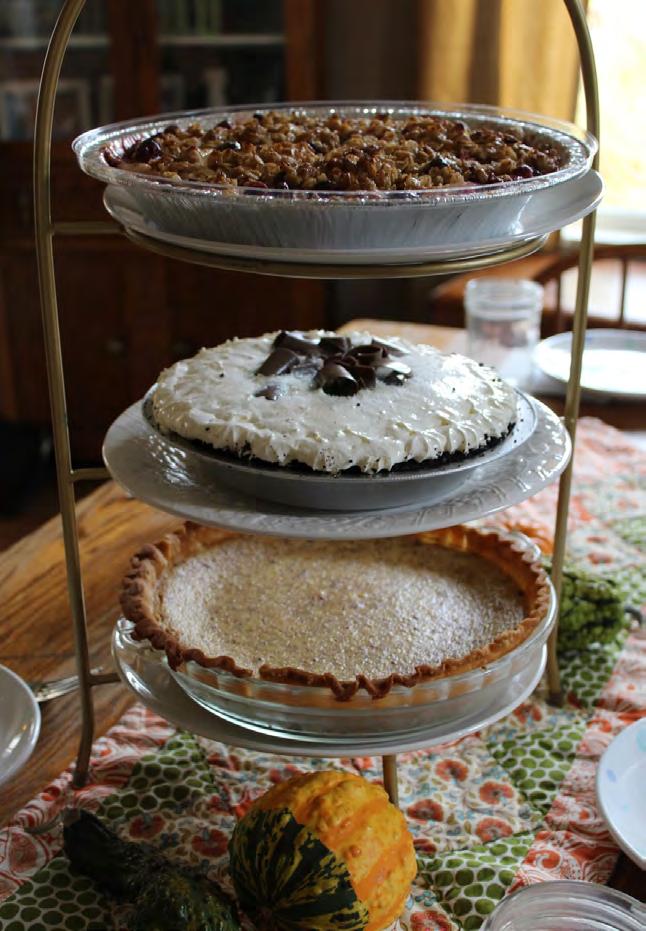
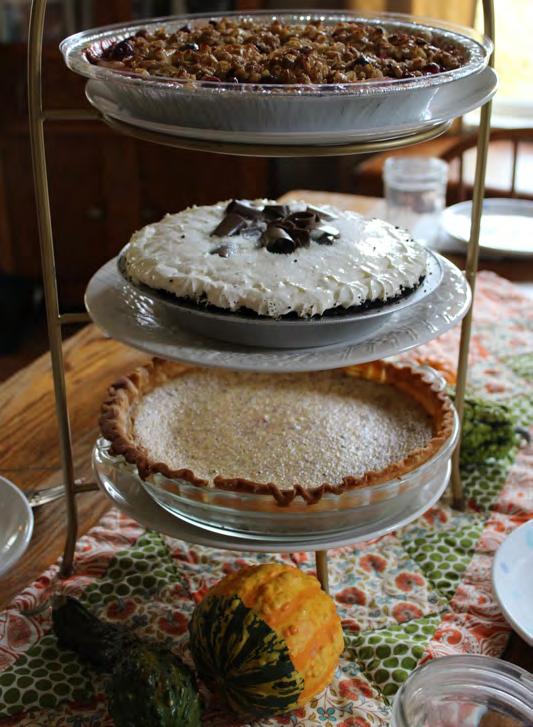
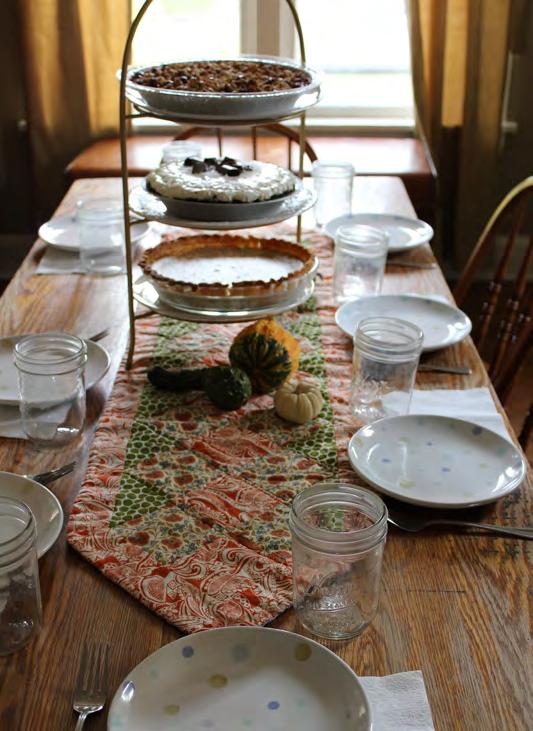
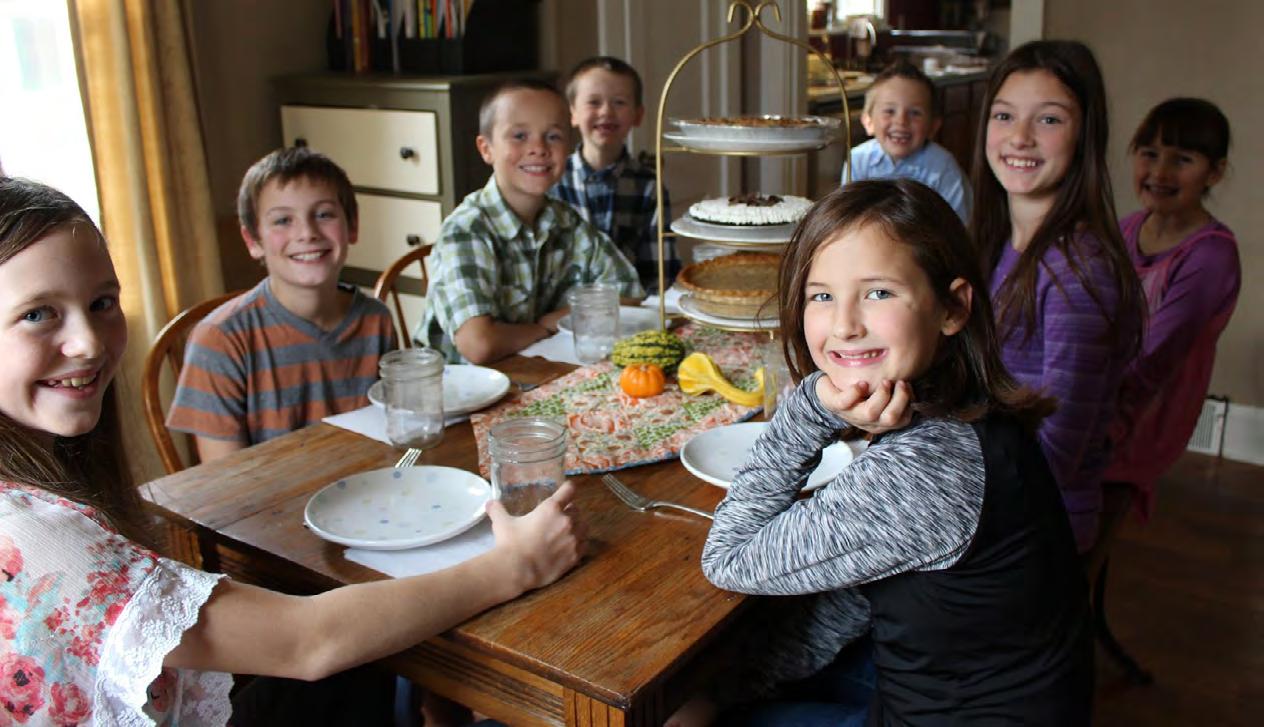
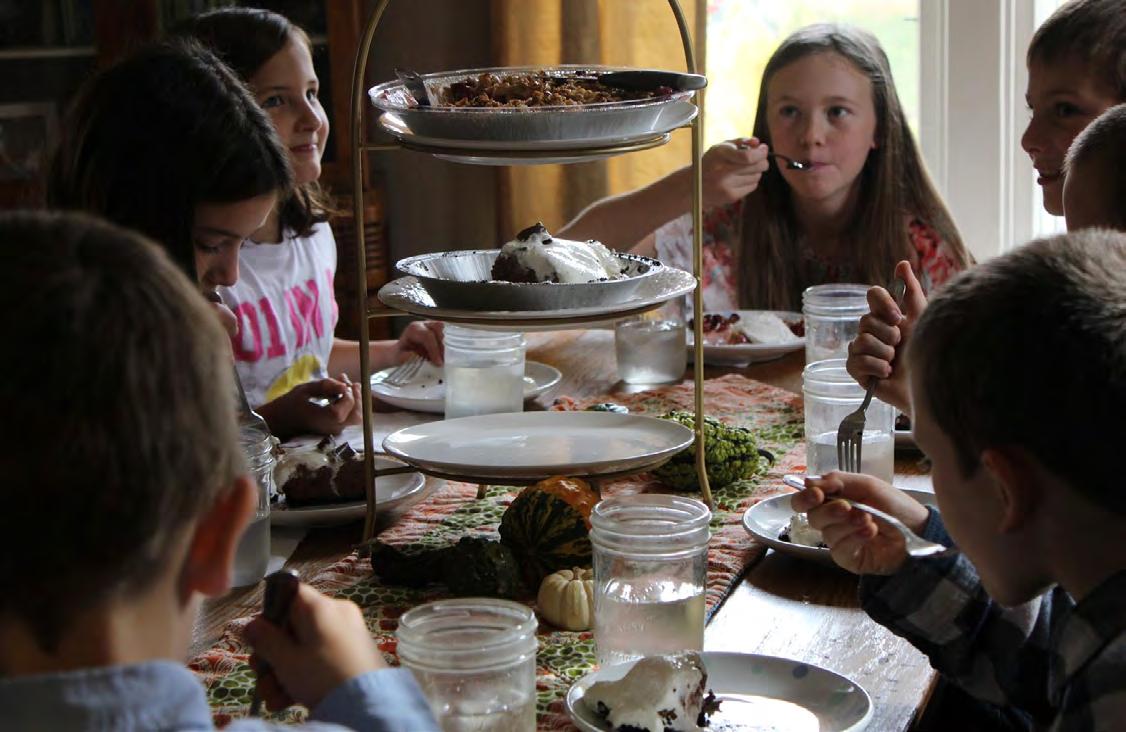
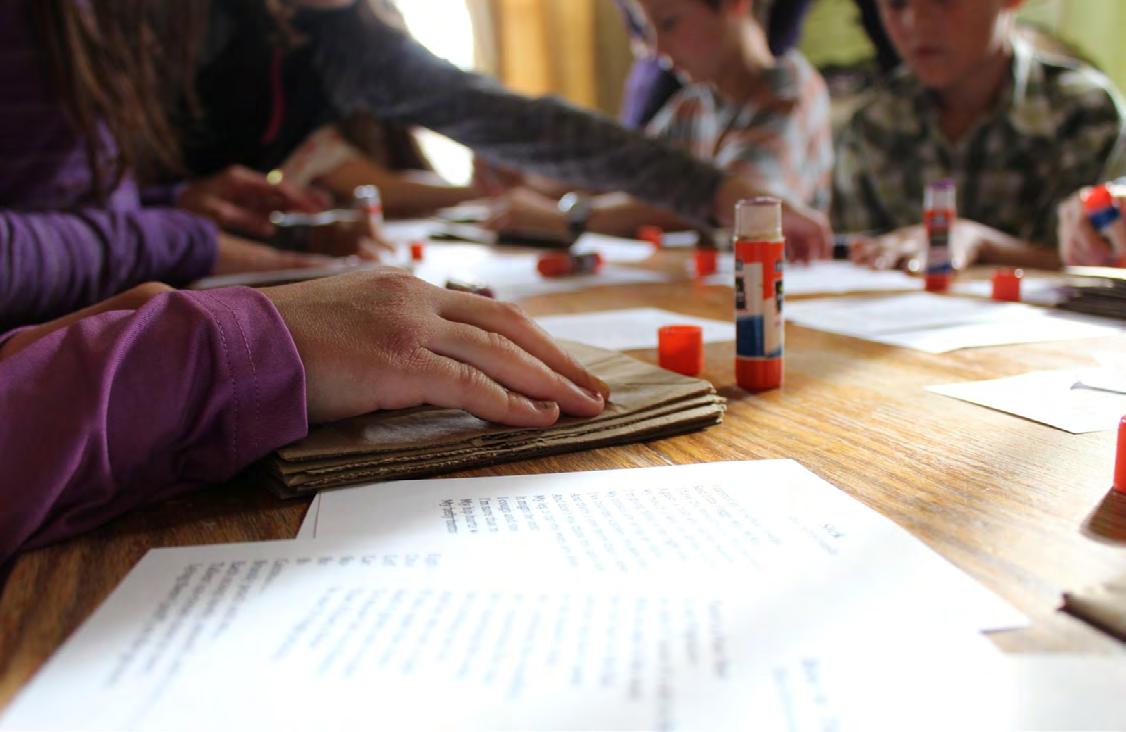
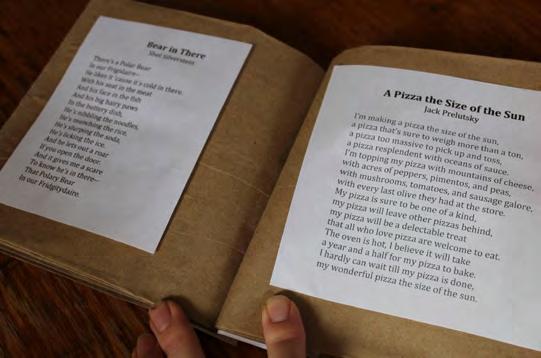
After a few weeks of sneaking in verse, I invited my kids and a few of their friends to a morning of Poetry and Pie...a party dedicated to two great things, creating/reciting poetry and eating pie.
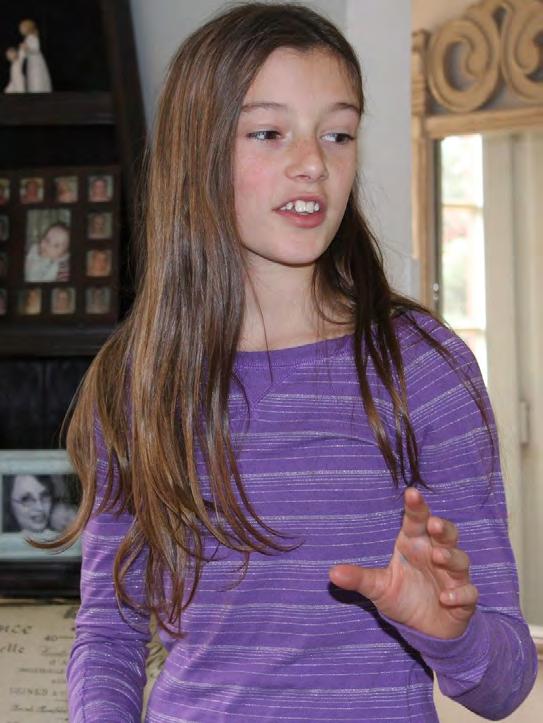
I challenged each guest to pick a poem to share with everyone else the day of the party. Any poem would do. Short or long. Silly or somber. The only rule was no one could tell anyone else (except me) what poem he/she had selected until the day of the party.
For days leading up to the event, all my kids could talk about was how they couldn’t wait to share their poems! Shrouding it all in a bit of mystery helped to build momentum. (Score 1 for a sneaky mom and her love of poetry!)
Home School Experiences
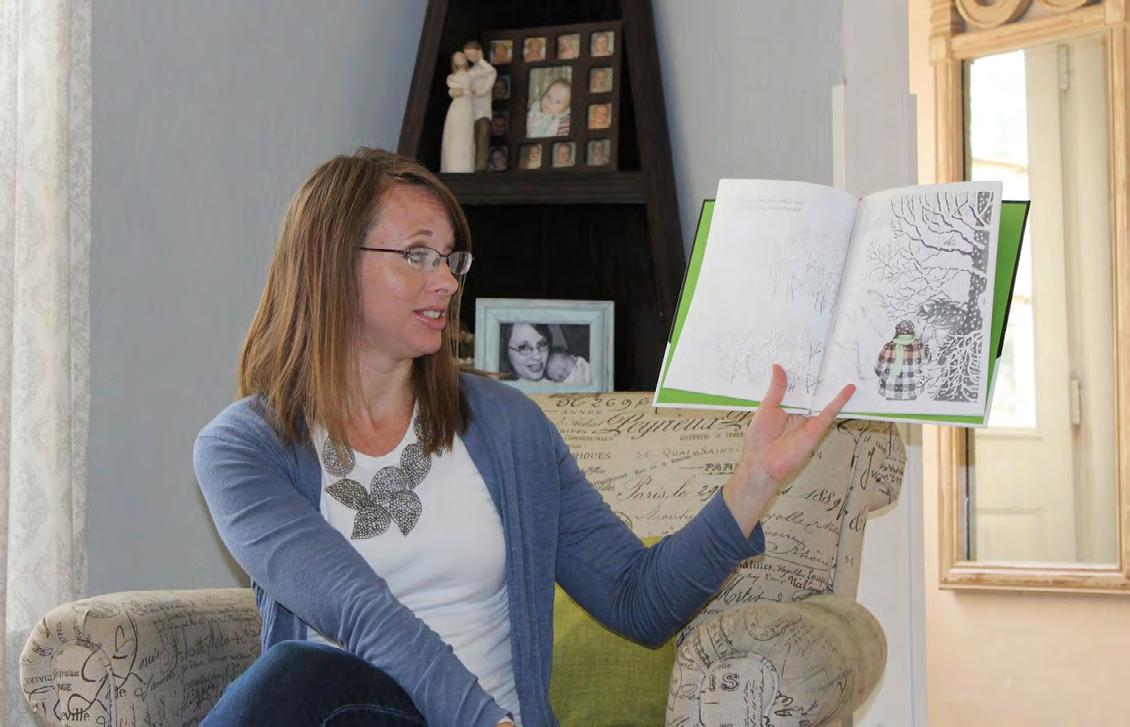
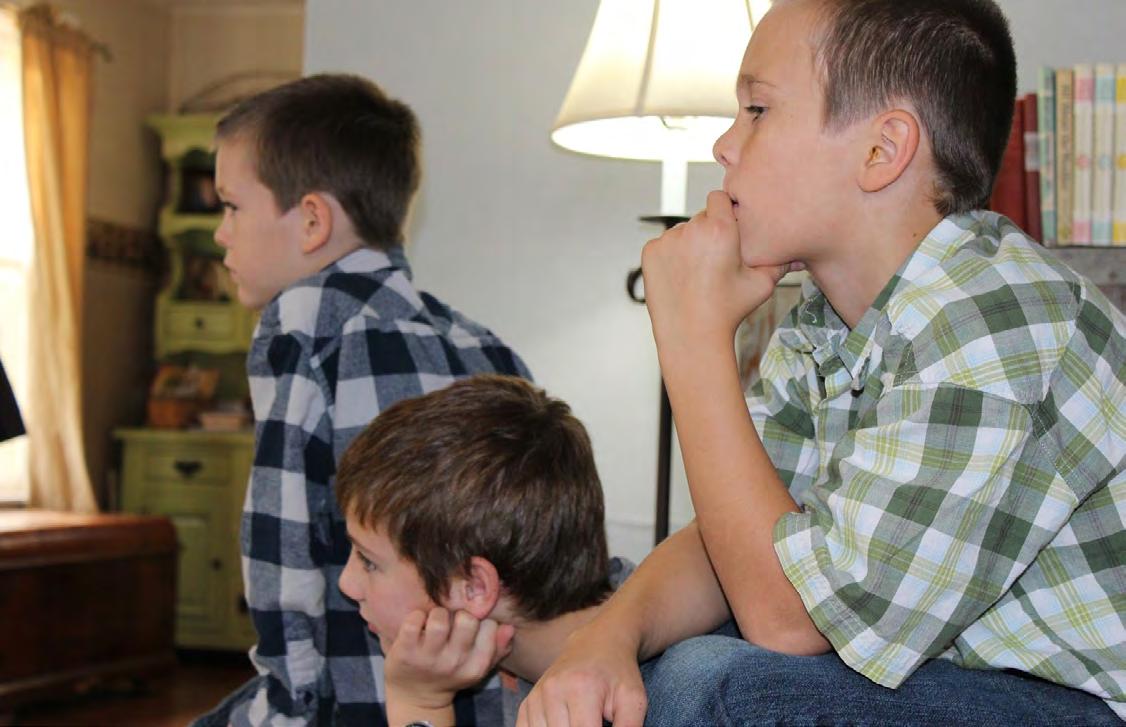
The morning of Poetry & Pie dawned with eager anticipation all around. Even the three mommas came armed with verse to share. I gathered the group in the living room and read a beautifully illustrated picture-book version of the beloved American classic, Stopping by Woods by Robert Frost. We discussed the book a bit as we read through it, noting some of the rich language and interpreting the more-difficult-to-understand phrases through the illustrations.
Before moving on to the next activity, I broke the ice by reciting my chosen poem. Then, I invited a couple of the kids to share theirs. (I had a morning full of poetry-lovin’ activities and a long line of kids just waiting to share their verse. It worked well to mix two or three recitations in between each activity. The variety kept things moving.)
adjeCtive Poems
After a few kids shared their poems, we paused for a few moments to talk about some of the elements of a good poem.
The children were quick to point out that most of the poems they like contain rhyme, include colorful adjectives, and have a lyrical quality. I reminded them that poems, while often short, are usually more difficult to write than a narrative story. When writing a poem, you have to squish a whole lot of description and imagery into a few well-chosen words.
a Gentle introduCtion to Poetry
We, then, got to work creating one of the simplest kinds of poems to write, adjective poems.
I passed a sheet of paper and a marker to everyone, instructed all the guests to sit in a circle around the room, and asked each to write his/her name in the center of his/her paper.
I told everyone to pass their paper to the person to the left of them. Each person, then, had another person’s paper.
I encouraged them to think of an adjective or adjective phrase that would describe that person and write that word (or words) somewhere on the paper. When everyone was finished, I had them pass the papers again to the left. This writing and passing continued until all of the papers circled back to the original owners.
Each paper was filled with adjectives describing its owner and, if written out in linear order, would create a simple adjective poem.
Then it was time for a few more recitations.
Just before serving the pie, I gathered everyone to the table to create a group poetry Mad Lib.
Poetry mad lib
I had typed out a short excerpt from the whimsical, poetic picture book, The Magic Hat by Mem Fox. I intentionally left out certain nouns, adjectives, and verbs so that the children could create a one-of-a-kind poem together.
I went around the room and encouraged the kids to provide the missing words for our poem that they had entitled The Magic Cat.
When I was done filling in all the missing lines, I read the poem out loud.
Then, it was on to pie.
And more pie.
And still more pie.
After the table was cleared, I brought out some supplies to create simple poem books.
CreatinG a Poem book
Prior to the party, I printed off nine copies of each of the poems that were shared at the party and grouped them together in sets. It was a lovely collection of Dr. Seuss, Shel Silverstein,
Home School Experiences
Jack Prelutsky, and even an original poem by one of the kids.
To save time, I also pre-folded and stapled brown lunch sacks together to create a little paper bag mini book for every child.
After we ate pie, the kids each glued a full set of poems to the inside pages of their own mini book, added some sticker embellishments, and created personalized covers.
As I was planning the activities for the party, I wasn’t entirely sure how this craft would be received by the boys of the group. But, I was pleasantly surprised to find my boys quoting from their poem books for days after the party.
Having all the poems gathered nicely in one spot gave the kids a chance to rehash and rehearse their favorites on a whim.
After a few more kids recited their poems, it was time to close out the party.
I ended the morning by reading Sing a Season Song by Jane Yolen, a new book with an old soul. It’s set to verse and has the kind of beautifully rich illustrations that you rarely see in children’s literature anymore.
It was a lovely morning dedicated to the simple joy of poetry. We didn’t dissect the lines. We didn’t overanalyze the themes and tone. We just shared poems. We enjoyed the words and embraced the rhythm.
As Gladys Hunt says in Honey for a Child’s Heart,
“Children may learn to appreciate poetry more than adults do because they are free to let it be what it is and not demand more of it.”
We spent the morning letting poetry be what it is. Simple. Beautiful. Enriching.
For links and more info, read the original article here: theunlikelyhomeschool.com/2015/11/poetry-pie-party-igniting-passion-for. html
Jamie Erickson - Jamie left her big city life to follow love all the way to a reallife Mayberry. After earning her Bachelor's degree in elementary education, working for the nation's leading homeschooling curriculum company, and teaching in a traditional classroom, she had babies...lots of them...and decided to point her gaze towards home. When she's not curating memories, hoarding vintage books, or playing ringmaster to her own live-in circus of seven, she can be found writing, speaking, and trying to stay warm in the upper midwest. Be sure to check out Jamie's latest book, Homeschool Bravely: How to Squash Doubt, Trust God, and Teach Your Child With Confidence. Find out more at The Unlikely Homeschool theunlikelyhomeschool.com
Photos courtesy of Jamie Erickson
Two roads diverged: ParT ii Choices Abound!
By Nicole Noster
Inmy last article, I spoke of postChristmas winter, trying to stay positive and persevere. When this magazine reaches your mailbox, I dearly hope I will have reminded myself that green things do still exist as my garden starter seedlings stretch toward that God-sent, Alberta winter sun. Waking up to -32 this morning does not do a lot to help that reminder… In my previous article, I also touched on one possible road of high school planning choices as students look to post-secondary studies, namely Augustana Campus, U of A, and our partnership with them.
“Classic Learning Test” not “Classical Learning Test”. We are not aligned solely with the classical education renewal movement because there are certain things there that not everybody chooses, such as an emphasis on memorization, logic, and grammar, learning Latin, etc. This is a certain route of education that many choose, but not everybody is choosing that route. So, we don’t want our exam to be so closely aligned with this one educational model that it excludes everybody else. The reason it is “classic” is because its content draws from the Great Books tradition, which means it is dealing with multiple source ideas such as politics, religion, philosophy, good and evil, what it means to be human, etc.…
Here is another optional road not only of high school planning choices, but also of an elementary+ opportunity: the Classic Learning Test. I recently had a delightful conversation with Regina Gavrok, Homeschool Partnership Manager with CLT, to discuss the Classic Learning Test and break down what it has to offer.
Firstly, what is the CLT? In short, it’s a standardized exam. Their website states their mission beautifully:
Classic Learning Test (CLT) exists to reconnect knowledge and virtue by providing meaningful assessments and connections to seekers of truth, goodness, and beauty. What do we mean by “knowledge” and “virtue”? As far back as Plato, the goal of education was understood as developing both intellect and character in students. Its purpose was to help students become better human beings. Standardized tests should reflect that same goal. They should leave students feeling inspired and enriched while equipping them to pursue their goals. That’s why our tests feature beautiful and meaningful content in addition to assessing timeless academic skills.
Who is the CLT for and why is it a good fit for home educators and students?
The CLT is for all students, Grades 3 and up. A common misconception is that the CLT is primarily geared toward classical programs and their students, but Regina clarified this for me: “The CLT was actually designed to be truly neutral. Not in the sense of whitewashed, but in the sense of “classic”, so this is why it’s called
We (CLT) are not the arbiters of quality. Western society has chosen what quality means to us and what we want to hand on to the next generation. This is what we want for our texts. We have quality texts that have solid reasoning, so that when we ask reasoning questions, we’re not asking students to make sense out of gibberish; we’re asking students to make sense out of quality. A student demonstrating their ability to understand quality in difficult or challenging texts is a true test of their reasoning capabilities, not just “what have you learned; can you regurgitate it” … No prior knowledge is being tested. This may be a student’s first time ever reading Aristotle and that’s ok. They are not being tested on their Aristotle-knowledge and everything they’ve memorized about him.
This is a very classical idea, but it’s also a very classic idea that students from all types of educational methods can work within. All these different avenues of education are finding a commonality with this classic format. Knowledge and virtue are reunited and not divorced from the ideas of goodness, truth, and beauty. It allows students to interact and wrestle with those ideas and to demonstrate their abilities.”
Regina spoke to the challenge that many home educators face in their curriculum choices, i.e. that while we make choices we deem better for our children, the system frequently does not allow us opportunity to demonstrate this quality. She said: “If you’re trying to choose a certain education, but you’re being held to a standard that doesn’t reflect that education and assumes a different kind of education, that
is taking away your educational freedom. To be held to a standard that you don’t believe in is not to have total freedom in your education.”
The CLT was created in part to overcome that challenge.
Can you speak to the “formative” nature of this particular test?
“Personally, what I love about the lower grade CLT exams is that they are testing language arts and mathematics. They are testing reading comprehension, grammar and writing, logic and reasoning skills, along with basic math skills. Beyond that, they are not testing prior knowledge in the sense that they’re asking for particular facts based on individual subject matter. There are certain external standards for specific grades that are expected to be met internationally, but these standards are the basics. Outside of those basic skills, the rest of their education is up to the parents.”
The CLT is less focused on achievement testing and more focused on testing aptitude.
Regina says: “An aptitude test is what are you capable of doing with what you know…with these things that you already know, can you apply them to new problems? Can you stretch your application to texts that you’ve never read before?”
CLT results are beautifully formulated into helpful categories that highlight both strengths and areas of improvement. While reading their results, a parent and a student can view analytical data which demonstrates particular examples of each category to remember the specifics of that area of the test. These categories are more helpful than other standardized tests since they identify areas, rather than subjects, in which a student excels or should focus on.
Regina remarked: “To be able to see the positives, and not just the negatives (of a student), gives a real insight into the way that your kid’s mind works, because you want to capitalize on the gifts that a parent can see, as well as any apparent gaps.
The CLT’s mission statement talks about connecting knowledge and virtue. Traditionally, education is the cultivation of character and intelligence. We know that no national or international organization can cultivate virtue in an individual, but what organizations like CLT can do is support educators who are the boots on the ground cultivating virtue in their classrooms and in their homes. CLT does that by supporting and, in many ways legitimatizing, an education that still prioritizes virtue, true understanding, knowledge, reasoning, and critical thinking. So when we create a test that has classic authors, logic questions and analogies (a test that looks like a lot of the curricula coming out of classical or homeschool academic communities), and we check the box and do all the standard things for these educators, they then have the freedom to actually cultivate the human person while also getting data, analytics, and state reporting. To be fair to these educators, to have a test that more closely reflects the kind of education they are trying to create, the CLT enables parents and educators to do their job while doing what they can’t, i.e. providing a fully formed aligned exam to state standards and post-secondary requirements.
The CLT was the first standardized exam to go online; ACT and SAT are now also going online. The reason that we are online is because the
people we are trying to serve are homeschoolers. Trying to travel to a testing site and attempting to work with your local superintendent can be a pain. Instead, we said, let’s just bring the test to them.”
Regina also addressed how standardized tests other than the CLT have recently had suggestive language that presumes answers based on their particular interpretation of a cultural reality. This clearly shows that some standardized tests are not testing the student on objective truths, but on subjective perceptions.
For the WISDOM Online Program specifically, how would our program potentially fit well with CLT testing?
“There is a universality to CLT exams for all students, regardless of their particular educational model. But if a student is used to classical texts and authors, that is going to make CLT an easy fit. The discussion method really is a verbal and communal re-creation of what reading is. Reading is a discussion with the author and having a conversation with the text... Having an educational background that has utilized the idea of asking questions of a text and really diving into it will only benefit a child when they encounter the kinds of texts that are on CLT. It’s really more of the same thing.”
Regina discussed the essential element of feedback as part of a good core educational process. CLT helps to provide this feedback. On a micro level, it identifies how the educator can assess their student, as well as alerts the student to what they are getting right and where they need to adjust their understanding.
She says: “On the macro level…these assessments give you a checkpoint in the trenches of your education as well as an opportunity to look at education as a whole and see the gaps and the strengths. Parents can often be very aware of these areas, but to varying degrees. Sometimes a student can be really good in a certain subject in one way, but, at the same time, be compensating for a lack in the same subject that is not as noticeable. For example, a student can be excellent at reading comprehension and be effective at discussion because they can analyse the nitty gritty details of the text. Their memory is excellent, and they can argue about the details of the text around the clock. A parent would assess that they have great reading comprehension and determine they have no concerns there. But then this child’s CLT scores come back and show that their reading comprehension is good, and everything is really high, except for “passage as a whole”. This is the child’s weak point. They can argue about details all day long, but to summarize in a few sentences on what the work is about is difficult for them to verbalize. CLT is a test that gives a parent the big picture, which enables them to dive back into the particulars of that student’s education within the context of the big picture feedback system.
One of the beautiful things of home education is that you’re comparing your student to themselves: “This is what my child is capable of, I know it, and I want them to rise to the occasion.” So, a parent can push their child to their capability level. But sometimes it’s good to have an external measure to reassure parents that their children are doing great, and they just have certain areas that can be strengthened.”
Can you share feedback from post-secondary students who used the CLT to enter university?
“So many colleges have chosen to accept CLT because they want
students who are performing really well. They are noticing that CLT students are matriculating to their campuses, and they are just killing it. These students are performing well in classes; they are driven; they are succeeding as leaders on campus. In the homeschool community, there is virtuous education by having parents involved in the formation of character and not just the formation of somebody’s mind, but also their soul. Colleges are seeing this formation, and they want more students like that. In this way, the CLT helps to legitimize education that supports virtue.
There is a reason why it’s an option for CLT students to be recruited by partner colleges, and that is a large part of our partnership with these colleges. They will get lists of students from us, and they will reach out to offer scholarships and attract students to their campuses. CLT students are proving more and more to be the kind of student they want on their campuses.”
What would you say is the greatest good of the CLT?
“It gives the power of education back to the educator. Instead of trying to usurp the end result of education and trying to set the standard, CLT gives the power back to the educator to educate as they will with this tool. The test serves the educator instead of the educator serving the test.
We are supposed to live in the world, but not of the world. I like to rephrase that in the CLT context as: we live in the world, but not of the world, but we are still IN the world. This world, this community is not everything…it’s not the arbiter of a child’s quality or value or worth at all. But this child will still exist in this world, and we want to equip them to live a good life in this world, not in theory, but in practicality. This means knowing the cards that they are dealt, knowing their weaknesses and knowing how to compensate, knowing their strengths and learning how to capitalize on those things. This is all part of a responsible formation of a person who has to live in this world.”
CLT provides datapoints that equip the parent and student with this necessary information. Regina remarks: “I try to help parents reframe what they think about standardized testing. I strongly believe that standardized testing exists for two reasons: first, it’s a skill. Being able to take a test is part of a child’s education and should be part of it. There are so many parts of our life that require testing, long into our professional career. You don’t want these high stakes tests to be the first and only time of exposure. Test taking is a skill, right along with reading comprehension and math. The second purpose of a standardized test is that it is a tool for the educator. It is a tool in their toolbox; it is not everything. It is just another datapoint with which they can do what they will. The educator is the craftsman of
“I think it’s best to do it from the beginning for the 2 reasons mentioned before. When you get to high school, tests are higher stakes. You’re testing for college entrance, and if this is the first time a student ever tests, that is a lot of pressure for that test. If it was just part of a child’s education a couple times a year, by the time that child is in their Grade 11 or 12 year, then that testing is very normal and familiar. It’s just part of the year in the same way as other parts of their curriculum. Taking tests at the beginning of a child’s education helps massively with fostering testing as a skill in their toolbox. As for the second reason for CLT (a tool for the educator), the more consistent you are with testing, the more consistent data you will get. Testing at the beginning and end of the year gives you amazing comparison data of what you learned and grew in over the course of that year. You have an idea of what you want to do at the beginning of the year, your game plan. At the end of the year, you can see if that plan, those methods and choices, worked. If you want analytics to be part of your toolbox, regular testing will provide useful analytics.
CLT 3-8 are offered twice a year. These fall and spring CLT test forms are different and were designed with the growth capacity of a student in mind. The standards that a student is being held to are drawn from the time of year in which they test. Fall analytics will be based on what students retained from their previous academic year as well as covering areas that will be goals of the new school year, with the understanding that this is at the beginning of the school year.
The CLT 10 (college preparatory exam) is offered 5 times a year to help students connect with potential colleges of interest. There may be scholarships that the student can obtain through good testing scores, and this early relationship is advantageous. This test is for both Grades 9 and 10. (Regina described that the reason CLT10 not as stratified is because many areas of study in high school can covered in different years and not necessarily tied to a Grade 9 or 10 program per se.)
The CLT (Grade 11 & 12 college entrance exam) is offered 12 times a year. You can obtain as much data for analysis as you want!”
WISDOM is pleased to partner with CLT and offers their exams for a very affordable $10/exam. Please visit our website (wisdomhomeschooling.com/CLT) or Homepage -> Events -> Workshops to find and register for specific CLT testing dates. I have personal experience with CLT 3, 6, and 8, and can’t say enough about how pleased I was with the process and outcome.
You can also check out two other articles where Regina describes the analytics breakdown of CLT results (iahe.net/using-standardizingtesting-to-strengthen-your-education/) and the good fit standardized testing can be for classical education (classicalconversations.com/ blog/standardized-testing-tool-for-classical-educators/).
A Métis Welcome hosted by The Métis Heritage Project
The Métis Heritage Project is a non-profit organization that works in partnership with Parks Canada to provide interpretation services at the beautiful National Historic Site in Rocky Mountain House. Two of our interpreters are WISDOM Home Schooling students! This year we welcomed several WISDOM families during two events, one in the spring and one in the fall. Participants helped Elder Bernie Ouellette reenact a bison hunt, did some jigging, learned to finger weave, tasted tea and bannock (with butter and jam, of course!), learned a few words in Michif, learned a bit about the history of the Métis people, viewed Red River carts large and
small, and explored the park. We're hoping to offer another Welcome next spring, so keep an eye on the events page.
Interpretation services are available from May until the end of September each year and we hope to see you at the Site! To find out more about The Métis Heritage Project, check out themetishp.org
Rhonda Caluttung is a WISDOM facilitator, homeschool mama, and co-director of The Métis Heritage Project.
Celebrate with WISDOM Class of 2025 wear order by May 15
$55 + free shipping
Order your WISDOM Class of 2025 Grad Hoodie now!
• Made with 100% soft ring spun cotton fabric
• 1x1 rib cuffs and waistband, Relaxed fit, seamless body
• Available in S-4XL
Custom order means we're only ordering once, so don't delay - place your order before May 20. Call the office or order online: wisdomhomeschooling.com/resources/shop-online
Optional: add custom embroidery of your first name on the right sleeve
raduation S i G n S
Celebrate your graduate!
High School
Download these signs FOR FREE from our website and print to place on your lawn or in a window. Available in 8.5x11 and 11x17
wisdoM diPloMa, CerTifiCaTe of CoMPleTion, & TransCriPT
Go to wisdomhomeschooling.com/high-school for more information.
You may choose to give a percentage or a letter grade to each course, and you may list grades 10-12 or only 12.
In order to provide as much time as possible to complete these, please submit your request as soon as possible.
G raduation
$10WISDOM logo charm and 2025 charm on one tassel will be a treasured keepsake for your grad for years to come.
July WISDOM Family Magazine
Graduate Feature
Grads, may we feature you in the magazine?
Names of our 2025 graduates will be listed in the July WISDOM Family magazine. We will also include photos and short bios from as many of you as possible. Send these to magazine@wisdomhomeschooling.com by May 20. Submissions may be edited for clarity or length.
If we do not hear from you, you will not be listed.
Presentation by Dr. Brian Ray
Let’s FLip the Question:
‘Why Would You Ever Stop Home Schooling?’, Not ‘Why Would You Home School?’
The Data Is In—Home Schooling Works.
Still wondering if home schooling is effective? Dr. Brian Ray, the president of the National Home Education Research Institute, has spent decades researching and analyzing the impact of home education.
On April 4, 2025, he’ll break down the history, research, and realworld outcomes that prove home schooling is more than a trend—it’s a transformational approach to education.
�� Seats are filling fast—sign up now!
April 4 | Spruce Grove Alliance Church | 7-9:30pm
$30 individual | $50 couple | $15 youth
NOTE: This session is included in your registration for the High School & Beyond Conference, and also has standalone registration for anyone not attending the conference.
April 4, 2025, Spruce Grove
Hosted by WISDOM and open to all.
WISDOM Science Laboratory Seminars New & Improved for 2025-2028!
Register early; limited spots available.
WISDOM Science Laboratory Seminars offer hands-on, experiment-driven learning to deepen students' understanding of key scientific principles. With updated content for 2025-2026, these engaging seminars provide essential lab experience in Chemistry, Physics, and Biology, supporting course credit challenges and advanced studies. Spaces are limited—register early!
General Physical Science Lab Seminars
(5 sessions-Sept. to Jan) This program will develop the student’s understanding and skills with the scientific method in the realm of Introductory Chemistry and Physics as they study and conduct experiments regarding Matter and Motion. This lab seminar will serve as the prerequisite for the Senior Chemistry and Physics Lab Seminar.
Senior Physics Lab Seminars
(4 sessions-Feb. to June) This program further develops the student’s understanding and skills with the scientific method as they study and conduct experiments regarding: Conservation of Mechanical Energy; Dynamics; Electrical Fields; and Optics. This lab seminar could serve as a support to the Physics 20 and/or Physics 30 course credit challenge. (Prerequisite: General Physical Science Lab Seminar)
Senior Chemistry Lab Seminars
(4 sessions-Feb. to June) This program will further develop the student’s understanding and skills with the scientific method as they study and conduct experiments regarding: Ideal Gas Laws; Stoichiometry; Titrations; and Oxidation/Redox reactions. This lab seminar could serve as a support to the Chemistry 20 and/or Chemistry 30 course credit challenge. (Prerequisite: The General Physical Science Lab Seminar)
Biology 20 Lab Seminars
(4 Sessions-Sept. to Jan.) This program will develop the student’s understanding and skills with the scientific method in the realm of Biology as they study and conduct experiments regarding: Evolution (from a Christian perspective); Photosynthesis; General Anatomical Systems (Fetal Pig Dissection); and Pulmonary Functioning. This lab seminar could serve as a support to the Biology 20 course credit challenge.
Biology 30 Laboratory Seminar
(4 Sessions-Feb. to June.) This program will the develop student’s understanding and skills with the scientific method in the realm of Biology as they study and conduct experiments regarding: The Neurological System (Dissection of Sheep’s Brain); Endocrine System, Reproductive System (Pregnant Sow Reproductive Tract Dissection); Genetics. This lab seminar could serve as a support to the Biology 30 course credit challenge.
The May issue of the WISDOM Family Magazine will be dedicated to 30 years with WISDOM!
We welcome your articles and stories about home schooling with WISDOM during these years. If you know other families or alumni who have finished home schooling with WISDOM and would like to contribute, please invite them to do so.
For current and alumni contributions, please share a little about your home schooling journey, where your family or children are now, and how you have benefitted from home education.
Register Now!
Join us for the 30th Anniversary Celebration of WISDOM Home Schooling!
June 19-22, 2025
Battle Lake 4H Centre (Dorms, Trailers, and Tents available – Limited Capacity)
Join us for a family camp full of indoor & outdoor activities and events including Ballroom Dance instruction and a formal dance, as well as a celebratory dinner on Saturday. (Additional meals may be purchased in advance.)
Don’t miss out! Watch our website for registration details & book early.
Let’s celebrate 30 years of home schooling excellence together!
Camp Registration is Open!
More details at wisdomhomeschooling.com/anniversary
Share WISDOM
Spring Socials & WISDOM Open House Events 2025
Join us for exciting family gatherings across the province! These fun and engaging events are open to all current WISDOM Home Schooling families—and we encourage you to bring friends curious about the homeschooling journey. It’s a perfect opportunity to connect with other homeschooling families, chat with members of the WISDOM team, and explore how we can support your homeschooling experience.
From full-family socials to parents-only information sessions, there’s something for everyone!
RSVP today by completing the free registration at wisdomhomeschooling.com > Events > WISDOM Family Gatherings or reach out to the event host directly.
We can’t wait to see you there!
Open House Events
Sherwood Park Open House Event
When: Tuesday, April 29, 7-9pm
Where: Room 1, Bethel Lutheran Church Field, 298 Bethel Dr, Sherwood Park
This information session is for new WISDOM families or those considering home schooling their families. Bring your questions and conversation to meet with WISDOM facilitators to discuss home education options for your family. Session includes: general information on home education, building a vision for your family, building an education program plan, curriculum and resources, funding, and special services WISDOM offers. Nursing infants are welcome.
RSVP by April 28 on the WISDOM website. Questions?
Taylore Maschmeyer 780-270-0460 or email taylore@wisdomhomeschooling.com
Carrie Friesen 780-217-4006 or email carrie@wisdomhomeschooling.com
Spruce Grove Open House Event
When: Thursday, May 8, 6:30-8pm
Where: Spruce Grove Tri-Leisure Centre - Multi-Purpose Room, 221 Jennifer Heil Way (tentative)
Are you considering home schooling? Join us at our open house event to gain more insights into home schooling through WISDOM. Already home schooling but know someone who is interested? Invite your friend/ neighbour to come to our information night.
The WISDOM Facilitators present will reflect on their own home schooling experiences. We will also provide some basic information about home schooling in Alberta with WISDOM. Then we will open the discussion to all in attendance to introduce themselves and share their thoughts on home schooling. To be followed by a Q&A session.
Coffee, water and snacks provided. Door prizes and children's activities, too.
RSVP by May 5 on the WISDOM website.
For questions and late registrations, please contact: Desmond Kilgannon 780-225-6688 or email desmond@wisdomhomeschooling.com
Spring Socials
High Level/Fort Vermilion/La Crete Spring Social
When: Sunday, April 13, 3-7pm
Where: La Crete Heritage Centre (Small Hall), 15411 Township Rd 1060
Current home schooling families and anyone interested in home schooling are welcome! Spend time with other home schoolers and members of the WISDOM team, ask questions and find out more about how WISDOM can serve you best.
WISDOM will provide hamburgers, hotdogs, and fixings; beverages.
Please bring: A side dish and dessert to share, board games or outdoor games (weather dependent).
RSVP by April 11 to/questions?
Margaret Knelsen 780-926-6556
Paul van den Bosch 403-358-4497 or email paul@wisdomhomeschooling.com
Kim and Dan Schultz 780-404-3356 or email kim@wisdomhomeschooling.com
Grande Prairie & Area Spring Social and Potluck
When: Sunday, May 4, 2-4pm
Where:
Current home schooling families and anyone interested in home schooling are welcome! Spend time with other home schoolers and members of the WISDOM team, ask questions and find out more about how WISDOM can serve you best.
RSVP on the WISDOM website.
Questions?
Anella Jantz 587-297-1992 or email anella@wisdomhomeschooling.com
Randy Kopp 780-723-5382 or email randy@wisdomhomeschooling.com
Paul van den Bosch 403-358-4497 or email paul@wisdomhomeschooling.com
Gordon Loewen 587-298-7565 or email gordon@wisdomhomeschooling.com
Central Alberta (Camrose & Area) 1st Annual WISDOM
"Ice Cream Cup Olympiad"
When: Wednesday, May 21, 6:30-9pm
Where: Stoney Creek Centre & Rotary Pavilion, 5320-39 Ave, Camrose
Come for a fun evening of "wide games" where we'll have some fun playing crazy games on teams. All are welcome to participate or to sit on the sidelines and cheer others on. Current home schooling families and anyone interested in home schooling are welcome! Spend time with other home schoolers and members of the WISDOM team, ask questions and find out more about how WISDOM can serve you best.
Plan to arrive by or before 6:30 pm so we can get everyone into teams and start our "Olympiad." Following our games, we'll take time for ice cream and watermelon (provided by WISDOM) and visiting.
Please wear comfortable clothing and footwear; bring a chair or blanket, if desired, water bottles, bug spray, energy and a sense of fun!
RSVP by May 14 on the WISDOM website.
Questions?
Simon Friesen 587-222-1790 or email simon@wisdomhomeschooling.com
Nola Hutchinson 780-781-2527 or email nola@wisdomhomeschooling.com
Joan Bishop 780-878-5380 or email joan@wisdomhomeschooling.com
Fort McMurray Spring Social
When: Friday, May 23, 11-2pm
Where: Doug Barnes Cabin, Tamarack Way, Fort McMurray
Current home schooling families and anyone interested in home schooling are welcome! Spend time with other home schoolers and members of the WISDOM team, ask questions and find out more about how WISDOM can serve you best. This is a potluck event. We will be going for a nature walk on the trails (weather permitting).
Please bring: A potluck dish and dessert to share (with ingredients labeled), lawn chairs, outdoor footwear appropriate for a walk in nature, board games (if wet weather).
RSVP on the WISDOM website.
Questions?
Karen Godin 587-644-1825
Dan & Kim Schultz 780-404-3356 or email kim@wisdomhomeschooling.com
Gordon Loewen 587-298-7565 or email gordon@wisdomhomeschooling.com
Calgary & Area Spring Social
When: Sunday, May 25, 1:30-4:30pm
Where: Glennfield Blackbird (East), Fish Creek Provincial Park
Directions to Glennfield - Fish Creek Provincial Park
Current home schooling families and anyone interested in home schooling are welcome! Spend time with other home schoolers and members of the WISDOM team, ask questions and find out more about how WISDOM can serve you best. We will play some group games and enjoy some cookies and ice cream together. Feel free to invite those new to WISDOM, too.
Other WISDOM facilitators will also be in attendance.
Medicine Hat Spring Social
When: Monday, May 26, 4-8pm
Where: Kin Coulee Kinette Campground
Current home schooling families and anyone interested in home schooling are welcome! Spend time with other home schoolers and members of the WISDOM team, ask questions and find out more about how WISDOM can serve you best. WISDOM will provide burgers, hot dogs and water. There will be games and door prizes available and the kids always come up with more fun ways to play. We look forward to seeing you there!
Please bring: a potluck side, salad or dessert, as well as a lawn chair (there are picnic tables but not enough for everyone!). Also feel free to bring any yard/lawn or board games to play with the group!
RSVP on the WISDOM website.
Questions?
Tiffany Arnold 403-866-7822 or email tiffany@wisdomhomeschooling.com
Brian Taje 780-312-4525 or email brian@wisdomhomeschooling.com
Lethbridge & Area Spring Social
When: Tuesday, May 27, 4-8pm (**Please note: this event will be on a Tuesday this year rather than the usual Monday)
Where: John Martin Recreation Centre, Pavan Park, Lethbridge
This event is open to all current WISDOM home schooling families as well as those families who are contemplating home schooling with WISDOM in the future. This is a great opportunity to visit with other home schoolers and members of the WISDOM team, and find out more about how WISDOM
WISDOM will provide hamburgers, hot dogs, buns, condiments and beverages. We will enjoy a meal together as well as have an information time, door prizes, games and socializing. This event will run rain or shine.
Please bring: Please bring potluck sides, salads and/or desserts to share with the group. (Please note: if you have a highly restrictive diet, feel free to bring your own food if you wish.) There are many activities to enjoy at the facility, but you are welcome to bring other lawn games, board games, or lawn chairs if you would like.
RSVP by May 26 on the WISDOM website.
For questions and late registrations, please contact:
Liz Gurnett by text at 780-349-1577 or email at liz@wisdomhomeschooling.com
Brian Taje 780-312-4525 or email brian@wisdomhomeschooling.com
Red Deer & Area Spring Social and Potluck
When: Sunday, June 1, 3-6pm
Where: Bower Kin Community Center, 85 Boyce St. in Red Deer
All are welcome! This potluck event is for current home schooling families and for anyone interested in home schooling. Join other WISDOM families plus WISDOM Facilitators Rhonda Caluttung, Lydie Delli Santi, Sue Peachment, Catherine van Kampen, and Paul van den Bosch to ask questions and find out more about how WISDOM can serve you best.
WISDOM will provide the main course and beverages.
Please bring: Salads and desserts, your favourite board games, and some favourite outdoor games also.
RSVP on the WISDOM website.
Questions?
Paul van den Bosch 403-358-4497 or email paul@wisdomhomeschooling.com
Rhonda Caluttung 403-846-0404 or email rhonda@wisdomhomeschooling.com
Lydie Delli Santi 403-392-9209 or email lydie@wisdomhomeschooling.com
Sue Peachment 403-994-1963 or email sue@wisdomhomeschooling.com
Catherine van Kampen 403-845-2923 or email catherine@wisdomhomeschooling.com
Westlock & Area Spring Social
When: Sunday, June 1, 4-8pm
Where: Bethel Bible Camp - 10 minutes west of Westlock
Directions: bethelbiblecamp.ca/directions to Bethel Bible Camp
This event is open to all current WISDOM home schooling families as well as those families who are considering home schooling with WISDOM in the future. This is a great opportunity to visit with other home schoolers and members of the WISDOM team, and find out more about how WISDOM can serve you best.
WISDOM will provide hot dogs, buns, condiments and beverages. We will enjoy a meal together as well as have an information time, door prizes, games and socializing. This event will run rain or shine.
Please bring: Please bring potluck sides, salads or desserts to share with the group. (Please note: if you have a highly restrictive diet, feel free to bring your own food if you wish.) There are many activities to enjoy at the facility, but you are welcome to bring other lawn games, board games, and lawn chairs if you would like.
RSVP by May 31 on the WISDOM website.
For questions and late registrations, please contact:
Liz Gurnett by text at 780-349-1577 or email liz@wisdomhomeschooling.com
Rachelle Godin 780-349-1827 or email rachelle@wisdomhomeschooling.com
Athabasca, Lac La Biche, Plamondon Spring Social
When: Saturday, June 7, 1-4pm
Where: Atmore Community Hall, Atmore
Current home schooling families and anyone interested in home schooling are welcome! Spend time with other home schoolers and members of the WISDOM team, ask questions and find out more about how WISDOM can serve you best.
Please bring: Outdoor games and/or indoor board games depending on the weather.
RSVP on the WISDOM website.
Questions?
Kim & Dan Schultz Call or text 780-404-3356 or email kim@wisdomhomeschooling.com
Join us for our Spring Social! We welcome both WISDOM families and those considering home schooling with WISDOM. We will provide ice cream treats (please email dietary restrictions and we will do our best to accommodate). We will have access to bouncy houses and the sports field and equipment
where we can play volleyball, soccer, basketball and carnival games. Please wear appropriate clothing for these activities.
Please bring: Chairs or blankets for seating, water bottles, sun protection/weather gear.
RSVP by June 6 on the WISDOM website.
Questions?
Taylore Maschmeyer 780-270-0460 or email taylore@wisdomhomeschooling.com
Carrie Friesen 780-217-4006 or email carrie@wisdomhomeschooling.com
Liz Gurnett 780-349-1577 or email liz@wisdomhomeschooling.com
Joy Ronald 780-278-5557 or email joy@wisdomhomeschooling.com
Michele Barter 780-363-3740 or email michele@wisdomhomeschooling.com
Vermilion & Area Spring Social
When: Thursday, June 12, 6:30-8:30pm
Where: WISDOM Home Schooling Office Front Green Space - near Derwent (Request directions if needed when you RSVP to Peter Weidman or Glenn Spiess.)
Join current home schooling families and anyone interested in home schooling in an evening of socializing while playing Bones or cheering on the teams. Members of the WISDOM team will be present to answer questions and help you find out more about WISDOM Home Schooling.
As posted on the WISDOM Facebook page
There are times when we wonder what we are doing as homeschool parents:
Some of us are living on one income while others are trying to work part-time and homeschool.
Some are homeschooling as single parents or homeschooling and looking after family members with serious health issues.
Some of us are drowning in a house full of young children while others are only homeschooling one child – both scenarios can be tough.
And there are other scenarios that are tough, too. (Parents struggling with their marriage, homeschooling kids with special needs, a parent with health issues, and more.)
But we have all seen the need to homeschool our children and are doing our best.
That’s what heroes do.
If you are feeling a little overwhelmed and wondering how to continue – just take a breath. Regroup. Sleep. Eat. Often that helps us have strength for another day. And remember, always feel free to call the office or your facilitator for encouragement. I’ve been there and done that after feeling overwhelmed and wondering how I can continue. I always ended up realizing, how could I not continue? It’s for our kids AND that’s what heroes do.
Mail Bag write to us!
Good morning to you Toby, I enjoy scrolling through and reading your emails. Staying up to date is wonderful and the reminders are super helpful.
Our middle son (Jesse almost 9) had some serious vision problems this spring/summer and we are heading to Edmonton this weekend for a MRI. He also had a dentist apt this week with a panoramic x-ray taken so we got to bring a copy of that home for further analysis and mini lessons on teeth!!!
We live out on an average north of High Level and I'm sending you a photo that I took while our eldest and I went for our nightly Rabbit watering. So many lessons and teaching opportunities that God has given to us. Thank you for all the hard work and education/encouragement to all the Wisdom families.
-Wanda Wiebe and the boys
Patty & Qiu Marler – First Day of School
Our 22-year-old daughter had her first day in brick-andmortar school this past week. We both thought it would be fun to post a first day of school photo!
This is the first time she has gone in person to a school. She completed K-12 at home and did some open studies post secondary from home as well.
She didn’t have any high school credits or courses on her Alberta transcript, so she challenged (and passed with flying colours) the apprenticeship program entrance exam. She began her 1st year electrician apprenticeship training after a year of hours building.
A parent planned and directed high school home education program was a great way to educate our children. Rigorous academics, in depth discussions on critical issues, continued faith development, relationship building, and more were excellent components of home educating through high school.
The Diocese of Edmonton Children’s Choir
Students grades 2 and up learn music connected to the church's workshop, led by experienced conductor Laura Hawley.
No audition or cost to join.
Rehearsals: on Wednesdays, 5-6 pm, Anglican Parish of Christ Church (12116-102 Ave Edmonton)
Rehearsals include not only music education, but also a snack and fellowship, as well as Christian formation. The choir has been a place for the singers to build friendships, develop confidence, grow in their faith and musicianship, and have fun! New members are welcome at any time in the year!
Contact: decchoiryeg@gmail.com
Foundations Workshop:
• March: 11, 18, 25 — 6-8pm
• April: 1, 8, 15 — 2-4pm
• May: 8, 15, 22 — 6-8pm
High School Workshop:
• April: 3, 10 — 6-8pm
• May: 6, 13 — 2-4pm
Reading & Math Workshop:
• May: 20, 27 — 2-4pm
Find The Pencil & The Globe
Find the symbol above hidden somewhere in the magazine and email us to tell us what page number it is on - we will enter you in a draw for a fun prize. The draw will be held on April 30th. magazine@wisdomhomeschooling.com
Home ScHool
Donate to the Family Assistance Fund to assist WISDOM families in crisis with shortterm support, so that they can maintain their freedom to home educate.
Credit Card Donations (Monthly or One-Time):
Either scan the QR Code or simply visit wisdomhomeschooling.com/ donate.
Make sure to select Family Assistance when filling out the form. Cheque Donations: Make your cheque payable to WISDOM Home Schooling. Family Assistance Box 78 Derwent, AB T0B 1C0 Charitable receipts will be issued for any 2025 donations.
the office to be added to a list interested in forming a local grad group to celebrate with fellow WISDOM grads. Join us for our celebratory graduation ballroom dance on May 17 in Edmonton. WISDOM's grad hoodies and tassels are available for order. If YOU are organizing a grad event and would like others to join you, please let us know!
May March
April
June
Finding Help
· Call us at 780-741-2113 or 1-877-425-8546 · · Email us at office@wisdomhomeschooling.com ·
Funding
The funding year is open! Submit claims digitally or by postal mail and be reimbursed the following month. You may access purchase orders for direct billing at select vendors. Go to wisdomhomeschooling.com/funding or read the funding handbook for more information.
Would you like an updated paper copy of the funding handbook?
We would be happy to send you one.
Questions? Email finance@wisdomhomeschooling.com
A note on emails
We always respond to emails. If you do not receive a reply from us within two weeks, we did not receive it. Please send it to us again.
When you Call Us
Call us at 780-741-2113 or toll free at 1-877-425-8546
We take calls between 9 and 4, Monday through Friday, with an hour off at noon.
If you reach our voicemail, you may enter the extension of anyone in the office at any time during the greeting. To speak to a home school consultant, dial 1. To speak to a member of the funding team, dial 2. To leave a general message, stay on the line or dial 3.
We endeavour to return calls as quickly as possible. If you do not hear back from us within two business days, it may be because the message didn't come through clearly, so please call again.
Connect with WISDOM families
We offer many ways to connect with the larger WISDOM community, from events and workshops, to our Social Networking phone and email list, to Facebook Groups just for WISDOM parents. This year, we are working to add local WISDOM communities around Alberta! For more information on events, email events@wisdomhomeschooling.com. For local community connection, email terry@wisdomhomeschooling.com.
Subscribe to The WISDOM Family Magazine
(The Magazine is free to WISDOM families.)
□ Option A - paper subscription ($30 in Canada, $44 in USA)
□ Option B - digital subscription, delivered to your email inbox ($18)
Where should we send it?
Name:
Address:
Phone Number:
Email:
Method of Payment:
□ Cheque payable to WISDOM Home Schooling
□ E-transfer to billing@wisdomhomeschooling.com
□ VISA/MasterCard Number
Expiry
Name on Card
□ This is a gift subscription
Detach form and send with payment to WISDOM Home Schooling, Box 78, Derwent, AB T0B 1C0. You may also request subscriptions by emailing magazine@wisdomhomeschooling.com