In Alberta, Home Education is officially recognized by Alberta Education when the student is 6 by February of the school year. It is mandatory to enroll your child in a school or home education program if they are 6 on September 1st. However, if you are reading this, you are probably wanting to get going on home schooling... now. And that is a wonderful thing!
Home education is a natural extention of the parenting you are already doing with your young children. You teach them how to dress themselves, how to behave politely, how to recognize letters and animal sounds, colours and shapes... all of this is a great part of the learning that would happen in a conventional pre-school. Organized play, reading with your child, counting and identifying objects, arts and crafts - and other things that engage them and cause them to think - all of these are an important part of their early childhood development.
There is no offical home school program for pre-school and kindergarten, but don't let that stop you. You can be as organized or as spontaneous as suits your home and your child's unique needs, but let the ideas on the pages ahead inspire and encourage you.
If you would like to subscribe to the WISDOM Family Magazine, and get in contact with a home school facilitator, please call or email us. We would be happy to help.
This topic always gets a lot of comments in support group meetings, online and in other conversations of home schooling moms. Home schooling with young children can be difficult at times. Here are a few tips from a group of WISDOM moms (and some other tips discovered online). *Of course, as with everything - use what will work for YOUR family.
Toddlers
1. Have a schedule
Nothing etched in stone, but a guideline for your day. Your children will appreciate knowing what is next in their schedule of activities. (Sample: Breakfast, chores, home school, dinner, naps and extras, and so on).
2. Give your “littles” attention first
Spend some time with them first each day. Read a book, or have them help you wash the dishes or do a load of laundry. My little girls always liked to throw the laundry into the washer.
3. Provide stickers & construction paper
Toddlers will sit quite a while putting stickers on paper. Note: this is not free! The most frugal way to do this is to buy plain mailing labels and print your own stickers off the computer, using clip art or photos from the internet.
4. Dishtub fun
Give them plastic dishes to wash or sea animals to play with in a sink or basin (no soap)! Add a strainer and cups for some pouring fun. Placing the basin on a towel on the floor makes for easy cleanup.
5. When possible, home educate outside
Supervise your little ones playing in the yard or sandbox, while you home school the bigger children on the picnic table, or read together on the grass.
6. Have a penny hunt
(for older toddlers who DO NOT put things in their mouth) *please supervise!
Hide 10 pennies around a room (in easy or hard places - depending on your child). Have them take a small piggy bank with them as they find the pennies - put pennies in the piggy bank. They can keep them or you can reuse them - as you wish… *As they get older, hide more in harder places (or dark places!). Let them use a flashlight for the dark places.
7. Indoor sandbox fun
(ALSO for older toddlers that don’t put things in their mouth)
Fill a box or Rubbermaid tub with a mixture of clean rice and/or noodles. Add in cups, spoons and containers. A funnel is fun, too. Opt: add in an ice cube tray and teach them to sort the noodles into categories—my kids loved this! Note: older kids enjoy this activity, too.
8. High chair time
Train your toddler to sit quietly in the high chair while you home educate your older children. Have toys that they play with - only during that time. I watch at garage sales for fun toddler toys that I store in big ziplock baggies. Some of my favorites are: finger puppets, Blue’s Clue or Winnie the Pooh characters, and little cars. Another frugal tip is to have a flavored coffee tin with a slot cut in the lid - children love stuffing bigger bingo chips into it, one at a time. Add in a snack (serve in ice cube tray - many little pieces to pick up) to extend the time.
9. Make a playroom for your littles
Have an area/room just for them. Add in a big slide or special toys that they can use only when you are home schooling their siblings.
10.
Approved videos/DVDs
This has been a lifesaver for some moms. Use only as a last resort and in limited quantities!
Home School Share
is a wonderful website where home school moms have committed to provide quality free literature based unit studies and resources for other home school families to use. Home School Share has read each book and lesson plan and has assigned a unit level they believe fits most students. Adapt to your own children and family as desired. They Also urge families to pre-read the books and unit studies so that you can get the most out of them for your children.
Level One is for Toddlers and Preschoolers (typically for ages 2 to 4). These lessons are a great introduction to literature based unit studies.
Level Two is typically for Prekindergarten and Kindergarten. The stories have simple plots and the unit studies are a bit harder. www.homeschoolshare.com/levels.php
Letter of the Week
is Early Childhood Resources for the Home. It is a free online curriculum for ages 0 to 8 and will easily cover a year of learning. It has a Letter of the Week Booklist and has many tips for scheduling and teaching your children.
The Steps to Reading Program (ages 2 - 7) has a letter, sound and story of the week, while the Kindergarten Program (ages 4 and 5) has a science and social component.
www.letteroftheweek.com/index.html
Both of these are lovely free resources that can assist you in teaching your little ones. Please remember to always adapt lessons to fit your child and family, and that less is often better than more when teaching younger children. Either one is a great resource for homeschooling early ages.
Preschoolers
• Paint-with-water books. (Hint: Putting the water in a small container with several cotton balls limits spills.)
• Puzzles that your preschooler can do by himself.
• Beads or spools for stringing on a shoelace.
• Magnets such as ABCs or numbers that your preschooler can use on the refrigerator or a cookie sheet.
• Blocks of any kind, including Duplo. (Hint: Put some special blocks aside to play with only during school time).
• Playdough, dull knife, small rolling pin, and cookie cutters to help encourage play.
• Coloring books. Special books and crayons reserved for school time.
• Chalk and chalkboard (Whiteboard and non-toxic markers can be a good alternative).
• Cutting - when learning to cut paper, give your preschooler a narrow strip of paper to cut. Much easier for them to be successful. I have seen children cut strips for 10 to 15 minutes!
• Matching games - memory sets. Try giving your preschooler some memory cards. The younger they are, the fewer sets you give them. This works with the alphabet too. Give only 6 letters (with their matches) the first time, and then increase it as they get older. Note: easy to make!
• Cheerio necklace - use shoestring licorice or a real shoelace to lace cheerios
• Books on tape.
• Buttons - sort buttons into an ice cube tray.
• Magnetic bingo chips and wands with sorting bowls.
Misc. tips
• I would use muffin tins, fill half of the cups with puffed wheat, beans or whatever you have. The child spoons what is in the full cup to the empty one. My kids used to love doing this and this kept them busy for quite a while.
• What the younger ones always wanted most was to do 'school' too. I always kept blunt scissors, old seed catalogues or magazines with colorful pictures, glue, construction paper and lots of crayons and markers on hand. Sometimes I would cut out pictures and the younger ones would make an alphabet booklet.
• What we have also done is move to a 4 day school week. Trying to balance daily chores, schoolwork, regular life, and the “littles”, makes every day so full that the big jobs around the house just don't get done. So now, that is what Friday is for. This is when we do our major housecleaning and maybe some light studies if time allows. But school is secondary on this day. It took me a little while to formally adopt this idea. I felt guilty about not having lessons five days a week, but my family needs these Fridays and the children work right along beside me...the learning never really stops.
Keeping
Little Home Schoolers
Busy
By Terry Yaceyko
Anoften-asked question by new (and veteran!) home educators is, “How do I keep little ones busy while home schooling the older children?” One of the best tips is to have older siblings take turns keeping an eye on little brothers or sisters, while mom home schools the others.
If you don’t have big kids in your home, I recommend sitting down and brainstorming (or go online and look for ideas) activities for little ones. I have lots of ideas on Pinterest - pinterest.com/ terryinalberta - choose the board you want to look at and start clicking on links. I have boards for Home School Ideas for 3 - 5 year olds, Home Schooling Boys, Home Schooling 1 - 2 years olds and much more. You don’t even have to be a member to check it out. Great resource.
I made activity bags when I babysat and always had bins of special toys when our girls were little. I didn’t know about Activity Bags until perhaps 10 years ago... It’s a great idea. Gather activities for little ones whenever you can. Watch at garage sales or when you go shopping. Ask Grandparents to keep an eye out for them, too. Put activities in Ziploc bags and keep them in a bin for when
you need them. Some activities could be: magnets and a metal tray, play-dough, peg puzzles in a bin, princess tiara/necklaces/ bracelets/rings AND a mirror (I babysit a 3 year old and she could play with those with 15 to 20 minutes looking at herself in the mirror. She loved it.), plastic straws or long strips of paper with a pair of scissors in a tin (this is always a hit with the kids I have had - they are to cut pieces for as long as they want - good for fine motor control practice AND they get to pick up the pieces when they are done. {smile}), dominos for building towers, Blokus (for filling in the board) and as many other ideas as you can think of.
I also had little ones in the high chair at a table when we homeschooled and just kept handing them activity bags or bins to keep them busy and happy. A good snack can give you 15 or 20 minutes, too.
BY THE WAY, I prayed for inspiration and that God would lead me to ideas or items that would work.
It’s actually better to have more activities, to vary them regularly AND to add to them often - little ones have short attention spans and get bored easily. I also always told them these special activities are JUST for you and they loved them. I like reusable activities versus one-time activities, but there is a place for one time art or craft activities. I want to make a bunch of them for my niece’s 4 year old daughter for her birthday. Her mom would love it and her daughter would, too!
HOW does a busy home school mom with ‘littles’ do this? Well, any prep work you do to keep your little ones safe, learning and happy is worth it. Plan on prepping for an afternoon once a week or even once a month, and keep adding to your collection of activities. I knew one busy mom whose husband looked after the kids in the
evenings while she prepared the bags... If it is a priority, you will make time for it. I just know I have had little kids in our house for years and it just made home schooling our older girls easier.
LOW COST / EASY IDEAS FOUND ONLINE
(No links included. If you need more instructions, Google the titles in bold for the exact blog post.) Each of the blogs for these activities contain many more ideas. Check them out, too.
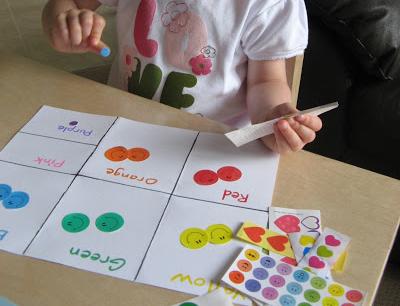
Rockabye Butterfly COLOR PRACTCING
Have your child sort the colors and glue on the right color line or box
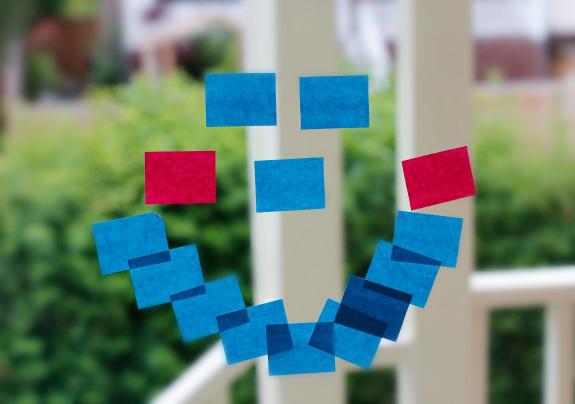
MAKE & TAKES STICKY NOTE WINDOW PICTURES
I thought this was such a cute idea - the sticky notes could even be re-used a couple of times. Could be done on a wall, fridge or window.
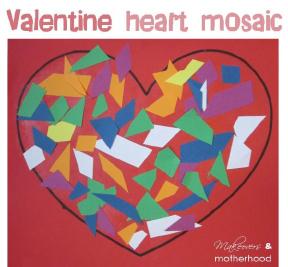
MAKEOVERS MOTHERHOOD VALENTINE HEART MOSAIC
This could be done with any shape. It is basically a piece of construction paper. Have your child cut a bunch of pieces from narrow strips of paper. Give them a glue stick and the pieces and lest them go to it.
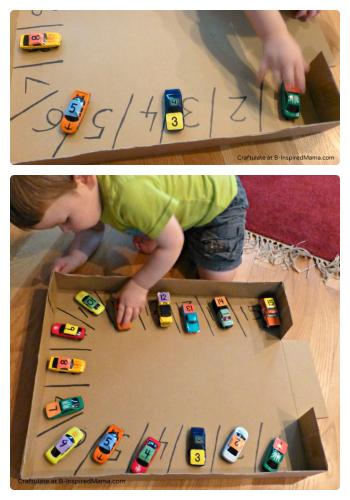
B-INSPIRED MAMA A CAR PARKING NUMBERS GAME
I cannot imagine doing it with such a small child, but this mom made it for her 27 month old son. He loved it.
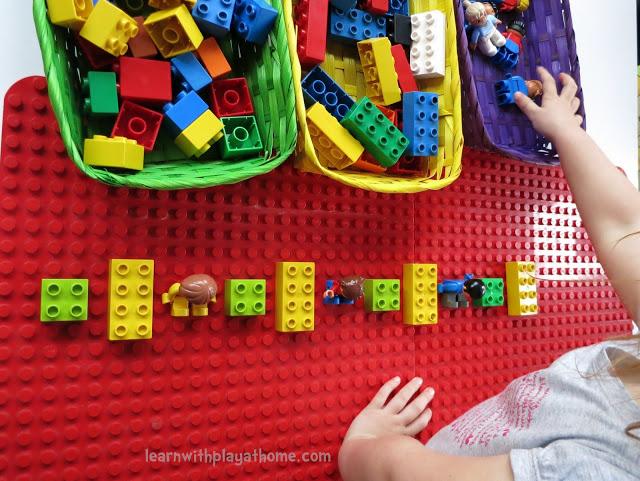
LEARN WITH PLAY AT HOME Learning Patterns with LEGO
LOVE this idea. Do it with Duplo or LEGO and make it as easy or hard as your child needs.
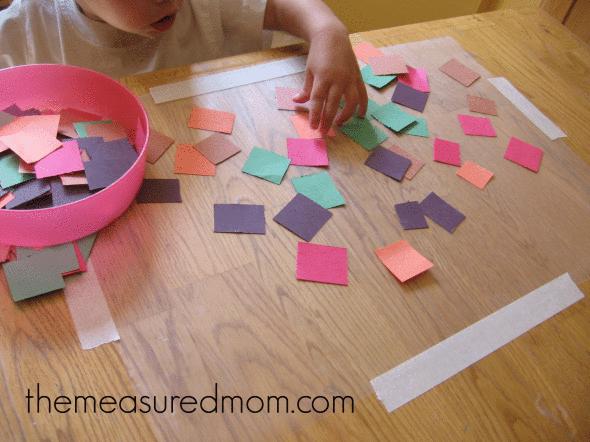
THE MEASURED MOM
5 WAYS TO KEEP A ONE YEAR OLD BUSY
Contact Paper Craft - paper squares, contact paper sticky side up. Lots of fun! This blogger’s other 4 ideas were great, too!
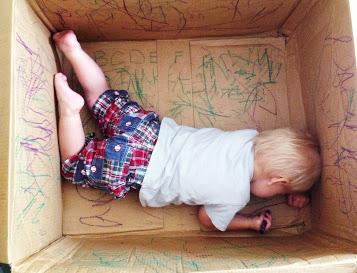
BERRY SWEET BABY Box + Crayons
Here is one of those SIMPLE ideas that makes me crazy. I would never have thought of it. Love it.
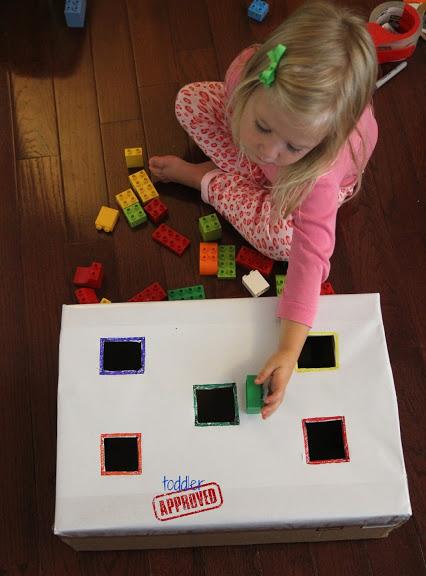
TODDLER APPROVED
Sort & Drop Color Activity with LEGO Love this idea, too. Make a Color and Sort Box and use any color of item or toy, too.
Home educating our older children is in itself quite a commitment and chore. Add in the work of keeping little ones safe and happy and you have an even bigger commitment and chore, but one that is WELL WORTH IT! I LOVED having our children at home and did what it took to do a good job as much as I could. A quote I leave with you: The days are long, but the years are short. Make the most of every day, week, month and year with all your children. Home Schooling IS worth it!
Terry Yaceyko is a veteran home schooling mom of 4 girls, and she is very involved in her local home school community. Terry and her husband Richard are on WISDOM’s Parent Advisory Council, and they live in Vermilion.
Preschool & Kindergarten Learners
Hello,my name is Carmen Zayac and I have been researching home education since I was pregnant with my first child (2000). I went to my first local support group meeting when said child was 3 months old, and have been much enlightened ever since.
Like all parents, I asked myself at what age I needed to start my child on the road to ‘formal academics’. After much reading I feel confident in stating that I have no idea what the proper answer is. I find that I sometimes still struggle with whether or not I am pushing my child too much, or not stimulating her enough. I could debate the point endlessly, but I think that parents must decide for themselves, and then live with the outcomes.
Mostly for myself (a mom with a type A personality), I chose to implement a custom made program with my 3-year-old girl in January of 2004. We worked on colour and shape recognition through homemade games, alphabet awareness through posters and songs, and number awareness through general counting. We also did lots of crafts, story reading and special activities geared towards fun, but of course with underlying learning.
When September rolled around I felt the need to move to the next level… a semiformal preschool-type program. I organized our time into 3 quick (5-10 min) sessions daily. I based our 36 week timetable around Early Education At Home… but I tweaked it here and there when I felt we needed to (I guess that would make me eclectic?).
We incorporated Handwriting Without Tears right from the beginning as I feel so strongly that this program is a very sound one. We went through the alphabet from A-Z, using only the program’s wood pieces & capital letter cards (no pencil!). This took us to week 27. For the remainder of the timetable we worked through the Get Set for School workbook in the letter order they suggest. It was very beneficial to go over all the letters again…and it gave my child a chance to start writing her letters! I can’t rave enough about this program, and I would recommend it to anyone wholeheartedly.
We used Math-U-See manipulatives & ‘Decimal Street’ to introduce numbers (basically just for consistency as I plan to use this program all the way through).
As for the rest - when I found a Mailbox theme book covering the same topic as in Early Education at Home, we used it to supplement activities. When I felt we needed more science fun we pulled from Mud pies to Magnets. We utilized many arts & craft books, the local library for fiction titles associated with our current topic, and the Internet.
One strong caution I can give (from personal experience), is don’t keep looking for material (programs, teaching methods, etc) after you have found a few things that work for you. It is quite possible to look forever… and drive yourself crazy.
At this level the thing I stress to myself is that I am not expecting mastery of any skill, I am just interested in introducing as many things as I can to my daughter. I adhere to the philosophy of classical education in this sense – fill your children with lots of information in the early years when they are like little sponges. They can and will sort it all out later, as they mature and grow.
At this time I am still planning out our ‘kindergarten’ timetable. The preliminaries are as follows:
1. We will cover 4 of the 8 Come Sit By Me units, interspersed with Mailbox themes not covered during the ‘preschool’ year.
2. We will work through as much of the Math-U-See Primer as I feel we can.
3. We will move onto the Handwriting Without Tears K level (for lower case letters). We will be starting with the Explode the Code series (Get Ready, Get Set and Go for the code) after lower case letters are introduced.
Resources Used:
1. Early Education at Home - M. Jean Soyke
2. Handwriting Without Tears - Get set for school/ Pre-K level - Jan Z. Olsen
3. Mud pies to Magnets 1 & 2 - R. Williams, R. Rockwell and E Sherwood
4. Math-U-See - Primer level
5. Mailbox Thematic learning series Preschool/Kindergarten level (Many titles available)
6. When the opportunity arises we will interject other topics, such as: calendar, time, money issues, character qualities and anything else I feel is pertinent.
A Note from WISDOM: If you want to begin working with your younger child, take the time to make a schedule for yourself, even if it is a pretty open one.
Utilize and appreciate the plethora of resources for learning that are part of your daily life— grocery shopping, cooking and baking (how do we double a recipe of pancakes?), reading road signs and billboards, reaching out to others in your community, and discovering God’s creation all around you.
Above all, enjoy your time learning together, and keep the focus on really loving learning. Remember that the word “school” comes from the latin word “schola”, which means “leisure devoted to learning”.
Enjoy these years of wonder and discovery with your child!
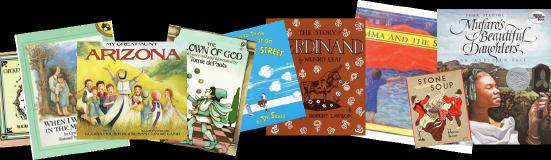
100 picture Books more than
Picture books can be read by a person of any age, but they are usually thought of as “pre-school books”. That doesn’t mean the words are easy to read, but that the story is told as much by the pictures as by the words. The books here were chosen, for the most part, because they tell engaging and memorable stories using imaginative illustrations. They capture the imagination in some way, through the pictures and words but also through ideas and concepts and humor and insight. Not all of these books will be for all tastes. Some may include words, pictures, and/or themes which may not suit your family or your children. As a parent, read the books over first before introducing them to your children. Most are available through the Alberta interlibrary loan system. Then read them aloud with your children!
Note that this list was compiled from the recommendations of others, and we at WISDOM have not read them all. We believe them to be consistent with a good, moral worldview. If you find any of this material to be objectionable, please let us know at your earliest convenience.
Enjoy this list use it as a reference, or as a challenge to read as much as you can. These books were recommended by parents, teachers, as well as some younger avid readers.
This compilation was created by Naomi Doyle, in co-operation with the van den Bosch family, VandenHaak family, the Yaceyko family and a host of others.
Alphabetical by Author (second name is illustrator if
different from the author. This doesn’t mean the illustrator is less important, of course.):
Ida and the Wool Smugglers
-Sue Ann Alderson
Song and Dance Man
-Karen Ackerman, Stephen Gammell
The Incredible Painting of Felix Clousseau -Jon Agee
The Thanksgiving Door -Debbie Atwell
Cloudy With a Chance of Meatballs
-Judi Barrett, Ron Barrett
Peppe the Lamplighter -Elisa Bartone
Madeline -Ludwig Bemelmans
Crossing -Philip Booth, Bagram Ibatoulline
The Snowman -Raymond Briggs
Stone Soup -Marcia Brown
Mr. Gumpy’s Outing -John Burningham
Katy & the Big Snow -Virginia Burton
The Little House -Virginia Burton
Mike Mulligan & his Steam Shovel
-Virginia Burton
Papa, Please Get the Moon for Me
-Eric Carle
The Very Hungry Caterpillar -Eric Carle
The Boxing Champion -Roch Carrier, Sheldon Cohen
The Hockey Sweater -Roch Carrier, Sheldon Cohen
Under a Prairie Sky
-Anne Carter, Alan & Lea Daniel
The Secret Remedy Book
-Karin Cates, Wendy Amderson Halperin
Who Owns the Sun? -Stacy Chbosky
A Gift from Saint Francis
-Joanna Cole, Michèle Lemieux
A Small Miracle -Peter Collington
Miss Rumphius -Barbara Cooney
Freight Train -Donald Crews
When Dragons’ Hearts were Good -Buddy Davis
Bone Button Borscht
-Aubrey Davis, Dusan Petricic
The Clown of God -Tomie dePaola
Jamie O’Rourke & the Pooka
-Tomie dePaola
Strega Nona -Tomie dePaola
Hairy Maclary of Donaldson’s Dairy
-Lynley Dodd
The Boy Who Ate Around
-Henrik Drescher
Testify to Love -Stephen Elkins
The great Adventure -Stephen Elkins
God is in Control -Stephen Elkins
The Story of Ping -Marjorie Flack, Kurt Wiese
The Animal Hedge
-Paul Fleischman, Bagram Ibatoulline
One Ballerina Two
-Vivian French, Jan Ormerod
Stopping by Woods on a Snowy Evening
-Robert Frost, Susan Jeffers
Millions of Cats -Wanda Gag
Something from Nothing -Phoebe
Gilman
In Flander’s Fields -Linda Granfield
Ox-Cart Man
-Donald Hall, Barbara Cooney
Hold On, McGinty
-Nancy Hartry, Don Kilby
One Splendid Tree
-Marilyn Helmer, Dianne Eastman
The Tale of the Three Trees
-Angela Elwell Hunt, Tim Jonke
Hold on Mcginty -Nancy Hartry
My Great-Aunt Arizona -Gloria Houston
The True Princess -Angela Hunt
Ben’s Trumpet -Rachel Isadora
Round Trip -Ann Jonas
Amber on the Mountain -Tony Johnston
On Monday When It Rained
-Cherryl Kachenmeister, Tom Berthiaume
The Snowy Day -Ezra Jack Keats
Whistle for Willie -Ezra Jack Keats
In God’s Hands
-Lawrence Kushner & Gary Schmidt, Matthew Baek
Emma & the Silk Train
-Julie Lawson, Paul Mombourquette
They Were Strong and Good
-Robert Lawson
The Story of Ferdinand -Munro Leaf, Robert Lawson
Just in case you ever Wonder -Max Lucado
Swimmy -Leo Lionni
Peter and the Wolf -Michele Lemieux
The Sugaring-Off Party
-Jonathan London, Gilles Pelletier
Paul Revere’s Ride -Henry wadsworth Longfellow, Ted Rand
The Name of the Tree
-Celia Lottridge, Ian Wallace
Come to the Fair
-Janet Lunn, Gilles Pelletier
A Boy, a Dog, and a Frog -Mercer Mayer
A Pair of Red Clogs -Masaka Matsuno, Kazue Mizumura
Lentil -Robert McCloskey
Make Way for Ducklings -Robert McCloskey
Mirette on the High Wire
-Emily A. McCully
The City ABC Book -Zoran Milich
The Rag Coat -Lauren Mills
When We Were Very Young
-A.A. Milne, Ernest Shepard
The World of Pooh
-A.A. Milne, Ernest Shepard
Lighthouse -Robert Munsch, Janet Wilson
The Weight of a Mass
-Geraldine Nobisso, Katalin Szegedi
Arabella -Wendy Orr
The Keeping Quilt -Patricia Polacco
An Orange for Frankie -Patricia Polacco
In Enzo’s Splendid Gardens
-Patricia Polacco
Mrs. Katz and Tush -Patricia Polacco
All is Well -Frank Peretti
Chester the Worldly Pig -Bill Peet
The Tailor of Gloucester -Beatrix Potter
How to Make an Apple Pie & See the World -Marjorie Priceman
The Glorious Flight: Across the Channel with Louis Bleriot
-Alice & Martin Provensen
Officer Buckle and Gloria -Peggy Rathmann
Fox Walked Alone -Barbara Reid
Two by Two -Barbara Reid
Birthday Zoo
-Deborah Lee Rose, Lynn Munsinger
When I was Young in the Mountains
-Cynthia Rylant, Diane Goode
Grandfather’s Journey -Allen Say
Chicken Soup with Rice -Maurice Sendak
In the Night Kitchen -Maurice Sendak
Where the Wild Things Are -Maurice Sendak
And to Think That I Saw It on Mulberry
Street! -Dr. Seuss
Bartholomew and the Oobleck -Dr. Seuss
The 500 Hats of Bartholomew Cubbins
-Dr. Seuss
Green Eggs and Ham -Dr. Seuss
If I Ran the Circus -Dr. Seuss
If I Ran the Zoo -Dr. Seuss
The King’s Stilts -Dr. Seuss
On Beyond Zebra -Dr. Seuss
Night of the Moonjellies -Mark Shasha
Another Celebrated Dancing Bear
-Gladys Scheffrin-Falk, Barbara Garrison
One Monday Morning -Uri Shulevitz
Snow -Uri Shulevitz
The Treasure -Uri Shulevitz
Caps for Sale -Esphyr Slobodkina
Selina & the Bear Paw Quilt
-Barbara Smucker, Janet Wilson
The King without a Shadow -R.C. Sproul
The Patchwork Path: a Quilt map to Freedom -Bettye Stroud
Sylvester & the Magic Pebble
-William Steig
Yellow and Pink -William Steig
Mufaro’s Beautiful Daughters -John Steptoe
Storm in the Night
-Mary Stolz, Pat Cummings
The Little Red Lighthouse & the Great Gray Bridge -Hildegard Swift, Lynd Ward
Papa Piccolo -Carol Talley, Itoko Maeno
Imagine a Day
-Sarah Thomson, Rob Gonsalves
Imagine a Night
-Sarah Thomson, Rob Gonsalves
Simon & the Snowflakes -Gilles Tibo
Bad Day at Riverbend -Chris van Allsburg
The Sweetest Fig -Chris van Allsburg
Two Bad Ants -Chris van Allsburg
The Polar Express -Chris van Allsburg
A Drop of Gold -Vlasta van Kampen
Alexander & the Terrible, Horrible, No Good, Very Bad Day -Judith Viorst
Mouse Paint -Ellen Walsh
Tuesday -David Weisner
A Time for Toys -Margaret Wild
Magpie Magic -April Wilson
A Fiddle for Angus -Budge Wilson, Susan Tooke
Follow the Drinking Gourd -Jeanette Winter
The Christmas Miracle of Jonathan Toomey
-Susan Wojciechowski, P.J. Lynch
All Those Secrets of the World -Jane Yolen
The Napping House -Audrey Wood, Don Wood
Weighing the Elephant -Ting-xing Ye, Suzane Langlois
Owl Moon -Jane Yolen, John Schoenherr
A New Coat for Anna -Harriet Ziefert, Anita Lobel
If you have any suggestions for books to add to these lists, or comments about your favourites, please send them to us at feedback@wisdomhomeschooling.com