


To embolden, bolster, and support parents as primary educators to nurture their children to embrace Truth, Goodness, & Beauty.
C ampus M ission
• To bolster and support parents in their efforts as educators of their children, providing opportunities for excellent Catholic instruction and community to form the whole individual through campus programs.
• To offer services that propel parents toward providing effective education to their children while complying with provincial legislation. To assist with decision-making and professional development, and help parents create excellent program plans that enable them to provide a well-rounded education to their children.

25- GI Campus Outcome 2
The Gilbertine Academy Grades 9-12
Holy House of Our Lady & St. Benedict Grades 9-12
Holy House of Our Lady & St. Benedict Grades 1-8
Holy House of Our Lady & St. John Grades 1-8
Villa Spiritus Grades 9-12
29- GI Campus Outcome 3
The Gilbertine Academy
Holy House of Our Lady & St. John
Holy House of Our Lady & St. Benedict Grades 1-12
Villa Spiritus Grades 9-12
32- GI Campus Outcome 4
The Gilbertine Academy
Holy House of Our Lady & St. John
Holy House of Our Lady & St. Benedict Grades 1-12
Villa Spiritus Grades 9-12
35- GI Campus Outcome 5
The Gilbertine Institute Grades 1-12
The Gilbertine Academy Grades 9-12
Holy House of Our Lady & St. John Grades 1-8
Holy House of Our Lady & St. Benedict Grades 1-12
Villa Spiritus Grades 9-12
Holy House of
Holy House of
St.
Lady & St. John Grades 1-8
The Gilbertine Academy Grades 9-12
Holy House of Our Lady & St. Benedict Grades 9-12
Villa Spiritus Grades 9-12

A school authority under the Alberta Education Act, The Gilbertine Institute of Catholic Studies (The "Gilbertine Institute", “GI” or "Institute") is animated by a vision of facilitating a variety of educational endeavours that acknowledge parents as the primary educators of their children. The Institute adheres to the teaching authority of the Catholic Church with content and delivery that is Good, True, and Beautiful.
The Education Plan for The Gilbertine Institute of Catholic Studies commencing September 1, 2026 was prepared under the direction of the operator and/or governing body in accordance with the responsibilities under the Independent Schools Regulation and the Ministerial Grants Regulation. This plan was developed in the context of the provincial government’s business and fiscal plans. The operator and/or governing body has used its performance results to develop the plan and is committed to implementing the strategies contained within the plan to improve student learning and results. The operator and/or governing body approved the 2026/2029 Education Plan on May 21, 2026
Fr. Robert Bengry, Chair
This Education Plan sets out The Gilbertine Institute’s priorities, outcomes, measures, and strategies for a three-year period, from the Fall of 2026 to the Summer of 2029. It is intended to provide clear direction for the Institute’s ongoing work in supporting students, families, and staff within the context of Alberta’s accountability and assurance requirements for accredited funded independent schools. Each year, Alberta Education & Childcare (ab Ed) requires funded independent schools to prepare an Education Plan and an Annual Education Results Report (AERR) as directed by the Minister.
While this is a three-year plan, it is reviewed annually by the board in light of new information, emerging needs, and the Institute’s most recent results. Annual review helps to ensure that the plan remains current, realistic, and responsive, while still providing stable direction over a multi-year cycle. ab Ed’s planning and reporting framework is built on an ongoing cycle.
The Ed Plan is organized according to ab Ed’s assurance framework and assurance domains, which are intended to support accountability, transparency, and continuous improvement across the education system. These domains
→ The Education Plan is multi-year, reviewed annually
→ The Board of Directors approves the plan annually
→ Results are analyzed in the annual aerr
→ Findings from the aerr inform refinements to the next annual Ed Plan
→ Stakeholders are informed through public posting and regular communication
provide a common structure for identifying priorities, describing intended outcomes, and showing how the Institute will steward its responsibilities in relation to student learning, leadership, supports, governance, and responsiveness to context.
In keeping with provincial expectations, this plan uses both provincial and local measures as appropriate. Provincial measures help situate the Institute’s work within ab Ed’s broader education framework, while local measures allow the Institute to reflect its own mission, programmes, communities, and priorities in a meaningful way. ab Ed’s requirements specifically allow education plans and results reports to include local goals, outcomes, and measures that reflect the unique circumstances of the school authority.
Each year, the Institute’s results are analyzed in the Annual Education Results Report (AERR). That analysis is used not only to report publicly on progress, but also to identify strengths, gaps, and areas requiring renewed attention. The AERR serves as an important bridge between evidence and planning, helping the Institute refine future priorities, strengthen implementation, and continue pursuing excellence in service of students and families.
During the 2026/27 school year, The Gilbertine Institute will implement this plan through annual departmental planning, staff professional development, survey cycles, facilitator and campus reporting, Parent Advisory Council feedback, student records review, and Board review.
Progress will be monitored through:
1. annual review of aerr results and local measures;
2. parent, staff, and student surveys where appropriate;
3. facilitator documentation and campus reporting;
4. graduation, credit, assessment, and coursecompletion data;
5. pac and stakeholder feedback;
6. budget monitoring and departmental reporting;
7. Executive Team and Board review of progress against priorities.
Resources required include certificated staff time, administrative support, data collection systems, professional learning, learning support capacity, and financial resources approved through the annual budget.
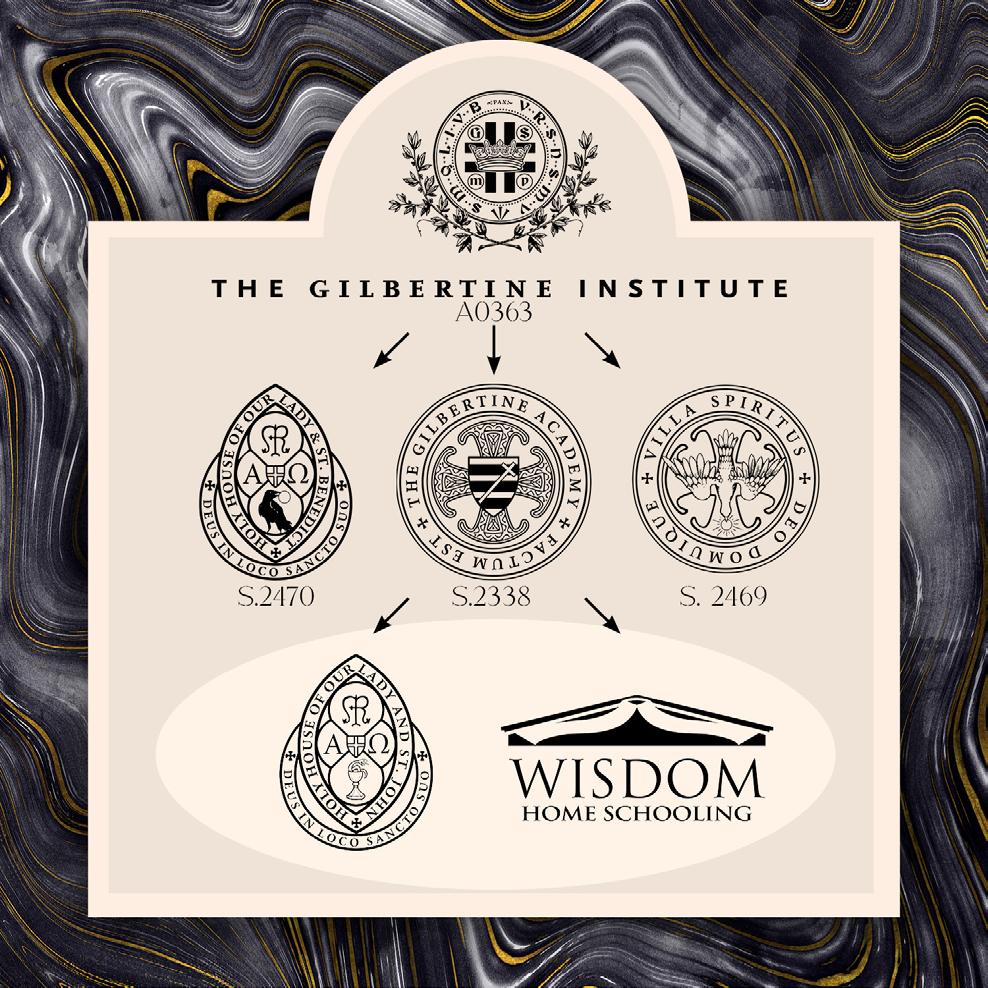
TheGilbertine Institute administers three school codes that operate 5 distinct brands. For the sake of clarity in identifying schools and departments:
• The Gilbertine Academy (S2338), Calgary
• The Gibertine Academy, full time grade 9-12 programmes (called GA)
• Holy House of Our Lady & St. John, Calgary, grade 1-8 Shared Responsibility (Holy House Calgary or hhc)
• WISDOM Home Schooling, province-wide Home Education (WISDOM)
Under the name WISDOM Home Schooling, the Institute supports parents as the educators of their children. Our mandate is to help each family Home Educate their students from Kindergarten through grade 12. WISDOM’s approach to service is non-denominational, serving Home Education parents from all backgrounds and walks of life.
• Holy House of Our Lady & St. Benedict (S2470), Edmonton (Holy House Edmonton or hhe)
• grade 1 to 8 Shared Responsibility
• grade 9 to 11 full time paper-based Distance Education with two days of in-person support.
• Villa Spiritus (S2469), Derwent (VS)
• grade 9-12 Shared Responsibility paper-based distance education with one day of in-person support and one day with online support
• grade 10-12 full time option using distance education with online and in-person support
Our campus programmes utilize a Catholic classical pedagogy and belief in the intrinsic value of the human person. Informed by the knowledge that children are persons with dignity and a supernatural destiny, we provide planning and accommodations that respect each student’s inalienable right to receive basic education in a manner and to a degree that facilitates postsecondary education, career choices, and quality of life here and in eternity. Staff assist parents in fueling the student’s natural desire to learn, recognizing his or her unique interests and gifts, and building up and encouraging family life and relationships. The programmess and culture of all campuses adhere to the teaching authority of the Catholic Church with content and delivery that is Good, True, and Beautiful.
This plan reflects the Institute’s commitment to strengthening and sustaining its present educational programmes rather than expanding or materially altering them during the 20262027 school year, though expansions are anticipated in this planning cycle. The Institute is open to exploring new models of education which align with the Institute’s overarching vision. New models must not compromise the viability of the Institute’s current work.
The Gilbertine Institute boasts a team of seasoned and committed employees. These individuals work tirelessly to embolden, bolster, and support parents as primary educators to nurture their children to embrace Truth, Goodness, and Beauty. Student numbers continue to grow, with our Home Education programmes growing by double the total provincial Home Education growth between 2024-2025 and 2025-2026 (AB Education 2026). With prudent management of our operations, The Gilbertine Institute is poised to be a leader in education for years to come.
Source: AB Education Student Population Statistics, alberta.ca/student-population-statistics shows annual growth of 197 home education students provincially, vs 444 new WISDOM students in the same timeframe.

The Gilbertine Institute is a community of parents, students, alumni, volunteers, and staff who believe that their presence and input are valued. These individuals, along with founders, donors and government, constitute the Institute’s stakeholders.

Who was engaged
• parents
• Parent Advisory Council/School Councils
• staff
• Associate Principals (“headmasters”)
• governing body
• students where appropriate
How they were engaged
• surveys
• all-parent meetings
• staff planning meetings
• facilitator and PAC discussion & feedback
• review of prior results / aerr evidence
What key themes emerged
• support for programme stability
• desire for strong communication and transparency
• need for measurable outcomes
• support for consistent learning supports
• operational sustainability
Stakeholder feedback directly informed the Institute’s 2026–2029 priorities. Parent and staff feedback regarding programme stability, communication, measurable outcomes, learning supports, and operational sustainability shaped the priorities of strengthening current programmes, improving clarity and consistency of support to families, refining measurable outcomes, and strengthening governance and annual review. The Parent Advisory Council provides advice to leadership through scheduled meetings, written and verbal feedback, and communication with the Head of School, Associate Principals, and governing body as appropriate.


In reviewing prior aerr results, local survey feedback, enrolment trends, facilitator documentation, campus reports, and stakeholder feedback, The Gilbertine Institute identified the following key insights:
1. Strengths:
Families continue to express strong confidence in the Institute’s support for parent-directed education, Catholic formation, and programme choice. WISDOM enrolment growth indicates sustained demand for robust home education support.
2. Areas for improvement:
Measures and reporting processes require refinement so that outcomes can be reported more consistently across home education, shared responsibility, paper-based distance education, and campus programmes.
3. Emerging trends:
Families are seeking opportunities to connect with one another in-person, and looking for clear pathways through high school, access to post-secondary, assessment options, and student supports.
4. Developing needs:
The Institute requires stronger internal systems for collecting comparable data, monitoring implementation, supporting diverse learning needs on campus, and reporting on student growth and achievement.
The Gilbertine Institute’s priorities for 2026–2029 focus on strengthening the quality, clarity, and sustainability of its existing work. This plan is directed toward continuous improvement within current programmes rather than major programme expansion, and reflects Alberta’s expectations for accountability, stakeholder engagement, measurable outcomes, and responsible stewardship.
1. Strengthen student growth & formation within current programmes
Support students in academic, personal, and spiritual growth within the Institute’s existing home education and campus programmes, with continued attention to formation of the whole person.
2. Improve clarity & consistency of support to families
Provide parents with clearer communication, dependable guidance, and consistent support so they are well equipped to make informed decisions and participate confidently in their child’s education.
3. Strengthen learning supports & access for students with diverse needs
Improve the Institute’s ability to identify learning needs, clarify available supports, and respond more consistently and effectively to students who require additional support or accommodation.
4. Deepen stakeholder engagement
Strengthen relationships with parents, staff, students, and other stakeholders through meaningful engagement, clearer communication, and regular opportunities for feedback and dialogue.
5. Strengthen governance, implementation, & stewardship
Support strong governance and internal accountability through clear responsibilities reflected in concise policies, with careful implementation and faithful stewardship of the Institute’s mission, operations, and reporting obligations.
6. Sustain programme quality through realistic planning & resource alignment
Maintain and strengthen quality through realistic planning, responsible budgeting, sound staffing decisions, and alignment of resources with the Institute’s priorities and scope of work.
These priorities will guide the Institute’s planning, implementation, and annual review throughout the 2026–2029 cycle.
Educational outcomes are divided into two sections:
• Home Education outcomes reflect the Institute’s role in supporting parents who create and deliver their own education plans.
• Campus outcomes reflect the Institute’s direct responsibility for delivering Catholic programme content, culture, and formation.
Because Home Education is the responsibility of the parents, and GI ’s responsibility is to assist with planning, provide facilitation, administer resource funding, and evaluate student progress and achievement, the measurable data will include random samples of student evaluations, survey results, and anecdotal notes from parents, students and facilitators.
Home Education parents provide a nurturing environment and effective supports for their students, fostering a love of life-long learning and developing knowledge, skills and character, by engaging them in the pursuit of Truth, Goodness, and Beauty through an individualized education.
Student Growth & Achievement
C ontext
When students have the experience of being valued, they more easily value learning; and when the choice of content and delivery is catered to student gifts and calling, students are more likely to recognize purpose and take ownership of their education.

We will have achieved the outcome when:
1. Parents express that their children are thriving at home.
2. Students take ownership of their education to expand scope and depth of learning.
3. Students who write Classic Learning Tests (CLT) or Canadian Tests of Basic Skills (CTBS) score at or above level.
How we will achieve the outcome:
1. Student growth in character and academic achievement is assessed twice annually during the evaluation by the facilitator.
2. All staff encourage parents to prioritize developing relationships and a love of learning.
3. All staff support a mediational learning model, and encourage parents to benefit from classical education pedagogy.
4. We offer workshops that provide opportunities for students to experience new topics, resources, and delivery methods.

5. Facilitators promote student participation in the development, delivery, and evaluation of the student’s own program.
6. Online socratic dialogue courses promote classical education and meaningful dialogue within the family.
7. Mediated Learning workshops aid parents in overcoming impediments to learning and strengthen parent-child (aka teacher-student) relationships.
8. We make available and promote the Classic Learning Test (CLT).
9. We make the CTBS available.


We will have achieved the outcome when:
1. Based on analytical samples of results, of the students who indicate they are planning high school completion criteria and targets based upon the Schedule of Learning Outcomes of the Home Education Regulation, 90% of students will successfully complete High School within 4 years of entering grade 10
2. Based on analytical samples of results, of the students who choose individualized indicators of high school completion, 90% will be successful within 4 years of entering grade 10
3. Students take ownership of their education to expand scope and depth of learning.
4. Students engage in developing the Education Program Plan.
5. Based on analytical samples of results, of the students who indicate they are seeking an Alberta High School Diploma, 90% earn the diploma within 4 years of entering grade 10
6. Regardless of program choices and completion criteria, when surveyed five years after high school completion, 75% of students will demonstrate a wholesome lifestyle and active contribution to a healthy society.
How we will achieve the outcome:
1. Student growth in character and academics is assessed twice annually during the evaluation by the facilitator.
2. Provide strong supports that encourage parents to home educate their children through high school.
3. Regularly evaluate student progress and achievement, and provide direct feedback to students and parents.
4. Support provincial recognition of:
a. successful training in the Trades as evidence of successful completion of high school,
b. successful post-secondary education as evidence of successful completion of high school,
c. entrepreneurship as evidence of successful completion of high school.
5. Provide a WISDOM High School Diploma based upon Teacher-verified successful completion of the Alberta Schedule of Learning Outcomes for Students Receiving Home Education Programs That Do Not Follow the Alberta Programs of Study
a. Negotiate provincial recognition of the WISDOM High School Diploma as a legitimate and provincially-recognized alternative to an Alberta High School Diploma.
6. Provide a certificate recognizing Parent-verified successful completion of the Schedule of Learning Outcomes.
7. Provide an annual Home Schooling: High School & Beyond Conference to encourage, support and inform students and their parents.
8. Assist students to access Alberta Certificate of School Completion, AB Certificate of Achievement, AB Diploma as a mature student, Parent Generated Transcript of Marks and High School Diploma verified by the supervising teacher.
9. Support Work Experience and Volunteerism.
10. Provide socratic dialogue courses in history, literature, philosophy, and writing.
11. Support parents in the delivery of programming that provides their students the content and rigour necessary for achieving an Alberta High School Diploma.
12. Provide content specialists for core subject areas.
13. Administer a robust Course Challenge process.
14. Provide writing workshops and science labs to prepare students for AB Diploma Examinations and/or postsecondary study.
15. Work directly with post-secondary institutions to streamline admission for Home Educated students who have followed the Schedule of Learning Outcomes.
16. Make available and promote the Classic Learning Test.
17. Survey students 5 years after graduation.

Facilitators, support staff, and administrators will receive professional development that equips them to support, embolden, and bolster parents in their roles as primary educators of their students.
The Gilbertine Institute supports parents as the educators of their children. We provide a great range of support, from offering perspective and encouragement to providing assistance with planning, evaluation, and resource research that support effective student learning.

We will have achieved the outcome when:
1. 75% of surveyed parents affirm that staff (support staff and facilitators) have been available to help them choose the form of education that most effectively serves their children.
2. 75% of surveyed parents affirm that staff have helped them access resources for the creation of an effective Education Program Plan and/or choice of teaching resources.
3. All facilitator staff attend the facilitator meetings and inservice.
4. 75% of office staff attend an annual mental health workshop.
5. All staff attend compulsory meetings.
6. Facilitators create an annual Professional Growth Plan that addresses their holistic development.
How we will achieve the outcome:
1. Ensure that staff and parents have access to excellent, current print and media resources.
2. Support professional development through funding and time allocation for all staff to engage in opportunities that promote excellence in their vocation to serve families.
3. Schedule regular meetings and PD for all staff in order to inspire a high level of quality service.
4. Support participation in an annual mental health workshop.
5. Pair new Home Education certificated staff with experienced mentors to assist ongoing professional development and enhance practical service to families.
6. The Principal of Home Education discusses the Professional Growth Plan with each facilitator.
Parents and students will be given access to expertise, resources, & facilities that support optimal learning.
The Gilbertine Institute is committed to supporting, emboldening and bolstering parents as primary educators by offering mentorship, resources, and encouragement.

We will have achieved the outcome when:
1. Students demonstrate holistic learning that may include faith, culture, and the arts.
2. Exceptional learning needs are identified.
3. Alberta Education resources for exceptional learning needs are accessed by families.
4. 60% of students who demonstrate exceptionality have accessed Mediated Learning training.
5. Students demonstrate good character, life skills, work ethic and employability.
6. 75% of families report that they are well supported in the delivery of their Home Education programme.
7. The Parent Advisory Council provides oral and written feedback to the Head of School.
How we will achieve the outcome:
1. Guide parents to the variety of resources and methods available for their students.
2. Provide workshops in a variety of subjects that augment and support parent programmes for students.
3. Refine the online socratic dialogue courses for students.
4. Work with AISCA and AB Education to improve access to testing and support for students with diverse and exceptional learning needs.
5. Maintain continued training and development of Mediated Learning staff.
6. Make Mediated Learning training accessible and affordable for parents and students.
7. Provide Cognitive Assessment and Reading Assessment for students.
The Gilbertine Institute of Catholic Studies will ensure Stakeholder Engagement.
Governance
The Gilbertine Institute serves an eclectic community of parents and students by means of staff who possess a great diversity of skills and experience. In order to serve well, The Gilbertine Institute values communication at all levels to monitor our effectiveness and improve our service on behalf of students.

We will have achieved the outcome when:
1. 70% of parents and students perceive that they belong to a community of like-minded families.
2. Parents and students readily provide feedback to administration through facilitator staff.
3. 85% of staff perceive they are part of a community, united in purpose.
4. An active Parent Advisory Council supplements communication between families and staff.
5. 85% of new Home Education families indicate that they experience community support.
6. We can identify stakeholders at different levels of engagement.
7. Parent Advisory Council members attend and contribute to meetings.
How we will achieve the outcome:
1. Provide a bi-monthly magazine.
2. Hold annual Spring Social/Information Events in each region of the province.
3. Hold annual Fall Barbecues in each region of the province.
4. Promote WISDOM camps, workshops, events, and courses.
5. Promote WISDOM Dance workshops.
6. Support annual high school graduation ceremonies.
7. Facilitate parent-initiated community events.
8. Utilise a portion of each Facilitator Inservice to address ways to better engage stakeholders.
9. Develop a rubric for identifying stakeholders at different levels of engagement and strategies for increasing/encouraging engagement.
10. Support Parent Advisory Council interaction with families and WISDOM staff.
We will accurately identify the needs of our families and effectively support parents who provide Home Education.
provincial assurance domain
Local & Societal Context
Context
The Gilbertine Institute recognizes the need to support the unique needs of our families by helping parents discover appropriate means of supporting their students.

We will have achieved the outcome when:
1. 70% of Home Educating parent respondents affirm we have accurately identified their needs.
2. 70% of parent and facilitator respondents affirm we have identified and improved operational weak spots.
3. All Facilitator evaluations identify areas where students are excelling or need improvement.
4. 70% of parent respondents affirm we have helped them identify student needs and solutions.
5. 70% of new Home Educators indicate that their facilitator has helped them develop a vision statement for the education of their students.
6. 70% of father respondents indicate that WISDOM has demonstrated to them the merits of Home Educating and encouraged them with supports.
7. 75% of parents surveyed affirm that staff have helped them develop and implement their programme to effectively educate their child through high school.
8. High school students and their parents are able to access support to prepare effectively for Course Challenge
How we will achieve the outcome:
1. Staff and the Parent Advisory Council respond to key questions:
a. Identify what Home Educating parents need and how WISDOM can help.
b. Identify operational weak spots from the perspective of the facilitator and the parent.
c. Identify subjects or life skills in which Home Educators are not excelling and determine how we can help parents discover needs and solutions.
d. Identify Home Educators who lack a strong vision and help parents develop a vision statement.
e. Allocate resources to support home education communities on a local level.
f. Determine how to best support the confidence of Home Education fathers.
g. Encourage fathers to be present for at least one Home Education visit per year.
h. Provide a High School and Beyond Conference that responds to parent and student needs.
2. Using sensible tools, create measurable data that addresses:
a. What we measure
b. How we gather the information we need
c. How we analyse the data
d. How we test the inferences made
e. How we justify decisions and consequences
3. Explore development of online resources to support students preparing for Course Challenge.

Because our Shared Responsibility Programmes involve both Parent-Delivered education and SchoolDelivered education, the measurable data will include random samples of student evaluations, survey results, and anecdotal notes from parents, students and facilitators.
Students will thrive throughout life by being formed in an environment where they are valued and educated to seek and find Truth, Goodness and Beauty.
When students have the experience of being valued, they more easily value learning; when the choice of content and delivery is sensitive to student gifting and calling, students take ownership of their education.
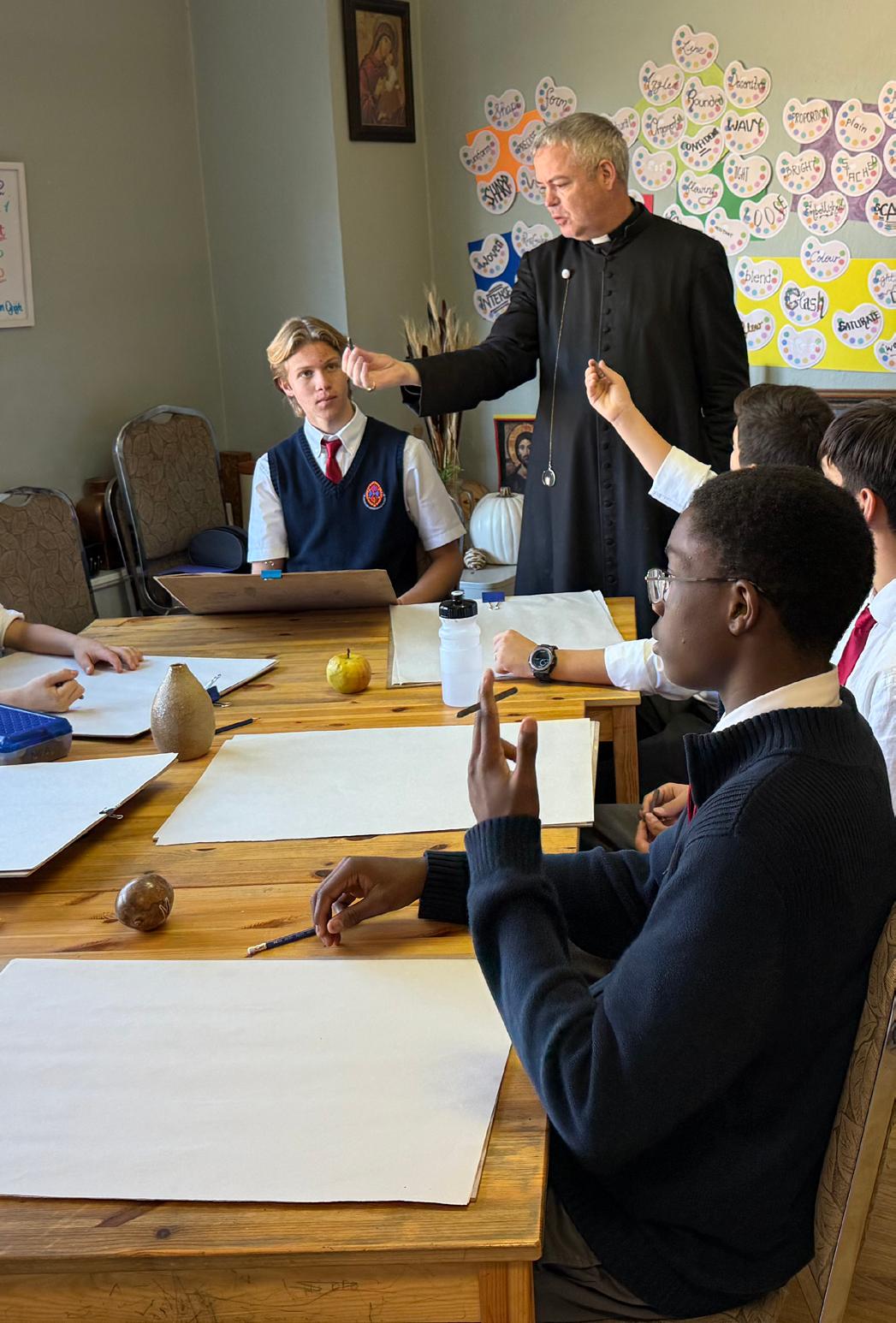



We will have achieved the outcome when:
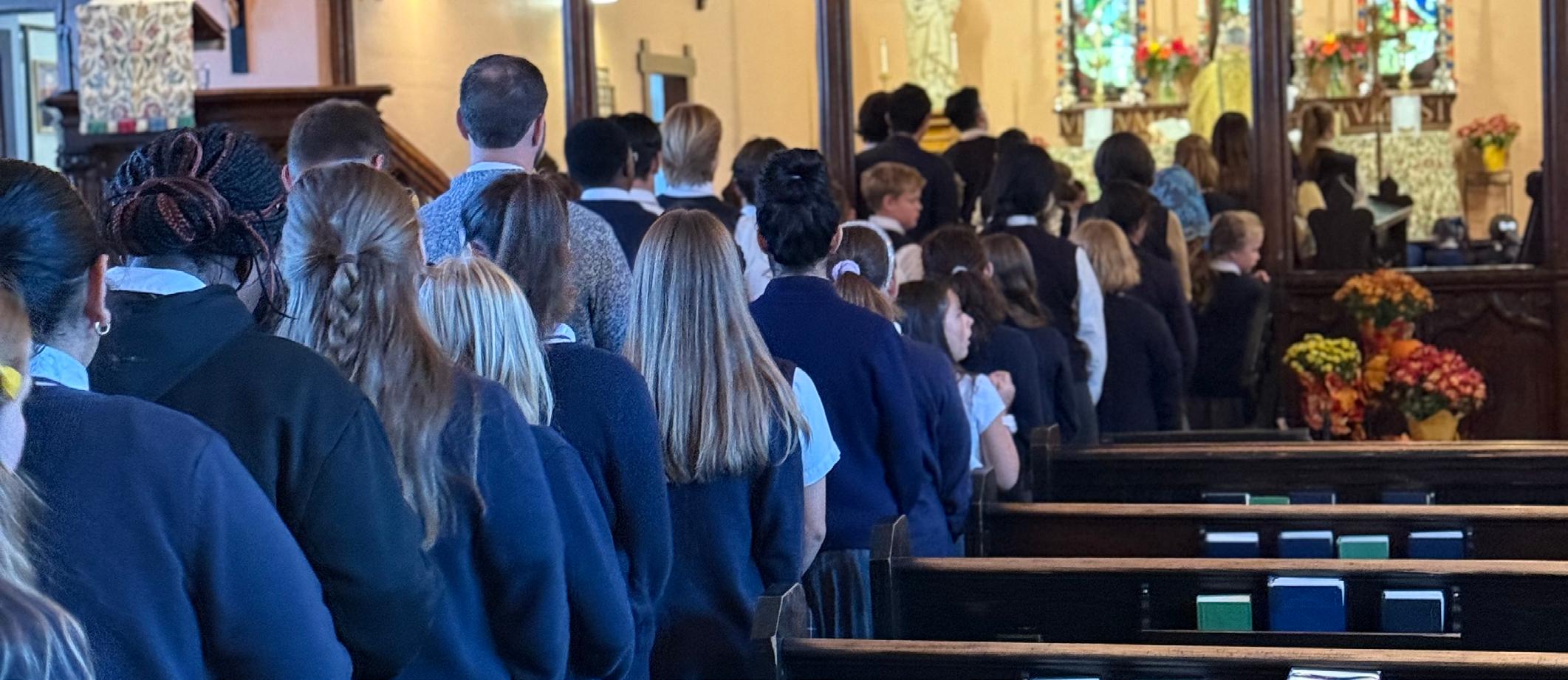
1. All students are participating in daily prayer and liturgy.
2. Staff and parents report that students value virtue and strive to increase virtue in themselves and others.
3. During their time at Holy House, 60% of students eventually take turns presiding at daily prayer and serving in functions such as servers and lectors at Mass.
4. All students sing.
5. Students demonstrate active participation in the culture of the school.
6. At least 70% of students perform at or above grade level in literacy.
7. Numeracy is integrated into all school subjects and parents meet their Education Programme Plan requirements for numeracy as verified by their Home Education facilitator.
How we will achieve the outcome:
1. Duties are rotated, giving students opportunities to take responsibility.
2. Daily liturgy includes Mass, prayer, chant, choral music, and peer support.
3. Through a systematic 4 year Catholic virtues programme, students are recognized for demonstrating virtue and encouraged by the success of others.
4. Students receive presentations of FNMI history and issues to seek truth and true reconciliation.
5. Staff utilise socratic dialogue to help students gain the capacity to discern truth.
6. School environment is tasteful with accents of classic beauty.
7. Literacy is screened in grades 1 to 3, with extra literacy support to meet identified needs.
8. Advising about numeracy is provided by our campus Home Education facilitator and numeracy is integrated into our classes (for example, history timelines, science skills and content).
9. The facilitator evaluates numeracy as provided to students according to their parents’ Education Programme Plan.
10. The Classic Learning Test is promoted and made available to students.



We will have achieved the outcome when:
1. All students participate in the liturgy of hourly prayer, daily Mass, and the singing of liturgical music.
2. Staff and parents report that 80% of students value virtue through a systematic 4-year Catholic virtue programme and strive to increase virtue in themselves and others.
3. At least 60% of students commit to presiding at daily prayer and serving in various functions such as servers and lectors at Mass.
4. Staff report that 80% of students demonstrate active participation in the culture of the school.
5. Staff report that 75% of students actively engage in socratic dialogue.
6. Staff report that in the Humanities 75% of students demonstrate the ability to understand others, express their thoughts, and logically integrate information from outside sources.
7. Staff report that in the Sciences and Mathematics 75% of students demonstrate the ability to grasp new concepts, employ scientific method, and apply their learning.
8. High school completion rates demonstrate that 80% of students complete high school within five years of entering Grade 10
9. 80% of students complete high school with an Alberta High School Diploma or equivalent.
10. Among students in grade nine, a majority of students score above provincial average on Provincial Achievement Tests.
11. Regardless of programme choices and completion criteria, surveyed five years after high school completion, 75% of students will demonstrate a wholesome lifestyle and active contribution to a healthy society.
How we will achieve the outcome:
1. Daily liturgy includes Mass, prayer, chant, choral music, and peer support.
2. Students are recognized for demonstrating virtue and are encouraged by the success of others.
3. Staff utilise Socratic dialogue to help students discern truth.
4. School environment is tasteful with accents of classic beauty.
5. Create a template for a high school course plan to be completed by families with the assistance of the Associate Principal and designated staff. This plan will be jointly reviewed by parent(s), student and Associate Principal/staff at least once per year.
6. Monthly staff meetings facilitate collective review of student progress and adherence to the Prospectus and the outcomes of the Programs of Study.
7. Experienced consultants in English, Math and Sciences will assist staff in preparing resources for students in grades 9 to 12. The assessment component of these resources will culminate in the necessary preparation for the successful completion of diploma exams.
8. Students receive presentations of FNMI history and issues to seek truth and true reconciliation.
9. Where beneficial, we will pursue interjurisdictional agreements with other school authorities.
10. Make available and promote the Classic Learning Test.

We will have achieved the outcome when:
1. All students participate in choral singing.
How we will achieve the outcome:
1. Daily liturgy includes prayer, chant, and peer support.
2. All students participate in daily prayer and Mass. At least 60% of students commit to presiding at daily prayer or serving or reading at Mass.
3. Parents and staff report that 80% of students value virtue and strive to increase virtue in themselves and others.
4. Students complete all homework 75% of the time.
5. 80% of students demonstrate active participation in the culture of the school.
6. 80% of students actively engage in socratic dialogue.
7. a majority of students score above provincial average in high school Mathematics and Sciences.
8. Of the students who indicate they are planning high school completion criteria and targets based upon the Schedule of Learning Outcomes listed in the Home Education Regulation, 80% of students will successfully complete High School within 5 years of entering grade 10.
9. Of the students who choose other indicators of high school completion, 80% will be successful within 5 years of entering grade 10.
10. Of the students who indicate they are seeking an Alberta High School Diploma, 80% earn the Alberta Diploma within years of entering grade 10
11. Regardless of program choices and completion criteria, when surveyed five years after high school completion, 75% of students will demonstrate a wholesome lifestyle and active contribution to a healthy society.
2. Homework is carefully selected and monitored to ensure successful completion.
3. Utilize socratic dialogue to provide students with the skills to discern truth.
4. Help parents develop a high school course plan for their student.
5. Assist students to access Alberta Certificate of School Completion, AB Certificate of Achievement, Parent Verified Transcript of High School Marks and High School Diploma confirmed by the supervising teacher.
6. Support Work Experience and Volunteerism.
7. Provide Socratic dialogue courses in history, literature, philosophy, and writing for the Home Education portion of the student’s Shared Responsibility program.
8. Regularly evaluate student progress and provide direct feedback.
9. Support parents in the delivery of programming that provides their students the content and rigour necessary for achieving an Alberta High School Diploma, where desired.
10. Provide resources for Home Education Course Challenge.
11. Provide writing workshops to prepare students for AB Diploma examinations.
12. Make available and promote the Classic Learning Test.
Students will benefit from consistent collaboration between parents and well-formed teachers, support staff, and leaders to provide education directed toward seeking and finding the True, Good, & Beautiful.
The Gilbertine Institute supports parents as the educators of their children. We see the role of all our staff as support for the Home Education journey, doing as much or as little as needed to assist, as we support the parents who fashion the path to success for their students.
Our school-delivered courses are provided by teachers at school with significant support for parent involvement. We keep parents fully informed in weekly homework emails about what has happened in each class, details about homework, and various whole-school learning, such as weekly scripture memorization, music listening homework, and the virtue of the month. For parent-delivered coursework, our campus Home Education facilitators advise parents about the progress and achievement of their children relative to the parents’ Education Programme Plan.
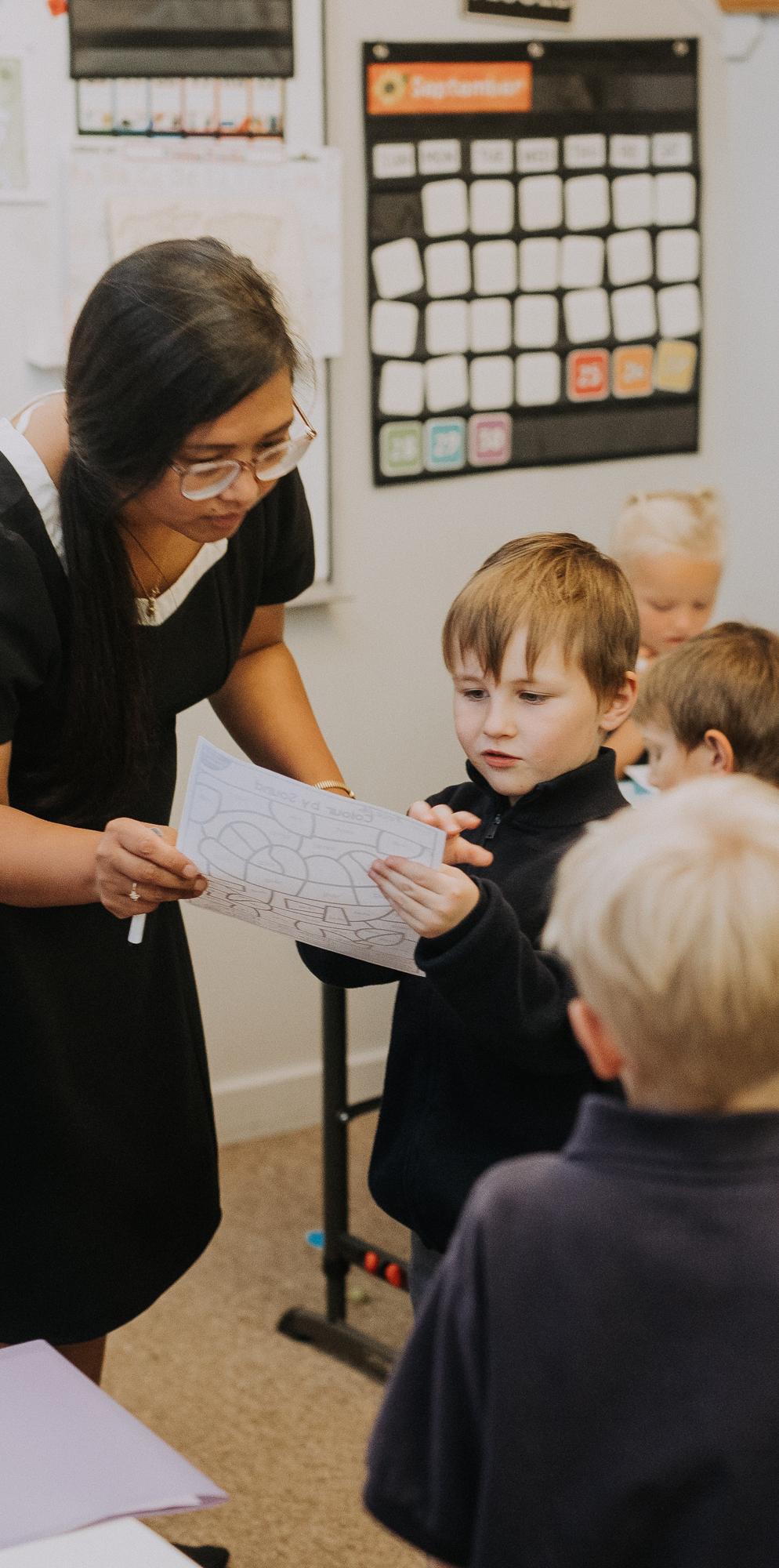
Parents and campus staff will use surveys and conversations to evaluate how well we are collaborating and providing assistance that serves the students.

We will have achieved the outcome when:
1. 80% of parents indicate satisfaction that their students are receiving the education that best suits them.
2. Students respond that 80% believe they are receiving the choice of education that best suits their needs.
3. Students surveyed 5 years after graduation indicate that 75% of respondents believe their high school education prepared them well for post-secondary study and/or the world of work and helped them to continue to grow in faith and morals.
4. Students surveyed 10 years after graduation indicate that 75% believe their high school education prepared them well for a wholesome lifestyle where the practice of their faith remains at the centre of their life.
5. 75% of students feel supported in their education.
6. 75% of students prefer this form of education.
7. 75% of students are successful according to at least one high school completion criterion.
How we will achieve the outcome:
1. Interview potential parents and students to determine whether or not this will be the best source of high school education for them.
2. Survey parents and students to determine the degree to which they believe they are receiving the appropriate choice of educational delivery.
3. Hire only well qualified teachers who sincerely value and practise their Catholic faith.
4. Annually evaluate programme and delivery to assure we provide the best possible high school experience.
5. Survey students 5 years after graduation.
6. Survey students 10 years after graduation.
7. Provide professional development for teaching staff and support staff.
8. Provide formal and informal evaluation of all staff.
9. The Parent Advisory Council and All-parent meetings provide oral and written feedback


We will have achieved the outcome when:
1. 80% of surveyed parents indicate satisfaction that their students are receiving the education that best suits them.
2. Students who respond to a survey indicate that 80% believe they are receiving the choice of education that best suits their needs.
3. Staff reveal that 80% of students are thriving spiritually, personally, and academically.
4. 80% of students choose to remain at the school when they reach high school age.
5. 75% of parents affirm that staff have helped them create an effective Education Programme Plan.
6. 75% of parents affirm that staff have assisted them well in choosing teaching resources.
7. 75% of students feel supported in their education.
8. 75% of students prefer this form of education.
How we will achieve the outcome:
1. Interview potential parents and students to determine the suitability of the Holy House programme for them.
2. Involve parents as volunteers.
3. Support study at home with regular communications.
4. Employ only well qualified teachers and support staff who sincerely value and practise their Catholic faith.
5. Provide formal and informal evaluation of all staff.
6. The Parent Advisory Council and All-parent meetings provide oral and written feedback
We will have achieved the outcome when:
1. 80% of parents indicate satisfaction that staff have been effective in helping them access the education that best suits their students.
2. 80% of students believe they are receiving the choice of education that best suits their needs.
3. Students surveyed 5 years after graduation indicate that 75% believe their high school education prepared them well for post-secondary study and/or the world of work and helped them to continue to grow in faith and morals.
4. Students surveyed 10 years after graduation indicate that 75% believe their high school education prepared them well for a wholesome lifestyle where the practice of their faith remains at the centre of their life.
5. 75% of parents affirm that staff have helped them create an effective Education Programme Plan.
6. 75% of parents affirm that staff have assisted them well in choosing teaching resources.
7. 75% of students feel supported in their education.
8. 75% of students prefer this form of education.
9. 75% of students are successful according to at least one high school completion criterion
How we will achieve the outcome:
1. Meet with parents and students to determine whether or not Villa Spiritus is the appropriate means by which they study Choral Music, Art, Math, Science, and Religion.
2. Survey parents and students to determine the effectiveness of the programme.
3. Employ only highly skilled teachers who sincerely value and practise their Catholic faith.
4. Annually evaluate programme and delivery.
5. Survey students 5 years after graduation.
6. Survey students 10 years after graduation.
7. Provide professional development for teaching staff and support staff.
8. Conduct regular evaluation of all staff.
9. By means of the facilitator, assist parents to select the most appropriate resources and methods by which the Home Education portion of their programme can be provided to their students.
10. All-parent meetings provide oral and written feedback.
Parents and students will receive information on expertise, resources, and facilities that support optimum learning.
C ontext
The Gilbertine Institute is committed to supporting parents in their education choices by providing appropriate kinds and levels of support for holistic personal development of their students.





We will have achieved the outcome when:
1. Diverse learning needs are being identified and assisted.
2. 80% of parents and staff indicate the student is enjoying learning.
3. 80% of parents, staff, and students identify that they are part of a vibrant culture.
4. 80% of students experience acceptance and a sense of belonging.
5. 80% of students demonstrate appreciation for and ability in the Arts.
6. 80% of families express that they feel at home in the St. John the Evangelist and St. Benedict Community facilities.
How we will achieve the outcome:
1. Staff identify learning needs and provide resources.
2. Parents and staff receive training in Mediated Learning.
3. Mediated Learning techniques are applied in school and at home.
4. We provide Literacy Assessment and Cognitive Assessment.
5. The core of the school is a robust choral music programme.
6. We provide training in Art and Drama.
7. Students study great works of Art and their religious significance.
8. We plan a student trip to Europe to take place approximately every 3 years.
9. We plan trips within the continent at least every 2 years.
10. Develop a long-range facilities plan for Head Office.
We will have achieved the outcome when:
How we will achieve the outcome:
1. Individual student learning needs in Choral Music, Art, Mathematics, Science, and Religion are identified and accommodated by the teacher delivered programme.
2. The teacher is equipped to provide individualized instruction.
3. Students access teacher assistance outside of class.
4. Exceptional learning needs are identified to support parents with the Home Education portion of their programme.
5. Alberta Education resources for exceptional learning needs are accessed by families.
6. 60% of families who demonstrate exceptional learning needs have accessed Mediated Learning training.
7. Students demonstrate holistic learning in the arts, faith, and culture.
8. Surveyed parents indicate that 80% of students demonstrate positive work ethic and employability.
9. 80% of families report that they are well supported in the delivery of their education programme.
10. 80% of students indicate they are enjoying learning.
11. Evaluation by facilitators indicate that 80% of student achievement is at or above the level required by their Education Programme Plan
1. The teacher identifies individual learning needs in Choral Music, Art, Mathematics, Science, and Religion and provides appropriate resources and instruction.
2. All students receive training in sacred Choral Music.
3. The teacher encourages students to access individualized assistance in school-delivered programmes.
4. Parents and staff receive training in Mediated Learning.
5. Mediated Learning techniques are applied in school and at home.
6. As needed, Cognitive Assessment is provided to students.
7. Students have access to online socratic dialogue courses.
8. Plan a student trip to Europe or within America annually, as possible.
9. Develop a long-range facilities plan.
The Gilbertine Institute of Catholic Studies will ensure Stakeholder Engagement.
The Gilbertine Institute serves an eclectic community of parents and students by means of staff who possess a great diversity of skills and experience. In order to serve well, The Gilbertine Institute values communication at all levels to monitor our effectiveness and improve our service on behalf of students.
We will have achieved the outcome when:
1. We can identify the various levels of engagement of stakeholders.
2. 80% of students and parents express they feel welcome at St. John the Evangelist Parish & St. Benedict Community.
3. 50% of parishioners attend at least one school event each year.
4. 70% of parents participate in one or more cultural or social events at the school.
5. 70% of families are represented at one allGilbertine Institute event each year.
6. All staff are able to articulate the Ends of The Gilbertine Institute.
7. 80% of staff perceive they are part of a community, united in purpose.
How we will achieve the outcome:
1. Develop a rubric for identifying stakeholders at the various levels of engagement.
2. Communicate weekly by email to campus families.
3. Communicate school events to the parish community.
4. Hold cultural events at the school.
5. Integrate high school graduation with Mass and a parish celebration.
6. Communicate priorities and future plans to the school and church communities.
7. Survey school families.
8. Involve volunteers to increase the donor base.
9. The Parent Advisory Council/All-parent meetings provide oral and written feedback.
We will have achieved the outcome when:

1. 80% of parents indicate they feel welcome at Villa Spiritus.
2. 80% of parents perceive that administration and staff value their ideas.
3. 70% of families are represented at one allGilbertine Institute event per year.
4. Staff affirm that they perceive they belong to a community, united in purpose.
5. We can identify the various levels of engagement of stakeholders.
How we will achieve the outcome:
1. Hold quarterly all-parent meetings with staff and administration to share information, concerns, and plans.
2. Support and promote Institute-wide events, such as a Mass, retreat, social activity, or artistic endeavours.
3. Develop a rubric for identifying the various levels of engagement of stakeholders.
4. All-parent meetings provide oral and written feedback

We will accurately identify the needs of our families and effectively support them.
Local & Societal Context
context
The Gilbertine Institute recognizes the need to support the unique needs of our families and help them discover additional means of support in order to educate their students.


We will have achieved the outcome when:

1. The Gilbertine Institute has consistent design in all aspects of its public presentation.
2. Each department will operate within a balanced budget.
How we will achieve the outcome:
1. Explore means by which the Institute will develop and maintain consistency of design that will be applied to websites, advertising and printed materials.
2. Develop a long term plan that assures financial stability for each department of The Gilbertine Institute.
3. Invest in training and staffing for donor development.
Holy House of Our Lady & St. Benedict Grades 1-12
Holy House of Our Lady & St. John Grades 1-8
We will have achieved the outcome when:
1. 80% of parents identify the school as authentically Catholic.
2. 80% of students participate in the virtue programme.
3. Staff record overall improvement in student learning.
4. 75% of parents indicate they are supported in fulfilling their obligation to educate their children in faith, virtue, and academics.
5. 75% of students recognize truth, goodness & beauty as objective realities.
How we will achieve the outcome:
1. Survey parents and staff with the following:
a. What are the subjects in which students are struggling?
b. How engaged & productive are families in the school programme?
2. Measuring Academics:
a. All subjects
b. Formative and summative assessment
3. Measuring Culture:
a. Number of students involved in liturgy
b. List of events and participation therein
4. Statistics and anecdotal comments from parents and staff via targeted survey questions.
We will have achieved the outcome when:
1. 8% of parents identify the school as authentically Catholic.
2. Tests and teacher observation show that 75% of the students demonstrate an increase in skills, knowledge, faith and virtue.
3. 75% of parents indicate they are supported in fulfilling their obligation to educate their children in Sacred Choral Music, faith, virtue, Art, Mathematics, and Science.
4. 75% of students recognize Truth, Goodness and Beauty as objective realities.
How we will achieve the outcome:
1. Administration and staff hold all-parent meetings to receive direct feedback regarding needs of students, their growth in faith and virtue, and the effectiveness of all school delivered studies.
2. Staff maintain student records to track student learning.
3. Staff and clergy support faith formation through instruction and dialogue.
4. All students participate in prayer and Holy Mass.
5. Students have regular access to Confession.
first nations, métis & inuit S tudent S uccess
The Gilbertine Institute supports improved educational outcomes for self-identified First Nations, Métis and Inuit students through respectful programme planning, appropriate learning supports, and staff professional learning that strengthens understanding of First Nations, Métis and Inuit histories, perspectives, and experiences.
We will have achieved the outcome when:
1. Self-identified First Nations, Métis and Inuit students are supported through appropriate programme planning, facilitator documentation, and/or school-based supports.
2. Staff professional learning includes attention to First Nations, Métis and Inuit histories, perspectives, and the ongoing work of reconciliation.
3. Where data is available and reportable without compromising student privacy, student achievement, engagement, and support data for self-identified First Nations, Métis and Inuit students is reviewed annually.
How we will achieve the outcome:
4. Include First Nations, Métis and Inuit student success in annual review of student supports and programme planning.
5. Provide staff with professional learning and resources that support implementation of Truth and Reconciliation Commission recommendations in a manner appropriate to GI’s context.
6. Review available local and provincial data, while protecting student privacy where numbers are small.
7. Ensure that parents and students can access support in planning programmes that include appropriate First Nations, Métis and Inuit perspectives where required by provincial curriculum or chosen learning outcomes.


1. Support sustainable staffing and operational continuity.
2. Develop a culture of innovation in the employees of the Institute.
3. Work on expanded donor development & fundraising.
4. Improve internal curricular coherence and parent engagement.
5. Strengthen governance and annual review processes.
6. Plan responsibly for facilities and infrastructure.
7. Advocate to AB Education for recognition of high school completion by students who achieve the outcomes listed in the Schedule of Learning Outcomes of the Home Education Regulation.


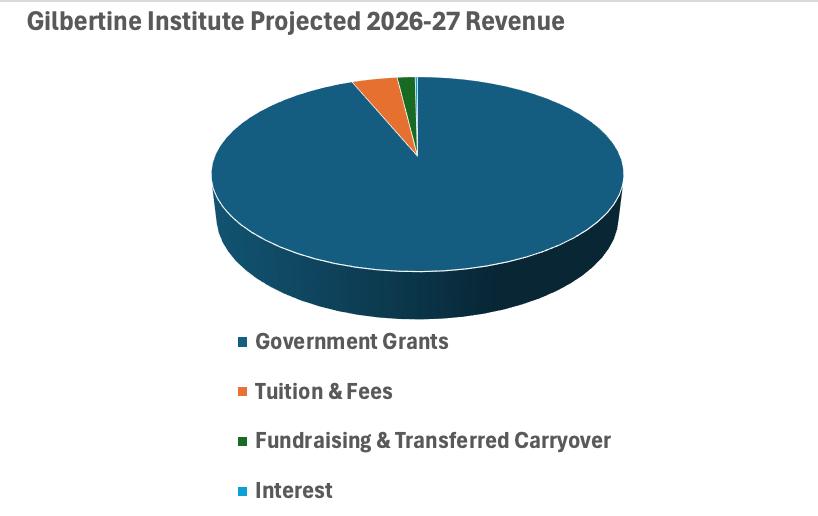
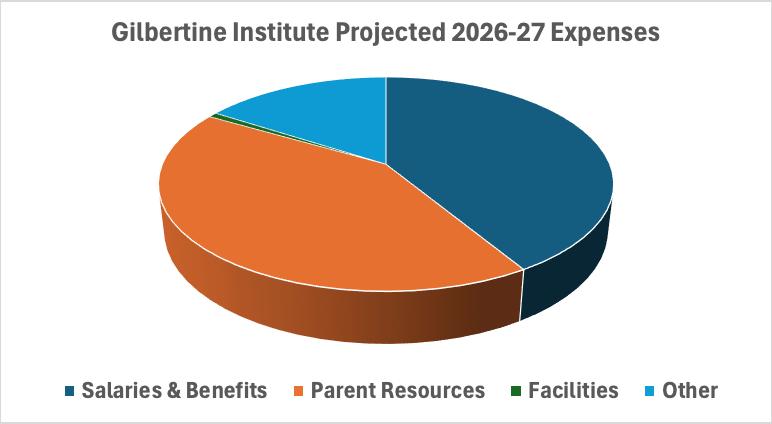
G ilbertine I nstitute P rojected 2026-27 R evenue
Government Grants $ 12,796,291 93.8%
Tuition & Fees $ 583,900 4.3%
Fundraising & Transferred Carryover
229,699 1.7% Interest $ 30,000 0.2%
13,639,890 100.0%