GIBRALTAR’S OWN COMMUNITY MAGAZINE FEATURING BUSINESS, MOTORING, SPORT, WOMEN’S SPOTLIGHT, HEALTH & WELLBEING, CULTURE,LOCAL EVENTS AND SO MUCH MORE.
Each month, Community Insight magazine is distributed across Gibraltar - from banks, gyms, and offices to the World Trade Center, clinics, the University of Gibraltar, the GFA, and major car dealerships. With engaging, high-quality content, each issue remains on display throughout the month and beyond, keeping your brand visible and top of mind.
ADVERTISING DOESN’T STOP THERE: That means your brand connects directly with Gibraltar’s buying audience - in print, online, and across social media.
• Rates from just £60/month. Discounts available for 4+ months.
30 years. He worked in the UK, before moving to work in Guernsey, Isle of Man, Jersey and now Gibraltar. Having started his career in the retail side of the business, Mark transitioned across to the Commercial team when he moved to Jersey. He has taken on roles in both Real Estate Finance and Corporate and Commercial.
Mark says, “My attitude and drive has always been centred around putting the customer first and treating our customers in the way I would like to be treated. My desire to help all bank customers means am always happy to help find practical solutions and to collaborate with colleagues to ensure we find the right outcomes to support our local communities.”
Amanda Cid de La Paz
Assistant Relationship Director
E: Amanda.CiddeLaPaz @natwestint.com
T: +350 57302000
Amanda started her career in retail banking over 23 years ago and has held various customer-facing
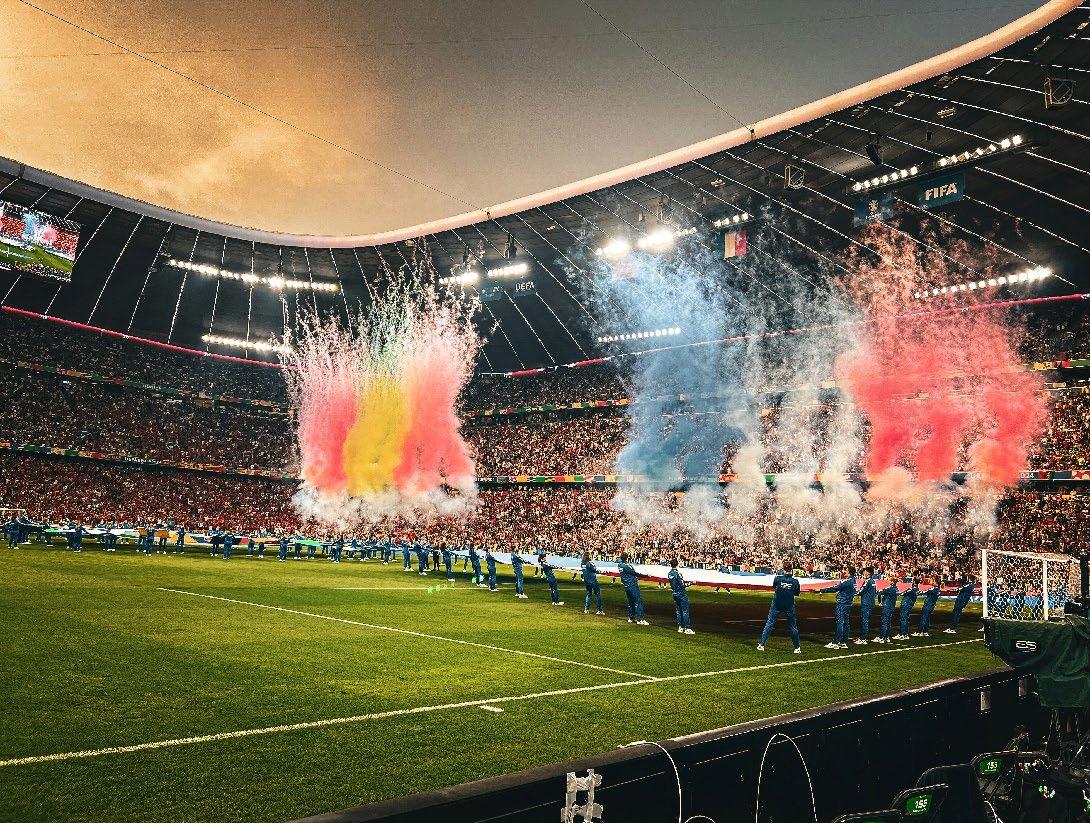
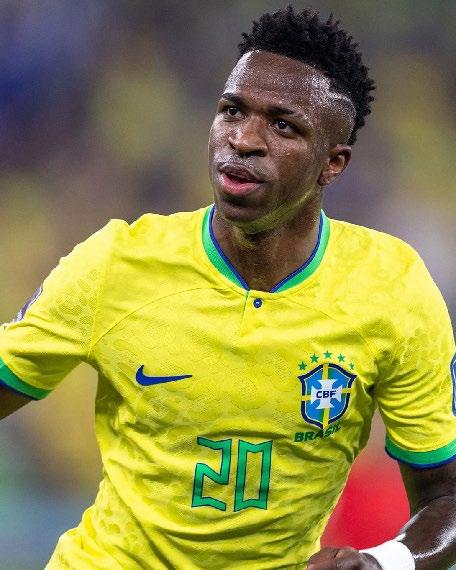
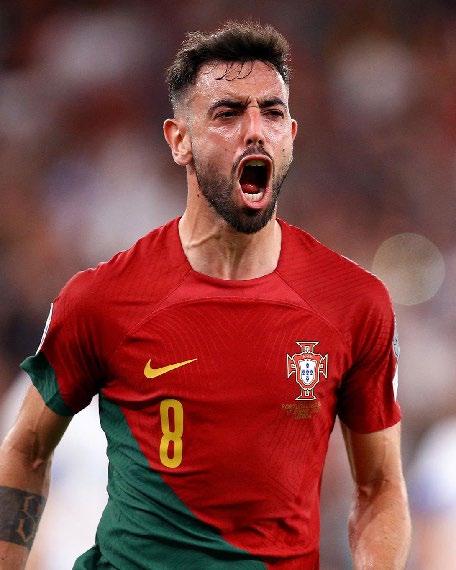
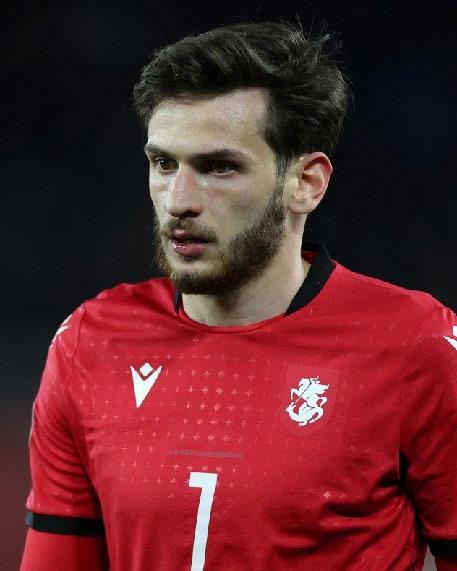
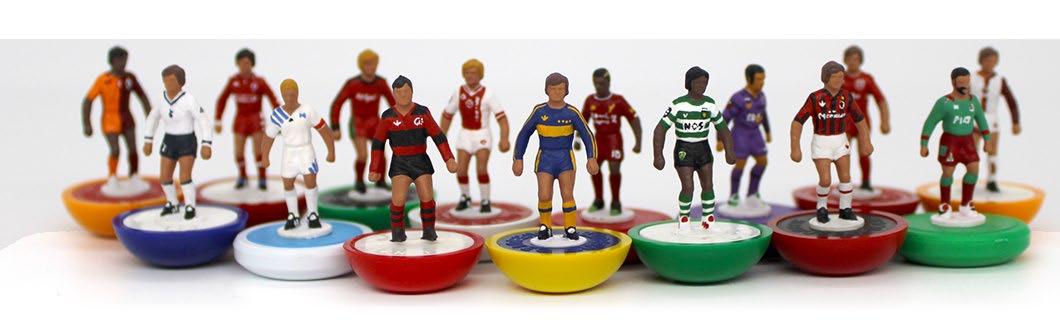
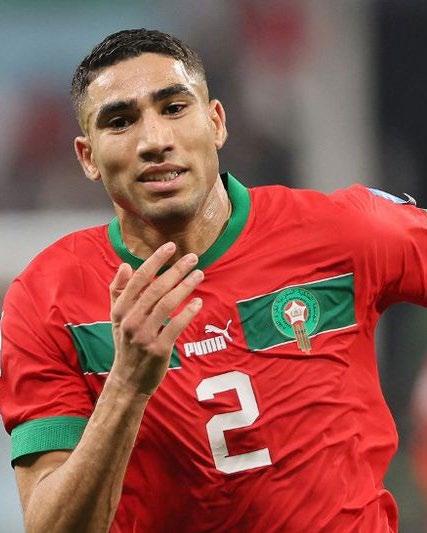
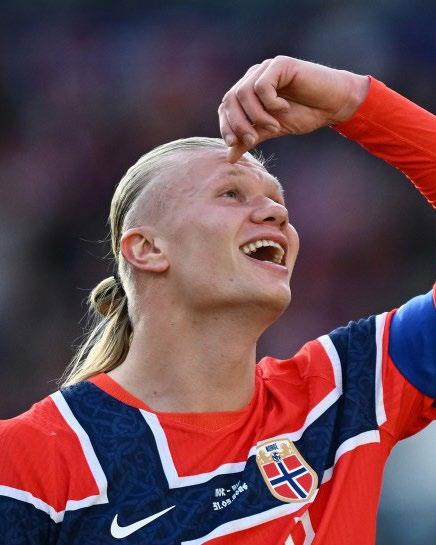
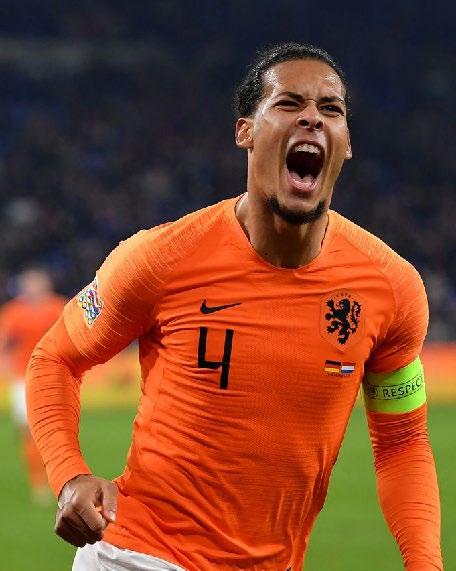
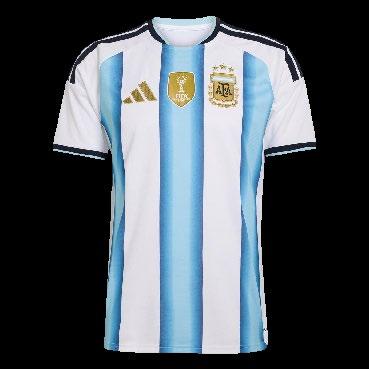
FEATURES FIFA WORLD CUP REGULARS
r a nsform your relationshi
w i t h
Money
is a huge part of our lives and yet many people in Gibraltar are reluctant to talk about it. Perhaps it’s because in the western world, the subject of money is considered taboo—it’s private and not open for discussion. Instead, we see our relationship with money as a reflection on ourselves, and often pretend that we’re more on top of our finances than we are. Therefore, when we actually do need help, we’re reluctant to ask for it, leaving us alone in the dark.
The words ‘money’ and ‘worries’ go together so often they can seem inseparable. For many people, their relationship with money is fraught with anxiety. Fears around money stop people from living their life. Money cuts across a lot of boundaries. There are layers of meaning within our relationship with it. There are those who overspend, those who under spend, those who gamble, those who debt, those who chase after it, those who are satisfied with very little, and those who simply work hard, pay their bills, save, invest and give the remainder away. A major motivation for crime and violence is money; a major source of arguments among married couples is money; a major factor in career choice is money.
Our relationship to our money reflects our relationship to the world. It is simply a metaphor for how safe we feel. Establishing a good relationship with money starts with understanding what type of person you are and whether you fall into any of the following categories:
SPENDERS
Do you frequently make purchases that are beyond your means? Do you purchase things to make yourself happy? Is there a connection between shopping and your mood? If so, then you can consider yourself a spender. Spenders have a tendency to accumulate credit card debt because shopping to them is an addiction. Spenders spend money in hopes that material items will bring happiness or provide pain relief.
SAVERS
On the other end of the spectrum are the Savers. Savers absolutely fear poverty and constantly worry about not having enough money to live. Savers need to feel in control and are generally uncomfortable with any sort of uncertainty. Ironically, savers fear poverty yet they practically live in it because they spend so little
HATERS
Money haters absolutely detest money and what it does to people. They eschew wealth and will often live in deprived and desolate conditions. They will purposely avoid material possessions whenever possible.
SEEKERS
Money seekers are the ones who obsess over becoming wealthy These people put a premium on making a fortune with the belief that it will solve all of their problems. In reality, there are usually other inadequacies in their lives that they are trying to make up for with material wealth. While certified financial planners and accountants zero in on financial issues from budgeting to investing, some people may find even talking to an accountant intimidating. This is when talking to Money Coachers becomes more effective. Money Coaching combines sound psychological and coaching principles with practical financial coaching to help people transform their relationship with money.Money Coaching is an opportunity to identify and transform issues that can limit one from living a fulfilling, purposeful and prosperous life. Money Coaching is a step-by-step process for gaining a deeper understanding of the unconscious beliefs and patterns that create stress, anxiety and fear. It’s fantastic to hear about how people’s lives change through working on their relationship with money.Improving your relationship with money involves a fundamental change in mindset. Getting along with money isn’t about earning a huge income or making more than your friends. Once you figure out the proper place money resides in your life, you’ll find that your life will become much more pleasant.You’ll place less emphasis on decisions where money is involved. You’ll feel less pressured to take a job or pursue a career in which money is the only factor.
In our Money Coaching sessions we try to transform people’s relationship with money by first being able to talk about money more openly within their family circle.Even with your children, there is no better time to start talking to them about money than now. The level of discussion should be basic in the early years but by the time your children leave home they should be confident budgeters, savers and investors. Money management skills can be more important determinants of financial success than academic progress. Giving your children skills in financial literacy will enhance any investment you make in their education. Parents may need help with money too. The older generation can be reluctant to reveal their financial situation to their children. Perhaps they feel this could result in rivalry among siblings or undue pressure being put on them or it could be that they come from an era when money was not talked about. Ageing parents may need help with making sensible investments, ensuring they have sufficient funds to last through their retirement and making plans for the transition of wealth to the next generation.
In other words, all the tools you need in order to transform your relationship with money are right in front of you, and have been there all along, waiting for you to recognise them. The first step is acknowledging you need help. The second step is following through and finding someone to guide you. Third and finally, it’s a matter of putting into practice what you learn and sticking with it. Soon, you’ll be well on your way to having mastery over your finances and your life.
Eran Shay, Managing Director Benefit Business solutions
www.BenefitGibraltar.com
Minister Feetham Promotes GIB
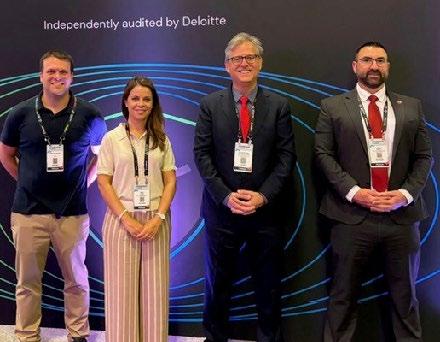
The Minister for Justice, Trade and Industry Nigel Feetham
KC MP has this week attended Consensus Miami as part of the Government of Gibraltar’s ongoing strategy to strengthen its position at the forefront of digital innovation.
During the conference, Minister Feetham was interviewed live on CoinDesk, the global digital media, events, and information services company for crypto and blockchain technology.
On the margins of the event, the Minister held meetings with industry participants, promoting Gibraltar’s established ecosystem and new legislative initiatives in areas such as tokenisation and prediction markets. These engagements form part of ongoing efforts to attract business to Gibraltar in the areas for which Minister Feetham is Ministerially responsible and convert interest into long-term economic
The Minister also attended a number of investor-focused events.
In addition, Minister Feetham was interviewed by a U.S. journalist as part of wider international media engagement aimed at highlighting Gibraltar’s regulatory leadership and digital finance ecosystem.
The Minister was accompanied by Ministry officials, Kelly Lima (Finance Centre Director), and Nicholas Peliza, reflecting a coordinated approach between policy and Ministerial teams in engaging global stakeholders. The Gibraltar delegation also included Nathan Catania.
Commenting on the visit, Minister Feetham emphasised the importance of maintaining visibility with key international players in sectors that are critical to Gibraltar’s future economic growth, noting that sustained engagement of this kind is essential to diversifying our economic base, and reinforcing Gibraltar’s position as a leading, well-regulated financial centre.
WHAT DOES IN THE BUSINESS WORLD PROCRASTINATION
Procrastination is often framed as a personal flaw which is something tied to laziness, poor discipline, or bad time management. In a business context, though, it’s rarely that simple. It doesn’t always look like missed deadlines or obvious inaction. More often, it hides behind meetings, overplanning, second-guessing, and the quiet decision to “handle it later.” and while it may feel harmless in the moment, procrastination in business has a way of compounding. What starts as a small delay can ripple outward, affecting decisions, teams, finances, and long-term growth.
IT SLOWS DOWN DECISION-MAKING
At its core, business is a series of decisions. Some are small and operational; others shape the direction of the entire company. When procrastination creeps in, decisions get delayed because they feel uncomfortable or uncertain instead of because feeling impossible. Leaders might wait for more data that isn’t necessary, avoid making a call that could upset someone or push decisions to future meetings that don’t resolve anything, but the result is stagnation. Opportunities don’t wait. Markets shift, competitors move, and timing matters so a delayed decision can quickly become a missed one. And over time, a pattern of hesitation creates a culture where progress slows and momentum fades.
IT CREATES A FALSE SENSE OF PRODUCTIVITY
One of the more deceptive forms of procrastination in business is “productive avoidance.” This is when people stay busy but not with the things that actually matter. It can look like someone constantly refining a plan instead of executing it, attending meetings that don’t lead to action, organizing, restructuring, or optimizing prematurely, or even focusing on low-impact tasks to avoid high-stakes ones. From the outside, it appears like work is happening because calendars are full and tasks are being checked off. But the core priorities which are the ones that drive revenue, growth, or innovation, remain untouched. This creates a dangerous illusion: the business feels active, but it isn’t progressing in meaningful ways
IT IMPACTS TEAM MORALE
It goes without saying but procrastination doesn’t just affect the person delaying a task. it affects everyone around them. When leaders or decision-makers hesitate, teams are left waiting, projects stall and directions become unclear. People don’t
know whether to move forward, pivot, or hold off. Over time, this creates frustration and employees may feel disconnected from the outcome of their work, uncertain about priorities or even less motivated to take initiative. Inconsistencies at the top often leads to disengagement at every level and people stop pushing forward because they don’t trust that progress will be supported or sustained.
IT INCREASES STRESS ACROSS THE BOARD
Ironically, procrastination is often used to avoid stress which ends up creating more of it, and when tasks are delayed, they don’t just disappear. They accumulate, deadlines get tighter, and decisions become more urgent. Problems grow larger because they weren’t addressed early and what could have been handled calmly now requires reactive, high-pressure responses. This leads to last-minute scrambling, increased errors and burnout from rushed action. In a business environment, this kind of reactive cycle becomes mentally and financially costly for everyone involved.
IT DAMAGES TRUST
Trust is usually built on reliability. In business, that means following through on timelines, commitments, and expectations. When procrastination appears and becomes a pattern, reliability suffers and as a result lack of trust. Clients may experience delays or inconsistent communication, or partners may feel uncertain about collaboration. Internally, teams may lose confidence in leadership’s ability to act decisively. Even if the work eventually gets done, the delay itself could send a message that priorities are unclear, or that commitments aren’t being handled with urgency. Trust, once weakened, is difficult to rebuild and procrastination quietly chips away at it over time.
IT DELAYS INNOVATION
Innovation requires action. Testing ideas, launching products, experimenting with strategies, all of it involves moving forward without complete certainty. Procrastination encourages waiting for either the “right time,” more clarity, or perfect conditions. In business, like in life, perfect conditions rarely exist. When companies delay, they risk competitors launching new products, strategies pivot and they might miss investments in new ideas. Basically, they risk falling behind. Competitors who act faster (even imperfectly) gain insights, market share, and momentum. So, procrastination doesn’t just slow growth; it can make a business irrelevant in fast-moving industries.
IT LEADS TO MISSED OPPORTUNITIES
Timing plays a significant role in business success. Opportunities often have a window, whether it’s entering a market, securing a partnership, or capitalizing on a trend. Procrastination narrows that window. By the time a decision is made, or action is taken the opportunity may have passed, the market may have shifted or
someone else may have moved first. These missed opportunities aren’t always obvious. There’s no immediate alarm or visible failure, but over time, they add up.
IT REINFORCES AVOIDANCE PATTERNS
The more procrastination is repeated, the more it becomes ingrained. In a business setting, this can turn into a cultural issue. Teams begin to mirror leadership behaviour, delays become normalized and the sense of urgency disappears. Whereas people start to avoid difficult conversations, postpone challenging decisions and stick to safe, familiar actions. So, procrastination in anyone creates an environment where progress feels slow and risk-taking is minimized because avoidance has become the default.
IT BLURS ACCOUNTABILITY
When things are consistently delayed, it becomes harder to pinpoint responsibility. Without clear follow-through, ownership becomes unclear, standards begin to slip and performances become harder to measure. Procrastination creates ambiguity, and ambiguity makes accountability difficult. Over time, this weakens the structure of how a business operates.
WHY IT HAPPENS (BEYOND LAZINESS)
It’s easy to label procrastination as laziness, but in business, it’s often driven by deeper factors, such as the fear of making the wrong decision, perfectionism or waiting until everything feels “ready”, overwhelm from too many priorities, a lack of clarity on what matters most or discomfort with risk or conflict. But, understanding this matters because the solution isn’t just “work harder” or “be more disciplined.” It’s about addressing the underlying friction that causes delay in the first place.
BREAKING THE PATTERN
Reducing procrastination in business (and personal) requires small consistent change. You can start with clarity by defining what matters or separate high-impact tasks from low-impact ones. Then focus on actions such as making decisions with the information you have or accepting that not every choice will be perfect. Following this, you can then create accountability by setting clear deadlines that don’t change constantly and assign ownership, so tasks don’t float between people. And most importantly, normalize progress over perfection. Businesses that move forward and adjust as they go tend to outperform those that wait for certainty.
TO SUM UP
Procrastination in the business world isn’t always obvious because it doesn’t always look like a lack of action. Often, it looks like delays, or busyness that avoids what really matters. But its effects are real, and it slows decisions, drains momentum, affects teams, and quietly limits growth in repeated delays that add up over time. The goal isn’t to eliminate hesitation entirely because that’d be unrealistic. It’s to recognize when delay is no longer strategic, but avoidant. Because in business, momentum matters, and procrastination is what quietly takes it away.
GCS hosts
‘Gibraltar
International Conference’ attendees
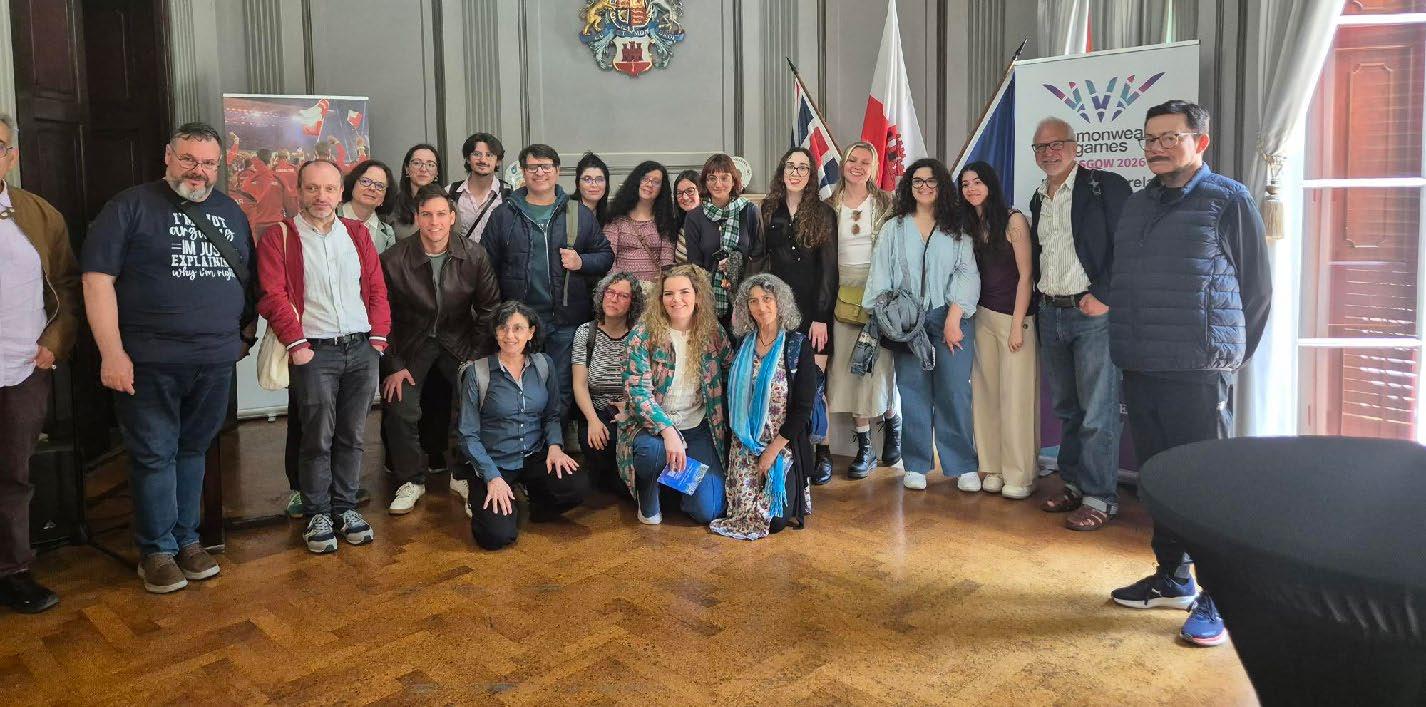
Gibraltar Cultural Services (GCS) hosted delegates from the 4th Gibraltar International Conference, recently held at the University of Cadiz.
As part of the Gibraltar visit, delegates were welcomed by GCS with a guided tour of the City Hall to include the Mayor’s Parlour and the Mario Finlayson National Gallery. Their visit concluded with a Culture
Crawl hosted by the Llanito History Doctor Dr Ryan Asquez and GCS’s
Beginning at Casemates Square, the walk took participants through the Upper Town via El Coronel, Castle Ramp, Castle Street, (La Escalera del Horno), and New Passage, before returning to Main Street and finishing at the Piazza. The tour offered visitors a glimpse into the history of Gibraltar’s Upper Town and the stories behind many of its his-
toric street names,while also showcasing street art and key cultural landmarks along the route. The visit tied in closely with several themes explored during the Cádiz conference, highlighting the richness of Gibraltar’s linguistic heritage, identity, and community history.
For more info on the Culture Crawl tours and related content please contact the Cultural Development team on development@culture.gov.gi or +350 200 41839
GACO and BPP International Finance Announce Strategic Partnership to Elevate Compliance and Finance Training in Gibraltar
The Gibraltar Association of Compliance Officers (GACO) is pleased to announce a new strategic partnership with BPP International Finance, a leading international provider of professional education. This collaboration marks a significant milestone in GACO’s mission to enhance the professional development of its members by providing access to world-class, internationally recognised training and qualifications.
Through this partnership, GACO members will benefit from BPP International Finance’s extensive expertise in financial services, including specialised training in Anti-Money Laundering (AML), Risk Management, Corporate Governance, and the latest regulatory updates. The initiative aims to bridge the gap between local requirements and international best practices, ensuring that Gibraltar’s compliance community remains at the forefront of the global financial landscape.
Expanding the Horizon for Gibraltar’s Professionals
As the regulatory environment becomes increasingly complex, the need for high- quality, continuous professional development (CPD) has never been greater. This partnership will introduce a suite of new educational opportunities, including:
• Bespoke Training Modules: Tailored to the specific needs of the Gibraltar market.
• International Expert Access: Masterclasses and seminars delivered by BPP’s industry-leading tutors.
• Enhanced CPD Offerings: A broader range of technical and soft-skills courses to support career progression at all levels.
Stuart Chandler, commercial director at BPP International Finance, added: “We are delighted to work alongside GACO to support professionals safeguarding Gibraltar’s financial services industry. Our case-led regulatory training reflects the realities of international financial services, aligning with GACO’s commitment to excellence. We look forward to working with Gibraltar’s compliance community through this collaboration.”
A Shared Commitment to Excellence
“GACO has always been dedicated to promoting the highest standards of compliance and risk management in Gibraltar,” said Carlos M. Martins, Chairperson at GACO. “By partnering with BPP International Finance, we are significantly expanding our training offering. This collaboration allows us to provide our members with the tools and knowledge they need to navigate an evolving regulatory world with confidence.”
Davina Barbara.
The
OffIce of
His
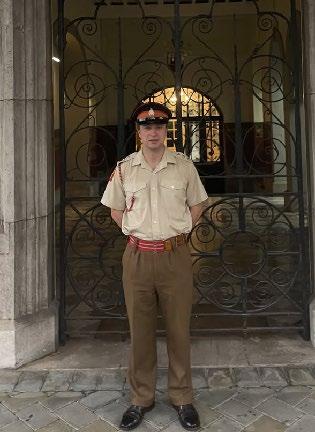
Excellency the Governor and the Royal Gibraltar Regiment Welcomes the Appointmentof New Aide de Camp to the Governor.
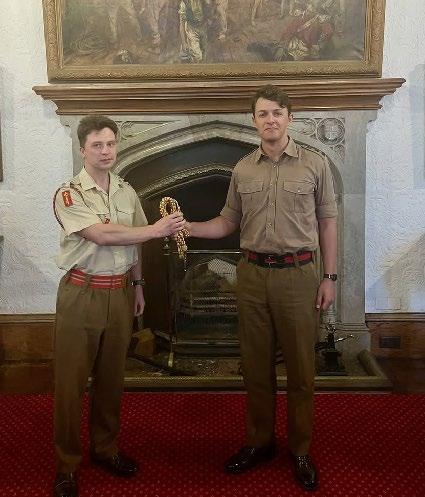
The Royal Gibraltar Regiment (RG) is pleased to announce the appointment of Captain Gareth Bailey as Aide de Camp (ADC) to Hi Excellency the Governor and Commander-in-Chief, Lieutenant General Sir Ben Bathurst KCB CBE.
The role of ADC to His Excellency is a prestigious appointment traditionally held by a Captain of the Royal Gibraltar Regiment. The ADC plays a vital role in supporting the Governor in his constitutional, ceremonial, and representational duties, acting as a key liaison between His Excellency, the Armed Forces, and wider stakeholders.
Over the past year, to ensure the Royal Gibraltar Regiment could continue providing its officers with sustained operational exposure and relevant command experience, the Regiment welcomed the valued support of the Welsh Guards, who seconded Captain William Moss to serve as ADC.
This arrangement ensured continuity in the Governor’s support while allowing the RG to balance its operational commitments with officer development responsibilities.
The Royal Gibraltar Regiment records its sincere thanks to Captain Moss for his exemplary service to His Excellency during his tenure. Captain Moss carried out his duties with professionalism, discretion, and distinction, reflecting great credit on himself
and the Welsh Guards. The Regiment is grateful for his contribution and support and wishes him every success in his future appointments.
With the appointment of Captain Gareth Bailey, the Royal Gibraltar Regiment looks forward to once again providing an officer for this historic and highly respected role. Captain Bailey brings with him the experience, judgement, and personal qualities expected of an ADC, and his selection reflects the Regiment’s ongoing commitment to developing capable officers who can serve with distinction at the highest levels.
The Royal Gibraltar Regiment remains proud of its enduring relationship with the Office of the Governor and its contribution to Gibraltar’s ceremonial and constitutional life. The Regiment warmly congratulates Captain Bailey on his appointment and wishes him every success as he assumes his duties in service to His Excellence
GOVERNMENT ACQUIRES PORTRAIT OF HER LATE MAJESTY QUEEN ELIZABETH II AND ANNOUNCES NEW TRIBUTE IN HER HONOUR
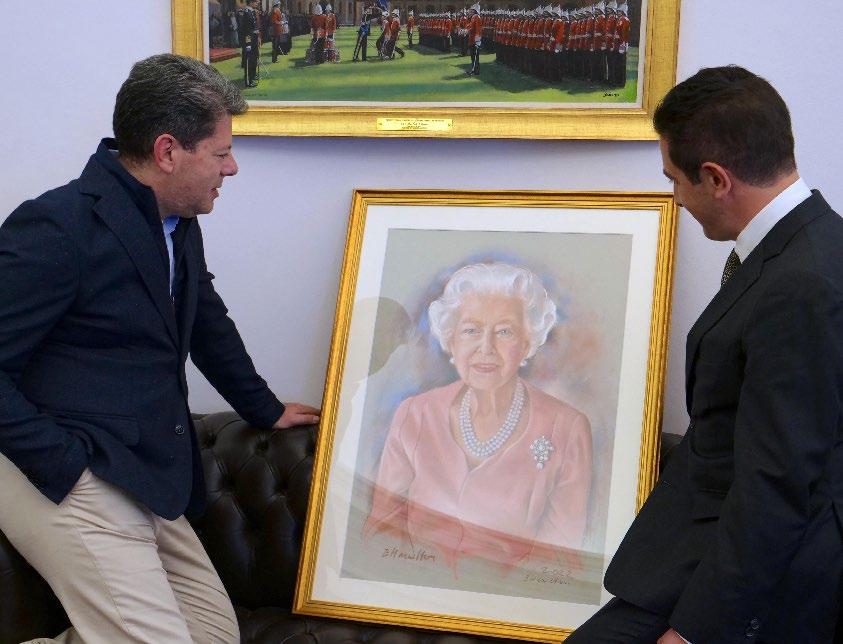
HM Government of Gibraltar has marked what would have been the 100th anniversary of the birth of Her Late Majesty Queen Elizabeth II by acquiring a portrait of the late Sovereign for the people of Gibraltar.
The artwork, which depicts Her Late Majesty in one of the final official portraits created from life during her reign, has been secured by the Government as part of Gibraltar’s continuing efforts to honour the enduring bond between Gibraltar and the Crown. The portrait was today formally presented on a date of particular significance, Tuesday 21 April 2026, being the day on which Queen Elizabeth II would have celebrated her 100th birthday.
The Government can also announce that it will further honour the memory of Queen Elizabeth II by commissioning a statue of Her Late Majesty to be erected at the roundabout by Hassans Centenary Terraces. It is intended that this new public monument will serve as a lasting tribute to a monarch held in deep affection and respect by the people of Gibraltar, and as a visible expression of Gibraltar’s loyalty to the Crown across generations.
The portrait itself is of particular historical and cultural value. It is a hand-signed, full-size archival reproduction of the portrait painted by British-Polish artist Basia Hamilton following a private sitting granted by Her Late Majesty at Windsor Castle on 6 May 2022, which became the Queen’s final portrait sitting. It was presented to HM Government of Gibraltar by Paul Albert Sabbagh, who offered the work from his private collection as a cultural gift to the people of Gibraltar.
“On the day that Her Late Majesty Queen Elizabeth II would have turned 100, it is fitting that Gibraltar should pay tribute to her life of extraordinary service and unwavering dedication. This portrait is a moving and dignified addition to our national heritage, and I would like to extend my gratitude on behalf of the people of Gibraltar to Paul for his generous donation and for helping us mark this deeply meaningful milestone.“
“We are also proud to announce that we will commission a statue of Queen Elizabeth II, to be erected at the roundabout by Hassans Centenary Terraces, so that future generations may continue to remember with pride the remarkable Sovereign whose reign meant so much to Gibraltar.”
The Government will provide further details in due course regarding the design, commissioning process and timetable for the statue.
Meet the Commercial Banking Team from NatWest International
At NatWest International our Commercial teams are here to support you with all aspects of your banking needs.
Across our four jurisdictions we’re proud to help our customers, spanning from sole traders and SMEs to large corporates. Our dedicated team of experienced Relationship Managers are on hand to offer support and guidance.
The local team are introduced below, with each being a key member of the NatWest International team…
Bianca Lester Head of Corporate and Commercial, Gibraltar
E: Bianca.Lester@rbsint.com
T: +350 56001476
Bianca started her career in RBS Gibraltar 27 years ago. After having fulfilled several different roles within the Bank, Bianca joined the Corporate Team in October 2003. She’s been involved in several key local transactions over the years and 5 years ago took up the role of Head of Corporate and Commercial for Gibraltar.
Bianca comments, “I am delighted to have been given the opportunity to develop and support our corporate customers, ranging from the small business in the high street to the largest corporate businesses in their everyday banking needs. I am committed to providing an excellent customer service and delivering the best customer experience.”
Mark
Stevens
Relationship Manager, Top 25 Portfolio
E: Mark.Stevens@rbsint.com
T: +350 20014438
Mark has been with the Bank for over 30 years. He worked in the UK, before moving to work in Guernsey, Isle of Man, Jersey and now Gibraltar. Having started his career in the retail side of the business, Mark transitioned across to the Commercial team when he moved to Jersey. He has taken on roles in both Real Estate Finance and Corporate and Commercial.
Mark says, “My attitude and drive has always been centred around putting the customer first and treating our customers in the way I would like to be treated. My desire to help all bank customers means I am always happy to help find practical solutions and to collaborate with colleagues to ensure we find the right outcomes to support our local communities.”
Sylvana Balestrino
Relationship
Manager
E: Sylvana.Balestrino @natwestint.com
T: +350 20014617
With over 33 years of service at NatWest International, Sylvana Balestrino brings a wealth of experience and expertise to her new role as Commercial Relationship Manager. Her career spans a wide range of positions, most recently as a Senior Mortgage Specialist, where she delivered tailored financial solutions to personal and business clients.
Sylvana’s strong local market knowledge, meticulous attention to risk management, and unwavering commitment to customer service enable her to build trusted, long-standing relationships, underpinned by integrity, care, and a genuine passion for helping clients achieve their financial goals. Sylvana comments, “I’m passionate about building lasting relationships and being a trusted partner who genuinely supports customers through every stage of their journey.”
Amanda Cid de La Paz
Assistant Relationship Director
E: Amanda.CiddeLaPaz @natwestint.com
T: +350 57302000
Amanda started her career in retail banking over 23 years ago and has held various customer-facing roles within NatWest International. She has diligently worked on developing her communication and leadership skills, earning the trust of both colleagues and customers as a trusted advisor. Transitioning onto the Corporate and Commercial team to become a Senior Assistant Relationship Director 3 years ago, she has committed to building enduring relationships with her customers and understanding their needs to provide tailored solutions.
Amanda comments, “I am a proud advocate of our NatWest International brand, bringing a wealth of knowledge and experience in both the personal and non-personal sectors of the bank. I strive to provide an exceptional service to our customers and support them with their banking needs.”
Cheryl started her banking career in 2001 at the age of 19 where she was part of the operations team. Over the years she has worked in several different departments including voucher processing, payments and cashier. Through these roles she has gained a lot of knowledge on systems and processes.
Cheryl has been part of the Corporate Banking team for the past two years and she likes to ensure that her clients receive a high standard of service and works to form a close working relationship with them.
Cheryl believes, “Excellent customer service is the key to a great relationship with the customer.”
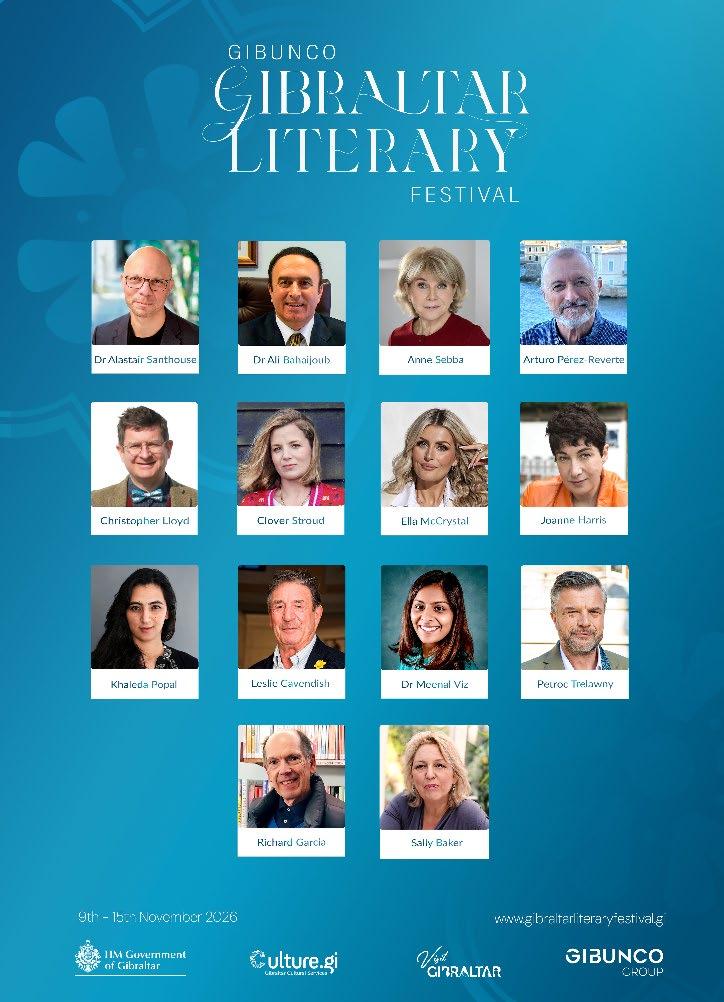
Authors confirmed for the festival include:
• Dr Alastair Santhouse presents No More Normal, which brings the conversation on mental health into the public arena, exploring current challenges and proposing ways to better understand everyday human experiences.
• Dr Ali Bahaijoub, Vice Chairman of the British–Morocco Society presents Western Sahara Conflict, a comprehensive analysis of the ongoing conflict, its history, and its regional and international dimensions.
• Anne Sebba, Fellow of the Royal Society of Literature, biographer and journalist, presents her latest publication The Women Orchestra of Auschwitz: A Story of Survival.
• Arturo Pérez-Reverte, Spanish novelist and journalist, presents two of his latest publications, Enviado Especial and Misión en París. His talk will be delivered in Spanish.
FIRST SPEAKERS ANNOUNCED FOR GIBUNCO GIBRALTAR LITERARY FESTIVAL 2026
• Christopher Lloyd presents The Story of Gibraltar, a fully illustrated fold-out timeline highlighting 100 key moments in the Rock’s rich history, suitable for both adults and children.
• Clover Stroud, Sunday Times bestselling journalist, presents The Giant on the Skyline alongside her other award-winning works.
• Ella McCrystal presents Wounded Warrior Wisdom: From Child Abuse to Self-Love and Healing, exploring how trauma shapes identity, behaviour, and the body into adulthood, and offering an inspiring message of healing and growth.
• Khaleda Popal, former captain of the Afghan women’s national team, discusses her book My Beautiful Sisters. Winner of the 2025 Sports Book of the Year, a powerful story of survival and sisterhood.
• Joanne Harris MBE presents Vianne, alongside her forthcoming book Sleepers in the Snow, to be published in October 2026.
• Leslie Cavendish, famously known as The Beatles’ hairdresser, shares anecdotes and personal stories from his book The Cutting Edge.
Gibraltar Cultural Services, on behalf of the Ministries of Culture and Tourism, is delighted to announce the first fourteen authors who will be participating in the 2026 Gibunco Gibraltar Literary Festival, to be held from the 9th to the 16th of November.
This year’s flagship event promises a rich and diverse programme to include topics such a politics, travel, music, health, sport, crime and literary fiction.
• Dr Meenal Viz, a frontline NHS doctor, demonstrates The Power of Protest in healthcare through her publication, which details her landmark legal case against the UK government during the Covid Pandemic.
• Petroc Trelawny, classical music radio and television presenter, presents Trelawny’s Cornwall, an autobiographical celebration of his Cornish roots, alongside his passion for travel and classical music.
• Richard Garcia will speak on World War II in Gibraltar, drawing on his latest research.
• Leslie Cavendish, famously known as The Beatles’ hairdresser, shares anecdotes and personal stories from his book The Cutting Edge.
• Dr Meenal Viz, a frontline NHS doctor, demonstrates The Power of Protest in healthcare through her publication, which details her landmark legal case against the UK government during the Covid Pandemic.
• Petroc Trelawny, classical music radio and television presenter, presents Trelawny’s Cornwall, an autobiographical celebration of his Cornish roots, alongside his passion for travel and classical music.
• Richard Garcia will speak on World War II in Gibraltar, drawing on his latest research into the impact of the war on the civilian population and its lasting effects on the community.
• Sally Baker, therapist and author, will speak on health and wellbeing, drawing on themes from The Getting of Resilience from the Inside Out.
Minister for Culture and Tourism, The Hon. Christian Santos GMD MP said: “This year’s Literary Festival line up is already diverse and will have a wide reach to varied audiences in Gibraltar and beyond My thanks to the Festival Team working hard to organise the 2026 Festival, and of course, to the Festival sponsors. We are all working towards ensuring the 2026 event is as good if not better than last years.”
For further information please contact the Festival Director on telephone: +350 20047309 or email: info@culture.gi or visit gibraltarliteraryfestival.gi
Gibraltar National Museum Team Featured at Premier of New Documentary
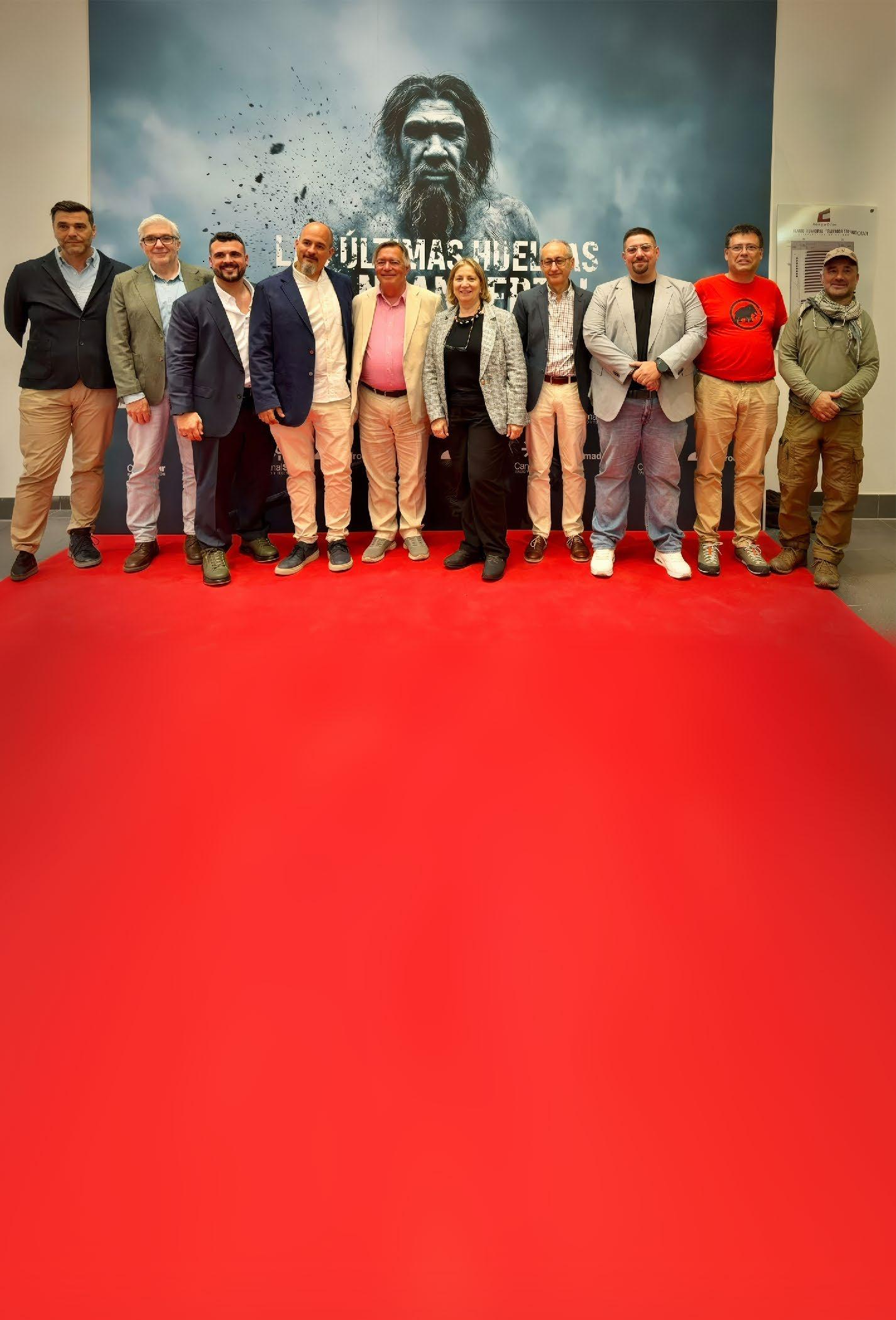
A new documentary on Neanderthals, entitled “Las últimas huellas del Neandertal” was officially launched at its premier in the town of Almonte (Huelva) in the heart of the Doñana National Park. The premier screening took place before a large audience composed of local authorities, scientists, media and invited guests. The significance of the launch in Doñana relates to the remarkable discovery of footprints of Neanderthals and associated animals on its coastline in recent years, as a result of the exposure of fossilized surfaces by winter storms. These findings have been the subject of a number of scientific publications and further discoveries are expected. A team from the Gibraltar National Museum have been involved in the research which complements their work in the Gibraltar caves.
The film is the story of our ancestors and how they spread across Europe, turning the south of the Iberian Peninsula into a strategic refuge for Neanderthal survival. The documentary explores the world of the final Neanderthal groups in southern Europe from a new perspective: that of a coastal human species, adaptable and closely tied to a territory of great ecological richness. The film addresses key questions such as the role of the coastline as a bioclimatic refuge, their relationship with megafauna, the occupation of open landscapes, the development of tools and adhesives, and the growing importance of symbolic evidence in the Neanderthal world. Together, these elements form the portrait of a humanity far more sophisticated than
we once imagined. It is a documentary about their life, their disappearance, and the trace that still remains within us.
Strong emphasis is placed throughout on Gibraltar itself and the discoveries which have been made here, following the ecological interpretations which the Gibraltar team have placed on their results and how these are being applied to the Doñana work. The documentary includes interviews with members of the Gibraltar team – Geraldine, Stewart and Clive Finlayson – and visits to Gorham’s and
Vanguard Caves, which are described as the pivotal site in the Iberian Peninsula – the “Neanderthal City”. Included in the documentary are spectacular new reconstructions of Gibraltar and its surrounding landscape at the time of the Neanderthals.
The documentary is expected to air initially in Canal Sur TV but an international version, in English, is being prepared for global distribution. In an exciting development following the Doñana event, the producers have agreed with the Gibraltar National Museum to hold the international premier of the documentary in Gibraltar during this year’s Calpe Conference, between the 1st and the 6th of September. Further details will be announced in due course.
A link to the trailer may be found at www.lasultimashuellas.es/homehuellas2/
This is the second piece in a new monthly series called HAPPINESS+, where I explore how happiness shows up in different parts of our lives here in Gibraltar. Last month, we started with community. Over the coming months, I’ll be speaking to local voices and exploring everything from work and family to money, movement and meaning.
It is almost time for Calentita, which feels like the perfect prompt for this month’s HAPPINESS+ conversation.
For many of us, the festival has a familiar rhythm. Food stalls, long queues for pinchitos, bumping into people you have not seen in months, and trying something new while debating whether you have room for dessert. It is one of those events that feels very Gibraltar, where food becomes the backdrop for conversation, connection and community. That got me thinking about the relationship between food and happiness. In my first HAPPINESS+ column, I looked at how researchers tend to define happiness. Most studies describe it as a combination of how we feel in the moment, how satisfied we are with life overall, and whether we feel
a sense of purpose or meaning. Another recurring theme was interpersonal relationships and connection. Not just connection with other people, but connection with ourselves.
Food seems to sit across all of those things. It is essential to life, of course, but it is also tied to enjoyment, routine, culture, memory and emotion. It can bring people together, offer comfort, mark celebrations and, at times, become entangled with stress or habit in ways we do not always notice.
When I think about food, some of my happiest memories come to mind immediately. School lunchtimes at my grandparents’ house. The beach ritual of japonesa y el té. My aunties passionately swapping recipes and debating who made what best. Time spent in my dad’s restaurant, where food was woven into everyday life.
But food has also played other roles in my life. When I was 9 and my parents divorced, it became a source of comfort. It felt familiar and predictable at a time when life did not. That comfort also came with challenges, including struggles with weight, guilt and a very negative body image that took years to better understand. I imagine many readers will recognise some version of that complexity. Because while food nourishes us, our relationship with it is rarely just about physical hunger.
What the research tells us
There is growing research linking food and mental wellbeing. The Mental Health Foun-
dation has highlighted associations between diets high in ultra-processed foods and poorer mental health, while more balanced diets tend to support energy and mood. Research from University College London has also suggested that people who eat more fruit and vegetables tend to report greater life satisfaction.
Most of us probably recognise this instinctively. We know how certain foods can leave us feeling energised, while others leave us sluggish or foggy. What is becoming clearer is how interconnected our physical and emotional responses really are. That is something Gibraltar-based Functional Health Practitioner and Eating Psychology Coach Karen Jacobson feels strongly about.
“Connection is paramount,” she explains. “Reconnecting with food and with our own body allows us to make more intentional choices that support our health. Food is not just fuel. It is information that guides how our bodies function.”
Karen points to the gut-brain connection as part of the explanation.
“Most people think mood starts in the brain, but around 70 per cent of serotonin is produced in the gut. Your gut and brain are constantly communicating, so when your diet supports gut health, you are supporting mental wellbeing too.”
It is a fascinating reminder that food affects far more than our waistline or energy levels.
But understanding the science is only part of the story.
HAPPINESS+ FOOD
What does food have to do with happiness? Probably more than we realise.
For many people, food is emotional. Therapist, lecturer and trainer Anne Marie Morello offers another perspective, focusing on the nervous system and the role food can play in emotional regulation.
“When we are in a regulated state, we are present and connected with our body,” she says. “We can taste our food, notice when we are full, and experience genuine pleasure from eating.”
The problem is that many of us are not always eating from that place.
“When the nervous system is dysregulated, eating can become automatic. Someone might find themselves halfway through a packet of biscuits without really registering the experience. They are not eating because they are hungry. They are eating to avoid discomfort.”
This felt uncomfortably familiar to me. How often do we reach for food because we are stressed, tired, bored or emotionally drained rather than physically hungry?
Anne Marie points out that, in these moments, food becomes less about nourishment and more about regulation. It offers temporary relief from anxiety, overwhelm or dissatisfaction.
That feels particularly relevant in a culture where many people are busy, overstretched and constantly moving. Lunch becomes something squeezed between meetings. Coffee becomes fuel. Food becomes functional, rushed, or reactive.
So what does a healthier relationship with food actually look like?
According to Anne Marie, it is not about rigid rules or perfection. “A healthier relationship with food is about presence,” she says. “It is being able to sit with what you are eating, whether that is something nourishing or something indulgent, and actually enjoy it.”
Karen takes a similarly practical approach. Rather than focusing on restriction, she encourages clients to think about what they can add instead.
More protein. More fibre. More water. More movement. More sleep.
It is a gentler approach, and perhaps a more realistic one for people trying to make lasting changes.
Because most of us do not struggle with food because we lack information. We struggle because food is personal. It is tied to memory, routine, comfort, culture and emotion.
Which brings me back to Calentita. One of the reasons events like this resonate so strongly is because food is about much more than nutrition. It is one of the ways we connect with others, celebrate identity and create shared memories. There is joy in eating well and taking care of ourselves. There is also joy in standing in Casemates with something delicious in hand, talking to people you care about.
Perhaps the point is not choosing one over the other, but becoming more aware of the role food plays in our lives.
So this month, I’ll leave you with a question. What role does food play in your own happiness?
Does the way you eat leave you feeling energised, connected and well, or stressed, disconnected and running on autopilot? It is worth reflecting on, because how we eat may be shaping far more of our mood and outlook than we realise.
What next?
Each feature in this HAPPINESS+ series will take one dimension of life and open it up properly. Here's a taste of what's ahead.
HAPPINESS+WORK: When did you last feel genuinely satisfied at work? Is satisfaction even the same thing as happiness? We'll look at what makes work meaningful, and what quietly corrodes it.
Over the coming weeks, I'll be speaking to all sorts of people from across our community about their own experience of happiness. I'll bring in the best available research and I'll share my own reflections along the way (including the uncomfortable ones). In the meantime, get in touch - tell me what happiness means to you, what gets in the way of it, and what you'd like this series to explore.
For more: email: david@motion.gi follow: @david_revagliatte
JO WARD CHATS WITH JOHN HUNTER ABOUT HIS LATEST EXHIBITION ORIGINS AND EVOLUTIONS, AND IT QUICKLY BECOMES CLEAR THIS ISN’T JUST ANOTHER SHOW BUT THAT IT’S A BIT OF A MILESTONE. IT MARKS A CONFIDENT, DEEPLY PERSONAL MOMENT IN A JOURNEY THAT HAS PICKED UP SPEED FASTER THAN MOST PEOPLE WOULD EXPECT. BACK AT THE SAN ROQUE CLUB ONCE AGAIN, THE EXHIBITION FEELS LIKE TWO THINGS AT ONCE: A LOOK BACK AT WHERE IT ALL STARTED, AND A BOLD STATEMENT ABOUT WHERE IT’S ALL HEADING NEXT.
For those familiar with John’s story, his path into the art world has been anything but conventional. Known primarily for decades as a successful figure in Gibraltar’s hospitality scene, his creative life existed quietly in the background for years. It was only during the pandemic, when the pace of the restaurant industry slowed and introspection became unavoidable, that painting re-emerged as something more than a casual pastime. What began as experimentation quickly evolved into something far more instinctive and essential.
Talking about the inspiration behind his latest work, John puts it simply: “At the beginning, I wanted everybody to like what I did. You need a bit of confidence to do your first exhibition, and I do care what people think, obviously, but now it's an expression of me, my imagination and my creativity.”
This change is not just stylistic but philosophical. John now embraces unpredictability, allowing each painting to evolve organically rather than imposing a fixed outcome from the start.
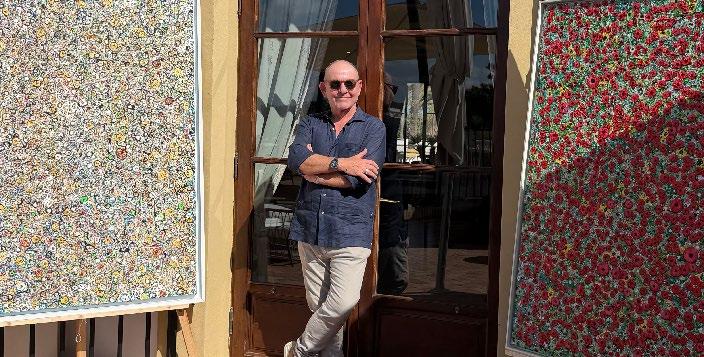
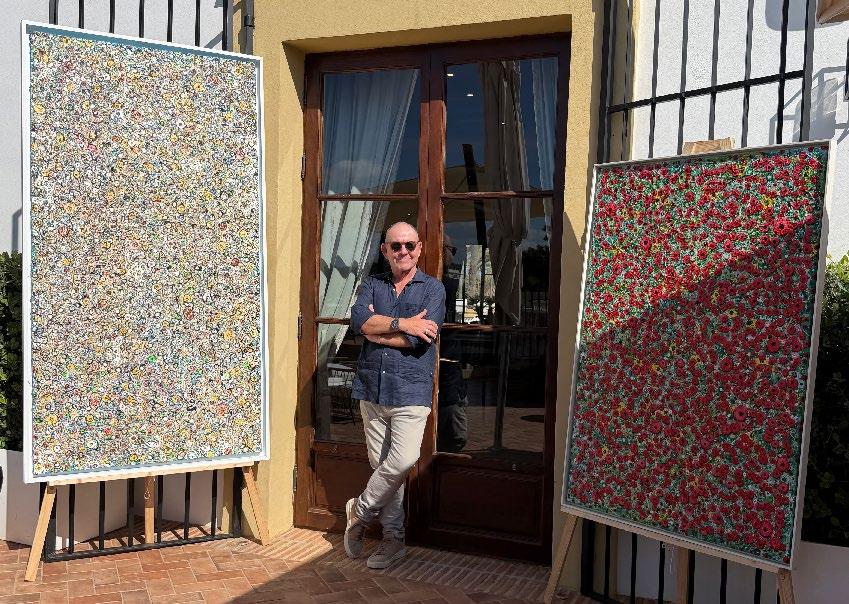
This sense of evolution is at the heart of the new exhibition. As John himself explains, Origins and Evolutions is not just a title but a framework: a visual timeline that allows viewers to trace the development of his style. Early works, including his recognisable poppy paintings, sit alongside newer, more abstract pieces, creating a dialogue between control and spontaneity, intention and discovery.
The poppy paintings represent a clear starting point. These vibrant and layered paintings, are rooted in a more traditional approach where there is a subject, a direction and a sense of certainty. John admits that back then, he was more focused on creating something people would immediately connect with, but even in those works, you can see the beginnings of what’s come later, an interest in texture, colour, and how paint itself can carry emotion.
John explains that this technique called ‘action painting’ refers to a method where the act of painting - dripping, pouring, and splashing paint onto a canvas - is prioritised over the final, finished image. “The poppy or wildflower paintings are going to represent those flowers from the start, but I love just going along with what evolves in my newest paintings.”
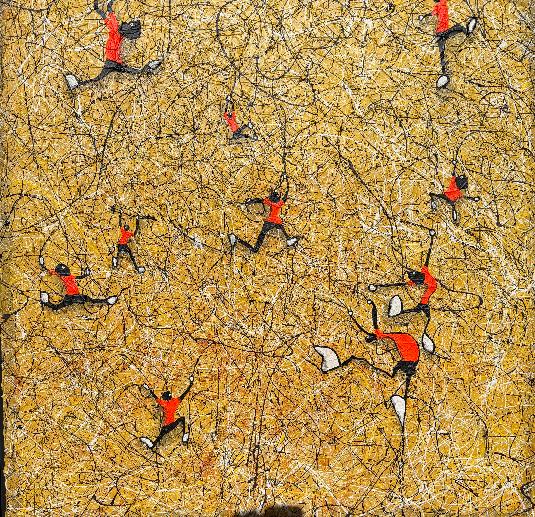
This approach is most evident in his latest work Race to the Top, where the initial act of dripping paint led unexpectedly to the emergence of climber-like forms. “I dripped the paint and as I was looking at the drips I thought ‘that could look like a climber’, so then I developed the climber idea further”.
It’s a great example of how his process works now. He starts with abstraction, but somewhere along the way, shapes and suggestions begin to appear. Sometimes they hint at a narrative, sometimes they don’t, but they never fully settle into something fixed. As a viewer, you’re not being told what to see, you’re invited to find your own meaning in it.
“There's a bit of German artist Gerhard Richter and Jackson Pollock in there, and then I add my own twist to it,” John explains. “The first stage is the smearing of colours, which is Gerhard Richter's style, then the dripping paint from Jackson Pollock, and then I pull out what I see as the painting progresses.”
Texture plays a huge role too. John doesn’t just paint, he builds. Using glue, resin, and other materials, he creates surfaces that almost demand a closer look. The way light hits these pieces changes depending
ORIGINS &
on where you’re standing, which makes them feel alive in a way that flat paintings sometimes don’t. They’re not just images, they’re objects with depth and presence.
Evolutions
One of the standout pieces of the exhibition is the Faces series, a collection that perfectly encapsulates John’s instinctive method. At first glance, they’re messy, chaotic even with layers of colour, drips, and textures all competing for attention. But spend a bit of time with them, and things start to emerge. You might see eyes, or a mouth, or something that feels like a creature or a fragment of a face. The interesting thing is that no two people see exactly the same thing.
Every artist is inspired by something or someone who came before them and it was mentioned to John that the Faces works were reminiscent of Joan Miró. “When I researched him I realised that there are definitely some similarities,” John comments.
This idea that art should not dictate meaning but invite it is something John has come to embrace fully. It aligns with a broader philosophy he references through a quote by David Bowie, which has clearly resonated with him:
“If you feel safe in the area that you’re working in, you’re not working in the right area. Always go a little further into the water than you feel you’re capable of being in. Go a little bit out of your depth, and when you don’t feel that your feet are quite touching the bottom, you’re just about in the right place to do something exciting.” David Bowie (1997)
That willingness to take risks is evident throughout Origins and Evolutions. There is a sense of playfulness in the work, but also a deeper undercurrent of self-exploration. Paintings like Circus and Batman demonstrate how humour and imagination intersect in his art, while pieces such as Africa, a striking triptych with glimpses of masks and dancers, show his ability to evoke atmosphere and cultural references without relying on literal representation.
“If you feel safe in the area that you’re working in, you’re not working in the right area."
Despite scaling back his business interests from eight venues to three, he remains actively involved in the hospitality world. His paintings, much like his career, are built on responsiveness and adaptability.
Outside of San Roque, his work has been getting more exposure too. He’s recently exhibited at Fresco in Sotogrande Port, and he’s set to show with Art Space in Marbella, the same group he worked with in London last year. Gibraltar is also on his list for future exhibitions, which feels like a natural next step.
The main goal of any artist is to sell their work, and it is a tribute to John’s talent that people are buying his paintings. “I’ve sold four from this collection already,” he says proudly.
At the same time, he remains grounded in the simple joy of creation. One of the most telling moments comes when he describes delivering a painting to a buyer’s home and seeing it installed. That shared moment of appreciation, the mutual “wow”, captures something essential about his approach. “That’s a great feeling,” John smiles as he says this.
Looking ahead, John is already considering new directions. The possibility of translating his art onto fabrics, clothing, or other mediums hints at an existence beyond the canvas. Yet even as he explores these ideas, the core of his practice remains unchanged: a commitment to experimentation, to following instinct, and to allowing each piece to find its own path.
Origins and Evolutions ultimately feels less like a conclusion and more like a snapshot in an ongoing journey. It captures an artist in transition, someone who has moved beyond imitation and into a space of genuine self-expression, but who is still very much in the process of discovery.
Find out more about John Hunter and his paintings at www.venandi-art.com
MISS GIBRALTAR PAGEANT
This year’s Miss Gibraltar Pageant will take place in September 2026, with recruitment opening in May 2026. The Miss Gibraltar Office encourages all interested individuals to register and take part in this exciting journey towards becoming Miss Gibraltar 2026.
The Ministry of Culture will continue to retain the Miss World licence, ensuring the highest standards and quality control. All costs associated with the production of the Miss Gibraltar pageant and Miss Gibraltar’s participation at the Miss World competition will remain self-funded by No1 Models Gibraltar.
The Miss Gibraltar Office, on behalf of the Ministry of Culture, is pleased to announce that No1 Models has signed a three-year agreement to organise and produce the Miss Gibraltar Pageant, up to and including 31st December 2028.
Woman
EMBRACING YOUR WEIRD SIDE LOOKING FOR YOUR SPARK
SEASONAL MOOD SHIFTS
We are the biggest hypocrites imaginable. Somewhere along the way, most of us learn a rather strange rule: blend in, don’t be too loud, too intense, too obsessed, or too different. We round off our edges, smooth out the quirks, and present a version of ourselves that feels acceptable, safe, and ‘normal’.
However, despite believing that’s what we should do to be accepted, we tell each other that what makes you “weird” is often the exact thing that makes you interesting, creative, and memorable, and that suppressing it doesn’t make you better. Embracing your weird side isn’t about becoming eccentric for the sake of it. It’s about reclaiming the parts of yourself you’ve been taught to hide while realizing they might be your greatest advantage.
EMBRACING your Weird side
WHY FITTING IN IS OVERRATED.
What does “weird” even mean?
“Weird” is usually just shorthand for “unfamiliar.” It’s what people call anything that doesn’t fit their expectations. Love niche hobbies? Weird. Think deeply about things others brush off? Weird. Express yourself differently? Weird. But if you zoom out, you’ll notice that everything innovative, artistic, or meaningful once looked weird to someone. The problem isn’t the weirdness but our discomfort with standing out.
The cost of hiding it
When you suppress your natural tendencies, you don’t just avoid judgment, but you also lose energy. It takes a strenuous amount of effort to maintain a version of yourself that isn’t fully aligned with who you are. This strain will eventually show up as feeling drained after social interactions, struggling to stay motivated, a sense that you’re not fully seen or understood, or creative blocks or lack of direction. Over time, this disconnection builds and you might start to feel like you’ve lost touch with yourself, even if everything looks fine on the outside. Ironically, the more you try to fit in, the more invisible you can become.
Why your weird side matters
Your quirks are like clues that point toward what naturally excites you, how you think, and how you see the world differently from others. That difference is incredibly valuable, for example, in creative work, it’s what gives you a unique voice. In relationships, it’s what makes connections feel genuine rather than fake. In business or career, it’s often what sets you apart in a crowded field. People don’t remember “normal”, they remember distinct. And distinct often starts as “a little weird.”
The fear is real (and normal)
Let’s not pretend this is easy. There’s a reason people hide parts of themselves: rejection hurts. At some point, most people have been judged, laughed at, or dismissed for being even a little bit different. And unfortunately, that teaches you to self-edit before anyone else gets the chance. So, when you start showing more of your real self, your brain might go into alarm mode and think “What if people think I’m too much?”, or “What if I embarrass myself?”, or “What if they think
I’m weird?”. However, those thoughts don’t mean you’re doing something wrong. They mean you’re stepping outside your comfort zone.
Start small: Let it out gradually
Thinking you need to do it all quickly makes it seem scarier than it is. In fact, forcing it can feel just as unnatural as hiding. Instead, start with small things like share an opinion you’d usually keep to yourself, lean into a hobby you’ve downplayed, express your humour without filtering it as much, and wear or create something that reflects your taste. You’ll notice how there will be a change in how you feel, rather than how others respond.
You’ll attract the right people and repel the wrong ones
One of the biggest fears about being more authentic is losing people, and although that can happen, what you gain is far more valuable. When you stop faking it, you make it easier for the right people to find you. Conversations will become more natural, connections will deepen faster, you will spend less time trying to impress and more time actually relating to others. Yes, some people won’t get you, but realistically they were never really connecting with the real you anyway.
Rewriting the narrative
A big part of embracing your weird side is changing how you interpret it. So, instead of:
• “I’m too much” > “I have depth and intensity”
• “I’m awkward” > “I’m genuine”
• “I’m different” > “I offer a perspective that others don’t”
This isn’t about blind positivity, it’s about accuracy. Traits aren’t inherently negative. It’s the context and framing that shape how they’re perceived.
Confidence comes after, not before
Something people always forget, is the common misconception that you need confidence before you can fully express yourself. However, in reality confidence is often the result of doing it anyway. Each time you show up a little more honestly and survive the outcome, your tolerance for vulnerability increases. You build evidence that you can handle anything. So, confidence grows from experience, not perfection.
Remember: The goal isn’t to be accepted by everyone
If everyone likes you, you’re probably playing it too safe. Embracing your weird side naturally creates a split where some people will resonate strongly, and others won’t. But it’s important to remember that that is not a problem, it’s a filter. Trying to appeal to everyone dilutes who you are. Being specific, even if it’s “weird”, creates stronger, more meaningful connections.
A final thought before you go
The parts of you that feel risky to show are often the parts that make life feel richer, expressive and alive. You don’t need to exaggerate them or turn them into a performance. You just need to stop hiding them. Because the goal isn’t to become someone new. it’s to be who you were before you learned to edit yourself so heavily. And that version of you? It’s probably a little weird. And to that, we say good.
How to start looking for
ave you ever stared at your screen, flipping between tabs, telling yourself you should care, but really you don’t, and everything feels like effort? Then one day, out of boredom, you try something small that you’d normally ignore and then feel a slight tinge of excitement. It holds your attention a little longer and then the next time you try it, it’s easier to start. You notice a slight change, as if something is subtly awakening again even though nothing clicked at once.
Losing your spark doesn’t usually happen all at once. Instead, it fades quietly. So, at first, it might feel like just a lack of excitement where things you used to enjoy feel flat. You procrastinate more, not because you’re lazy, but because nothing feels worth the effort. Over time, that dullness turns into feeling disconnected, restless, or maybe even frustration. You might start asking yourself, what happened to me? And the instinct is to panic and try to “fix” it quickly, find a new passion, reinvent yourself, or make a big change. But the truth is, your spark isn’t something you can force back overnight. It’s something you rediscover by asking yourself a lot of questions and taking small steps.
Spark your
after you’ve lost it
FIRST: ACCEPT THAT THE SPARK COMES AND GOES
One of the biggest mistakes people make is believing that motivation and excitement should be constant when in reality they shouldn’t. Life has cycles so there are periods of energy, curiosity, and momentum as well as periods of fatigue and boredom. Losing your spark doesn’t mean something is broken. It often means something in your life has run its course, or that you’ve been running on empty for too long. So to remove any pressure you’re placing yourself, instead of treating it like a failure, treat it like a signal. You can ask yourself: Have I been overworking myself? Have I been doing things out of obligation rather than interest? Have I outgrown something I haven’t admitted yet?
STOP WAITING TO “FEEL INSPIRED”
It’s tempting to sit back and wait for inspiration to return. But inspiration is often unreliable and it tends to show up after you start moving, not before. If you wait until you feel motivated, you might stay stuck longer than necessary. So instead, focus on actions because they create the conditions for feelings to return. This could look like: Spending 20 minutes on something you used to enjoy, trying something new without committing to it, or revisiting an old idea just to explore it. Remember you’re not chasing a breakthrough.
IMPORTANT: RECONNECT WITH CURIOSITY, NOT PRESSURE
When people try to find their spark again, they often put too much pressure on the outcome. Every new idea must be “the one.” Every attempt must lead somewhere meaningful. But that pressure kills curiosity. So instead of asking if what you’re doing is your passion, try asking something like: Am I even a little curious about this? Or do I want to know what happens if I keep going? Because curiosity is a much more reliable starting point as all it asks for is attention. So, follow that.
CHANGE YOUR INPUTS
If your daily life looks the same, your mental state usually follows. One of the fastest ways to shift your energy is to change what you’re exposed to. New inputs create new ideas, which can lead to new motivation. This doesn’t have to be dramatic. It can be as simple as reading something outside your usual interests, listening to different perspectives or conversations, visiting new places, even locally, or changing your routine slightly. When your environment stays the same, your thinking often does too.
LET GO OF THE OLD YOU
Sometimes the hardest part of finding your spark again is accepting that it might not look the same as it used to. You might be holding onto an old version of yourself with a passion you’ve outgrown, a goal that no longer fits, or an identity that felt right at one point, but doesn’t anymore. Trying to force yourself back into that version can keep you stuck. So instead, consider that losing your spark might actually be a transition. You’re not trying to get back to who you were. You’re trying to discover who you are now.
LOWER THE STAKES
When everything feels heavy, even small tasks can feel overwhelming. That’s why it helps to lower the stakes. This doesn’t mean you have to suddenly find your life purpose or make a big decision and commit to something long-term. You just need to re-engage and give yourself permission to explore something without turning everything into a test. Not every interest needs to become a career and not every idea needs to succeed. Some things are just meant to be experienced, and ironically, this is often when the spark starts to return.
PAY ATTENTION TO ENERGY, NOT JUST RESULTS
When you’re trying to reconnect with your spark, results can be misleading. You might be good at something but feel drained doing it. Or you might be inexperienced at something but feel energized by it. Pay attention to how things affect your energy and what leaves you feeling slightly more alive afterward. You can also focus on what drains you, even if you’re doing it well or what makes time pass a little faster. The point is your spark isn’t just about what you’re capable of, but rather it’s about what gives you energy. So follow that signal.
ACCEPT THAT IT MIGHT TAKE TIME
There’s no exact timeline for rediscovering your spark. It might come back gradually, in small moments rather than one big one. You might have days where you feel a tiny hint of it and then lose it again. It’s important to remember that it’s all apart of the process. What matters is consistency, showing up, exploring, adjusting, and staying open even when it feels uncertain. Progress here isn’t linear, but it is cumulative. Additionally, you should build momentum, not perfection. Once you start to feel even a small return of interest or energy, the goal isn’t to perfect it, it’s to keep it moving. Here, momentum matters more than intensity. So, if something catches your attention spend a bit more time on it. You don’t need to go all in. Just don’t drop it the moment it becomes slightly inconvenient. Sparks grow when they’re sustained.
TO WRAP IT UP
Losing your spark can feel unsettling, but it’s not empty space. Instead, think of it as an open space. It’s a chance to question what you’ve been doing, what still fits, and what doesn’t. A chance to rebuild your life, even if it starts slowly. You don’t need to have all the answers right now; you just need to start looking. Pay attention to what pulls at you, even slightly. Follow curiosity where it leads. Let yourself explore without overthinking it. Your spark isn’t gone. It’s just waiting for you to meet it halfway.
LEAVING THE WINTER BLUES BEHIND AND WELCOMING SPRING.
There is something unmistakable about the weight of a grey sky we are all too familiar with during the winter months. It’s the kind of day that makes the sun feels sacred as the clouds hang low, and makes your mood swings feel heavier than usual. Here in Gibraltar, this winter has felt more like an encore of autumn with weeks of strong wind and rain, relentless drizzle, and that damp chill that settles under your skin, however we know there is a bright horizon ahead. Spring is approaching, and with it comes not just longer days, but a shift in how we feel, move, and engage with the world around us. It’s a mood transition guided by nature and deeply mirrored in our own psychology.
WHAT’S REALLY HAPPENING TO OUR MOOD
Seasonal mood changes aren’t imagined, as when daylight hours dwindle and the skies stay as heavy as the Levante cloud, our bodies respond. We produce less serotonin (the neurotransmitter that influences happiness and well-being) and our circadian rhythms can shift, making us feel tired, withdrawn, or quietly off balance. For some, this shows up as Seasonal Affective Disorder (SAD) but for others, it’s like a subtle fog that lingers. In Gibraltar, where the winter is usually mild, crisp, and fairly bright, this prolonged rain has played with our internal rhythms more than usual. With fewer sunlit hours and more overcast days, it has been harder to shake that “late-winter slump”. And while anyone can experience these shifts, women often report them more intensely. Hormonal cycles, stress levels, social expectations, and emotional processing all interlace with environmental cues. So, when the weather feels persistently horrid and gloomy, it can feel like an emotional reflection of that grey sky. But, like always there is good news and just as nature is shifting toward spring, so are we.
THE UPSIDE TO WINTER
Before we welcome what’s next, it’s always worth acknowledging what winter brought. It might not always be clear but there’s a quiet lesson in slower days and sheltered afternoons. For example, these winter months have invited reflection for the past and new year, a pause, and a different kind of attention, such as time to reassess or organise our houses, allowing us to rest and catch up with our favourite series, moments for emotional processing, and opportunities to slow down.
Winter (and this year’s accompanying rain) isn’t simply a season of scarcity, as it can be a sort of natural interlude, kind of like a reset, if you allow it to be, as you were forced into quieter routines or forced to stay in with a cup of tea while the rain tapped on your window. Preparation isn’t always done in bright sunshine as it often happens quietly and beneath the surface, like seeds under soil. If you think about it, after feeling the winter blues and being stuck indoors for so long, you’ll feel ready to be active and productive once the sun comes out again. So, as the sky begins to clear, you’ll carry a cultivated readiness into spring.
THE WINTER BLUES
This March, stepping out of the winter mindset (especially after such an unusually wet one) may require conscious attention. Small,
intentional actions can create meaningful psychological breaks from the rhythm of the past few months. Letting go of winter’s emotional weight doesn’t mean dismissing what you felt during those grey, rain-heavy days. It means acknowledging it honestly and then choosing to move forward. One gentle way to do this is through journaling. You might try writing a letter to the winter, expressing what it brought up for you, what challenged you, and what you’re ready to release, before closing that chapter. Additionally, turning to your physical surroundings can also help signal a change. Decluttering a small space, whether it’s a drawer, a corner of a room, or your wardrobe, creates a tangible sense of movement. Clearing space outside often helps clear space inside. Symbolic acts can also be just as meaningful. Lighting a candle as a farewell to the season, planting seeds if you
SEASONAL MOOD SHIFTS
enjoy gardening, opening the windows wide to let sunlight pour in, or even beginning a new hobby can all serve as gentle markers of renewal. These rituals may seem simple, but they create emotional momentum, helping you step into spring feeling lighter, clearer, and ready for what’s next.
LIGHT IN EVERYDAY LIFE
Even if the first days of spring bring scatterings of rain (as March in Gibraltar sometimes still does but we can always hope not) there are ways to invite light into your routine such as take morning walks where the sun peeks through, opening curtains wide every day, even if skies look unsure, rearranging a room to face windows or brighten corners, or maybe placing plants where they get more daylight as even the small ones can revive a space. Light can literally change how we feel, so it’s important to chase it when you can.
EMOTIONAL RESET
Spring is an invitation to reconnect with friends, go on outings, generate creativity, and focus on movement after hibernating. As the season begins to shift, consider creating small moments that help you step into spring. You might schedule simple spring gatherings like a coffee in the sunshine, a walk along the coast, or lunch with a friend you haven’t seen since winter. These gentle social reconnections can feel surprisingly energising after months of staying indoors. Alternatively, it could also be the perfect time to start something new like trying a new hobby, signing up for a class, or creating a fresh morning routine that feels lighter and more aligned with the brighter days ahead. The key is not radical transformation, but a gentle change that can push you towards your goal. Even the smallest changes can signal renewal. A slight adjustment in how you spend your mornings, who you reach out to, or what you prioritise can quietly mark the beginning of something new.
And as you move through these shifts, take a moment to set positive spring intentions and not rigid goals, but guiding feelings or qualities you want to carry into the months ahead. Let this season be defined by possibility and not by pressure as spring isn’t about rigid resolutions. Instead of goals such as “lose weight” or “do more,” think in terms of the energy you want to cultivate.
You could ask yourself:
• How do I want to feel this season?
• What deserves my attention now?
• What drained me this winter that I don’t want to carry forward?
• What feels new and exciting?
The rain this winter in Gibraltar has felt unusual, expansive, persistent, and at times draining. But just as seasons turn, so do our moods. Spring isn’t just a point on the calendar; it’s a shift in energy and a chance to step into light after months in the shade. It doesn’t ask you to be someone new like the new year does. Instead, it invites you to be more of who you already are and allows for gratitude for winter’s lessons which brings openness to spring’s possibilities, and that’s the invitation this March.
TUSCANY
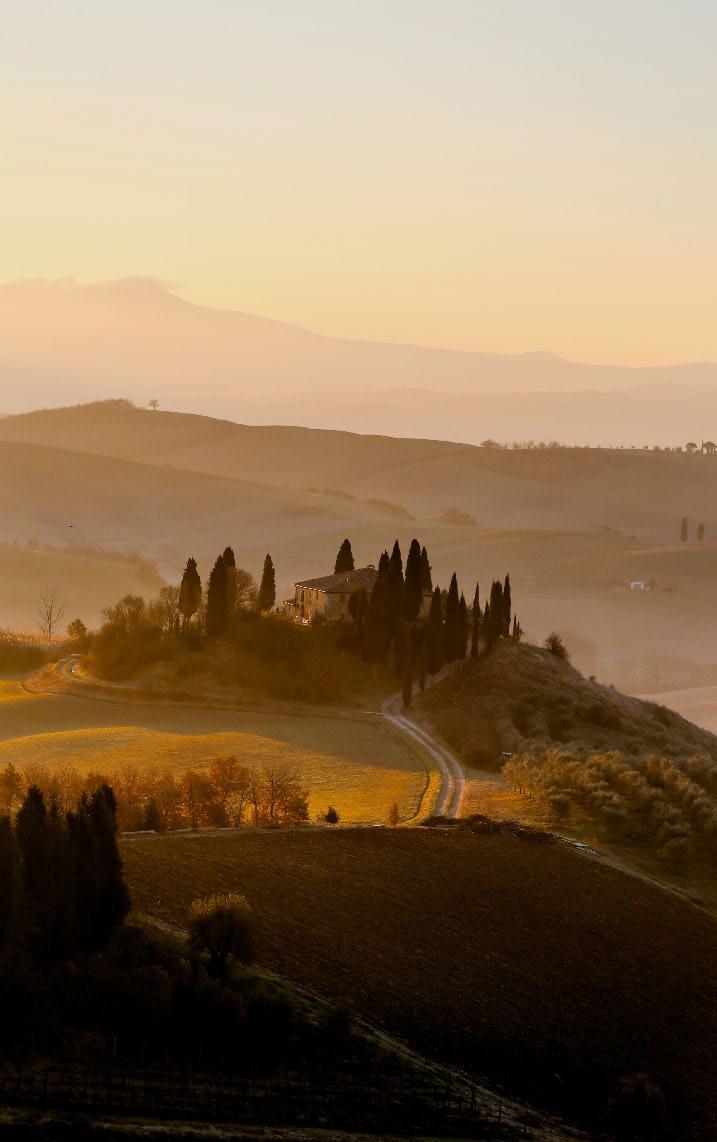
TUSCANY IS A REGION IN ITALY THAT IS KNOWN FOR ITS VINEYARDS, MEDIEVAL BUILDINGS AND FOR BEING THE BIRTHPLACE OF ITALIAN RENAISSANCE. YOU COULD SPEND A MONTH TRAVELLING AROUND THE AREA AND STILL HAVE A REASON TO COME BACK AND EXPLORE MORE OF ITS ENCHANTING TOWNS LIKE SAN GIMIGIANO AND MONTEPULCIANO. IN THIS GUIDE, WE WILL BE EXPLORING THE CITIES OF FLORENCE, SIENA, LUCCA & PISA.
Florence
Florence is one of the most visited cities in the whole of Italy. Thousands of tourists flock here to see The Duomo, order wine from a wine window and watch the sunset from the Piazzale Michelangelo. Arriving in Florence city centre from the airport is easy, as you can take the metro from outside the airport for less than 2 euros.
Things to do:
• Climb the Duomo, or if you want the famous dome in your photos, climb Giotto’s Bell Tower next to it.
• Walk the Ponte Vecchio, the oldest bridge in the city. It is famous for the jewellery shops built into its sides. Try to cross it at sunset for the best views of the Arno river.
• Take part in a cooking class with Rosso Cruddo, where you’ll learn to make fresh pasta from scratch, whilst drinking all the wine you want! You will also get to assist with making a delicious tiramisu.
• If you like art, then The Uffizi Gallery is not to be missed. It is one of the world's top art museums and houses artwork like The Birth of Venus and masterpieces by Da Vinci and Raphael.
• Wander through the gardens of Villa Bardini, and sit for an Aperol Spritz in the cafe whilst taking in the landscape of Florence.
Where & What To Eat
• Try a traditional lampredotto at Trippaio del Porcellino, a sandwich filled with tripe and its juices. It’s not for everyone, but it’s worth a try!
• Book dinner at Trattoria Za Za, the truffle carbonara here is a must. If you’re a dessert person, definitely order the pannacotta.
• Have a famous stracciatella , mortadella and pistachio schiacciata at All’Antico Vinaio
• If you like meat, head to Museo della Bistecca for their florentine steak.
Siena
Siena is a city that feels like it’s been frozen in time. It is a UNESCO heritage site renowned for its gothic architecture. Interestingly, the city is famously divided into 17 districts, each with its own animal mascot and flag.You can reach Siena by train from Florence in an hour and a half.
Things to do:
• Take some photos in the Piazza del Campo, the main public space in the historic centre.
• Climb the Torre del Mangi for the best view in Siena. There are over 400 steps, but the panoramic views are beautiful.
• The Siena Duomo is arguably one of the most beautiful churches in Italy, lined inside with black-and-white marble stripes. Don’t miss the Piccolomini Library inside either.
• Climb the Facciatone which is known as “The Unfinished Cathedral”.
• Visit the Santa Maria della Scala, which is one of Europe's oldest hospitals and is now a museum. Explore the underground tunnels and the Hall of Pilgrims here.
• Wander through the gardens of Villa Bardini, and sit for an Aperol Spritz in the cafe whilst taking in the landscape of Florence.
Where & What To Eat
• Antica Osteria da Divo is a truly unique dining experience where the tables are set in ancient tombs carved into the rock. It is famous for its Pici all’aglione (thick, hand-rolled pasta with a spicy garlic tomato sauce).
• La Taverna di San Giuseppe is a Michelin-starred favorite but is still very welcoming. Order the wild boar ragù or their famous green gnocchi.
• For a quick espresso and traditional sweets, head to Pasticceria Nannini. You must try Ricciarelli (soft almond biscuits) and Panforte (a dense, spiced fruit and nut cake).
• Gino Cacino di Angelo is the place to go if you’re after a platter of local cheeses and cured meats paired with a glass of Brunello di Montalcino.
Lucca
Lucca is a beautiful city in Tuscany and is an hour train ride from Florence. Here you can visit one of the many vineyards nearby to sample some local wine as well as immerse yourself in the culture and history within the city walls.
Things to do:
• Spend an afternoon tasting local wine at the Tenuta Adamo Cantina vineyard.
• Sit in the Piazza dell'Anfiteatro, which used to be a Roman amphitheater, for aperitif.
• Climb the Guinigi Tower for some spectacular views of Lucca.
• Visit the beautiful Palazzo Pfanner, the sculptures and gardens are beautiful.
• Rent a bike and ride through the outside of the city walls.
Where & What To Eat
• Try the schiacciata sandwiches at Da Gastone - there will likely be a line but you won’t have to wait as long as in Florence!
• Have dinner at Carbone, the service is great and they bring out an amuse-bouche before each dish. Any dish with fresh truffle is a must here.
• Buccellato is Lucca’s signature sweet bread, flavored with aniseed and raisins. You can try it at Pasticceria Taddeucci
Pisa
Pisa will be your easiest gateway into Tuscany as there are direct flights from Malaga running often. Even if you only want to spend a couple of days here and then move along, Lucca is only 30 minutes away by train.
Things to do:
• Take the ‘iconic’ photo with the Leaning Tower of Pisa. Whilst you’re here you can also see the Duomo, the Baptistery and the Camposanto.
• Visit the round Baptistery and wait for the guard to sing. This building is famous for its haunting acoustics.
• Walk the Lungarno and take a sunset stroll along the riverbanks.
• Visit the Keith Haring graffiti wall.
• Spend an afternoon shopping down the Corso Italia.
Where & What To Eat
• At Osteria di Ciana Bcana, you can try Cecina, a savory, thin chickpea pancake that is the ultimate Pisan street food.
• Gelateria De’ Coltelli is widely considered the best gelato in the city, using organic ingredients and seasonal flavors.
• If you love your sweet treats, then try a bombolone doughnut at Bombolove
• Primo Pasta is the spot if you want a big portion of pasta for under 8 euros. They also offer takeaway boxes, which is perfect if you want to take it and sit by the Leaning Tower as it is a short walk away.
• For your pizza fix, book a table at Quarto d’Ora Italiano. You won’t be disappointed!
Packing
FOR YOUR HOLIDAY
Getting ready for a holiday is a heady mixture of excitement, anticipation and importantly, creating a list of essential items to bring as well as necessary documents and paperwork, such as passports and possibly visas.
Every individual will have their own particular items that are essential to bring, (such as personal medication) as well as the usual travel staples. For many, a compelling book is as essential as any item.
more relaxed in private resorts but considerably stricter in shopping centres and public spaces.
Other vital items may include: chargers, sunscreen and local currency, swimwear and a compact medical kit.
For 2026, popular prep items include packing cubes, portable power banks, and luggage scales to avoid fees.
Key Packing Essentials:
• Documents & Money: Passport, visa, travel insurance, debit/credit cards, and some local cash.
• Electronics: Phone, camera, portable power bank, and a multi-port travel adapter.
• Beach: High-SPF sunscreen, sunglasses, hat, and swimwear.
• Medical/Hygiene: Pain relief (paracetamol), plasters, insect repellent, personal medication
Respecting dress codes:
How you dress is an aspect of travelling that requires consideration when packing. Whether you are exploring souks in Marrakech, mosques in Istanbul or beach resorts in the Maldives, it is essential to bear in mind that modest dress codes are observed in public spaces. This does not mean compromising on style or comfort — it simply means being culturally considerate.
Research local customs before you pack. Different regions carry varying expectations — for instance, Dubai is considerably
Opt for breathable, modest clothing. Lightweight, flowing maxi dresses, kaftans, linen trousers, and loose-fitting shirts are ideal for keeping cool while remaining respectful.
Such a destination is Vatican City: Visitors to St. Peter’s Basilica or the Sistine Chapel must adhere to a strict dress code. Both men and women should wear clothing that covers their shoulders and knees. Failure to comply can result in being turned away at the entrance.
Bring a light scarf or shawl. Having a scarf to hand is handy for covering shoulders or hair when entering religious or historic sites.
Dressing respectfully can still be stylish. Co-ordinated outfits, elegant abayas, or chic cover-ups can bring sophistication to your holiday wardrobe without sacrificing modesty.
In the Maldives, many resorts are situated on private islands, permitting swimwear at the beach, but modest clothing is expected when visiting local islands.
In Turkey, from Istanbul's historic mosques to Cappadocia's sunsets, dress modestly at religious sites out of respect. Whilst visiting Morocco, opt for lightweight layers, long dresses, and kaftans to stay comfortable and culturally aware in the heat. In Indonesia, tourist areas are relaxed, but Muslim-majority regions appreciate covered shoulders and knees.
Travel Insurance:
Travel insurance can give you extra protection if your holiday doesn't go as planned. So you should make sure you have cover if
you're planning a trip away.
It's particularly important to take out travel insurance if you are travelling independently because you may find yourself stranded with no way to get home and no-one to help sort out your holiday problem.
Top tips
travel insurance is essential, particularly if you are travelling independently choose a policy that covers your needs compare policies on the cover they offer as well as the cost check if you have other insurance that will cover you away from home
Why take out travel insurance?
Travel insurance can protect you against the following things going wrong: cancelling or cutting short your trip for reasons beyond your control missed transport or delayed departure for reasons beyond your control medical and other emergencies personal injury and death lost, stolen or damaged items, including baggage, passports and money accidental damage or injury caused by you.
Skincare:
Skin care is a big part of this for many, as our skin has to contend with travel factors such as sun exposure, dehydration, and changes in climate. As a result, a good travel skin care routine is essential.
Stay hydrated inside and out
The importance of staying hydrated when travelling should not be underestimated. Travel can sometimes dehydrate the skin due to factors such as air-conditioned environments and sun exposure. Therefore, make sure you drink plenty of water during your travels, as this will be an essential tactic for maintaining your skin's moisture.
How to stay hydrated when you travel:
Carry a refillable water bottle so you always have a drink to hand.
Protect
your skin from the sun
Sun protection is one of the fundamental skin care measures when travelling, especially when visiting sunny destinations. When the sun is out in full force, there is a risk of sunburn, which can lead to premature ageing and UV damage. This can be especially potent when relaxing by the sea or pool as water can reflect the sun’s rays.
Sun protection tips to keep skin healthy:
Use sun cream with at least SPF 30 and apply generously every two hours, especially if you have been swimming or sweating.
Consider applying a lip balm with an SPF to protect lip skin.
Protective clothing should be worn, such as wide-brimmed hats, sunglasses with UV protection, and lightweight garments with long sleeves.
Try to find shady spots during the peak UV hours of 10 AM to 4 PM.
Packing a versatile wardrobe:
A holiday capsule wardrobe focuses on versatile, breathable natural fabrics—like linen, cotton, and jersey—in a cohesive colour palette, allowing for multiple outfits from 10–15 items. Key staples include white linen trousers, versatile midi/maxi dresses, elevated tops, and adaptable accessories, aiming for comfort and style.
BY KATHLEEN NORTH
Essential Holiday Capsule Items
Tops: 3–4 versatile tops, including a mix of neutral-toned tees and a classic white shirt for sun protection or layering.
Bottoms: 2–3 pieces, such as wide-leg linen trousers, denim shorts, or a midi skirt.
Dresses: 1–2 items that work for both dayto-evening, such as a breathable maxi or slip dress.
Layers: A light knit or jacket for cooler evenings.
Swimwear: 1–2 swimsuits that can double as tops.
Shoes: Comfortable sandals for walking, elevated sandals for evening, and flip-flops.
Accessories: A straw bag, a versatile tote, sunglasses, and simple jewellery.
Packing & Styling Strategies
The 5-4-3-2-1 Rule: Pack 5 tops, 4 bottoms, 3 pairs of shoes, 2 layers, and 1 set of accessories.
Fabric Choice: Prioritise natural fabrics like linen and cotton, to handle heat and moisture, avoiding synthetics that trap odours.
Colour Palette: Stick to a 3-shade theme (e.g., neutral base + two accent colours) so everything matches.
Versatility: Choose items that can be styled at least three ways, such as a skirt that works with a t-shirt or a formal top.
Accessorise: Use scarves, belts, and jewellery to change looks
Packing for our travels can seem a little daunting but with a clear and practical checklist to follow, you will enjoy your holiday, knowing you have all your essentials with you.
MOTORING
BENTLEY CONTINENTAL GTC SPEED PHEV
GEELY STARRAY EM-I
ROCK CLASSIC: MINI MOKE
MAZDA 6E
CONTINENTAL BENTLEY GTC Speed PHEV
I have been to the factory in Crewe many times over the years, seen it grow, and seen the modernisation of production.
Bentley was founded in 1919 by W. O. Bentley in Crickewood in North London, and became famous for winning the 24 Hours of Le Mans many times. In 1931 Rolls Royce Limited bought the company, and they remained together in Crewe, still trading with different names until 1998. Then the two companies were sold, Bentley to Volkswagen Group, and Rolls Royce to BMW.
I went to the factory and remember seeing both RR and Bentley going down the same assembly lines, a lot has changed since then, but not the craftsmanship, it is still superb.
The car I had recently for a week from Bentley Press Dept was a Continental GTC Speed PHEV, powered by a 4.0-litre V8 petrol engine, coupled to batteries and electric motors producing a combined 782ps.
This Bentley is a Plug-In, so you connect the cable, put it on charge for a couple of hours and you get around 45 miles of pure electric Motoring. In the 297 miles I drove the car it achieved 64% in electric mode, and 36% using petrol, after I kept the battery topped up.
The hand crafted interior is nothing short of excellent, just superb, every stitch on the seats and steering wheel, the ultra high quality of the leather used, it is just magnificent throughout the cabin.
It is a four-seat Convertible, but room in the rear, is to say the least, a bit tight, even my small grandsons were not that impressed. But a completely different story in the front, large comfortable seats that massage your back, and hold you firmly in place.
The boot is not conducive with long journeys where you need to take plenty of luggage, a couple of small cabin bags, and it is full, but you can always use the back seats for storage, providing you don’t have any rear seat passengers. But long journeys in the car, are effortless, so comfortable and relaxed.
The Bentley just oozes luxury and quality, and with the Plug-In Hybrid it also offers good fuel consumption too.
The price of the test car is £259,500, think I’ll have two.
MAZDA 6E
A few weeks ago Mazda Uk Press Department held an event in Sherburn-in-Elmet to drive the all-new Mazda 6e.
The only cars available were Swiss registered Left Hand Drive models, that were brought over to the UK specially for the Press Drives
The 6e is all-electric and a large five-door Hatch. The car I took out for testing had 96% Charge in at and a range of 299 miles (481km) so pretty good compared to other electric vehicles I have driven over the past couple of years. It goes from 0-100kph in 7.8 seconds and a top speed, where allowed of 108mph (174kph)
The cabin is very spacious with loads of leg and headroom, for the tallest of passengers, the luggage area too is deceptively large.
The Mazda 6e has been on sale in Europe since last Autumn but not due in the UK until mid-2026, and will be priced from £38,995. It is available in Europe with two power train options: 68.8kWh and 78kWh, but Mazda UK, wisely, are just offering the larger option.
It is full of new technology and I did find the controls a little confusing, and I spoke to other journalists on my
return, and it wasn’t just me, some others found them just too difficult to understand. But with all things modern, after a while with the car, everything would slot into place and it would be more understandable within a few days, but I still prefer to see a few buttons and switches, ok, call me old-fashioned.
Jeremy Thomson, Managing Director of Mazda Motors UK said ‘in the UK, we are facing challenges in the balance between EV legislation and consumer demand, but at Mazda we will introduce new models, that fit the pace of actual customer demand’ He is absolutely right, you cannot force people to buy things that might not fit with their lifestyle, or budget, whether that’s in the UK, or Globally.
I enjoyed the short time I spent in the well built, high quality Mazda 6e, and look forward to having one for a longer time, to see if I can master those futuristic controls.
ROCK CLASSICS... SORT OF!
The Mini Moke was first produced in 1964 using many Mini parts, including engine, gearbox, platform, all the running gear, switches and knobs. The company wanted a more rugged vehicle to compete with Land Rover and JEEP, this idea failed miserably as it just wasn’t a rugged go anywhere vehicle, far from it, no ground clearance and a small engine made it impossible to use by the British Army.
After the attempts to sell it to the Armed Forces failed, BMC turned the attention to farmers and light commercial uses. This too proved too much for the little Moke, but the “in-crowd” in fashionable London started buying them as a fashion item, and tgey were snapped up by all the Trendies.
We normally have Rock Classics on these pages, but to be a bit self indulgent, for one month only, I am using my 1968 Morris Mini Moke. But the inspiration for buying one is firmly set in Gibraltar. My friend John used to work as a painter and decorator on The Rock and had one as a ‘company vehicle’ since seeing it there, I always wanted one, my Dream Car. About 12 years ago I finally bought one, and it’s great, just so basic, no doors, no windows, no heater or radio, no power steering, very little to go wrong.
The roof is very easy to put up or down, and with it down you certainly get the wind in your hair. Everywhere you go, people look and stare, some ask if Golf Buggy’s are allowed on the road, others call you Fred Flintstone - yabba-dabba-doo
It is so much fun to drive, cheap to maintain and insure, but only has a top speed of around 52mph (83kph) so not the perfect get-away Car, it seats four people very uncomfortably, but despite that, everyone loves riding in the little Moke.
If anyone in Gibraltar wants to feature their Classic in ‘Rock Classics’ please call me on 07740 157580, I’d love to hear from you.
had a new Geely recently on test for a week, it was there latest model to hit the UK and European markets. It was a blue with grey trim, called a STARRAY, and every time I got in it, or saw it, I wanted to start singing the song by Don McLean “STARRAY, STARRAY nights, paint your Geely blue and grey” I could not get that song out of my head for over seven-days.
The Starray is a large five-door, five seat SUV, with loads of room for passengers and a huge boot, I managed to get two very large suitcase in, and a cabin bag too, very impressive.
The Starray is made by Zhejiang Geely Holding Group Co Ltd, but known as Geely Holding and is a
Chinese multinational automotive company based in Hangzhou and was founded in 1986. They produce over four-million vehicles per year, including; Volvo, Polestar, Proton, Smart, Lotus and London EV Taxis,
Back to the Starray EM-I that I drove, it is a Plug-In Hybrid, that when fully charged will cover 51 miles (82km) on pure electric, then a range of over 500 miles (800km) using the petrol engine. While I had the car, I kept charging it up at home, and used any petrol, at all, it just ran on electric on local trips. But if you go further afield, you know you’ve got a good range, and no need to charge it up, best of both worlds really
Just about all the controls are via the touchscreen, hardly a button or
switch in sight, even the fuel release button was on the screen, very odd, I thought, and did take a bit of finding.
The Starray, Starray night, sorry, bad habit, is well built, comfortable and high quality materials are used throughout. But the exterior design is much of a ‘sameness’ to every other SUV Hatch on the market, so no real distinctive characteristics, so when you see one, out in the wild, you don’t know instinctively what it is.
Gone are the days, unfortunately of being able to recognise a car from a distance.
Prices in the UK start from a very competitive £29,990
KARL ULLGER:
CAPTURING THE MEMORIES OF VICTORIA STADIUM THROUGH ART
Gibraltar artist Karl Ullger reflects on his special collaboration with the Gibraltar FA, the memories behind Victoria Stadium, and the artwork now displayed at GFA Headquarters.
For Gibraltar artist Karl Ullger, the opportunity to collaborate with the Gibraltar FA on a painting commemorating the old Victoria Stadium was more than a creative commission. It was a chance to bring together two of his great passions: football and art.
A lifelong football supporter and follower of Gibraltar’s national team, Ullger described the project as a “dream brief” — one that allowed him to reflect not only on the physical stadium, but on the memories, emotions and communities that gave it meaning.
“I was incredibly honoured and excited to collaborate with the GFA on this project,” Ullger said. “As both a football supporter and an artist, the opportunity to merge football with culture and the arts felt like the perfect creative brief.”
From the outset, Ullger knew that the painting could not simply be a traditional stadium portrait. Instead, he wanted
the artwork to capture the deeper emotional connection that so many people in Gibraltar have with Victoria Stadium.
“I knew straight away when I had the meeting with the GFA that the main focal point was going to be people’s memories,” he explained. “People’s memories of what they encountered, what they went through, and what they experienced at Victoria Stadium.”
That sense of memory became the foundation of the piece. Rather than focusing only on the stadium as a building, Ullger built the composition around the stories attached to it. The background is layered with newspaper articles, references and visual details connected to events that took place at Victoria Stadium over the years.
For Ullger, this approach allowed the painting to become more than a single image. It became a collection of moments. It reflects the many people who stepped onto the pitch, watched from the stands, competed, celebrated, learned, supported and grew up around the stadium.
“The idea of memories was definitely my angle,” Ullger said. “The women’s football, the veterans’ football, the walking football, futsal, grassroots — there’s a little bit of everything, and even more.”
Although the project originated through the Gibraltar FA, Ullger was determined to acknowledge the wider football community that helped give Victoria Stadium its life and identity. The painting includes references to women’s football, veterans football, walking football, grassroots football, futsal and other areas of the game that formed part of the stadium’s story.
“It’s a tribute not only to a place, but to the people and memories connected to it,” he said.
Among the elements woven into the artwork is the word “debut”, which Ullger felt carried particular significance. For him, it refers not only to the Gibraltar FA and the future opening of the new stadium, but also to every boy and girl who experienced their first footballing milestone at Victoria Stadium.
“And you’ve got a key word here, which I think is very important — debut,” Ullger said.
“Not only for the GFA, but debut of the new stadium when it comes along, debut for everyone, every boy and girl that has stepped on that pitch.”
That idea also connects deeply to Ullger’s own personal experience. Like many in Gibraltar, his memories of the stadium go back to childhood.
“My first football medal, from I think year four or year five, happened there,” he recalled. “My first achievement in terms of football came on that pitch, and I’m sure I share the same memory as many other children.”
Futsal also holds a special place within the artwork. Ullger has been closely involved in futsal for many years, both as an adult and from his younger playing days, and felt it was important that this part of Victoria Stadium’s history was represented.
“I’ve been involved with futsal a good 13 years seriously, and more as a boy as well, playing in the old futsal league,” he said. “So for me, that was something that I had to include.”
The painting also gives space to stories and competitions that may not always have received the same level of attention, including walking football and the John Sheppard Memorial Cup. Ullger wanted these details to be “stamped” into the work as part of the stadium’s legacy and as recognition of what the venue brought to Gibraltar football.
Visually, Ullger also wanted the painting to retain a clear sense of place. While the composition is layered with references, text and symbolism, he was careful to ensure that the stadium remained recognisable.
“My main objective was that people could still look at the stadium and recognise it for what it was,” he said.
That recognition matters because Victoria Stadium was not only important emotionally, but also visually. For many years, it was one of Gibraltar’s most familiar landmarks.
“It’s been quite an iconic building because it’s one of the biggest buildings that you see,” Ullger said. “As you come down Devil’s Tower, you see the stadium.”
For generations, the approach into Gibraltar carried a familiar image: crossing the runway, seeing the Rock of Gibraltar, and seeing Victoria Stadium nearby. Although the old stadium has now been demolished, Ullger believes that visual memory remains part of Gibraltar’s sporting identity.
“You would cross the runway and the first thing you’d see was the Rock of Gibraltar and the stadium,” he said. “Visually, it’s always been an iconic building.”
Throughout the composition, Ullger also included subtle references to key words and moments connected to the stadium’s history. Words such as “Gibraltar” and “Victoria Stadium”, along with important dates and details, are discreetly woven into the artwork. These elements are highlighted through Gibraltar’s national colours, adding another layer of symbolism and identity to the piece.
The result is an artwork that looks back while also looking forward. It commemorates the old Victoria Stadium, but it also speaks to the future of Gibraltar football and the memories
still to be created in the new stadium.
For Ullger, having the finished piece displayed at GFA Headquarters carries special meaning.
“For me, it’s an honour that I’ve been asked to do this,” he said. “And even more so, having a piece of me, a piece of my work, hanging in a building where people are going to create new memories from the old memories.”
Now part of the GFA Headquarters, the painting stands as a tribute to a venue that shaped countless football journeys in Gibraltar. It remembers the matches, milestones, competitions, communities and personal stories that made Victoria Stadium more than just a stadium.
It was a place of first medals, first appearances, national moments, grassroots memories and shared identity. Through Ullger’s work, those memories have been preserved in a piece that connects Gibraltar football’s past, present and future.
HOW AI CAN MAKE LIVE FOOTBALL MORE HUMAN
AND WHY GIBRALTAR MUST BE PART
In football, the future normally arrives through the biggest clubs first. Bigger stadiums. Bigger broadcasting deals. Bigger technology budgets.
But sometimes innovation starts somewhere smaller, more agile, and more imaginative.
THAT IS WHERE WE BELIEVE GIBRALTAR CAN LEAD.
As Gibraltar Wave evolves into a new era within Mons Calpe Women, and as proud Gibraltar Women’s Football League Champions 2025/26, we are not only thinking about winning matches. We are thinking about how football itself is experienced by supporters, young players, families, broadcasters, sponsors, and communities.
And we believe Artificial Intelligence could become one of the most exciting opportunities women’s football has ever seen.
Not to replace football. Not to remove emotion. But to make live football more alive.
FOOTBALL IS ALREADY ENTERTAINMENT — AI CAN DEEPEN THE EXPERIENCE
The modern supporter no longer simply watches football for ninety minutes. Fans interact, analyse, share clips, follow players individually, and consume football through phones, social media, streaming, and gaming culture.
AI allows football to evolve with those behaviours. Imagine watching a live match in Gibraltar and instantly seeing:
• tactical explanations in real time
• player sprint speeds
• pressure maps
• momentum swings
• live fan interaction
• personalised commentary feeds
• automatic highlights generated seconds after key moments
A young supporter watching a match could choose a “learn football” mode. A coach could watch tactical positioning live. A casual viewer could simply enjoy a more immersive entertainment experience.
The same match becomes many different experiences. That matters enormously for smaller leagues.
WHY WOMEN’S FOOTBALL IS PERFECT FOR INNOVATION
Women’s football is growing because it feels authentic, accessible, emotional, and connected to supporters in ways much of elite men’s football has lost.
That gives leagues like the Gibraltar Women's Football League a unique advantage.
We are not trapped by old broadcasting traditions.
We can innovate faster.
Smaller leagues can become testing grounds for:
• AI-enhanced live streaming
• automated camera systems
• fan interaction platforms
• multilingual commentary
• personalised match experiences
• instant social media content
• grassroots player visibility
In fact, AI may reduce one of the biggest historical disadvantages smaller leagues face: production cost.
Technology that once required massive television budgets can now increasingly be automated.
That changes everything.
THE MOST IMPORTANT THING: KEEPING FOOTBALL HUMAN
At Mons Calpe Women, we believe football’s greatest strength remains emotion.
The silence before a penalty. The tension of a counterattack. The crowd sensing
OF IT
momentum shift. The unpredictability.
AI should never replace that.
The best technology does not interrupt emotion — it amplifies it.
Football is still about people:
• players
• supporters
• communities
• stories
• identity
Technology should help supporters feel closer to those things, not further away.
GIBRALTAR HAS AN OPPORTUNITY
Too often smaller football nations try to imitate bigger ones.
But Gibraltar does not need to become another version of somewhere else.
Gibraltar can become a football innovation hub:
• agile
• modern
• digitally creative
• internationally visible
Women’s football especially gives us that opportunity because the global audience is expanding rapidly and is still open to new ideas, new formats, and new voices.
If we are smart, Gibraltar can become known not only for football participation, but for football innovation.
And as Gibraltar Women’s League Champions 2025/26, we believe clubs have a responsibility not only to compete, but to contribute ideas that help move the whole game forward.
That is the future we want to help build.
By Gibraltar Wave / Mons Calpe Women, Gibraltar Women’s League Champions 2025/26.
ENGLAND
England Vs Croatia Wednesday June 17th in Dallas 9pm UK Time
England Vs Ghana Tuesday June 23rd in Boston 9pm UK Time
Panama Vs England Saturday June 27th New York 10pm UK Time
SCOTLAND
Haiti Vs Scotland Sunday June 14th Boston 2am UK Time
Scotland Vs Morocco Friday June 19th Boston 11am UK Time
Scotland Vs Brazil Wednesday 24th June Miami 11pm UK Time
WORLD
CUP KEY DATES
Group stage: June 11-27
Round of 32: June 28 to July 3
Round of 16: July 4-7
Quarter-finals: July 9-11
Semi-finals: July 14-15
Third-place play-off: July 18
Final: July 19
MOROCCO
Brazil Vs Morocco Saturday June 13th 11pm New Jersey USA
Scotland Vs Morocco Friday June 19th Boston 11am UK Time
Morocco Vs Haiti Wednesday June 24th 11pm Atlanta USA
FIFA WORLD CUP 2026, the 23rd edition of the greatest show on Earth kicks off on Thursday, June 11 in Mexico City with the final scheduled to take place almost six weeks later in New Jersey on Sunday, 19th July.
Co-hosted by the United States, Canada and Mexico and featuring a record cast of 48 of the planet's top playing nations, a football feast of the beautiful game awaits. The lesser lights of the sport will relish the challenge of tackling the game’s giants in multiple David vs Goliath clashes, shedding blood and tears in derring do effort to make impossible dreams come true and claim World Cup glory.
Mixed fortunes for the home countries in the qualifiers, with Wales, Northern Ireland and the Republic of Ireland perishing in the play-offs to join Gibraltar in failing to make the finals, while England and Scotland have made the cut, the Three Lions under the tutelage of German coach Tomas Tuchel qualifying very comfortably, with Steve Clarke's Scotland joining their neighbours via the playoffs.
England, world-ranked 4th, have been favourably drawn in Group L, with Croatia (WR11), Ghana (WR74) and Panama (WR33). Onward progress looks assured, but it is imperative that Tuchel's men beat Croatia and win the group, as that would mean barring major upsets in other groups, England would avoid any one of the big boys, France, Spain or Argentina until the semi final stage.
The Three Lions start their mission in Dallas on Wednesday, 17th June, with that must-win clash against Croatia, an
excellent side led by the ageless Luca Modric. This will be no pushover however, but with goal machine Harry Kane in the form of his life, fed by world class duo Bukayo Saka and attack-minded midfielder Jude Bellingham, the goals will come. Unfortunately, at the other end, goals will also be conceded, and it's a priority that England's defence must tighten up. Win this game and the route to the final will be clear.
Scotland (WR43) on the other hand, have not been at all lucky in Group C, drawing tough opponents in the tournament's most successful side Brazil (WR6), recent winners of the African Cup of Nations Morocco (WR8) and plucky Haiti (WR83) who appear slightly over-matched.
It is a long 28 years since Scotland last appeared in the finals and, just like England, Clarke's men commence their campaign with another must-win game. Victory over group outsiders Haiti in Foxburgh, Massachusetts on Sunday, 14th June is vital, as taking points off Morocco in the next game and Brazil in the last will not come easy.
Scotland do not claim to be the most skilful side in the tournament, but what the Scots possess is an unquestionable spirit and determination to succeed no matter how vaunted the opposition. Remember the dethroning of newly crowned 1966 world champions England less than a year later, and it happened in their own Wembley backyard.
The backbone of the side is the trio led by Andy Robertson, ably assisted by gritty midfielder John McGinn and Scott McTominay, the talk of Italy since his transfer from Old Trafford to Napoli. These three warriors will die with
By Laim Beglan, Sports Writer
their boots on before Scotland succumb in their quest for World Cup glory.
I have fond memories of my first summer in Gibraltar, sipping cider in the sun while watching the 2006 World Cup on the giant screen in Casemates Square. And wouldn't it be grand to repeat the experience, this time on balmy summer evenings, extended pub opening hours, perhaps watching a Scotland-England final?
Well, we can all dream can't we!
Odds to ‘Bring It Home’ - England 7/1, Scotland 250/1
History of the 8 World Cup Winners
SCOTLAND HOPE WHILE ENGLAND EXPECT THE WORLD CUP IS COMING HOME
by the 39-year old mercurial Lionel Messi, will fancy their chances of successfully retaining the trophy they won on penalties in an unforgettable final against France in Qatar four years ago.
France, still smarting from that defeat, fill fifth spot with two triumphs, and led by hotshot Kylian Mbappe who scored a luckless hat-trick in the Qatar final, Les Bleus are the choice of many experts to lift the trophy this time round.
Uruguay, inaugural winners of the trophy in 1930, claim sixth place with two victories, just ahead of England and Spain with one win apiece.
Brazil is the most successful nation having notched five victories in the 22-tournament history of the beautiful game. The team, universally known as the Samba Boys because of their dazzling, exuberant playing style, also boasts the proud record of having qualified for every tournament, the only country to do so.
Second spot is shared between European greats of yesteryear Germany and Italy with four wins apiece. Germany's total includes three triumphs achieved as West Germany before the Berlin Wall came crashing down and Deutschland was reunited. Italy won't be adding to their tally this time round as once again the Azzurri have failed to qualify for the finals.
Fourth in the honours list come reigning champions Argentina with three titles, and the South American giants, led
England's triumph in 1966, beating West Germany 4-2 at Wembley after extra time, was the first football match I watched as a schoolboy live on TV. Broadcast in black and white by the BBC, I vividly recall the commentator, Kenneth Wolstenhome, excitedly proclaiming as some spectators ran on to the pitch thinking the final whistle had sounded, "They think it's all over, it is now," just as Geoff Hurst rifled the ball into the roof of the net for England's fourth.
On a sombre note and a nod to man's mortality, it’s a sobering thought that of the starting England Eleven, only hat-trick hero Hurst is still with us, the other ten having departed to that great Grandstand in the sky.
Now is the time for the class of 2026, led by Harry Kane, to stand tall and, just like Bobby Moore in 1966, add the names of ‘Harry's Heroes’ to the World Cup Roll of Honour.
FIRST CAR
Dick Krzywicki:
The Auschwitz survivor's son who played for Wales.
Dick Krzywicki is a former footballer and the son of a Polish Army Veteran who survived Auschwitz, and moved to Wales after WW2.
Dick was born in a Polish Hospital in 1947 in Penney, Flintshire, Wales. But the family soon moved to Blackshaw Moor Polish Camp near Leek. It was playing for the Camp in his teens he was spotted by various English Clubs. But he was signed by West Bromwich Albion (WBA) while he was at secondary school.
Dick bought his first car when he was 17, a three year old Hillman Minx in two-tone cream and beige, from fellow footballer Ray Fairfax. He used the Minx many times to travel between WBA and Leek to visit family and friends. He says it was very reliable, and never let him down once, but not the sort of car an up and coming footballer wanted to be seen in, just not sporty enough. But it did the job for a couple of years with very little expense. It had a column change gearshift, which he really never got used to.
From WBA he was signed by Huddersfield Town in 1969, and was a record signing for the Club, at £100 per week. He played for Town until 1974, then moved to Scunthorpe, Northampton and Lincoln. Fifty years ago, Lincoln took all players and families to Gibraltar for a week, and they stayed, he remembers at Both Worlds Hotel.
Dick also had an International Career with Wales, and was in the squad between 1969-1974, and received 8-Caps.
He says it’s a very different story now for young players getting into the game. Club Scouts are always out at grassroots level looking for potential talent from very young ages. He says he would have been a much better player if he’d had the opportunity to have more coaching from an early age, as they do today. Most senior clubs have Academies which bring along the talent and help them with skills and learning all aspects of the game.
Dick has had many cars throughout his career, a Jaguar E-Type, a couple of Ford Capri three-litres. A few Mercedes, BMW’s and many more.
His Dream Car would be a new Range Rover with as much specification they could get into one, and Gold Plated if possible.
Because Wales did not make it, then His winner of choice in the World Cup would be Portugal, he has always liked their style of play. and sees them as outstanding at the moment.
By Martin Ward
WORLD CUP Facts
Despite global participation, only a few teams have ever lifted the trophy. showing how difficult it is to win. Brazil, Germany, Italy, Argentina, and France dominate the winners list.
Hakan ükür scored in just 11 seconds into a match during the 2002 World Cup, setting a record that still stands today.
The Germany national football team and Italy national football team have each won four World Cups. Their consistency and tactical discipline have made them two of the most respected teams in football history.
Pele won the World Cup in 1958 at just 17 years old. No player has matched that achievement at such a young age.
Diago Maradona produced one of the most famous moments in football history during the 1986 World Cup. His controversial goal against England remains one of the most talked-about world cup facts.
Simply
Send your answers along with your contact details to jeaninsight@gibtelecom.net two lucky winners will win 1 x £30 Food and Drink voucher for the Lord Nelson pub, Gibraltar. All entries must be received by 12 June. One entry per person.
The Better Half:
WHY THE LIONESSES COULD BE ENGLAND'S GREATEST FOOTBALL TEAM
BACK-TO-BACK EUROPEAN CHAMPIONS. WORLD CUP FINALISTS. NATION-CHANGERS. WHILE THE MEN WERE BUSY DOING THEIR USUAL THING AT TOURNAMENTS - EXITING EARLY, INVENTING NEW WAYS TO LOSE ON PENALTIES - THE WOMEN QUIETLY WENT AND WON THE LOT. IT MIGHT BE TIME TO HAVE A CONVERSATION ENGLAND HAS BEEN AVOIDING
Let's start with the numbers, because in football, as in most arguments, numbers tend to shut people up. When Chloe Kelly wheeled away in her sports bra at Wembley on that golden July evening in 2022, she didn't just score the winning goal against Germany in the European Championship final - she ended 56 years of English footballing silence. The Lionesses had done what an entire nation had been promised since 1966: they had brought it home. Then, just to make absolutely sure everyone was paying attention, they went to Switzerland in 2025 and did it again. Back-to-back European champions. The first senior England team in history to win a major tournament on foreign soil.
By contrast, the men's team have been runners-up at Euro 2020 (and not the good kind of runner-up - the Wembley final, penalties, you know the rest) and semi-finalists at the 2018 and 2022 World Cups. Progress, certainly. But trophies? Still just the one, collecting dust since the Wilson government was new.
THE RECORD BOOKS DON'T LIE
The Lionesses have competed in six FIFA Women's World Cups, their trajectory a steady, impressive ascent: quarter-finals three times, bronze in 2015, then in 2023 a first-ever World Cup final - where they lost 1-0 to eventual champions Spain. A heartbreaker, yes. But England weren't losing in the quarters anymore. They were losing to the best team in the world, in the final, by a single goal.
At the Euros, the record is even more emphatic. Winners in 2022. Winners in 2025. Runners-up in 1984 and 2009. The 2022 final at Wembley drew a crowd of 87,192 - a European Championship record that still stands - and a peak television audience of 17.4 million viewers, with a further 5.9 million streams online. The 2023 World Cup final alone drew 12 million viewers on BBC One. These are not niche viewing figures. These are national events.
Under manager Sarina Wiegman - a woman who has now won three consecutive European Championships across two different nations - England have been functionally unstoppable. During the 2025 tournament, they came from behind four times and showed a resilience that had, in previous years, been considered
distinctly un-English. The BBC called it the defining theme of the tournament. Wiegman, with characteristic Dutch understatement, probably called it Tuesday.
THE MONEY PROBLEM NOBODY WANTS TO TALK ABOUT
For all the Lionesses' success, the financial landscape in which they operate is still a long way from level. The FA has, to its credit, paid male and female England players equal match fees and bonuses since January 2020 - but the gap widens considerably when you zoom out.
Tournament prize money from UEFA and FIFA remains starkly different: England's women would have taken home approximately £50,000 each had they won the 2023 World Cup, compared to £217,000 per player for a men's equivalent. The Women's FA Cup prize fund sat at just £309,000 as recently as 2022, against £15.9 million for the men's version. The FA's tenfold increase to £3 million sounded impressive until you held it next to the men's figure.
The investment picture is improving, but incrementally. The Premier League has channelled significant sums into the women's game, and UEFA committed €1 billion to grow women's football across Europe over six years ahead of the 2025 Euros. These are real numbers. But when a single mid-table Premier League club routinely spends more than that on one player in a single transfer window, perspective comes quickly.
WHAT THEY'VE DONE OFF THE PITCH
If financial return on investment is the metric, this is where the Lionesses' case becomes almost unanswerable. Since the 2022 Euros win, the number of women's and girls' football teams across England has more than doubled. In the 2022-23 season alone - the immediate aftermath of Wembley - nearly 1,500 new teams registered, the largest single-season surge on record. The FA's new 2024-28 women's and girls' strategy reported a 14.3% increase in female teams between 2023 and 2025.
The Government unlocked a £30 million Lionesses Futures Fund following the Euros and World Cup, building 30 new state-of-the-art 3G pitches prioritised for women and girls. Grassroots facilities across the country were named after the 23 squad members who won Euro 2022. The Prime Minister committed to equal access to football in schools. A London Overground line - the one that passes through Wembleywas renamed the Lioness Line in the team's honour. A tube line. Named after a women's football team. If that doesn't tell you something about cultural penetration, nothing will.
Grassroots coaches tell stories of under-11 girls arriving to training debating squad numbers, comparing themselves to Alessia Russo and Lauren Hemp the way previous generations compared themselves to Rooney and Beckham. Young players describe watching the Lionesses as giving them the confidence to believe football is genuinely for them. "I've never seen that before from a girls' team in my ten years as a coach," one London coach said. That is not a metric that appears on a balance sheet - but it is the most important return any national sports programme can generate.
SO: ARE THEY ENGLAND'S BETTER TEAM?
Let's be honest about what this question requires us to assess: silverware, cultural impact, return on public and institutional investment, and the cost to the nation of achieving that success.
On silverware since the dawn of this century: Lionesses 2, Three Lions 0. On reaching major finals: Lionesses 3 (two Euros, one World Cup), Three Lions 1 (Euro 2020, lost on penalties, don't mention the penalties). On cultural transformation of the sport: the women, by an enormous distance. On cost to the nation: a fraction of what has been invested in the men's programme. On inspiring the next generation and expanding the playing base: no contest.
The men's team carries the weight of a nation raised on 1966, on Gascoigne's tears, on Southgate's waistcoat, and six decades of very specific and very expensive hope. They benefit from the most powerful domestic league on earth and a media infrastructure of extraordinary scale. They deserve credit for recent progress.
But if you were a CFO being asked to evaluate both programmes - investment against output, cost against return, legacy against performance - there would only be one answer, and it would be written in lioness gold.
The women haven't just been successful. They have changed the country. They've opened schools, unlocked funding, renamed tube lines, and put football shirts on girls who didn't know they were allowed to want them. They've done all of this while being paid tournament prize money that wouldn't cover a Premier League player's weekly parking fine.
The Lionesses are, by any serious measure, England's greatest football team. The men have the history. The women have the present. And - if those 1,500 new grassroots teams have anything to say about it - almost certainly the future too.
Celebrate the World Cup at one of our venue s
HALF TIME QUIZ
1. Which nation is the only one to participate in every tournament?
What animal was the official mascot for the 1998 World Cup in France?
How many times have Italy won the World Cup so far? 10. Who is the all-time leading World Cup goalscorer?
Which nation was the first Asian country to reach the World Cup semi-finals?
Which host nation is the only one to get knocked out during the group stages?
Who performed the ‘save of the century’ against Pele in 1970?
Who was the manager of the German national team when they won in 2014?
9. Who scored for England in the 1966 final against West Germany?
8. Which host nation had an orange as their tournament mascot?
World Cup Fever While you Work
The excitement is building ahead of The FIFA World Cup 2026 which starts in Mexico in June. This month-long event is unlike any other filled with skill, passion, goals, and unforgettable moments.
Whether you are a football devotee, a casual fan or occasional viewer of the “beautiful game”, you will most probably get caught up in the magic that arrives with a World Cup. There’s a buzz that hums through conversations, in the streets and in the workplace.
When the tournament lands in the middle of your work schedule be that shift work or meetings, deadlines and spreadsheets, that magic can feel just out of reach, but it doesn’t have to be.Here’s how to stay fully in touch with the game, even when your work commitments mean you may be in a different kind of formation!
When the Boss becomes Match Manager!
If you are an employer, it is important to allow employees to enjoy this global event that is anticipated by not only football fanatics but by everyone. If you can, don’t be shy in letting employees take some time off to watch the games during working hours. You are likely to get a whole lot more productivity out of your employees if you give them the time to enjoy this long awaited event rather than them suffering knowing they are not involved.
Organise some fun bonding activities. Adding competitiveness to the mix is also great for friendly competition between staff. You could organise a sweepstake.Start by putting the names of the 32 finalist nations into a hat. Then invite your employees to pick these out randomly before the tournament begins. Each participating colleague pays a sum of money for the nation they take out of the hat.
The colleague (or the team) that picked the World Cup winner, gets the accumulated prize money. Of course, you can also offer consolation prizes. Maybe a cake for the runner-up, or a medal for the worst-performing team?
You could initiate games such as whoever guesses the goal scorers doesn’t haven’t to make tea for a month. Turning games into office based tasks is a fun way to get people involved and bring excitement into the office.
Why not adopt a relaxed dress code for the first Monday of the World Cup. It’s one of the simplest World Cup activities out there, yet it never disappoints.Another fun way to adapt the dress code, is to announce a football shirt day. This gives your employees a chance to wear their favourite team’s colours and show their loyalty.
“Watching the Match”
Modern fandom isn’t tied to a television anymore. Between live score apps, radio commentary, and short highlight clips you can follow the emotional arc of a match in real time without being glued to a screen. A quick glance at your phone during a coffee break can tell you everything: who scored, who’s dominating possession, and whether a dramatic comeback is brewing.
In a way, this fragmented viewing can heighten the drama. You’re piecing together the story bit by bit, like following a thriller through whispers and clues.
Turn Your Workspace into a Mini Stadium
Whether you’re in an office or working from home, your environment matters. Small touches can shift your mind-set from routine to celebration.A scarf draped over your chair or a mug in your team’s colours. Decorating the office space with flags and contributing to a snack table is the perfect way to allow the World Cup inside the office. Alternatively, organise a table at a local pub where the game is showing and enjoy spending time with your colleagues.
By Jo Ward
Master the Art of the “Strategic Break”
You don’t need to skip work, you just need to time it cleverly. If you’re a shift worker, plan your breaks around the match. If you’re working from home, you’ve got even more flexibility: laptop open, match on in the background on the TV or radio, headphones ready. You’re not slacking, just multitasking with style!
Build a Quiet Community
One of the best parts of the World Cup is shared emotion, the collective gasp, the sudden cheer, the endless debate. You may be missing out on the atmosphere in the stadium, but you can tap into that. A discreet group chat with colleagues, or a message channel dedicated to match updates. You might be surprised who joins in. The World Cup has a way of dissolving barriers and creating instant camaraderie.
Embrace the Highlights
Let go of the idea that you must watch everything live. Highlights are your best friend.Ten minutes can give you the essence of a match: the goals, the controversies, and the moments that matter. Watching highlights after work can even be more satisfying, you get the drama without the downtime. Plus, you avoid the stress of waiting. No nervy final minutes. Just pure, distilled excitement.
Tournament Routine
For a few weeks, the world runs on World Cup time. Why shouldn’t you?Maybe you can wake up a bit earlier to catch a morning match. Maybe your evenings become sacred viewing time. You might even find yourself planning meals around kick-off schedules. It’s not disruption you’re just adapting to the fervour around the tournament.
Football Food
Food is an underrated part of football culture. It’s sensory, social, and deeply tied to identity.Even if you’re working, you can still join in. Try themed snacks and drinks inspired by competing nations. Maybe pork pies or sausages for England,tapas for Spain, empanadas for Argentina, or something simple that
feels festive. In celebration of the World Cup, one well known crisp brand is introducing 40 limitededition flavour’s inspired by global cuisine across North America, South America, Europe, Africa and Asia.
Missing those Magic Moments
There will be goals you miss, matches you forget, and moments that pass you by while you’re stuck in a meeting. It’s frustrating, but it’s also part of the experience.The World Cup is too big to fully contain. Even full-time fans miss things. What matters is the moments you do catch, the ones that stick, that spark conversation, that make you feel connected.
Beyond the Screen
The World Cup isn’t just about matches. It’s about stories, cultures, and a shared global pulse.Read about players, follow narratives and find out why a team’s journey matters. Suddenly, a simple score line becomes something richer, a story of history, pride, and ambition.That connection doesn’t require constant viewing, it just requires curiosity.
Final Whistle:
Enjoying the FIFA World Cup while working isn’t about bending your life around football, or ignoring your responsibilities entirely. It’s about finding small, meaningful ways to stay connected.A glance at a score, a shared joke with a colleague, a highlight watched before bed… these moments add up.
So go ahead, open that spreadsheet, join that meeting, and answer those emails.Just keep one eye on the game.
Just for
Which team will score the most goals in the World Cup 2026?
Which player will score the first goal for England in their first match?
What will the final score be in the first England Match?
Who will lift the World Cup 2026 trophy ?
Which player will score the first goal for Scotland in their first Match?
What will the final score be in the First Scotland Match?
Which player will score the first goal for Morocco in their first match?
What will the final score be in the First Morocco Match?
ROCK SHIELD CHAMPIONS MAGPIES U16 TEAM ROOTING FOR THEIR TEAMS
COMPETITION TIME
Apple Watch Series 9 GPS 41mm PRODUCT RED Aluminium Case with PRODUCT RED Sport Band RRP value £259
AN APPLE WATCH WITH NEWTON STORE France won two World Cup titles in what years did they win their titles ???
Send your answers along with your contact details to jeaninsight@gibtelecom.net One lucky winner will win the Apple watch case and sport band from Newtons Store. All entries must be received by 12 June. One entry per person.
FOOTBALL'S NEW RED CARD RULE COULD CHANGE THE WORLD CUP
FOOTBALL HAS NEVER BEEN A SPORT SHORT ON EMOTION. PASSION, CONFRONTATION, MIND GAMES AND HEATED EXCHANGES HAVE ALWAYS BEEN PART OF THE GAME. FROM LOCAL MATCHES TO WORLD CUP FINALS, PLAYERS HAVE LONG TRIED TO UNSETTLE OPPONENTS WITH A FEW CAREFULLY CHOSEN WORDS.
But ahead of the 2026 FIFA World Cup, football’s decision makers have decided enough is enough.
In one of the sport’s most talked-about rule changes in years, players who cover their mouths while verbally confronting opponents could now face a straight red card under a new amendment approved by The International Football Association Board (IFAB), the organisation responsible for the Laws of the Game.
For some, it is a necessary step towards tackling abuse and discriminatory language on the pitch. For others, it risks adding yet another controversial grey area to refereeing decisions at the highest level of the sport.
Either way, football’s secretive on-pitch exchanges are no longer being treated as harmless gamesmanship.
The new amendment was unanimously approved at a Special Meeting of the IFABin Vancouver in April 2026 and will be introduced during this summer’s FIFA World Cup. The wording specifically targets players who deliberately cover their mouths during confrontational situations with opponents in an apparent attempt to hide what they are saying.
Under the updated law:“Any player covering their mouth in a confrontational situation with an opponent may be sanctioned with a red card.”
Importantly, the punishment is not automatic. The law allows referees and competition organisers to use discretion depending on the circumstances.
The rule arrives at a time when football authorities are under growing pressure to clamp down on racist, homophobic and abusive behaviour both on and off the pitch. Modern broadcasting technology means almost every movement on a football pitch is now captured by multiple cameras, making it increasingly difficult for players to avoid scrutiny.
FIFA President Gianni Infantino has been one of the strongest supporters for tougher action.
“If a player covers his mouth and says something, and this has a racist consequence, then he has to be sent off, obviously. There must be a presumption that he has said something he shouldn’t have said, otherwise he wouldn’t have had to cover his mouth,” he said.
“If you do not have something to hide, you don't hide your mouth when you say something. That's it, as simple as that. And these are actions that we can take and we have to take in order to be serious about our fight against racism.”
The incident widely believed to have accelerated the law change involved Vinícius Júnior and Benfica winger Gianluca Prestianni during a heated Champions League clash earlier this year.
During the confrontation, Prestianni appeared to pull his shirt over his mouth while speaking to Vinícius, prompting allegations of discriminatory abuse.
By Jenny Eagle
Although Prestianni denied making racist comments, UEFA later handed the player a six-match suspension for homophobic conduct. The images quickly spread worldwide and became symbolic of football’s struggle to properly police verbal abuse between players.
Players covering their mouths is hardly a new phenomenon. Managers regularly do it on the sidelines. Footballers have spent years shielding tactical conversations, transfer gossip and heated comments from television cameras and professional lip readers.
But football authorities now believe the gesture can take on a darker meaning during hostile confrontations.
With ultra-high-definition broadcasts, social media clips and pitchside microphones exposing more of the game than ever before, FIFA believes players should no longer be able to hide behind a shirt collar or hand while directing abusive comments at opponents.
Mark Bullingham, CEO of the English FA and an IFAB board member, admitted football’s lawmakers were aware the rule could prove controversial.
“We need to consult the game more broadly and work out where we would avoid any unforeseen circumstances,” he said.“You can see when a player is talking to an opponent, there are very few circumstances where they should need to cover their mouth when they are confronting them. We need to look at everything and make sure if we were going to bring in a rule change or a penalty that we're not going to create further problems.”
Former Manchester United defender Mikaël Silvestre, who has been involved in FIFA’s Players’ Voice Panel discussions, also backed stronger sanctions.
“We need to penalize this type of behavior when players put their hands in front of their mouths or cover their mouths with their jerseys,” he said.
Real Madrid goalkeeper Thibaut Courtois has also publicly supported stricter punishments, although he admitted there are still difficulties around proving what was actually said.
“With the mouth covered, you can never know absolutely,” he said.
The mouth-covering amendment was introduced alongside another significant disciplinary change. Under revised rules, players who walk off the pitch in protest at refereeing decisions may also face dismissal.
That decision followed chaotic scenes during the 2026 Africa Cup of Nations match between Senegal and Morocco, when Senegal players briefly left the field after Morocco were awarded a controversial stoppage-time penalty.
Together, the two amendments signal a broader shift in football culture.
The modern game is increasingly shaped by anti-discrimination campaigns, social media scrutiny, behavioural regulations and VAR (Video Assistant Referee) technology. Actions once dismissed as “part of football” are now being looked at differently through the lens of accountability and professionalism.
Supporters of the new law argue football has a responsibility to set standards for millions of young fans worldwide. Organisations such as Kick It Out and FARE Network have long campaigned for stronger action against discriminatory abuse in football and are likely to welcome tougher sanctions.
Critics, however, fear the rule could place referees in an impossible position.
A player covering their mouth is not automatically guilty of abuse, and some football officials, such as Roberto Rosetti,head of refereeing at UEFA, worry the amendment relies too heavily on interpretation. In an already highly pressured environment, referees may now be expected to judge intent in emotionally charged moments with limited evidence.
Otherplayer representatives and anti-discrimination campaigners, have questioned whether players reacting emotionally to racist abuse themselves could unintentionally fall foul of the rule during confrontations.
As yet, no player has officially been sent off under the new law, meaning the 2026 World Cup will become the first real testing ground for the amendment.
Given the intensity, pressure and emotion of elite international football, many believe it may only be a matter of time before a major player becomes the first high-profile casualty of football’s newest red-card offence.
For better or worse, the days of hiding behind a shirt collar appear to be coming to an end.
Every four years, the FIFA World Cup does something no other sporting event can — it turns footballers into folklore. From Thierry Henry in 1998 to James Rodríguez in 2014 to Kylian Mbappé confirming his status as football's next icon in 2018, the tournament has always had a genius for minting new legends. This summer, the stakes have never been higher. From living legends chasing one final chapter of glory to electric young talents ready to announce themselves on the biggest stage of all, the 2026 tournament promises to be rich with storylines.
12 Players to watch this WORLD CUP
1: Julián Álvarez - Striker (Argentina)
Julián Álvarez is currently a key player for Atlético Madrid and the Argentina national team, recognized for his scoring ability and contributions in major tournaments. He is considered one of the top forwards in modern football.
2: Luis Díaz - Forward (Colombia)
Díaz is recognized for his quick feet, direct playstyle, and relentless work ethic, making him a formidable opponent on the field. His journey from humble beginnings to professional success serves as an inspiration to many aspiring athletes.
3: Bruno Fernandes - Midfielder (Portugal)
Bruno Fernandes is known for his:
• Creative Playmaking: Exceptional passing and vision.
• Goal-Scoring Ability: Prolific scorer from midfield.
• Leadership: influencing his teammates positively.
4: Harry Kane - Striker (England)
Harry Kane is widely regarded as one of the best strikers of his generation, known for his goal-scoring ability, technical skills, and leadership on the field.
5: Kylian Mbappé - Striker (France)
Kylian Mbappé is celebrated for his speed, dribbling skills, and goal-scoring prowess, making him one of the best footballers in the world today.
6: Florian Wirtz - Midfielder (Germany)
Wirtz is celebrated for his technical skills, creativity, and ability to break defensive lines, making him a vital player for both club and country. His versatility allows him to play in various midfield positions, enhancing his team's attacking options.
7: Lamine Yamal - Forward (Spain)
Lamine Yamal Nasraoui Ebana, born on July 13, 2007, is a talented Spanish forward who plays for FC Barcelona and the Spain national team. He is recognized for his exceptional skills, including dribbling, creativity, and goal-scoring ability.
8: Vinícius Júnior - Forward (Brazil)
Vinícius is known for his exceptional pace and dribbling, making him a significant threat on the left wing. His ability to navigate through defenses has earned him recognition as one of the top players in the world.
9: Khvicha Kvaratskhelia - Forward (Georgia)
Kvaratskhelia is celebrated for his dribbling, agility, and playmaking skills. His ability to navigate tight spaces and create scoring opportunities makes him a key player for both club and country. He has earned the nickname "Kvaradona," reflecting his impact and skill on the field.
10: Achraf Hakimi - Fullback (Morocco)
Achraf Hakimi is a professional footballer who plays as a right-back for Paris Saint-Germain (PSG) and serves as the captain of the Morocco national team. He is recognized as one of the best right-backs globally.
11: Erling Haaland - Striker (Norway)
Haaland is known for his speed, strength, and clinical finishing, making him one of the most feared strikers in modern football. His ability to score from various positions and his physical presence on the field set him apart as a top player globally.
12: Virgil van Dijk - Centre-Back (Nederlands)
Van Dijk is widely regarded as one of the best defenders of his generation, known for his strength, leadership, speed, and aerial ability. His performances have earned him accolades and respect from peers and analysts alike.
2 02 6 WORLD CUP KITS
DRESSED TO KILL
The 5 kits that actually made us want to watch football. High praise.
Argentina
The light-blue-and-white sash jersey that's been making neutrals weep with joy since 1978. Adidas didn't overthink it, and that's a miraculous achievement for Adidas.
Ivory Coast
The light-blue-and-white sash jersey that's been making neutrals weep with joy since 1978. Adidas didn't overthink it, and that's a miraculous achievement for Adidas.
Curaçao
Fewer people than Kansas City. Biggest fit energy at the tournament. Pastel Caribbean rendered as sportswear. Tiny nation, massive drip.
FRANCE MOROCCO
A Statue of Liberty nod tucked into navy-blue elegance. It's thoughtful, it's host-nationaware, and it's very, very French. Mon dieu, this slaps.
Red, green, gold geometric trim — looks like it was commissioned by a Renaissance king. Instant classic. Scholars will debate it in 2070.
SOUTH KOREA
You're hosting the World Cup. You have one job. Nike delivered a shirt that looks like it was worn while re-grouting a bathroom. Stars, stripes, spatters - all wrong.
A template shirt with a colour swap. Another co-host, another missed opportunity. This says "we're in the tournament" when it should say "we ARE the tournament."
So many competing design elements that it arrives at the tournament looking genuinely exhausted. "Overly ornate" is putting it charitably. Less is more, Seoul.
With a design inspired by Kwaku Ananse, a figure from West African folklore often depicted as a spider, the new Ghana home shirt has a multicolored web scribbled all over it that emanates out from the central Black Star crest. It might divide opinion, but we suspect some will appreciate the madness.
A green so aggressively nausea-inducing it could be its own VAR protest. Switzerland has made beautiful kits. This is not one of them. A baffling step backwards
FASHION FOULS The 5 kits your eyes will try to unsee. Don't say we didn't warn you.
The Davids Among Goliaths: What Gibraltar Can Learn from the World Cup's Smallest Stars
For generations, World Cups belonged to the giants. Brazil, Germany, Argentina, Italy, France. Nations with vast populations, enormous football structures, and seemingly endless talent pools.
But the 2026 FIFA World Cup feels different
With the tournament expanded to 48 teams and stretched across the USA, Canada, and Mexico, something extraordinary has happened: football’s smaller nations are finally getting their seat at the top table. And for supporters on the Rock, that matters.
In Gibraltar, we understand the “David versus Goliath” mentality better than almost anyone. Every qualifying campaign for the Gibraltar Football Association begins with realism, but also with hope. The dream is no longer simply to compete respectably. The dream is to belong.
That is why four nations at World Cup 2026 deserve special attention from Gibraltarian football fans: Curaçao, Cape Verde, Qatar, and Uruguay.
Each offers a different lesson in how smaller nations can survive — and sometimes thrive — on football’s biggest stage.
Curaçao: The Blueprint for Small Territories
Population: approximately 156,000.
Curaçao are the great romantics of this World Cup. A Caribbean territory within the Kingdom of the Netherlands, they have become the smallest nation ever to qualify for a World Cup finals tournament.
For Gibraltar, the parallels are obvious.
Like Gibraltar, Curaçao exists within a larger footballing ecosystem. They have cleverly embraced players with heritage links abroad, particularly those developed in Dutch academies, blending diaspora talent with local identity.
It is a reminder that modern football is no longer just about geography. Smart scouting matters. Identity matters. Connection matters.
Most importantly, Curaçao have arrived without fear. Nobody expects them to beat Germany or dominate possession. But smaller nations rarely succeed by trying to imitate giants. They succeed by maximizing every detail: organisation, belief, transitions, discipline, and togetherness.
That mentality feels very familiar on the Rock.
Cape Verde: The Island Nation That Refused Limits
Population: approximately 525,000
Cape Verde’s rise has been one of the great underdog stories in international football. An island nation scattered across the Atlantic Ocean, they have gradually transformed themselves into one of Africa’s most difficult teams to play against.
Technically disciplined, physically committed, and tactically organised, they qualified ahead of larger and more established footballing nations.
For Gibraltar supporters, there is inspiration in that journey.
Small nations often compensate for limited player pools with stronger collective identity. Everyone understands the mission. Everyone knows the culture. Teams become harder to break because they operate more like families than corporations.
Cape Verde also prove that isolation is no longer an excuse. Geography matters less in the modern era. Video analysis, diaspora recruitment, specialist coaching, and smarter development pathways allow smaller nations to close the gap faster than ever before.
Qatar: Building a Football Identity
Population: approximately 3.1 million
Qatar’s story is very different, but still relevant.
Their footballing rise was constructed through infrastructure, academies, and long-term planning. While few nations possess their financial resources, the principle remains important: football development is no accident.
Gibraltar has already begun investing more seriously in youth structures and homegrown development. The lesson from Qatar is not about money alone. It is about continuity. Successful small nations think in decades, not qualifying campaigns. At international level, identity cannot constantly reset. It must grow year after year.
Uruguay: The Gold Standard
Population: approximately 3.4 million.
Uruguay are the ultimate proof that population is not destiny.
Compared to neighbours Brazil and Argentina, Uruguay are tiny. Yet they remain one of football’s true superpowers, with two World Cups, endless elite players, and a football culture embedded into national identity.
No small nation can realistically copy Uruguay entirely. Their football tradition is unique. But they offer perhaps the most important lesson of all: mentality.
Uruguay never behave like underdogs.
That psychological shift matters enormously for smaller nations. Gibraltar’s football future may depend not only on development structures, but on learning to believe that competing at higher levels is normal rather than exceptional.
The 48-Team Dream
The expansion to 48 teams has changed global football psychology forever.
For decades, qualification felt mathematically impossible for many smaller nations. Now, the pathway is visible.
Will Gibraltar qualify for a World Cup in 2030 or 2034? Realistically, it remains extremely difficult. But for the first time, it no longer sounds absurd.
If Curaçao can do it, why not Gibraltar one day? The gap between “participant” and “outsider” is narrowing. And perhaps that is the biggest legacy of World Cup 2026.
The Small Nations Fixture Guide (Times adjusted to Gibraltar / CET) Group B
June 13 21:00 Qatar vs Switzerland San Francisco
June 18 00:00 Canada vs Qatar Vancouver
June 24 03:00 Bosnia & Herz' vs Qatar Toronto Group E
June 14 19:00 Germany vs Curaçao Houston
June 20 21:00 Ecuador vs Curaçao Kansas City
June 25 02:00 Curaçao vs Côte d’Ivoire Philadelphia
Group H
June 15 18:00 Spain vs Cape Verde Atlanta
June 16 00:00 Saudi Arabia vs Uruguay Miami
June 21 00:00 Uruguay vs Cape Verde Miami
June 21 18:00 Spain vs Saudi Arabia Atlanta
June 27 02:00 Cape Verde vs Saudi Arabia Houston
June 27 02:00 Uruguay vs Spain Guadalajara
Fixture details based on FIFA’s published 2026 tournament schedule.
Casemates Predictions: Heart vs Head
Germany vs Curaçao
Prediction: Germany 3–1 Curaçao
Gibraltar fans love an underdog, and many will secretly hope Curaçao produce one of the shocks of the tournament. Germany, however, remain ruthless tournament specialists. Still, a first World Cup goal for Curaçao would already become football history.
Spain vs Cape Verde
Prediction: Spain 2–0 Cape Verde
Cape Verde will frustrate Spain for long periods. Their structure and work rate make them awkward opponents, but eventually Spain’s technical quality should prevail.
Uruguay vs Cape Verde
Prediction: Uruguay 2–2 Cape Verde
This could become the “small nation classic” of the group stage. Uruguay’s experience against Cape Verde’s fearless energy. A draw would feel like a victory for the islanders.
Ecuador vs Curaçao
Prediction: Ecuador 1–1 Curaçao
Possibly Curaçao’s best opportunity to earn a historic World Cup point. They are technical, quick, and emotionally fearless. Canada vs Qatar
Prediction: Canada 2–1 Qatar
Qatar are organised and disciplined, but Canada’s pace and athleticism on home soil may prove decisive.
Uruguay vs Spain
Prediction: Uruguay 1–1 Spain
The type of heavyweight tactical battle Uruguay adore. Fierce, physical, tense — and probably decided by tiny details.
For Gibraltar, these matches are about more than neutral entertainment. They are reminders that football’s map is changing.
The World Cup no longer belongs only to the giants.
Sometimes, the most inspiring stories come from nations that understand exactly what it feels like to walk onto the pitch already underestimated.
Echoes From The Rock:
80 YEARS OF HAM RADIO & 50 YEARS OF GARS
On May 27th, the GARS will host a public exhibition celebrating an important double milestone for Gibraltar’s communications heritage: 80 years of Amateur Radio on the Rock and the 50th Anniversary of the Gibraltar Amateur Radio Society (GARS).
The
Dawn of Gibraltar Ham Radio (1940s)
Amateur radio in Gibraltar officially flickered to life in the shadow of the Second World War.
As wartime radio restrictions were lifted in the late 1940s, local and military enthusiasts who had developed a passion for electronics and wireless technology during the war began assembling their own stations. It was 80 years ago in 1946 that the first licence with the ZB2 prefix, ZB2A was issued to the RAF Amateur Radio Club.
The Lifeline: Radio Operators and the Closed Border Era (1969–1985)
Perhaps the most profound and emotionally charged chapter in Gibraltar’s amateur radio history unfolded when the land frontier with Spain was strictly closed by the Spanish Franco government. Overnight, families were torn apart. Relatives in Gibraltar and the Spanish mainland could see each other across the physical barrier, but standard telephone lines and postal links were severed, and direct communication was virtually impossible.
During this painful period, Gibraltar's ham radio operators stepped up as a vital, unofficial lifeline. Stepping far beyond the bounds of a technical hobby, local operators used their shortwave radios to bridge the forced separation.
All normal communications links Spain were cut, local Amateurs would use the use their stations on behalf of families relaying messages in order to keep the links over the airwaves. Operators passed crucial family news— births, marriages, illnesses, and simple reassurances of safety—from one side of the border to the other. For families starved of contact with their loved ones, the radio shack was a humanitarian lifeline.
The Birth of GARS (1976)
It was precisely during this period of isolation that the need for a unified local body became most apparent. 50 years ago in 1976, right in the middle of the border closure period, the Gibraltar Amateur Radio Society (GARS) was formally established with the merger of the RAF Amateur Radio Club and the Gibraltar Amateur Radio Club.
Inspiring the Next Generation: Beyond the Screen
GARS continues to actively support local youth charities and organizations, most notably the Scouts and the Gibraltar Youth Service. Every October, society members volunteer their time, expertise, and equipment to facilitate the annual JOTA (Jamboree on the Air) event.
Celebration events
During the week long exhibition, the special callsign ZB2FTY will be used from a demo shack setup at the exhibition.
Later this year (dates yet to be advised) a commemorative 50p coin and a set of stamps are to be issued, to mark the 50th anniversary of the GARS and the 80th anniversary of the first ZB2 amateur radio transmission.
RGP OFFICERS RECOGNISED AT THE BRITISH OVERSEAS TERRITORIES WOMENIN POLICING AWARDS
Two Royal Gibraltar Police officers have received formal recognition at the 2026 edition of the British Overseas Territories Women in Policing Awards.
The event brought together police forces from across the UK’s Overseas Territories community, facilitated by the International Police Association and supported by Policing TV, Investigo Government Solutions, and the UK’s Foreign, Commonwealth and Development Office (FCDO). The awards celebrate those driving progress and equality within policing across the British Overseas Territories, and follow a process of nomination and selection that is overseen by an independent policing coordination committee that is supported by the UK FCDO.
At a ceremony held online yesterday across all UK Overseas Territories, two RGP officers received "Highly Commended" honours;
Detective Constable Jade Santiago (RGP Economic Crime Unit) – “Leader of the Future” Award – this is award recognizes emerging female officers who drive change and bring fresh, innovative perspectives to the service. DC Santiago was commended for her ability to influence those around her and her commitment to improving the effi-
GIBRALTAR DEFENCE POLICE (GDP) ATTENDS WORKERS' MEMORIAL DAY CEREMONY
Chief of Police John McVea and PC Gary Robertson of the Gibraltar Defence Police (GDP) attended a ceremony to commemorate Workers’ Memorial Day held on 29 April 2026 at The Alameda Gardens, presided over by the Chief Minister, The Hon. Fabian Picardo KC MP.
They laid a wreath in recognition of the men and women who have served with the Gibraltar Defence Police.
Workers’ Memorial Day, also known as the International Commemoration Day for Dead and Injured, honours those who have lost their lives or suffered disability due to workplace accidents. The day serves to emphasise the largely preventable nature of most workplace incidents and occupational illnesses, while promoting campaigns and union efforts aimed at improving workplace safety. The slogan for the day is: “Remember the dead – Fight for the living.”
ciency and effectiveness of policing within the community.
Detective Constable Paul Ready (RGP Professional Standards Department) –
“HeForShe” Award - this award highlights the vital role of male allies in supporting female representation in leadership, and improving how policing is delivered to women. DC Ready was recognized for his advocacy and dedication to fostering an inclusive professional environment.
In Gibraltar, members of the RGP Command Team and officers gathered at New Mole House yesterday afternoon to participate in the online ceremony, with the awards to the RGP officers presented by Acting Governor Marc Holland, in the presence of Commissioner of Police Owain Richards.
DCs Santiago and Ready become the latest RGP officers to be formally recognised at this annual event, following RGP Inspectors McLeod and Garcia-White in April 2025
At a guess I’d say that it was during the Pandemic when the local music fraternity doubled down to provide entertainment on media platforms to lighten up Friday evenings. By then Lawrence had already given many years to singing and songwriting in bands like ‘Glow’ and later ‘Milbajac’. He had and still has, a bit of a reputation to live up to as a local legend.
He has mostly been inspired by superstars like Elton John and Billy Joel and is a gifted instrumentalist who is blessed with a fine voice and a deft touch on piano, which he plays to back himself and for songwriting. Nowadays a busy father of three grown up children, he manages to find time for family life, padel tennis and making music. He is currently producing himself and recording his songs at home with the fingertip technology which would have cost a packet in the old days but nowadays is available in recording programme bundles which can be operated by laptops to produce professional recordings.
The results, I can tell you, are quite spectacular. Lawrence has just dropped an epic new single onto the popular media platforms. ‘Living in the Dark’ is his powerful comeback song. He has captured himself in a great performance. A melodic Rock ballad which could sit comfortably in any AOR (adult oriented Rock) chart. Hopefully it will be followed up by more singles as he records them. We would expect nothing less from a legend. The Chronicle caught up with him to find out more.
“In the days of Covid, I recorded covers and it was fun to be part of the “Friday Nights” community. I remember recording the output of my speakers back then, and that’s when I decided I needed to figure out how to record properly. Thankfully nowadays, we have the technology available to us to allow us to achieve much better quality recordings. When I have time at home I’m always tinkling on the piano trying to come up with chords and melodies which sometimes become songs. I also play a bit of guitar and often noodle in the same manner searching for inspiration. I have a number of songs which I want to record properly to follow this single, and put more of my music out there. However, it takes time and I’m still learning so much about record production.”
‘Living in the dark’ the new single, is quite the comeback song and I find myself in awe of the vibe that Lawrence has injected into the polished performance, so I had to ask where it came from. “At first, I wanted this song to be just a piano and voice song, but then I started to add more instruments, and a beat, and saw what worked and tweaked it again until I almost couldn’t stop. It’s addictive and that is a danger. You can over-produce a song. Anyway, once I was happy with my recording, I sent it to a distribution company called ‘Tunecore’ who publish and place songs on many digital platforms internationally. I subscribe to it annually for 25 dollars, and they take away all my distribution and publishing headaches.”
Lawrence ideally wants to follow up on this new single in a couple of months and has some more songs recorded but they take a long time to produce to the standard that he’s happy with. All musicians have a sound in their head which they chase - much like poets chasing the elusive muse - that is what drives them. Since his time in ‘Glow’ and later ‘Milbajac’, he has always been interested in putting down his songs for posterity and he‘s had time to think about performing in public again.
“I can’t see myself ever going back to playing in a band, but I would like to perform these new songs in public one day. At the moment, I am busy trying to record them and establish an artistic presence online. I am enjoying this process in my own time and in my own space and it would be a shame not to put my songs out there, after all you never know what opportunities might arise from that.”
“Thankfully I’ve realised that I am not recording just for producers, I am aiming at ordinary folk who like a tune and do not apply any critical thinking to spoil their enjoyment. They are hearing a vibe and an energy and they go with that. Hopefully I will get quicker at producing my songs but there’s no rush, I have no set targets. The whole point is to enjoy the process and get my music out there. Once I have released a few more songs and people know them, and hopefully enjoy listening to them, then that’s the time to maybe think about playing them live. There’s little point in playing a bunch of totally unknown songs to an audience who won’t be able to relate to them”.
“Coming back to songwriting, sometimes a rough song can develop in ten minutes and other times I record rough ideas on my phone and work on them later. I usually come up with a chord structure first, followed by a melody, and the lyrics always come last. Some words are easier to sing than others, so I tend to sing phonetically which is nearly always gibberish. Sometimes a word will stick, and I’ll base the lyrics around that for the theme of the song.
I grew up with a piano in my room which I shared with two older brothers. One studied music and played the piano, so he taught me the basics, and once I could play a couple of songs, I just enjoyed singing along. My other brother was more into listening to good music, and so I was often listening to the likes of Bruce Springsteen, Prince, Pink Floyd, U2, etc. Elton John and Billy Joel were also an obvious inspiration.”
And on that sensible yet hopeful note, is where we leave our chat with one of the nicest talented musicians you might wish to meet. Hearing Lawrence Imossi’s new single will leave you in no doubt that if he keeps faithful in the direction that he’s chosen, in the next twelve months you could find yourself following a great local singer songwriter on your favorite music platform. Seek him now on Spotify or other digital platforms and I’m betting that you will be impressed.
It is a completely different thing from lacking confidence or self worth. It is a belief embodied so deeply into my very core that I have only recently been aware of how pernicious it is and how it constantly circles and invades everything I do.
IMPOSTER SYNDROME.
I have the confidence to take risks, face new challenges, I am not a wallflower hiding in the shadows and I have the courage to face life’s challenges in ways that would make most people crumple.. And yet, laced through all these things is the insidious, intangible fear that I will be ‘found out’ and therefore found lacking and dishonest and not to be trusted.
Imposter Syndrome has become a recognised condition that many of us carry with us. Imposter Syndrome is the fear of being ‘found out’. It is quite astonishing how many competent, successful, amazing people carry Imposter Syndrome. With each success, each presentation, each recognition or accolade, the fear rises up … “this time they’ll see me … this time I’m finished” as they internally curl up in a ball of shame. Why? What causes this and where does it come from?
Like so many things, Imposter Syndrome stems from childhood trauma. It can be triggered by a major one - off traumatic event but that is not usually the case. Childhood trauma occurs over the years of mental and emotional development and when healthy parameters are not consistent and the child does not feel ‘safe’, then the developing mind takes care of its own survival and learns from early on that certain measures have to be taken in order to remain safe. When the parent does not provide an emotionally safe environment then there is no place for the child to develop freely. They have to create their own safety within an unpredictable environment and so they learn to parent themselves in the only ways they can. This is surviving, not thriving.
Neurological damage is unavoidable . . . the child learns to ‘read the room’, to shrink, to bury feelings and emotions because expressing them is dangerous. The nervous system becomes overloaded and hypervigilance becomes the mechanism for self - protection. Within this, the sense of self gets buried. It has to in order to survive. The self is that part that has needs and wants, has feelings and individuality and these things are dangerous so they need to
PART 1
It has come to me of late that I have lived my entire life with an underlying fear of being ‘found out’. Being found out for ex actly what, I have no idea. But it pervades every moment of every day of my life.
be suppressed. There are repercussions for being the true self and so it is hidden away and becomes lost underneath weight of navigating daily life. We cannot risk the true self being ‘found out’.
So, we learn to smile and to put other peoples’ need before our own. To accept crumbs and be grateful for them. After all, if we ask for more or even for what we’d like to have then we are being greedy and selfish and that is shameful.
And so, we start to hide things. We find ways of doing things secretly. Coping, navigating, looking out for others, always ready to help, become a people pleaser. Tell half truths about where we are going, what we are doing or what we yearn for.
This does not make us dishonest or manipulative, though we may guilt trip ourselves into thinking we are. It is a perceived form of survival learned so far back that it is now deeply embodied in the way we ‘are’. Understanding this is the beginning of disembodying it and getting to know yourself. And discovering that you are absolutely OK just the way you are. That it is safe to have needs and desires, likes and dislikes and to expect to have them met. That it is normal and wholesome and amazingly exciting! Understanding alone is not enough.
It is a good idea to start with recognising how it manifests for you. Do you find yourself preferring to clothes shop alone or online because then you don’t have to squirm under other peoples’ opinions – good or bad, you know you will squirm. Do you find it impossible to accept compliments as they cannot be true as you are so flawed. And if you do accept then it will be withdrawn next time or
weaponised against you. Are you often hesitant to leave a room because people are in the corridor outside and you may be ‘found out’ …. doing what exactly? Yes, leaving a room! Do you prefer to put the rubbish out late on bin night so the neighbours don’t see you and catch you – putting the rubbish out!? There are so many individual examples of things we do to avoid being ‘found out’ that it is impossible to even imagine. And we torment ourselves because we have no idea what it is that is going to be found out about us because we learned way back that whatever you do will be wronganyway, depending on the mood of the person caring for you. So, best just to be one step ahead and avoid every possibility. It is exhausting.
I think that most people can identify, to some extent, with these feelings. The mind is so clever and so adept at covering up. We need to train our minds that it is safe to open up to who we are and not cover up what we think we are. Depending on the extent of your terror of being ‘found out’, it might not be possible to disembody it without professional help and, if so, then get it!
This world needs real people. This world needs you. We owe it to ourselves and everyone else on the planet to show up … to live unashamedly and, indeed, to proudly embrace your authenticity and let people find you out to be the amazing being that you are. Mentally, physically, emotionally and spiritually. You are not alone!
Kate McHardy MA(Hons) PGCE MSPH Spiritual coach, teacher and healer.
Email: katemch@gmail.com
FB: The University of Light Group Tel: +44 7712889534
Married on the Rock Mary & Ethan
Married in Gibraltar on 7 April 2026
Photographs by Jenna Brown
Playgroups
Playgroups are more than just spaces for children to play—they are vital hubs that strengthen Gibraltar’s local community by fostering social connections, supporting families, and nurturing child development. They provide opportunities for parents and caregivers to build friendships, share resources, and create a sense of belonging that extends well beyond the playgroup itself.
The Role of Playgroups in Community Building
• Social Connection: Playgroups bring people together in informal, welcoming settings. It can be where friendships can be made therefore, reducing isolation and building networks of support
• Community Ties: By encouraging regular interaction, PACS sessions strengthen bonds between families in Gibraltar, which leads to a sense of familiarity which contributes to a safer and more cohesive community
• Cultural Exchange: Gibraltar is a diverse place and the PACS sessions reflect the diversity of this community, offering opportunities to share traditions, languages, and cultural practices, which enrich local identity
Wider Community Impact
• Volunteerism and Collaboration: Our sessions at PACS are run by local volunteer parents, which is in line with Gibraltar’s traditionsl nature of a‘helping’ community, fostering community involvement and shared responsibility for the future generations.
• Local Initiatives: PACS works with a number of local organisations like Childline, Care Agency and GHA meaning we act as an important bridge between families and local institutions
What's On @ PACS
TOTALLY TODDLERS - MONDAYS 9.45AM - 11.45AM
All ages. Mid Harbours Family Centre. Come join us for Storytime, craft and play.
PLAY SENSE - TUESDAYS 9.45AM - 11.15AM*
All ages. Mid Harbours Family Centre. A quieter play session for those children who may find our other sessions overwhelming. To book, please email pacsgib@gmail.com.
BUMPS & BABIES - WEDNESDAYS 9.45AM - 12.00PM
Up to 18 months. The Methodist Church. Our regular social catch up for parents to be and babies. This is a relaxed session where parents can meet up with their young babies to enjoy a cup of tea, make friends and talk about the highs and lows of parenting.
MONTHLY CRAFT CLUBS
For children aged 21⁄2 upwards. Details will be announced on our Facebook page.
*THESE ACTIVITIES MUST BE PREBOOKED, SEE FACEBOOK PAGE FOR DETAILS @ PACS GIBRALTAR
• Community Identity: PACS could be described as acting as the “heartbeats” of local families community. We are offering spaces where people feel they belong and can contribute positively.ty
PACS’ Playgroups are not simply about play— they are about connection, empowerment, and community resilience. They nurture children’s development, support parents, and weave stronger social fabrics in Gibraltar. In a world that often feels disconnected, PACS work remind us of the power of simple, shared experiences to build thriving communities
COOKING CLUB – WEDNESDAY & FRIDAY 12.30 - 2.15PM*
The Methodist Church. A fun session aimed at toddlers aged from 2 yrs and above. Giving children the chance to make and try different foods. Booking required.
SENSORY STORYTIME – THURSDAYS 12.30 - 2PM
The Methodist Church. Come join us for some interactive Story Time Fun! Different themes every week!
DIDDY DISCOVERERS – FRIDAYS 9.45 - 11.45AM
The Methodist Church. Come join us for free play, story time and song time fun!
VOLUNTEERS ALWAYS NEEDED!
If reading that inspired any of you, we are always on the lookout for new volunteers. Any help is always well received, and you’ll be working with a great bunch of people. There is never a dull moment! Please contact us through our Facebook Page if you’d like more information! Contact Us for more information!
PHARMACY INSIGHT MEDICAL DIRECTORY
USING THE GHA APPOINTMENT SYSTEM
Same day appointments – Only when necessary:
If you need a same day appointment call 200 52441 between 8:15am and 11:00am
If you need an emergency evening clinic appointment call 200 52441 between 4:00pm and 6:00pm
Advanced Appointments:
Patients who wish to make an advanced appointment or a telephone consultation with their named or preferred GPs may do so for up to 4 weeks in advance by; Calling 200 52441 between 11:00am and 3:00pm
Booking online via Gov.gi: By using the Gov.gi eServices app
Other Services:
Patients who wish to use the following services,
• Over70’s Driving Medical
• Blood Clinic
• Well person or Sexual Health Clinic
• Smoke Cessation Clinic
May either
a) Call 200 52441 between 11:00am and 3:00pm,
b) Book online via Gov.gi
c) On the Gov.gi eServices app
Other Primary Care services:
Cancel an appointment - please call 200 72355 between 8:15am and 3:00pm or do so online via www.gha.gi
Repeat Prescriptions – please call 200 07909 between 11:00am and 3:00pm or do so online via Gov.gi or in the Gov.gi eServices app
Sick Note - please fill in the required form online via www.gha.gi or Gov.gi
General enquiries - please call 200 72355 between 8:15am and 3:00pm.
For urgent medical advice, patients can call 111 at any time.
BREAKING THE SILENCE :
WHY MENTAL HEALTH AWARENESS AND ANTI-STIGMA MATTER MORE THAN EVER
In recent years, conversations around mental health have begun to move from whispers to headlines. Yet despite this growing visibility, stigma remains one of the most significant barriers preventing people from seeking help.
Mental health awareness is not just about understanding conditions—it is about reshaping how society perceives, discusses, and supports mental well-being.
The Invisible Struggle
Mental health conditions are often called “invisible illnesses” for a reason. Unlike physical ailments, they may not present obvious external signs, yet their impact can be profound. Anxiety, depression, bipolar disorder, and other conditions affect how individuals think, feel, and function in daily life. According to global estimates, one in four people will experience a mental health issue at some point in their lives. This means that mental health is not a niche concern—it is a universal human experience.
Still, many suffer in silence. Fear of judgment, discrimination, or being perceived as “weak” prevents countless individuals from speaking openly. This silence can worsen symptoms, delay treatment, and in some cases, lead to devastating outcomes.
Understanding Stigma
Stigma around mental health exists in several forms. Public stigma involves negative stereotypes and attitudes held by society, such as labeling individuals as dangerous or incapable. Self-stigma occurs when individuals internalize these beliefs, leading to shame and reduced self-esteem. Structural stigma is embedded within systems—workplaces, healthcare, and policies—that may unintentionally disadvantage those with mental health conditions.
These layers of stigma reinforce each other, creating a cycle that is difficult to break. When people feel judged or misunderstood, they are less likely to seek help, which in turn perpetuates misinformation and fear.
The Power of Awareness
Awareness is the first step toward change. When people are educated about mental health, myths begin to dissolve. Understanding that mental illnesses are medical conditions—not personal failures—helps shift the narrative from blame to compassion.
Awareness campaigns, community programs, and open conversations all play a vital role. Schools, workplaces, and media platforms have a unique opportunity to normalize discussions about mental well-being. Simple actions—like checking in on a friend, sharing personal experiences, or learning about symptoms—can have a powerful ripple effect.
Language Matters
The words we use shape perceptions. Casual phrases like “just get over it” or “it’s all in your head” may seem harmless but can be deeply invalidating. Replacing judgmental language with empathetic, person-centered communication fosters a more supportive environment.
Instead of labeling someone as “mentally ill,” we can say “a person living with a mental health condition.” This subtle shift emphasizes humanity over diagnosis and helps reduce stigma at a fundamental level.
Creating Supportive Environments
Workplaces and communities play a crucial role in mental health advocacy. Employers who prioritize mental well-being— through flexible policies, mental health days, and access to support services—create environments where individuals feel safe to seek help.
Similarly, healthcare systems must continue to integrate mental health into overall health care. Mental health should not be treated as separate or secondary; it is an essential component of holistic well-being.
The Role of Individuals
While systemic change is vital, individual actions matter just as much. Challenging stereotypes, educating ourselves, and showing empathy can collectively shift societal attitudes.
Listening without judgment is one of the most powerful tools we have. Often, people do not need solutions—they need to feel heard and understood. By creating spaces where individuals feel safe to express themselves, we help dismantle stigma one conversation at a time.
Moving Forward
The journey toward mental health awareness and anti-stigma is ongoing. Progress has been made, but there is still work to do. It requires collaboration across sectors—education, healthcare, policy, and media—as well as a commitment from individuals to be more compassionate and informed.
Ultimately, mental health is about more than illness—it is about resilience, connection, and the ability to live a fulfilling life. By breaking the silence and challenging stigma, we not only support those who are struggling but also build a society that values empathy, understanding, and well-being for all.
Because mental health is not a weakness—it is part of being human.
You can find out more about mental health anti-stigma in Gibraltar by visiting https://letstalkaboutit.gi/ or on facebook and Instagram by searching let’s talk about it.
Gut Health
With summer just around the corner, now is the time to maintain your gut health. Focus on high hydration (3–3.5 litres daily), eating fibre-rich seasonal fruits and vegetables (watermelons, cucumbers), and consuming probiotics like kefir or fermented foods to combat heat-related digestive stress. Avoid overindulging in greasy foods, sugar, and alcohol, and manage food safety by avoiding raw, improperly stored foods to prevent infections.
Gut health is vital because the gastrointestinal system, often called the "second brain," controls digestion, nutrient absorption, and over 70% of the immune system. A healthy gut microbiome reduces inflammation, regulates weight, and directly impacts mental health, mood, and cognitive function.
What is the gut microbiome? It is the collection of bacteria and microorganisms that live inside our bodies, their genes and the environment.The gut microbiome plays crucial roles in our essential day-to-day bodily operations but also has the potential to cause harm. It’s all about balance and these ‘bugs’ tend to coexist harmoniously in healthy people. Problems tend to start when this balance starts to tip in the favour of the harmful bacteria and our ‘good’ bacteria declines.
There are different microbiomes around our bodies, ranging from your gut to your skin to your vagina and beyond. When it comes to our gut, the bacteria, fungi, parasites and viruses that make up our microbiome tend to gather in the large and small intestines.
Microbiome support, the world of pre-, postand live friendly bacteria, can feel like a maze. Friendly bacteria are the tiny microorganisms living in our digestive system – but these don’t work alone – friendly fibres feed these microbes, while post biotics are the compounds they produce. Understanding these ‘biotics’ is the first step in supporting your gut microbiome.
There are several different way to nourish your gut using simple methods such as exercising and eating fibre-rich foods.Prebiotics are crucial for gut health because they act as specialised, non-digestible fibre that feeds beneficial bacteria, promoting a balanced microbiome
Prebiotics can be found in fibre-rich plant foods like onions, leeks, oats and beans, but you can also find them in supplements or
added to certain products. Holland & Barrett offers a wide range of probiotic supplements designed to support gut health and balance the microbiome, including Holland & Barrett Live Friendly Bacteria 20 Billion Capsules takenfrom four carefully selected strains. Chosen from the most widely studied families, designed to survive digestion and reach your gut alive.
Novomins Bio-Bac 52 Billion CFU Peach Flavoured 60 Gummiesfrom Holland & Barrett are fortified with 52 billion CFU and 11 live bacteria strains. This probiotic complex supplement helps you achieve a balanced and harmonious digestive system.
Your gut might be quietly shaping more of your health than you realise. When the balance of bacteria in your gut is off, it can spark inflammation – but there are ways to help bring things back in harmony. Research has also shown that gut bacteria play a key role in conditions like inflammatory bowel disease (IBD), Crohn’s and ulcerative colitis. Studies suggest that balancing these bacteria may help manage gut inflammation and potentially make a difference for some people. In general, foods often described as anti-inflammatory include fruit and vegetables, wholegrains, lentils, beans, nuts, seeds, oily fish and fermented foods. Some people also find that omega-3 supplements (from fish oil or algae) are helpful, as these essential fatty acids are known for their anti-inflammatory benefits and overall support for heart, brain and immune health. Take one supplement daily with your main meal of Holland & Barrett High Strength Omega 3 Fish Oil 2000mg Capsules. It’s a simple way to support your body and brain too – especially if your diet doesn’t include natural sources of omega-3, like oily fish.
Eating well is important, but good digestion is what helps your body make the most of your food. That’s where digestive enzymes
come in. These little proteins work behind the scenes to break food down into nutrients your body can easily absorb and use, helping you feel nourished, energised and supported from the inside out. Holland & Barrett Multi-Digestive Enzyme Formula Tablets contain a specialised formula which has a full spectrum of protein, fat, carbohydrate and digesting enzymes.
What about bloating? Bloating is a feeling of fullness or tightness in your tummy, usually caused by a build-up of gas in the digestive tract. Symptoms can also include:tummy pain or discomfort, stomach cramps, burping and passing wind more than normal. Bloating can be caused by eating too fast, high-fat foods, dairy, legumes, and carbonated drinks.
If you’re experiencing uncomfortable bloating, first try to monitor your diet.Fibre is incredibly important as part of a healthy, balanced diet and is important for our gut health. It can help us feel fuller – meaning we’re less likely to overeat and feel bloated later – and it helps prevent constipation.Your gut microbiome sometimes needs a helping hand. Try introducing ‘friendly’ bacteria into your diet through fermented foods and drinks, such as kefir and sauerkraut, and get your body moving. Taking a 10-15 minute walk may be effective in relieving bloating symptoms. Holland & Barrett Activated Charcoal Capsules could help with bloating symptoms. Each capsule contains 260mg of high quality and rigorously tested activated charcoal, which is a natural absorbent.
ADVISORY INFORMATION:
Food supplements must not be used as a substitute for a varied and balanced diet and a healthy lifestyle. If you are pregnant, breastfeeding, taking any medications or are under medical supervision, please consult a doctor or healthcare professional and always read the label before use.
MENTAL HEALTH
AWARENESS:
WHY IT MATTERS, WHAT IT MEANS, AND HOW WE CAN SUPPORT ONE ANOTHER
Mental health awareness has grown significantly in recent years, and rightly so. For too long, conversations about mental health were kept behind closed doors, spoken about in whispers, or avoided altogether. Many people felt they had to cope alone, minimise their distress, or wait until things became unmanageable before seeking support. Thankfully, this is changing. We are now seeing more open discussions in workplaces, schools, families, communities, and online spaces. However, awareness is not simply about talking more. It is about understanding more, responding better, and creating environments where people feel safe enough to say, “I am struggling.”
As a therapist working in the UK, I often meet people who have spent months or even years trying to push through difficult emotions. They may describe feeling anxious, low, overwhelmed, numb, angry, disconnected, or exhausted. Some have reached a point where everyday tasks feel impossible. Others appear to be functioning well on the outside, while internally they are barely keeping their head above water. Mental health difficulties do not always look the way people expect. Someone can go to work, look after children, attend social events, and still be struggling deeply.
Mental health awareness matters because it helps us recognise that emotional distress is part of the human experience. It reduces shame. It encourages early support. It helps people understand that they are not weak, dramatic, lazy, or broken. They are human beings responding to pressure, pain, loss, trauma, uncertainty, stress, or sometimes to difficulties that have been building quietly over time.
Mental health is not separate from everyday life
One of the most important things to understand is that mental health is not separate from the rest of life. It is shaped by our relationships, work, finances, housing, physical health, childhood experiences, identity, community, culture, and sense of safety. It is affected by how much sleep we get, how supported we feel, how much pressure we are under, and whether we feel valued and understood.
In the UK, many people are currently facing significant pressures. The cost of living, long waiting lists, job insecurity, caring responsibilities, loneliness, and social pressures can all contribute to emotional strain. For some, these pressures may lead to anxiety, depression, burnout, panic, irritability, or a sense of hopelessness. For others, mental health difficulties may be connected to bereavement, trauma, neurodivergence, family conflict, discrimination, chronic illness, or major life changes.
It is important that we do not view mental health purely as an individual problem. Of course, personal coping strategies can help, but people also need supportive systems around them. A person struggling with anxiety may benefit from breathing techniques or therapy, but they may also need a manageable workload, safe housing, financial stability, or supportive relationships. Mental health awareness should therefore encourage both personal care and wider compassion.
Moving beyond “just talk about it”
The phrase “talk about mental health” is often used with good intentions. Talking can be powerful. It can reduce isolation, help people make sense of their experiences, and open the door to support. However, we also need to be careful not to make talking sound simple for everyone.
For many people, speaking about mental health is frightening. They may worry about being judged, dismissed, misunderstood, or treated differently. Some people have tried to open up before and were met with comments such as “everyone feels like that”, “just think positive”, “you need to get over it”, or “other people have it worse”. Responses like these can make someone feel even more alone.
Mental health awareness needs to include learning how to listen. Listening does not mean fixing everything immediately. It does not mean having all the answers. Often, the most helpful thing we can do is stay present, take the person seriously, and respond with warmth.
Simple responses can make a difference:
“I am really sorry you are going through this.”
“Thank you for telling me.”
“That sounds exhausting.”
“You do not have to deal with this on your own.”
“What would feel helpful right now?”
These responses communicate care without judgement. They also avoid rushing the person into solutions before they feel understood.
The importance of early support
Many people wait until they are in crisis before seeking help. This is understandable. Life is busy, and people often hope things will improve on their own. Some may believe their difficulties are not “bad enough” to deserve support. Others may feel embarrassed or unsure where to start.
Early support can make a significant difference. This does not always mean formal therapy straight away, although therapy can be extremely helpful. Early support might include speaking to a GP, contacting an employee assistance programme, reaching out to a trusted friend, joining a support group, reducing pressure where possible, or making small changes to daily routines.
It is helpful to notice early warning signs. These may include changes in sleep, appetite, concentration, motivation, mood, energy, or behaviour. A person may withdraw from others, become more irritable, feel tearful, experience panic, lose interest in things they usually enjoy, or feel constantly on edge. They may notice physical symptoms such as headaches, stomach problems, muscle tension, chest tightness, or fatigue.
Recognising these signs early allows people to respond before things escalate. It is similar to physical health. We would not usually wait until a minor injury became unbearable before considering care. Mental health deserves the same attention.
Stigma is still a barrier
Although progress has been made, stigma around mental health still exists. Some people still fear that struggling mentally means they are weak or incapable. Men, in particular, may have been socialised to hide distress, “get on with it”, or avoid vulnerability. Parents may worry they will be judged if they admit they are finding things difficult. Professionals may fear that opening up will affect how they are viewed at work. Young people may worry about being labelled as attention-seeking.
Stigma can be subtle. It can appear in jokes, dismissive comments, stereotypes, or silence. It can also show up in the way people compare suffering. Comments such as “you have nothing to be depressed about” or “other people have it worse” may be intended to offer perspective, but they often invalidate pain. Someone else having difficulties does not remove your own. Pain is not a competition.
Reducing stigma means creating a culture where mental health is treated with the same seriousness and compassion as physical health. It means understanding that depression is not laziness, anxiety is not weakness, trauma is not attention-seeking, and burnout is not simply poor time management. It means recognising that people can recover, grow, and live meaningful lives with the right support.
Understanding anxiety and depression
Anxiety and depression are two of the most commonly discussed mental health difficulties, but they are often misunderstood.
Anxiety is more than feeling nervous. It can involve persistent worry, racing thoughts, panic, avoidance, physical tension, restlessness, and a sense of threat even when there is no immediate danger. Anxiety can make everyday situations feel overwhelming. It can affect work, relationships, sleep, and confidence. People with anxiety may appear organised or high-achieving, but this can sometimes be driven by fear of making mistakes, letting people down, or losing control.
Depression is more than feeling sad. It can involve low mood, loss of interest, hopelessness, guilt, changes in sleep and appetite, low energy, poor concentration, and feeling disconnected from others. Depression can make even basic tasks feel enormous. People may describe feeling numb rather than tearful. They may withdraw not because they do not care, but because they feel they have nothing to give.
Both anxiety and depression can be helped. Psychological therapies, social support, lifestyle changes, medication, and practical adjustments can all play a role. The right approach will differ from person to person.
Mental health and the body
Mental health is not only experienced in the mind. It is also experienced in the body. Stress, anxiety, trauma, and low mood can show up physically. People may experience muscle tension, digestive problems, headaches, tiredness, changes in appetite, dizziness, sleep difficulties, or a racing heart. This does not mean the symptoms are “all in your head”. It means the mind and body are connected.
When we feel under threat, the body responds. It may prepare us to fight, run away, freeze, or shut down. This response is designed to protect us. However, when stress is constant, the body can remain on high alert. Over time, this can become exhausting.
This is why mental health support often includes working with the body as well as thoughts and emotions. Breathing exercises, grounding techniques, movement, rest, routine, and sensory strategies can all support emotional regulation. For some people, especially those who have experienced trauma, feeling safe in the body is an important part of recovery.
The role of therapy
Therapy offers a confidential space to explore what is happening, understand patterns, process difficult experiences, and develop new ways of coping. It is not about being told what to do, nor is it about being judged. Good therapy is collaborative. It helps people understand themselves with compassion and curiosity.
Different therapies work in different ways. Cognitive Behavioural Therapy, often known as CBT, looks at the links between thoughts, feelings, physical sensations, and
behaviours. Counselling may offer a space to explore emotions, relationships, and life experiences. Trauma-focused therapies may support people to process traumatic memories safely. Other approaches may focus on relationships, identity, acceptance, compassion, or behavioural change.
Therapy is not only for crisis. It can also be helpful for self-understanding, confidence, boundaries, grief, stress, relationship patterns, life transitions, and personal growth. Seeking therapy is not a sign of failure. It is a sign that a person is willing to take their wellbeing seriously.
Supporting someone who is struggling
Many people worry about saying the wrong thing when someone they care about is struggling. The most important thing is to approach them with kindness rather than perfection. You do not need to be a therapist to be supportive.
Start by checking in gently. Choose a time when you are not rushed. You might say, “I have noticed you seem a bit quieter recently, and I wanted to check how you are.” Be prepared to listen. Try not to jump straight into advice. Avoid minimising their feelings or comparing them to someone else’s situation.
Ask what support would be useful. Some people may want practical help, such as support with childcare, meals, appointments, or workload. Others may want company, reassurance, or space to talk. Some may not know what they need yet, and that is okay.
If you are worried about someone’s safety, it is important to take this seriously. If someone says they do not want to be here, feels unable to keep themselves safe, or you believe there is immediate risk, seek urgent support. In the UK, this may include calling 999, attending A&E, contacting NHS 111, or reaching out to a local crisis team. It is better to act with care than to stay silent out of fear of overreacting.
Looking after ourselves
Mental health awareness is not only about recognising distress in others. It is also about noticing our own needs. Many people are skilled at caring for others but struggle to offer themselves the same compassion. They may ignore tiredness, push through stress, and only stop when their body or mind forces them to.
Looking after mental health does not need to involve dramatic changes. Small, consistent actions often matter. This might include getting enough rest, spending time outside, speaking honestly with someone trusted, setting boundaries, reducing unnecessary pressure, moving the body gently, eating regularly, taking breaks, or limiting time spent on things that increase stress.
It is also important to notice the way we speak to ourselves. Many people have an inner voice that is harsh, critical, and unforgiving. They may say things to themselves that they would never say to a friend. Developing a kinder inner voice can feel unfamiliar at first, but it can make a meaningful difference. Self-compassion is not self-pity. It is recognising that you are human and that you deserve care, especially when things are difficult.
Mental health in the workplace
Workplaces have an important role in mental health awareness. A workplace that speaks about wellbeing but maintains unrealistic workloads, poor communication,
bullying, or lack of support is not truly promoting mental health. Awareness needs to be matched by action.
Good workplace mental health support includes manageable expectations, clear communication, psychologically safe leadership, reasonable adjustments, flexibility where possible, and a culture where people can ask for help without fear. Managers do not need to become therapists, but they do need to notice when staff may be struggling and respond appropriately.
It is also important to remember that productivity should not be the only measure of a person’s worth. People are not machines. Rest, recovery, and balance are not luxuries; they are necessary for sustainable functioning.
Young people and mental health
Children and young people are also part of the mental health conversation. Many young people are growing up with academic pressure, social media, uncertainty about the future, family stress, bullying, and increased awareness of global issues. Some are also navigating identity, neurodivergence, trauma, or caring responsibilities.
Young people may not always express distress through words. They may show it through behaviour, withdrawal, anger, changes in school attendance, changes in eating or sleeping, perfectionism, risk-taking, or physical complaints. Adults need to look beneath the behaviour and ask what the young person may be trying to communicate.
Supporting young people means validating their emotions, taking their concerns seriously, and helping them build emotional language. It also means creating environments where they are not shamed for struggling.
Awareness must lead to compassion
Mental health awareness is valuable, but awareness alone is not enough. It must lead to compassion, action, and change. It should change how we speak to ourselves and others. It should shape how services are designed, how workplaces support staff, how schools respond to distress, and how communities care for one another.
We all have mental health, just as we all have physical health. Some days we may feel steady and resilient. Other days we may feel fragile, overwhelmed, or lost. This does not make us failures. It makes us human.
The more we understand mental health, the more we can move away from judgement and towards support. We can notice when someone is withdrawing rather than assuming they are rude. We can recognise irritability as possible distress rather than simply bad behaviour. We can understand that rest is not laziness, therapy is not weakness, and asking for help is not a burden.
Mental health awareness is about creating a society where people do not have to suffer in silence. It is about making space for honest conversations, early support, and genuine care. It is about remembering that behind every diagnosis, symptom, behaviour, or struggle is a person who deserves dignity, understanding, and hope.
And perhaps most importantly, it is about reminding people that they are not alone. Whatever someone is facing, support is available, recovery is possible, and their life has value even on the days when they cannot feel it.
Dogs
Dogs
AFRICA
SHADOW
Spanish Stray Dogs
Africa is a lovely young girl who arrived at the pound in March 2026 with a wound on her face and an unknown past behind her. She has a friendly and open nature, enjoys walks, and loves playing with other dogs. What Africa struggles with most is life inside the pound, where confinement is very hard for her. She is full of life and would thrive in a loving home with regular walks, freedom, and a secure outdoor space where she can finally relax and feel safe.
www.spanishstraydogs.org.uk
Indio is a handsome, affectionate boy with a passion for hugs. Indio is calm and clean in his kennel and loves to play . He has that lovely balanced nature that dog lovers dream of: playful when it’s time for fun and calm when it’s time to relax. He is 6 years old and good with all other dogs, he is friendly with people and loves to meet new friends. He is looking for a stable home with people who enjoy walks and giving him the affection he deserves. Could you foster or adopt Indio to save him from spending any more time in a kennel?
More info: www.ainf.gi
Spanish Stray Dogs
Shadow is a handsome young boy who arrived at the pound in March 2026 after being found alone on the streets. Despite everything, he has already shown himself to be friendly, and eager to connect with people. He walks nicely, enjoys treats and cuddles, and gets along well with other dogs — especially his pen mate Maggy. Shadow is still very young and deserves a loving home where he can finally feel safe and part of a family..
Noel is 9 years old and was abandoned at a shelter just before Christmas, but he is currently thriving in a foster home in Gibraltar. He was very underweight and scared when abandoned and he is still a little timid, but he is starting to trust people again now. He is still a spry boy; he gets on well with other dogs and loves snacks and snuggles on the couch as well as beach zoomies. He is looking for a quiet home where he can chill out and feel confident and safe. Could you give this boy a forever home?
More info: www.ainf.gi www.spanishstraydogs.org.uk
SPAYING YOUR PETS
I am regularly asked whether clients should neuter their pets and when is the most opportune time to do so. The primary reasons for neutering are essentially the same for felines and canines but there are some differences. In this week’s article I shall concentrate on the female, what the operation entails and reasons for neutering your pet.
In the female, ovariohysterectomy, commonly referred to as spaying, involves the removal of the ovaries and the uterus. The most common way to do this is by a laparotomy, a very safe procedure in the right hands, where an incision is made into the abdomen, the organ is exteriorised, ligatures are placed at the relevant places and the ovaries and uterus are removed completely.
The uteruses of our family pets are distinct to ours; primate’s uteruses consist of one body whereas those of most other animals consist of a body and two horns. The evolutionary reason for this being primarily that primates as a general rule are uniparous (one offspring at a time) whereas other mammals are usually multiparous and having a uterus and two horns allows for this.
The primary reason to spay your dog is for long term health reasons. If you neuter your pet before or after the first heat then the chances her developing mammary cancer later on in life are virtually none. The longer you leave your animal intact the more heat cycles it has with the body being exposed to oestrogens, progestogens and other hormones and therefore the increased possibility of mammary tumours later on in life.
Personally I prefer to neuter after the first heat, this allows the vagina to drop and therefore later on in life does not result in vaginal lip fold dermatitis where you get skin infections due to the vagina being tucked in too deeply in the perineal region. Secondly this is a common condition in young bitches where they have a vaginal discharge that is not responsive to antibiotics and only clears after the first heat cycle.
In Gibraltar there is an old wives tale that all bitches should have at least one litter, and this stops them getting mammary tumours later on in life. This is well wide of the mark, please ignore this advice. If you want to breed your dog because you want puppies and wish to continue her blood line for whatever reason then please do but not
under the false pretence that this will stop her developing mammary cancer later on in her life. Also remember that you have an obligation to find good homes for these puppies.
People also worry that spaying will alter a dog’s character, this is not the case. The main problem that can be encountered is that they may put on weight, so you might have to monitor how much she eats.
With felines, neutering them young is even more important. Due to queen’s conformation there is no need to wait for their first sexual cycle. Cat’s mammary tumours are 90% of the time highly aggressive adenocarcinomas, thankfully as most people neuter their cats early I don’t see many of these, but when I do they have to be excised aggressively and even then it is often too late and the cancer has already metastasised.
Neutering cats that have access to the outdoors is doubly important, mating is one of the most common routes that a cat gets infected with FIV and FELV, (two retroviruses that I will discuss in future articles), also not to mention the kittens that will follow in 9 weeks.
So, in summary, spaying your bitch or queen early is safe and will help some way to her leading a long and healthy life.
Noodles & Doodles
Noodles & Doodles are 5 years old and need to go together as they are siblings and have always been together, the owner's wife sadly passed away and her husband cannot cope. They are struggling at the refuge as they are used to being at home Happy to take one adoption fee for both to make them more affordable to suitable adopters. Follow Us: facebook.com/kittycatrefugio
in 24 appearances across four editions from 2002 to 2014
Half Time Quiz Answers: Brazil 2. A Rooster 3. 4 4. South Korea 5. South Africa (2010) 6. Gordon Banks 7. Joachim Löw 8. Spain (1982) 9. Geoff Hurst (hat-trick) and Martin Peters 10. Miroslav Klose - 16 goals
1 What a
5 To
(9)
1 A spinning body of water; an eddy (4)
2 To make someone less angry; to soothe (4)
3 Sufficient for the requirements of a situation (9) 4 British Overseas Territory on the southern tip of the Iberian Peninsula (9)
6 Cut off from others; remote and desolate (7) 8 To deride or treat with contempt (4)
Ancient people who resisted Roman rule in northern Britain (4) 11 The starchy grain of Oryza sativa (4)
Email your completed entry along with your name and contact number to jeaninsight@gibtelecom.net.
Entries to be received on / before 24 September.
The winner will be drawn from all correct entries and will receive a £50 voucher to spend at Las Iguanas, Gibraltar.
Entrants must be 18 years or older.
KADIUSKA CONWAY
Take the time to seek serious advice
BMI Group are an established and a leading real estate agency with a strong presence in Gibraltar. Over the past three decades we have successfully played a key role within the local property market and acted as consultants for major residential and commercial developments such as, Atlantic Suites, Kings Wharf, Buena Vista Park Villas, The Sanctuary and The Anchorage to name but a few.
BMI offers sales, lettings, commercial, management and consultancy services to a wide portfolio, including banks, law firms, accountancy firms, gaming, high net worth clients and private clients.