Was the FIFA World Cup an Unexpected Economic Winner for Gibraltar?
WHEN MOST PEOPLE THINK ABOUT THE FIFA WORLD CUP, THEY THINK ABOUT FOOTBALL, NATIONAL PRIDE, DRAMATIC PENALTY SHOOTOUTS, AND GATHERING WITH FRIENDS TO WATCH THE ACTION UNFOLD. BUT BEYOND THE EXCITEMENT ON THE PITCH, MAJOR SPORTING EVENTS CAN ALSO HAVE A NOTICEABLE IMPACT ON LOCAL ECONOMIES. WHEN MOST PEOPLE THINK ABOUT THE FIFA WORLD CUP, THEY THINK ABOUT FOOTBALL, NATIONAL PRIDE, DRAMATIC PENALTY SHOOTOUTS, AND GATHERING WITH FRIENDS TO WATCH THE ACTION UNFOLD. BUT BEYOND THE EXCITEMENT ON THE PITCH, MAJOR SPORTING EVENTS CAN ALSO HAVE A NOTICEABLE IMPACT ON LOCAL ECONOMIES.
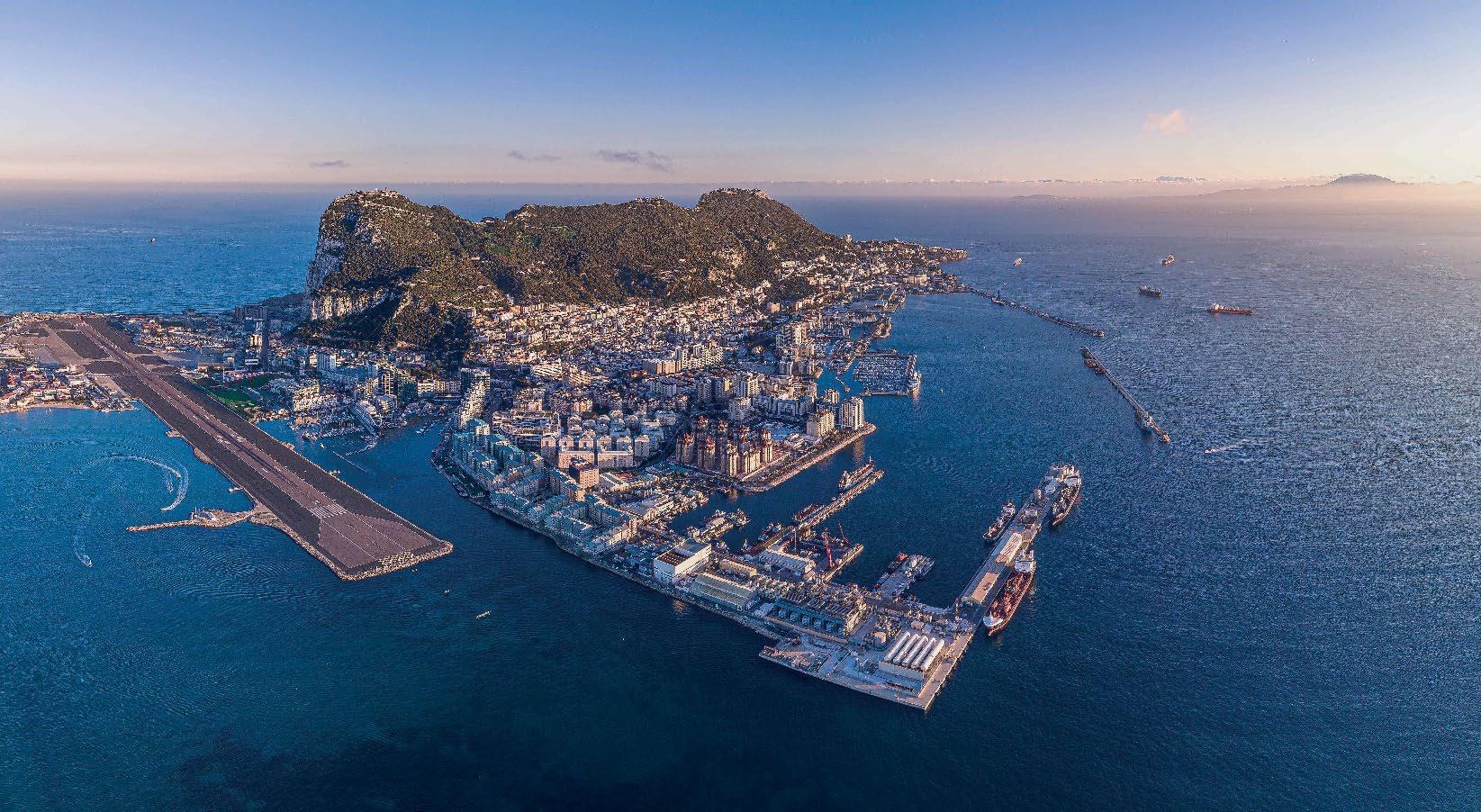
Gibraltar may be small in size, but it is surprisingly well-positioned to benefit from what has been one of the world's most watched sporting events.
A Boost for Gibraltar's Gambling Industry
Perhaps the most obvious beneficiary could be Gibraltar's online gambling sector.
For many years Gibraltar has been home to some of the world's largest online betting operators. During major sporting tournaments such as the World Cup, betting activity typically increases significantly as football fans place wagers on match outcomes, goal scorers, tournament winners and countless other markets.
This can lead to higher revenues, greater demand for customer support services, marketing activity and technology infrastructure.
The World Cup is often described as the "Christmas season" for sports betting businesses, creating a period of intense commercial activity over several weeks.
Pubs, Bars and Restaurants Set to Score Football and socialising go hand in hand.
Many residents who would normally watch matches at home chose to head out to local pubs, sports bars and restaurants during major tournaments. Venues showing matches on large screens often experience increased footfall, particularly during evening games and weekend fixtures.
For hospitality businesses, the World Cup meant more food orders, higher drinks sales and increased customer spending. Some establishments have created special promotions, themed menus or sweepstakes competitions to attract customers.
Even businesses that are not traditionally sports-focused may had benefited from the general increase in social activity generated by the tournament.
Television and Electronics Sales Could Rise
Every World Cup seems to create a familiar pattern: people suddenly decide that their television is no longer quite big enough.
Electronics retailers usually experience increased demand for largescreen televisions, sound systems, streaming devices and related accessories in the run-up and during major tournaments.
Families planning to host friends and relatives for matches often upgrade their home entertainment systems to enhance the viewing experience.
For Main Street retailers, this should have provided a welcome boost during the weeks leading up to the competition.
Increased Business for Delivery Services
The modern football fan increasingly combines sport with convenience.
Many people choose to order food at home while watching matches. This trend can benefit takeaway businesses, delivery platforms, supermarkets and convenience stores.
A particularly exciting match involving England, Spain, Portugal or another popular national team can create a noticeable surge in orders for pizzas, burgers, snacks and beverages.
The cumulative effect across thousands of residents should have created a meaningful economic uplift for local businesses.
Advertising and Marketing Opportunities
The World Cup is not just a sporting event; it is a marketing phenomenon.
Many Gibraltar businesses have used the tournament as an opportunity to run promotions, competitions and customer engagement campaigns. Retailers had tournament relatedspecial offers, while restaurants and bars created football-themed experiences.
Marketing agencies, graphic designers, social media managers and advertising suppliers may have all benefited from the increased demand for promotional activity.
The Ripple Effect
One of the most important economic concepts is what economists call the "multiplier effect."When a football fan spends money in a local pub, that pub may purchase more supplies from local distributors. Those distributors may employ more staff or place larger orders with suppliers. Employees receiving wages then spend money elsewhere in the economy.In other words, a single pound spent during the World Cup can circulate through the economy multiple times.
While Gibraltar's economy is diverse and sophisticated, these small increases in spending across multiple sectors can collectively create a noticeable short-term boost.
Keeping Expectations Realistic
Of course, it is important not to overstate the impact.
The World Cup is unlikely to have fundamentally transformed Gibraltar's economy. Any boost will be temporary and concentrated in specific sectors such as hospitality, gaming, retail and entertainment.
Furthermore, money spent on football-related activities may sometimes simply replace spending that would have occurred elsewhere.
Nevertheless, major global events have a unique ability to generate excitement, encourage social activity and stimulate consumer spending. In 4 years’ time, in 2030, the FIFA World Cup will be hosted in Spain, Portugal and Morocco. Gibraltar will be at the heart of the action. Now is the time to put in place a strategy to ensure your business scores!
Eran Shay, Managing
Director,
Benefit Business Solutions www.BenefitGibraltar.com
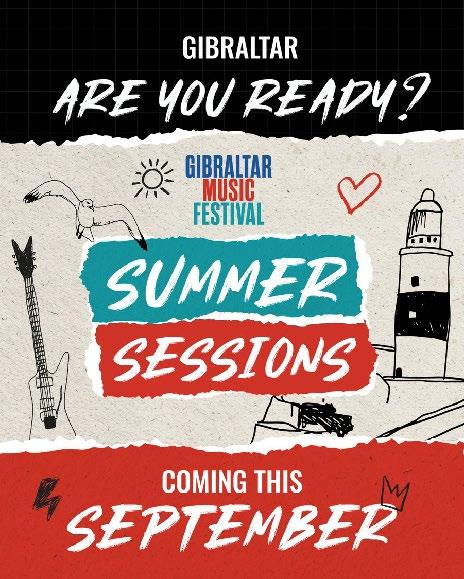
Gibraltar Music Festival Summer Sessions announced
At an official press conference this morning, Minister of Equality, Employment, Culture and Tourism, the Hon. Christian Santos GMD MP and Minister for Health, Care and Business, the Hon. Gemma Arias-Vasquez MP announced the Gibraltar Music Festival Summer Sessions will take place in early September 2026.
Taking place at the Europa Sports Complex, the Music Festival will see international and local acts performing on several stages over three days, from the 3rd-5th September, in the run up to the
NATIONAL DAY CELEBRATIONS.
Currently, the confirmed line-up is as follows, with more local bands still to be announced:
THURSDAY 3RD SEPTEMBER
James Morrison; Hard-Fi; Melon Diesel; Nikolai Celecia; Wayne
FRIDAY 4TH SEPTEMBER
Rosario; Sophie Ellis Bexter; Tony Hadley; The Jesse Tree
SATURDAY 5TH SEPTEMBER
Billy Ocean; 10cc; The Real Thing; Adrian
The Summer Sessions seek to re-introduce a smaller Gibraltar Music Festival style event which were last held prior to 2020. This event is in line with the Government’s well-established policy for eventsled tourism and will be run in conjunction with Visit Gibraltar (Gibraltar Tourist Board), the Ministry of Business and local organisers. The event aims to attract visitors to the Rock as well as entertain local audiences with a varied selection of great artists.
Ministers Santos and Arias-Vasquez are delighted to be collaborating on this event which will hopefully be the first of many. They are particularly excited to be supporting local musicians and giving them the opportunity to share the spotlight with well known international acts.
Minister Santos said, "The Gibraltar Music Festival Summer Sessions represent an exciting new chapter for live music on the Rock. By bringing together internationally renowned artists and talented local performers, we are creating an event that celebrates Gibraltar's vibrant cultural scene
while supporting our events-led tourism strategy. I am delighted to be working alongside Minister Arias-Vasquez and our partners to deliver what we hope will be the first of many successful editions.”
Tickets will go on sale tomorrow, 24th June on buytickets.gi
Note: Tickets for each day with be on sale independently. Package tickets for the full three day of events will also be available.
HM CUSTOMS GIBRALTAR STRENGTHENS INTERNATIONAL COOPERATION AT GENERAL AVIATION CONFERENCE IN LONDON
HM Customs Gibraltar has reinforced its commitment to combating transnational crime and enhancing international cooperation through its participation in the first General Aviation Project Conference held in London between 26th and 30th May.
The conference was organised by the UK’s General Aviation Multi Agency Hub (GAMAH), under the auspices of His Majesty’s Revenue and Customs (HMRC) and the UK Home Office following a site visit to Gibraltar in January. It brought together Customs and law enforcement professionals from across several jurisdictions to discuss emerging risks, best practices, and collaborative approaches to tackling criminal activity associated with the general aviation sector.
General aviation encompasses all non-commercial and non-military flights. In Gibraltar’s context, this primarily relates to private aviation, including private jets, which can present unique challenges for customs.
Through HMRC’s Fiscal Crime Liaison Network, the conference provided a valuable opportunity for customs authorities from Gibraltar, Malta and Cyprus to strengthen professional relationships, exchange operational knowledge, and develop channels for future cooperation and intelligence sharing. It also provided the opportunity for HM Customs to reconnect with one of HMRC’s Fiscal Crime Liason Officer with responsibility for Gibraltar, Natalie Reynolds.
HM Customs Gibraltar was represented by Executive Customs Officer Philip Villalta and Customs Officer Richard Lavagna. During the event, they participated in a comprehensive programme that included a site visit to one of the United Kingdom’s smaller private airfields, offering delegates practical insight into the day-to-day operation of the general aviation sector and the enforcement challenges associated with it.
The conference also featured two days of presentations delivered by UK specialists covering a range of topics relevant to customs and border security, such as the typologies and methodologies of the criminality seen in the general aviation industry. These included the use of general aviation in the movement of precious metals, high-value artworks and significant quantities of cash, as well as the risks posed by the sector in facilitating the smuggling of illicit narcotics and other forms of transnational crime. HM Customs were also able to give a short presentation about Gibraltar International Airport and the risks and threats it faces and could face in the future from a Customs perspective.
The Gibraltar delegation was also joined by Tyrone Duarte, Deputy Head of Mission at the Gibraltar House in London, for a reception hosted by HMRC. During the reception, Mr Duarte was presented with a token of appreciation by HMRC in recognition of Gibraltar’s continued engagement and cooperation in this important area.
In addition, HM Customs Gibraltar was honoured by GAMAH with a commemorative plaque recognising its role as one of the founding members of the initiative. The project aims to foster greater international collaboration in the general aviation environment and organisers hope to expand participation to include additional countries in the future.
Speaking on the importance of the event, HM Customs Gibraltar highlighted the value of international partnerships in addressing evolving threats and ensuring that enforcement agencies remain equipped to identify and disrupt criminal activity exploiting the general aviation sector. This comes at a time when the local aviation sector is expecting big changes to the industry as a result of the full implementation of the Treaty
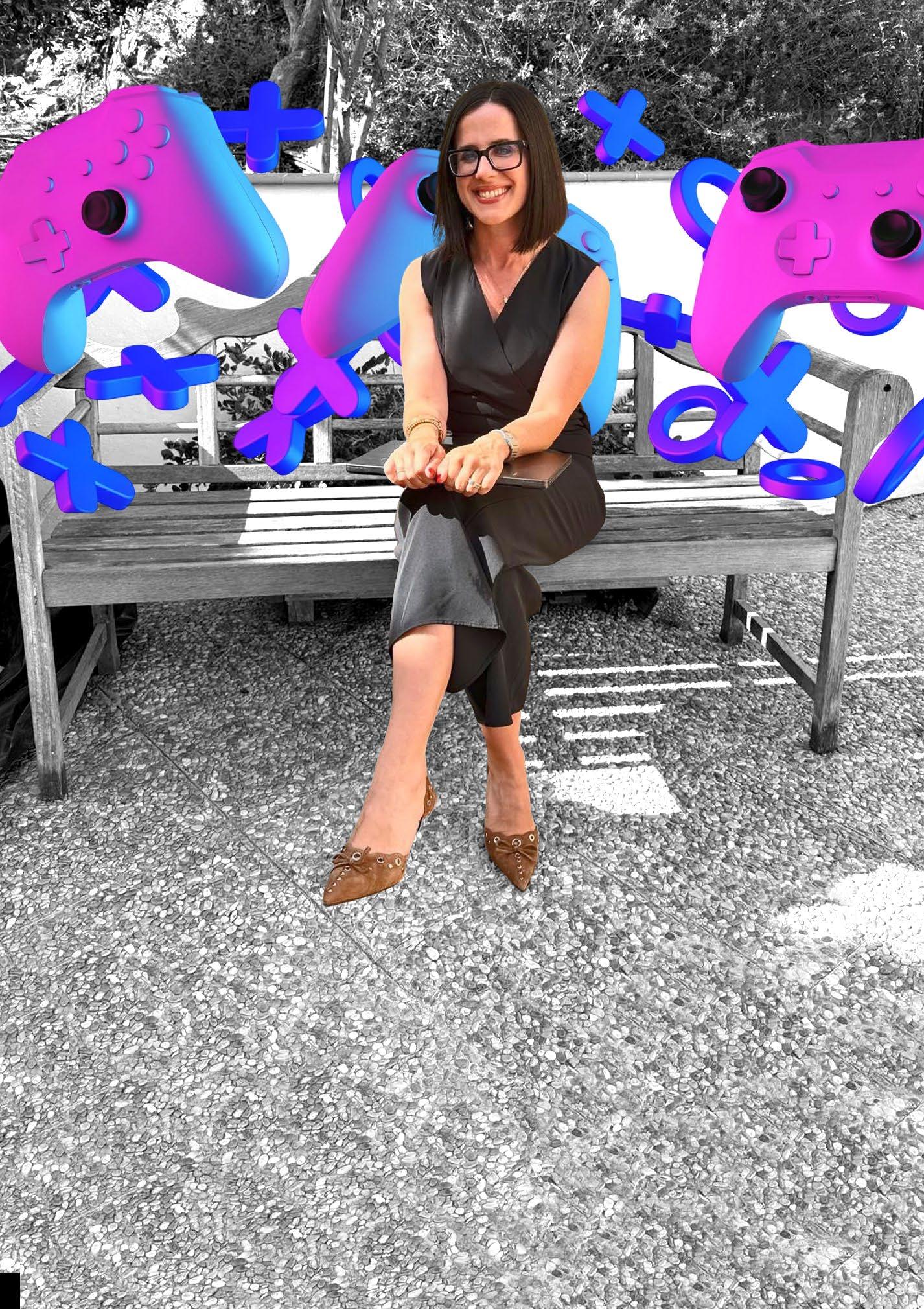
Sasha Uman
The executive navigating a 24/7 global gaming industry
Sasha Uman is the kind of business executive whose working day rarely sits still.
From early morning calls with teams in Asia to late-afternoon negotiations with partners in Europe and the Americas, her role as the Vice President of Sales at Playtech places her at the centre of a global industry that runs 24/7. Deals move across time zones, commercial strategies shift with regulation, and product development is driven by constant technological change.
“It is very full, fast-paced, and highly international,” the 37-year-old mum-of-three, says of her working life. “I work across multiple regions, from Asia to Europe, the US, and Latin America, so there is always a lot happening.”
It is this constant motion, and the need to stay across multiple markets at once, that defines her position as a senior commercial executive in one of Gibraltar’s most prominent gaming and technology companies.
Uman, who was recognised with the “Woman Leader in Online Gaming” award, as part of Gibraltar’s “Ladies That Rock the Rock” 2026 awards, has built her career inside an industry that has transformed dramatically over the past decade. What was once a rapidly expanding but loosely structured sector has become a highly regulated, data-driven and globalised business environment.
“When I first entered it, online gambling still felt more raw, more fragmented, and in many ways more experimental,”
she says. “Back then, a lot of the conversation centred around acquisition and rapid growth.”
Today, she says, the focus has shifted to regulation, compliance, mobile-first product development, responsible gambling and increasingly sophisticated use of data.
“It has gone from being seen as a niche digital space to becoming a highly strategic, technology-led global industry,” she says.
From her base in Gibraltar, Uman operates within a jurisdiction that has become a recognised hub for gaming and fintech businesses.
The territory’s compact size and concentration of operators means decisions are often made quickly, and relationships carry significant weight.
“Gaming and tech are not side conversations here,” she says. “They are part of the identity of the business community.”
That environment, she explains, creates both pace and accountability. In a small but internationally connected market, reputation matters as much as performance.
“It teaches you to be sharp, to work hard, and to carry yourself with professionalism,” she says.
At the same time, she says Gibraltar offers something larger business hubs often do not: proximity. Not just physical, but operational. Senior decision-makers, partners and regulators are often within easy reach, allowing conversations that might take weeks elsewhere to happen in a matter of days.
“There is something very human about doing business here,” she says.
For Uman, Gibraltar has also become a long-term home, rather than the short-term posting she originally expected when she relocated in 2016.
What was meant to be a brief move for work gradually became a settled life. “What started out as what I thought would be a twoyear adventure became a full life here almost ten years later,” she says.
Before Gibraltar, Uman’s career had already taken shape across fast-moving sectors and international markets. Born in Ukraine, she attended school in the US, and went to university in Vienna before moving to Israel in 2010, starting her career in Forex currency trading.
“My early career began in Forex, which was an intense and fast-moving environment that taught me a great deal about performance, discipline, and the importance of staying agile,” she says.
From there, she moved into B2C online casino marketing, focusing on acquisition and affiliate activity. It was a period that gave her a first-hand view of how quickly the digital gaming sector was scaling.
“That was really where I began to understand the scale, pace, and creativity of the online gaming world,” she says.
The appeal, she adds, was its unpredictability.
“It was never static, never predictable, and always evolving.”
That sense of constant change eventually led her into the B2B side of the industry, joining Playtech in 2019 after previously working for one of its subsidiary companies.
Even before formally joining the group, she says she was struck by the company’s scale and ambition.
“I always admired Playtech’s journey, the scale of its ambition, and the strength of its product portfolio,” she says.
The move into Playtech marked a shift into a broader commercial role within a global organisation operating across multiple jurisdictions and product lines.
“What attracted me most was the opportunity to work on the B2B side of the business at a company with such breadth, depth, and reach,” she says. “There is real room to learn, contribute, and grow.”
It also aligned with her own approach to career development, which she describes as deliberately shaped by challenge rather than comfort.
“I’ve always believed that growth happens when you put yourself in environments that push you to think bigger, work harder, and keep developing.”
That mindset, she says, is essential in an industry where conditions rarely remain stable for long.
Over the past decade, she has seen the sector evolve into something far more structured and sophisticated than when she first entered it.
“You can see the evolution everywhere: in regulation, in data, in CRM capabilities, in mobile, in live casino, and in responsible gambling,” she says.
The industry, she adds, is now firmly established as a global technology business rather than a niche digital vertical.
Alongside that evolution, she has also seen change in the representation of women in leadership roles across the sector.
“There is far greater awareness around inclusion, and we are seeing more women in managerial and leadership roles,” she says. “There is still more to do, of course, but the progress is real.”
However, she is clear that opportunity alone is not enough.
“Success still comes down to the same fundamentals: hard work, resilience, credibility, and attitude.”
She describes moments of doubt and pressure as a normal part of working in senior commercial roles.
“Everyone experiences moments of doubt at some point in their career,” she says. “The important thing is not to pretend those moments don’t exist.”
Instead, she says, the key is maintaining perspective and moving forward with focus.
“You have to learn how to move through them, keep perspective, and continue with confidence.”
It is advice she extends to younger women entering the industry today.
There is something very human about doing business here.
“Be clear about what you want, and then go after it,” she says. “Don’t wait for everything to feel perfectly ready.”
Her guidance is grounded in practical experience rather than rhetoric: stay curious, build expertise, seek out mentors, and remain consistent even when progress feels slow.
Looking back, Uman says her career has been shaped less by single defining moments and more by a steady accumulation of experience across markets and roles.
“My career hasn’t been a straight line,” she says. “It has been shaped by different markets, industries, relocations, and a lot of learning along the way.”
What stands out most to her now are not individual deals or job titles, but the relationships built over time.
“In an industry like ours, which moves quickly and is highly competitive, trust and credibility take time to build,” she says.
Those relationships, she adds, often endure beyond specific roles or companies.
They are, she says, what she is most proud of - alongside the ability to keep moving forward in an industry that never stands still.
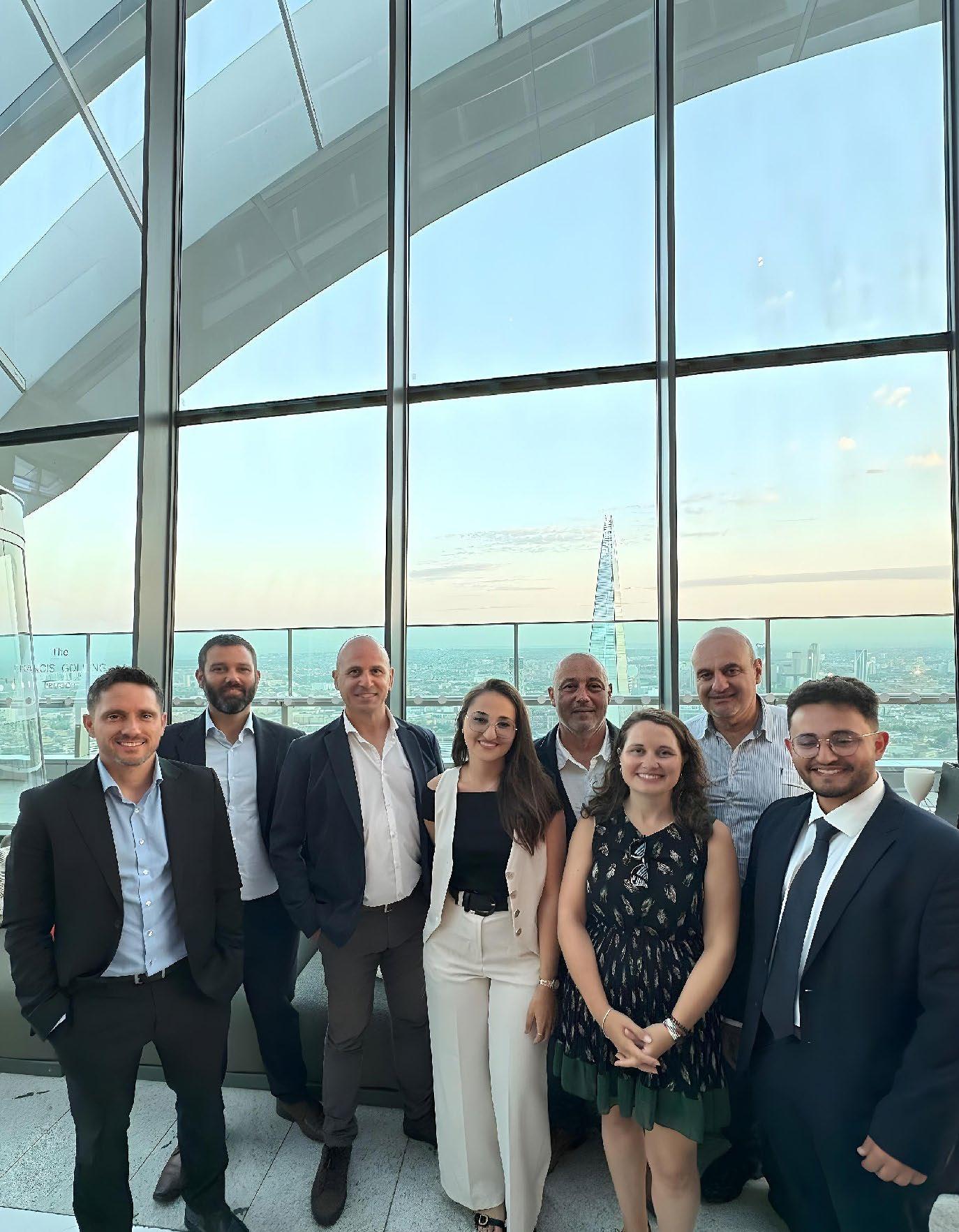
Meet the Real Estate Finance and Business Banking Teams from NatWest International
At NatWest International our Real Estate and Business Banking teams are here to support you with all aspects of your banking needs.
Across our four jurisdictions our dedicated team of experienced Relationship Managers are on hand to offer support and guidance.
The local team are introduced below, with each being a key member of the NatWest International team…
Bianca Lester Head of Corporate and Commercial, Gibraltar
E: Bianca.Lester@rbsint.com
T: +350 56001476
Bianca started her career in RBS Gibraltar 27 years ago. After having fulfilled several different roles within the Bank, Bianca joined the Corporate Team in October 2003. She’s been involved in several key local transactions over the years and 5 years ago took up the role of Head of Corporate and Commercial for Gibraltar.
Bianca comments, “I am delighted to have been given the opportunity to develop and support our corporate customers, ranging from the small business in the high street to the largest corporate businesses in their everyday banking needs. I am committed to providing an excellent customer service and delivering the best customer experience.”
Nigel Barclay
Relationship
Director
E: Nigel.Barclay@rbsint.com
T: +350 56002810
Born and educated in Scotland, Nigel has worked in the commercial and corporate banking sector for nearly 30 years. Nigel has gained valuable experience in a variety of sectors within NatWest Group including roles in Technology, Asset Finance and latterly the Affordable Housing Finance Team in the UK.
As a Relationship Director, Nigel is now focused on building, managing and expanding relationships with clients, specifically in the Real Estate Finance sector in Gibraltar. He assists both property developers and investors in structuring, delivering and managing tailored funding solutions. Nigel takes pride in being a trusted advisor and banking partner for the NatWest International clients he supports. Nigel believes, “A lasting relationship in banking begins with listening, grows with understanding and thrives on trust.”
Sean Borg
Assistant Relationship Manager, Real Estate Finance
E: Sean.Borg@natwestint.com
T: +350 58007918
Born and raised in Gibraltar, Sean began his career with NatWest International as a Personal Banker in 2023, shortly after graduating from Nottingham Trent University. In that role, he specialised in day-to-day customer transactions and personal appointments, leading to a deep understanding of client needs and financial processes.
Now serving as an Assistant Relationship Manager, he provides essential support to clients within the Real Estate Finance portfolio. With his extensive experience in addressing client needs and relationship management, Sean is dedicated to delivering exceptional service.
Corrin Goldwin Relationship Manager, Real Estate Finance
E: Corrin.Goldwin@natwestint.com
T: +350 56001477
Corrin began her career in banking over 19 years ago as an analyst in both Retail and Corporate banking. Now specialising in Real Estate Finance, Corrin manages and supports the bank clients who predominantly operate within the Gibraltar property sector. She has built a wealth of experience in banking operations, strategic problem solving and delivering financial solutions, and continues to play a pivotal role in fostering strong client relationships and driving business success within the organisation.
“I truly enjoy banking because it allows me to build meaningful relationships, support businesses in achieving their goals and make a positive impact on our local community’s growth and success.”
Sarah Jane Navarro
Relationship Manager, Commercial Lite
E: Sarah.Navarro@natwestint.com
T: +350 58007833
Sarah began her banking career as a cashier in 2015 and became a Premier and Business Banking assistant after 2 years. From here she progressed to become a Corporate and Commercial assistant, where she learnt every portfolio within the team. When the opportunity arose for a Relationship Manager role, Sarah seized the challenge. She has been a Relationship Manager for 2 years and thoroughly enjoys her role.
She comments, “Building and having a good rapport with my customers is what means the most to me and I believe having this connection with your customers is key.”
Karen Gallardo
Assistant Relationship Manager, Commercial Lite
E: Karen.Gallardo@natwestint.com
T: +350 58008597
Karen began her career with NatWest International in 2012 as a cashier, where she developed a strong foundation in customer service. After three years, Karen progressed to Premier Banking as an Assistant Relationship Manager and in 2022 Karen moved to the Corporate and Commercial Banking team, leveraging her experience as assistant to the Relationship Manager of Commercial Lite.
Karen aims to deliver an exceptional service to her customers, ensuring their financial needs are met with the highest level of care and professionalism. “Attending to all my customers’ requirements in a friendly, timely and efficient manner is of utmost importance to me,” she said.
The Royal Bank of Scotland International Limited trading as NatWest International is registered in Jersey (no. 2304) as a private company with limited liability. Regulated by the Jersey Financial Services Commission. Registered and Head Office: Royal Bank House, 71 Bath Street, St. Helier, Jersey, JE4 8PJ. Tel. 01534 282850. NatWest International is the registered business name of The Royal Bank of Scotland International Limited under the Business Names Registration Act. Gibraltar business address: NatWest International House, 57 Line Wall Road, Gibraltar. Tel. +350 200 77737 or +350 200 73200. Regulated and authorised by the Financial Services Commission, Gibraltar to undertake Banking and Investment Business from 55 and 57 Line Wall Road, Gibraltar.
A Life in Public Service and History:
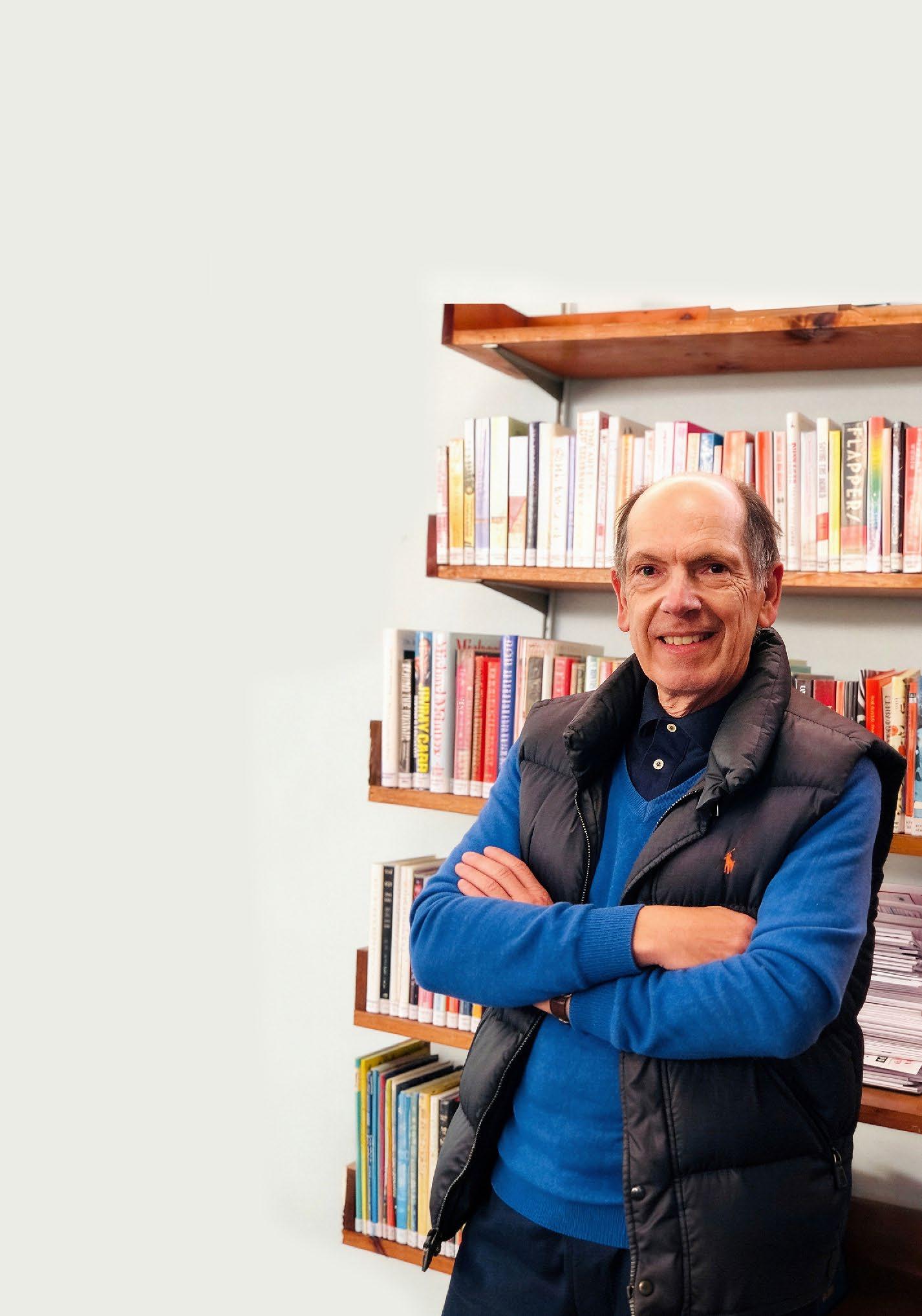
Few people have contributed to Gibraltar in as many different ways as Richard J. M. Garcia MBE, BA, FRPSL, teacher, civil servant, historian, author, philatelist and former Chief Secretary, with a career that has spanned decades of public service and scholarship. Jo Ward talks to Richard Garcia to find out more about a lifetime of learning, service and storytelling
With more than twenty published books to his name and a reputation as one of Gibraltar’s foremost social historians, Richard Garcia has spent much of his life preserving the stories that might otherwise have been forgotten. His work has illuminated everything from postal history and philately to major Gibraltar institutions, businesses and, increasingly, the lives of ordinary Gibraltarians during some of the most important periods in the Rock’s history.
His own story begins in a Gibraltar that would be almost unrecognisable to younger generations today. Richard’s earliest memories are of a close-knit community and a very different way of life.
“At home, we had a live-in maid,” he recalls. “My grandparents had a chauffeur, so when we went to Spain, we went in the chauffeur-driven car.” It was a quieter Gibraltar, smaller and perhaps more trusting. Life was different in other ways too. Access to the Upper Rock had been restricted, requiring permits, and Richard remembers Security Policemen on motorbikes regularly patrolling the area to monitor visitors.
His father worked as the company secretary and for a time as a director in a shipping agency, while his mother taught at Loreto Convent. Together with his older and younger brothers, he grew up in a family environment that he says had the greatest influence on his life, and rather than identifying a single teacher or mentor, Richard credits his parents for shaping his outlook and values.
After school, Richard left Gibraltar to study at the University of Birmingham, reading for a joint honours degree in English and Spanish. He also spent a year abroad at the University of Salamanca before completing postgraduate studies at Bristol University. Teaching was not initially part of a grand career plan. At the time, university grants were limited and highly competitive. Students often had to choose courses based on the subjects for which funding was available.
“I wanted to get away from the closed frontier and stretch my wings,” he says. “Teaching was one of the areas where grants were available because there was a shortage.”
His academic experience proved memorable. The University of Birmingham’s English faculty included remarkable figures. The head of faculty was also Director of the Royal Shakespeare Company, while one senior lecturer had personally known literary giants T.S. Eliot and W.B. Yeats. “It gave us a completely different perspective,” Richard remembers.
Returning to Gibraltar, he taught English and Spanish at Bayside School for four years. During his time there, he achieved what he still recalls with pride: helping students earn the school’s first Grade A results in A-Level English. Yet teaching would not be his lifelong profession.
A turning point came when the Gibraltar Government briefly opened graduate entry into the Civil Service. Only four people were recruited, amongst whom were future environmentalist and politician Dr John Cortes, scientist Clive Finlayson, broadcaster Gina Cortes and Richard.
It was the beginning of a distinguished public service career that would eventually see him become Gibraltar’s first Gibraltarian Chief Secretary and head of the Civil Service. Looking back, Richard believes one of the most important lessons he learned was the importance of managing change. “Change is essential,” he says. “You’ve got to motivate people to go along with it.”
Among his proudest achievements was helping to establish promotion on merit rather than seniority within the Civil Service. “I thought that was very important,” he says.
For younger Gibraltarians considering public service careers today, his advice remains straightforward. “If one is prepared to apply oneself and work hard, then the sky’s the limit.” His own career certainly demonstrated that principle.
Richard’s years in government coincided with some of Gibraltar’s most significant political developments. One of the most challenging periods came during and after the Córdoba Agreement negotiations, which sought practical cooperation between Gibraltar, Spain and the United Kingdom. “My job was to give effect to what was agreed at Córdoba,” he states. The work required close collaboration with Spanish authorities and Richard recalls being able to telephone officials in Madrid directly and maintain fluid communication with them. “They even sent me Christmas cards,” he laughs.
Beyond constitutional and diplomatic matters, Richard also played an important role in administering European Union-funded programmes in Gibraltar. As retirement approached, a senior European Commission Director of DG Regio travelled to Gibraltar specifically to thank him for his work. “It was rather nice,” he says modestly.
Retirement itself proved somewhat elusive. After leaving government service, he became Chairman of the Gibraltar Police Authority and later helped establish Gibraltar’s Maritime Accident Investigation Compliance framework, ensuring Gibraltar met international obligations for investigating marine incidents. “I’m an administrator,” he says simply. “I set up the frameworks and procedures so properly qualified specialists could do the investigations.”
Away from government, another passion had been developing since his teenage years. It began with a stamp exhibition in 1966 at the John Mackintosh Hall. “I thought it was rather interesting,” Richard comments. The interest evolved into a lifelong fascination with philately and postal history, eventually earning him recognition among collectors and researchers internationally.
What appeals to him most is not simply the stamps themselves. “The postal history is particularly interesting,” he explains. “It’s not just the stamp on the envelope. It’s the route the letter took, how it travelled, and the arrangements between different postal administrations.” For Richard, postal history opens a window onto wider social, political and economic history. “It tells stories about people.”
That idea, using small details to reveal larger human stories, would later become central to his historical research.
Richard’s bibliography now exceeds twenty books, covering social history, postal history, major Gibraltar companies, the Gibraltar Fire and Rescue Service, the Post Office Savings Bank and many other subjects.
When he first began writing, however, there was relatively little published social history about Gibraltar. He credits the late Tito Benady with helping change that situation by establishing Gibraltar Books, which provided a platform for local historical publishing. “That started to generate demand for books about Gibraltar’s past,” Richard explains.
Today, Gibraltar enjoys a thriving historical and literary culture, and Richard has played a major role in its development. His latest projects focus on one of the defining periods in Gibraltar’s modern history: the Second World War.
Rather than concentrating solely on the evacuation itself, he has chosen to examine the events leading up to it and the experiences of those who remained behind. His research has uncovered remarkable stories hidden within government archives, including former secret files that reveal discussions and proposals never previously made public. Among them were early considerations of sending evacuees to places such as Mauritius and infrastructure preparations in Trinidad for Gibraltarians who ultimately never arrived. “These stories have never really been told before,” he says. Future volumes will examine the experiences of those who stayed during the war and the massive post-war task of rebuilding and reinventing Gibraltar.
Ask Richard what makes Gibraltar unique and his answer comes immediately. “The Gibraltarian.” For him, Gibraltar’s greatest strength lies not in its geography but in its people. “The community, the camaraderie, the resilience.” He points to Gibraltar’s blend of cultures and traditions as one of its defining characteristics. “We’re influenced by so many different cultures, whether it’s cuisine or anything else you care to mention.” Most importantly, he believes Gibraltarians have always shown an extraordinary ability to adapt. “We’re so small that we need to be resourceful.”
That resourcefulness, he believes, remains essential as Gibraltar faces future challenges and opportunities. “Opportunities aren’t given to you,” he says. “You’ve got to find them, work on them, create them and nurture them.” It is a philosophy that seems to have guided much of his own life.
Whether in government offices, historical archives, classrooms or conference halls, Richard Garcia has spent decades serving Gibraltar in one form or another. Perhaps the best summary comes from Richard himself, quoting Shakespeare’s Othello.
“I have done the state some service.”
Few would argue otherwise.
Richard Garcia has been confirmed as one of the authors for the 2026 Gibunco Gibraltar Literary Festival, taking place from 9th-16th November, when he will be speaking about the impact of the Second World War on Gibraltar’s civilian population.
SOME PERFORMANCES ENTERTAIN, WHILE OTHERS LINGER IN THE MIND LONG AFTER THE FINAL NOTE HAS FADED. THE RECENT PERFORMANCE OF THE ARMED MAN: A MASS FOR PEACE BY KARL JENKINS WAS FIRMLY IN THE LATTER CATEGORY, FOR DELIVER ING NOT ONLY A MUSICAL EXPERIENCE BUT A POW ERFUL REFLECTION ON WAR, LOSS, AND HUMANITY'S ENDURING HOPE FOR PEACE..
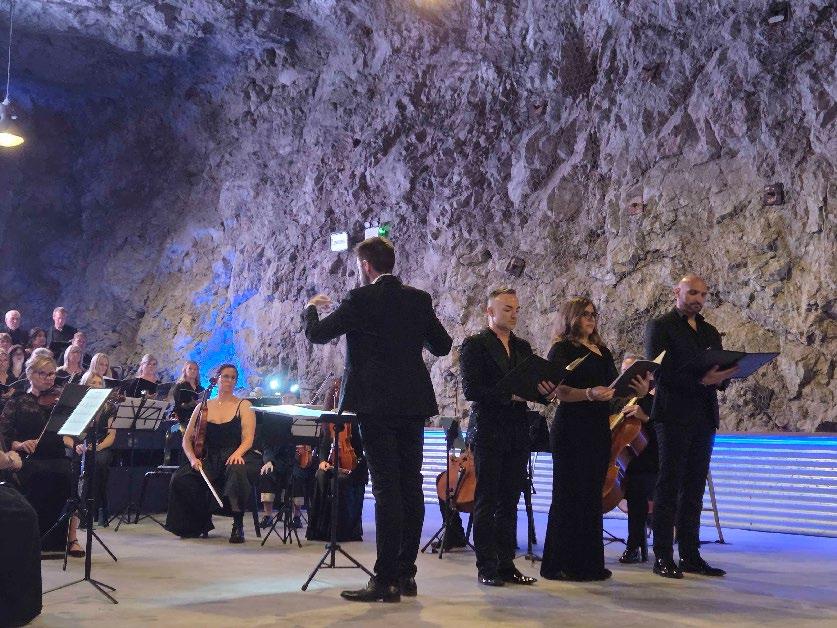
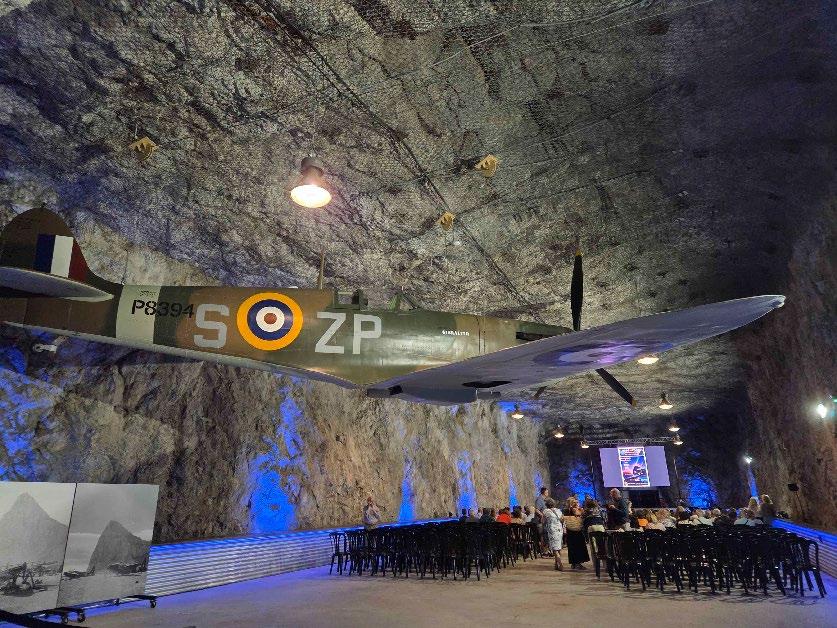
Staged within Gibraltar's historic World War II tunnel, the setting imme diately established an atmosphere that complemented the work's themes. The tunnels, carved into the Rock during one of the most turbulent periods in modern history, felt like an extension of the story being told. Their cold stone walls and military associations provided a reminder that war is not something confined to history books, but a reality that has shaped places and people across generations.
The choice of venue demonstrated remarkable thought and care by the organisers. It is difficult to imagine the performance having the same emotional impact elsewhere. Had it been staged in a more conventional concert hall, or even another iconic Gibraltar venue such as St Michael's Cave, it might not have had the same symbolic weight. The tunnels created a sense of authenticity that drew the audience deeper into the narrative from the very beginning.
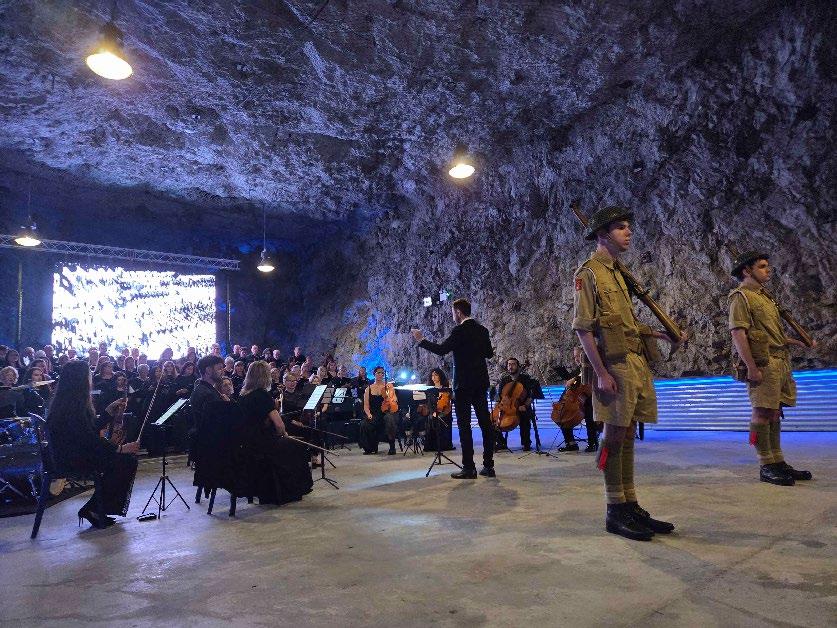
Adding to this atmosphere was a large screen positioned behind the orchestra and choir. Throughout the performance, images accompanied the music, transforming the concert into a multimedia experience. Some of these images were deeply unsettling, depicting the devastation and human suffering caused by conflict, while others showed communities rebuilding, families reunited, and symbols of reconciliation and hope. Rather than distracting from the music, the visuals amplified its message, providing a powerful emotional context for each movement.
One of the evening's first surprises came before the music had fully started. Two actors dressed as soldiers appeared in front of the orchestra, standing rigidly at attention during the opening section. Their presence was simple yet effective and without speaking a word, they reinforced the military themes that run throughout the work and helped bridge the gap between performance and reality. It was an unexpected theatrical element that immediately captured the audience's attention.
The technical execution of the entire production was equally impressive. The precision with which the orchestra, percussion, choir, and projected imagery worked together was remarkable. Particularly notable was the timing between the music and the visuals. Drums struck at precisely the right moments, images changed in perfect synchronisation with musical climaxes, and the entire production moved forward with a level of coordination that demonstrated countless hours of preparation and rehearsal.
Musically, the evening took the audience on a clear and emotionally charged journey. The opening movement, "The Armed Man (L'Homme Armé)," immediately established a sense of power. The music felt imposing and almost intimidating while presenting the figure of the armed man as someone both feared and respected. There was a sense of confidence and purpose that reflected how many throughout history have viewed military service: as a duty or a noble responsibility.
As the work progressed into its early movements, the mood shifted noticeably. Themes of prayer and apprehension emerged, creating an uncertain and dreadful atmosphere. The choir's voices filled the tunnel hall with what felt like collective anxiety about what lay ahead. Accompanied by images of tragedy and conflict, these sections conveyed a growing awareness of the cost of war.
One particularly memorable moment came during a prayer sung exclusively by the male members of the choir. Listening to this section, I found myself reflecting on the historical reality that generations of young men have been sent to fight and die in wars. Whether intentional or not, the decision to use only male voices gave the movement a unique emotional weight and reinforced the sense of individuals preparing to face an uncertain future.
REFLECTION: Experiencing The Armed Man by Karl Jenkins.
The following movements gradually built momentum, creating a mixture of determination and foreboding. There was a sense of soldiers convincing themselves that what lay ahead was necessary, even as signs of impending disaster became increasingly apparent. This emotional tension reached its peak during the seventh song "Charge!" one of the most dramatic and unforgettable sections of the entire work. At first, "Charge!" captures the heroic image of battle, as the music is energetic and urgent, suggesting courage, conviction, and purpose. Yet as the movement unfolds, that sense of heroism begins to unravel. The music becomes increasingly chaotic and disturbing before culminating in screams and a sudden silence that seemed to freeze the entire hall.
For me, this was the most impactful moment of the evening. The abrupt shift from excitement to horror was genuinely unsettling. It transformed war from an abstract concept into something frighteningly real. The silence that followed felt heavy, as though the audience collectively needed a moment to process what they had just experienced.
The movements that followed explored the devastating consequences of conflict. Images depicting atrocities, destruction, and human suffering accompanied music that conveyed grief, exhaustion, and despair. References to historical tragedies, including the Holocaust and other wartime crimes, reinforced the message that the true cost of war extends far beyond the battlefield.
These sections were emotionally difficult to watch, but they were also essential to the story’s impact. They challenged the audience to confront uncomfortable realities rather than retreat into simplified narratives of victory and defeat. The music expressed a sense of betrayal and sorrow, as though generations of people had discovered too late that the promises of glory and honour could never justify the suffering left behind.
Yet despite its darkness, The Armed Man ultimately refuses to end in despair. Gradually, the work begins to introduce themes of healing, reconciliation, and hope. The music suggests that while humanity may repeatedly inflict terrible wounds upon itself, it also possesses an extraordinary capacity to rebuild and recover. This message reaches its conclusion in the final movement, "Better Is Peace." Here, music from the opening returns, but with transformed words: "Better is peace than always war." This musical return creates a powerful sense of completion, bringing the story full circle while also changing its meaning. The figure of the armed man remains present, but the perspective has shifted. The lessons of suffering have been learned, and a different path is being proposed.
My interpretation of this ending was both hopeful and cautionary. It seemed to acknowledge that humanity has a tendency to repeat the same mistakes across generations. Wars continue to occur despite the lessons of history. Yet the work also leaves room for optimism. It suggests that reflection, remembrance, and understanding can still inspire people to choose a better future.
The audience's response reflected the impact of the performance. The audience was so eager to applaud that before the final song could finish; claps could be heard. However, it wasn’t until the final notes faded, that the audiences’ applause erupted throughout the hall, followed by a standing ovation that lasted for at least five minutes. The performers, musicians, choir members, and production team received a response that felt entirely deserved after delivering such a powerful and emotionally demanding work.
As I left the tunnels and returned to the outside world, the themes of the evening remained difficult to shake. In a time when conflicts continue to dominate headlines and international tensions remain high, The Armed Man feels as relevant as ever. It serves as a reminder of humanity's capacity for both destruction and resilience.
More than a concert, this performance was an experience. Through its music, imagery, venue, and storytelling, it invited the audience to reflect on the consequences of war and the value of peace. It was moving, unsettling, thought-provoking, and ultimately hopeful. Above all, it demonstrated the unique power of live performance to communicate ideas and emotions in ways that words alone often cannot.
JusTaDirector WHEN ISN'TSOSIMPLE
What Every Gibraltar Director Needs to Know About Personal Liability
A friend of mine was asked to join the board of a small Gibraltar company a few years ago. He wasn't running the place day-to-day. He turned up for quarterly meetings, read the papers, asked a few questions, signed off on the accounts. It felt, he told me, like a fairly lowkey commitment, the kind of thing you say yes to as a favour, or because it looked good on paper, or because someone you respected asked you.
It's a familiar story here. Gibraltar is a small place with a lot of boards, and plenty of people end up as a director or senior officer of something at some point in their working life, a family business, a charity, a fund, a firm they've helped build from nothing. Most assume that if anything ever goes wrong, the company's insurance will step in and cover them. It's a reasonable assumption to make. It's also, quite often, wrong. That gap between what directors expect and what actually happens when things go wrong is worth understanding, because it can affect almost anyone who's ever put their name on a board, whether they were closely involved in running the business or simply lending their name and judgement a few times a year.
What D&O cover actually does
Directors' and Officers' insurance, D&O for short, exists to protect people against claims arising from decisions they made in their roles as directors or officers. Most
policies are built around three layers of protection. One covers the company itself. One reimburses the company when it chooses to cover its directors' costs. And one, the one that matters most to the individual, steps in when the company can't or won't stand behind its director at all, which tends to happen exactly when things have gone badly wrong, such as during insolvency. That last layer is the one many people don't realise they need, right up until the moment they do. It's easy to assume the company's policy has you covered, and in many everyday situations it will. But there are specific moments when that protection can quietly fall away, and those are the moments that matter most.
The risk is real
Being a director carries genuine legal responsibility. It means exercising proper care, avoiding conflicts of interest, and using independent judgement rather than simply going along with what everyone else on the board seems to think. Directors who fall short of this, even unintentionally, even as a non-executive with no hand in daily operations, can find themselves personally answerable. Legal costs, fines, and, in serious cases, disqualification or prosecution, land on the individual, not just the company.
This isn't limited to big regulated financial firms either. Anyone serving as a director of an ordinary Gibraltar company, family businesses, charities, owner-managed firms, carries similar exposure. If a company keeps trading after it should reasonably
have stopped, directors can be pursued personally for the losses that follow, sometimes over decisions made years earlier, long after they've moved on to other things.
Gibraltar has already seen how this plays out. A few years ago, two directors of a local trustee firm were personally barred from working in financial services after the regulator found that the business had operated without the required permission. The firm faced consequences, but so did the two people whose names were on it. Their careers, not just the company's balance sheet, carried the cost.
The clearest illustration, though, is the collapse of Enterprise Insurance in 2016. The Gibraltar-based insurer went into liquidation owing more than £96 million, nearly four times the original estimate, and left over 750,000 policyholders across five countries affected. All ten directors, including those with no operational involvement at all, were drawn into a lengthy regulatory investigation. Even before any findings were made, the regulator's public statements alone were reportedly costing the directors over £200,000 a year in reputational and financial fallout. Legal costs stacked up across several fronts at once: the regulatory investigation, a claim from the liquidator, and a director's own defamation case. And because the company itself was in liquidation, it had no ability to support any of them financially. That's precisely the situation individual cover is designed for, the moment when the company simply isn't there to help.
It isn't only a Gibraltar story. In the UK, former directors of a British retail store were ordered to pay millions after the collapse of the retailer, with the courts finding they had allowed the company to keep trading once insolvency was foreseeable. Defence costs in cases like that regularly run into seven figures before a judgment is even reached, and UK cases like this carry real weight in how Gibraltar's own courts approach similar situations, given how closely the two legal systems are connected.
Your company's policy might not be enough
If the company already has D&O insurance, why would an individual need their own? There are a few reasons the company's cover can fall short exactly when it's needed most.
If the company becomes insolvent, it may simply be unable to indemnify its directors at all, at the very moment support matters most. If a claim pits the company's interests against a director's own, the insurer will usually protect the company, not the individual caught in the middle. Where a policy limit is shared across the company and all its directors, a large claim against the company can exhaust the available cover before an individual's own defence costs are even considered. And if the company has since closed, been sold, or switched insurers, the protection a former director once relied on may simply no longer exist, leaving them exposed for decisions made long before, sometimes for a company they no longer have any connection to at all.
Personal accountability
There's a broader pattern here, and it's not unique to Gibraltar. Regulators around the world are increasingly naming individuals alongside the firms they oversee when enforcement action is taken, rather than treating penalties as something a company absorbs on its own. Gibraltar's regulator has followed the same path, regularly publishing outcomes that attach reputational and financial consequences directly to named directors, not just their businesses. A firm's name in a headline used to be the whole story. Increasingly, it's the individual's name that follows.
Who this actually affects
In practice, this touches almost anyone who holds a directorship of a Gibraltar company, whether that's a licensed financial services firm, a fund, a family-run business, a charity, or a company with connections beyond Gibraltar's shores. A decision made in good faith today can resurface as a personal claim months or years down the line, long after the meeting where it was made has been forgotten by everyone except the person now defending it.
Changing the chip
None of this is meant to put anyone off serving on a board. Gibraltar depends on people willing to take on that responsibility, for its businesses, its charities, its financial sector, its community organisations. Boards need people who care enough to turn up and ask the difficult questions. But going in with open eyes matters. The Enterprise
Insurance case is a reminder of how far consequences can reach, even for directors who were nowhere near the day-to-day decisions. It's also a reminder that the safety net people assume is there isn't always where they expect it to be.
Individual D&O cover, and particularly that first layer of protection for when a company can't stand behind its own director, isn't really about expecting the worst. It's closer to the seatbelt you put on without thinking too hard about why, quietly there, so that if the moment ever comes, you're not facing it alone.
D&O Solutions from Peninsula Underwriting
For anyone weighing up whether individual cover is worth having, it helps to know who's behind it. Peninsula Underwriting has been providing Directors & Officers insurance solutions for nearly 20 years. Through its binding authority arrangements, Peninsula offers D&O cover for both businesses and individual directors, with competitive coverage and indemnity limits.
Working through trusted insurance brokers, Peninsula combines specialist underwriting expertise with responsive service and practical underwriting support. For anyone advising on, or thinking through, management liability exposures, it's a conversation worth having sooner rather than later.
If you would like to discuss a quotation, please speak to your broker or contact Peninsula Underwriting.
riding towards freedom: The story behind Gibraltar's musical tricycle
AN INTERVIEW WITH ALFRED TRAVERSO.
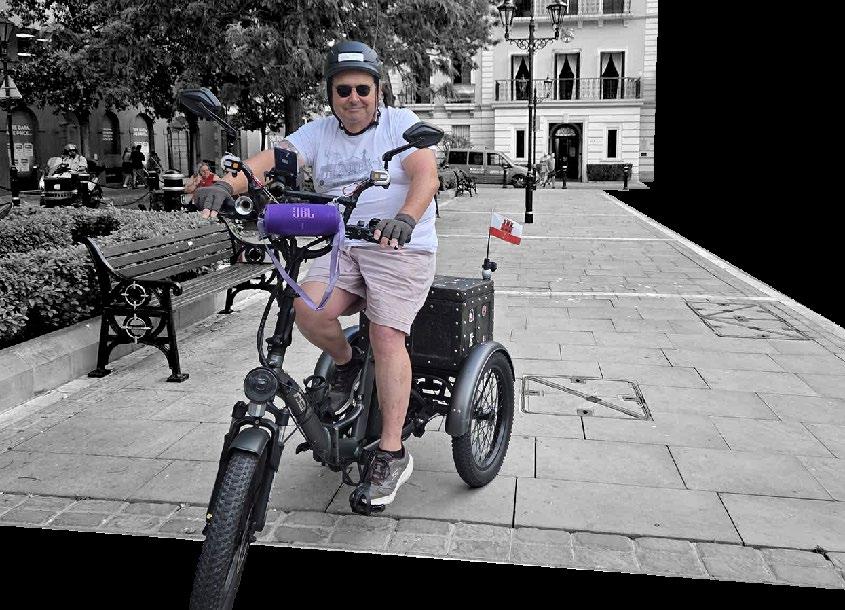
AT 62 YEARS YOUNG, ALFRED TRAVERSO HAS BECOME ONE OF GIBRALTAR'S MOST RECOGNISABLE LOCAL CHARACTERS. RIDING A DISTINCTIVE ELECTRIC TRICYCLE WHILE BLASTING CLASSIC ROCK AND 80S HITS FROM HIS SPEAKERS, HE HAS BECOME SOMETHING OF A MOVING SOUNDTRACK TO DAILY LIFE ON THE ROCK. BUT WHAT MANY DON'T REALISE IS THAT THE TRICYCLE, THE MUSIC AND THE CHEERFUL PRESENCE THEY SEE TODAY ALL BEGAN AS PART OF A DEEPLY PERSONAL JOURNEY.
Speaking with Insight Magazine, Alfred explains how just over a year ago, he was looking for a way to rebuild his life. Having lived with depression and post-traumatic stress disorder, while also recovering from years of physical health challenges, he found himself searching for something that could improve both his mental and physical wellbeing. Following treatment and therapy, he was encouraged to focus on activities that would help him regain confidence and exercise regularly. That's when he discovered the tricycle and what started as a practical way to stay active quickly became more. "The tricycle has been a transformation in my life," Alfred says.
So, what began as a form of therapy has evolved into something bigger. Alfred's tricycle is as distinctive as the man himself. Mounted on the front is a powerful JBL speaker that broadcasts the classic rock and 80s favourites that have become his trademark. At the rear sits a remarkably sturdy handmade storage box, crafted almost entirely from cardboard. Inspired by DIY he discovered on YouTube; Alfred built and reinforced the box himself before painting and decorating it to reflect his love of rock music. People would be surprised to learn what it's made from, as it looks more like a custom-built metal storage unit than recycled cardboard.
Attached to the back are two Gibraltar flags, fluttering behind him wherever he rides. The flags were added after a driver once overtook him and wrongly assumed he was a tourist, shouting a remark as he passed. Rather than allowing the encounter to bother him, Alfred responded with humour, adding the flags so there would be no doubt that he is a proud local. Through music, conversation and a willingness to be unapologetically himself, Alfred has become a familiar and uplifting presence for many people in Gibraltar. His story is about more than just a tricycle and a loudspeaker; it's about overcoming adversity, accepting oneself, and rediscovering happiness. He humbly described the inspiration for the speakers was from seeing a fellow walking around blasting their music on a similar sound system. He added that he wasn't looking for attention and wasn't trying to become a local celebrity. He simply enjoyed listening to music while he rode. And the result was that people began to recognise him. Some people waved, others smiled, they stopped him in the street and some even asked to take photographs. One of his favourite memories came when a group of Argentinian tourists stopped him to ask about the tricycle and pose for photographs. At first, he wasn't sure how to feel about the attention. "There were times I thought people might think I'm crazy," he laughs. But eventually he realised the reactions were overwhelmingly positive. One experience that particularly stayed with him came when he was
approached by a member of the Gibraltar Diabetic Society and was invited to take part in one of the charity's community walks. Armed with a specially prepared playlist and a society flag attached to his tricycle, Alfred rode at the front of the event helping to lead participants and create a positive atmosphere throughout the walk.
For Alfred, the invitation was unexpected but deeply meaningful. "It was an honour," he says. The experience helped him realise that the tricycle had become more than a personal outlet. So, what began as therapy for himself was now bringing enjoyment and encouragement to others. Whether posing for photographs with tourists, chatting to curious passers-by or helping support local charitable causes, Alfred had become a familiar and uplifting presence within the community, and in a world where stress, anxiety and negativity often dominate people's attention, perhaps that matters more than we realise: "If people smile, that's enough for me."
While the music brightens other people's days, it also continues to play an important role in Alfred's own wellbeing. "Music is the best medicine for the soul," he says. The music helps him stay present. It helps him focus on what is happening now rather than what happened yesterday which is a lesson he believes many people could benefit from.
Throughout our conversation, he repeatedly returned to the same theme: stop worrying so much about what other people think which is advice he wishes someone had given him years ago. Too often, he says, people become prisoners of other people's expectations, they worry about criticism and fear judgement. His way of thinking is to put painful memories into a box and place that box on a shelf. The box never completely disappears, but it no longer controls your life, and that philosophy now influences everything he does. But more importantly, his advice is to be yourself. If something brings you joy and doesn’t harm anybody, embrace it. Life is too short to spend it seeking approval and that mindset has transformed not only his outlook but also the way he interacts with the community.
He is quick to point out that life is still not perfect. He still faces challenges and still has difficult days, but he still works at maintaining his mental wellbeing. Without purpose, a person can drift through life like a "ship without a rudder." And the tricycle gave him that purpose; the music gave him joy and the people of Gibraltar gave him a reason to keep moving forward.
As our conversation drew to a close, Alfred left one final message: Learn to forgive. Forgive yourself for the mistakes you've made. Forgive others for the mistakes they've made. Don't allow old wounds to define who you are. And most importantly, don't spend your life waiting for the perfect moment to be happy: create your own happiness.
It became clear that Alfred Traverso is about far more than music. He represents resilience, individuality and perhaps most importantly, he represents the idea that it is never too late to change direction and find joy again. For Gibraltar, he may be the man on the tricycle with the music, but for himself, he is proof that healing can begin in the most unexpected places. Sometimes with three wheels, a favourite song and the courage to be yourself.
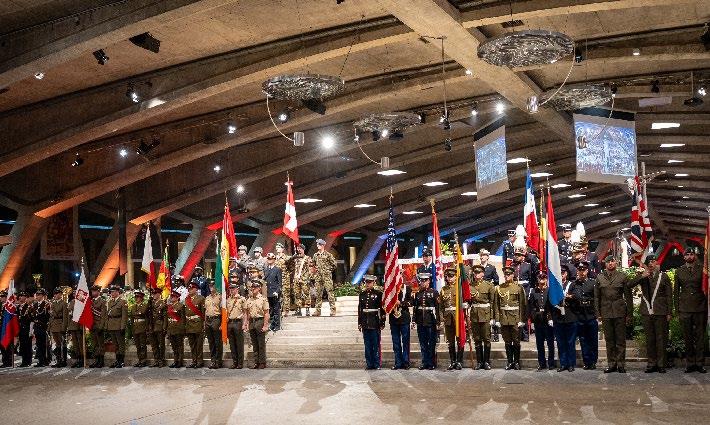
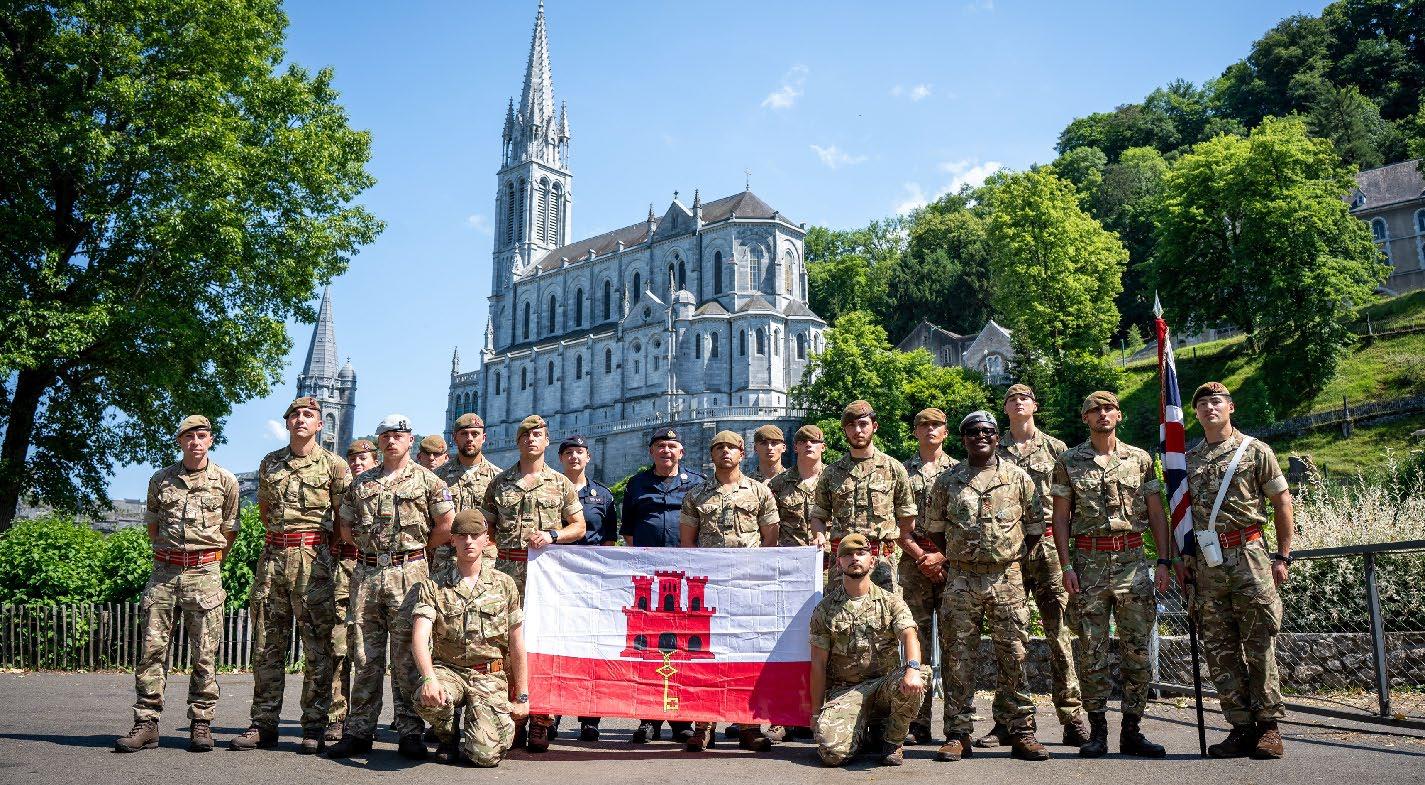
BRITISH FORCES GIBRALTAR CONTINGENT TAKES PART IN INTERNATIONAL MILITARY PILGRIMAGE TO LOURDES
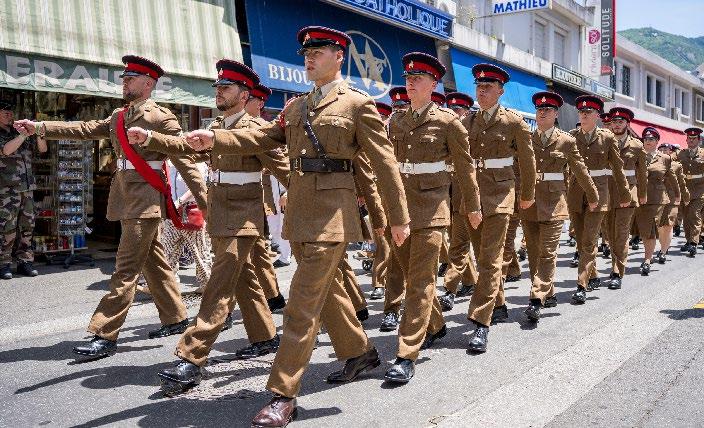
PERSONNEL FROM BRITISH FORCES GIBRALTAR RECENTLY TRAVELLED TO LOURDES, FRANCE, TO PARTICIPATE IN THE ANNUAL INTERNATIONAL MILITARY PILGRIMAGE (PÈLERINAGE MILITAIRE INTERNATIONAL), ONE OF THEWORLD’S LARGEST GATHERINGS OF MILITARY PERSONNEL AND VETERANS.
The Gibraltar contingent, led by Father Danny Hernandez, joined thousands of servicemen and women from over 40 nations in a week of faith, reflection, service, and international friendship. The pilgrimage, which has been held annually since 1958, brings together members of armed forces from across the globe, providing a unique opportunity to strengthen bonds between nations while reflecting on the values that underpin military service.
Throughout the visit, personnel took part in a range of religious ceremonies, commemorative events, and cultural activities held across the town of Lourdes. The programme included the International Opening Ceremony, the Torchlight Procession, Masses attended by military delegations from around the world, and the International Military Ceremony,
where participating nations proudly represented their armed forces.
A key aspect of the pilgrimage is the support provided to assisted pilgrims, many of whom are elderly, injured, or living with disabilities.
Members of the Gibraltar contingent contributed to this important tradition, demonstrating the values of selfless service, compassion, and teamwork that are central to military life.
Speaking about the pilgrimage, Father Danny Hernandez highlighted the significance of the event in bringing together military personnel from different nations, cultures, and backgrounds in a spirit of unity and mutual respect. He noted that the experience provided an opportunity for reflection, personal growth, and the strengthening of friendships forged through shared service.
For those attending, the pilgrimage offered a chance to step away from the demands of everyday military duties and reflect on the importance of service, sacrifice, and community. It also reinforced the enduring relationship between faith and the Armed Forces, while showcasing the professionalism and commitment of British Forces Gibraltar personnel on the international stage.
The visit to Lourdes remains a memorable and meaningful experience for all those involved, highlighting the values of duty, respect, integrity, and service that continue to define members of the Armed Forces, both at home and overseas.
Watch the more on the Royal Gibraltar Regiment’s YouTube channel.
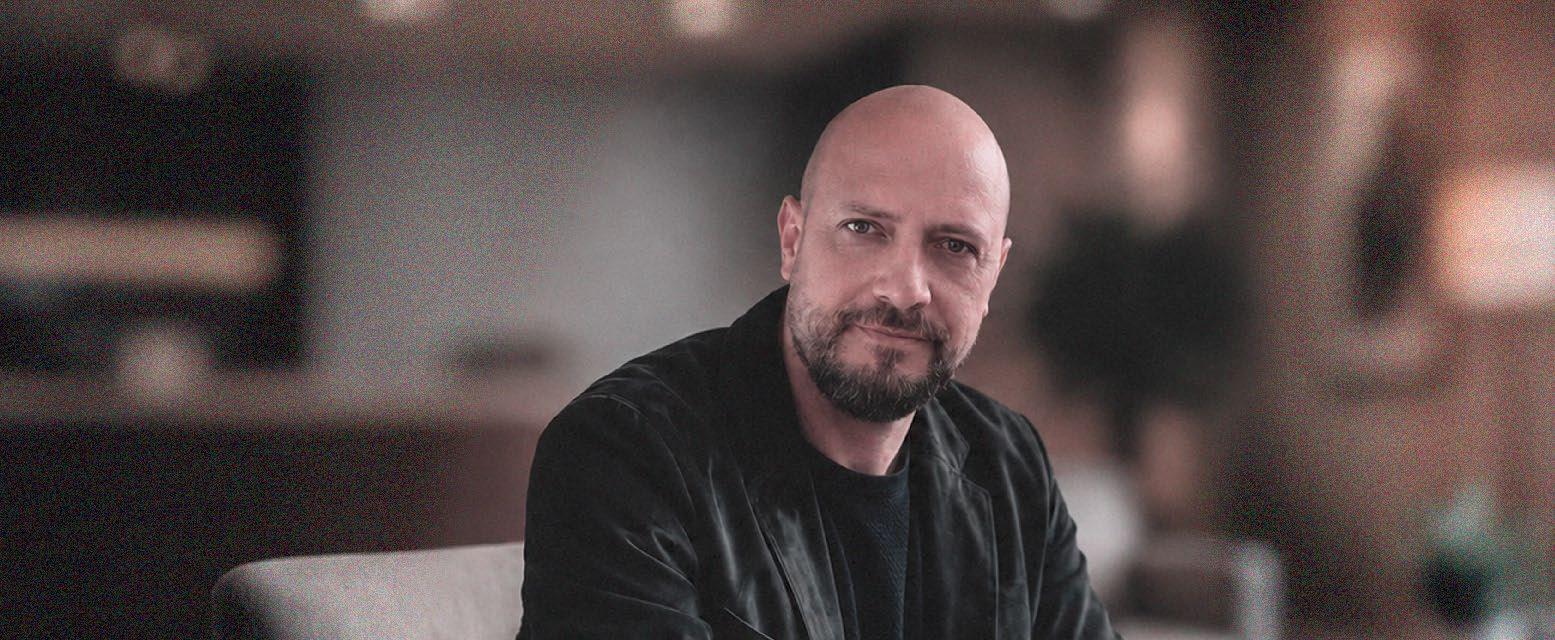
WHEN I LOOK BACK AT THE ROAD I'VE TRAVELLED, THE PEOPLE STAND OUT FAR MORE THAN THE MILESTONES. THIS IS REALLY THEIR STORY, TOLD THROUGH MINE.
I was born and raised here on the Rock. I served ten years in the British Army, including an operational tour of Northern Ireland. Civilian life took me through telecoms, financial services, iGaming and regulated tech across five countries. Today I sit as Chief Security Officer at RockBlock Limited, a Gibraltar registered cyber and compliance firm.
None of that road would have been mine to walk without the people I'm about to write about.
Last year the Cybersecurity Excellence Awards named me Executive of the Year. I still find it strange to write, and part of me keeps expecting an email asking for the trophy back. The honest truth is I don't fully see it as mine. It belongs to the people who taught me, trusted me, and put up with me along the way.
Titles come and go at the blink of an eye, in all honesty. What stays is the mark you leave on people's lives, and the mark they leave on yours.
"Titles come and go at the blink of an eye. What stays is the mark you leave on people's lives, and the mark they leave on yours." What the uniform gave me, and to whom I owe it
Before any of the security titles, before the multi-jurisdictional teams, before the corporate audits and boardroom risk reports, there was a uniform.
The British Army gave me structure most people don't acquire that young. Discipline, planning under pressure, the calm that comes from knowing what to do when nothing around you is. But honestly, none of that came from the uniform itself. It
came from the men and women I served alongside. The corporals who corrected me when I was sloppy. The sergeants who modelled leadership without ever calling it that. The lads beside me in Northern Ireland who made the hard days bearable just by being there.
"None of it came from the uniform itself. It came from the men and women I served alongside."
I owe a lot to those years and to the people I shared them with. Wherever they are now, I hope they know.
Coming home to Gibraltar after service was its own kind of reset. Civilian life doesn't run on military timetables, something I learnt slowly and mostly by being twenty minutes early to everything for the best part of a year. I took the long road into technology, working my way through telecoms, financial services, and eventually the world that would shape the rest of my career, Gibraltar's regulated iGaming sector.
A boss who became something more It was in iGaming that I first met James Howard. Or more accurately, I started reporting to him.
James was my boss back then, and I looked up to him from day one. Older brother energy more than hierarchy. He carried himself in a way I quietly wanted to learn from, and he led without ever needing to remind anyone he was leading. He showed me what it looked like to make decisions with calm, to back your people, to keep relationships intact even when the work changed. We worked together until our paths diverged, as paths do. But James doesn't lose people he's worked with. That's a quality you only fully notice once you've watched him do it for years. I'm one of those people. I'll always be glad of it.
What started as boss and employee grew, over the years, into a friendship that's stronger today than it's ever been. We've both got houses full of kids, which gives us no shortage of common ground and a shared respect for any room with a working lock. We share the same haircut too, although neither of us picked it. Time made that call for us. The number on the passport keeps climbing as well, faster than either of us asked it to.
"James doesn't lose people he's worked with. That's a quality you only fully notice
once you've watched him do it for years."
What I didn't know at the time was that he and I would do it again, in a different chapter, with two more people who would change the shape of my working life entirely.
The crew that came back
When the call came to join a regulated business in the betting industry, James and I were both inside again, this time as peers rather than as boss and employee. Same trust, different room.
Two new voices came with that chapter. Robin Weaver and Thomas Butler, both engineers, both younger than me by some margin, both bringing things the team didn't have before, and both quietly teaching me more than they probably realise.
Robin is the kind of technical mind that makes you stop mid-sentence and listen. Irish, sharp, calm, with a depth of understanding that would feel at home anywhere in the world. He explains complex things in plain English, which is rarer than people realise. I have walked out of conversations with him still thinking about the answer hours later.
Thomas is younger still. Fresh out of his studies, full of energy and ideas, the kind of engineer you can tell has been very well taught. But what makes Thomas Thomas is the perspective and humility he carries. I'd happily sit and listen to him explain something outside my own field for hours. Pure talent dressed in humility is the rarest combination of all, and he wears it without trying.
"Pure talent dressed in humility, which is the rarest combination of all."
The four of us found something during that chapter that doesn't always happen in business. A team that became something deeper than colleagues. Trust earned over real work in real pressure. The kind of bond you don't engineer, you just notice once it's there. I count myself lucky to have walked into it.
The day the chapter closed
The business we were in eventually didn't survive. That happens. Industries shift, margins compress, companies go.
But the four of us didn't see four separate careers ending. We saw four people who, after years of working together at real
pressure, had a choice. Walk off in different directions and start over alone. Or take everything we'd learned about cyber, governance, engineering and risk, and put it to work together, on our own terms.
We chose the second. It wasn't really my idea. It was James's. I just said yes. Which, looking back, is how most of my better decisions have started.
The team behind RockBlock
James founded RockBlock. He's the entrepreneur of the four, the one with the experience, the ideas, the contacts and the calm sense of how to build something properly. Joining him wasn't a decision I had to think about. It was obvious before he'd finished asking.
Robin came in as Chief Technology Officer. The technical engine of the firm. The voice in the room I stop to listen to when he speaks, every time.
Thomas came in as Vice President of Engineering. Bright, hungry, fresh, already carrying the weight of someone you can tell will be doing big things for a long time. The kind of teammate who makes the people around him better just by showing up.
I took the Chief Security Officer chair. My piece of the puzzle, the part of the team where the experience I happened to gather along the way has a home. Twenty years of telling people their passwords are rubbish finally found a job title to match.
I try not to use the word family when I describe us. Everyone uses it and it doesn't mean what it should anymore. But it's the closest word available. A tight crew with
quiet trust, the kind you only get from going through real things together. I'd back any of them in any room. I hope they'd say the same about me.
What we're building
RockBlock works with operators across regulated industries. The iGaming, fintech and financial services firms we've all spent our careers inside. We know the pressure those businesses live with because we've felt it, not observed it.
We've been the people sitting across the table from auditors. We've been the ones running ISMS programmes through budget pressure. We've been the heads of IT when the regulators came knocking. So we know what good looks like, and what gets pretended.
The firm operates from Gibraltar with a multi-jurisdiction footprint baked in. Gibraltar is part of a quiet trend that doesn't get the column inches it deserves. This isn't just a place businesses are licensed from. It's increasingly a place expertise is exported from.
"Gibraltar isn't just a place businesses are licensed from. It's increasingly a place expertise is exported from." And to those who believed
A lot of people told me along the way that the path I took would break me. The industry was too hard. The pressure too constant. The audits, the regulators, the technology that never sits still. Pick the safer route, they said.
They weren't entirely wrong. I got knocked down more often than I got up. Most of what shaped me came from those mo-
ments, not the easy ones. The lessons stuck because they had to.
But many more believed I'd be alright. My wife Alicia Costa, who has been the pillar of my life through every chapter of this, the calm when I had none, the steady hand I leaned on more than I ever let on. Our children, who put up with the long nights, the audits, the trips and the worry without complaint. Old friends who still pick up the phone after years apart. Bosses who took a chance on me when I hadn't yet proved I was worth one. Teammates who covered for me when life threw curveballs. And the three at RockBlock who keep choosing to do this with me.
Self-belief isn't really self-belief. It's a quiet borrowing from everyone who believed in you first. The trick is to remember who you owe.
"Self-belief isn't really self-belief. It's a quiet borrowing from everyone who believed in you first."
If you're somewhere on the Rock looking at a hard industry and wondering whether to try, that's the only message worth leaving with you. Find the people who'll believe in you. Hold on to them. Repay them by trying.
It's also why I founded Gibwork in 2011, a non-profit dedicated to helping people in Gibraltar find a path to stability through work. It's still going, and that part matters as much as anything else I've built.
And one last word, for Jean King, owner and editor of Insight Community Magazine Gibraltar. I've known her since I can remember. Running a magazine isn't half as easy as she makes it look, and she's carried this one through more than most people will ever see, professionally and personally. She's one of Gibraltar's quiet heroes, and the voice on this page is hers to share before it's ever mine to claim. Thank you for the room to say any of it.
I'm trying. James is. Robin is. Thomas is. And we're trying together. We're just getting started.
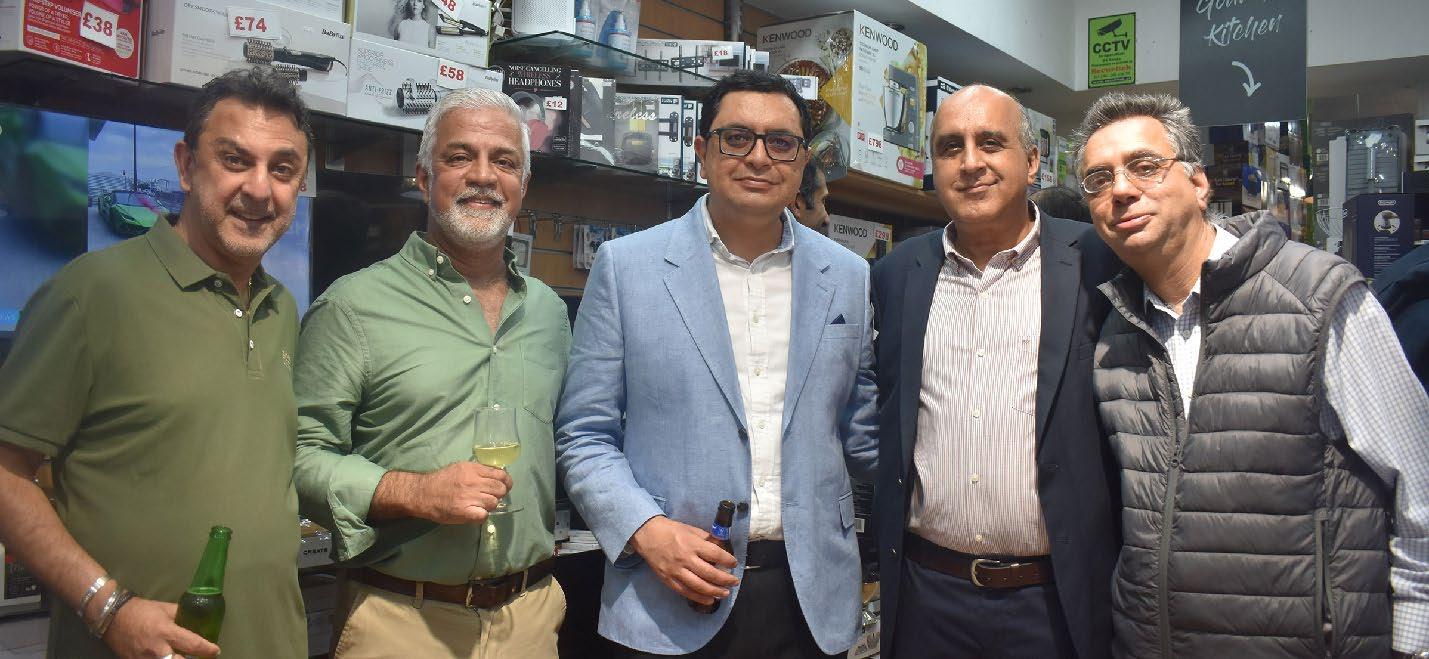
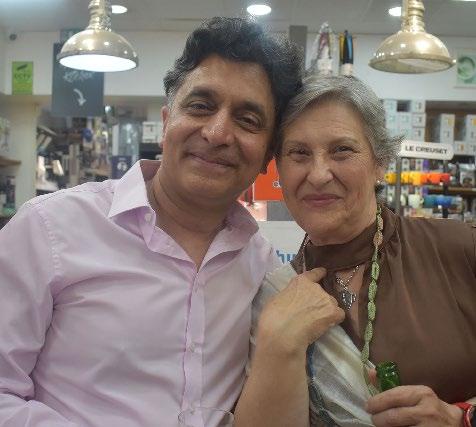
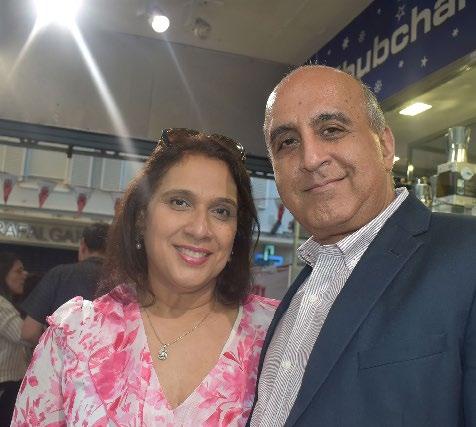
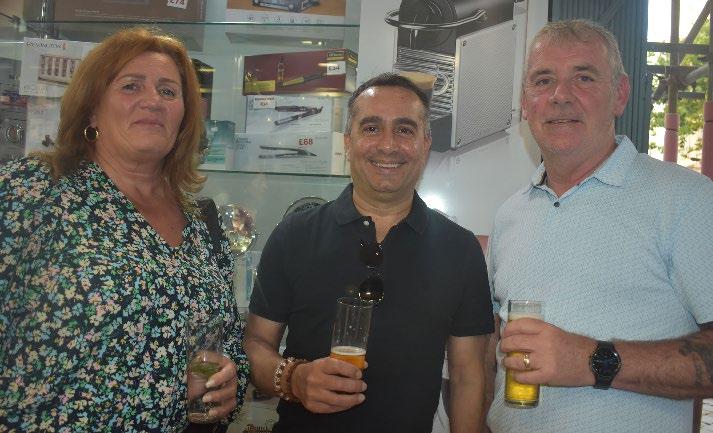
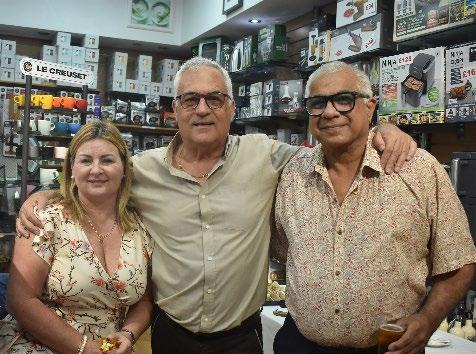
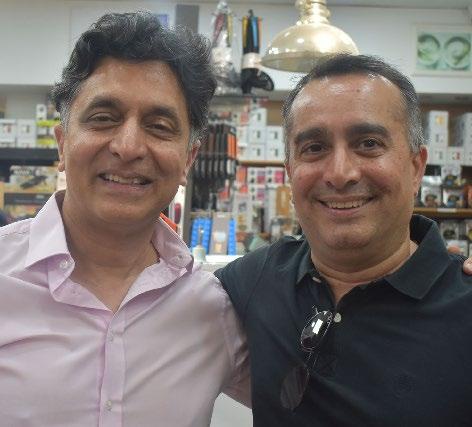
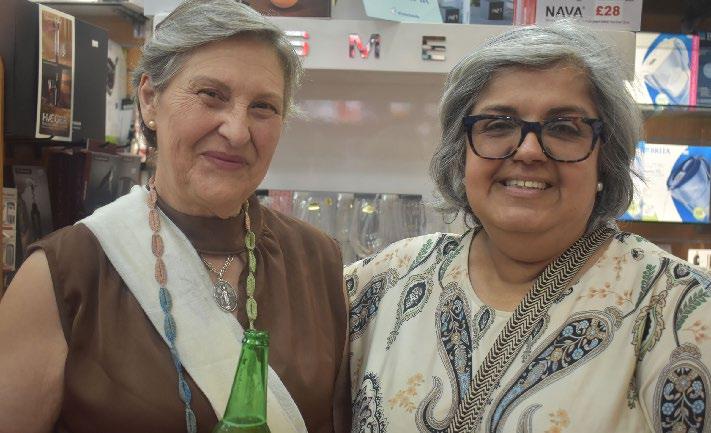
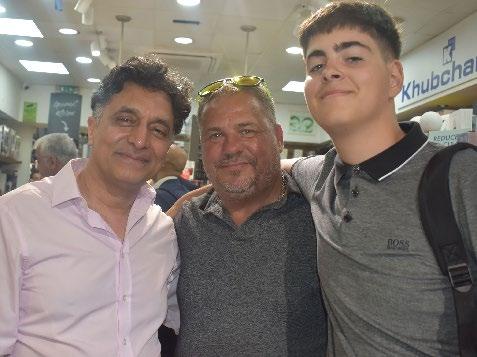
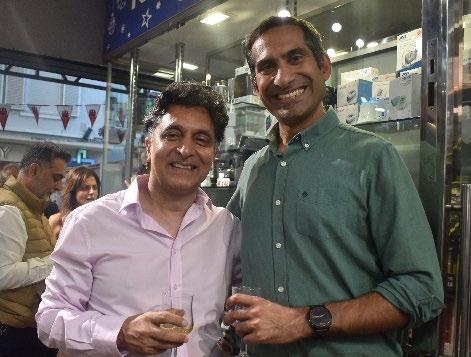
KHUBCHANDS OF 54 MAIN STREET WERE HAPPY TO HOLD A SPRING EVENT AT THEIR STORE ON THE 27TH MAY.
The event was organized by The Dream Team, Catering was provided by Vicky’s Natural Kitchen, and the music was provided by DJ Wayne. The event was attended by many of Khubchands valued Trust card customers and friends. The next event will be held in the Autumn.
Woman
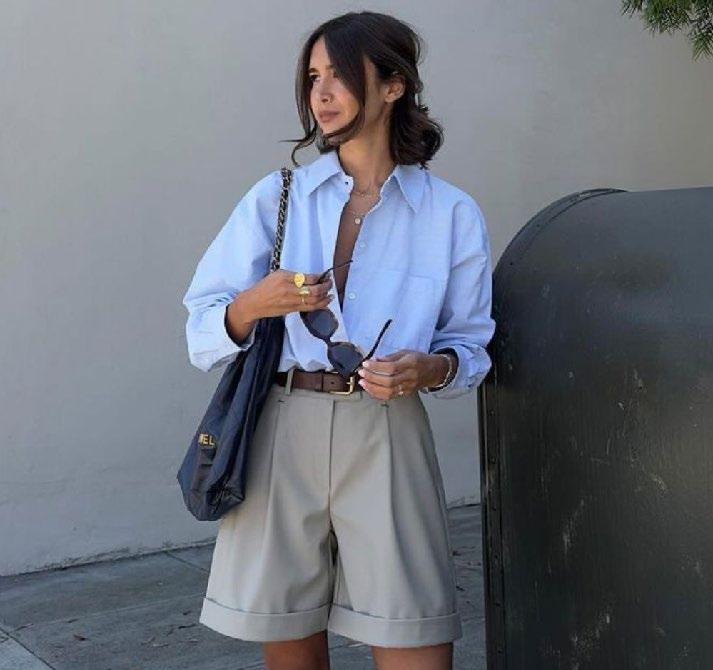
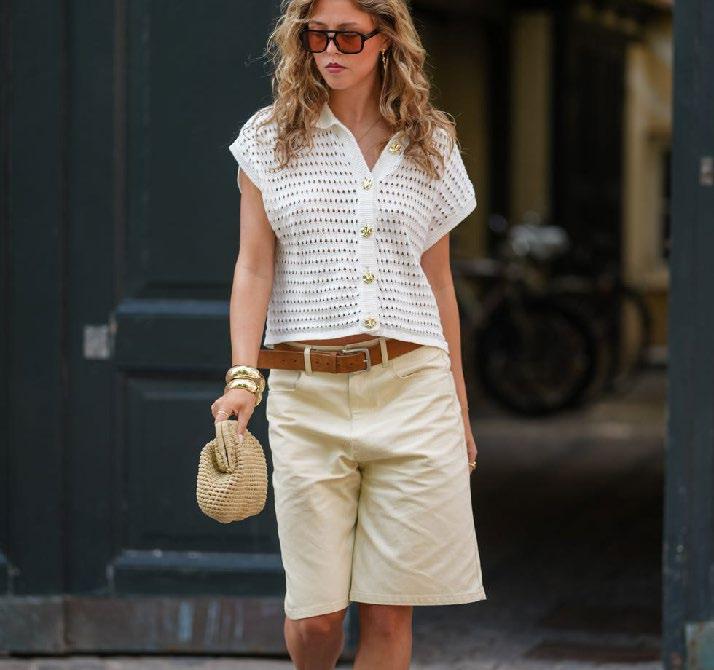
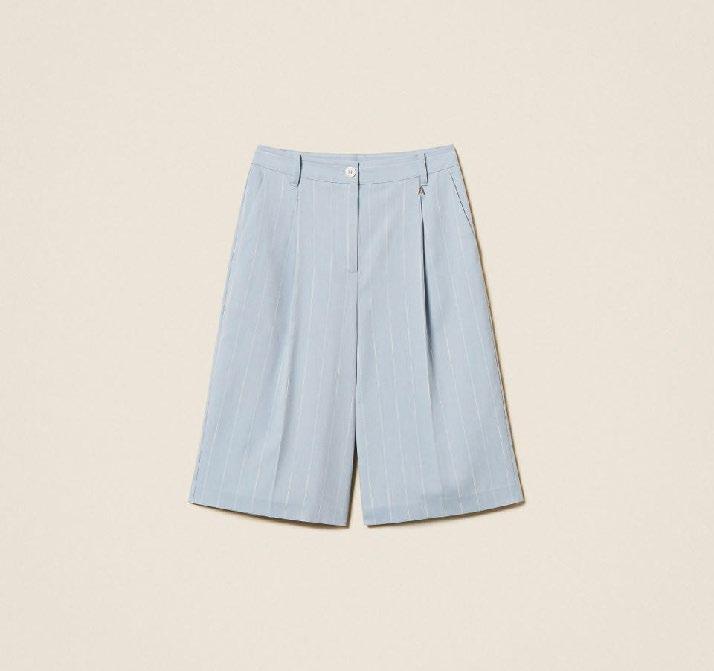
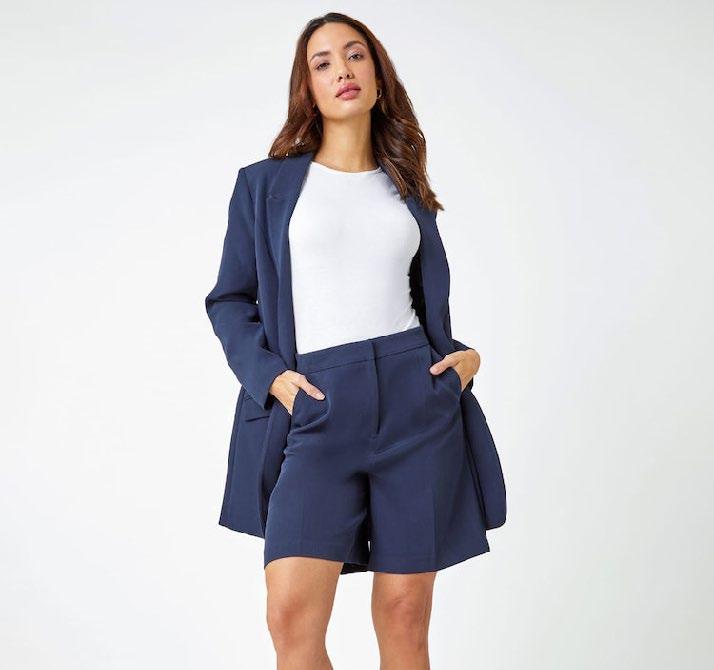
NOSTALGIA - SWINGING 60'S TRENDS - BERMUDA SHORTS
SMOOTH LIKE BUTTER (YELLOW)
STYLE STARTS AT THE TOP
MAKING A SPLASH- SUMMER SWIMWEAR WHAT WOMEN WANT... THIS SUMMER
JENNY EAGLE
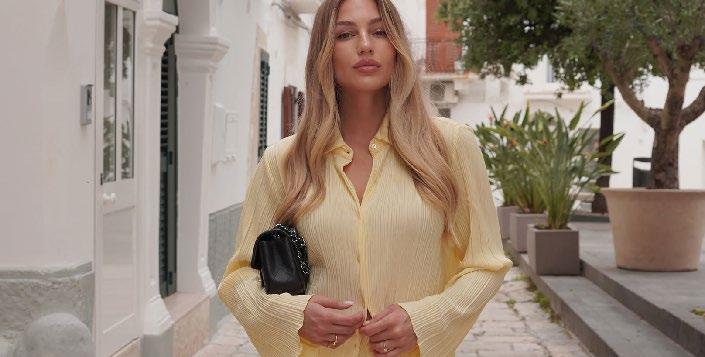
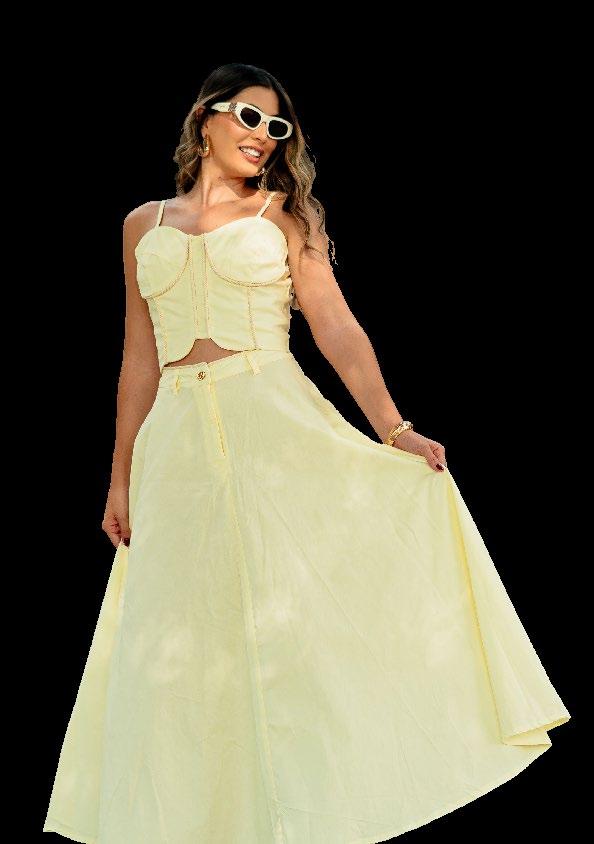
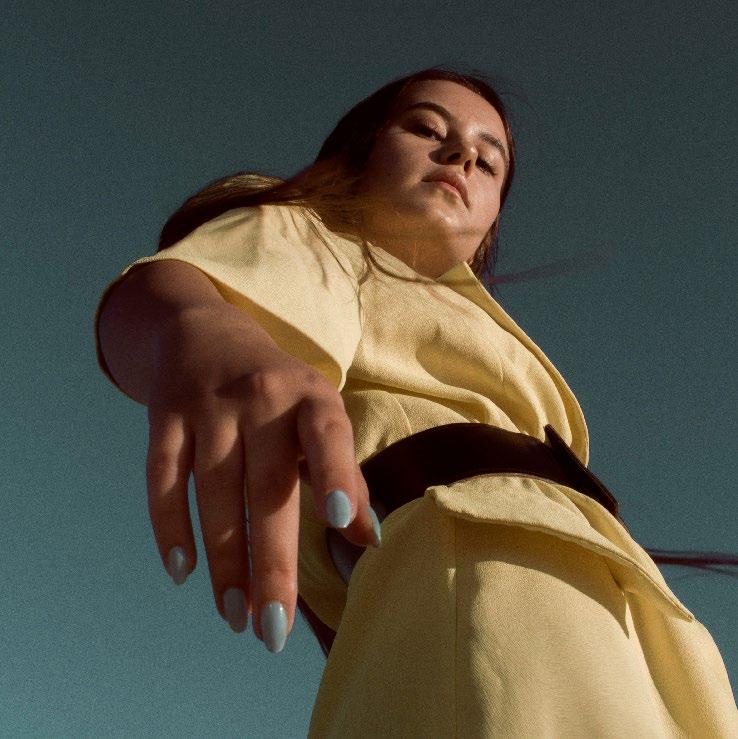
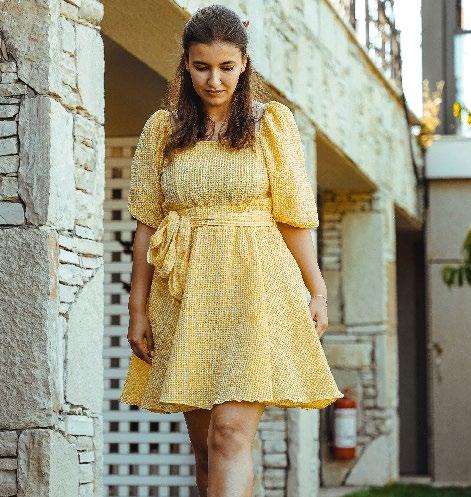
Butter yellow is becoming one of the most widely adopted colours for spring/ summer 2026 womenswear, but not in the way seasonal trends usually arrive. Instead of a sudden push, it has built steadily across runway collections, retail buying and celebrity dressing until it now sits close to established neutral tones such as white, cream and beige.
In places like Gibraltar, strong sunlight, sea glare and pale buildings tend to intensify colour. Butter yellow avoids that effect. It stays soft rather than bright, especially in lightweight fabrics like cotton, linen and silk blends. Across fashion more broadly, the shade reflects a wider shift away from stark minimalism towards softer, more flexible wardrobes. Colour is being used less for impact and more for usability - pieces that can be repeated, restyled and worn across multiple settings.
That change is visible in how butter yellow is being positioned. It is no longer appearing only in seasonal highlight edits or resort capsules. Instead, it is being integrated into core summer ranges alongside traditional neutrals, particularly in shirts, tailoring and simple dresses.
The appeal is partly practical. Clothing now has to work harder than in previous seasons, moving between daytime and evening use without requiring a full outfit change. In that context, butter yellow functions less as a statement
BUTTER
Y ELL O W:
IF 2025 WAS DEFINED BY SOFT PINKS, 2026 IS SHIFTING TOWARDS BUTTER YELLOW. IN GIBRALTAR’S INTENSE COASTAL LIGHT, THE SHADE IS EMERGING AS A PRACTICAL NEUTRAL, REFLECTIVE, EASY TO WEAR AND INCREASINGLY USED ACROSS BOTH LUXURY AND HIGH STREET COLLECTIONS.
colour and more as a replacement for white or cream in everyday wardrobes.
Styling remains simple and restrained. The most common combinations include butter yellow with white linen, denim, soft stone tones or tonal beige. The focus is not contrast, but continuity, a visual softness that allows pieces to sit together without sharp breaks.
In natural light, the shade shifts subtly. It appears clearer under direct sun, softer in shade and warmer at sunset. That responsiveness has helped it translate easily into warm-weather dressing, particularly in coastal and outdoor environments.
FROM COUTURE TO HIGH STREET
The adoption of butter yellow has been visible across both luxury and accessible fashion, with designers and retailers approaching it in broadly similar ways.
At the luxury end, houses including Alaïa, Toteme and 16Arlington have all incorporated soft yellow tones into recent collections. Rather than using it as a focal point, they tend to apply it across fluid dresses, lightweight tailoring and minimal separates where silhouette and fabric remain the priority.
At Chanel and Loewe, pale yellow has appeared in structured yet soft tailoring and summer-ready pieces that lean towards understated luxury rather than bold colour statements. In each case, the tone is used to support shape rather than dominate it.
This direction has been echoed in couture and eveningwear. In a recent interview discussing her use of soft yellow tones in couture collections, designer Tamara Ralph says she chose the colour because it felt “light and optimistic without being overpowering”, adding that it worked particularly well under stage and red-carpet lighting conditions.
That focus on softness rather than saturation has helped the colour move easily between eveningwear and everyday clothing.
At the other end of the market, the high street has adopted butter yellow quickly and broadly. Zara, Mango, COS and H&M have all included variations of the shade in summer collections, particularly in linen shirts, wide-leg trousers, knitted tops and slip dresses.
Rather than being limited to statement pieces, it is now appearing across all categories, suggesting it is being treated as a core seasonal colour rather than a trend-led accent.
Retail positioning reflects this shift. In many collections, butter yellow is now placed alongside white, black and beige rather than separated into trend rails. That signals how quickly it has moved from directional colour to commercial staple.
CELEBRITY VISIBILITY AND CULTURAL TRACTION
Celebrity dressing has played a role in normalising butter yellow, although not through one defining moment.
American actor Timothée Chalamet wore a butter-yellow Givenchy look designed by Sarah Burton at the Oscars, an appearance widely reported in fashion media as a key example of soft colour entering menswear tailoring on the red carpet. The look was noted for its departure from traditional black eveningwear and its emphasis on colour as subtle variation rather than statement.
Elsewhere, singer Sabrina Carpenter has been photographed in pale yellow stage and off-duty outfits during promotional appearances, contributing to the colour’s visibility in younger, fashion-led audiences. In most cases, styling remains minimal, reinforcing the broader direction towards simplicity rather than spectacle.
Model Gigi Hadid has also worn butter yellow knitwear and casual separates in New York, often styled with neutral tones and understated accessories. These appearances have helped position the colour within everyday dressing rather than purely occasionwear.
Rather than defining the trend, these examples reflect its direction: butter yellow is being integrated into existing wardrobes rather than introduced as a seasonal novelty.
SOFTER COLOUR PALETTE
The growth of butter yellow reflects a wider change in how fashion is being designed and purchased. After several seasons dominated by monochrome palettes and sharp neutrals, there is now a shift towards softer colour systems that are easier to repeat and restyle.
Consumers are increasingly prioritising versatility. Clothing is expected to function across multiple environments and occasions, reducing the need for highly specific or occasion-led pieces. Butter yellow fits into that expectation because it behaves consistently across different contexts without requiring styling adjustment.
It also expands the idea of neutral dressing. Traditionally, neutrals have been defined by absence - white, black, navy and beige. Butter yellow introduces warmth while still functioning in the same practical way. It pairs easily with denim, white, stone and black, making it adaptable across existing wardrobes.
In warmer climates, this becomes particularly relevant. Strong sunlight can make darker colours feel heavy and pure white feel stark. Butter yellow sits between those extremes, offering softness without loss of clarity.
Industry commentary has linked this shift to a broader move towards repeat wear and reduced wardrobe turnover, where colour plays a supporting rather than defining role in purchase decisions.
A COLOUR SHAPED BY USE, NOT TREND
What distinguishes butter yellow from previous seasonal shades is the way it is being used across categories rather than confined to specific looks.
It is appearing simultaneously in tailoring, dresses, knitwear and separates, often within the same collections. This creates consistency across product ranges rather than isolated trend moments.
As a result, it is functioning less as a directional colour and more as part of a wider wardrobe system, one that prioritises ease, repetition and adaptability. That system-based use explains why it is spreading steadily across both luxury and high street fashion rather than peaking sharply and fading.
In practical terms, butter yellow is not replacing existing neutrals. It is extending them, offering another option within a familiar framework rather than changing it entirely.
Butter yellow is not emerging as a traditional seasonal statement. Instead, it reflects a broader shift in fashion towards clothing that is easier to wear, repeat and integrate into everyday life.
Its rise across luxury houses, high street retailers and celebrity dressing suggests it is being adopted less as a trend and more as a practical colour choice within summer wardrobes.
In environments like Gibraltar, where light and landscape strongly influence how clothing is perceived, the effect is particularly clear. The shade does not dominate its surroundings. It sits within them.
Rather than marking a big new shift, butter yellow reflects something quieter - fashion is moving towards easier, more repeatable clothes with small changes rather than bold statement looks.
Swinging Back to the Sixties: WHEN FASHION
Even if you weren’t there and even if you don’t remember the Swinging Sixties first-hand, the chances are your wardrobe still does. From the mini-skirt tucked away for summer holidays to the flared jeans pulled on for weekends, the fingerprints of the decade are everywhere. Modern fashion still borrows shamelessly from the Sixties’ fearless innovation: bold prints, streamlined tailoring, oversized sunglasses, statement boots, bohemian embroidery, and that enduring belief that clothes should say something about who you are. The decade didn’t simply create trends; it changed the way we think about style itself. Every time designers revive a shift dress, rediscover psychedelic colour, or send bell-bottoms back onto the high street, they’re tipping their hat to a generation that transformed fashion forever.
There are certain fashion decades that never really leave us. They drift in and out of wardrobes, reappear on catwalks, and suddenly show up on teenagers who think they’ve invented vintage. But the 1960s? The Sixties are different. They weren’t just fashionable, they were revolutionary.
It was the decade fashion loosened its corset strings, kicked off its sensible shoes, and decided to dance barefoot at a music festival. From the polished glamour of Jackie Kennedy to the wild swirl of tie-dye and bell-bottoms, the Sixties packed more style evolution into ten years than most eras manage in fifty, and perhaps that’s why we still can’t stop talking about it.
The early years of the decade began with elegance and restraint. Women still wore hats and gloves to lunch. Fashion magazines worshipped refinement. Hair was neat, skirts were ladylike, and sophistication was everything, and nobody embodied that polished perfection better than Jackie Kennedy.
With her pillbox hats, oversized sunglasses, and immaculate tailored suits, Jackie became the style icon of the early Sixties almost overnight. Women copied everything: the bouffant hair, the sleeveless sheath dresses, the pearls, the neat little gloves. Her look was aspirational but not flashy, wealthy without shouting about it. Even today, when we see a cropped jacket with giant buttons or a chic A-line coat, there’s a little whisper of the “Jackie look” lingering somewhere in the seams.
But while society ladies were dressing for luncheons and gallery openings, something entirely different was happening on the streets of London - youth culture was exploding, and thankfully fashion would never recover from it.
By the middle of the decade, London had become the epicentre of cool. Carnaby Street and the King’s Road turned into global fashion playgrounds, powered by music, rebellion, photography, and a generation determined not to dress like their parents. This was the birth of Mod style and suddenly everything got shorter, brighter, younger, and infinitely more fun - enter the mini-skirt.
If one garment defines the Sixties more than any other, it’s surely that daring little hemline. The mini-skirt wasn’t just clothing; it was a cultural earthquake. Knees, yes actual knees, be- came fashion’s biggest talking point.
The woman most associated with this move was Mary Quant, who named the miniskirt after her favourite car, the Mini. Her London boutique Bazaar on the King’s Road in Chelsea, became a hub for stylish young women rejecting old-fashioned rules. Before Quant, young people dressed much like their parents, but the “Swinging London” look, paired with Vidal Sassoon’s geometric bob haircut and white patent go-go boots, defined a new youth culture of dancing, freedom, and nightlife.
Boutiques transformed fashion by making youthful, affordable styles accessible in energetic retail spac es. The Beatles popularised bold paisley prints, while miniskirts, coloured tights, patent boots, and brightly coloured shift dresses defined the era. Op Art patterns and graphic makeup - including dramatic eyeliner and Twiggy’s iconic spider-like lashes - completed a look that made fashion youthful and democratic rather than formal and grown-up.
Girls no longer needed couture salons in Paris to look stylish. They could buy affordable, trend-driv en clothing right off the rack. Boutique culture ex ploded, especially in London, where shops became destinations as exciting as nightclubs. One of the most legendary was Biba, founded by designer Barbara Hulanicki, with its dark Art Nouveau in teriors, feather boas, velvet, and decadent atmo
sphere - Biba wasn’t simply a shop, it was an experience. Young women wandered through clouds of perfume and racks of velvet maxi dresses as though entering some wonderfully theatrical dream world.
At Biba, fashion became immersive, romantic, and just a little bit decadent. The look blended vintage nostalgia with modern cool: floppy hats, smudgy makeup, satin shirts, and long flowing silhouettes that hinted at the Bohemian styles waiting just around the corner.
By the late Sixties, the mood had shifted again. The polished Mod girl with geometric eyeliner slowly gave way to something softer, earthier, and more rebellious when the Hippie movement arrived in full colour. The late Sixties Bohemian look was part political statement, part artistic experiment, and part glorious anti-fashion revolution. Young people rejected rigid social expectations, embraced peace-and-love idealism, and dressed accordingly.
In came natural fabrics, embroidery, beads, suede, crochet, and clothing that looked as though it had travelled through several continents and at least one music festival. Who remembers the Afghan coats with their pungent smell often described as "goat” or "camel”?
Bell-bottoms became the defining silhouette of the era. Tight at the hips and dramatically flared below the knee, they moved beautifully when dancing and somehow made everyone look cooler than they probably were. Not forgetting footwear, of course, and the platform shoes which became one of the most recognisable fashion trends of the 1960s, worn by both men and women as a symbol of bold self-expression and changing social attitudes. These shoes challenged traditional ideas of gender and style, as fashion became more daring and unisex during the decade.
Tie-dye exploded too. Swirls of psychedelic colour transformed shirts, skirts, scarves, and dresses into wearable artworks. Nothing matched but deliberately so. What made the Hippie style so fascinating was its global influence. Indian prints, Moroccan embroidery, Native American-inspired fringe, and Victorian-inspired lace all mixed together into one gloriously eclectic wardrobe. Fashion became personal storytelling rather than social conformity.
The swinging sixties brought us a whole array of style icons, from the world's first supermodels Twiggy and Jean Shrimpton, to Mick Jagger who was undeniably one of the most prominent sixties fashion icons. Jagger spearheaded the "Swinging London" dandy look, and alongside quintessential London mod David Bowie they completely revolutionised rock aesthetics, breaking gender barriers with their fluid, androgynous style. Blurring masculine and feminine norms, they popularized silk blouses, makeup, and dresses on the global stage
By the late Sixties, Hippie menswear mirrored women’s fashion in many ways: beads, denim, embroidery, fringed suede jackets, bell-bottom jeans, tie-dye shirts, and shaggy hair everywhere. It’s difficult now to appreciate just how radical this was. The Sixties gave men permission to enjoy fashion openly, and that cultural shift still shapes menswear today.
What makes Sixties fashion so enduring is that it contained contradictions. It could be polished or rebellious, elegant or outrageous, structured or free-flowing. Few decades embraced change with such enthusiasm. You could be a Jackie girl in the morning and a mini-skirt Mod by evening, or perhaps a Biba romantic during the week and a barefoot Hippie at the weekend.
Fashion had become playful. It had personality, and maybe that’s the real reason we remain obsessed with the era. The Sixties weren’t about following one strict trend. They were about experimentation, self-expression, and optimism. Clothes reflected a generation discovering freedom in real time.
Even modern fashion endlessly borrows from the decade. Every time designers send mini-skirts down the runway, revive flared trousers, reintroduce psychedelic prints, or rediscover tailored Sixties glamour, they’re dipping back into that extraordinary cultural moment.
Somewhere between Jackie Kennedy’s immaculate polish, Mary Quant’s youthful rebellion, Biba’s theatrical romance, and the flower-power freedom of Hippie style, the Sixties created the modern fashion personality.
Making up your summer beauty bag
A SUMMER BEAUTY BAG SHOULD BE STREAMLINED FOR HEAT AND HUMIDITY. FOCUSING ON PROTECTION FROM THE SUN AS WELL AS KEEPING YOU SWEAT FREE AND FEELING CONFIDENT ALL DAY.
A sunscreen is an absolute must, there are some great products on the market which offer sun protection while acting as a glowing primer under your makeup.
Swap your heavy powder for a multipurpose tint for cheeks and lips.
Waterproof mascara is a must to avoid panda eyes.
Beauty blotting papers are useful when the heat gets just a little too much.
Should you lay in the sun too long, there are many Multi -purpose soothing balms on the market which are great for treating minor sunburns.
Finally, don’t forget to protect your hair, add a Hair mist to your summer beauty bag to protect it from UV Rays and saltwater.
There are some great summer products available and advice for your summer routine in our own Main Street Stores
Be safe in the sun, Keep glowing and feeling fabulous this summer
The Long and the Short of it.
Long gone are the days when Bermuda shorts meant holiday compromise dressing. Summer 2026 is rewriting the rules, turning the knee-length short into the season’s quiet power piece - sharp enough for the city, relaxed enough for the coast, and everywhere in between.
Bermuda shorts are returning for Summer 2026 with a noticeably more considered identity. Once associated with practical holiday dressing or office-adjacent compromise, the silhouette has been refined into something that sits much closer to modern tailoring than casualwear.
The shift is visible in the cut. Waistlines are higher and more defined, legs fall in straighter, longer lines, and hems sit neatly just above the knee. Rather than reading as “short trousers,” the new interpretation feels intentional, a softened version of suiting adapted for warmer weather.
Colour plays a supporting role in this evolution. Instead of playful seasonal tones, the dominant palette is restrained: white, stone, cream, black and muted neutrals. The effect is deliberate simplicity, almost uniform-like in its consistency, allowing the silhouette itself to take priority over decoration.
What is driving this return is not a single trend moment, but a broader change in how wardrobes are being built. Clothing is increasingly expected to operate across different parts of the day without requiring a full reset. Outfits are less about occasion and more about movement, between work, social life and downtime.
Within that context, the Bermuda short is positioned as a practical solution rather than a statement piece. It offers structure without rigidity, ease without informality - a middle ground that feels increasingly relevant in warmer, fast-moving urban environments.
sit in a more stable, functional position - chosen for coverage, versatility and ease rather than trend impact.
In effect, the silhouette is less about volume and more about positioning. It exists as a wardrobe staple rather than a seasonal headline.
OFF-DUTY STYLE
The return of the Bermuda short has also been reinforced by off-duty styling, where restraint has become the defining aesthetic.
Kendall Jenner, the American model, and Hailey Bieber, the model and media personality, have both been frequently seen wearing tailored Bermuda shorts styled with simple tank tops, oversized shirts and structured blazers. The styling is deliberately understated, relying on proportion and silhouette rather than embellishment or branding.
The overall effect is controlled but relaxed, an approach built on clean lines, neutral tones and minimal layering. It reflects a wider shift in fashion away from overt styling and towards more paredback combinations that feel effortless rather than constructed.
Luxury brands including The Row, Bottega Veneta and Saint Laurent have mirrored this direction, reworking Bermuda shorts in linen, cotton twill and lightweight suiting fabrics. Rather than treating them as resort pieces, they are increasingly positioned as part of the everyday wardrobe.
Relaxed tailoring, pleated fronts, wider leg shapes and pressed creases are all emerging as key details’ WGSN
In places such as Gibraltar, where daily life often shifts between coastal cafés, work settings and evening social plans, that adaptability becomes especially visible. The Bermuda short fits into that rhythm without friction, requiring little adjustment as the day progresses.
The styling formula for Summer 2026 reflects this stripped-back approach. High-waisted Bermuda shorts are paired with fitted ribbed tanks and minimal gold jewellery. The proportions do the work: the high waist elongates the leg, the longer line refines the silhouette, and the fitted top keeps everything grounded and uncomplicated.
By day, the look holds its own in casual settings - coffee runs, coastal walks, informal meetings. By night, it transitions easily with the addition of an oversized blazer or lightweight jacket, shifting into a more polished vibe without losing its ease.
It is this ability to adapt rather than dominate that defines the Bermuda short’s return. It does not rely on novelty or statement detailing. Instead, its relevance comes from utility and proportion.
‘NU-NIFORM’
DRESSING
Trend forecasting agency WGSN (Worth Global Style Network), which analyses global retail data, cultural behaviour and fashion direction to anticipate upcoming trends, places the Bermuda short within a wider shift in womenswear rather than as a standalone trend.
According to WGSN, consumer behaviour is moving away from occasion-specific dressing towards simplified, repeatable wardrobes built around consistency and versatility - what the agency describes as “nu-niform” dressing.
It reports: “Consumers are increasingly prioritising hybrid wardrobe pieces that can transition across multiple contexts. The Bermuda short sits within this shift as a bridge between tailoring and casualwear.”
This repositioning is reflected in the design language. Rather than being treated as a seasonal basic, the silhouette is being rebuilt using tailoring cues more commonly associated with suiting. Pleated fronts, pressed creases, wider leg shapes and sharper waist definitions are all contributing to a more structured finish.
At the same time, WGSN highlights that the Bermuda short is not replacing dominant shorts styles, but occupying a more selective role within the category. Shorter and mini silhouettes continue to account for the majority share, while Bermuda lengths
Across collections, design details are becoming more precise. Sharper creases, cleaner waistbands and more considered proportions elevate the silhouette without overcomplicating it. The emphasis is on refinement rather than reinvention.
Fabric development follows the same logic. Lightweight wool, linen and cotton blends are being used to support movement and breathability while maintaining a tailored finish. In many cases, fabric choice is doing as much work as silhouette in defining the look.
REGIONAL DIRECTION
While the overall silhouette remains consistent, its interpretation varies across markets.
In the UK and US, the Bermuda short is evolving gradually, with designers refining familiar tailoring rather than dramatically reshaping the category. It sits within a broader trend towards wearable tailoring and understated summer wardrobes.
In APAC markets, however, there is stronger momentum behind more structured and elongated versions. As officewear continues to relax, the Bermuda short is being adopted as part of a more formal warm-weather uniform, particularly in urban work environments.
Younger consumers are simultaneously pushing the silhouette in a different direction. Oversized, skate-inspired denim Bermudas are gaining traction, leaning into volume, comfort and a more relaxed attitude to proportion. This interpretation moves further away from tailoring and closer to streetwear influence.
Across all markets, however, the common thread is adaptabilitywhether through tailoring, utility or casual reinterpretation.
SUMMER’S POWER PIECE
What defines the Bermuda short in Summer 2026 is not impact, but integration. It does not dominate an outfit, but it structures it. It sits within the look rather than on top of it.
This reflects a broader shift in womenswear towards flexibility over categorisation. Clothing is increasingly expected to function across different environments and moments without requiring adjustment - moving from city to coast, day to evening, casual to considered, often within the same wear.
In that sense, the Bermuda short is no longer positioned as an alternative to shorts or trousers. It has become a neutral space between them - quietly consistent, deliberately adaptable, and increasingly central to how modern summer wardrobes are being built.
Style STARTS AT THE TOP
Summer is the perfect time to elevate both our holiday and day to day looks.
Sun friendly hairstyles, chic accessories, jaunty scarves, fabulous sunglasses or a stylish hat can offer practical and elegant style solutions during your summer days and evenings.
Hats:
A hat can be your best friend during your Summer holidays. The variety of styles and colours are limitless.
Sporty caps keep your hair in place when you next go sailing, while a silky head scarf can add a Bohemian touch especially if snapped in place with a sparkling hair clip or two.
There are a multitude of head accessories for summer, ranging from raffia sun hats providing Mediterranean glamour to claws and pins to keep your hair looking chic.
STRAW HATS:
The classic raffia hat, best used to embody the Riviera’s heyday, is a definite summer must.
Disguise yourself like Grace Kelly behind the wide brim of a straw hat — sporting matching oversized glasses, naturally.
BUCKET HATS:
The simple cotton bucket hat is another popular seaside staple first popularise by Brigitte Bardot in the 1960s. This summer, we will be wearing slouchy cotton versions rendered in flamboyant prints, psychedelic flowers or leopard spots.
CAPS:
Whichever activity you chose – a bumpy speed boat ride or playing tennis – it is the perfect headwear to keep your hair in place all summer.
Chic and Practical Summer hairstyles:
Summer is the perfect time to show our style in a practical but stylish way. Keeping cool but not wanting to comprise on how we look can be a tricky ask but the styles below, show it can be achieved:
MESSY UPDO:
A messy updo is a fresh alternative to the classic chignon, and it’s brilliantly-versatile. It can be dressed up with pretty flowers or diamante pins – it is perfect for a simplified and tamed down for a workday.
To get the look, create a parting to the centre or the side and tie your hair into a mid-to-low pony. Twist the tail to secure into a bun, pulling out pieces to frame your face and loosen the look.
HALF-UP TOP KNOT:
This casual style can be worn by anyone, from those with bobs to long locks. However, it takes more prepping than you might think. Here is the easy how-to guide to get a pro-finish.
Section a third of the hair (from the front to the crown) then secure with a snag-free band. Create more volume by backcombing the pony and then wrap around in a clockwise direction and secure with a grip. By doing this, the perfect topknot is born.
BUN:
The messy bun has been the go-to for the past few years because it is easy, fast and injects fun into your casual style. This look needs body so prepare wet hair with a volume boosting mousse to add lasting fullness. Then pull your hair into a high pony, tease with a brush for a little extra pouf, twist around and pull through the hair or loop through a band (an oversized scrunchy is on-trend) or firmly fix with sparkly or decorated clips.
BRAIDED BUN:
This look is easy, classic and has staying power, from exercise classes to soirees. Take a piece of hair from the left side of your head and plait. Do the same on the right side and gather all the hair up into a pony.
Plait the pony length and twist around and pin into place. Add a spritz of a strong hold hairspray so your bun stays in position.
To reduce the risk of your hair getting damaged after braiding it multiple times, invest in a hair protecting spray to lightly condition and protect against damage.
Scarves and wraps:
Once a byword for ladylike elegance, the scarf is having a quiet revolution. From the catwalks of Paris to the streets of London, it is being reimagined not just around the neck but as a tool for shape, contrast and personal expression.
There are numerous creative ways to style your scarf:
THE SCARF BRAID:
Thread a narrow scarf or twilly through a braid for a chic twist on boho styling – an ideal festival or summer holiday look that feels both relaxed and elevated.
SCARF USED AS A BELT:
On warmer days, a silk scarf tied at the waist offers a light, breathable way to define your silhouette. It is ideal for those who dislike the constriction of belts. Alternatively, simply thread one through the belt loops of your jeans or shorts for a relaxed, bohemian finish. Choose a scarf in your seasonal colour palette to pull your look together with ease.
BUSTIER RETHINK:
One of the more inventive ways to wear a scarf is as a bustier over a crisp shirt. It is a look that balances structure with softness. It is perfect for creative or dramatic dressers who enjoy the interplay of tailoring with a bold twist. Opt for a large square scarf in a high-contrast or painterly print for a significant impact.
HAT BRIM:
Loop a scarf around the crown of a summer hat to inject a pop of colour and personality. It provides a fresh alternative to the traditional ribbon and works well in printed silks or even block-colour linen.
SOFT LAYERING:
Drape a large square or oblong scarf around your shoulders instead of a cardigan on a summer evening. It is a breathable layer that adds elegance without heat. Tie the corners together horizontally you can create a cuff around each wrist
Sunglasses:
One accessory that can completely change a summer outfit are undoubtedly sunglasses. Even the simplest look of white tank top, linen trousers, hair up and minimal make-up can instantly feel more polished with the right pair.
Many of us have realised that sunglasses are never simply practical. They are an integral part of the outfit.
It makes sense to rotate between a few very specific styles. Some are timeless classics while others feel a tad more trend driven and playful.
It is always fun to mix luxury options and more affordable pieces. High street brands like COS and H&M have recently offered some incredibly strong statement accessories. The choice of shapes and styles are limitless and can suit every budget.
Interesting choices of sunglasses include:
• Black frames
• Aviators
• Oversized
• Elegant with clean lines
The beauty of summer is the amount of accessory options it affords us. We can dip into all manner of choices that will provide a different look for various events and occasions. It is easy to combine practical solutions with stylish ones.
As the warm weather season starts to ramp up, we inevitably seek stylish swimwear and beachwear that offer practical and chic summer looks that are as comfy as they are cool.
Swimwear that you can actually wear for a dip in the pool or splashing through the waves, not just basking in the sun. Beachwear that provides a day to evening crossover - so important, especially for holiday attire.
Beachwear Inspiration
Beachwear clothing comes in a variety of styles and types. If you want to take sun protection even further, invest in high UPF beachwear. The ultraviolet protection factor (UPF) rating denotes how well the fabric protects you against UV rays, a UPF 50 blocks about 98% of the sun’s rays. Look for swimwear, clothing, and accessories like hats with high UPFs.
While the best bathing suit is a well-fitting one that can survive a full day of salt water, sunscreen, and powerful rays, every summer brings a new lineup of swim trends that set the stage for the forthcoming beach season.
On the minimalist end of the sartorial spectrum, streamlined silhouettes and contemporary shapes are leading the way. Solid-coloured one-pieces and bikinis feel fresh again, mainly due to details like contrasting trims, graphic piping and subtle colour-blocking. Meanwhile, one-shoulder silhouettes offer an asymmetric twist on a classic offering. Retro swimwear is having just as much of a fashion moment. Mismatched polka dots, sophisticated gingham and vintage inspired florals bring nostalgia and femininity to your modern holiday wardrobe while ’90s-inspired halter necks add a sultrier feel. There is also an athletic current running through the water this season. Sporty rash guards (skin protector), zip-front suits, board shorts, and surfer-adjacent layers have moved beyond performance wear, providing extra sun coverage and a cool edge for those who may not be surfers.
There are decorative details permeating this season’s top styles: scalloped edges, under-the-sea motifs, shell accents and colourful beadwork textured fabrics. A veritable smorgasbord of looks to choose from. After a few years of simple swim styles, these flourishes add personality to basic silhouettes, from triangle bikinis to strapless one-pieces.
This season, the most desirable swimsuits are functional, wearable and fashion-forward. The best beachwear for women balances style, sun protection and comfort. Popular choices feature flattering silhouettes and versatile cover-ups designed to transition seamlessly from the water to beachside dining.
There are a variety of shapes and designs, including:
1. Timeless One-Pieces
• Tummy Control & Shaping: Ruched or textured one-pieces (like those from Next) provide targeted shaping control while delivering elegant, plunging necklines.
• Luxury & Fit: British Vogue highlights premium brands like Hunza G for their iconic crinkle-stretch fabric that hugs the body perfectly, and Seafolly for reliable, everyday active swimwear.
• Bust Support: Brands like Fantasie at Marks and Spencer provide incredible underwired support and structured cups tailored for larger busts.
2. High-Waisted & Flattering Bikinis
• Retro Appeal: High-waisted bikinis with textured knit fabrics (like the highly rated sets available on Cupshe ) offer exceptional retro charm and comfortable, full-coverage support.
• Mix and Match: Stores like Simply Beach offer a wide range of designer bikinis from brands like Watercult and Piñata, allowing you to tailor both the top (bandeau, triangle, or underwire) and bottom to your body shape.
3. Chic Cover-ups & Beachwear
• Tunics & Kaftans: Lightweight, breathable cotton or linen tunics and breezy maxi dresses are perfect for throwing over a wet swimsuit.
• Matching Sets: Co-ordinating sets—such as halterneck crop tops and relaxed wideleg trousers or matching sarongs—are a major trend that easily elevates a beach look.
Where to Shop
• High Street Favourites: Marks and Spencer and Next offer highly accessible, wellmade, and inclusive sizing
• Luxury Department Stores: Check out Flannels for designer labels like Ralph Lauren, Calvin Klein, and Missoni.
• Curated Swimwear: For premium, expert-selected beachwear, browse platforms like Simply Beach
Crinkled texture
Though these swimsuits seem pretty simple at first glance, they all have something exciting in common: texture. Whether you are seeking for a one size swimsuit that is super stretchy and forms to your shape or you desire something structured just with more zest, crinkled fabrics are in.
Sleek shorts
Barely-there bottoms have a time and appropriate place. However, if you want a little more coverage, board shorts are a positive option. These stylish shorts are made of the same stretchy material as your favourite bikini bottoms yet lack the bulk of traditional swim shorts. They move with you instead of feeling restrictive. The best part of of this trend? Being able to forgo a cover-up or sarong, and saving some space when packing for a holiday.
Pretty polka dots
Polka dots were everywhere for last year’s summer fashion. This year the spots have transferred to beachwear. Though the classic black and white spots are still popular, cute colour combinations like red and white or brown with light blue are popular options.
Sporty zip-ups
One surprising trend this summer is the surfer-style wetsuit. This season it gets a fashion forward glow-up. Choose from animal prints, bold solids or hourglass illusion styles that all have a retro sporty vibe. Unzip the front to cool off or simply create different look.
High contrast trim
A small detail like a piped edge in a contrasting colour can elevate a simple swim style like a one-piece swimsuit or basic bikini to another level. If polka dots and colour-blocked prints are too bold for your taste, this trend is much more wearable. Chic trim around the neckline, bottoms or both catches the eye and defines your silhouette.
What to wear over your swimsuit
When it comes to layering over your swimwear, it is all about easy pieces that feel relaxed but work well together. Lightweight coverups like kaftans and crochet layers are perfect for slipping on after a swim, taking you from the beach to any other activities. A colourful, large scarf, draped across a waist can also provide an elegant alternative.
What to wear to a beach party
Beach parties call for a more playful, stylish approach, where relaxed staples are elevated with just a few considered touches. On warmer nights, choose a floaty midi dress that moves easily with you. Perhaps slip a lightweight linen shift dress over your swimsuit to go from day to night.
Try styling a halter top with relaxed denim shorts on an easy, confident base. When it gets a little cooler, swap the shorts for wide leg trousers for an effortless alternative. This look is timeless.a
There is a vast range of beachwear and swimwear choices to appeal to all body shapes, budgets and fashion preferences. The colours, materials and shapes are varied and flattering, no matter what size or age group you fall into. Designers are more aware than ever that swimwear lovers want as much choice and variations as possible. This also includes the ability of swimwear and beachwear to transition from day wear to evening socialising.
BEST OF GREECE
5 OF OUR FAV'S
WHEN THE EUROPEAN SUMMER ROLLS AROUND, GREECE IS ONE COUNTRY THAT IS ON EVERYONE’S TRAVEL BUCKET LIST. WHETHER IT’S FOR THE FOOD, CRYSTAL-CLEAR WATERS OR FOR ITS NIGHTLIFE. WITH 6,000 ISLANDS SCATTERED ACROSS THE AEGEAN AND IONIAN SEAS, THERE IS SOMETHING FOR EVERYONE. IN THIS ARTICLE WE’LL BE LOOKING AT 5 OF THE MOST POPULAR DESTINATIONS: SANTORINI, MYKONOS, CRETE, PAROS, AND RHODES.
1. Santorini
Santorini is one of the more romantic places in Greece, and is often a honeymoon destination for many. It is without a doubt, one of the most visually dramatic landscapes in Europe. Created by a massive volcanic eruption thousands of years ago, the island features black cliffs that plunge directly into a sea-filled crater (the caldera). Perched on top of these cliffs are the island’s famous whitewashed villages, topped with iconic blue-domed churches. In the summer, you can expect beautiful warm weather, a vibrant evening buzz and amazing sunsets.
Best Things to Do
• Catch the Oia Sunset: This can get crowded as it’s a must do in Santorini, but it’s worth it! A tip is to book a restaurant table facing west so you can see the sunset right from your dinner table.
• Sail the Caldera: Hop on a daytime or sunset catamaran cruise where you’ll get to swim in volcanic hot springs, snorkel near the Red Beach and get to see the island from a totally different perspective.
• Walk Through History at Akrotiri: If you’re a history buff then you’ll enjoy this. Often called the ‘Greek Pompeii’, this prehistoric Bronze Age city was buried under volcanic ash around 1600 BC.
• Go Wine Tasting: Greece doesn’t spring to mine when you think of wine, but Santorini’s volcanic soil gives its wines a distinct, crisp flavor. The island’s white grape variety is called Assyrtiko.
Where to Stay
• Oia: The place to go if you want pure luxury, infinity pools, and front-row seats to the sunset. This is probably the vision most people have of Santorini.
• Imerovigli: Located slightly further down the caldera wall, it offers the exact same stunning views as Oia but it has a quieter and more romantic feel to it.
• Fira: If you want to be right in the thick of the nightlife and shopping, then this is the place to be.
2. Mykonos
Mykonos is known for its nightlife and is often a popular hen-do destination. That being said, it also has a charming old town, boutique shopping and great restaurants. While it holds a reputation as one of the pricier spots in Greece, you can find restaurant offers aimed at tourists around the island.
Best Things to Do
• Beach-Hop: Mykonos boasts some of the most beautiful sand on earth. Spend your days hopping between Psarou, Paraga and Super Paradise.
• Experience the nightlife: If you want to experience the nightlife, keep an eye on the events at
Scorpios, Nammos, or Cavo Paradiso, who host international DJs all summer long.
• Explore Mykonos Town (Chora): Interestingly, the town was intentionally built like a maze to confuse pirates back in the day. Here you’ll find lots of small boutique shops too.
• Take a Day Trip to Delos: Just a short boat ride away lies the uninhabited island of Delos, a UNESCO World Heritage site and the mythical birthplace of Apollo.
Where to Stay
• Psarou Beach: Perfect for resort stays and a favourite amongst celebrities.
• Mykonos Town: Ideal for those who want to walk straight out of a cocktail bar and into bed without worrying about taxis!
• Ornos: A quieter part of Mykonos which is perfect for families.
3. Crete
Crete is the largest island in Greece, and it has 2 airports to fly into. Unfortunately you still need a connecting flight to get here from Malaga. Crete has great all-inclusive hotel options and is also great for a longer holiday as there is quite a bit to explore. You can spend one morning exploring ancient Minoan palaces, the afternoon hiking through mountain canyons and the evening eating fresh seafood in a Venetian harbor.
Best Things to Do
• Uncover the Minotaur at Knossos: Visit the sprawling Knossos Palace, Europe’s oldest city and the legendary home of the mythical Minotaur's labyrinth.
• Hike Samaria Gorge: If you’re an adventurous traveller, you can trek through one of Europe’s longest and most spectacular canyons. The 16km hike takes you through towering rock walls and ends at a lovely coastal village.
• Go for a swim: Crete is home to Elafonisi, famous for its unique pink-tinted sand, and Balos Lagoon, a shallow area of vivid turquoise water.
• Explore Chania Old Town: Take a slow walk through the historic streets of Chania, heavily influenced by Venetian and Ottoman architecture.
Where to Stay
• Chania: Here you’ll find a lot of boutique hotels, historic charm and arguably the best culinary scene on the island.
• Heraklion: This area is perfect for history lovers, who want quick access to the main museums and Knossos.
• Elounda: Home to luxury five-star resorts, private beaches and calm, crystal waters.
4. Paros
Paros has quietly become more popular in the last few years. It offers the quintessential Greek island experience of pristine white villages, blue shutters and beautiful beaches but without the massive crowds and expensive price tag. It is the perfect destination for a relaxed, laidback trip.
Best Things to Do
• Hang Out in Naoussa: This old fishing village has transformed into a trendy, upscale hotspot.
In the evening, the harbour side fills with tables where you can dine on fresh octopus right next to the bobbing boats.
• Relax at Kolymbithres Beach: This beach is famous for its bizarre, smooth granite rock formations that create private, natural swimming coves.
• Hop Across to Antiparos: Just a 10-minute ferry ride away is the tiny island of Antiparos. It’s relatively untouched by tourists and very tranquil.
Where to Stay
• Naoussa: For the best boutique hotels, excellent nightlife and waterfront dining.
• Parikia: The main port town, which is highly convenient for catching ferries and offers plenty of traditional charm.
BY GIANA
• Pounda or Golden Beach: Perfect for those looking to stay right on the coast to focus on water sports and relaxation.
5. Rhodes
Located close to the coast of Turkey, Rhodes is home to a UNESCO World Heritage Site and also fantastic beaches. The best way to get here is flying via London and then it’s a 4 hour flight to the island.
Best Things to Do
• Wander the Old Town: Walk through the stone gates of Rhodes Old Town, a UNESCO World Heritage site. Here you can also explore the Street of the Knights and the magnificent Palace of the Grand Master.
• Climb the Lindos Acropolis: Climb to the top for stunning panoramic views over the heart-shaped St. Paul's Bay.
• Snorkel at Anthony Quinn Bay: This place looks like it’s straight from a postcard, and is a popular spot for diving and snorkeling.
Where to Stay
• Rhodes Town: Best for those who want a mix of history, culture, city shopping and easy evening dining.
• Lindos: Popular area for couples wanting beautiful beaches, ancient ruins and boutique hotels.
• Faliraki: This is the go-to spot for big, beachfront resort hotels, lively nightlife and water sports activities.
John and Terry: chasing creative dreams together
It’s only rarely that we might come across a couple who are both creatives and chase different goals which complement their joint aspirations, yet both are rooted in diverse disciplines. Such a creative duo are John and Terry Mascarenhas whose work is better known abroad and validates their quest for recognition in the art of music production and creative writing.
John is a musician. A celebrated local piper and keyboard player who sings and composes for upcoming artists and international fashion events. Teresa is a writer who has published a poetrybook, is embarked on a second and a third one. She likes to write deep poetry in Spanish. Importantly, she also writes lyrics for John’s songs and manages their social media. She is Spanish and has strong ties with Latin American record producers writers and artists.
Together they are a quiet force and very visible on their social media threads. They have won song festival plaudits and commercial recognition for their work and continue to make inroads into the fashion parades and festivals which attract the upcoming young artists with whom they collaborate.
Recently Teresa wrote lyrics for a song by husband John, which has been recorded by a well-known Ecuadorian singer called Gabriela Franco. “It’ a simple song called ‘All those Little Things’ it talks about absence and heartbreak and we recorded the song demo in our studio for her to listen to, so John sang it as a guide track and we asked her to sing and record it, then send us back her vocal file without any effects so that later John could post-produce it over here in our studio (M.A.C Studio Productions).”
John explains that he asked Gabriela to sing it in her own style. “I also sent her a track without my vocal so that she could practice the song and perfect it in her own style. We didn’t have to change key as it suited her to sing it in my key”. Terry then explained where the idea to recruit Gabriela had developed from.
“We had wanted to compile a CD of John’s songs together with collaborating local artists and also international artists that we know and have worked with. We know this producer from Costa Rica and a composer from Nicaragua who we have written other songs with. We had put these songs up on Utube and they have had plenty of exposure. There is a song called ‘Me voy Muriendo en Mi’ which Gabriela had success with, so we asked her to sing our song.”
“Gabriela is a popular artist in Ecuador and she has shared the stage with greats like Laura Pausini and Demi Lobato” continues John, “She’s very talented and added her own harmonies to the chorus of our song, which has recently been in a playlist called ‘Pump it up Magazine.’ That exposure has helped to pick up more interest in South America. So much so, that we have recently done an interview about it for a Radio in Argentina.”
Gabriela also made a video clip of their song ‘All those Little Things’ and posted it on Utube and when Terry and John saw it they were both thrilled that their creation had taken wings. The progress of the song still continues as it is climbing up the top fifty in the UK Groover charts. At the last week of May it was at number 48 and potentially destined to climb further.
Two years ago there was a fashion event in Madrid and John was commissioned to write the music for it. “It was a festival for fashion designers“ explains John. “It was a catwalk event and the winner would win a world title. We produced the music for each designer so that their models paraded to our music. It was about six months
of prep work involving creating around eighteen pieces of music. We also wrote the main theme tune for the event as well as music for their cabaret artists.”
At this point Terry takes up the story of their Latin American connections. “It all started four years ago when I published my first poetry book and a Nicaraguan composer who invited me to a Poetry Anthology, introduced us to producer Carlos Jarkim and together we formed a creative partnership and wrote some songs which you will be hearing in the near future. That’s where it all started.”
“Through Carlos we met a Costa Rican poetess who sent her lyrics for us to put to music”, says John, ”And from there it snowballed to collaborating with other Latin artists, also with a Galician artist and a Hebrew singer Refaela Vardi from Tel Aviv with whom we recorded ‘Un Canto Sephardi,’ a song which is currently charting, (bubbling just below top 50) in Israel’s pop radio stations and TV.
Some of these projects have yet to see the light of day, as these things take time, but we remain hopeful and active, quite busy and grateful that we get to hear how some of our creations are received and do well internationally.”
Recent good news for them is that Gabriela Franco won an award at a Latin American festival. It was a pity that ‘All those Little things’ could not win as an English entry, however they awarded Gabriela best interpretation in a foreign language, and that was a big accomplishment for John and Terry’s song. They spoke to Gabriela who is quite chuffed about the award and they have started writing a follow-up single for her, “In the same style- but more upbeat” explains John as Terry quips in that “Also at the moment we have amassed some 21,000 streams on Utube and it’s still growing. It has also caught on in Argentina but obviously as Gabriela has many followers in Ecuador, it’s doing very well over there.”
John and Terry have other irons on the fire as they learn how to capitalize on the marketing of their songs on the digital platforms.
One key project that John is keen on, is writing music for film sound tracks. “I have a few instrumentals that would fit well within that genre and we want to record them together in a bunch and send them to the digital platforms like Spotify, Amazon and others. One of my instrumentals currently on Spotify is called ‘Ice Queen’… remember it’s not ice cream.” jokes the charismatic John as, his wife Terry smiles.
Coming up now in July is a horror movie which is being shot in Zaragoza and for which they have asked John to write the sound track. The film is a twenty minute feature, but it’s a good introduction to writing movie sound tracks. Every new lead is welcome and no project seems too small for this creative couple to take on. At present Terry is busy working on their marketing and the digital platforms as well as on her new book which she says could see ‘a launch late this year or early in the new year’. John is always busy writing and recording. He has a current single out at the moment called ‘Dime’ (Tell me’) which was released on June 5th and you can check out in their Facebook. He has recently installed new equipment into his home recording studio and is currently being tutored by Denis Valerga who is well versed in new recording technologies.
As we wrap up our extended coffee break interview I‘m excited for this enterprising couple who never stop seeking new avenues to create, publish and promote their talents. I can sense from their confident smiles, a team who are busy and ever-hopeful of realizing their creative dreams as each day for them is a new opportunity to strive for that joint goal. The elusive dream of success appears to be unfolding for them slowly but surely. Watch this space. Check them out in their regular bilingual news threads on Facebook, or better still follow them to check their progress on Utube. There’s always something new happening with John and Terry Mascarenhas.
MOTORING
MY FIRST CAR #1 FORD FIESTA
SUZUKI VITARA THIS MONTH
ROCK CLASSICS
1939 MORRIS EIGHT
SKODA SUPERB
MY FIRST CAR #2 FIAT X19... SORT OF
CAPTAIN EARL KINGSTON
From A74 TTG to 737
CAPTAIN EARL KINGSTON IS A PILOT FOR JET2, AND IS BASED OUT OF LEEDS BRADFORD AIRPORT.
He got his Pilots Licence at the age of 16, he remembers his parents, Nanette & Peter taking him in their Vauxhall Cavalier to Sherburn-In-Elmet airfield, where he would take them up in a single engine plane, have a fly-around Yorkshire. Then after they’d get back in the Cavalier, him as a passenger, as he wasn’t old enough to drive.
Nanette (nee Tunnicliffe) his mum was born in Kirkburton, Huddersfield went to Highburton school, and lived in Kirkburton until she started her career as a dancer, appertaining on many TV shows, including ITV’sJunior Showtime, a ‘Tiller Girl’ on Sunday Night at the Palladium at the age of 17. She appeared many times too on The Black and White Minstrel Show on the BBC, where she met Peter, he was a singer. She married Peter in Kirkburton Church and Earl and his brother Ashley, who is a Chartered Engineer were baptised in the Church too ( but not on the same day !!) She moved back to her native village in 1999, and still lives in Kirkburton
Earl got his first car while at Manchester University studying Aeronautical Engineering. It was a Ford Fiesta 1.1 Ghia in Gold, Registration Number A74 TTG. it had a velour plush trim and a rev counter. The choke wouldn’t stay out by itself, so using his engineering skills, he used one of his mums washing line pegs to keep it out. If it was a wet morning, he’d go out early, take the distributor cap off, and spray with WD40, then it would start an hour later, worked every time he says.
He flew at Uni, for the fleet air arm, then after graduating joined the Royal Navy and flew Merlin Helicopters all over the world, and became the Navy’s Display Pilot, and mainly based when at home in Cornwall. A very interesting and varied, and sometimes some scary moments in the Helicopter.
He went to Gibraltar numerous times while in the Navy, to pick up fuel, supplies and for short stays . He says he has flown around the Rock many times in the Merlin. He has completed the Rock
Race a few times, going from the Dockyard, to the top of the Rock, and says he has had many happy times, and lots of great memories of Gibraltar
He moved back up home to Huddersfield and joined Jet2 as a Commercial Pilot in 2008, after studying to fly the Boeing 737, he now flys the 300 & 800 series versions. Earl says some mornings you’re up at 3am for an early shift, or home at 4am on a late shift, hardly the glamorous life, as many people think. But he loves the job, and can’t imagine doing anything else but flying. His Dream Car would be a DeLorean, as seen in Back to the Future, he’s pretty sure they are not very good to drive, but thinks they look brilliant, such an eye-catcher.
Earl has gone from driving his £500 Fiesta, to flying £100 million 737’s.
What an interesting and brilliant family: :singers, engineers, dancers and flyers
AN EXCELLENT EXCUSE TO AVOID BUYING AN SUV Superb
The first time i saw a Skoda Superb was in september 2001 at the Frankfurt motor show.
I remember vividly sitting in the huge rear of the car, with a Skoda Press Department person. Then people started running, alarms started to go off, and panic outside the Skoda started. It was September 11th. We got out of the car, and went out onto the street, but not know what was happening or where to run to. What a very odd and frightening experience for us, and millions of others around the world, including of course, those in New York.
Twenty five years later and I’m in another Superb, but have driven many variants over the years and liked everyone of them. The latest car which I had for a week from Skoda UK Press Department was the PHEV version (Plug-in Hybrid Electric Vehicle) I charged it up to 100% and got
an electric range of 75 miles (121km). Plus it also has a range running on petrol of 450 miles (725km)
I had the Estate, and to say it’s big, is an understatement, it’s a big thing, big enough to have its own postcode. Loads of legroom in the rear, and a huge cargo area. It is comfortable and a dream to drive.
The original Superb was launched way back in 1934, but Skoda decided, wisely, to bring the name back in 2001.
During the time I had the Superb I did mainly short, local journeys, kept topping it up with electric from my home charger, so didn’t use any petrol, making it a good cheap weeks Motoring.
There is nothing to dislike about this wonderful car, except maybe parking it, in tight car parking places, despite having all its clever and accurate parking aids, it can still be difficult to get it Into a parking bay. But tests the only thing wrong with it, and you can’t have everything.
All the controls are easy to use and understand, making driving it easy.
The Superb certainly lives up to its name, it was one of those cars I was really disappointed when it was collected, it just did everything right. I’d be more than happy driving it from Huddersfield to Gibraltar, it would be a pleasurable journey.
MY 1ST CAR
ADAM RENTON FIAT X19 (sort of)
Adam Renton is the General Manager at Bradford Theatres which include: The Alhambra, St.Georges Hall and Kings Hall and Winter Garden in Ilkley.
He started his career walking dogs for the landlord at his local pub, then glass washing, and some bar work. At the age of eighteen he was the youngest licensee in the Uk, running the Farmers Inn near Pudsey.
He bought his first car a Fiat X/19 from a local farmer, took it the short distance home and spent a couple of days polishing it, and making the interior immaculate. But then it wouldn’t start, so he had to get it towed to a nearby garage. The mechanic looked at it and condemned it, saying it was so badly rusted underneath, it was unroadworthy and dangerous. Now, fortunately for Adam, and unfortunately for the seller he hadn’t signed the cheque, so got it towed back to the sellers house, and left it outside.
From the Farmers Inn Adam went on to run a hotel in Harrogate and a hotel in the Alps.
After returning home he got the job of running the Hospitality at Bradford Theatres, then 22 years ago he became the General Manager, where he has remained ever since, overseeing many hundreds of shows and events. Bradford Theatres website shows what is coming throughout 2026, and there are some brilliant ones too, take a look.
His next car was a Triumph TR7 with ‘PopUp’ headlights, but he remembers they kept popping up by themselves, and other motorists thought he was flashing at them. His dad wasn’t impressed with his choice of cars, and tried to get him to buy something more ‘sensible’ like a Talbot Alpine, young Adam didn’t fancy the idea of this.
Adam currently drives a Mercedes Convertible, but his Dream Car, he says would have to be a new Aston Martin Vantage
We asked Adam if he had a favourite show from over the years, but he says he always enjoys the Panto season, it’s always a great atmosphere, with a huge range of ages, and everyone always enjoys it, and he says it’s a lovely time of year. But he says they were very proud when they were the first Panto in the UK to have a 3D Genie.
Adam has been to Gibraltar many times, but usually on day trips, going from a holiday in Spain along the coast to visit the Rock
This month is the story of a
Morris 8 four-seat Convertible
It was made in Cowley, near Oxford in 1939, and was one of the last to be produced before the outbreak of WW2.
The first owners bought it from theHuddersfield Morris Dealer. They took delivery in 1939, but didn’t use it once until the war was over. They ran a business in Shepley, and bought the car to receive petrol coupons, which they needed to put fuel in the vans they ran for the business. They kept it until 1971 when they let an employee have the car, by which time it was in a very poor state.
The current owner spent over ten years, and a lot of money, bringing it back its original condition, and in my opinion, it is better than new. He spent many months with a grinding machine to get it down to bare metal, and he says, it did grind him down too.
The car cost £135 in 1939, and it had optional spare wheel and cover for ‘Twenty-Shillings’
The Morris 8 is powered by a 4-cylinder 918cc that produces 8hp and goes from 0-60mph in, well, never.
It still has the original plywood floor fastened to the metal chassis, and had to have a new bonnet fitted as the original went to dust, from heavy rusting
BVH 538 is run regularly, and starts first time, every time.
The Vitara name has been around since 1988, but this is the first one to be powered by electric. The Vitara has been a huge
success story for Suzuki, and sold in big numbers Globally.
The latest version is pretty much the same size as it’s predecessors, a good large SUV, but not too big, as it is easy to park in the tightest of car park spaces.
The new eVitara loses that rock-solid petrol engine, and gains a battery and electric motors, and I’m sure the Vitara traditionalist won’t be too happy about that. But those wanting a compact electric car will be more than happy to drive one. Suzuki will continue to produce the Vitara with a petrol engine, available with manual or automatic gearboxes
When I had one on test from Suzuki GB Press Dept, I managed to get a range of 195 miles, (314km) not the best I’ve had, and by no means, not the worst.
The eVitara like all Suzuki’s is well built, and well put together and designed to last. The eVitara is available with Four-Wheel Drive, giving it a unique position in the market. An EV, that is sensibly priced, not too big, but the advantage of an AWD option.
JO WARD CHATS WITH MARK RODRIGUEZ AND THE GIBRALTAR ENDURANCE RACING TEAM
FLYING THE FLAG
When most people finish a week's work, they're thinking about putting their feet up, spending time with family, or maybe heading out for a meal. Mark Rodriguez has a different idea of relaxation. More often than not, you'll find him in a garage somewhere across the border, elbow-deep in a Ford Fiesta race car, preparing for another six-hour endurance race.It's not glamorous. It's not cheap, and it's certainly not easy.
But for Mark and his Los Llanis endurance racing team, motorsport is far more than a hobby, it's a passion that has become a way of life.
Although many people assume from his surname that he's Gibraltarian by birth, Mark is actually an Essex boy. His family roots, however, stretch firmly back to this part of the world. His father came from La Línea, while his grandmother was Gibraltarian.
"My mum and dad moved back here in 1996," he explains. "By 2000 I fancied a change, so I followed them over."That move eventually led to a career with Gibelec, where Mark has worked as an electrician for the past 25 years. But alongside his day job, another obsession was quietly gathering momentum - motorsport.
For nearly two decades, Mark has been chasing speed around racetracks across Spain and Portugal. What started as occasional track days eventually evolved into something much bigger. "I'd been doing open track days since 2006," he says. "They were great fun, but there was always something missing. You'd turn up, drive around all day and try to set a good lap time, but I wanted something more competitive."
That opportunity arrived through sponsorship support which allowed him to move into organised racing. He first competed in Spain's Time Attack Championship, where drivers race against the clock rather than directly against each other."It was a brilliant experience," he recalls. "I raced at circuits in Portugal and
ACROSS ANDALUCÍA
across Spain. It gave me a taste of proper competition."
The next step was the Andalusian Cup, where he spent two seasons competing successfully and even finished second in class during his final year.Yet endurance racing was always the ultimate attraction.
Unlike a traditional sprint race lasting 20 minutes or so, endurance racing is exactly what the name suggests. Races can last six hours, demanding not only speed but reliability, strategy, teamwork and sheer determination.
"It's a completely different discipline," says Mark. "The car has to survive six hours of constant punishment. You need planning, preparation and a team around you."His weapon of choice is hardly an exotic racing machine. There are no million-pound budgets or factory-backed engineering teams involved here.Instead, Los Llanis competes with a heavily modified 2008 Ford Fiesta.
"It still uses the original two-litre engine," Mark laughs. "The interior has been stripped out, it's got a roll cage, racing seat, fire system and Perspex windows. It's basic, but it works."
The simplicity of the car can be deceptive. Keeping it raceready requires countless hours of maintenance.Brake pads are replaced before every event. Rear wheel bearings are routinely changed after previous failures during races. Every component is checked and rechecked."There is a lot of work involved," he says. "People don't see the hours spent in the garage. You can't ask someone to come and spend their own money racing with you if the car isn't properly prepared."
Make no mistake, endurance racing is expensive.A typical race weekend costs around £2,000 between drivers, travel, accommodation, tyres, fuel and maintenance. With limited sponsorship opportunities available locally, much of the expense falls directly on the team.That is one reason why endurance racing has become such a team effort.
Mark shares driving duties with trusted friends who help spread both the workload and the costs. This season he has teamed up with fellow Gibelec colleague Matt Brear, while previous campaigns featured long-time friend Daniel.Around them is a dedicated support crew made up largely of friends and family.
There's Brian, who has been involved in Mark's motorsport adventures for over twenty years. John Jones, an experienced race mechanic and motorsport enthusiast, who brings valuable technical expertise and equipment, and Liam helps wherever needed. Then there are two of the most important members of the entire operation: Mark's wife Maureen and daughter Millie-Mae.
"They've always come racing with me," he says. "They've supported me through everything. Plus, it's good to have someone there making sure we actually eat and drink during the race weekend,” he smiles. The team spirit is something Mark speaks about repeatedly."In endurance racing, speed matters, talent matters, but you're nothing without your team."
It's a philosophy that appears to be paying off.Despite operating on a modest budget compared to many competitors, Los Llanis has already completed five endurance races and secured two podium finishes this season, including an impressive third place overall.
For Mark, however, success isn't measured solely by trophies."Honestly, I'm most proud of simply being able to do it," he says. "There was a point when I had to stop racing because I ran out of money. To come back and compete again is an achievement in itself."
The championship takes the team across several circuits in Andalucía and Murcia, involving significant travel and logistical planning.Every race weekend requires military-style preparation. Equipment must be packed, spare parts organised, tyres sourced and transported, and accommodation arranged.Then there is the physical challenge.
While Mark credits his active job for keeping him fit, he admits mental preparation often takes a back seat to the practical re-
alities of race preparation."The weeks before a race are usually spent in the garage," he says. "You're so focused on making sure everything is ready that you don't really have time to think about much else."Fortunately, he wouldn't have it any other way.
As for the future, retirement from motorsport is not currently part of the plan."I can't see myself giving up racing unless I'm physically unable to do it," he laughs.
The endurance racing series appears to be growing with recent events attracting grids of more than 30 cars, and participation numbers continue to increase year after year.
Mark believes the format's accessibility is one of its greatest strengths. Unlike many forms of professional motorsport, competitors can still build and run their own cars without requiring huge financial backing.
While he is currently the only Gibraltarian competitor in the series, he'd love to see that change."There are plenty of people from Gibraltar who enjoy motorsport and attend track days," he says. "I'd love to get another car involved under the Los Llanis banner and build a proper team."
For now, though, the focus remains firmly on the next race. The Ford Fiesta is back in the garage, parts are being checked, equipment is being loaded and plans are being made.It's a cycle that repeats itself over and over again.
Six hours on track might be what spectators see.What they don't see are the countless hours beforehand, the sacrifices made by family and friends, and the dedication required to keep a grassroots racing team alive.
Mark would especially like to thank his current sponsor Simon from Provaletand looks forward to welcoming Southern Drip Clothing as a new sponsor for the next season.
If you would like to sponsor or get involved in starting another endurance race team, get in touch with Mark here: mandmrod@ hotmail.com or follow Mark on Instagram and YouTube atTeam Los Llanis Racing Gibraltar
What is Compromise?
If we break the word down into its parts we have com (together) and promise (declaration of commitment).
The ego does not like compromise. The ego likes to be right and for the ego to make a declaration of commitment with another person, place or thing is a huge task for the ego.
Healthy compromise challenges our sense of self worth – as perceived by the ego. The soul has a very different sense of self worth but is constantly thwarted by the ego. If the ego is very strong in its (usually false) beliefs then the soul becomes exhausted and often gives in to the demands of the ego. This is unhealthy compromise as we become soul wearyby compromising ourselves by abandoning our morals and beliefs often to appease others or to get out of a sticky situation.
One of the main areas we compromise ourselves is in the area of work, payment and creativity. Too often the ‘compromise’ becomes one party (you) giving up your desires and creativity in order to survive.
I would suggest that we have been taught everything the wrong way round regarding work, payment and creativity. We live in a world that is becoming more narcissistic by the day and virtuallyall manners of work in the traditional ways, that we consider to be normal, are of a narcissistic flavour. They pay us money for what we do and we are rarely valued or paid enough or, if we do, there are other compromising situations going on where you end up compromising yourself because you need the money. So, we end up doing work, which, to a large extent, sucks us dry and the jobs, that we love, that don’t suck us dry and that we give to with a passion, they suck us dry in other ways. They reward us with insufficient financial remuneration and that then becomes the compromising element. We are taught that to be creative we shouldn’t charge sufficiently, taught that, e.g the starving actor in the garret, the musician who is a bit eccentric, who don’t get paid for what they do,
The dictionary tell us that: “compromise is a settlement or agreement where both parties give up a portion of their demands or desires to find common ground. It is a process of resolving a disagreement by making mutual concessions”.
because it’s a creative talent that they have, and the words ‘god given talent’ will be used to compromise you and to suck you dry.That, because it’s a god given talent, you should do it for very little remuneration or for no remuneration at all. And, so, you are constantly held in this spiral with your creativity compromised. … Society allows only so many people in the world to be creative and we can all remember back to being in school when there was always ‘the creative person’ in the class and they were usually an artist of some sort (as in painting images). The point to all this is (the concept) that God put us here with individual gifts and creative aspects. He didn’t put us here and does not want us to crush those gifts and creative aspects for financial and material gain. Or even for survival! He put us here to honour those gifts and to use those specific gifts to create a happier, healthier and holistic world around us, for everyone.
In this world that we live in … yes, we require financial comfort. We do not require financial excess … though we probably require spirituality in excess of what we have at the moment.
As the world continues its apparent downward spiral we must, once again, see that we have been misled into this very belief. What, in the world, is actually spiralling downward? I would suggest that, once again, we have been taught things the wrong way round. We have been brought up in a society which places value on ‘things’. To value ourselves by the amount of ‘things’ we have. And yet we are not ‘things’ …. So how can our inner value be enhanced
by collecting more of that which is not in us or of us. Our spirits live within us. Our spirits continue to live when the physical us is long gone. Things don’t. The spirit has no use of material things. The body surely requires ‘things’ in order to live comfortably while it is doing the important work of being the Temple of the Soul and being strong enough to be guided by the Spirit. But we don’t take things with us. So why weigh ourselves down with things that are of short term use?Why indulge in short term gratification at the expense of long term happiness? That is unhealthy compromise at its finest!! I suggest that the downward spiral we are witnessing be turned on its head and viewed from underneath in order to see what is really happening. I believe that it is the material world that is on the downward spiral. More and more people across the globe are waking up to something that they don’t understand but to the deep knowing that it is a power bigger than any of us. And yet, of us. People are questing and questioning and following the glimmer in the distance. The glimmer of light that is reflecting the truth of what is within and following it with excitement and trepidation.
Along this path we leave behind what we do not need … the excess baggage of mind, body and soul that weighs us down and holds us back. We realise that there is no need to compromise with that which does not care about us but simply parasites off us.
In this way we can live fully within the physical world while knowing that we are not of it. We can leave guilt and shame behind and engage fully in compromising with our Highest Self to live the fullest and best versions of ourselves that we were created to be.
Kate McHardy MA(Hons) PGCE MSPH Spiritual coach, teacher and healer.
Email: katemch@gmail.com
FB: The University of Light Group
Tel: +44 7712889534
Married on the Rock Helen & Jayron
Married in Gibraltar on 23 May 2026
Photographs by Jenna Brown
WRAPPING UP AT PACS
a Wonderful Year
As we reach the end of another fantastic year, we'd like to take a moment to reflect on the many happy memories made at PACS through our playgroups, Cooking Club, Sensory Storytime, and Bumps & Babies sessions.
It has been a year filled with laughter, learning, creativity, and friendship. From first smiles and first steps to new friendships and shared experiences, we have been privileged to watch so many children and families grow alongside our PACS community.
Learning Through Play
Our playgroups have continued to provide a welcoming space where children can explore, create, and develop through play. Whether building towers, getting messy with sensory activities, enjoying themed crafts, or taking part in imaginative role play, every session has been packed with opportunities for fun and learning.
Just as importantly, our sessions have provided a chance for parents and carers to connect, share experiences, and support one another, creating friendships and a strong sense of community.
Little Chefs, Big Smiles
Our Cooking Club has once again been a huge success. From mixing and measuring to decorating and tasting, our
young chefs have enjoyed discovering new foods and learning valuable skills in the kitchen.
Each week brought plenty of excitement, a little mess, and lots of pride as children created delicious recipes while building confidence, independence, and teamwork skills.
Stories, Songs and Imagination
Our Sensory Storytime sessions have taken children on magical adventures through books, music, movement, and sensory play. Together we've sung favourite nursery rhymes, explored exciting stories, and encouraged a love of language and reading from an early age.
Seeing children join in with confidence, excitement, and curiosity has been one of the highlights of the year.
Supporting New Families
Our Bumps & Babies group has continued to provide a warm and supportive space for expectant and new parents. These sessions have offered opportunities to share experiences, ask questions, celebrate milestones, and build lasting friendships during the early stages of parenthood.
Many families have found not only support but a real sense of belonging
within the group, and we are proud to be part of that journey.
Thank You
None of this would be possible without our incredible volunteers, who generously give their time, energy, and enthusiasm each week. As a completely volunteer-run charity, PACS relies on the dedication of people who care deeply about supporting local families.
We would also like to thank every family who has attended our sessions throughout the year. Your support, kindness, and participation are what make PACS such a special community.
We hope you all have a wonderful summer break and look forward to welcoming both familiar and new faces when our sessions return.
PHARMACY INSIGHT MEDICAL DIRECTORY
USING THE GHA APPOINTMENT SYSTEM
Same day appointments – Only when necessary:
If you need a same day appointment call 200 52441 between 8:15am and 11:00am
If you need an emergency evening clinic appointment call 200 52441 between 4:00pm and 6:00pm
Advanced Appointments:
Patients who wish to make an advanced appointment or a telephone consultation with their named or preferred GPs may do so for up to 4 weeks in advance by; Calling 200 52441 between 11:00am and 3:00pm
Booking online via Gov.gi: By using the Gov.gi eServices app
Other Services:
Patients who wish to use the following services,
• Over70’s Driving Medical
• Blood Clinic
• Well person or Sexual Health Clinic
• Smoke Cessation Clinic
May either
a) Call 200 52441 between 11:00am and 3:00pm,
b) Book online via Gov.gi
c) On the Gov.gi eServices app
Other Primary Care services:
Cancel an appointment - please call 200 72355 between 8:15am and 3:00pm or do so online via www.gha.gi
Repeat Prescriptions – please call 200 07909 between 11:00am and 3:00pm or do so online via Gov.gi or in the Gov.gi eServices app
Sick Note - please fill in the required form online via www.gha.gi or Gov.gi
General enquiries - please call 200 72355 between 8:15am and 3:00pm.
For urgent medical advice, patients can call 111 at any time.
Protecting Your Skin During the Sunniest Season
As the days grow longer and temperatures rise, many of us look forward to spending more time outdoors. Whether it's relaxing on the beach, enjoying outdoor sports, or simply taking advantage of the sunshine, summer offers countless opportunities to embrace an active lifestyle. However, increased sun exposure also brings unique challenges for our skin. Understanding how to care for your skin during the summer months is essential for maintaining both its health and appearance.
Why Summer Can Be Tough on Your Skin
The sun emits ultraviolet (UV) radiation, which can damage the skin's cells and accelerate the aging process. Excessive exposure can lead to sunburn, pigmentation changes, premature wrinkles, and significantly increase the risk of skin cancer. In addition to UV exposure, heat, humidity, sweat, chlorine from swimming pools, and saltwater can all affect the skin's natural barrier, leading to irritation, dehydration, and breakouts.
The Importance of Sun Protection
One of the most effective ways to protect your skin is through daily use of sunscreen. Dermatologists recommend using a broad-spectrum sunscreen with an SPF of at least 30, which protects against both VA and UVB rays. Sunscreen should be applied generously to all exposed skin approximately 15 to 30minutes before going outdoors and reapplied every two hours, or more frequently after swimming or sweating.
It's important to remember that UV rays can penetrate clouds, meaning sunscreen is necessary even on overcast days. Areas commonly forgotten include the ears, neck, scalp, tops of the feet, and backs of the hands.
Dress for Skin Health
Clothing can provide an additional layer of protection against harmful UV rays. Lightweight, longsleeved shirts, wide-brimmed hats, and UV-protective sunglasses can significantly reduce sun exposure. Many clothing manufacturers now offer garments with Ultraviolet Protection Factor (UPF) ratings, designed specifically to block UV radiation. Seeking shade during peak sunlight hours, typically between 11 am and 3 pm, can also reduce the risk of sun damage.
Stay Hydrated
Hydration plays a vital role in maintaining healthy skin. During hot weather, increased sweating can lead to fluid loss, making it important to drink
SKIN HEALTH
water regularly throughout the day. Well-hydrated skin tends to appear healthier and is better able to maintain its natural protective barrier.
Including water-rich foods such as watermelon, cucumber, strawberries, and citrus fruits in your diet can further support hydration and provide valuable vitamins and antioxidants.
Managing Common Summer Skin Problems
HEAT RASH
Heat rash occurs when sweat becomes trapped beneath the skin, causing small red bumps and itching. Keeping cool, wearing loose-fitting clothing, and avoiding excessive sweating can help prevent this common condition.
ACNE AND BREAKOUTS
Increased oil production during hot weather can contribute to acne flare-ups. Gentle cleansing twice daily and using non-comedogenic skincare products can help keep pores clear without over-drying the skin.
SUNBURN
If sunburn does occur, cooling the skin with cold compresses, taking cool showers, and applying soothing moisturisers such as aloe vera may provide relief. Severe sunburn, especially when accompanied by blistering, fever, or dizziness, may require medical attention.
HYPERPIGMENTATION
Sun exposure can worsen conditions such as melasma and post-inflammatory hyperpigmentation. Consistent sunscreen use and wearing protective clothing are essential for preventing these dark patches from becoming more pronounced.
DON'T FORGET SKIN CHECKS
Summer is an ideal time to become familiar with your skin and monitor any changes. Pay attention to moles or lesions that change in size, shape, colour, or appearance. The "ABCDE" rule can help identify warning signs:
• Asymmetry
• Border irregularity
• Colour variation
• Diameter greater than 6 mm Evolving or changing appearance
• Any concerning changes should be assessed promptly by a healthcare professional.
A Healthy Summer Starts with Healthy Skin
Enjoying the summer doesn't mean avoiding the outdoors—it simply means taking sensible precautions. By combining sunscreen use, protective clothing, adequate hydration, and regular skin monitoring, you can reduce your risk of skin damage while making the most of the season.3
Your skin is your body's largest organ and its first line of defence. Taking care of it today will help protect its health for years to come.
If you have any concerns about any moles or areas of skin that has changed in appearance please go and see a GP or dermatologist for assessment.
Family Wellness
Optimising your family’s health requires personalised nutrition tailored to different age groups and biological needs. Holland & Barrett provides targeted supplements formulated to fill nutritional gaps, boost immunity, and sustain longterm vitality across every stage of life.
Children and Teens
When it comes to children and teenagers, making healthy food choices can be the key to boosting their performance, sharpening their focus and clinching those all-important exam results. Research shows that proper nutrition is key for keeping our brains working normally. Whilst our brains may not be the biggest organs, they’re energy powerhouses, using up 20% of the body’s total energy. We know the brain needs the right food to function, but where does that energy actually come from? To concentrate and power through study sessions or exams, the brain needs the right fuel – and that fuel is glucose, or blood sugar. When blood sugar levels are balanced, you can avoid energy crashes, helping you stay sharp and maintain focus.
Glucose comes from carbohydrates (found in foods like fruits, vegetables, cereals, rice, potatoes and even the lactose in milk). The right balance of complex carbs helps keep your brain firing on all cylinders when it’s most important, but glucose isn’t the only thing to consider. Several other nutrients could also help the brain perform at its best:
Omega-3 fatty acids contain DHA, which is needed for normal brain development and function. These healthy fats are essential at every stage of life. Try Holland & Barrett High Strength Omega 3 Fish Oil 2000mg 60 Capsules.
B vitamins such as vitamin B12 are important for many aspects of brain function. They help convert food into energy, and support communication between brain cells. Opt for Holland & Barrett Max Strength Slow Release Vitamin B12 1000ug 180 Tablets
Antioxidants protect the brain from oxidative stress. Vitamin C for example contributes to normal psychological function. Psychological function includes how our minds work from emotions to our behaviours… so it’s pretty important! If your children or teen isn’t getting enough vitamin C naturally, give them Holland & Barrett Vitamin C 1000mg 60 Tablets.
Men
Some men are notoriously stubborn when it comes to looking after their health and wellness. They may eat veg, bring a protein shake to the gym, and get up at 6am to do burpees, but what about men’s health – including fertility? Maybe you want to be a dad in the distant future so you need to build your fertility stack to support sperm health, conception and more.
Everyone needs zinc for immune support, bone health, vision and more – but men should pay extra attention as it also contributes to normal testosterone.The catch? A lot of men aren’t getting enough. It's not just about beards and deep voices: testosterone plays a role in your wellbeing. So, whether you hit the gym or you’re just trying to keep in shape as you get older, zinc’s a must-have for healthy bones and energy. Men need about 9.5mg of zinc a day which they can get from foods like meat, dairy, shellfish but also plant-based sources like nuts and legumes, but if you aren’t getting enough zinc you may want to add Solgar Zinc Picolinate 22mg 100 Tablets, available from Holland and Barrett, to your shopping list.
Women
As oestrogen levels shift, nourishing your body with the right nutrients can help you feel more like yourself and support your everyday health. Alongside a balanced diet and lifestyle, vitamins and minerals can do more than fill nutritional gaps. They can help you build a daily ritual that supports your overall wellbeing through perimenopause, from gut health and sleep to mood and mind. B vitamins, like B6, can help reduce tiredness and fatigue, while vitamin C supports energy levels. Vitamin D steps in to help look after your bones and supports calcium absorption – something that becomes even more important during and after menopause, when declining oestrogen can reduce bone density and cause calcium loss from bones, even if blood calcium levels remain normal. Holland & Barrett Vitamin B6 + Pyrixodine 12mg 60
Tablets can help with wellness and support your energy.
Family
The immune system is your body’s way of fighting off pathogens, like bacteria or viruses that could make you ill. Sometimes your immune system can do with a little extra TLC.Recent datafound that less than one in five adults meet the 5-a-day recommendation to eat fruit and vegetables which are rich in vitamins A and C, and are important for immunity, so missing out on these can impact the normal functioning of our immune systems. Supplements can play a role in supporting our immune system, especially vitamin D. This is a really important nutrient, as it contributes to the normal function of your immune system and helps maintain normal bone and muscle function. Holland & Barrett Vitamin D3 4000 I.U. 100ug 120 Tablets can help maintain normal bone health, muscle function and immune function, giving your body the support it needs.
One supplement gaining momentum at the moment is biotin. Known for its ability to support and strengthen hair, nails and skin, biotin plays a vital role in keratin production, which is particularly essential for hair density and growth.If your hair’s been feeling like it needs some extra support lately, this is your sign to show it some TLC from within. Holland & Barrett Biotin 300ug is a simple daily step towards supporting the maintenance of normal hair because good hair days shouldn’t be left to chance.
ADVISORY INFORMATION:
Food supplements must not be used as a substitute for a varied and balanced diet and a healthy lifestyle. If you are pregnant, breastfeeding, taking any medications or are under medical supervision, please consult a doctor or healthcare professional and always read the label before use.
The Weight and Wonder of Fatherhood:
WHY DADS NEED CARE TOO
Fatherhood is often spoken about in glowing, almost mythical terms. We talk about the joy of holding your child for the first time, the pride of watching them grow, the funny little moments that become family stories, and the deep love that seems to arrive all at once and then keep growing in ways you never expected.
All of that is true. Fatherhood can be beautiful. It can be life-changing. It can give a man a sense of purpose that is hard to put into words.
BUT THERE IS ANOTHER SIDE TO FATHERHOOD THAT WE STILL DO NOT TALK ABOUT ENOUGH.
The pressure. The fear. The exhaustion. The quiet sense of responsibility. The feeling that you must keep going, even when you are emotionally running on empty. The worry about money, safety, the future, your relationship, your work, your own identity, and whether you are doing enough. The guilt when you are not as patient as you wanted to be. The sadness of missing the person you were before, while loving your children more than anything in the world.
As a father of two children, I know that fatherhood is not one simple emotion. It is not just love. It is love mixed with tiredness, pride mixed with anxiety, joy mixed with sacrifice, and purpose mixed with pressure. It is one of the most meaningful roles a man can have, but it can also be one of the heaviest.
As a therapist, I also see how many fathers carry this weight quietly. They come into therapy talking about stress, low mood, anger, relationship issues, work pressure, or feeling disconnected. Often, underneath it all, there is a father trying desperately to do well. A father who wants to provide. A father who wants to be present. A father who wants to break old patterns. A father who loves his children deeply but does not always know where to put his own emotions. This article is for fathers, new dads, dads who feel confident, dads who feel lost, dads who are coping, and dads who are pretending they are coping. It is also for the people around fathers who may not realise how much they are holding.
FATHERHOOD CHANGES THE MIND, NOT JUST THE ROUTINE
When a child is born, everyone can see the practical changes. Sleep changes. Money changes. Time changes. Priorities change. The house changes. The relationship changes. Your social life changes. Even simple tasks, such as leaving the house, become a military operation involving bags, bottles, snacks, spare clothes, nappies, wipes, toys, and usually at least one last-minute disaster.
But fatherhood also changes a man psychologically.
There is a shift in identity. You are no longer just yourself. You become “Dad”. That word can be wonderful, but it can also feel enormous. Suddenly, your decisions do not only affect you. Your mood, your behaviour, your availability, your patience, and your emotional health all become part of the environment your children grow up in.
For some men, this brings a strong sense of purpose. They feel grounded by fatherhood. They feel motivated to work harder, live better, and become more responsible. For others, it can feel frightening. They may wonder whether they are ready, whether they are good enough, or whether they have the emotional tools to be the kind of father they want to be.
Many fathers also find that having children brings their own childhood back into focus. This can be positive. A man might remember the warmth, humour, security, and love he received and want to recreate that for his own children. But it can also be painful. Some fathers become aware of what they did not receive. They may remember criticism, emotional distance, anger, instability, or absence. They may find themselves thinking, “I do not want my child to feel how I felt.”
That sentence can become a powerful motivator, but it can also become a heavy burden.
A lot of fathers are not just parenting their children. They are also trying to re-parent parts of themselves.
THE SILENT PRESSURE TO PROVIDE
One of the most common pressures fathers talk about, either directly or indirectly, is the pressure to provide.
Even though society has changed, many men still carry an internal message that their worth is linked to what they can provide. Money. Stability. Protection. A home. Opportunities. Food on the table. A good life.
There is nothing wrong with wanting to provide. It can come from love. But when a father believes he is only valuable if he is strong, capable, productive, and financially secure, the pressure can become crushing.
Many dads feel trapped between two demands. On one side, they are told to be emotionally present, gentle, playful, and involved. On the other, they are still expected to work, earn, fix problems, stay calm, and not complain. They are expected to be soft enough for their children but strong enough for everyone else.
This can create an impossible standard.
A father may feel guilty for working too much, but anxious if he works less. He may want to be at home more, but feel pressure to earn. He may feel emotionally drained, but believe he has no right to say so because his partner is also tired. He may compare himself to other fathers and think everyone else seems to be managing better.
In therapy, this often appears as irritability, burnout, low mood, avoidance, or a sense of being constantly on edge. Some fathers describe feeling like they are failing in every area. They are not present enough at home, not focused enough at work, not attentive enough in their relationship, not calm enough with the children, and not looking after themselves either.
This is not failure. It is overload.
THE EMOTIONAL LOAD OF BEING “THE STRONG ONE”
Many men have been raised, directly or indirectly, to believe that emotions should be managed privately. They learn to carry distress rather than express it. They learn to “get on with it”. They learn that anger is more acceptable than sadness, fear, shame, or vulnerability.
Then fatherhood arrives and brings an entire world of emotion.
You may feel overwhelming love. You may also feel fear. You may feel protective. You may also feel helpless. You may feel proud. You may also feel trapped. You may feel grateful. You may also miss your old freedom.
These mixed feelings are normal, but many fathers judge themselves for having them.
A new dad might think, “I should just be happy.”
A tired dad might think, “I have no right to struggle.”
A dad who feels disconnected might think, “There must be something wrong with me.”
A dad who gets angry might think, “I am becoming the kind of father I never wanted to be.”
Shame thrives in silence. The less fathers talk about these experiences, the more alone they feel. The more alone they feel, the harder it becomes to ask for support.
As a therapist, one of the most important things I try to offer fathers is permission. Permission to be honest. Permission to say, “I love my children, but I am exhausted.” Permission to say, “I am scared.” Permission to say, “I do not know what I am doing.” Permission to say, “I need help.”
None of these statements make a man weak. They make him human.
NEW DADS NEED SUPPORT TOO
A lot of attention, rightly, goes towards mothers during pregnancy, birth, and the postnatal period. Mothers experience huge physical, hormonal, emotional, and psychological changes, and they deserve care, protection, and support.
But new fathers also go through a major transition, and their needs are often overlooked.
For many men, becoming a dad can feel surreal. During pregnancy, the baby may feel more real to the mother because she is carrying the child physically. For fathers, the emotional connection can develop differently. Some feel bonded immediately. Others take time. Some feel deeply involved from the beginning. Others feel slightly outside the experience, unsure where they fit.
After the baby arrives, new dads may try to support their partner, bond with the baby, manage work, deal with sleep deprivation, keep the household going, and process their own emotions all at once. They may not want to voice their struggles because they do not want to take attention away from their partner or seem selfish.
This is why new dads need spaces where they can speak honestly without judgement.
A new father may need reassurance that bonding can take time. He may need help understanding that feeling overwhelmed does not mean he is not grateful. He may need support with the sudden loss of independence. He may need guidance on how to communicate with his partner when both are exhausted. He may need someone to ask, genuinely, “How are you doing?”
That question matters.
Not just, “How is the baby?”
Not just, “How is your partner?”
But, “How are you?”
THE BURDEN OF GETTING IT RIGHT
Modern fatherhood comes with a lot of expectations. Many fathers today want to be more emotionally available than previous generations. They want to be involved, nurturing, playful, patient, and responsive. They want to show affection. They want to listen. They want to create safety.
This is a positive shift, but it can also create pressure. When you care deeply about being a good father, every mistake can feel significant. A moment of impatience can sit with you for hours. Raising your voice can bring guilt. Being distracted on your phone can feel like evidence that you are not present enough. Wanting time alone can feel selfish.
The truth is that good fatherhood is not about being perfect. It is about being repairable.
Children do not need flawless parents. They need parents who can reflect, apologise, reconnect, and try again. A father who can say, “I am sorry I shouted. I was feeling stressed, but it was not okay for me to speak to you like that,” teaches emotional responsibility. A father who can pause and return teaches safety. A father who can admit mistakes teaches humility.
This is powerful because children learn not only from what we say, but from how we live.
If a father never shows vulnerability, a child may learn that emotions should be hidden. If a father never apologises, a child may learn that power matters more than repair. If a father never rests, a child may learn that self-worth comes only from productivity.
But if a father can look after himself, speak kindly, repair after conflict, and ask for help when needed, he models something deeply important.
He shows his children how to be human.
WHY FATHERS MUST LOOK AFTER THEMSELVES
Self-care can sometimes sound like a soft or selfish phrase, but for fathers it is essential.
Looking after yourself is not about escaping your responsibilities. It is about making sure you can meet them in a healthier way.
A father who is constantly exhausted, emotionally suppressed, and running on stress will eventually struggle. That struggle may show itself through anger, withdrawal, low mood, resentment, anxiety, or emotional numbness. It may affect the couple relationship. It may affect parenting. It may affect work. It may affect physical health.
Many fathers wait until they are at breaking point before they allow themselves support. But looking after yourself should not be a last resort. It should be part of fatherhood. That does not mean every dad needs hours of free time, expensive hobbies, or a complete lifestyle overhaul. For many fathers, especially those with young children, self-care has to be realistic. It might mean taking ten minutes to breathe before walking through the door. It might mean going for a walk. It might mean speaking honestly to a friend. It might mean returning to exercise. It might mean therapy. It might mean asking family for help. It might mean putting the phone down and going to bed earlier. It might mean telling your partner, “I am struggling and I do not want it to come out as anger.”
Small acts of care matter because they interrupt the pattern of silent endurance.
Fathers often think they need to keep giving without needing anything in return. But no one can pour from an empty cup forever. Eventually, the body and mind demand attention. Looking after yourself is not separate from looking after your children. It is part of it.
HOW I WORK WITH FATHERS AS A THERAPIST
When I work with fathers, I am always aware that many men arrive in therapy carrying both distress and shame. They may not be used to talking about themselves. They may worry that therapy will make them feel judged, criticised, or exposed. They may also be concerned that speaking honestly about fatherhood means they are admitting they are not good enough.
My approach is to meet fathers with respect, honesty, and warmth. I do not believe in shaming men into change. Most fathers I meet are already hard enough on themselves. They do not need judgement. They need space to understand what is happening, why it is happening, and what can be done differently.
Often, the work begins with slowing things down.
We look at what the father is carrying. Work stress. Financial pressure. Relationship strain. Sleep deprivation. Past experiences. Anger. Anxiety. Low mood. The expectations he has of himself. The kind of father he wants to be. The kind of father he fears becoming.
We also look at patterns. For example, a father may notice that he becomes irritable when he feels ignored, disrespected, overwhelmed, or out of control. Another may withdraw when he feels he is failing. Another may become overly focused on work because it feels like the one area where he can still achieve something measurable.
Therapy helps make these patterns visible. Once they are visible, they become more workable.
A key part of therapy with fathers is helping them move from reaction to reflection. This does not mean removing emotion. It means creating a pause between feeling and action. It means noticing, “I am not just angry; I am overwhelmed.” Or, “I am not lazy; I am burnt out.” Or, “I am not disconnected because I do not care; I am shutting down because I do not know how to cope.”
That shift can be life-changing.
We may work on emotional regulation, communication, boundaries, self-compassion, relationship patterns, childhood experiences, stress management, or practical parenting strategies. Sometimes the work is about helping a dad reconnect with his values. What kind of father does he want to be? What does he want his children to feel around him? What would it look like to be strong and emotionally available?
Because real strength is not emotional silence. Real strength is the capacity to stay present, to take responsibility, and to keep growing.
FATHERHOOD AND IDENTITY
One of the quieter struggles of fatherhood is the loss, or reshaping, of identity.
Before children, you may have had more time for yourself. More freedom. More rest. More spontaneity. More space in your relationship. More time with friends. More hobbies. More control over your day.
After children, life can become structured around everyone else’s needs. Feeding, sleeping, nursery runs, school runs, appointments, housework, work, bills, routines, and constant demands. It is easy for fathers to slowly lose contact with themselves.
This can create guilt because many men feel they should not miss their old life. But missing parts of your old life does not mean you do not love your current one. It means you are adjust-
ing. It means something significant has changed.
A healthy father does not need to erase himself. He needs to integrate fatherhood into his identity without losing every other part of who he is.
You are allowed to be Dad and still be a person. You are allowed to need friendship, rest, exercise, laughter, goals, intimacy, quiet, and time to think. These things are not luxuries. They are part of staying well.
When fathers reconnect with themselves, they often become more emotionally available at home. They have more patience. More perspective. More energy. More capacity to enjoy their children, rather than simply survive the day.
THE IMPORTANCE OF TALKING
One of the most protective things fathers can do is talk. Talk to your partner. Talk to friends. Talk to other dads. Talk to a therapist. Talk before the pressure turns into resentment. Talk before stress becomes anger. Talk before low mood becomes numbness. Talk before you convince yourself that nobody would understand.
Many fathers are surprised when they begin speaking honestly and other men respond with, “I feel that too.” That moment can be powerful. It breaks the illusion that everyone else is coping perfectly.
The truth is that many fathers are tired. Many are worried. Many are carrying guilt. Many are trying to be better than what they had. Many are figuring it out as they go.
We need more honest conversations about fatherhood. Not conversations that mock dads as useless, emotionally absent, or secondary parents. Not conversations that expect men to suffer silently. But conversations that recognise fathers as emotionally important, psychologically complex, and worthy of support.
When fathers are supported, families benefit.
BEING A GOOD FATHER INCLUDES BEING KIND TO YOURSELF
If there is one message I would want fathers to hear, it is this: you matter too.
Your wellbeing matters. Your mental health matters. Your tiredness matters. Your fears matter. Your past matters. Your needs matter.
This does not take anything away from your children. It gives them a healthier version of you.
Being a father is not about carrying everything alone. It is not about never struggling. It is not about pretending to be fine. It is not about being endlessly patient, endlessly strong, or endlessly available.
Fatherhood is about showing up. Repairing. Learning. Loving. Reflecting. Trying again. It is about being willing to grow alongside your children.
As a father of two, I know the pressure can feel relentless at times. There are moments of joy that fill you completely, and moments where you feel stretched beyond what you thought you could manage. There are days where you feel proud, and days where you question yourself. There are times when you look at your children and feel overwhelmed by love, and times when you just need five minutes of quiet.
That does not make you a bad father.
It makes you a real one.
And real fathers need support, rest, understanding, and space to be honest.
The more we allow fathers to speak openly, the more we challenge the idea that men must struggle in silence. The more we support fathers, the more we support children. The more we help men look after themselves, the more we help families thrive.
Fatherhood is a gift, but it is also a responsibility. It can be wonderful, but it can also be heavy. Both truths can exist at the same time.
So to the new dad finding his feet, the tired dad holding everything together, the working dad feeling guilty, the separated dad trying to stay connected, the anxious dad, the grieving dad, the stepdad, the dad who feels he is failing, and the dad who has never said out loud how hard it feels: You are not alone. You do not have to be perfect. You are allowed to need support.
And looking after yourself may be one of the most important things you ever do for your children.
Dogs
Dogs
AFRICA
SHADOW
Spanish Stray Dogs
Africa is a lovely young girl who arrived at the pound in March 2026 with a wound on her face and an unknown past behind her. She has a friendly and open nature, enjoys walks, and loves playing with other dogs. What Africa struggles with most is life inside the pound, where confinement is very hard for her. She is full of life and would thrive in a loving home with regular walks, freedom, and a secure outdoor space where she can finally relax and feel safe.
www.spanishstraydogs.org.uk
Indio is a handsome, affectionate boy with a passion for hugs. Indio is calm and clean in his kennel and loves to play . He has that lovely balanced nature that dog lovers dream of: playful when it’s time for fun and calm when it’s time to relax. He is 6 years old and good with all other dogs, he is friendly with people and loves to meet new friends. He is looking for a stable home with people who enjoy walks and giving him the affection he deserves. Could you foster or adopt Indio to save him from spending any more time in a kennel?
More info: www.ainf.gi
Spanish Stray Dogs
Shadow is a handsome young boy who arrived at the pound in March 2026 after being found alone on the streets. Despite everything, he has already shown himself to be friendly, and eager to connect with people. He walks nicely, enjoys treats and cuddles, and gets along well with other dogs — especially his pen mate Maggy. Shadow is still very young and deserves a loving home where he can finally feel safe and part of a family..
Noel is 9 years old and was abandoned at a shelter just before Christmas, but he is currently thriving in a foster home in Gibraltar. He was very underweight and scared when abandoned and he is still a little timid, but he is starting to trust people again now. He is still a spry boy; he gets on well with other dogs and loves snacks and snuggles on the couch as well as beach zoomies. He is looking for a quiet home where he can chill out and feel confident and safe. Could you give this boy a forever home?
More info: www.ainf.gi www.spanishstraydogs.org.uk
HEAT STROKE
THE RISKS
I have covered this subject before. But as summer arrives I feel that I should remind pet owners of the seriousness of heat stroke. Heat and problems with exposure of your animal to extremes of temperature can be life threatening for your pets and you should take precautions always, especially when in doubt.
Always remember what is good for the goose is not necessarily good for the gander. This means that different pets require care which in many cases has to be tailored individually.
I will try to summarise the main areas of problems:
• NEVER leave your pet unattended in a car. In warm weather even an overcast day can still lead to high temperatures in cars in a very short period of time.
• AVOID walking your dog on hot surfaces. One very common injury I see are burnt pads on dogs where they have been exercised on roads/pavements. This injury is unlikely on grass verges but there are not many of those around in Gibraltar
• EXTREME CAUTION has to be taken with brachycephalic breeds such as pugs, bulldogs etc. These animals are not designed for exercise in hot atmospheres. These animals tend to have very narrow airways; therefore an increased respiratory rate can lead to inspiratory stridor, difficulty in breathing, and can lead to collapse and death.
• SIMILAR PRECAUTIONS have to be taken with dogs with cardiac conditions, avoid exercise in hot weather; this may lead to extra stress on the circulatory system and can lead to cardiac failure. If your pet suffers from a heart condition keep a very close eye on its respiratory rate, an increased rate could indicate that your animal is decompensating and could be going into heart failure.
• SWIMMING. Loads of dogs love swimming especially in the warmer weather. Again be careful with brachycephalic breeds, these tend to not be as efficient at swimming as the longer nosed breeds. Make sure that they you are close at hand just in case they come into difficulties.
Heat Stroke
Heat stroke is a condition that results from hyperthermia (an elevation in body temperature). This increase typically occurs as a response to a trigger, such as inflammation in the body or a hot environment. When a dog is exposed to high temperatures, heat stroke or heat exhaustion can result. Heat stroke is a very serious condition that requires immediate medical attention. Once the signs of heat stroke are detected, there is precious little time before serious damage or even death can occur.
Dogs do not sweat through their skin like humans; they release heat primarily by panting and they sweat through the foot pads and nose. If a dog cannot effectively expel heat, the internal body temperature begins to rise. Once the dog's temperature reaches 42 degrees centigrade, damage to the body's cellular system and organs may become irreversible. Unfortunately, too many dogs succumb to heat stroke when it could have been avoided. Learn how to recognize the signs of heat stroke and prevent it from happening to your dog.
Signs of heat stroke in dogs
The following signs may indicate heat stroke in a dog:
• Increased rectal temperature (over 40 requires action, over 42 is a dire emergency)
• Vigorous panting
• Dark red gums
• Tacky or dry mucous membranes (specifically the gums)
• Lying down and unwilling (or unable) to get up
• Collapse and/or loss of consciousness
• Thick saliva
• Dizziness or disorientation
What to Do if You Suspect Heat Stroke
If you have even the slightest suspicion that your dog is suffering from heat stroke, you must take immediate action.
• First, move your dog out of the heat and away from the sun right away.
• Begin cooling your dog with cool water. You may place wet rags or washcloths on the foot pads and around the head but replace them frequently as they warm up. Avoid covering the body with wet towels, as it may trap in heat.
• DO NOT use ice or ice water! Extreme cold can cause the blood vessels to constrict, preventing the body's core from cooling and actually causing the internal temperature to further rise. In addition, over-cooling can cause hypothermia, introducing a host of new problems. When the body temperature reaches 39 stop cooling. At this point, your dog's body should continue cooling on its own. However keep monitoring in case temperature starts to rise again.
• Offer your dog cool water, but do not force water into your dog's mouth. Try not to let your dog drink excessive amounts at a time.
• Call or visit your vet right away - even if your dog seems better. Internal damage might not be obvious to the naked eye, so an exam is necessary (and further testing may be recommended).
1. A condition or circumstance that puts one in a favourable or superior position. (9)
5. Any part of the earth’s surface not covered by a body of water. (4)
7. Somebody. (7)
9. Short for millimetre. (2)
11 One of the famous Flintstones characters. (5)
12. David N_ _ _ _ , classic former English actor. (4)
13. P_ _ _ _ck, popular man’s forename. (4)
14. To grow old. (3)
15. A person noted for courageous acts or nobility of character. (4)
16. To climb; ascend, _ _ _ _e. (4)
1. Showing talent, skill, or knowledge. (4)
2. Popular make of shoe, especially with teenagers. (4)
3. Having the capability of starting, operating, independently. (9)
4. Absolutely necessary. (9)
6. Spanish word for Sunday. (7)
8. Popular girl’s forname. (4)
10. To yearn or long; pine. (4)
11. To carry or have on the body, as in clothes. (4)
ENTER & WIN
Celebrate the flavours of Latin America
Celebrate the flavours of Latin America
Email your completed entry along with your name and contact number to jeaninsight@gibtelecom.net.
Entries to be received on / before 5 August.
The winner will be drawn from all correct entries and will receive a £50 voucher to spend at Las Iguanas, Gibraltar.
Entrants must be 18 years or older.
KATHRYN MORGAN
Take the time to seek serious advice
BMI Group are an established and a leading real estate agency with a strong presence in Gibraltar. Over the past three decades we have successfully played a key role within the local property market and acted as consultants for major residential and commercial developments such as, Atlantic Suites, Kings Wharf, Buena Vista Park Villas, The Sanctuary and The Anchorage to name but a few.
BMI offers sales, lettings, commercial, management and consultancy services to a wide portfolio, including banks, law firms, accountancy firms, gaming, high net worth clients and private clients.