





Anne Lynch Global General Manager Technical Transformation and Innovation, GHD
TWelcome to this second edition of Nexus Magazine. This quarter, we’re exploring the frontiers of innovation in sustainable development, ranging from flying electric taxis to advances in marine science to the evolution of fuel.
here’s a common thread running through all these stories — innovation isn’t just accelerating, it’s fundamentally changing. New technologies — particularly AI — are expanding capabilities and enabling tasks that previously took weeks to be completed in minutes. AI is emerging as a powerful tool for deriving insights from complex datasets and using those insights to improve the modeling of environmental impacts and infrastructure performance.
Sound engineering has always been defined by precision and execution. That won’t change. But the advance of AI demands a significant rethink of how the work is done. As AI takes on more of the initial design and analytical workload, the role of human engineers will remain essential but will need to evolve. Their value will increasingly lie in quality assurance and understanding client and community needs, or what I call “power-skills” engineering. Their role will shift to validating outputs and applying their expert judgment to make decisions in the context of local, social and environmental conditions.
This shift raises a crucial consideration: finding the right balance between human judgment and machine capabilities. AI can get things wrong, of course. But the bigger risk is that it is used without integrating an understanding of real-world engineering, social and
environmental risks. That’s where engineers and other industry professionals will remain essential, and if anything, become more critical.
In my experience, the most effective innovations happen when we bring together people with computational capabilities and those with unique engineering domain expertise on a project. This is the real “sweet spot” that can enable faster progress while still protecting people, environments and systems.
At the same time, there are real constraints to this new form of innovation. Many questions around data ownership, security and governance remain unresolved. Traditional business models built on time-based billing struggle to capture the value created by automation. And we need to train and develop the next generation of engineers to equip them for this new world.
The scale of the possibilities being unlocked by technology offers far more cause for hope than fear. The potential waiting to be unleashed when brilliant engineers can spend more time on creative work rather than mundane tasks is truly exciting.
Together, the stories in this edition point to a future where engineering is more integrated, intelligent and aligned with communities and the environment. It’s time to embrace the uncertainty that comes with it.



Robert Casamento
Guest author
Over the past two years, AI has been defined largely by large language models, systems that operate in the digital layer, generating text code and workflows. The next phase of AI matters not because it produces better text, code or workflows, but because it begins to shape physical systems directly.

We are moving from an era of digital analysis to one of physical execution, as AI shifts from the operational dashboard into the design, control and composition of infrastructure. Driving that transition is the emergence of physical AI and more deeply, physics-infused AI where machine learning is combined with physics, chemistry and materials science to alter not just how infrastructure is optimised, but the physical assumptions on which it is designed.¹
Leaders across the technology and scientific landscape are already pointing in this direction. Jensen Huang, CEO of NVIDIA, has described the next frontier as AI that understands the laws of physics,² while Demis Hassabis, CEO of Google DeepMind, has positioned AI as a driver of scientific discovery.³ The value of AI is no longer confined to what it can generate on a screen, but what it can alter in the world. In the energy sector, these approaches are being used to design entirely new polymeric materials for hydrogen fuel cell membranes, computationally generating and screening thousands of candidate structures for proton exchange and gas separation performance beyond what existing materials can achieve. In semiconductors, machine learning–based interaction models are being used to simulate atomic-level diffusion behavior in next-generation lithography systems, compressing materials design cycles from months to weeks and producing atom-level insights that guide the creation of new chamber materials.
These are not simply efficiency gains. They represent a shift toward invention, a signal that the frontier of AI is moving from the digital layer into the molecular one.
For decades, progress in industrial chemistry and materials science has been constrained by the pace of physical testing. New materials and chemical pathways had to be discovered through slow, iterative laboratory work. That is beginning to change. Hybrid approaches that combine AI with physics-based simulation now allow researchers to explore possible designs computationally at speeds and levels of accuracy previously out of reach.
Google DeepMind’s GNoME system, for instance, identified millions of potential new crystal structures and offers a glimpse of how computational discovery can compress decades of materials research into scalable, model-driven workflows. This does not eliminate the need for testing, but it sharply narrows the search space for next-generation batteries, semiconductors and other high-performance materials.⁴
In energy storage, AI-driven digital twins are enabling the design of entirely new solid electrode materials for nextgeneration batteries, generating and evaluating candidate structures at a scale no conventional R&D process could match. In water treatment, the same approach is being applied to design novel sorbent materials for PFAS capture and removal — simulating thousands of candidate molecular structures for binding affinity rather than testing them sequentially in a laboratory.⁵
In each case, the starting point is not an existing material to be improved, but a performance requirement to be met. AI is working backwards through chemistry and physics to find structures that have never been synthesised before.
For those who design, finance and operate physical assets, this is an economic story as much as a technology one.
Consider the energy sector. Industrial processes — from hydrogen production to sustainable fuels — remain constrained by the capital and operating costs of extreme heat, pressure and expensive catalysts. If AI can design catalysts that allow reactions to occur at lower temperatures with higher yields or under less extreme conditions, the effect is not marginal. It changes plant design, equipment requirements and in some cases, the commercial logic of the process itself.⁶
This marks a shift from optimising systems we inherited to engineering systems we can deliberately redesign. Over time, this could reshape supply chains as well, as raw inputs are redesigned for efficiency, availability and local suitability rather than remaining tied to the legacy chemistry of the last century. In that sense, the boundary of what is economically viable begins to move with the science.

None of this removes the hard part. Moving from computational discovery to physical deployment introduces a different order of complexity.
Engineering is and should remain risk-aware. It is shaped by operational realities, safety standards and the long test of durability in the field. It also operates within liability frameworks that require designs to be understood, not just produced and that will not change simply because the tool generating them is more powerful.
The core skill of engineering will not disappear. But it will change. The work will shift, in part, from solving within relatively fixed constraints to exercising judgment over a much wider design space — validating and taking responsibility for solutions generated computationally. That in turn will require new capabilities. Asset owners and engineering firms will need stronger validation frameworks, updated testing protocols and the ability to design and validate new industrial process architectures — alongside closer engagement with regulators as standards evolve for computationally generated materials and processes.
There is also a question of timing. Because these advances scale first through computation, simulation and design tools before they scale through construction,
Traditional materials discovery
Selected references
Early-stage discovery workflows
they may arrive faster than traditional infrastructure planning cycles expect. For infrastructure leaders, this is not a question of if, but of when and whether today’s investment decisions reflect that trajectory.⁶
That makes complacency risky, particularly for those planning large-scale projects today. The assumption that infrastructure will continue to be governed by the same material constraints that shaped the past century is becoming less secure and assets designed around today’s process assumptions may prove obsolete sooner than expected. The organisations that grasp this early will not just operate better assets; they will be better placed to shape the next cost curves of the physical economy.
We are moving from an era in which AI augments decision-making to one in which it begins to reshape the physical systems those decisions act upon. The boundary between the digital and the physical is shifting — and with it the boundary of what is possible. In a century defined by pressure on energy, resources and resilience, that shift could prove as consequential as any digital revolution.
AI is no longer just a software layer sitting on top of infrastructure. It is becoming part of the design, control and operation of the physical world itself.
Materials identified computationally Deployed and multiple billion-dollar valuations: capital is moving quickly into AI-for-materials and discovery platforms⁷
1. Karniadakis, G. E. et al. (2021). “Physics-informed machine learning.” Nature Reviews Physics, 3(6), 422–440. https://www.nature.com/articles/s42254-021-00314-5
2. Huang, J. (2025). GTC 2025 Keynote Address. NVIDIA GTC San Jose. Transcript retrieved from Rev.com https://www.rev.com/transcripts/gtc-keynote-with-nvidiaceo-jensen-huang
3. Hassabis, D. (2024). Accelerating Scientific Discovery with AI. Nobel Prize Lecture, December 8, 2024. Nobel Prize Committee. https://www.nobelprize.org/prizes/ chemistry/2024/hassabis/lecture/
4. Merchant, A. et al. (2023). “Scaling deep learning for materials discovery.” Nature, 624, 80–85. https://www.nature.com/articles/s41586-023-06735-9
5. Aspuru-Guzik, A. et al. (2018). “The role of AI in chemical discovery.” ACS Central Science, 4(2), 144–152. https://pubs.acs.org/doi/10.1021/acscentsci.8b00338
6. International Energy Agency. World Energy Investment 2025. https://www.iea.org/ reports/world-energy-investment-2025
7. McKinsey & Company. The State of AI: Global Survey 2025.; Tech Funding News (2025), “Ex-OpenAI execs raise $200M at $1B valuation for AI materials science startup backed by a16z.”
https://www.mckinsey.com/capabilities/quantumblack/our-insights/the-state-of-ai https://techfundingnews.com/ex-openai-execs-raise-200m-at-1b-valuation-for-aimaterials-science-startup-backed-by-a16z/


Madelaine Hooper
Marine Science
Lead NSW, GHD
TFor decades, progress in marine science was constrained by what could be observed directly at sea. Surveys were expensive, timelimited and geographically narrow.
oday, that constraint has largely disappeared. But it’s been replaced by a new challenge: making sense of the sheer volume of information now being generated about marine environments.
Satellites, sensors and monitoring platforms now produce ocean data at unprecedented scale. An estimated 8 exabytes of data are generated each year, yet roughly 80 percent of this data remains unexamined.¹ Research networks are accumulating petabyte-scale archives, prompting Ocean Networks Canada CEO Kate Moran to warn that “there aren’t enough data specialists” to keep pace with the volume.²

Dr. Justin Meager Technical Director –Aquatic Ecology, GHD
At the same time, human activity in the world’s oceans is accelerating. Offshore wind is expanding, ports and defence infrastructure are growing, desalination plants are multiplying and ageing energy assets are entering complex decommissioning phases. Regulatory pressure is rising too: governments have committed to protecting 30 percent of global marine areas by 2030, yet only 8.4 percent is protected today; at the current pace, the world is 83 years from meeting that target.³
Together, these forces are reshaping what marine science must deliver — and how quickly. Meeting that challenge depends less on any single breakthrough than on how effectively existing and emerging tools, methods and expertise are brought together.
Global marine protection is at 8.4% versus the 30% target for 2030; at the current pace, the target is still ~83 years away.
This integrated approach is becoming essential to reduce uncertainty, close data gaps and produce evidence that can keep pace with rising development and regulatory demands.
A recent Scottish government programme illustrates the strength of this approach. Digital aerial surveys (DAS) provided wide spatial coverage of marine mammals across offshore areas. Passive acoustic monitoring (PAM) added continuous temporal data, detecting animals that might never be observed during aerial or vessel surveys. Together, these methods produced a far more reliable picture of distribution and movement, reducing geographic and seasonal bias.⁴
We use the same integrated philosophy for our work in Australia. Aerial surveys reveal distribution and migration patterns over large spatial scales. Vesselbased surveys add fine-scale behavioural detail to understand how areas are used by different species. We deploy PAM during all stages of projects, including noisy construction phases, to simultaneously monitor noise levels and track real-time responses from sensitive species. Environmental DNA (eDNA) sampling, which detects species from genetic traces in the water, further boosts species detection, with global trials showing the method can identify up to twice as many species as visual surveys alone.⁵ Insights from Indigenous and local communities add vital cultural and ecological understanding, strengthening site interpretation. Animal tracking is increasingly complementing these approaches on GHD projects, helping link species presence to movement patterns and habitat use across project lifecycles.

Each method offers unique strengths and limitations. Integration closes critical evidence gaps, but it also introduces new complexity. Combining aerial imagery, acoustic records, eDNA data and animal tracking insights can generate datasets of enormous size and diversity. As marine projects scale and project timelines tighten, the challenge is no longer just collecting better data — it’s analysing it quickly enough to inform real-world decisions.
This is where AI is beginning to make a meaningful difference.


The volume of marine data now being generated makes manual analysis increasingly impractical. AI is helping close that gap. Across global studies, machine-learning models have demonstrated strong performance in tasks such as species identification and behavioural analysis. For example, deep-learning tools have classified whale species from imagery with 98 percent accuracy and estimated body length within 5 percent of manual measurements.⁶ Fish species have been identified in video datasets with more than 94 percent accuracy,⁷ and plankton classifiers routinely exceed 90 percent
Reported AI performance in marine monitoring: accuracy exceeds 90 percent across multiple tasks, with some applications reaching 98–99 percent.
species classification
Fish species identification
Plankton classifiers
Camera-trap image labelling
accuracy.⁸ In large camera-trap studies, AI has automatically labelled more than 99 percent of images, reducing manual labelling by more than 17,000 hours.⁹ Acoustic analysis is improving as well. NOAA researchers found that blending machine learning with synthetic data increased detection precision from 86 percent to 90 percent and recall from 88 percent to 93 percent.10 But high performance does not always require deep learning. For well-defined animal calls such as pygmy blue whale signals, conventional template-matching techniques remain highly effective. When deep learning is used, adaptation to local conditions is essential. Transfer learning allows pre-trained models

to be retrained on relatively small regional datasets, substantially reducing data demands. Synthetic data can further enhance results by blending animal signals with local background noise to represent new environments. AI can dramatically accelerate analysis, but its value depends on the systems around it. Models are only as effective as the data pipelines, validation processes and organisational structures that support them. As marine science becomes more automated and data-intensive, building the right tools and workflows is just as important as deploying the right algorithms.
Innovation in marine science isn’t only about new sensors or smarter algorithms. Much of the progress comes from having the right tools, workflows and organisational systems to allow these technologies to scale.
Underwater noise modelling is a clear example. GHD research has found that many commercial software packages lack transparency, struggle with regulatory requirements or cannot easily handle large data volumes.11 To address this, our teams developed an in-house acoustics modelling toolbox using the data analysis-focused programming language R, designed to improve repeatability and make assumptions explicit. Scripted workflows also allow us to integrate commercial tools where useful while maintaining full control over data processing, visualisation and reporting.
Custom tooling also supports advanced modelling needs. For a project commissioned by the Norwegian government, researchers developed bespoke scripts to analyse fish movement and behavioural responses to seismic noise.12, 13 Linking acoustics, movement data and statistical modelling would not have been possible using packaged solutions alone.
Emerging technologies will further expand these
capabilities. Autonomous underwater vehicles (AUVs) are already filling the gap between ship-based surveys and stationary monitoring systems. Swarm robotics is beginning to show potential for large-scale monitoring tasks.14 Next-generation animal-borne tags are becoming smaller and more capable, with “grain-of-rice” sensors now collecting depth, temperature and acceleration data for up to 40 days, and transmitting across hundreds of metres.15
Tools only deliver value when organisations know how to use them. Cross-regional knowledge hubs and communities of practice, like GHD’s 50-member marine science network, are essential for sharing methods, refining workflows and ensuring consistent delivery across diverse regulatory settings.
Marine science is entering a period defined by scale: more activity offshore, more environmental commitments and more data than ever before. In response to this challenge, the most meaningful innovations are emerging not from just chasing the newest tool, but from connecting existing and emerging technologies. Digital aerial surveys, PAM systems, eDNA sampling, advanced modelling and machine learning all contribute different pieces of insight. Together, they form faster, clearer and more defensible evidence for complex marine decisions.
As governments pursue global biodiversity targets and offshore development accelerates, this hybrid model will become increasingly essential. Organisations that can integrate methods, share knowledge and apply technology pragmatically will be well-placed to lead. For marine science, the future is not just digital or automated; it is connected.


1. Terradepth and World Economic Forum. 2023. “11 Innovations Deepening Our Understanding of the Ocean through Data.” World Economic Forum, January. https://www.weforum.org/stories/2023/01/davos23-11-innovations-deepeningour-understanding-of-the-ocean-through-data/
2. Ocean Networks Canada. n.d. “Advancing AI for Ocean Research and Climate Solutions.” Accessed [ADD ACCESS DATE]. https://www.oceannetworks.ca/news-and-stories/stories/advancing-ai-forocean-research-and-climate-solutions/
3. Greenpeace International. 2023. From Commitment to Action: Achieving the 30×30 Target through the Global Ocean Treaty. https://www.greenpeace.org/static/planet4-international-stateless/2024/10/ b53a2f62-from-commitment-to-action-achieving-the-30x30-target-throughthe-global-ocean-treaty.pdf
4. Scottish Government. 2020. Methodology for Combining Digital Aerial Survey Data with Passive Acoustic Baseline Data. https://www.gov.scot/publications/methodology-combining-digital-aerialsurvey-data-passive-acoustic-baseline-data/
5. Deiner, Kristy, Holly M. Bik, Evan Mächler, Miya Seymour, Albin LacoursièreRoussel, Franziska Altermatt, Stefan Creer, et al. 2017. “Environmental DNA Metabarcoding: Transforming How We Survey Animal and Plant Communities.” Molecular Ecology 26 (21): 5872–95. https://onlinelibrary.wiley.com/doi/10.1111/mec.14350
6. Gray, Paul C., Alex C. Bierlich, Andrew S. Friedlaender, Leigh G. Johnston, Clive R. McMahon, and David W. Johnston. 2019. “Drones and Convolutional Neural Networks Facilitate Automated and Accurate Cetacean Species Identification and Photogrammetry.” Methods in Ecology and Evolution 10 (12): 2044–54. https://besjournals.onlinelibrary.wiley.com/doi/10.1111/2041-210X.13246
7. Siddiqui, S. A., A. Salman, M. I. Malik, F. Shafait, A. Mian, M. R. Shortis, and E. S. Harvey. 2017. “Automatic Fish Species Classification in Underwater Videos: Exploiting Pre-Trained Deep Neural Network Models to Compensate for Limited Labelled Data.” ICES Journal of Marine Science 75 (1): 374–89. https://doi.org/10.1093/icesjms/fsx109
8. Luo, Tao, Kun-Shan Cheng, and Chih-Wei Chang. 2018. “Automated Plankton Image Classification Using Deep Learning.” Limnology and Oceanography: Methods 16 (12): 814–27. https://aslopubs.onlinelibrary.wiley.com/doi/full/10.1002/lom3.10285
9. Norouzzadeh, Mohammad S., Anh Nguyen, Margaret Kosmala, Ali Swanson, Meredith S. Palmer, Craig Packer, and Jeff Clune. 2018. “Automatically Identifying, Counting, and Describing Wild Animals in Camera-Trap Images with Deep Learning.” Proceedings of the National Academy of Sciences 115 (25): E5716–25. https://www.pnas.org/doi/10.1073/pnas.1719367115
10. Clarke, Lisa A. 2021. North Atlantic Right Whale (Eubalaena glacialis) 2017–2021: Technical Report on Acoustic Detection Analyses. NOAA Central Library. https://doi.org/10.25923/w39g-m842
11. GHD. n.d. “Analysis of Limitations in Commercial Underwater Acoustics Modelling Tools.” Unpublished internal report.
12. McQueen, K., J. J. Meager, D. Nyqvist, J. E. Skjæraasen, E. M. Olsen, Ø. Karlsen, P. H. Kvadsheim, N. O. Handegard, T. N. Forland, and L. D. Sivle. 2022. “Spawning Atlantic Cod (Gadus morhua L.) Exposed to Noise from Seismic Airguns Do Not Abandon Their Spawning Site.” ICES Journal of Marine Science 79 (10): 2697–2708. https://academic.oup.com/icesjms/article/79/10/2697/6827581
13. McQueen, K., J. E. Skjæraasen, D. Nyqvist, E. M. Olsen, Ø. Karlsen, J. J. Meager, P. H. Kvadsheim, N. O. Handegard, T. N. Forland, and K. de Jong. 2023. “Behavioural Responses of Wild, Spawning Atlantic Cod (Gadus morhua L.) to Seismic Airgun Exposure.” ICES Journal of Marine Science 80 (4): 1052–1065. https://academic.oup.com/icesjms/article/80/4/1052/7076237

14. Brambilla, M., E. Ferrante, M. Birattari, and M. Dorigo. 2013. “Swarm Robotics: A Review from the Swarm Engineering Perspective.” Swarm Intelligence 7 (1): 1–41. https://doi.org/10.1007/s11721-012-0075-2
15. 2025. “A New Generation of Tiny Tracking Tags Offers a Fresh Look at the Lives of Little Fish.” Smithsonian Magazine, July 18. [NOTE: Original reference cited June 2022 — search returns July 2025. Confirm date and author name with writer before publication.]
https://www.smithsonianmag.com/innovation/a-new-generation-of-tinytracking-tags-offers-a-fresh-look-at-the-lives-of-little-fish-180987011/

Byron Tabet Senior Design Manager, GHD
Flying taxis will soon take to the skies over Dubai, transporting passengers between the city’s airport and downtown in as little as 10 minutes. And the fare? Potentially about what you would pay for a premium taxi.¹
Convenient and environmentally friendly, the world’s first fleet of electric air taxis is set to transform urban mobility in the United Arab Emirates’ most populous city. Once the custom-built vertiport — designed by our team — opens at Dubai International Airport, its two pads will be able to handle 10 landings an hour and transport 170,000 people a year.²
The air taxis, or electric vertical take-off and landing (eVTOL) aircraft, are fast — carrying four passengers at speeds up to 320 kmh (200 mph). They will fly — far more quietly than traditional aircraft — to four locations around the city, producing zero direct emissions.³
The world needs better commuting options. A driver in the United States spends, on average, about 43 hours a year stuck in traffic jams. That’s equivalent to an entire week of work and nearly $800 in lost productivity.⁴
European cities tell a similar story. Drivers in Düsseldorf and Munich are spending 20 percent more time in traffic, while Londoners put up with an average of 101 hours of gridlock a year. Across the United Kingdom more broadly, hours and fuel wasted in traffic jams added up to an estimated 7.7 billion pounds ($10.2 billion) in 2024 alone.⁵

Dubai’s planned launch of its air-taxi service in 2026 is just the beginning. More cities are starting to pay attention. Many urban-dwellers around the world may soon be able to enjoy a safe, sustainable and rapid commute high above the noise and gridlock below.
Los Angeles, among the world’s most congested urban areas, is one of a growing number of cities pinning their hopes on innovative transport. It’s racing to roll out air taxis in time for the 2028 Olympics.⁶
With local commuters already spending hours trapped in traffic, officials are hoping a fleet of eVTOL aircraft will help both residents and tourists avoid the roads with quick 10- to 20-minute flights between vertiports located throughout the city — from hubs at SoFi Stadium and LAX to others further afield in Santa Monica and Orange County.⁷

Similar plans are underway across the world:
– Florida, US, is moving faster than most, with two test sites under construction and up to 24 vertiports planned.⁷
– China is looking to begin mass production of flying taxis, with commercial services starting in multiple cities within three years.⁸
– Globally, more than 1,500 vertiports are now on the drawing board — up sharply from about 1,000 just a year ago.⁹
These rapidly expanding plans for urban aerial commutes are transforming a once-niche idea into a valuable industry. Valued at just $1.4 billion in 2023, the eVTOL market is growing at a combined annual growth rate of more than 54 percent and is expected to reach $29 billion by 2030.¹⁰
The future of flying taxis seems bright. But as with any new developments in the aviation industry, there are significant headwinds.
Time lost to congestion is already massive: London drivers lose more than twice as many hours annually as the average US driver.
Work week = 40 hours
Dubai’s first vertiport is designed for high-frequency operations: two pads handling up to 10 landings per hour and an estimated 170,000 passengers annually.
2
Pads
10
Landings / hours
In the run-up to the Paris Olympics in 2024, there was mounting excitement about the prospect of flying taxis transporting people between events. Those plans ultimately never left the ground after local authorities raised concerns about safety.¹¹
It’s hardly surprising. After all, we’re talking about a new technology moving people through the air above some of the world’s most densely populated cities. There’s no question that it will attract a lot of attention from regulators, who will set rigorous standards for safety, noise and pollution.
Every regulator has their own interpretation of what these standards should be — from domestic agencies like the United States Federal Aviation Administration (FAA) and United Arab Emirates General Civil Aviation Authority (GCAA), to international bodies including the European Union Aviation Safety Agency (EASA) and International Civil Aviation Organization (ICAO).
Then there’s the challenge of the technology itself — because an electric flying taxi depends on breakthroughs involving electric propulsion systems, high-density batteries, efficient charging infrastructure at vertiports and specialised maintenance tailored to electric powertrains.
And all of these complex pieces — both regulatory and technical — must work together to deliver reliable performance, rapid turnaround times and reasonable costs that can help flying taxis be profitable and scalable.
Fortunately, many of these challenges are beginning to resolve.
Imagine you’re hoping to launch a flying taxi service in a city. Let’s go through all the questions you need to answer.
Where can flying taxis take off and land? How will they
170k
Passengers / year
10
Minutes airport / downtown
load and unload passengers? What’s the best way to charge their batteries and conduct maintenance? And how will they help passengers have a smooth journey from start to finish?
Thanks to the experience gained in places like Dubai, good solutions to these problems are emerging:
– Vertiports that use retrofitted rooftops of airport terminals, multi-storey car parks, rail stations and office towers.
– Vertiports that link up with airports, trains, buses, ride-shares and other forms of transport to minimise travel time and inconvenience.
– Charging infrastructure placed beneath landing pads to create space while acoustic barriers and optimised flight paths reduce noise.
– Digital check-ins and automated security screening, weight verification and pre-flight safety briefings that cut boarding times to 10 minutes or less.
– Rooftop lounges open to the public that turn vertiports into stunning visitor attractions rather than sterile waiting areas.
Success in Dubai will stimulate efforts to deploy eVTOL aircraft in other industries. For healthcare, they could transport patients to the hospital and time-sensitive organs and treatments to patients.
For the logistics industry, there’s the tantalising prospect of quick, quiet deliveries high above streets where company trucks and vans are often stuck at lights or trapped in traffic.
UPS, for example, has committed to buying up to 150 eVTOL aircraft to move packages between the company’s hubs, while a company in China started testing an eVTOL aircraft that may carry up to 400 kilograms as far as 200 km.¹², ¹³
These initiatives signal growing confidence that eVTOL technology can solve some of the world’s most pressing problems around urban transport and last-mile deliveries.
While early rollouts will serve niche markets, the improving technology, evolving regulations and falling costs should see flying taxis emerging at scale, making the world cleaner, safer and more connected.

References
1. GHD. 2024. “GHD-Designed Vertiport to Launch in Dubai, Advancing the Future of Urban Mobility.” Press release, December 10, 2024.
https://www.ghd.com/en/about-ghd/news/press-releases/10-12-2024-ghddesigned-vertiport-to-launch-in-dubai-advancing-the-future-of-urban-mobility
2. Ali, A. 2025. “Air Taxis: UAE Sets Stage to Pioneer eVTOL Commercial Services.” Gulf News, February 3, 2025.
https://gulfnews.com/business/aviation/air-taxis-uae-sets-stage-to-pioneer-evtolcommercial-services-1.500125735
3. Ali, A. 2025. “Air Taxis: UAE Sets Stage to Pioneer eVTOL Commercial Services.” Gulf News, February 3, 2025.
https://gulfnews.com/business/aviation/air-taxis-uae-sets-stage-to-pioneer-evtolcommercial-services-1.500125735
4. INRIX. 2024. “INRIX 2024 Global Traffic Scorecard.” INRIX. https://inrix.com/scorecard/
5. INRIX. 2025. “Urban Congestion in 2024 & Beyond: What the INRIX Traffic Scorecard Tells Us and How Cities Can Adapt.” INRIX, February 10, 2025.
https://inrix.com/blog/analyzing-urban-congestion-in-2024-and-understandinghow-cities-can-adapt/
6. Propmodo. 2025. “L.A. Races to Build the First Network of Flying Taxi Vertiports.” Propmodo, October 7, 2025.
https://propmodo.com/l-a-races-to-build-the-first-network-of-flying-taxivertiports/
7. CBS Miami. 2024. “Flying Cabs Coming to Florida? Governor Ron DeSantis, FDOT Offer Test Site for ‘Veriports’.” CBS Miami, October 11, 2024.
https://www.cbsnews.com/miami/news/florida-flying-cars-veriports-airtaxis-polkcounty-governor-desantis-fdot/
8. CNBC. 2025. “China’s Cities May See ‘Flying Taxis’ as Soon as Three Years, Aviation Company Ehang Predicts.” CNBC, April 4, 2025.
https://www.cnbc.com/2025/04/04/china-may-see-flying-taxis-in-three-yearsehang-predicts.html
9. Business Aviation. 2025. “1,504 Vertiports Planned Worldwide: Global Infrastructure Surge Signals Low Altitude Mobility Maturity.” Business Aviation, February 2025. https://businessaviation.aero/evtol-news-and-electric-aircraft-news/vertiport/1504-vertiports-planned-worldwide-global-infrastructure-surge-signals-lowaltitude-mobility-maturity
10. Grand View Research. n.d. “eVTOL Aircraft Market Size, Share & Trends Report, 2030.” Grand View Research.
https://www.grandviewresearch.com/industry-analysis/evtol-aircraft-market-report
11. France 24. 2024. “Paris Scraps Plans for Olympic ‘Flying Taxis’.” France 24, August 8, 2024.
https://www.france24.com/en/live-news/20240808-paris-flying-taxi-test-flightsscrapped-during-olympics
12. Flying Cars Market. n.d. “eVTOL Industry in the US Analysis.” Flying Cars Market. March 2, 2025.
https://flyingcarsmarket.com/evtol-industry-in-the-us-analysis/
13. Kajal, K. 2024. “World’s First Two-Ton Vertical Takeoff Aircraft Set to Fly in China.” Interesting Engineering, October 15, 2024.
https://interestingengineering.com/transportation/worlds-first-two-ton-verticaltakeoff-aircraft

Gemma Dunn Water Market Leader, Western Canada, GHD
A Canadian city’s reimagining of infrastructure management offers a practical blueprint for municipalities worldwide grappling with climate change, population growth and ageing assets.



Vancouver’s experience shows that the path to climate resilience is more than new, greener infrastructure: it’s about changing how cities plan, govern and integrate what they already have.
With mounting regulatory pressures and rising community expectations, Vancouver’s engineers faced a familiar dilemma when assessing the city’s century-old sewer and stormwater systems: dig up streets to install larger pipes or try something different. Rather than relying solely on traditional upgrades, the city explored a complementary approach — one that could deliver resilience while unlocking a wide range of co-benefits.
The solution did not emerge from a single capital project or regulatory mandate. Instead, it flowed from Vancouver’s Rain City Strategy,¹ which reframed asset management to fully integrate green infrastructure. By applying disciplined, lifecycle-based management principles to green infrastructure, defined as tree trenches, wetlands, bioswales and permeable pavement, the city has achieved measurable gains.
Vancouver’s challenge mirrors municipalities everywhere.² Storms are becoming more frequent and intense, while urban growth replaces natural ground with hard surfaces that pool, rather than absorb, rainfall. The traditional response of upgrading pipes and treatment plants, referred to as grey infrastructure, is expensive and disruptive. These projects can cost millions of dollars and affect communities for months at a time.
Vancouver began asking a different question: how could green infrastructure work alongside existing systems to extend their lifespan and deliver benefits that pipes alone cannot?
This approach was put to the test on a deteriorating local roadway that experienced persistent flooding. Working closely with residents, the city developed the St George Rainway, a blocks-long blue-green system designed to manage stormwater more naturally.³ A rainway is a parklike network of green rainwater infrastructure features, such as rain gardens that use plants, trees and soil to manage the rainfall. These living systems work with pipes, streets and other parts of the built environment to capture and clean rainwater before returning it to the ecosystem. Culverts, stepping-stones and boardwalks allow residents to move through the space, integrating everyday use with effective water management.
Cities have experimented with rain gardens and bioswales for years. What sets Vancouver apart is the systematic, programmatic way these living systems are managed as municipal assets.
The core challenge is governance, not technology. Traditional asset management models assume single ownership: one department is responsible for one type of infrastructure. Green infrastructure breaks that mould. A single bioswale, for example, may involve the water utility for drainage performance, transportation for street integration and parks for vegetation maintenance.
Vancouver responded by creating structures to coordinate multiple stakeholders around shared asset management principles. The city established the Green Infrastructure Implementation branch to lead, coordinate and steward green infrastructure across departments, bringing clarity to ownership and responsibility.
Today, Vancouver maintains more than 400 green infrastructure assets, ranging from small curb bulges that slow traffic and capture rainwater to larger systems like the St George Rainway. These assets are tracked, monitored and maintained using lifecycle planning that considers everything from soil health to plant replacement schedules.
Vancouver’s data-driven analysis of its green infrastructure portfolio has challenged long-held
assumptions about high operational costs. By tracking actual maintenance expenses over several years, the city found that costs were lower than early estimates. In part, this was because maintenance crews became more efficient as their experience and the asset inventory grew.
Each green infrastructure project can defer significant investment in traditional pipe upgrades while delivering added community value. Beyond stormwater management, green infrastructure provides benefits that grey infrastructure cannot — beautification, biodiversity, improved community health, enhanced property value and urban cooling.
Over time, cities will increasingly be able to assign monetary value to outcomes such as reduced hospital visits, energy savings from urban cooling and other positive impacts — further strengthening the case for integrating green infrastructure into asset management systems.
For cities looking to replicate Vancouver’s approach, five prerequisites stand out:
Senior leadership and political support
Vancouver’s progress was enabled by the creation of a dedicated branch focused solely on green infrastructure, providing the mandate, resources and continuity needed for systematic implementation.
Clear policies Integrated, multidisciplinary teams
Outcome-oriented framework such as the Rain City Strategy¹ and Healthy Waters Plan⁴ helped align projects with broader city objectives.
Success depends on collaboration among engineers, landscape architects, planners and other professionals, helping decisions reflect diverse expertise and perspectives.
Learn by doing
Connect with peers
Rather than waiting for perfect solutions, Vancouver emphasised pilot projects. Starting small allows the city to test ideas, build confidence and refine approaches over time.
Engagement with global, national and regional networks such as the Green Infrastructure Leadership Exchange⁵ enables faster learning and problem solving through shared experience.


Green Infrastructure Implementation branch.
integration)
As climate pressures mount and urban infrastructure costs rise, Vancouver’s experience suggests the conversation has moved on. The focus now is less on whether green infrastructure should be adopted, and more on how quickly cities can create the systems to manage it effectively. What makes Vancouver’s model compelling is its scalability. As green infrastructure networks grow, maintenance
References
1. City of Vancouver. “Rain City Strategy.” City of Vancouver. https://vancouver.ca/files/cov/rain-city-strategy.pdf
2. GHD. 2025 “State of Green Infrastructure Asset Management Benchmarking Report.” GHD. https://www.ghd.com/en/campaigns/state-of-green-infrastructureasset-management-benchmarking-report/download-the-report
maintenance)
demands change, influencing staffing, budgeting and long-term planning. Cities do not need to transform their entire approach overnight. They can begin by applying asset management principles to the green infrastructure they already have, gradually building the systems and expertise needed for larger-scale implementation.
3. City of Vancouver. “St George Rainway.” Shape Your City (City of Vancouver). https://www.shapeyourcity.ca/st-george-rainway
4. City of Vancouver. “Healthy Waters Plan.” City of Vancouver. https://vancouver.ca/home-property-development/healthy-waters-plan.aspx
5. Green Infrastructure Leadership Exchange. “Green Infrastructure Leadership Exchange.” https://giexchange.org/


Carlos A. Baldor Jr. Guest author President and CTO of BST Global
Every industry today is wrestling with the complexities of data — how to organise it, make it more usable, and use it to drive insights and productivity. Still, few sectors are weighed down by this data problem as heavily as the architecture, engineering and construction (AEC) industry.
It’s no exaggeration to say that the industry faces a data crisis. The nature of their work means that AEC companies generate vast volumes of project data across design files, contracts, models, field reports, RFIs and more. Yet much of it remains scattered across siloed tools, inaccessible formats, and disconnected teams, acting as a major drag on productivity as workers at all levels waste time hunting for information and duplicating work.
This isn’t just an anecdotal observation — research consistently ranks AEC as a data laggard. The construction industry has been among the slowest to digitise.¹ Research has found that poor data and miscommunication cause 52 percent of all rework in construction.²
The sector’s data problem is a significant factor in its lagging productivity compared to other industries. All those lost hours chasing data and reworking projects add up. McKinsey found that construction productivity only increased by 10 percent between 2000 and 2022, compared to a 50 percent jump in total economic productivity.³
To understand how the industry can break this cycle and solve its data crisis, Nexus Magazine sat down with Carlos A. Baldor Jr., President and CTO of BST Global, a leading provider of enterprise resource planning and work management software tools for AEC firms. Our conversation explored what it will really take for companies in the industry to harness data as an engine of productivity and competitive advantage.
Over half of construction rework is linked to poor data and miscommunication (52 percent).
52%
Rework caused by other factors
Q: The AEC industry is drowning in fragmented, siloed data. How are you addressing what many call a “polluted data estate”?
A: It’s undeniable that the volume and rate of data being produced have grown exponentially, while the systems and techniques used to manage it are outdated. Much of the information we handle is still locked in formats such as design documents, contracts and models, which makes it inaccessible, hard to search, and often stripped of context or fidelity.
Fixing the data estate starts by rethinking how that data is created, not only how it’s stored. Trying to “capture” the data at the end of a project without reshaping the upstream processes is just more of the same. Our approach is to work with clients from the start to understand the desired data outcomes and then redesign workflows around those goals. Take contracts, for example: they’re one of the richest sources of operational insight, yet most firms have no pathway to apply them effectively.
Q: Chief Technology Officers (CTOs) everywhere are struggling with data democratisation. How do you balance accessibility with governance?
A: Several methodologies have emerged that deal with this exact challenge, and they align with how our product teams evolved to ensure they are focused on their clients and users. Approaches such as data mesh decentralise ownership.⁴ Under a mesh model, the teams closest to the work, whether that is finance, operations or IT, create and manage their own data products. They curate them, govern access to them and define quality thresholds. They are in the best position to own and govern such data products, including who consumes them and how they are consumed.
This approach marks a shift from centralised IT bottlenecks to domain-driven ownership. By empowering teams while still enforcing data-product standards, you get the benefits of democratisation without creating confusion.
Q: What’s your view on the statement “data is the new oil”?
A: It’s a catchy phrase, but overly simplistic. A lot of effort today goes into “mining” data. But data is only valuable when it is used collaboratively and intentionally. Data becomes valuable not by being extracted, but when every producer and consumer feels responsible for its clarity, context and purpose, and when it is actively applied to solve real-world construction and design problems.
48%
Rework caused by poor data and miscommunication
In knowledge-based industries like AEC, the biggest impediment is inconsistency: people rarely provide information with enough context to be usable across disciplines or levels of expertise. Take the logistics industry: sensors monitor every step of the process, making inefficiencies immediately visible and reinforcing outcomes. AEC could do something similar for asset operations, but this is harder in the design process because projects are so unique.
Q: The AEC industry often operates as “islands.” How can data models help break down these barriers and encourage global learning?
A: External forces are usually the most powerful drivers of sharing and openness. The most effective are clients and governments. When a client mandates shared data, real-time transparency and collaboration, the benefits become obvious quickly. We’ve seen it on our most successful projects where precise transparency and sharing requirements create clear behaviours and reinforce best practices.
At the industry level, governments are crucial. Public agencies manage massive portfolios of infrastructure, and taxpayers deserve the benefits of shared lessons learned from previous projects. Policies that require transparent data sharing can transform the industry from a set of islands into a connected ecosystem.
Q: AEC consistently ranks among the least productive industries. How can better data and collaboration change that trajectory?
A: From our work with hundreds of AEC clients, we see several recurring patterns that slow productivity: scepticism, reluctance to change, and a comfort with legacy processes. It often takes outside forces to trigger behavioural shifts.
An example of this is the effect of COVID, which, within weeks, sparked changes in working practices that would have taken years without the pandemic. Productivity improved briefly, but only because people worked differently, not necessarily better. For example, instead of mailing physical invoices, people started emailing PDFs. It was basically the same workflow, just with different steps. Data and collaboration can absolutely improve productivity, but the benefits must be material and obvious. Incremental or inconsistent improvements won’t move the needle.
References
Q: How is AI helping to create more certainty in AEC projects?
A: AI can provide significant benefits, but only if the industry meets certain maturity thresholds with data practices being the most important. AI follows the same progression model as any other process improvement: from ad hoc to optimised.
The first gate you need to pass through is the quality and context of data. “Garbage in, garbage out” becomes even more literal in an AI world where hallucinations can occur even with curated data. The other essential gates for effective AI adoption are leadership, trust, talent and ethics. Once those are in place, AI can begin to fulfil its promise in the industry.
But again, it all starts with fixing the data estate.
Turning the industry’s terabytes of stranded data into real value won’t happen through more tools or dashboards. It requires a more fundamental rethink of how data is created, shared, governed and used across teams and the entire project lifecycle. Leaders in the industry need to move beyond seeing data as a necessary evil or a compliance requirement. Instead, they should treat it as fundamental infrastructure for solving complex construction and design challenges more quickly and efficiently.
The key to solving the industry’s most entrenched challenges, ranging from cost overruns to carbon reduction and workforce safety, lies in a more holistic, systematic approach to tapping its huge reservoir of data. Companies that make this shift now by rethinking how their data is created, aligning that with their goals, embracing new data collaboration models and exploring AI processes will give themselves a clear advantage and a chance to lead the industry into a higher productivity era.
1. Blanco, Jose Luis, David Rockhill, Aditya Sanghvi, and Alberto Torres. 2023. “From Start-Up to Scale-Up: Accelerating Growth in Construction Technology.” McKinsey & Company, May 3. https://www.mckinsey.com/industries/private-capital/our-insights/from-start-up-to-scale-up-accelerating-growth-in-construction-technology
2. Symetri. 2025. “Embracing Connected Data in the Construction Industry.” June 12. https://www.symetri.us/insights/blog/embracing-connected-data-in-the-construction-industry/
3. Mischke, Jan, Kevin Stokvis, Koen Vermeltfoort, and Birgit Biemans. 2024. “Delivering on Construction Productivity Is No Longer Optional.” McKinsey & Company, August 9. https://www.mckinsey.com/capabilities/operations/our-insights/delivering-on-construction-productivity-is-no-longer-optional
4. Analytics8. 2025. “What Is Data Mesh, and Do I Need It for My Organization?” October 15. https://www.analytics8.com/blog/what-is-data-mesh/



Amir Ghasdi Sub Sector Lead, Energy and Resources, GHD
TA decade ago, scepticism about renewable natural gas (RNG) was everywhere. The fuel derived from organic waste sources cost far more than conventional natural gas, raising serious doubts about its viability.
hese days, companies are lining up to buy it, with the global market expected to grow by two-thirds to CAD 25 billion by 2032 as the cost gap with regular gas narrows.¹ It turned out they were willing to pay more to decarbonise to stay in compliance with mandates, meet net-zero targets and tell a better, cleaner story to their investors and customers.
Today, we hear very similar doubts about e-fuels synthetic fuels made from captured carbon dioxide (or biogenic CO₂) and low-carbon hydrogen. Critics point
out, correctly, that they are expensive and hard to scale. However, e-fuels are on a trajectory similar to the one that took RNG from a novelty product to a vital and growing part of the energy mix for industry. It’s a niche technology on the verge of becoming a vital component of the decarbonisation solution for hard-to-abate sectors such as shipping and aviation. As with RNG, the market will ultimately reward early movers among developers and end users. Still, industry pioneers face many challenges. It’s so
early that few market references exist. The risks are considerable and varied, ranging from poor infrastructure and technology choices to transportation and supply security all of it overshadowed by regulatory uncertainty. The winners will be those who move quickly, but while making informed choices about partners, technology and supply chain logistics.
E-fuels are chemically almost identical to their fossil equivalents, but with a fraction of the carbon footprint. They are mainly produced by combining captured CO₂ from biogenic or industrial sources with low-carbon hydrogen, typically generated via water electrolysis powered by clean electricity. Their low-carbon profile, combined with their chemical and functional similarity to conventional fuels, makes them an attractive option for transport sectors that can’t be easily electrified, such as aviation and shipping.
The e-fuel opportunity is compelling. The global market is expected to grow to $155 billion by 2034 from $16 billion this year, bolstered by mandates from regulators and international bodies such as the International Maritime Organisation.²
Early buyers, such as logistics firms, airlines and shipowners, are already moving to lock in long-term supply agreements. The world’s first commercial-scale e-methanol plant began operations in Denmark in May 2025, with shipping giant Maersk committed to purchasing a portion of its annual production of 42,000 metric tons.³
Montreal-based TES Canada is building a $4 billion green hydrogen plant in Quebec that will combine captured CO₂ with green hydrogen to produce e-methane. Once injected into the existing natural gas grid — as planned with distributor Énergir — it will reduce the carbon footprint of the province’s gas supply without requiring changes to downstream infrastructure.⁴
E-fuel project developers are conducting extensive feasibility and front-end engineering design (FEED) studies to reduce uncertainty in their cost estimates. But the lack of market references means projects can easily hit trouble.
Another Quebec project serves as a cautionary tale. The $1.5 billion Recyclage Carbone Varennes (RCV) biomethanol plant filed for bankruptcy in March 2025 and was later acquired for just $17.5 million.⁵ Cost overruns undermined the project, which struggled with the technical and supply-chain requirements of e-fuel production.
Although RCV used biomass gasification rather than electrolysis, its failure highlights a key risk for e-fuel developers: gaps in technical and logistical planning can undermine even the most well-funded projects. Developers often launch projects on a lump-sum engineering, procurement and construction (EPC) basis to control costs. But this can obscure risks and make projects vulnerable to cost shocks if planning doesn’t fully account for complex technical and supply chain requirements.
Project developers should therefore ensure they carefully select engineering partners with deep knowledge in specialist technology such as catalysts and electrolysers. Supply-chain considerations are also crucial. To strengthen security and avoid stranded assets in the future, developers require guaranteed CO₂ and lowcarbon electricity sources. Relying on partners whose supply chains pose risks or lack in-house expertise can jeopardise entire projects.
The TES Canada project, for example, is locking in 100 megawatts of electricity from Hydro-Québec, plus a planned 1,000 megawatts from its own wind and solar farm near the facility. Ensuring facilities are close to the CO₂ feedstock supply is crucial. Carbon from captured CO₂ is much more complex and costly to transport than finished e-fuel, which can be shipped using existing infrastructure.

RNG’s rise offers a useful precedent: As mandates and net-zero commitments tighten, e -fuels are projected to expand from $16B today to $155B by 2034, echoing RNG’s shift from scepticism to scale.
Grow by two-thirds to + e-fuels this year (2026) by 2034
$25B $16B $155B by 2032
For end users of e-fuels, such as shipping and aviation operators, this is a time to test and learn the market, preparing for when mandates and sustainability targets mature.
Companies need to begin developing reliable e-fuel sources compatible with their engines, ensuring that suppliers can deliver the required volume and quality. Offtake agreements tied to unproven technology developers and uncertain supply could trigger penalties under future regulations. Operators need to weigh the pros and cons of partnering or investing in their own supply assets.
Rather than waiting for mandates to take effect, smart players are moving ahead with voluntary participation to learn the market and de-risk their future supply. They can begin purchasing small quantities and diversifying their risk across multiple suppliers and geographies. In this way, they can use their purchasing power to push for proven, bankable technology and secure supply sources. DHL Express, for instance, recently signed an agreement with Phillips 66 to take 240,000 metric tons of sustainable aviation fuel over three years.⁶
Ongoing policy uncertainty regarding e-fuel adoption is inevitable. The clearest example of this is the IMO’s October 2025 decision to delay the implementation of its Net Zero Framework, which would have imposed mandates to incentivise the shipping industry to switch to cleaner fuels by 2028.⁷
Despite this, the long-term direction of the e-fuels market is not in doubt. The same forces that propelled RNG from obscurity to a market size of more than $15 billion are gathering behind e-fuels. What remains uncertain is who will be positioned to lead when the market arrives at scale.
Both developers and users can gain a valuable edge by moving early and developing the expertise, facilities and experience before mandates take hold. But in doing so, it’s crucial to be highly selective at every step, building strong relationships, securing resources and taking no chances with engineering or technology.
The strongest signal isn’t the forecast — it’s the paperwork: first-of-kind capacity (42,000 t/yr e -methanol) and long-dated offtakes (240,000 t SAF over three years) show buyers moving early to secure scarce supply.
42,000
References
240,000 C$4B
tons over three years
1. Custom Market Insights. 2026. “Renewable Natural Gas Market Size, Trends and Insights By Source (Agricultural RNG Resource, Sewage & Wastewater RNG Resource), By Application (Electricity Generation, Vehicle Fuel), and by Region - Global Industry Overview, Statistical Data, Competitive Analysis, Share, Outlook, and Forecast 2024–2033.” January 16. https://www.custommarketinsights.com/report/renewable-natural-gas-market/
2. Fortune Business Insights. 2025. “E-Fuel Market Size, Share & Forecast Analysis Report 2034.” https://www.fortunebusinessinsights.com/e-fuel-market-109586
3. Reuters. 2025. “World’s First Commercial-Scale E-Methanol Plant Opens in Denmark.” May 15. https://www.reuters.com/sustainability/climate-energy/worldsfirst-commercial-scale-e-methanol-plant-opens-denmark-2025-05-13/
4. Reuters. 2023. “Canada Firm to Build C$4 bln Green Hydrogen Project in Quebec–
Source.” November 10. https://www.reuters.com/sustainability/climate-energy/ canada-firm-build-c4-bln-green-hydrogen-project-quebec-source-2023-11-09/
5. The Canadian Press. 2025. “StormFisher’s Bargain Acquisition of Recyclage Carbone Varennes Will Prevent a Total Loss.” October 24. https://montreal.citynews. ca/2025/10/24/stormfishers-bargain-acquisition-rcv/
6. DHL Group. 2025. “DHL Express and Phillips 66 Advance Sustainable Aviation Fuel Usage in the U.S. through Multi-Year Agreement.” Press release, November 18. https://group.dhl.com/en/media-relations/press-releases/2025/dhl-express-andphillips-66-advance-sustainable-aviation-fuel-usage.html
7. Reuters. 2025. “Analysis: Shipping Climate Plan Delay Could Sink Clean Fuel Projects.” October 27. https://www.reuters.com/sustainability/boards-policy-regulation/analysis-shippingclimate-plan-delay-could-sink-clean-fuel-projects--ecmii-2025-10-27/

Dusk Mains Technical LeadHydrogeology, GHD
TA plane catches fire after an apparent bird strike.¹ A spiraling wastewater debacle in a river slicing through a rapidly developing region spurs community protests.² A movie starring Brad Pitt abandons a planned shoot.³
hat’s what we faced when called on to respond rapidly to a worsening situation in New Zealand’s Queenstown. The risk from birds in a nearby pond created from improper wastewater overflows led our client, the local territorial authority, to act to find a solution to the crisis. The local regulatory body gave 20 working days to submit a permit application.
Just a month earlier, a different team in Australia’s Northern Territory had mere days to respond to an urgent request by the Western Australia (WA) Agriculture Department to use its chemicals-detecting model to recommend actions to tackle a pesticide contamination event in the Keep River.

The two incidents underscore the need for consulting companies to be agile and pragmatic in responding to the complexities of environmental crises in real time. And they reinforce the importance of being vigilant about tailoring modeling tools so that governments and organisations can confidently turn to them for decisionmaking support when time is of the essence.
Incident response capabilities are well-established in sectors such as oil and gas, aviation and natural disasters. But in civil infrastructure, including water systems, they are less mature. Solutions for sewage or chemical issues are typically developed over months rather than days.

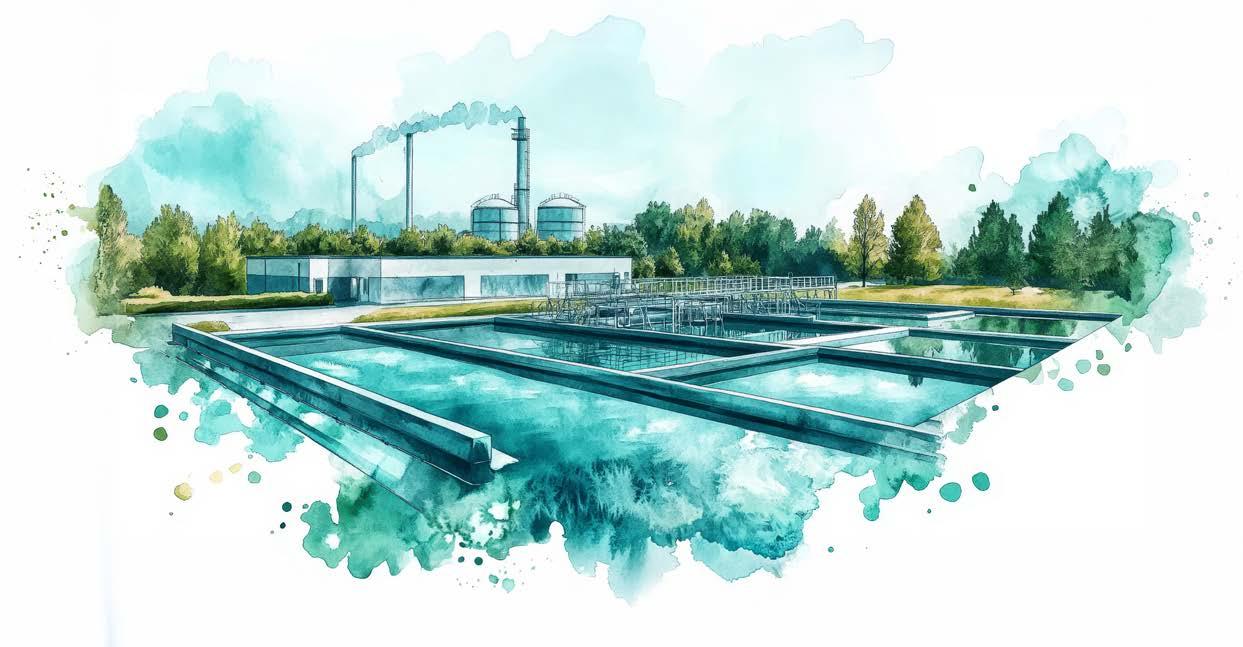
In Queenstown, the bird strike drew further attention to a failing wastewater discharge scheme. Where there should have been a gravel bed next to the main runway, there was instead a pond that attracted birds, creating a risk to airplane engines. The territorial authority came under pressure from the local regulator, the airport and the public to deal with the situation.
For our part, we had already been studying the discharge issue in the river after securing a contract in October of 2024 to address long-term wastewater challenges. The situation soon bubbled to the surface. Local media probes alleged there were higher-than-reported levels of wastewater contamination. That led to protests and more media attention. Photographers hid in bushes and social media bloggers sought “gotcha” moments with workers who were conducting testing.
Complicating perceptions of the wastewater issue, “Heart of the Beast,” an action film starring Brad Pitt, altered its planned shoot in the Kawarau River. Some crew members told local media they had reservations about the sewage; Pitt himself was reportedly concerned about the river’s depth.
The pressure was on. Within about a week, we proposed four possible short-term solutions. Each could be implemented in a matter of weeks and would allow GHD and the water authorities to manage the discharge and restore public confidence.
The territorial authority selected our proposal to reactivate a previously used discharge channel. We then deployed subcontractor excavators engaged for the environmental site investigations to clear vegetation from the channel.
This bought needed time (possibly up to five years) for the company and government regulators to develop a longer-term solution to the wastewater challenges.
The need for flexibility was key. The complicated drama on the ground pushed us to make small and larger adjustments, including re-booking flights for team members to bring in team members on short notice. Malfunctioning telemetry sensors, needed to monitor the discharge, resulted in another team being pulled off their assigned task to troubleshoot recently installed equipment.
With ongoing protests and intense media coverage, the company leaned on more experienced staffers, realising they were more likely to remain composed in tense situations.
Moving forward, rapid housing expansion and the geographic makeup of the Queenstown region will prove challenging. But the experience of executing an emergency response in a high-pressure environment can earn companies and governments the trust and room to maneuver over the longer term.

Over in Australia, the WA Agriculture Department faced its own water-management crisis in the Keep River.
In May 2025, chemicals leaking from nearby farmland posed an ecological threat to the pristine, tidally influenced river system, which includes endangered sawfish species.
There was no time to lose. The incident demanded a rapid assessment and recommendations to mitigate risks to the river’s ecology. Our team provided an email proposal within an hour of being asked to help. After this was quickly approved, we delivered a mitigation recommendation within a week and a final report within two weeks.
This work wasn’t just done “on the fly.” Two years earlier, we had updated our 2011 environmental impact assessment modeling framework to inform recommendations for just such an incident affecting the Keep River. The framework was set up to allow for a rapid assessment of the situation and the immediate delivery of recommendations.
The incident underscores the importance of preparation. Tailoring assessment frameworks and tools to future scenarios enables consulting teams to hit the ground running and become the go-to support options for decision-makers under pressure.
Whether with a dedicated team or more ad hoc, companies need to be able to react quickly and flexibly to unexpected situations on the ground, with clear heads and clear lines of communication. The response to these two water-system crises shows how emergency work can buy time and foster the trust companies need to pursue longer-term engagements involving more complex solutions.
The two scenarios show how consultancies can create business opportunities by continually updating tools, such as data modeling systems, enabling decisionmakers to help map out quick solutions to problems affecting residents and the environment.
References
1. The Guardian. 2024. “’Likely a Bird Strike’: Virgin Australia Flight Makes Emergency Landing in New Zealand After Engine Fire.” June 18. https://www. theguardian.com/business/article/2024/jun/18/likely-a-bird-strike-virginaustralia-flight-makes-emergency-landing-in-new-zealand-after-engine-fire
2. Brunton, Tess. 2025. “Protesters Picket in Bid to Stop Queenstown Council Sewage Plan.” RNZ, March 26. https://www.rnz.co.nz/news/national/547531/ protesters-picket-in-bid-to-stop-queenstown-council-sewage-plan
3. Newport, Peter. 2025. “Sewage Crisis: Brad Pitt Abandons Queenstown River Shoot.” Crux, December 11. https://crux.org.nz/crux-news/new-blog-post-24


Patrick Chen Acoustics Engineer, GHD
Communities often suffer from infrastructure construction long before they realise its benefits. The bangs and thuds from a building site starting work before dawn or the constant hum of a generator can quickly overshadow even well-intentioned development.
Noise is frequently the first element residents react to — yet it’s rarely the first thing project teams plan for.
Unlike dust, vibration or traffic disruption, noise is invisible. That makes it easier to overlook until it becomes a complaint because of its impact on comfort, well-being and public trust. Projects that fail to address noise early often face complaints, delays and unplanned mitigation work.
Effective acoustic planning is not simply a matter of meeting regulatory limits. It’s part of good engineering, risk management and responsible engagement. And as our built environment grows denser, designing for sound will become increasingly vital to delivering infrastructure that communities can support.
Developers often prioritise schedule and efficiency, and many jurisdictions provide only limited guidance on construction or operational noise. Regulatory frameworks remain uneven globally. Europe, for example, has developed some of the most comprehensive requirements for managing environmental sound, while other regions continue to strengthen their standards as urban density grows.¹ ²
The human impact of noise exposure remains a constant and costly risk. Chronic noise exposure can erode comfort, disrupt sleep and undermine social cohesion in neighbourhoods.³ ⁴ Yet in many projects, noise is handled reactively, addressed only after complaints arise. By that point, mitigation options are fewer and more expensive, often requiring costly retrofits that could have been avoided with straightforward design-stage planning.
Reactive noise management also carries reputational risks. Community support for projects can diminish when residents notice that noise disruption hasn’t been considered. When acoustic issues are addressed in advance — through modelling, equipment selection and construction sequencing — project developers can avoid conflict and demonstrate they’ve taken community wellbeing into account.
The later noise is addressed, the fewer the options — and the higher the cost and disruption.
Proactive path
- Modelling
- Equipment selection
- Sequencing at design stage
- Fewer complaints/delays
- Lower mitigation cost
Reactive path
- Complaints first
- Limited options
- Retrofits
- Higher cost
- Schedule impact
Across multiple projects in various locations, we’ve seen that incorporating mitigation at the design stage is far more efficient than attempting to fix the issue after residents have been disturbed.

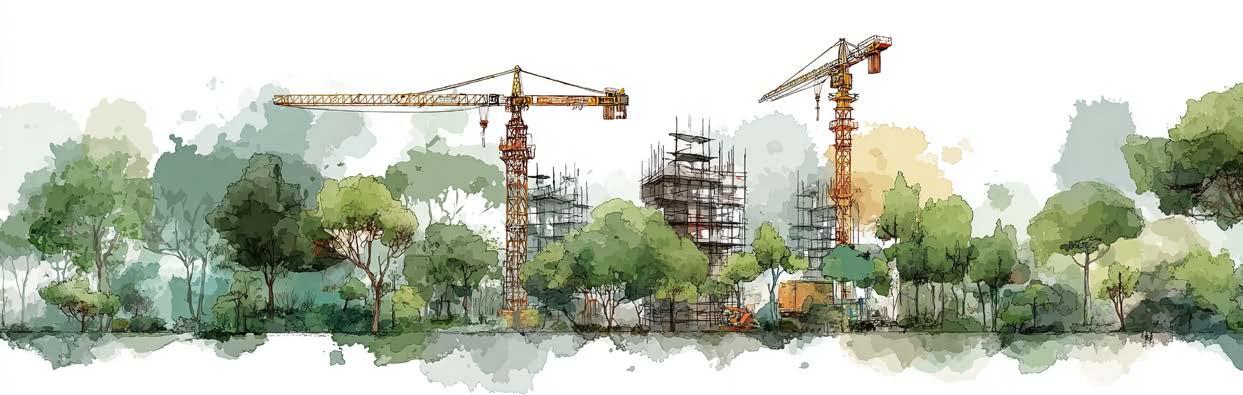
A major waste-to-energy facility planned for Grand Cayman would be located near residential areas, making noise a primary community concern. As part of the Environmental Impact Assessment, GHD conducted baseline measurements and used CadnaA (Computer Aided Noise Abatement), a software tool for environmental noise assessment, to predict noise levels during both construction and operation.
This will allow the project team to test design scenarios and incorporate mitigation measures (such as silencers, barriers and low-noise equipment) well before any construction begins. Addressing acoustic impacts early will allow the project to avoid later conflicts and demonstrate that community considerations are being built into decision-making. Incorporating noise into formal due diligence will support both regulatory compliance and public trust.
In Northern Ontario, we worked with Hydro One Remotes, an electric utility, to assess and upgrade generator stations that supply power to isolated communities. In these locations, even one nearby home is considered when evaluating potential noise impacts. Travel to carry out site work requires multiple flights, and facilities operate in challenging conditions — factors that make early decisions especially important.
On-site measurements and Ontario’s NPC-300 environmental noise guidelines 5 were used to evaluate the impacts of ageing diesel generators. The assessment showed that replacing older units with newer, quieter and more energy-efficient generators would deliver better long-term performance than retrofitting the existing equipment. The upgrade reduced noise exposure, improved reliability and cut the required number of maintenance trips into remote communities.
These projects highlight a consistent principle: treating noise as a core design variable yields better outcomes for both infrastructure owners and the communities they serve.
Different settings, same lesson: treating noise as a design variable improves outcomes for communities and owners.
Context
Near residential areas
Method
Baseline measurements + CadnaA predictions
Design response
Barriers/silencers/ low-noise equipment
Outcome
Earlier mitigation + trust
Northern Ontario
Context
Remote communities with single nearby homes considered
Method
On-site measurements + NPC-300 guideline assessment
Design response
Replace ageing diesel generators with quieter units
Outcome
Reduced exposure + reliability + fewer maintenance trips
Even technically robust solutions depend on community understanding. Clear communication about when and how noise will occur reduces frustration and helps residents prepare for disruption. When expectations are set early, tolerance for unavoidable noise often increases.
Open access to noise-monitoring data strengthens accountability and public trust.⁶ Communities are more accepting of noise when they believe it is necessary and responsibly managed.⁷ Conversely, noise perceived as unnecessary or inconsiderate is far more likely to provoke annoyance.⁸
For project owners, this means aligning engagement with technical planning. Explaining modelling results, outlining mitigation steps and giving advance notice of noisy activities can prevent conflicts and demonstrate that impacts are being managed responsibly.
Effective engagement doesn’t eliminate noise, but it helps communities understand what to expect and why.
As cities grow denser, noise awareness must become a routine part of procurement and design. This includes requesting sound-level data from manufacturers, embedding acoustic criteria in tender documents and ensuring design teams are resourced to carry out assessments early.
This proactive mindset extends to embracing emerging technologies that offer acoustic benefits. Electric construction equipment, for example, can significantly reduce noise by reducing engine and exhaust sounds. While this equipment comes with a price premium, it can also yield savings. A typical 20-tonne electric excavator, for instance, can cut operating costs by nearly 50 percent despite costing 40-100 percent more than diesel equivalents.9, 10
For owners and developers, the message is clear: considering noise early is far more cost-effective than addressing it later.
As infrastructure extends closer to where people live and work, managing sound will become just as important as managing emissions or energy use. The projects that encounter the fewest issues and win public trust are often those in which noise is considered early and addressed thoroughly.
This happens when sound is treated as a core design component from the start — mitigated and communicated well before the first trucks and construction workers arrive on site.

References
1. King, Eoin A. 2022. “Here, There, and Everywhere: How the SDGs Must Include Noise Pollution in Their Development Challenges.” Environment: Science and Policy for Sustainable Development 64 (3): 17–32. https://www.tandfonline.com/doi/full/10.1080/00139157.2022.2046456
2. Schwele, Dietrich. 2023. “Global Approaches to Noise Management.” In Noise Control and Management, IntechOpen. https://www.intechopen.com/ chapters/86132
3. World Health Organization (WHO). 2018. Environmental Noise Guidelines for the European Region. World Health Organization. https://www.who.int/ publications/i/item/9789289053563
4. House of Lords Library. 2024. Impact of noise and light pollution on human health. https://lordslibrary.parliament.uk/house-of-lords-science-andtechnology-committee-report-impact-of-noise-and-light-pollution-onhuman-health/
5. Ontario Ministry of the Environment, Conservation and Parks. 2013. NPC300: Environmental Noise Guideline – Stationary and Transportation Sources. https://www.ontario.ca/page/environmental-noise-guideline-stationary-andtransportation-sources-approval-and-planning
6. International Civil Aviation Organization (ICAO). 2018. Report on Good Practices of Noise Monitoring Systems. https://www.icao.int/sites/default/ files/environmental-protection/Documents/CAEP%20WG2/Report-OnGood-Practices-Of-Noise-Monitoring-Systems-1.pdf
7. Cobbing, Colin, et al. 2017. Managing Construction Noise and Vibration in an Urban Environment. Crossrail Learning Legacy. https://learninglegacy.crossrail. co.uk/documents/managing-construction-noise-and-vibration-in-an-urbanenvironment/
8. National Aeronautics and Space Administration (NASA). 2019. Factors that Influence Community’s Acceptance of Noise: An Introduction for Urban Air Mobility https://ntrs.nasa.gov/api/citations/20190032256/ downloads/20190032256.pdf
9. IDTechEx. 2024. Electric Vehicles in Construction 2024-2044: Technologies, Players, Forecasts. https://www.idtechex.com/en/researchreport/electric-vehicles-in-construction/1022
10. Energy Efficiency and Conservation Authority (EECA). 2024. “Decarbonising off-road heavy vehicles in New Zealand.” EECA Insights. https://www.eeca.govt.nz/insights/eeca-insights/decarbonising-off-roadheavy-vehicles-in-new-zealand/

Emma Stewart Scientist, GHD
AThe journey to sustainable design has been a decadeslong evolution, moving from incremental mitigation measures such as LED bulbs and recycling bins in the 1980s to today’s pursuit of a systemic, nature-compatible, sustainable approach.
s the consequences of a changing climate become ever-more pervasive and profound,¹ so too must the human approach to living within it. Rather than aiming to create infrastructure systems that reduce environmental harm, today’s leaders increasingly must ask: How can we actually do good from the start?
Sustainable design leadership means starting with the ultimate local and universal stakeholder: nature itself. This approach is key to creating spaces that are not only ethical, but also financially resilient and culturally inclusive while harmonising with the natural world.²
That doesn’t always mean starting from scratch, which for many projects may be impractical. Incorporating

changes such as adopting solar³ or composting techniques introduced in the 1980s, green building designs⁴ pioneered in the 1990s and the push towards widespread cooperation for sustainability and transparency⁵ efforts starting in the 2000s remain no less important.
Yet sustainable design in 2026 is reaching for more. Inclusive, circular design⁶ is a top priority for constituents ranging from indigenous communities and local businesses to large companies, investors and insurers as policymakers craft regulations that require transparent, measurable resilience standards in cities and many nations.⁷
In the 1980s, the United Nations created the Brundtland Commission⁸, chaired by Gro H. Brundtland⁹, now also the former director of the World Health Organisation and the former Prime Minister of Norway. The commission’s 1987 report defined sustainable development as “meeting the needs of the present without compromising the ability of future generations to meet their own needs.”
The report marked nations coming together and the start of first generation sustainability efforts. These goals led to early focus on improving existing designs and building systems by implementing efficiencies such as using more eco-friendly and recycled building materials to build or retrofit. Solar power installations climbed.
Take a hypothetical example of a community centre building. Some investments are more expensive to begin with but save money and energy down the line.10 Such substitutions are common today and serve as a baseline for subsequent sustainable design generations.

In designing the centre during the 1980s, we’d include:
– Insulated windows
– Water-saving toilets, showers and taps
– LED lighting
– Recycling bins
– Solar panels on the roof
– Eco-friendly appliances

Generation two builds on generation one: if it’s firstgeneration strategy, it becomes part of the secondgeneration strategy, driven by increased climate awareness11 and a rise in offshoring production of industrial products12 away from developed Western nations overseas. In this era, general public awareness of nature and climate change grows and awareness of social responsibility13 increases amid the first UN Conference of the Parties, or COP, in 1995. When a new infrastructure project is proposed, design changes are considered.
This covers:
– Examining health and safety
– Societal impacts, including ethical sourcing
– Scrutinising materials production and disclosure
– A focus on the transparency of systems as a whole
Our community centre plans in this era include ecofriendly appliances and materials, but designers would dive even deeper, guided not just by environmental considerations but also by social responsibility. Questions to consider include:
– Where are these products and materials produced?
– Do they come from a factory that pays a livable wage?
– Do they pollute or preserve local water supplies?
– Do they comply with Health Safety and Environment (HSE) standards14 and local climate or sustainability regulations?
Project managers make sure design companies, construction firms and their subcontractors share these ethics and practise them.
As the internet arrives in the 2000s, so do the beginnings of third-generation design. Global connection fosters idea exchange, which spurs innovation.15 More resources are available16 than ever before. Brainstorming across cultures and ideas accelerates. Whereas generations one and two focused on mitigating impacts on the environment less bad, generation three design begins to ask how we can actually do good instead.17
Generation three starts with the question: “What would nature do?”
Third generation hones in on local eco systems,18 economies and values to craft an integrated design, all while including the concepts learned from generations one and two.
Biomimicry — the act of designing as nature might — is a key aspect of the third generation. Biomimicry inspires urban designs that leverage natural processes, reducing the strain on resources. The convergence of biomimicry across water and energy enables a symbiotic relationship that promotes sustainability, resilience and harmonious coexistence with each other and with nature.
Why build a concrete tank or basin to detain water when you could construct a wetland that can detail and treat water, provide a habitat and offer recreational opportunities for communities?
For instance, in Zimbabwe, the Eastgate centre uses a passive cooling design19 based on termite mounds. Or a new wind farm might use turbine blades designed after a Humpback whale’s fins with bumps20 to reduce drag. Designs are tailored to work with the immediate environment.

Designers and project managers in the third generation:
– Assess the stakeholders in all categories: local indigenous populations, facility users, investors and the community that surrounds the structure
– Identify social and economic challenges that could include food security, accessibility, cultural needs and requirements
– Evaluate the local ecosystem to design compatible infrastructure
– Examine cultural, including using native plant species and designs
– Solicit needs from local businesses and government, geographic constraints, project users — input from as many perspectives as possible
In the third generation, our community centre might include an indigenous medicine garden21 as part of a community garden, bike lanes22 and recreational common areas. It could also feature energy-efficient designs that work with the local terrain23 and include eco-friendly roof vegetation, compostable toilets and a passive design24 that maximises natural heat in the winter and minimises it in the summer. These needs would be assessed in advance so that the project users have a stake in design from the start.
Considering “what would nature do” can be a guiding principle when designing for a world with more natural disasters in this third generation. Across the globe, many designers are seeing changes. Infrastructure must adapt. With the natural world as a guide, it is not only possible, it’s imperative, to build ethical, financially resilient infrastructure that prioritises both local values and our changing planet.

References
1. United Nations Framework Convention on Climate Change, “UN Climate Change Conference - Belém, Nov. 2025,” UNFCCC, accessed Nov. 13, 2025, https:// unfccc.int/cop30.
2. World Green Building Council, Beyond the Business Case (Aug. 2022), https:// worldgbc.org/wp-content/uploads/2022/08/WorldGBC-Beyond-the-BusinessCase.pdf.
3. Geoffrey Jones and Loubna Bouamane, “Power from Sunshine”: A Business History of Solar Energy (Working Paper 12-105, Harvard Business School, May 2012), https://www.hbs.edu/ris/Publication%20Files/12-105.pdf
4. BuildingGreen, “30 Years of Green Building in the U.S.,” infographic, Jan. 12, 2021, https://www.buildinggreen.com/infographic/30-years
5. Rachel Layne, “The world inches closer to ‘alignment’ on global ESG standards,” Fortune, Dec. 15, 2021, https://fortune.com/2021/12/15/global-esg-standardsissb-sec-tcfd/
6. Interaction Design Foundation, “Circular Design,” Interaction Design Foundation, accessed Nov. 13, 2025, https://www.interaction-design.org/literature/topics/ circular-design
7. CDP, “CDP Data Portal,” CDP, accessed Nov. 13, 2025, https://data.cdp.net/
8. United Nations Academic Impact, “Sustainability,” United Nations, accessed Nov. 13, 2025, https://www.un.org/en/academic-impact/sustainability
9. World Bank Live, “Gro Harlem Brundtland,” World Bank, accessed Nov. 13, 2025, https://live.worldbank.org/en/experts/g/gro-h-brundtland
10. Canadian Standards Association and Consumer and Corporate Affairs Canada, 1980 Energuide Directory of Refrigerators & Freezers: A Guide to Appliance Energy Consumption (RG23-107/1980E-PDF, 1980), https://publications.gc.ca/ collections/collection_2021/isde-ised/rg23/RG23-107-1980-eng.pdf.
11. Alexander Gillespie, “The Twenty-first Century: Environment,” in The Long Road to Sustainability: The Past, Present, and Future of International Environmental Law and Policy (Oxford: Oxford University Press, 2018), https://academic.oup.com/ book/11056/chapter-abstract/159428567?redirectedFrom=fulltext
12. Canada Institute and Mexico Institute, “NAFTA at 30: Canada Institute and Mexico Institute Experts Reflect,” Wilson centre, Jan. 5, 2024, https://www. wilsoncentre.org/article/nafta-30-canada-institute-and-mexico-institute-expertsreflect.
13. United Nations Framework Convention on Climate Change, “Conference of the Parties (COP),” UNFCCC, accessed Nov. 13, 2025, https://unfccc.int/process/ bodies/supreme-bodies/conference-of-the-parties-cop
14. Canada, Department of Justice, Canada Occupational Health and Safety Regulations, SOR/86-304, last amended Mar. 26, 2025, https://laws.justice.gc.ca/ eng/regulations/sor-86-304/index.html
15. Bob Willard, “3 Sustainability Models,” Sustainability Advantage, July 20, 2010, https://sustainabilityadvantage.com/2010/07/20/3-sustainability-models/
16. GHD, “Sustainability and Resilience,” GHD, accessed Nov. 13, 2025, https://www. ghd.com/en-ca/expertise/sustainability-and-resilience
17. GHD, “Architecture, Interior Design, Landscape and Urban Design,” GHD, accessed Nov. 13, 2025, https://www.ghd.com/en-ca/expertise/builtenvironment/architecture-interior-design-landscape-and-urban-design
18. Carmen E. Elrick-Barr, Ryan Plummer, and Timothy F. Smith, “Third-generation adaptive capacity assessment for climate-resilient development,” Climate and Development 15, no. 1 (2022): 1–4, https://www.tandfonline.com/doi/abs/10.1080/ 17565529.2022.2117978.
19. Carolyn Fry, “What termites can teach architects,” BBC Earth, accessed Nov. 13, 2025, https://www.bbcearth.com/news/what-termites-can-teach-architects
20. Tyler Hamilton, “Whale-Inspired Wind Turbines,” Technology Review, Mar. 6, 2008, https://www.technologyreview.com/2008/03/06/221447/whale-inspiredwind-turbines/
21. David McFadden, “Indigenous Garden takes root at uOttawa Faculty of Medicine,” University of Ottawa, Sep. 24, 2024, https://www.uottawa.ca/en/newsall/indigenous-garden-takes-root-uottawa-faculty-medicine
22. City of Ottawa, “Maps,” City of Ottawa, accessed Nov. 13, 2025, https://ottawa. ca/en/parking-roads-and-travel/cycling/maps
23. GHD, “Natural Resources,” GHD, accessed Nov. 13, 2025, https://www.ghd.com/ en-ca/expertise/environment/natural-resources
24. “Special Issue,” ScienceDirect, accessed Nov. 13, 2025, https://www. sciencedirect.com/special-issue/103721HM73X


Amir Ghasdi
Technical Director and Market Lead - Energy, GHD
Technical advisor and process engineer with over 20 years of experience supporting energy transition solutions with a particular focus on alternative fuels, renewable energy and energy recovery systems across public-sector and industrial environments. Has supported projects across the full asset lifecycle from early concept development and technology validation through FEED, commissioning and operational optimisation with a strong emphasis on solutions that perform reliably, safely, and efficiently in real- world operating conditions.

Byron Tabet
Senior Design Manager, GHD
Byron Tabet is a Senior Design Manager and civil engineer based in Abu Dhabi, specialising in complex building and infrastructure projects. He works at the forefront of Advanced Air Mobility, with hands- on experience delivering vertiports and aerial taxi facilities, alongside major hospitality, commercial, and transport developments across the Middle East and Australia.

Dusk is a hydrogeologist with over sixteen years’ experience in both industry and consulting settings. She has experience in groundwater supply and assessment, groundwater quality assessments, mining hydrogeology and dewatering assessments.

Gemma Dunn
Water Market LeaderWestern Canada, GHD
Gemma is an environmental and social scientist with over 25 years of international experience advancing environmental sustainability and climate resilience. Currently serving as Western Canada Water Market Leader at GHD, she leads strategic initiatives to strengthen regional water resilience through integrated, systems-based approaches across Europe, North America and Australia.

Anne Lynch Global General Manager Technical Transformation and Innovation, GHD
Anne Lynch is GHD’s Global General Manager for Technical Transformation and Innovation where she leads the implementation of advanced technologies and innovative strategies to drive organisational transformation and elevate operational excellence. Anne is a registered California Civil Engineer with a B.A. degree in Philosophy from the University of Oklahoma and B.S. in Civil Engineering from Auburn University. She has more than 29 years of experience in water resources management, particularly focused on water supply, water reuse, flood management, Capital Improvement Program development, investment and funding strategies, and brine management projects and planning studies.

Carlos A. Baldor Jr. President & Chief Technology Officer, BST Global
Carlos Jr. serves as the President, Chief Technology Officer and a principal shareholder of BST Global. In addition to helping drive the company’s business strategy execution, Carlos Jr. also focuses on mentoring and coaching the next level of BST Global’s future leadership. Carlos Jr. also works closely with the Operations and Product Delivery teams as a continuation of his responsibilities as Vice President.

Emma Stewart Scientist, GHD
Emma is a Scientist and Project Coordinator in the Contamination Assessment and Remediation group at GHD with over four years of hands-on experience in the environmental field. She holds the role of Young Professionals co-lead for GHD Ottawa, where she focuses on fostering connections and promoting multidisciplinary collaboration. Emma is completing her MSc in Environmental Practice at Royal Roads University, continuing to enhance her knowledge and skills to address complex environmental challenges.

Heidi Horlacher
Senior Green Infrastructure
Specialist,
City of Vancouver
Heidi Horlacher is a Senior Green Infrastructure Specialist with the City of Vancouver, Canada where she leads the Rain City Strategy’s Streets and Public Spaces Action Plan, aimed at accelerating the City’s adoption of Green Rainwater Infrastructure. With over 25 years of professional experience, Heidi is passionate about fostering equitable, livable and joyful communities through enhanced environmental outcomes. She serves on the Board of Directors for the Green Infrastructure Leadership Exchange and held the position of Local Government representative for the Society of Contaminated Sites Approved Professionals of British Columbia. Heidi’s commitment to environmental stewardship continues to drive her impactful work on nature-based solutions in Vancouver and beyond.

Justin Meager
Technical Director –Aquatic Ecology, GHD
Justin is a marine scientist with more than 30 years of experience across academia, government, and environmental consulting. He has worked on marine projects around Australia, Europe, the Middle East, South-East Asia and the Indo-West Pacific. He has an indepth understanding of regulatory frameworks for wildlife conservation and environmental management, and has served on numerous Australian and international working groups and expert advisory panels.

Patrick Chen
Acoustical Engineer –Air, Noise & Compliance Group, GHD
Patrick Chen is an Acoustical Consultant and Professional Engineer with GHD, with over seven years of experience in noise and vibration assessment for infrastructure, energy, and industrial projects. He specializes in industrial and environmental noise and supports clients through permitting, assessment, and mitigation design.

Jose Romero
Technical DirectorMarine & Aquatic Sciences, GHD
Jose Romero is a Technical Director with more than 25 years of research and consultancy experience in water quality, marine and aquatic ecology, hydrodynamics, numerical modelling and management of large aquatic and marine monitoring programs. I have also prepared numerous environmental impact assessment technical reports for State and Federal/Commonwealth approvals/ permitting submissions, management plans for a range of operational and construction activities and regulatory compliance reports.

Madelaine Hooper Marine Science Lead, GHD
Madelaine is one of GHD’s leading marine scientists and the Marine Science Lead for New South Wales. She has over 13 years of experience spanning Tier 1 consulting, specialist consultancies and scientific research across Australia, the Pacific and the Middle East. Madelaine has played a lead technical role in the delivery of large -scale environmental impact assessments and ecological monitoring programs undertaken within Commonwealth and state legislative frameworks, as well as under international regulatory regimes. Her technical leadership is demonstrated through the design, planning and execution of complex marine ecological management and monitoring programs across a diverse range of marine environments including offshore, coastal, and estuarine systems.

Robert Casamento Global Strategy Executive Across AI, Energy and Climate
Robert Casamento is a global strategy executive and multi-time start-up leader who advises organisations navigating major technological transitions across energy, infrastructure and climate. Drawing on senior leadership roles at the World Economic Forum, Edelman, Deloitte and EY, he works at the intersection of strategy, finance and execution as AI begins to reshape corporate business models.