
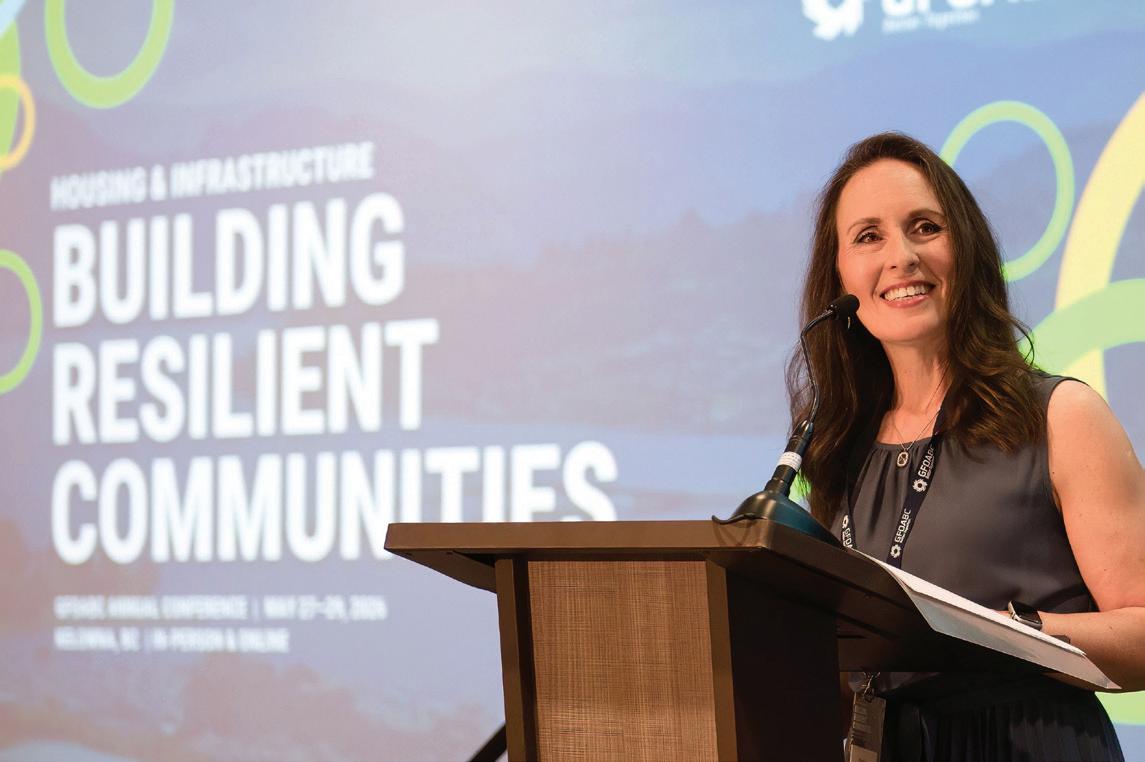

IT CAME, IT WENT, IT WAS AMAZING. SO MANY HIGHLIGHTS FROM THIS YEAR’S CONFERENCE IN KELOWNA COME TO MIND WHEN I REFLECT ON IT.
Not only was it our highest attended one in a while, but it also boasted the largest number of sponsors and exhibitors. Aside from that, the game plan this year was to engage our membership in an even greater way to lean in and share their experiences, challenges, suggestions, and solutions in 4 case studies. And they rose to the occasion in only the way finance professionals do. There were, of course, excellent keynotes and
concurrent sessions that provided deeper insight into the topics.
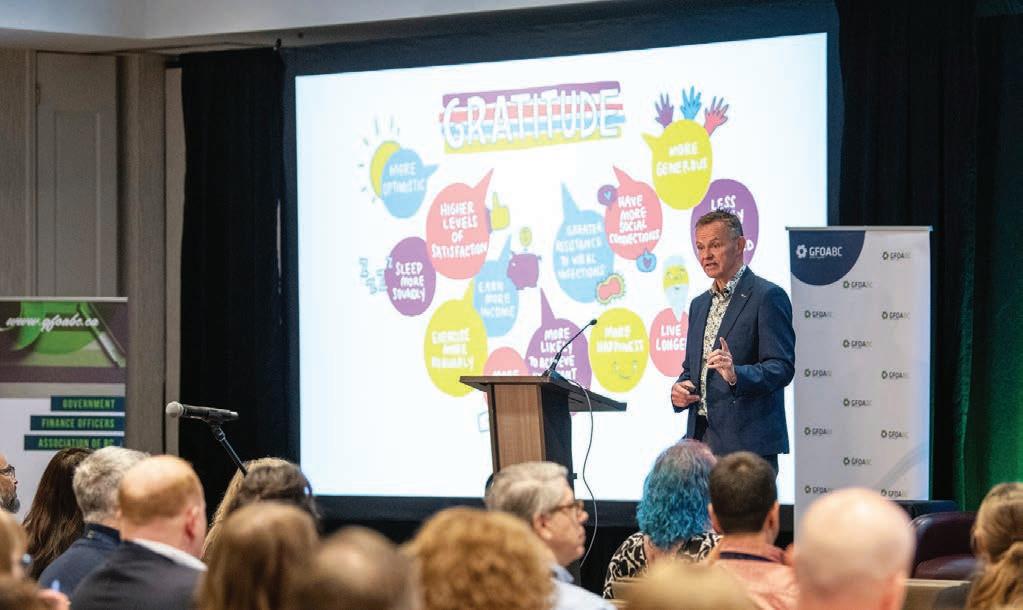
We were inspired to see how our local government data can be used in a cohesive way – showing us the ‘now’ and the ‘what if’ scenarios, as well as being reminded that a practice of gratitude can ground us and help us perform at our best.
But let’s park sessions and content and address what makes the conference truly what it is for so many of us. I heard so many times during the week from colleagues and non-local government attendees that, of all the conferences they go to, this is the best one by far.


LEFT:
ABOVE: 50th Parallel Estate
In some cases, they indicated that they were admittedly dragging themselves to it after long hours leading up to the conference. Still, they are always 1) glad they made the effort and 2) come away rejuvenated.
So, if the content changes every year… it must be the one constant that makes it special… you: our members, our sponsors, our exhibitors. We come together having had similar experiences throughout the year, some having extreme tales to tell, but in all of it, our responsibilities are the same. Our values and ethics are the same. Our level of care for our profession and the impacts our work has on our communities are the same. So, of course, when we come together, we feel a true sense of community amongst our peers. I can see and hear curiosity and genuine care for one another in the conversations amongst attendees. I believe the character of our people is ultimately what defines our conference from others.
Therefore, I am immensely grateful to you. For showing up and being your authentic selves when we come together to learn and share. Your spirit permeates the conference environment and truly makes the conference the highlight it is.
Gratefully yours,
Corinne Bomben, GFOABC President

Corinne Bomben City of Prince Rupert PRESIDENT

Nyla Attiana District of Tofino PAST PRESIDENT

Jeffrey Lovell City of Port Coquitlam VICE PRESIDENT

Carla Fox Thompson-Nicola Regional District DIRECTOR AT LARGE

Farhad Hossain Regional District of Kootenay Boundary DIRECTOR AT LARGE
BOARD OF DIRECTORS
Corinne Bomben, President
Jeffrey Lovell, Vice President
Charlotte Osborne, Treasurer
David Hallinan, Secretary
Nyla Attiana, Past President

Charlotte Osborne
of Cranbrook TREASURER

Nicole Gervais Municipal Finance Authority of BC DIRECTOR AT LARGE

Elio Iorio District of North Vancouver DIRECTOR AT LARGE
DIRECTORS AT LARGE
Carla Fox, Thompson-Nicola Regional District
Nicole Gervais, MFABC
Patrick Gramiak, City of Salmon Arm
Farhad Hossain, Regional District of Kootenay Boundary
Elio Iorio, District of North Vancouver Lenora Lee, KPMG

Dave Hallinan City of Kamloops SECRETARY

Patrick Gramiak City of Salmon Arm DIRECTOR AT LARGE

Lenora Lee KPMG DIRECTOR AT LARGE
GFOABC STAFF
Kala Harris, Executive Director
Anne Adidu-Lawal, Manager, Professional Development & Education
Tim Thakker, Manager, Member Services & Communications
Otto&Fran / www.ottoandfran.com, Graphic Design Services
SUBMISSIONS WILL BE ACCEPTED UP TO NOVEMBER 30, 2026

GFOABC is seeking expressions of interest from members to serve as Directors on our Board. Established in 1989, GFOABC is a not-for-profit association representing more than 1,400 local government finance professionals across BC’s 161 municipalities and 27 regional districts. Our 2024–2029 strategic plan calls on us to stay relevant to every member, serve as the centre of dialogue across the local government finance community, and deliver value through partnerships.
The Board sets the association’s strategic direction and oversees its governance. Day-to-day operations remain with the Executive Director.
Serving as a Director is a meaningful way to contribute to the profession. Directors connect with colleagues from every region of the province, shape the programs and resources GFOABC offers, and bring their experience to bear on the issues facing the sector — from housing and infrastructure pressures to evolving reporting standards and workforce challenges.
The Board meets five to six times a year through a mix of virtual and in-person sessions. Directors are elected for two-year terms at the Annual General Meeting, held during the Annual
Conference. Submissions received by November 30, 2026, will be considered for the election at the 2027 Annual Conference. We welcome expressions of interest from members at every career stage and from across the province.
Submit an Expression of Interest by Monday, November 30, 2026. Your submission should include:
1.Why you would like to serve on the Board
2.Your related experience and qualifications
3.A brief biography to be shared with the Board
4.Two letters of reference
Questions regarding this opportunity and expressions of interest must be submitted via email to:
Corinne Bomben, President corinne.bomben@princerupert.ca
We encourage you to consider stepping forward!


AS I WRITE THIS, THE CONFERENCE HAS COME TO A CLOSE, THE LAST INVOICES HAVE BEEN PAID, AND THE TEAM HAS ALREADY SHIFTED ITS ATTENTION TO BOOT CAMP, COMMITTEE MEETINGS, FALL PROFESSIONAL DEVELOPMENT, AND THE WORK THAT WILL CARRY US THROUGH THE REMAINDER OF 2026.
Like many of you, I have spent the past few weeks reflecting on the conversations that took place in Kelowna.
This year’s conference theme, Building Resilient Communities: Housing & Infrastructure, invited us to examine some of the most pressing challenges facing local governments today. Housing affordability, aging infrastructure, growth pressures, legislative change, workforce capacity, and long-term financial sustainability are deeply interconnected. These issues require thoughtful leadership, collaboration, and a willingness to look beyond immediate pressures toward long-term outcomes.
What stood out to me most was not that we found definitive answers. It was the willingness of members to engage in meaningful dialogue.
Through our Board-led case studies, members, sponsors and partners explored topics ranging from ERP transformation and long-term financial planning to intergenerational equity and housing. These sessions began with questions rather than conclusions. What gets in the way of progress? Where are local governments finding success? What is within our control? What responsibilities do we delay to future generations?
The strength of these conversations was not found in consensus. It was found in the willingness to share experiences, challenge assumptions, and learn from one another.
Resilience is not built by organizations working in isolation. It is built through relationships, shared learning, and a commitment to continuous improvement. That is where professional associations like GFOABC have a role to play. By creating opportunities for dialogue, knowledgesharing, and leadership development, we help strengthen not only individual practitioners and local governments but also the broader local government finance community.
Finance professionals are often asked to navigate complexity. You balance competing priorities, steward public resources, and help your organizations make decisions with consequences extending far beyond the current budget cycle. Increasingly, your role extends beyond financial administration to facilitating strategic conversations about risk, resilience, service delivery, and community outcomes.
That is why the work of GFOABC extends beyond any single conference.
As we move from dialogue to action, we continue to build a resilient Association—one that supports and develops finance teams, fosters meaningful professional connections, and creates opportunities for members to learn from one another.
Over the coming months, our committees will begin advancing several initiatives identified by the Board, including strengthening educational pathways, developing practical tools and resources for members, and exploring how finance officers can contribute to emerging policy discussions affecting local government.
In August, Boot Camp will welcome another cohort of local government finance leaders. Fall Professional Development will continue important conversations around growth, infrastructure financing, and development cost charges. Through our newsletter, webinars, committees, and member engagement activities, many of the ideas that emerged during conference week will continue to evolve.
In many ways, the conference is not the culmination of our work but the starting point.
On behalf of the Board and staff, thank you to everyone who participated this year—as attendees, presenters, sponsors, exhibitors, volunteers, and thought leaders. Your willingness to contribute your experience and perspective is what makes this Association such a valuable professional community.
The conversations that began in Kelowna will continue throughout the year. Together, we are strengthening our profession, supporting resilient local governments, and helping build resilient communities across British Columbia.
Kala Harris, Executive Director

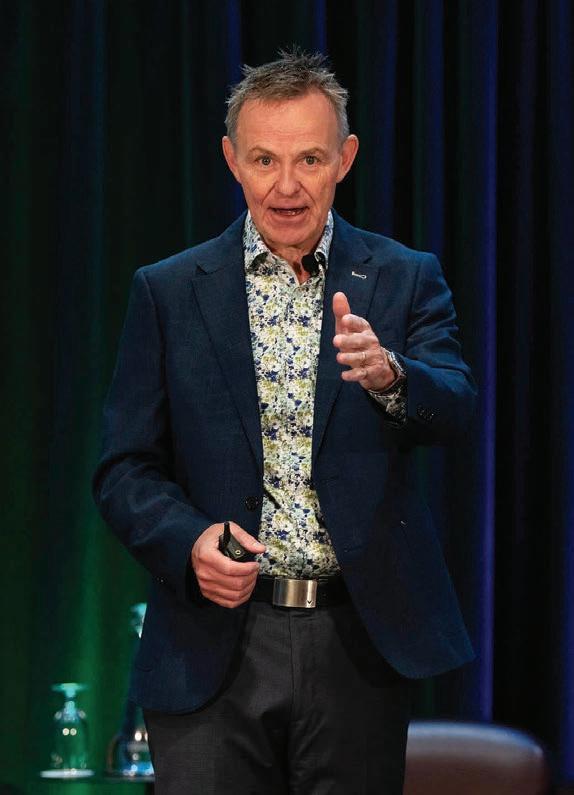
The 2026 Annual Conference brought GFOABC members, partners, exhibitors, and sector leaders to the Delta Hotels Grand Okanagan Resort in Kelowna for three days of programming, May 27 to 29. Guided by the theme Housing & Infrastructure: Building Resilient Communities, the program focused on the financial leadership local governments need to address growth, infrastructure pressures, affordability concerns, and evolving community expectations.
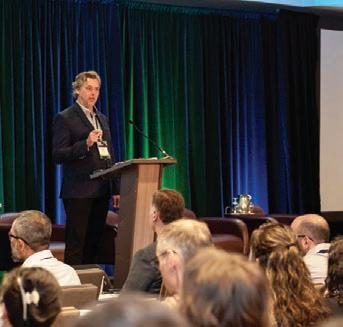
The week opened the evening before with the Welcome Reception at King Taps on May 26, setting a relaxed tone for the days of learning, dialogue, and connection ahead. The opening sessions explored digital twins, local government data, and the City of Kelowna’s digital twin journey — grounding the program in a practical question: how does better information lead to better infrastructure and financial decisions?
We respectfully acknowledge that this conference took place on the traditional, ancestral, and unceded territory of the Syilx Okanagan people. We are grateful for the opportunity to gather, learn, and share knowledge on these lands.

projects.
• Infrastructure resilience — risk-based budgeting and the shift from reactive recovery to proactive resilience.
• Housing and community outcomes — the financial realities of growth, housing policy, and service expectations.
• People and leadership — gratitude at work, intergenerational equity, and the finance leader’s role in building resilient organizations.
• Financial operations — PSAB updates, banking service RFPs, and investing in uncertainty.
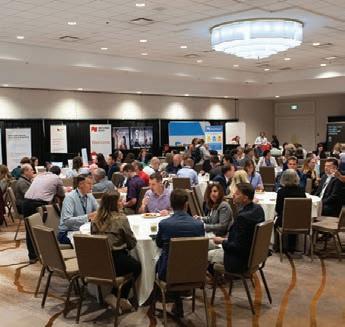
• Community connection — the Annual General Meeting, partner networking, and the Gala Evening at 50th Parallel Estate Winery.
The conference closed with a PSAB update, an economic update, the Housing Dialogue closing panel, and a conference capstone. Of the many threads running through the week, two stood out as defining challenges for local government finance: the financial realities of housing and the discipline of long-term financial planning. Both are examined in detail later in this issue, as resilient communities depend on clear financial information, practical planning, and the shared experience of finance professionals across BC.
Continued on page 10
2026 CONFERENCE
PRIZE WINNERS





SUBMISSIONS DUE NOVEMBER 30, 2026

GFOABC is seeking nominations for our annual awards, which celebrate outstanding contributions by local government finance professionals across BC. Established in 1989, GFOABC represents more than 1,400 members across the province’s 161 municipalities and 27 regional districts. Our awards program is one of the most direct ways we recognize the people, teams, and initiatives that strengthen the profession.
GFOABC presents five awards each year:
1. New Member Award
2. Outstanding Achievement Award
3. Innovative Idea Award
4. Outstanding Contribution Award
5. Life Member Award
Full descriptions of each category are available at gfoabc.ca/about-us/awards . Take a moment to think about an individual, team, or initiative in your network whose work deserves recognition — peer nominations are how the strongest candidates get on our radar.
Submit a written nomination by November 30, 2026. Your nomination should include:
1. The award category that best fits the nomination
2. An explanation of why you are nominating this individual, team, or initiative, including how their work has advanced local government finance
3. Two letters of support
Decisions will be communicated to nominators by April 2027. Recipients will be honoured at the 2027 Annual Conference in Richmond, BC.
Send your nomination, or any questions about the awards, to:
Nyla Attiana, Past-President nattiana@tofino.ca
We encourage you to think about who in your circle deserves to be celebrated!

EACH YEAR AT THE ANNUAL CONFERENCE, GFOABC PRESENTS ITS EXCELLENCE IN LOCAL GOVERNMENT FINANCE AWARDS. THESE AWARDS ARE AN OPPORTUNITY TO HONOUR THE WORK OF MEMBERS AND PARTNERS — MANY OF WHOM HAVE CONTRIBUTED TO OUR ORGANIZATION FOR YEARS. FIVE AWARDS WERE PRESENTED AT THE RECENT ANNUAL CONFERENCE IN KELOWNA AND ARE FEATURED IN THIS ISSUE OF DOLLARS & SENSE PERSPECTIVES.
With the 2025/26 awards process complete, we are now initiating the 2026/27 process. The Call for Nominations appears elsewhere in this issue, with submissions due November 30, 2026.
Awards are given through nominations from members and partners, and nominees can come from inside or outside your organization. If you know of an individual, team, or initiative whose work has shaped the local government finance profession, we encourage you to submit a nomination.
• Celebrate excellence. Recognize individuals and teams whose work reflects innovation, leadership, and dedication in local government finance.
• Preserve legacy. Ensure long-time contributors are remembered and valued by current and future members.
• Build community. Recognizing peers strengthens professional connections across the province.
• Raise the profile of your organization. A nomination highlights the work being done in your community and the contributions your team makes to the broader profession.
Keep an eye on your inbox and other communications channels once the EOI is live and the nomination process is open. GFOABC is also here to answer any questions you have regarding the nomination process.
Questions about the nomination process can be directed to:
Nyla Attiana, Past-President nattiana@tofino.ca
CONGRATULATIONS TO THIS YEAR’S AWARD WINNERS!
We look forward to honouring another cohort of Excellence in Local Government Finance Award winners at the 2027 Annual Conference in Richmond.

Each year at the Annual Conference, GFOABC presents its Excellence in Local Government Finance Awards — the profession’s highest form of peer recognition in British Columbia. Five awards were presented in Kelowna this May, and the recipients are featured on the following pages.
These awards exist because much of the work in local government finance happens largely out of public view. Behind every clean audit, every accessible budget document, and every tax sale managed with fairness and care, there are people whose effort and judgement make it possible. The Excellence Awards honour five ways this work shows up: commitment to education and professional development (New Member), creative ideas that change practice (Innovative Idea), extraordinary achievements recognized by peers (Outstanding Achievement), sustained service to the profession (Outstanding Contribution), and careerlong dedication to the profession (Life Member).
This year’s recipients reflect the full range — from careers that have shaped GFOABC itself to a working group reshaping how tax sales are administered across the province to a village reimagining its annual report. Each recipient was nominated by peers and selected by the Awards Committee.
The 2026/27 nomination cycle is now open. The Call for Nominations appears elsewhere in this issue.

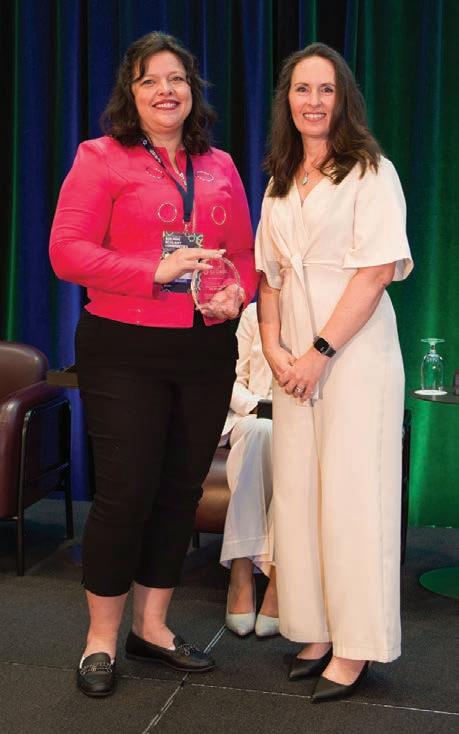
The Life Member Award is among GFOABC’s highest honours, reserved for careers marked by distinguished service, leadership, mentorship, and lasting contribution. The 2026 recipient is Tanya Garost, City Manager at the City of Martensville, Saskatchewan.
Tanya’s connection to GFOABC runs deep. She served seven years on the Board, including a term as President from 2016 to 2018, and was previously honoured with the Outstanding Contribution Award in 2019. After leaving BC, she went on to serve as President of GFOA, representing the profession across Canada and the United States. Through it all, she has remained a consistent presence at GFOABC workshops and conferences, translating technical finance into accessible knowledge for colleagues at every career stage.
The Life Member Award honours something more specific than a resume. In Tanya’s award letter, Executive Director Kala Harris wrote that the recognition is for “the way you show up for others — as a mentor, a connector, and someone who consistently elevates those around you.” This sentiment is echoed across the profession, with colleagues at every stage pointing to Tanya as someone who changed the trajectory of their careers.
Continued on page 16
Continued from page 15

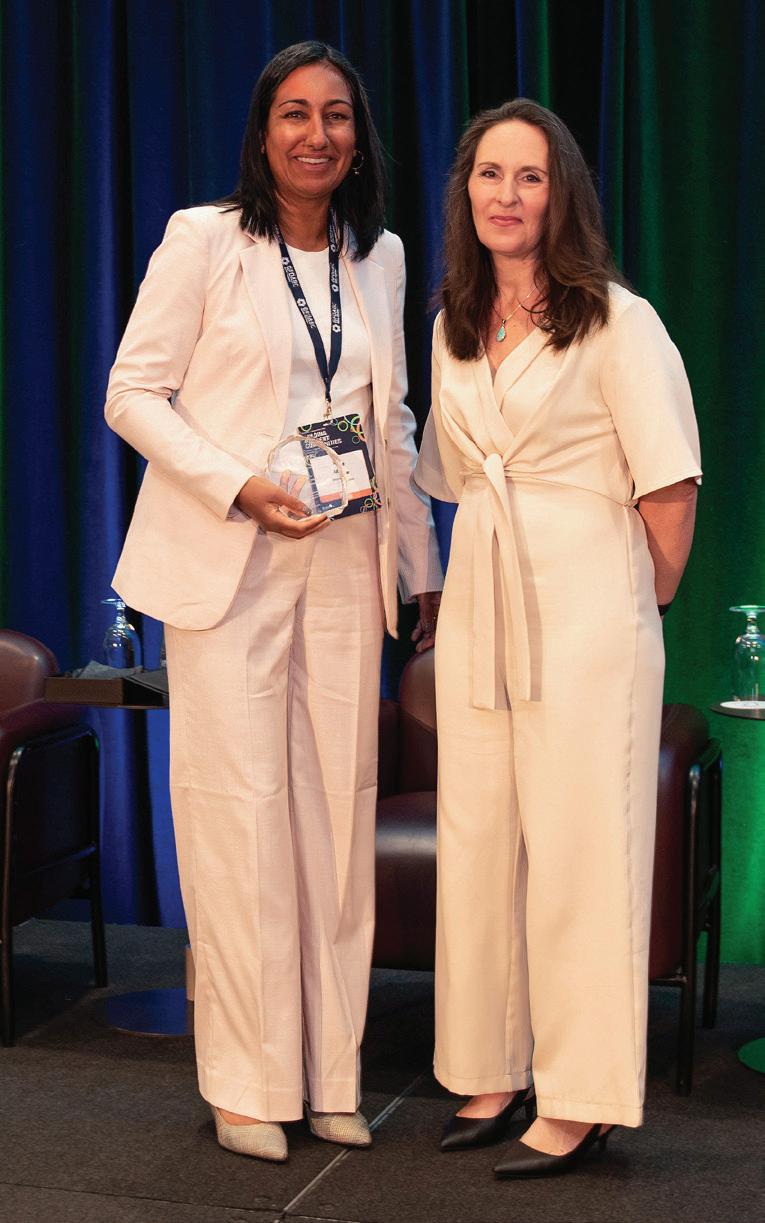
The 2026 Outstanding Contribution Award recognizes Nyla Attiana, Chief Administrative Officer at the District of Tofino, for seven years of distinguished service on the GFOABC Board.
Two contributions stand out over that tenure. First, Nyla helped shape and steward the Education Framework, which became the foundation of the 2019–2024 Strategic Plan and continues to guide the Association through the 2024–2029 Strategic Plan. It was a structural contribution at a defining moment, and it still shapes how GFOABC develops and supports its members.
Second, perhaps less visible from the outside, Nyla helped shape the Board’s culture. As GFOABC transitioned from a working board to the hybrid governance model it operates under today, Nyla worked to ensure that the spirit of service and connection that defines the Association remained at the heart of the Board’s operations.
It is that combination — vision in what GFOABC does and care in how it shows up — that has left such a lasting mark on the Association.
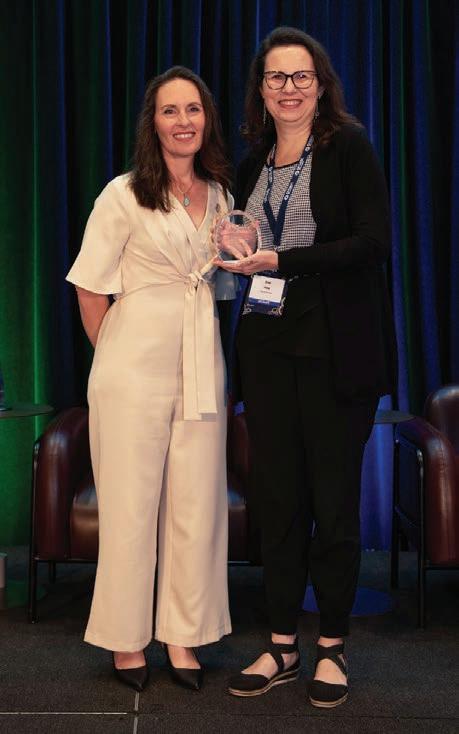
Tax Sale and Vulnerable People Working Group
When the Ombudsperson’s report on tax sales prompted legislative reform, the practical question was how the new framework could work for both the local governments administering it and the vulnerable property owners it sought to protect. The Tax Sale and Vulnerable People Working Group answered that question — together.
Drawing on operational experience across BC, the Working Group informed amendments to the Local Government Act and helped develop the new tax-sale guidelines, best-practice tools, and plain-language communications that local governments rely on today. As Executive Director Kala Harris noted in the award letter, the result is “a more practical, fair, and compassionate approach to tax-sale administration — one that will benefit both municipalities and residents for years to come.”
The 2026 Outstanding Achievement Award recognizes the collective contributions of Erin Anderson, Sally Bhullar-Gill, Janene Brierley-Green, Kevin Franson, Nancy Hudson, Eva Juca, Nicki Kathler, Kim Kenward, Layla Monk, and Angela Zanardo.
Continued on page 18
Continued from page 17
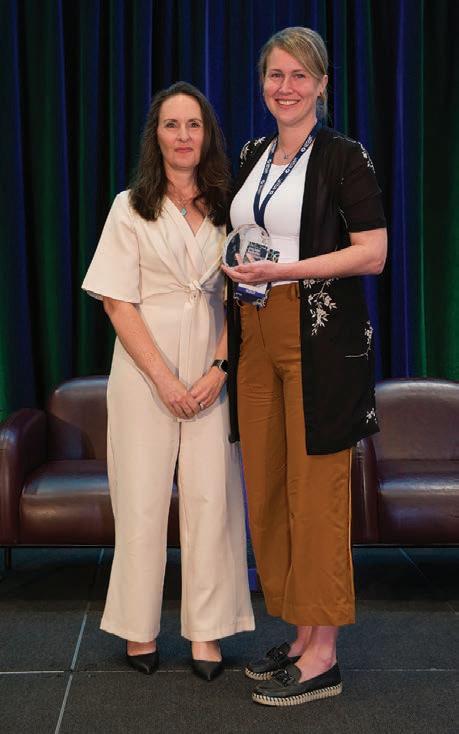
The annual report, as every finance professional knows, is a technical requirement that few in the community actually read.
The Village of Zeballos reimagined its annual report as a comic-book superhero story, casting local government staff as everyday heroes who solve unseen problems that keep a community running. Compliance disclosure became something residents actually wanted to read, and it made the work of local government legible in a way few other formats can.
The 2026 Innovative Idea Award recognizes the Village’s bold reimagining of how local governments can communicate with the people they serve. The report has resonated in Zeballos and drawn attention across the sector, prompting others to rethink their communications. Special thanks go to Alana Janisse, Deputy Corporate Officer / Deputy Finance Officer, whose presentations at Boot Camp and the Accounting & Auditing Forum extended the reach of this work across the GFOABC community.

The 2026 New Member Award recognizes Justin Brogan, now the Finance Services Lead at the Town of Golden. While at the City of Rossland, Justin led the early a doption of PS 3280 (Asset Retirement Obligations) and made templates, working papers, and audit-approved memos freely available to communities across BC — saving colleagues countless hours and significant consulting costs.
That instinct to share runs through everything Justin contributes to the GFOABC community: hands-on conference workshops on data visualization (most recently “Navigating the LOS Sea” in 2025), regular contributions to the Online Forum, and patient mentorship of emerging finance staff across the province.
In her award letter, Executive Director Kala Harris captured what makes Justin stand out: “That combination of leadership, curiosity, and generosity is not only valued, it is essential to the strength of our community.” That statement is a clear signal of the leadership Justin will bring to the profession in the years ahead.
November 24-25, 2026
The annual Fall PD Workshops take place in Vancouver every November. These in-person, full-day workshops cover a breadth of local government finance topics and are an opportunity to network with peers one last time before the end of the year. Past sessions include Financial Reporting, Budgeting Best Practices, and Ethics and Leadership.
ASSET MANAGEMENT — TANGIBLE CAPITAL ASSETS (SESSION 1)
Thursday, July 9, 2026 · 10:00–11:30 AM PDT · Zoom
Is your TCA data driving real decisions, or just feeding compliance reports? For many local governments, tangible capital asset records are the starting point for a real asset inventory — but a significant gap often lies between the two. This Spotlight Session with PSD Citywide walks through how to assess that gap, what a thorough gap analysis entails, and how to use the findings to build a more complete and reliable inventory. The session covers comparing TCA records with actual field conditions, using process mapping to surface missing or inconsistent data, and developing a practical plan to close those gaps over time. Featuring Israr Ahmad, Director of Integrated Asset Management at PSD Citywide.
Monday, August 10, 2026 - Friday, August 14, 2026
Boot Camp is our flagship residential program. Grounded in the legislation that guides the role of the financial officer and the Leadership Competency Framework (LCF), it helps participants connect statutory responsibilities with the leadership behaviours needed to guide teams and influence decisions. Each participant receives the Boot Camp Toolkit — a comprehensive binder of templates, legislative references, and leadership resources to support continued growth as confident, capable financial leaders.

This cohort-based program is a blend of in-person workshops, virtual meetings, one-on-one executive coaching, self-guided learning, and collaboration – helping participants develop leadership competencies, build relationships, and make a bigger impact on their organization.

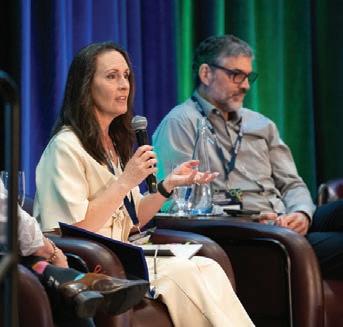
PANEL:
David Hallinan, City of Kamloops
Rick Danyluk, District of North Vancouver
James Ridge, Ridge Consulting
Daryl Abbs, Watson Economists
Moderated by Mario Piroddi, BDO
The Housing Dialogue was the culmination of a Board-led Case Study Series that began in September 2025 as part of GFOABC’s ongoing effort to foster member-driven conversations on the most significant issues facing local government finance professionals.

The conversation began with a deceptively simple question: What is the role of local government in housing?
Initially, participants expected to discuss housing affordability, housing supply, development approvals, and provincial housing targets. As Board members, finance professionals, and subject-matter experts shared experiences from across the province, the conversation began to shift.
What emerged was a growing recognition that, while housing dominated public debate, local government finance professionals were grappling with a much broader challenge. Housing pressures were manifesting as infrastructure demands, staffing constraints, capital
funding pressures, service delivery impacts, and long-term financial obligations.
Participants repeatedly returned to a fundamental observation: local governments do not build housing. Developers build housing.
Local governments, however, are expected to provide the infrastructure, services, approvals, and organizational capacity needed to support growth. As the discussions continued through the fall and winter, participants questioned whether the expectations placed on local governments aligned with the tools, authority, and financial resources available to meet them.
By January, a central tension had emerged.
Continued on page 24
Continued from page 23

Local governments were increasingly being asked to deliver housing and growth outcomes while managing infrastructure, financial, and service impacts that often exceeded their capacity. Housing had become a lens through which participants examined broader questions about growth, infrastructure, governance, and long-term sustainability.
By the time delegates gathered in Kelowna for the 2026 GFOABC Annual Conference, the focus of the dialogue had shifted significantly.
The central question was no longer simply how to build more housing.
Instead, it had become a conversation about growth. Within minutes of taking the stage, the panel moved beyond housing targets and development approvals to discuss water and sewer infrastructure, fire protection, recreational facilities, lifecycle costs, and the long-term financial implications that accompany growth.
As one panellist noted, local governments do not build housing—they build and maintain the systems that make housing possible.
One of the central themes of the discussion was the relationship between growth and infrastructure costs. The familiar phrase “growth pays for growth” was carefully scrutinized. While development cost charges and other growth-related revenues can offset a portion of infrastructure costs, panellists noted that they rarely capture the full picture. The cost of constructing an asset may be visible today, but the costs of operating, maintaining, renewing, and eventually replacing it can emerge decades later.
Growth, participants noted, creates obligations that extend well beyond the initial development decision.
The discussion highlighted the importance of asset management planning, long-term financial planning, and lifecycle costing to help local governments understand and communicate these long-term commitments.
The panel also examined the growing tension between expectations and capacity.
Several examples illustrated that approving housing does not necessarily result in housing being built. Financing conditions, construction costs, labour availability, market demand, and developer decisions all influence whether approved projects move forward. Participants noted that local governments are often held accountable for housing outcomes despite having limited influence over many of these factors.
The conversation also examined the role that local governments can play in supporting affordable, social, and supportive housing. While there was broad recognition of the need for housing solutions across the continuum, panellists emphasized the importance of understanding the long-term financial and operational implications of ownership and service delivery.
Several examples highlighted the value of partnerships. Local governments can play important roles through land-use planning, land contributions, facilitation, and collaboration, while leveraging the strengths of senior governments, non-profit organizations, and community partners.
Throughout the discussion, a recurring theme emerged regarding time horizons.
Infrastructure assets often serve communities for generations, yet elected officials must make decisions within much shorter electoral cycles. Panellists acknowledged the challenge of balancing current affordability concerns with investments that support future residents. Several examples showed how clear capital planning frameworks can help councils and boards navigate competing demands and set defensible priorities. At the same time, participants noted that many local governments continue to face significant capacity constraints. Even when funding and priorities are aligned, staffing shortages, limited engineering resources, project management capacity, and contractor availability can
constrain an organization’s ability to deliver infrastructure and growth-related initiatives.
Throughout the session, panellists emphasized the important role that finance professionals play in helping decision-makers understand the long-term implications of growth.
Asset management plans, long-term financial plans, financial modelling, and lifecycle analysis were identified as critical tools for informed decision-making. Participants also emphasized the need to help elected officials and residents understand the full costs of growth, including infrastructure, operations, maintenance, and future replacement costs. “The decision ultimately belongs to elected officials, but finance professionals help ensure those decisions are informed.”
In many ways, the conference dialogue confirmed what had emerged during the Board-led Case Study Series. The conversation began with housing, but it ultimately revealed something more profound.
Beneath every housing discussion lies a series of decisions about infrastructure, services, risk, affordability, and longterm financial sustainability. Housing may be one of the most visible challenges facing local governments today, but the dialogue demonstrated that the broader question is how communities manage growth in a way that remains financially sustainable for current and future residents.
The session concluded where the Board-led conversations had ultimately arrived: growth is not simply about accommodating more people. It is about ensuring that communities have the infrastructure, services, organizational capacity, and financial resilience needed to support them for decades to come.

PANEL:
Jeff Lovell, City of Port Coquitlam
Charlotte Osborne, City of Cranbrook
Farhad Hossain, Regional District of Kootenay Boundary
Craig Binning, Hemson Consulting
Moderated by Jim Bauer, Formerly City of Delta
What does it take to build resilient infrastructure in today’s local government context?
That question was central to the Building Resilient Infrastructure: Strengths, Challenges, and Real-World Solutions case study at the 2026 GFOABC Annual Conference. Drawing on member experiences, live polling, and a panel discussion, the session explored how local governments are balancing aging infrastructure, rising service expectations, limited resources, and long-term financial sustainability.
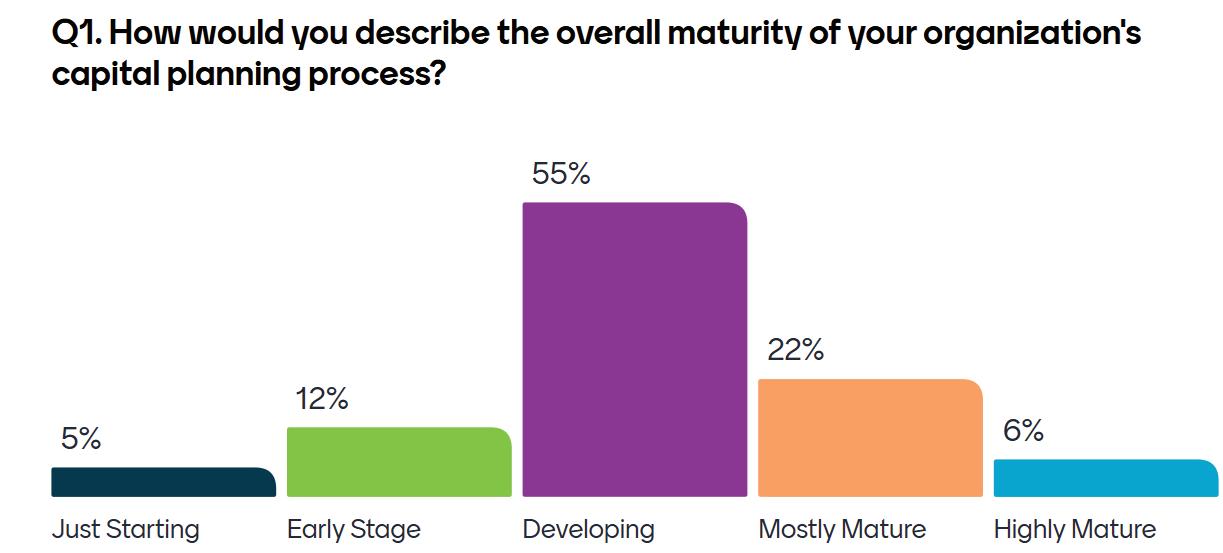
The discussion began by examining the maturity of capital planning practices across the sector. When asked to assess their organization’s capital planning process, most delegates identified their organization as being in the “Developing” stage. The results aligned with what GFOABC heard through its Quarterly Question on capital planning: many local governments have established planning processes and tools while continuing to refine how those processes support long-term decision-making.
One of the strengths highlighted throughout the discussion was the growing integration of longterm financial planning, capital planning, and asset management. Panellists shared examples of organizations that use longer planning horizons, reserve strategies, and policy frameworks to better understand future infrastructure needs and support more informed decisionmaking.
At the same time, several challenges continue to affect the sector.
Delegates identified asset renewal needs as one of the most significant pressures facing local governments today. Panellists noted that infrastructure needs continue to grow, yet organizations often face competing priorities, shifting circumstances, and limited capacity to deliver increasingly complex capital programs. Staffing constraints, succession planning challenges, and contractor availability remain significant considerations, particularly for smaller and rural communities.
The discussion also underscored the importance of maintaining a long-term perspective. While every local government prepares a five-year financial plan, many infrastructure decisions have implications that extend well beyond that period. Panellists emphasized the value
Continued on page 28
Continued from page 27

of looking ten years or more ahead to better understand reserve requirements, debt capacity, infrastructure replacement cycles, and service expectations.
Several panellists also reflected on the challenges of maintaining long-term direction amid shifting priorities and unexpected events. Emergency response requirements, evolving community needs, and election cycles can all strain established plans. Participants noted that policies on reserves, debt, and capital planning can play an important role in maintaining consistency and supporting long-term decision-making during periods of change.
The conversation then shifted from challenges to practical solutions.
Craig Binning of Hemson Consulting highlighted the importance of helping elected officials understand the long-term implications of infrastructure funding decisions. Looking beyond annual budgets and illustrating future financial impacts can help decisionmakers better understand the relationship among reserves, debt, and long-term sustainability. He also noted that organizations unwilling to build reserves may ultimately reduce the financing options available to them.

Panellists shared practical tools used within their organizations to support decision-making and to prioritize investments. Examples included capital justification frameworks, long-range financial modelling, reserve policies, and processes that make trade-offs more visible to staff and elected officials.
A recurring theme throughout the discussion was the importance of moving forward even when information is incomplete. While better data and improved forecasting remain important goals, panellists encouraged organizations to use the best available information, clearly identify assumptions, and continue refining plans over time rather than waiting for perfect information.
The session concluded with a reflection on what resilience means in practice. Building resilient infrastructure is about more than funding individual projects. It requires longterm planning, clear policies, informed decision-making, organizational capacity, and a willingness to balance today’s priorities with tomorrow’s needs.
Ultimately, the discussion underscored that infrastructure planning is not an end in itself. Long-term financial plans, capital plans, and asset management strategies are tools that help local governments sustain services, support residents, and ensure that communities remain resilient and livable for future generations.

The 2025 and 2026 GFOABC Annual Conferences (as will the 2027 conference) focused on building resilient communities. From a financial officer’s perspective, this includes financial resiliency. This is not a new concern for financial officers. In August 2021, UBCM published a report, “Ensuring Local Government Financial Resiliency,” which built on the previous 2013 report, “Strong Fiscal Futures Report – A Blueprint for Strengthening BC Local Government Finance System.” With regard to municipal finance, is the current property tax system resilient?
One definition of resilience is the ability to recover from or adjust easily to misfortune or change. The current property tax system has been tested by change since it was implemented in 1860. It is now 2026, and municipal finance is heavily reliant on property taxes. The observation is that the current property tax system is unresponsive to economic growth and cannot fairly distribute costs. Also, property taxes subsidize growth. The UBCM report “Ensuring Local Government Financial Resiliency” included a reference to property taxation. The report stated, “There are several implications on local government finance including pressures on residential property tax. This trend re-emphasizes the need to review the local government property tax system to make it fairer, sustainable, and adaptable to the changing economy.” The report noted that for local governments, a status quo policy most likely means substantial and increasing pressure on residential property taxes.
Recommendation #1 of the report is “UBCM and the Province work together in reviewing the current local government property tax system and the impacts of the ‘New Economy’ in order to: develop a fairer, more responsive property tax; monitor impacts of the New Economy on taxation; and identify emerging sources, and opportunities to share taxation/revenues that may result from the New Economy.”
Recommendation #6 is “The Province commit to work with UBCM to identify appropriate revenue source(s) that may both increase funding available for attainable housing and incentivize the use of residential property for housing.”
Examples of potential revenue sources include new taxation powers (e.g., vacancy taxation) and returning funds from existing revenue sources, such as the speculation tax. Recommendation #18 is “…create new revenue tools for local governments to strengthen the transit funding model…”. The Strong Fiscal Futures Report outlined several adjustments to improve resiliency, responsiveness, and fairness. The joint provincial-UBCM Local Government Financial Review Working Group is reviewing the current local government property tax
system and the impacts of the ‘New Economy’. The Strong Fiscal Futures Report stated that the current property tax system can be fairer and more responsive by reducing the local government’s reliance on property tax.
At the GFOABC Annual Conference in Kelowna this year, long-term financial planning, capital planning, intergenerational equity, and housing were discussed. Capital project funding was also addressed, including establishing realistic capital reserves, using debt financing, and introducing or increasing an infrastructure levy. Property taxes are under pressure to fund reserves and/or debt payments, as well as the support service requirements for new housing. The quandary is that there is a significant need to fund new and replacement capital projects to pass on to the next generation, while there is also strong pressure to keep the current year’s property tax increases down. Most municipalities use tax dollars from new construction to keep tax increases down rather than putting new dollars into reserves. A change in the mindset of municipal councils may be needed.
The current property tax system is sound but may need some tweaking. Will it be able to meet the pressures mentioned above?
The short answer – Yes!

DOUG STEIN has worked in municipal finance for over 40 years. He retired from his position as Manager of Revenue Services for the District of Saanich in 2011 and now facilitates GFOABC workshops and webinars and consults on property taxation issues. Doug is very involved with the Collectors’ Forum, is a GFOABC Life Member and a CPA, CMA.

HISTORICALLY, MFA HAS TYPICALLY FUNDED NEW LOANS FOR LOCAL GOVERNMENT MEMBERS WITH A 10-YEAR DEBENTURE, FOLLOWED BY A SERIES OF 5-YEAR DEBENTURES TO FUND LOANS UP TO 30 YEARS. FIGURE A OUTLINES AN EXAMPLE FOR A 25-YEAR LOAN.


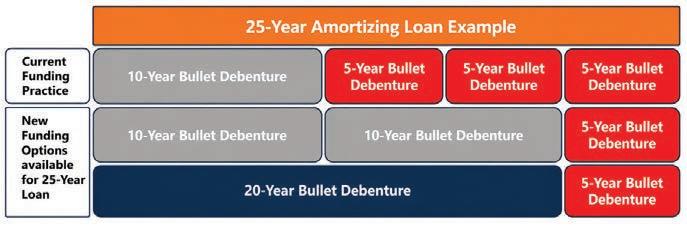
Every 5 years, at refinancing, we reduce the debt outstanding for the loan terms that have fully amortized and refinance the loan terms continuing in the loan package.
With our current bond issuance model of 5’s and 10’s, we have concentrated maturities on the short end of the curve (5 years or less) as shown in Figure B, creating significant refinancing risk.
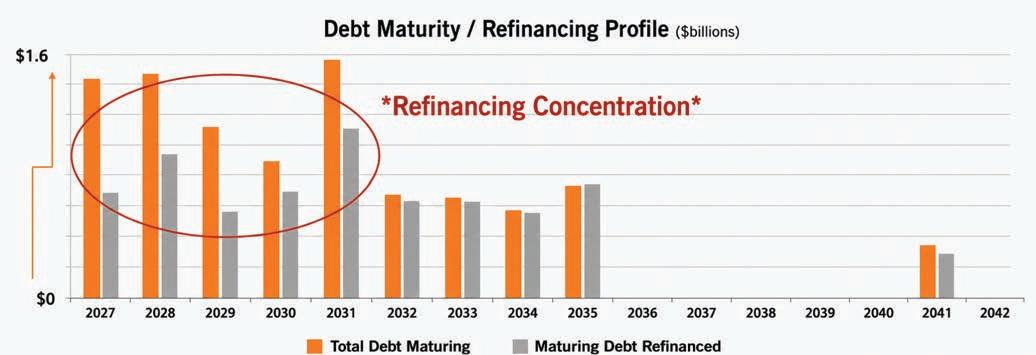
This funding approach really compresses our issuance curve and front-loads our debt financing needs as new packages and old refinancings eventually line up. This increases our concentration and the size of refinancings which is our single biggest risk for the Authority.
One way to address the refinancing risk is to consistently issue longer-term debt. Issuing more 20-year or longer debentures helps to better align our funding term to the underlying loan term, reducing the number of individual
refinancings required after the original bond matures, allowing for more loans to mature after the initial funding period, and spreading out our refinancings. Rating agencies have flagged to us that our refinancing risk is material and as a result, we need to work to extend the duration of our debt to address this.
Continued on page 34
Continued from page 33

Members have tended to finance assets with lives of 25 to 50+ years with loans from MFA on average of 15 years in length. We are seeing a shift towards longer loan terms beyond 15 years to help with affordability, intergenerational equity etc., making this shift in funding practices easier to implement.
We still believe our 10/5 model is a good way to fund a portion of the loans, however we believe that increased 20-year issuances would go a long way in alleviating some of the risk associated with refinancing by increasing the duration of our debt issuance.
About 5 years ago we started communicating and implementing these changes and highlighting to members why we need to modify our funding practices.
What does this mean for all of you?
•Members will continue to select the term in which they want to repay loans from MFA (5-to-30-year amortizing loans).
•We suggest all interest rate budgeting should be based on rates corresponding with the loan term as opposed to potential underlying funding terms.
• The principal payment will reflect the length of the repayment term you select; with longer loan terms, principal is spread out over the longer period (also garnering more actuarial credit) offset partially with higher interest cost, but providing increased funding and rate certainty.
•MFA needs to decide what term (maturity) to access in the capital markets to best fund the loans - as it balances the various considerations and risks mentioned earlier.
•Members should ensure information shared with the public and their board allows flexibility in financing through 5,10-, 20-and 30-year debentures; and
• If a 20-year bond is issued, early loan repayment before that time will not be considered until debenture maturity.
Please reach out to MFA if you have any questions.
Cost-effective financial services tailor-made for BC local governments: Long Term Financing
Pooled Investment Funds Short Term & Equipment Financing
Investment Policy & Portfolio Reviews Cash Management Products

CONNOR NEUMAN is the Portfolio Manager for the Municipal Finance Authority of BC and is responsible for managing sinking fund investments while providing support for MFA’s debt issuance program. Connor holds a Bachelor of Business Administration (Accounting Major) from Camosun College and is a Chartered Professional Accountant (CPA).

MATTHEW O’RAE is the Chief Financial Officer for the Municipal Finance Authority of BC and is responsible for overseeing all finance functions, including financial reporting, cash management, investing, and debt issuance. Matthew holds a Bachelor of Commerce from McMaster University, a Master of Business Administration (Specialization Finance) from the University of Calgary, and is a Chartered Professional Accountant (CPA, CA).
Financial Education & Training









PUBLIC SECTOR ORGANIZATIONS ARE MANAGING AN INCREASING NUMBER OF PUBLIC SECTOR ACCOUNTING BOARD (PSAB) REQUIREMENTS, INTERNAL CONTROLS MANAGEMENT, AND AUDIT REQUIREMENTS, ALL WHILE STAYING ON TOP OF DAY-TO-DAY OBLIGATIONS.
Yet, despite growing regulatory pressure, many finance teams still rely on manual reporting processes— leveraging disconnected Excel and Word documents—and DIY IT solutions that just don’t scale.
If this sounds familiar, look for these five signals that your team is ready to trade disconnected spreadsheets for a modern reporting platform.
If your Public Accounts or Annual Financial Report cycle leads to burnout, it’s time to rethink your process. Public sector organizations are facing flat headcounts and a shrinking, highly competitive talent pool. Relying on manual heroics to meet tabling deadlines not only leads to burnout, but it also creates an operational risk.
Purpose-built workflow automations and secure, embedded AI can help your team reclaim their time without sacrificing data governance or privacy.
2. THE TRANSITION TO NEW PSAB STANDARDS IS OUTPACING YOUR SPREADSHEETS
PSAB standards are evolving at a pace that manual spreadsheets can’t match. If you are still managing the transition to PS 1202 in disconnected files, you could be inviting audit findings.
To keep up with quickly shifting standards, finance teams need a platform where these complex calculations and reporting conversions are automated, centralized, and audit-ready from day one.
If you can’t show an auditor exactly who changed a value in a schedule and why, your audit friction is too high, resulting in lost productivity and higher audit costs from already limited budgets.
A single source of truth can help your team ensure that every number—from the budget to the final Annual Financial Report—is linked, providing the high level of traceability that independent auditors, Auditors General, and elected councils demand.

The role of financial reporting has become more strategic, yet your best people are often stuck in data clean-up roles. If your team spends most of their time on manual data entry and email chains, they aren’t providing the highvalue analysis required to influence long-term fiscal policy and organizational strategy.
You have trusted ERP sources, but these aren’t built for the last mile of public sector reporting. If your IT team has built custom scripts to bridge the gap, this could contribute to a siloed environment that risks data integrity.
To eliminate silos, finance teams need a purpose-built platform that pulls source data directly from your ERP, creating a single source of truth.
Modernizing your public sector reporting goes beyond adopting new software. With the right platform, you can future-proof your organization against regulatory flux and talent shortages.
By prioritizing automated workflows, centralized traceability, and purpose-built technology—capable of unifying finance, risk, and sustainability data—finance leaders can eliminate administrative burdens and transition their teams from back-office data processors to frontline strategic partners.
Is your team ready to move beyond the manual grind? Explore tools like the Workiva platform for a more efficient, transparent, and strategic future.

TRAVIS RHODES is a Product Marketer with nearly two decades of experience either working in or marketing to public sector organizations. His insights have proven valuable across multiple products saving government agencies millions of dollars over the years.

ACROSS CANADA, MUNICIPALITIES ARE BEING ASKED TO DO MORE WITH LESS WHILE FACING SOME OF THE MOST COMPLEX FINANCIAL PRESSURES IN RECENT MEMORY. AFFORDABILITY CONCERNS ARE RISING, INFRASTRUCTURE IS AGING, AND SERVICE EXPECTATIONS CONTINUE TO GROW. IN THIS ENVIRONMENT, FINANCE TEAMS ARE UNDER INCREASING PRESSURE TO DELIVER BUDGETS, FINANCIAL REPORTS, ANALYSIS, AND LONG-TERM VISIBILITY—WHILE MANAGING LIMITED CAPACITY AND EXPANDING REPORTING REQUIREMENTS.
As highlighted in the GFOABC conference theme, Building Resilient Communities, these challenges are not abstract. They appear daily in the decisions municipal finance leaders make around budgets, reserves, capital planning, and long-term financial sustainability.
This framing matters. Resilience is built through disciplined planning, informed trade-offs, and clear financial visibility. Whether it’s reserve strategy, capital prioritization, or multi-year forecasting, strong financial management determines how confidently a municipality can move forward.
The focus on resilience reflects a broader reality: expectations of municipal finance teams continue to grow, even as resources remain constrained. Departments are expected to support budget development, maintain
reporting accuracy, prepare for audits, ensure PSAB compliance, and provide reliable insights for increasingly complex decisions.
For many municipalities, the challenge goes beyond balancing today’s budget—it’s about maintaining confidence in tomorrow’s decisions. As service costs outpace revenues and infrastructure demands exceed available funding, finance leaders need better tools and processes to deliver stronger visibility, reliable insights, and timely, defensible decision support.
This is where resilience becomes practical.
A resilient community depends on a finance team that can adapt to change, model scenarios, and provide trustworthy information when decisions carry long-term consequences. This capability is critical when council and leadership must weigh affordability, infrastructure needs, reserve use, and future service levels against one another.
The emphasis on resilience also underscores the need to approach affordability and infrastructure challenges with both discipline and practical modernization. This is not about change for its own sake—it’s about equipping teams with better ways to plan, report, and respond as complexity grows.
In many municipalities, finance teams still spend significant time assembling data manually, reconciling

information from multiple sources, and managing processes built on spreadsheets and institutional knowledge. These approaches introduce continuity risks, increase audit strain, and limit agility—especially when critical reporting depends on a small number of individuals or processes that are difficult to standardize or scale.
That’s why conversations about affordability and infrastructure must also include financial systems, process reliability, and organizational capacity. Strong planning is essential—but so is the foundation that supports it.
Building resilient communities doesn’t start with a single initiative. It starts with stronger financial foundations, better visibility into risk, and the confidence to plan beyond the immediate budget cycle. For finance leaders, resilience is not just about enduring uncertainty—it’s about having the information, capacity, and discipline to lead through it.
Clarity depends on the availability, structure, and reliability of financial data. Capability depends on a finance team’s ability to turn that data into sound budgeting, reporting, analysis, and long-term planning.
When processes rely on fragmented data and manual effort, too much capacity is spent assembling information rather than analyzing it. Stronger tools and systems— such as Vivid Reports—help address this by improving consistency, reducing manual effort, and enabling finance teams to deliver timely, trusted insights for better decision-making.
Ultimately, municipalities depend on more than good intentions or one-time initiatives. They depend on a finance function that can provide clarity under pressure, maintain confidence in the numbers, and equip leadership with the insight needed to make sound decisions—helping build stronger, more resilient communities.

LAURINDA BROWN brings 15+ years of experience in ERP systems, financial reporting, document management, and AP/AR automation — helping organizations improve efficiency, expand capacity for analysis, and enhance visibility.


MUNICIPALITIES ACROSS CANADA ARE FACING A SUDDEN AND SIGNIFICANT PRESSURE AROUND ENTERPRISE RESOURCE PLANNING SYSTEMS. LEGACY SYSTEMS AREN’T MEETING STAFF EXPECTATIONS FOR MODERN APPLICATIONS AND MICROSOFT’S ANNOUNCEMENT OF END-OF-SUPPORT FOR DYNAMICS GP HAS ADDED A HARD DEADLINE TO WHAT WAS ALREADY AN URGENT NEED. CASCADIA IS SUPPORTING FINANCE LEADERS ACROSS THE COUNTRY ON ERP PLANNING, VENDOR SELECTION, AND IMPLEMENTATION — AND HERE ARE THE MOST COMMON CHALLENGES WE ENCOUNTER.
THE 2029 DEADLINE IS CLOSER THAN IT LOOKS
GP support ends December 31, 2029, but the real decision window is well before that. A phased implementation can take 12 to 18 months. More importantly, starting early gives you time to avoid a “lift and shift” approach and make meaningful process change. This transition is too significant to treat as a simple system swap; it’s an opportunity to modernize how your organization works.
Suggested action: Make the timeline visible to leadership and council now, communicate the magnitude of what’s ahead, and begin the planning stage.
Beyond Finance, modern ERPs touch every department critical to municipalities including HR, public works, asset management, and customer-focused areas. Scoping your ERP as a finance initiative leads to under-engagement and missed opportunities, and departments that don’t feel heard during scoping tend to become resistors during implementation.
Suggested action: Engage leaders across key departments early, see where their people and systems fit in future systems and get representation in governance and working groups.
Many municipalities have operated with workarounds for years. The shift to standardized, best-practice workflows impacts roles, data, and daily routines. Change management is consistently under-budgeted in ERP projects and treating it as a training exercise at the end is one of the most reliable predictors of poor adoption.
Suggested action: Embed change management into planning and needs assessment activities and assign clear internal ownership roles from the start.


Duplicate records, fragmented data across customers, properties and assets, and complex chart of accounts structures are common — and they become blockers when discovered mid-implementation. Integration complexity adds further risk: every connected system’s data structure matters when designing your future-state.
Suggested action: Audit high-level data and integration needs early, before a vendor is selected, to be ready for a deep dive during pre-implementation.
Municipal teams are already running at capacity, yet ERP success demands those same people serve as subject matter experts, evaluators, and change champions for years. “The vendor will handle it” is a costly misconception.
Suggested action: Assess your internal capacity. Plan for a dedicated project lead, a project manager, and the right combination of backfill, contract resources or temporary support before the project begins.
These five areas are where preparation makes the biggest difference and we’ve been through them all with our clients. If you want to talk through any of these in more detail, we’re here to help! Reach us at hello@ cascadiapartners.ca or take our ERP survey here for a free 30-minute consultation.

At Cascadia Partners, we do five things really well:

CASCADIA PARTNERS is a Canadian management consulting firm that works on complex analytical + technical, and people + process challenges to deliver operational improvements and boost confidence in decision-making. Our 40 consultants in BC work with municipalities across Canada on strategy development, organizational design, operations improvement and digital transformation to help leaders deliver on their strategic priorities. Reach us at hello@cascadiapartners.ca to learn more.














ACROSS LOCAL GOVERNMENTS, MICROSOFT COPILOT IS QUIETLY BECOMING PART OF THE WORKDAY, DRAFTING EMAILS, SUMMARIZING REPORTS, AND RECAPPING MEETINGS. IN MANY ORGANIZATIONS, THAT ADOPTION IS ALREADY HAPPENING INFORMALLY, WITHOUT CLEAR GUIDANCE, AND OUTSIDE THE LINE OF SIGHT OF IT AND LEADERSHIP. IT IS A PATTERN KNOWN AS SHADOW AI, AND IT IS MORE WIDESPREAD THAN MOST FINANCE LEADERS REALIZE.
According to the 2025 MNP Municipal Report, nearly a quarter of Canadian municipalities are actively using AI but 49% have no AI policy or are not sure if they have one. That gap is where risk lives.
The question is no longer whether AI will be used. It is whether organizations can get ahead of that use before informal habits become organizational liabilities.
Unlike public AI tools, Copilot operates entirely within an organization’s Microsoft 365 environment and respects existing user permissions. For finance teams, early use typically includes drafting variance explanations and council summaries, recapping Teams meetings, analyzing spreadsheet data, and drafting routine correspondence. These are practical, time-saving applications. They are also
situations where a confident AI output can move quickly from draft to decision, which is exactly why structure matters.
WHAT FINANCE LEADERS SHOULD WATCH FOR Three areas deserve close attention:
1. Data access and permissions. Copilot can surface anything a user is already authorized to see. In many organizations, permissions have grown organically, leaving shared document libraries with overly broad access, SharePoint sites that were never locked down. Reviewing permissions before wider rollout is not optional; it is foundational.
2. Accuracy and oversight. Every output should be treated as a first draft. Numbers, citations, and recommendations still require human review, especially in finance work, where a confident-looking summary can quickly make its way into a council briefing or audit response.
3. Governance and accountability. With nearly half of Canadian municipalities operating without a formal AI policy, a lot of Copilot use is happening in a governance vacuum. Clear guidance on acceptable use makes AI adoption explainable to council, auditors, and the public.

The organizations seeing the most success are not starting everywhere. They are starting intentionally. For most finance teams, that means beginning with low-risk internal tasks: meeting recaps, draft correspondence, and data summaries. It means a short internal guideline on what to review before sharing. And it means a permissions review before broader rollout.
It also means identifying an AI champion who owns how AI is introduced, sets baseline standards, and helps colleagues build confidence over time. That role often falls naturally to finance leaders who are already thinking carefully about governance and risk.
The goal is not perfection. It is progress with structure.
What we consistently hear in conversations with local governments is that the biggest gap is not technical skill. It is structured use. Members have Copilot deployed; they just have no coherent picture of where it fits their specific finance workflows.
ALPHA IT and GFOABC are partnering to launch a hands-on Copilot training program for local government finance practitioners built around real workflows, real use cases, and the governance context that makes adoption safe in a public sector environment. If you are interested in being part of the pilot cohort, we would welcome the conversation.

for

THIRTY BC LOCAL GOVERNMENTS RESPONDED TO THIS QUARTER’S SURVEY, NAMING TWO STRUCTURAL GAPS — INCOMPLETE LIFECYCLE MODELLING AND FINANCE’S LIMITED ROLE IN HOUSING STRATEGY — AND THREE PRIORITIES FOR CLOSING THEM.
We asked members how housing growth is reflected in their financial planning. Thirty local governments responded — a self-selected sample. Members were surveyed in April 2026, more than two years after the November 2023 wave of provincial housing legislation (Bills 44, 46, and 47) and two months after the February 2026 provincial budget, which reallocated $1.4 billion from the housing strategy over three years.
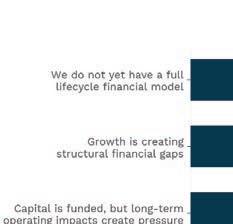
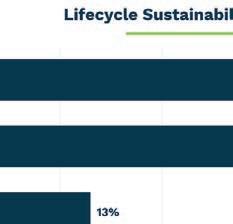
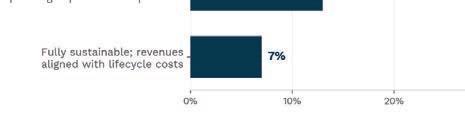
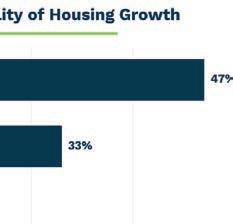
47% of respondents reported that they do not yet have a full-lifecycle financial model in place. 33% said growth is creating structural financial gaps. 13% said capital is funded, but long-term operating impacts create pressure. 7% said growth is fully sustainable, with revenues aligned with lifecycle costs.
Of the 30 respondents, 23% said they were unsure whether housing-related costs are appropriately shared between developers and current and future taxpayers, citing insufficient analysis to determine.


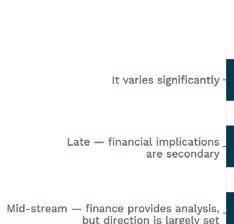
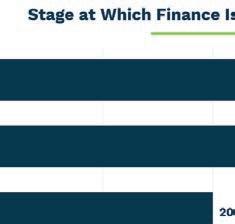
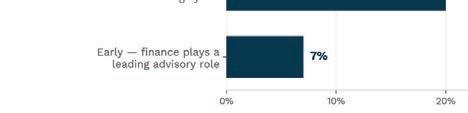
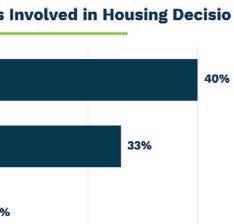
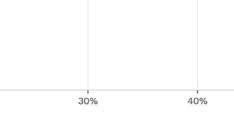
7% of respondents described finance as involved early, playing a leading advisory role in shaping housing strategy. The remaining respondents reported that finance is involved late (33%), mid-stream after policy direction is largely set (20%), or that involvement varies significantly (40%).
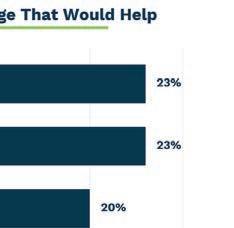
When asked what single change would most improve their ability to manage housing growth, respondents selected:
•Provincial cost-sharing for growth-related infrastructure: 23%
•A provincial commitment not to mandate growth without corresponding fiscal support: 23%
• Better data and tools to model long-term fiscal impact: 20%
• Greater flexibility in how DCCs and development charges can be used: 13%
• Earlier and more meaningful involvement of finance in housing policy decisions: 7%
•Other: 13%
On communication confidence to council, 31% of the 29 respondents who answered this question said they lack the modelling or data to clearly communicate longterm housing-related fiscal risk. (One respondent skipped this question.)

Two-thirds of respondents (66%) want one of three things from the province: cost-sharing, a no-mandateswithout-funding commitment, or better modelling tools.
Continued on page 46
Continued from page 45
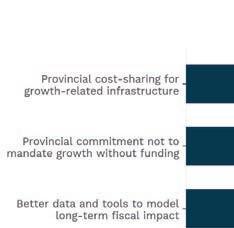
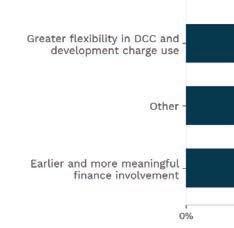
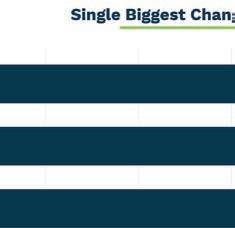
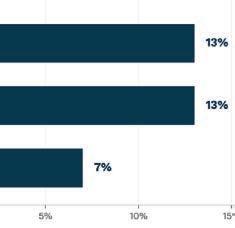
In the open-text field, respondents identified specific legislative referents (Bills 44 and 46), specific tools (DCC scope, density bonusing), and local infrastructure realities (raw water supply, septic-only systems) that the multiplechoice options did not capture.
One respondent stated that BC’s statutory five-year financial planning horizon is too short for infrastructure decisions with multi-decade asset lives, and suggested a provincial requirement to adopt 10- to 20-year financial plans tied to grant eligibility. A long-term financial planning commitment is already a condition of eligibility for the Canada Community-Building Fund under the 2024–2034 tripartite agreement; the respondent’s proposal would mirror that requirement in provincial legislation.

These findings informed the Housing Dialogue panel discussion on Day 3 of the GFOABC Annual Conference (May 29 in Kelowna).
If your community has found approaches that work — through reserves, partnerships, longer-term planning, or otherwise — we encourage you to share them on the GFOABC forum.
SHARING PRACTICAL SOLUTIONS AND INSIGHTS ACROSS BC’S LOCAL GOVERNMENT FINANCE COMMUNITY.
Dollars & Sense Perspectives showcases innovations, practical solutions, and emerging ideas shaping local government finance. We invite GFOABC members, sponsors, and partners to share experiences that support stronger, more resilient communities.
Articles often grow into conference sessions, webinars, and workshops— expanding conversations across the sector.
ARTICLE FOCUS: Submissions should provide thought leadership addressing challenges or opportunities, such as:
•Governance or regulatory change
• Financial sustainability & affordability
• Capital & long-term financial planning
•Service delivery innovation
•Infrastructure & asset management
•Practical solutions & lessons learned
SUBMISSION REQUIREMENTS
• Article (~500 words, Word format)
•Image or photo (optional)
• Author photo & short bio (50 words max)
•Organization logo
OPTIONAL ADVERTISEMENT:
Organizations may include an advertisement:
• Full bleed: 4.3” × 11.25”
• Visible area: 4.17” × 11”
• Resolution: 300 dpi preferred
• Format: JPEG or PDF
SEPTEMBER NEWSLETTER
• Topic Due: July 6
• Article Due: July 27
• Publish Date: September 14

Questions or ready to submit? Contact us here .
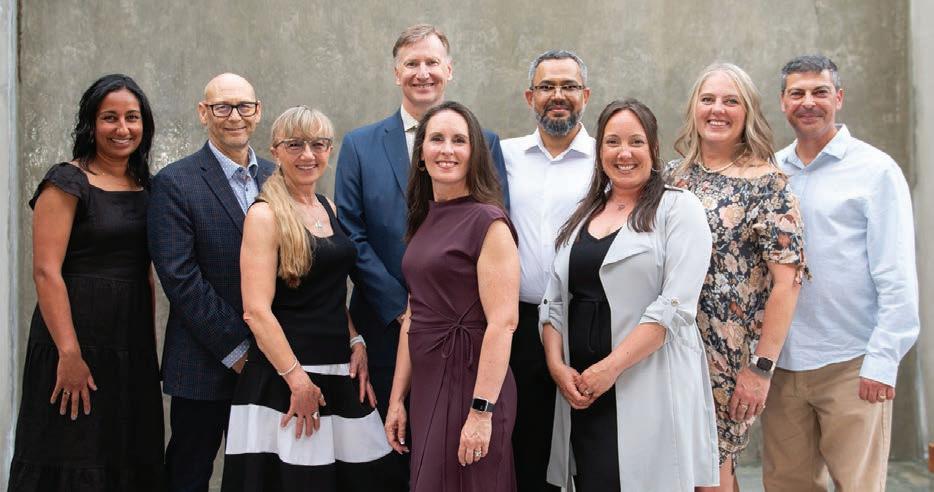
Corinne is the Chief Financial Officer at the City of Prince Rupert, her hometown, and has held the position for 11 of her 13 years in local government. Prior to her adventures in municipal finance, she spent 14 years in public practice. Finding herself in a senior position at the municipality, actively helping to improve her home community, is a surprising passion she feels fortunate to have stumbled across. A far cry from her early adult aspirations in international business, she finds fulfillment in helping chart a course for community renewal and is blessed to have an amazing finance team assisting in those efforts. Outside of City Hall, you can find Corinne playing hockey, walking her dog, and most recently, dipping her toe into musical theatre.
Jeffrey is the Director of Finance for the City of Port Coquitlam, assuming all statutory responsibilities of the Chief Financial Officer and overseeing Procurement and Risk Management. With over 10 years of experience in local government management, Jeffrey has worked with organizations ranging from small (CFO/ DCAO, Fort St. James) to large (Division Manager, Metro Vancouver), maintaining an ongoing focus on financial planning, capital, and fiscal sustainability. Returning to the City of Port Coquitlam after a 6-year hiatus, Jeffrey now enjoys living, working, and raising his young family in beautiful PoCo. Outside of work, Jeffrey can be found at the local soccer pitch, hockey arena, or lacrosse field coaching his son’s teams or finally completing longoverdue home renovations. He thoroughly enjoys getting to know other GFOA board members and giving back to the association of which he is a long-time member.
Charlotte , CPA, CGA, has served as the Director of Finance and Chief Financial Officer for the City of Cranbrook since 2013. She first joined the City team in 2006 as the Financial Services Manager. Before making the leap to local government, Charlotte worked as an audit manager at BDO Dunwoody, LLP. Charlotte’s accounting career began at Maki Staudt Chartered Accountants, where she was hired as a co-op student and later rose to the position of senior manager before BDO Dunwoody acquired the firm. Charlotte was late to the accounting table; the first 10 years of her work life were spent with the federal government, working in employment programming and GST collections. Charlotte was one of the original members of a group that built an 18-unit condominium on the beach in rural
Mexico. A project that was at times a great source of frustration but has ultimately resulted in a cherished home-away-from-home.
David , FCPA, FCMA is the Corporate Services Director and CFO for the City of Kamloops. His journey into municipal government finance has taken some interesting twists and turns, spanning both the forest industry and the Crown corporation
BCLC. A self-professed non-accounting accountant, the Corporate Services Director role provides strategic direction and oversight across the organization, including Enterprise Risk Management, Information Technology, Legislative Services, and Finance. In his leisure time, Dave enjoys travelling, playing golf, mountain biking, and crosscountry skiing.
Nyla has been the Chief Administrative Officer for the District of Tofino since 2022 and before that, served as their Chief Financial Officer for over 12 years. Nyla is GFOA of BC’s Past President and is chair of the Member Services Committee. Nyla sits as a board member of the Tofino Housing Corporation, whose mandate is to provide affordable and attainable housing for the community. Being born and raised on Vancouver Island, the Island will be her lifelong home. She is honoured to live and work in the traditional territory of the Tla-o-qui-aht First Nation, partly also known as Tofino, with her family and can be found outside of work enjoying the outdoors and volunteering within the community.
Continued on page 50
Continued from page 49
Carla has over 25 years of experience in finance and 23 years as a senior leader. Carla is a Certified Management Accountant specializing in Municipal Finance, Communications, Business Strategies, and Human Resources. She is passionate about communication, relationship building, and employee empowerment. Carla’s current role is the Director of Finance for the Thompson Nicola Regional District, where she has been for the last 3 years, with a focus on building resilience, implementing new and innovative systems and solutions, and guiding the team through organizational change. She was previously the Director of Finance and Corporate Services in Hinton, Fernie, and Burns Lake.
Nicole is the Manager, Client Services with the Municipal Finance Authority of BC (MFA) and has an extensive background in the financial services industry, with over 18 years of experience in various roles in commercial and retail banking. She is responsible for managing the Client Service functions of the MFA and supports a wide array of activities relating to investing, borrowing, and education. The MFA, through its strong interest in building capacity in local government, and in conjunction with KPMG, is proud to be a founding member of GFOABC. Nicole is passionate about community outreach and has been fortunate to support local nonprofits through volunteering and securing donations and corporate sponsorships throughout her career in financial services. She has also had the honour of facilitating financial literacy and other community-focused programs. Prior to joining the GFOABC leadership, she sat on the Board of Directors for the Victoria Cool Aid Society.
Patrick Gramiak is the Chief Financial Officer for the City of Salmon Arm, where he provides financial leadership and strategic advice to Council and senior management. He is responsible for long-term financial planning, budgeting, capital financing, and supporting the City’s financial sustainability. Patrick values the important role local government finance plays in helping communities grow and thrive. He is known for his practical approach, collaboration, and commitment to sound decision-making in complex environments. He has contributed to GFOABC through programs such as Boot Camp and by hosting the Collectors’ Forum, supporting peer learning across the sector. Outside of work, Patrick lived in Japan for 10 months studying Japanese, volunteered to call bingo for many years, and has played Santa in 3 three -different countries

Farhad is the Chief Financial Officer and General Manager of Finance for the Regional District of Kootenay Boundary. A lifelong learner and strategic systems thinker, he brings broad experience from local government, allied organizations, and the private sector. He holds an MBA from the University of Calgary, an MSc from Queen’s University, and fellowship honours, including FCPA (Aust.) and FCMA (UK), as well as multiple professional accounting designations. Known by colleagues as “Professor,” Farhad enjoys making complex ideas practical and accessible. His expertise includes long-term financial planning, capital strategy, asset management, and governance. At RDKB, he helped introduce infrastructure levies to support long-term financial health. A 2024 GFOABC Boot Camp alumnus and active mentor, Farhad is passionate about education, advocacy, and supporting emerging leaders. A self-
described curiosity addict, he once completed the Toronto Half Marathon without ever running that distance before race day.
Elio embarked on his accounting journey in the private sector, working for a local-scale manufacturing company, where he honed his skills and gained foundational knowledge that was instrumental in his public sector endeavours. Transitioning to governmental roles, he has found a deep sense of purpose in contributing to the public good through financial expertise. Elio now has over two decades of experience in financial management within the government sector. Beginning at the Ministry of Children and Family Development, he played a pivotal role in shaping financial policies and strategies to support vital social services. With over 19 years of dedicated service in municipal finance at the District of North Vancouver, where he currently serves as Manager of Financial Services, he has a deep understanding of local financial management. Beyond professional commitments, Elio is a devoted parent to three children, actively engaging in their diverse sporting/arts pursuits as both a spectator and a coach.
Lenora is an audit partner with KPMG in Victoria, where she provides financial statement audit and advisory services, including technical accounting, internal audit, and internal control, for private companies, not-for-profit organizations, and public sector entities. Lenora has been an important contributor to the success of GFOABC . She has served on GFOABC’s Board since 2015, and over her Board tenure, Lenora has also served on the Finance & Administration,
External Relations, and Education Committees. Lenora not only shares her time and expertise with GFOABC and its members, but she is also actively involved in the community, serving as a director of the Royal BC Museum since 2021 and as an ambassador for the University of Victoria from 2002 to the present. In 2021, Lenora was awarded the Fellowship designation (FCPA) by CPABC for her numerous outstanding professional achievements and community contributions. She also received an Outstanding Contribution Award from GFOABC in 2022 for her support of GFOABC and its members.





































































Would you like to see your logo here? Become a GFOABC sponsor today.