
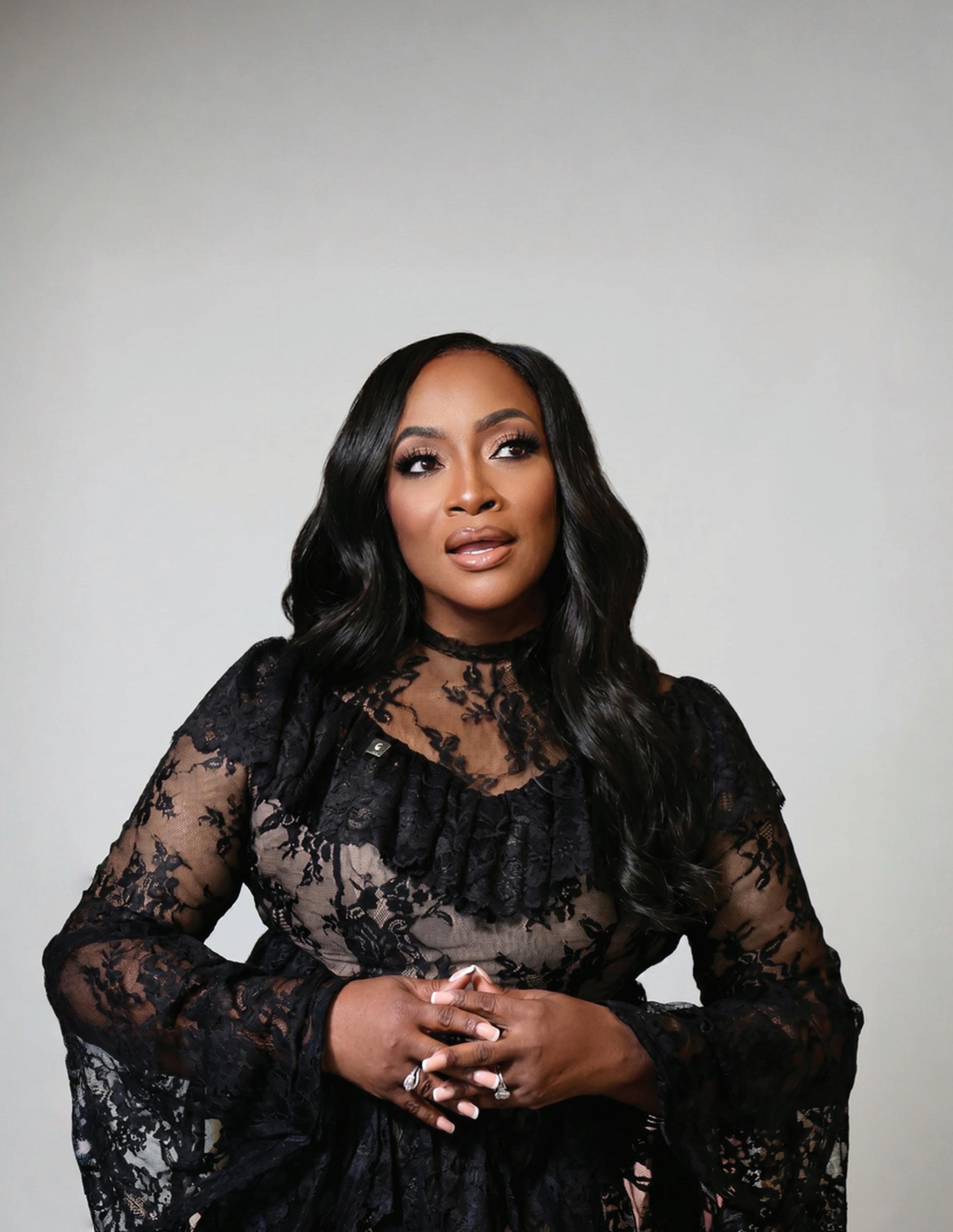
THE IMPACT ISSUE
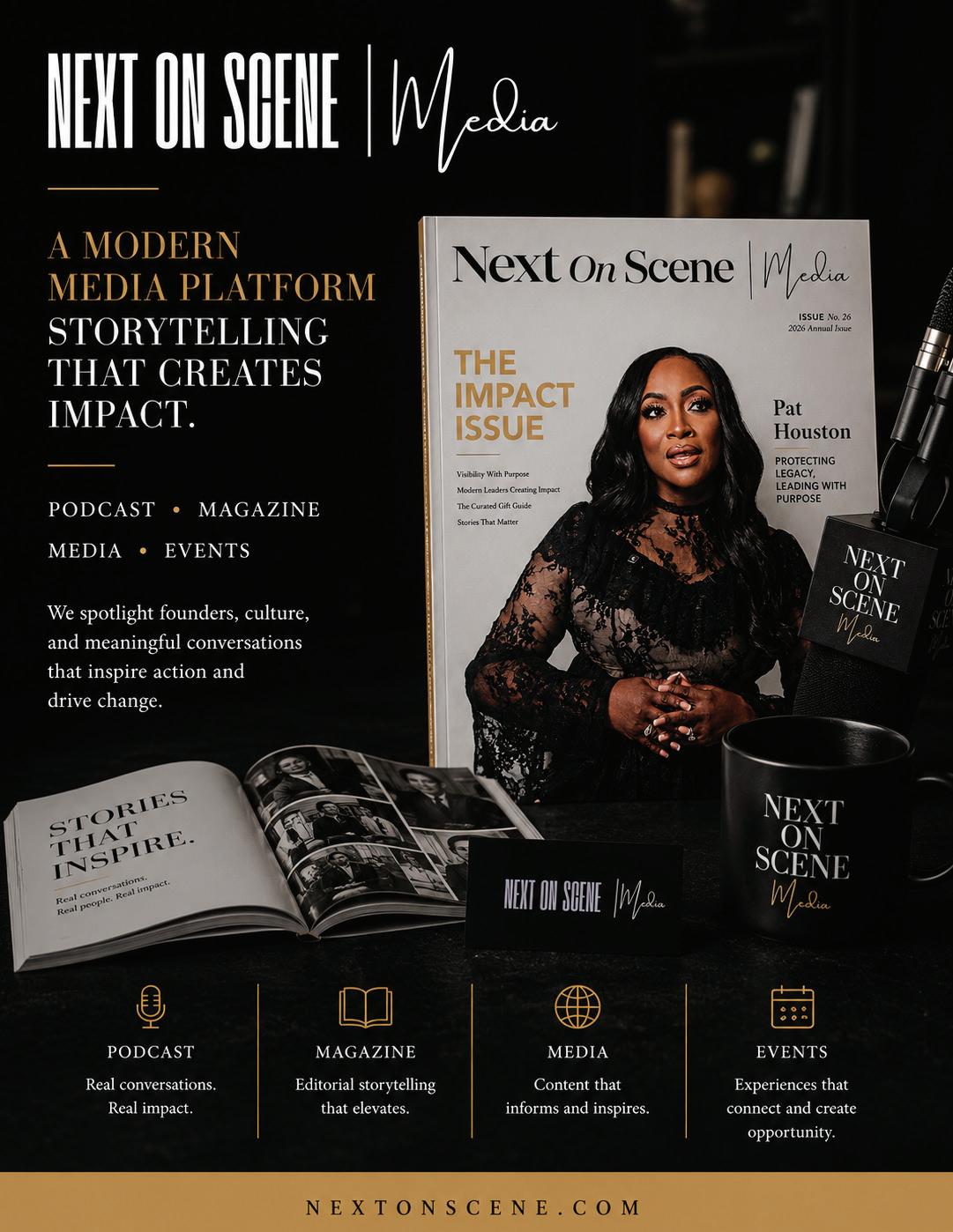
Impact and Legacy
For this issue of Next On Scene Magazine, I found myself thinking deeply about legacy. Not just the kind the world sees through headlines, titles, or accomplishments, but the quieter kind built through resilience, reinvention, creativity, leadership, family, and the moments happening behind the scenes. This issue feels especially meaningful because it reflects the evolution of what modern visibility truly looks like today.
At the center of this issue is Pat Houston, whose story carries far more depth than many people realize. While much of the world knows her connection to one of music’s most iconic legacies, what inspired me most was seeing the many dimensions of who she is beyond the spotlight. She is a businesswoman, philanthropist, creative, and leader navigating immense responsibility while continuing to build a meaningful legacy of her own. From leading nonprofit initiatives and lifestyle ventures to authoring her own work and embracing grandmotherhood, Pat represents something many people are searching for right now: the freedom to evolve.
That energy carries throughout this entire issue. Inside these pages, you’ll find conversations with entrepreneurs, beauty experts, media personalities, creatives, and business leaders all navigating visibility in their own unique way. You’ll hear perspectives on leadership, branding, wellness, confidence, storytelling, and the courage it takes to continue showing up in an ever-changing world.
That has always been the heartbeat of Next On Scene. This platform has never been just about publicity for me. It has always been about documenting people in motion. The humans behind the brands, businesses, broadcasts, and public images we see every day. Because behind every polished moment is a real person navigating ambition, growth, uncertainty, creativity, and purpose.
To everyone featured in this issue, thank you for sharing your voice and story. And to our readers, thank you for continuing to grow with us issue after issue.
My hope is that when you turn these pages, you walk away reminded that evolution is allowed, multidimensionality is powerful, and meaningful visibility always begins with being fully yourself.
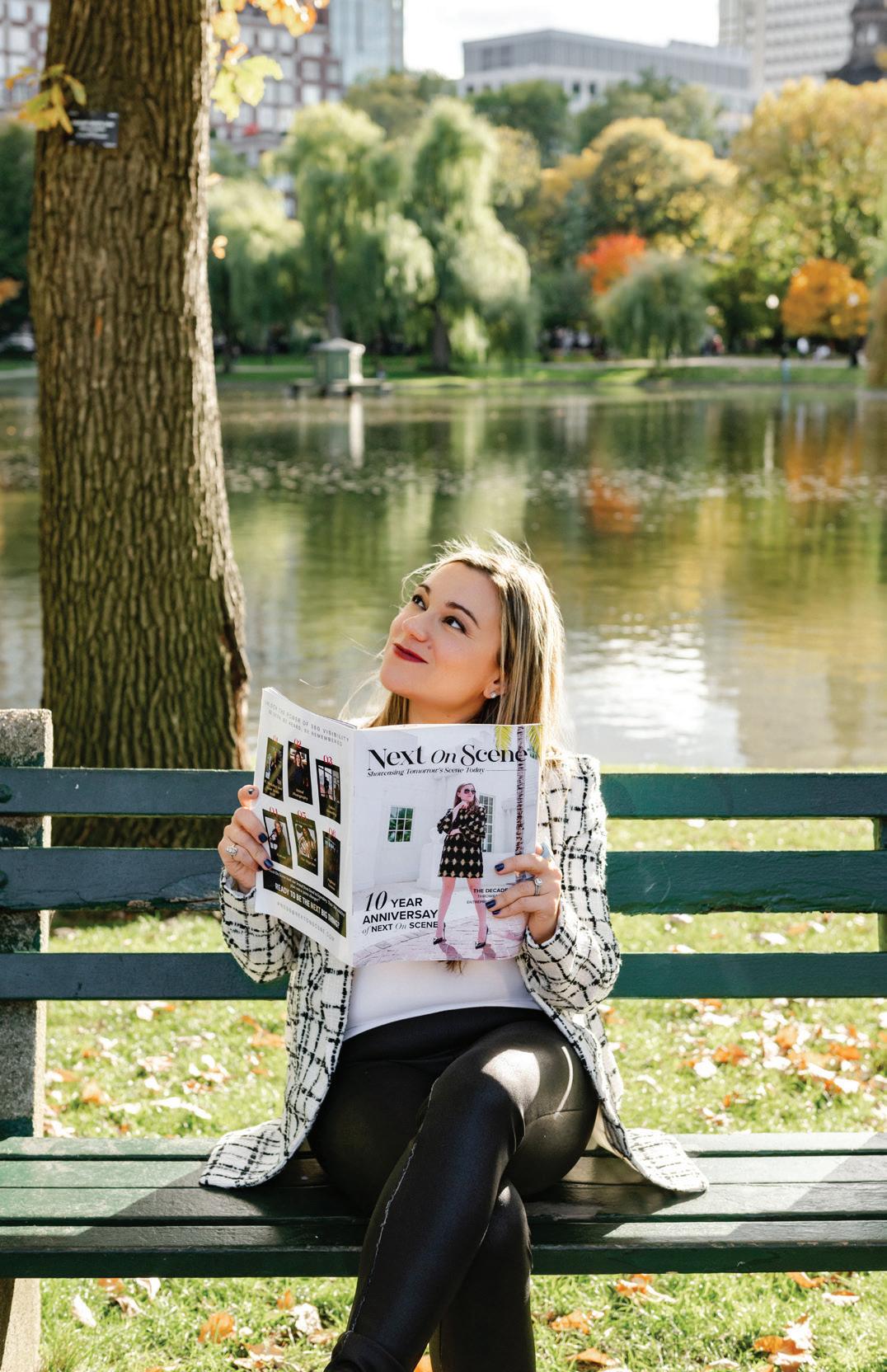
With gratitude,
Jaclyn Zukerman Delory Founder & Editor-in-Chief
Jaclyn Zukerman Delory
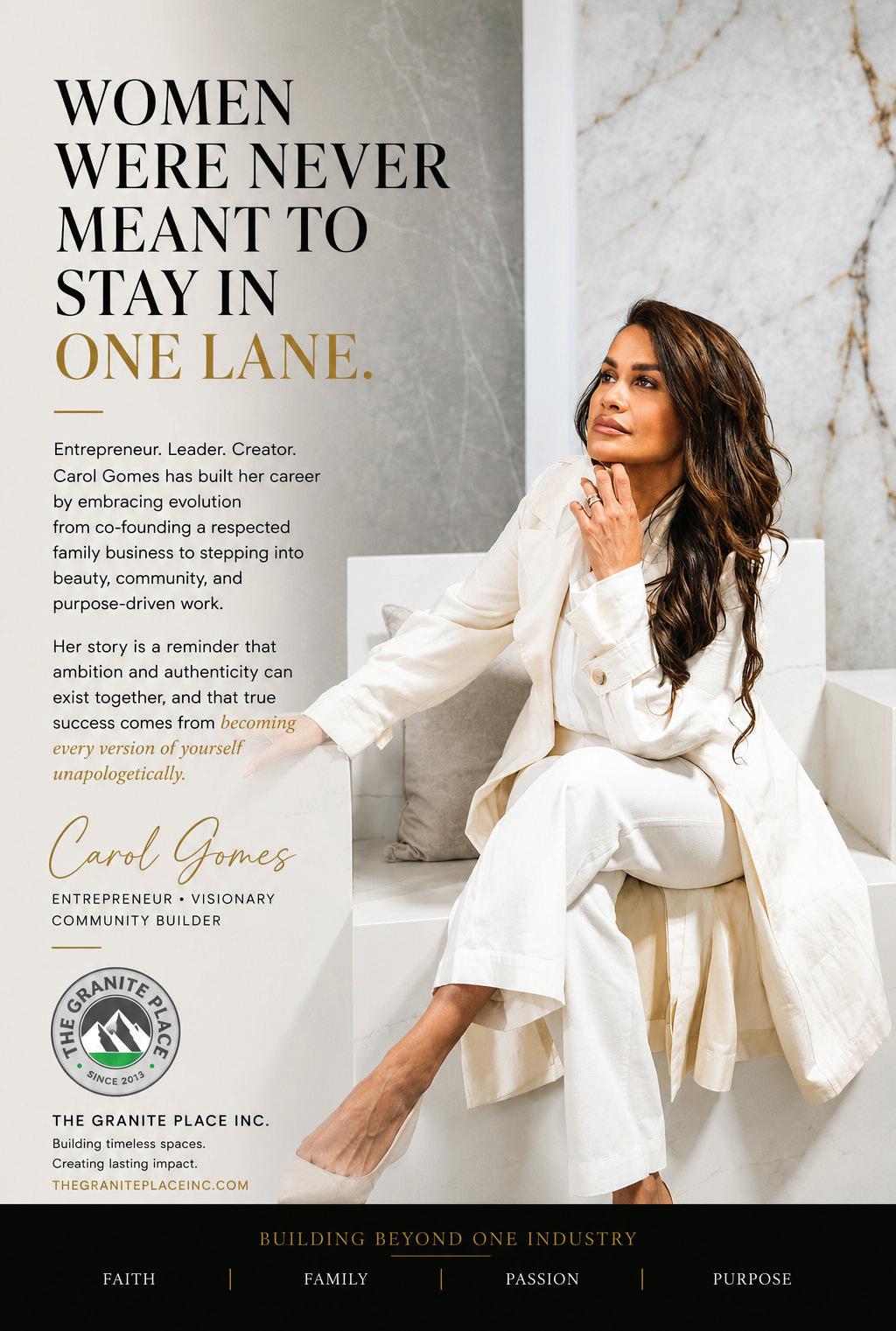
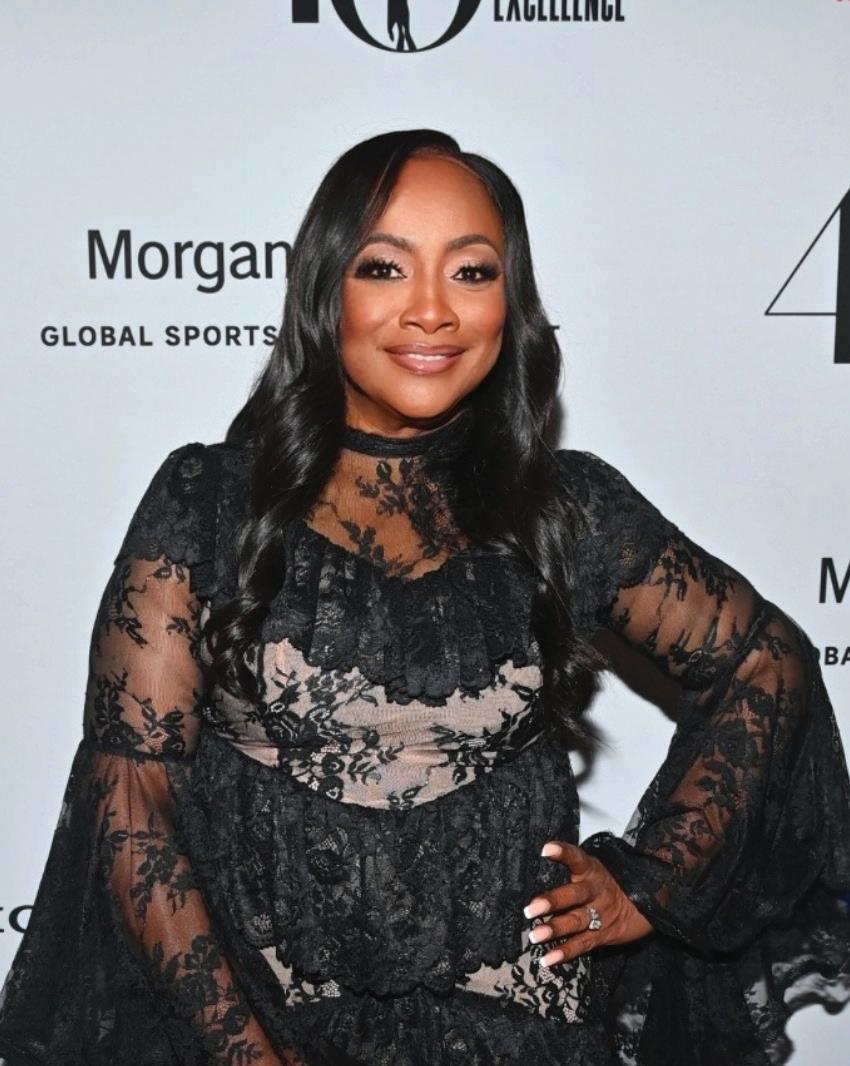
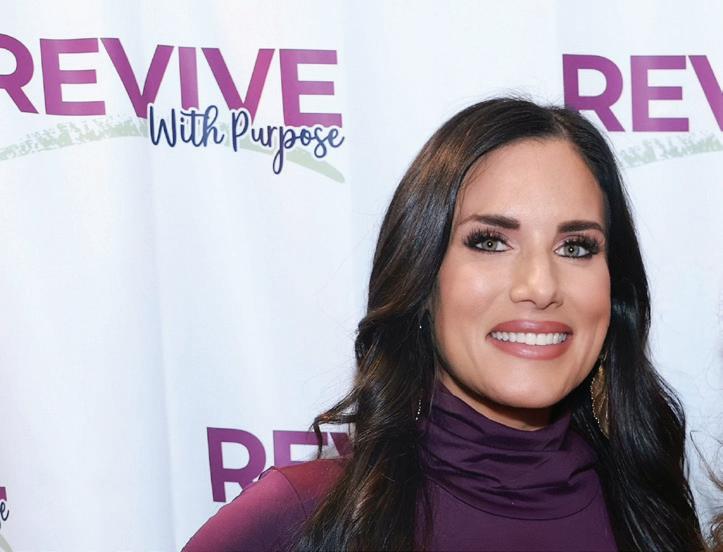
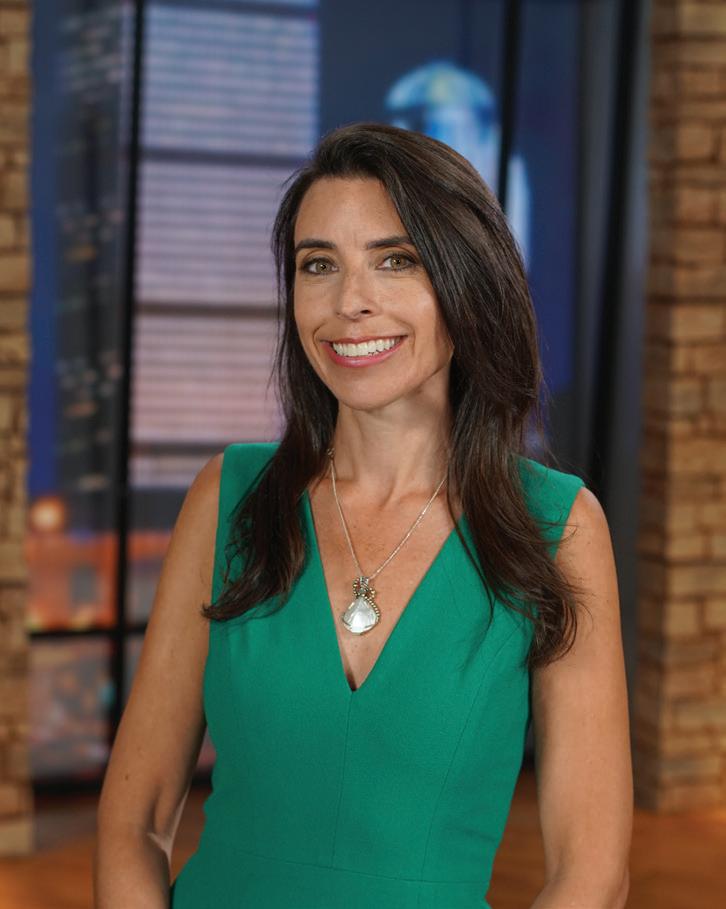

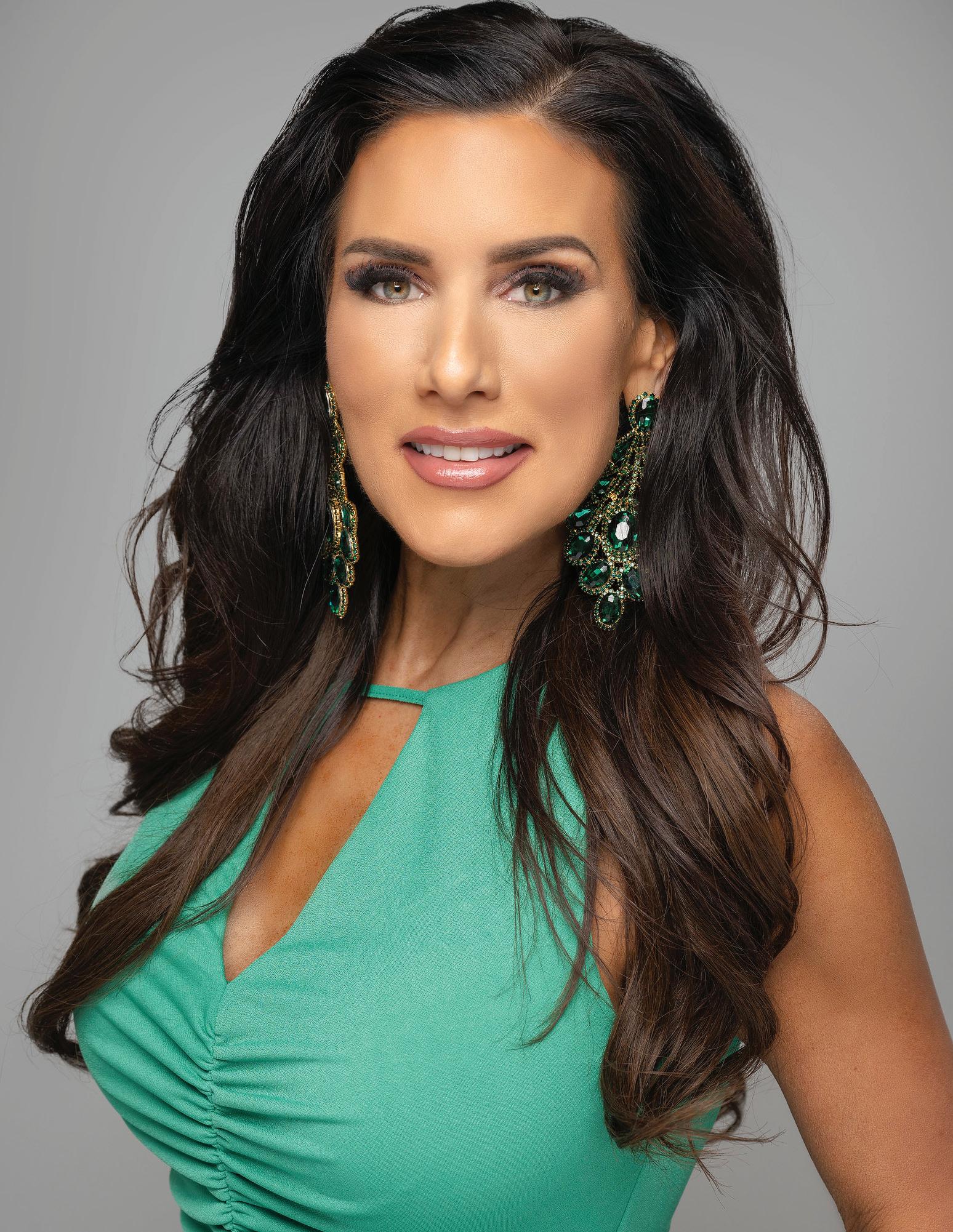
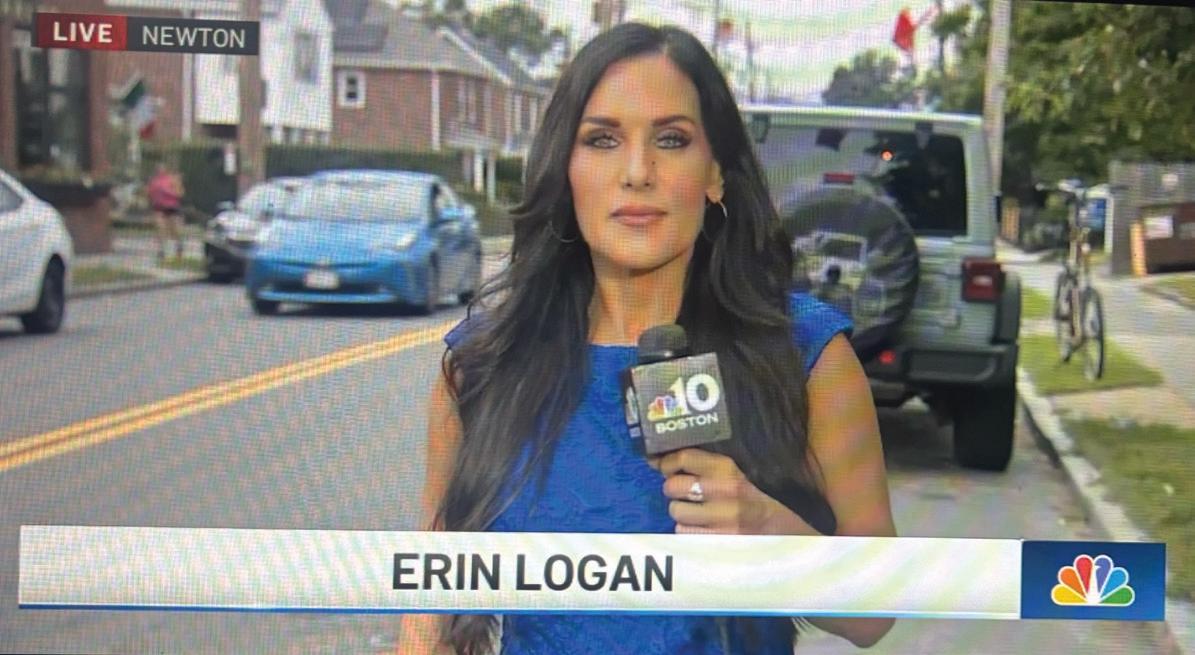
From Anchor Desk to Empowerment:
You’ve built a career across journalism, education, fashion, and philanthropy. What has remained constant in how you define your purpose through all of it?
All of these roles require commitment, passion and authenticity. No reporter/anchor should be the same kind of like a movie cast. You want your uniqueness to stand amongst the team. As a public speaking professor, I strive to get them to learn their quirky, unique traits when delivering a speech. If two people give a speech about exercise, it’s going to be written and delivered in different tones and styles. It’s the same with fashion accessories. The more unique, the better.
As far as my philanthropy, REVIVE With Purpose’s mission isn’t anything out of the ordinary, but crafted it to be unique to me, my board, and what we want to accomplish.
After more than two decades in broadcast journalism, what inspired you to step into fashion with Lure By Logan and what story were you finally ready to tell outside the newsroom?
I was going through a tough time personally after ending an engagement. People asked a lot of questions as I was in the public eye anchoring in CT. I would often go to one particular high end consignment store that had a lot of accessories. became friendly with the owner. She noticed wasn’t my usual upbeat self and I told her the reason. She told me she noticed my love for accessorizing outfits and how often I made suggestions to other regular shoppers. She offered to take me to the Javits Center in NYC to introduce me to wholesale and price points. She took me under her wing and I curated a collection and sold it out of her store. That was in 2016. The wild part of it all...She’s the daughter of the popular 90’s singer Michael Bolton. never knew until well over a year after knowing her.
How does Lure By Logan reflect your personal identity, and what do you want women to feel when they wear your pieces?
I kind of always had it in the back of my mind that would do something involving costume jewelry. I was always the girl in high school who would pick out my prom dress or any
outfit AFTER picking my accessories. For most, it’s the other way around. I think wearing statement jewelry is awesome. However, everyone’s definition of statement jewelry is different. like bold, gold and eccentric, BUT love picking out things that I know would look stunning on someone who has a completely different style and personality. want women to feel authentic and confident when wearing my pieces. I want them to feel like they’re making their own statement and not looking/feeling cookie cutter.
As someone who has lived in front of the camera for years, how do you think about authenticity in an industry often driven by perception?
I think it’s extremely important. If you’re trying to be someone you’re not, it will be very obvious to the viewer. No one is going to feel comfortable trying to look like or sound like someone else.
this up and running entirely if working full time on the news.
You’ve reported stories impacting communities for years. How has telling other people’s stories shaped the way you now build impact through your own nonprofit?
Being an anchor and reporter all over the country is exactly what drove me towards philanthropy. Life is hard. People struggle. started to see a pattern of women and teen girls lacking self-confidence and truly feeling worthless. They needed (as did I in the past) validation.
If a man didn’t like them, they must be ugly. If a boss didn’t think they were good, that must mean they’re not. That’s no way to live. We will all get dumped at some point, but it’s probably for the best in the end. Sometimes it hurts and it stings, but wouldn’t you want your values to align with your partner and be at a job where your work is appreciated?
Of course you can like someone’s style and take advice, but trying to alter your voice, your style, etc won’t work in the long run.
What was the moment that led you to launch Revive With Purpose, and why was now the time to formalize your philanthropic mission?
REVIVE With Purpose started as a community organization offering occasional workshops in 2017. I was going through a tough time and wanted to help myself and others. At the time I was living in CT. I’ve since lived in Ohio and back in MA and did some workshops there. They were also very well received, so I decided to make it official last summer. I would’ve never been able to get
You frequently speak to women’s groups and students. What is the message you find yourself returning to most often, and why do you think it resonates?
You need to be humble, confident, and real. We can always learn from other people and grow even after many years in any business. You can’t walk in like you rule the roost and open your mouth every time you don’t get your way. Picking your battles is extremely important. Not everyday is going to work 100 percent in your favor. It’s also important to show up with confidence. Nobody wants someone afraid of their own shadow on their team. It’s so important to show up as your authentic self and put forth your strengths while figuring out what your weaknesses are and how to work on them. There’s no one perfect employee, but a humble, hardworking, confident employee will always do well.
What has teaching public speaking at Boston College taught you about the next generation of communicators?
I’ve been at Stonehill College since Fall 2025. I was at Boston College for the previous four years. Unfortunately, they had to eliminate part-timers.
It’s actually a little disappointing that technology has really diminished their social skills. They make minimal eye contact. They walk around with headphones on. They text and email things that are way too deep when specific things need to be talked about face to face. This is why public speaking classes are more important now than ever before. Unfortunately, it’s not offered in many high schools at all. It should be a requirement in college for ALL students.
In your experience, how has being a visible woman in media shaped your sense of responsibility in both fashion and philanthropy?
It’s wild because when I was a MondayFriday evening anchor, it bothered me that viewers would constantly want to know about my clothes and my jewelry. The comments were mostly positive, but it put a lot of pressure on me to look a certain way and dress a certain way. On a positive note, it was fun picking out different looks and catering it to different times of year and different occasions. From sporting events to galas, to anchoring the evening news, people were paying attention to the outfits. In the winter, I would hate wearing sleeveless
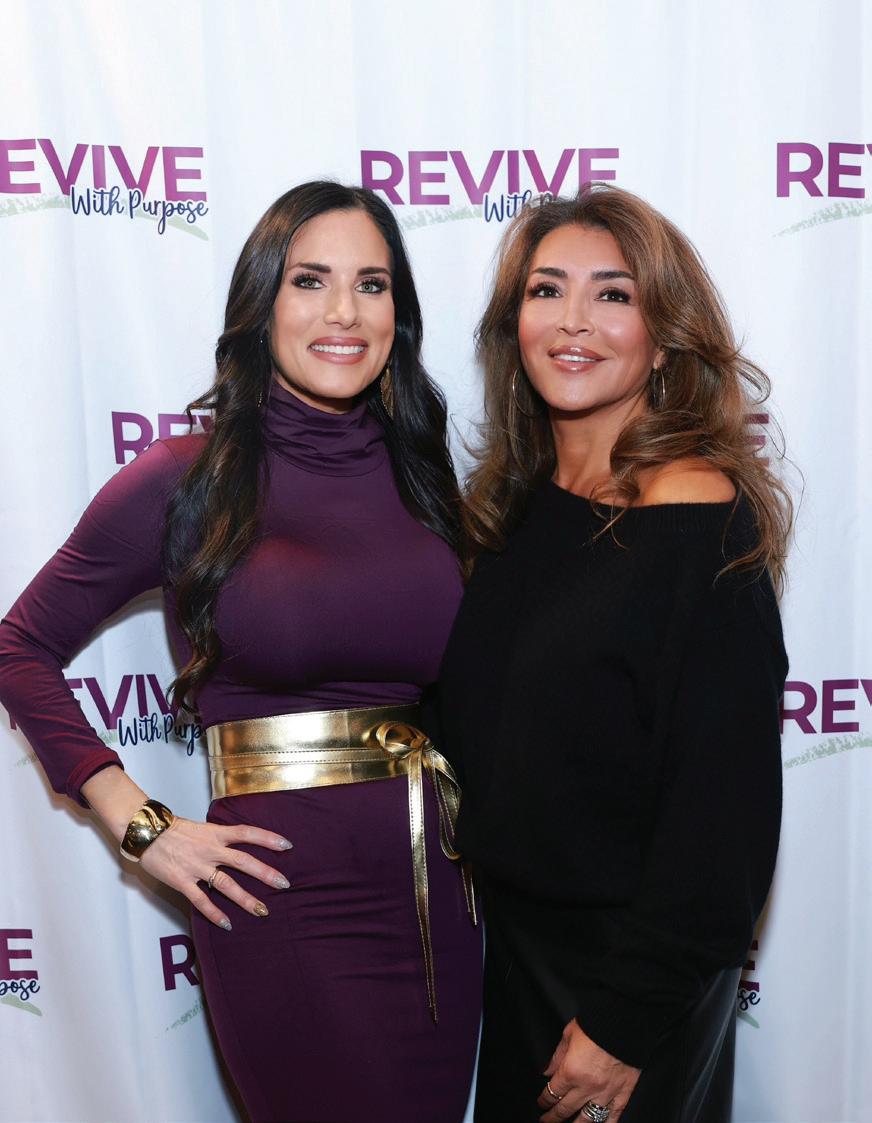
dresses on air as I’m pasty white. Other anchors still wore them or went spray tanning. I stuck to my turtleneck dresses with a cute necklace because that’s what I felt comfortable in.
As for philanthropy, it goes along with REVIVE’s mission to embrace authenticity.
You were raised in Leominster, how has your Massachusetts upbringing influenced your values, drive, and creative identity?
I was always the chubby kid growing up. I never made the sports teams or had the cute boys after me. I was well known though for getting good grades, being funny, and having a VERY unique sense of style. I always thought, “the weirder, the better.” They called me the silver girl. I always wore black and silver. Funny, cause now you will rarely see me in silver. LOVE gold! will always remember at my senior prom I wanted a unique bouquet and unique gloves. Edible arrangements started in 1999. At the 1996 senior prom, I had a bouquet of strawberries and custom made red gloves/wrist bands. I don’t even know what to call them!
Many people see reinvention as a pivot; you seem to see it as expansion. What does reinvention mean to you at this stage in your life?
I think it’s extremely difficult to reinvent yourself. You will be frustrated, annoyed,
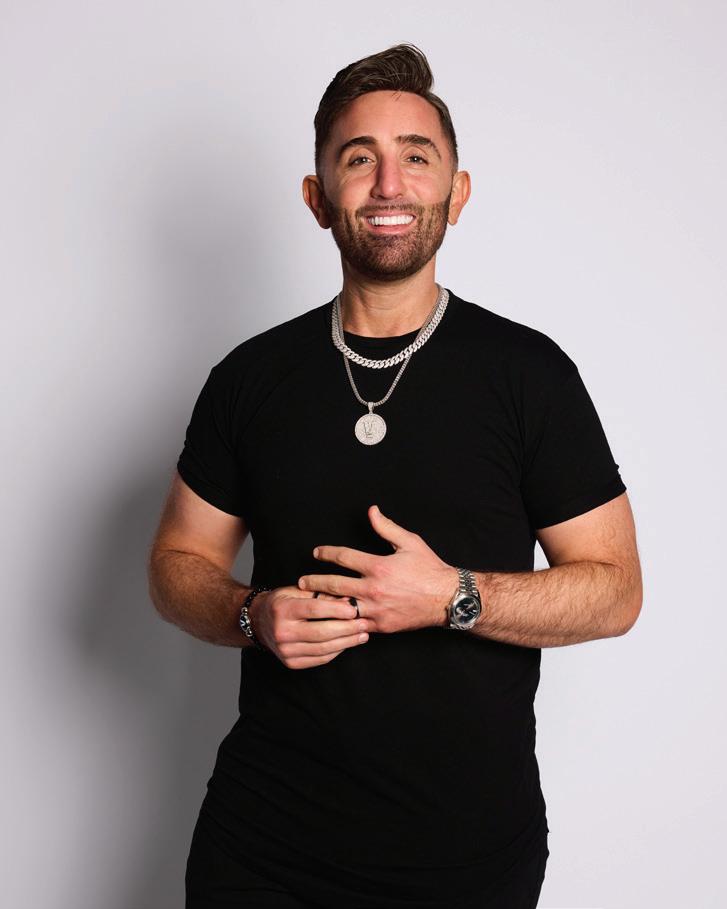
The B IGGEST Misconceptions About Men and Cosmetics
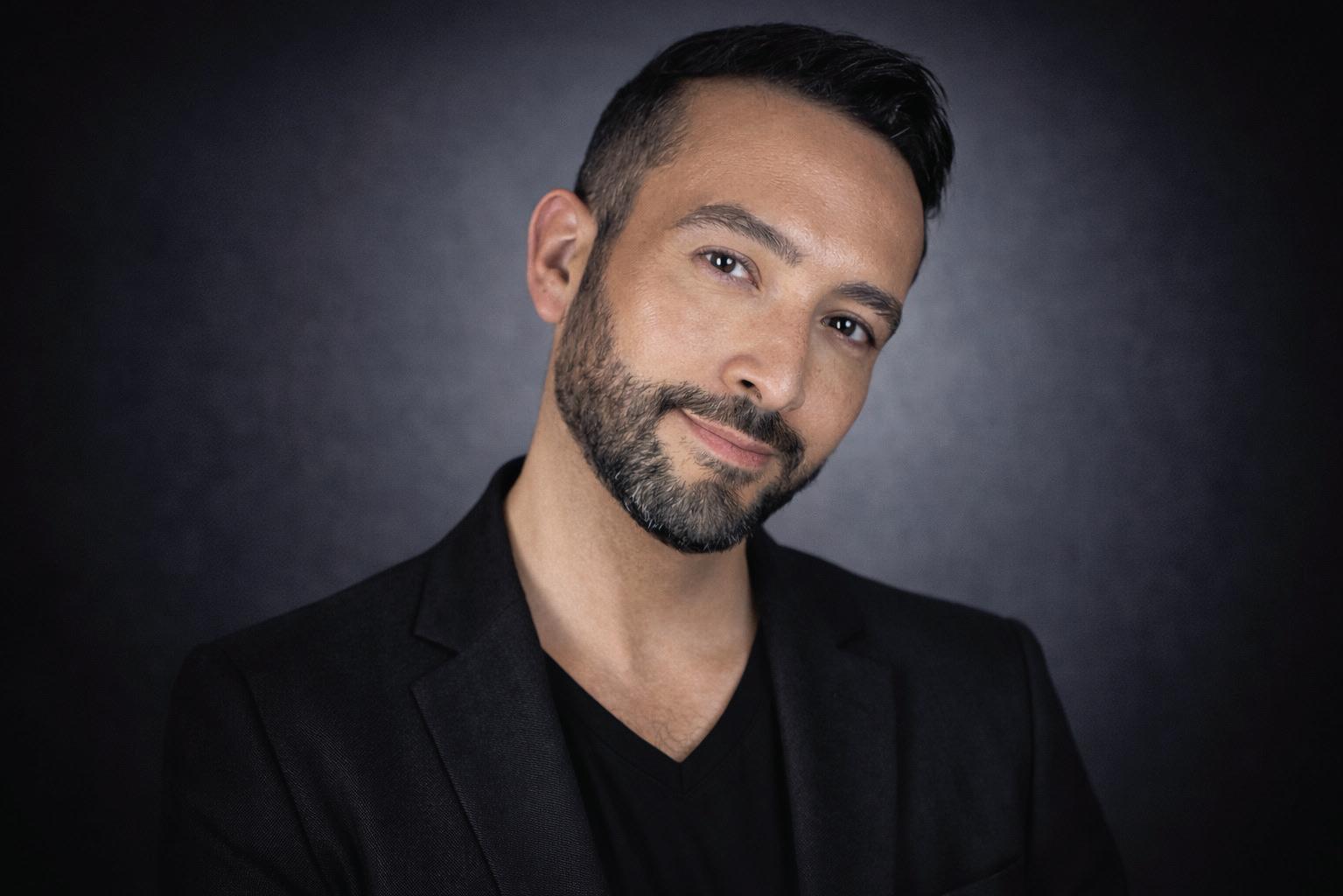
By Felix Palafox, Founder of Adonis Arcana
brought to tears, and want to throw your hands up, but you have to stay the course and know it’s not going to happen overnight. You will realize along the way the things that work and don’t work and as a result, things will start to line up in your favor.
When you think about Lure By Logan and Revive With Purpose 10 years from now, what impact do you hope they’ve made beyond success metrics?
Lure by Logan will always be a brand that stands for authenticity. Truthfully, I’m not sure what the future holds for it. It would be great to eventually have interns or staff doing community outreach and marketing it more to local and national influencers. would love to, but right now I need to build REVIVE With Purpose. definitely see the nonprofit expanding beyond New England and having a representative from dozens of states doing workshops with teen girls and women. We all need motivation, inspiration, and support from others no matter who we are. It may seem like life is great one day and then you get hit with a brick that you don’t expect. It’s how you overcome adversity and embrace authenticity and there are people to help you see the light.
GET IN TOUCH:
IG: @erinmlogan @revivewithpurpose
@lurebylogan
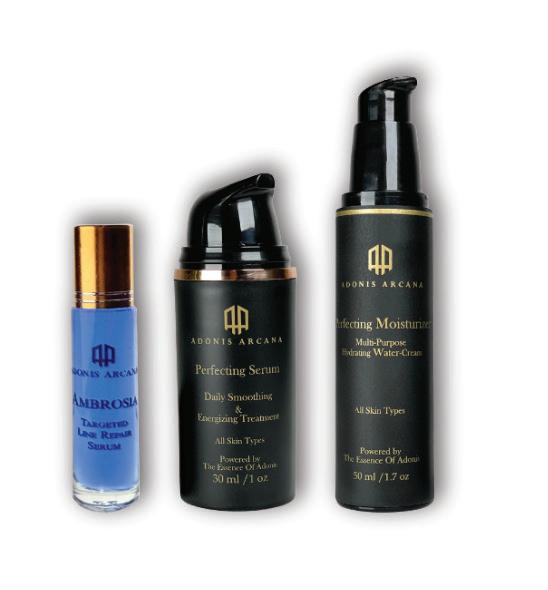
For years, conversations around men and cosmetics have been framed through stigma, misunderstanding, or novelty. In reality, men have always participated in grooming, skincare, fragrance, and self-presentation, even if the language surrounding it has evolved over time. As visibility around men’s beauty continues to grow, many of the assumptions people still hold about makeup and skincare no longer reflect reality.
Myth: Men Don’t Wear Makeup
In reality, we see men wearing makeup every day. Actors wear it on camera, news anchors wear it under studio lighting, countless men use subtle complexion products for weddings, photography, interviews, and social media. Most of the time, the goal is not transformation: It is refinement. When makeup is done well, people usually only notice healthy skin, brighter eyes, or a more polished appearance rather than “makeup.”
Once you see it once, you will start seeing it everywhere.
Myth: Makeup Makes Men Look Feminine
Myth: Men’s Cosmetics Are a New Trend
A more accurate statement might be the opposite: it would be difficult to find a man who does not use cosmetics. Deodorant, fragrance, body wash, beard oil, hair products, and whitening toothpaste, all fall within the category. The misconception comes from how narrowly the word “cosmetics” has traditionally been interpreted. Many men already participate in beauty and personal care routines every day, even if they would never describe them that way themselves.
Myth: Women Don’t Like Men Who Wear Makeup
Men caring about appearance is not new. What is new is the openness surrounding the conversation.
Social media, highdefinition cameras, video calls, and photo filters have created a generation of men who are more aware of how they present themselves and more comfortable exploring products that support that presentation.


Makeup is a tool, not an identity. The result depends entirely on how it is used. Men today are often looking for practical, subtle enhancements such as reducing undereye darkness, evening out redness, controlling shine, or sharpening the appearance of a beard line. These applications are no different from styling hair, grooming a beard, or choosing clothing that makes someone feel more confident and put together.

Many of the male celebrities and public figures widely admired for their appearance wear makeup professionally and, in some cases, personally. The difference is often in the application and technique. Most people are responding to someone who looks confident, healthy, rested, and comfortable in their own skin without realizing those results are often supported by subtle cosmetic enhancements.
This shift matters not only culturally, but commercially. The interest is already there. What has historically been missing is accessibility, education, and brands willing to approach men’s beauty without shame, exaggeration, or outdated stereotypes. The future of men’s beauty is not about making men someone else. It is about giving them better tools to look more like themselves.
Felix Palafox is the founder of Adonis Arcana, a modern men’s cosmetics and skincare brand redefining masculinity through approachable skincare, grooming, and subtle cosmetic enhancement.

Myth: “I’ve Never Met a Man Who Uses Cosmetics”
Empowerment You Walk In
Sam Giordano’s story of healing
What personal experience or turning point inspired you to create Intuition Kicks, and how did it shape the way you support others today?
Intuition Kicks was born during a season when life looked “fine” on the outside, but internally I was struggling with anxiety, depression, and a deep misalignment. I had built a life that appeared successful but did not feel like mine.
My turning point was quiet and gradual. I kept feeling an inner nudge that I needed healing, so I explored therapy, breathwork, reiki, meditation, movement, and spin class. The real shift happened when I began listening to my body.
Over time, I unraveled people-pleasing and perfectionism and reconnected with a version of myself that no longer needed to prove worth. Intuition Kicks became a way to turn that healing into something tangible, offering reminders that intuition is valid, emotions matter, and you are allowed to come home to yourself.
Today, the way support others is through storytelling and design that helps women reconnect with who they are beneath
pressure and expectation.
How do you see intuition playing a role in emotional wellbeing and navigating difficult mental-health moments?
When mental health is challenged, intuition often gets drowned out by anxiety and emotional overwhelm. But it does not disappear.
Intuition is the quiet inner knowing that signals when something is off or when rest is needed. It helps rebuild self-trust, which is essential for emotional wellbeing. Without it, people often abandon their needs and rely on fear or external approval.
For me, intuition became a lifeline that helped me recognize burnout and misalignment before they escalated. It is an internal compass that brings clarity when you learn to listen inward, even in small everyday moments.
What is the first step you guide someone toward when they feel overwhelmed or disconnected?
The first step is awareness without judgment. Before anything can shift, you have to notice what is actually there.
I often ask, “What am feeling right now?”
Not what someone should feel, but what is true in the moment.
Then we return to the body, where disconnection often shows up first. Tightness in the chest, heaviness in the stomach, shallow breath. These signals are information.
Simple practices like journaling one honest sentence, walking without distraction, or placing a hand on the heart and breathing
slowly help rebuild connection. Healing begins with honesty and unfolds in small, consistent moments of awareness. What does it look and feel like when you’re channeling intuitive insight for someone? Intuition is not prediction or performance. It is presence.
listen beyond words, noticing tone, pauses, and energy shifts. Insight feels quiet and grounded, like clarity arriving without force or urgency.
My role is to reflect what someone already knows but has not fully trusted yet. Intuition does not add anything new. It reveals what is already there.
The most powerful moments happen when truth lands as recognition. It feels calming, not overwhelming. Clarifying, not confusing.
Was there a moment that confirmed you were doing what you were meant to do?
A woman once shared that Intuition Kicks gave her the courage to leave a relationship that no longer felt emotionally safe. She said it changed how she spoke to herself and helped her stop second-guessing what she already knew.
That moment stayed with me.
It confirmed that this work is not about transformation into someone new. It is about remembrance. Helping women trust themselves again.
Where Intuition Kicks Was Born
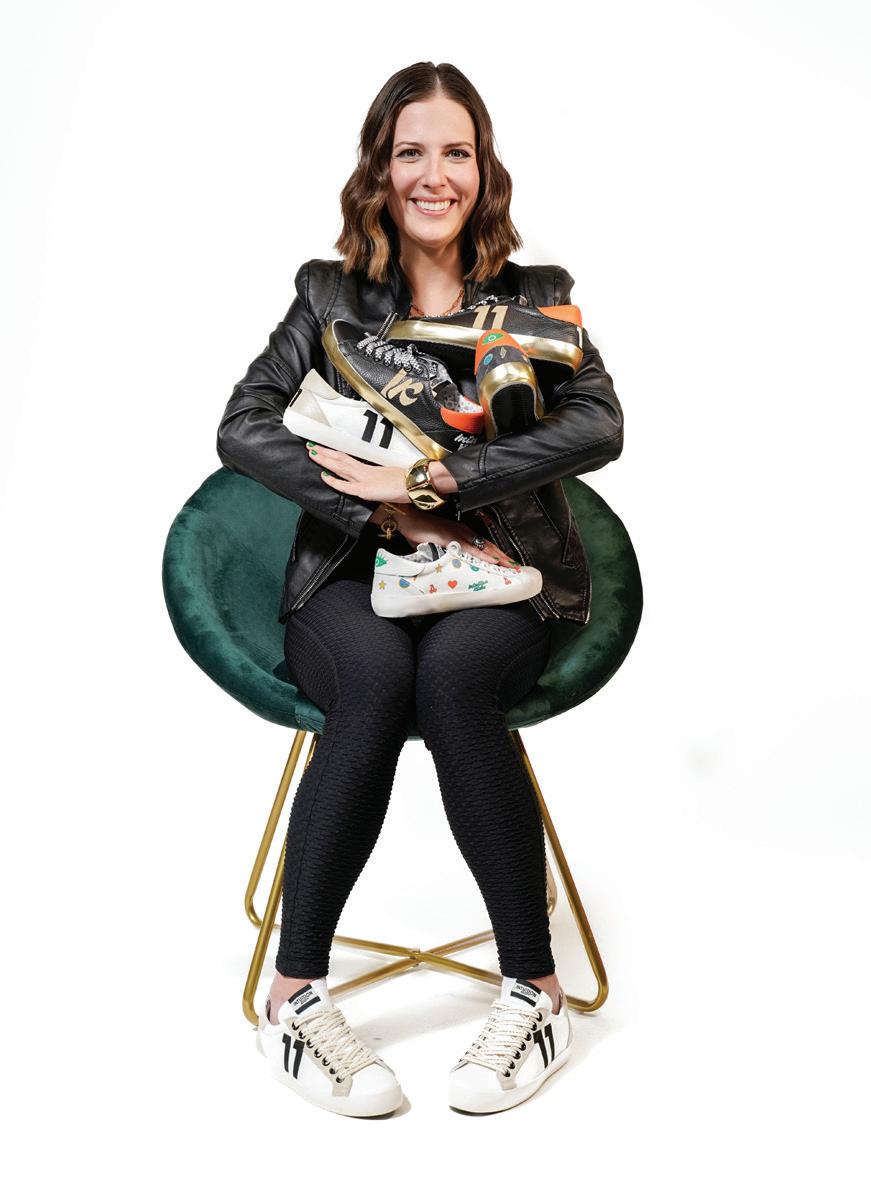
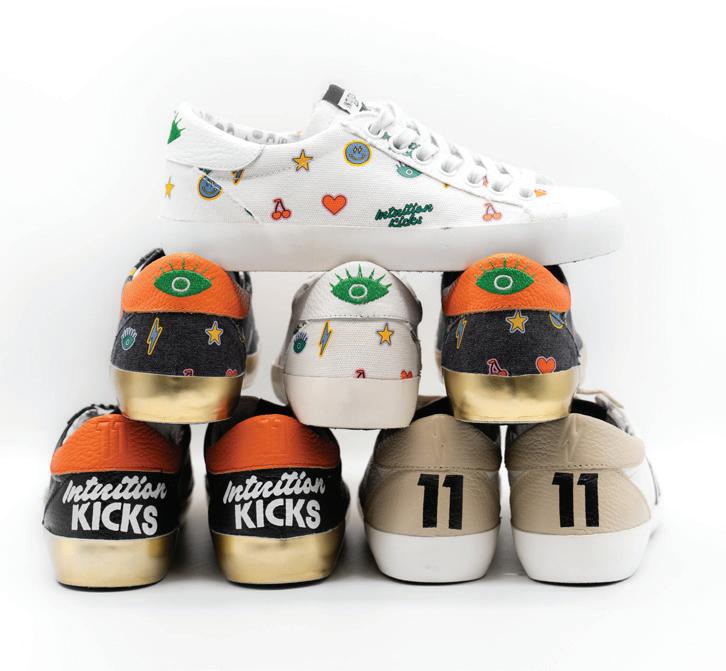
Intuition Kicks was created by Samantha Giordano during her divorce, when spin class became her sanctuary and her daily anchor. It was the one place where she could move through grief, anger, and healing without having to explain it.
In that room surrounded by other women moving through their own transformations, the idea came into focus. She began to think about sneakers, ritual, and emotional resilience, and what it would mean for a product to carry meaning beyond aesthetics.
The vision became clear. A sneaker could hold intention. It could carry reminders, mantras, and symbolic messages that reconnect a woman to herself in moments of doubt.
That realization became Intuition Kicks, a brand built on the belief that what you wear can also be what grounds you.
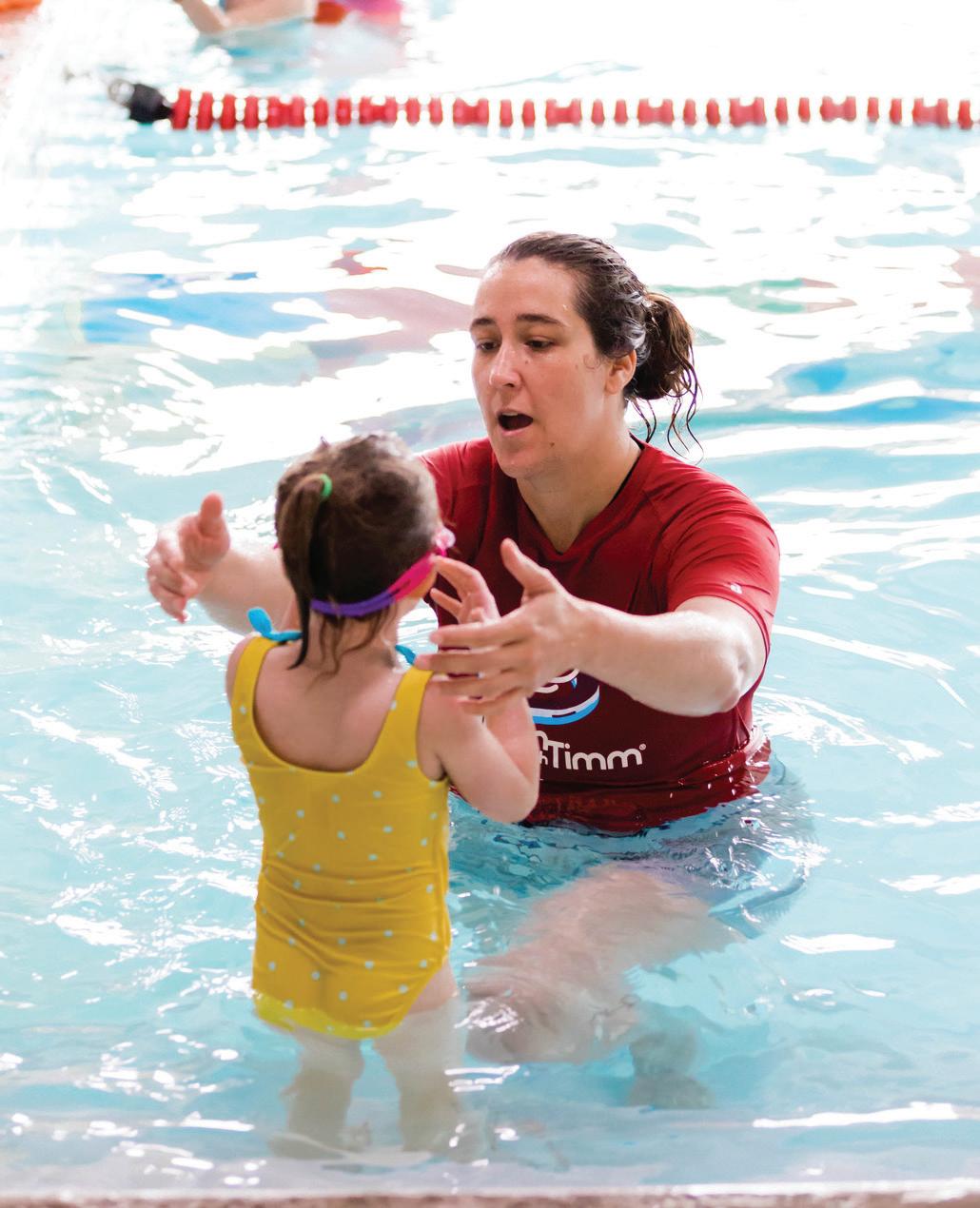


Confidence Starts In The Water.

Swimm with Timm provides safety-focused swim instruction that helps swimmers build confidence, independence, and lifelong water skills. Lessons are adapted to all experience levels and learning styles so every swimmer can succeed. Schedule a swim assessment at



Beyond Beauty:
Laura Crowley explores the emotional connection between skincare, confidence, and reconnecting with yourself.
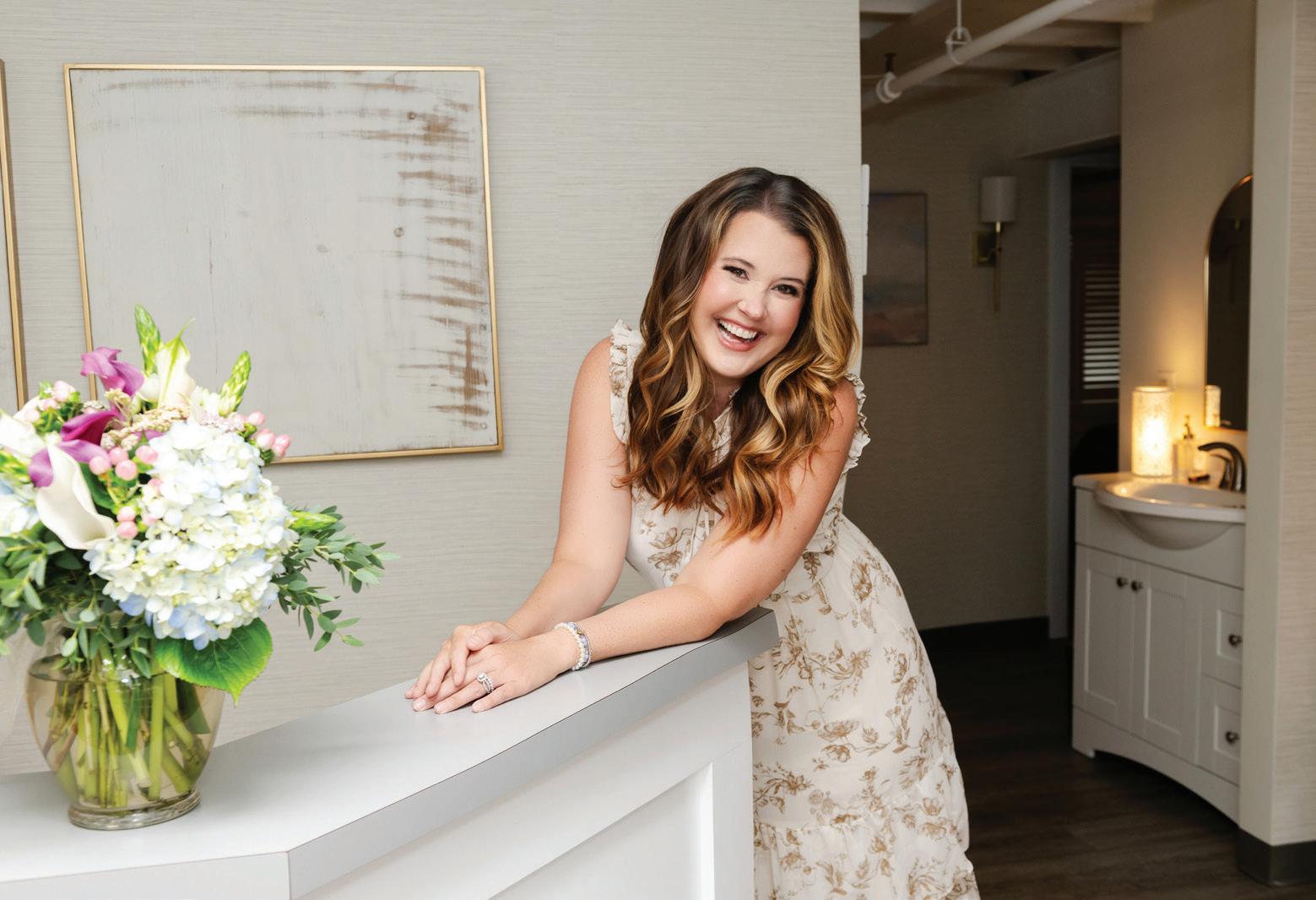
There’s something nobody talks about enough in the aesthetics industry. Women rarely come in asking only for skincare.
They don’t book an appointment simply because they want clearer skin, a chemical peel, or to finally address the hyperpigmentation they’ve been ignoring for two years. Those are the words they use, but underneath it is often something much deeper.
know this because I’ve spent more than twenty years in the treatment room, having thousands of conversations with women from every stage of life. And what can tell you with certainty is this: when a woman walks through that door, she is often carrying far more than her skin concerns.
She’s the mom who hasn’t had thirty uninterrupted minutes to herself since the baby was born. She’s the entrepreneur pouring into everyone else’s cup while quietly running on empty. She’s the woman who looked in the mirror that morning and didn’t quite recognize herself, not because something is wrong with her, but because life has a way of pulling us away from ourselves.
I understand that feeling deeply. As a mom of two, a business owner, and someone who built two companies from the ground up,
on the same day as a legitimate win. No judgment. I’ve been there too.
But what I’ve learned, both as a woman and as someone who has spent decades in this industry, is that taking time for yourself isn’t indulgent. It’s necessary. And what starts as an appointment almost always becomes something much bigger.
What many women truly need is to feel seen. It doesn’t matter if she’s a new mom who hasn’t had a moment alone since the baby arrived, an executive preparing for a major presentation, or someone quietly rebuilding her confidence after a difficult season of life. When she sits down in my chair, something shifts. The noise stops. Nobody is pulling at her. Nobody needs anything from her. For the next hour, she simply gets to exist without giving pieces of herself away.
That is powerful.
And honestly, it’s one of the reasons love this work so much.

know what it feels like to be everything to everyone and have almost nothing left for yourself. I know what it feels like to count getting a shower and shaving your legs
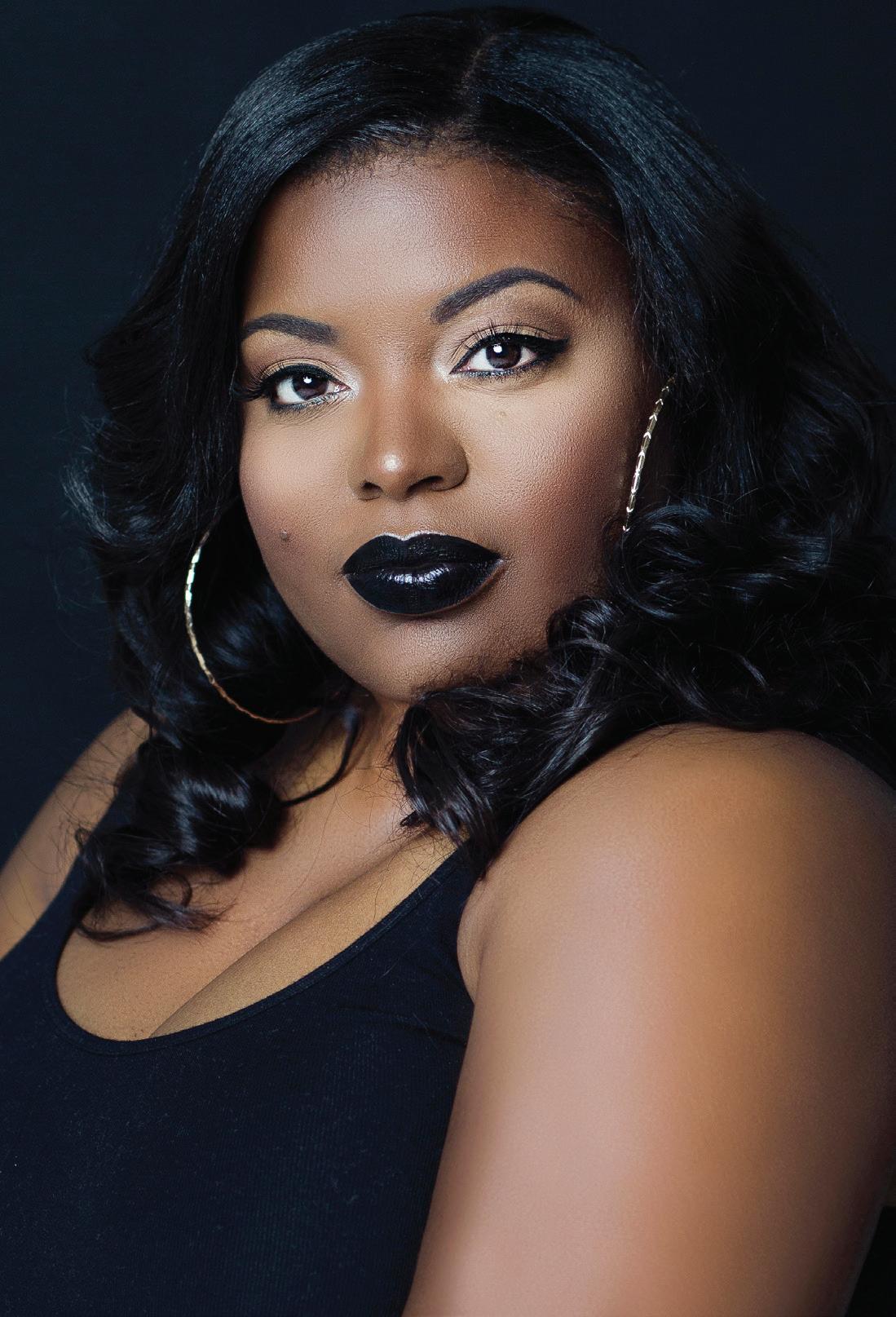
FGET IN TOUCH AND SOCIAL: laurajeannetteaesthestics.com
SOCIAL: @laurajeannetteaethestics
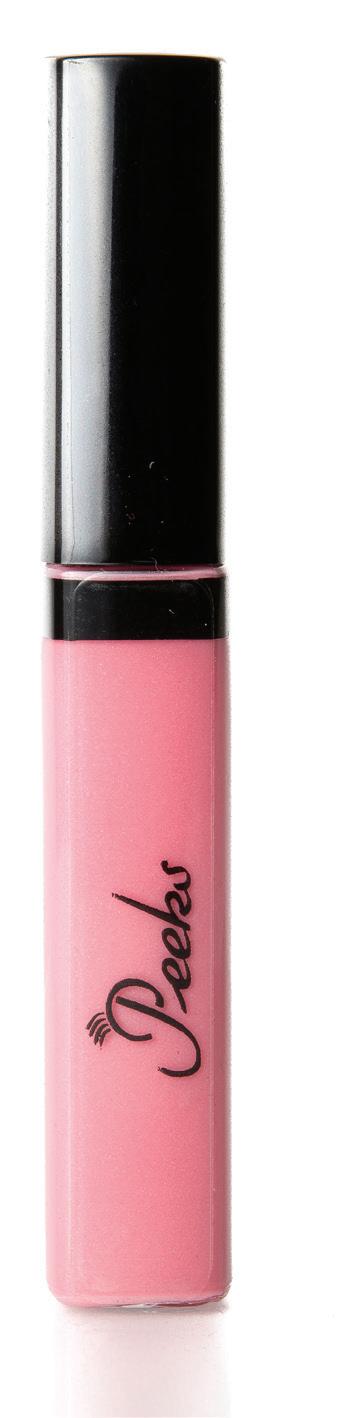
or Latasha, beauty was never just about makeup, it was about possibility. From a young age, she was drawn to cosmetics, experimenting with different looks and enjoying the creativity it allowed. But it wasn’t until she began spending time with her aunt, who produced cosmetic products, that something deeper clicked. That experience opened her eyes to the business behind beauty. While she didn’t see herself as a makeup artist, she knew with certainty that she wanted to build something of her own. Something that lived on shelves and in people’s everyday routines. That early spark would eventually evolve into Peeks Cosmetics, but not without a life-altering detour that reshaped everything she thought she knew about confidence, identity, and resilience. At just 23 years old, Latasha faced a major health crisis that led to an induced coma due to fibroid tumors. What followed was not only a physical recovery, but an emotional one. When she returned home, stepping back into the world felt overwhelming. She became hyper-aware of her body, her scars, and how she believed others might perceive her. In those moments, makeup became more than a routine, it
Rebuilding Confidence, Redefining Beauty: The
Story Behind Peeks Cosmetics
became a form of protection and restoration. “Putting on even a little makeup made me feel secure,” she reflects. “It helped me feel like myself again. It made me feel beautiful.”
That experience became the foundation for Peeks Cosmetics. What started as product testing with friends and family quickly turned into something much bigger. Their feedback, excitement, and belief in her vision gave Latasha a renewed sense of purpose. For the first time since her recovery, she wasn’t just rebuilding; she was creating. Peeks Cosmetics became more than a brand. It became a reflection of what she had lived through: a reminder that confidence isn’t about perfection, but about how you choose to show up for yourself. As a Black woman founder, creating Peeks Cosmetics also meant carving out space in an industry where representation hasn’t always been equal. Her brand isn’t just about beauty; it’s about visibility, inclusion, and making sure others feel seen in products designed with them in mind. Along the way, Latasha learned lessons that continue to shape both her life and her business. One of the most

impactful realizations was understanding that not everyone will support you the way you support them, and that’s okay.
“You still have to be a good person,” she says.
“Live by your principles and keep doing what’s best for you. The right blessings will come.” She also learned to redefine what support truly means. It’s not about the number of people in your corner, but the consistency of those who are. The friends and family who stood by her during her lowest moments became her foundation, reminding her that genuine support is invaluable. Above all, her journey reinforced one simple truth: life is short. Taking risks, especially those rooted in purpose, isn’t something to fear; it’s something to embrace.
Today, Latasha continues to build Peeks Cosmetics with intention, creating products that help others feel confident in their own skin no matter where they are in their journey. Her mission goes beyond beauty; it’s about helping people rediscover themselves, especially after moments that try to break them. Her message is clear: even when life forces you to pause, you can come back stronger. Confidence can be rebuilt. And sometimes, the smallest acts like putting on a little makeup can be the first step toward reclaiming who you are. Because for Latasha, beauty isn’t just what you see. It’s what you overcome, and how you rise from it.
Two Businesses, Three Boys, and No Such Thing as Balance
Laura Viola Maccarone on building Rizbee Studio and Pretties, leading rebrands in the food and beauty space, and the entrepreneurial family that started it all.

People love to ask me how I “do it all,” meaning run a branding studio, launch a beauty brand, and raise three boys. My honest answer? don’t. Not in the way people imagine, anyway. I gave up on the idea of balance a long time ago, and think pretending it exists does more harm than good, especially to women who feel like they’re constantly failing some invisible test.
That early immersion is why I launched Rizbee Studio in 2016. Rizbee is a boutique design studio offering digital, print, and packaging services, and we live almost entirely in the food and beauty zone, working with consumer brands where the product has to pop off the shelf or stop the scroll. Aromatherapy lines, nonperishable foods, beauty and personal care, consumer packaged goods. It’s the part of the industry know best, and the part where my visual instincts get to do their most meaningful work.
AND THEN, PRETTIES
Balance suggests a perfect equilibrium, equal weight on every side, nothing tipping. That isn’t the life of an entrepreneur, and it definitely isn’t the life of a mom. What I have instead is a constant, honest re-prioritization. Some weeks the studio gets the lion’s share of my attention. Some weeks Pretties does. Some weeks it’s my kids, full stop. The trick isn’t to make everything even. It’s about being fully present for the thing that actually needs me, and refusing to apologize for whatever doesn’t get my attention in that moment.
BUILT BY ENTREPRENEURS, FOR ENTREPRENEURS
I come from a family of restaurant entrepreneurs, which is a strange and wonderful upbringing. My grandfather was one of the original founders of Papa Gino’s and my father, along with his brothers and mother, had a chain of restaurants in New England. sat in on branding meetings with corporate executives before I could legally drive. watched signs get fabricated and menus get redesigned. was eleven years old, poring over the layouts of Sassy Magazine and getting weirdly obsessed with my dad’s collection of branded hockey pucks, wondering how the designer made certain choices. Long before I knew what graphic design was, I knew was in love with it.
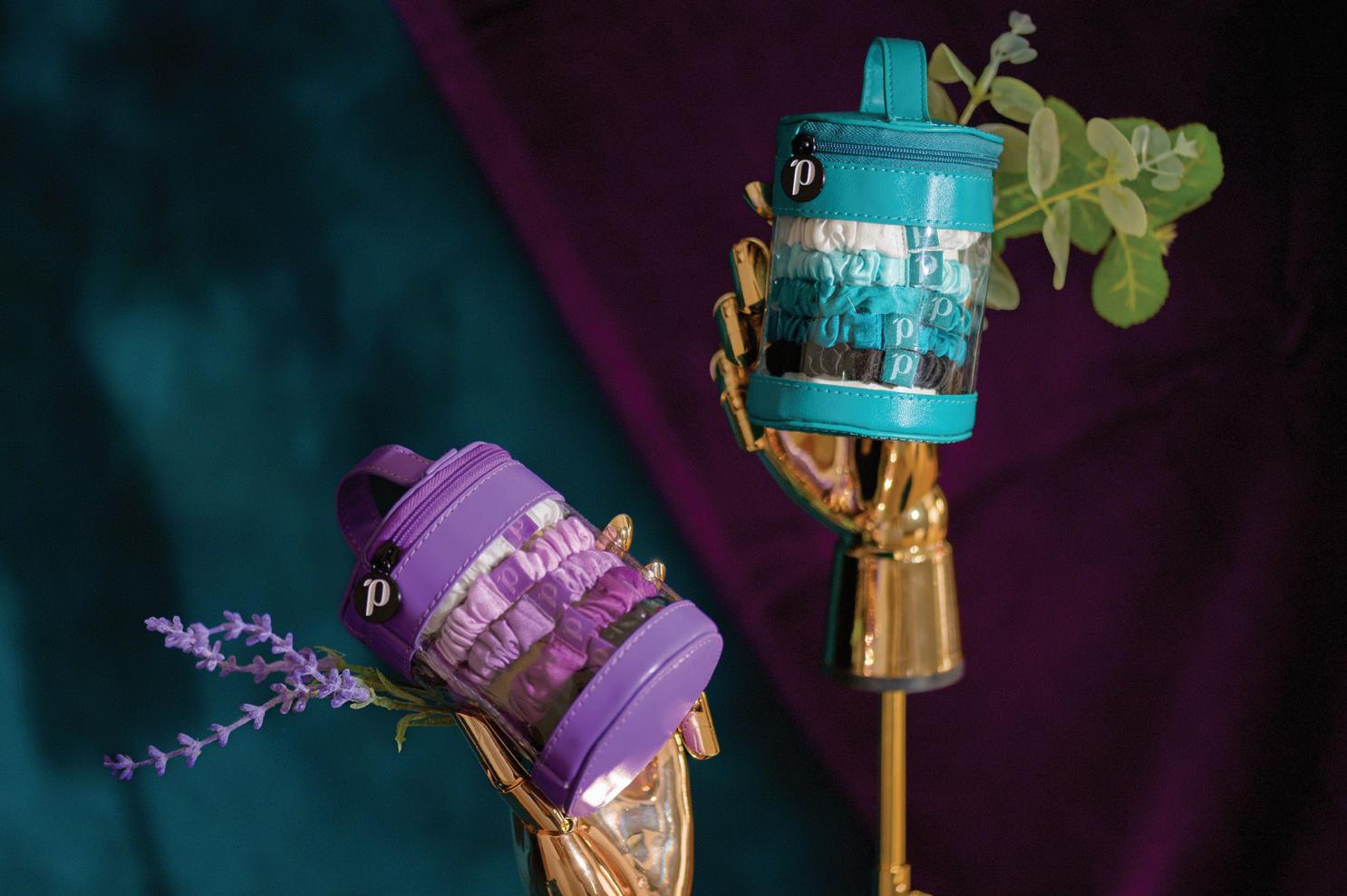
Pretties, my luxurious, naturally scented modal silk and cotton hair ties, came next, and honestly, it was a natural progression. I’d spent years inside other founders’ beauty brands, learning their manufacturing partners, their packaging quirks, their wholesale doors. I knew the market from the inside out. knew where the gaps were. And after a career spent building visual identities for other people, the urge to build something fully mine became impossible to ignore. The three leaves in the Pretties logo are an homage to my boys. Family is woven into everything I do.
AS A BRANDING SPECIALIST, HERE’S HOW I THINK ABOUT REBRANDS
Founders ask me all the time how to tell if they’re ready for a rebrand. A few honest signals to look for:
• Your packaging looks inconsistent across product lines, and customers can’t tell at a glance that two SKUs belong to the same family.
• You’ve outgrown the visuals you launched with. The brand has matured; the design hasn’t caught up.
• You’re chasing wholesale or retail placement and your packaging isn’t holding up next to competitors on a real shelf.
• You feel emotionally tangled up in your current look, too close to your own brand to see what’s working and what isn’t.
• Every new product launch becomes a one-off design exercise instead of a natural extension of a system you already trust.
That last one is the big one, and it’s what call the Branding Visual Vernacular System comes in. It’s the process use in every client
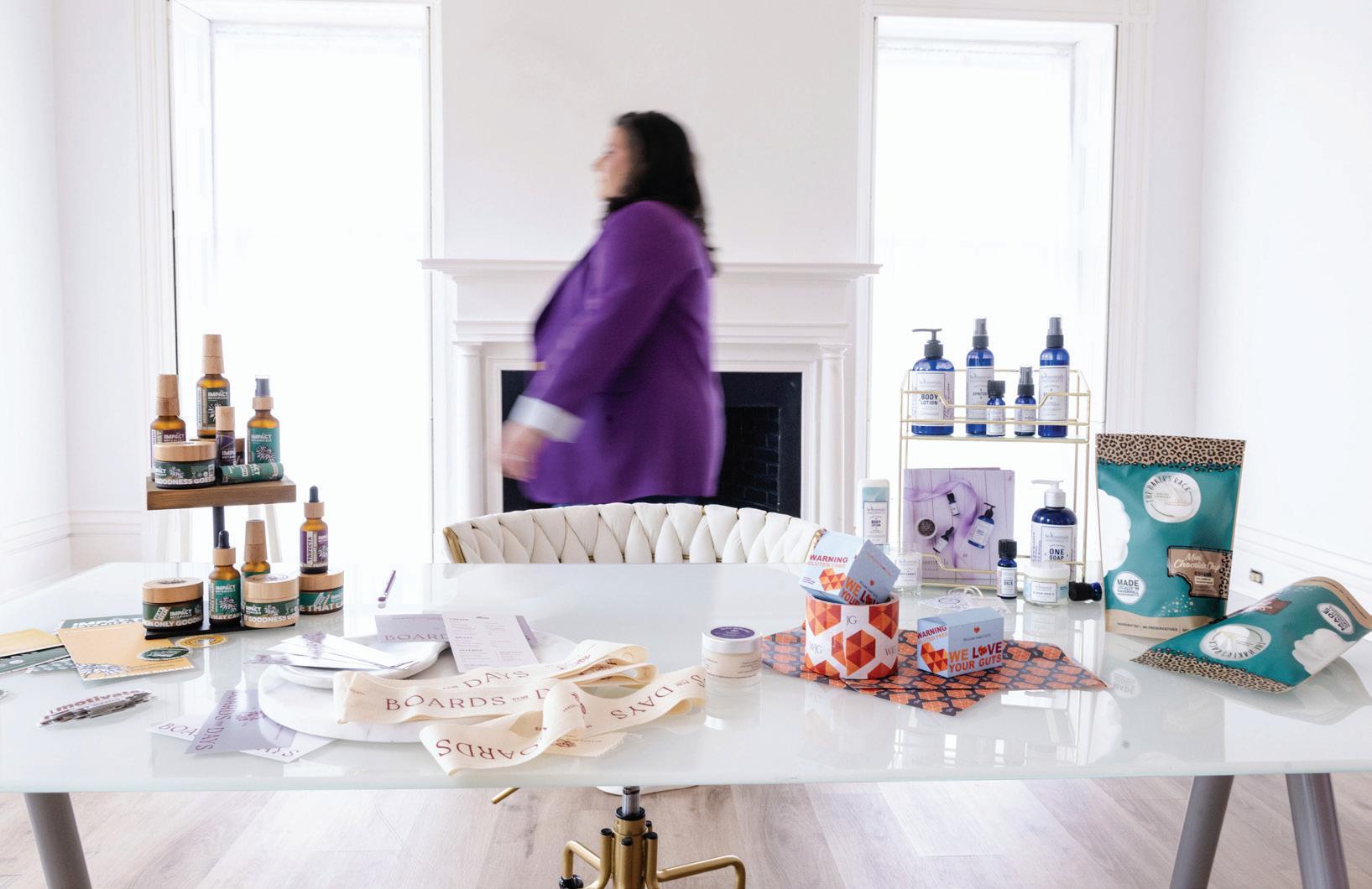
engagement to build a shared library of design components, including typography, color treatments, illustrations, and graphic accouterments, that can be applied consistently across an entire product line.
When it’s done right, a brand can launch a stress-relief roll-on, a candle, a soap, and a spritzer, and every single one looks unmistakably like part of the same family without anyone reinventing the wheel each time. It’s how a small team operates with the visual cohesion of a much bigger one, and it’s the work I find most rewarding.
from, is a lot. It’s also exactly the life I wanted. Growing up watching my family build businesses gave me a clear-eyed view of what this actually requires: entrepreneurship isn’t glamorous, balance isn’t real, and the things that matter most rarely fit neatly on a calendar. What’s real is showing up, leading with kindness, building something you’d be proud to hand to the next generation, and trusting that the work, and the people, are always worth it.
TWO BUSINESSES, THREE KIDS, ONE FAMILY LEGACY
Running Rizbee Studio and Pretties at the same time, while raising three boys, while honoring the entrepreneurial line I come

GET IN TOUCH: rizbeestudio.com | theprettypretties.com
IG: @rizbeestudio | @theprettypretties



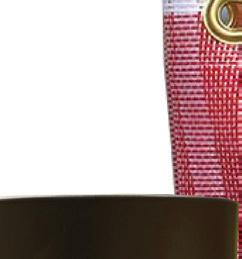
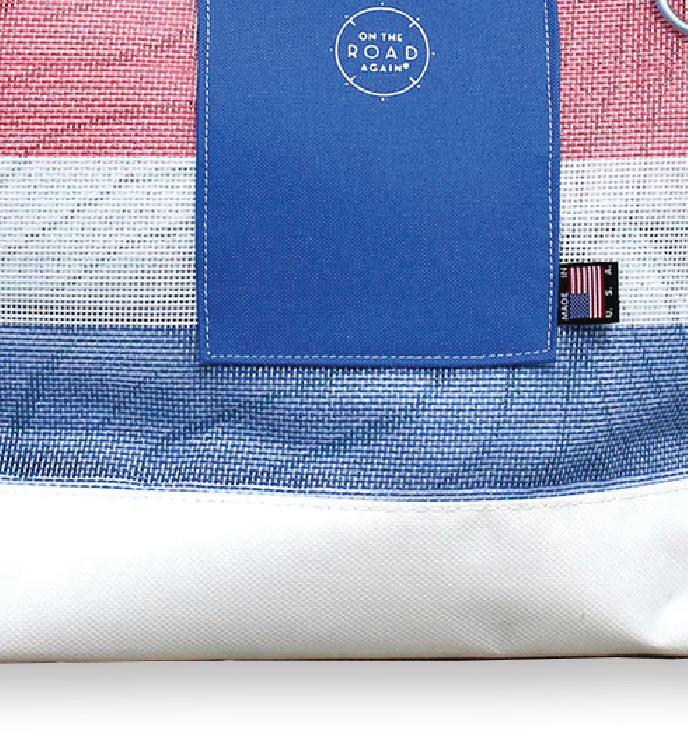
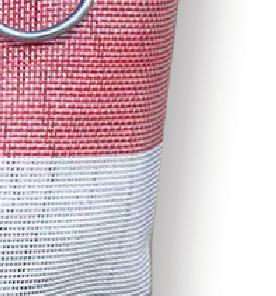
Liberty White Tote Bag ™






$79 ontheroadagainbags.com







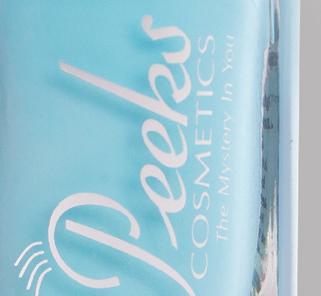
peekscosmetics.com
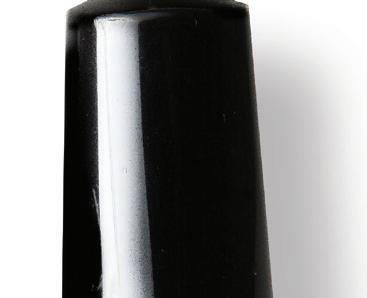
$6-$10

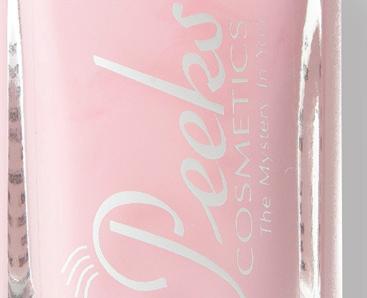









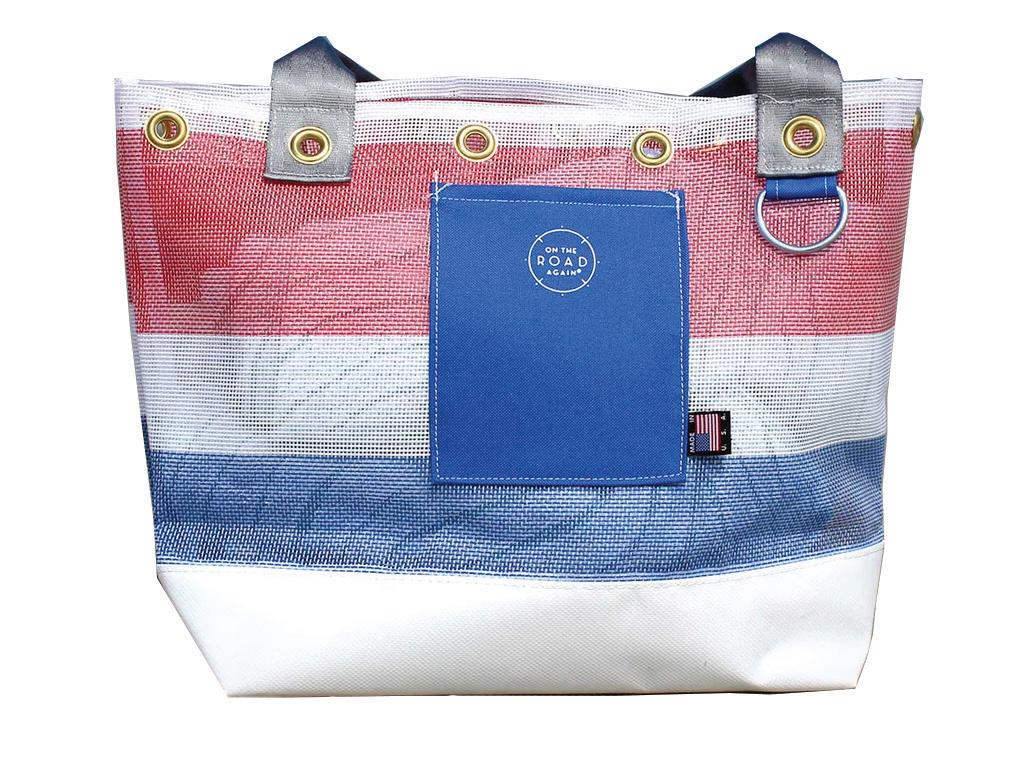




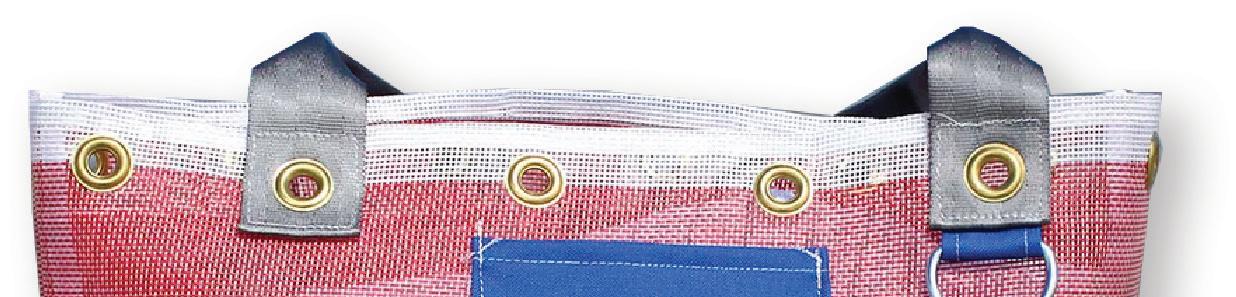
Crafted with meaningful history and timeless style, this limited edition tote from On The Road Again Bags honors the resilience and spirit of 9/11 through symbolic red, white, and blue mesh details. Handmade with durable marine-grade materials and functional storage, it’s a thoughtful carryall that also gives back, with a portion of proceeds supporting the 9/11 Memorial & Museum.
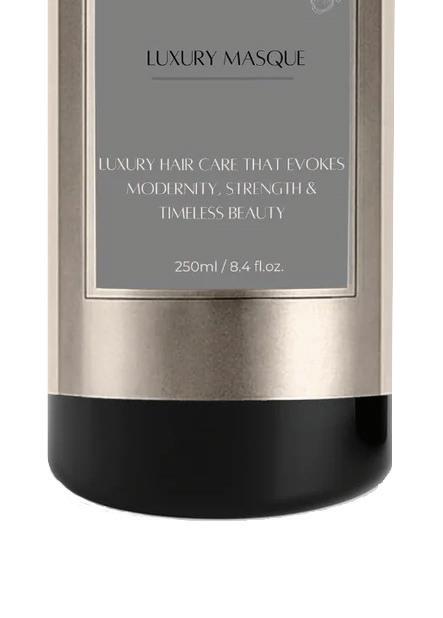
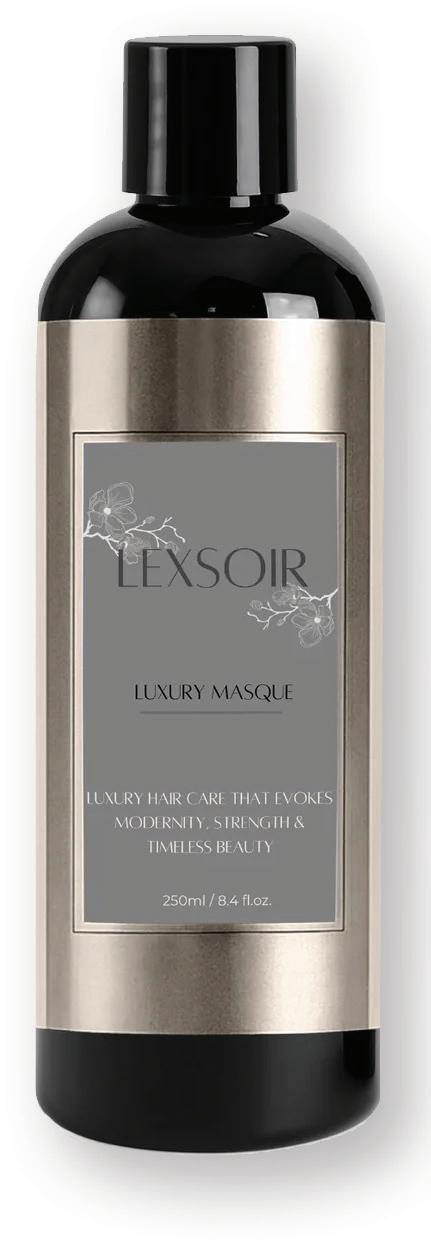
Lexsior Luxury Hair Masque
$36 lexsoir.com
A restorative weekly treatment designed as the ultimate “24K experience” without the salon appointment. Powered by amino acids to strengthen and repair damaged strands, and enriched with marula and carrot oils to restore softness, shine, and vitality, it deeply nourishes from root to tip. The BioFusion6 Complex penetrates the hair fiber to revive and rejuvenate, leaving hair noticeably healthier, smoother, and more radiant.
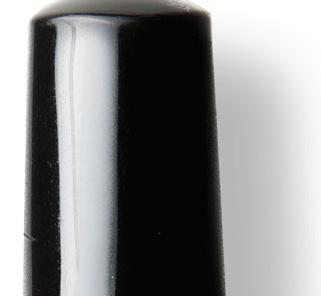
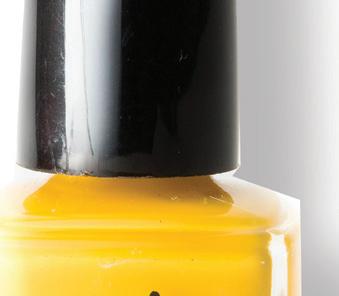
Peeks Cosmetics Nail Polish delivers a high-gloss, salonquality finish at an accessible price point, perfect for everyday beauty or gifting. Designed to last up to three weeks without fading or chipping, it creates a durable, polished look with a protective layer thanks to Nitrocellulose. Available for $6 or 2 for $10, it is an easy add-on for anyone who loves a fresh, longlasting manicure.
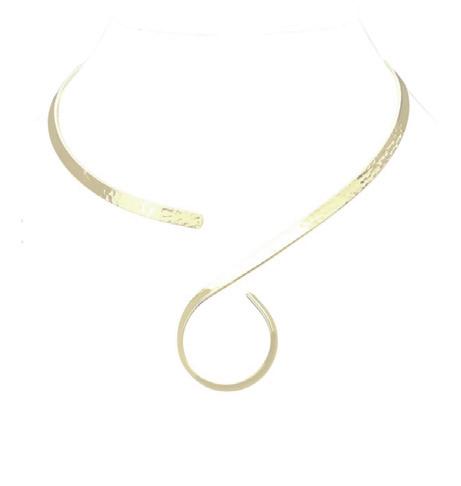


Available at Bogosplit in Copley Square, Boston $20
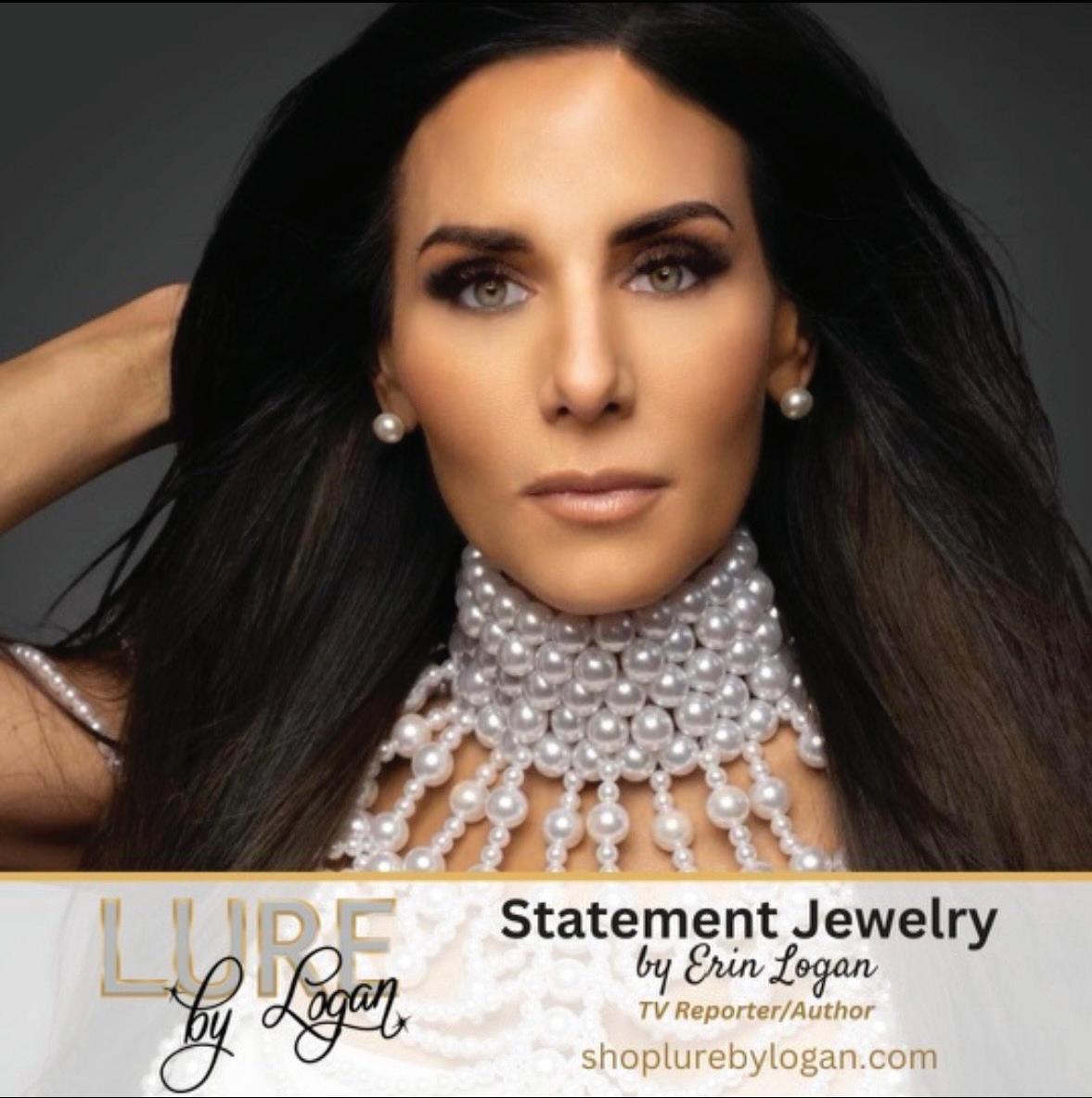
Elevate any look with Lure by Logan’s bestselling Open Swirl Metal Choker, available in both silver and gold for just $20. Designed with versatility in mind, this sleek statement piece can be worn on its own for a minimalist edge or customized with charms for a more personal touch. Whether paired with jeans and a simple tank, a crisp blouse, or an

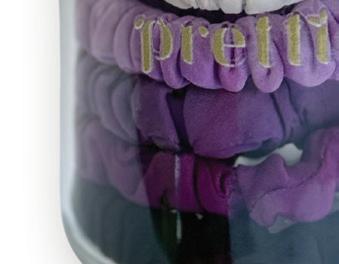




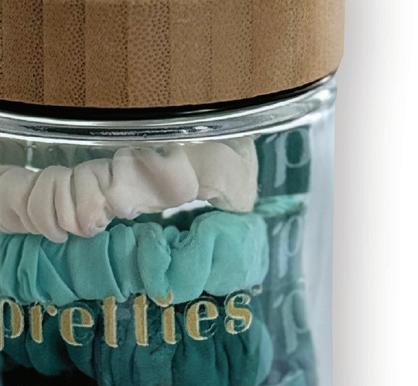
theprettypretties.com Pretties





































LIGHTS, LENS, ENTERTAINMENT
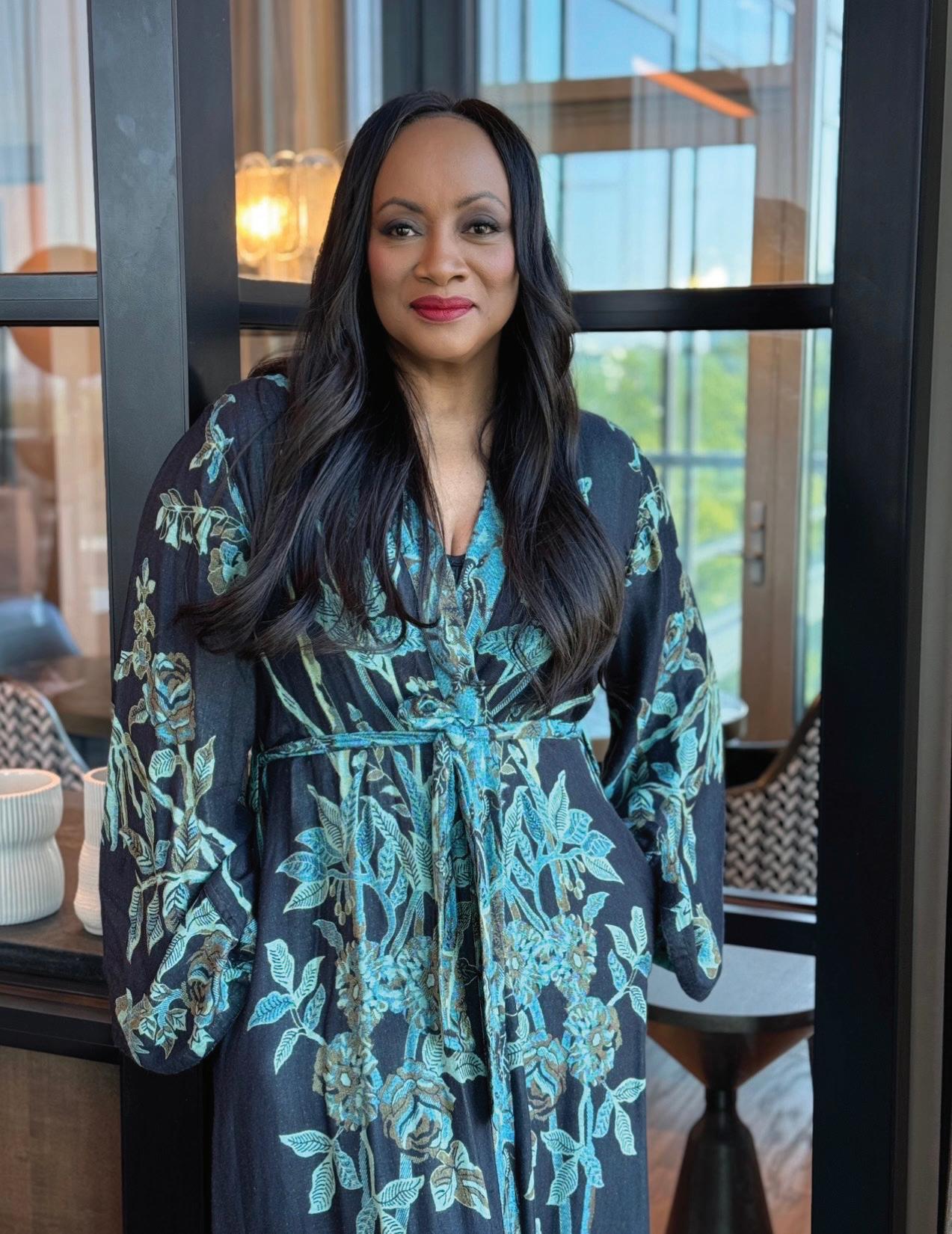
Pat Houston: Preserving a Legacy and Honoring Her Own Journey
A conversation with Jaclyn Zukerman Delory
Next On Scene: With so much attached to your public role, what feels most meaningful to you personally in this chapter of life?
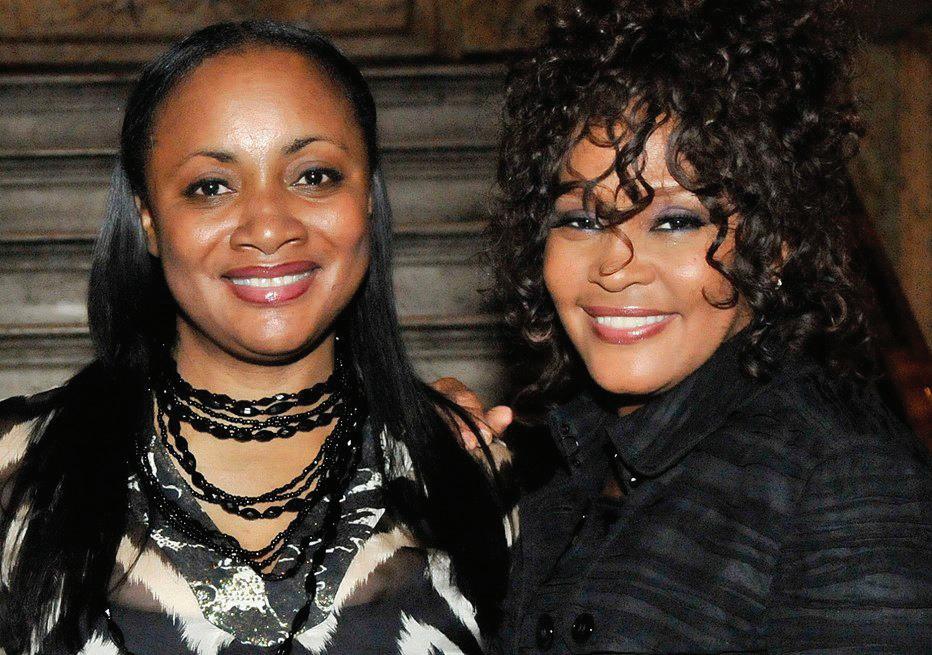
Pat Houston: Much of my name is forever linked to Whitney Houston. The legacy, the Estate, the history, the responsibility, the stewardship, and the world see me through that lens first. This chapter of my life is not about management. It’s about meaning. It’s not what carry for the world but what I carry for myself. It’s about living without constant weight of being on duty. It’s about joy without explanation and choosing what I want to do and not what I’m expected to do. I’ve spent a lifetime preserving a legend, now get to preserve my own life, unapologetically. I’m in a chapter of being a wife, mother, and a grandmother. Being Pat Houston, whole, wise, and finally centered in my own story. The Estate is what I do. This chapter of my life is who am.
Next On Scene: Your path into this role is unique, how do you feel life prepared you for a responsibility that many would find difficult to imagine carrying?
Pat Houston: Life prepared me long before the titles did. Managing Whitney and sharing my life with Gary taught me strength, discretion, faith, and endurance. It was something my parents taught me growing up in a loving and stable environment. What many see as unimaginable responsibility, I lived as love, loyalty and family.
Next On Scene: Was there a moment when you realized this role had become more than a family responsibility that had truly become part of your life’s work?
Pat Houston: There wasn’t one dramatic moment, it happened quietly over time. The responsibility slowly shifted from helping family to safeguarding history. Which was a tremendous amount of pressure. What began as love and loyalty grew into purpose and life’s work. When understood, I realized this role was bigger than us. I wasn’t just protecting Whitney; was preserving what she meant to the world.
Next on Scene: Becoming a grandmother adds a new layer to how many women think about family and what they pass forward. Has that shifted anything for your personally?
Next On Scene: What do people most often misunderstand about the human side of carrying a role like yours?
Pat Houston: The moment Whitney asked me to become her manager remains one of the most meaningful moments of my life. Here I was a Southern girl with similarities in growing up with only brothers and
Pat Houston: Becoming a grandmother shifted me in the most beautiful way. It brought me back to what matters most. Love that asks nothing and a life that can finally be lived gently. It takes me back to my earliest days of motherhood. But it feels different because you’re older and wiser. It’s a sweet reminder of what really matters, family!
a mother that taught me about spirituality and a father that taught me about the world. I mean what a balance. It wasn’t just a professional request; it was an act of deep and personal trust. She trusted me emphatically, not only with her career, but with her wellbeing, her voice, her vision, and her future. In that moment, I understood that this role would be rooted in love, loyalty, and responsibility far beyond business. I was her
confidant. That trust shaped the course of my life. It called me to be stronger, discerning, protective, and faithful in ways I could never have imagined coming from someone so iconic. What began as family support became life’s work, built on the foundation of a bond that meant everything to both of us.
Next On Scene: What has leadership taught you that you believe people often learn later than they expect?
Pat Houston: Many people learn later that leadership is not control, it’s responsibility, patience, and the strength to carry weight without needing recognition. Real leadership is quiet; it’s less about being in front and more about standing firm behind the scenes. Leadership has taught me that a title means very little without trust. Let’s just get the job done and we all win.
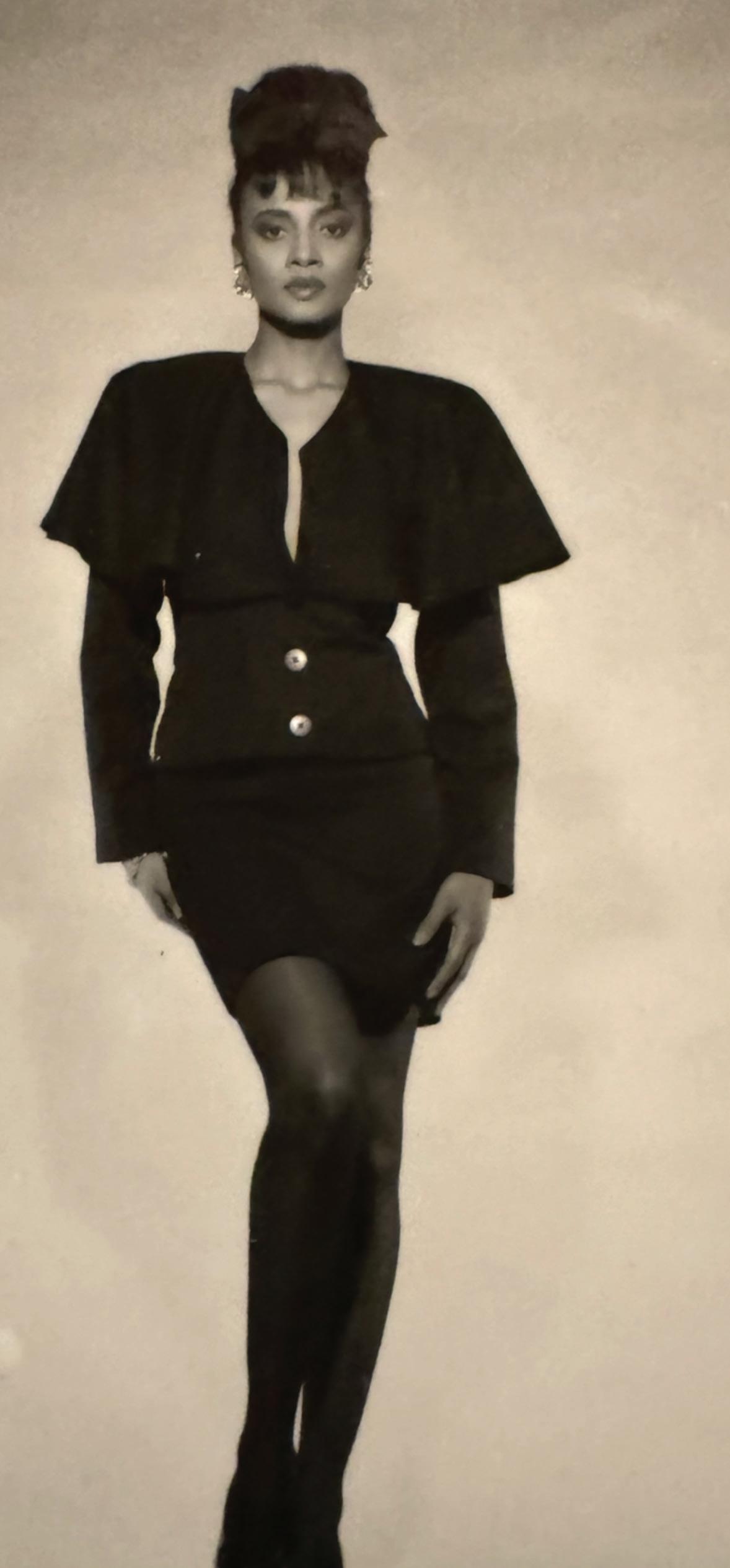
What people misunderstand most is that a role like mine is not just a public responsibility, it is deeply human, and often deeply private. From the outside, my connection to Whitney and her legacy can
My legacy is about rising, leading, creating and serving without ever abandoning my faith, values and how I was raised. I have never traded integrity for access or sacrificed compassion for authority.
Pat Houston: “I Look To You” has always carried a weight of surrender, strength, and faith. The sound of someone acknowledging both the struggle and the source of their endurance. It was years after Whitney heard this song before deciding to record it. As Clive Davis always said, she could never sing a song that didn’t resonate with her. This song was on her final album and believe it was God’s moment for her to understand her journey. It reflects not just her voice or her journey, but shared reality of what I’ve carried alongside her legacy. The moments of uncertainty, responsibility, and quiet reliance on something greater than myself. When a song like this feels especially powerful today, it’s often because it’s meeting you where you are not in performance but in reflection.
Next On Scene: For someone reading this article who may be in a difficult season but is still trying to move forward with purpose, what would you want them to remember?
look like titles, decisions, and visibility. But what they don’t always see is the emotional labor behind it, the care, the grief, the pressure, and the constant awareness that you are carrying something that matters far beyond yourself. People assume strength means it doesn’t affect you. In reality, it means you feel it fully and you still show up.
Next On Scene: Looking back, is there one moment, decision or project in this role that feels especially meaningful to you to this day?
Pat Houston: On many occasions, had to show up when no one else would or could. They also miss that behind every responsibility is a person who has had to balance love and duty at the same time, often without space to fully step away from either. It’s strength, courage and wisdom and there were times when I didn’t know my own strength but managed to pull through.
Next On Scene: Is there one Whitney song, whether “Greatest Love Of All” or another song that carries meaning for you today that feels different than it once did?
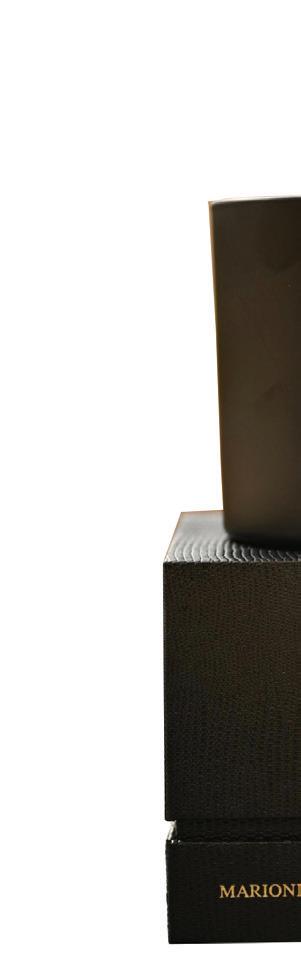
always get to see is the feeling behind you. The part of you that experiences life through memory, and emotion. By creating something personal and sensory, am able to share beautiful memories and stories that live in my candle line. At a very early age, spent a great deal of time with my aunt. While studying the Bible with her, she would burn a lantern that gave the illusion of a warm candle and it created a comfort of warmth and belonging for me. There’s a part of me that wants people to experience something [personal], not just accomplishing something [professional]. In many ways, this Collection quietly says, “This is what lives inside the woman behind the title.” This was Whitney’s first and only endorsement.
Next On Scene: Your upcoming book, Show Me
Something Different America, is a powerful title. What personal truth made this the message you felt called to write, right now?
Pat Houston: Remember that you don’t have to be fully healed to keep going. You just have to keep going with honesty. There will be days when strength looks like clarity, and days when it simply looks like getting through to the next moment. Both count. Both are progress. I’ve learned that purpose is not lost because life feels heavy. It’s only formed in the places where you feel stretched, uncertain, or unseen. Some or most have felt that pressure in one moment in time. Always remember that even when you don’t feel it, your life is still moving forward, quietly, and steadily. Keep showing up for what matters. Keep choosing what is right over what is easy. Keep believing that what you are carrying now is not the end of your story. My brothers always taught me that “If no one believes in you, believe in yourself.
Next On Scene: Your Marion P. Home Collection introduced another expression of your creativity. What did creating something personal and sensory allow you to share that people may not always see in your executive work?
Pat Houston: My executive presence shows how I lead. The Marion P. Home Collection shows how much I care. In my leadership role people often see your clarity, decisiveness, organization and a strategic mind. They see the results that you produce, the structure you build. What they don’t
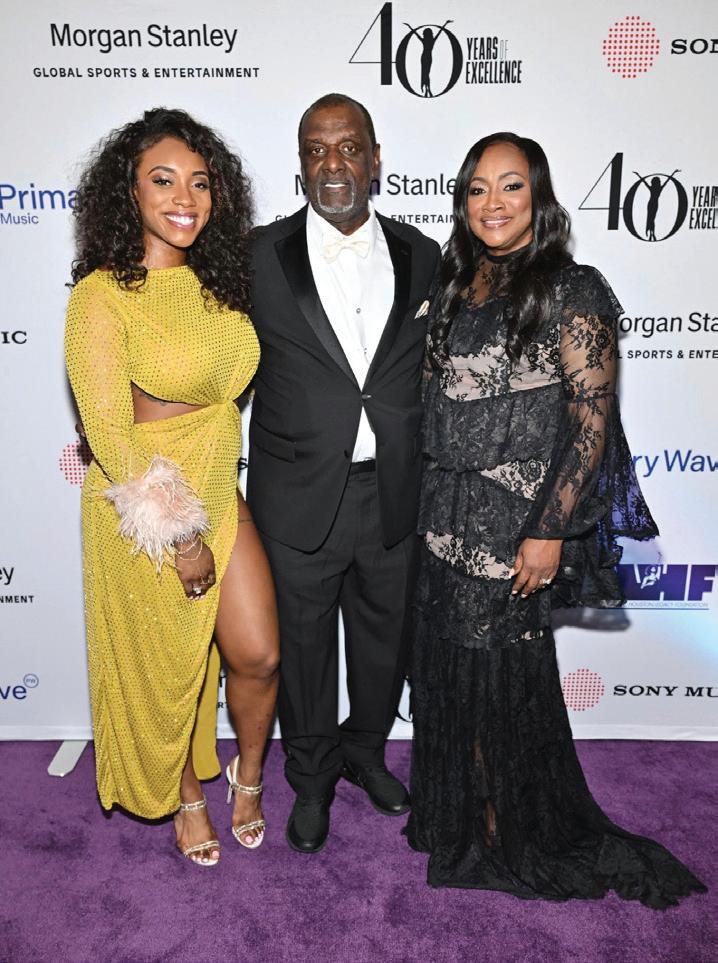
Next On Scene: When you think about the young people your nonprofit serves today, what truth do you believe they most need adults and leaders to understand right now?
Pat Houston: Right now, many young people are growing up in a world that feels loud, fast, uncertain, and filtered. What they hunger for is not another polished voice telling them what success looks like but a steady, real one showing them what being human looks like. They need leaders who are willing to be approachable, transparent and deeply human. Adults need to offer guidance, not judgment and create spaces where young people feel seen and not evaluated. My experience with non-profit work is that young people are not looking for perfection, they’re looking for presence, honesty, and humanity.
Pat Houston: wrote Show Me Something Different America for young adults because they are inheriting a country at a crossroads. Nearly 250 years after America’s birth, we celebrate ideals of freedom and equality yet many people continue to experience racism, inequality, and exclusion. I believe it’s important to speak honestly about this contradiction, not to shame the country, but to understand it. This book was born out of frustration, reflection, and hope. Frustrated with seeing the same injustices repeated generation after generation. It’s a reflection on how history, systems, and silence have allowed inequality to endure. And hope because change is still possible if we are willing to face the truth and imagine something different.
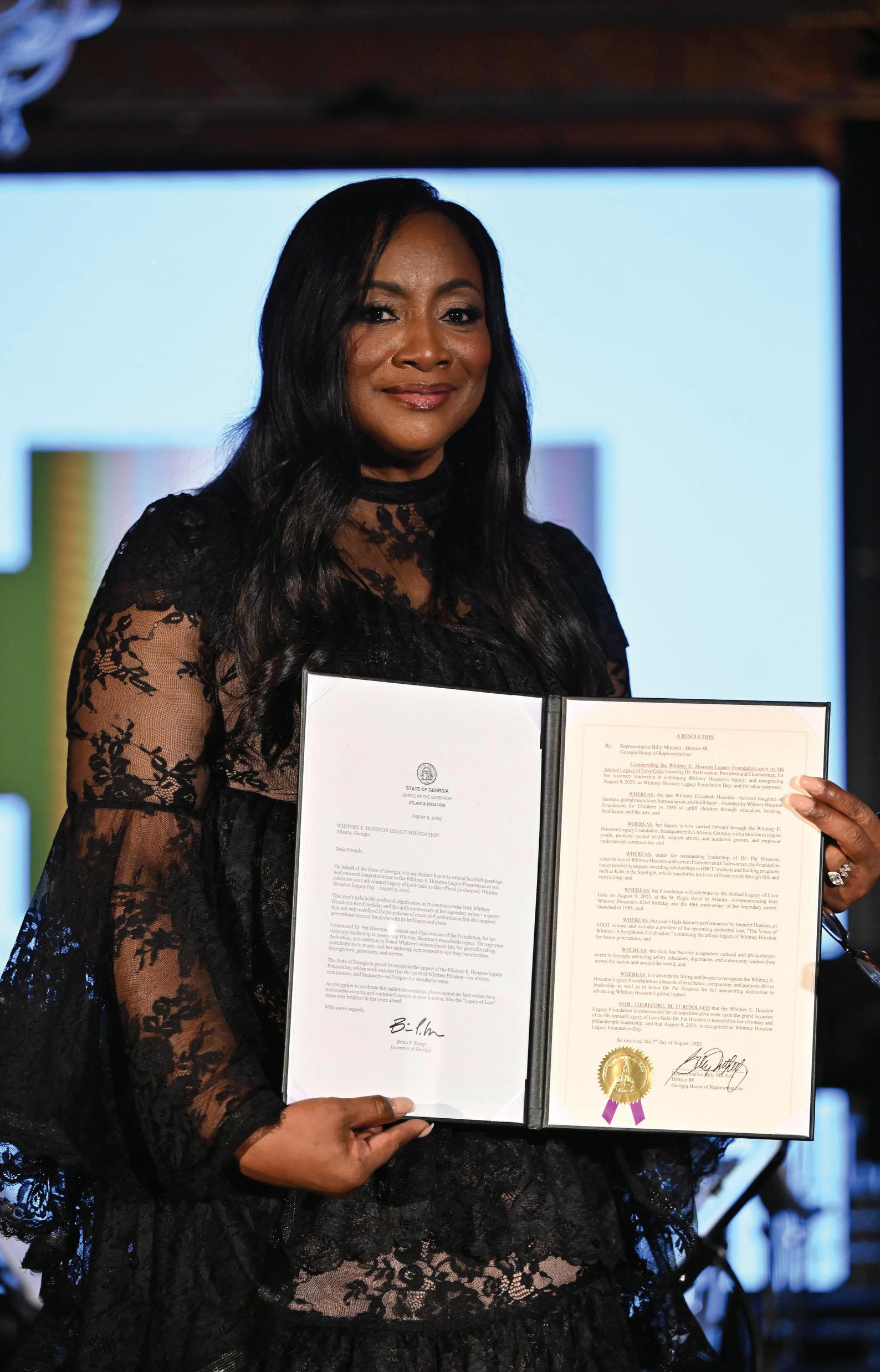
“I want the kind of legacy that outlives roles, careers, and seasons. I want it to become a standard that my daughter, granddaughter and youth can try to live up to. I want my life to prove that success and service do not have to be opposites that they can be the same calling, lived faithfully.
LEFT TO RIGHT: RAYAH VICTORIA HOUSTON, GARY HOUSTON AND PAT HOUSTON
THE HUMAN
BEHIND THE VISIBILITY
by Jaclyn Zukerman Delory
For a long time, I thought visibility was about being everywhere.
More posts. More interviews. More events. More momentum. And while visibility absolutely matters, what I’ve learned after more than a decade building Next On Scene is this: people are no longer
craving perfection. They are craving people they can actually feel.
The truth is, the most powerful thing we can bring into any room is not a perfectly curated version of ourselves. It’s our values, our energy, and our ability to make people feel seen.
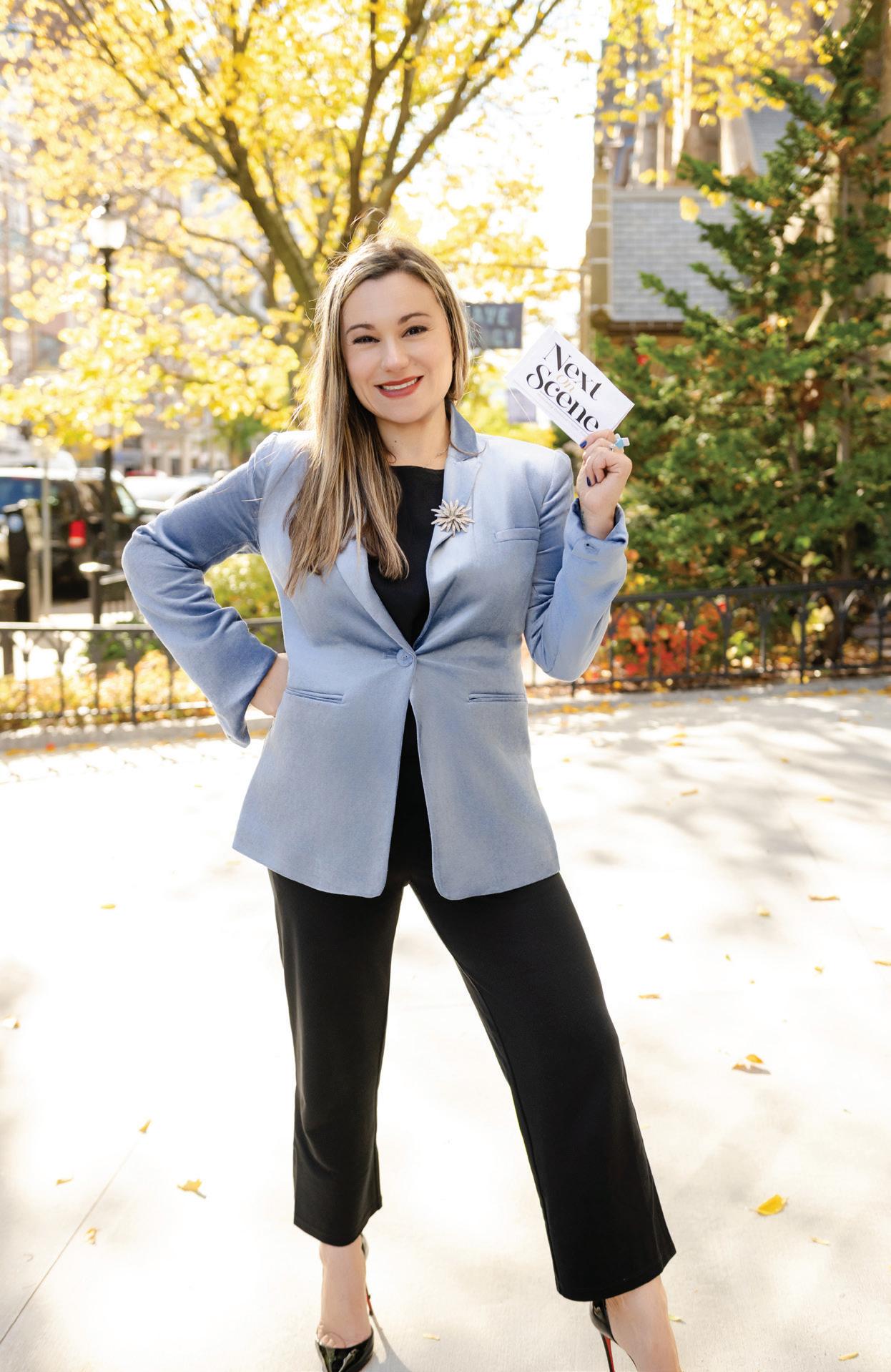
I think I’ve always cared deeply about the human behind the brand, but over the years it has become even more visible to me why that matters so much.
As a publicist and visibility strategist, people often assume my job is simply helping clients gain more exposure. But the deeper work has always been about helping people feel confident enough to truly share who they are.
I think so many people fear competition, judgment, or the pressure to fit into what everyone else in their industry is doing in order to stand out.
But the truth is, no one can ever take your story from you. When people allow themselves to share the real parts of their journey, the lessons, the failures, the pivots, the growth, and the humanity
behind what they do, that is what creates real connection and lasting impact. Authenticity is the one thing people will always remember because it makes others feel less alone.
Over the years, I’ve had the opportunity to interview celebrities, founders, nonprofit leaders, media personalities, creatives, and entrepreneurs from all walks of life. And the common thread is never just talent. It’s heart, resilience, and the reason behind why they do what they do.
think part of my “why” comes from spending a lot of my life feeling exhausted by surface level relationships and environments that prioritized status over sincerity. I’ve seen what happens when people feel used, emotionally unsupported, or expected to carry everything on their own simply because they’re viewed as “the strong one.”
For a long time, felt like the message around me was simply: “Jackie will figure it out.” And while I’m grateful for the resilience that built in me, I’ve also learned that we are not meant to navigate life, business, pressure, or mental health struggles alone.
I’ve never loved small talk. I love spaces where people can exhale a little, feel safe enough to be honest, and realize they don’t have to have everything figured out in order to grow into the next version of themselves.
Over the years, I’ve realized the work I’m most proud of has very little to do with surface level visibility. It’s the conversations behind the scenes. Helping people reconnect to their confidence, purpose, and the parts of themselves they may have lost underneath pressure, burnout, comparison, or the need to constantly perform.
Next On Scene was never just about media for me. It was about creating a platform where stories could live beyond headlines. A place where impact, creativity, fashion, beauty, business, entertainment, and purpose could all exist together. A place

where people could feel celebrated not just for what they achieved, but for who they are becoming.
At the end of the day, visibility is not about being seen by everyone. It’s about being truly seen by the right people. And when you lead with heart, honesty, and purpose, the right people always find you.


FB/IG: @jackiezuk
Linkedin: Jaclyn Zukerman Delory

People from Massachusetts are honest. No one is really holding back. The ‘meanest’ person you know is often the friend who cares about you most. I love that about it. was born in the right place.
That kind of directness becomes part of your DNA. People tell you the truth and you learn quickly that authenticity matters more than trying to impress anyone. That shaped me as both a person and a writer.
After college with a Journalism degree in hand but no clear roadmap, teaching became the next step. It was steady, meaningful work, but not the destination. Writing never left. It stayed in the background, persistent, waiting. Eventually, that persistence turned into motion again.”
That early foundation of honesty and curiosity eventually became more than a personal philosophy. It became the framework for how Michael Walsh approaches storytelling today across fandoms, franchises, and the fast-moving world of entertainment journalism. Writing careers are rarely linear. How
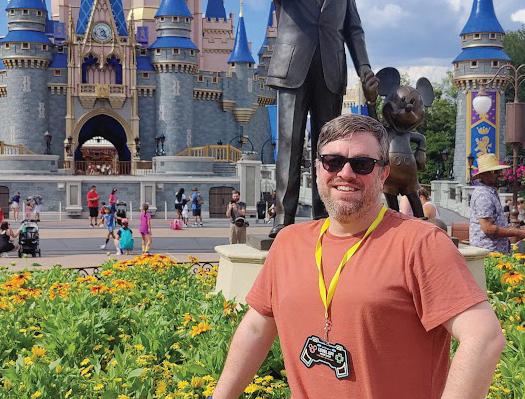
All In: A Conversation on Writing, Fandom, and Finding Your Voice
With Writer, Michael Walsh
Rustic Spirits: How One Bartender’s Observation Built
a Margarita Empire
A conversation with founder Vytas Makstutis on balance, patience, and the power of doing one thing well.
did you find your way back into writing professionally?
I always wanted to write, but I left college without a real plan. I ended up teaching high school English, and while I enjoyed it, I knew it was not the long-term path.
I tried freelance work and personal projects, but nothing really stuck until reached out to a friend with an idea. He did not have time but mentioned someone looking for freelance writers for Nerdist. I had to build clips from scratch and I did. From there, I wrote constantly, and eventually I was brought on staff.
What kept that drive alive was not just ambition. It was obsession. A deep early connection to stories, worlds, and the kinds of details most people skim past.
What sparked your love of writing and pop culture?
Star Wars: Episode I The Phantom Menace was a turning point. I realized you could go online and explore lore, theories, and behind the scenes worlds. That changed everything.
I have always been a completist. If I love
something, am all in.
That intensity now fuels a career built around entertainment writing where curiosity is not optional, it is the job.
As a writer for Nerdist, what is the most exciting part of your job?
Most days are fairly normal, writing news, watching screeners, brainstorming ideas. But every day carries the possibility that something incredible could happen.
The real answer is simple. Knowing people around the world might read something wrote. That still does not feel normal.
What is one of the hardest parts of entertainment journalism today?
SEO is brutal. It changes constantly and entire workflows have to adapt overnight. Media has also shrunk, so people are doing more with fewer resources. Creativity, deadlines, and life outside the work all have to balance at once.
How do you decide what stories are worth telling?
A lot of ideas come from things I have been thinking about for years. also pay attention to what audiences are curious about. Often the best ideas come from questions people are already asking but have not seen explored fully. Research helps too. You do not always know what is interesting until you dig in.
Is there one article that stands out in your career?
One early milestone was an article where mathematically determined the greatest team in Legends of the Hidden Temple. That piece circulated widely enough that I realized this could actually be a career.
For Walsh, the work continues to come back to the same idea. Consistency over shortcuts, curiosity over certainty. Emotion and instinct are what keep the work alive.
For Vytas Makstutis, the path to founding Rustic Spirits began behind a bar, where he noticed a simple pattern that would shape the next two decades of his life. When a margarita is properly balanced, people don’t switch to beer or wine for their second round. They order another margarita. That observation, born from years of observing customers, became the foundation of a business that now reaches approximately 1000 stores across five states.
From Basement to Bottle
“While tending bar years ago, I noticed something simple but important,” Makstutis recalls. “When a drink is well balanced, especially a margarita, people usually order
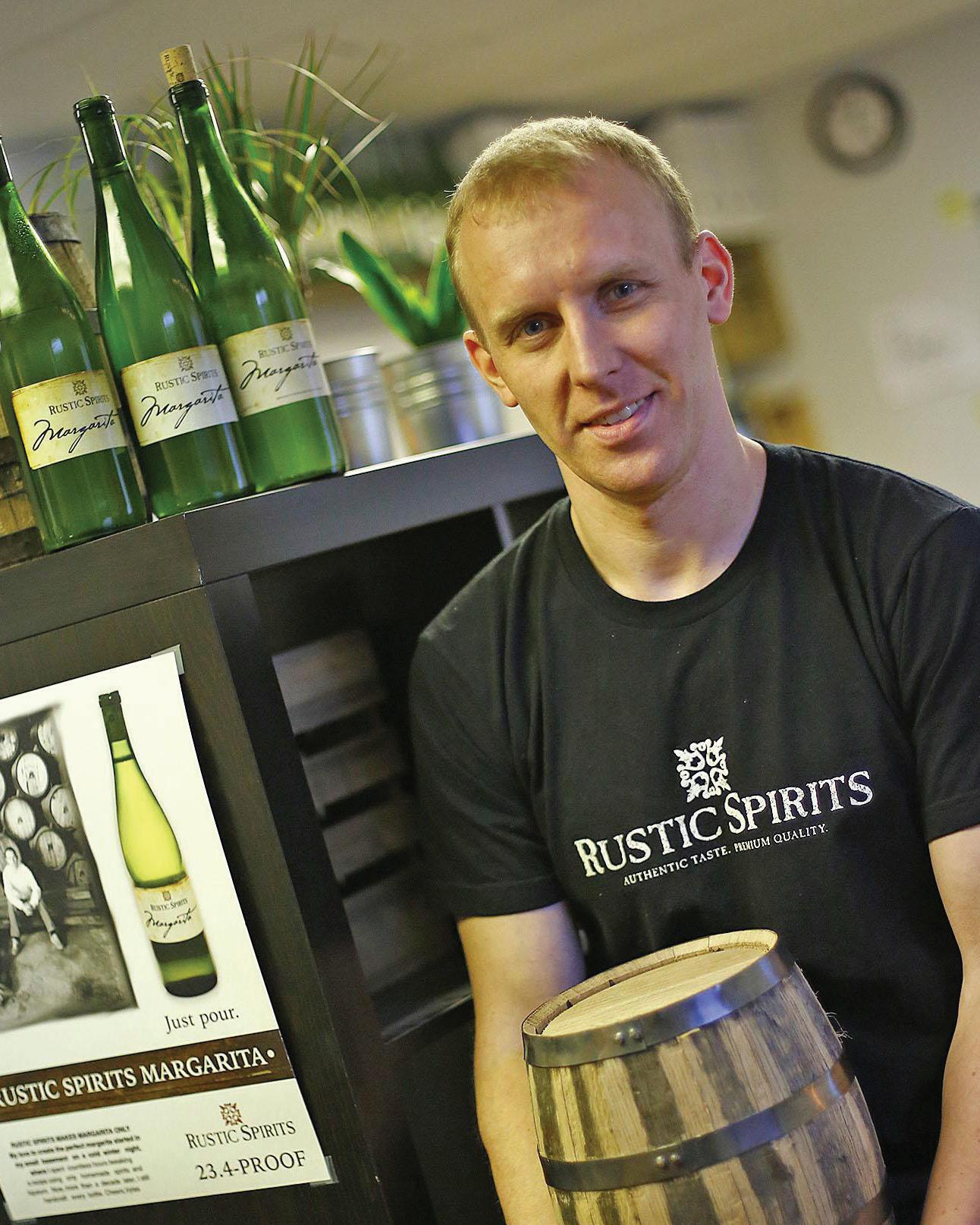
a second one. I’ve always loved citrus because it’s refreshing, and that inspired me to start experimenting in my basement in 2006.”
What followed was six years of hands-on work in that basement, where Makstutis crafted every bottle himself. The operation was as humble as it gets: a wooden table, a bucket, a funnel, and shipping labels
printed at the local Staples with his logo on them.
“The conditions were rough. Nothing fancy,” he says. “Which is why I chose the name Rustic Spirits.”
In 2012, Makstutis took the next step and opened the Margarita Factory, moving production out of the basement and into a proper facility.
Reaching the 20-Year Milestone
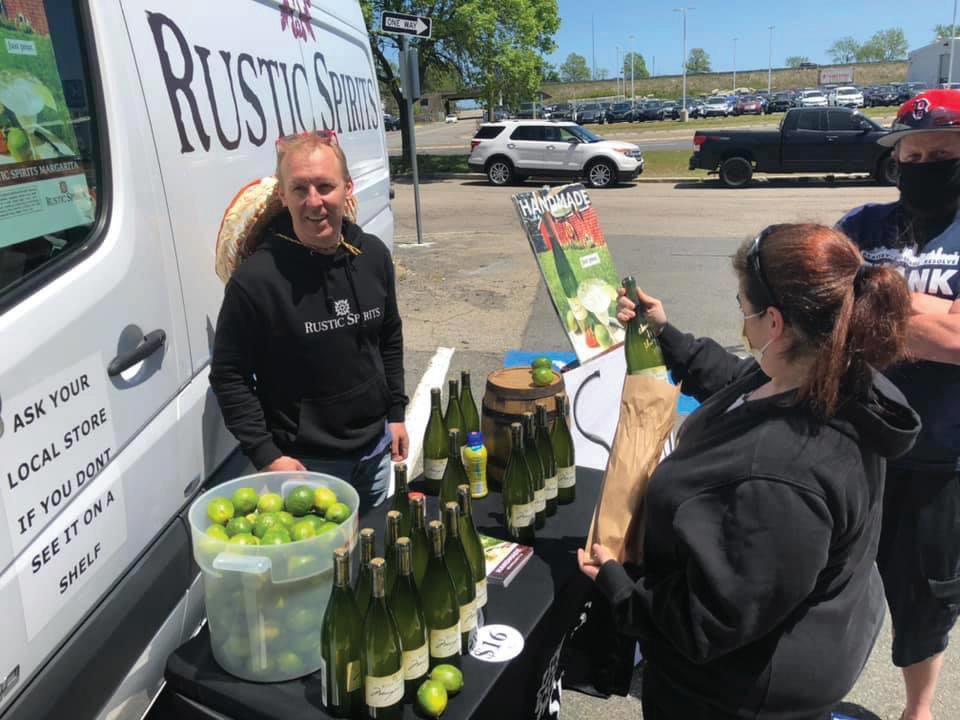
By the end of 2026, Rustic Spirits will mark 20 years since that first hand-bottled batch. What began with neighbors and a handful of local towns has expanded into a brand sold across New Hampshire, Massachusetts, Rhode Island, Connecticut, and South Carolina, with shipping now available to any state in the U.S.
The growth, while substantial, was never the goal in itself. The goal was getting the drink right.
A Philosophy Rooted in Observation Makstutis didn’t develop his approach in a lab or a marketing meeting. He developed it by paying attention.
“I paid close attention to what people liked to drink and why they asked for another of the same drink,” he explains. “Over time I realized that when a margarita is well balanced and refreshing, people keep ordering it instead of switching to beer or wine. A great margarita is all about balance.”
That insight, that balance is what drives the reorder, became the guiding principle behind every bottle.
One Product, Done Well
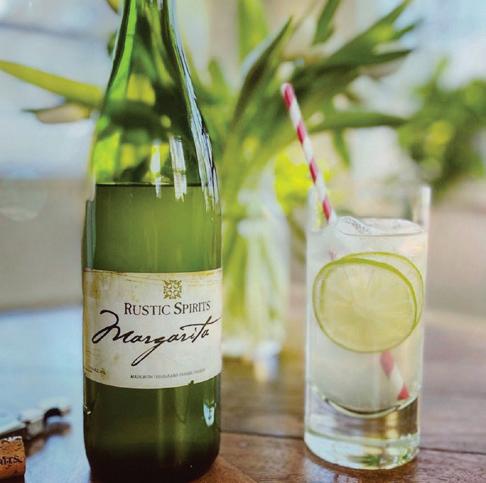
In an industry obsessed with line extensions, seasonal flavors, and canned cocktails,Rustic Spirits has taken the opposite approach. For 20 years, the company has produced exactly one thing: an original lime margarita.
“We don’t produce cans, additional flavors, or line extensions,” Makstutis says. “We focus and make one product the best it can be.”
It’s a discipline that runs counter to most growth playbooks, but it’s also what gives
Seasonal Pairing Ideas
Makstutis put together a few pairing suggestions that work year-round. Practical, tasty, and easy to make at home.
Spring: Guacamole, Chips & Salsa. Fresh guacamole with chips and salsa, served with an ice-cold Rustic Spirits Margarita and a slice of lime. Light, simple, refreshing.
Summer: Tacos. Corn tortillas with chopped steak, cilantro, diced onions, and fresh jalapeños (seeds removed). A clean, simple pairing.
Fall: Homemade Nachos. Restaurantstyle chips topped with salsa, black refried beans, Munster and Cheddar cheese, baked until melted. Garnish with pickled jalapeños or a scoop of guacamole.
Winter: Mexican-Style Pizza. A comforting winter dish featuring smoked chorizo, your choice of vegetables, and cheese. Pairs beautifully with a margarita on a cold evening.
the brand its identity. Rustic Spirits isn’t trying to be everything. It’s trying to be one thing, exceptionally well.
The Heart Behind the Headlines
How WCVB Channel 5 Chronicle Producer Nicole Estaphan Makes Complex Stories Feel Human
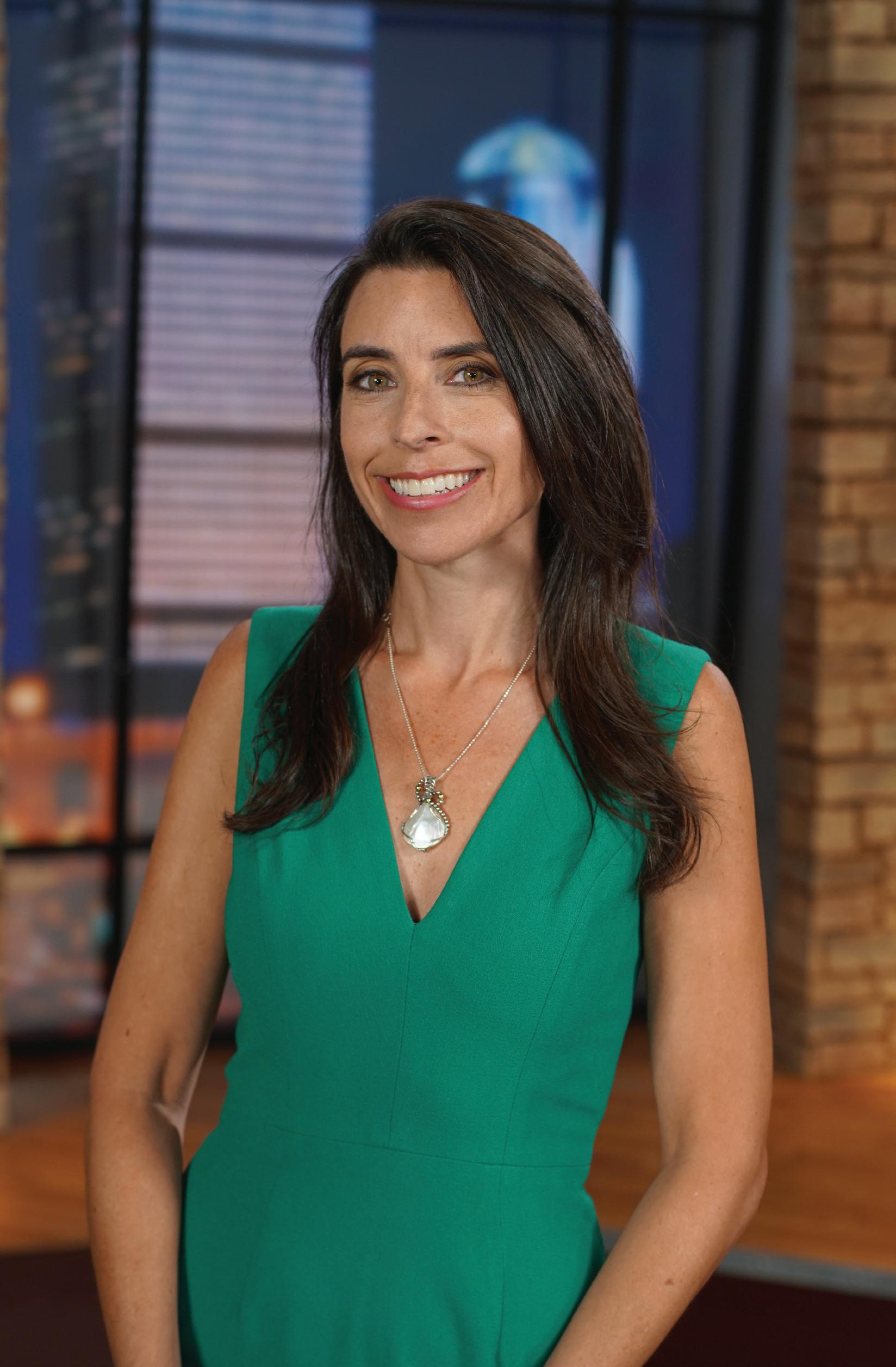
In a media landscape driven by speed, clicks, and constant scrolling, long form storytelling still has the power to stop people in their tracks. For Nicole Estaphan, producer at WCVB Channel 5’s Chronicle, storytelling is about far more than headlines or ratings. It is about trust, empathy, and creating connection through the stories that shape our communities.
From emotionally charged human interest pieces to navigating the uncertainty of the COVID 19 pandemic, Nicole has built a career around making difficult topics feel accessible and deeply personal. Her work reminds audiences that journalism is not simply about delivering information. At its best, it is about helping people feel understood.
In this conversation, Nicole shares her perspective on storytelling in the digital age, the emotional weight of producing meaningful stories, and why authenticity still matters most.
What story challenged you intellectually the most?
Hard to label anything as the “most,” but one story that immediately comes to mind is a show we produced about COVID 19. Much of the work had already been completed before the shutdown, so like everyone else, we were learning in real time as the situation evolved.
We had to pivot repeatedly to tell a story that would inform viewers without creating unnecessary fear. Trying to explain something that was still so widely misunderstood presented a significant learning curve. At the same time, every story comes with its own challenges, and I have always found the most compelling ones to be those that test our emotions, perspectives, and personal beliefs.
How do you make intimidating topics feel approachable?
Making intimidating topics approachable starts with understanding your audience. try to break complex or emotionally charged subjects into clear, relatable stories that people can connect with. It is important to inform without overwhelming, especially when the topic is unfamiliar or evolving. focus on human experiences so viewers feel engaged rather than intimidated. have found that when people feel seen and included in the conversation, they are much more willing to learn and stay curious. What do people misunderstand about producing stories?
People often think working on Chronicle is all sugar pops and rainbows and to be fair, maybe about 75 percent of it is… kidding. In reality, there is an enormous amount of work that happens before and after every shoot. Producing a single 30 minute program can take us about a month from start to finish.
We also live in a world that expects everything immediately. Social media, texting, constant updates. But long form storytelling, thoughtful writing, beautiful cinematography, and careful editing all take time. That process is what allows us to create something meaningful.
As for the future, guess we will see what AI has to say about it. Hopefully not too much.
Has storytelling changed because of social media?
Of course, and there is absolutely a place for that format, a very big one. I think there will always be audiences that crave in depth storytelling, just as there will always be audiences looking for quick, immediate content. Ideally, many people want both.
The two formats actually work best when they complement each other. Social media can introduce viewers to a story, while long form storytelling allows for deeper context, nuance, and a different kind of connection.
We have adapted by creating shorter clips from our stories that can engage audiences quickly and hopefully encourage them to explore the full piece.
What story still sticks with you emotionally?
To be honest, they all stay with me. I remember the most nuanced details about the people I have interviewed, their laughter, the way a grieving mother can hold both strength and fragility at once, the sound of someone’s voice, the feel of their home.
People share their highest highs and their lowest lows with us. That vulnerability, that humanity, it stays with you. You remember.
For Nicole, storytelling is not something that ends when the cameras stop rolling. The emotional impact lingers long after production wraps, becoming part of the responsibility that comes with telling someone else’s truth.
What makes someone trust a storyteller?
A trustworthy storyteller does not talk down to their audience or manipulate emotion for effect. We often are learning along with our audience. If you pretend you have all the answers, you do not ask the right questions.
I think most importantly, a storyteller who genuinely listens to people and represents their story with care over time earns trust.
In today’s media environment, where audiences are more skeptical than ever, Nicole believes trust is built slowly through consistency, empathy, and honesty. It is not about having the loudest voice in the room. It is about making people feel heard.
How do you balance accuracy with emotion?
There is no real balance to strike when it comes to accuracy. It has to be absolute.
Emotion is what brings a story to life, but it should always be woven carefully through the threads of factual accuracy.
That philosophy reflects the foundation of strong journalism. Facts first, emotion second. The feeling in a story should deepen understanding, not distort it. What does good journalism look like now?
This is a tough question, because good journalism can look different to different audiences. But I do believe that at the heart of every story is connection.
Think about how we connect in our own communities, around campfires, in parent groups, or with friends and family. At the core, we all want to feel understood and to know we are not alone in this complex world. Storytelling helps create that sense of connection.
On the other hand, I think it is often easier to recognize bad journalism. It tends to rely on fear, distortion, or false narratives to capture attention and build a following, rather than seeking understanding or truth.
Nicole’s perspective speaks to a larger shift happening across media. Audiences are no longer just looking for information. They are looking for authenticity. They want stories that feel real, thoughtful, and emotionally honest.
What’s harder: finding the story or helping people care about it?
If you find a strong story and tell it with authenticity, people will naturally care. think the bigger challenge is identifying the platform where audiences are most likely to connect with it.
As journalism continues to evolve alongside technology and changing viewing habits, Nicole remains grounded in the same core belief that has shaped storytelling for generations: people connect through people
Whether she is producing a deeply emotional human interest feature or helping audiences understand a complicated issue, Nicole approaches every story with empathy and curiosity.
In an era defined by fast content and endless noise, her work is a reminder that thoughtful storytelling still matters, and that the stories we remember most are often the ones that make us feel something real.
THE BUSINESS OF BEING MIKEY V: MEDIA,
ENTREPRENEURSHIP, & BUILDING A LEGACY BEYOND THE MIC
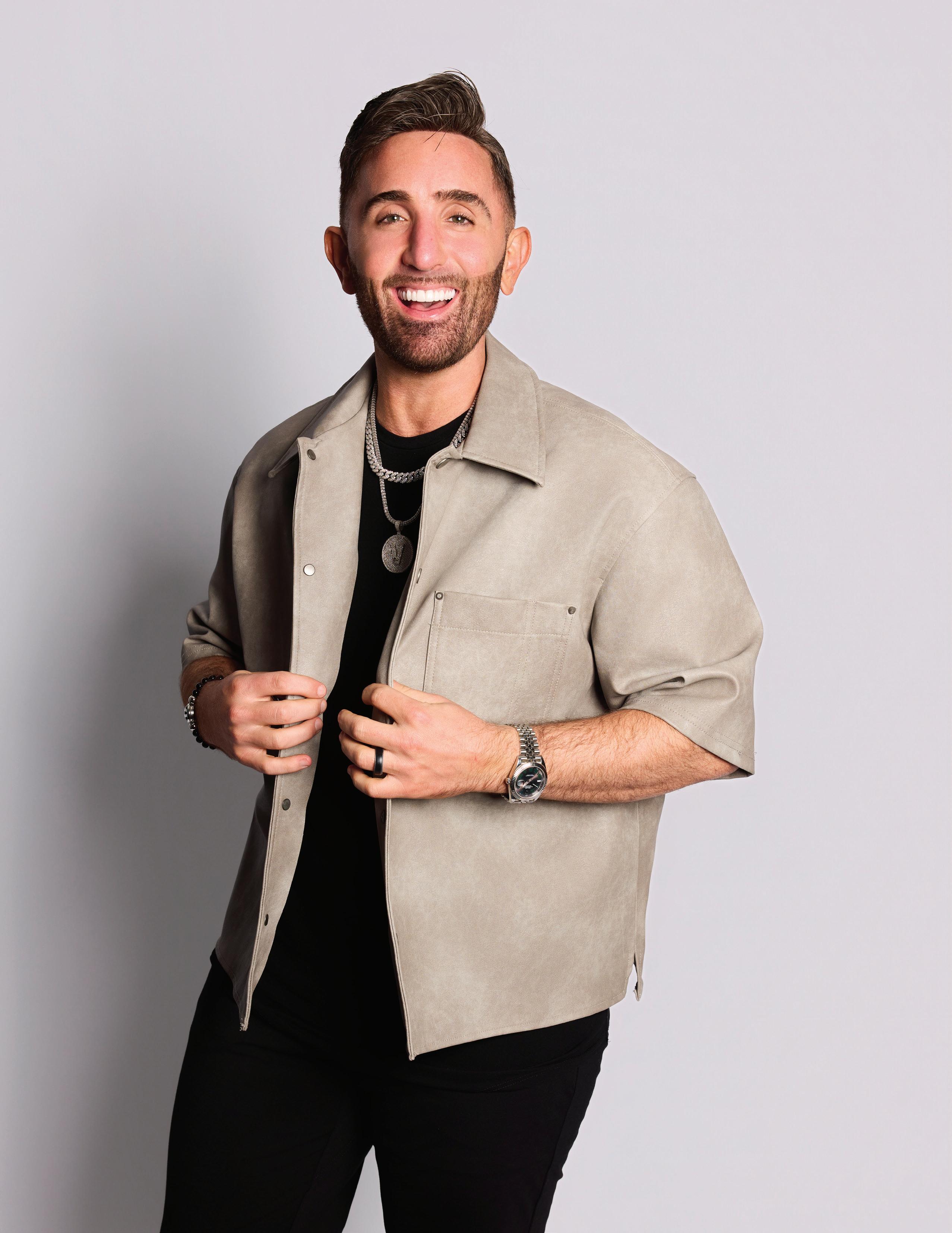
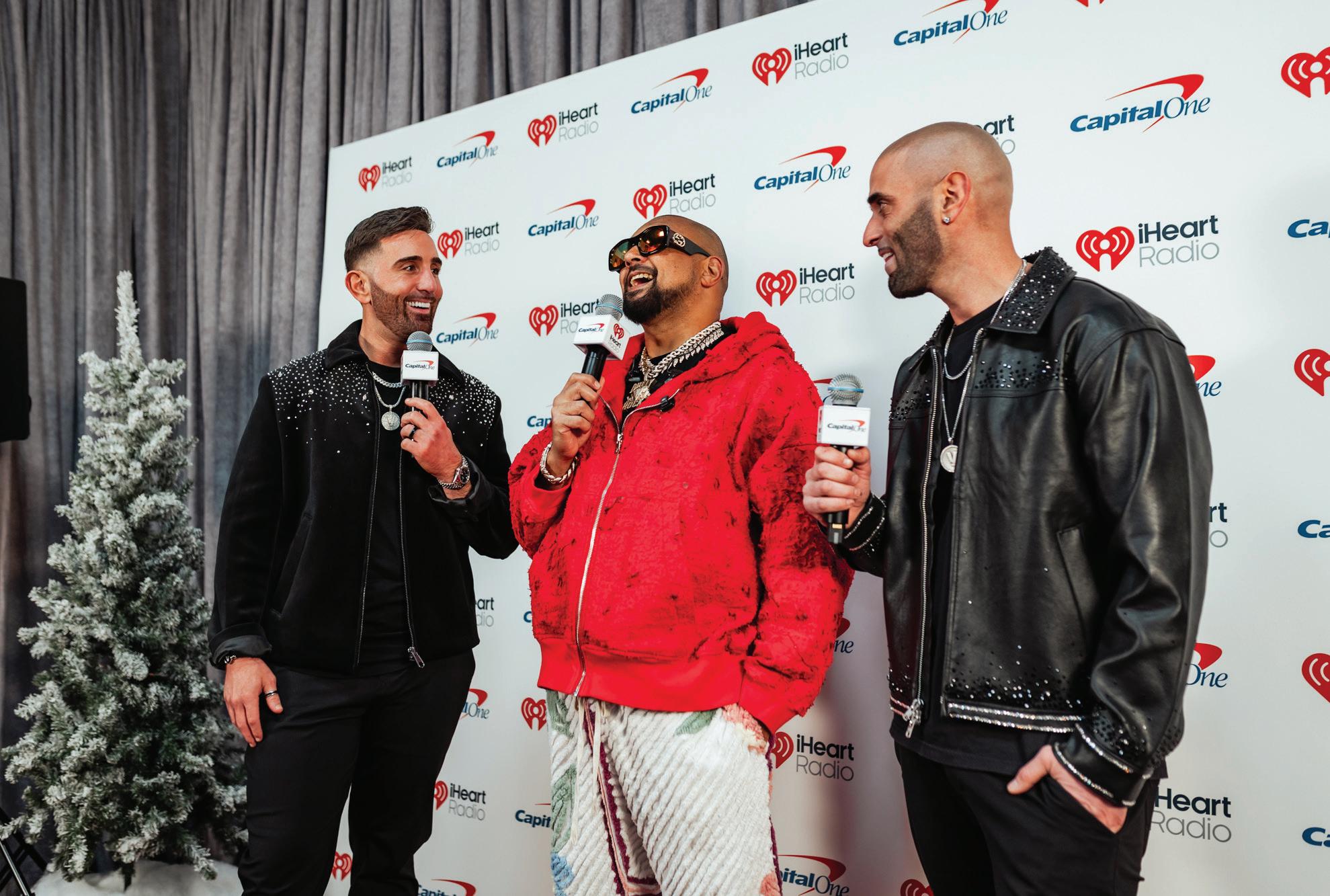
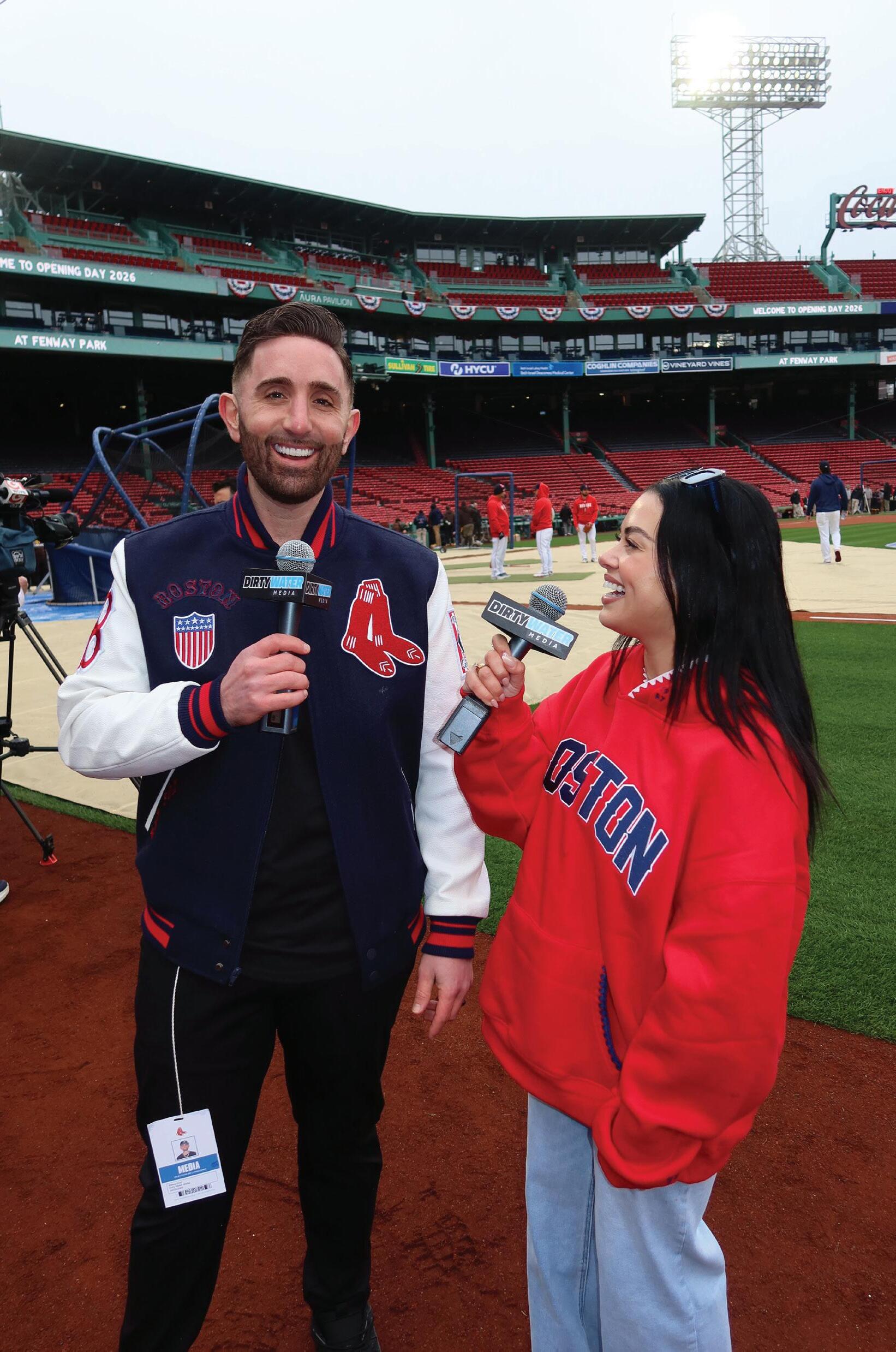
For Mikey, success has never been about just one lane. Most people know him as a radio personality on Kiss 108 in Boston, but his career has grown into something much bigger than the microphone. He’s built businesses in entertainment, real estate lending, and events, and he now is also launching a nonprofit with his family.
Two things are central to everything he does: purpose and the people he loves.
CAREER
Looking back, what shaped your drive growing up in Framingham?
A lot of it comes from how I grew up. I was lucky to have loving parents who always encouraged me to be myself and chase what was passionate about.
But we also went through real financial struggles. My family filed for bankruptcy when was young, and that stayed with me. It taught me early that nothing is given to you. If you want something, you have to work for it.
I watched my mom work multiple jobs just to make sure we were okay. I watched my brother outwork everyone in the media industry. That kind of environment made hard work feel normal.
Sports also shaped me. They taught me that effort leads to results, and results create opportunity. That mindset has stayed with me in everything do.
You originally studied to become a math teacher; when did entertainment start pulling you in a different direction?
I’ve always had the itch to entertain. Even when was 12, I was traveling and doing magic shows. loved being in front of people
and making them laugh.
By 16, I was DJing with a Bar Mitzvah company. Soon after, I was renting halls in Framingham and throwing under 21 events.
I didn’t realize it at the time, but was already building my path.
Even teaching made sense to me for the same reason. saw it as another way to connect with people and make an impact.
I still say I’d love to teach someday.
After college, I got my first radio job in Ithaca, then went to Indianapolis and Detroit. Everything just kept building from there.
Starting as a DJ at 15, did you know early that this could become your career?
Not at all. I wasn’t thinking long term. just loved what I was doing.
If you asked me at 18 if this could be a real
career, I probably would’ve laughed. I was just having fun DJing, being on the radio, and throwing events.
even had a boss tell me at 19 that radio might not be a long term career for someone my age. But I wasn’t focused on that. I was focused on enjoying every opportunity in front of me.
Looking back, that mindset was everything. What did moving through different cities teach you before returning home to Boston?
It taught me how to start over.
Every city forced me to rebuild from scratch—new relationships, new venues, new audiences, new trust. I did it in Framingham, at Stonehill, in Ithaca, Indianapolis, and Detroit.
That process taught me how to build a brand anywhere. By the time I came back
to Boston, I wasn’t intimidated. was ready.
That ability to walk into any environment and build from nothing has been one of my most valuable skills.
Coming back to Kiss 108, did success feel different because it happened in your hometown?
Completely different.
to Jingle Ball in a wheelchair. My best friend helped bring him so he could still be there.
At one point, he overheard fans talking about me in the elevator. He proudly jumped in and said, “I’m Mikey V’s dad.” Nobody believed him until he showed them our matching necklaces.
He came back later smiling so big telling me the story. Seeing how proud he was became the proudest moment of my life.
That’s when realized what “making it” really meant.
BUSINESS
What do you enjoy most about building City Event Group beyond just performing at events?
get to do it with one of my closest friends, Danny T. He’s someone who shows up for me without ever being asked and never expects anything in return.
That kind of loyalty is rare.
What I love most is not just the events, but building something real with someone trust. Watching him grow his vision while I help support it means a lot to me.
What makes an event unforgettable in your eyes?
It’s simple for me. An unforgettable event is one where people forget their stress for a while.
Everyone is carrying something. If I can create a moment where someone can smile, dance, and just be present, then I’ve done my job.
It’s always about emotional connection, not just entertainment.
H1H2 Lending is very different from media. What drew you into that world?
I’ve always been drawn to building things. Even when was younger, I was cutting grass, cutting hair in college, and starting small businesses.
Yes, but I try to keep them separate mentally. What surprised me most is that running a business actually made me better at radio. I understand the business side more deeply now.
Radio is fun and creative, but it’s still a business. Entrepreneurship reminded me of that.
At the same time, radio is still my foundation. It’s who I am at my core.
FAMILY + PURPOSE
What has building a career alongside your brother Frankie V taught you?
It’s been one of the greatest experiences of my life.
We were told for years that it wouldn’t work. That we sounded too similar. That people wouldn’t get it.
But we believed in it.
We started a podcast, which became a one hour show, then two hours, then five. Now it’s heard in over 100 cities.
It taught me that timing matters, and persistence matters even more.
Everyone is carrying something. If I can create a moment where someone can smile, dance, and just be present, then I’ve done my job. It’s always about emotional connection, not just entertainment.
Family clearly matters to you, what keeps you grounded now?
My mom.
She’s the best person I know. Not just in my life, but period.
Everything she does is about others. She’s a teacher, a caregiver, a mother, and someone the entire community respects.
Being around her reminds me who I want to be. She doesn’t teach lessons through words. She lives them.
That keeps me grounded more than anything.
What inspired you to create the V Family Foundation?
My mom and my wife inspired it.
Between my mom’s work with special education and my wife’s personal family experience, I’ve seen how many families are navigating real challenges.
I wanted to create something that could actually help.
When you think about legacy, what matters most to you now?
My mom said something to me when was young that stuck with me forever.
“I don’t care what you are, as long as you’re a good person.”
That’s it for me. If I’m remembered for anything, want it to be that I was a good person who treated people the right way.
Growing up, used to sit in the last row just happy to be inside that building. So when I eventually stood on that stage hosting Jingle Ball, everything hit me at once.
My parents were in the crowd. That alone made it surreal.
I remember my fifth grade teacher texting me saying she was listening. remember going out with friends who now knew me from the radio. But nothing compares to moments at TD Garden.
But one moment with my dad stays with me forever. Toward the end of his life, he came
While doing radio in Indianapolis, I met a real estate developer and that opened the door for me. I’ve now been involved in lending and real estate for about 15 years. What I love about it is the same thing I love about media: relationships and trust.
It’s another space where reputation matters more than anything.
Do you think entrepreneurship changed how you see yourself beyond radio?
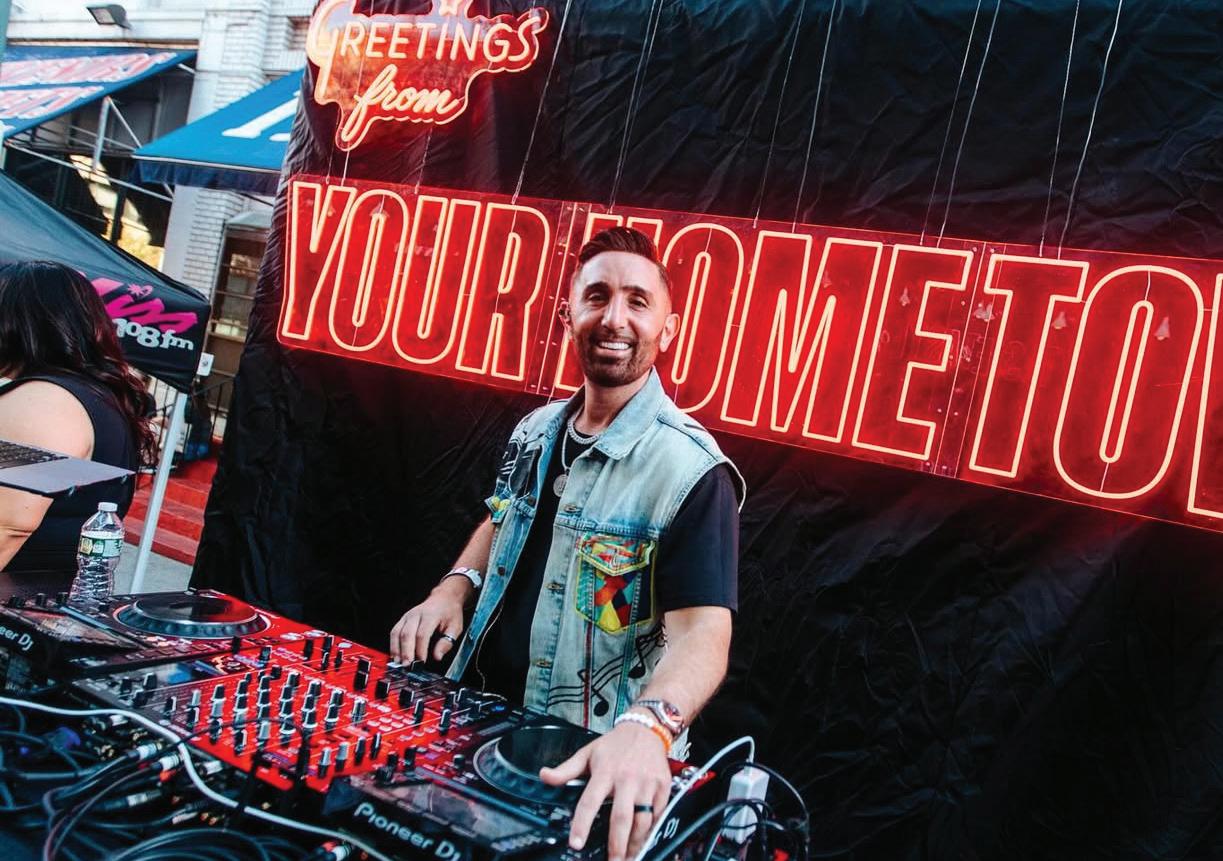
GET IN TOUCH: IG: @mikeyvonair, @cityeventgroup @h1h2lending cityeventgroup. com
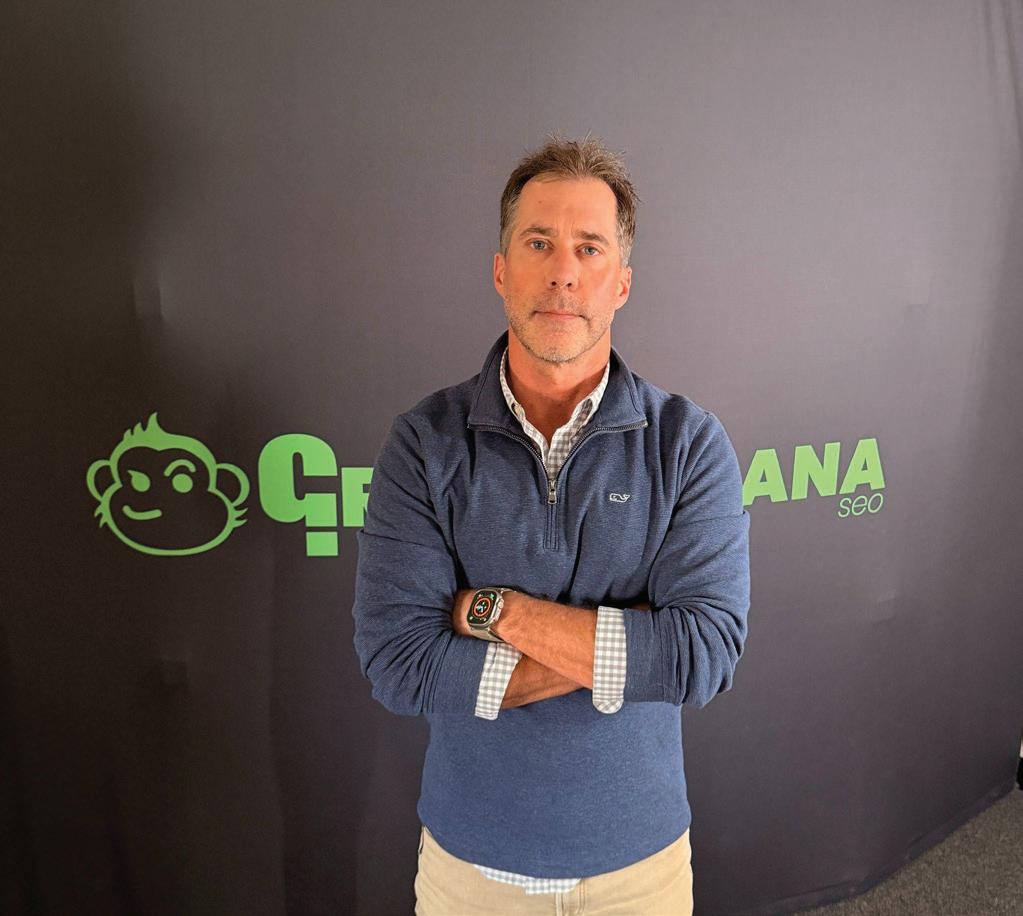
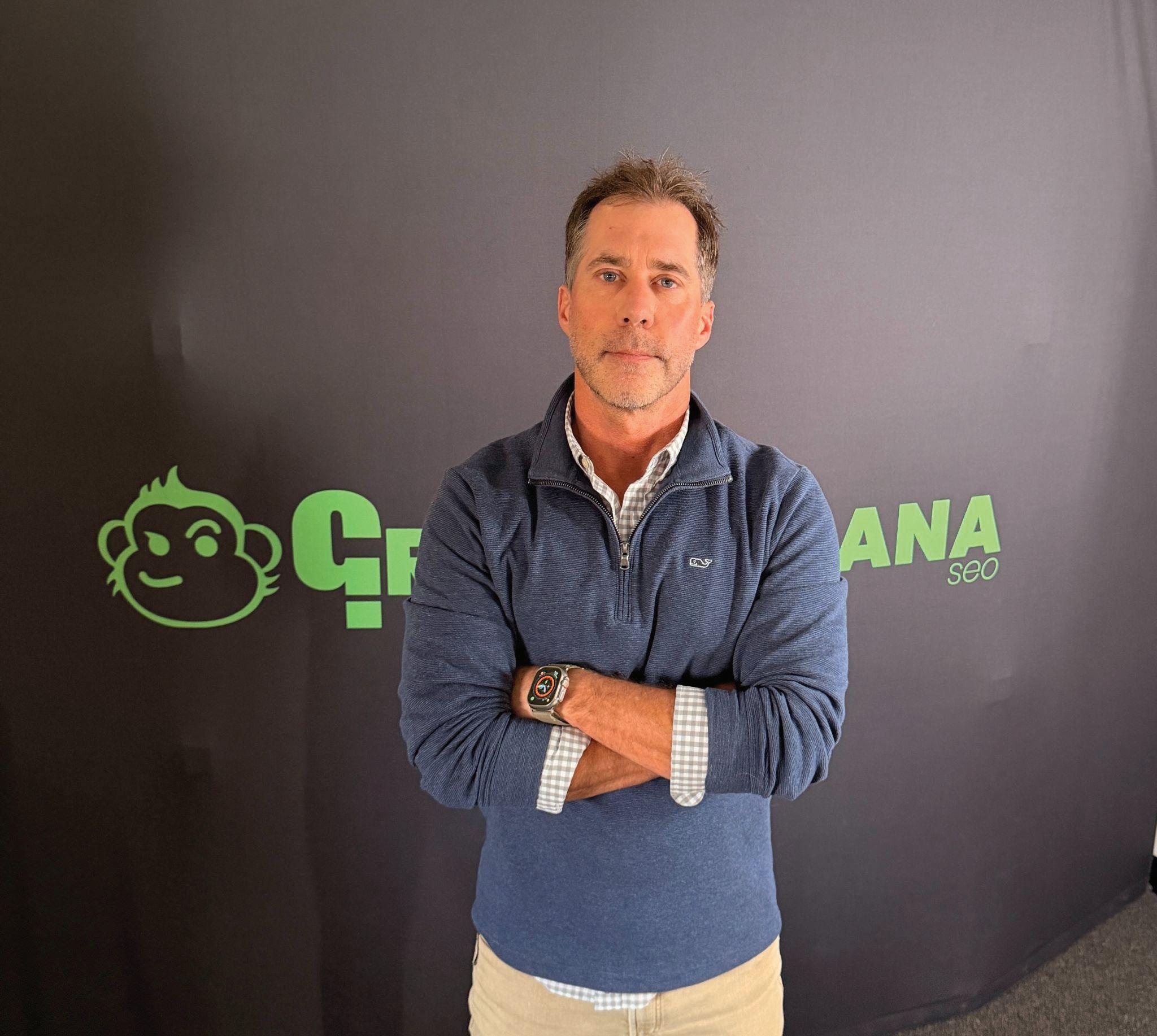
From Green Marker to Industry Leader: The Green Banana SEO Story
Founder Kevin Roy on building a performance-based agency
As artificial intelligence continues transforming the way people search for information
online, Green Banana SEO is positioning itself at the forefront of the industry’s next evolution. Led by Founder and Owner Kevin Roy, the performancebased agency has built a reputation for combining technical expertise, measurable results, and forward-thinking strategies designed for both traditional search engines and emerging AI platforms.
While the name “Green Banana” often sparks curiosity, the story behind it reflects the company’s unconventional approach from the very beginning. During an SEO conference years ago, Roy abandoned his prepared presentation moments before stepping on stage. Instead, he decided to demonstrate live how search rankings worked by attempting to rank a random word
online. Reaching for a marker to draw a banana on a whiteboard, he realized the only marker available was green. The audience laughed, the demonstration resonated, and the name stuck.
What started as a spontaneous conference moment eventually became a nationally recognized SEO agency helping brands navigate the rapidly changing digital landscape.
Before launching Green Banana SEO, Roy worked as a marketing manager at eBroom Technology, where he was introduced to the technical side of websites and coding. That experience completely shifted the way he viewed marketing and business growth.
“I learned how websites actually worked, how users behaved, and how measurable improvements drove real results,” Roy says. That mindset became the foundation
of Green Banana’s philosophy: prioritize performance over guesswork and focus on strategies that create long-term visibility and conversions.
The road to success, however, was not without challenges. Roy recalls a period that nearly ended the business entirely after a devastating betrayal within the company.
“An employee stole nearly half of our revenue and took a quarter of the team with them,” he says. “At the same time, my business partner stepped away, and suddenly everything landed on my shoulders.”
With payroll due and clients still relying on the agency, Roy made the difficult decision to pull from his retirement savings to keep the business operational.
“There was no time to panic,” he says. “Clients still needed results, and wasn’t willing to let the company fail.”
Rather than allowing the setback to define the future of the company, Roy rebuilt the agency from the ground up, restructuring operations and leaning further into technical innovation.
Today, Green Banana SEO specializes in technical SEO, Answer Engine Optimization (AEO), Generative Engine Optimization (GEO), and entity authority strategies that help brands appear not only on Google, but also across AI-powered platforms like ChatGPT, Gemini, Claude, and Perplexity.
While many agencies continue focusing heavily on keywords and blog volume, Green Banana approaches visibility through authority, trust, and discoverability across multiple digital ecosystems.
“We believe traffic without revenue is meaningless,” Roy says. “Visibility should ultimately lead to business growth.”
As AI continues reshaping online discovery, Roy believes brands that prioritize authority, clarity, and technical infrastructure will lead the future of search.
For Green Banana SEO, the mission moving forward is simple: help businesses remain visible wherever consumers are searching next.
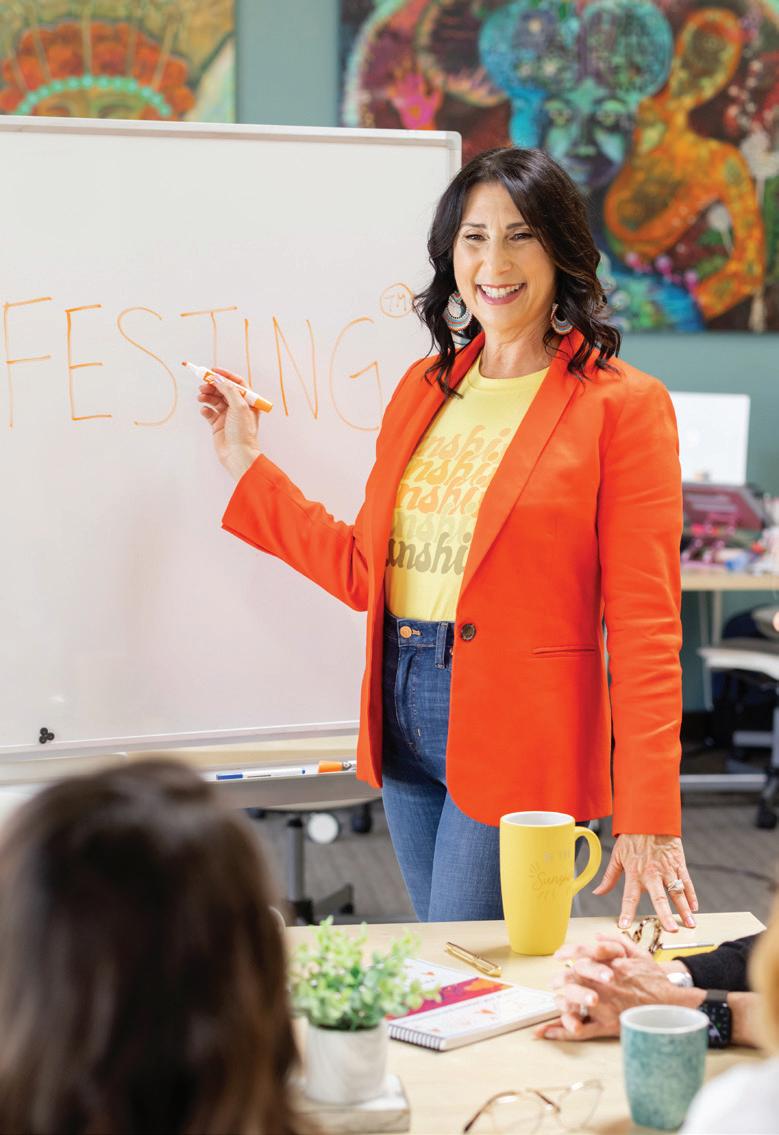
Motifesting®: The Method Behind Aligned Success
How mindset, imagination, focus, and aligned action turn vision into reality
By Roni McGuire, Former Wall Street Executive and Leadership & Business Coach
Motifesting® is my approach to bringing big visions to life by combining mindset, imagination, focus, and action.
After building my career on Wall Street and now coaching high-achieving women, I’ve seen this truth over and over again: success doesn’t come from force. It comes from clarity, alignment, and consistent movement forward.
Motifesting® isn’t about waiting for things to happen. It’s about becoming the person who creates them.
Here are five ways to start implementing it in your life and business.
M – MINDSET & MOTIVATION
Everything starts here.
Your mindset determines what you believe is possible, and your motivation determines whether you move on it. Without both, even the clearest vision will stall.
For me, this looks like daily practices that bring me back to myself. Meditation helps me quiet external noise and reconnect to what actually matters. My Motifesting® Journal and morning pages, inspired by The Artist’s Way, give me a space to process, reflect, and stay anchored in my own voice.
This is especially important as a high achiever. There are always opinions, expectations, and pressures pulling you in different directions. Mindset work allows you to stay in your lane. It keeps you connected to what’s in your heart, what’s aligned with your purpose, and what you’re actually here to create.
When your mindset is grounded, and your motivation is intrinsic, you move with clarity, not pressure.
I – IMAGINATION, CREATIVITY & VISION
optional in this process; it’s foundational.
This is where you allow yourself to think beyond your current circumstances. To explore what you truly want, not just what feels realistic or expected.
I use vision boards, writing, meditation, and visualization to bring this to life. I also ask a powerful question: How would the version of me who already has this live, think, and decide today? Then start acting from that place. This is where creativity opens up. The practices from The Artist’s Way have been incredibly powerful for this, helping remove blocks and reconnect to a more intuitive, expansive way of thinking. You’re not just imagining your future. You’re rehearsing it. You’re stepping into it. And over time, it starts to feel natural, inevitable even.
is the bridge between your vision and your reality. But not just any action, aligned action. When you’re connected to your mindset, clear on your vision, and focused on your direction, you begin to know what to do next. You recognize what feels like a full-body yes. You move toward opportunities that expand you. And just as importantly, you start to walk away from what doesn’t.
1 2 3 4 5
Before something exists in your reality, it exists in your mind. Imagination is not
F – FOCUS
Focus is where things begin to crystallize.
When you combine a strong mindset with a clear vision, you create the conditions for true focus. Not forced discipline, but a natural pull toward what matters most. This isn’t about controlling every step. In fact, it’s the opposite.
You hold a clear vision of where you’re going, your north star, but you stay open to how it unfolds. Each day, you take steps toward it. Some days they’re big, some days they’re small, and most days are somewhere in between. Not every day needs to be a ten.
What matters is forward movement. This is where flow begins to emerge.
Time moves differently. Energy is higher. You become more magnetic. The right people, ideas, and opportunities start to show up.
Focus keeps you grounded in your direction while allowing flexibility in your path.
T – TAKING ALIGNED
ACTION
This is where everything comes to life. Action
Aligned action isn’t about doing more. It’s about doing what matters. Some days, that looks like a bold move. Other days, it’s a conversation, a decision, or a small step that keeps momentum going.
The key is consistency. Staying in motion. Trusting that each step is building something bigger.
TRUST THE PROCESS (AND STAY IN MOTION)
Motifesting® isn’t linear. There will be moments of clarity and moments of uncertainty. Times when things feel like they’re moving quickly, and times when they feel slower than you’d like. Both are part of the process.
The goal isn’t perfection. It’s building traction. You don’t need to have everything figured out. You just need to keep moving forward, adjusting, refining, and staying connected to your vision.
When you do that, something powerful happens. You stop chasing outcomes and start creating them.
BUILDING BEYOND ONE INDUSTRY
Carol Gomes Entrepreneurial Journey
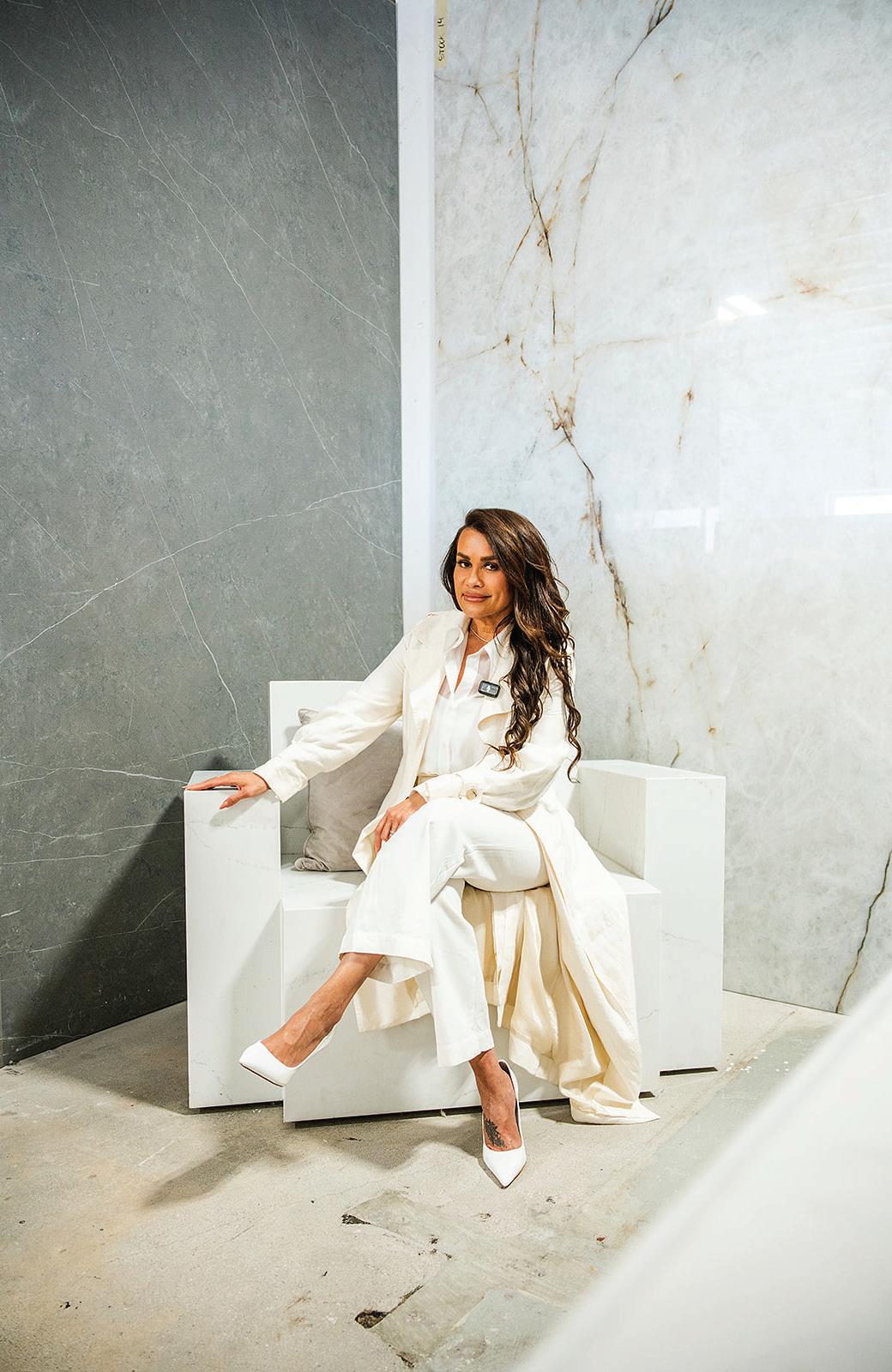
For Carol Gomes, entrepreneurship has never been only about building a business. It has always been about creating opportunities, building confidence, and growing through every stage of life.
Born in Brazil and now based in Massachusetts, Carol co-founded The Granite Place Inc. alongside her husband, Jonathan daCosta, in 2013. What started as a dream and a leap of faith became a respected family-owned stone fabrication company serving homeowners, designers,
and builders across the region.
Jonathan brought years of handson experience in fabrication and installation, while Carol focused on sales, customer relationships, and the company’s vision for growth. Together, they built a business centered not only on quality craftsmanship, but also on trust and connection with clients.
For Carol, the work has always been personal. Kitchens and homes represent more than beautiful spaces, they are where families gather, memories are made, and life happens. That perspective shaped the way she approached business from the beginning.
Over the years, entrepreneurship taught her lessons far beyond business itself. She learned resilience, leadership, patience, and the importance of continuing forward even during uncertain seasons. As a woman in business, she also discovered that confidence is built through experience, responsibility, and the willingness to keep evolving.
That mindset eventually inspired Carol to expand beyond the granite industry into beauty and community-focused work. While the industries may seem different, to her they share the same purpose: helping people feel confident, empowered, and cared for.
Balancing multiple passions and businesses has not always been easy, but Carol believes women should never feel limited to one version of themselves. A woman can lead, create, grow, and reinvent herself while still remaining grounded in her values.
Today, Carol’s story reflects a modern version of entrepreneurship, one that embraces both ambition and authenticity. She believes success is not always about staying in one lane, but about allowing yourself to evolve as your passions and purpose grow.
Her advice to other entrepreneurs is simple: trust God, believe in yourself, stay consistent, and never allow fear or outside opinions to define your future.
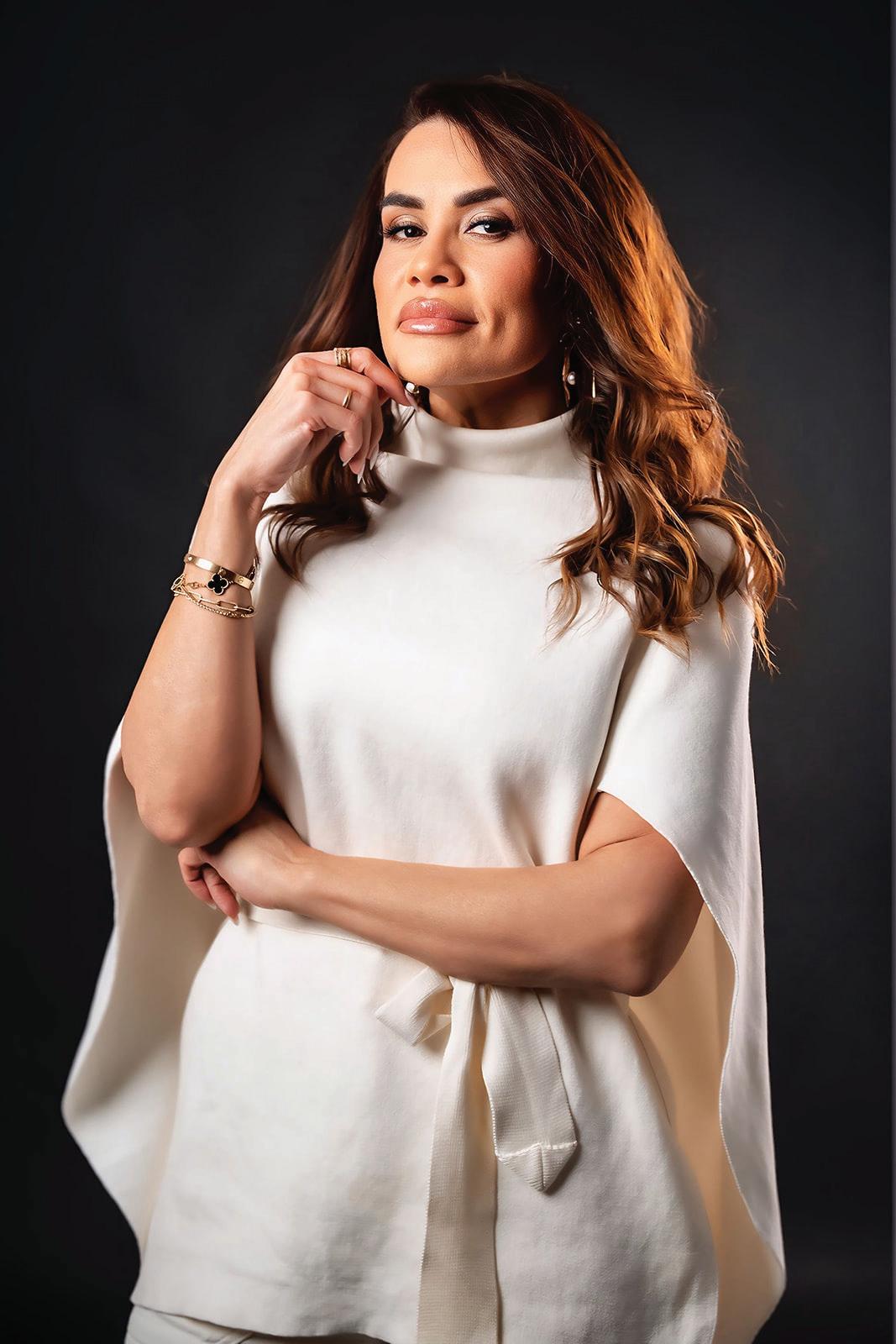
BUILDING VISUAL BRANDING VERNACULAR SYSTEMS
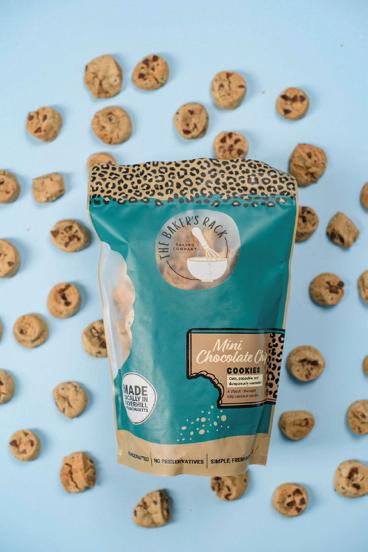

www.rizbeestudio.com @rizbeestudio
GET IN TOUCH: thegraniteplaceinc.com | IG: @carolgomes81 @thegraniteplaceinc @farmasiusa
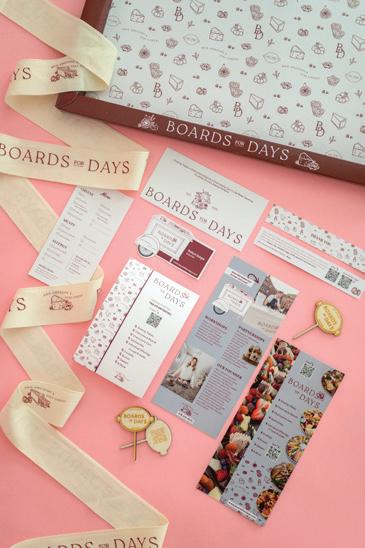

The Confidence Behind the Closet:
How Dress for Success Boston Is Empowering Women
Beyond the Workforce
Confidence can change everything.
At Dress for Success Boston, that transformation often begins with something as simple as putting on the right outfit. But behind the professional attire, styled blazers, and polished first impressions is something much deeper: restoring dignity, self worth, and hope for women rebuilding their lives and careers.
For Kim Todd, that mission has become life changing not only for the women the organization serves, but for everyone involved in the process. With more than 30 years of experience in fundraising and
that reality can feel overwhelming.
“What would you do if you had the skills for the job, but not the clothing for the interview?” Todd asks. “Not being able to nail that first impression due to financial circumstances is a huge barrier to employment.”
That’s where the mission of Dress for Success Boston begins. By providing professional clothing, styling support, mentorship, and career resources, the organization helps women walk into interviews feeling prepared, empowered, and confident. And according to Todd, confidence is often the first step toward transforming a life.
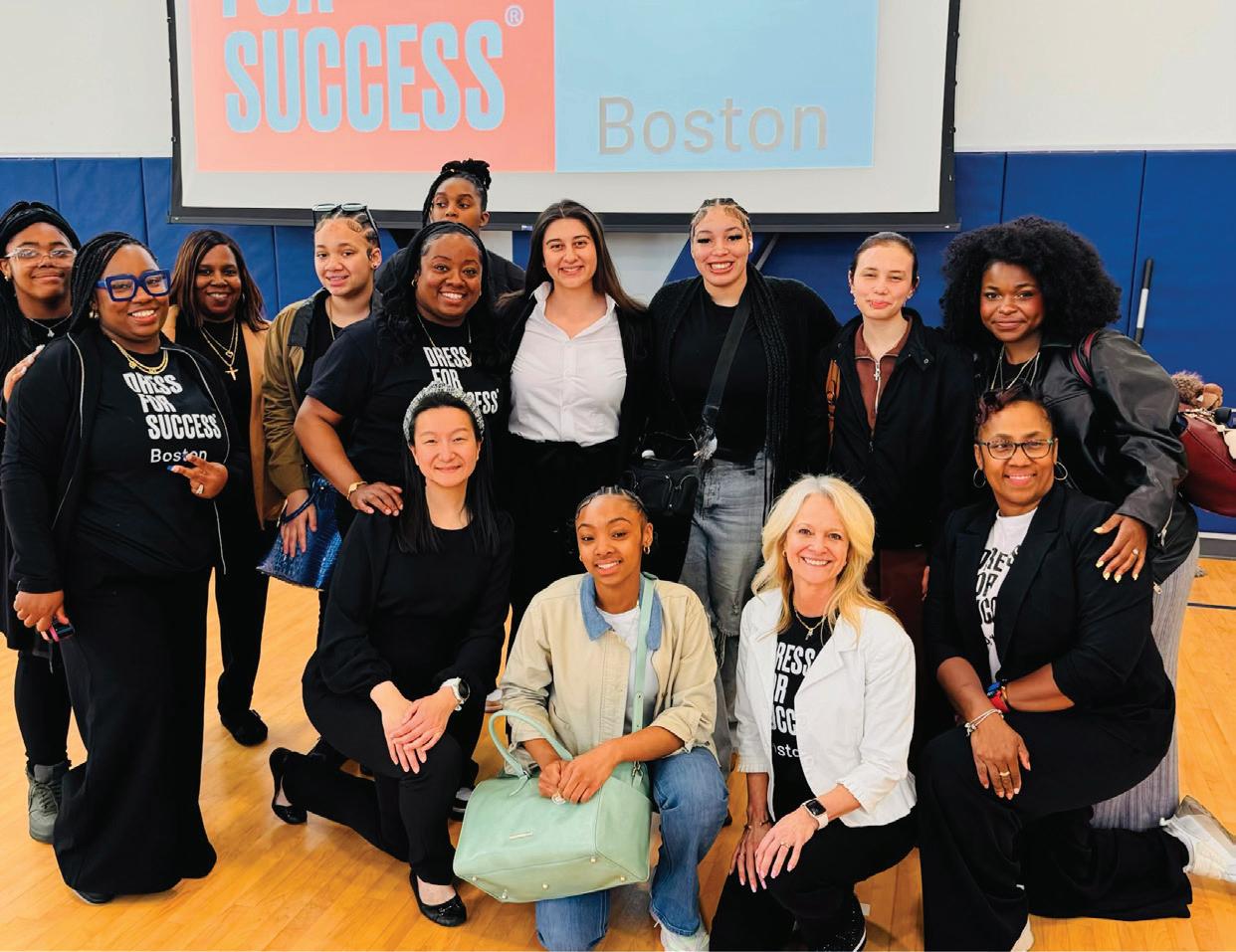
nonprofit development, Todd leads Dress for Success Boston by overseeing daily operations, strategic planning, fundraising efforts, board management, and a growing volunteer community of more than 100 people dedicated to uplifting women across Greater Boston.
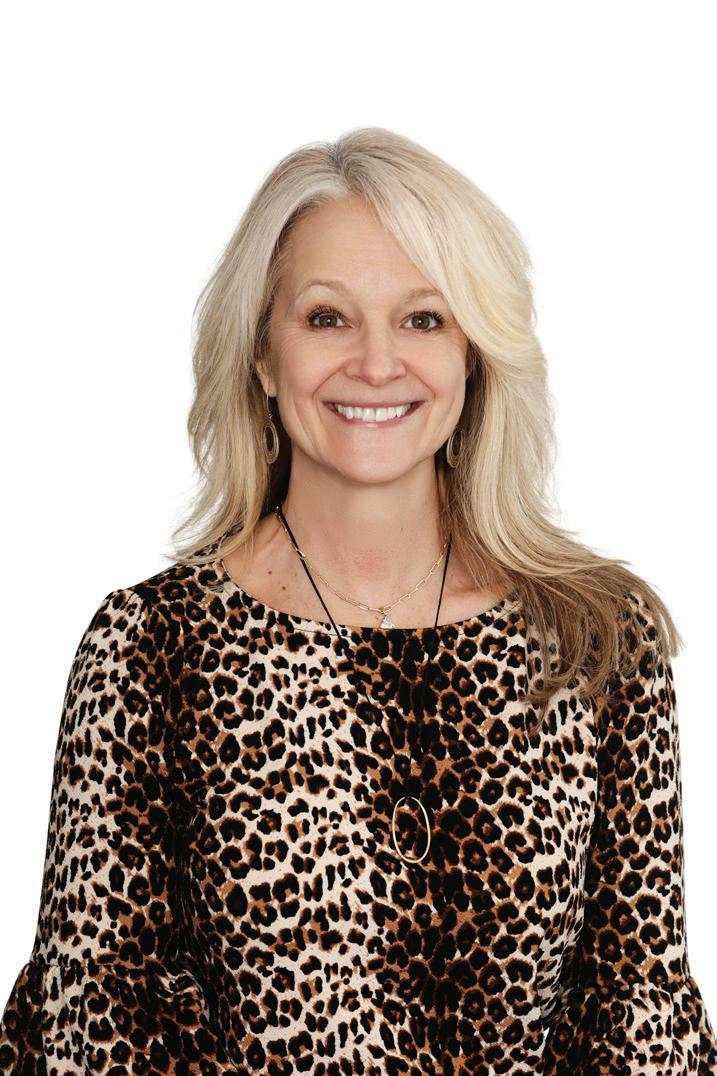
gap in ways that extend far beyond fashion. In addition to interview and workplace attire, the organization creates community through mentorship, networking opportunities, and ongoing support for women seeking employment or newly entering the workforce.
“It builds a strong sense of community,” Todd explains. “Women realize they are not alone.”
Inside the boutique, emotional breakthroughs happen every day. Women trying on outfits often cry, laugh, dance, or quietly pause in front of the mirror as they see themselves in a new light. It’s not simply about clothing. It’s about rediscovering possibility.
“You can always see in their eyes that they have renewed hope in their ability to be successful,” Todd shares.
“It’s something will never grow tired of seeing.”
For many women, rebuilding confidence is far more complicated than updating a wardrobe. Some arrive carrying emotional exhaustion, isolation, or the weight of feeling unsupported.
Many are navigating career gaps, financial struggles, motherhood, personal hardships, or major life transitions without a strong support system beside them.
7
Mistakes You’re Making with Spiritual Growth (And How to Actually Mature in Christ)
Pastor Joel N. Usher focuses on helping believers move from salvation to active discipleship.
Did you know that many believers stay busy around spiritual things yet never truly grow? That is the paradox: we have more access to Christian teaching than ever, but many still feel stagnant. Why? Because salvation is a moment, but discipleship is a lifestyle.
If you want to mature in Christ, you must move beyond good intentions and embrace purposeful growth. Here are seven common mistakes that can keep you stuck.
1. The “Someday” Trap: Procrastinating on Your Faith. Many believers keep delaying growth until life feels easier. But spiritual maturity does not begin in a perfect season. It develops in real life, right in the middle of pressure, responsibility, and uncertainty.
voice through His Word. Mature disciples do not live by hype. They live by spiritual sensitivity.
How to Mature: Learn God’s character through Scripture.
As you renew your mind, you become more confident in His direction. The deeper your roots go in the Word, the clearer your discernment becomes.
One moment in particular deeply reinforced why this work matters. A woman walked into the boutique for an appointment and was greeted warmly by the team, who took her coat and offered her coffee before she sat down. Suddenly, she began to cry.
“When we asked what was wrong, she said, ‘No one has ever been this nice to me.’”
That interaction became a reminder that empowerment is not about charity. It’s about humanity.
“There’s a misconception that programs like this are handouts,” Todd says. “But these women are strong and brave. Asking for help is not easy. We’re giving them a hand up, not a handout.”
At its core, Dress for Success Boston believes empowerment is about far more than job titles or professional success. It’s about confidence, self belief, and reminding women that they are capable of achieving more than they imagined. Their message to every woman who walks through the doors is simple: confidence changes lives, and anything is possible when you believe in yourself.
According to Forbes, first impressions are formed in just seven seconds. In that brief moment, people often make assumptions based solely on appearance. For women entering or reentering the workforce, especially those facing financial hardship, GET IN TOUCH: boston.dressforsuccess.org @dressforsuccessboston
Dress for Success Boston works to fill that
How to Mature: Start small and stay consistent. Give God the first ten minutes of your day. Read one chapter of Scripture. Pray honestly. Consistency will take you farther than bursts of inspiration.
2. Drowning in the Digital Noise. If your mind is always full of alerts, opinions, and endless scrolling, it becomes harder to hear God clearly. What fills your mind will shape your spirit.
How to Mature: Build sacred space into your day. Put down your phone before you pick up your Bible. Romans 12:2 (NKJV) says, “And do not be conformed to this world, but be transformed by the renewing of your mind...” Renewal begins with what you allow in.
3. The Lone Wolf Mistake: Attempting Isolation. Your faith is personal, but it was never meant to be private or isolated.
A disconnected believer is a vulnerable believer. We grow stronger when we walk with others who can encourage, correct, and challenge us.
How to Mature: Get connected. Join a church community, a small group, or a discipleship circle. Spiritual growth accelerates when you stop trying to do it alone.
4. Chasing External Signs Over Internal Guidance. Some believers are always waiting for a dramatic sign from God while neglecting the steady work of knowing His
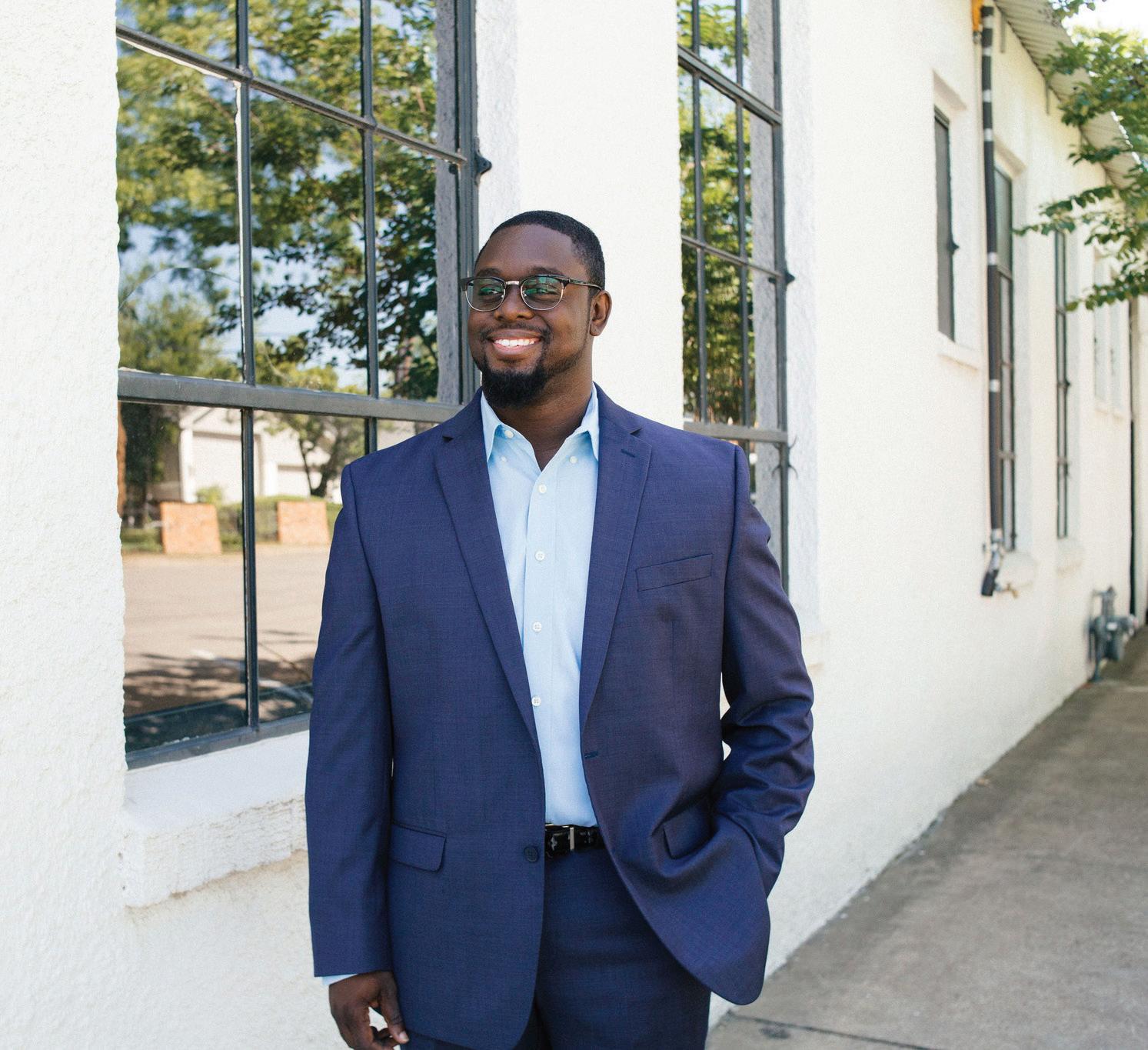
5. The Comparison Trap: Measuring Your Chapter One Against Someone Else’s Chapter Twenty. Comparison can produce pride or discouragement, but neither leads to maturity. God is not asking you to copy someone else’s walk. He is calling you to faithfully steward your own.
How to Mature: Focus on your Kingdom assignment. Stop measuring yourself against someone else’s timeline. Growth becomes healthier when your identity is rooted in Christ, not in comparison.
6. Neglecting the Bread of Life (Scriptural Malnutrition). You cannot grow on occasional inspiration alone. Sermons and devotionals can help, but they cannot replace your personal intake of Scripture.
If you are not feeding on the Word, you will struggle to develop spiritual strength.
How to Mature: Become a student of the Bible. Read it, reflect on it, and apply it.
Ask: What is God saying, and how should respond today? Truth must be practiced, not just admired.
7. The Destination Fallacy: Treating Spirituality as a Finish Line. Spiritual maturity is not a place where struggle disappears. It is a lifelong process of becoming more like Christ. Even setbacks
can become part of your development when you keep pressing forward.
How to Mature: Embrace growth as a journey. Philippians 3:12 (NKJV) says, “Not that I have already attained, or am already perfected; but I press on...” Maturity is not perfection. It is perseverance.
Your Next Steps in Kingdom Discipleship. Growth in Christ is possible, but it requires intention. That is one reason wrote 7 Keys to Kingdom Discipleship—to offer a practical, step-by-step path for believers who want to go deeper.
If you are ready to move from spiritual stagnation to spiritual development, visit https://books.by/kmppublishing.
“Go therefore and make disciples of all the nations, baptizing them in the name of the Father and of the Son and of the Holy Spirit, teaching them to observe all things that have commanded you...” (Matthew 28:19-20 NKJV)
GET
Meals You Love, Without The Cooking
Feast & Fettle gives busy families the one thing they can’t buy more of: time.
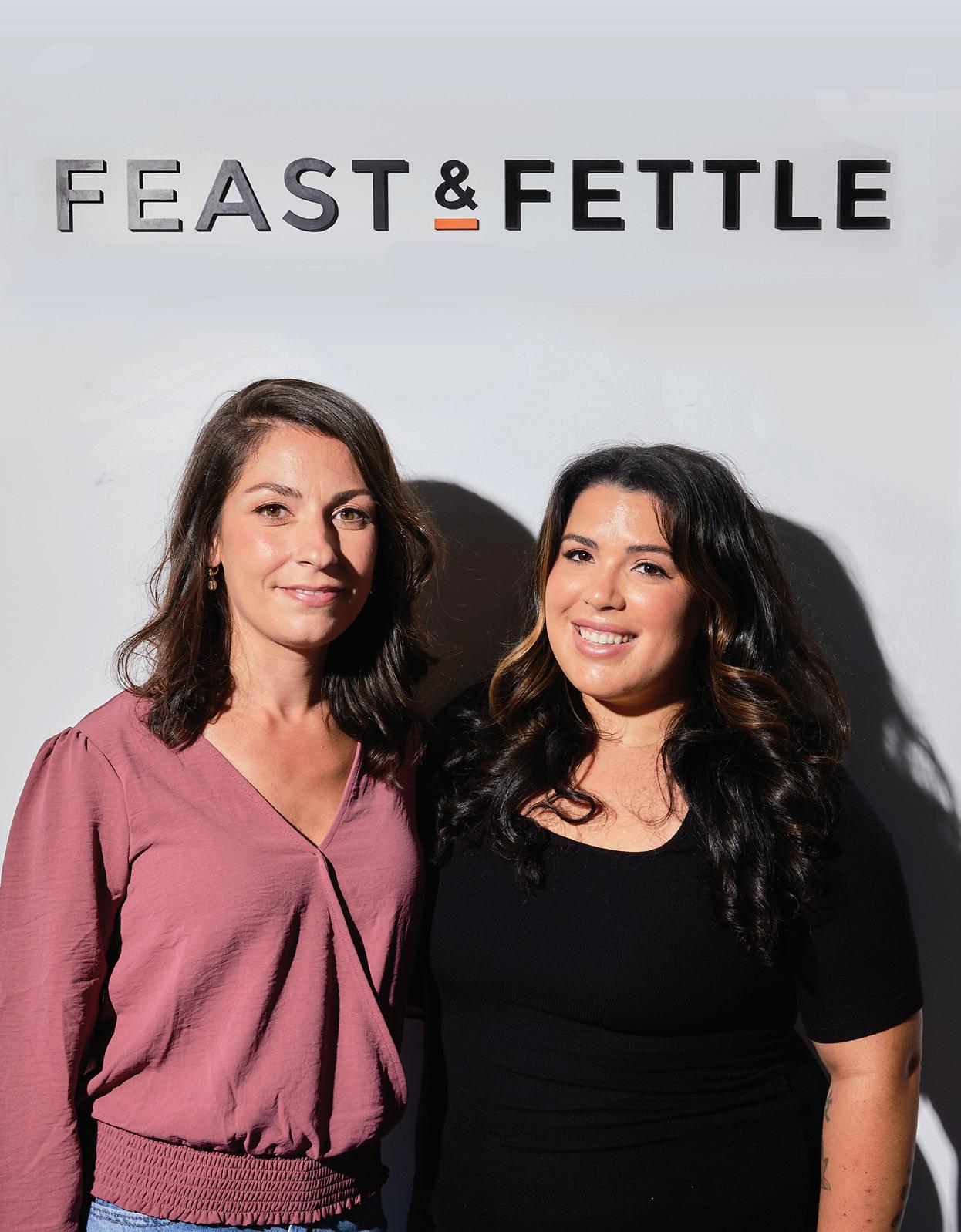
There is a version of your evening that looks a little different.
The kids are home, you are present, dinner is on the table and everyone is together. Nobody had to sacrifice the last hour of their day to make it happen. That is not a fantasy. For thousands of families across the Northeast, it is simply Tuesday night with Feast & Fettle.
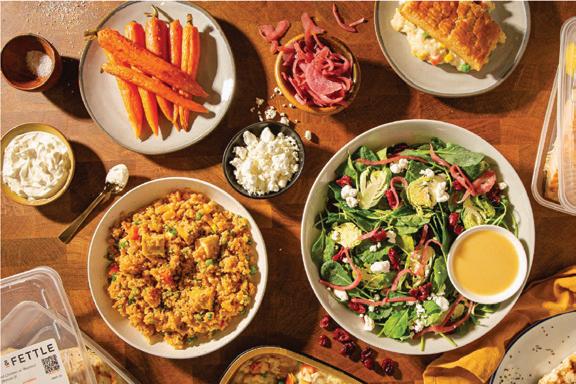


The idea was born from a problem every busy family knows well. Co-founders Maggie and Nikki saw what was happening at the dinner table, or rather, what wasn’t. Families were exhausted, schedules were impossible, and the mental load of getting a real meal on the table was quietly wearing people down. They built Feast & Fettle because they believed it didn’t have to be that way.
Modern family life is full and fast. Work doesn’t stop at five. Pickups, practices, and packed schedules fill the hours in between. And somewhere in all of it, dinner still has to happen. The planning, the shopping, the prep, the cleanup. It falls on people who are already giving so much. Something has to give, and it shouldn’t be the meal you share together.
That is where Feast & Fettle comes in. Each week, chef-crafted meals arrive at your door ready to heat, made from scratch with fresh whole ingredients and real care. No preservatives, no artificial anything, no shortcuts. Just the kind of food you would lovingly make yourself if you had a little more time in your day.
What members talk about most is not the food itself. It is what the food gives back. An hour returned to their evening. A dinner table that feels easy and unhurried. The deep exhale that comes from knowing dinner is handled. More connection, less chaos, and the quiet joy of a night that feels like yours again.
That feeling is what Feast & Fettle has been delivering to families for ten years now.
Serving the Northeast from Rhode Island to New York and down to the DMV, the brand continues to grow its community of local and regional partners, stay true to its sourcing standards, and find new ways to show up for the families who count on it week after week.
The mission has always been a simple and heartfelt one. Give families back the time and energy to do the things they love most, starting with dinner.
Feast & Fettle delivers chefcrafted meals across the Northeast. Learn more at feastandfettle.com and use code NEXTONSCENE for 50% off your first week of service.
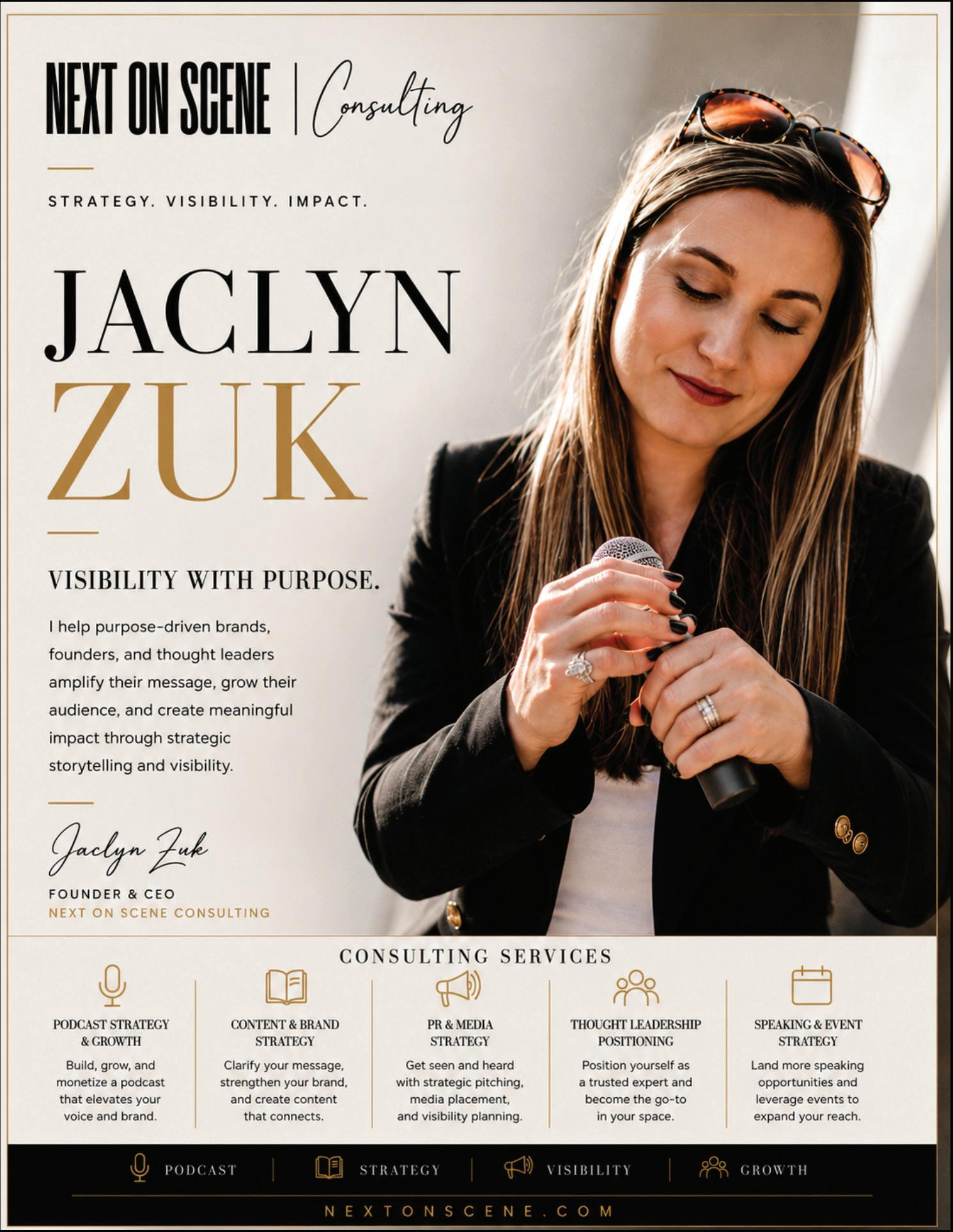
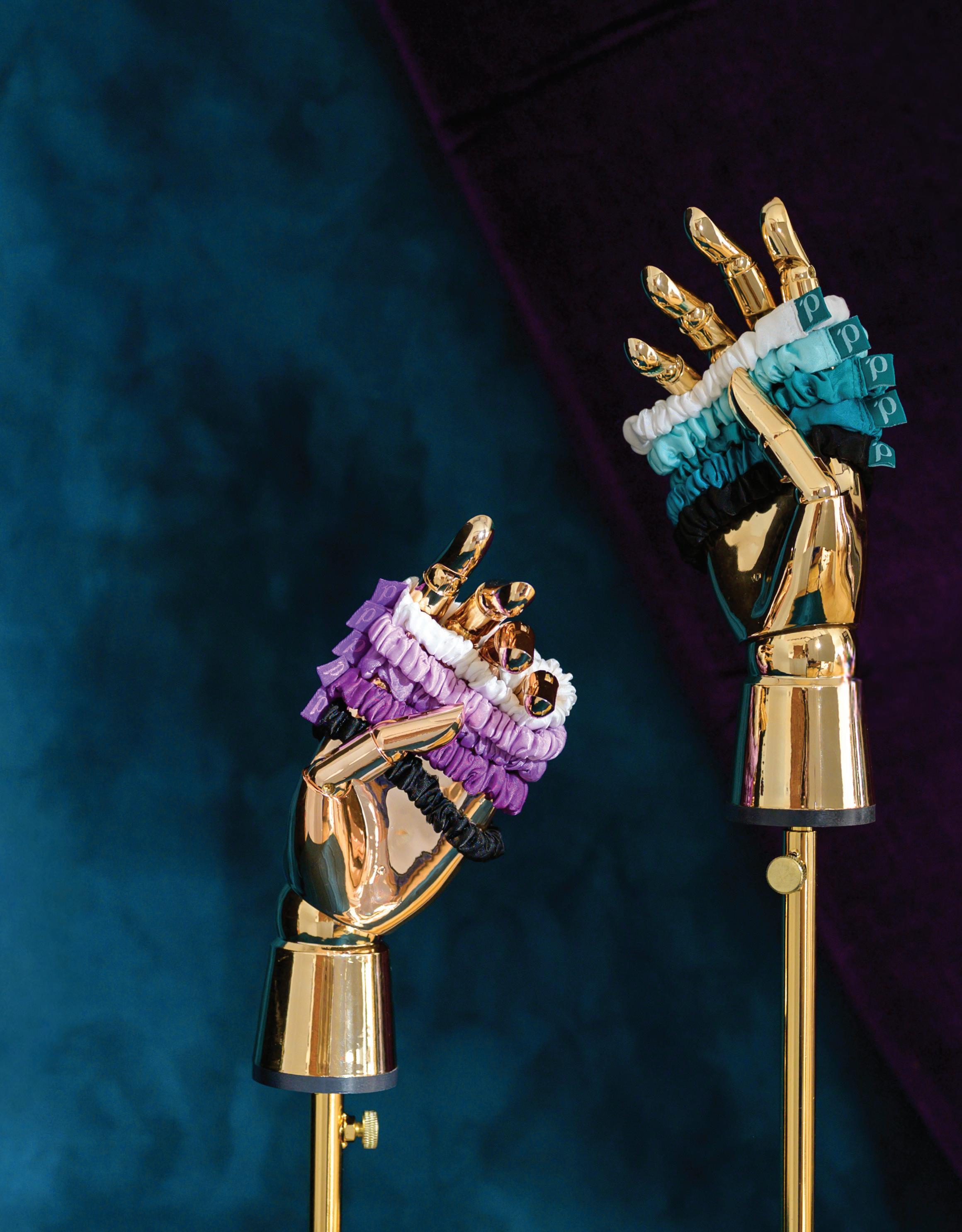
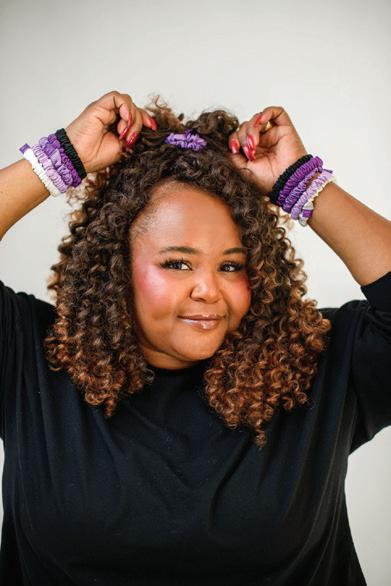

Pretties are microencapsulated with 100% essential oils.
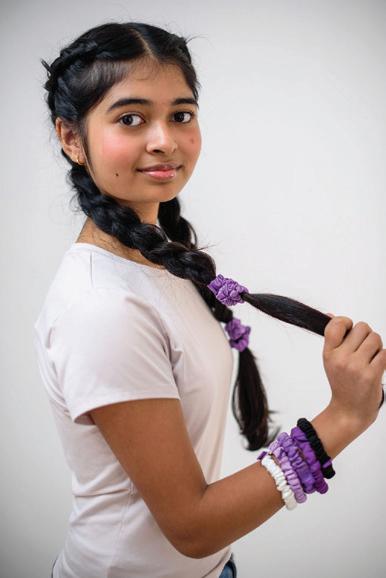

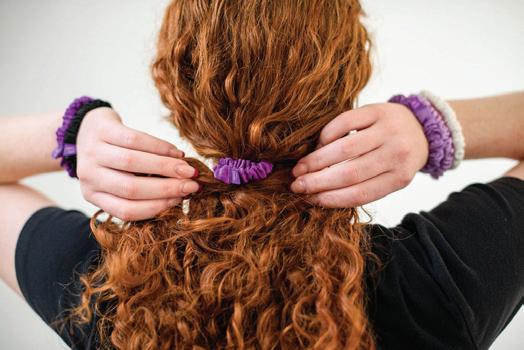

Pretties scented hair ties are beautiful, biodegradable, ethically made, and ideal for all hair types and textures. Each is handmade, handdyed and lovingly constructed of modal silk, cotton, and essential oil capsules to bring power and pause to your busy life. a li le bit of luxury for everyone.
www.theprettypretties.com