Kobakhidze Questions EU Direction in Open Letter to Leaders
Ukraine Latest: Russia Intensifies Air War as Frontline Pressure Continues and Europe Advances Tribunal Plan
Shio III Sermon Linking Family Morality and Georgia’s Demographic Decline Sparks Criticism
ection
By George Simonishvili
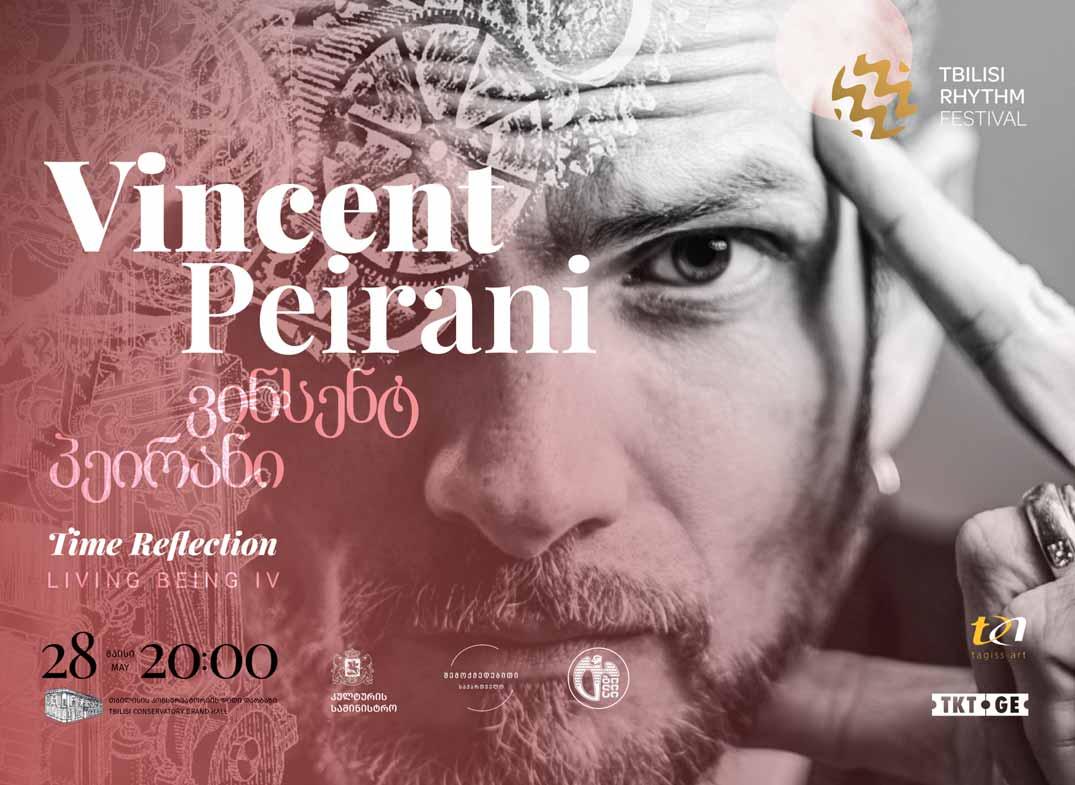
The Mystical Ray after the End of History: Irakli Parjiani and the Georgian Art of Inner Catastrophe
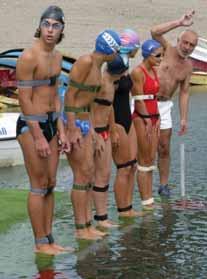
Menchurua – The Little-known Georgian Swimming Style
The signing ceremony between Georgia and Azerbaijan. Source: FB
INTERVIEW BY VAZHA TAVBERIDZE
Kobakhidze Questions EU Direction in Open Letter to Leaders
BY TEAM GT
Georgian Prime Minister Irakli Kobakhidze has addressed an open letter to European Commission President Ursula von der Leyen, European Parliament President Roberta Metsola, and European Council President António Costa, questioning the European Union’s current direction and raising concerns over the handling of a recent protest in Copenhagen.
The PM claimed that Georgia is a country founded on European values, where “human dignity, humanism, freedom and national identity are not merely declared principles, but deeply rooted values shaped over centuries.”
Kobakhidze stressed that Georgia has historically, culturally and in terms of values been part of the European space and remains a candidate country for EU membership. However, he claimed that political dialogue between Georgia and the European Union had been “unilaterally suspended” by what he referred to as the “European bureaucracy,” adding that formats of cooperation proposed by the Georgian side had repeatedly been rejected.
“We are compelled to address you publicly through an open letter,” Kobakhidze stated, reiterating that Georgia’s aspiration to join the EU is not driven by formal integration alone, but by what he described as a “civilizational choice” based on Christian morality, freedom, equality, human rights and democratic principles.
In the letter, Kobakhidze also referred to recent events in Copenhagen, Denmark, where, he claimed, participants of a peaceful demonstration were allegedly beaten with batons and attacked using police dogs.
Addressing the leaders of the EU’s key institutions, he asked how they assess the reported violence and whether such actions are compatible with democratic and human rights standards that the European Union promotes globally.
“The shocking footage, showing police brutally dispersing peaceful demonstrators, clearly revealed a disturbing reality to the international community,” the PM wrote, arguing that Europe risks moving away from its traditional image as a defender of democracy, freedom of speech and fundamental rights.
Kobakhidze further raised broader concerns about what he described as democratic backsliding, economic stagnation, migration challenges, the erosion of historical memory and national identities within Europe.
“As high-ranking officials of the European Union, where do you believe the processes associated with democratic backsliding, economic stagnation, migration crisis, erosion of historical memory, weakening of national and gender identities and the breakdown of public identity are leading Europe?” he asked.
He noted Georgia expects “a clear answer” from the European Union regarding its future direction and the outcome of what he described as “troubling processes” currently unfolding within the bloc.
Saarbrücken to End Tbilisi Friendship Over Political Situation
with representatives of Georgian civil society, effectively withdrawing Kaladze’s invitation. No official contact has reportedly taken place since then.
Georgia and Azerbaijan Sign Major 20-Year Energy Deal as Tbilisi–Baku Rail Service Returns after Six Years
BY TEAM GT
Georgia and Azerbaijan signed a major package of strategic agreements in the energy and transport sectors during Georgian Prime Minister Irakli Kobakhidze’s visit to Baku this week, including new 20-year deals on natural gas supply, electricity transit and regional railway cooperation. The agreements were finalized during high-level talks between Kobakhidze and Azerbaijani President Ilham Aliyev, where the two leaders discussed strategic partnership, regional connectivity, trade, infrastructure cooperation and the growing geopolitical importance of the South Caucasus as part of the “Middle Corridor” linking Asia and Europe.
According to the Georgian Government Administration, the sides emphasized the positive dynamics in bilateral trade and economic relations and highlighted the role of the Intergovernmental Commission for Economic Cooperation in advancing ties between the two countries. Georgia also expressed readiness to host the commission’s next session in the near future.
The leaders discussed global and regional geopolitical challenges, stressing that peace and stability are essential for the sustainable development of the wider region. They also reviewed ongoing joint infrastructure and transport projects designed to strengthen connectivity across the South Caucasus and beyond.
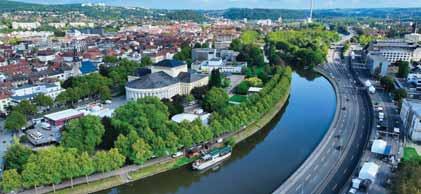
The German city of Saarbrücken, which has been twinned with Tbilisi since the Soviet era, is ending its friendship with the Georgian capital.
The decision to suspend official relations is linked to ongoing political developments in Georgia, including laws and policies that critics say restrict freedom of expression, protest, media activity and the work of non-governmental organizations.
Saarbrücken Zeitung reports that the Saarbrücken city administration cites the requirement for organizations receiving foreign funding to register as agents, calls to ban opposition parties, the suppression of demonstrations, arrests of opposition members, and legislation limiting freedom of assembly, the press and expression.
“The country is moving toward a oneparty system, a police state and dictatorship,” the publication quotes the mayor as saying.
The publication notes that Tbilisi Mayor Kakha Kaladze is not only a member of the ruling Georgian Dream party, but also its Secretary General.
“Thus, Kakha Kaladze supports and shares responsibility for these developments,” the Saarbrücken city administration states.
The city administration says it therefore decided last year to cancel an official ceremony marking the 50th anniversary of the partnership and instead meet only
The Saarbrücken mayor is calling on the city council to support the continuation of relations between residents of the two cities and maintain civil and cultural exchanges, while suspending official contacts with the current leadership of Tbilisi.
The initiative is expected to receive broad support in the city council.
Tbilisi Mayor Kakha Kaladze responded with a “letter of condolence” addressed to the German people. In the letter, he criticizes what he calls “German bureaucracy” and claims it is subservient to the “Deep State.” He also describes Germany as facing major social, economic and demographic challenges.
Saarbrücken is the second European city to end its friendship with Tbilisi.
The French city of Nantes suspended its partnership in June 2025, also citing political developments and concerns over violence against protesters and dismissals of municipal staff with differing political views.
The Tbilisi–Saarbrücken partnership, signed in 1975, was the first official twinning between a West German city and a city in the Soviet Union. The Saarbrücken name remains represented in central Tbilisi near the Dry Bridge, marking the long-standing relationship between the two cities. The German Embassy notes that since Georgia’s independence, the two cities have maintained regular exchanges, including visits, cultural cooperation, and municipal partnerships.
Following the meeting, Georgia and Azerbaijan signed a comprehensive package of agreements in the energy and transport sectors. The documents were signed by Georgian Economy and Sustainable Development Minister Mariam Kvrivishvili, Azerbaijani Economy Minister Mikail Jabbarov and Azerbaijani Energy Minister Parviz Shahbazov.
One of the most significant agreements is a new 20-year intergovernmental deal on electricity supply and transit between the two countries. The package also includes a 20-year extension of the 2003 agreement on the purchase and sale of Azerbaijani natural gas to Georgia, includ-
ing guarantees related to the security of Georgia’s social gas supplies.
Georgia’s Ministry of Economy and Sustainable Development said the agreements followed several months of negotiations between the two governments and described the package as strategically important for strengthening Georgia’s energy security and further developing the regional energy corridor.
The ministry noted that the original 2003 gas purchase and sale agreement had expired, making the new long-term extension particularly important for continued cooperation within the South Caucasus Pipeline project.
During the visit, the sides also signed a new agreement related to the Georgian section of the Baku–Supsa Pipeline. Georgian officials say the agreement will allow the resumption of oil transit from Central Asia to Europe through Georgia and significantly increase state budget revenues.
Transport cooperation was another major focus of the visit. A protocol of the bilateral coordination council was signed confirming that the upgraded section of the Baku–Tbilisi–Kars Railway will enter full operation. The document was signed by Kvrivishvili and Azerbaijani Minister of Digital Development and Transport Rashad Nabiyev.
The protocol also confirmed that daily passenger rail service between Tbilisi and Baku will resume on May 26, ending a six-year suspension that began during the COVID-19 pandemic and Azerbaijan’s prolonged land border closures.
The overnight Tbilisi–Baku train has historically been one of the South Caucasus’ most important rail links, connecting the two capitals in approximately 12 hours and serving tourists, traders and business travelers alike. Officials in both countries say the restoration of passenger rail service is expected to boost tourism, improve regional mobility and deepen economic integration across the South Caucasus.
The reopening is also symbolically significant, marking one of the first major restorations of cross-border passenger land transport between the neighboring countries since 2020.
The railway reopening comes amid broader efforts to expand the role of the Middle Corridor, a trade route connect-
ing China and Central Asia with Europe through the South Caucasus. Opened in 2017, the 826-kilometre Baku–Tbilisi–Kars railway forms part of a modern Silk Road corridor intended to strengthen cargo transit between Asia and Europe while bypassing Russia.
In recent years, large-scale modernization works have been carried out on the Georgian section of the BTK line, particularly between Akhalkalaki and the Turkish border. The project included extensive rehabilitation of railway infrastructure, track renewal, signaling upgrades and the expansion of freighthandling facilities.
Georgian Railway officials say the modernization is designed to significantly increase the corridor’s throughput capacity as cargo volumes along the Middle Corridor continue to grow. Preparations have also been made for renewed international passenger operations. Azerbaijan Railways previously purchased modern Stadler Rail sleeper carriages for cross-border services. The trains include upgraded two-berth and four-berth compartments, air conditioning and modern onboard facilities. They are also equipped with adjustable wheelset technology that automatically adapts to different rail gauges used across the region, helping reduce delays during border crossings.
Although official ticket prices for the restored route have not yet been announced, previous fares generally ranged from approximately 35–45 GEL for second-class sleeper compartments and 80–120 GEL for first-class cabins. Tickets are expected to become available through the booking platforms of Georgian Railway and Azerbaijan Railways, as well as at railway station ticket offices in Tbilisi and Baku.
Kvrivishvili was accompanied during the visit by Deputy Economy Minister Tamar Ioseliani, as well as senior officials from the Georgian Oil and Gas Corporation, Georgian State Electrosystem and ESCO.
The signing ceremony was attended by both Kobakhidze and Aliyev, underscoring the growing strategic importance of Georgian-Azerbaijani cooperation in energy, transport and regional connectivity.
Guria to Host EU-supported ‘GREEN Guria’ Festival
BY LANA KOKAIA
Afestival promoting tourism, local businesses and regional products in Guria will be held on May 27 at the ‘Tenitea’ production space as part of the EU-funded ‘GREEN Guria’ project.
The event will bring together local farmers, entrepreneurs and tourism representatives, featuring exhibitions and sales of regional products, tastings, workshops and culinary masterclasses. The program will also include discussions on regional development and the
A new train in Azerbaijan.
Source: ADY
BY LANA KOKAIA
Saarbrücken. Photo: zeit.de
impact of the ‘GREEN Guria’ initiative on local communities and businesses. The festival is scheduled to begin at 14:00 and will be hosted at the factory of one of the project’s beneficiaries.
The ‘GREEN Guria’ project is funded by the European Union and implemented by CENN in partnership with the Young Pedagogues’ Union, the Institute of Democracy, and the Keda Local Action Group.
Gomismta, Guria. Photo: Lana Kokaia
Ukraine Latest: Russia Intensifies Air War as Frontline Pressure Continues and Europe Advances Tribunal Plan
COMPILED BY ANA DUMBADZE
Russia’s war against Ukraine entered another week marked by intense longrange strikes, grinding frontline battles, and renewed diplomatic efforts to increase pressure on Moscow. The heaviest fighting remained concentrated in eastern Ukraine, where Russian forces continued offensive operations around Kupiansk, Toretsk, Pokrovsk and in the wider Donetsk direction, while Ukraine sought to slow the advance through defensive operations and increasingly effective mid-range drone strikes against Russian military logistics, air defenses and energy infrastructure. Institute for the Study of War reported that Russia’s strategic objective remains the capture of the entirety of Donetsk Oblast and further advances toward Dnipropetrovsk Oblast.
Over the past week, the battlefield picture remained largely one of pressure rather than decisive territorial breakthrough. Russian forces continued probing and assault operations along multiple sectors, including near Kupiansk, Toretsk and Pokrovsk, while Ukrainian forces worked to contain Russian advances and disrupt supply routes behind the front.
ISW reported that Russian forces had recently advanced near Kupiansk, Toretsk and Pokrovsk, but Moscow’s broader campaign continued to face heavy costs and difficulties in converting local gains into operational success.
The most intense combat continued in the Donetsk region, where Russia has concentrated significant manpower and firepower in an effort to push deeper westward. Pokrovsk and nearby areas remained central to the fighting, as did the broader line toward Kostiantynivka
and other Ukrainian-held positions. At the same time, Ukraine’s ability to strike Russian assets behind the front has become an increasingly important factor. Reuters reported that Ukrainian mid-range drone strikes, reaching roughly 30 to 180 kilometers behind Russian lines, have targeted air defenses, logistics, communications and major military vehicles, complicating Russia’s operations and forcing it to disperse assets.
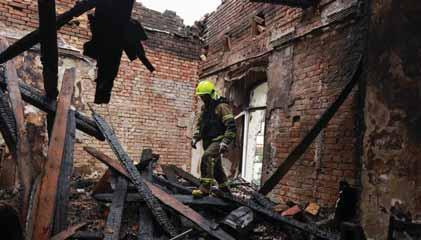
The air war also escalated sharply. On May 18, Russia launched one of the week’s largest attacks, striking Odesa and Dnipro with missiles and drones. Ukrainian officials reported that residential buildings, a university and infrastructure were damaged, while at least 22 people were injured in Dnipro, including children. Odesa also came under attack, with damage reported to residential buildings, a school, a kindergarten and historic architecture. Ukraine’s Air Force said Russia launched more than 500 drones and 22 missiles in the broader wave of attacks. Russia also continued targeting Ukraine’s energy and port infrastructure.
On May 19, a Russian air attack damaged port facilities in Izmail, Ukraine’s largest Danube port and a key logistics hub in the Odesa region. Local authorities said there were no casualties or major destruction in that strike, but the attack underscored Moscow’s continued focus on Ukraine’s export routes and economic infrastructure. Russian drones also struck Naftogaz infrastructure in the Dnipropetrovsk region, destroying a filling station and injuring two employees.
The Black Sea also saw renewed danger for civilian shipping. Ukrainian authorities said Russian drones hit several foreign-flagged civilian vessels approaching Ukrainian ports, including a Chinese-owned cargo ship sailing under the Marshall Islands flag. Other vessels sailing under the flags of Guinea-Bissau
and Panama were also reportedly hit, though no casualties were reported. The attacks again highlighted the vulnerability of Ukraine’s maritime trade routes and the wider risks Russia’s strike campaign poses beyond Ukrainian territory. Ukraine, meanwhile, continued its own long-range and mid-range drone campaign against targets inside Russia. Russian authorities reported Ukrainian drone attacks aimed at Moscow, Kursk, Rostov, Belgorod and Yaroslavl regions. In Kursk, Russian officials said one woman was killed and two people were injured, while in Belgorod, two civilians were reported killed in Ukrainian drone strikes. In Yaroslavl, an “industrial object” was damaged; the region contains oil-refining infrastructure. Ukrainian President Volodymyr Zelensky said Russia’s refining capacity had dropped by 10% over recent months and that oil wells had been shut down, presenting Ukraine’s energy strikes as part of a broader effort to weaken Russia’s ability to finance and sustain the war.
The situation around the Russianoccupied Zaporizhzhia nuclear power
plant remained a serious concern. The head of Russia’s state nuclear corporation Rosatom warned that the situation at the plant was approaching a “point of no return,” alleging intensified Ukrainian attacks. The plant is not generating electricity, but its reactors and nuclear fuel still require maintenance and cooling. Both Russia and Ukraine have repeatedly accused each other of endangering nuclear safety at the facility, which has been under Russian control since the early stages of the full-scale invasion.
Diplomatically, the most significant development of the week came from the Council of Europe. At a meeting of foreign ministers in Chis inau, 36 countries and the European Union expressed their intention to join a new Enlarged Partial Agreement establishing the management structure for a Special Tribunal for the Crime of Aggression against Ukraine.
The tribunal is intended to prosecute those primarily responsible for launching Russia’s full-scale invasion, filling a legal gap left by the International Criminal Court’s limited jurisdiction over the crime of aggression.
The Netherlands has already undertaken preparatory work to host the initial phase of the tribunal in The Hague, a city closely associated with international justice. Ukrainian Foreign Minister Andrii Sybiha welcomed the move as a historic step toward accountability, saying the moral foundation of Europe and the world would only be restored when the crime of aggression against Ukraine is punished. The initiative has drawn comparisons with the Nuremberg trials, though legal experts note that prosecuting Russia’s sitting leadership would face practical and jurisdictional limits while senior officials remain in office.
Military aid and international support remained central to Ukraine’s ability to hold the line. In Washington, however, debate continued over the future of US assistance. Republican Representative Brian Mast said he did not expect another large US supplemental package for Ukraine, while indicating that Washington would continue intelligence support and allow weapons sales and transfers. The comments reflected a broader shift toward expecting Europe to carry a greater share of the burden, even as Ukraine continues to depend on Western air defense, ammunition, drones and long-range capabilities.
European support continued both politically and militarily. France invited European countries involved in the “coalition of the willing” for Ukraine to take part in Bastille Day events, presenting the move as part of a broader “European strategic awakening.” The coalition, led by France and the United Kingdom, is focused on security guarantees for Ukraine and possible post-ceasefire arrangements. Around 25 countries have reportedly pledged contributions to a potential multinational force, although such plans remain dependent on a ceasefire and face strong opposition from Moscow.
May 18: the aftermath of the huge wave of Russian drone strikes. Source: Reuters
Shio III Sermon Linking Family Morality and Georgia’s Demographic Decline Sparks Criticism
BY TEAM GT
At Tbilisi’s Holy Trinity Cathedral, the atmosphere was familiar: a packed congregation, the echo of hymns under the vast dome, and a sermon that, this time, quickly moved from spiritual reflection into one of Georgia’s most sensitive national debates.
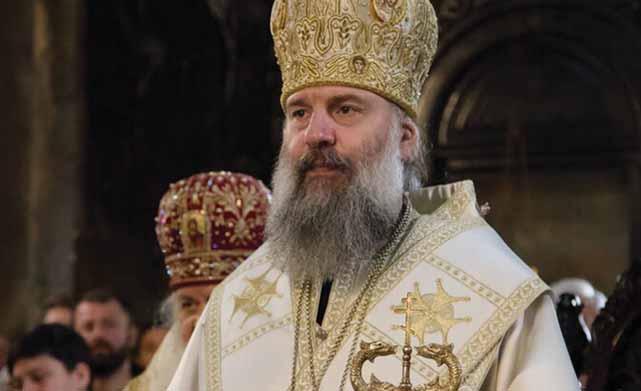
The Catholicos-Patriarch of All Georgia, Shio III, speaking to worshippers gathered at Holy Trinity Cathedral of Tbilisi, focused on family life, morality, and what he described as the country’s demographic challenges.
In one of the most striking parts of his sermon, he said that families in which a “serious sin,” such as abortion, is present cannot build lasting happiness. He quoted a passage rooted in Biblical imagery, saying: “the blood of the slain cries out to God for vengeance,” using it to underline his belief that moral choices within a family shape its future in a fundamental way.
He also spoke about family size in very practical terms. According to him, families where children are born every two or three years tend to experience more happiness and stability, and he argued that while raising children can be especially difficult up to the third child, those challenges become easier to manage as the family grows larger.
But the sermon also shifted into a broader national concern: demographics. Georgia today has a population of roughly 3.7 million people, and like many countries in the region, it has been deal-
ing with a long-term decline in birth rates alongside steady emigration. Fertility rates have remained below the replacement level for years, meaning the population is not naturally replacing itself without migration.
Against that backdrop, Shio III warned that if the demographic situation continues to worsen, and if families become smaller, the country could face serious consequences in the future. He framed this in strongly cultural terms, suggesting that failing to strengthen family life could lead to a situation where “other peoples” settle in Georgia, describing them as groups who, in his words, “love children, do not avoid having children, and protect their religion.”
The comments sparked immediate reaction in political circles. Georgia’s fifth president, Salome Zurabishvili, responded publicly on social media, expressing concern about the tone of the remarks. She questioned the idea that families facing abortion-related grief or decisions could be described as “doomed,” and asked whether such language leaves room for compassion, forgiveness, or the idea of salvation that is central to Christian teaching.
“Is such a family doomed? Such merciless words, such a harsh sentence … that leaves no hope, neither in God’s immense love, nor in human salvation through faith???!!!” Zurabishvili wrote on social media.
According to JamNews, reproductive health specialist Eka Kvirkvelia also criticized the Georgian Patriarch’s comments on abortion, arguing that abortion rates are reduced most effectively not through bans, but through comprehensive sex education, access to contracep-
tion, stronger social support and respect for women’s rights.
Kvirkvelia said public debate in Georgia is often dominated by emotional, religious and political polarization, while ignoring key issues such as the lack of sexual education, the high cost and limited availability of contraception, domestic and sexual violence, teenage pregnancy and women’s economic insecurity.
“A woman’s body should not be treated as a demographic resource for the state, property of the Church or a collective
social project,” she told JamNews, warning that throughout history, authoritarian systems have often attempted to control women’s reproductive rights in the name of boosting birth rates, protecting tradition or “saving the nation.” She also noted that abortion remains legal in Georgia up to 12 weeks of pregnancy at a woman’s request, with certain medical and social exceptions permitting later access, although significant social stigma around the issue persists. What makes this moment stand out is
not just the sermon itself, but how it reflects the bigger conversation already happening in Georgia. The Orthodox Church remains one of the country’s most influential institutions, while demographic decline, low birth rates, migration, and an ageing population, is increasingly seen as a long-term national challenge. Between those two realities sits a public debate that is both personal and political: what family means, and what kind of future the country is heading toward.
Parents of Children with Duchenne Muscular Dystrophy Meet Patriarch as Pressure Grows on Government over Treatment Funding
BY TEAM GT
As families continue a monthlong protest outside the government administration building, parents of children with Duchenne muscular dystrophy met with the CatholicosPatriarch of All Georgia, Shio III, in a bid to secure support for state funding of costly medications for the rare genetic disease.
The meeting took place at the Georgian Patriarchate and, according to parent Tamar Gogaladze, was arranged unexpectedly. Four parents participated in the discussions.
“It is still difficult to predict the outcome, but we think it will go in favor of
the children. We do not have time. We want to believe that the Patriarch will make a decision for the benefit of our children and that we will leave this meeting happy,” Gogaladze said.
Following the talks, parents said a working group on Duchenne muscular dystrophy treatment would be established within the Patriarchate. Parent Kakha Tsikarishvili said the group would include parents, medical specialists and representatives of the Patriarchate, and would work on rebuilding communication between families and the government.
“This will be a tripartite meeting between parents, representatives of the Patriarchate and specialists, where we will agree on further steps, then there will be communication with the government,” Tsikarishvili said.
He added that families used the meet-
ing to highlight the situation of critically ill patients who, they say, are not receiving sufficient support from either the state or the healthcare system. Tsikarishvili also welcomed the launch of a free research program, noting that clinics had already started contacting families, but said serious concerns remain for patients who lose support after turning 18.
“We should have a direct dialogue with the government, so that we do not have to make unilateral statements,” he added. Parents of children with Duchenne muscular dystrophy have been spending nights outdoors near the government administration for almost a month, demanding state funding for medications they say are already approved and used in the United States and Europe. Families argue the government’s hesitation is
largely tied to the high cost of treatment.
The Georgian Ministry of Health, however, says there are still unresolved questions regarding the safety and effectiveness of the requested medicines, stressing that long-term clinical studies have not yet been completed and that there is currently no cure for Duchenne muscular dystrophy.
Health Minister Mikheil Sarjveladze said decisions on treatment funding must be based on scientific evidence rather than emotion alone.
“This is not an area where decisions should be made based solely on emotions. Scientific evidence is essential and critically important; otherwise, the risk of making mistakes is high,” Sarjveladze said.
Speaking from the World Health Assembly in Geneva, the minister said he had held meetings with officials from Bel-
gium, Poland and international partner organizations to discuss access to medications for rare diseases and the experiences of other countries dealing with Duchenne muscular dystrophy treatments.
Sarjveladze said that even countries with advanced healthcare systems are still seeking definitive answers about the medications.
“Absolutely everyone is in the process of searching,” he stated, adding that Georgia is also waiting for more concrete evidence before making final decisions.
Prime Minister Irakli Kobakhidze also addressed the issue, saying the government must balance compassion with responsibility toward taxpayers. He said the estimated 50–60 million GEL cost under discussion involves public funds and therefore requires careful consideration.
“The easiest thing for us would be to take this 50 million and spend it: that would be the simplest and most politically advantageous decision. But there is another side: responsibility toward the people to spend budget funds rationally,” Kobakhidze said.
He also questioned whether the spending would produce “real results” or simply benefit what he described as a “pharmaceutical mafia,” while emphasizing that the government remains open to discussions with all stakeholders, including the Church and the Patriarchate.
“We are ready to talk with everyone, first of all with the Patriarch and the Church on all issues, including this one. We have a specific position today, but if someone convinces us otherwise, everything is possible,” the Prime Minister stated.
Duchenne muscular dystrophy is a rare inherited disorder that causes progressive muscle degeneration, often leading to loss of mobility and severe complications affecting the heart and lungs.
Patriarch Shio. Source: Georgian Church
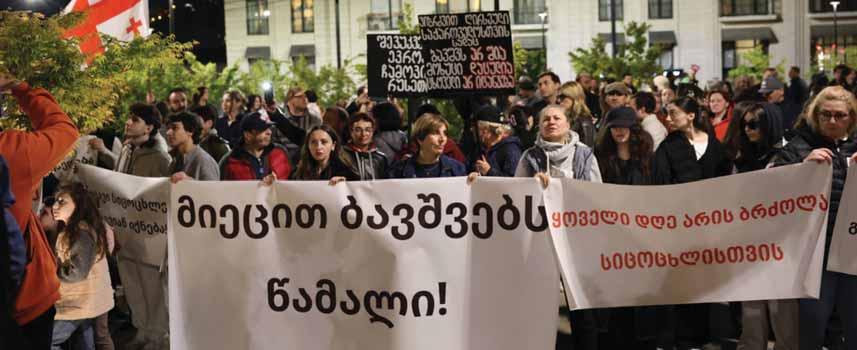
A protest in support of Duchenne patients. Source: FB
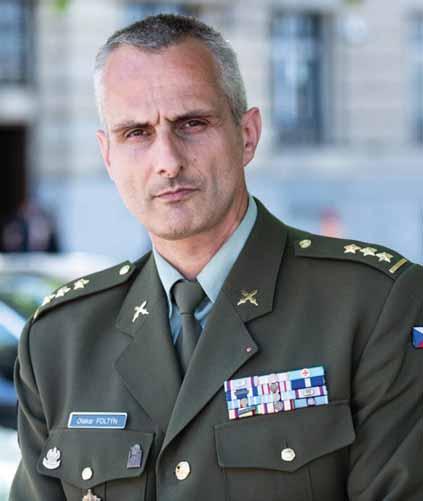
“They use Russian soldiers like cattle” – Interview with Col. Otakar Foltýn
Continued from page 1
LET’S LOOK AT THE CURRENT STALEMATE ON THE UKRAINIAN FRONT. WHAT IS THE SITUATION LIKE AT THE MOMENT, AND WHO HOLDS THE INITIATIVE?
The current situation in Ukraine appears to be much better than at any point over the previous two years. In the current operational environment, it is no longer so much about the number of soldiers, but rather about innovation and technology.
At this moment, it seems that Ukraine has imposed its own game plan on the enemy, and the battlefield is now governed by drones. The front itself is very deep: more than 15, perhaps even 20 kilometers deep.
And this means that whichever side is better at innovation, and especially at drone production, has the advantage. At the moment, it is quite obvious that Ukraine has managed to prevail in that regard. The Russians are not able to move forward effectively.
And when they do move forward, on the scale of hundreds of meters, they pay an enormous price. One square kilometer conquered by the Russians costs them 200 or 300 soldiers. There is no other army in Europe that would be either capable of, or willing to, pay such a horrific price for every square kilometer.
Over the past five months, Ukraine has been able to inflict more than 35,000 casualties every month. That means Russian recruitment is now slower than the number of Russian soldiers being killed or wounded on the battlefield. So, at this moment, Ukraine is winning.
UKRAINE APPEARS TO HAVE THE EDGE WHEN IT COMES TO INNOVATION AND ADAPTABILITY, BUT HOW WELL CAN RUSSIA LEARN AND REPLICATE WHAT UKRAINE IS DOING? AND CONVERSELY, CAN UKRAINE REALISTICALLY MATCH THE SCALE OF RUSSIA’S INDUSTRIAL OUTPUT?
First of all, it is not really up to the Russians. It is much more dependent on Chinese support. While Ukraine is supported by the Europeans, Russia is supported by China. It is obvious that Russian industry is heavily dependent on Chinese assistance. More than 80 percent of sophisticated weapon systems produced by Russia rely on Chinese support. So, at this moment, it is not really about the strength of Russian industry itself. As for innovation and adaptation, like in any other war, this is about the socalled Red Queen effect. The Red Queen effect means that whenever one side invents something new or evolves, the
enemy immediately tries to copy it. Every innovation is eventually replicated by the other side, and it becomes a neverending process.
Of course, the Russians are trying to copy every innovation coming from the Ukrainian side, and Ukraine is doing the same. But the Russians are doing it in a less effective way. The problem is that Russia operates within an authoritarian system, and any authoritarian system is inherently hostile to innovation, experimentation, and thinking outside the box.
So in the long term, the Russians are forced to operate in an environment that is fundamentally unfriendly to people trying to find new solutions. Of course, they are not stupid. They are trying.
But, as I mentioned, in the long-term perspective they will lose this race, because any authoritarian system, like the one created by Vladimir Putin, is simply less effective when it comes to innovation.
OVER THE PAST FEW MONTHS, WE’VE BEEN HEARING MORE ABOUT UKRAINIAN TACTICAL SUCCESSES. HOW SIGNIFICANT HAVE THESE ACHIEVEMENTS ACTUALLY BEEN, AND WHAT PRACTICAL IMPACT HAVE THEY HAD ON THE BATTLEFIELD?
The main Ukrainian strategy is actually quite clear: they are exchanging small pieces of territory for Russian attrition.
The Ukrainian army is trying to spare the lives of its soldiers, and in exchange for relatively small amounts of territory, it is forcing Russia to pay an enormous price.
The Russian army has a very particular way of using its soldiers. They use Russian soldiers like cattle. Nothing else comes to mind. It is a brutal approach, paid for in blood.
And when we see that Ukraine is sometimes losing one or two square kilometers in a day, one has to keep in mind that if this is the pace at which the Russians continue advancing, it would take them another 30 years to conquer the rest of the Donbas. It is completely ineffective.
And war is not only about territory. War is also about the enemy’s ability to survive a war of attrition. Russia is losing five, sometimes seven times more soldiers than Ukraine.
AND THERE HAVE BEEN QUITE A FEW CASES WHERE UKRAINE GIVES UP TERRITORY IN EXCHANGE FOR INFLICTING LOSSES ON THE RUSSIAN MILITARY, ONLY TO LATER RECAPTURE THAT SAME TERRITORY BECAUSE THE RUSSIANS ARE NO LONGER ABLE TO HOLD IT.
PRESIDENT VOLODYMYR ZELENSKYY RECENTLY SPOKE ABOUT A FULLY ROBOTIC ASSAULT CONDUCTED BY THE UKRAINIAN ARMY. IS THIS GENUINELY A GLIMPSE INTO THE FUTURE OF WARFARE?
AND IF SO, HOW FAR AWAY IS THAT FUTURE?
Some journalists have tried to compare the future of warfare to the American film The Terminator. In other words, a battlefield full of machines where humans are hunted by machines. While simplistic, it is not actually a bad comparison for explaining what is happening right now. Of course, we are not at that point yet. Machines are not independently thinking.
But even though they are still controlled by humans, it is already almost impossible to move across the battlefield without being spotted by the enemy. And this clearly gives an advantage to defenders. This technological transformation benefits defenders much more than attackers.
leadership appears to believe that this war of attrition could ultimately end with the internal collapse of Russia’s ability to logistically sustain its army. Or perhaps with the political collapse of the Russian regime itself - or at least the weakening of Vladimir Putin’s ability to centrally control the regions and the wider system.
So the current Ukrainian strategy appears to be focused on bleeding the Russian army dry and waiting for the gradual erosion of the Russian regime’s ability to sustain the war.
SO, WITH THE CURRENT TACTICS, IF THEY DO NOT CHANGE ANYTHING IN THEIR APPROACH, YOU DO NOT SEE THEM CONTROLLING THE ENTIRE DONBAS BY AUTUMN?
a very powerful narrative.
But for me, something else is even more important: the noticeable shift in tone among the so-called pro-Russian military bloggers. Over the past three or four months, they have criticized the Kremlin regime more harshly than at any previous point during the war. And these are not anti-war people - these are supporters of the war. Which means they are angry because they believe they are losing.
And very often they are no longer merely talking about a lack of success. Increasingly, they openly speak about the fact that Russia is losing the war. And for me, that matters much more than the symbolism surrounding May 9.
PUTIN ALSO SAID “THE MATTER IS MOVING TOWARD AN END.” WHAT DO YOU THINK HE MEANT BY THAT, AND WHAT WOULD SUCH AN “ENDGAME” ACTUALLY LOOK LIKE?
If I were in a position to influence Ukrainian strategy, I would advise them to continue doing exactly what they are doing now. They succeeded in securing further European support. The European Union managed to pass the mechanism that allows for roughly 90 billion euros in assistance to Ukraine, which is perhaps the single most important economic step taken over the past six months.
And when we look at Ukraine’s ability to produce new weapons, purchase military stocks abroad, and survive the freezing of American support over the previous twelve months, all of these developments represent major Ukrainian successes.
At the same time, we do not see any comparable successes on the Russian side. Especially when we look at Ukraine’s growing ability to strike strategic industry deep inside Russia - above all, its capacity to target Russian oil export infrastructure. That is extremely painful for the Russian economy, which at this point is functioning as a war economy. Even the head of the Russian Central Bank, Elvira Nabiullina, admitted that the last remaining source of money for the Russian economy is the savings of ordinary Russian citizens. They have nothing else left.
The Ukrainian army is trying to spare the lives of its soldiers, and in exchange for relatively small amounts of territory, it is forcing Russia to pay an enormous price
Yes. Ukrainian commanders are very good at what is called operational art, at identifying the peak of Russian attack momentum: the point at which an offensive reaches the maximum of its ability to push forward.
Imagine throwing a ball into the air. At one point it reaches its maximum height, and then it starts descending. That is the critical moment to launch a counterattack and strike the attacking force exactly when its momentum is fading.
It is clear that Ukrainian commanders are much better at understanding when that moment arrives. And they are able to recapture territory in a far more effective way. In practice, this means they pay almost no price for it, because the Russians are already severely weakened by that stage.
From a professional military standpoint, Ukrainian commanders, from platoon level all the way up to brigade and regimental commanders, are getting better and better.
On the Russian side, however, the trend appears to be the exact opposite: their military capabilities are degrading.
IF REPORTS ARE ACCURATE, PUTIN HAS ALLEGEDLY BEEN ASSURED BY HIS GENERALS THAT RUSSIA WILL BE ABLE TO SEIZE THE ENTIRETY OF THE DONBAS BY AUTUMN. HOW REALISTIC OR ACHIEVABLE DOES THAT SOUND TO YOU?
I think the Russians are becoming desperate. Their soldiers are increasingly desperate because of the constant political pressure to attack again and again. They have degraded their offensive tactics from company- or battalion-level mechanized assaults to what are essentially small assault-group attacks. That means sending two, three, or four soldiers with the task of penetrating Ukrainian defenses at the tactical level. Again and again and again. It is a brutal tactic that may occasionally produce limited results, but the price they pay is far too high. It is quite obvious that the Russians are unable to find any method other than paying for every square meter with blood. And on a battlefield saturated with UAVs, spotters, and sensors, this is highly ineffective. On the Ukrainian side, it seems there are currently no plans for another massive counteroffensive aimed at liberating occupied territories. The Ukrainian
Definitely not. Even Russian propaganda itself seems to have shifted its tone, because previously they declared the occupation of the entire Donbas as the final goal. But now they no longer speak about it with one hundred percent certainty. They are already trying to construct some alternative narrative - some other way of declaring victory in one form or another.
I am convinced that under the current circumstances, the Russians are simply not capable of breaking through and occupying the rest of the Donbas.
IF YOU ARE A RUSSIAN OFFICER READING ZELENSKY’S “PERMIT” REGARDING THE MAY 9 PARADE, AND THEN LISTENING TO PUTIN’S SPEECH AFTERWARD, WHAT CONCLUSIONS ARE YOU DRAWING? HOW DOES THAT AFFECT MORALE OR PERCEPTIONS INSIDE THE RUSSIAN MILITARY?
That was a genius move from Ukrainian information operators, because the “permit” to hold the parade was not only funny; in the Russian environment it resonated extremely strongly.
Of course, Russians are obsessed with the Great Patriotic War because, to be fair, it is the only war they actually won in the twentieth century. Almost everything else they lost.
And the very fact that they were unable to organize the parade in what Russians themselves would consider a proper and dignified way: that in itself became
So at this stage, it is perfectly fair to say that Ukraine is managing to stop the Russians on the battlefield very effectively. And the war now largely comes down to two things: the willingness and ability of China to continue supporting Russia, and the willingness and ability of Europe to continue supporting Ukraine. What remains constant is the bravery and determination of Ukrainian soldiers. They are not going to give up. Russia has nothing comparable.
Russian society effectively has an unspoken agreement with the Kremlin: we will silently support your aggressive war against Ukraine, so long as you do not touch our sons.
But Russia is increasingly approaching the point where it must either start mobilizing the sons of ordinary Russians from Russian cities - or lose the war. And at the same time, it is now completely dependent on Chinese support.
So I believe the ultimate outcome of the war will depend largely on how far China is willing to go in supporting Russia. And at the moment, that willingness appears limited - it has not moved beyond the current level.
In many ways, China is already the biggest winner of this war. From China’s perspective, it matters far less who wins on the battlefield itself. Especially in Siberia and the Russian Far East, China will gradually bite off Russian territory and influence through means other than direct military force.
In the end, Russia will have to pay China with Siberia, and it will remain dependent on China for the foreseeable future.
“I will fight as long as I can physically keep fighting, or until it comes to an end”- Sgt. Ethan Harcourt. Part 2
INTERVIEW BY VAZHA TAVBERIDZE
Speaking from a safehouse in Zaporizhzhia, Ethan Harcourt is a 29-year-old Briton who has become a drone operator in the Ukrainian Armed Forces after enlisting in late 2023. A former builder and landscaper from Teesside, and father to a 12-year-old son, he had no military background before the fullscale invasion began. What followed, he says, was a gradual pull into the war: nearly two years of reading and observation that turned into a decision he felt increasingly unable to avoid, ultimately leading him to join the International Legion.
Now serving in one of the most rapidly evolving roles on the battlefield, Harcourt describes a war defined by drones, attrition, and constant technological adaptation. From cheap, expendable strike systems to heavier surveillance and “bomber” platforms, he says Ukraine’s battlefield innovation has been driven less by theory than by necessity, and by the sheer scale of daily combat demand. This interview was conducted by Radio Free Europe/Radio Liberty’s Georgian Service. This is Part 2 of a two-part conversation.
AS A DRONE OPERATOR, HOW ADVANCED IS DRONE WARFARE IN UKRAINE COMPARED TO THE REST OF EUROPE WHEN IT COMES TO KNOW-HOW?
What we don't want to fall into here is the idea that Ukraine does it perfectly. Because it certainly doesn't. It's at the forefront, yes, and it has to be because of what’s going on. And it has done incredibly well with the situation. What Ukraine has got right with the drone technology is its ability in advancements. We've gone from no drones, to surveillance, to strikers, to multiple forms of strike drones, to larger things like heavy bomber drone Babayagas, high-altitude drones, high-altitude interceptor drones. We’re constantly adding these new modes of technology.
I read in an article that Britain was buying hundreds of millions of pounds worth of drones. Sounds really good. Sounds exceptionally good. And then it works out that it's just 12,500 drones, which really isn't a lot when you look at the rate of consumption in Ukraine. These are individual strike drones. They’re pricey. Why? Because of the high-end AI they've put in.
On top of that, you need several guys to conduct the operation to send this drone out. Between using a rudimentary cheap drone and using this, the manpower inputs are about the same. We're using the same amount of men, but you've just burdened them with high-level expensive technology to hit the same target they can hit with a drone costing 200 GBP ($268). And it will be just as vulnerable as that 200 GBP drone against an interceptor.
Ukraine hasn't done what the West has, “we're going to throw money and
technology at it and say that it's the best:” Ukraine's used more of what's efficient, and that's been one of the biggest things to learn from it. Hundreds of millions of pounds for just 12,500 of these drones?
RUSSIA IN A FEW YEARS, HOW WOULD YOU RATE EUROPE'S CHANCES RIGHT NOW AGAINST RUSSIAN FORCES?
should have been recognized a long time ago. And I think it's the same throughout Europe. We are so far away from the industrialization required, from the manpower needed. Look at the British Army right now. There's a drastic difference. And one of the main problems that Europe's going to encounter is the popular mindset amongst civilians. If you look at the general rhetoric in Britain at the moment, 90% of people recognize that we have a substandard military. Not many of them are willing join up. There's a lot of work to be done, not just in getting ready, but in also convincing the population that they need to be ready, and that fighting Russia is in their best interests. Right now, most people don't feel that way inclined.
LET'S LOOK AT THE UKRAINE FRONT. WHAT'S YOUR PERSPECTIVE ON THE SITUATION RIGHT NOW? WHERE IS THE WAR HEADED?
What we're seeing, and you can see this on pretty much any map, is where once we had a pretty smooth frontline, the line is now like uneven teeth everywhere.
It's a question of how willing the West is to actually defend itself. Today, that “willingness” is sending thoughts, prayers and some bullets, and it feels a little bit hollow
lose before we go, “this is too much.”
People need convincing that fighting Russia is in their best interests. Right now, most people don't feel that way inclined
That's not even a month's worth here in Ukraine. And that's assuming that every one of them hits, you've spent 350 million on that, while Ukraine's getting 12,500 drones for less than a quarter of that price. And when they don't hit, when they fail, that's not an expensive loss anymore. It's a quick turnaround loss.
I think there's a lot the West needs to take from Ukraine in that, because this war has been so amazing in the sense of its technological developments and the rudimentary developments that counteract it. The need to learn that aspect, the need to be more efficient, that's the goal here.
HOW WOULD YOU RATE THE EFFECTIVENESS OF UKRAINIAN SOLDIERS AND WESTERN SOLDIERS?
I think Ukraine's got the head-start in a larger peer-to-peer environment. Its soldiers are more in-tune to that type of warfare. But it's also a very young military. It's still a post-Soviet military in the sense that it didn't really change much throughout the 90s or the early 00s in its military doctrine. Western militaries have an advantage in their administration, efficiency, logistics. But in terms of combat soldiers, Ukraine definitely takes that edge.
MAMUKA MAMULASHVILI, FOUNDER AND COMMANDER OF THE GEORGIAN LEGION, RECENTLY SAID: “THE FRONT LINE WAS ABANDONED BY A LOT OF WESTERN VOLUNTEERS UNABLE TO TAKE THE HARSH CONDITIONS. ONLY AMERICANS AND BRITISH LEFT THE GEORGIAN LEGION.” WHAT’S YOUR TAKE?
People come in all creeds, colors, shapes and sizes, and with all levels of personal experience and egos and mindsets. You do have people who were in the British or American military, who trained well throughout their lives, have been soldiers in their own countries, but who have never been in an environment like this. And it's a shock to the system when you come into an environment like this: being on the receiving end of the tanks and the missiles and not having the backup and not having evacs. It’s not like fighting against Afghans in sandals. So it does affect some servicemen, even experienced ex-servicemen. I'd say it's a phenomenon that we experience, but it's not transient of the overall group. The majority of the British people I know that came out here have died or stayed fighting. Only a handful have left to go home.
IF WESTERN
From an idealist perspective, I think if Europe managed to prepare itself correctly, take it seriously, get itself in order, Europe has the better army, the better equipment, better logistics, so it's definitely in the better position to take such a war on. Yet one thing this war has taught us is that a country like Ukraine can hold Russia using trench warfare and drones, but that's probably not the scenario Europe would be looking at. Russia is currently in possession of the most heavily fortified and defended line on the entire planet. It's been in this war for a very long time, and it has an understanding of modern peer-to-peer conflict greater than that of Europe, because it's experiencing it. I think that unless Europe takes the threat as seriously as it deserves, then we’ll be giving Russia more of a chance than it deserves.
IN THAT THEORETICAL SCENARIO, TRENCH WARFARE WOULD BE THE LAST THING THEY WOULD WANT TO ENGAGE IN, RIGHT?
Yeah, 100%. The Western doctrines are modelled around maneuver warfare, but both sides of the border, from Northern Finland to the Baltics, are going to be mined. Russia already has the trenches, it's got the minefields, it's got the drone positions already set up. So as much as the West will want a fight in the way it wants and that suits it, it has to realize it won't get that. It has to be ready to head into prolonged, slogged-out static warfare, artillery warfare, drone warfare. It has to be prepared for that scenario.
ARE WE ANYWHERE NEAR THAT MENTALITY, DO YOU THINK?
No. I watched an interview with one of our former defense ministers, and this is the fifth year of the war. He turned around and he goes, “well, you know, now we need to recognize that the world's changed.” And I'm like, “the world's changed? I'm a builder from Teesside. I recognized the world changed four years ago. You know it did.” It's a problem that
I think the strain of manpower is taking its toll on both sides. My interpretation of where it's going is obvious: we're heading towards what's going to be arguably the largest battle of the war so far for the Donbas.
I imagine it's going to end up being a much larger-scale version of the Toretsk urban warfare we've had. If you look at the road structure there, Kramatorsk is the central town in between Slovyansk and Konstantinovka. The Russians are to the side of Slovyansk and Konstantinovka, so they will be closing the border both sides towards Kramatorsk. That's what their goal is. You're going to have intense urban warfare either side of Kramatorsk. From there, we're going towards the battle for Zaporizhzhia.
I think these two are going to be the biggest moments of the war so far for Ukraine.
WHAT DO YOU THINK UKRAINE NEEDS MOST ON THE BATTLEFIELD TODAY, AND HOW LIKELY IS IT TO GET IT?
Men and drones. Russia has a larger wealth of people to draw upon than Ukraine has. When we suffer losses, it's much harder to replace those losses. The longer this war goes on, the smaller that pool becomes, the harder that line is to hold, the thinner that defense is. Ukraine cannot infinitely keep that going; it has to out-attrition Russia. But Russia's pool is just ginormous.
You've seen some of the ratios and how many they’ve lost throughout the months and years. They can keep that going for a long time. Another two million of their fallen conscripts, prisoners, the ethnicities Putin doesn't want in Russia, another two million of them sent to the front line, and he still hasn't even had to touch central Russia.
They can keep this going for a while yet. I think we're heading to a point where Europe's got to start asking itself some very strong questions. To me, there's a question of exactly how many square kilometers of land it’s “okay” to
How many Ukrainian lives is one life too many?
It's a question of how willing the West is to actually defend itself. And right now that “willingness” is sending thoughts, prayers and some bullets, and it feels a little bit hollow.
WHAT WAS YOUR REACTION TO DEFENSE SECRETARY HEALEY WHEN HE SAID HE WANTS TO SEND BRITISH TROOPS TO UKRAINE? WOULD YOU VOLUNTEER TO GO?
Yeah, my dad asked me if I'd be willing to leave the Ukrainian army and join the British military. And I said I'll join the British military the day the British military arrives in Ukraine.
Then I'll join them. If they do decide to come out here, then I'd still be fighting the same fight; it's just I'd be able to do it with the British army.
YOU’RE TAKING A SHORT BREAK AND RETURNING TO THE UK. WHAT WAS YOUR FAMILY'S REACTION WHEN YOU TOLD THEM THAT YOU'LL BE HEADING BACK TO UKRAINE AFTER?
Everyone was happy to hear I'm coming home for a bit. They all understand it's only for a short break, and that I'll be coming back here. I just need some time away, for the psychological and physical break from it. I haven't had a decent break in a while. I feel bad saying that, because the Ukrainians don't really get to take a break in the same sense. So I'll try to keep it short, so that I don't feel too bad about it.
WHEN IT COMES TO THE WAR, DO YOU EXPECT THERE TO BE A FIFTH ANNIVERSARY OR GOING EVEN BEYOND THAT?
Yeah. I mean, Russia signed into its state law that Kherson and Zaporizhzhia are officially their territory. So, legally then, Russia isn't going to end this until they own Zaporizhzhia and Kherson. So the idea that there is going to be any real peace deal before Russia controls the land that it won is fiction. Giving away the Donbas is just a loss to kick the can down the road and give away your best defense. I don’t see any logical reason in doing it. And if Zaporizhzhia turns into a big battle, and they'll go on for a period of time, the war will still be waging into 2027 or beyond.
AND SEEING THAT AS IT IS AN OPEN-ENDED QUESTION FOR YOU, HOW LONG DO YOU PLAN TO STAY IN THE WAR?
As long as I can physically keep fighting, or until it comes to an end. I'll do as much as I can physically do here. Even if I was to get wounded, I'd then probably go into training new guys here. I'll do all that I can for as long as it takes.
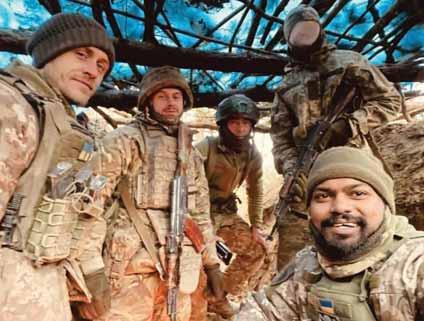
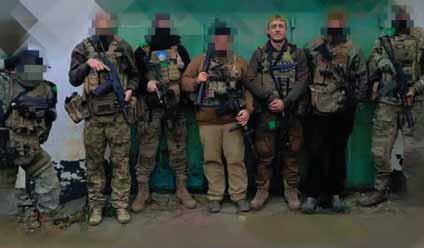
Sgt. Ethan Harcourt in Ukraine. Source: RFE
Sgt. Ethan Harcourt in Ukraine. Source: RFE
Georgian Scientist Leads Revolutionary Bioartificial Pancreas Breakthrough for Type 1 Diabetes
BY SOFIA BOCHOIDZE
For millions of people living with Type 1 diabetes, daily life revolves around glucose levels, insulin injections, food, physical activity, and constant monitoring. While modern diabetes technology has improved treatment, it has not removed the burden of the disease or restored the body’s natural ability to regulate insulin.
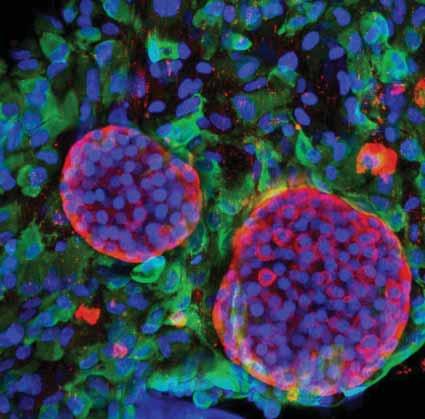
This is the challenge Georgian scientist Prof. Ekaterine Berishvili, Associate Professor at the University of Geneva Faculty of Medicine, has dedicated her career to addressing. As coordinator of the EU-funded VANGUARD project, she is leading groundbreaking research into a bioartificial pancreas — a living implant designed to restore insulin production in people with Type 1 diabetes. The project has already demonstrated promising preclinical results and is now moving through the demanding translational phase, where laboratory innovation must become a safe and clinically usable therapy.
INTERVIEW
YOUR WORK ON THE BIOARTIFICIAL PANCREAS IS BEING DESCRIBED AS A MAJOR BREAKTHROUGH IN TYPE 1 DIABETES TREATMENT. AT WHAT POINT DID YOU PERSONALLY REALIZE THIS PROJECT COULD BECOME TRULY TRANSFORMATIVE?
For me, there was not one dramatic moment, but rather a gradual realization. In science, transformation often begins quietly — with results that become reproducible and systems that start behaving more like living tissue than laboratory constructs.
I began to feel the project could become transformative when we saw that the implanted islet cells were not simply surviving, but integrating into a supportive microenvironment. They could sense glucose, respond functionally, and interact with the host tissue in ways that suggested we were moving beyond tra-
tional lifelong immunosuppression. However, we are not there yet.
The biomaterial surrounding the cells creates a more supportive environment and can reduce local inflammation, but it is not enough on its own to fully hide the cells from the immune system. That is why we are working on multiple levels of protection, including making the insulin-producing cells themselves less visible to immune attack.
The challenge is balancing protection with function. The cells must remain connected to the body, receive oxygen and nutrients, and respond rapidly to glucose levels.
YOUR RESEARCH COMBINES BIOMATERIALS, TISSUE ENGINEERING, AND CELLBASED TECHNOLOGIES. WHAT IS THE CORE INNOVATION THAT MAKES THIS SYSTEM VIABLE?
The core innovation is that we are not simply transplanting insulin-producing cells alone. We are trying to give them the right “home” inside the body.
The material comes from the human amniotic membrane, which naturally protects and supports life during pregnancy. We transform this material into a soft three-dimensional structure that carries the insulin-producing cells and provides biological signals familiar to them.
Another critical part of the strategy is blood supply. The implant is designed to connect rapidly with the patient’s own blood vessels, allowing the cells to sense sugar levels and release insulin naturally.
The innovation is really the combination: the right cells, the right biological environment, the right blood supply, and a safe implantation site.
controlled early clinical studies in a small number of selected patients. These studies are designed primarily to answer essential safety questions.
In regenerative medicine, hope is important, but hope must always walk together with evidence.
WHAT ARE THE MAIN RISKS OR LIMITATIONS THAT STILL NEED TO BE ADDRESSED?
The key questions are whether the implant is safe, whether it survives long enough, whether it receives enough blood supply, and whether we can adequately protect it from the immune system.
Even when a treatment works well in the laboratory, the human body is far more complex. We need to understand how the implant behaves over months and years, whether scar tissue forms around it, and whether the cells continue producing insulin in a stable way.
There is also the challenge of producing the therapy safely and consistently under strict medical manufacturing standards and making it accessible to patients.
HOW DOES YOUR BIOARTIFICIAL PANCREAS DIFFER FROM EXISTING ARTIFICIAL PANCREAS SYSTEMS BASED ON INSULIN PUMPS AND DIGITAL MONITORING?
The difference is fundamental. Current artificial pancreas systems are technological systems involving glucose monitors, algorithms, and insulin pumps. They are major advances, but they still require devices and constant interaction with diabetes technology.
APPROACHES BECOMING RELEVANT FOR TYPE 2 DIABETES AS WELL?
Potentially, yes, although the situation is different. Type 1 diabetes is primarily a disease of beta-cell destruction, which makes cell replacement a logical strategy. Type 2 diabetes is more complex and involves insulin resistance, metabolic dysfunction, and progressive beta-cell failure.
However, some patients with advanced Type 2 diabetes and severe beta-cell failure could potentially benefit from regenerative or cell-based approaches in the future.
LOOKING AHEAD, DO YOU BELIEVE WE ARE ENTERING AN ERA WHERE BIOENGINEERED ORGANS COULD REPLACE TRADITIONAL TREATMENTS FOR CHRONIC DISEASES?
I believe medicine is becoming increasingly regenerative. For a long time, medicine has focused on replacing what the body lacks with external treatments such as insulin, dialysis, or drugs. These treatments save lives, but they often manage disease rather than restore function.
Bioengineered organs and tissues represent a different philosophy: rebuilding biology instead of simply compensating for its loss.
YOU HAVE BUILT AN INTERNATIONAL SCIENTIFIC CAREER WHILE LEADING A MAJOR EU-FUNDED PROJECT. WHAT INSPIRED YOU TO FOCUS ON THIS FIELD?
ditional cell transplantation.
That was when the idea became larger than a technical solution. It became a vision: recreating, in a controlled and retrievable way, some of the essential functions of the pancreas for people living with Type 1 diabetes.
FOR READERS WITHOUT A SCIENTIFIC BACKGROUND, HOW WOULD YOU EXPLAIN WHAT THE BIOARTIFICIAL PANCREAS IS AND HOW IT WORKS INSIDE THE BODY?
At its simplest, the bioartificial pancreas is a small living implant designed to do what the diseased pancreas can no longer do: sense glucose and release insulin naturally.
The implant contains insulin-producing cells embedded in a soft gel made from human-derived tissue. We also engineer small blood vessels directly into the construct. This is important because insulin-producing cells require oxygen very quickly after implantation.
Once placed in the body, the engineered vessels can connect rapidly with the patient’s circulation, helping the cells survive and function from the earliest stages. The implant is also placed in an accessible location so it can be monitored, retrieved, or replaced if necessary. It is closer to a small living ecosystem than to a traditional medical device. Our role as bioengineers is to create the conditions that allow these cells to integrate into the body and quietly perform their work.
ONE OF THE KEY PROMISES OF YOUR APPROACH IS RESTORING GLUCOSE REGULATION WITHOUT LIFELONG IMMUNOSUPPRESSION. HOW SIGNIFICANT IS THIS COMPARED TO CURRENT TREATMENTS?
This would be a major shift. Today, cellbased therapies for Type 1 diabetes often require lifelong immunosuppression to prevent rejection of transplanted cells. That carries risks, including infections and other complications.
Our long-term ambition is to reduce that burden and eventually make betacell replacement possible without addi-
THE TECHNOLOGY HAS SHOWN STRONG RESULTS IN PRECLINICAL STUDIES. HOW FAR ARE WE FROM SEEING THIS USED IN PATIENTS ON A WIDER SCALE?
The results are very encouraging, but we are not yet at the stage where the treatment can be widely offered to patients.
We are currently in the translational phase, moving the discovery step by step from the laboratory toward clinical use.
One major challenge is scale. What works in a mouse does not automatically work in a human. Humans require a much larger number of insulin-producing cells, and we must show that the implant can function safely and reliably at human dimensions.
We also need to understand how long the implant works, how the body reacts to it over time, and whether it can be safely monitored or replaced if necessary. The next major step would be carefully
A bioartificial pancreas is a biological system. Instead of managing diabetes from the outside, it attempts to restore regulation from within by placing insulin-producing cells back into the body in a supportive environment.
DO YOU SEE A FUTURE WHERE PATIENTS COULD LIVE COMPLETELY FREE FROM INSULIN INJECTIONS AND CONSTANT GLUCOSE MONITORING?
Yes, I believe this is the future we should aim for. The first step may not be complete freedom for every patient, but fewer injections, more stable glucose levels, fewer hypoglycemic episodes, and less mental burden.
For me, the real goal is not only biological. It is existential. Diabetes occupies space in a person’s mind every hour of every day. True success would mean giving people back that space.
WHILE YOUR WORK FOCUSES ON TYPE 1 DIABETES, DO YOU SEE SIMILAR REGENERATIVE
I began working on diabetes and betacell replacement in Georgia. The field captured me because it combined rigorous science with a very concrete human need. Type 1 diabetes affects daily life every single day, and I was drawn to the idea that science could one day help restore what the disease takes away. Moving to Geneva became an important chapter. It brought challenges, but also opportunities to expand and translate the work I had started in Georgia. A major turning point came when we shifted from simply asking how to transplant insulin-producing cells to asking how to create the right environment for those cells to survive and function. That shift eventually led us toward the development of Amniogel and later the VANGUARD project. Ultimately, my goal has always remained the same: moving from simply managing diabetes toward restoring biological function.
FINALLY, IF EVERYTHING PROGRESSES SUCCESSFULLY, HOW DO YOU IMAGINE DIABETES TREATMENT EVOLVING OVER THE NEXT 10 TO 15 YEARS?
I am very optimistic. The field is moving from managing diabetes toward restoring endogenous insulin secretion. Several approaches are advancing in parallel — stem cell-derived islets, immune-engineered cells, and bioengineered constructs such as ours. I do not think the future will depend on one single solution. It will likely come from combining multiple advances to create therapies that are safe, durable, and accessible.
For me, success would mean that people with Type 1 diabetes no longer depend on external insulin to survive because their bodies have regained the ability to produce insulin naturally.
Prof. Berishvili’s work stands at the intersection of science, medicine, engineering, and human hope. While the bioartificial pancreas is not yet a widely available therapy, the project represents one of the most ambitious efforts in regenerative medicine today.
More importantly, it reflects a larger shift in medicine itself: from treating disease externally toward rebuilding lost biological function from within.
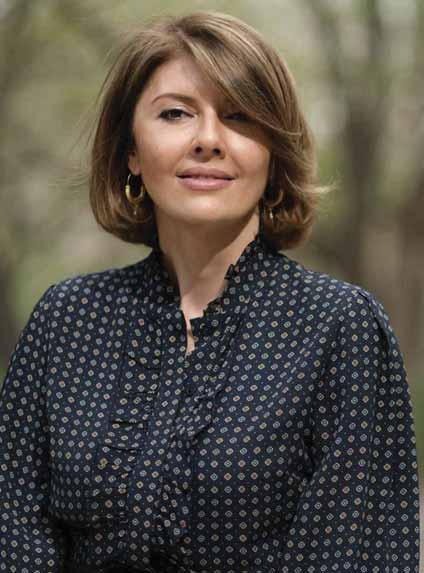
Ekaterine Berishvili Associate Professor at the University of Geneva
Georgia to Tighten Construction Procurement Rules, Boost Price Indexation
BY LANA KOKAIA
The Georgian government is preparing a new package of amendments to the legal framework regulating state construction projects, aimed at improving infrastructure delivery and reducing the risk of project suspensions.
The government administration says the reform will seek to improve implementation processes, strengthen financial sustainability of state projects, and raise accountability and transparency standards in public procurement.
By decision of the government, changes will be introduced to Technical Regulations approved by Resolution No. 55 and the Law of Georgia on Public Procurement.
The government administration says the amendments will increase the limit for overhead and unforeseen expenses,
update construction material and machinery prices, and introduce an indexation mechanism allowing partial adjustment of contract values during projects in response to price changes.
The reform also includes measures to support small and medium-sized businesses, allowing bidders to combine experience with subcontractors in state tenders, enabling broader participation in large-scale projects.
At the same time, the government says accountability mechanisms will be tightened, with restrictions on participation in tenders involving unrealistically low prices, while the blacklist system will be expanded to disqualify companies linked to financial or corruption-related crimes.
“The aforementioned changes represent one of the most important systemic reforms of the construction sector and the public procurement system, which will contribute to the implementation of higher-quality, sustainable and timely infrastructure projects,” the government administration says.
Turnava: No Rise
Expected in Loan Rates as GEL Lending Costs Fall
BY LANA KOKAIA
The President of the National Bank of Georgia, Natia Turnava, says interest rates on loans in Georgian lari are declining despite global economic uncertainty, with no increase expected in the near term.
Speaking at the Finance and Budget Committee of the Georgian Parliament, Turnava said mortgage and business loan rates in GEL have decreased compared to 2025.
She said mortgage rates fell from 13.4% in January 2025 to 11.9% in March 2026,
Reflection on Professional Education and the Importance of EHS in Georgia
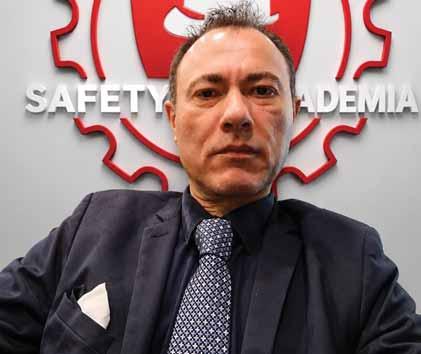
BY GEORGE SIMONISHVILI, STUDENT AT SAFETY ACADEMIA VOCATIONAL COLLEGE
Why is occupational health, safety, and environmental management becoming increasingly important in modern society? Why are governments, industries, and educational institutions placing greater emphasis on workplace safety, environmental responsibility, and sustainable development?
My name is George Simonishvili, and I am currently enrolled in the Professional Educational Program in Occupational Health, Safety and Environmental Management at Safety Academia Vocational College in Tbilisi, Georgia. Through my studies, I have come to understand that occupational safety is not simply a legal requirement it is a fundamental pillar of responsible economic development, social wellbeing, and human dignity.
I would like to formally express my sincere gratitude for the exceptional education, mentorship, and practical training I have received during my studies at Safety Academia Vocational College. The rigorous and practice-oriented educational programme has significantly strengthened my professional knowledge, analytical thinking, and practical competencies in the fields of occupational health, workplace safety, and environmental management.
What makes professional education truly valuable in today’s rapidly changing world? In my opinion, it is the ability to combine theoretical knowledge with practical competencies that can be directly applied in real working environments. One of the strongest aspects of the programme is its balanced integration of academic instruction with practical application. Through practical exercises, simulations, case studies, and interaction with experienced industry professionals, students are encouraged to think critically, solve problems effectively, and apply safety principles in realistic professional situations.
Why is practical experience so important in vocational education? Because modern industries require professionals who are not only knowledgeable, but also capable of responding to real operational challenges. The educational approach at Safety Academia helps students develop professional responsibility, communication skills, leadership abilities, and confidence necessary for successful integration into the labour market.
Who should guide the next generation of occupational safety professionals?
The lecturers and trainers at Safety Academia possess substantial professional and industry experience, which greatly enhances the quality and relevance of the educational process. Their dedication and commitment create a supportive learning environment where students are motivated to grow both professionally and personally.
WHY DOES ENVIRONMENT, HEALTH, AND SAFETY (EHS) MATTER?
ing environments
In many developed countries, strong EHS systems are already deeply integrated into industrial operations, legislation, and organizational culture. However, in developing economies, occupational safety systems and environmental protections are still evolving. This makes investment in EHS education, awareness, and implementation even more important.
WHY IS EHS IMPORTANT FOR GEORGIA?
1. PROTECTING WORKERS AND SAVING LIVES
Why should workplace safety matter to every country? Because every worker deserves to return home safely at the end of the day. In industries such as construction, mining, manufacturing, transportation, and energy — all of which play a significant role in Georgia’s economy — workplace hazards can result in serious injuries, occupational illnesses, or fatalities.
By strengthening EHS systems and investing in qualified professionals, Georgia can significantly reduce workplace accidents and minimize the longterm human, social, and financial costs associated with occupational incidents.
2. SUPPORTING ECONOMIC DEVELOPMENT
Can sustainable economic growth exist without safe and healthy workplaces? Modern economies depend on productive, skilled, and protected workers. Workplace accidents and occupational diseases negatively affect productivity, increase healthcare costs, and create financial and legal risks for businesses. For Georgia to attract international investment and strengthen its competitiveness, organizations must demonstrate compliance with internationally recognized safety standards. Strong EHS systems contribute directly to institutional credibility, operational efficiency, and investor confidence.
3. PROTECTING THE ENVIRONMENT AND FUTURE GENERATIONS
while business loan rates dropped from 14.4% to 12.8% over the same period.
“Despite increasing uncertainty and regional risks, interest rates on new loans in GEL have a pronounced downward trend,” Turnava noted.
She added that the National Bank raised the policy rate by 0.25 percentage points to manage expectations, while also pointing to rising inflation in the Eurozone and the United States that could increase foreign currency financing costs.
Turnava linked the decline in GEL rates to higher lari liquidity from de-dollarization, improved credit portfolio quality, and greater efficiency in banks, saying these factors help limit inflationary pressure.
Why should EHS be considered a national priority, especially for developing countries such as Georgia?
Environment, Health, and Safety (EHS) represents far more than workplace regulations and compliance procedures. It is a comprehensive system designed to protect employees, communities, and the environment while supporting sustainable economic growth and long-term social stability.
EHS includes:
• Workplace safety and accident prevention
• Occupational health protection
• Environmental responsibility and sustainability
• Risk assessment and hazard management
• Development of safe and healthy work-
Can economic growth be sustainable without environmental responsibility?
As Georgia continues to develop industrially and economically, environmental challenges such as pollution, waste generation, and resource depletion become increasingly important.
EHS frameworks help balance economic development with environmental protection. Clean air, safe water resources, and preservation of natural ecosystems are essential not only for public health, but also for sectors such as tourism, agriculture, and sustainable regional development.
4. ALIGNING WITH INTERNATIONAL AND EUROPEAN STANDARDS
Why is alignment with global standards
important for Georgia’s future? Today, international companies and global supply chains increasingly require compliance with strict occupational safety and environmental standards. Georgian businesses seeking international partnerships, exports, or cooperation with multinational organizations must demonstrate effective EHS management systems. By strengthening occupational safety culture and adopting international standards early, Georgia can position itself as a reliable and competitive partner within global markets.
5. PROMOTING HUMAN DIGNITY AND SOCIAL RESPONSIBILITY
Is occupational safety only a legal obligation? I strongly believe that EHS is fundamentally connected to human rights, dignity, and social responsibility. Every individual has the right to work in a safe and healthy environment. Organizations and governments that prioritize workplace safety do more than prevent accidents — they contribute to stronger communities, healthier societies, and long-term national development.
THE ROLE OF EDUCATION IN BUILDING A SAFER FUTURE
Who will lead the future development of occupational safety systems in Georgia? Educational institutions and vocational programmes play a critical role in preparing qualified specialists capable of responding to modern labour market demands and implementing effective safety practices.
Safety Academia Vocational College contributes significantly to this mission by preparing competent professionals equipped with both theoretical knowledge and practical skills aligned with modern international standards. I am proud to be part of Safety Academia Vocational College and grateful for the opportunity to receive highquality vocational education that prepares students for real professional challenges and responsible leadership within the field of occupational health, safety, and environmental management. I am confident that the knowledge, practical experience, and professional values acquired during my studies will contribute significantly to my future career and to the continued development of occupational safety culture in Georgia and beyond.
Finally, I would like to extend my sincere appreciation to the administration, academic staff, trainers, technical support team, and fellow students of Safety Academia Vocational College for their professionalism, dedication, and continuous support throughout this educational journey.
Safety Academia Vocational College Address: Ana Politkovskaia Street N14, Tbilisi, 0186, Georgia
Russians Face Spending Freeze as Income Growth Slows
BY LANA KOKAIA
Russian citizens are expected to see almost no real income growth in 2026 and may be forced to sharply limit spending on goods and services, The Moscow Times reports, citing an updated macroeconomic forecast by Russia’s Ministry of Economic Development.
Under the ministry’s baseline scenario, real disposable incomes are expected to grow by just 0.8% this year: three times lower than forecast six months ago and far below last year’s reported 7.4% growth. In a more conservative scenario, which assumes oil prices drop to $50 and the
global economy slows due to the Iran war, income growth could fall to only 0.5%.
The ministry also expects retail turnover growth to slow to 0.8%, compared to 4.1% last year. In the conservative scenario, retail sales are projected to decline by 0.4%, the first drop since 2022.
Economist Dmitry Polevoy says the downgraded forecasts reflect weaker expectations for oil production and exports, as well as the Russian Central Bank’s tight monetary policy.
The ministry now forecasts GDP growth of only 0.4% this year, significantly below previous years. Oil production is expected to hit a 17-year low, while exports could fall 17 million tons below earlier expectations.
Economist Olga Belenkaya of ‘Finam’ says official statistics already show slowing income growth. In the first quarter, incomes rose by 1.5% year-on-year, compared to 5.8% in the previous quarter.
Belenkaya suggests higher VAT and elevated borrowing costs are contributing to weaker consumer sentiment, which has fallen to its lowest level since late 2022.
Economist Andrei Barkhota says Russians have increasingly turned to saving money since mid-2025 as purchasing power weakened.
“The share of food expenditures in the consumer basket has reached 39%, the highest since 2008,” Barkhota says. He notes that rising food prices are pushing consumers toward discount stores and cheaper goods.
China Southern Airlines to Resume Beijing–Tbilisi flights
BY LANA KOKAIA
China Southern Airlines is set to resume scheduled passenger operations on the Beijing–Tbilisi route, the Civil Aviation Agency says. The airline will operate flights via Urumqi on the route Beijing–Urumqi–Tbilisi–Urumqi–Beijing. The service will run three times a week, on Mondays, Thursdays and Saturdays, starting June 8 and
continuing until the end of the season. As a result, from summer 2026, two airlines: Air China and China Southern Airlines, will operate flights between Beijing and Tbilisi.
China Southern previously operated on the same route from 2016 until the start of the COVID-19 pandemic in January 2020, the application submitted to the Civil Aviation Agency states. The Civil Aviation Agency under the Ministry of Economy and Sustainable Development of Georgia has already granted the airline permission to operate the flights.
Women’s Voices, Georgia to Los Angeles, Part 2
INTERVIEW BY TONY HANMER
As Executive Director of Women’s Voices Now, Heidi Basch-Harod leads a global team committed to promoting girls’ and women’s rights through the power of film. She also oversees Girls’ Voices Now, the organization’s Emmy Award-winning youth mentorship and media program, and collaborates with an international network of volunteers for the WVN Film Festival, helping to source and assess documentaries centered on women’s rights issues from around the world.
GEORGIA TODAY spoke with Heidi, alongside WVN jury member Michelle Gagnon, in this two-part interview to learn more about the organization’s work and vision.
IS THERE A SENSE THAT TODAY WOMEN’S VOICES ARE BEING HEARD MORE NOW, OR NOT ENOUGH?
I think that women’s voices are being heard louder than ever, but still not enough. And certainly not consistently in every country or geographic region. The bigger question is: What does or doesn’t happen when women’s voices are heard? In some cases, we have films that have led to legislative and even cultural change. In other cases, we see how injustice continues with impunity.
DO YOU PERSONALLY HAVE A PARTICULAR HEROINE IN THE STRUGGLE FOR WOMEN’S RIGHTS? WHAT MAKES/ MADE THEM STAND OUT?
For decades my biggest hero in the struggle for women’s rights has been Leyla Zana, the first Kurdish woman to become a parliamentarian in Turkey. Her challenges as a woman in Kurdish society, and as a Kurd in Turkish society, and her indomitable will to improve the status
of women in her society and the station of her people in Turkey continue to inspire awe in me. She set an example for so many to follow her. In my view, she sacrificed her safety, her freedom, her family, and her health for a better future for all of humanity. I keep her in mind when I need a bit of inspiration to keep going and believing in the work.
WORDS OF ENCOURAGEMENT FOR NEW OR YOUNG FEMALE FILMMAKERS?
“There has never been a more receptive world. We are far from parity but the opportunities are out there. We are connected digitally; find your mentors and your cheerleaders, pursue your dream.”
Among those recently invited to join the jury for WVN 2026 was Michelle Gagnon, an American expat who has spent several years in Georgia pursuing film projects and collaborating with local artists and filmmakers.
PLEASE INTRODUCE YOURSELF AND YOUR ROLE AT WVN.
I am a Jury Member for the WVN Feature Films Selections, and an American expat in Tbilisi. I collaborate with local artists and filmmakers. I direct and produce my own indie short documentaries,
but I also advocate for human rights in the Caucasus, so for me joining the WVN Jury made sense. We share the same heart to bring women’s rights stories to the big screen. I feel really proud to represent Georgia in this festival!
WHAT ARE SOME OF THE URGENT ISSUES THESE FILMMAKERS/FILMS ARE ADDRESSING? EXAMPLES OF FILMS THAT IMPACTED YOU?
This festival has opened my eyes to many urgent issues that women face around the world. It’s a good reality check, because rights can be rolled back or lost quickly if we aren’t active guardians. For example, “The Sharp Edge of Peace” by Roya Sadat, a film about the first female political negotiators in Afghanistan, showed how quickly women’s rights were reversed and lost under the Taliban's return.
Femicide is also an urgent issue. A Guatemalan feature called “Comparsa” (Doug Anderson and Vickie Curtis) highlights the tragedy of 41 women who were burned alive in a local government “safe house.” Two resilient sisters creatively work to reclaim their life and community. They then turn fire into a symbol of taking back their power, through fire
breathing performances, the arts, and community parades. Incredibly inspiring, but again it's a reality check. I get chills just thinking about how powerful some of these films are. And these are just two examples of the caliber of films we have viewed!
HOW DO YOU SELECT WHICH FILMS WILL GET AN AWARD? WHAT’S THE PROCESS LIKE?
We have a very diverse group of women on the jury, from 13 countries. Each brings a wealth of industry experience. We were organized into Features, Shorts, and Youth categories, and reviewed each film on our own, then discussed. We needed to pace ourselves because these films bring up a lot of complex emotions. It’s a joy to serve as a witness to these stories, but the topics are heavy. Self-care during the viewing period was important. Then we based selections on what we felt encapsulated the overall best in technique, creativity, storytelling, impact, etc. When it came to selecting winners, we had excellent options. Honestly, there
was not a bad film in the lot. We presented the final awards on May 15th.
IS THERE A SENSE THAT IN TODAY’S WORLD WOMEN’S VOICES ARE BEING HEARD MORE NOW, OR NOT ENOUGH? Women are half the world’s population, so why aren’t half of the films and media produced made by, for, or about women? Definitely more space is needed for women in film to tell our stories, address our concerns, and show our points of view.
WHY IS IT IMPORTANT FOR GEORGIA TO HAVE REPRESENTATION IN THIS FESTIVAL?
First, there is an opportunity to get women’s rights more onto the cultural radar screen. In the Caucasus, we still have gender inequality, domestic violence, taboo around divorce, underaged marriages, and outdated traditions on property rights, particularly in rural regions. We have to find ways to bring these issues to the forefront of social consciousness. Films are a powerful way to do that.
Second, Georgia has a very extensive film history and also some wonderful current emerging female filmmakers. They have unique stories that the world needs to hear! So any chance I get to promote Georgian film and culture abroad, I do. A Los Angeles-based festival like WVN allows me to network and also help raise the profile of Georgian cinema.
Tony Hanmer has lived in Georgia since 1999, in Svaneti since 2007, and been a weekly writer and photographer for GT since early 2011. He runs the “Svaneti Renaissance” Facebook group, now with over 2000 members, at www.facebook.com/groups/ SvanetiRenaissance/ He and his wife also run their own guest house in Etseri: www.facebook.com/hanmer.house.svaneti
A close-up of hands opening an empty wallet surrounded by receipts. Photo: AI
The WVN awards ceremony on May 15. Photo by the author
Michelle Gagnon
China Southern Airlines. Photo: Wikimedia Commons.
Vincent Peirani - The Accordionist as Architect of the Intimate and the Expansive in Tbilisi, Georgia
Accordion innovator Vincent Peirani, with a border-crossing quintet between jazz and rock, will present his latest Living Being IV (Time Reflections) at the Soso Lagidze International Arts Festival 'Tbilisi Rhythm' on May 28 at Tbilisi Conservatory Grand Hall.
Vincent Peirani is French virtuoso accordionist who has gained international recognition with his charisma and his very own sound language. He is one of the most exciting voices on the music scene today, boasting an open, cosmopolitan style that transcends genre boundaries and combines colors, cultures and eras. With "Living Being IV: Time Reflections", Vincent Peirani and his quintet now present a new work in Tbilisi, Georgia.
Living Being IV (Time Reflections) will find eager audiences among jazz fusion fans, accordion aficionados, and even film score enthusiasts, thanks to several tracks that unfold like soundtracks to imaginary epics.
Tbilisi Line-up:
Vincent Peirani: accordion, accordina
Tony Paeleman: Rhodes, piano
Emile Parisien: soprano saxophone
Jerome regard: Bass
Yoann Serra: drums
Tickets are available at tkt.ge/VINCENTPEIRANI
Prices ranges from 30 GEL to 95 GEL
Tbilisi Rhythm Festival is organized by Tagis Art Ltd
Georgian Artist Brings Abkhazia Conflict to Venice Biennale Pavilion of Nauru
BY LANA KOKAIA
G
eorgian artist Tedo Rekhviashvili has presented a politically charged installation about Abkhazia at the Venice Biennale, placing the work in the pavilion of Nauru, a small Pacific state that recognizes Abkhazia’s independence, OC Media reports.
The piece, titled “A Sea That Remembers,” features a human-sized seashell suspended in a pavilion space. Its exterior shows an idealized coastal Abkhazia, while the interior plays a soundscape that shifts from peaceful waves and seagulls to gunfire, explosions and screams, referencing the 1990s conflict in Abkhazia and its aftermath.
Rekhviashvili told OC Media he “smuggled” the work into the exhibition after being invited to participate in Nauru’s debut pavilion, adding that the opportunity felt “highly unethical” given his family ties to Abkhazia.
The artist said he later negotiated to focus the project on Abkhazia, describing the work as centered on “loss of homeland, a space where you grew up.”
National pavilions at the Biennale are traditionally used to present a country’s cultural output, but increasingly include international artists through curatorial collaborations.
The Nauru pavilion this year explores
vulnerability and climate change under the theme “AIM Inundated: Imagining Life After Land,” focusing on global decision-making and its consequences for small states.
Rekhviashvili told OC Media that his installation connects personal memory with broader histories of displacement, saying the seashell was inspired by a childhood memory of his mother telling him to listen to it when he missed the sea.
The artist, known for politically engaged work, has previously staged protests through his art in Georgia, including
burning a painting in 2022 over cultural sector layoffs.
He also criticized Georgia’s cultural policy, telling OC Media that artists face pressure and that many are “in a battle” for creative freedom.
Rekhviashvili said the overlap of his work with Russia’s presence added tension to the context, adding that he hopes visitors will reflect on the Abkhazia conflict “even from 35 years ago.”
The installation “A Sea That Remembers” is expected to return to Georgia for public display after being acquired by an unnamed fund.
The Mystical Ray after the End of History: Irakli Parjiani and the Georgian Art of Inner Catastrophe
REVIEW BY IVAN NECHAEV
At the Georgian Museum of Fine Arts, the exhibition Enigmatic Ray arrives as the reopening of an unfinished spiritual archive.
Dedicated to Irakli Parjiani, one of the most singular and metaphysically restless figures in late Soviet Georgian art, the exhibition unfolds like a transmission from a civilization perpetually suspended between revelation and collapse.
Parjiani has always occupied a peculiar place within Georgian cultural memory.
Revered almost mythologically by artists, intellectuals, and collectors, he nevertheless remained strangely outside the stable institutional canon. Perhaps because his work resists canonization itself. His paintings do not behave like historical objects. They behave like visions.
To encounter Parjiani today, in 2026, feels uncannily contemporary. Not because his art anticipated political events directly, but because it anticipated a psychological condition now familiar across the modern world: spiritual exhaustion inside collapsing systems of meaning. The exhibition’s curatorial structure, developed by Konstantine Bolkvadze, wisely avoids presenting Parjiani as merely another representative of the celebrated Georgian artistic generation of the 1980s. Chronology exists here, certainly, yet the deeper logic of the exhibition follows something more unstable: the evolution of consciousness itself.
Parjiani differed radically from many of his contemporaries because he liberated Georgian painting from collective emotional choreography. Soviet art, even in dissident or semi-independent forms, often remained socially legible. Parjiani instead turned inward with terrifying intensity. His work is almost violently subjective. Religious imagery, anthroposophy, abstraction, medieval iconography, German expressionism, Georgian calligraphy, oriental visual systems, mythological
archetypes, and private hallucination all collide inside the same pictorial field. Yet the result never feels eclectic in the superficial postmodern sense. Everything in Parjiani’s world appears governed by a hidden metaphysical grammar.
The exhibition title could hardly be more accurate. Everything about Parjiani is enigmatic. His people appear illuminated from invisible sources. His plants possess psychological tension. Biblical scenes unfold like memories from forgotten dreams. Faces hover somewhere between saints, peasants, ghosts, and witnesses. Space itself dissolves into spiritual weather. Even stillness in Parjiani feels unstable.
Born in Mestia in 1950, Parjiani belonged to a generation raised during the late Soviet period, yet his artistic universe seems fundamentally incompatible with Soviet materialism. This tension defines much of the exhibition’s emotional power.
His participation in Tbilisi’s anthroposophy circles during the 1970s becomes especially important in understanding the work. Anthroposophy, with its fusion of spirituality, cosmology, esotericism, and scientific mysticism, offered an alternative intellectual architecture inside a society officially organized around ideological rigidity and rationalist dogma.
Parjiani absorbed this worldview completely. His paintings do not depict reality. They attempt to penetrate its invisible structure. This explains why his
works often feel suspended between icon and hallucination. He was never interested in realism as representation. He pursued painting as revelation.
The exhibition demonstrates this particularly powerfully through works connected to biblical cycles: The Gospel of Mark, The Gospel of John, The Gospel of Luke, The Annunciation, and The Crucifixion of Christ. These are not devotional works in any conventional religious sense. Nor are they ironic reinterpretations typical of much late twentieth-century contemporary art.
Parjiani approaches biblical narrative as metaphysical anthropology. The sacred becomes psychological terrain. And perhaps nowhere is this clearer than in the debut presentation of The Annunciation, one of the exhibition’s central revelations. The large-scale canvas radiates the strange internal luminosity characteristic of Parjiani’s late style. Figures emerge almost as if materializing from darkness rather than occupying physical space.
One begins to understand why Parjiani remains so emotionally overwhelming for Georgian audiences: his art transforms national trauma into spiritual atmosphere.
One of the exhibition’s most haunting dimensions emerges through the contextualization of Parjiani’s final years. He witnessed the collapse of the Soviet world directly. He stood in Berlin during
the fall of the Wall. He participated in the April 9 protests in Tbilisi, where Soviet troops used toxic gas against demonstrators: an event that severely damaged his health and permanently scarred Georgian cultural consciousness.
The exhibition subtly suggests that Parjiani’s later paintings absorbed this atmosphere of civilizational disintegration. His Berlin Cycle carries particular emotional gravity because Berlin itself appears almost mythological in late Soviet imagination: a city where history physically cracked open. For many Eastern European and Soviet artists, the Wall’s collapse symbolized liberation.
In Parjiani’s work, however, liberation always remains ambiguous.
Freedom arrives already haunted by catastrophe. This intuition proved devastatingly prophetic for Georgia. Parjiani died in 1991 at only forty-one years old, during the violent unraveling of the country into civil war. In one of the cruelest symbolic episodes imaginable, many of his works burned together with the Artists’ House in Tbilisi amid the chaos.
That biographical detail hangs over the exhibition like smoke. The destruction feels horrifyingly consistent with the logic of his art itself: beauty permanently threatened by historical combustion.
Perhaps the most extraordinary quality of Parjiani’s paintings is their treatment of motionlessness. His figures rarely act. They wait. Endure. Radiate. Listen. Witness. And yet the paintings vibrate internally with immense tension. This paradox gives Parjiani’s work its enduring contemporary relevance. In an age obsessed with speed, visibility, production, and constant digital motion, his paintings insist upon stillness as a form of metaphysical resistance.
The universe in Parjiani is alive, but not noisy. Anthroposophical ideas about cosmic interconnectedness become visual atmosphere rather than ideological statement. Objects, colors, textures, and bodies appear bound together through invisible spiritual energies. The world becomes personified without becoming sentimental.
His paintings ask viewers to slow down enough to perceive hidden frequencies.
To modern spectators trained by algorithmic culture to consume images rapidly, this can feel almost physically disorienting. Parjiani’s art refuses acceleration.
What Enigmatic Ray ultimately reveals is how deeply Georgian modernism has always been tied to metaphysical hunger. Western narratives about Soviet-era art often emphasize dissidence, conceptual resistance, underground networks, or political symbolism. All of that matters. Yet Parjiani represents another parallel tradition inside Georgian culture: the attempt to preserve spiritual complexity against the flattening pressures of ideology and modernity alike. His work feels connected less to institutional contemporary art than to ancient Georgian frescoes, mountain cosmologies, medieval manuscripts, liturgical chant, and apocalyptic folklore.
Even when using expressionist or abstract visual languages, Parjiani remains profoundly Georgian in emotional architecture. His art understands suffering as illumination.
And this may explain why the exhibition resonates so intensely now. Contemporary societies increasingly produce informational saturation alongside spiritual emptiness. Images circulate endlessly while meaning erodes. Against this background, Parjiani’s paintings appear almost shockingly sincere in their pursuit of transcendence.
By the end of the exhibition, one leaves with the unsettling sensation that Parjiani painted as though he already knew the twentieth century would end in flames. Yet Enigmatic Ray refuses tragedy as its final note. The exhibition instead proposes something more fragile and perhaps more important: that art can preserve forms of inner vision even after the systems surrounding it collapse. Many of Parjiani’s works disappeared into fire. The Soviet world disappeared. Entire ideological universes disappeared. And still these paintings remain capable of transmitting light. A mysterious ray, indeed.
The exhibition runs until May 31 at the Georgian Museum of Fine Arts. Admission is free.
Photo by the author.
Artist Tedo Rekhviashvili and his artwork. Photo: OC Media.
Global Fashion Week Tbilisi: Where Fashion Becomes a Language of Identity and Resilience
Fashion has always attracted me in a unique way, not only as aesthetics, but as a means of conveying important messages. To me, fashion can be inclusive, equal, and supportive of sustainability. I had the chance to immerse myself in Global Fashion Week in Tbilisi, organized by Iva Papidze and Rusudan Jamaspishvili. As their first event of the year, and from my perspective as an event explorer, this is how I experienced it. For me, the fashion week season in Georgia felt as though it began with this event. But more than an opening, it felt like a message. It brought together Georgian designers, entrepreneurial exhibitions, and meaningful collaborations that went beyond traditional fashion. There was a sense that everything had been created from the heart, with intention, emotion, and purpose behind every detail.
What stood out most was how inclusive it felt. Even if it was not explicitly
SPORTS
stated, I experienced fashion here as something for everyone, regardless of age or body type. It was not just about clothing; visually, the collections carried a strong identity. A bold palette of red, black, and white dominated, with unexpected interventions of other colors adding depth and contrast. It felt powerful, almost like a visual expression of strength and individuality.
There was a “warrior spirit” throughout the designs, reinforced by the music and the use of natural elements such as beads, stones, and organic materials. These details created a tribal, survivalist aesthetic: bold, raw, yet elegant, reflecting a deeper need for strength and resilience in modern times.
Some pieces evoked imagery drawn from nature and beyond: marine-inspired forms resembling butterfly fish or betta fish, ceremonial silhouettes reminiscent of peacock-inspired wedding dresses, and even cosmic elements, where silver tones reflected light like a galaxy.
At the same time, there were playful cultural expressions and subtle references to Georgian identity, including khinkali-inspired details that blended tradition with creative freedom. Certain
looks carried a panther-like energy: fearless, independent, and strong, combined with conceptual, almost artistic forms that pushed beyond conventional fashion.
A particularly meaningful collaboration was with the local entrepreneurial shop 8 Elements. This partnership felt symbolic rather than purely aesthetic.
The integration of natural stones and minerals communicated a message of sustainability and connection to the earth. It also demonstrated how designers can uplift and collaborate with small local businesses, turning fashion into a platform for shared growth, respect, and community support.
At the same time, the event embraced the future. The use of AI, including a
robot greeting guests, felt like a significant step, marking fashion’s entry into a rapidly evolving technological era. This contrast between natural materials and advanced technology created a compelling dialogue between tradition and innovation.
There were also powerful human elements that added emotional depth. The participation of Ukrainian children and representatives from Uzbekistan brought a sense of solidarity and cultural connection. These moments felt like quiet yet powerful statements about resilience, unity, and cultural endurance, especially within today’s global context.
Overall, the experience felt like a fusion of worlds: tribal and modern, natural and technological, local and global. It
showed how fashion can move beyond appearance and become a tool for storytelling, identity, and social reflection. What stayed with me most is this: fashion reaches and touches everyone, regardless of age or body type. Because of that, it holds the power to carry bold messages through inclusivity, sustainability, cultural expression, and the human spirit.
And as someone who observes events from a different point of view, what stayed with me most was the realization that when fashion is created from the heart, with love and clear intention, it becomes a language everyone can feel. It is no longer just about clothing; it is about identity, storytelling, and the courage to carry a bold message to the world.
Menchurua – The Little-known Georgian Swimming Style
BLOG BY NUGZAR B. RUHADZE
This newspaper and its readers might remember the piece about Kartuli Chidaoba – the Georgian-style wrestling – which ran a year ago, more precisely, on May 29, 2025. Then, it was mentioned that Chidaoba deserved to reach the level of the Olympic Games, becoming one of its competitive sports. Amazingly, there is another kind of sport with the same claim to figure among the Olympic sporting events, and that is Menchurua – the purely Georgian swimming style, brought to our time by ancient Georgian seafaring and athletic tradition, which deserves the attention of the athletic world in general. Here is why:
Menchurua is about stamina, physical strength, mental power, skill, endurance and guts – all the features one needs to possess to compete in the Olympics. Menchurua was introduced in Georgia in time immemorial as a folksy type of
entertainment, full of traditional and down-to-earth charm, attracting both the performers and the crowds equally with its plainness of character as well as the intricacy of its rules.
Menchurua is not technically recognized
COMMERCIAL DEPARTMENT
Commercial Director: Iva Merabishvili
Marketing Manager: Natalia Chikvaidze
EDITORIAL DEPARTMENT:
Editor-In-Chief: Katie Ruth Davies
as an official swimming style but, judging by its skill-oriented features, level of performability and physical usefulness for the human body, it may very well trigger thoughts about turning it into a subject of broader international tournaments.
The ancient Georgian water-dexterity system includes three types of swimming style: ZEZELA – the standing position with thrown-up hands, treading and floating vertically in the water; MKHEDRULI – with bound hands and feet, having the limbs tied in four areas of the body, using the power generated from the torso, hips and lower back, reminding one of dolphin undulation; and Menchurua, the aquathlon, alias water-wrestling, in which two competitors try to push each other down into the water so that the water covers the head of one or the other, meaning defeat for one and victory for the other. Incidentally, popularizing Menchurua among Georgian youth – and not only among them – makes children’s lives safer because humanity has recorded tens of thousands of cases of drowning for the simple reason of not having the skill to fight perilously treacherous waters. It
Journalists: Ana Dumbadze
Vazha Tavberidze
Tony Hanmer
Nugzar B. Ruhadze
Ivan Nechaev
Lana Kokaia
Layout: Misha Mchedlishvili
Photographer: Aleksei Serov
would not be an exaggeration to say that our boys and girls, spending a minimum of one third of their daytime aimlessly peeping into their cell phones, truly need that help.
And there is a man in Georgia, in his enviably healthy mid-eighties, a true guardian of Georgian traditional sports and their heroes, who is doing all he possibly can to let the old sporting traditions of Georgia survive and reach the modern level of practicability, including the opportunity to enter international fields of activity. His name is Gvanji Mania, a wellknown public figure, journalist, ecologist, local historian, regional specialist, traveler and explorer. By the way, the fascinating idea of the annual celebration of Tbilisoba – the calendar day of the Georgian capital city – belongs to this brilliant Georgian gentleman.
In one of his numerous articles, Mania says that it is his and his fellow-thinkers’ sacred goal to see the three Georgian – in other words, Colchian and Iberian – swimming styles on UNESCO’s Representative List of the Intangible Cultural Heritage of Humanity, alongside the three types
International Relations & Communications
Sofia Bochoidze E: sbochoidze@georgiatoday.ge
Website Editor: Katie Ruth Davies
Webmaster: Sergey Gevenov
Circulation Managers: David Kerdikashvili
David Djandjgava
ADDRESS
22 Janashia Str. Tbilisi, 0179, Georgia
of Georgian writing, Georgian polyphonic folk singing, Kvevri wine-making culture, and Georgian wheat culture. He strongly believes that the three Georgian swimming styles will soon find their deserved spot in Olympic programs, not only for their originality and Olympic usability, but also because all existing types of bouts, such as boxing, judo, Greco-Roman wrestling and freestyle wrestling, happen to be overland sporting events.
On top of all that, part of their dream is to revive and imitate the complete sea route of the Colchian fleet's legendary chase of the Argonauts to recover the Golden Fleece, as well as to establish a unique river-navigation and land-equestrian tourist route within the Georgian section of the Silk Road.
Dreams are dreams, but Gvanji Mania is a man of his word, having already shown the country that most of his projects of this sort have successfully come to fruition. There is no reason not to believe that Menchurua, the truly beautiful and verily significant Georgian aquatic sporting event, will successfully make its way to the Olympic pinnacle.
Reproducing material, photos and advertisements without prior editorial permission is strictly forbidden. The author is responsible for all material. Rights of authors are preserved. The newspaper is registered in Mtatsminda district court. Reg. # 06/4-309
Global Fashion Week in Tbilisi. Photo by the author
Global Fashion Week in Tbilisi. Photo by the author BLOG BY MARIAM AVAKOVA