FOCUS
ON EUROPE DAY 2026
The European Union: not a distant political concept, but a framework already embedded in Georgia’s institutions, education, and cultural life PAGE 5
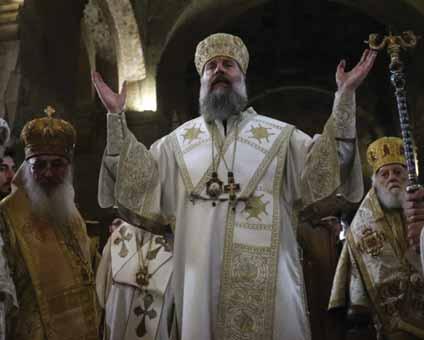
Shio III Elected 142nd Catholicos-Patriarch of All Georgia, Drawing Int’l Congratulations and Calls for Unity
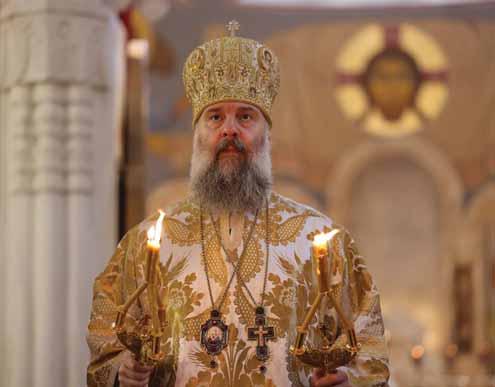
The newly enthroned CatholicosPatriarch of All Georgia, Shio III, a senior Georgian Orthodox Church hierarch widely associated with the Church’s socially conservative stance, particularly its opposition to LGBTQ+ Pride movements and broader “traditional values” discourse in Georgia, has said he cannot fully comprehend the divine will behind his elevation while emphasizing the “honor, greatness and weight” of the responsibility he now bears. He leads the Georgian Orthodox Church following a historic election and enthronement process that has drawn congratulations from international partners and Orthodox leaders worldwide. Following his election, the US Embassy in Georgia described the event as historic, noting it was the first patriarchal election since Georgia regained independence. In its statement, the Embassy extended “most heartfelt congratulations” to the Church and faithful, wishing him success and expressing interest in continued engagement with the Georgian Orthodox Church on shared cultural and civilizational goals.
In this week’s issue...
Georgians Rank Second Among Non-EU Nationals Returned from EU
NEWS PAGE 2
Ukraine Latest: Dozens Killed in Renewed Strikes as EU and UK Sanction Officials over Abducted and Militarized Ukrainian Children
NEWS PAGE 3
“I will fight as long as I can physically keep fighting, or until the war comes to an end”- Sgt. Ethan Harcourt. Part 1
POLITICS PAGE 6
Georgian Firms Attend SelectUSA Summit
BUSINESS PAGE 7
The Inheritance of Eccentricity: The Premiere that Turned Gabriadze Theater into a Machine for Escaping Reality
CULTURE PAGE 10
Former Georgia Rugby Captain Banned for 11 Years Over Alleged Doping Test Evasion Scheme
SPORTS PAGE 11

Shio III Elected 142nd Catholicos
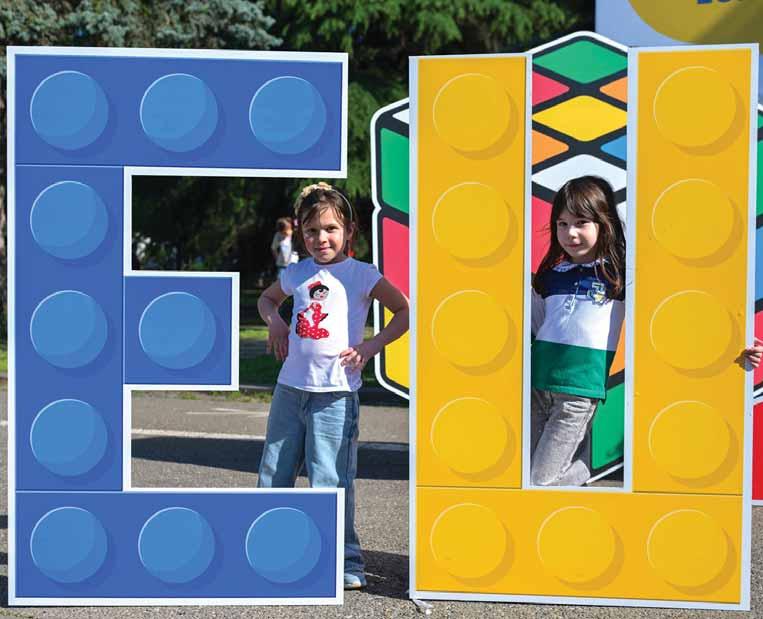
Children at Europe Day 2026. Source: EU in Georgia
Georgians Rank Second Among Non-EU Nationals Returned from EU
BY LANA KOKAIA
Eurostat says Georgian citizens were among the top nationalities returned from EU countries to non-EU states in 2025.
10,475 Georgian nationals were returned from the European Union last year, placing Georgia among the top countries of origin alongside Türkiye, Syria, and Albania.
Unity
Continued from page 1
The European Union Delegation to Georgia also congratulated Shio III, emphasizing the Church’s long historical role in preserving Georgian identity. It expressed confidence that his leadership would offer “moral clarity, reconciliation and hope” at a time of global uncertainty.
From the Orthodox world, Ecumenical Patriarch Bartholomew I of Constantinople sent a congratulatory message wishing him a “long, blessed and fruitful primacy,” calling for cooperation and unity among Orthodox Churches and praising the legacy of his predecessor, the late Catholicos-Patriarch Ilia II.
In his first sermon after enthronement at Svetitskhoveli Cathedral, Shio III reflected on the difficulty of spiritual leadership, saying he now understands more deeply the “thorny and heavy path” of his predecessor.
“It is impossible to discern the intention of the Lord… I am aware of its honor, its greatness and its weight,” he said, adding that he kneels “with filial love” before the spiritual heritage of past patriarchs.
He called on clergy and faithful to preserve Ilia II’s legacy, urging unity, faith, peace, and continued service to God, the nation, and humanity.
Shio III was elected at an expanded ecclesiastical council held at Holy Trinity Cathedral (Sameba Cathedral) on May 11, receiving 22 votes against Metropolitan Iobi (9) and Metropolitan Grigol (7), with one ballot annulled. He was officially enthroned on May 12 as the 142nd Catholicos-Patriarch of All Georgia following the death of Ilia II on March 17, 2026, at the age of 93, marking the end of one of the longest patriarchates in modern Orthodox history and the beginning of a new chapter for the Georgian Church.
Georgian Parliament Speaker Criticizes EU Policies in Europe Day Letter
BY TEAM GT
Shalva Papuashvili published an open letter addressed to Pawel Herczynski on the occasion of Europe Day, criticizing the European Union’s current policies toward Georgia and accusing Brussels of political interference and deepening divisions.
In the lengthy statement shared on social media, Papuashvili congratulated the ambassador on Europe Day, while arguing that the date should serve as a moment to reflect on “what Europe truly represents” and on the future of relations between Georgia and the European Union.
The Speaker repeatedly referenced the 1950 Schuman Declaration by French statesman Robert Schuman, describing it as a vision centered on peace, unity and mutual respect. He contrasted that vision with what he called the EU’s current “offensive rhetoric” and “politically motivated” actions toward Georgia.
Papuashvili criticized Herczynski’s Europe Day message from last year for allegedly overlooking the anniversary of the end of World War II and instead focusing on political disagreements with Georgia. He stressed the contribution of Georgians to the defeat of fascism during the war, noting that around 300,000 Georgians lost their lives.
“Setting apart Europe Day from Victory Day does not work for us,” Papuashvili wrote, expressing hope that EU representatives would honor Georgian victims of World War II during Europe Day events.
The Parliament Speaker also accused European institutions of attempting to interfere in Georgia’s domestic affairs
through European Parliament resolutions, political pressure and criticism of the Georgian government. He claimed that current EU policies have created divisions instead of promoting unity.
Papuashvili further argued that Georgia should not be “directed” toward Europe, claiming the country is already part of European civilization and describing Georgia as a “co-creator” of European culture and identity. He criticized what he described as attempts to impose ideological uniformity on Georgia during its European integration process.
The letter also revisited disagreements between Tbilisi and Western partners over relations with Russia following the start of the full-scale war in Ukraine.
Papuashvili claimed some European actors attempted to pressure Georgia into entering “economic warfare” with Russia without offering security guarantees or economic support, warning such a move could have destabilized both Georgia and the wider region.
In another section of the letter, Papuashvili accused EU officials of failing to condemn radicalism and violence in Georgia. He referred to last year’s attack on the Presidential Palace by protesters and criticized what he described as silence from European officials regarding the incident.
Concluding the letter, the Speaker called on the European Union to halt what he described as hostile rhetoric and to return to dialogue based on “peace, cooperation, and unity grounded in respect for nations and their identities.”
Relations between Georgia’s ruling party and several European institutions have become increasingly strained over the past year amid disputes surrounding foreign policy, democratic standards, and controversial legislation adopted by the Georgian government.
The agency says 135,460 third-country nationals were returned to non-EU countries in 2025, marking a 20.9% increase compared to 2024.
Germany recorded the highest number of returns, followed by France and Sweden.
Eurostat also reports that 132,600 thirdcountry nationals were refused entry at
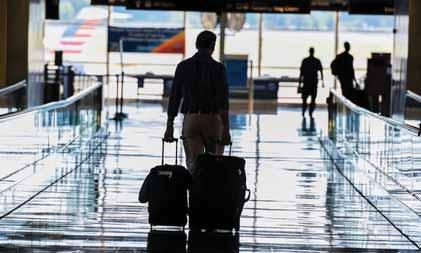
Passenger at the airport. Photo: Mp.news. the EU’s external borders in 2025, up 7.1% year-on-year. At the same time, the number of people
Tbilisi’s Whisky Festival 2026: A Premium Platform Where Culture Meets Business
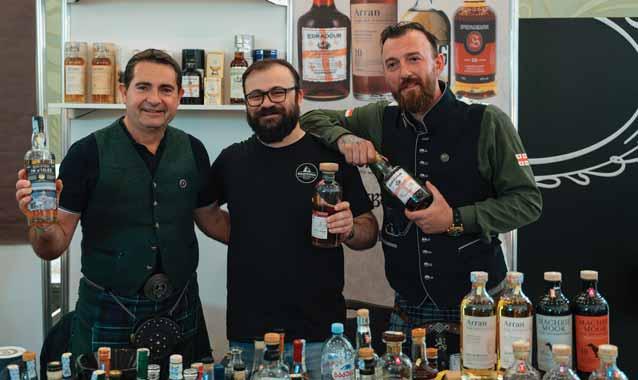
Set to take place on May 16-17 at the Sheraton Grand Tbilisi Metechi Palace, Tbilisi’s Whisky Festival 2026 is expected to bring together whisky producers, hospitality professionals, and enthusiasts from across the region for a weekend focused on spirits, culture, and industry exchange.
The festival will run from 14:00 to 21:00 on May 16 and from 12:00 to 19:00 on May 17.
Over recent years, the festival has grown
steadily, hosting more than 100 local and international brands. Organizers say last year’s edition drew more than 3,000 visitors, including representatives from the hospitality sector, distributors, media, and collectors. Rather than focusing solely on tastings, the event has increasingly emphasized the cultural connections surrounding whisky. Organizers point to the similarities between Scotland’s whisky traditions and Georgia’s deep-rooted wine culture, presenting the festival as a space where the two can meet. A new premium wine segment is also planned for the 2026 edition.
Among the international guests
expected this year is Burkay Adalıg, who will host a two-day masterclass titled “Journey into the World of Whisky.”
The festival program will also include live performances and cultural presentations. The State Ensemble “Abkhazeti” is scheduled to open the event, followed by performances blending Georgian and Scottish traditions through music, dance, costumes, and live instrumental acts.
The festival is being held with support from the Ministry of Culture of Georgia and Creative Georgia.
More information can be found on the festival’s official Facebook page, Instagram page, and YouTube channel.
Imedi Says European Parliament Imposed One-year Ban on Channel
BY LANA KOKAIA
British-sanctioned pro-government Georgian TV channel Imedi TV claims it has been banned from operating in the European Parliament for one year.
The broadcaster says it received an official letter from the European Parliament informing it of the decision.
The restriction followed a report aired on the program ‘Imedis Kvira’, an attempt
to interview Lithuanian MEP Rasa Jukneviciene, and complaints from Czech MEP Markéta Gregorová, Imedi says.
“We would like to express our concern regarding the proportionality of the decision,” Imedi stated. “The one-year restriction is a particularly severe measure that significantly affects the media’s ability to cover the activities of the European Parliament.”
The channel also says the Moldovan authorities denied accreditation to Imedi, Rustavi 2 and POSTV to cover the Council of Europe Committee of Ministers meeting in Chisinau.
On February 24, the UK Foreign, Commonwealth and Development Office imposed financial sanctions on Imedi and POSTV.
The British government said both channels had disseminated “deliberately misleading information” about Russia’s full-scale invasion of Ukraine to audiences mainly in Georgia.
London claimed the broadcasters promoted narratives supporting policies or actions that “destabilize or undermine Ukraine, or threaten the territorial integrity, sovereignty or independence of Ukraine.”
Shio III. Source: Reuters
BY TEAM GT
Ukraine Latest: Dozens Killed in Renewed Strikes as EU and UK Sanction Officials over Abducted and Militarized Ukrainian Children
COMPILED BY ANA DUMBADZE
Russia’s war against Ukraine entered another volatile week marked by intense fighting along the eastern and southern fronts, renewed mass aerial attacks on Ukrainian cities and infrastructure, and expanding Ukrainian drone strikes against Russian energy facilities deep inside Russian territory. Although both Moscow and Kyiv continued to speak of ceasefires and possible negotiations, developments on the ground offered little indication of de-escalation.
The heaviest fighting remained concentrated in eastern Ukraine, particularly around Pokrovsk, Kostiantynivka and nearby settlements in the Donetsk region. Ukrainian military reports said Russian forces continued repeated assault attempts in the Pokrovsk sector, trying to advance near Rodynske, Novooleksandrivka, Hryshyne, Bilytske, Udachne and other villages. On May 13 alone, Ukraine’s General Staff reported 187 combat clashes across the front, with Pokrovsk and Huliaipole among the most active directions. A day earlier, Ukrainian sources reported more than 200 engagements, underscoring the scale and persistence of Russia’s offensive pressure.
Despite the intensity of Russian operations, Moscow’s territorial progress appeared limited. The Institute for the Study of War assessed that Russia’s spring offensive had lost momentum, while Ukrainian counterattacks and long-range strikes were increasingly complicating Russian military operations. Russian forces continued attempting to improve tactical positions in Donetsk, Zaporizhzhia and Sumy regions, but there was no con-
fi
rmed major territorial breakthrough during the reporting period. At the same time, Moscow maintained maximalist diplomatic demands, including Ukraine’s withdrawal from occupied areas of Donbas as a condition for negotiations.
The week’s most dramatic escalation unfolded in the air. Following the collapse of a brief US-brokered ceasefire effort, Russia launched one of its largest recent drone and missile barrages against Ukraine. On May 13, Russian forces reportedly launched more than 800 drones across nearly 20 Ukrainian regions, targeting residential areas, railway infrastructure, ports and energy facilities. At least six people were killed and dozens injured. The scale of the assault affected areas close to NATO borders, prompting Poland to scramble military aircraft, Hungary to summon the Russian ambassador and Slovakia to temporarily close several border crossings with Ukraine.
The following night, Russia again struck Kyiv and other cities with drones, ballistic missiles and cruise missiles. Ukrainian officials said air defenses intercepted or electronically jammed hundreds of incoming targets, though several strikes still reached civilian areas and infrastructure. In Kyiv, at least one person was killed and 33 injured, while residential buildings sustained damage.
Ukrainian President Volodymyr Zelensky said the renewed attacks demonstrated that Russia had no genuine intention of ending the war.
Civilian casualties remained heavy throughout the week. Earlier in the reporting period, Russian attacks across eastern Ukraine killed at least 27 people, including 12 in one of the deadliest strikes reported this year. The attacks came shortly before Ukraine’s proposed ceasefire was due to begin, while Russia had separately announced a tempo-
rary Victory Day ceasefire for May 8-9. Both sides later accused one another of violations, and fighting quickly resumed along much of the front line. Ukraine, meanwhile, intensified its campaign against Russian military and energy infrastructure, increasingly targeting facilities located far from the battlefield. Zelensky said Ukrainian drones had struck a Russian gas facility located more than 1,500 kilometers from the Ukrainian border, marking one of Kyiv’s longest-range attacks since the beginning of the war. The Ukrainian president claimed that the strike targeted infrastructure linked to Russia’s energy sector as part of a broader strategy aimed at weakening Moscow’s military and economic capabilities. Zelensky said the operation showed Kyiv’s growing ability to strike strategic targets deep inside Russian territory, highlighting an increasingly sophisticated long-range drone campaign. The Russian authorities did not immediately provide detailed information regarding the reported attack, and the extent of the damage could not be independently verified.
Ukraine’s strikes on Russian energy infrastructure continued elsewhere. Ukrainian drones reportedly targeted oil and gas facilities deep inside Russia, including the Perm oil refinery, which Reuters reported had completely halted processing following a May 7 attack, and a gas processing facility in Astrakhan region, where falling drone debris reportedly sparked a fire. Other Russian refineries and energy sites, including facilities in Tuapse, Syzran, Novokuibyshevsk, NORSI and Ust-Luga, as well as port infrastructure, have been affected in recent months. Kyiv argues that such strikes are aimed at degrading Russia’s logistical capabilities, reducing fuel supplies and limiting revenues that support Moscow’s war effort. Russia, mean-
while, accuses Ukraine of targeting civilian and critical infrastructure. Diplomatic efforts this week once again exposed the gap between rhetoric and battlefield realities. Zelensky accused Moscow of rejecting serious ceasefire initiatives, while Russian officials continued framing negotiations around conditions widely viewed in Kyiv and among Western allies as unacceptable. At the European level, defense ministers meeting in Brussels on May 12 discussed Ukraine’s urgent battlefield requirements, defense-industrial cooperation and long-term security guarantees. The European Union announced that Ukraine is expected to receive the first disbursement from a €90 billion support loan in June, while additional European Peace Facility funding was also discussed.
NATO support remained equally central to Ukraine’s military outlook. Secretary General Mark Rutte reportedly urged allies to dedicate 0.25% of GDP to supporting Ukraine, amid concerns that Kyiv’s military requirements remain substantial as Russia continues expanding missile and drone production. NATO has repeatedly emphasized that allied support since 2022 has included unprecedented levels of military equipment, training and logistical assistance.
Western pressure on Moscow also intensified this week, as the EU and UK imposed new sanctions targeting Russian institutions and officials accused of overseeing the deportation and ideological indoctrination of Ukrainian children. The EU announced sanctions against 23 institutions and individuals, while Britain introduced a broader package targeting 85 people and entities, roughly one-third of whom were linked to what London described as Russia’s campaign to forcibly deport and militarize Ukrainian children.
Based on EU estimates, nearly 20,500
Ukrainian children have been deported or forcibly transferred to Russia since the beginning of Moscow’s full-scale invasion in February 2022. Brussels described the practice as a grave violation of international law. The sanctions package targets individuals and institutions allegedly involved in subjecting Ukrainian children to pro-Russian ideological education, military-oriented activities and patriotic indoctrination programs. The measures, coordinated with Canada and approved by all 27 EU member states, include asset freezes and travel bans.
Among those sanctioned by the UK is the Warrior Center, formally known as the Center for Military and Patriotic Training and Education of Youth, where Ukrainian children are reportedly exposed to military training and proKremlin ideology. Britain also sanctioned Yulia Sergeevna Velichko, the Moscowinstalled minister for youth policy in the self-proclaimed Luhansk People’s Republic, over her alleged role in implementing youth initiatives in occupied territories. Responding to the measures, Zelensky accused those targeted of helping erase Ukrainian national identity. Russia has denied wrongdoing, maintaining that children were relocated for protection from frontline fighting and may be returned when relatives are identified.
The UK’s wider sanctions package also targeted Russia’s alleged information warfare operations, including individuals linked to the Social Design Agency, a Russian state-funded organization accused of running disinformation campaigns abroad and attempting political interference in foreign countries, including Armenia. The move comes during increasingly strained relations between Moscow and Yerevan, traditionally one of Russia’s closest regional partners.

Europe Day in Tbilisi Turns Expo Georgia into a Full-Day Forum on EU–Georgia Relations, Identity, and Enlargement Debate
BY TEAM GT
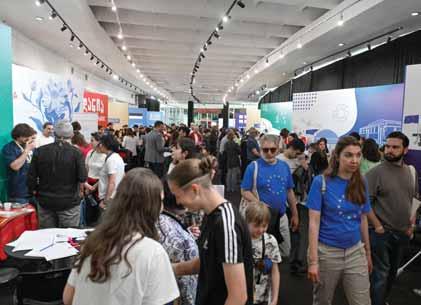
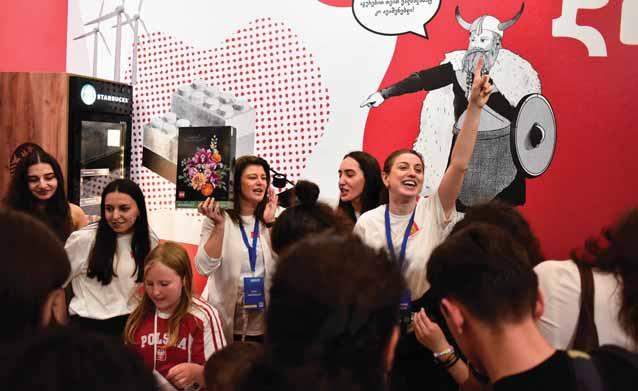
Europe Day was marked in Tbilisi on May 9 at Expo Georgia with a large-scale public program that brought together thousands of visitors for a day of exhibitions, discussions, and cultural events focused on Europe’s role in Georgia’s present and future.
The event was opened by EU Ambassador to Georgia Paweł Herczynski, who framed Europe as a political and cultural space built on shared values rather than a single identity. He said diversity is not a weakness but a defining strength of the European project.
“Europe is a space of diversity, where each country not only preserves but also enriches its own culture and identity,” Herczynski said. He added that the European Union functions through a shared framework of democracy, human rights, and the rule of law, while allowing member states to maintain their own traditions and national character.
He noted that Georgia already shares many of these values and that the EU continues to support its European aspirations. Enlargement, he said, is a structured and long-term process that requires sustained reforms, institutional alignment, and political commitment from candidate countries.
Referring to the 1950 Schuman Declaration, Herczynski said Europe Day reflects the origins of a project that transformed a continent of conflict into one of cooperation. He said the same process continues today, including through engagement with countries such as Georgia.
Across Pavilions 5 and 6, the “Team Europe” exhibition presented national showcases from EU member states, with interactive displays covering science, medicine, engineering, technology, culture, and innovation. The exhibition aimed to highlight the EU as a functioning network of cooperation that already influences education, research, and cultural exchange in partner countries.
Organizers said the approach was intended to make European integration more tangible, focusing on practical examples rather than abstract messaging. Visitors moved through country-branded spaces that combined national perspectives with shared European themes.
Families and groups of friends took part in quizzes, collected country flags, and sampled country-specific delicacies at various stands, with prizes awarded throughout the day. The exhibition also featured hands-on activities for children, including mosaic-making, book-making, and other crafts, alongside interactive artificial intelligence experiences
designed to introduce younger visitors to emerging technologies in an accessible format.
A separate pavilion marking 30 years of EU–Georgia relations traced the development of cooperation since the 1990s. It highlighted EU support for small and medium-sized enterprises, public sector reform, and efforts to strengthen democratic governance.
It also featured environmental and climate-related initiatives, including green transition programs, as well as digital transformation projects introducing new administrative tools and technologies in Georgia. These were presented as long-term investments in institutional capacity and economic modernization.
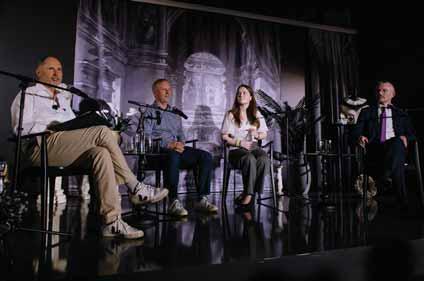
One of the central elements of the program was the live podcast studio “My Europe, My Future” in Pavilion 4, designed as an open-format discussion space where visitors could observe conversations as they unfolded.
Between 1:00 PM and 5:00 PM, six sessions were held, each lasting around 30 to 40 minutes and bringing together ambassadors, experts, and public figures. Topics included European identity, education, youth participation, environmental policy, digital development, and Georgia’s European trajectory.
Organizers described the format as an attempt to move beyond conventional panel discussions and create a more accessible public dialogue on European integration.
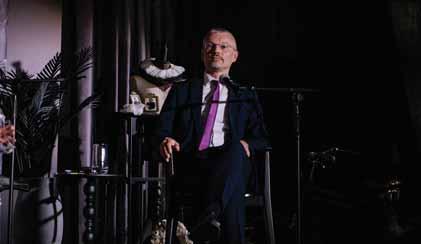
In one of the sessions, “What Makes Us European?”, Anatolii Maliuska, Counselor at the Embassy of Ukraine in Georgia, offered a detailed reflection on European identity and EU enlargement, particularly in relation to Ukraine and Georgia.
He described European identity as multi-layered, combining geography, culture, and political values. “Being European is a mixture of geographical,
cultural, and political identity, anchored in shared values like democracy, human rights, and the rule of law,” he said, adding that Europe should be understood primarily as a values-based space.
Maliuska argued that EU integration represents a broader societal transformation, not only an institutional process, requiring alignment in governance, law, and public administration.
Speaking on Ukraine’s prospects, he said EU membership would bring access to the single market, economic growth through participation in the world’s largest trade bloc, and freedom of movement within the Schengen area.
He described these as structural changes with direct impact on everyday life, particularly for younger generations and businesses.
Maliuska also said enlargement benefits the EU itself, strengthening its geopolitical position and internal cohesion. Ukraine’s accession, he said, “could and must bring back to the EU the so-called appetite for enlargement,” adding that the process is necessary for both sides.
He characterized enlargement as a mutual process requiring adaptation on both sides, particularly in a period of geopolitical uncertainty.
Addressing security, he said the EU’s stability is closely tied to that of its neighborhood, and that enlargement forms part of a broader framework for maintaining peace and predictability across the continent.
One of the most noted moments of his remarks came when he said, “We need a tandem to dance tango,” using the metaphor to describe EU–candidate relations as a coordinated process requir-
ing alignment and shared responsibility.
On Georgia, Maliuska emphasized sovereignty and domestic decision-making, saying the country’s future direction must be determined by its citizens. At the same time, he expressed confidence in Georgia’s European trajectory, calling it “firm” and describing it as part of the country’s historical and constitutional identity.
He said this path is the result of longterm cultural and political development and is now reflected in Georgia’s modern institutional framework, adding that progress toward EU integration depends on continued reforms and alignment with European standards, but describing it as a process of convergence rather than external pressure.
Alongside the discussion program, Expo Georgia hosted education and engagement zones featuring Erasmus+
information, student mobility initiatives, and career development opportunities linked to EU programs.
Outdoor areas included an agro-market focused on local production and sustainable agriculture, alongside environmental initiatives under the “Georgia Goes Green” program. Cultural events ran throughout the day, including children’s choirs and orchestras, and concluded with a performance by Georgian band Bedford Falls.
Organizers said the aim of Europe Day 2026 was to present the European Union not as a distant political concept, but as a framework already embedded in Georgia’s institutions, education, and cultural life through sustained cooperation.
Europe Day is held annually on May 9, marking the 1950 Schuman Declaration, which laid the foundations for what would become the European Union.
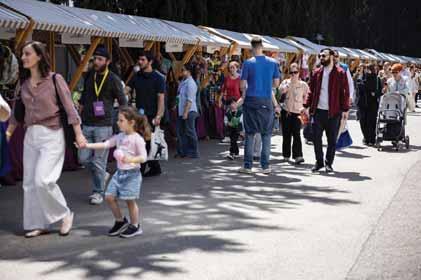
Europe Day 2026. Source: EU in Georgia
Competitions for the guests. Source: EU in Georgia
Counselor for the Ukrainian Embassy in Georgia, Anatolii Maliuska. Source: EU in Georgia
The Illusion is Officially Dead
OP-ED BY GEORGE KATCHARAVA
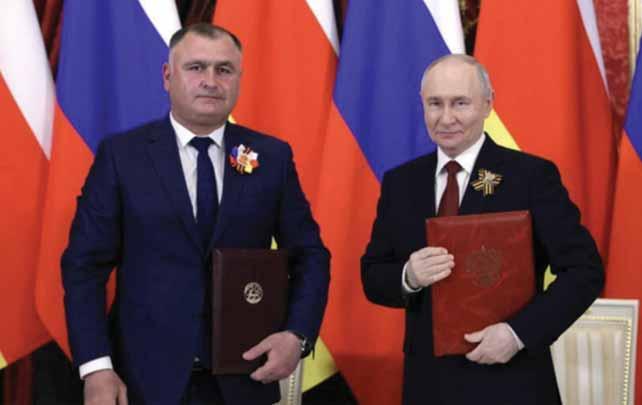
The signatures dried quickly on the document signed in Moscow on May 9, 2026, but the geopolitical shockwaves are still reverberating across the Caucasus. When Russian President Vladimir Putin and de facto leader from Tskhinvali Alan Gagloev put pen to paper for the "Treaty on Deepening Allied Cooperation," it was framed as a bureaucratic upgrade. In reality, it represents a ruthless acceleration of Moscow’s favorite gray-zone strategy: creeping annexation. By swallowing the economic frameworks, energy networks, and civil service structures of the breakaway Tskhinvali region, Russia did not just absorb an enclave; it effectively erased the final, fragile illusions of South Ossetian so called “independence.”
For international jurists, the document is a legal fiction, a nullity under global statutes. It flouts the bedrock principle of international law prohibiting the acquisition of a territory through the threat or use of force. Because the global community recognizes South Ossetia not as a sovereign state but as an occupied territory under effective Russian control, the region lacks the international legal personality required to sign a binding treaty. This is de facto absorption dressed up in legal jargon. By harmonizing customs, merging energy grids, and allowing dual citizens to hold state office, Moscow is executing a quiet takeover that avoids the global outcry of formal annexation while securing the exact same structural outcome. For Georgia, the sovereign stakes could not be higher. Tskhinvali’s leadership openly boasted that the pact is a legal stepping stone toward formal integration into the Rus-
sian Federation. By cementing coordinated defense policies, Moscow has permanently anchored its military footprint deep within Georgia’s internationally recognized borders.
Yet, Tbilisi is not entirely powerless. It holds a sophisticated legal arsenal of diplomatic sanctions, economic embargoes, and airspace restrictions capable of converting Moscow's anti-Georgian moves into painful experience. If the government expects general public, local elites and international observers to believe in its sovereign survival, it must weaponize these tools immediately.
On one end of the spectrum, long-term
legal warfare carries the lowest immediate political risk for Tbilisi but inflicts pain on a Kremlin that routinely flouts international norms. Filing state-responsibility cases at the International Court of Justice or the European Court of Human Rights serves to deepen Moscow's diplomatic isolation and solidify its status as a lawless actor. Even if Russia ignores the verdicts, political implications on international arena are significant.
To inflict more immediate discomfort, Tbilisi could escalate to measures by revisiting its controversial immigration policies. Introducing step-by-step stricter
visa regime for Russian citizens, who have flooded into Georgia since the invasion of Ukraine, would disrupt the Kremlin’s domestic stability by squeezing its migrating population and signaling a hard break from the economic status quo.
The most severe, high-impact measures lie in leveraging Georgia's geographic and aviation sovereignty. Georgia could target the skies by banning flights by Russian airlines and completely sealing Georgian airspace to Russian carriers, effectively severing lucrative transit corridors. Taking this to the absolute diplomatic nuclear option, Tbilisi could shut its airspace to Russia-bound air
traffic originating from third countries. This move would instantly turn the South Caucasus into a logistical bottleneck for Moscow, forcing foreign airlines to reroute flights at immense fuel and time cost, thereby multiplying the economic pressure on Russia's international connectivity.
Simultaneously, Georgia can weaponize its territory on the ground by tightening customs oversight and slowing down compliance checks at the critical Lars checkpoint, the lone functioning land border crossing between the two nations. This would choke off the parallel import pipelines that Russia relies on to bypass Western sanctions, introducing costly delays into Russian logistics.
For naive observers who still believe a pragmatic, non-confrontational approach can placate Moscow, this treaty offers a cold dose of reality. For years, the Kremlin has demanded that Tbilisi sign a binding "non-use of force" agreement, a diplomatic trap designed to force Georgia into recognizing its breakaway regions as equal neighbors. While demanding peace on paper, Russia has systematically dismantled Georgia’s sovereignty on the ground. The illusion that Moscow will ever peacefully return South Ossetia or Abkhazia in exchange for Georgian neutrality or anti-Western concessions is officially dead. Moscow views these enclaves as a permanent geographic veto over Georgia’s Euro-Atlantic aspirations. As the dust settles on this latest pact, relations between Tbilisi and Moscow have entered a deep freeze, proving that Georgia's only real shield lies in relentless international visibility, legal defiance, and a resolute alignment with Western security networks.
Author’s bio: George Katcharava is the founder of eurasiaanalyst.com, a geopolitical risk and advisory firm.

Alan Gagloev meets Vladimir Putin in Moscow. Source: cominf.org
“I will fight as long as I can physically keep fighting, or until the war comes to an end”- Sgt. Ethan Harcourt. Part 1
VAZHA TAVBERIDZE
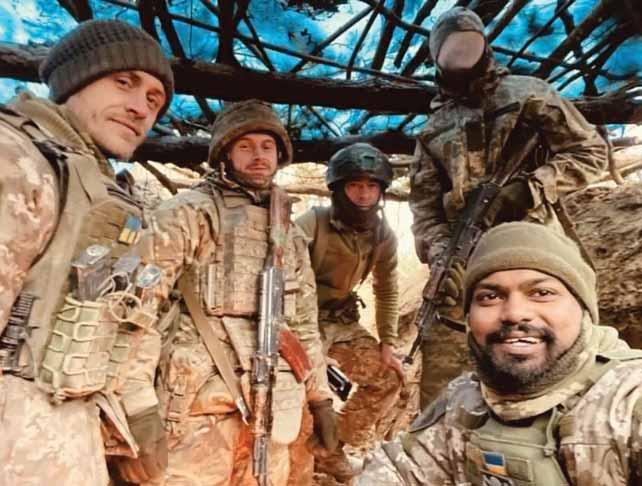
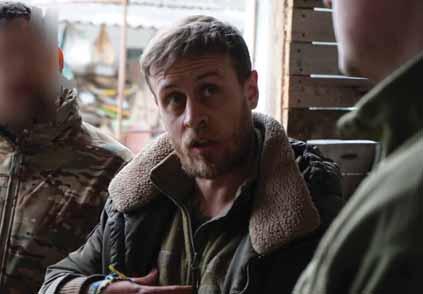
Speaking from a safehouse in Zaporizhzhia, Ethan Harcourt, a 29-year-old Briton, call sign “Smoggy,” describes a journey that has taken him from building sites in Teesside to the drone units of the Ukrainian Armed Forces. A former landscaper and builder, and father to a 12-year-old son, Harcourt had no military background before the war in Ukraine began. What followed, he says, was a growing fixation with the conflict, years of reading and research, and a decision he increasingly felt was inevitable.
“I didn't have a military background or anything like that before I came to Ukraine,” he explains, recalling how he continued working for himself for a time after the full-scale invasion began, before travelling in late December 2023 to join the International Legion.
The decision, he adds, did not come as a complete surprise to those closest to him. “My family, my friends, they all expected it, if I'm honest,” he says. “Everyone was a bit concerned and upset. But I think it was slightly easier for them because they’d all known I was eventually going to do it.”
This interview was conducted by Radio Free Europe/Radio Liberty’s Georgian Service. This is Part 1 of a two-part conversation.
FOR A MAN OF NO MILITARY EXPERIENCE, WHAT MADE YOU WANT TO FIGHT FOR UKRAINE?
There's a personal thing in it for the military experience: when I was younger, I applied to join the British military. But as I’d had an accident while playing football and damaged a lot of the ligaments in my knee, I was rejected over medical reasons.
It did take me a long time to recover from that properly, to be decently fit again. I've always had a part of me that wanted to be in the military. I'm also very pro-European. I disagreed with Brexit. I was very much a Remainer. And I see Ukraine as a fundamental part of Europe. For a unified Europe, a unified
European military to exist, you need to be willing to defend all of Europe. I think the British should be doing more, and one of the things that I said to myself is “if I'm going to make this argument that I want Britain to be doing more, then I should be willing to do it myself.” So, around June 2023, I applied for the Legion. I headed out to Ukraine that December.
FIRST YOU WENT TO POLAND, RIGHT?
Yeah, I got a flight out to Poland, arrived in Krakow. Then I got a coach to Ukraine, crossed the border and met some representatives from the Legion who were stationed there. The Legion has been largely incorporated into Ukraine’s Armed Forces now, but back then it was more of an independent admin. Once you get there, you do a basic six-week training program, which usually extends a few weeks either side of that in being stationed places and moving to training centers and the like. Compared to Western military, or any military around the world, where you're going to get a dedicated six months of basic training and then specialist training on top of that, it is limited.
SO, MORE OF A CRASH COURSE.
Yes, exactly. Ukraine simply doesn't have the time or means to do a full course; doesn’t have the luxury. You just need people to get grounded, get a sense of what's going on, get the basics, and then pick up the job as they go along.
WHAT DID YOU TRAIN AS?
I came to join the infantry. And as we were doing the infantry training, they picked seven or eight of us out to do drone training. It wasn't an opportunity I could turn down.
I did really well with it. After, they asked if I’d be willing to go straight into being a drone pilot and I agreed. I joined the Bravo UAV team in 1st Battalion as a Mavic drone pilot.
Starting there, I progressed to squad leader, then platoon leader. And then I left and came to where I am now, with the 24th Separate Assault Brigade.
WHERE HAVE YOU FOUGHT AND WHERE WAS IT HARDEST?
My first deployment was at Andriivka. It's a tiny but tactically important village to the south of Bakhmut. I did two missions there.
And then I had my first major deployment, in June 2024, to Staromajorsk. That was eye-opening. Until then, everyone I'd been through training with was pretty much still alive; we'd all had maybe one or two missions. The odd person had had a third mission, and they'd all gone pretty smoothly. So, I think we had a false sense of security when we initially deployed to Staromajorsk.
We just weren't equipped for what we encountered. When we got there, Rubicon, one of Russia’s better FPV drone teams, just picked us off left, right and center throughout Staromajorsk. We were there for a month and a half and lost quite a few guys.
We went straight from Staromajorsk to Kurakhove, but at that point we were already slightly depleted.
OF THE MEN THAT YOU TRAINED WITH, HOW MANY ARE GONE AT THIS POINT?
My group (No.15) had 30 or so people in it, but you intermingle with groups 16 and 14, so you become friends with the
groups around you as well. By the end of the mission, we’d lost nine people between the three groups of the 50 of us that went to Staromajorsk. The attrition rate wasn't too terrible, especially once we'd stabilized in Kurakhove and brought in some new guys. We went to Toretsk not long afterwards. We were in Toretsk from September 2024 to January 2025, right at the hottest part of it. That’s where we had our highest losses. I lost guys from my drone team, a young English lad, and a Chinese kid. I think he was the first actual Chinese person to die out here as well. Out of my specific training group, there are six of us left fighting. About half went home, a quarter got injured, and the other quarter passed.
WAS TORETSK THE KIND OF SPOT WHERE YOU GET TO THINK, “I’M NOT MAKING IT OUT OF HERE ALIVE”?
The first time I had that kind of thinking was in Staromajorsk. I was bringing the drone back and this shelling started coming in and we were like, “oh, that's pretty close.” But you get used to the shelling. There's always some rounds that land close, even if it's indirect. You learn the difference pretty fast between when they're actually coming for you.
Maybe about an hour later, they started with the drones, mortars, and odd bit of tank fire. It went on over the course of the night and completely leveled the area I was in. Four of us were hunkered down in the bunker, and we had to pull out to fix equipment and change position. I remember thinking: “There isn't anything I can do about this right now. I no longer have input into my future. The best I can do is sit and hope that one of these isn't going to go through the roof.”
It's a scary moment, but you have to do it. What helps me deal with it when I'm in those situations is to try and make sure I've got a detailed mental plan for the next basic steps I do. It's about planning the next small steps, so that when you have a close impact, when you have something hit next to you, when you get that moment of, “oh God,” you then go, “right, now I need to be opening this door, now I need to be moving through here.” When you go through that, you have to be calm, otherwise you're not going to be able to be a soldier. You still have to do your job. Hesitation is how you expose yourself, and how you can end up endangering others.
YOU MUST HAVE ACCUMULATED QUITE A FEW MEMORIES, GOOD AND BAD, THAT ARE GOING TO STAY WITH YOU FOR THE REST OF YOUR LIFE. CAN YOU SHARE SOME?
I’d rather speak about the fond ones than the horrible ones. I have lots of particularly fond ones with a lot of my friends that passed. There's one where I took a couple of weeks’ holiday after Kurakhove and before Toretsk. One of my friends who passed in Toretsk, just before I was leaving, he was like, “Are you definitely coming back?” And I was like, “I am, I am, don’t worry.” And I remember, when I came back, he ran up to me and hugged me and he was like, “I was thinking, you know, do I stay, do I go? But now you're back, I'm staying too.”
A couple of us arrived back that day. And we were all like, “yeah, we're all going to stick, we'll get through this next mission together.” It was a nice moment.
IT MIGHT NOT BE THE MOST SENSITIVE THING TO ASK, BUT DO YOU REMEMBER YOUR FIRST CONFIRMED KILL? WHAT DID IT FEEL LIKE?
I was running a Mavic in Staromajorsk to Turetsk. I do FPVs now. And throughout Staromajorsk and Kurakhove, I did a lot of drops, which were pretty damn accurate, in very small bunkers. I'm pretty certain I got a few people there, but I didn't really get anyone confirmed or on camera until Toretsk. We got a few in Toretsk, and it was like 110% confirmed. The first kills, I don't think it bothers you, in a way, because you've got all that adrenaline going through you, and the thought that when they're attacking, you're actually defending something. This is your guys' lives at stake, and you've just managed to save them, or to end an assault. So you are, like, “Thank God, amen to that,” and you cheer it. The first one to make me ponder was a Russian in Toretsk. There was a group of them trying to move into a building. We'd killed one of them under a tree, and this other one got wounded by the shrapnel. He ran into the building with his friend, and his legs were bleeding. He hobbled outside again, put a tourniquet on, and then he just crawled and crawled and crawled.
It went on for a little bit, and I think that's the first time that I felt something about it. But without sounding inhumane, it's difficult to phrase this or speak about this without sounding inhumane, but you become numb to it in a sense. Towards death in general.
When one of my best friends died in Staromajorsk, I phoned my family afterwards. I was gutted. This was my first major loss: he was the first of my really good friends to die. When my other friend, “Guardian” died, I was off rotation. And I simply got up, ate cake, and was like, right, well, it's my shift to work the CP now, so I'll just carry on. Know what I mean? In a sense, you become numb to it. Instead of going into hysterics or weeping or mourning, you just carry on doing what you need to do. You just try take whatever quiet moments you can get, I guess, moments for yourself. But 90% of the time out here, you've just got to keep going.
HOW DO YOU THINK THIS WAR HAS SHAPED YOU? HOW DIFFERENT IS ETHAN THE BUILDER FROM ETHAN THE SOLDIER?
I can feel the difference in myself. I've definitely grown as a person, and in a good way. I never thought I'd be physically in a position of being someone who's led people out here, of being someone who has people having faith in me like that. But how much has changed, that awaits to be seen. I'll go back to normal life and see the distinction between me and the life I lived before. Part 2 next week.
Ethan Harcourt in Ukraine. Source: RFE/RL INTERVIEW BY
Ethan Harcourt in Ukraine. Source: RFE/RL
Georgian Firms Attend SelectUSA Summit
BY LANA KOKAIA
The US Embassy in Georgia
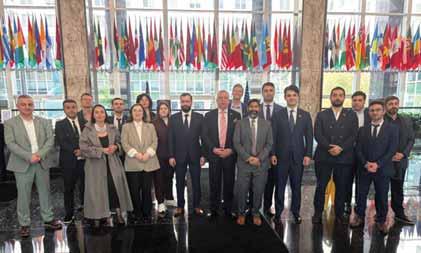
says it hosted 12 Georgian companies at the 2026 SelectUSA Investment Summit last week, joining one of the United States’ flagship events for attracting foreign direct investment.
Held annually near Washington, DC, the SelectUSA Investment Summit is organized by the US Department of Commerce and brings together global investors, US economic development officials, and companies looking to expand into the American market. It is widely regarded as the highest-level investment promotion platform in the United States.
According to the Embassy, the Georgian delegation used the summit to present their businesses, meet potential American partners, and receive guidance from US counterparts on investment procedures and market opportunities.
“The United States is the world’s leading destination for foreign direct investment, and we stand ready to collaborate,” the Embassy said in a statement.
The Embassy said Georgian companies explored opportunities in sectors including technology, manufacturing, and innovation, with particular attention to potential partnerships in emerging industries such as artificial intelligence and
advanced production.
“From artificial intelligence to manufacturing, Georgian companies showcased their expertise, networked with US partners, and learned from their American counterparts,” the Embassy noted.
It added that participation in the summit helps strengthen commercial ties between the two countries and supports the development of long-term business partnerships between Georgian firms and US investors.
The event also coincided with the 250th anniversary of the United States, which will be marked in 2026 with a series of
national commemorations highlighting the country’s history of economic growth and innovation.
The Embassy said the summit offers Georgian firms not only access to potential investment but also exposure to global best practices in scaling businesses, attracting capital, and building international partnerships.
Officials added that continued engagement in platforms such as SelectUSA is expected to deepen economic links between Georgia and the United States, particularly in high-growth sectors where Georgian companies are increasingly active.
Unemployment Rate in Georgia Remains at 13.9% in 2025, Geostat Reports
BY LANA KOKAIA
Georgia’s unemployment rate remained unchanged in 2025 compared to the previous year and stood at 13.9%, Geostat reports.
Official statistics show that both employment and the labor force — people actively seeking work — declined last year.
Geostat data shows the labor force
participation rate decreased by 0.3 percentage points year-on-year to 54.5%, while the employment rate fell by 0.2 percentage points to 46.9%.
The sharpest decline in unemployment was recorded in the regions of RachaLechkhumi and Kvemo Svaneti, Kvemo Kartli, and Guria, where the rate fell by 3.1, 2.9, and 2 percentage points respectively.
Tbilisi recorded the country’s highest unemployment rate at 17.5%.
The unemployment rate also remained higher among men than women.
Geostat notes that unemployment was highest among people aged 15-19 at 39%, while the lowest rate was recorded among people aged 65 and older at 3.5%, which the agency links to low economic activity in that age group.
In 2025, around 1.4 million people were employed in Georgia, including 961,000 hired employees and 426,000 selfemployed individuals, while 224,000 people were considered unemployed.
The labor force in Georgia totaled approximately 1.6 million people last year.
Government Plans
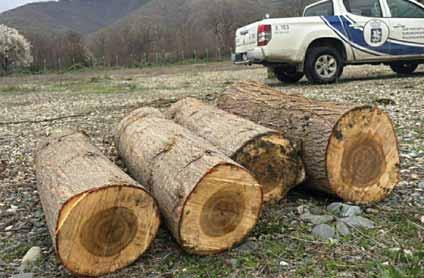
New Forest Guard System to Fight Illegal Logging
BY LANA KOKAIA
The Georgian government plans to restore physical forest protection by creating a new “forest guard” position and adding 499 employees to the National Forestry Agency under amendments to the Forest Code submitted to parliament.
The draft law, prepared by the Ministry of Environmental Protection and Agriculture, says illegal logging remains one of the country’s main environmental challenges.
The explanatory note states that preventing illegal logging requires physical forest protection, stronger human and technical resources, clear responsibility for specific territories, and regular monitoring.
Under the proposed amendments, the National Forestry Agency would regain responsibility for physical forest protection.
The government says the changes aim
to improve forest protection, reduce illegal logging, and create a more effective and less bureaucratic forestry management system.
The draft law proposes creating the position of “forest guard,” with each guard assigned to a specific territory. Forest guards would be responsible for physical forest protection, prevention and detection of administrative violations, ensuring sustainable forest management principles are followed, supervising proper allocation of logging activities, and monitoring the correct preparation of timber origin documents.
“The forest will be better protected and managed,” the authors of the draft law state.
The amendments would also increase staffing at the National Forestry Agency by 499 employees.
The changes would increase state budget spending by GEL 28.8 million in 2026 and by GEL 19.7 million annually between 2027 and 2029.
The draft law is expected to enter into force immediately after publication.
Georgia Scales Up Climate Resilience in 100 Communities
BY TEAM GT
The United Nations Development Program (UNDP), in partnership with Georgia’s Ministry of Environmental Protection and Agriculture and civil society organizations, ‘Black Sea Eco Academy’ and ‘Hydroc’, is supporting 100 high-risk communities across Georgia to better prepare for climate-related disasters. Community-based projects cover eleven river basins, including Alazani, Chorokhi, Enguri, Iori, Khobistskali, Khrami/Ktsia, Kintrishi, Mtkvari, Natanebi, Rioni, and Supsa.
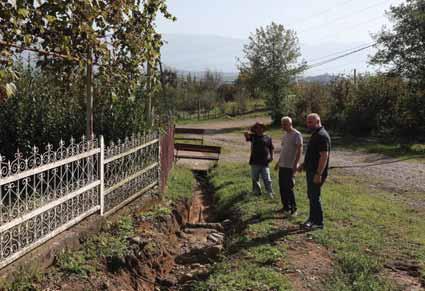
Through this initiative, local communities are identifying immediate climate threats, developing community-based disaster risk management plans, and implementing practical measures to prevent disasters where possible and reduce their impact if and when they happen.
This effort is part of a nationwide climate program supported by the Green Climate Fund (GCF), the Swiss Agency for Development and Cooperation (SDC), and the Government of Georgia. The programme aims to strengthen the country’s ability to withstand climate hazards
while safeguarding people, infrastructure, and the economy. “At the heart of climate resilience are people. When communities understand their risks and take action, they can protect lives, livelihoods, and their future,” said Douglas Webb, UNDP Resident Representative in Georgia.
CLIMATE ACTION STARTS LOCAL
By the end of May 2026, 50 communities
in western Georgia will have completed their disaster risk reduction (DRR) plans and begun implementing tailored, community-led measures. Blending infrastructure improvements with bioengineering and nature-based solutions, these interventions respond directly to local climate risks.
Ongoing activities include cleaning river channels, constructing small-scale gabions, protective banks and backfills,
installing drainage channels and culverts, and planting deep-rooted trees and shrubs to stabilise riverbanks and slopes.
In eastern Georgia, similar activities will be implemented in 50 additional communities, with all works scheduled for completion by the end of 2027. Each community-based DRR project is coordinated with local councils established in all 100 target communities. Funding and technical assistance are provided through the UNDP-led climate program. Wherever available, community-level plans are aligned with municipal emergency management plans, strengthening coordination and improving overall resilience to climate-driven hazards.
BUILDING CLIMATE
RESILIENT GEORGIA
Georgia is among the countries supported by the GCF in addressing climate change through comprehensive climate programs. This partnership presents a unique opportunity to develop systemic, long-term approaches to climate resilience, drawing on global experience and leveraging international climate finance mechanisms.
Across Eastern Europe, Georgia joins eight other countries (Albania, Armenia, Azerbaijan, Bosnia and Herzegovina, Moldova, Montenegro, North Macedo-
nia, and Serbia) that benefit from GCF support. Each GCF-funded programme is tailored to national and local contexts, ensuring that climate solutions respond to specific risks and development priorities.
In Georgia, the GCF-supported program plays a key role in reducing the risk of climate-induced disasters, strengthening national climate strategies, and protecting both people and the economy from the growing impacts of climate change. In addition to GCF financing, the program is co-financed by the Government of Georgia, with continued support from Switzerland and a six-year contribution (2020–2025) from Sweden. The total programme budget amounts to up to US$74 million, of which US$38 million is provided by the Government of Georgia and US$36 million by the GCF, Sweden, and Switzerland combined.
The Government of Georgia, through the Ministry of Environmental Protection and Agriculture, leads this nationwide effort. UNDP is responsible for implementing program activities funded by the GCF and other international partners, ensuring effective delivery and coordination across all components.
More information on Georgia’s climate program is available on the UNDP website.
Improving climate resiliance throughout Georgia. Source: UNDP
SelectUSA Investment Summit 2026. Source: US Embassy Tbilisi, Georgia
Becoming the Forest: How Georgia’s Wildlife Photographers Capture the Wild
BY LANA KOKAIA
Imagine deer moving through the forest – branches snapping, leaves shifting, their calls echoing as they gather out of sight. To see them, and especially to photograph them, you have to become part of the forest yourself. This is one of the rules wildlife photographers in Georgia live by – from Levan Kobalia, Irakli Shavgulidze, Maia Duishvili, Lasha Shalamberidze, Davit Samkharadze, Giorgi Ebanoidze, and others: becoming part of the landscape is the only way to truly witness it.
“You get a completely different feeling when you witness nature awakening. We mostly shoot at sunrise and sunset, when the light is best and the strongest shots can be captured,” says Kobalia, who has been passionate about photography since childhood, and started professional shooting in 2012.
For him, wildlife photography is an exciting hobby and a way to relax.
“I’ve been running a medical business since 2015, but without bird photography, I would probably go crazy. I can’t imagine doing my main job without this,” says Levan.
Maia Duishvili, a senior executive assistant to the World Bank’s South Caucasus regional director, started wildlife photography during the COVID-19 lockdown. Throughout the pandemic, she spent her weekends in Samtskhe-Javakheti photographing nature.
Her fascination with wildlife, however, began in childhood. Growing up in the Soviet Union, she vividly recalls the moment her father brought home a large National Geographic book.
“I remember thinking, ‘How lucky you must be to have a camera and photograph these animals.’ That feeling stayed bur-
ied for years, until it resurfaced during the pandemic,” she says, adding that a love for nature and wildlife should be nurtured from an early age.
Javakheti – which she calls “Treasure” – remains one of her main sources of inspiration, despite being little known to many Georgians.
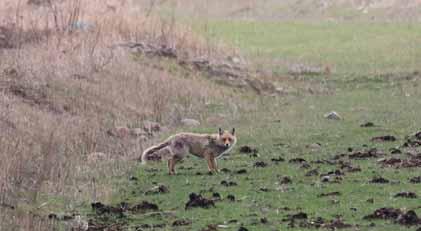
“I always go alone,” Maia explains about her time in the field. “You shouldn’t go out thinking, ‘I must photograph something today.’ You go because you love nature – and then the shot comes naturally. You also need to understand animal behavior. A fox will run, but at some point it will look back – that’s your moment. Birds are the same. You learn their patterns, discover something new every time, and that’s what keeps me motivated.”
Getting the shot often requires a long period of preparation: going out at night, hiking to a chosen location, hiding before sunrise, and then waiting and shooting throughout the day.
For Davit Samkharadze, a film lighting technician, wildlife photography is, as it is for many in the field, a hobby with no commercial value. In eastern Georgia, he mainly photographs birds near Lakes Kumisi and Javakheti, and in western Georgia, near Lake Paliastomi.
“It’s a big adrenaline rush. The greatest motivation, and challenge, is to photograph a rare bird. Although you may not always get the shot, simply sitting camouflaged in nature is also a great pleasure,” Davit says.
Georgia is home to many endemic species, and each year migratory birds traveling from north to south use the country as a vital stopover on their long, exhausting journeys.
In the wild, birds and animals will only begin to appear a couple of hours after the photographer has hidden. While many birds rely primarily on sight, animals are highly sensitive to scent, so
photographers avoid smoking or wearing perfume, and stay downwind to remain undetected.
“You need to understand the habits of each bird. And when you finally get the shot, it brings real joy. People can hide their emotions, but here you capture everything as it is,” says Lasha Shalamberidze, who has worked as a photographer for 15 years and turned to wildlife photography two years ago, inspired by his colleagues.
To give their work a more structured form and raise awareness about wildlife, photographers founded the Georgian Wildlife Photographers Association earlier this April. One of its founders, Levan Kobalia, says the association aims to increase general awareness of birds and animals. It also brings together Georgian wildlife photographers, who currently number about 40, 10% of whom are women.
“By sharing our photos, we want people to understand that not all small birds are sparrows, not all large birds are eagles, and not all long-legged birds are cranes,” says Kobalia.
Georgia’s wildlife photographers believe their work can contribute to environmental protection. They use photography to raise awareness, sharing their images on both personal and public social media pages. They also speak about the challenges they see in the field, including poaching, and note that some Georgians, among them children, have often been seen killing birds.
“There are many cases of animal cruelty. In Georgia, animals and birds are often feared, and we really want to teach children in schools to love and respect them,” Shalamberidze says.
Wildlife photographers say the goal goes beyond capturing the perfect shot: it’s about helping people, especially children, learn to see nature not with fear, but with curiosity and respect.
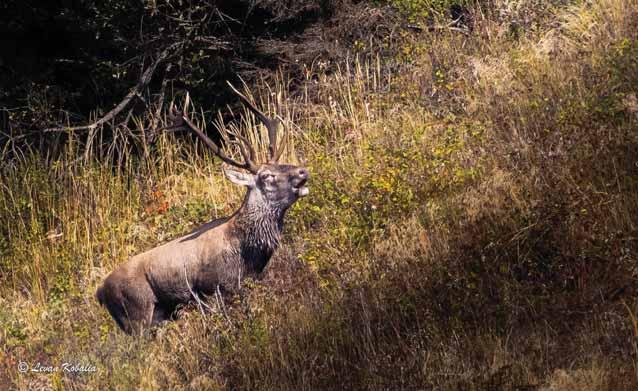
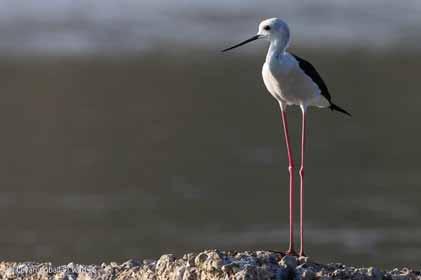
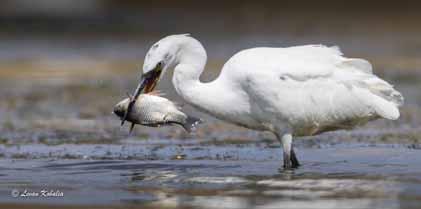
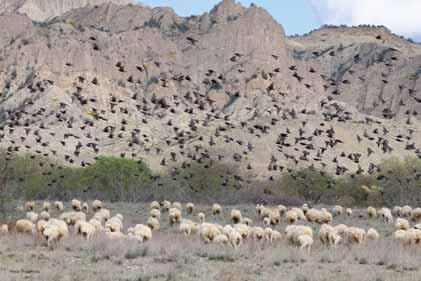
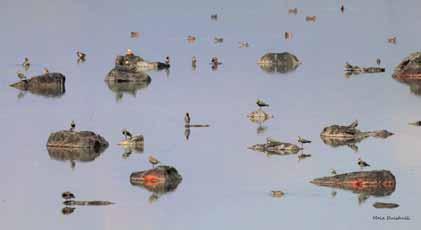
Cervus elaphus, Borjomi-Kharagauli National Park. Photo: Levan Kobalia.
Black-winged stilt, Kumisi Lake. Photo: Levan Kobalia.
Little Egret, Kartsakhi Lake, Javakheti Protected Areas. Photo: Levan Kobalia.
A large flock of sheep grazes across dry grassland in Vashlovani National Park, while hundreds of birds swirl overhead. Photo: Maia Duishvili.
Northern lapwings at Bugdasheni Lake, Javakheti. Photo: Maia Duishvili.
Fox in Javakheti. Photo: Maia Duishvili.
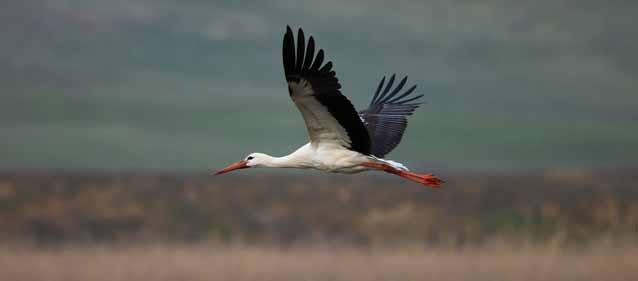
White stork, Kumisi Lake. Photo: Davit Samkharadze
Women’s Voices, Georgia to Los Angeles. Part 1

Heidi Basch-Harod serves as the Executive Director of Women’s Voices Now (WVN). In this role, she oversees an international team dedicated to the organization’s mission of using film to drive social change and advance girls’ and women’s rights globally. She also supervises the Emmy-Award winning youth development program, Girls’ Voices Now. Within the WVN Film Festival, she works with volunteers from around the world, recruiting and evaluating a wide range of women’s rights-focused documentaries. WVN’s goal is getting those films out into the mainstream and bringing their stories to wider audiences.
GEORGIA TODAY sat down with Heidi to find out more.
TELLS US THE ORIGIN STORY OF THE FESTIVAL: WHAT MAKES IT UNIQUE?
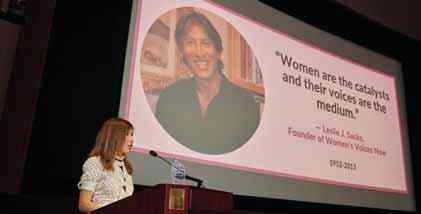
The WVN Film Festival is the inaugural program of WVN, which was founded in 2010, born out of discussions between the organization’s founder, Leslie Sacks, of blessed memory, and close friends and colleagues. Leslie used to say: "Women are the catalysts and their voices
CULTURE
are the medium,” and in amplifying their voices, there would be a more just world for all.
Sadly, Leslie passed away in 2013 after a decade-long battle with cancer. In his honor, his family have continued to support and champion our work and mission, ensuring Leslie’s vision survives.
The festival is a unique one. There are many women’s film festivals - promoting women in front of and behind the camera; and many human rights film festivals, spreading awareness about these issues everywhere. To my knowledge, there is no other film festival in the world that is a women’s rights documentary film festival with the dual purpose of supporting women filmmakers and advocating for global women’s rights.
Another fun fact about our festival: it was online from its very start. COVID lockdowns granted us the opportunity to be seen and heard in unprecedented numbers. Folks had no choice but to adapt to home viewing films and creating an atmosphere for themselves, in partnership with us.
More on our uniqueness: The WVN Film Festival occurs annually; each year with a theme. However, the theme is not preset, being identified and determined from the review of the films by the internal selection committee. Magically, or because we are just all so connected without sometimes even knowing it, competing films selected to each year’s festival have a common thread running through them all. Now, when we are
witnessing serious backlash against the progress of women in many parts of the world, it is very challenging to hold onto hope and to keep going to advocate for women’s rights and gender equality.
It seems that our filmmakers are feeling this too, and so many of the films submitted to our festival focus on trailblazing individuals who actually have had a much more difficult journey than some of us do today. So, this year’s theme, “Forward, In Her Footsteps,” is all about remembering the women who have come before us who made it possible for us to even dream to be somewhere different. We have to trust in the legacy and history of the struggle and keep going; to remember it is always worthwhile to see where we’ve come from as we decide where to go next.
HOW DO YOU SELECT PARTICIPATING FILMS?
For our festival, films must fall into the short or feature documentary genre. We look for filmmakers who consider themselves change-makers advocating for women’s and girls’ rights around the world. We define documentary broadly, accepting animation and other documentaries taking a more creative or experimental approach; in our new AI reality, we also accept documentaries using these technologies.
Our films come from around the world: to date, from 105 countries. The first round of volunteer previewers determine which films make the first cut, then onto our internal previewer committee of board and staff, then to the festival jury members who determine the recipients of the eight cash prizes we award.
It’s important to us that all previewing committees and jury panels are incredibly diverse, and to ensure that films accepted are ethical, authentic, and representative of the subjects’ lived experiences, unmediated as much as is possible in this medium of art.
WHAT ARE SOME OF THE URGENT ISSUES THESE FILMMAKERS ARE ADDRESSING AND WHY?
Each year, we see a variety of issues that we are familiar with: women’s access to education, economic opportunities and political representation. We also see

It is challenging to hold onto hope and to advocate for women’s rights and gender equality
films addressing bodily autonomy, including but not limited to films about female genital mutilation, abortion, and gender identity. Indubitably, a bulk of our films will deal with the ongoing global pandemic of violence against women affecting one in three of us.
Continued next week. The Women’s Voices Now film festival is ongoing: https://wvnfestival.com/2026/films
Tony Hanmer has lived in Georgia since 1999, in Svaneti since 2007, and been a weekly writer and photographer for GT since early 2011. He runs the “Svaneti Renaissance” Facebook group, now with over 2000 members, at www.facebook.com/groups/ SvanetiRenaissance/ He and his wife also run their own guest house in Etseri: www.facebook.com/hanmer.house.svaneti
The Keepers of the Holy Grail
BLOG BY NUGZAR B. RUHADZE
Many a genius of the world has tried his brush to reflect in color and spirit the dramatic tension of the Last Supper of the Lord and His Apostles, among them Leonardo da Vinci, Tintoretto, Salvador Dalí and Andy Warhol, but nobody knows yet that, at this very moment, another masterpiece of the same genre, format and content is being created in Sakartvelo by the famous Georgian portraitist Giorgi Gegechkori. The other day, I happened to drop by his tiny studio in the building of the Georgian Theatrical Society, officially headed by the artist, to have a look at a huge painting he is creating, using a white textural substance in a clearly Renaissance technique. I was so overwhelmed at the first glance that I could hardly believe this stunning piece of art was sitting right there near my own home, and I’d had no idea of its existence. The work speaks in an enigmatic religious, historical and artistic language, which reminds the viewer that Georgia is not idle: it is truly at work in an elevated humanistic tone and measure.
Giorgi Gegechkori, graduate of Tbilisi State Academy of Arts, grew up in a traditional thespian family. The prolific
portrait painter dedicated a considerable part of his professional efforts to one of the most complicated and labor-intensive artistic directions, called scenography. His stage works always attracted public attention in this country and beyond, having produced the set design for more than twenty plays in the last 35 years of his creative life.
A dedicated follower of the realist school of painting, Gegechkori has on numerous occasions exhibited his celebrated portraits of Georgian monarchs, outstanding public figures and prominent actors, many of which are currently on display in the interiors of the Georgian Parliament, Ministry of Justice, the Zugdidi Dadiani Palace, the Georgian National Bank and many other state premises. What deserves the most attention among his exhibitions is the one which took place in the renowned Palace of Santa Barbara in Madrid, where he made the so-called Duo-Exposition of two Iberias, Georgian and Spanish, in company with Augusto Ferrer-Dalmau Nieto, the Spanish hyperrealist painter specializing in historical military paintings.
The full professor of his cherished alma mater, and the winner of the Kote Marjanishvili Award, Giorgi Gegechkori teaches the younger generation of his beloved Sakartvelo with wisdom, patience, knowledge, experience and talent that he is so profusely endowed with. But of all this, the most thought-pro-
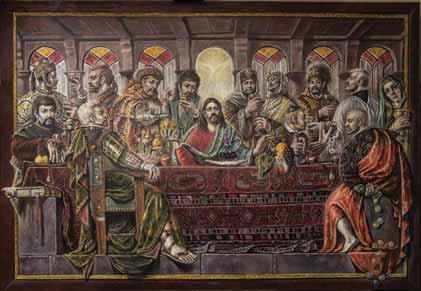
voking creation seems to be the work which is probably going to win the appellation of a masterpiece, the greatest and most important of all his works ever, ‘The Keepers of the Holy Grail,’ this is the way this 68-year-old distinguished Georgian artist called his opus, and is working on it right now. It is almost finished, though the giant canvas waiting for some final touches of the master’s brush.
The mystical, symbolic and historical subject matter occupies a significant part
of the productive aspect of the artist’s life, within which ‘The Keepers of the Holy Grail’ is one of the most outstanding plot-driven narratives. Thematically speaking, the Keepers are represented as images of warriors or nuns who are guarding the Holy Grail: the sacred chalice, marked with purity, knowledge, spiritual inheritance and momentousness of the story.
In terms of style, the artist is using dark, mystified colors, sharp contrasts and a mystery-stricken medieval atmosphere,
instigating a sense of decorum, courtesy, veneration and enigma in the onlooker. At least, this was the sensation I felt overwhelmed with, peering into the canvas with utmost curiosity and uncontrolled emotion.
Conceptually, the figures and images of the Keepers of the Grail represent firmness of character, faith and readiness to serve the lofty cause. As a matter of fact, the entire work is based on Georgian traditional motives, connecting this ancient culture with European knightly legends.
Spontaneously sharing with me his nonstop train of thoughts about his monumental (206 by 145 centimeters) oeuvre, the internally tense and anxious Giorgi Gegechkori says he has been working on this most special to him canvas for the last three years.
The commonly familiar biblical characters, the apostles, together with them, Mary Magdalene, gingerly eyeing the Supper, as historic as all of them happen to be, are acquiring in his painting totally different images from various epochs, confessions, lineage and walks of life, embracing the cherished idea of noble internationalism: no matter what faith and cultures they represent, God is one for all of them. Isn’t this the loftiest ideal that humankind should eternally serve in good faith? Yes, and this amazing artistic project by Giorgi Gegechkori is dedicated to that particular ideal.
The Keepers of the Holy Grail. Photo by Yuri Mechitov
At the WVN Film Festival. Source: WVN INTERVIEW BY TONY HANMER
Heidi Basch-Harod, Executive Director of Women’s Voices Now. Source: WVN
The Inheritance of Eccentricity: The Premiere that Turned Gabriadze Theater into a Machine for Escaping Reality

BY IVAN NECHAEV
There are moments in theater when a premiere feels less like the addition of a new production to a repertoire and more like the reopening of a metaphysical wound. The arrival of The Eccentrics at Gabriadze Theater belongs precisely to that category. After many years without a new major production, the theater founded by Rezo Gabriadze returns with a performance that is simultaneously an adaptation, an inheritance ritual, a philosophical parable, and a coded reflection on contemporary existence.
Directed by Leo Gabriadze and based on one of Rezo Gabriadze’s most beloved texts, The Eccentrics, emerges as a story about impossible flight in a civilization weighed down by memory, debt, prisons, madness, and gravity itself. Or, as the production’s subtitle almost mischievously proposes: a story of love, debts, and the Second Law of Thermodynamics. That final phrase initially sounds like one of Gabriadze’s classic absurdist jokes. By the end of the performance, it lands with devastating philosophical precision.
THE PHYSICS OF GEORGIAN SADNESS
The plot appears deceptively simple. Ertaoz, a naïve provincial dreamer, leaves home searching for destiny. Instead, he finds prison. There he encounters Christephore, an aging scientist incarcerated because of a failed love affair. Between walls designed to suppress imagination, the two men begin constructing an impossible machine capable of carrying them beyond earthly limitations.
In another theatrical universe, this
It leaves the audience with the realization that perhaps civilization survives becauseonly a few ridiculous, naïve, impractical people continue believing that another sky remains possible
final defenders of imagination. And imagination, in this production, is treated as a survival mechanism.
Throughout the performance, society appears divided between prisons and madhouses. Some characters are literally incarcerated. Others move through reality in states of collective delirium. The distinction barely matters. Institutions designed to maintain order seem indistinguishable from systems of psychological collapse. Against this landscape, Ertaoz and Christephore’s absurd dream of flight becomes strangely rational. Why remain on earth if the earth itself has become uninhabitable?
premise could become whimsical steampunk fantasy or sentimental comedy. Inside the Gabriadze cosmology, however, flight acquires spiritual dimensions. Everything in the production resists the heaviness of the earth.
Prisons. Debts. Failed love. Bureaucracy. Madness. Mortality. History itself. Gravity becomes psychological before it becomes physical. The flying machine at the center of the play therefore functions as something much larger than an invention. It becomes a rebellion against entropy. Leo Gabriadze explicitly frames the production through thermodynamics, invoking the formula: \frac{ds}{dt}=0
In physics, entropy measures disorder, the irreversible movement toward equilibrium and stillness. In The Eccentrics, that scientific principle transforms into metaphysical theater. The formula ceases to describe thermodynamic systems and begins describing exhausted civilizations.
The characters seek a state beyond struggle itself. A release from accumulated emotional weight. A transcendence of historical exhaustion. What is remarkable is how organically Gabriadze fuses scientific vocabulary with Georgian poetic fatalism. Soviet culture long cultivated faith in technological utopia. Gabriadze instead transforms science into melancholy folklore. The laboratory and the fairy tale coexist without contradiction.
The result feels uniquely Georgian: metaphysics expressed through broken machinery.
ECCENTRICITY AS MORAL RESISTANCE
Leo Gabriadze’s director’s note contains the key to the production: “An eccentric, in our case, is anyone who, despite society’s disapproval, believes to the very end in their own unconventional ideas.”
This definition suddenly feels alarmingly contemporary.
Today’s world increasingly punishes eccentricity. Algorithmic culture rewards predictability. Political systems reward obedience. Digital life rewards flattening. Public discourse has become dominated by nervous conformity masquerading as rationality. In such conditions, the Gabriadze eccentric ceases to be comic decoration and becomes an ethical archetype. The eccentrics are the
The production never turns this into direct political allegory, yet contemporary resonances emerge almost unbearably clearly. One watches The Eccentrics in 2026 with the uncomfortable sensation that Gabriadze somehow anticipated an age defined by mass exhaustion, informational psychosis, emotional fragmentation, and permanent societal claustrophobia.
Half the world imprisoned. Half the world mad. And somewhere between them, a handful of eccentrics attempting to build wings.
BEYOND THE MYTH OF THE FILM
For many spectators, The Eccentrics remains inseparable from the legendary 1973 film adaptation directed by Eldar Shengelaia, with music by Giya Kancheli. That film occupies near-sacred status within Georgian cultural memory. Its atmosphere, drifting between tragedy and intoxicated comedy, became foundational to how Georgian melancholy is aesthetically imagined. Leo Gabriadze makes a bold decision: he refuses to reproduce the cinematic spell.
The production uses very little Kancheli. Instead, it returns insistently to the textual architecture of Rezo Gabriadze’s play itself. This shifts the emotional balance dramatically. Without the lush orchestral melancholy associated with the film, the audience encounters the writing almost naked. And the writing turns out to be harsher than memory allows.
The theatrical version reveals how much violence, loneliness, absurdity, and metaphysical terror always existed beneath Gabriadze’s humor. The laughter acquires sharp edges. The lyricism becomes skeletal. Certain scenes approach Beckettian despair before suddenly collapsing into provincial absurdity.
This is perhaps the production’s greatest triumph: it rescues The Eccentrics from nostalgia. Rather than embalming the text as a national treasure, Leo Gabriadze reactivates its danger.
THE CIVILIZATION
OF THE QVEVRI
Among the production’s most unforgettable visual ideas is the recurring use of the qvevri, the massive Georgian clay wine vessels buried underground for fermentation.
Few images could better encapsulate Georgian civilization. Wine in Georgia has never functioned merely as drink. The qvevri represents ancestry, ritual,
burial, intoxication, memory, hospitality, and continuity with the earth itself.
UNESCO recognizes qvevri winemaking as intangible cultural heritage precisely because the vessels operate almost as philosophical objects. Leo Gabriadze transforms them into existential symbols. People hide inside them. Sit inside them. Suffer inside them. Die inside them. The qvevri becomes prison, womb, coffin, archive, nation. The image resonates with terrifying beauty because it compresses the entire Georgian historical condition into a single object: a culture endlessly burying sorrow underground while fermenting beauty from the same darkness. At moments, the stage resembles an archaeological excavation of collective memory. At others, it feels like a cemetery preserving unfinished dreams in clay.
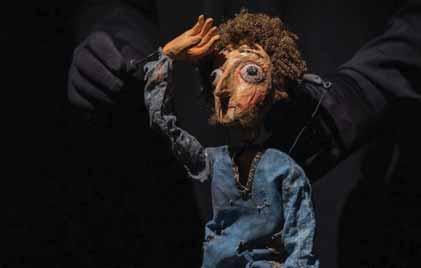
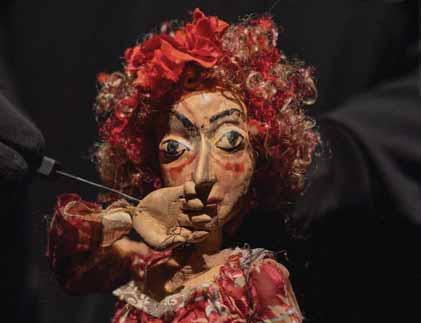
The metaphor never becomes decorative intellectualism because Gabriadze’s Theater has always understood something fundamental: objects possess souls. Chairs think. Teacups mourn. Trains remember. Puppets suffer. Clay vessels absorb centuries. Matter itself carries trauma.
PUPPETS, INHERITANCE, AND THE THEATER AFTER REZO
Every production now staged at Gabriadze Theater inevitably carries another invisible narrative beneath the visible one: the question of what happens after Rezo Gabriadze. Can a theater survive the death of its creator without becoming a museum? Can inheritance remain alive rather than ceremonial?
The Eccentrics answers this question with unusual intelligence because Leo Gabriadze does not attempt perfect imitation. Instead, he stages inheritance itself as instability.
The production repeatedly returns to debts passed from one generation to another. Emotional debts. Moral debts. Historical debts. Unfinished obligations. In this sense, Leo’s position becomes almost painfully autobiographical. The son inherits not merely a theater, but responsibility for an entire emotional universe beloved by audiences across generations.
And so the production quietly becomes a performance about continuation itself. The puppets and sets, created in the theater workshops according to Rezo Gabriadze’s original sketches, carry extraordinary symbolic weight. They do not function as nostalgic relics. They appear instead like fragments of an unfinished cosmology still attempting to move.
The ensemble of animators and puppet masters performs something larger than technical craft. They become custodians of fragile emotional mechanics. Every movement feels haunted by memory and yet stubbornly alive. That tension gives the production its emotional electricity.
One constantly senses two simultaneous presences: the father’s world, and the son learning how to breathe inside it.
THE LAST HUMANISTS
By the final scenes, when Ertaoz and Christephore pass through prison, madhouse, debt, failed love, and earthly humiliation before finally ascending skyward, The Eccentrics arrives at something unexpectedly moving.
The production proposes that eccentricity itself may be humanity’s final moral resource. Not intelligence. Not ideology. Not efficiency. Not power. Only the stubborn refusal to surrender imagination.
Gabriadze’s eccentrics build impossible machines because reality without impossible dreams becomes spiritually uninhabitable. Their flight therefore matters less as physical escape than as metaphysical resistance.
The performance leaves the audience with a strange and painful realization: perhaps civilization survives only because a few ridiculous, naïve, impractical people continue believing that another sky remains possible.
Inside contemporary culture, exhausted by cynicism, optimization, and permanent anxiety, that belief suddenly feels revolutionary. And in that sense, Leo Gabriadze’s premiere accomplishes something exceedingly rare. It does not merely preserve the Gabriadze legacy. It proves that the legacy can still fly.

A Gabriadze puppet. Source: Gabriadze.com
A Gabriadze puppet. Source: Gabriadze.com
Tbilisi Art Fair 2026 to Open at Expo Georgia on May 21-24
BY LANA KOKAIA
Tbilisi Art Fair 2026 will take place at Expo Georgia from May 21–24, bringing together Georgian and international galleries, curators, collectors, independent artists, and cultural professionals for one of the region’s largest contemporary art events. The fair officially opens on May 21 at 17:00.
Now in its fifth edition, the contemporary art fair will feature 35 local and international galleries and curatorial platforms alongside 42 artists participating in the independent artist section
“The Hive.” Organizers say participants from eight countries will take part this year, reflecting the fair’s growing international profile and its focus on emerging and underrepresented art scenes from Georgia, the South Caucasus, Eastern Europe, and Central Asia.
Founded in 2018, TAF positions itself as an international contemporary art fair focused on emerging artists and lessvisible regional art scenes. The platform aims to create opportunities for exhibi-
tions, institutional partnerships, crossborder collaborations, and greater international visibility for artists from Georgia, the South Caucasus, Eastern Europe, and Central Asia.
According to organizers, the fair has attracted representatives of major international institutions since its launch, including the Museum of Modern Art, Centre Pompidou, Victoria and Albert Museum, and Sotheby’s, helping increase the visibility of Georgian contemporary art internationally.
Among the participating galleries and platforms announced for 2026 are Art Conference Tbilisi, LC Queisser, Window Project, Gallery of Gyumri, BONUM FACTUM Gallery, Dump Gallery, Gallery Makowski, ART+OBJECTS, Vere Gallery, Novo Gallery, Sandwich Gallery, and Valid Foto BCN.
The fair will feature exhibitions spanning photography, painting, installation art, mixed media, conceptual art, and experimental contemporary practices.
Organizers note that gallery selection is based on curatorial direction, artistic relevance, and contribution to contemporary cultural discourse.
A major component of the fair is “The Hive,” a platform dedicated to solo pres-

entations by emerging and independent artists. This year’s edition includes 31 Georgian and 11 international artists.
Participants include Daro Sulakauri, Ketevan Varshanidze, Teona Chanashvili, Mariam Eliava, Manushak Barseghyan, Emil Farber, Enam Granoth, Roza Muradova, Y Ko, and Philippe Cheaoum.
Alongside exhibitions, the broader public program will include performances, workshops, children’s activities through the “TAF Kids” program, and public discussions under the “TAF Talks” format, featuring Georgian and international speakers reflecting on contemporary art, regional cultural dynamics, and developments in the art market.
“The largest platform for contemporary art in the region will, for the fifth time, bring together curators, critics, collectors, international media, and visitors from around the world,” organizers said in promotional materials for the event.
Tbilisi Art Fair 2026 is organized by Expo Georgia with support from SOLO. Additional partners include Tbilisi City Hall, Art Foundation Anagi, Adjara Group, and other supporting organizations.
Tickets include 25 GEL day passes, 10 GEL student tickets, and 70 GEL fourday passes.
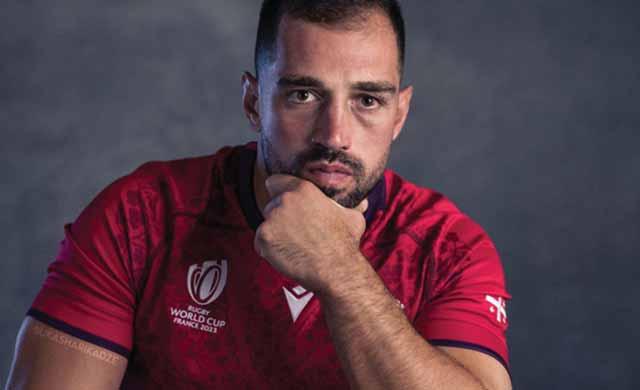
COMMERCIAL DEPARTMENT
Commercial Director: Iva Merabishvili
Marketing Manager: Natalia Chikvaidze
EDITORIAL DEPARTMENT:
Editor-In-Chief: Katie Ruth Davies
Journalists: Ana Dumbadze
Vazha Tavberidze
Tony Hanmer
Nugzar B. Ruhadze
Ivan Nechaev
Lana Kokaia
Layout: Misha Mchedlishvili
Photographer: Aleksei Serov
Georgia to Present ‘Modern Argonauts’ Project at Venice Biennale
BY LANA KOKAIA
Georgia will present the project Modern Argonauts – Crossroads of Georgia at the national pavilion of the 61st Venice Biennale, bringing contemporary Georgian artistic practice to one of the world’s most influential cultural events.
According to the Georgian Ministry of Culture, the exhibition combines visual works created with modern techniques alongside interpretations of traditional artistic forms, exploring Georgia’s historical role as a cultural crossroads between Europe and Asia. The title references the ancient Greek myth of the Argonauts and the quest for the Golden Fleece: a legend connected to ancient Colchis, located in present-day western Georgia.
The Ministry says the pavilion aims to connect contemporary artistic expression with longstanding Georgian traditions, craft and symbolism through multimedia installations, visual art and experimental formats centered on themes of movement, memory and cultural exchange.
The 61st Venice Biennale will run from May 9 to November 22 under the main theme In Minor Keys, focusing on fragility, intimacy and quieter narratives in contemporary art. National pavilions from around the world are expected to address social, political and cultural questions through a wide range of artistic media.
Georgia has participated in the Venice Biennale since 2009 and has increasingly gained international visibility through its contemporary art scene. Previous Georgian pavilions have attracted global attention, including Vajiko Chachkhiani’s 2017 installation featuring a slowly deteriorating wooden house exposed to artificial rain, and Anna K.E.’s 2019 multimedia project exploring movement, space and memory.
This year’s Biennale has also become one of the most politically contentious in recent memory, with protests and artist boycotts surrounding the participation of Russia and Israel despite their ongoing international conflicts. Against that backdrop, Georgia’s pavilion is expected to emphasize cultural identity and historical continuity through a dialogue between traditional motifs and contemporary artistic language.
Former Georgia Rugby Captain Banned for 11 Years Over Alleged Doping Test Evasion Scheme
BY TEAM GT
ormer Georgia national rugby team captain Merab Sharikadze has been banned from participating in sports competitions for 11 years for involvement in a scheme designed to evade doping tests, reports the BBC.
The report states that the sanctions were imposed as part of a broader investigation by the World Anti-Doping Agency (WADA).
Giorgi Chkhoidze received a six-year suspension, while Lasha Khmaladze, Otar Lashkhi and Mirian Modebadze were handed three-year bans. Lasha
International Relations & Communications
Sofia Bochoidze
E: sbochoidze@georgiatoday.ge
Website Editor: Katie Ruth Davies
Webmaster: Sergey Gevenov
Circulation Managers: David Kerdikashvili
David Djandjgava
ADDRESS
22 Janashia Str.
Tbilisi, 0179, Georgia
Lomidze was suspended from sports competitions for nine months.
Based on WADA’s investigation, Georgia’s National Anti-Doping Agency allegedly informed national team doctor Nutsa Shamatava in advance about upcoming tests, after which she reportedly shared the information in the team’s group chat.
WADA further said that World Rugby, which detected anomalies in samples from Georgian players ahead of the 2023 Rugby World Cup, believes the alleged sample-swapping scheme was used to conceal recreational drug use.
The case stems from irregularities identified before the 2023 tournament, prompting a broader anti-doping investigation into the Georgian rugby system.
Tel.: +995 32 229 59 19
E: info@georgiatoday.ge F: GeorgiaToday
ADVERTISING & SUBSCRIPTION
+995 577 72 52 61
E-mail: marketing@georgiatoday.ge
Reproducing material, photos and advertisements without prior editorial permission is strictly forbidden. The author is responsible for all material. Rights of authors are preserved. The newspaper is registered in Mtatsminda district court. Reg. # 06/4-309
Merab Sharikadze. Source: FB
Tbilisi Art Fair. Source: Tbilisi Art Fair.
The entrance to the Central Pavilion, in the Biennale Garden. Source: EPA