FOCUS


BIn this week’s issue...
Government Approves Removal of Nearly 9,700 Red List Trees for Gogni Wind Farm
Ukraine Latest: Ukraine Intensifies Deep Strikes as Russia Presses around Kostiantynivka
"Moscow's goal is not de jure, but de facto annexation" - Helge Blakkisrud on the Kremlin's Strategy in Abkhazia and South Ossetia
Georgia’s Markets Generate 208.8 Million GEL in 2025
Former Parliament Building Gets a New Life as Georgia's Largest Technology Hub
PAGE 9
Georgia's Linguistic Triumph over Soviet Power
PAGE 10


Beyond the White Cube: Tolia Astakhishvili's Reinvention of Museum Space in Vienna


BY TEAM GT
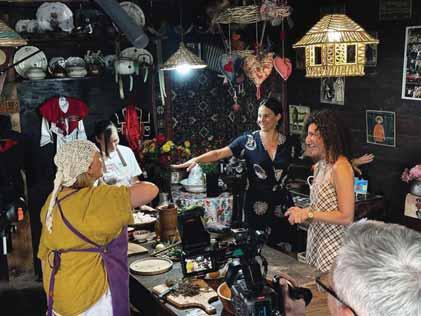
Shailene Woodley is visiting Georgia as part of a new Netflix project filmed in the country.
The actress, best known for the Divergent film series and the HBO drama Big Little Lies, recently visited the ethno village of Sisatura in the Samegrelo region. Photos of her visit have been shared on social media. The project is being produced as part of a marketing campaign by Georgia’s National Tourism Administration.
Filming took place in the regions of Adjara, Samegrelo, Imereti, SamtskheJavakheti, and Mtskheta-Mtianeti. During the production, Woodley explored local culture, traditional cuisine, and the unique characteristics of each region.
One of the show’s main episodes will be dedicated entirely to Georgia, showcasing the country’s tourist attractions, gastronomy, and cultural heritage to an international audience.
Woodley rose to international fame through the Divergent trilogy and later starred in The Fault in Our Stars, The Descendants, and HBO’s Big Little Lies alongside Nicole Kidman, Reese Witherspoon, and Meryl Streep.
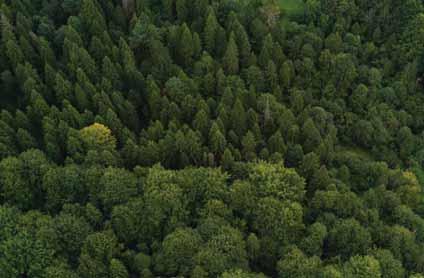
Forest. Source: National Forestry Agency
BY LANA KOKAIA
The Georgian government has authorized the removal of 9,688 protected plant species from state forests in Imereti as part of the construction of the 224 MW Gogni Wind Power Plant.
Government Decree No. 1466 grants Gogni Wind Company LLC the right to remove protected species from the Mukhuri and Terjola forests to facilitate the construction and operation of the project’s 220 kV overhead and 35 kV underground transmission lines, as well as a 220 kV substation.
The decree authorizes the removal of 7,533 common chestnut (Castanea sativa),
BY TEAM GT
Renewed attacks on Black Sea ports, civilian vessels and agricultural infrastructure are alarming and have contributed to a sharp increase in global wheat prices, a senior UN official has said.
Speaking at the UN, Director of the Department of Political and Peacebuilding Affairs Kayoko Goto said the Ukrainian ports of Odesa, Chornomorsk, Pivdennyi, Izmail and Mykolaiv have been under sustained attack.
Goto claimed that one missile strike near Odesa hit a Guinea-Bissau-flagged grain carrier, killing 10 people. In a separate attack, five people were killed and 10 injured aboard a Togolese-flagged vessel.
She also said reports indicate that more than 100 ships were struck in the Sea of Azov this month, disrupting maritime navigation.
Citing data from the UN Conference on Trade and Development (UNCTAD), Goto said global wheat prices have risen by 20% since the beginning of July, reaching their highest level since March 2024.
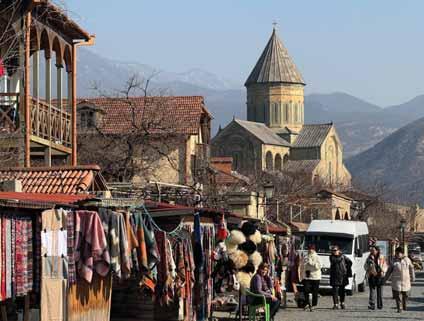
BY TEAM GT
Despite a decline in international arrivals and tourism spending, the vast majority of foreign visitors remain satisfied with their trips to Georgia, according to new data from the National Statistics Service of
Georgia (Geostat). Georgia welcomed 1.3 million international visitors in the second quarter of 2026, down 5.2% compared with the same period last year.
Tourism revenues also fell during the April-June period. International visitors spent 3.0 billion GEL, a 13.3% decrease year-on-year, while average spending per visit dropped 9.2% to 1,922.1 GEL. However, visitor satisfaction remained
high. Geostat's survey found that 93.1% of international visitors rated their experience positively, with 54.4% saying they were "very satisfied" and 38.7% "satisfied."
Visitors also stayed slightly longer, with the average visit increasing from 5.30 nights to 5.48 nights. Repeat visitors continued to dominate, accounting for 81.8% of all trips, indicating that most international travelers had visited Georgia before.
The largest group of visitors was aged between 31 and 50, making up 45.6% of all arrivals. Men accounted for 57.1% of visitors, while women represented 42.9%. Leisure remained the main reason for travel, with 49.6% of visitors coming for holidays, entertainment or recreation. Another 25.6% visited friends or relatives, while 12% traveled through Georgia in transit.
Tbilisi remained the country's most popular destination, attracting 36.9% of visitors, followed by Adjara with 26.2%. Foreign visitors spent the largest share of their budgets on food and beverages (27.3%), followed by shopping (25.2%) and accommodation (24.3%).
Visitors from neighboring countries continued to make up the largest share of arrivals. Russia ranked first with 328,900 visitors, accounting for 25.1% of all international visitors, followed by Turkey with 16.9% and Armenia with 10.8%.
2,115 Colchian box (Buxus colchica), and 40 yew (Taxus baccata) trees, all of which are included in Georgia’s Red List of protected species.
The decree requires the company to store the harvested timber in an area designated by the National Forestry Agency before paying compensation for the removal of the protected plants. It must also carry out restoration measures corresponding to the number of Red List species removed within a specified timeframe.
Gogni Wind Company LLC is developing the 224 MW wind power project in Imereti. Archil Gachechiladze, CEO of the Bank of Georgia, holds a 90% stake in the project through AG Wind Power LLC, while businessman Emzar Gamezaradashvili owns the remaining 10% through EG LLC.
BY LANA KOKAIA
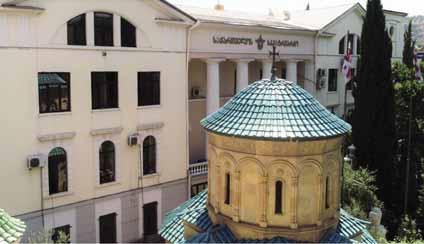
The government has transferred a 239 sq. m. nonagricultural land plot in Tskaltubo to the Georgian Apostolic Autocephalous Orthodox Church for 1 GEL.
The decision is outlined in Government Decree No. 1470. The decree states that the church received a 239 sq. m. non-agricultural land plot near 9 April Street, III Sh. No. 12 in Tskaltubo through a direct sale.
The Church is required to pay 1 GEL within one month of signing the relevant agreement.
COMPILED BY ANA DUMBADZE
The Russia-Ukraine war entered another destructive week, with neither side achieving a decisive breakthrough on the battlefield, but both expanding long-range attacks against military, industrial, logistical and energy targets. Russia kept up pressure along several eastern and southern fronts, particularly around Kostiantynivka and the wider Donetsk region, while Ukraine reported a limited advance in the south and continued its deep-strike campaign against oil refineries and logistics facilities more than 1,000 kilometers inside Russia.
The fiercest fighting remained concentrated in Donetsk Region. Russian forces continued trying to improve their positions around Kostiantynivka, a key Ukrainian-held city within the fortified urban belt that also includes Druzhkivka, Kramatorsk and Sloviansk. Russian aviation played an increasingly important role, using glide bombs to soften Ukrainian positions before small infantry groups advanced through heavily damaged urban and semi-urban areas. Independent battlefield assessments suggested Russian troops made modest gains in the Kostiantynivka-Druzhkivka area later in the week, although Ukrainian forces continued to hold the city and its main approaches. Russia also recorded small advances near Lyman, west and northwest of the former Pokrovsk front, in the Novopavlivka area and near Hulyaipole. These gains amounted to little more than fields, tree lines and isolated positions rather than major settlements. Ukraine, meanwhile, was assessed to have made a lim-
ited advance near Hulyaipole earlier in the week, underlining that the front remains contested and that Russian forces are not advancing everywhere. On July 26 and 27, neither side was confirmed to have made further progress, highlighting the slow and costly nature of current offensive operations.
Fighting also continued along the northern front in the border areas of Sumy and Kharkiv regions. Russian forces launched assaults backed by artillery and drones but failed to achieve any significant new breakthrough. Near Kupiansk, Russian units attempted to maneuver around Podoly and Kurylivka, while operations farther north appeared aimed at tying down Ukrainian reserves and preventing Kyiv from reinforcing the Donetsk front.
The human cost remained severe. On July 27, Russian attacks on settlements in eastern Ukraine killed seven people and injured more than 20. Three of those killed died near Kostiantynivka, where civilians continue to face artillery fire, drone attacks and aerial bombardment as the front edges closer to populated areas.
Russia also carried out repeated nationwide missile and drone attacks. Overnight on July 24-25, it launched ballistic missiles and 136 drones at Ukraine. Kyiv was hit, with fires reported in a residential building and several people injured. In Chernihiv, a drone struck a supermarket, killing two people, including a child, and injuring 25 others. Separate attacks killed one person and wounded at least 16 in Kharkiv, while a glide bomb strike in Zaporizhzhia claimed another civilian life and injured six more.
One of the week's deadliest attacks came on July 24, when a Russian ballistic missile struck the site of a defense industry event in Kyiv Region. Ten people were killed and nearly 100 injured. President
Volodymyr Zelensky said the gathering should not have been held under the circumstances, raising questions about wartime security procedures and the risks of concentrating personnel at known events.
The largest Russian assault came overnight on July 29-30, only hours after Zelensky returned from Washington. Missiles and drones struck targets from Kyiv and central Ukraine to Lviv near the Polish border, killing at least 13 people. One person died in Kyiv, while six others, including two children, were killed in Dnipropetrovsk and Poltava regions. In Kryvyi Rih, an Iskander-M ballistic missile hit a family home, killing six people, including girls aged five and 12, and injuring eight. In Lviv, two apartment buildings were damaged and at least 26 people were injured. Poland scrambled fighter jets to safeguard its airspace, and authorities later reported finding a crater and debris from an unidentified object in a field near the Ukrainian border.
The attacks once again highlighted Ukraine's shortage of systems capable of intercepting ballistic missiles. While Ukrainian forces continue to shoot down large numbers of Russian drones using mobile air-defense teams, electronic warfare and lower-cost interceptors, Patriot remains the country's principal defense against ballistic missiles such as the Iskander. Russia increasingly appears to be exploiting this vulnerability by combining mass drone attacks with ballistic and cruise missiles, forcing Ukraine to spread its air defenses across multiple cities and strategic sites.
Ukraine responded by expanding its campaign against Russia's oil, industrial and logistics infrastructure. On July 29, Ukrainian drones struck oil refineries and other facilities in Perm, Ryazan and Taganrog, as well as targets in occupied
Crimea. Zelensky said the operation hit refineries in Perm and Ryazan, a logistics center, an export terminal, a military plant in Rostov Region and a naval base in Crimea. Russian officials confirmed attacks on industrial sites but disclosed few details about the extent of the damage.
Ukraine also continued targeting warehouses owned by Wildberries, Russia's largest online retailer. A warehouse in Ryazan caught fire and was evacuated, while later strikes caused fires at facilities in Penza and Sarapul. Nearly a dozen Wildberries warehouses have reportedly been damaged in recent attacks, destroying about 10% of the company's storage capacity. Although these are civilian commercial facilities, Ukraine appears to regard parts of Russia's logistics and distribution network as supporting the broader war economy and military supply system. The campaign has affected thousands of small businesses and forced Wildberries to seek additional storage capacity outside Russia.
The Ukrainian strikes also caused casualties. In Taganrog, debris hit an apartment building, killing one woman and injuring a man. Russian-installed authorities in Crimea said two people were killed and five injured in drone attacks. Earlier in the week, Russian-installed officials claimed a Ukrainian strike on a holiday camp in occupied Zaporizhzhia Region killed 12 people, including four children, and injured 19 others. Ukraine has not confirmed deliberately targeting civilians, and claims from occupied territory could not be independently verified.
Military activity also intensified in the Black Sea and Sea of Azov. Ukraine stepped up attacks on Russian vessels, ports and maritime logistics around Crimea, while Russia increased strikes on Ukrainian ports and shipping. Ukrainian drone units
say they have targeted more than 180 vessels and maritime facilities in recent weeks in an effort to isolate Crimea and weaken Russia's ability to supply its forces by sea. Russia, meanwhile, claimed it struck two ships carrying weapons east of Odesa. The growing threat to commercial shipping has already disrupted regional oil and grain movements.
Diplomatically, the week's main event was Zelensky's July 28 meeting with US President Donald Trump in Washington. The two leaders discussed reviving stalled negotiations with Russia and a proposal that would allow Ukraine to manufacture Patriot missile interceptors under US license. Zelensky said Trump had agreed in principle, although the timetable, financing and industrial arrangements remain unresolved. Ukrainian officials are already in talks with Lockheed Martin on possible co-production.
The meeting produced neither a ceasefire nor a formal peace initiative, but it marked a further improvement in relations between Trump and Zelensky following earlier tensions. US envoys Steve Witkoff and Jared Kushner are expected to visit Ukraine as part of efforts to revive mediation with Moscow. Russia said it would await new proposals from Trump while insisting it would continue military operations until its objectives are achieved. Zelensky also met US senators and welcomed progress on new sanctions targeting Russian energy revenues. However, uncertainty remains over existing US military assistance, with the Pentagon planning to delay spending $400 million in previously authorized aid until 2029. While the Patriot production agreement was politically significant, it does little to address Ukraine's immediate shortage of interceptors or delays in future deliveries.

BY LANA KOKAIA
The Georgian government will create the Office of the State Minister for Regional Policy and abolish the Ministry of Regional Development as part of a restructuring aimed at strengthening governance in the country’s regions.
Prime Minister Irakli Kobakhidze announced the changes at a government briefing, saying Vice Prime Minister Mamuka Mdinaradze will lead the new office.
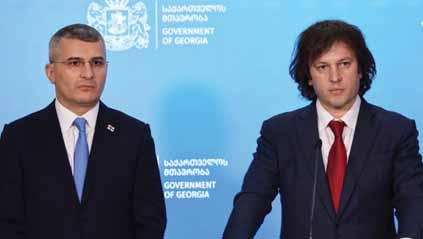
“The position of the State Minister for Regional Policy will be created within the structure of the Georgian government. This position will be held by Mamuka Mdinaradze, who will also serve as Vice Prime Minister,” Kobakhidze
said. “The State Minister for Regional Policy will be responsible for ensuring
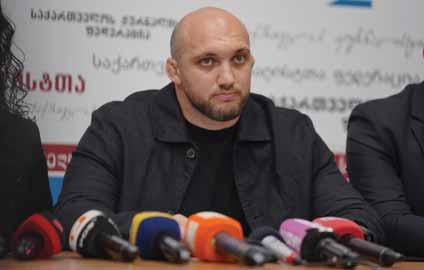
Giorgi Kartvelishvili. Source: Publika
BY LANA KOKAIA
MA
Mfighter Giorgi Kartvelishvili has announced the creation of a “people’s movement” which, according to his claims, will work to protect Georgian values and traditions.
Kartvelishvili held a briefing on the issue with several associates on Tuesday. He said the movement has not yet been registered in the Public Registry and did not specify what legal form it would take.
He did not name potential members of the movement, introduce the associates present at the briefing, or answer all questions from journalists.
The MMA fighter said the movement was “starting a fight” against “people with perverted ideology and groups formed by them, who are financed from abroad and are in slavish obedience to external interests.”
“We want to tell the public that our movement will be very active, solid, and at the same time, as constructive as possible. But if it is necessary for the protection of our culture and national identity, we will not shy away from any danger. We are ready to answer for each of our actions, even to go to prison if necessary,” Kartvelishvili said.
Asked by a journalist whether he understood that he was announcing a possible criminal offense, Kartvelishvili replied that he was ready not only to go to prison but also to “sacrifice himself for his country.”
At the same briefing, Kartvelishvili also spoke about comedian Onise Okriashvili, who he said is a friend of the person accused of attacking others. He said that not only Okriashvili but also those who
“sit on stage with him and have fun” in certain footage should apologize to the Georgian public.
Kartvelishvili also said these people would show “the best proof of their remorse” if they appealed to the Prosecutor’s Office not to request the detention of Niko Khurtsilava, who is accused of violence.
“Otherwise, if the public sees a reaction to their steps and they fail to understand that they are crossing red lines, we will demand an answer for every action and comment that undermines the dignity of the Georgian nation. I repeat, we will try to do all this within the framework of the law. However, if the relevant circumstances and conditions leave us no other way, we will not be afraid of imprisonment,” Kartvelishvili said.
The Georgian Young Lawyers’ Association (GYLA) responded to Kartvelishvili’s briefing, saying the announcement of an informal group aimed at confronting critics raises concerns over possible intimidation and violence.
GYLA said Kartvelishvili’s statements indicate the group could be used to pressure or retaliate against people critical of the government, pointing to his remarks that members would not fear imprisonment if “circumstances leave no other way.”
The organization said violence by third parties against government critics has increased in recent years and called on law enforcement agencies to take all necessary measures to prevent intimidation and violence.
GYLA also warned that creating or participating in illegal violent groups is prohibited under Georgian law and urged state representatives and pro-government media outlets to stop encouraging attacks or targeting individuals through discrediting campaigns.
the effectiveness of governance in the regions.”
The new office is expected to begin operating on September 1. Since establishing the position requires legislative amendments, Mdinaradze will first serve as Minister of Regional Development until the changes take effect in early September.
As part of the reform, the Ministry of Regional Development, which was established on January 1, 2025, following the division of the former Ministry of Infrastructure and Regional Development, will be abolished.
The PM said the ministry will no longer be needed once the new State Minister’s Office is in place.
“With the introduction of the Office of the State Minister for Regional Policy, the Ministry of Regional Development
essentially loses its purpose and will accordingly be abolished in September,” Kobakhidze stated.
Current Regional Development Minister Kakha Guledani will become First Deputy Minister of Infrastructure. Guledani was appointed minister in April 2025. The restructuring will also abolish the position of State Minister for Coordination of Law Enforcement Agencies, a post created only three months ago and held by Mdinaradze.
Kobakhidze said the work carried out during that period had established an effective coordination system, making the dedicated position unnecessary.
PM called on Parliament to approve the legislative package required to implement the government restructuring during the first week of the next parliamentary session.
BY EMIL AVDALIANI
The recent visits by Georgia’s leadership to Kyrgyzstan, Tajikistan, Kazakhstan as well as the visits of Uzbek and Turkmen presidents to Georgia mark an important evolution in Tbilisi’s foreign policy. While Georgia in the past traditionally concentrated its diplomatic efforts more on the European Union, the United States and its immediate neighborhood, the decision to intensify engagement with Central Asia reflects a broader strategic recalibration driven by changing geopolitical and economic realities. The visits signal Georgia’s ambition to position itself as an indispensable Eurasian transit and logistics hub at the western end of the Middle Corridor.
The visits should therefore be viewed as part of Georgia’s approach to capitalize on the transformation of Eurasian trade routes following Russia’s invasion of Ukraine and the ongoing war in Iran. The disruption of the traditional Northern Corridor has fundamentally altered the strategic geography of Eurasian commerce. As companies and governments seek additional options (routes) that reduce dependence on Russia, the TransCaspian International Transport Route (TITR), or Middle Corridor, has emerged as one of the most promising alternatives linking China and Central Asia with Europe through the Caspian Sea, the South Caucasus and Türkiye.
Geography has always been one of Georgia’s principal strategic assets, but today’s international environment has substantially increased its value. If the Middle Corridor continues to expand, Georgia will entrench its position as a logistical gateway connecting European markets with Central Asia. Strengthening political relations with Central Asian governments is therefore an essential prerequisite for ensuring that future trade flows continue to move through Georgian territory.
Although Kazakhstan and Uzbekistan, the largest economies of Central Asia, generate the biggest transport volumes, Kyrgyzstan and Tajikistan have become increasingly relevant as both countries seek to diversify their external economic partnerships and reduce excessive dependence on traditional transit routes. Their growing exports of minerals, agricultural products, textiles and manufactured goods create opportunities for expanding east-west trade, while both governments have demonstrated increasing interest in participating more actively in regional connectivity initiatives.
Georgia’s outreach reflects an understanding that successful transport corridors are built as much through political coordination as through physical infrastructure. High-level diplomacy
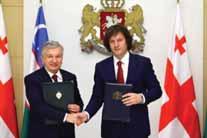
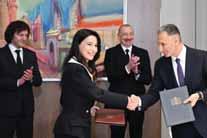
helps institutionalize cooperation on customs procedures, digital trade platforms, investment protection, border management and logistics standards. In this respect, the visits represent an effort to build the political architecture necessary for the long-term success of the Middle Corridor.
Economic considerations remain at the heart of Georgia’s approach. Tbilisi seeks to expand bilateral trade, attract investment and position itself as a regional services hub for Central Asian companies. Georgia’s liberal trade regime, efficient customs administration, competitive banking sector and free industrial zones provide attractive conditions for businesses seeking access to European markets. Combined with Georgia’s free trade agreements, these advantages allow Georgia to market itself as a commercial bridge between multiple economic regions.
The emphasis on Kyrgyzstan and Tajikistan also reflects Georgia’s policy of diversifying its external portfolio. While European integration remains the country’s declared strategic objective, successive governments have pursued economic engagement across Asia and the Gulf in order to reduce dependence on any single market or political partner. This diversification has become particularly important as global trade patterns fragment and geopolitical competition reshapes international supply chains.
The visits also carry important geopolitical implications. Central Asia has become an arena of growing competition among major powers. Unlike Russia, China, or the EU, Georgia approaches Central Asia without geopolitical ambitions or security agendas. Its comparative advantage lies in providing infrastructure, logistics services and access to international markets. This relatively neutral profile makes Georgia an attractive partner for Central Asian governments pursuing multi-vector foreign
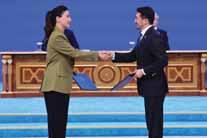
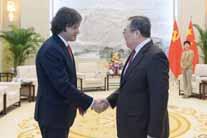
policies aimed at balancing relations among Russia, China, Türkiye, the European Union and other external actors.
The strategic importance of these visits also extends to the broader South Caucasus. By strengthening ties with Central Asia, Georgia reinforces its role as the western anchor of the Middle Corridor. The effectiveness of the corridor depends on coordinated investment and policy alignment among Kazakhstan, Azerbaijan, Georgia and Türkiye, but wider participation from Kyrgyzstan and Tajikistan increases cargo diversification and enhances the corridor’s long-term commercial sustainability.
From China’s perspective, Georgia’s expanding engagement with Central Asia complements Beijing’s own efforts to strengthen alternative Eurasian transport routes. Beijing increasingly prioritizes supply-chain resilience and route diversification rather than dependence on any single corridor. Georgia-Central Asia cooperation therefore aligns with China’s broader connectivity agenda as well as the European Union’s objective of expanding east-west transport links that circumvent the Russian territory. Looking ahead, the visits are part of a broader strategic shift in Georgia’s regional diplomacy. Georgia increasingly recognizes that its long-term geopolitical position will depend not only on its ties with the Western countries but also on its ability to look eastward where Central Asia has become indispensable. If Georgia succeeds in translating political engagement into practical economic cooperation, strengthening institutional links with Kyrgyzstan and Tajikistan, and accelerating the development of the Middle Corridor, it stands to enhance both its economic resilience and its geopolitical influence. Emil Avdaliani is a professor of international relations at the European University in Tbilisi, Georgia, and a scholar of Silk Roads. He can be reached on Twitter/X at @emilavdaliani.
"Moscow's goal is not de jure, but de
BY
VAZHA TAVBERIDZE FOR RFERL
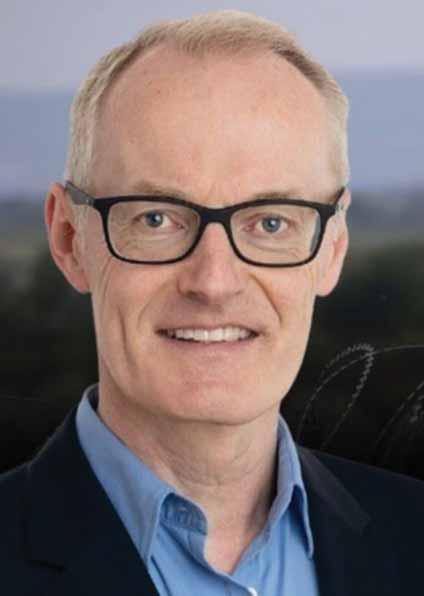
Since relations between Moscow and Tbilisi have warmed significantly, it is much more important for the Kremlin to avoid steps that would disrupt the status quo in Georgia than to accelerate the formal annexation of South Ossetia..., - Helge Blakkisrud, head of the Russian and Eurasian Studies Department at the Norwegian Institute of International Affairs (NUPI), tells RFE/RL. Blakkisrud has been studying Russian federalism, relations between the center and the regions, and state and nationbuilding processes in the post-Soviet space for many years. A significant part of his research is devoted to Russian influence and the development of de facto states in Georgia’s occupied Abkhazia and Tskhinvali (“South Ossetia”) regions. In one of his works, he referred to Russia's policy towards South Ossetia as "creeping annexation," a term that still sounds relevant when assessing current events today.
WHAT DOES THE APPEARANCE OF MARAT KAMBOLOV, A RUSSIAN OFFICIAL APPARENTLY SET TO BECOME THE KREMLIN-APPOINTED RULER OF “SOUTH OSSETIA,” PORTEND? MANY SEE THIS AS A SIGN OF PREPARATION FOR ITS FORMAL ANNEXATION. DO YOU THINK SO TOO?
No, I don't think that the recent events in South Ossetia indicate an acceleration of formal annexation, and here's why: I previously called this process a "creeping annexation" - by analogy with "creeping borderization." That is, Moscow's goal is not de jure, but de facto annexation.
I don't see what Russia has to gain by formal annexation that it doesn't already have. Yes, the new agreement will tighten control mechanisms even more, but South Ossetia will have to accept it because it simply has no other option. By gradually “harmonizing” legislation in the areas of economics, finance, and social security, and by creating a legal basis for the rotation of civil servants between Russia and South Ossetia, Moscow will be able to appoint a new leader like Kambolov with virtually no regard for local laws and procedures. Moreover, since relations between Moscow and Tbilisi have warmed significantly, it is much more important for the Kremlin to avoid steps that would disrupt the status quo in Georgia than to accelerate the formal annexation of South Ossetia.
BUT IF RUSSIA ALREADY HAS COMPLETE CONTROL OVER EVERYTHING, THEN WHY DOES IT SO UNCEREMONIOUSLY “APPOINT” A PRESIDENT TO A COUNTRY THAT IT ITSELF RECOGNIZES AS AN INDEPENDENT STATE?
For me, there are clear parallels here with how regional government is run in Russia itself today, I mean the elections of governors. Despite the fact that according to the constitution, the governor is an elective position, in Russia, governors are usually not replaced during the elections themselves: they are either dismissed beforehand, or, more often, they leave office before the elections. I think we are seeing roughly the same scenario now in South Ossetia.
In many ways, Moscow is already treating South Ossetia as if it were already part of Russia, and is using the same political model. Sergei Kiriyenko oversees Russia’s domestic political bloc, but
he is also the de facto curator of Moscow’s client states. It seems he wants someone close to him, someone he personally trusts, to lead South Ossetia. Of course, they could have left everything as it was in Tskhinvali. But I think Moscow was increasingly dissatisfied with the corruption and mismanagement there. It is also worth remembering that this is not the first time that Russian citizens have been appointed to high positions in South Ossetia. The only difference is that the new agreement gives this practice a legal basis and makes it seem much more legitimate.
It will be interesting to see whether voters will follow Moscow's dictates in September, after the snap elections. There have been precedents in South Ossetia when the Kremlin's wishes were not automatically fulfilled. There was even a case when voters did not vote for the Kremlin's chosen candidate. An example of this was the early 2000s, and especially the noisy presidential elections of 2011, when Moscow had to intervene quite blatantly in the processes. However, after this precedent, the Kremlin has generally avoided openly interfering in the elections of the de facto republics, because it understood that whoever wins will eventually have to adapt to Moscow. And, of course, there are no real anti-Russian politicians there.
YES, UNLIKE ABKHAZIA, ELECTIONS IN “SOUTH OSSETIA” USUALLY INVOLVE A CHOICE BETWEEN TWO PRORUSSIAN CANDIDATES. THE MAIN QUESTION IS NOT WHICH OF THEM IS LESS LOYAL TO RUSSIA, BUT WHICH OF THE TWO MOSCOW ITSELF PREFERS.
Exactly. And what is interesting is that in recent elections, Moscow often supported precisely those candidates who were less enthusiastic about the idea of immediate unification with Russia.
SO IT TURNS OUT THAT RUSSIA IS NOT CHANGING ITS POLICY TOWARDS SOUTH OSSETIA, BUT IS SIMPLY ADDING NEW ENTRIES, NEW INSTRUCTIONS TO ITS SO-CALLED "UBI BOOK."
Yes. Why go to the trouble and pay the political price of formal annexation when you can appoint someone who will actually act as governor, harmonize the legislation, and gradually turn South Ossetia into a full-fledged Russian region, all without the need for formal annexation or causing unnecessary tension with the Georgian government? After all, step by step, you are already achieving what is essentially annexation, but under a different name.
At the same time, excessive provocations and a sharp reaction from the West will be avoided, and the current Georgian government will not have to take a more critical position toward Russia.
AND IF ALL THIS HAPPENS, WITHOUT COMPLICATIONS, WHAT DO YOU THINK TBILISI WILL DO? IS THERE REALLY ANY ROOM FOR GEORGIA TO MANEUVER?
The Georgian government sees very well what Moscow is doing. However, it is difficult to imagine what kind of effective step Tbilisi could take today that it has not already tried in one form or another, and failed.
And, as more time passes, as the administrative dividing line becomes darker and darker, and contacts between people become less and less, the more difficult it becomes to imagine a real path to reintegration.
IN YOUR WRITINGS, YOU ARGUE
MERELY AS A "TENTACLE OF RUSSIA," BUT AS A DE FACTO INDEPENDENT STATE THAT MAINTAINED A DEGREE OF POLITICAL AUTONOMY FOR ABOUT THREE DECADES. HOW VALID IS THAT ASSESSMENT, GIVEN THAT MANY ARGUE THE KREMLIN ULTIMATELY MADE THE KEY DECISIONS BEHIND THE FACADE OF INDEPENDENCE?
I would say that compared to Tskhinvali, Sokhumi is much more determined to protect those areas that it considers to be of strategic importance for the preservation of its statehood. The most obvious example of this is the so-called real estate dispute.
Despite years of pressure from Moscow, Abkhazia still resists opening its real estate market to Russian citizens. Several Abkhaz leaders have tried to push the issue forward in one form or another under pressure from the Kremlin, but each time it has been met with strong internal resistance, opposition mobilization, and ultimately the thwarting of Moscow’s plans.
What is particularly interesting is that this issue is part of the harmonization agreement signed between Abkhazia and Russia in 2020. This agreement is very similar to the one that Moscow signed with Tskhinvali on May 9.
The fact that the Abkhazians have repeatedly managed to postpone, if not stop, the process shows that a certain degree of political autonomy still exists in Abkhazia, which is actually independent of Moscow.
HOW DURABLE AND VIABLE IS THIS AUTONOMY? DO YOU THINK ABKHAZIA WILL BE ABLE TO WITHSTAND THE KREMLIN'S PRESSURE TO THE END? AND IF IT COMES DOWN TO IT, WILL IT OPENLY CONFRONT MOSCOW?
No. As we mentioned above, Georgia has little room to maneuver, little choice, but Tbilisi still has the opportunity to
look in another direction. Abkhazia has no “exit.” Since Russia’s unilateral recognition in 2008, and especially after its full-scale invasion of Ukraine in 2022, Abkhazia’s attempts to somehow overcome international isolation look increasingly hopeless. Therefore, if it comes down to it, they have no leverage with which they could resist the Kremlin.
However, I will repeat once again: there is a desire and readiness in Abkhazia to protect what they consider to be symbolic elements of their sovereignty. This is what distinguishes Abkhazia from South Ossetia.
SO THE ABKHAZIANS THEMSELVES DO NOT CONSIDER THEMSELVES TO BE RUSSIA'S PAWNS. BUT RUSSIA? DOESN'T MOSCOW VIEW ABKHAZIA AS ITS "TENTACLE"?
I agree with you here. I have written before that Russia's official recognition of Abkhazia has not essentially changed how Moscow interacts with its de facto clients.
Of course, there are some differences.
For example, instead of curators, you can now create diplomatic missions. “Peacekeeping forces” can be transformed into regular military bases. Recognition makes relations more formal and simplifies official cooperation.
However, we have not seen a significant difference in how Russia approaches relations with unrecognized entities and how it approaches those de facto states that it itself has recognized.
So, yes, Moscow sees Abkhazia as its tentacle, albeit a tentacle that perhaps has a slightly exaggerated idea of itself and its importance.
USUALLY, WE LOOK AT THE EVENTS IN SOUTH OSSETIA THROUGH THE PRISM OF ABKHAZIA, BECAUSE THE HARMONIZATION AGREEMENT WAS FIRST SIGNED THERE.
BUT IN THIS CASE, MAYBE WE SHOULD LOOK AT IT THE OTHER WAY AROUND? COULD KAMBOLOV’S APPOINTMENT IN SOUTH OSSETIA BECOME THE VERY MODEL THAT MOSCOW WILL LATER INTRODUCE IN ABKHAZIA?
I think this is a completely realistic scenario. Despite the fact that the harmonization agreement was first signed with Abkhazia, its implementation has been delayed: there is a long list of reforms that remain unimplemented. In this sense, Tskhinvali could very easily “catch up” with Sukhumi. South Ossetia is much more fertile ground for such experiments.
SO IF MOSCOW SUCCESSFULLY IMPLEMENTED THIS MODEL IN SOUTH OSSETIA, THEN IT WILL ALSO SAY TO THE ABKHAZIANS, “WHAT'S HOLDING YOU BACK? WHY AREN'T YOU DOING WHAT WE'RE ASKING FOR? WHAT MAKES YOU SPECIAL?”
The Abkhazians themselves, without a doubt, believe this exactly: that they are different, that they are special. Of course, they will not say this openly. No one will declare: "We are struggling and will fight you."
However, I think that, ultimately, Abkhazia will have to go in the same direction that Tskhinvali is going today, just at a slower pace and against much greater resistance.
Harmonization is a one-sided process. Russia is not doing anything to accommodate the Abkhazians. This entire process serves only one goal: to integrate these territories even more closely with Russia.
But I think that when Moscow encounters Abkhazia's "red lines," it will act more carefully and patiently. In the end, though, Abkhazia has very few resources to resist. They can delay the process, but that's it.
LET'S RETURN TO THE ATTEMPTS TO BREAK ABKHAZIA'S INTERNATIONAL ISOLATION. THE LATEST EXAMPLE WAS THE VISIT OF A DELEGATION FROM GHANA. DO SUCH VISITS HAVE ANY POLITICAL WEIGHT? WHAT PROSPECTS DOES ABKHAZIA HAVE IN TERMS OF INTERNATIONAL RECOGNITION? I think this process is completely deadlocked. I don't see any prospects for progress. Even the progress that Abkhazia has ever had towards international recognition was the result of Russian pressure, not the efforts of Sokhumi. And I don't see any prospects for real progress in this direction today. I think this opportunity has practically exhausted itself.
DESPITE THIS, THEY CONTINUE THEIR EFFORTS. WHY?
They need these small, symbolic victories. After all, the Abkhazian Ministry of Foreign Affairs has to justify its existence with something. All this is, to a large extent, intended for internal consumption.
But fake it till you make it doesn't work in geopolitics. So no, I don't think they'll achieve anything this way. It's a dead end.
On the other hand, if you have a strong and benevolent patron, it is possible to exist more or less comfortably for decades in such a dead end. A good example of this is Northern Cyprus: you are in a dead end, but you still manage to exist. In the case of Abkhazia, the question is how benevolent its protector is. And if history has taught us anything, it's that the words "benevolent" and "Russia" are not necessarily synonymous.

BY LANA KOKAIA
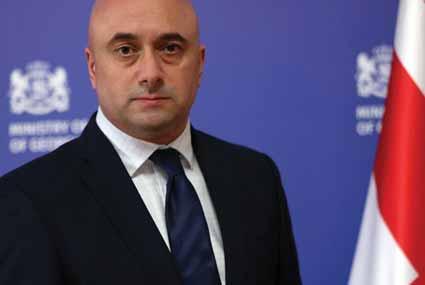
Mikheil Kiknadze has been appointed acting Minister of Culture following the resignation of Culture Minister Tinatin Rukhadze. Kiknadze, who has been serving as the ministry’s First Deputy Minister, will perform the minister’s duties until a new appointment is made. An economist by profession, Kiknadze has worked within the Ministry of Cul-
ture since 2025, most recently serving as head of the ministry’s Internal Audit and Monitoring Department. The ministry said he has many years of experience in senior positions in the public sector.
The decree published on July 28 confirms that Maka Gurgenidze, who served as First Deputy Minister of Culture, also stepped down after Rukhadze’s resignation.
The Ministry of Culture announced Rukhadze’s resignation on July 28, saying she stepped down for health reasons.
Rukhadze was appointed minister on October 18, 2024, shortly before Georgia’s parliamentary elections.
BY TEAM GT
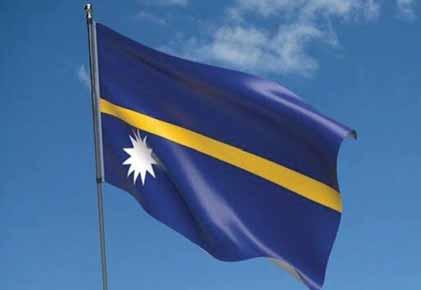
Georgia has welcomed Nauru's decision to terminate diplomatic relations with the occupied Georgian regions of Abkhazia and the Tskhinvali region, also known as South Ossetia, while the de facto authorities in Abkhazia have claimed the move resulted from sustained external pressure.
Georgia's Ministry of Foreign Affairs said Nauru's Cabinet decided on July 21 to end diplomatic relations with what it referred to as the "Republic of South Ossetia, also known as the State of Alania," and the "Republic of Abkhazia."
"The decision once again confirms that respect for and adherence to international law are the foundation of healthy international relations," the ministry said.
The ministry also expressed Georgia's readiness to establish diplomatic relations with Nauru and to develop bilateral cooperation based on shared interests.
The de facto Foreign Ministry of Abkhazia rejected the decision, alleging it was made under "unprecedented and systematic external pressure" and describing it as "coercive in nature."
In a statement, the de facto authorities said diplomatic relations established after Nauru recognized Abkhazia in December 2009 had led to political dialogue, high-level visits and a legal framework for bilateral cooperation. They claimed Georgia and its Western partners had consistently opposed those ties and alleged that Nauru had been subjected to political, diplomatic, financial and economic pressure aimed at reversing its recognition.
BY TEAM GT
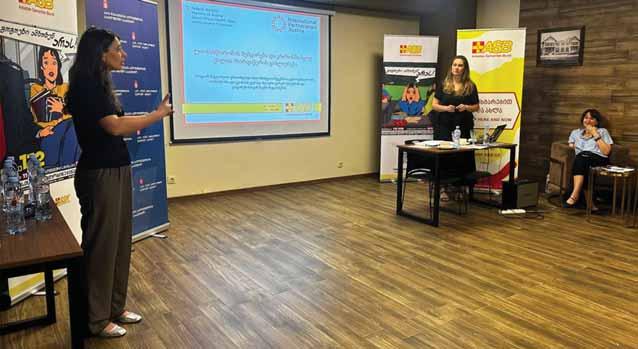
Aseries of business opportunities and employment fairs has connected vocational education and training (VET) graduates with employers, local businesses, education providers, and employment agencies in Zugdidi, Ozurgeti, and Batumi.
The events, organized throughout July by ASB Georgia in cooperation with SSK, aimed to create new employment and entrepreneurship opportunities for participants.
Several participants received job offers, while others established professional contacts and received guidance on developing their own businesses.
The initiative is part of the RISE Georgia – Reducing Inequality and Supporting Empowerment for Women in Crises project, funded by the Republic of Austria, represented by the Federal Ministry of Social Affairs, Health, Care and Consumer Protection, and ASB Germany.
Organizers said the project seeks to expand opportunities for women and vulnerable communities across Georgia by improving access to employment, skills development, and entrepreneurship support.
Nauru flag. Source: nwflags.co.uk
The statement also cited remarks previously attributed to former Nauruan President Baron Waqa, claiming he had spoken publicly about pressure on Nauru following its recognition of Abkhazia, including alleged attempts to influence the country's decision through financial means.
The de facto authorities argued that smaller countries maintaining diplomatic relations with Abkhazia have long faced external pressure, saying such practices contradict the principles of sovereign equality and non-interference enshrined in the UN Charter. They added that Abkhazia would continue pursuing what it described as broader international recognition and cooperation.
Nauru, a Pacific island nation of around 10,000 people, recognized Abkhazia and South Ossetia after the 2008 RussiaGeorgia war. Russia recognized both regions as independent states on August
26, 2008, and was later joined by Nicaragua, Venezuela, Nauru and Syria. Vanuatu and Tuvalu also recognized the regions but subsequently withdrew their recognition.
Georgia and the vast majority of the international community continue to regard Abkhazia and the Tskhinvali region as territories occupied by Russia.
In 2017, then-US President Donald Trump signed legislation prohibiting US financial assistance to countries that recognize Abkhazia or South Ossetia as independent states and establish diplomatic relations with them. The law also directs the United States to oppose international financial assistance for programs that violate Georgia's territorial integrity. As a result, Nauru became ineligible for certain forms of US-backed financial assistance available through international organizations.
BY LANA KOKAIA
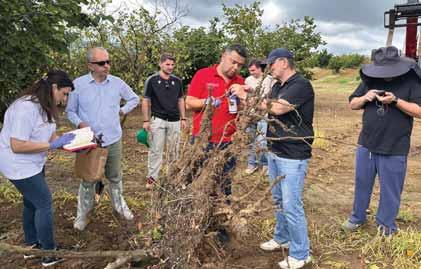
Ateam of Turkish scientists has visited Georgia’s main hazelnut-growing regions to investigate a disease causing tree decline and economic losses in the sector.
The four-member team from the Black Sea Agricultural Research Institute in Türkiye surveyed hazelnut orchards and collected samples in Adjara, Guria, Samegrelo-Zemo Svaneti, and Kakheti. The samples will be analyzed in Turkish laboratories to identify the causes of the dieback and help develop recommendations for managing the problem.
The mission was organized with support from the Food and Agriculture Organization of the United Nations (FAO) in cooperation with the Turkish Cooperation and Coordination Agency (TIKA).
The visit included technical exchanges with the Batumi Shota Rustaveli State University Institute of Phytopathology and Biodiversity, the Scientific Research Center of Agriculture, and AgriGeorgia, Ferrero’s hazelnut division.
FAO said the mission builds on its ongoing support for Georgia’s hazelnut sector under the EU- and Sweden-funded ENPARD IV program, which includes farmer training, knowledge exchange, and assistance with equipment to improve production efficiency, food safety, and competitiveness.
Georgia’s hazelnut orchards cover 58,000 hectares and provide income for nearly 72,000 farming households across the country.
Laboratory analysis in Türkiye will determine the pathogens responsible for the tree decline, after which scientists are expected to provide evidence-based recommendations for controlling the spread of the problem.
INTERVIEW BY LANA KOKAIA
Following the signing of the agreement between Green Rock and Hyatt Hotels Corporation and the official groundbreaking ceremony of Hyatt Regency Dilijan, held on July 25 in Dilijan, GEORGIA TODAY spoke with Katerina Danekina, CEO of Green Rock Management Group, about the vision behind this landmark project, the future of Dilijan as an international destination, and the role of responsible investment in Armenia’s regional development.
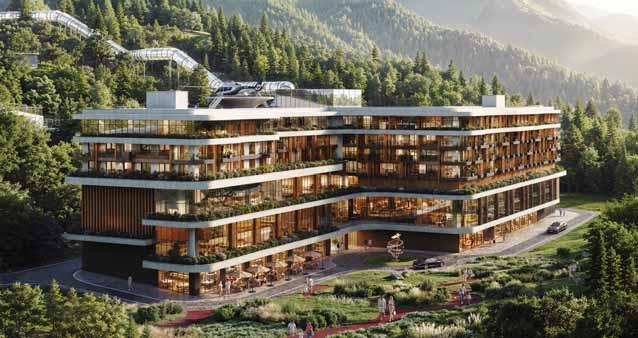
Hyatt Regency Dilijan will become the first Hyatt Regency hotel in Armenia and a key element of Green Rock’s multifunctional complex in Dilijan: an ambitious project that brings together hospitality, culture, education, business, and community spaces.
In this interview, Katerina Danekina shares insights into Green Rock’s longterm vision, the importance of international partnerships, the economic impact of the project, and how Dilijan can emerge as a year-round destination for travelers from Armenia, Georgia, and around the world.
GREEN ROCK SIGNED AN AGREEMENT WITH HYATT TO INTRODUCE THE FIRST HYATT REGENCY HOTEL IN ARMENIA. WHAT DOES THIS PARTNERSHIP REPRESENT FOR GREEN ROCK, FOR DILIJAN, AND FOR THE FUTURE OF ARMENIA’S HOSPITALITY INDUSTRY?
For us, this partnership represents much more than bringing an internationally recognized hotel brand to Armenia. It reflects our belief in the potential of Dilijan and in Armenia’s ability to create destinations that meet global standards. When we started developing the Green Rock vision, we were not thinking about creating only a hotel. We wanted to build a place where hospitality, culture, education, business, and community life come together. The Hyatt Regency partnership is a significant milestone in this journey because it brings international expertise and experience into a project that is deeply connected with the identity and potential of Dilijan. As one of the world's leading hospitality companies, with more than 1,500 hotels and resorts across the globe, Hyatt Regency will play an important role in introducing Dilijan to new international audiences while setting the highest standards of guest experience and service.
I believe this is also an important moment for Armenia’s hospitality industry. The arrival of a global brand such as Hyatt Regency demonstrates that Armenia is becoming increasingly attractive for international investors and travelers. It shows that our country has the potential to offer world-class hospitality experiences while preserving its unique character.
WHY DID GREEN ROCK CHOOSE DILIJAN FOR SUCH AN AMBITIOUS INVESTMENT, AND WHAT MAKES THE CITY ATTRACTIVE AS AN INTERNATIONAL TOURISM DESTINATION?
For us, choosing Dilijan was a combination of a personal story and a strategic vision.
Green Rock’s Founder, Mareta Gevorkyan, is originally from Dilijan, and this connection makes the city’s development deeply personal for her.
Dilijan is the place where she grew up, where her family roots are, and a city with which she continues to maintain a strong connection. At the same time, Dilijan has unique strategic advantages. Its location makes it an important connection point between Armenia and Georgia, while its proximity to Lake Sevan and Yerevan International Airport further strengthens its potential as an accessible tourism destination.
Beyond its natural beauty and cultural heritage, Dilijan remains one of Armenia’s key tourism destinations, and interest in the city continues to grow. Over the past year, the number of visitors has increased by approximately 30%, while accommodation capacity has grown by around 35%.
Today, travelers are increasingly choosing Dilijan not only for short visits, but also for longer stays, to experience its forests, nature, cultural heritage, and the peaceful rhythm of life that makes the city truly unique.
When we looked at Dilijan, we did not see only a beautiful location. We saw an opportunity to create a destination where people would want to stay longer, return more often, and experience Armenia in a deeper way.
THIS PROJECT GOES FAR BEYOND A HOTEL. GREEN ROCK IS CREATING A MULTIFUNCTIONAL DESTINATION THAT COMBINES HOSPITALITY, EDUCATION, CULTURE, BUSINESS, AND COMMUNITY SPACES. WHAT IS THE VISION BEHIND THIS ECOSYSTEM?
From the very beginning, we asked ourselves a simple question: what does Dilijan need to become a destination where people do not just visit, but truly want to stay, return, and build connections?
The answer was to create an ecosystem rather than a single project. The future Hyatt Regency Dilijan hotel is an important part of this vision, this is core element, of a much larger destination that includes educational, cultural, and community-focused spaces. Through projects such as PPLS Rooms co-living, Villa3 Community Hub, Cabinet Café & Restaurant, Apicius Armenia hospitality school, Music Hall, Art Park, and other public areas, we are creating an environment where different communities can interact.
Modern travelers are looking for experiences, not just accommodation. They want places where they can learn, connect, work, relax, and discover local culture. This is the type of destination we want to create in Dilijan.
Our goal is to create a destination that welcomes different types of visitors and remains active throughout the year.
We want international travelers to discover Armenia from a new perspective, business guests to find a high-quality environment for meetings and events, families to enjoy nature and cultural experiences, and professionals and entrepreneurs to find inspiring spaces for work and collaboration.
That is exactly why we launched the Meet Dilijan initiative. Its mission is to position Dilijan as a year-round destination for international conferences, corporate retreats, business events, educational programs, and cultural gatherings.
We believe that promoting Dilijan on international markets is just as important as developing its infrastructure, because a destination succeeds when people have compelling reasons to visit throughout the year.
Tourism in Armenia continues to grow year after year, and we believe Dilijan has every opportunity to become one of the country's leading destinations. Through our ongoing initiatives and long-term investments, we expect to contribute to an increase of approximately 20% in Dilijan's annual tourist flow.
At the same time, we want Green Rock to remain deeply connected with the local community. A successful destination is not only about attracting visitors; it is about creating value for the people who live there.
GREEN ROCK IS ONE OF THE LARGEST PRIVATE DEVELOPMENT PROJECTS IN DILIJAN. WHAT IS THE SCALE OF THE INVESTMENT, AND WHAT LONG-TERM ECONOMIC IMPACT DO YOU EXPECT IT TO HAVE ON THE CITY AND THE REGION?
Green Rock represents an investment portfolio of approximately 160 million US dollars, reflecting our long-term commitment to Dilijan and Armenia. However, the true impact of a project is not measured only by the size of the investment. It is measured by the opportunities it creates. Once fully operational, Green Rock is expected to generate more than 800 jobs, including over 400 positions within the Hyatt Regency hotel. But the impact will extend far beyond direct employment. We believe the project will create new opportunities for local businesses, suppliers, producers, service providers, and entrepreneurs. As tourism grows, it supports the development of many connected sectors and contributes to the overall economic growth of the region. Education and professional development are also essential parts of this vision. Through projects such as Apicius Armenia hospitality school, Green Rock aims to contribute to the development of a new generation of hospitality professionals in Armenia. The school will provide opportunities for young people to gain internationallevel knowledge and practical skills, helping to build the talent base needed for the future growth of Armenia’s tourism and hospitality industry. For us, investment is about creating lasting value: building not only infrastructure, but also opportunities for people. It is about creating an ecosystem where businesses can grow, profession-
als can develop, and local communities can benefit from long-term economic opportunities.
DILIJAN IS RENOWNED FOR ITS FORESTS, NATURAL BEAUTY, AND CULTURAL HERITAGE. HOW DO YOU ENSURE THAT DEVELOPMENT IS CARRIED OUT RESPONSIBLY AND IN HARMONY WITH THE ENVIRONMENT?
Respect for nature is one of the fundamental principles behind our approach. Dilijan’s greatest strength is its unique environment, and we understand that any development must protect and respect this heritage.
At Green Rock, we approach development as a long-term responsibility. This means carefully planning projects, integrating them thoughtfully into the surrounding landscape, and applying international standards in design and construction. In our projects, we follow sustainable development principles, including the use of the EDGE green building standard, FIDIC contract management principles, and international best practices in construction.
We also believe that responsible development is about creating opportunities for people. By investing in hospitality, education, local businesses, and community-oriented initiatives, we want the benefits of growth to be shared with the wider community.
GEORGIA IS ONE OF ARMENIA’S CLOSEST NEIGHBORS AND AN IMPORTANT SOURCE OF VISITORS. DO YOU SEE GEORGIAN TRAVELERS AS AN IMPORTANT AUDIENCE FOR GREEN ROCK, AND WHAT EXPERIENCES WOULD YOU LIKE THEM TO DISCOVER IN DILIJAN?
Absolutely. Georgia is one of Armenia’s closest neighbors and one of the most important regional tourism partners.
The connection between our two countries is built not only on geographical proximity, but also on shared history, cultural ties, and growing interest in regional travel experiences.
Tourism relations between Armenia and Georgia continue to develop, with Georgia consistently remaining among the leading international markets for Armenia. In recent years, Armenia has welcomed more than 200,000 visitors from Georgia annually, while overall inbound tourism to Armenia reached more than 2.2 million international visitors in 2024. These figures demonstrate the strong potential for further strength-
ening regional tourism cooperation. We see great opportunities to develop joint initiatives between Armenia and Georgia, including combined travel experiences, cultural projects, festivals, conferences, and business events. By working together, we can create new opportunities for visitors to explore both countries and position the South Caucasus as a more connected and attractive destination.
For Dilijan, Georgia represents an important neighboring market. Located approximately three hours from Tbilisi, Dilijan can offer Georgian guests a unique experience combining nature, wellness, culture, authentic traditions, and international-quality hospitality. We would like visitors from Georgia to discover Dilijan not only as a place for a short visit, but as a year-round destination where they can return for leisure, cultural experiences, business events, and new discoveries.
LOOKING AHEAD, WHAT IS YOUR LONG-TERM VISION FOR GREEN ROCK? WHAT ROLE DO YOU HOPE THE COMPANY WILL PLAY IN SHAPING THE FUTURE OF TOURISM AND REGIONAL DEVELOPMENT IN ARMENIA AND THE SOUTH CAUCASUS?
Our long-term vision is to demonstrate how thoughtful investment, responsible development, and international best practices can transform regions and create new opportunities.
Green Rock aims to become a benchmark for integrated destination development: a place where hospitality, education, culture, and community come together to create sustainable value. An important part of our mission is also to contribute to raising the standards of the industries in which we operate. In our projects, we apply international standards and approaches that are not always mandatory in the Armenian market, but we believe they are essential for improving quality, increasing competitiveness, and bringing project implementation to a new level.
For example, Green Rock became the second company in Armenia and the first outside Yerevan to receive EDGE green building certification for a project. This reflects our commitment to sustainable development and our ambition to introduce higher standards in design, construction, and operations.
We want our projects to contribute to Armenia’s international image, attract visitors and investors, support local communities, and inspire new approaches to regional development.
BY LANA KOKAIA
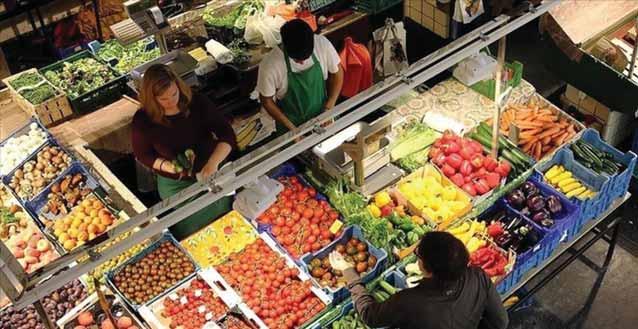
Market and fair operators in Georgia generated 208.8 million GEL in revenue in 2025, data from the National Statistics Service of Georgia (Geostat) shows.
The largest share of income came from renting commercial space, which accounted for 86.5% of total revenue, or 180.7 million GEL. One-time payments for trade rights generated 9.6 million GEL (4.6%), while other sources brought in 18.6 million GEL (8.9%).
The total expenses of market and fair operators reached 128.6 million GEL in 2025, including 55.2 million GEL paid to employees.
A total of 198 market and fair facilities operated across Georgia during the year. Tbilisi had the largest share, with 70
facilities (35.4%). Other regions with the highest numbers were Imereti with 32 facilities (16.2%), Samegrelo-Zemo Svaneti with 25 (12.6%), Kakheti with 22 (11.1%), and Kvemo Kartli with 15 (7.6%). The total area occupied by markets and bazaars reached 2 million square metres. Of these facilities, 96.5% were privately owned, while 3.5% belonged to the state.
In 2025, markets and fairs had 46,500 trading spaces, with an average of 36,100 traders operating there daily. The directorates managing these facilities employed an average of 2,700 people, of whom 32.6% were women. Nearly half of the employees (48.1%) were based in Tbilisi. By type of facility, 35.9% of markets were covered spaces, 34.3% were openair, and 29.8% were semi-covered. Most facilities sold non-food products, with 30.8% specializing exclusively in such goods. Two markets sold only food products, three focused on cars, and three specialized in poultry and livestock.
BY IVAN NECHAEV
Airports have become one of the most revealing indicators of a country’s ambitions. Once viewed simply as transport infrastructure, they are now expected to function simultaneously as business hubs, architectural statements, retail destinations and, increasingly, the first expression of a nation’s identity. From Singapore’s Changi to Istanbul’s new mega-airport, governments have come to understand that the passenger experience begins long before visitors reach a hotel or museum. Georgia is making a similar, if more modest, investment in that philosophy.
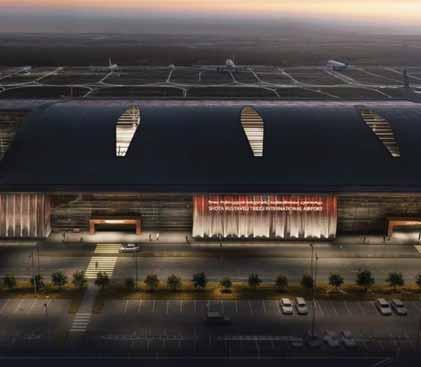
In July, TAV Georgia officially launched a $150 million expansion of Tbilisi International Airport, a project that will double the airport’s annual capacity from five to ten million passengers by 2028. The program includes ten passenger boarding bridges, seven additional remote aircraft stands, expanded passport control, new check-in facilities, upgraded baggage systems and larger retail, dining and business lounge areas. The project will also modernize operational infrastructure while increasing parking capac-
ity around the terminal.
On paper, these are technical improvements. In practice, they represent something much broader. For much of the past decade, Georgia’s tourism strategy has focused on attracting visitors through culture, gastronomy, wine and dramatic landscapes. International campaigns promoted the country as a destination to be discovered rather than simply visited. That strategy has been remarkably successful.
Passenger traffic has grown steadily, with Tbilisi Airport serving more than 1.09 million passengers during the first quarter of 2026: an eight percent increase compared with the previous year. Across Georgia’s airports, passenger numbers continue to set new records.
Infrastructure inevitably has to catch up with that success. Anyone who has traveled through rapidly growing airports understands that capacity is about more than statistics. Congested passport control, overcrowded departure halls and limited aircraft stands affect not only convenience, but also a country’s international reputation. Airports shape first impressions with surprising force. Before visitors experience Georgian hospitality, architecture or cuisine, they experience immigration queues, baggage delivery and terminal design.

In July, TAV Georgia launched a $150 million expansion of Tbilisi International Airport that will double the airport’s annual capacity from five to ten million passengers by 2028
Perhaps the most interesting aspect of the project is not the engineering itself, but the decision to dedicate new commercial spaces to Georgian food and local products. Airports have increasingly become curated showcases of national identity. Helsinki presents Finnish design before travellers reach the city. Copenhagen introduces visitors to New Nordic cuisine almost immediately after arrival. Seoul integrates Korean cultural brands throughout Incheon Airport. Rather than filling terminals exclusively with international luxury chains, many successful airports now serve as introductions to local culture. Tbilisi appears to be moving in the same direction.
This reflects a transformation of aviation economics. Airports no longer earn revenue primarily through aircraft operations. Retail, restaurants, premium lounges and commercial services have become central to their financial model. In that environment, highlighting Georgian producers is not merely a cultural gesture; it is also an economic strategy that gives local businesses access to an international audience measured in millions.
The investment also illustrates Georgia’s changing position within regional mobility networks. Over the past decade, Tbilisi has evolved into an increasingly important gateway between Europe, the South Caucasus and parts of Central Asia. As international airlines continue expanding their Georgian routes and tourism remains one of the country’s key economic sectors, airport capacity becomes an issue of national competitiveness rather than simple convenience.
Of course, expansion alone does not guarantee success. Around the world, impressive terminals have sometimes outpaced passenger demand, while smaller airports have succeeded through efficient operations rather than monumental architecture. The real measure of this project will be whether improved infrastructure translates into smoother passenger experience, stronger airline partnerships and continued growth without sacrificing service quality. What distinguishes Tbilisi’s expansion is that it arrives not as a speculative megaproject, but as a response to sustained demand. The numbers already justify the investment. The challenge now is ensuring that the airport grows not only in size but also in character.
For many visitors, an airport is no longer
simply the place where a journey begins.
It is the first chapter of the story a country tells about itself. Georgia’s decision to invest in that story suggests confidence that many more people will soon be arriving to hear it.
As international airlines continue expanding their Georgian routes, airport becomescapacity an issue of national competitiveness rather than simple convenience
BY TEAM GT
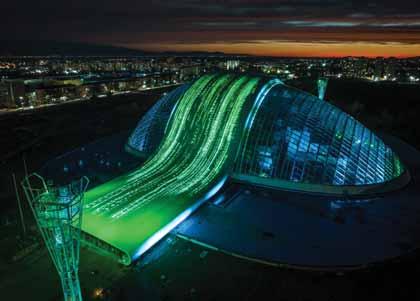
One of Georgia's most recognizable buildings has begun a new chapter. The former Parliament building in Kutaisi has reopened as the country's largest technology hub, transforming a landmark once built for politics into a center for startups, innovation, education and scientific research.
Prime Minister Irakli Kobakhidze and Economy Minister Mariam Kvrivishvili officially opened the Innovation and Technology Agency's (GITA) new Kutaisi Technology Hub, describing it as a major step toward building a technology-driven economy.
Speaking at the opening ceremony, Kvrivishvili said the project reflects the government's ambition to create more
high-skilled, well-paid jobs.
"Artificial intelligence, digital technologies and the data-driven economy determine the competitiveness of countries and industries," she said. "Georgia's choice is clear: to be not only a user of new technologies, but also a country where knowledge is created, new ideas are born, and competitive technology businesses develop."
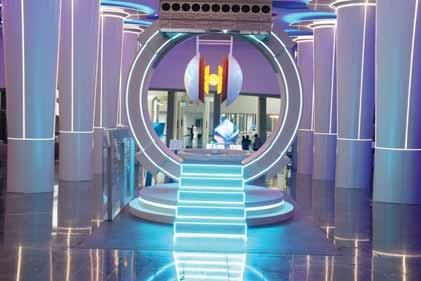
The hub brings together technology laboratories, startup workspaces, an interactive science and technology museum, an artificial intelligence computing center and a TUMO creative technologies education center for school students. It will also be home to Georgia's largest technopark, hosting startup incubators, hackathons, innovation camps, workshops and training programs throughout the year.
Kobakhidze said the complex would become "a regional center of knowledge,
innovation and technological development."
"I am pleased that the building, which was a symbol of corruption under the previous government, will acquire an entirely new purpose starting today," he said.
According to the prime minister, more than 300 government-supported technology startups have already generated over GEL 800 million in economic value and created more than 4,000 jobs.
Kvrivishvili said the project is especially significant for Kutaisi, pointing to the city's growing role as an educational and innovation hub, supported by Kutaisi International University and Kutaisi International Airport.
The transformation marks a dramatic change for a building that has had an eventful history. Opened in 2012 under then-President Mikheil Saakashvili, the futuristic glass-and-steel complex was built to house Georgia's Parliament as part of a plan to shift political and economic activity toward western Georgia.
Designed by Spanish firm CMD Ingenieros and architect Alberto Domingo Cabo, its distinctive glass dome quickly became one of Kutaisi's best-known landmarks.
The move, however, remained controversial. Critics argued that separating Parliament from government ministries in Tbilisi made lawmaking less efficient and increased costs. After the change of government in 2012, lawmakers gradually returned to the capital, and by 2019, Parliament was once again permanently based in Tbilisi, leaving the striking building in Kutaisi without a long-term purpose.
Rather than leaving it empty, the government announced plans in 2022 to reinvent the complex as a technology and innovation center. Today, the build-
ing has been given a very different mission: helping develop Georgia's next generation of entrepreneurs, engineers and researchers.
The transformation extends beyond the building's interior. Ukrainian lighting design company Expolight has created what it describes as Georgia's first interactive architectural façade and one of the world's largest permanent 3D projection mapping installations. Fully integrated with the building's architectural lighting, the system allows the former Parliament's exterior to display changing artistic works, immersive audiovisual presentations and interactive experiences controlled through a dedicated mobile application. According to Expolight, the installation includes three operating modes: a rotating series of artistic visual displays, a large-scale audiovisual show exploring the story of human development, and an interactive mode that enables visitors
to engage directly with the building. The company said one of the project's greatest technical challenges was transforming the building's vast curved glass dome into a seamless digital canvas while preserving its architectural character. The project also features four customdesigned, 29-meter-tall sculptural structures that conceal the projection equipment. Rather than simply housing the technology, the towers were designed as public artworks inspired by the idea of growth, symbolizing Kutaisi's evolution into a center of knowledge, culture and technology.
In addition to supporting local startups, the Kutaisi Technology Hub is expected to attract international technology companies, host conferences and provide advanced facilities for fields including robotics, electronics, drones, virtual reality and artificial intelligence, making it one of the largest innovation centers in the South Caucasus.
Continued from page 1
THERE WAS A TIME…
There was a time when an evening in Batumi felt unmistakably Georgian. You could walk along the boulevard, hear traditional music drifting from a nearby restaurant, sit down with friends over khinkali and a glass of local wine, and before long you’d inevitably be watching Georgian dancing or perhaps even joining in yourself. Visitors didn't just come for the Black Sea: they came to experience Georgia.
Today, I worry that we're slowly losing that.
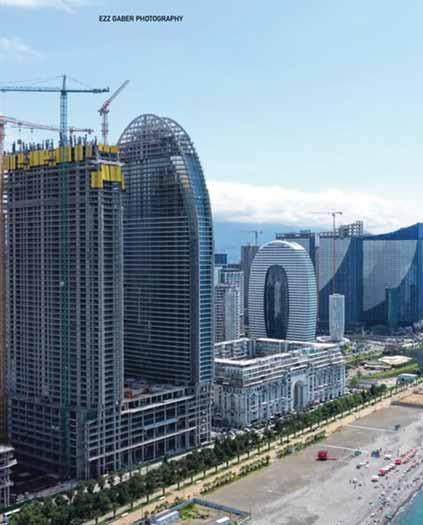
Every time I come back to Batumi, there seems to be another hotel under construction. Another apartment tower rising above the skyline. Another luxury development promising investment opportunities and spectacular sea views. On paper, this is progress. More hotels mean more tourists. More tourists bring more money. Investment creates jobs, improves infrastructure and helps Georgia's economy. No one is arguing against growth, but somewhere along the way, we've neglected to ask ourselves the simple question: what kind of Batumi are we building?
Finding a place to sleep has never been easier. Finding a place that truly feels Georgian? A little trickier. Walk along the beachfront today and you'll find plenty of modern bars, cafés and lounges. But where are the places filled with Georgian music? Where are the restaurants with regular traditional dance performances? Where are the venues serving authentic Adjarian food while local musicians play into the evening? Instead, too many places feel interchangeable. They could just as easily be
in Dubai, Antalya or, dare I say it - Moscow.
Yet Georgia has one of the richest cultures anywhere in Europe. They have a language unlike any other, food people travel thousands of miles to taste. There are wine traditions stretching back over 8,000 years, and dances that leave visitors speechless. So why aren't we putting these things front and center?
This conversation cannot ignore Georgia’s recent history. Twenty percent of this country remains under Russian occupation. This isn't politics, this is reality.
Since Russia's full-scale invasion of Ukraine, more than 100,000 Russian citizens are estimated to have settled in Georgia, while many more have visited or passed through. They came because Georgia's borders remained open and the country offered safety, stability and opportunity. Their arrival has undoubtedly brought money to parts of the economy, but it has also brought consequences that ordinary Georgians live with every day.
Housing demand surged. Property prices increased dramatically. Rent climbed beyond what many local families could comfortably afford. The cost of everyday living rose while wages struggled to keep up. For many Georgians, Batumi and Tbilisi began feeling less affordable than ever before. At the same time, and unlike Tbilisi, parts of Batumi appear to increasingly cater to Russian-speaking visitors and residents. Russian music is common in a lot of venues. Russian-language advertising and menus are increasingly visible. Some servers in local establishments are unable to converse in even basic Georgian. Businesses naturally
follow demand, but many Georgians can't help wondering whether their own language and culture are slowly being pushed into the background in their
own country. This is not about blaming individual Russians. Nor is it about suggesting Georgia should close itself off from the
world. It’s about asking where the balance lies. Should parts of Georgia sacrifice the needs of its citizens to cater to tourists?
Visitors should experience Georgia. Georgia should not redesign itself for its visitors.These two things are not mutually exclusive. This principle applies whether tourists come from Russia, the Gulf, Europe or anywhere else. A confident nation welcomes guests; it does not slowly dilute its own identity to accommodate them. The greatest irony is that what makes Georgia popular isn't the number of luxury apartments built, it’s everything that already existed long before the first crane appeared.
The hospitality, traditions, cuisine and music. The history and language. Georgia’s identity. Those are the reasons people fall in love with this country. Hotels are important, as is investment and economic growth, but we should never lose sight of the fact that culture is what makes a destination unforgettable and makes people want to return. More hotels are not, by themselves, a tourism strategy; more apartments are not a substitute for atmosphere. A skyline filled with towers means very little if visitors struggle to find an authentic evening of Georgian music, dancing, food and conversation.
Batumi doesn't need to become another anonymous international resort on the Black Sea, it should instead aspire to become the world's greatest showcase of Georgian culture. Because another apartment tower might fill a skyline, but only Georgian culture can fill people's hearts.
If Batumi is going to keep building upward, we have a responsibility to make sure it doesn’t lose its soul.
BY NUGZAR B. RUHADZE
April 14, 1978, is a supreme red-letter day for Georgia.
That was the day when almost the entire Georgian youth took to the streets to defend the nation's right to keep the native Georgian tongue as the state language of the country, as enshrined in the supreme law of the land. The massive demonstration swept across the country almost immediately after news spread that the Soviet regime intended to dethrone our beloved mother tongue in line with an initiative by Mikhail Suslov, the Kremlin's chief ideologist, to introduce a constitutional change that threatened to strip Kartuli (Georgian) of its official status as the state language.
The bad news from Moscow came like a bolt from the blue, but immense, nonviolent public protests compelled the unrestrained Soviet leadership to back down. As a result, the constitutional status of the Georgian language was preserved. Since then, in honor of that unbelievable triumph over the grim communist regime, April 14 has been cele-
brated annually in Sakartvelo as DedaEna (Mother Language) Day.
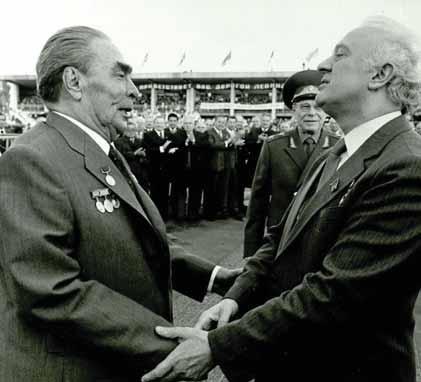
To understand what prompted Moscow to amend the constitution, as formal and symbolic a document as it was, it is worth recalling the political climate in the USSR nearly half a century ago. At the time, a period officially described by historians as the Era of Stagnation, Leonid Brezhnev was at the helm of the Soviet Union. Seeking to refresh and consolidate his political power, he pursued a series of administrative innovations, one of them being the adoption of a new Soviet constitution.
His ideological ambition was to establish Russian as the single official language of the Soviet people, thereby diminishing the role of the national languages as official instruments of statehood and making the other peoples of the Soviet Union less nationally individual and culturally distinctive. In reality, and ironically, it was Suslov, the central ideological figure of the Communist Party, widely known as the Grey Cardinal, who did much of the thinking and acting for Brezhnev. His goal was to establish Russian permanently as the language of interethnic communication across the country that covered one-sixth of the
Back in Canada for about three weeks. My wife, having been denied a UK visa to go there with me earlier this year, suggested that I come here for my stepmother’s 90th birthday without her. The prospect of applying for a Canadian visa and not getting that either, despite paying for the privilege/insult, was too much. Plus, she had the Svaneti guest house to run in my absence… with local help on call as needed. She did let me know, however, that this should be the last time I left her alone in summer while we continue to run the house: too much! I get it.
After delightfully surprising my mom near Edmonton, having a super party for her with about 70 guests, I also returned to my haunt from 1977-81, Thunder Bay, to catch up with my two best friends from that era. One of them, Glenn, with his wife, hosted me in his spacious home. The other, Richard, took me camping. Now, this part of Canada has been hard hit this summer with hot weather and many wildfires. The actual place Richard had booked for us to canoe to and camp in was simply gone, erased by the apocalyptic burning. So he had to scramble to find a replacement location, months past the date when such are usually completely booked up. I suppose the wildfires were causing many cancellations, because he managed. We wouldn’t
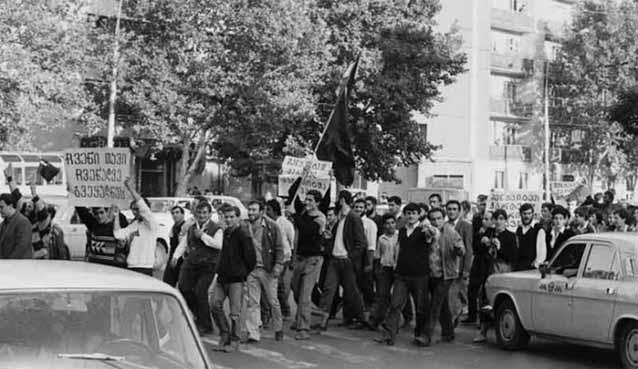
world's landmass.
In a word, gradual Russification was on the agenda. Preference would be given to Russian speakers, administration would increasingly function in Russian, government paperwork would shift to Russian, courts would operate in Russian, and universities would educate young men and women in the Russian language. Meanwhile, the constitution of the Georgian Soviet Socialist Republic explicitly stated that Georgian was the state language of the republic, and that provision was expected to disappear.
Legally, the matter might have sounded technical, but politically it had the potential to trigger a national tragedy with the gravest possible consequences, including bloodshed, because the issue was never merely linguistic. It encompassed the entire spectrum of national life: our literary tradition stretching back to the fifth century and earlier; poetry, the pinnacle of our artistic and creative thinking; an educational heritage spanning millennia; our national identity, the perennial drama of our existence; and, finally, our historical memory, which is impossible to erase as long as this nation continues to exist. All of this had transformed
our Deda-Ena into the symbol around which all other national aspirations revolved.
Deeply wounded by the proposed change, tens of thousands of students, intellectuals, and ordinary citizens rallied in downtown Tbilisi. Remarkably, however, the demonstration did not assume a purely anti-Soviet character.
The protesters demanded only one thing: that Kartuli remain the state language. Nothing more.
What mattered most was the suddenly awakened sense of national freedom and independence, which today clearly invites comparison with the way many Georgians feel in the middle of the third decade of the 21st century, nearly half a century after that flagrantly arbitrary decision by the Kremlin.
It is hardly surprising that the Georgian Communist leadership underestimated public feeling. They were overly confident in the permanence of the Soviet system of government. Within hours, the demonstrations had spread far beyond the universities, and local party officials became deeply alarmed.
The First Secretary of the Georgian Communist Party, Eduard Shevardnadze, proved wise enough to understand that
suppressing the demonstrations by force could provoke a far broader crisis. According to a widely circulated account, he asked the second secretary, Gennady Kolbin, Moscow's appointee, effectively the Kremlin's viceroy in Georgia, to contact Mikhail Suslov and inform him of the rapidly deteriorating situation. The story goes that an infuriated Suslov abruptly ended the conversation, muttering that they should "go ahead and do whatever damned thing they want." Thus, Sakartvelo retained the constitutional provision it had fought to preserve, reinforcing its national identity. It was not a victory over the Soviet system as a whole, but it was a significant concession by what Ronald Reagan would later call the "evil empire."
Why did it happen? Because all the variables were in place. On the Soviet side there was economic stagnation, a growing dissident movement, mounting strains in Eastern Europe, and rising nationality issues elsewhere. On Georgia's side there was remarkable national unity, limited and clearly defined demands, enormous public participation, and the Kremlin's reluctance to create martyrs.
Historical lessons matter, don't they?
canoe there, just drive, so I could take my suitcase and all my camera gear. Now, camping has come a LONG way since my youth, when the family drove and camped from Thunder Bay to Canada’s west coast twice and east coast once. Then, tents were mostly much heavier affairs, with steel poles and canvas material. I suppose much lighter ones were available even then, but we never hiked to our campsites. We either drove straight to them or put everything onto two canoes and paddled there. So weight was not the primary concern. Comfort was.
Richard has honed his set of equipment over many years’ iterations, buying new when necessary and second hand when possible. A Kevlar and epoxy canoe, at about 44 pounds, was light enough for me to carefully put onto my shoulders and walk with: I tested this. The tent we shared, a four-person job, is super-light, suspended from elastic-connected aluminum poles so as to keep a space between its walls and the equally light flysheet or rain cover. This really helps keep rain from running into the tent itself (in this case, a mostly mosquito-mesh affair), as we discovered on our first night.
It DID rain, quite hard, after midnight, but not for too long. We stayed high and dry, as did the campsite’s picnic table, similarly covered with its own flysheet.
Richard had prepared me months in advance with a list of things to take, as well as what he would bring. Did I want the canoe? Yes, please, it having been some 40 years since I had paddled in one! He took care of all food and cook-

ing, and we ate sumptuously, including steak our first night and sausages our second, with no breakfast for me and a no-cook lunch, plenty of snacks and drinks, even some proper ground coffee per my request.
The campgrounds themselves are very well put together, with large numbered sites, each with flat ground, picnic table/ benches and firepit/grill surface. The latter was off-limits due to the total fire ban, making this the first time I have ever returned from camping not smelling of smoke. Richard has a gas stove and bottle, though. Canoeing on the local lakes was delightful and, though I have a bit of a sore
shoulder for some positions at the moment, I returned to paddling like I had never left it. Although I did try a dip in a lake, and could have stayed in longer than I did despite its being a bit cold, my usual breast stroke was bothered by the shoulder, so I gave that up.
If Georgia ever gets such wonderful campgrounds set up, paid for admittedly by people’s taxes, it will lure ever more campers, who for the moment at least have a huge amount of freedom to try their luck in proportionally much more space, either asking for permission or begging forgiveness. Each version has its pluses and minuses.
The main thing I came away with from
Thunder Bay, though, was the most precious gift of all: TIME to hang out with my childhood friends, catch up, reconnect, and move our relationships forward. For this, Glenn and Richard, I think you from the bottom of my heart.
Tony Hanmer has lived in Georgia since 1999, in Svaneti since 2007, and been a weekly writer and photographer for GT since early 2011. He runs the “Svaneti Renaissance” Facebook group, now with over 2000 members, at www.facebook.com/groups/ SvanetiRenaissance/ He and his wife also run their own guest house in Etseri: www.facebook.com/hanmer.house.svaneti
REVIEW BY IVAN NECHAEV
Museums have long been designed to neutralize uncertainty. Their architecture promises orientation; their collections establish historical continuity; their display strategies produce clarity.
Even the celebrated "white cube" functions less as an aesthetic choice than as an ideological device, isolating artworks from the instability of everyday life and presenting them as autonomous objects available for contemplation.
Tolia Astakhishvili's Figure of the Child at Vienna's mumok systematically dismantles that model.
Occupying two underground floors of Austria's leading museum of modern and contemporary art, the exhibition does not merely install artworks inside an institutional framework. Instead, it transforms the museum itself into an unstable material whose architecture, circulation and historical authority become part of the artistic proposition. Rather than presenting discrete objects, Astakhishvili constructs a continuously shifting ecology of spaces in which sculpture, drawing, photography, architectural intervention, sound and museum history become impossible to separate.
Over the past two decades, immersive installation has become one of the dominant formats of contemporary exhibition-making. Yet immersion has increasingly drifted toward spectacle. Visitors are expected to enter visually overwhelming environments that privilege sensory impact over sustained reflection. Astakhishvili proposes an entirely different model. Her installations are not immersive because they surround the viewer; they are immersive because they destabilize the mechanisms through which perception itself is organized.
Nothing in Figure of the Child behaves according to conventional museum logic. Temporary partitions interrupt architectural continuity. Corridors narrow unexpectedly before opening into larger chambers. Mirrors dissolve the distinction between actual and reflected space. Fragments of domestic interiors coexist with industrial materials, suspended textiles, found objects, drawings and photographs. The exhibition continuously produces situations in which orientation must be reconstructed rather than assumed. What appears initially as fragmentation gradually reveals itself as a carefully calibrated spatial syntax.
Astakhishvili has consistently rejected the modernist understanding of sculpture as a self-contained object. Instead, her practice belongs to a broader lineage of artists who have treated architecture as both subject and medium: from Gordon Matta-Clark's physical interventions into buildings to the total environments of Ilya and Emilia Kabakov. Yet these comparisons only partially explain her achievement. Unlike Matta-Clark, she rarely performs acts of architectural violence. Unlike Kabakov, she avoids narrative allegory. Unlike installation artists who construct fictional worlds, Astakhishvili refuses theatrical closure altogether. Her spaces remain provisional, occupied by traces rather than stories. Objects appear less as symbols than as evidence: evidence of habitation, repair,


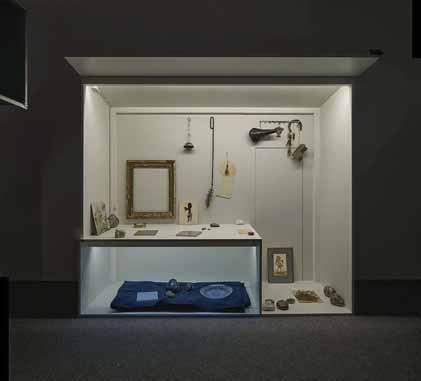
abandonment, care, maintenance and continuous transformation.
This attention to material residue may constitute the exhibition's most significant contribution to contemporary installation practice. Rather than celebrating ruin, a tendency that has become almost conventional within post-industrial aesthetics, Astakhishvili investigates incompletion. Her walls are neither finished nor destroyed. Surfaces carry marks of previous interventions without becom-
COMMERCIAL DEPARTMENT
Commercial Director: Iva Merabishvili
Marketing Manager: Natalia Chikvaidze
EDITORIAL DEPARTMENT:
Editor-In-Chief: Katie Ruth Davies
ing archaeological relics. The exhibition therefore resists both nostalgia and monumentality. It operates within an aesthetic of permanent revision, where construction and dismantling coexist. The title Figure of the Child reinforces this logic. Importantly, the child should not be understood as a biographical or psychological motif. Instead, it functions as an epistemological position. Childhood represents a mode of perception preceding certainty, when spatial rela-
Journalists: Ana Dumbadze
Tony Hanmer
Nugzar B. Ruhadze
Ivan Nechaev
Lana Kokaia
Layout: Misha Mchedlishvili
Photographer: Aleksei Serov
tionships have not yet become habitual and every environment requires active negotiation. The exhibition repeatedly returns visitors to this condition, replacing recognition with orientation, certainty with exploration.
Unlike many contemporary exhibitions that reward rapid visual consumption, Figure of the Child unfolds through duration. Meaning accumulates slowly as visitors repeatedly encounter recurring materials, altered perspectives and unexpected relationships between museum architecture and inserted structures. One does not simply look at the exhibition; one gradually learns its grammar.
Equally significant is Astakhishvili's dialogue with mumok's permanent collection. Rather than treating canonical works as historical anchors, she incorporates paintings, sculptures and installations by artists including Pablo Picasso, James Ensor, Medardo Rosso, Nan Goldin, Louise Lawler, Charlotte Posenenske, Vito Acconci and Nam June Paik into her own spatial composition. These works remain recognisable, yet their institutional authority is subtly displaced. Art history no longer appears as a linear sequence of masterpieces but as an active participant within an unfinished architectural environment.
Such a strategy also challenges conventional curatorial hierarchies. Instead of separating contemporary intervention from historical collection, Astakhishvili produces what might be described as a horizontal field of artistic coexistence. Historical works neither dominate nor illustrate the exhibition. They circulate within it.
This curatorial intelligence extends beyond the exhibition itself. Before the official opening, mumok devoted several weeks to Tolia Curriculum, an experimental public program that exposed the normally invisible processes of installation, discussion and collective production. In doing so, the museum temporarily abandoned one of its defining
characteristics: the presentation of completed cultural objects. Process itself became exhibition.
Although Astakhishvili's biography is rooted in Georgia and Berlin, her work deliberately resists simplistic readings through national identity or post-Soviet experience alone. Instead, she identifies a condition increasingly shared across contemporary Europe: cities permanently under renovation, temporary architectures, unstable housing, migration, displacement and infrastructures that never quite reach completion. Her installations therefore function less as representations of particular places than as spatial models of contemporary life itself. There is also an important institutional dimension to this exhibition. By granting Astakhishvili unprecedented freedom to transform two entire floors of the museum, including works from its own internationally significant collection, mumok demonstrates a willingness to question the neutrality of its own architecture. Few museums are prepared to surrender so much curatorial control. The result is not simply an exhibition hosted by mumok but a temporary redefinition of what the museum can become.
For that reason, Figure of the Child should not primarily be discussed as a successful installation. Its real achievement lies elsewhere. It proposes an alternative understanding of the museum, not as a place that stabilizes history, but as a space capable of producing uncertainty, negotiation and intellectual risk. In an era when museums increasingly compete through spectacle, accessibility and digital visibility, Astakhishvili reminds us that contemporary art retains another possibility altogether: it can still make perception itself unstable. That is a far more radical gesture than creating another immersive environment. It is, perhaps, one of the most compelling arguments for the continuing relevance of the museum in the twenty-first century.
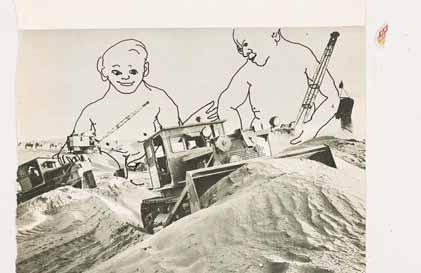

International Relations & Communications
Sofia Bochoidze E: sbochoidze@georgiatoday.ge
Website Editor: Katie Ruth Davies
Webmaster: Sergey Gevenov
Circulation Managers: David Kerdikashvili David Djandjgava
ADDRESS 22 Janashia Str. Tbilisi, 0179, Georgia
Tel.: +995 32 229 59 19 E: info@georgiatoday.ge F: GeorgiaToday
ADVERTISING & SUBSCRIPTION +995 577 72 52 61
E-mail: marketing@georgiatoday.ge
Reproducing material, photos and advertisements without prior editorial permission is strictly forbidden. The author is responsible for all material. Rights of authors are preserved. The newspaper is registered in Mtatsminda district court.