Rehabilitation: How Traffic Will Move for Four Months
2
Ukraine Latest: War Continues beyond the Front as Russia and Ukraine Target Cities, Ports and Fuel Networks
Georgia to Create Unified Registry of Foreigners from September 2026
"Georgia would be easy prey" - Prof. Neil Macfarlane on Possible Russian Plans
EU Ban on Destroying Unsold Clothes and Shoes Enters into Force
7
Hazelnut Growers Day 2026 in Zugdidi Connects Farmers, Machinery, and Input Suppliers
After the End of Dance: Pina Bausch's Masurca Fogo in Tbilisi
batumelebi
Togo Chelidze
EU and UK Visits to Georgia Hit Record High in First Half of 2026
BY LANA KOKAIA
Georgia recorded a record number of visits from European Union countries and the United Kingdom in the first half of 2026, with 249,201 visits registered between January and June, the National Tourism Administration said.
The figure represents a 23.4% increase compared with the same period in 2025. A record number of visits was also recorded in the second quarter of the year, when 152,975 visits from EU countries and the UK were made to Georgia, marking a 19.4% increase year-on-year.
The number of international visitors increased from 26 of the 27 EU member states, with the largest growth recorded from Slovakia (+51.2%), Finland (+50.3%), Croatia (+46.5%), Malta (+42.1%) and Slovenia (+41.1%).
Tourism revenues from the EU and UK also reached a record level in JanuaryJune, totaling $335.7 million, which is $58.6 million more than in the same period last year, representing a 21.2% increase. In the second quarter alone, tourism
revenues from these markets reached $194.9 million, up 12.1% compared with the same period of 2025.
The National Tourism Administration of Georgia’s Ministry of Economy and Sustainable Development said it is continuing efforts to diversify tourism markets and promote Georgia through targeted campaigns across Europe.
The administration said it organizes business meetings, roadshows, presentations, and sales missions in European cities to strengthen ties between Georgian companies and international tourism businesses.
Georgia has also increased its presence at major European tourism exhibitions and launched advertising campaigns on European media platforms, including outdoor campaigns in major cities such as London and Paris.
The administration highlighted cooperation with international airlines, including British Airways, Austrian Airlines, Edelweiss, Transavia France, Wizz Air and EasyJet, as well as media and familiarization tours for journalists, influencers, and tour operators.
Currently, Georgian airports offer flights to 42 destinations in EU countries and the United Kingdom, the National Tourism Administration said.
Azerbaijan to Resume Direct Flights to Russia
BY LANA KOKAIA
Azerbaijan will soon restore direct flights to Russia, ending a suspension imposed after the fatal crash of an Azerbaijan Airlines passenger jet in December 2024.
The announcement came during talks in Moscow between Azerbaijan’s Foreign Minister Jeyhun Bayramov and Russia’s Foreign Minister Sergei Lavrov. Bayramov said flights on several routes are expected to resume in the near future, although he did not specify a date.
Azerbaijan Airlines suspended services to 10 Russian cities after an Embraer E190 traveling from Baku to Grozny was struck by a Russian surface-to-air missile on December 25, 2024. The aircraft
Rustaveli Avenue Rehabilitation: How Traffic Will Move for Four Months
Chavchavadze Street.
City Hall said alternative routes will be available for private vehicles during the rehabilitation period.
Marie Brosse streets and Zviad Gamsakhurdia Embankment.
Public transport routes will also be temporarily adjusted during the works.
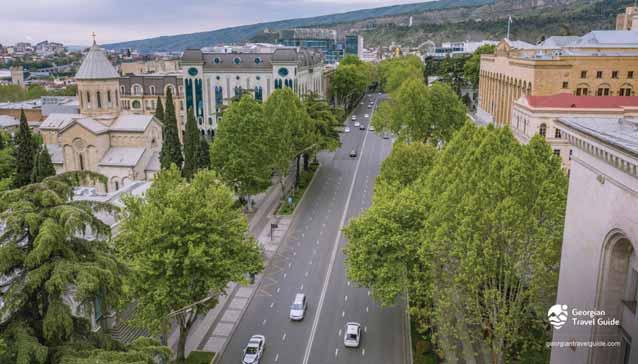
The full rehabilitation of Tbilisi’s Rustaveli Avenue will begin on July 23 and is expected to last four months, during which all vehicle traffic will be restricted on the avenue and part of Merab Kostava Street, Tbilisi City Hall said. Traffic restrictions will apply to the section from Tamar Chovelidze Street to Freedom Square. Movement will also be fully prohibited on Vaso Abashidze Street, while Aleksandre Griboedov Street will temporarily become two-way between Vano Sarajishvili Street and the intersection with Aleksandre
Vehicles traveling from Petre Melikishvili Avenue toward Freedom Square will be redirected through Ivane Tarkhnishvili, Vasil Barnovi, Kote Makashvili, Polikarpe Kakabadze, Daniel Chonkadze, Amagleba, Lado Asatiani and Shalva Dadiani streets.
Vehicles moving from Nikoloz Baratashvili Street toward Merab Kostava Street will use Revaz Tabukashvili and Sandro Inashvili streets, First Republic Square, Giorgi Akhvlediani and Niko Nikoladze streets.
Traffic from Mikheil Javakhishvili Street toward Rustaveli Avenue will be diverted via Revaz Tabukashvili, Revaz Lagidze,
City Hall said bus routes N301, 305, 306, 308, 309, 310, 314, 326, 331, 337, 342, 344, 345, 352, 358, and 397, as well as minibus routes N472, 532, 540 and 541, will operate through Heroes’ Square and the right bank of the Mtkvari River to connect with Baratashvili Street.
Several other routes will also change. Bus routes N359 and N391 will run via Heroes’ Square and Galaktion Tabidze Bridge, while bus N378 will no longer serve Rustaveli Metro Station and will instead operate toward Heroes’ Square. Minibus routes N408, N420 and N457 will also follow modified routes during the rehabilitation period.
Foreigners in Georgia, representational image. Source: Verdict
attempted to divert before crashing in western Kazakhstan, killing 38 of the 67 people on board.
The tragedy strained relations between the two countries. In April, however, Moscow and Baku reached an agreement under which Russia formally acknowledged the involvement of its air defense system and agreed to compensate the victims’ families.
Lavrov said the two governments have now settled all outstanding issues related to the incident.
Azerbaijan’s Foreign Ministry said restoring air links would help strengthen regional connectivity and support economic development across the South Caucasus.
The ministers also highlighted growing economic cooperation, noting that bilateral trade between Azerbaijan and Russia reached $4.9 billion in 2025.
Georgia to Create Unified Registry of Foreigners from September 2026
BY LANA KOKAIA
Georgia will introduce a new system for registering foreign citizens and monitoring their legal status from September 1, 2026, following amendments to the Law on the Legal Status of Aliens and Stateless Persons. The changes provide for the creation of two main mechanisms — a unified
registry of foreigners and a unified database of foreigners.
The State Services Development Agency of the Ministry of Justice will be responsible for managing the registry. The government will determine the procedures for creating the database, processing stored information, including biometric data, and sharing data with relevant state agencies.
Separately, the Ministry of Internal Affairs will create a database of foreigners who are or have previously been in
Georgia without legal grounds. Information stored in this database will not be publicly available, with rules on its administration and data exchange to be determined by the Interior Ministry.
The creation of a unified registry for foreign citizens was discussed last month by Deputy Interior Minister Aleksandre Darakhvelidze. He said the new system would allow the state to better track foreigners’ entry, registration, and access to public services, while improving efforts to address illegal migration.
Tourists overlooking Georgian scenery. Source: georgianholidays
BY LANA KOKAIA
Rustaveli Avenue. Source: Georgian Travel Guide
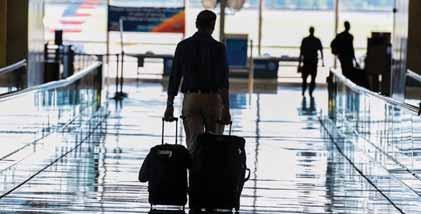
Passenger at the airport. Source: Mp.news.
Ukraine Latest: War Continues beyond the Front as Russia and Ukraine Target Cities, Ports and Fuel Networks
COMPILED BY ANA DUMBADZE
The Russia-Ukraine war entered another week marked by relentless drone strikes, grinding battles along the front line, and an increasingly direct campaign against the infrastructure that keeps both countries' war efforts running. While neither Moscow nor Kyiv achieved a decisive breakthrough, the conflict continued to spread far beyond the trenches, with attacks reaching deep into Russian territory and fresh missile barrages hitting Ukrainian cities.
On the battlefield, Russia maintained steady pressure across eastern Ukraine, focusing on the Donetsk region, where fighting remained fiercest around Pokrovsk, Kostiantynivka, and Kupiansk. Russian forces also continued attempts to push west toward the Dnipropetrovsk regional border while sustaining attacks in the Sumy and Kharkiv border areas to keep Ukrainian troops tied down and away from the Donbas.
According to the Institute for the Study of War, Russian troops made only limited tactical gains despite sustained assaults. Moscow has continued to rely on small infantry assault groups backed by drones, artillery, and guided bombs rather than large-scale armored offensives, allowing it to maintain constant pressure without achieving a major breakthrough.
Ukraine, meanwhile, signaled a more aggressive approach after President Volodymyr Zelensky appointed General Mykhailo Drapatyi as commander-inchief in the biggest military reshuffle since Russia's full-scale invasion in 2022. Major General Ihor Skybiuk was also appointed chief of the General Staff. In his first public remarks after taking
command, Drapatyi pledged to increase Ukraine's offensive capabilities.
"We will increase the intensity and scale of offensive actions. We will strike where the enemy expects it least."
His priorities, he said, include improving battlefield technology, strengthening recruitment, and expanding the military's ability to conduct offensive operations.
The leadership change coincided with an expansion of Ukraine's long-range drone campaign. Ukrainian forces targeted multiple sites inside Russia, including warehouses, industrial facilities, and oil infrastructure that Kyiv says support Moscow's military logistics.
Among the most controversial attacks was a strike on a Wildberries warehouse in Russia's Tambov region that Russian authorities said killed seven night-shift workers and injured at least 25 others.
Kyiv maintained the facility was being used to store drone components and navigation equipment destined for the Russian military, while Moscow insisted it was a civilian site. The competing claims could not be independently verified.
Ukraine followed up with one of its largest drone assaults on the Moscow region, reportedly launching more than 400 drones. Russian officials said most were intercepted, but falling debris and direct strikes caused fires at industrial and energy facilities, including an oil depot near Noginsk. A separate drone attack in Russia's Belgorod region killed five civilians, according to local authorities. The repeated attacks have forced Russia to adjust fuel distribution networks and reinforce key energy infrastructure.
Russia responded with heavy missile and drone attacks across Ukraine, targeting Kyiv as well as Kharkiv, Zaporizhzhia, Kherson, and Sumy. On July 19, Russia launched 41 missiles and 125
drones at Ukraine, according to Ukrainian officials. Ukraine said its air defenses intercepted 18 missiles and 108 drones, but some ballistic missiles penetrated the defenses. In Kyiv, one person was killed and 16 were injured, while residential buildings, warehouses, a supermarket, and a dormitory sustained damage.
Elsewhere, a missile strike on Kharkiv killed three people and injured about 20 others, while attacks on Zaporizhzhia killed two people and wounded at least 14. Across the strikes reported that day, at least six people were killed in Ukrainian cities. Residential neighborhoods, industrial facilities, and transportation infrastructure were damaged, although Russia maintained the targets supported Ukraine's military.
The Black Sea also remained a dangerous front. Russian strikes targeted the ports of Odesa, Mykolaiv, and Chorno-
morsk, disrupting grain exports that are vital to Ukraine's economy. Earlier in the week, attacks on Mykolaiv and Odesa killed at least three people, including two crew members aboard a foreign vessel in Mykolaiv and one person in Odesa, while several civilian ships, including a Marshall Islands-flagged vessel, were damaged.
In a separate incident, a cargo ship carrying Ukrainian corn after departing Odesa was struck, killing 10 crew members, including five Syrian nationals, underscoring the growing dangers facing commercial shipping in the Black Sea. Ukraine's energy infrastructure continued to come under sustained attack.
A missile strike in the Chernihiv region left more than 100,000 consumers without electricity, demonstrating that Moscow continues to target the country's power grid months before the onset of winter.
With ballistic missile attacks remaining among Ukraine's greatest challenges, Kyiv renewed calls for stronger Western air defenses. Zelensky has repeatedly argued that additional Patriot air defense systems and interceptor missiles are essential to protect Ukrainian cities.
Diplomatic efforts also continued despite little sign of an imminent breakthrough. Speaking about the prospects for peace, Zelensky reiterated that Ukraine remained open to negotiations but insisted that Russia must first face greater pressure.
"Ukraine is ready for a dignified peace, but only through strength," Zelensky said.
Attention also turned to Manila, where U.S. Secretary of State Marco Rubio met Russian Foreign Minister Sergei Lavrov on the sidelines of the ASEAN Regional Forum in one of the highest-level contacts between Washington and Moscow in months. Rubio said "new ideas" were needed to end the war, while Lavrov reiterated Russia's position that Moscow remained open to a political settlement. Meanwhile, European Union member states continued negotiations on a 21st package of sanctions targeting Russia's economy and its so-called "shadow fleet" of vessels used to transport oil outside Western price restrictions. Despite disagreements among some member states, Brussels has continued to tighten economic pressure on Moscow.
More than four years after Russia launched its full-scale invasion, the latest week underscored the changing nature of the conflict. The fiercest fighting is still taking place along Ukraine's eastern front, but increasingly the war is being fought hundreds of miles from the battlefield through drones, missile strikes, and attacks on the industrial and energy infrastructure that sustains both countries' military campaigns.
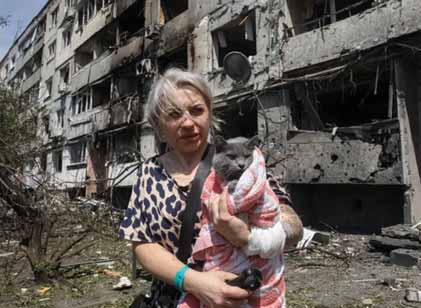
A woman with her cat in Pavlohrad after a Russian attack. Source: Reuters
MEP Warns “Soviet Georgia” Is Becoming Reality after Journalist Sanaia Sentenced over Facebook Posts
BY TEAM GT
Member of the European Parliament Michael Gahler has criticized the 14-day administrative detention imposed on Georgian journalist Vakho Sanaia over Facebook posts, saying the ruling reflects Georgia’s growing authoritarian direction and warning that “Soviet Georgia” is becoming a reality.
Commenting on the Tbilisi City Court’s decision, Gahler said the case demonstrated what he described as Georgia’s movement away from European values.
“Vakho Sanaia, a journalist with Formula TV, was sentenced to 14 days in prison for a post published on Facebook. The fact that he would have received a much harsher punishment in Russia is no consolation at all. It shows which side of Europe today’s Georgia stands on: the authoritarian side. Soviet Georgia is becoming a reality,” the MEP wrote.
The statement followed a ruling by Judge Zviad Tsekvava, who sentenced Sanaia to 14 days of administrative detention in absentia over two Facebook posts published on July 10 concerning Parliament Speaker Shalva Papuashvili and Georgian Dream MP Vladimer (Lado) Bozhadze.
The detention case came after an earlier court ruling the same day, in which Judge Tornike Kochkiani fined Sanaia GEL 6,000 over Facebook posts considered insulting to public officials. Following that decision, Sanaia published further posts criticizing the ruling and stating that he would not pay the fine. The court later opened a separate administrative case over those posts.
Sanaia has previously been fined GEL 4,000 under legislation targeting insults against public officials and has repeatedly said he does not intend to pay the penalties imposed on him.
The journalist’s case is part of a wider wave of administrative proceedings against individuals over online state-
Mdinaradze Criticizes Rike Tubes, Kaladze Responds to Fuksas
BY LANA KOKAIA
ments following the expansion of Georgia’s legislation on offensive speech.
In another recent case, activist Badri Shubladze was fined GEL 2,000 by the same judge, Zviad Tsekvava, for insulting Archpriest Andria Jagmaidze, head of the Public Relations Service of the Georgian Patriarchate, in a Facebook comment.
Shubladze said the case related to a post in which he used derogatory language against Jagmaidze while criticizing the wealth of members of the clergy.
“I do not think I insulted Jagmaidze.
The pig is more insulted by being mentioned alongside Jagmaidze. A member of the clergy should not be a millionaire and own enormous wealth,” Shubladze said after the ruling.
He also criticized the requirement to pay the fine within one week, saying it was unrealistic for a pensioner receiving GEL 500 per month.
The case against Shubladze was initiated by the Ministry of Internal Affairs’ Hate Speech Combat Unit, a newly established department tasked with monitoring what authorities describe as hate speech, offensive campaigns, and aggressive communication online.
The unit was launched after the Interior Ministry announced plans on May 18 to create a mechanism to investigate offensive and hateful online content.
Vice Prime Minister and State Minister for Coordination of Law Enforcement Agencies Mamuka Mdinaradze said that offensive social media posts had decreased since the department began operating, arguing that legal consequences were necessary to prevent abusive communication from becoming normalized.
Critics of the ruling Georgian Dream party, however, have raised concerns that the new enforcement mechanisms could be used to restrict freedom of expression and target government opponents under the justification of combating hate speech.
The latest court decisions have intensified debate over the balance between regulating online abuse and protecting freedom of speech in Georgia.
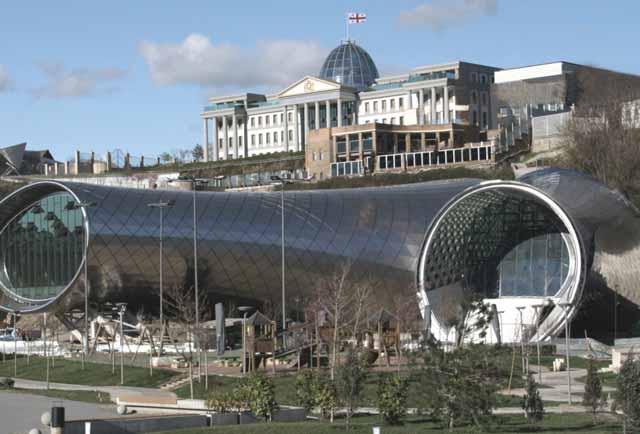
Georgia’s Vice Prime Minister and State Minister for Coordination of Law Enforcement Agencies Mamuka Mdinaradze has criticized the Rike Tibes building in Tbilisi, saying restoring it would cost more than the structure itself.
Speaking to journalists, Mdinaradze claimed that people familiar with the building had concluded it was poorly designed and had major functional problems, including issues with its climate control system.
“To get inside this building and give you a chance to survive would cost much more than the building itself,” Mdinaradze said.
He compared the structure with the
former Kutaisi Parliament building, saying temperatures inside the building had reached 55 degrees on some floors due to problems with the ventilation system.
Mdinaradze claimed the situation at Rike Docks was even worse.
The Vice Prime Minister also said no investor had managed to make the building functional and claimed the current owners were ready to dismantle it and give it to anyone willing to rebuild it elsewhere.
“The owners are ready not only to dismantle it, but to give it to any interested person who wants to rebuild it in another place,” Mdinaradze said, adding that no one had expressed interest so far because of the expected costs.
Meanwhile, Tbilisi Mayor Kakha Kaladze responded to a statement from Italian architecture firm Studio Fuksas, which designed Rike Tubes, saying the municipality had not received any let-
ters from the firm.
Studio Fuksas said it had repeatedly attempted to contact Tbilisi City Hall and the building’s current private owners over the past year to discuss alternatives to demolition, but had received no response.
“No letter has been received from them. If it had been received, the relevant municipal services would have responded,” Kaladze stated.
The mayor argued that the decision regarding Rike Tubes had already been made, describing the building as nonfunctional and saying tens of millions of GEL had been spent on the project.
Kaladze added that the building is now privately owned and that the municipality is not responsible for decisions regarding its future. He said Studio Fuksas should negotiate directly with the owner if it wants to discuss relocating or repurposing the structure.
TI Georgia: 91 People in Georgia Meet Council of Europe Criteria for Political Prisoners
BY TEAM GT
Transparency International Georgia (TI Georgia) says 91 people in Georgia currently meet the criteria established by the Parliamentary Assembly of the Council of Europe (PACE) for recognition as political prisoners. The organization presented its updated assessment at a briefing on July 21.
TI Georgia says the list was compiled using the criteria set out in PACE Resolution 1900 (2012). Each case was assessed individually, taking into account the circumstances of the case, court rulings and international human rights standards.
TI Georgia’s Human Rights and Justice Program Manager, Sandro Baramidze, said the overwhelming majority of those
included on the list meet more than one of the five criteria. Organization says Mzia Amaglobeli, founder and editor of Batumelebi and Netgazeti, and Elene Khoshtaria, leader of the opposition party Droa, meet all five criteria.
Under the Council of Europe test, a person may be considered a political prisoner if their detention is linked to one or more of the following: a violation of fundamental rights; detention for political reasons where the alleged conduct is unrelated to any criminal offence; a clearly disproportionate sentence; discriminatory treatment; or legal proceedings incompatible with the requirements of a fair trial. TI Georgia said its document identifies which criterion or criteria it considers applicable in each individual case.
“Such a high number of political prisoners once again points to the existence of politically motivated justice in Geor-
gia and the deterioration of the human rights situation,” the organization said in its statement. Speaking at the briefing, Baramidze described the situation as “a major black stain in Georgia’s history.”
Attorney Lasha Tkesheladze, who also took part in the briefing, argued that state institutions are undermining the right to a fair trial and prosecuting individuals for political reasons. He pointed to alleged use of false witnesses, restrictions on media access to court hearings and other violations of fundamental rights.
The ruling Georgian Dream party rejects the characterization of political prisoners, maintaining that individuals are imprisoned solely for specific criminal offences and not because of their political views or activities. Party representatives have described the term “political prisoner” as political speculation and an attempt to exert pressure on the judiciary.
A computer keyboard. Source: Global Center for the Responsibility to Protect
Rike Tubes. Source: Dezeen
OP-ED: Facts Versus Fabrication: Reassessing the Indus Basin Water Debate
OP-ED BY ATUL JAIN*
Pakistan’s recent claims projecting an impending water crisis in the Indus Basin and attributing river flow variations to upstream actions fail to withstand scrutiny when examined against Pakistan’s own hydrological data, reservoir records, and operational realities. A closer assessment of the evidence reveals a markedly different picture, one defined not by systemic scarcity, but by abundant inflows, significant downstream escapages, and longstanding structural limitations in water management.
The most striking feature of the 2025 hydrological cycle was the substantial surplus in water availability during the Kharif season (April to September). As per Pakistan’s Indus River System Authority (IRSA) data, actual inflows reached approximately 122.36 MAF, which was almost 18 percent higher than the anticipated inflows of nearly 104 million acrefeet (MAF) for Kharif 2025. Heavy rainfall across the basin further reduced irrigation demand and eased pressure on provincial allocations. Such conditions are fundamentally inconsistent with assertions of acute or engineered water shortages.
An even stronger contradiction to the scarcity narrative lies in the extraordinary quantity of water that ultimately flowed downstream of Kotri into the Arabian Sea. During Kharif 2025, escapages below Kotri amounted to nearly 30.848 MAF, around 71 percent higher than the recent five-year average of 18.034 MAF.
Significant downstream escapages to
the sea (about 3.6 MAF) continued even during the lower-flow Rabi 2025 season (October to March).
If the basin were genuinely facing severe scarcity supposedly due to upstream interference, such large volumes of water would not have remained unutilized and allowed to pass into the sea. The data instead points toward limitations in storage infrastructure, flood management, and distribution efficiency within the lower basin itself.
Reservoir behavior during the same period further undermines claims of sustained hydrological distress. As expected, the Kharif season began with relatively low storage levels, a normal phenomenon unless the reservoirs are designed for carry-over storage. Subsequently, the combination of higher inflows and flood events rapidly replenished major reservoirs. By September 2025, storage levels had risen to nearly 99 percent of capacity, creating a significantly stronger water availability position for Rabi 2025-26.
The outlook for Kharif 2026 also remains stable. Projected rim-station inflows of approximately 103.3 MAF for Kharif 2026, coupled with carryover storage estimated at around 2.3 MAF, higher than both the previous year and long-term averages, indicate that the basin enters the new cycle from a position of relative hydrological comfort rather than crisis.
At the same time, recent attempts by Pakistan to portray fluctuations in the Chenab River as evidence of upstream manipulation ignore both hydrological realities and established operational practices of run-of-the-river hydropower projects. River flows at downstream locations such as Marala are inherently influenced by seasonal snowmelt pat-
terns in the Himalayas. Variations in winter snowfall, delayed melting, or cooler spring temperatures naturally affect early-season discharge levels. Such fluctuations are a routine feature of Himalayan river systems and cannot, by themselves, be interpreted as evidence of deliberate interference.
Operational dynamics at hydropower projects such as the Baglihar Hydroelectric Project have also been repeatedly mischaracterized. Reservoir management in run-of-the-river systems necessarily involves variable releases linked to sediment flushing, maintenance requirements, hydropower optimization, technical safety considerations, and flood management protocols.
Sediment management is particularly critical in Himalayan rivers carrying heavy silt loads. Temporary operational adjustments during flushing or maintenance cycles are therefore intrinsic to project functioning.
Importantly, the Baglihar project has already undergone extensive international scrutiny. Pakistan itself invoked the dispute resolution provisions of the Indus Waters Treaty, leading to the appointment of a Neutral Expert under Article IX and Appendix F.
The Neutral Expert’s 2007 determination upheld the essential design and operational parameters of the project, rejecting most objections related to pondage and freeboard. The project was confirmed to be consistent with treaty provisions governing run-of-the-river hydropower development.
Equally significant is the absence of any demonstration of tangible downstream harm arising from the alleged flow variations. Allegations have relied largely on selective snapshots, isolated
observations, and media narratives rather than rigorous hydrological analysis establishing causation, economic damage, or quantifiable agricultural impact. No concrete evidence has been produced linking operational variations at upstream projects to sustained downstream distress.
Moreover, allegations of politically motivated manipulation overlook an important practical reality: any deliberate meddling in hydropower operations would impose not only direct economic costs on the upstream operator itself through reduced power generation efficiency, but it may also cause long-term harm to the plant.
A single flushing cycle during the monsoon season at the Baglihar Dam may result in an estimated loss of around 150 million units of electricity generation and corresponding revenue. Such flushing operations are undertaken by the operator purely on technical and maintenance grounds. It is difficult to reconcile claims of intentional disruption with
operational choices that simultaneously reduce energy production and impose financial losses.
Taken together, the evidence presents a clear conclusion. The Indus Basin has recently experienced higher-thanexpected inflows, substantial downstream escapages, rapid reservoir recovery, and stable forward projections. Variations in river discharge remain well within the scope of natural hydrological processes and standard reservoir operations. The larger challenge facing the basin lies not in speculative claims of upstream deprivation, but in unresolved structural issues, limited storage capacity, sedimentation pressures, inefficient utilization, and broader water governance constraints. Externalizing these internal management deficiencies through narratives of manufactured scarcity does little to address the real long-term challenges confronting the basin.
*Atul Jain is the Former Chairman of the Central Water Commission
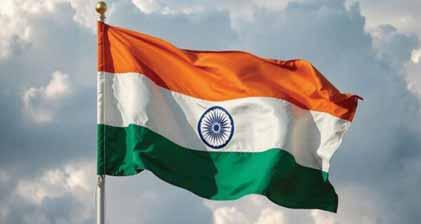
The Indian flag
"Georgia would be easy prey" - Prof. Neil Macfarlane on Possible Russian Plans
INTERVIEW BY VAZHA
TAVBERIDZE FOR RFERL
If Putin is forced to accept a more modest outcome in Ukraine, he may turn his ambitions towards Georgia to divert the attention of the Russian public, - says Neil Macfarlane, a professor of international relations at Oxford University, who has been studying Georgia, Russia and the South Caucasus for several decades. After returning from a recent visit to Georgia, in an interview with Radio Liberty, Macfarlane discusses the country’s internal and external challenges, the changing balance of power in the South Caucasus, Russia’s possible moves, and the existential choice Georgia faces today.
WHERE IS GEORGIA TODAY? WHAT IS THE STATE OF THE COUNTRY, WHAT CHOICE DOES IT FACE, AND HOW EXISTENTIAL IS THIS CHOICE?
Georgia faces two or three major challenges today.
The main challenge in domestic politics is the strength of the authoritarian government. I mean Georgian Dream, Irakli Kobakhidze, Shalva Papuashvili, and, behind the scenes, Bidzina Ivanishvili.
This is a government that at first glance appears quite stable, and at this stage it is difficult to see how this can change, although, of course, apparent stability is often illusory: we have already seen this in the case of Orbán in Hungary and Kaczynski in Poland, where seemingly solidly-built authoritarian systems quickly collapsed.
In Poland, Donald Tusk and his party ran an election campaign in such a way that they had thousands of activists in the villages. They actually toured the entire country. Much the same thing happened in Hungary, in the case of the Magyars.
The opposition in Georgia is neither unified nor nationwide. It is largely focused on the cities and, overall, I would say it has a gerontocratic feel to it: always the same old faces.
If the opposition unites around new people, people who have a clear vision of Georgia's future and explain to the people how this better future can be made a reality, then, in my opinion, there will be a chance.
LET'S LOOK AT THE SAME QUESTION FROM THE PERSPECTIVE OF FOREIGN POLICY.
In terms of foreign policy, I think Georgia faces at least three challenges of varying severity.
The first is the South Caucasus itself: Azerbaijan, Armenia, and Georgia.
Second, Russia and the space we used to call the former Soviet Union, that is, what goals and ambitions Putin has in this region.
And third is the broader international context: the United States, the European Union, ongoing processes in the West, and, of course, the war in Ukraine.
LET'S START WITH THE SOUTH CAUCASUS.
In my opinion, the most significant geo-
political weather-changing event in the region today is the improvement in relations between Armenia and Azerbaijan.
This is, on the one hand, the result of Azerbaijan's clear victory in the Karabakh War, and, on the other hand, Armenia's desire to open its border with Turkey.
Added to this is TRIPP [the Trump Road for International Peace and Prosperity], Trump's initiative that envisages the creation of a direct link between Azerbaijan and Turkey, via the Syunik Corridor, and the involvement of Armenia in this process.
Considering how much importance Georgia attaches to its transit function and how dependent it is on it, we can say that TRIPP is a direct competitor project for Georgia.
Some say there will be enough cargo for both routes. I'm not so sure, I wouldn't say that with any certainty.
There is also the issue of Anaklia.
Anaklia is, in fact, the natural end point of the middle corridor of Georgia.
If it turns out that there is not enough cargo turnover to load both corridors, then opening a new route from Azerbaijan through Armenia to Nakhichevan and then to Turkey will unconditionally harm Georgia's status as a key transit country for Azerbaijan and Central Asia.
In my opinion, this is a serious regional challenge.
The second challenge is the disproportionate growth of Azerbaijani power in the region.
Today, Baku is the most powerful military force in the South Caucasus. It has practically no real competitor. The Geor-
gian military forces seem to be slowly disappearing, or disappearing altogether. If we look at this from the perspective of realpolitik, there is another, less likely, but still real risk: after the defeat of Armenia, Azerbaijan will try to put pressure on Georgia. I repeat, this is a low probability scenario, but possible.
ON WHAT BASIS? WHAT COULD BE THE CAUSE OF DISAGREEMENT BETWEEN THE TWO COUNTRIES?
I’m not entirely convinced that authoritarian states need any special reason to pursue an aggressive foreign policy, other than their own or the regime's interests. In addition, several serious border delimitation problems remain unresolved between Baku and Tbilisi. First of all, Davit Gareji, as well as Zaqatala. Theoretically, all this could become an excuse.
Of course, I'm speculating now, but I'm just saying that such a scenario is entirely possible. I don't rule out that Azerbaijan might decide to use its military might to further expand its influence in the South Caucasus.
As for Russia and Ukraine, I think Georgia is lucky in that Ukraine is so unlucky. It turns out that Russia's military capabilities have their limits, and at the moment their military resources are entirely focused on Ukraine. Because of this, Georgia is a secondary destination for them. In my opinion, this will continue as long as the war in Ukraine is going on; a war that, at this stage, in my opinion, Ukraine is winning. But the question is how long this will all last.
If Russia decides to "finish the job" in Georgia, it will not be difficult for it to do so.
If Putin is forced to agree to an end that falls far short of his original goal of uniting Ukrainians and Russians, and I don't see how he can achieve that goal at this point; if he has to accept a much more modest outcome than he originally envisioned, he may turn his ambitions and military aggression toward Georgia to distract Russian society.
WITH A SCENARIO OF A SMALL, TRIUMPHANT WAR?
Yes. I don't want to offend Georgia, but in 2008, Georgia was pretty easy prey for Russia.
To some extent, this was also a test of their military capabilities. Many weaknesses were revealed then, some of which were corrected in the following years, but still not completely.
If Russia decides to annex South Ossetia, I don't think Georgia can do much to stop it.
And if Georgia resists in any way, they may use this as an excuse to launch military actions against Georgia.
DOESN’T IT SEEM CONTRADICTORY THAT RUSSIA WOULD ATTACK GEORGIA AT A TIME WHEN THE KREMLIN APPEARS TO HAVE ITS STRONGEST RELATIONSHIP EVER WITH A GEORGIAN GOVERNMENT?
This is a really important issue. If the Georgian government really believes that the main external threat to the country is Russia, then it must be said that it has worked quite successfully in terms of reducing this threat, precisely by improving relations with Russia.
BUT AT WHAT COST?
At the cost of worsening relations with the EU and the United States. But that's another topic.
If you consider Russia to be the main, existential threat, then I must say that "Dream" is working quite effectively in this direction, unlike the previous government, when, in my impression, Misha was actually doing everything he could to irritate Russia.
I would say that the Georgian Dream government has certainly contributed to stabilizing relations with Russia. This was a very important geopolitical task for Georgia.
As for your question, how paradoxical would it be if Russia attacked Georgia under conditions when relations are quite good, yes, today this is a logical question.
But I would ask you another question as a counterbalance: What will happen if the war in Ukraine ends and Putin fails
to achieve the goals he set? In that case, Georgia, as I have already said, would be fairly easy prey for him.
WOULD THIS BE A CONSOLATION PRIZE FOR THE RUSSIAN PEOPLE? WITH ARMENIA MOVING AWAY FROM MOSCOW, AZERBAIJAN SLIPPING OUT OF RUSSIA’S ORBIT, AND MOLDOVA HEADING TOWARD EU MEMBERSHIP, PUTIN SAYS: “LET’S HIT THE ONLY COUNTRY IN THE REGION THAT HAS STAYED FRIENDLY WITH US”?
As I said, this is just speculation. But if, in this hypothetical scenario, Russia decides to "finish the job" in Georgia, it wouldn't be difficult for it to do so.
After that, the question arises: who will be next? The logical next target is Armenia, because Russia already has a large military base in Gyumri, and after establishing control over Georgia, the problem of not having a common border will be solved. As a result, Armenia would also be a relatively easy target.
In this context, Russia's main problem is its relations with Turkey. Turkey has been increasing its influence in the region. And, at least at this stage, Russia still attaches great importance to its relations with Turkey.
But that's the problem with the future: the future, as they say, is another country. A country where neither you nor I have ever been.
I THINK THIS SCENARIO HAS ANOTHER WEAK POINT: IT ASSUMES PUTIN SURVIVES A BAD OUTCOME IN UKRAINE, AVOIDS POLITICAL CONSEQUENCES, AND THEN CHOOSES TO LAUNCH ANOTHER WAR INSTEAD OF SEEKING SANCTIONS RELIEF AND REBUILDING TIES WITH THE WEST. IN OTHER WORDS, HE WOULD CLOSE OFF HIS OWN PATH TO RECONCILIATION.
I don't think Mr. Putin is particularly concerned about relations with the West. If he were, he wouldn't have invaded Ukraine at all.
There is another important factor here: relations between Russia and China are increasingly deepening and expanding. This may not be to everyone's taste in Russia itself, but I think Putin believes that further deepening economic relations with China is a perfectly acceptable alternative to rapprochement with the West. Especially since restoring relations with the EU, and perhaps the US, would require some concessions from Russia, and China is not demanding concessions. Russia's support [against the West] is important to China, because Russia is its partner. In addition, these two regimes are also ideologically close.
However, I think China has its own, more far-reaching plans for Russia. It is enough to recall the Treaty of Nerchinsk of 1689, when Russia forced China to cede to Russia vast territories on the Pacific coast and in Eastern Siberia. There is a lot of unfinished business in this relationship. But, in the end, who knows? As I said before, the future is a world that none of us have ever traveled to.
uring the visit of the Prime Minister of Georgia to Singapore, Georgia’s Minister of Economy and Sustainable Development
Mariam Kvrivishvili met with Singapore’s State Minister for Trade and Industry, Alvin Tan, to discuss strengthening economic ties between the two countries.
The sides discussed prospects for expanding trade and economic cooperation, including in transport, logistics, and tourism. Special attention was paid to the growth of bilateral trade. The Ministry said that in January-June 2026, trade turnover between Georgia and Singapore increased by 25% compared to the same period last year, while Georgian exports to Singapore grew ninefold. The officials highlighted the potential for increasing exports of Georgian wine, alcoholic beverages, mineral water, and pharmaceutical products to Singapore.
exhibitions hosted annually by Singapore, noting that such events provide opportunities for exporters to establish new contacts and promote Georgian products.
They also discussed the participation of Georgian companies in international
The sides also focused on deepening tourism ties between Georgia and Singapore.
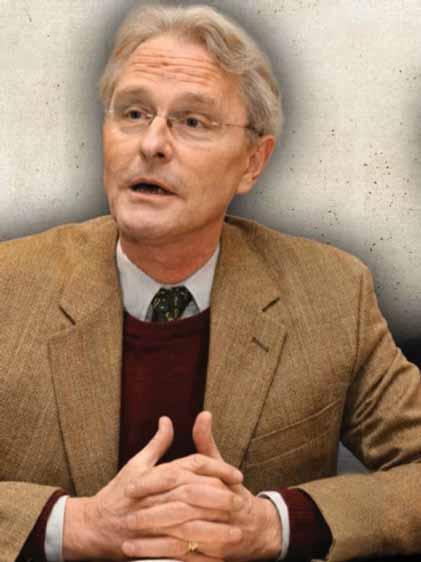
Prof. Neil Macfarlane. Source: RFERL
Green Rock Brings Global Hospitality Standards to Armenia with a Landmark Hotel Project in Dilijan
SOURCE:
GREEN ROCK
Armenia is set to welcome a globally recognized international hospitality brand through a strategic partnership with Green Rock, marking a significant milestone for the country’s tourism sector and the continued development of Dilijan as one of the leading destinations in the South Caucasus.
The new hotel project will become a key component of Green Rock’s flagship Multifunctional complex currently under construction in Dilijan: an ambitious urban ecosystem designed to combine hospitality, residential, educational, cultural, commercial, and public spaces within a single integrated destination.
On July 25, Green Rock held the groundbreaking ceremony for the new hotel, with the project set to introduce internationally recognized hospitality standards, a new level of guest experience, and a refined culture of service to Armenia’s tourism sector.
Although the name of the international hotel operator will be officially announced at a later stage, the partnership already represents an important milestone for Armenia’s tourism industry and highlights the country’s growing potential as an attractive destination for international travelers and investors.
Located just a three-hour drive from Tbilisi, Dilijan is renowned for its forests, national park, cultural heritage, and unique natural environment.
In recent years, the city has been gaining recognition as one of Armenia’s most attractive destinations for leisure, wellness, cultural, and business tourism.
The arrival of an international hospitality brand is expected to further strengthen Dilijan’s appeal for visitors from Georgia, Europe, the Middle East, and Asia, while contributing to the broader development of tourism connectivity across the South Caucasus.
“This is a truly symbolic milestone for Green Rock and for Dilijan,” says Katerina Danekina,
EU Ban on Destroying Unsold Clothes and Shoes Enters into Force
BY TEAM GT
Large companies across the European Union are now prohibited from destroying unsold clothing, footwear and clothing accessories under new rules aimed at reducing waste and promoting a more circular economy.
The ban, which took effect on July 19 under the Ecodesign for Sustainable Products Regulation (ESPR), requires businesses to prioritize selling, donating or preparing unsold goods for reuse instead of discarding them. Medium-sized companies will be subject to the same requirements from 2030, while small and micro-businesses are exempt.
The European Commission said the measure is intended to prevent the unnecessary waste of valuable resources used to manufacture new products and reduce greenhouse gas emissions associated with their disposal.
"By encouraging reuse, repair and more resourceefficient business practices, the new rules support the transition to a more circular and competitive European economy," the Commission said. Under the regulation, companies must first attempt to keep products in circulation by selling them, including through discounts or alternative markets, donating them to charities or social enterprises, or preparing them for reuse through repair, refurbishment or remanufacturing.
The destruction of unsold goods will only be permitted in limited circumstances, including where products are unsafe or damaged, are counterfeit or infringe intellectual property rights, or have been rejected by charities or donation schemes. In such cases, businesses must comply with the EU's waste treatment hierarchy, which gives priority to recycling.
Companies using these exemptions will be required
to provide evidence, such as documentation or test results, and publish annual reports detailing the products they have destroyed.
National authorities will enforce the rules and may impose fines on businesses that fail to comply. Companies must retain relevant records for five years to facilitate inspections, while reporting requirements have been streamlined through the use of existing customs and logistics codes.
The ban is one of the first measures introduced under the ESPR, which entered into force in 2024 and establishes EU-wide requirements to make products more durable, repairable, recyclable and resource-efficient.
Textiles were chosen as the first product category covered by the measure because of the sector's significant environmental impact. According to the European Environment Agency, between 4% and 9% of all textile products placed on the European market are destroyed before they are ever used, amounting to an estimated 264,000 to 594,000 tons of textiles each year.
The Commission said the rules were developed following consultations with businesses, non-governmental organizations and industry experts to ensure they are practical while avoiding unnecessary administrative burdens.
and reflects our long-term vision for the town. Through this project, we are creating a destination that combines international hospitality standards with Dilijan’s unique character.
Beyond the hotel itself, this development will strengthen Dilijan’s tourism infrastructure, create new jobs, and support the town’s growth as a yearround destination for tourism, culture, and education.”
Green Rock is implementing a long-term investment program in Dilijan aimed at transforming the town into a modern tourism and lifestyle destination where hospitality, education, culture, business, and community life come together.
As part of this vision, the company has already opened the first completed facilities within its Multifunctional complex including PPLS Rooms Co-living, Villa3 Community Hub, Cabinet Café & Restaurant, and Cemi by Apicius, an Italian café. Cemi serves as a practical training platform for students of Apicius Armenia, an international hospitality school. Following the opening of the new hotel, graduates of the school will have the opportunity to continue their professional careers within Armenia’s growing hospitality industry.
The multifunctional complex represents a total investment of $160 million, with more than $30 million already invested. Upon completion, the project is expected to create more than 800 new jobs, including over 400 permanent positions within the hotel sector. The hotel is designed to offer 205 guestrooms and suites, extensive dining and wellness experiences, family entertainment facilities and a purpose-built conference center.
Green Rock’s long-term vision is to transform Dilijan into one of the leading tourism and lifestyle destinations in the South Caucasus, creating a unique environment where nature, culture, international hospitality standards, education, and sustainable development come together.
The project is expected to strengthen tourism connections between Armenia and Georgia while contributing to the region’s growing international appeal and creating new opportunities for travelers, businesses, and local communities.
Chief Executive Officer of Green Rock. “This hotel is a defining part of our Multifunctional Complex
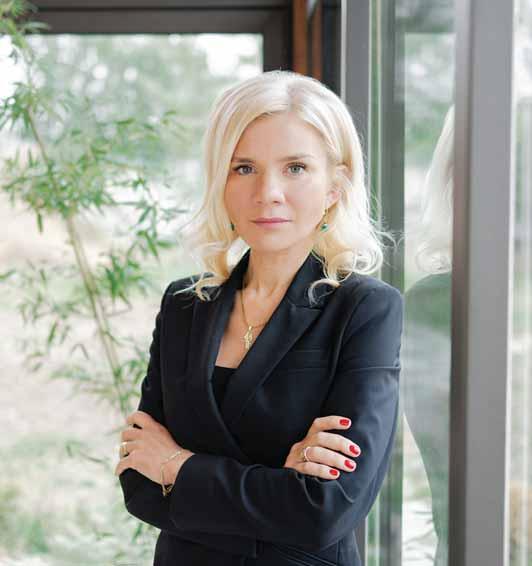
Katerina Danekina, Chief Executive Officer of Green Rock
Poti Free Industrial Zone and the Middle Corridor – A New Investment Opportunity
BY TEAM GT
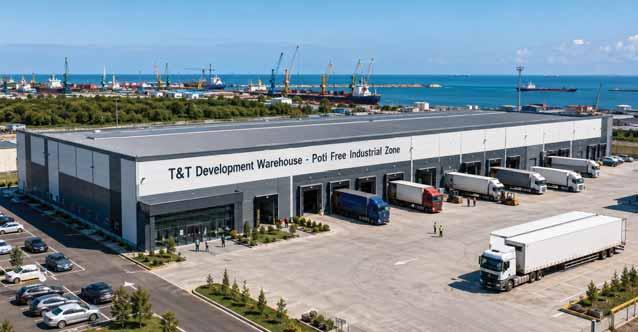
The Poti Free Industrial Zone is located near Georgia’s most important Black Sea port and creates unique opportunities for international trade, logistics, and regional distribution.
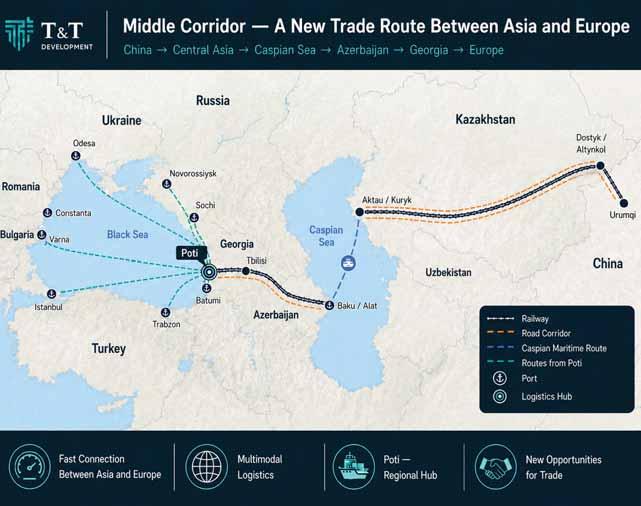
Against the backdrop of the growing importance of the Middle Corridor, the China–Central Asia–Caspian Sea–Georgia–Europe route, the development of modern warehousing infrastructure is becoming increasingly relevant. GEORGIA TODAY spoke about this opportunity, the warehouse complex planned in the Poti FIZ, and the new investment model with Togo Chelidze, founder and director of T&T Development and a member of the Georgian Bar Association, who has 16 years’ experience in corporate and tax law.
HOW DID THE IDEA FOR THIS PROJECT ARISE?
Global trade has changed significantly in recent years. Due to geopolitical tensions, sanctions, and disruptions along traditional routes, international companies are actively seeking more flexible, secure, and faster transportation corridors.
In this process, the Middle Corridor is acquiring particular importance. Georgia is the natural gateway of this route between Europe and Asia. However, roads and ports alone are not enough to move cargo. Modern warehouses are needed where companies can receive, store, consolidate, sort, and rapidly distribute products to different countries. Our project is designed to meet precisely this demand.
WHY DID YOU CHOOSE THE POTI FREE INDUSTRIAL ZONE?
Poti is an important logistics hub on the Black Sea. Maritime, rail, and road transport converge here, allowing businesses to receive cargo in one location and then distribute it across Georgia, Azerbaijan, Armenia, Türkiye, Central Asia, and European destinations. The Free Industrial Zone, in turn, offers companies a special tax and customs environment. This is particularly attractive to international traders, manufacturers, exporters, importers, logistics operators, and regional distributors.
By establishing a presence in Poti, a foreign company can use Georgia as its own regional trade and distribution center, bringing products into the warehouse in advance and, once an order is received, delivering them to the customer within a few days rather than several months.
WHAT DOES THE PROJECT ENVISAGE?
At the first stage, a modern warehouse complex of approximately 3,000 square meters will be constructed. As demand grows, the project may be expanded in phases to include approximately ten or more warehouse buildings.
Our goal is not simply to create space for lease, but to establish a flexible logistics base for international business.
The warehouses may be used by international trading and logistics companies; suppliers of machinery and industrial equipment; distributors of auto parts, construction materials, and electronics; FMCG and packaged food companies; suppliers of textiles and household goods; and e-commerce and regional distribution companies.
WHAT SPECIFIC ADVANTAGES WILL A TENANT RECEIVE?
The main advantages for a tenant are proximity to the market and speed of delivery. For example, an Asian or European manufacturer may place its products in a warehouse in Poti in advance.
When it receives an order from Azerbaijan, Armenia, Georgia, or Central Asia, it will no longer need to ship the products from a distant country and wait several weeks or months: delivery will become possible within just a few days.
This gives the company a significant competitive advantage: faster service, more efficient transportation management, the creation of regional inventories, and the ability to serve several markets simultaneously.
A local company or trade representative office established in Poti will also be able to purchase products, sell them across the region, settle accounts with partners, and manage international operations from Georgia. Within the framework of the law, the business will be able to use the tax and customs regime of the Poti FIZ and create a more efficient international trade structure.
This means that a warehouse in Poti can become not only a storage facility for a company, but also its regional sales,
distribution, and business development center.
WHAT MAKES YOUR INVESTMENT MODEL DIFFERENT?
We have created a model that allows not only large funds, but also individual investors to participate in the project. Only 20 investment shares have been allocated for the first stage. The value of each share is $35,740, while the total investment volume of the project is $714,800.
The investor transfers the funds to the company’s account and becomes a registered partner and co-owner of T&T Development. The share owned by the investor will be registered with the Public Registry.
WHAT FINANCIAL BENEFIT WILL THE INVESTOR RECEIVE?
The company’s main source of income will be the long-term lease of warehouse
space. According to our financial model, at full occupancy, the first stage of the project is expected to generate approximately $210,000 in annual rental income, while the projected annual return for Class B investors may range from approximately 14.04% to 15.94%.
At the same time, the investor participates not only in current income, but also in the development of a growing logistics real estate project. The more international companies become interested in leasing warehouse space in Poti, the greater both the project’s income and the opportunity to construct additional warehouse buildings will become.
HOW ARE THE INVESTOR’S INTERESTS PROTECTED?
The investor does not transfer funds to a private individual: the contribution is deposited into the company’s bank account, and, in return, the investor receives an officially registered share in the company.
Investors are entitled to 80% of the distributable profit. Each investment share grants the right to receive 4% of the total distributable dividends.
In addition, without the consent of Class B investors, it will be impossible to sell the company’s real estate, encumber it with a mortgage, or enter into a transaction that would materially alter ownership rights over the property.
Investors will also have the right to review the company’s financial statements, major decisions, and documents related to the real estate.
DOES THE PROJECT ALREADY HAVE A CONCRETE FOUNDATION?
Yes. T&T Development is registered directly in the Poti Free Industrial Zone, on Plot No. 317.
A 3,000-square-meter land plot* has been allocated for the project, under a 25-year lease agreement, with the option to extend it for an additional 25 years.
This is no longer merely an idea: the project has a specific site, a company, an investment model, a development plan, and a clear commercial purpose.
WHAT IS THE PROJECT’S LONG-TERM VISION?
Our goal is to create a modern warehouse and logistics complex in the Poti Free Industrial Zone that will serve cargo moving along the Middle Corridor and international companies.
The first warehouse will mark the beginning of the project. In the future, approximately ten or more warehouse units may be constructed, creating an integrated regional logistics hub.
The project is therefore attractive to both investors seeking a long-term, profitable project backed by a tangible asset, and companies requiring a warehouse, trade representative office, or regional distribution center in the Black Sea and Caucasus region.
WHEN WILL CONSTRUCTION BEGIN, AND HOW CAN ONE PARTICIPATE IN THE PROJECT?
Construction is scheduled to begin at the end of August, and completion of the first facility is expected to take approximately six to eight months.
Only 20 investment shares are available during the first stage. At the same time, negotiations can already begin with companies interested in the long-term lease of the entire warehouse or part of it. Additional information, investment terms, and project materials are available on the website:
[www.invest-fiz.ge] (http://www.investfiz.ge) or by telephone at +995577341777 E-mail: [info@invest-fiz.ge] (mailto:info@ invest-fiz.ge)
T&T Development is open to cooperation with individual and institutional investors, logistics companies, international traders, manufacturers, distributors, and prospective tenants.
Hazelnut Growers Day 2026 in Zugdidi Connects Farmers, Machinery, and Input Suppliers
SOURCE: FAO
Up to 200 representatives of the hazelnut sector gathered for the second time at AgriGeorgia's facility in Zugdidi for the 2026 edition of the Hazelnut Growers Day. The event brought together farmers, private sector representatives, and key stakeholders from the hazelnut value chain.
The Hazelnut Growers Day was jointly organized by the Food and Agriculture Organization of the United Nations (FAO) and AgriGeorgia (Ferrero Group's division dedicated to hazelnut-related activities), under the European Neighborhood Program for Agriculture and Rural Development (ENPARD) IV of the European Union and Sweden.
Building on last year's inaugural event, this year's Hazelnut Growers Day strengthened its practical component, creating valuable networking opportunities among all stakeholders in the sector. Machinery suppliers brought together tractors, specialized hazelnut orchard
SOCIETY
Hazelnut growers. Source: FAO
equipment and harvesters in one location, giving farmers the chance to see and compare technologies relevant to orchard management side by side. Input suppliers were also present, presenting the latest fertilizers, plant protection products, and other solutions for effective pest and disease management.
The importance of adequate drying systems was also highlighted, underlining their role in preserving hazelnut quality and improving market outcomes - building on lessons from last year's tour of AgriGeorgia's drying facilities, which showcased the crucial role drying plays in preventing aflatoxin contamination and therefore food safety.
In addition to the supplier exhibitions,
the event included presentations and discussions on current challenges facing the hazelnut sector, as well as possible solutions to improve production, quality, and market competitiveness. Together, these elements created a practical, farmeroriented platform where participants could directly observe technologies, learn best practices, and make more informed decisions to improve both productivity and quality.
"This year's Hazelnut Growers Day shows how our support under ENPARD IV has successfully shifted towards a value chain approach that delivers concrete market opportunities for farmers in the hazelnut sector, driven by the exports to the EU. By bringing together
key stakeholders in machinery, inputs, and expertise directly to producers, buyers’ expectations and EU quality and safety standards can be met quickly through accompanying training and investments that are also affordable for smallholders across Georgia," said Denis Reiss, Program Officer for Sustainable Food Systems at the Delegation of the European Union to Georgia.
"The 2026 Hazelnut Growers Day builds on the strong foundation established last year, providing farmers with an even more hands-on experience with the technologies and practices that matter most to them and that greatly enhance food safety. FAO has been proudly working alongside AgriGeorgia under ENPARD IV of the EU and Sweden, connecting producers with the tools and knowledge they need for better production, better nutrition, better environment and a better future for rural communities," said Guido Agostinucci, FAO Program Manager.
"At AgriGeorgia, we see this Hazelnut Growers Day as a continuation of our commitment to farmers across the hazelnut value chain, reflecting Ferrero Farm-
ing Values (FFV) – our responsible sourcing approach that supports farmers through knowledge sharing, sustainable farming practices and long-term partnerships. By bringing specialized machinery, agri-inputs, and best practices together in one place, we are helping producers make informed choices that improve both the quality and productivity of their orchards, which ultimately further strengthens Georgia’s export capacity and potential," said Vakhtang Chanishvili, General Manager of AgriGeorgia.
Following on from last year's event and the ongoing food safety-related technical training series delivered to more than 560 hazelnut farmers across Georgia, this year's Hazelnut Growers Day reaffirms the partnership between FAO and AgriGeorgia under ENPARD IV. It reflects a continued shared commitment to leave no one behind across smallholder, medium and large producers – supporting farmers in boosting productivity, efficiency, and compliance with export standards, and strengthening the resilience and competitiveness of Georgia's hazelnut value chain.
Bail Granted in Telavi Wedding Assault as Russian Tourist Faces Unverified Espionage Allegations
Continued from page 1
Police say Chighladze subsequently assaulted a foreign female citizen, who required medical treatment.
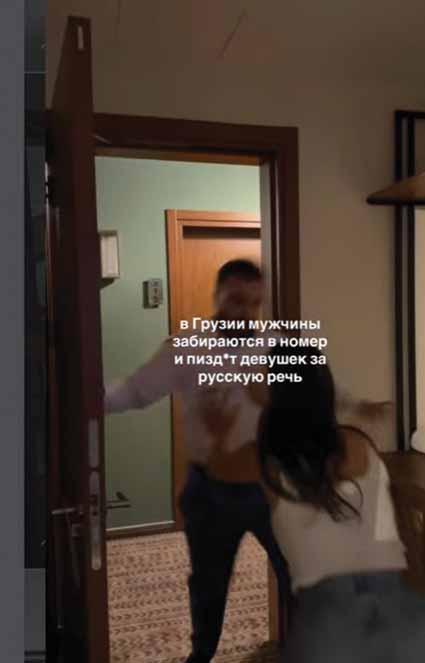
The confrontation gained widespread attention after the women involved posted a video on social media alleging they had been attacked because they were speaking Russian.
One of the women, Alyona Nesteryuk, who traveled from Russia, denies that the assault was preceded by any provocation by the tourists. However, she acknowledged there may have been a "misunderstanding and argument" between the Russian visitors and the Georgian wedding guests. Her interview was published on the social media page of Mamuka Pipia, a businessman holding both Russian and Georgian citizenship and leader of the pro-Kremlin political party ‘Solidarity for Peace.’ Chighladze's defense strongly disputes that account.
His lawyer, Lasha Kapanadze, argues that Chighladze "was the victim of a provocation organized by Russians and is himself a victim."
According to the defense, Russianspeaking hotel guests repeatedly shouted "Gorka," a traditional Russian chant encouraging newlyweds to kiss, before allegedly pouring liquids and spitting on the wedding party from the third floor. The lawyer claims the harassment disrupted the reception, damaged sound equipment, and forced wedding singer Aleksandre Mrelashvili to stop performing and leave.
Kapanadze said Chighladze initially remained downstairs and only went upstairs after the dispute continued and
hotel staff failed to stop the confrontation. According to the lawyer, Chighladze knocked on the hotel room door, and an argument followed. The defense claims the woman scratched Chighladze's neck and struck him in the chest, after which he raised his arm to fend off the attack, accidentally striking her in the face with his elbow and causing her to fall. The video, however, clearly shows him punching her after swearing at her in English for being in his country and ruining his brother’s wedding.
Agarani Estate has also released a detailed account of the incident, saying staff intervened shortly after the dispute began and took multiple steps in an effort to prevent it from escalating.
According to the hotel, the wedding occupied roughly one-third of its accommodation capacity, while the property was otherwise almost fully booked.
Other guests had been informed in advance that a wedding reception would be taking place.
The hotel said a verbal confrontation between wedding guests and other hotel guests began at approximately 8.16 pm, and confirmed that it was preceded by liquid being poured onto the wedding's sound equipment.
"Video footage in the hotel's possession shows wedding guests looking towards the upper floors of the hotel and pointing to a particular situation. The confrontation was preceded by liquid being poured onto the music equipment."
According to the statement, hotel staff and security personnel intervened within minutes and went to the guests' room at around 8:20 pm. Employees remained there for several minutes attempting to calm the situation before deciding to relocate the guests to another room to prevent further contact with the wedding party.
tion had already taken place. An ambulance was subsequently called, while the guests' tour guide and patrol police arrived shortly afterward.
The hotel said it had "used all available means to prevent the incident and de-escalate the situation," adding that it had provided investigators with all available CCTV footage and other relevant evidence. It also acknowledged that, despite those efforts, it had failed to prevent the confrontation.
"We recognize that despite our efforts, the incident could not ultimately be prevented, and we accept our share of responsibility."
On the evening of July 20, Chighladze released a letter from the Gurjaani pretrial detention facility.
"I am currently being held at the Gurjaani pretrial detention facility. My lawyers, Mariam Durglishvili and Lasha Kapanadze, are providing me with all the necessary information. Thank you for your support. I will continue to fight and defend our dignity until the end. I am sorry that the woman was injured, but I did not intend for this to happen. Even an unintentional action committed during a conflict can have serious consequences for anyone. Therefore, I ask everyone: try not to fall for provocations and do not act in a moment of anger caused by an insult."
Separately, Georgian Legion commander Mamuka Mamulashvili has claimed on social media that one of the Russian women involved is wanted by Ukrainian authorities.
According to Mamulashvili, the woman allegedly passed intelligence to Russia and became the subject of criminal proceedings in Ukraine before later hiding in Moscow.
They came out again, spat at us, and insulted us. They ruined the wedding
The hotel said reception staff searched for an alternative room while also contacting the guests' tour guide and discussing the possibility of transferring the visitors to another hotel. Police were called at approximately 8:39 pm, before the physical altercation occurred.
According to the hotel, security personnel then noticed one of the wedding guests heading to the upper floor, and a staff member immediately followed. However, before the employee reached the third floor, the physical confronta-
"We hope that Georgia's law enforcement agencies will soon make public information about who this person really is," he wrote.
However, Mamulashvili's claims regarding the woman's identity and alleged criminal status have not been independently verified, and neither Georgian nor Ukrainian authorities have publicly confirmed the allegations.
In a related development, Georgia's Interior Ministry has launched administrative proceedings against wedding singer Aleksandre Mrelashvili, alleging that he verbally insulted police officers and dam-
the wedding when someone from above started pouring liquid on us. I don't know whether it was vodka, champagne, or something else, but they kept doing it. Then they came out again, spat at us, and insulted us. They ruined the wedding. We couldn't continue the celebration," he said.
aged property while being questioned as a witness following the incident. Mrelashvili denies any wrongdoing and has publicly described the disruption at the wedding, saying unidentified individuals repeatedly poured liquid on guests and sound equipment from above, forcing the celebration to end prematurely.
"I was performing at
Russian woman pushes Chighladze out of her room. Source: IG
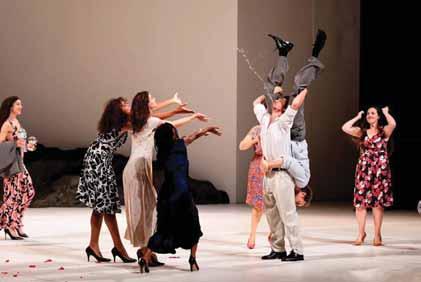
After the End of Dance: Pina Bausch's Masurca Fogo in Tbilisi
REVIEW BY IVAN NECHAEV
By the time Masurca Fogo premiered in Wuppertal in April 1998, Pina Bausch had already transformed contemporary performance beyond recognition. The revolution had happened years earlier. Dance could no longer pretend to be merely about movement, theater could no longer rely on text alone, and choreography had become something infinitely more elusive than the organization of bodies in space. Bausch had dismantled the grammar of both ballet and dramatic theater so completely that Masurca Fogo arrived not as an act of rupture, but as the mature expression of an artistic language that no one else has been able to inherit in full.
That language finally reached Georgia this July. The closing performances of the seventh Tbilisi International Ballet Festival introduced Georgian audiences to Tanztheater Wuppertal for the first time: an absence that, in retrospect, feels almost impossible to explain. Few companies have exerted such influence over contemporary performance, and few artists have been so thoroughly quoted, appropriated, simplified and misunderstood. Nearly every choreographer working today carries traces of Pina Bausch, whether consciously or not. Yet imitation has often reduced her work to visual vocabulary: rows of chairs, repetitive gestures, emotional intensity, bodies exposed to exhaustion. What rarely survives is the architecture beneath those images. Masurca Fogo offers perhaps the clearest demonstration of what that architecture actually is.
The piece belongs to Bausch's celebrated cycle of works developed after long creative residencies across the world: Palermo, Hong Kong, Istanbul, Budapest,
Seoul, Lisbon, Santiago, Tokyo. These productions are frequently described as "travel pieces," a phrase that misses almost everything essential about them.
They are not portraits of cities, nor ethnographic observations translated into choreography. Bausch never attempted cultural representation. She collected atmospheres.
The process itself has become almost legendary. The company would spend weeks wandering through unfamiliar places with no intention of researching history in any academic sense. Dancers visited cafés, beaches, parks, markets, restaurants, abandoned streets. They watched strangers. They listened. They accumulated fragments without knowing whether any of them would eventually matter. Back in Wuppertal, Bausch asked questions rather than gave instructions. What frightened you? What surprised you? What stayed in your memory?
Show me. Not through explanation, but through action.
This method is remarkably close to anthropology, although without anthropology's desire to classify. It resembles documentary filmmaking, although without documentary's faith in evidence. The resulting works occupy a strange territory between memory and invention. Places disappear as geography and reemerge as emotional landscapes. Portugal, therefore, is everywhere in Masurca Fogo, and nowhere at all. The Lisbon that appears on stage is not the Lisbon of monuments or political history. It is a city dissolved into sensation: dazzling white light that erases contours; sudden rain; music drifting from an unseen source; afternoons that seem immune to urgency; public squares where people remain together without speaking; the perpetual awareness of the sea just beyond vision. None of these images claim authenticity. Their truth lies elsewhere. They belong to memory after memory has already begun transforming
experience into fiction.
This refusal to illustrate reality explains why Bausch's work has resisted ageing far more successfully than many overtly political performances from the same period. theater built around topical commentary inevitably waits for history to move beyond it. Bausch pursued another ambition. She searched for structures of feeling. Nothing is fully articulated; everything is immediately recognizable. Watching the performance means gradually abandoning the habits conventional theater has taught us. Narrative becomes irrelevant within minutes. Questions about character, motivation or causality simply lose their function. The temptation to decode individual scenes eventually gives way to another form of attention altogether. Images begin operating the way memories operate—through association rather than logic.
A woman repeatedly crosses the stage. Someone laughs at the wrong moment. Two people embrace for slightly too long. A body collapses, then rises again as though nothing extraordinary has happened. Water appears. Silence interrupts celebration. Nothing concludes. Everything returns. One could describe these moments endlessly without ever approaching what actually happens in the theater.
The remarkable achievement of Masurca Fogo lies precisely here. Bausch discovered a theatrical form capable of producing meaning without depending upon interpretation. The spectator does not solve the performance. The performance gradually reorganizes the spectator's own emotional rhythms.
This is where her work departs decisively from expressionism, despite frequent attempts to place her within that lineage. Expressionism externalized inner psychology. Bausch rarely appears interested in psychology at all. Her performers do not represent interior states. They exist as presences continually negotiating the fragile distance separating one body from another.
Much has been written about loneliness in Bausch, although loneliness is perhaps the wrong word. Isolation suggests absence. Masurca Fogo is crowded from beginning to end. The stage constantly fills with encounters, games, celebrations, flirtations, collective rituals. Yet every act of intimacy remains delicately unstable. Human connection appears not as achievement but as continuous labour.
That understanding feels surprisingly contemporary. The late twentieth century imagined globalization as an expansion of encounters. Cultures would travel. Borders would soften. Curiosity would replace suspicion. Masurca Fogo, commissioned with the support of EXPO '98 Lisbon and the Goethe-Institut, emerged
directly from that historical optimism. Seen today, the production has acquired another layer neither Bausch nor anyone else could have anticipated. Travel has become frictionless while genuine encounter has become increasingly rare. Cities begin resembling one another. Algorithms recommend identical cafés, identical museums, identical photographs. Tourism often consumes difference faster than it experiences it. Bausch imagined something radically slower. Her choreography insists that discovery begins not with movement across geography but with sustained attention. Travel becomes an ethical practice of observation rather than acquisition. Perhaps this explains why Masurca Fogo continues feeling unexpectedly fresh. It belongs to a world that no longer exists while proposing a way of looking that has never been more necessary. There is another misconception surrounding Bausch that the Tbilisi performances quietly dismantled. Her reputation remains inseparable from melancholy. Photographs reinforce the myth: solemn faces, empty chairs, dark dresses, impossible longing. Yet spending an evening with Masurca Fogo reveals something closer to generosity than sadness. Humour occupies an astonishing amount of space.
People become ridiculous because people are ridiculous. Courtship fails. Confidence collapses. Bodies refuse elegance. Dignity survives humiliation through persistence rather than triumph.
Few directors understood laughter as profoundly as Bausch. Comedy, in her theater, is never positioned against suffering. It emerges from exactly the same source. The audience laughs because recognition arrives before judgement.
Peter Pabst's stage design shares this extraordinary restraint. His scenography has always rejected spectacular illusion in favour of environments that appear simultaneously concrete and impossible. Like memory itself, they refuse stable perspective. Marion Cito's costumes accomplish something equally rare. They resist symbolism. Clothing remains clothing, carrying traces of personality without reducing anyone to character.
Music drifts through the evening as though carried by weather rather than dramaturgy. Amália Rodrigues, Duke Ellington, Ben Webster, Baden Powell, Lisa Ekdahl, Marcos Suzano and dozens of other voices coexist without hierarchy.
The soundtrack behaves less like composition than recollection. Songs return unexpectedly, interrupt one another, disappear before completion. Listening becomes another form of travelling.
The revival itself deserves particular attention. Restaged for the 2025–26 season under Azusa Seyama-Prioville, Rainer Behr and Robert Sturm, the production demonstrates how carefully Tanztheater Wuppertal has approached the impos-
sible question confronting every company built around a singular artistic vision: how does one preserve work that was never meant to become repertoire? Choreography can be recorded. Movement can be reconstructed. Presence cannot.
The transmission of Bausch's theater depends upon something closer to oral tradition than notation. Original cast members continue passing invisible knowledge to younger performers—not simply where to stand or how to move, but how to inhabit uncertainty without illustrating it. One senses this continuity throughout the ensemble. Nothing feels reconstructed. Everything feels lived.
For the Tbilisi International Ballet Festival, presenting Masurca Fogo carried significance extending well beyond institutional prestige. Since its founding in 2017 under the artistic direction of Nino Ananiashvili, the festival has established itself primarily through classical ballet and international guest artists. Inviting Tanztheater Wuppertal subtly expanded that conversation. It suggested that ballet festivals need not defend disciplinary borders. The future of dance increasingly belongs to institutions willing to acknowledge that choreography has outgrown its historical definitions.
Georgia offered an unexpectedly receptive context for such a work. The country's theatrical tradition has never been dominated by psychological realism alone. Visual metaphor, ritual, musicality and collective presence have long occupied central positions within Georgian stage culture. Watching the audience respond to Masurca Fogo, one had the impression that ambiguity required remarkably little explanation.
Perhaps because everyday life in Tbilisi itself often unfolds with theatrical intensity. Perhaps because Georgian culture still understands gathering as something richer than social function. Perhaps because memory here remains a public rather than exclusively private experience. Whatever the reason, Bausch's theater did not arrive as an exotic European masterpiece requiring reverence. It entered into conversation. Three decades after its premiere, Masurca Fogo still refuses to deliver conclusions. It asks for neither interpretation nor agreement. It simply proposes another way of paying attention—to strangers, to silence, to absurdity, to fleeting moments that usually disappear before thought can organize them.
Contemporary theater frequently seeks relevance by explaining the world with increasing urgency. Pina Bausch trusted observation instead. Looking back, that may have been the more radical political gesture. Not because observation changes reality immediately. Because it changes the quality of perception from which every future reality begins.
The Family that Never Left the Stage: James Thierrée's Rendez-vous and the Memory of European Theater in Tbilisi
REVIEW BY IVAN NECHAEV
There are dynasties in theater built on institutions, manifestos and methods. Then there is the Thierrée family, whose artistic lineage resembles something far more elusive: a genetic memory of wonder. Watching Rendezvous, the production that closed this year's Tbilisi International Festival of theater, one has the unsettling sensation that theater itself is remembering a forgotten version of its own history: one that existed before disciplines separated into circus, dance, drama, mime, visual art and music, before specialization replaced curiosity. The distinction matters because James Thierrée has spent nearly three decades resisting categorization with remarkable consistency. Critics continue to search for the correct label: nouveau cirque, physical theater, visual theater, dance, contemporary circus, performance art, only to dis-
cover that each definition excludes something essential. His work occupies the increasingly rare territory where artistic language precedes taxonomy. It does not combine genres. It simply ignores the necessity of having them.
Rendez-vous pushes this refusal even further. Premiered only this year and presented in Tbilisi shortly afterwards, the production arrives as perhaps Thierrée's most intimate work—not because it reveals private emotions, but because it abandons the fiction that artistic creation can ever be separated from inheritance. For the first time in many years, James Thierrée shares the stage with the family whose imagination fundamentally shaped modern visual theater: Victoria Thierrée-Chaplin, Jean-Baptiste Thierrée and Aurélia Thierrée.
The performance unfolds like an album whose photographs have begun moving again. Fragments from half a century of performances drift across the stage, disappear before becoming memories, then unexpectedly return transformed. Char-
acters emerge only to dissolve into movement. Circus tricks interrupt moments of stillness. Music becomes architecture. Objects acquire independent life before quietly surrendering their magic. Every image seems to exist halfway between recollection and dream, refusing to settle into chronology. The temptation is to read Rendez-vous as a family memoir. That would be a mistake. James Thierrée has always distrusted autobiography in its conventional sense. His theater has never been interested in confession or psychological disclosure. Instead, memory functions as raw material for visual invention. Personal history becomes theatrical matter only after shedding the certainty of facts. What remains are emotional residues, textures, rhythms, absurdities, inexplicable fears, childish discoveries, that continue living long after narrative has disappeared. This approach has deep roots. JeanBaptiste Thierrée and Victoria Chaplin were among the artists who quietly reinvented European circus during the cul-
tural upheavals of the late 1960s and early 1970s. When they created Le Cirque Bonjour in 1971, they were not modernizing circus in the contemporary sense. They were dismantling its industrial logic. Traditional circus had perfected spectacle. The Thierrées pursued intimacy. Animals disappeared. Narrative became porous. Virtuosity stopped announcing itself as virtuosity. The ring transformed into an oneiric landscape where illusion emerged less from technical difficulty than from poetic instability. Their revolution coincided with a broader transformation across European performance. Peter Brook was reducing Shakespeare to empty space. Jerzy Grotowski was stripping theater to its essential encounter between actor and spectator. Ariane Mnouchkine was dissolving the hierarchy between cultures. Pina Bausch would soon dissolve the hierarchy between movement and emotion.
Throughout Rendez-vous, ordinary objects repeatedly refuse ordinary behaviour. Chairs hesitate before accepting grav-
ity. Costumes mutate. Bodies seem governed by unfamiliar physical laws. None of this resembles illusionism in the traditional sense because the mechanics remain deliberately visible. Wonder emerges precisely from the spectator's awareness that everything is simultaneously impossible and undeniably happening. James Thierrée inherited this paradox and transformed it into a personal aesthetic. Unlike many contemporary visual theater makers, he has little interest in technology as spectacle. Digital media barely enters his stage. Machinery remains almost stubbornly analogue. Rope, fabric, wood, shadow, breath, balance, weight— his vocabulary belongs to materials rather than software.
At a moment when theater increasingly competes with cinematic realism and immersive technology, Thierrée returns to something older than both: the human body's capacity to generate impossible images through precision, rhythm and play.
Masurca Fogo in Tbilisi. Source: Besik Mchedlishvili/State Ballet of Georgia
In the Footsteps of Rustaveli
BLOG BY NUGZAR B. RUHADZE
I trod the threshold, His footprint there, Rustaveli’s path in India, After seven hundred years, By me pursued, but never seen, Not even here, not even here.
Not in India, but in Palestine, yes! These rhyming words were written in 1960 here in Sakartvelo, and they belong to nobody less than Irakli Abashidze himself, the eminent Georgian poet of the 20th century.
There are stories in our national annals that need to see the light and be known to the rest of the world because knowing our culture better than they actually do is the only righteous way to let them be aware of what this culture is all about.
That year, initiated and headed by PoetAcademician Irakli Abashidze, Georgia’s first-ever delegation of scholars made for Palestine, where, in the ancient Georgian Cross Monastery of Jerusalem, the last shelter, and perceivably, the grave too, of the great Shota Rustaveli was waiting for them to see. The delegation was determined to find the supposedly preserved portrait of that medieval Georgian poet, known as the pre-eminent versifier of the Georgian Golden Age and one of the greatest contributors to Georgian literature, the author of The Knight in the Panther's Skin, a Georgian national epic poem.
Israel was still a young state at that time, and travelling that far from Georgia, especially in the strained and scary times of the Soviet regime, an expedition of that content and rank was an absolute rarity, which carried a clearly dual context, internal and external. The relations between Israel and the Soviet Union were strained due to the Suez Crisis of 1956, which complicated the fulfilment of the elevated mission of national and, I would say, international caliber.
The world remembers that Nikita Khrushchev threatened Israel with nukes, but the two countries did not go far enough to sever diplomatic relations, that having been a favorable background
for putting together the Georgian scientific delegation to embark on the difficult but immensely patriotic mission.
At that time, nothing was easy in the USSR, especially travelling abroad. On top of that, the delegation could not have made the important trip without foreign currency, which was all accumulated only in the deep and roomy Soviet state pocket, and extraction of the funds from those financial depths was almost impossible without a strong political justification for the necessity of that outlandish trip, invented by some Georgian scholars somewhere in faraway Sakartvelo, who wanted to be photographed against the cherished Rustaveli fresco background. Well, the Soviet system was not an easy nut to crack. So, the task was practically unattainable.
After all, Georgia was the motherland of Joseph Stalin, who was cruelly defamed by Khrushchev. Who cared then what national project the mistrusted Georgians wanted to launch, even if it was worthy of attention! It took the fame, reputation, wits, sweat, and trustworthiness of Poet Irakli Abashidze (1909-
1992) to persuade the local Georgian and the wider Soviet government that the expedition was vital, useful, and valuable for the entire Soviet country to undertake.
With certain starts and fits, at some point in time, the handsome, eloquent, charming, and intelligent Abashidze found himself in the highest Soviet governmental circles, having received a totally accidental but perfect chance to toast Nikita Khrushchev personally, who had obviously succumbed to Abashidze’s charismatic personality. The story has it that Nikita got curious enough to ask who that toast-maker was. Sounds like a real legend, doesn’t it?
In a word, the end was happy. The formation of the delegation of Georgian scholars for Palestine was permitted and consummated by the Soviet powers that be. It included three biggies of the Georgian National Academy of Sciences: poet Irakli Abashidze, orientalist Giorgi Tsereteli, and philologist Akaki Shanidze. To make one curious parallel, the Georgian to visit Jerusalem in 1883 with almost the same purpose was Alexander Zagareli,
the Georgian linguist, professor at Saint Petersburg State University, and cofounder of Tbilisi State University, who reported to the Russian emperor about his research. After that, there was a long pause for the reason of wars and other unfavorable circumstances.
The scientific endeavors of Zagareli and Abashidze, driven not only by plain patriotic intent but by the scientific implication of the research, were dedicated to one immense purpose: seeing and witnessing in person that the presumed fresco on the wall of the Georgian Cross Monastery in Jerusalem was as real and true as the sun rising in the east.
Incidentally, history has preserved information about the Rustaveli fresco from scholars other than Zagareli.
Notably, the contemporary Georgian youth would hardly imagine the fathom and standing of the event, which was the talk of the year, and even after, throughout the entire Soviet Union, not to mention the sense of pride and importance that overwhelmed the exalted Georgian people.
The three famous Georgians, members of the Jerusalem delegation, needed help to get access to the Rustaveli fresco, and they got amazing assistance from the helpful locals. Running out of time during their stay, they personally had to fetch and purchase the chemicals for cleaning and restoring the valuable mural.
The telegram was sent to Tbilisi about the developments, which had a bombshell effect.
The whole thing was unimaginably special for the national identity and political cementing of our people. Of course, Rustaveli was no news to us, but acquiring his original fresco image was more than important. The event carried huge weight right before Shota Rustaveli’s 800-year jubilee, to be celebrated in 1966 by the entire Soviet people. It was meant to let the world see that Georgia was not just the famous dictator’s motherland but a cradle of great civilization, a generator of elevated humanistic ideas.
To wit, Georgia was itself a victim of the then-rampant Stalinist regime.
By the way, the 750-year anniversary of Rustaveli took place in 1937, during the Joseph Stalin era, and was granted a very high status. Stalin needed the world to know what kind of civilization he was
coming from, all that happening against the background of the Soviet terror of 1937.
The delegation of renowned public figures to Jerusalem, pursuing the great national goal in the footsteps of Rustaveli, was the jeweled crown of all that. Following the jubilation, with the participation of the Western elite, The Knight in the Panther’s Skin was translated into a good number of foreign languages, the honorable Irakli Abashidze personally organizing and executing their presentation to the world community.
Irakli Abashidze kept a diary in the years to come of the entire Jerusalem epopee, which has now become the relic and the symbol of this culture. He created a whole series of poems dedicated to the grand Georgian literary and scientific mission to the Georgian Cross Monastery of Jerusalem.
Professor Zurab Abashidze, the son of the poet, who had happily witnessed the entire development of the story in his childhood, says that, having seen the holy fresco in Jerusalem right behind the door of the Georgian Cross Monastery, the impressive figures of the three Georgian scientific and public giants rose before his eyes.
Irakli Abashidze, Giorgi Tsereteli, and Akaki Shanidze stood there together in Zurab’s imagination like three Atlantes, holding on their powerful shoulders the weight of Sakartvelo’s ancient culture and national identity.
The Family that Never Left the Stage: James Thierrée's Rendez-vous and the Memory of European Theater in Tbilisi
Continued from page 10
Play may be the central concept here. The word is often diminished by adulthood, associated with innocence or entertainment. Thierrée restores its original seriousness. Play becomes an epistemology: a way of understanding reality unavailable through rational analysis. Children rarely distinguish between imagination and perception with the confidence adults demand. Objects possess agency. Space changes personality. Time stretches unexpectedly. The world remains gloriously unreliable. Rendez-vous inhabits precisely this unstable territory.
One begins noticing that the production operates according to dream logic rather than dramatic structure. Scenes do not develop; they mutate. Images refuse symbolic closure. Instead of asking what something means, the spectator gradually accepts the more productive question: what does this image allow us to feel that language cannot? This is where Thier-
rée's theater quietly separates itself from surrealism, despite frequent comparisons. Surrealism often sought shock through irrational juxtaposition. Thierrée seeks recognition. His impossible worlds never feel alien. They feel strangely familiar, as though recovering forms of perception modern life has systematically trained us to abandon.
The presence of Victoria ThierréeChaplin gives Rendez-vous another emotional register altogether. Watching her move across the stage means witnessing not simply an extraordinary performer but a living archive of European theater. Daughter of Charlie Chaplin and Oona O'Neill, collaborator and creator in her own right, she carries within her artistic memory a remarkable continuity stretching from silent cinema to contemporary performance. Yet Rendez-vous never transforms this inheritance into monument.
Family appears instead as artistic conversation: a continuous exchange across
COMMERCIAL DEPARTMENT
Commercial Director: Iva Merabishvili
Marketing Manager: Natalia Chikvaidze
EDITORIAL DEPARTMENT:
Editor-In-Chief: Katie Ruth Davies
generations where influence travels in every direction. This refusal of hierarchy extends to the production itself. Despite the legendary biographies assembled on stage, no individual seeks centrality. Images circulate democratically. Attention shifts constantly. Presence outweighs authorship.
Perhaps this explains why the perfor-
Journalists: Ana Dumbadze
Tony Hanmer
Nugzar B. Ruhadze
Ivan Nechaev
Lana Kokaia
Layout: Misha Mchedlishvili
Photographer: Aleksei Serov
mance feels so unexpectedly contemporary despite drawing upon nearly sixty years of theatrical history. Much of today's devised theater remains fascinated by process. Thierrée remains fascinated by transformation. Process often reveals how art is constructed. Transformation reveals how perception changes.
Contemporary European theater frequently positions itself as intellectual intervention, political essay or documentary investigation. These approaches have produced remarkable work, yet they sometimes underestimate one of theater's oldest capacities: to create knowledge through astonishment. Wonder is not the opposite of critical thought. It is one of its origins. Aristotle understood this. So did Chaplin. So does James Thierrée.
The closing of the Tbilisi International Festival of theater with Rendez-vous therefore carried symbolic precision. Festivals often conclude with productions that summarize prevailing trends or celebrate institutional prestige. Thierrée
International Relations & Communications Sofia Bochoidze E: sbochoidze@georgiatoday.ge
Website Editor: Katie Ruth Davies
Webmaster: Sergey Gevenov
Circulation Managers: David Kerdikashvili David Djandjgava
ADDRESS 22 Janashia Str. Tbilisi, 0179, Georgia
offered something far less fashionable and considerably more enduring: a reminder that theater's future may depend less upon inventing unprecedented technologies than upon rediscovering neglected forms of attention.
Surprise has become increasingly difficult in contemporary performance, not because artists lack invention but because audiences have learned too quickly how new aesthetics function. James Thierrée continues operating beyond that learning. His theater remains disobedient. It slips away each time interpretation believes it has finally caught it.
Rendez-vous ultimately refuses the language of farewell implied by its own retrospective structure. Rather than looking backward, it demonstrates that artistic inheritance survives only through continual reinvention. In an era increasingly devoted to explaining the world, James Thierrée still believes in showing us that reality is capable of exceeding explanation.
Reproducing material, photos and advertisements without prior editorial permission is strictly forbidden. The author is responsible for all material. Rights of authors are preserved. The newspaper is registered in Mtatsminda district court.
Reg. # 06/4-309
A book by Irakli Abashidze.
Source: Georgianpoems
Irakli Abashidze. Source: adebiportal
On stage. Source: Tbilisi International Festival of Theater