Summer had long faded, the cold drifting in with the fog to claim the mornings. When the sun rose, the fog would creep away, a great nocturnal mist drifting off to bed.
Standing at the edge of the driveway, the world enshrined in haze, a girl rubbed her arms and shivered in the predawn.
“I wish I had scurvy.” Matty jumped down beside her hair disheveled, bringing a shower of broken branches.
Blue Fire
Spring 2026
“Do you?” She sat down on a thick tree root, dampness “Then I’d be that kid with scurvy.” He sat beside her.
Volume Two
Ori connected with the cobbles in a delayed fashion. More enveloped the rogue, like a big batch of toffee. Then the cobble-toffee
Georgia Southwestern State University
less likely to notice it was being messed with if you gently bent quite … graphic in their revision. Steady now, and …
onto his feet, standing at just the right position for Murial ot mouth and gestured for them to go. ofthe butshe inthat Like followed but followed
Putting a pin in that question, Murial focused on drawing insides out through his orifices. The right runes were needed
When Murial abandoned her studies at the continent’s most prestigious to explore the very depths of magic in a way her stodgy professors dy to hasty action. Still, as her partner plummeted to the ground
A History of GSW’s Literary Magazines: Sirocco was GSW’s first literary magazine with its first volume coming out in 1965. Twelve volumes were released between 1965 and 1983. The name was changed to Clay and Pine: A Magazine of Literary and Visual Art in 1984. This was also when visual art was first integrated into the magazine. The very next year in 1985, the magazine was the winner of the College Literary Magazine National Competition. In 2004, the original name returned as the editors thought that it fit the school’s storm theme better. 2010 expanded the media that the magazine accepted. The last confirmed physical copy of Sirocco released in 2019. Another volume was attempted in 2021. Blue Fire filled the void left by Sirocco in 2025 and opened submissions to people outside of the campus.
Acknowledgments
This issue of Blue Fire is possible because of the generous financial support of the following campus units, businesses, and friends:
Department of English and Modern Languages at GSW
High-Impact Approach to Integrative Learning (HAIL), GSW’s QEP
Blue Sky Ag
The Kinnebrew Company
Pinocchio Lung
Laura and Barry McConatha
Tom McFarland
Keith Norris
Jennifer Ryer Anonymous
Thanks also to those organizations and businesses who purchased ad space: Sumter County Friends of the Public Library, Blue Sky Ag, Made in Americus, Lily’s Southern Boutique, Gammage Print Shop, Cici’s Market, and the Bruce family.
We also thank Blue Argo and Jennifer Ryer for reviewing selected submissions, Genie Bryan and Argo for proofreading, and Justin Hodges for taking photographs of visual art pieces.
Finally, thank you to our contributors and to everyone who submitted work for review. Creatives like you make the world a better place.
Contents
Contents iv
Letter from the Editors viii
Creative Nonfiction
Emily Crenshaw
my dog is turning seven & i am trying to be chill about it 2
Anika (Nikki) Remollino
Atelier 4
Fiction
Donovan Bettis
A Visit to My Friend’s House 8
Colonel Jon D. Marsh
Lifetimes 13
Zachary Rock Monnier
A deft stroke to save a perfect idiot 20
Jenna Morgan
Myskia’s Hex 21
Sophie Plants
Autumn Passing 26
Adalyn Rooks
She Thought She Knew Hunger 31
Amari Rudison
Calling Out for Her Danny 36
Poetry
Blue Argo
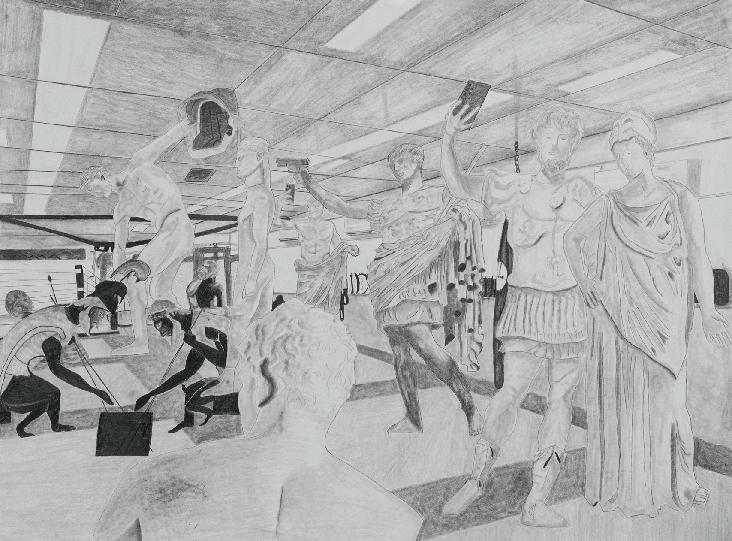
Hera and Zeus Shop for Antiques at the Macon Mall 40
Michael Brockley
Ode to the Irish Women of Chokecherry Road 41
Shannon Cobb
My Brown Sugar 42
Emily Crenshaw
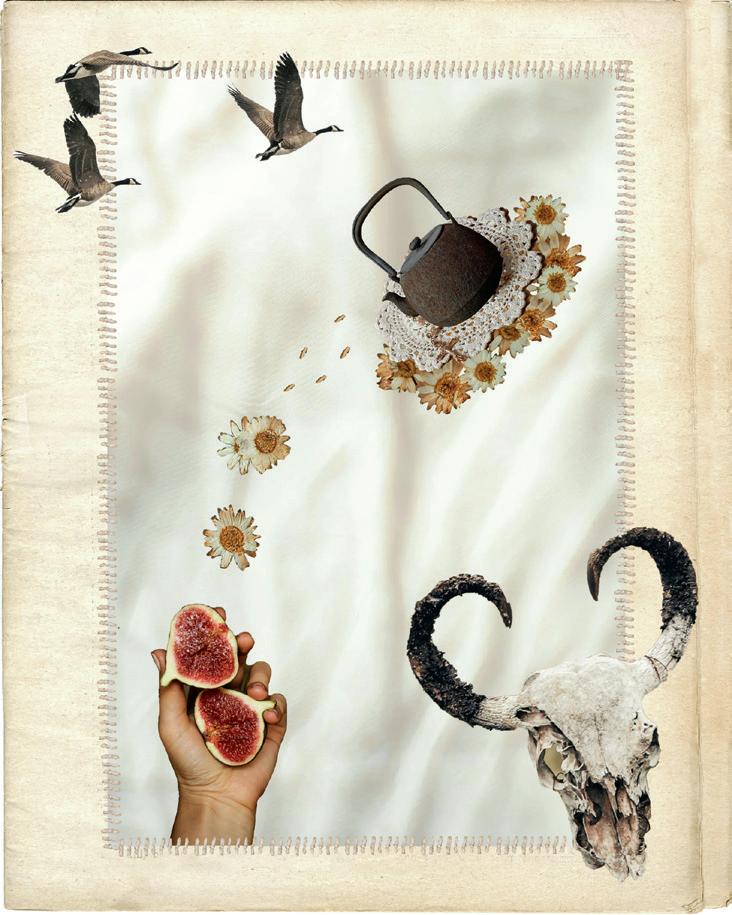
I Don’t Even Like Figs 43
John Grey
In the Land of the Field Guide 45
John Grey
November Snowtime 46
John Grey
The Rocking Chair 47
Tatyana C. McKnight
When Kids Miss School Breakfast 48
Keith W. Norris
Poetry as My Side Hustle 49
Keith W. Norris
Sunday Morning Driver 50
Nattie O’Sheggzy
Remember Summer’s Gentle Dawn 52
America Salvatore
The Ash in the Throat 53
America Salvatore
The Mechanical Click 54
Lynn White Ice Bird 55
Lynn White Ruby Oh Ruby 56
Visual Art
Aden Bruce Dreaming and Believing 58
Aden Bruce Here There Be Dragons 59
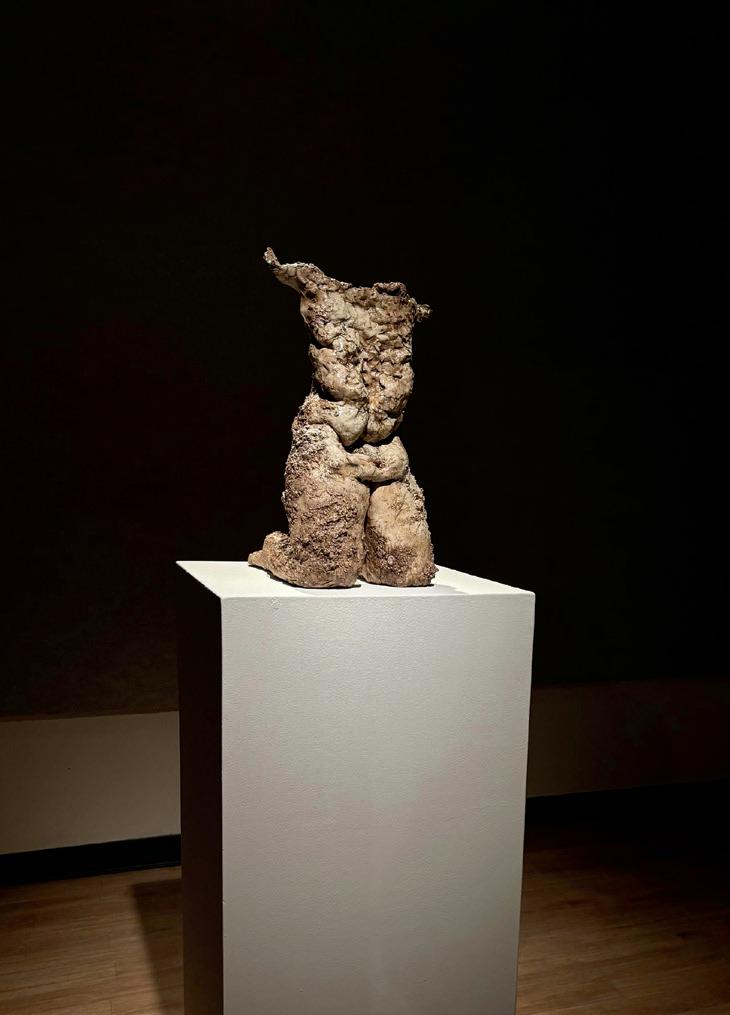
Emily Crenshaw Lady Lazarus 60
Emily Crenshaw my mercy prevails over my wrath 61
Alexis Glass Flight 62
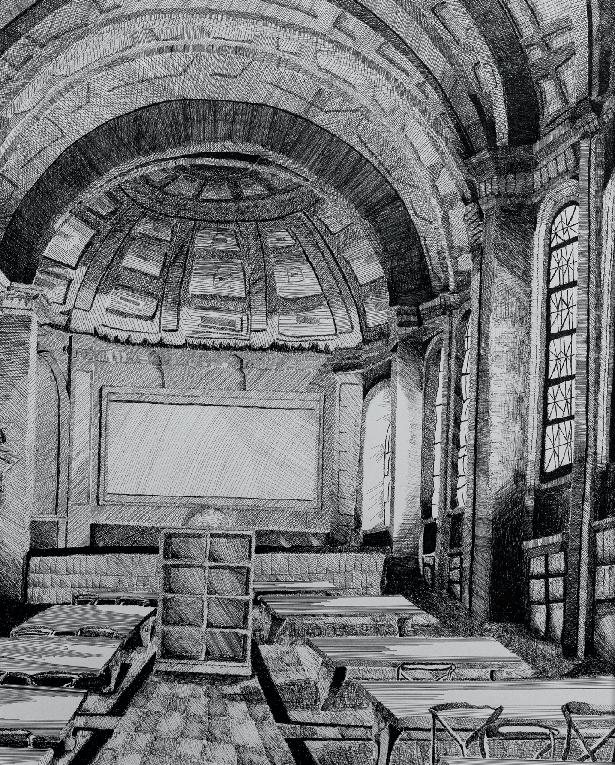
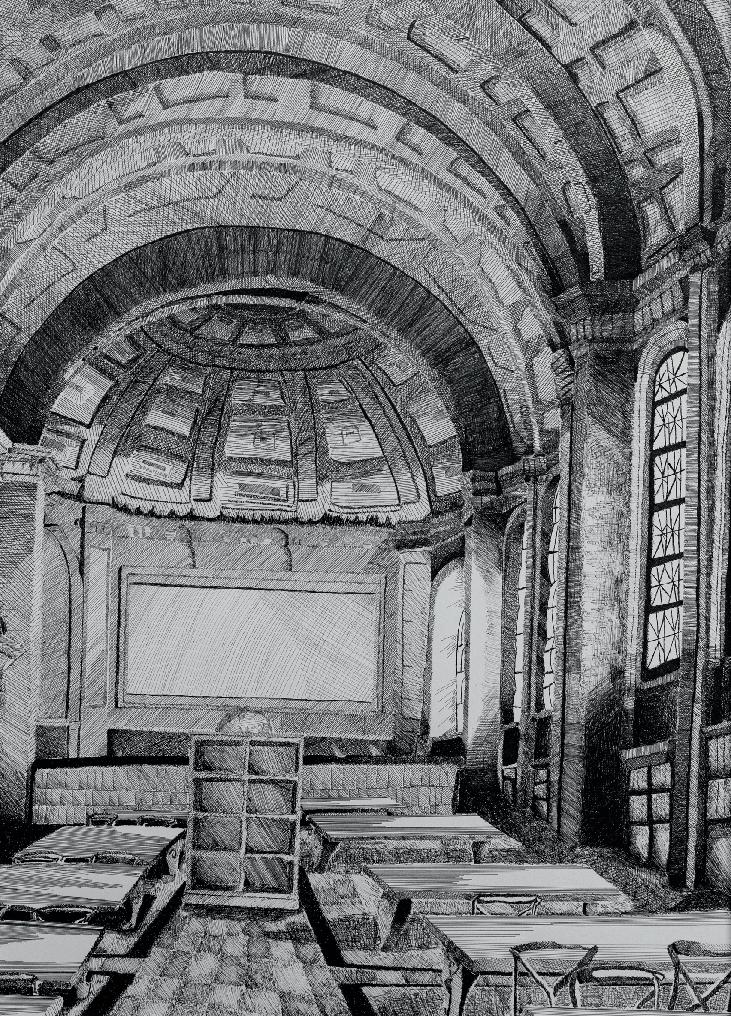
Brandon Mann Boston Public Library 63
Brandon Mann Daily Classic 64
Kaitlyn Sokolowski Domestic Bliss 65
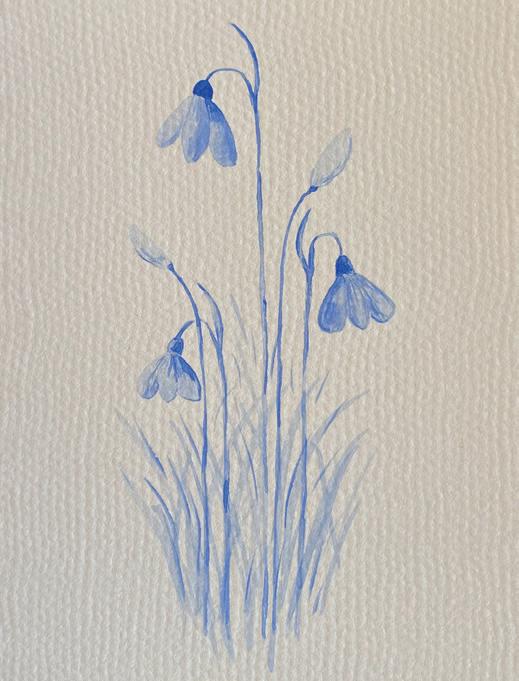
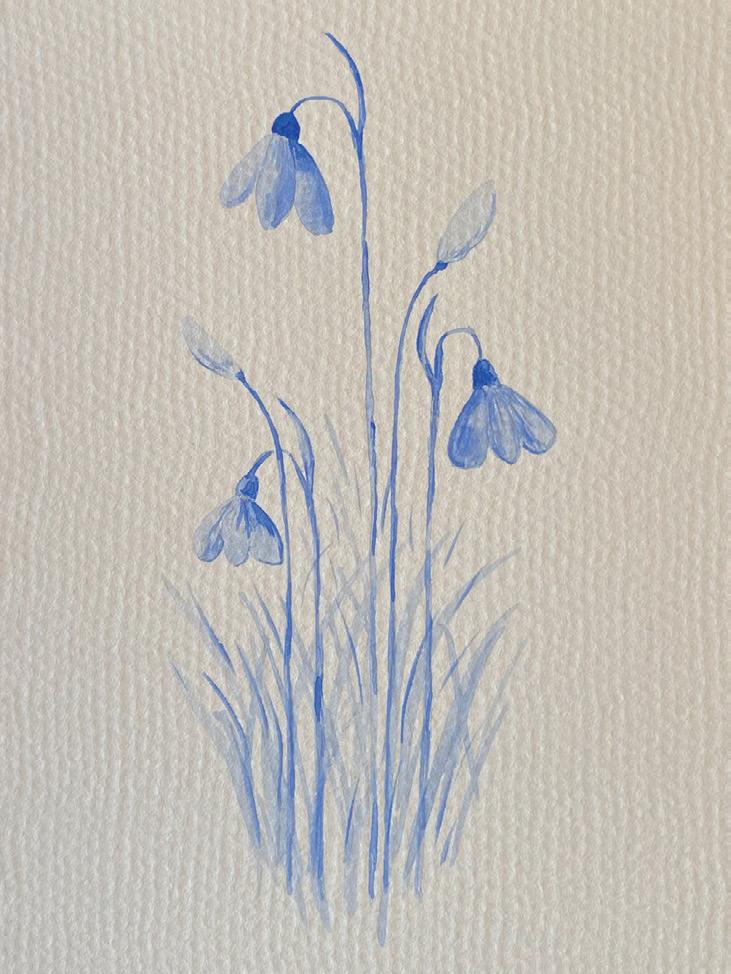
Esther Sprott Blue Monochrome Snowdrops 66
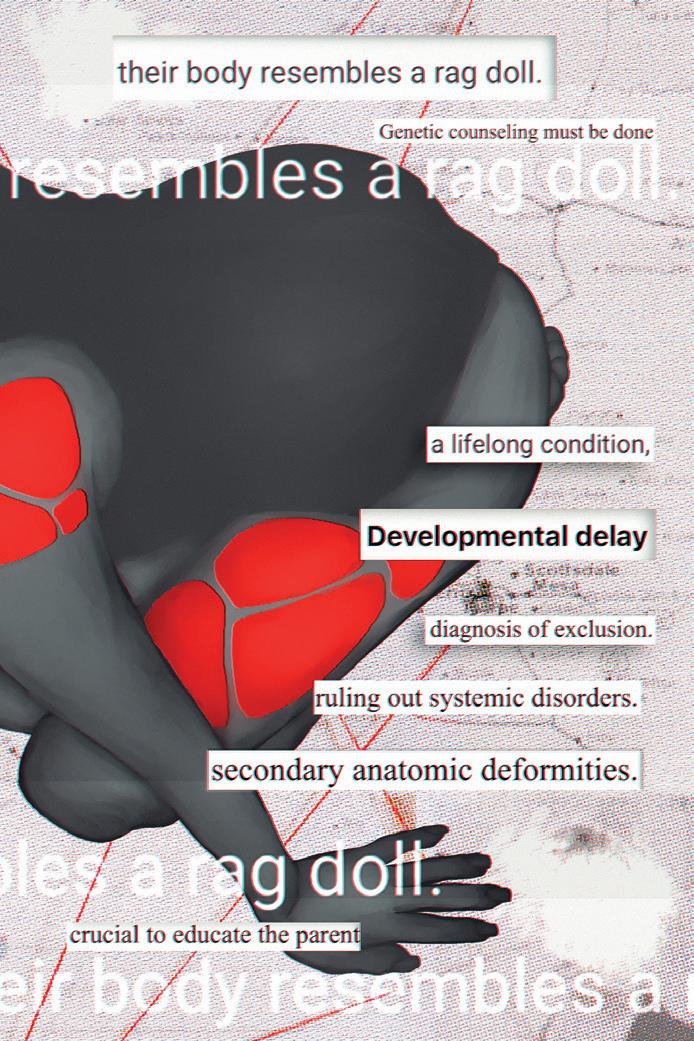
Jordyn Walker
Rag Doll 67
Sensitive Content
Laney Eubanks
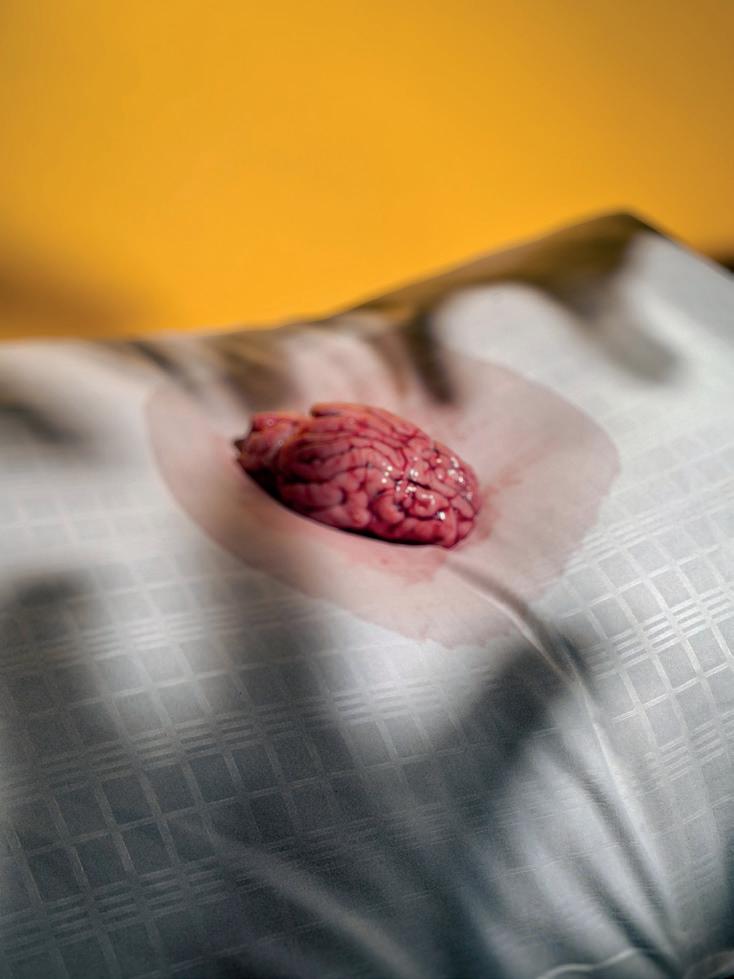
Nothing Good Ever Happens, Even When I’m Sleeping 70
Tyeshia Walker
Devils of Temptation 71
Contributor Bios 78
Letter from the Editors
This book has been a journey for all of us. We learned so much while on this strange adventure, and it was so much fun, even if it was more work than our earlier expectations had us believe. Hear us when we say: we made this book with our blood, sweat, and tears (literally, don’t ask). We are so relieved and excited to finally be able to get it into your hands, and we hope that you thoroughly enjoy every moment of this year’s issue of Blue Fire. We are so excited to see how this book grows in the future, and we have all the hope for it. Well, enough with ramblings. Read on and prepare for utter delight.
Yours,
Aden Bruce
Maven Coston
Makayla Jackson
Makenzi Parr
Adalyn Rooks
Creative Nonfiction
my dog is turning seven & i am trying to be chill about it
Emily
Crenshaw
one day you will live in my heart for longer than you were ever by my side, but for that i can only be grateful, because it beats the alternative of never having you at all.
how are people ever expected to get over dogs?
how am i ever going to meet people who never knew you and not tell them about my little dog, the one i got in my twenties when i needed her most? how will i not show them your picture, tell them, “this is Lilah, and i love being her mom”?
at 2am when you are sleeping, my mind reminds me that one day i will be sixty years old, and you will be in a beautiful carved wooden box on my nightstand. a time will come when i’ll rest my hand on it instead of your soft fur, and my lips will upturn even as my eyes fill with tears, because i could never look at you and not smile.
now, i look at my childhood dog: in her little pine box by our bed, her inky paw print, the tag from her collar. i think about the people who knew her name, the people who loved her. she is still with me too, in my memories, in the tattoo on my foot, in my dreams, in my stories.
i don’t know what happens when we die. what i do know is that there will never be a universe, or an afterlife, or a realm of being where we aren’t together.
maybe we will be butterflies together, or squirrels, or two little beagles barking into the wind at everything and at nothing.
maybe we will just be, our spirits floating in the space where the clouds meet the earth,
or we will walk through the pearly gates, and i will put on your harness to finally go for another walk.
i don’t know where our souls are going, but i know we’ll go together.
i will find you in every lifetime. but for now,
i will pet your velvety ears, and i will worry about this later. because here’s what i do know:
you are my best friend, my constant companion, my most trusted confidant, my baby forever. my running buddy and my sleep-all-Sunday buddy, because life is all about balance.
you inspire me every day. you are so loud that my watch alerts me that i am at risk of permanent hearing loss. you are shrill and demanding, and you are never afraid to take up all the space. you greet complete strangers like you’ve been looking forward to meeting them all day. being your mom makes me better, more patient. thank you for teaching me to live in the moment. you love life and it loves you right back. how could it not?
people tell me that until i have a child i won’t know true love, but what they don’t know is that if i could shave years off my life and give them to you, i would do it in a heartbeat. you’ve been there for some of the best & worst days of my life and made all of them better. (most) people think i overdo spoiling you, but the truth is that i’m just trying to fill your life with a fraction of the wild joy you’ve brought to mine.
happy lucky 7, Lilah. i am so lucky to love you.
Atelier
Anika (Nikki) Remollino
2012 - Acrylic
It starts with a day painted in sepia tones, a day I will later gaze at through the glass of a picture frame. The slide of posterboard under my fingers, the foam mats under my chubby knees. I stare, not thinking, only feeling, the cold acrylic paint leaving trails where I touch my hands, my face. My mom grabs the wandering fingers before they can try my mouth. Red, she says, and I don’t answer, only copy the thing she painted on the posterboard. Flowers, I learn later. Daisies.
2015
- Crayon
Georgia is too hot and too loud. I am six and I hate crayons, hate being new, and hate the noise. Red is my favorite color and I bear down too hard in red crayon, the wax breaking into jagged, uninspired lumps. The others work away at their coloring sheets, in greens and purples and that aqua-blue color that is everyone’s favorite. I thumb over the red one and think of things I like about crayons. Their smell, the paper that isn’t rough or smooth. The way they roll and how they’re all storybook characters. Burnt Sienna, Middle Green, and my Vermilion that I can’t pronounce yet. Cerise and Cerulean, Salmon and Silver, and the teacher that tells me to get back to work.
2020
- Watercolor
The house is quiet. It seems the whole world is quiet, or trying to be, whispering in hushed tones that the masks hush even further. What will happen to us? When will the world start spinning again? The word quarantine claws my throat to constriction, so I turn off my mind and paint. Now I sit in the window with a video of how to do lemons in watercolor. I dilute the paint too much and the colors turn muddy, my reflection staring back in the paint-water. Life gave us lemons and they came out half-baked.
2022
- No. 2 Pencil
The pencil is nothing special, and neither is my drawing. It gashes the paper in broad strokes, fine graphite dust coating my hand where it touches. The lead breaks, irritation coiling in my stomach and cheeks.
My stubbed eraser clicks, and the teacher is talking about Genesis, about creation and dust. From dust we come and to dust we shall return, and I don’t look at the drawing before crumpling it. My hand is still gray and I don’t look down, only dream of a time when I, too, can love what I create.
2023 - Digital
It’s Christmas Eve and my parents and brother are watching a bad Hallmark movie that slips through the cracks in the door to the dining room. I sit at the table, half listening while I tinker with the digital drawing interface. The tablet is new and I’m determined to draw, the flared pen handle and icons on the screen, foreign and frustrating. Gaussian blur, overlay, liquefy, and somehow it takes me twice as long to finish a halfgood piece. Discontentment is nothing new. Displeasure is a familiar weight on my right hand that guides the pencil. My dad pats me on the shoulder and smiles. He says I am improving. Am I?
2024 - Oils
The art room is empty, and I sing along quietly with the stream of French I play from my phone. I’m painting with oil and it climbs my hands, fingers coated with the deep scent of turpentine. I smile down at Van Gogh’s skeleton, the smoke from its cigarette mixing with the background, mingling and disappearing where it sits in a sea of muddy darkness. The names of the paints are my friends as much as crayons were, my palette an artwork in itself. Phthalo green and buff titanium lay thickly over the canvas, and my smudged sketch disappears under the blended spots of color. The bell rings, and I hum along with the end of the song as I clean up. “Dans tout Paris, je m’abandonne et je m’envole, vole, vole, vole, vole, vole, vole.”
(Throughout Paris, I let myself go and I fly, fly, fly, fly, fly, fly, fly – from “Dernière Danse” by Indila)
Fiction
A Visit to My Friend’s House
Donovan Bettis
ENTRY 1
I awake. I don’t know the time, but judging by the rotten calendar, I am in the fourth week within my friend’s house. I force myself to leave the spotted blanket of mold on top of the bed to place my feet on the floor. The planks of dark mahogany rise to greet them. The wood wraps around each toe and nail and squeezes them gently, like the tendrils of a sea anemone opening up to greet the sun. It took me some time to learn how to balance myself on this ground, but nowadays I can walk and run just as easily as on the dirt or concrete. Sometimes even better.
This was my friend’s house. Or is. I don’t really know anymore. I can only guess because of all the Toys that stalk around the rooms of the place. The rooms might as well be continents. I only guess they are his Toys because they appear to be things he told me he likes: gigantic constructs of plastic and steel in the vague shape of samurai, wedged in between ancient buildings of clay sculpted by clumsy hands. I once explored around the feet of the gigantic Toys, sticking my fingers and toes into the multicolored plastic to gain purchase. After climbing for hours, I was rewarded with a phenomenal panorama—LEDs and mouths, wriggling fingers of plastic and screeching voice boxes, converging on the curves of a usually barren landscape and stretching out in a single pulsating mass that went on for miles.
I don’t do it anymore, no. Now I just go on with my day. I march to the Playpen, where the terracotta flowers sprout up in deranged shapes from the floor of the house, and I reach down to pluck one of the budding terracotta fruits off the undulating branches. I bite into the pulpy mass, the juices dripping from my mouth to be reabsorbed into the plastic flesh, and choke down the earthy taste. I’m parched, so I walk a couple of steps to the Milkline, where all the nearby Toys gather around the vein of milk encroaching through the land. I wait until most of them are gone in order to not be torn apart, and then I have my share of milk.
The milk is always cold and tastes sweet. I try to resist drinking too much of it, but it keeps getting harder each day I’m stuck here. When I do drink too much of it, my whole body seizes and the world spins like a top. The sounds of the land repeat, dulling out into a dark void. Then I’m home. It’s not my home; it looks like the home of someone else. The phe-
nomenal scent of freshly baked cookies fills my nostrils, or sometimes it smells like the citrus washing powder of clean clothes. Sometimes, I can hear the faint sounds of pleasant music. I can see the glow of the sun through the windows again. Like my mom just came back home to hug me like I was a child. It’s always so wonderful.
Then I’m back to reality. In this hellhole, staring up at a drywall ceiling. My sun is just fluorescent lights above a shifting land of clay and plastic flesh. I lose a bit of myself every time I drink too much. I wish God would let me go back.
On rare occasions, I see the other humans around me. They were called to the house earlier than I was and are more accustomed to it than I am, but we barely acknowledge each other. I wonder if I should tell them how I know Conner, but I think it would be wise to keep that to myself.
ENTRY 2
I find a hole. A hole bored into the wooden frame of the wall of the house. I peer into the dark hole and discover it is a tunnel, a tunnel big enough to crawl into. Someone dug into the wall. Through the drywall and the writhing plastic flesh. Around the opening are knives. Real steel knives. From the Kitchen!
Dark blood starts to spurt when I pierce through with my knife, and it continues for hours. I am soaked in gore and viscera, covered in pieces of bone and flesh and muscle. But I just ignore the revolting smell, the squelching sounds. I need to go deeper, no more plaster and plastic, something new to find, a way to exit this damn world and go home.
Eventually, the tunnel comes to an end. Or to a beginning, to be more truthful. A titanic wall of pulsating white matter with a dark line almost resembling a pursed lip. Around the line is a brownish hue with multiple black strings coming out of them. I stand there frozen, just like the air around me. Cold and thin. I reach closer to the thing in front of me, like it is beckoning me. I reach even closer and put my knife into it.
The wall screeches in agony.
ENTRY 3
The stream of milk trickles coldly past the moist gray-brown edges of the clay mouth stream. The cold milk churns as it flows from the bed of the stream. Where I lie next to it. The sound of the milk brings comfort to my ears.
Why did I ever bother with this hole? If God wanted me to leave, He would have never let me into the house. He would never have introduced
me to Thomas.
That was his name, Thomas. We met in kindergarten at that shitty public school down south. We were together up until ninth grade rolled around and I had to move to Colorado for my dad’s new job. He was … a friend, not a close one, but someone who I liked being around. He was always the odd one out. Barely spoke a word. His mind was filled with things most people would not think about.
He didn’t even own a cell phone; I had to communicate with him by written letters if I wanted to talk to him over the weekends. That’s how he got me to come over here in the first place. I walked through the door of his house, then closed it behind me.
I’ve been stuck here ever since.
ENTRY 4
The Kitchen. That’s what we call it. Us humans who banded together, I mean. We sit around crude campfires and cook the rare meats we find in the Kitchen. It is nothing like the Playpen. The ground is made from stone with colors of gray and vanilla. The air is thin and frigid. The cold dries out my lungs and leaves me coughing. Unlike the shifting ground of the Playpen, the stone barely moves, as the cracks in between only require a minimal amount of air to breathe. The fumes from the cracks seem to change each day. Sometimes they smell like fresh warm bread. Other times they reek of a sour and rotten smell like a drain that hasn’t been cleaned for years that brings tears to my eyes. A few days ago, they exhaled only smoke.
Only the most hostile of Toys stalk the Kitchen. They roam through the dark openings of the walls, going in and out, following an unlucky creature for miles before finally reaching them and tearing into their warm flesh and blood. The worst of them to encounter is a Cottonleaker. I witnessed one feasting on the body of a smaller one from behind a potato tree. It took its jet-black claws and grabbed the top of the smaller one’s maw and slowly began to deglove the damn thing, peeling away tender strips of brown plush fur and bleeding layers of flesh from it. Hook. Sink. Pull.
I let out a cough. The thing immediately swerved its head in my direction. I crouched down and put my hands over my mouth. Staring at the stone ground, listening. In all honesty, listening would not work at all; their soft feet muffle any sound. All you can do is pray.
So, I did.
I don’t know how long I was there; it was definitely long enough for the cold to numb my body. I soon accepted the inevitability of my
death and peered around the tree trunk. The Cottonleaker wasn’t there anymore. Only the flayed corpse of the smaller one. Partially devoured.
I ran immediately in the opposite direction.
The only useful source of fire is the occasional drippings of vegetable oil that fall from the dark openings of the cabinets that make up the walls of the place. It offends the senses, but soon, the meals are prepared. There is a large variety of food sources, like the orange vines and the grape trees, and they’re always peeled. They grow with no skin. The most foolish of us try to scavenge for meat. Sometimes the reward is great. Many of us never come back, as the Photo … The Mother regrows around them, wrapping her tendrils of keratin into every hole and orifice of the body, sucking away every vital liquid from us until a desiccated pile of skin is all that remains. A few tools like knives and forks can be found but anything else is sculpted from clay and fired. The clothes are made from the hides of the plush Toys skinned from the Playpen.
I forgot how long I have been here. There are pale glimmers of the time before I entered the house, but what use is dwelling on the past when it cannot help us in the present? I am our sept’s scrivener. I record all of our discoveries and knowledge in these pages of skin peeled from the Mother, using Toy blood as ink. There’s not that many of us now. The sept started with as many as one hundred people. Now, our numbers are as few as thirty. Our leader is Schwach. He instructs us to scavenge food, build shelter, and produce fire.
Despite his friendly demeanor, he is a psychopath. He worships the Mother and won’t hesitate to kill anyone he deems to have been “making Mother cry.” We still don’t know what that shit means. He’ll kick out anyone from the sept for something like a minor slight and force them to die in the wild. It is hell, but we don’t have any choice. Without his guidance, we’ll all die in the Kitchen, so we are stuck beneath his heel.
A week has passed since my last writing. Schwach doesn’t seem to care that much on what I write. He is probably planning on killing me soon anyways. Just yesterday, one of our members, Dylan, was killed after he mistakenly stepped on one of the hairs of the Mother. His agonizing screams of pain as the tendrils tunneled through the corner of his eyes and into his ears made me want to just put him out of his misery. I was stopped by Schwach, though. The depraved bastard believed killing him early would deprive the Mother of her sustenance. He then claimed Dylan’s portion of food as his own. I know the others are beginning to despise his reign as well. Nobody said a word as we feasted that night. I could not go to sleep. Dylan’s screams were just too loud.
I can’t stay here. Samatha was killed in front of everyone today. She
adamantly refused to go further into biting mists that blanketed the Kitchen, so the savage slit her throat with a butcher knife to show he would not tolerate any disobedience from anyone, as that is what makes the Mother cry. Samatha wasn’t even an adult; she was sixteen at most. We are now reduced to twenty-five. It’s Schwach, four of his concubines, me, and the other nineteen scavengers and builders. They whisper someone else should be leader. I say nothing. I am not staying here.
This morning I was awoken by the fluorescent dawn and the sounds of screaming and rumbling and running. One of the builders broke into my tent, Alex specifically. He told me with tears in his bloodshot eyes that the Mother was coming. He told me that Schwach desired to make a sacrifice of someone to the Mother. Alex believed that I was chosen to be the sacrifice and desired to help me escape by killing Schwach from behind when he would be too enamored by the coming of his god. I told him I would support his plan today. Why did I even bother? Why did I even bother? WHY DID I EVEN BOTHER?
Damn Alex. Damn all of them to hell! The rumbling has grown more intense as our noses are assaulted by a putrid mixture of burnt oil and honeyed dough and rotting fruit and decaying flesh and blood … and cold milk. It hits my stomach and makes me vomit. I go to crawl out of the camp and go through all the chaos outside. Pass the fallen food trees and overturned stone. Right into the arms of Schwach himself. He slams me into the stone and wraps a meatrope around my neck. It even has sharpened plastic teeth to keep me moving. He tells me that Alex was supposed to go in my place, but he got on his knees and begged him to have me as the sacrifice instead; it made him reconsider his choice. The rumbling grows even louder to where I can barely hear his mad ramblings. The others didn’t even bother to come at all. Not in the slightest.
He kneels his foot into my back to stop my struggling as the rumbling grows louder and the Kitchen is now a cacophony of howling and screaming from afar and near. The bastard leans in close to my ear, and with a voice of deranged malice whispers one thing to me:
“Come give your Mother a hug.”
ENTRY 5
Schwach is gone. Alex is gone. The sept is gone. The tents are gone. I am still here. Lying next to a lake of milk made from the cancerous teats of the Mother. I don’t really think I am here anymore. I don’t even recall my name. Or maybe I do. I think my name is … Thomas.
Lifetimes
Colonel Jon D. Marsh
“Aw, come on, guys, throw me a bone, will ya?” Sam’s impatience was building, but no help came. No bones. They sat there on their shelves, smug and warm in their fancy dust jackets. He didn’t want the whole enchilada, just a nibble, a chili, maybe. Just a hint, or a whisper of a hint … the shadow of a whisper of a plot. But no whispers. No, there was no help coming. Sam had long ago mentally catalogued all his heroes’ heroes and all their strengths and foibles and flaws. He had anecdotes and memoirs and interviews to draw upon whenever he wanted, but alas, not whenever he needed. He stared at the fourteen shelves containing hundreds of written works, feeling he was standing alone on a barren mental wasteland.
“Gee, thanks, guys.” They still weren’t talking. Michael and Janet and Parker and Patterson and Burke and all the others refused to lend him a good word, or any word at all, for that matter. “OK, I’ll do it myself!” he told them and closed his laptop with a flourish … closed the story that wasn’t … and closed the library door on his way out. Then he opened it back just enough to reach his arm in and turn off the lights. He grabbed his keys off the counter, gave his wife a kiss and a hug and headed out the door. “Going hunting,” he called to her.
“Good luck. Hope you get a real beauty,” she yelled back. Mary knew what he was hunting.
“You and me both … and my agent.” He got in his car. He was hunting for anything that would lead to inspiration. Sam started humming. He got his motor running … looking for adventure … he would find it somewhere in this quiet little southwest Georgia town. He would find his inspiration. He would find something with spark, or disturbance, or excitement … or impact.
The kind of impact he was looking for wasn’t exactly what he wound up seeing, though. After leaving his neighborhood, he pulled up to a four-way stop, but two cars on the cross streets didn’t.
Sam was operating on instinct and training from his army days for an intense twenty minutes or so before he could turn everything over to the professionals. Then, he watched the ambulance crew and the two
cops from a safe distance while leaning against the driver’s door of his car.
“What’s his story?” Sam overheard the older cop ask the younger. What, indeed? Who am I? What am I? When am I? Sam thought. The younger cop’s boots were too shiny to be regular leather; they had to be patent leather. Decades ago, Sam had spent more hours than he could count polishing his combat boots for the never-ending inspections. He knew the difference.
“He’s a witness. Called it in, gave her first aid until the medics got here.” The two cops were typical examples of the overworked, underpaid defenders of peace and rule of law. An auto accident with injuries was just another day for them. Sam read that as Bored. The motor officer closed his little notebook and asked his supervisor if he needed anything else.
“Doesn’t look like there’s anything else. I’ll ten-seven here ‘till everything’s towed, then head back to the station. You ten-eight at the elementary school. We’ve had a lot of reports of people driving too fast through there. Chief’s grandson goes there. Wants us to show up big.” He surveyed the accident scene again and settled his gaze once again on Sam. Something about him caused a hair to wiggle on the veteran cop’s neck. “You run him?”
“Yeah, he’s clean.” The motorcycle roared to life and the cop took off smoothly, quickly, leaving his boss still appraising Sam, and Sam appraising him. A full ten seconds passed. He walked with that near-subconscious way of making sure people noticed that he was carrying a firearm. They learn that at Cop School. Sam stayed cool … somewhere between parade-rest and at-ease. He waited for the cop to speak first. They don’t like that. Quiet people usually have something to hide. The average person will chatter away out of nervousness whenever they are confronted by a cop. They learn that in Cop School too. Sam noticed that the cop noticed the veteran license plate on his car.
“When did you serve?” he asked, softening just a bit. Sam’s demeanor, veteran tag, respectable-looking car … and his age had apparently summed up to the conclusion that this senior citizen was not a threat to society.
Sam gave him his best Aw shucks look. “Probably before you were born. Sixty-four till seventy-three. Charlie sent me home early.” He thumped his right leg in that way that people understood. People being those individuals who are slightly bent or broken, but too stubborn to
quit. “A lifetime ago.”
“Yeah. Well … thank you for your service, and thank you for taking care of the girl. Medics said you did a real good job with that field dressing. Some things we never forget, I guess … Army Ranger, Desert Storm.” He stuck his hand out and Sam shook it.
Sam waited and watched until both cars had been hauled away before leaving. He thought how the Sandbox was different from the Bush in so many ways, but exactly the same in just as many. Two decades and four thousand miles between Vietnam and Iraq. He thought about what he had said about it being a lifetime ago … just how long is a lifetime?
When Sam was about twelve, he saw a kid hit by a car after he got off the school bus. How long was his lifetime? How long was Rick’s? He was hit by a taxi on a street in Saigon; he never made it to nineteen. Brit survived the war and then slowly drank himself to death in less than a decade. Sam pulled up to a stop at the intersection, looked left and right and then proceeded on. He couldn’t remember the kid’s name. Is he why Sam was always careful at stop signs? Why had Sam never written about that?
Adolescence can be a lifetime. One tour of duty can be a lifetime. Sam’s mom spent a lifetime being Mom. His dad spent a lifetime getting up and going out to earn a living at the same job every day. Over half a century. Together. Lots of houses … same spouses. As Sam pulled into his driveway, he thought about all the multi-faceted lifetimes he had already lived. He sat there as technicolor scenes raced past in silent stereophonic smell-a-vision.
A full decade with his first wife and college followed the brimming full lifetimes of his own adolescence and the military. Futility or learning experience might be apropos terms. Then divorce, homelessness, unemployment, and a drugged vagabond living filled the next few wandering years. Sam could almost smell hemp burning.
Second wife lifetime eventually brought sobriety and kids. Fifteen years of seeming stability happened too quickly before the abrupt heartache of suddenly-single-parenthood was absorbed as reality. He was trained by Uncle Sam to plan for contingencies while realizing that the enemy doesn’t necessarily follow Sam-plans. While Mr. Mom works as an interesting plot for Hollywood, in practice it’s not as humorous. Panic is a frequent visitor.
They managed on their own for a couple of years before a kindhearted lady took the widower and his son and daughter on full-time. About the same time the towers fell, Sam settled into a fulfilling occupation that allowed the bills to be paid and a few comforts realized. Work, family, church, and TV filled the easy days. After a decade and a half of true stability, he found himself widowed once more.
Sam figured he was past his expiration date at that point. He was just waiting for the lights to go out for the last time. He couldn’t go home at night. Too lonely. Both kids had left the nest and were building their own personal lifetimes. He couldn’t imagine what he would do to fill his waking hours were he to retire. Sam continued with his job and spent sober nights at local watering holes singing karaoke. Then he would go back to the office and sleep on the floor until it was time to start all over again. It was in one of those little standing-room-only watering holes that Sam’s latest lifetime started. That was ten years ago.
Sam had been waiting his turn to sing. The crowd liked his voice and his choice of songs. He usually sang old favorites from his viable years. Most often the mushy ones. The dance floor was crowded as usual. People were standing around the bar having friendly conversations the way this exact same scene had been played for the last sixty-something years: in a friendly, off-the-beaten path, family-owned neighborhood bar and grill.
The front door opened and two women walked in. One was a regular, but Sam had never seen her friend before … and suddenly he couldn’t see anyone else. The bar was empty as far as Sam was concerned. After a few moments she walked up to him, wanting a selfie to send back home to her kids in Connecticut, “ to scare them.” Before they could start a conversation, Sam’s name was called and when he got to the mic, he sang one of his favorites: “Mary, Marry Me,” by Jim Reeves.
The woman’s friend, the regular, got excited. She grabbed the woman’s arm and was pointing at Sam. Her wide eyes and exuberance were infecting the other patrons around her. Sam learned later that the stranger in town was named Mary.
Sam’s life became interesting again. After two years being widowed, he had met someone who easily rolled back the years and joined him in an adventure, starting another lifetime. Everyone who heard the story told Sam he should write it because it was a beautiful love story. Maybe someday, he often thought.
Sam went to Connecticut and brought her back with him to In-
diana. They sold the house he could no longer consider home and moved into a small apartment. Mary started working for Sam’s boss. They survived a bad traffic accident and bought a house sight-unseen and retired to a small town a thousand miles south. Sam started writing. They joined social clubs and went on trips to the Gulf Coast and the mountains and neighboring small towns. They often visited Jimmy Carter’s hometown to get peanut-chocolate swirl ice cream cones and accidentally dripped some of it on their clothes as most people did … and they fixed their classic hundred-twenty-year-old house up and held hands and laughed a lot.
Sam’s warp-speed-excursion through the memory galaxy ended as he turned the engine off and opened his door. He looked at the house. Nice house, he thought. Do I deserve this house? I didn’t do this alone. I had a lot of help, and I owe a lot to so many people.
As his foot hit the first step of the deck he had built the previous spring, before his hand even touched the handle of the screen door he had made to Mary’s inexact specifications, he could smell the results of her efforts in their kitchen. He pushed the door open and was engulfed by a swirling wonderfulness. Here in the custom-built kitchen of her own design, Mary had summoned all the culinary gods to do her bidding and create her vision. Homemade bread with real butter was handed to him with a smile and a hug.
“Any luck?” she asked.
Sam couldn’t speak. The aroma of the bread had caused his salivary glands to painfully explode in anticipation. He bit into the bread with the fervor of a half-starved gorilla. “Mmmmm” was the only sound he could make for what seemed like several minutes. A look of total satisfaction washed across his face. He then articulated his appreciation for this delicious food as only a world-famous-to-hopefully-someday-be writer could:
“Wow! Good!”
Sam slowly took another bite, and as he savored it, he looked at this unusual room where Mary created the edible delights he so loved. There were only two cabinets because she didn’t like to rummage through cabinets while actively cooking. There were pans and pots and spoons and strainers hanging from hooks on a pot-rack and on the walls surrounding the stove and prep area. The seven-foot-long island with sink and dishwasher sat diagonally with the gas range in one corner and a couch in the opposite corner with a lamp for Sam to sit and read by. The walls
were covered with art: pictures and drawings of all sorts, some done by kids or grandkids, all precious. There was a collection of Italian Chicken Pitchers. Along one wall was the plate-rack he had built for her. She had described the design to him from her memory of a friend’s house in Pennsylvania. “It was deeded from William Penn,” she had claimed.
“Well … catch anything whilst out and about in the wilds, hunting-slash-gathering, oh, brave husband-person?” she asked while handing him a plate with another slice of warm buttered bread, this one topped off with a swirl of cherry jam engaged with orange marmalade.
“Not really. Only one traffic accident, with blood … including mangled fingers and fenders, overseen by an experienced passer-by and police,” he answered. “I being said passer-by.” Sam continued to chew and inventory the art, the mementos, the various collections and the culinary contraptions that was their kitchen. A kitchen constantly awarded awes and accolades from friends and visitors. Mary and he often heard things like “Oh, my, this should be in a magazine!” from people on their first seeing it.
Sam stood up and walked through the dining room toward the library. He wondered how many feet had walked across these floors in the last century. What were their stories? What had they seen? This house was built in horse and buggy days. Before Henry had made the Tin Lizzy affordable for the Everyman. Before the War to End All Wars. Before the fireside chats on the radio. Before Radio itself, practically. A lifetime ago, he thought. Hell, several lifetimes maybe. Before electricity finally reached this far out from the center of town, as evidenced by the original gas-light pipes remaining from when the house was built in 1904.
This wood-frame American Craftsman home built by carpenters who rode horses or mule-drawn wagons or walked to work. Carpenters carrying their cordless tools. Had their work ethics survived in this structure? Standing tall on the corner of an important intersection in time and place. A juncture, as perhaps an American President once might have said, when men were being replaced by machines and a world order was being morphed into superpower struggles, which continue even today. Where only the names have changed … and no one protects the innocence.
This was Sam’s current lifetime. He was suddenly aware that this was his time to be. He couldn’t have done anything meaningful in the previous ones because he had neither the tools nor the pulpit. Sam re-
alized he had now the confluence he needed. He was a writer. He’d been published several times. He knew people and had connections.
He would use this house as a metaphor. This house had its own lifetime, and it was nowhere near its expiration date, and neither was Sam. He was determined to join his voice to other dissenting voices and speak out against the evils seeping into society ... actually do something more than complain. Sam loved his country. He loved this house, and he was going to do something with his love.
But first, he thought, I’ve something else to say. He loved Mary and what they had done here. He walked into the library and looked at the fourteen shelves supporting his support group. He heard all of his heroes, all of his heroes’ heroes, and all of the other characters applauding and whistling and shouting encouragement in his mind. Sam had found his inspiration. It had been here with him all along. He knew that this was his best lifetime, and he knew who was responsible. Sam sat down and opened his laptop.
He wrote non-stop without thinking. He worried not for spelling or rhyme. He had a steady rhythm playing their song in his head. Etta James sang as his fingers danced across the ballroom floor that was his laptop keyboard.
SHE
She defies definition. She is space.
She exceeds but sweet and sour. She is spice.
She looks for the good, But sees everything. She has few limits And pushes them constantly. She is difficult to befriend, Except by true friends. She hates to be held back, But loves to be held.
She knows my failings, Yet accepts me.
She will dance in the rain, And call it sunshine.
A deft stroke to save a perfect idiot
Zachary Rock Monnier
When Murial abandoned her studies at the continent’s most prestigious magic university, she never expected to end up here. She knew she needed freedom to explore the very depths of magic in a way her stodgy professors never dreamed of. She knew experience was the best teacher and mistakes a bitter remedy to hasty action. Still, as her partner plummeted to the ground after (another) botched job for coin, she privately wondered if she should have stayed in the college after all.
Putting a pin in that question, Murial focused on drawing the spells she’d need to halt Ori’s progress without causing the stoppage to push his insides out through his orifices. The right runes were needed to gradually change the laws of gravity and the physics of the cobblestones. The world was less likely to notice it was being messed with if you gently bent the rules that governed it. If the caster was caught breaking things, the Editors tended to get quite … graphic in their revision. Steady now, and … Ori connected with the cobbles in a delayed fashion. More curious still, to any outside observer remarking on it later, the stones seemed to have enveloped the rogue like a big batch of toffee. Then the cobble-toffee burped him back up slightly into the air. One final twist of magic brought him down onto his feet, standing at just the right position for Murial to slap his surprised face with her palm. When he stuttered to speak, she put a finger over her own mouth and gestured for them to go.
There were growing sounds of many disgruntled and sleepy men carrying pointy bits of steel they eagerly wished to show to the people who had woken them up from their slumbers. Whatever the job had been, it was too late to bring it about now. Now was the time for quick feet and a hasty adieu to all. Murial could sort out her misgivings later; survival came first.
It’s too bad Ori, her perfect idiot, did not think the same. Grinning, he held out a thin booklet that was about to make the Editors very interested in them both. As a spotlight flashed over its cover, she made out two words, “Blue Fire.”
Myskia’s Hex
Jenna Morgan
“Miss Icarus. MISS ICARUS!”
A cruel feminine voice dragged me out of my thoughts. I looked up and was met with Mrs. Heather’s cold blue eyes.
“Are you even listening to me?” She glared with her hands on her hips.
“Uhhhh,” I hesitated. “Yes?”
“Oh? Then what is tomorrow’s test?”
I went silent. I glanced around the room for answers, but I found none. Letting out a long sigh, I shrugged in defeat. With an eye roll, Mrs. Heather asked the class if anyone remembered what she had said. Of course, Sarah, the top student, raised her hand.
“Yes, Miss Evergreen?” Mrs. Heather asked with a smile.
“Tomorrow, we have a project of casting a spell in front of the class. We will get a grade on how successful the spell is and how much energy it took us.” Sarah paused, then snickered. “Something that Myskia will fail either way.”
I rolled my eyes. It was nothing new. Whenever she got a chance, she’d make a comment about my lack of spellcasting. It was starting to get to the point that I was debating about making some of her karma happen earlier than the universe intended.
“Very good, Miss Evergreen, though that comment was uncalled for. I’ll be taking points off your grade,” Mrs. Heather hummed.
You really think she’ll care? I wondered to myself. Knowing Sarah, she’ll make an A on it and you’ll forget your own bluff.
“Oh, miss! Please. You know I was kidding. No need to do that,” Sarah spoke like a Cheshire cat.
“Whatever you say, Miss Evergreen,” the teacher teased.
Sarah went to say something else but was interrupted by the bell. All the students began to gather their stuff.
“Don’t forget to practice your spell!” Mrs. Heather reminded.
I took a deep breath. Time to go get Frederick, I mentally noted. After grabbing my bag, I headed down to the Spellcaster Familiar Daycare, which was, thankfully, right down the hall from my class. When I got
there, I saw a small brown fruit bat with blue markings, hanging from one of the wall hooks. His red eyes glared at me.
“Hey, Frederick,” I greeted him with a smile.
“You’re late,” he huffed. I rolled my eyes.
“Class ended two minutes ago.” I held out my hand to him.
“Two minutes more you made me suffer staying here.” He climbed onto my hand, then crawled up my arm. “Why do I have to stay here anyway? I’m the most behaved familiar here and I have a royal bloodline!”
I let out a sigh and started walking out of the school.
“We’ve been over this, Frederick. All students’ familiars must go to the daycare while their spellcaster is in class,” I explained for what was probably the millionth time.
Frederick poked my cheek. “What’s the matter with you? Did Sarah say something again?”
“I’ll explain when we get to the café. Mr. Favian is waiting on us, and it will be better to discuss this one time rather than a million.” I started down the path that would lead us to the café as Frederick let out a huff in response.
Within a few minutes, we arrived. Entering the building, I was met with shades of blue and green in the wall art of a beautiful mushroom forest one could see in a dream.
My eyes wandered around the room until I saw the red hair of an older gentleman. He was dressed in a black suit. All the hair on his face was dyed in shades that resembled fire. Which made his brown eyes the fuel to the said fire.
I began to walk over to Mr. Favian, mindlessly stepping in the boxes of the checkered floor. I slid into the booth across from him. He smiled in response to my arrival.
“Greetings, Myskia! I already ordered for us so you don’t have to worry about it.” He gestured to the warm tea in front of me. “Food will be out in a bit.”
“Oh,” I paused for a moment, “thanks.”
Frederick hopped down from my shoulder, finding himself a seat on the table. Mr. Favian’s smile turned into a frown.
“Something happened, Myskia?” he questioned. I took a sip of my tea, then began to explain about the project tomorrow and what Sarah had said. In response, Mr. Favian rolled his eyes.
“Ignore her. She’s just wanting attention and with that comes greed,
then karma.” He gave me a wink and sipped his coffee. “What spell are you thinking about doing anyway?”
“Well, uh,” I said, carefully and quietly, “I’m thinking about doing a hex.”
“OH, HECK YEAH!” Frederick shouted in excitement. Mr. Favian silently placed his coffee down. He made eye contact with me.
“I hope you are joking, Myskia. You know very well that casting a hex is illegal. Anyone who gets caught doing it … well it doesn’t end well,” Mr. Favian reminded us.
Both Frederick and I went silent.
“Well, to be fair,” Frederick spoke up without thinking, “Sarah has it coming. So what if karma comes early?”
“Because karma comes when it is time for it. Let the gods take care of Sarah’s karma. Worry about your own. And Frederick, you shouldn’t encourage this. You should know the best about her family’s history of flying too close to the sun.” He glared and silenced Frederick.
“And how exactly is my parents’ dying while protecting our village from witch hunters flying too close to the sun?” I questioned.
He sighed. “They thought they were so powerful. Unable to be defeated only to be caught and burned in the witch trials. So, in turn, they got cocky and ended up dead. Now, try not to make the same mistake.”
I sighed and mumbled, “I’ll think about it.”
A few minutes later the waitress walked over with our food, putting an end to our conversation. Later that night, I lay in bed thinking of his words.
“Still thinking about it?” Frederick lay on the pillow beside me. I nodded in response. “Is this about Sarah or more to it?” he asked.
I sighed. “I am an Icarus. A bloodline of powerful spellcasters who are known to give people hope along with fears. Yet it seems I can’t hold up to the name,” I explained, feeling a bit of hidden sorrow. Frederick sighed as well.
“And I am of a bloodline who was known for causing chaos but then was tamed by the famous Icarus bloodline. I’m seventeen and only eight inches tall. Meanwhile other bats of my bloodline would be over five feet by now.” I can hear the mischievous tone in Frederick’s voice.
“What’s the idea?” I questioned.
“I picked out an easy protection spell. You can even practice it before class.” He pulled out a note card with a few dead flowers taped to it. “When it works, the flowers will be alive again.”
I raised an eyebrow. “What did you do?” I asked, taking the note card from him. On the back of the note was another spell with a seed taped to it. It was called the Hex of True Blossoms. “FREDERICK! You know what Mr. Favian said!”
Frederick shrugged. “Look, it was just in case something happened. We don’t have to do it, but either path would be good. Protection spell, you pass. Hex? We get out of this town and set out to prove ourselves. New start!” he explained with excitement. I had to admit, it did make me smile.
A new start? No same routine? An adventure that might help me figure out who I am and to make my ancestors proud? Along with the fact I can get revenge for all the years I’ve suffered by Sarah. I shook the intrusive thoughts from my head.
“I think it would be best if we just did the protection spell. I will take that hex, though, just in case.” I made myself clear: “We aren’t hexing unless needed.”
Frederick nodded. “I support your answer no matter what, Myskia. On the condition I get to come with you tomorrow”—I tried to cut in but Frederick shushed me—“Look, I can hide in your bag. You can tell the daycare I’m sick or something. Then I can come with you to help practice the protection spell.”
I sighed and agreed.
The next day we did exactly that. I told the daycare that Frederick was sick. Then throughout the day, I studied and tried to memorize both spells, just in case. The hours went by like years. Finally, it was about to be the last class of the day. Knowing that, I snuck into the bathroom. Making my way to the mirror, I gently placed my bag on the ground. Frederick handed me one of the dead flowers as he stayed hidden in my bag. Taking a deep breath, I began casting the spell.
“Oh, goddess of nature. Bringer of light, I asked for thee. Lend me your strength to give protection to—” I was cut off by someone pushing me over. I turned to see who it was. “SARAH!”
She was laughing. “Aw. Trying to cast a protection spell? Isn’t that a baby spell?” she teased with a sadistic smile.
My eyes looked over at the dead flower that was now on the ground, alive. I thought of my options. In the corner of my eye, I saw Fredrick peeking his head out of my bag. I took a deep breath, giving into the thoughts of revenge. Looking up at Sarah, I began to cast the hex.
“Goddess of nature. Goddess of dark. Let them pay the debt that has
been some. Let everyone see Sarah’s true flower bloom!”
The room flashed green. I looked around; all was the same. Suddenly, I felt pain in my right eye. All I could do was scream. Next thing I knew, everything went black.
When I woke up, I was on Mr. Favian’s sofa. He was sitting across from me, holding a packed bag. Frederick was lying on me.
“MYSKIA! YOU’RE ALIVE!” Frederick said excitedly. I slowly sat up, my head feeling dizzy.
“How do you feel?” Mr. Favian asked calmly.
“Uh, I’m ok. I feel a bit dizzy,” I answered.
“Good.” He threw the bag at me. “Now get going.”
I caught the bag. “What—”
“You need to leave, Myskia. The guards will be after you soon.”
I tried to retaliate, but he cut me off.
“Myskia, I warned you. You flew too close to the sun. Your wings have melted. You have drowned,” he said with a cold glare.
I stared at him in confusion till he gestured to the mirror in front of me. My left eye stared into it only to be met with a Dionaea muscipula on the right where the other eye should’ve been.
“That venus flytrap shows that you have drowned. Now go. You have nothing left in you now,” Mr. Favian scoffed.
I felt a tear run down my cheek. Silently, I grabbed my stuff and made my way to the door. Frederick followed behind me. Before leaving, I gave Mr. Favian one last promise.
“You all say that I flew too close and drowned. Well, you all have forgotten one key detail about me. I am willing to learn how to swim.”
Autumn Passing
Sophie Plants
Summer had long faded, the cold drifting in with the fog to claim the mornings. When the sun rose, the fog would creep away, a great nocturnal mist drifting off to bed. Standing at the edge of the driveway, the world enshrined in haze, a girl rubbed her arms and shivered in the predawn.
“I wish I had scurvy.” Matty jumped down beside her, hair disheveled, bringing a shower of broken branches.
“Do you?” She sat down on a thick tree root, dampness seeping through her jeans.
“Then I’d be that kid with scurvy.” He sat beside her.
“Sure would.”
“Did you bring any breakfast?” he asked.
“You’re not gonna want it.” She held out an orange.
He tentatively grasped it. “I could wear an eye patch, like a pirate.”
“All your teeth would fall out.”
“Like Old Man Shutters.” Matty still stared at the orange.
“You’d have to get dentures.”
“That’ll be cool, though.” He peeled back his lips in a toothy grimace. “I could chase kids with ‘em.”
“You’d better eat that, before the bus comes.”
He shoved the orange into his pocket. “Maybe later.”
The playground at recess was a perpetual whirl of color and sound. They divided themselves from the noise and the motion and went off, together and alone. On a bare patch of concrete, they squatted. He scattered a handful of jacks, then let loose the rubber ball.
“Onesies,” he said, and swooped. The ball bounced. His hand flashed. The jacks flashed. The ball bounced. He fumbled.
“Onesies,” she said, and the play switched. The ball bounced. Her hand flew.
“Twosies,” she said, and grinned. Matty scowled and rocked back on his heels, watching as she grabbed for the jacks, one by one.
She fumbled. The ball skittered across the pavement.
“Lose something?” A woman strode toward them, the red rubber ball held in her fingertips. Matty hurried forward.
“Sorry, Miss Hannah.”
“Everything alright, Matty?” The teacher glanced past him.
“Just playing, Miss Hannah.”
“That’s good.” She dropped the ball into his waiting hands. “You be careful, then.”
“Yes, Miss Hannah.” Matty turned back, but there was only a scattering of jacks on the pavement.
She was waiting for him at the tetherball court. He kicked his shoes off in the grass and ran to join her, the pavement warm from the midday sun. The whistling thunk as her fist met the ball was the only warning as the game began. He returned her serve with a fierce volley that jolted his wrist. They danced back and forth around the tetherball pole, a fierce celebration of May Day in the fall, piercing their hits with grunts and cries.
The ball swung in low, and she stumbled for it, slapped it up high and crashed into the pole. The midday sun flashed fiercely in her eyes. Matty was running for her, the ball untouched, swinging away.
“Don’t!” She smacked the ball again as it came around to her side. “Don’t you do that, Matty. Don’t you treat me like I’m fragile.”
Matty was crouched over the drainage ditch, his back to her, but he heard her crunching through the fallen leaves and he stood and turned to face her, his pale face bright in the early darkness.
“Hey.” His breath misted whitely from his nose and mouth, as if the morning fog had crawled inside of him.
“What is it?” She shifted to look past him.
He hesitated. “Cat.” They both crouched beside the ditch.
The cat’s head was tucked into its chest, glossy black fur that melded with the fading night. Its tail was draped over its hind legs, which were pulled up against its belly, the front legs folded together. It could have been sleeping, if its eyes were closed. If it weren’t for the insects.
“I think that’s Mister Whiskers,” she said.
“Jenny’s cat?”
They’d all gone through the neighborhood in groups and pairs, slip-
ping LOST CAT fliers in mailboxes and tacking them onto poles.
“Poor Jenny,” she said.
“Poor Mister Whiskers,” Matty said.
“D’you think it’s scary to die?” he asked. He was winding his swing in tight circles, twisting the metal links together.
She dug her bare toes into the sand. Her dainty pink socks, embroidered with flowers, hung over the swing frame like miniature flags. “I don’t know. I guess it’s like … Remember when Arctic Knights was canceled?”
He nodded, one hand clenched tight to the chains to keep them from unwinding. “Yeah, I remember. My Uncle Johnny told me before anyone else knew.”
“Yeah, right. But then, remember how that was, knowing it was going to end? Even though there were a few shows left, it was like … it wasn’t so much fun anymore. Because you knew it was all going to be over.”
“Yeah.”
One of her socks blew to the ground.
“I still watch the reruns, though,” he said.
“Yeah. Yeah, they’re still good.”
His hand slipped from the chains and the swing spun him hard onto the ground.
“I love you,” he said.
She didn’t look up from her lunch. “No, you don’t.”
“No, I do.”
“No, you don’t.” She sighed and turned to him. “You’re only saying that because that’s what you think you’re supposed to say.”
He fumbled with his milk carton. “I am, right?”
“When things get scary, the hero always tells the girl he loves her?”
“Yeah?”
“Or sometimes it’s the girl who tells the hero she loves him, right?”
“Yeah!”
“You’re not the hero, Matty.”
“Oh.”
“And I don’t love you.”
“Oh.” He prodded a french fry. “Then what do I say?”
“It’s gonna be okay.”
“Oh. Okay.” Matty put a hand on her arm and smiled. “It’s gonna be okay.”
The whole playground was nearly covered in leaves. They waded through as if navigating brightly colored snow drifts. She sat against the jungle gym, swishing her arms through the leaves as if making snow angels.
“What are you doing?” He hung upside down beside her.
“I always love this time of year.”
“This is your time of year.”
“It is.” She held up a leaf by the stem, twisting it. “It’s just nice. To think that something can be so beautiful before it dies.”
He slid down with a crunch beside her. “Do you want to be beautiful?”
“It’s a girl thing, Matty. We want to be beautiful.”
He started gathering up leaves and throwing them over her. She laughed.
“What are you doing?”
“I’m making you beautiful. I’m making you the most beautiful girl in the world!”
She was covered. From head to toe she was covered in leaves of orange and yellow and red and gold. And she was laughing.
“Matty,” she said. “Matty, I do love you.” And she was crying.
Autumn was gone. The trees were bare and stark and colorless. The ground was brown and drab.
Matty was on the swings, twisting the chains as tight as they could go. When he could tighten them no further, he released, and the swing went whirling back in the other direction with such speed that he was thrown from the ride. Coughing, Matty sat up, brushing the sand from his eyes.
“Are you okay, Matty?”
“I’m okay, Miss Hannah.”
“That’s not a very smart thing to do. You could get hurt.”
“I’m sorry, Miss Hannah.”
The older woman pursed her lips. “Matty …”
“Yes, Miss Hannah?”
“If you ever need to talk, you know that’s what we’re here for.”
“Yes, ma’am. Thank you.”
The sun seared in the silence.
“Oh dear,” she murmured, “what is this?” Miss Hannah nudged at the sand with the toe of her shoe and uncovered a bit of old cloth.
“Oh!” he said softly and plucked it from the ground. The sand-crusted fabric was stiff in his hands. He traced the faded flowers and remembered socks hanging from the swing set like miniature pink flags on a bright autumn day.
“Matty,” said Miss Hannah, as the silence stretched like clouds. “Are you sure you’re alright?”
And Matty gave a wistful smile. “I think it’s gonna be okay.”
She Thought She Knew Hunger
Adalyn Rooks
She thought she knew hunger.
Linsie told her it wasn’t possible. Linsie had gone days without food when she was living with her mother. Taysa should consider herself lucky the orphanage had fed them every day.
Taysa had always thought Linise was being overdramatic. Yes, Kin’s Cradle fed them every day. But there was never enough food to go around. Daily meant nothing.
But Linsie was right.
Hunger wasn’t your insides rumbling. It wasn’t a mild headache or your body feeling lighter.
It wrapped its arms around you and pressed against your shallow stomach, opening its wide mouth and chomping at your head until you saw dark on the edge of your vision.
Apologies should have been in order, but the last time she had seen Linsie was when she had made a passing glance at the girl huddled in the corner of the ship’s cabin, her face green and one of the younger kids holding a bucket in front of her face.
She was gone by now.
Don’t think about it! Taysa commanded herself, gulping down a groan and trying to sit up. The chains dug into her wrists and scraped off dried, brown bits of blood.
If she thought about it, the small white in her chest would dim.
She needed to keep it fed. Needed it to grow bigger until no scaryfaced man on this ship could ignore it.
Her hope was her anchor.
Damian said it was her weapon. He said she couldn’t lose it. He said to do it for him.
This was all Taysa could do for him.
She pressed her back against the splintered wood behind her, taking in a deep breath of rotten air and rat droppings, and pushing it all out of her.
What time were they going to bring her water?
Had they given up just like the food?
No, they were going to bring her water! With food! Her little white spark had told her so.
They were.
They were.
They were.
A wave crashed against the ship, and her entire stomach tumbled, begging to heave despite there being nothing to heave.
She was going to survive another day. She was. She knew it.
But were her poor insides going to give in and shove her intestines up her throat?
Harbor had said it was possible one day. Zeah said that anyone who believed that was stupid. They debated for hours until the orphanage dorms turned into a gambling hole on who was going to win.
That tended to happen with Harbor and Zeah’s fighting. It was nothing out of the ordinary.
But for some reason Taysa wanted to grasp that memory forever.
The last time she had seen them, Harbor was gripping onto a piece of driftwood while Zeah was gripping onto her hand.
They went over a wave, and someone had grabbed Taysa’s face before she could find them again.
She fisted her hands, her fingernails digging into her flesh like the chains. Don’t think about it.
The little white spark was already dimming from the memory. She needed to shove every single part of it away.
STOMP! STOMP! STOMP!
Flakes of wood crumpled down onto Taysa’s head, muffled shouting reaching her ears, and— BOOM!
She flinched.
Then forced her cracked lips into a smile, blood slowly oozing out of the tearing seams.
Her white spark grew larger.
Someone was going to save her, after all.
Terrence had said they were important. The first test subjects in the Crown Prince’s new program!
Too many orphans were homeless or in overwhelmed homes, unwanted and running rampant in Atorence. Why not go to the colonies?
Less people, less children, more opportunities to get adopted.
That was the idea, at least.
Terrence seemed so excited. He thought the plan was perfection. He seemed to know someone would want him, despite being seventeen and most likely destined to become a workhorse if someone decided to snatch him up.
Taysa and Terrence were kindred spirits.
Kin’s Cradle had been her home all her life, ever since being left on its tiny doorstep. She was unwanted, underwhelming, and useless. But she knew she had to mean something.
She had practiced her smile all her life, knew exactly how to bat her lashes and appeal to every person who walked into the orphanage.
But still, no one wanted her. For sixteen years, no one wanted her.
But that little white spark knew exactly why.
There was a perfect family waiting for her. And maybe they were miles and an ocean away, but it didn’t matter because she was going to get to them.
But their ship was only one and had the mark of the Navy upon its flag.
They had dressed up in their finest and spent hours trying to find the perfect dresses and suits, biting their lips and pinching their cheeks for color.
But pirates saw loots and ransoms.
And water on a ship always flooded the bottom first.
Her spark of hope almost drowned with her, but Celeste had grabbed her and hauled her back on her own broken wood after little June was knocked off.
Sweet, kind, unmoving, pale-skinned, blue-lipped June. June, who would bring everyone dandelions even after Ms. Huraga told her they were weeds.
June, who comforted the kids who had nightmares despite suffering from them herself.
June, who always wanted to talk to Celeste’s bump, so the baby would recognize her voice when it was born.
Don’t think about it! Taysa screamed, but her brain couldn’t stop, like the water after the first hole appeared.
That baby wasn’t going to recognize anything now.
Taysa had convinced Celeste to be hopeful about the colonies, despite knowing her adoption would mean marrying her new brother.
But Celeste didn’t mind since it wasn’t blood and “it would be so quick.”
Just as long as the family was alright with her extra gift. With being so thin, she had been showing for a long while. But she only had three months left.
How long did unborn babies live after their mother drowned? Or did the womb flood first? Did it wonder why the beat it had been hearing for so long went silent? Was it scared when its fingers started growing numb? Did it want to cry for its mother despite not being able to open its tiny mouth?
BOOM!
Celeste must have regretted making that dress. It would have weighed her down when she sank.
Her hands floundering. Her legs kicking. But her dress would have been waterlogged and dragging her down like a siren’s hands.
Taysa would know all this if she had just looked.
She moved her fingers down the length of her torn and tattered skirt.
Celeste wasn’t going to make her a new one now—
She bit the inside of her mouth until she tasted iron. Don’t think about it!
Her little white spark was dimming.
Damian would be so disappointed in her.
He knew the white would die if she thought about them. He had held her as tight as his own chains would allow and whispered in her ear that they were going to be alright. That he had a plan and they would get help.
That she just had to keep that white spark fed.
That if she just kept trusting him, everything would be fine. Now, he was gone too.
Dragged away after screaming, screaming, and screaming!
She hadn’t heard him scream since then. They only bounced off her own skull in torturous tantrums.
BOOM!!!
More flakes showered down. Taysa whimpered, her throat too raw to do much else.
Memories of holes and floods and too much water pounded against her chewed-up skull. She was going to sink again. She was going to drown again!
NO! Her white spark screamed at her.
This was her liberation!
They were coming to save her.
Screams—real ones—echoed around her chasm, shaking her rib-
cage. They were going to check down here. They were going to find her. They were going to save her.
The white-hot spark exploded in her skull, ripping away the yells and cries and banging, spreading across her vision like it was ready to reach out its hand and guide her away.
It filled her empty stomach, spreading against the wide crevasse like the hottest filling meal that Taysa would ever get.
Thump. Thump. Thump.
Footsteps!
Her exploded spark wasn’t wasted.
She was going to be saved.
The white bordered her vision as she staggered forward, landing face down on the dirty wood.
She was going to be saved.
The white kept creeping, searing into her irises, pressing on the edge of her pupils.
She was going to be saved!
It blinded her, turning dark and wet like someone had spilled ink all over its parchment.
A lone black figure appeared at the bottom of the stairs, his coat long and his movements methodical.
He stepped towards her, gripping the keys of the brig in his hand.
He had a key.
Her spark was doused.
He pushed the door open and grabbed her by her dress’s neckline.
Round, cold metal pressed against her head. She knew it. It had pressed against her once before when they found her.
The darkness pressed further.
Then she could see nothing at all.
Calling Out for Her Danny
Amari Rudison
Caroline Elizabeth never saw this day coming. The ground was soft from the rain the night before, and the clumps from the shovels were a heavy echo against the hollow ache inside her. She stood before the casket, watching as her precious Danny was laid to rest.
It felt unreal. Caroline Elizabeth was there, but her soul was buried six feet under. The pastor preached for Danny, and she barely noticed. Her soul was being crushed, and she refused to believe the boy that held her heart in his palm now held it six feet in the ground. His name was a constant beat in her skull. “Danny,” it repeated silently. Like a call for her. And if she said it enough times, maybe he’d stir, lift the lid of the casket before they threw dirt to cover him, and grin up at her to apologize for the scariest prank known to man.
The lid remained shut.
I am seventeen when he holds my hand for the first time. The library is quiet; it is study hall. Our school isn’t big on the girls and guys studying together as they know what it could lead to. I always have my head down in study hall. A good book does that to you, if you read like I do. Others aren’t like me, especially my parents. It irritates them so much that I no longer read near them. It was always, “Caroline Elizabeth! Get your head out of that book and get to ballet practice!” I drown out the hushed chatters within the library, deep in my book until the chair in front of me moves. I don’t look up. So, he makes it his mission to make me. He starts to snap his fingers to a random beat; he taps the table and accidentally hits my foot under it. He snatches my book from me and all I see when I look up is hazel eyes staring back at me. His curly dark brown hair, cropped neatly on his head, a single curl making its way to his eyelashes, his multicolor blend. His build is muscular but also looks cuddly too. I can tell he is either on Britechester’s Soccer or Basketball team. I wouldn’t know which, seeing as I refuse to go to the games. His crooked smile, mischievous until he cracks his bigger grin, giving me a view of the bottom of his teeth, slightly crooked. And then his dimples ... God, his dimples, deep on each side and visible when he smiles bigger. I am mesmerized. Hypnotized. Then he speaks.
“I’m Daniel. You can call me Danny.” His hand reaches out for mine. I pause. His hand has wounds. The scars look old, but I still don’t shake his hand. How could I? It looks like it hurts.
“This is where you take my hand and shake it back.” He chuckles at me, but I still don’t move. Honestly, I have no idea what to say to him. I’ve never talked to a boy before. Remember the separate study halls. Before I can react, he grabs my own hand. His touch is shocking, cold and warm at the same time. His fingers intertwine with mine; I can’t believe it.
This strange random boy is interacting with me, holding my hand. For the first time in my life, I am excited, giddy even. My parents would go insane seeing me. My hand is sweaty, but as I stare back at him into his eyes, he doesn’t seem to care. He is smiling with his top teeth showing, and those dimples are working overtime. I am melting, and he doesn’t even know it.
“I’m sorry.” I finally find my voice, apologizing for my lack of attention. He is shocked, as I finally speak, but his eyes go from confused back to shining, and the only thing I can think of is, do his eyes shine only for me? Are my eyes doing the same for him too? Are my emotions on my sleeve? It doesn’t even matter because it is just us in the library. And more than ever, I’ve never been more scared because now there are all these different scenarios running through my head that never were there before.
The memory presses itself against me, so vividly I can smell the older books on the shelf and feel the warmth of his hand gripping mine. It wedges itself between the priest’s verses, begging me to believe that if it happened once, it must still exist, alive somewhere. My present self stands mute by the grave; my other half is back in that library, wrapped in the smell of old books and him.
Someone’s hand rests on my shoulder. My dad’s. I shrug it off without looking. His cologne is too strong. Danny’s cologne was the softest scent, a faint musk as he knew my nose was sensitive. I want the smell of him, of his old Chevy pickup truck, of the fast-food wrappers he left on the floor.
Instead, I have my father. And this dirt and the lilies. I whisper his name again, “Danny.” A few heads must hear me, but I don’t care and I don’t move. “Danny.” It becomes a pulse, an anchor, a refusal. The priest says, “May he rest in peace.” And I want to scream. “Danny!” The mourners murmur ‘amens.’ My lips won’t budge. “Danny!” His name is the only language left to me, echoing against the walls of my skull. I can’t tell if I am whispering or shouting anymore.
I remember the first time he kissed me and told me he loved me. We were at our favorite spot, the lake behind the old abandoned warehouse.
And he said it slow, “I love you, Caroline Elizabeth.” And he kissed me, with the softest, tenderest kiss. He didn’t rush me in the moment, didn’t beg me to say anything back. He just kissed me. And smiled, how I loved his dimples. I loved him too, but I didn’t tell him that day. I smiled, kissed him back with force, as we slowly made out. He was my everything. I clutch this memory so tight it cuts me, because if I let go, he’ll be gone more than he already is.
Then, I feel a shift. Someone is trying to guide me away from the grave. My body resists. I know it is my father, but I don’t wish to leave him. “Danny.” My lips move without permission. “Danny,” I said. “Danny.” I don’t know what is going on. Faces are blurring to me, and if I stop calling for him, he’ll vanish from me completely.
My world breaks. The edges of my vision smear together, my voice no longer a chant, but a plea. “Danny,” I whisper, then I hear more whispers begin. My vision clears, the same walls, no longer the grave or the memories of him. Just the same four white walls, and my tiny window.
“How’s Caroline doing?” The attendants turned to one another. “She’s the same. Did the psychiatrist come in and check up on her?” The male nurse asked, as he peered into the small window. “Yeah, she made her rounds this morning.” Both attendants nodded, closed the small window, and walked further down the long, narrow, white hallway.
“Danny,” the old woman whispered, seeing the young man, handsome as ever across the room. The man turned around and held his hand out to her, bloodied from the car wreck. “Danny.” The young man smiled at the older woman. “Danny.” She reached for him, because there was only him. Her Danny. Forever falling from her lips as the earth finally swallowed her whole.
Poetry
Hera and Zeus Shop for Antiques at the Macon Mall
Blue Argo
Hera moved off Olympus years ago, claimed gods were too unruly, too sublime, took a house in town, on College Street, and there she reigns, surrounded by her books, folded linens, fine Picard, where Zeus, as sure as clockwork, (though never punctual) visits, takes his meals, escorts her to the dentist, the optometrist, the salon, and on occasion, brings ambrosia or some costly trinket to make her smile,
so she follows— he has a gimpy leg now, like Hephaestus— out to the diesel Oldsmobile in the yard, and off they go to Macon, to the antique mart at the mall,
where Hera, grown impatient now, too thin, fondles the work of mortals and fusses at the greed of man; fumes rise from her Chesterfield, as regal, majestic, though aged, she wafts down the aisles in her pungent cloud, leaving Zeus behind to barter with the pert cashier and pay.
Ode to the Irish Women of Chokecherry Road
A prose poem
Michael Brockley
My aunts, who lived in the tall, skinny house in Richmond, Indiana, never talked about my five uncles, lifelong bachelors from Ireland. About their jobs working on the trains that rolled out of Pennsylvania Station in the City of Roses. As a boy, I asked about the time my uncles rescued a sister and her children after her husband vanished into an America of hobos, grifters, and revival preachers. No one replied while they played hearts. One stared at me with an ancient darkness in her eyes. Whatever family history they might have known, my aunts stayed mum. I wondered futilely about the night my uncles brought another sister home following a fire in Dayton that left her destitute with a passel of sons and daughters. They looked at me the way women do when they have secrets a boy was never meant to know. My aunts tsk tsked when I missed the first two payments for buying paper route 39 and warned that my pay wasn’t mine to spend until I’d honored what I owed. They whispered about banshee wails when storms threatened to moil into summer tornadoes. Waited in cemeteries to guarantee the gravediggers covered a loved one’s coffin with clay. My grandmother and great aunts turned sideways to pass each other on the stairs in that tall, skinny house. A shotgun shack, they called it. Several of them must have slept in the attic. Any of my aunts would feed me meatloaf and mashed potatoes, green bean casseroles, deviled eggs, cinnamon apple sauce, buttered rolls, and orange jello. They insisted I finish the last slice of cherry pie. And encouraged me to drink all the milk I wanted. Whenever I poked at a curiosity for feats none of them would admit, every woman pinched her mouth shut against an Irish smile.
My Brown Sugar
Shannon Cobb
With her soft tender touch and her sweet fragrant smell I looked upon her face as it seemed to turn pale What was once golden brown had become river blue I didn’t know what happened or what she was going through They took her to a sacred place and I knew she was gone I lost that one special face I lived to look upon
In loving memory of Florene Walker
I Don’t Even Like Figs
Emily Crenshaw
What is it that I plan to do with my one fragile, absurd, lovely little life?
Do I curl the wild, wounded animal
Of my body at the base of this tree, Holding my breath as its shadows shift across my skin Like the hands of a clock, My indecision a choice in itself?
I will not let my body rot while I am still above this Earth.
Maybe I am not meant to choose—maybe I am meant to continuously reimagine my life, Recreating and reinventing myself time after time: An artist, a writer, a therapist, a mother, a CEO, A childless, unhinged aunt with a boyfriend on every continent, A cat, living all nine lives to the fullest and always landing on my feet. Was I made to remain striving, forever seeking more, Casting aside what no longer suits me like a dress that no longer zips?
Perhaps I am meant to be the kind of person Who takes one or two bites out of each fig, Spitting it out when I stop liking the way it tastes And picking another to sample, Leaving the pits and peels discarded at my feet
As I hold my gaze up, always up, into the branches, Juice running down my chin.
What if my five, ten, twenty-year plan is to listen to windchimes, to learn to play the harmonica, to walk my little dog, to watch the hydrangea I rooted from my grandmother’s home
bloom spring after spring?
To have a full belly and a full box of chocolates With a single bite taken out of each piece.
In the Land of the Field Guide
John Grey
I carry a book into the woods. Not for the weight of it, but for the way it names what I cannot.
Coreopsis. Bloodroot. Tortoiseshell. Black Oak. Each name a page. A way in.
Without it, the woods are just woods. But with it—crab apples, blue dashers— the woods become divisible. Infinite.
I go with the author. I open the page. I say: blue-gray gnatcatcher. I say: hawkweed. I say: I know what I see.
Slowly, I stop needing the book. I cease pointing. I no longer lecture. I become less separate.
But I keep it with me. In case something rare interrupts the ordinary.
Truth is, I’m learning. Like everything else here. I’m just another body doing what it must to get by.
The key to my survival is to know more.
November Snowtime
John Grey
The wind’s blowing from the north this November, so why shouldn’t it bring snow. First a few flakes but finally a dumping, sky’s freight emptied onto the backs of trees stripped naked.
For the pond, it’s a warning sign. A freezing is on its way, but from within, not above. For the cabin dwellers it means more picturesque surrounds, that is if they’re warmly dressed and they love Thomas Kinkade.
Instinct has already sorted out who goes and who stays. The migratory birds have flown south. The hibernators are burrowed down deep. Cattle and horses feel no need to leave the barn. People reserve part of the day for a clandestine meeting with a fireplace.
At night, the silence is not empty. A coyote calls—a wild, aching note threaded through the stillness. The wind is from the north this November. It brings snow, and it brings song.
The Rocking Chair
John Grey
Why keep a rocking chair in an attic?
Because it was grandma’s rocking chair, that’s why.
And that’s the original blanket that warmed her aging knees. The original hairs from her favorite spaniel.
Put your nose close to it and you can get a whiff of every one of her bargain basement perfumes.
Toss this chair and you’re really condemning that warm, loving old lady to the dumpster.
For more than the photographs, more than the trinkets, the souvenirs, and certainly so much more than her gravestone at St. Mary’s, this is the real woman.
If she were alive today, she’d be in this chair this very moment. In fact, I swear the damn thing rocked a little. Even now she’s dead, she makes the effort.
When Kids Miss School Breakfast
Tatyana C. McKnight
When kids miss school breakfast, They miss their first gift of the day!
Especially my students in Oakland City, The West End, Lee Street, Avon Ave.
The kids who live in the blue ‘partments. The kids whose momma’s boyfriend’s, grandmas, and uncles had to walk them to school this morning. I’m talking ‘bout the kids who don’t get the chance to wash up, do their hair, or even put on clean clothes. Because they got evicted over the weekend. Now they kicking it at their play aunty crib.
You know, the kids who cut up the most in class and get into constant fights. Because they don’t know how to verbally express their frustrations towards their present circumstances. So, when kids miss school breakfast, They have a rough day, Mentally and emotionally.
We can’t negate their basic needs and rights. Most if not all their parents have socioeconomic issues. As educators, we’ve been called to bridge that gap, Between home and homeroom.
Find a local school or teacher and support their scholars, Especially my students in Oakland City, The West End, Lee Street, Avon Ave.
Poetry as My Side Hustle
Keith W. Norris
I call poetry my side hustle
Not for money, but believing it will come anyway
After all, Billy Collins and Rupi Kaur
Make a living from their poetry, right?
Expensive faux leather writing journals
Fancy fountain pens
After all, when you look good, You feel good, right?
Bookshelves stuffed with my Ebay and Amazon purchases
Of poetry and how-to books
I read them, every one
After all, you learn from the best, right?
Online classes and MFA applications
Writer’s workshops and retreats
After all, a poet is made, not born. Right?
Contest entries and literary journal submissions
Poetry readings on open mic nights
After all, Billy and Rupi still get rejections
Right?
I call myself a poet
Though I’ve never made a single dime
After all, it’s not about the money Right?
Sunday Morning Driver
Keith W. Norris
She drove like a grandma
Long before she became one
With one foot on the brake
Her right arm ready
To catch her kids
In the passenger seat
In case of a sudden stop.
But today is not just any day
It is Sunday, and the Lutheran church Service starts at 10:30 am.
Dig under your seat
Find that lost seat belt
Hang on for your life
She wants to get you to heaven
And you just might be going Sooner than you think.
Yellow lights mean “floor it,”
Red lights and speed limits
Are optional;
Clear out Poplar Level Road
The bell will be ringing
And we will be late.
Her knuckles turn white
On the steering wheel
She hisses and she yells
She could never understand
People who drive slow
On Sunday morning.
Hang on for your life
The Lutheran church is open
The bell will be tolling
She’s got somewhere to be
So get out of her way.
She sings the hymns
Drops an envelope in
The offering plate
She stays awake during the sermon
She takes the wine and bread
She smiles and talks to everyone
After the service.
She climbs back into her car
And hums the hymns
All the way home
With one foot on the brake.
Remember Summer’s Gentle Dawn
Nattie O’Sheggzy
As you step out in the morning cold, Step back to stare at the street, look at the sky.
See the eclectic colors, the blue jays and the gathering Of clouds before they dissolve
Into love and snuggles and flakes.
Consider the spikes, bough and bouquet of roses
Shriveling, before you paste pink
On the lips of the woman in bed.
See the dew shrouding the day, Struggling with the rising sun
Harking back to yesterday evening.
The veil of sounds through the mists
Look back at the wardrobe, the wad of cash, And the decanter holding Pinotage
On piping ice, waiting to fire your tongue.
See the tapestry of light
Dancing on the mahogany table
Tiptoe up your eyes
As your memory soaks
In the copious summer’s day.
The Ash in the Throat
America Salvatore
The noise has stopped
But the air is thick with the smell of something scorched. It is the silence of a house after the foundation has shifted an inch.
Everything looks the same
But no door will ever close flush again.
She moves through the day with a ghost-limb ache.
Reaching for a sense of “right”
That was amputated while she wasn’t looking.
There is no use in shouting now
The echoes here only mock the shape of her breath.
The unfairness has settled.
It is no longer a spark, but a sediment
Layering at the bottom of her lungs
Turning every “it’s fine”
Into a mouthful of gray silt.
She watches people move through the light
Unburdened by the math of what they owe the world
While she keeps a private tally in the dark.
A museum of things that should have been
Guarding empty pedestals in a room where the lights have been cut.
This world expects her to wash the soot from her face
And join the banquet
But she’s busy learning the language of the cracks
Widening in the floor
Beneath her feet.
The Mechanical Click
America Salvatore
It is not a spark. It is a mechanical click in the dark of your own throat. The sudden, sharp realization that the game was rigged before you sat down, and your hands are already empty.
The word itself is a jagged thing lodged behind the ribs. When it turns, it doesn’t just hurt—it peels back the scar tissue of every time you were told to be patient while they ate, every time you were told to be quiet while they screamed.
It is the heat that starts at the base of the skull, a fever born from the sight of the unearned crown. You watch the hands that have never worked collect the harvest you planted in the frost.
The air thins. The room shrinks until the walls are the color of all the “no’s” you’ve swallowed. It isn’t just grief; it is the violent hunger for a balance that the universe has no intention of providing.
You are left standing in the wreckage of the “fair,” holding the pin of a grenade that was handed to you at birth, waiting for the world to finally feel the weight of what it took.
The snow is falling. Flurries of the white stuff flakes falling downwards blanketing all that lies beneath.
It’s cold.
The snow bird is frozen. Her wings won’t flap or fly. The clouds are ice no longer moist rain givers but dry ice.
It’s so cold.
It’s become her throne and she sits strangely.
She’s an ice bird now, wings like frozen arms pouring snow slowly quickly quick quick snow dancing down below until the ice falls finally.
Lynn White
Ice Bird
Lynn White
Ruby, oh Ruby, black skin, white dress clear as the black and white in a black and white photograph.
Ruby, oh Ruby, born to build bridges and grown to cement them into society.
Ruby, oh Ruby, standing back to watch their bridges burn behind them.
Ruby, oh Ruby, growing up a triumph, growing old triumphant.
Ruby Oh Ruby
Visual Art
Dreaming and Believing
Needle Felt
Aden Bruce
Here There Be Dragons
Watercolor
Aden Bruce
Lady Lazarus Oil on Canvas Emily Crenshaw
my
mercy prevails over my wrath
Digital Art
Emily Crenshaw
Flight
Sculpture
Alexis Glass
Boston Public Library
Brandon Mann
Pen and Ink
Daily Classic
Graphite
Brandon Mann
Domestic Bliss
Digital Art
Kaitlyn Sokolowski
Blue Monochrome Snowdrops
Watercolor
Esther Sprott
Rag Doll
Digital Art
Jordyn Walker
Sensitive Content
This section contains the following:
• An image of an animal’s brain (photograph)
• A graphic depiction of gore and self-mutilation (fiction)
Nothing Good Ever Happens, Even When I’m Sleeping
Photograph
Laney Eubanks
Devils of Temptation
Tyeshia Walker
Fanelia didn’t know how she found herself in the middle of the south bayou with the winter wind beating on her jacket, but she knew her parents wouldn’t take kindly to it. However, in that moment, trudging on the path, she forgot about them. Like a small devil in her ear, the wind was calling her, and she followed it all the way to the bayou farthest from her parents’ home. Fanelia’s mother warned her about the devil’s temptation, but she never said what he sounded like. This voice sounded soft, completely unlike any devil she knew of. It wasn’t like the devil of drink that her dad fought or the devil of adultery that her mom always fussed at her uncle about. All those devils caused screaming and fights, but she didn’t want to fight this one. It sounded too kind.
She followed the voice until she could no longer feel the wind. Fanelia sat on the ground at the riverbank. The earth was soft, and the trees hung down depressed, swaying gently. Under the full moon everything seemed dark and sinister. “The perfect night for the devil to walk around,” as her dad would say before opening a bottle of drink.
Fanelia peered over the water. After the rain, the water was always clear. She studied her reflection. Nose slightly too wide, forehead too square, and her eyes had crow’s feet despite her being only twenty-two. Fanelia’s grandmother said she was cursed due to her mother loving the bottle when she was pregnant; her grandfather said she was just cursed with bad looks. Either way, everyone agreed she would never be married or carry children. Fanelia was five when she first overheard this, and ever since she kept her head down and covered when going to the city to work or visit the local college. Which proved more good than bad being a negro in the early ‘70s; no one could discriminate against someone without even seeing their color. Knowing this did not stop Fanelia from dreaming of being seen, though. Every night, in fact. However, she wouldn’t dare tell her family. They would only shrug and laugh.
Reaching her hand to the water, she created ripples that distorted her features. Once she was satisfied with the ripples and could no longer see herself, she closed her eyes and took deep breaths.
A dark shadow crept slowly down the bayou. The shadow had no
shape nor was there any animal casting it. It rode the ripples in the water, stopping at the shore. The shadow morphed with every ripple until eyes as green as the marsh appeared accompanied by a smile. The ripples stopped and the bayou from every direction became still. The moon could no longer be seen.
Fanelia felt herself growing colder, and the wind started again. She opened her eyes to the bayou and saw still water, the ripples calmed. Though this time she couldn’t see her reflection.
“Good evenin’, lil’ miss.” A deep drawling voice rang out. Fanelia gazed up to a black man, tall and lanky with a black suit, blue tie, and green eyes.
“Good evening, sir,” she responded with a polite nod. “Don’t worry, I ain’t staying here very long. I just wanted to go on a walk.”
“I was doing just the same, lil’ miss.” He smiled and sat beside her. “The wind led me here on my walk, and who am I not to hear her out?” he laughed. “I reckon it’s the same with you, lil’ miss?”
Fanelia’s voice stopped in her throat. She had never been this close to a man before, besides her father in the sitting room or the porch. But she didn’t think that counted very much. “I-I don’t believe in tales,” she stuttered.
The man laughed again, his voice deep and rich. “That’s alright. I’m old so I grew up with that talk.” He looked at her with intense eyes and smiled. His hand crept up to her face and lightly cupped her jaw. His gaze stared at her unkept coiled hair and ended at her chest. “As some even older folks would say, we all have things about us that we want to change. How about we start now?”
Fanelia became stiff. The man became colder as his smile dropped. He reached inside his suit jacket, slowly and carefully pulled out a rounded knife with the blade in the palm of his hand. He rolled up his right suit sleeve, revealing a dark purple mark. “We all have things we want to change, lil’ miss, and the river helps us do just that.” He placed the blade on the mark and began to carve his arm. The blade was under his skin as he moved it back and forth almost rhythmically. The chunk of flesh hit the ground, followed by a trail of blood. The man took the knife blade and dipped it into the water until it came out clean and did the same with his bloodied arm. When he took his arm from the water, his skin was clear, flawless even, not a hair or scar visible.
Fanelia found herself standing without realizing it; her hand flew to her mouth with an audible gasp. The man walked to her, blade in hand
with the handle pointed at her stomach. Fanelia grasped the handle. The man’s unscathed arm reached to Fanelia’s face and slowly caressed her temple. “There is your blessing, lil’ miss.” Saying nothing else, he turned and walked deeper into the bayou.
The moon crept its way back into view, illuminating the water once again. Fanelia studied the object in her hand. It looked like a butter knife with a blue handle. She reached to touch the blade and yelped after her index finger made contact. It was sharper than any butter knife she’d ever seen.
She studied it closer. How was this man able to make a piece of himself disappear? It couldn’t have been a trick of the light since there was barely any light in the bayou. It also looked too real to be her imagination or a magician’s trick. She smelled a faint scent of blood, but the knife looked brand new. No evidence that it just tore into a man’s skin.
Fanelia peered back at the water and allowed herself to stare at her appearance. How about we start now? The man’s voice floated around her like gnats until she could no longer ignore it.
Fanelia took the butter knife and placed it at her jawline. She watched from her reflection as it dug into her skin, blood trailing down her jawbone to her chin. She stroked the knife up her face carefully and precisely, like how her father shaved with his sharp razors in the morning. With a steady hand, she carefully removed every bump, mole, mark, and puff of baby fat from her face. Small crimson droplets fell to the ground, seeping into the dirt. They faded just as quickly as they fell.
With each knife stroke, more blood came. Blood and skin mingled on the dirt as each stroke became more aggressive and dug deeper. The river watched as Fanelia’s face began to ooze, and the knife stopped moving. Her dripping bloodshot eyes closed as she sank to her knees and dunked her head in the water, swirling around to get every part of her face wet. She opened her mouth slightly to let in water. She sloshed the water, cleansing the blood from her gums and lips. Fanelia swallowed the metallic water and backed away to look at the night sky. No stars, just the moon.
After a few moments of silence, the wind returned with urgency. The melancholy trees began to sway more, almost in unison. Fanelia’s trance-like focus on the sky broke. She fell onto her hands and began crawling on all fours closer to the water. The blood-soaked ground covered her hands in a pasty foul-smelling mud as she stumbled and looked over the riverbank.
The wind settled enough for her reflection to be seen without interruption. Perfection. She was perfect.
No scars, moles, or discolored skin. Her nose was perfectly narrow and rounded at the tip. Her eyes had no extra creases or eye bags; they were perfectly lively and almond shaped. Her cheeks sat nicely on her face, not too high and not sagging. Her forehead was nicely rounded, balancing her features in perfect harmony. She was perfect.
Fanelia stared at her reflection and smiled at it for the first time since she was a toddler, ogling herself in her mother’s vanity. All her teeth were perfectly aligned and white like the ladies on the billboards in the city. She looked like a lady on the billboard in the city. Fanelia cleaned the blood from her hands and wiped her pants the best she could. The bayou suddenly felt more lively than usual. The flies buzzed around. The frogs and the crickets started to yell over each other. The wind started to hum in her ears, a tune she could not recognize but was familiar with.
Fanelia smiled. This must be the tune of the angels. That man was an angel himself and he blessed me. She quickly grabbed the butter knife from the ground and ran back to her home. The wind went in the same direction as she made it to the path. Her mom and dad were asleep at this time, but she couldn’t wait to show them her blessings.
A sharp gust followed her into the house as she crept through the doorway, making sure to avoid all the creaky floorboards. Fanelia made her way to the front room and sat on the deep forest-green couch her grandad gave them as a housewarming gift about fifteen years ago.
Fanelia reached her hand out and touched every pillow on the couch. She squeezed each pillow and cushion, dust puffing in the air with every sudden movement.
Tucked away in the corner of the couch behind the other throw pillows was a hand-stitched crimson throw. It was square with a dot in the middle, signaling the beginning and the end of the stitch. She felt a chill on the back of her neck. Fanelia looked back to make sure the windows were closed and the front door was shut. She made sure not to stare at the door and window for too long. “Stare for too long and somethin’ will stare back at you,” her grandma used to warn. Every time young Fanelia heard this phrase, she swore she saw something or felt something watching her at night whenever she came down for a glass of water. However, for some reason, it felt like she was the one staring this night. She shook off the feeling and sat straighter.
She felt the cold tingle of the wind again, despite the doors and win-
dows being shut. Fanelia stood with the crimson pillow in her hands. She crept to the back master bedroom where only her mother was sleeping. Her dad was most likely out for a drink in the city or lying in the city after a drink.
Fanelia stared down at her mother. Everyone in Louisiana could see where she got her nose from. It was a curse, and she could be the blessing to end it. She could be the blessing to end all her family’s suffering. Everyone would be perfect. Maybe they could even live in the city.
Fanelia smiled and raised the pillow to her mother’s face and applied pressure. Before her eyes could open completely, Fanelia took out the butter knife and began cutting around her mom’s nose, up to her eyes, and her cheek bones. Each spot kissed by time and damaged by the sun was made a bloody mess. The crimson pillow became wet, soaked with blood and salty tears. Her mom’s voice could not be heard through the pillow’s stitching.
This went on for several minutes until Fanelia stood, satisfied, her mom in shock where she lay. Fanelia tossed the throw, now crimson with both thread and blood, into the bath and rinsed the butter knife in the sink.
When she heard the bed groan, Fanelia excitedly peered into the bedroom. She wanted to see the angel that would rise from the covers. Instead, she saw her mother slump over with a groan back onto the bed. Fanelia looked down at her face. It was perfect. A nose just like hers again, but better. Dad would be so happy.
She tucked her mom back into her bed, giving her a soft kiss on the forehead. Drying blood covered her hair, nose, and cheeks. Fanelia frowned. She had to finish and clean her mom’s beautiful face.
Fanelia stood and walked from the room, not caring about creaky flooring. She made her way to the kitchen, stopping to get an old ceramic mug from her dad’s side of the cabinet. In calm haste, she left through the front door; the wind followed her.
She took what she thought to be the same path to the deep south bayou. Instead of water, she was met with endless trees growing more depressed with no water source.
Fanelia wandered for a few hours until she found the place again. She took the mug and collected the river water. She gathered as much as she could hold steadily. The sun was creeping up the horizon, and she felt the wind dying down around her. The water became still and shallower. Barely a ripple was formed. With a careful, steady pace, Fanelia
made her way back home.
Fanelia stepped inside the house and darted to her mom’s bed. She was shocked to see her father staring down at the bed. His eyes were glossy and wide. “Jaqueline, honey?” His words slurred into each other. His eyes were locked on the bed, not noticing his daughter standing in the doorway. Fanelia looked over at the bed to see blood illuminated by the sunlight. The formerly white sheets of their shared bed were coated in crimson, and Jaqueline’s body was lying silently. Her nose looked as though a clawed creature tried to rip it from her face. It was bent unnaturally, nostrils slashed. The muscle fibers in her cheeks were visible and covered in crimson.
“Devil, it’s the devil. Lord God, the devil is in my home!” he shouted, voice slurred and shaking. “You …” He stared at Fanelia in the doorway, finally acknowledging her. “You are the devil.” His voice held fear as he looked at his only child standing with scars, wounds, and open flesh covering her face and dried blood staining her hair. “Leave this place, ugly devil! LEAVE!” Fanelia’s father shouted, hands and legs visibly trembling and the smell of liquor floating in the air.
Fanelia tried to speak, but she had no voice. Her words caught in her throat, which felt scratchy and torn. She glanced back at her mother’s body, mangled on the bed. Her hands shook, and she dropped her mug of river water onto the floor. Fanelia’s father stood tall. “Leave, I say. You ain’t my child. This ain’t no place for no haint or demon.” His voice rang out, sounding more sober than before. Fanelia opened her mouth to speak, but her words failed once again.
Her hand shot up to her face, and she winced. Her skin felt raw, and her hand was now stained red. Fanelia darted from the room, her dad’s footsteps echoed in the distance. Horrified, Fanelia left the house and began searching for her path.
The bayou didn’t seem as welcoming as before. The weeping, depressed trees seemed alert. They no longer were swaying with the wind; instead, they sat stiff and anxious. The insects were quiet, and the usual hum and buzz of the bayou was gone. A shadow appeared over the river. The shadow moved slowly with the ripples of the water. With the shadow came an unsettling anxiety that could be felt throughout bayou lands in Louisiana. As the shadow approached the riverbank, the marsh around the bayou became brown and the wind grew colder.
Fanelia approached the riverbank, her mangled face shadowed. The sun was hidden behind the clouds, shrouding the bayou in more dark-
ness than usual. She looked at her reflection and saw her skin peeling and her nose broken and bone protruding unnaturally. She opened her mouth to scream only for a ripping pain to reverberate in her throat. Blood dripped down her chin without making a sound.
“Don’t worry, you’ll be beautiful again, lil’ miss.” A deep male voice came from behind Fanelia. Tears ran down her face, burning her scarred eyelids. The man reached his hand out and gently caressed Fanelia’s face. His face had a look of pity, and his eyes that were once green had turned dark brown. A scar made itself visible on his arm when his black sleeve rolled back.
The man extended his right hand with his palm facing upward. Fanelia shakily took his hand through blurred vision. The wind gusted with force; it was cold but silent. The trees dared not move at all.
The man and Fanelia slowly walked into the river hand-in-hand. Once the top of their heads could no longer be seen, the trees began to sway.
Contributor Bios
Blue Argo. When she was eleven, Blue Argo won the Pet Parade dressed as Robin Hood with her pet raccoon on her shoulder. She still speaks Raccoon.
Donovan Bettis is an individual who desires to express his creativity through writing, mostly for entertainment. Writing works of weird horror is one of his favorite methods of expression.
Michael Brockley is a retired school psychologist living in Muncie, Indiana. His prose poems have appeared in Turtle Island Poetry Anthology, The Dolomite Review, and Barstow and Grand. In addition, Brockley’s work is forthcoming in The Purple Aardvark and Visiting Joni: Poems and Short Prose Inspired by the Life and Work of Joni Mitchell.
Aden Bruce is a sophomore at GSW. He loves bugs, particularly termites, cicadas, and webspinners (he hopes to write about them in the future). “Dreaming and Believing” is a depiction of two of the deities from the DnD campaign he dm’s for his friends. Meanwhile, “Here There be Dragons” was motivated by one of his oldest artistic inspirations, DragonVale. He is also an editor for this issue and hopes that you enjoy it (the editors don’t get to decide if their own pieces get in).
Shannon Cobb is a mother and military spouse from Michigan who believes storytelling can reveal the hidden strengths in everyday life. She holds a bachelor’s degree in finance and is currently pursuing her MBA, alongside building her company, Noir Financial Literacy, which empowers families to make confident financial decisions. Shannon’s writing reflects the realities of family, identity, and the quiet resilience found in choosing stability, honesty, and growth. She writes to honor lived experience and the communities that shape it.
Emily Crenshaw is a writer, artist, and lifelong tomato enthusiast from rural Georgia. Much of her recent work explores themes of nostalgia, girlhood, rage, and whimsy. In May of 2026, Emily anticipates earning her Bachelor of Arts in Communication and Emerging Media from
GSW. In her free time, she can be found dilly-dallying with her rescue beagle or being terrorized by her sixteen-pound cat.
Laney Eubanks is a GSW freshman majoring in the visual arts in hopes of concentrating in either animation or sculpture. Her interests in art revolve around exploring oneself inwardly and using art to heal or better understand the parts of one’s psyche that may feel alone or damaged. The thought of reaching people and giving them something to relate to is what drives Laney’s passion for the arts. The following is Laney’s artist statement for “Nothing Good Ever Happens, Even When I’m Sleeping”: “This particular piece attempts to portray the fear and vulnerability of poor sleep caused by nightmares through a semi-satirical lens. Nightmares are a struggle I’ve faced for some time, and the disorienting nature of them is something I wanted to depict in order to reckon with the reality that I won’t be without them anytime soon.”
Alexis Glass is a recent BFA graduate with an emphasis in ceramics, and this piece, named “Flight,” is from her senior exhibition titled “Cicada,” held at the James Earl Carter Library Gallery from November 15, 2025, to January 31, 2026. The following is from her artist statement used for the show: “Cicadas spend most of their lives in the dirt, obscured from the world. They feed off the trees that hover high above them but are rooted in the earth below. When a cicada emerges from this long dormancy, it desperately searches for a tree to cling to. The tree it chooses becomes its only source of nourishment during this vulnerable transition and will ultimately allow the creature to thrive or perish in its new reality. As the cicada comes to know the tree in a different light, it groans in search of companionship and sheds the husk of all it has ever known. The yearning to transcend its life underground is palpable and impossible to ignore by everyone who encounters it. These sculptures are an expression of the journey and freedom that is found in the shadows of our shared experiences, and how we connect and make sense of these times on the journey towards something greater.”
John Grey is an Australian poet, US resident, who is recently published in Shift, Trampoline, and Flights. His latest books, Bittersweet, Subject Matters, and Between Two Fires are available through Amazon. He has work upcoming in Levitate, White Wall Review, and Willow Review.
Brandon Mann is a college student at Georgia Southwestern State University, currently taking his studies in the Fine Arts Department, using
whatever form or material to make a structure, but more so, meaning in his art pieces. As an art student, Brandon has taken a liking towards sculpting and using hot copper to weld metal together. Although, aside from art, Brandon loves to delve into the sci-fi realm, seeing how stories form from ideas, and ideas into hope.
Colonel Jon D. Marsh. Of the many hats Kentucky native Jon David Marsh has worn, the one bearing the title of retired person is the one least frequented. A veteran of the US Air Force and several institutions of higher learning, Kentucky Colonel Marsh is a published fiction author and poet, a maker of things, and a continuing student of life. He revels in discovering new life and meaning in discarded items, fashioning furniture, vases, bowls, bread boards, and buildings of cast off and repurposed/recycled materials. Having moved to Americus, Georgia, in 2017, he enjoys both the frustration and satisfaction of continuing endeavors as a woodsmith and wordsmith in the shadow of GSW, with his wife, photographer and interior designer Lissa Marsh.
Tatyana C. McKnight is a senior at GSW. Poetry and the creative arts, to say the least, are her love languages. She looks forward to contributing to this writing community as often as possible. A full-time educator, parttime chef, and aspiring leader, she brings multiple passions to her work and life. She wrote the poem titled “When Kids Miss School Breakfast” while working at the front desk. She works at a Title I school, William M. Finch Elementary School, serving a high-poverty community located on the west side of Atlanta, Georgia.
Zachary Rock Monnier is a non-traditional student in GSW’s Interdisciplinary Studies program. A transplant from Pennsylvania, Zac enjoys gardening, overly complicated board games, and moto-camping. He is an active member of Calvary Episcopal Church and is actively working on his summer bod for the 21+ members-only pool he supports behind the Lee Council House on E. Church Street.
Jenna Morgan is an English major and a freshman at Georgia Southwestern State University. Since childhood, she has been creating stories, and she wishes to someday become an author. Her stories often lean into fantasy mixed with a dark twist. In her tales, she tries to explore different perspectives and show how not every chapter is an ending to a story. She tends to play with these types of themes because she loves to debate the meaning of good and evil and to show that even when everything is
against you there is always a brighter tomorrow.
Keith W. Norris is an insurance claims professional by day and a poet by night. He is a graduate of Western Kentucky University and attended the Naslund-Mann School of Writing at Spalding University. He lives in Moraine, Ohio, with his family.
Nattie O’Sheggzy is a poet who, often accompanied by his loyal dog, Exhale, finds inspiration in the complexities of simple things. He is the author of two poetry collections: Random Imaginations and Sounds of the Wooden Gong. Nattie’s work has been featured in various literary publications, including Literary Yard, Sandy River Review, Everscribe, Ultramarine Review, Heroin Love Song, Agape Review, SweetSmell Journal, Smoky Quartz, Feed The Holy, and LiteZine. He is currently working on publishing his third poetry collection.
Sophie Plants is an artist and writer living in Cincinnati, Ohio, with her husband and a plethora of plush penguins. She dreams of one day visiting Antarctica.
Anika (Nikki) Remollino is a high school junior who lives in Americus, Georgia. She lives, laughs, and loves art in all formats, including music (playing flute!), visual art, and, of course, creative writing. She is always down to chat about literally anything and can most often be found squinting at a page of sheet music or writing extremely long sentences.
Adalyn Rooks is currently a freshman at Georgia Southwestern State University. She is pursuing a degree in English and currently works at the GSW Library. In her spare time, she likes to sit with her old lab, and her presently plump and presently skittish kitties. She has lived in Georgia all her life, but her southern accent still spooks her every now and then.
Amari Rudison is a recent GSW graduate, who is now in her Master’s program at GCSU and publishing her work for the first time! After years spent behind the scenes editing and refining the voices of others, she is stepping into the spotlight to share a story of herself and her best friend. Passionate about language and helping writers find their strongest ideas, Amari brings the same care and precision to her creative work.
America Salvatore. Since relocating from California two and a half
years ago, America Salvatore and her husband, Max Dyson, have made Americus their home. They are active members of the local art community and truly enjoy the collective of artists they have met during their time here.
Kaitlyn Sokolowski is a traditional and digital artist from Albany, GA, and is passionate about creating original characters and full illustrations, as well as posters and book covers. Using Procreate and Adobe Photoshop for digital art, and colored pencil, marker, and ink for traditional pieces, they view their art as an extension of themselves and pour their heart and soul into it. They are inspired by family, friends, nature, the obscure, and cherished childhood stories. They enjoy drawing original characters, D&D figures, and fan art that brings them happiness. Their goal is to create art that spreads joy and comfort to others. They aspire to establish an art organization to help individuals achieve their artistic dreams, provide mental health resources, and to educate others as an Art Museum Curator.
Esther Sprott is a visual artist specializing in watercolor and photography, as well as a rancher and co-owner of Blue Sky Ag, a cattle company. A graduate of Georgia Southwestern State University’s business school, she blends her artistic vision with her deep connection to the land, drawing inspiration from nature and rural life.
Jordyn Walker, age 27 and from Virginia, is graduating with a BFA from GSW’s Digital Arts program in Spring 2026. Experiences with lifelong disability and the medical system have inspired a series of work centered on the human body, which will be featured in an upcoming exhibition. Aside from art, writing and storytelling are their major passions, with a debut novel approaching its final stages.
Tyeshia Walker graduated from Georgia Southwestern State University in Fall 2025 with a bachelor’s in computer science with a minor in business management. She is from small town Abbeville, GA, and enjoys writing short stories and poetry in her free time, taking inspiration from her life experiences and other media, both realistic and fantastical. Tyeshia currently resides in Americus, GA, and is soon getting her master’s degree in cybersecurity.
Lynn White lives in north Wales. Her work is influenced by issues of social justice and events, and places and people she has known or imag-
ined. She is especially interested in exploring the boundaries of dream, fantasy and reality. She has been nominated for Pushcarts, Best of the Net and a Rhysling Award. https://lynnwhitepoetry.blogspot.com and https://www.facebook.com/Lynn-White-Poetry-1603675983213077/
The Sumter County Friends of the Public Library
The Sumter County Friends of the Public Library is a group of dedicated volunteers who believe strongly in the value of excellent public libraries. Our members support the Lake Blackshear Regional Library by volunteering their time, donating funds, and advocating for library services that benefit our entire community. By becoming a Friend of the Library, you help ensure continued access to quality resources, programs, and materials that go beyond what local, state, and federal funding can provide.
More curious still, to any outside observer remarking on it later, the stones seemed to have cobble-toffee burped him back up slightly into the air. One final twist of magic brought him down his surprised face with her palm. When he stuttered to speak, she put a finger over her own
Fanelia didn’t know how she found herself in the middle southbayouwiththewinterwindbeatingonherjacket, knewherparentswouldn’ttakekindlytoit.However, moment,trudgingonthepath,sheforgotaboutthem. smalldevilinherear,thewindwascallingher,andshe followeditallthewaytothebayoufarthestfromherparents’ home.Fanelia’smotherwarnedheraboutthedevil’stemptation, but she never said what he sounded like. This voice sounded soft,completelyunlikeanydevilsheknewof.Itwasn’tlike the the about she
TemptationofDevils
stroke to save a perfect idiot prestigious magic university, she never expected to end up here. She knew she needed freedom professors never dreamed of. She knew experience was the best teacher a after (another) botched job for coin, she privately wondered if she should have stayed in the the spells she’d need to halt Ori’s progress without causing the stoppage to push his gradually change the laws of gravity and the physics of the cobblestones. The world was the rules that governed it. If the caster was caught breaki