Engines of Opportunity: How Georgia's Independent Colleges Power Local Progress, Pg. 5
Columns & Features In This Issue Choosing Hope, Purpose, and People Together | Strength in Our Small Cities | Foundations for Growth: Rural Mayors Take On Georgia's Housing Shortage | Georgia Leverages America250 to Strengthen Civic Literacy and Leadership ADVOCACY.
YOUR INFRASTRUCTURE STARTS WITH CPS.
FOR MORE THAN 65 YEARS, WE’VE BEEN SUPPLYING THE SYSTEMS AND EXPERTISE CITIES DEPEND ON.
Helping cities across Georgia modernize and maintain their infrastructure—water, sewer and natural gas pipe, advanced metering technology, control valves, custom fabrication and more.
ACWORTH (678) 574-7480
LAWRENCEVILLE (770) 822-9664
ALBANY (229) 878-0239
MADISON (678) 342-7666
BYRON (478) 956-4777
SAVANNAH (912) 964-4333
CONTACT US TODAY. consolidatedpipe . com
COLUMBUS (706) 569-9114
WAYCROSS (912) 283-1114
Q2 – April 2026
Volume 2 • No. 39
Editorial and Advertising Offices:
201 Pryor Street, SW Atlanta, GA 30303
Phone:
404.688.0472
Fax:
678.686.6289
E-mail: gacities@gacities.com
CEO AND EXECUTIVE DIRECTOR
Larry Hanson
DIRECTOR OF COMMUNICATIONS
Latisha Gray, APR
MANAGING EDITOR
Ashley Bailey
GRAPHIC ARTIST
Lindsay Podrid
ADVERTISING SALES
Lynne Norton
EDITORIAL BOARD
Aileen Harris
Arica Ratcliff
Brian Wallace
Chris Higdon
Chris Obenschain
Dana Goodall
Jules Banks
Katrina Cochran
Lisa Nguyen
Noah Roenitz
Rusi Patel
Pete Pyrzenski
Ryan Bowersox
GMA OFFICERS
President: College Park Mayor Bianca Motley Broom
First Vice President: Young Harris Mayor Andrea Gibby
Second Vice President: Suwanee Mayor James M. Burnette
Third Vice President: Augusta Mayor Garnett L. Johnson
Immediate Past President: Madison Mayor Fred Perriman
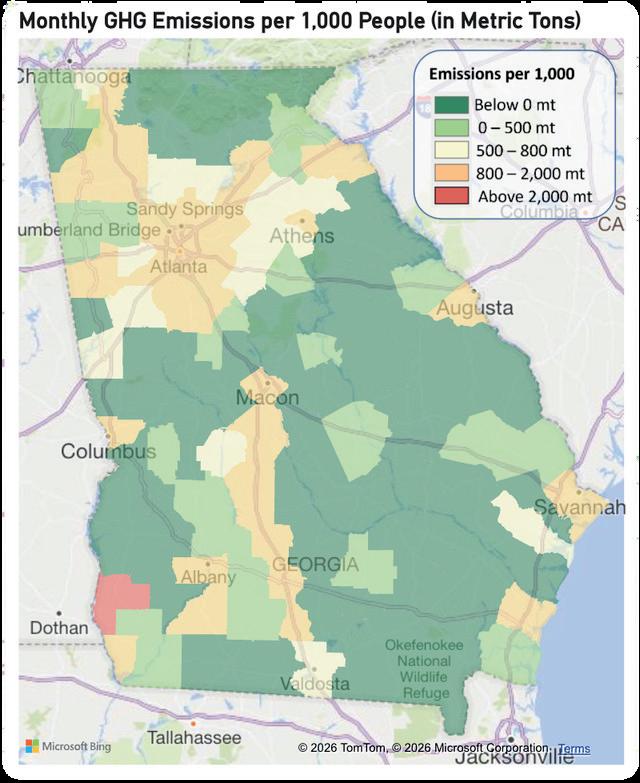
The Drawdown Georgia GHG Emissions Trackers provide monthly greenhouse gas emissions estimates for 200+ Georgia cities and all 159 counties.
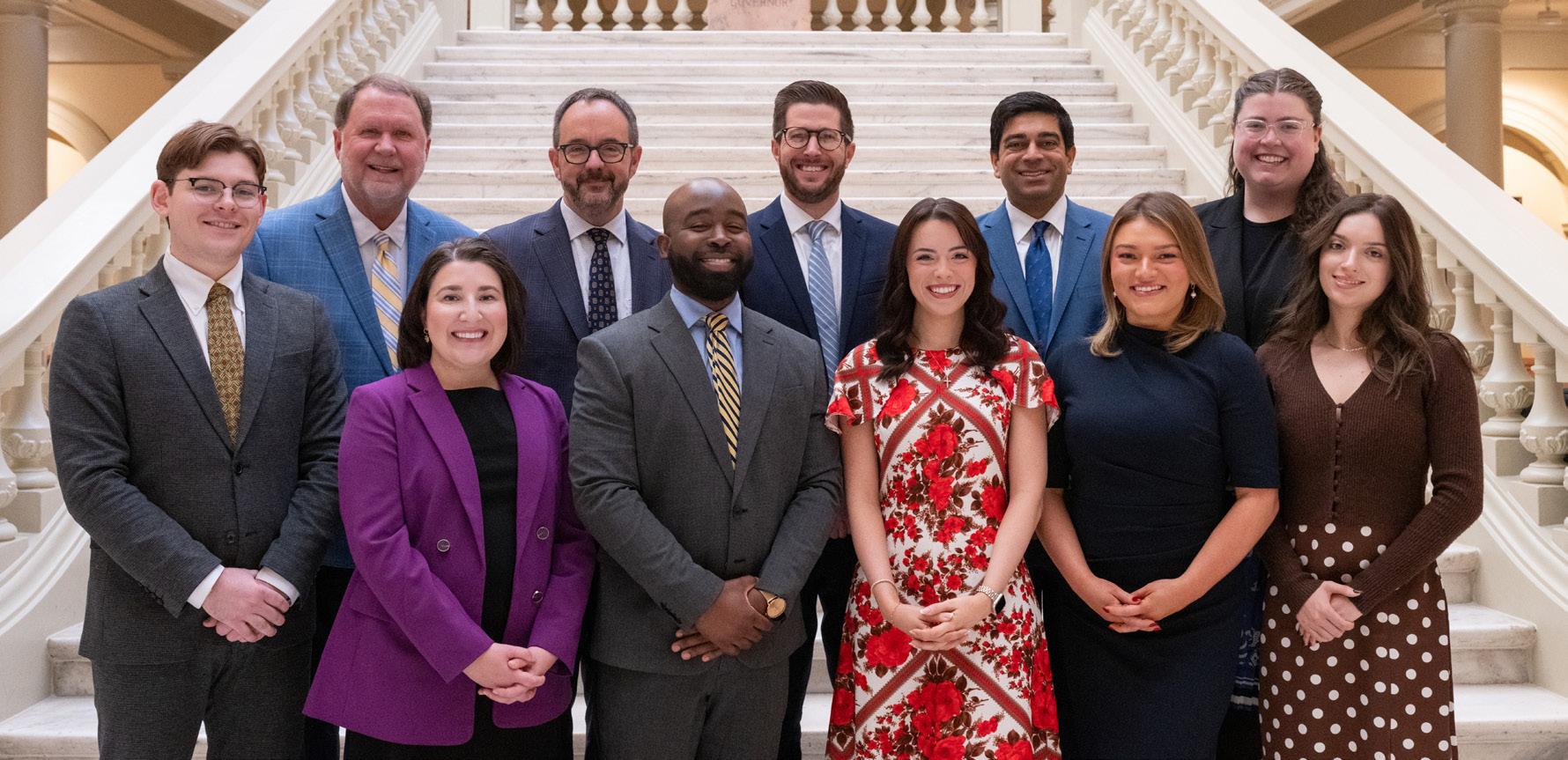
Advocates for Georgia’s Cities: Meet the Georgia Municipal Association’s Governmental
Georgia Municipal Clerks Association Installs New Officers and District Directors + Holtz Institute Helps Strengthen Small City Leadership
GeorgiaForward
New Young Gamechangers Cohort to Drive
Building the Future: Housing, Disaster Recovery and Rural Partnerships + Four Cities Complete Economic Placemaking Collaborative + Rebuilding Homerville: A Community Vision Sparks Downtown Renewal
+ Downtown Leesburg’s Vision Becomes Reality
+ Towns & Law: Defending Local Authority and Financial Issues + Small
Engines of Opportunity: How Georgia’s Independent Colleges Power Local Progress
MICHAEL MCPHERSON, MEMBER SERVICES CONSULTANT, GMA
The Georgia Municipal Association (GMA) and its 536 cities have built a longstanding partnership with the University of Georgia, particularly through UGA’s Carl Vinson Institute of Government (CVIOG).
THIS COLLABORATION HAS BROUGHT INVALUABLE TRAINING and services that have shaped our state for decades. Yet, beyond the spotlight of our major research universities, another powerful force quietly drives progress in the heart of many Georgia towns: the independent college. The 24-member institutions of the Georgia Independent College Association (GICA) are deeply woven into their local communities,
especially in rural areas, creating lasting impact far beyond campus boundaries.
These campuses not only develop future leaders, but they also serve as economic stabilizers, workforce indicators and cultural hubs. Their presence keeps Georgia communities vibrant and resilient in the face of change.
Economic Engines in Rural Georgia
In many of Georgia’s rural counties, an independent college is often the largest employer, anchoring the local economy. The financial impact of these institutions reaches well beyond campus gates—recent studies show that the multiplier effect of collegiate spending significantly boosts local businesses and services.
Direct Employment: Colleges provide stable, high-skilled jobs for local residents, from faculty and administrators to facilities and tech support.
The Local Economy: Student spending at diners, bookstores, and boutiques creates a secondary layer of economic activity that sustains small-town main streets.
Rooted Stability: Faculty and staff living in the community contribute to the local tax base, supporting municipal services and public schools.
For a rural city, the presence of a GICA college can mark the difference between a town merely surviving and one that is thriving with a steady flow of human talent and economic investment.
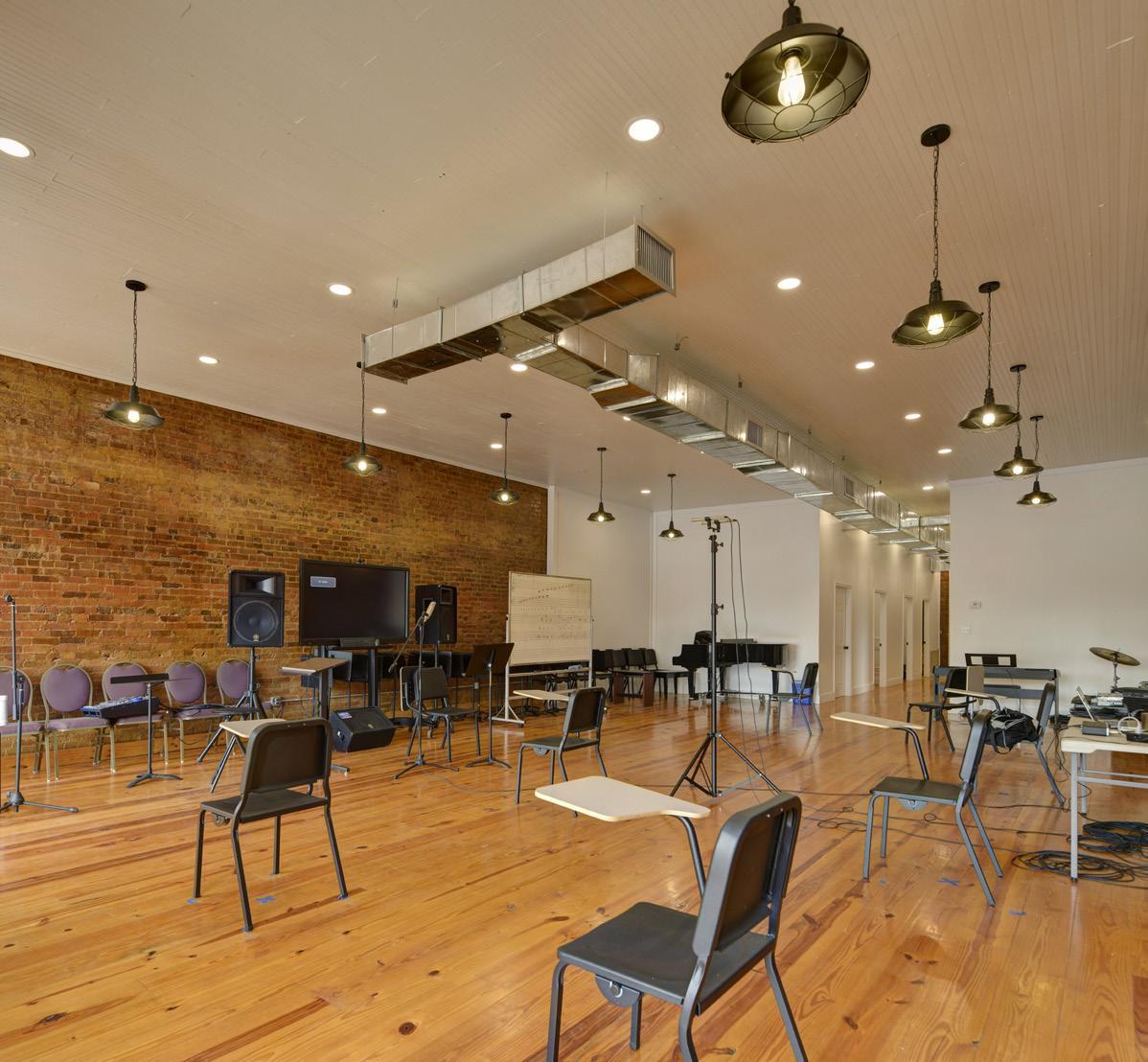
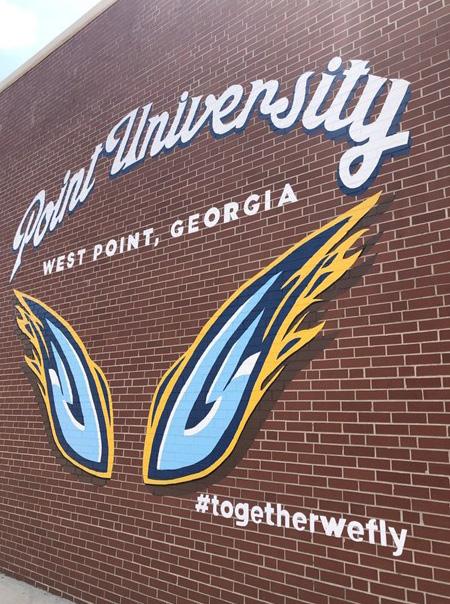
West Point experienced this when the textile industry left. Point University stepped in to transform a former corporate headquarters into a vibrant new campus. Storefronts that were once vacant became student housing, a dining hall and a bookstore.
This investment not only brought students and staff to the city—it restored purpose and economic vitality to downtown West Point.
Keeping Talent Local: How Independent Colleges Combat Rural “Brain Drain”
Rural communities often struggle with population decline and the loss of young talent. Georgia’s independent colleges are actively working to reverse this trend. By helping students imagine a future in their hometowns, these institutions engage youth early by offering dual enrollment, fast-track programs, and place-based scholarships that link educational opportunity to local investment.
For Young Harris College, high school students in Towns, Union, Rabun and Fannin counties can earn college credit early through robust dual enrollment programs. Those who stay to complete their degrees at Young Harris receive free tuition—removing financial barriers and strengthening the region’s pipeline of skilled graduates.
A Multifaceted Community Resource
When a city partners with an independent college, it gains a resource for nearly every municipal challenge.
Workforce Pipelines: Independent colleges collaborate with local chambers of commerce to tailor programs for industry needs, such as nursing, agribusiness or cybersecurity.
Public Programming: Lecture series, art galleries and theater performances enrich the cultural life of city residents, providing amenities that enhance the community for all.
Civic Engagement: Students at Georgia’s independent colleges contribute thousands of service hours each year to local nonprofits and municipal projects, strengthening connections between campus and community.
“The city of Young Harris and Young Harris College have built a strong partnership over many years,” said Young Harris Mayor Andrea Gibby. “By continuing to work together, we can effectively support and grow our community and local economy. The continued wellbeing and success of the college are essential to the prosperity of the entire Young Harris community.”
Advancing Rural Healthcare and Building the Rural Medicine Workforce
Mercer University’s School of Medicine was founded in 1982 with a mission to prepare primary care physicians for rural, underserved Georgia. It only accepts Georgia residents into its M.D. program.
“Mercer University’s School of Medicine’s mission is to create access to high-quality health care for rural Georgians and to educate physicians to meet the needs of medically underserved communities across the state,” said Jean Sumner, M.D., MACP, Dean of Mercer University’s School of Medicine.
Through Mercer University’s School of Medicine’s Georgia Rural Health Innovation Center, more than 1,200 continuing education credits were awarded to physicians, advanced practice practitioners, and behavioral and health care professionals for completing free virtual training sessions and in-person conferences in 2025.
“We are unwaveringly committed to this mission, accepting only Georgia residents into our programs preferentially, young people who share our mission,” said Sumner. The Georgia Rural Health Innovation Center has engaged more than 3,000 people across rural Georgia in
mental health training. The center offers training in the Community Resiliency Model, QPR (Question, Persuade, Refer), COMET (Changing Our Mental and Emotional Trajectory), and Mental Health First Aid.
Participants in these free trainings range from middle school students to adults 65 and older, including teachers, counselors, clergy, farmers, health care providers and medical students.
“We train highly skilled physicians to practice in rural Georgia, and we have projects or initiatives serving every rural county in the state,” Sumner said.
The center has at least one program or initiative in all of Georgia’s 120 rural counties.
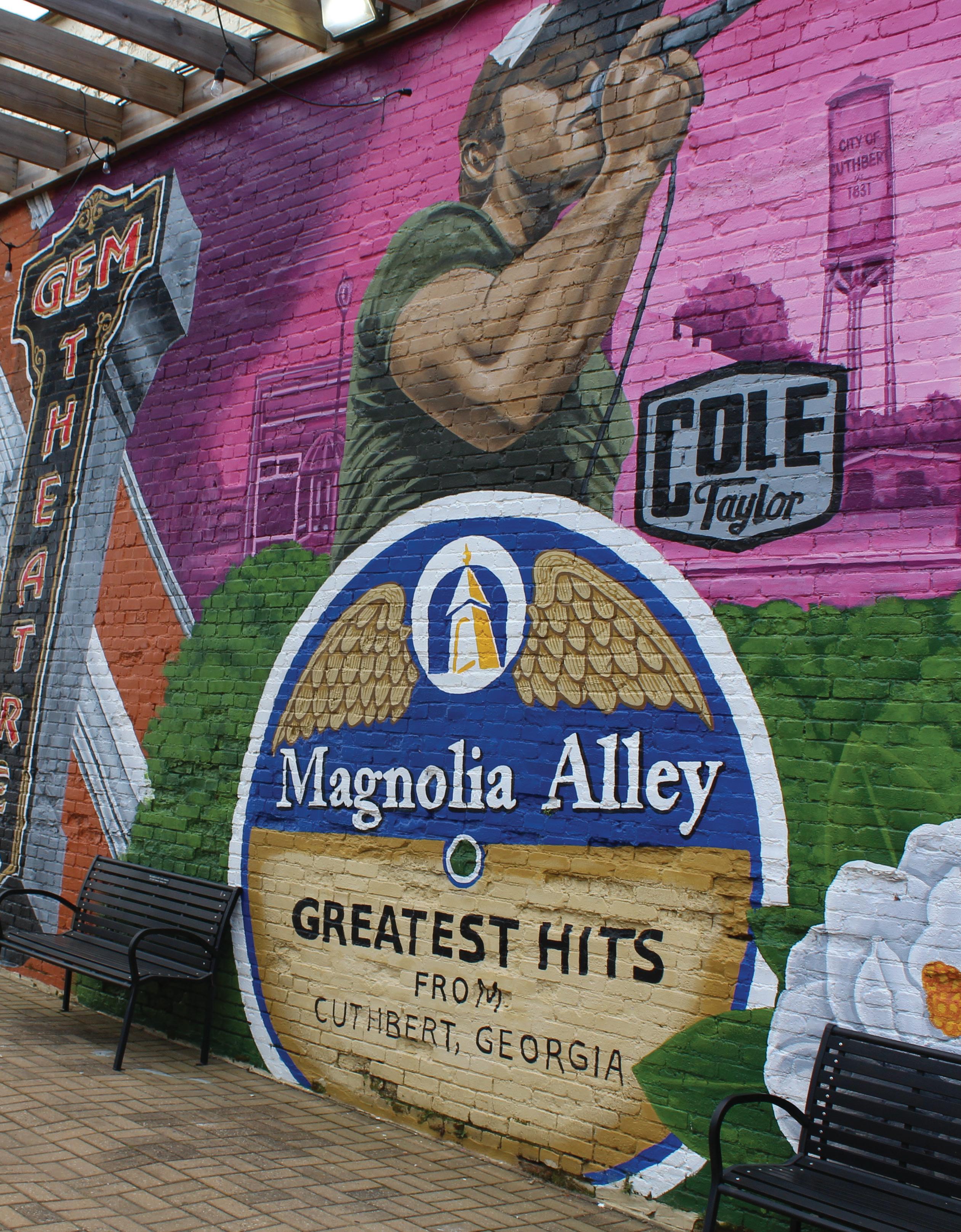
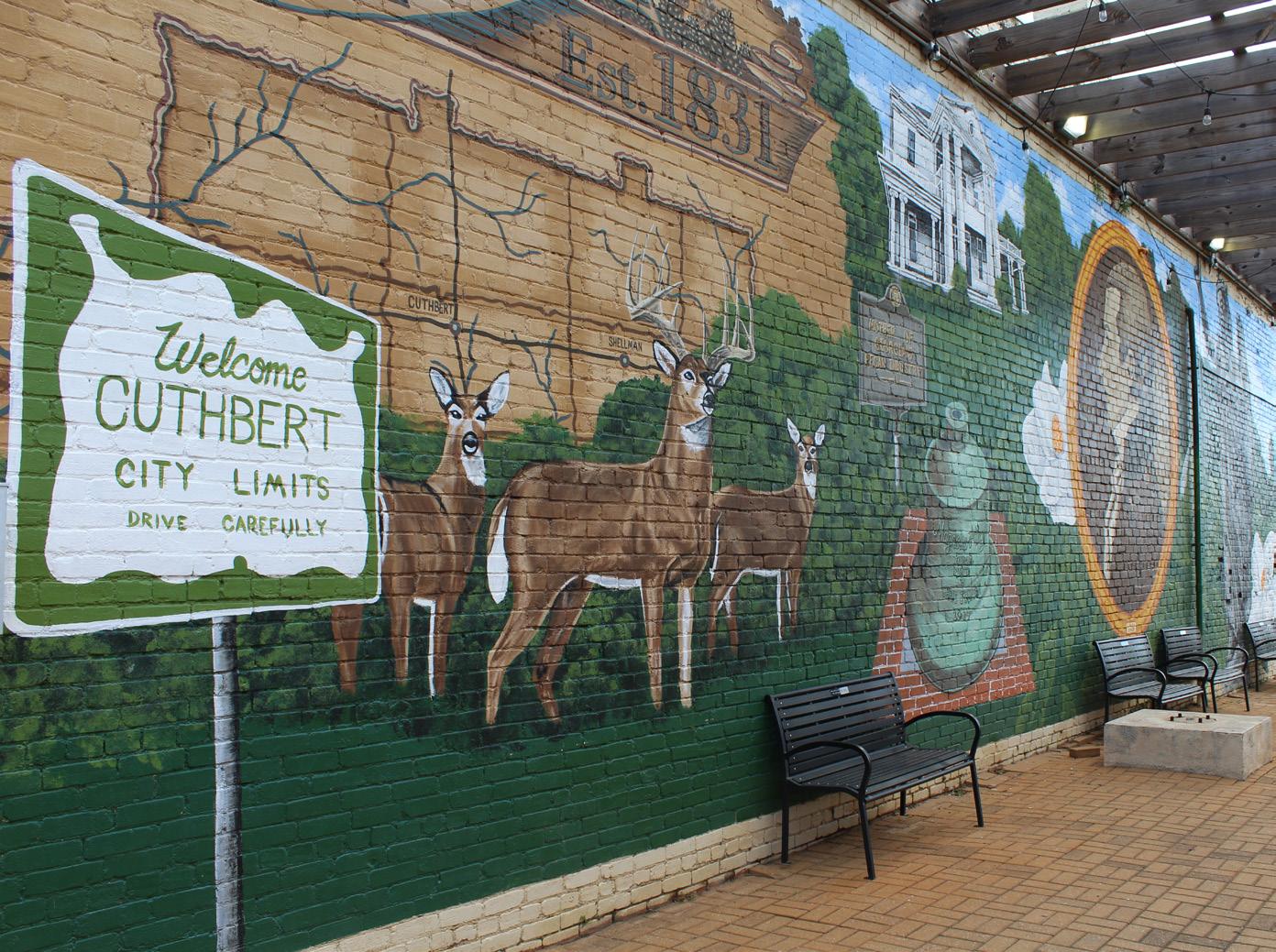
Andrew College located in Cuthbert has experienced remarkable growth, with enrollment up 144% since fall 2022. Andrew College’s President William Kennedy celebrates a record 602 students in fall 2025 and expects continued expansion.
The college’s nursing and respiratory therapy programs retain 75% of their graduates to serve the southwest Georgia region. Andrew College has also invested in downtown Cuthbert by renovating multiple properties, including transforming a struggling facility into new student housing.
The Path Forward
The relationship between a city and its independent college is truly symbiotic. As city leaders plan for the future, institutions will become partners in economic development and essential allies in retaining young talent.
Choosing Hope, Purpose, and People Together
BIANCA MOTLEY BROOM, COLLEGE PARK MAYOR AND GMA PRESIDENT
When I accepted the presidency of the Georgia Municipal Association, I challenged our cities to embrace positive leadership by choosing hope, purpose, and people in every season.
I BELIEVED THEN, AS I DO NOW, THAT positive leadership is not blind optimism. It is the steady commitment to show up for our communities, especially when the path ahead is uncertain.
As my term draws to a close, I am proud to say Georgia’s cities answered that call. Nowhere is that more evident than in this year’s Visionary City Award honorees.
Across our state, nine cities have demonstrated what happens when thoughtful planning meets courageous follow-through. From Albany’s neighborhood-driven revitalization of the Charles Driskell Park Community Center to Griffin’s South Precinct and Community Center blending public safety with mentorship and after-school support, we see leaders placing people not politics at the center of progress.
In Hartwell, students are launching real businesses through the StartUP Hart initiative, proving that when young people are given tools and trust, they build futures rooted in their hometowns. In Valdosta, the HEART program is addressing non-emergency calls with compassion and coordination, connecting vulnerable residents to the resources they truly need while easing strain on first responders.
Brunswick is tackling coastal flooding with smart infrastructure and nature-based solutions. Watkinsville and Chattahoochee Hills are preserving greenspace and protecting land for generations to come. Rome has transformed an underused park into a welcoming, accessible anchor for families, while Suwanee’s Town Center on Main has reimagined downtown connectivity in ways that strengthen both community life and economic vitality.
From coastal communities to rural towns to growing hubs, these cities span geography and size but they share a common thread: they
listened. They collaborated. And they followed through. This kind of innovation doesn’t happen in isolation. It happens when cities have the support and partnership they need to succeed.
Georgia’s economic strength is built on the foundation of thriving local communities. When our cities are strong, our state is strong. Local governments, counties, schools, and state leaders are not silos; we are interconnected partners in shared prosperity. As we look toward this year’s elections for statewide offices, including governor and lieutenant governor, let us remember that our success depends on one another.
There is no “us versus them.” There is only us. It’s our duty to work together to ensure safe neighborhoods, strong schools, unique downtowns, and resilient infrastructure. Regardless of who takes office, I am confident that collaboration, mutual respect, and open communication will remain essential to Georgia’s continued success.
The spirit of partnership that this moment demands extends beyond government and lives powerfully within our municipal association. To the GMA leadership, staff, and my fellow officers, thank you for always leading by example, your steady guidance and tireless commitment. To my colleagues across Georgia who entrusted me with this role, thank you for your trust, your confidence, and your friendship.
Leadership can feel isolating at times. But you don’t have to carry the burden alone. Lean on your GMA family. Together, we are stronger and wiser than any one of us could ever be on our own. Whatever challenges lie ahead, Georgia’s cities have proven they rise to meet them with courage, with innovation, and with each other. In every season, through triumphs and trials, let’s continue to choose hope. Let’s choose positivity. And above all, let’s choose people.
Strength in Our Small Cities
LARRY HANSON, CEO AND EXECUTIVE DIRECTOR
At the Georgia Municipal Association, we are proud to represent all 536 of Georgia’s cities, many of which are small and rural communities that help drive Georgia’s economy and enhance the quality of life across our state.
THIS SPRING, LIKE EVERY SPRING, OUR team has been on the road throughout the state conducting Listening Sessions and we have seen firsthand that all across Georgia, while there are certainly many challenges, there are also stories of growth, resilience, and innovation unfolding in many of our communities.
These cities may be smaller in population, but their impact is anything but small. In fact, as you can find in our Value of Georgia Cities, 73 percent of Georgia’s cities have a population of 5,000 or less and while only 9% of the state’s land area, all cities together are home to nearly 45 percent of the state’s population, 70% of the state’s jobs, and generate 91 percent of Georgia’s GDP.
That impact reaches beyond city limits. Cities also serve as the economic anchors for their surrounding regions. From agriculture and manufacturing to tourism, logistics, commercial, and small business development, rural cities are essential to the strength of Georgia’s economy. Beyond economics, cities are the cultural hubs and home to unique and vibrant downtowns, parks and recreation amenities, and the brightest innovators to constantly reinvent what’s new and what’s next.
Leadership in a small city takes creativity, persistence, and partnership. Local leaders are balancing many priorities at once, from economic growth and housing to infrastructure, placemaking, and building unique downtowns. Through our partnership with the University of Georgia’s Carl Vinson Institute of Government and the Harold F. Holtz Municipal Training Institute, GMA is connecting city leaders with training and development that helps them build stronger communities.
This issue of Georgia’s Cities highlights several examples of how that work is taking shape across our state. In communities like Cuthbert, Young Harris, and Macon, partnerships between city leaders, colleges, and economic development organizations are creating new opportunities for investment and growth.
Housing is another challenge many rural cities are addressing head-on. Through creative partnerships and new approaches, communities such as Fitzgerald, Blakely, and Pembroke are working to expand housing options and support workforce development. When housing solutions align with economic development strategies, cities are better positioned to attract employers, new families, and support long-term growth.
These kinds of efforts are strengthened by statewide initiatives as well. Governor Brian Kemp recently announced the third round of Rural Site Development Grants, including support for Rome and Waycross. Programs like these help prepare sites for new industry, strengthen economic competitiveness, and position rural communities for future opportunities.
One of the best places to see these ideas come together is at GMA’s Small Cities Conference, which will take place May 13–15 in Gainesville. This event brings together leaders from small and rural communities across Georgia to share best practices, discuss challenges, and learn from one another. Topics range from economic development and housing to infrastructure, partnerships, and leadership strategies that help communities thrive.
Big or small, every Georgia city matters. When we work together and share ideas, we all move forward. That’s what it means to be Cities United
NEW GUIDES HELP CITIES ENGAGE YOUNG PEOPLE IN CIVIC LIFE: A
Q&A WITH GEORGIAFORWARD’S MANAGING DIRECTOR SADIE KRAWCZYK
GeorgiaForward recently released two guides to help cities connect young people with civic life as part of the America250 celebration.
In this Q&A, GeorgiaForward’s Managing Director Sadie Krawczyk talks about what’s in the guides and how cities can put them to use.
GMA: GeorgiaForward just released two guides, one for Youth Councils and one for the Mayor’s Reading Club. Both focused on civic literacy. What’s in them?
SK: We have created these guides to support municipalities as they celebrate America250’s birthday, specifically to help them engage with and include young people. The Youth Council guide includes project planning templates, conversation starters, and sample meeting agendas. The Mayor’s Reading Club guide offers event planning worksheets, sample agendas for different types of programs, and a recommended book list.
GMA: Why did GeorgiaForward connect literacy and reading to civic engagement, rather than treating them as separate issues?
SK: All learning builds on the foundation of literacy. To meaningfully participate in local government and civic life, citizens need to be able to read, understand, and navigate the systems and written communication that enable engagement. And in Georgia, this is a real challenge as 62% of third graders read below grade level, and 1 in 10 adults have low literacy skills. Starting with young students and teenagers not only helps prepare them for their future; it also impacts their broader families, helping them all find their place in local decision-making.
GMA: A city official picks up one of these guides. What’s the first step toward putting it to use?
SK: I would start by looking through it and taking note of any ideas that resonate. Then, get the conversation started with key partners. Local officials can be the initiating and convening voice for planning these activities. We hope you’ll use the guides as a catalyst to organize something special in 2026 for your city.
GMA: The guides mention that cities don’t have to start from scratch. They can build on existing events and partnerships. What does that look like in practice?
SK: If you have Mayor’s Reading Club activities already planned for the year, be intentional about integrating civic literacy into those plans by featuring one of the books on the suggested book list. If you have a youth council, the next time they meet, ask to join the meeting, and work through the planning template in the guide to brainstorm and help them put together a local event for the community at large.
GMA: As Georgia marks America250’s birthday, what opportunity do these guides represent for cities that want to invest in the next generation?
SK: Moments like this don’t come around often, and they give us a chance to think about what we want civic life to look like for the next generation. Hopefully the guides will inspire you to engage in new ways with young people, building leadership capacity for your city, and for Georgia as a whole.
Strengthening Service: GMA’s Customer Service Certificate Program
For cities looking to elevate service standards and better connect with their communities, GMA’s Customer Service Certificate Program provides an engaging, practical, and locally focused professional development opportunity.
For more information, contact your city’s Member Services representative.
FOUNDATIONS FOR GROWTH: RURAL MAYORS
TAKE ON GEORGIA’S HOUSING SHORTAGE
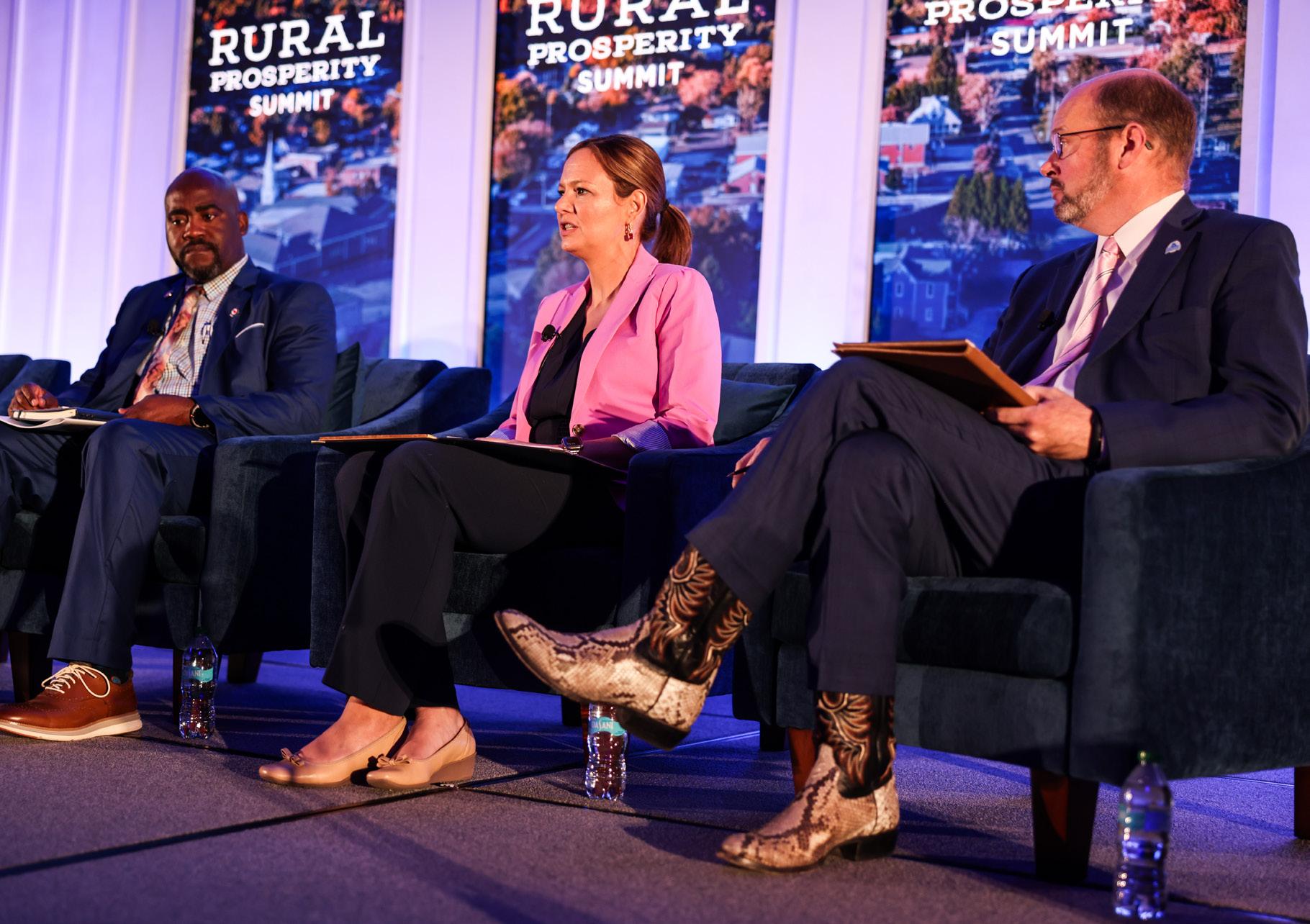
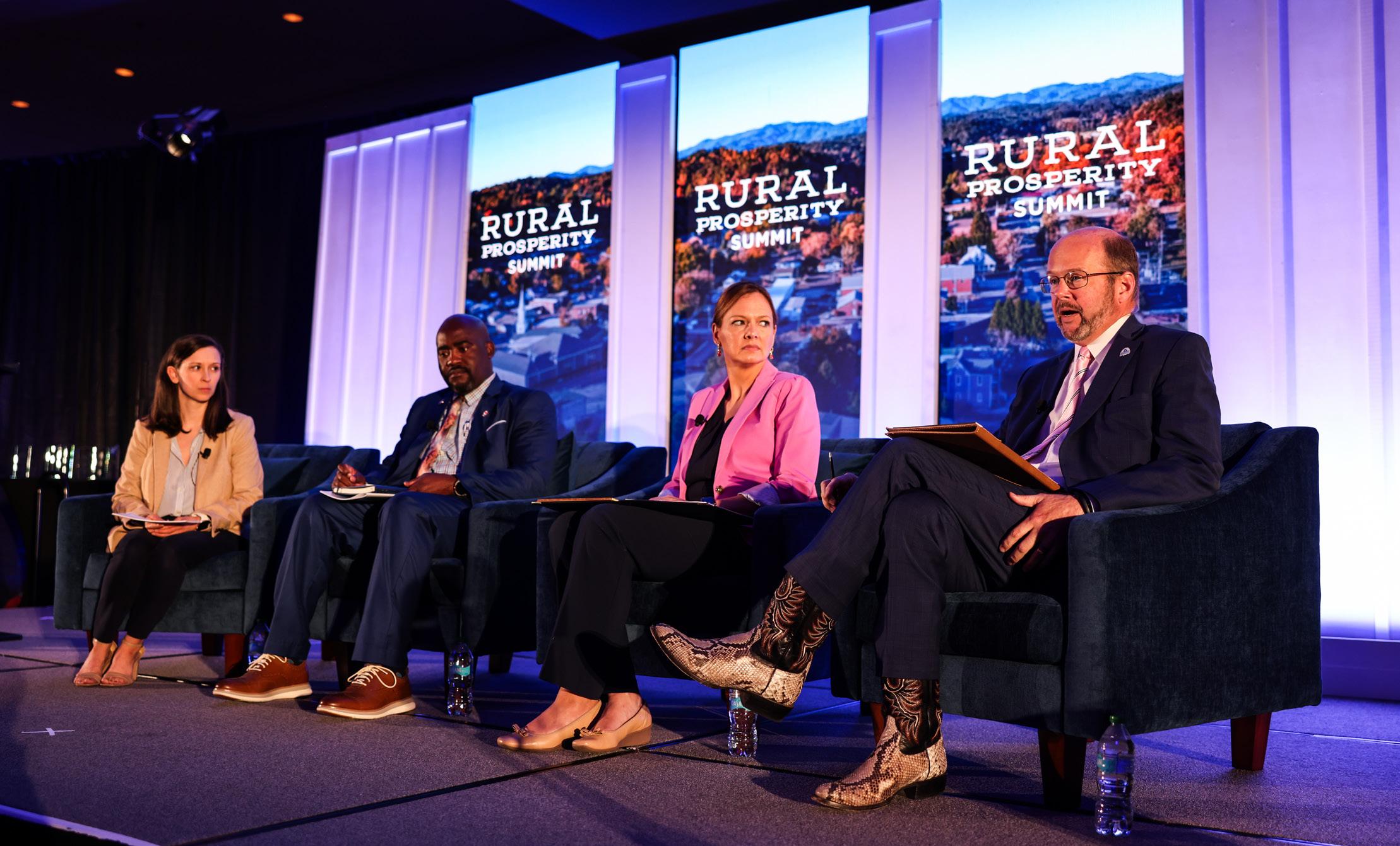
Rural Georgia’s path to prosperity runs through housing. That idea framed a conversation with three mayors during the Georgia Chamber of Commerce’s Rural Prosperity Summit on October 1 at the University of Georgia’s Tifton campus.
Moderated by Daniela Perry, executive director of the Georgia Chamber Foundation, the session “Foundations for Growth: Tackling the Rural Housing Shortage,” centered on a simple premise: rural economies can’t grow without places for workers to live. The mayors agreed and shared how they’re changing rules, rebuilding trust, and piecing together financing to add the homes their residents can afford.
THE MISSING MIDDLE IN FITZGERALD
For Fitzgerald, the pressure point is the “missing middle.” “We have a good supply of lower-income and subsidized housing, but it’s that middle workforce housing that we struggle with,” said Mayor Jason Holt. “Housing values in our community have tripled since they were pre-COVID…it’s very high.”
With an older housing stock, much of it historic, upkeep costs push properties into rental and, too often, into code issues. “One of the biggest community issues is fear…they fear traffic, they fear the taxes, they fear who we’re attracting to our community,” Holt said. “We on a daily basis communicate and educate.”
PEMBROKE’S POST-HYUNDAI REALITY
Pembroke Mayor Tiffany Zeigler framed her city’s story as “pre-Hyundai and post-Hyundai.” Before the massive auto plant landed nearby, the one-stoplight town already wrestled with scarce housing and infrastructure limits. “We had to get creative on water and wastewater before we could even talk housing,” she said, describing how the city secured a new well in a neighboring county and lined old pipes while under a consent order.
Then came Hyundai’s announcement. “Suddenly Hyundai’s announced…you’ve just changed the complete dynamic of the community,” Zeigler said. “The per-capita income in Pembroke is $27,000. Hyundai’s bringing jobs that are at $58,000.”
BLAKELY’S CLEANUP FIRST STRATEGY
In Blakely, Mayor Travis Wimbush is steering through the loss of a major employer. “Our mind is shifting to recovery from losing one of the largest employers,” he said. Progress in Blakely began not with a shovel, but with a broom. “Before you can get new growth in, you have to clean up.”
Blakely launched community cleanups and began aligning ordinances with what residents actually want, a much needed reset, according to Wimbush. “You have to have the ability to say, this is why we’re going in this direction,” Wimbush said.
PROGRAMS, PARTNERSHIPS, AND PUSHBACK
All three mayors credited the Georgia Initiative for Community Housing (GICH) as a catalyst. Blakely “learned how we become marketable to developers,” Wimbush said. Pembroke took a 30-person cross-sector team through GICH, which Zeigler credits with unlocking deals once thought impossible: a $10 million Low-Income Housing Tax Credit project, followed by a $13 million senior development and new-construction grants. “As a small community with a $4 million budget, never would we have had that kind of investment had we not had those partners in place,” she said. Fitzgerald leaned into redevelopment, addressing more than 700 blighted or burned-out properties and partnering with private builders to rebuild.
The city and county recently adopted a Georgia Tech housing study into their comprehensive plan, which Holt praised for spotlighting what not to build. “They showed us the kind of housing we didn’t need to try to put in our community.”
Partnerships, the mayors said, make or break these projects. Holt urged mayors to court local banks and employers. Two industrial partners in Fitzgerald have purchased and rehabilitated multifamily properties to house workers. Zeigler keeps skeptics close. “Put the naysayers on the board,” she said. “Sometimes I have to turn Facebook off,” stressing that studies let officials decide with data, not emotion.
Blakely is creating a foundation for future development: hiring staff, reestablishing authorities, and inviting critics into the process. “It’s no longer fun to resist because I’m giving them information first,” Wimbush said.
PLANNING FOR GROWTH AND THE NEXT GENERATION
Employers now expect housing in the recruitment package. “Now more than ever, housing is part of the discussion in job-creation projects,” Holt said. Zeigler warned against the “chicken-or-egg” trap. “You can’t afford…all these types of infrastructure when you don’t know if you’re gonna attract a business or not,” she said, adding that cities can participate, update plans and set standards in order to be ready.
“NOW MORE THAN EVER, HOUSING IS PART OF THE DISCUSSION IN JOB-CREATION PROJECTS,” HOLT SAID.
Looking ahead, the todo list is both technical and cultural. Zeigler championed “rip off and replicate” approach—borrow model ordinances from cities already seeing growth. Holt wants rural-specific funding tools and flexibility to convert vacant historic buildings. Wimbush argued for quarterly policy reviews, and if a policy isn’t effective, make a change.
To keep young people in rural Georgia, the mayors said housing must match how younger residents actually live. Holt urged openness to “tiny house communities” and modular homes. Zeigler involves the city’s youth council in stakeholder meetings, asking “what’s gonna draw them back to our community?” The answer, she said, isn’t always one with a backyard. “My son’s 21…he doesn’t want to cut grass.”
A SIMPLE PLAYBOOK
Daniela Perry, executive director of the Georgia Chamber Foundation, said access to housing has become one of the most pressing challenges facing rural Georgia, impacting workforce growth, community stability and long-term prosperity.
“That’s why the Georgia Chamber Foundation convened this conversation with three rural municipal leaders tackling the housing shortage head-on in their own communities at our Rural Prosperity Summit,” Perry said. “By continuing to enable these critical conversations, the Georgia Chamber Foundation is sharing the insights and solutions that will equip leaders to effectively implement tailored strategies and help Georgia remain a beacon of economic success and prosperity for the next 25 years and beyond.”
In the end, the formula sounded straightforward: clean up, plan together, change your rules, and use every partner—banks, developers and state agencies—to turn one visible win into the next. As Holt puts it, “It’s about education…letting your community understand what their needs are going to be for the years to come.”
Photo credit Georgia Chamber
Turn Surplus Into Success
Transform asset disposal with streamlined online auctions
Generate revenue with "as is, where is" sales
Boost bids, clear space, and fund new initiatives Join 1K+ GA Agencies & Start Selling Today!
Jason Robinson | 334-300-9591 jrobinson@govdeals com
City Spotlight City Spotlight Lakeland
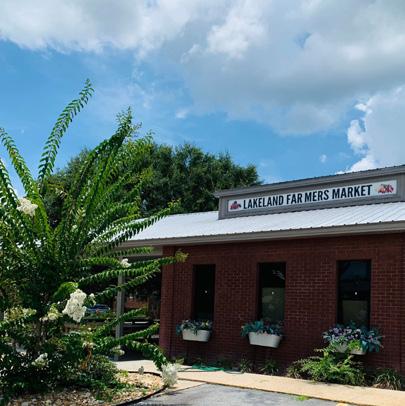
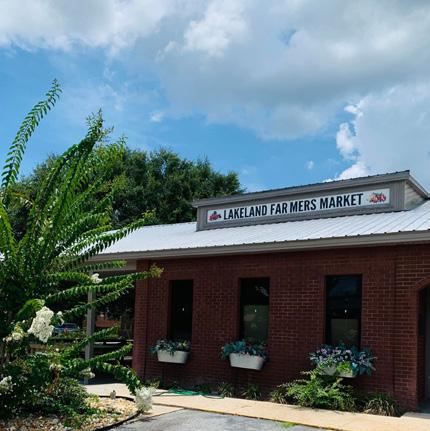
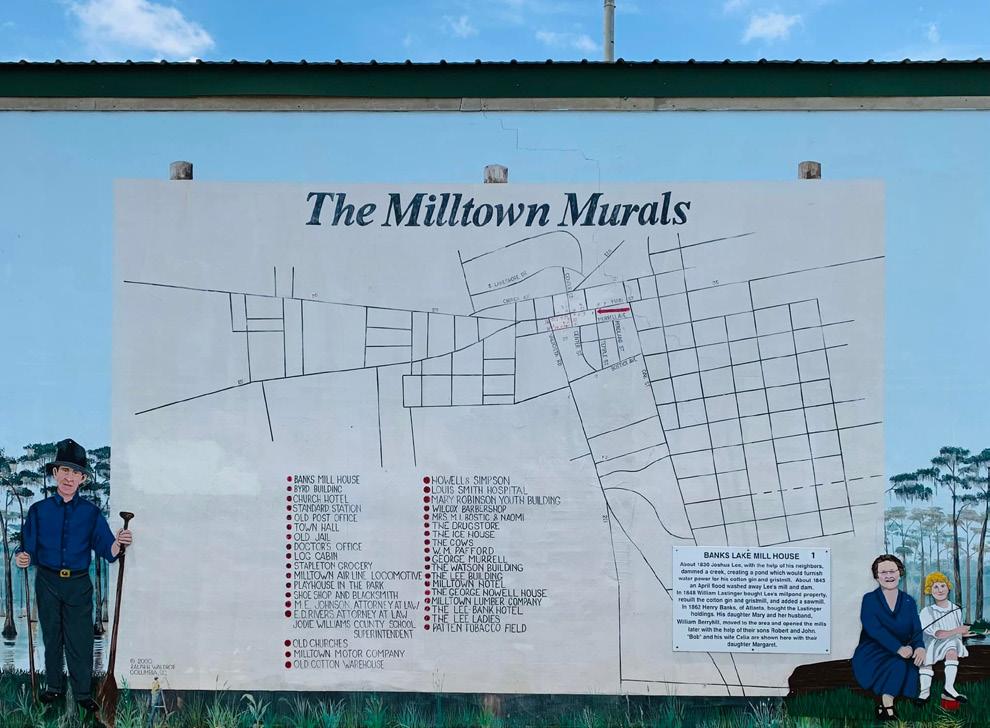
Tucked in the heart of South Georgia, the city of Lakeland blends small-town charm with a rich history shaped by timber, transportation and natural beauty. As the county seat of Lanier County, Lakeland serves as the cultural and economic hub for the community while maintaining the welcoming character that defines many of Georgia’s rural cities.
Originally known as Milltown, the city earned its early name from the thriving sawmill industry that supported the region’s economy in the late 19th and early 20th centuries. The area’s vast forests provided abundant timber resources, drawing settlers and businesses eager to capitalize on the booming lumber trade. The arrival of the railroad further fueled growth, connecting Milltown to markets across Georgia and beyond. In 1925, the city officially changed its name to Lakeland, inspired by nearby Banks Lake, one of South Georgia’s most treasured natural landmarks.
POPULATION: 2,875
MAYOR: Bill Darsey
GMA DISTRICT: 11
Banks Lake, now part of the Grand Bay Wild Management Area, continues to be a defining feature of Lakeland’s identity. The lake and surrounding wetlands provide scenic beauty, recreational opportunities and ecological importance by attracting anglers, kayakers and nature enthusiasts from across the region. The area also plays a vital role in wildlife conservation and environmental education.
Today, Lakeland balances its historic roots with steady community development. The city prides itself on preserving its heritage while investing in infrastructure, public services and community engagement. Annual events, local businesses and strong civic leadership contribute to a vibrant quality of life for residents and visitors alike.
With deep historical ties and a strong sense of place, Lakeland exemplifies the resilience and spirit that define Georgia’s cities.
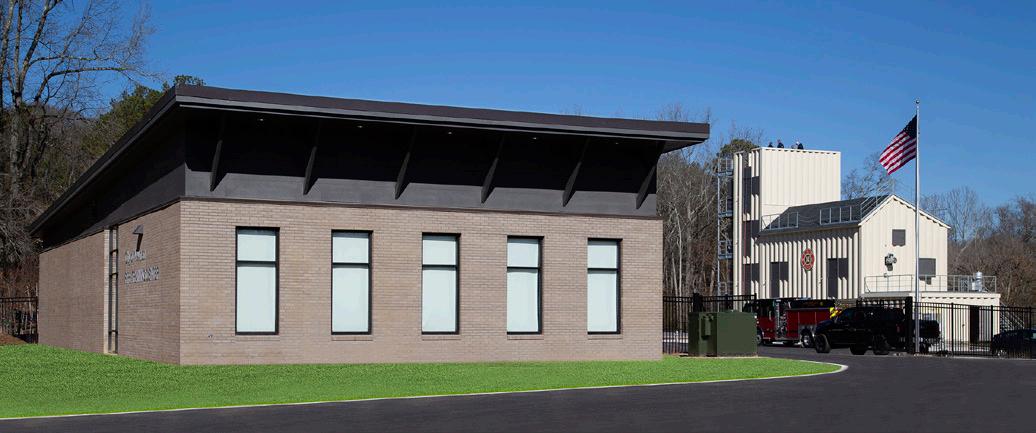
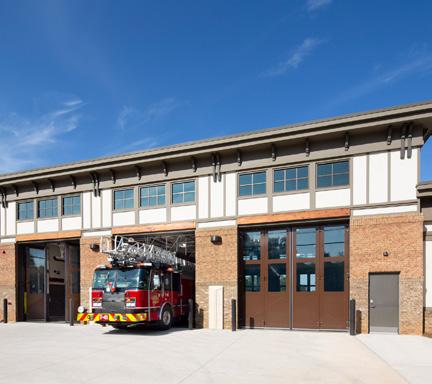
Newnan Fire Training Facility
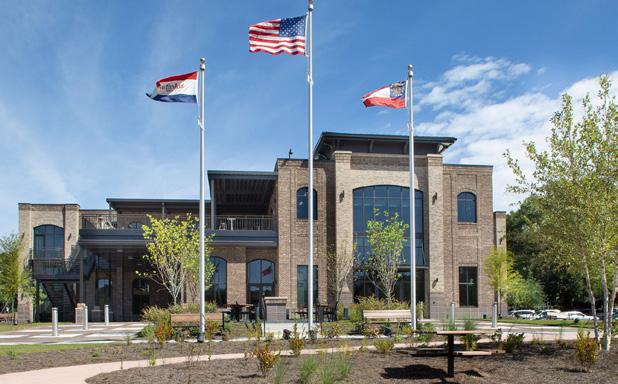
Milton Public Safety Complex
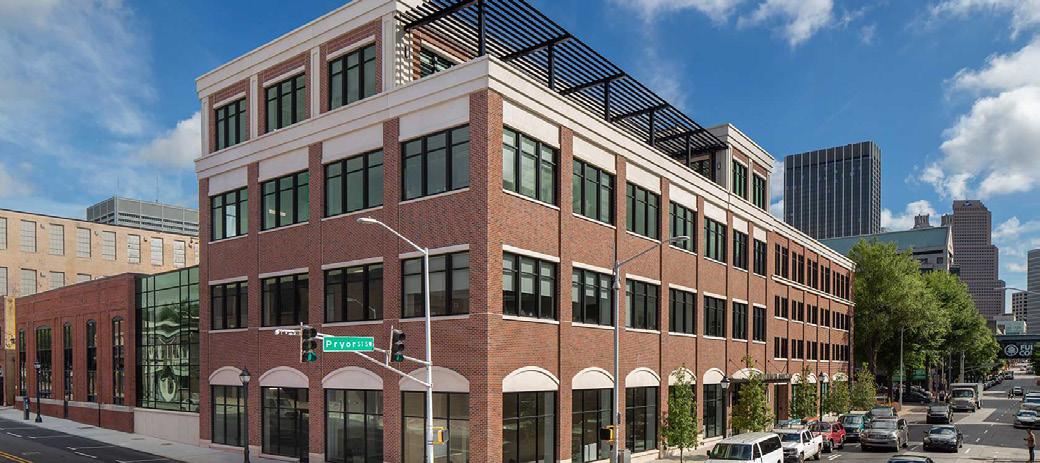
Fayetteville City Hall
Editor’s Note:
In the Q1 2026 issue of Georgia’s Cities, a photo caption accompanying one of our articles was published with an error. In this issue, we are reprinting the photo along with the corrected caption to ensure accurate attribution and information. We appreciate our readers’ understanding and remain committed to providing clear and accurate content in every issue.
Back Row (L-R): Noah Roenitz, Manager, State Relations, Larry Hanson, GMA CEO and Executive Director, Jim Thornton, Deputy Executive Director, Ryan Bowersox, Associate General Counsel, Rusi Patel, General Counsel, Callie Hood, Research Associate, Front Row (L-R): Leona Rittenhouse, Governmental Relations Associate, DJ Waller, Senior Governmental Relations Associate, Katrina Cochran, Governmental Outreach Specialist, Molly McLoughlin, Manager, Federal Relations and Jules Banks, Communications Associate
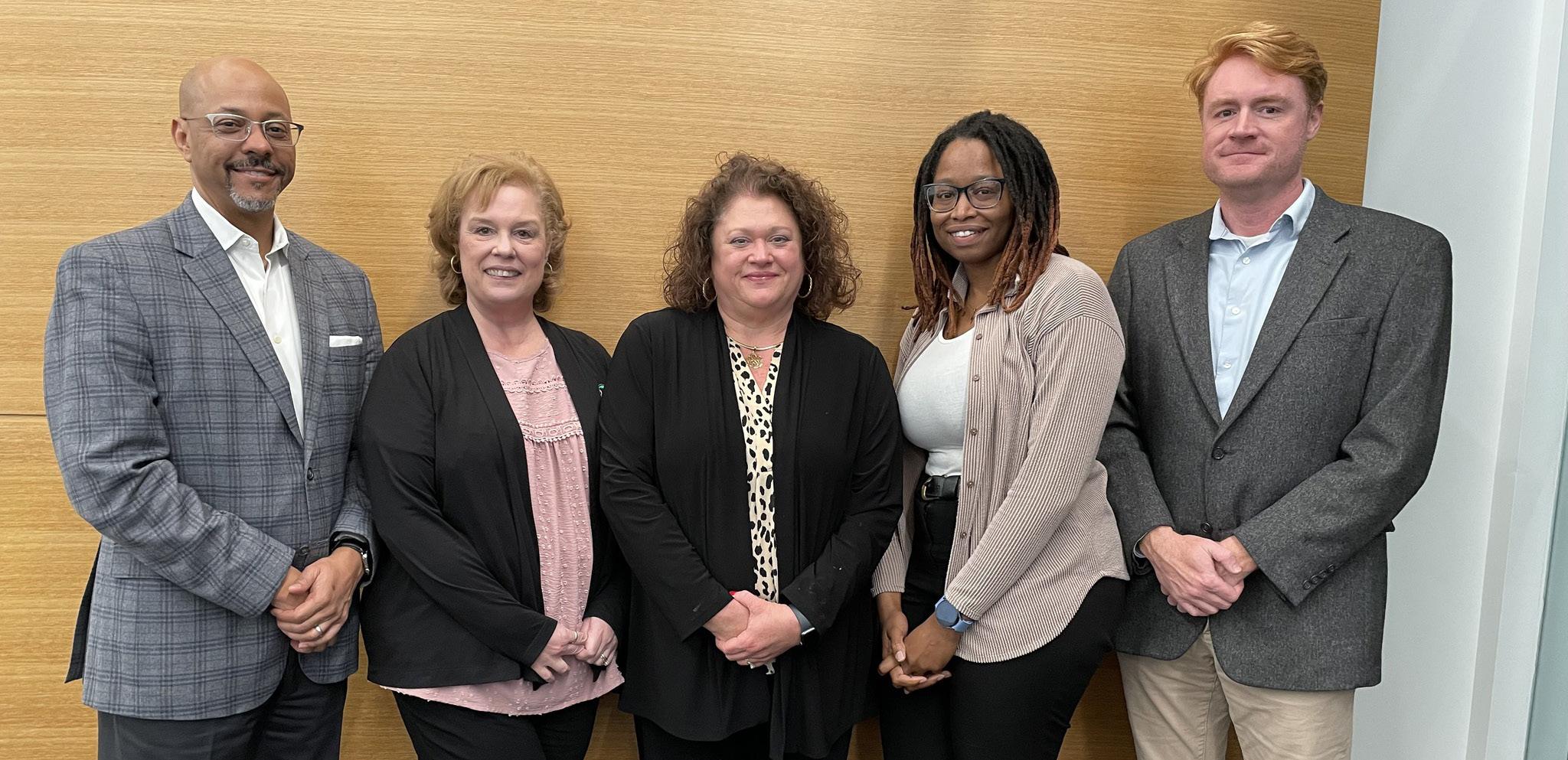
(L-R): Past president Chris Norman, Metro Atlanta Land Bank Authority, Treasurer Bekki Fox, Rome-Floyd County Land Bank Authority, President Alison Goldey, Savannah-Chatham County Land Bank Authority, Secretary Emily Carson, Perry-Houston County Land Bank Authority and Everett Verner, Macon-Bibb County Land Bank Authority
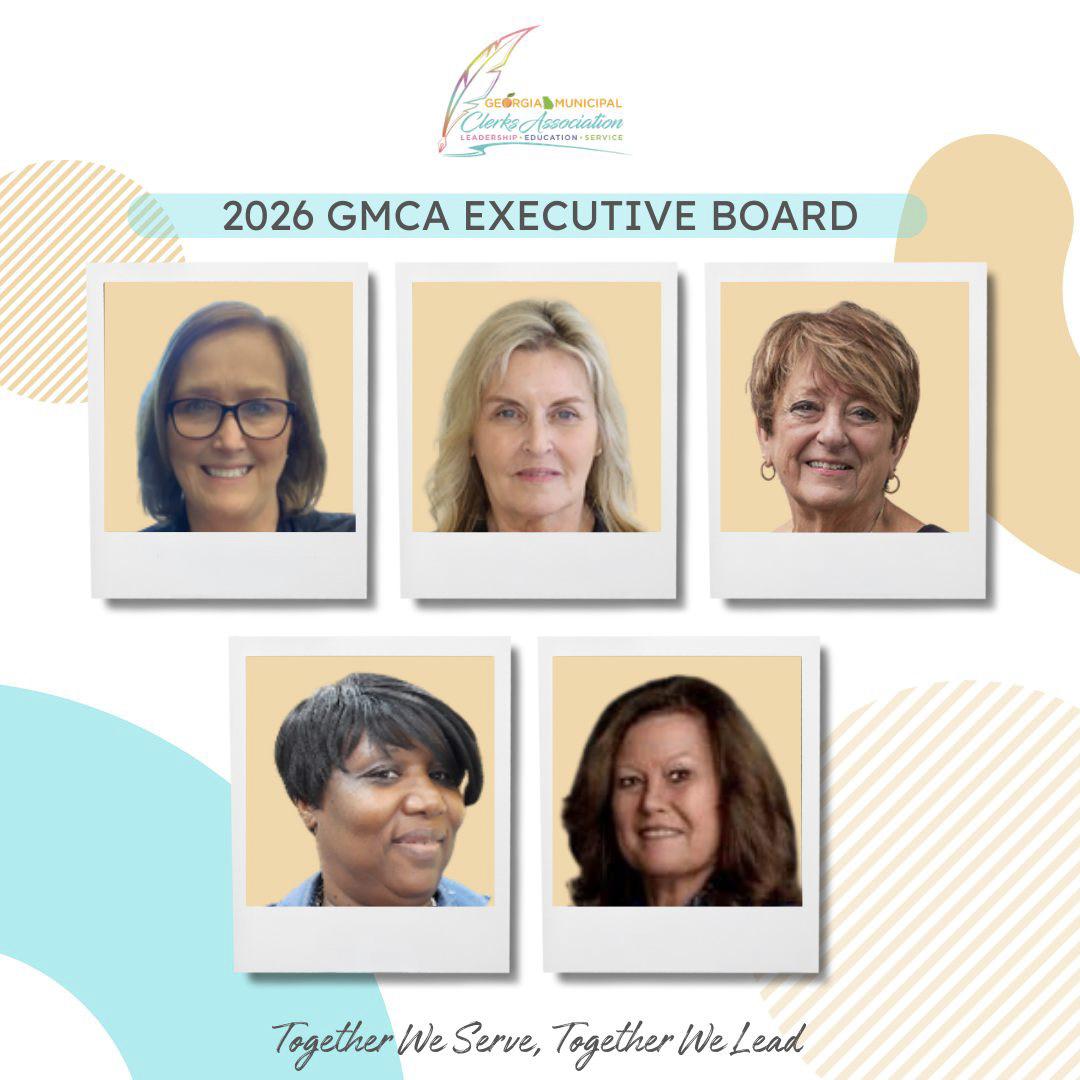
Georgia Municipal Clerks Association Installs New Officers and District Directors
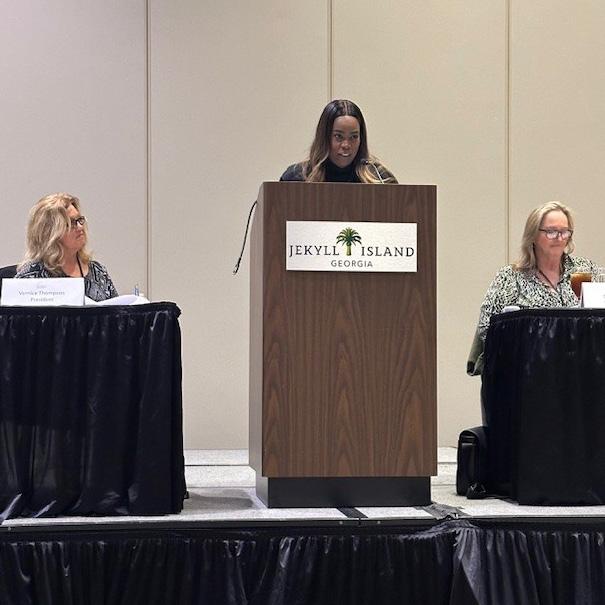
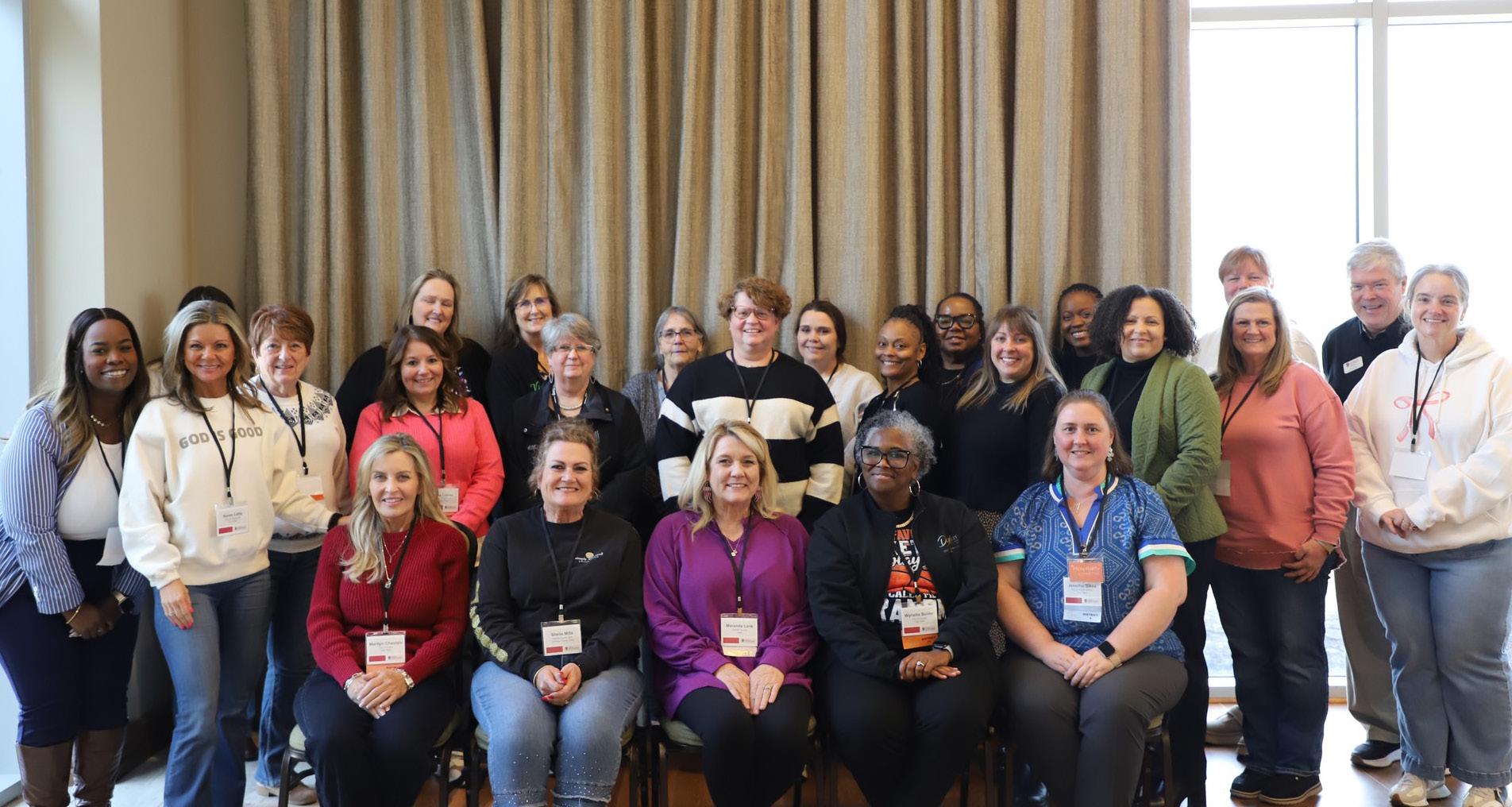
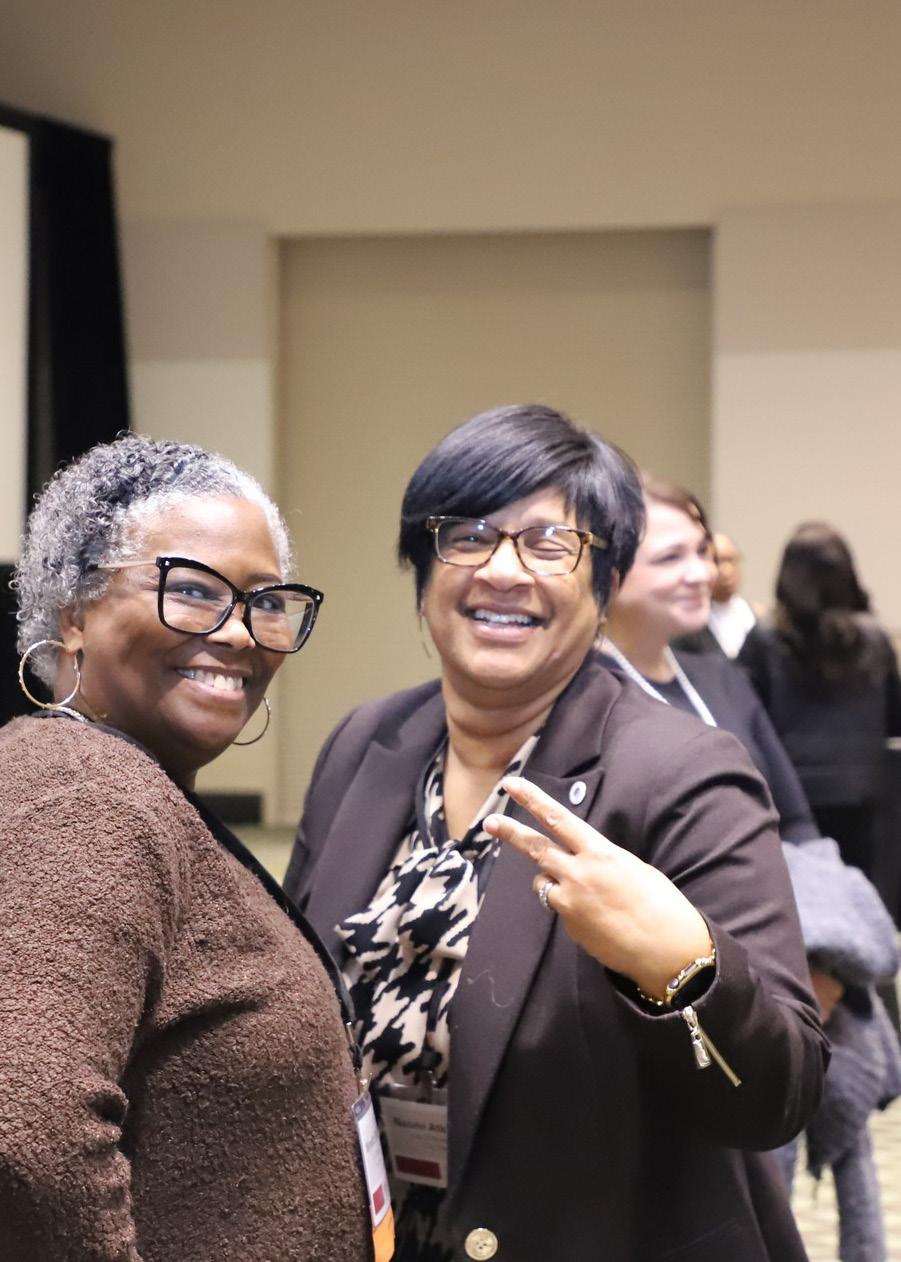
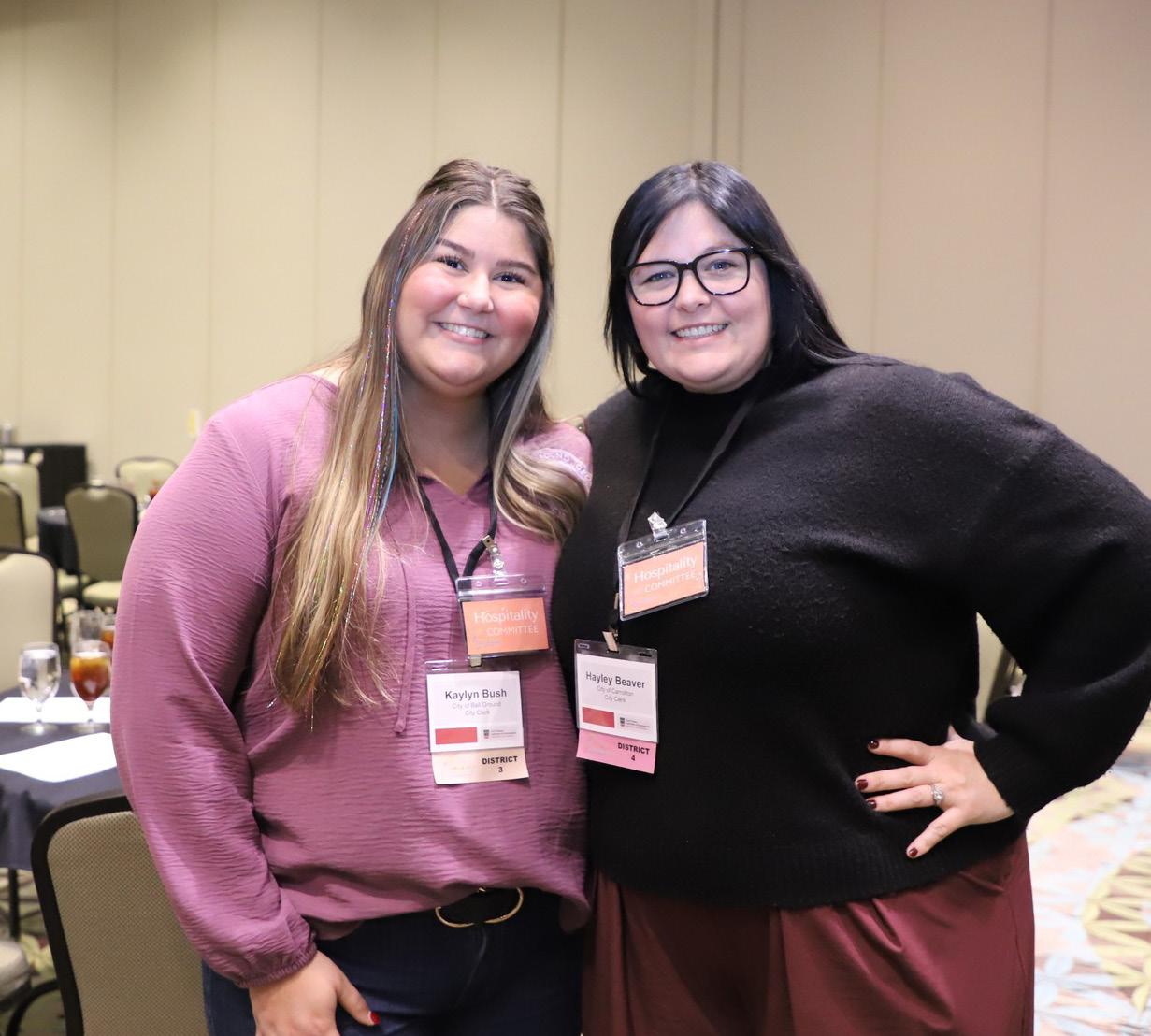
The Georgia Municipal Clerks Association (GMCA) held the installation of its new officers and district directors during the GMCA Business Luncheon on Feb. 2, at the annual Georgia Clerks Education Institute, hosted on Jekyll Island.
THE INSTALLATION MARKED AN IMPORTANT MOMENT FOR THE association as newly elected leaders formally assumed their roles, committing to serve and support municipal clerks across the state. GMCA officers and district directors play a vital role in advancing the association’s mission, strengthening professional development opportunities, and advocating for the clerk profession.
The following individuals were installed as GMCA officers and district directors for the upcoming term:
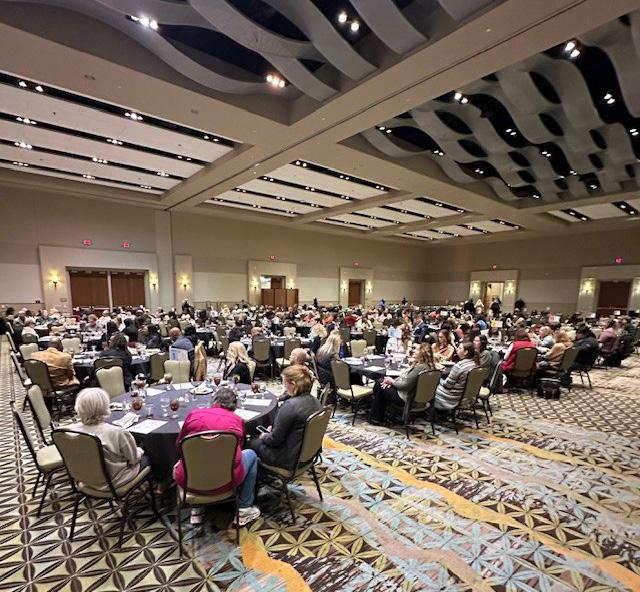
The Annual Georgia Clerks Education Institute provides an ideal setting for this milestone event. The institute focuses on certification classes designed to help city and county clerks expand their knowledge and skills through instruction on a wide range of topics essential to the clerk profession. Clerks from across Georgia gathered for the multi-day program to participate in training, networking and professional growth opportunities.
GMCA congratulates its newly installed officers and district directors and looks forward to their leadership in the coming year as the association continues its commitment to excellence, education and service to Georgia’s municipal clerks.
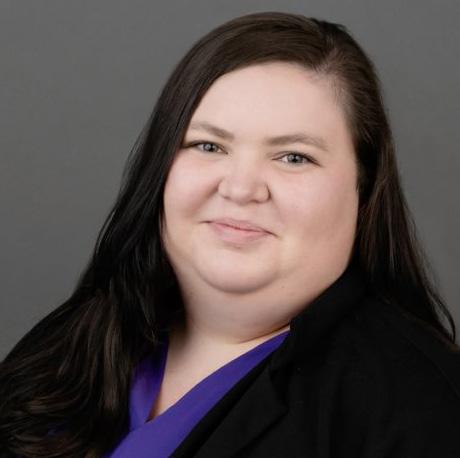
SHARON NELSON, PRESIDENT, CALHOUN
MARILYN CHASTAIN, VICE PRESIDENT, HELEN
JAN LEVINER, TREASURER, TOWN OF THUNDERBOLT
MARY KING, SECRETARY, ARLINGTON
VERNICE THOMPSON, IMMEDIATE PAST PRESIDENT, HAZLEHURST
Holtz Institute Helps Strengthen SMALL CITY LEADERSHIP
AILEEN HARRIS, DEPUTY DIRECTOR, TRAINING, GMA
For city officials serving small communities, the Harold F. Holtz Municipal Training Institute has been a lifeline, helping them navigate their roles, despite limited staff and resources.
“We don’t have a city manager,” explained Jay Chastain, mayor of Hiawassee, which has a population of 981. “Without this training, I wouldn’t know which way to turn.”
The training institute, established in 1981, is operated in partnership between the Georgia Municipal Association (GMA) and the University of Georgia’s Carl Vinson Institute of Government (CVIOG). The program features more than 80 classes, mostly three-to six hours long, that cover city operations, economic development, community engagement, intergovernmental relations, leadership development, public safety, quality of life initiatives and municipal finance.
Chastain said meeting fellow city officials and instructors from around the state has helped him feel that the city is not alone.
“You are all a phone call away,” he said. “Training has helped me learn the right way to do things and kept me out of trouble.”
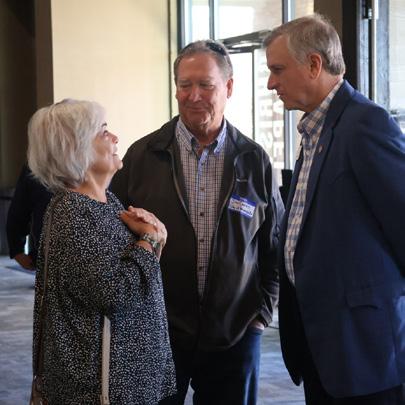
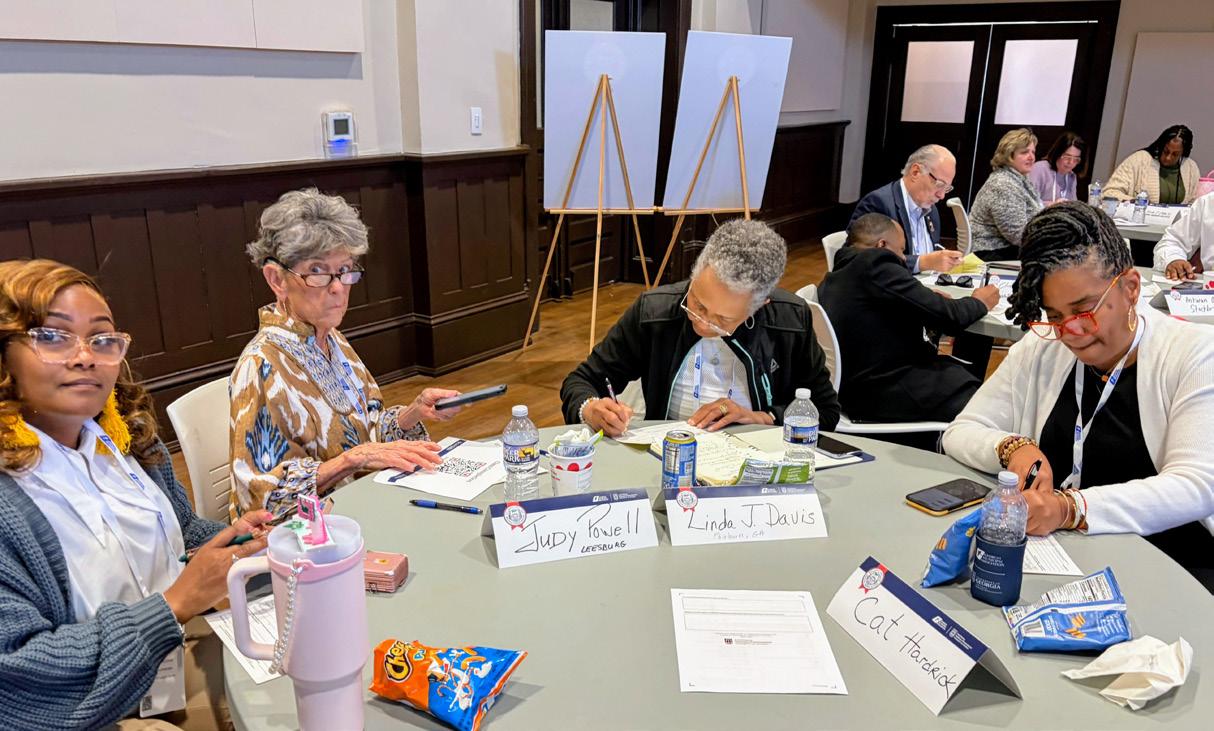
Leesburg (population 3,480) Councilmember Judy Powell credits the training institute classes with keeping her abreast of best practices.
“Training has helped me keep up with the times,” she said. “You can’t grow, unless you know the latest information.”
John Ramay, mayor of Hazlehurst (population 4,088) said Holtz training is invaluable.
“I bring back information and share it with my fellow city officials so we can put it into practice. The knowledge alone is useless if it is not applied,” he said.
Even veteran city officials see the benefit.
Culloden (population 200) Councilmember Margie Bryant, first elected more than 20 years ago, started attending training regularly last year. “Training saves time because when we go back to our cities, we know what to do,” she said.
Powell said that the networking opportunities are as important as the curriculum. “You meet so many people and often discover that others share the same concerns or challenges. You learn how they solved those issues,” she said. “Why reinvent the wheel if the solutions already exist?”
To learn more about upcoming training opportunities, visit the Harold F. Holtz Municipal Training Institute page on GMA’s website.
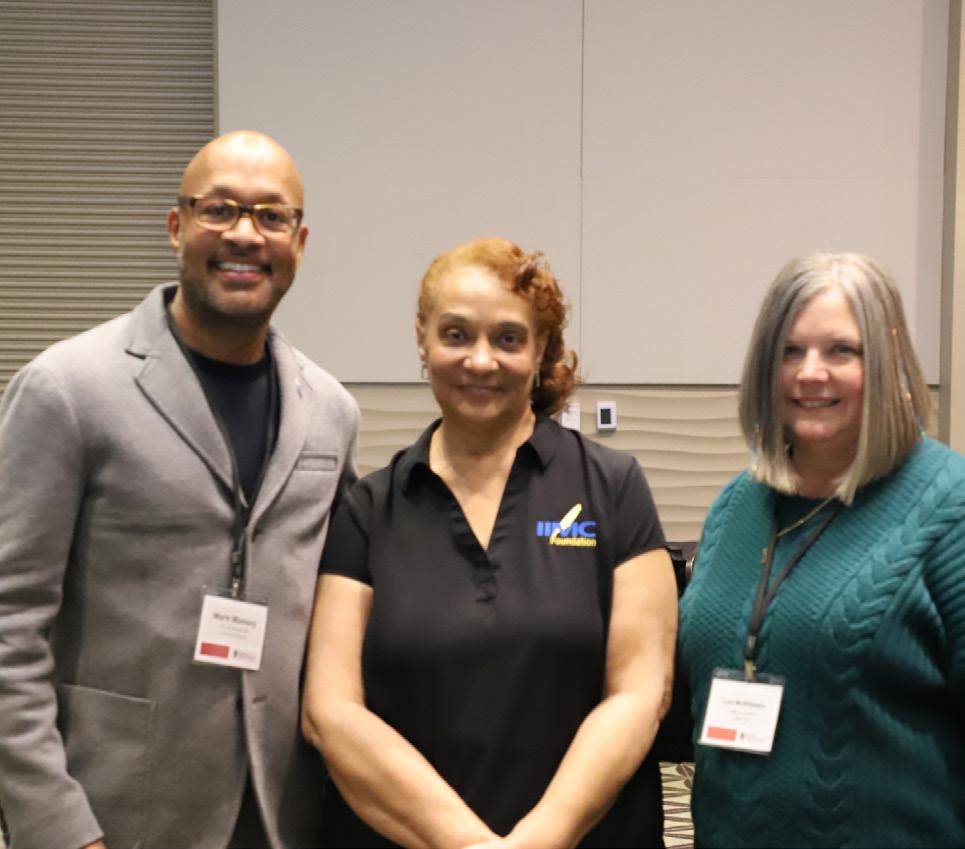
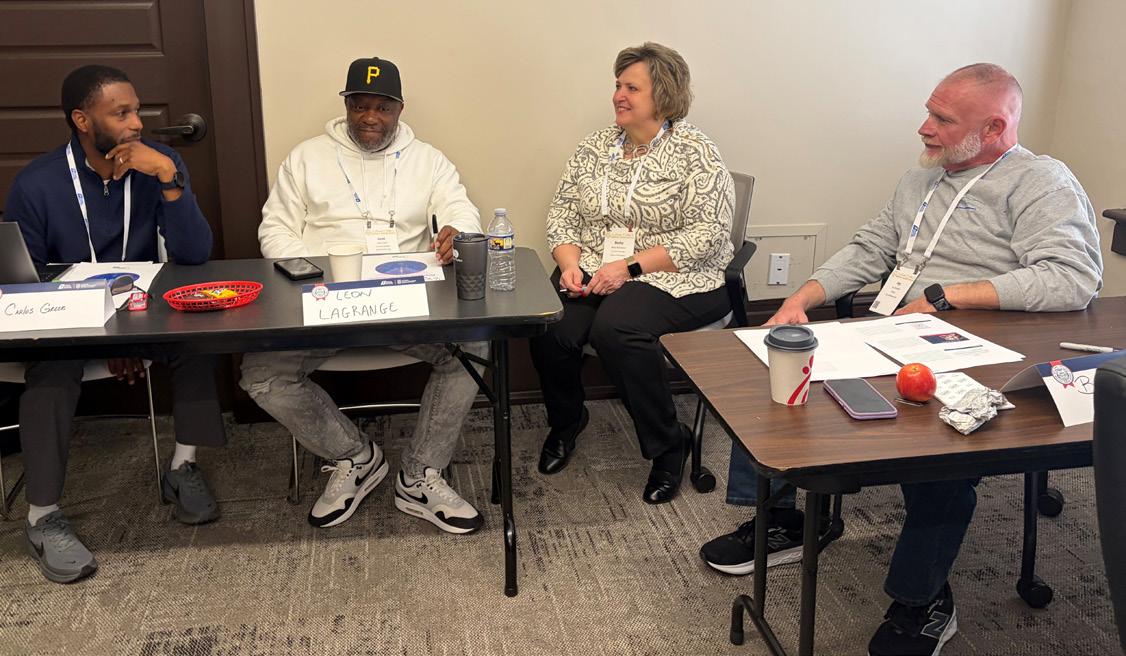
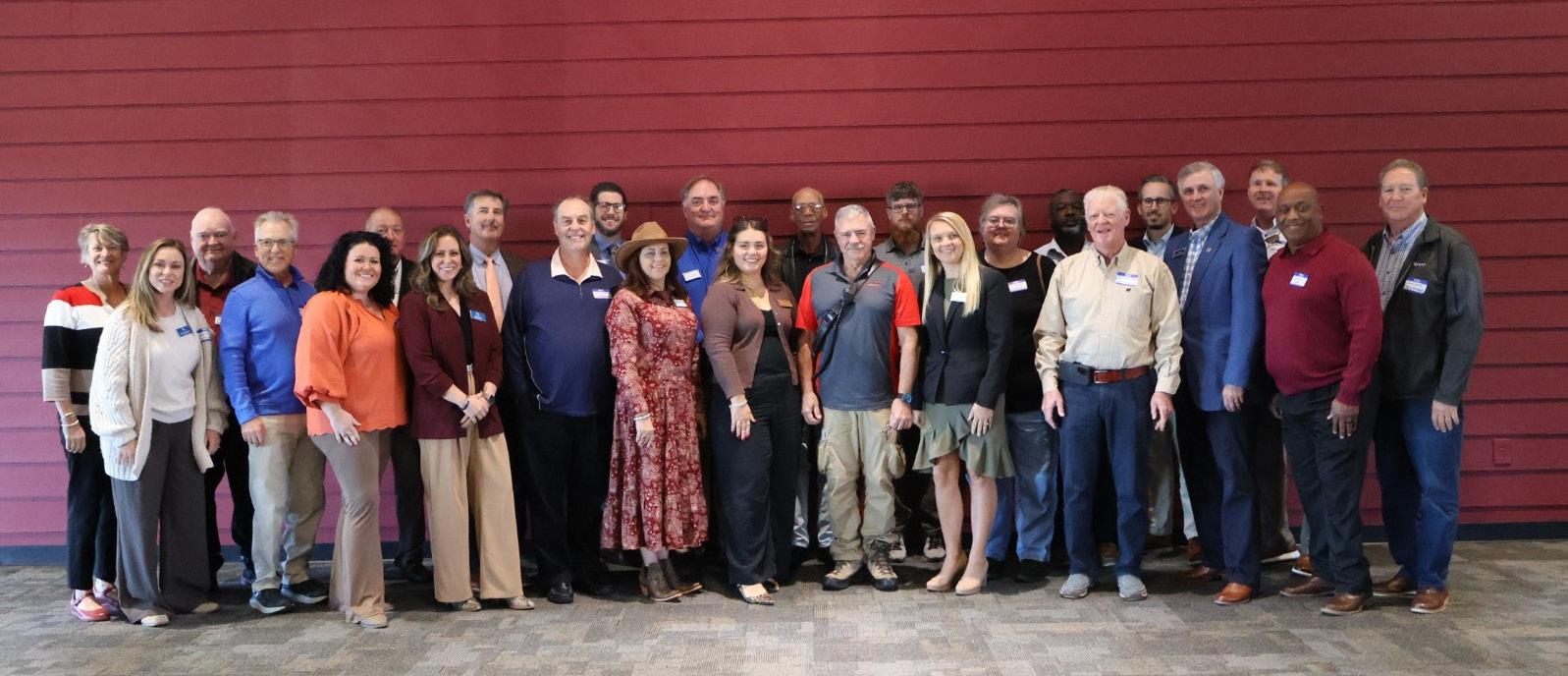
Photo caption: Judy Powell (second from left), a councilmember from Leesburg, says training helps her stay current. Hiawassee Mayor Jay Chastain (far right) says training helps him feel connected.
Get to Know Your RMEBS Field Representatives: Risk Control and Retirement Planning
Supporting safer workplaces and stronger futures for Georgia’s cities
Georgia’s cities rely on trusted partners to help protect their employees today while also preparing them for tomorrow. Through the Risk Management Employee Benefit Services (RMEBS), field representatives work directly with local governments to provide hands-on support in two critical areas: loss prevention and retirement planning.
While their focus areas may differ, their goal is the same—helping cities operate more effectively, reduce risk and support the long-term well-being of their workforce.
From identifying workplace safety concerns to guiding employees through retirement benefits and planning, RMEBS field representatives serve as accessible, knowledgeable resources for city officials and staff across the state.
In this issue, we’re introducing a group of loss prevention and retirement field representatives who work alongside cities every day. Learn more about who they are, what they do, and how they help cities build safer workplaces and stronger financial futures.
Meet the RMEBS Field Representatives Risk Control and Retirement Planning
Griffin Attaberry, Public Safety Risk Consultant
Service Area: Southern Territory
What did you do before you became a public safety risk consultant with RMEBS? Before joining RMEBS, I spent six years at the Georgia Public Safety Training Center, where I supervised training for the vehicle operations section of the Georgia Police Academy Division. Prior to that, I dedicated 15 years to the Oconee County Sherriff’s Office.
How does your background help you serve cities in the territory you serve? Drawing from my extensive experience in supervision management, training and policy creation and review, I am well-equipped to offer practical insights and real-world solutions to meet the unique needs of our members.
What is one common risk issue you see cities facing today? A prevalent risk issue pertains to motor vehicle operations, particularly within public safety departments. Public safety personnel are on the road around the clock, navigating all weather and traffic conditions. These officers must respond to emergency calls, resulting in a higher exposure to risks compared to other city departments.
What’s one proactive step cities can take to improve risk control? One proactive measure that cities can
implement to enhance risk control is maintaining consistent accountability. This involves regularly monitoring and assessing the effectiveness of loss prevention strategies, ensuring that all departments and individuals are held responsible for their roles in mitigating risks. By establishing clear guidelines and expectations, cities can create a culture of accountability where everyone understands their responsibilities and the importance of adhering to established procedures. Additionally, periodic reviews and evaluations can help identify areas for improvement and ensure that any lapses in accountability are promptly addressed. This ongoing commitment to accountability not only helps in preventing losses but also fosters a sense of trust and reliability within the community.
What do you enjoy most about working with Georgia’s cities? One of the aspects I enjoy most about working with Georgia’s cities is the opportunity to collaborate with a diverse range of communities. Each city has its unique challenges and characteristics, which makes every interaction both interesting and rewarding. I enjoy helping these communities implement effective public safety measures to create a positive impact on their citizens’ lives. Additionally, I appreciate the strong sense of community and partnership that exists within Georgia’s cities, which fosters a collaborative and supportive environment.
Contact Griffin at gattaberry@gacities.com
David Trotter, Law Enforcement Risk Consultant
Service Area: Northern Territory
What did you do before you became a law enforcement risk consultant with RMEBS?
I was a police officer with the city of Royston, Ga., and city of Toccoa, Ga. I served as a patrol officer and eventually a patrol sergeant. I was also a detective in the investigation division with Toccoa police.
How does your background help you serve cities in the territory you serve? Training and experience. I have over 2,000 hours of training in law enforcement and have experienced many of the challenges facing law enforcement today. I am a Georgia P.O.S.T general, senior, firearms, EVOC, and defensive tactics instructor, and have been teaching law enforcement courses since 1993.
What is one question you’re most often asked about loss prevention? There is not specifically one question; however, all desire to improve safety and protect their officers.
What do you enjoy most about working with Georgia’s cities? I enjoy meeting with and working with law enforcement and cities throughout the state.
Contact David at dtrotter@gacities.com
Vincent Scott, Risk Control Consultant
Service Area: Eastern Territory
What did you do before you became a risk control consultant with RMEBS? Before joining GMA RMEBS in 2018, I worked in local and state government risk management
and environmental safety roles, including serving as a Risk Manager for Henry County Government and holding positions with the City of Savannah, Georgia DNR, Augusta State University, and Augusta-Richmond County Government.
How does your background help you serve cities in the territory you serve? My background provides firsthand knowledge of how cities operate on a day-to-day basis and the regulatory, operational, and budgetary challenges they face. Having worked within both local and state government environments, I understand the practical realities city officials encounter and can offer risk control guidance that is realistic, compliant, and tailored to municipal operations.
What are some common issues that you assist cities with? I commonly assist cities with accident and injury prevention, risk control strategies, and regulatory compliance. This includes evaluating operations, identifying hazards, supporting safety committees, and helping cities reduce claim frequency and severity through proactive risk management practices.
What would you recommend city officials keep in mind when working with risk control? City officials should view risk control as a collaborative resource rather than a compliance oversight. Open communication, leadership support, and a willingness to address identified risks are key to achieving meaningful safety improvements. Proactive engagement helps create safer workplaces and reduces long-term costs.
What do you enjoy the most about working with Georgia’s cities? What I enjoy most is the opportunity to support the people who serve their communities every day. Working with Georgia’s cities allows me to help improve employee safety, strengthen operations, and contribute to the long-term success and resilience of local governments across the state.
Contact Vincent at vscott@gacities.com
Weston Cox, Risk Control Consultant
Service Area: Southern Territory
What did you do before you became a risk control consultant with RMEBS? Prior to becoming a risk control consultant nearly five years ago, I worked as a property claims adjuster, where I assisted individuals during some of the most stressful times of their lives. I also previously served South Georgia as an insurance agent and worked as a client services associate at a local investment firm. Collectively, these experiences strengthened my ability to communicate effectively with insureds and professionals, educate individuals on coverage, prepare accurate property estimates, and deliver a high level of customer service.
How does your background help you serve cities in the territory you serve? My background has equipped me with the ability to effectively review and analyze claims data to develop tailored solutions for each member. In my previous role as an adjuster, I typically became involved after a loss had already occurred, serving in a largely reactive capacity by helping insureds recover after their most valued assets were damaged or destroyed. Today, I have the opportunity to work more proactively by conducting in-depth reviews of losses with members and educating them on strategies to improve safety. I assist members in establishing, growing, and sustaining effective safety programs. While I greatly value the experience and skills I gained in my prior roles, I find working with local municipalities especially meaningful. I grew up in South Georgia, and it remains my home. Being able to partner with member cities to help reduce accidents and fatalities, while fostering safer and healthier work environments for employees, is deeply fulfilling. I am grateful for the opportunity to make a positive and lasting impact on our member cities across the state.
What are some common issues that you assist cities with? Some members may not be fully aware of recurring claims issues within their cities, while others may recognize these challenges but be unsure where or how to begin addressing them. That is where I can provide support. Through the claims review process, we identify loss trends by examining recurring types of claims, the departments in which they occur, and, when applicable, patterns involving specific employees.
Once these trends are identified, we can pinpoint underlying issues and develop a targeted safety action plan to address them. This may include conducting additional in-house safety meetings, focusing on specific safety topics, providing department-specific training, or reviewing and updating policies and ensuring they are reinforced by leadership. Our role is to help members establish a safety program tailored to their unique needs—one that they can maintain internally over time. We then follow up periodically to assess progress, evaluate the effectiveness of the safety action plan, and adjust as needed.
What do you enjoy the most about working with Georgia’s cities? One of the most rewarding aspects of working with cities across Georgia is building strong relationships with contacts in each of my member cities. I value the opportunity to get to know these professionals on a personal level while providing meaningful insight into how to create safer work environments for their employees. This collaborative approach is both professionally and personally fulfilling.
Contact Weston at wcox@gacities.com
Josh Colley, Manager, Field Services
What did you do before you became a field services manager with RMEBS? I have been with GMA for the past 7 years in various roles supporting the retirement department. I started off as a retirement analyst, before
working as a senior analyst and retirement field services representative.
How does your background help you serve the cities and territories you serve? One interesting aspect of our retirement program is that no city will have the same retirement plan. We have a variety of retirement plans across the state. My background in administration allows me to understand different aspects of retirement plans and work with cities to develop and administer a plan that is right for them.
What are some common issues that you assist cities with? I offer help with employee education, so that employees are aware of the benefits that the cities are providing for their employees. I can also assist with administrative training, so that our cities know how to administer their plans effectively. I can also work with city officials and administrations for making amendments to their existing retirement plans or create retirement plans for cities that are looking to join our programs.
What do you enjoy the most about working with Georgia’s cities? I have always enjoyed the genuine appreciation received from city staff and employees when I am able to assist with retirement benefits. From what I have learned, retirement is an exciting time, but it can also be a scary time for some since it is a major life change. Being able to assist employees with their understanding of their retirement plan and options can offer clarity in a time of change.
Contact Josh at jcolley@gacities.com
Randy Briskin, Retirement Field Services Representative
What did you do before you became a field services manager with RMEBS? Before working with GMA, I was the retirement
representative for a national company that specialized in governmental retirement accounts, and I worked with large cities and counties throughout Georgia.
How does your background help you serve the cities and territories you serve? My 34 years in the financial industry has given me the experience to see the benefits of long-term investing and the ability to provide a reassuring perspective for newer employees, especially during stressful gyrations in the equity markets.
What are some common issues that you assist cities with? Along with assisting in plan administration, my focus is to help cities increase the number of their employees who are taking advantage of the defined contribution plans offered (401a and 457b). Additionally, I meet directly with employees to assess how they are progressing towards their savings and retirement goals.
What do you enjoy the most about working with Georgia’s cities? The most enjoyable part for me is explaining financial concepts in easy-to-understand examples and seeing the expressions of understanding on the faces of city employees.
Contact Randy at rbriskin@gacities.com
A Trusted Resource for Cities
Whether focused on preventing workplace injuries or helping employees plan for retirement, RMEBS Field Representatives are committed to supporting Georgia’s cities through proactive guidance, education, and partnership.
To learn more about RMEBS services, visit https://www.gacities.com/ retirement-and-insurance.
GeorgiaForward Announces New Young Gamechangers Cohort to Drive Community Innovation in Hinesville-Liberty County
GeorgiaForward has announced the newest class of participants for its nationally recognized Young Gamechangers program, continuing a tradition of cultivating Georgia’s next generation of civic and community leaders.
FOR THE UPCOMING PROGRAM YEAR, PARTICIPANTS WILL FOCUS their efforts on Hinesville-Liberty County, where they will spend several months studying local opportunities and challenges and developing practical, forward-thinking solutions designed to support long-term community growth.
Hinesville Mayor Karl Riles expressed excitement about the opportunity to host the program and collaborate with emerging leaders from across the state.
“Hosting the Young Gamechangers cohort is an exciting opportunity for Hinesville. The collaboration between community leaders, residents and these talented young professionals will help us evaluate challenges, identify solutions and strengthen our vision for the future.”
Local community partners also play a key role in shaping the program’s success by working closely with participants and sharing insights into the community’s goals and priorities. "The Young Gamechangers program allows us to think creatively about our future while connecting with professionals who bring new energy and statewide perspective. We anticipate this cohort will help spark ideas and partnerships and deliver actionable solutions that support our workforce, economy and overall quality of life in ways that benefit us all," said Brynn Bryant. chief executive officer of the Liberty County Development Authority.
GeorgiaForward’s Young Gamechangers program is widely recognized as a signature leadership initiative. The immersive experience blends leadership development with hands-on community and economic development work. Participants gain valuable skills in
collaboration, strategic planning and civic engagement while working directly with local stakeholders.
Sadie Krawczyk, managing director of GeorgiaForward, highlighted the program’s continued impact on both participants and host communities across the state.
“Young Gamechangers is about developing leaders who are committed to making a meaningful impact in Georgia’s communities. By bringing together multiple perspectives and encouraging collaboration, we help participants build skills that benefit both their professional growth and the communities we serve.”
Throughout the program, host communities present participants with pressing challenges that impact economic development, quality of life and long-term sustainability. Participants work collaboratively to develop comprehensive recommendations, often referred to as “big ideas,” that include potential funding strategies, implementation timelines and partnership opportunities.
The program is intentionally structured to reflect Georgia’s geographic and professional diversity. Each cohort typically includes one-third of participants from the host community, one-third from metro Atlanta, and one-third from other regions of the state, ensuring a wide range of perspectives on community development strategies.
Since its inception, Young Gamechangers has supported numerous communities across Georgia by providing actionable strategies and fresh perspectives on complex local challenges. Many host communities have successfully implemented recommendations developed through the program, demonstrating its lasting impact on economic development and civic leadership.
As the newest cohort prepares to begin its journey, GeorgiaForward leaders and community partners are optimistic about the ideas, innovation, and collaborative energy participants will bring to the Hinesville-Liberty County area and communities throughout Georgia.
For more information about GeorgiaForward’s Young Gamechangers Program, visit https://georgiaforward.org/young-gamechangers/.
MEET THE 2026 YOUNG GAMECHANGERS COHORT THIS YEAR’S COHORT INCLUDES THE FOLLOWING EMERGING LEADERS FROM ACROSS GEORGIA:
JERREL BAKER: ATLANTA
JARED BROWN: FAIRBURN
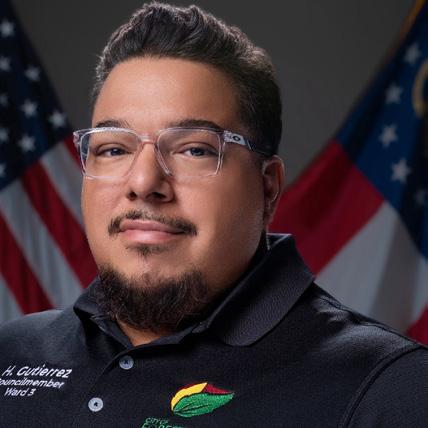
HECTOR GUTIERREZ: FOREST PARK
SARAH BALANCE: HINESVILLE
QUEENIE BROWN: COLLEGE PARK
JARED GUYER: ATLANTA
BOGLE: MADISON
CURTIS COATES: PERRY
KIMBERLY HARDIN: HINESVILLE
NEWNAN
ALFRED DIXON: JONESBORO
HARRIS: HINESVILLE
MIKIA FRAZIER: RICEBORO
HENDRICKS: HINESVILLE
MOLLIE
JESSE BRANCH:
TYLER BREWTON: HINESVILLE
RenQuista BROOKS: COLUMBUS
TIFFANY HILL: DALLAS
SAMANTHA GRANT: HINESVILLE
SHAUNTAY
CARISSA
REBEKAH HOLLAR: MACON KENDRA IVY: HINESVILLE
JONES: CARTERSVILLE
LAWRENCE: ATLANTA
JONES: ATLANTA
DONOVAN McKELVEY: KENNESAW
OGE: HINESVILLE AIRELLE PETERS: FAIRBURN
SMITH: POWDER SPRINGS
JACKSON: ALBANY
MONIQUE JONES: ATLANTA
AMANDA McMANUS: ATLANTA
CAMERON RILES: HINESVILLE
MOSES TANYI: EVANS
BRUCE JAMES II: ATLANTA
RILEY: HINESVILLE
JEFFERSON: KATHLEEN
JOANNA
DANIELLE
JESSICA
CANDICE MILLSAP-EATON: COLUMBUS
XANDRIA SHIELDS: UNION CITY
HENRY
XAVIER WALKER: UNION CITY
DANA WATSON-GREEN: ALBANY
ELLIOTT WILSON: RICHMOND HILL
MERCY MONTGOMERY: SNELLVILLE
ARIN JOHNSON: RICHMOND HILL
CHAD NASH: ATLANTA
MARKIE
DESIREE
KENDRA ROLLE: BRUNSWICK
DELANEY LANN: HINESVILLE
ANIJAH
SHIRKA JORDAN: VALDOSTA
ATIYAH KENNEDY: ATLANTA
Building the Future: Housing, Disaster Recovery and Rural Partnerships
MOLLY MCLOUGHLIN, FEDERAL RELATIONS MANAGER
The past few months have marked a turning point for housing policy and disaster recovery across the country—especially for Georgia cities.
CONGRESS RECENTLY PASSED THE HOUSING FOR the 21st Century Act, a sweeping bipartisan bill designed to modernize housing programs and expand affordable options nationwide. At the same time, Georgia communities hit hard by Hurricane Helene are finally seeing progress in recouping FEMA reimbursements, critical funds that help restore infrastructure and stabilize local budgets. These developments underscore a broader truth: Rural cities and small communities thrive when federal, state and local partners work together.
Landmark Housing Reforms—and What Comes Next
The Housing for the 21st Century Act passed the House with overwhelming support, signaling broad agreement on the need to address housing shortages and affordability challenges. This act recognizes the critical role of local governments in addressing the nation’s housing needs by updating and improving programs like Community Development Block Grants (CDBG) and Home Investment Partnerships (HOME), removing regulatory roadblocks and increasing local flexibility.
The bill also includes provisions to modernize local development and rural housing programs, expand manufactured and affordable housing, protect
borrowers and those utilizing federal housing programs and enhance oversight of housing providers.
The Senate’s version, the ROAD to Housing Act, takes a similar approach, but emphasizes new grant programs and broader spending authority. Negotiations between the two chambers are underway, with lawmakers aiming to reconcile differences and deliver a unified package to the White House before summer. These talks will be pivotal, as the final bill must balance regulatory relief, fiscal responsibility, and the urgent need for housing supply.
Disaster Recovery: Progress After Hurricane Helene
While housing policy grabs headlines, disaster recovery remains a pressing concern for communities still reeling from Hurricane Helene, especially in rural cities in South Georgia. After months of delays, FEMA reimbursements are finally flowing after nearly a year of direct advocacy from GMA. From Pembroke and Dasher to Sparta and Grovetown, GMA has assisted cities in receiving millions of dollars in recovery reimbursements. These funds are more than numbers on a ledger—they represent repaired roads, reopened schools and restored livelihoods. They also highlight the importance of persistency and partnership. Alongside GMA, city leaders have worked tirelessly with congressional
offices and federal agencies to cut through red tape and secure the resources their residents desperately needed. GMA has also advocated for future reforms with the bipartisan Fixing Emergency Management for Americans (FEMA) Act, which makes disaster recovery more efficient for cities.
Why Rural Partnerships Matter
Housing reform and disaster recovery share a common thread: Thriving cities depend on collaboration. Rural communities, in particular, face unique challenges such as limited staff capacity, complex grant requirements and fewer financial resources. That’s why GMA’s federal advocacy and partnership is so critical. Working effectively with the National League of Cities federal policy experts, congressional offices and federal agencies, GMA helps cities stay informed of regulatory changes, policy initiatives and funding opportunities to ensure cities have
the tools to prepare their communities for the future. Cities play a vital role as connectors, translating federal programs into local action. When Congress, the White House, and agencies coordinate effectively, rural communities gain access to broadband, resilient infrastructure, and affordable housing—all essential for long-term prosperity.
The Road Ahead
"Cities play a vital role as connectors, translating federal programs into local action."
The passage of the Housing for the 21st Century Act and the ROAD to Housing Act is a milestone, but it’s only the beginning. As House and Senate lawmakers negotiate with the White House and finalize disaster recovery efforts, one principle remains clear: We accomplish more together. From housing affordability to hurricane recovery, the future of Georgia’s rural and small communities depends on strong partnerships across every level of government.
Four Cities Complete Economic Placemaking Collaborative
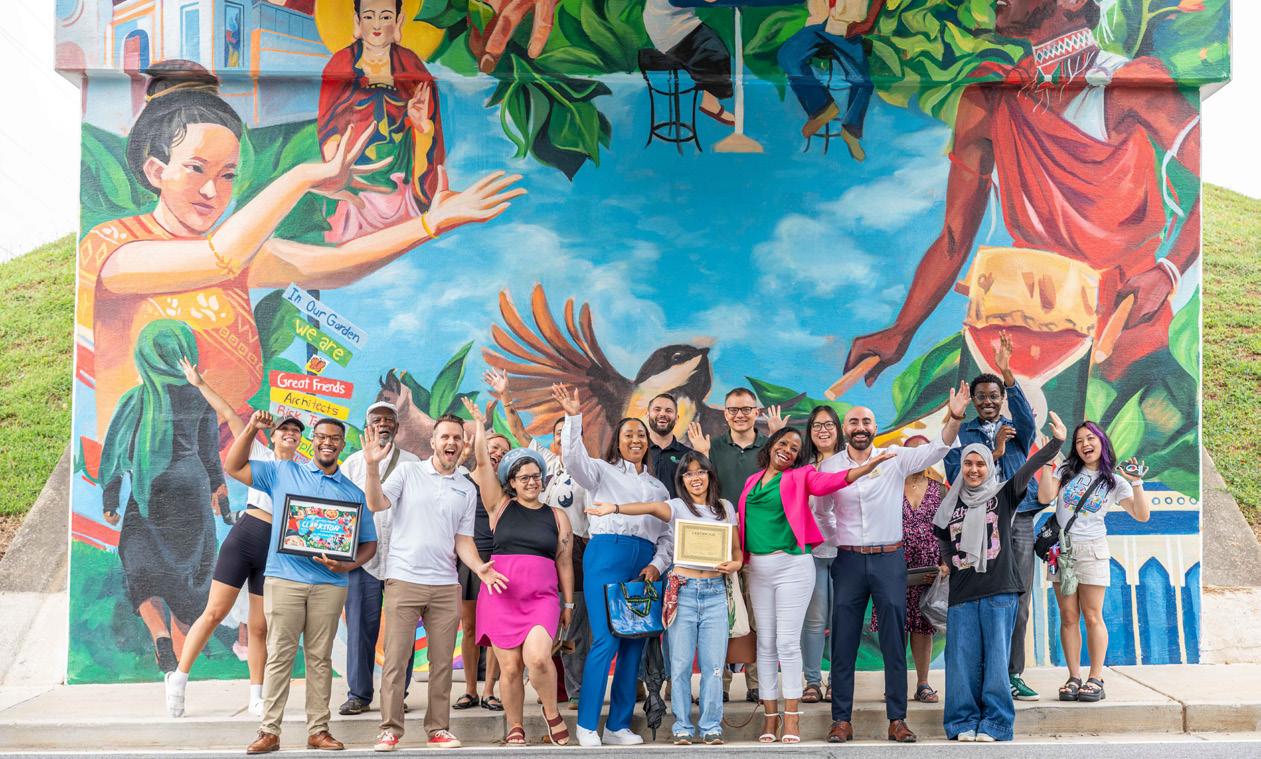
Clarkston, Perry, Union City and Warner Robins graduate from two-year downtown revitalization program
THE GEORGIA MUNICIPAL ASSOCIATION (GMA)
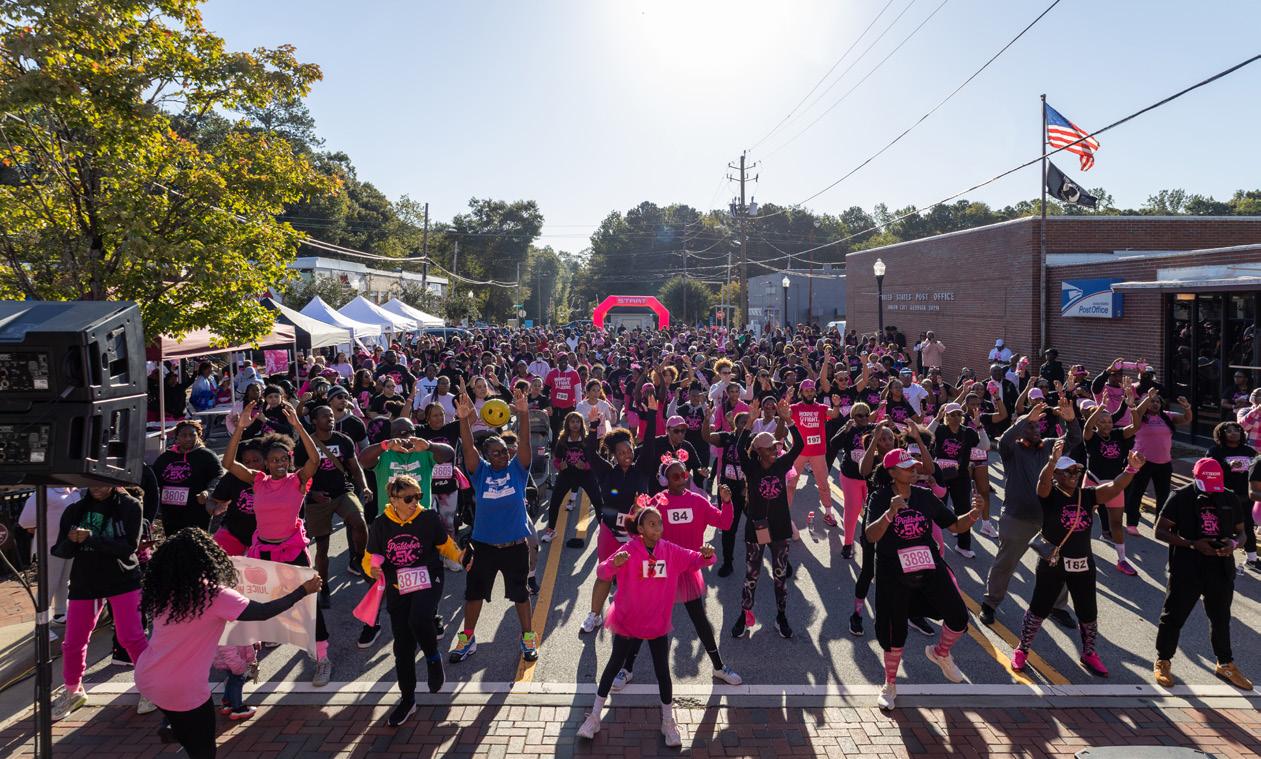
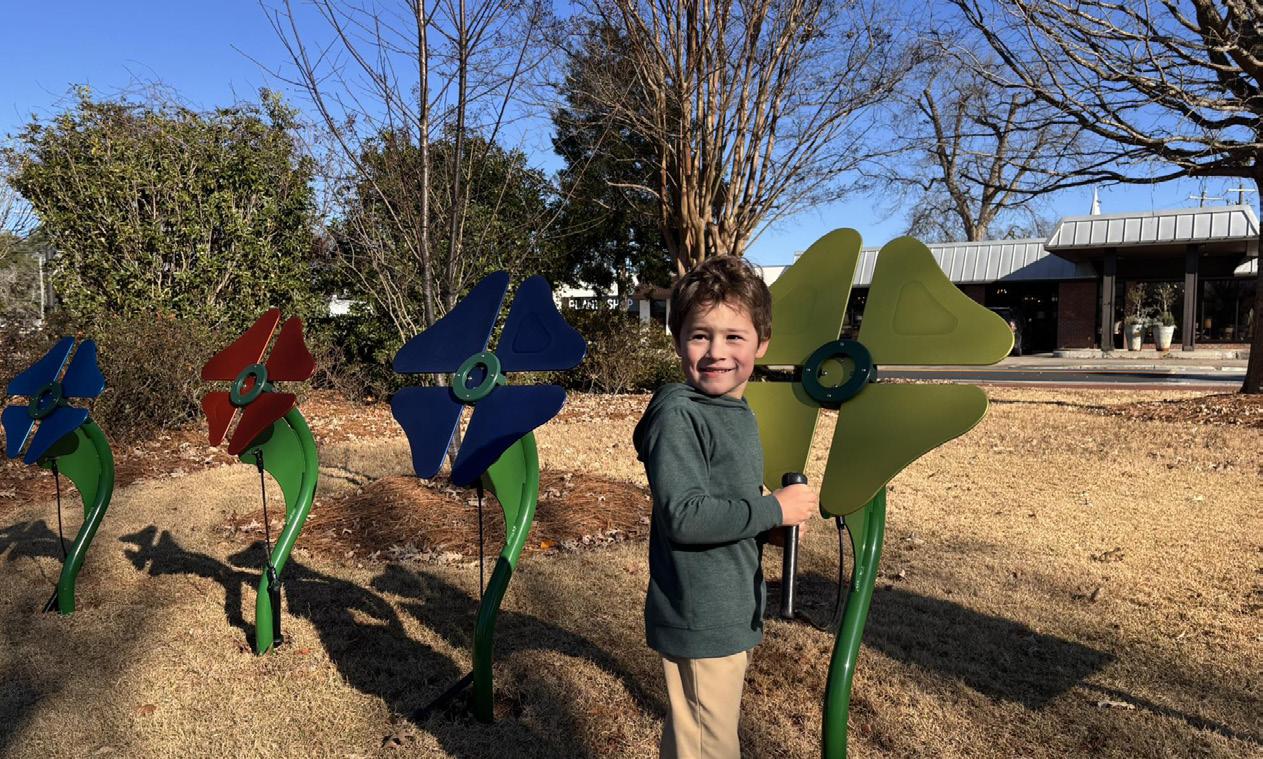
and the Georgia Cities Foundation have announced that the cities of Clarkston, Perry, Union City and Warner Robins have successfully completed the Georgia Economic Placemaking Collaborative (GEPC), a two-year initiative designed to help communities strengthen downtowns and neighborhood centers through community-driven economic development strategies.
The graduating cities will be formally recognized during the 2026 GMA Annual Convention in Savannah.
Strengthening Communities Through Placemaking
GEPC provides participating cities with tools, technical assistance and peer networking opportunities to help communities identify and activate their unique assets. The program supports cities as they build local placemaking teams and develop projects that enhance public spaces, promote economic vitality and foster community pride.
Since its launch in 2018, the GEPC has supported communities across Georgia by helping local leaders create long-term revitalization strategies rooted in local culture, business growth and public engagement.
“Each of these communities brought creativity, commitment and strong local leadership to the placemaking process,” said GEPC leader Tara Bradshaw. “Clarkston, Perry, Union City and Warner Robins have demonstrated how intentional placemaking can strengthen local economies, build community pride and create places where people
want to live, work and gather. We are excited to celebrate their accomplishments and see how their work continues to evolve.”
Collaborative Partnerships Drive Success
GEPC emphasizes collaboration among local stakeholders, business leaders, municipal officials and community organizations. Participating cities also gain access to the Placemaking Grant Program, which supports creative, communityled projects that activate public spaces and encourage economic activity.
The collaborative is supported through partnerships with Georgia Power, the Carl Vinson Institute of Government, the Georgia Department of Community Affairs, the Georgia Council for the Arts, the Georgia Tech Center for Economic Development Research, Electric Cities of Georgia, Georgia Conservancy and GeorgiaForward. These organizations provide technical expertise, resources and guidance to help communities successfully implement placemaking initiatives.
Looking Ahead
Cities interested in participating in the next GEPC cohort will be able to apply beginning in September 2026. Selected communities will join a growing network of Georgia cities working to enhance economic development through placebased strategies.
WARNER ROBINS
UNION CITY
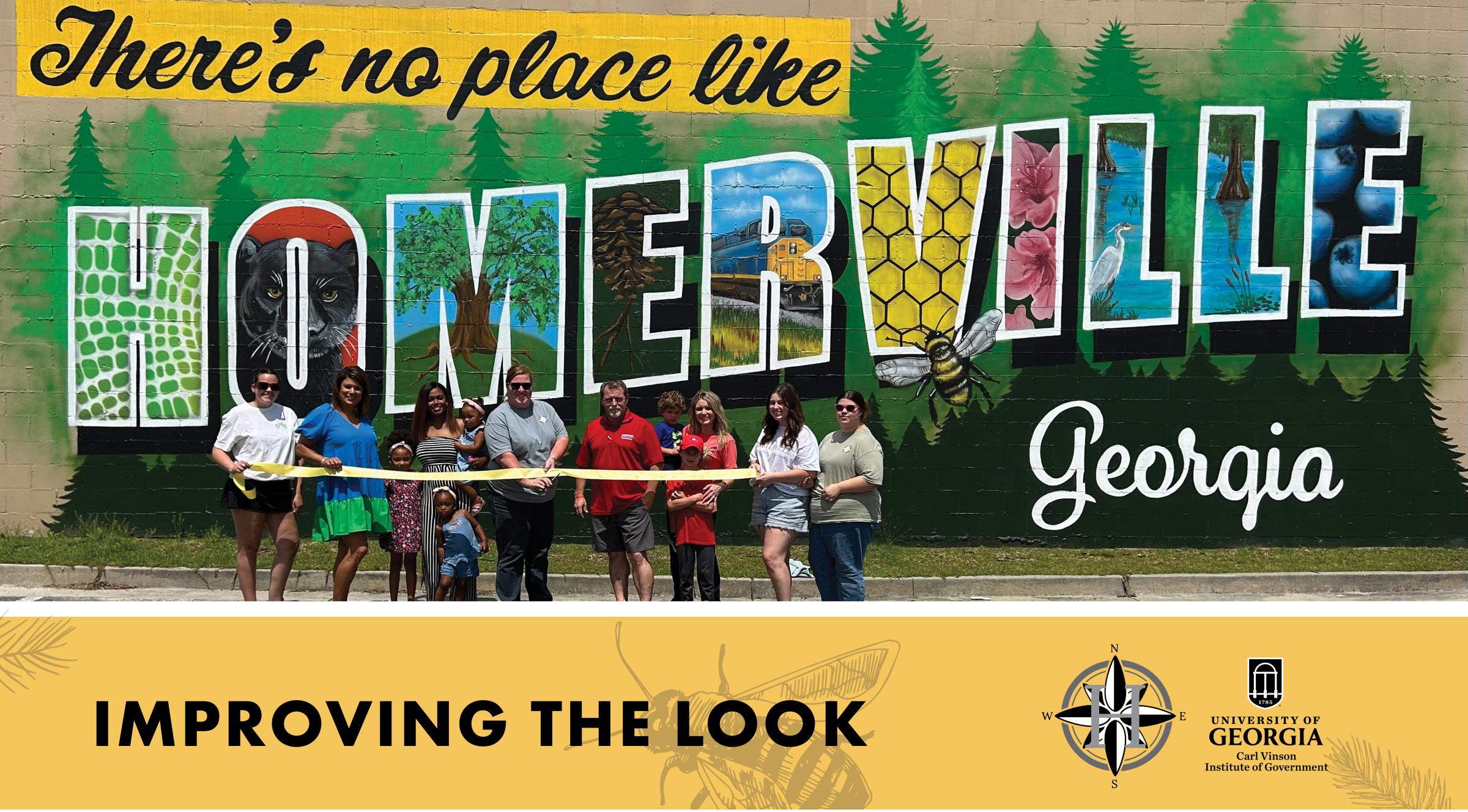
Rebuilding Homerville: A Community Vision Sparks Downtown Renewal
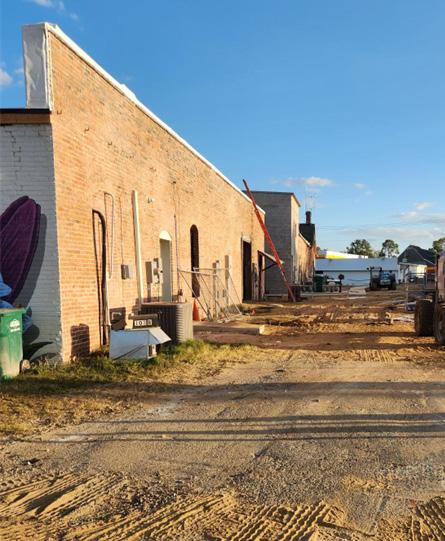
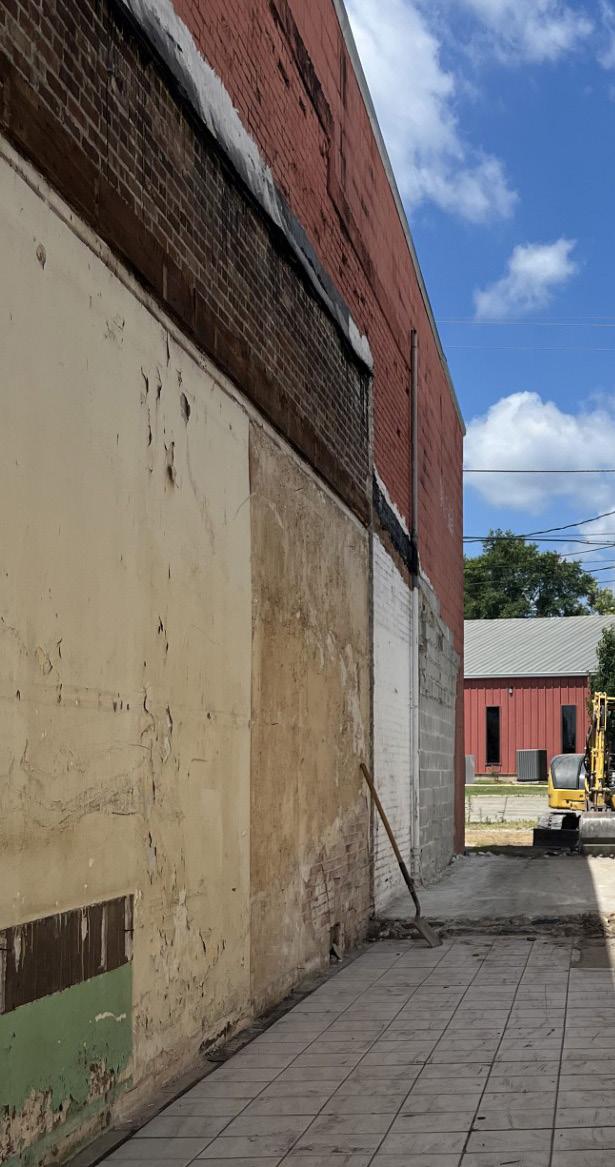
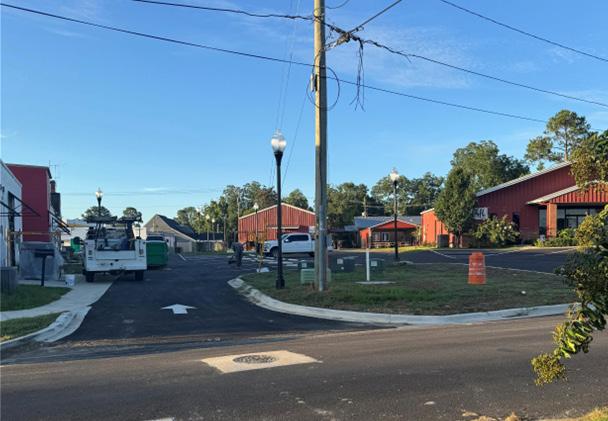
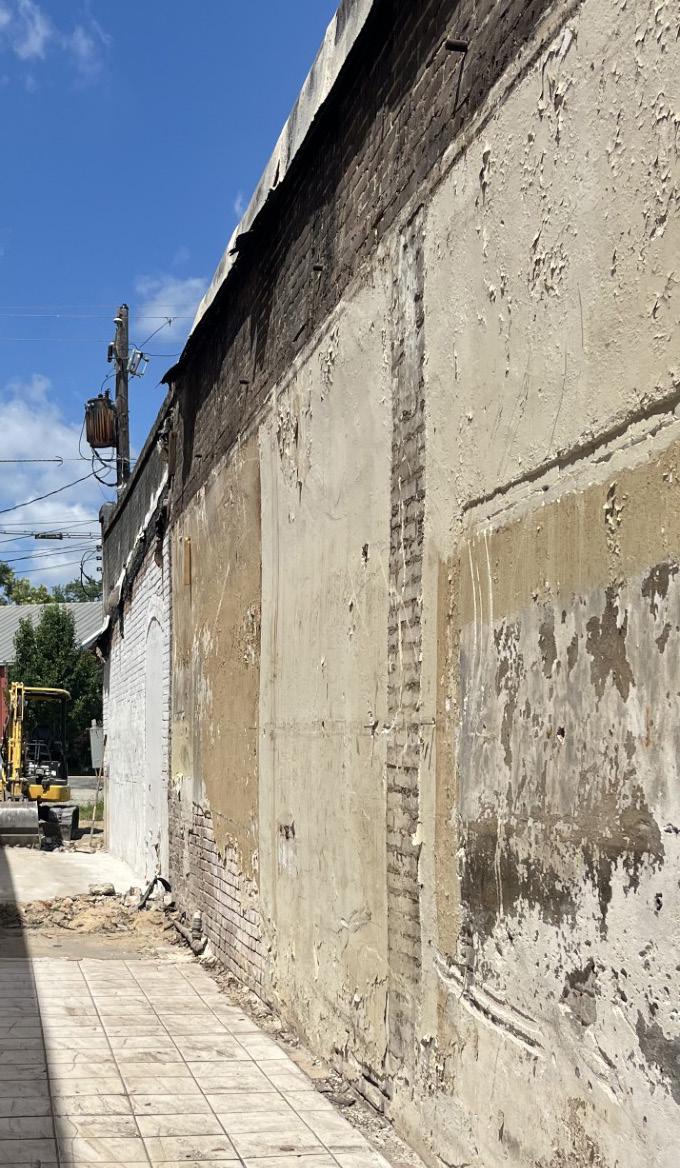
For two decades, downtown Homerville bore the quiet marks of loss.
WHEN U.S. HIGHWAY 441 WAS WIDENED MORE than twenty years ago, an entire block of historic buildings was removed, leaving gaps in the streetscape and the town’s economic and social life. As storefronts emptied and buildings fell vacant, many residents wondered how their small southeastern Georgia community could regain its footing.
A turning point came in 2021, when Homerville Main Street Manager and local resident Laura Nipper
sought a new approach to downtown revitalization. She and the Homerville Main Street/Downtown Development Authority Board partnered with the University of Georgia’s Carl Vinson Institute of Government (CVIOG) to help chart a strategic, community-led path forward for the town of nearly 2,400 residents situated near the Okefenokee Swamp.
Homerville was selected to participate in the Renaissance Strategic Visioning and Planning (RSVP)
LAURA NIPPER, MAIN STREET MANAGER, HOMERVILLE
process, a program developed through a partnership between CVIOG, the Georgia Municipal Association and the Georgia Cities Foundation. The initiative is designed to help communities develop realistic, locally-driven strategies that strengthen downtowns, encourage public participation, and support economic growth.
The Georgia Municipal Association helped initiate the effort with a $9,500 seed grant, enabling the city to begin the planning process. Since then, the impact has extended well beyond the plan itself. According to Nipper, downtown property values have increased by approximately $5 million since the project began.
Community input was central to the RSVP process. Through surveys, workshops and public meetings, residents identified clear priorities: enhancing the condition and appearance of downtown streets, buildings and public spaces, and creating more activities and events that encourage people—especially younger generations—to spend time downtown while honoring Homerville’s historic character.
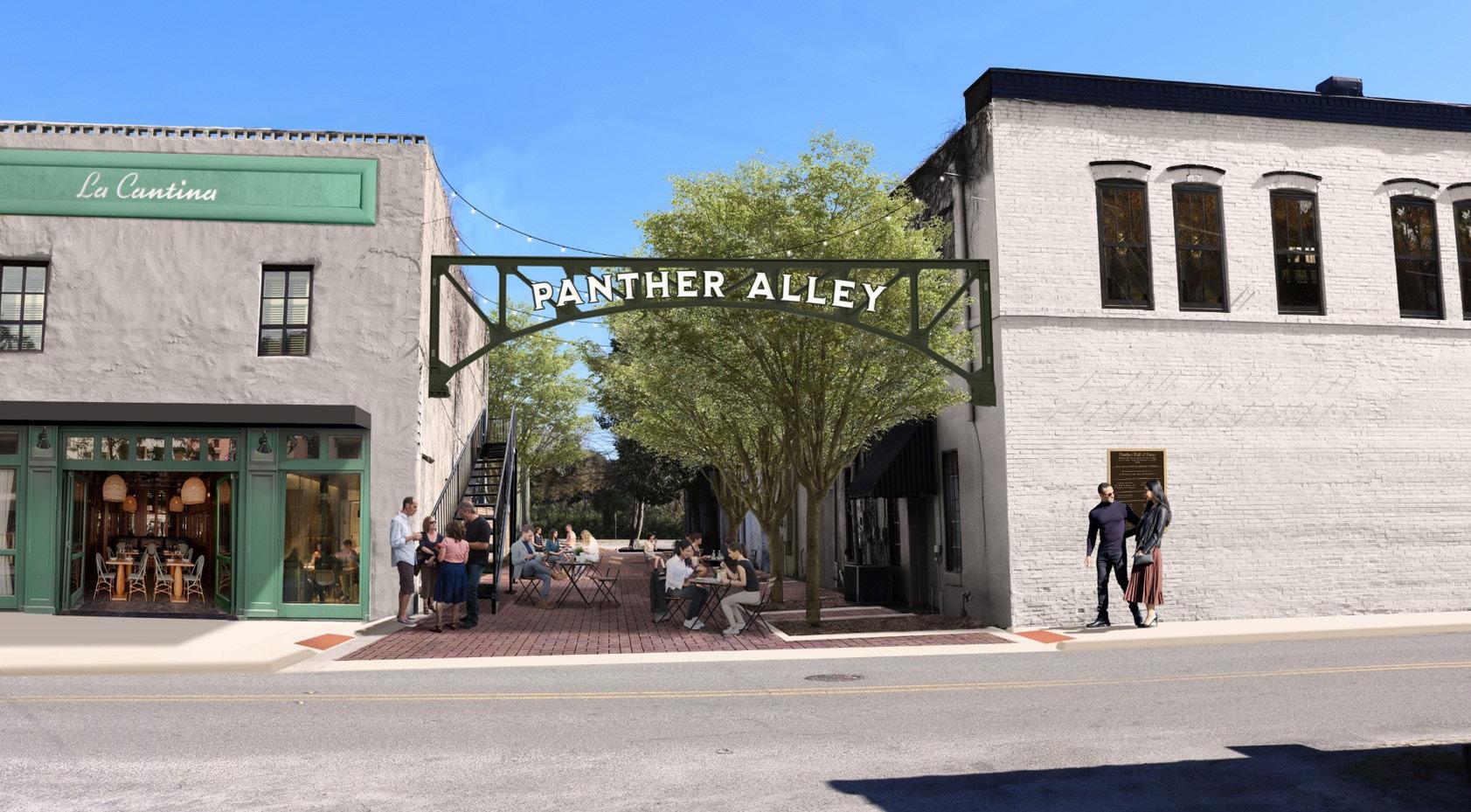
As plans moved into action, local investment followed. Contributions from a local foundation supported the completion of the master plan, while residents took an active role in early implementation. Retired educators and civic leaders launched projects ahead of schedule, including the purchase and redevelopment of an entire downtown block that had been completely vacant. That space, now under major renovation, will include Panther Alley—a community gathering area inspired by Clinch County High School athletics, along with a bed and breakfast, a thrift shop, photography studio and more.
Public art was also a key recommendation. Murals reflecting the Okefenokee Swamp and Homerville’s agricultural roots now add color and identity to downtown.
With new businesses on the horizon and continued reinvestment underway, Homerville’s story highlights how strong partnerships, targeted funding and committed local leadership can help small towns rebuild momentum and shape a sustainable future.
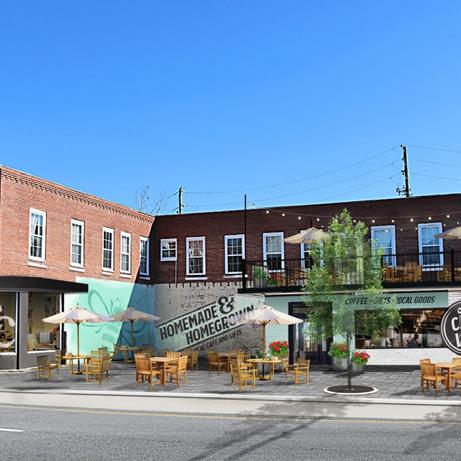
Over the past several years, the city of Leesburg has worked with purpose and persistence to bring a long-term vision of Downtown Leesburg to life.
THE RESULT HAS BEEN A PERIOD OF REMARKABLE growth, with new businesses opening, community events reaching record attendance, and infrastructure improvements laying the foundation for lasting success.
Leesburg’s historic downtown continues to evolve into a vibrant destination while preserving the smalltown charm that makes it special. Family-owned shops, restaurants, and health, wellness, and specialty
retail businesses have brought new energy and opportunity to the district.
The journey began years ago when city leaders set out to define where they wanted Leesburg to be over the next 30 years. They worked with Heather Sharpe and Cherie Bennett of the Georgia Department of Community Affairs (DCA) and Beka Shiver of the Southwest Georgia Regional Commission to secure Rural Zone Designation.
Leaders also sought guidance from Georgia Municipal Association’s Emily Davenport and Cindy Eidson. That same year, GMA’s Technical Assistance Team conducted a site visit and later identified opportunities such as expanding the downtown footprint, redeveloping alleyways, adding sidewalks and activating a Downtown Development Authority (DDA) Board.
Two years later, GMA returned with downtown development experts Amanda Glover of Bainbridge and Taylor Smith of Thomaston to facilitate a strategic planning session with Leesburg’s DDA. Together, leaders identified what makes Leesburg unique, what is already working well, and priorities for future improvement.
Downtown’s progress has been a collaborative effort involving the city of Leesburg, Lee County Board of Commissioners, Congressman Sanford Bishop, the Lee County Chamber of Commerce, the Southwest Georgia Regional Commission, DCA, Norfolk Southern Railroad, the Georgia Department of Transportation, DDA and downtown stakeholders.
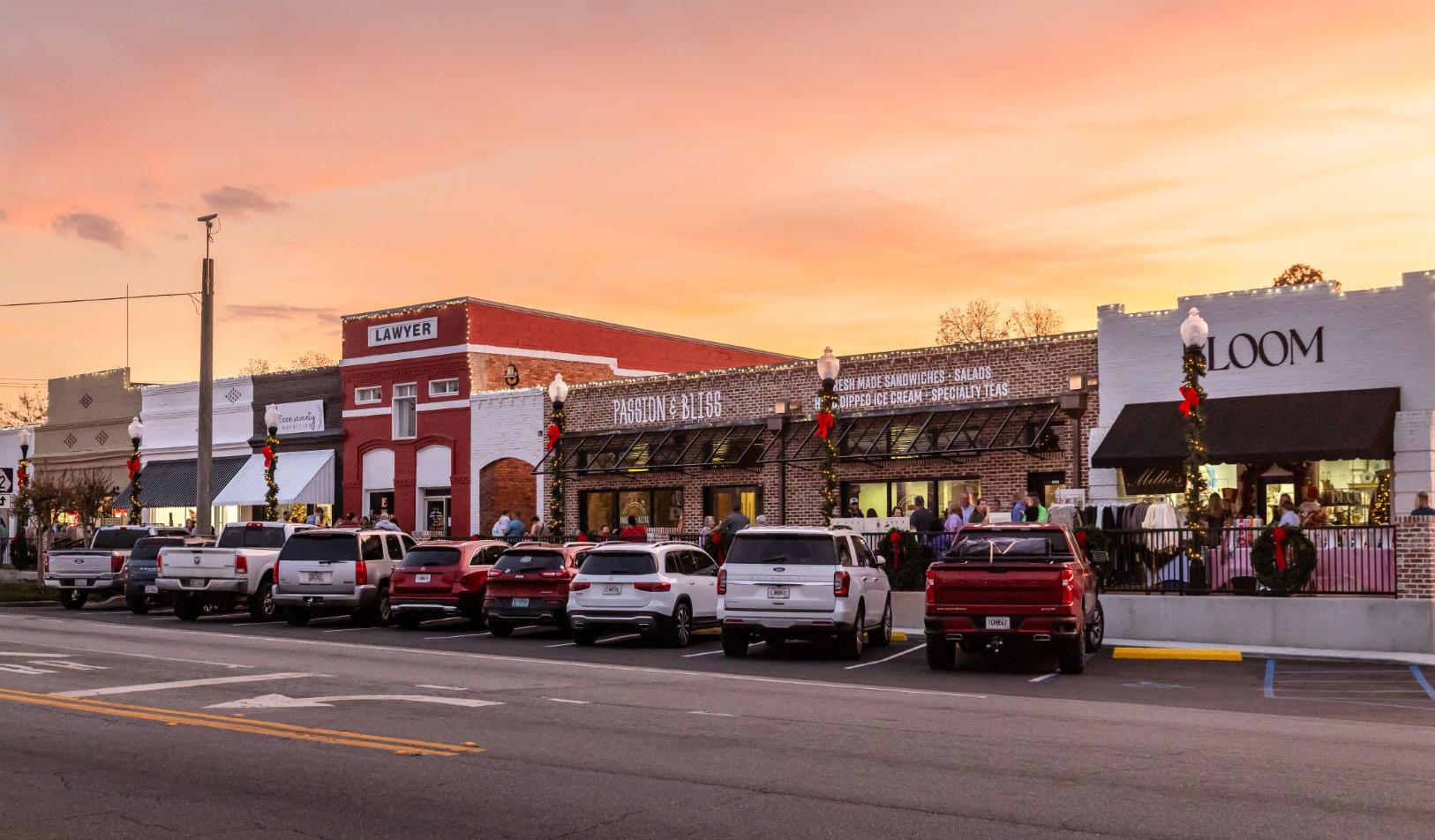
The city has also partnered with property owners to remodel buildings and open new storefronts. Sheri Smith, owner of Passion & Bliss said, “I love being a part of Downtown Leesburg’s revitalization because it is such a special place. The family and community atmosphere and knowing that we are helping grow this downtown and build it back up is incredible.”
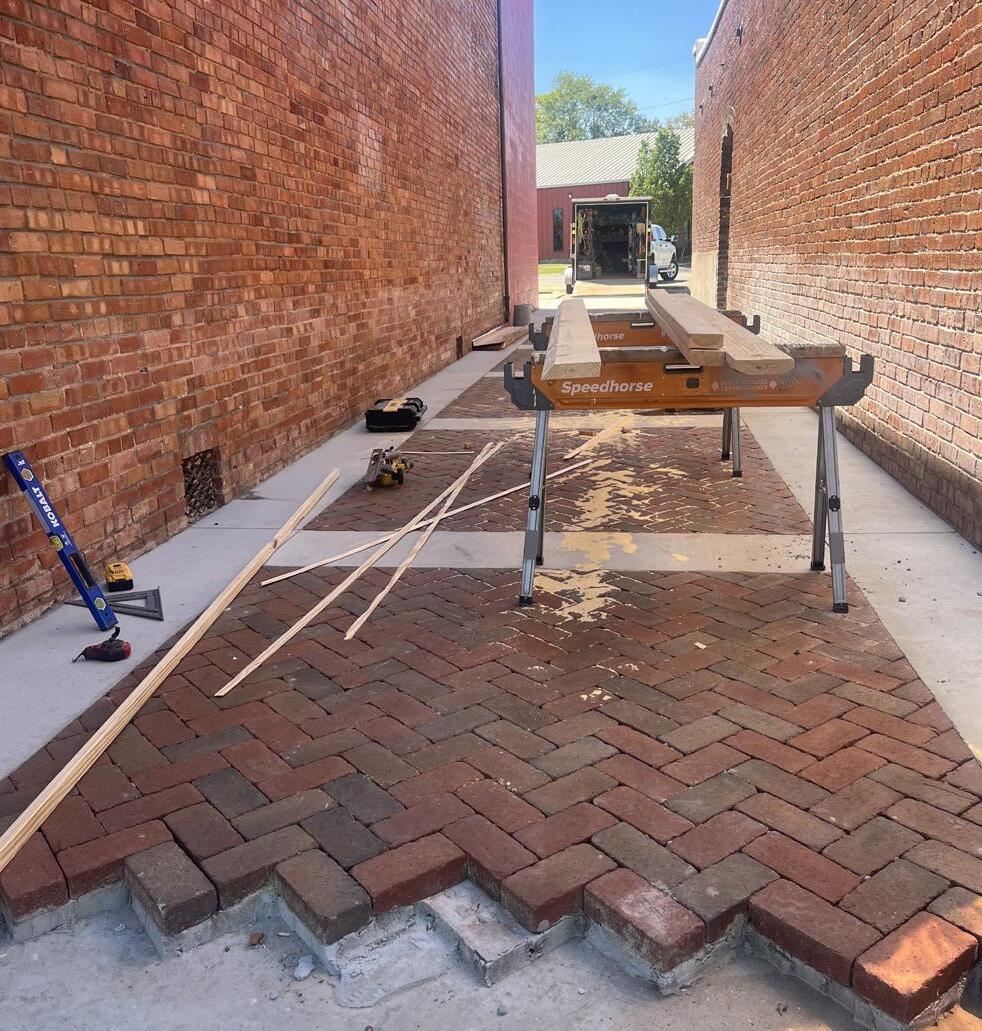
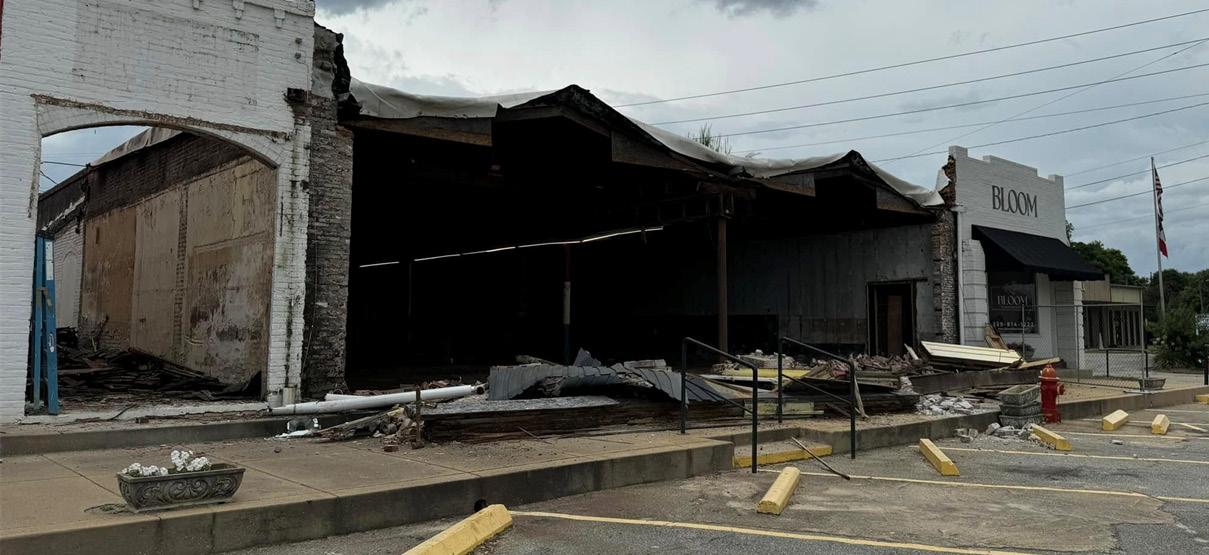
Revitalization efforts have transformed aging buildings with updated brick facades, improved rear parking, and the conversion of a former structure into a functional alleyway space. Four new businesses have opened, along with four successful Burg Bash festivals and three Christmas tree lighting celebrations. The DDA Board and Architectural Review Board are now in place to help guide development in a way that reflects the city’s identity and vision.
With plans for new housing, monthly events, and continued investment, Downtown Leesburg’s story is still being written, and its future has never looked brighter.
Talk of the Taxes: Double Taxation and Service Delivery
Much of the talk at the Georgia General Assembly this legislative session has focused on taxation and tax relief. But the issue of tax relief can also be addressed by city leaders for city residents through identification of instances of double taxation.
For municipal officials across Georgia, few topics create more apprehension and confusion than service delivery strategy negotiations. Identifying double taxation may seem daunting but the issue is actually simple: Are city residents paying twice for the same service, or paying for services they don’t receive?
City leaders from cities of all sizes may be able to protect their residents from double taxation through
Defending Local Authority and Financial Issues
RUSI PATEL, GENERAL COUNSEL, GMA
Georgia cities should be aware of double taxation issues and, separately, recent case law reaffirms municipal decision-making power.
simple reviews of the service delivery strategy agreement, available on the Georgia Department of Community Affairs website.
Does your city have its own fire department? Police department? Water? Other services? Does the county provide the same service for the unincorporated area but not for your city? If so, your city should not be paying for your own service AND the county’s identical service.
How might you be able to tell if your city is paying for both? Look at your executed SDS agreement. Under state law, unincorporated area residents must pay for services that primarily benefit them.
Double-taxation red flag: The county lists its general fund as the funding source for a service that the city already provides to its own residents (or that is jointly funded by both). This means the county is using tax
revenue from city residents to pay for services that only benefit unincorporated area residents—not the city residents who funded them.
If the city residents are being double taxed, that is a violation of state law, and city leaders should absolutely fight to protect their own residents and lower their tax burden. It is important to remember that both unincorporated area residents and city residents pay county property taxes which goes into the county general fund; but if the county is using the general fund to pay for services that only benefit unincorporated residents, then city residents are paying twice for the same service (once to the county and once to the city). That is double taxation.
Negotiations between the developer and the city ultimately failed, and the city council denied the road abandonment request. Ardent then withdrew its zoning application, and litigation followed.
It is important for city leaders to know that these laws are not as complicated or as daunting as they may seem at first blush.
At trial, Ardent alleged that Brookhaven and certain city officials tortiously interfered with business and contractual relationships, and a jury returned a verdict exceeding $5.5 million against the city and two officials individually. The verdict raised serious concerns for cities statewide, particularly because it challenged the ability of local governments to make discretionary land use and infrastructure decisions without fear of personal liability.
The SDS laws have been updated significantly in recent years. It is important for city leaders to know that these laws are not as complicated or as daunting as they may seem at first blush. It is also important to know that this is an area where city leaders can show the good that they can do for their residents.
GMA is in the early stages of developing additional training and resources for city leaders to explain the changes of SDS laws and how to combat double taxation, so stay tuned.
Brookhaven v. Ardent: A Final Victory for Municipal DecisionMaking
After years of high-stakes litigation, the long-running case The Ardent Companies, LLC et al. v. City of Brookhaven has officially come to an end — and the final outcome is an important victory for municipal governments across Georgia.
The dispute began when Ardent, a private developer, sought to build a townhome community that required the city of Brookhaven to abandon a city street.
However, the case took a decisive turn on appeal. On June 30, 2025, the Georgia Court of Appeals affirmed summary judgment in favor of Brookhaven’s mayor and city manager, holding that they were entitled to official immunity. The Court emphasized that discretionary acts performed within the scope of public authority are protected unless plaintiffs can show actual malice or intent to injure — a high standard that was not met here.
This ruling reinforced a critical principle: city officials must be able to negotiate, communicate with constituents, and exercise judgment in governance without constant threat of personal lawsuits.
The litigation concluded on Jan. 5, 2026, when the Supreme Court of Georgia denied Ardent’s petition for certiorari, leaving the Court of Appeals decision intact and ending the case in Brookhaven’s favor.
For Georgia’s cities, the significance is clear. Brookhaven v. Ardent underscores the legal protections afforded to municipal decision-making and confirms that official immunity remains a vital safeguard for local governance. Cities can take confidence that courts will continue to recognize the importance of discretion in serving the public interest.
Small Town Collaboration Creates Big Hometown Connections
JULES BANKS, COMMUNICATIONS ASSOCIATE, GMA
GMA’s Hometown Connection program, designed to strengthen relationships between Georgia legislators and city leadership, has long been a vital link between city officials and their representatives under the Gold Dome in Atlanta.
HOWEVER,
FOR
SMALLER MUNICIPALITIES,
hosting a lawmaker can be a daunting task. Between reaching out to legislators for scheduling, scouting a location for the event, and finding appropriate speakers and presentation resources, the process can be lengthy for a small team even with diligent GMA staff support.
The solution for many rural communities throughout Georgia has become a joint Hometown Connection event, with smaller surrounding towns banding together to host an event comparable in size and impact to that of a larger city. The results have been positive, with many 2025 Hometown Connections promoted as multi-city events.
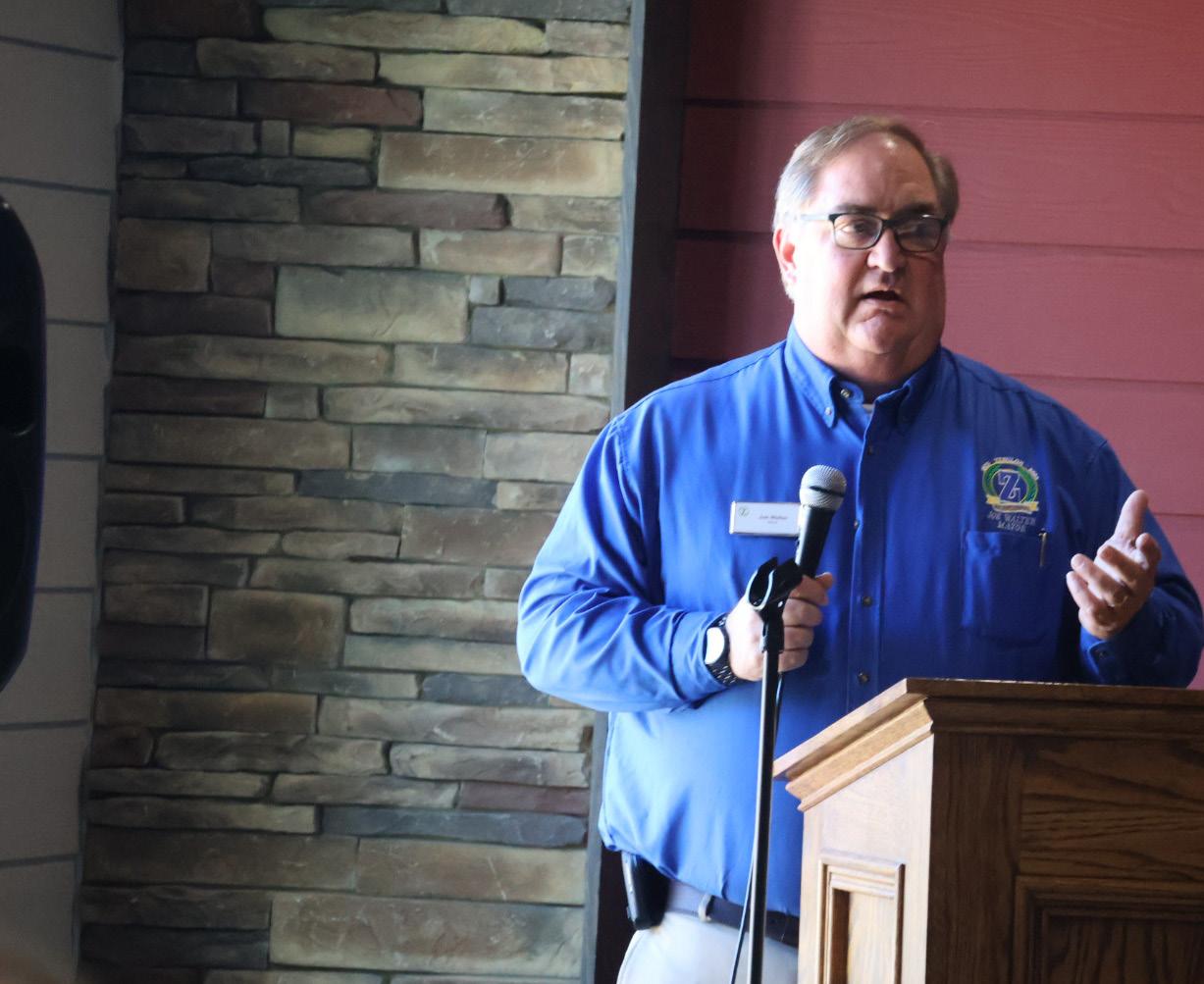
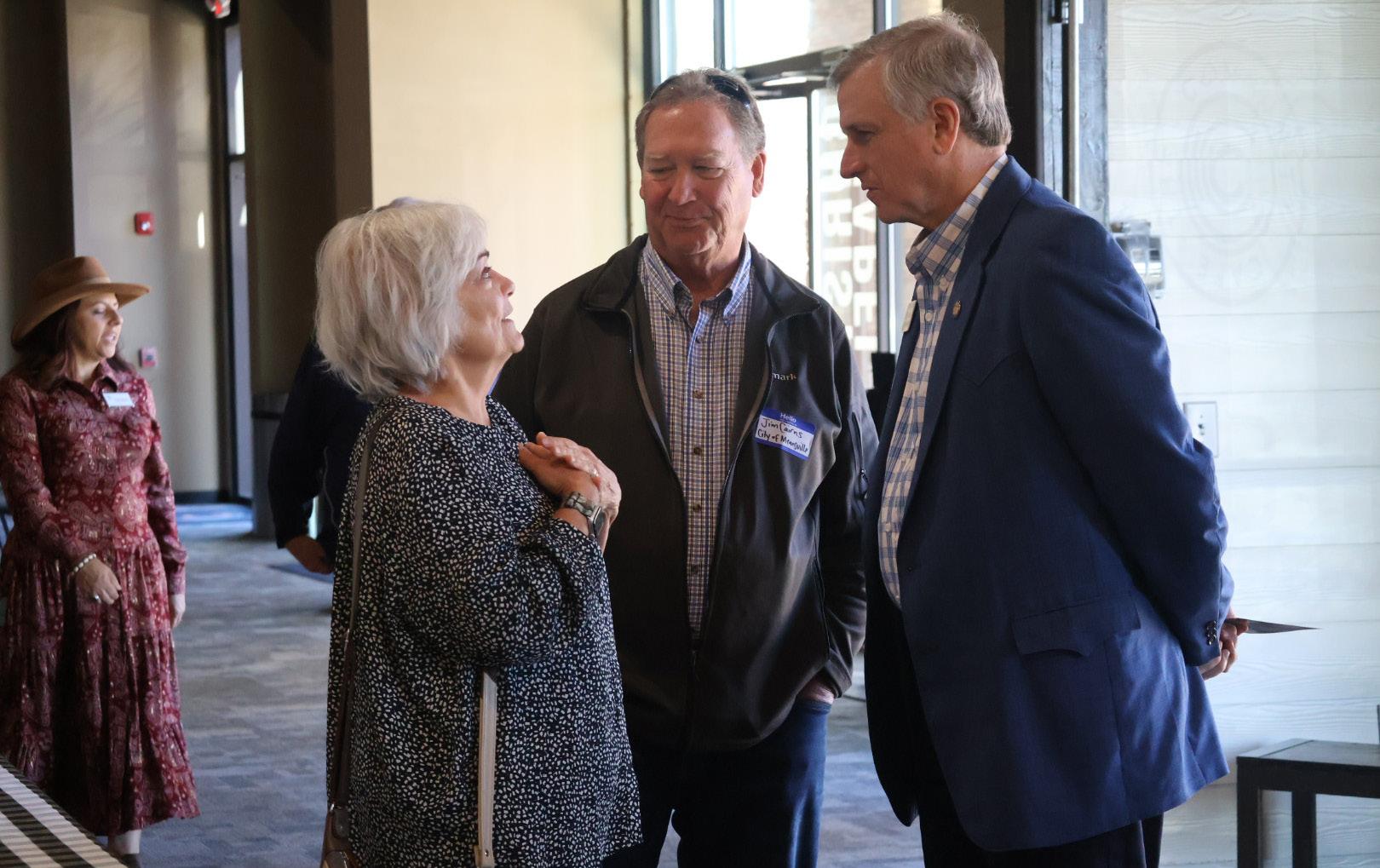
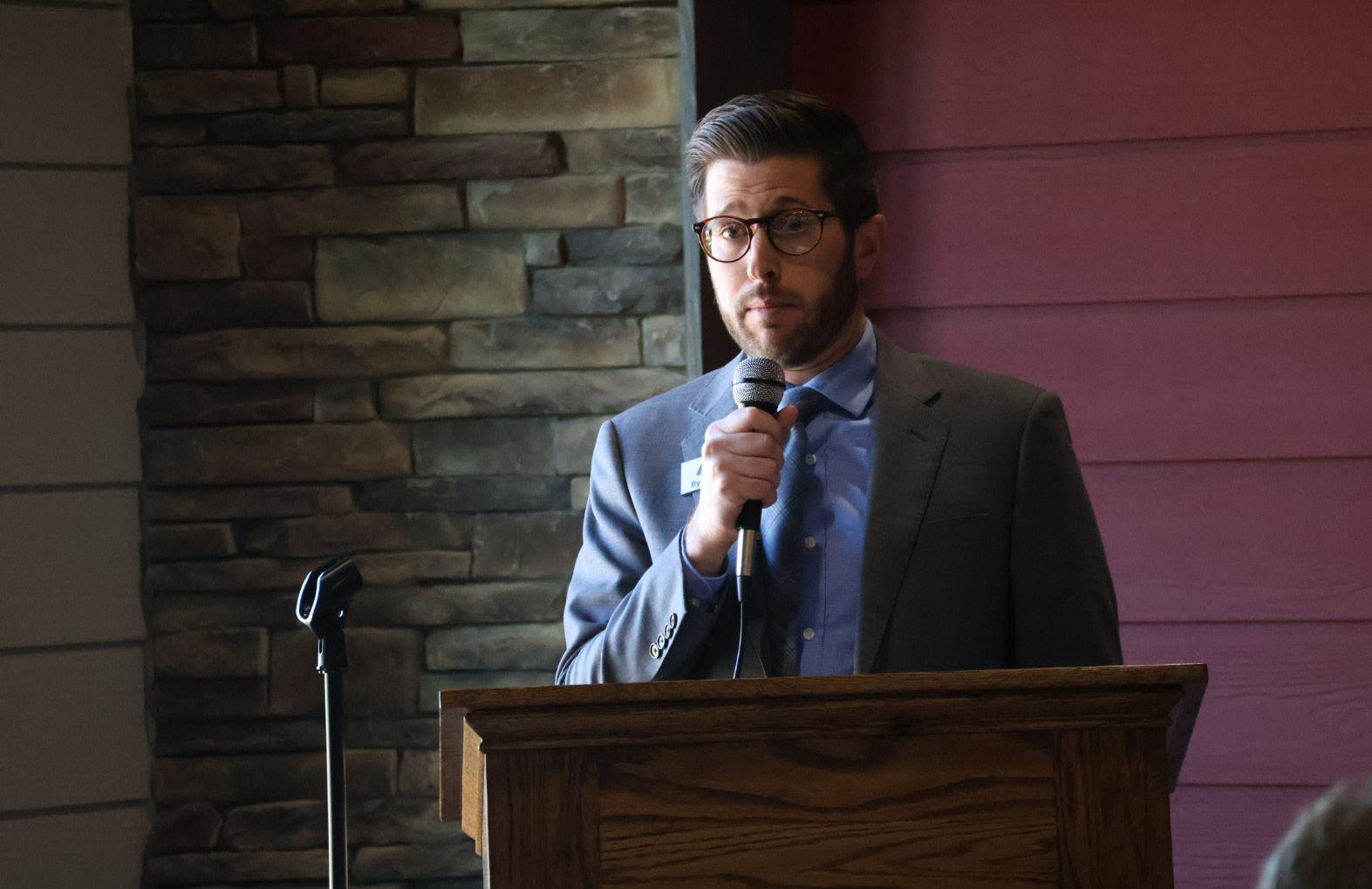
A prime example of this successful strategy was the city of Zebulon’s Hometown Connection. Hosted
in mid-November of 2025 and organized by Zebulon City Council Administrative Assistant Cami Hoopes, the event included representatives from the Pike County towns of Concord, Meansville and Williamson.
The event featured speaking portions for each represented municipality. Each Pike County mayor was allotted their own time slot to highlight their city’s wins, challenges, upcoming events and more to the attending legislator, Chairman Marty Harbin. Harbin has represented District 16, which includes Lamar, Spalding and Pike counties, since 2015.
Hoopes wanted to cast a wide net for attendees, inviting people, as she described, that “may not be obvious invites,” such as members of the school board and local news outlets.
Regarding scheduling, Hoopes admitted she was relentless, reaching out to invitees as early as September to ensure their appearance at the Hometown Connection. She recommended shooting for the stars when creating an invite list, as well.
“No name is too big,” she said. “Invite them. Success is in the invitation.”
Hoopes said that she received responses from Sens. Warnock and Ossoff’s respective offices, with Ossoff sending a representative to the event. A representative from the office of Rep. Brian Jack also attended the event, as well.
Her advice to other rural Georgia communities was simple: Don’t discount yourself.
events," said Walter, noting that he intends to continue to promote inter-city collaboration whenever possible. Following the event, Walter received requests from attendees for a follow-up meeting to discuss key issues and opportunities brought up in the Hometown Connection.
Walter’s final advice was to add a personal touch to invites, reaching out directly and often in-person to potential attendees to go the extra mile. Delicious, locally sourced food at the event, he joked, “certainly doesn’t hurt.”
"We are a small community, but one of the things I think that was alluring to someone like Marty Harbin or people from the state and federal governments is that we collected enough people to make it worth it to them," said Hoopes.
“We are a small community, but one of the things I think that was alluring to someone like Marty Harbin or people from the state or federal governments is that we collected enough people to make it worth it to them,” she said.
This isn’t the first joint event between Pike County cities, nor will it be the last. According to Zebulon Mayor Joe Walter, the Hometown Connection rejuvenated attendees and inspired more collaborative conversation.
"We have a semi-regular meeting of the mayors, the county manager, and the commission chair. We would have lunch at one of the local venues and discuss issues. We all coordinate when we can on
“We were thankful that we had good results from it, that people liked it, and that people are asking for it again,” said Walter, nothing that the event received positive press coverages from local news outlets like the Pike Journal Reporter.
GMA’s Governmental Relations team works hard in the legislative offseason to assist cities across Georgia in facilitating Hometown Connections. Resources include suggested invitation scripts, helping with contacting legislators, and more.
If you are interested in hosting your own Hometown Connection, reach out to Governmental Outreach Specialist Katrina Cochran at kcochran@gacities.com.
Fairs and Festivals
5/1-5/2
Uptown’s RiverFest – Columbus
Lula Railroad Days Festival – Lula
Daisy Festival – Nicholson
Pine Tree Festival and Southeast Timber Expo – Swainsboro
Arts in Black Festival – Tifton
5/1-5/3
Augusta Spring Greek Festival – Augusta
Decatur Arts Festival – Decatur
5/2
Acworth Dragon Boat Race and Festival – Acworth
Adairsville BBQ and Blues – Adairsville
Pagan Fest Augusta – Augusta
Vegan Street Fair – Atlanta
Battle of Byron Festival – Byron
Mayfest Arts and Crafts Festival – Carrollton
Cave Spring Bacon Fest and Car Show – Cave Spring
Taste of Spring Festival – Conyers
The “Peg Leg” Howell BBQ and Blues Festival – Eatonton
Elberton Spring Fling – Elberton
Heart and Soul Barbecue Battle – Jefferson
Johns Creek International Festival – Johns Creek
Lavonia Renaissance Festival – Lavonia
Taste of Mableton – Mableton
Holy Cross Greek Spring Fling – Macon
Dolly Day – Ringgold
RoFlo Fest – Rome
Savannah Scottish Games – Savannah
Statham Lions Club Spring Festival – Statham
May Market and Melodies – Summerville
Toast of Toccoa – Toccoa
Tucker Day – Tucker
Warrenton Art on Main – Warrenton
5/2-5/3
May Market at Rose Lawn – Cartersville
The Georgia Renaissance Festival IV – Fairburn
Hamilton Gardens Rhododendron Festival IV – Hiawassee
Macon Mimosa Festival – Macon
Latino Family Festival and Light Show II – Stone Mountain
5/3
Summerville Porchfest – Summerville
5/7-5/10
Ellijay Songwriters Festival – Ellijay
Loganville Carnival II – Loganville
5/8-5/9
Smoke on the Lake Barbecue Festival – Acworth
5/9
Ocmulgee Wild Hog Festival – Abbeville
Daylily Festival – Adel
Wolf Creek Plantation Spring Festival – Americus
Brunswick Blessing of the Fleet – Brunswick
Crossroads Folk Art Festival – Columbus
Dalton Civitan Music Festival – Dalton
Flowery Branch Blooming Arts Festival – Flowery Branch
Glennville Sweet Onion Festival – Glennville
Picnic in the Park Food Truck Festival: May – Macon
Artz’N Park Festival – Newnan
Peacock Day Festival – Pavo
Snellville Beach Blast – Snellville
Winterville Marigold Festival – Winterville
5/9-5/10
Turkish Food Festival: Spring – Alpharetta
Indie South’s Springtacular – Athens
Chastain Park Spring Arts and Craft Festival – Atlanta
Sweet Auburn Springfest Festival – Atlanta
Mothers’ Day Powwow and Indian Festival – Canton
Dunwoody Art Festival – Dunwoody
The Georgia Renaissance Festival V – Fairburn
Hamilton Gardens Rhododendron Festival V – Hiawassee
East by Southeast Festival of the Arts – Lawrenceville
5/13
Powder Springs Marketplace I – Powder Springs
5/14
Taste of Alpharetta Festival – Alpharetta
5/15
Perry’s Summer Breeze Block Party – Perry
5/15-5/16
Breakaway Music Festival – Atlanta
Suds on the Parkway – Fayetteville
5/15-5/17
Marietta Greek Festival – Marietta
Yaarab Shrine Circus and Fair – Marietta
Bringing the Sea to Powder Springs: Seafood Festival
– Powder Springs
5/16
Kids to Parks Day, Dunwoody
Atlanta Sandwich Festival – Atlanta
Soil Festival – Atlanta
Augusta Craft Beer Festival – Augusta
Barnesville BBQ and Blues – Barnesville
Down Home Days Festival – Chickamauga
Cornelia Music Fest – Cornelia
Taste of Douglasville – Douglasville
La Fiesta en Hapeville – Hapeville
Georgia Mountain Fire and Smoke Cooking Festival – Hiawassee
Salute to Our Heroes Festival – Hinesville
Georgia Jug Festival – Knoxville
Hike Bike Brew: Lula Lake Beer Festival – Lookout Mountain
Geranium Festival – McDonough
Register Pecan Festival – Register
5/16-5/17
Dahlonega Arts and Wine Festival – Dahlonega
Duluth Spring Arts Festival – Duluth
The Georgia Renaissance Festival VI – Fairburn
Romanian Spring Festival – Lilburn
5/18-5/24
Yaarab Shrine Circus and Fair – Marietta
5/22-5/23
1890 Days Jamboree – Ringgold
5/23
Atlanta Caribbean Carnival – Atlanta
Brew at the Zoo – Atlanta
Helen Bavarian Fest – Helen
Cars and Guitar Festival – Hartwell
5/23-5/24
Alpharetta Arts Fest – Alpharetta
Blairsville Spring Arts and Crafts and Music Festival – Blairsville
Spring Arts in the Park – Blue Ridge
Berries N Blooms Festival – Hazlehurst
Peach Summer Shop and Dine Market – Lawrenceville
The Camp – Peachtree City
5/23-5/25
Atlanta Jazz Festival – Atlanta
The Georgia Renaissance Festival VII – Fairburn
5/24
Hartwell Lakeside Music Festival – Hartwell
5/25
Memorial Day Ceremony – Dunwoody
5/29-5/30
Rock the Country – Bloomingdale
5/29-5/31
North Georgia Highlands Seafood and Wine Festival – Young Harris
5/30
WigWag Art and Music Festival – Avondale Estates
Chattahoochee Valley Daylily Festival – Columbus
Honeybee Festival – LaFayette
Loganville Wing Fling – Loganville
5/30-5/31
Old Fourth Ward Park Spring Arts Festival – Atlanta
The Georgia Renaissance Festival VIII – Fairburn
6/4
Food That Rocks – Sandy Springs
6/5-6/6
Georgia Blueberry Festival – Alma
Heritage Days at Foxfire Museum and Heritage Center – Clayton
Georgia Peach Festival – Fort Valley
Tifton Juneteenth Festival – Tifton
6/6
Albany Juneteenth Festival – Albany
Knobby Knees Music Festival – Albany
Alpharetta Brew Moon Festival: Spring – Alpharetta
PrideFest – Athens
Columbus Georgia LGBT Pride Festival – Columbus
Putnam County Dairy Festival – Eatonton
Hoschton Spring Festival – Hoschton
CAG Caribbean Cultural Festival – Jonesboro
Bark in the Park – Powder Springs
Ramshackle Street Festival – Clayton
St. Mary’s Hello Summer Festival and Parade – St. Marys
Cowboy Western Heritage Festival – Summerville
Vintage Day Festival and Fly-in – Williamson
6/6-6/7
Virginia-Highland Summerfest – Atlanta
Georgia Mountain Scottish Festival and Highland Games – Hiawassee
Flying Colors Butterfly Festival – Roswell
6/10
Powder Springs Marketplace II – Powder Springs
6/12
Night Market at Lake Carroll Park – Carrollton
Suwanee Summer Porch Jam – Suwanee
6/12-6/13
Marietta Brazilian Festival – Marietta
6/13
Groovin’ on the Green Concert - Dunwoody
Americus Juneteenth Cultural Festival – Americus
Hot Corner Festival – Athens
Atlanta Summer Beer Fest – Atlanta
Austell Juneteenth Festival – Austell
Georgia Peach Festival II – Byron
Lake Oconee BBQ and Music Fest – Greensboro
Chattooga River Fest – Lyerly
Crepe Myrtle Festival – Monroe
Perry Juneteenth Freedom Day Festival – Perry
Rome Pride Festival – Rome
Peaches in the Pines – Woodbury
6/13-6/14
Cave Spring Arts Festival – Cave Spring
6/14
Family Food Fest – Atlanta
6/19
Jonesboro Juneteenth Celebration in Lee Street Park – Jonesboro
6/19
Norcross Juneteenth Celebration – Norcross
6/20
Bourbon and Brisket Festival – Atlanta
Glynn County Tigers Juneteenth Festival – Brunswick
Wine and Wildflower Festival – Cleveland
Watermelon Days Festival – Cordele
Taste of Juneteenth Festival – Dublin
Betty’s Bash Paddle Race and Music Festival – Evans
The WCLK Jazz Fest – Fayetteville
Lawrenceville Juneteenth Celebration and Music Festival – Lawrenceville
South Atlanta Water Lantern Festival – Morrow
Moultrie Juneteenth Fest – Moultrie
E.Y.O. Inc Juneteenth Commemoration – Newnan
Sugar Hill Juneteenth Celebration – Sugar Hill
A Taste of the South Festival – Summerville
Thomasville Juneteenth Freedom Festival – Thomasville
Warrenton Juneteenth Celebration – Warrenton
LaFayette Freedom Festival – LaFayette
Peachtree City Night Market – Peachtree City
Freedom Blast Celebration – Thomson
6/26-6/27
Augusta Pride – Augusta
6/26-6/28
AthFest Music and Arts Festival – Athens
6/27
Adairsville Celebrates America – Adairsville
Auburn Independence Day Celebration – Auburn
Red, White and Blue on the Bluff – Darien
Hahira Independence Day Celebration – Hahira
Pre-4th Arts and Crafts Festival – Hartwell
Jefferson Freedom Festival – Jefferson
Lindale Independence Day Celebration – Lindale
Loganville Independence Celebration – Loganville
Stonewall Block Party – Savannah
Screven Independence Day Festival – Screven
Smyrna Pride Festival – Smyrna
Thomasville Summer Craft Festival – Thomasville
Thomas Dorsey Birthplace Festival – Villa Rica
6/27-6/28
Southern Fried Queer Pride Festival – Atlanta
Braselton Artisan Festival: June Festival – Braselton
Summerville Independence Festival and Fireworks Show
– Summerville
Freedom Fireworks Extravaganza – Washington
7/4
Celebrate Braselton July 4th Festival – Braselton
Cartersville 4th of July Celebration – Cartersville
Colbert Independence Day Festival and Parade – Colbert
July Fourth Celebration – Cumming
Dahlonega 4th of July Festival – Dahlonega
America’s Independence: A Fourth of July Festival – Douglasville
Dunwoody 4th of July Parade – Dunwoody
Ol’ Time Fourth of July Celebration – Juliette
Marietta 4th in the Park Celebration – Marietta
Perry Independence Day Celebration – Perry
Powder Springs 4th of July Celebration – Powder Springs
Roswell’s 4th of July Celebration – Roswell
Star Spangled Snellville – Snellville
St. Marys Independence Day Festival – St. Marys
Summerville Freedom Fest – Summerville
Thomaston Freedom Fest – Thomaston
Wrightsville-Johnson County 4th of July Celebration – Wrightsville
7/5
Richmond Hill Independence Day Celebration – Richmond Hill
7/8
Powder Springs Marketplace III – Powder Springs
7/10
Night Market at Lake Carroll Park II – Carrollton
7/10-7/11
Beach Bash – Gainesville
Raccoon Creek Bluegrass Festival – Dallas
7/10-7/12
Southern Classics Tattoo Expo – Perry
7/11
Picnic in the Park – Glennville
7/11-7/12
Painted Fern Art Festival – Clayton TO PLACE A FREE FAIRS & FESTIVAL LISTING CONTACT GACITIES@GACITIES.COM
Please submit listings at least eight to ten weeks ahead of publication date.
READY
•
•
•
•
Georgia Leverages America250 to Strengthen Civic Literacy and Leadership
As Georgia works to improve literacy for students and adults, state and local leaders are using the America250 commemoration as an opportunity to strengthen civic education and engagement in communities across the state.
THANKS TO THE GEORGIA US250 COMMITTEE, cities now have innovative ways to help residents connect with their communities and participate in democracy during America’s 250th anniversary.
These efforts go far beyond July 4th festivities. The Georgia US250 Committee — a group appointed by Governor Brian Kemp to commemorate the nation’s Semiquincentennial—has launched the Georgia US250 Civic Literacy and Leadership Initiative, a statewide
framework dedicated to promoting civic literacy, respect for history, and patriotism throughout 2026.
The Georgia Department of Education, the Georgia Historical Society, the Georgia Municipal Association (GMA), GeorgiaForward, the Georgia Humanities Council, the Georgia Public Library Service and Explore Georgia are collaborating to provide resources, promotional support, and coordination for civic literacy initiatives.
NIKKI PERRY
WHY CIVIC LITERACY?
At the heart of this initiative is Georgia Reads for America250, a flagship program that positions reading as the foundation for civic understanding. By using books and guided discussions, students explore America’s history, founding principles, and civic ideals, helping them better understand their roles as informed and engaged citizens.
One in 10 Georgia adults is low literate, meaning they have difficulty with everyday tasks like reading instructions, completing forms and understanding signs. Low literacy is a barrier to civic literacy, which is the knowledge of how government operates, the rights and responsibilities of citizens, and how citizens can participate in democratic processes.
HOW CITIES CAN PARTICIPATE
As part of the initiative, Georgia Reads for America250 features a curated reading list for K-12 students designed to spark civic conversations. Libraries and schools can get involved by hosting reading challenges and book discussions that generate dialogue about local history, citizenship, service and shared values.
“The 250th anniversary of American independence is both a moment to reflect on our history, and an opportunity to help every student understand the founding ideals of our nation and how they continue to guide us today,” said State Superintendent Richard Woods in a statement.
“Reading is the foundation of civic literacy. The ability to understand complex texts, evaluate information, and consider multiple perspectives is essential to participating in our democracy,” said Bryttney Bailey, project coordinator with the Georgia Council on Literacy, which spearheads the Georgia Reads statewide literacy movement.
“Georgia Reads for America250 highlights this connection by reminding us that strong readers are better prepared to engage as informed citizens,” she said.
“By using books as a starting point, libraries can create welcoming and accessible environments where civic engagement feels meaningful for readers of all ages,” Bailey said.
Beyond libraries, the program connects communities through partnerships with GeorgiaForward, a nonprofit affiliate of the Georgia Municipal Association. GeorgiaForward has introduced the program to its Mayor’s Reading Club and youth programming. The Mayor’s Reading Club guide includes program ideas and planning resources, while the youth council guide helps local councils plan, design, and implement civic literacy projects.
“GeorgiaForward has made literacy a priority because it directly impacts our cities’ economies, workforce, and overall quality of life,” said Chan Weeks, GeorgiaForward senior program manager. “Programs like the Mayor’s Reading Club and youth councils give
leaders meaningful ways to engage students in civic education and help young people understand how government works.”
EXTENDING CIVIC ENGAGEMENT BEYOND AMERICA250
The initiative extends beyond reading lists and classroom activities. To support Georgia US250 civic literacy efforts, the Georgia Department of Education has launched programs including the Civic Engagement Readiness Test (based on the national citizenship test) and an expansion of the Civic Engagement Diploma Seal. The department also promoted "The Words that Built America" booklets and hosted student-led design contests for the official America 250 commemorative license plate, which launched in January 2026.
“The 250th anniversary of American independence is both a moment to reflect on our history, and an opportunity to help every student understand the founding ideals of our nation and how they continue to guide us today,” State School Superintendent Richard Woods said in a statement. “As a former social studies teacher, I’m proud to announce these initiatives that underscore our commitment to teaching the principles that shaped our nation, and I look forward to celebrating throughout the year with Georgia’s students.”
“To sustain the impact of these initiatives beyond the Semiquincentennial, cities must focus on incorporating civic themes into everyday reading and community programming,” Bailey said.
“Libraries and schools can do this by curating diverse reading lists, encouraging discussion and reflection, and partnering with local organizations like
the Mayor’s Reading Club to help connect reading to real world experiences,” she said. “When reading is framed as a way to better understand our communities and our role within them, civic engagement becomes something people practice regularly rather than something tied to a single event.”
Learn all about Georgia US250: https://exploregeorgia.org/ga250
Download GeorgiaForward America 250 Resources: https://georgiaforward.org/america250/
Browse the 250 Reading List: https://america250.georgiareads.org/
View the Georgia Historical Society US250 Collection: https://www.georgiahistory.com/ america250/
Find Georgia Humanities programming and grants for America250: https://www.georgiahumanities.org/ america250/
GEORGIA GEMS
LAKELAND - WHERE HISTORY MEETS ART LAKELAND’S MURALS TRANSFORM DOWNTOWN INTO A LIVING GALLERY
IN THE HEART OF LANIER COUNTY, THE SMALL SOUTH GEORGIA
community of Lakeland has transformed its downtown streets into a vibrant, open-air museum. Known proudly as the “City of Murals,” Lakeland invites visitors to step back in time through a collection of striking, life-sized works of art that preserve the town’s heritage while celebrating its creative spirit.
More than 30 murals stretch across Lakeland’s historic downtown district, each depicting scenes and residents from the early days of the community. Painted on the sides of buildings throughout a compact fiveblock radius, the murals create a walkable experience that encourages visitors to slow down, explore and connect with Lakeland’s past.
PRESERVING THE STORY OF MILLTOWN
Lakeland’s murals are more than colorful public art—they are visual history lessons. The paintings depict life during the 1920s, when the town was known as Milltown before officially becoming Lakeland in 1925. The artwork recreates scenes based on historical photographs, allowing visitors to see what everyday life looked like for residents nearly a century ago.
The “Milltown Murals,” include depictions of early businesses, historic homes, tobacco fields, community gatherings and tributes to local veterans. Many murals feature life-size figures of real residents, helping preserve the stories of families and leaders who shaped the town’s early growth.
The ideas for the murals began as a community-driven effort to celebrate Lakeland’s heritage. The first mural was commissioned in 1998 by local resident Nell Patten Roquemore. The artwork was brought to life by muralists Ralph Waldrop and Billy Love, whose detailed painting style helped transform blank building walls into historically accurate storytelling canvases.
The murals also complement Lakeland’s broader cultural identity. Community events such as the annual Flatlanders Frolic, held each October at the Historic Threatte Center, further highlight the city’s strong appreciation for art, storytelling and tradition.
ART THAT CONNECTS COMMUNITY AND VISITORS
Beyond their visual appeal, Lakeland’s murals serve as a powerful reminder of how public art can preserve local heritage and foster community pride. Each painting honors individuals and events that might otherwise fade from memory, ensuring future generations can learn about the town’s roots in a unique and engaging way.
The murals offer visitors a chance to experience history outside of museum exhibits, through artwork integrated directly into the community’s everyday landscape. They demonstrate how small towns can use creativity and collaboration to strengthen tourism while celebrating their identity.
PLAN YOUR VISIT
Lakeland’s mural tour is free and open to visitors year-round, making it an accessible destination for families, history enthusiasts and art lovers. The murals are located, primarily along Main Street and nearby blocks, with convenient parking available throughout downtown.
For maps or guided tour information, visitors can contact the Lakeland-Lanier County Chamber of Commerce and Welcome Center located at 8 S. Valdosta Road, Lakeland, GA 31635. The chamber can be reached at 229-482-9755 or chamber@lakelandchamber.org.
Visitor information, including travel planning resources and details about Lakeland’s attractions, can also be found through Explore Georgia or the city’s visitor information center on Main Street.
SPONSOR
Focus
FEATURED REPRESENTATIVE Kyle Patel, VP of Engineering
WHAT IS THE PHILOSOPHY POLIMORPHIC OPERATES ON?
At Polimorphic, our philosophy is rooted in the belief that government has the most complex customer service demands of any industry, and it deserves technology that actually reflects that reality. Cities need to serve every single resident across a diverse range of services, often with limited staff and legacy systems that were never designed for modern expectations.
Most government tools historically optimize for internal workflows or resident access, but rarely both. The best systems should reduce friction for staff and make it easier for residents to get what they need. That’s where AI plays a critical role. When designed thoughtfully, AI can bridge that gap, handling complexity in the background while delivering simple, intuitive experiences on the front end.
WHY
DOES POLIMORPHIC
SUPPORT
CITIES, AND WHAT IS YOUR VESTED INTEREST IN THEIR SUCCESS?
We support cities because they sit at the center of daily life. The local level of government is where the rubber meets the road, it's where the execution of government actually happens. When government customer service works well, it builds trust, saves time, and
improves outcomes for entire communities. When it doesn’t, the impact is immediate and visible to residents and staff alike.
Our vested interest is deeply aligned with city success. We only succeed if cities are able to serve residents more effectively, reduce operational strain on staff, and modernize without losing control or transparency. That’s why we focus on solutions that empower staff rather than replace them, and that adapt to the real-world constraints cities face.
WHAT’S ON THE HORIZON FOR POLIMORPHIC?
Looking ahead, we see AI becoming foundational infrastructure for government, much like websites, databases, or cloud services are today. Instead of being a standalone tool, AI will quietly power how information is accessed across all systems, how services are delivered across all channels, and how staff manage growing demand with limited resources across all departments.
At Polimorphic, we’re continuing to invest in AI that works across channels and departments, integrates with existing systems, and improves over time as cities use it. The goal isn’t novelty. It’s durability. We’re building technology that cities can rely on long-term, as expectations rise and complexity continues to grow.