


Built to last, stocked to supply the sewer, water, oil & gas, industrial, structural, and line pipe industries— What you need, when you need it.


Q4 – October 2025
Volume 1 • No. 37
Editorial and Advertising Offices:
201 Pryor Street, SW Atlanta, GA 30303
Phone: 404.688.0472
Fax: 678.686.6289
E-mail: gacities@gacities.com
CEO AND EXECUTIVE DIRECTOR
Larry Hanson
DIRECTOR OF COMMUNICATIONS
Latisha Gray, APR
MANAGING EDITOR
Ashley Bailey
GRAPHIC ARTIST
Lindsay Podrid
ADVERTISING SALES
Lynne Norton
EDITORIAL BOARD
Aileen Harris
Arica Ratcliff
Brian Wallace
Chris Higdon
Chris Obenschain
Dana Goodall
Jules Banks
Katrina Cochran
Lisa Nguyen
Noah Roenitz
Rusi Patel
Pete Pyrzenski
Ryan Bowersox
GMA OFFICERS
President: College Park Mayor Bianca Motley Broom
First Vice President: Young Harris Mayor Andrea Gibby

Second Vice President: Suwanee Mayor James M. Burnette
Third Vice President: Augusta Mayor Garnett L. Johnson
Immediate Past President: Madison Mayor Fred Perriman
ISSUE COVER
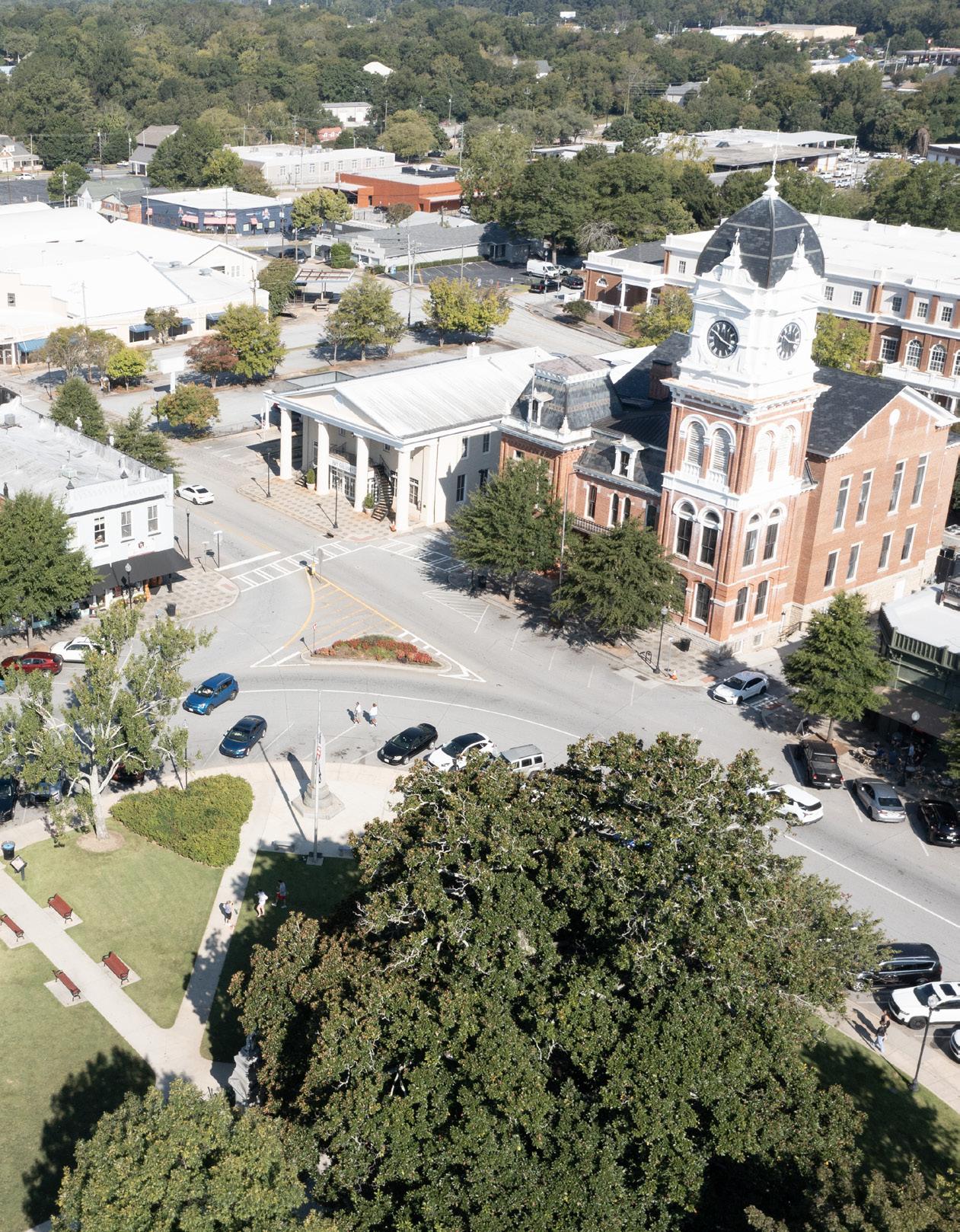
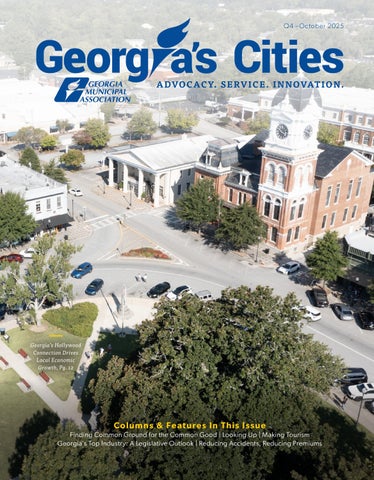
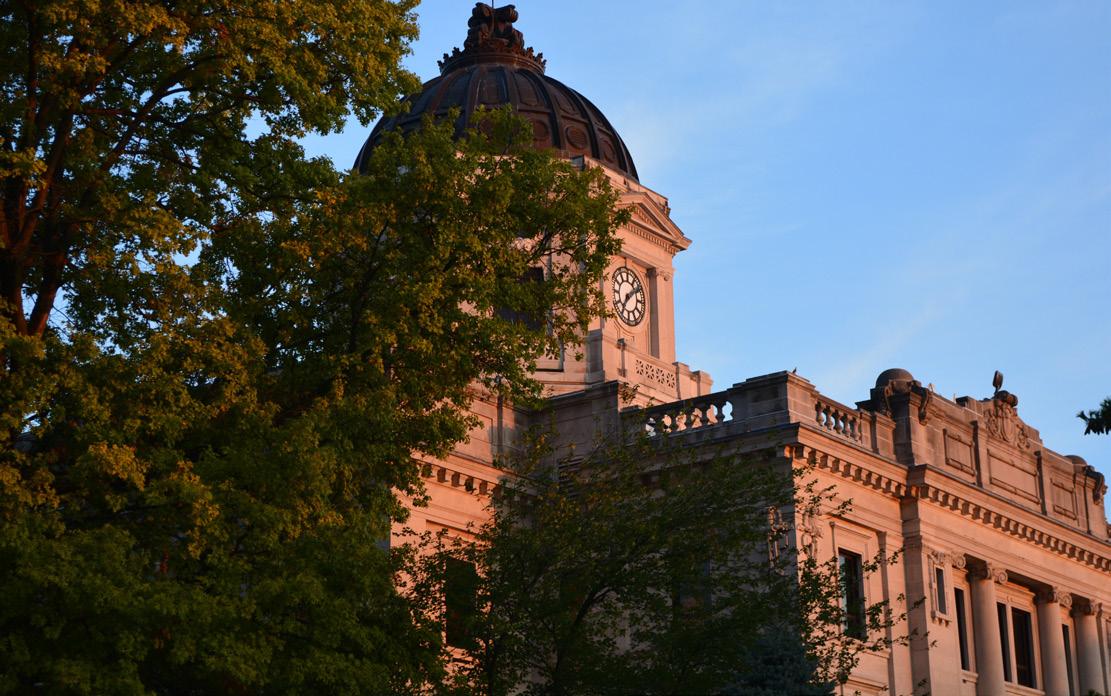
Birds Eye view of Downtown Covington. Photo Credit: City of Covington / Discover Covington Subscription $36.00 per year.


Finding Common Ground for the Common Good
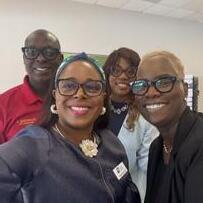
Winning Most Selfies in State During
+ Hometown Connections Kick Off in Byron and Commerce + Advocacy Spotlight: Championing Rural Georgia: A Q&A with Rep. Leesa Hagan + The Magic of Reading Shines at Georgia Reads Day 2025
+ GMA Welcomes
+ GMA’s Governmental Relations Recognized Among JAMES Magazine’s 2025 Top Lobbyists
+ More Training Classes Offered this Fall from the Holtz Municipal Training Institute
+ Honoring a Lifetime of Service Commitment: GMA Recognizes Lifetime Service Award Recipients
+ Your Turn to Lead: Join the 2026 Young Gamechangers Class and Shape Georgia’s Future
+ The Mayor’s Reading Club: Building a Stronger Georgia, One Story at a Time + From Ideas to Action: Youth Leadership Takes Center Stage in Savannah
Georgia Gems: Vidalia Onion Museum

Most private citizens have noticed a significant increase in their auto insurance premiums in recent years. With that in mind, try to imagine the uptick in costs associated with insuring the thousands of law enforcement vehicles in use in Georgia’s cities and counties. The price tag is sobering, to say the least.
Then there’s the fact that accidents and property damage are sometimes accompanied by injuries. That’s why Local Government Risk Management Services (LGRMS) commissioned the development of an innovative new driver training program, which officially launches this summer in local government law enforcement agencies around Georgia.
Known as Law Enforcement Active Driving Emergency Response Systems (LEADERS, for short), the program introduces the practice of “narrative driving” as a strategy to reduce motor vehicle accidents. The program is designed to improve verbal communication skills, situational awareness, and hazard perception to help officers drive more safely and effectively.
There are a lot of reasons that insurance rates have gone up in recent years; however, a couple are particularly related to law enforcement vehicles. Stan Deese, former Director of Risk Management Services for Georgia Municipal Association (GMA), explains that the frequency of auto accidents in general has skyrocketed since the post-COVID-19 pandemic return to work.
“People seem to be driving more aggressively,” he says, noting that this is true for all drivers and that accident rates have never been this high. This naturally translates into more accidents involving law enforcement vehicles. The current tort environment doesn’t help, either. “When you couple increasing accidents with the higher cost of settling third-party bodily injury claims and repairing vehicles owned by the city, the actual dollar cost of each accident is more expensive now,” Deese adds.
Cities and counties alike are reporting increased costs where law enforcement vehicles are concerned. “Both of their number one losses are motor
vehicle-related,” says Dan Beck, Director at LGRMS. “The group with the most opportunity for improvement is law enforcement, which makes up half of all the losses,” Beck says, noting that law enforcement-related motor vehicle claims within ACCG’s and GMA’s insurance pools total roughly $10 million per year.
Indeed, there are likely thousands of accidents involving law enforcement vehicles every year in Georgia. Metro Atlanta was hit especially hard with a rate increase of 189 percent over the last four years, Deese says. “If the program can reduce the frequency of accidents through a better training platform, even 10 percent would be a huge dollar savings for our cities, and it could save someone’s life,” Deese explains. “Something needs to happen because it has just gotten out of control.”
Ashley Abercrombie is the Director of Property & Casualty Programs for ACCG, which manages the insurance pools for counties in Georgia. “Many of these accidents are preventable,” she says.
With safety and fiscal responsibility in mind, Griffin Attaberry, Public Safety Risk Consultant at LGRMS, set out to research and develop the LEADERS program. The idea was to revamp a system that historically relied on driving simulators and replace it with a more handson training approach. To make the pivot, he looked to outside sources such as private industry and public safety entities in other areas to find out more about their successes with the practice of narrative driving (also known as commentative driving).
Never heard of narrative driving? It’s more intuitive than you might think. In fact, many drivers do it to some extent already when they mutter aloud about road conditions or the missteps of other drivers. “Narrative driving is verbalizing what you are seeing while you are driving. You are actively engaged in hazard recognition,” Attaberry explains, adding that people can think of it as active listening married to active driving. This active state is vital, he says, because, “In public safety, on their day off, they still drive. So it’s easy to become complacent in their driving because they do it on and off duty.”
my mirrors,” or, “I’m approaching a stale green light [that is when the light is already green when first approached], the speed limit is 35, my speed is 30, the light is going to stay green, continuing through the intersection.”
Narrative driving also helps officers to better process outside factors, such as pedestrians, people not wearing seatbelts, and even spot potential crimes in progress. It’s not just for emergency situations. “We would like drivers to do this when they are driving normally without lights and sirens,” Attaberry explains. “If we can get them to make this second nature, then when they do have to respond with lights and sirens, it is going to help them recognize hazards sooner and avoid being in a collision.”
“Narrative driving is verbalizing what you are seeing while you are driving. You are actively engaged in hazard recognition,”
To kick off the program, LGRMS conducted two pilot training sessions with the Henry County Police Department (HCPD) and the Griffin Police Department (GPD). Officers are taught to constantly evaluate and verbalize key things like road conditions, current speed, speed limit, curves ahead, and traffic light status. They even say out loud actions like “mirror check” and “shoulder check” when they do them. According to Attaberry, an example is, “I’m approaching an intersection, the light is red, I’m slowing down, checking
In the pilot sessions, officers underwent four hours of training. Roughly three hours of that is in the classroom with an instructor who details the “how-tos” of narrative driving, as well as a portion on due regard related to Georgia law. After that is complete, each student spends time with an instructor who evaluates them on their hazard recognition and narrative driving skills. This is done in one of two 2024 Ford Expeditions purchased by LGRMS for the benefit of the GMA and ACCG insurance pools.
“We’ve equipped them with the aftermarket crash avoidance technology and driver improvement telematic systems,” Attaberry says. “The goal is for our membership to take this training and have them integrate it into their driving culture in their department local government to reduce preventable accidents.”
To date, the feedback on LEADERS has been overwhelmingly positive. Captain Kaylen Krueger Hayes with the GPD appreciated that trainees were able to learn via the lecture, complete with video examples, then implement skills hands-on by practicing narrative driving with a trainer present. “That seems to be more impactful than just seeing slides in a PowerPoint,” she says.
Captain Matthew Marlow with the HCPD, who has been a driving trainer for 33 years, thinks that the training will enhance safety by a significant margin. “Narrative driving makes them more aware of their surroundings and prevents tunnel vision,” he explains. “When you get into the vehicle, you start losing your peripheral vision, and you may miss things
LGRMS began rolling out the LEADERS program to members of GMA and ACCG risk pools during the summer of 2025. Ideally, each member agency will see more reduction in motor vehicle claims quarter over quarter, with a goal of reaching a 20 percent reduction over a 24-month period.
Captain Krueger Hayes and Captain Marlowe both report that their respective agencies plan to implement the training as part of police academy coursework and will also conduct annual retraining for existing officers to refresh their skills. “We had one of our Field Training Officers do a narration running code and recorded it on the body cameras,” Captain Krueger Hayes explains. “We plan on putting it into our training.”
Ashley Abercrombie with ACCG is fully in favor of these implementations. “LEADERS not only helps prevent damage to law enforcement vehicles and other parties on the road, but also helps the officers avoid onthe-job injuries or deaths caused by auto accidents.”A primary goal should be for the officers to arrive safely at
like pedestrians, other vehicles, and street hazards. The more aware the officers are, the safer they’re going to drive.”
The best part is that narrative driving is not difficult to master. “Once you go through the program, you find yourself doing it naturally, especially knowing the benefits of it,” says Caleb Smith, Master Police Officer with GPD. “The training will make other officers think about their actions, which I personally believe will reduce officer-involved accidents.”
Captain Marlowe is impressed by the program’s simplicity, yet comprehensive nature. “It takes an issue that we all know exists, and it presents a solution,” he says. “Instead of teaching little fixes, you can work through it.”
the incidents to which they are called and arrive home in the same shape they left in that morning.
Improved driving skills can help decrease workers’ compensation injuries, auto liability claims from third parties, and damage to the law enforcement vehicles. Lessons learned from LEADERS can help lower insurance premiums and costs within deductibles. This frees up funds for use in other areas, which is particularly helpful in this era of tighter budgets and stretched resources.
For more information about LEADERS, contact your LGRMS Law Enforcement or Public Safety Risk consultant.

Need an IT support provider that understands municipalities? We help municipalities get out of the IT trenches and back to working on what matters. VC3, the Georgia Municipal Association’s endorsed IT service provider since 2012, has been making IT personal, making IT easy, and getting IT right for more than 30 years. Serving over 1,100 municipalities of all sizes, VC3’s Georgia-based engineers are supported by a deep bench of national talent.
READY TO TACKLE YOUR CYBERSECURITY & TECHNOLOGY ISSUES? Contact Bill Piper, (901) 261-7499, bill.piper@vc3.com

Bricks & Mortar Program: Real estate projects including City Halls, Police/Fire Stations and Public Parks, Theaters and Greenspaces
Direct Lease Program: Eligible essential equipment including police and fire vehicles, heavy equipment, computer servers and other asset classes.
Program benefits include:
• Flexible finance terms
• Attractive interest rates and competitive terms
• No upfront fees or prepayment penalties*
• Real estate project compliance with Section 36-60-13 of the Official Code of Georgia Annotated
Contact: Philip Potter ppotter@gacities.com to learn more *terms determined during RFP process, other restrictions may apply

BIANCA MOTLEY BROOM, GMA PRESIDENT
Election season is here in Georgia. Qualifying is wrapped up, campaign signs are sprouting on lawns, and neighbors are already talking about who they believe should lead their community.
FOR CANDIDATES, IT’S BOTH nerve-wracking and energizing—a reminder of how important this work really is.
It can also be a time when differences feel sharper. I’m grateful our city elections are nonpartisan. That’s one of our greatest strengths. It keeps us focused on what matters most: our residents, our communities, and the future we’re building together.
At the end of the day, people expect the basics from their city government: safe neighborhoods, clean water, streets without potholes, and opportunities to prosper. None of those expectations come with party labels. A pothole isn’t Republican or Democrat. Trash pickup doesn’t lean left or right. These are everyday needs of people who want a good life and a strong future for their families. And the only way to meet those needs is by coming together and finding common ground.
Real progress takes root in that shared space. On common ground, we put aside the labels, turn down the heat, and focus on what really matters. We see each other not as opponents but as neighbors. We share ideas, compromise when we need to, and create solutions that reflect the best of our collective wisdom.
Earlier this year, GMA and Georgia Trend celebrated that spirit with the Visionary City Awards: nine shining examples of what’s possible when communities roll up their sleeves together. Metter leaned into local agriculture with its Georgia Grown Community Campaign. Thomaston is preparing the next generation of civic leaders through its Pathways Internship Program. Union City transformed its Eagles Nest Sports Complex into a
multigenerational gathering place that builds connections across neighborhoods. The other winners—Cornelia, Hogansville, Forest Park, Perry, Duluth, and South Fulton—each showed the same creativity and collaboration in their own unique ways, proving that solutions aren’t partisan. They’re practical.
Examples like these remind me that lasting change doesn’t come from division; it comes from partnership and persistence. Common ground isn’t just a phrase; you can see it alive in cities that honor local strengths, empower young people, and connect communities in meaningful ways.
As city leaders, we have to carry that same spirit into this election season and beyond. Elections matter, but the real work begins once the ballots are counted: building, planning, solving, and serving. We won’t agree on every detail, but if we keep residents’ best interests at the center of our decisions, we’ll always move forward together.
Cities hold a unique responsibility in this moment. In a world where division makes headlines, we can offer a different story; one of the neighbors working side by side, showing that real solutions come when we focus on what unites us.
Finding common ground isn’t always easy, but it’s always worth it. As mayor, I’ve learned that the hardest decisions get easier when we leave the partisanship at the door. And when we choose collaboration over conflict, we don’t just solve today’s problems. We build a foundation of hope, resilience, and opportunity for the generations who will inherit the communities we’re shaping now.
LARRY HANSON, CEO AND EXECUTIVE DIRECTOR
Lately, I’ve been thinking about the sky.
MAYBE IT’S THE CHANGING season or the miles I’ve spent driving between fall district meetings, watching the horizon shift from farmland to our coastal cities. Either way, there’s something about looking up that reminds me of Georgia’s cities. Looking up changes everything.
When we lift our eyes to the sky, we gain perspective. We focus on what is bigger, higher, and ahead. I often find myself doing this and sometimes even seeing shapes in the clouds, which sparks ideas and reminds me that imagination is part of leadership. Perspective allows us to look beyond today’s challenges and envision a better future for our communities.
Looking up also reminds us of the possibilities. The sky is wide open, and so are the opportunities before Georgia’s cities. Cities cover just 9 percent of Georgia’s land area, yet nearly half of our population lives there, 70 percent of jobs are located there, and 91 percent of Georgia’s GDP is generated there. Many of our cities are doing big things, welcoming new businesses, investing in infrastructure and housing, and creating experiences that draw people to their downtowns.
Housing is one of the most pressing opportunities and challenges we face. During a recent GMA Board meeting, Braselton Mayor Kurt Ward shared how his city is adapting to rapid growth. Over the past two decades, Braselton’s population has grown dramatically, bringing new neighborhoods, infrastructure needs,
and lessons learned about how to plan for a sustainable future. Their experience is a reminder that cities across Georgia are finding creative ways to meet today’s housing needs while preparing for the communities of tomorrow.
In this issue of Georgia’s Cities, you’ll read about communities turning film industry changes into new tourism strategies, leaders working to make Georgia the number one state for tourism, and public safety initiatives like the LEADERS program that are reducing accidents and saving lives. Together, these stories show how Georgia’s cities are turning challenges into possibilities and opportunities for their residents.
I believe cities are able to do this because they look up and hold positive thoughts about their communities. Positive thoughts alone cannot change our circumstances, but they help us find perspective, give us hope for better times, and give us the mindset to act. Hope is not only my middle name, but it is an important part of who I am and how I strive to live my life. Faith, hope, and love are truly foundational to a happy life. When we lead with optimism, we encourage our teams, inspire our residents, and open doors to collaboration. In these times of growing incivility, our positive leadership is what helps our perspective become a plan and our possibilities become progress.
So, as you enjoy this season of football games, fall festivals, and time outdoors, I encourage you to take the time to look up. With a renewed perspective, we can see what’s possible for Georgia’s cities.
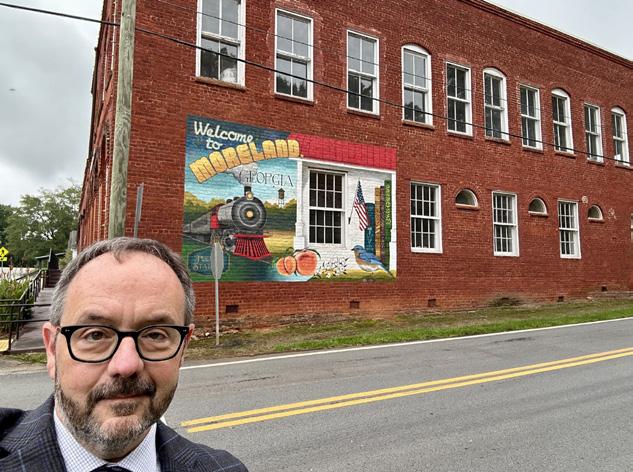
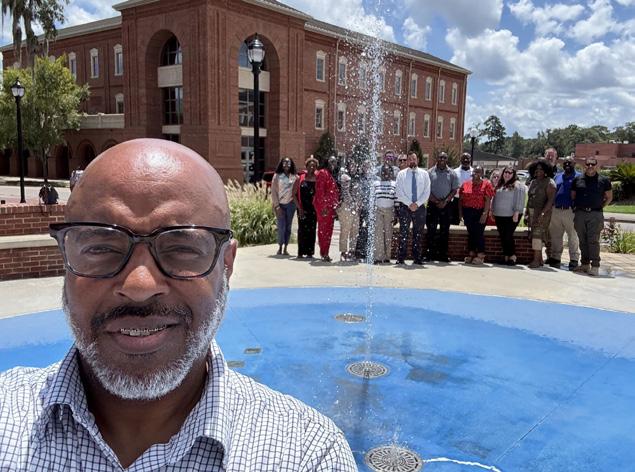
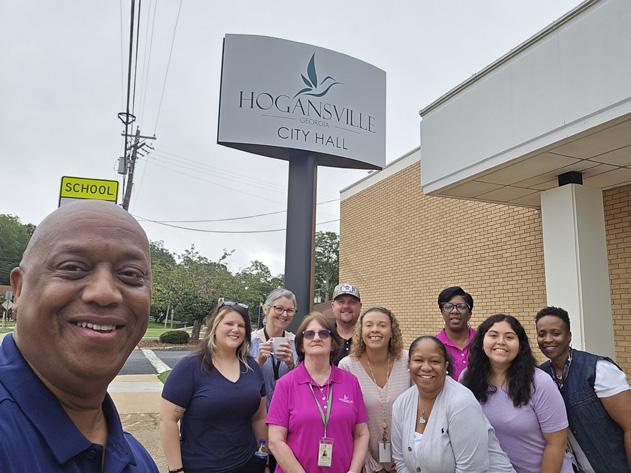
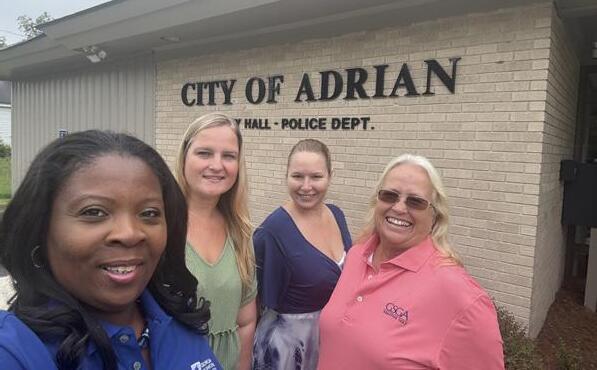
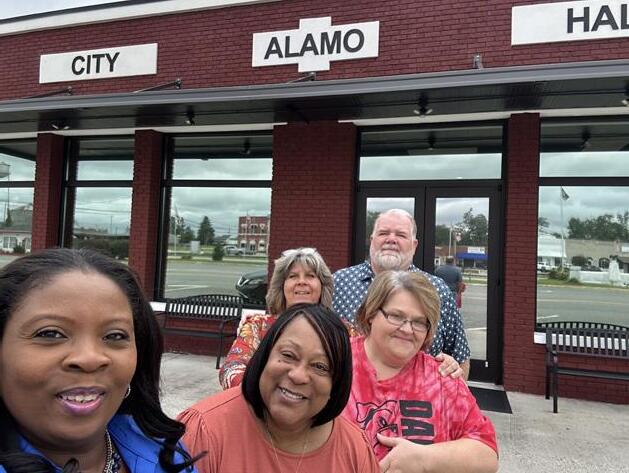
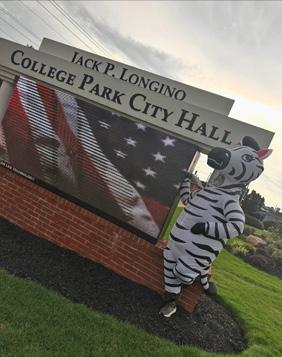
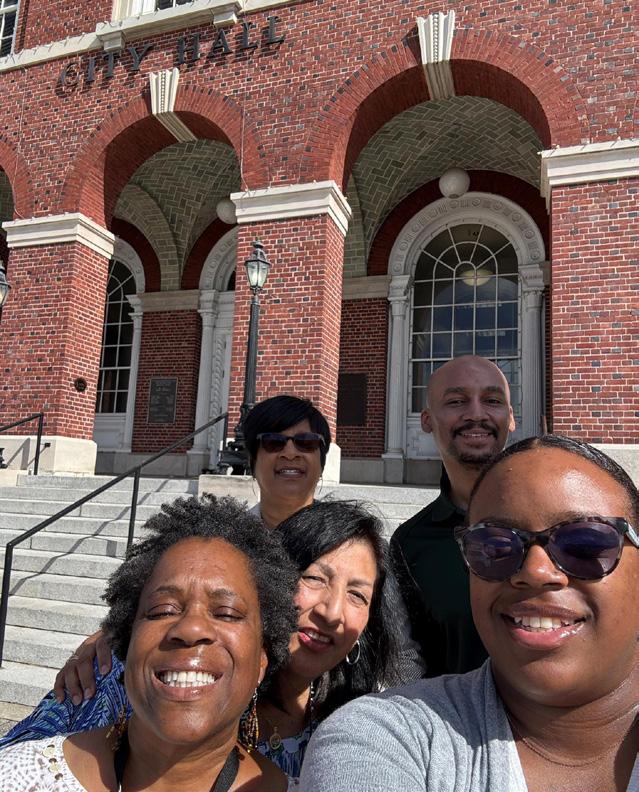
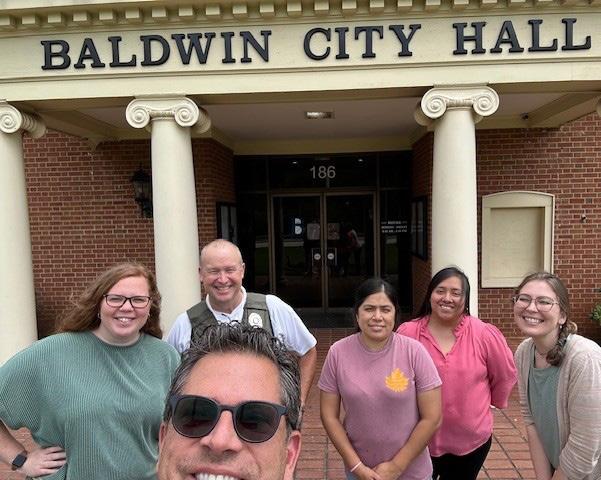
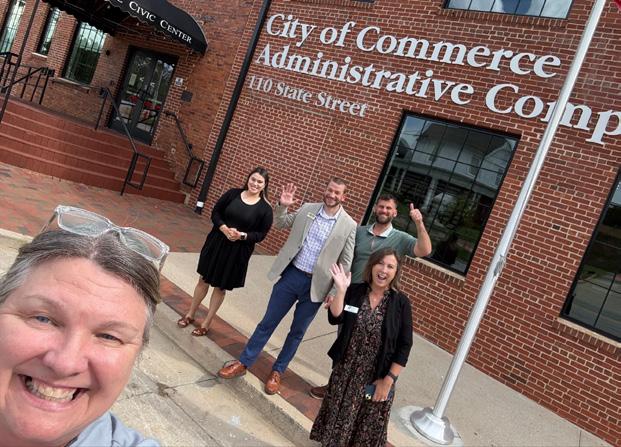
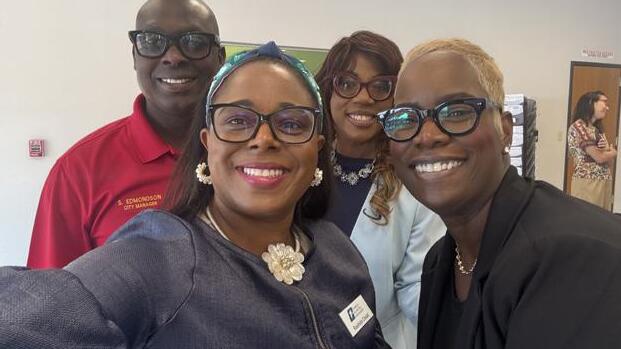
ACROSS THE STATE, LOCAL GOVERNMENTS AND residents came together to showcase their civic pride during the annual City Hall Selfie Day. The nationwide initiative, created by ELGL (Engaging Local Government Leaders), encourages community members to snap photos in front of their city halls and share them on social media using the hashtag #CityHallSelfie.
This year, Georgia cities of all sizes joined the fun—from bustling metro cities to small towns. Elected officials, staff, and residents posed proudly, capturing the unique character of their communities while highlighting the importance of city halls as the central hub of local government.
The enthusiasm was contagious, with friendly competition across the nation to see cities and communities win awards such as: Most Creative City Hall Selfie, Funniest City Hall Selfie, Best City Hall Selfie from Another Type of Government and more. Georgia’s participation helped spotlight the energy, creativity, and strong sense of community that thrives in municipalities throughout the state. And thanks
to that overwhelming involvement, the Georgia Municipal Association won an award for being a state with the most City Hall Selfies with more than 300 photos being taken.
“City Hall Selfie Day has become a fun day of connection and celebrating the heart of communities across the nation,” said Larry Hanson, GMA’s CEO and Executive Director. “Seeing so many residents, officials, and staff take part from every corner of the state shows the pride Georgians have in their cities and the important role cities play in civic life and engagement. We at GMA share in the pride and enthusiasm for all Georgia cities.”
City Hall Selfie Day not only generated thousands of likes and shares online but also sparked conversations about the essential role city halls play as gathering places, service providers, and symbols of civic identity, by leaning into the lighthearted challenge, Georgia’s cities once again proved that when it comes to celebrating community spirit, no one does it better.












Accelecom
Aetna
Alston & Bird
Ameresco
Ardurra
ATLAS
Bates Carter Calix
Charles Abbott Associates
Charter Communications
Clearwater Solutions
Coca-Cola United Bottling Company
Comcast Business
Comprehensive Program Services
CPL
Credstar Revenue Solutions
Crews & Associates, Inc.
Davenport Public Finance
Decisions Consulting
Atlanta Apartment Association
Central Savannah River
Area Regional Commission
Electric Cities of Georgia
Fox Theatre





Elarbee Thompson
Engineering Management, Inc.
ERP Gov Suite
ESG Operations
Flock Safety
Freeman Mathis & Gary, LLP
Gallagher Bassett
Gas Authority
Georgia 811
Georgia Tax Collection System (GATCS)
Georgia Transmission
GFL Environmental
Goodwyn Mills Cawood (GMC)
Google Fiber
GovPossible
Gray, Rust, St. Amand, Moffett & Brieske
HdL Companies
Hunton Andrews Kurth
i3 verticals
IPG Architects & Planners
IUC - Interactive Utility Communications
Jacobs
JJK Workplace, LLC
KAI
Kleinfelder
McCarthy Building Companies, Inc.
McKinstry
Metric Financial LLC
Municipal Revenue Services
Murray Barnes Finister, LLP
Nichols, Cauley & Associates
Parker Young Construction, Inc.
Path Company
Precision Planning, Inc.
Progress Residential
Republic Services, Inc.
Rindt
Rushton, LLC
Georgia Environmental Finance Authority
Georgia Mountains Regional Commission
Georgia Tree Council
GTBA-Georgia’s Rural Telephone and Broadband Association
Schneider Electric
Sibelco
Siemens Industry, Inc
Smith, Gambrell & Russell, LLP
Southeast Elite Entertainment
Spicer Group
Springbrook
Stag Liuzza
Stifel Public Finance
Still Waters Engineering
Total Grant Services
Trane
TruVista
Turnipseed Engineers, Inc.
USG Water Solutions
Worldscapes LLC
Heart of Georgia Altamaha Regional Commission
MEAG Power
Middle Georgia Regional Commission
Northeast Georgia Regional Commission
Northwest Georgia Regional Commission
Southern Georgia Regional Commission
Southface Institute
Southwest Georgia Regional Commission
The Water Tower
Three Rivers Regional Commission

List any equipment or inventory, in any condition Sell to 5+ million registered buyers
Get higher returns on your surplus disposition!



Discover the GovDeals Difference Today!
Contact Jason Robinson: 334-300-9591 | jrobinson@govdeals com

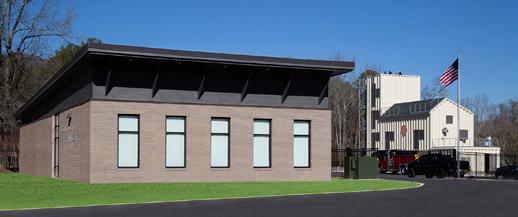
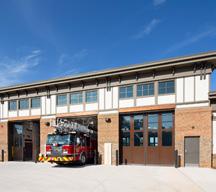
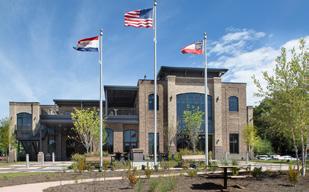
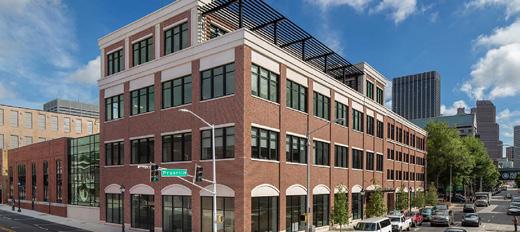
Located in the heart of Wilcox County, the town of Pitts is filled with history and southern charm. With a population of 252, the city offers an intimate and authentic glimpse into the rural Georgian lifestyle.
Pitts began as a modest settlement near the home of Lyston Clyde Peebles, Sr., with its earliest incarnation—King’s Crossing— springing into life in the mid-1880s, centered around the store of Brock Owens and Ashley J. Pitts, who became the inaugural postmaster. The town was incorporated in 1905 during a period of burgeoning rail expansion throughout Wilcox County.
One of Pitts’ most compelling historical anecdotes occurred in 1921, when a brilliant meteor streaked across the southwestern Georgia sky, exploding and depositing iron fragments north of town. One piece landed mere feet from a child playing outdoors, while the largest—nearly 3.8 kg—is now held in the Smithsonian Institution. These dramatic details were meticulously chronicled in the Geological Survey of Georgia Bulletin.
POPULATION: 252
MAYOR: Lisa Willis GMA
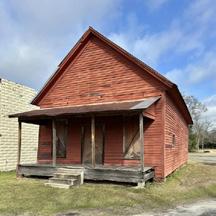
Architecturally, Pitts retains echoes of its past. Local enthusiasts led by Delano Braziel preserved and restored many of the commercial storefronts on 8th street, which once served as the bustling main drag.
Landmarks like King’s Garage—reborn as “The Station” storefront for Oliver Farms—and the historic King House add layers of local history and character.
Today, Pitts is set amidst an agricultural landscape where cotton, peanuts and timber remain economic pillars.
It’s a quiet gem—rich in heritage and neighborly spirit—waiting to be discovered by Interstate 75 travelers looking to experience Georgia’s small-town soul.
GMA continues to prioritize one of its most important goals: connecting Georgia’s citizens with the representatives who serve them.
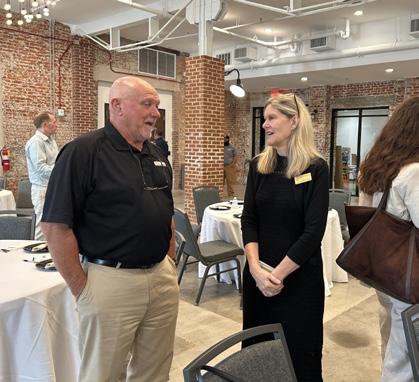
A CENTRAL WAY THIS MISSION COMES TO LIFE IS through Hometown Connections. These gatherings strengthen relationships between cities and legislators by offering firsthand insights into local challenges, achievements and opportunities.
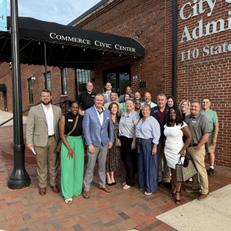
By creating intentional spaces for city officials and representatives to meet, the program ensures that meaningful conversations take place around the unique needs of municipalities across the state. Each event provides both structured dialogue and organic moments of connection, allowing leaders to share stories, showcase progress, and highlight where support is needed. The 2025 series of Hometown Connections launched with great momentum, with the City of Byron and the City of Commerce serving as the first hosts.
The City of Byron hosted its Hometown Connection on Aug. 11, with Mayor Michael Chidester guiding the event at the Historic Byron Train Depot. Local and state leaders, including Rep. Robert Dickey, Bethany Ballard, Patty Marie Stinson, and Sen. John F. Kennedy, were
present to hear directly from city officials and residents. Conversations touched on several pressing topics: transportation improvements, sidewalk expansion and infrastructure, managing new growth, and long-term planning goals. These discussions provided legislators with a clearer understanding of the investments needed to keep pace with Byron’s development. To conclude the event, attendees boarded a guided bus tour that circled the city. The route highlighted Byron’s historic landmarks as well as areas experiencing growth and undergoing new construction, offering a visual complement to the earlier discussions.
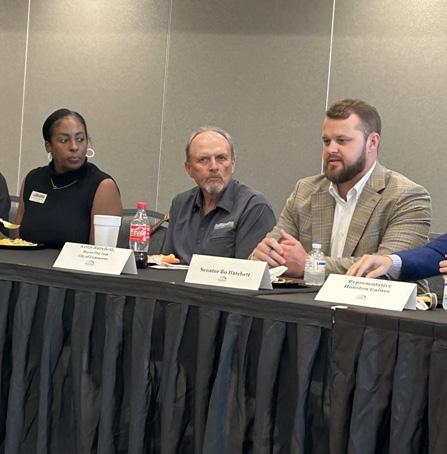
The following day, the city of Commerce continued the momentum by hosting its Hometown Connection at the Commerce Civic Center. Mayor J. Clark Hill III welcomed state leaders including Sens. Thomas “Bo” Hatchett and Frank Ginn, along with Rep. Houston Gaines. The conversation in Commerce focused on critical priorities such as water infrastructure improvements, housing challenges, and the importance
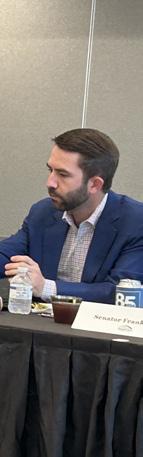
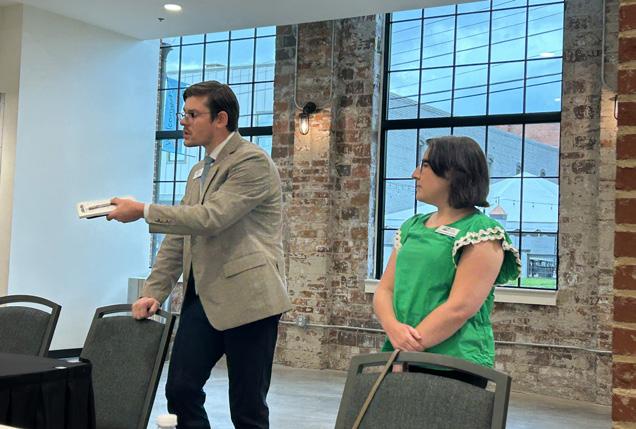
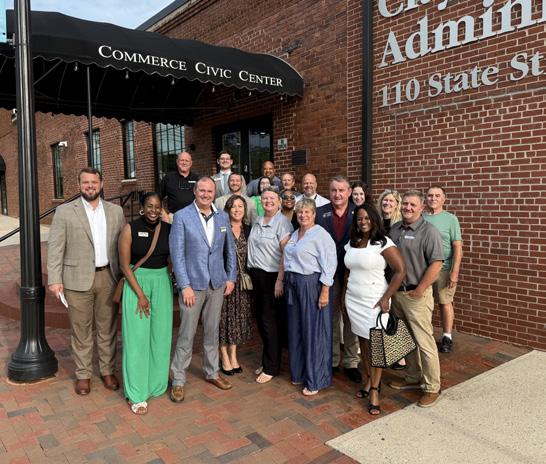
of legislative updates that directly affect the community’s ability to address these needs. Like Byron’s event, Commerce’s gathering reinforced the value of open dialogue and collaboration between city leaders and state representatives.
While Byron and Commerce have taken the lead in launching the 2025 Hometown Connection campaign,
there is still plenty of opportunity for other cities to participate. Hosting a Hometown Connection creates visibility for your community, elevates local issues, and ensures that your city’s voice is heard at the state level.
If you are interested in hosting an event before the year concludes, scan the QR code below to learn more and sign up.


“I
can think of no one better than Leesa Hagan to head up that committee. She’s done a great job with it.” – House Speaker Jon Burns
WITH NEARLY TWO-THIRDS OF GEORGIA’S COUNTIES CLASSIFIED as rural, advocating for countryside communities is a key topic both in and out of the legislative session. As the House Rural Development Committee Chair and representative for District 156, Rep. Leesa Hagan (R-Lyons) focuses on issues affecting the state’s many rural communities. This includes economic development, education, healthcare access, housing access and more.
Rep. Hagan, originally from Riverdale in metro Atlanta, has lived in Lyons since 2009 when she and her husband moved back to his hometown area. She noted that she values rural Georgia for the
intentionality it fosters in relationships and admires the balance of independence and community spirit found here.
Though not from a political family, Hagan’s path to public service began during her time at the University of Georgia and later through grassroots involvement with the local Republican Party in Toombs County. Her commitment grew stronger when her sons expressed their desire to return to Lyons after college, motivating her to ensure that rural Georgia offers the housing, jobs and opportunities necessary for young people to build a future at home.
LR: This year, you were named Chairwoman of the new House Rural Development Committee, tasked with helping drive economic growth and improve services for rural Georgians. How do you personally define rural Georgia today? Has that definition changed over time?
Rep. Hagan: It’s hard for me to personally define “Rural Georgia” completely. In my committee [the House Rural Development Committee], we define rural Georgia as counties that have a population of 50,000 or less, so that’s roughly 120 out of 159 counties. But even living in rural Georgia, broadband expansion has helped keep us connected so much easier.
LR: We often hear the phrase “Two Georgias” to describe the urban-rural divide. How do you envision both “Georgias” working together to support each other? What strengths or resources can each offer that benefit the other?
Rep. Hagan: I see partnerships between rural Georgia and metro Atlanta with broadband. I love that businesses are exploring remote and hybrid work. That will allow businesses to get strong employees working for Atlanta based companies remotely with expanded broadband access.
LR: What are the top priorities your committee intends to focus on in its second year?
Rep. Hagan: We don’t have any assigned legislation right now. I want to applaud House Speaker Jon Burns (R-Newington) for having the foresight to start this committee. It will be a great opportunity to have legislation assigned to the committee that truly affects rural Georgia.
LR: Rural Georgia has experienced population loss in many areas. What initiatives is your committee exploring to help attract new residents and retain young people in rural communities?
Rep. Hagan: The House Rural Development Committee will meet soon to discuss issues but the three biggest things we need to focus on to attract and retain residents are healthcare, education, and housing.
• Healthcare: We’ve had a focus on telehealth legislation in the last several years and when companies move to rural Georgia, they want healthcare access for their people. Telehealth is a great way to provide healthcare access for rural residents.
• Education: The Technical College System of Georgia (TCSG) is very strong and that’s very good for rural Georgia because it helps to give our young people the skills needed for jobs in our communities.
• Housing: The Department of Community Affairs (DCA) is very strong too, which has helped rural communities. We want all communities to retain their unique character and be able to make the decisions that are best for them.
LR: Across Georgia, we have small towns with deep history and strong local leadership. Yet, many feel left out of statewide priorities. From your perspective, what strategies or approaches work best for rural cities to advocate effectively for their needs at the Capitol?
Rep. Hagan: Don’t wait until you get to the state capitol to reach out to your legislators. Establish a relationship with us [legislators] and talk to us when we’re back home in our districts and not just at the Capitol. When you establish a relationship with us, we will really listen to you when you have concerns because we have that relationship and a level of trust there.
LR: If you could give one piece of advice to municipal leaders in Georgia about advocacy—especially those representing rural areas—what would it be?
Rep. Hagan: Remember that your citizens that are calling and emailing you are not upset with you as city officials. People can be at their wit’s end when they call you and a lot of times they are just wanting to feel heard. Remember too that it’s a privilege to be in our elected roles, represent people, and serve.
LR: When you think about the future of rural Georgia, what do you hope the next ten years will look like?
Rep. Hagan: Even with unique challenges in rural Georgia, I hope that our local leaders will look at the challenges as a way to showcase rural Georgia’s strengths. I hope that they will look at changes as opportunities to grow for their communities and not as negative for their communities.
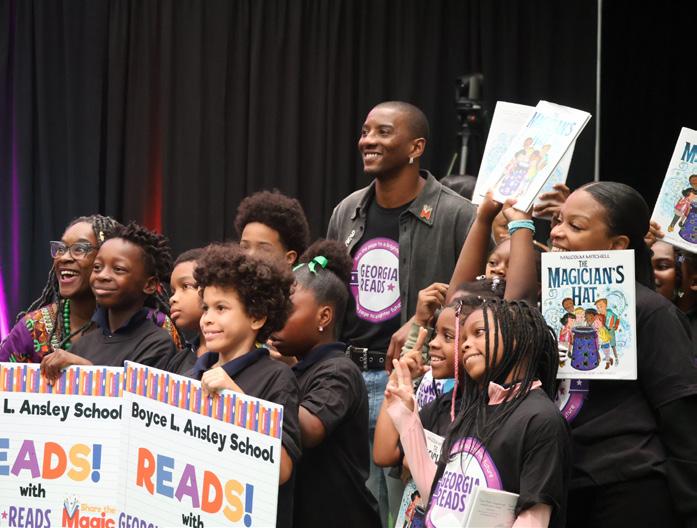
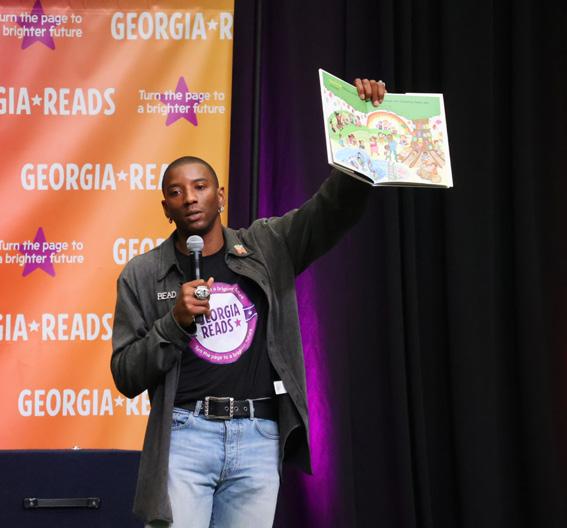
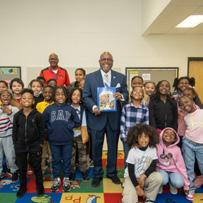
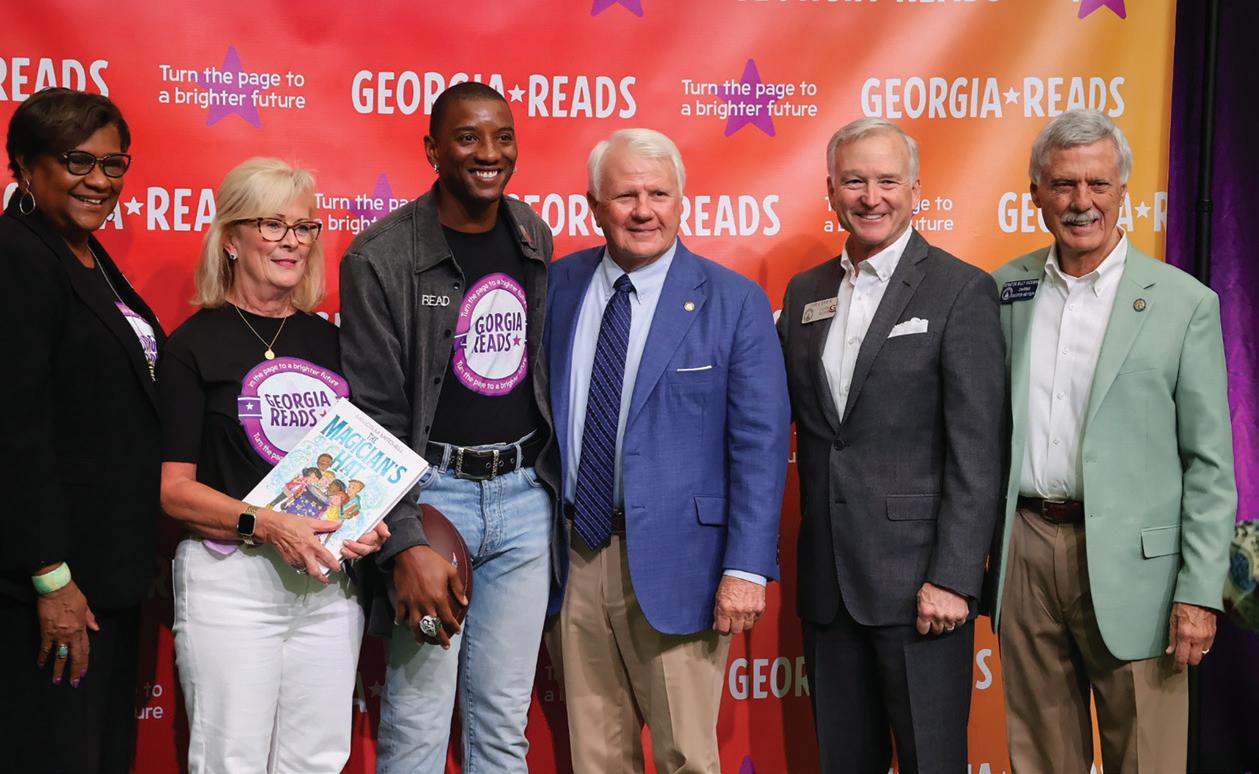
On Monday, September 22, 2025, the College Football Hall of Fame in Atlanta was filled with the buzz of excitement—not from a football game, but from the joy of reading.
NEARLY 400 ATLANTA PUBLIC SCHOOLS STUDENTS from seven schools gathered for the annual Georgia Reads Day Reading Rally. Across the state, thousands of classrooms tuned in through Georgia Public Broadcasting (GPB) and the live stream on GeorgiaReads.org, making the rally a shared celebration of reading that connected communities from the mountains to the coast.
The highlight of the morning came when Malcolm Mitchell, former University of Georgia football star and Super Bowl champion, read his beloved children’s book "The Magician’s Hat" to the students. As Mitchell turned the pages, the message rang clear: books hold the power to unlock imagination, opportunity, and possibility. His passion inspired young readers to see themselves as magicians of their own futures. Adding to the
sense of wonder, a magician performed live, reinforcing the day’s message that reading is its own kind of magic.
For the students in attendance, the Reading Rally was a day of joy and discovery. For thousands watching virtually, it was a chance to join a statewide movement.
This year’s Georgia Reads Day built on a foundation of growing momentum. Earlier in 2025, the Governor and General Assembly made historic investments in literacy, allocating more than $18 million to expand Georgia Literacy Coach Coordinating efforts. Today, 225 literacy coaches are working across Georgia, including 60 focused on Comprehensive Support and Improvement (CSI) schools. These coaches ensure science-of-reading training is put into practice.


The rally underscored how community events, policy investments, and strong instruction are working hand-in-hand to raise literacy outcomes.
While the College Football Hall of Fame event drew the spotlight, Mayor’s Reading Club communities across Georgia also hosted Georgia Reads Day activities:
• LaGrange – Mayor Jim Arrington partnered with Get Troup Reading for a proclamation, school visits, a public library read-along, and a community book drive.
• Hoschton – Mayor Debbie Martin joined civic leaders, including the police chief and Councilmember Fredria Carter, to read to classes at a local school.
• Centerville – Mayor Micheal Evans invited families to a “Book-nic” on September 25, reading to students in Center Park.
• Trion – Mayor Lanny Thomas and a host of civic leaders—including U.S. Representative Marjorie Taylor Greene, GA State Senator Jeff Mullis, Trion Mayor Pro-Tem Mickey McGraw and other officials—read with students at Trion Elementary School.
• Fitzgerald – Mayor Jason Holt read to all students at Ben Hill Primary School through a Google Meet
and later in the week, the city library hosted a downtown Fall Festival event with story time, snow cones, and community partners.
These were just a few of the local celebrations that expanded the impact of Georgia Reads Day, demonstrating how literacy connects leaders and families at every level—from city halls to classrooms.
Georgia Reads Day was made possible through the support of the Georgia Council on Literacy, Share the Magic Foundation, Georgia Municipal Association, Children’s Healthcare of Atlanta, WellStar Health System, the Georgia General Assembly, and GeorgiaForward. Together, these partners help create the conditions for students to learn to read—and to read to learn.
Literacy is one of the most important predictors of a child’s future success. Students who read proficiently by third grade are more likely to succeed in school and beyond. Yet across the nation and in Georgia, literacy challenges persist. Momentum is building. With the science of reading guiding instruction, strong community partnerships driving support, and events like Georgia
Reads Day inspiring joy and motivation, the state is tackling literacy challenges with renewed focus.
For children at the Hall of Fame, Georgia Reads Day was about more than a story. It’s about seeing their own potential reflected in the magic of books and in leaders like Malcolm Mitchell who remind them that dreams can begin with reading.
As the pages of "The Magician’s Hat" closed, another chapter in Georgia’s literacy story opened. Georgia Reads Day 2025 proved that with collaboration, investment, and inspiration, we can give every child the tools to imagine, grow, and succeed.
For the students who filled the College Football Hall of Fame with laughter and applause, and for those who tuned in from classrooms statewide, the magic of reading is now part of their story—a story that will shape Georgia’s future for years to come.
GEORGIA READS COMMUNITY AWARD
Applications are now open for the Georgia Reads Community Award which honors up to ten communities for measurable progress in literacy.
Each winner will receive $20,000 to support local efforts, a visit from Malcolm Mitchell, up to 1,000 books, and an external evaluation to track impact.
Eligible communities must show at least two years of collaborative literacy work, results, and a plan for sustaining progress. Applications for the 2026 awards are due December 5, 2025. DETAILS ARE
RYAN TAYLOR joined the Risk Management Employee Benefits (RMEBS) team at GMA in June as the Retirement Benefits Manager. Taylor brings over 12 years of experience in managing pension plans in the private sector. Taylor is a graduate of Auburn University.

MOLLY MCLOUGHLIN joined GMA in September as the Manager of Federal Relations. In this role, Molly will serve as GMA’s primary liaison with federal officials, agencies, and national partners, advocating for the interests of Georgia’s cities. She will be responsible for monitoring federal legislative and regulatory developments, educate

and support city officials on policy priorities and lead the staff work of the Federal Policy Council. Prior to joining GMA, Molly worked for Ohio River South, advancing state and local policy strategies across the southeast, leading high-visibility communications, and managing multi-state advocacy campaigns for clients in infrastructure, economic development, technology and finance. McLoughlin holds a bachelor of arts in Strategic Communication and has been recognized as a two-time consecutive James Magazine “Top Lobbyist—Rising Star” (2023,2024) and is actively with Georgia Appleseed’s Young Professionals Council, United Way of Greater Atlanta’s Young Professional Leaders, and the Council for Quality Growth’s Emerging Leaders Initiative.
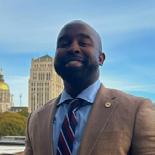
JAMES MAGAZINE ONLINE HAS RELEASED ITS 2025 Top Lobbyists rankings, and the Georgia Municipal Association is honored to be named one of Georgia’s Top 100 trade and business organizations. GMA’s Governmental Relations Director Jim Thornton earned
a spot among the Top 100 Lobbyists, while Governmental Relations Associate DJ Waller was celebrated as a Rising Star. Together, the team is proud to represent and advocate for Georgia’s cities year-round.
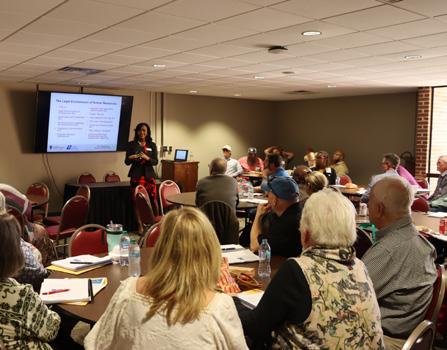
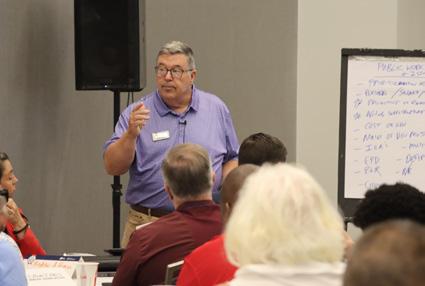
There is now more opportunity to invest in your continuing municipal education. The Harold F. Holtz Municipal Training Institute—operated in partnership between the Georgia Municipal Association (GMA) and the University of Georgia’s Carl Vinson Institute of Government—will offer a few more training classes online and in person before the end of the year. Gain valuable knowledge and earn credits towards a training certificate by taking one or more of these upcoming classes.
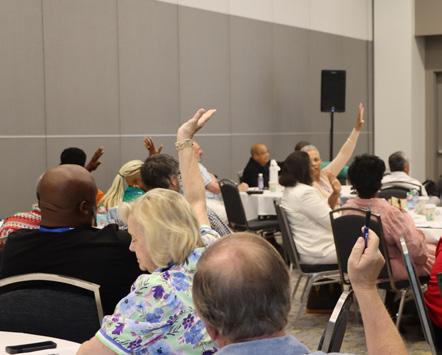
OCTOBER 28-29: DOWNTOWN DEVELOPMENT AUTHORITY BASIC TRAINING – LIVE ONLINE; 8:30 A.M. – 1:00 P.M.
This live, interactive online-only training class will be held over two days, from 8:30 a.m. – 1:00 p.m. each day.
Topics include: the management of downtown as a valuable resource; the role of the authority, board members and staff; DDA laws; and the day-today operations of a Downtown Development Authority.
Those eligible for training certificates will receive six hours of credit towards a certificate upon successful completion of the class. You must be present the entire class time BOTH days to earn credit for the this class.
NOVEMBER 6: HEART AND SOUL DOWNTOWN WORKSHOP IN DOWNTOWN CARROLLTON, 8:30 A.M. – 4:00 P.M.
The Holtz Training Institute, in partnership with the Georgia Cities Foundation and the City of Carrollton presents this workshop, designed for municipal officials who are interested in downtown revitalization.
The workshop provides opportunities to view actual plans and projects with officials from the host city discussing their downtown and neighborhood strategies, their success stories, and their lessons learned. The workshop includes formal presentations and tours of downtown areas, utilizing city officials and downtown practitioners that have first-hand experience with downtown development. Additionally, attendees will receive resources for technical assistance and downtown incentives.
Those eligible for training certificates will receive six hours of credit towards a certificate upon successful completion of the class.
NOVEMBER 13: STEERING THROUGH THE STORM: GUIDING YOUR COMMUNITY THROUGH A DISASTER, AT THE GMA OFFICE IN ATLANTA, 8:30 A.M. – 3:30 P.M.
During times of natural or human-made disasters, cities are faced with challenges of steering through the “storm.” Cities must continue city business operations and communicate effectively to meet the basic needs of their community while managing the demands of the on-going recovery operation. While the initial focus following a major disaster is to respond to the life safety aspects of the emergency, multiple tasks quickly emerge to face the local leadership team.
Is your city prepared for the organizational resiliency necessary to sustain regular services as well as emergency operations during the four distinct phases of a disaster? What is the role of elected leaders in these scenarios? This class will define the various types of disasters, review the four phases of a disaster; discuss the planning and preparedness required for community resilience in responding to disasters; explore methods of prioritizing crucial essential services, and identify the multiple impacts on the local economy, city services and city staff.
Those eligible for training certificates will receive six hours of credit towards a certificate upon successful completion of the class.
LIVE
1:00 P.M. – 4:00 P.M. This class provides updates on recent legislation and judicial decisions affecting municipal governments, designed to help attendees gain a clearer understanding of how these changes affect their communities.
Those eligible for training certificates will receive three hours of credit towards a certificate upon successful completion of the class. Those who have taken Municipal Law Update in previous years can take this class and earn credit. *This is the same class that was offered during the 2025 Annual Convention.
The Newly Elected Officials Institute, a state-mandated training program designed to equip new mayors and councilmembers with the knowledge and skills necessary to govern effectively, will be held twice in 2026.
• Feb. 25-27, 2026, in Athens at the University of Georgia Center for Continuing Education and Hotel.
• March 18-20, 2026, in Tifton at the University of Georgia Tifton Campus Conference Center.
This training, provided by GMA and the University of Georgia’s Carl Vinson Institute of Government, helps local officials understand their roles and responsibilities in municipal government.
The Georgia Municipal Association (GMA) proudly recognizes this year’s recipients of the GMA Lifetime Service Award, honoring municipal leaders who have dedicated decades of service to their communities. These individuals represent the best of civic leadership—committed, visionary, and unwavering in their efforts to improve the lives of the people they serve.
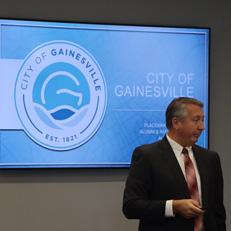
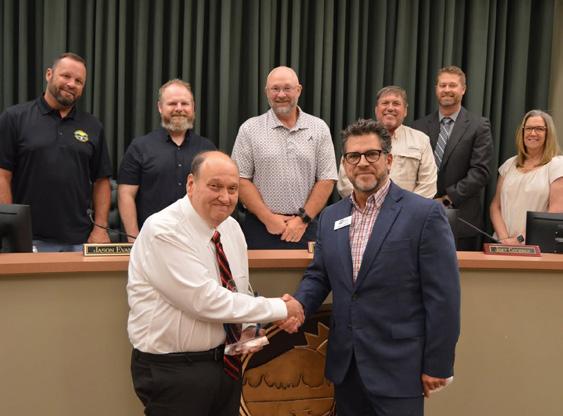
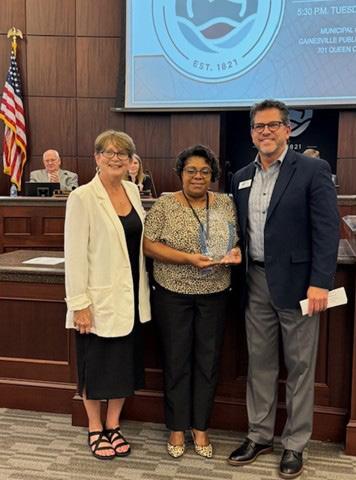
Denise Jordan has served the city of Gainesville with more than 35 years of dedicated service to the city of Gainesville. She began her career in 1990 as a records clerk as rose through the ranks to become City Clerk, a position she held for the past 25 years. Throughout her career, she helped to modernize Gainesville’s municipal operations, led the recodification of city ordinances and helped to transform a city basement into an official archive—helping to preserve Gainesville’s history for generations. Jordan was one of four honorees inducted into the Georgia Municipal Government Hall of Fame during GMA’s 2025 Annual Convention.
With more than 45 years of service to local government, Glenda began her career as city clerk with the city of Dillard in 1980. Throughout her career she has dedicated

45 years of her life to serving the citizens and businesses of the city by providing financial management skills, integrity and loyalty as some of her best attributes.
Gloria ‘Jean’ Spratlin has served Athens-Clarke Unified Government for more than 51 years. She holds the title of being the longest serving ACCG employee since joining Athens-Clarke County in 1974 serving as city clerk. Over her career, she has been a dedicated clerk, receiving several certifications such as earning her Certified Municipal Clerk designation from the International Institute of Municipal Clerks (IIMC) and completing the Athens Management Development Program I, II, and III. In 2022, she was awarded as Local Government Administrator of the Year from the
Northeast Georgia Regional Commission, an award that recognizes an individual who serves as a model for professionalism, leadership, and integrity from the area’s twelve county and fifty-four city member local governments.
Jeff Honea has served the city of Cumming for more than 45 years in multiple key roles. He began in Water Distribution in 1980 and transitioned to the Utilities Department in 1984. In 1987, he was appointed to City Clerk, a position he would hold for nearly four decades. In each role, Honea provided critical support, steady leadership and a strong sense of civic duty to the city’s operations and residents.
With 40 years of service in local government, Oma ‘Lou’ Stewart has left an enduring mark on the cities of Canton, Holly Springs, Dahlonega, Waleska and the town of Thunderbolt throughout her career. From modernizing the management of city records and streamlining municipal processes to improve service for the residents of the cities she served, Stewart always found a way to proactively adapt to the various changes in public administration, often ensuring compliance with evolving laws and regulations while also
embracing best practices that enhanced transparency and efficiency. Stewart was recognized by the Holly Springs Council with the award during the August 18 City Council Meeting.
Each of these awardees has contributed uniquely to their communities, yet all share a common dedication to service that strengthens municipal government across Georgia. Their legacies serve as reminders of the vital role local leadership plays in shaping the future of our cities.

GMA invites nominations for the Lifetime Service Award. The Lifetime Service Award is presented to elected city officials, city managers, city clerks and city attorneys who have completed 35 or more years of service before leaving office or retiring.
For more information visit: https://www.gacities.com/about-gma/ lifetime-service-award
Katrina Cochran, Governmental Outreach Specialist

During the legislative session “off-season” General Assembly members work hard to study ongoing issues and priorities in the state. One of those members, Sen. Drew Echols of Alto, chairs the Senate Study Committee on Making Georgia the Number 1 State for Tourism.
ECHOLS, A FARMER AND BUSINESS OWNER, saw the need to study tourism as more people come to Georgia to enjoy all the activities the state has to offer. Echols, who owns and operates Jaemor Farms, said tourism runs in his family. Additionally, Echols’ wife and former state senator, Shelly Echols, came from a family that owned and operated a charter bus business.
“Our family, we know a fair amount about tourism. We know that our livelihood depends very much on tourism,” Echols said.
On the motivation for starting the committee, Echols said that it was mostly due to his desire to learn more about how Georgia conducts tourism in comparison to neighboring states such as North Carolina, Tennessee and Florida. Echols said that he expects the study committee’s goals to develop as the committee continues meeting into the fall. He hopes that the committee will look at giving local governments more flexibility with hotel motel excise taxes and adding funding to the state budget for tourism marketing.
Echols said that he anticipates this study committee will be successful in shedding more light on tourism in Georgia. He is also hopeful that by educating the legislators who were appointed to this committee, the industry as a whole will garner bipartisan support in the Senate.
“If nothing else, the industry is going to have some champions there in the Senate, because it’s been a long time since tourism has been given a real fair shake and a real hard look as to what we can do as a state to make it better,” said Echols.


During the first meeting of the tourism committee in Gainesville, Ga., several speakers came from outside of Georgia to speak about the tourism industry. Echols said , the committee is reviewing models from several states to see how they can improve the $80-billion industry in Georgia.
Breaking down departmental silos in the state government is part of the process, Echols said. The study committee plans to look at the growth in more detail along with key partners at state agencies, including the Georgia Department of Transportation, Department of Natural Resources and Department of Agriculture.
Echols plans to cover “agritourism” agricultural-based tourism that offers people opportunities to visit farms, ranches, or related locations— and nature-based tourism in a meeting later this year in Valdosta. While there is a niche to fill with agritourism, he wants to hear out community concerns as well, including growth and zoning issues.
“When agribusiness and municipalities work together, rural Georgia wins. Jobs, infrastructure, and community all grow from a successful partnership.”
“We need to look at ways to make industries and departments in the state of Georgia more efficient. The right hand always needs to know what the left hand is doing and if there’s any overlap from department to department, we need to make sure there’s a lot of communication there.”
Nature-based tourism preserves green space and natural environments while enhancing quality of life, giving people the option to be outdoors and in nature. Echols has hopes that cities and agribusiness can work together to foster good growth, a sentiment shared by the Georgia Agribusiness Council.
Georgia Agribusiness Council’s Director of Governmental Relations Jake Tench said, “When agribusiness and municipalities work together, rural Georgia wins. Jobs, infrastructure, and community all grow from a successful partnership.”



It is no question that cities and local governments must be part of the conversation, Echols pointed out that cities can and should be role models for others. While cities such as Savannah have a large, longstanding tourism industries, smaller cities like Gainesville are finding innovative tourism opportunities, too. One example is the location of the first Senate study committee meeting.
“Obviously I’m partial to my hometown [of Gainesville],” he joked. “But it was a great way to showcase a beautiful tourism/economic development project in the Boathouse on Lake Lanier that is 100% paid for by hotel motel taxes.”
Overall, Echols encouraged cities to think outside the box, while also maintaining local control, by looking at the ways that they can capitalize on their community’s unique aspects.
“Georgia is a patchwork of a beautiful quilt, with oceans and mountains and rivers, historical landmarks, cities with cultural identities that date back a couple hundred years,” said Echols.
This committee will encourage cities to promote tourism in their area. Additionally, Echols noted he
wants to promote communication and collaboration between cities, saying that they should be proactively working together to become more competitive tourist destinations.
“Everybody wins in that regard,” he said.
Georgia’s cities have a tremendous opportunity to showcase their communities on a world stage when the FIFA World Cup 26™ comes to Atlanta in the summer of 2026.
Echols recalled the MLB All-Star week in July of 2025 as a similar opportunity. His farm, located just north of Gainesville, saw several tourists who were in town for the All-Star festivities travel outside of metro Atlanta to experience all that Georgia had to offer. Cities outside of metro Atlanta should be prepared to see increased tourism during that time, Echols said.
“People coming from outside of Georgia are going to want to see our rivers, lakes, and oceans,” Echols said.
GeorgiaForward’s Young Gamechangers program continues to stand out as one of Georgia’s premier leadership development experiences for young professionals.
EACH YEAR, NEARLY 50 DYNAMIC LEADERS FROM across the state come together—representing business, government, nonprofits, and creative industries—to roll up their sleeves and tackle some of the most pressing challenges facing Georgia’s communities. What makes the program unique is its ability to blend professional growth with real-world impact, allowing participants to expand their networks, sharpen their leadership skills, and leave a lasting mark on the host community.
Applications for the 2026 Young Gamechangers class open Oct. 1, marking the start of our 13th cohort of changemakers dedicated to building stronger, more vibrant communities across Georgia. If you are a young professional eager to grow, give back and join a statewide network of leaders, this is your chance to get involved. But don’t just take our word for it! Hear directly from Young Gamechangers alumni about their experiences, their impact, and why you should apply to join this transformative program.

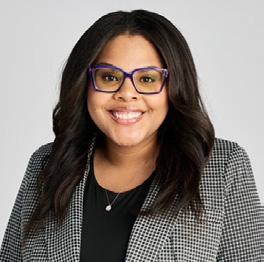
Keona Swindler, COMMUNICATIONS & MEDIA RELATIONS MANAGER, ATLANTA BELTLINE
CLASS OF 2023, COLUMBUS, GA
“Young Gamechangers was a once-in-a-lifetime opportunity to grow as a leader while making a real impact. The program pushed me out of my comfort zone, connected me with brilliant peers from across Georgia, and gave me the tools to see my community’s challenges—and solutions—through fresh eyes. If you’re ready to stretch yourself, expand your network, and leave a lasting mark, Young Gamechangers is the program you can’t afford to miss.”
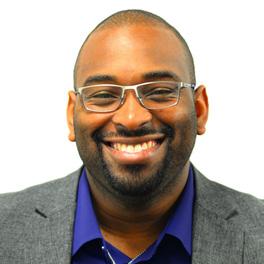
Tavari Turner, PROGRAM MANAGER FOR GEORGIAFORWARD, GEORGIA MUNICIPAL ASSOCIATION
CLASS OF 2023, COLUMBUS, GA
“I participated in the 2023 Young Gamechangers program in Columbus, and it was truly transformative. I loved the experience so much that when the opportunity came to work with the program, I jumped at it. Young Gamechangers challenged me, inspired me, and connected me with incredible leaders across Georgia, many of whom have become close friends. If you’re considering applying, take the leap—you won’t regret it!”
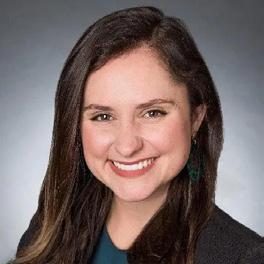
Carrie Barnes, FOUNDER & PRINCIPAL CONSULTANT, EMPOWERED PLANNING & LEADERSHIP SOLUTIONS
CLASS OF SPRING 2016, DOUGLASVILLE, GA
“Being part of the 2016 Young Gamechangers class in Douglasville was an unforgettable experience. Our cohort had the chance to dream big for a city known for its rich history and charming downtown, and to see how our ideas could help shape the future. Young Gamechangers gave me lifelong connections, fresh perspectives, and the confidence to know that young leaders really can make a difference. I encourage anyone thinking about applying to take the opportunity—it’s worth every moment.”
The Young Gamechangers program is more than a leadership experience—it is a chance to shape the future of Georgia while building lasting connections and skills. If you are ready to take the next step in your professional journey, we encourage you to apply today.
Visit georgiaforward.org/apply to submit your application for the 2026 class. Applications close this fall, and selections for the new cohort will be announced in early January.
Don’t miss your opportunity to join this powerful network of leaders and changemakers from across the state!
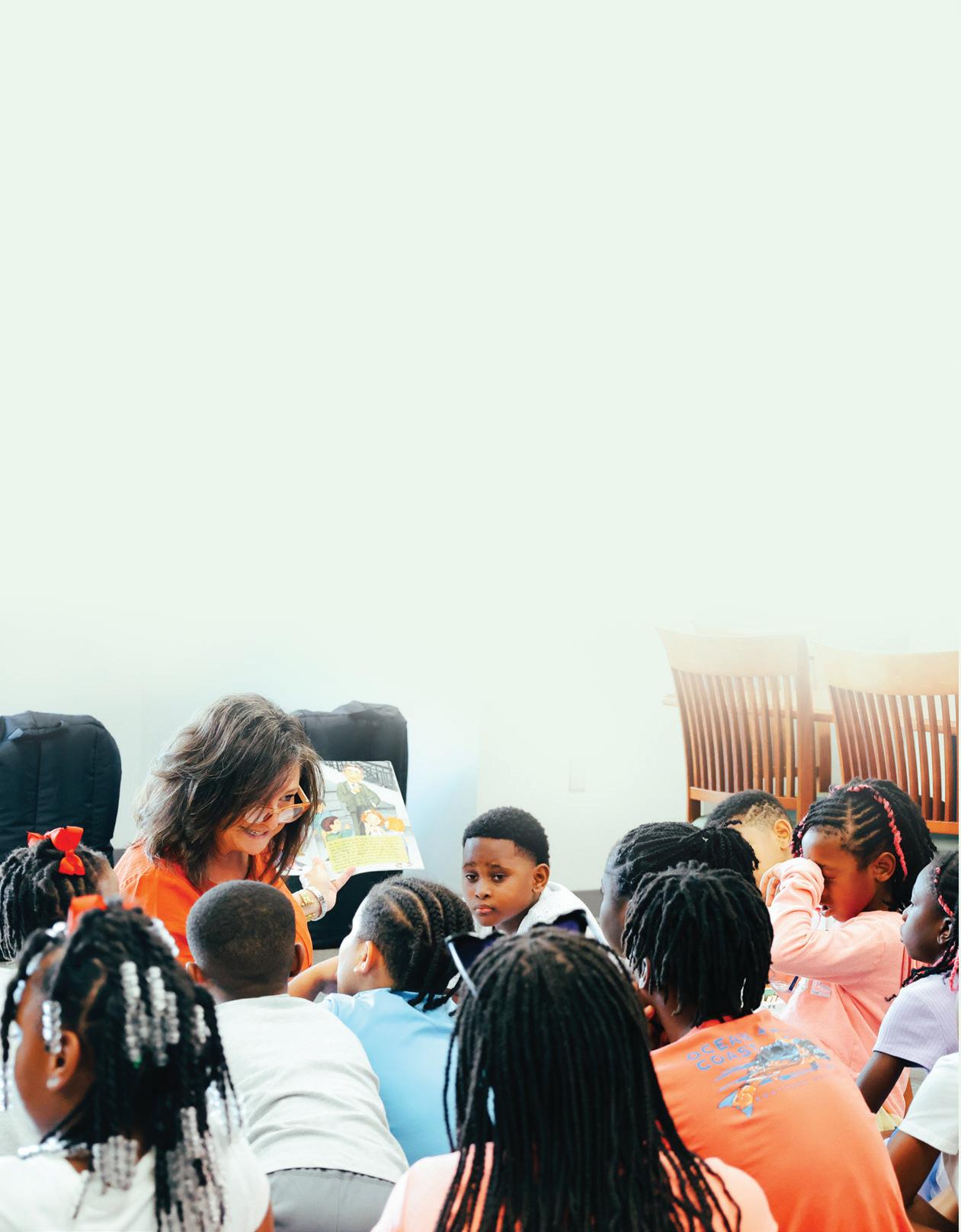
Across Georgia, mayors are picking up books, gathering children, and sparking a love of reading that will shape the future of our communities.
THE MAYOR’S READING CLUB IS MORE THAN story time – it is a movement proving that literacy builds stronger families, stronger economies and stronger cities.
Literacy is the foundation of a thriving community. Research consistently shows that children who read proficiently by the end of third grade are far more likely to graduate from high school, pursue higher education and secure stable employment. Conversely, low literacy is closely tied to poverty, unemployment and even poor
health outcomes. In Georgia, where nearly two-thirds of fourth graders are not reading on grade level, the need for community-driven literacy efforts has never been more urgent.
That’s where the Mayor’s Reading Club (MRC) steps in. A program of GeorgiaForward, the MRC brings local leaders directly into classrooms, libraries and pre-K centers to read with children and spark a lifelong love of books.

The Mayor’s Reading Club is simple in concept but profound in impact. Mayors read aloud in classrooms, libraries and at community events, bringing children together around stories. They often invite firefighters, police officers or other local leaders to join them, turning reading into a shared civic experience. Many also visit the youngest learners at pre-K centers, reaching children at a critical stage of language and brain development when the foundation for lifelong success is built. What unites these efforts is the messages they send: reading matters, and your mayor believes in you. Each event not only encourages literacy but also creates meaningful connections between children, families and their local government.
Improving literacy isn’t just about helping students—it’s about strengthening entire communities. Studies show that:
• Adults with low literacy earn about 30% less over their lifetime compared to those with a high school diploma. (Deloitte, 2023)
• The economic cost to Georgia—through lost tax revenue, increased social services, and incarceration—is approximately $1.26 billion annually. (GSAN, 2021)
• Children whose parents struggle with literacy have a 72% chance of reading at the lowest levels themselves, perpetuating intergenerational disadvantage. (GSAN, 2021)
• In 2023, 56% of Georgia’s third graders were not reading at grade level, increasing their risk of failing behind. (Deloitte, 2023)
By investing in literacy, cities are investing in their future workforce, economic competitiveness and social well-being.
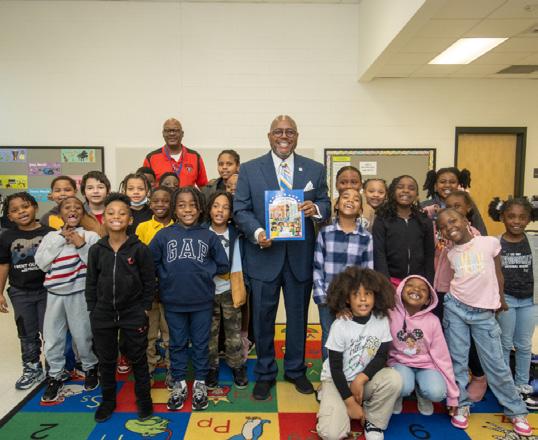
Mayor Julie Smith of Tifton explains the MRC program this way: “One of my favorite parts of being the mayor of Tifton is spending time with the kids in our community. The Mayor’s Reading Club has given me plenty of opportunities to do just that. The kids are so much fun— they ask the best questions and it gives me an opportunity to focus on them. Several times I’ve brought a city employee or two to read with me. They love it when the fire or police department comes to read. I always make them promise to keep reading at home—read to the dog, read to their parents, read to siblings, just read, read, read.”
And Mayor Vince Williams of Union City captures the heart of the movement: “The Mayor’s Reading Club for me is more than just a program, it’s a promise to our children that literacy opens doors to opportunity, imagination, and lifelong success. When we read together, we grow together as families, as neighbors, and as a community. And as Dr. Seuss reminded us, ‘The more that you read, the more things you will know. The more that you learn, the more places you’ll go.”
2026 will be an exciting year for literacy in Georgia. GeorgiaForward is preparing to launch the Georgia Caroline Puppet Show, a creative program that will both educate students about local government and encourage a love of reading through interactive storytelling and performance. At the same time, the organization is developing the Community Literacy Collaborative, which will pilot in 2026. This initiative will provide municipalities with tools, training, and partnerships to create place-based literacy ecosystems modeled after the successful Georgia Initiative for Community Housing (GICH). Together, these efforts will expand the reach of the Mayor’s Reading Club and strengthen local strategies for improving literacy statewide.
We are grateful to the 134 mayors who currently participate—leaders who understand that literacy is not only about children’s success but about building stronger, more resilient communities. Their names can be found at georgiaforward.org/mayors-reading-club.
Now, we invite every mayor across the state to join them. Imagine the power of all 536 Georgia mayors committing to literacy. Together, we could transform outcomes for thousands of children and build communities where reading is celebrated in every household. Signing up is simple at georgiaforward.org/literacy.
The story of Georgia’s future is waiting to be written—and it begins with mayors, books, and children gathered together to read.
HTTPS://GEORGIAFORWARD.ORG/ JOIN-THE-MAYORS-READING-CLUB/







At AT&T, we are committed to connecting more Georgians to greater possibility. Every Georgian deserves access to fast, reliable connectivity – whether it’s an important call to a family member or friend, the internet that powers work or online learning or the connection that first responders rely on. This connectivity is fueling economic growth and supporting job creation across Georgia.
We know that when our cities and towns thrive, so does our state. AT&T has been investing in Georgia communities for 146 years and we are proud to work alongside local cities to foster growth and enhance broadband access. From 2020 to 2024 alone, AT&T invested more than $16.9 billion in our fiber and 5G networks in the state to provide Georgia communities with the connectivity that drives innovation, helps close the digital divide and keeps communities safe.
At AT&T, we have long been committed to serving the public safety community and see it as both our obligation

and our honor. We are proud to support first responders through FirstNet, Built with AT&T, the only 5G network built with and for public safety. With coverage across urban, suburban and rural areas across Georgia and the United States, the FirstNet network helps give first responders the critical connectivity when – and where – they need it most.
As America’s public safety communication partner, we are expanding and enhancing FirstNet to give the public safety community better access to their network. In Georgia, we’re connecting public safety agencies and organizations in more than 630 localities across the state. We have rolled out Band 14 on nearly 2,250 sites across Georgia to provide public safety with truly dedicated coverage and capacity.
When natural disasters occur, reliable communication is a lifeline in emergencies. FirstNet provides seamless communication for public safety, enabling first responders and emergency personnel to coordinate efficiently and save lives. The FirstNet fleet of more than 180 deployable assets are available for FirstNet users when disaster strikes or for planned large-scale public events.
We are grateful for the work our first responders do every day to keep Georgians safe and remain committed to investing in the public safety community to ensure they have the connectivity they need to keep communities safe.
TAVARI
TURNER, PROGRAM MANAGER, GEORGIAFORWARD
Youth Councils gather in the Hostess City of the South for a weekend of learning and fun!
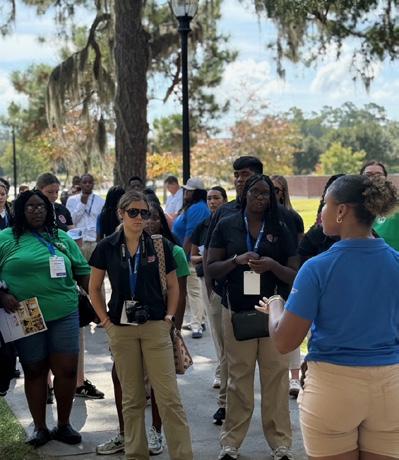
YOUTH COUNCIL LEADERS FROM SEVERAL CITIES across the state gathered in Savannah from September 19-21 to learn from each other and develop ways to expand the work they are doing in their local communities.
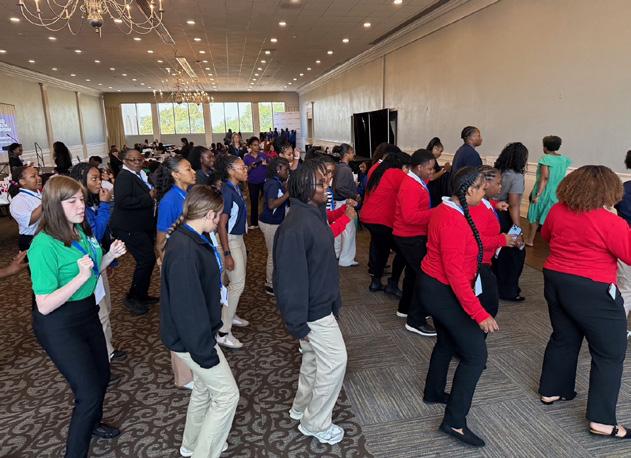
Day one of the symposium kicked off Friday evening as Youth Council leaders from across the state arrived in Savannah. They were warmly welcomed by Mayor Van Johnson, along with members of the Chatham County Youth Commission, who set the tone for an engaging and impactful weekend. To break the ice, the youth and their advisors participated in a series of lively games and activities designed not only for fun, but also to help them connect with one another. These activities emphasized key leadership skills such as collaboration, communication, creativity, and problem-solving, while also allowing participants to discover common ground and build camaraderie. The evening concluded with a shared dinner, giving the group additional time to relax, network, and continue building meaningful relationships in a welcoming atmosphere.
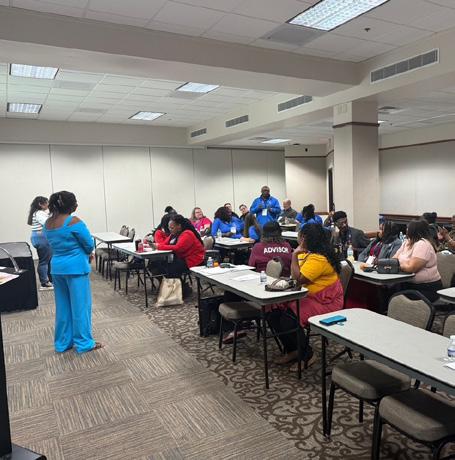
Day two began with an exciting and dynamic opening session where each Youth Council delivered a report highlighting their projects and initiatives from the past year. These presentations not only celebrated successes but also gave youth the opportunity to candidly share the challenges they faced and the issues they hope to address in the year ahead. The opening session also recognized councils that had been awarded Youth Placemaking Grants, underscoring the innovative work already taking place in communities. Representatives from the Georgia Municipal Association and GeorgiaForward then outlined upcoming plans to further support councils as they expand their impact.
The momentum continued with an engaging workshop led by UNICEF USA, which introduced participants to their new Child Impact Statement toolkit. Youth learned practical strategies for using this tool during policy discussions with local leaders, equipping them with a stronger voice in decision-making processes. At the same time, advisors attended a specialized session
on best practices for supporting Youth Councils, facilitated by Artiffany Stanley, Member Services Consultant.
As the day unfolded, youth leaders took part in a unique scavenger hunt around the Civic Center and its surrounding areas. This interactive session blended fun and exploration with lessons on teamwork and collaboration, while also offering participants a chance to discover fascinating facts about Georgia’s history and culture. Meanwhile, UNICEF USA facilitated an additional workshop for advisors, focusing on strategies for effectively engaging young people in meaningful leadership roles.
The day culminated with an unforgettable keynote address from world-renowned speaker Dr. Bertice Berry. With her trademark wit and wisdom, Dr. Berry delivered a powerful message that challenged youth to recognize the urgency of their leadership, embrace the power of their voice, and boldly share their stories to create change. Her words left the entire room uplifted and motivated, closing the day with inspiration that youth leaders and advisors alike could carry back to their communities.
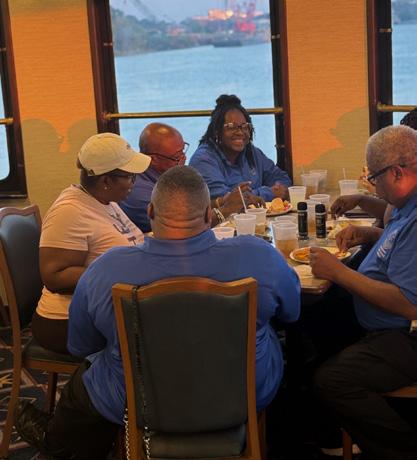
The evening festivities brought an extra spark of excitement as the Youth Councils boarded a private river cruise along Savannah’s historic waterfront. For many, it was a first-time experience that combined breathtaking views with the joy of celebrating together. With the riverboat reserved exclusively for the symposium, participants enjoyed a night filled with music, dancing, laughter, and plenty of food. The atmosphere was
electric, offering a perfect blend of fun and fellowship that deepened the bonds among youth leaders and advisors alike.
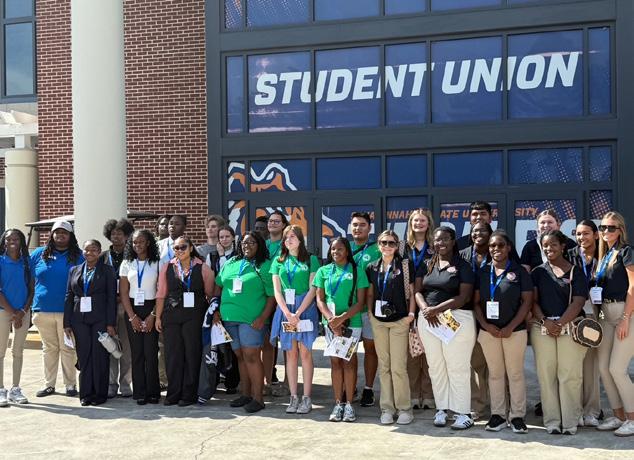
The symposium concluded on Sunday with a morning tour of Savannah State University, providing participants with a meaningful glimpse into higher education opportunities. Youth explored academic offerings across degree programs while also learning about the unique benefits of attending Georgia’s first historically Black public university. Highlights of the visit included stops at the student union, the social sciences building, and other campus amenities that showcased the vibrant student experience. The tour not only exposed youth to new possibilities but also encouraged them to envision their own pathways to college and career success.
Overall, the Youth Council Symposium was a tremendous success, equipping participants with new skills, stronger connections, and renewed confidence to lead impactful initiatives in their communities. The event not only celebrated the accomplishments of youth leaders but also reinforced their vital role in shaping a brighter future for Georgia. Special appreciation is extended to Mayor Van Johnson and the City of Savannah staff, the Savannah Civic Center, UNICEF USA, Dr. Bertice Berry, and the Georgia Municipal Association team for their invaluable support and contributions. Their partnership helped create an unforgettable experience that will continue to inspire youth leaders long after the symposium.
GWIN HALL, SENIOR ASSOCIATE GENERAL COUNSEL
In recent months, news stories across the country have covered public meetings in which discussion of hot-button issues resulted in growing frustration among attendees and meeting leaders alike.
SOME OF THESE MEETINGS CULMINATED IN attendees being asked or forced to leave. Especially when tensions are high, it can be hard to know if audience members are trying to be disruptive or if they are simply expressing frustration.
It is important for members of the public to have the opportunity to be heard. When people feel heard, they feel valued. Most cities provide time during council meetings for public comment, allowing attendees to speak on matters relating to the city. However, meeting attendees do not have the right to intentionally and substantially disrupt meetings. City leaders must balance the public’s First Amendment speech rights with the city’s need to conduct business in an efficient and orderly fashion.
limited public forum, the governing body can limit public speech but any restrictions must be viewpoint neutral and reasonable in light of the meeting’s purpose.
“City leaders must balance the public’s First Amendment speech rights with the city’s need to conduct business in an efficient and orderly fashion.”
A city council or committee meeting is usually considered a “limited public forum.” A limited public forum is limited to a specific class of speakers and to speech on specific topics. Though public comment periods in city meetings are open to the public, comments are usually limited to city matters. In a recent case, McDonough v. Garcia, the 11th Circuit Court of Appeals followed U.S. Supreme Court precedent, holding that in a
In 2006, the Supreme Court of Georgia provided insight into when speech at a public meeting crosses the line into behavior that could be addressed by an anti-disruption law. In State v. Fielden, the Court sought to balance the public’s First Amendment rights with a city’s interest in conducting lawful meetings, reasoning that activities that are intended to prevent or disrupt lawful meetings and result in the early termination or substantial disruption of a lawful meeting, are not protected speech. The court held that local anti-disruption laws should be limited to situations in which a member of the public intends to disrupt or prevent a lawful meeting, procession or gathering and substantially obstructs or interferes with the lawful meeting, procession or gathering by physical action or verbal utterance.
Having a plan for dealing with disruptive meeting attendees can prevent missteps that might otherwise occur and can help ensure the city responds to disruptive behavior in a uniform and content-neutral manner,
based on the disruptive nature of the behavior itself and not on the views expressed. If your city does not yet have a plan for addressing disruptive behavior in meetings, consider the following steps:
1. Working with your city attorney, determine whether your city has a local ordinance addressing disruptive behavior during meetings. If it does, ensure the local ordinance complies with requirements of the Fielden case (i.e., addressing the intent to disrupt and substantial disruption of the meeting). If it does not, consider working with your city attorney to craft an anti-disruption ordinance that meets Fielden’s requirements. Currently, there is not a valid state law addressing disruption of local meetings.
2. 2. Next, ensure all city leaders (e.g. the mayor, council members, high-level staff and the city attorney) are familiar with the anti-disruption ordinance and the consequences of violating it. Since removing someone from a meeting could be as disruptive to the meeting as the disruptive individual’s behavior, it would be good to determine how intentionally disruptive an attendee’s behavior would need to

be, and what level of disruption would be considered “substantial”, to warrant removing a disruptive attendee from the meeting. City leaders could also consider lesser responses to disruptive behavior, such as giving warnings for brief, one-time or infrequent disruptions, or allowing law enforcement to independently issue citations for violations of applicable local ordinances.
Hopefully, your city will never need to use its anti-disruption plan. However, if an attendee acts in a disruptive manner during a lawful meeting, before acting take a moment to consider whether there is evidence that the attendee intended to disrupt the meeting. If there is evidence that the attendee intended to disrupt the meeting, consider whether the meeting was actually and substantially disrupted by the attendee’s behavior. Once the city leaders have completed this analysis, they can determine whether it is appropriate to invoke the city’s anti-disruption ordinance. Finally, it is important that city leaders make it clear that any action taken is to prevent further disruption of the meeting.
NIKKI PERRY
NOW THERE IS A STATEWIDE EFFORT TO HELP COMMUNITIES capitalize on this lasting opportunity. On Aug. 14, Georgia leaders held the first hearing of the Senate Study Committee on Making Georgia the No. 1 State for Tourism (SR 323). Realizing that dream includes activating untapped resources, such as thousands of TV and movie filming locations across the state.
“I literally tell people there's gold laying on the ground everywhere, and all they have to do is lean over and pick it up,” said Lynda Lee Smith, founder of the Entertainment Tourism Alliance of Georgia (ETAG).
A typical movie or television episode filming on location spends $50,000-$250,000 per day in the local economy, according to ETAG’s website, entertainmenttourism.com. It is harder to define the ongoing impact of tourism generated by that filming, but it offers large and small cities the potential to generate long-term revenue.
On Sept. 9, ETAG launched a workshop series to educate communities about entertainment tourism opportunities. At the first workshop, participants explored Covington, known as “Hollywood of the South” and home to production locations for The Vampire Diaries, The Dukes of Hazzard, In the Heat of the Night, and many more TV series and movies since the 1950s.
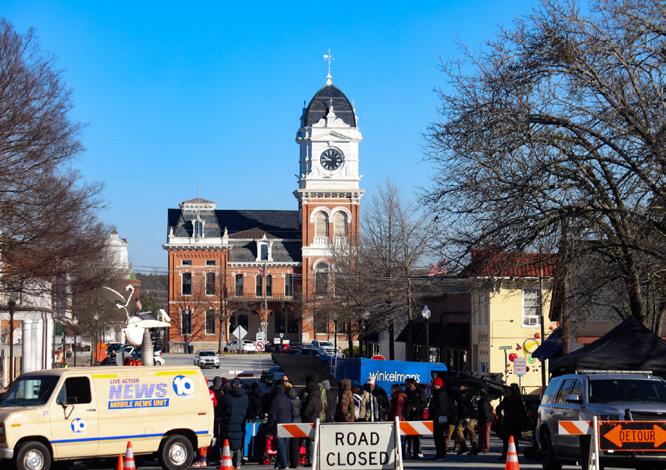
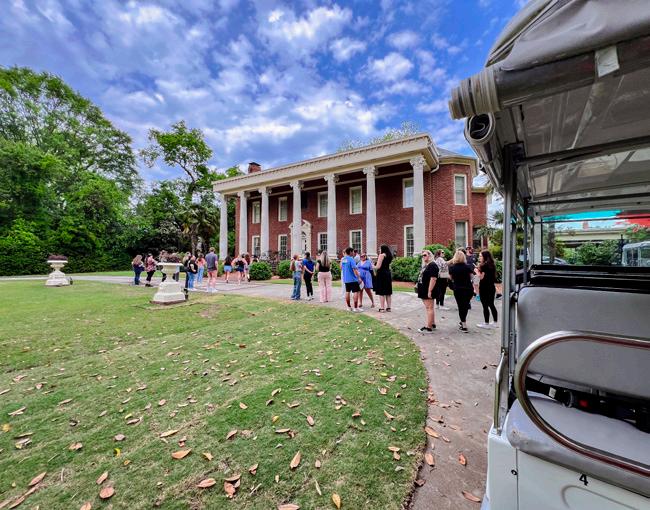
GMA Governmental Relations Associate DJ Waller previously coordinated film permitting and tourism for the city of Covington. He witnessed the importance of film tourism on a small community during the COVID-19 pandemic.
“People weren't going to Disney World. They weren't going to Six Flags. They were going to smaller communities,” Waller said. “So many people were coming to Covington. I was like, why are so many people here? And it was because of film.”
“I
In 2021, there were 2.8 million visits to Covington’s Historic Downtown Entertainment District, according to the city’s community development department. The downtown added a star-studded mural to complement its film museum and “Walk of Stars,” and visitor center traffic continued to grow. By 2023, visitor spending in Newton County totaled $130 million, with $118 million spent in Covington—a significant sum for a city of 15,000.
about the community’s rich history, chef-inspired dining, boutique shopping, outdoor activities, and more.
“Film tourism continues to grow in Cherokee. With over 1,300 downloads and 17,000 interactions in the Filmed In Cherokee Mobile App over the last year, it is evident that Cherokee's film industry continues to be an integral part of the economic vitality of the county,” said Heath Tippens, president of the Cherokee Office of Economic Development.
TELL PEOPLE ALL THE TIME; IT WAS A LOT OF GROWTH, A LOT OF NUMBERS. A LOT OF PEOPLE CAME TO COVINGTON, BUT IT’S HARD TO PUT A TAB ON WHAT EXACTLY YOU DID CORRECTLY TO GET THOSE PEOPLE THERE. IT WAS JUST A COMBINATION OF BEING WELCOMING, SHARING YOUR MESSAGE WITH THE WORLD,” WALLER SAID.
As filming resumed post-pandemic, local businesses welcomed tourists and production crews with open arms, Waller said. New hotels popped up. The city’s tourism team smoothed the way for new productions, and the city marketing team kept residents informed about road closures and other minor inconveniences. It was a flurry of activity, celebrating the old and welcoming the new.
“I tell people all the time: it was a lot of growth, a lot of numbers. A lot of people came to Covington, but it's hard to put a tab on what exactly you did correctly to get those people there. It was just a combination of being welcoming, sharing your message with the world,” Waller said.
Fans already seek out their favorite filming locations; communities just need to connect the dots. That’s what the Cherokee Office of Economic Development did with the launch of its Filmed In Cherokee app in 2021. Cherokee County is home to filming locations ranging from thrilling television series like Ozark to historical drama movies like Hidden Figures.
Developed in partnership with Black Airplane, the award-winning interactive mobile app offers users a chance to embark on self-guided film tours, access behind-the-scenes content, connect with the local community, and visit their favorite on-screen places. As users explore the 30 fan-favorite productions highlighted in the app, they also learn
ETAG workshop attendees will learn about innovative ideas to attract tourists, but they will also find that it does not take a heavy investment to attract movie and TV lovers, Smith said.
“Download movie posters off of Amazon. They're already approved. Frame them and hang them on the walls of your business. Create a selfie opportunity. People get excited to be around something that they feel so close to, and we have so many of those series that have been shot in Georgia,” she said.
Smith believes that a collective effort to strengthen entertainment tourism across Georgia could be a differentiator for the state. “If we truly do want to make tourism the number one, make Georgia number one in the country, we need to roll out all the stops and create our own unique experience that complements our landscape, our beautiful beaches, our islands and our mountains,” Smith said.
Amanda Dyson-Thornton, executive director of the Georgia Association of Convention and Visitors Bureaus, said she looks forward to the Senate Study Committee meeting in October, when she anticipates more discussion about activating Georgia’s film tourism assets.
“Film tourism is big business here in Georgia, and we are proud and excited to promote that as much as we can,” Dyson-Thornton said.
RESOURCES:
Upcoming Workshops from Entertainment Tourism Alliance of Georgia www.entertainmenttourism.com
Senate Study Committee on Making Georgia the No. 1 State for Tourism https://www.legis.ga.gov/other-committees/senate/2025/tourism
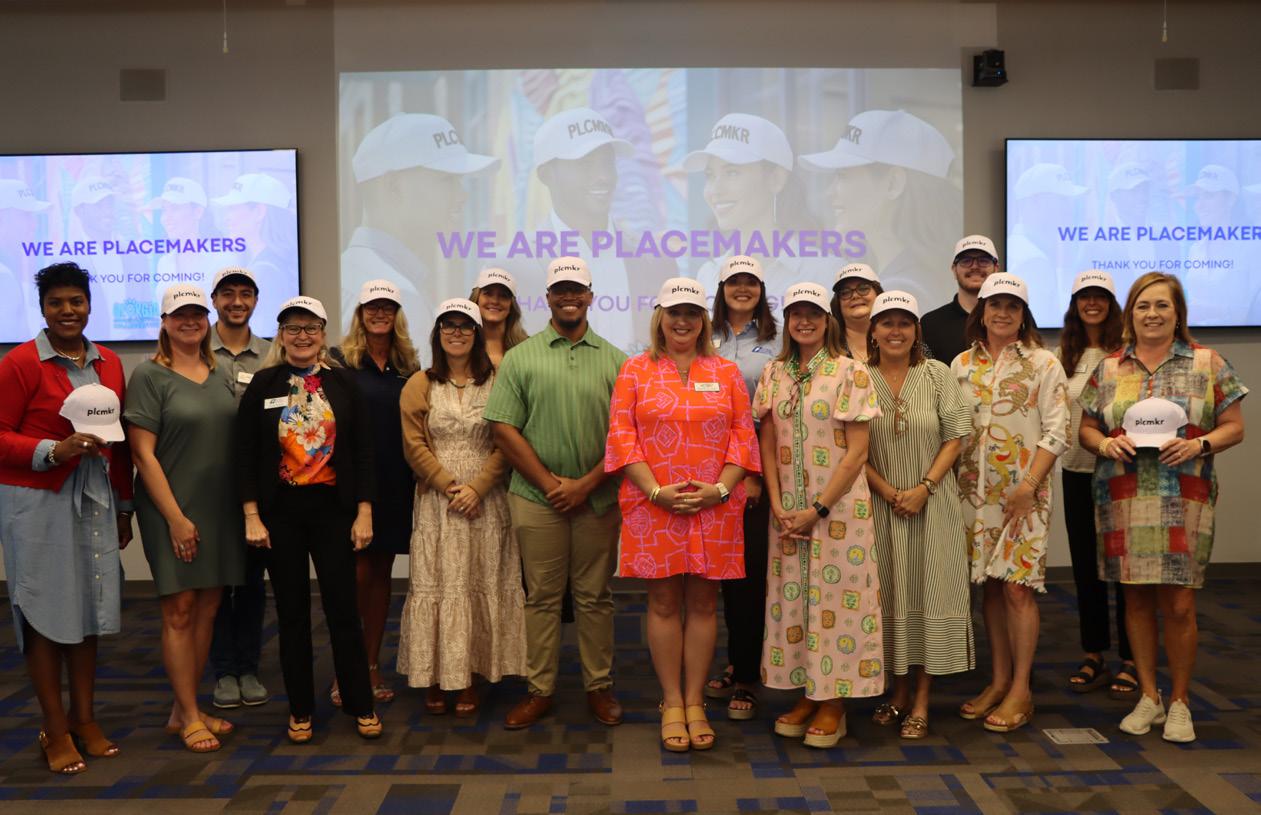
The Georgia Economic Placemaking Collaborative (GEPC) convened its inaugural Placemakers in Action Alumni & Partner Breakfast in Gainesville on Monday, Aug. 25, as part of the Georgia Downtown Association’s annual conference in Gainesville.
The event gathered alumni cities and statewide partners to reflect on lessons learned, spotlight local successes, and foster stronger community networks.
Key Highlights & Success Stories:
• Keynote Inspiration: Gainesville City Manager Bryan Lackey shared the importance of cohesive teams, thoughtful planning, and sustaining momentum in driving successful placemaking initiatives. He shared some of the city’s most successful initiatives and the need for this action across the state.
• Community Spotlights: Alumni from the cities of Bainbridge, Fitzgerald and Adel shared compelling downtown success stories—form revitalized blocks, shared community spaces and community-driven programming—that have energized local economies and civic life.
• Networking & Reflection: The gathering provided a vibrant opportunity for cross-city connection, peer learning, and reinforcing the collaborative’s mission to build vibrant, resilient downtowns across the state.
us to design and implement people-centered projects and programs tailored to our unique needs and capacities. As a result, we’ve deepened relationships with local partners, attracted new economic opportunities, and improved the overall quality of life for our residents. We are especially grateful that the support and resources provided by the GEPC extend beyond the initial program period, allowing us to sustain and build upon the progress we’ve made.” – BRANDY ELROD, DIRECTOR OF TOURISM,
ARTS & CULTURE, FITZGERALD
“The Georgia Economic Placemaking Collaborative creates avenues for cohesion in tackling community challenges which could potentially mitigate local economic progress. The City of Adel, via the Collaborative, was spurred to turn a once blank space into a vibrant space, Storybook Park. This location –just adjacent to our community library—now offers a venue for gatherings, art and reading activities, music events, and other creative ventures. Our partnership with GEPC serves to bolster bright ideas, local investment, and utility of resources despite fiscal challenges. We have come to realize, through this partnership, that our best resources are found within our community. Any locale in need of vital support would find a catalyst and solid assistance from a partnership with GEPC.”
–
BRANDIE DAME, COMMUNITY ENGAGEMENT DIRECTOR, ADEL
–
AMANDA GLOVER,
“Participating in the Placemaking Collaborative has given downtown Bainbridge fresh ideas, practical tools, and the support of a network that understand the value of creating spaces where people want to gather. I encourage other communities to join—because the impact goes far beyond projects, it creates lasting connections and pride of place.”
DOWNTOWN DEVELOPMENT AUTHORITY DIRECTOR, BAINBRIDGE
“The City of Fitzgerald’s involvement in the Georgia Economic Placemaking Collaborative has been a truly transformative experience. Through this initiative, our community gained access to expert guidance, strategic resources, a proven, community driven framework, and a network of peer cities. These tools empowered
The GEPC is a two-year program that helps cities strengthen local identity, active public spaces, and implement placemaking strategies that make downtowns and neighborhoods more vibrant and welcoming. Participating communities receive education, facilitation, technical assistance, and peer-to-peer support as they plan and carry out projects tailored to their community.
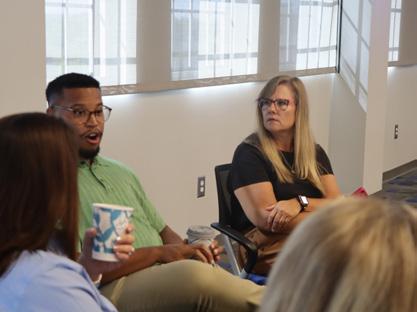
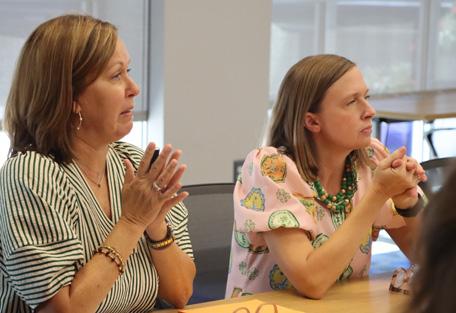
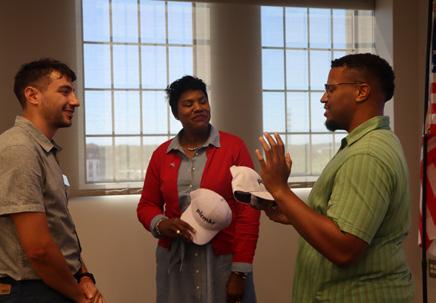

Placemaking isn’t just about beautification—it’s about creating spaces where residents feel connected, visitors feel welcome, and businesses want to invest. Cities that embrace placemaking see benefits such as
• Stronger community identity and pride of place
• Safer, more walkable streets and public spaces
• Increased foot traffic and support for local businesses
• Opportunities for residents to gather, celebrate and engage with one another
As part of the collaborative, each city forms a community team of elected officials, city staff, business leaders and residents who work together to shape projects that reflect local culture and character. Teams also gain
access to learning and guidance from a diverse network of partners—including practitioners in planning, design, downtown development and community engagement—who share ideas, tools and best practices that can be adapted to fit each city’s unique needs.
In addition, participating and alumni cities are eligible to apply for the Georgia Cities Foundation’s Placemaking Grant, which provides funding for smallscale projects that enhance public spaces, strengthen community identity and encourage civic engagement.
The 2025 Placemakers in Action Breakfast in Gainesville was a powerful milestone—for alumni to share achievements, for peers to connect, and for GEPC to amplify its mission. With the application window now open and new training sessions on the horizon, Georgia communities of all sizes have a clear pathway to join the next cohort and transform their downtowns through placemaking.
FOR CITIES INTERESTED IN JOINING THE NEXT GEPC COHORT OR APPLYING FOR THE 2025 PLACEMAKING GRANT, WE ENCOURAGE YOU TO REVIEW THE APPLICATION MATERIALS AND CONSIDER SUBMITTING. FOR MORE INFORMATION CONTACT TARA BRADSHAW, MANAGER, ECONOMIC DEVELOPMENT AND PLACEMAKING AT TBRADSHAW@GACITIES.COM OR VISIT GEORGIACITIESFOUNDATION.ORG.
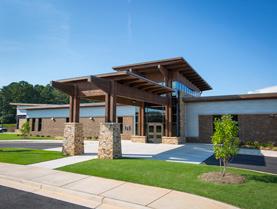
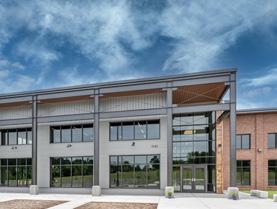
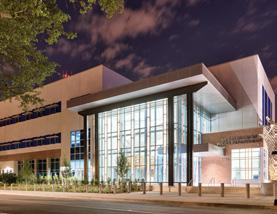
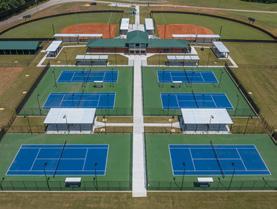
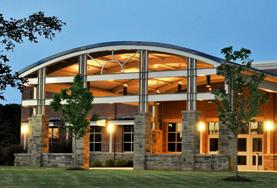
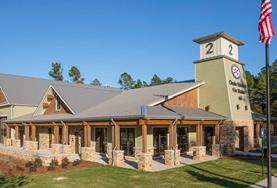
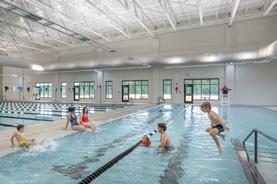
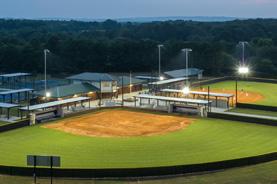



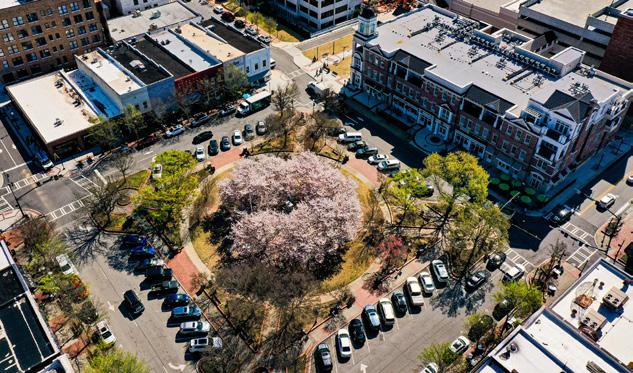
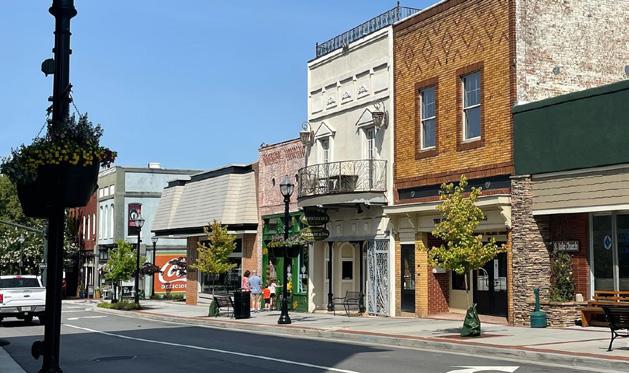
From Aug. 25-28, the historic city of Gainesville, played host of the annual Georgia Downtown Association Conference, drawing over 300 downtown professionals from across the state. Organized by the Georgia Downtown Association (GDA), an organization committed to fostering vibrant downtowns—the conference offered a rich program of educational sessions, workshops, networking and community tours.
Attendees explored diverse topics aimed at revitalizing Georgia’s downtown cores. Sessions covered tax allocation districts, place branding for small business growth, leveraging zoning for redevelopment, and disaster preparedness for downtowns. A highlight was the trolley tour showcasing how Gainesville’s visionary 2015 downtown master plan has come to life,
transforming public spaces, promoting residential growth, and integrating arts and recreation into the city’s historic square.
A standout moment of the conference was the awards ceremony, recognizing communities and individuals making a profound impact on downtown vitality. The prestigious Downtown of the Year honor went to Main Street Gainesville, celebrated for its collaborative leadership, strategic investments and vibrant historic square. As City Manager Bryan Lackey noted, the city’s “overnight 10-year story” offered a compelling blueprint for sustained revitalization.
Another key highlight was the Premier New Development Award, awarded to Doug Ivester for the Gainesville Renaissance Project—a mixed-use
development that completed the historic square’s fourth side. The project has catalyzed significant investments and has become a model for thoughtful urban design and downtown activation.
GDA also honored several additional initiatives across the state, underscoring the diverse approaches to downtown revitalization:
• Downtown of the Year – Main Street Gainesville
• Outstanding Placemaking Project – Art Blooms, City of Kennesaw
• Outstanding Downtown Promotion – Dogs Day Out, City of Dallas
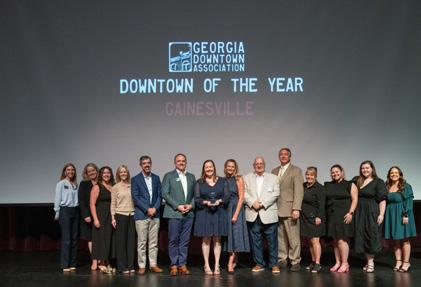
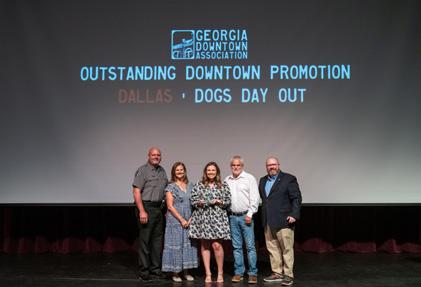
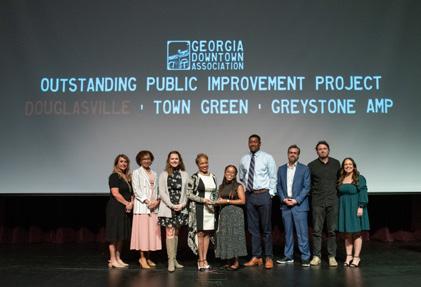
• Premier New Development – Doug Ivester, City of Gainesville
• Premier New Development – Fancy Girl Farms, Hahira
• Inspired Leader Award – Lee Merritt, City of Lawrenceville
• Outstanding Historic Preservation – Royal Theatre, Hogansville
• Outstanding Public Improvement Project – Town Green and GreyStone Amphitheater, City of Douglasville
The 2025 Georgia Downtown Conference in Gainesville proved to be a powerful blend of professional development and community celebration. From immersive learning experiences to award-winning projects and leadership, the gathering showcased the passion, creativity and innovation driving Georgia’s downtowns forward.
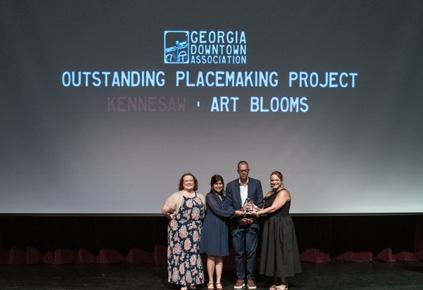
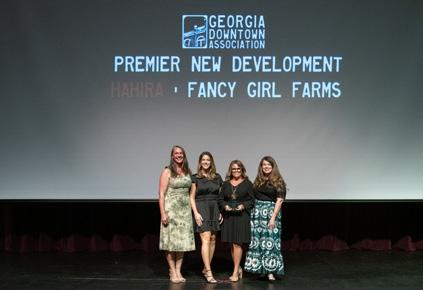
10/24
Spooktacular,Winder
Boo Fest, Lawrenceville
11/1
Harvest Festival, Lawrenceville
11/7
First Friday featuring Lloyd Carter Band, Thomasville
11/8
Jug Tavern Festival, Winder
11/15
Suwanee Chili Cook Off & Music Festival, Suwanee
Holiday Market at Lake Point, Cartersville
11/20
Winders Tree Lighting, Winder
11/21
Girls Night Out & Moonlit Movie, Dallas
11/21-11/22
Kingsland Catfish Festival, Kingsland
11/22
6th Annual Christmas Tree Lighting, Dallas
Atlanta Mushroom Festival, Atlanta
11/23
Holiday Open House, Thomasville
11/27 – 12/7
Holiday Happenings, Lawrenceville

11/27
Mountain Country Christmas in Lights, Hiawassee
Christmas in Possum Snout – Tallapoosa
11/27-11/29
Mountain Country Christmas in Lights, Hiawassee
11/27-11/30
A Country Christmas at Pettit Creek Farms, Cartersville
Winter Lantern Festival IV, Lawrenceville
Lights of Life, Marietta
11/28
Annual Lighting of the Village, Helen
11/28-11/29
Light Up Blue Ridge, Blue Ridge
Christmas at the Mill, Canton
Holiday Market and Festival of Trees, Clayton
December Nights and Holiday Lights, Savannah
11/28-11/30
Atlanta Christkindl Market, Lawrenceville
Christmas Lights at A.H. Stephens State Park, Crawfordville
Stone Mountain Christmas IV, Stone Mountain
Holiday Lights of Hope , Woodstock
11/29
Holly Jolly Market, Columbus
Main Street Gray Hometown Christmas Market, Gray
Country Christmas Festival, Greenville
Christmas in the Grove, Locust Grove
Summerville Mistletoe Market and Victorian Christmas , Summerville
Washington Wonderland, Washington
11/29-11/30
Helen’s Christmas Market, Helen
11/29
Blue Ridge Scenic Railway Christmas Express, Blue Ridge
Helen’s Christmas Market, Helen
Merry Makers Holiday Market, St. Marys
12/1-12/7
Garden Lights, Holiday Nights, Atlanta
IllumiNights at the Zoo: A Lantern Festival, Atlanta
Holiday Lights at Veteran’s Park, Canton Lights of the South, Grovetown Glow Light Show, Lawrenceville
Enchanted Garden of Lights, Lookout Mountain Lights of Life, Marietta
Fantasy in Lights at Callaway Resort and Gardens, Pine Mountain Holiday Lights of Hope, Woodstock
Magic of Lights: Dixie Speedway, Woodstock
Winter Wonderlights, Athens
A Country Christmas at Pettit Creek Farms , Cartersville
12/2
Home for the Holidays & Tree Lighting, Smyrna
12/5
First Friday, Thomasville
12/6
Hometown Holidays, Tifton
Holiday Festival in the Park, Pooler
12/7
Carrollton Holiday Makers Market, Carrollton
12/8-12/14
Winter Wonderlights , Athens
Garden Lights, Holiday Nights, Atlanta
IllumiNights at the Zoo: A Lantern Festival, Atlanta
Margaritaville’s Lakeside Lights Spectacular, Buford
Holiday Lights at Veteran’s Park, Canton Lights of Life, Marietta Glow Light Show. Lawrenceville Lights of the South, Grovetown
Enchanted Garden of Lights, Lookout Mountain
World of Illumination: Cosmic Sleighride, Marietta
Fantasy in Lights at Callaway Resort and Gardens, Pine Mountain
Holiday Lights of Hope, Woodstock
12/11
Atlanta Christmas Antique Market, Atlanta
12/11 12/12
Victorian Christmas, Thomasville
12/13
Snowman Stroll, Jasper
76th Annual Christmas Parade & Santa’s After Party, Winder
Historic Tour of Homes, Dallas
Christmas in Eatonton, Eatonton
Helen’s Annual Christmas Parade, Helen
Kennesaw Winter Craft Market, Kennesaw
Valdosta Winter Markers Market, Valdosta
Columbus Winter Wonderland Craft and Vendor Market, Columbus
Athens Wonderland, Athens
Christmas at Countryside, Braselton
Griffin Merry and Bright 2nd Saturdays, Griffin
12/15-12/21
Winter Wonderlights, Athens
Garden Lights, Holiday Nights, Atlanta
IllumiNights at the Zoo: A Lantern Festival, Atlanta
Margaritaville’s Lakeside Lights Spectacular, Buford
Holiday Lights at Veterans’ Park, Canton Lights of the South, Grovetown
Glow Light Show, Lawrenceville
Enchanted Garden of Lights, Lookout Mountain Lights of Life, Marietta
World of Illumination: Cosmic Sleighride, Marietta
Fantasy in Lights at Callaway Resort and Gardens, Pine Mountain
December Nights and Holiday Lights, Savannah
Holiday Lights of Hope, Woodstock
Magic of Lights: Dixie Speedway, Woodstock
12/16-12/21
A Country Christmas at Pettit Creek Farms, Cartersville
12/17-12/21
Atlanta Christkindl Market, Lawrenceville
12/18-12/21
Mountain Country Christmas in Lights, Hiawassee Winter Lantern Festival, Lawrenceville
12/19-12/21
Christmas Lights at A.H. Stephens State Park, Crawfordville
Stone Mountain Christmas, Stone Mountain
12/19
Alpharetta Christmas Market, Alpharetta
12/20
Brunswick Christmas Harbor Market, Brunswick Columbus Holiday Craft and Vendor Market, Columbus
12/22-12/23
Mountain Country Christmas in Lights, Hiawassee
12/22-12/24
December Nights and Holiday Lights, Savannah
12/22-12/28
Winter Wonderlights , Athens
Garden Lights, Holiday Nights, Atlanta
IllumiNights at the Zoo: A Lantern Festival, Atlanta
Margaritaville’s Lakeside Lights Spectacular, Buford
Holiday Lights at Veterans’ Park, Canton Lights of the South, Grovetown
Glow Light Show, Lawrenceville
Enchanted Garden of Lights , Lookout Mountain Lights of Life, Marietta
Fantasy in Lights at Callaway Resort and Gardens, Pine Mountain
Stone Mountain Christmas, Stone Mountain Holiday Lights of Hope, Woodstock
Magic of Lights: Dixie Speedway, Woodstock
World of Illumination: Cosmic Sleighride, Marietta
12/23-12/28
A Country Christmas at Pettit Creek Farms, Cartersville
12/24
Atlanta Christkindl Market, Lawrenceville
12/26-12/29
Winter Lantern Festival, Lawrenceville
12/29
Lights of the South, Grovetown
Holiday Lights of Hope, Woodstock
12/29-12/31
Winter Wonderlights, Athens
Holiday Lights at Veterans’ Park, Canton Glow Light Show, Lawrenceville Lights of Life , Marietta
12/29-1/3
Magic of Lights: Dixie Speedway, Woodstock
12/29-1/4
Garden Lights, Holiday Nights, Atlanta
llumiNights at the Zoo: A Lantern Festival, Atlanta
Margaritaville’s Lakeside Lights Spectacular, Buford
Enchanted Garden of Lights, Lookout Mountain Fantasy in Lights at Callaway Resort and Gardens, Pine Mountain
Stone Mountain Christmas, Stone Mountain
12/31
Atlanta Peach Drop, Atlanta
The Perry Buzzard Drop, Perry The Possum Drop, Tallapoosa
1/1-1/4
Winter Lantern Festival, Lawrenceville
1/5-1/11
Garden Lights, Holiday Nights, Atlanta IllumiNights at the Zoo: A Lantern Festival, Atlanta
1/10-1/11
Margaritaville’s Lakeside Lights Spectacular, Buford
1/12-1/18
IllumiNights at the Zoo: A Lantern Festival, Atlanta
1/16-1/18
CastleFaire: Winter Renaissance Festival, Helen 1/18
Margaritaville’s Lakeside Lights Spectacular, Buford
1/19
MLK Day Parade and Music Festival, Athens
TO PLACE A FREE FAIRS & FESTIVAL LISTING CONTACT GACITIES@GACITIES.COM
Please submit listings at least eight to ten weeks ahead of publication date.
Victor Ragland, Vice President – Atlanta Division, Coca-Cola Bottling Company UNITED
Our company philosophy is simple: Associates First. My success is attributed to the people I’ve led over the years because I feel that, as a leader, you are only as good as your people, and people are the main piece. Our culture is one that uplifts and empowers associates to do the very best for their teams, their customers, and their communities. I want my people to find a place where they can build a career and retire.
My Coca-Cola journey began in 1988 as a merchandiser in Oxford, Alabama. In Georgia, 100 percent of our local leaders started at an entry-level position – pulling cases, driving trucks, operating forklifts, and merchandising in their local communities. Over the years they have taken on increasing responsibilities and are now who we rely on to make decisions about what’s best for the market. Knowing that – associates understand what their career path could look like, and investments into payroll, training, and culture are paramount to our future success as a company.
We employ a local operating model – which means our 19 facilities across Georgia are empowered to make decisions

and run the business in a way that best suites the needs of their local market. To my knowledge, we are one of the only companies in the state that drives every road and turns every corner in every city and county in Georgia. Our local model also means that our associates serve the communities in which they live. They know those roads like the back of their hand and take pride in where they come from.
I look at our relationships with our cities as symbiotic. Some of those relationships go back over a century and that is a real testament in the modern world. We want Coca-Cola UNITED to be the best place to work in Georgia. This not only means providing best-in-class service to our customers and empowering our associates on the job, but also making sure the communities where we live, work, and play thrive as well.
Coca-Cola UNITED grows as the state grows, and we are constantly looking at new ways to use technology to enhance our commercial capabilities, customer service, and our efficiency in the market. My hope for the future of our company is that we continue to focus on investing back into our associates –developing programing to empower them and providing workplace efficiencies to execute their roles.
IN THE HEART OF TOOMBS COUNTY, THE Vidalia Onion Museum tells the fascinating story of how a simple crop became an international sensation. Known as the “Sweet Onion City,” Vidalia is home to Georgia’s official state vegetable—the Vidalia Onion— famed for its mild, sweet flavor found nowhere else in the world.
The museum brings this story to life with colorful exhibits, multimedia displays, and historical artifacts. Visitors can trace the onion’s journey from its accidental discovery during the Great Depression to its designation as a protected crop through the Vidalia Onion Act of 1986. The museum also explores the unique science behind the onion’s sweetness, highlighting how the sandy soil and climate of southeast Georgia make all the difference.

Beyond history and science, the museum celebrates the farmers who keep the tradition alive, honoring generations of families dedicated to cultivating Vidalia onions. Cooking displays and recipes offer inspiration for how to enjoy the onion in everyday dishes, while the annual Vidalia Onion Festival adds an extra layer of celebration each spring.
Free to the public and family-friendly, the Vidalia Onion Museum offers an engaging experience for food lovers, history buffs, and curious travelers alike.
The Vidalia Onion Museum is located at 100 Vidalia Sweet Onion Drive in Vidalia, GA. Admission is free. For hours, group tours, and more information, call 912-537-1918 or visit www.vidaliaonion.org.

Canton, Georgia, is proving that progress and preservation go hand in hand. By modernizing its historic municipal buildings with sustainable upgrades, the city is driving economic growth, improving the quality of life, and preserving the small-town charm its residents value.
This forward-thinking community is creating a brighter, more resilient future for generations to come.


28% reduction in energy and operations costs
$2 million in savings projected over the next 20 years
Improved energy efficiency and comfort in city buildings
Discover how a small town is making a big
Reduced carbon footprint
201 Pryor Street, SW
JANUARY 23-26, 2026 Join us for the 2026 Cities United Summit in Atlanta. This annual gathering brings together city officials from across the state to address crucial municipal issues before the Georgia General Assembly. Participants can also engage in a wide array of training classes offered through our partnership with the University of Georgia’s Carl Vinson Institute of Government. Registration opens November 12.