GeorgiaLAUNCH:
Skills for High-Demand Futures
Executive Summary
The Georgia Chamber Foundation, with the support of J.P. Morgan Chase, began GeorgiaLAUNCH, a two-year project aimed at bolstering the workforce pipeline focused on high-demand careers. This project centers around the need to grow the skilled labor pool, increase awareness of high-demand careers, and create greater understanding among employers regarding the transferability of skills within related occupations. Addressing these efforts will create greater alignment across the talent pipeline, promoting increased economic mobility for Georgians.
The project began in 2025 with a series of employer listening sessions in Atlanta, Athens, and Savannah. Initially, the focus was on the state’s burgeoning clean tech sector and reputation as a leader in electric vehicles. Feedback quickly illustrated that the greatest needs centered around core skills required to advance in high-demand industries rather than those only related to clean tech roles. Consistent with prior research, adaptability of talent is essential to keep pace with technological advancements, offering upward mobility and career advancement for individuals. Employers then provided guidance on specific occupations and skill sets that were most in demand based on current and projected operations.
GeorgiaLAUNCH is a strategic investment in Georgia’s long term competitiveness. By aligning education and training with the real needs of industry, we are building clear pathways into high-demand careers, including advanced manufacturing and clean technology. Strong companies depend on reliable, skilled talent pipelines, and this initiative is helping ensure that Georgia continues to attract jobs, expand opportunity and lead the way in the industries that are shaping our future.
- Stuart Countess, President and CEO, KIA Georgia, 2026
Georgia Chamber Chair
Governor Kemp’s Top State for Talent Initiative is a cross-agency initiative to transform how Georgians prepare for and access meaningful careers.
A key facet of this effort is the state’s first unified high-demand career list. GeorgiaLAUNCH has cross-referenced employer feedback with those occupations on the High-Demand Career List to best leverage state resources, agency initiatives, and private sector investment. This will ensure Georgians at every stage of their career have clear guidance and streamlined pathways to career advancement in high-demand opportunities, promoting long-term upward mobility for individuals and their families.
This report features employer insights, policy solutions from workforce development practitioners, and career pathways for those high-demand careers identified in phase one of the project. It will also explain next steps for the project and opportunities for further collaboration with employers and workforce partners.
Background
In 2025, the Georgia Chamber Foundation and J.P. Morgan Chase announced a new partnership to increase access to career opportunities in the clean tech sector, specifically in the advanced manufacturing and utility industries. The grant will aid clean tech employers in developing and supporting career pathways for Georgians at every stage of the workforce pipeline, helping more people obtain high-quality jobs while strengthening the domestic manufacturing supply chain. This effort aims to build upon and make use of more than $15 billion in existing investments, cementing Georgia as a leader in this space.
The Georgia Chamber of Commerce Foundation sought the assistance of the University of Georgia’s Carl Vinson Institute of Government to conduct research, stakeholder engagement, and analysis to support this initiative. To gather stakeholder and employer feedback, the Institute of Government and Chamber Foundation worked with private industry and educational partners to develop five listening sessions. These sessions provided key stakeholders the opportunity to share their opinions, needs, and future outlooks related to their workforce goals and how clean tech investments in Georgia have impacted their operations.
Below are some of the private and public partners that engaged in these listening sessions:









Archer Aviation
Cherry Street Energy
Georgia Department of Education
Georgia EMC
Georgia Ports Authority
Georgia Power Company
Goodwill of North Georgia
Gulfstream Aerospace
Hyundai Motor Group






Kia Georgia
MEAG Power
Qcells
RISE
Rivian Automotive
Silicon Ranch
Technical College System of Georgia
University System of Georgia
Key Takeaways

Employer Perspectives
Top Takeaway: Recruitment and Retention Struggles Persist in Skilled Trades
All employers who participated in the listening sessions indicated that they continue to encounter challenges recruiting and/or retaining skilled employees. This includes skilled trades and those that require a four-year degree.
Employability skills, including professionalism, work ethic, communication, and collaboration, were noted as the primary skill gap and need for the majority of employers who participated in listening sessions.
Employers also noted the need for more collaboration both between businesses in the industry and in tandem with educational institutions, especially related to programs that:
1 2 Identify skill gaps and inform program offerings based on these gaps
Expose students and out-of-work individuals to the existence of these programs
Top Takeaway: Employers Advocate for Enhanced Marketing and Early Exposure to Technical Careers to Combat Cultural Bias and Strengthen Recruiting
Many employers indicated that while programming at TCSG institutions, through QuickStart, and in CTAE pathways across the state have been beneficial, more needs to be done to market these successful programs and the careers available at companies and industries after program completion.
Employers also noted that, while bias exists towards certain careers, key stakeholders in the state could be doing more to market educational opportunities. This marketing includes highlighting opportunities for advancement and family-sustaining earnings in these industries.
Employers note that earlier exposure should be emphasized, not only for students, but also for their parents, counselors, and teachers. Employers felt strongly that the earlier students and job seekers are exposed to a wide range of career options, the more effective these strategies will be in successfully fighting off cultural biases.
Key Takeaways
Employer Perspectives (Cont.)
Top Takeaway: Employers Emphasize In-House Training, Community Involvement, and Core Employability Skills as Key to Workforce Success and Retention
While employers felt that much of the state’s workforce preparation infrastructure met their foundational needs, many employers reported that they foresee continuing to train future employees on company-specific processes through in-house training programs.
In fact, most employers noted that they are willing to handle technical training if candidates come in demonstrating higher levels of employability skills. The presence of these employability skills is an indicator to businesses that employees are more likely to stay in their roles and commit to their training and/or job duties, which presents employability skills as a major perceived factor in employee retention.
Finally, employers who engage with their community and build a workplace culture that values and invests in their employees have seen greater recruitment success than some of their competitors.

Key Takeaways

Workforce Development Perspectives
Workforce partners were engaged in their feedback on top needs and opportunities related to improving the talent pipeline.
Top Takeaway: Additional Resources Needed for Career Guidance within High Schools and Post-Secondary institutions
More funding is needed for career advisors in Georgia high schools to guide students through post-secondary and career planning options.
Increasing the use of prior learning assessments can help save educational institutions, training programs, employers, and job seekers time and money. Workforce partners shared that finding additional opportunities to convert continuing education and economic development credits to academic credit could be an important part of the puzzle to engage more job seekers.
Key
Takeaways
Workforce Development Perspectives (Cont.)
Top Takeaway: Streamline Processes to Boost Employer Participation of Experiential Learning
Expand funding and organizational recipient eligibility for apprenticeships.
Continuing with apprenticeships, workforce partners championed a more streamlined progression for students from K-12 to the workforce. A change to the program would allow students to transition from a youth apprenticeship through their high school work-based learning program directly into a registered apprenticeship program managed by TCSG or an employer.
Aiding businesses in understanding their options for employing workers under the age of 18 was discussed. State laws have helped build momentum, but industry-sponsored documents could help businesses navigate the risks and opportunities more effectively.
Implement marketing strategies to generate increased awareness of the TCSG ecosystem, helping to connect career opportunities to existing training programs.

High-Demand Occupations
Based on employer feedback from the listening sessions, the Georgia Chamber Foundation team and the Institute of Government research team identified a number of occupations from the state High-Demand Career List as priority occupations to develop career development paths. These careers are in high demand in a variety of industries, including some of the state’s largest such as manufacturing and energy.
The six careers included in this initial review are below. Also included later in this section are career paths from CTAE pathways to post-secondary credentials, and job training programs for individuals at different points in the workforce pipeline. Career progression is not necessarily a linear process. On- and off-ramps to high-demand careers and occupations are required as new needs evolve based on market conditions and technical advances occur. The ability of an individual to evolve and progress through their careers is integral to long-term upward mobility and furthers economic prosperity in our state.

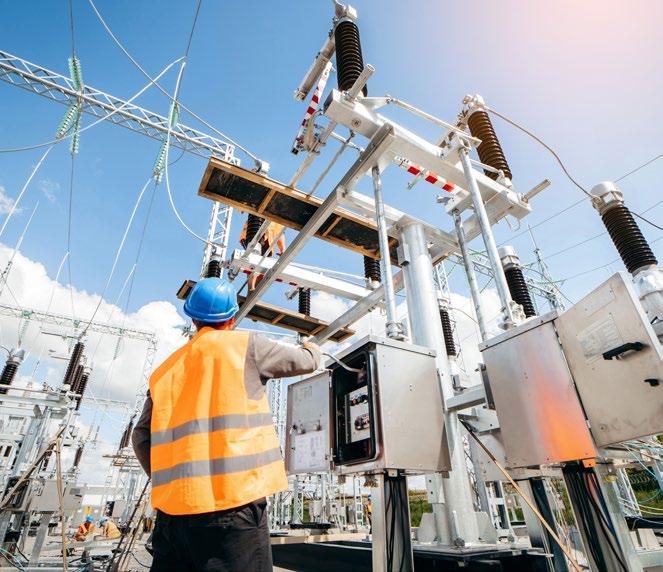




High-Demand Occupations in Initial Review:
Aircraft Mechanics & Service Technicians
Occupation Profiles
Occupation profiles were created for each of the six high-demand careers. Information included in these profiles is as follows:
Role Background
Size, Growth, and Demand
Licensure/Credentials
Mapping of Career Progression and Education
Occupational Skills and Knowledge Analysis
Skills Overlap Assessment
The following is an example of what this resource could include for an electrician. The occupational profile would provide information regarding how to learn more about the occupation through awareness, any apprenticeship opportunities, advanced degree offerings, and off-ramps for similar careers.
Stage
Awareness & Exploration
Pre-Training & Entry-Level
Apprenticeships & Early Jobs
Licensing & Mid-level Creds
Advanced Education & Credentials
High School Programs TCSG Programs Off-Ramps/ Suitable Careers
Career Fairs, Job Shadowing/Tours, Employer Presentations
Electrical CTAE Pathway Completion/EOPA, OSHA 10, WBL, Dual Enrollment Courses at Local TC
Technical College Certificate (TCC) (e.g., Industrial Electrician)
Registered Apprenticeships (IEC, IBEW, etc.) Low Voltage Contractor Certificate
Tech. College Diploma (e.g., Electrical Systems Technology, GCILB Certification, Electrical Contractor Class I/II, NCCER Certification)
Associate Degree in Electrical Construction Systems Technology
• Helper-Electrician
• Pre-Apprentice Electrician
• Pre-Apprentice Electrician
• Apprentice Electrician
• Low Voltage Electrician
• Electrical Power-Line Installer & Repairer
• Apprentice Electrician
• Low Voltage Electrician
• Electrician
• Electrical & Electronic Engineering Technologist & Technician
Furthermore, Occupational Profiles demonstrate mobility options with salary ranges and projected employment to indicate the growth of the occupation as individuals evaluate investing in additional training. This information better informs job seekers and students as they evaluate options.
Electrician Career Mobility Ladder
Skills Alignment
The final major component of the Occupational Profile is a skills and knowledge overlap analysis for each career. As noted, employers see the skills gap as one of their top challenges in meeting current and future needs. Through employer feedback sessions, there was consensus on the skills and occupations needed within their individual workforces. This led the research to further investigate to what degree there is skills overlap in high-demand careers.
Specialization
Entry Advancement
•

•


Identifying areas of skills and knowledge overlap significantly aids employers, job seekers, workforce development professionals and non-profits in streamlining training and upskilling. Job seekers will benefit from increased mobility in related careers with the potential for abbreviated training to move into new roles. Employers now have resources to better understand competencies already possessed by employees, allowing them to quickly move into new roles and responsibilities.
Skills Overlap Analysis:
Phase 1: High-Demand Occupations
The findings of this research are below. It is evident that there is more overlap than might be initially expected in high-demand occupations.
This analysis has been applied to six careers to test the methodology and get feedback from stakeholders. The full Occupational Profile can be found here
Many of these careers have well over fifty percent skills overlap. This indicates individuals have substantial alignment, positioning these individuals well for career mobility.
Takeaway: Employers can take advantage of this overlap to quickly upskill and retrain employees. However, this requires taking stock of existing training programs, identifying what knowledge is foundational for many roles, and what knowledge is specific to a given role.
Takeaway: Students, job seekers, and employees are more mobile as they understand where commonalities are present in their existing skill set and know how to take advantage of training opportunities to transition into new roles and industries.
Takeaway: Workforce developers and post-secondary institutions should examine opportunities to assess competencies in skills and knowledge, including through prior learning assessments and other tools, to better capture where a student or job seeker is proficient versus where gaps in understanding exist, supporting more nimble advancement.
Phase 2: Skill Strategy Case Studies
The next phase of this project will focus on a series of case studies examining how communities and companies are already approaching workforce preparedness, hiring, and promotion efforts within a skills-based framework. By applying learnings outlined in the occupational handbook to these practical examples, this phase will produce replicable strategies and actionable insights to better deploy skills-based strategies in communities across the state.
Key Focuses of this Phase will Include:
Employer-driven training program
Regional skill alignment initiative
Regional work-based learning hiring strategy
Utilizing a skills-based hiring strategy
Phase 2 will consist of significant stakeholder engagement from employers and workforce partners to refine and ensure it is applicable in a variety of instances, but proven to move the needle in deploying skills-based strategies.
Concluding Thoughts
The future of work is evolving and will continue to do so at an even more rapid pace. Thus, upskilling and career preparedness initiatives must also evolve. The risk is that individuals in the workforce that have a less traditional path and require more support will be left behind as technological advances become a more important part of day-to-day operations. However, the opportunity of implementing a responsive, nimble skills-based system offers improved upward mobility for Georgians and improved productivity for employers. The result is an adaptable approach, built for long-term resilience, and ensures a more prosperous Georgia.