How to Approach the City of the Future?
The city is the tool by which humanity has advanced itself. By 2050, 70% of us will be living in them (World Bank 2023). And yet these booming centres of economic activity are also plagued by perennial problems: sanitation, flooding, heatwaves, air quality, transportation, energy, equality, mental health, biodiversity, education and so on. Cities are a species of problem we have not yet figured out how to solve, a problem which involves so many interconnected variables that the prospect of ‘fixing’ these cities seems incredibly daunting (Jacobs, 1961). Now, as more of us are gathering together in them, facing increasing temperatures, volatile weather among other new challenges, it is ever more essential that we devote our efforts to finding a solution to this complex equation.
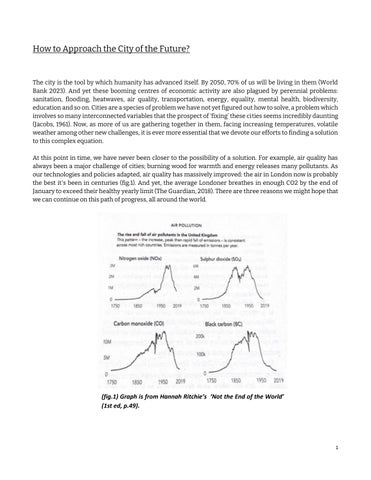
At this point in time, we have never been closer to the possibility of a solution. For example, air quality has always been a major challenge of cities; burning wood for warmth and energy releases many pollutants. As our technologies and policies adapted, air quality has massively improved: the air in London now is probably the best it's been in centuries (fig.1). And yet, the average Londoner breathes in enough CO2 by the end of January to exceed their healthy yearly limit (The Guardian, 2018). There are three reasons we might hope that we can continue on this path of progress, all around the world.
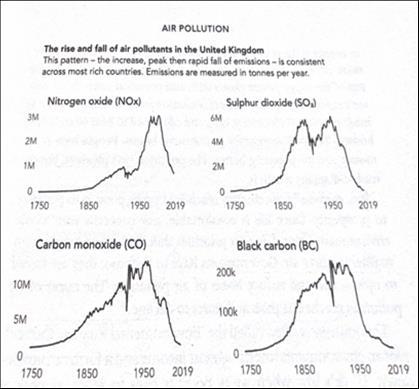
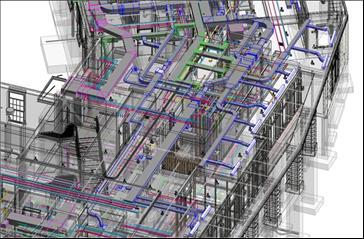
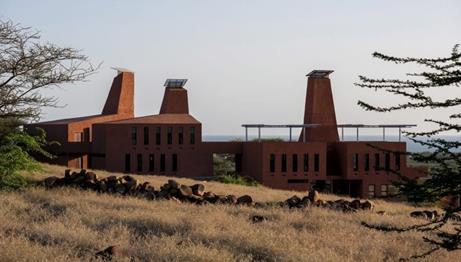
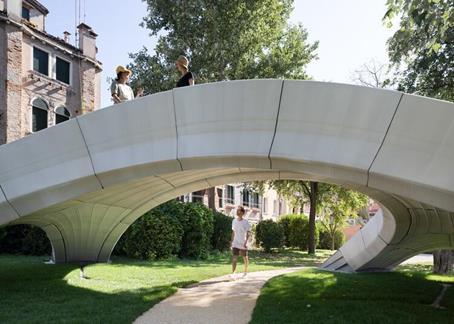
The first opportunity is brought by advances in technology. On the one hand, this can help streamline and improve the process of design within the studio, and on the other can help improve the efficiency of the built environment as a whole. Using technologies such as BIM allow many different disciplines (architect, structural engineer, developer etc.) to cooperate, by bringing together 3D models of a project on the same file, helping ease communication and better calculate costs (fig.2). Many architects consider that AI will become a staple for generating ideas and making visualisations faster to produce, and some architects have started using it already1. Meanwhile, improvements in solar panels mean that they are put on many more buildings, increasing energy efficiency. Architects are also increasingly using intelligent engineering, such as building structures in such a way as to create a natural ventilation stream (fig.3), or using geometry to make more efficient structures(fig.4), to further reduce energy usage and embodied carbon.
(fig.2) Image of BIM project, showing interconnectedness of many different systems (like ventilation, structure, electricity etc) and disciplines.
Another use of geometry: Striatus Bridge -
entry to
Biennale 2021. The bridge's form means the concrete needs no steel or mortar reinforcement, making it cheaper toproduce
1 Much of this information is from my work experiences at SEW, Foster and Partners and Michaelis Boyd.
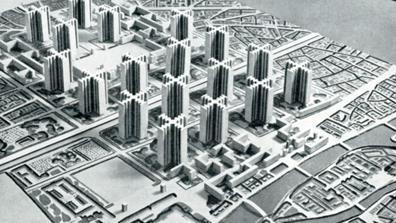
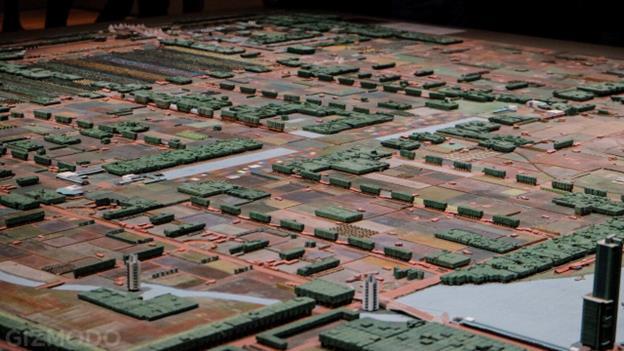
Another opportunity lies in the increasing awareness of architects that interdisciplinary thinking is required. Seeing a city through the lens of individual buildings does not work. Neither does viewing the city from an authoritative, top-down perspective, leading to the inflexible application of a homogenous utopian vision (Jacobs, 1961)(fig.5). Cities require a multi-level and flexible understanding of changing conditions throughout the various sites and contexts. An architect at SEW asserted the importance of communication in design, including with local communities, and that if this is not present things inevitably go wrong. Within many studios, there is already enormous cooperation between disciplines such as urban design, engineering and architecture, as well as an increasing awareness and desire to work closer with other groups, especially local residents.
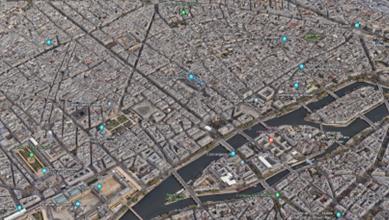
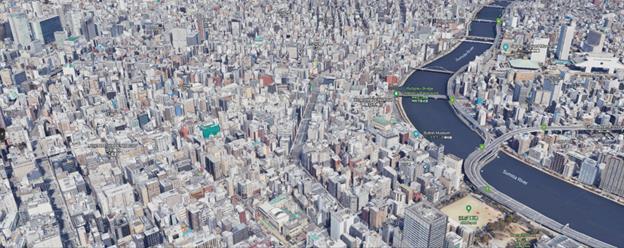
Finally, there is a massive window of opportunity to effect significant change in rapidly urbanising countries. While this was a long and difficult process in the West, modern developing countries have the chance to access phase. It is not the absolute size of a city which leads to its problems, but rather whether or not planning and design was involved throughout its period of expansion (Hagan, 2015). This is why Tokyo was able to avoid slums, since it had legal means of ensuring that the growth of the city never outstripped the ability to direct it. This included a law requiring that a minimum level of urban services were mandatory responsibilities of local governments. Despite its population of 35 million, Tokyo has a much higher quality of built environment than Lagos, with only 21 million, which does not have the legal motivation or financial capability of directing its growth (fig.6).
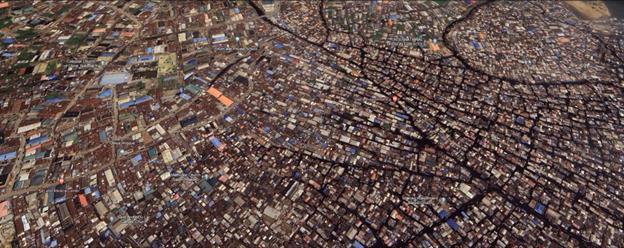
There are, however, significant obstacles to actually seizing these opportunities. First and foremost is a lack of a coherent vision and determined coordination in order to achieve it, a sentiment that architects at all three studios I worked at felt. There is currently a lack of alignment amongst different groups who contribute to the built environment: private developers might be in conflict with designers, or architects with policy makers, residents are not consulted, politicians make decisions without expert input, and so on. This puts many of these groups into awkward positions: in the UK, developers need to balance building affordable homes with stringent demands on increasing the biodiversity of any area in development by 10% (GOV.UK, 2024).
Many of these issues result from the behaviours that are currently rewarded. There is a divide between the vision of creating a better built environment and the need to profit from development, or for governments to win votes, or even for architects to achieve their own fantastical vision of the future. This results in design which is not necessarily cost-effective or good quality, especially when resources and money are spread thin and unevenly around the world and within countries. There is not enough money in the right places, such as in developing countries, where it could make the most difference. Many of the biggest architectural developments are in the Middle East, for example, due to the enormous sums that are poured into ambitious megaprojects (fig.7). Qatar’s world cup, or Saudi Arabia’s NEOM project are incredibly costly in embodied carbon and in money, yet without any significant improvement to the lives of those who most need help.
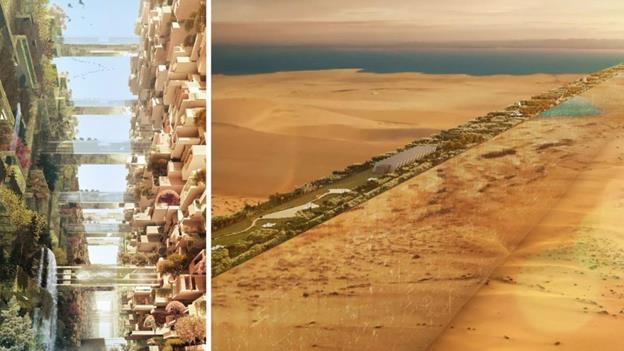
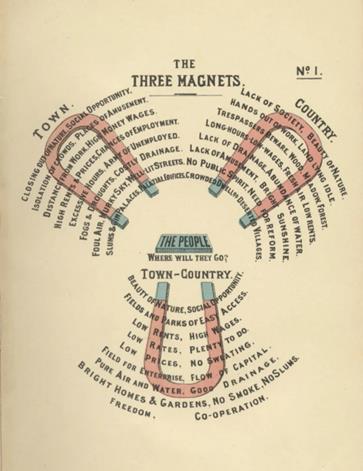
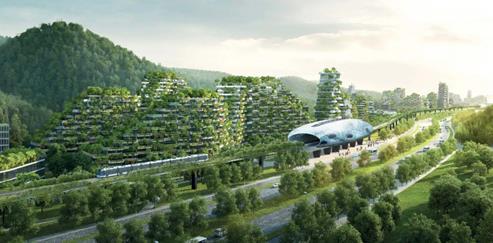
An ideal solution to the problem of the built environment requires us to take advantage of new technologies, changes in thinking and the growth period of developing countries, while increasing communication and participation across society, as well as realigning investment into and ambitions for cities across the world. Many architects in the past have faced similar challenges, but come up with unworkable solutions. From Ebenezer Howard’s Garden City to Frank Lloyd Wright’s Broadacre City, these ideas were really visions for the future of humanity and society. Howard envisioned a perfect mix between the city and the countryside, imagining a series of self-sufficient towns of no more than 32,000 people (fig.8). Wright imagined the apotheosis of suburbia, a continuous and decentralised urban fabric prioritising cars as the mode of transport (fig.9). Even if we assume these ideas would create a better society, they would require immense changes in the way we live our lives which cannot be relied upon, and indeed never panned out. In the Garden Cities of Welwyn and Letchworth, most of the houses are no longer even communally owned, Howard’s vision of a new society never materialising (Fitzgerald, 2024). We have never left behind this search for utopia, which can be seen in the various ‘‘Green Cities’’ around the world (such as NEOM or Liuzhou (fig.10)) which are equally inadequate models for the future, as they are too costly in time and money.
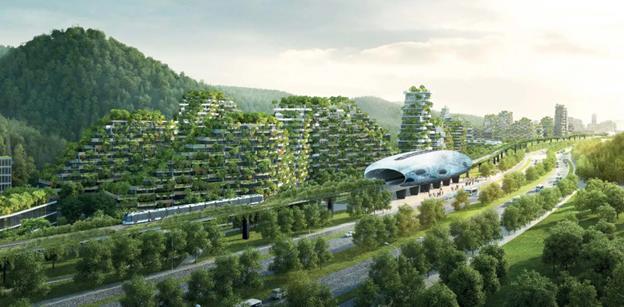
The key, then, is to create a utopian vision that is helpful rather than counterproductive. What is needed is a pragmatic yet optimistic, flexible and ambitious new approach to the built environment; just as unrealistic, perhaps, as any other utopian dream, but one that would offer in its pursuit a small but general improvement to living conditions across cities, in contrast to megaprojects that offer significant but very small-scale improvements. The crucial note to this approach is that no single entity or person will be solely responsible for it; there is no messianic-like figure that will finally figure out the future of society through finding the ‘’right’’ way of building. Through the repeated and sustained efforts of many people and groups working on or around the built environment, all around the world, in practice, education or communication, this kind of subtle yet powerful change could be brought about. A dream created out of our collective efforts, rather than from the efforts of one ‘’genius’’.
This does not mean that there is nothing we can do individually, and that we can sit back. Certain policies can be implemented to solve these obstacles or take the fullest advantage of our opportunities. There are two ways we can create a clearer and more helpful vision of the future. One opportunity is in implementing a top-down framework, and the other is in education.
The impact of international cooperation is sometimes underestimated. While a conference like COP does not provide quantifiable results, its purpose is really to realign global thinking and efforts towards climate change. Many people are aware of the importance of keeping temperatures below 2.0 C, and ideally 1.5 C, because of COP, which concretises the urgency and importance of decreasing greenhouse gas emissions (fig.11). This can be incredibly productive, but without proper understanding, it can also be ineffective: educational institutions and media have led to a sense of impending doom in relation to the future, and a widespread misunderstanding of what actually needs to be done, resulting in a mix of lethargy, confusion or misguided effort in relation to the climate crisis (Ritchie, 2024). The problem of cities requires a similar international vision to that of COP, supported by instructive communication, in order to effectively work towards progress in this field.
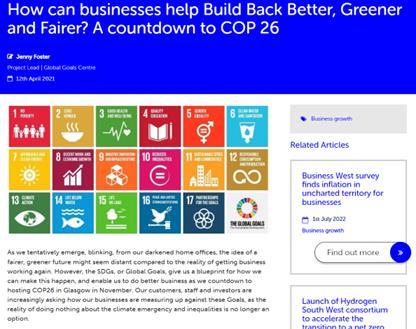
(fig.11) Another example of how establishing international goals can affect personal decisions. Taken from the website of Business West, an organisation that supports businesses in the UK’s South West, who are using the framework of the SDGs (set by the UN) to help inform business decisions.
(https://www.businesswest.co .uk/blog/how-can-businesseshelp-build-back-bettergreener-and-fairercountdown-cop-26)
Another opportunity lies in reorienting the education system. There is a tendency to compartmentalise disciplines in university in a way which does not reflect the actual work environment. In any career involved in the built environment, disciplines like architecture, landscape architecture, engineering and even administrative or political jobs cooperate (or try to), yet this is often not reflected in education. There are exceptions, such as the University of Bath where architecture and civil engineering students cooperate on certain projects; this is one way that more integrated design could be encouraged, having it begin at the educational level rather than the professional one. More than this, it is important to bring together other more abstract fields (such as philosophy or economy) with more applied ones (like engineering or data science) in such a way that encourages both creative and grounded solutions. Patrik Schumacher, the leading architect of Zaha Hadid, for example, studied the abstract fields of philosophy and mathematics alongside architecture; he also controversially believes that all urban space should be privatised, and the concept of social housing abandoned, since the economy is an evolutionary system which will take care of these things more efficiently (Fitzgerald, 2024). Disciplines within the built environment are not ‘arts’, even architecture; if they are subject to the whims of purely artistic and abstract creators, they ignore the necessities of sites, contexts, societies and people.
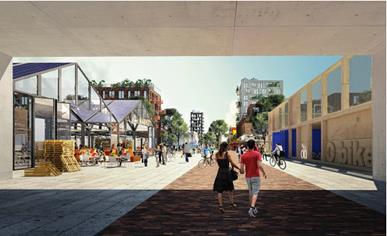
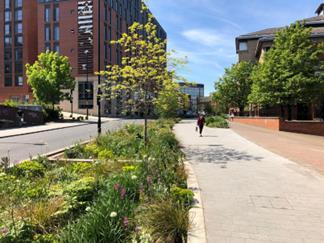
Perhaps one example of the correct approach is in ADEPT and KARRES+BRANDS’ accepted masterplan for a development in the city of Hamburg: ‘Oberbillwerder - the Connected City’ (fig.12). Their paramount concern is to make their contribution to the city interconnected: internally, to its natural environment, to its urban surroundings, to its past and future. It is a project concerned with amplifying and serving what is already there, rather than razing and rebuilding, or starting anew (fig.13,14,15).
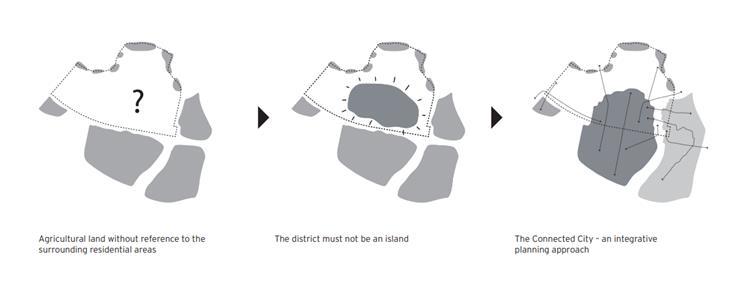
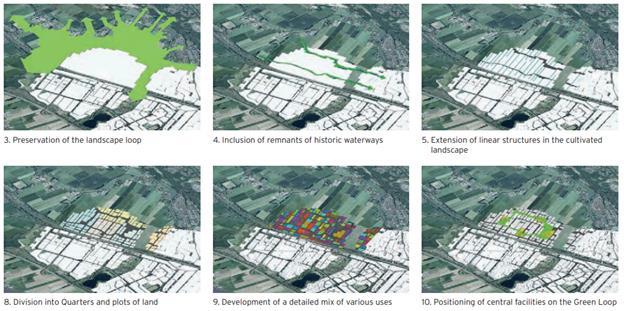
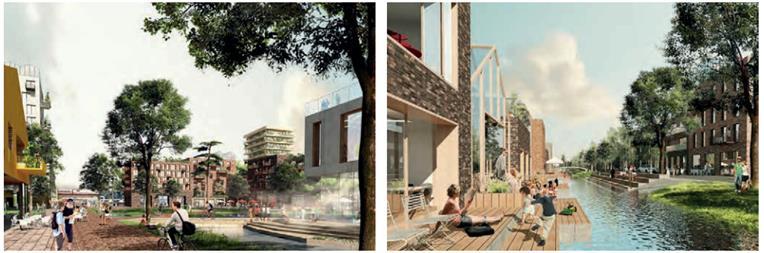
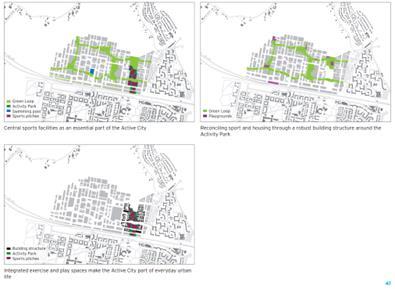
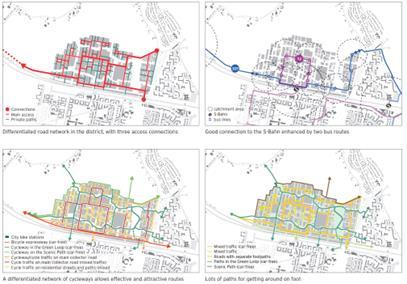
placement of building typologies, infrastructure, transport options,
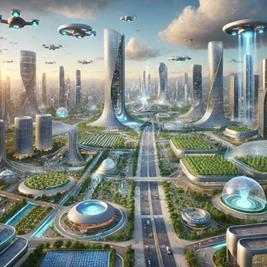
In this project there is a difference in approach in almost every aspect of the design process compared to previous examples. Here there is a tendency to be specific and contextual, rather than generalistic; there is a desire to be integrated rather than to create something completely new; there is a willingness to be pragmatic and conservative. Compared to the megaprojects of today or the past visions of the future, this project is a far more helpful and realistic proposition of what the future city might look like. It seems that the main issue facing the built environment is that a project such as this might be considered boring. Our dreams of the future seem to burst out of comic books or science fiction; we imagine for ourselves towering skyscrapers dressed in foliage and bullet trains zipping past on slender supports. Rather, we should imagine SuDS (Sustainable urban Drainage Systems) snaking their way through effectively insulated mid-rise construction. The former is a far more powerful image, and the latter is more of a concept, a way of thinking, but I believe that the more we are able to strive towards the idea of working together, pragmatically and contextually, the more we will be able to intelligently use our new technologies to contribute positively to the lives of everyone in our cities.
Bibliography:
Pallasmaa, J., (1996). The Eyes of the Skin. 1st ed. Chichester: Wiley.
Hagan, S., (2015). Ecological Urbanism: the nature of the city. 1st ed. Abingdon: Routledge.
Jacobs, J., (1961). The Death and Life of Great American Cities. 1st ed. United Kingdom: Random House. Till, J., (2013). Architecture Depends. 1st ed. United States of America: Massachusetts Institute of Technology.
Ching, F.D.K., Jarzombek, M., Prakash, V., (2017). A Global History of Architecture. 3rd ed. Hoboken, New Jersey: Wiley
Fitzgerald, D., (2024). The City of Today is a Dying Thing: In Search of the Cities of Tomorrow. 1st ed. United Kingdom: Faber and Faber Limited.
Ritchie, H., (2024). Not the End of the World: How We Can Be the First Generation to Build a Sustainable Planet. 1st ed. United Kingdom:Chatto and Windus.
Rasmuseen, S.E., (1964). Experiencing Architecture. 2nd edition. United States of America: Massachusetts Institute of Technology.
Le Corbusier, (2014). Towards a New Architecture. 1st edition (reprint). United States of America: Martino Publishing.
Howard, E., (1898). ‘Introduction’, in Howard, E., Garden Cities of To-Morrow (2nd ed.) (Online). Project Gutenberg. Available from: https://www.gutenberg.org/cache/epub/46134/pg46134-images.html
Block Research Group. (2021). Striatus [online]. Available from: https://block.arch.ethz.ch/brg/project/striatus-3dconcrete-printed-masonry-bridge-venice-italy2021#:~:text=Striatus%20%2D%203D%20concrete%20printed%20masonry%20bridge%2C%20Venice%2C%20I taly%2C%202021 [20/09/2023].
World Bank. (2023). Urban Development [online]. Available from: https://www.worldbank.org/en/topic/urbandevelopment/overview [15/09/2023]
Fleck, A., (2023). The World’s next Megacities. Statista [online], Jan 19. Available from: https://www.statista.com/chart/29152/the-worlds-nextmegacities/#:~:text=By%202050%2C%2014%20more%20cities,and%20Mumbai%20(32.4%20million)
The Guardian. (2018). Available from: https://www.theguardian.com/uk-news/2018/jan/30/london-reaches-legal-air-pollution-limit-just-one-month-intothe-new-year
Oberbillweider Masterplan. (2019). Available from: https://www.oberbillwerder-hamburg.de/wp-content/uploads/Master_Plan_Oberbillwerder_english_2019_web.pdf
CIWEM website. Sustainable Drainage Systems (SuDS). Available from: https://www.ciwem.org/policy-reports/sustainable-drainage Generate Image: The city of the future (2024). CHAT-GPT (GPT–4). GOV.UK. (2024). Biodiversity Net Gain. Available from: https://www.gov.uk/guidance/understanding-biodiversity-net-gain