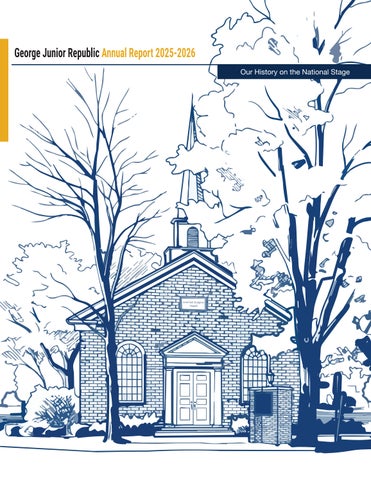
George Junior Republic Annual Report 2025-2026 Our History on the National Stage
Jeremiah Sturgeon Chapel
Pat J. Farrone
(1935 - 2026) Executive Director, George Junior Republic “These are not bad kids. They are largely a product of society and disorganized homes. Through the board, good financial support and a dedicated staff, George Junior Republic has been able to give a total commitment to the child.”
1974
2001
In Memoriam
1
2
BOARD CHAIR’S MESSAGE
4
LETTER FROM THE CEO
8
FINANCIAL REPORT
10
PHILANTHROPIC PARTNERS
12
GEORGE JUNIOR REPUBLIC IN PENNSYLVANIA
26
OUR HISTORY ON THE NATIONAL STAGE
32
GEORGE JUNIOR REPUBLIC IN INDIANA
40
PREVENTATIVE AFTERCARE
TABLE OF CONTENTS
BOARD CHAIR’S Mark V. Aletto David J. Ayers Dorothy E. Bellhouse Edward T. Berti David R. Champion Michael E. Clancey James P. Epstein Mark Ferrara Philip W. Gasiewicz Maria T. Gerstel Jessica P. Laymon Brenda K. McBride Greg S. Morin Mary Odem-Harrison Nancy Purcell William H. Romine Jr. Richard R. Stevenson Andrea Synowiec Megan R. Troxell Robert W. Wise, Jr. Gayle M. Young MISSION George Junior Republic and its affiliates provide opportunities for success and wellness to the individuals, families, and communities we serve.
GJR.org
AS CHAIR OF THE BOARD, I am proud to share this annual report on behalf of George Junior Republic and our affiliates. In a rapidly changing human services landscape, we remain focused on providing opportunities for success and wellness to the individuals, families, and communities we serve. For well over a century, George Junior Republic has adapted to meet the needs of each generation while staying true to its mission. That history continues to guide us as we respond to new challenges with innovation, flexibility, and—above all—CARE. Our legacy is reflected in the Jeremiah Sturgeon Chapel, recently recognized on the National Register of Historic Places. This designation honors an important part of our story and reminds us that the values shaping our work today—care, accountability, respect, and empowerment—are deeply connected to the legacy we carry forward. Over the past year, we have expanded and diversified our service lines to meet a broader range of needs. From residential and community-based programs to behavioral health, prevention, and family-centered services, we are building a stronger continuum of care— often providing options and levels of support that are simply not available elsewhere in the communities we serve. Thank you for your continued support of George Junior Republic. Because of your partnership, we can honor our history while preparing for the future with confidence and purpose. Sincerely,
Megan R. Troxell Board Chair, George Junior Republic and Affiliates 2 | Board Chair's Message
ESSAGE
BOARD OF DIRECTORS
A LEGACY OF LEADERSHIP
We extend our sincere appreciation to these board members for their years of dedicated service and lasting contributions.
ROGER K. TOWLE
DANIEL TAYLOR
MICHAEL BUCKMAN
•
•
•
•
Vice President for Financial Affairs (retired), Grove City College Served on GJR Parent, PA, PAC Boards; Investment, Audit, and Compensation Committees (2004-2026)
•
Senior Vice President (retired), PNC Bank Served on GJR Parent and PA Boards and Compensation Committee (2012-2026)
•
Vice President for Business and Finance, Grove City College Served on GJR in PA Board, Investment and Fiduciary Committees (2022-2026)
A Legacy of Leadership | 3
Letter from the CEO
AS GEORGE JUNIOR REPUBLIC (GJR) AND ITS AFFILIATES continue to modernize and evolve their continuum of services, change is in the air. This past fiscal year, George Junior Republic in Pennsylvania (GJR in PA) achieved a historic milestone by welcoming female youth back to its campus for the first time since the 1930s. This significant shift from traditional services was a vital step toward meeting the changing needs of stakeholders, partnering counties, and at-risk youth. To support this demographic, Achieve, a less restrictive girls program, launched in March 2026, while the upcoming Aspire program, the highest level of care for females, is set to open later this year. The ultimate goal remains the construction of a complete and robust continuum of care for young women within the GJR affiliation.
LEADERSHIP TEAM Nathan Gressel Chief Executive Officer Gerald Savo Chief Financial Officer John Horgan Vice President of Operations Brandy Stark Vice President of George Junior Republic in Indiana Megan Grivas Director of Preventative Aftercare Susan Boland Human Resources Officer Nate O’Lay Director of Business and Clinical Development Bryan Redfoot Director of Information Technology Fred Harris Facility Manager
4 | Letter from the CEO
In tandem with these campus developments, GJR is rapidly expanding its regional footprint and specialized residential programming. The organization recently opened a second male detention facility in Uniontown, Pennsylvania, located in Fayette County. Looking ahead, a major focus for the remainder of 2026 will be the development of newly contracted short-term diagnostic programming for both male and female youth, which is projected to open in early 2027. This momentum is mirrored by Preventive Aftercare, Inc. (PAC), and George Junior Republic in Indiana (GJR in IN), which both continue to experience strong growth through evidence-based interventions. Together, GJR’s community-based programs span three states and reach nearly 75 counties, and thousands served annually, reinforcing a shared mission to provide opportunities for success and wellness. This ambitious trajectory of growth and modernization is made possible through the dedication of the entire GJR community. Deep gratitude is extended to the six boards of directors across the GJR affiliated system, whose support, guidance, and patience have been essential in navigating these transformative shifts. Equal appreciation goes out to over 450 GJR employees, whose unmatched dedication and hard work form the backbone of the agency’s success. Through this collective effort, the GJR affiliates stand united in their commitment to specialized care and positive community impact. Sincerely,
Nathan M. Gressel Chief Executive Officer, George Junior Republic and Affiliates
A LEGACY OF DEDICATION
We honor these retiring employees for their commitment, expertise, and the meaningful impact they have made throughout their careers.
BILL CAMPBELL
CATHY CHUTZ
KAREN WALZER
TODD WOOD
• •
•
• •
• •
Maintenance worker 40 years of service
•
Executive Administrative Assistant to the CEO 11 years of service
Director of Finance 27 years of service
Maintenance worker 35 years of service
A Legacy of Dedication | 5
Impact
GEORGE JUNIOR REPUBLIC & AFFILIATES
3,524
FISCAL YEAR 2025-2026
clients served
28
active programs (residential & community-based)
0-86
years old
age range of clients served
4
new programs
165
days
average length of service
130
referring counties
(across Pennsylvania, Ohio, Indiana, West Virginia, Connecticut, and Maryland)
Financial Report
fiscal year ending June 2026
George Junior Republic and its affiliates receive funding from contracted services with federal, state, and county governments, managed care organizations, as well as other public and private contributions and grants. The organization maintains a strong financial position and disciplined stewardship of long-term assets, which allows for continued investment in mission-critical services for the children, youth, adults, and families served. Revenue
Expenses Federal Tax Credit 8% Other Revenue 2%
Insurance & Compliance 9% Facilities & Operations 12%
Program Revenue 90% Direct Services 78%
Historical Revenue in millions of dollars
30
GJR in PA GJR in IN GJR PAC
25 20 15 10 5 0
FY2022
FY2023
FY2024
FY2025
FY2026
Key Metrics
170K 2% 3.5mil daily operating expenses
8 | Financial Report
debt ratio
net assets
Fundraising Report
fiscal year ending June 2026
While long-term investments ensure GJR can preserve its facilities and infrastructure, annual fundraising efforts make transformative opportunities possible. During fiscal year 2025-2026, the organization received over 1.4 million in grants and donations to pilot new programs, purchase equipment, steward its history, sustain existing initiatives, and provide the population served with valuable services and recreational opportunities.
Donations by Purpose In-kind Gifts 7% Projects & Programs 19%
Projects & Programs Holidays
141K
Scholarships 47%
Scholarships In-kind
Holiday Gifts & Support 27%
Grants Awarded by Affiliate 1% 14%
PAC PA IN
85%
1.28mil
Fundraising Report | 9
PHILANTHROPIC PARTNERS honoring our benefactors
George Junior Republic gratefully recognizes the following donors and grantors for their financial and in-kind contributions during this fiscal year. Their generosity has strengthened our mission and enriched the lives of the children, youth, adults, and families entrusted to our care. On behalf of those we serve, thank you.
$1,000,000 or more Indiana Criminal Justice Institute $100,000 or more Pennsylvania Commission on Crime and Delinquency $10,000 or more AllOne Charities David O. Cashdollar Diehl Automotive Group Indiana Youth Institute Pennsylvania Department of Education Pennsylvania Department of Health Pham Giving Fund PNC Bank, N.A. The Pew Charitable Trusts $5,000 or more Allegheny Mineral Corporation McGill, Power, Bell & Associates, LLP Charles Pack PNC Charitable Trusts Sharp Properties Starbucks TJ Kavanagh Foundation 10 | Philanthropic Partners
Transformation Church United Concordia Companies, Inc. $1,000 or more AJAX Commercial Cleaning, Inc. Church of the Beloved Disciple Dorothy E. Bellhouse Edward T. Berti John Davies Laurie Dinkel Philip W. Gasiewicz HUB International Three Rivers Indiana Department of Child Services Johnson County (IN) Drug Free Community Fund Jill and Paul Jones Mercer County Adult Education Center Memphis Christian Church Leola “Mary” Mistretta Olive Leaf Patriot Contractors Darlene Schwartz Texas Roadhouse The Pacers Foundation The Pepsi Bottling Group Thomas Keating Trust Roger K. Towle Megan and Nathan Troxell Walmart Sparkgood
Ways to Give George Junior Republic welcomes charitable contributions in support of its programs and services, scholarships, holiday celebrations, special events, and other mission-driven initiatives. Gifts of cash, securities, in-kind property, and other charitable assets consistent with the organization’s purposes and priorities will be stewarded with care and administered in accordance with the donor’s intent.
$500 or more Larry Archinal GVC Mortgage Alicia Littlejohn Maher Duessel Moores Hill Church of Christ Mount Nebo Presbyterian Church Richard R. Stevenson Russell Standard Corporation Sycamore Coffee $100 to $500 Anonymous Sydney Brewster Lynn Calhoun Michael and Beth Clancey Dave and Candy Clausen Bill and Sue Cutri Fund Days for Girls Empowered Counseling James Epstein Ginny’s Peeps Athena Graf Howard and Gwen Haglund Home School Group Kroger Paula Louise David and Debra Marin Brenda K. McBride, Esq. Damian and Judith Neuberger Mike O’Mahony Preston Motors, Inc. Nancy S. Purcell Rex and Virginia Smith Brandy Stark Dr. Betty Jo White
For additional information regarding charitable giving or planned gifts, please contact Development Director, Miley Duong, at 724.458.9330 x2192 or tduong@gjr.org.
BY MAIL George Junior Republic Attn: Development Department 233 George Junior Road Grove City, PA 16127 ONLINE GIVING Secure online contributions may be made at gjr.org/donate/ PLANNED GIVING Planned gifts provide enduring support for George Junior Republic’s mission while helping preserve its legacy for future generations. Bequests, appreciated securities, retirement assets, life insurance, charitable trusts, and other planned giving arrangements ensure the continuation of the organization’s essential services well into the future. Individuals who include George Junior Republic in their estate plans will be inducted into the William Reuben George Legacy Society.
Philanthropic Partners | 11
on campus GREENHOUSE PROGRAM FEEDS NEIGHBORS Now in its third year, the Farm to Table program continues to provide the GJR in PA campus and the Grove City Community Food Pantry with a seasonal harvest of fresh, organic produce cultivated by GJR staff and residents. Participants engage in every stage of the growing process, from preparing soil and constructing fencing to planting and tending for crops. Through experience with both raised-bed and in-ground gardening methods, participants gain knowledge that can be applied in a variety of community settings and a deeper appreciation for sustainable food production. CHALK MURALS BRINGS CAMPUS TO LIFE Thanks to a generous donation from the Buhl Regional Health Foundation, the Campus Advisory Council hosted a campus-wide chalk mural event that became one of the highlights of the summer. Residents and staff collaborated to create large-scale, intricately detailed works of art, with subjects ranging from superheroes to wildlife and underwater scenes. For a few vibrant days until the next summer rain, sidewalks and entrances across campus were transformed into colorful displays of creativity, collaboration, and the CARE principles that guide daily life at GJR.
12 | On Campus
LTSR RISES TO MEET HIGH REFERRAL DEMAND The Long Term Structured Residence (LTSR) program experienced a year of significant growth, reaching full capacity for the first time in November 2025, and maintaining a steady waiting list. During fiscal year 2025-2026, the program received 47 referrals, serving 27 residents from counties across Pennsylvania. The clinical team also grew to three full-time therapists with newly renovated private treatment spaces designed to meet increasing demand. Residents continue to achieve meaningful outcomes, with ten successful program completions, growing opportunities for volunteer service and community engagement, and positive feedback from county administrators, treatment providers, probation departments, and insurance representatives.
FURRY FRIENDS HELP YOUTH HEAL Mondays have become a favorite day at GJR in PA thanks to the trained therapy dogs and handlers from HOPE AnimalAssisted Crisis Response and Slippery Rock University students studying animal-assisted interventions and music therapy. Animal-assisted interventions are evidence-based therapeutic practices shown to reduce stress, improve social interaction, and promote emotional well-being. For youth who have experienced trauma, nonverbal interaction with a trained therapy dog has been shown to reduce anxiety, ease negative emotions, and support healthy emotional regulation.
On Campus | 13
George Junior Republic
Fiscal Year 2025-2026
ACHIEVE 1
2
3
4
A New Chapter for Girls at GJR in PA
5
6
7
8
9
10
11
12
2 3 4 5 6 7 8 9
G I R L S E T U R T O N T H E
10 11 12
14 | Achieve - A New Chapter for Girls
R E P U B L I C
Photos: Achieve residents join Secure Programs Director, Maranda Addison, to learn about the life cycle of the painted lady butterflies.
EARLIER THIS YEAR, GJR in PA reached a historic milestone by reintroducing female youth to campus for the first time since 1939. The launch of the Achieve residential program represents a strategic expansion of GJR’s mission, addressing a critical need for specialized, trauma-informed care among system-involved juvenile girls across Pennsylvania. While many girls in the system are traditionally placed in secure settings that prioritize supervision over support, Achieve provides a staffsecure environment where therapeutic treatment and personal growth happen simultaneously.
implementation. Secure Programs Director, Maranda Addison, described the program as deeply meaningful. “I am honored to take on this challenge and excited for the program’s future… the girls deserve it,” she shared.
Each resident participates in an individualized treatment plan developed by GJR’s clinical team and meets regularly with licensed therapists and a psychiatrist. These ongoing therapeutic touch points focus on the measurable behavioral, emotional, and psychological goals that are necessary for lasting recovery.
The true impact of the program is best seen through its focus on family reunification. Every resident’s individualized treatment plan is designed with the goal of preparing her for a successful return to her family and community. Recently, Achieve facilitated a meeting between a resident and her entire family for the first time in five years. Their first family photograph together stands as a powerful reflection of the healing and renewed connections Achieve strives to create for every young woman it serves.
The immediate need for this program was underscored by an overwhelming statewide response, with over 200 referrals received within the first two months of the program’s
In their daily lives, the Achieve youth participate in a supportive, CARE-based “ecosystem” built upon female-centered activities, such as volunteering with Days for Girls or creating friendship bracelets. Staff have observed that as the girls begin to feel safe and supported, they are more willing to express vulnerability and build meaningful peer relationships.
Achieve - A New Chapter for Girls | 15
FOUR DECADES OF FAITH IN ACTION 16 | New Life
SINCE THE 1980s, NEW LIFE MINISTRIES has served as a meaningful bridge between Grove City College (GCC) and GJR. Each Thursday evening, a group of Grove City College students leaves GCC’s campus and enters GJR’s to build relationships with youth served through games, conversation, and shared experiences. After a pause during the pandemic, New Life returned with renewed energy, quickly becoming a highlight of the week for many youth. Each Thursday, approximately 15 college student volunteers are paired with a similar number of youth between the ages of 13 and 18. Their time together begins with informal activities such as basketball or dodge ball, building connection through sportsmanship from the first interactions. Later, the group transitions into more structured activities, including team-based games and group challenges that encourage active participation. These moments of shared laughter and friendly competition help build trust and break down barriers between volunteers and youth.
“
One thing that has been awesome to see is how excited (the youth) are to see us every week.
”
Youth bring study Bibles to a New Life session.
After the physical exercises, youth and volunteers then break into smaller groups, where they engage in deeper conversation, reflect on personal experiences, and offer support and encouragement to one another. Participation in New Life is completely voluntary for GJR youth. Each gathering includes a short message centered on faith and personal reflection, where volunteers guide the group through scripture and share how it connects to their own lives. For some youth, this experience provides an opportunity to explore or reconnect with their faith, while for others, it is a space for conversation, guidance, and friendship. These discussions give youth the chance to share their stories, challenges, and goals in a setting where they feel heard. The impact of New Life is evident in the enthusiasm of the youth who participate. Pax, a New Life volunteer, shared that “one thing that has been awesome to see is how excited (the youth) are to see us every week. Just by showing up, we’re able to give them something to look forward to.” Thanks to New Life, many youth look forward to Thursday evenings, where lasting connections with volunteers who take a genuine interest in their lives are created. Over time, these relationships grow stronger, as youth remember details about the volunteers and continue to build meaningful bonds. “It has been really special to get to know them. They remember things about our lives… it shows how much they truly care,” Pax added. New Life | 17
LITTLE
ors ent hi
18 | Bigs & Littles
Litt les M
rogram P p
Bigs and
BIG
mentors
friends fr
THE BIGS & LITTLES MENTORSHIP PROGRAM creates structured opportunities for youth to develop leadership skills, strengthen peer relationships, and build social and life skills through shared recreational experiences within two Special Needs residential programs. By pairing older youth (“Bigs”) with younger youth (“Littles”), the program encourages participants to take on age-appropriate leadership responsibilities while fostering meaningful relationships built on trust, encouragement, and consistency. Each week, youth participate in recreational sports, teambuilding activities, crafts, baking projects, and holiday celebrations designed to strengthen communication, cooperation, and problem-solving skills. These structured activities provide opportunities to practice teamwork, navigate social interactions, strengthen communication skills, develop problem-solving abilities, and build confidence in a supportive environment. As relationships grow over time, participants learn to encourage one another, resolve conflicts respectfully, and celebrate each other’s accomplishments. The program also celebrates birthdays and recognizes participant milestones, reinforcing each youth's accomplishments while creating a strong sense of belonging and community. When possible, the Bigs & Littles program extends learning opportunities beyond campus through various community outings. These activities allow youth to apply social skills in realworld settings while developing confidence, independence, and social etiquette. For many participants, these outings provide experiences they may not have otherwise had, expanding their comfort zones while creating lasting memories alongside
brothers
peers
trusted peers and mentors. This past December, several "Bigs" visited the Grove Manor nursing home in Grove City, where they delivered homemade cookies and handwritten cards to elderly residents. The visit provided another opportunity for youth to practice empathy, communication, and leadership while building meaningful connections with members of the local community. The program’s impact has also drawn attention beyond the region. This year, Behavioral Health Technician, Kailie Strouss, and Residential Manager, Christina Regis, were invited to present the Bigs & Littles Mentorship Program at Cornell University’s international meeting of CARE professionals. Developed by Cornell University, the Children and Residential Experiences (CARE) model is an evidence-informed framework that helps residential organizations create therapeutic opportunities through everyday interactions. Through Cornell’s international CARE community of practice, participating organizations exchange innovative approaches that strengthen residential care for children and youth. The Bigs & Littles Mentorship Program was honored to appear and represent CARE in action. By fostering supportive peer relationships, providing developmentally appropriate leadership opportunities, building competence through shared experiences, and extending learning beyond the residential environment, the program demonstrates how the CARE philosophy can be translated into meaningful daily practices that benefit all those involved.
Bigs & Littles | 19
Meet the Team
CHANGING LIVES THROUGH LIVED EXPERIENCES Sharon Goff, peer specialist, certified recovery coach
20 | Meet the Team
FOR SHARON GOFF, lived experience has become one of the most valuable tools she brings to her work. Having struggled with serious mental illness, justice system involvement, and long-term recovery herself, Sharon joined GJR in PA’s Long Term Structured Residence (LTSR) in 2024 and has since earned certifications as both a certified peer specialist and certified recovery specialist. Today, she serves as one of two peer specialists within in the LTSR, using her experiences to support adults living with serious mental illness and justice system involvement as they work toward recovery. Unlike therapists or counselors, certified peer specialists do not provide clinical treatment. Instead, they offer a perspective rooted in shared experience, helping residents navigate recovery alongside the broader interdisciplinary treatment team. Sharon maintains an individual caseload, facilitates recovery groups, and works one-on-one with residents to establish personal goals through Wellness Recovery Action Plans. Sharon assists residents in identifying triggers, developing daily maintenance plans, creating personalized wellness toolkits, and preparing crisis
program’s greatest strengths. “The LTSR does everything to set residents up for success… we help people establish an income, connect with doctors, nurses, and therapists, and learn the skills they need to move forward. Everybody works together and plays a part in setting them up for success.” This philosophy extends well beyond traditional mental health treatment. Throughout the sixmonth program, residents participate in budgeting instruction, competency restoration, cooking groups, art therapy, community outings, family therapy, and monthly shopping trips that strengthen independent living skills while preparing them for life beyond the LTSR. Staff also assist residents with accessing healthcare, government benefits, housing, and other community resources, with many transitioning to Community Residential Rehabilitation programs as the next step in their recovery. For Sharon, one of the most rewarding aspects of peer support is watching residents recognize what
“Sometimes they just need to know that someone else understands.” plans that residents can continue using beyond their time in the program. For individuals experiencing cooccurring mental health and substance use disorders, Sharon helps residents understand the connection between the two while connecting them with recovery resources that align with their individual needs. As part of the LTSR’s interdisciplinary care team, Sharon collaborates each week with therapists, nurses, and the greater treatment team to review every resident’s progress, discuss challenges, and coordinate treatment. She believes this collaborative approach is one of the
they are capable of achieving. She recalls seeing a former resident thrive after treatment, a moment that reinforced why she chose this profession. At the same time, she recognizes that many individuals living with serious mental illness continue to face stigma that can create barriers to employment, housing, and community acceptance, particularly for those with criminal histories. As someone who has experienced those challenges herself, Sharon hopes residents see her more than just a peer specialist, but as someone who demonstrates, by her own example, that recovery is possible. Meet the Team | 21
A SELF-MADE FAMILY MAN Born into neglect, one alumnus transformed loss into legacy by building the loving family he was never given.
FOR OVER A CENTURY, GJR has provided a foundation of stability and opportunity for young people in crisis. For Bert “Pal” Yossick, who arrived on campus in 1949, GJR in PA marked a turning point in his life, transforming a turbulent childhood into a future defined by resilience and purpose. Born in Johnstown, PA, on September 4, 1935, Bert’s early years were defined by instability. Within his first few years of life, he entered a children’s home due to his parents’ struggles with substance use. Although he returned home for brief periods, he spent most of his childhood in children’s homes before aging out of care at 16 and being placed in a foster home. After enduring physical abuse and 22 | Alumni Story
Bert (left) reviews a photo book of his past sculptures with his daughter, Leslie (right). Many of his sculptures were highly sought after as premium recognition awards by organizations such as the Delaware Standardbred Owners Association. Carving is a hobby Bert picked up around the time he resided at GJR.
hard labor at this foster placement, Bert decided to run away, hitchhiking across Pennsylvania and relying on the kindness of strangers to survive before eventually returning to Johnstown in search of work. While applying for a job at a local hospital, he had a chance encounter with a truancy officer who arranged for him to be placed at GJR in PA in 1949, a decision that changed the course of his life.
A military cargo aircraft reminiscent of his many years at the Dover Air Force Base, DE.
The State of Delaware Seal that Bert carved for his wife’s retirement from the state Department of Agriculture office.
At the time of his arrival, the campus was home to fewer than 70 boys living in just three cottages. Having left traditional schooling during the eighth grade, Bert did not attend educational programming and was instead entrusted with meaningful responsibilities that helped him develop confidence and practical skills. Throughout his three years on campus, he worked in a variety of roles, including maintaining the grounds as a gardener, working in facility maintenance, serving as a campus night watchman, and, during his final year, assisting cottage parents in caring for younger boys as a “junior uncle.” Through each responsibility, Bert developed the strong work ethic, dependability, and sense of responsibility that would guide him throughout his life.
(continued on next page)
(Left) Stone sculpture depicting a horse and cart.
Alumni Story | 23
Outside of work, Bert immersed himself in campus life. He participated in football, baseball, boxing, and the Reserve Officers’ Training Corps (ROTC), successfully completing the program before turning 18. He also discovered a passion for carving wood and stone, a hobby he continues today. Just as meaningful were the relationships he formed with coaches and staff who provided the encouragement, consistency, and guidance that had been largely absent during his childhood. The football skills Bert developed at GJR in PA earned him a place on the United States Air Force football team, where he played semi-professional football across the United States and Europe for four years. During basic training, he unexpectedly reunited with one of his brothers for only the second time in his life. Later, while stationed at Dover Air Force Base, he met his wife, Patricia, at a local skating rink. The couple married in 1955, just two weeks before Bert was deployed to France. Eight months later, Patricia joined him overseas after accepting an on-base civilian position with the federal government. Now, more than seven decades later, Bert and Patricia remain happily married, a remarkable testament to the lifelong commitment they built together. Following his honorable discharge from the Air Force in April 1957, Bert began a career defined by the same dedication and perseverance he developed at GJR in PA. He first worked for General Foods before returning to Dover Air Force Base as a civilian employee. There, he worked as a maintenance mechanic on cargo aircraft, a heavy equipment operator, crew chief, and eventually general supervisor of ramp services, overseeing aircraft operations until his retirement. Even then, Bert wasn’t ready to slow down and went on to spend nearly 25 years as a school bus driver, continuing a lifetime of hard work and service to his community.
24 | Alumni Story
BERT
Bottom Left Bert with his wife, Patricia, and two of their five children, Leslie and Jenny. Top Center A newspaper clipping documenting Bert’s emotional reunion with his siblings. Middle Center Bert and his brother, Bill, during a visit from their brother, Bob, at their foster home. The photograph is displayed in a frame featuring a stone handcarved by Bert. Bottom Center Bert serenades his wife, Pat, with karaoke. Even after 70 years of marriage, his singing still brings tears to her eyes. Top Right Bert with fellow Air Force recruits at Sampson Air Force Base, New York, in April 1953.
In his personal life, Bert successfully reconnected with nine siblings, some of whom he had unknowingly lived alongside in children’s homes and foster care placements as a child. For the past 50 years, he has worked alongside his siblings and extended family to organize family reunions every three years, bringing together relatives who had once been separated by unfortunate circumstances or adoption. Today, he and Patricia are the proud parents of five children, nine grandchildren, and six great grandchildren. His role as a devoted husband, father, grandfather, and brother remains at the center of his life and identity. Reflecting on his journey, Bert credits his time at GJR in PA with helping him build the future he once thought impossible. “I could not have taken a better route than the one I took,” he said. “Everyone has problems along the way; you just have to work your way through them.” When asked what advice he would offer youth served at GJR today, he shared the lesson that has guided him throughout his life: “Get out and work hard. When you start a job, finish it. Don’t let anyone get in the way of you finishing it.”
Alumni Story | 25
OUR HISTORY ON THE NATIONAL STAGE Jeremiah Sturgeon Chapel, George Junior Republic in Pennsylvania, c.1919
26 | Our History on the National Stage
On August 14, 2025, the Jeremiah Sturgeon Chapel on the GJR in PA campus was recognized as a National Historic Site by the Department of Interior for its well-preserved state, its representation of early non-denominationalism in the United States, and its connection to the Junior Republic Movement (1895-1912).
THE SIGNIFICANCE OF THE JEREMIAH STURGEON CHAPEL comes from its connection to the little-known story of the Junior Republic Movement, a Progressive Era social reform effort founded by William Reuben George in 1895 that sought to reform troubled youth through democratic civic participation. The movement emerged during the final decades of the Gilded Age, when rapid industrialization created unprecedented wealth for America’s upper class while concentrating poverty among working-class and immigrant communities in overcrowded urban centers. In cities such as New York, poor families often lived in densely packed tenements with inadequate sanitation, dangerous working conditions, and limited access to education. Children frequently entered the
workforce at a young age in factories, mills, mines, and street trades, where long hours, exploitation, and exposure to crime became commonplace. These conditions contributed to rising concerns over juvenile delinquency and youth gangs, particularly among boys whose daily lives were shaped by poverty, violence, and survival in unsupervised streets. At a time when formal juvenile protections were largely nonexistent, troubled youth were often treated as miniature adults and incarcerated alongside hardened offenders. George’s response to this crisis was deeply shaped by both personal conviction and lived experience. The son of a Methodist preacher and a devout Christian mother who believed he was destined for ministry, George instead found success as a (continued on next page)
Our History on the National Stage | 27
businessman but devoted much of his time to church-related outreach among New York’s slum youth. His work with immigrant children convinced him that delinquency often stemmed less from defective character than from destructive environment. Against this backdrop, George proposed a radically different model of reform. The Junior Republics functioned as miniature republics modeled after the greater American republic, where youth citizens worked for wages, paid taxes, participated in elections, and contributed to daily community life under limited adult supervision. This model rested on George’s tried-and-true experience working with wayward youth, that civic responsibility, productive labor, and accountability were essential to character formation. The movement’s defining motto, “nothing without labor,” reflected this philosophy and became the guiding principle of every Junior Republic site.
The movement distinguished itself further through its approach to religion. Though George was personally shaped by the Methodist tradition, his experience working among immigrant communities in New York fostered a broader appreciation for individuals of differing beliefs. Rather than tying moral development to any specific denomination, George emphasized the value of faith as a source of character and discipline regardless of religious origin. This philosophy influenced the religious practice of all Junior Republics and the reason why George Junior Republic chapels, of which only the Jeremiah Sturgeon chapel and the Christ Chapel (Freeville, NY) survives with historical integrity, were one of the earliest nondenominational worshiping spaces in the country. George Junior Republic in Pennsylvania (GJR in PA), 28 | Our History on the National Stage
established in Grove City in 1909, became one of the most successful expressions of this national movement. Of the original eight Junior Republic locations, GJR in PA remains one of four extant sites and the only one still operating under the original George Junior Republic name. Its longevity alone reflects the enduring relevance of the founding philosophy, but the clearest physical expression of that legacy is found in one building. Completed in 1914, the Jeremiah Sturgeon Chapel is the only structure on the GJR in PA campus from the Progressive Era that still retains its historic integrity in name, location, design, setting, and materials. Over more than a century of expansion, demolition, and modernization, nearly every other building from the institution’s early years was either significantly altered or removed. Thus, the survival of the chapel carries significance beyond architecture. It preserves and represents, in physical form, the founding era of the
Junior Republic Movement that would otherwise exist primarily in archival records. At first glance, the chapel appears modest in comparison to many historic religious structures across the country. It lacks the scale, ornamentation, and ecclesiastical grandeur commonly associated with nationally recognized sacred spaces. Yet the significance of the Sturgeon Chapel lies not in monumentality but in context. Its historical value derives from what it represents within the broader history of American social reform. First, it was dedicated as a house for the worship of God “by all creeds,” reflecting the non-denominational and voluntary practice of religion central to the Junior Republic model. In an era when most American worship spaces remained firmly
denominational in governance and identity, this approach was highly unusual. Second, its architectural character reflects the values of the institution it served. Built in a restrained Colonial style, the chapel emphasizes durability, order, and functionality over ornament. Its brick exterior, economical stained-glass windows, and simple but high quality millwork reflect a practical design philosophy consistent with the broader ethos of the Junior Republic Movement and reflective of the constrained financial nature of charitable human service organizations. As with many historic properties, the chapel owes its continued survival not only to structural durability but also on community stewardship. Throughout the process of researching the building for historic designation, stories emerged that revealed the affection that Grove
1890 William Reuben George begins sending disadvantaged New York City youth to summer camps in the countryside, believing pastoral childhood experiences could inspire behavioral changes.
1895 George establishes the first Junior Republic in Freeville, NY, a miniature self-governing society where youth earn wages, pay taxes, hold elections, and learn citizenship. Religious participation is voluntary and nondenominational.
William Reuben George
c. 1900 The movement gains national attention from Progressive reformers, including President Theodore Roosevelt and “muckraker” journalist Jacob Riis, who praise the Junior Republic as a groundbreaking model for reforming troubled youth through responsibility rather than punishment.
1908–1909 Dr. Morgan Barnes, a Mercer County native and then classics professor at the Thacher School, CA, convinces George that Western Pennsylvania is ideal for a Junior Republic east of the Mississippi.
December 3, 1909
When Pittsburgh lawyers and civic leaders were searching for a rehabilitative model to divert Pittsburgh troubled youth from adult prisons, they were connected with George through Dr. Barnes.
Community leaders gather at Carnegie Library Hall, Grove City College, to celebrate the inauguration of the sixth Junior Republic with William R. George in attendance. Harris G. Leroy, a Freeville graduate, becomes the first superintendent.
With local efforts and George’s blessing, the George Junior Republic of Western Pennsylvania (now George Junior Republic in Pennsylvania) is established in Grove City.
1910–1911 City residents have with this structure. One such account recalled a period during which the expansion of Route 58 threatened the chapel with relocation or demolition. Though this was initially an anecdotal account, later review with the State Historic Preservation Office confirmed that the building had indeed faced historic evaluation during transportation planning in 1990 and was ruled insignificant due to the insufficient evidence provided by the Department of Transportation. Fortunately, GJR leadership and Grove City community members successfully advocated for the preservation of the building. Without this united local effort, the chapel may not have survived to receive national recognition today.
The campus rapidly expands with Pioneer Cottage, Apple Blossom Cottage, barns, workshops, and a jail. By 1911, the colony houses 47 youth citizens. Dr. Isaac Ketler, founder of Grove City College, becomes the first academic administrator and teacher for youth citizens of this Junior Republic.
This illustrates an important truth about historic (continued on next page)
1911 Basketball Team
Our History on the National Stage | 29
“In the splendid Republic of yours, you are doing the very things that I am trying to uphold – the dignity of labor, the ideals of democracy, and the principles of individualism.” - Theodore Roosevelt, 26th U.S. President
to protect the building from demolition, its continued care will depend upon those who recognize that history is more than tangible structures; it is also about the stories, values, and vision that shaped our lives today. Through the continued generosity and stewardship of those who trust in its mission, the Jeremiah Sturgeon Chapel will remain a place where future generations encounter the enduring legacy of the Junior Republic Movement and the timeless conviction that every young person deserves the opportunity to build a better future.
Join our $250K Conservation Campaign. Dedicate a commemorative brick today.
preservation, that a building’s survival through time is rarely an accident. Oftentimes, it takes generations of unnamed preservationists who defend history before formal institutions do.
$1,000
The chapel’s listing on the National Register of Historic Places in 2025 formally recognized these qualities, affirming both the building’s exceptional historic integrity and its association with a nationally significant movement in American social reform. With this designation comes a renewed responsibility for GJR to steward this rare piece of American history for future generations. Like many historic landmarks, however, the Jeremiah Sturgeon Chapel now faces the quiet but inevitable challenges of age. Water infiltration, aging infrastructure, and long-term structural deterioration require thoughtful preservation to ensure that this irreplaceable landmark continues to stand as a testament to the ideals it was built to serve. The chapel has endured for more than a century because each generation took on the responsibility of preserving it for the next. Just as community members once united 30 | Our History on the National Stage
$500
The Jeremiah Sturgeon Chapel stands today as one of the clearest surviving artifacts of the Junior Republic Movement. More than the oldest building on GJR campus, it is a rare physical record of a social experiment that helped reshape American thinking about human development. Underneath its ordinary façade is a preserved snapshot of the United States during the Progressive Era and a material expression of republicanism, social service, and religious freedom.
$250
Restore Bells
2K
Repaint Steeple, Restore Foundation
8K
17K
Restore Basement Beams & Foundation
25K
Water Control
70K
Additional Parking
128K
Restore Roof, Door, Window, & Subfloor
Donations and commemorative brick purchases could be made using the attached envelope or by contacting Development Director, Miley Duong, at 724.458.9330 x2192 or tduong@gjr.org.
1911
1914
Earle D. Bruner becomes superintendent and strengthens the educational and democratic framework of the Grove City Junior Republic, shaping many of its foundational traditions and therapeutic approaches.
The Jeremiah Sturgeon Chapel is built by young male citizens and funded by Letitia Deniston, who dedicates it to her grandfather, Jeremiah Sturgeon.
1917
1920
1930-1939
1941
The U.S. enters World War I
The 19th amendment grants women voting rights
1929 Wall Street Crash leads to the Great Depression
The U.S. enters World War II following Pearl Harbor
Built for the worship of “all creeds,” it is said to be one of the first nondenominational worshiping spaces in the country. This chapel is the only original building remaining from GJR’s founding era.
GJR Entrance c.1960s
1939 The Grove City Junior Republic stops admitting female citizens and remains a boys-only institution until 2020.
1940
1941
Arthur D. Prasse becomes superintendent, inheriting a financially strained campus and launching a major infrastructure renewal effort.
Prasse leads the chapel’s most significant restoration. Reopened on May 25, it gains its iconic cupola, steeple, and bells, defining the silhouette seen today.
1950
1950–1974
William D. Gladden becomes superintendent, ushering in a period of institutional growth both in census and quality of care.
Chapel life becomes more structured with a Protestant chaplain, Catholic chaplain, and Rabbi. Attendance is required.
1969–1974
1974
William H. Gladden continues the family legacy of leadership until his tragic death in a plane crash while traveling to Harrisburg for fundraising.
Pat R. Farrone becomes Executive Director, and the chapel evolves into a more versatile space for worship, youth programming, and community gatherings.
c. 1980s
2001
New Life Ministries, run by a group of Grove City College volunteers, begins using the chapel for fellowship, mentorship, and youth engagement.
Richard L. Losasso becomes Chief Executive Officer and continues expanding capital structures on campus.
2019 Nathan M. Gressel becomes Chief Executive Officer, leading GJR into a new era of innovative care models while stewarding 100+ years of legacy.
2025 Chapel Open House, December 2025
The Jeremiah Sturgeon Chapel is listed on the National Register of Historic Places, recognizing its architectural integrity and the Junior Republic movement’s lasting significance in juvenile justice reform, education, and social history.
Our History on the National Stage | 31
GEORGE JUNIO IN INDIANA
OR REPUBLIC
P A T H THE LAUNCH OF THE PRE-ADJUDICATED AND TRUANCY HELP (PATH) PROGRAM in 2025 represents a strategic expansion of services for GJR in IN. Funded by a 2.2 million dollar grant from the Indiana Criminal Justice Institute, the program serves as a targeted early intervention model designed to support youth before deeper system involvement. PATH focuses on youth between the ages of 8 and 18 across Bartholomew, Brown, Johnson, Posey, and Vanderburgh counties. This initiative specifically addresses the needs of youth who may not meet the requirements for formal court involvement but still exhibit significant risk factors. These challenges are often rooted in underlying trauma or family instability, which can lead to behavioral escalation if left unaddressed. To meet these needs, PATH leverages over 30 years of combined employee clinical experience to provide a communityintegrated response. The treatment team, including case managers and therapists, utilize six evidence-based and evidence-informed practices to create tailored interventions for each youth so that they can re-engage with school and home life in a meaningful way. PATH’s impact is apparent in its service area. To date, the program has received twice the amount of referrals initially projected at the start of the program, with 106 cases referred. Counties are describing PATH as a “vital tool” in their diversion efforts. The success of this approach is best seen in the progress of a 13-year-old participant who entered the program with significant substance use issues. The youth’s parents were deceased and he was in the care of his older siblings. Throughout his participation in PATH, GJR was able to teach anger management skills, provide substance use education, connect his caregivers to resources to reduce financial strain, and improve school attendance. The youth discharged successfully after 147 days of services. At discharge, both his school and family were reporting no concerns with his attendance or behaviors. Through 2027, the program will continue to provide a clinically grounded and compassionate response to early behavioral health needs, helping youth and families avoid formal system involvement.
34 | PATH
PATH 106
Program in numbers
2x cases initial referred plan
60% 40% male clients
female clients
89%
parents/caregivers involved in counseling process
↑ daily school attendance ↑ graduation preparedness ↑ personal accountability ↓ county truancy referrals PATH | 35
BETTER
36 | Better Together
TOGETHER BETTER TOGETHER, the tri-weekly event series for foster care and child welfare children and youth served by GJR in IN, continues to create meaningful experiences beyond traditional programming. Designed to support youth aging out of foster care, the initiative focuses on fostering a sense of belonging and building essential, real-life soft skills during the youth’s critical coming-of-age period. Throughout the year, participants engage in a variety of typical childhood experiences that would otherwise be unaffordable to them, including visits to escape rooms, amusement parks, restaurants, zoos, and aquariums. These activities create space for youth to develop social etiquette, build peer relationships, explore new environments, and develop support systems that extend beyond participation in the program. For many youth, Better Together provides opportunities for not only social engagement, but personal growth and leadership development. One youth participant reflected on how the events helped him become more confident and engaged over time. “When I first started, I was really quiet and sat to the side,” he shared. “Now I participate fully and help others engage. I have become a leader who can help others feel comfortable.”
The impact of Better Together is most evident at GJR in IN’s larger youth events, which now feel more like reunions of good friends than gatherings where everyone needs an icebreaker. Participants are more energetic, more social, and quicker to welcome new faces, organize games, and build meaningful connections. In 2025, Better Together experienced significant growth, hosting 33 events across 16 counties and reaching more than 400 participants. This expansion reflects both the increasing demand for supportive programming focused on relationships and belonging, and the program’s success in engaging older youth across Indiana. This growth was made possible through the continued generosity of a GJR in PA alumnus through THE JULANN BRUGGER SCHOLARSHIP FUND. In recognition of the program’s vital role and impact, funding increased to $10,000 in 2025 and 2026. The investment ensures that youth continue to have access to experiences that foster connection, build confidence, and prepare them for a successful future.
Better Together | 37
There are brighter days ahead Tina’s experience departing a chaotic childhood to discover a better future in foster care with GJR in IN
FOR MANY YOUTH, GJR in IN's Older Youth Services (OYS) program provides more than independent living preparation during the transition to adulthood. The program also offers stability, guidance, and the opportunity to build a future defined not by the challenges of the past, but by the possibilities ahead. For 19-year-old Christina "Tina", GJR in IN became the support system she needed to begin building a life of her own. Born and raised in Greensburg, Indiana, Tina's childhood was marked by instability. She grew up in a home deeply affected by substance use, abuse, and family conflict. After spending time in rehabilitation as a teenager, Tina found herself with nowhere safe to go. She moved between family members before ultimately entering foster care, where she was placed with her foster parent. What she expected to be another difficult transition instead became the beginning of a new chapter. "When I first met my foster mother, she kind of scared me a little bit because she was just so friendly and so polite," Tina recalled. "It was something totally different than what I was used to." Over time, that uncertainty
38 | Client's Story
gave way to trust. "Moving into foster care was mostly scary, but exciting because it was a new start. It was a fresh start, and I didn't have to worry about any of that negativity from my family." After settling into her foster home environment, Tina was referred to GJR in IN's OYS program. Over the past several years, OYS staff have helped her navigate the challenges of independent living while encouraging her to set meaningful goals for the future. Whether helping her earn her driver's license, create a budget, plan for college, or simply lending a sympathetic ear, her caseworkers have remained a constant source of encouragement. Today, Tina works full time while saving for a new car, and eventually, a home of her own. With support from her current OYS caseworker, Tyra, she continues working toward achieving financial goals by learning how to budget, manage spending, and prepare for the future. She also hopes to attend college and continues to explore paths that best fit her goals. "I'm trying to save money, meet my goals, meet my
“
You just need that one person in your life to hold you up, to hold your hand... just to be able to talk to.
”
expectations, and just keep on living, trying to thrive the best that I can without negativity."
much for it. Everyday. I wouldn't be able to experience the life that I've had. I wouldn't be where I am now."
Beyond case management, Tina has embraced opportunities to connect with other youth through OYS events. She fondly remembers graduation celebrations, holiday parties, karaoke, and other gatherings that gave her the chance to build relationships, celebrate milestones, and simply enjoy being a young adult. One Christmas, community donors provided Tina with a cell phone after learning she had no reliable way to stay connected with her support system. The gift allowed her to communicate more easily with her caseworkers and remain connected to the people helping her move forward.
Today, Tina encourages other youth to believe in themselves, even when the future feels uncertain.
Looking back, Tina believes the relationships she built through OYS changed the course of her life. She credits her caseworkers, foster parent, and support network with helping her recognize her own strengths and believe in the future she is creating.
"It just takes one person," she said. "You just need that one person in your life to hold you up, to hold your hand, to do anything, just to be able to talk to." She also reminds others not to give up on their goals. "If you see a goal, go after it. Don't say, 'I can't,' because you can." As Tina continues building her future one goal at a time, her journey reflects the lasting impact of consistent support, meaningful relationships, and the belief that every young person deserves the opportunity to thrive. Through OYS, she found encouragement, guidance, and the confidence to move forward.
"If it wasn't for the fact that OYS was in my life, I wouldn't be here today," Tina said. "I thank you all very
Client's Story | 39
AFTERCARE
PREVENTATIVE
Preventing Truancy in Susquehanna County In December 2025, PAC expanded its Truancy Prevention programming to Susquehanna County to provide early, community-based support for students experiencing chronic absenteeism. Under the leadership of Regional Supervisor, Janell Buehring, the program focuses on building strong relationships with families to improve consistent school attendance and address underlying challenges before formal system involvement is required. By utilizing versatile engagement methods, staff are able to meet families in their own environments, ensuring that support remains accessible and tailored to the unique needs of each student. Throughout the first year of this expansion, staff collaborated closely with Susquehanna County public school districts and Children and Youth Services to coordinate care and provide regular updates on student progress. This integrated
40 | PAC
approach has been met with significant demand, resulting in 37 referrals to date. The program’s positive reception from local parters underscores the effectiveness of this collaborative model. Susquehanna County Chief Clerk, Rebekah Hubbard, recently shared encouraging feedback from school districts with PAC staff, stating, “Thank you so much for meeting with the schools and being available… you are all doing a great job with the truancy program, and we are on the right track.” As the program continues to establish its roots in Susquehanna County, PAC remains committed to bridging the gap between home and school, providing students with the tools needed for longterm academic success.
Supporting Independence through Mobile Care The Mobile Medication program provides vital support for adults with serious mental illnesses in Washington and Westmoreland counties by focusing on removing barriers that prevent individuals from maintaining consistent treatment. By delivering specialized care directly in the home, the program promotes stability and independence while ensuring ongoing engagement in mental health services. During the 2025-2026 fiscal year, Mobile Medication supported over 60 clients in managing complex health needs and working toward long-term well-being. For many participants, the goal of the program is to move beyond symptom management and toward independence. This transition is evident in the journey of one client who recently overcame a period of significant physical and mental health challenges. When he first began services, his daily functioning was heavily impacted by his mental health symptoms, making it difficult to engage with healthcare providers or manage his own care. The consistent presence of Kaylin, his Mobile Medication nurse, provided a foundation of trust that allowed him to regain his confidence. As his physical and mental health stabilized, he began to take a more active role in his treatment decisions and improved his
communication with his entire medical team. He also gained more confidence and began to pursue goals that once felt out of reach, including adopting a dog. This meaningful milestone reflects the cumulation of stability, routine, and responsibility he has developed through his recovery. While his relationship with PAC staff became a key source of support, he recognizes that his success is the result of a joint effort. Reflecting on his experience with the program, he shared, “The service is helpful, but the work is your own work,” emphasizing both the value of support and the personal effort required to sustain change.
Scan or visit gjr.org/gjr-pac/ to learn more about the program and refer a person in need.
PAC | 41
THE POSITIVE PARENTING PROGRAM, known as Triple P, continues to support parents and caregivers across Pennsylvania with practical strategies to manage behavior, strengthen communication, and create more stable home environments. Funded by a grant from The Pew Charitable Trusts, the program expands access to evidence-based parenting support for families with children ranging from infancy to adolescence. Since its implementation in 2024, nearly 70 families have participated in Triple P services. PAC has increased provider capacity through the training of 33 staff members in both Triple P Level 4 Standard (for ages 12 and under) and Triple P Teen, allowing services to reach a variety of families across multiple counties. Over the course of ten individualized sessions, parents and caregivers work closely with Triple P providers to identify family-specific challenges and practice strategies that can be applied between visits. Rather than offering one-size-fits-all solutions, providers tailor each session to the family’s unique circumstances, helping parents and caregivers build
upon their strengths while addressing concerns ranging from tantrums and communication difficulties to truancy, autism, and adolescent behavioral challenges. As parents and caregivers gain confidence applying these techniques at home, they are encouraged to reflect on their progress and adapt their approach as their children’s needs evolve. The effectiveness of this model is reflected in the measurable progress of its participants. Those who completed the full ten-session program demonstrated an average 30 percent improvement in parenting skills, as measured by the Strengths and Difficulties Questionnaire and the Parenting Scale. These improvements show a significant shift toward sustainable, positive parenting practices that benefit both the caregiver and the child. For many families, these sessions offer a much-needed toolkit for navigating the daily challenges of parenting. Triple P-trained staff have observed that increased confidence is one of the most meaningful changes that parents and caregivers experience through the program. As youth demonstrate improvements
CREATING STABILITY THROUGH POSITIVE PARENTING 42 | PAC
in behavior and communication within the home, many parents and caregivers develop a stronger sense of confidence in their ability to navigate challenges effectively. For Erica, a mother of seven, Triple P became a meaningful source of support while balancing the demands of a large household, full-time employment, and ongoing family challenges. Caring for children ranging in age from infancy to adolescence, including two with autism and a younger brother, who was in her custody after the early passing of their mother, Erica was referred to the program after an incident that led to court involvement. Through Triple P, she learned to approach difficult behaviors with curiosity rather than frustration, focusing on the underlying needs driving her children’s behavior. Over time, she saw meaningful improvements at home, including one child independently attending school and her twoyear-old becoming calmer and more communicative. Reflecting on her experience, Erica shared, “I have learned to approach with calmness and kindness while staying firm to my position.”
Denise, the mother of a teenage son with autism, enrolled in Triple P while navigating escalating behavioral challenges at home, including aggression, property damage, and chronic truancy. Feeling she had exhausted every option, Denise began using behavior tracking tools and a structured behavior contract introduced through the program. Gradually, she observed fewer high-intensity behaviors and described a renewed sense of stability within the home. She also credited PAC staff with giving her the confidence to continue trying new strategies, sharing that Triple P helped her believe in her own ability to communicate effectively with her son. By equipping parents and caregivers with practical tools, individualized guidance, and renewed confidence, PAC is helping families build stronger relationships and more stable home environments with Triple P. As the program continues to expand across Pennsylvania, it will continue to empower at-risk families in creating lasting, positive change for their children.
“
I have learned to approach parenting with calmness and kindness while staying firm to my position.
”
PAC | 43
EMPLOYEES
OF THE MONTH
2026 WE NEVER STOP
BELIEVING Employee Dependent Scholarship
1
2 3
4
5
6 SINCE 2022, the George Junior Republic and Affiliates Employee Dependent Scholarship Program (We Never Stop Believing Scholarship) has awarded more than $30,000 to help the natural, step, or adopted children of employees (up to age 21) pursue post-secondary undergraduate education. In 2026, six students received scholarships to pursue a variety of degrees including safety management, engineering, music, and medicine. GJR is grateful to these employees for their hard work and dedication. We wish these future professionals continued success in their educational and career journeys. 1. Hannah Foust, daughter of Erik Foust, Mental Health Worker, PAC 2. Taryn Lloyd, daughter of Melissa Lloyd, Family Based Mental Health Worker, PAC 3. Wyatt Mitchell, son of Eryn Mitchell, Team Lead, GJR in IN 4. Jonah Stucchio, son of Jamie Stucchio, Adventure Based Counseling Director, GJR in PA 5. Isabella Savage, daughter of Laurel Sutterfield, School Based Therapist, GJR in PA 6. Avalee Demidovich, daughter of Dr. Mark Demidovich, Psychiatrist, GJR in PA 7. Travis Locker, son of Janell Buehring, Supervisor, PAC 8. Ava Hamilton, daughter of Mike Hamilton, Human Resources Coordinator, GJR in PA
7
8
JINGLE ALL THE WAY 13 years of holiday joy for Indiana child welfare and foster care youth
Over the past 13 years, GJR in IN’s annual holiday celebration has brought the community together to ensure that at-risk and system-involved youth are provided the opportunity to experience the joy of the holiday season. This year, approximately 30 INDIVIDUAL AND BUSINESS DONORS contributed MORE THAN 400 GIFTS for youth served by GJR in IN, making it possible for each participant to receive personalized presents. The longstanding tradition reflects the community’s continued investment in Indiana’s youth, providing not only holiday gifts, but also a meaningful reminder that they are supported as they work toward successful, independent futures.
48 | IN Annual Holiday Celebration
© 2026 George Junior Republic George Junior Republic is a nonprofit organization incorporated under Pennsylvania law. Gifts and bequests, therefore, are tax deductible. The official registration and financial information of George Junior Republic may be obtained from the Pennsylvania Department of State by calling toll free, within Pennsylvania, 1.800.732.0999. Registration does not imply endorsement.
@georgejuniorep
GEORGE JUNIOR REPUBLIC 233 George Junior Rd. Grove City, PA 16127
The Jeremiah Sturgeon Chapel Built in 1914 by the early junior residents of George Junior Republic in Pennsylvania, the building is the only original structure left on the campus from the Junior Republic Movement of the Progressive Era. On August 14, 2025, the building was recognized by the Department of Interior as a National Historic Site (listing number SG100012129).
(see page 26)