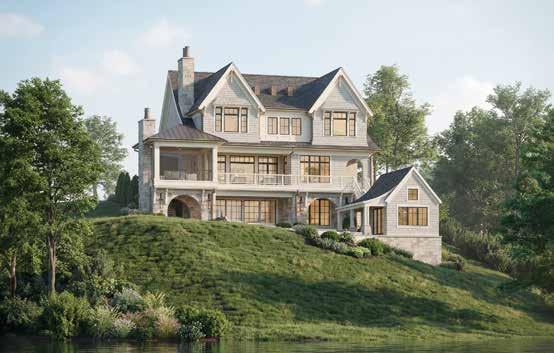
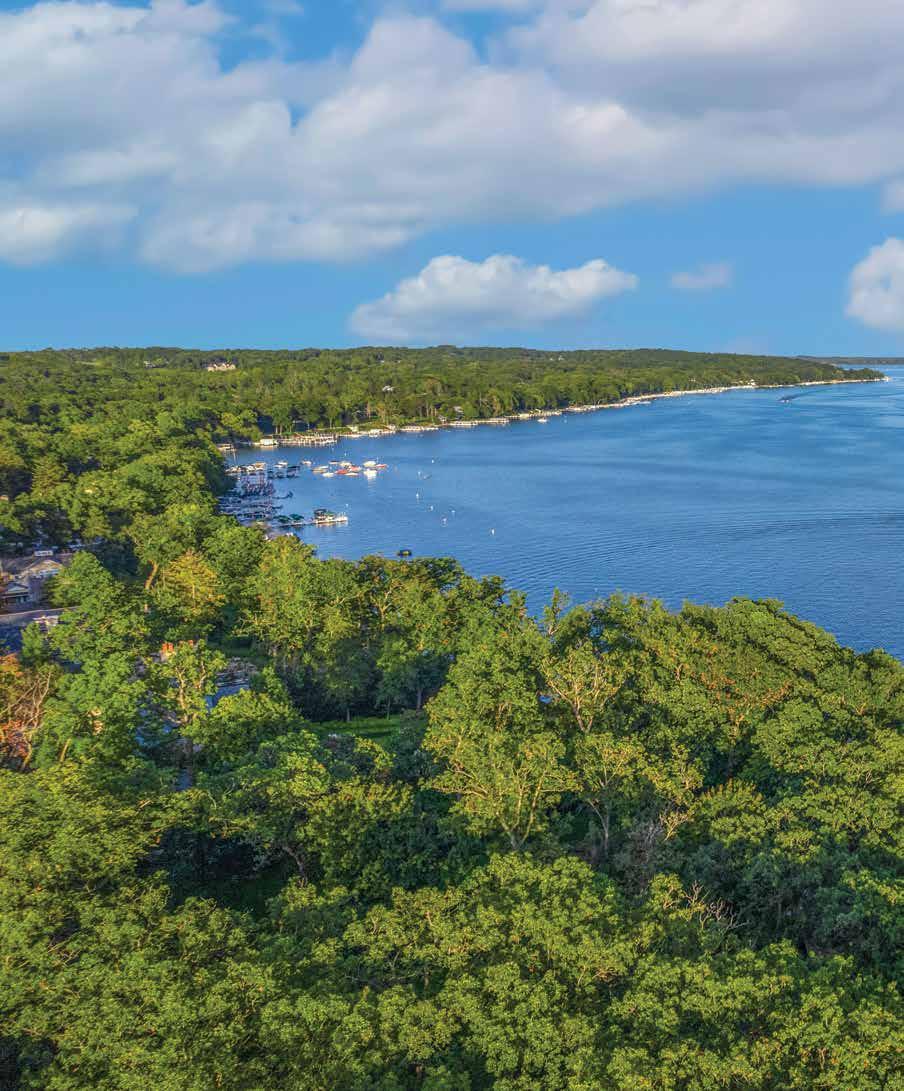
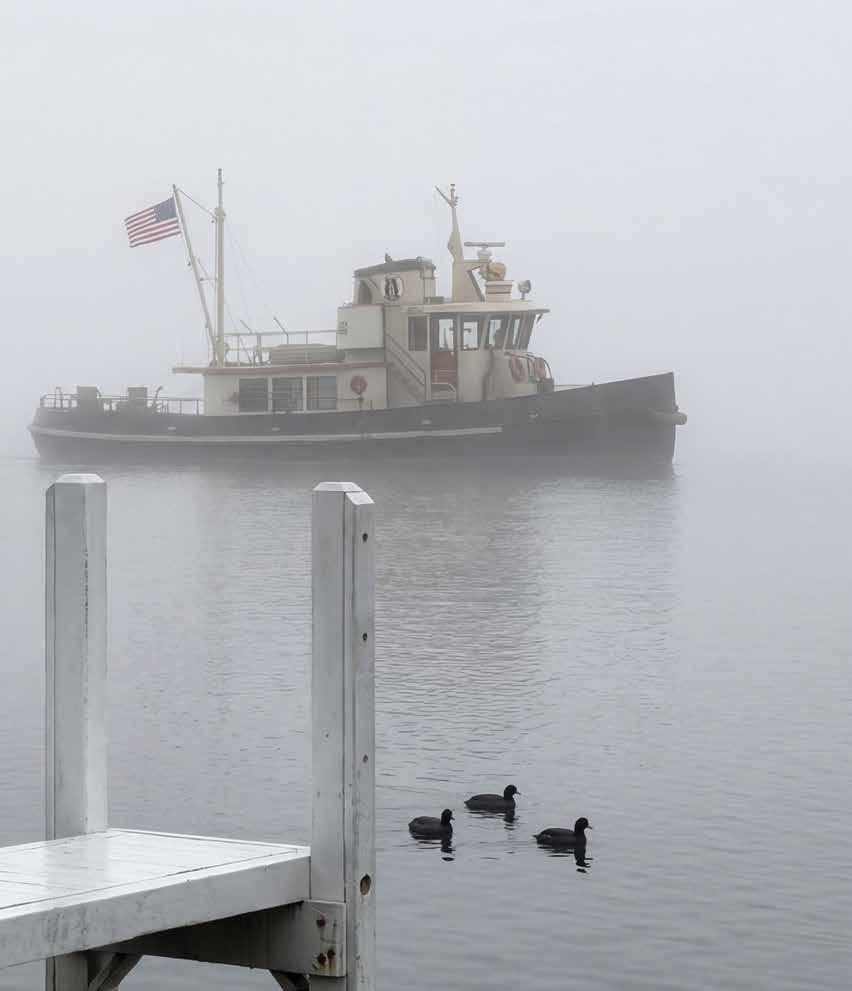
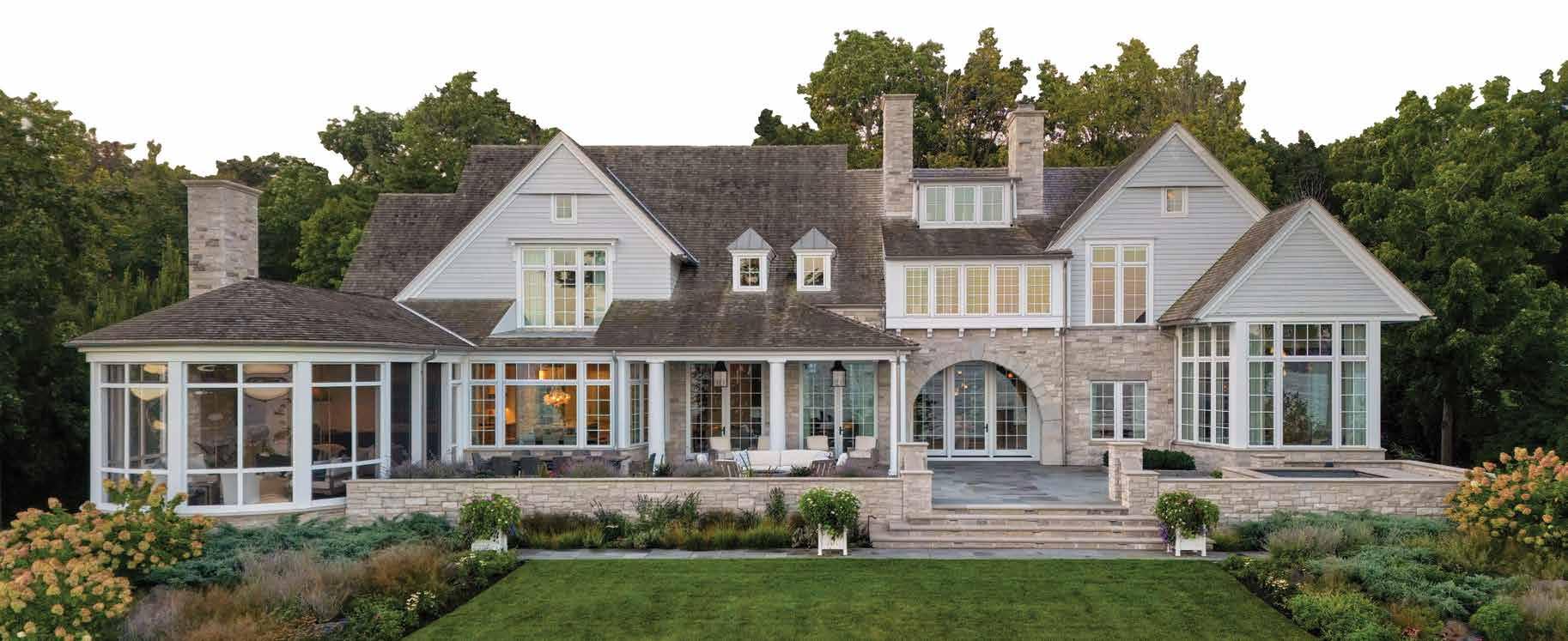
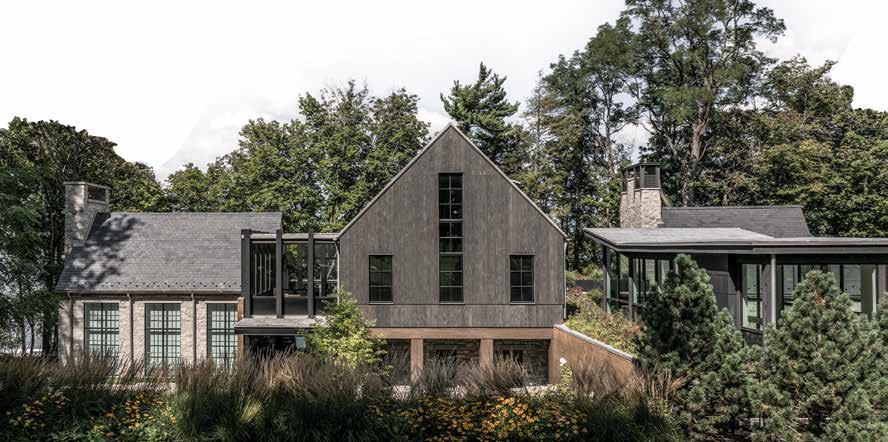
Cover art an original work by Neal Aspinall. Magazine title, Summer Homes For City People was borrowed from a 1898 real estate brochure called “The Story of Geneva Lake,” written by F.R. Chandler, under the auspices of the Lake Geneva Village Association.
This magazine was printed by David Curry of David Curry Real Estate Ventures, INC, D/B/A Geneva Lakefront Realty. Any questions relating to this magazine or to future advertising may be made directly to dave@genevalakefrontrealty.com. Reproducing any of this content without owner consent is prohibited. This magazine is published for information and entertainment purposes only. David Curry, David Curry Real Estate Ventures, INC D/B/A Geneva Lakefront Realty are not responsible for any claims, representations, or errors made by the publisher, author, or advertisers. For specific details, please consult your attorney, accountant, or licensed Realtor. Geneva Lakefront Realty is a fair housing broker in the state of Wisconsin. Listings are subject to prior sale, expiration or price change. Some images have been altered electronically to enhance foliage and stage the scenes.
When I started writing and printing this magazine sixteen years ago, my motivation was simple: I was too cheap to pay for advertising so it seemed a good idea to print my own magazine. That way I could create a product that presented Lake Geneva through the lens through which I see it. Nineteen issues later, it’s obvious to me that there is a day coming when I’ll no longer print this magazine. When I’ll bow out and let all of this pass me by. But that day is not today, so welcome to summer 2026 and the newest issue of Summer Homes For City People.
You may recall my foreword from last year. In early May of 2025 our equity markets were just recovering from the April tariff shock, and it felt that our market at the lake might be impacted negatively by such concerning market volatility. The vacation home market here was, indeed, somewhat shaken by that tumult, but by the fall of 2025 our lakefront market went on a run of feverish sales. Bidding wars, quick sales, and an all out assault by buyers on remaining inventory had the market feeling more like summer of 2021 than autumn of 2025. By the time that dust settled in late October we ended up answering an important market question. Does a lack of inventory overrule all other market influences? The answer was mostly yes.
My involvement in the lakefront market during 2025 was once again unsurpassed, with more than $108,000,000 in closed transactions—a total that allowed me to maintain my stranglehold on the number one spot in Walworth County for the 10th straight year. That production will also likely make me the top agent in the state of Wisconsin for the fifth consecutive year. I was honored to represent the buyer of the area's priciest 2025 sale, that of the George Williams College campus, and enter summer of 2026 with the lake’s top sale YTD, that of a beautiful home on the north shore of Fontana that closed just over $14,000,000. Zooming out, my lifetime sales volume now exceeds $1,000,000,000 in closed transactions, which is a sum that I would have never dreamt possible when I started selling real estate on a random August morning thirty years ago.
If you’re reading this magazine today, that means we both made it to another summer at the lake. We are indeed the fortunate few. Should you find yourself in Lake Geneva and in need of some real estate assistance, I'm here to help. I do hope you enjoy the latest issue of Summer Homes For City People, and I look forward to seeing you lakeside. Here's to another unforgettable summer at the lake.
David C. Curry
Geneva Lakefront Realty, LLC
323 Broad St Suite 101, Lake Geneva, WI 53147 262.245.9000 | dave@genevalakefrontrealty.com
David C. Curry #1 Agent STATE OF WISCONSIN 2016, 2021, 2022, 2023, 2024
Over $1 Billion CAREER SALES VOLUME 1 MARKET SERVED #1 Agent WALWORTH COUNTY 2014, 2016, 2017, 2018, 2019, 2020, 2021, 2022, 2023, 2024, 2025
$4+ Million AVERAGE SALES PRICE 2020-2025
FEATURED
LISTING of
REPRESENTED
EXCLUSIVELY
BY David Curry, Geneva Lakefront Realty
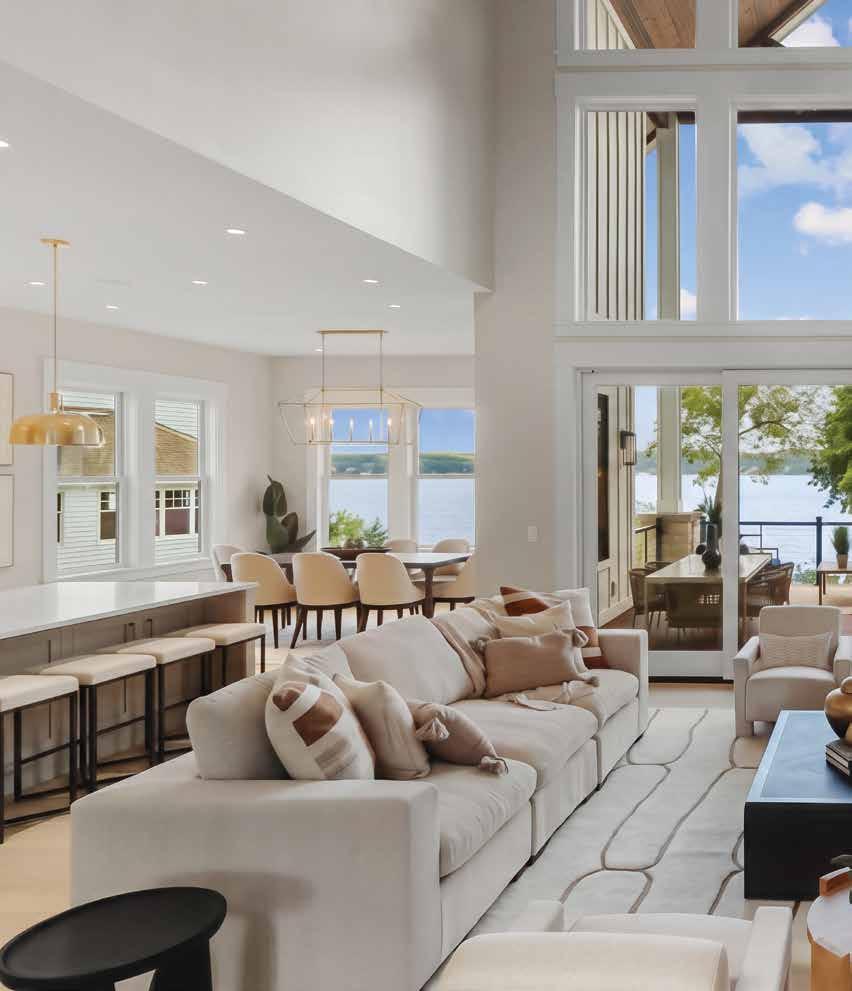
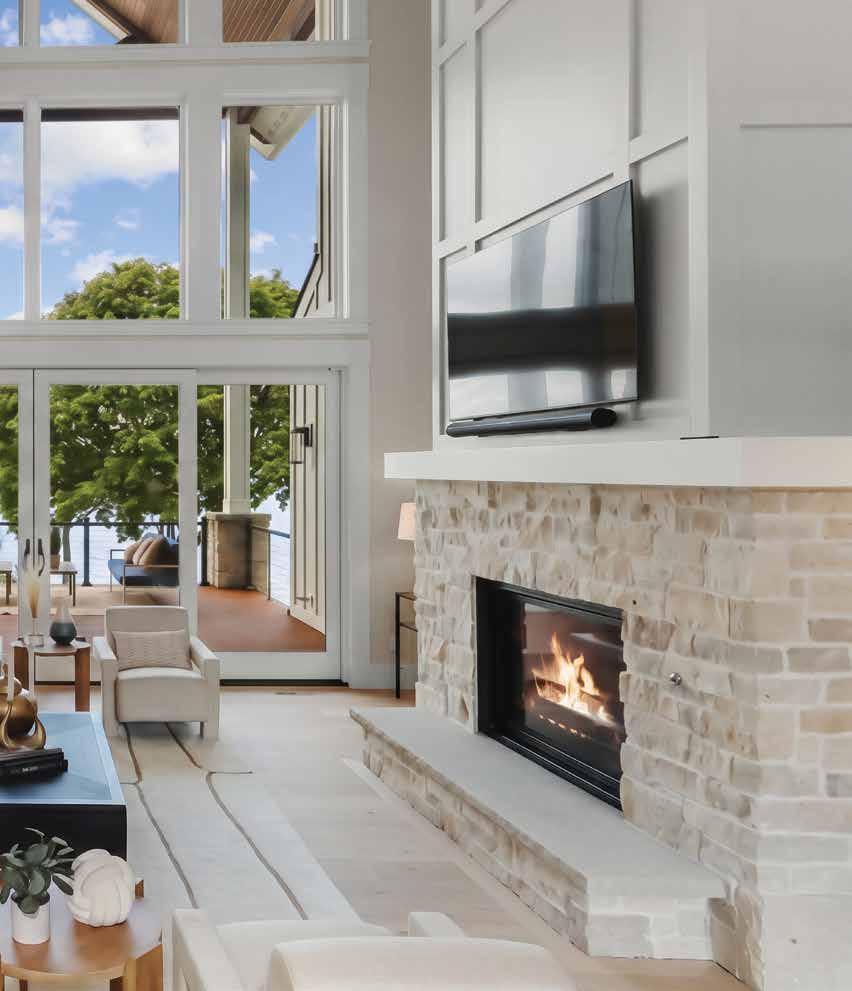
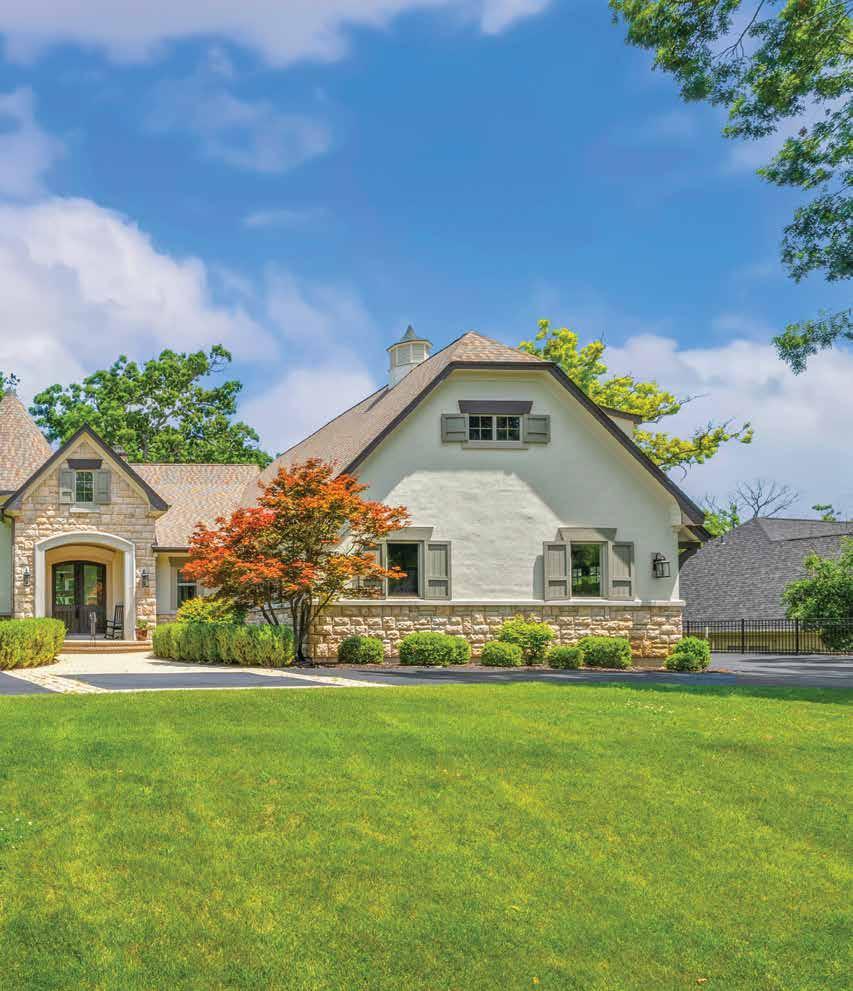
389 NORTH LAKESHORE DRIVE, FONTANA
FEATURED
LISTING of
REPRESENTED
EXCLUSIVELY
BY David Curry, Geneva Lakefront Realty
PIER 8C
Misplaced
My parents have had an interesting piece of furniture in their home for what I believe to be the entirety of my life. This darkly stained wooden, cabinet-ish piece is tall, perhaps as tall as my head and about as wide as my hands might be apart when showing a representation of a fish that I didn’t catch. It's upright, with an open bottom and a cabinet on the top, with carvings in the door and a metal slide latch that secures the contents. I don't know what this sort of cabinet is called, nor have I seen a similar one in the thousands of homes I've toured. Is this cabinet valuable? No one knows. What is its intended use? Not sure. My parents call it a wine something-or-other, even though my parents do not drink, and under their ownership this has never had wine in it. What is in it? No one knows that either. Various things: gadgets, drinkware, papers, silver coins, old pairs of glasses, a lock of my hair from when I was 3, maybe. Have the contents ever been emptied and rearranged? Also unsure. Is there anything in there that anyone wants or needs? Who could know? It's just there—a big old cabinet thing standing tall in the middle of their house, offering a place to put things.
I thought about that cabinet today, or more correctly about its mysterious, overlooked, and ignored contents, when I looked at a painting that I had bought some time ago. The painting isn't hung on a wall because it's a stupid painting and no one likes it. I don't even like it, and I was the one who bought it. But who could throw out such an uninteresting painting? The frame is nice, so perhaps that matters. The painting is large, which makes it even harder to both hang in place and throw out. What a waste it would be to throw this unwanted thing away. I thought I should put it in the crawl space area of my home. There it would be safe and secure and entirely out of my way. Someday my children, or the new owners of this house, will look through the nook or cranny where I placed it and wonder if it had some special meaning. What is our dead father trying to tell us? What did this painting mean to him? What secrets does it hold? If we could decipher all of this, we might find a way to better know our dear dead dad. That's what my kids might think. But in reality, I just had to put it there because I have no wine cabinet like my parents do, and even if I did, this painting would be too large to stuff into the back corner.
The Light You Feel.
2 6 2 - 5 2 2 - 2 5 7 1
Nap
I've recently decided that I will be the guy who tries any variety of wellness gizmo or fad at least once. If I had been an adult in 1958, there is zero chance I wouldn't have bought a hula hoop and used it as a fat loss gadget. There's also a 100% chance I would have stopped using the hula hoop after a week. Two, tops. I thought about the nature of this attraction the other day while I was sitting in a wooden egg while coyotes howled and loons called. I had read about this egg contraption in an article somewhere and decided on that cold day in February that it might be worth a try. $130 for an hour of listening to harps and loons was supposedly going to re-set my nervous system. I don't know that I need a re-set, but re-sets tend to be good, so why not? I thought about these things while inside that wooden egg, and instead of relaxing like the woman in the Temu medical scrubs instructed me, I thought about what my grandfathers would think of me. Shame, no doubt.
I thought about napping because the nurse-adjacent lady told me that was common and that I was welcome to do so. What a treat that might be, to nap. The issue is I haven't napped since 1987. I grew up in a napping household, where my father set a wonderful example of what it was to nap. He'd nap on the bed in our screened porch nearly every summer day. He'd even come home from teaching school and nap during his lunch break. His command of the nap was immaculate. A real napping all-star, he was—and is. If you stop at his house in the summer and it's a warm day and it's between the hours of 11 a.m. and 3 p.m., Kalshi would tell you there's a 50.5% chance that he will be napping when you arrive. I thought about this while listening to the instrumental tones and the associated loon calls. My nervous system had still not re-set. I leaned into the noise, hoping if I focused on the loons something might improve.
But I thought more about my grandpas and how they didn't think about their nervous systems. I thought about how they didn't think about the health of their cells or the size of their cholesterol particles. Men don’t concern themselves with such sissy matters. I thought about how Leroy and George probably didn't take very many naps. And if they did, they didn't think twice about it. They didn't try to nap because it was good for them. They didn't think about what supplements to take and whether or not dairy was the issue. They just lived their lives and napped when they were tired, and then when they were done with that, they just died. I thought about the loons again, and about my instructions, which increasingly felt aggressive: Napping is encouraged.
I thought about the one good nap I've had in my entire life. It was summer, and it was hot outside. The cicadas boomed in their afternoon way, and I thought how nice it was to not think then about whether or not this insect frequency was good for me. My window was open and the lake was busy. Was it a Saturday? I think it might have been. There was some family at the house, I think—maybe my grandparents or my aunt and uncle. Or maybe one of my dad's cousins had stopped for a porch visit and a swim. I was in my bed on top of my covers, staring at the ceiling, with the sounds of summer all around me and the heat of a summer day spilling into our unconditioned second floor. I took a nap that afternoon, and it was so divine that I remember it to this day. I thought fondly about that nap and about my grandparents and about those easy summers of my childhood. Then I opened my eyes and squinted at the purple LED light washing over the interior of this wooden egg in which I was sitting, and I heard the calls of the loon and the strum of the harp, and I thought about how much better things were before I ever thought about the health of my mitochondria.
FEATURED LISTING of
REPRESENTED
EXCLUSIVELY
BY David Curry, Geneva Lakefront Realty
Public Lands
Along, long time ago, I was enamored with the trout in a particular stream in the Wisconsin Driftless. This stream and its native trout were, as best I could tell, the best of their variety in the state of Wisconsin. The valley was tight, the water cold, the river both babbling and dazzling—the trout? Well, the trout were dark and orange and brown, and if you held one at the right time of year, you’d swear it was even blue.
I didn’t just want to fish in this stream; I wanted to own the land surrounding it. I wanted to build a cabin on the hillside overlooking that valley, and I figured I’d build close enough to the stream that I could see from my covered deck whether or not the trout were rising and frisky. Unfortunately for me, another landowner had beaten me to the punch: the State of Wisconsin. They purchased this section of land that I coveted more than two decades before I even knew the name of the stream.
The reason was somewhat simple, I suppose. They bought this land because they wanted to preserve the headwaters of the stream and keep the banks open for fly fishermen. I think they allow spin fishermen of sorts to fish there as well, but we all know that variety of fishing is to be looked down upon. So the state was the owner of the land that I loved, and I thought I’d be able to work some blend of magic to make that land my own.
The solution that I pitched to the state was quite simple. They owned the land for the purpose of preservation, which in the Wisconsin Driftless usually means the absence of farming. Farmers might be the lifeblood of the country, or something, but they do a hell of a job filling otherwise cold trout streams with all varieties of chemicals and silt and animal waste. The state wanted to keep the land free of detrimental farming and open to fishermen, so they bought it and owned it. They don’t have the money for these purchases, by the way, so the
land tends to be bankrolled by rather large balance-sheet debt, of which we all owe our individual share. Funny how public lands go—we all want to use them for free and raise our fists with indignation when a government threatens to take them away, but no one really feels compelled to help pay for them. Increase a trout stamp above $20? Riots will ensue. But back to this 40-acre parcel on the stream, and how I tried to buy it.
Understanding the state’s goal for this land, I made a proposal. I would buy the land at a market rate, which I believe at the time was something around $200,000. In conjunction with the sale, the state would deed-restrict the land in the following manner: a building site would be determined, and that site would be the only site allowed for any variety of construction or land disturbance. A perpetual bankside fishing easement would be recorded, as would a ban on any mineral or material mining. The end result would be that the state gets to preserve the land in perpetuity while returning the land to the tax rolls (the state doesn’t pay itself property taxes, obviously) and adding meaningful money to the state coffers, or at least allowing the state to pay down the land-purchase debt. Everyone wins in this scenario, and I pitched the plan to the DNR with rather naive optimism.
The idea was rebuffed. I explained it to the DNR again, using smaller words and crude sketches. It didn’t matter. The lands were not for sale, no matter how willing I was to encumber the property with all of the wishes of the state. Today the land is still there, and I am not. The state still owns it, and fishermen can still walk over it. But there was a missed chance here to reshape the way both Wisconsin and the feds look at their massive ownership of open lands.
Today there is a considerable amount of angst about
the possible sale of public lands. While I love small government, I do think that most public lands are important and valuable and should be preserved. But what if there’s a solution like the one I outlined above? What if the land can be sold while allowing the land to be preserved under its current use? There’s a solution in there somewhere, and it lies in the public recording of extremely detailed deed restrictions. If there’s a 1,500acre tract of land the U.S. owns because it’s next to a wetland of some importance and it’s open for public upland bird hunting, why not deed-restrict the land to
allow for perpetual public access, ban any mining or farming, but also identify certain building locations and acceptable improvements that fall outside of the sensitive areas? This is not a binary thing—to sell or not to sell— but it’s being treated as one. There is another solution, and it’s rather obvious. Sadly, if the DNR in Vernon County couldn’t understand how this might work, I doubt our friends in Washington will.
Originally written June 19th, 2025. Everyone is concerned with the sale of public lands, but that outrage ignores the fact that the use matters more than does the owner.
Tap Out
"The hard soil and four months of snow make the inhabitant of the northern temperate zone wiser and abler than his fellow who enjoys the fixed smile of the tropics."
– Ralph Waldo Emerson
In a world awash in quotes, I might prefer this one to all of the others. I’ve been so fond of this quote that one year I included it on the back cover of my magazine. I’ve written about it plenty, but the quote was on my mind this week in a way that it hadn’t been before.
This fall has been, without any doubt, the nicest fall in the history of falls. The sunshine and the temperatures and the calmness on the lake. Fancy a swim on October 5th? No problem. Want to slalom down the middle of the lake at 2 p.m. on a Wednesday? Zero issue. This is how our fall went—ideal warmth and low humidity and an endless parade of perfection. On shore-path walks, the weather was on the minds of everyone you might have passed. “Another six months of this, please,” the walkers would say. I’d force a nod in agreement, because why wouldn’t I? Every normal person loves 78 and sunny.
Every normal person except me. I enjoyed it, sure. I guess. It was pleasant. But my true nature was revealed the other night after yet another evening showing, the sort that has me questioning just why I want to keep doing this job. Must I do it forever? I decided I was undecided. I drove home into the darkening sky. It was Monday night, which meant the garbage can must go out to the road. The rain started and quickly strengthened— big, summery drops of rain. The wind stiffened. The
yellowing walnut leaves stripped and fell onto my driveway, the asphalt wet and mirrored with the shine of a fresh rain. I parked in my garage and walked out into the weather. It was raining. It was windy. It was cool. My short-sleeve shirt and shorts felt inappropriate and ridiculous, but I walked the trash can 500 or so feet from my garage to the road, and when I walked back to the house, something important dawned on me. This was nicer than the 82-degree sunshine from earlier in the day. I didn’t hurry back to the house. The rain soaked my shirt and flattened my otherwise magnificent hair. The ground smelled of rain, and the summer flowers that remain in my wildflower field bent and blew in the wind. A breeze is for summer—for silliness and irresponsibility. This was wind. Mean, serious, dark, fall wind.
And I loved it. I needed it. There had been too much summer. Too much warmth. Too much perfection. I can’t live in that sort of world, and so I choose to live here—where the good stretches of weather wear me down instead of build me up, where at this point in the year I look forward to the gloom, even as others run to chase the sunshine, where they’ll nightly affix their gaze in the direction of the setting sun.
Originally written October 8th. The nicest fall in the history of fall was welcome, but I grew tired of it anyway.
FEATURED LISTING of
REPRESENTED
EXCLUSIVELY
BY David Curry, Geneva Lakefront Realty
Updated
When times are bad, the bad things stay bad. And why shouldn’t they? If the times are bad, the good things suffer, too. Prices sag, good things come for sale, and the good things are bought. But when times are good, it’s the bad things’ turn to be made good. The good stuff is too expensive, so the bad things find their spotlight. Ugly houses on highways rejoice; the market is hot enough for someone to consider you and your horrible existence. I like this phenomenon because the bad things need some love, too, and the last few years of market acceleration have put the bad houses in the spotlight. Celebrate your importance, you terrible houses!
But there’s a dark side to this movement, and I’m forced to see it every day at Lake Geneva. First, a bad house looks like it might be sold. The bad things are cleaned up outside, the bad windows are washed, the bad flower beds are weeded. New impatiens? Must be a sale forthcoming. Then, bam—a sale. The bad house has sold. The neighbors are optimistic for what comes next, and so am I. I drive by over the coming days and weeks and months with excited anticipation. Will the house be torn down? Will it be gutted? Will it be shingled and made fancy? Will it be a spec? God forbid it turns out to be an Airbnb… Along with the rest of the interested passersby, I wait to see what will unfold next.
Then it happens. The brick that was once cream gets painted white. The windows that were white get replaced with black-framed vinyl. The light fixtures, once aged and woefully undersized, are swapped for new ones that are woefully undersized. The roof that was faded and curled black asphalt is replaced with asphalt that is black and new. I didn’t need to see all of these improvements to know what was happening; I just needed to see the first bit to know that the fate of this ugly house was sealed: it’ll be reborn, all right, this time as an uglier, updated house. The neighborhood cringes, and I, driving by minding my own business, stew with anger over the missed opportunity.
The problem with this phenomenon that finds blighted houses or corners replaced with more ugliness is that the cycle of improvement is so stubbornly long. A house or building renovated or built in this fashion will now endure in this iteration for a decade, or two, or three, or four—maybe five. My life will be over, and the ugly house will have outlasted me. I will have lost, and it will have won. Read this as a warning. If you have bad taste, don’t choose your own finishes. Hire a designer. Have them help you. Have them help us.
Originally written June 12th, 2025. I love seeing new improvements to bad houses, until I see the improvements…
Life Raft
Acouple of weeks ago, I spent $400 on a rectangular piece of Styrofoam, or something mimicking Styrofoam, as if I know what exactly is, and isn’t, Styrofoam. But I didn’t just buy any Styrofoam—I bought a piece designed to float on, and in, water, which means I bought it from a store that sells things to boaters, or people who like water, which means the $12 piece of Chinese foam was marked up 33x because my intentions were leisure. I knew buying this piece of foam was a mistake, but my wife urged me to do it, so I went along with it, and an hour later I had affixed this piece of foam to a rope that was in turn affixed to a rock that I found at the bottom of the lake. Once secured in place, I asked my wife if she wanted to go out and float on our new platform, an invitation which she declined. I knew she’d decline, and I thought again about how just an hour earlier we absolutely needed to buy this overpriced thing. Never mind her—I swam out to float.
The foam said it was capable of supporting 1,200 pounds of flesh, but with my weight alone it appeared to struggle to maintain any variety of dryness. It didn’t matter, I suppose, because I was still floating, even if the floating felt more like neutral buoyancy. I rested my head on my interlocked hands and stared up at the sky. I tried my best to relax, which is an increasingly impossible state of being for me. It’s a problem, really, and when I one day announce I’ve retired from this business, it will be solely because I wonder what it might be like to relax—and it is impossible to find out when my brain is full of deals and deadlines and Sunday morning requests for Sunday morning showings. Still, I gazed up and felt the water under my floating throne and tried my best to appreciate where I was in life and that I was, at this moment, able to float in cool water under a mostly cloudless sky.
A few seconds later, I had to combat the thoughts that keep me anything but present. A deal in trouble. A client who hasn’t responded for a while. A mailing this week? Or did I do one last week? Is my Schedule C done yet? Probably not, but I should check. Each thought pried in, though I tried my best to return to where I was, and to what I was, or wasn’t, doing. But the thoughts persisted. A minute felt like 10. How long had I been out here? Was I dead? Did the rope I tied to that rock work its way loose, and had I floated out to sea? If that had happened, could I survive? I thought I could, but then who would tell my plan administrator that my Schedule C was completed and, further, who could tell my wife not to sell the house I had just built for less than I know it’s worth—which is far more than most people think, which means I’m a lot more like most homeowners than I thought. I fought the thoughts, sorting and stacking them to each side until one arrived that I wanted to think more about.
Floating on that raft made of imported chemicals, I thought about the last time I floated on a raft in a lake. It wasn’t just any raft—it was the raft. The raft of my childhood, which was located four piers to the south of my parents’ pier. The raft was wooden, with pontoonlike floats under it and an abrasive low-pile outdoor carpet on the top. The edges were sharp, and the decorations were little more than pulled-apart crayfish that the seagulls left us. We’d swim to that raft, or we’d race to it, and we’d play king of the raft and whip each other into the water, being careful, or not, to make sure no one fell on the painful edges or, worse, straight onto the scratchy, sun-dried carpeting. This was king of the board for the elites—for those of us who could swim far enough and fast enough. There was no barrier to entry for king of the board. You needed only to be able to step up onto the board and get flung into the water
by my older brother, or one of his friends, or later, by me. But the raft required effort for admission, and if you swam there, you deserved the right to be king, if only for a moment.
There were other times that I’d swim to the raft just to float—to stare up at the sky and think about whatever was on my mind. There was no tax deadline looming. No clients to try to hang onto. Just me, the itchy outdoor carpet, some shreds of crayfish, and that wide-
open sky. Everything was easy. The raft didn’t require anything of me, and me nothing of it. It only had to float, and I only had to swim. The sun would bake and the cicadas would sing, and the summer afternoon of my youth wasn’t something I had to fight for or work toward or struggle with. It just happened. And I’m so glad it did.
Originally written August 11th. I had just bought my first fake raft, which made me really miss the original raft.
Jake Sierakowski
BUYER REPRESENTATION BY David Curry, Geneva Lakefront Realty
IWhyf you know me by way of this profession of mine, there’s a very good chance you don’t know my dad. My dad isn’t from here. He wasn’t the commodore of the yacht club or a member of the country club. Which club? It doesn’t matter—he’s not a member. He didn’t belly up to Champs with your friends because he’s never been to Chuck’s. He didn’t sail scows, and he didn’t fish, and he didn’t play cards with his buddies, and he didn’t golf anywhere aside from George Williams College, where he once had a hole in one that no one else saw. He sailed soft-hulled Lasers with my uncle and his sisters, and had a fixed-keel sailboat that was, at one time, I assume, his pride and joy. The boat was called Praise the Lord, which, if you know my dad, won’t be a surprise to read. He was born in Chicago, grew up in Niles, then moved to Arlington Heights for high school when his milkman father and Avon-selling mother bought a small house on the corner of White Oak and Vail. He went to college at Illinois State, where he met my Princeton, Illinois–raised mother before they both finished up with their master’s degrees in Education at the University of Illinois. He didn’t work at the Board of Trade or the CME, and he didn’t drive a Mercedes, though he did have a sweet red station wagon with wood-look panels on the doors. He just taught fifth grade and painted wicker and mowed lawns and grew tomatoes, and in the summer of 1977 he decided that he’d try his hand at selling real estate. The company name he chose? A decidedly presumptuous moniker: Geneva Lakefront Realty.
Throughout my childhood, my dad spent his time doing one of three things: teaching the fifth graders of Williams Bay, trying to sell real estate, or doing anything else anyone wanted him to do that would lead to a little extra money. All of those things he did were the same—work. My dad taught school with what appeared to be, at least to me, a remarkable ease. He didn’t stay up at night grading papers, in the way my mother did, and does. He didn’t get to class particularly
early to work before the kids arrived. He didn’t stay over on his lunch break to work. He showed up for class when it was required; he left on his lunch break and drove the third of a mile home to eat, or to swim, or to return calls from one of his other jobs; and then when the school day was done, he left just as soon as he could. He wrote his weight on the chalkboard every morning and dissected cow hearts that he’d pick up every year from Lake Geneva Country Meats. He was a great teacher, but my opinion of the supposed stress of teaching school was forged by watching my father not outwardly stress about it—not one bit.
What did cause him stress was the rest of the work, and later, me. He hurried and hurried, stressed and stressed. He possessed an unrelenting work ethic—or rather, it possessed him. Christmas morning? He’d be back to open presents once he finished shoveling snow at one of many homes he looked after. As a point of fact, my father could never stay in one place for very long. Perhaps that’s why I’m so annoyed when I see him now sitting in his chair most of the day. The visual just doesn’t fit with what I knew. Easter Sunday and my mom wanted a rare Curry family photo? My dad was driving a load of leaves that he raked from the springtime shrubs up to his barn, where he could later burn them. He was in constant motion, leaving and working, no matter the day, the occasion, or the season. How did I have any choice but to absorb this work ethic and make it my own? I think about this on Saturday and Sunday mornings when I feel uniquely compelled to leave my house and do some work—any sort of work.
I think about the life I’ve spent selling real estate in this little town. I think about the choices I made and the decisions that preceded where I am right now. Where am I? I’m where I’ve always been, and that grates at me just a bit, which you know if you know me. My son moved to Manhattan earlier this month to work on the 52nd floor of a glass tower overlooking the Statue of
Liberty. I can barely wonder what it could have been like to embark on such an adventure. My adventure has found me never living more than three miles from the house where I grew up—the one my mom and dad bought in 1971 for what was then 10 times his annual teaching salary. The one at the end of that skinny lane with a beautiful Dutch Colonial gambrel roof on the original part of the house, and the mismatched gable roof on the north side—an addition whose piecemeal construction consumed what felt like most of my adolescent years. I think about where I am today and I wonder why. I regret many things, including the things that have led to my modest, hyper-localized success. But I keep coming back to the question of why. Why am I still here, still in this town, doing this silly job? Why did I start doing this in the first place? In the face of a neverending supply of options, I chose the easiest default, and that irritates me.
And then I remind myself that I know why. I sell real
estate because one day, 40 or so years ago, I was driving with my dad on Congress Street, just to the west of Collie, where the road runs in front of the old grade school. I can’t remember how old I was, and writing this I’m trying desperately to remember what car we were in, which might give me a clue. But alas, I can’t remember the car or the day, but I recall sitting in the passenger seat and looking at a small house on the corner of those two streets. I asked my dad what the house was worth. I don’t remember what he told me. It might have been $50,000 or $85,000 or $99,000. But he looked at the house and looked at the road and he thought for a bit and gave me a number, and in that moment it seemed like a superpower. To know the value of something felt important and rare, and from then until now I guess I’ve liked knowing what something is worth. So that’s why I’m here and that’s why I’ve spent 30 years doing what I do—because my dad did it too, and that still feels like enough of a reason for me.
Originally written June 23rd, 2025.
Lake Geneva Photography
Sharisse Grannan
What’s Next
Iwonder about winter sometimes. Colin Meloy wrote a lyric about the winter. How I lived a childhood in the snow. And all my teens in tow. Stuffed in strata of clothes. I understand what he was saying, but do I? He writes in the past tense, as if the snow is no longer something with which he must contend. He achieved success, and because of this newfound status, he found a way to eliminate the snow from his life, which means he can now write poetically and nostalgically about that long-ago condition. Few people living in snow write so fondly of it, unless we’re in the mountains, where mere flakes in the air stir the Western senses.
I was out there recently, among the mountains, mixing with the glassy-eyed mountain types, and walked one morning in a heavy flurry. A woman walked past me and into the oncoming snow, her jacket trimmed in fur, her face fixed in an awkward but happy stare. I knew she was happy about the snow, but more than happy. Elated.
This winter, it has been snowy. Shouldn’t it be? There’s
some warmth in the air today. A hint of moderation on the building south wind. Should I be happy with this? Or should I root for the winter and the cold and the snow? Why do I care? I don’t know as though I do, but I think I do. Why not test what I’m made of? Lord knows I rarely test that moxie outside of a weekly tennis match that I start lethargically before building into some level of intensity, before falling off as quickly as I started when I realize that I have bigger things to think about than this point.
Why didn’t I run for that ball? Because the outcome of that point didn’t matter, that’s why. But this is a weekly test to see if things still work, and so far, they do.
Shouldn’t I also hope for the snow and the cold and the bitterness and the tear-inducing wind so I can face it and understand my limits? I think I should, and so I do. It’s winter, after all, and I’m here for it.
Originally written December 16, 2025. Why must everyone in the Midwest act like winter is such a bad thing?
FEATURED
LISTING of
REPRESENTED
EXCLUSIVELY
BY David Curry, Geneva Lakefront Realty
Hyper
Jerry Seinfeld once said the key to life is finding enjoyable ways to waste time. The idea is rather simple but still profound. If you enjoy making and drinking espresso, then buy all of the things to help you spend an inordinate amount of time in that pursuit. Buy the shiny espresso machine. Buy the small-batch beans from Colombia, the ones that are roasted on nets that the local women make out of hemp. Buy the little agitator thing and the swirly thing and the tamper thing—the one that you ordered custom from a woodworker who carves and sands his handles from his cottage tucked deep inside an Oregon forest. Spend the money and the time doing this thing you love, because if you can’t waste time doing this, then why bother living? It’s a cute concept, but I have no idea what he’s talking about.
In fact, I spend most of my time wondering about, worrying about, thinking about, obsessing about, and generally living and dying over one not-so-simple thing: the weather. For instance, barely four weeks ago I was breathlessly irritated at our winter. It wasn’t winter at all, not really. It wasn’t cold and it wasn’t snowy, and the theory to which I subscribe says that if it’s going to be winter, then it might as well act like winter. I would drive around the lake, ornery about the dead grass and the open water and the construction that had, up until then, progressed uninterrupted by the season, as if it weren’t January.
Then it all changed. The snow fell quickly and piled up. The temperature plummeted. My driveway became slick—impassable even, depending on your vehicle. I fell on a tarp that I had laid on a trailer that had been covered in snow and bruised my thigh something fierce. The slipperiest surface on earth is a tarp with snow on it. My windows iced up and my diesel tractor wouldn’t start. Even so, I shoveled with initial joy, because this was the winter I liked. This was the winter I asked for. This was the winter I live in Wisconsin to experience.
Then, after barely a few weeks of this winter, I decided that I didn’t like it. Not at all. It’s not that I want to resign myself to an inane life with that fixed smile of the southerner (to borrow from Emerson), but the forecast showed warmth and some sun, and that’s what I was after now. Enough of the winter, enough of that white and that cold and the frozen this and slippery that—I was ready for whatever was next. The warmth arrived and the sun did its work and my driveway was cleared and my lawn returned, and it was time to cut back the hydrangeas and prune the apple trees. Within 30 days I was longing for winter and then over it, and now I wish only to see the last of the snow melt and the ice, too, and hope that spring will be both early and intensely warm.
This is what it’s like to be a true northerner. If you cannot romanticize winter and then immediately hate it, are you even from the Midwest?
FEATURED
LISTING of
REPRESENTED
EXCLUSIVELY
BY David Curry, Geneva Lakefront Realty
Sharisse Grannan
Gimmick Central
There are several ways in which I’m aware of my age. For starters, when I play tennis on a Monday, I’m still sore on Wednesday. That’s not entirely unique or new, but it’s pronounced. My capacity for head-down, sweaty-brow, hard physical labor is also diminishing. I used to pride myself on my incredible ability to just power through any difficult circumstance. I was great at working hard. Time to spread 10 yards of mulch by myself because my family is mostly unhelpful? It would be hard, but not impossible, and I’d get it done. Today, it feels nearly impossible. The good news is my work ethic is still strong, I think, as long as I’m not being asked to repetitively lift heavy things under the hot sun.
But about that work thing—I’m increasingly bad at that too. The market has found some level of normal and is operating on an aggressive, but slightly normalized, tilt. With the return to normal, we’re seeing the return of what some agents do best: gimmickery. I feel the need to cringe when I tell people I meet that I’m a Realtor, and it’s the tight professional association with gimmickery that causes my pain. This is what I’m rather bad at, which is why I enjoyed the COVID markets so much. There was little time for gimmickery. It was just hustle and advice and finding success. I liked the pragmatic action very much.
Around the country, the old shenanigans have returned. New developments and their brokers are partnering with luxury car brands and inviting you to their parties. Imagine owning this condo and being associated with
the G Wagon! And not that base-level 550, the real one! The open houses are back. Stop by for sushi AND a tour of this amazing 2 bed, 2 bath, 1,189-square-foot carpeted condo on the third floor of a 22-story building! The bonuses are back. Sell this terrible swamp house in SulfurSmell, Florida, for $10M and we’ll pay you a $500k selling bonus! Nothing screams confidence in a market like offering agents outsized riches for convincing some gullible family from Saint Louis that the Florida market is only in a tiny little pause and not a market shift caused by an overabundance of new inventory that came online 24 months too late. Did your Austin listing fail to sell in a couple of months? No problem! Expire the listing from the market and relist it so it shows up as brand spanking new to market. Voila—no detrimental market time!
All of this gimmickery is tedious to me, and I refuse to play along, and I will do my best to also not let my clients play along. Maybe it’s my old age. Maybe it’s my good sense. When I survey the real estate scene today, both locally and across the nation, I see everyone pretending what they’re doing is what’s next. Drop prices every 11.5 days until a buyer is tempted to bite— that’s what’s next. List and re-list to save market time— that’s what’s next. Pretend your new condo development is popular among G63 drivers—that’s what’s next. Host an open house with a red carpet and a violinist—that’s what’s next. Sadly, like all things in real estate, what’s next is what’s always been, just repackaged in the hopes you’ll buy it. I think that’s what’s causing my fatigue, not that Monday tennis match (which I barely won).
FEATURED LISTING of
EXCLUSIVELY REPRESENTED BY David Curry, Geneva Lakefront Realty
LIVE SMARTER, LIVE SIMPLER
LAKE GENEVA’S HOME TECHNOLOGY EXPERTS
TECHNOLOGY INTEGRATION SIMPLIFIED
LEARN MORE
Curate design group
Unlock Your Access
Discreet on and off market deal making. Visibility into off market inventory.
Savvy, experience driven guidance for lakefront buyers and sellers. Local insights and articulate market commentary. Powered by Lake Geneva’s legacy real estate brokerage.
2025 Lakefront Market Review
Last year, I was in the running for a lakefront listing that I ultimately secured and sold. One of the other agents who was hoping to list the home had told the seller that they “have buyers.” Everyone has buyers, as the postcards that inundate your mailbox, the spam email that overwhelms your inbox, and the advertisements that litter the glossies each summer all loudly proclaim. The thing is, when that lakefront property did come to market, the agent with “the buyers” didn’t even show the house. It’s easy to be a “lakefront luxury broker,” but when push comes to shove, there’s a reason I’ve been alone in the top position here for more than a decade, and alone as the top-producing Walworth County agent of all time.
As a point of fact, there have been 35 lakefront transactions to close in excess of $7M in the history of the lake. Of those sales, I have represented the buyer or seller in 31 transaction sides, while the next most accomplished agent here has participated in just four transaction sides. Marketing materials from corporate can project any image someone wishes to portray, but sales statistics cannot be manipulated. If we’re talking about the Lake Geneva lakefront market, the New York–based corporate brokers just can’t compete with the oldest brokerage in Walworth County: Geneva Lakefront Realty.
The luxury market at the lake was firing on all cylinders in 2025, but rather than run an MLS-generated
PRICE PER FRONT FOOT
report as to how the year went, let’s look at it from the inside out. The year started with two lakefronts priced over $8M pending sale. One was my sale of the George Williams College campus, which became the third-highest sale here in the history of the lake, surpassed only by my sale of Glanworth Gardens and Aloha Lodge. The GWC sale never went into the local MLS, so it not only can’t be factored into the market by those who rely on the MLS for their statistics, but it’s such a one-off that, until we have another piece of institutionally owned land for sale, this 2025 sale doesn’t mean much to the market. The other sale pending at the onset of 2025 was one on Sidney Smith. I brought the buyer into that deal in late 2024, and it closed in 2025 for $8.55M. But to begin the year, that’s all we had pending, and that made for a light first quarter. Inventory that failed to sell in 2024 was reintroduced to the market in 2025, as is our norm, and by early summer two of those 2024 laggards had closed. One on Conference Point that initially asked (off market) over $9M ultimately sold for $8.1M to a buyer whom I was happy to represent, and the other
was on Knollwood. That property initially listed in the spring of 2024 for $8.99M and finally sold in the spring of 2025 for $7.6M. Not exactly a rip-roaring start to the sales season…
In late spring, another lakefront came to market—this one a large-ish estate on Lackey Lane that hit the open market for $20M and sold within a few months at that number. The property became the fourth sale on Geneva to ever close at or over $20M. Did the $20M sale matter to the lake last summer? You bet it did. Confidence in upper-bracket pricing has been increasing since 2016, and by midsummer 2025 it was in full swing. That confidence led to an astounding $10.1M print in the South Shore Club, a sale that exceeded the prior high sale there by more than 20%. Around the same time, I sold an off-market lakefront in the 700 Club that printed just over $8M (this was a non-MLS deal with no publicity).
Then the calendar turned to September, and the lakefront printed several sales in quick succession. The
FEATURED
LISTING of
REPRESENTED
EXCLUSIVELY
BY David Curry, Geneva Lakefront Realty
Per Square Foot Price Per Square Foot of Land Mass
FOOT
Price Per Front Foot Relative to Total Frontage
620 S. Lakeshore property near downtown LG came to market and sold in excess of the ask ($10M+). A listing on Bonnie Brae was brought to market and sold just over the ask in a few days ($8.7M to a buyer whom I was fortunate to represent). Then two in Geneva Bay Estates, both over $8M, hit the market and sold (one had been available off market all summer before ultimately selling and being recorded on the MLS). Then I re-sold the boathouse at Pier 8 for $7.395M and closed a house in the South Shore Club for $7M. In a span of a few months, Lake Geneva concluded nine sales in excess of $7M. That’s a heck of a run for our little lakefront market…
While 2026 started slow, that sluggish appearance is directly related to an absence of inventory. In March,
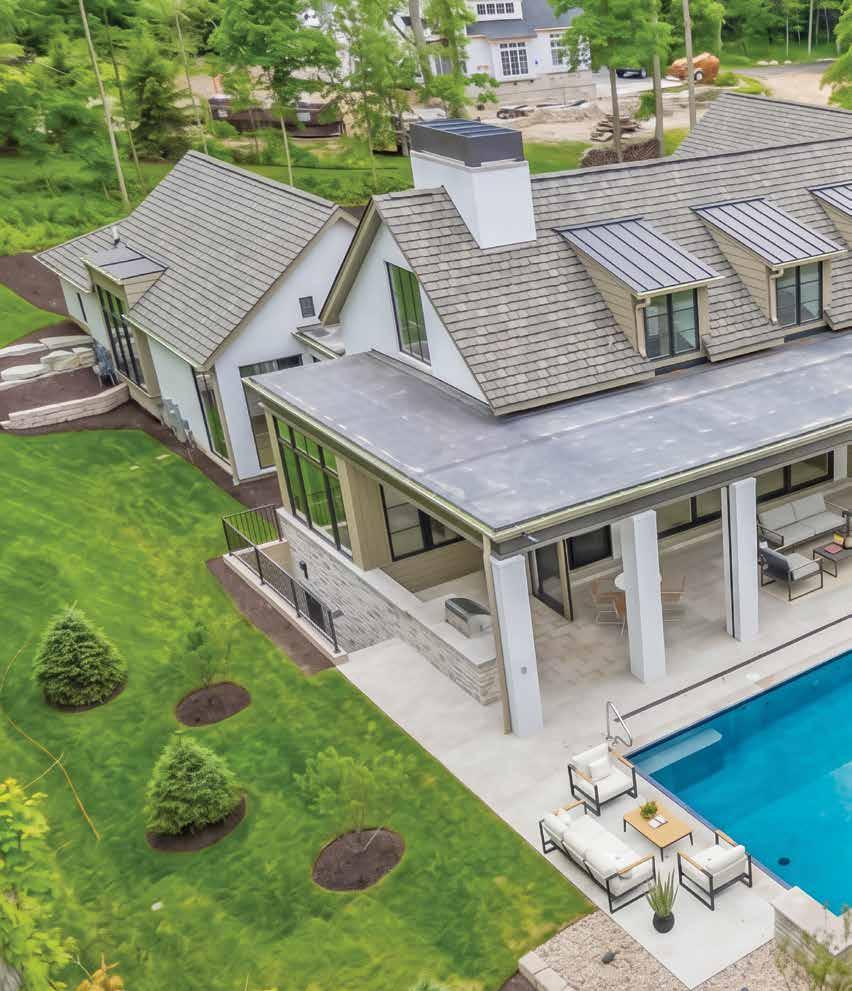
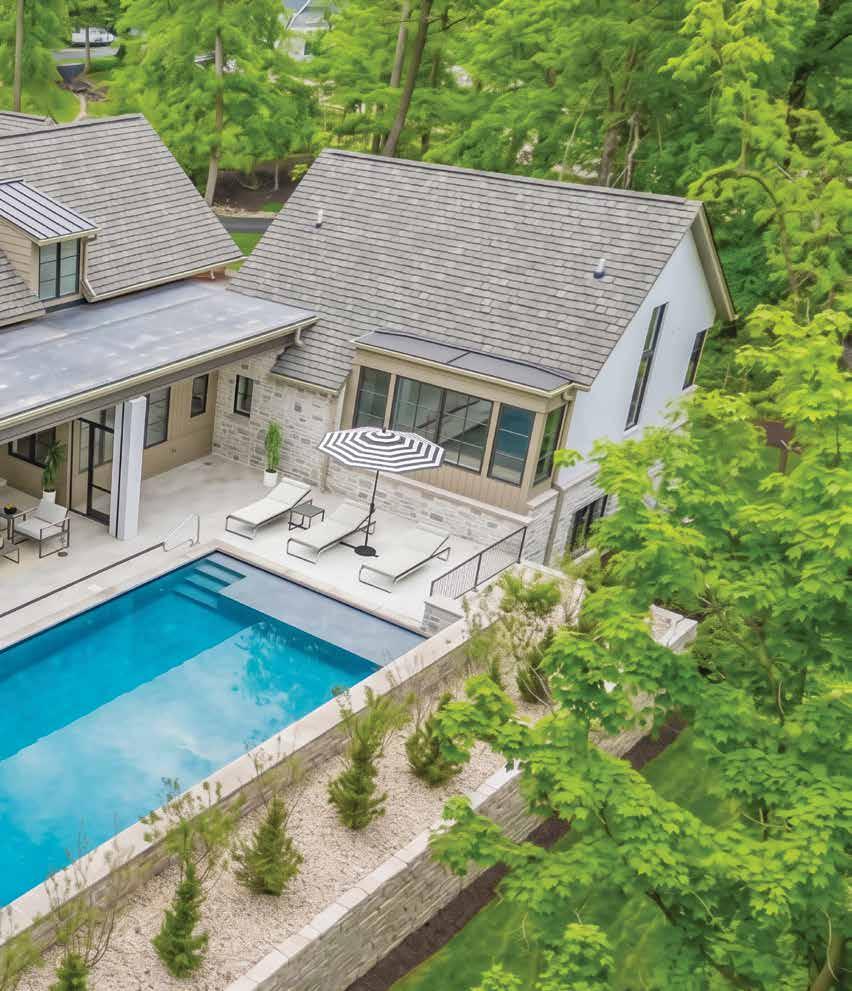
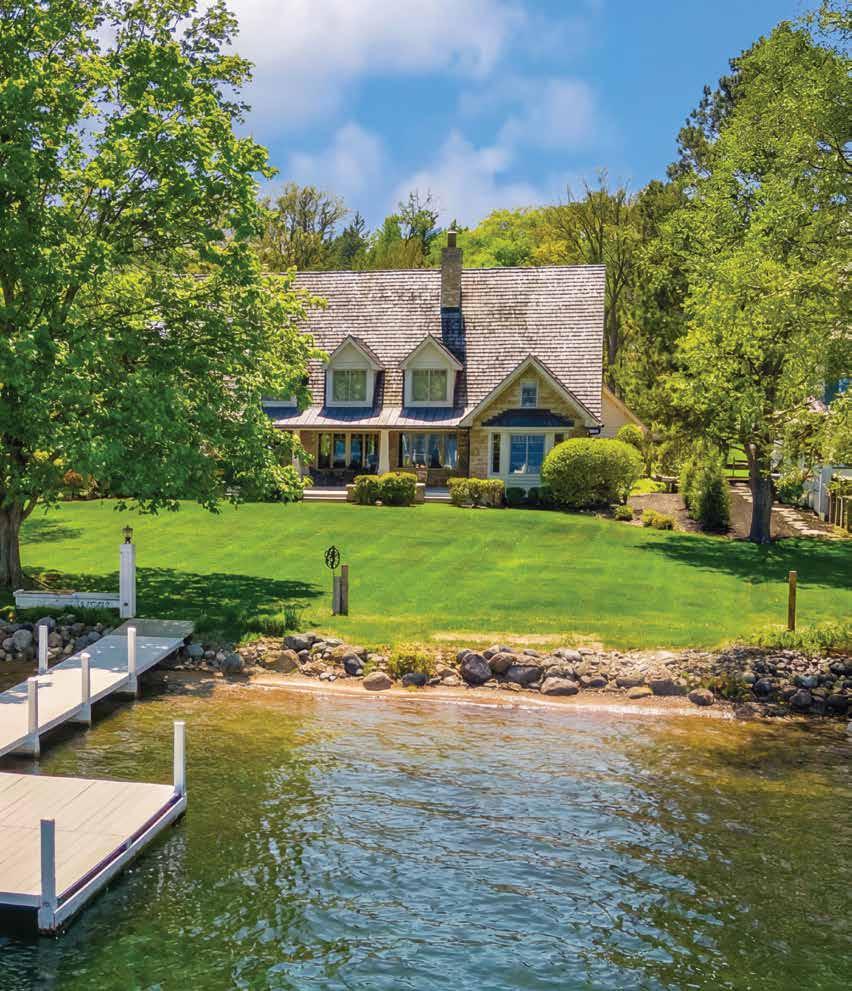
I closed the lovely lakefront at 389 North Lakeshore, which you’ll see adorn the pages of this magazine. That sale occurred with a last ask of $15M and closed quietly in an off-market manner.
I think what happens for 2026 is rather simple. If macroeconomic trends remain in place, we’re going to have another great year here. Pricing will need to be somewhat tethered to reality, but in cases where rare locations or otherwise desirable packages are offered, you can expect to see some big numbers print. If you were hoping 2026 would finally be the year when the lakefront market takes a breather, you’re going to be sorely disappointed. Meet the new boss, same as the old boss.
peter millar | johnnie-o | faherty | tommy bahama | 34 heritage
LAKEFRONT
Still
Lifejackets on hangers. Bug spray on the work bench in the garage, next to a part to a sailboat and a wrench and the project that never was finished. Salt and pepper shakers askew on the porch coffee table. Paddle boards clinging to racks on the sidewall of the garage, likely too bulky to allow for the paddle boards and a car to get along in that small space. A refrigerator with some pop, four beers, two half used jars of ketchup. And that's just the garage fridge. A porch with furniture huddled together in the middle covered late last fall quickly, and before that first snow. Beds made, others messy. The cleaning person's
fault, no doubt. A magazine left open on the arm chair nearest the fireplace. Three books stacked neatly on the nightstand without a crease in any of the bindings. Two invoices on the entry table. One from Gordy's another from Gage, the lack of harmony hidden inside the envelopes. Boat keys on the hooks by the door. A half drawn picture of the shoreline, maybe drawn by a child or maybe by an adult, it's too hard to tell. The house, the gear, the summer noises and sights and movement, frozen in place, or maybe in time. Soon it'll be screened doors and wet feet and backyard fires, but for now, it's still.
D. Smith
MADE FOR GATHERING
From
SOUTH SHORE CLUB
David Curry, Geneva Lakefront Realty
HOILAND STUDIOS designed lighting
hoiland
WHERE SCIENCE & ART MEET IN THE DARK
Energy efficient, dark-sky friendly lighting solutions for your home, landscape and shorescape.
Tired of headaches with your lawn sprinklers maintenance? Let our team of expert irrigation techs keep your lawn and garden vibrant all season.
We now offer permanent color changing holiday lighting for your roof lines to keep the party going all year!
FEATURED
LISTING of
REPRESENTED
EXCLUSIVELY
BY David Curry, Geneva Lakefront Realty
Endorsements
Finding the right lake house felt like a long shot — until it wasn't. David’s access to off-market properties opened doors we didn't even know existed, and he worked tirelessly to make sure we landed in exactly the right place. He made the entire process feel effortless, and our family couldn't be happier with the result.
– Harris, Highland Park
We never would have found our home without Dave’s expertise. His intimate knowledge of both the public and the private market, in addition to the close relationships he holds with his peers, allowed us to purchase a home that our family will enjoy for many generations.
– Matt, Chicago
D. Smith
Jake Sierakowski
Jakob Ryan
D. Smith
"What good is the warmth of summer, without the cold of winter to give it sweetness."