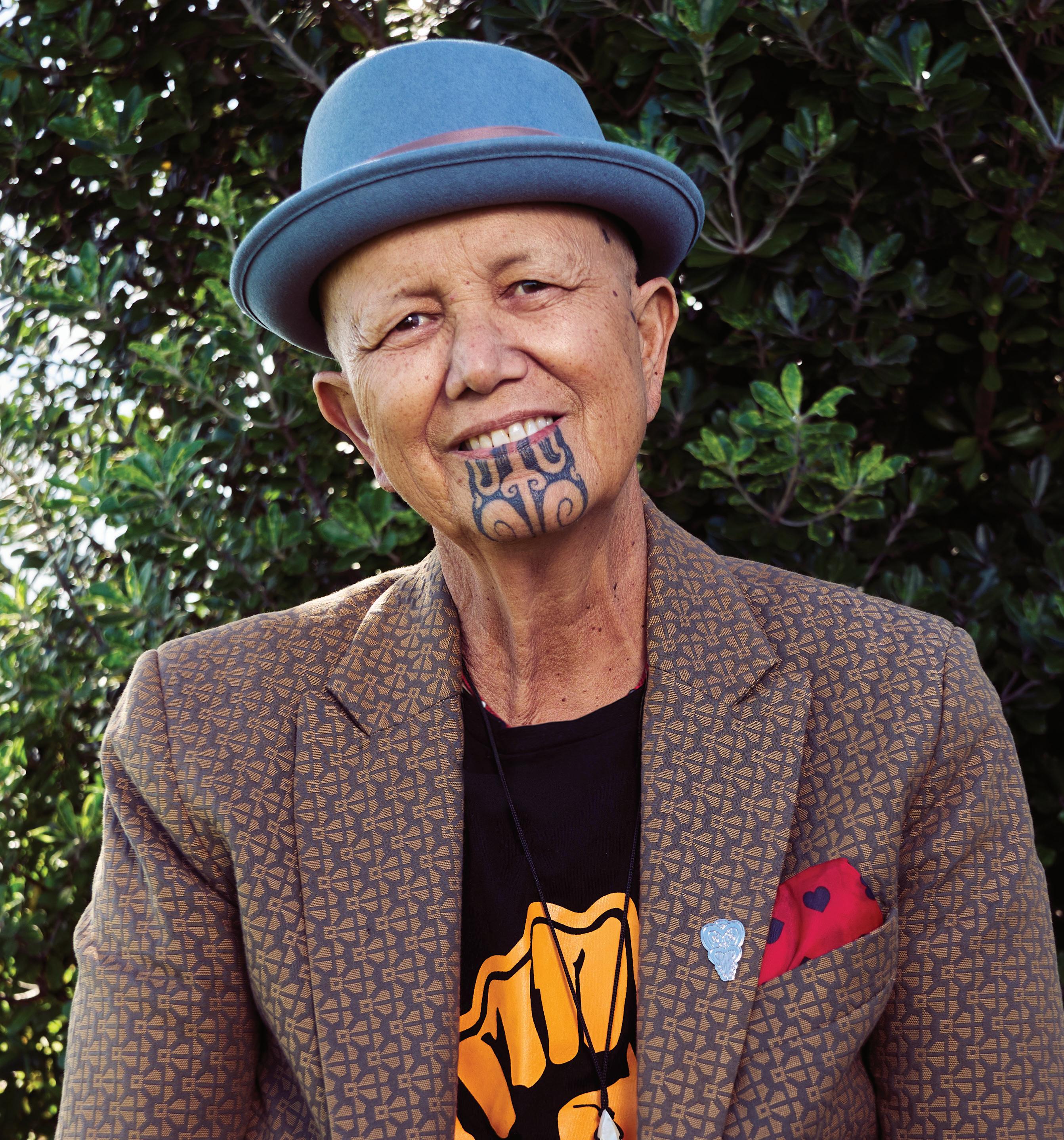
SHARON HAWKE
RAKIURA STEWART ISLAND | ARTISAN CERAMICS | THE RISE AND RISE OF GIN | MICROGREENS | EATING SEASONALLY
Journal.04
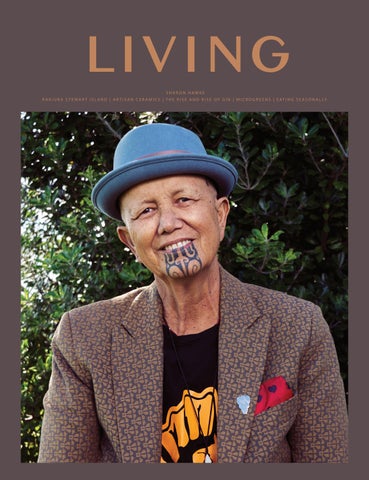
Journal.04
Winter is here, and this edition of Living is filled with plenty of thoughtful reading perfect for a slower season – from creative spaces and remote landscapes to local craft , flavour and fresh food ideas.
Welcome to the fourth edition of Generus Living’s Living magazine. Through these pages, we celebrate remarkable New Zealanders, and this edition is no exception.
Sharon Hawke was an extraordinary person. When I met her, I was immediately struck by her energy and her deep commitment to Ngāti Whātua Ōrākei, alongside her enduring connection to Takaparawhau, known to many New Zealanders as Bastion Point. It is a privilege to acknowledge her in Living It is also deeply saddening that she passed away shortly after our interview. On behalf of the Generus team, I extend our sincere condolences to her whānau and to Ngāti Whātua Ōrākei.
Elsewhere in this edition, our feature stories take us all over Aotearoa.
We step into The Pavilion at Pacific Lakes in Pāpāmoa, where artisanal ceramics and interior design have come together in a beautifully considered space for residents, their friends and families.
Staying in the North Island, we meet Lighthouse Gin head distiller Rachel Hall to talk about the spirit’s remarkable revival, the art of balance in a classic gin, and the passion that brought the well-known Wairarapa tipple to life.
Further south, we travel to Rakiura Stewart Island, where the journey itself is part of the experience. The reward on arrival is a landscape that feels largely untouched, with remarkable wildlife and space to properly slow down.
Back on the mainland, we also visit Central Otago’s Gibbston Microgreens. Here Chris Wilkinson is growing delicate, flavour-packed produce in repurposed shipping containers and helping build a smarter, more local food story from the ground up. It’s small-scale food innovation with big goals.
I hope you enjoy this latest edition of Living
For all Living content and more visit: generus.co.nz


Graham Wilkinson Director Generus Living
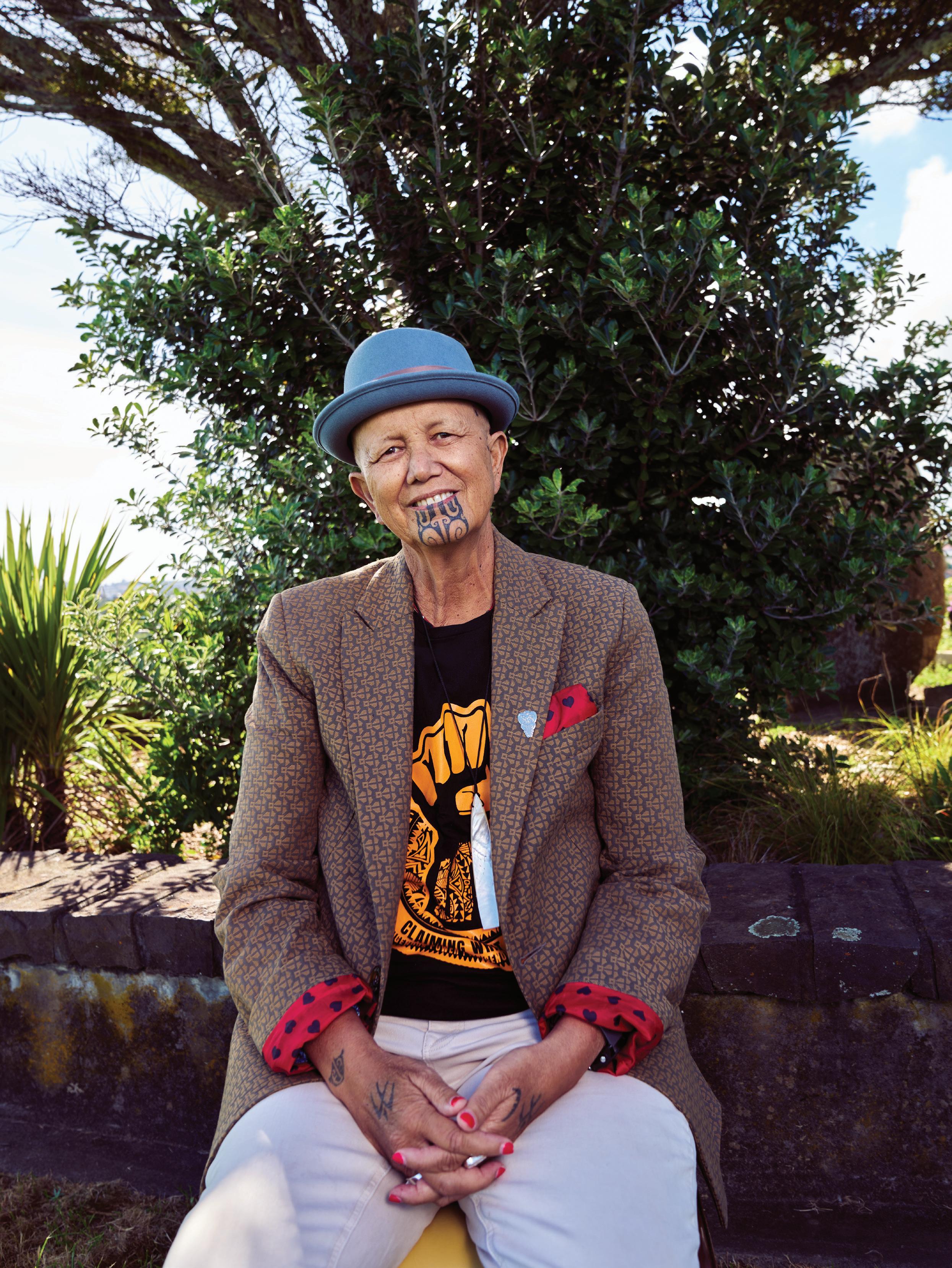
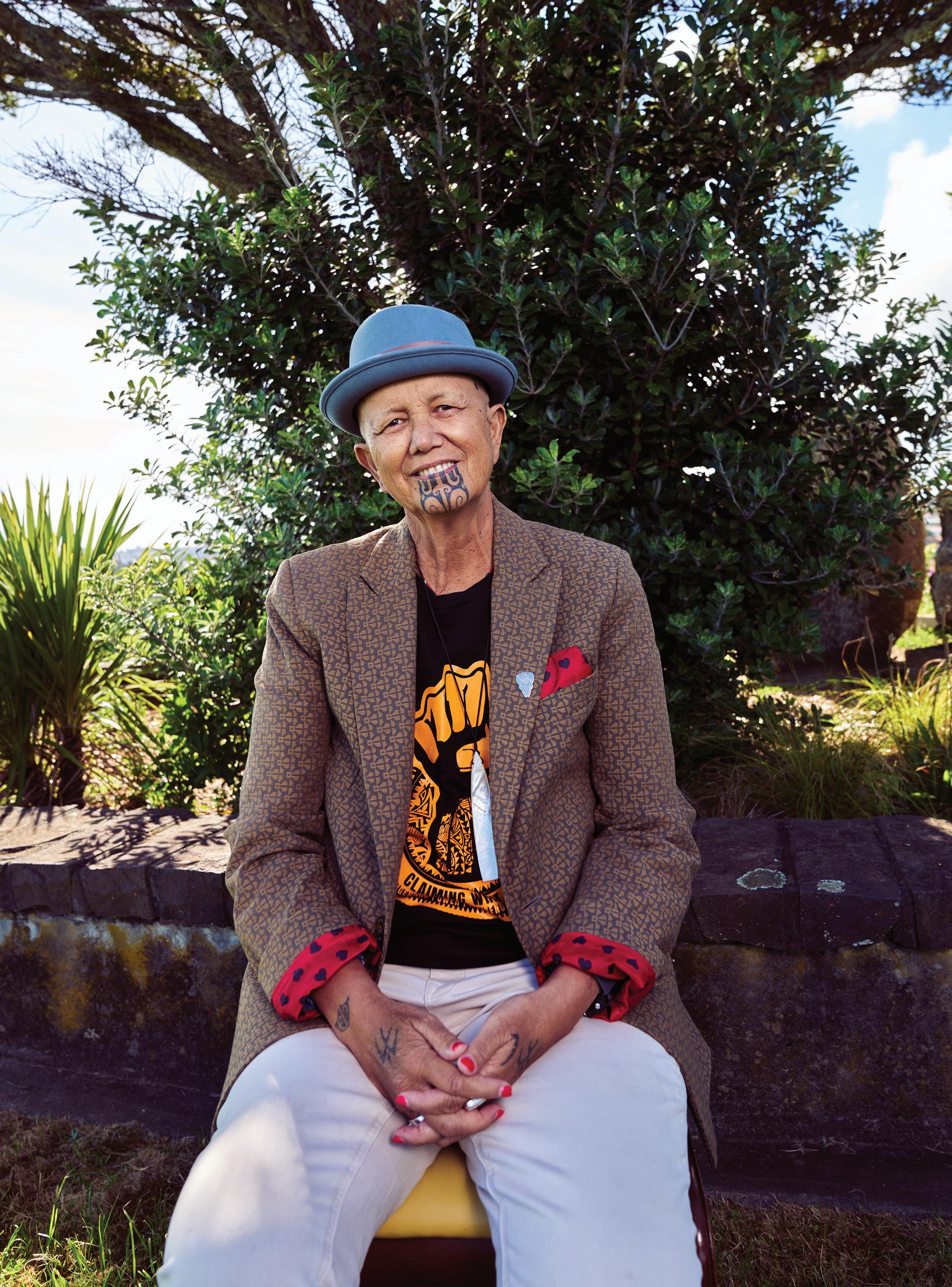
Sharon Hawke’s story traces the long aftermath of occupation – through film, journalism and Ngāti Whātua Ōrākei governance — and a legacy spent fighting for Māori stories, memory and self-determination.
Words Cameron Officer
Photos Vinesh Kumaran
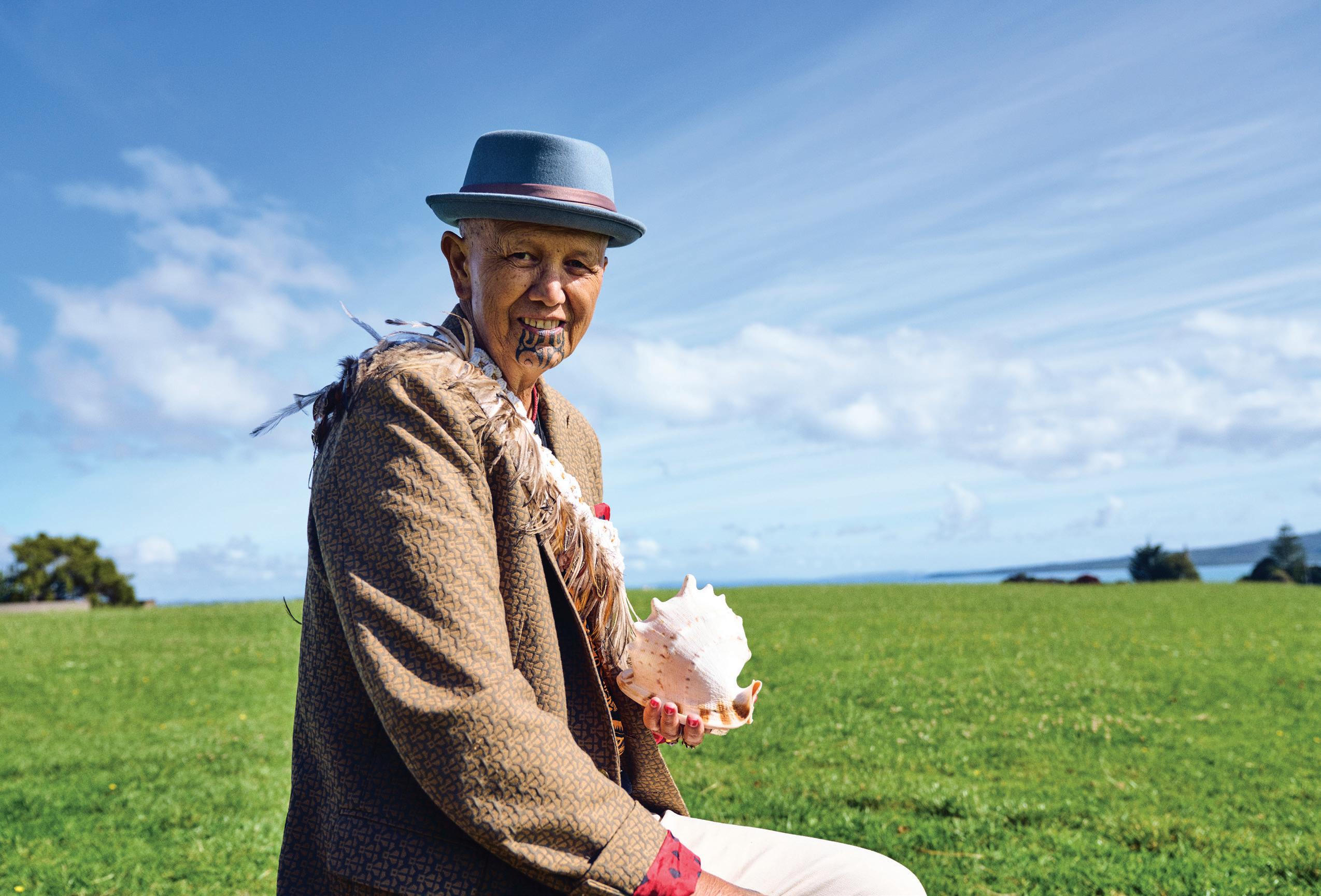
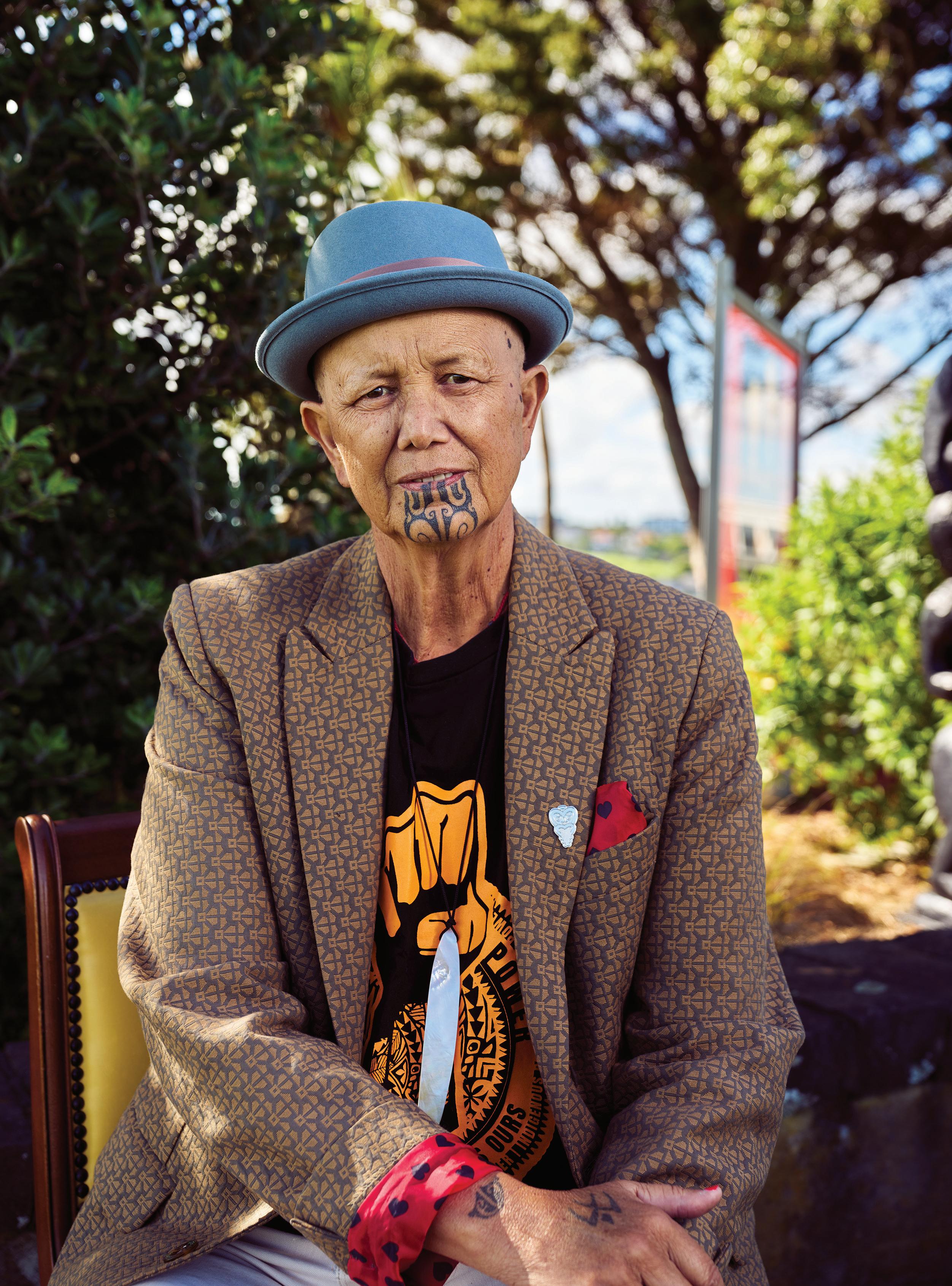
Sharon Hawke grew up in a family already shaped by dislocation. Parts of her childhood were spent between Hawke’s Bay, Clevedon and Auckland before the family was drawn back into the politics of Ōrākei and the long struggle over land. That history sat inside family life well before Takaparawhau Bastion Point became a national news story.
Born in 1962, Sharon was 15 when the occupation began and 16 by the time it ended, after the 507 days now closely associated with Takaparawhau Bastion Point.
Led by her father, Joe Hawke, the Ōrākei Māori Action Committee organised and maintained the occupation ahead of the Muldoon Government’s plan to use the land for high-end housing. The occupation – protesting Ngāti Whātua Ōrākei’s long history of dispossession – began on 5 January 1977, two days before construction of the housing was due to begin.
One of Sharon’s sharpest memories is that she was in Dunedin, playing at a national softball tournament, when the occupation started, and watched the news on television. When she returned, everything had changed.
“There were all these tents there, and then they constructed a marae and housing. It was very exciting,” she says.
Her mother Rene wanted the children to stay in school and tried, at first, to keep life as settled as possible. But the pull of whānau and place was stronger. “Mum was trying to keep us at school,” Sharon says, “but we ended up back there.”
She remembers the occupation not only as a political campaign, but as a place with its own routines. There were relatives and supporters coming and going, people living, eating and sleeping in improvised conditions, conversations, and the sense of a community holding itself together in public.
“Life went on,” she recalls. “It was normal. We were there almost a year-and-a-half after all.”
Those domestic memories sit alongside a much harder political reality. She has looked back in the years since the occupation and realised that, for Ngāti Whātua Ōrākei, it wasn’t simply a protest, but a last line of defence.
“They had to make a stand. If they didn’t, there’d have been nothing left.”
For Sharon, that stand made sense in the context of what had happened to her whānau before – the steady alienation of Ngāti Whātua Ōrākei land, the earlier destruction of papakāinga (home base), and the cumulative effect those losses had on whānau.
For those living through it, the occupation of Takaparawhau Bastion Point was less a beginning than a continuation of a much older argument.
She traces her father’s political resolve to an earlier experience of loss.
“As a child, Dad had witnessed the destruction of his people’s Papakāinga at Okahu Bay in the early 1950s by the Crown (see sidebar) and the distress it caused the older generation. That memory stayed with him.”
A successful builder before the 1975 Māori Land March, that pivotal event sharpened Joe Hawke’s consciousness, as did his readings of the activities of international liberation movements. He drew from figures such as Martin Luther King Jr., Malcolm X and Mahatma Gandhi, but, she says, “that interest in those kinds of people who make change came from what had happened to our own people here.”
The Ōrākei Māori Action Committee movement did not ferment without internal strain. Sharon says not everyone in the wider whānau agreed with Joe Hawke’s methods or with taking such a public stand. “Mum and Dad were devout Christians and many people in the church were against what Dad was doing. Not just people from the wider church community, but first cousins, close friends. They were like, ‘What are you doing? Just leave it.’
“But Mum was staunch in her defence of Dad. For her, it became really clear. ‘We are fighting the Government because they’ve stolen Joe’s people’s land. They have nothing. Don’t you get it?’ But politics and Christianity didn’t mix for some.”
As a teenager, she found those divisions difficult to understand. But what remained clear was the lesson she absorbed from her parents. “Don’t lie down and take it,” she remembers being taught. “Never give up.”
The cost of that struggle was not only political but personal. Public confrontation put pressure on livelihoods and family privacy. Sharon has spoken elsewhere about the strain the movement placed on the household and the sense that everyone was living under close scrutiny. Most tragically, a fire in a tent on 26 September 1977 caused the death of a five-year old girl named Joannee CooperHawke; Sharon’s cousin and her parent’s niece.
Even so, Sharon doesn’t describe anything about the period in terms of regret. Her whānau absorbed the pressures because they believed the alternative was to lose far more.
The occupation was forcibly broken up on 25 May 1978 after 507
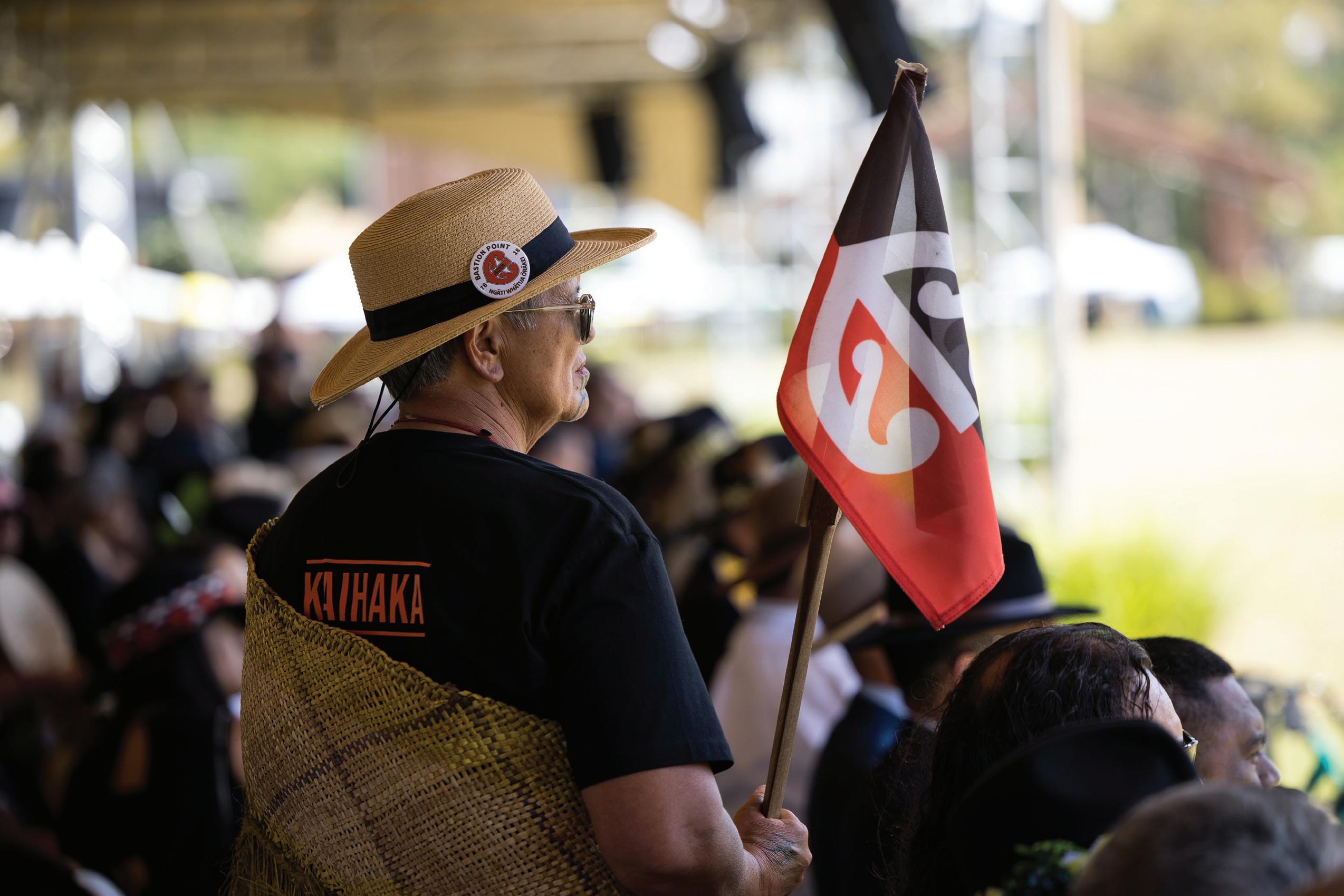
days. Police and army personnel moved in en masse, arresting more than 200 occupiers and clearing the site. For New Zealanders, those images became part of the historical record. For Sharon, they marked the destruction of a living place.
“They came in with overwhelming force,” she says. “It’s something you never forget. We, as a people, will never forget that.”
After school, Sharon built a career in film and television, working in camera and production roles including focus puller, camera operator and later director of photography in television drama. She later worked for Māori Television as a producer on Native Affairs, the network’s award-winning current affairs programme.
In 1999, Sharon helped produce and edit Bastion Point – The Untold Story, a documentary that revisited the occupation and the longer history of Ngāti Whātua land loss. The project followed the path opened by Merata Mita’s Bastion Point: Day 507 but broadened the frame to show the historical depth of the dispute and the cost it imposed on families such as her own.
For Sharon, her involvement in the project was never simply technical. It was also about control of the Takaparawhau Bastion Point narrative.
“Dad become very wary of journalists over the years because the story of Takaparawhau was distorted by the media. I wanted to use the making of the documentary to protect Dad and his story, from his side of things.”
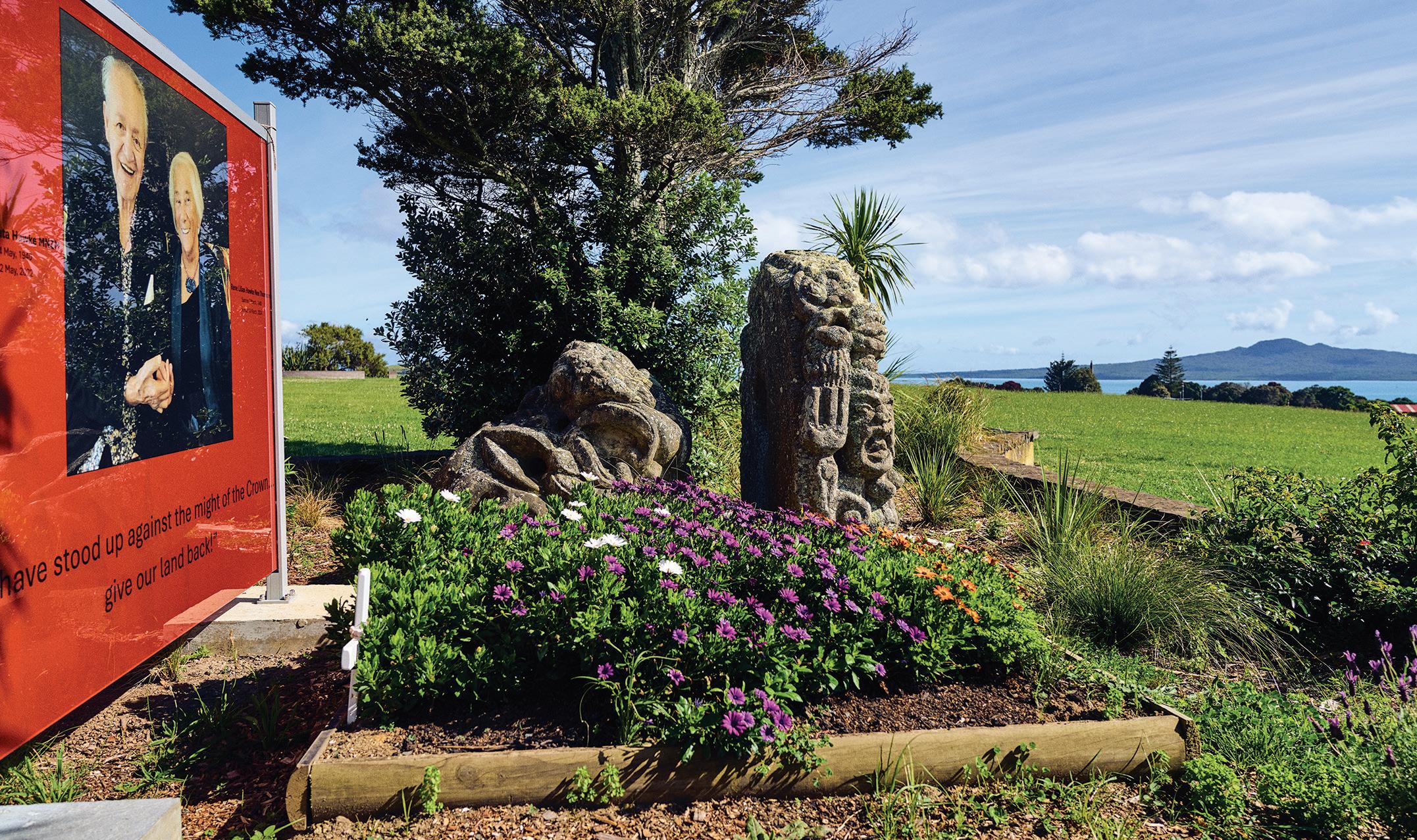
Joe and Rene Hawke are both buried on the land they stood firmly in defence of all those years ago. But they lived to see the legacy of the
Destruction of the Ngāti Whātua Ōrākei Papakāinga
Having compulsorily acquired the majority of Ngāti Whātua’s ancestral Ōrākei land under the Public Works Act, in 1951 the Crown seized the remaining 12.5 acres, leaving the hapū landless except for their local cemetery. In July 1952, authorities forcibly evicted the remaining inhabitants, with many residents resisting and being physically carried out of their homes. Following the evictions, the village and the marae were demolished and burned to the ground.
The Ngāti Whātua people were relocated to state houses nearby, severing their extended family structures. The displacement of the hapū and the loss of their land left deep emotional and cultural scars, leading to decades of protest.
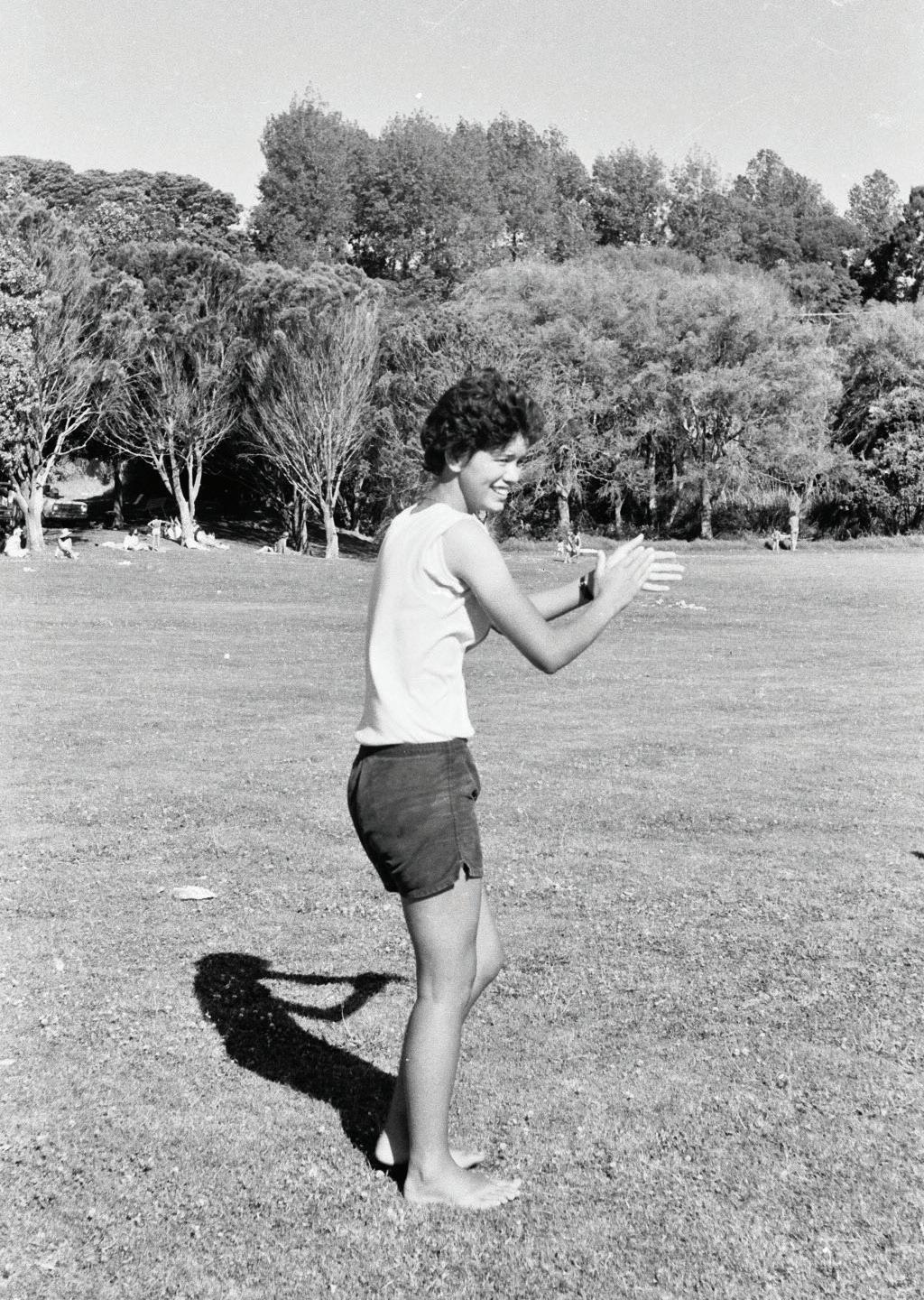
occupation engender great change for Ngāti Whātua Ōrākei. Today, the site of the occupation is Ōrākei Marae and its surrounding streets home to members of the Ngāti Whātua hapū.
Eventually leaving television, Sharon moved into roles with Ngāti Whātua Ōrākei, working within the organisation and later serving as an elected representative involved in the trust structure and its social development arm, following the iwi’s treaty-settlement era and the wider post-settlement governance work that followed.
“I’m on two boards. There’s the parent board, which runs the whole organisation, and our social development board, which is called Whai Māia,” she says. “They run all our social services; the wraparound stuff like rental housing. Our other subsidiary is Whai Rawa, which looks after our wealth in order to give Whai Māia the resource to look after our people.”
Sharon speaks with particular pride about housing and social
support, and about the effort to bring people home and rebuild the whānau base after generations of displacement.
“The displacement that occurred in the early ‘50s injured us hugely.
The eviction down on the Papakāinga and the burning of our meeting house was truly painful. There was lost language, lost culture; the fabric of our society was destroyed.
“We’ve lost a lot of elders since. We lost about 30 kaumātua, one after the other, all aggrieved. It’s a cultural injury that needs to be apologised for,” she says.
However, in other ways, Sharon says Ngāti Whātua is in a position to enjoy a positive future.
“Like everyone, we’ve been affected by the economy, but we’ve managed to stay afloat. We’ve built homes for our people across the road [from Ōrākei Marae] on both sides, and in surrounding streets also. We are rebuilding in every sense,” she says.
The continuity between protest and governance has run through Sharon’s life. The teenager who lived on occupied land now talks about housing, kaumātua care and institutional responsibility. The form of the response is different, but not its purpose. Through protest, pride and protection, Sharon’s whānau is dislocated no more.
“The goals Dad helped establish haven’t changed,” she says. “It’s still the same Kaupapa.”

Papaki mai ngā ngaru nunui, wawaratia ngā tai rere, E ripo te ngaru nunui o roimata ka whati ki runga o Te Waitematā, ki runga o Ōkahu.
He rehutai, he rehutai, he rehutai mihi tangata ki te pō, auē taukuri e.
Since the time of this interview, Sharon Hawke has passed. Sharon passed away in April while on holiday in Samoa, surrounded by those she loved most.
She lived a life of deep purpose. To those who knew her, Sharon was a true wahine toa. She carried strength with grace, led with aroha, and gave of herself to her whānau and community without hesitation. Her presence was steady, her influence far-reaching, and her legacy one that will continue to be felt for generations. This article stands as a reflection of Sharon in her own words.
E kore e ngaro, e kore e riro. Kei taku manu, kei taku kāhu pōkere, hei inangeto nei tū tahi anō ai.
Moe mai rā e te rangatira
Ngāti Whātua Ōrākei
Sharon Hawke was a deeply respected leader whose life and legacy are woven into the story of Tāmaki Makaurau Auckland.
Through her unwavering commitment to Ngāti Whātua Ōrākei, Sharon helped ensure the significance and enduring spirit of Takaparawhau (Bastion Point) would never be forgotten. The experiences and challenges of that time shaped not only her own life, but also Auckland’s understanding of identity, belonging and its relationship with whenua.
Sharon understood the importance of protecting culture, uplifting community and creating opportunities for future generations. Whether through her work in storytelling, governance or social development, Sharon remained deeply committed to the wellbeing and aspirations of Ngāti Whātua Ōrākei. Her leadership was steady and deeply grounded, but it was her warmth, mentorship and belief in others that left a lasting imprint on those of us fortunate enough to work with her.
Sharon earned deep respect across many communities not only for her leadership, but also for her warmth, generosity of spirit and the grace with which she carried herself. Her passing is a significant loss for Auckland, and a personal loss for all who were supported, guided or uplifted by her.
Desley Simpson Deputy Mayor of Auckland / Auckland Councillor Ōrākei Ward
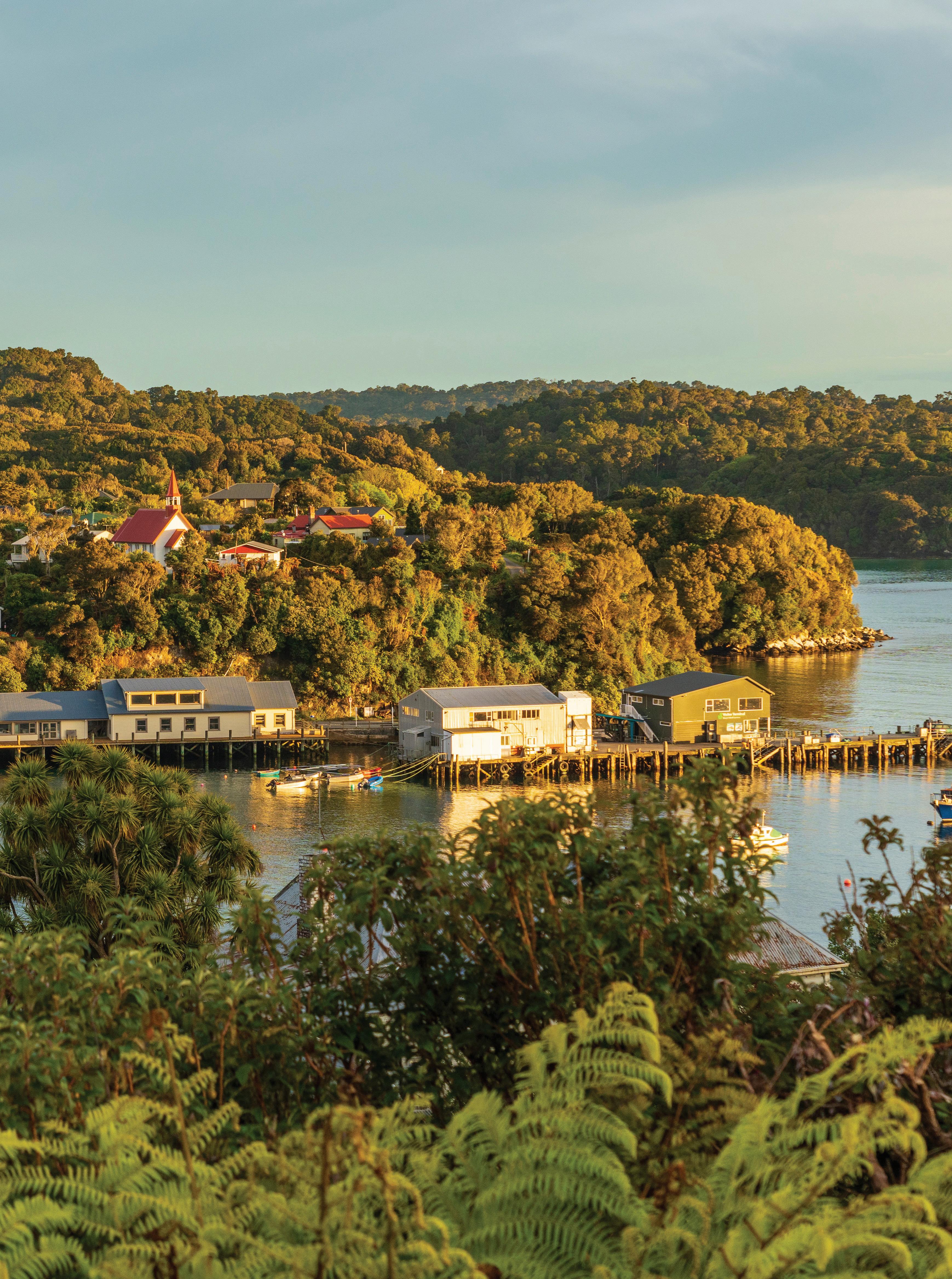
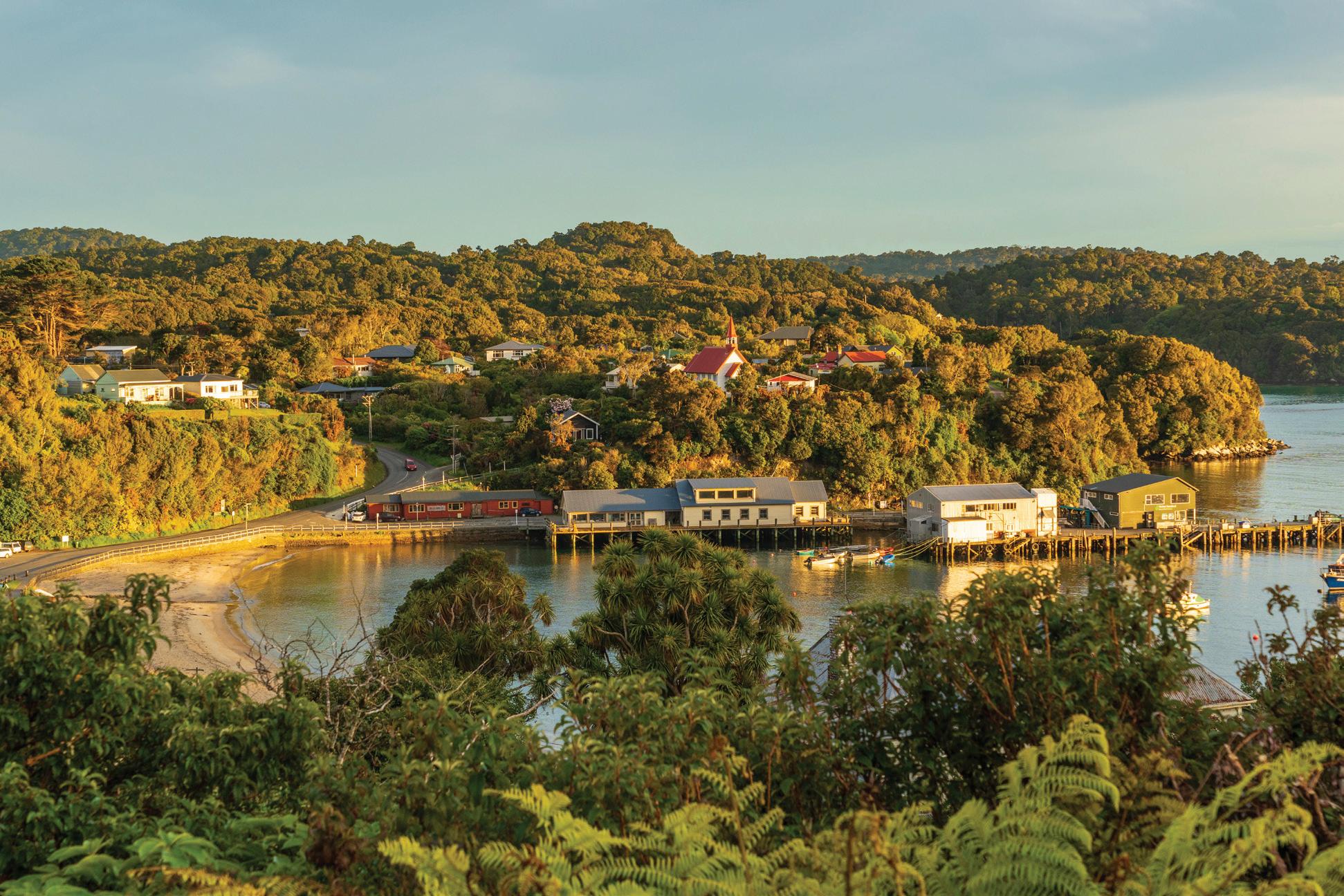
Rakiura Stewart Island feels like the edge of the world – in the best possible way. New Zealand’s ‘third island’ is a remote haven of empty beaches, birdsong, brooding skies and a famously convivial pub. Spot a kiwi on night walks, explore predator-free Ulva Island, hike the Rakiura Track, and unwind in Oban.
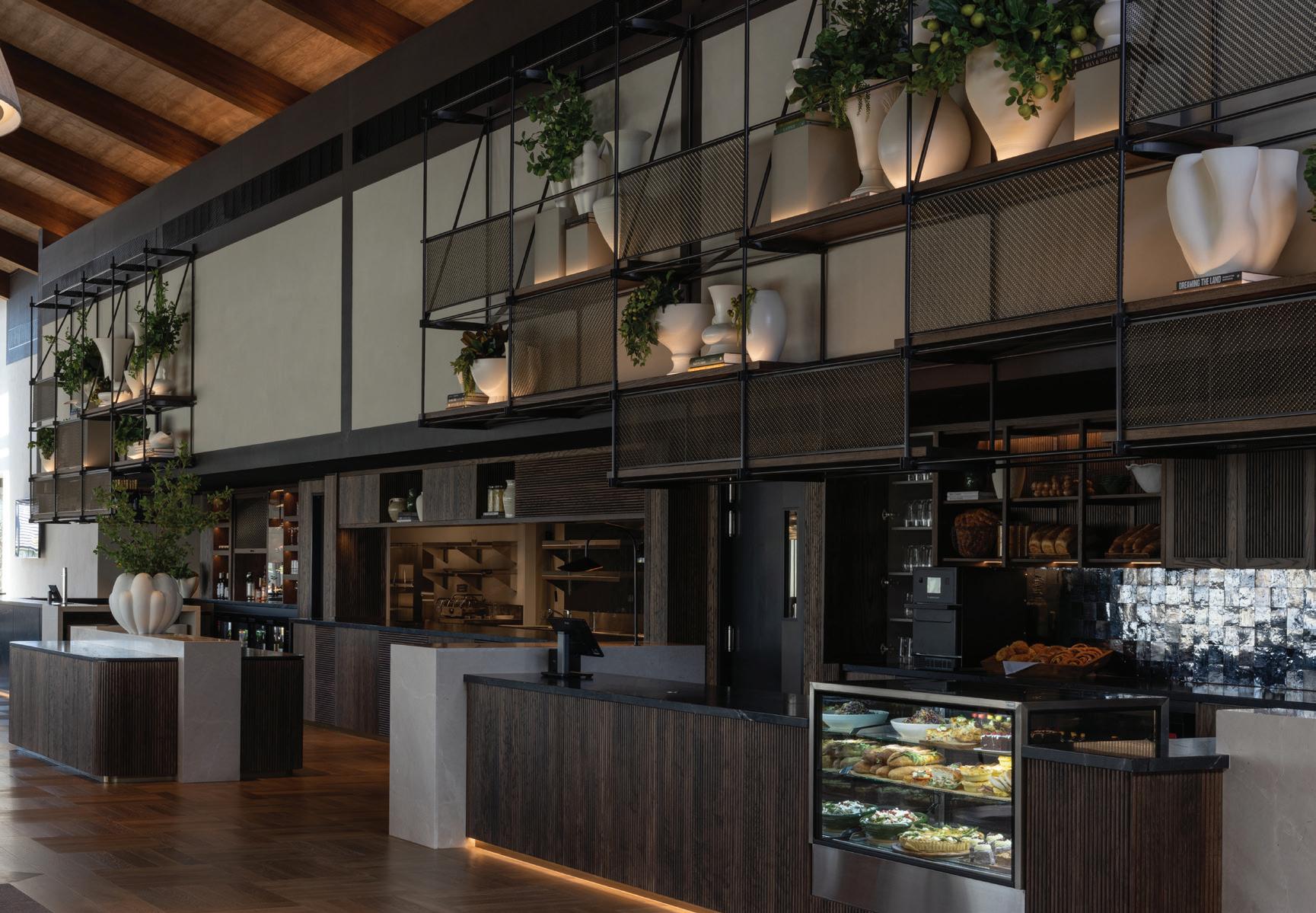
Inside The Pavilion at Pacific Lakes, Pāpāmoa, timber, light and texture set the stage for a suite of bespoke artisan works. Commissioned by Space Studio, ceramicists Peter and Julie Collis, Stephen Lee and Iza Lozano created large-scale vessels inspired by classic New Zealand forms. The result is a thoughtful collaboration where scale, craft and interior design intersect in a truly breathtaking manner.
Rakiura Stewart Island isn’t a place for rushing. Rather, it’s somewhere to slow down, walk, watch the tide, listen for rustling in the dark, and let the landscape set the pace. It’s a truly unforgettable destination.
Getting to Rakiura Stewart Island is part of the adventure. You’ve come this far, so what’s another dose of intrepid travel as you cross the sometimes-tumultuous Foveaux Strait to reach your destination?
A 20-minute flight or an hour-ish long ferry ride are your options out of Bluff, and both come with a reputation attached to their boarding passes. However, catch a sunny, benign weather day for either mode of transport to Rakiura Stewart Island and this majestic destination reveals itself long before you make landfall.
One of the first things that strikes you about Rakiura Stewart Island is the scale of the place. Looking at a map of New Zealand, it’s easy to dismiss it as the full stop below the Mainland. But in reality, this is no mere Waiheke Island. It even kicks Great Barrier into touch. It’s a vast and rugged landmass of over 1,700 square kilometres, with approximately 400 lucky souls residing
mainly in and around the village of Oban calling it their permanent home.
But beyond Oban (which bustles in its own unique way, especially when the ferry is arriving or departing), 80 percent of the island is protected as Rakiura National Park, which helps gives the place a wild, untamed character.
As you’d expect, one of the island’s biggest drawcards is its wildlife. Rakiura Stewart Island is widely regarded as one of the best places in New Zealand to spot kiwi in its natural habitat. The Stewart Island tokoeka in particular is more visible here than in many other parts of the country, and night walks near Oban can be surprisingly productive if you are quiet and use a red light rather than a bright torch. Going with a guide is even better.
Guided kiwi tours are popular because they will improve your chances of spotting our national bird in its own backyard while
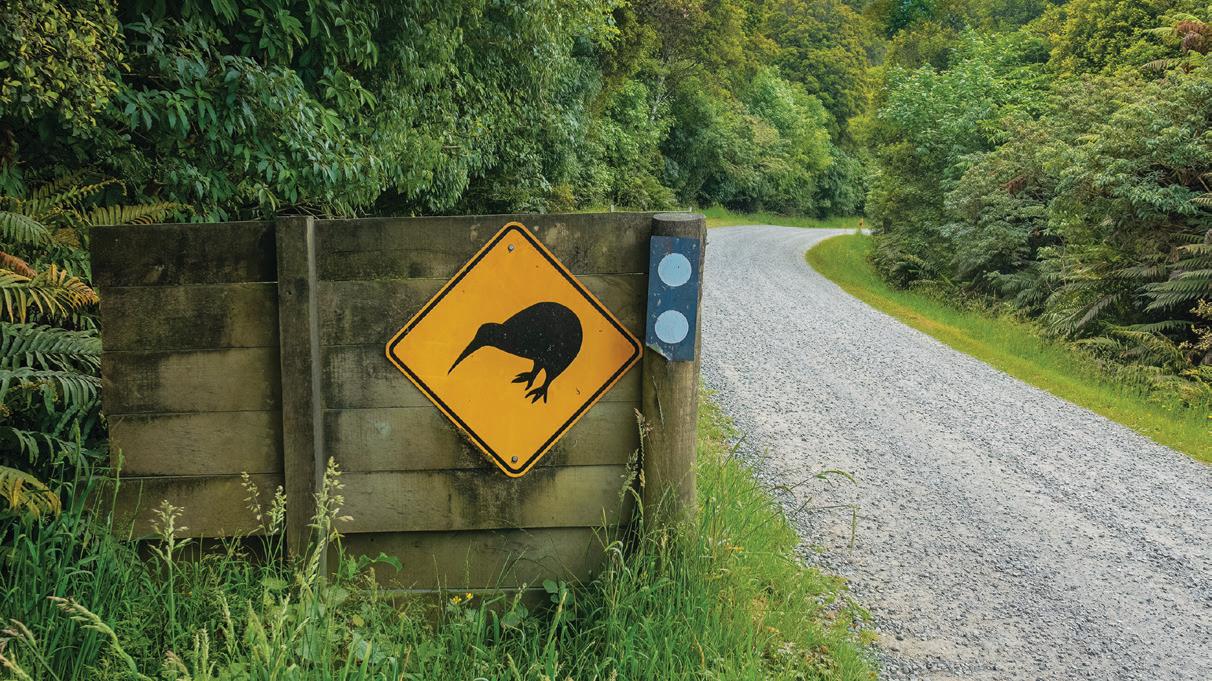

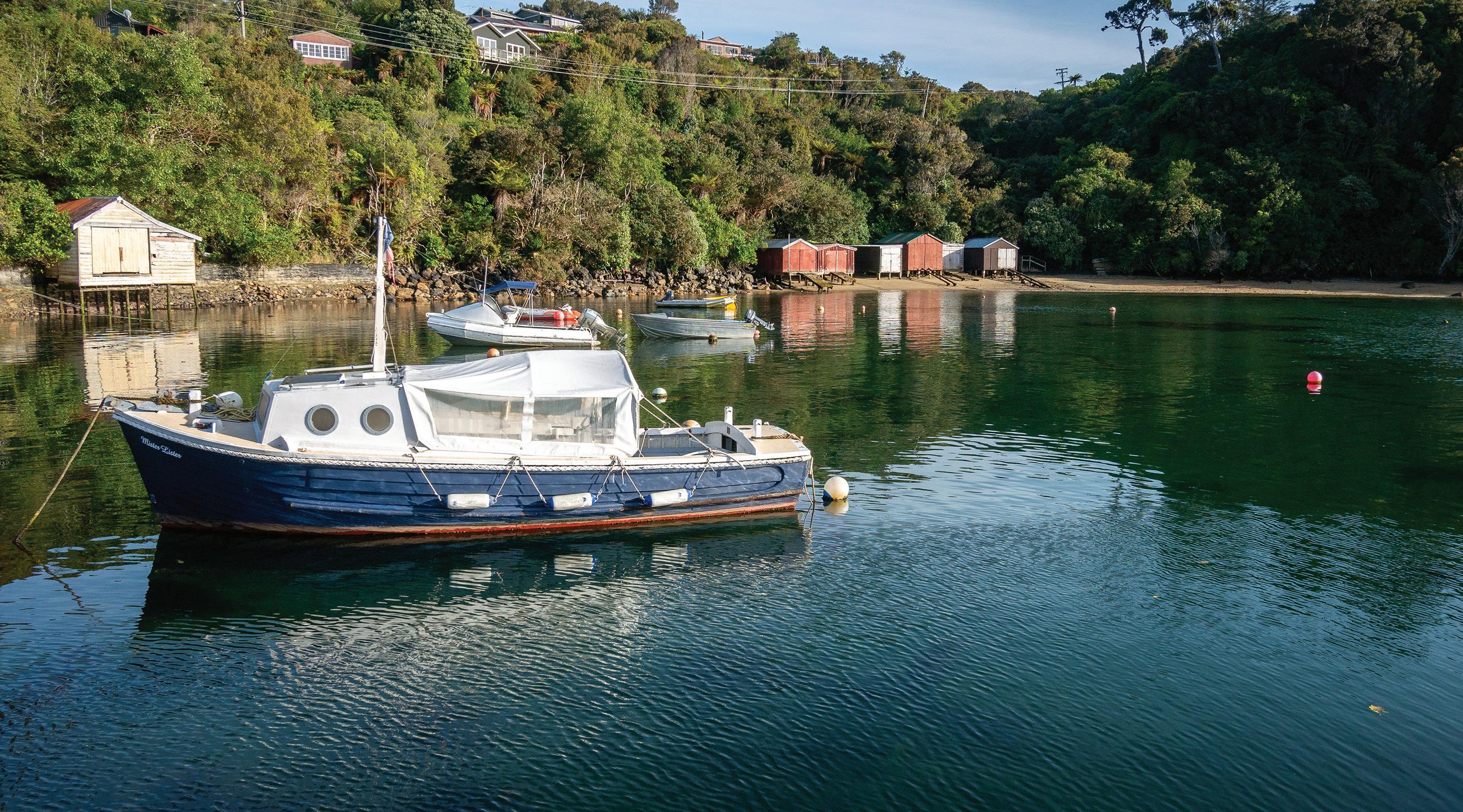

helping to ensure the birds are disturbed as little as possible. Beyond kiwi, the island is also home to weka, kākā, penguins, seals, and a rich variety of seabirds, making it a dream destination for birders.
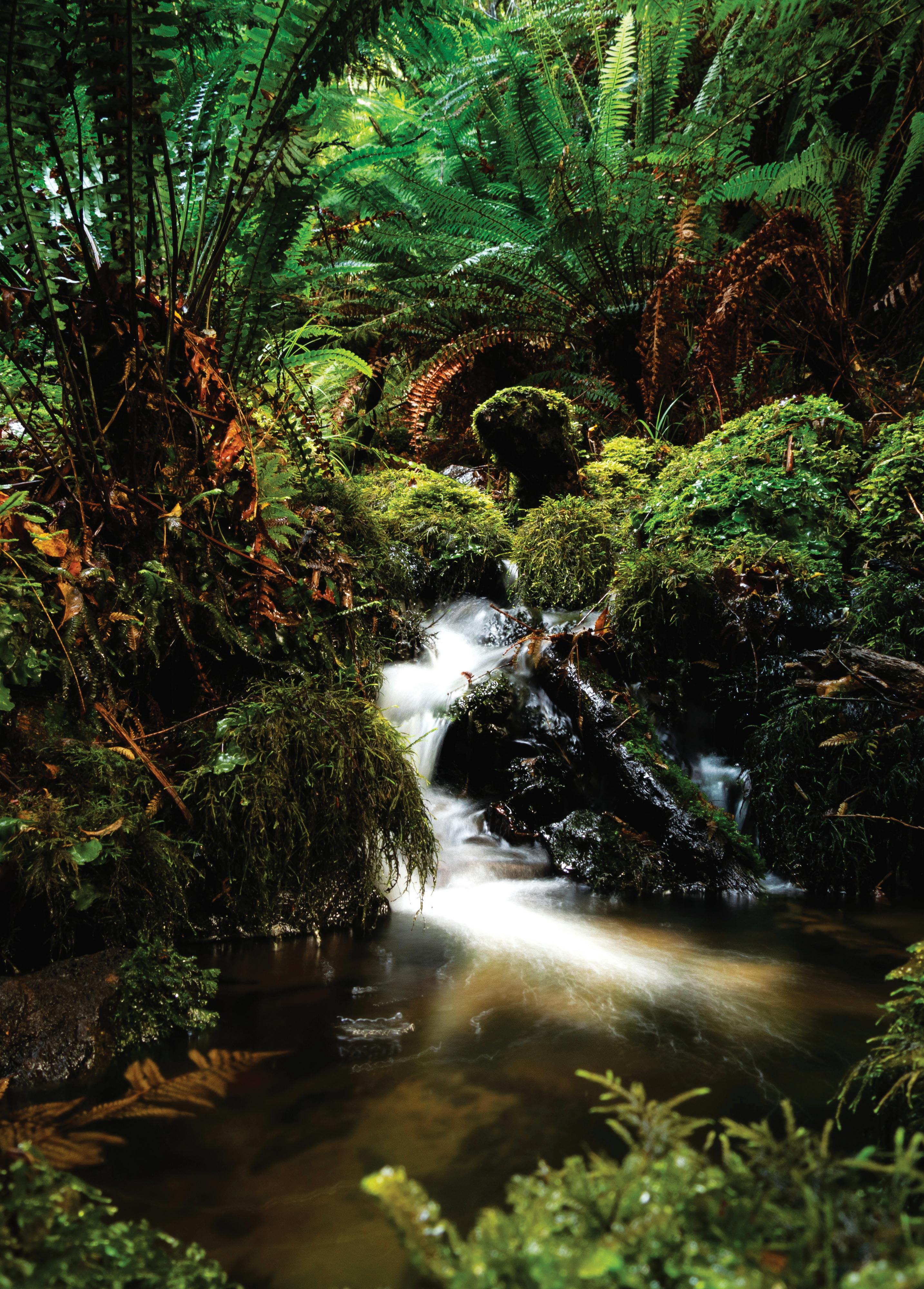
A trip to Ulva Island / Te Wharawhara is one of the most rewarding things to do while visiting Rakiura Stewart Island. Walking through bush vibrant with bird life, you begin to understand just what’s possible without predators. A short water taxi ride from Halfmoon Bay or Golden Bay, this sanctuary (predator free since 1997) is another haven for native birdlife. The walking tracks are easily traversed and well maintained, winding through ancient podocarp forest to quiet beaches and sheltered coves. The abundance of birdsong is genuinely noticeable from the moment you step foot on the island. And if you enjoy walking, you’re in the right place. The Rakiura Track is one of New Zealand’s Great Walks and covers
approximately 32 kilometres through forest, mudflats, and along sweeping beaches. Usually completed over three days, it offers a manageable multi-day hike if you’re up for it.
But if you don’t want to commit to an overnight trek, there are also plenty of shorter walks from Oban. Observation Rock is a steep but brief climb with panoramic views over Paterson Inlet and Ulva Island, and especially beautiful at sunset. Ackers Point leads to a historic lighthouse and is a good spot to look for little blue penguins at dusk, while easier paths such as the Fuchsia Walk / Raroa Reserve Track provide a gentler introduction to the island’s lush native bush.
The coastline offers just as much appeal as the forest. Scenic boat cruises and water taxis open up access to bays, inlets, and wildlife-rich shorelines that can’t be reached by road. Kayaking in Paterson Inlet is another memorable way to experience the
“
The Stewart Island tokoeka in particular is more visible here than in many other parts of the country, and night walks near Oban can be surprisingly productive if you are quiet and use a red light rather than a bright torch. Going with a guide is even better. ”
landscape, with calm waters, and hidden coves featuring beautiful white sands, and frequent birdlife.
Fishing is also a classic local activity, as you’d expect. Rakiura Stewart Island is famous for its blue cod, which often appears on dinner plates at the handful of cafés and eateries in Oban, including the legendary South Sea Hotel – the southernmost pub in New Zealand and the social heart of town. You can book rooms here if you really want to be at the centre of the action, although there are plenty of other accommodation providers and private stay options on the island.
The island’s Māori name, Rakiura, is often translated as “glowing skies,” and the island has been recognised as a Dark Sky Sanctuary, making it a superb place for stargazing and, in the cooler months, for catching the elusive Aurora Australis. On a clear night, the stars alone are reason enough to come.
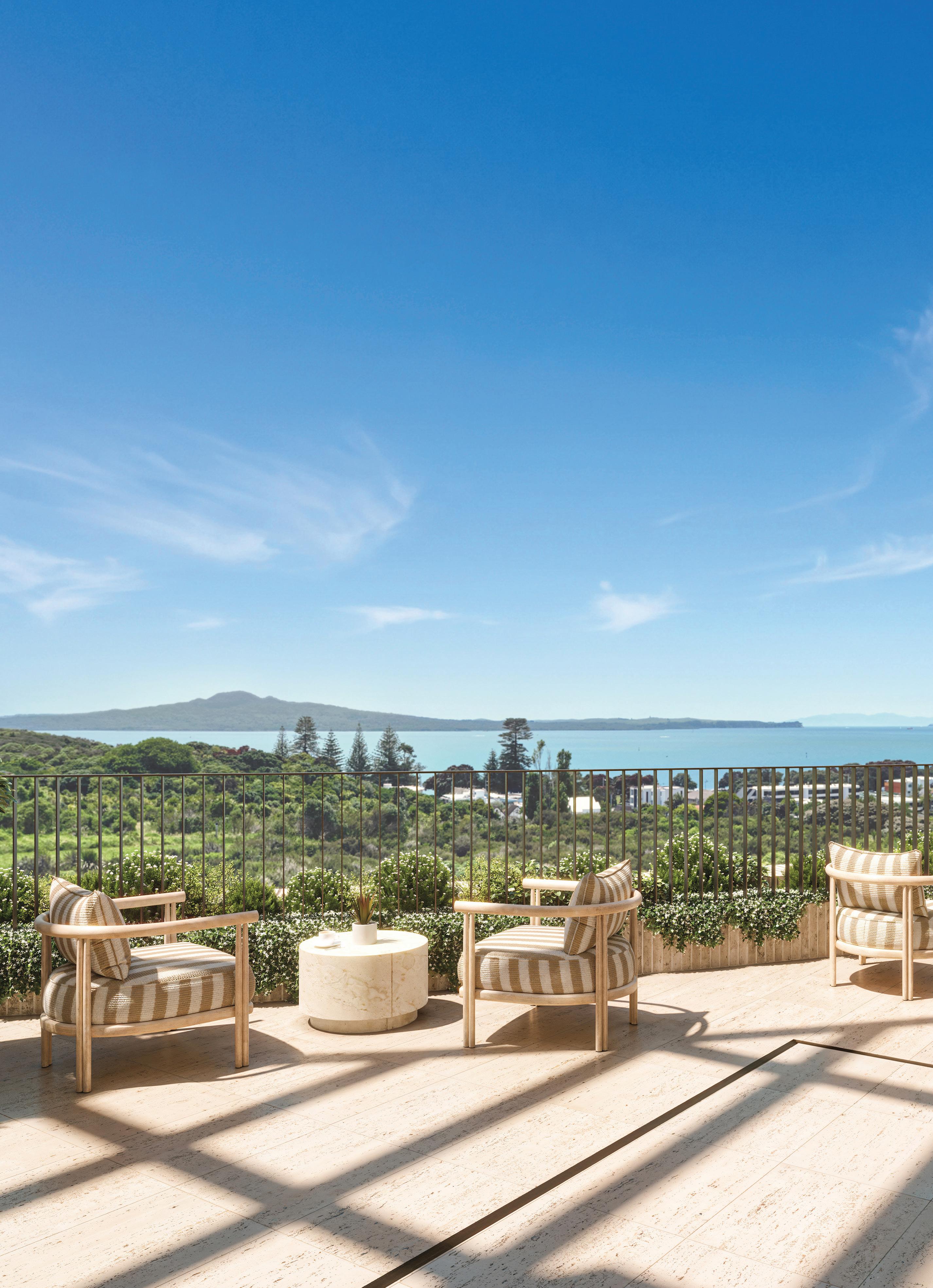
Enlivening the impressive environment within the recently opened Pacific Lakes centrepiece, the Pavilion, a cohort of talented artisans were invited to design and sculpt bespoke art pieces.
WORDS Steve Vermeulen PHOTOS Vinesh Kumaran
Within The Pavilion at Pacific Lakes in Papamoa, timber, light, and texture all work together to create a unique environment that feels considered rather than constructed.
Commissioned as part of the impressive new community building’s fit-out, overseen by interior design agency Space Studio, ceramicists Peter Collis, Julie Collis, Stephen Lee and Iza Lozano have created a collection of bespoke vessels to sit within the space – not as centrepieces, but as anchors and talking points.
The beautiful ceramics are joined by intricate, timeless woven sculptures by Arrowtown artist Jasmine Clarke, along with oversized lampshades above.
It’s a collaboration that blends decades of experience. And while the brief was all about consistency of scale, the interpretations are distinctly individual.
For Peter and Julie Collis, this is familiar territory. Between them, the husband-and-wife team bring more than half a century’s worth of experience to the potter’s wheel.
“I made my first pots when I was 14 – that’s 60 years ago now,” says Peter. “Julie and I have worked together for a long time. She designs; I
make; then we finish them together.”
Peter says the focus of his work is the exploration of shape and surface. He favours pure form vessels, which he treats in a wide range of methods: crackle glazes, textured slips and rich colours. Each treatment calls for a different process and sets of skills –fluency in a range of techniques which are a credit to his decades at the wheel.
The Pavilion brief from Space Studio was clear but open-ended. The designers provided architectural drawings of the gantry spaces and leaned into a neutral palette – off-whites, subtle finishes, and a nod to classic New Zealand forms. That reference point matters. Early Crown Lynn ceramics – in itself influenced by English factory ware – became a starting point, reinterpreted for The Pavilion in a more contemporary, pared-back way. But translating that into large-scale pieces is where things got interesting for the artisans.
“These weren’t small pots. Some of them were really pushing the limits of what you can physically make and fire,” Peter laughs. Working at such scale introduces a different
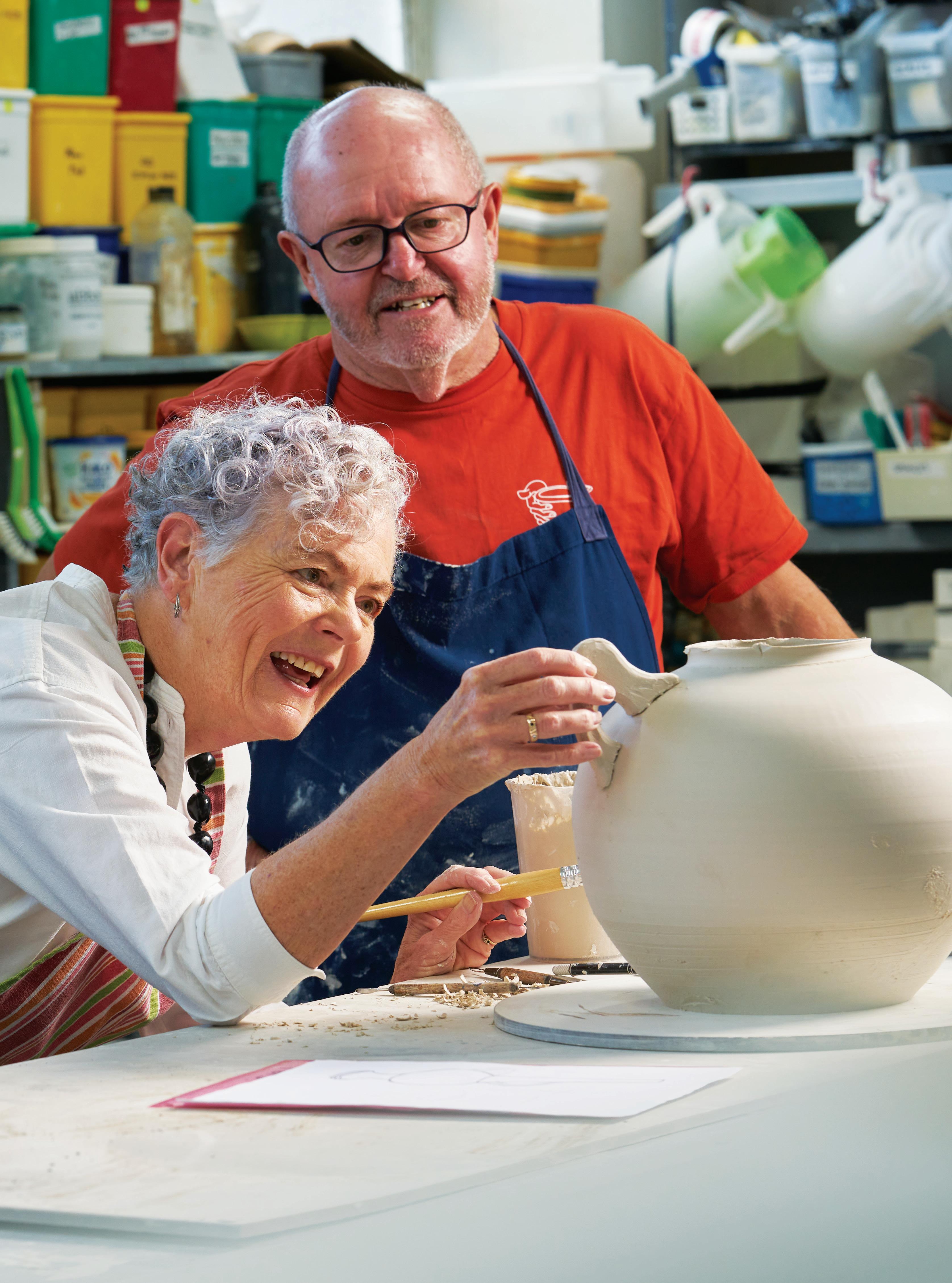
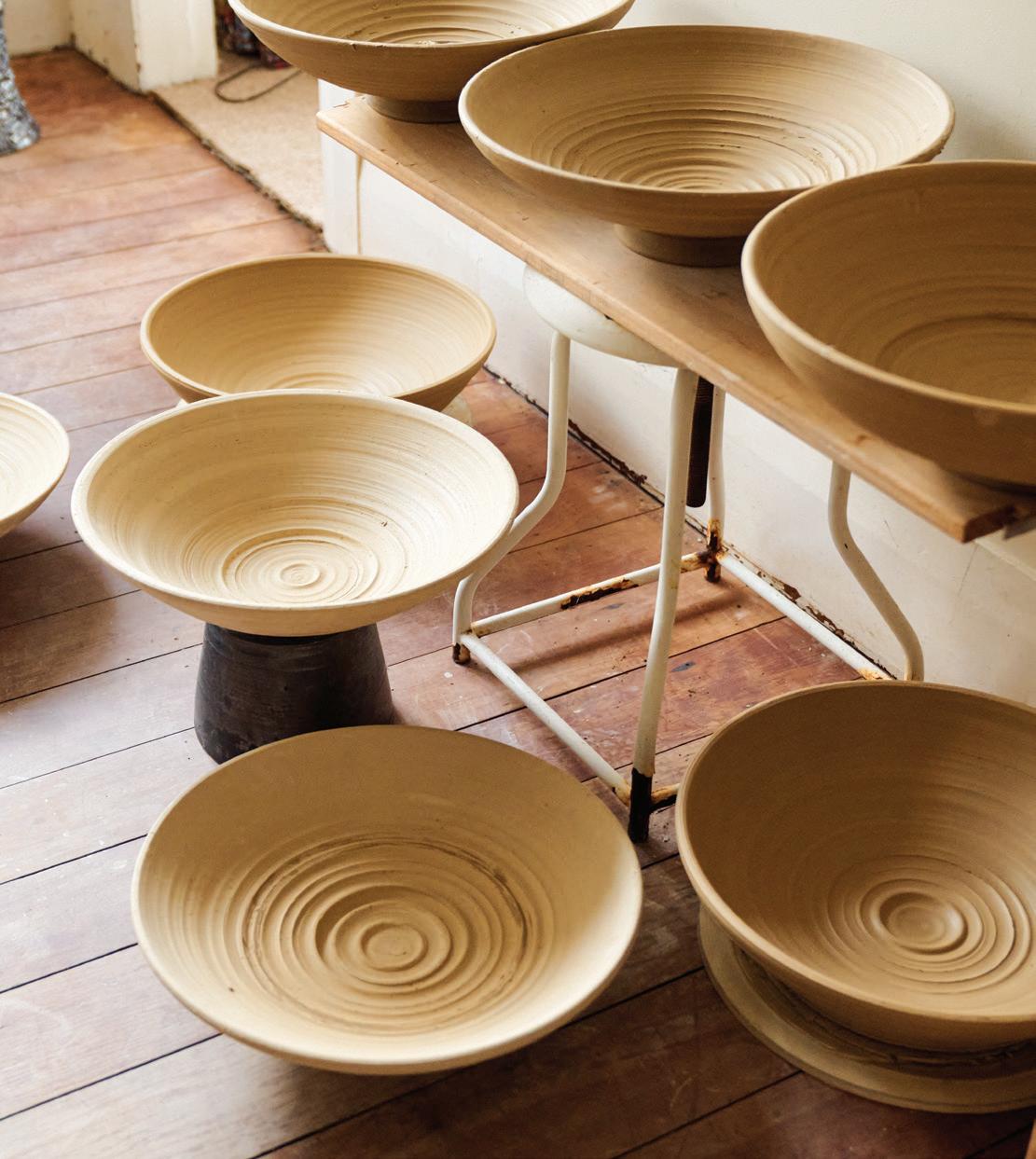
set of challenges – structural integrity, weight, and the simple mechanics of forming something oversized. Many of the vessels were built in sections, then assembled and finished as a single form.
“There’s a level of skill to it, but it also just comes down to experience – knowing how far you can push the clay before it pushes back,” he continues.
In total, Peter and Julie produced around 20 pieces – each one different but connected through form and finish.
“It wasn’t formulaic. There was a lot of drawing, testing, assembling. That’s what made it enjoyable.”
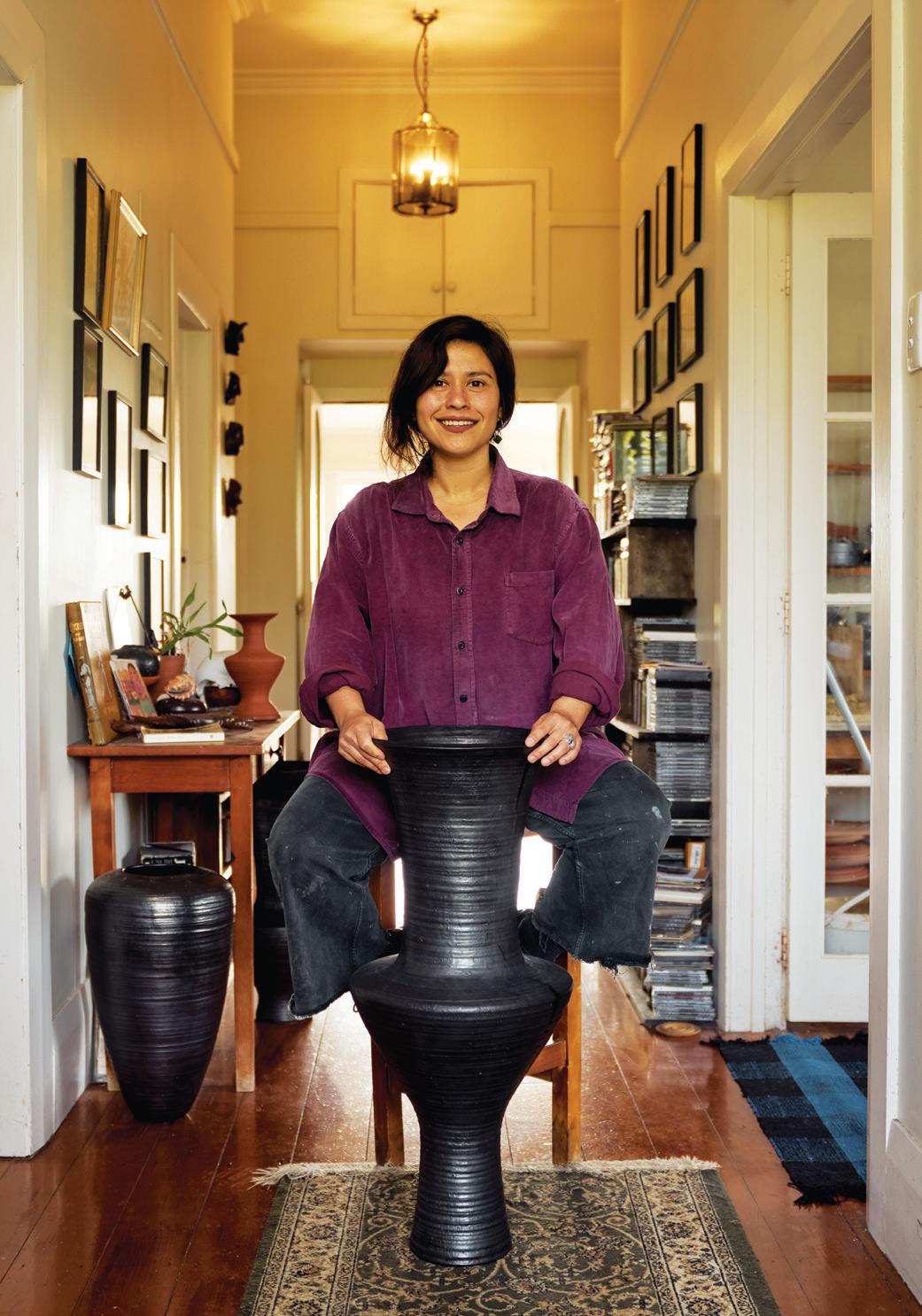
Alongside the Collises’ work sits a series of pieces by Auckland-based potter Iza Lozano, whose path into ceramics is a notably different one.
Originally studying social anthropology in Mexico, Iza’s interest in pottery came through cultural observation before she was drawn to the technical side of the artform.
“A university field trip to a potters’ community in Metepec was the turning point,” she recalls. “I became fascinated by the knowledge embedded in the craft – how clay is understood and transformed.”
That led to formal study in Mexico City, and eventually to Auckland, where she found a ceramics community that allowed her practice to evolve further.
Iza says her approach draws from archaeology – Mediterranean and Mesoamerican forms, objects that carry a sense of permanence.
“I’m interested in pieces that feel like they’ve endured. Amphorae, vessels, containers… I’m not replicating them, but referencing their presence,” she explains.
For The Pavilion, Iza was asked to adapt her existing forms to fit the space. The result is work that feels both grounded and slightly displaced – familiar in shape but not tied to a single tradition. And like the Collis’ work, scale was also part of the challenge for her.
“Larger pieces require patience. You have to think ahead, about structure, weight, how the
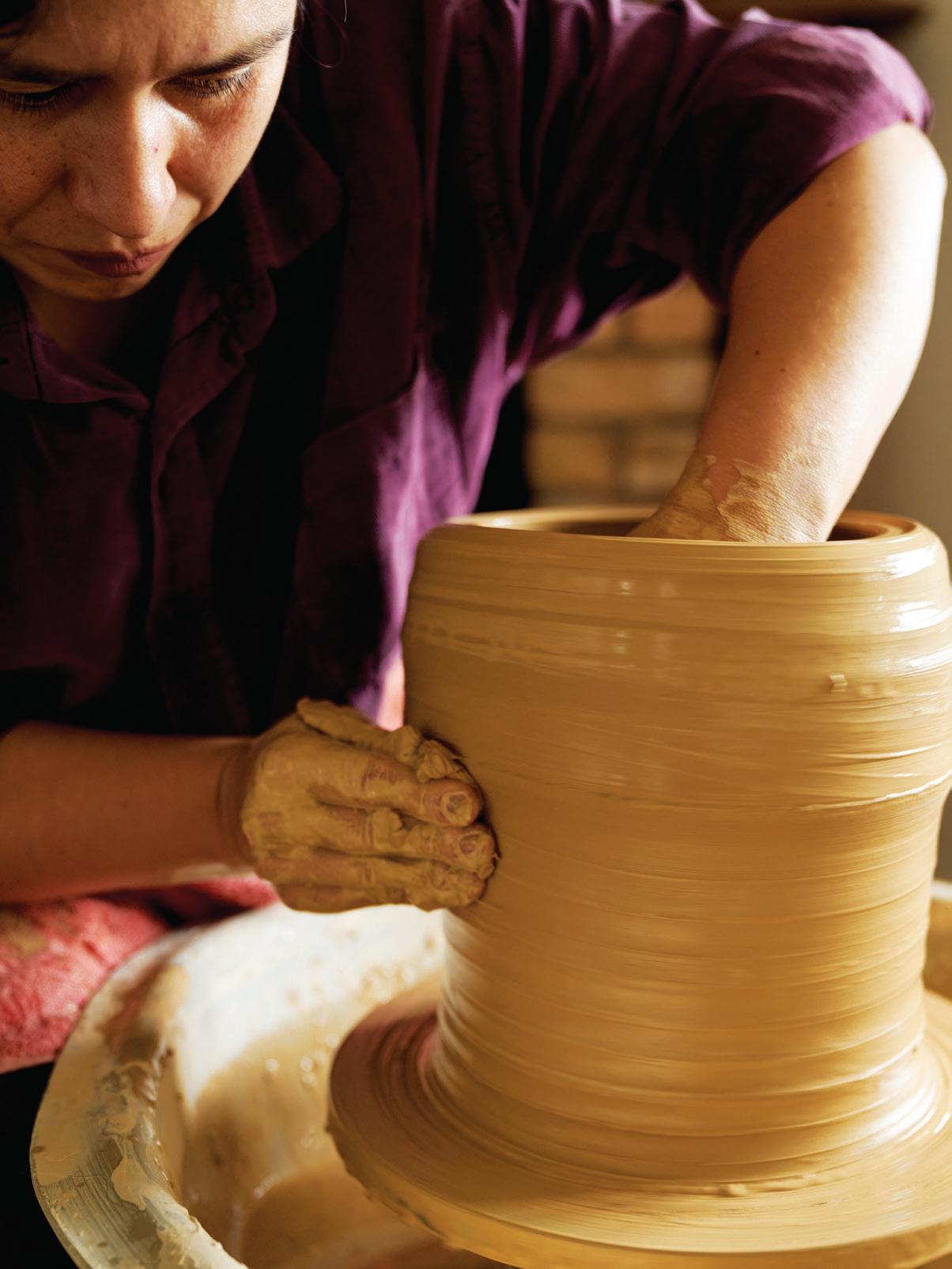
form holds itself. And then there’s the practical side – transporting them, finding kilns large enough to fire them, those sorts of requirements too.”
What ties all of this together is not just the material pieces, but the way they have been integrated into the wider space. The resultant artefacts aren’t gallery pieces in isolation. Rather, they sit within an interior – objects, focal points and layers created by artisans and expertly positioned by the Pavilion’s design team.
“Part of working within interior design is knowing that what you’re creating is another layer to consider,” concludes Peter. “The entire process is very rewarding indeed.”

‘Mother’s Ruin’ no more! Gin has staged a remarkable comeback in popularity in recent years, driven by craft distillers, better base spirits and real botanicals. In our exclusive interview, Lighthouse Gin head distiller Rachel Hall explains how a classic, dry style helped rebuild trust in gin, why consistency matters more than trends, and how special Wairarapa spring water helps give their award-winning spirit its ‘soul’.
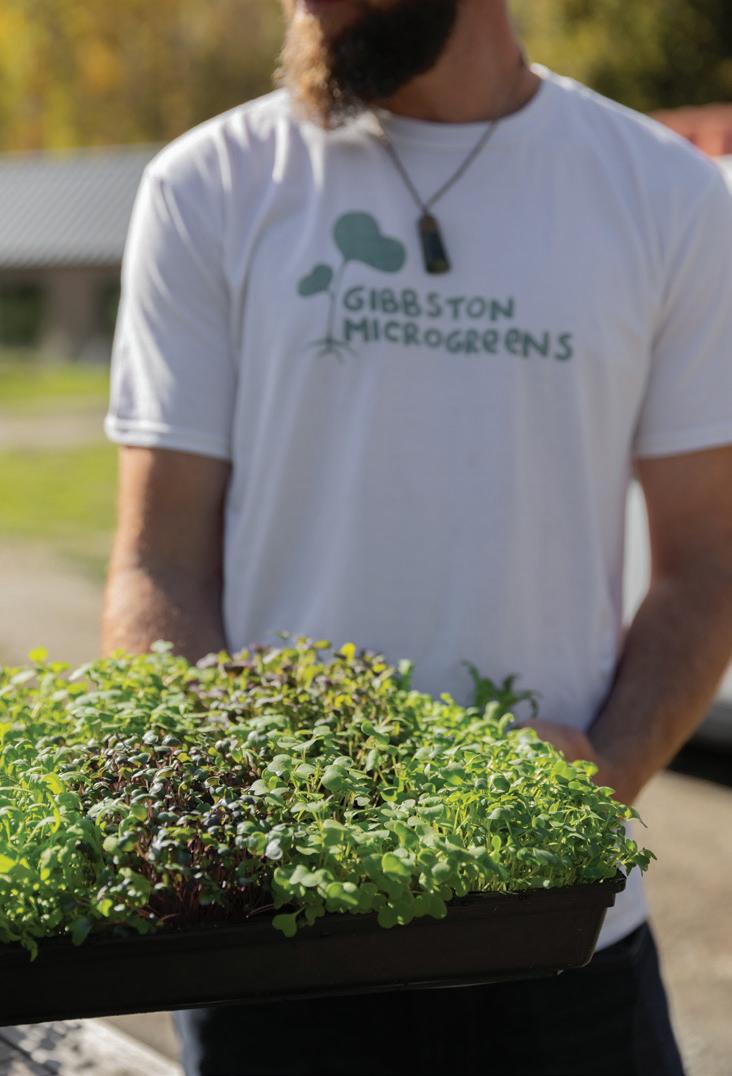
In Central Otago’s challenging climate, Chris Wilkinson is growing something unexpectedly delicate. Inside repurposed shipping containers, Gibbston Microgreens produces vibrant, nutrient-dense greens for Queenstown’s top kitchens – fresh, local and hyper-perishable by nature. Built on direct relationships with chefs, returnable “living trays” and waste-cutting systems, this small operation is quietly strengthening the region’s resilient food future.
Getting the simple things right makes for a great classic gin. But why, in 2026, has this unlikely – and once unloved – spirit made such a colossal comeback? Lighthouse Gin’s head distiller Rachel Hall has the answers.
WORDS Cameron Officer
PHOTOS Sam Cameron
Once dismissed as old-fashioned, within the last decade gin has become a go-to spirit. Something once deemed as perilous to polite society – ‘Mother’s Ruin’, indeed – is these days a conversation starter, a popular Friday afternoon tipple, even a small batch collector’s item. Walk into a bottle store today and you’ll find row upon row of local labels; head to a market and there’s often a tasting table promising citrus, florals or native botanicals.
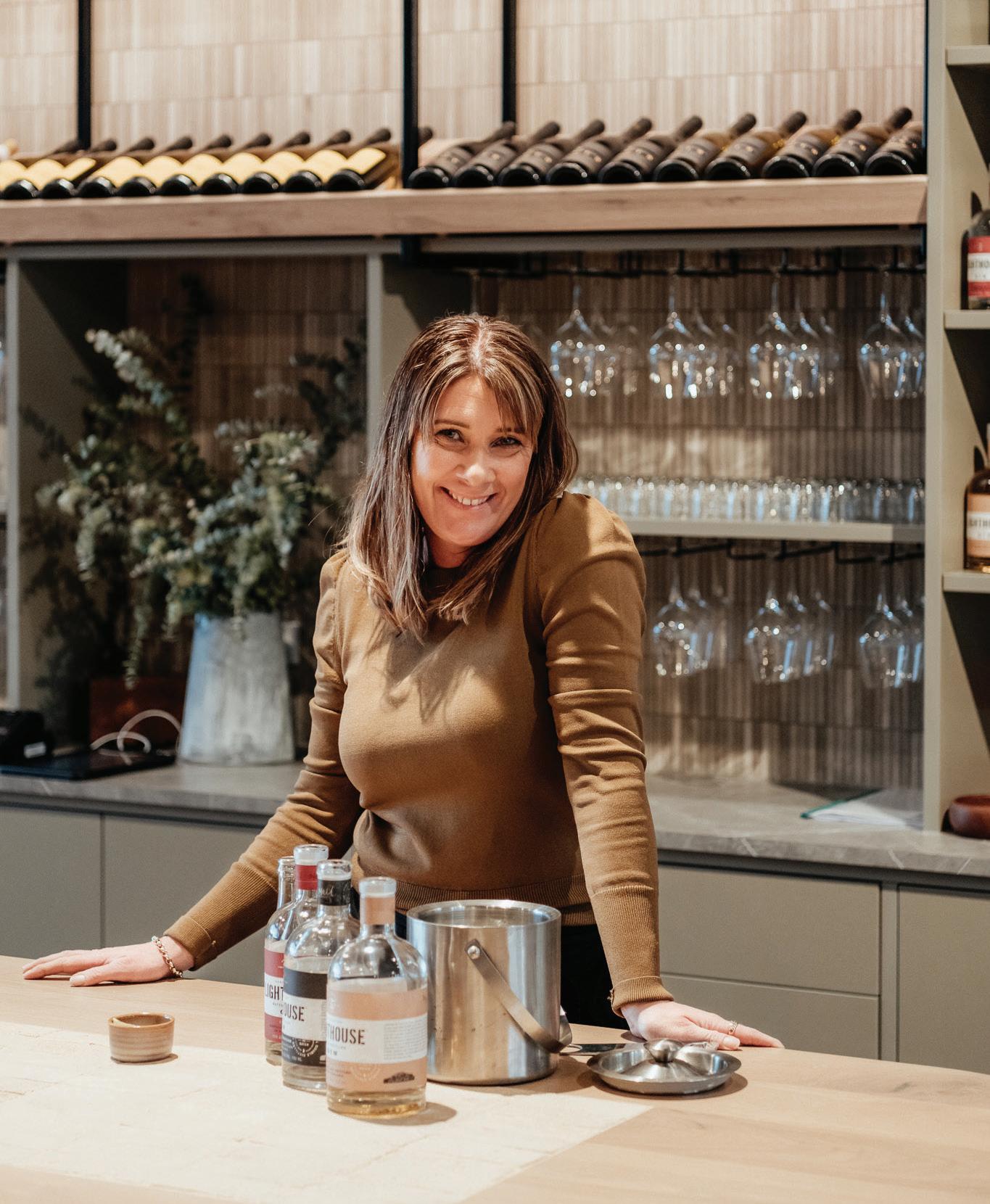
Lighthouse Gin, distilled in the Wairarapa and sporting the famous red and white stripes of the Cape Palliser lighthouse on its familiar label, has been part of the story of gin’s renaissance. And helping guide what’s inside the bottle from boutique curiosity to export success has been head distiller, Rachel Hall.
Rachel didn’t arrive on the scene with a chemistry degree or a grand plan to run a still.
She admits she didn’t even touch the stuff when she began working for company cofounder Andrew Wright (and his wife Sue) at a local driving range as a “weekends and school holidays girl.”
While Rachel headed off on her OE, came back home, married, had kids and forged a career in telecommunications, Andrew and friend Neil Catherall were beating their own path. Andrew had also established a (non-alcoholic) juice
business, Mela Juice. As Rachel tells it, the distillery began in classic Kiwi fashion: “A couple of blokes who played golf together - watching local small batch spirits taking off and wondering, ‘why not have a go ourselves?’
“They tried their hand at fruit brandies first, but realised the patience required wasn’t going to match the market,” she recalls.
“Neil had always had a soft spot for gin and figured he could have a go at making that instead.”
Reconnecting with Rachel upon her return to the Wairarapa, Andrew asked her to join Mela Juice. While working in a small team proved a refreshing break from the corporate world, it was watching gin being distilled by Neil up close that really sparked her interest.
“I was intrigued… I just started asking lots of questions,” she says.
Lighthouse’s signature style was starting to take shape: classic, dry, and built around letting the botanicals speak.
The breakthrough wasn’t through a flashy marketing campaign; rather, miles and miles spent on the road, plenty of conversations, and a steady stream of small tastings. It was slow going and the New
Zealand gin scene was still in its infancy –Lighthouse was usually the only gin maker at any given food show back then.
“But we learnt that getting people to try it was the best way to get people to like it and buy it,” says Rachel. “The face-toface approach also rebuilt trust in gin as something wonderful, not like what many might have associated it with in years gone by.”
In 2014, with Neil ready to retire and the business changing hands, Rachel assumed her time in the distillery was up. Instead, the then-CEO asked if she’d like to be the next distiller.
“I’m like, ‘Yeah, absolutely!’” she laughs. And with that, she found herself responsible for one of the country’s best-known gins. So, why the resurgence in interest in gin?
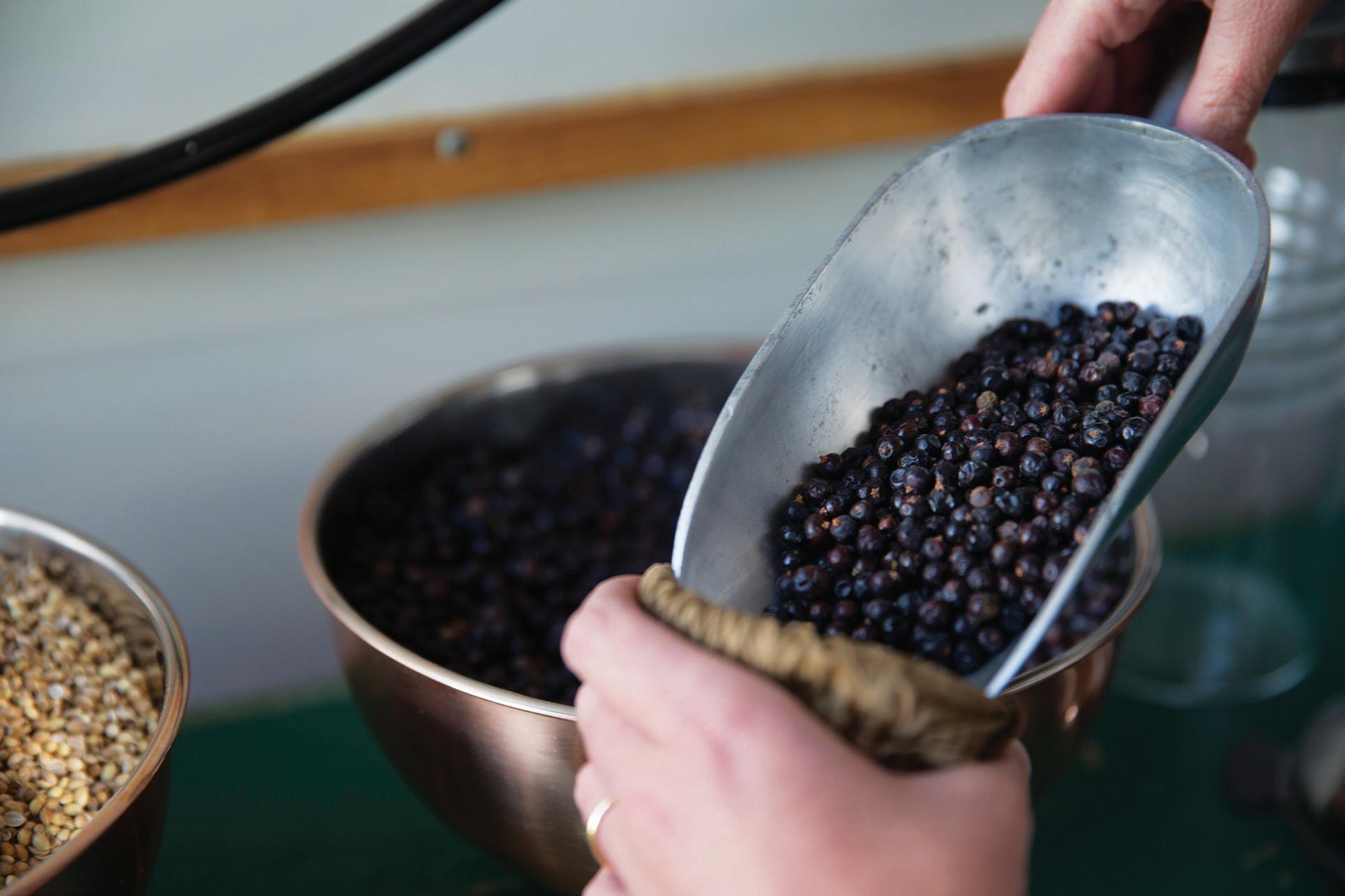
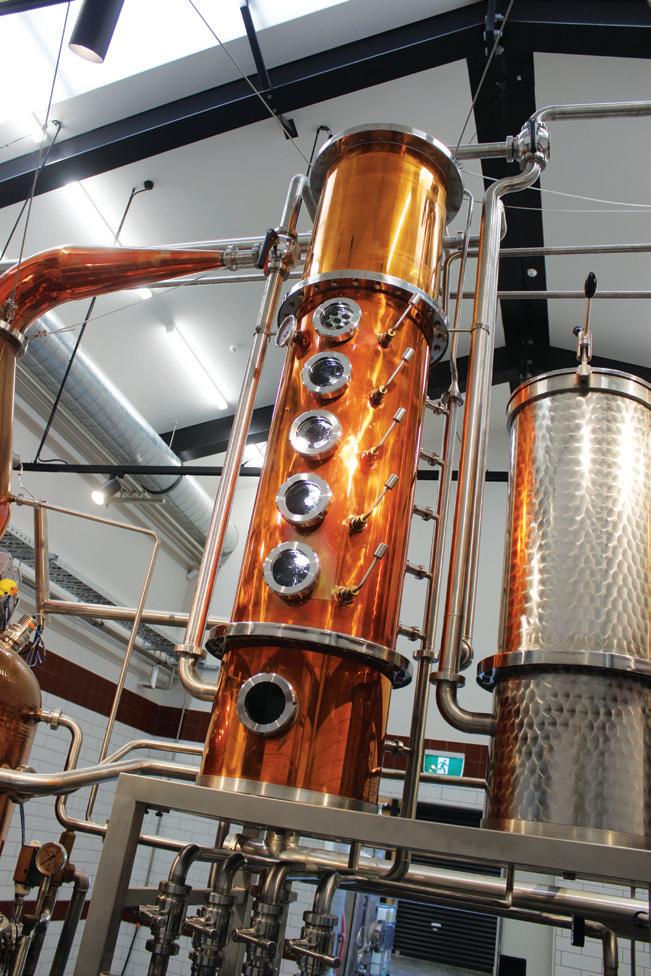
Rachel doesn’t sugar-coat the past: “Gin used to be nasty. It was horrible… it didn’t have any love put into it. But yes, the craft boom has changed that. You have better base spirits, careful distilling, and a return to real botanicals rather than shortcuts.
“Modern distillers have widened the playing field, offering everything from spicy and juniper-forward to light and floral, citrusled, or even colour-changing. For many drinkers, the surprise is simple: it tastes
good and it suits the way we like to drink at home, with tonic, ice, and time to savour it.”
While there are now all sorts of trends evident in the world of gin distilling, Rachel says Lighthouse has largely resisted the temptation to chase every new flavour wave. “There are plenty of different distilleries out there offering all sorts of takes on it, and that’s great. It means we can just concentrate on what we do, because we really value consistency. We’ve always been a classic distiller.
“Part of that is practical – small distilleries like us don’t have the luxury of tying up money in a trend that might fade before it sells. But it’s also about reliability. When someone buys our gin, they know it; they want it to taste the way they remember,” she says.
While Lighthouse’s familiar bottle is now widely available around the country, success for the company hasn’t meant leaving home. Everything is still made and exported from their base in Martinborough, and their biggest overseas market is now the United States.
A standout export milestone came when Lighthouse was selected by the UK’s Craft Gin Club to join their line-up. “The only New Zealand gin ever invited,” says Rachel. It also triggered their biggest order at that time: more than 17,000 bottles. The kicker? “This was before we had our beautiful big Carl still that we use today – we had to make all of that consignment in our little old pot still, and it was all bottled and labeled by hand.”
Ask her what makes a great gin and Rachel doesn’t start with a secret botanical or a trendy garnish – it’s all about the fundamentals.
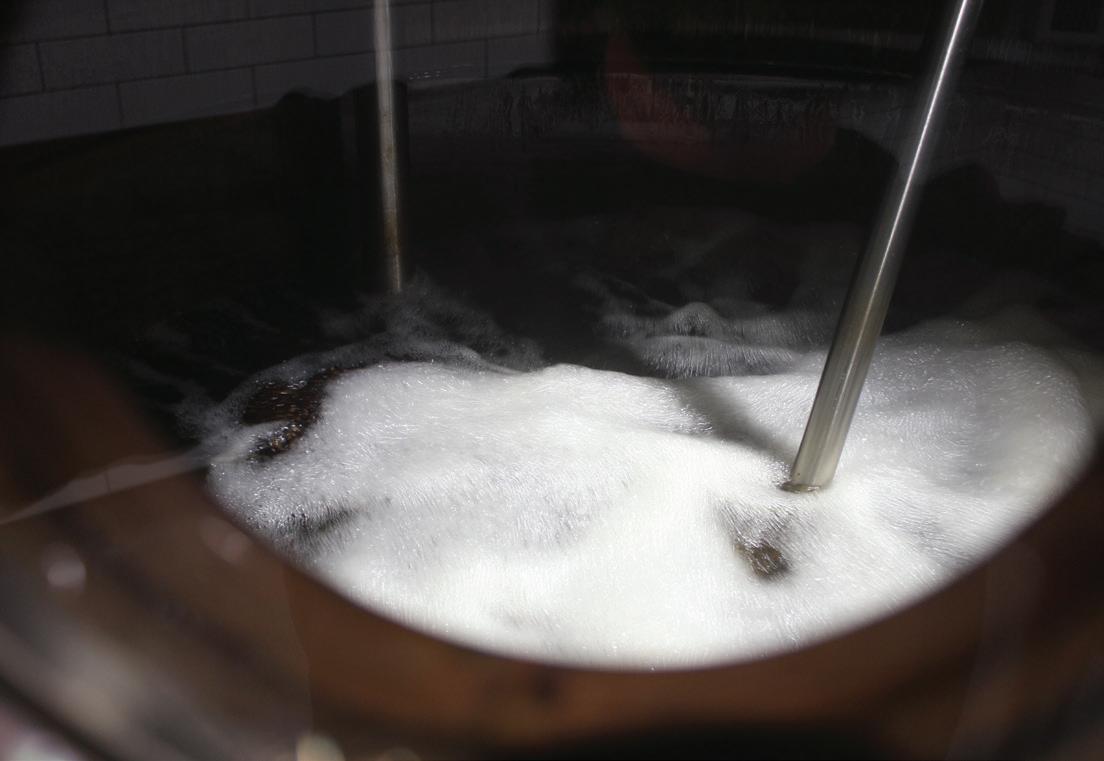
“Gin is made of three main ingredients,” she explains. “You have your neutral spirit, your botanicals, and your water. Water in particular is where Lighthouse has an edge. We use natural spring water from Wharekauhau, which is beautiful and clear and naturally soft. There are no contaminants, and so we don’t have to do anything to it.”
When Rachel cuts the over-proof spirit down to bottling strength with Wharekauhau spring water, it gives the gin “a bit more character,” she says. “I call it ‘soul’.”
It’s not romance for romance’s sake – hard water can literally throw a fault through the spirit, creating cloudiness or flakes. For Rachel, needing to distill water to make it suitable means the end product is flat and missing something crucial.
For all the talk of innovation, her own favourite way of enjoying gin remains pleasingly straightforward.
“I just love a good G&T,” she says. “It’s refreshing. It’s rewarding. It can be a little end-of-the-day ritual.”
Simple. And in a scene crowded with ambitious distillers, Lighthouse’s confidence in the classics feels less like nostalgia and more like a blueprint for staying power.
In Central Otago’s sharp-edged climate, Chris Wilkinson and his team grow delicate, flavourful microgreens inside repurposed shipping containers, supplying Queenstown’s renowned restaurants with fresh produce, while cutting waste and quietly building a resilient local food story.
WORDS Cameron Officer
PHOTOS Giona Bridler
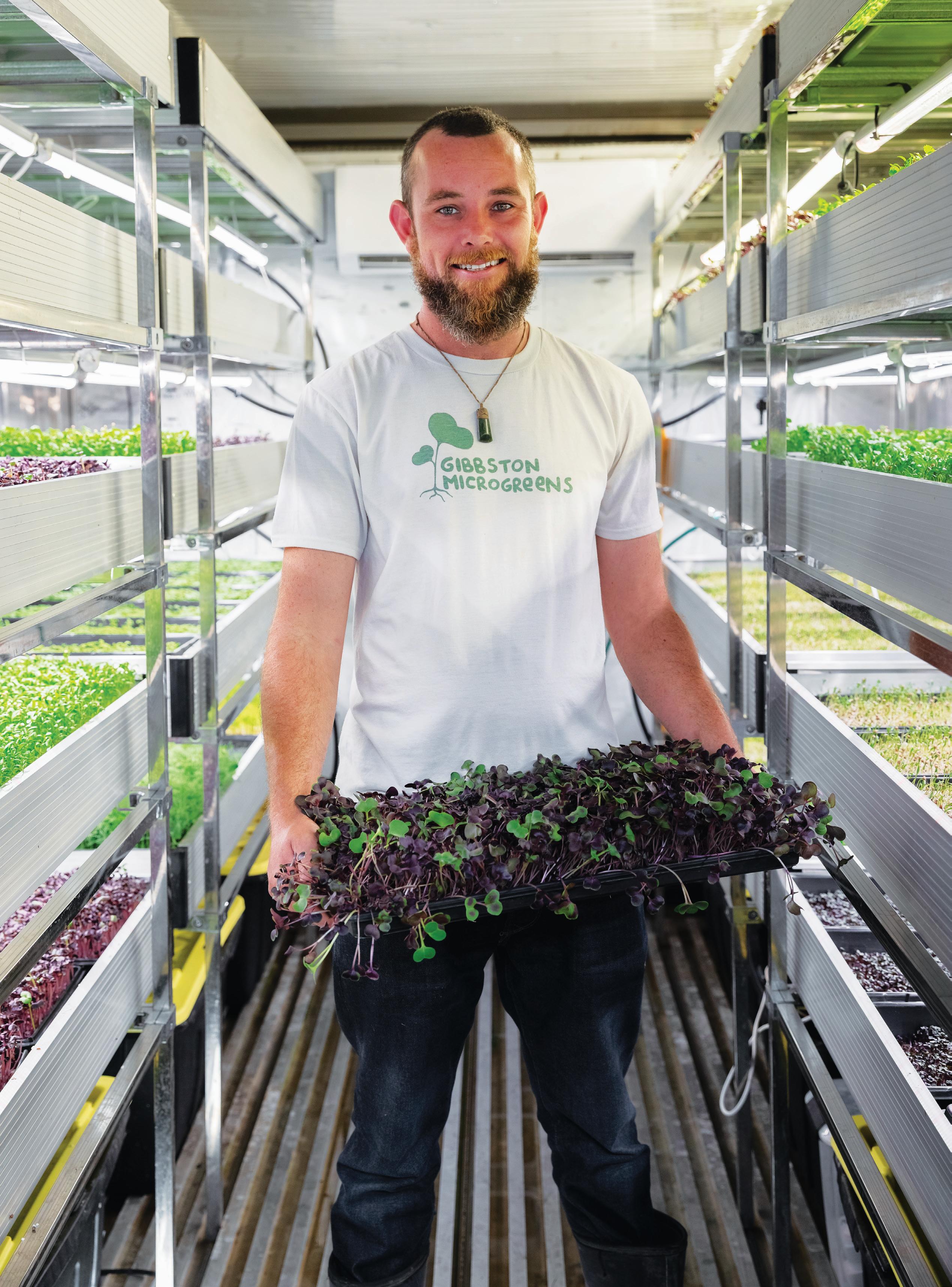
It’s ostensibly a horticultural business, but the first thing you notice when you turn in the gate at Gibbston Microgreens isn’t a paddock or a tunnel house: rather, the hum of a carefully managed indoor farm, tucked into a tight cluster of specially developed containers.
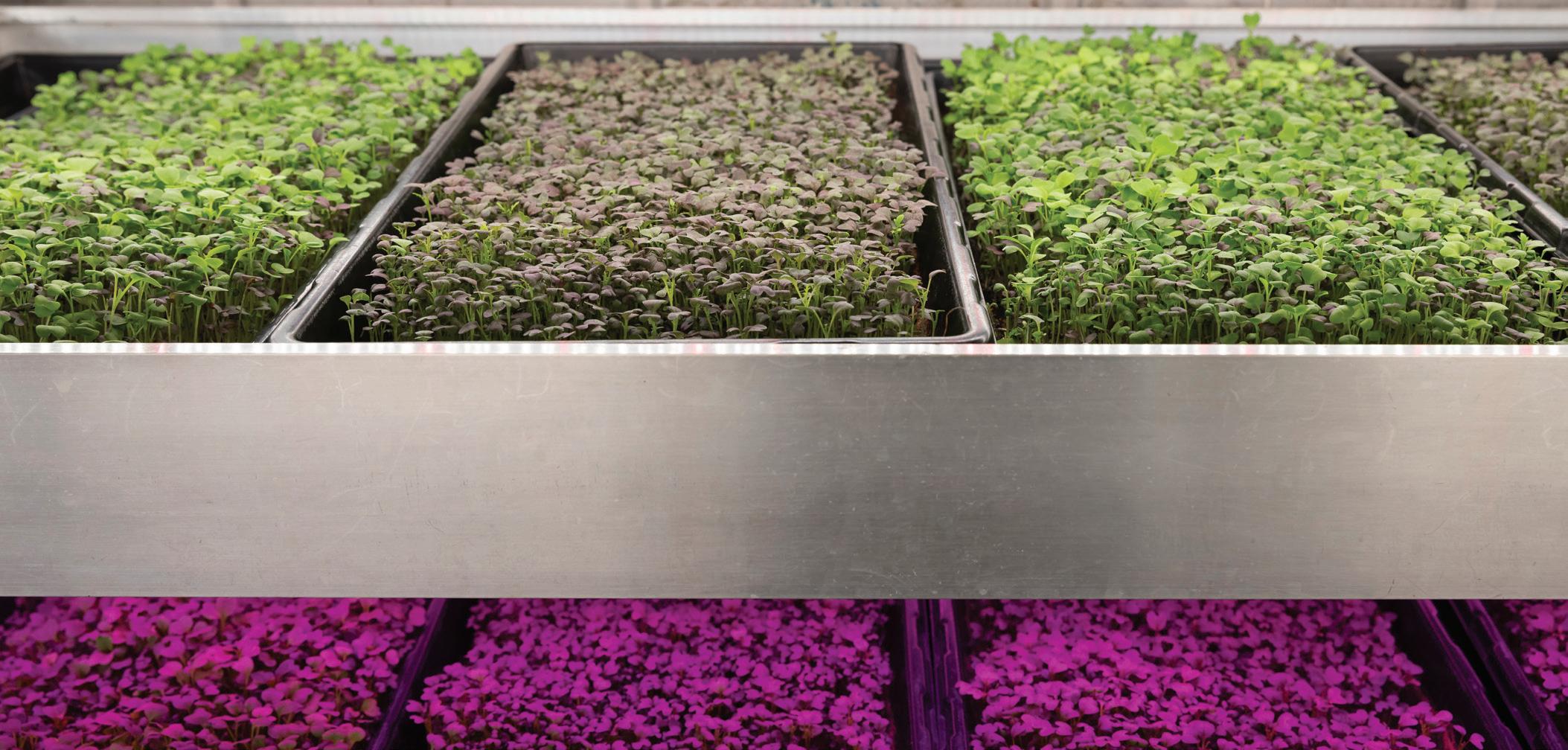
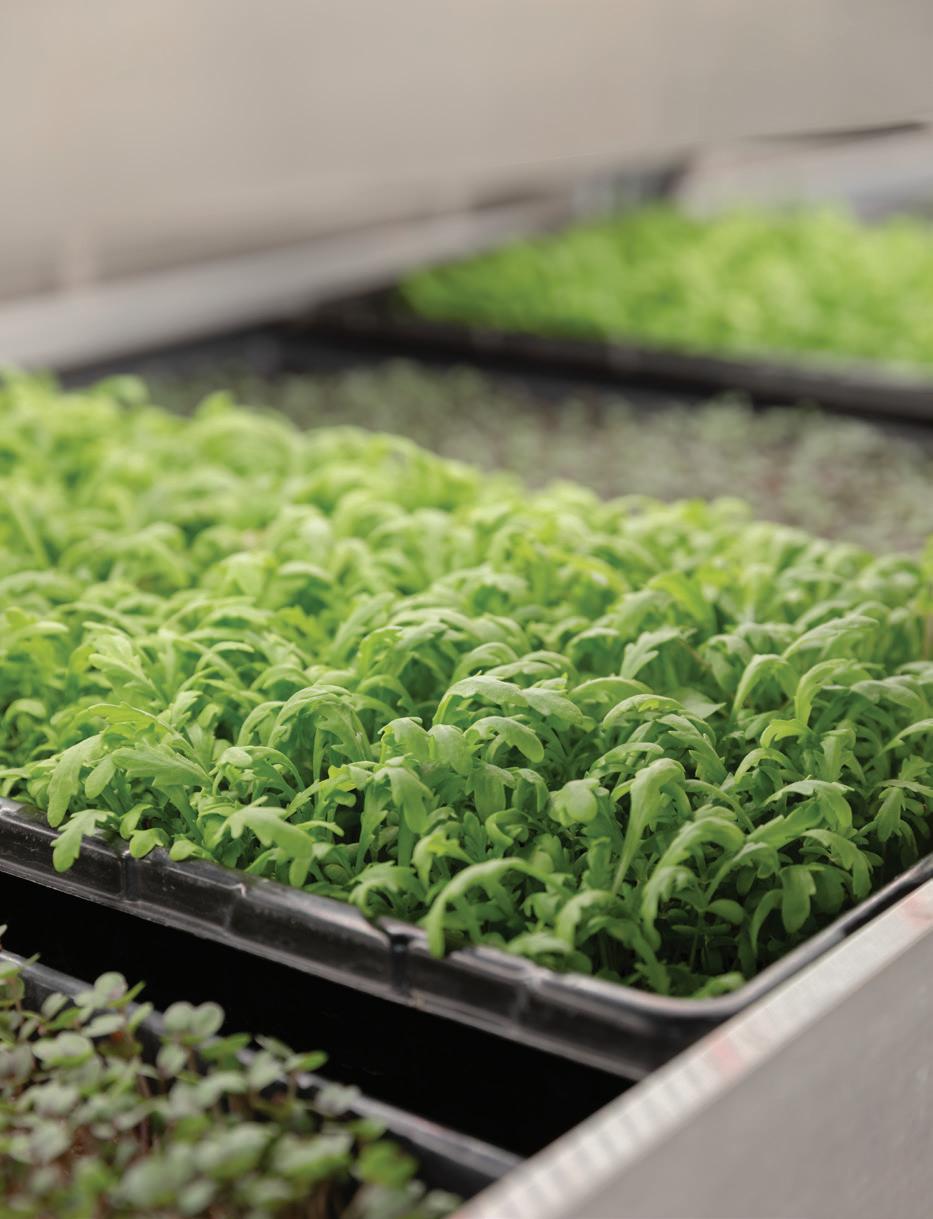
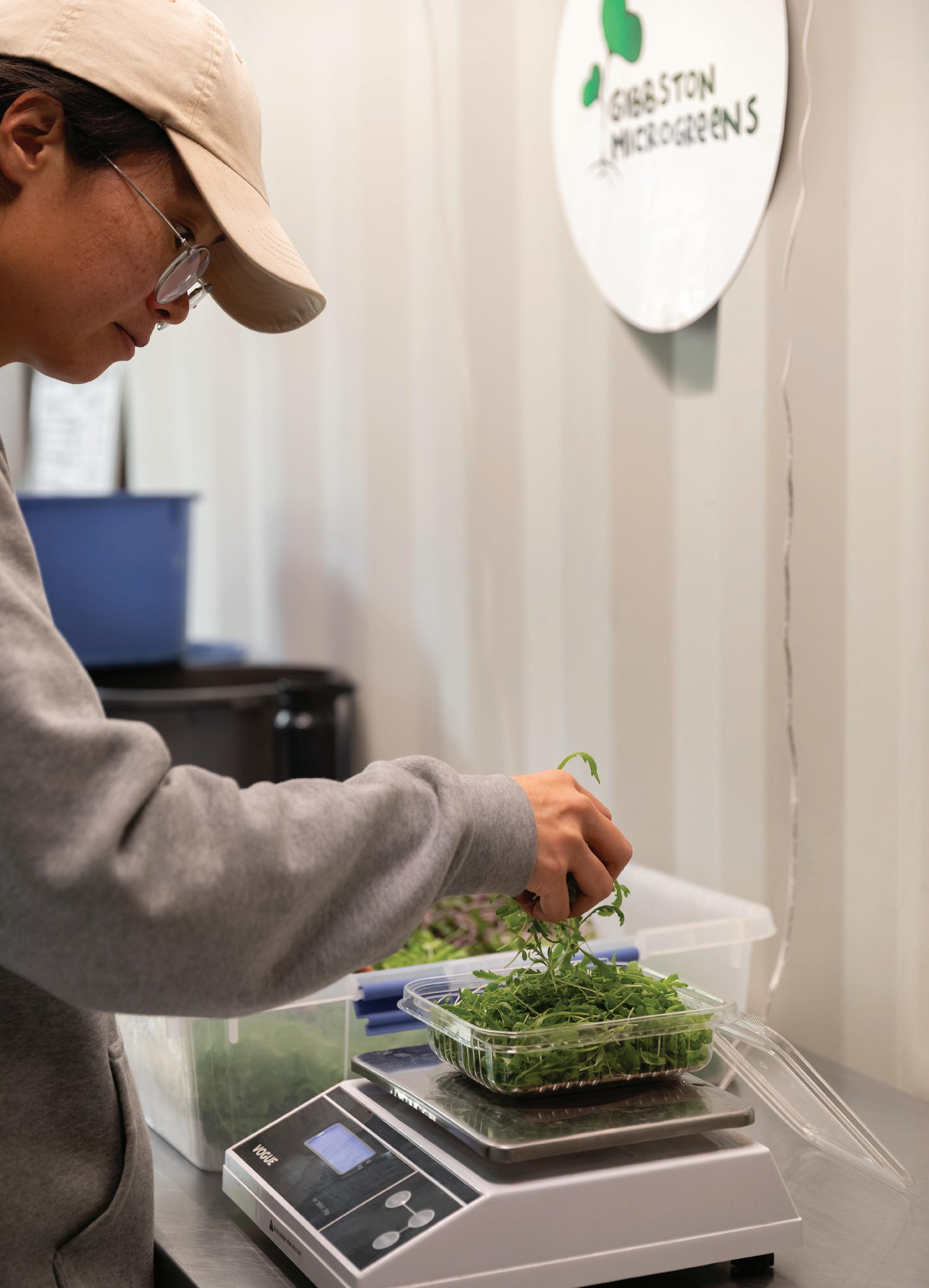
Step inside one of these containers and you’ll find vertical racks stacked six levels high; neat trays in rotation; LEDs glowing over crops destined to become a finishing flourish on a plate.
For Gibbston Microgreens founder, Chris Wilkinson, that contrast is the point: “Most people think if you grow microgreens, you’re growing them out in your garden,” he says. “But actually, it’s quite scientific. It’s a laboratory-like environment for the most part – very clean, very efficient, but also very fresh.”
Chris didn’t arrive at horticulture through a life spent on a family farm or via an agronomy degree. Instead, the spark came during a stint in hospitality, about 12 years ago, while working at Queenstown’s Sherwood Hotel – a community-minded
place that treated its market garden as a lesson in food resilience and provenance.
“It’s a cool environment because you have a customer looking out over the garden at everything growing and they click: ‘Ah, that’s where the potatoes and the leafy greens in my meal come from. That’s where they get the mint tips for the cocktails’.”
One afternoon a chef and good mate at the Sherwood made Chris an offhand offer: grow him some microgreens and he’d buy them. Chris started experimenting at home in his flat on a simple kitchen rack. Small beginnings, but he says microgreens immediately made sense on several levels.
“They’re aesthetically pleasing, they’re very nutrient dense and, crucially, they’re hyperperishable: in this region where we’re a long way from major growing centres, chefs want them grown here so they’re fresh.”
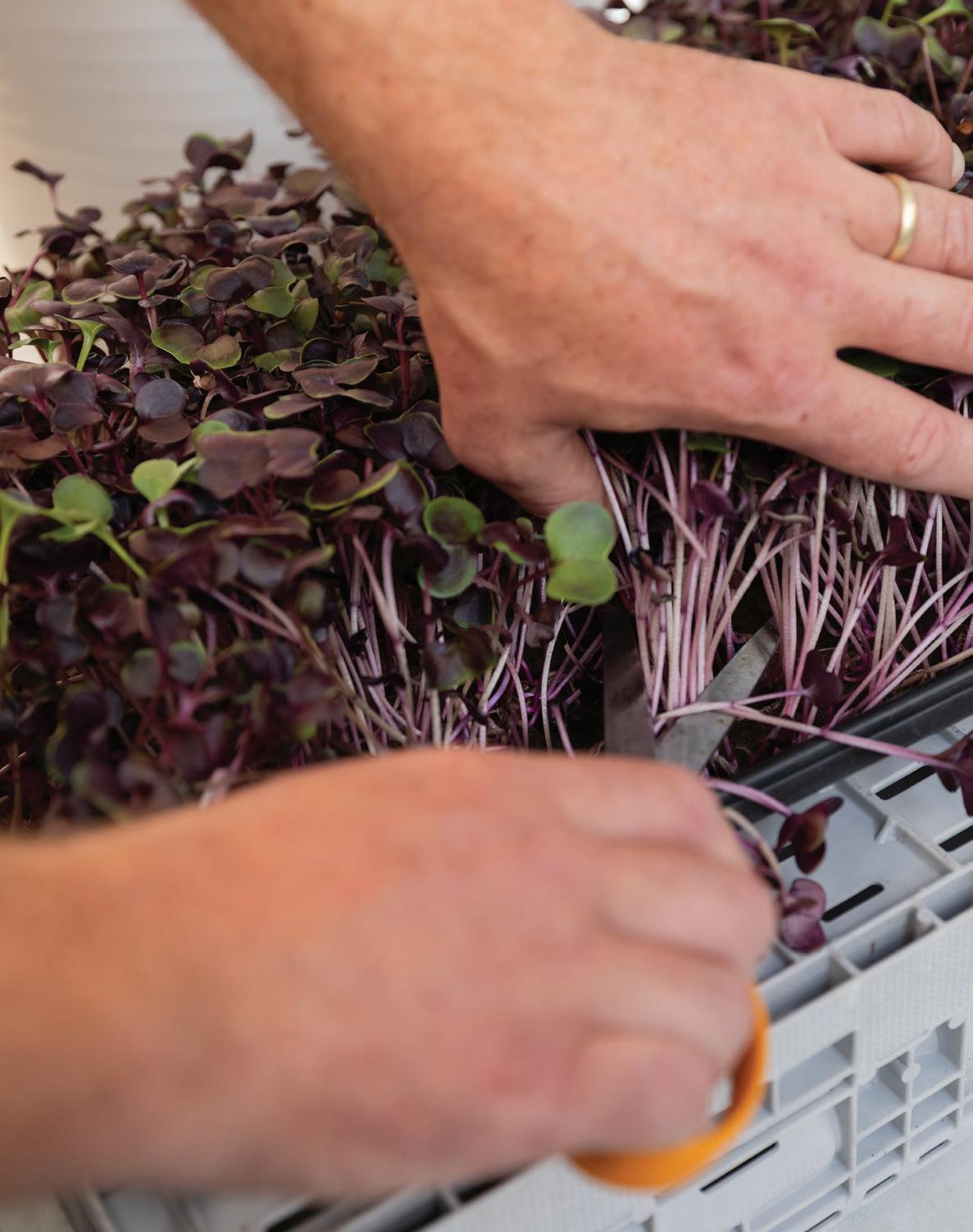
Soon, with Chris’s early output sitting in trays of living greens on the pass at the Sherwood, chefs would “snip and serve”, and diners could see freshness being added to their meals in real time.
The hotel’s sustainability ethic also
“
Most people think if you grow microgreens, you’re growing them out in your garden,” he says. “But actually, it’s quite scientific. It’s a laboratory-like environment for the most part – very clean, very efficient, but also very fresh.”
sharpened his instincts for the less glamorous parts of food: packaging, transport, and waste.
He remembers deliveries arriving with plastic liners that served no real purpose and was satisfied when he came up with a method of eradicating them. Today, the company’s signature ‘living trays’ are returnable; the growing medium used to nourish the microgreens is made up of natural fibre that can be composted or worked back into the company’s developing food forest outside.
Just as important was how Chris chose to sell. Rather than disappearing into a wholesale chain, Gibbston Microgreens delivers directly, building a relationship with the people who plate their product.
“I’m quite a people person,” he says. “If there’s a problem, you tell me, I’ll resolve it that day. In a small town where word travels fast, the producer becomes someone you know, not just a logo on the side of a box.”
Central Otago is a place of extremes: picturesque scenery, yes. But also dramatically contrasting seasons that can be brutal on tender crops.
“When it comes to food production in
Queenstown, it’s hard… it can be really extreme. Good for wine though!” he laughs.
After dabbling with a small glasshouse insulated with bubble wrap and a heater, the anxiety of temperature swings pushed Chris toward a more controlled environment. His solution was disarmingly practical: repurposing end-of-life refrigerated containers.
Inside, vertical tiered racking multiplies the footprint. In two of the containers, he says, the space is “times six” – a neat example of what happens when you treat space constraint as a design brief. The operation has grown deliberately, container by container — one for a year, then a second, now five on site, including a packhouse and a central walk-in chiller.
Chris talks about the operation’s layout the way a chef talks about a kitchen: every step costs.
“Time is money and every time you’re walking around, every step is a cost,” he affirms.
The work is also relentless. Microgreens don’t pause for weekends, and the business runs seven days a week. Today Gibbston Microgreens consists of two full-time staff,
The operation has grown deliberately, container by container — one for a year, then a second, now five on site, including a packhouse and a central walk-in chiller. “ “
with a former team member managing its social media. The company, he says, is small enough to feel personal, but big enough to keep up with demand.
‘Local’ is also more than a buzzword for Chris: it’s a logistical consideration.
“We’re hyperlocal. We don’t even go to Cromwell or Wānaka. Some clients swing by to pick up on their way through the Kawarau Gorge, but most are reached on a tight delivery schedule that minimises the distances so we can keep quality really high.”
The ‘direct delivery’ model also keeps the feedback loop tight. “That’s your market research,” he says, describing the casual conversations at the kitchen door that turn into new trials. Such relationships have also evolved into an ‘artisan collective’ delivery run where, along with microgreens, Chris helps distribute other local, nutrient-dense products like mushrooms, honey, and delicate edible flowers that add pops of colour to cakes and cocktails.
Chris talks about a future that includes more on-site food production beyond greens, including seasonal fruit and nuts, maybe even livestock one day. But he
remains guided by what’s commercially realistic and what strengthens the local Queenstown food system.
In a region built around hospitality, he believes food can be both product and lesson – an invitation to get curious and support the people growing things nearby, and back practical solutions to waste.
It’s why, even on frantic delivery days, he tells his team to slow down.
“I always say ‘never rush a chat’. Because that’s building our brand and that’s something that’s unique to us over the big guys. It’s also how we learn. I wouldn’t want the company to run and evolve any other way.”
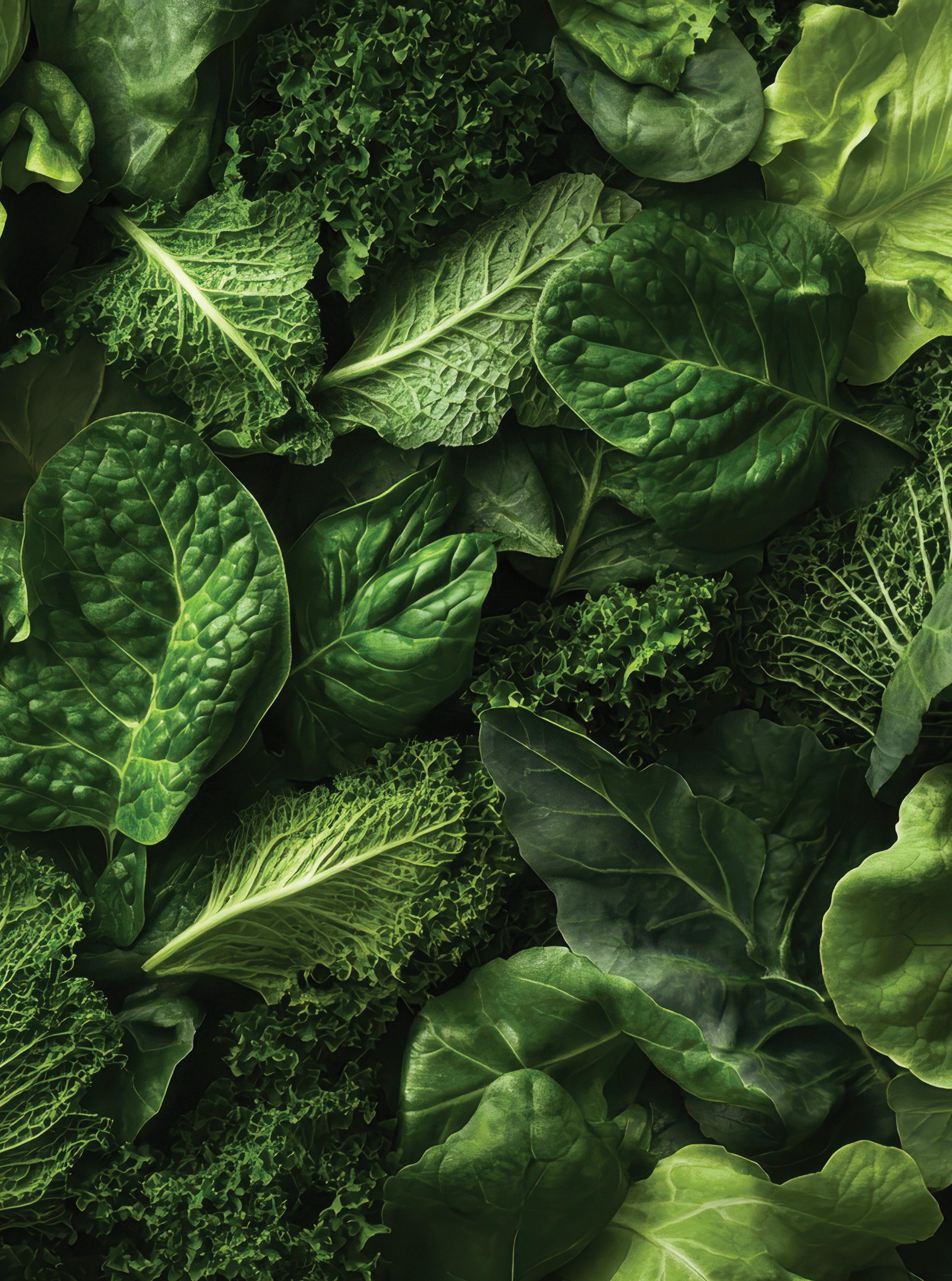
Eating with the season is an everyday luxury, especially in later life, when the real privilege is having the time and headspace to choose well. It doesn’t rely on rarity flown in from elsewhere, but on food at its absolute peak: ripe, fragrant, and tied to a particular patch of earth. It can bring a sense of rhythm back to your table which, in turn, can support energy, good digestion, and the simple pleasure of feeling invigorated.
Seasonal eating is not a new idea, but one that is being appreciated again in a more thoughtful way, with fresh, well-timed produce still offering some of the simplest pleasures at the table.
Seasonal eating is often spoken about now as a more considered way to eat, but for many people it will feel deeply familiar. You bought what was good, what was available, and what suited the time of year. Strawberries belonged to summer, asparagus had a short season, and oranges came into their own in winter. What once felt ordinary is now being rediscovered as a more thoughtful way to eat. It still doesn’t rely on rarity flown in from elsewhere, but on food at its absolute peak: ripe, fragrant, and tied to a particular patch of earth. The simplest way to understand the appeal is to notice how anticipation changes taste. The first oranges of winter; the first strawberries of summer; the first spring asparagus, requiring little else beyond butter, lemon, and salt. Perfect. And all representing quiet pleasure that supermarkets can’t replicate with yearround sameness: when something is seasonal, it becomes an occasion. If you want to embrace seasonal eating, growing
even a little of your own is the perfect shortcut.
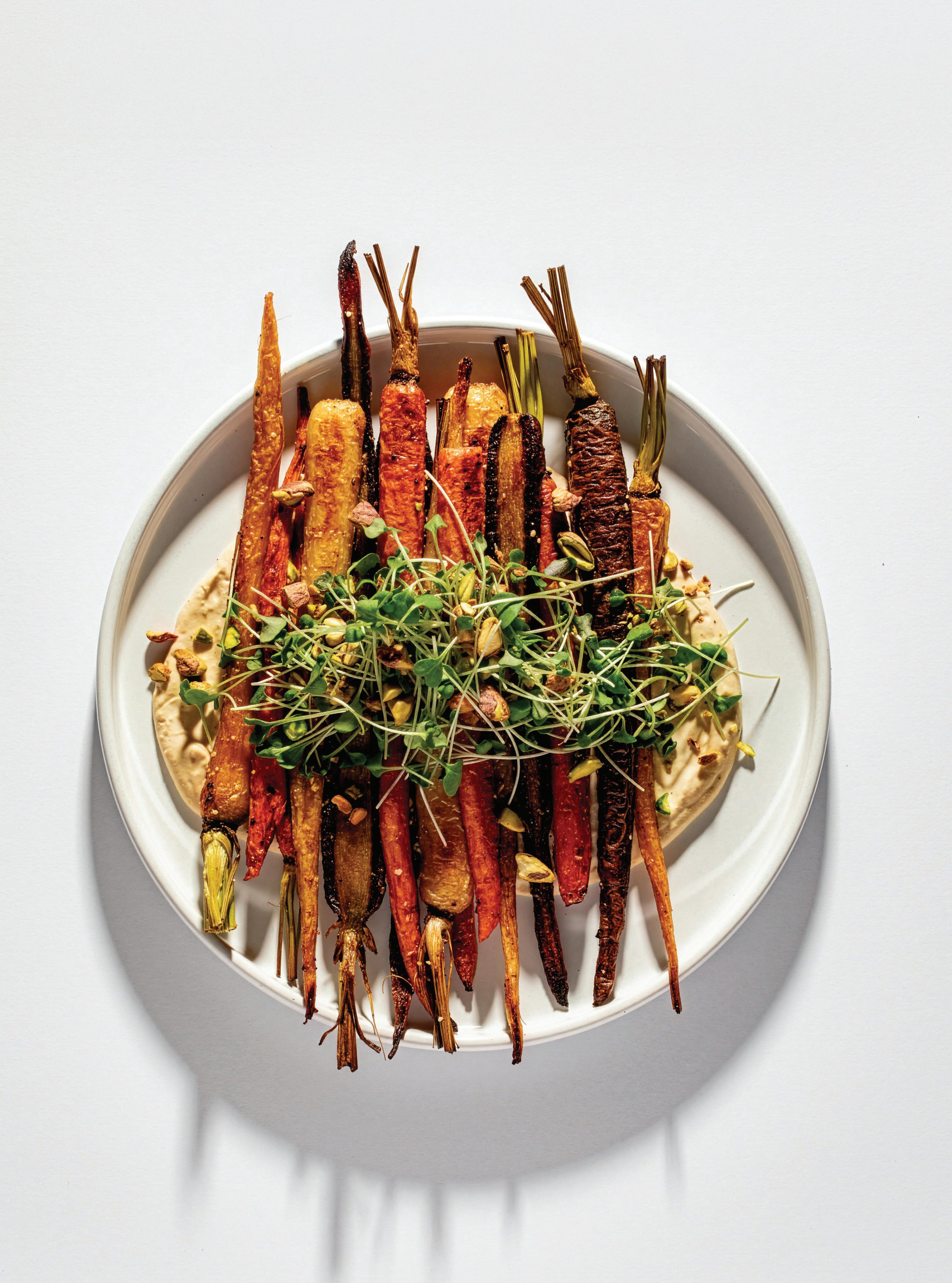
This doesn’t have to be a lifestyle overhaul (or require a big garden). A pot of mint on a balcony, salad greens in a trough, or a rosemary bush in a courtyard container will do. The point isn’t quantity – it’s immediacy. Snipping herbs just before you eat, or picking lemons when you need them, turns simple meals into something that feels generous.
If gardening isn’t your thing, even a little home sprouting can add a fresh, nutritious touch to salads. Or, simpler still, a regular seasonal delivery box is an easy way to keep in step with the season. Shopping is where seasonal eating becomes a habit rather than a theory. Farmers’ markets make it obvious: you buy what’s abundant, because it’s what’s good. You can ask how something was grown, how to store it, or how the producer cooks with it at home. But you also don’t need to travel specifically to a fresh produce market on the outskirts of town to
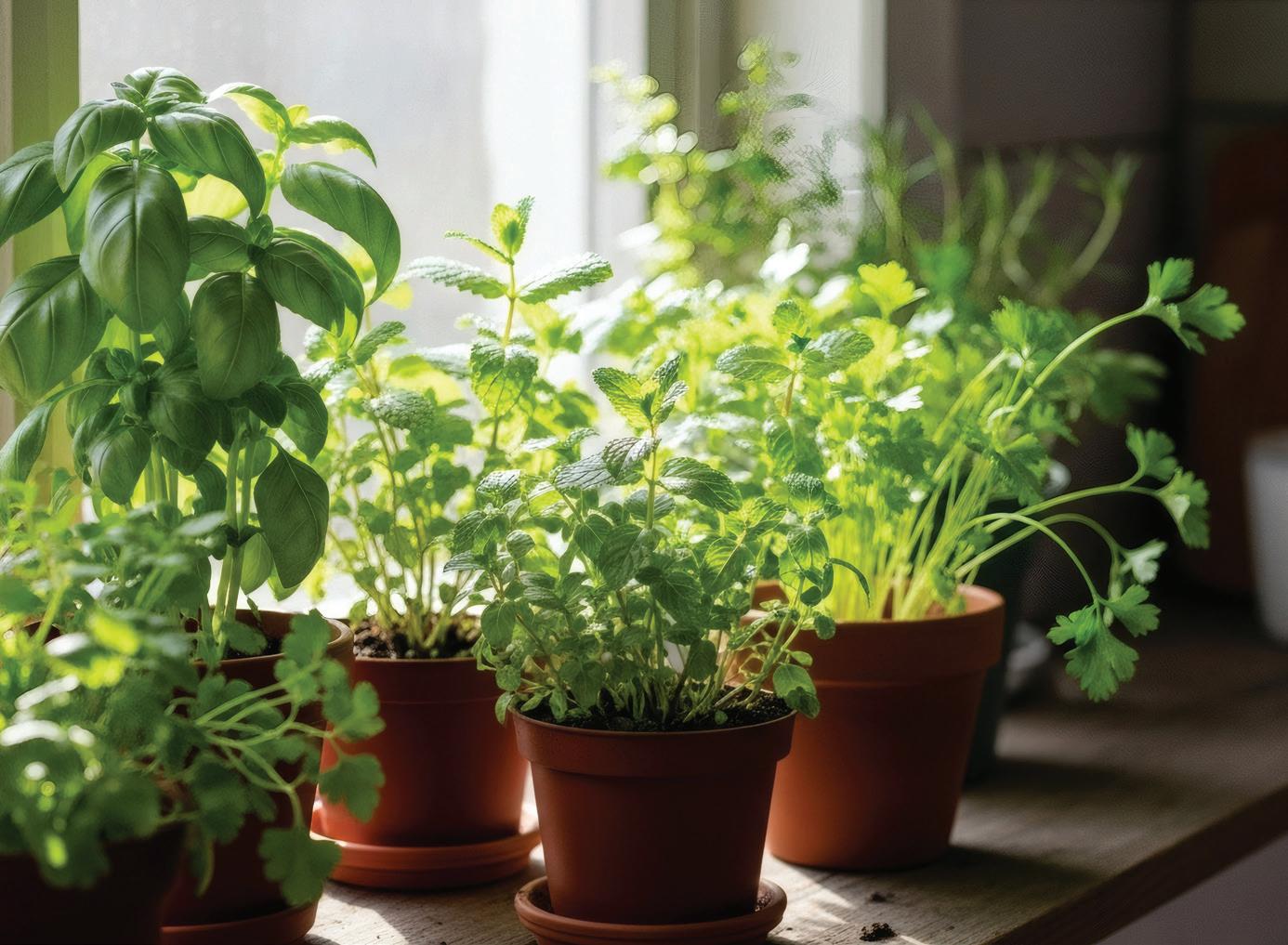
This doesn’t have to be a lifestyle overhaul (or require a big garden). A pot of mint on a balcony, salad greens in a trough, or a rosemary bush in a courtyard container will do. The point isn’t quantity – it’s immediacy.
“ “
eat this way. In the local supermarket, make two checks before you add something to your basket: origin and timing.
If you’ve ever paid top dollar for berries that look perfect but taste flat, you already know the problem with out-of-season produce – appearance travels better than aroma. In-season fruit and vegetables don’t just cost less because they’re in abundance; they also taste better because they’ve had time to ripen properly. Choosing New Zealandgrown produce in season usually means shorter travel, fresher flavour, and more of your money reaching the people who grew it. Seasonal eating can support wellbeing in simple ways too, bringing a sense of rhythm to the table and encouraging the kind of freshness that supports energy, good digestion, and the pleasure of feeling well enough to get on with the things you enjoy. In that sense, its value lies not in novelty, but in paying attention – to what grows here, to what tastes best now, and to the small pleasures that are worth waiting for.
SHOP THE PEAK
Choose two fruits and two vegetables that are clearly abundant right now and make them your dinner defaults.
ONCE, EAT TWICE (OR FOUR TIMES)
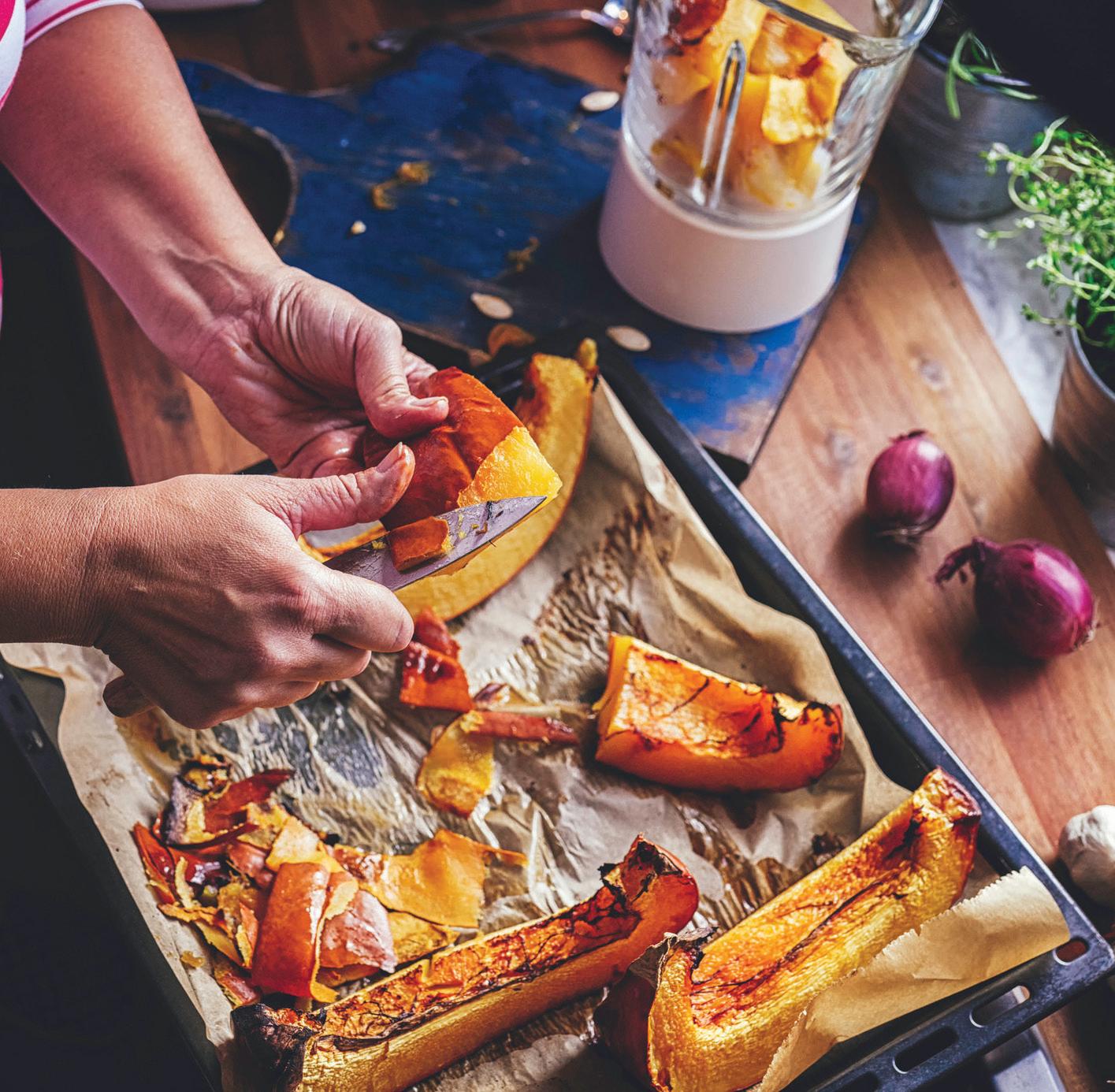
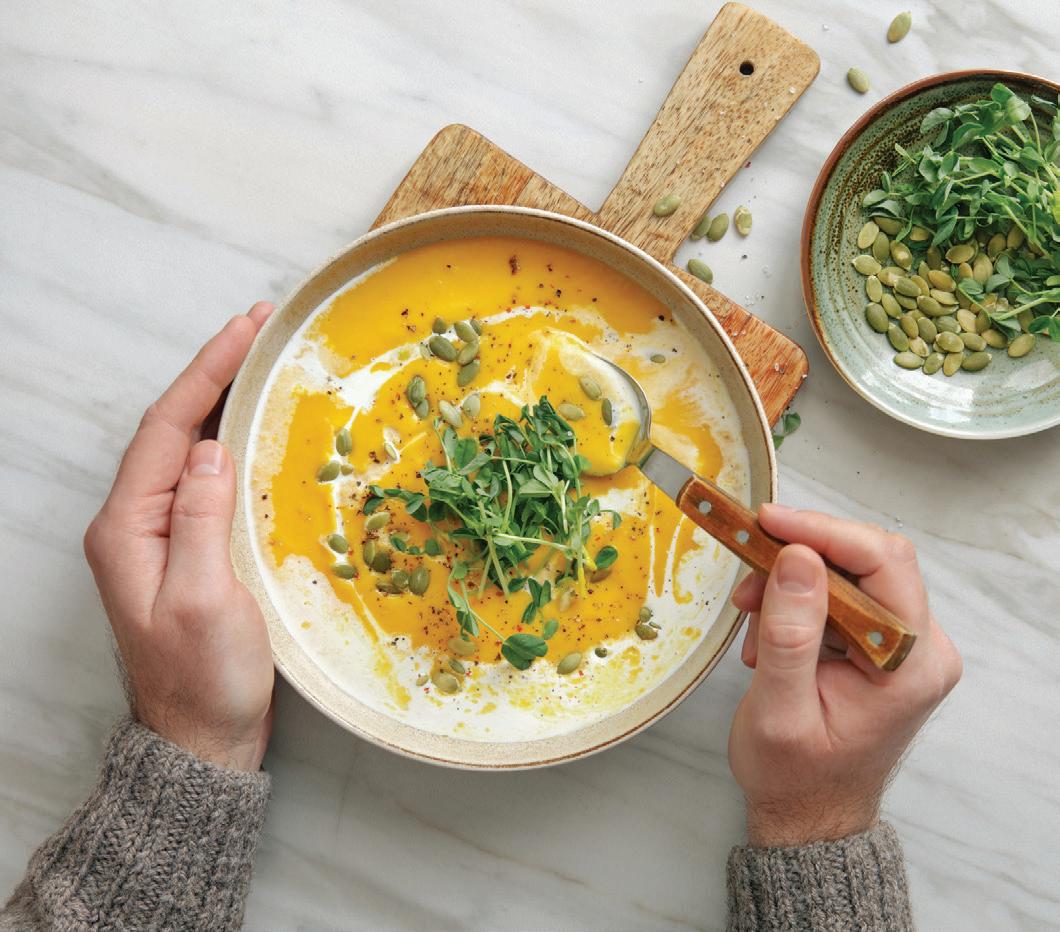
Roast a tray of seasonal veg or simmer a pot of soup, then portion and freeze for easy lunches and low-effort dinners.
KEEP A FEW SEASONAL PAIRINGS IN MIND
Butter plus lemon for spring greens; olive oil plus basil for summer tomatoes; miso or stock for winter brassicas; cumin and yoghurt for autumn squash; citrus and olive oil for bright winter salads.
IF YOU WANT TO START SMALL…
Herbs, a few salad greens, or even some home sprouting can be enough to bring a bit of the season into everyday meals.
MAKE IT AN OCCASION
When the first-of-the-season arrives, plan one easy meal (or a grazing platter) that lets it shine. Perfect for a quiet midweek dinner or entertaining visitors.



Panerai Luminor
partridgejewellers.com
Panerai’s Luminor collection isn’t just a stylistic evolution – it’s the direct descendant of innovations developed for the Italian Royal Navy’s elite divers. From the 1930s to the 1950s, Panerai was tasked with solving a very specific problem: how to build a watch that could survive the extreme demands of underwater warfare. Panerai’s solution unfolded across several patents, including the development of a luminous radium-based compound that allowed divers to read instruments underwater at night, and a groundbreaking tight-seal crown-guard bridge which ensured a consistent waterproof seal. The contemporary Luminor line is a continuation of a design language born from genuine military engineering.
sinchbikes.co.nz
The New Zealand designed Sinch Jaunt EZ 5 Auto makes a strong case for ditching the car. This clever step-through e-bike is all about ease, with Shimano’s automatic shifting meaning no fiddling around with gears: you just pedal and go, and the bike does everything else for you. The Kiwi inventors utilise Bosch Performance Line Sport motor tech, which in the Jaunt EZ 5 Auto delivers punchy 90Nm assistance up to 45km/h, backed by an 800Wh battery that can be boosted even further. And if you want to exercise the leg muscles, you can turn all the assists off too: it’s endlessly customisable thanks to the control hub and easy-to-navigate companion app.

Samsung’s latest Galaxy S26 series features more advances than we can list in the page space available. However, from its seamless context-based integration with AI assistance, to its wider camera apertures which allow more light to reach the sensor for clearer photos, and its enhanced ‘Nightography’ video capture abilities, the S26 line-up is amazingly clever and endlessly configurable. The flagship Galaxy S26 Ultra also introduces privacy at the pixel level with a built in Privacy Display. By controlling how pixels disperse light, the display keeps content clear, bright and comfortable for the user in everyday use, while limiting what people around you can see on your phone screen over your shoulder.


goodairnosebuds.com
Originally developed through academic study at the Auckland University of Technology (AUT), Goodair Nosebuds represent a world-first approach to nasal health, tackling one of the most common yet under-addressed issues globally: nasal congestion. Designed to feel more like a wellness tool than a medical device, the product is compact and non-intimidating, delivering carefully controlled high- and low-pressure pulsations to the nasal cavity, stimulating the body’s natural decongestion mechanisms. Positioned at the intersection of advanced science and everyday wellness, the Nosebuds feature a single-button interface, LED indicator, and a familiar charging case similar to wireless earbuds.

Skincare meets suncare with this two-in-one luxurious facial sunscreen, providing broad-spectrum SPF 50 protection with 20 percent Zinc Oxide for mineral-based UVA and UVB defence, while delivering advanced skincare benefits. This powerful formula not only shields skin but also supports collagen and glycosaminoglycan synthesis for skin longevity. An innovative natural biopeptide mimics the rejuvenating effects of retinoic acid, helping to reinforce the epidermis for long term wrinkle resistance.

justanotherfisherman.co.nz
New Zealand brand Just Another Fisherman (JAF) emerged in 2012 to provide clothing and apparel that could withstand the elements while remaining wearable beyond the water. The JAF Angler Tech dry bag is a versatile backpack that can be taken anywhere. Constructed from a sturdy nylon canvas with TPU coating and pressed seams, the bag is 100 percent waterproof after three quick rolls from the top. Featuring plenty of internal storage pockets and sleeves, the JAF dry bag also has adjustable padded shoulder and chest straps, and – should you want to take it on a fishing adventure – removable side utility loops for rods and other angling

vancleefarpels.com/nz/en
In 2021, Van Cleef & Arpels presented 12 creations echoing the first yellow gold medals that appeared in its collections in the 1950s. This year, this heritage has inspired a new ensemble with a personal touch. Twelve bracelets recall the charm jewellery the Maison has crafted throughout its history, with these heritage medals revisited in sizes adapted to the wrist – 16mm in diameter – and suspended from the chain thanks to a jump ring. Offered in yellow and white gold variations and crafted using the age-old technique of stamping, each piece demonstrates the high standards and attention to detail which distinguish Van Cleef & Arpels.
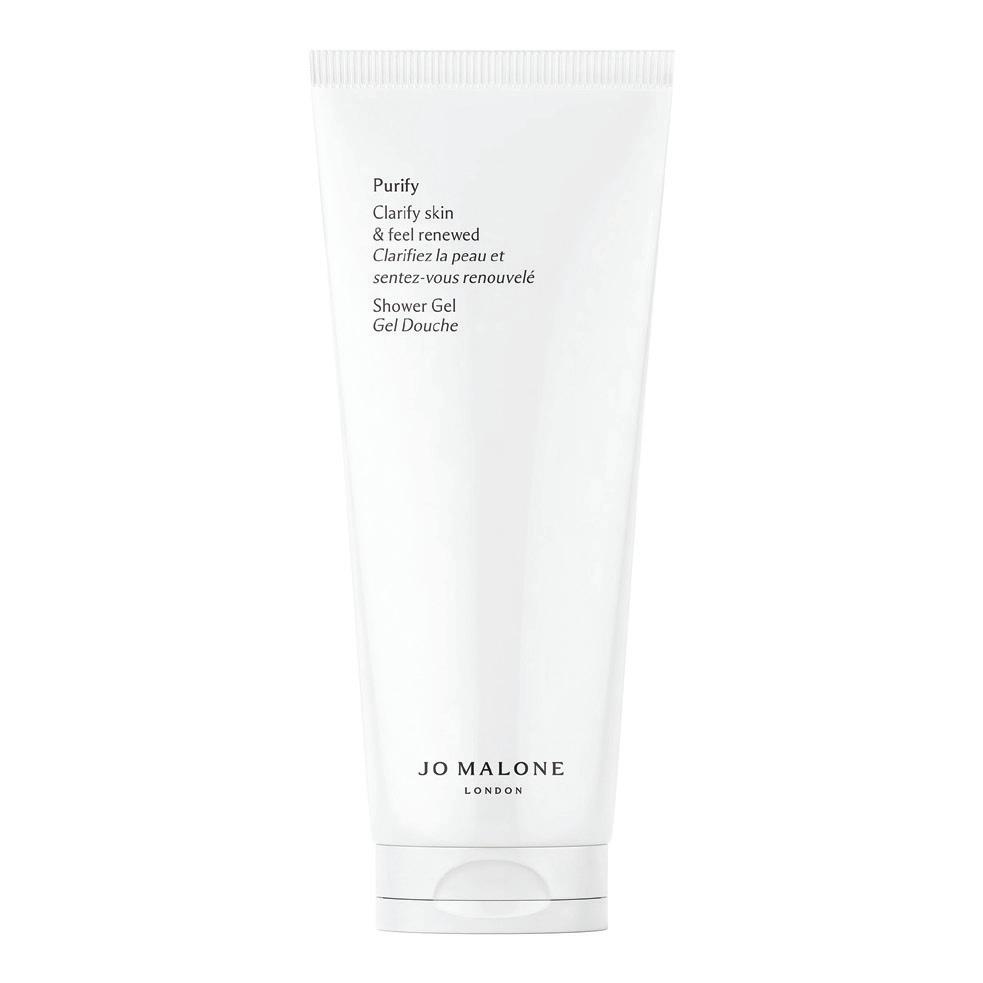
ballantynes.co.nz
Created for a sensorial experience, Jo Malone London Purify Shower Gel is a light and invigorating shower gel which transforms into a foam lather leaving skin and hair scented and cleansed. The gel is infused with a stimulating herbaceous aroma and contains a blend of hyssop, myrtle and juniper essential oils, chosen for their purifying scent. Purify Shower Gel is one component of the Jo Malone London Care Collection of wellness products, which also includes a variety of luxurious body scrubs, oils, balms and an exfoliating soap.

trenzseater.com
Multi-award-winning New Zealand interior design house, Trenzseater, is the premier choice for anyone seeking interiors that embody style and sophistication. Headed by designer Ben Lewis (who has been a finalist in the Society of British International Design Awards in London for the past eight consecutive years), Trenzseater offers a curated selection of exclusive furniture, drapery, blinds, lighting, and wallpaper that reflects impeccable taste. Through three showrooms in Auckland, Christchurch and Queenstown, Trenzseater is also a stockist of the Ralph Lauren Home range, which includes items like this beautiful 600mm x 600mm Gunnison Hopsack scatter cushion.

shop.horl.com/en-nz
Made in Germany, HORL knife sharpeners are for people who care about the cut. With HORL’s three-model series of sharpeners, anyone can bring their knives to premium sharpness, without any knife sharpening experience needed. Designed for repeatable results, the HORL system pairs a magnetic angle block (to stabilise the blade) with a rolling knife sharpener that tracks evenly along the edge from heel to tip. The system uses two core sharpening angles – 20° and 15° – making it suitable for a wide variety of knives.
The Traeger Woodridge Pro brings the timeless notion of cooking with fire into the digital age. It will smoke brisket or pulled pork low and slow with its Super Smoke Mode. Or you can turn up the heat to grill burgers and bake pizza. But thanks to its companion WiFIRE app, you can also control the grill from anywhere and keep an eye on your wood pellet level thanks to its digital pellet sensor. The Woodridge Pro is also compatible with Bluetooth meat thermometers. And if barbeque guests are running late, the Traeger Woodridge Pro even has a Keep Warm Mode to ensure smoky wood-fired proteins and vegetables remain hot until mealtime.

rmwilliams.com/nz
The Alice Weekender travel bag from R.M. Williams is an elegant travel holdall that will complete any short stay getaway wardrobe. Crafted from premium full-grain leather, this capacious style is the perfect carry-on bag but still boasts plenty of usable space. Available in two colourways, the Alice Weekender features a two-tone cotton blend herringbone lining, internal pockets and branded hardware details. It also arrives with an integrated luggage tag and boasts the convenience of both zip-top and magnet closures.


Phillipe Sands
Weidenfeld & Nicolson | $40.00
38 Londres Street might deal with the heavy architecture of international justice, but it reads with the breathless momentum of a high-society thriller.
Serving as the stunning conclusion to Phillipe Sands’ acclaimed non-fiction trilogy (East West Street and The Ratline – the latter of which started life as a compelling podcast), 38 Londres Street is a masterclass in literary non-fiction that effortlessly bridges dark history with gripping, real-world intrigue.
The narrative continually shifts between two fascinating worlds. On one hand, Sands takes us inside the sophisticated corridors of London’s legal elite during the watershed 1998 arrest of General Augusto Pinochet (a case Sands worked on firsthand as a barrister for Human Rights Watch). On the other, he tracks the surreal double life of Walther Rauff, an unrepentant SS officer who escaped to Chilean Patagonia to manage a boutique crab cannery while secretly advising Pinochet’s regime.
Sands has a remarkable gift for atmosphere, anchoring these grand geopolitical shifts around a single, foreboding address in Santiago. While the book occasionally dives deep into legal complexities, it never loses its cinematic flare. Beautifully written and utterly absorbing, 38 Londres Street is a sophisticated, evocative read and a must for any modern history buff.

Helen Ellis
Nationwide Books | $45.00
When generations of a family are spread across countries and continents, it changes relationships, roles, identity and connection. BeingaDistanceGrandchild explores what it means to grow up away from grandparents and extended family, giving voice to those who live between homes, cultures and time zones.
The final book in a three-part series exploring ‘Distance Families’ from each generational perspective – grandparents; sons and daughters; and now, grandchildren – Being a Distance Grandchild encourages readers from all generations to build empathy and an understanding of others’ experiences in far flung parts of the world.
As author Helen Ellis suggests in this thoughtfully collated book of experiences, behind every international move is a network of family ties that need care and understanding.
A New Zealand-based researcher, writer, and anthropologist, Ellis is also a seasoned distance grandparent, with three of her four children (and six of her seven grandchildren), living in the United States, England, and Scotland. She certainly lives the life she writes about.
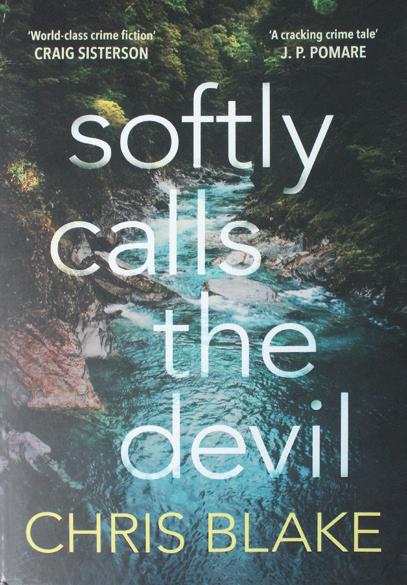
Chris Blake
Echo Publishing | $38.00
Chris Blake’s debut novel, The Sound of Her Voice, was a double finalist in the 2018 Ngaio Marsh Awards. But you’d never know it as he published that book under the pseudonym Nathan Blackwell. It was a decision, he has told media recently, driven by self-doubt and fear of failure.
With his second novel, Softly Calls the Devil, having recently won the NZ Booklovers Award for Best Adult Novel, presumably Blake will park the pen name for good.
The novel once again features Matt Buchanan – Blake’s central character from his first book – now as the sole-charge constable in sleepy Haast on the West Coast. Life is peaceful, but when his much-loved predecessor is found murdered in the small town, suspicion falls on several local personalities. The situation becomes even more brittle when a journalist arrives in town looking to resurrecting a cold case from the 1970s.
Blake says his 20-year career in the New Zealand Police – including his role managing behavioural analysts and psychologists – doesn’t factor into the construction of his darkly woven narratives, but it certainly must help. SoftlyCallstheDevil is a classic crime page-turner, with the distinctly Kiwi take on the ‘dark side of paradise’ motif.
Keen on podcasts? Never given one a go? Here are a couple of recommendations for some worthwhile audio entertainment available to download for free.
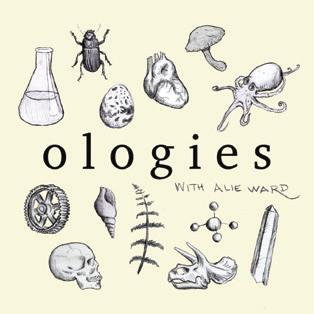
SiriusXM Podcasts
Science doesn’t have to be stuff y – it can be downright delightful. In Ologies with Alie Ward, humourist Alie Ward dives into the niche obsessions of world-class experts, covering everything from the secret lives of turkeys (Meleagrology) to the concept of “creepy” (Serpopsychology).
Ward’s “ask smart people stupid questions” approach strips away pretension, making complex topics like chronic pain or Antarctic research fascinating for all ears and underlines the fact the world is far weirder and more wonderful than we imagine. Ologies with Alie Ward will become a go-to in your weekly listening routine.

You Must Remember This cinematical.com
Helmed by film historian Karina Longworth, YouMustRemember This unearths the forgotten histories and scandalous secrets of Hollywood’s first century, examining the glittering, but also often dark underbelly, of Tinseltown.
Whether she’s deconstructing The African Queen starring Humphrey Bogart and Katharine Hepburn, or tracing the tragic trajectory of icons like Marilyn Monroe, Longworth’s meticulous research transforms tabloid scandals into detailed cultural examinations. It’s an addictive listen for anyone who loves the glamour of old Hollywood and the complicated truth behind the legends that helped shape it.
123 Fendalton Road, Fendalton, Christchurch hollylea.co.nz


242 Grenada Street, Mt Maunganui pacificlakes.co.nz
210 Maranui Street, Mt Maunganui pacificcoastvillage.co.nz
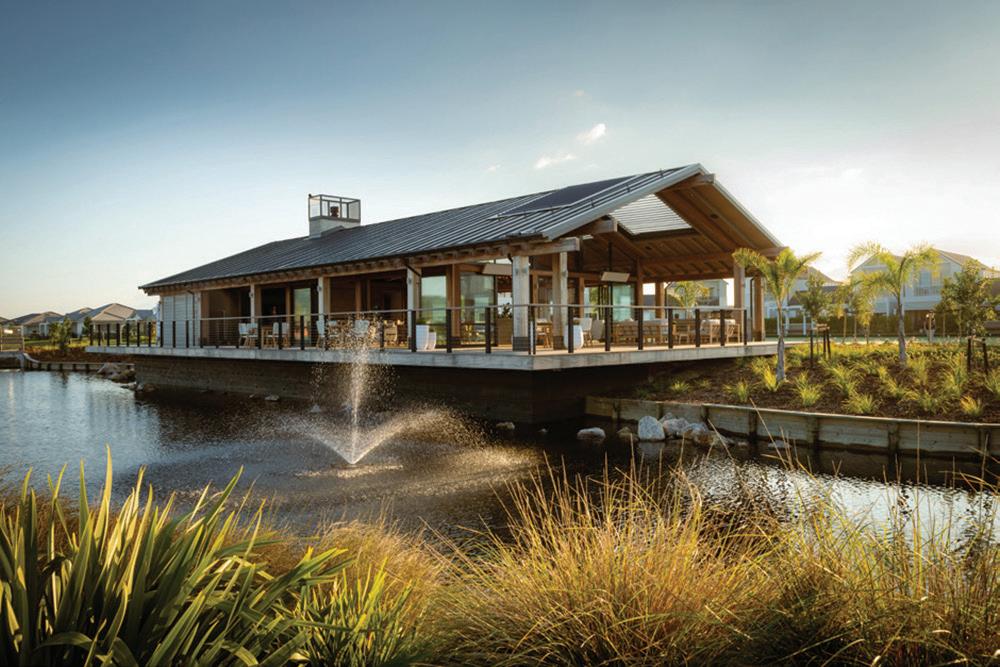

541 Parnell Road, Parnell, Auckland thefoundationvillage.co.nz


73 Roydvale Avenue, Burnside, Christchurch russleyvillage.co.nz
generus.co.nz