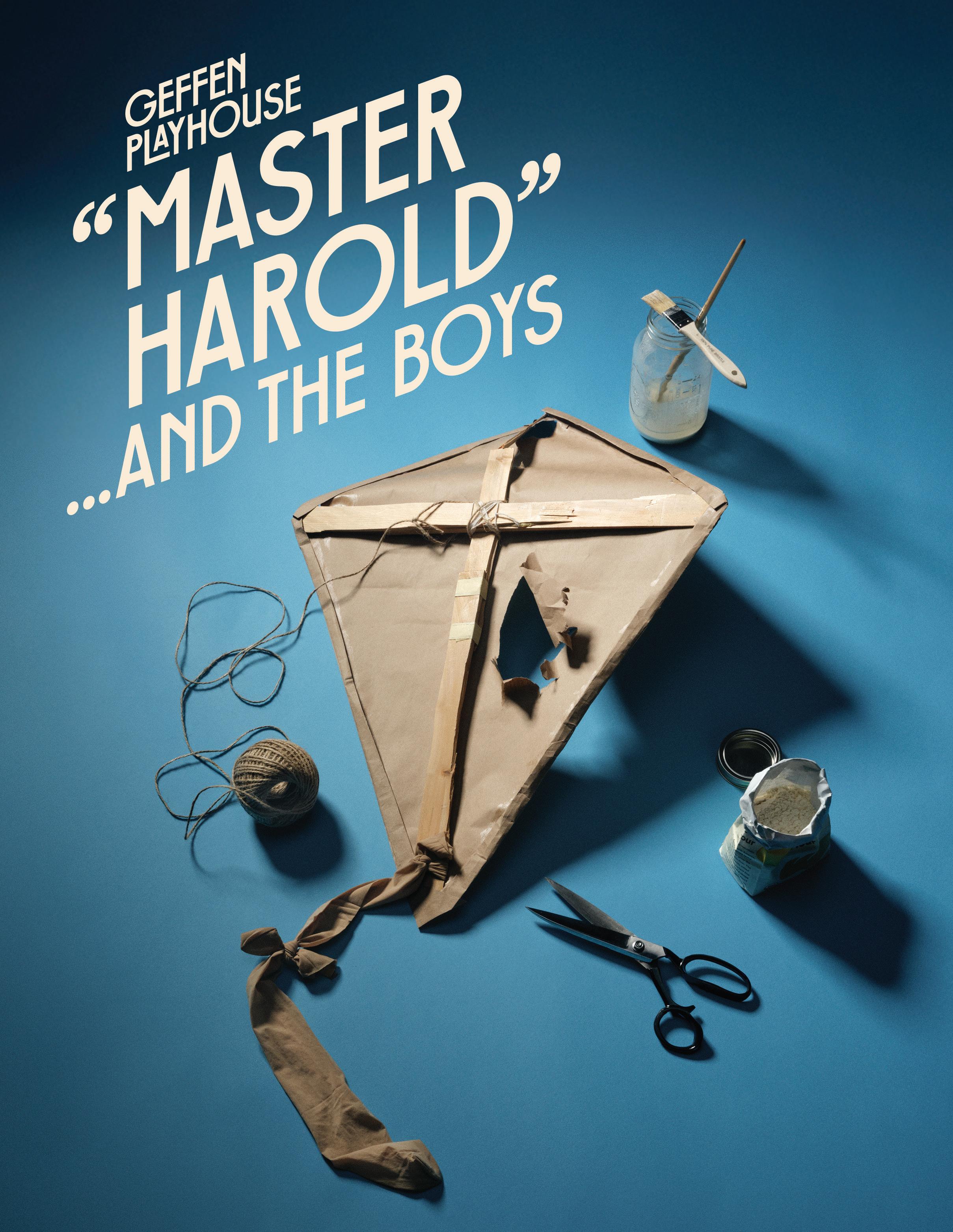
“MASTER HAROLD” ...AND THE BOYS
04.08 – 05.10.2026 GIL CATES THEATER
THANK YOU
Geffen Playhouse Education & Community Engagement programs are made possible, in part, by grants from Dwight Stuart Youth Fund and U.S. Bank Foundation
Geffen Playhouse’s High School Partnership Program is made possible, in part, by grants from The Rosalinde and Arthur Gilbert Foundation, The Kenneth T. and Eileen L. Norris Foundation and the California Arts Council- a state agency.

This guide is to be used for educational purposes only. Certain materials are included under the fair use exemption of the U.S. Copyright Law.
STUDY GUIDE COMPILED BY
Aja Houston & Brian Allman
COVER PHOTO BY
Corey Olsen
DESIGN BY
Mark Chaitin
ADDITIONAL MAERTIALS BY
Marta Portillo, Paris Crayton III, Ashley Denise Robinson
EXECUTIVE STAFF & EDUCATION & COMMUNITY ENGAGEMENT STAFF
Tarell Alvin McCraney — Artistic Director
Gil Cates Jr. — Executive Director / CEO
Amy Levinson — Associate Artistic Director
Brian Allman — Director of Education & Community Engagement
Mark J. Chaitin — Manager of Education & Community Engagement
Aja Houston — Education Associate & Lead Teaching Artist
GEFFEN PLAYHOUSE TEACHING ARTISTS
Sean Michael Boozer, Paris Crayton III, Sidney Edwards, Margot Fitzsimmons, Erròn Jay, BJ Lange, Tiffany Oglesby, Marta Portillo, Tara Ricasa, Ashley Robinson, Gerry Tonella
ACCESSIBILITY AT GEFFEN PLAYHOUSE
The theater has wheelchair and scooter-accessible locations where patrons can remain in their wheelchairs or transfer to theater seats.
OPEN CAPTION PERFORMANCE
An LED sign will display the text of the play in sync with the live performance. Saturday, April 25, 2026 - 3:00 pm

AUDIO DESCRIBED PERFORMANCE
Patrons who are blind or low-vision may listen to an audio describer give live, verbal descriptions of actions, costumes, scenery, and other visual elements of the production. Patrons who wish to listen to the audio description can pick up a listening device from the concierge in the lobby.
Sunday, April 26, 2026 - 2:00 pm

ASL INTERPRETED PERFORMANCE
An ASL interpreter will be present in the house left.
Sunday, May 3, 2026 - 2:00 pm

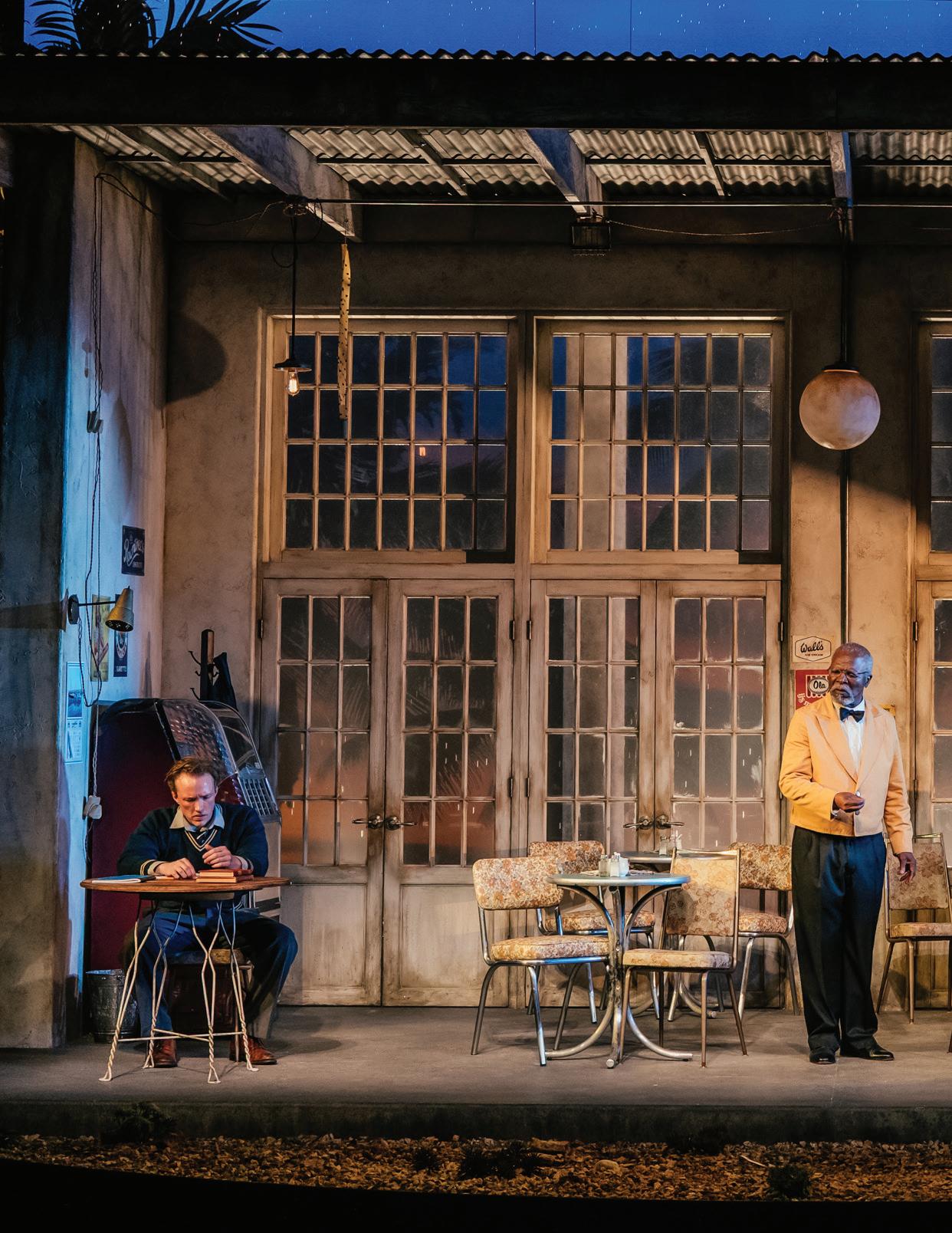
L-R: BEN BEATTY, JOHN KANI AND NYASHA HATENDI
IN “MASTER HAROLD”...AND THE BOYS AT GEFFEN PLAYHOUSE. CO-DIRECTED BY EMILY MANN AND GEFFEN PLAYHOUSE ARTISTIC DIRECTOR TARELL ALVIN MCCRANEY. PHOTO BY JEFF LORCH.
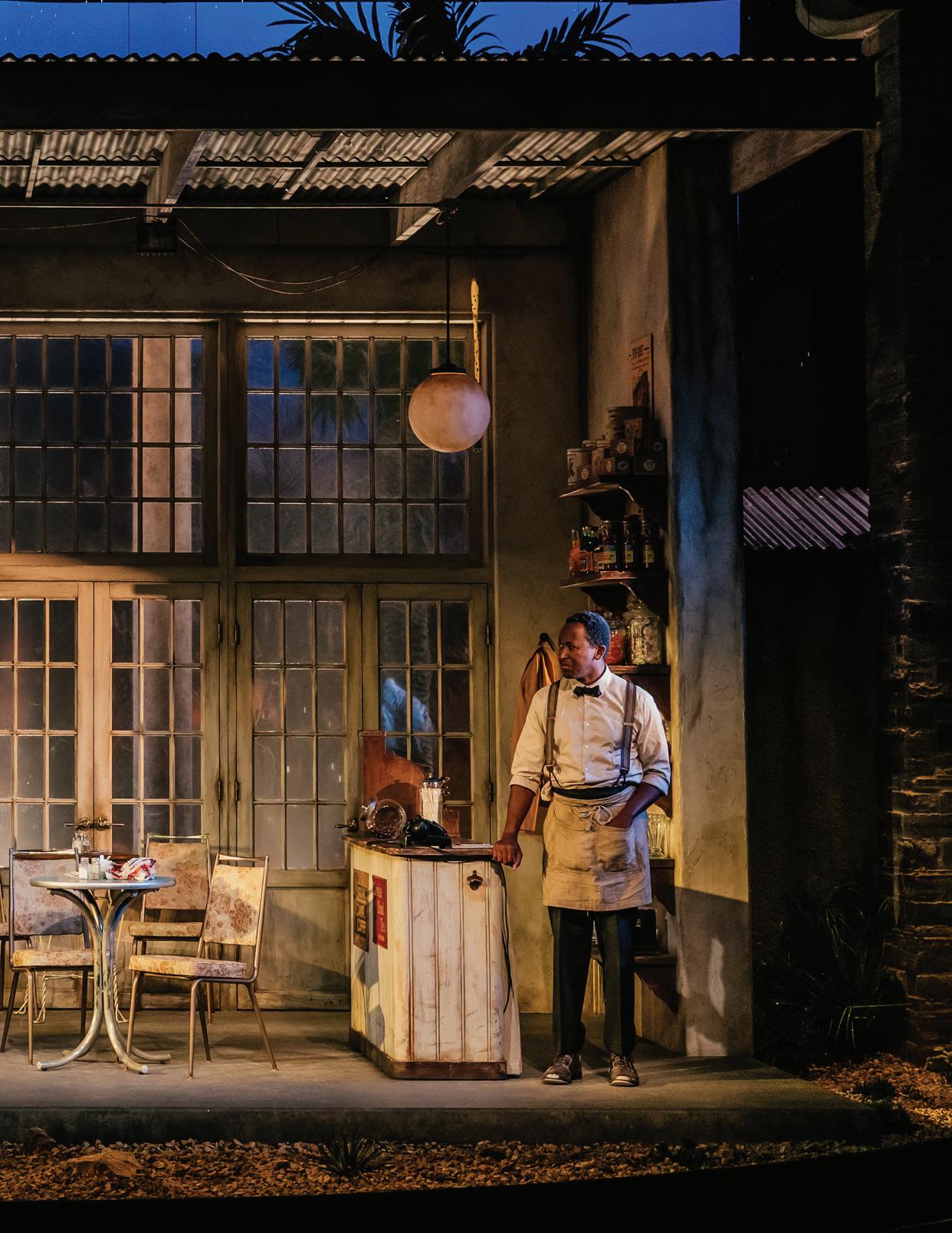
“MASTER HAROLD” ...AND THE BOYS
WRITTEN BY ATHOL FUGARD
DIRECTED BY EMILY MANN & TARELL ALVIN MCCRANEY
SCENIC DESIGNER BEOWULF BORITT
COSTUME DESIGNER SUSAN HILFERTY
LIGHTING DESIGNERS ADAM HONORÉ & SPENCER DOUGHTIE
SOUND DESIGN BY UPTOWNWORKS—NOEL NICHOLS, BAILEY TRIERWEILER & DANIELA HART
CHOREOGRAPHERS
KOKO IWASAKI NYEMCHEK & KIKI NYEMCHEK
DIALECT & VOICE COACH DEBORAH HECHT
PRODUCTION STAGE MANAGER COLLEEN DANAHER
ASSISTANT STAGE MANAGER REBECCA K. HSIA
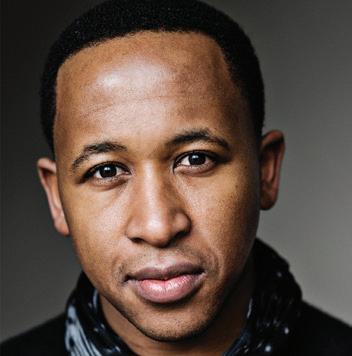
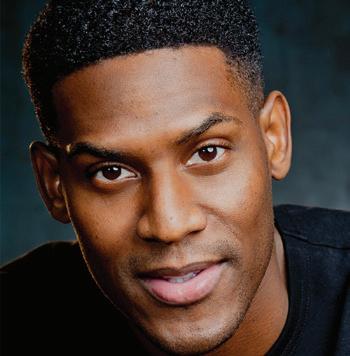
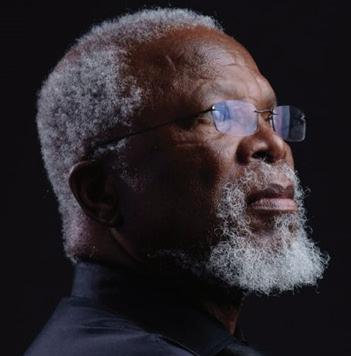
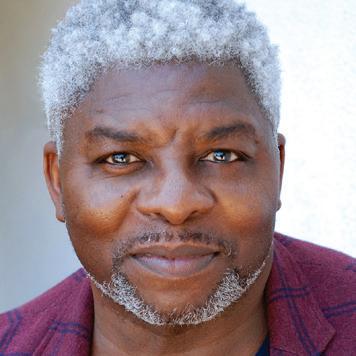
CAST


ASSOCIATE DIRECTOR RODNEY GARDINER
DIRAMATURG AMY LEVINSON
CASTING DIRECTOR PHYLLIS SCHURINGA, CSA
ABOUT THE PLAY
OVERVIEW: Step into the charged atmosphere of a 1950s South African tea shop in Athol Fugard’s “Master Harold”… and the Boys , a gripping, deeply personal drama that unflinchingly confronts the realities of race, power, and betrayal. On a rainy afternoon, Hally, a white teenager, passes the time with Sam and Willie, two Black waiters who have helped raise him by filling the gaps of a broken home with warmth, wisdom, and laughter. But as the day unfolds, playful memories give way to painful truths, and a single moment threatens to shatter the fragile bond between them forever.
S E TTING/TIME: The St. George’s Park Tea Room, Port Elizabeth, South Africa. 1950.
RUNNING TIME: 95 minutes, no intermission.
AGE RECOMMENDATION: 12+
WARNINGS: Theatrical Haze • Partial Nudity
CONTENT ADVISORY: This production contains profanity and depictions of racism and discrimination during Apartheid in 1950’s Apartheid in South Africa, including language and violence that audience members may find distressing and triggering.
ARTISTIC BIOGRAPHIES
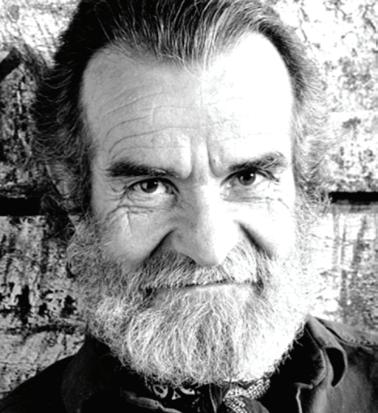
ATHOL FUGARD Playwright (he/hIm)
Athol Fugard (June 11, 1932 – March 8, 2025) started working in the theatre as a playwright, director, and actor in the late 1950s in apartheid era South Africa. He is the author of over thirty plays that have been staged in South Africa, United States (regionally and on Broadway), and across the globe. Notable works include Blood Knot; Hello and Goodbye; People Are Living There; Boesman and Lena; Statements After an Arrest Under the Immorality Act; Sizwe Banzi is Dead; Dimetos; The Island; A Lesson from Aloes; “Master Harold”...and the Boys; The Road to Mecca; A Place with the Pigs; My Children! My Africa!; Playland; Valley Song; The Captain’s Tiger; Sorrows and Rejoicings; Exits and Entrances; and The Train Driver. As an actor he was seen on stage in South Africa, London, Broadway, and Off-Broadway. Film appearances include The Road to Mecca, Ghandi, The Killing Fields, Meetings with Remarkable Men, Marigolds in August, Boesman and Lena, and The Guest He wrote the novel Tsotsi, which was adapted for the screen and won the Academy Award for Best Foreign Language Film in 2006. A collection of his notebooks has been published along with his autobiographical memoir Cousins. In 2011 he received a Tony Award for Lifetime Achievement in the Theatre.
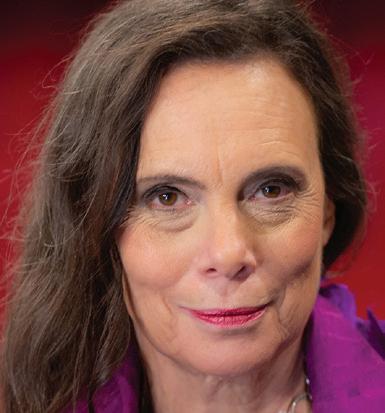
EMILY MANN Co-Director (she/her)
Emily Mann is a Tony Award–nominated playwright and director and a Tony Award–winning Artistic Director, leading McCarter Theatre Center for 30 years where she directed 50 productions, wrote 15 plays and adaptations, and premiered the work of Athol Fugard, Tarell Alvin McCraney, Edward Albee, Danai Gurira, Nilo Cruz, and many others. Her plays seen on and Off-Broadway, regionally, and internationally include: Having Our Say; Execution of Justice; Annulla, An Autobiography; Still Life; Betsey Brown, an R&B musical; Hoodwinked; Greensboro: A Requiem; Meshugah; Mrs. Packard; Gloria: A Life; and The Pianist. On Broadway, she directed her plays Having Our Say and Execution of Justice, Nilo Cruz’s Anna in the Tropics, and A Streetcar Named Desire. She is currently in development for her new play Code Red. Awards include: Peabody, Guggenheim Fellowship, seven Obies, Hull-Warriner, NAACP Image, Margo Jones; and the Lilly, Gordon Davidson, and Dramatist Guild awards for Lifetime Achievement. She’s been inducted into the American Academy of Arts and Sciences and the American Theater Hall of Fame.
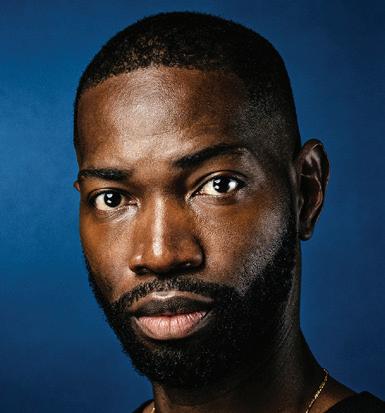
TARELL ALVIN M C CRANEY Co-Director, Artistic Director (he/him)
Tarell Alvin McCraney is Artistic Director of Geffen Playhouse. His script In Moonlight Black Boys Look Blue is the basis for the Oscar–winning film Moonlight directed by Barry Jenkins, for which McCraney and Jenkins won an Oscar for Best Adapted Screenplay. McCraney created the critically acclaimed, Peabody Award–winning OWN: Oprah Winfrey Network drama David Makes Man, which was executive produced Michael B. Jordan and Oprah Winfrey. McCraney also wrote the film High Flying Bird which premiered on Netflix and was directed by Steven Soderbergh. McCraney’s plays include We Are Gathered, Ms. Blakk For President (co-written with Tina Landau), The Brother/Sister Plays trilogy, Head of Passes, Wig Out!, and Choir Boy, which was nominated for four Tony Awards. McCraney is the recipient of a MacArthur Fellowship “Genius Grant,” the Joyce Award, the Whiting Award, the Steinberg Playwright Award, the Evening Standard Theatre Award, the New York Times Outstanding Playwright Award, the Paula Vogel Playwriting Award, the Windham Campbell Prize, and a USA Fellowship Award. He is a lecturer at the UCLA School of Theater, Film, and Television; an associate artist at the Royal Shakespeare Company, UK; an ensemble member at Steppenwolf Theatre Company, Chicago; and a member of Teo Castellanos/D-Projects, Miami.
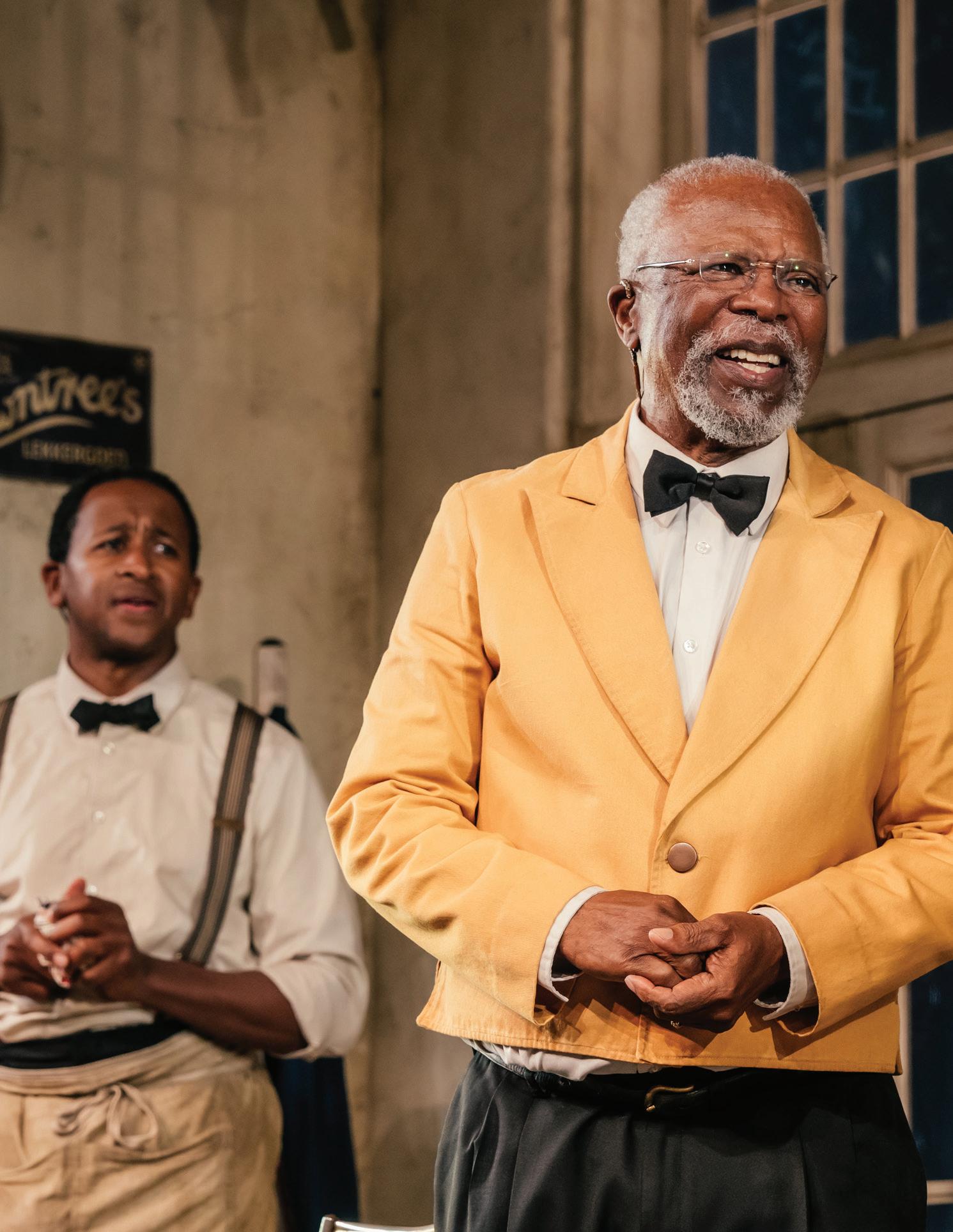
L-R: NYASHA HATENDI AND JOHN KANI IN “MASTER HAROLD”... AND THE BOYS AT GEFFEN PLAYHOUSE. CO-DIRECTED BY
EMILY MANN AND GEFFEN PLAYHOUSE ARTISTIC DIRECTOR
TARELL ALVIN MCCRANEY. PHOTO BY JEFF LORCH.
SYNOPSIS
*SPOILER WARNING! This synopsis is for comprehension and contains plot points for the play,”Master Harold”... and the Boys.
TIME / SETTING: The St. George’s Park Tea Room, Port Elizabeth, South Africa. 1950.
STORY: In the St. George’s Park Tea Room in Port Elizabeth, South Africa, in 1950, business is slow due to heavy rain, leaving waiters Sam Semela and Willie Malopo with time to spare. While Sam reads comics, Willie practices the foxtrot for an upcoming ballroom competition. Sam coaches him as Willie admits his dance partner, Hilda, has been absent, likely because he hit her for a misstep. Sam urges Willie to stop hitting her.
Hally, the tea room owner’s 17-year-old son, stops in on his way home from school. Sam calls him “Hally,” while Willie uses the more formal “Master Harold.” Sam explains that Hally’s mother has gone to the hospital, likely to bring home his father, who has been receiving treatment for complications from a leg lost in World War I. Knowing his father’s struggles with alcoholism, poor health, and a cruel, abusive temper, Hally is distressed by his return but tries to hide it.
Hally and Sam discuss school, and Hally suggests that every age needs a social reformer to drive progress, but until such a person appears, all one can do is wait for change. Their conversation continues to center on the idea of “A Man of Magnitude”, as they reference various historical figures and their contributions to society. The three reminisce about Hally’s childhood, especially the day Sam built him a kite that they flew in the park. Hally remembers the moment fondly, but questions why Sam tied the kite to the bench where he was sitting and then walked away. Sam replies that he had to return to work.
Hally’s mother calls to say she is bringing his father home, and Hally pleads with her to keep him in the hospital. As Willie and Sam resume dance practice, Hally takes out his anger on them. He forbids them from dancing in the tea room and orders them back to work. This sparks a debate about ballroom dancing, which inspires Hally to write about Willie’s competition as part of a school assignment. As Sam vividly describes the dance floor as a space without collisions, an ideal world symbolizing racial and social harmony, Hally’s mood is momentarily lifted. However, his idealism fades when his mother calls again, leading to a tense exchange. He then speaks to his father, forcing himself to sound happy about his return. Soon after, Hally erupts in anger, expressing resentment toward his father’s cruelty and the burden of caring for him. When Sam urges him to show compassion, Hally then turns on him, insisting on being called “Master Harold.” Sam warns that this will end their friendship, but Hally pushes further, telling a racist joke and spitting in Sam’s face. Sam responds with restraint, calling him “Master Harold”, and Hally begins to regret his actions.Sam reminds Hally of the many ways he has supported him over the years. He also explains that he made the kite to lift Hally’s spirits after a humiliating incident involving his father. Sam reveals that the real reason he had to leave that day was because he was sitting on a “Whites Only” bench. As Hally prepares to leave, Sam stops him, calls him “Hally” again, and suggests they try flying another kite. Hally points out that they cannot fly a kite in the rain, and they will have to wait for better weather. Sam tells Hally that if he chooses to, he can get up from that bench any time.
After Hally leaves, Willie tries to lift Sam’s spirits by agreeing to apologize to Hilda, stop hitting her, practice harder, and do his best to win the competition. The play ends with the two men dancing together to a jukebox song, Sam leading and Willie following.
DID YOU KNOW?
“Master Harold”... and the Boys The play initially was banned from production in South Africa. It was the first of Fugard’s plays to premiere outside of South Africa it was first produced at the Yale Repertory Theatre in March 1982 and made its premiere on Broadway in May 1982 at the Lyceum Theatre, where it ran for 344 performances.
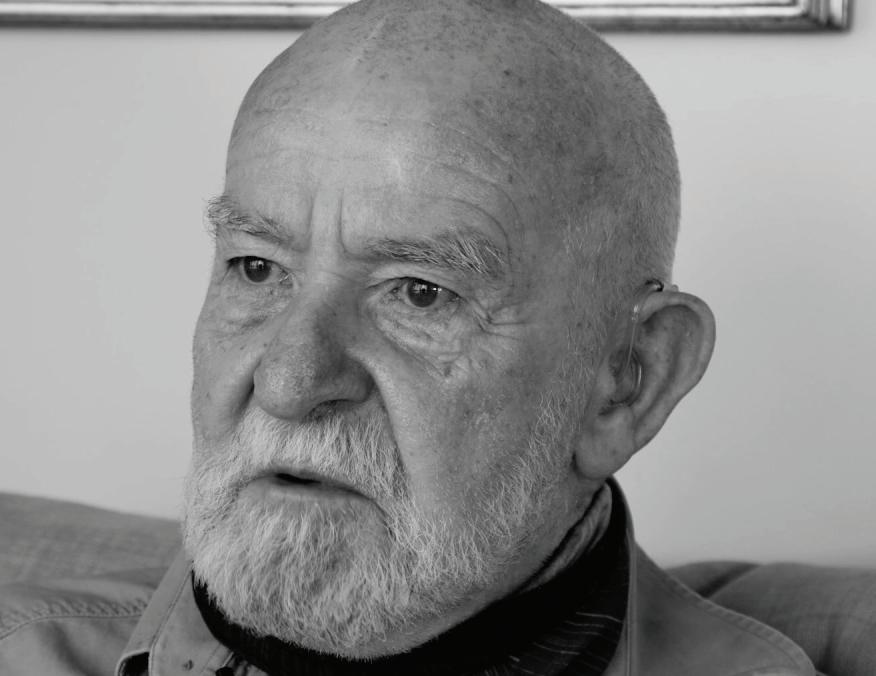
SCAN the QR Code to the left to watch “Athol Fugard on Revisiting “Master Harold” ... and the Boys” on YouTube from Signature Theater’s production of the play in 2016.
SINOPSIS
TRADUCIDO POR POR MARTA PORTILLO, GEFFEN PLAYHOUSE TEACHING ARTIST


¡ALERTA DE SPOILER! La sinopsis se utiliza para la comprensión y contiene puntos importantes de la trama de la obra “Master Harold”...and the Boys.
LA AMBIENTACIÓN: El Salón de Té de St. George’s Park, Port Elizabeth, Sudáfrica. 1950..
LA TRAMA: En el Salón de té de St George ‘s Park en Puerto de Elizabeth en Sudáfrica en 1950 el negocio va lento a causa de las fuertes lluvias, dejando a los meseros Sam Semela y Willie Malopo con tiempo libre. Mientras Sam lee sus cómics, Willie práctica el foxtrot para la próxima competencia de baile. Sam instruye a Willie mientras él admite que su compañera de baile, Hilda, probablemente está ausente a causa del golpe que él le dio por haber dado un paso en falso. Sam le urge a Willie que deje de golpearla.
Hally, el hijo de 17 años del dueño del salón de té, pasa por el salón en sur rumbo a casa. Sam lo llama “Hally” mientras que Willie lo llama de la manera más formal, “Señor Harold.” Same le explica que la madre de Hally se ha ido al hospital, probablemente para traer a su padre a casa quien ha estado recibiendo tratamiento por complicaciones derivadas de una pierna que perdió durante la Primera Guerra Mundial. Consciente de las dificultades que tiene su padre con el alcoholismo, la mala salud, y su temperamento cruel y abusivo, Hally está angustiado por el regreso de su padre, pero trata de ocultarlo.
Hally y Sam platican sobre la escuela. Hally sugiera que cada época necesita un reformador social que impulse el progreso, pero que hasta que aparezca dicha persona, lo único que se puede hacer es esperar que cambien las cosas. La conversación continua a enfocarse en la idea de “Un Hombre de Magnitud”, y hacen referencias a varias figuras históricas y sus contribuciones a la sociedad. Los tres recuerdan la niñez de Hally, en particular el día que Sam construyó una cometa que volaron en el parque. Hally recuerda ese momento con cariño, pero se pregunta por qué Sam ató la cometa al banco donde estaba sentado y luego se alejó. Sam le dice que tenía que regresar a trabajar.
La madre de Hally llama para decir que su padre regresara a casa. Hally le ruega que lo deje en el hospital. Willie y Sam resumen su ensayo de baile, Hally se desquita con ellos y les prohíbe bailar dentro del salón y les ordena que regresen a trabajar. Esto inicia una conversación sobre los bailes de salón, que inspira a Hally a escribir sobre la competencia de Willie para una tarea escolar. Mientras Sam describe vívidamente la pista de baile como un mundo ideal que simboliza la armonía racial y social, el ánimo de Hally mejora momentáneamente. Sin embargo, su idealismo desvanece cuando su madre vuelve a llamar, lo que da lugar a una tensa conversación. Hally habla con su padre y se esfuerza a disimular felicidad por su regreso. Poco después, Hally estalla de ira, expresando su resentimiento hacia la crueldad de su padre y la carga que supone cuidar de él. Cuando Sam le urge a mostrar compasión, Hally se vuelve contra él, insistiendo que lo llame “Señor Harold.” Sam le advierte que esto acabará con su amistad, pero Hally va más allá, contando un chiste racista y escupe en la cara de Sam. Sam responde con moderación, llamando, “Señor Harold” y Hally comienza a arrepentirse de sus acciones.
Sam le recuerda a Hally de las varias maneras que lo ha apoyado a través de los años. También le explica que construyó la cometa para levantarle el ánimo después de un incidente humillante en el que estuvo involucrado su padre. Sam revela que la verdadera razón por la que se tuvo que ir ese día fue porque estaba sentado en un banco de “Solo par blancos”. Mientras Hally se prepara para irse, Sam lo detiene y lo llama “Hally” de nuevo y sugiere que intenten volar otra cometa. Hally señala que no pueden volar una cometa mientras llueve y que tendrán que esperar a que mejore el tiempo. Sam le dice a Hally, que si él lo decide, él puede levantarse de ese banco en cualquier momento.
Después de que Hally se va, Willie intenta levantarle el ánimo a Sam diciéndole que le va pedirle disculpas a Hilda, le va parar de pegar, y va a ensayar más para tratar de ganar la competencia. La obra termina con los dos hombres bailando juntos a una canción de la rocola. Sam lleva el paso y Willie lo sigue.
L-R: NYASHA HATENDI AND BEN BEATTY IN “MASTER HAROLD”... AND THE BOYS AT GEFFEN PLAYHOUSE. CO-DIRECTED BY EMILY MANN AND GEFFEN PLAYHOUSE ARTISTIC DIRECTOR TARELL ALVIN

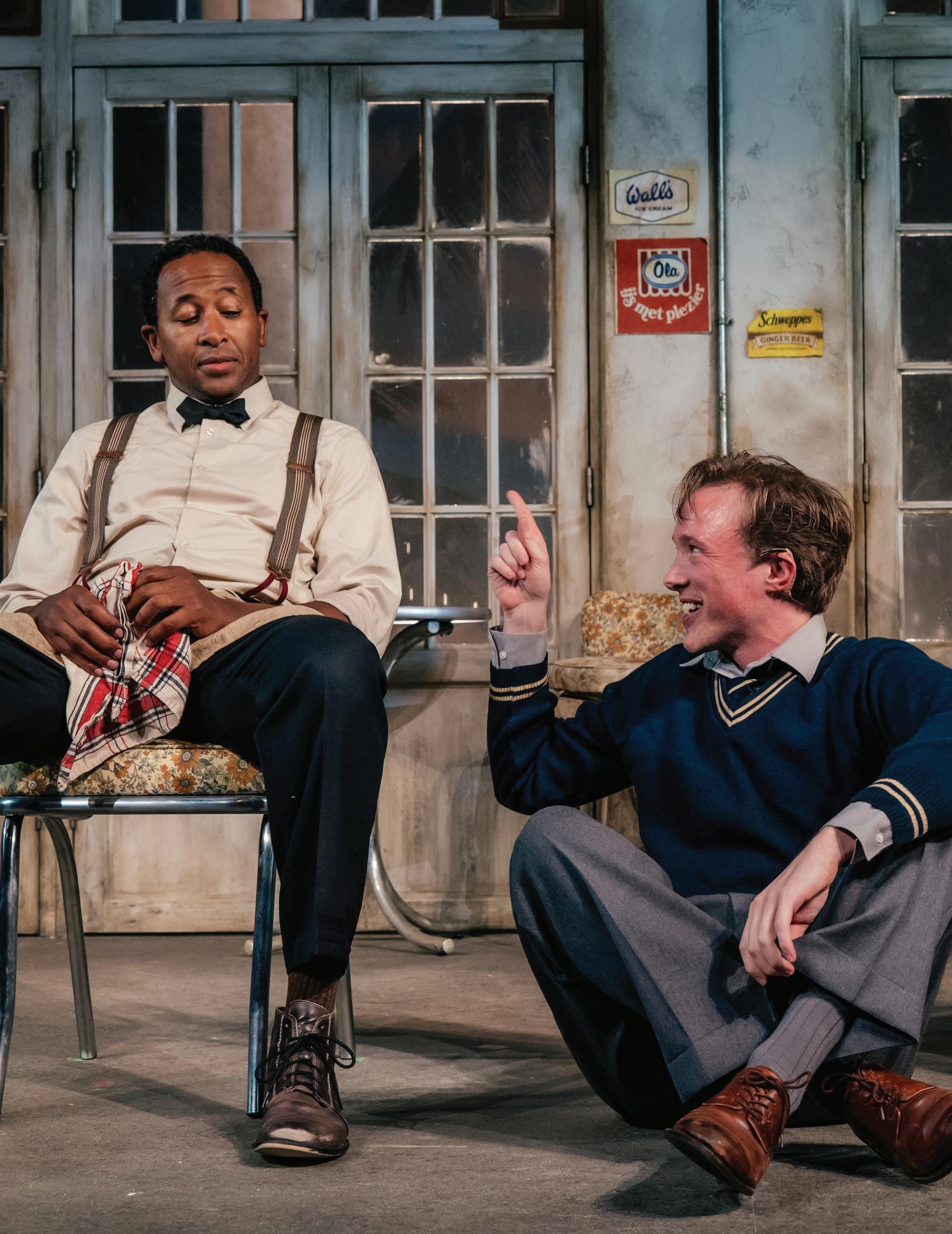
MCCRANEY. PHOTO BY JEFF LORCH.
ATHOL FUGARD THE LIFE AND WORKS OF
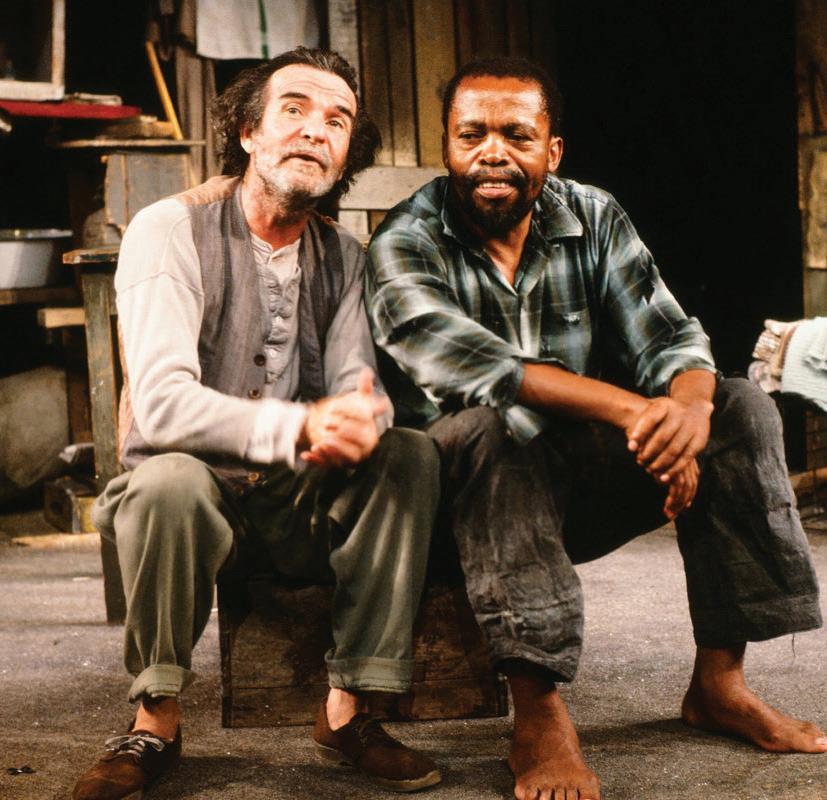
BY AJA HOUSTON, GEFFEN PLAYHOUSE EDUCATION ASSOCIATE & LEAD TEACHING ARTIST
Athol Fugard (1932-2025) was a white South African, internationally known playwright, actor, and director who, through his work, defied his country’s oppressive apartheid system. Fugard wrote more than 30 plays, as well as journals, novels, short stories, and screenplays about the emotional and psychological consequences of South Africa’s white supremacist system.
Fugard once described his life’s work as, “possibly just to witness as truthfully as I could the nameless and destitute (desperate of this one little corner of the world.)”
Fugard’s first plays, No-Good Friday and Ngogo, which he called his “apprenticeship work,” were inspired by the period when he worked as a clerk at the Native Commissioner’s Court in Johannesburg and his introduction to Sophiatown, a segregated township, through his Black friends.
Over the six months he worked at the criminal court that tried Black people for passbook violations, Fugard became intimately familiar with the oppres
sive system used to control the movements of the country’s black citizens and to limit their access to housing and employment opportunities.
Fugard staged his early work in private performances with non-professional black actors and developed an especially close collaborative working relationship with one of them, Zakes Mokae. It was this relationship that proved to be the turning point in his career as a playwright.
In 1961, Fugard co-starred with Mokae in Blood Knot, the first play in his “Family Trilogy”, playing mixed-race half-brothers, one identifiably “colored” and the other light enough to evade the passbook laws. The brothers’ complex and ambivalent relationship served as both a rich metaphor for the uneasy interdependence of black and white South Africa and as a visceral dramatization of the system’s human cost.
Despite the challenges, Fugard, along with a group of Black actors from his hometown of Port Elizabeth, founded the theatre company Serpent Players. The company staged plays by other writers and created new works through improvisation.
The Serpent Players y were constantly harassed by the authorities a few members were arrested. The authorities refused to allow Fugard to enter the Black townships where the other company members lived, so they met in neutral territory in one of the Port Elizabeth areas that operated in a state of political or legal ambuity known as “twilight zones” to rehearse. Sometimes Fugard would direct a play and be unable to attend its performances.
Fugard and Mokae’s performance marked the first time in South African history that Black and White actors shared a stage. Although the South African production was closed by the authorities after a single performance, productions were mounted in London with Mokae and in New York with the young James Earl Jones.
The racial complications that the brothers in Blood Knot struggled with echoed those Fugard and Mokae faced when they eventually took the production to other South African cities.
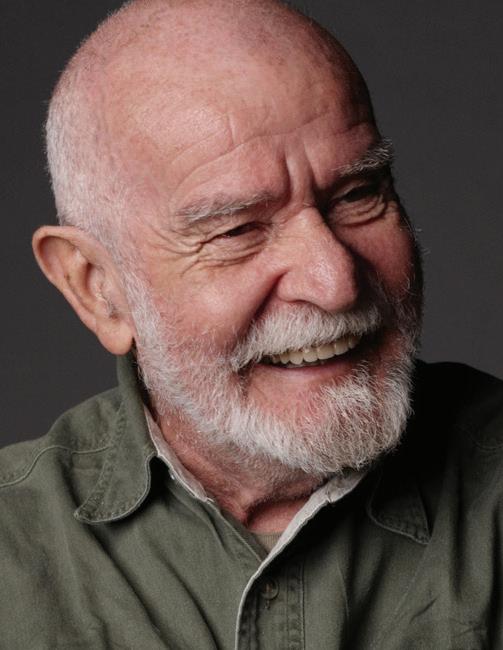
WHEN I SAW THAT TIDAL WAVE OF HUMANITY BEING PROCESSED BY THIS DIABOLICAL MACHINE, THAT THE FULL EXTENT OF THE - OF WHAT APARTHEID MEANT AND DOES AND WAS DOING DAWNED ON ME - WHEN IT WAS BROUGHT HOME TO ME …THAT WAS THE MOMENT IN TERMS OF MY POLITICAL CONSCIENCE.
-ATHOL FUGARD
THIS PAGE: ATHOL FUGARD PHOTO BY GREGORY COSTANZO OPPOSITE PAGE: ATHOL FUGARD AND ZAKES MOKAE IN THE BLOOD KNOT AT THE YALE REPERTORY THEATRE IN NEW HAVEN IN 1985.
PHOTO BY ROBERT R. MCELROY
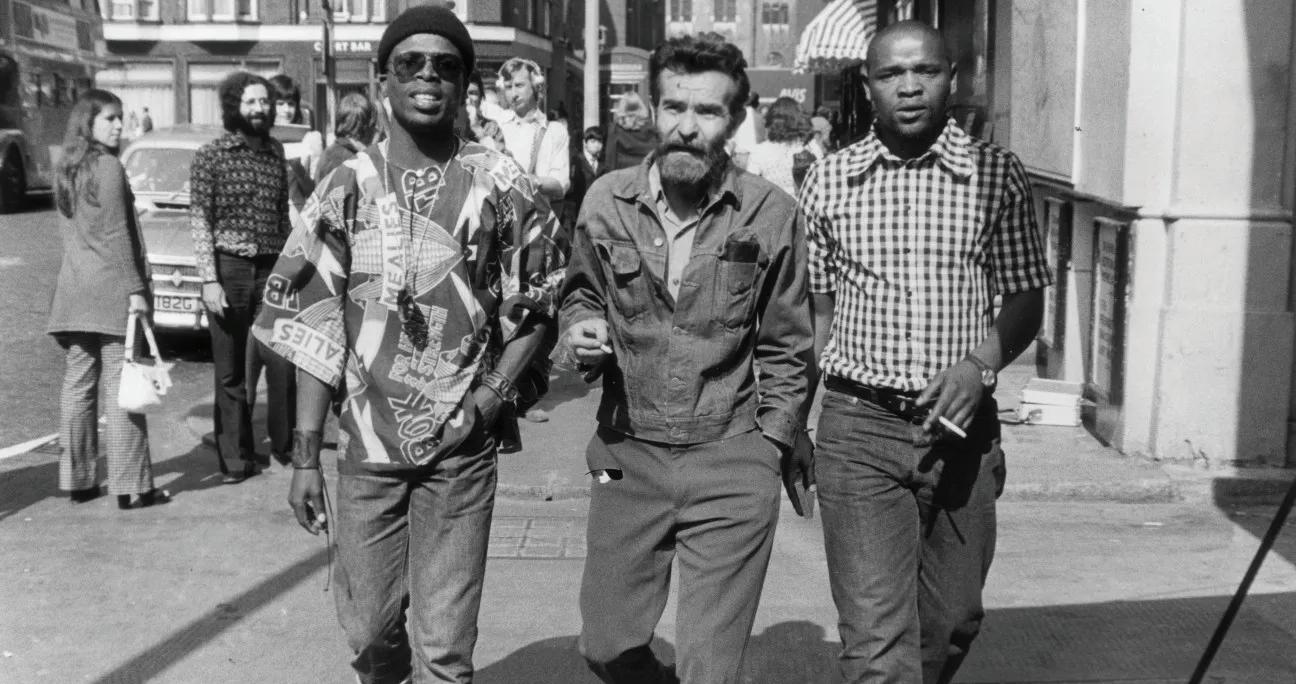
In a 1986 NPR interview with Terry Gross, Fugard recounted these challenging experiences. When the two men took the train to their different production stops, Mokae had to travel third class while Fugard traveled first class.
Mokae refused to carry his reference passbook as a personal political statement, so, to ensure he wouldn’t go to jail and the show could go on, Fugard carried the book for his collaborator. Fugard’s reputation for defiance spread with works such as Hello and Goodbye (1965), the second in the Family Trilogy, and The Coat (1966).
...I CARRIED THE BOOK FOR ZAKES, AND WHENEVER THE POLICE STOPPED US, I PRESENTED IT AND PRETEND(ED) THAT ZAKES WAS MYWAS WORKING FOR ME, THINGS LIKE THAT. YES, THERE’VE BEEN LOTS OF COMPLICATIONS ALONG THOSE LINES.
-ATHOL FUG ARD
In 1967, upon ret urning to South Africa after a BBC televised performance of The Blood Knot in London, the authorities confiscated his passport to prevent him from traveling abroad for future productions or from returning to South Africa if he did.
The government placed increasingly severe restrictions on his work and movements, prohibiting publi -
cation and performance of his plays. Even the title of The Island (1972), developed with another longtime Black collaborator, John Kani, and Winston Ntshona, was considered too controversial, as it was taken to allude to Robben Island, where Nelson Mandela was imprisoned.
Fugard and his family endured years of government surveillance; their mail was opened, their phones tapped, and their home subjected to midnight police searches.
When asked in the same 1986 NPR interview if Fugard felt that he wasn’t doing his job as a South African playwright if his work wasn’t censored, he replied, “Yes. - if you haven’t been banned or if your work hasn’t been censored or - let’s put it even crudely - if you haven’t been to jail at least once, or if you haven’t been raided by the security police and searched in the early hours of the morning, you haven’t actually earned your credentials. Unfortunately, yes, I think a little bit of that does operate back home.”
Initially, after Nelson Mandela’s release from Robben Island, the dismantling of apartheid laws, and the transition to a multiracial democracy in 1990–91, Fugard believed that it marked the end of his usefulness as a playwright and social observer.
So Fugard’s focus turned to his personal history. In 1994, he published the memoir Cousins, and throughout the 1990s, he wrote plays—including
JOHN KANI, ATHOL FUGARD AND WINSTON NTSHONA DURING THE SHOWING OF SIZWE BANZI IS DEAD AT THE ROYAL COURT THEATRE, LONDON, SOUTH AFRICAN SEASON.
PHOTO: JAMES JACKSON/EVENING STANDARD, 1973
Playland (1992), Valley Song (1996), and The Captain’s Tiger (1997)—that have strong autobiographical elements.
However, the enduring trials and traumas of South Africa’s newfound freedom and transformatioproved that his brand of compelling political drama was still needed/warranted.
Subsequent plays included Sorrows and Rejoicings (2002), about a poet who returns to South Africa after years of exile; Victory (2009), a stark examination of postapartheid South Africa; The Train Driver (2010), an allegorical meditation on white South Africans’ collective guilt about apartheid that premiered at the Fugard Theatre in Cape Town, and The Painted Rocks at Revolver Creek (2015), which opened in New York to critical acclaim, explores South Africa both before and after apartheid.
Although Athol Fugard’s life in the theatre was never confined to the page, he acted in and directed his own plays predominantly, Fugard described himself as a playwright first and foremost. He loved the physical process of writing, which he did longhand with ink he mixed himself.
Some of Fugard’s many career honors include the 2005 South Africa Ikhamanga Medal in Silver for his excellent contributions to theatre, an Honorary Fellow of Britain’s Royal Society of Literature, and, in 2011, he received Broadway’s top honor, a Tony Award for Lifetime Achievement.
SO IN ORDER TO WORK WITH SERPENT PLAYERS, WE HAD TO FIND A SORT OF NEUTRAL TERRITORY HALFWAY BETWEEN THEIR BLACK WORLD AND MY WHITE WORLD…
-ATHOL
FUG ARD
Sources: Academy of Achievement Athol FugardNovelist and Playwright https://achievement.org/ achiever/athol-fugard/
Britannica Editors (4 March 2026)Athol Fugard - Britannica.com https://www.britannica.com/biography/ Athol-Fugard
Gross, Terry (13 March 2025) Remembering South African playwright Athol Fugard, NPR.org https:// www.npr.org/2025/03/13/nx-s1-5325736/remembering-south-african-playwright-athol-fugard
Ross, Laura (1 Sept 1984) ‘A Question of Certainties’American Theatre.org https://www.americantheatre. org/1984/09/01/a-question-of-certainties/
SO IN ORDER TO WORK WITH SERPENT PLAYERS, WE HAD TO FIND A SORT OF NEUTRAL TERRITORY HALFWAY BETWEEN THEIR BLACK WORLD AND MY WHITE WORLD…
-ATHOL FUGARD
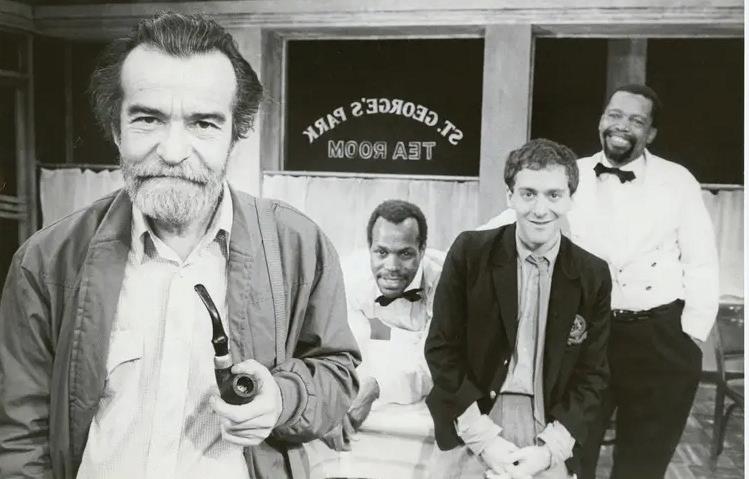
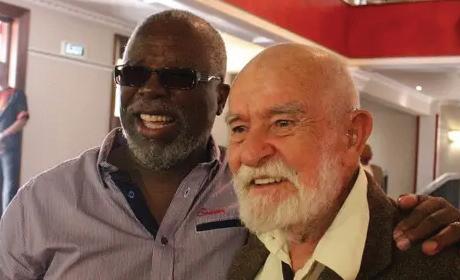
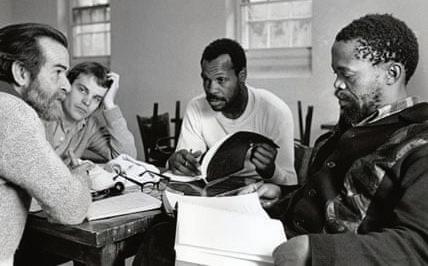
PHOTOS: (TOP) FUGARD WITH DANNY GLOVER, ZAKES MOKAE AND LONNY PRICE ON THE SET OF THE BROADWAY PRODUCTION OF HIS PLAY ‘MASTER HAROLD’…AND THE BOYS IN 1982 AT THE LYCEUM THEATRE. PHOTO BY MARTHA SWOPE; (CENTER) JOHN KANI AND ATHOL FUGARD P HOTO BY PAULA FOURIE; (BOTTOM) ATHOL FUGARD DOING A READ-THROUGH OF HIS PLAY MASTER HAROLD IN 1982. PHOTOGRAPH COURTESY OF THE OBSERVER.
THE WORKS OF
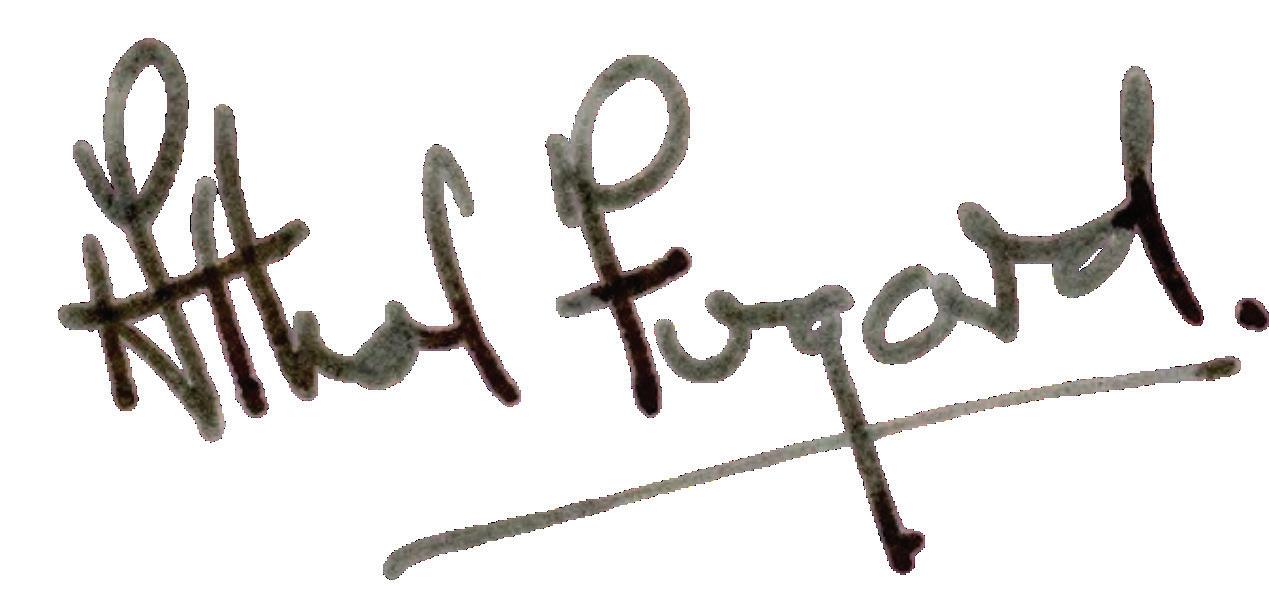
PLAYS BY ATHOL FUGARD
(LISTED IN ORDER OF PUBLICATION)
Klaas and the Devil (1956)
The Cell (1957)
No-Good Friday (1958)
Non-Gogo (1959)
The Blood Knot (1961); later revised and entitled Blood Knot (1987)
Hello and Goodbye (1965)
The Coat (1966)
People Are Living There (1968)
The Last Bus (1969)
Boesman and Lena (1969)
Friday’s Bread on Monday (1970)
Sizwe Banzi Is Dead (1972)
The Island (1972)
Statements After an Arrest Under the Immorality Act (1972)
Dimetos (1975)
Orestes (1978)
A Lesson from Aloes (1978)
The Drummer (1980)
“Master Harold”...and the Boys (1982)
The Road to Mecca (1984)
A Place with the Pigs: a personal parable (1987)
My Children! My Africa! (1989)
My Life (1992)
Playland (1993)
Valley Song (1996)
The Captain’s Tiger: a memoir for the stage (1997)
Sorrows and Rejoicings (2001)
Exits and Entrances (2004)
Booitjie and the Oubaas (2006)
Victory (2007)
Coming Home (2009)
Have You Seen Us (2009)
The Train Driver (2010)
The Shadow of the Hummingbird (2014)
The Painted Rocks at Revolver Creek (2016)
Concerning the Life of Babyboy Kleintjies (2022)
MOST NOTABLE WORKS
Hello and Goodbye (1965)- The 2nd Play in the “Family Trilogy.”Synopsis: An estranged brother and sister, Johnny and Hester, reunite in their dilapidated childhood home in Port Elizabeth to search for a hidden inheritance from their deceased father. It’s considered one of Fugard’s most profound works, marking a key moment when he found his distinct voice as a playwright, exploring personal and national trauma.
Boesman and Lena (1969)- Third part of the “Family Triology.” Synopsis: After being forcibly evicted from their shanty by white authorities, two “colored” South Africans navigate existence on the muddy banks of the Swartkops River, battling poverty, racism, and intense, abusive interpersonal tension. Its U.S. premiere starred acting legends James Earl Jones and Ruby Dee. Won an Obie for Best Foreign Play, Distinguished Direction, and Best Performance by an Actress
Sizwe Banzi Is Dead (1972) (developed with John Kani and Winston Ntshona in workshops). Synopsis: Unable to find work legally due to his passbook restrictions, Sizwe is urged by Buntu to take the identity of a dead man found in an alley (Robert) to stay in town. The play achieved international acclaim and won the 1975 Tony Award for Best Play and Best Actor nominations for both Kani and Ntshona.
The Island (1972) (developed with John Kani and Winston Ntshona in workshops) Synopsis: set in apartheid-era South Africa, about two political prisoners, John and Winston, on Robben Island who find solace and test their friendship by rehearsing a two-person version of Sophocles’ Antigone. The play was inspired by the real experiences of political prisoners and was a significant work of protest during apartheid, leading to imprisonment for Kani and Ntshona after its London performance. Nominated for a Tony Award for Best Play, with John Kani and Winston Ntshona winning Tony Awards for Best Lead Actor in a Play in 1975.
My Children! My Africa! (1989)Set in the Eastern Cape of South Africa during apartheid, the play centers on Mr. M, an idealistic Black teacher, whose hopes for a peaceful future for his pupil, Thami, clash with the growing violent resistance of young activists against the state, culminating in tragic consequences, with John Kani and Winston Ntshona winning Tony Awards for Best Lead Actor in a Play in 1975.
The Train Driver (2010) - Synopsis: A guilt-ridden train driver, Roelf, searches for the identity of a Black woman and her baby he accidentally killed, leading him to a gravedigger named Simon in a shantytown. Fugard considered it his most important play. Premiered at the Fugard Theatre in Cape Town.
The Shadow of the Hummingbird (2014) Synopsis: a short play about an elderly, retired South African teacher named Oupa, who spends an afternoon with his ten-yearold grandson, who is playing hooky from school, trying to help him see the world’s beauty and wonder, while also reflecting on his own life and exile. Fugard played the role of Oupa, which marked his return to acting on stage after 15 years.
The Painted Rocks at Revolver Creek (2016) The play explores themes of racism, legacy, and the human spirit, focusing on Nukain’s final, monumental rock painting, which becomes a self-portrait, and the conflict with the white landowner’s wife, revealing the deep societal rifts of the era. Inspired by the true story of Nukain Mabuza, a self-taught Black farm laborer who painted vibrant flowers on rocks during apartheid. Opened to critical acclaim in New York.
I JUST COULDN’T SEE MYSELF WRITING ABOUT ANY OTHER PLACE OR ANY OTHER TIME. I HAVE, ON OCCASIONS IN THE PAST, DESCRIBED MYSELF AS A REGIONAL WRITER, NOT MEANING TO BE FALSELY MODEST OR ANYTHING LIKE THAT, BUT A REGIONAL WRITER, IN THE SENSE, I THINK, THAT FAULKNER WAS A REGIONAL WRITER IN AMERICA. AND MY REGION IS SOUTH AFRICA
“ ”
-ATHOL FUG ARD

SCAN THE QR CODE TO THE LEFT TO READ “THE ROAD TO ATHOL: AN ILLUSTRATED TOUR” FROM AMERICANTHEATRE.ORG. A MEMORIAL TRIBUTE FROM T CHARLES ERICKSON, ONE OF FUGARD’S MOST DEDICATED PHOTOGRAPHERS. MAR. 20, 2025.
SCAN THE QR CODE TO THE LEFT TO READ A TRIBUTE IN THE HOLLYWOOD REPORTER FROM JOHN KANI, MEMBER OF THE SERPENT PLAYERS, ACTOR IN GEFFEN’S OF “MASTER HAROLD”... AND THE BOYS , FUGARD’S LONG TIME COLLABORATOR AND FRIEND, MAR. 13, 2025
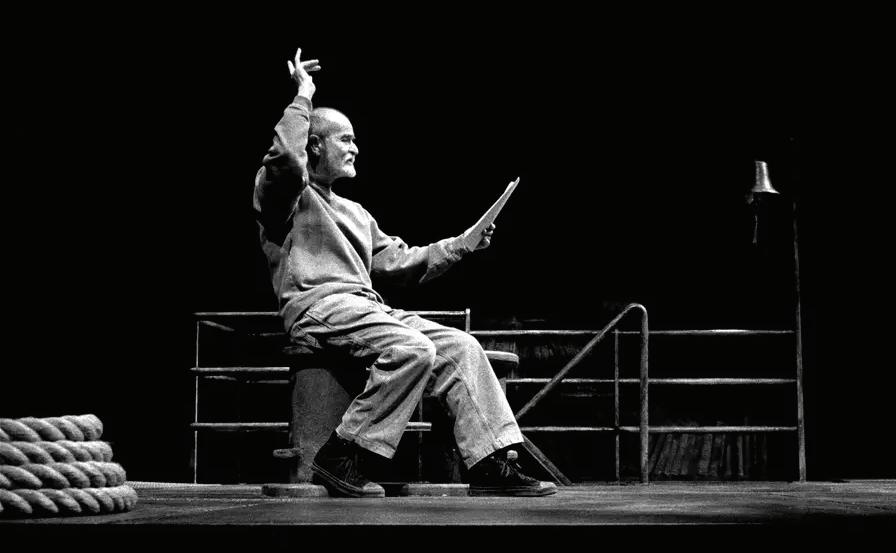
FUGARD IN THE CAPTAIN’S TIGER AT THE MCCARTER CENTER IN 1998. PHOTO BY T CHARLES ERICKSON.
ATHOL FUGARD WAS MY HERO FEROCIOUS IN HIS DEVOTION TO THEATRE AND SOCIAL JUSTICE, BUT UNFAILINGLY KIND AND GRACIOUS TO OTHERS, HE STOOD AS A MORAL COMPASS—AND NOT JUST FOR APARTHEID-ERA SOUTH AFRICA.
BY EMILY MANN, CO-DIRECTOR OF “MASTER HAROLD”...AND THE BOYS
SCAN THE QR CODE TO visit Geffen’s Blog and read the Tribute by Emily Mann, reprinted with permission from March 19, 2025 American Theatre magazine, a publication of Theatre Communications Group.
Read this and more articles from Geffen Productions visit geffenplayhouse.org/blog.
ATHOL IS (NOT WAS) MY INSPIRATION, MY MORAL COMPASS, MY HERO, AND MY FRIEND. HE PROVED THE ADAGE “THE PEN IS MIGHTIER THAN THE SWORD.
-EMILY MANN
I CANNOT BUT THINK HE IS WATCHING US NOW AS WE WITNESS OUR OWN COUNTRY SLIDE INTO WHITE SUPREMACY AND AUTHORITARIANISM.
HE SHOWED US THE WAY TO RESIST. ATHOL IS TELLING US ALL: WE CAN’T BE SILENT.
-EMILY MANN
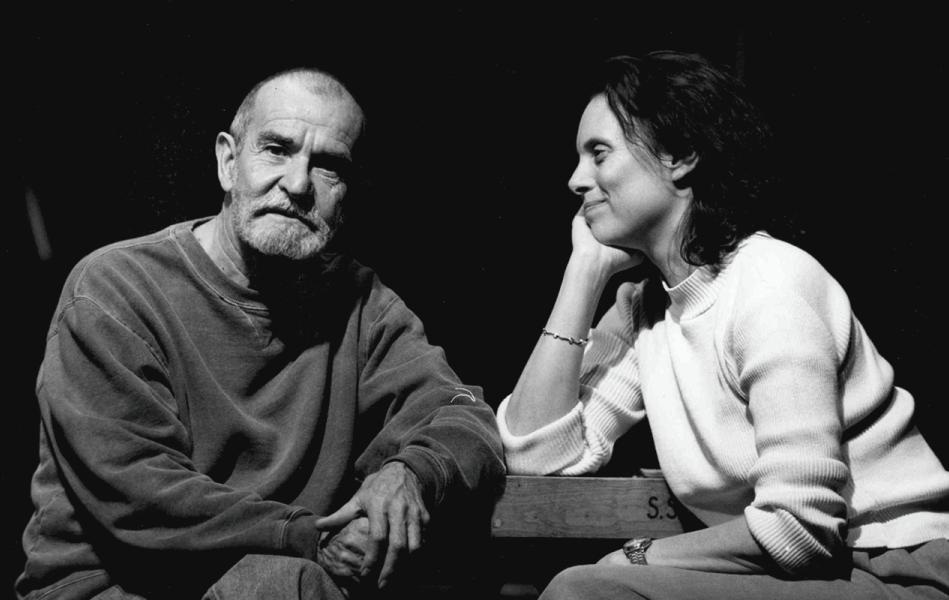
T. CHARLES ERICKSON.
SOUTH AFRICA FACTS
• OFFICIAL NAME: Republic of South Africa

• FORM OF GOVERNMENT: Democratic Republic
• CAPITALS: Pretoria: Administrative/Executive capital (home to the President and Cabinet); Cape Town: Legislative capital (home to Parliament); Bloemfontein: Judicial capital (home to the Supreme Court of Appeal).
• POPULATION: 64.2 Million
• OFFICIAL LANGUAGES: Afrikaans, English, isiNdebele, isiXhosa, isiZulu, Northern Sotho, Sesotho, Setswana, siSwati, Tshivenda, Xitsonga
• MONEY: Rand

• AREA: 470,693 square mi (1,219,089 square km)
• MAJOR MOUNTAIN RANGES: Drakensberg
• MAJOR RIVERS: Limpopo, Orange

DID YOU KNOW?
The setting of “Master Harold”... and the Boys is in Port Elizabeth, South Africa. Port Elizabeth is now known as Gqeberha ( pronounced Guh-KEB-uh-rah or Qe-ber-ha with a click sound ). The name change was approved by the South African government in 2021 and is the Xhosa name for the ‘Baakens River’ which flows through the city. Xhosa is one of South Africa’s 11 official languages and one of the few in the world that has a “click” sound. Watch the video below to hear how it is pronounced.
The name change was part of a broader effort to rename places that had names with a colonial or apartheid legacy. Some people nicknamed it “the Windy City”, “the Friendly City”, “iBhayi” and most locals still call it “PE.
• From aardvarks to zebras, South Africa is full of wildlife. The country takes up only about one percent of Earth’s land surface, but is home to almost 10 percent of the world’s known bird, fish, and plant species and about 6 percent of its mammal and reptile species
• South Africa has another country within its borders. Nestled in the Drakensberg is the mountainous kingdom of Lesotho. Much of South Africa’s water comes from the snowcapped peaks of this tiny, landlocked nation.
• Information courtesy of National Geographic Kids https://kids.nationalgeographic.com/geography/ countries/article/south-africa

SCAN THE QR CODE TO THESEE THENAND-NOW IMAGES SHOW HOW APARTHEID TORE THE SOUL OUT OF A SOUTH AFRICAN COMMUNITY” AN EXHIBITION, DOUBLE VISION, EXPLORES THE IMPACT OF THE FORCED REMOVAL OF INHABITANTS FROM PORT ELIZABETH’S SOUTH END NEIGHBOURHOOD TO SEGREGATED TOWNSHIPS. IT IS COMPILED BY FORMER SOUTH END RESIDENT YUSUF AGHERDIEN. FROM THE GUARDIAN.COM. JUNE 3, 2015
SCAN THE QR CODE TO THE LEFT VISIT THE NELSON MANDELA FOUNDATION. THE NELSON MANDELA FOUNDATION IS A NOT-FOR-PROFIT PUBLIC BENEFIT ORGANISATION FOUNDED IN 1999 BY NELSON MANDELA AS HIS POSTPRESIDENTIAL OFFICE TO ADVANCE HIS LIFELONG COMMITMENT TO PEACE, HUMAN RIGHTS, AND DEMOCRACY FROM WORLD FRIENDS.
SCAN THE QR CODE TO THE LEFT TO WATCH 4 SOUTH AFRICANS TALK ABOUT SOME OF THE LANGUAGES OF SOUTH AFRICA: ZULU, SWATI, AFRIKAANS, XHOSA ON YOUTUBE
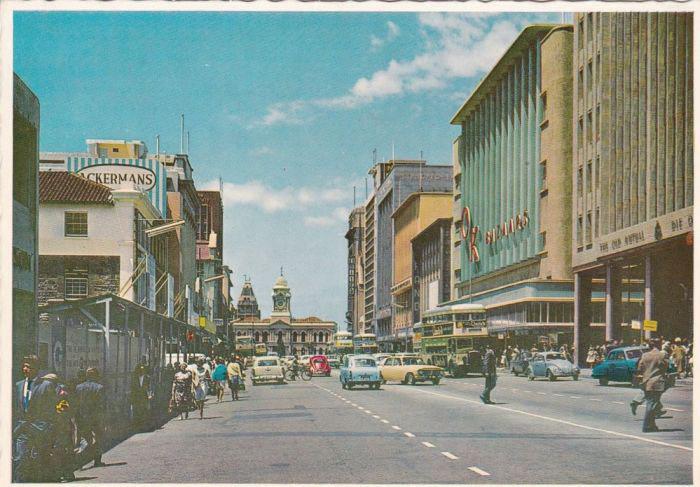
WHAT WAS APARTHEID?
Apartheid, the Afrikaans word meaning “separateness”, was a system of institutionalized racial segregation enforced by South Africa’s white minority government from 1948 to 1994. Rooted in centuries of colonial rule by Dutch and British settlers, apartheid was designed to formalize and intensify existing racial divisions, concentrating political and economic power in the hands of white South Africans while severely restricting the rights and opportunities of Black and Indian South Africans.
Its reach was total. Laws like the Population Registration Act (1950), which classified every person by race, the Group Areas Act (1950), which dictated where people could live, and the Bantu Education Act (1953), which deliberately limited the quality of Black education, shaped nearly every aspect of daily life. The world of “Master Harold”...and the Boys , set in 1950, sits at the very moment these laws were being put into force.
SCAN THE QR CODE TO THE LEFT TO WATCH A SHORT VIDEO “WHAT IS APARTHEID? - NELSON MANDELA, AND SOUTH AFRICA’S HISTORY EXPLAINED” FROM BEHIND THE NEWS, ABC AUSTRALIA. DEC 15, 2021
EDUCATION IS THE MOST POWERFUL WEAPON WHICH YOU CAN USE TO CHANGE THE WORLD.
-NELSON MANDELA
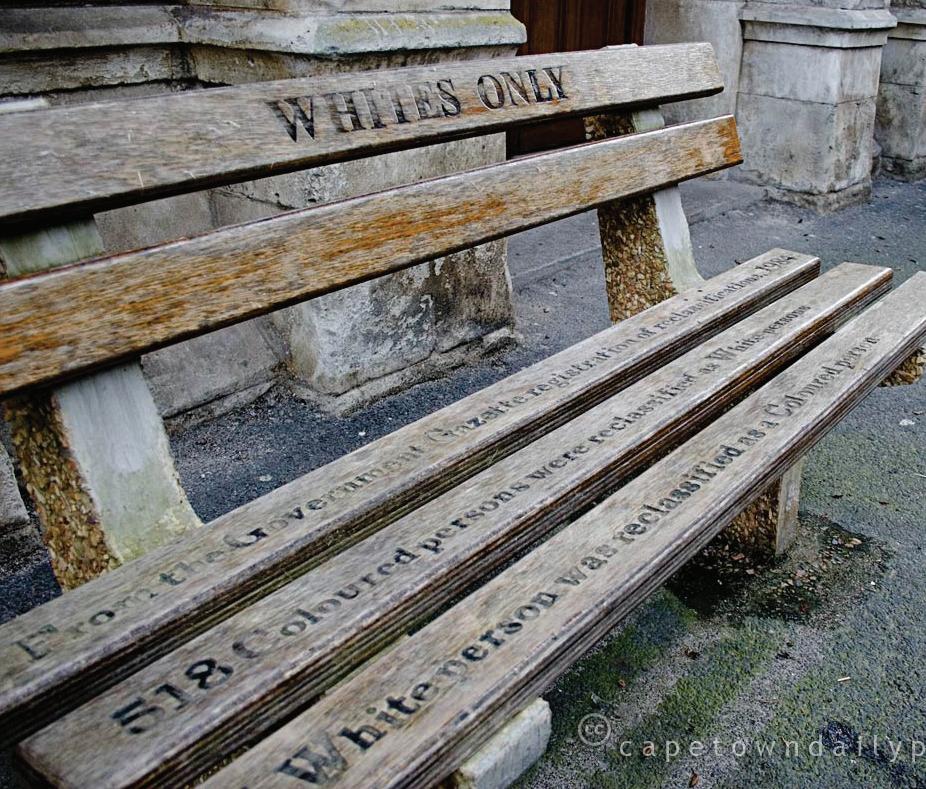
A TIMELINE OF KEY MOM
1806 — Britain takes control of the Cape Colony
1910 — Four colonies unite to form South Africa under British rule; racial segregation laws begin to take shape
1912 — The African National Congress (ANC) is founded as a political organization advocating for Black South Africans
1918 — Nelson Mandela is born
1932 — Playwright Athol Fugard is born in Port Elizabeth, South Africa
1943 — Nelson Mandela graduates from university
1944 — Mandela joins the ANC
1948 — The National Party wins the election and legally establishes apartheid
1949— Prohibition of Mixed Marriages Act is passed): Banned marriage between whites and people of other races.
1950 — Two Acts are passed by the government: The Population Registration Act, which classified people by race and the Group Areas Act, which separated living areas by race. This is also the time and setting of “Master Har old”... and the Boys
1953 — The Bantu Education Act passes, deliberately limiting educational opportunities for Black South Africans
1960 — The Sharpeville Massacre: police kill 69 unarmed protesters demonstrating against pass laws, drawing widespread global condemnation; the government declared the African National Congress (ANC) and the hardline Pan-Africanist Congress illegal
1961 — South Africa leaves the British Commonwealth and becomes a republic.
1962/64 — Nelson Mandela is arrested. He & seven others were sentenced to life imprisonment on Robben Island, off Cape Town, on charges of conspiracy and sabotage ; Mandela will remain incarcerated for 27 years
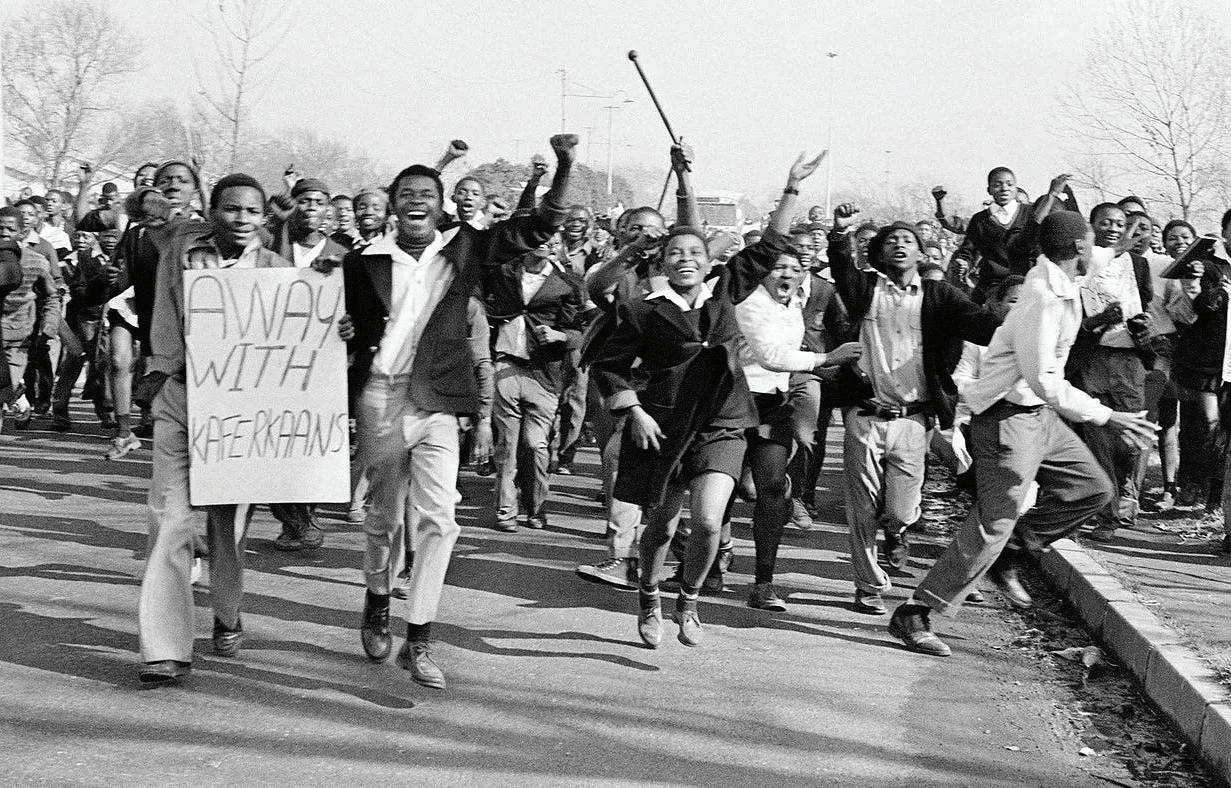
1970s —Renewed waves of resistance in the country with the Black Consciousness Movement and the Soweto student uprisings symbolizing the militancy of a new generation of African activists. At the same time, exiled South Africans & a politically diverse range of groups continued. to work on boycott, sanctions and divestment campaigns designed to political and economically isolate the apartheid state.
1974 —South Africa is expelled from the U. N. because of apartheid
PHOTO BY PAUL, CAPETOWN DAILY PHOTO.
ENTS IN SOUTH AFRICA
1982 — The first production of “Master Harold”...and the Boys was shut down after one performance in South Africa because of the interacial acting and challenge to Apartheid. It then premiered at Yale Repertory Theater in New Haven, Connecticut, & eventually in South Africa in 1983.
1990 — Recently elected President F.W. de Klerk begins dismantling apartheid legislation; About 30 banned groups, including the ANC, were legalized; Mandela is released from prison
1991 — Apartheid laws and racist restrictions were repealed and power-sharing talks started between the state and 16 anti-apartheid groups
1993 — De Klerk apologized for apartheid for the first time, and said he deeply regretted the loss of freedom and dignity inflicted on black people. In the same year Mandela and de Klerk were awarded the Nobel Peace Prize.
1994 — South Africa holds its first fully democratic multiracial election. Nelson Mandela becomes the country’s first Black president, serving until 1999
Today — While apartheid formally ended with the 1994 election, its social and economic legacy persists. Inequality, poverty, and racial disparity remain defining challenges in South Africa today
KEY RESISTANCE FIGURES & ORGANIZATIONS
• Nelson Mandela: ANC leader who was imprisoned for 27 years and later became the first Black president.
• African National Congress (ANC): Primary antiapartheid political organization.
• Pan Africanist Congress (PAC): Led the demonstrations that led to the Sharpeville Massacre.
• Black Consciousness Movement (BCM): Led by Steve Biko in the 1970s, focusing on black empowerment.
• United Democratic Front (UDF): A coalition of antiapartheid organizations in the 1980s
THE RESISTANCE MOVEMENT & THE END OF APARTHEID
Opposition to apartheid took many forms over decades of struggle. The African National Congress, the Pan Africanist Congress, the Black Consciousness Movement, and the United Democratic Front all played critical roles in organizing resistance through protests, strikes, and civil disobedience. Flashpoints like the 1960 Sharpeville Massacre, the 1976 Soweto Uprising, and the death of Black Consciousness leader Steve Biko in police custody in 1977 galvanized both domestic and international opposition. By the 1980s, mounting global pressure, including trade embargoes from the United States and United Kingdom and a UN arms embargo, had made apartheid increasingly untenable.
In 1990, President F.W. de Klerk shocked the world by unbanning the ANC, releasing Nelson Mandela after 27 years in prison, and opening the door to constitutional negotiations.
In 1994, South Africa held its first fully democratic multiracial election, and Mandela became the country’s first Black president.
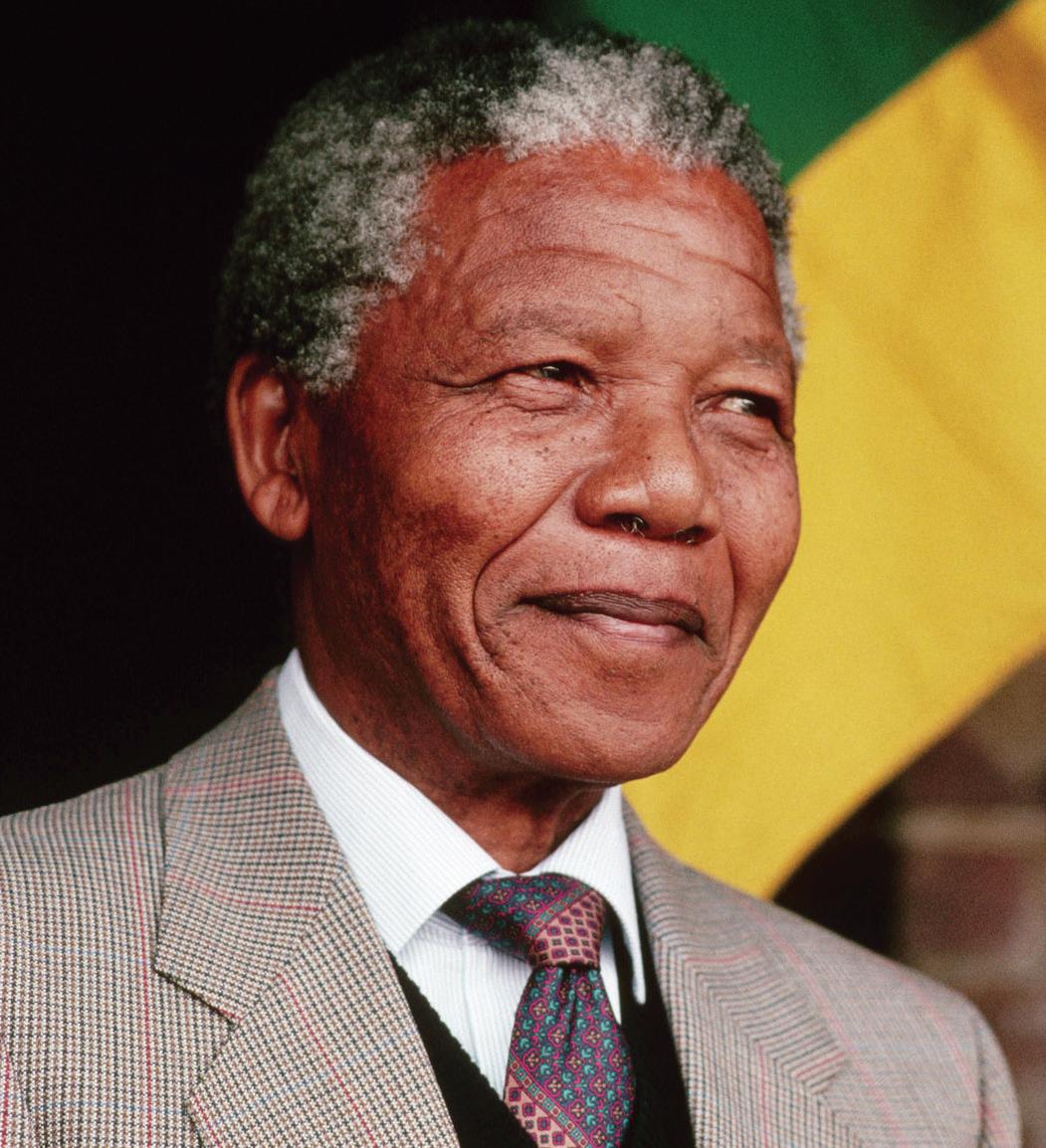
NELSON MANDELA, PHOTOGRAPH BY T. CHARLES ERICKSON.
DO NOT LOOK THE OTHER WAY; DO NOT HESITATE. RECOGNIZE THAT THE WORLD IS HUNGRY FOR ACTION, NOT WORDS.
ACT WITH COURAGE AND VISION.
-NELSON MANDELA
LONDON’S TRAFALGAR SQUARE, 2005
SCAN THE QR CODE TO THE LEFT TO WATCH “REMEMBERING SOUTH AFRICAN LEADER NELSON MANDELA “ FROM PBS. NELSON MANDELA, THE FIRST BLACK PRESIDENT OF SOUTH AFRICA CREDITED WITH ENDING APARTHEID . FORMER PBS NEWSHOUR CORRESPONDENT CHARLAYNE HUNTER-GAULT TAKES A LOOK BACK AT MANDELA’S LIFE AND LEGACY. DEC 5, 2013

B
CONNECTIONS: BLACK AMERICA & BLACK SOUTH AFRICA
Y AJA HOUSTON, GEFFEN PLAYHOUSE EDUCATION ASSOCIATE & LEAD TEACHING ARTIST
During the 1960s-1990s, African Americans and Black South Africans were connected by their shared struggle to combat white supremacy in the United States and South Africa. Their freedom movements against the brutal racial segregationist policies of Apartheid and Jim Crow created a powerful, international solidarity in the form of aid in each other’s resistance.
The 1960 Sharpeville Massacre in South Africa helped propel apartheid into the international news headlines and into Black American awareness. African American Civil Rights leaders like Dr. Martin Luther King, Malcolm X, and Congressman Charles Diggs publicly denounced South Africa’s racial segregation policies.
In 1962, Dr. King and Albert Luthuli, a leader of the African National Congress when Nelson Mandela became active, issued an Appeal for Action Against Apartheid with ACOA signed by 150 world leaders.
In December 1965, a year after Mandela had been jailed for life, Dr. King spoke at a benefit for the American Committee on Africa, a New York-based group that supported African independence movements.
Other U.S. Civil Rights activists, such as Harry Belafonte, an entertainer and progressive leader, learned about what was happening in South Africa through travel. In 1964, he led 18 activists in the Student Nonviolent Coordinating Committee on an impactful three-week tour to meet African independence leaders. In 1967, SNCC would submit a paper to the United Nations identifying with the South African struggle.
In the 1970s, several other African American-led organizations, such as the TransAfrica Forum, were at the forefront of anti-apartheid activism in the U.S. The TransAfrica Forum launched the first sit-ins to demand U.S. action in South Africa, which eventually led to the successful sanctions movement of the 1980s. These organizations helped shape U.S. foreign policy and increased pressure on the South African government, contributing to the eventual fall of apartheid in the early 1990s.
I AM CONVINCED MORE THAN EVER BEFORE THAT THE SOCIAL, ECONOMIC, AND POLITICAL DESTINY OF THE BLACK PEOPLE IN AMERICA IS INSEPARABLE FROM THAT OF OUR BROTHERS IN AFRICA.
-JOHN LEWIS, CIVIL RIGHTS LEADER AND U.S. CONGRESSMAN
The freedom movements in the U.S. South and South Africa had another connection: the U.S. government. The U.S. posed opposition to both the civil rights and anti-apartheid movements, treating them as feared enemies of the state on the grounds of Cold War politics.
An internal Department of Defense memo on SNCC from 1967 shows it took a particularly deep interest in SNCC activists’ travels to South Africa and other countries and in their impact on their political outlook.
Southern politicians like North Carolina Sen. Jesse Helms opposed the Civil Rights Act of 1964, which he called “the single most dangerous piece of legislation ever introduced in the Congress.” He castigated Martin Luther King as a “communist” who used “nonviolence as a provocative act to disturb the peace of the state and to trigger, in many cases, overreaction by authorities.”
Helms’ animosity toward King and civil rights was uncannily similar to his opposition to Mandela, whom he also accused of being a communist, and the anti-apartheid struggle. In the U.S. Senate’s 1985 deliberations over sanctions against South Africa, Helms moved to block debate on the bill but was outnumbered, and the sanctions were eventually passed. When Mandela came to address Congress after being freed in 1990, Helms reportedly didn’t attend.
Despite the staunch opposition from both the U.S. and South African governments, the combination of Black organized resistance and international solidarity was able to overcome legalized segregation, if not fulfill the larger ambitions of both movements for broad social change.
During his 1990 visit to Atlanta, Mandela invoked the legacy of both freedom movements to call for the continuation of the struggle for human rights.
In 1994, at a speech celebrating his inauguration as the first black president of South Africa, Nelson Mandela, with Coretta Scott King in attendance, echoed the words of her slain husband’s famous 1963 March on Washington address. “Free at last, free at last!”
APARTHEID VERSUS JIM CROW
The systems of South African Apartheid (1948–1990s) and the United States Jim Crow (1880s–1960s) were both state-sanctioned racial regimes, built on the premise of White supremacy; but they differed in scale and structure. Apartheid was a comprehensive, national policy where a white minority stripped the Black majority of citizenship, while Jim Crow was a “patchwork” of state/ local laws in the U.S. that denied rights to the Black minority population already deemed citizens.
KEY SIMILARITIES BETWEEN APARTHEID AND JIM CROW
• White Supremacy: Both systems were designed to maintain white economic, social, and political supremacy.
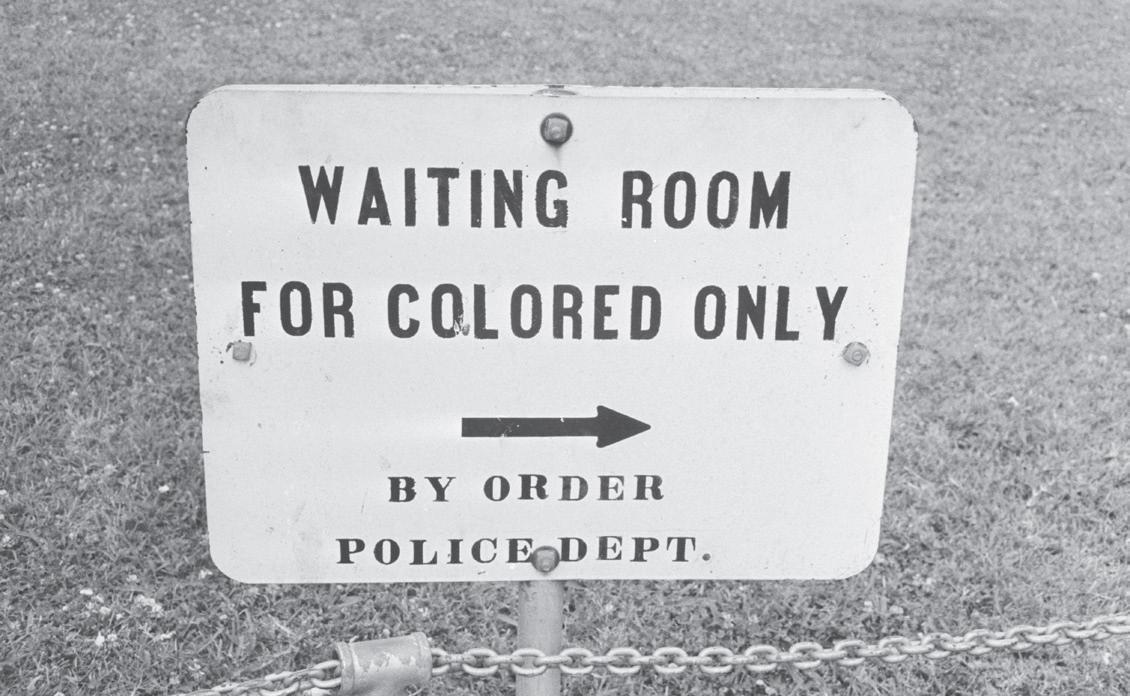
• Segregation & Subjugation: Both mandated strict segregation of public facilities (schools, transport, restrooms).
• Miscegenation Laws: Both prohibited interracial marriage and sexual relations.
• “Separate but Equal” Myth: In both systems, “separate” facilities (schools, transportation, housing) for non-white individuals were invariably inferior and underfunded.
SOUTH AFRICA (Apartheid)
Political Status & Citizenship
Scale & Scope
Demographic Power Dynamics & Method of Control

Laws strictly classified all residents into racial categories (Black, Colored, White) and stripped Black South Africans of citizenship, confining them to “Bantustans” or homelands
It was a nationwide, legally centralized system enforced from 1948 onward.
Apartheid was designed by a minority (roughly 20% white) to control a vast majority (roughly 80% black)
WE ARE ... CONSCIOUS THAT HERE IN THE SOUTHERN PART OF THE COUNTRY, YOU HAVE EXPERIENCED THE DEGRADATION OF RACIAL SEGREGATION. ... LET FREEDOM RING. LET US ALL ACCLAIM NOW, ‘LET FREEDOM RING IN SOUTH AFRICA. LET FREEDOM RING WHEREVER THE PEOPLE’S RIGHTS ARE TRAMPLED UPON.
-NELSON MANDELA,
1990
AFRICA HAS BEEN DEPICTED FOR MORE THAN [A] CENTURY AS THE HOME OF BLACK CANNIBALS AND IGNORANT PRIMITIVES ... AFRICA DOES HAVE SPECTACULAR SAVAGES AND BRUTES TODAY, BUT THEY ARE NOT BLACK. THEY ARE THE SOPHISTICATED WHITE RULERS OF SOUTH AFRICA WHO PROFESS TO BE CULTURED, RELIGIOUS, AND CIVILIZED, BUT WHOSE CONDUCT AND PHILOSOPHY STAMP THEM UNMISTAKABLY AS MODERN-DAY BARBARIANS.
-DR. MARTIN LUTHER KING
UNITED STATES (Jim Crow)

Black Americans were citizens by law (post-14th Amendment), but were denied the practical exercise of their rights through local legislation (segregation) and terror (lynchings)
Mostly concentrated in the Southern U.S., varying by state and locality.
Existed in a nation where white Americans formed an overwhelming majority.
Impact Today
Although Apartheid and Jim Crow legislation have been abolished, the effects of the oppressive systems are still felt today. They have simply taken other racist institutional forms
Used “pass laws” (internal passports) to strictly control movement and forced removals, enforced with military power
Designed under apartheid to enforce racial separation, South Africa’s cities remain deeply divided. White suburbs have access to stable infrastructure and basic services, while many Black townships remain overcrowded & lack of running water, electricity, &sewage systems. Decades later, socioeconomic conditions continue to reflect the racial divisions of the past.
Utilized “separate but equal” laws, poll taxes, literacy tests, and violent enforcement.
Redlining was a 1930s federal policy that systematically denied mortgage loans and financial services to residents in predominantly Black and non-white neighborhoods, marking them “hazardous” in red on maps. Led by the Home Owners’ Loan Corporation (HOLC), this discriminatory practice created deep-seated residential segregation, generational wealth gaps, and persistent urban disinvestment, with effects still visible today.
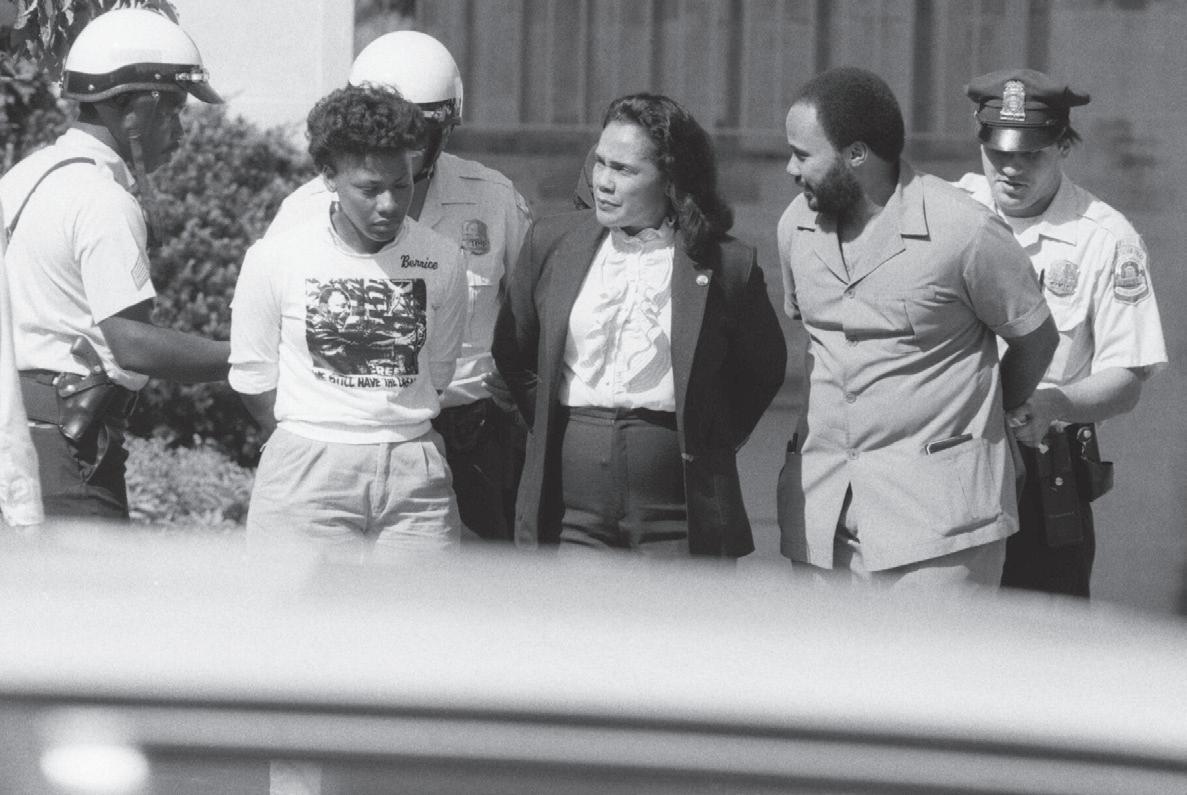
CORETTA SCOTT KING, WIDOW OF THE LATE MARTIN LUTHER KING, JR., AND HER CHILDREN BERNICE & MARTIN ARE BEING ARRESTED AS THEY PROTEST APARTHEID AT THE SOUTH AFRICAN EMBASSY IN WASHINGTON, D.C. IN 1985. PHOTO FROM BETTMANN/GETTY.
SCAN THE QR CODE TO THE LEFT TO WATCH “REDLINING AND RACIAL COVENANTS: JIM CROW OF THE NORTH” FROM TWIN CITIES PBS ON YOUTUBE, DISCUSSING GOVERNMENT APPROVED RESTRICTION ACCESS TO HOME OWNERSHIP FOR PEOPLE OF COLOR. AUGUST 4, 2019.
SCAN THE QR CODE TO THE LEFT TO SEE THE CIVIL RIGHTS ERA TIMELINE FROM 1944-1972 FROM THE JIM, CROW MUSEUM, HTTPS://JIMCROWMUSEUM.FERRIS. EDU
SCAN THE QR CODE TO THE LEFT TO LISTEN TO “A ‘FORGOTTEN HISTORY’ OF HOW THE U.S. GOVERNMENT SEGREGATED AMERICA “ ON FRESH AIR, NPR, AN INTERVIEW BY TERRY GROSS. MAY 3, 2017.
SCAN THE QR CODE TO THE LEFT TO READ AND SEE PHOTOS FROM “AFRICAN AMERICANS AND THE FIGHT AGAINST APARTHEID “ BY ZEB LARSON FOR PICTURINGBLACKHISTORY. COM. AFRICAN AMERICANS WERE CLOSELY INVOLVED IN THE FIGHT AGAINST SOUTH AFRICAN APARTHEID, WITH CULTURAL ICONS, LEGISLATORS, CIVIL RIGHTS ACTIVISTS, AND ATHLETES ALL PLAYING THEIR PART TO CALL ATTENTION TO THE ISSUE AND TO ULTIMATELY PASS SANCTIONS AGAINST SOUTH AFRICA.
WE CAN UNDERSTAND SOUTH AFRICA BECAUSE WE HAVE SEEN THE INSIDE OF THE JAILS OF MISSISSIPPI AND ALABAMA AND HAVE BEEN HERDED BEHIND BARBED WIRE ENCLOSURES, ATTACKED BY POLICE DOGS, AND SET UPON WITH ELECTRIC PRODS ... THE CELLS OF ROBIN ISLAND AND BIRMINGHAM JAIL LOOK THE SAME ON THE INSIDE.
-SNCC, “THE INDIVISIBLE STUGGLE AGAINST APARTHEID AND COLONIALISM” 1967
DIVIDED CITIES: SOUTH AFRICA’S APARTHEID LEGACY
BY JOHNNY MILLER, FOR THE GUARDIAN.

SCAN THE QR CODE TO THE LEFT TO WATCH “WHY SOUTH AFRICA IS STILL SO SEGREGATED “ BY CHRISTINA THORNELL FOR VOX.COM. MANY OF THE BARRIERS THEY CREATED CONTINUE TO DIVIDE SOUTH AFRICANS BY SKIN COLOR - WHICH IN TURN DETERMINES THEIR QUALITY OF LIFE, ACCESS TO JOBS, AND WEALTH. RACIAL DIVISION WAS BUILT INTO THE FABRIC OF CITIES THROUGHOUT SOUTH AFRICA, AND IT STILL HASN’T BEEN UPROOTED. APR 19, 2021.
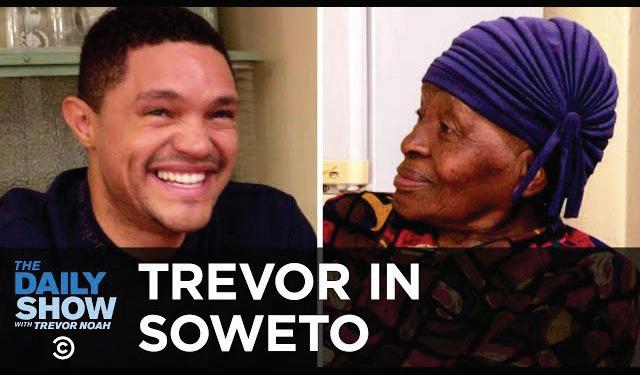
SCAN THE QR CODE TO THE LEFT TO WATCH A CLIP FROM TREVOR NOAH ON THE DAILY SHOW ON YOUTUBE TREVOR HEADS BACK TO SOUTH AFRICA, TOURS THE NEIGHBORHOOD HE GREW UP IN, TALKS TO HIS GRANDMOTHER ABOUT NELSON MANDELA AND APARTHEID, AND GIVES AN “MTV CRIBS”-STYLE TOUR OF HIS GRANDMA’S HOME, DEC. 3, 2018.
PHOTO
A SIGN IN JACKSON, MISSISSIPPI, PHOTOGRAPHED IN 1961. PHOTO FROM GETTY.
FROM APARTHEID, TO JIM CROW, TO ME
BY PARIS CRAYTON III, GEFFEN PLAYHOUSE TEACHING ARTIST
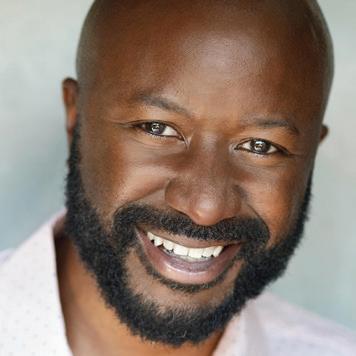
One of the scariest moments of my life began after a moment of kindness from my dad. I was just a typical sophomore in high school. My daily thoughts consisted of eating, sleeping, homework, video games, and hanging out with my friends. One day, a group of us planned a trip to the movies. As my father drove me to the theater, I licked my lips at the thought of fresh popcorn, and my knee bounced nervously as I pondered the possibility of sitting next to my crush.
When we arrived, I thanked my dad and stepped out of the car. Moments later, I heard him calling me back. “Here is an extra twenty.” He said, smiling. I thanked him again as my eyes lit up. Twenty extra dollars in the 90’s was nothing to sneeze at. I once again began my journey to the theater when all of a sudden, two police cars stopped right in front of me. Three officers hopped out. Without asking a question, they instructed me to place my hands on the hood of the vehicle and began emptying my pockets. After finding my wallet, the extra $20, keys, and maybe a stick of gum, they yelled for me to take my belongings, then got in their cars and drove off. No explanation. No apology. No acknowledgment of what just happened. I stood there in complete shock, trying to fight back tears. I had never been violated like that before. I questioned what I had done wrong.
The answer is absolutely nothing. I am a Black man.
An interaction rooted in care from a black father to his son was deemed suspicious. A possible drug transaction. Because of this, instead of being treated like the normal sophomore I thought I was, I was treated as a problem to be investigated. In the eyes of the officer, I wasn’t normal. I was a potential criminal. I was African-American.
I was… a boy.
This presumption of guilt before understanding echoes the central tension of “Master Harold”… and the Boys . Set during apartheid South Africa, Fugard’s play examines how systems of racial hierarchy shape even the most intimate relationships. Before the audience sees conflict, they see a relationship that resembles that of a father and son. Sam, the intelligent and compassionate older black man teaches Hally, the younger white man, how to think, how to dream, and how to move through the world. Even while Hally’s biological father is absent, usually drunk and unpredictable, Sam offers emotional stability. He offers comfort in a world that doesn’t offer the same for him. Just as my father’s act of care was reinterpreted as suspicion, Sam’s paternal presence is constantly redefined by apartheid. He can’t simply be seen as a father figure. He is seen as a servant. He must shrink himself, measure his tone,
and eventually remind Hally of his title: Master Harold. He lives in a world where no matter his age, he is treated like, and called, a boy.
America and South Africa share similar stories. As the African Ancestry notes, “The relationship between African Americans and South Africa is rooted in a shared history of racial oppression, political activism, and cultural exchange.” Just as South Africa had Apartheid (meaning “apartness” in Afrikaans), America had Jim Crow, meant to keep people apart. Just as Nelson Mandela sat in a South African jail for his active opposition to the racist systems, so did Martin Luther King Jr. in Birmingham, Alabama. The parallels are endless. In both countries, systems and laws were put in place to uphold White supremacy. To control movement, identity, and perception. In America, from slavery to Jim Crow to present day systems, Black Americans have continuously had to confront what the American Historical Association refers to as “the anti-black racism that circumscribed their lives”. Even in 2026, we exist in a world strikingly similar to the one Fugard created, and Black Americans aren’t the only ones.
- AFRICAN ANCESTRY “
THE RELATIONSHIP BETWEEN AFRICAN AMERICANS AND SOUTH AFRICA IS ROOTED IN A SHARED HISTORY OF RACIAL OPPRESSION, POLITICAL ACTIVISM, AND CULTURAL EXCHANGE
Between 1960 and 1983, the Group Areas act allowed police to forcibly remove 3.5 million South Africans, mostly Black, from their homes. In the last two years, the Immigration and Nationality Act and the U.S. immigration and Customs Enforcement (ICE) have reported more than 2.5 million people, mostly from Latino communities, have been deported from American soil. History has a strange way of repeating itself.
Sometimes the act of merely existing is treated as a crime. We see it in the viral videos of people calling the police on Black Americans for doing everyday activities such as swimming or having a lemonade stand. We hear it everyday on the news as our current administration and ICE continues to incite fear for families who call America home. Fugard illustrates this through the lives of his three characters. I learned it as a teenager, simply by going to the movies.
SCAN THE QR CODE TO THE LEFT TO READ “APARTHEID AND JIM CROW ARE REALLY NO DIFFERENT’: WHY GEORGE FLOYD’S DEATH REVERBERATED IN AFRICA” BY MORGAN WINSOR FOR ABC NEWS. JULY 12, 2020.
SCAN THE QR CODE TO THE LEFT TO WATCH A CLIP FROM TREVOR NOAH ON THE DAILY SHOW ON YOUTUBE TREVOR NOAH EXAMINES LIFE IN HIS HOME COUNTRY OF SOUTH AFRICA VS. LIVING IN AMERICA. AUGUST 27, 2023.
THE STORY BEHIND “MASTER
HAROLD”...AND THE BOYS
BY AJA HOUSTON, GEFFEN PLAYHOUSE EDUCATION ASSOCIATE & LEAD TEACHING ARTIST
One of Athol Fugard’s most renowned and produced plays, “Master Harold”...and the Boys, is also one of his most autobiographical and deeply personal. Hally, one of the main characters in the play, is an unflinching portrayal of Fugard as a 13-year-old youth at a traumatic turning point and subsequent reckoning with his place as a white person living in apartheid South Africa.
Fugard’s father, Harold David Fugard, was a jazz pianist, but his disability from a childhood accident, compounded with severe alcoholism, made him unable to work. So his mother, Elizabeth Fugard, became the primary breadwinner. She operated a small boarding house, and later a tearoom, which Fugard chose as the setting for “Master Harold”...and the Boys. Fugard had a special bond with two Black men Sam and Willie, who served as waiters in his mother’s tearoom. Despite the racial and class divisions of apartheid, Fugard described the men as surrogate fathers and his only true friends during this period of his young life. All of which is echoed in Hally’s relationship with the Black characters of Sam and Willie in the play.
HALLY: Strange, isn’t it?
SAM: What?
HALLY: Me and you.
SAM: What’s strange about it?
HALLY: A little white boy in short trousers and a black man old enough to be his father flying a kite. It’s not every day you see that.
SAM: But why strange? Because one is white and the other black?
And like Hally does in the climatic moment of the play, Fugard racially attacked Sam, spitting in his face. An ugly act that Fu gard attempts to confront in “Master Harold”...and the Boys
SAM: You’ve hurt yourself, Master Harold. I saw it coming. I warned you, but you wouldn’t listen. You’ve just hurt yourself bad. And you’re a coward, Master Harold. The face you should be spitting in is your father’s…but you used mine, because you think you’re safe inside your fair skin… and this time I don’t mean just or decent.
SCAN THE QR CODE TO THE LEARN HOW TO BUILD A KITE FROM WIKIHOW ON YOUTUBE.
men who were a catalyst for his awakening to the atrocity of apartheid.
SAM: That sounds good, “A World Without Collisions.”
Sam’s vision of a future in which all races will someday dwell in harmony remains relevant to audiences today.
SAM: Hally, we’re bumping into each other all the time. Look at the three of us this afternoon: I’ve bumped into you, you’ve bumped into Willie, the two of us have bumped into you, you’ve bumped into your mother, she bumping into your Dad. … And it doesn’t stop with us. The whole world is doing it all the time. People get hurt in all that bumping, and we’re sick and tired of it now. It’s been going on for too long - Are we never going to get it right?
Although “Master Harold”...and the Boys serves as an important reminder of South Africa’s apartheid past, it continues to hold up a mirror to the persistent, insidious systems of racism in South Africa and the rest of the world.
THEY WERE TWO VERY, VERY BEAUTIFUL HUMAN BEINGS. AND VERY INSTRUMENTAL, VERY IMPORTANT IN ME, FINALLY STARTING ON A PROCESS OF EMANCIPATION FROM THE PREJUDICES OF MY COUNTRY, OF THE TRADITIONAL SOUTH AFRICAN WAY OF LIFE.
However, Fugard has said that his main reason for writing this play was not to atone but to celebrate Sam and Willie, the two
-ATHOL FUGARD
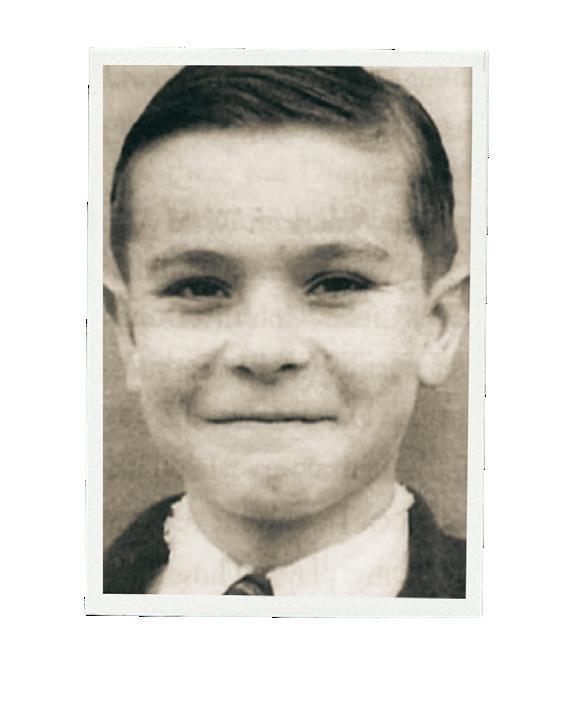
FUGARD AS A CHILD. PHOTO FROM FALLS THE SHADOW.
Sources: The Tragedy of Apartheid Becomes Personal in Athol Fugard’s ‘Master Harold ... and The Boys’ WQXR Audio
Athol Fugard on Revisiting “Master Harold” ... and the boys - Signature Theatre.
Gross, Terry (13 March 2025) Remembering South African playwright Athol Fugard, NPR.org https:// www.npr.org/2025/03/13/nx-s1-5325736/remembering-south-african-playwright-athol-fugard
OPPOSITE PAGE CLOCKWISE: JOHN KANI; NYASHA HATENDI, BEN BEATTY, AND JOHN KANI IN “MASTER HAROLD”...AND THE BOYS AT GEFFEN PLAYHOUSE. CO-DIRECTED BY EMILY MANN AND GEFFEN PLAYHOUSE ARTISTIC DIRECTOR TARELL ALVIN MCCRANEY. PHOTO BY JEFF LORCH.
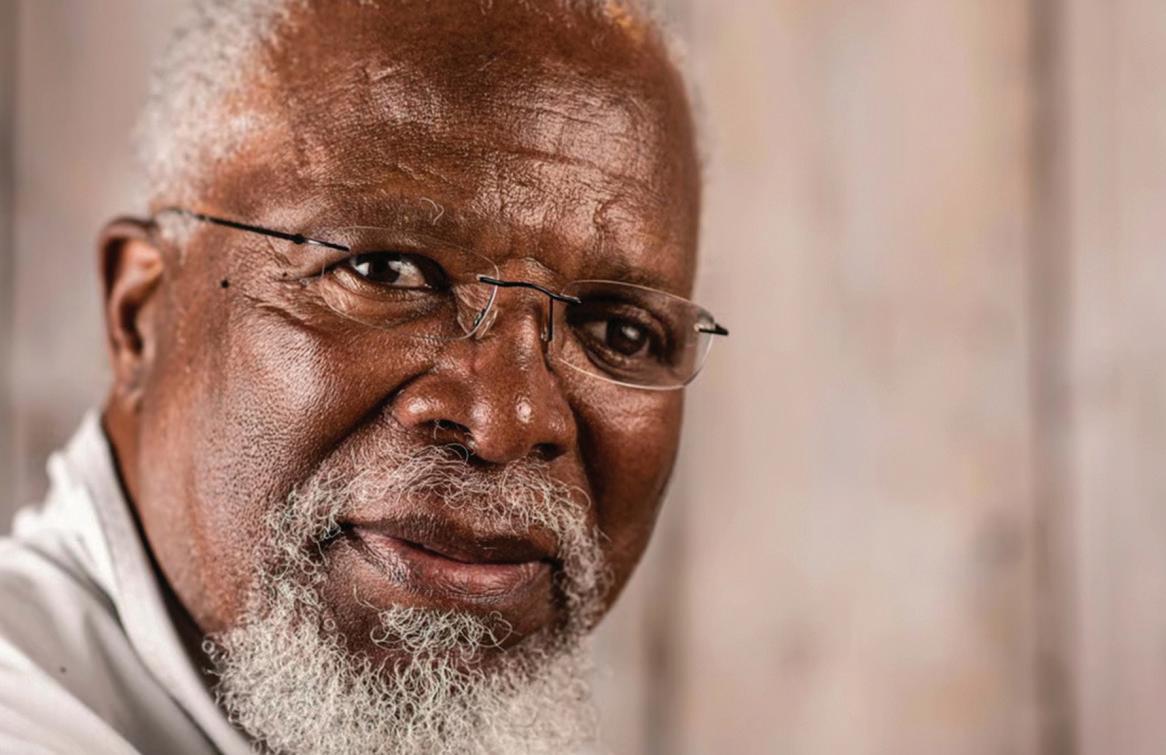
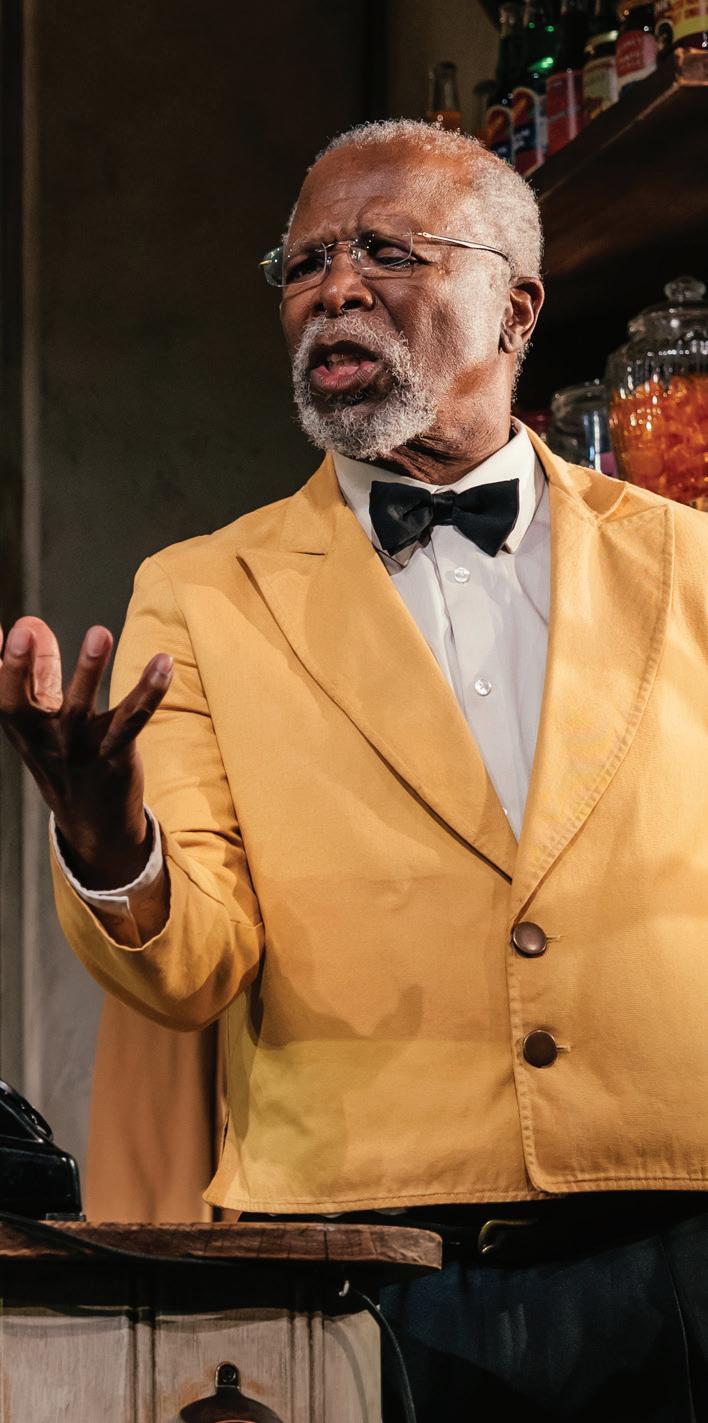
Read this and more articles from Geffen Productions visit geffenplayhouse.org/blog. WHY JOHN KANI IS RETURNING TO “MASTER HAROLD”...AND THE BOYS AFTER 40 YEARS
SCAN THE QR CODE TO visit Geffen’s Blog and read WHY JOHN KANI IS RETURNING TO “MASTER HAROLD”...AND THE BOYS AFTER 40 YEARS 01.27.2026
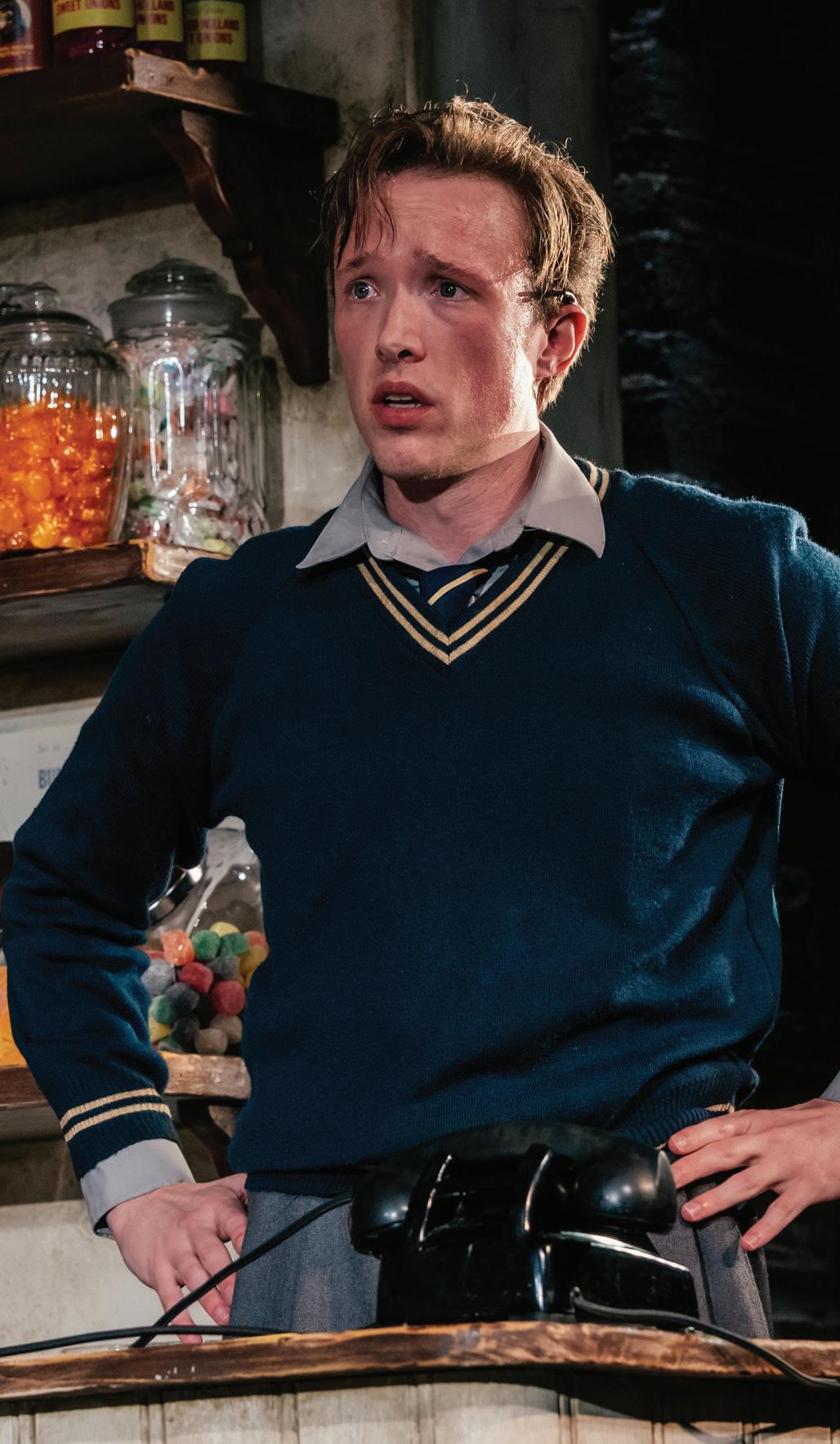
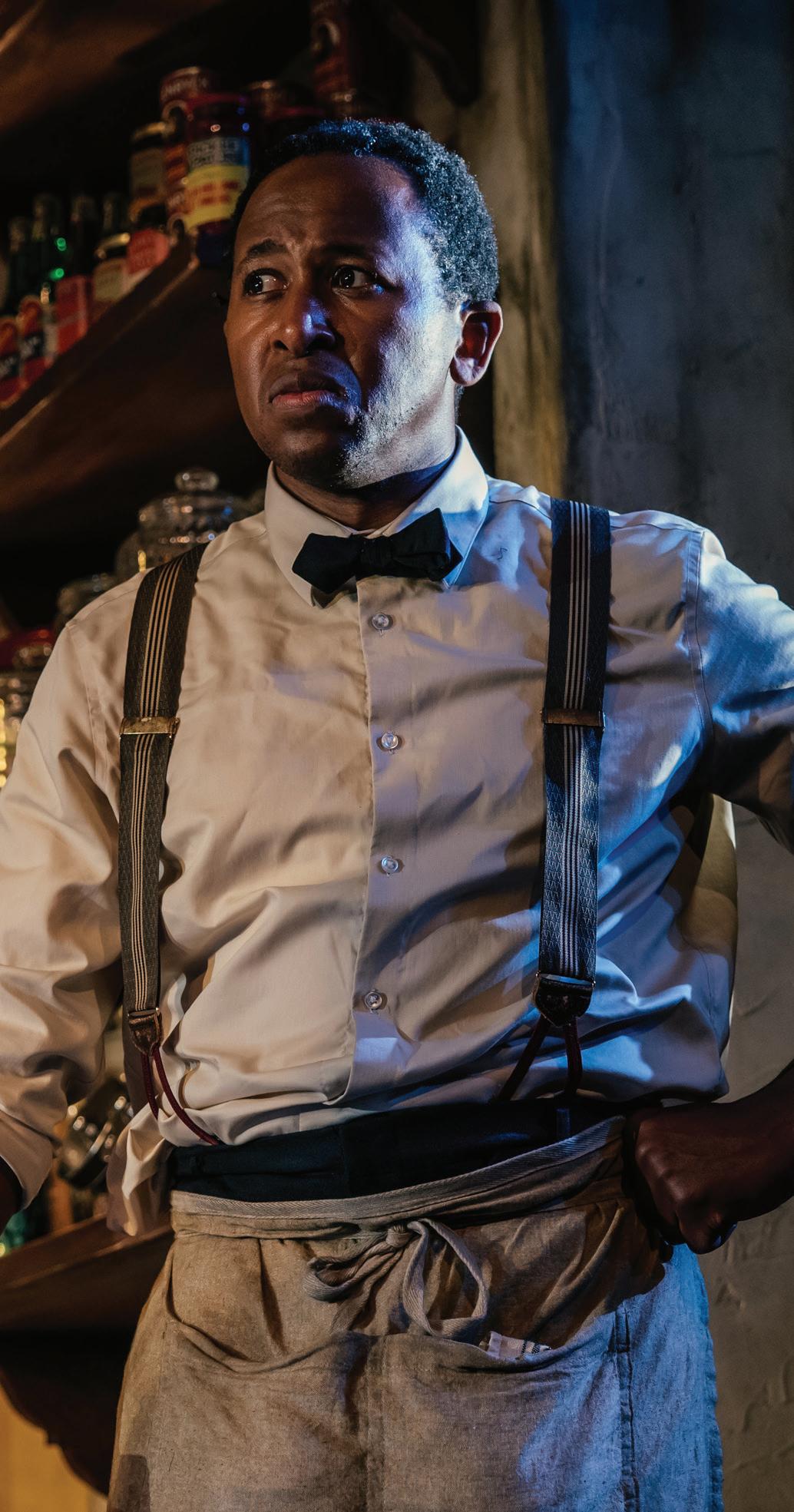
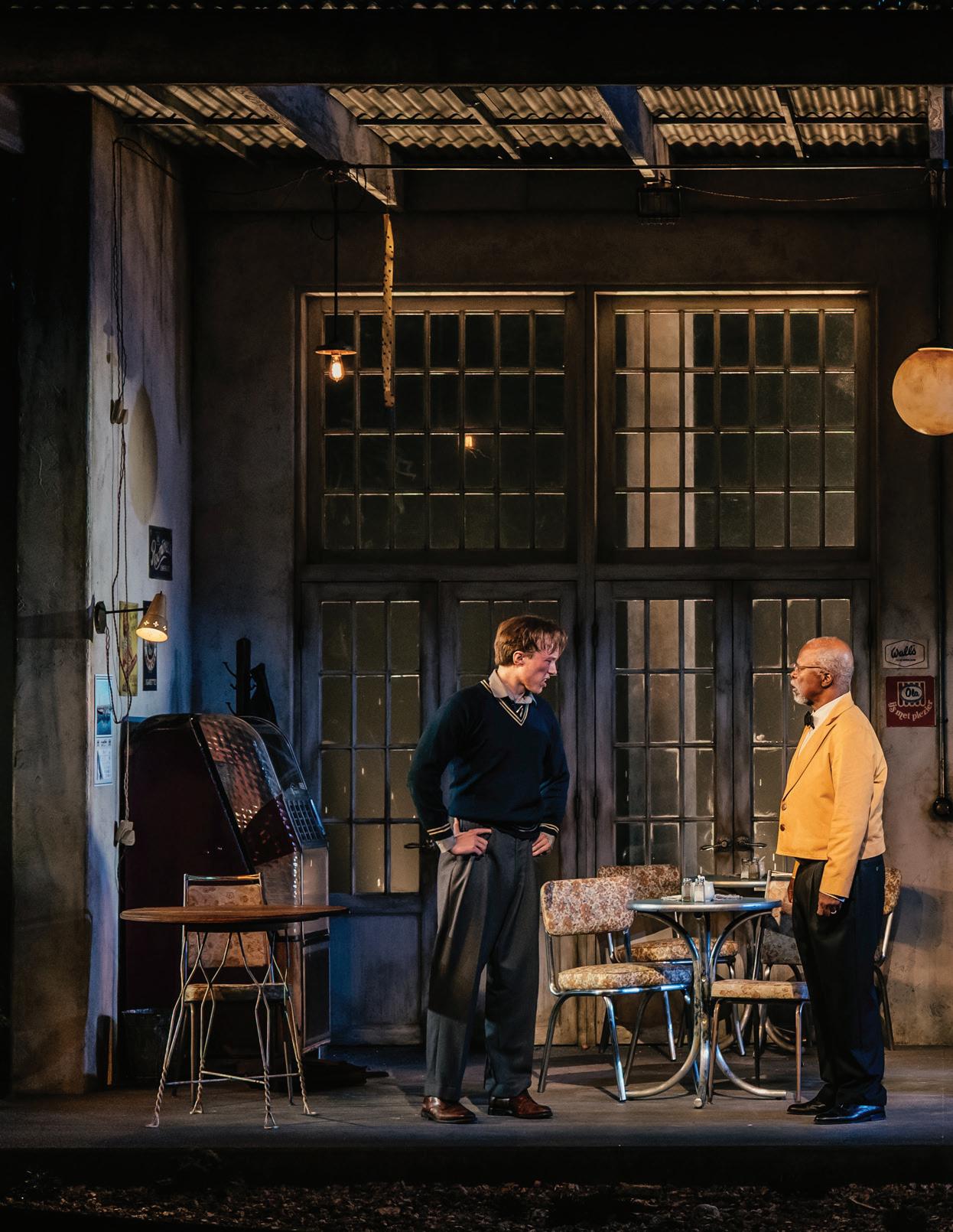
L-R: BEN BEATTY, JOHN KANI AND NYASHA HATENDI IN
“MASTER HAROLD”...AND THE BOYS AT GEFFEN PLAYHOUSE.
CO-DIRECTED BY EMILY MANN AND GEFFEN PLAYHOUSE
ARTISTIC DIRECTOR TARELL ALVIN MCCRANEY. PHOTO BY JEFF LORCH.
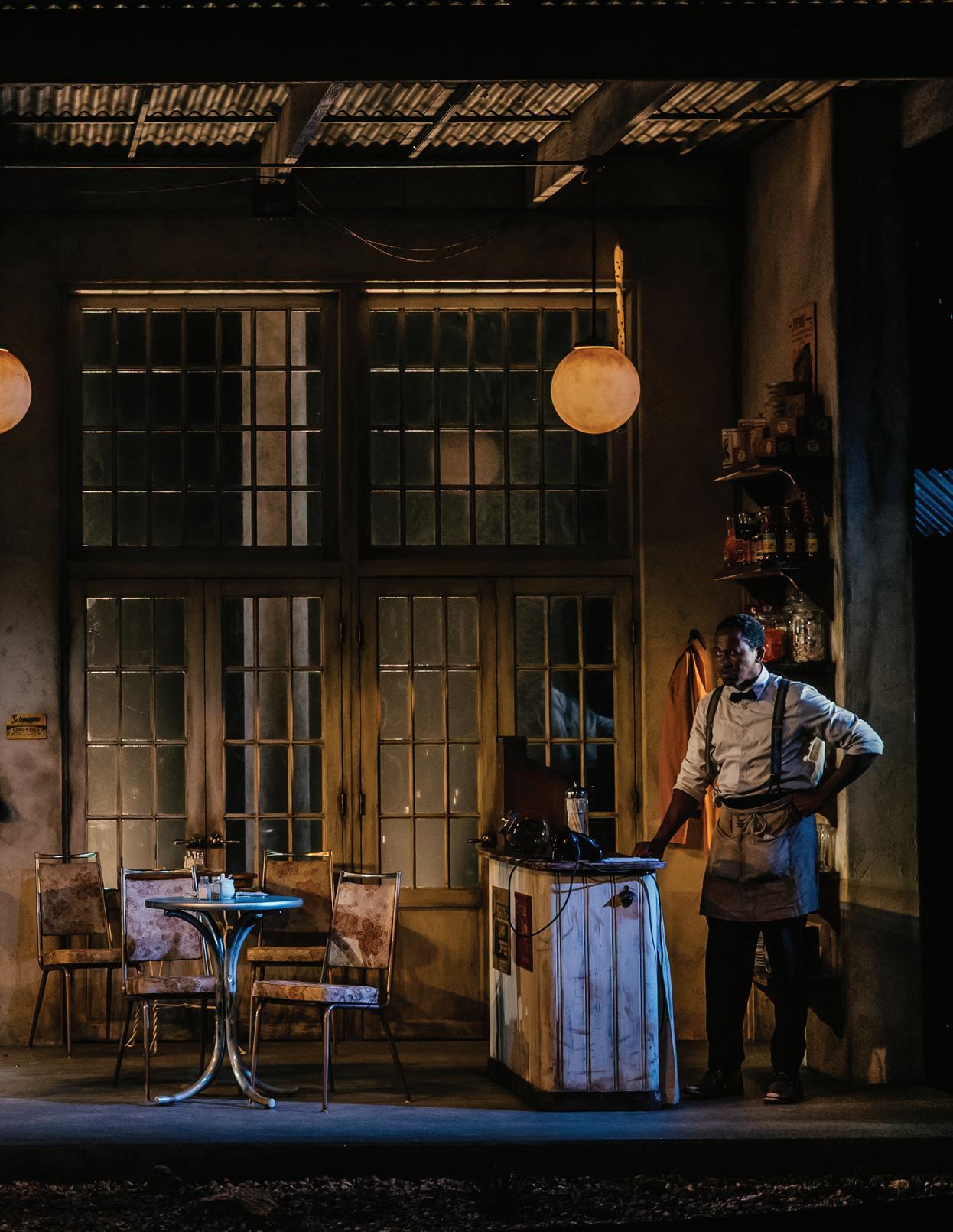
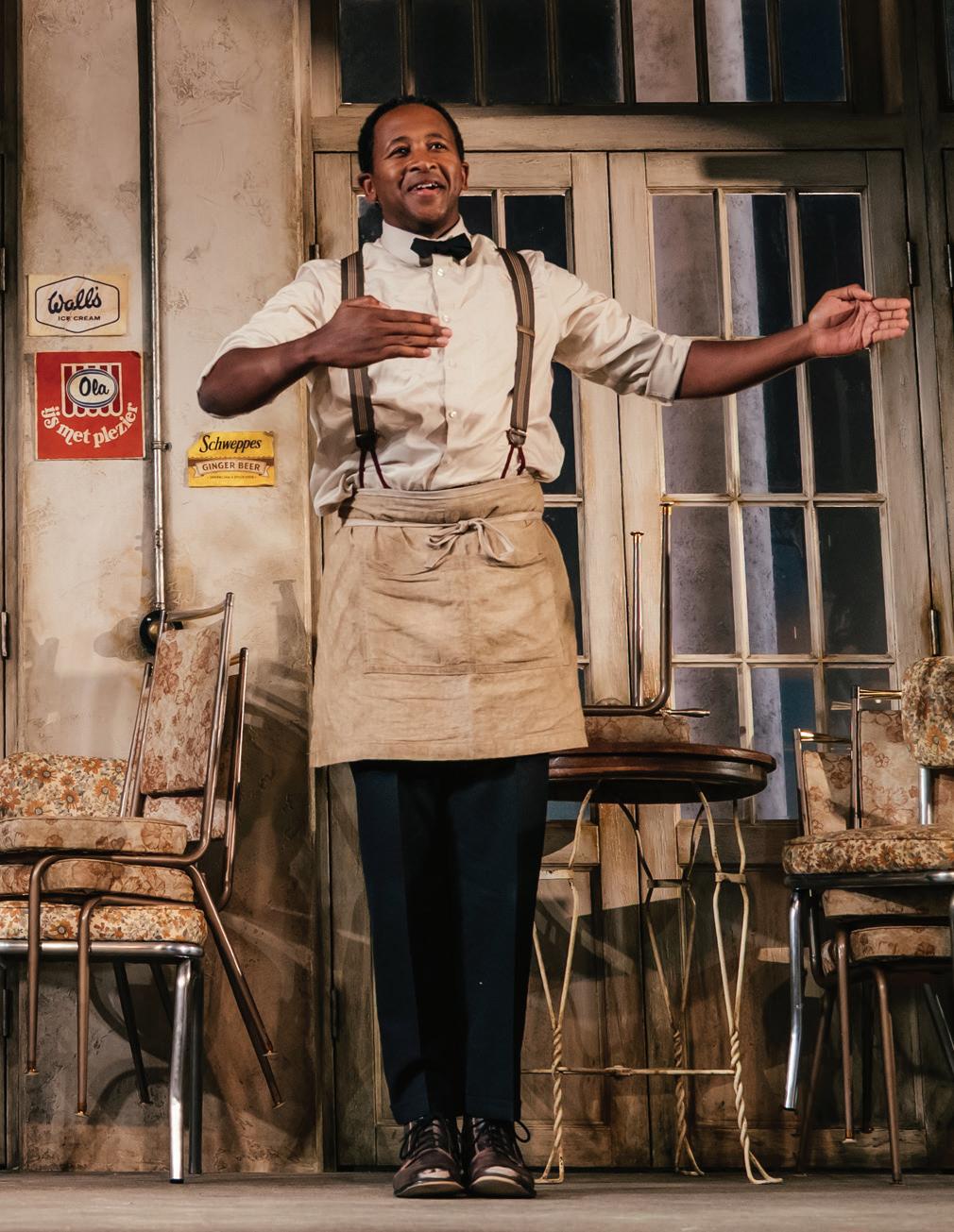
SCAN THE QR CODE TO THE LEFT TO LEARN THE BASICS OF DETROIT BALLROOM DANCING WITH THIS BEGINNER-FRIENDLY INSTRUCTIONAL VIDEO DETROIT BALLROOM, IS A SMOOTH AND SOULFUL PARTNER DANCE ROOTED IN THE RICH CULTURAL TRADITIONS OF MOTOWN. THIS STYLE BLENDS ELEMENTS OF BALLROOM AND SWING WITH A UNIQUE DETROIT TWIST FROM GARY & TONYA ON YOUTUBE. NOV 16, 2024
NYASHA HATENDI IN “MASTER HAROLD”...AND THE BOYS AT GEFFEN PLAYHOUSE. CO-DIRECTED BY EMILY MANN AND GEFFEN PLAYHOUSE ARTISTIC DIRECTOR
TARELL ALVIN MCCRANEY. PHOTO BY JEFF LORCH
THE ESCAPISM OF BLACK SOUTH AFRICAN BALLROOM CULTURE
THERE’S NO COLLISIONS OUT THERE, HALLY. NOBODY TRIPS OR STUMBLES OR BUMPS INTO ANYBODY ELSE. THAT’S WHAT THAT MOMENT IS ALL ABOUT... FOR AS LONG AS THE MUSIC LASTS, WE ARE GOING TO SEE SIX COUPLES GET IT RIGHT, THE WAY WE WANT LIFE TO BE.
”
-SAM
“MASTER HAROLD”... AND THE BOYS
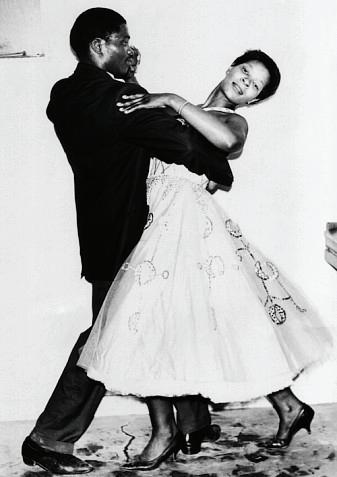
In “Master Harold”...and the Boys , Fugard’s use of ballroom dancing is not just a backdrop for the dramatic action, it is a direct reflection of the rich and resilient tradition of Black ballroom culture in South Africa: a world in which the dance floor represented dignity, aspiration, and a quiet but powerful form of resistance. It is no coincidence that Sam’s most profound vision of a better world takes the form of a ballroom floor where no one collides, a place of harmony, grace, and equal footing that stood in sharp contrast to the fractured, unequal society outside its walls.
The origins of the oldest traditional ballroom dance, the Waltz, first appeared in 16th century Europe. The term ‘ ballroom dancing ’ is derived from the word ball which in turn originates from the Latin word ballare which means ‘ to dance ’ (a ball-room being a large room specially designed for such dances).
THE ORIGINS OF BALLROOM DANCING IN SOUTH AFRICA
• Until the mid-1800s, ballroom and social dancing was occasional, private, and strictly tied to European customs and decorum, it was as much about displaying social status as it was about enjoyment
• When Britain consolidated control over South Africa’s four colonies in 1902, its most prominent representatives, the high commissioners and governor-generals, brought with them many British social customs and expectations. Figures like Herbert John Gladstone, who served as governor-general from 1914 to 1920, shaped elite social life through the events they hosted: garden parties, evening receptions, and formal balls, and Ballroom dancing continued to gain popularity.
• As South African cities grew, ballroom dancing
became increasingly associated with the white middle and upper classes, particularly in urban centers like Johannesburg and Pretoria
EXCLUSIVE CLUBS AND THE WHITE ELITE
• Prestigious clubs, such as the Rand Club, the Country Club, and the Pretoria Country Club, formed the backbone of white ballroom culture, requiring both membership fees and an “acceptable” social standing to join
• These clubs were modeled on the English club tradition, making formal social dancing a regular feature of their events and reinforcing its association with privilege and status
• Not all white South Africans belonged to this elite world; a growing working and lower-middle class danced in public halls and spaces. These more mixed, public dance spaces were frequently associated with alcohol, disorder, and the blurring of class boundaries, particularly in the mining towns
“Rainbow” Balls and Parallel Worlds
• Black South Africans had a vibrant and skilled ballroom dancing culture of their own, with events sometimes called “rainbow” balls, held on the outskirts of towns, away from white neighborhoods and white scrutiny
• These events ran parallel to white ballroom culture throughout the early twentieth century, forming a separate but equally passionate dance tradition. Black ballroom dancing frequently had a high standard for the dancers
• Rather than a merging of cultures, these were two distinct worlds existing side by side with the rigid social boundaries legally in place
• The very existence of these events speaks to the resilience of Black communities in South Africa
ERASURE AND INVISIBILITY
• When white newspapers and journals did cover Black communities, they focused almost exclusively on the dancing of the tribes in South Africa, effectively erasing Black ballroom culture from the official historical record
THEMES & TOPICS
• References to Black ballroom dancing in early documents tend to appear only by accident or in passing, a telling reflection of how deliberately Black cultural sophistication was hidden, ignored or minimized under Apartheid
BALLROOM IN SOUTH AFRICA IN MODERN TIMES
• In the early 1990s, as apartheid neared its end, ballroom dancing had taken root as a sport in townships like Soweto. For young people coming of age amid continued social tension postapartheid such as riots, crime, school boycotts, it offered something rare and powerful: discipline, pride, self-respect, and even a touch of glamour. With recreational facilities like basketball courts, soccer fields, and shopping centers largely confined to white areas, ballroom dancing filled a profound gap, giving township youth a world of their own to step into.
• The urban Black middle class formed their own social and cultural associations, such as the Africa Dance Academy, which had 15,000 black dancers nationwide at one time. The black Africa Dance Academy, which was started in 1968, grew to 500 member clubs nationwide in 1993.
• South Africa has produced world-renowned Black professional ballroom dancers, such as Oti and Motsi Mabuse, who have dominated international competitions and television dance shows.
• Dancing with the Stars SA is a South African dance competition television series that premiered on 4 February 2019 and still airing today. South African Ballroom Dancer Keo Motsepe was the first black dancer on the American Dancing with the Stars.
SCAN THE QR CODE TO THE LEFT TO WATCH SOUTH AFRICAN BALLROOM DANCER KEO MOTSEPE AND ACTOR EVANNA LYNCH DANCE THE FOXTROT (WEEK 1) | DANCING WITH THE STARS, SEASON 27 ON NBC. SEP. 24, 2018.

SCAN THE QR CODE TO THE LEFT TO WATCH SOUTH AFRICA DANCE COMPETITION | BALLROOM FROM A-B MEDIA ON YOUTUBE. MAY 30, 2024.
SCAN THE QR CODE TO THE VISIT BLACKINTHEBALLROOM.COM. BLACK IN THE BALLROOM (BITB) IS THE FIRST UK PROJECT AIMED AT PROMOTING EQUITY AND INCLUSION FOR DANCERS OF BLACK HERITAGE IN BALLROOM AND LATIN AMERICAN DANCE.
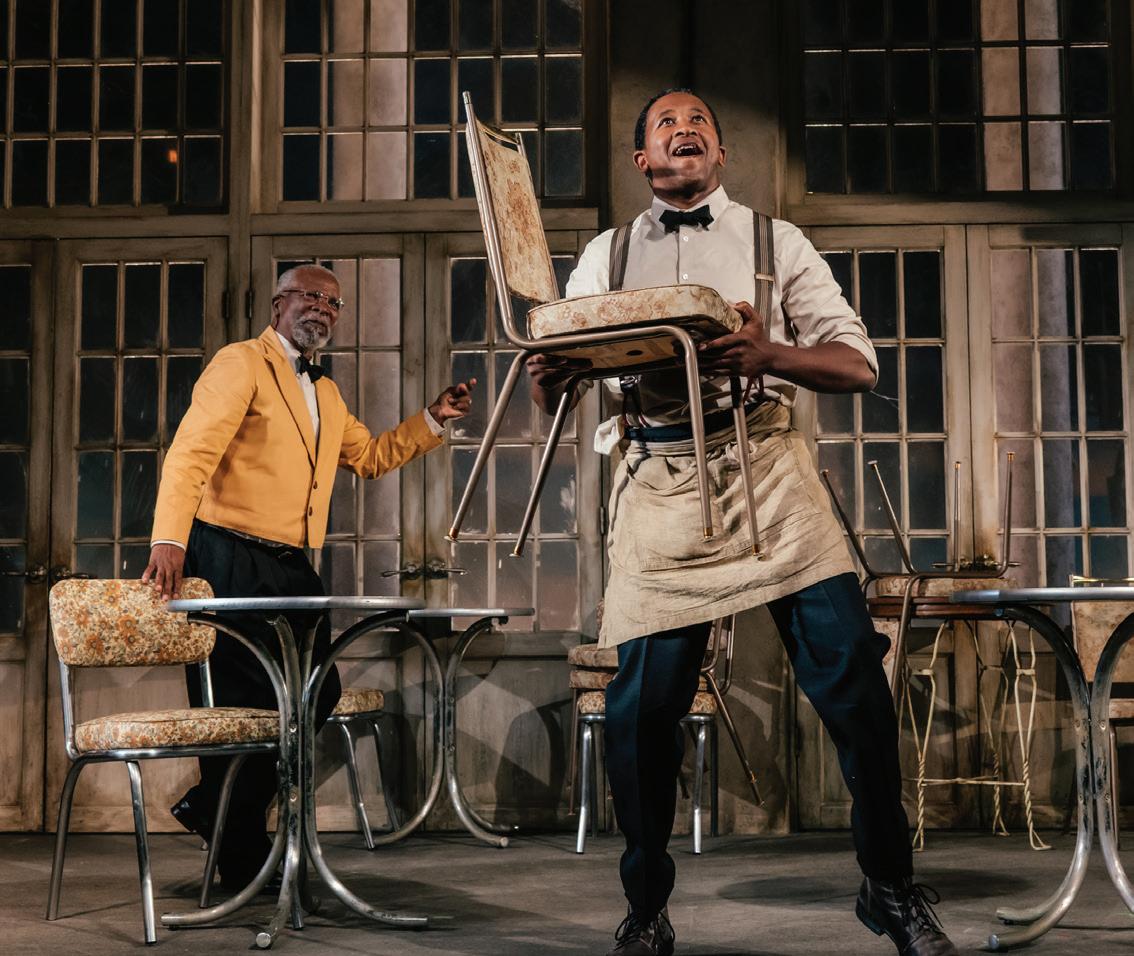
L-R: JOHN KANI AND NYASHA HATENDI IN “MASTER HAROLD”...AND THE BOYS AT GEFFEN PLAYHOUSE. CODIRECTED BY EMILY MANN AND GEFFEN PLAYHOUSE ARTISTIC DIRECTOR TARELL ALVIN MCCRANEY. PHOTO BY JEFF LORCH.
A COUPLE BALLROOM DANCING IN THE 1950S IN JOHANNESBURG, SOUTH AFRICA PHOTO BY DANIEL KGOMO MORELONG ON BUY THE PRINT AT WWW.EVERARD-READ-CAPETOWN. CO.ZA

ART FOR SOCIALCHANGE
FROM THE EDUCATION TEAM AT GEFFEN PLAYHOUSE
Social change refers to shifts in the values, behaviors, laws, or structures that shape how a society functions. It can happen gradually over time or be sparked by movements, events, or cultural moments that challenge the status quo and push communities to reconsider the way things are.
Art has long been one of the most powerful tools for inspiring social change. Through storytelling, music, theatre, visual art, and poetry, artists can give voice to people and experiences that are often overlooked or silenced. Art builds empathy and invites the viewer to step into someone else’s world experience and see injustice through their eyes, which can move people to think, feel, and act differently.
Athol Fugard created plays, such as “Master Harold”...and the Boys, to show the brutal realities of South African apartheid and challenge the oppressive regime at a time when open political protest was dangerous and restricted. Other pivotal playwrights, such as Lynn Nottage (Sweat), Tony Kushner (Angels in America), and Jonathan Larson (Rent), have drawn attention to injustices such as class inequality, racial injustice, and institutionalized discrimination through their work. These plays stand within a significant dramatic tradition in which playwrights have used the stage not merely to entertain, but to interrogate systems of oppression, give voice to the marginalized, and challenge audiences to confront the structures that shape their world.
However, art alone cannot create social change. A play can shine a light on an issue and shift hearts and minds, but lasting change typically requires sustained collective action. Art is most powerful when it works alongside activism, education, policy reform, and community organizing. In recent decades, Social Media has added a new dimension to activism with its far-reaching access to global audiences. In real time, these digital platforms can amplify artistic voices who help effectively mobilize communities to raise awareness, organize protests, boycotts, and more.
What art, such as theatre, does best is start in-depth conversations about individual responsibility to our community and our role in aiding social change. It plants seeds of awareness and compassion that can grow into something larger, something beyond just words, that can lead to action, no matter how small, and that is a powerful thing.
I HEARD A STORY ABOUT A SOUTH AFRICAN WHO HAD HAD VERY, VERY STRONG, TRADITIONAL SOUTH AFRICAN ATTITUDES AND WHO, FOR SOME REASON OR THE OTHER, HAD BEEN AT YALE WHEN I WAS DOING “MASTER HAROLD,’ WHO HAD COME ALONG AND SEEN THE PLAY AND WHO HAD BEEN SO AFFECTED BY THAT PRODUCTION, WHO HAD IN FACT UNDERGONE A CHANGE OF HEART AND - NOW, I HAVE HEARD OF QUITE A FEW CASES LIKE THAT IN TERMS OF RESPONSES TO MINE AND OTHER WORKS OF ART, OTHER - TO NOVELS AND THINGS LIKE THAT FROM SOUTH AFRICA. SO ONE HAS GOT TO RECKON WITH THE FACT THAT APPARENTLY ART CAN DOBE AS PROFOUNDLY EFFECTIVE AS THAT IN TERMS OF PEOPLE.
-ATHOL FUGARD

SCAN THE QR CODE TO LEARN MORE ABOUT THE 1988 NELSON MANDELA 70TH BIRTHDAY TRIBUTE, A WATERSHED MOMENT IN THE FIGHT AGAINST APARTHEID. BROADCAST TO 600 MILLION PEOPLE ACROSS 67 COUNTRIES, THE CONCERT TRANSFORMED GLOBAL PERCEPTION OF MANDELA FROM “TERRORIST” TO POLITICAL PRISONER, INTENSIFIED INTERNATIONAL PRESSURE ON THE SOUTH AFRICAN GOVERNMENT, AND IS CREDITED WITH ACCELERATING HIS RELEASE, WHICH CAME JUST 20 MONTHS LATER.
SCAN THE QR CODE TO THE LEFT TO READ “‘MY ACTIVISM STARTED THEN’: THE SOWETO UPRISING REMEMBERED” FROM BY BASIA CUMMINGS, MATTHEW HOLMES AND GUARDIAN READERS. FROM STUDENTS AND ACTIVISTS TO REPORTERS AND PHOTOGRAPHERS, GUARDIAN READERS REMEMBER THE BRUTAL EVENTS OF THE 16 JUNE 1976. PUBLISHED IN THE GUARDIAN JUNE 16, 2016.
SCAN THE QR CODE TO THE LEFT TO WATCH “ART IS A WEAPON FOR SOCIAL CHANGE” FROM DR. TAMMY L. BROWN AT TEDXXAVIERUNIVERSITY. TAMMY, A WRITER, ARTIST AND PROFESSOR AT MIAMI UNIVERSITY OF OHIO, PRESENTS US WITH THE NOTION THAT ART AND CREATIVITY CAN BE USED AS A WEAPON TO COMBAT PAST AND ONGOING SOCIAL INJUSTICE. MAY 23, 2014.
SCAN THE QR CODE TO THE LEFT TO WATCH “HOW ART TRANSFORMS SOCIETY AND INSPIRES CHANGE | BARBARE EBANOIDZE | TEDXYOUTH@ TBILISIGREENSCHOOL BARBARE EMPHASIZES THE TRANSFORMATIVE POWER OF ART IN SHAPING INDIVIDUALS AND SOCIETY FOR THE BETTER. THE AUTHOR SHARES A PERSONAL JOURNEY OF FINDING SOLACE AND INSPIRATION THROUGH MUSIC AND HIGHLIGHTS THE UNIVERSAL NATURE OF ART THAT CONNECTS PEOPLE ACROSS CULTURES AND LANGUAGES. THE NARRATIVE EXPLORES HOW ART ADDRESSES SOCIETAL ISSUES, PROVIDES SOLUTIONS, AND CONTRIBUTES TO PERSONAL WELL-BEING. JAN.5, 2024.
SCAN THE QR CODE TO THE LEFT TO WATCH “THEATER AS A MEDIUM OF SOCIAL CHANGE” WITH AMY FRITSCHE TEDXKENTSTATE. PLAYS HAVE THE POWER TO BRING ABOUT IN-DEPTH CONVERSATION REGARDING THE RESPONSIBILITY OF INDIVIDUALS AND OUR ROLE IN A CHANGING POLITICAL CLIMATE. AMY FRITSCHE WILL EXPLAIN HOW THIS IS ACCOMPLISHED AND WHAT IT MEANS AS WE MOVE FORWARD. MAR. 7, 2017.
ACTIVITY: “CULTURAL ACTIVIST” WRITING A MONOLOGUE
BY ASHLEY DENISE ROBINSON, GEFFEN PLAYHOUSE TEACHING ARTIST
What happens when you write from inside of an issue, instead of looking at it from an outside perspective? In an interview with NPR in 2025, the actor playing Sam in Geffen Playhouse’s production of “Master Harold”... and the Boys , John Kani described himself as a “cultural activist”.
“Cultural activists are more sensitive to the feelings of the people on the ground...I see what they see. I feel what they feel. I have the same fears. I have the same hopes. I have the same nightmares. Therefore, that makes me feel like I serve my community much closer to them in the most intimate way.” - John Kani (NPR, 2025)
WHAT IS A MONOLOGUE?
A monologue is a speech delivered by a single character in a play, film, or other dramatic work. Unlike dialogue, which is shared between two or more characters, a monologue is spoken by one person and may be addressed to another character, to the audience, or expressed as an internal thought. Monologues serve a range of dramatic functions for a playwright: they can advance the plot, reveal character, establish context, or articulate a character’s emotional or psychologi cal state. When a character delivers a longer speech reflecting their inner thoughts, it is sometimes called a soliloquy . When a monologue is directed at the audience, it often involves breaking the “fourth wall”, the imaginary boundary between the world of the play and the world of the viewer. In Sam’s monologue near the end of “Master Harold”...and The Boys , he delivers a monologue used to convey heavy emotion, teach a lesson, or reveal character history: he describes how he feels after Hal spits on him, he teaches Hal a lesson about how to treat his father, and he reveals how he had to carry Hal’s father on his back when he was drunk.
In this activity, you will write a monologue based on a socail issue that matters to you.
1. Choose a social justice issue that matters to you, sparks your curiosity, or affects your community. Ex. In “Master Harold”... and The Boys, the social justice issue was apartheid.
2. Research the topic to deepen your understanding of the issues. Research can be done through online newspapers, YouTube videos, first-person interviews, books, blogs, journals, etc. Athol Fugard’s research into the topic came from his lived experience as this play is semi-autobiographical.
3. From your research, think about the different people who would be affected by that issue. Compile a list of five characters..
4. Choose one person from your list, give them a name, and write a monologue from their perspective. Fill out the following for the character to use as a guideline for your writing: Who? Where? Why? When?
BONUS: If you’d like, you can record your monologue as a performance. You could also collaborate with another writer and create a dialogue between your characters.
OTHER FORMS OF ART AS ACTIVISM
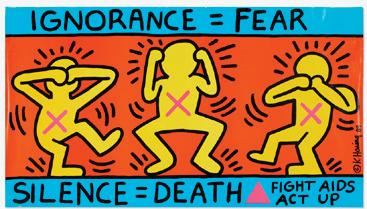
Does this image look familiar? Pop artist and cultural icon Keith Haring created this iconographic art in the 1980s, and the continued use of his imagery as a symbol of the AIDs crisis that began during that time, and the illness to which he would eventually succumb. Cultural activism through art is not limited to writing. Visual artists like Haring, Bansky, Basquiat, and Kara Walker have used their skills to further the education and illumination of social injustices they cared about. It’s through the spread of art through graffiti, t-shirts, bumper stickers, and social media that the message gets passed. Think of Fugard’s work: if he had never performed it, the message would stay silent. Below are some additional ways you can create visual and audio art that speaks to social justice issues:
• Create a graphic design that promotes awareness for a cause. This image be printed on clothing & shared on social media
• Take photos of people and places affected by a social justice issue
• Write a song or poem about an issue that you care about, and record it, and share it with others.
• Write a short film documentary about an issue, and record it with your phone
IF YOU LIKE THIS PLAY...
THE
THEATRE USES FLESH AND BLOOD, SWEAT, THE HUMAN VOICE, REAL PAIN, REAL TIME.
-ATHOL FUGARD “ ”
Theatre has long served as a critical site for examining the social, political, and moral contradictions of its time. “ Master Harold”...and the Boys stands within a significant dramatic tradition in which playwrights have used the stage not merely to entertain, If “Master Harold”... and the Boys resonated with you or challenged you with its quietly building tension, its moments of sudden cruelty, its insistence on human dignity as a universal right, the plays below offer a similar exploration of how stories can help us investigate our world. Together they form a broader literary and historical conversation about how theatre functions as a form of social critique and, at its most powerful, a catalyst for action that leads to change.
Find these plays and many others at your local library or bookstore. https://www.lapl.org
Sweat by Lynn Nottage (2015)- lays bare the economic and racial inequalities that fracture communities and pit workers against each other. Set in a working-class town in Pennsylvania, the play follows a group of friends who slowly turn on one another as their factory jobs disappear due to outsourcing and union tensions rise. Lynn Nottage gives voice to people left out of the national conversation, exposing how systemic forces—like deindustrialization, corporate greed, and class stratification—fuel resentment, mistrust, and ultimately violence.
Allegiance, music and lyrics by Jay Kuo and book by Marc Acito, Kuo, and Lorenzo Thione (2012) is a musical set during the Japanese American internment of World War II, and was inspired by the personal experiences of George Takei, who starred in the premiere production. It follows the Kimura family in the years following the attack on Pearl Harbor, as they are forced to leave their farm in Salinas, California, and are sent to the Heart Mountain Relocation Center in the rural plains of Wyoming. Allegiance sheds light on the racism against Asian-Americans during the Second World War.
The Mountaintop by Katori Hall (2009) humanizes Dr. Martin Luther King Jr. while exploring the ongoing fight against racism, inequality, and systemic oppression. Set on the night before his assassination, the play imagines an intimate, fictional conversation between Dr. King and a hotel maid named Camae, who challenges him to confront his fears, legacy, and the unfinished nature of his work. The play exposes the emotional toll of activism. By blending historical reality with poetic imagination, The Mountaintop underscores that the struggle for equality didn’t end with King—it continues, demanding courage, reflection, and collective action.
South Pacific by Rodgers and Hammerstein (1949) confronts the deeply rooted prejudices of its characters and, by extension, its audience. Set during World War II, the show explores themes of racism and intolerance through two central storylines: a Navy nurse’s internal struggle over her love for a Frenchman with mixed-race children, and a young lieutenant’s conflict over his feelings for a Tonkinese woman. The song “You’ve Got to Be Carefully Taught” directly addresses how hate and bigotry are learned behaviors, making a bold and explicit statement against racism at a time when such themes were rarely acknowledged in mainstream entertainment.
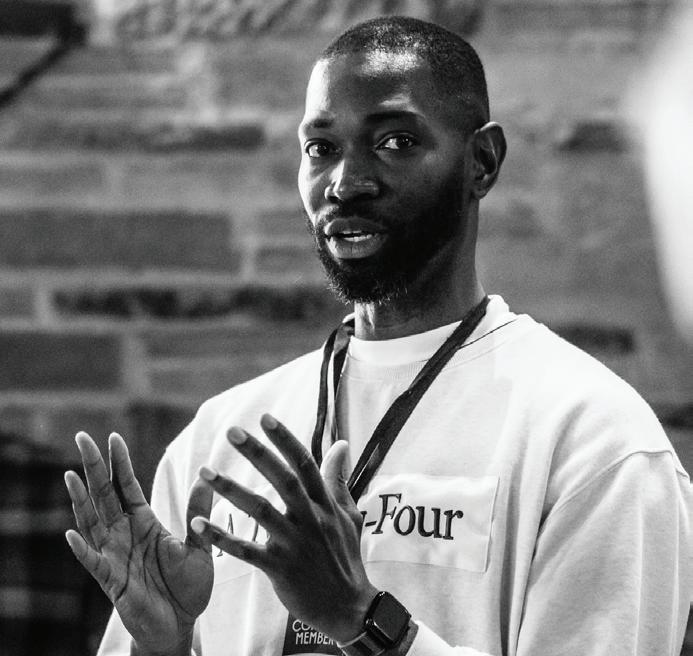
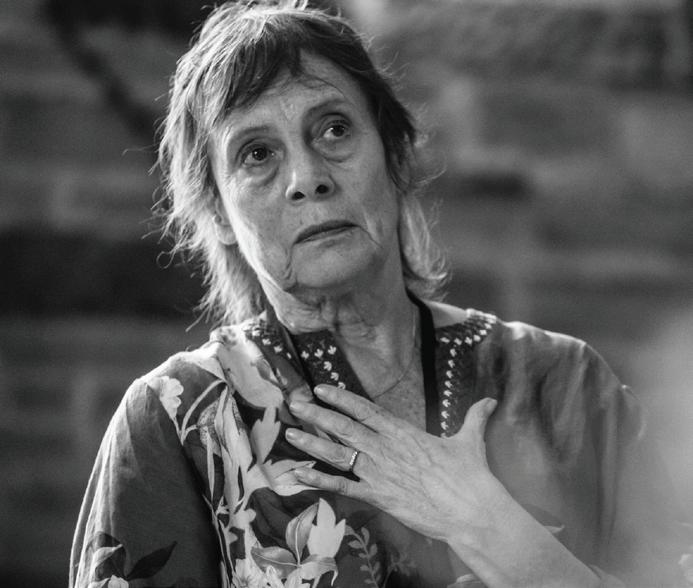
THEMES & TOPICS
Kinky Boots, book by Harvey Fierstein, music and lyrics by Cyndi Lauper (2012) - Charlie is a factory owner struggling to save his family business. Lola is a fabulous entertainer with a wildly exciting idea. With a little compassion and a lot of understanding, this unexpected pair learns to embrace their differences and create a line of sturdy stilettos unlike any the world has ever seen. Kinky Boots fights stereotypes and teaches compassion and understanding to those who look different than you.
American Son by Christopher Demos-Brown (2016) follows an estranged interracial couple who reunite in a Florida police station to help find their missing teenage son. American Son deals with racism, racial profiling, and police brutality.
The Normal Heart by Larry Kramer (1985) - The early days of the HIV-AIDS crisis in 1980s New York City are the focus of this Tony-winning play, which provides an unflinching look at the nation’s sexual politics as gay activists, and their allies in the medical community, fight to expose the truth about the burgeoning epidemic to a city and nation in denial. Deals with the AIDS epidemic and homophobia in America.
An Enemy of the People by Henrik Ibsen (1882) examines the consequences of speaking truth to power in a society more concerned with profit and reputation than with morality or public welfare. When Dr. Stockmann discovers that the town’s lucrative spa waters are contaminated, he expects to be hailed as a hero for protecting the public—but instead, he is vilified and ostracized for threatening the town’s economy. Henrik Ibsen uses this conflict to expose how political and social systems often suppress inconvenient truths, favoring the interests of the majority or the powerful elite over justice and individual conscience. The play remains a powerful critique of corruption, censorship, and the cost of integrity in the face of societal denial.
Pipeline by Dominique Morisseau (2017). Nya, an inner-city public high school teacher, is committed to her students but desperate to give her only son Omari opportunities they’ll never have. When a controversial incident at his upstate private school threatens to get him expelled, Nya must confront his rage and her own choices as a parent. But will she be able to reach him before a world beyond her control pulls him away? Pipeline comments on America’s broken system, mainly regarding the racial and economic disparities in the education system.
A Raisin in the Sun by Lorraine Hansberry (1959). The story tells of a black family’s experiences in South Chicago, as they attempt to improve their financial circumstances with an insurance payout following the death of the father. This story depicts the struggle of social class disparities and racism in America.
Clybourne Park by Bruce Norris (2010) is a satirical drama that serves as a companion piece to A Raisin in the Sun, exploring racial and economic tensions in a Chicago neighborhood across two time periods—1959 and 2009. The play examines how housing, gentrification, and coded language perpetuate systemic racism, even as the language of prejudice evolves. By juxtaposing the eras, Clybourne Park reveals how the underlying issues of segregation and inequality persist, challenging audiences to confront uncomfortable truths about privilege, progress, and who gets to shape a community.
OPPOSITE/ABOVE :ARTISTIC DIRECTOR AND CO-DIRECTOR TARELL ALVIN MCCRANEY AND CO-DIRECTOR EMILY MANN IN REHEARSAL. THIS PAGE: NYASHA HATENDI, BEN BEATTY AND JOHN KANI IN “MASTER HAROLD”...AND THE BOYS AT GEFFEN PLAYHOUSE. JOHN KANI IN REHEARSAL.
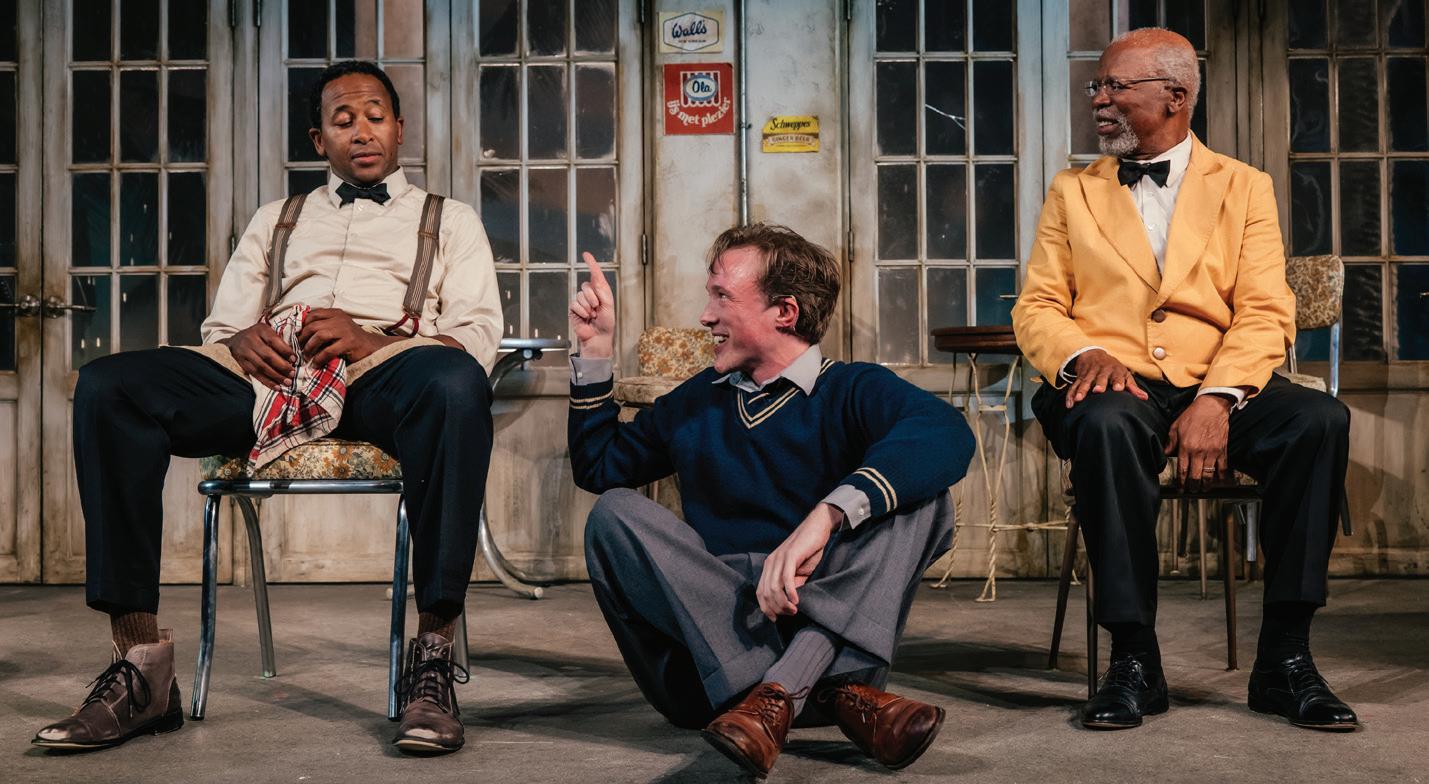
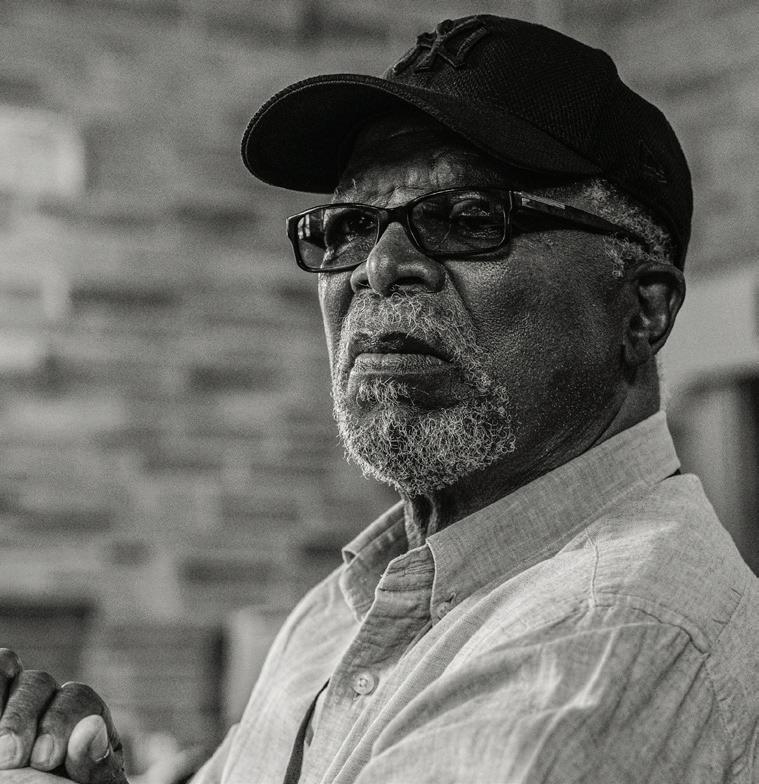
POST-SHOW DISCUSSION QUESTIONS
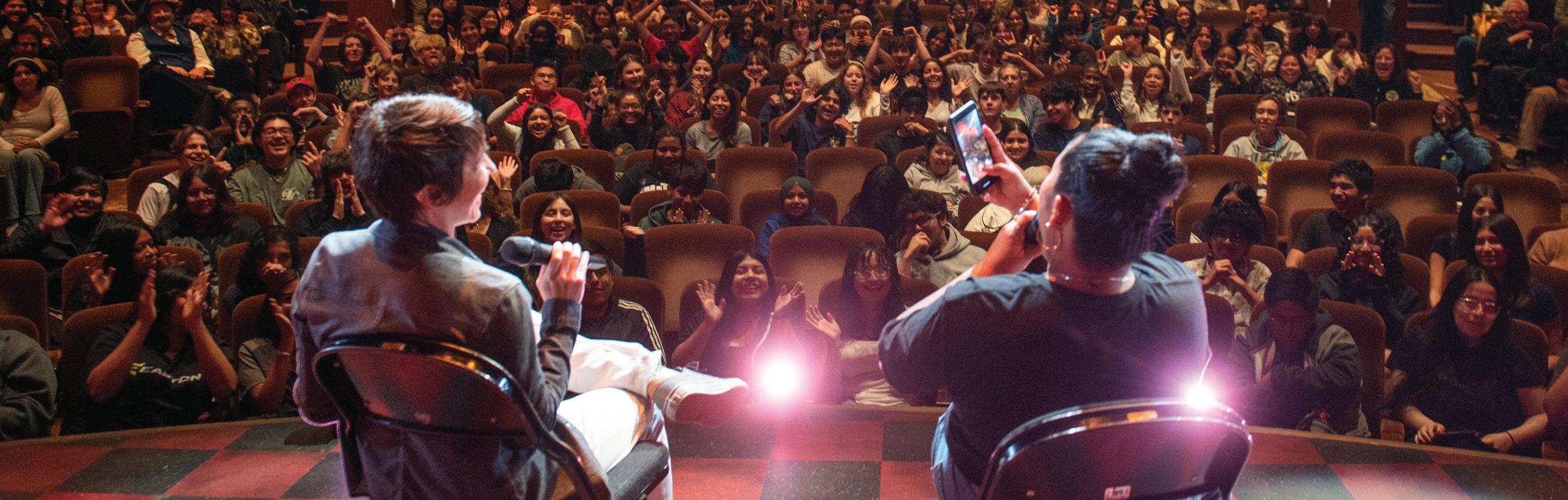
Depending on the time available and your participants’ interests, guide them to respond to the suggested questions below. Encourage everyone to participate and respect differing opinions. Individuals can share their thoughts with a partner, in a small group, as part of a larger group discussion, or as written responses.
• What are some images and moments from the production that stood out or resonated with you? What was meaningful, stimulating, surprising, evocative, memorable, striking, touching, challenging, or unique?
• Overall, how did you feel while watching this show? Engaged? Amused? Inspired? Provoked? Uncomfortable? What made you feel this way?
• Did you identify with or empathize with any of the characters in the play? If so, which character(s) and when? If not, why not? Which characters remind you of someone in your life? Remind you of yourself?
• How did the actors’ performances influence your understanding or experience of the story?
• The relationship between Hally, Sam, and Willie is at the heart of the play. How would you describe those relationships at the beginning of the play, and how do they change by the end? What moments marked those shifts for you? Sam has played a significant role in Hally’s upbringing; how would you describe the relationship between Sam and Hally overall? Do you think Hally had as a significant role in Sam’s life? If yes, how so?
• Hally commits a deeply hurtful act toward Sam near the end of the play. Why do you think he does it? Do you believe he fully understands what he has done? Can an act of cruelty also be an act of shame or fear, and does that change how we judge it? How did Sam’s response and offer at the end of the play make you feel? Discuss the ways that our behaviors are learned from our environment and the ways in which our prejudices can shift or become more ingrained based on our relationships and experiences in life.
• Sam describes a world without collisions on the ballroom dance floor as his vision of a better society. What does that image mean to you? What does your own vision of a “world without collisions” look like?
• Describe the design elements from the show: set, props, costumes, and music. Be as specific as possible. What did you see, hear, feel, and experience? How do these elements inform the storytelling and shape your experience as an audience member?
• The play is set in a single location, a tea room in Port Elizabeth, South Africa, on one rainy afternoon in 1950, with no scene breaks. How did that sense of confinement shape the story and the tensions between the characters? How does this differ from stories told on television and film? Why do you think the playwright chose this structure? Do you think the structure reflects how plays were written in the 80s, the time when Fugard wrote this play? If yes, why so? How is this structure different from other plays you have watched at the Geffen or other theatres? If you were to write a play, what single location would you choose, and why? How would the location help tell the story dramatically?
• Playwright Athol Fugard used his writing to try and affect change in his community and country. How can art affect change in personal relationships, the immediate community, and the global community? What piece of art (theatre, visual art, music) has inspired you to take action? What action can you do now, no matter how small, to effect the change you want to see in your world?
• The play is set in the 1950s era of Apartheid. The legality of Apartheid ended in 1991-1994. What institutions and systems have you experienced that are similarly oppressive in intent? Discuss the ways that institutions & systems can be changed over time. Discuss the ways that institutions and systems can change through small acts vs larger movements. Although legal apartheid is over, its effects are still evident in the segreagtion that still exist in South Africa today. Why do you think it takes so much time to dismantle systems and heal/erase/correct the damage they have caused?
• The article on p. 22 discusses the parallels between the struggles of African Americans and Black South Africans to combat white supremacy in the United States and South Africa during the 1960s-1990s. What parallels can you see with the setting and characters of “Master Harold”... and the Boys to our country today in 2026? How do you think this story lands with audiences today? Why do you think this play is still being produced? Do you think it still resonates with audiences today? Why or why not?
TARA RICASA AND SARA PORKALOB AND STUDENTS AT THE STUDENT MATINEE OF DRAGON LADY AT GEFFEN PLAYHOUSE
PHOTO BY ISAAK BERLINER
THE TEA ROOM
1950s South African tea rooms were vital social hubs, combining cafes with convenience shops that served tea, scones, and light meals in suburban neighborhoods. They offered welcoming spaces for women and families, with popular spots ranging from urban Johannesburg department stores (like Stuttafords) to coastal landmarks like the Tea House of the Blue Lagoon (now The Waffle House) in Ramsgate, established in 1957.
Key characteristics of 1950s South African tea rooms included:
• Social and Functional Hubs: They served as neighborhood centers, providing milk and basic goods, and sometimes operating on account for locals.
• Menu Favorites: Typical offerings included tea, coffee, toasted tea cakes, and cream cakes served on shared plates.
• Atmosphere: Coastal tea rooms often featured relaxed, tropical vibes, while city spots in cities like Johannesburg and Port Elizabeth offered polished afternoon tea experiences.
• Iconic Locations: Beyond the Blue Lagoon, spots like Fanny Farmer’s Cafe in Johannesburg and various tea rooms in cities like Port Elizabeth were popular.
• Context: While popular, these establishments functioned within the social constraints of the time, including racial segregation and, in some cases, serving the “elite” of specific communities
SCAN THE QR CODE TO THE LEFT TO READ “AFRICAN AMERICAN TEA ROOMS” FROM THE BLOG “RESTAURANT--INGTHROUGHHISTORY.COM BY JAN WHITAKER, PUBLISHED FEBRUARY 13, 2011.
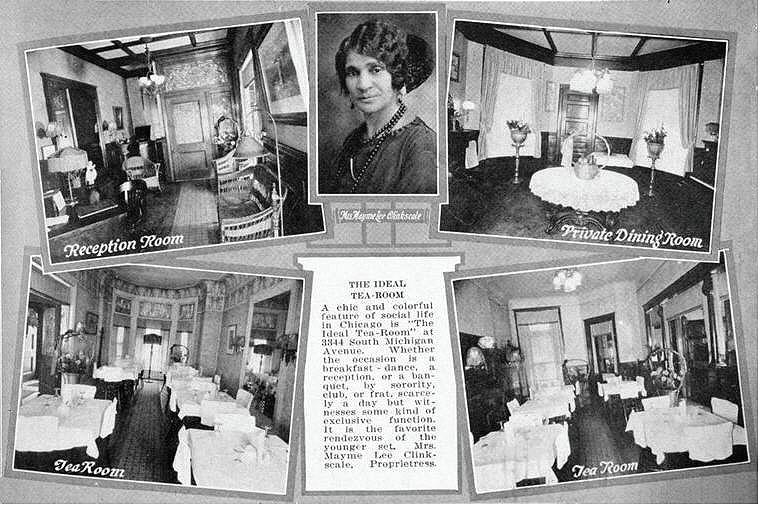
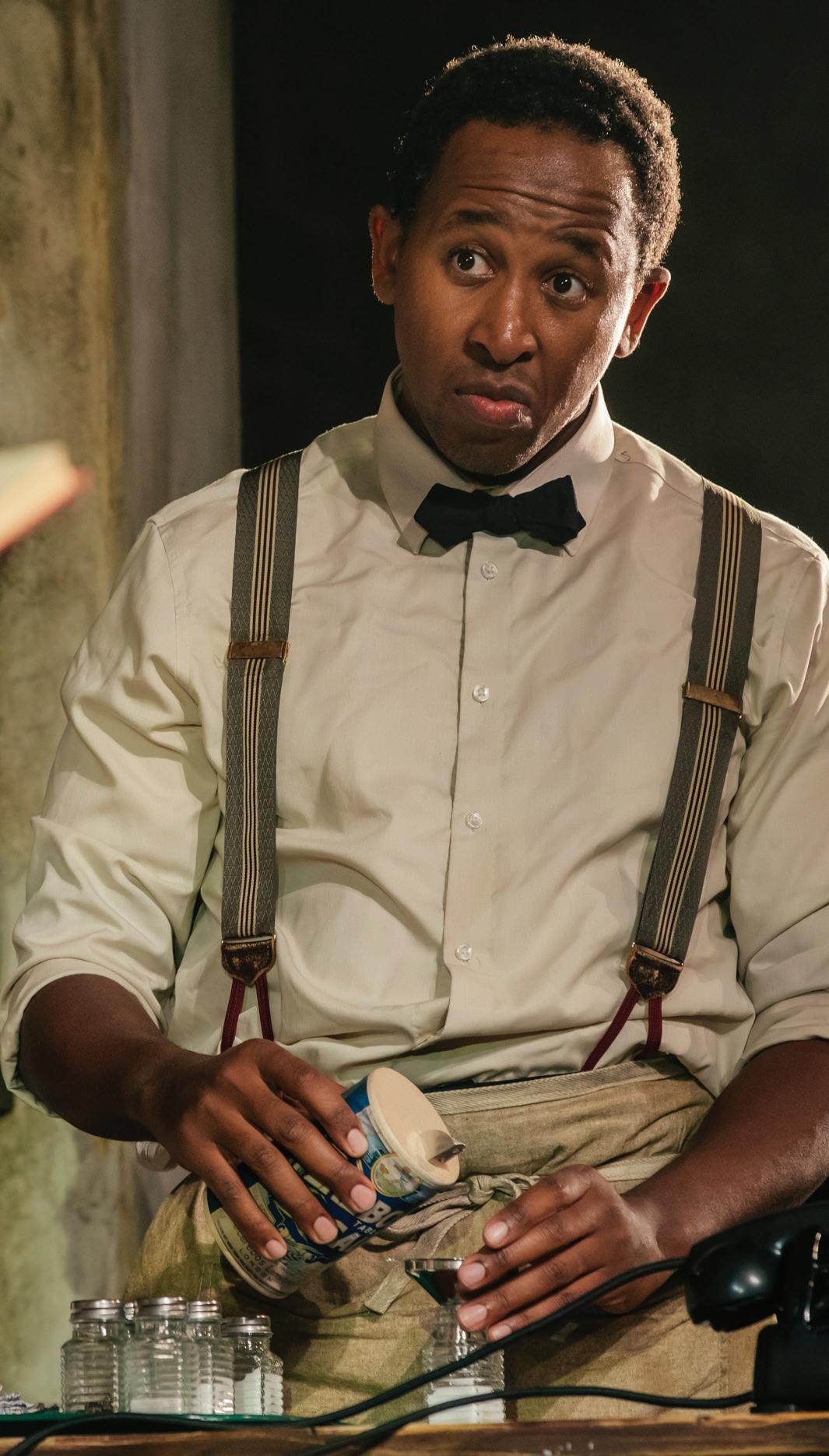
NYASHA HATENDI IN “MASTER HAROLD”...AND THE BOYS AT GEFFEN PLAYHOUSE. CO-DIRECTED BY EMILY MANN AND GEFFEN PLAYHOUSE ARTISTIC DIRECTOR TARELL ALVIN MCCRANEY. PHOTO BY JEFF LORCH

AN INTERVIEW WITH EDUCATION ASSOCIATE & LEAD TEACHING ARTIST, AJA HOUSTON STAFF SPOTLIGHT
What is your position at Geffen Playhouse?
My position at the Geffen Playhouse is the Education Associate and Lead Teaching Artist..
What educational, artistic, and professional experiences led to you working at the Geffen?
All roads in my career as a playwright and actor have led me to work at the Geffen. As a Black woman artist, I have had to demand that my voice be heard in a society that seeks to silence me, find safe spaces to boldly create, and, with my unique brand of storytelling, push against the stereotypical expectations and monolithic portrayals of my community. I often wished I had more guidance along my artistic journey when I was younger and less assured than I am now. Eventually, I realized my vocation extended beyond myself and to fostering the voices of the next generations of underrepresented artists who are vital to the future of theatre. When I finished grad school at USC, my “survival” job (artists know what I am talking about) was being a teaching artist. I worked for theatres such as TheatreWorks in the Bay Area and Center Theatre Group here in LA, leading playwriting workshops. While directing my play, Sasha the Dragon Tamer, one of the actors shared that they were a teaching artist at the Geffen. They had nothing but great things to say about the Education and Community Engagement team, so after learning more about the department’s exciting programming, I applied. And the rest is history!
What are your primary responsibilities as Education Associate & Lead Teaching Artist?
My position is a hybrid role that covers a range of responsibilities to support the Education and Community Engagement’s primary goal of implementing engaging, accessible, and transformative educational programming. As an Education Associate, I provide administrative assistance to the Director and Manager of our department. This includes assisting with scheduling, organizing events, and communicating with our internal team and external partners.
As the Lead Teaching Artist, I help foster an inclusive, supportive environment that encourages creativity and self-expression for both the students we work with and the teaching artist team. One of my primary responsibilities is assisting with the design of interactive lesson plans for our range of educational programming, including our High School Partnerships student matinees, Storytelling for Young Adults Workshop, and Beyond the Barracks Veterans Storytelling Series, all of which I co-facilitate as a teaching artist. I also collaborate with the Manager of Education to create the study guides for each Geffen production, helping the audience understand the world of the play and the artists creating it, and connecting it to their own lived experiences.
What key skills and disposition are needed as an Education Associate & Teaching Artist?
This position interfaces with a diverse community whose members have a range of lived experiences that may differ from your own. So first and foremost, it is important to have an open mind, empathy, and an ability to adapt. One in this position should also be passionate and committed to creating a transformative educational experience, with the belief that this work is vital.
Was there a pivotal moment when you realized you wanted a life in the arts?
There was no one pivot al moment that made me realize that a life in the arts was my calling. I just always knew. I was innately drawn to all artistic forms of storytelling, visual art, dance, theatre, film, and television. I revel in the freedom of expression,
PHOTO BY TOM KORBEE
boundless creativity, and transformative ability that the arts offer. I enjoyed creating in all those forms, and even though for a brief moment I considered being a lawyer for quote-unquote “security” to provide the ideal of a house, partner, kids, and a picket fence. However, at the end of the day, I simply could not imagine a career outside the arts, despite the lifestyle’s mercurial nature. The love I have for it and the sense of purpose it gives me are among the things that sustain me in this crazy world.
What do you find most rewarding?
Witnessing students grow more confident in honing their artistic voice as they build a lasting community with one another is one of the most rewarding aspects of my work. I am grateful for the opportunity to provide a safe, judgment-free space filled with support so these artists can bravely create the work they want. They inspire my creative practices, pushing me to take more risks in my own work. I honestly learn as much from them as they learn from me.
What was one of your favorite shows to work on?
One of my favorite shows to work on for the past two years is the Geffen’s Beyond the Barracks Storytelling Series. Over ten weeks I co-facilitate with the wonderful teaching artists Sean Michael Boozer and BJ Lange, and Brian, the dedicated Director of Education and Community Engagement, guiding United States veterans from all branches of the military to write and perform original monologues inspired by their incredibly rich life stories. During our time together, a tightly knit, supportive ensemble forms. From adapting a story seed centered on a personal object tied to an important part of their identity that goes beyond their service to shaping their performance on the stage, is a revelation to be a part of. From an ear pick that represents the tension between being an immigrant and an American to a board game that encompassed that provided a needed sense of belonging, these stories give us civilians a different understanding of them as fully realized humans. One of the best things participants share each year is that this program makes them feel seen as more than just a veteran, feel safe, and gives them a community they never had.
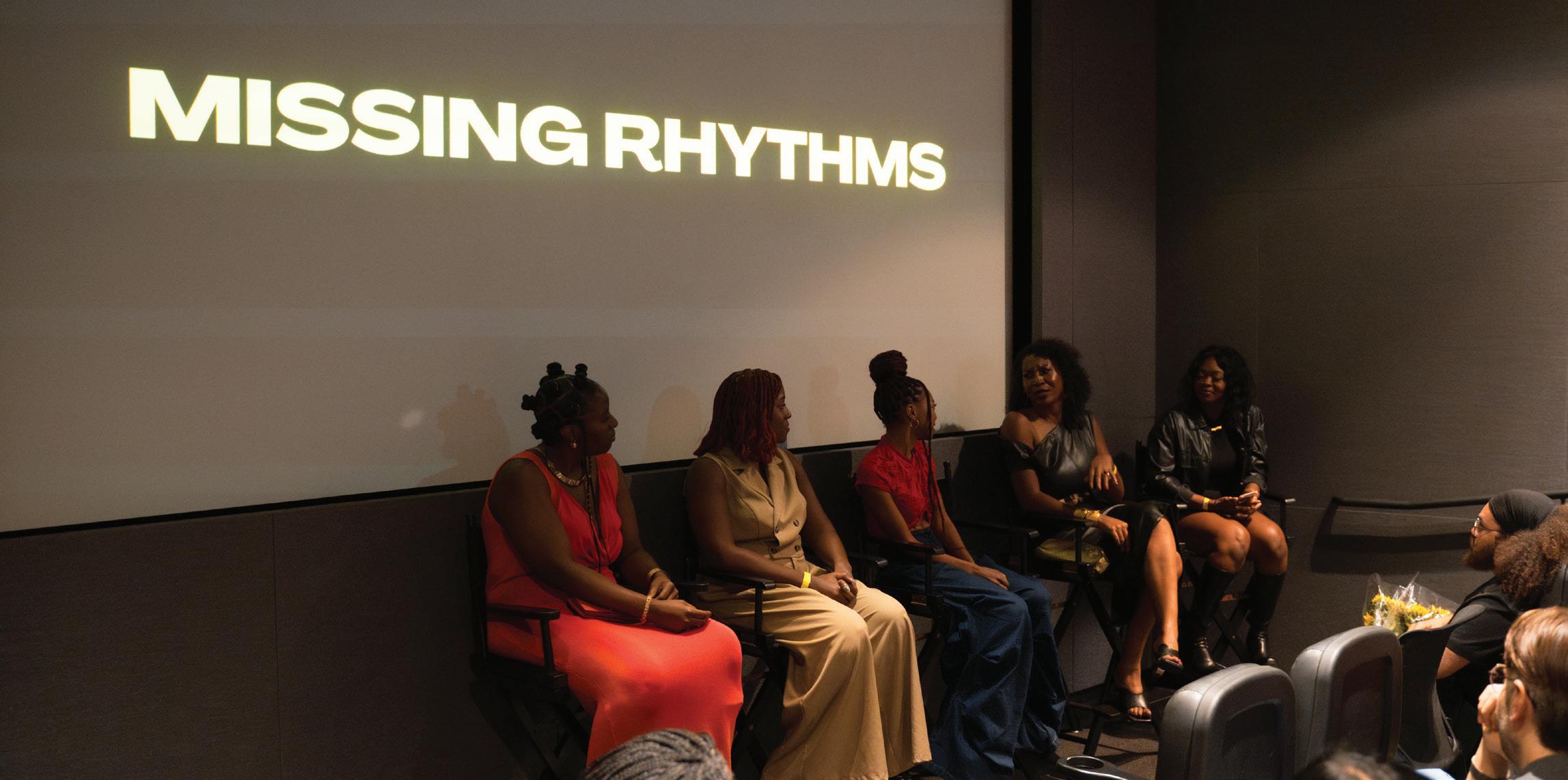
LEARN MORE ABOUT A CAREER IN THE ARTS
SCAN this QR code to watch videos from American Theatre Wing’s Masterclass series on different jobs in American Theater. Stage Managers, Wig Makers, Scenic Designers, Front of House staff, Marketing Directors and many other people work behind the scenes to bring a show to life! If you are interested in a career in the arts and work behind the scenes, learn more here. #theater #jobs #alifeinthearts #getintotheatre #americantheatrewing #career #behindthescenes
AJA HOUSTON AT A SCREENING OF HER FILM MISSING RHYTHMS WITH REGINA HOYLES, NAILAH ROBINSON, TONI ADEYEMI . PHOTO BY AVERY ARCHIE
AUDIENCE’S THE ROLE
What is your important role as an audience member?
Seeing live theater is different from going to a movie theater, watching something at home on your TV, or attending a live sporting event or concert. You are an important part of the experience- just as much as the performers on stage!
What are some things we should keep in mind to ensure that we, other attendees, and the performers have a great experience?
THE THREE R’S
Please be RESPECTFUL!
• Respect the space, the work, and one another.
• Silence phones and put them away during the show.
• Unwrapping candy or cough drops before play begins.
• Respect the artists by not taking pictures or videos during the peformance.
Please be RESPONSIBLE!
• Arrive early to the theater! It can be disruptive to enter the theater after the show has already started, and you will miss some great moments and important parts of the story!
• Remain seated until the end of the show (unless it is a true emergency).
• Eating or drinking before or after the show, or during intermissions.
• Please visit the restroom before or after the show, or during intermissions.
Please be RESPONSIVE!
• Respond genuinely! For example, if you find something amusing, funny, feel free to laugh and react.
U SE OF SOCIAL MEDIA
We appreciate you sharing your Geffen Playhouse experience via social media, and kindly request that you do not do so inside the theater, where the use of electronic devices is prohibited.
We recommend that you post your responses and thoughts in the lobby after the performance, and invite you to tag @GeffenPlayhouse and use #GeffenPlayhouse to share your experience and to continue the conversation with us online.
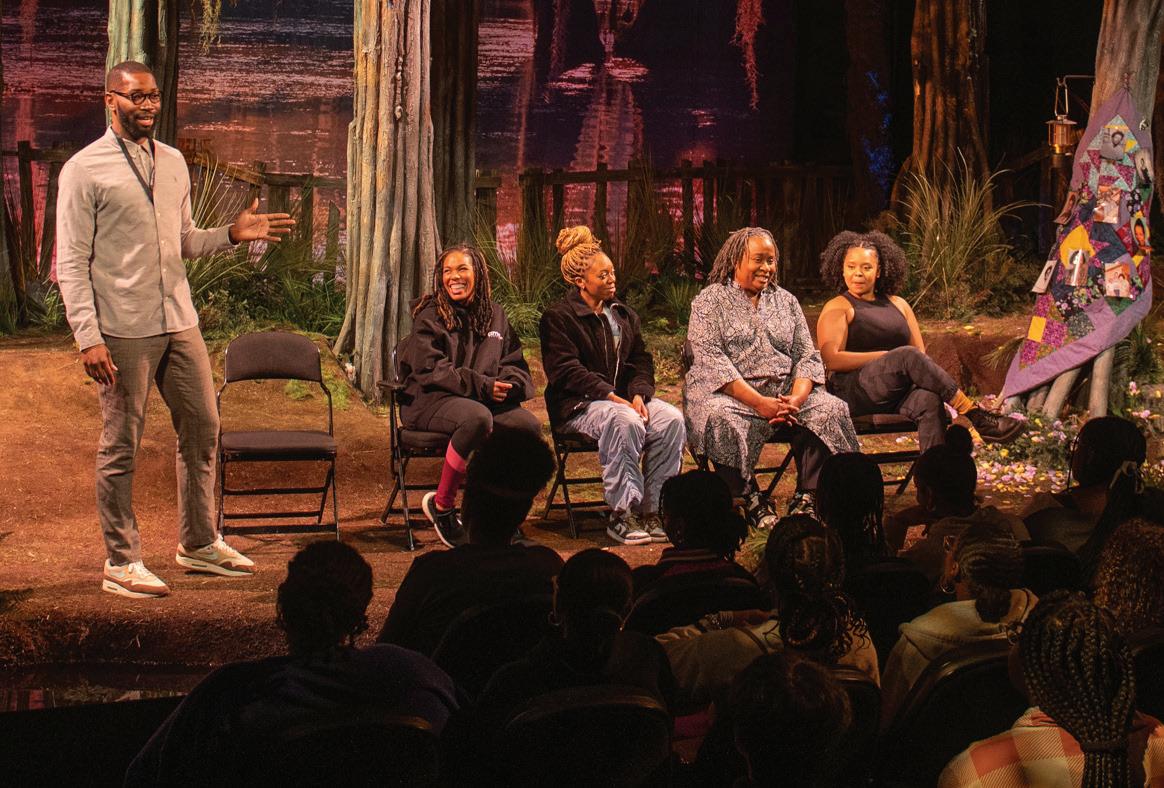


LAUSD STUDENTS AT THE STUDENT MATINEE OF THE LEGEND OF GEORGIA MCBRIDE. PHOTO BY JEFF LORCH
DANIEL K. ISSAC AND AUDIENCE AT EVERY BRILLIANT THING. PHOTO BY ISAAK BERLINER
LAUSD STUDENTS AT THE STUDENT MATINEE OF THE LEGEND OF GEORGIA MCBRIDE. PHOTO BY JEFF LORCH
L–R: GEFFEN PLAYHOUSE ARTISTIC DIRECTOR TARELL ALVIN MCCRANEY, ANGELA LEWIS, AKILAH A. WALKER, KIMBERLY SCOTT AND ASIA MARTIN DURING A TALKBACK FOR A STUDENT MATINEE OF BLACK CYPRESS BAYOU PHOTO BY ISAAK BERLINER.