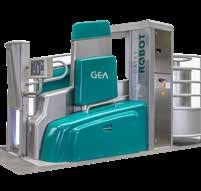
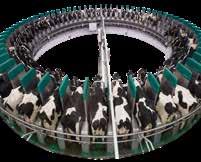
DairyProQ helps resolve labor challenges and unlocks growth potential
A REVOLUTION IN ROBOTIC MILKING RESEARCH
CHOOSING THE RIGHT PARLOR UPGRADES
HEAR OAKFIELD CORNERS’ STORY IN THIS VIDEO
About Dairy Illustrated
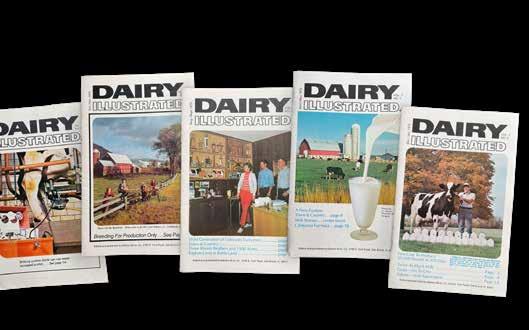
Dairy Illustrated was a premier dairy publication in the 1970s and 1980s, with the second highest circulation among dairy magazines in the U.S. If your family was dairying during this time, chances are they received a copy in their mailbox. GEA is excited to bring this publication back and carry on the tradition of sharing customer stories, management tips and new technology with today’s dairy farmers.
Oakfield Corners Dairy makes the leap to robotic milking
Largest robotic milking research facility in North America
Out with the old, in with the new milking equipment
New product innovations: Faster. More efficient. Customizable.
5 secrets to winter teat health
Oakfield Corners
Dairy makes
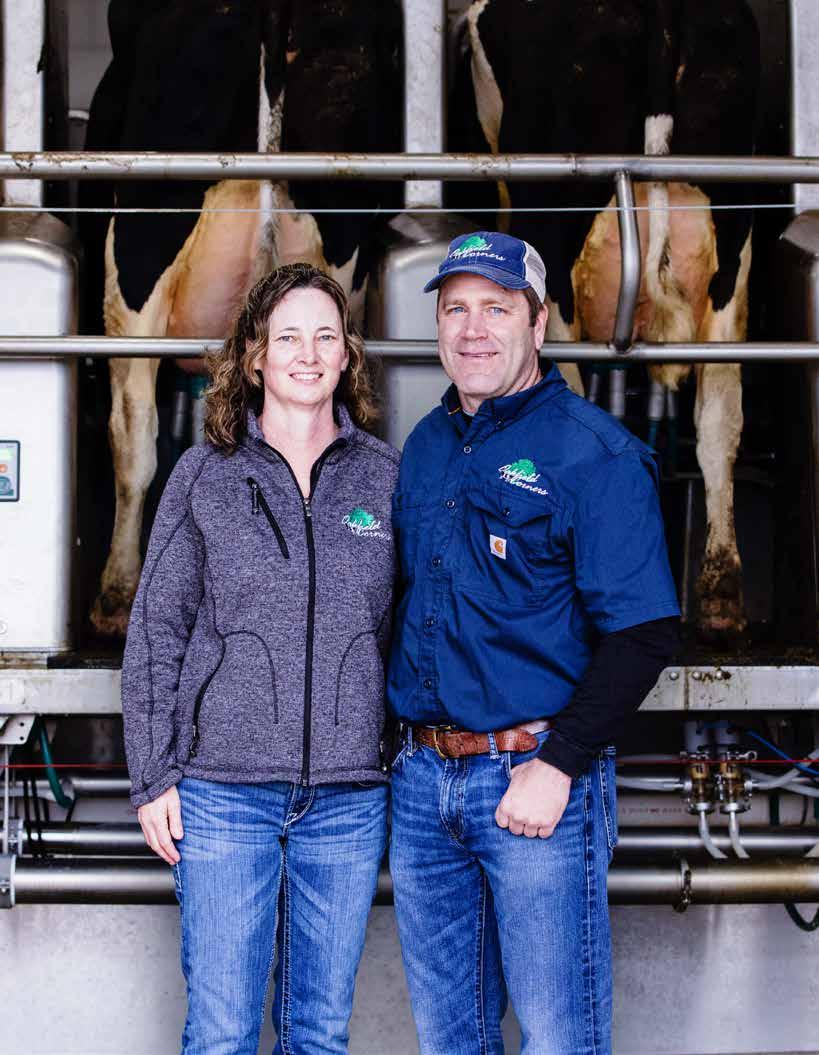
THE LEAP TO ROBOTIC MILKING
DairyProQ helps solve labor challenges and unlocks growth potential.
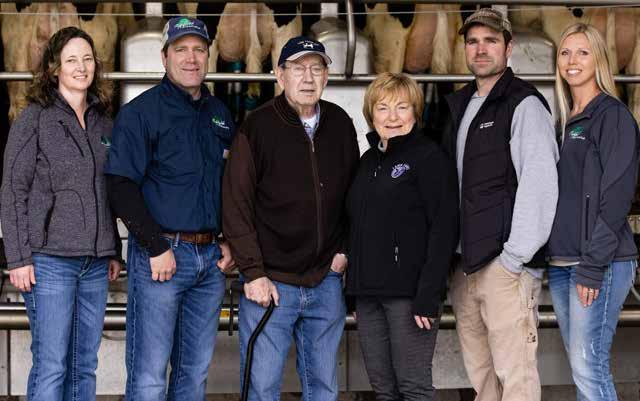
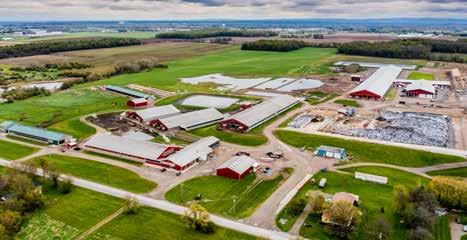
After 45 years of milking in their twin double-10 herringbone parlors, Oakfield Corners Dairy in New York was ready for an upgrade. They were intrigued by robotic milking to solve their labor challenges and began touring farms across the globe.
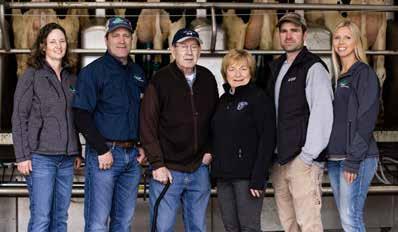
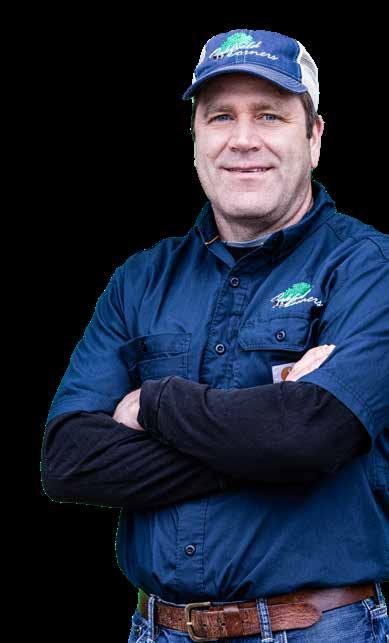
“We looked at all our options, and we looked at box robots more seriously before we looked at the GEA DairyProQ — but we liked the way cows were managed in the rotary,” says Jonathan Lamb, 12th generation dairy farmer at Oakfield Corners Dairy. “The DairyProQ allows us to manage cows the way we want to manage them and gives us the potential to double our milking herd without adding labor.”
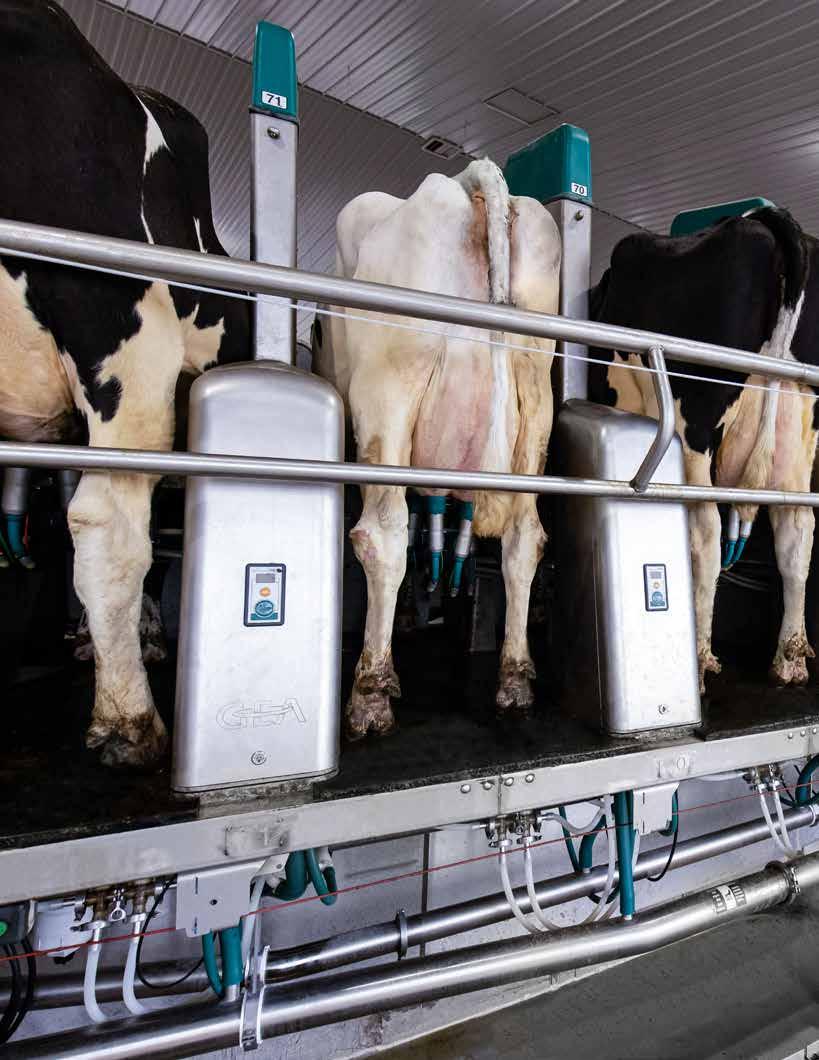
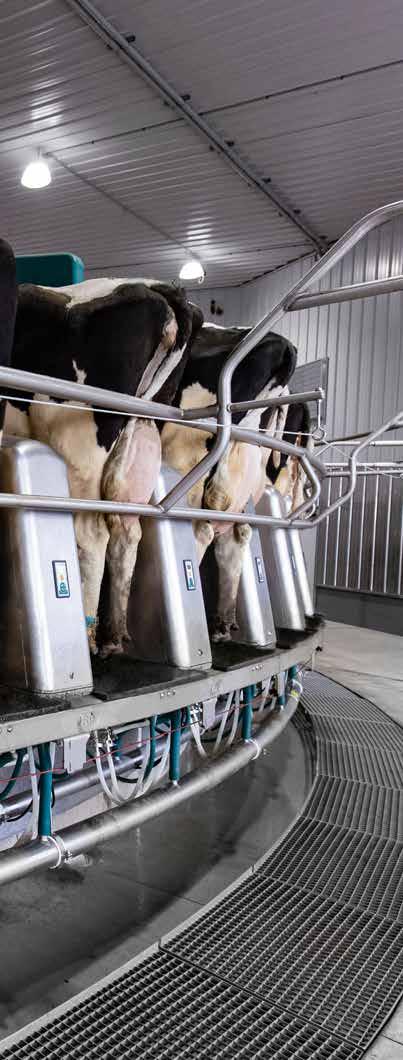
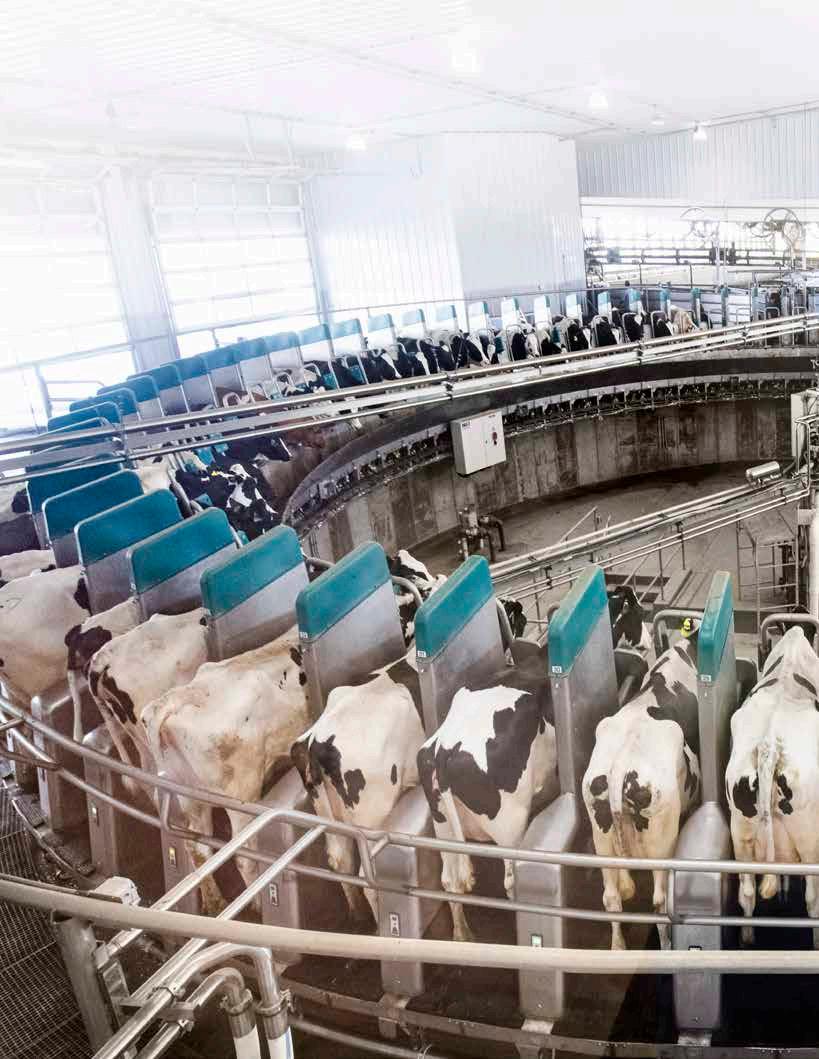
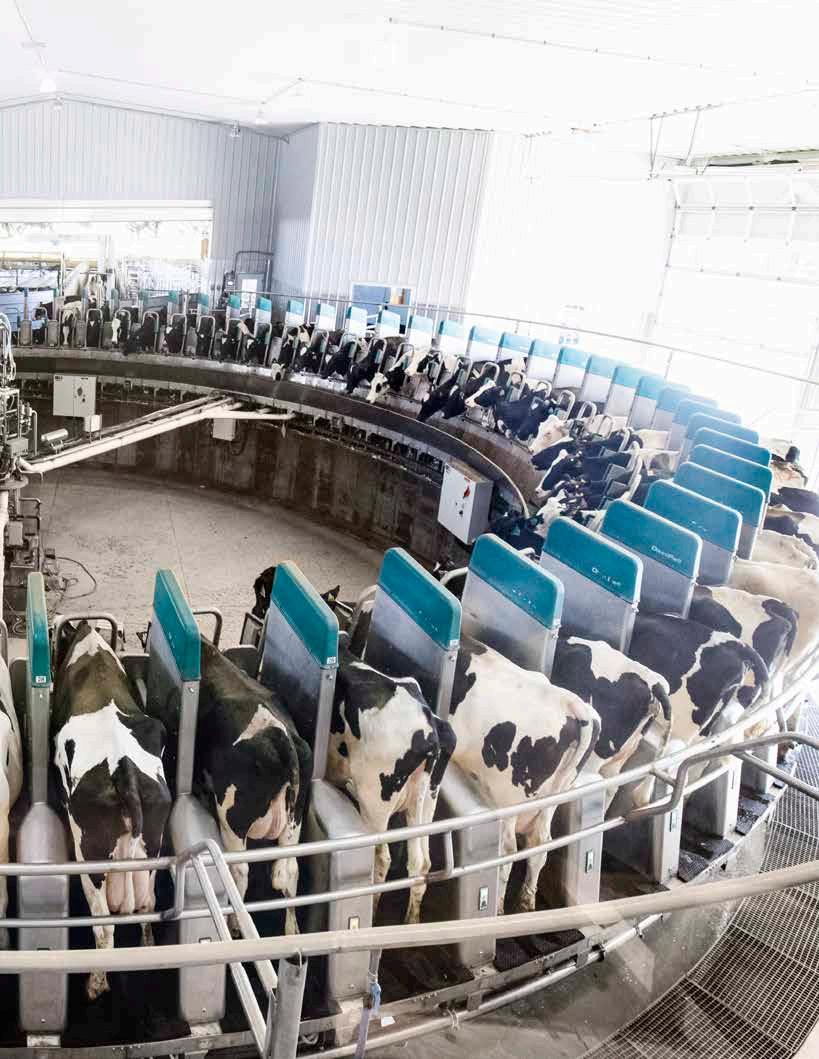
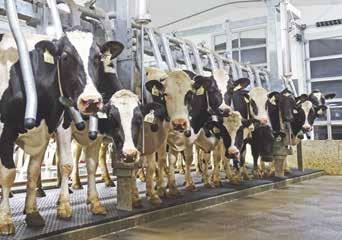
The Oakfield Corners team has been milking 1,400 cows in their 72-stall DairyProQ since early March. They typically have only one employee in the parlor overseeing operations.
DairyProQ allows us to manage cows the way we want to manage them.
Q&A with Jonathan Lamb
How did you decide on a robotic rotary vs. conventional?
As we looked at different milking systems, in the end we compared a DairyProQ versus a conventional rotary. At the time, given that there’s a much larger investment with the DairyProQ, under the current conditions with minimum wages and overtime rules where they are in New York, we felt like it was an economical wash to go with a DairyProQ over a conventional rotary. We know over time the regulations for labor are probably going to get worse. We feel it’s going to be a good investment for us as long as we can keep the repair costs in line.
How did the transition go?
We started milking on March 8. On day 1, we brought in 350 2-year-olds. We put them on the rotary one time without milking them, and then 8 hours later we milked them with the robots. We did not bring any more cows up for 48 hours. Often heifers can be trained in 3 milkings. They take to it fast – standing comfortable and normal.
Day 3, we brought up 200 mature cows. That was a long day – we had to push almost every one of them in by hand. After that, we dropped into groups of 50 to 60 cows every day to make the workload more manageable. In hindsight, the cow training took a little bit longer, but I think that was right for us.
What’s the milking process like with the DairyProQ?
As the cow steps onto the parlor, the DairyProQ recognizes the cow using electronic ID technology in the cow’s ear.
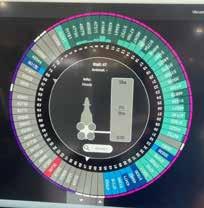
After it recognizes the cow, it attaches the unit. If the cow is a three-quarter cow, the robot knows and won’t attach to that quarter. Then the robot predicts how much milk it believes the cow is going to give. As cows go around the DairyProQ, it tells us how much milk a cow has given based on the prediction.
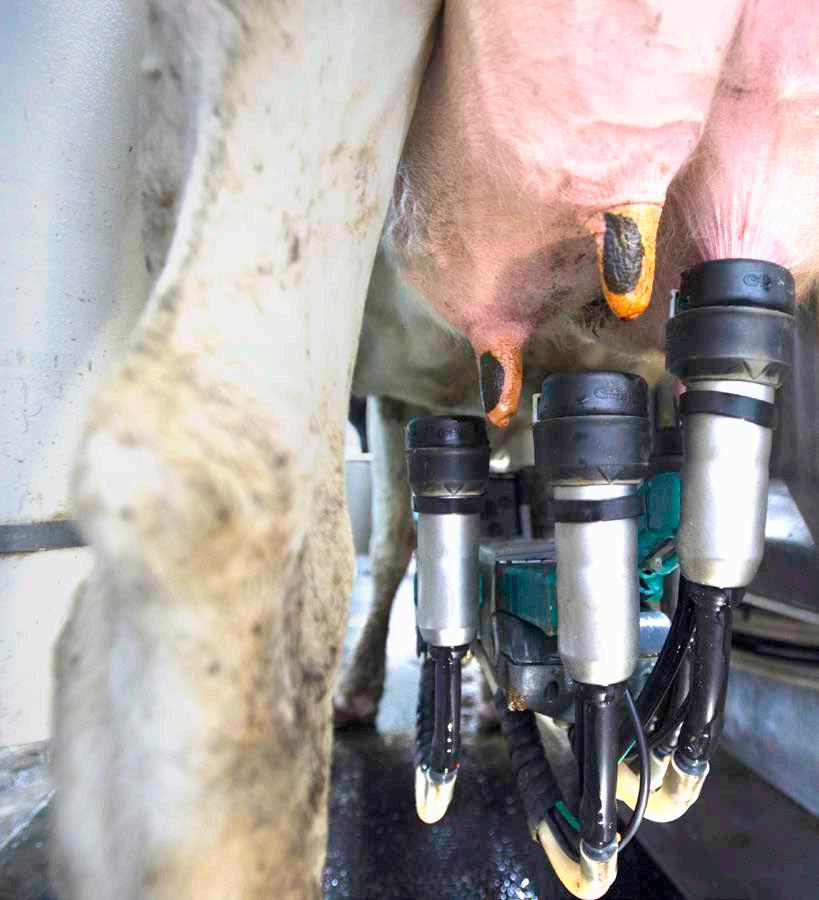
As the units attach, the pre-dip is applied in the liner, and the cow is then cleaned and stimulated. Pre-dip is removed and the milk is analyzed for normal appearance. Then, the system switches from the dump phase to the milking phase where the milk goes into the milk line. When she’s done, it post-dips the cow. All those steps need to take place in the time the cow goes around the rotary.
How long does it take for a full turn on the rotary?
We have the rotary turning at about 8 to 10 minutes a turn. Over time we hope to decrease that to 8 minutes. As the cows
continue to learn the rotary, especially the older cows, the quicker they’ll walk on and the more cows we can milk per hour. We’ve been able to get 375 cows through in 1 hour with our 2-year-old group. We need to be at that level for the whole herd to get all the cows through in 8 hours. And we’re confident we can do that as the cows continue to learn and we continue to work with our people to make it happen.
How is your milk quality?
Bacteria counts have been good to excellent. After running for the first full month, our SCC is at 100,000. It’s something we’re proud of.
How has the DairyProQ changed your day-to-day activities?
I need to look at information a lot more. Our old parlors didn’t have individual milk weights and we didn’t have conductivity. It continues to challenge us to use technology
more, to help us manage the cows. We’re getting better at it all the time and I’m sure a year from now we’ll still have more learning to do.
What excites you about this technology?
The ability to use the information to make better decisions for our cows. Whether that’s for breeding, culling, feeding – this technology is going to help us manage cows.
What’s your best advice for fellow farmers?
If you’re considering a DairyProQ, do a lot of research and talk to farmers using it. At some point, you have to draw a line in the sand and build a parlor, but you can almost never do too much research.
If I could describe
DairyProQ
in one word— I would say ‘Future’
Jonathan Lamb, Oakfield Corners Dairy
1,400 cows and growing
How does it work?
Robots + Rotary = GEA DairyProQ
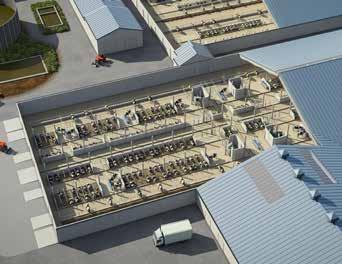
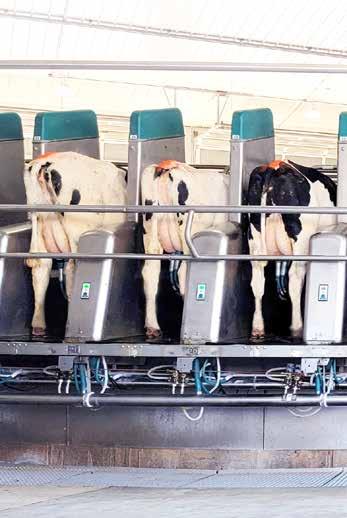
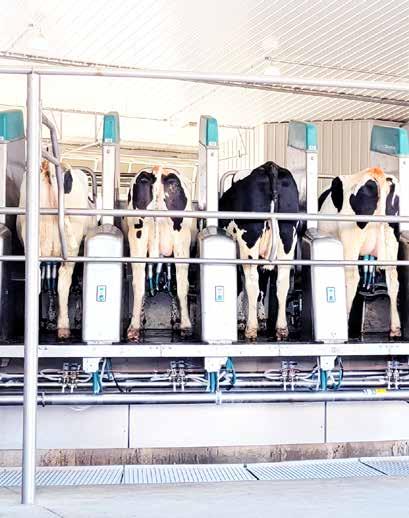
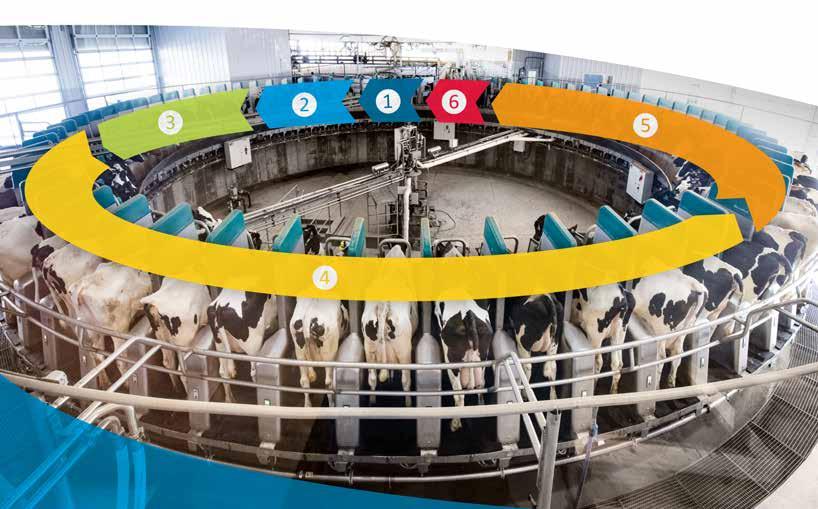
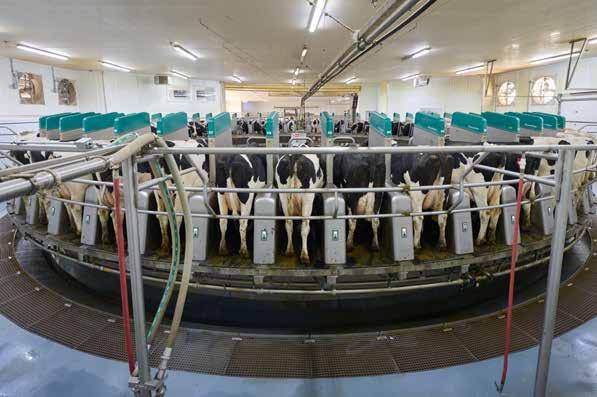
Oakfield Corners Dairy has 72 independent robots performing the milking process at each stall as the cows circle the platform.
This farm milks hundreds of cows per hour just like a conventional rotary with only one primary operator overseeing the parlor functions.
Cow Entrance
Teat-Cup Attachment
Cow Prep
Milking
Post Dipping and Teat-Cup Removal
GEA In-Liner Everything ™
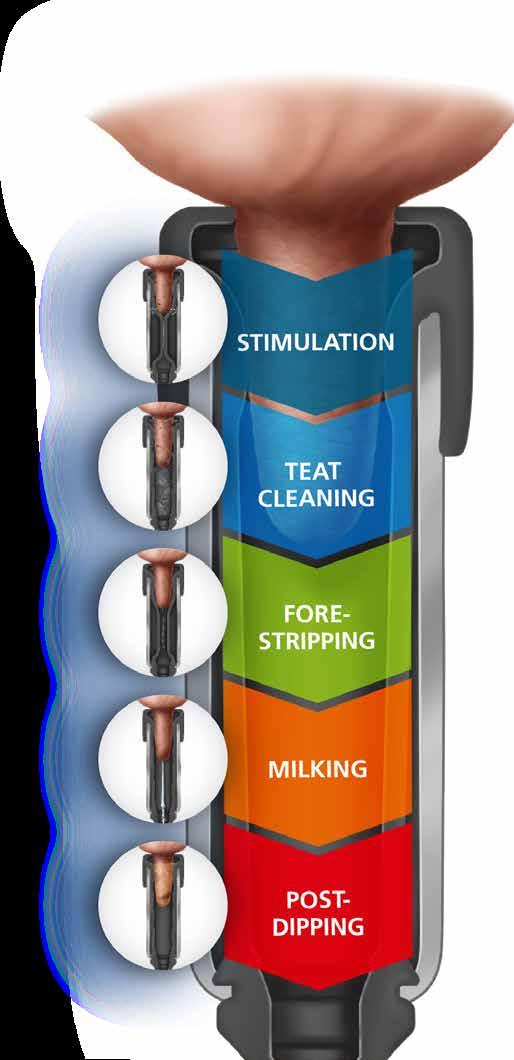
GEA’s proven In-Liner Everything™ technology performs every step of the milking process stimulation, teat cleaning, forestripping, milk harvest and post-dipping in a single attachment.
This uniform, quick and comfortable process, all occurring within the teat cup, is key to harvesting excellent quality milk while maximizing the efficiency of your robotic milking facility.
Each step of the In-Liner Everything process is designed to:
• Ensure cows receive the best possible milk let-down process
• Deliver a fast, gentle, complete milk-out
• Protect udder health
• Harvest quality milk and deliver it quickly to the milk tank
All milking procedure steps occur mechanically inside the liner in a safe and efficient manner.
LARGEST ROBOTIC MILKING RESEARCH FACILITY
in North America to open at UBC Dairy Centre featuring GEA robots
Fully robotic milking farm will advance dairy research, attract students and educate public.
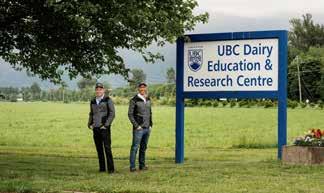
The University of British Columbia (UBC) Dairy Education and Research Centre will become the largest robotic milking research facility in North America with the addition of six GEA DairyRobot R9500 box robots.
This partnership between GEA and UBC will open research opportunities, attract more students and provide new educational experiences.
“We're excited to partner with UBC as they set a new bar for research dedicated to robotic milking that will further advance the entire dairy industry," says Stuart Marshall, GEA AMS business development manager. "Robots provide an immense amount of data and we're only beginning to scratch the surface of understanding and using it in daily cow management.”
The UBC Dairy Centre is a world leader in dairy cattle welfare and behavior, reproduction and nutrient recovery research, attracting students from around the globe.
A project years in the making
The idea of transitioning to robotic milking came about three years ago when the University was looking to achieve phosphorus sustainability, address labor challenges and upgrade its 20-year-old parlor. UBC worked with GEA and their local GEA dealer, Pacific Dairy Centre, to plan a layout that met their research needs with a goal to begin milking this winter.
“Becoming a research farm milking 100% of our herd with robots is significant as it is representative of dairy farms adapting to robotics worldwide," says Nelson Dinn, UBC business operations manager. "We want to position the UBC Dairy Centre as a technology hub at the forefront of dairy cattle research globally.”
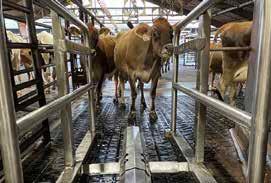
The retrofit project will have a flexible design incorporating a total of six GEA robots in two existing research barns, housing about 250 lactating cows, along with one training robot. The six-row main barn is set up in quadrants, making it easy to incorporate a robot in each pen. UBC will add two more robots in their second barn a four-row barn with drive-through feeding and individual feeding boxes for measuring intakes on one side.
GEA looks forward to collaborating with the innovative dairy science leadership at UBC.
With real-world research insights, we’re going to get even better at managing dairy cows throughout all stages of lactation.
“Robotic milking and automation technology are evolving quickly and finding their way on to farms in many applications,” says Marshall. “With real-world research insights, we’re going to get even better at managing dairy cows throughout all stages of their lactation with data sets that will teach us how we can best produce the maximum amount of high-quality milk on farms that will carry us into the future.”
OUT WITH THE OLD,
in with the new milking equipment
Make it easier to manage your herd, attract and retain labor with the right investments.
The wish list of milking equipment upgrades can pile up the latest technology, more data, increased automation the list goes on. But while it’s nice to always have the latest and greatest milking equipment, what really calls for an upgrade?
Start by thinking about:
• What is costing me the most to repair and maintain?
• How can I reduce the cost of ownership?
• What could I upgrade to save money and gain efficiency?
• How could I reduce labor?
Upgrades can be as simple as new liners, milking claws and detachers or as big as new parlor stalls or a full parlor retrofit. Or they could include adding new technology like milk meters, automated cow-prep or automated post-dipping. Consider your greatest needs to prioritize which upgrade is right for you.
Focus on your biggest opportunities
When prioritizing what to upgrade first, think about your management goals and how you want to manage your farm in the future to identify your greatest area of opportunity.
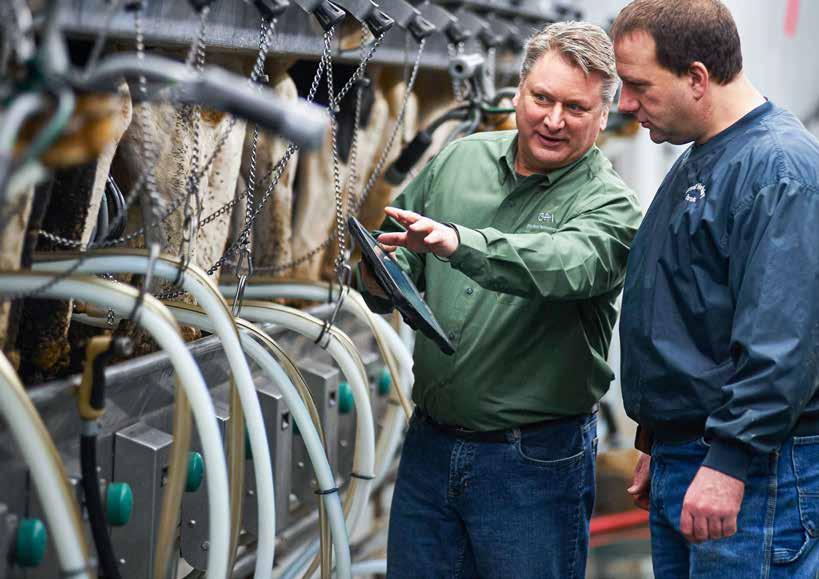
Work with your milking equipment dealer to prioritize upgrades to meet your farm’s goals today and into the future. They can help you determine what will work best with your current milking system and management style. Don’t overlook getting an outside perspective too tour other dairy farms and talk to other farmers using similar technology.
Make the right milking equipment upgrade
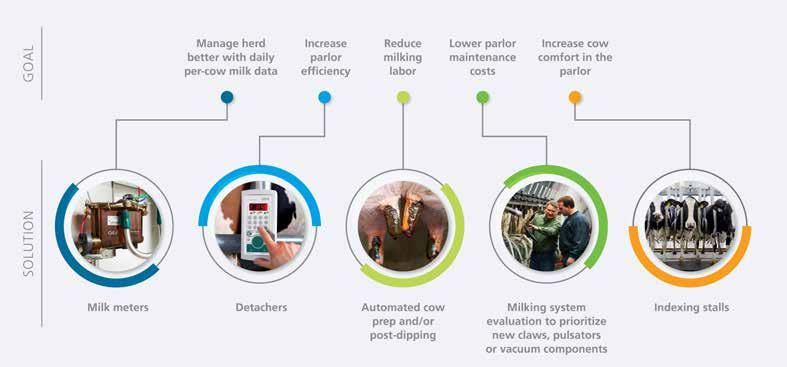
Identify your dairy’s goal to find the recommended solution.
Could you manage your herd better with daily per-cow milk data?
Milk meters provide production data for every cow at each milking allowing you to keep a closer eye on individual cows. For example, finding cows that drop in milk could help identify and treat sick cows sooner, something you can’t do with monthly test data.
Many milk meters also contain a sensor to measure milk conductivity, helping detect mastitis sooner leading to a faster and higher cure rate. You can use the data to group cows by milking speed to maximize parlor efficiency.
Would automating milking unit removal make you more efficient?
Detachers ensure milking units come off when a cow completes milking. They eliminate overmilking by stopping milking at the optimum time, resulting in healthier udders and more efficient milking.
If you already use a detacher system, consider the age of your system. There are many old detachers in use today, which aren’t working properly and can’t be finetuned because the technology is too outdated.
Are you looking to cut parlor labor?
Consider adding a teat prep system or automatic post-dipping. Teat prep scrubber systems allow you to milk more cows/ hour, milk the same number of cows with less labor, or add cows without additional labor.
Herds using teat prep systems experience more consistency and efficiency in cow prep across employees, resulting in cleaner teats, fewer mastitis cases and lower SCC. Automatic postdipping saves labor by eliminating the need for an employee to post-dip cows.
Are you milking in an older system and struggling to maintain it?
Consider the time you invest in maintaining your system to keep it running. Many older parlor systems, 20–25 years and older, were built for cows milking 60 pounds per day, not today’s cows knocking on the 100-pound door they can’t handle that volume of milk flowing through like new systems. Newer systems can provide more data more often to help you make better management decisions. Invest in equipment and technology that will make it easier to attract and retain employees and make it so people will want to work on your farm whether that’s family labor or outside labor.
Could you make your cows more comfortable in the milking stall?
Look at the stalls when cows aren’t in the parlor. Shiny spots or wear points can indicate cows have pressure points on them and are uncomfortable.
Consider upgrading your parlor stalls. Indexing stalls adjust to the cow to make her more comfortable and milking easier for employees.
NEW PRODUCT INNOVATIONS
Faster. More efficient. Customizable.
That’s the theme of GEA’s new innovations unveiled at World Dairy Expo. From herd health monitoring to parlor stalls, teat dipping to manure handling, there’s something for everyone. Check out these six new products and features:
1.
Locate cows in real-time
Find your cows faster with the touch of a button. CowScout™ Cow Location keeps an eye on your herd and knows where each cow is 24/7.
Get the exact position of one or multiple cows in realtime whether you’re using a PC, tablet or smartphone. Quickly locate cows needing attention for efficient herd management and less herd disruption.
2.
Refresh your parlor stalls
Shiny spots or wear points on stalls can indicate your cows have pressure points on them and are uncomfortable. Consider upgrading your stalls to comfortably position cows and make it easier for employees to access the udder.
Magnum LPS & Global LPS stalls provide:
• Ability to retrofit any brand of parlor
• Fast, simple installation
• Vertical lift rapid exit
• Low-profile, customizable stall sizes
Custom blend teat dips on-farm
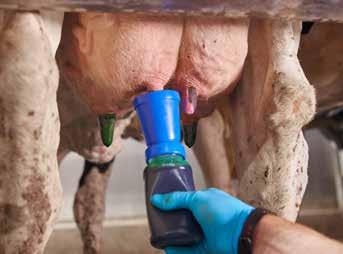
Adjust your teat dips on-demand with the new IntelliBlend™ XP teat dip blending system.
Precisely blend a wide range of teat dip products without calibration with one easy system. You can pre-dip with hydrogen peroxide and post-dip with iodine, while adjusting your skin conditioning package to meet current herd and weather conditions. IntelliBlend XP offers 21 pre-programmed formulas, including some of GEA’s flagship teat dips. Blend Teat-Kote® Plus, Velocity™ Plus and OxyCide® Plus on-farm – for fresh product at a cost-effective price point.
4. 6. 3. 5.
Automate the teat-dipping process
Save time and better utilize your parlor labor by pre- and post-dipping cows on the way to and from the parlor. Using multi-sensor technology, the IntelliSpray™ XP tracks cows as they walk through the system for the ultimate spray accuracy. Customize the sprayer to meet your herd needs by adjusting spray duration and pressure. The system works with iodine, chlorine dioxide and hydrogen peroxide teat dips.
NEW FEATURES ON THE DAIRYROBOT R9500
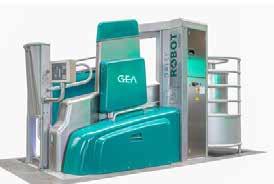
The DairyRobot R9500 box-style milking robot brings a new level of intelligent milking to your farm. It’s designed to efficiently welcome cow after cow and help you manage every step of their lactation. New features bring dairies:
• Faster box times
• Easier serviceability
• Longer service intervals
• Smarter software
• Superior efficiency
run hard, run long with GEA Hardox ® 450 PTO
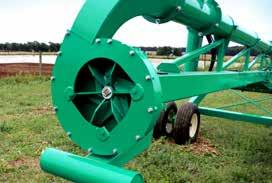
Use sand bedding? Or custom haul large manure jobs in a short window? Run hard, run long with GEA Hardox® 450 PTO manure pumps. Using a more durable pump will give you peace of mind by increasing wear resistance and extending service intervals. Hardox is available on the impeller, housing and cover plate on all GEA 8" and 10" PTO pumps.
5 SECRETS TO WINTER TEAT HEALTH
Update your milk quality program now to be ready when winter hits.
1. Precondition the skin
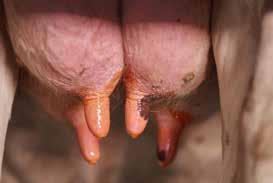
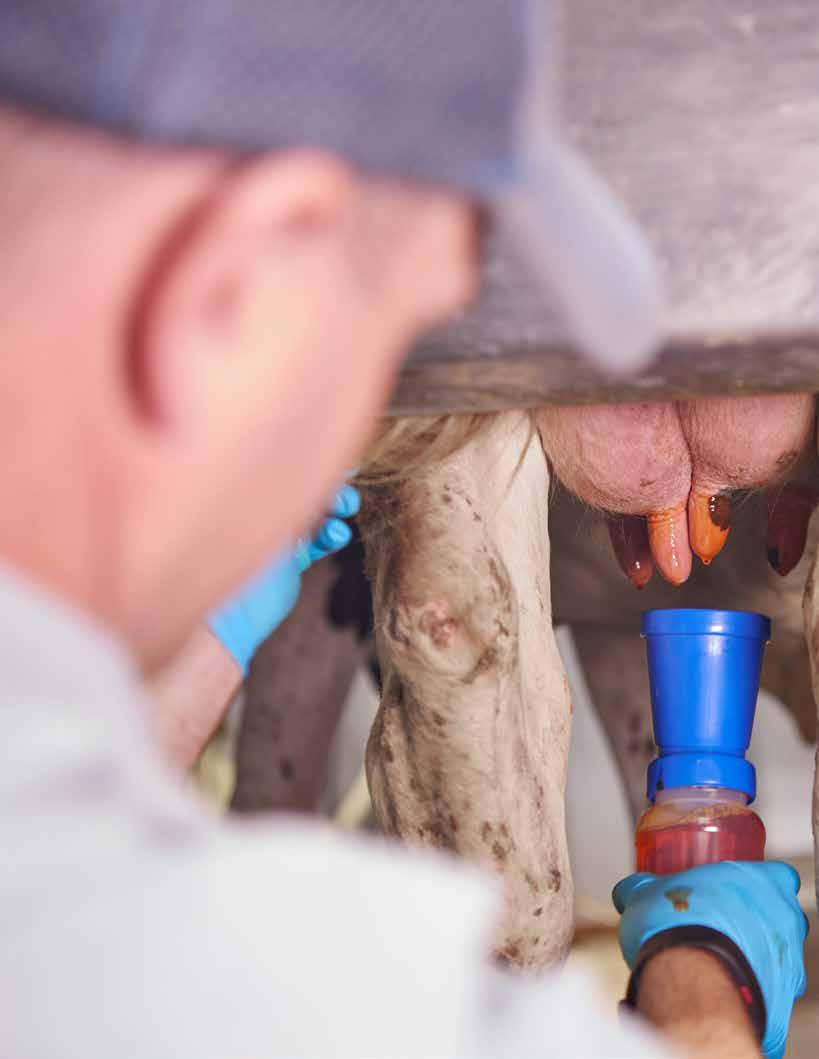
Teat skin thickness changes rapidly during extreme temperature changes. Increasing the level and number of emollients in your post dip well before winter can help precondition teat skin by making it more pliable and ready for weather changes.
A transition teat dip such as a chlorine dioxide teat dip or one containing enough lactic acid can help exfoliate the teat skin to slough off excess keratin. This type of teat dip helps reduce hyperkeratosis and prepare teats for colder temperatures.
Smoother teat ends are easier to clean and harbor fewer bacteria.
2. Develop a winter teat dip plan
Using the appropriate post dip to help control mastitis is just as essential in the winter as it is during summer. Emollients are a critical ingredient in winter teat dip they help protect, heal and soften skin. A successful winter teat dip should also include an effective germicide proven to kill mastitis-causing bacteria.
• As soon as the weather starts transitioning to cooler temperatures: Use a post teat dip containing a higher level of emollients with the proper protection against mastitis.
• When weather hits below freezing: Use a winter teat dip with a high level of emollients (74 to 76 percent) with a low enough freezing point to protect your cows’ teats.
3. Maintain equipment and optimize automation
When your milking equipment runs smoothly, it is more efficient for your dairy and more comfortable for your cows. To keep your equipment performing its best, work with your dealer to schedule routine service checks.
Make sure to confirm equipment settings are optimal for your cows’ milk production and the liners you use. Vacuum and pulsation level settings too low or too high increase teat stress and aggravate teat ends. Check your detacher settings so they are within recommended unit removal thresholds. If settings are too low, they can cause excessive compression on teat ends.
4. Review milking procedures
Milking procedures help maintain healthy teats and harvest high-quality milk. The ideal milking procedure includes appropriate stimulation, milk letdown time of 90 to 120 seconds, clean teats and proper unit attachment and alignment. Take time to educate your milkers about the effects winter weather can have on teat tissue. Since hyperkeratosis can be higher in winter, soil sticks on teat ends more. To ensure suitable cleanliness, have milkers wipe teats in a downward, twisting motion. Then flip the towel to a clean area and make a second slightly more aggressive wiping pass across teat ends.
5. Get the housing environment ready
Having the cows’ housing environment ready for winter can help minimize the weather’s impact on teats. Environmental adjustments could include bedding more frequently and using less recycled bedding.
Adequate bedding is especially important for fresh cows and heifers udder edema and lower circulation makes them more prone to teat damage. Fresh, dry bedding is also a key component to preventing environmental mastitis, along with keeping alleys and holding pens clean with frequent scraping. Consider adding wind blocks where cows are exposed to the elements to help reduce wind speeds and prevent teat chapping or frostbite.
Work with your local GEA Hygiene Specialist to find the right products for your farm. Re-evaluate your winter teat health plan each year.
A teat dip for every season
Keep teats healthy all year round with a full selection of GEA teat dips.
Transition Teat Dips — GEA's Selection Has Grown
BiSept® Pre & Post Chlorine Dioxide Mix
Velocity™ Pre & Post Chlorine Dioxide Mix
Velocity™ Plus Pre & Post Chlorine Dioxide Mix
Dioxistar Pre & Post Chlorine Dioxide Mix
Effinity™ Post Dip
Use a transition teat dip for 3–4 weeks to smooth teat ends and transition your cows into or out of cold weather. Chlorine dioxide-based dips are a well-known choice to aid in exfoliating teat ends and reducing the level of hyperkeratosis. GEA’s new Effinity also demonstrates excellent exfoliation properties in a ready-to-use formula.
winter Teat Dips — Formulated for Harsh Weather Conditions
NOTE: It is recommended that fresh cows stay on Derma Sept or Derma-Kote at a higher temperature threshold. Because they have more edema, these dips will help to condition teats and increase circulation in the colder weather, until the edema is gone.
Implementing a winter teat dip during cold weather is key to increasing teat conditioning and increasing blood circulation. Winter teat dips can be used all winter long, but make sure to use during below freezing weather conditions at a minimum of one week of use. If mild conditions are present for a stretch of time, farms can use a conventional, high emollient teat dip until freezing weather returns.
Specialty Products — More Options to Help Heal and protect
An emollient additive may work for your herd if you would like to help enhance conditioning in cold, but not freezing weather. Always work with a specialist to fine-tune precise amounts for your herd. System V Emollient System Use with most other GEA conventional teat dips
Robotic milking DREAMS TURNED REALITY
HEAR MORE FROM THESE THREE FARMERS IN THIS WEBINAR
Adam Garfat
Garfat Farm — 5 years with a
GEA robot
We decided to install a GEA robot on our farm because it allows our cows to choose when and how many times a day they want to be milked. We really like the camera feature that allows for efficient attachment. Plus, with the all-in-one liner, it cleans, milks and dips in one smooth motion.
Since switching to the GEA robot, our cows are calmer and happier. Our milk quality has improved and our somatic cell count was reduced. With great support staff from GEA, we were able to overcome any obstacles and easily adapt to the robot. I would rate that a 10 out of 10.”
– Adam Garfat
Andy & Sarah Lenkaitis
Lenkaitis Holsteins 2 DairyRobot R9500 boxes
One of my favorite things about the robot is the amount of data we get and the ability to make decisions based on the data. That is valuable to us as people working with the cows and our business. The information you get makes managing your cows a lot more objective versus subjective.
One of the other unique things with the GEA robot I really like is the ability to work with the cow in the box. I really don't see that with any other manufacturer. If I suspect something is wrong, I can look at a cow, I have the ability to go behind the box and work with her – that is invaluable.”
– Sarah Lenkaitis
Bonlender family
Clover Hill Dairy 50-stall DairyProQ robotic rotary
We knew we needed a new parlor and we all agreed we wanted something that was going to help us cut our labor with robotics involved. We were having a hard time, the last two to three years, keeping a solid milking staff on our farm and that's such a vital piece of our labor force. Robotics were important to make the job of our milkers easier, to have that consistency and quality in our milking.”
– Sarah Bonlender
“Milking cows is not glamorous, but once we put in the DairyProQ this job became a desirable job. Now milking cows is something that people are proud of rather than just going to work. People are proud to be associated with the technology.”
– Brett Bonlender
TAILS Keep them clean and safe
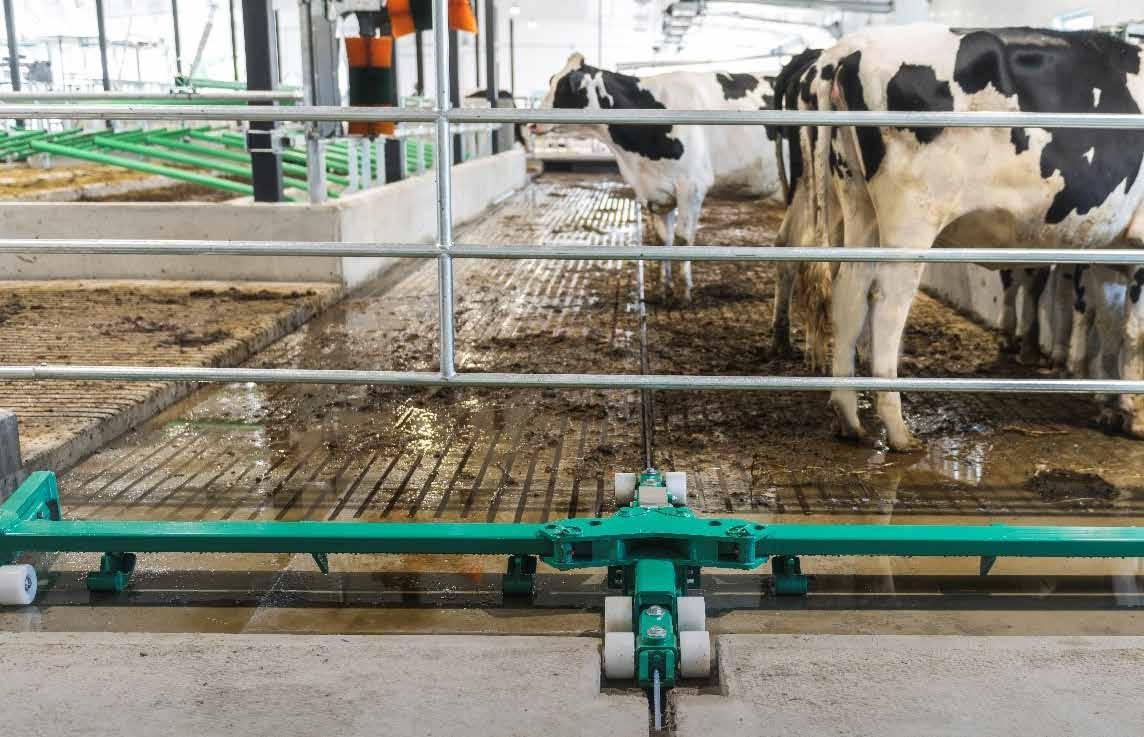
Follow these tips for your automated alley scraper system.
Use these tips to manage your alley scraper system and ensure your cows are safe and clean:
Scraper system
• Check your control panel load sensor seasonally to monitor the scraper system’s power. Monitoring it will limit the chance of creating extremely high cable tension and help you notice abnormal power spikes.
• Manage the control panel settings for proper sensitivity, especially during dry conditions or when bedding stalls.
• Properly adjust the tension of your scraper cable, rope or chain system to prevent scrapers from jumping around and potentially pinching a tail against the curb. Check the manual for detailed instructions.
• Leave 1 inch between your scraper wing and the curb to prevent pinching tails.
• Consider having a scraper wing with a roller for offset alleys or if you want to keep the blade tip touching the curb.
• Choose a blade that has smooth surfaces near the stall beds as they make it more difficult to snag a loose strand of hair.
• Take care of sharp edges, protruding bolts or pinch points immediately to reduce injury.
Freestall
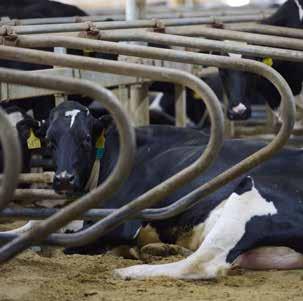
• Be sure your brisket board is in its proper position for your herd (typically 65–72 inches ahead of the rear curb) to allow cows to move ahead in the stall.
• Maintain a fly abatement program and ensure proper airflow to reduce flies and cows swinging their tails.
• Adjust scraper run times to align with milking, feeding or feed pushup to reduce the chance of a cow lying in the stall at scraping times.
• Alter feeding pattern to align with the scraper position in pens.
Implement a tail trimming protocol that fits your dairy’s schedule. For example, you may consider trimming each cow’s tail when she calves. Consider having safety glasses for employees to prevent tail switches from harming their eyes during milking.
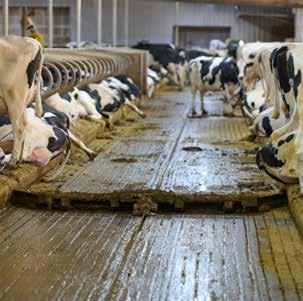
For decades, automated alley scraper systems have been successfully used on livestock farms to keep freestalls and cows clean.
Manure management equipment
Highly customizable solutions for effective stewardship of the land.
The GEA product line includes industryleading manure spreaders, innovative separation technology, and time-tested, proven manure pumps, agitators and scraper systems.
The design and quality of GEA’s equipment, combined with the industry experience of our manure management specialists, allow us to bring unique, individualized solutions to farms of all sizes helping keep cows cleaner, reducing labor and capitalizing on the valuable by-products available from manure.
Products
• Scrapers
• Agitators
• Pumps
• Separators
• Spreaders
• Centrifuges
Then & Now
technology in its prime
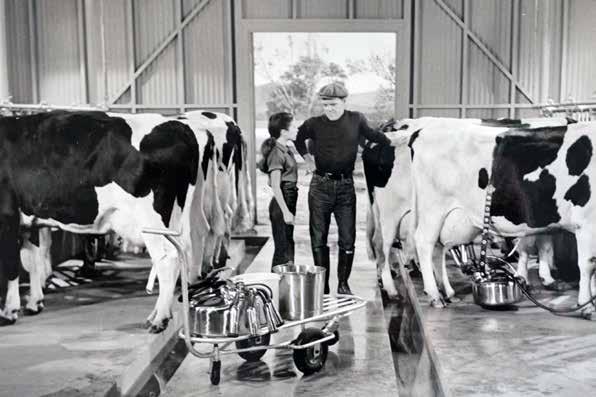
The Surge milker was featured on a 1960s TV show. It used teat cups with short, easy-to-clean tubes attached directly to a bucket, which hung under the cow. The adjustable positioning of the unit under the cow promised faster, safer milking.
Robotic milking technology used today brings labor savings and a high level of herd management capabilities. Dairies can milk up to 600 cows per hour with one operator using the GEA DairyProQ robotic rotary.