BUILDING THE FUTURE
ROTARY VISION TURNED REALITY
Bilow Farms finds labor-efficient, cow-friendly milking with new GEA DairyRotor.
MAKING PARLORS IN THE U.S.A.
THE EFFICIENT MILKING GAME
SAVING WATER AND LABOR

Bilow Farms finds labor-efficient, cow-friendly milking with new GEA DairyRotor.
MAKING PARLORS IN THE U.S.A.
THE EFFICIENT MILKING GAME
SAVING WATER AND LABOR
® Dairy Illustrated was a premier dairy publication in the 1970s and 1980s, with the second highest circulation among dairy magazines in the U.S.
If your family was dairying during this time, chances are they received a copy in their mailbox. GEA is excited to bring this publication back and carry on the tradition of sharing customer stories, management tips and new technology with today’s dairy farmers.
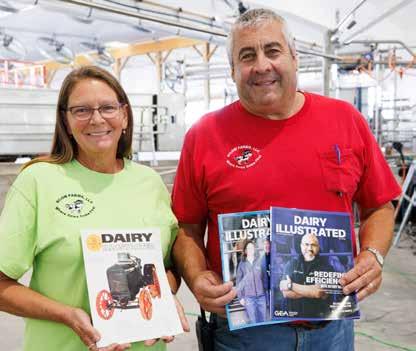
The Bilows, our cover story family, were subscribers of the original Dairy Illustrated. When we visited their farm, they were proud to display a past issue that featured their dairy operation in the 1980s, along with our newest issues.

miss an issue!
Bilow Farms’ vision turns reality
Better with robots
Four considerations for animal monitoring systems
Rotary parlors made in America
A change for the better
Partial automation: The efficient milking game
New product innovations
Facts matter in your teat dip decision
Manure management that saves water and labor
Technology
New 100-stall GEA DairyRotor lays foundation for labor-efficient and cow-friendly milking.
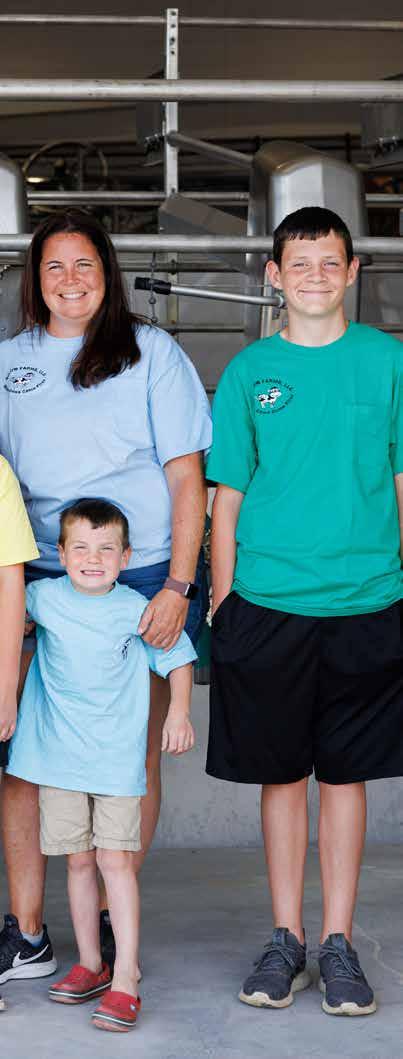
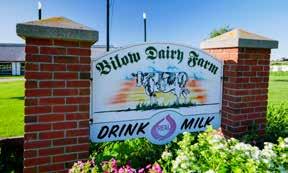
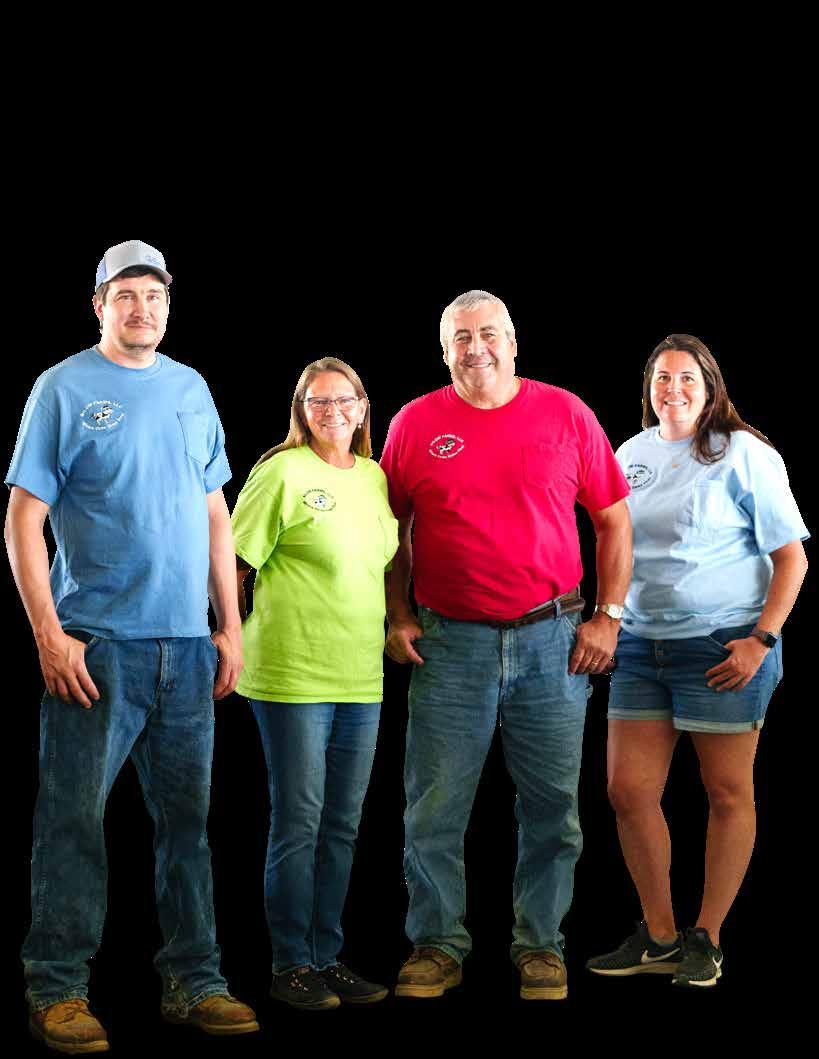
In 2015, Vincent Bilow of Bilow Farms LLC, Malone, New York, had a vision to grow his family’s dairy farm.
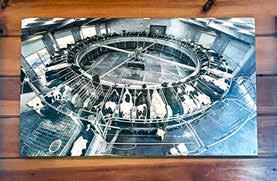
“One of the ways I’ve always done business is by having a goal. I asked my GEA rep for a picture of a rotary parlor — we enlarged it and hung it on my office wall so I could study it and make it our goal to build,” says Vincent.
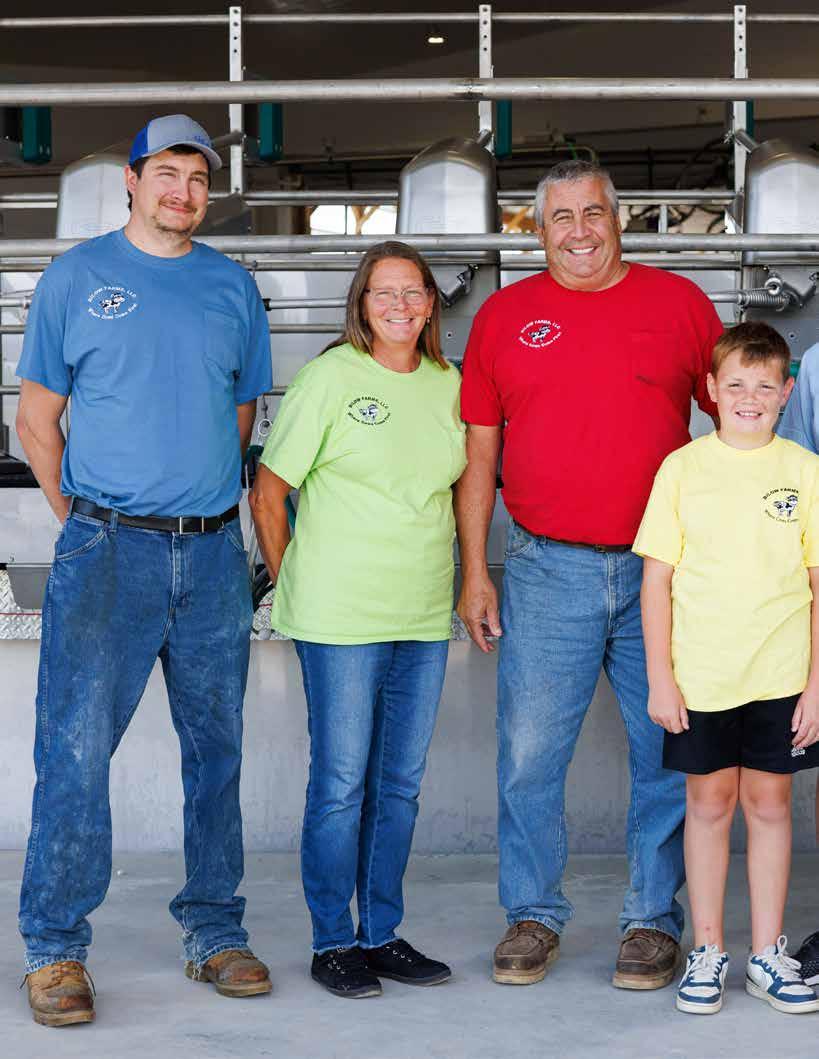
He co-owns Bilow Farms along with his wife, Trudy, their son, Andrew, and daughter, Jessica.
“Our family wanted to grow our farm for the future, lower our carbon footprint, and make it more labor-efficient and cow-friendly,” says Vincent.
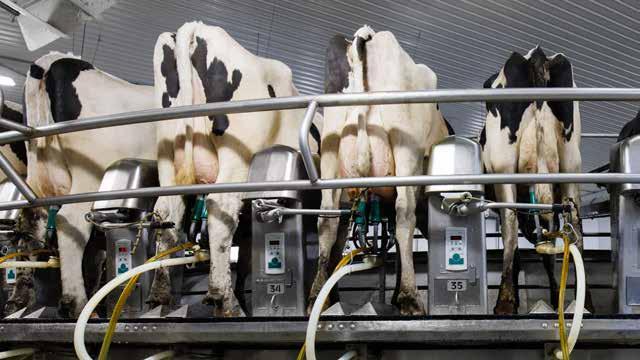
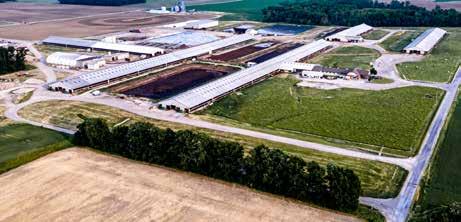
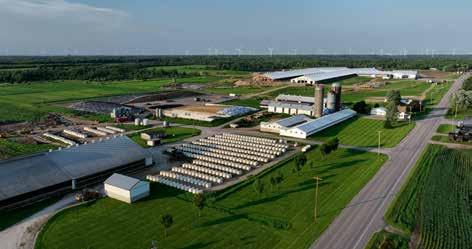
Flash forward to 2021. The Bilows decided to build the rotary parlor of their dreams on a greenfield site to milk 4,500 cows. Construction began in April 2022 on a new milking center along with two 2,000-cow freestall barns. In July 2023, their vision became reality with the first turn of the farm’s 100-stall GEA DairyRotor T8900 parlor.
Our family wanted to grow our farm for the future, lower our carbon footprint, and make it more laborefficient and cow-friendly.
When did Bilow Farms begin?
My grandfather bought the original farm in 1940. My father purchased it from him in 1946 and my wife and I bought it from him in 1988. Early on we milked 80 cows in a tiestall barn. We added onto the barn and built a freestall to milk 400 cows. In 1999 we built a double-12 parallel parlor and were milking 2,150 cows prior to this build.
What are the roles of your family members on the farm?
My role has changed a lot over the years. I used to be the one milking all the cows. Now, I oversee what’s going on at the dairy and am very involved with the crop side. My son Andrew manages the cows,
focusing on herd health and reproduction, and employee scheduling. My wife Trudy and daughter Jessica handle the books and payroll. I also have a nephew who is extensively involved with the crops.
What factors drove you to build a new facility?
We want people to realize that we care. All farmers care about their environment and we’re trying to make the farm sustainable for our family. I have a son and daughter that are fourth-generation dairy farmers, and we’re hoping that our grandchildren will be the fifth generation of Bilow Farms.
What does your new build include?
In 2022 we started building a 100-stall GEA rotary parlor. We built two freestall barns to house 2,000 cows each and we also put in a state-of-the-art sand separation system. We put in manure digesters to capture the methane and turn it into renewable natural gas with our goal of lowering our carbon footprint.
Why did you choose a rotary over another parallel?
We went with the rotary because we wanted to eliminate the cows walking a long way into the parlor and the cows seemed to be more content on a rotary. They seem to enjoy it and it’s a better experience for them.
In seeing various rotary parlors and talking with other farms, we liked the ease and efficiency of the GEA rotary. The cows seemed more comfortable on the GEA platform than on other platforms.
How does the new parlor address your farm’s challenges?
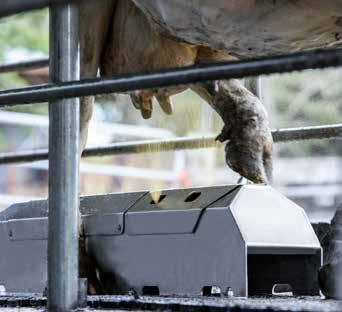
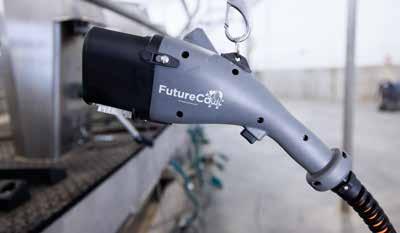
One of our biggest challenges is labor. Our old parlor was very labor-inefficient. With the new parlor, our goal is to have three people in it. We’ve added the FutureCow Prep System, which we believe will greatly increase efficiency. We have also added the Udder Mister automated teat dip spray arm on the back end of the parlor.
What are your goals with the new parlor?
Our goals are:
• 4.5 seconds per cow unit attachment
• 750 cows per hour
• 25,000 to 28,000 pounds of milk per hour
Why did you want to work with GEA?
The reason we went with GEA was because we have a strong dealer in the area and a rich family history with the company. They worked with my dad dating back to the Surge days. He put in the first pipeline in our area in 1966. When we built our previous parlor in 1999, we used a GEA dealer and I wanted to stick with the brand.

What excites you most about the new parlor?
What excites me most is that we’ll be able to milk our cows three times a day and we’ll be set up in a modern parlor. This farm should be efficient for 20-plus years. Also, one of our goals is for our employees to have more time with their families. This parlor will allow them to work less. It’s very important to us to take care of our employees.
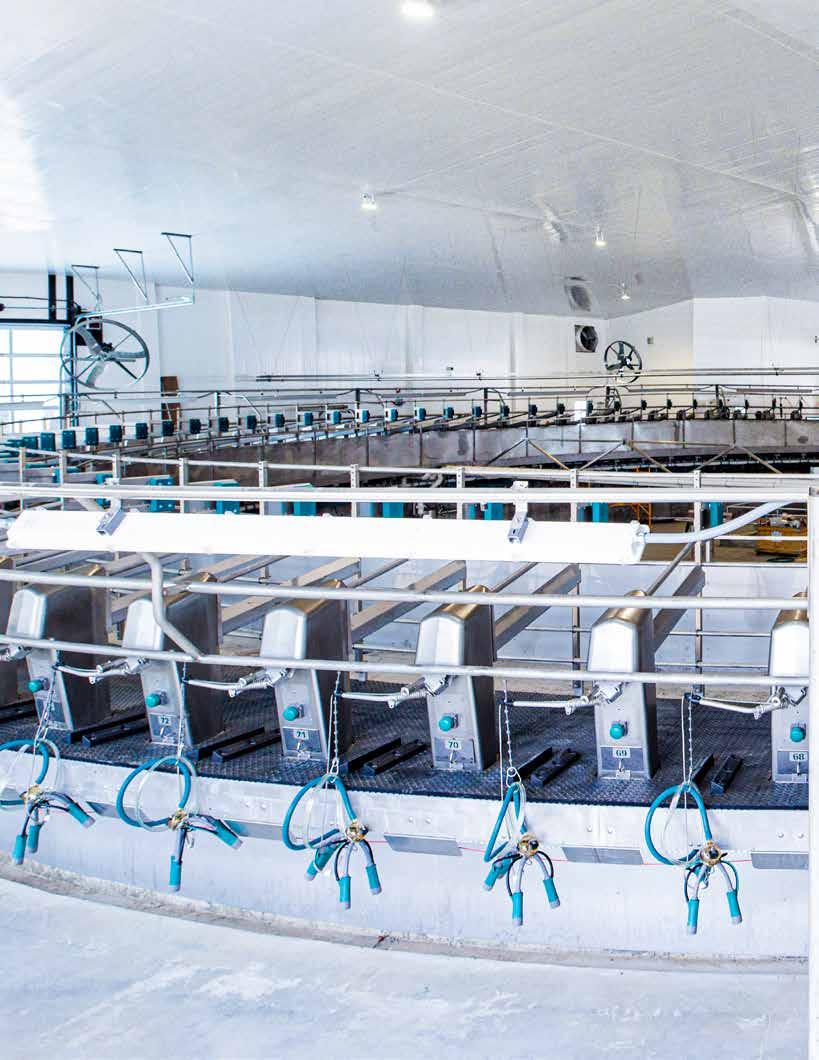
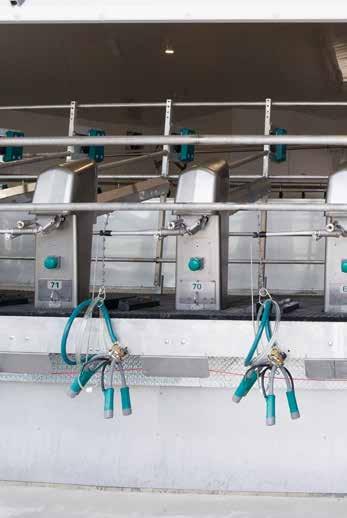
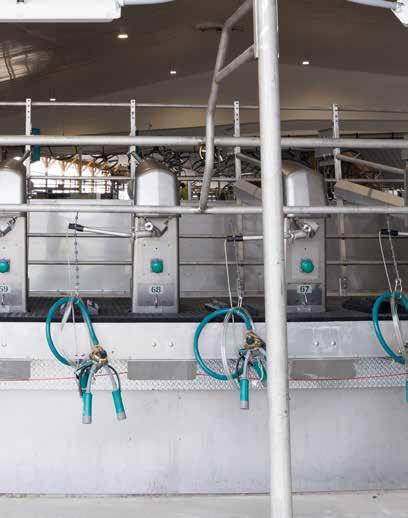
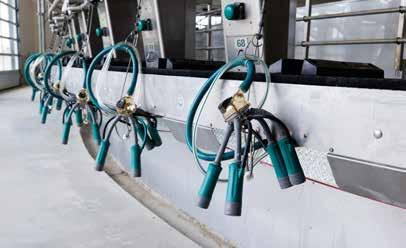
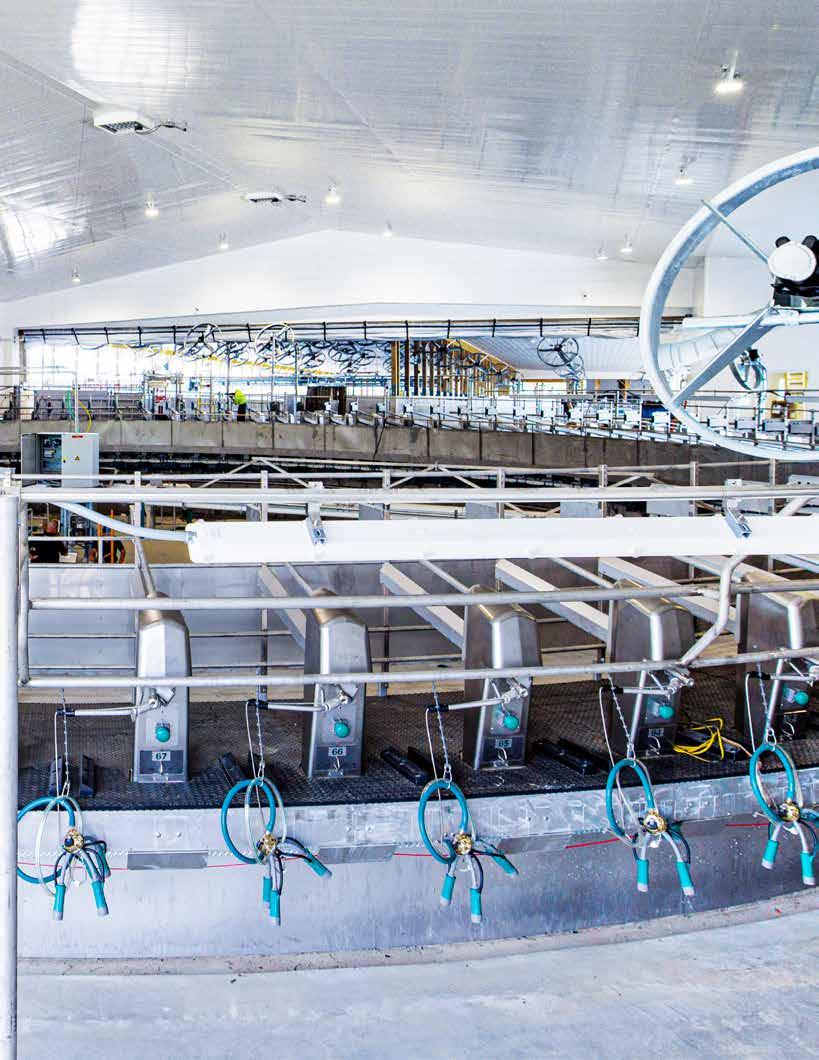
The 100-stall GEA DairyRotor T8900 parlor features the PosiForm drop-down arm, DemaTron 60 detachers and the PPID (per place identification) system.

Hear the Bilow family’s story in this video
Retrofit 6-row freestall barn with 6 GEA
DairyRobot R9500s including DairyMilk M6850 SCC sensors, CowScout™ animal monitoring system and sort gates.

As a family farm, we wanted to entice at least one of our sons to continue farming. We recognize that times have changed and technology is everything to their generation. Our transition to robots has made dairy farming more appealing to them — and brought our oldest son back to the farm in a full-time role.
We had three employees dedicated to milking in our parlor. The robots have paid for themselves by nearly eliminating this labor cost.
The robots have also made us better managers of our herd. We love the data and reports we can get — it’s been fun to compare day to day to see how we’re doing as we try to improve every statistic.
We were surprised by how quickly our milk bounced back after transitioning to robots. We’re amazed at how much milk we’re getting just one year in. With 30 fewer cows, we’re shipping as much milk as we did before robots.”
B & T Black Creek Farm Fairfield, Vermont Milking 325 cows

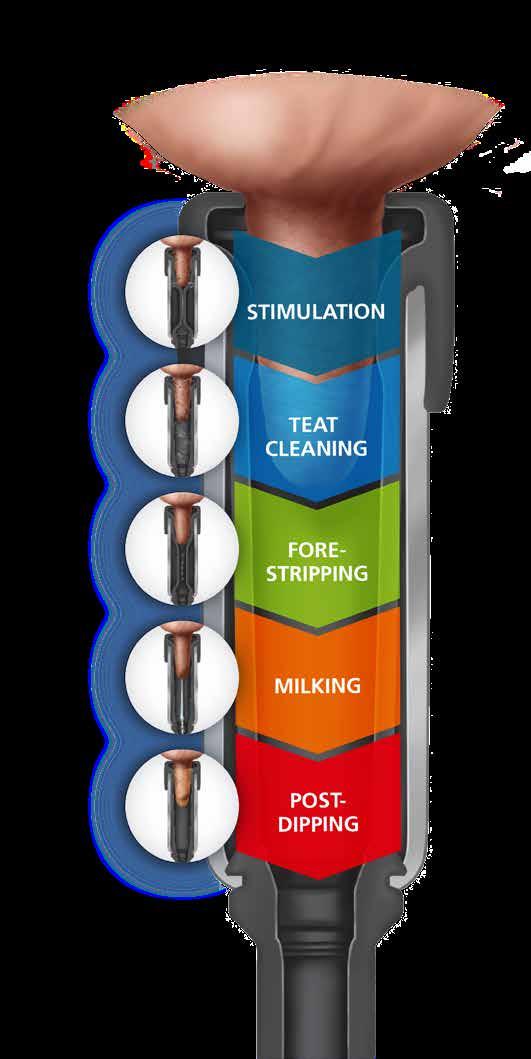
GEA’s proven In-Liner Everything™ technology performs every step of the milking process — stimulation, teat cleaning, forestripping, milk harvest and post-dipping — in a single attachment.
This uniform, quick and comfortable process, all occurring within the teat cup, is key to harvesting excellent quality milk while maximizing the efficiency of your robotic milking facility.
Each step of the In-Liner Everything process is designed to:
• Ensure cows receive the best possible milk let-down process
• Deliver a fast, gentle, complete milkout
• Protect udder health
• Harvest quality milk and deliver it quickly to the milk tank
All milking procedure steps occur mechanically inside the liner in a safe and efficient manner.

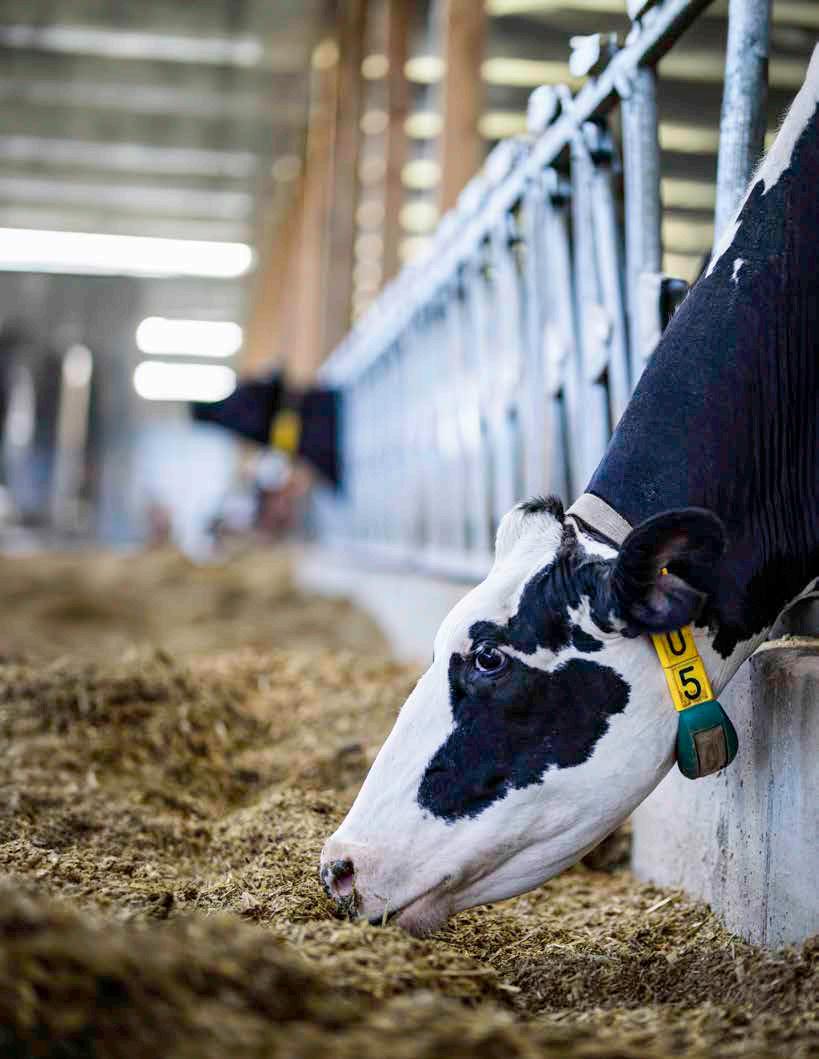
Increase ROI by helping ensure the right cows get attention when they need it.
In a flooded market of animal monitoring systems, it can be easy to get caught up on what’s new or flashy. But flashy doesn’t always translate to what you need — efficiency, profitability and ultimately, a solution that makes your day-to-day herd management tasks easier.
Use the following considerations to help determine the best monitoring system for your farm:
You can significantly streamline your daily herd management by combining monitoring system data with your existing management tools and technology.
Most monitoring systems interface with herd management software such as DairyComp and PCDART, but capabilities vary. Some monitoring systems have more advanced integration capabilities, like automating protocols based on individual cow behavior.
For example, if a cow cycles at 55 days and your voluntary waiting period is 60 days, there’s an assumption that cow will show a heat again on her own. With some monitoring system integrations, the herd management software can automatically unenroll her from your timed AI protocol based on a recognized heat with the monitoring system. If the cow does not show another heat, the system can automatically re-enroll her into the timed AI protocol. This feature allows you to use timed AI as a treatment rather than a blanket protocol.
These interface capabilities increase ROI by helping ensure the right cows get attention. They also reduce dependence on skilled labor by automating the process.
Integration goes beyond your herd management software. Some monitoring systems are standalone systems, providing only health, activity and group monitoring insights. Others are all-in-one solutions like CowScout from GEA and integrate with animal identification components — such as a parlor, sort gate, cow location or milking robot.
For example, some dairy farmers find efficiencies by adding a sort gate that syncs with their monitoring system. When the monitoring system generates an alarm, the gate automatically sorts the cow into a separate area after milking to perform a cowside evaluation, breeding or herd health tasks. Even if you don’t have a sort gate, cow location or robotic milking technology today, choosing an animal monitoring system that integrates with these technologies opens your options for the future.


Use these four tips to set your farm up for success with an all-in-one herd monitoring and identification solution, like GEA CowScout™.
Like any investment, you want a solution built to last. Most monitoring systems claim a battery life of 5 to 8 years. If you’re using a monitoring system with ID, find out if it requires battery life to ID or uses passive ID. If the ID runs off the battery, that affects longevity.
If you’re considering ear tags over a neck collar system, retention can be an issue. Understand whether the monitoring device must fasten to another tag or if it is an independent tag.
If the internet is a challenge on your farm, find out if it’s required to access the monitoring system. Some systems don’t require internet access unless you want alerts emailed to you, or want to transfer behavior baseline information from site to site. Other systems are solely cloud-based, which can significantly impact your user experience if you have a poor internet connection.
Learn how the rest of your farm’s team can access your monitoring system information — such as your breeding technician, veterinarian and consultants.
When you incorporate a monitoring system into your farm, you’ll rely on it daily. If you have trouble with your system, you need someone you can call to provide immediate support.
Not every monitoring system company has a local technical support team or a 24/7 hotline — and even if they do, many of these resources are based overseas. Find out if your system has a technical support team that is based locally.
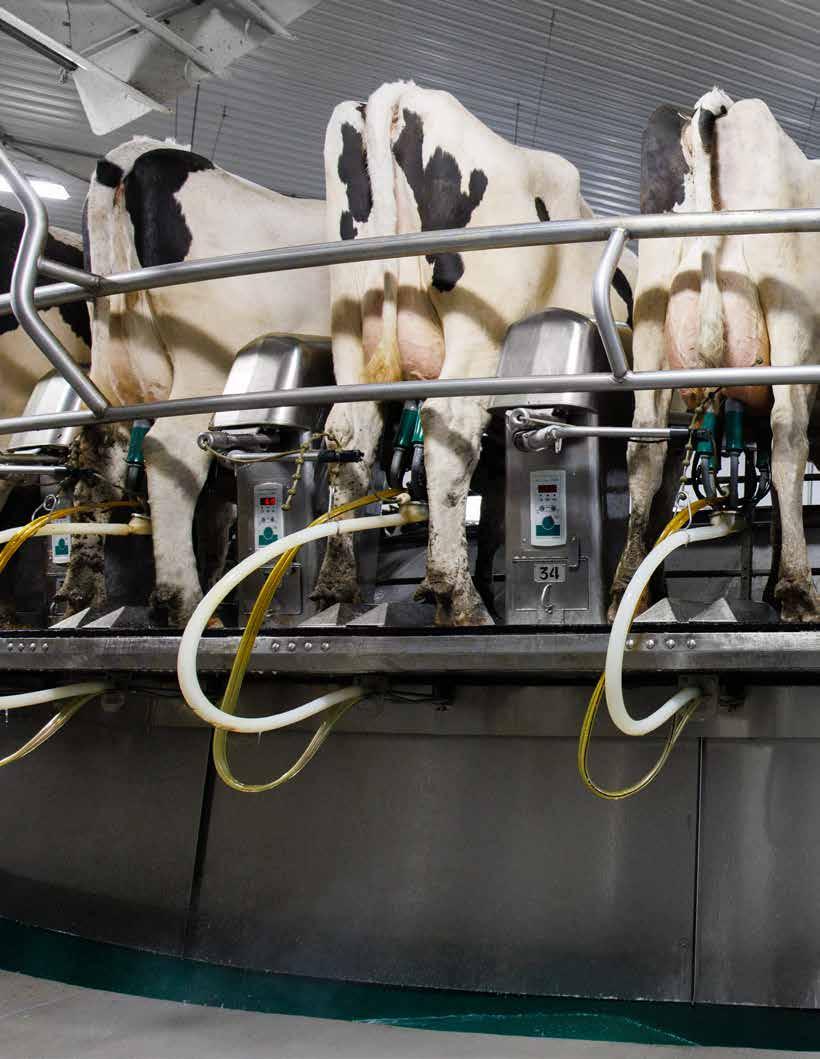
The first platforms are rolling off the line at the milking equipment plant in Galesville, Wisconsin.
GEA’s rotary milking structures, destined for North American installation, are the only ones in the industry made in the U.S.A.
“There’s been a surge in rotary parlor demand as dairy farmers look to milk more cows using less labor,” says Matt Daley, president of GEA Farm Technologies, Inc. “We’re thrilled to bring manufacturing to our Wisconsin plant, where we’ve made milking equipment for over 50 years, and be able to respond faster to growing demand from our customers.”
Before this change, many of GEA’s rotary parlor components came from New Zealand. Disruptions in overseas shipping and rising freight costs no longer make this sourcing viable. The timing felt right to bring the manufacturing home to Wisconsin.
“Our Wisconsin manufacturing plant has been GEA’s center of excellence when it comes to milking equipment engineered for the growing commercial dairy market,” says Daley. “We’re confident in the expertise of our team there and are excited to open more job opportunities while boosting the economy in our nation’s dairy state.”
The Wisconsin plant began making Surge milking equipment five decades ago — producing basic milking items such as milking units, pulsators, vacuum pumps, pipeline washers, electrical controls and milk receivers. Today, they produce some of the most sophisticated parlor and milk-handling technology.
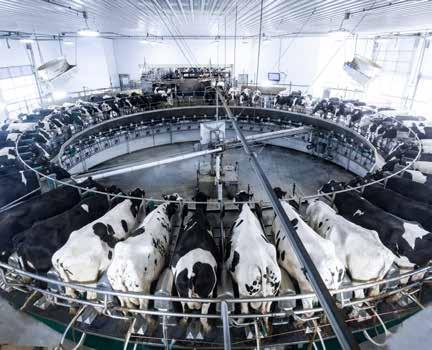
“Our rotary parlors have helped dairy farmers across the U.S. achieve unimaginable milking speed and efficiency.”
Our Wisconsin manufacturing plant has been GEA’s center of excellence when it comes to milking equipment engineered for the growing commercial dairy market.
The plant will produce GEA’s popular rotary parlors, the DairyRotor T8000 Series. All DairyRotor models are engineered for fast, smooth cow flow on and off the platform. A favorite feature of farmers who have chosen the GEA DairyRotor is their ability to customize the parlor to meet their needs.
“Our rotary parlors have helped dairy farmers across the U.S. achieve unimaginable milking speed and efficiency,” says Daley. “With our proven technology and experience, we can customize your design and layout to maximize throughput and your investment.”
The GEA DairyRotor is available in configurations up to 120 stalls, 75- or 90-degree angled stalls and drop-down or non-drop-down take-off arms — and comes in two different platform options.
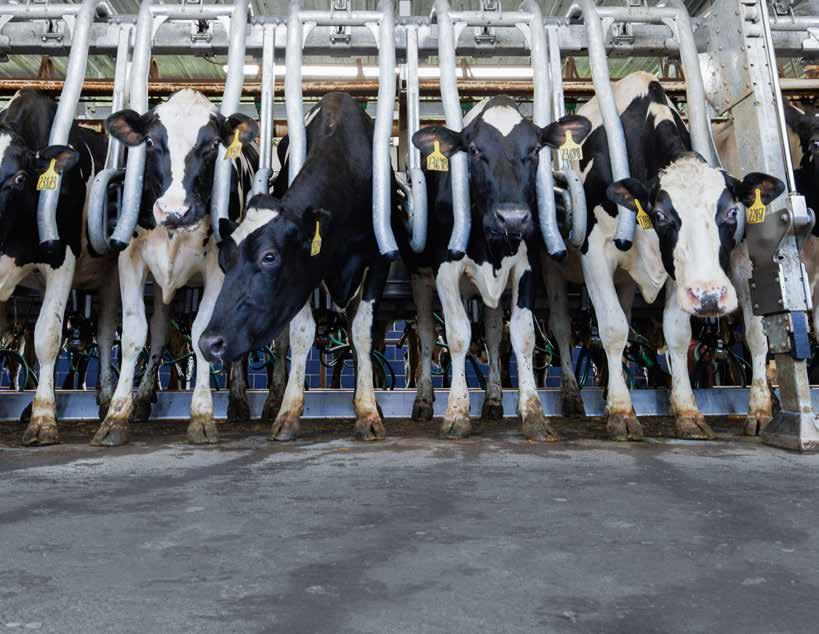
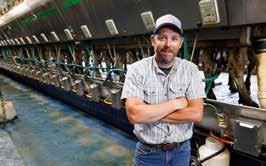
Steve Porter Porterdale Farms, Inc.
Adams Center, New York
Milking 2,000 cows

In 1994 we put in a GEA Magnum 90i parallel parlor and it worked great. We were looking to retrofit that system to handle our larger herd. Retrofitting was the key for us because we had the footprint, the structure and everything was in great shape. The LPS checked all the boxes to fit in our existing space.
One of the reasons we went with individual indexing is that every cow is not the same size. The ability of the parlor’s front ends to adjust individually for each cow was a big deal for us. The cows are more comfortable and their udders are better positioned for our staff.
The best thing I’ve seen is when the cows exit, they don’t have to walk out and around anything anymore. When the stalls go up, the cows gradually walk out because of how quiet it is. Knowing we could upgrade the only piece of equipment that runs 24/7 on a dairy with a retrofit, made the decision easy for us.“
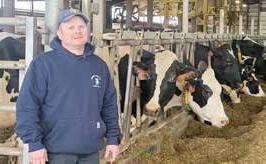
Robert Hoffman
Happy Hollow Dairy, LLC
Springville, New York
Milking 325 cows
We installed a new double-12 Magnum 90i VL parlor and we really like the individual indexing. The cow ID in the parlor allows us to efficiently and effectively manage the milking herd because we know who each cow is when she comes into the parlor.
We also installed IQ milking units. The IQ keeps the parlor quiet, because there are no vacuum leaks between sides.
We came from a tiestall so it was a big change for our family. However, after we settled in everything ran smoothly. Our SCC has decreased dramatically, pounds per cow have increased, milking times are more consistent and the overall work is much more enjoyable in this facility. It is also easier to find and retain employees.
The CowScout system has helped with the early identification and management of illness in our herd. It also makes heat detection and breeding less intensive for our staff and breeder.
I would recommend this system to anyone who wants a quiet parlor that is reliable and built to last.”
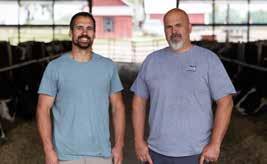
Matt Gramer and Albert Gramer
Gramer Farms, LLC
Fenton, Michigan
Milking 250 cows

Since we’ve had the GEA RoboRebel, feed intake has gone up about 2-3 pounds per cow and our herd has gone up around 2-3 pounds of milk per cow. Plus, with the summer heat, we maintained milk production that we’d normally lost.
We’re saving at least 2.5 hours daily not pushing up feed — not running a skid loader and taking time away from other tasks like coming back from the field to push up feed.
We like the unique offsetting technology — as the cows eat more of the feed throughout the day, the RoboRebel pushes it back closer to the cows. Our favorite feature is the consistency — the milk production is consistent, the feed intake is consistent and the cows have been borderline predictable since we started using it.”
We’re saving at least 2.5 hours daily not pushing up feed.
Decrease labor and deliver consistency with partial automation.
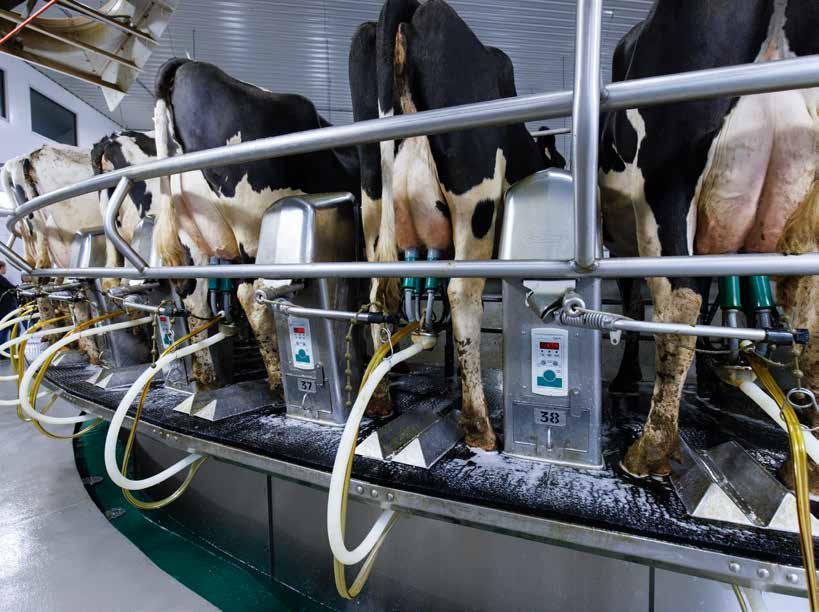
Is labor a challenge? Could you be more consistent with your milking process? Or milk cows more efficiently?
Parlor automation technology decreases labor demands and brings consistency to the milking routine. You do not need a new facility or a lot of concrete work to take advantage of parlor automation. Many farms invest in one piece of equipment to partially automate a process and add more in the future.
You can expect more consistency from cow to cow with any automation product. But successful implementation is not possible without thoughtful planning, preparation and follow-up.
The most common partial automation parlor technologies replace one or more pre- and post-milking steps. Identify your greatest challenges to pinpoint where you can best streamline your current process:
• Stepover sprayer — A stepover sprayer automatically applies pre- or post-dip to cows in the entrance and exit lanes of the parlor. It can work with any parlor configuration, allowing you to use your parlor staff for more critical milking tasks or other management needs rather than just pre- or post-dipping.
• Teat dip spray arm system — Delegate the pre- or post-dipping task to an automated arm at the entrance or exit of a rotary parlor system. Options today have simple mechanics, do not take up much space and provide a quick return on investment. An automated teat dip spray system helps ensure cows are dipped efficiently without slowing down the rotary — reducing the number of people needed on each milking shift.
You can add many partial automation solutions to new or existing parlors of any style or brand.
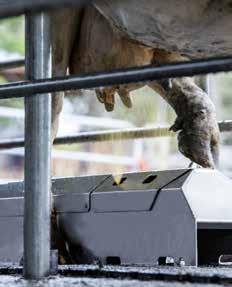
Stepover teat dip sprayer works in any parlor configuration.
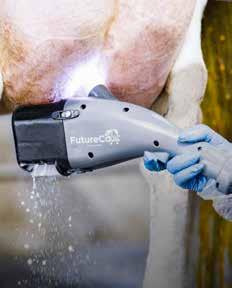
Teat prep system provides consistency in milking procedures.
• Teat prep system — An all-in-one teat scrubber brush system cleans and stimulates teats before milking. These systems require an employee to operate but can greatly speed up the teat prep process and reduce procedural drift. Dairies can achieve better milk flow rates, maximize parlor throughput and achieve healthier teat ends.
Considerations before commitment
• Teat dip options and cost — The amount of teat dip used by any automated sprayer can be more than manually dipping. Work with your milking equipment dealer and manufacturer from the start so you know the dip volume necessary for effective coverage, and weigh that against the labor savings.
Always ask for a complete list of teat dips you can use in a system, along with the efficacy and cost. Ensure your dealer partner offers teat dip options with proven, effective killing power across a broad range of mastitis-causing organisms.
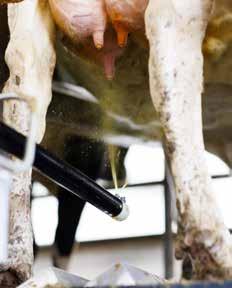
Spray arm system efficiently applies teat dip without slowing down the rotary.
• Airflow — You may need to adjust ventilation to get better teat dip coverage in spray arm or walkover systems. For example, air blowing into the parlor from fans or overhead doors can inhibit spray accuracy. Closing a door or redirecting fans can help. Adding shrouds on the side of stepover sprayers helps control airflow in the holding area.
• Maintenance — Plan for downtime. Many farms can perform basic maintenance themselves; others have their dealer do it — it usually depends on their comfort level. If you plan to rely on your dealer during a breakdown or for scheduled maintenance, set expectations with them so you can get back up and running quickly.
Know the maintenance requirements and keep spare parts on hand. It can be as simple as keeping an eye on the spray nozzles for the teat dip arm or having extra brushes on hand for prep systems and setting expectations for monitoring them with your employees. Ensure you and your team receive proper training on the equipment so you know what to look for to keep the system operating at peak performance.
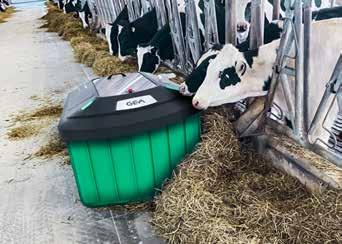
The new GEA RoboRebel feed pusher makes managing feed at the bunk easier and more efficient.
• Exclusive belt design attacks feed piles of any size to keep feed within cattle’s reach
• Smart sensors detect larger, wider feed piles to adjust the robot’s path accordingly
• User-friendly design includes remote monitoring and self-charging
• Flexible programming for multiple routes per day in both directions
• Eliminate time, fuel and hours on the skid loader
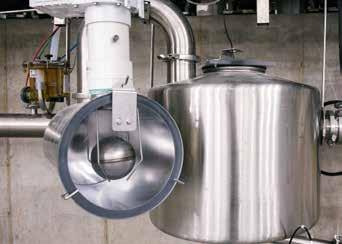

GEA Amplyfy™ becomes a chlorine dioxide-based EPA-registered sanitizer acid combo when activated with any GEA CIP acid. It provides all the benefits of a streamlined washing routine and is easily mixed in-line with settings on a standard wash control.
As a broad-spectrum sanitizing agent, Amplyfy delivers proven efficacy against pathogens known to form biofilm, along with removing and preventing milkstone. Its unique chemistry is a cost-competitive advantage at every wash compared to traditional acid sanitizers.
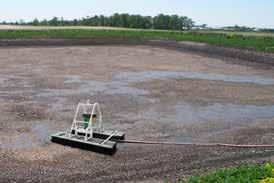
The newly redesigned GEA electric pumps for pontoon systems feature a stainless steel pump frame to increase the equipment’s life expectancy. A new automated lubrication system reduces overall maintenance requirements. When service is necessary, a new lifting hook makes removing the pump from the lagoon easy.
These pumps enable transfer or agitation at various locations on a large storage pond. They pump only the surface liquid from the lagoon, which typically feeds a power flume system or flush valves to clean alleys and holding areas.
4. 6. 3. 5.
Get the most out of your manure with the new all-stainless steel GEA Xpress™ manure separation system. Preserve fiber length, generating higher quality bedding material with superior roller technology. The frame, roller shield, motor table, roller arms and accessories are all constructed with grade 304 stainless steel.
New safety shields, mounting designs and a laser-level sensor are just some of the new features of the updated Xpress. Many configurations are available and are sized based on cow numbers, manure consistency and desired dry matter rate.
The GEA IntelliSpray® Stepover Spray System contains clever optical sensing technology. It only activates two spray nozzles for slower-moving cows, but can use up to four nozzles for faster-moving cows to optimize coverage and dial-in teat dip use.
Simple programming and controls make this stepover sprayer a set-it-and-forget-it tool for today’s commercial dairy farms. The IntelliSpray system is compatible with any parlor type and you can choose from a wide range of GEA teat dip options.
The new GEA DCS line of chillers combines reliability and performance, with the best in customer service. Every unit is built in the U.S.A., keeping up with technology without overcomplicating the design. These chillers provide today’s high-volume dairies features like:
• 24/7 customer support
• Remote monitoring
• No proprietary parts
• Easily integrated heat reclaim options
• Standard package sizes from 30HP to 200HP
• Modular design for easy expansion
Stay ahead of milk quality with a teat dip plan tailored to your farm.
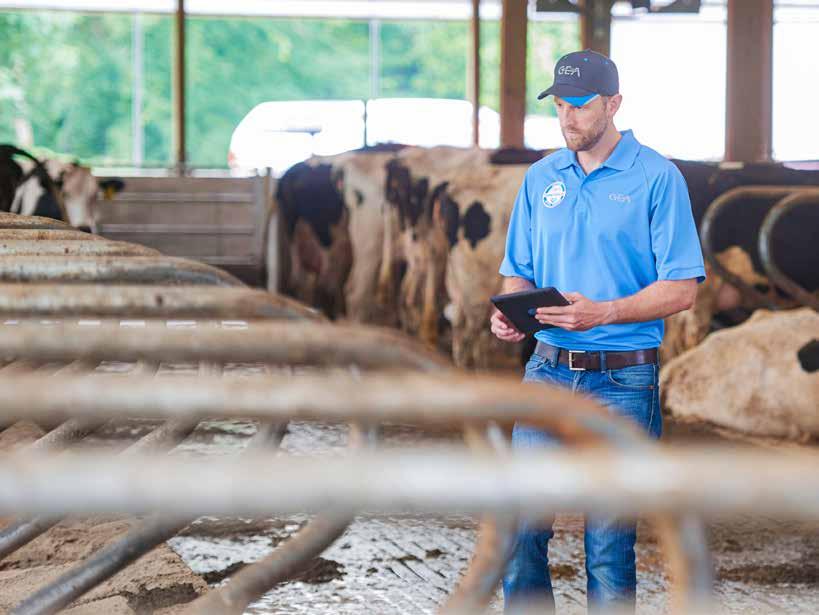
How do you choose a teat dip for your dairy? Selecting a teat dip is like working with your doctor on a treatment or prevention plan. You must first obtain the facts for proper diagnosis. The same is true for teat dip and working with your hygiene specialist.
Mastitis and high SCC typically result from a combination of several factors — cow and teat cleanliness, dip coverage, liner slips, parlor hygiene or environment. Digging deeper into your farm’s milk quality issues will help your hygiene specialist identify the root cause and create a teat dip plan that fits your herd.
You need more information than SCC and the number of hospital pen cows to develop the most effective mastitis prevention plan for your herd. Gathering insights into the causes behind your milk quality issues will help your hygiene specialist build a customized teat dip plan for your specific challenges.
Reviewing culture results and management protocols allows your milk quality team to better understand where potential milk quality issues are coming from.
Gather the necessary information for troubleshooting:
• Review DHIA records to determine new infections and high SCC cows
• Use culture results from: clinical mastitis cases, udder towels and bedding
• Evaluate the status of your herd’s teat skin condition
• Ensure milking equipment parameters are set properly
• Assess milking procedures
Review this information with your milk quality team to identify trends for predominant mastitis-causing organisms and any protocol issues. Then, you can focus on specific areas to minimize bacteria in your cows’ environment and be sure the right teat dip is prescribed to fight the mastitis challenges your farm faces.
Setting milk quality goals for your dairy will provide clear insights about what works well and what areas need improvement. Your hygiene specialist can help you monitor these goals to quickly adjust your plan when challenges arise. But remember, change won’t happen overnight. Changes in skin conditioning can happen relatively quickly. But to see consistent changes in SCC trends and mastitis cases will take at least three to four weeks. For this reason, it is a great idea to use a new teat dip for 90 days before making additional changes. This will ensure adequate time to realize the effectiveness of the teat dip plan and make any additional management changes to help reduce milk quality issues.
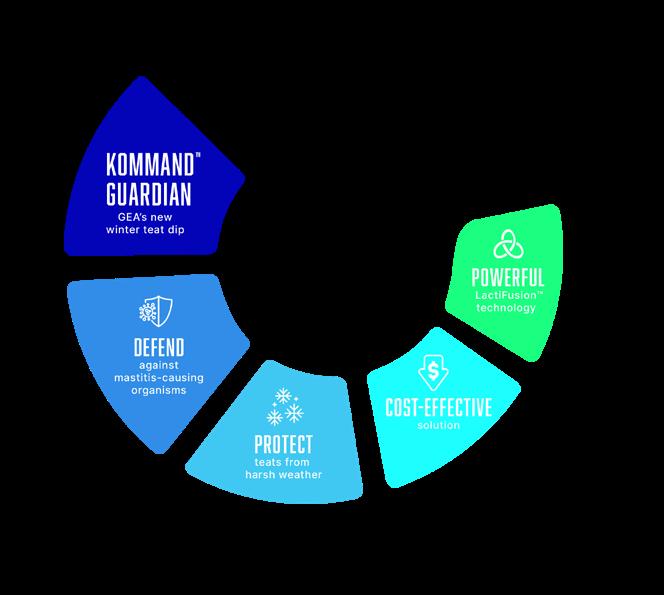
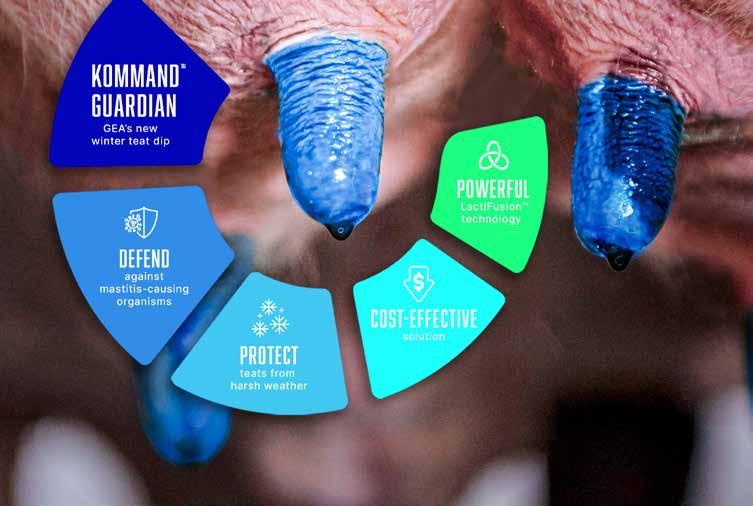
Kommand Guardian is a vibrant blue ready-to-use winter teat dip with 55% glycerin. It contains our exclusive LactiFusion technology, which provides excellent killing power and protection against mastitis-causing organisms. It delivers the teat conditioning your herd needs to maintain teat health through harsh winter weather conditions.
Kommand Guardian packs a powerful punch at an economical price. And, it’s 100% customer satisfaction guaranteed!
Developing an effective teat dip plan customized to your dairy is a team effort between all your milk quality resources. With a well-informed team, the proper management protocols and an effective teat dip plan, you can be confident your cows will be protected and your dairy will produce the highest-quality milk possible.
GEA SlopeScreen™ + GEA OptiClean™ = Smarter manure management technology.
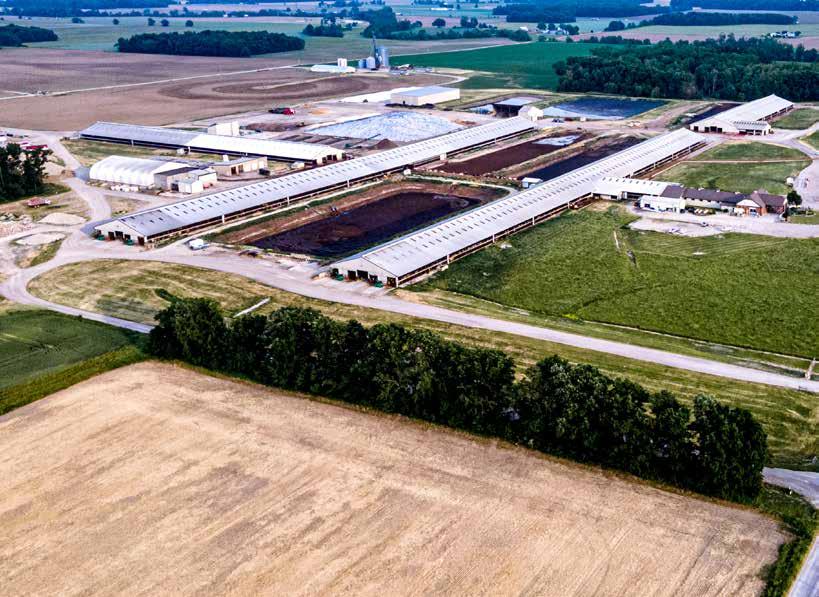
For many years, Bridgewater Dairy used an open loop sand lane system to manage their manure.
However, they were looking for a solution to lower their water use and save labor. That’s when they heard about the GEA SlopeScreen with OptiClean Technology. Chris Weaver, owner, shares what influenced his decision to change systems and its impact on his dairy.
Describe the challenges with your previous system.
The open loop sand lane system worked well, except when we emptied our pits or in the winter when the manure got too thick. We added a lot of water to manage the manure and keep it thin enough for the sand system to work.
What were you looking for in a new system?
We knew we needed to go to a closed-loop system. When looking at different technologies, we focused on ease of use and decreasing the amount of water required to make the system work.
What’s it like to operate the GEA SlopeScreen?
The SlopeScreen is extremely simple. Operation is literally just the manure flowing over the screen. Maintenance is minimal too — I make sure the pressure washer system is working, verify the chemicals are in the right spot and the drive units are working. It is very easy to maintain compared to other systems that require bearings, gears and other more expensive, complicated parts.
Has your water use changed?
The GEA SlopeScreen will allow us to use around 200 gallons of water daily — a reduction of almost 20,000 gallons daily, saving us money on manure hauling. It also creates a consistent, clean sand that can help keep our cows healthy.
How does the OptiClean help manage the system?
I knew slope screens require a person to pressure wash them multiple times daily to keep them working efficiently. GEA’s OptiClean took the labor part out of it. I didn’t have to worry about hiring somebody, keeping them on track and verifying they did their job. In today’s environment with the lack of labor and rising labor costs, it created a simple system I know I can trust.
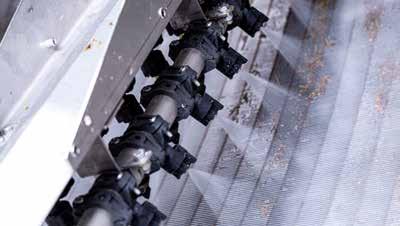
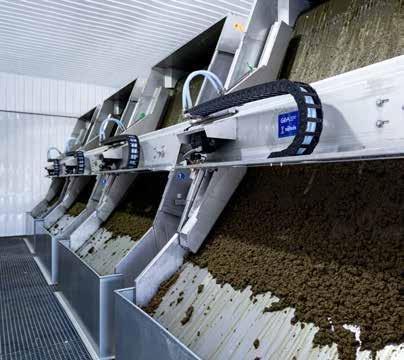
We now use around 200 gallons of water — a reduction of almost 20,000 gallons daily, saving us money on manure hauling.
What is your favorite feature?
The most impressive feature of the GEA SlopeScreen system is the minimal fresh water use compared to other systems. I worry about water and manure — especially where manure will end up. The less clean water I need to add, the better position I am in environmentally. Every gallon of fresh water I add to my system costs money. I would rather not spend more to get rid of it out in the field. The less water, the better.
How has the new system impacted your manure-hauling costs?
This system should reduce our manure hauling costs by approximately $130,000 this year.

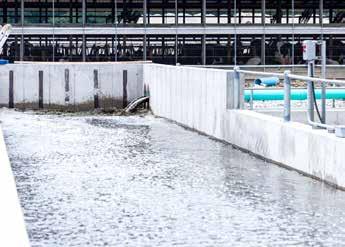


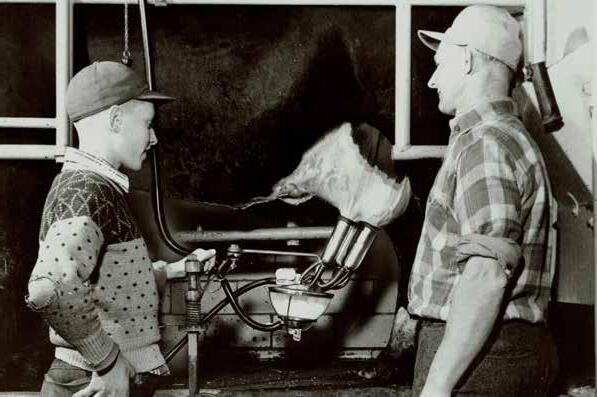
For generations, families have worked side by side on the farm. As the baton passes to the next generation, new technologies and management practices pave the way for sustainability and growth. At GEA, we’re proud to be part of these farm stories.
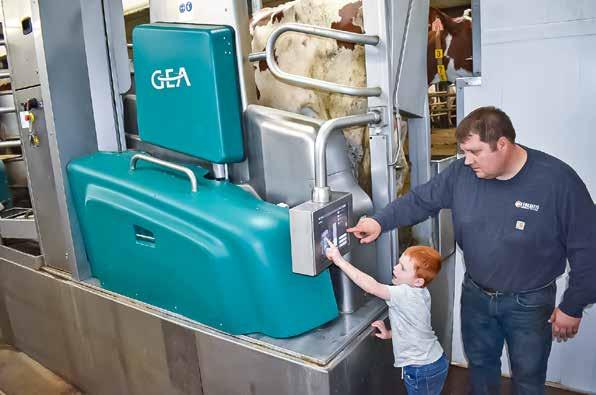
Technology is transforming our world, and the next generation of dairy farmers has more options than ever. These advancements make it easier to manage cows proactively and produce more, higher-quality milk. They also reduce manual labor and create more flexibility in day-to-day tasks.
scan to stay connected with us

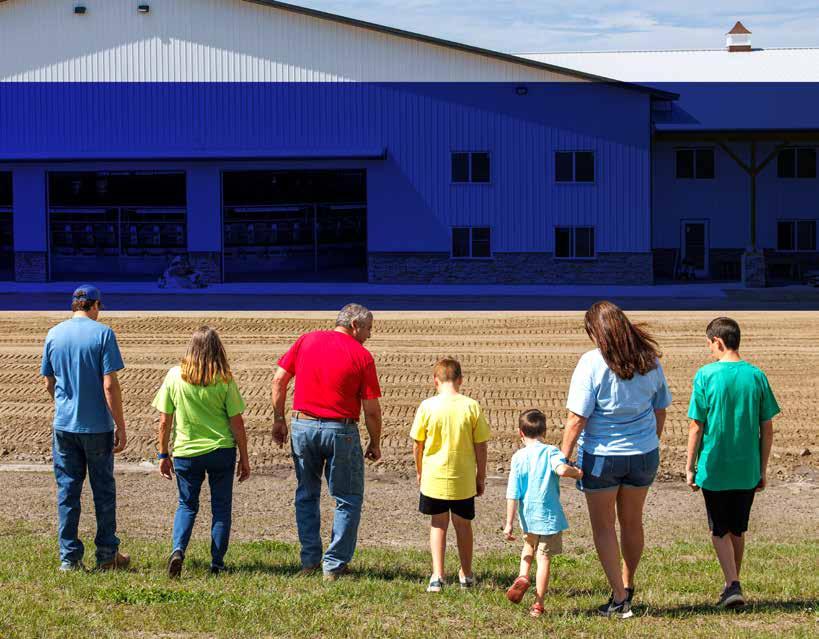

For generations, you have forged the path to the future of dairy farming. Your dedication inspires us to support you through
technologies, reliable dealer service and trusted industry experience. And as the next generation plants its roots, we’re evolving with you for a better tomorrow.


