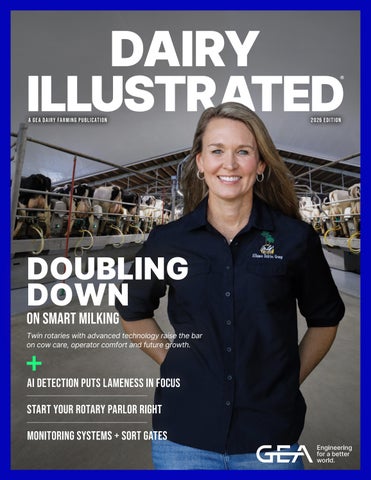
DOUBLING DOWN ON SMART
MILKING
Twin rotaries with advanced technology raise the bar on cow care, operator comfort and future growth.
AI DETECTION PUTS LAMENESS IN FOCUS
START YOUR ROTARY PARLOR RIGHT
MONITORING SYSTEMS + SORT GATES
Twin rotaries with advanced technology raise the bar on cow care, operator comfort and future growth.
AI DETECTION PUTS LAMENESS IN FOCUS
START YOUR ROTARY PARLOR RIGHT
MONITORING SYSTEMS + SORT GATES
Powering progress through technology that works.
At GEA, our goal is to engineer innovations that simplify daily work, improve cow comfort and keep your business moving forward. Our products are backed by unrivaled expertise with an emphasis on performance, so you can focus on producing quality milk more efficiently — and with confidence for the future of your dairy.
Dairy Illustrated was a premier dairy publication in the 1970s and 1980s, with the second highest circulation among dairy magazines in the U.S.
If your family was dairying during this time, chances are they received a copy in their mailbox. GEA is excited to bring this publication back and carry on the tradition of sharing customer stories, management tips and new technology with today’s dairy farmers.
Never miss an issue! Sign up now.

Two 80-stall rotaries, one bold vision
Start your rotary parlor right
AI detection brings lameness into focus
Monitoring systems + sort gates
Data at your fingertips
innovations
Two 80-stall rotaries,
Technology and design support cow health, operator ease and farm growth for Alliance Dairies.
We wanted to build something that not only worked for the cows, but worked for our people.

Alliance Dairies in Trenton, Florida, is known for their progressive mindset and strong community roots.
Founded in 1990, the dairies are led by general manager Jan Henderson, the third generation of this dairy family, who relocated from New York to Florida in the late 1980s. Today, the dairies include three sites, five milking parlors, a maternity center and a heifer breeding facility.
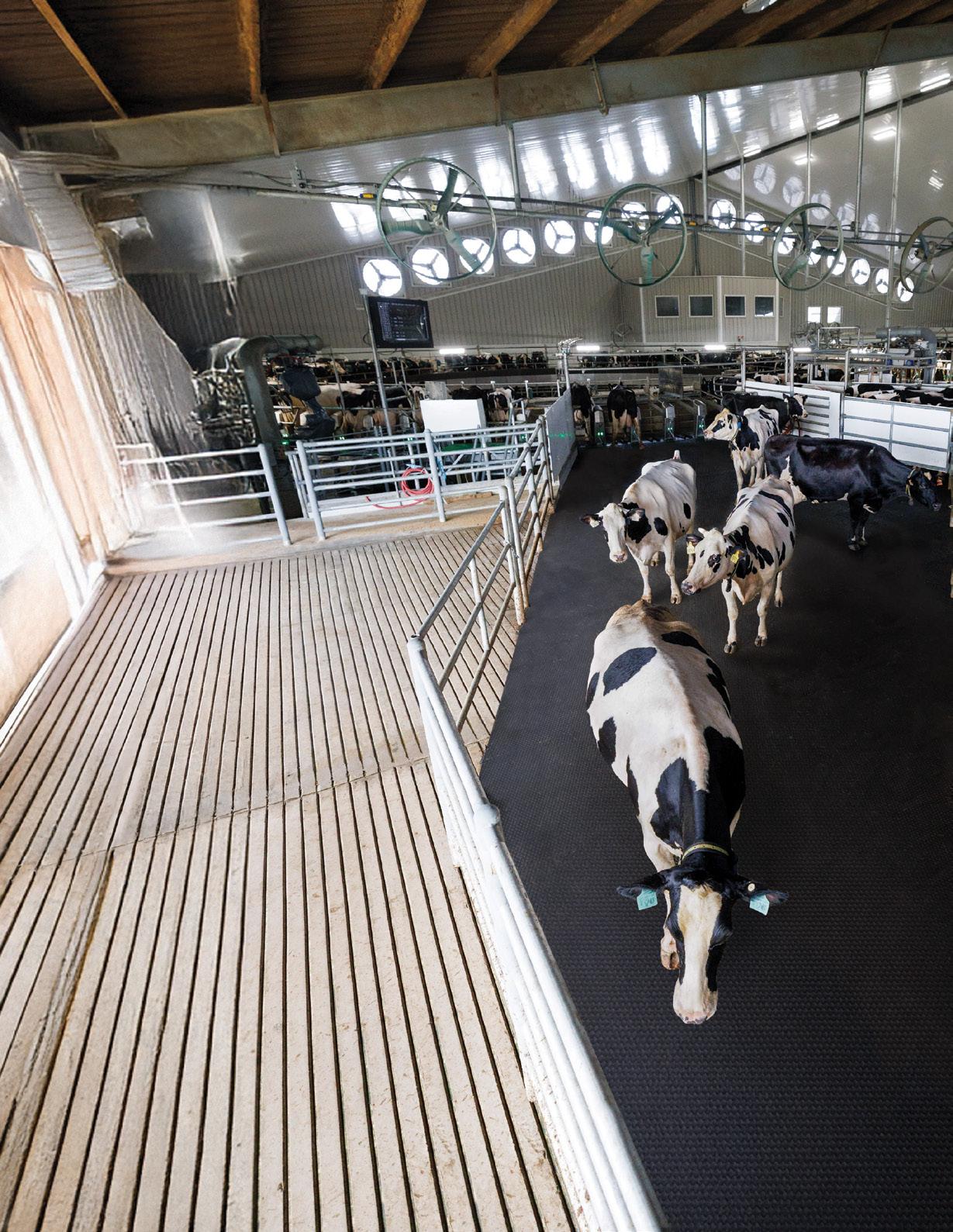
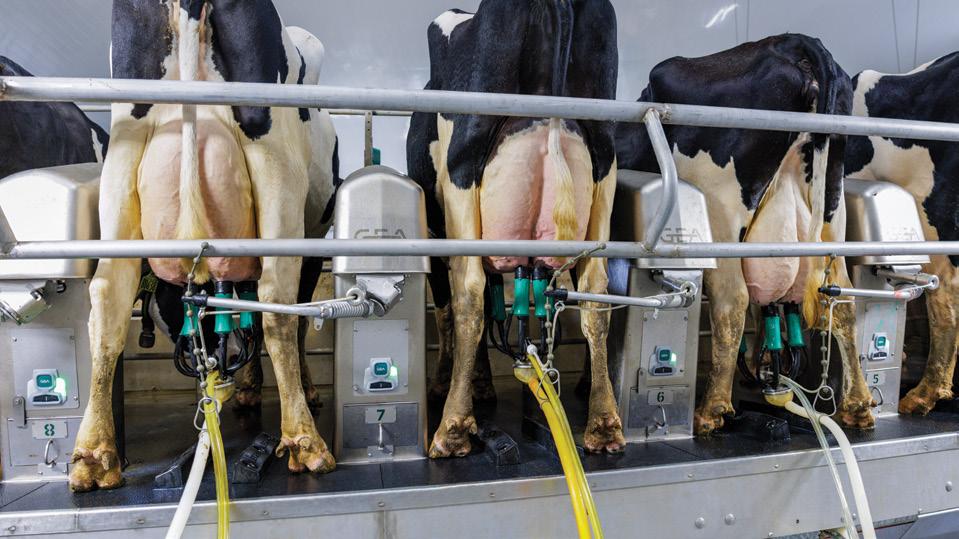
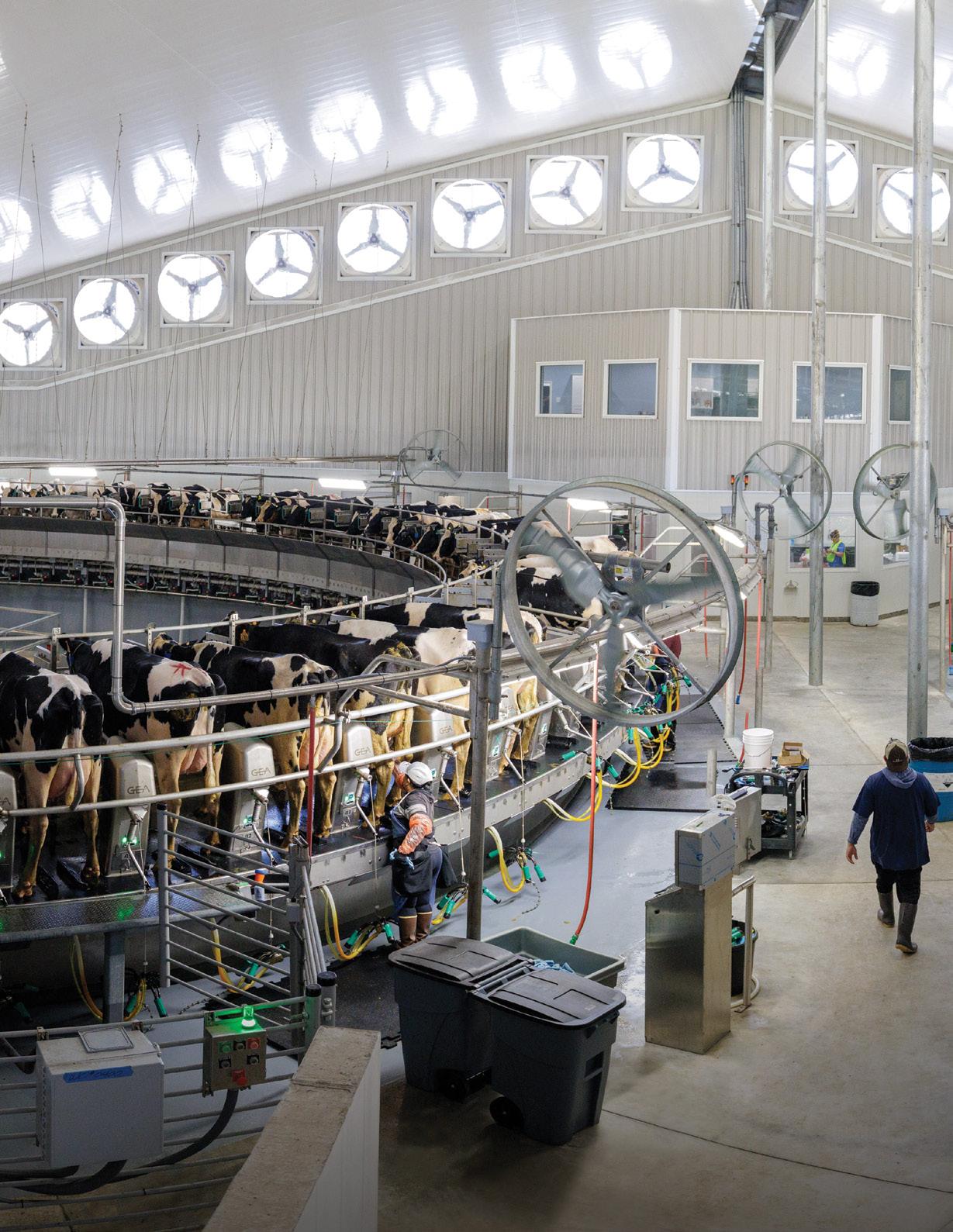
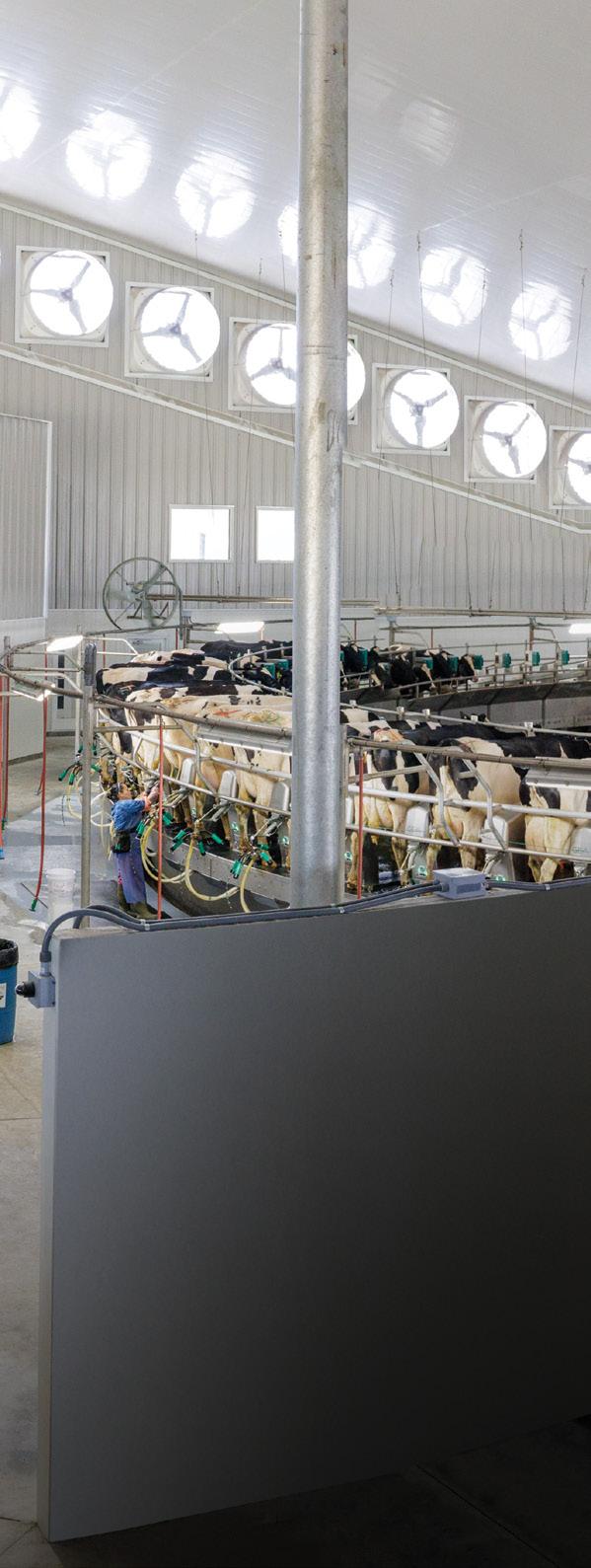
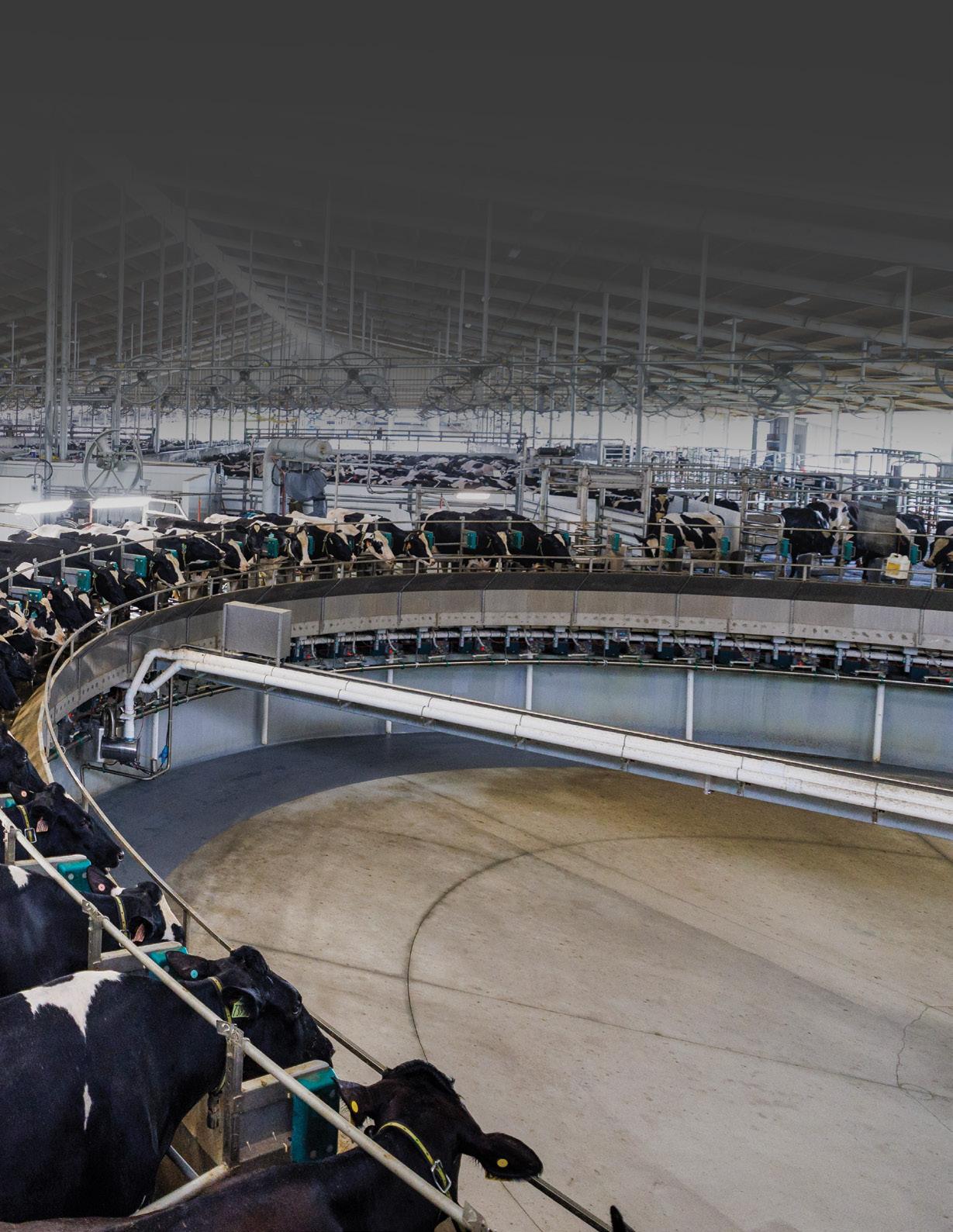
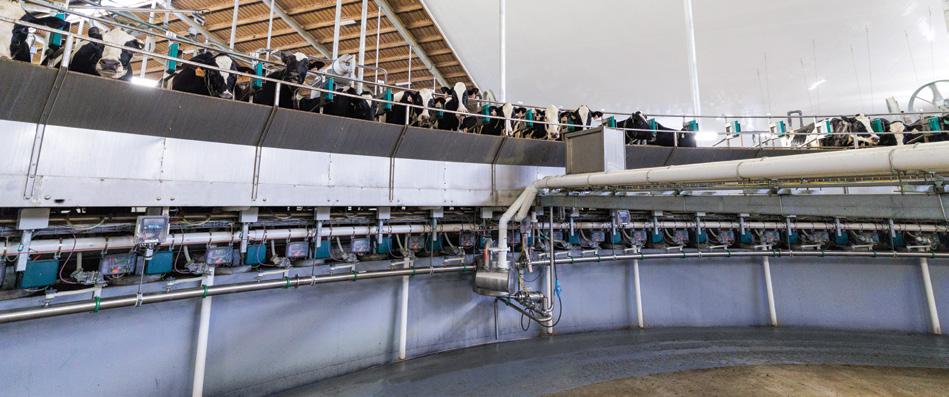
Most recently, Alliance Dairies installed twin 80-stall GEA DairyRotor T8900 rotary parlors under one roof — designed to improve cow comfort, operator ease and system reliability.
“We wanted to build something that not only worked for the cows, but worked for our people,” says Jan. “That meant choosing a system that was efficient, flexible and comfortable for everyone involved.”
This new setup features GEA’s latest milking technology, including the DigiFlow flow-through milk meter, DigiTron parlor controls and DairyNet herd management software, offering precision data and streamlined operation.
The facility started milking about 5,200 cows in the two rotaries — with room to steadily grow to 8,000. The team says the investment is already paying off in better cow flow, happier employees and more consistent milkings.
Jan Henderson, Eric Weitzel and Andy Hughes reflect on the decisions, technology and teamwork that helped bring the dairy’s twin 80-stall rotaries to life.

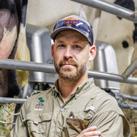
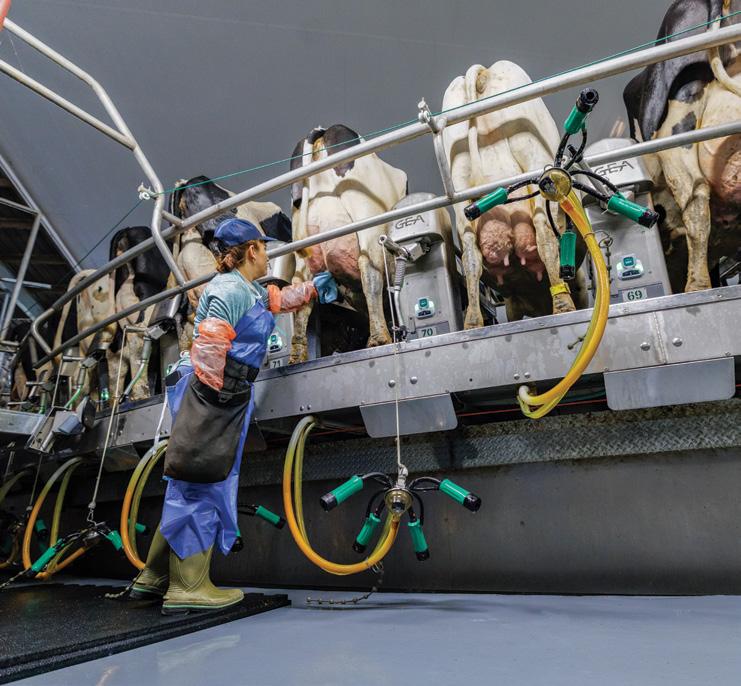
What made you choose two side-by-side 80-stall rotary parlors over one larger system?
Jan: When we decided on twin rotaries, we didn’t realize how unique that was until we wanted to visit others and there weren’t many out there. That made us pause, but after reviewing our numbers and goals again, it made sense. Not only did we save on construction, but we can also share a milkhouse and have one parlor manager who stays in one building, which saves labor.
What labor considerations went into your parlor design?
Jan: We knew we needed a milking environment that wouldn’t wear people out. With a shrinking labor pool, we wanted women and older folks to be contenders for these roles. The rotary lets people stand in one place, unlike the extensive steps required in our parallel parlors.
Jan Henderson General manager
Eric Weitzel Herd manager

Andy Hughes GEA sales specialist
Eric: We went for two 80s instead of one larger rotary to allow for slower spinning. That lets us do a full prep — strip, dip, wipe and attach — without rushing the process. It’s also easier for our team to manage two rotaries and all the cow tasks in the same space.
Andy: The family’s goal was to avoid crosstraffic and keep cow flow easy. Each rotary handles one half of the facility, eliminating the need for cows to cross paths. It’s clean, efficient and sized to match their 500-cow pens perfectly.
Eric: Our old parallels were hard on people. In this new setup, milkers just grab the cluster and put it on — no buttons, no wasted motion. The EasyStart attachment is more comfortable on shoulders and arms.
Andy: The operator controls are very simple. The PosiForm arm allows the operator to grab the unit and move it forward. Then, the vacuum starts automatically. It’s all about reducing extra movements — less fatigue, but faster milking.
What impact has the rotary parlor had on cow comfort and milking performance?
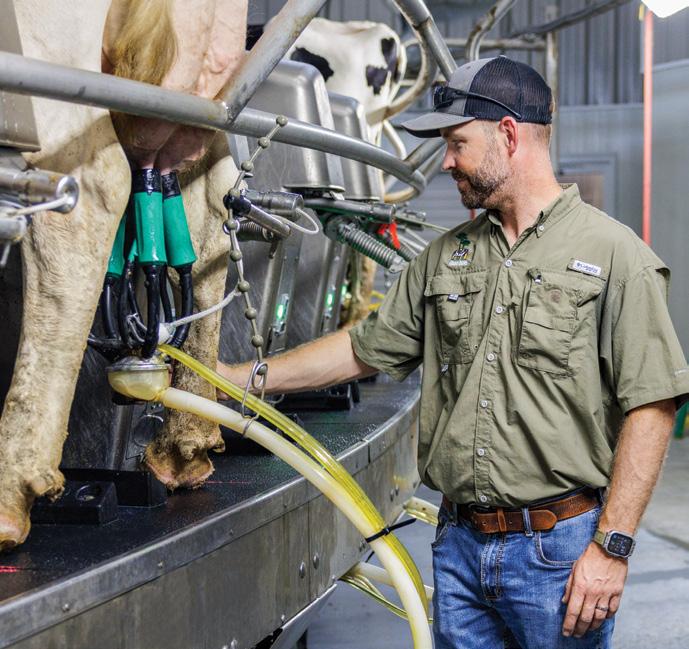
Jan: It’s a better experience for the cow. The PosiBall system helps with perfect unit alignment, which means better milkouts and healthier teats. Plus, cows spend less
time in the holding pen. We’re bringing up full groups now instead of half like we did in the old parlor, and they’re out of the barns the same amount of time.
Eric: Our average milkout duration is less than four minutes — even with highproducing cows. They get on easily, ride around and head back to their pen. We can adjust the rotary speed to match their production, so they’re not standing around. That’s better for cow comfort and milk flow.
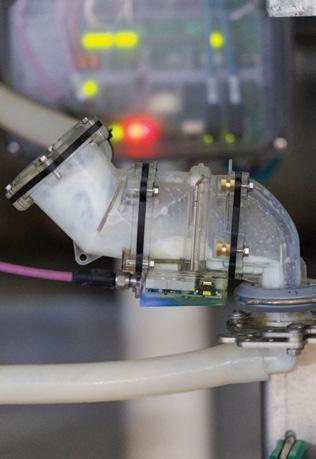
Andy: The larger hose inlets and outlets on the DigiFlow flow-through milk meters, combined with optimally designed milk lines, help get milk away faster — no slugging or vacuum fluctuation. That’s a big win for high-producing herds like this one. Just months into startup, they’re seeing an average attachment of one minute, 20 seconds and complete milkouts about three-quarters of the way around the rotary.
How are you using data and technology to improve management?
Jan: I think we’ve only scratched the surface. Our goal is to reach a point where a quick glance at the dashboard tells us everything we need to know.
Eric: We can sort cows from the DigiTron when they are on the deck, which is very convenient. Our maintenance team uses DairyNet data to identify any meters that may not be performing correctly and address issues quickly. It helps us stay ahead of equipment and cow health management tasks.
Andy: This system is fully loaded from a technology standpoint with the DigiFlow milk meter, DigiTron controls and DairyNet software. Every unit has its own control board, making service easier. The whole system is plug-and-play and very userfriendly.
What advice would you give other dairies considering a rotary?
Jan: Visit as many dairies as you can. Don’t just talk to owners — talk to the people running the rotary. Look at the cows. Are they comfortable? Are the employees
We went for two instead of one big rotary to allow for slower spinning. That lets us do a full prep — strip, dip, wipe and attach — without rushing the process. – Eric Weitzel
comfortable? And don’t underestimate the value of working with good people. Life’s too short to partner with folks who make the job harder.
Eric: If I could do it again, I’d build the rotary first, then add our automation accessories later. We did everything at once, and looking back, it would have been better to stagger implementation. Overall, I’m proud of where we are — it’s a huge leap forward.
Andy: Start with the end in mind. Know what your future herd size might be. Consider the land, nutrient management and how many families the farm needs to support — it all plays into the right parlor setup. And make sure the technology matches your management style.
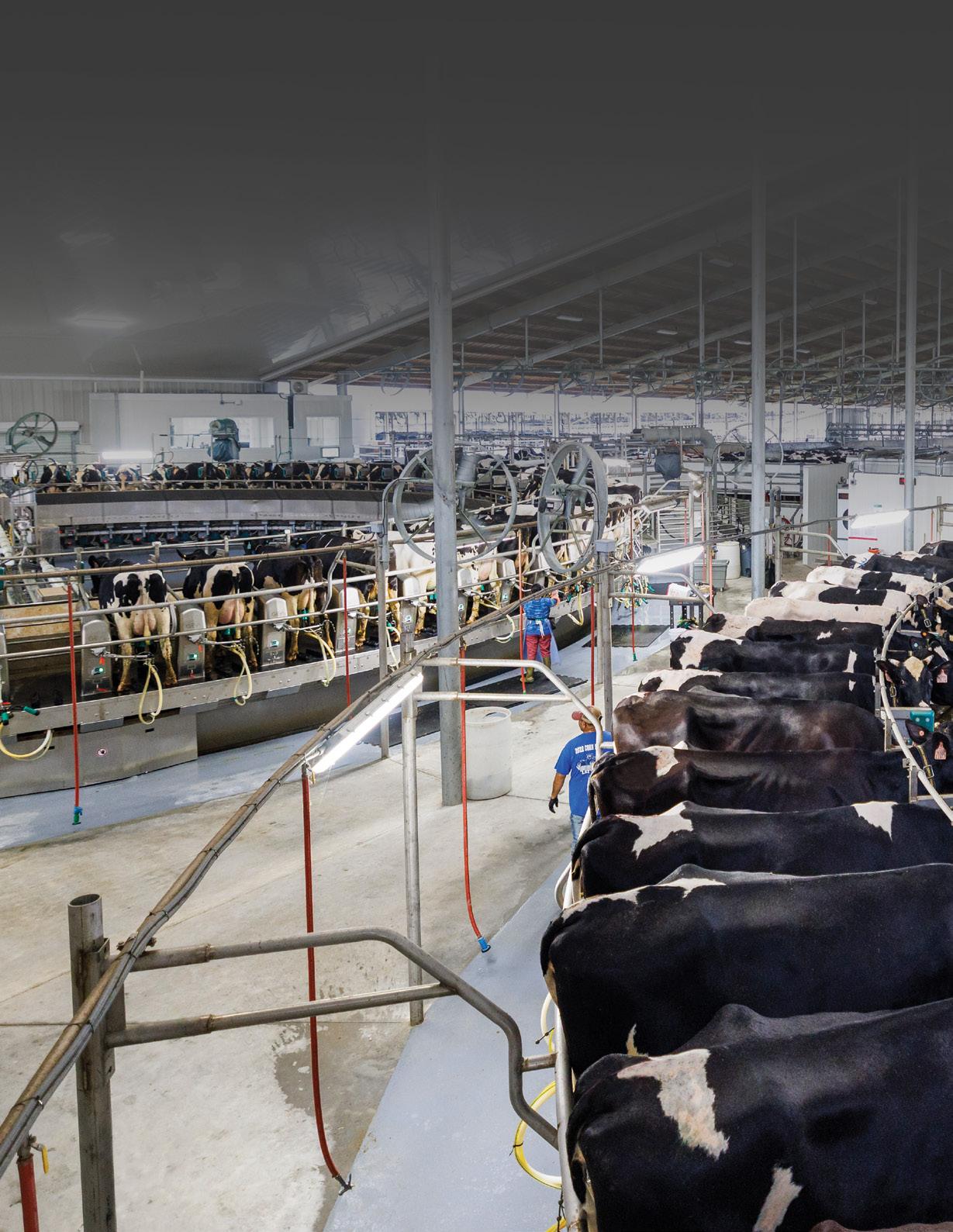
We chose the GEA rotary because it made milking easier — for our people and our cows. No buttons. No extra steps. Just grab the unit and go. When you’re standing there for 8-12 hours a day, that simplicity means everything. And ultimately, the cows are going to thank us.
– Jan Henderson, general manager, Alliance Dairies
GEA T8900 ROTARY PARLORS
Watch this video to hear Jan’s story
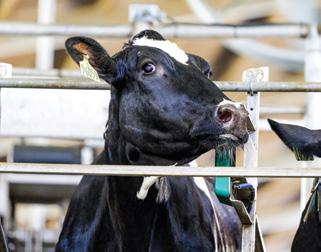
Per Place Identification (PPID) for identification accuracy and secure data
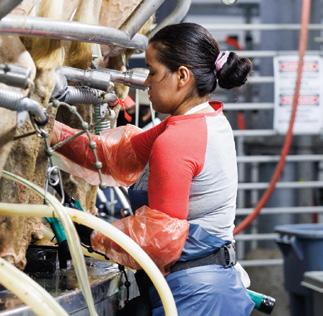
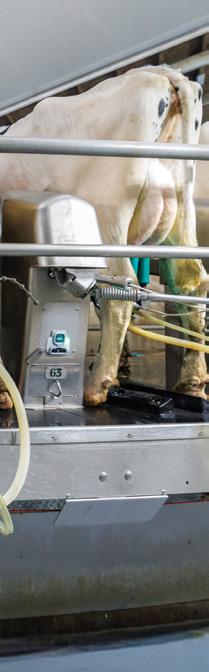
EasyStart button-free attachment for automatic pulsation and vacuum activation
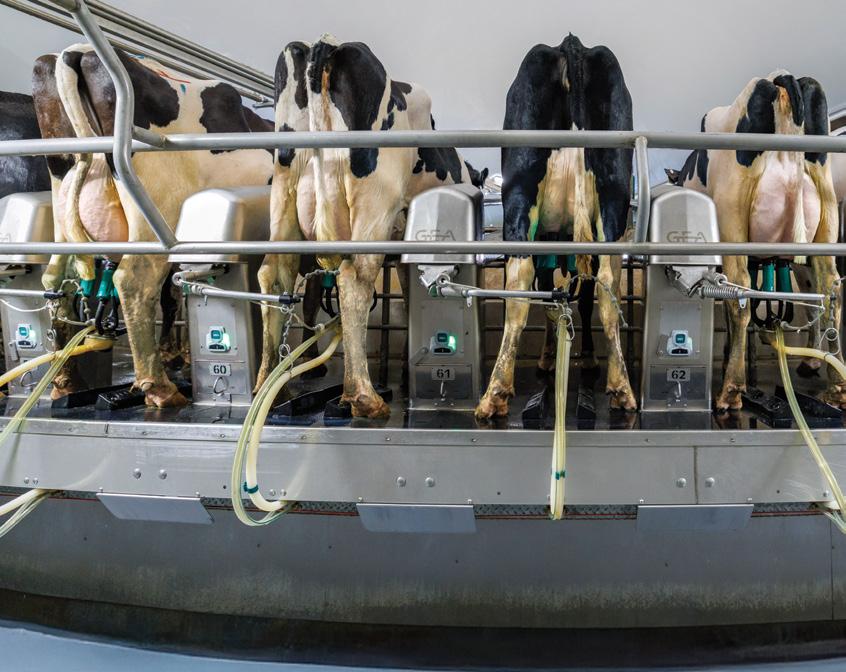
DigiTron control is intuitive and easy-to-use
PosiBall hose adjustment for proper unit alignment
PosiForm arm puts the unit in presentation position so the operator can just grab and attach
GEA is the only milking equipment manufacturer producing rotary parlor structures in the U.S. The rotaries installed at Alliance Dairies were designed and built in Galesville, Wisconsin, by tradespeople and engineers who understand dairy inside and out.
With the features of GEA’s DairyRotor T8900 combined with the latest in smart digital milking controls, Alliance Dairies is setting a new standard for milking performance and data-driven herd management. The rotary system is tailored to maximize throughput while delivering real-time insights and intuitive control — helping the team milk smarter, not harder.
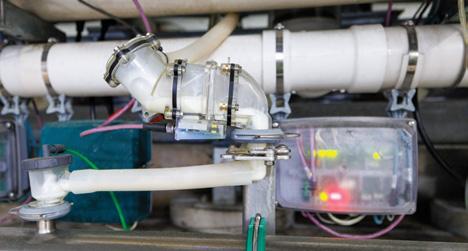
DigiFlow flow-through milk meter provides precise, real-time data
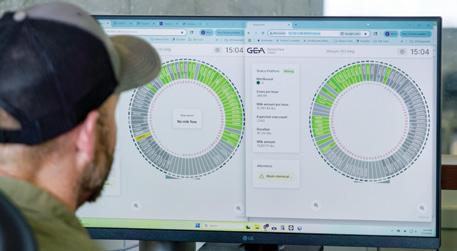
DairyNet software provides a user-friendly interface for modern management
With the disruption from COVID-19, tariffs and uncertainty overseas, we were relieved to find out a lot of GEA’s parlor manufacturing was going to be done in Wisconsin. Of the things that kept me up at night, I was able to mark that one off my list.
– Jan Henderson, general manager, Alliance Dairies
A guide to reducing delays, lowering cow stress and preparing your team for day one.
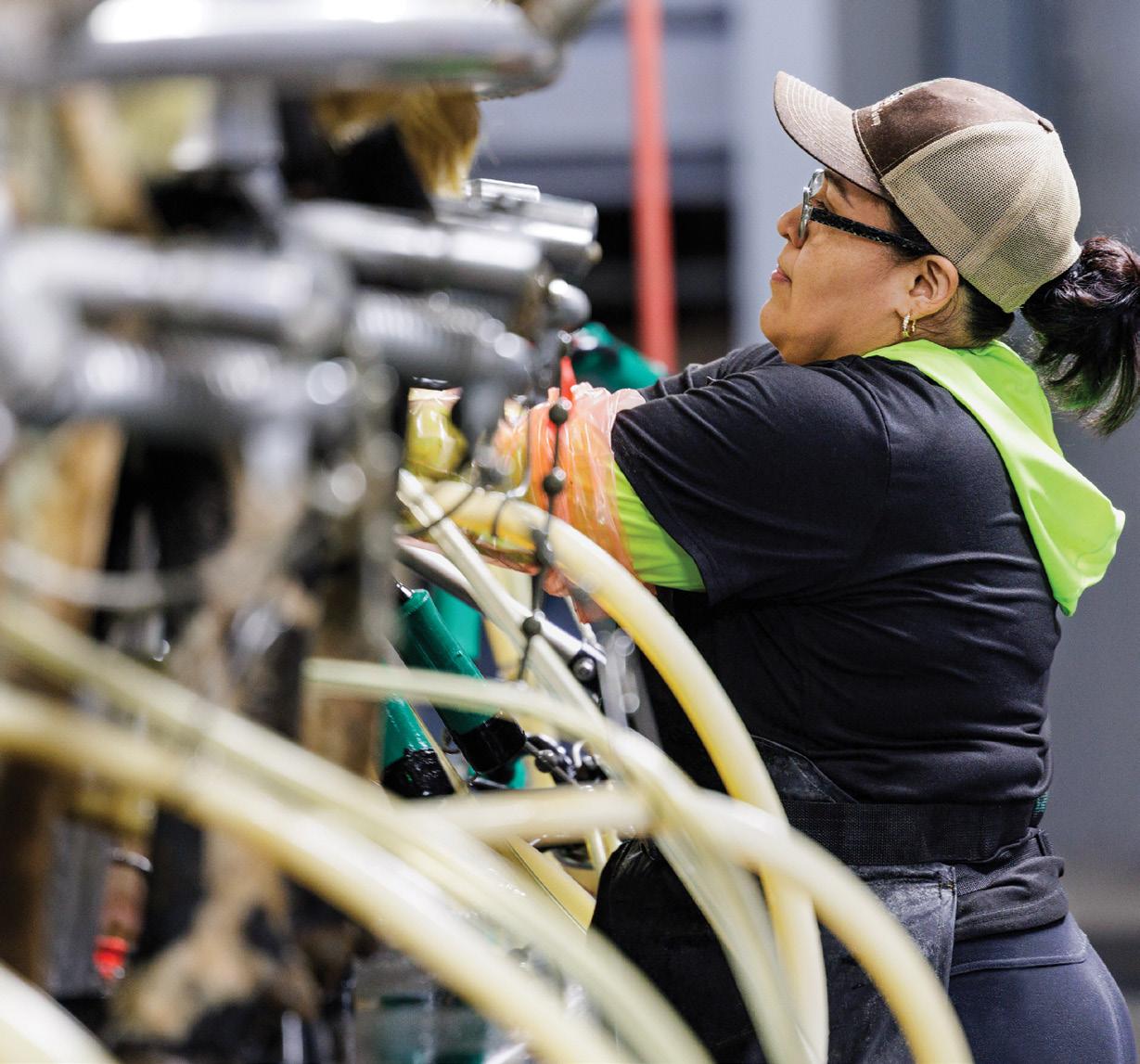
Investing in a rotary parlor is a big commitment — financially and logistically. Most take several years of planning and construction before cows step on the platform for that first milking.
But with a solid plan that prioritizes people and cows, you can help ensure your farm has a well-executed start-up and the rotary keeps turning for years to come.
You can’t over communicate on a project of this magnitude. The more everyone knows in advance, the better. Communicate your milking and management expectations before construction begins. For example, are you going to add on automation components to your rotary? Or, do you plan to administer herd management shots when cows are on the platform? Note it early
so a vet deck is included in the plans, construction and sizing considerations can be taken into account and any software is set up accordingly.
Cow planning matters too. If new barns are needed, timelines may shift. It’s worth investing time upfront to think through what all is needed in the long term for your family and your operation.
Site preparation, including dirt work and contractor coordination, often kicks things off. Like most big builds, labor and weather can impact timelines, which can make your first milking date a moving target.
A smooth startup begins once construction is complete, holding areas are clean and all equipment is installed. Commissioning typically starts two to three weeks before cows arrive to test the rotary function, milking equipment and wash systems.
Don’t overlook the milking team during the start-up process. Operators may be new to this equipment, so training is key — from cow handling to milking routines. Give them time to learn before loading cows.
Train cow pushers to move cows through the new system with a focus on low-stress handling as a priority. A calm, steady team makes a big difference during those first, second and third rides around. If you take the extra time to go slower at the start, you’ll be able to pick up speed more quickly.
Hitting a set milking date is a common goal. But if delays arise, take the time to get it right. That’s better for everyone, especially the cows.
The day of the week of your first milking plays a key role in your parlor’s success. Starting on a Tuesday morning is recommended, as it avoids the challenges often encountered with weekend or Monday startups. A Tuesday start also allows three full days of support before key team members may need to depart for the weekend.
Start with a kickoff meeting involving the full dairy team to align roles and expectations. Then, before the first parlor turn, hold a 30-minute safety briefing to ensure everyone understands the vital safety mechanisms in place with a rotary system.
During the first milking, you can expect to complete about 1.5 rotary turns per hour. So for an 80-stall rotary, you’d milk
about 120 cows. Staging groups by half a pen instead of a full pen is ideal, as the first few milkings take longer and cows won’t wait as long in the holding area.
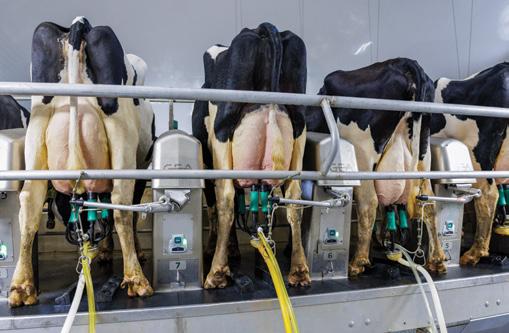
Two-year-olds are a great group to start with since they haven’t been accustomed to another system for long. Then you can transition to higher-producing cows and late-lactation groups. Expect to still milk some cows in your old parlor during the first few days, as it will take longer to complete each turn.
Typically, by the third or fourth milking, most cows have adjusted to the new flow and routine.
If you plan to use any partial automation, such as a prep brush or a post-dip sprayer, wait a few weeks after startup to implement them. This gives cows time to adjust before introducing another change. Similarly, delay using vet decks until cows are comfortable on the rotary to reduce stress and improve worker safety.
A successful startup looks different depending on your goals. A few things you’ll want to see include:
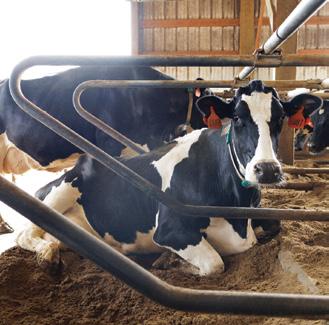
• Cows spend less time in the holding area, more time in the pens
• The deck spins at a consistent, efficient pace
• Stall cleaning and prep happen while cows are milked
Many of these can be measured. Rotary software, such as DairyNet, collects robust data, so be sure you know how to use it. Your GEA dealer can train you to track KPIs like milking time and turn time — that will help you know how well your team is doing and if any adjustments are needed.
Starting a rotary parlor is a major undertaking. With thoughtful preparation, realistic timelines and the right partners at your side, the transition can be smooth and successful for both the people and the cows on your farm.

CattleEye helps farms catch hoof problems earlier and manage them with technology.
Lameness affects more cows than most farms think. Even with eyes on your cows every day, it’s easy to miss a slight limp or subtle change in gait.
Many farms believe that only 5 to 10% of their herd is lame, when the actual percentage may be closer to 20 to 25%. That’s where artificial intelligence (AI) detection like CattleEye comes in — spotting signs the human eye might overlook.
When not addressed, lameness can take a significant toll on profitability, leading to lower production, reproduction setbacks and growing animal welfare concerns. On average, a single case of lameness costs $336.91, with digital dermatitis as the leading cause.1
Looking at reproduction alone, cows are four times more likely to be bred back within 150 days by reducing lameness.2 Reducing lameness is a win-win and systems like CattleEye make a strong case as a solution.
1 Robcis, Rodolphe et al. “Cost of lameness in dairy herds: An integrated bioeconomic modeling approach.” Journal of Dairy Science Vol. 106, 4 (2023): 2519-2534.
What early adopters are seeing
Many dairies using CattleEye AI detection report a noticeable shift in how they manage hoof health. With earlier alerts, teams can schedule trims more efficiently, reduce chronic cases and see fewer cows culled due to lameness. Over time, that translates into steadier production and a more comfortable herd.
Most noticeable improvements farms see:
• The team can trim more cows at once as they’re sorted into a group instead of waiting for individual cows to exit the parlor
• The software detects issues the human eye misses, allowing for corrective trims before lameness develops
• Earlier detection leads to faster response to lame cows and fewer severe cases
• Healthier hooves support better milk production, reproduction and longevity
• Fewer cows are culled due to lameness, reducing overall herd stress
2 “New Research into £250 Million Problem of Lameness in Dairy Cows Launched.” Royal Veterinary College, 17 Jan. 2019, www.rvc.ac.uk/ news-and-events/rvc-news/new-research-into-250-million-problem-oflameness-in-dairy-cows-launched. Accessed 6 Jun. 2025.
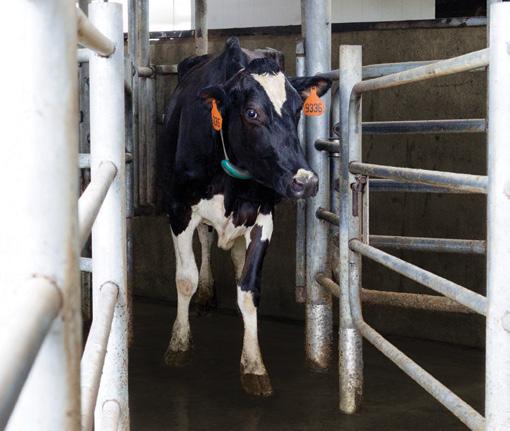
With a simple camera, CattleEye automatically monitors cows at every milking.
Behind the technology
Any type of milking parlor
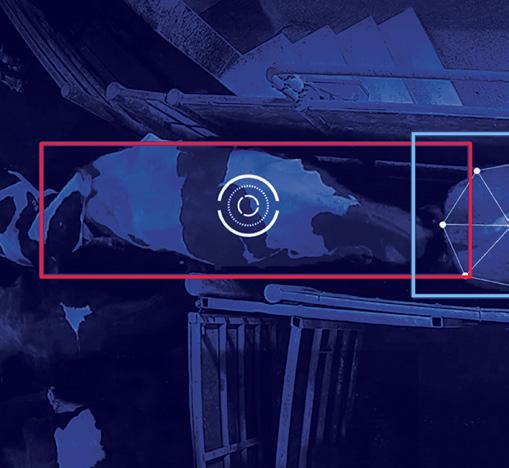
CattleEye automatically monitors cow mobility in real-time using a simple security camera.
The camera, mounted over the parlor exit lane, captures video of each cow. Think of it like facial recognition, but for the top of the animal instead. AI algorithms analyze the data points, including back posture, changes in stride, walking speed, head bobbing and movement asymmetry, in the cloud. Then, it generates mobility scores which are sent to your smartphone or herd management system.
After installation, the system takes about seven days to learn to recognize individual cows. It uses parlor identification to match cows to their data.
Managing lameness is one of the toughest ongoing challenges for a dairy – but it doesn’t have to be a blind spot. AI detection provides an additional layer of insight, identifying issues earlier and enabling smarter decision-making across your herd.
With improved visibility into cow mobility and clearer trim priorities, you can stay ahead of potential problems and protect productivity, reproduction and animal welfare. If you’re ready to take a more proactive approach, AI is a tool worth exploring.
The return on investment
CattleEye can identify lame cows up to four weeks earlier than the human eye — helping farms treat problems before they become chronic.
The system’s ability to assess every cow at every milking provides more data and greater accuracy than the single-point lameness scoring most farms use.
Camera detects cow 1 4 Cow ID scanned passing through exit lanes Data → Herd management software
2 CattleEye data = auto-learned cow visuals
Even small improvements make a big difference. Reducing lameness by just 10% across a herd can lead to fewer treatments, fewer culled animals and more cows staying in the herd longer. That translates to less time spent sorting and managing lame cows, stronger reproductive performance and more milk in the tank.
The same lameness monitoring system can also monitor body condition scores (BCS). By automating this task, AI provides a consistent, unbiased way to track BCS without adding extra work.
No additional setup is required because the system uses the same cameras and infrastructure already in place. With BCS insights delivered automatically, you can fine-tune ration formulation and feeding strategies to better manage costs and support milk production. Over time, consistent scoring can also help flag nutritional or reproductive issues earlier. e
How two dairies are working smarter with this dynamic technology duo.
GALEN SMITH
Coldstream Farms
Deming, Washington
1,800 COWS MANAGES IN 300-COW GROUPS WITHOUT LOCKUPS
MITCHELL WESEN Wesen Farms Bow, Washington
700 COWS, TWO LOCATIONS MANAGING A2 HERD SEPARATELY
Heats detected in first cycle
Heat detection rate
breedings/day vs. <1 before
Why did you invest in CowScout and sort gates?
Galen: We first added sort gates in 2006 to reduce labor costs associated with locating cows in our barns. We built our new facility around that philosophy — no lockups, just targeted management. When it was time to upgrade our ankle pedometers around 2020, we felt like CowScout collars were the natural next step. The collars, paired with upgraded sort gate software, made it easy to continue doing reproduction and herd health management right from the parlor.
First started using activity monitors (leg bands) + sort gates installed → labor savings, no lockups Coldstream
Both Coldstream and Wesen Farms rely on GEA’s CowScout™ monitoring system and sort gates to streamline daily tasks, improve herd health and boost reproduction performance. Here’s how this management combination works for them. 2006
Mitchell: We didn’t have many headlocks at this facility, so catching cows was always a time drain. After converting this herd to A2 genetics and needing to manage breeding at this new facility, CowScout and the sort gate were a no-brainer. The system gave us a way to sort cows easily for everything — breeding, dry-offs and vaccine administration. It just made sense.
What improvements have you seen since adding CowScout?
Galen: Sort accuracy went from 80% to 98–99% — that alone saves hours of labor and a lot of frustration. Our heat detection and conception rates increased. Plus, we’ve cut our death loss in half because CowScout picks up early health issues before anyone sees symptoms. It’s helping us treat problems earlier, often without antibiotics.
Mitchell: Our heat detection rate jumped by 20% in the first cycle. Before, we weren’t even breeding a cow every day — now it’s four or five a day. And the accuracy is unreal. If I upload a list of cows, it’ll catch all of them. Sometimes it’s 25 for 25.
How has this changed your day-to-day?
Galen: It’s calmer. Our herdsmen focus on breeding and health tasks in a safe space — not running through barns. We treat every cow like she’s our only cow and CowScout lets us do that more effectively. The new CowScout Cloud software is intuitive — even our relief breeder improved his conception rate by 12 points after switching.
Upgraded to CowScout collars + advanced sort gate → precision monitoring and health benefits Coldstream
Mitchell: I can sort cows from my phone while I’m eating dinner. I don’t need to be in the barn to know what’s going on. Our breeder logs in too and has cows already caught in the morning. It saves us time and keeps things moving.
Sort
accuracy went from 80% to 98–99%
— that alone saves hours of labor and a lot of frustration. – Galen Smith
What would you say to other dairies considering CowScout paired with a sort gate?
Galen: It’s not one-size-fits-all, but if you value precision, comfort and efficient reproduction, this system is hard to beat. My only regret is not switching sooner.
Mitchell: Even if this isn’t your forever facility, the system moves with you. If you’re already investing in better reproduction, this tech helps you do it smarter from day one.
Converted to A2 herd + needed better repro management → CowScout + sort gate added Wesen
Both Farms
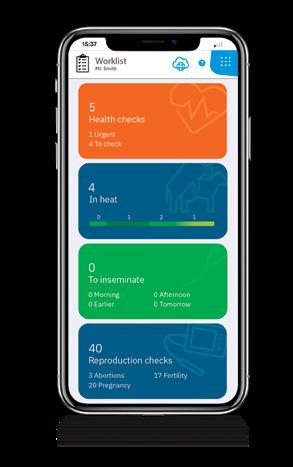
Using CowScout Cloud features + mobile access → streamlined, everyday monitoring
CowScout Cloud delivers real-time health, activity and reproduction insights – anytime, anywhere.
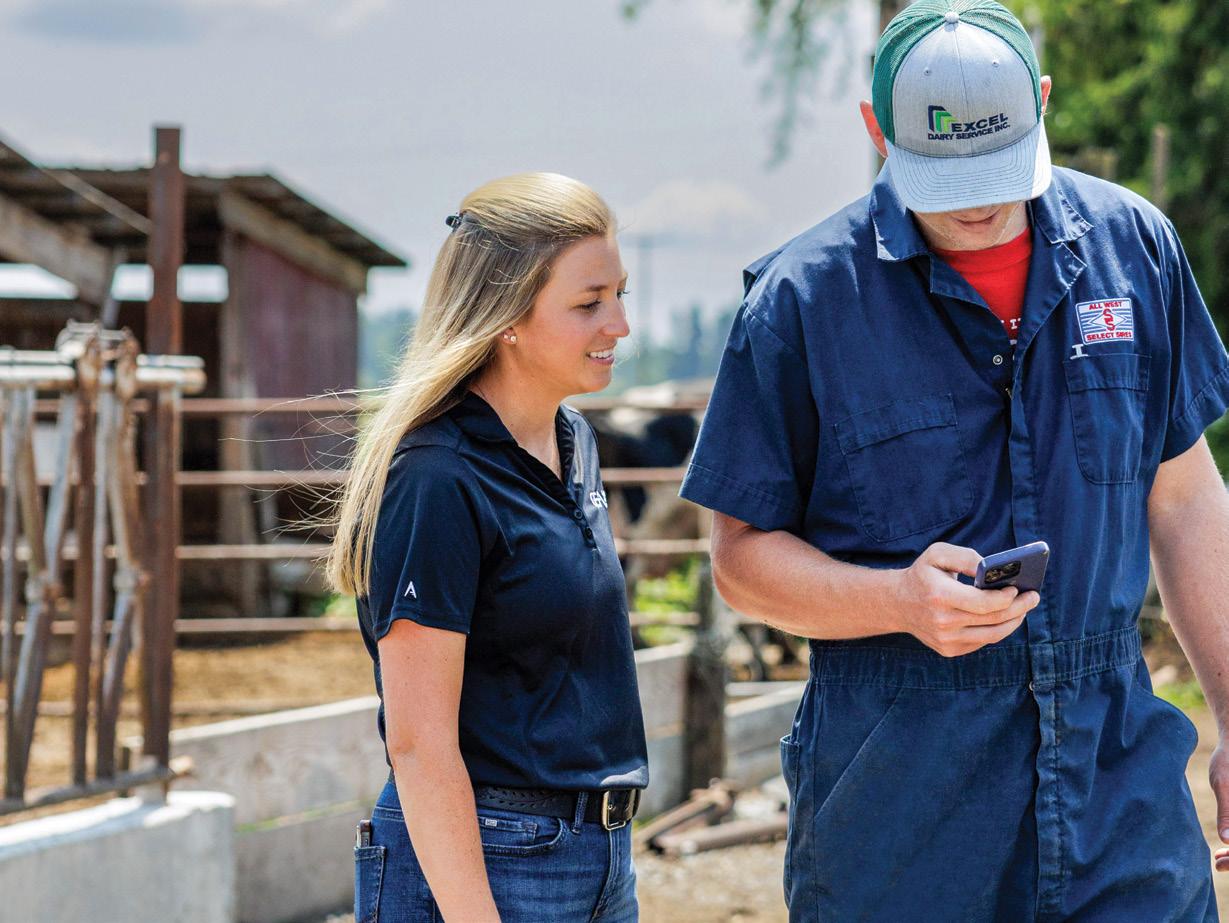
Managing cows across multiple locations doesn’t have to mean more time in the truck or long hours chasing records. With CowScout Cloud, farmers have instant access to their herd data from any device.
“We really liked the cloud-based platform, being able to look at everything from our phones since we’re milking at the two different locations,” says Mitchell.
From reproduction to health and labor efficiency, CowScout Cloud keeps the entire team in sync.
MITCHELL WESEN
Herdsman at Wesen Farms in Washington, managing over 700 cows across two locations. Recently implemented CowScout and a new sort gate.
DENVER FOX
Co-owner of Excel Dairy Service, a GEA dealer in Washington and Oregon. Works closely with Wesen Farms on installation and support.
“With CowScout Cloud, farmers don’t even have to go to a computer,” says Denver. “They can be out in the barn, in a tractor, on vacation — wherever they’re at, they can have all their information right on their phone.”
That kind of connectivity saves time and adds flexibility.
“Before we had this app, we only had one computer, so we spent a lot of time driving back and forth to get information,” says Mitchell. “Being able to look up cows at each facility is very useful.”
CowScout Cloud delivers instant visibility into herd management tasks.
“It allows you to use the information the cow is giving you in real-time to run your dairy effectively,” says Denver.
And that’s true even when you’re away from the farm.
“It’s nice to be able to see when cows are sorted,” says Mitchell. “It updates quickly. I can be inside eating dinner at night and watching the sort gate catch the cows from my phone.”
CowScout Cloud works seamlessly with other herd management platforms.
“Being able to put the information directly from DairyComp into CowScout Cloud and having it catch that entire list of cows saves a lot of time, whether that’s for tasks like vet checks or dry-offs,” says Mitchell.
Shared access ensures everyone can work from the same data.
“Our breeder logs into CowScout Cloud,” says Mitchell. “He’s able to look at which cows are in heat and sort some additional cows if he needs to.”
CowScout Cloud makes it easy to adapt as facilities evolve.
• Leverage lists: Put information directly from your herd management software into CowScout Cloud.
• Automate heat detection: Lists built in CowScout Cloud can automatically catch those cows in heat on a daily basis.
• Empower your breeder: Your breeder can review cows in heat and sort additional cows as needed.
“We were happy to be able to put in a system that helped with reproduction and we could also hopefully move to the other dairy,” says Mitchell.
Support also plays a key role as farms evolve with technology.
“GEA’s herd management team is phenomenal and does a great job of supporting our dealership, which gives us the confidence to support our dairy farmers,” says Denver.
Integration with
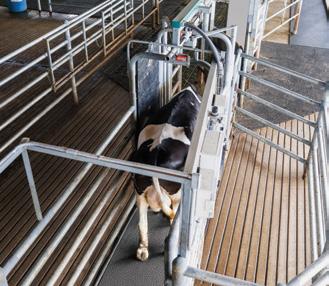
Farmers can import lists from herd management software into CowScout Cloud and the sort gate automatically sorts all the cows on those lists at set times.
“I can be in the parlor and punch a number into my phone to sort, and two minutes later it’s already sorting that cow out into the catch pen,” says Mitchell.
• Monitor in real-time: Watch the sort gate catch cows from the mobile app, even when you’re away from the farm.
• Combine data in one spot: With multi-site integration, cow data is streamlined into a central system for easy analysis, making management tasks more efficient.
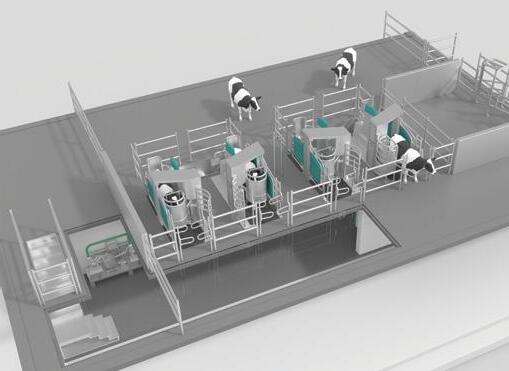
The new DairyRobot R9650 puts the answer to smarter robotic batch milking right under your feet. Robots are lined up like a conventional parlor, with cows brought to the holding area in a traditional group milking setup. Then, the robots take over the milking process, delivering consistent milking with fewer employees per shift.
The R9560 features an innovative subway design to protect equipment, streamline maintenance and minimize noise. Robots can also share core components to optimize efficiency and costs.
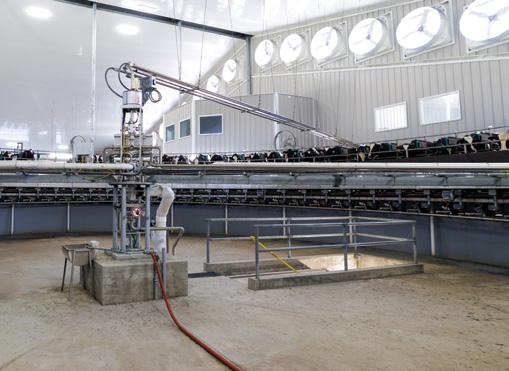
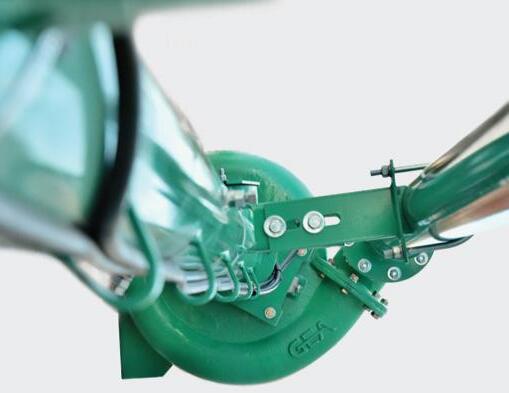
New swivel engineering on GEA rotary parlors lets washing begin while cows are still on the platform. No more waiting until the last cow exits and the rotary is positioned in a fixed location to hook up wash lines.
The Turn While Wash feature saves valuable time for 24/7 operations, helping you start the next milking shift faster and maximize cow throughput. Plus, the swivel design positions electronic components above other mechanics for added protection and longer life.
3.
4.
5.
Sand bedding can cause significant wear and tear on manure pumps, resulting in frequent breakdowns and increased maintenance costs. The new GEA Tuff-built pump housing is cast with a premium alloy to extend the life of electric manure pumps in all dairy environments.
There are no corners, promoting smooth liquid flow without restrictions. It’s an easy and cost-effective retrofit on existing pumps, reducing your overall investment.
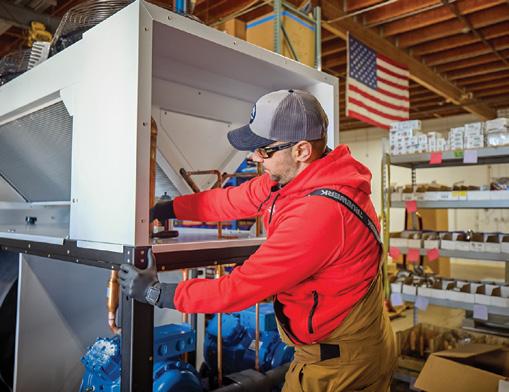
At GEA, we are committed to building a sustainable future for the dairy industry by providing products that support our vision. The new Elite 290 chiller series utilizes propane (R290) as a natural refrigerant, boasting a near-zero global warming potential (GWP) and lower indirect CO2 emissions. This technology significantly reduces a farm’s environmental impact while delivering significant energy savings and ensuring safety. The Elite 290 is redefining milk chilling as an effective, efficient, safe solution.
New CowScout ear tags capture insights on activity, reproduction, rumination and eating time in a lightweight, streamlined design. With a tag lifetime of 7+ years, they are easy to apply in routine animal handling facilities.
Tags store up to 24 hours of data with reliable transmission. CowScout ear tags can be combined with neck tags in your herd, and they are designed to be removable and reusable for other animals.
Research-backed, farm-tested dips deliver real results.
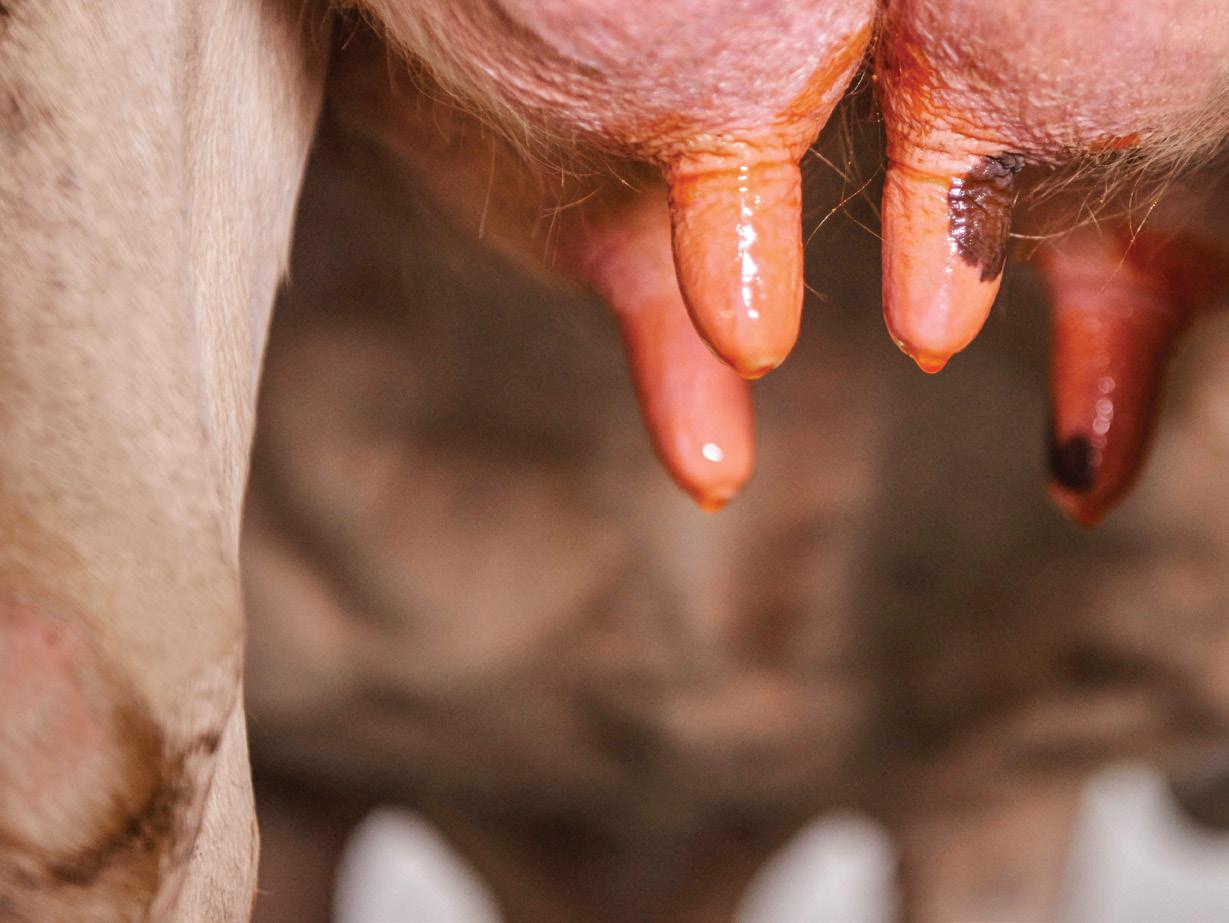
Understanding what differentiates the many teat dips on the market is crucial for milk quality. Effective teat dips are backed by research, expert formulation and field-tested performance.
Choosing a teat dip involves more than just germicide levels; formulations must work in real-world conditions, meet your farm’s needs and support herd goals.
With a variety of teat dip options available, ongoing research is enhancing quality and affordability.
Built for real-world performance
Teat dips that look similar on paper can perform differently in the parlor.
A common misconception is that a specific parts per million of germicide guarantees performance. But identical germicide levels can yield notably different kill rates due to the entire formula’s role in efficacy.
At GEA, chemists and microbiologists can sometimes test up to 50 variations of teat dip formulas in collaboration with product management and field experts to achieve the right balance of efficacy, skin conditioning and cost.
The team and process ensure teat dips perform effectively on real farms — with varying soil loads, changing weather, different mastitis-causing organism loads and a wide range of housing and parlor conditions.
Field validation is essential. Teat dips shouldn’t go to market based solely on lab testing.
On-farm testing helps ensure results are reliable under varying conditions, such as the cow’s environment. It should include different types of dairies with diverse climates, bedding, housing styles, soil load and pathogen challenges.
While laboratory testing offers precision, dairy farms present real-world variability that can impact product performance, such as humidity levels and bacteria in bedding. Field validation helps researchers confirm that teat dips remain effective in everyday challenges.
As your herd management evolves with changes to protocols, facilities or herd size, your udder health approach should evolve too. Your teat dip needs to keep up.
Evolving formulas, improved performance
Many new teat dips at GEA have advanced beyond single germicides. Instead, they combine multiple germicides, such as iodine with a non-iodine germicide, to broaden pathogen control and support skin health while controlling costs.
These formulas aren’t just diluted versions of older products but are engineered with proprietary blends for effective, consistent control that protects the teat’s natural defenses.
GEA’s latest formulas contain a more robust germicidal package, matching the effectiveness of a traditional 1% iodine teat dip at lower iodine concentrations and added teat conditioning benefits. These high-performance alternatives provide flexibility without compromising efficacy or comfort.
As teat dip formulas advance, you now have a broader range of options to protect your herd while keeping costs in mind. It’s essential to carefully consider which dip is the best fit for your farm.
Review your program regularly, especially when conditions change, to ensure your dip continues to meet your herd goals.
industry standard testing protocols and conducts Performance Optimized Efficacy (POE) testing to analyze formulas under real-world conditions, identifying performance limits and optimal products for specific environments.
Revolutionary teat dip merges all the benefits dairy producers love about iodine, with additional non-iodine germicides for enhanced protection.
LactiFusion™ technology combines DDBSA with lactic acid for non-oxidizing killing power that is gentle on teat skin.
Highly economical, ready-touse (RTU) product has a 6-month shelf life, and there is no need for a blending system.
Choose from either a 2% or 10% skin conditioning package based off season, and your dairy’s specific teat health needs.
Exceptional efficacy, KommandDyne stacks up to a 1% iodine teat dip with only 0.25% iodine in the formula.
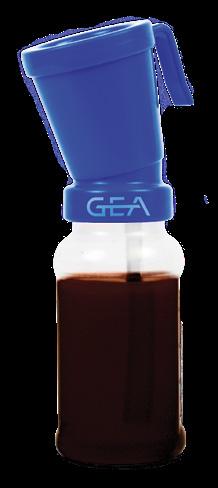
KommandKote has these same great features but allows you to further adjust iodine and skin conditioning levels for a customized teat dip, blended on-farm.
Fiber bedding is a sustainable source of comfort for your cows. get the most out of your
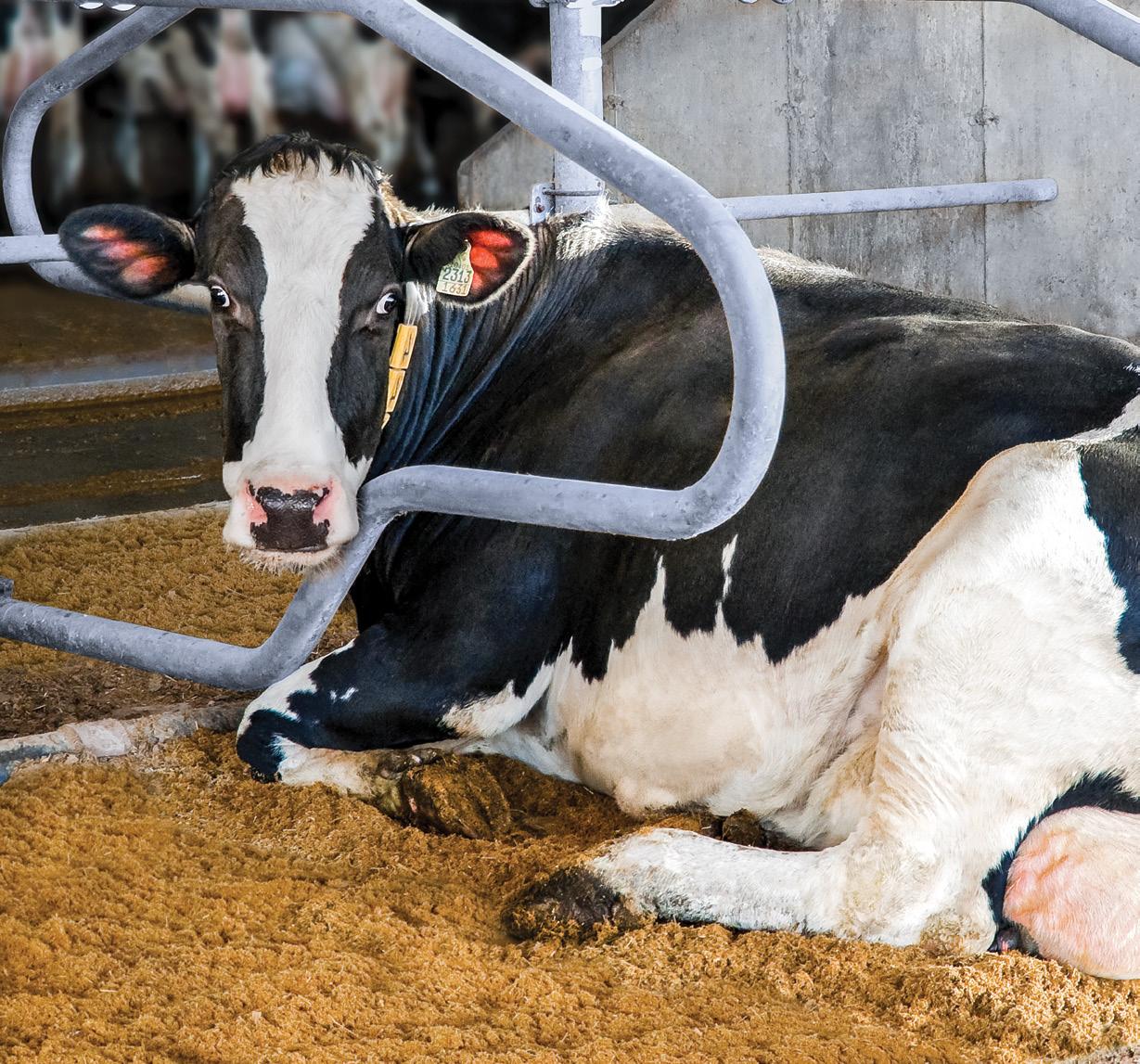
Every dairy farm needs bedding. The type, cost, transportation, storage and supply are all considerations when choosing what’s best for your herd. Equally important is the way manure is managed with the bedding system.
Many farms are choosing to adopt green or fiber bedding, creating an integrated feed-to-manure-to-bedding system that is self-sustaining within the dairy.
Fiber bedding explained
Fiber bedding captures undigested lignin components in plants in a reusable form. This fiber is extracted from manure and recycled into bedding by processing fresh manure through a mechanical separation system. Bedding is often used the same day it’s processed or stored for only a few days.
Adopting fiber bedding requires an up-front investment in separation equipment sized to your herd and processing needs. In most cases, your existing manure collection system can still be used — whether that’s skid loaders, alley scrapers, a flush system or vacuum tanks.
Fiber bedding offers many advantages, from lowering costs to simplifying manure handling. Benefits include:
• A consistent bedding source, removing varying costs and availability
• Less time spent sourcing and hauling bedding
• Lower manure hauling expenses
• Less wear and tear on equipment, as it’s easier to handle than some other bedding types
• Less storage space compared to sawdust, straw or sand
• A potential source of additional revenue from selling excess
Extracting the longest possible fiber from manure is an important consideration during the separation process. Manure fibers are relatively short because most herds feed TMRs and not longstemmed hay.
A roller press separator preserves and maintains fiber length and integrity more effectively because there is no cutting. With a screw press separator, fibers can be shredded during processing, resulting in shorter fiber lengths.
The GEA Vertical Extract serves as an upstream dewatering step before a roller press or as a standalone thickening system for digestion or further processing.
Liquid drains by gravity through the screen openings while a heavy-duty auger moves solids without pressure or screen wear. The reversible auger doubles service life.
The first concern many farmers have about bedding made from manure is bacterial risk. Bacteria are a natural part of a cow’s environment and problems only arise when harmful bacteria overwhelm beneficial bacteria in a dirty environment. Good barn and animal hygiene are key to maintaining balance.
Bacterial growth can also be reduced by controlling particle size. Larger particles create less surface area for bacterial growth, dry quicker and compact less — resulting in cleaner, drier stalls.
Fiber bedding can be used with mattresses and bedded stalls. Mechanical bedding spreaders work well for distribution. As with any bedding, stalls must be maintained regularly — cleaned out, replenished and leveled — so every cow has a clean, dry, comfortable place to rest.
While fiber bedding can be efficient and economical, it won’t solve pre-existing problems. Stall maintenance, barn cleanliness, ventilation or stocking density must be addressed for success.
Fiber particle size also matters for air quality. If manure solids are too finely processed, they can create dust during distribution and spread throughout the barn when fans are running.
A GEA manure management specialist can teach you more about fiber separation equipment and help you determine if a fiber bedding system is right for the cleanliness, comfort and economic viability of your herd.
• Durable 304-grade stainless steel construction
• Low energy consumption
• Integrated pulsator and vibrator for smoother liquid flow
• Ergonomic design with components at comfortable working height
• Reduced downtime with automatic greasing and grease-free bushings
• Requires a liquid level regulator tank
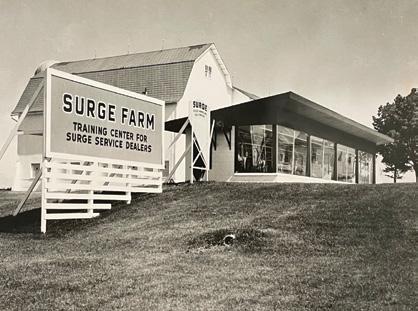
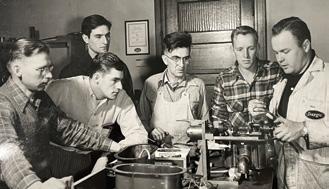
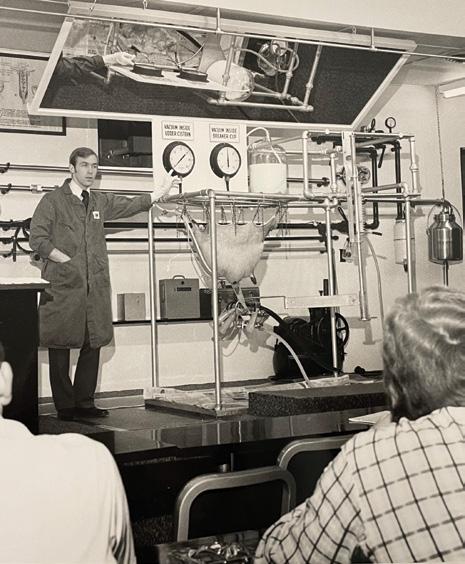
As milking equipment advanced, dairymen relied on specialized dealers who could install, service and support them with knowledge and products. In 1948, SURGE opened its Training Center, where dealers learned everything from cow physiology to refrigeration, ensuring they became trusted partners on the farm.
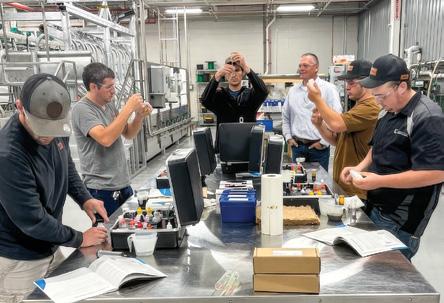
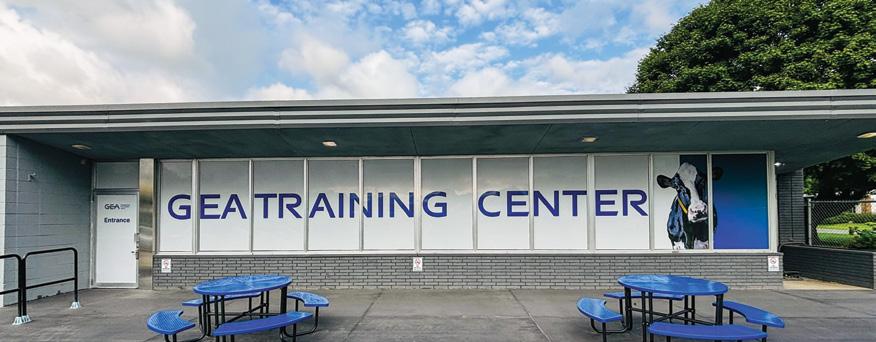
Today, GEA continues that legacy with a state-ofthe-art training facility in Galesville, Wisconsin. Dealers are trained on everything from hygiene to robotics, herd management and rotary parlor controls. It’s equipped with a functioning parlor, wash system, robotic milking boxes and the latest control boards. After nearly 80 years, we’re still dedicated to equipping dealers with the expertise needed to serve farms well into the future.

HErD NErDs ArE tHE prOblEM-sOlvErs iN EvErYDAY HErD MANAgEMENt.
They bridge the gap between cows, equipment, data and people. We caught up with Andy Lenkaitis, senior manager of herd management, for a look inside the role.
Fu N FActs A b O ut A NDY:
• Was a mathlete in high school
• Has seen cows milked on every continent — except Antarctica
• Never turns down a homecooked meal
Q: What did you do before you became a Herd Nerd?
A: I began on the manure side with GEA, working in engineering, sales and product management. I loved designing systems for complex barns and digesters. In college, I found my calling by combining machinery, sensors and facility design. I even built a scale model barn with a functional cooling system made of computer fans, sponges and a thermometer to demonstrate the temperature differences — and my professor kept it as a teaching aid.
Q: What three skills do every Herd Nerd need?
A: Observant, curious and persistent. Observant, to notice details in cow flow, cow milkings or worker routines and interactions. I like to walk the barn and the pens, through the holding area and exit gates to see what a cow sees. Curious, to ask the right questions and then listen to truly understand how systems and animals interact. And persistent, because solving a problem often means digging through layers of data and log files until the answer finally reveals itself.
Q: If you could sum up your job in one sentence, what would it be?
A: My job is about consistently being flexible and nimble as our everchanging to-do list shifts with startups, check-ins and troubleshooting.
Q: What’s one thing people might be surprised to learn about your role?
A: Data doesn’t lie — and sometimes convincing people of that is half the battle.
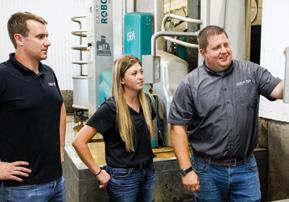
Q: Why do you enjoy being a Herd Nerd?
A: The role combines software, cow management, genetics and even psychology (human and cow). Some days progress feels slow, but when the data connects, equipment cooperates and the cows respond — it’s incredibly rewarding.
t E c HNO lO g Y
t HAt MOv E s YO ur DA ir Y FO rwA r D
Your farm’s future deserves more than equipment — it deserves innovation. At GEA, we combine generations of expertise with today’s most advanced technologies to help you produce milk more efficiently and profitably.
Together, we are driven to streamline workflows, enhance cow comfort and deliver insights that matter to transform your operation while supporting your legacy for the next generation.