NOV DEC
2025
TABLE OF CONTENTS
In this issue:
67
Editor's Page Jim Blaine, MD..................................................................... 3 President's Page James Rogers, MD................................................................ 4 Protecting Greene County's Seniors: Free Vaccines for Adults 60 and Older Maggie Rogers..................................................................... 6 The Current State of Cochlear Implantation
7
David Gilley, MD.....................................................................7 7-OH Warning to Physicians.............................................8
Hyperhidrosis: Underrecognized and Underdiagnosed Murphy Mastin, MD..............................................................10 Estes Park Invitation..........................................................12
14
How The OBBBA & Missouri's Tax Changes Affect Missouri Physicians Carlee-Lynn and Justin Stockam........................................13 A Day on the Road: COX Advantage Care TeamBased Home Visits Melissa Gaines, MD.............................................................14 Exciting Alliance Announcements Barbara Hover....................................................................15
16
Graduate Medical Education (GME) in Springfield Past, Present, and Future David Barbe, MD ................................................................16 Time For a Checkup: Maintaining Financial Wellness As a Healthcare Provider Mikala Thurston....................................................................19 Many Thanks From the Greene County Medical Society...................................................................20
22
Professional Directory...................................................21
Vol 84, NO. 6 NOV DEC 2025 Editor’s Note: All materials for the Journal must be submitted by the first of the month prior to publication.
Co-Editors: Jim Blaine, MD Minh-Thu Le, MD
Junior Co-Editor: Andrew K. Le
Managing Editor: Dalton Boyer
Editorial Committee: Michael S. Clarke, MD David Barbe, MD Jaya LaFontaine, MD Dalton Boyer Andrew Le Jean Harmison Barbara Hover
SOCIETY OFFICERS James Rogers, MD President Vu Le, MD Secretary Jim Blaine, MD Treasurer Sanjay Havaldar, MD Immediate Past President
Council Members: David Haustein, MD, MBA Melissa Gaines, MD Steven Gradney, MD Keith LaFerriere, MD Kyle John, MD Jaya LaFontaine, MD John Steinberg, MD
Managing Director: Jean Harmison
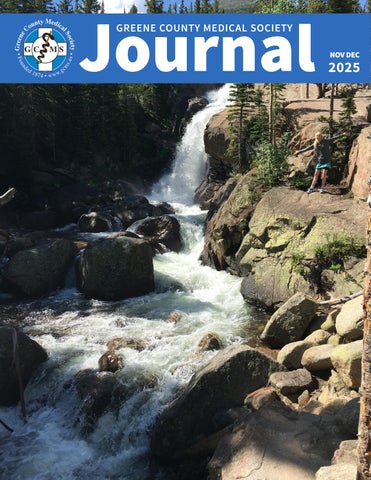
On the Cover: Rocky Mountain State Park - Colorado
The GCMS Journal is available online:
www.gcms.us
Executive Office: 4730 S. National Ave. Suite A1 Springfield, MO 65810 email: director@gcms.us www.gcms.us All communications should be sent to the above address. Those marked for the attention of a particular officer will be referred.
EDITOR'S PAGE by Jim Blaine, MD
Merry Christmas from the GCMS Editorial Board! We have much to be grateful for this year.
together to improve the health of our community!
As an update on our GCMS Community Action Committee efforts - twenty physician leaders have recorded seventy five 15 second videos warning kids and their parents about the risks of using marijuana before the age of brain maturation (27 years). Those videos have been to delivered to KY3 President Brian McDonough. We are grateful for the support of the American Academy of Pediatrics, CoxHealth, Mercy Health, Burrell Behavioral Health, Jordan Valley, Charlie O’Reilly, and KY3.
This coming year we look forward to another fun and informative GCMS Rocky Mountain Medicine CME conference in Estes Park Colorado July 18-25, 2026. This issue’s cover page picture is Alberta Falls in the Rocky Mountain National Park next to Estes Park. Please check out the invitation on page 12. Wishing everyone a healthy and joyful Holiday Season!
We are certainly blessed locally with physicians, nurses and the entire Springfield health care team that work
The Greene County Medical Society congratulates all of the SBJ 2025 Health Care Champions! We are especially proud that GCMS Executive Council members Dr. Melissa Gaines, and Dr. Kyle John are recipients
2025 Health Care Champions Physician: Kyle John, MD
along with frequent GCMS collaborator Springfield-Greene County Health Department Director Katie Townes.
2025 Health Care Champions Administrator: Katie Towns
2025 Health Care Champions Physician: Melissa Gaines, MD
NOV DEC 2025 • GCMS Journal • 3
PRESIDENT'S PAGE by James Rogers, MD
Change is Great; You go First! In this season, we are gifted with seismic changes! Insurance scrambles for health coverage and its fallout of networks, coverage, regulatory and policy changes. This is challenging for patients, providers, and supportive/ administrative staff presenting a maddening challenge to assimilate. Recently, my employer announced that in addition to monthly updates, they are working on over 500 initiatives for the use of AI to be embedded in the EMR. I receive at least weekly requests to review or watch instructions meant to educate me by highlighting a new policy or procedure. This ensures that I can effectively adopt the changes coming my way. The literature suggests adoption occurs in 5 categories: • Innovators 2.5% • Early Adopters 13.5% • Early majority 34% • Late Majority 34% • Laggards 16%
• I’ll change when I must • Where is my portfolio password? Surrendering the fact that “the only constant is change” what is our responsibility as physicians and patients’ advocates?
• Discipline to view the changes from our patients’ eyes. • Evaluate the proposals for intended and unintended changes and use your and your colleagues’ voices to report shortcomings. • Value the changes for bringing benefits to the health and welfare of our patients. • Work to create a collective voice to correct and improve the changes that are coming. While this work is hard, complex, difficult, and sometimes exhausting – it is our calling. J T Rogers President, GCMS
Therefore, to survive we develop behaviors such as: • Thank goodness it doesn’t affect me • This won’t work – I’ll wait and let it fail • About time this was changed – good job
Join or Renew Today Mission Statement Bringing physicians together to improve the health of our community. 4 • NOV DEC 2025 • GCMS Journal
Focus on what’s most important to you. Tailored Tax, Wealth Management, and Family Office to help you prepare for what’s next.
forvismazarsprivateclient.us Forvis Mazars Private Client services may include investment advisory services provided by Forvis Mazars Wealth Advisors, LLC, an SEC-registered investment adviser, and/or accounting, tax, and related solutions provided by Forvis Mazars, LLP. Past performance does not guarantee future performance. All investments may lose money.
NOV DEC 2025 • GCMS Journal • 5
Protecting Greene County’s Seniors: Free Vaccines for Adults 60 and Older By Maggie Rogers, MPH Health Program Coordinator, Springfield-Greene County Health
Through a project funded by the Greene County Senior Citizens’ Services Fund Board, the Springfield-Greene County Health Department (SGCHD) is able to offer CDCrecommended vaccines at no cost to Greene County residents aged 60 and older. This project focuses on one simple but powerful goal: protecting older adults from preventable diseases that can have serious, even lifethreatening, consequences. Vaccines offered through the program The program aims to provide all vaccines recommended by the Centers for Disease Control and Prevention (CDC) for adults 60 and older. These include:
• Influenza (Flu) vaccine: Given annually, the flu shot helps prevent seasonal influenza, which causes thousands of hospitalizations and deaths among older adults each year. Seniors are especially vulnerable because aging immune systems respond less effectively to infection. SGCHD is currently waitlisted for this vaccine. Check back for availability soon! • Shingles (Zoster) vaccine: Recommended for adults 50 and older, this vaccine prevents shingles and its painful complication, postherpetic neuralgia. Shingles risk rises sharply with age, and the disease can cause months or years of discomfort. • COVID-19 vaccine: Staying current on COVID-19 vaccinations helps prevent severe illness, hospitalization, and long-term effects of the virus. For adults 60 and older, vaccination remains one of the most effective tools for staying healthy. • RSV (Respiratory Syncytial Virus) vaccine: Newly recommended for adults 60 and above, the RSV vaccine prevents lower respiratory infections that can lead to hospitalization in older adults with weaker immune systems. • Tdap booster: Protects against tetanus, diphtheria, and pertussis (whooping cough). Boosters every 10 years help maintain immunity against these potentially serious infections. • Pneumococcal vaccine: Protects against pneumonia, meningitis, and bloodstream infections caused by Streptococcus pneumoniae. Older adults face a much higher risk of severe illness and complications from these infections, making this vaccine essential. SGCHD is currently waitlisted for this vaccine. Check back for availability soon! Thanks to a grant from the Greene County Senior Citizens’ Services Fund Board, these vaccines are offered to qualifying 6 • NOV DEC 2025 • GCMS Journal
individuals free of charge. Why vaccines are so important for older adults Aging naturally weakens the immune system. This makes it harder for the body to fight infections and recover from illness. As a result, diseases that may cause mild symptoms in younger people can become severe—or even deadly—for those over 60. Vaccines help by “training” the immune system before exposure to real infection. They reduce the risk of contracting disease, lessen the severity of illness if infection does occur, and help prevent serious complications like pneumonia, hospitalization, or long-term disability. For example, influenza can quickly lead to pneumonia or exacerbate chronic heart and lung diseases in seniors. Pneumococcal infections are a leading cause of sepsis in this age group. Shingles can cause debilitating nerve pain that lasts months or years. By staying current on vaccinations, older adults can dramatically lower their risk of these outcomes. Vaccination also supports community health. When more seniors are immunized, there is less disease circulating overall, reducing the risk for family members, caregivers, and others with weakened immunity. This concept of community protection (or herd immunity) strengthens the health of the entire county. A simple step with major impact Through this collaboration, Greene County seniors can access essential vaccines without financial strain. The program reflects a shared commitment to keeping older residents healthy, independent, and engaged in their communities. For adults 60 and older, vaccination is one of the simplest, safest, and most effective ways to protect health and quality of life. By taking advantage of these free, CDCrecommended vaccines, Greene County’s older adults can look forward to more healthy years—and a stronger, safer community for everyone. Call the Springfield-Greene County Health Department at 417-864-1658 to schedule an appointment!
The Current State of Cochlear Implantation By David Gilley, MD, Otolaryngology, Ferrell Duncan Clinic, CoxHealth Group
Sensorineural hearing loss (SNHL) is a common condition that affects patients of all ages. The causes of SNHL are varied, and of course, the severity of hearing loss that patients experience is also variable, ranging from severe to profound. Interestingly, there is no strict agreed upon definition for “deafness”, but rather a patient is regarded as being deaf when they do not have useful or aid-able (as in improved with hearing aids) hearing. Generally, this will be patients with severe to profound hearing loss, and a word recognition score of approximately 50% or less as determined on a diagnostic audiogram.
Cochlear implants are designed to mimic the function of a healthy inner ear (or cochlea). They replace the function of damaged sensory hair cells inside the inner ear to help provide clearer sound than what hearing aids can provide.
Deafness is a crippling disability, with patients experiencing social isolation, higher rates of depression and anxiety, higher rates of dementia, and worsening of cognition in those with preexisting dementia. Deafness is also potentially extremely dangerous, as patients cannot hear sirens, fire alarms, vehicles honking, etc. Concomitant tinnitus is also quite common in patients with SNHL, and the suicide rate in tinnitus patients is double that of the general population. Prior to cochlear implantation, there was no effective treatment for deafness. I would be remiss to not mention Dr. William House, who was one of the forefathers of modern neurotology, and who was a major developer of the cochlear implant (CI). His first prototypes were developed in the 1960s, and in 1984 his single channel implant was the first FDA approved CI. Since that time, millions have received CIs worldwide and we now have implants with over 20 channels. “Channels” are individual wires within the electrode that stimulate the cochlea along the length of the modiolus. This is important because of the tonotopic
organization of the cochlea, with lower frequencies stimulating the cochlear nerve near the apex, and higher frequencies stimulating it near the base. This arrangement of the channels from base to apex, coupled with complex programming, gives patients the ability to enjoy different tones and pitches while listening. The electrode of the CI is inserted into the cochlea via the round window. To gain exposure, a postauricular incision is made, and the soft tissue overlying the mastoid is elevated anteriorly to the posterior aspect of the external auditory canal. A mastoidectomy is performed and the bone just lateral to the facial nerve is drilled away, exposing the stapes and round window niche from the mastoid cavity. The round window niche is then drilled away to fully expose the round window, which may also need to be surgically enlarged depending on the specific electrode/brand being used. The electrode is then carefully inserted into the cochlea through the round window, and the body of the implant is placed in a subperiosteal pocket over the parietal skull. A two-week period is generally allowed for healing prior to device activation, and then patients will begin a rehabilitation program to acclimate to their device, wherein they essentially use the device as much as possible. Generally, patient outcomes are excellent. It is not uncommon for patients with profound hearing loss and word recognition in the 10-20% range preoperatively to have normal or near hearing and word recognition around 80-90% or even higher with the device on. It has historically been felt that patients with deafness for less than 10 years were more ideal candidates as they have significantly better outcomes, but there is more recent data emerging that shows patients with deafness for longer duration may still be considered as long as expectations are managed appropriately. Essentially, in the long-term deaf patient, it becomes an argument of hearing “most” or “some” versus “none”. This is particularly important from a safety standpoint in those with bilateral deafness. Surgical complications are uncommon. The most common complication is probably dizziness in 10-20% of patients postoperatively. If the chorda tympani is sacrificed, patients may experience transient change in taste, which is rarely permanent. More severe complications such as infection, facial weakness/paralysis, device malfunction, etc., occur in far less than 1% of cases. continued on page -11NOV DEC 2025 • GCMS Journal • 7
7-OH Warning to Physicians
8 • NOV DEC 2025 • GCMS Journal
NOV DEC 2025 • GCMS Journal • 9
Hyperhidrosis: Underrecognized and Underdiagnosed by Dr. Murphy Mastin, MD
November marks Hyperhidrosis Awareness Month, and it always reminds me how often this condition goes unrecognized or undertreated despite the significant impact it has on patients’ daily lives. I recently saw a 15-year-old male with classic primary focal hyperhidrosis—symmetric palmar and plantar sweating that had been affecting him for years. Cases like his reinforce how important it is to distinguish primary from secondary causes early, initiate simple but effective first‑line treatments, and know when more advanced interventions or referral to a board‑certified dermatologist are appropriate. The summary below reflects how I personally evaluate and manage hyperhidrosis in my own clinical practice.
and short courses of low‑potency topical steroids can help with irritation. More recently, topical anticholinergics such as glycopyrronium 2.4% cloths and sofpironium bromide 15% gel have become reliable options with improved comfort and adherence.
Hyperhidrosis is best understood as sweating beyond physiologic thermoregulatory needs, and the first critical step in evaluation is determining whether the pattern fits primary focal hyperhidrosis or suggests a secondary cause. Primary hyperhidrosis typically begins in childhood or adolescence, follows a bilateral and fairly symmetric distribution, and is most common on the axillae, palms, soles, and craniofacial regions. Patients often report lifelong symptoms, predictable triggers such as heat or stress, and meaningful functional impairment—difficulty gripping objects, handwriting challenges, sports interference, or social embarrassment. Importantly, primary disease almost always improves or resolves during sleep.
When symptoms remain moderate to severe, I introduce oral anticholinergics such as glycopyrrolate or oxybutynin. I typically start low (e.g., glycopyrrolate 1 mg once or twice daily) and titrate based on response and side effects. Some patients do well with situational dosing—taking medication only for predictable events such as presentations, sports, or social activities. Heat intolerance and dry mouth are the most common limiting factors, but many patients tolerate these agents quite well.
When the presentation deviates from this pattern—generalized sweating, new-onset symptoms in adulthood, prominent nocturnal sweating, unintentional weight loss, fever, or medication‑related changes—secondary hyperhidrosis should be considered. Common etiologies include endocrine disorders (hyperthyroidism, diabetes, hypoglycemia), infections, malignancy (especially lymphoma), menopause, neurologic disorders, medication effects (SSRIs, SNRIs, opioids, hypoglycemic agents), and withdrawal states. My work‑up typically includes CBC, CMP, TSH, A1C or fasting glucose, ESR/CRP, and targeted testing based on clinical clues. In classic primary disease, extensive laboratory evaluation is usually unnecessary. Assessing severity helps guide treatment. I routinely use the Hyperhidrosis Disease Severity Scale (HDSS), where scores of 3 or 4 indicate significant impairment and justify escalation beyond topical agents. I also document distribution, duration, daily limitations, prior treatments, and any secondary complications such as maceration, dermatitis, or recurrent bacterial or fungal infections. The Minor starch‑iodine test can be helpful for mapping sweat distribution or supporting insurance authorization for botulinum toxin. My treatment approach is stepwise. For axillary involvement, I usually begin with topical aluminum chloride hexahydrate 20%, applied nightly until improvement, then tapered. Application to fully dry skin significantly improves tolerability, 10 • NOV DEC 2025 • GCMS Journal
For palmar or plantar disease—or any patient who fails topicals—I often transition to iontophoresis. Consistent use (several sessions per week initially, then maintenance every 1–3 weeks) is key. Many patients benefit from at‑home devices and combining iontophoresis with anticholinergics can provide additive benefit.
Botulinum toxin injections remain one of the most effective and durable treatments for focal hyperhidrosis. For axillary disease, I typically inject fifty units of onabotulinumtoxinA per side; for palmar disease, around 100 units divided across a grid pattern. Results usually last 4–6 months. Palmar injections can be uncomfortable, so nerve blocks or cryo‑anesthesia are often necessary. For patients seeking a more permanent solution to axillary sweating, microwave thermolysis (miraDry) can be an excellent option. It offers long‑lasting reduction by thermally ablating sweat glands and tends to be well‑received, though transient swelling and numbness are common. In the rare patient with severe, disabling palmar hyperhidrosis who has failed all other measures, endoscopic thoracic sympathectomy (ETS) may be considered. The results can be dramatic, but risks—including compensatory hyperhidrosis— must be discussed in detail. I reserve ETS only for highly selected cases. Regardless of treatment choice, addressing secondary infections, irritant dermatitis, and emotional or social burden is an important part of care. Many patients experience an immediate and meaningful improvement in quality of life once sweating is reduced, even modestly. Recognizing primary hyperhidrosis early, initiating first‑line therapies promptly, and escalating care appropriately remain central to good outcomes. References Go to https://gcms.us/The_Journal
continued from page -7Determining candidacy for cochlear implantation requires objective audiologic evaluation and imaging (usually via MRI). However, details in the patient’s history can make the clinician suspicious of possible candidacy. Perhaps the patient uses hearing aids, but feels they receive no benefit from them, or the patient “doesn’t hear” out of one ear after a car accident several years ago. The clinician may notice the patient is watching their mouth when they speak. I am sure that the general medical community would be alarmed at how many patients can have a normal conversation in a quiet room but are actually deaf. These patients are incapable of hearing any detail in background noise and rely heavily on lip reading. This is frequently the case even if their deafness is acquired and has only been present for a few years. Originally, only patients with bilateral deafness were considered candidates for cochlear implantation, but as of 2019, the FDA expanded indication for cochlear implantation to patients with single sided deafness. This is crucial, as cochlear implantation for single sided deafness, even in those patients with normal hearing in the contralateral ear, restores the patient’s ability to localize sounds in their surroundings, carry on conversations in a noisy environment, etc., where previous methods of
rehabilitation for single sided deafness failed. I have a few patients with normal hearing in one ear, and a CI in their other ear, and enjoy playing in a band. In the Springfield area, patients may seek cochlear implantation at both Mercy (Dr. Mark Van Ess) and Cox (myself). I would encourage patients to have their hearing checked around the time of Medicare enrollment. I would additionally recommend that anyone in the primary care space be suspicious of patients’ hearing and the possibility for not only cochlear implantation but any form of hearing evaluation or rehabilitation. SNHL is often an insidious disease process, and there is data indicating that perhaps only 6% of CI candidates receive an implant, so identification is key.
Dr .Gilley grew up in the Branson area and obtained his undergraduate degree from Missouri State University. He then completed medical school and residency training at the University of Missouri before returning to Springfield to practice at Cox Health. He is married with three daughters and is an ardent bass angler. His clinical interests span the entirety of Otolaryngology- Head and Neck Surgery, and he performs a wide variety of procedures within his specialty.
Customized advice that changes with your needs. Everyone has different financial goals and priorities, and they change and grow as you do. That’s why it’s important for me to get to know you and understand what you’re working toward. Together, we can create a personalized financial plan that fits your needs today and helps you build the tomorrow you deserve. Ron Penney, CFP®, ChFC® Private Wealth Advisor Penney, Murray & Associates A private wealth advisory practice of Ameriprise Financial Services, LLC 417.881.9200 1342 E Kingsley St, Ste E, Springfield, MO 65804 ron.c.penney@ampf.com ameripriseadvisors.com/ron.c.penney Not FDIC or NCUA Insured | No Financial Institution Guarantee | May Lose Value AR license #235655 Investment advisory products and services are made available through Ameriprise Financial Services, LLC, a registered investment adviser. Certified Financial Planner Board of Standards Inc. owns the certification marks CFP®, CERTIFIED FINANCIAL PLANNER™ and CFP (with plaque design) in the U.S. Ameriprise Financial cannot guarantee future financial results. Securities offered by Ameriprise Financial Services, LLC. Member FINRA and SIPC. NOV DEC 2025 • GCMS Journal • 11 © 2025 Ameriprise Financial, Inc. All rights reserved.
GCMS Rocky Mountain Medicine 2026 President elect Melissa Gaines has chosen Estes Park Colorado and the Rocky Mountain National Park as our site for the GCMS Rocky Mountain Medicine site for 2026; July 18 through 25, 2026. CME meetings will be July 20,21, and 23. CME will qualify as AMA Cat I. Tuition will be $250 for GCMS members and $300 for non members. We have reserved a block of condos at the Estes Park Condos. These units are only a mile from the famous Rocky Mountain National Park (RMNP) entrance. The RMNP Fall River is stocked with Rainbow trout and runs directly out of the park and in front of our condos. There is a community hot tub, but many of the condos have their own private hot tub as designated by the (HT) on their number. We have reserved a total of 25 condos. We have 4 one bdrm condos and 11 two bdrm condos in Creekside Suites which are closest to the Fall River meeting room and the community hot tub. We have also 5 one bdrm and 5 two bdrm condos in the Bugle Point A suites; many of these have private hot tubs. That gives us 25 condos reserved for 60 days, but any non reserved condos will be released to the public after the 60 days. Please check out the web site https://estesparkcondos.com/ and select your condo from the following list we have reserved: •
Creekside Suites: 2 Bed 1 Bath: 2,3,4,5,9,10,11,18,19,20, and 21(HT) • Creekside Suites: 1 Bed 1 Bath: 1,12,16, and 22 • Bugle Pointe A: 2 Bed 2 Bath: A9(HT), A10, A11, A12, A14, A15 • Bugle Pointe A: 1 Bed 1 Bath: A2(HT), A5(HT), A13(HT), A16(HT) Please check out the site map on the web site to see the location of the condos and their proximity to the community
12 • NOV DEC 2025 • GCMS Journal
hot tub and Fall River meeting room. When you have made your choice, call the number on the web site, identify yourself as a Greene County Medical Society attendee and reserve your condo choice (you will receive a 10% discount). Once you have made your reservation, please report your reservation to this email (jimblaine@aol.com) and we will remove your condo from the available condo list. We plan to be approved for 12 hours of AMA Cat I CME. Attendees are encouraged, but not mandated to do a 45 minute presentation with an additional 10 minutes for question and answer. Please let us know if you have any questions Melissa Gaines and Jim Blaine, co-chairs 417 861-9286
How the OBBBA & Missouri’s Tax Changes Affect Physicians by Carlee Lynn, CFP® & Justin Stockam, CPA
On July 4, 2025, the One Big Beautiful Bill Act (OBBBA) was signed into law. This legislation preserves and expands several tax provisions scheduled to expire at the end of the year. The OBBBA introduces both permanent and temporary changes, so it’s essential to understand that in the realm of tax law, “permanent” means that a provision will remain in effect until it is modified or repealed by future legislation. Key 2017 Tax Changes Now Made Permanent The OBBBA solidifies several tax reforms originally introduced in 2017: • Lower Tax Brackets: The top federal income tax rate remains at 37%, down from the pre-2017 rate of 39.6%. Six of the seven marginal brackets have been permanently reduced. • Standard Deduction: This is now set at $15,750 for single filers and $31,500 for married couples, adjusted annually for inflation. While many practicing physicians itemize deductions, this change may benefit those in residency or nearing retirement. • Estate Tax Exemption: The exemption was permanently increased to $15 million for individuals and $30 million for couples, adjusted annually for inflation. This means that unless a couple’s net worth exceeds $30 million, their heirs will owe no federal estate tax, though state estate taxes and income taxes on inherited assets may still apply.[1] • New Provisions Especially Relevant to Physicians The OBBBA introduces new rules that may impact physicians across different career stages: • State and Local Tax (SALT) Deduction Cap: Temporarily raised to $40,000, subject to income-based phaseouts (but not below $10,000). This cap will revert to $10,000 in 2030. • Itemized Deduction Limitation: For those in the 37% bracket, itemized deductions now face a 2/37 reduction, effectively capping the benefit at 35%. • Charitable Giving Updates (2026 Onward): o Non-itemizers can deduct up to $1,000 (single) or $2,000 (married) in cash donations. o Itemizers will face an income floor (generally calculated at 0.5% of adjusted gross income) that limits the deductible portion of charitable gifts. • Car Loan Interest Deduction (2025–2028): Physicians earning less than $100,000 (single) or $200,000 (married) may deduct up to $10,000 per year in interest on qualifying new vehicle loans. This deduction only
applies to new vehicles purchased in 2025-2028, with final assembly in the United States. Please refer to IRS guidance for full details. Case Studies: How the OBBBA Impacts Physicians Case 1: Drs. Mark Greene & Susan Lewis • Ages: 38 & 36 | Status: Married | Role: Attending | Income: $795,000 • In 2026, they pay $30,000 in SALT, $25,000 in mortgage interest, and donate $30,000 to charity. By contributing $47,000 to their 403(b)s, they reduce taxable income to $748,000, avoiding the 2/37 itemized deduction reduction. However, their charitable deduction is reduced to $26,260 due to the income floor, and they are phased out of the full SALT deduction due to their income exceeding $500,000. Drs. Greene and Lewis receive slightly fewer tax deductions under the OBBBA than in previous years. Case 2: Dr. Lu Saperstein • Ages: 54 | Status: Married | Role: Attending | Income: $518,000 • Dr. Saperstein and his spouse pay $25,000 in SALT, $15,000 in mortgage interest, and donate $25,000 to charity. By contributing $30,000 to his 403(b), he lowers his income below the $500,000 phaseout threshold, enabling him to deduct the full $25,000 in SALT. His charitable deduction is reduced to $22,560, but overall, his itemized deductions increase by $12,560 compared to pre-OBBBA legislation. In addition to the federal changes by the OBBBA, Missouri has enacted a noteworthy state-level update: the elimination of tax on capital gain income, effective this year. To fully understand how these new tax rules apply to your specific situation, we encourage you to discuss with your tax advisor(s). Forvis Mazars Private Client services may include investment advisory services provided by Forvis Mazars Wealth Advisors, LLC, an SEC-registered investment adviser, and/or accounting, tax, and related solutions provided by Forvis Mazars, LLP. The information in this article should not be considered investment advice to you, nor an offer to buy or sell any securities or financial instruments. The services, or investment strategies mentioned in this article may not be available to, or suitable, for you. Consult a financial advisor or tax professional before implementing any investment, tax or other strategy mentioned herein. The information herein is believed to be accurate as of the time it is presented, and it may become inaccurate or outdated with the passage of time. Past performance does not guarantee future performance. All investments may lose money.
NOV DEC 2025 • GCMS Journal • 13
A Day on the Road: Cox Advantage Care Team-Based Home Visits By Melissa Gaines, MD FACP FAAHPM, Geriatric Specialist, Cox Medical Group
Each Wednesday, one of our physicians heads out of the clinic and into the community to provide home-based care through Cox Advantage Care—a program designed to serve patients within a 30-minute radius of our office who find it taxing to come into clinic. This week, our team—a medical assistant, social worker, medical student and I—visited 11 patients in Springfield, Nixa, and rural Clever.
these outlying communities. We carry a bag of supplies that includes gloves, hand sanitizer, and basic diagnostic equipment including an otoscope and a stethoscope. My laptop connects to a Verizon hotspot, allowing me to chart in real time and place orders when connectivity allows. This week, we also administered influenza vaccines—not only to our patients but also to one spouse who happens to be one of my clinic patients. Between visits, we paused for lunch at Leong’s, a Springfield classic that’s become something of a mid-route ritual.
Our home visits bring healthcare to the doorstep of those who need it most. Two of this week’s visits were hospital follow-ups, ensuring smooth transitions back home after discharge, and two patients were on hospice care, where our focus shifted to comfort, dignity, and family support. One of our patients, who also receives care through the VA, proudly showed my medical student his new medication planner—an encouraging step toward greater independence and safety in managing his prescriptions. Our team travels in a vehicle purchased through grant funding, which makes it possible to extend our reach to
14 • NOV DEC 2025 • GCMS Journal
Driving out to Clever was a treat. We visited two patients on their dairy farm, where I was reminded how much context matters in medicine. One of my patients told us proudly that he had “finished all his chores,” as his wife smiled and gently shook her head “no.” Seeing their easy banter in the midst of their daily routine gave me a fuller picture of their partnership and the rhythm of their lives—something no clinic visit could capture. The drive back from Clever to The Bungalows East on East Sunshine took nearly forty minutes, giving us time to reflect. A day out of the clinic is truly a change of pace, but it’s also an invaluable opportunity to learn so much more about our patients—their homes, their support systems, their barriers, and their strengths. Team-based home visits remind me that medicine extends far beyond the exam room. It’s about meeting people where they are, in every sense of the word.
Exciting Alliance Announcements By Barbara Hover, Alliance Chair
GCMS Alliance members enjoyed food and fellowship at J W’s Kitchen on October 21. It was very nice to visit and hear about everyone’s summer activities and their plans for fall. If you missed the brunch, you have another opportunity to socialize. The GCMSA annual meeting and holiday celebration will be Thursday, December 11 at 11 am at Cooper Estates Club House. It will be a potluck brunch so everyone is encouraged to bring their favorite dish to share. Spouses and guests are welcome to attend. We had great attendance last year and everyone enjoyed the opportunity to meet new friends and chat with old. We even have a special game and prize planned for the festivities. The Alliance fiscal year is Jan.1-Dec. 31 so it will be an excellent time to pay your $25 membership dues and fill out our survey to indicate which activities would interest you in 2026. We will also present our new project “A Light in the Window”. Please mark your calendar now. We hope to see you there!
NOV DEC 2025 • GCMS Journal • 15
Graduate Medical Education (GME) in Springfield – Past, Present, and Future By David Barbe, MD ,MHA Former President MSMA (2005), AMA (2017), WMA (2020)
There has been a persistent physician shortage in southwest Missouri for decades. The shortage has been most prominent for primary care in rural areas, though certain specialties have also experienced its impact. These shortages persist despite rising medical school enrollment. Over the past 25 years, medical schools and osteopathic colleges increased their enrollment by over 80 percent. In 2025, there were approximately 21,590 allopathic¹ and 8,814 osteopathic US medical graduates² for a total of 30,404 graduates from US medical schools. This compares to approximately 17,000 US medical graduates in 2001. GME PGY-1 positions (first-year residency slots) have also increased but at a slower rate, yielding just over a 75 percent increase over the same period. There were approximately 40,041 PGY-1 positions available in 2025.³ The slower growth in first-year GME positions is largely due to the Medicare funding formulas that do not provide additional funding for expansion of existing residency programs. Most new PGY-1 positions are a result of private funding by hospitals and introduction of new federal and state programs aimed at increasing rural and primary care residencies. Despite the number of first-year residency slots exceeding the number of US medical graduates, the total demand— including US graduates, US citizen international medical graduates (IMGs), and non-US IMGs—still far outpaces supply. As a result, the limited number of first-year residency positions remains the main bottleneck in increasing the number of new physicians entering the workforce each year. Addressing this bottleneck is crucial for improving healthcare access and outcomes in southwest Missouri and beyond. While physician shortages remain a challenge in southwest Missouri, there is good news! Our local health care systems have begun to actively increase the number of residency programs, aiming to boost the number of physicians who choose to stay and practice in southwest Missouri after completing their training. Research by the Association of American Medical Colleges (AAMC) shows that 58.6% percent of physicians practice in the state where they did their residency training.⁴ For family medicine and internal medicine, that percentage 16 • NOV DEC 2025 • GCMS Journal
is 68% and 62% respectively.⁵ There are just over 800 residents that finish training in Missouri each year, however, only 54.7% stay in Missouri to practice.⁶ Expanding residency programs aims to enhance physician retention and strengthen the regional healthcare workforce. The Past: Recently, I met with Dr. Larry Halverson to discuss the origins of Graduate Medical Education (GME) in Springfield. Dr. Halverson, then practicing family medicine in Aurora, Missouri, was approached by Charles Edwards of Cox Hospital to establish Springfield’s first Family Medicine residency program. In addition to producing more family physicians for the area, a key goal was to train family physicians in obstetrics to address the increasing number of Medicaid patients lacking prenatal care. The Cox Health Family Medicine residency was accredited in 1988, admitting its first class of four residents. Dr. Halverson was the first program director, and Dr. Peter Molberg joined as the initial faculty member. Within three years, the program expanded to six residents per year of the 3-year program and maintained this structure until the late 1990s, when it increased to eight residents annually. Further expansion was limited by funding until 2008, when the program grew to its current capacity of 10 residents per year, totaling 30 family medicine residents in training. Cox has trained and graduated over 250 family physicians as of this year. “The majority of those are practicing in underserved areas. The scope of practice and ability of our graduates to fill community needs is the greatest skill and asset of our graduates. Our graduates do pediatric care, wound (care), OB, and hospital care,” according to Dr. Shelby Hahn, Program Director for the Cox Family Medicine residency. Their residents are trained in full spectrum of primary care in addition to the above focused areas of patient care. In addition to the Cox family medicine residency program, there have been a few surgical residents that have done a portion of their training at both Cox and Mercy in Springfield over the years. However, until this year, there have been no other residency programs located in Springfield.
The Present: Today, thanks in part to new state and federal funding for residency programs, a new family medicine residency has begun at Jordan Valley Community Health Center. This program, which started in July of this year, is sponsored by the Southwest Missouri Consortium for Graduate Medical Education, a partnership between Jordan Valley and Cox. Notably, Jordan Valley is the region’s largest federally qualified health center (FQHC), a designation for community-based healthcare providers that receive funds to provide primary care services in underserved areas. The residency welcomed its first two residents in July. Recruitment is underway for three more residents to start next year, with plans to expand to four residents per year by 2027, ultimately reaching a total of twelve residents in training. Dr. Matt Stinson, President and CEO of Jordan Valley, emphasized the significance of this initiative: “Graduate medical education (GME) is a priority for Jordan Valley. We believe giving new physicians the experience of training in an FQHC encourages them to see an FQHC practice as a long-term option.” The Future: Cox Health is launching a new family medicine residency program in Branson, Missouri. This program will admit four residents annually, with recruitment currently underway for the inaugural class starting in July 2026. By 2028, the program will have a total of twelve residents in training. Mercy Springfield is also committed to expanding physician training in southwest Missouri. The organization has applied to the Accreditation Council for Graduate Medical Education (ACGME) for approval of several new residency programs. That approval is anticipated in early 2026. Recruitment for residents will begin next fall, with training set to start in July 2027. According to Mercy Springfield Communities president, John Myers, initial residency programs will include internal medicine and otolaryngology (ENT).
Mercy has the resources to support such an ambitious program.” Myers noted that Mercy physician leadership has been strongly supportive during the planning and development of the residency programs. In summary, Cox, Jordan Valley, and Mercy are actively addressing the physician shortage in southwest Missouri by investing in the expansion of residency training in our area. Combined with the University of Missouri School of Medicine’s recently announced plans to expand the Springfield clinical campus to a full 4-year medical school, these initiatives are expected to ease the physician shortage and position the Springfield area as a leading center for medical education and physician training supported by the region’s exceptional physicians and high-quality healthcare facilities. References 1. https://students-residents.aamc.org/attending-medical-school/ graduating-medical-school-class-2025-statistics 2. https://www.aacom.org/searches/reports/report/report-onosteopathic-medical-school-gme-placements-in-2024-matches 3. https://www.nrmp.org/match-data/2025/05/results-and-data2025-main-residency-match/ 4. https://www.aamc.org/data-reports/students-residents/data/ report-residents/2024/executive-summary 5. https://www.aamc.org/data-reports/students-residents/data/ report-residents/2024/table-c4-physician-retention-state-residencytraining-last-completed-gme 6. https://www.aamc.org/data-reports/students-residents/data/ report-residents/2024/table-c6-physician-retention-state-residencytraining-state
In 2028, Mercy plans to introduce additional residencies in general surgery, anesthesiology, emergency medicine, and a transitional year program (a one-year internship that gives those interns a broad clinical experience to prepare them to “transition” to a specialty residency program such as radiology, neurology, dermatology, or other specialties the following year). These programs will range from one to five years in duration. Once fully implemented, Mercy expects to have over 150 residents in training. “The need for primary care and specialty physicians extends beyond Mercy Springfield. These physicians will provide needed care across Southwest Missouri and other areas of the state,” stated Myers. “We are fortunate that NOV DEC 2025 • GCMS Journal • 17
CONNECTED. We believe when we work together, big change happens. Families get healthier. Communities grow stronger. Lives change. Right now, side by side, our providers are shaping our future – strengthening it and making it a little bit brighter for everyone.
“
When neighbors help neighbors, it makes all the difference.
”
coxhealth.com 417-269-INFO 18CoxHealthNow • NOV DEC 2025 • GCMSPortal Journal & App
It’s the right thing.
Time for a Checkup: Maintaining Financial Wellness as a Health Care Provider By : Mikala Thurston, private banking advisor, AVP for Arvest Bank – Springfield Region
Health care providers often spend so much time ensuring their patients’ wellness that it can be easy to let their own priorities slip. Maintaining a financial wellness routine is important for providers to achieve and maintain financial stability. Setting realistic budgets, tracking income versus expenses and avoiding lifestyle inflation are helpful ways to ensure you are keeping your finances on track as a medical professional. Repaying debt from college and medical school combined with modest salaries of residency can add an additional burden for new doctors. This often requires disciplined budgeting and strategic decision making to build wealth. Setting yourself up for success by creating a financial wellness routine now will help you work toward the future you want to build. As a private banker with Arvest, I work with many health care professionals, and here are my recommendations for building financial wellness habits and maintaining financial well-being. Know Where Your Money Is Going Budgeting is the simplest way to know exactly how much money is coming in and how much you are spending. With a busy career and all of life’s responsibilities, it can be tempting to let budgeting fall to the wayside. In this digital age, there are many apps and online tools to help you track your income versus expenses. Tracking your income and expenses is the foundation of a financial wellness routine, and setting a budget is meaningless if you aren’t tracking it. However you choose to track your budget, make sure you are taking time each week or month to review expenses and ensure your spending aligns with your priorities. Are there any areas where you’re spending too much? Even if you can afford to eat out every day for lunch, is that the best use of your dollars if you’re trying to save for a new car? Keeping an eye on your accounts week-to-week is also important for spotting any suspicious or fraudulent charges. Monitoring your accounts is crucial for being able to quickly identify and correct any errors or fraud. Automate Savings and Avoid Lifestyle Inflation As your income increases, it is only natural to want to increase your spending as well, but it’s important to recognize and combat lifestyle inflation. Your salary may have increased, but if you’re buying a home or having children, it’s likely your financial responsibilities have increased alongside your income. As your income grows, resist the urge to overspend on luxury purchases and focus instead on saving and investing.
Automating savings is a great tool to utilize as part of a financial wellness plan. By setting up regular or recurring transfers to a savings account, you remove the need for willpower or having to remember to set money aside every month. You can also arrange for part of your direct deposit to go directly to savings, setting aside money before you even have the chance to spend it. Wisely Manage Your Debt Borrowing money to complete school or buy a home is often a necessary part of adulthood. Understanding your repayment plans and how to manage that debt should be a part of your financial wellness plan. Make sure you are making payments on-time, as late or missing payments will negatively impact your credit score. Setting up automatic payments with your financial institution can help you manage this. Try to prioritize paying off your highest-interest debt like credit card balances first and to use less than 30% of your available credit limit to maintain a strong credit score. Checking your credit score and monitoring your credit report for errors and fraudulent activity should also be part of your routine. Plan for the Long Term A financial wellness plan is a roadmap, and it’s important to have a destination in mind. Setting long-term goals and developing a strategic plan to get there should absolutely be part of your ongoing financial planning. Whether it’s buying a home, saving for a child's education or retiring early, having clear goals in place will help guide your decisions. Start saving for retirement with a tax-advantaged account such as an IRA or 401(k). If your employer offers a match, be sure you’re contributing enough to receive that contribution as well. Setting yourself up for success with a financial wellness routine is an investment in your future. No matter what your goals are, remember you are not alone on this journey. A private banker or other financial advisor can be a partner who helps with personalized financial guidance for medical professionals. As a physician, you may have options available to you such as flexible debt-to-income ratio considerations or early prequalification for residents. Many banks, like Arvest, also offer specialized mortgage programs for physicians. Mikala Thurston is a private banking advisor, AVP for Arvest Bank – Springfield Region. She can be reached at mthurston@arvest.com.
NOV DEC 2025 • GCMS Journal • 19
Thanks For The Memories The Greene County Medical Society thanks Springfield's Funniest Person - Springfield Little Theater Executive Director Beth Domann for donating her wonderful performance at the GCMS 150th Anniversary Bash. She literally brought the house down to benefit the GCMS Foundation! Many thanks from the Greene County Medical Society to the spectacular Caduceus - The Doctors' Band for donating your talents and bringing a touch of class to the GCMS 150th Anniversary Bash!
20 • NOV DEC 2025 • GCMS Journal
professional directory
To Advertise in this directory call Jean Harmison at the Society office: 417-887-1017. Please Note: Changes to ads will be made quarterly and must be submitted in writing. H Denotes GCMS Membership “A” Denotes GCMS Applicant GCMS Member Ad Rates: $10.00 per 2” sq. • Non-Member Ad Rates: $13.75 per 2”sq.
Direct Primary Care ASCENT DIRECT PRIMARY CARE, LLC MATTHEW GREEN, DO H
Mission Statement
Bringing physicians together to improve the health of our community.
Dermatology, Procedural
MICHAEL H. SWANN, MD H BRETT NEILL, MD MICHAEL KREMER, MD JOHN CANGELOSI, MD AUTUMN BERTHOLDI, PA-C PATSY DUGGAN, PA-C LORI MILLER, NP-C HANNAH LEE, FNP-BC BROOKLYN FORT, FNP-C 3850 S. National Ave, Suite 705 Springfield, MO 65807 (Located inside Hulston Cancer Building-7th floor) 1240 E. Independence Springfield, MO 65804 Phone: 417-888-0858 • Fax: 417-889-0476 www.swanndermatology.com Hollister Location 590 Birch Rd, Ste 2c Hollister, MO 65672 PH. 417-690-3858 Fax 417-690-3862
Family Medicine www.ascentdpc.com 417-595-0956 413 N McCroskey, Ste 2 Nixa, MO 65714
Lebanon Location 331 Hospital Drive Suite C Lebanon, MO 65536 Phone : 417-344-7200 Fax : 417-344-7299
COXHEALTH FAMILY MEDICINE RESIDENCY FAMILY MEDICAL CARE CENTER 3800 S National Ste 700 Springfield, MO 65807 (417) 269-8817 American Board of Family Medicine
Eye Surgery/Ophthalmology EYE SURGEONS OF SPRINGFIELD, INC. C. BYRON FAULKNER, MD H
Comprehensive Cataract Ophthalmology
JUDD L. McNAUGHTON, MD H
Comprehensive Cataract Ophthalmology Diplomates, American Board of Ophthalmology 1330 E. Kingsley St. • Springfield, MO 65804
Marc Carrigan, MD Cameron Crymes, MD Kristin Crymes, DO Kristen Glover, MD Kyle Griffin, MD Shelby Hahn, MD Laura Isaacson, DO Evan Johnson, MD Katie Davenport-Kabonic, DO Michael Kabonic, DO Jessica Standeford, MD
Phone 417-887-1965 • Fax 417-887-6499 417eyecare.com
Eye Surgery/Ophthalmology MATTAX • NEU • PRATER EYE CENTER JAMES B. MATTAX, JR., MD, FACS …
American Board of Ophthalmology
LEO T. NEU III, MD, FACS H
American Board of Ophthalmology
DAVID NASRAZADANI, MD
Gynecology WOMAN’S CLINIC www.womansclinic.net
Leaders in Minimally Invasive Gynecology & Infertility
DONALD P. KRATZ, MD, FACOG H
American Board of Obstetrics and Gynecology
AMY LINN, FNP-BC
American Academy of Family Nurse Practitioners
THOMAS PRATER, MD, FACS H
ANGIE JONES, WHNP-BC
JACOB K. THOMAS, FACS, MD H
1135 E. Lakewood, Suite 112 Springfield, MO 65810
American Board of Ophthalmology
BENJAMIN P. HADEN, MD H
American Board of Ophthalmology
MICHAEL S. ENGLEMAN, OD MARLA C. SMITH, OD MATTHEW T. SMITH, OD 1265 E. Primrose Springfield, MO 65804 417-886-3937 • 800-995-3180
Internal Medicine MERCY CLINIC– INTERNAL MEDICINE WHITESIDE RAJ ANAND, MD JAMES T. ROGERS, JR. MD, FACP H
Board Certified in Internal Medicine
MARIA DELA ROSA, MD
NELSON DELA ROSA, MD AMANDA MCALISTER, MD ALEJANDRA ROA, MD KELLY TRYGG, MD GABBY BONNER, NP STEVEN BOWLIN, MD
Board Certified in Internal Medicine
STEPHANIE HOVE, NP CARRIE KUGLER, PA COURTNEY WEATHERFORD, PA JENNIFER WHITE, PA VICTOR GOMEZ, MD
DREW A. YOUNG, MD
American Board of Ophthalmology Monett Satellite Location (Inside CoxHealth Urgent Care) 2200 E. Cleveland Ave Monett, MO 65708 Phone: 417-888-0858 • Fax: 417-889-0476
Family Medicine
Located inside Tri-Lakes Family Care 1065 Hwy 248 Branson, MO 65616 Phone 417-887-5500 Fax 883-8964 or toll free 877-966-2607 Monday-Thursday 8am-4:30pm Friday 8am-12pm
Board Certified in Internal Medicinee
2115 S. Fremont, Suite 2300 Springfield, MO 65804 Phone 417-820-5600 Fax 417-820-5606
Urology
MERCY CLINIC UROLOGY (FREMONT) ERIC P. GUILLIAMS, MD, FACS H
American Board of Urology
ROBERT D. JOHNSON, MD, FACS H
American Board of Urology
TYRUN K RICHARDSON, MD American Board of Urology
Phone 417-820-0300 Fax 417-882-9645 1965 S Fremont, Ste. 370 Springfield, MO 65804
NOV DEC 2025 • GCMS Journal • 21
Internal Medicine ADULT MEDICINE & ENDOCRINOLOGY JONBEN D. SVOBODA, MD, FACE, ECNU American Board of Endocrinology JAMES T. BONUCCHI, DO, ECNU, FACE American Board of Endocrinology NICOLA W. GATHAIYA, MD, ECNU, FACE, CCD American Board of Internal Medicine American Board of Endocrinology STEPHEN M. REEDER, MD, FACP American Board of Internal Medicine ANA MARCELLA RIVAS MEJIA, MD, CCD American Board of Internal Medicine American Board of Endocrinology JACQUELINE L. COOK, FNP-BC, CDCES, CCD KELLEY R. JENKINS, FNP-C, CDCES ALINA CUMMINS, PA-C
Neurosurgery SPRINGFIELD NEUROLOGICAL AND SPINE INSTITUTE CoxHealth Jared Neuroscience West Tower • 3801 S National, Ste 700 Springfield, MO 65807 • 417-885-3888
H. MARK CRABTREE, MD, FACS
909 E. Montclair, Suite 120 Springfield, MO 65807 Phone 417/882-4466 • Fax 417/890-5631
EDWIN J. CUNNINGHAM, MD MAYUR JAYARAO, MD J. CHARLES MACE, MD, FACS H CHAD J. MORGAN, MD MICHAEL L. MUMERT, MD SALIM RAHMAN, MD, FACS ANGELA SPURGEON, DO ROBERT STRANG, MD
Interventional Neuroradiology MICHAEL J. WORKMAN, MD
Physiatry: TED A. LENNARD, MD KELLY OWN, MD
SHELLEY L. CARTER, DNP
Physician Assistants:
960 E. Walnut Lawn, Suite 201
Springfield, MO 65807
JOSHUA BARBIERI, PA-C MARK BROWN, PA-C ERIC CHAVEZ, PA-C KEVIN STOKES, PA-C HEATHER TACKETT, PA-C
Nurse Practitioner:
Nephrology
EMILY CROUSE, NP-C MINDY GRANT, NP-C ROZLYN MCTEER, FNP BRANDON RUBLE, ACNP-AG ALYSSA CHASTAIN, FNP
Obstetrics/Gynecology SPRINGFIELD NEPHROLOGY ASSOCIATES, INC. 1911 South National, Suite 301 Springfield, MO 65804 Phone 417-886-5000 • Fax 417-886-1100 www.springfieldnephrology.com
COXHEALTH PRIMROSE OB/GYN MARCUS D. MCCORCLE, MD, FACOG Diplomate, American Board of Obstetrics and Gynecology
THOMAS M. SHULTZ, MD, FACOG
STEPHEN E. GARCIA, MD H
Diplomate, American Board of Obstetrics and Gynecology
ETHAN T. HOERSCHGEN, MD
GREGORY S. STAMPS, MD, FACOG
American Board of Internal Medicine American Board of Nephrology American Board of Internal Medicine American Board of Nephrology
GISELLE D. KOHLER, MD H
American Board of Internal Medicine American Board of Nephrology
DAVID L. SOMMERFIELD, MD
American Board of Internal Medicine American Board of Nephrology
SUSAN A. WOODY, DO H
American Board of Internal Medicine American Board of Nephrology
22 • NOV DEC 2025 • GCMS Journal
MATTHEW H. TING, MD, FACOG H American Board of Obstetrics & Gynecology
JESSE STOKKE, DO
Phone (417) 269-4450
SPRINGFIELD OB/GYN, LLC
Neurosurgery:
STACY GHOLZ, FNP-C
JESSICA A. CROUCH, FNP-C
Obstetrics/Gynecology
Diplomate, American Board of Obstetrics and Gynecology
P. MICHAEL KIDDER, DO, FACOOG
Diplomate, American Osteopathic Board of Obstetrics & Gynecology
Phone 882-6900 1000 E. Primrose • Suite 270 Springfield, MO 65807
Oncology/Hematology ONCOLOGYHEMATOLOGY ASSOCIATES OF SPRINGFIELD, MD, P.C. WILLIAM F. CUNNINGHAM, MD, FACP
American Board of Internal Medicine American Board of Medical Oncology
JIANTAO DING, MD H
Otolaryngology
MERCY CLINIC– EAR, NOSE & THROAT BENJAMIN L. HODNETT, MD, PHD H ERICH D. MERTENSMEYER, DO, FAOCOO AARON R. MORRISON, MD RAJEEV MASSON, MD MARK J. VAN ESS, DO, FAOCOO Diplomates, American Board of Otolaryngology
SHELBY BRITT, PA MELISSA COONS, FNP TAHRA LOCK, NP ELIZABETH (BETSY) MULLINGS, FNP
American Board of Internal Medicine American Board of Hematology American Board of Medical Oncology
PAUL STRECKER, FNP
ROBERT J. ELLIS, MD, FACP
JASON BOX, AuD, CCC-A
American Board of Internal Medicine American Board of Hematology American Board of Medical Oncology
BROOKE GILLETT, DO
American Board of Internal Medicine American Board of Medical Oncology
V. ROGER HOLDEN, MD, PhD
American Board of Hematology American Board of Medical Oncology
Audiology
MAMIE JAYCOX, AuD, CCC-A JENNIFER PLOCH, AUD ALLISON WHITE, AUD, CCC-A Phone 417-820-5750 Fax 417-820-5066 1229 E. Seminole, Ste. 520 Springfield, MO 65804
DUSHYANT VERMA, MD, FACP
American Board of Internal Medicine American Board of Hematology American Board of Medical Oncology
Springfield Clinic 3850 S. National, Ste. 600 Springfield, Missouri 65807
Plastic Surgery
Monett Clinic 802 US Hwy 60 Monett, Missouri 65708
MERCY CLINIC– FACIAL PLASTIC SURGERY
Phone 882-4880 Fax 882-7843
American Board of Facial Plastic & Reconstructive Surgery
Visit our website: www.ohaclinic.com
MATTHEW A. KIENSTRA, MD, FACS
American Board of Otolaryngology
Phone 417-887-3223
1965 S. Fremont, Ste. 120 Springfield, MO 65804 facialplasticsurgeon.com
Psychiatry JAMES E. BRIGHT, MD H
Diplomate, American Board of Psychiatry & Neurology. Practice Limited to: Adult Psychiatry Phone 882-9002 1736 E. Sunshine, Ste. 400 Springfield, MO 65804
NOV DEC 2025 • GCMS Journal • 23
GREENE COUNTY MEDICAL SOCIETY 4730 S NATIONAL AVE, SUITE A1 SPRINGFIELD, MO 65810 Change Service Requested
24 • NOV DEC 2025 • GCMS Journal
PRSTD STD U.S. POSTAGE PAID PERMIT NO. 816 SPRINGFIELD, MO.