


The way people search for information has changed structurally.
For years, brands built their digital presence under the logic of: appearing on Google, attracting clicks, driving traffic to a website, and converting that visit into an action. That model still exists, but it has lost its centrality and prominence. Search went from being just a list of links to becoming direct answers.
Today, users no longer always navigate from one page to another. Instead, they ask an artificial intelligence, receive a summary, compare options, ask for recommendations, request specific steps, and, in many cases, make decisions without entering the sites that used to serve as references.
The web is transforming into a layer of inputs for answer engines; the user consumes the final result, not necessarily the journey. This change has deep implications for brands. The question is

no longer just how to rank on search engines, but how to be recognizable, reliable, and chosen in an environment where AI summarizes, filters, prioritizes, and reorganizes information before the user even reaches a brand’s own page.
Data shows that when an AIgenerated summary appears on Google, users click less on traditional results.
In recent analyses, pages with AI Overviews reduce the likelihood of a person visiting an external source.
At the same time, tools like ChatGPT have added search, recommendation, and shopping features, becoming a new entry point for commercial, educational, and decision-making queries. The consequence for companies is that web traffic is no longer the only indicator of relevance.
A brand might be read by an AI, cited by an answer engine, compared by a user, and
discarded without receiving a single visit. The opposite can also happen: it can be recommended within an answer without the consumer ever passing through its traditional digital ecosystem.
This scenario requires a mindset shift in leadership, marketing, and corporate communication. Digital visibility is still important, but it must be combined with authority, experience, and human presence.
Brands need to build consistent signals across different spaces: clear content, verifiable reputation, external mentions, use cases, structured data, media presence, real testimonials, and a value proposition that both humans and systems can understand.
However, responding to this new context only with more technology would be an incomplete reading.
Extreme digitalization is also causing a loss of human codes: less contact, less conversation, less emotional context, less sensory memory. When everything
becomes part of the interface as an automatic response and an algorithmic recommendation, face-to-face experiences regain strategic value.
Physical presence becomes a competitive advantage again: a store, an event, an activation, a sales conversation, an in-person demo, a well-designed brand experience, or a community gathered in a specific space can generate something that AI cannot fully replicate: trust. Situated trust happens when a person sees, hears, touches, talks, and perceives consistency between what the brand promises and what it actually does.
Companies that understand this point will have a major advantage. The new battlefield is not just in Google rankings or AI-generated answers; it is in the ability to merge digital presence, physical experience, and emotional connection.
Brand leadership needs to think in terms of hybrid ecosystems: how the company appears in an AI response, how its authority is validated on the web, how its promise is lived in a physical space, and how that experience is amplified across digital channels. This opens up a creative opportunity. Brands can design amplified experiences where the physical and the virtual work together.
For example, an event can generate content that an AI can query, or a store can become a community space.
Even a demo can turn into a library of case studies; a conversation with customers can feed into better questions, better content, and better business decisions. A memorable physical experience can be multiplied through video, social media, newsletters, private communities, and automation tools.
The challenge lies in preventing automation from diluting identity.


Many brands are speeding up their use of AI to produce content, serve customers, answer questions, and optimize processes. That adoption can create efficiency, but it can also make messages, tones, and experiences indistinguishable. When everything sounds correct, no one sounds unique; and above all, when everything replies quickly, the difference lies in answering with judgment, context, and sensitivity.
That is why emotions return to the center of the strategy as a mechanism for recall and trust. People choose brands that solve their problems, but also brands that reduce their uncertainty, make them feel understood, and offer a consistent experience. In an environment like the one we live in today, emotion acts as an anchor and helps us remember.
Leaders must act on three levels:
1. First: They must prepare their brands to be interpreted correctly by AI engines. This involves semantic clarity, expert content, information architecture, external reputation, and verifiable data.
2. Second: They must strengthen human touchpoints: service, sales, events, partnerships, communities, and in-person experiences.
3. Third: They must design a consistent emotional narrative that can be lived across all channels, not just read in a campaign.
The new search landscape shows that relationships with brands now make customers more demanding. Before, many companies competed for clicks, but now they compete to be part of the answer and to create an experience meaningful enough that the user wants to seek them out directly.
AI is changing the front door. Brands must change the entire architecture of the relationship.

Mass communication lost its effectiveness when audiences stopped behaving like passive audiences. For decades, marketing worked under a broadcast logic: a brand designed a message, selected media, bought reach, and hoped for an impact. In this process, the receiver had a limited role: while they received, interpreted, remembered, or ignored, their ability to respond was slow, fragmented, and largely invisible to brands. That model broke with digitalization.
Communication stopped moving in just one direction.
Now, every receiver can respond, comment, recommend, question, create content, compare offers, spark conversations, and gather other users around shared interests. The audience became a network, the network became a community, and the community became a commercial asset.
Content creators accelerated this process. Before, media outlets concentrated authority, distribution, and public conversation. Today, a creator with a small, cohesive, and well-understood community can generate more purchase intent than a contextless
mass campaign. Influence shifted from reach to relevance, and the question for brands is no longer how many people saw a message, but how many of the right people received it at the right time and with a clear reason to act.
This shift directly impacts sales. Consumers expect more personalized experiences, more flexible channels, and customer service that aligns with their specific situation. Personalization became an expectation when it used to be a perk for a select few. McKinsey studies have shown that a majority of consumers expect personalized interactions and that frustration grows when brands fail to deliver them. They also point out that targeted promotions can become a major reason to buy when used accurately.
Mass selling, based on a single message for everyone, struggles to recognize nuances. For example, a mother buying technology to organize her family life, a founder looking for a solution to scale their company, a young professional wanting to save time, and a senior customer needing security might all be looking at the same product, but they aren’t buying from the same motivation. Treating everyone as a single block reduces the ability to connect.
The Rise of Micro-Communities Micro-communities emerge as a response to that fragmentation.
They are groups defined by affinity, need, context, language, interests, and behaviors. A microcommunity can gather around a category, a lifestyle, a concern, a life stage, an industry,
a professional identity, or a specific way of solving problems. Their value lies in the density of the relationship, not their size.
The smartest brands are realizing that a micro-community that trusts, talks, and buys can be more valuable than a broad audience that just watches. In a real community, the brand gains qualitative and quantitative information: FAQs, objections, desires, habits, tensions, cultural references, everyday language, and decision-making patterns. That data allows them to improve products, adjust messages, design offers, prioritize channels, and build more human customer service.
The challenge lies in using data without losing the brand’s essence. Many companies confuse personalization with persecution, using consumer information to insist and oversaturate (we aren’t talking about YouTube, but we could be). That practice erodes trust. Data should work as a tool for understanding, not as a pressure mechanism; above all, it should help read the customer better. A brand with good judgment knows that personalizing doesn’t mean changing its identity for every segment; it means translating its identity for every segment; it means translating its value proposition in a way that is relevant to different contexts. The essence remains: what the company believes, what it promises, what it delivers, and how it creates value. What changes is how that offer is presented based on the needs of each community.
Here, a major strategic tension appears: brands must adapt without fragmenting, and personalize without becoming an incoherent sum of messages. To achieve this, they need a clear brand architecture: commercial purpose, value proposition, distinguishing attributes, tone, boundaries, and decision-making principles. Data only generates value when there is an identity capable of interpreting it.
Micro-communities also demand a different kind of attention. The commercial relationship no longer ends at the purchase, because users expect support, responsiveness, recognition, and continuity. A customer who feels heard can become a source of improvement, recommendations, and content, while an ignored customer can become a public warning. The community amplifies both.
Because of this, marketing must get closer to customer service, product development, sales, and user experience. These areas cannot operate as separate silos, since the community sees the brand as a single entity:
If a campaign promises closeness but the service is cold, the experience breaks. If the communication talks about innovation but the product doesn’t solve the problem, the community notices.
If the brand talks about personalization but replies with generic templates, it loses credibility.
Building micro-communities that buy requires a method:
1. Identify segments with real potential, not just attractive audiences on social media.
2. Understand their deep motivations through data, social listening, interviews, behavioral analysis, and direct contact.
3. Design content, products, and experiences that respond to specific problems.
Furthermore, it is essential to activate channels where the conversation can be sustained, establishing relationship metrics that can be measured—not just reach metrics. These include recurrence, recommendation, participation, conversion, retention, and customer lifetime value.
The Future of the Commercial Relationship
The death of mass marketing doesn’t mean the end of reach, because brands still need visibility. However, visibility must lead to belonging, usefulness, and action. The goal now is to build commercial relationships with groups that understand the proposition, participate in the conversation, and have real reasons to buy.
The future of marketing will be more precise, more conversational, and more responsible with data. Brands that learn to combine analytical intelligence with a clear identity will be able to grow without losing

consistency, while those that use data only to automate will fail to reach their goals.
The community buys when the brand understands, responds, and delivers. Data helps to see the path, and essence prevents you from getting lost on it.


By Oly Calderón Marketing Leader GCE Global Solutions
Empathy and critical thinking are no longer complementary skills; in an environment crossed by artificial intelligence, automation, hybrid work, and relationships increasingly mediated by screens, these capabilities become highly competitive assets. Organizations can incorporate tools, predictive models, virtual assistants, and automation systems, but the differential appears when people know how to interpret contexts.
The prolonged virtualization of work and social life has changed the way we relate.
Many conversations happen without physical presence and without the bodily context that helps us understand the other. Digital channels facilitate efficiency, but they can also impoverish emotional reading; for example, a short message can seem cold and a delay can be interpreted as rejection, and this is how tone differences can escalate without any real intention of conflict.
On the other hand, artificial intelligence adds another layer to this phenomenon: by interacting with systems designed to respond, assist, and please, people can get used to relationships without discomfort. Artificial intelligence doesn’t get tired like a human team, it doesn’t contradict in the same way, it doesn’t demand emotional reciprocity, and it doesn’t need to be understood.
That comfort can erode skills necessary to coexist, negotiate, and lead in real spaces. Human relationships involve discomfort, while working with other individuals requires listening to differences, managing expectations, and accepting that each person arrives with a history and their own way of interpreting the world. Empathy arises precisely there: in the ability to consider a different perspective without abandoning one’s own judgment.
Empathy requires contact and presence; when face-to-face is not possible, it requires imagination, but above all, the ability to ask oneself what the other person might be going through. Empathizing means understanding enough to respond better. Therefore, in leadership, empathy has a strategic impact. A leadership without empathy can execute tasks, but it hardly builds a shared vision; it can demand results, but it doesn’t always generate commitment; it even enables the possibility of managing resources, but it doesn’t necessarily mobilize talent. People connect with goals when they understand their meaning, when they feel considered, and when they perceive consistency between words and actions.
Recent labor data confirms the relevance of these competencies. Analytical thinking appears among the core skills most valued by employers. Resilience, flexibility, social influence, empathy, and active listening are also growing in importance. LinkedIn has pointed out that a large part of the skills used in jobs will change by 2030, driven by AI. This change forces us to develop capabilities that allow us to learn, unlearn, evaluate information, and collaborate with good judgment.


Critical thinking is the natural complement to empathy. While empathy allows us to better understand people, critical thinking allows us to better evaluate reality. Without critical thinking, leaders can fall into complacency, biases, impulsive decisions, or excessive dependence on technological tools. Without empathy, they can make decisions that seem rational in appearance, but are disconnected from the human impact they produce.
AI can process information with speed, but the responsibility to decide remains human. While a model can suggest scenarios, draft messages, detect patterns, or summarize data, the leader must ask what is missing, what bias might exist, what consequences a decision will have, what voices were not heard, and what ethical criteria should guide the action. That is where the true value of critical thinking appears: not accepting the first answer as sufficient truth.
Empathy also has an economic dimension. Organizations perceived as unempathetic face higher risks of turnover, toxicity, and disconnection. When people feel that their workplace doesn’t recognize them as whole human beings, trust decreases and the probability of leaving increases. The loss of talent, low motivation, and lack of psychological safety directly affect productivity and the capacity for innovation.

The key is to balance empathy, assertiveness, and flexibility. Boundless empathy can wear out the leader and generate ambiguity, and assertiveness without empathy can turn into unproductive harshness. Mature leadership combines these three dimensions: it listens carefully, communicates clearly, and adapts when the situation requires it. Setting boundaries in time is also a form of empathy; it allows protecting the relationship before conflict accumulates. Clearly stating what is expected, what is unacceptable, what priorities exist, and what consequences a decision will have reduces uncertainty.
In high-performance teams, these skills translate into concrete practices: meetings where people listen before deciding, processes where data is contrasted with the team’s experience, evaluations where performance is analyzed alongside the context, conversations where disagreement is not punished, leaderships that ask but also define, and generally, cultures where technology frees up time to think better, not to saturate with more tasks.
So, the future of work will not be determined solely by who uses more AI tools, but by those who think better with them and maintain the ability to connect deeply. The competitive advantage will shift toward people and organizations capable of combining technological precision with human judgment; in an economy where automation advances quickly, what is truly valuable will be what allows people to understand, decide, and connect better.

Generative artificial intelligence has opened an era where a person’s voice, image, and public presence can be imitated with enough precision to deceive audiences, employees, customers, suppliers, and even internal teams. For business leaders, deepfakes have moved past the realm of technological curiosity to become an important part of the executive risk map.
A reputational crisis no longer needs to stem from a real mistake; it can start with a fake video of a CEO announcing a non-existent decision, a cloned audio authorizing a transfer, a manipulated screenshot of a private conversation, or an invented statement attributed to a spokesperson. The main threat lies in speed: a forgery can circulate, go viral, and shape public perception before the company can verify the facts.

The World Economic Forum ranked misinformation and disinformation among the top short-term risks in its Global Risks Report 2025, highlighting their ability to erode trust, governance, and social cohesion. In the corporate environment, this erosion translates into reputational damage, financial losses, fraud, regulatory pressure, and internal distrust.
The problem is amplified because traditional validation codes are losing strength. For decades, seeing a video or hearing a voice served as evidence; that assumption is no longer reliable. Authenticity needs new systems of proof: official channels, traceability, multi-channel confirmation, crisis protocols, and internal education.
To navigate this new landscape, organizations must build an infrastructure of trust. This begins with three foundational steps:
Step 1: Accept your exposure. Any company with public visibility, financial operations, sensitive data, or recognized leadership can be impersonated. Today, you don’t need to be a multinational to be at risk. A mid-sized company with international suppliers, executives active on social media, or weak approval processes can be highly vulnerable to synthetic identity fraud.

Step 2: Map critical assets. The CEO’s voice, founders’ images, corporate accounts, spokesperson credentials, payment channels, authorization systems, and customer communications must be treated as security assets. Reputation no longer belongs solely to the communications department; it also belongs to IT, legal, compliance, finance, and human resources.
Step 3: Create an executive verification protocol. Sensitive instructions should never rely on a single channel. Payments, banking changes, contract approvals, fund transfers, strategic announcements, and critical HR decisions must be confirmed through pre-defined routes. A call, an
audio message, or an email must go through additional validations when they involve operational or financial risk.
Technology, Training, and Crisis Readiness
Technical defense also matters. Companies need to monitor mentions, detect suspicious content, protect official accounts, implement multifactor authentication, and limit the public availability of sensitive audiovisual material whenever possible. However, detection technology should not be assumed as a standalone solution.
Recent studies on deepfake detection warn that many tools still struggle to identify real content, especially when it has been edited or manipulated to

circulate on social media. Crisis communication must be prepared before an attack. A deepfake demands speed, precision, and evidence.
Companies must know who validates the content, who authorizes the response, which channels are activated, and how employees, clients, media, and allies are informed. A late denial can seem defensive, but a quick, verifiable, and coordinated denial can contain the damage. Furthermore, teams must be actively trained to spot anomalies:
Finance must know how to identify suspicious requests. Human Resources must recognize fake communications about layoffs, benefits, or internal changes.
Customer Service must escalate unusual mentions. Marketing must monitor the misuse of corporate identity. Executives must know the limits of their digital exposure.


Ethics also takes center stage. Companies using AI to create synthetic content must establish clear rules. Transparency in the use of avatars, generated voices, altered images, and virtual spokespersons will become increasingly important. An organization that demands protection against deepfakes must also act responsibly when producing AI-generated media. The executive playbook for the deepfake era should include five minimum decisions:
1. Define official validation channels.
2. Protect executive identities.
3. Establish strict controls for sensitive instructions.
4. Train critical teams.
5. Prepare public responses to forgeries.
Trust is defended with precise systems. Corporate truthfulness needs infrastructure. Companies that understand this will be able to respond more quickly when their identity is attacked, while those that continue to rely on the mere appearance of authenticity will be exposed to a new kind of crisis: one that starts with something that never happened, but that millions of people can believe in a matter of minutes.



Corporate sustainability is entering a new stage. For years, many brands built their ESG (Environmental, Social, and Governance) communication around broad statements: environmental commitment, positive impact, sustainable future, social responsibility, shared purpose. But today, using these concepts in theory is not enough. Consumers and regulators are asking for evidence, as trust is shifting from promise to proof. The strongest brands are reporting data on what they are doing, developing and showing methodologies, submitting indicators to external review, and connecting their commitments to operational decisions. When sustainability enters the realm of management and accountability, it also opens the door to becoming a powerful part of a communications strategy.

The Regulatory Shift and the End of Greenwashing
Regulatory changes are accelerating this need. In the European Union, the Corporate Sustainability Reporting Directive (CSRD) requires subject companies to report under the European Sustainability Reporting Standards (ESRS). This implies greater depth in environmental, social, and governance information, as well as a clearer connection between sustainability, risks, impacts, and overall business strategy. But the core of these regulations is credibility. Greenwashing has been weakening trust in many corporate claims. Terms like “green,” “eco,” “responsible,” or “sustainable” have lost their power when not accompanied by verifiable indicators. Today, a brand that claims impact without data exposes itself to public questioning and regulatory risks.
Reliable companies are applying a more demanding logic: showing what they did, how they measured it, what results they obtained, what standards they used, and what still needs improvement. Mature sustainability is not afraid to acknowledge gaps. On the contrary, a seriously explained gap can be more credible than a perfect,
unsupported promise.
This is how data becomes a reputational tool. Measuring emissions, energy consumption, diversity, workplace safety, supplier traceability, social investment, governance, privacy, wellbeing, and compliance allows brands to shift from generic communication to concrete conversations. Numbers, when well contextualized, bring order to the discussion.
However, data alone is not enough; a table without interpretation can easily become incomprehensible. ESG communication needs to combine precision and clarity. It must explain why an indicator matters, what decisions it enabled, and how it contributes to the company’s real impact. Traceability will be increasingly important. Brands will have to show where their information comes from, what systems capture it, who reviews it, what period it covers, and what level of assurance it carries. In global supply chains, this point is critical. A company can have excellent internal practices and, at the same time, face significant risks through its suppliers, third parties, or the local markets where it operates.
ESG must also stop living exclusively in annual reports. Real sustainability is expressed throughout the value chain. When the sustainability department operates isolated from the rest of the business, the promise loses strength. Conversely, when its indicators are factored into daily decisionmaking, sustainability becomes management. The most trusted brands are integrating ESG directly into their operating models. They adjust packaging, review suppliers, reduce waste, improve working conditions, implement governance controls, measure their carbon footprint, make progress transparent, and align internal incentives. That integration allows communication to be the natural consequence of daily practice.
This pressure also comes from B2B clients. Increasingly, companies are asking their suppliers for ESG evidence to meet their own standards. A company that cannot demonstrate its impact can lose business opportunities, especially in regulated markets or international supply chains. Sustainability is rapidly becoming an eligibility criterion. Therefore, communication must be more sober; an environmental campaign must be backed by comparable data. Creativity is still highly useful in communication, but it must be built on a foundation of evidence.

Leadership has a direct responsibility here. ESG data should not just appear at the end of the year as a review exercise; it must be part of everyday management dashboards. If a company measures sales, margins, productivity, and retention, it must also measure the impacts that affect its social license to operate.
In short, the brands that win trust will be those capable of stating clearly what they are doing, what they have achieved, what they are missing, and what decisions they will make based on evidence. The market now values consistency. The future of ESG will be less declarative and more demonstrable, and companies that understand this will build a fundamentally sound reputation. Those that continue communicating sustainability merely as an aesthetic promise will be exposed to an audience that has already learned to ask for proof.







By Ingrid Anguiano Graphic Designer GCE Global Solutions
From screen to home: how to break down barriers to reach your ideal customer.
I’m sure it’s happened to all of us: we’re watching a video on our phone, we find something we love or that solves exactly the problem we have, and we think to ourselves: “I want it, but it probably won’t arrive in my country or it will take months.”
As human beings in a globalized world, where technology dictates new trends, and as consumers of content on social media, we know that today, the store is everywhere. Customers no longer shop by going to a mall or searching for hours online; they shop in their free moments of the day, while connecting with people on their social networks.
For this reason, we want to share with you how we have transformed our communication and ideology to be able to connect and be close to you and our clients, no matter where in the world they are located.
For us, social media isn’t just about posting and bombarding people with boring ads; it’s a bridge for one-on-one communication. While not every channel might be useful for you, we’ve consulted our digital marketing expert to advise you and explain the best way to use different channels so you can reach more customers.
TikTok (To connect from nearby): You can leverage the platform and partner with local content creators in your own country to showcase your products and services authentically and sell organically. If a customer likes something, they can use the app’s quick purchase system to buy it in just a couple of clicks. They can access the platform’s store, where you can upload your
products, or click on a link to promote your services through the video description.
Instagram (For inspiration):Here we showcase our daily operations to the community. We pay close attention to every visual detail so that clients can see the true quality of our work, clearly labeling products with their prices and specifications to avoid any surprises. We also promote our services through photos and videos, highlighting user experiences with testimonials from real customers.
LinkedIn (To grow together professionally):If what the client is looking for is consulting, software, etc., consult with your team and share valuable knowledge here.
Remember that no matter which channel or medium you use, you should always stay alert to any messages that start arriving in your inbox, as customers may always have questions and you need to be ready to answer them.
What happens behind the scenes to make the experience perfect
Developing a global strategy doesn’t simply mean “translating” a website. It means respecting and understanding the culture. That’s why we’ve transformed ourselves from within, based on three promises:
To all of usShe loves diversity. That’s why she works with local teams and creators in your region. She makes sure the content they see uses their own expressions, understands their real needs, and answers their questions in their time zone.


2. Zero hassle with payments
As human beings and customers, we all... We know how frustrating it is to want to buy something and have the platform not accept your card or charge you strange currency exchange fees. Update your technology so that when a customer decides to buy, the platform detects their country and shows them prices in their local currency and with the payment methods they already trust (such as Stripe, PayPal, or payments at local businesses like Oxxo, 7-Eleven, and others).
3. Smart logistics: From the warehouse to your doorstep in just a few days “Social commerce” only works if we keep our word. Seek partnerships with strategic distribution centers in different regions. This way, even if you’re a global company, your package leaves from a point close to your customer, reducing waiting times to just a few days.
Customer commitment: A three-step path
We all want to feelcomfortable interacting with the service or product, so we advise you to always organize your content in this way:
The famous “Get to know us” (Attraction):First, they’ll see videos and ideas designed to entertain, inspire, or teach something useful. It aims to find a place in their daily lives.
Trust (Consideration):Show how you work behind the scenes, answer their questions live, and display real testimonials from other customers in their country so they can buy with complete peace of mind.
Enjoy (Conversion):Leave them.Easy with clear shipping, simple processes and a human support team always ready to listen if something doesn’t go as expected.
Ultimately, the goal is to make technology and distance seamless. Strive to make shopping with you feel as human and personal as asking a friend. We hope these tips are helpful in reaching a wider audience.rememberYou always have a business ally with us; we are here to accompany you step by step in this and many other processes.
Thank you for being part of our global community!






By Julián Carvajal IT Coordinator GCE Global Solutions
Have you ever stopped to think about how much our relationship with technology has changed in recent years? There was a time, not so long ago, when the IT department was seen simply as a team of “tech firefighters.” We were the ones in charge of unclogging the printer, setting up email accounts, or showing up with a toolkit when a computer decided to take an eternal rest. For many, IT work was limited to changing batteries, restarting equipment, or creating and deleting user accounts upon request.
Today, whether working in a 100% virtual, hybrid, or in-person organization, the perspective is completely different. Here, technology is not just a tool we work with; it is our office, our hallway for a quick chat, and the very thing that allows us to connect, communicate, and have fun. It is, ultimately, the engine that keeps us united.
That is why our role has evolved dramatically. We are no longer the IT team in the basement; today we are the architects of business value, driven by a wave that is transforming the world: artificial intelligence (AI).
This change has been profound. Moving from a reactive mindset (waiting for something to break to fix it) to a proactive and strategic one did not happen overnight. According to a global report by the consultancy Gartner, 84% of IT leaders now dedicate most of their time to initiatives that generate direct value for the business, such as process digitalization and employee experience, leaving behind the old role of mere technical support.
In our virtual day-to-day, this translates into a constant question: How can we make technology work for people, and not the other way around?
This is where artificial intelligence comes in. AI isn’t here to replace human ingenuity; it’s here to enhance it. The true value of IT today is not in keeping the servers on, but in designing ecosystems where AI automates repetitive tasks so that each of you can focus on what you do best: creating, designing, innovating, and connecting.
new superpower: business vision with tech DNA
A few years ago, to work in IT it was enough to know about code, networks, or databases. Today, let me share something with you: pure technical knowledge is no longer enough. Those of us who work in technology face a constant wave of change due to the new approaches driven by large corporations in the sector. This requires not only a shift in mindset but also rapid, resultsoriented adaptation. We saw the need to evolve and understand that all our roles—whether leaders, technicians, administrative, or support staff—must be aligned with the real needs of today’s market.
A featured article in the Harvard Business Review pointed out that the most successful technology leaders today are those who master soft skills and deeply understand the business goals of their company. There is no point in implementing the most advanced AI platform or the most expensive software if they don’t solve a real problem for our team or make life easier for our clients.
While AI helps deliver results and drive progress, humans are still the ones directing where to go. Effective communication, teamwork, constructive critical thinking, adaptability, and a focus on results are the factors that truly minimize problems and unlock new opportunities for the company.


That is why the vision of IT must be a business vision. We need to understand:
How to optimize internal communication flows to break operational barriers and ensure that strategic information flows in real time.
How to secure our data through a trust model, without hindering the agility or productivity of remote work.
How to use data analytics to anticipate the needs of the company, identifying patterns that drive proactive decision-making.
How to align technological initiatives with the return on investment (ROI), ensuring that each budget assigned to IT directly impacts business growth goals.
How to automate operational and repetitive processes through key tools, freeing up time for teams to dedicate to innovation.
How to guarantee business continuity and operational resilience, structuring contingency plans that minimize financial impact before any technical failure or security incident.
Our goal is not to fill the company with complex tools, but to be an empathetic bridge between technical possibilities and the human and commercial goals of the organization.
Being a 100% virtual company gives us a huge competitive advantage, but it also requires us to be at the forefront. The IT department is no longer a spectator of the company’s growth, but a strategic partner walking beside every department.
The World Economic Forum projects that digital transformation and AI will generate approximately 170 million net new jobs globally by 2030, while displacing close to 92 million traditional roles. This huge gap of about 78 million net positions shows that we are not facing simple task automation, but an absolute reconfiguration of the labor market and of the talent profiles companies are looking for.

Nowadays, generative and conversational AI tools like ChatGPT and Claude have become real-time code writers and report analyzers; Copilot acts as a productivity assistant integrated directly into office suites, and the advanced analytical capabilities of Gemini process massive information flows for strategic decision-making.
In this scenario, recruitment processes have taken a crucial turn: it is no longer enough to evaluate isolated technical skills or static resumes. Modern organizations look for and prioritize “AI fluency”—the capacity of a professional to act as an orchestrator of digital agents—combined with irreplaceable soft skills like critical thinking, adaptability, and a transversal vision of the business. For IT, this implies the critical challenge of leading the transition: structuring the architecture where these technologies coexist in a secure and ethical way with human teams, guaranteeing that AI is not just another piece of expensive software, but the engine of agility, trust, and growth that today’s market demands.
Today, IT does not only connect machines; it connects people with opportunities. In a virtual organization, our work is usually invisible when everything runs perfectly, but it is essential when it comes to innovating, integrating, and growing. The invitation is to evolve together: let’s leave behind the idea of IT as a technical support function and discover its true potential as the strategic partner the business needs. At the end of the day, the future of our organization will depend on how we manage to connect technology, the business, and people around a shared purpose.
Thank you for being part of this digital evolution!


Technological change accelerates this need. Recent data from McKinsey shows that 76% of global professionals already integrate AI tools into their day-to-day work—an advance that, according to projections, could generate up to $3 trillion in annual value. However, the core of this transformation is critical capacity.
A global PwC study revealed that entry-level roles exposed to AI are now seven times more likely to require traditionally “senior” skills, such as leadership and complex decision-making. This implies that a professional’s value is no longer measured by executing a task, but by auditing the machine’s result.
AI suffers from a complacency bias: it tends to agree with the user and replicate patterns from the past. Right now, an organization that blindly trusts an algorithm without data contextualized by people exposes itself to operational questioning and compliance risks.
The Return to Basics: Why Human Management is Working
This is why the return to certain work fundamentals—centered on relationships, context, and human supervision—is operating under a more demanding logic. By delegating mechanical tasks to automation, global companies obtain concrete benefits by rescuing human management:
1. Compliance Shielding:
In international expansion, an algorithm can process payroll or translate a labor code, but it lacks the situational awareness to interpret the “gray areas” of a local union or the regulatory subtleties of a new market. The judgment of human experts prevents million-dollar fines for the misclassification or miscalculation of statutory benefits.
In remote and globalized work environments, the excessive use of digital platforms has increased the risk of burnout. Organizations that rescue direct communication, empathetic leadership, and the design of well-being environments achieve international talent retention rates up to 40% higher. The employee stops being a row of data and becomes active management.
3. Negotiation and Trust:
Data projects the market, but it doesn’t close deals. Global alliances and the loyalty of the first teams in a foreign country are built on emotional intelligence and cultural understanding. This is something that simply cannot be programmed.

But identifying this value is not enough either; a talent strategy needs to combine precision and clarity. Leaders of globally growing companies must explain why a competency matters and how it contributes to the real impact of the operation. Cultural traceability and exception management will be increasingly important. Brands must demonstrate that their talent has the critical thinking to act when technology fails, the curiosity to adapt to a new environment without losing the essence of the business, and the ethical responsibility to audit the biases of the very systems they implement.
The pressure also comes from B2B clients and international supply chains. Increasingly, companies are asking their suppliers to not only have efficient technological platforms but also legally constituted local teams, transparent payment schemes, and full compliance with current salary regulations. A company that cannot guarantee the stability and legality of its human capital in the countries where it operates can lose critical business opportunities. This means that human support in Payroll and EOR (Employer of Record) schemes is quickly becoming a criterion for operational eligibility.


The Management Dashboard: Leadership’s Responsibility
Leadership has a direct responsibility within this evolution. Talent should not appear at the end of the fiscal year as a simple cost in an earnings report; it must be part of daily strategic management dashboards. If a company measures efficiency, software, and automation, it must also measure the analytical capacity and resilience of the people operating those tools.
In short, the organizations that gain market share in the age of algorithms will be those capable of understanding that technology is the bridge, but human talent is the destination. The market now values consistency between the processing system and the deciding mind, which is why the future of global work will be less blindly automated and more demonstrable in its judgment. Companies that understand this will build an international expansion on solid foundations; those that continue to manage talent as a variable replaceable by algorithms will be exposed to a global environment that has already learned to demand results with human substance.


Support and customer service management is entering a new stage. For years, many organizations built their Service Desk strategy around purely transactional metrics: reducing call times, closing ticket volumes, deflecting queries, and optimizing costs. But today, resolving incidents under a purely reactive and standardized approach is not enough. Global employees and corporate clients are demanding immediacy and precision, as trust in support channels is shifting from the mere availability of the channel to the actual effectiveness of the response.
The most solid companies in the global environment are integrating Artificial Intelligence into their Service Desks, often to automate bureaucracy and free up the human element. When technology is applied correctly in support management, it opens the possibility of fulfilling a promise that massive growth had broken: personalization.
Ironically, deploying advanced AI models does not distance us from the user; rather, it allows us to return to the logic of old working methods, where context, knowledge of history, and direct attention were the core of the relationship.
The complexity of international expansion accelerates this need. In global markets operating under EOR (Employer of Record) and Payroll models, companies manage teams distributed across multiple time zones and diverse regulatory frameworks. A delay in clarifying a payroll issue in a remote country, or a delay in delivering access credentials for a new employee, immediately translates into operational hold-ups and lost productivity.
The traditional support model, based on telephone waiting lines and rigid forms, has been weakening the internal experience of workers. Superficial automation has lost its power because it lacks real first-contact resolution capabilities. An organization that scales globally without an immediate support infrastructure exposes itself to talent retention issues and operational disruption.


Companies with successful international operations are applying a more demanding logic to their Service Desks: resolving incidents in seconds, contextualizing payroll and contract information in real time, and maintaining traceability for each case regardless of language. Productive automation does not seek to hide the human, but rather to segment the operation.
By delegating up to 80% of routine queries (such as issuing pay stubs, local benefits inquiries, or password resets) to AI assistants with matching capabilities, the organization allows its HR and specialized support teams to focus exclusively on highly complex cases, regulatory management, and exceptions that require real empathy. Operational data, when integrated into the support system, brings order and speed to the discussion.
Technology alone is not enough, either; a bot that only replies with generic links can quickly become useless and frustrating. Service Desk automation needs to combine precision and clarity within the context of EOR and Payroll. It must understand where the employee’s information comes from, what local contract covers them, and what pay period is being queried.
In global talent chains, this point is critical. A company can have excellent corporate culture policies and, at the same time, face risks of disconnection and discontent if its remote workers perceive support as a distant, bureaucratic barrier.

Operational Integration: Support as a B2B Eligibility Criterion
Employee support and B2B customer service must stop living in isolated business silos. When the Service Desk operates disconnected from the expansion strategy, the promise of global agility loses strength. Conversely, when its indicators align with talent retention and satisfaction, support becomes strategic management.
The most trusted corporations are integrating these systems into their operational models, allowing AI to maintain the thread of the conversation seamlessly across all channels. This guarantees that a manager in one region and an employee in another receive a standardized, competitive response level, free of linguistic friction.
The pressure also comes from the client and the B2B market. Companies hiring EOR and international payroll services evaluate the technological responsiveness of their providers to ensure the continuity of their own operations. A strategic partner that cannot demonstrate robust, immediate, and scalable support puts the stability of its client’s talent at risk. This means that Service Desk efficiency is rapidly becoming a key criterion for commercial eligibility and competitiveness.


Leadership’s Responsibility in the New Digital Infrastructure
Corporate leadership has a direct responsibility in this transition. Service Desk performance and user experience should not just appear at the end of the quarter as a simple IT statistical report; they must be part of the business’s strategic management dashboards. If a company measures growth, profitability, and productivity in its international expansion, it must also measure the speed and quality with which it resolves the daily problems of the people sustaining that operation.
In short, the organizations that win trust in global markets will be those capable of guaranteeing a clear, resolute support infrastructure based on evidence of its effectiveness. The current market values consistency between growth and caring for the talent experience, which is why the future of the Service Desk will be less transactional and more resolution-oriented. Companies that understand AI as a tool for management and reconnection will build a competitive advantage on solid foundations; those that continue managing support as an aesthetic promise or a superficially automated cost center will be exposed to a global environment that has already learned to demand immediacy and demonstrable results.

The Human Skills That Will Define Your Company’s Value in the Age of Algorithms
I’m sure we’ve all been there: we are reading about the latest tech breakthroughs, watching how Artificial Intelligence automates processes in seconds, and we think to ourselves: “If machines can already do everything faster, what is the real value of my team and my company moving forward?”
As human beings in a hyper-connected world where technology dictates the rules of the game, and as leaders looking to grow businesses globally, we know that today, technical efficiency is no longer a competitive advantage—it’s just the bare minimum. Automated platforms can calculate payroll and draft global contracts with a couple of clicks, but companies don’t grow on software alone; they grow because of people.
That’s exactly why we want to share with you how the “Analog Renaissance”—the revaluation of what is purely human—is transforming how international talent is managed, and how you can use it to help your company grow with a strong, borderless soul.

To understand why the “analog” side of business (empathy, intuition, and human touch) is making such a powerful comeback, we need to look at the reality of the global market through concrete and clear data:
The Productivity Paradox: According to a global study by Microsoft, even though 70% of business leaders want to delegate as much work as possible to machines to save time, 82% state that what their employees will truly need to stay relevant are human skills like critical thinking and emotional intelligence.

The Cost of Being Too “Cold”: Data from the consulting firm Gartner reveals that companies that fully automate their hiring and management processes—completely removing human contact—experience a 20% drop in employee engagement within the first year. Technology connects systems, but sometimes it distances people.
The Invisible Barrier: According to the Harvard Business Review, 73% of international expansions fail, and it’s not because of glitches in payroll software or logistics. It’s due to cultural clashes and a lack of leaders with the empathy needed to manage remote teams across borders.
The Future is Socio-Emotional: A report by McKinsey & Company projects that while the demand for basic operational tasks is shrinking, the need for social and emotional skills will grow by 26% globally over the coming years.
Why Going Back to “Old-School” Human Methods is Actually Working
When we talk about “old-school methods,” we don’t mean going back to pen, paper, or typewriters. We mean reclaiming people-centered practices that the digital rush sometimes makes us forget. Global companies that balance technology with the human touch are seeing very clear benefits: Lower Turnover Rates: Organizations that maintain “analog spaces”—like casual virtual coffee breaks with no work agenda or one-on-one mentorships— ensure their remote teams feel seen and valued. An employee who feels heard won’t leave for a competitor just for a few extra dollars.
Real Security Against Fraud: In the world of talent management and global payroll, extreme automation has opened the door to sophisticated identity fraud driven by AI. The “old-school” method of deep interviewing, face-to-face validation, and the critical eye of a local expert remains the most foolproof security barrier.
Agile Resolution of Complex Crises: An algorithm can spot a payment error, but it cannot negotiate with a local union in Europe, nor can it calm the anxiety of your team in Brazil during a sudden tax reform. Diplomacy and support during crisis moments are purely human arts.


Tips for Your Business: How to Grow Globally Without Losing the Human Touch
If you are looking to expand your business into new countries, remember that technology is the vehicle, but people are the fuel. Here are three key tips to strike that perfect balance:
1. Automate the Process, Humanize the Experience
Use digital tools for what they were made for: eliminating bureaucratic burdens. Let automated systems handle local tax calculations and payroll schedules. But use the time you save to let your leaders actually talk to your people. If your global payroll runs like clockwork, your team’s mind should be free to truly connect with your talent.
2. Look for “Cultural Translators”
When hiring talent in a new market, don’t just look at their technical skills (which a machine will likely assist with very soon). Look for people with high cultural empathy, capable of understanding the subtleties of their country and building bridges of trust with headquarters. That is something a machine can never hire.
3. Design Intentional Connection Spaces
Technology aims to eliminate friction, but human relationships need time and shared experiences to grow stronger. Create dynamics that aren’t transactional: brief meetings to celebrate personal milestones, cross-border wellness committees, or spaces where the only goal is to learn the story behind the professional.

The Commitment to Your Team: A Three-Step Journey
To make your global talent strategy work and ensure your team feels comfortable, we recommend organizing your internal management into these three stages:
Get to Know Us (Attraction with Values): When looking for talent abroad, don’t just throw out a cold job description. Show your company culture, your values, and your purpose. Aim to win a place in their professional aspirations.
Trust (Consideration and Support): Show them that playing fair in their country is your priority. Assure them that their contracts comply with local laws, that their payments will arrive on time and in their local currency, and that there is a human team backing them up behind the screen.
Enjoy (Conversion and Loyalty): Make their lives easy with simple processes, but above all, always maintain an open channel where a human specialist is ready to listen if something doesn’t go as expected.
At the end of the day, the goal is to make technology and distance fade into the background. Aim to make working with you, no matter the borders, an experience as close and reliable as collaborating with a friend.


Global talent management is undergoing a structural transformation in the age of artificial intelligence. Over the past few years, the corporate conversation centered on automation, immediacy, and the absolute digitalization of operational processes. Today, however, technological efficiency alone is no longer enough. The most resilient organizations are discovering that digital acceleration demands, as a counterweight, a human management strategy rooted in the socalled “analog resurgence.” When technology processes information at the speed of tomorrow, strategic leadership must safeguard spaces for reflection, critical analysis, and disconnection to maintain business viability.
This shift is not a nostalgic reaction; it is an operational decision. In highly competitive international markets, digital saturation is eroding teams’ capacity for deep execution. According to global human capital management indicators from institutions like Gallup, engagement among distributed employees has hit critical lows, impacting global productivity by an estimated $10 trillion due to burnout and emotional detachment.
Regulatory and educational evidence also underscores this trend toward selective deceleration. European countries that initially championed the transition to 100% digital classrooms and workplaces—such as Sweden—are implementing structural reforms to reintroduce physical methodologies, notebooks, and printed documentation. The rationale behind these decisions is scientific: applied neuroscience evaluations demonstrate that designing strategies in analog formats before digital processing increases complex information retention by 73% and reduces impulsive operational decisions by 28%. The cognitive friction provided by the analog approach brings order to discussions and protects critical thinking.


The return to certain traditional methods is delivering results for global enterprises due to three concrete management pillars:
Structuring Strategic Thought: Artificial intelligence delivers immediate but standardized answers. Requiring teams to map out problems and solutions on paper before turning to software yields proposals that are 40% more innovative and tailored to local market realities.
Mitigating Talent Turnover Risks: Technological exhaustion is currently a leading cause of attrition among mid-level management and executives. Offering methodologies that strictly delimit screen time protects organizational health and stabilizes retention rates.
Cohesion in Distributed Team Culture: Continuous remote interaction through generic video calls degrades workplace empathy. Analog co-creation exercises, even when conducted across borders, build deeper human connections aligned with corporate objectives.

For companies in phases of international expansion, this equilibrium serves as a criterion for both eligibility and permanence. The recommendation for B2B leadership is not to reject technology, but to integrate it with sobriety under a demanding logic: automate bureaucracy to liberate human judgment.
Delegating the operational complexities of expansion to global Employer of Record (EOR) and Payroll solutions ensures that regulatory compliance, multinational payroll dispersion, and tax management are executed with mathematical precision. By removing this administrative and transactional burden through technology, the organization restores the physical space and analog time HR leaders need for complex decisionmaking, conflict resolution, and the development of competitive advantages.
Furthermore, high-performance companies are adopting internal management policies such as device-free strategic meetings, where undivided attention replaces inefficient multitasking. The traceability of a global expansion strategy must be clear; if a business plan or the entry into a new market cannot hold up conceptually in a face-to-face discussion with pen and paper, the automation of an algorithm will rarely correct its foundational flaws.
In short, the organizations that will win the trust of the global market are not those that blindly digitalize their entire structure, but those capable of discerning which processes must be automated to gain speed and which interactions must remain analog to ensure depth. The future of international leadership will be less dependent on software and more focused on human management capabilities.
Companies that understand that technology is the operational support, but deliberate thought is the strategic engine, will build growth with solid foundations. Those operating under the premise of aesthetic speed will find themselves exposed before a global environment that has already learned to demand sustainable results and human coherence.








By Andrés Mauricio Rojas Founder & CEO GCE Global Solutions
Over the last twenty-five years, I have had the privilege of being a direct witness to a profound business metamorphosis: the concept of international expansion shifted from being a privilege reserved exclusively for large multinationals to becoming a strategic necessity for companies of virtually any size.
When we started this journey, internationalizing a company meant opening physical offices, incorporating new entities from scratch in each country, hiring local advisors, and facing months— or even years—of grueling regulatory processes. Today, technology allows us to connect markets in a matter of hours; however, this immediacy has also exponentially increased levels of complexity. If we look closely, the true transformation of recent decades has not been technological, but profoundly human.
Breaking borders meant breaking paradigms first Looking back, I realize that the greatest barrier we faced was never legal or financial, but cultural. Twenty-five years ago, many companies operated under the premise that they could replicate their exact operating model in any corner of the world. However, we quickly understood that each jurisdiction has its own distinct nuance regarding work, leadership, communication, and regulatory compliance.
That is how we at GCE learned that internationalizing a company is not about exporting processes, it is about understanding people. This shift in mindset marked the true turning point in our history, teaching us something that seems obvious today but was eye-opening at the time: no global business can be built solely from the comfort of a headquarters; it must be built by actively listening to those who live the local reality day in and day out.
Therefore, if I could go back to the beginning of GCE, I would unlearn much faster the idea that absolute standardization was the right path. Today, we know for certain that global consistency must harmoniously coexist with local flexibility.
From the HR department to the strategic engine of growth
This evolution also transformed talent management. For many years, human capital was seen as a merely administrative function; today, on the contrary, it represents one of the primary competitive differentiators for any organization. In that regard, the consolidation of models such as Employer of Record (EOR), Global Payroll, and Global Mobility proved that the speed of international hiring depends as much on strict legal compliance as it does on the human experience of each employee.
Based on this understanding, we at GCE evolved past simply selling services to focus on the cocreation of complete international expansion ecosystems. Our ultimate purpose has never been to process payroll, but to enable our clients to hire
the best talent anywhere in the world with absolute certainty: the peace of mind that every process complies with local legislation, fully protects people, and reduces corporate risk. That subtle difference completely changes the conversation.
Artificial intelligence does not replace human judgment
Furthermore, it is impossible to talk about the future of business without addressing the greatest technological revolution of our generation. Artificial Intelligence is already automating processes, drafting documents, analyzing macro data, and accelerating decisions; however, I believe that the further automation advances, the more valuable and indispensable human judgment becomes.
In our operation, we use AI as a strategic ally to eliminate repetitive tasks, improve response times, and strengthen internal processes, but under an unbendable rule: we never allow technology to replace empathy. Ultimately, an algorithm can perfectly identify a documentary inconsistency, but only a person can understand the context and the human background behind that error. The difference may

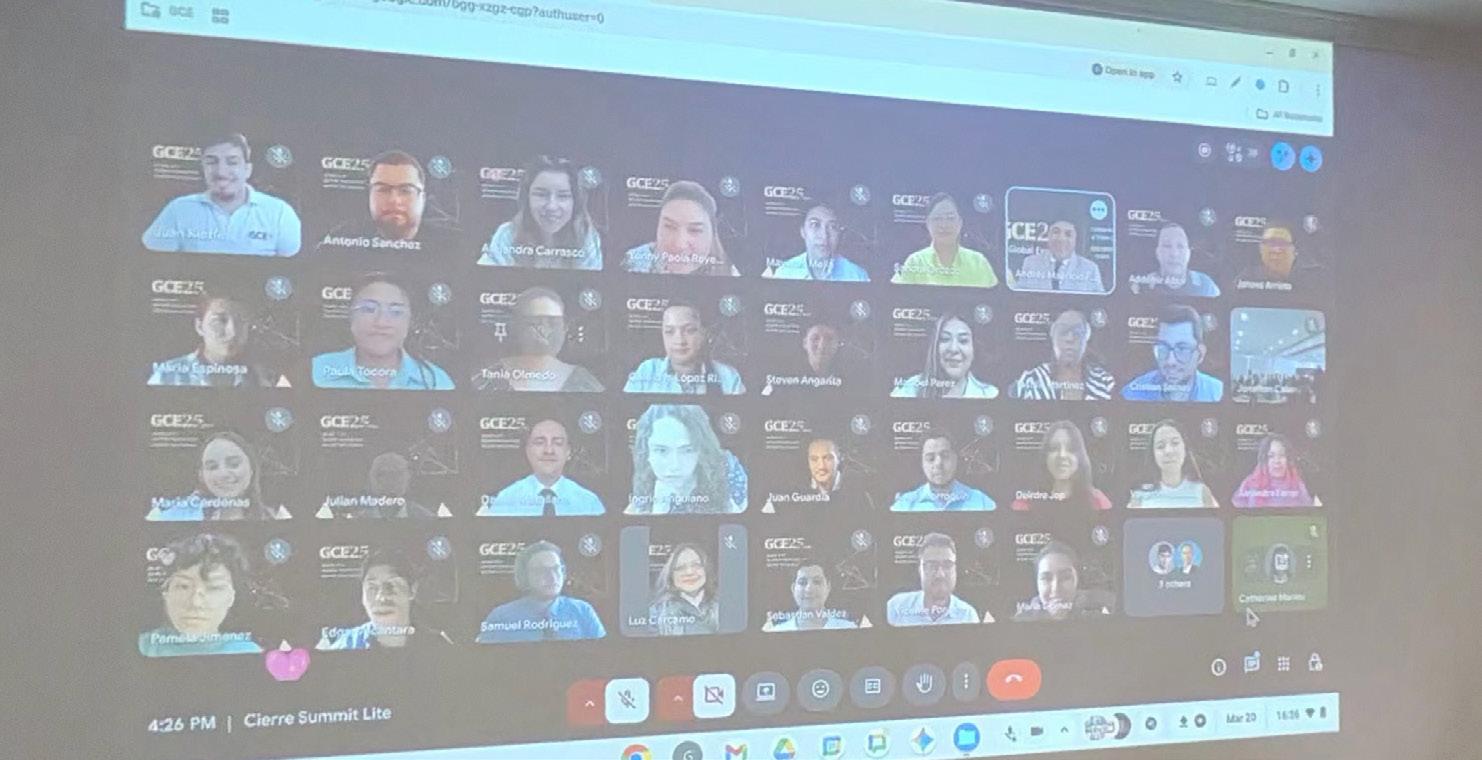
seem small, but it is precisely within that gap that trust is built. Our operating model, therefore, is based on a simple philosophy: Automating processes, humanizing decisions.
For this reason, we continue to strongly reinforce our international Service Desk, labor consulting, and compliance teams, ensuring that the first point of contact continues to be a genuine opportunity to solve real problems, rather than simply generating automated answers. We firmly believe in technology, but never in technological dependency.
In fact, one of the most critical risks of this decade is blindly assuming that every decision made by a platform is correct. As CEO, I actively encourage a critical culture where:
1. Every tool must be meticulously audited.
2. Every process must be constantly questioned.
3. Every automation must be rigorously validated.
Technology should become an extraordinary advisor, but never the director of the company. The best leaders of tomorrow will not be those who use the most artificial intelligence, but those who have the wisdom to know when not to use it.
Trust is built on evidence and sustainability
This vision carries even more weight in a contemporary market that no longer buys promises, but tangible results. Today’s companies look for strategic partners capable of demonstrating traceability, regulatory compliance, information security, and a high capacity to respond. For this reason, at GCE we have permanently robusted our models for International Compliance, Government Relations, risk management, data protection, anti-money laundering (AML), internal controls, and continuous audit processes.
Our philosophy on this is simple: regulatory compliance should never be viewed as an operating cost, but understood as a highlevel competitive advantage. When an organization can irrefutably demonstrate that it operates correctly across more than one hundred jurisdictions, it generates an asset that no software in the world can replicate: credibility.
Hand in hand with this transparency, ESG (Environmental, Social, and Governance) criteria have ceased to be a mere public relations discourse. Today, sustainability no longer belongs

exclusively to the marketing department; it is an active part of the rigorous evaluation carried out by investors, international clients, and governments.
At GCE, we understand ESG as a living business management methodology. Therefore, we rigorously measure indicators related to corporate governance, social impact, diversity, ethical compliance, and environmental responsibility, fully aware that these factors directly influence the reputation, growth, and longevity of our clients. It is not about publishing annual reports just for the sake of appearances; it is about making better decisions every single day.
Of course, sustaining this global structure poses a major challenge: building a common identity among teams working across different continents, languages, and time zones. Facing this challenge, our response has been simple yet powerful: more communication, more transparency, more autonomy, and a shared purpose. When people clearly understand the organization’s reason for being, geographical distance ceases to be a barrier. Culture, then, stops depending on the walls of an office and starts depending on leadership.
Looking to the future, I am convinced that during the next decade we will witness extraordinary advances in automation and digital identity, but we will also face unprecedented risks such as deepfakes, sophisticated identity fraud, automated attacks, and AI-driven document manipulation. This is why we are permanently shielding our technological infrastructure, verification protocols, and cybersecurity strategies. In the years to come, digital trust will undoubtedly be one of the most valuable assets of any international organization.
A reflection for the next 25 Years
After traveling for more than two decades cocreating international operations, there is a fundamental lesson that remains intact: global expansion has never depended solely on capital; it ultimately depends on the ability to generate trust.
Companies will be able to incorporate the most advanced artificial intelligence, automate the bulk of their processes, and rapidly expand into new geographical markets. However, the organizations that will truly lead the future will be those that understand that behind every contract, every payroll, every alliance, and every strategic decision, there will always be people.
And the most solid businesses of tomorrow will continue to be built exactly the same way they were twenty-five years ago: with vision, with integrity, and with the deep trust of delivering what is promised by doing things right. #DoItWithGCE