FARM FOCUS
CHALLENGING FIRST HALF BUT RECOVERY WILL OCCUR
Dear Suppliers,
In recent days I have had the opportunity to travel the country for our 2026 Business and Market Outlook meetings. I would like to thank you for taking the time to attend and hope that you found the engagements of value.
For those who could not join us, one of my key messages was that while the first half of this year ahead will undoubtedly bring challenges, it is important to recognise that our markets are cyclical in nature and recovery will occur.
My second key message was that Tirlán, your Co-op, will do all in its power to help you through this period of market downturn.
Despite significant obstacles over the past 12 months – including market volatility and tariff uncertainty – our business closed the year in a very strong financial position. This allows us to enter 2026 on a robust footing.
Year in Review
At our farmer meetings I outlined the following highlights from 2025:
• 2025 was a record year for milk supply – with volumes up over 7% compared to 2024 and solids up over 8%.
All of our facilities operated at maximum capacity at peak, underlining the importance of having the capability to allow you our suppliers grow output when the opportunity presents.
• On the commercial side, we successfully placed over 40,000 additional tonnes of dairy ingredients on the market and closed the year with near record-low stock levels.
• Our Agribusiness delivered a very strong performance, driven by the Milk Solids programme and strong results across key categories. Consumer Foods also delivered another strong year, despite a high-cost input environment. As a result of this commercial performance, we paid a weighted average milk price of 54.6cpl including constituents. Combined with Agri trade supports, Co-op dividends and the Glanbia plc share spin-out, this ensured that Tirlán delivered internationally leading total member returns last year. Continuing on this journey remains our clear ambition for the years ahead.
I also highlighted that a major milestone in 2025 was the successful completion of the €0.5bn transaction to complete our bond settlement – resulting in Tirlán Co-op now being effectively debt-free.
At the meetings we also spoke about our €126 million Whey processing investment which was announced for Ballyragget last autumn. This delivers on our commitment to add greater value to your milk
We also spoke about how, at the start of last year, we committed to doing everything in our power to retain the nitrates derogation – and alongside a united industry we delivered on this promise in December. The three-year extension brings certainty and is a great relief for our milk suppliersour focus now is on retaining the derogation beyond 2028.
We also took decisive steps to address what I believe is the defining challenge for farming in our time: generational renewal. Tirlán has put real funding behind supporting young farmers and is advocating strongly for similar action at national and EU level.
Global Volatility and Long-Term Outlook
All of our efforts on farm and within the business are, of course, taking place against a backdrop of incredible volatility across the world. Not in recent history have we witnessed such global turmoil and uncertainty.
Tariffs, and their uncertainty, have become a real challenge for business – with the latest Chinese retaliatory tariff of 42% on some dairy products fundamentally altering the potential of this market should these tariffs remain.
However, despite this, the long-term outlook for food and dairy remains positive. Global demand is set to outpace supply, particularly in regulated developed economies. Food security remains a real and growing issue. This creates opportunity for Tirlán and our members.
2026 Milk price outlook
Turning to 2026, our priority is clear: delivering a strong milk price. We have already committed to seasonality bonuses for December (5cpl), January
(7cpl) and February (5cpl). We have confirmed equally strong support for next autumn and winter milk supplies.
In looking at future milk price, given the current extreme volatility it is very difficult to have any strong degree of accuracy beyond a 3 to 4 month period.
Currently we are paying somewhat ahead of market returns. This reflects our desire to support our milk suppliers over what are very high-cost production months.
Conscious that milk prices at these levels will present real economic challenges on farm, Tirlán will act in whatever way we can to support our farmers – and we have already significantly started this journey with our €5.5 million Agri support package which was announced in December.
Furthermore, and critical this year, efficiency and cost disciplines remain a strategic priority.
We will also continue to pursue opportunities through our investment fund.
Above all, we will continue to build a Co-op of the future: one that is progressive, financially strong and farmer focused. A Co-op that maximises total returns to our members, a business that is proud to speak out for our farmers and a Co-op that attracts and develops the very best talent.
On behalf of the management team, thank you for your continued support of Tirlán over the past year. Finally, a reminder to please be conscious of farm safety through the busy spring period.
CEO, Tirlán
UNPRECEDENTED MILK SUPPLY IN THE SECOND HALF OF 2025 DROVE A RAPID DECREASE IN DAIRY COMMODITY PRICES
Global milk supply increased very strongly in the second half of 2025 across the key exporting regions of Europe, US and New Zealand. This drove a substantial drop in dairy commodity prices, particularly cheese and butter prices in Europe.
Strong milk production growth in Europe was supported by positive margins, low feed costs and favourable weather. While Blue Tongue Virus cases were more limited in 2025 in Northern Europe, delayed calving and a later peak meant a surge in milk production from quarter three onwards. Milk growth of +7.5% in Germany in November, +7.7% in Netherlands in October and +6% in France in October far exceeded expectations and recent trends.
US milk production remains very strong with the US herd having expanded at the fastest rate in 40 years. US margins are coming under pressure. However, high beef/calf prices are supporting incomes with dairy farmers cross-breeding a significant portion of their cows to beef.
New Zealand milk supply performed strongly in recent months. Strong PKE (feed) imports at affordable levels are supporting production. Recent weather conditions and pasture growth compare less favourably to last year but are around average 5-year levels. Fonterra reduced its forecast farmgate payout in mid-December to a midpoint of NZ$9.00kgMS (Tirlán equivalent 31.5cpl).
Despite the recent strong surge in European milk production, longer-term headwinds to milk growth remain. Rabobank forecast a 5% decline in EU milk production by 2035 due to policy pressure, demographic shifts and climate impacts.
Demand trends continue to be mixed. The retail sector is relatively stable but growth rates have eased. The foodservice operating environment is challenging due to food inflation and increased cost of living. Low income earners are more impacted with higher earners continuing to prioritise health and wellness spending.
Demand in the short-term is expected to improve on more affordable price but export markets are challenging and the weak US dollar versus the euro is a further headwind to EU export competitiveness.
China import demand remains sluggish. China has announced the imposition of tariffs ranging from 21.9% to 42.7% for EU cream and cheese products. The tariffs are applied on a company-by-company basis. The duties are provisional and entered into force on 23 Dec 2025. They may be reviewed when the investigation concludes on 21 Feb 2026.
High-protein ingredients (MPC, WPC/WPI) remain firm with strong demand from sports nutrition, GLP-1 (weight-loss) applications, and foodservice. Prices for Whey Protein Isolate (WPI) have been exceptionally good in 2025 and are forecast to remain elevated through 2026.
FOOD INGREDIENTS EUROPE: SHOWCASING
TIRLÁN ON A GLOBAL STAGE
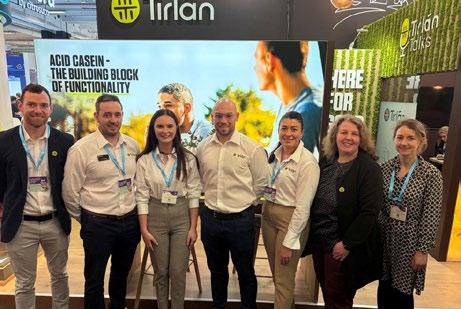
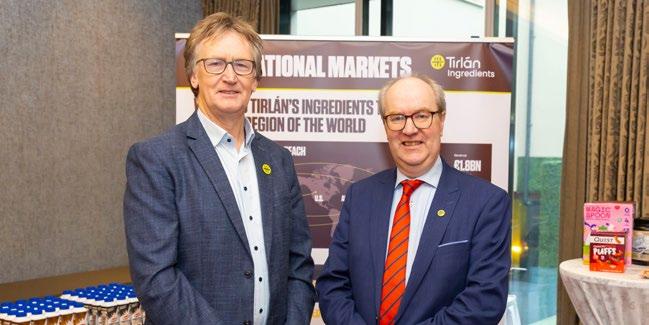
In early December, our Commercial team attended Food Ingredients Europe (FIE) in Paris, marking the final tradeshow of a busy and successful year. FIE is one of the most important global events for the food ingredients sector, bringing together customers and partners from across Europe and beyond. For the team, it was a valuable opportunity to be present in the market, meet customers face-to-face, and reinforce longstanding customer relationships.
The event provided an excellent platform to engage customers on Tirlán’s planned whey portfolio expansion, supported by recent investment and capacity growth. This strategic expansion reflects the continued global demand for high-quality Irish dairy ingredients and the strong value of milk produced by our farmer shareholders. Throughout the three days, customer feedback was very positive, with strong interest across a range of applications including nutrition, bakery, and functional foods.


FIE also reinforced the importance of maintaining a visible and professional presence at international tradeshows. With Tirlán products sold into more than 100 countries worldwide, events like FIE allow the team to stay close to customers, gain insight into evolving market needs, and identify new commercial opportunities. These interactions play a key role in supporting sustainable growth and driving value back through the business.
As FIE brought our tradeshow year to a close, focus now turns quickly to the next opportunity. At the end of January, the team will travel to Gulfood in Dubai, another key international tradeshow. Gulfood offers a strong platform to further showcase Irish dairy on a global stage, strengthen relationships in key export markets, and continue building demand for Tirlán’s ingredient portfolio.
TIRLÁN VOWS TO SUPPORT FARMERS IN DIFFICULT MONTHS AHEAD
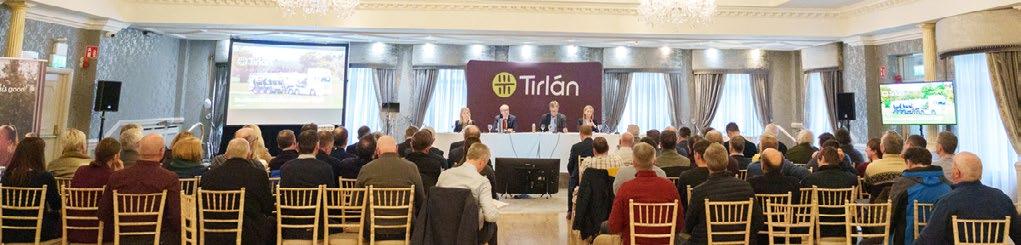
Tirlán Co-op’s farm family suppliers turned out in large numbers, both in person and online, for the Co-op’s Business & Market Outlook 2026 Meeting Series. Management updated suppliers on the latest market outlook, priorities for 2026 and beyond, and outlined the practical supports available as farm families prepare for spring.
Speaking at the Information meetings across the country, Tirlán Chairperson, John Murphy, said 2025 will go down as one of the best years for dairy farming, with strong milk prices, favourable weather, and milk volumes rising 7% year on year.
John Murphy highlighted Tirlán’s pivotal role in securing the extension to the Nitrates Derogation, supported by extensive engagement with Irish and EU stakeholders and clear environmental progress on farms. He cautioned that 2026 will be a more challenging year on the dairy front, due to global milk supply and demand dynamics.
“Demand has remained solid but global milk supply is very strong. We operate in a very high-cost environment and we are very mindful of this. But hopefully as we progress, we will see markets improve and green shoots again. We will do our very best to support our farmers. These markets will pass – they always do. We are a Co-op, owned and governed by farmers and we are here to operate for the sole benefit of farmers.”
Tirlán CEO, Seán Molloy confirmed Tirlán farmers delivered record milk intake in 2025. The Co-op placed an additional 40,000 tonnes of dairy ingredients on the market, and ended the year with near record low stock levels. He stated that despite volatility and tariff uncertainty, the Co-op closed 2025 in a robust financial position.
“While the year ahead, particularly the first half, will bring its challenges, it is important to recognise that our markets are cyclical in nature and recovery will occur. Tirlán will also do all in its power to help our farmers during this period of market downturn. We enter 2026 on a firm footing.
“Our priority remains to add value to each litre of milk and each tonne of grain. Efficiency and cost discipline remain a strategic priority for our management team. We will continue to pursue opportunities for our investment fund.
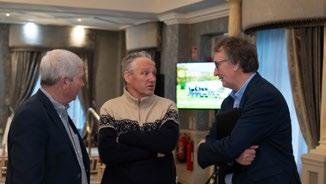
Pictured at the Ardboyne Hotel, Navan were Denis O’Sullivan, Tirlán Board Member, PJ Nolan from Navan, Co. Meath and Tirlán Chairperson John Murphy
Celebrating Excellence in Farming with the return of the Dairy & Sustainability Awards for 2026
Entries are now openscan here to submit your nomination!
Tirlán is proud to announce the return of the Dairy & Sustainability Awards for 2026. Now in its second year, these awards continue to recognise the work of milk suppliers who strive to deliver high-quality milk sustainably.

Entries close Friday 6th February.
“And above all, we will continue to build a Co-op of the future that is progressive, financially strong and farmer-focused, a Co-op that maximises total returns to our farmers and a business that is proud to speak out for our farmers, attract and retain the best talent.”
Sean Molloy said Tirlán paid an average of 54.6 cent per litre including constituents for milk last year, as well as the agri-trade supports available and dividends from the Co-op. When added together, Tirlán delivered an internationally leading total value return to Members, he said. Milk leagues do not include all such payments and therefore, they are not an accurate reflection of the Co-op's actual returns to farmers, he added.
Tirlán remains committed to delivering a strong milk price. “We have already committed to seasonality bonuses for December (5cpl), January (7cpl) and February (5cpl). And our intention is to shortly confirm equally strong support for next autumn and winter milk supplies,” Seán Molloy added.
Chief Agri Officer, Ailish Byrne, reported a strong year for Tirlán Agri, with over 500,000 tonnes of feed sold, major branch upgrades, and continued growth in horticulture and FarmLife categories. She updated farmers on a €5.5 million 2026 Agri Support Package, including feed (€40 per tonne), fertiliser (€20 per tonne) and calf milk replacer (€60 per tonne) supports.
Chief Ingredients Officer, Aoife Murphy, described 2025 as a year defined by global volatility. Milk supply rose sharply across major regions, while retail and foodservice demand softened. Despite this, long term fundamentals remain positive, with strong global demand for dairy proteins and favourable demographic and health focused trends.
Milk supply was up to record levels last year, Chief Operations & Consumer Foods Officer Jim O’Neill confirmed. The Co-op processed its highest-ever volume at 3.234 billion litres and a peak of 96 million litres per week in May. He noted significant progress at Kilkenny Cheese, with over 90,000 tonnes of continental cheese produced since 2024. He also outlined the major new Whey Protein Isolate (WPI) investment in Ballyragget, which positions Tirlán as a leader in value-added nutrition.
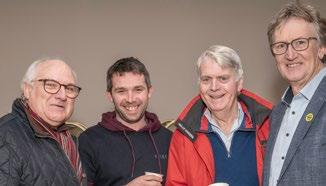
Pictured at Corrin Mart, Fermoy, Co. Cork were Donal Howard, Castlelyons, Patrick Geary, Ballyduff and Patsy Ahern, Ballyduff with John Murphy, Tirlán Chairperson.
Farmer suppliers are being encouraged to enter or nominate fellow farmers in recognition of their dedication on-farm.
Award Categories
The awards will honour excellence across a range of categories including:
• Milk Quality
• Sustainability
• Avonmore Fresh Milk Supplier
• Young Farmer
The Overall Tirlán Milk Supplier of the Year recognises an outstanding milk supplier who has demonstrated exceptional quality, consistency, and dedication to excellence in sustainable dairy farming.
These awards are an opportunity to showcase the dedication and innovation of Tirlán farmers who are leading the way in quality and sustainability. The award nominees are assessed by an independent panel of external judges. Last year’s winners set an incredible benchmark, and we look forward to celebrating even more dedicated suppliers in 2026.
2026 DAIRY SUPPORT PACKAGE
Tirlán Dairy Support Package is designed to reduce on-farm costs, particularly for feed and fertiliser, while helping farmers maintain cow performance, grass growth and milk solids production.
Supporting Those Who Trade With Tirlán
The support package is designed to recognise and reward farmers who trade with the Co-op. Rebates apply to Tirlán milk suppliers who spent 5 cpl with the Co-op in 2025, or who do so during 2026.
Active Tirlán Agribusiness customers who are not milk suppliers but who purchased dairy feed within the last 12 months may also qualify for feed support up to a similar value as last year, subject to conditions.

Tirlan’s Dairy Support Package includes three categories:
1 FEED SUPPORT
Feed Support
GAIN Dairy Feed: €40 per tonne
Calf Milk Replacer: €60 per tonne
Irish Rolled Cereals: €10 per tonne
Straights: €3 per tonne
Available from 4th January – 2nd May 2026.
2 FERTILISER SUPPORT
Fertiliser Support
Fertiliser: €20 per tonne
On all contracted tonnes, ordered on or before 14th February 2026 inclusive.
Forward option on fertiliser from the 1st December 2025 and delivered by 28th February 2026.
3 VETERINARY SUPPORT
Veterinary Support
All anti-parasitic purchased in 2026 qualify.
As part of the package, Tirlán will provide four antiparasitic prescriptions free of charge for 2026.
Each prescription covers a six-month period, delivering additional cost savings for milk suppliers.
QUALIFYING CRITERIA AND KEY TERMS & CONDITIONS
• Support is available to end-users (farmers) only.
• The following maximum tonnage caps apply across the scheme:
GAIN Dairy Feed: 110,000 tonnes
Calf Milk Replacer: 4,000 tonnes
Irish Rolled Cereals: 15,000 tonnes
Straights: 15,000 tonnes
• Feed support will end on 2 May 2026, or when allocated tonnage limits are reached, whichever occurs first.
• Fertiliser support will end on 14 February 2026, or once the 30,000 tonne limit is reached, whichever comes first. Fertiliser must be delivered by 28 February for support to be availed of.
• Notice will be provided if maximum tonnage limits are likely to be reached before the closing dates.
• To ensure efficient transport operations, suppliers may take a maximum of one bulk feed delivery during the final week of the scheme.
• Rebates are applied to the farmer’s Tirlán Trading Account. Farmers qualifying based on 2025 spend will receive rebates in Q2 2026. A second payment run will be made before year end for those who qualified based on their 2026 trade.
For more information see www.tirlanfarmlife.com. or contact your local Tirlán representative or LoCall 0818 321 321
CHANGES TO THE NEW NITRATES ACTION PLAN
Seamus Kearney, Programme Co-ordinator of the Teagasc-Tirlán Future Farm Programme
2026 Changes to Nitrates Action Plan
1. More areas of the country are limited to 220 kg organic N/ha since 1st December 2025.
2. Farmers will now have to identify their milking platform (land grazed by dairy cows within 3km of the milking parlour) on their BISS application in 2026.
3. Where farms are stocked over 2.8 cows on the milking platform they may have to move slurry to their non milking platform land.
4. Lime spreading will need to be accelerated and any land that has a lime requirement will need to receive a lime application up to 5 tonnes/ha within 2 years of the date of soil samples.
2027 Changes to Nitrates Action Plan
5. Nitrates Derogation Farms to have a Nitrogen balance figure calculated from the Department supported AgNav tool.
2028 Changes
to Nitrates Action Plan
6. Extra 20% slurry storage needed by 1st October 2028
7. Extra 43% soiled water storage needed by 1st October 2028
8. Reduction in Chemical Nitrogen allowance by 5% in the Slaney, Barrow, Nore and Munster Blackwater River catchment areas.
9. Increase in buffer zones (areas beside watercourses were no chemical fertiliser or slurry is spread) during the main grazing season. The buffer zone is increase from 5m to 8m for slurry and the buffer zone is increased from 3m to 4m for chemical fertilisers.
FARMING FOR WATER PROJECT EXPANDED TO SUPPORT FARM FAMILIES
Tirlán Co-op Chairperson John Murphy has announced the expansion of the award-winning Farming for Water: River Slaney Project across the Nore, Barrow, Boyne, Blackwater and Suir catchments.
This is part of Tirlán’s on-going commitment to support Coop members improve on-farm economic and environmental performance and on-farm actions taking place as part of Teagasc’s collaborative Better Farming for Water Campaign.
John Murphy said the move is timely, given that nitrates derogation discussions with the European Commission are expected to begin in 2028. “Planning for the next derogation starts now. Our Co-op’s decision to establish the collaborative and European award-winning Farming for Water: River Slaney Project with partners including Teagasc, LAWPRO and ifac has now provided a science-based blueprint for national water quality improvement.”
Tirlán works with farm family members to apply for €6m on-farm funding
Tirlán CEO, Seán
has commended the huge number of on-farm actions taken by farm family suppliers, supported by their Co-op, to address water quality challenges and future proof their family-based enterprises.
“I am delighted to confirm that Tirlán has worked with our Co-op Members and submitted Farming For Water European Innovation Partnership (EIP) funding applications to the value of €6 million. This has helped fund practical measures that will make a direct impact on water quality.
It was great to receive good news before Christmas with the retention of the Nitrates Derogation and adoption of a new Nitrates Action Plan for Ireland. This new Nitrates Action Plan means that farmers can stock their farms to an organic nitrogen level of up to 220 kg N/ha (2.39 cows/ ha @ a 92 kg organic N cow) in most areas. The new Nitrates Action Plan was signed into law by the Minister for Housing, Local Government and Heritage on the 8th of December 2025. The new Nitrates Action Plan is for 3 years from 2026 to 2028, but the new Nitrates Action Plan comes with extra conditions and changes which I will now outline.
While there is a significant list of changes involved with the new Nitrates Action Plan the more immediate actions for Dairy Farmers for 2026 should be
1. Getting the Lime requirements spread in 2026 as soil fertility will need to be 100% to live within the reduced chemical N allowances in the future. Also worth focusing on Potassium (K) requirements as K also effects grass growth.
2. Starting the planning process to build more slurry storage/soiled water storage as this building work will require a slurry storage/ soiled water storage calculation audit, planning permission/ planning permission exemption, Targeted Agricultural Modernisation Scheme (TAMS) application for grant aid and then a builder to construct the new facilities. This process will take time so start the process as soon as possible.
In relation to funding extra slurry storage/soiled water storage for farmers there are different funding sources available.
1. Reclaim VAT in most cases, where farmers are not registered for VAT.
2. 60% TAMS grant aid available for slurry storage/soiled water storage.
3. Accelerated tax allowances over 2 years instead of 7 to 8 years. Teagasc in conjunction with Tirlán held an online webinar recently titled ‘What does the New Nitrates Action Plan mean for your Farm.’ This webinar can be viewed on the Teagasc YouTube channel by scanning the QR code.


These include training courses, nutrient use efficiency actions, fencing off water courses and solar-powered electric fences.”
Co-op Members are now encouraged to review their EIP applications and ensure measures applied for are implemented on-farm. This can be done with the support of Tirlán’s Agri-Sustainability Team.
Seán Molloy also acknowledged the considerable work by Government, Members of the European Parliament, Teagasc, farm organisations, ICOS, DII, LAWPRO and most importantly Co-op Members in securing the nitrates derogation. However he called on the Government to work to pragmatically satisfy the Habitats Directive requirement without delay to ensure Co-op Members remain in derogation post 2028 and that full TAMS funding is available for additional on-farm nutrient storage requirements.
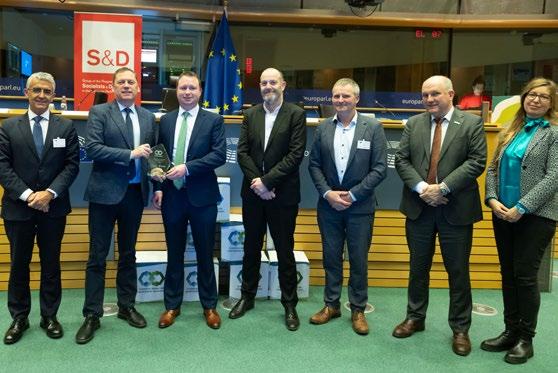
L-R: Tom Phelan, Vice Chairperson; Lisa Koep, Chief ESG Officer, Tirlán; John Murphy, Tirlán Chairperson; Michael McGrath, EU Commission; Sean Molloy, Tirlán CEO; Bill Carroll, Tirlán Vice Chairperson; and Thomas Ryan, Head of Agri Sustainability, Tirlán.
Molloy
TIRLÁN AND BAILEYS ANNOUNCE
RECIPIENTS
OF €1,000 STUDY BURSARIES SUPPORTING
NEXT GENERATION OF SUSTAINABLE FARMERS
Tirlán and Baileys Irish Cream Liqueur are delighted to announce the recipients of the Tirlán and Baileys Sustainable Farming Academy €1,000 Study Bursaries, supporting the next generation of Irish agricultural leaders.
The bursary programme was open to family members of Tirlán suppliers and growers commencing Level 8 degree studies in agricultural science in autumn 2025. In a significant expansion this year, students from any recognised Irish third-level institution were eligible to apply.
The bursaries form part of the Tirlán and Baileys Sustainable Farming Academy – a joint initiative designed to empower farm families and nurture future talent in Irish agriculture. The programme aims to equip students with the skills and knowledge needed to enhance the environmental, economic, and social sustainability of the sector.
This year’s successful recipients, each awarded a €1,000 bursary, are:
Rebekah Ritchie
Dundalk Institute of Technology, Sustainable Agriculture
Jimmy Barden
South East Technological University (SETU), BSc in Agricultural Science
Emily White University College Dublin, Agricultural Science Omnibus
Jack Hickey
Munster Technological University, Agriculture
TIRLÁN RECEIVES EUROPEAN AWARD FOR ECONOMIC AND ENVIRONMENTAL SUSTAINABILITY
Tirlán and its Co-op Members have been recognised among Europe’s most pioneering cooperatives at the 6th Cogeca European Award for Co-operative Innovation, receiving an award for its science-based model to improve water quality and on-farm economic performance.
The Award was presented by Irish MEP Barry Cowen to Tirlán’s Farm Sustainability Advisor
Matthew Moylan in recognition of the ‘visionary, science-based blueprint for national water quality improvement’ developed by Tirlán and project partners as part of the Farming for Water: River Slaney Project.
The River Slaney Project brings together expertise from Tirlán, Teagasc, the Local Authorities Water Programme (LAWPRO), local authorities, Uisce Eireann, the livestock and tillage sector and accounting and advisory specialists ifac to help enhance water quality in this river that flows through the heart of the Tirlán catchment area. The learnings from the River Slaney Project will now be scaled across the Tirlán Catchment and shared with the Teagasc National Better Farming for Water Campaign.
Tirlán employees and suppliers team up to raise over €162,000 for worthy local appeals
Tirlán employees, suppliers and members of the wider community have pooled their efforts to raise over €162,000 for worthy local appeals, donations which will go a long way to supporting those in need within our community.
The mental health charity Aware, the Fr McGrath family resource centre and Amber Women’s Refuge are the beneficiaries of fundraising efforts that saw team members from across the Co-op take to their bikes and take to the hills last June to raise money, all supported by our farm family suppliers and the wider community. Additional funds were also raised through other activities within Tirlán across the entire year.
The Tirlán Mountain Challenge and Tour de Tirlán committee members gathered at Abbey Quarter recently for a heartwarming occasion and to the hand over the funds and reflect on the power of teamwork and community spirit.
Representatives from each charity described the difference the money and the increased profile for their charity will make.
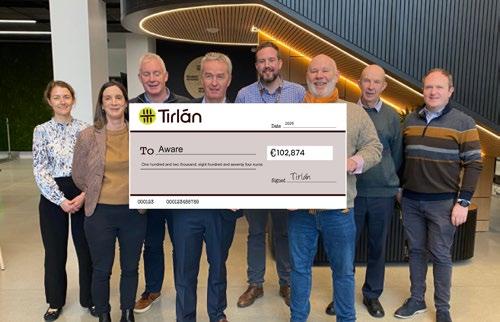
Drew Flood from Tirlán’s charity partner Aware highlighted the urgent need for mental health support, noting that depression is projected to be the leading cause of disease burden globally by 2030. Tirlán’s donations have already funded over 6,000 support line calls, covering three months of helpline services. This year’s contribution will help Aware continue to reach and support even more people across Ireland, ensuring no one faces depression alone.
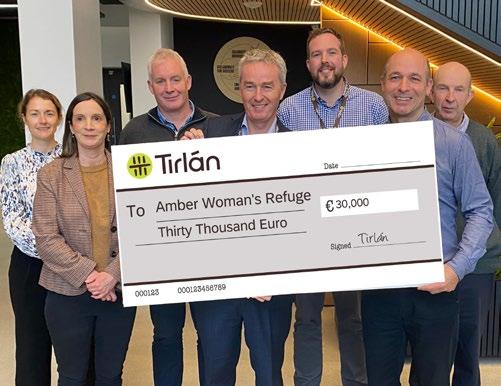
Women’s Refuge’s Ken Byrne described the donation as “a
enabling the centre to provide vital services to women and children in Kilkenny and Carlow. Last year’s fundraising allowed for 276 free counselling sessions for 74 women. This year, the funds will help build a new playground and sensory garden for children at the refuge, offering a safe and nurturing space for those fleeing violence and abuse.
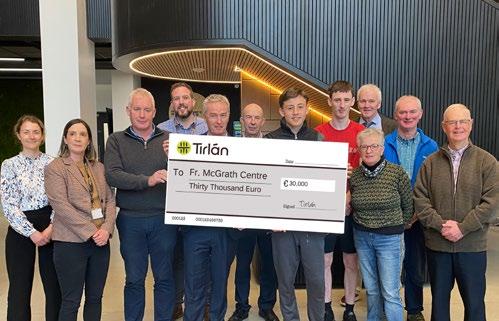
The Father McGrath Centre’s Mike Kelly and team explained how the Centre has evolved from tackling early school leaving to offering a wide range of community supports, including educational programmes, childcare training and addiction recovery initiatives. The funds will help expand their sensory room for children from traumatised backgrounds and support scholarships for young leaders. Last year’s donation enabled youth leaders to participate in an international exchange, described as “life-altering” by those who attended.
Amber
gift,”
THE VALUE OF AN EARLY FIRST MILK RECORDING TO CONTROL SCC
The first milk recording of the lactation should be planned within 60 days after calving. Leaving it any later and key information on dry cow therapy success will be lost.
In an era of Selective Dry Cow Therapy (SDCT), the early lactation recording will be vital to make informed dry cow management decisions. For most spring calving herds this translates to a milk recording before St-Patrick’s day and a second early lactation milk recording for the slightly later calving cows by the end of April. Two tables in the milk recording reports available on ICBF contain all the SCC information you need to review the dry cow management and make decisions that can determine the herd’s SCC performance for the rest of the year.
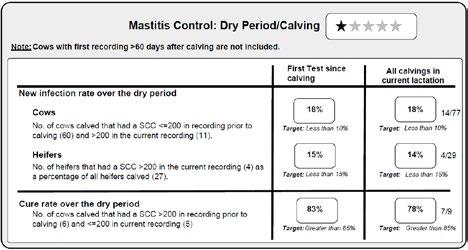
1. Start with the Mastitis Control: Dry Period/Calving table on page two of the CellCheck Farm Summary report. Figures above the target % are often an indicator of poor dry cow / heifer management and hygiene at the time of drying-off or in the calving pen. This table also shows how successful the treatment of high SCC cows was over the dry period. Cows that did not cure during the previous dry period need to be further investigated. Maybe they are chronically (or persistently) infected or maybe the chosen treatment is not effective against the mastitis causing bacteria and a sterile milk sample from the infected quarter should be tested for bacteriology and susceptibility.
BLUETONGUE PREPAREDNESS
What is Bluetongue?
Bluetongue is a viral disease that affects ruminants such as cattle, sheep, goats, and deer. It is spread by biting midges, which are most active from April to November. Clinical signs can include:
• Fever and loss of appetite
• Drop in milk yield
• Reddening of mouth membranes, sores on nose and gums
• Swelling of the face, lips, and tongue
• Breathing difficulties, drooling, eye/nose discharge
• Lameness, abortion, and in severe cases, death
Current Risk
DAFM advises that disease spread is much less likely during winter and early spring because midges are inactive. However, vigilance is essential, especially during the higher-risk period (April–November). DAFM has increased its targeted and risk-based bluetongue surveillance testing following the detection of Bluetongue positive herds in Northern Ireland in late 2025.
An outbreak in Ireland would lead to strict movement controls and could impact trade. Early detection is key to protecting our national herd.
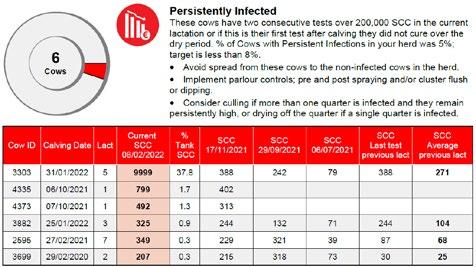
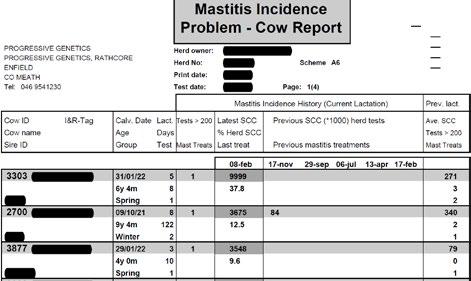
2. For more information on those cows that did not cure during the dry period, look for the Persistently Infected table in the Milk Recording & Lifetime Summary Report or the Mastitis Incidence Problem – Cow Report. Both tables display similar information.
Cows that had several high SCC recordings, elevated average SCC or mastitis treatments in the previous lactation but did not cure during the dry period despite suitable dry cow therapy, can be a constant source from which mastitis can spread to all other cows in the herd. Steps such as segregated milking or culling are necessary to limit the risk of mastitis spreading by these cows.
Recently infected cows that have not been treated are ideal candidates from which to submit a sterile milk sample from the infected quarter for bacteriology and susceptibility testing.
What Farmers Should Do
• Report any suspicion immediately: Bluetongue is a notifiable disease. If you suspect Bluetongue on your farm, contact:
• Your local Regional Veterinary Office (RVO), or
• The National Disease Emergency Hotline: (01) 492 8026
• Be cautious with imports: If importing susceptible animals, seek veterinary advice and ensure animals are tested before movement.
• Maintain strong biosecurity practices on your farm. This not only involves the movement of animals between herds, but also the import of semen and embryos.
• Midge control measures on-farm:
• Housing animals indoors during dawn and dusk, when midge activity peaks, drastically lowers risk.
• Vaccination: DAFM has announced that BTV-3 vaccines will be made available in 2026 for voluntary use. Vaccination forms a key component in BTV eradication programmes and maintaining disease-free status in previously infected countries. If vaccination is rolled out in the absence of confirmed BTV cases, Ireland would be considered “BTV Disease-free with vaccination”.
First recording within 60 days after calving will show cows that picked up mastitis during the dry period and heifers that calved down with high SCC
1. Check for recently calved cows
1. Check for recently calved cows
2. Compare current recording SCC to last recording prior to dry-off SCC
2. Compare current recording SCC to last recording prior to dry-off SCC
Cure rate over the dry period is a good indicator of the success of your chosen dry cow treatment
ANIMAL HEALTH REMINDERS
Calf disbudding – Ask your vet about local anaesthetic and nonsteroidal anti-inflammatory medicines to give calves better painrelief, reduce stress and avoid growth checks after disbudding.
Dry cows – Maintain dry cow Body Condition Score at 3 – 3.25 and supplement with quality dry cow mineral to avoid difficult calvings and reduce the risk of retained cleanings, milk fever and ketosis after calving.
Milk Recording – Start thinking about the milk recording plan for 2026. To implement Selective Dry Cow Therapy, a minimum of 4, and ideally 6, milk recordings throughout the year will be required to have accurate individual cow data at the end of lactation. The first milk recording should take place within 60 days from the start of calving and the last milk recording should take place no more than 30 days prior to drying off.
Lameness – Use regular foot bathing during the winter to keep on top of infectious causes of lameness such as Mortellaro and foulin-the-foot.
Bull castration – Use rubber rings before calves are older than 1 week as the most hassle free castration method.
Vaccinations – Prepare to implement a pre-breeding vaccination plan well ahead of the start of the breeding season.
Parasite Control – Remember that parasite doses now need a prescription before they can be bought. Talk to your Tirlán representative about requesting a prescription before you need to use dosing this Spring and Summer.
CALVING ESSENTIALS –TOP TIPS FOR A SMOOTH SEASON
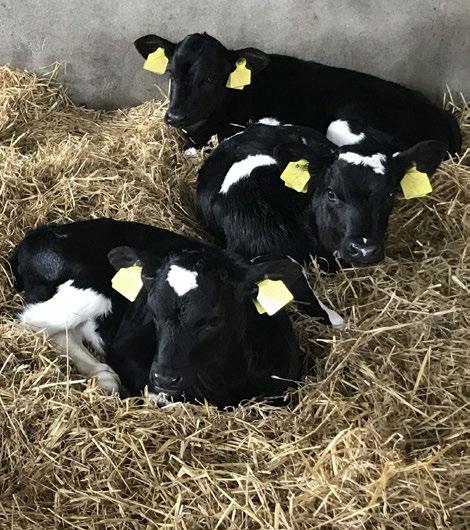
Calving season is one of the most demanding periods on Irish dairy farms, with many herds aiming to calve the majority of cows within six weeks. Long days, night checks and unpredictable events can add pressure, but good planning and preparation can make the season more efficient, safer and less stressful for both cows and farmers. Here are the key essentials to focus on as calving begins.
1. Prioritise Calf Health
Healthy calves start with good hygiene and careful management. Keep calving pens clean, dry and well bedded, and ensure calf housing is disinfected and ventilated without draughts. Have all feeding equipment—bottles, teat feeders and stomach tubes— washed, disinfected and ready to use. A clean environment lowers the risk of scour and other early life infections.
2. Get Colostrum Right
Colostrum is the calf’s first and most important defence. Follow the 1–2–3 rule:
1. Only the first milking is true colostrum.
2. Feed colostrum within 2 hours of birth.
3. Aim to feed at least 3 litres of colostrum.
Colostrum quality varies, so early season testing with a Brix refractometer is valuable. Feeding transition milk for the first few days remains beneficial for calf health.
3. Check Cow Nutrition
Cows should calve at a Body Condition Score of 3.0–3.5. Feeding a quality dry cow mineral at least six weeks before calving supports both cow recovery and colostrum quality. Address any mineral deficiencies early and ensure freshly calved cows have immediate access to water and fresh feed.
4. Prepare Facilities and Equipment
Before calving starts, repair gates, pens and barriers. Stock up on fresh straw—clean bedding supports calf health and reduces infection risk. Calf jackets can be extremely useful in cold or breezy weather. If housing hasn’t been disinfected yet, do so now.
5. Restock Essential Supplies
Ensure you have: gloves, lubricant, calving ropes, calcium, navel spray, electrolytes, a working disbudding iron, castration rings, ID tags and heat lamps.
For all your calving essentials visit your local Tirlán FarmLife Branch or tirlanfarmlife.com
EARLY LACTATION ENERGY INTAKE –THE KEY DRIVER OF MILK SUPPLY AND FERTILITY
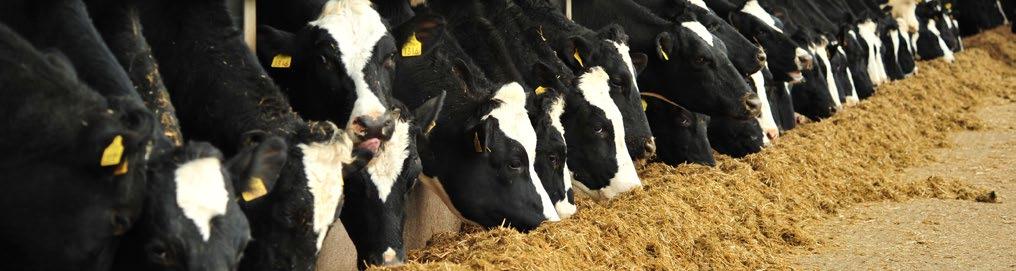
As cows begin to calve over the coming weeks, they will face a major nutritional challenge as their energy requirements dramatically increase to meet the demands of rising milk production. This rapid increase in energy demand is often greater than what the cow can consume, leaving her in a negative energy balance.
As well as reducing milk production, spending a prolonged period in negative energy balance can have a detrimental impact on the upcoming breeding season. The events associated with the first eight weeks of lactation are critical for subsequent success or failure in establishing pregnancy during the breeding period. Ensuring herds achieve a high fertility rate with a compact six week calving pattern remains a key driver of long term efficiency and profitability on farm.
To give your herd the best chance of maximising milk output while also preparing them for the breeding season, it is critical to supply the correct level of energy each day to match the cows’ increasing requirements.
Calculating energy requirement for maintenance and milk production.
When assessing how much energy a cow requires, we first establish her overall energy requirement in UFLs (1 kg of rolled barley = 1 UFL).
A typical cow requires 6 UFLs for maintenance, which covers everyday activity and normal body function. The energy requirement for milk production will depend on milk yield and composition, with a cow typically requiring 0.45 UFL per litre.
If a cow produces 30 litres, she will need 13.5 UFL (30 x 0.45) for milk production. Therefore, her total UFL requirement is the sum of maintenance and production needs:
6 + 13.5 = 19.5 UFL/day.
It is also worth noting that herds with higher genetic potential for milk constituents will have a higher UFL per litre requirement.
The aim should be to supply the cows’ energy requirements each day to achieve optimum milk output and fertility.
What should I feed my herd to meet this energy requirement?
Grazed Grass
Grazed grass at the correct covers is the cheapest feed available on farm and is high in both energy (approx. 1 UFL/kg DM) and protein. It should be the first ingredient we look to include in the cow’s diet.
Using a spring rotation planner will help ensure you maximise grass in the diet during spring while also setting up the second rotation. There are three key targets in the spring rotation planner, although these dates may be pushed later on heavier farms:
• 30% grazed by March 1st
• 60% grazed by St Patrick’s Day
• 100% grazed by April 1st
High quality conserved forage
Where grazed grass is not available or is limited, the next option is conserved forage such as grass silage or maize silage. Grass silage is most common on Irish dairy farms but must be of high quality (+75 DMD) to deliver sufficient energy and support high intakes.
Feeding lower quality silage has a double negative impact:
1. Lower energy content per kg DM
2. Reduced overall dry matter intake
By testing forage stocks, you can identify which silage offers the highest quality and is most suitable for early-lactation cows.
Concentrate
Concentrate should be used to fill the remaining energy requirements that grazed grass and silage cannot meet. The amount needed will depend entirely on milk yield and the quality and quantity of forage available.
Using the earlier example of a cow requiring 19.5 UFL to support 30 litres:
• At full time grazing, cows will require approximately 2.5 kg of concentrate.
This requires correct grazing covers (1,300 - 1,500 kg DM/ha), favourable weather, and generous allocations to allow maximum intake.
• Fully housed on 78 DMD silage, cows will require approximately 8 kg of concentrate.
The higher rate reflects both the lower energy value and lower intake potential of silage compared with grazed grass.
If silage quality is lower than this, even more concentrate will be required often impractical in many situations. This demonstrates the importance of grazed grass in increasing both energy density and intake.
Although energy intake is critical in early lactation, the remainder of the diet must also be balanced for protein, fibre, minerals, and other nutrients.
For more information contact your local Milk Solids Growth Specialist or visit tirlanfarmlife.com
MAKE THE MOST OUT OF YOUR SLURRY THIS SPRING
By Hugh Harney, Tirlán Agri-Sustainability Team
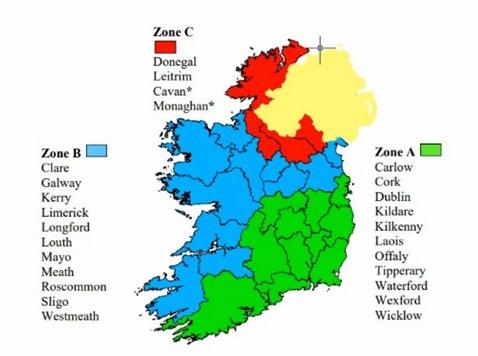
With the slurry spreading season now underway, it is important for farmers to realise the valuable source of nutrients slurry can provide to help drive on grass growth this spring. Zone A farmers are permitted to spread since January 13, with Zone B farmers permitted to spread on January 15 while Zone C are restricted until January 31.
Understandably, farmers need to take pressure off tanks in the yard, however, to get the best out of your slurry and avoid losing valuable nutrients, farmers should aim to get slurry spread when soil temperatures are at 6 degrees and rising. The soil moisture content must be considered, as if the soil is saturated, spreading slurry will cause structural damage, leading to surface water runoff. Slurry spreading is prohibited on fields that are frozen, snow covered, waterlogged, flooded or likely to flood. For two weeks after the opening date of your zone, the buffer zone increases from 5m to 10m. A buffer zone is a no-spread area used to protect water by taking up excess nutrients before they can reach the water. For lake shorelines, the buffer zone is 20m all year and where the slope towards a water course is 10 degrees or greater, hold a 10m buffer zone all throughout the open period
Targeted application is critical for slurry spreading in early spring as the first few paddocks spread should be fields that have a requirement for phosphorus (P) and potassium (K). Applying slurry in early spring will reduce the early chemical Nitrogen needed, as an application rate of 2,000 -2,500 gallons of slurry/ac will supply 20-25kg N/ha (16-20 units N/ac). Aim to spread the most dilute slurry in the farmyard as most of the N is contained in the liquid fraction. Targeted application should be bolstered with a Nutrient Management Plan and slurry samples to know what you are spreading and how much nutrients your ground is receiving.
Spring applications of cattle slurry typically have a higher recovery of N, by up to 50%, compared to summer applications. A cool, damp, overcast day, with temperatures less than 13°C, has the lowest N loss through ammonia, according to Teagasc. There is funding available for up to 43 measures in the farming for Water EIP which include a number of measures available to aid nutrient management i.e., Nutrient Management Plan, Slurry Sample Analysis and Nitrogen Surplus calculation.
For more information contact your Tirlán Farm Sustainability Development Advisor.
Zone Designation
TIRLÁN'S GENERATIONAL GENERATIONAL RENEWAL PROGRAMME
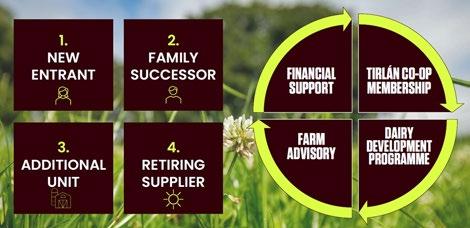
Tirlán launched its bold new Generational Renewal Programme, backed by a €15 million support package in October 2025. The initiative, unveiled at a special event in Teagasc Kildalton Agricultural College, contains a number of measures designed to assist and support those taking over dairy farms in the Tirlán catchment area, including new entrants, family successors and those taking on additional units. Launching the new programme, Minister for Agriculture, Food and the Marine, Martin Heydon TD, said: “Supporting young farmers and facilitating generation renewal is critical to ensure a bright future for the agri-sector and to continue the family story behind Irish food and drinks production which is uniquely appealing to consumers all over the world. I will ensure that we progress the recommendations of the Commission on Generational Renewal in Farming, in consultation with stakeholders, to ensure that we can attract and retain the next generation of farmers to ensure the agri-food sector remains vibrant and sustainable into the future.”
Tirlán Chairperson John Murphy said: “Across Ireland and around the world, farming faces a generational crossroads. The need for renewal within our sector has never been more urgent, yet it is also a time filled with possibility. Agriculture offers a bright and promising future for today’s generation and those to come.
For more information on supports available to new entrants, please contact your Milk Supply Manager.
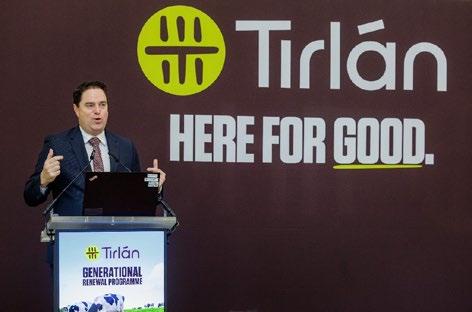
Minister Martin Heydon speaking at the launch of the Tirlán Generational Renewal Programme.