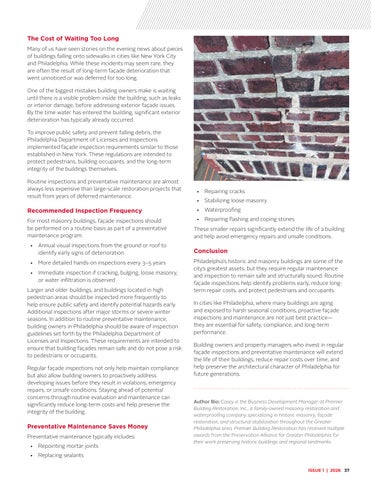
The Cost of Waiting Too Long Many of us have seen stories on the evening news about pieces of buildings falling onto sidewalks in cities like New York City and Philadelphia. While these incidents may seem rare, they are often the result of long-term façade deterioration that went unnoticed or was deferred for too long. One of the biggest mistakes building owners make is waiting until there is a visible problem inside the building, such as leaks or interior damage, before addressing exterior façade issues. By the time water has entered the building, significant exterior deterioration has typically already occurred. To improve public safety and prevent falling debris, the Philadelphia Department of Licenses and Inspections implemented façade inspection requirements similar to those established in New York. These regulations are intended to protect pedestrians, building occupants, and the long-term integrity of the buildings themselves. Routine inspections and preventative maintenance are almost always less expensive than large-scale restoration projects that result from years of deferred maintenance.
• Repairing cracks
Recommended Inspection Frequency
• Waterproofing
For most masonry buildings, façade inspections should be performed on a routine basis as part of a preventative maintenance program:
• Repairing flashing and coping stones These smaller repairs significantly extend the life of a building and help avoid emergency repairs and unsafe conditions.
• Annual visual inspections from the ground or roof to identify early signs of deterioration
Conclusion
• More detailed hands-on inspections every 3–5 years • Immediate inspection if cracking, bulging, loose masonry, or water infiltration is observed Larger and older buildings, and buildings located in high pedestrian areas should be inspected more frequently to help ensure public safety and identify potential hazards early. Additional inspections after major storms or severe winter seasons. In addition to routine preventative maintenance, building owners in Philadelphia should be aware of inspection guidelines set forth by the Philadelphia Department of Licenses and Inspections. These requirements are intended to ensure that building façades remain safe and do not pose a risk to pedestrians or occupants. Regular façade inspections not only help maintain compliance but also allow building owners to proactively address developing issues before they result in violations, emergency repairs, or unsafe conditions. Staying ahead of potential concerns through routine evaluation and maintenance can significantly reduce long-term costs and help preserve the integrity of the building.
Preventative Maintenance Saves Money Preventative maintenance typically includes: • Repointing mortar joints
• Stabilizing loose masonry
Philadelphia’s historic and masonry buildings are some of the city’s greatest assets, but they require regular maintenance and inspection to remain safe and structurally sound. Routine façade inspections help identify problems early, reduce longterm repair costs, and protect pedestrians and occupants. In cities like Philadelphia, where many buildings are aging and exposed to harsh seasonal conditions, proactive façade inspections and maintenance are not just best practice— they are essential for safety, compliance, and long-term performance. Building owners and property managers who invest in regular façade inspections and preventative maintenance will extend the life of their buildings, reduce repair costs over time, and help preserve the architectural character of Philadelphia for future generations.
Author Bio: Casey is the Business Development Manager at Premier Building Restoration, Inc., a family-owned masonry restoration and waterproofing company specializing in historic masonry, façade restoration, and structural stabilization throughout the Greater Philadelphia area. Premier Building Restoration has received multiple awards from the Preservation Alliance for Greater Philadelphia for their work preserving historic buildings and regional landmarks.
• Replacing sealants ISSUE 1 | 2026 37