






















































GREG LASKA
The Baumgardner Group
GBCA Education Committee

ROB MCGILLEN
Vice President & AI Practice Leader
CBIZ

MARK ZAMROWSKI
Senior Project Executive / Special Projects Group Lead Gilbane Building Company

ERIC LINTNER
Dale Construction, LLC


Managing Director & MidAtlantic Construction Industry Leader

ROBBIE O’BRIEN Partner
Cohen Seglias Pallas Greenhall & Furman PC

STEPHEN POTTER
Turner Construction Company
McDonald Building Company, LLC

KARLA WURSTHORN
TN Ward Company
AIA-GBCA Joint Committee


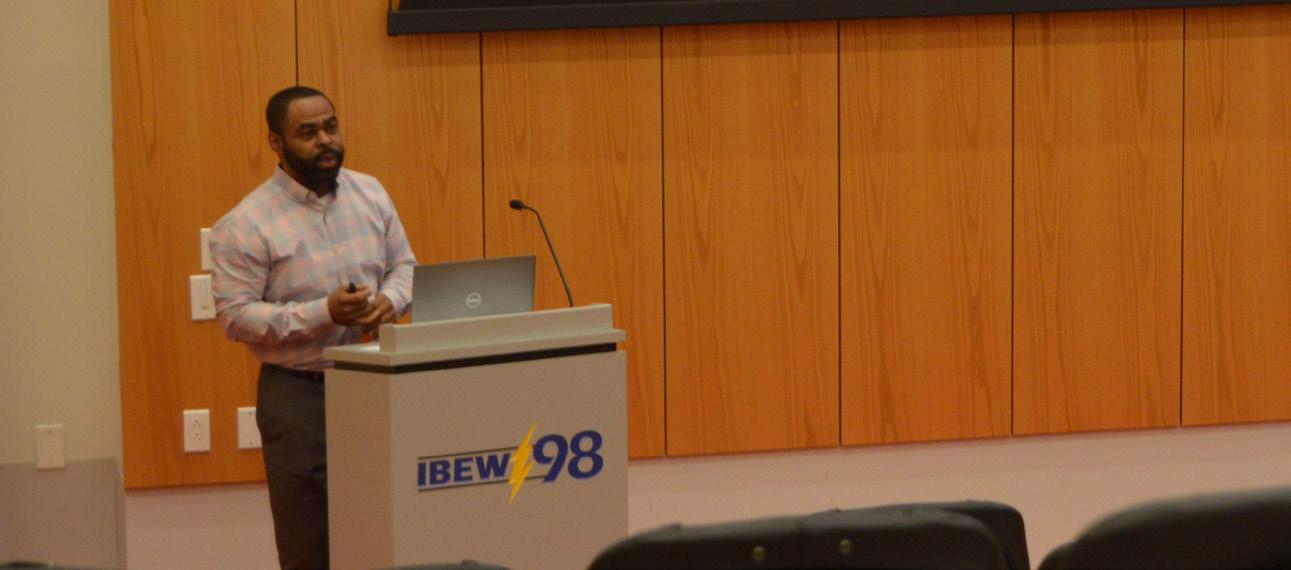
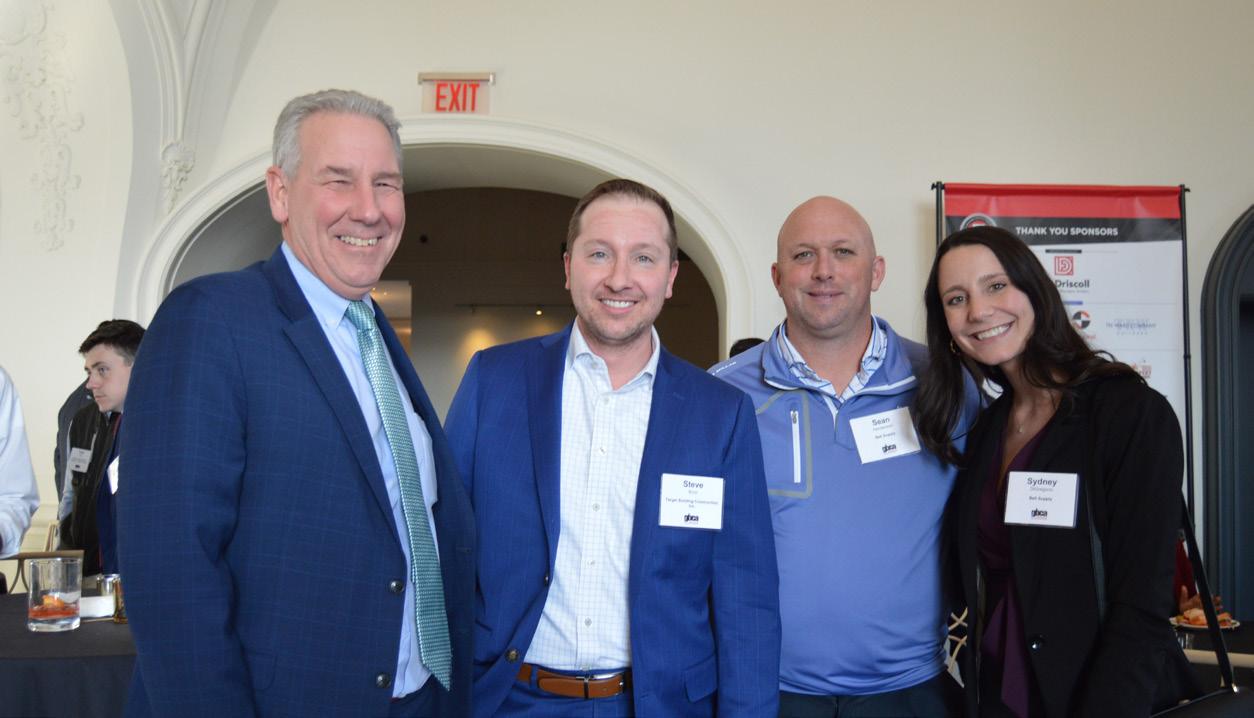
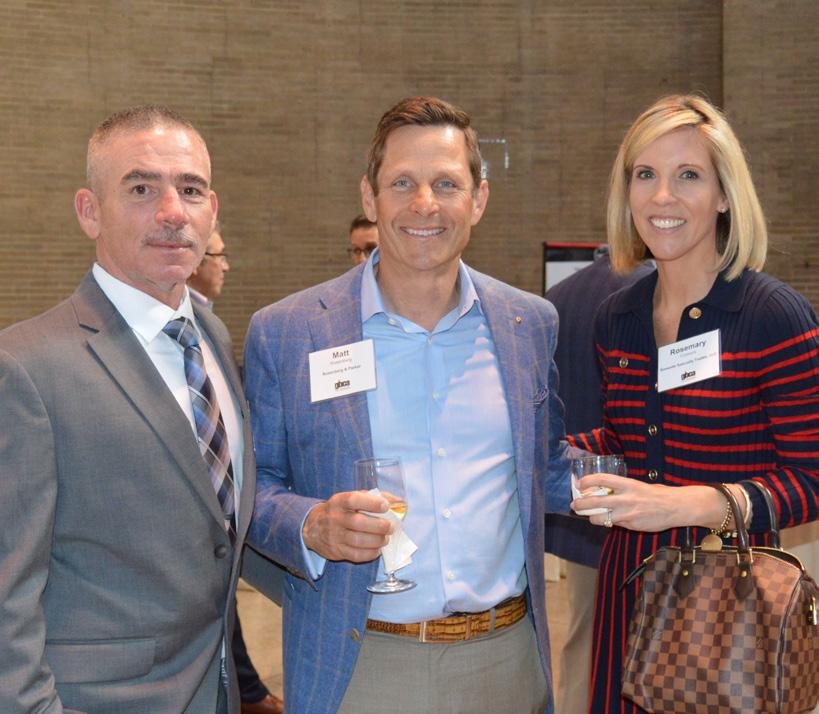
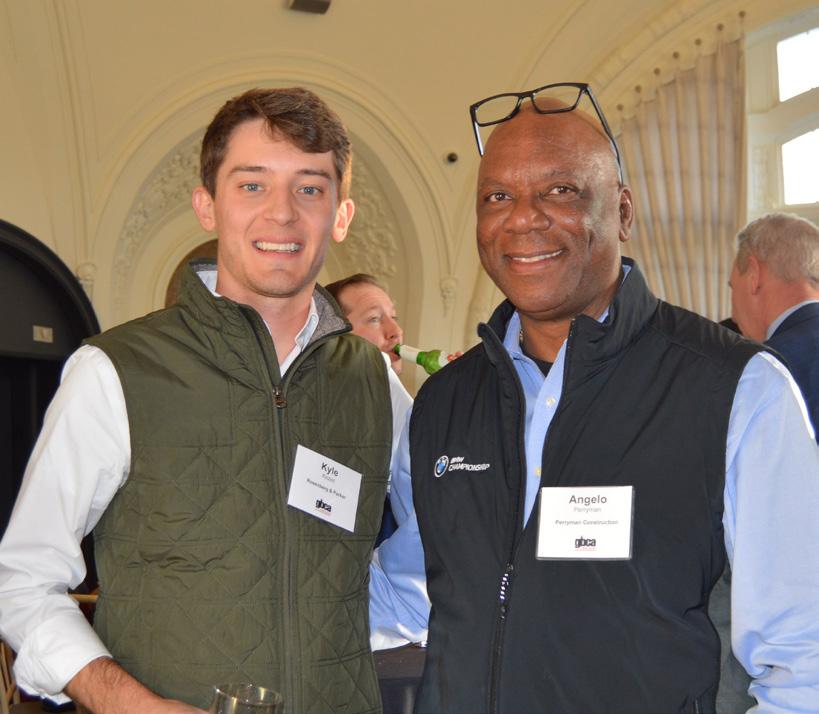
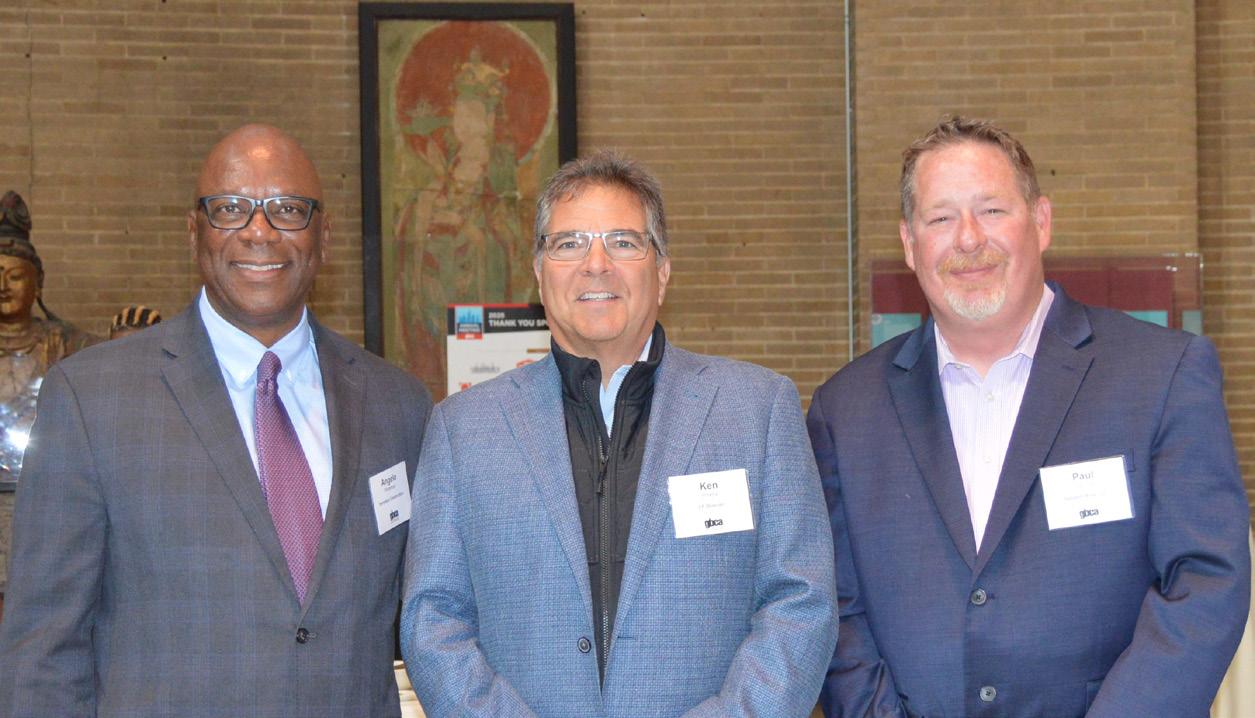

CLC 2026 KICK OFF MEETING
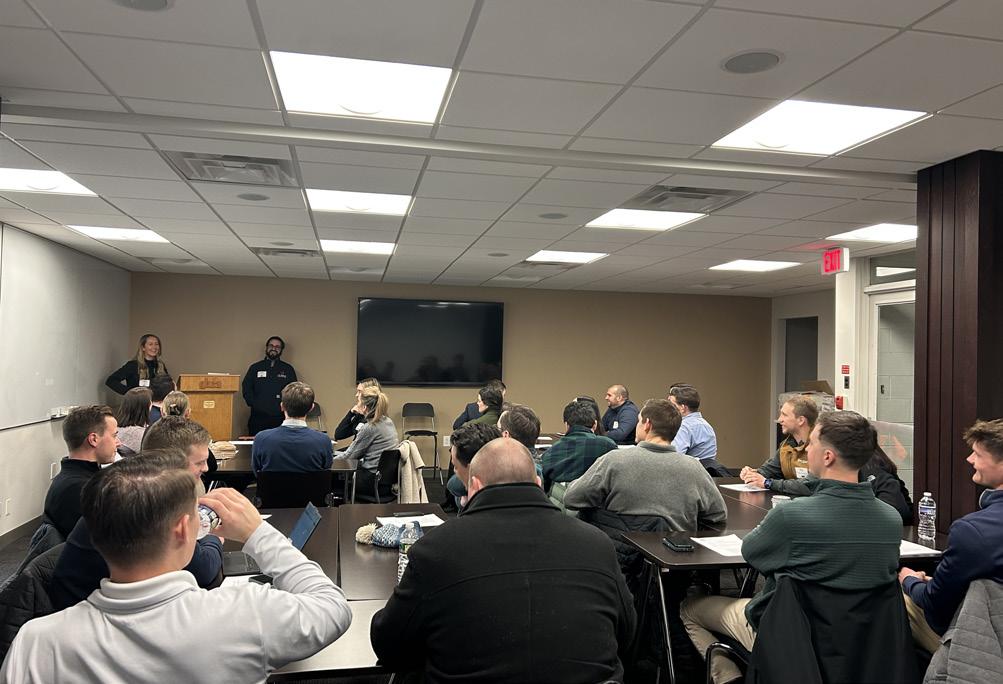

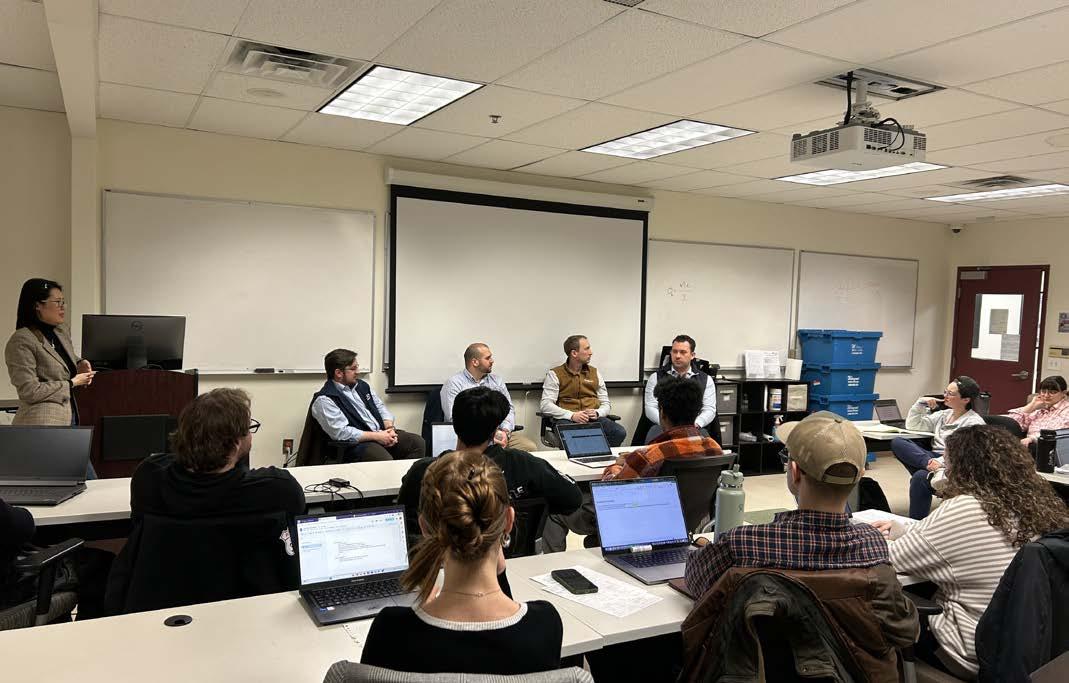
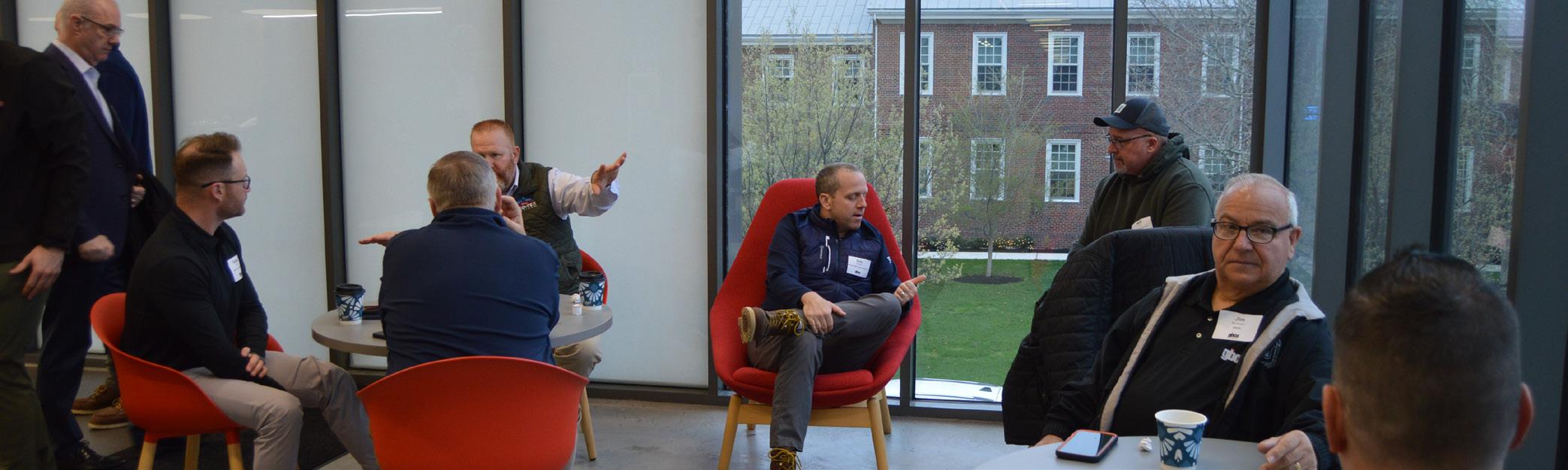
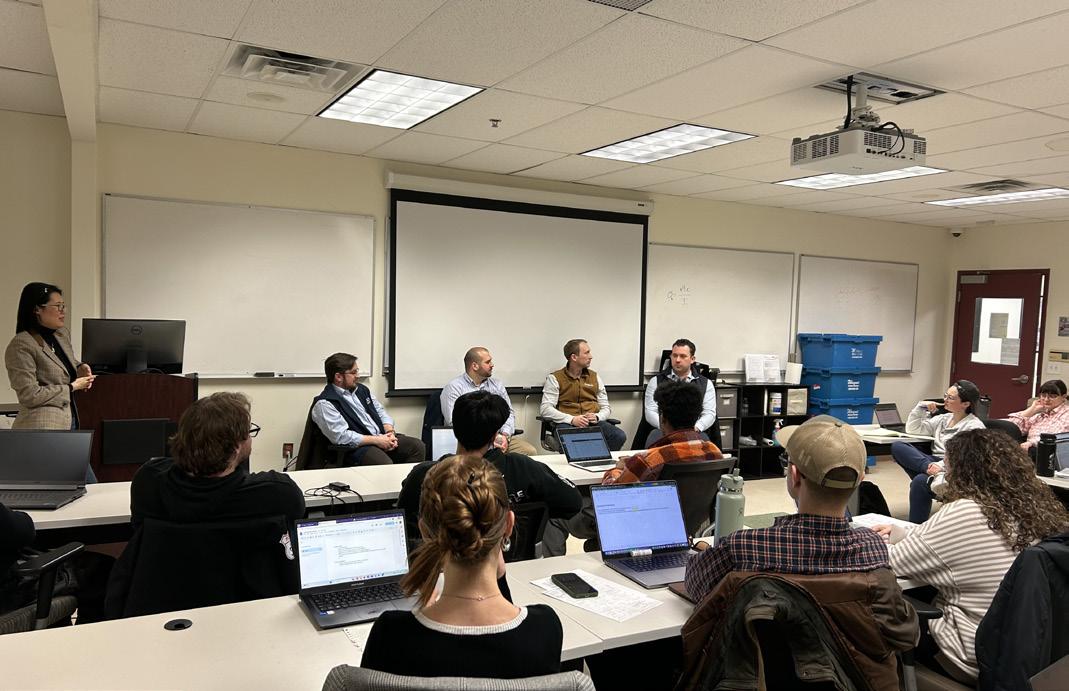
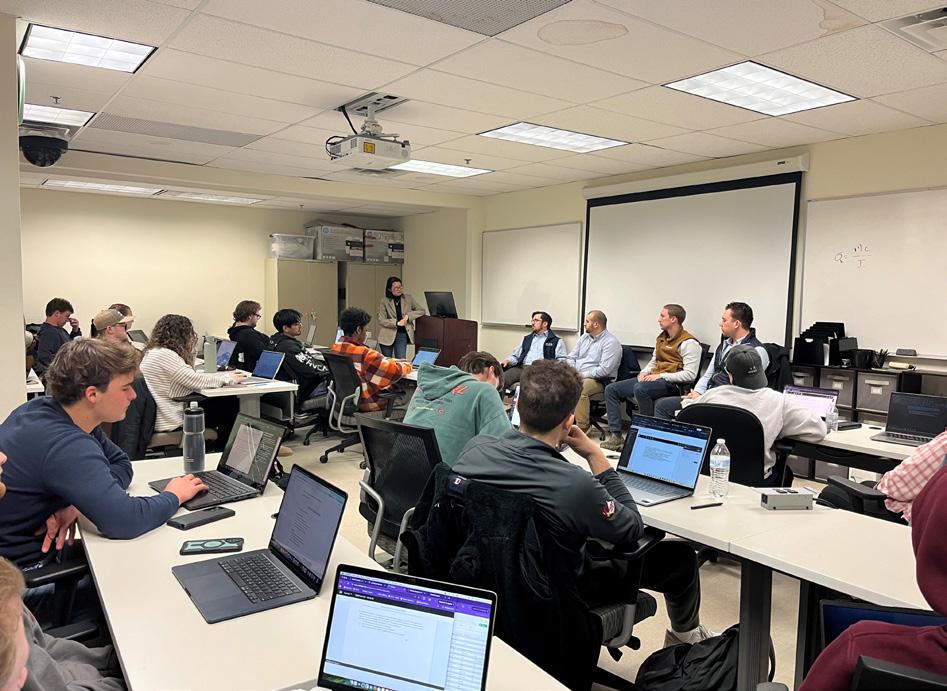
CLC CASUAL CONVERSATION: CONSTRUCTION ESTIMATING PANEL WITH DREXEL UNIVERSITY













We’ve built our firm from a small regional company into one of the largest insurance brokerages in the U.S. by always putting our clients first.

James Hanrahan
Partner, Senior Business Development Executive
856-552-4946
jhanrahan@connerstrong.com

Travis Shaffer
Partner, Senior Business Development Executive 856-479-2235
tshaffer@connerstrong.com

Andrew Still
• Creative insurance solutions, including captives, designed to lower costs
• Controlled insurance program experience insuring billions in developmental construction costs
• Strong commitment to safety
• Extensive in-house claim advocacy team
• Expert surety team to support your bonding needs
• Knowledge of the construction industry from top to bottom
Vice President, Business Development Executive 856-403-7072
astill@connerstrong.com
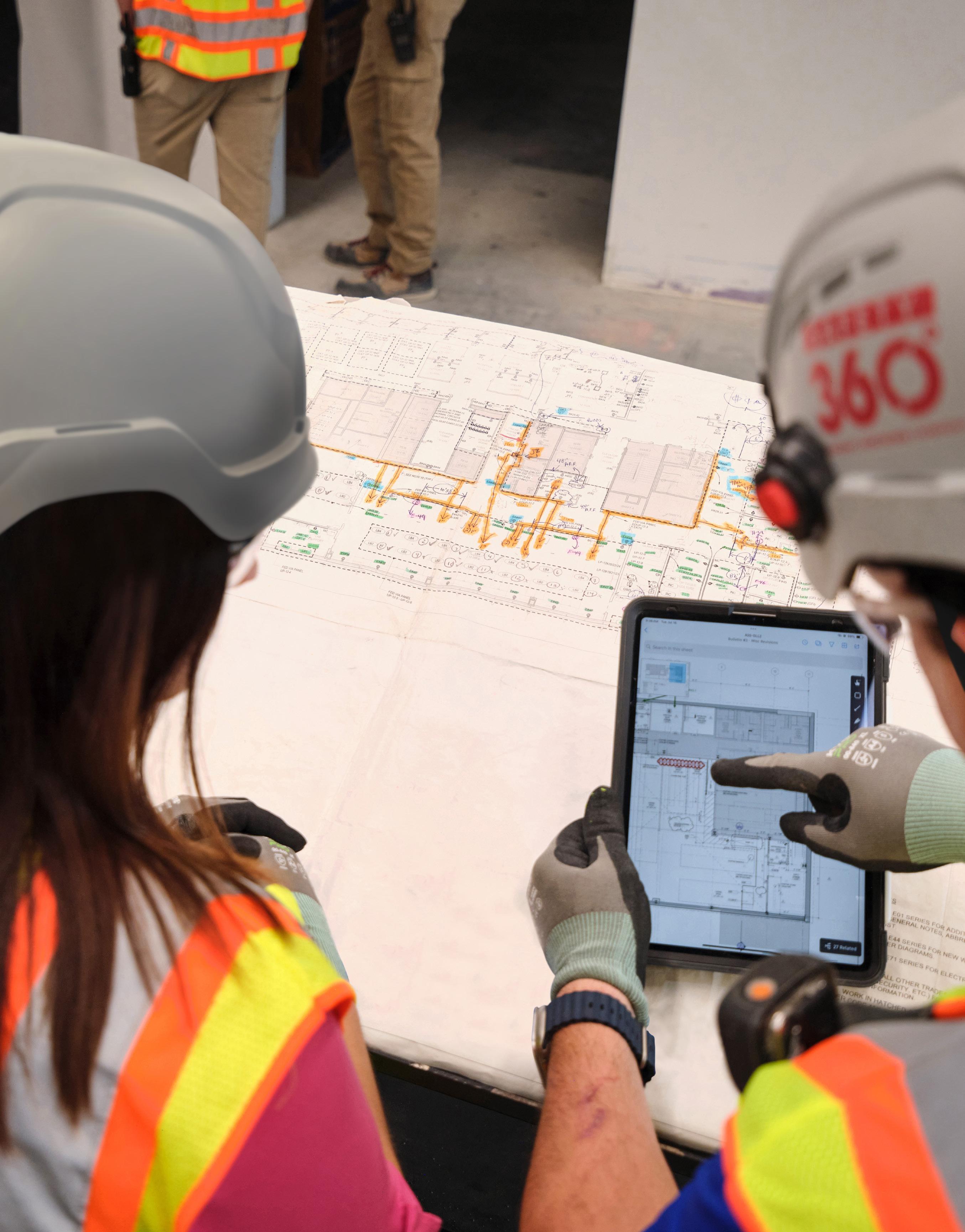
For nearly a century, our reputation has been built through collaborative construction planning and delivery, innovative solutions, and an unwavering commitment to safety and quality.
ANGELO PERRYMAN, CHAIRMAN OF THE BOARD | GENERAL BUILDING CONTRACTORS ASSOCIATION

In 2026, the General Building Contractors Association (GBCA) welcomed Angelo Perryman as its Chairman of the Board. With nearly two decades of leadership experience within the organization, including 16 years on the Board and five on the Executive Board, Perryman steps into the role at a pivotal moment for union construction in Philadelphia, defined by rapid innovation, increasing client expectations, and a growing need to clearly demonstrate value in a competitive marketplace.
As the industry evolves, Perryman brings a collaborative leadership style and a focus on aligning GBCA's services with the real needs of its members, from general contractors and specialty subcontractors to suppliers and construction managers. We spoke with Perryman about his perspective on leadership, the state of union construction, and his vision for the next two years.
You've been involved in GBCA leadership for some time. How does stepping into the Chairman role change your perspective on the association and its responsibility to the industry?
My first priority is a full assessment of the organization. After 16 years on the Board and five on the Executive Board, I have a strong sense of what matters day to day. Each Chairman brings their own lived experience. Right now, GBCA needs to evaluate what the market expects and how we can deliver the greatest value to our members—general contractors, subcontractors, suppliers, and construction managers. The responsibility is to make sure GBCA is fully aligned with both the industry and the people we serve.
What personal leadership values guide you in this role?
I lead with a collaborative approach, bringing the right people, ideas, and timing together to drive results. Leadership isn’t
about doing it alone; It’s about aligning expertise and setting priorities that create both immediate impact and long-term creditability.
GBCA’s leadership depth is a competitive advantage. Our Executive Board represents nearly 250 years of combined experience across general contracting, construction management, specialty trades, and suppliers. Past chairmen contribute another 300 years of expertise. That collective knowledge is a competitive advantage, one we actively leverage to guide decision-making, support members, and strengthen outcomes across the industry.
From where you sit today, what is the state of union commercial construction in Philadelphia?
Union construction is in a period of innovation and efficiency, where success depends on identifying priorities, aligning teams, and delivering measurable value to clients. The key question is: who can identify, prioritize, and deliver the best value for each project?
Clients expect contractors who understand their vision and can turn it into a well-executed project. That expectation is driving change across the board.
What defined a “good job” in 1980 is very different from today, and the industry must continually reassess standards to improve efficiency, manage costs, and adopt new technologies.
Where can GBCA make the greatest impact for its members right now?
We need to go back to the fundamentals and evaluate what is truly required of a business-focused construction association. That means assessing services for every member type, including general contractors, specialty subcontractors,
suppliers, and construction managers, to ensure we’re providing real, actionable value.
Collaboration across the union construction ecosystem is critical. GBCA works closely with its labor partners, and alignment across that network is essential—because when one part of the system struggles, it impacts everyone. Our role is to help members succeed collectively and strengthen the overall performance of union construction.
What priorities will guide your leadership?
I have four main objectives:
1. Strengthen existing member relationships. We want to ensure that all members are fully supported in areas where they need it most.
2. Grow membership with a focus on small and local businesses. These firms are often overlooked but are essential to a thriving construction ecosystem, and we are focused on expanding access and demonstrating clear value to support their growth.
3. Focus on cost efficiency. By leveraging the knowledge of our Executive Board and national Associated General Contractors (AGC) resources, we aim to help local clients reduce costs without compromising quality.
4. Drive workforce and managerial improvements. From the field to the office, better operations lead to cost savings, higher quality, and improved client outcomes.
What will success look like at the end of your term?
Success means stronger, long-term relationships with members, particularly those who have been engaged with GBCA for many years. It also means expanding access for small and local businesses and creating more opportunities for Philadelphia residents to enter the construction industry.
Construction remains one of the few industries where individuals can enter without prior experience, learn a skilled trade, build a long-term career, and even grow into business ownership. Preserving and expanding that opportunity is critical.
How does GBCA deliver value across the spectrum of members?
Our approach starts with intentional outreach, understanding the specific needs of general contractors, specialty contractors, suppliers, and construction managers, then translating those needs into structured, actionable solutions. Our staff and leadership team are focused on turning challenges into opportunities. The goal is simple: ensure every member sees clear, measurable value in their GBCA membership.
Workforce development remains a major focus. How is GBCA evolving to attract and retain talent?
We need a clear understanding of the local talent market, who’s engaged, who’s untapped, and where the gaps exist. Construction is a career path with tangible outcomes: learn a trade, earn a solid wage, and build something lasting.
We don’t want to leave any of the best talent behind. Our goal is to ensure that the best and brightest see union construction as a pathway.
Owners and developers are increasingly focused on safety, scheduling, and workforce stability. How does GBCA strengthen those relationships?
Our strength is experience. The GBCA Executive Board brings decades of expertise to help clients make informed decisions and support contractors in delivering high-quality, reliable outcomes.
Safety isn’t just about jobsite incidents. It spans the full lifecycle of a project, including pre-project planning, daily jobsite coordination and risk assessment, and post-project evaluation to ensure continuous improvement. Aligning people, processes, and planning benefits everyone and strengthens trust with clients.
Why are advocacy and safety more important than ever?
Construction is a team effort. Construction depends on alignment across materials, trade contractors, suppliers, construction managers, and owners’ representatives, what Perryman describes as the full ‘means of production. This alignment ultimately helps owners and developers achieve more predictable outcomes—delivering projects safely, efficiently, and with greater cost certainty. GBCA provides thought leadership and solutions to coordinate this ecosystem. Focusing on outcomes, not just problems, ensures projects succeed safely, efficiently, and on budget.
What excites you most about the future of GBCA and union construction?
What excites me most is GBCA’s impact, on projects and on people. Construction creates careers, supports families, and builds communities.
By staying focused on opportunity, collaboration, and development, Perryman believes the future of union construction—and GBCA—is strong.”

Greater Philadelphia is at an economic inflection point—one that holds significant implications for the region’s builders, contractors, skilled trades, and the broader ecosystem that powers construction. The stakes are high: our ability to generate sustainable, family-supporting jobs and create accessible opportunities for upward economic mobility for area residents depends on whether we can reverse decades of uneven growth and begin investing more deliberately in a shared regional strategy.
For too long, Southeastern Pennsylvania’s five counties— Bucks, Chester, Delaware, Montgomery, and Philadelphia— have competed against one another for jobs, projects, and investment. The result has been predictable.
An eye-opening market assessment released by the Brookings Institution last summer with support from The Pew Charitable Trusts found that sluggish growth has cost our region 188,000 jobs over the past decade compared to peer metros that have invested significantly more in regional economic development. As a result, Southeastern Pennsylvania now ranks last among major metropolitan regions in economic mobility.
Economic mobility—the ability of workers to access stable, family-sustaining jobs and steadily increase their earnings over time—is increasingly out of reach for too many residents,
particularly those without a four-year degree. According to the Federal Reserve Bank of Philadelphia, while Greater Philadelphians struggling to make ends meet face barriers such as housing affordability, childcare, and healthcare, what residents say would help most is simple: access to better-paying, stable employment.
Without business expansion, job creation, and a clear strategy for attracting industries of the future, our region cannot deliver the “opportunity jobs” that allow individuals and families to thrive — and ultimately achieve more than the generation before. And without those jobs, neither our communities nor industries, construction included, can realize their full potential.
The construction industry understands better than most that strong foundations lay the groundwork for long-term success. What Brookings’ analysis made clear is that Greater Philadelphia’s economic foundation has cracks created by chronic underinvestment in effective, business led regional economic development.
While other major metros have built coordinated structures to attract companies, create opportunities for workers of varying education and skill levels, nurture workforce pipelines, and accelerate infrastructure investment, our
region’s efforts historically have been diffuse. This has created slower economic growth, resulting in fewer middle-class career pathways for residents, insufficient opportunities for contractors and skilled trades, and a smaller tax base to reinvest in communities across our region.
Construction is a growth dependent industry. When job growth stalls, development slows. And when regional competitiveness falters, our ability to grow businesses, build new facilities, and expand industrial capacity declines. That is why a robust, targeted, coalition driven strategy for economic development is essential.
The Brookings market assessment did more than diagnose the region’s challenges; it also identified solutions by pinpointing the industry’s clusters where Southeastern Pennsylvania holds strong competitive advantages. These sectors are essential to the region’s economic future, both for driving growth and expanding access to quality jobs for workers without four-year degrees. The market assessment identified these sectors as:
• Enterprise Digital Solutions – business-to-business (B2B) software, platforms, and implementation services that companies use to manage their core operations and increase productivity
• Precision Manufacturing in Industrial Technologies – a subset of the region’s broader manufacturing base including machined components, industrial electronics, and structural fabrication, all demanding very exact specifications with very high tolerances and accuracy
• Biomedical Engineering and Production – building on the region’s leadership position in life sciences by expanding strengths in areas such as medical devices and medtech and reshoring manufacturing in therapeutic and diagnostic product supply chains
These sectors are fast-growing, globally relevant, capable of creating family sustaining jobs, and they play to our region’s existing strengths. They also drive significant demand for construction projects—from lab facilities and manufacturing plants to corporate campuses, logistics hubs, and transportation and infrastructure upgrades.
Jobs in these clusters are not confined to county boundaries. Companies grow, operate, and recruit across county lines and throughout the region. Therefore, a fragmented approach to economic development doesn’t just slow growth; it prevents the region from capitalizing on its greatest strengths. Recognizing this, leaders across the five counties have spent the past two years building a different kind of partnership that will launch this spring. This business led, multicounty partnership is designed to do what no individual county or organization can do alone—align regional assets, accelerate strategic growth, and create a shared playbook for strengthening our economy.
In the coming weeks, the partnership will release its regional growth strategy, focused on boosting region-level economic development capacity commensurate with other leading U.S. metros and establishing shared sector priorities and tactics that link economic and workforce development. These efforts will reach a turning point this spring with the launch of a new partnership entity, regional growth strategy, and commitments to carry this work forward over the long haul. As we execute this shared strategy, the growth ahead will require sites, facilities, transportation upgrades, workforce housing, modern infrastructure, and the skilled labor force capable of building it all.
This is a pivotal moment for the region and a generational opportunity for the construction industry to help shape what comes next. We will be leaning heavily on the skills and expertise of the construction industry to make our growth goals a reality.
After decades of underinvestment and fragmentation, Greater Philadelphia is choosing alignment, collaboration, and intentional action. Together, we can build a stronger, more competitive regional economy, one that expands opportunity, accelerates growth, and lays the foundation for the next era of prosperity across Southeastern Pennsylvania—one that supports us all.
I’m excited for what’s ahead, and proud to build this future with our valued partners.

CHARLIE GOEHL | GENERAL BUILDING CONTRACTORS ASSOCIATION

Mayor Cherelle Parker has put forward a bold vision for Philadelphia’s future in her FY2027 budget address, one that places construction, infrastructure, and development squarely at the center of Philadelphia’s economic growth strategy. For GBCA members and the broader construction industry, this address is a roadmap for how the built environment will shape the City’s next chapter.
At a high level, the Mayor’s $7 billion FY2027 budget is both an operating plan and a long-term investment strategy. It is paired with a Five-Year Plan and a recommended Capital Budget, laying out how Philadelphia intends to fund services while making significant investments in housing, infrastructure, public facilities, and economic development. The administration is clear in its direction. Fiscal stability remains a priority, but this is also a moment for bold, targeted investments designed to drive economic mobility and position Philadelphia for long-term growth.
For the construction industry, the most notable aspect of the Mayor’s address is the scale of her commitment to building. Central to that is a proposed $2 billion investment through the H.O.M.E. Initiative, aimed at building, restoring, and repairing 30,000 housing units. This represents the largest housing initiative in the City’s history and reflects a clear understanding that supply and production are at the heart of today’s housing challenges. The proposal also includes
two $400 million borrowings to support this effort, signaling that these projects are intended to move to market and into construction in the near term.
The Mayor also highlighted the role of union labor and the building trades in delivering these projects. A $50 million investment by the City to fully renovate an affordable senior housing development underscores the administration’s commitment to leveraging the expertise of Philadelphia’s construction workforce. At the same time, the City is proposing to invest $10 million to support the development of modular housing manufacturing. This initiative aims to create new production capacity while generating family-sustaining union jobs and accelerating the delivery of housing across the city.
Beyond housing, the budget outlines meaningful investments in infrastructure and the public realm. The proposed “One Philly Pothole Squad,” backed by $7.1 million, will expand roadway maintenance capacity across all six highway districts. In parallel, the City is advancing Vision Zero strategies with a $30 million capital commitment to improve traffic safety. These investments, along with a proposed retail delivery fee dedicated to road repairs, reflect a growing recognition that maintaining and modernizing infrastructure is essential to both quality of life and economic activity.
The capital program also includes $179 million in investments in parks and recreation, as well as targeted improvements to major corridors and public spaces. Projects like the Gateways to Philadelphia initiative along I-76, which includes landscaping, tree planting, and streetscape enhancements, demonstrate how infrastructure and aesthetics can work together to reshape how residents and visitors experience the city. Additional capital investments, including $33 million for HVAC upgrades in libraries and continued funding for cultural institutions, further reinforce the breadth of work ahead for the construction industry.
Economic development initiatives outlined in the address also carry significant implications for construction. The Mayor pointed to major activity in South Philadelphia, including the Bellwether District, the Navy Yard, and port-related investments, alongside billions in planned shipyard and industrial expansion. She also raised the prospect of a new arena and a broader transformation of the stadium complex into a year-round destination. These large-scale projects, combined with ongoing commercial corridor revitalization efforts for neighborhoods like Market East, signal a robust pipeline of work that will require coordination across public and private stakeholders.
Just as important as the investments themselves is the process that now follows. In Philadelphia, the Mayor’s budget proposal marks the beginning of a detailed review
by City Council. Through a series of public budget hearings, departments within the City present their plans and funding needs, and Councilmembers evaluate, question, and refine their proposals. This process ensures transparency and provides an opportunity for industry stakeholders, including GBCA, to engage on priorities that impact construction, development, and workforce policy. The final budget will be negotiated and adopted before the start of the new fiscal year.
Taken together, the FY2027 budget reflects an administration that is leaning into construction as a driver of economic mobility. Housing production, infrastructure repair, workforce development, and major economic development projects are all central to the Mayor’s plan. She has made it very clear that the built environment is central to delivering on her “One Philly, One Future” vision.
GBCA supports the Mayor’s bold vision for Philadelphia. The scale of the proposed investments presents a significant opportunity for our industry to deliver projects that strengthen communities, create jobs, and improve quality of life across the city. As the budget process moves forward, GBCA will continue to be a trusted partner, working with the Parker Administration and City Council to ensure that these investments translate into well-executed projects that benefit all Philadelphians.


DAN DIORIO, VICE PRESIDENT OF STATE POLICY | DATA CENTER COALITION
If you’re reading this, you’ve used a data center today. If you’ve made an online purchase, looked at your doorbell camera, or watched streaming video, you’ve used a data center today. Data centers are the essential digital infrastructure behind every online purchase, every telehealth appointment, and every digital classroom. Data centers enable the essential services and cutting-edge technologies that drive the 21st-century economy and enhance our quality of life, ensuring that homes, businesses, schools, hospitals, manufacturing facilities, and government units – in Pennsylvania and across the nation – operate smoothly and efficiently.
The data center industry is currently one of the fastestgrowing sectors of the U.S. economy. According to the U.S. Census Bureau, between May 2023 and May 2024, construction spending by the U.S. data center industry increased 69%, from $15 billion to $27.1 billion. The Commonwealth of Pennsylvania and the construction industry are uniquely positioned to take advantage of the industry’s continued growth, paving the way for decades of success in the future.
Data centers provide significant economic opportunities for the construction industry, as they require thousands of skilled workers such as electricians, plumbers, pipefitters, steamfitters, HVAC, general construction, and more. And since data centers are often built as part of a larger campus, there is potential for construction to be ongoing at a given site for a decade or longer, as the facility is first built and then maintained.
From construction and fabricators of steel used in data center projects, to HVAC manufacturing, cooling technologies, and portable sanitation companies, the data center industry is fueling economic growth in countless companies across a variety of industries. The data center industry has also leaned in, working with manufacturers to shore up domestic supply chains and help shorten construction timelines.
PricewaterhouseCoopers (PwC) released a study in February 2025 that analyzed the overall economic impact of the U.S. data center industry. The PwC study found that in 2023, data centers nationwide supported 4.7 million jobs, contributed $404 billion in labor income, $727 billion in gross domestic
product, and generated $162.7 billion in local, state, and federal tax revenue.
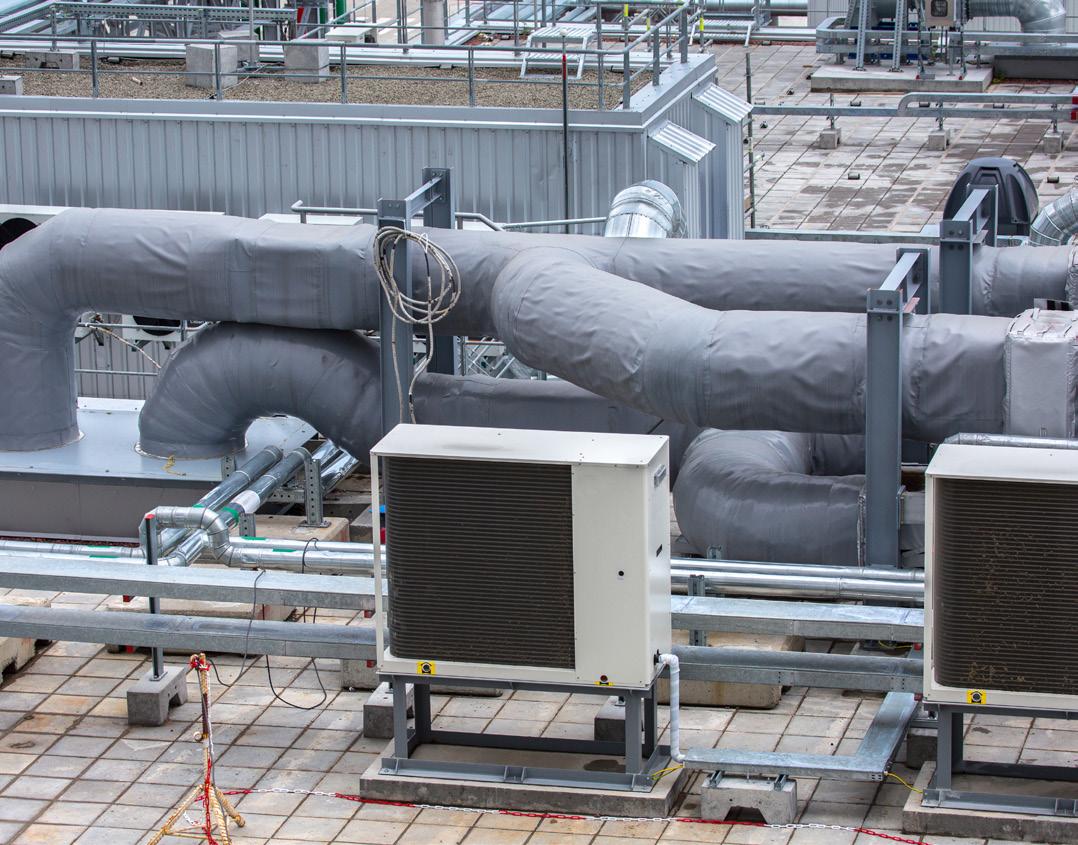
According to the Associated General Contractors of America, the construction industry needs to attract an estimated 546,000 additional workers to meet demand—particularly in skilled trades such as piping and electrical work that are critical to projects like data centers.
Data centers can help provide the consistent demand needed to fill these roles – creating the opportunity to bring in a new generation of skilled tradespeople that will power the construction industry in the region moving forward. Data centers enable skilled, high-wage jobs – many of which don’t require a traditional four-year degree – that also allows skilled tradespeople to establish good careers close to home.
Data centers not only create employment opportunities in the construction industry; they are also catalysts for broader economic growth, supporting ecosystems of suppliers and service providers. At the national level, each direct job in the data center industry supports more than six jobs elsewhere in the U.S. economy. Demand for data centers will only continue to grow, and by positioning itself as a leader in data center
construction now, Pennsylvania will plant the seeds for future growth.
Pennsylvania is also uniquely well-positioned to take advantage of these opportunities because it is an energyproducing state and a net exporter of electricity. Data centers do require large amounts of power, but they are also on the cutting edge of maximizing energy efficiency. But that energy efficiency requires round-the-clock service from local electricians, plumbers, pipefitters, steamfitters and HVAC technicians to keep the facilities operating at an optimal and efficient level. It means ongoing maintenance and frequent equipment upgrades to utilize best in class technology. A skilled local workforce that is trained in the latest technology is crucial to data centers’ long-term success in Pennsylvania.
To maximize the economic benefits to Pennsylvania from data centers, it will be crucial for all stakeholders to work together strategically. Data center operators, the construction industry, and elected leaders at all levels have a tremendous opportunity to promote the Commonwealth’s growing data center industry and ensure that data centers can leverage Pennsylvania’s energy infrastructure and its skilled construction workforce.
Here are the stakes: in 2023, the data center industry in Pennsylvania supported more than 99,000 jobs, contributing more than $14 million to the Commonwealth’s gross domestic product, and adding more than a $1 million to state and local tax coffers. These figures will only continue to increase, as Pennsylvania’s 21st-century economy grows alongside the data center industry. Let’s seize this incredible opportunity to continue welcoming this important industry and build a brighter future for Pennsylvania.
Dan Diorio is the Vice President of State Policy for the Data Center Coalition, the membership association for the U.S. data center industry. Dan is a native of Northeastern Pennsylvania and currently lives in Denver, Colorado.


MARK ZAMROWSKI, SENIOR PROJECT EXECUTIVE / SPECIAL PROJECTS GROUP LEAD | GILBANE BUILDING COMPANY
Constructing advanced healthcare facilities demands extraordinary expertise, precision, and coordination from every project stakeholder.
Defined by tight budgets, exacting standards, and little margin for error, healthcare projects are among the most complex in construction. The critical nature of healthcare facilities means they must be delivered quickly to support community health and safety. Delays or disruptions translate into impacted access to vital, often lifesaving services. At the same time, speed cannot come at the expense of quality.
That urgency is compounded by a level of complexity that exceeds most traditional commercial construction projects. From surgical suites to cleanrooms, each space must be built to exact specifications, requiring seamless coordination among architects, engineers, contractors, project managers, and facility operators.
Healthcare construction also involves a rigorous regulatory landscape. Projects must comply with federal, state, and local requirements, as well as industry-specific standards governing patient and worker safety. Navigating approvals, inspections, and certifications requires deep expertise and close attention to detail. Even minor oversights can result in costly delays or rework.
Success in healthcare construction ultimately depends on
precision, quality, and adaptability at every stage. To meet these demands, Gilbane Building and its project teams are adopting innovative technologies and best practices to address some of healthcare construction’s most pressing challenges:
Given the complexity and time sensitivity of healthcare construction, companies need access to skilled labor pools they can rely on. A dependable, scalable workforce allows contractors to quickly mobilize trained tradespeople and keep projects on schedule.
Union workers also receive specialized training in quality standards, giving builders confidence that the work will be completed to the level these environments require. Their familiarity with strict safety and regulatory protocols supports compliance in highly controlled settings, including active healthcare facilities. Just as important, the culture of craftsmanship and accountability often associated with union labor helps drive consistency and high-quality results, giving owners and contractors greater peace of mind.
Artificial intelligence, robotics, and other cutting-edge technology are improving project documentation, safety monitoring, problem-solving, and cost and schedule performance on healthcare job sites. Through a partnership
with Nextera Robotics, for example, Gilbane deployed AIpowered robots on a large, state-of-the-art biomedical research building project.
These robots autonomously inspected the jobsite and continuously captured images, creating a digital repository of project progress. As a result, the team automated key tasks that delivered both time and cost savings. The robots accelerated site documentation, improved issue identification, enhanced safety by flagging potential hazards, and supported scheduling by helping teams quickly identify work that could be at risk of delay.
By reducing time spent on routine tasks, technologies like these allow construction leaders to focus attention on the technically demanding work required for complex facilities, while also helping accelerate schedules.
Effective communication is essential on healthcare construction projects, where success depends on alignment across a wide range of stakeholders. Because of the precision these projects require, design changes can happen quickly and must be integrated into construction activities just as fast.
Clear, real-time communication helps teams avoid costly misunderstandings and delays. Digital platforms, project management software, and mobile field tools make it easier to share updates, track progress, and resolve issues quickly. They also support documentation and compliance by maintaining
accurate records of design changes and key decisions. Strong communication ultimately improves coordination and helps ensure that everyone, from the project owner to the trade laborer, stays aligned.
4. Remain flexible and anticipate the unexpected
Flexibility is critical in healthcare construction, where project conditions and priorities can shift quickly. Design changes are common, and teams must be prepared to adapt without compromising schedule, cost, or quality.
Flexible planning strategies, including phased construction and modular approaches, allow work to continue while minimizing disruption. This is especially important in active healthcare environments that cannot afford operational shutdowns. This agility to adjust in real time helps keep projects moving efficiently and on track.
When it comes to navigating complex healthcare construction projects, experience matters. Given the regulatory, scheduling, and cost pressures involved, it is essential to have experienced construction managers on site like Gilbane who can anticipate challenges and respond effectively when conditions change.
That experience can help healthcare facilities come online faster or remain fully operational throughout construction, ensuring the communities they serve have access to lifesaving care.

PAUL MCDONALD | McDONALD BUILDING COMPANY
ERIC LINTNER | DALE CONSTRUCTION CONSTRUCTION, LLC
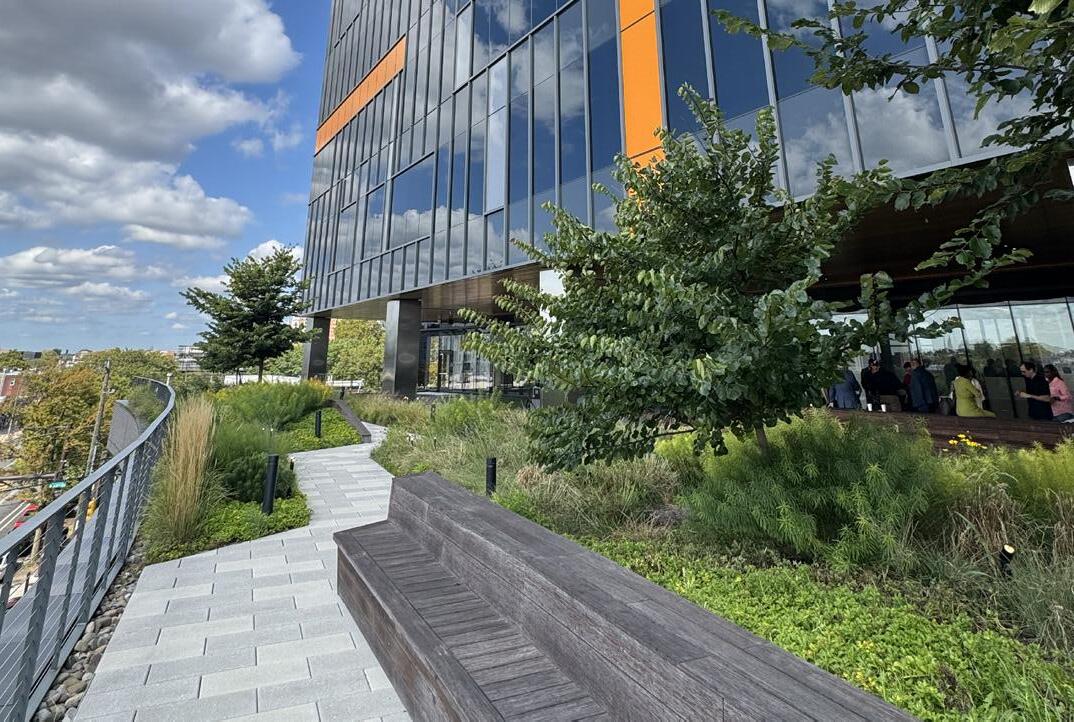
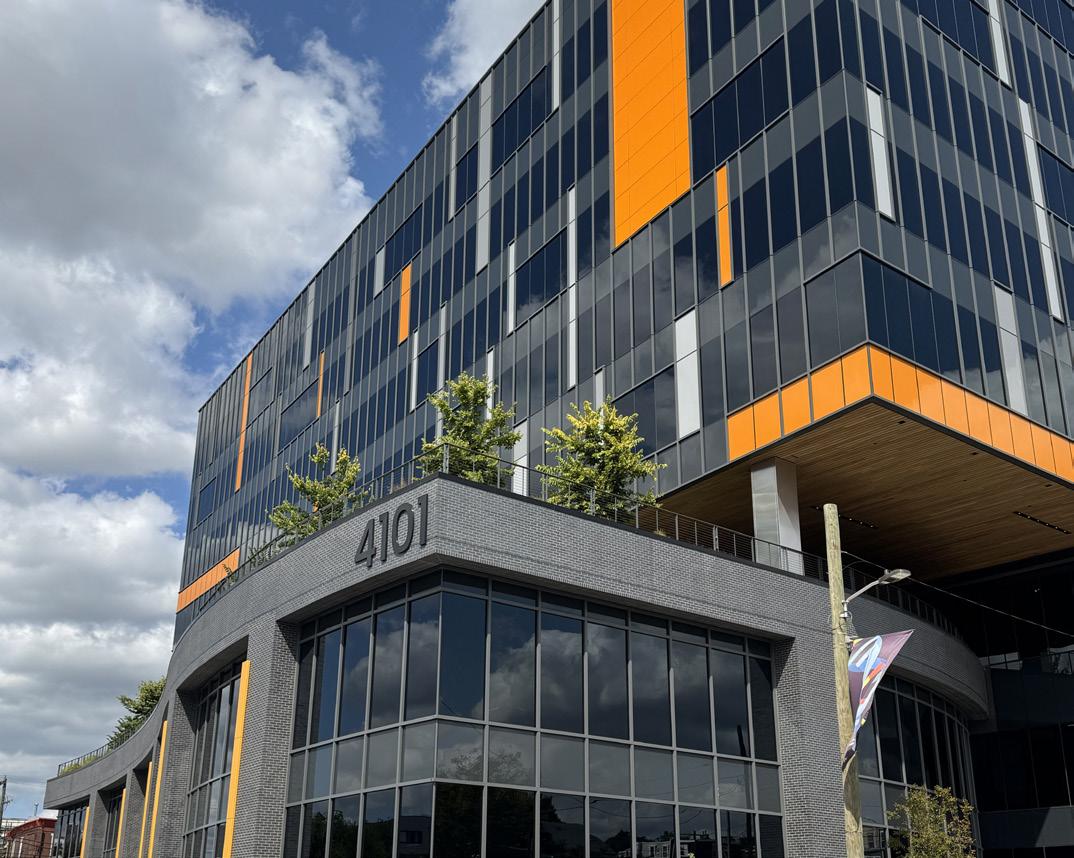
The Philadelphia Police Department's new Office of Forensic Sciences (OFS), located at 4101 Market Street in University City and housed in the recently completed 3.0 University Place commercial lab and office building, will be one of the most sophisticated forensic laboratories in the United States.
While the facility boasts rare LEED Platinum and WELL Platinum certifications alongside cutting-edge technological capabilities, the remarkable part of this building's story is not what will go into it – quantum microscopes, the latest DNA solutions, 3D lasers.
Instead, it’s a story about how a forward-thinking developer and two contractor competitors came together to create a powerful collaborative project environment, delivering one of the most important projects in the city.
It's a story of how investment in the seemingly lost art of human collaboration can empower a team of diverse superpowers to work together to conceptualize, plan and execute a project in record time and with cost efficiency. It’s about how a group of innovators dared to challenge the industry's archaic tradition of maintaining silos between design professionals, construction professionals, financiers and development professionals.
The premise was theoretically simple: leave conventional legal and contractual structures in place while coalescing a team of highly skilled professionals into a unified, singular organization where everyone brings unique resources together in service to a shared mission. While seemingly obvious, in an industry marred by mistrust and where survival is marked by precision
risk management connected to someone else's liability, the usual posture is one of defense and protectionism. It creates a matrix of playing not to lose versus playing to win, and wherein owners, architects and contractors focus on mistakes and fault.
Enter Scott Mazo of University Place Associates (UPA), a champion of impact-driven development in University City and West Philadelphia for more than four decades. Across the long arc of his career, Mazo has been acutely aware of the power of creating meaningful and lasting collaborative relationships. UPA’s success has been rooted in deep relationships of trust forged with the community on a personal, human level, where shared visions and goals bind and create meaningful development for generations.
Mazo and UPA’s President Anthony Maher had big plans for the 4100 block of Market Street. When Mazo and Maher
embarked on their vision to create what they boldly dubbed "The Platinum Corridor," they sought a construction partner who shared their vision of partnership and collaboration. Their search wasn't focused on finding the company with an extravagant resume or the most connections. They focused on people who shared their core ethos based on trust and commitment to the vision and goals for the entire team while being willing to work outside traditional project delivery models that usually end in compartmentalization, silos and mistrust.
UPA began a dialogue with Glenside-based Dale Corp. The result was hundreds of hours of conversation about building a project team without a traditional hierarchy and in which all members operated with unprecedented transparency and commitment to each other's success. Ultimately, UPA asked Dale Corp to find a partner that would complement and round out the expertise necessary to construct this state-of-the-art facility.
In an unprecedented moment, Dale Corp turned to a respected and admired competitor: McDonald Building Company. The two companies set aside industry baggage and focused on the combined strengths of both organizations. Hence, the McDonald Dale Strategic Alliance (MDSA) was born.
“They both bought in," said UPA President Maher. "And for us, McDonald and Dale aren't a commodity -- they are a real strategic partner. They became a part of the ownership team."
Dale and McDonald had a hunch that what they’d just done was unique and special.
"We knew we were flipping the script," said Eric Lintner, CEO, Dale Corp. "We came in and really focused on UPA as our client, recognizing that the only true metric of our work together would ultimately be the fulfillment of our client’s mission."
Pooling 20 personnel across both companies, the two organizations dissolved artificial barriers and corporate silos to build what is now 3.0 University Place.
“We set aside the self-posturing that goes on in these environments in service to each firm’s own interests,” said Paul McDonald, President, McDonald Building Company. “Our partnership became so tight, people couldn't distinguish which employee worked for which company."
As the collaboration between UPA and MDSA solidified, it expanded to a constellation of players, including architects, engineers and subcontractors – all brought onto the job and expected to proactively engage as equals. Crucial to success was the contribution of the skilled union workforce. The building trades were integral partners in the project's ecosystem and played a vital role in meeting community participation goals. Their early involvement enabled valuable input on constructability, safety and project economics, ensuring that the required high-quality standards were met.
Along the way, UPA and MDSA engaged the neighborhood surrounding 3.0 University Place to gather input and build buyin, ensuring the facility was welcomed as a neighborhood asset.
"We're lucky that we are a firm that can go really deep," said Maher. "When MDSA engaged with us on community relations, they went as deep. The community was never a check box. They were a partner in our process."
The energy generated by this massive collaborative effort led the City of Philadelphia to consider the site for OFS.

Ultimately, the OFS facility is a monument to the power of people. It proves that when competing organizations choose collaboration, when owners trust their partners, and when the community is engaged as a stakeholder, the results transcend the sum of their parts and make a real impact. When completed in August of 2027, OFS will serve as a beacon of public safety. Behind that beacon sits a culture of collaboration.
In an industry often defined by conflict, the McDonald Dale Strategic Alliance has demonstrated that the most powerful tool in construction is grounded in the human capacity to work together for a common good. As the facility begins its operations, it will stand as a reminder that the strongest foundations are built on trust, respect and a shared commitment to serving the people of Philadelphia.
KARLA WURSTHORN, TN WARD COMPANY
CO-CHAIR | AIA-GBCA JOINT

As Co-Chair of the AIA-GBCA Joint Committee, I have the privilege of working at the intersection of architecture and construction, two professions that share the same goal but often approach projects from different perspectives. Our committee is working to strengthen collaboration, improve project delivery, and foster dialogue between designers and contractors in the Greater Philadelphia region. Last year, our committee hosted an 11th Hour Bid simulation which was a great success. We are currently planning several activities aimed at collaboration & education including a workplace “swap”, timely panel discussions on Data Centers, AI adoption in the AEC space and unique factory and jobsite tours.
This article focuses on one of the most effective tools I have seen to advance the mission of better collaboration - Estimating Reconciliation. In practice, Reconciliation is a leadership tool that strengthens preconstruction teams, improves design quality, and increases cost certainty for owners. As a regular practitioner of reconciliation, Chris Kern, Executive Director of Design and Construction at the University of Pennsylvania’s Facilities and Real Estate Services, shared his insights on the benefits of the process in estimating.
Reconciliation is a collaborative and iterative process of aligning design, budget, and estimates to create a realistic framework for the project. It typically involves two independent estimates, often one prepared by a construction manager or general contractor and another by an independent third-party estimator or design team estimator. The two estimates are then compared line by line, with variances openly discussed and resolved.
Reconciliation is not about proving who is right. It is about
understanding why differences exist. Differences may stem from interpretation of drawings, assumptions about quality, labor productivity, market escalation, indirect costs, or risk allocation. When those assumptions are brought into the open, the project benefits.
“Reconciliation is not about proving who is right. It is about understanding why differences exist.”
The University of Pennsylvania has long embedded reconciliation into its capital approval process. On most projects over $1 million (or complex or phased work), the University of Pennsylvania requires two independent estimates at major design milestones including 100% Schematic Design, 100% Design Development, and 50% Construction Documents.
Importantly, the University of Pennsylvania uses a more conservative assumption when discrepancies arise between estimators. This conservative posture reflects an institutional reality: once capital is approved, increasing the budget is extremely difficult. In today’s volatile market, particularly since COVID, the process has become even more important.
Too often in construction, the budget conversation becomes adversarial. The contractor may be too conservative in managing risk. The design team may be advocating for unrealistic scope and quality. The owner is balancing their vision and financial reality. Reconciliation changes that potentially adversarial dynamic through active discussions of scope, quality, cost, and schedule.
By requiring detailed discussion of trade-level variances, the process is extremely transparent. As Chris Kern explains, “The process does not allow anyone to hide behind their estimate” because all details are discussed openly among the team. It’s a very professional exchange with give and take often with “one estimator extending a bit of grace to the other” when a detail is missed or misunderstood.
That level of transparency builds trust, camaraderie, and open lines of communication which is the foundation of highperforming preconstruction teams.
Reconciliation frequently uncovers scope gaps, coordination issues, or unclear details in the drawings. Because two independent professionals interpret the same documents, inconsistencies or ambiguities are exposed early when they are least expensive to correct. In this way, reconciliation becomes part of the design team’s QA/QC process. It informs decisions in real time rather than forcing a costly redesign later.
From experience, mechanical, plumbing, electrical, and sitework trades often show the greatest variance between estimates, not because of estimating errors, but because of complexity and differing assumptions about system performance, phasing, logistics, productivity or risk. Those discussions lead to refined documentation and clearer intent.
Estimates are predictions of future conditions. They are inherently uncertain. Reconciliation reduces that uncertainty by stress-testing assumptions early.
It also helps to temper expectations. Owners and end users often have bold visions. Reconciliation provides a structured way to align that vision with financial reality and identify some “wish list” bid alternates when necessary.
This is particularly critical for institutions where projects often represent once-in-a-generation investments. Chris Kern notes that Reconciliation helps “...keep the team focused on the mission and purpose of the building.”
Chris Kern notes that Reconciliation helps “keep the team focused on the mission and purpose of the building.”
Ample Reconciliation time must be built into the schedule at each design phase to be effective. If a significant variance exists it will likely prompt a value engineering effort, which can extend preconstruction timelines. However, the modest investment of time (and money) upfront is negligible compared to the cost of a late-stage budget reset, redesign, and schedule delay. In my view, reconciliation does not slow projects down, it speeds them up.
Learning occurs when two experienced professionals compare methodologies, productivity assumptions, indirect cost structures, and market inputs. Through the process of Reconciliation, estimators refine their craft and adopt new approaches. They also sharpen judgment, an essential attribute of an estimator.
For organizations like AIA and GBCA, whose joint mission is to improve project delivery and foster innovation, reconciliation represents the kind of constructive collaboration we should embrace.
Reconciliation makes the overall project better. In an industry facing continued cost volatility, labor uncertainty, and increasing project complexity, structured collaboration during preconstruction is not optional, it is essential.
Estimating reconciliation is more than just a budgeting exercise. It is a leadership discipline which aligns architects, project managers, estimators, and owners. It improves transparency, reduces risk, produces more predictable outcomes, and creates better buildings.
Reconciliation should be viewed as best practice.
ROB MCGILLEN, VICE PRESIDENT & AI PRACTICE LEADER | CBIZ
MARTY McCARTHY, MANAGING DIRECTOR & MID-ATLANTIC CONSTRUCTION INDUSTRY LEADER | CBIZ

For construction businesses used to operating on razor thin margins in highly competitive markets, and while subject to extensive regulations, AI represents an incredible opportunity to realize valuable efficiencies. The technology supports efforts to improve productivity, expand the capabilities of enterprise platforms, and generate reports and documents tailored to meet specific use cases and requirements. On their own, any of these latent advantages could be key to growing margins and protecting profitability, taken together they’re rapidly becoming essential for achieving and maintaining a competitive advantage.
As AI technology becomes more entrenched in the industry, AI is supporting essential estimates, schedules, and risk management functions. Here’s a breakdown of how AI can help, construction-specific benefits, tips for successful implementation, and common obstacles to overcome on your AI integration journey.
From estimates to close-outs, AI tools help compress timelines and reduce rework across project lifecycles. A few of the common use-cases where AI can drive value in construction:
• Pre-Construction: Using AI, companies can arrive at more competitive bids by analyzing historical bid data, material price movements, and labor availability to estimate costs quickly and more accurately.
• Scheduling and Logistics: Machine learning can be employed to identify sequencing conflicts, anticipate disruptive weather events, and issue alerts regarding supply chain bottlenecks before they cascade into change orders.
• Field Operations: Progress monitoring, safety compliance, and quality assurance can be enhanced by combining video feeds with AI monitoring, saving the time of your superintendents and inspectors.
• Close-Out and Documentation: Cut weeks off project turnover by using AI to automate punch list, as-built reconciliation, and warranty tracking processes.
With practical applications in mind, AI can have an impact that is as powerful as it is immediate, reducing manual efforts relating to estimations, scheduling, rework, and more.
The capabilities of the AI platform a business chooses should drive that decision. Some are exceptional at producing code, others at generating decks and collateral. In construction, look for the following features:
• Spec and Code Compliance: AI tools will be most useful when they can parse project specifications, recall building codes, and review contract language to flag conflicts, missing scope, or non-compliant elements. This is a rapidly trending area for AI enhancements.
• Contract and Request for Information (RFI) Analysis: Models trained on construction and contract law can help project teams draft RFIs, evaluate the validity of change orders. and highlight risk clauses in subcontract agreements.
• Safety and Compliance Intelligence: Predictive models that correlate jobsite conditions, crew composition, and environmental data can generate real-time safety scores.
Flexible, full-featured AI systems enable clients to build custom workflows suited to their industry, project type, contract structures, and compliance requirements. That delivers meaningful benefits that go far beyond the capabilities of generic tools.
Mid-market construction firms and general contractors need to begin their AI adoption with a careful assessment of their readiness. That means auditing legacy technology, identifying gaps in data management and collection, and charting an adoption roadmap that aligns AI investment goals with the firm’s strategic growth strategy.
Integrating data from sources across the enterprise maximizes the value of AI systems that quickly collate and analyze that data. Tools with narrowly defined capabilities or siloed access have similarly capped potential. Designating and employing an AI system enterprise wise can realize:
• Platform Integration: Today’s leading business software platforms make AI integration approachable. That means that your existing technology environment will still be supported, even when deploying an enterprise-wide AI solution.
• Data Unification: Construction generates enormous volumes of data across the field, the back office, and the project lifecycle, but too often that data lives in disconnected systems. Connecting it creates a single, reliable source of truth. Redundant work gets eliminated, risks surface earlier, and AI gains the foundation it needs to deliver real insight rather than partial answers.
• Organizational Change: Technology alone doesn't drive adoption. People do. AI touches every department, and without a deliberate change management approach, even the best tools stall. A structured program that builds AI awareness, develops practical skills, and establishes clear governance accelerates time to value and reduces the costly false starts that erode confidence in the investment.
Every technology carries risks. Because AI works best in integrated environments, it’s extremely important that your enterprise’s governance and oversight controls are broad, well defined, and strictly enforced. Let these principles guide your construction firm’s integration efforts:
• Data Quality Provides the Foundation for Success: The project and financial data your AI relies on needs to be uniform and accessible for AI to output reliable analysis. Ensure your data practices are in order because no model is advanced enough to overcome issues like inconsistent job cost coding, fragmented documentation, and siloed field reporting.
• Identify and Correct for Hallucinations: Generative AI can produce inaccurate answers while sounding confident. That’s particularly dangerous when it’s applied toward code compliance, contract interpretation, or safety protocols. Human oversight and verification of AI output is non-negotiable.
• Enforce Cybersecurity Measures: Connecting AI introduces potential attack surfaces. For that reason, it’s important to address data, access, and vendor security practices before going live.
• Workforce Displacement vs. Augmentation: AI is a tool to assist estimators, PMs, and superintendents, not as a headcount reduction strategy.
• Regulatory and Liability Uncertainty: Insurance carriers, surety providers, and legal counsel are still catching up to a key question concerning AI: who is liable when AIgenerated estimates are materially wrong? Pay close attention to developments as that uncertainty is tested over the months and years ahead.
For the best results, integrate AI with safety and security in mind, train your employees to use AI and provide oversight, and apply AI toward the use-cases it’s most suited to handle.
The key benefit motivating AI adoption is simple: help your employees accomplish more in less time, with fewer resources. With better tools and AI features, previously unthinkable efficiency improvements are within reach.
The construction industry is all about building things that last and that same standard should apply to expanding your business’ capabilities. Get the foundation right and AI can be used to enhance virtually every department in your enterprise and project in your pipeline, now and well into the future.
Firms that approach AI with discipline, thoughtful strategy, and an understanding of associated risks will be most capable of winning bids and delivering on the technology’s promise.
Rob McGillen is Vice President and AI Practice Leader at CBIZ Technology, where he leads the companies’ AI client services practice for mid-market organizations. With 25+ years of experience spanning global CIO/CDO roles, AI / data startup leadership, and digital transformation across industries including Financial Services, Construction, Manufacturing, Health & Life Sciences, and Professional Services, Rob brings a business-first approach helping organizations navigate AI complexity and drive measurable outcomes. He can be reached at Rob.McGillen@cbiz.com. Learn more at cbiz.com.
Marty McCarthy, CPA, CCIFP, is a Managing Director in the Tax practice at CBIZ and serves as the Mid-Atlantic Construction Leader. With more than three decades of experience serving construction companies, he is known for his collaborative, solutions-focused approach and deep technical expertise. Marty is a trusted advisor to clients across the industry. He can be reached at Marty.McCarthy@cbiz. com. Learn more at cbiz.com.

AQName: Emily Christopher
Title: Project Engineer
Age: 25
Company, City: Gilbane Building Company, Philadelphia
Years in field: 5
Education: Bachelor of Construction Engineering and Management (BCEM), Minor in Business Administration
What inspired you to pursue a career in construction?
I have always been a problem solver and extremely interested in all things STEM! My dad worked in construction, building multi-million-dollar homes; and I knew from the time I was in high school that I wanted to join the industry after college. I studied Construction Engineering and Management at the University of Delaware which solidified my decision to pursue a career in Construction Management.
How has the construction industry changed since you started your career, and how have you adapted?
Although I haven’t been in the construction industry for long, it is incredible to see the impact that laser scanning and modeling have on our projects. I worked closely with our Virtual Design and Construction (VDC) engineer on my first project out of school. I was able to see just how much preparation and coordination happens before anyone steps foot on a site. Laser scanning of our sites allows us to coordinate down to fractions of an inch and avoid countless (expensive) clashes in the field.
What has been the most fulfilling moment of your career so far?
Being an alumni speaker at a University of Delaware Decision Day for prospective students has been the most fulfilling moment of my career. As a recent graduate hoping to inspire the next generation of engineers, it was extremely rewarding to present to students who are in the same position that I was in just a few years ago.
What unique challenge do you face in your role, and how do you overcome it?
A unique challenge that I face in my role as a Project Engineer is coordinating between contractors, architects, engineers, owners’ representatives, and the owner team. I often find myself multitasking and prioritizing to ensure that everyone’s voices are taken into consideration when making project-related decisions.
What advice would you give to someone just starting out in the construction industry?
My advice for someone just starting out in the industry is to always volunteer for events and opportunities that arise. There are so many great organizations like the CLC that support the construction industry. These events allow you to meet influential people and leaders in our field. I have met countless professionals at both construction and leadership functions that I consider to be mentors.
What leadership principles guide you in your professional life?
The leadership principle that guides me in my professional life is always looking to expand my knowledge of the profession. As a planner, I always have a calendar of events booked out months in advance. I sign up for trainings and opportunities that aim to teach new skills and will have a positive impact on my career.
How has being part of the CLC contributed to your personal and professional growth?
Being a part of the CLC allows me to advocate for the next generation of construction professionals. I aim to give a voice to the younger generations that may not be in the room where decisions are being made. Allowing these ideas to be shared improves the construction industry for all of us, as we grow and expand. The CLC provides support and direction for young professionals to feel empowered to speak up and get involved.
What’s a recent accomplishment or skill you’ve developed that you’re proud of?
I am proud to have been selected for the GBCA Construction Leadership Council. The mission statement of being committed to maintaining, improving and promoting the construction industry, directly aligns with my values and what I strive to achieve through networking and volunteer opportunities in our local communities.
How do you stay motivated and inspire those around you?
I stay motivated by getting involved with many events hosted by Gilbane Building Company (GBC) and other organizations around Philadelphia. It’s exciting for me to be a part of the future of Philadelphia through not only construction projects, but community engagement and volunteering as well.
What qualities do you think are most important for the next generation of construction leaders?
I believe good communication is key for the next generation of construction leaders. As construction continues to evolve and we work on bigger and better projects, the communication between the project teams and the Architect/Engineer/Owner is crucial to keeping a project on track. A good leader always communicates expectations and reinforces the end goal to their team.
What’s your favorite CLC event or initiative, and why?
My favorite CLC events are the CLC Hard Hat Tours! I love getting to see other projects in the Philadelphia region as well as showing the CLC members the projects that I’m helping to complete.
How has participating in CLC activities impacted your career?
Participating in CLC activities has allowed me to network with other construction professionals that are dedicated to expanding and improving the construction industry. Having a strong network of industry professionals has allowed me to learn from the best!
What makes GBCA membership valuable to you?
Being a part of GBCA and the CLC allow me to expand my network with industry professionals and inspire future generations of construction leaders in the city of Philadelphia. It is also a great opportunity to give back to this city and the community I work in every day!
STEPHEN POTTER | TURNER CONSTRUCTION COMPANY
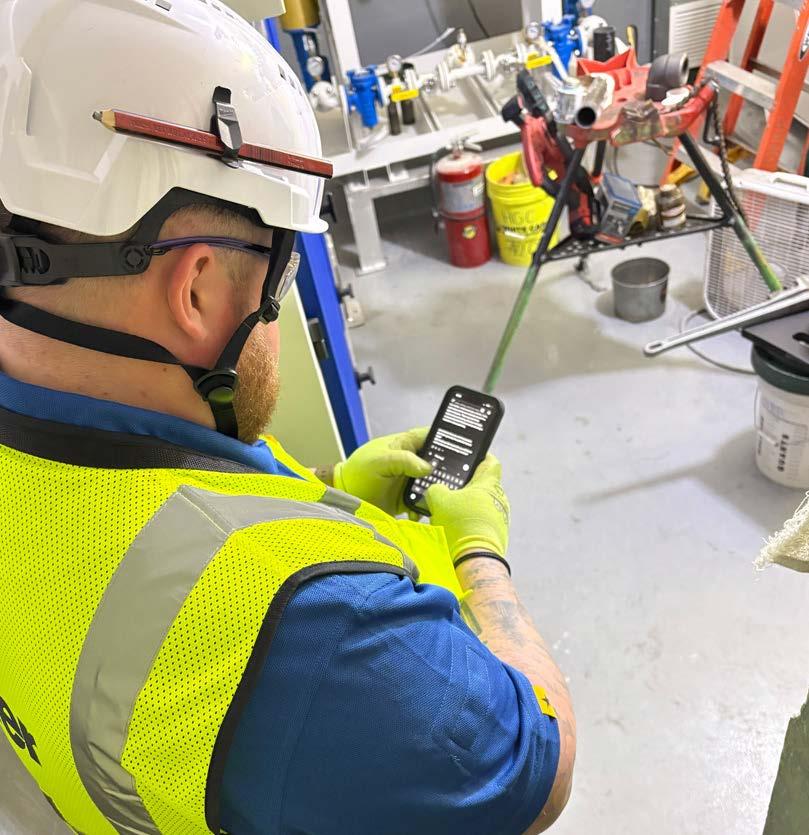
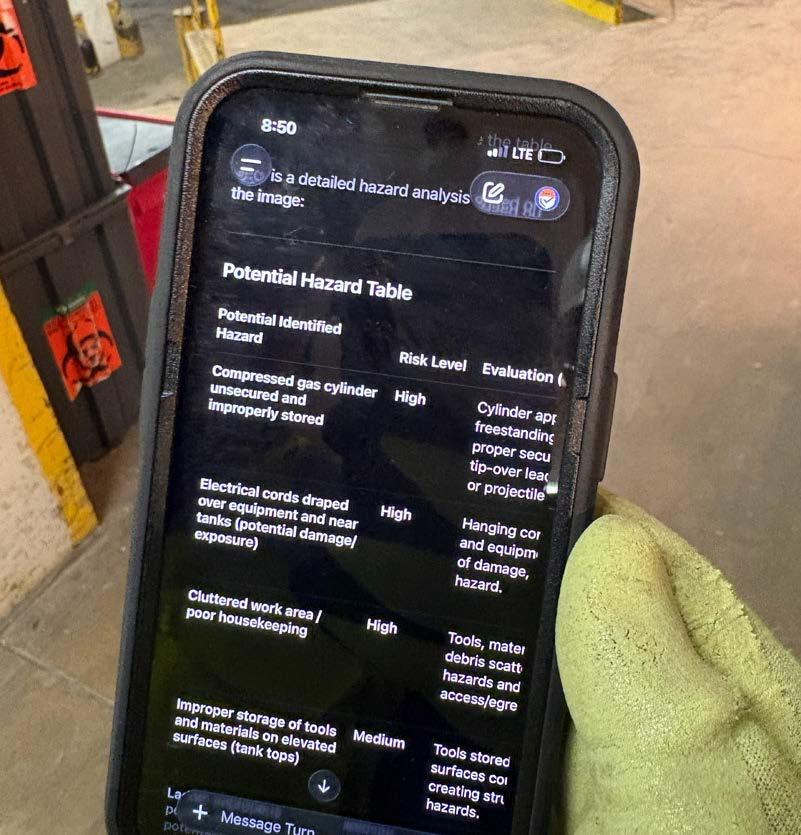
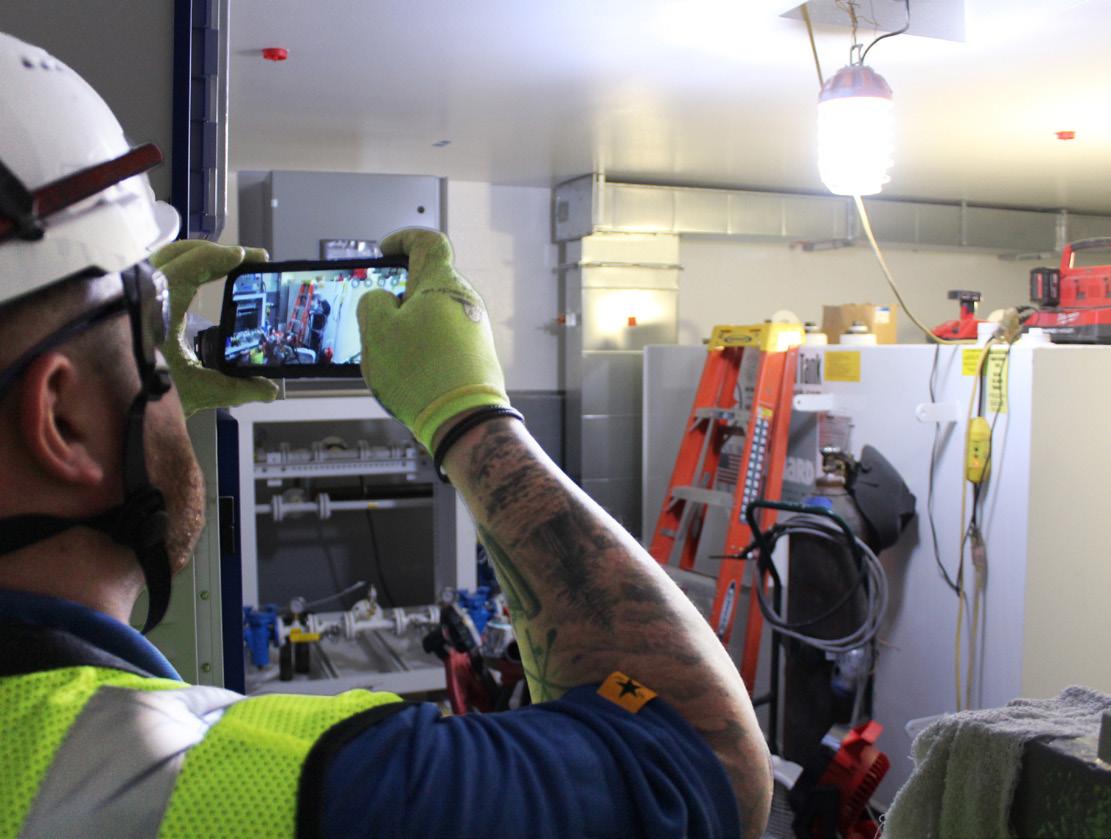
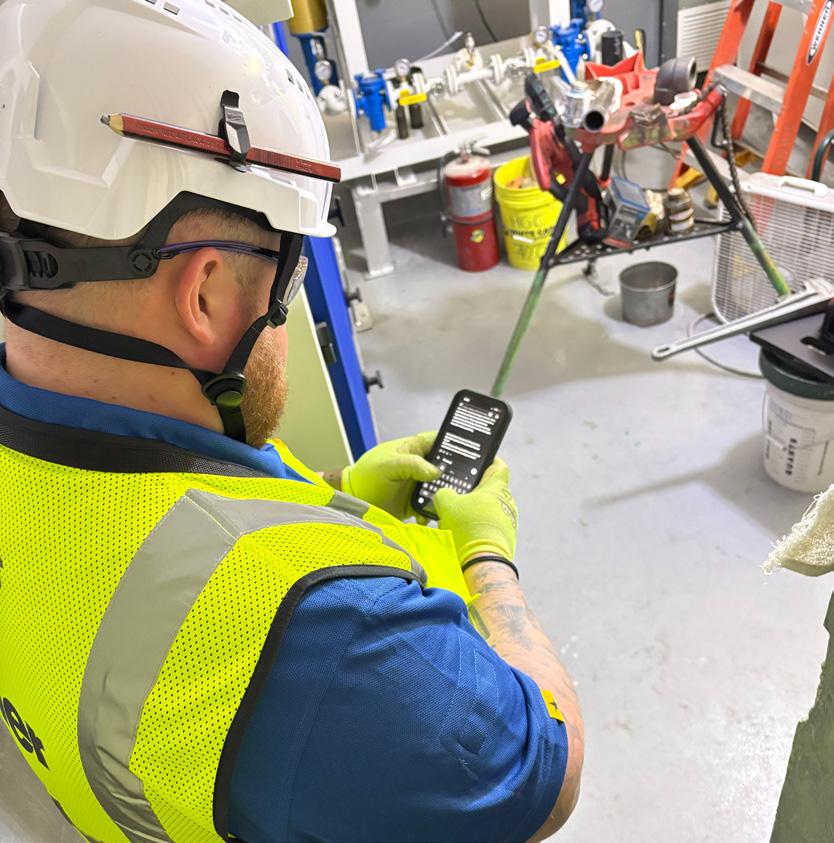
Construction decisions are rarely made behind a desk — they’re made in shafts, vaults and service rooms when someone on a project site needs an immediate interpretation of policy or a quick assessment of risk. SafeT Coach, Turner’s AI-powered safety companion does exactly that. SafeT Coach puts standards-aligned guidance and photo-based hazard evaluation into workers’ hands at the moment work happens.
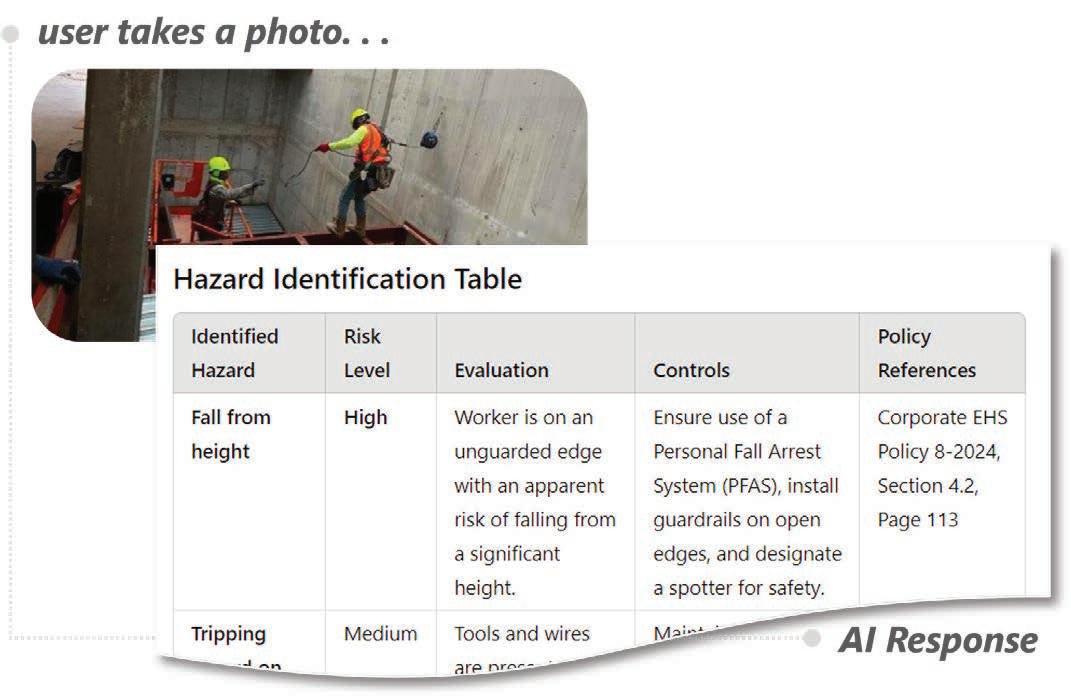
A field story captures the point. Darren Dreas, superintendent on a higher-education lab fit-out, needed to determine whether a vertical shaft was a permit-required confined space. “I put details into SafeT Coach and it produced a flow chart on how to determine whether it was permit-required or not permit-required,” Dreas said. The tool produced a start-of-day permit checklist that he downloaded and used on site. When a fuel-oil room presented ambiguity, Dreas photographed the space and asked SafeT Coach if it qualified as a confined space. SafeT Coach returned a flow chart, policy citations and a concise explanation that enabled an educated conversation with the trade partner’s safety manager. “Using SafeT Coach saved hours of research and analysis, helping us to quickly make informed decisions,” he said.
SafeT Coach traces its lineage to Turner’s enterprise innovation program. Ideas from Turner’s Innovation Summit and Innovation Challenge identified a single operational problem: the company had strong safety standards, but field teams lacked timely access to guidance. An innovation design sprint turned those opportunity statements into prototypes; pilot phases and an extended validation period refined accuracy, tone and governance before Turner moved toward launching.
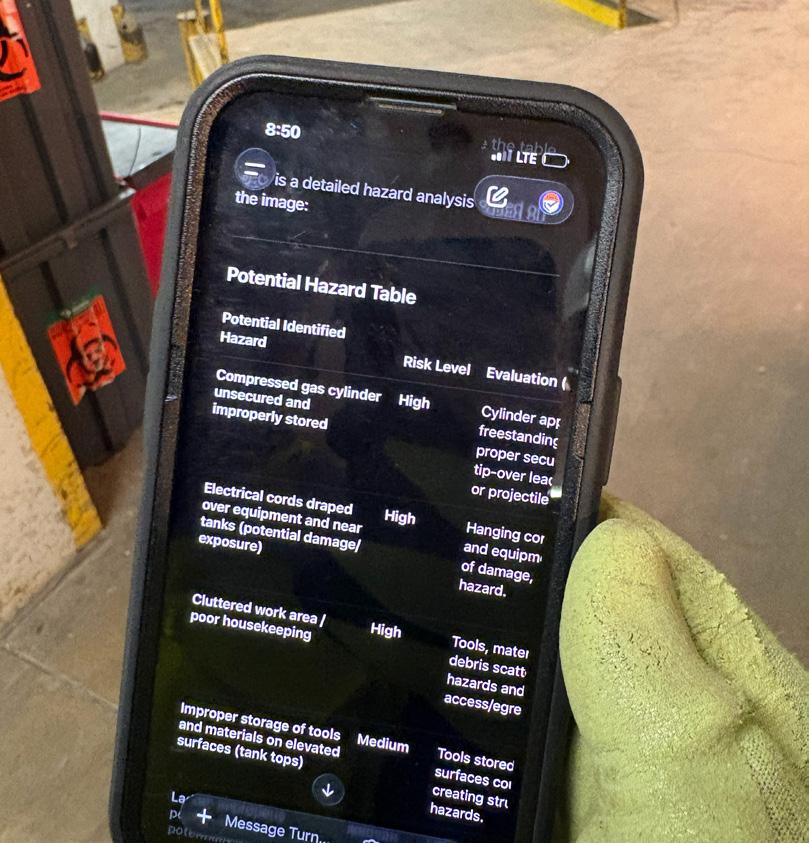
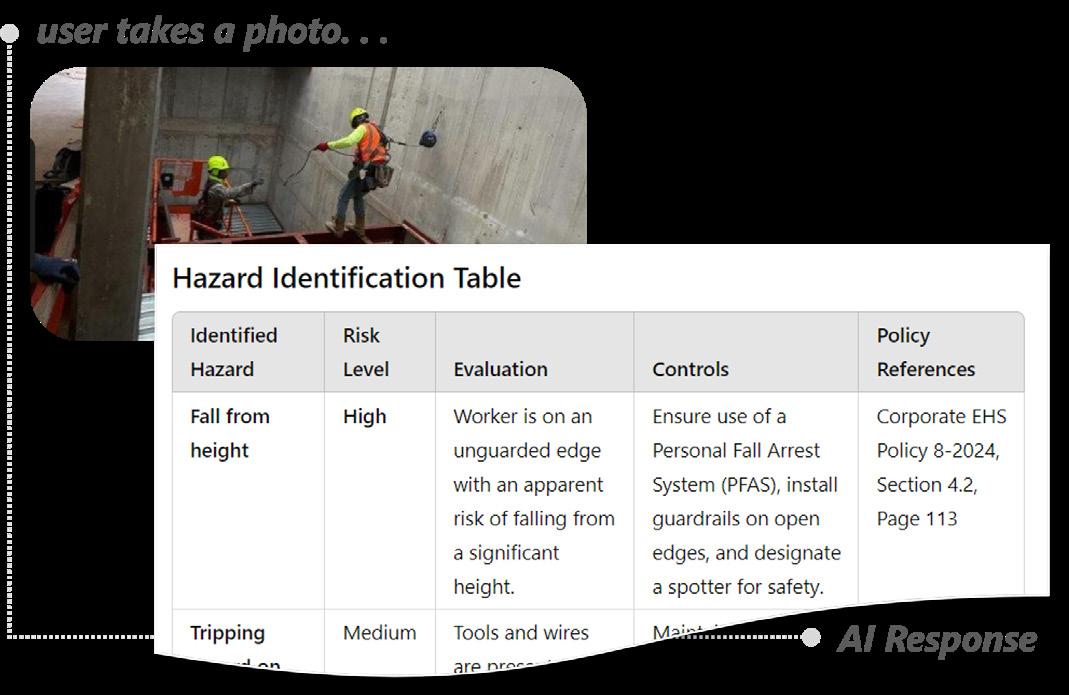
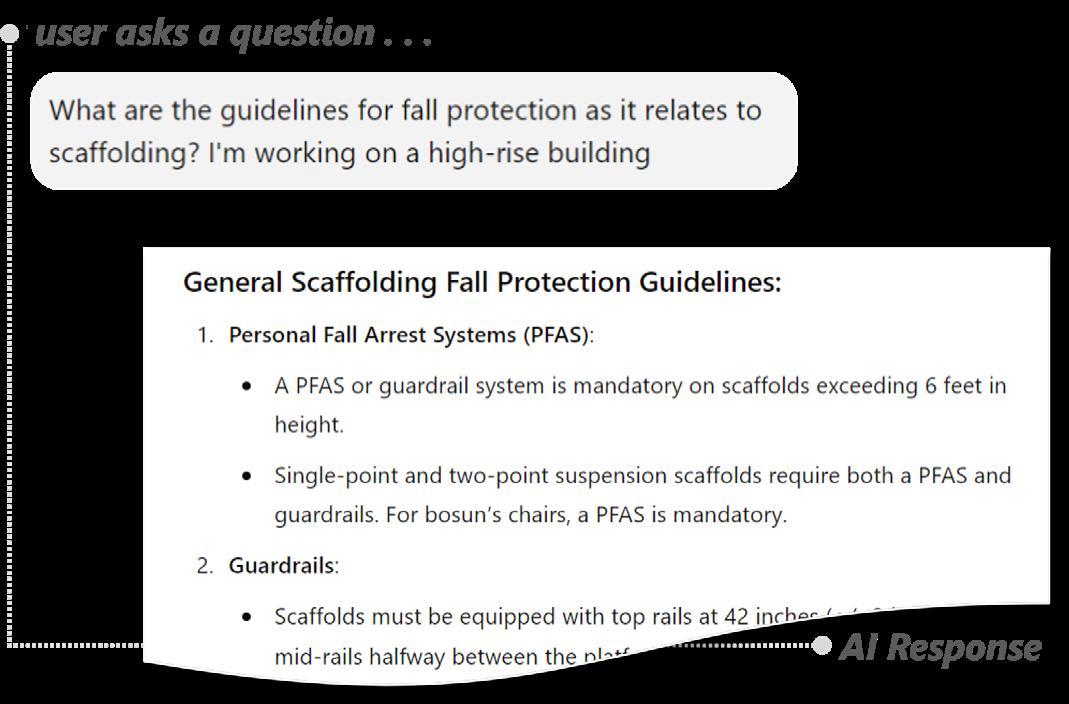
Accessible on mobile phones, SafeT Coach answers plainlanguage safety questions, evaluates uploaded photos for potential hazards, and produces short, actionable steps aligned to Turner’s Environmental Health & Safety (EH&S) standards. Critically, outputs are framed as “potential hazards” and are designed to augment — not replace — professional judgment. That stance, and tight alignment with company standards, was central to early validation and to building trust across safety leaders and field teams.
Practical value: trade-partner review, addressing safety concerns, and signage
Stacey Darrohn, Senior Project EH&S Manager, described some of the tool’s most immediate applications on her projects. She uses SafeT Coach to review safety submittals
from trade partners, quickly identify gaps and “put them into a chart” that she copies into e-mail for targeted revisions — a workflow she says has been “a huge time saver.” On another occasion, she entered three Safety Observation and Recognition (S.O.A.R.) submissions into the tool and asked it to frame a response that respected Turner’s Building L.I.F.E. (Living Injury Free Every Day) culture. She used the AI’s threepoint reply in a morning announcement so every worker heard how leadership would address concerns. Darrohn has also used the tool to generate jobsite signage and flyers on the spot, which enables the project to respond to changing conditions.
Turner’s rollout was deliberately staged. Phase 1 validated accuracy and tone with senior safety professionals; Phase 2 expanded testing to engineers, superintendents and field teams to assess usability in real workflows. Extended internal use from mid-2025 into early 2026 enabled Turner to iterate governance, recalibrate risk language and measure engagement. The tool logged thousands of interactions during validation and early release, showing steady uptake across roles and projects. Based on those outcomes, Turner launched SafeT Coach to the broader industry in early 2026.
Early pilots surfaced one important wrinkle: SafeT Coach’s computer vision sometimes overstated hazard severity, which
risked alarm fatigue. Turner responded by recalibrating its risk-classification framework, softening language to frame outputs as potential issues and reinforcing the tool’s role as an aid to human judgment. Governance controls, alignment to EH&S standards and a usability focus — fast answers and links to policy for deeper review — restored trust and encouraged adoption on busy jobsites where speed and clarity matter most.
For superintendents and safety managers, SafeT Coach shortens the distance between uncertainty and action: fast clarifications on code interpretation, photo-based hazard checks and consistent language for coaching conversations. It is not a substitute for qualified safety professionals or pre-task planning; it is a low-friction companion that helps teams make safer, more consistent decisions. As Turner scales the platform with localized code knowledge and further data integration, SafeT Coach is changing how decisions get made—faster, more consistently, and closer to where the work happens.
Snap


Scan the SafeT Coach QR Code
Start using SafeT Coach instantly




ROBBIE O’BRIEN, PARTNER | COHEN SEGLIAS PALLAS GREENHALL & FURMAN PC
Those in the industry are well aware that construction projects rarely proceed exactly as planned. Experienced contractors with careful and exhaustive estimates nonetheless encounter impacts and delays caused by a variety of factors, including but not limited to restricted access, differing site conditions, design errors and omissions, untimely responses to RFIs, and/or poor coordination among project participants.
When not properly managed, such impacts can lead to significant disruption, inefficiencies, and—most of all— increased costs. However, proactive strategies can be implemented to help contractors mitigate losses and protect their margins, while also maximizing the potential to recover the additional costs associated with project delays and inefficiencies.
At our firm, we have a saying, “He who writes more wins.” It is certainly true that the creation of a clear and consistent paper trail is the best defense and offense in response to unforeseen
delays. But what information should be considered and called out as part of the “paper trail”?
From the outset, contractors must review the material provisions in the contract documents. Among the most important are those addressing the following: scope of work; flow-down and delineation of contract documents; payment terms; notice; change orders; waiver and release language; “no damages for delay” and liquidated damages; as well as claims/ dispute resolution.
Full discussion of each provision would take up an entire article (or more), but, generally speaking, contractors should be aware of the contractual requirements for the above categories. Also, remember that exclusions or limitations in your proposal mean nothing unless they are ultimately incorporated into the executed contract.
Regarding claims for delays and inefficiencies, provisions regarding notice, change orders, waivers and releases, and claims take on particular significance. Each monthly payment application typically includes waiver and release language on the form itself. Once signed, the payment application can operate as a complete waiver of claims through the date of execution. A contractor’s acceptance of final payment can also serve as a full and final release of any outstanding claims.
How should contractors who have faced impacts and delays protect themselves while the job remains ongoing? This is where notice comes into play. Notwithstanding continued submission of payment application(s) for work performed, it is vital to provide written notice that you do not waive, and expressly reserve, any claims for additional compensation and time for work performed during a specific time period. Indeed, this language can be written in bold font on the payment application. Include as much detail as possible so that a third party would reasonably be aware that you intend to reserve your rights to seek time or monies in connection with additional work related to delays or impacts on the job. Until all outstanding claims have been resolved, you should include this language on each and every form where there is partial waiver and release language.
What happens if the inserted language is rejected, but you still need to be paid? Best practice would be to sign the payment application without the additional caveat, but when submitting the payment application, include a contemporaneous letter stating that, while you have been directed to sign the form and delete the proposed reservation of rights language and have done so in order to receive payment, you expressly reserve all rights to seek compensation or more time for claims emanating from delays/impacts. To the extent possible, the accompanying letter should identify the claims for which you are reserving your rights. Now, the law is not always clear that your rights will be protected, so please be sure to consult with legal counsel if you find yourself in these circumstances.
With respect to change orders that have been agreed to, and you plan on signing and returning, before doing so, make
certain that the change order covers all associated costs and time extensions for the extra work in question. If a change order is not all-inclusive, or if you anticipate a subsequent change order involving the same impact or delay, you should add language to the change order that includes a reservation of rights to seek further costs or time at a later date.
Notice provisions apply to out-of-scope work, changed conditions, delays, and other claims on a project. While strict adherence to unreasonable contractual time requirements (e.g., 24 hours) can be waived by the parties’ “course of conduct,” best practice is to provide notice early and often— and always in writing. Raising issues during project meetings and later confirming that the issues are reflected in the project meeting minutes is helpful, but written notice, which does not have to be formal and can be sent via email, must happen.
As discussed, a solid paper trail helps mitigate your exposure and maximize your chances of recovering unanticipated costs. However, it’s dependent on contractors recognizing the financial and time impacts of delays during the course of the job and before waivers and releases have been executed. In other words, a paper trail can only be as strong as the project management, and you should be consistently tracking performance on a regular (monthly) basis. With respect to costs, materials, manpower, etc., compare the “actuals” to the bid/estimate, which provides a clearer picture of the job and puts you in position to provide timely notice.
The bottom line is that, in today’s environment, contractors who understand what their contracts actually say and are able to substantiate and support their claims by way of contemporaneous emails, correspondence, and project records stand the best chance of maximizing recovery on jobs facing delays and other impacts.
For those who would like to discuss further or have questions about recognizing potential claims early on or the necessary steps to preserve them, please do not hesitate to contact our office.
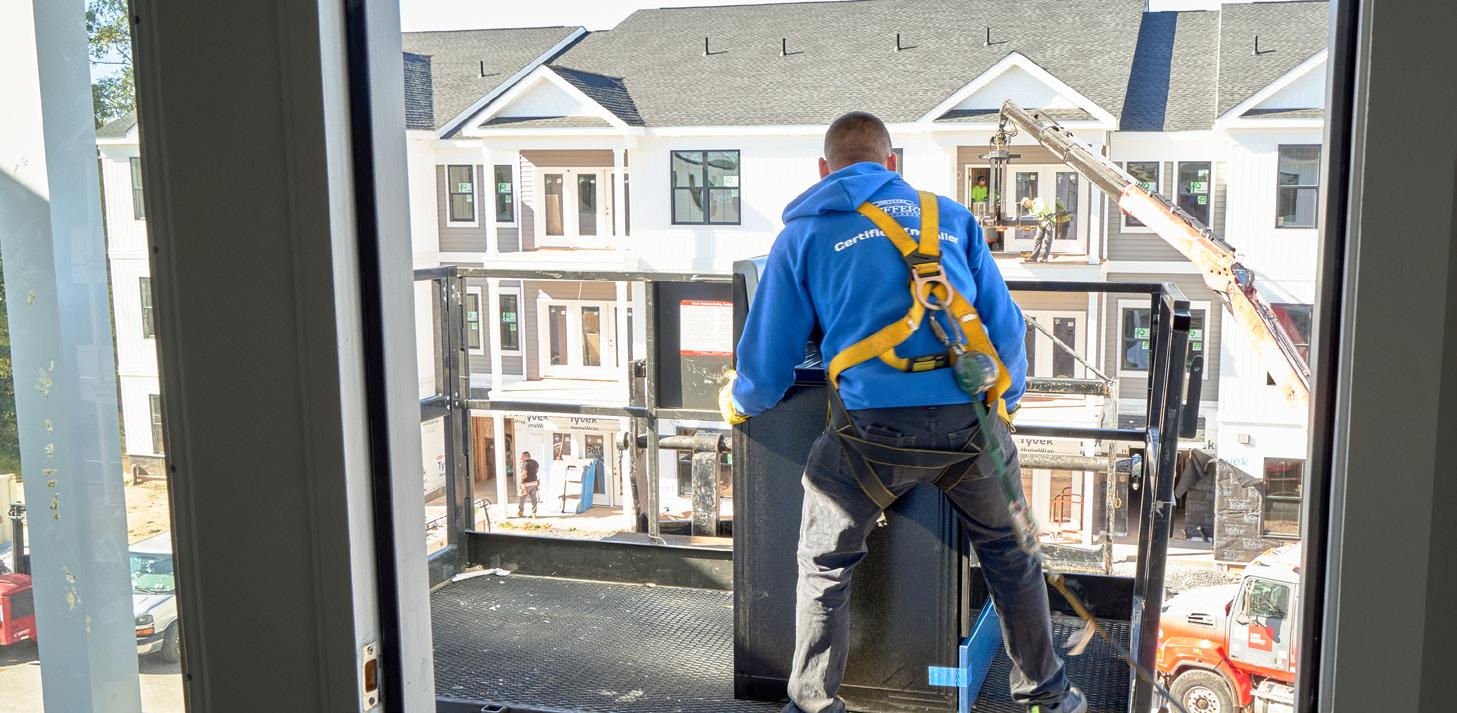
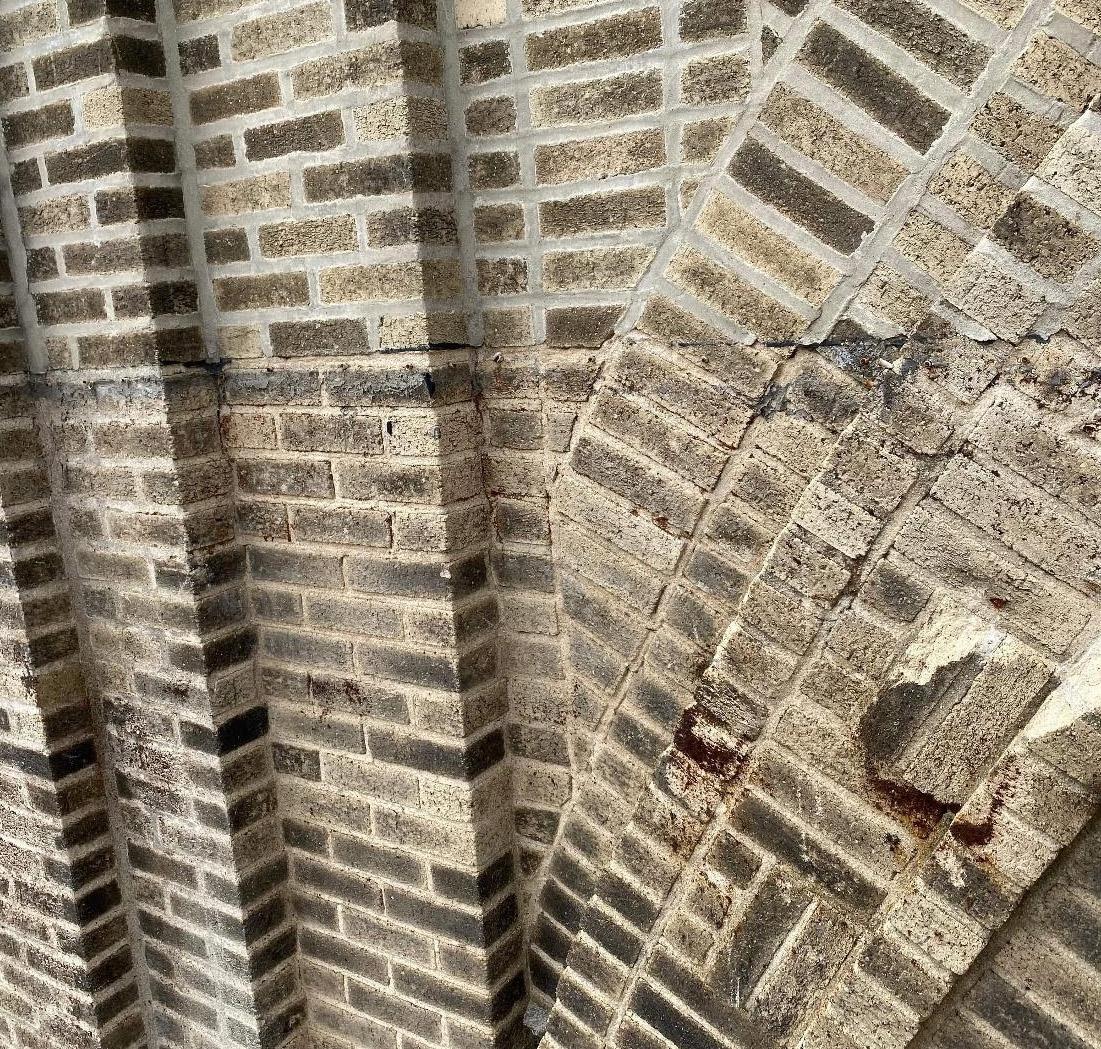
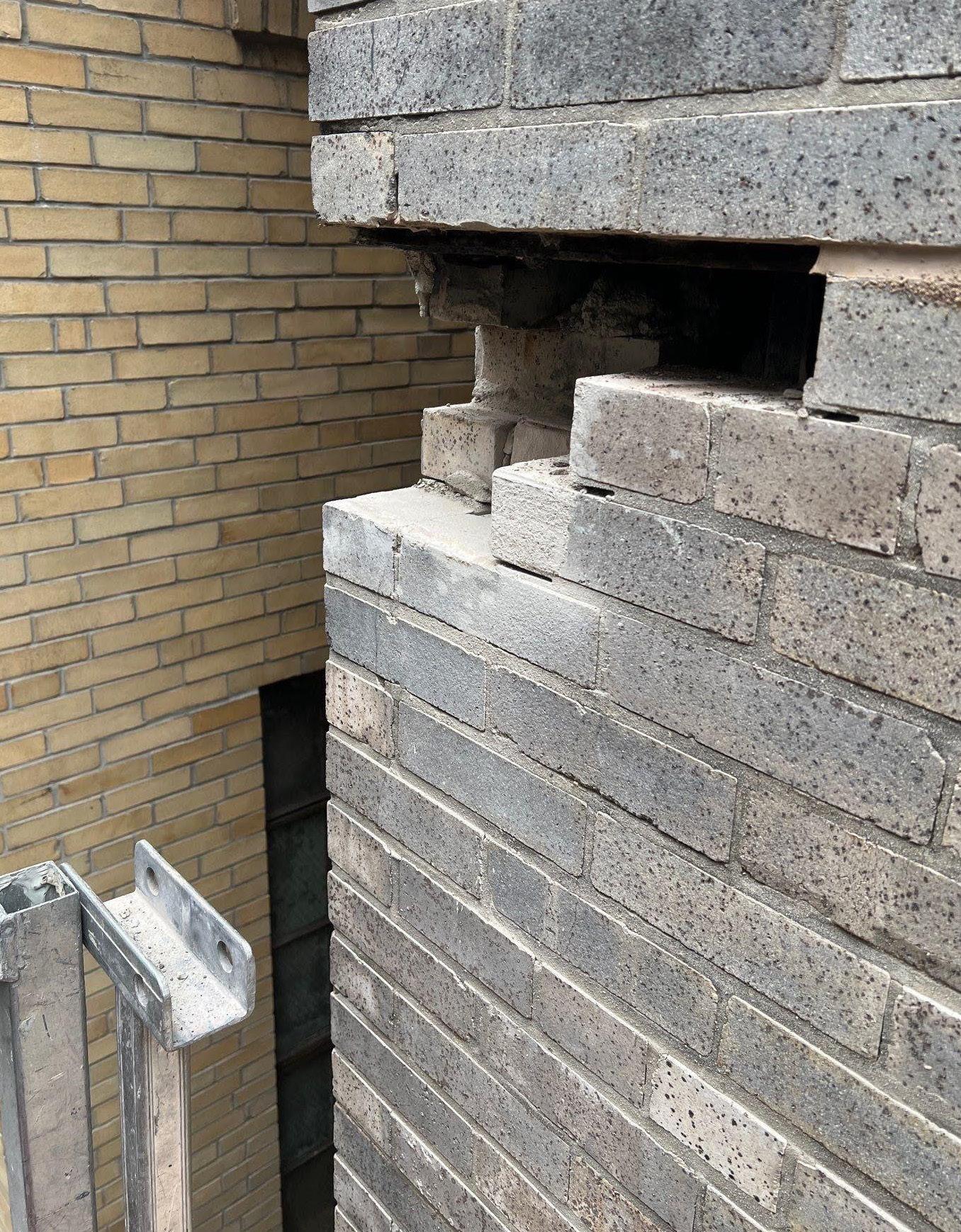
Philadelphia is one of the most historic cities in the United States, with thousands of masonry buildings constructed decades, and in many cases, over a century ago. While these buildings were built to last, time, weather, and lack of maintenance can lead to serious façade deterioration. Regular façade inspections are one of the most important steps building owners and property managers can take to protect both their buildings and the public.
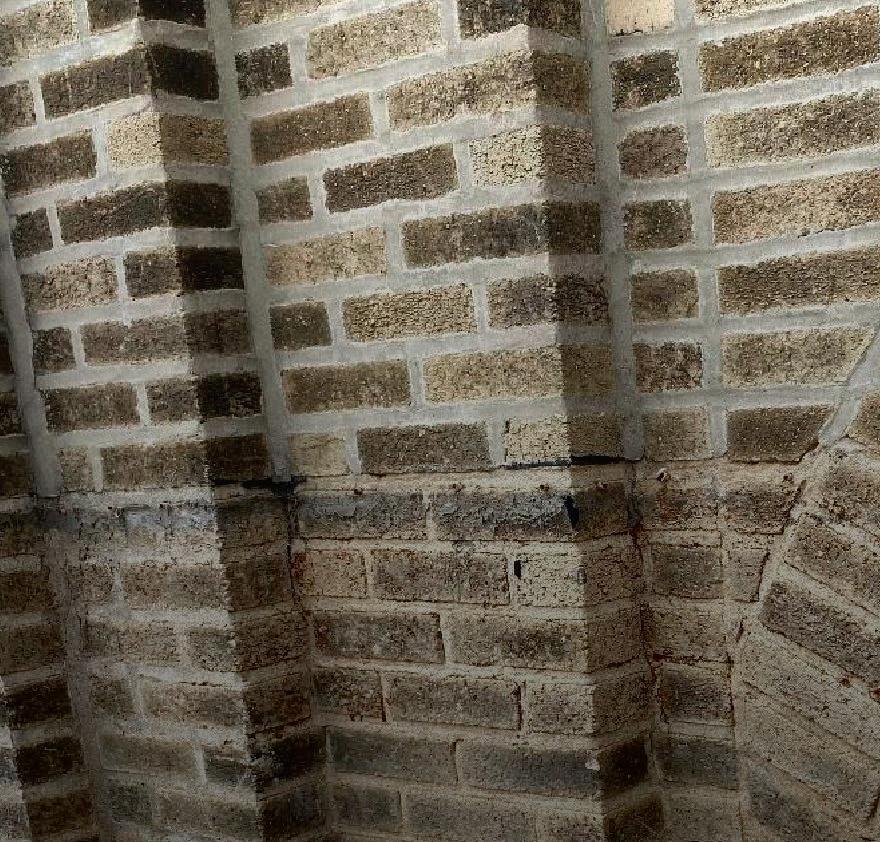
Building façades are constantly exposed to rain, snow, freezethaw cycles, heat, humidity, and pollution. Over time, these conditions cause mortar joints to deteriorate, bricks and stones to crack, and sealants to fail. When these issues go unnoticed, small problems can quickly become major repairs or safety hazards.
Façade inspections help identify issues early, allowing building owners to make targeted repairs before water infiltration, structural damage, or falling debris becomes a serious problem.
During façade inspections, several recurring issues are commonly found on masonry and stone buildings throughout Philadelphia:
1. Deteriorated Mortar Joints
Mortar joints often deteriorate before the brick or stone itself. When mortar begins to crack, crumble, or recede from the joints, water can enter the wall system and cause further damage. Repointing with appropriate mortar is often required to restore the wall’s integrity.
2. Cracked or Spalled Brick and Stone
Spalling occurs when moisture enters masonry units and freezes, causing the face of the brick or stone to break off. This is especially common on older buildings and parapet walls.
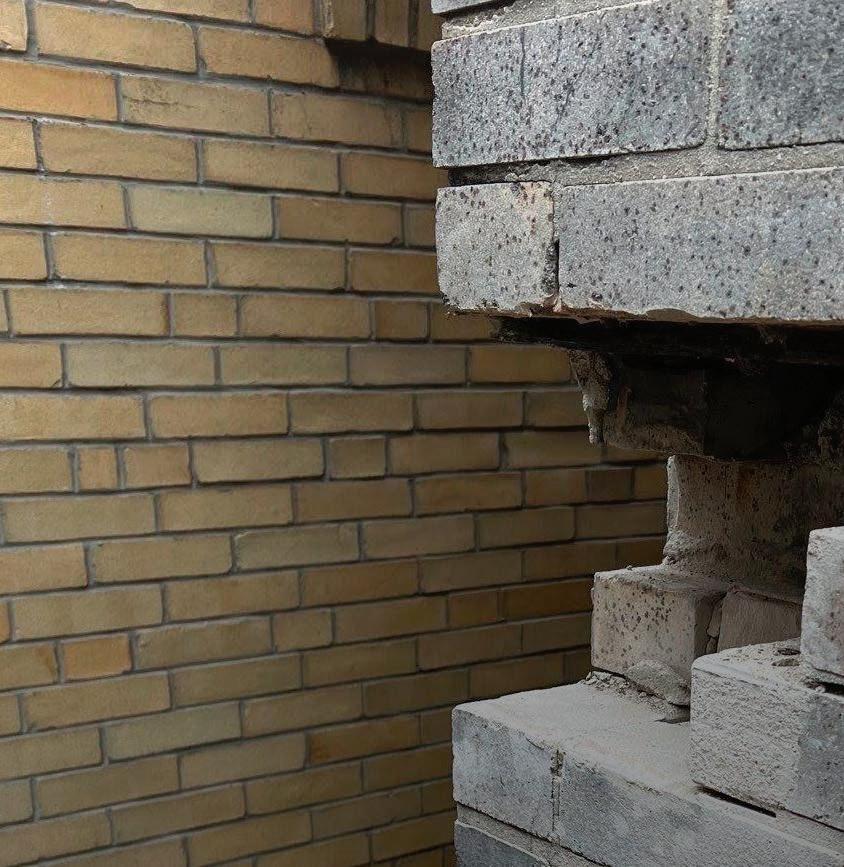
3. Loose Masonry and Falling Hazards
Loose bricks, stones, or terracotta pieces are serious safety concerns. These conditions are often found around parapets, window lintels, cornices, and decorative façade elements.
4. Failed Sealants and Caulking
Sealants around windows, doors, and expansion joints deteriorate over time, allowing water to enter the building envelope. Failed sealants are one of the most common sources of leaks.
5. Rusting Steel Lintels
Steel lintels above windows and doors can rust and expand, pushing masonry outward and causing cracking in the surrounding brickwork.
6. Parapet Wall Deterioration
Parapet walls are exposed to weather on multiple sides and often deteriorate faster than the rest of the building. Cracked coping stones, open joints, and failing flashing are common issues.
7. Balcony and Railing Deterioration
Concrete balconies and embedded railings can deteriorate over time due to water infiltration and corrosion of reinforcing steel.
Many of us have seen stories on the evening news about pieces of buildings falling onto sidewalks in cities like New York City and Philadelphia. While these incidents may seem rare, they are often the result of long-term façade deterioration that went unnoticed or was deferred for too long.
One of the biggest mistakes building owners make is waiting until there is a visible problem inside the building, such as leaks or interior damage, before addressing exterior façade issues. By the time water has entered the building, significant exterior deterioration has typically already occurred.
To improve public safety and prevent falling debris, the Philadelphia Department of Licenses and Inspections implemented façade inspection requirements similar to those established in New York. These regulations are intended to protect pedestrians, building occupants, and the long-term integrity of the buildings themselves.
Routine inspections and preventative maintenance are almost always less expensive than large-scale restoration projects that result from years of deferred maintenance.
For most masonry buildings, façade inspections should be performed on a routine basis as part of a preventative maintenance program:
• Annual visual inspections from the ground or roof to identify early signs of deterioration
• More detailed hands-on inspections every 3–5 years
• Immediate inspection if cracking, bulging, loose masonry, or water infiltration is observed
Larger and older buildings, and buildings located in high pedestrian areas should be inspected more frequently to help ensure public safety and identify potential hazards early. Additional inspections after major storms or severe winter seasons. In addition to routine preventative maintenance, building owners in Philadelphia should be aware of inspection guidelines set forth by the Philadelphia Department of Licenses and Inspections. These requirements are intended to ensure that building façades remain safe and do not pose a risk to pedestrians or occupants.
Regular façade inspections not only help maintain compliance but also allow building owners to proactively address developing issues before they result in violations, emergency repairs, or unsafe conditions. Staying ahead of potential concerns through routine evaluation and maintenance can significantly reduce long-term costs and help preserve the integrity of the building.
Preventative maintenance typically includes:
• Repointing mortar joints
• Replacing sealants
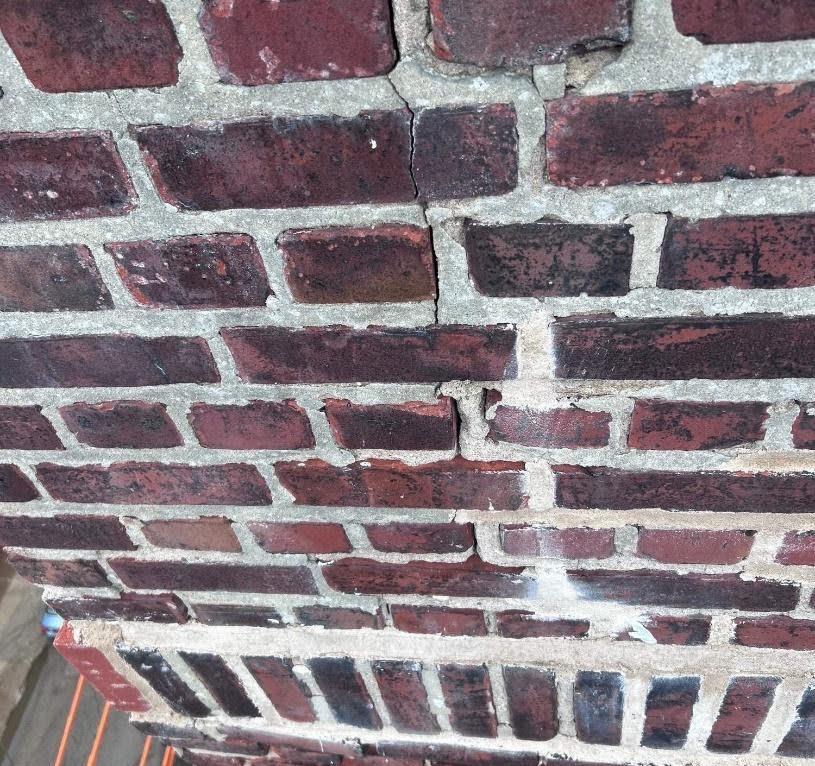
• Repairing cracks
• Stabilizing loose masonry
• Waterproofing
• Repairing flashing and coping stones
These smaller repairs significantly extend the life of a building and help avoid emergency repairs and unsafe conditions.
Philadelphia’s historic and masonry buildings are some of the city’s greatest assets, but they require regular maintenance and inspection to remain safe and structurally sound. Routine façade inspections help identify problems early, reduce longterm repair costs, and protect pedestrians and occupants.
In cities like Philadelphia, where many buildings are aging and exposed to harsh seasonal conditions, proactive façade inspections and maintenance are not just best practice— they are essential for safety, compliance, and long-term performance.
Building owners and property managers who invest in regular façade inspections and preventative maintenance will extend the life of their buildings, reduce repair costs over time, and help preserve the architectural character of Philadelphia for future generations.
Author Bio: Casey is the Business Development Manager at Premier Building Restoration, Inc., a family-owned masonry restoration and waterproofing company specializing in historic masonry, façade restoration, and structural stabilization throughout the Greater Philadelphia area. Premier Building Restoration has received multiple awards from the Preservation Alliance for Greater Philadelphia for their work preserving historic buildings and regional landmarks.
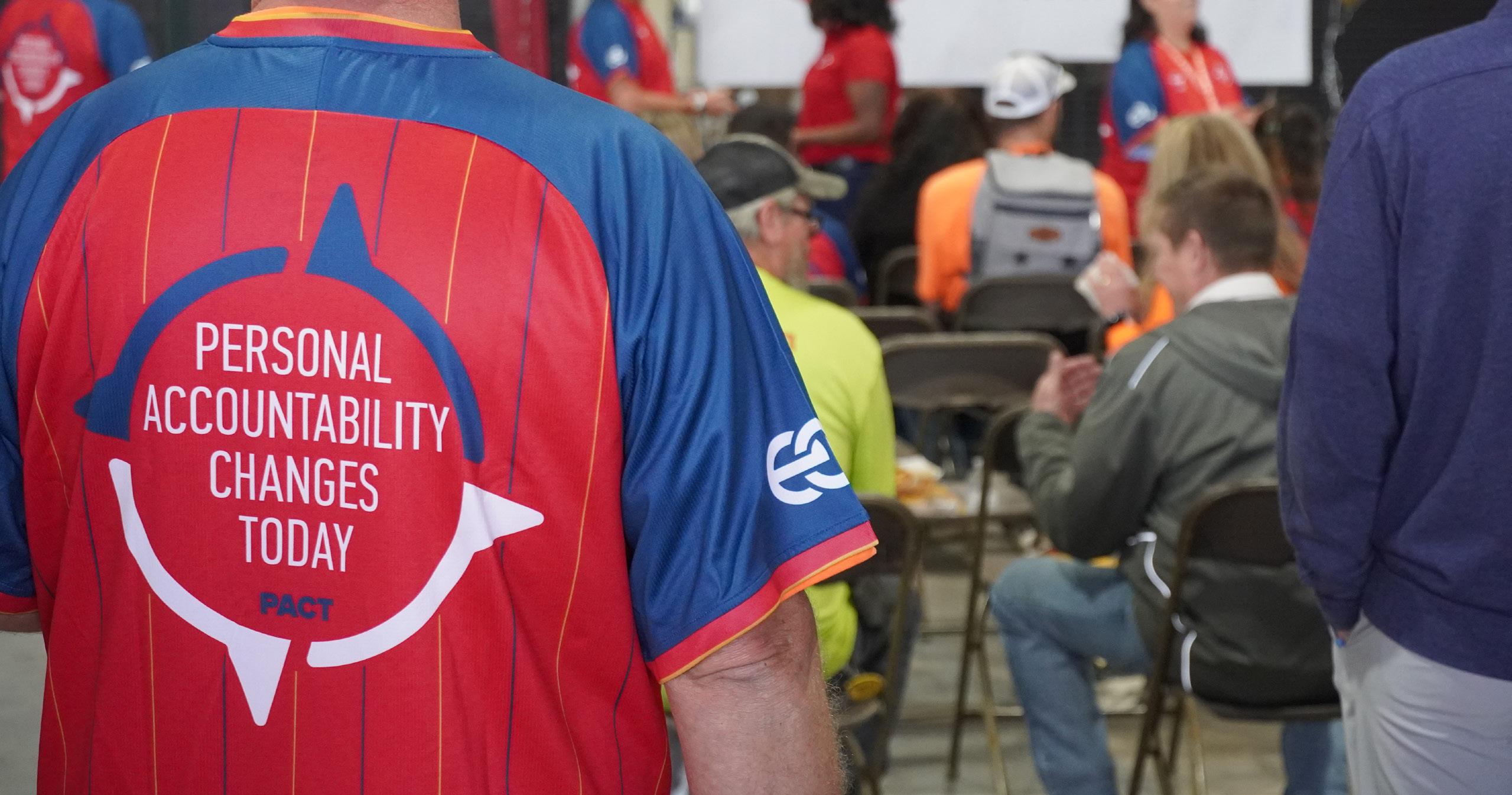
ED DEANGELIS, CEO | EDA CONTRACTORS, INC.
At EDA Contractors, a culture of care is defined by intentional humanity. It is demonstrated through leadership that recognizes people as whole individuals and leads with empathy, awareness, and purpose.
What does that look like in practice? It is leadership that offers transparent communication, consistent recognition, empathetic workplace policies, equity in opportunity, and a compassion for the humanity within us all.
It is leading with humanity as a strategy.
At its core, humanity as a strategy means embedding human principles, empathy, connection, respect, listening, and compassion, into the way decisions are made, teams are led, and cultures are shaped. It’s a conscious and consistent commitment to putting people at the center of organizational life.
At EDA, this is reflected strongly in EDA’s PACT Program.
The EDA PACT (Personal Accountability Changes Today) program is a cornerstone of EDA’s culture, aimed at supporting employees struggling with substance use challenges. For more than five years, the program has provided a framework for compassion, support, and recovery, ensuring EDA employees never have to face addiction challenges alone. It promotes safe and responsible job performance by addressing substance use and guiding employees through treatment and recovery. EDA PACT guarantees a return to work upon successful completion, giving employees the confidence to prioritize their health and wellness.
We all know the sobering facts.
• Construction workers face nearly twice the rate of
substance use disorders as the national average, with approximately 15% affected compared to 8.6% of the general adult population, according to the National Survey on Drug Use and Health. Additionally, 11.6% of construction workers report illicit drug use.
• The risks extend beyond substance use. While construction workers make up just 7% of the workforce, they account for 20% of on-the-job fatalities and 16% of opioid overdoses, according to the Center for Construction Research and Training.

The EDA PACT Program is EDA’s way to face the addiction realities that attack the construction segment by recognizing the humanity of our workforce, and supporting the betterment of that humanity, for the emotional, psychological and physical safety of our team, our partners, and our community.
Every organization has a different personality, different pressures, and different people. The goal isn’t to copy-andpaste another company’s approach. Instead, leaders should shape a human-centered strategy that aligns with their own identity, values, and mission.
Humanity begins at the top. Executives and managers must model empathy, transparency, and humility consistently. When leaders demonstrate care, teams mirror it. Policies should reflect the reality of modern life by recognizing flexibility, wellness, mental health, inclusive leave, meaningful recognition, and development pathways.
When policies show humanity, culture follows. Organizations that embrace humanity as a strategy see powerful outcomes: higher retention, stronger engagement, less burnout, more innovation, and teams that trust both their leaders and each other. Humanity becomes not just a cultural philosophy, but a competitive advantage. Employees who feel cared for don’t just show up, they show up with purpose. And when humanity is operationalized, not simply idealized, cultures transform from the inside out.
For years, organizations in the construction industry have invested heavily in technology and efficient frameworks. But as our world of work continues to evolve, one truth has become
unmistakably clear: organizations that prioritize humanity as a core strategy outperform those that don’t. This shift isn’t about softening standards or lowering expectations.
Instead, it’s about recognizing that an organization’s greatest differentiator is, and always has been, its humanity.
Humanity is a strategy, and it demands the same discipline, consistency, and accountability as any other business decision. In construction, the pressure is real, the work is hard, and the stakes are high, which is exactly why leading with humanity matters. When leaders intentionally create environments built on trust, psychological safety, emotional intelligence and respect for all, we don’t lower standards; we raise them. Treating people as human beings first, before titles, roles, or metrics, leads to safer jobsites, stronger performance, and teams that take real ownership of their work and each other. In the end, the legacy we leave won’t just be measured by what we build, but by how people felt working beside us, and that is a responsibility that champions the humanity within us all.
"The EDA PACT Program is designed to address substance and alcohol abuse within the construction industry, providing critical resources and support to those in need, ensuring that employees receive treatment and return to work without fear of job loss."
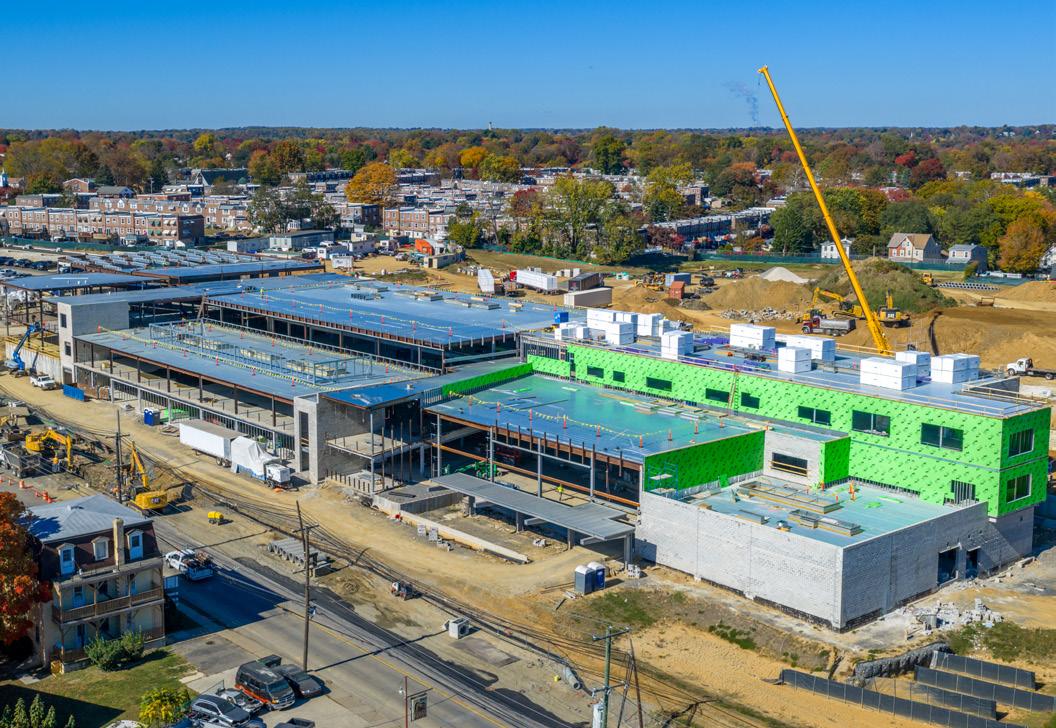
NICHOLAS DeJESSE | TARGET BUILDING CONSTRUCTION, INC.
GBCA SAFETY COMMITTEE

Across today’s construction and industrial sectors, the expectations placed on organizations have never been higher. Projects are larger, schedules are tighter, technologies are more advanced, and the workforce is more diverse in experience than at any point in recent history. These pressures make one truth unmistakably clear: the organizations that excel in safety are the ones that lead with culture. Not programs. Not slogans. Not compliance checklists. Culture — shaped and sustained by leadership — is the backbone of every safe, resilient, high performing- project.
A strong safety culture matters now more than ever because the modern jobsite is a complex system. Multiemployer environments, accelerated timelines, and high-risk scopes of work create conditions where miscommunication or misalignment can have serious consequences. At the same time, the industry is experiencing a generational shift. As experienced workers retire, newer workers enter the field with less hands-on- exposure and different expectations about communication, mentorship, and leadership. Without a strong cultural foundation — one that emphasizes clarity, trust, and shared responsibility — these dynamics can lead to gaps in understanding, inconsistent behaviors, and preventable incidents.
This is where leadership becomes the defining factor. Workers take their cues from the people who set expectations, make decisions, and model behaviors. When leaders demonstrate genuine commitment — not just in words but in daily actions — it creates a ripple effect across the entire project. Workers feel valued. Supervisors feel supported. Communication becomes more open. And safety becomes a shared responsibility rather than a top down- directive.
This is one area where union construction provides a significant advantage. Union trades bring a deeply ingrained culture of professionalism, craft pride, and peer accountability. Workers
arrive on site with a shared understanding of expectations, a common vocabulary around safety, and a cultural norm that values speaking up and looking out for one another. This shared foundation reduces variability, strengthens communication, and supports a more consistent safety culture across contractors and crews.
The safest jobsites distinguish themselves through this lived experience. These environments feel different the moment you step onto them. Leaders are visible and engaged. Supervisors communicate clearly and consistently. Workers understand not only what they are doing, but why it matters. Planning conversations are thoughtful, collaborative, and grounded in real-world- conditions. There is a sense of order, purpose, and mutual respect that cannot be faked or forced. It is the product of leadership that is credible, consistent, and deeply invested in the well-being of the workforce.
Culture is reinforced through countless small interactions — the foreman who pauses to explain a hazard, the superintendent who asks for worker input, the project manager who backs a stopworkstop work decision without hesitation. These moments build trust, and trust is the currency of a strong safety culture. When workers believe their leaders care about their safety, they are more likely to speak up, report concerns, and participate- actively in hazard identification. When leaders respond constructively, workers feel empowered rather than intimidated. This dynamic is what separates high -performing organizations from those that struggle.
Training and experience also play a critical role, but even these are shaped by leadership and culture. Effective training goes beyond regulatory requirements and focuses on building realworldreal-world competence. It teaches workers how to recognize hazards, how to think critically about risk, and how to make sound decisions under pressure. Experience deepens this learning, but only when it is supported by mentorship and
reflection. Without guidance, experience can lead to complacency or unsafe shortcuts. The safest organizations create intentional pathways for knowledge transfer, pairing new workers with seasoned mentors, and encouraging cross -training to broaden understanding.
In our region, union construction supports this effort by providing a workforce that arrives with a shared baseline of training, discipline, and expectations. Union apprenticeship programs combine classroom instruction, hands-on training, and structured mentorship to build real-world competence. This consistency helps contractors maintain a stable safety climate, especially on large or complex projects where multiple contractors must work together seamlessly. But even here, leadership remains a decisive factor. A well-trained workforce is only as effective as the culture it enters,- and the leaders who guide it.

reinforce them. Leaders model them. And the entire project benefits from a shared sense of purpose.
Leadership becomes even more critical on complex, high visibility projects. These projects operate under intense scrutiny and involve intricate coordination across multiple contractors, agencies, and stakeholders. The margin for error is slim, and the consequences of failure can be severe. In these environments, safety leadership provides the stability and alignment needed to navigate uncertainty. Leaders must articulate a clear vision for safety, establish unified expectations across diverse teams, and maintain transparency in the face of challenges. They must balance competing priorities, resist pressures that undermine safety, and ensure that communication remains- clear even as conditions evolve.
A strong culture amplifies this leadership. When safety is embedded into the identity of the project — when it is reflected in planning, communication, and decision making — it becomes easier to maintain alignment across contractors and crews. Workers understand expectations-. Supervisors
Ultimately, the organizations that excel in safety are those that understand the interconnectedness of culture, competency, and leadership. They recognize that safety is not a standalone function but an expression of organizational values and operational discipline. They invest in training that builds competence, in mentorship that builds experience, and in leadership that builds trust. They create environments where workers feel valued, informed, and empowered — and where safety and productivity reinforce each other rather than compete.
In an industry defined by complexity, risk, and constant change, leadership is not just a component of safety — it is the engine that drives it. Culture is the structure that sustains it. And together, they form the foundation of safer, more resilient, and more successful projects.


After more than two decades in construction, one lesson has remained consistent across every role I’ve held: this industry rewards people who keep learning. From managing projects on the general contracting side early in my career to leading glazing teams years later, the professionals who adapt, grow, and invest in their development are the ones who move the industry forward.
That belief is a major reason I remain actively involved in GBCA’s education efforts. As a member of the Education Committee—and as someone who has benefited firsthand from GBCA’s programs—I’ve seen how continued learning strengthens individuals, companies, and the construction workforce as a whole. GBCA Workbench brings these opportunities together in one place, making professional development more accessible for both emerging professionals and seasoned leaders.
Like many people in construction, my path combined formal education with real-world mentorship. I earned my bachelor’s degree in Civil Construction Engineering Technology, but the most valuable education I received came during my first year in the field, working alongside an experienced superintendent. He taught me how a building truly comes together, how to read the jobsite, understand sequencing, and recognize production challenges in ways no classroom could fully replicate.
That experience shaped how I think about training today. Classroom learning provides structure and technical understanding. Mentorship builds judgment. The strongest professionals and the strongest teams have access to both.
As I transitioned to the glazing side of the industry and took on leadership roles, the need for continued education became even more apparent. Technology evolved. Project complexity increased. Expectations shifted. Without ongoing learning, it’s easy to fall behind in an industry that never stops moving.

Throughout my career, I’ve always encouraged my teams to pursue education, whether through apprenticeships, college courses, or training programs. When I first learned about GBCA’s tuition reimbursement and professional development offerings, I immediately recognized their value.
I personally used the reimbursement program to attend an advanced management training program in Texas. That experience sharpened my leadership approach and helped me transition into higher-level responsibilities. It also opened my eyes to how many opportunities exist for people in our industry when cost is no longer a barrier.
That’s what makes GBCA Workbench so impactful. It brings together construction fundamentals, technical courses, leadership training, and reimbursement opportunities under one umbrella. For people working full-time, that centralized access makes education less intimidating and far more achievable.
I’ve seen the results firsthand. Assistant project managers, estimators, and former craft workers have used Workbenchlinked courses to build technical knowledge, improve organization and communication, and grow into new roles. Employers see better-trained teams, higher engagement, and stronger retention. Employees gain skills they can use anywhere in the industry, and many take their learning even further once they realize what’s available to them.
Outside of my role at Guthrie Glass & Metal, I run a nonprofit youth boxing gym in Philadelphia,
providing teens with a free, structured environment after school. For many of them, college isn’t an immediate or obvious path. I use the gym as an opportunity to introduce them to careers in the trades—careers that offer stability, strong earning potential, and long-term growth.
I often invite local union representatives to speak about apprenticeships and hands-on education. In glazing, for example, apprentices earn an associate degree in construction management as part of their training, and some continue on to earn bachelor’s degrees while working full time. When young people learn they can earn, learn, and advance at the same time, it changes how they see their future.
That is why educational access matters. It changes trajectories. And it’s why I advocate for education everywhere I can — on the job, through GBCA, and in the community.
If I could give one piece of advice to those just entering the industry, it would be this: focus on communication and organization. If you can master those two skills, you will be ahead of most of the field. Communicate early, especially when there’s a problem. Waiting only makes things worse. And stay organized. Construction moves fast, and if you can’t keep up with information, drawings, or changes, the project can quickly move ahead without you.
Training can help with both. Workbench courses reinforce industry fundamentals, technical knowledge, and the soft skills that matter just as much as understanding a drawing. Pair that with mentorship in the field, and you get a well-rounded foundation that accelerates growth more than any one class or tool could.
Competition motivates me. Technology pushes me. Our workforce challenges inspire me. And the reality is that construction will continue to evolve with or without us. AIdriven estimating tools, drones, lasers, and advanced project management platforms are already reshaping the way we work. To stay competitive, we have to stay curious.
That’s why continued education isn’t optional anymore. It’s part of the job. And with platforms like Workbench and GBCA’s tuition reimbursement, learning has never been more accessible.
If you’re early in your career — or even decades into it — take advantage of what’s available. It will make you better at your job, more valuable to your company, and more confident in navigating a rapidly changing industry. Education strengthens individuals, supports employers, and lifts our entire construction workforce. It’s worth investing in every step of the way.
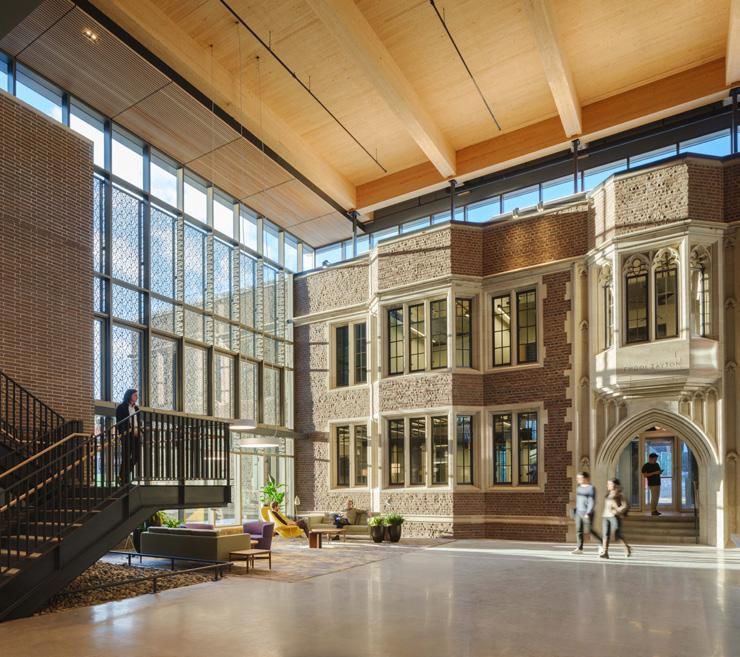
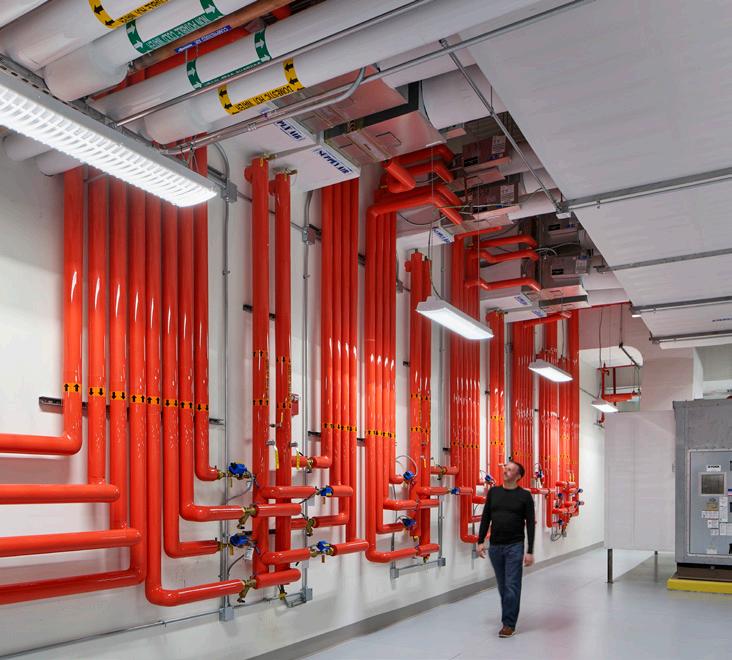
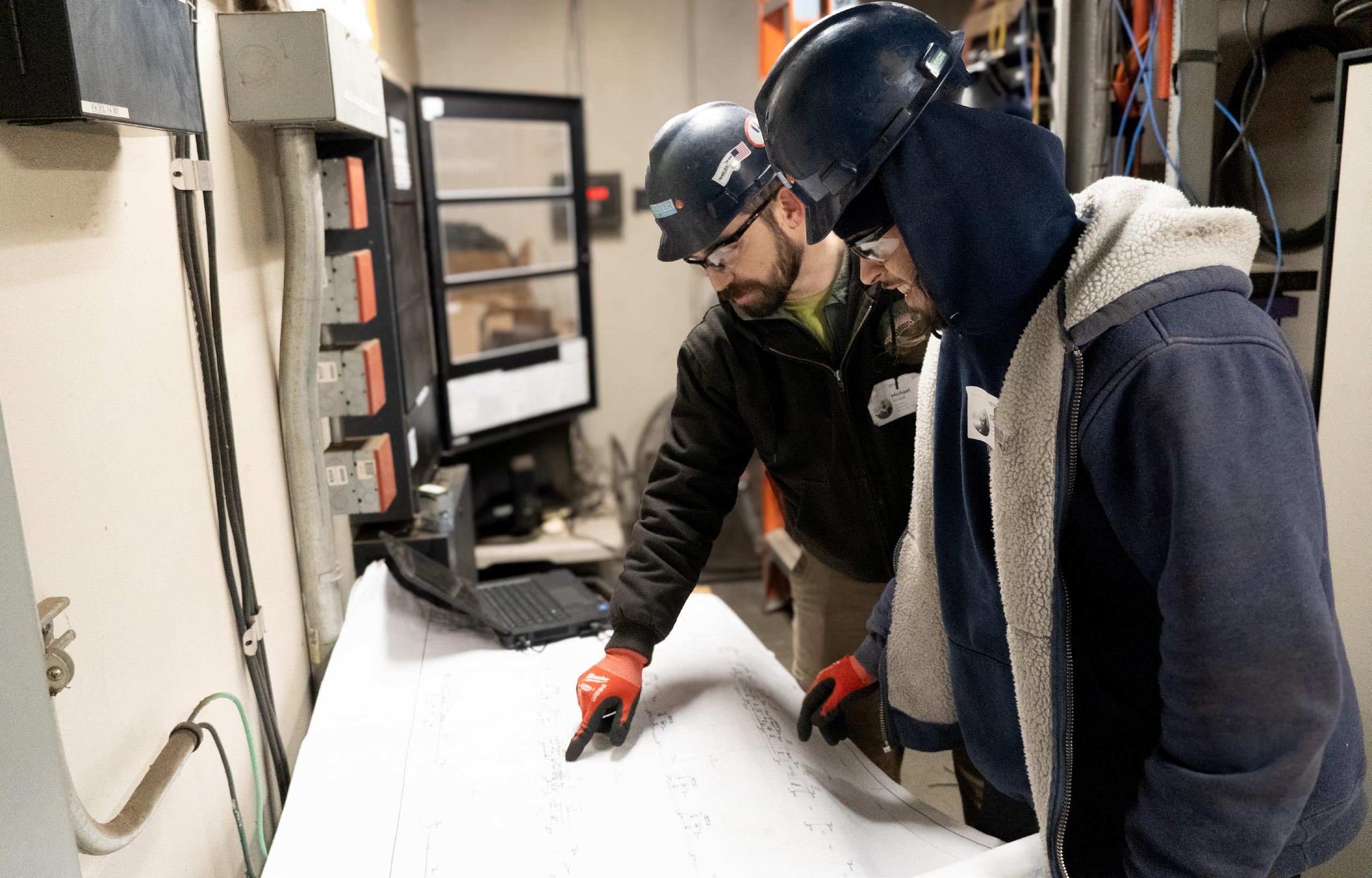
MATT HEISER, CFPS, CFI-II, CFPE | OLIVER FIRE PROTECTION & SECURITY
Construction work has always required attention, planning, and disciplined execution. Every phase carries risk, and the margin for error is often small. For years, safety efforts have centered on equipment, procedures, and hazard recognition. Those elements remain essential, but they do not stand on their own. Mental clarity and wellbeing now sit at the center of safe performance, directly shaping how workers think, react, and carry out their responsibilities on the job. When the mind is clear, decisions improve, hazards are recognized sooner, and the likelihood of preventable mistakes drops significantly.
Clarity creates something valuable on a jobsite. It allows workers and leaders to slow down just enough to think ahead. In that space, mistakes can be seen before they happen. Tasks can be questioned, sequences can be adjusted, and risks can be reduced before they develop into incidents. This is where safety shifts from reaction to prevention. It is not about waiting for something to go wrong and correcting it. It is about understanding that mistakes are part of any complex operation and planning for their inevitability in a controlled and deliberate way.
My experience as a firefighter, fire inspector, and compliance professional has shaped how I approach this idea. In emergency response, there is no time to figure things out after conditions change. You are trained to anticipate how a situation will evolve before it unfolds. Fire behavior, building systems, and human reactions must be considered together. You learn to picture the next step before it happens and to act based on that
expectation. That mindset carries directly into construction. A jobsite is not static. Conditions shift, pressures build, and people adapt in real time. The ability to imagine how those factors interact is what allows risks to be controlled early.
That same thinking applies during plan review and project planning. It is not enough to confirm that a system meets code or that a sequence works on paper. The real question is how that system or sequence performs under pressure. Where will attention drift? Where might someone rush? Where could work stop unexpectedly? These questions connect safety and cost in a very direct way. If a failure point can be identified early, it can be addressed before it affects the schedule or the
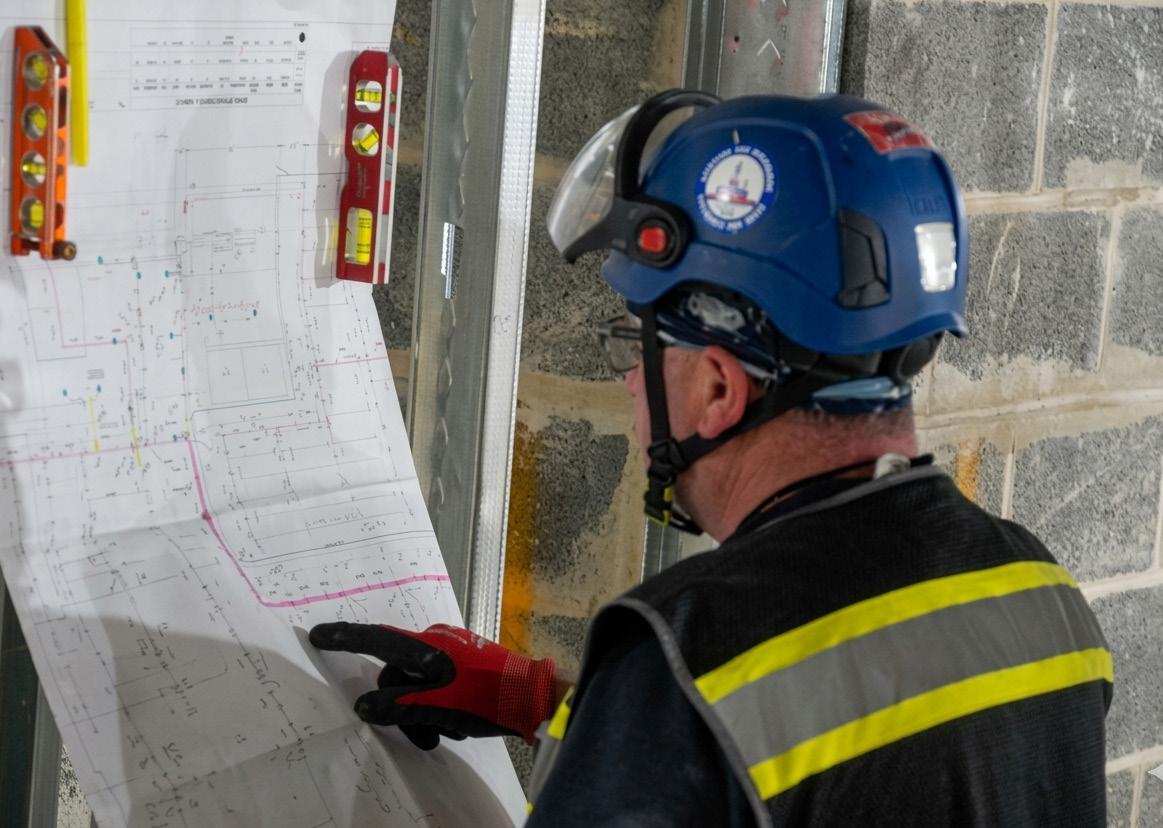
budget. If it is missed, it often shows up later as rework, delay, or injury.
Economic pressure makes this more challenging. Projects are moving faster, costs continue to rise, and expectations remain high. Workers and supervisors feel that pressure every day. It influences how decisions are made, often in subtle ways. Rushing a task, skipping a step, or pushing through fatigue may not seem significant in the moment, but these choices accumulate. Over time, they increase risk and reduce the margin for error. Maintaining mental clarity under these conditions is not automatic. It requires structure, support, and leadership that understands the impact of these pressures.
Attention is also being pulled in more directions than ever. Phones, constant communication, and outside concerns do not stay off the jobsite. Traffic, financial strain, and broader global issues all take up space in the mind. Many workers are also navigating shorter attention spans or conditions that make sustained focus more difficult. These are real factors that affect performance, and they cannot be addressed by policy alone. They must be accounted for in how work is planned and executed.
This is where mental clarity and wellbeing become practical tools rather than abstract ideas. A clear mind supports awareness, and awareness supports safety. When workers can stay present, they are more likely to recognize when something is off, speak up, and make adjustments. They are also more capable of thinking through a task before acting, which is often where the most effective risk reduction occurs. This does not eliminate mistakes, but it changes how they are managed. Instead of becoming incidents, many are identified early and corrected before harm is done.
The integration of fire protection knowledge, life safety training, and business experience creates a broader view of these challenges. It allows for a balance between protective measures, planning, and operational efficiency. The right equipment and procedures are critical, but they must be supported by clear thinking and realistic expectations of how people perform under pressure. When reviewing plans or walking a site, the focus is not only on what is present, but on what could happen next. That forward view allows adjustments to be made early, reducing both risk and unnecessary cost.
Leadership plays a defining role in setting these conditions. Crews respond to what they see in front of them. When leaders are focused, consistent, and deliberate, that standard carries through the team. When the pace becomes rushed or communication breaks down, attention follows. Simple practices make a difference. Pre-task discussions that address both the work and the risks involved. Schedules that allow for preparation instead of constant reaction. Expectations that are clear and reinforced through action. These are not complex changes, but they directly support clarity and performance.
Mentorship strengthens this further. Experienced workers bring an understanding of how tasks can fail because they
have seen it happen. Passing that knowledge to newer workers builds awareness faster and reinforces the habit of thinking ahead. It shifts the mindset from completing a task to understanding it, which is where safer decisions are made.
There are also practical ways to support focus throughout the day. Breaks that allow workers to reset, rotate high demand tasks, and limit unnecessary distractions in active areas all contribute to sustained attention. Technology can assist when used with purpose. Tools that reduce mental load or highlight patterns in risk can support better decisions, but they must remain secondary to human judgment and experience.
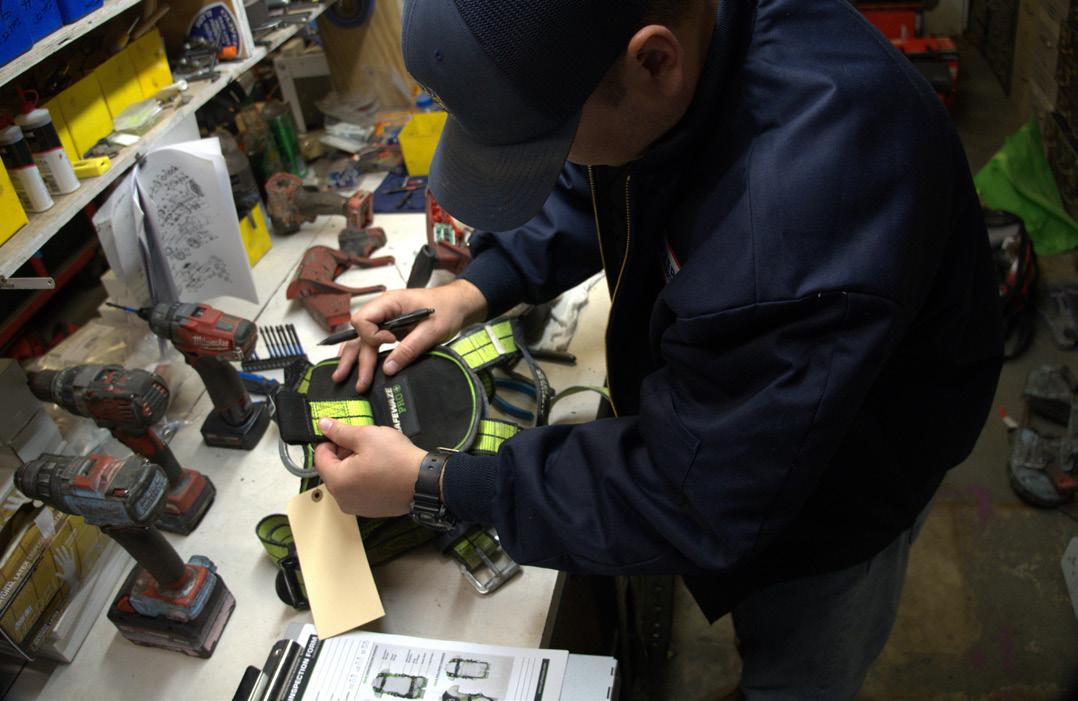
At its core, construction safety depends on the ability to see what is coming before it arrives. Risk cannot be removed entirely, but it can be anticipated and managed. Mental clarity and wellbeing make that possible. When workers and leaders are clear minded, they do more than follow procedures. They understand the work, question it when needed, and adjust in real time. That is where prevention happens.
In the end, the goal is straightforward. Create conditions where people can think clearly, stay focused, and act with intention. When that happens, mistakes are identified earlier, work flows more efficiently, and injuries are reduced. We prevent what we are able to foresee, and we stay ahead of the problems that would otherwise slow us down or cause harm.
About the Author: Matt Heiser, CFPE, CFPS, CFI-II, is Account Manager for the OFPS Sprinkler Service Division and Chairperson of the OFPS Safety Committee. He serves on the Board of Directors for the Philadelphia Fire Department Foundation and is a member of the Mid-Atlantic Construction Safety Council. A firefighter, fire inspector, and construction safety professional, Matt applies hands-on emergency response experience, plan review expertise, and business knowledge to anticipate risk, prevent injuries, and support efficient project delivery. He is a recipient of the 2024 Safety Professional of the Year Award from the Mid-Atlantic Construction Safety Council and the 2024 Excellence in Safety Award from the General Building Contractors Association. He focuses on practical safety strategies that strengthen performance, maintain project continuity, and improve outcomes across the jobsite.
As an elected official in our great city of Philadelphia, I have the distinct privilege of traveling across the city and engaging with people from all walks of life every day. In those conversations one thing stands out: there is no one-size-fits all path to our city’s future, but building it will take all of us. It has been proven time and time again, that if you want to get something done in Philadelphia, we all must come together to make it happen: government, private sector, labor, nonprofits, and our communities. At the heart of those partnerships are the people who power them. If we want our city to truly thrive, we have a responsibility to invest in their success by expanding access to opportunity, strengthening workforce development, and supporting the industries that keep Philadelphia moving forward. Since I took office in 2020, I have worked to do just that.
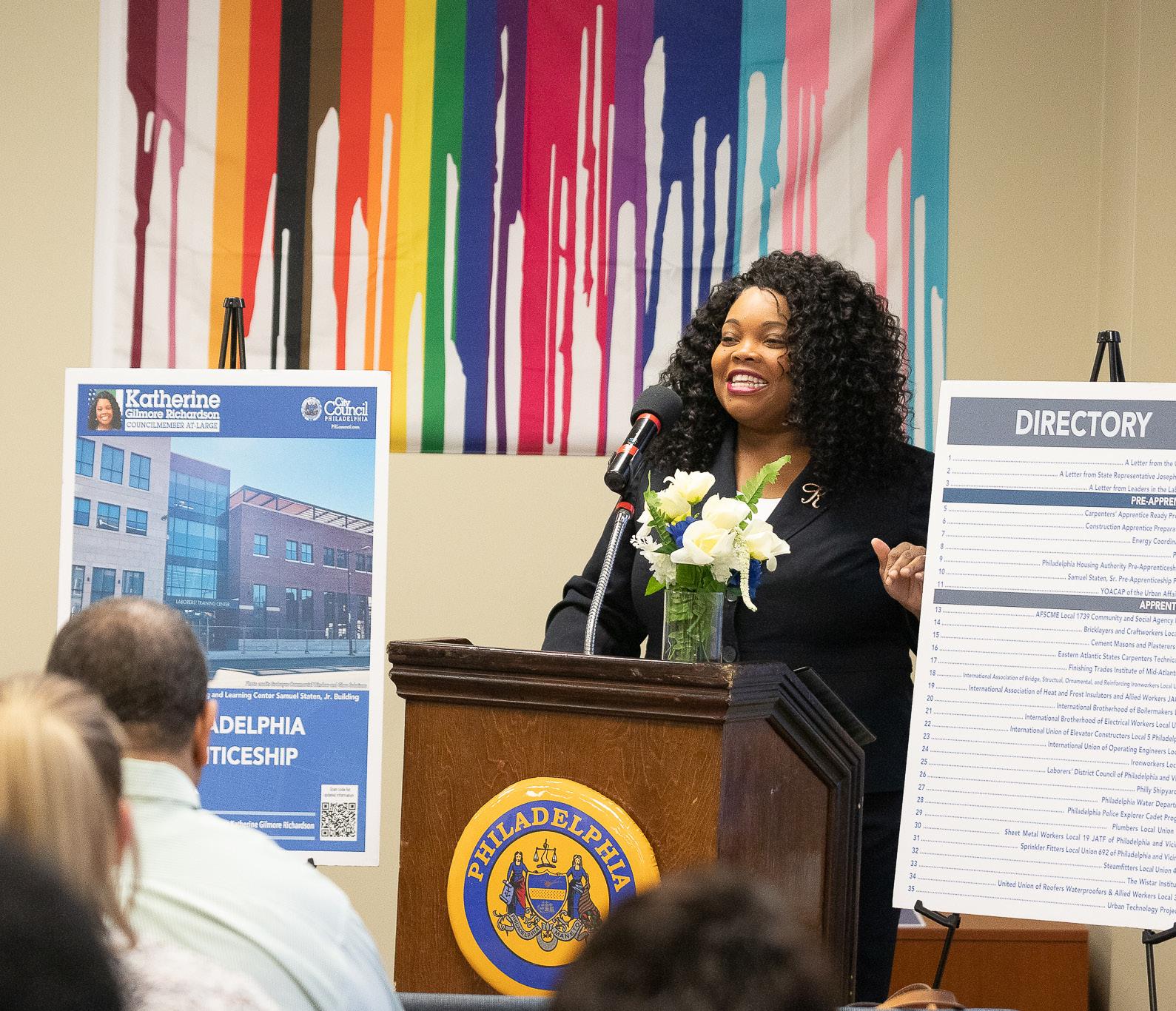
Unions have long been a cornerstone of the American middle class – uplifting individuals while also creating a ripple effect that strengthens families, communities, and the broader economy. Research show that union participation plays a significant role in reducing income inequality, with union members earning more on average than their nonunion peers. However, familysupporting and sustaining wages, comprehensive benefits, and access to training and career development do not just support workers, they strengthen families, stabilize neighborhoods, and drive local economic growth. When more Philadelphians have access to these kinds of opportunities, we build a more resilient, inclusive economy that works for everyone. Expanding skills-based pathways to good-paying jobs and creating more clear, attainable paths to the middle class must remain a top priority for all of us.
Before I was called to public service, I was a teacher at Overbrook High School. There, I learned that not all of our young people will want to go to college, but they should still be college or career ready upon graduation. That means not only exposing them to the wide range of opportunities available, but also setting them up for success before they even leave the classroom. That is why in 2020, I introduced the Career and Technical Education (CTE) Civil Service Preference legislation, which gives a five-point preference to qualified civil service applicants within three years of completing a School District of Philadelphia CTE program. Passed by City Council in 2022 and overwhelmingly approved by voters, this change is creating a strong pipeline to stable, well-paying jobs for our young people and helping the City fill critical, technical roles with homegrown Philadelphia talent.
Building on that work, we also have to ensure these programs are fully supported in our schools. Philadelphia has CTE
programs in 43 occupational areas, with classes typically taught by former industry professionals who bring real-world experience directly into the classroom. Yet for too long, these educators were required to pay out of pocket to obtain the credentials needed to teach, making Philadelphia one of the only districts in the state that did not cover these costs. This created a significant barrier to recruiting and retaining the very talent our students benefit from most. I fought to secure funding in the City budget to cover certification costs for CTE teachers, removing that burden and making it easier for them to stay in the classroom shaping our young people. In just a few months, from September 2025 to January 2026, 28 teachers have already benefited from this initiative. When we invest in the educators behind these programs, we strengthen the entire pipeline, ensuring students gain the skills, mentorship, and preparation they need to succeed in high-demand careers.
Too many residents, however, may not be aware of the incredible apprenticeship and pre-apprenticeship programs they can tap into. Yes, for our young people, but also for Philadelphians of any age looking to break into a stable, well-paying career within the trades. I created the first-ever Apprenticeship Guidebook in 2021, a practical resource designed to make those pathways more visible and accessible, which is updated every year. With more than 10,000 copies distributed citywide, the guide highlights 13 pre-apprenticeship and 35 registered apprenticeship programs, with clear information on how to apply, program requirements, and what to expect. By expanding access to this kind of information, we can connect a broader and more diverse group of Philadelphians to the skilled trades and union careers that have long served as the backbone of the middle class.
Making these opportunities accessible and easier to navigate is central to connecting people to good jobs, and it goes hand in hand with continued engagement and investment. My office hosts a “Labor Friday” series to bring these opportunities to life, giving residents the chance to hear directly from program leaders, ask questions, and better understand how to get started. Many CTE teachers even stream the series in
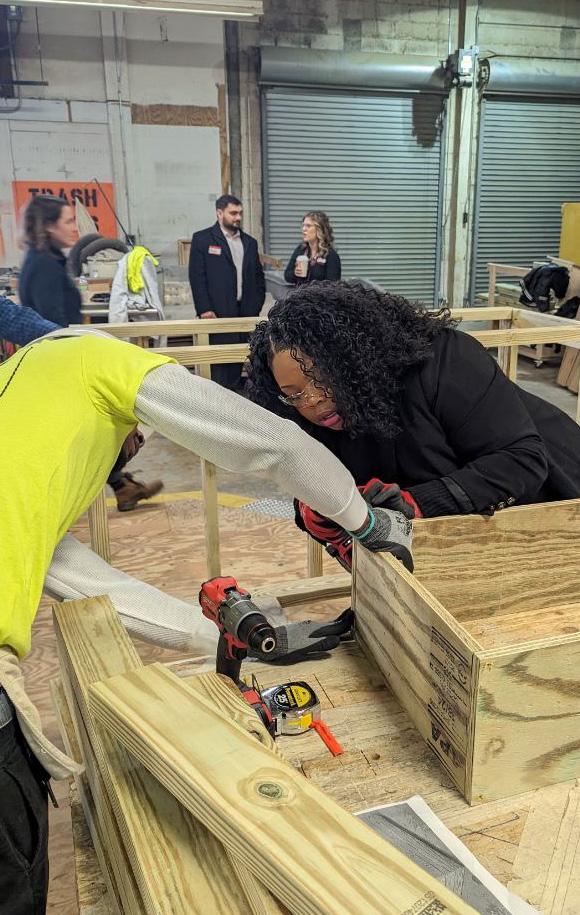
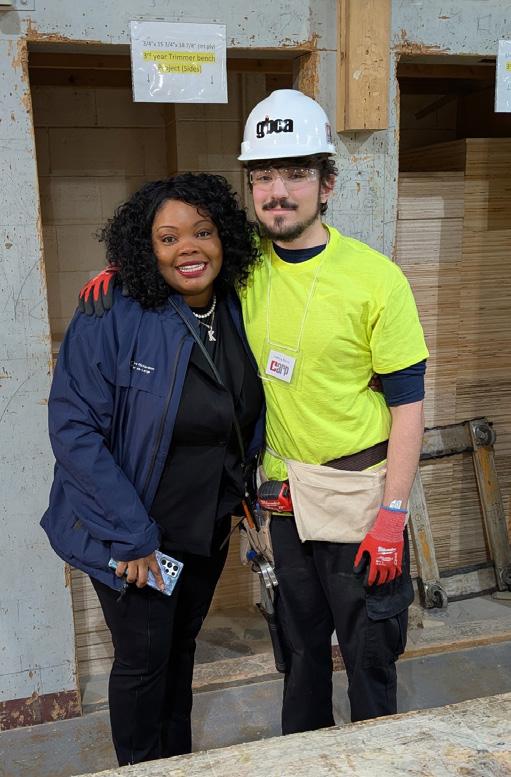
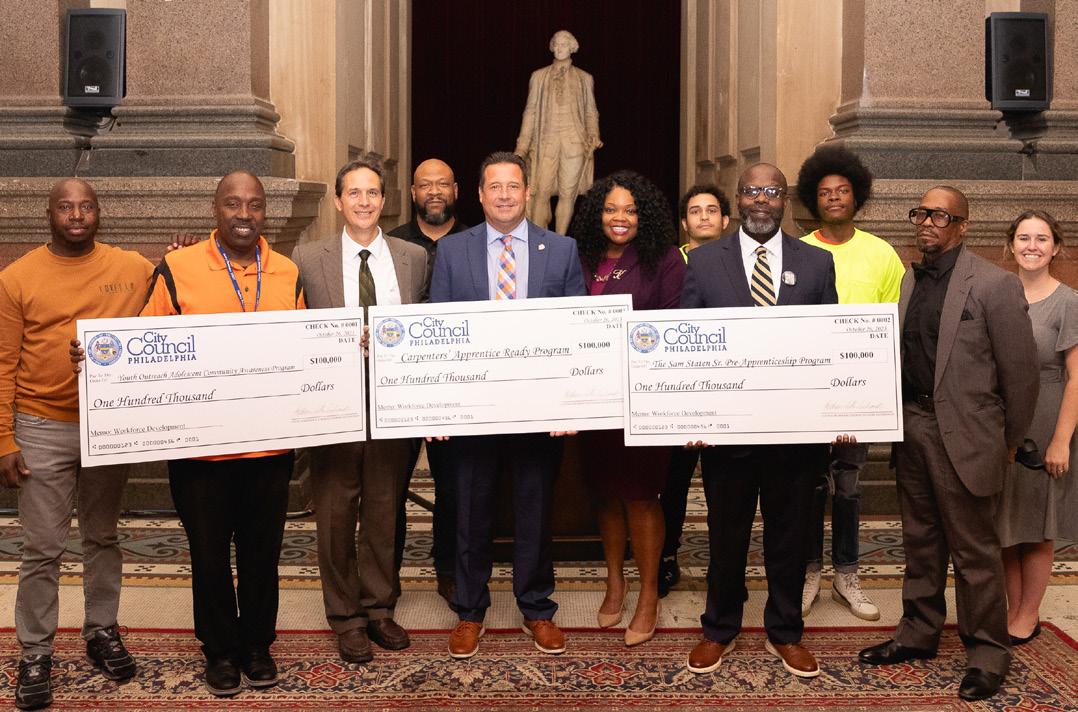
their classrooms! I have also worked to secure funding for apprenticeship programs like the Carpenters' Apprentice Ready Program (CARP), Rosie’s Girls, and the Samuel Staten Sr. Pre-Apprenticeship Program, while also recognizing efforts like Women in Construction Week and National Apprenticeship Week each year. Together, these efforts help ensure that awareness turns into action, and that more Philadelphians can take the first step toward a strong, stable career.
My commitment to this work is rooted in what I have seen firsthand: when people are given the tools, access, and support they need to succeed, the impact extends far beyond any one person. Because workforce development is more than an economic strategy – it is a pathway to opportunity, stability, and a stronger future for Philadelphia. The skilled trades, and partners like the General Building Contractors Association (GBCA), play a critical role in shaping that future, opening doors for young people and helping build a workforce that reflects the talent and diversity of our city. But none of this work happens in isolation. It requires continued collaboration across government, the private sector, labor, and education. I am proud to partner with GBCA in this effort and grateful for their ongoing leadership and commitment to creating real pathways to opportunity for our residents.
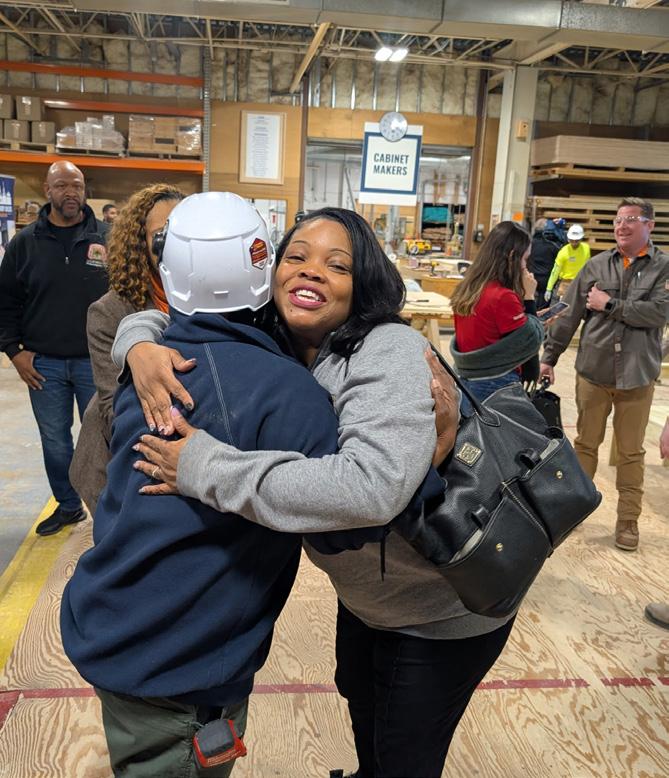
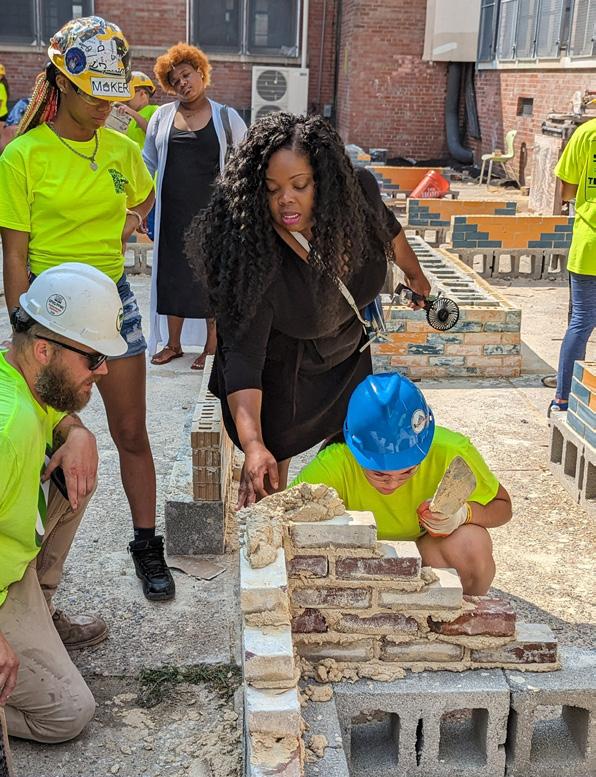


Leadership in construction extends beyond the jobsite. It happens in committee rooms, classrooms, industry forums, and decision-making spaces where priorities are set and long-term direction is shaped.
During Women in Construction Week, the General Building Contractors Association (GBCA) is highlighting women who are actively influencing the union commercial construction industry through committee leadership, education, collaboration, and leadership development. Through their involvement with GBCA initiatives and programs, these women are contributing insight, guiding decisions, and helping strengthen the industry across Philadelphia and the region.
The following leaders represent different pathways through which women are shaping construction’s future — from collaboration and education to innovation and leadership development.


Karla Wursthorn TN Ward Company
Co-Chair, AIA / GBCA Committee
Stronger outcomes in construction are achieved when architects and contractors work together as true partners. Through her role as Co-Chair of the AIA / GBCA Committee, Karla Wursthorn advocates for early engagement, open communication, and collaboration across disciplines. Karla emphasizes that bringing architects, contractors, and owners together leads to better cost control, constructability, scheduling, and


Angela Vacante Bittenbender Construction, LP Board of Directors
Leadership development is a critical pathway for women seeking to influence the construction industry at a broader level. Through her participation in GBCA’s Leadership Preparation Program (LPP), Angela Vacante has gained direct exposure to industry decision-making and governance.
Angela credits LPP with helping her think more strategically beyond her own company by participating in board meetings, learning from
overall project performance. Committee initiatives such as educational programs and collaborative exercises help align perspectives and improve industry outcomes.
“At the end of the day, successful collaboration starts with listening, understanding the problem, and solving it together.”
Karla also stresses the importance of representation at the committee and decision-making level. These groups play a critical role in shaping the direction and priorities of the construction industry, and diverse voices help ensure programs and initiatives reflect how work actually happens.
Through her career in preconstruction and estimating, Karla has witnessed meaningful progress for women in construction while also recognizing where gaps remain — particularly in the building trades, where early exposure and visible role models continue to be essential.
experienced leaders, and engaging in meaningful debriefs.
“Programs like LPP are important for women in construction because they create access to learning, mentorship, and leadership experience early on.”
Angela believes that better decisions come from having different perspectives at the table and that women bring strong management and problem-solving skills that are valuable assets to both construction companies and organizations like GBCA.
Her passion for construction stems from the opportunity to manage complexity — aligning people, schedules, budgets, and risk — while producing tangible results. Strong leadership and smart decision-making, she notes, translate into successful projects, stronger businesses, and a stronger industry.
Angela has completed GBCA’s Leadership Preparation Program and was elected to the GBCA Board of Directors in early 2026.


Long-Time Presenting Sponsor, GBCA Construction Technology Expo
Construction technology has evolved dramatically over the past several decades — from digitizing drawings to creating integrated digital ecosystems that support the full project lifecycle. Anna Liza Montenegro has experienced this evolution firsthand.
As a trained architect and long-time leader in construction technology, Anna Liza has lived through the transition from hand-drawn plans to CAD, BIM, and fully connected platforms that link design, estimating, construction, and operations.
“Technology adoption is ultimately about people, not platforms.”

Management Program
GBCA Education Committee
Education plays a foundational role in attracting, preparing, and advancing women in construction. As the founding director of the Construction Management program at Widener University and a member of GBCA’s Education Committee, Kimberlee Zamora, Ph.D. brings both industry and academic perspectives to workforce development.
Kimberlee’s career spans engineering education, industry experience, and mentorship. She has seen firsthand how access to education, advocacy, and support can open doors for women entering the field and prepare them for leadership roles.
Through her work with Microsol Resources (now part of Graitec) and long-standing involvement with GBCA’s Construction Technology Expo, Anna Liza emphasizes that technology alone does not create value. Thoughtful implementation, adoption, and cultural change are what drive meaningful outcomes.
She also highlights the importance of women having a voice in shaping how innovation is introduced across the industry. Women often bring a holistic, human-centered perspective that considers workflows, collaboration, and how people actually work — not just the tools themselves.
“When women help guide how innovation is introduced and scaled, the industry benefits from more inclusive, practical, and sustainable solutions that reflect the realities of the entire project team.”
For Anna Liza, this work is deeply personal. As a mother to a recent architecture graduate, she is invested in ensuring the next generation of women enters an industry that is inclusive, equitable, and equipped to use technology in meaningful ways.
“Continuing to give students access to site visits, networking events, and internships/co-ops can prepare them to not only start a career but be leaders in the field.”
Hands-on learning experiences help bridge classroom lessons with real-world application, introducing students to industry leaders and innovative projects across the Philadelphia region. Kimberlee notes that representation at organizations like GBCA ensures women can contribute their experience and skills to identify growth opportunities and areas for improvement.
“Providing women with a voice and a seat at the table at organizations like GBCA enables them to contribute their experience and skills to identify areas of improvement and growth opportunities.”
Now as an educator, Kimberlee is grateful for the opportunity to mentor the next generation of construction managers and help create pathways that did not always exist when she entered the industry.

Across committees, education programs, technology initiatives, and leadership development pathways, women are actively shaping the direction of the union commercial construction industry. Through GBCA, these leaders are contributing insight, influencing decisions, and helping build a more collaborative, innovative, and resilient future.

GBCA is proud to support leadership pathways that ensure diverse perspectives help guide the industry forward.
Newport Construction Management Corp
ASSOCIATE MEMBERS
Atlantic Concrete Cutting, Inc.
Durapods LLC
Express Telecommunications Inc
Girl Concrete, Inc.
Graham-Tech Environmental Service
Haines & Kibblehouse
Lee Mechanical Company
Northeast Fireproofing LLC
Rosette Specialty Trades, LLC
Wayman Fire Protection

Bell Supply
See our ad on page 23.
Kieffer's Appliances
See our ad on page 35.
Tague Lumber, Inc.
See our ad on the back cover.
GENERAL CONTRACTORS
LF Driscoll
See our ad on page 13.
HSC Builders & Construction Managers
See our ad on page 43.
Rycon Construction, Inc.
See our ad on page 39.
Acumen Analytics
Eco Materials, LLC
Elevator Construction Consultants LLC
Liberty Waste & Recycling
Topcon Solutions, Inc.
Tristate Equipment Holdings, LP
Wesco International, Inc
Widener University - Construction Management Program
World Insurance Associates
Turner Construction Company
See our ad on page 33.
INSURANCE
Pat DiCerbo
Northwestern Mutual
See our ad on page 41.
Aegis Project Controls
See our ad on page 17.
Component Assembly Systems, Inc.
See our ad on page 19.
IDS Drones, Inc.
See our ad on the inside front cover.
National Glass & Metal Company, Inc.
See our ad on page 39.
E.C. Fence & Iron Works, Inc.
See our ad on page 27.
DeWalt Industrial Tool Co
See our ad on page 21.


New Research by GBCA highlights how its members are setting the standard for jobsite safety through significantly lower incident rates compared to non-members.
The General Building Contractors Association (GBCA) conducted a comprehensive analysis of over 2 million OSHA 300 logs from 2016 onward and found that its members experience significantly lower incident rates than non-members across various categories. An incident is defined as any health or safety event that results in unwanted consequences, including bodily injury or property damage.
By maintaining lower rates of these incidents, GBCA members demonstrate a strong commitment to jobsite safety, supported by union-backed training, dedicated safety resources, and proven best practices. These efforts contribute to making the construction industry safer for everyone.
GBCA member contractors set the standard for safety, with fewer injuries, illnesses, and job transfers than nonmembers. Their commitment protects workers and strengthens the industry—benefiting businesses and the broader economy.
GBCA continues to enhance workplace safety through strong leadership, comprehensive training, and a commitment to best practices, resulting in a steady reduction of injuries and incidents from 2016 through 2023.
GBCA members consistently reduced incident rates across all categories.
The rate of cases involving job transfers or restrictions among GBCA members decreased by 62.61% during the study period.
Rates of less common but significant incidents, categorized as “Other Cases,” dropped by 54.72%
The rate of jobsite injuries among GBCA members improved by 61.59%.