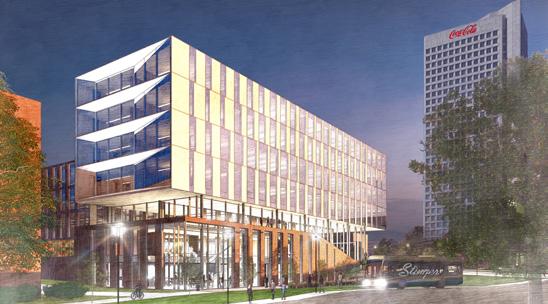
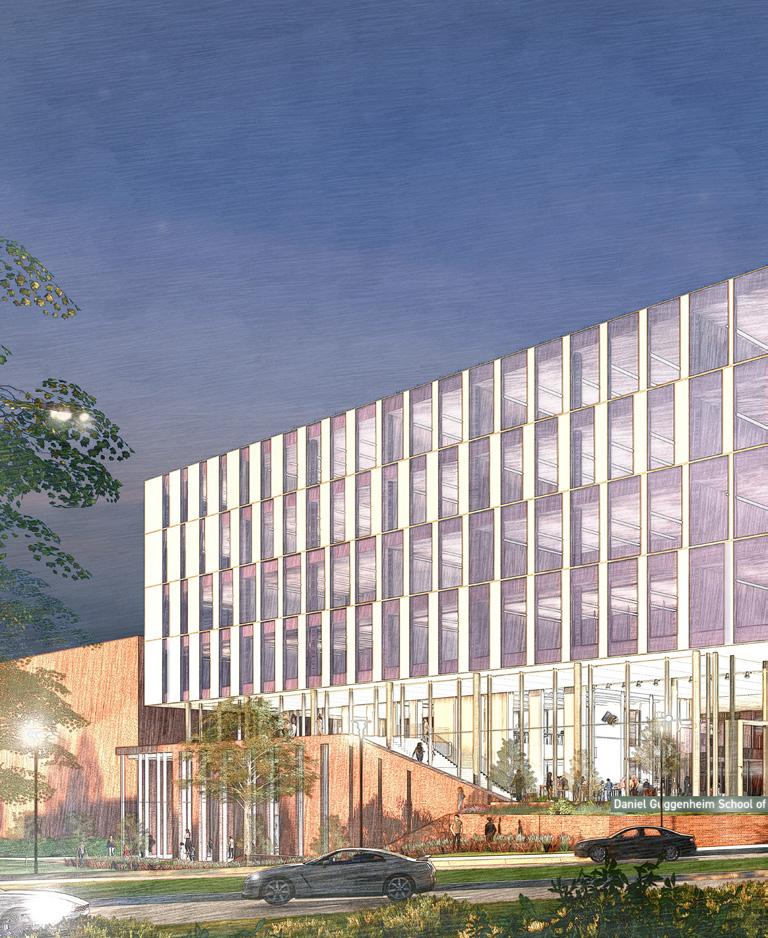
The state of Georgia is making a significant investment in one of Georgia Tech’s key academic and research infrastructure projects, allocating $88.2 million for the design and construction of a new aerospace engineering building.
The funding came in the amended fiscal year 2026 budget Gov. Brian Kemp signed this spring.
The new building will be the home of the Daniel Guggenheim School of Aerospace Engineering. It will feature advanced laboratories; dedicated space for flight and propulsion systems research; expanded instructional studios; and new collaborative areas for students, faculty, industry partners, and interdisciplinary research teams.
Meanwhile, The Delta Air Lines Foundation also has committed $5 million to the project.
“The new facility will fundamentally reshape how we conduct research and educate our students,” said Mitchell Walker, William R.T. Oakes Jr. School Chair of the Guggenheim School. “Next-generation research spaces combined with hands-on

learning environments and modern classrooms will enable work our current footprint can’t support.”
Georgia’s aerospace sector is one of the largest and fastest growing in the nation; it is expected to surpass $1 trillion by 2040. Companies range from major global manufacturers to startups choosing to locate and expand their operations in the region. The industry employs tens of thousands of Georgians and supports critical areas such as aviation, defense, spaceflight, and advanced manufacturing.
“We are profoundly grateful to Gov. Kemp, Lt. Gov. Jones, Speaker Burns, the State House of Representatives, and the State Senate for their continued confidence in Georgia Tech and what we do to keep our state competitive,” said Ángel Cabrera, Georgia Tech president. “This investment will help us create world-class facilities to drive innovation and develop the workforce that Georgia needs to stay at the forefront of the aerospace industry.”
Collaborating with industry gives companies access to the College’s world-class expertise and new ideas. For students and faculty, it’s a direct line to the challenges defining real-world engineering.
With thousands of faculty and student researchers and countless research areas spread across eight schools, you never know what you’ll see when you visit a lab space.
In 2022, we met a group of Dean’s Scholars in their first year of college and asked about their hopes and dreams for college and their lives. Four years later, and with graduation near, we invited them back to see how things have changed.
HELLUVA ENGINEER
GEORGIA TECH
COLLEGE OF ENGINEERING MAGAZINE SPRING 2026
Helluva Engineer is published semiannually by the College of Engineering at the Georgia Institute of Technology.
INTERIM DEAN
Doug Williams
ASSOCIATE DEANS
Matthieu Bloch
Associate Dean for Academic Affairs
Kim Kurtis
Associate Dean for Faculty Development and Scholarship
Hang Lu
Associate Dean for Research and Innovation
Damon P. Williams
Associate Dean for Outreach and Engagement
DIRECTOR OF COMMUNICATIONS
Jason Maderer
ASSISTANT DIRECTOR OF COMMUNICATIONS
Joshua Stewart
CONTRIBUTING WRITERS
Dhanesh Amin, Parker Avery, Angela Ayers, Michelle Azriel, Brad Dixon, Melissa Fralick, Alex Howard
PHOTOGRAPHY
Candler Hobbs
CONTRIBUTING PHOTOGRAPHERS
Allison Carter, Rob Felt, Gary Meek, Nancy Sandlin, Josh Smith, Dan Watson
GRAPHIC DESIGN
Sarah Collins
ADDRESS
225 North Avenue NW Atlanta, Georgia 30332-0360
VISIT coe.gatech.edu
FOLLOW
x.com/gatechengineers
FOLLOW instagram.com/gatechengineers
CONNECT bit.ly/coe-linkedin
LIKE facebook.com/gtengineering
WATCH youtube.com/coegatech
Copyright © 2026
Georgia Institute of Technology
Please recycle this publication.
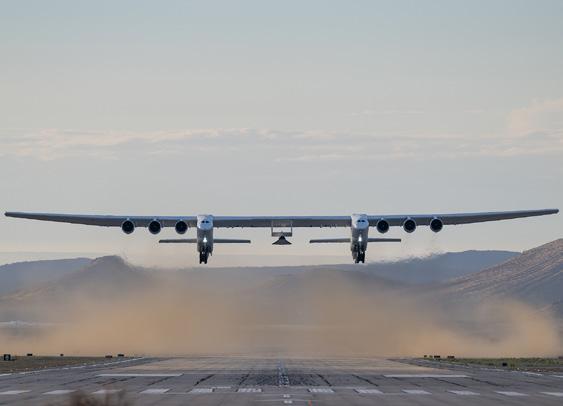
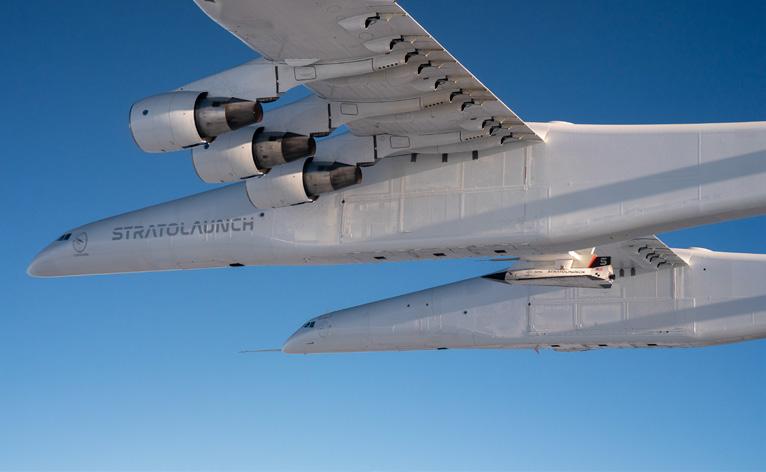
Above: Stratolaunch uses its massive airplane, called Roc, to lift the company’s Talon-A hypersonic vehicle to altitude. As CEO of Stratolaunch, aerospace engineering alumnus Zachary Krevor is working to make hypersonic flight cheaper and more accessible, page 38.
If you wish to change your Helluva Engineer subscription or add yourself to our mailing list, please send a request to editor@coe.gatech.edu.
Dear Friends,
Iarrived at Georgia Tech in 1989 as a faculty member in what was then called the School of Electrical Engineering. I’ve seen the face of campus change during my career. And then change again.
One of the more recognizable transformations began 25 years ago, when Georgia Tech broke ground on Tech Square. Phase one was a 1.4 millionsquare-foot ecosystem for high-tech research, education, and retail. It delivered — and then some, forever changing Georgia Tech and Midtown. Phase two followed in 2019 with the addition of the Coda building, 21 floors programmed around high-performance computing, innovative collaborations, and commercialization. This semester, Tech Square officially welcomed phase three with the opening of two new towers, including the 18-story George Tower. It will serve as the new home of the top-ranked H. Milton Stewart School of Industrial and Systems Engineering.
Another transformation begins this summer for the Daniel Guggenheim School of Aerospace Engineering. The state of Georgia recently approved $88.2 million for the design and construction of the School’s new home, which will take shape in the coming years.
Now that the state has committed nearly half of the $200 million project cost, a major focus over the next 12 months will be securing the remaining half. The Delta Air Lines Foundation is the first partner to step forward with a $5 million commitment.
We’ll need everyone’s help to be successful. I’m hopeful that many of you will be willing to invest in this priority. It’s good for Tech and for the state of Georgia.
We have more on the new AE Building and George Tower in this edition of Helluva Engineer. We’re also going inside our existing engineering buildings to give you a peek at a few of the unique lab spaces on campus. You’ll read about some of the ways we’re connecting with and serving industry. And you’ll meet three of our amazing Dean’s Scholars. We first talked to them in their first year about their ambitions for their Georgia Tech years and beyond. Four years later, we see how their outlooks have changed — or not.
It’s been a privilege to serve as interim dean of the College since November. In the coming weeks, I expect to share news about our next permanent dean who will no doubt deliver their own transformations in the years ahead.
Have a great summer, and Go Jackets!
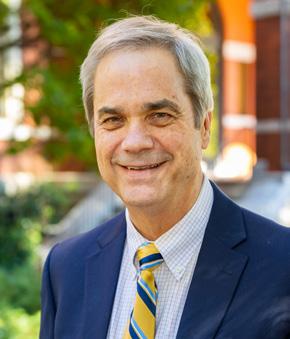
Doug Williams Interim Chair
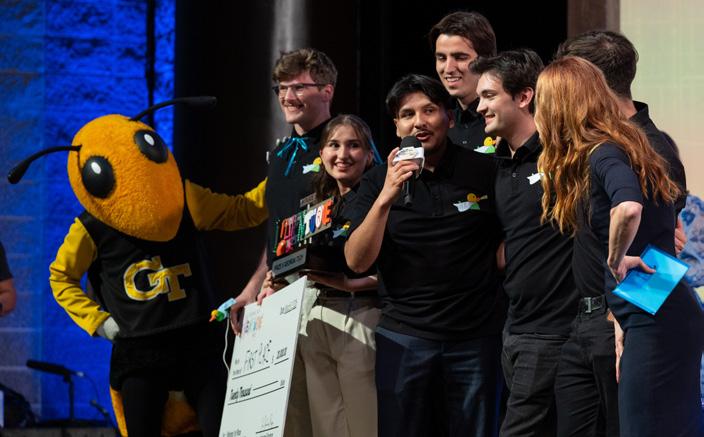
Team Hearo won first place at the 18th annual InVenture Prize competition, which began with a record 72 teams and culminated in six finalists pitching to a panel of judges on live TV.
Hearo has reimagined the otoscope for parents, enabling caregivers to conduct an at-home ear exam and capture physicianusable images to help identify ear infections without a trip to the doctor’s office.
“It’s so huge,” said mechanical engineering student Luke Towery. “Winning this really shows what can happen when a team finds a problem in the world to solve and sticks together.”
Along with Towery, the Hearo team included Ander DeOnaindia, computer engineering; Vasileios Kouloumentas, Luis Lujan, and Agustin Munyau, biomedical engineering; and Marilyn Pelayo-Montufar, computer science.
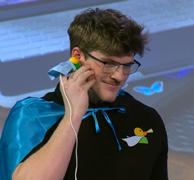
First place comes with a $20,000 prize and a spot in Georgia Tech’s CREATE-X Startup Launch, a 12-week summer program where participants work with experienced entrepreneurs and Tech alumni to launch their ideas into fully functioning startups.
Second place and $10,000 went to PedalSwap, a configurable guitar pedal with interchangeable effect cartridges and controls created by electrical engineering and music technology students.
The audience-voted People’s Choice Award went to team DoorTix, an automated ticket-purchasing platform designed to offer fair, predictable pricing. It was designed by industrial and mechanical engineers and a computer science student.
‣ ALEX HOWARD
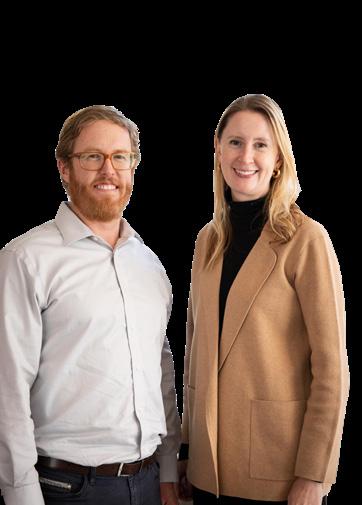
Mechanical engineering researchers will work to deliver a first-of-its-kind therapy for patients with lymphatic disease with up to $21.8 million from the Advanced Research Projects Agency for Health (ARPA-H).
For many of these patients, care has long meant pain, disfigurement, and severe side effects, rather than treatment for the disease itself. Susan Napier Thomas and Brandon Dixon have collaborated for more than a decade on the project, and now they’ve reached a potential turning point.
“Funding support at this level is unprecedented,” said Thomas, Woodruff Professor in the George W. Woodruff School of Mechanical Engineering. “It finally gives us a chance to move beyond symptom management and toward real treat ment. We’re addressing an underserved population with a huge unmet need.”
The lymphatic system helps keep fluid moving through the body and plays a key role in immune health. When it does not function properly, fluid can build up in tissues, causing chronic pain and other long term complications.
In the coming years, the researchers will work toward an initial human trial, with an early focus on rare lymphatic conditions in children and chronic disease in adults.
Mechanical engineer David McDowell (inset) is among the newest members of the National Academy of Engineering (NAE).
“I am truly honored to be counted among such a distinguished group of newly elected members in the NAE,” McDowell said. “Having spent my entire career at Georgia Tech since 1983, I have very much benefited from the strength and support of its students, faculty, staff, facilities, and traditions.
“I’m particularly indebted to the many colleagues and collaborators over the years who have helped to realize success in my research program as well as the enduring support over the years of my wife Kathy and family.”
McDowell is Regents’ Professor Emeritus in the George W. Woodruff School of Mechanical Engineering and the School of Materials Science and Engineering.
The Academy cited him “for microstructure-sensitive computational modeling of engineering alloys, and methodologies for computational materials design.”
His research focuses on how materials behave, building computer algorithms and models that can predict how they deform and fail. His work has applications for lightweight structural materials, high-temperature aircraft gas turbines, high-performance alloys such as titanium and steel, and other areas.
Other newly elected fellows included alumni Mohamed Slim Alouini, Bruce Gnade, and Jeff Morris.
Alouini earned an electrical engineering master’s degree in 1985 and is now a faculty member and associate vice president of research at King Abdullah University of Science and Technology in Saudi Arabia.
A 1983 graduate, Gnade earned a Ph.D. in nuclear chemistry. He is professor emeritus at the University of Texas at Dallas.
Morris is both an alumnus and a former faculty member. He finished his chemical engineering degree in 1989 and returned to teach and conduct research from 1996 to 2002. He’s currently a chemical engineering professor at the City College of New York.
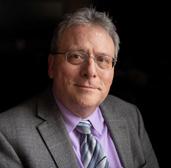
Election to the NAE is among the highest professional recognitions for engineers. New members are nominated and voted on by the Academy’s existing membership.
‣ JOSHUA STEWART
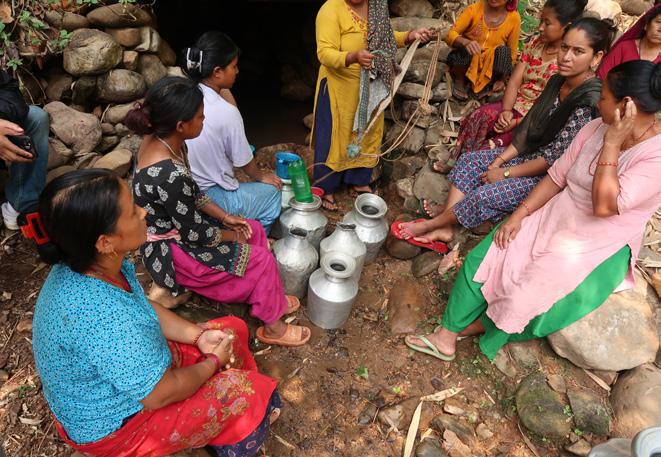
Getting water for the 1,000 residents of the rural village of Chisopani Bhirkhe in Nepal is a daily challenge.
Women spend hours climbing steep roads with heavy containers to access three springs that are contaminated and often run dry.
A team of Georgia Tech students in Engineers Without Borders (EWB) is working to change that.
“For a lot of the women, their entire day revolves around fetching water,” said thirdyear civil engineering student Grace Jiang. “They have small sources and one larger one, but they have to travel long distances and wait in line.”
While on a five-day assessment trip last summer, Jiang and mechanical engineering students Devasena Sitaram and Nishita Tonangi surveyed water points, analyzed topography and water flows, and talked with community members to learn more about water shortages during the dry season.
“Before we even started designing anything, we wanted to listen,” said Anjali
Balaganesh, a biomedical engineering student and one of the project leads. “The trip reminded us that good engineering starts with understanding the people you’re building for.”
The students’ goal is to develop and deploy a water supply system that has capacity to serve all 200 households in Chisopani Bhirkhe during even the driest parts of the year. Once they create a plan, the team will return to Nepal to begin to implement their system alongside the locals.
The group is investigating a series of methods to stabilize water supply, including constructing a groundwater recharge pit to filter water into the underground aquifer, installing tap stands connected to a water supply system, and searching for a new longterm well.
The team estimates their work will cost $100,000. They’re fundraising through EWB-USA and searching for sponsors.
‣ DHANESH AMIN
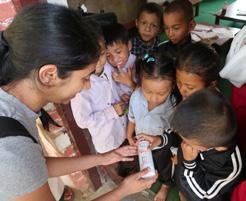
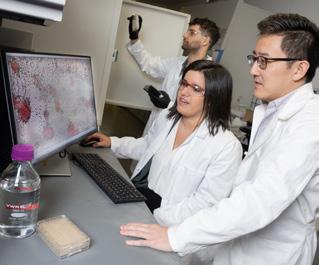
With 70% growth since 2019, Georgia Tech has risen to No. 2 nationally in federal research expenditures in the latest survey from the National Science Foundation.
This is Tech’s highest‑ever ranking in the assessment and keeps the Institute No. 1 among universities without a medi cal school — a major accomplishment, as medical schools account for a quarter of all research expenditures nationally.
Georgia Tech is ranked sixth in total spending from all external resources, includ ing the federal government, foundations, industry, and more.
“Georgia Tech’s rise to No. 2 in federally sponsored research expenditures reflects the extraordinary talent and commitment of our faculty, staff, students, and partners. This achievement demonstrates the confi dence federal agencies have in our ability to deliver transformative research that addresses the nation’s most critical chal lenges,” said Tim Lieuwen, executive vice president for Research.
Overall, the state of Georgia maintained its No. 8 position in university research and development, and for the first time, the state topped $4 billion in research expenditures. Georgia Tech accounts for $1.5 billion, the largest state university contribution.
‣ ANGELA AYERS
The Allen-Davidson-Coleman XR Makerspace opened in January with a mission to expand access to extended reality (XR) tools for the Georgia Tech community.
The makerspace offers a wide range of immersive technology to support XR projects and experimentation, including Apple and Meta headsets, augmented reality glasses, haptic gloves, motion-tracking cameras, and 3D printers, enabling student and faculty research and exploration in extended reality.
A student tests an XR drum kit at the grand opening of the makerspace.
XR is an umbrella term encompassing everything that merges physical and virtual worlds. It includes augmented reality, where digital objects are added to the physical world, mixed reality, where digital elements can interact with the physical world, and virtual reality, which uses a completely virtual environment.
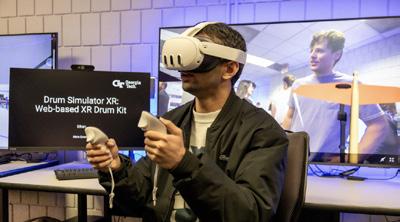
Graduate student Steven Yoo leads a team of five students who operate the makerspace. He said exploring XR in an industrial engineering context enables a more human-centered approach, allowing engineers to better understand how real people interact with their design solutions.
“Being focused on optimization, mathematics, and operations research is great, and that can be proven in the theoretical world. But we wanted to emphasize the application and see if our models actually succeed and meet industry needs,” Yoo said.
The ultimate goal is to push XR into new realms, Yoo said, cementing the idea that Georgia Tech is the place to do research and work in XR and building a community of XR creators.
Alongside Yoo, the makerspace is supported by faculty director Mohsen Moghaddam and strategic advisor Alan Erera.
‣ PARKER AVERY
A team of Georgia Tech undergraduates has won the $1 million top prize in the Device Innovation Challenge, a global competition developed by Sanofi and IDEO to reimagine large-volume drug delivery systems.
The winning team, Waveform, could receive up to $2 million in additional startup funding for an adaptive on-body injector that tailors dosing, delivery, and pain relief to each patient in real time, allowing for more comfortable and confident self-injection.
Waveform was the only team from the United States to advance as a top five finalist. The Tech students competed against teams of Ph.D. students, postdoctoral researchers, and medical students from France, the United Kingdom, Ireland, and Nigeria. Team founder Hyunjun Ryh said his group spent more than 250 hours developing their idea.
“The challenge itself was really a humbling experience,” said Ryh, a chemical and biomolecular engineering student. “When we first started, we did not know where to start, where to find the resources, what the market is really needing, and most importantly how to build a product. Eventually, we built momentum and narrowed down our ideas.”
Ryh said the team is interested in further pursuing the technology, which is now owned by Sanofi, pending the company’s venture decision.
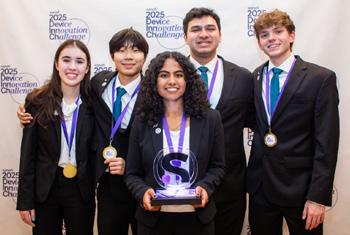
“After our early discussions with leadership, we are hoping to continue the journey with Sanofi to further develop the idea into a product ready for the market,” he said.
The group also included Kaitlyn Castellanet, an aerospace engineering major, and biomedical engineering majors Samuel Henshaw, Emaan Jalal, and Sharayu Senthilkumar.
‣ BRAD DIXON
The Geosynthetic Institute (GSI) is relocating to Georgia Tech and bringing a new range of opportunities for students interested in a growing field.
GSI is a member-supported organization made up of businesses throughout the geosynthetic industry and previously based in Philadelphia. School of Civil and Environmental Engineering faculty member David Frost is the organization’s new president and overseeing the move.
Frost said geosynthetic materials — textiles, grids, membranes, composites, and more used in infrastructure projects like roads, retaining walls, and landfills — are an important technology for engineers working
to design infrastructure to withstand the increasingly severe natural disasters of the future.
“Geosynthetics are a resilience maker,” he said. “Whether to enhance the strength, alter the hydraulic conductivity, limit the deformation or control various rate processes, geosynthetics inherently augment the engineering properties of natural geomaterials.”
Frost, a Regents’ Entrepreneur and the Higginbotham Professor, has conducted research on geosynthetics for more than 20 years. He envisions GSI putting that research “on steroids,” enabling postdoctoral researchers and Ph.D. students to work
at the institute and opening more opportunities for master’s students and undergrads.
Frost said GSI has the potential to offer a new model of university research and education. His goal is to create entrepreneurially minded graduate students who can put their research into the world and help member companies advance the field.
“GSI represents an excellent example of engaging key industry partners with a self-sustaining funding model,” said Don Webster, Karen and John Huff School Chair. “We are grateful for Dr. Frost’s leadership to bring GSI to the State of Georgia and Georgia Tech.”
‣ MELISSA FRALICK
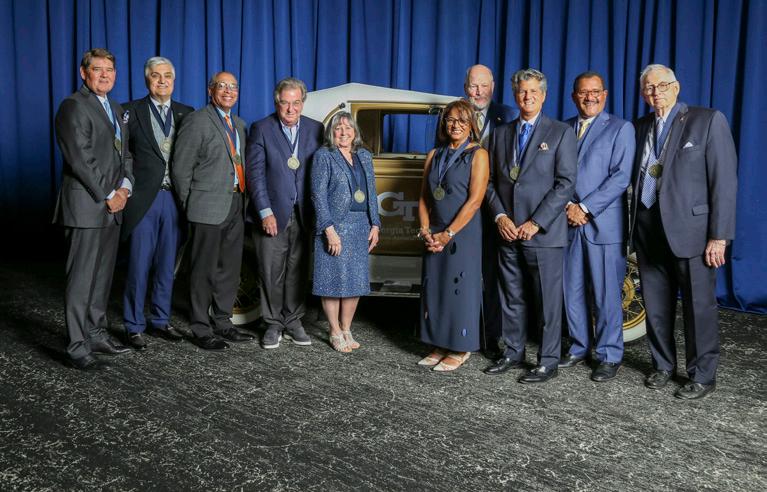
The 2026 Alumni Awards Induction Ceremony celebrated a group of 32 Georgia Tech engineers this spring.
Among the honorees were entrepreneurs and advocates, investors and builders, sports executives and doctors. All were celebrated for their contributions to the engineering profession, career accomplishments, and the ways they’ve enhanced the lives of others personally and professionally.
Alongside the 30 individuals, Interim Dean Doug Williams presented two special awards. The Dean’s Impact Award went to mechanical engineering alumni Curt Lary and Nicholas Mulka, who’ve built a company called Hex that deploys fully automated stations to swap drone batteries without human intervention. (Read more about them on page 40.)
The Dean’s Appreciation Award went to Ann Dibble, William Wepfer, and, posthumously, Ward Winer, whose son accepted on behalf of the Winer family. The trio spent years building relationships with alumnus John Durstine that resulted in a $100 million estate gift to the George W. Woodruff School of Mechanical Engineering last fall.
‣ JOSHUA STEWART
ENGINEERING HALL OF FAME
• Chaouki Abdallah (M.S. EE 1982, Ph.D. EE 1988)
• Jaime Gilinski Bacal (IE 1978)
• Christopher T. Jones (AE 1986)
• Tom Noonan (ME 1983)
• Christopher Pappas (CE 1978)
• James W. Satterfield (TE 1969, M.S. TE 1972)
• Gail Panarello Smith (ChE 1978)
• Jocelyn Marie Stargel (IE 1982, M.S. IE 1986)
• Bob Stargel (EE 1983)
• Meade Sutterfield (EE 1972)
THE ACADEMY OF DISTINGUISHED ENGINEERING ALUMNI
• William Clyburn, Jr. (CerE 1989)
• Danielle M. Donehew (IE 2001)
• Craig L. Duvall (Ph.D. BME 2007)
• Steven K. Hall (ChE 1988)
• Eric F. Hayes (EE 1994)
• Keith Hearon (MSE 2009)
• Guiomar Obregón (M.S. CE 1993, MBA 1994)
• AJ Piplica (AE 2010, M.S. AE 2012)
• Angela Sherman (ME 1986)
• John B. Williams (NRE 2002)
THE COUNCIL OF OUTSTANDING YOUNG ENGINEERING ALUMNI
• Omar Fergani (M.S. ME 2014)
• Danny Giglio (EE 2009, MBA 2017)
• Laura Kitashima Giglio
• Tahir Haque (BME 2011)
• Cassandra McIltrot (BME 2022)
• Meha Rungta (EE 2010, M.S. ECE 2011) (M.S. ChE 2011, Ph.D. ChE 2012)
• Gretchen Goldman
• Nicholas Selby (ME 2016) (M.S. EnvE 2008, Ph.D. EnvE 2011)
• Gennadiy Gurevich (IE 2013)
• Farah Khemani Zuberi (AE 2012)
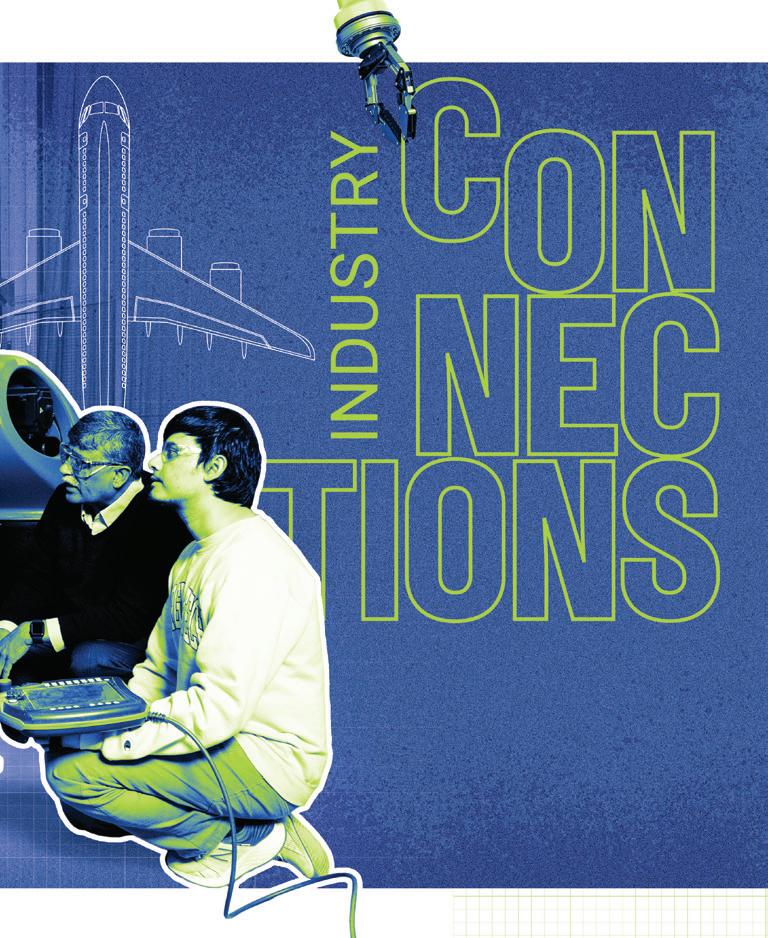
Collaborating with industry gives companies access to world-class expertise and new ideas. For students and faculty, it’s a direct line to the challenges defining real-world engineering. BY
engineers pursue all kinds of questions. Some come from funding agency priorities or foundations interested in specific areas. A news story or community need might spark an idea. Conversations with colleagues and students can yield new areas to explore.
Other questions, though, come straight from the real world — a challenge faced by a manufacturer, a tech company, or a government agency. They bring urgency, context, and problems that matter; Tech engineers bring expertise, creativity, and a relentless desire to understand how things work — and how they can work better. For students, it’s a front-row seat to engineering as it happens beyond campus.
Companies are stepping into the classroom, too, where faculty members draw industry into the College’s curriculum to help shape the skills and tools engineers learn, making them workforce-ready after college.
From laboratories to factory floors and semiconductor cleanrooms to busy Atlanta highways, industry collaboration in the College shows what’s possible when companies and academia learn from each other, push each other, and build solutions — together.
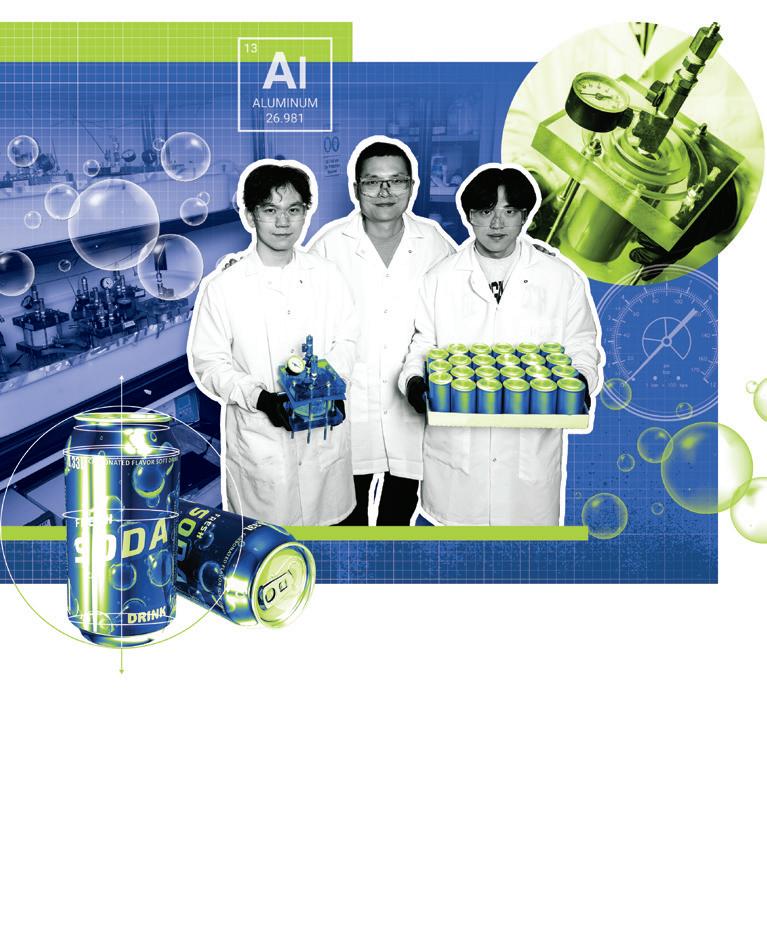
The aluminum beverage can in your fridge is an engineering marvel, able to keep your soda, energy drink, premade coffee, or beer fresh and, usually, bubbly. That’s made possible in part by a thin protective layer inside the can that keeps the contents from interacting with the metal — and the other way around.
partnership with Novelis, the Atlanta-based company that’s a leading global supplier of aluminum sheet for beverage cans.
“We have built this capability to measure conditions very frequently in a can filled with a beverage of interest. It allows us to see the evolution of problems, rather than just at the end,” Liu said. “Typically, the standard industry testing would happen after a failure, but we can provide data throughout the duration of a test. So that’s very valuable.”
Standard tests assessing how beverages interact with the coatings and metal of the can sometimes require months to run, and they use stand-ins for specific food and beverages rather than real products. Novelis needed to improve those experiments so they could use real beverages at higher temperatures and pressures that reflect the real world, such as the conditions cans might be exposed to during transport and storage.
With Novelis’ support, Liu and his students have refined the process. Now they get results in just a few weeks from pressurized cans with actual product. And instead of taking measurements every few days, they do it every hour. The researchers also can separate the effects of the beverage, temperature, and pressure.
Liu doesn’t make judgments about causes. Rather, he provides Novelis’ teams with detailed data and material characteristics they need to design their processes and products to perform better.
“They will send us real beverage can samples and then we do the analysis to understand how various beverages interact with the coatings and metal,” Liu said. “That work has a very short turnover, and the data must be reliable so they can draw the appropriate conclusions.”
Opposite
Sometimes the protection degrades, though, weakened by acids, alcohols, or other beverage ingredients that affect the coating’s barrier properties and its adhesion to the metal.
School of Chemical and Biomolecular Engineering researchers have created unique, powerful tools that collect data to analyze those interactions. Led by Associate Professor and Robert G. Miller Faculty Fellow Nian Liu, their work is part of a long-running
The partnership means Novelis can tap into the creativity, expertise, and advanced tools available at Tech. It also means Liu’s students get a taste of working with industry and how companies quickly address problems.
“The partnership with Professor Liu and his team has been extremely fruitful,” said Juraj Liska, senior principal coatings scientist at Novelis. “The ability to perform this testing in a much shorter time and to also gain scientific insights means that we can accelerate the
pace at which we develop new coated sheet products for our customers and the beverage can market.”
Liu’s main research interests focus on high-energy battery technology and tools to visualize battery reactions — not aluminum cans. But he said that’s the value of working with industry partners.
“Novelis brought this specific problem to us; I would never have come to it on my own,” he said. “There are so many problems in the world, and I’m looking at the news and at funding agency priorities, which guide me to what I can work on. I never would have realized this research need without their partnership.”
“Novelis brought this specific problem to us; I would never have come to it on my own. ... I never would have realized this research need without their partnership.”
Nian Liu
Asimilar kind of partnership is what drove Tech engineers to evaluate a proposed safety intervention where two major north-south interstates meet north of Atlanta’s downtown.
In this area, I-75 and I-85 unite for a few miles, carrying nearly half a million vehicles through the city every day. Just ahead of this merger, drivers traveling south on 75 who want to swing around to 85 toward the northeast part of metro Atlanta must navigate a sharp curve.
A few years ago, GDOT added a series of raised, painted chevrons on that ramp as a visual and physical cue to drivers that they need to be alert and slow down. It was a technique used elsewhere to improve safety, and GDOT wondered if the chevrons would do the same at that tricky interchange and another north of town at I-75 and I-285. Enter Georgia Tech civil engineers, who studied a test implementation of the tightly packed chevrons to assess their impact.
In the end, they found a significant reduction in crashes after the chevrons were installed, though not a significant reduction in speed.
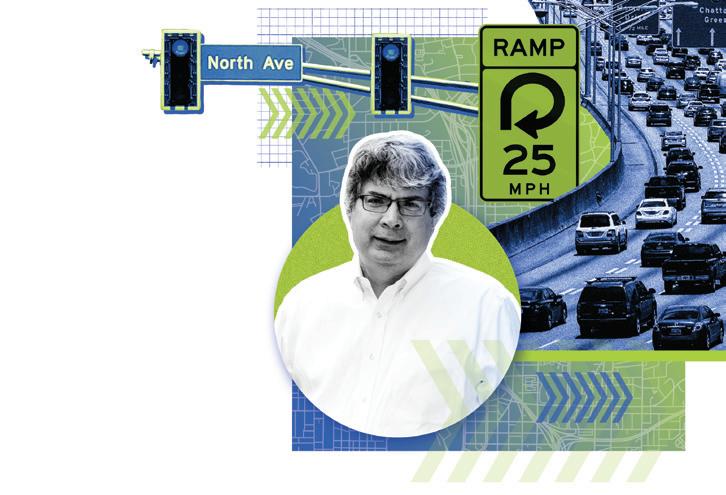
“It ended up being a very effective treatment. But it wasn’t for the reason we thought,” said Michael Hunter, a professor in the School of Civil and Environmental Engineering (CEE) who led the study. “What we suspect happens is drivers suddenly see all this paint on the road, and that is not typical. And you get this feeling of driving over 100 rumble strips. It essentially alerts people that conditions are changing, and it makes them more alert.”
Those chevrons are one highly visible example of how Georgia Tech engineers work with state transportation officials to improve Georgia’s roads. Every year, researchers tackle a handful of projects to support GDOT. They might result in a safety improvement, like the painted chevrons, or the findings could become an organizational or policy change. Research might influence how overpasses and bridges are built or help the agency wrangle mountains of data and digital systems across its departments to improve decision-making and operations.
The key for each project is a tangible outcome or some real-world advance.
“When you want to work with a DOT, it’s very important that you understand what its challenges are,” Hunter said. “The endgame is not a paper that gets cited a lot; it’s something in the field: Can you change a standard or guide document? Can you advance the way they’re doing construction planning or meet whatever the need is?”
“[The new standard] reduced the confusion that causes those crashes. I would bet that project saved lives.”
Michael Hunter
One of Hunter’s favorite projects is one of the first he worked on with GDOT.
When traffic signals encounter an issue, they switch to a default flash mode. For many years, the signal would flash a yellow light on the main road and a red light on the intersecting road.
After a fatal wreck at one of these flashing signals, GDOT wanted to understand how to make similar situations safer. Hunter and his team started collecting data from intersections where signals defaulted into the flash mode to see how drivers behaved.
They quickly saw the confusion. Drivers didn’t know whether to stop or go, or who had the right of way. So his team recommended a change: flash red in every direction when a signal malfunctions.
“It was a complete change in the way you look at it,” Hunter said, “because when you’re flashing red and yellow, you’re trying to keep the main line moving. Let the side streets take the delay until a truck can get out to fix the issue. What we found is, you can’t count on drivers to understand what they should do in this situation. The behavior of other drivers can seem very unpredictable, leading to an increased likelihood of conflicts. Flashing everything red is the safest possible option.”
Their work was convincing, and the state changed the standard.
“It reduced the confusion that causes those crashes,” Hunter said. “I would bet that project saved lives.”
Beyond specific projects, Georgia Tech’s partnership with GDOT extends through the Georgia Transportation Institute, which Hunter leads. The organization includes 10 other universities across the state, facilitating knowledge transfer between higher education and GDOT and ensuring the agency’s needs are met.
“In the end, it’s Georgia taxpayers’ dollars being spent,” he said. “By working with GDOT, we seek to serve citizens to the best of our ability.”
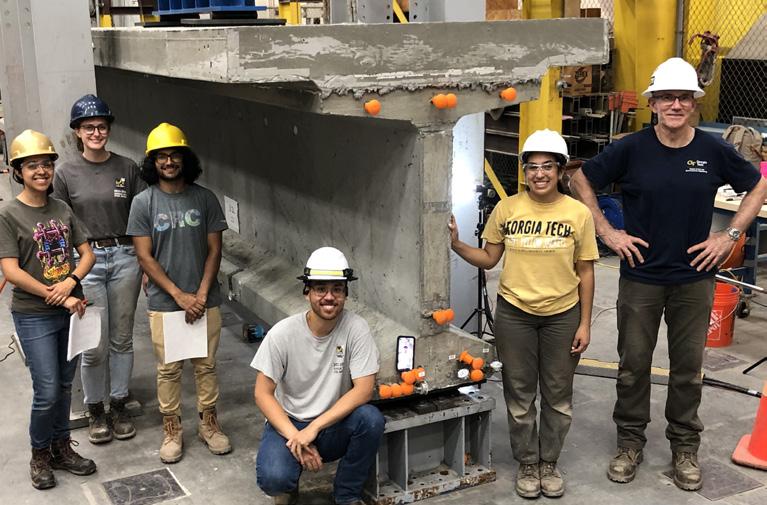
One recent project supporting GDOT tapped Tech’s structural engineering expertise to reduce the waste and delays caused by issues with the huge concrete girders used to build bridges and highway overpasses.
Sometimes those girders — up to 160 feet long in some cases — are damaged slightly when the formwork is removed after the concrete cures. Or they can be damaged as they’re transported to the construction site. In either case, the girders might be rejected, and then a new one must be made. The production process takes at least 45 days, which can grind a bridge project to a halt for weeks.
GDOT wanted to know if repairing girders with small amounts of damage would be a feasible alternative, delivering the same structural strength and keeping projects on track. Over the last year or so, civil engineers

Fred Meyer and Lauren Stewart have been working to answer that question.
“These precast concrete plants are typically backlogged about a year. To have to make a new girder after one is damaged might mean using an entire 500-foot beam line to cast just that one girder,” said Meyer, professor of the practice in CEE. “It’s very inefficient and could push their whole production process back several days.”
As part of the GDOT project, the researchers and a trio of graduate students worked with a precast concrete company to make four girders, using foam and insulation in the concrete formwork to create pockets of simulated damage in the most common areas. At 45.5 feet long and more than 4 feet tall, each beam clocked in at 15 tons.
The team used industry standard repair techniques to fix the damage they created, then built a concrete deck on top of each refurbished girder so it would behave like an actual bridge section. Altogether, that brought the weight to 30 tons. In a series of tests, the team pushed the girders to their limits, loading them with hundreds of thousands of pounds of force to see how the repairs held up.
It worked: the majority of the repairs did exactly what they were supposed to do, restoring the girders’ original performance — and even exceeding it in a few cases.
“We’re hoping this report shows that these repairs do work,” Meyer said. “The girder will behave just as an undamaged girder would, and it will save money in the big picture.”
The team has delivered a final report to GDOT to evaluate. No matter what the agency decides to do, Meyer said the project was a valuable experience for the students who spent countless hours making, damaging, repairing, and testing the girders.
“It was a very hands-on project that allowed students to get in and really see how these girders are made and how they behave,” he said. “They learned a lot about the whole construction process. It was a great project for us to work on.”
Companies don’t just partner with faculty members and research labs to access Georgia Tech’s intellectual power. They also tap into students, often through senior design courses.
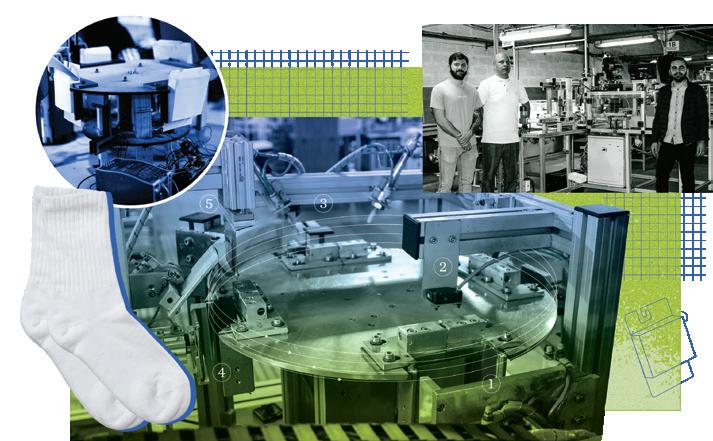
For Colombian apparel company Crystal S.A.S., working with a capstone design team created an automated
“It was a very handson project that allowed students to get in and really see how these girders are made and how they behave. They learned a lot about the whole construction process.”
Fred Meyer
process that quadrupled productivity on a sock packaging line while improving consistency and decreasing variability. Automating a time-consuming and laborintensive process freed team members to focus on highervalue activities instead of manual packaging. And it meant the company could deliver better results for clients.
“We wanted to redesign the whole process, not just optimize it,” said Juan Esteban Escobar Gómez, an engineer at Crystal who worked directly with the students. “Our objective was to multiply productivity and be more efficient. And we wanted to reduce dependency on repetitive manual labor, because it’s very difficult right now to find people who want to work on those manual operations.”
The repetitive movements required to assemble boxes, insert socks, tag them, and apply stickers risked stress injuries such as carpal tunnel syndrome for operators. The process also meant the time to complete a package varied wildly from worker to worker.
Gómez said Crystal constantly evaluates how things are done on the plant floor. And this part of the production line seemed ripe for improvement. But before Crystal invested time and money in automation, they needed to know if it even made sense to pursue.
“Instead of jumping directly into building a new machine, we want to answer that question first: is this
automation actually viable and feasible for us to make?
The capstone program offered us a very structured engineering approach, fresh and unbiased problem solving, and the rapid concept validation through prototyping that we lacked,” Gómez said. “The students started working very quickly on offering alternatives and trying to understand the constraints of the process.”
A team of six electrical and mechanical engineering students developed design alternatives, created a working prototype, and tested it. Ultimately, they settled on a rotating turnstile design to fold and seal a box before ejecting it into another system to complete tagging and final packaging.
Not every idea they presented worked, Gómez said, but it kept him and his team at Crystal thinking and challenging their own processes. And the collaboration proved that automating the packing and tagging was worthwhile. So, Crystal’s engineers took the students’ prototype and industrialized it — they made a
factory-ready machine that could slot into the production line, running 24/7 and working 99% of the time. They also added modules to apply stickers to the box, insert socks, and tag them, creating a fully automatic process.
Working with the students allowed Crystal to validate their concept and reduce the uncertainty inherent in overhauling a key manufacturing process, Gómez said. But more than that, it helped the company rethink how they approach improving their operations. Partnering with Tech reduced risk for the company, sped innovation, and multiplied its capabilities — shortening the time from seeing a need to having a tangible solution.
“In the market we operate in, opportunities come and go really, really fast. So you have to offer solutions quickly and iterate constantly,” Gómez said.
“This partnership allowed us to validate a concept, which is where the most uncertainty is. Then you can actually focus and create a real solution for industry.”
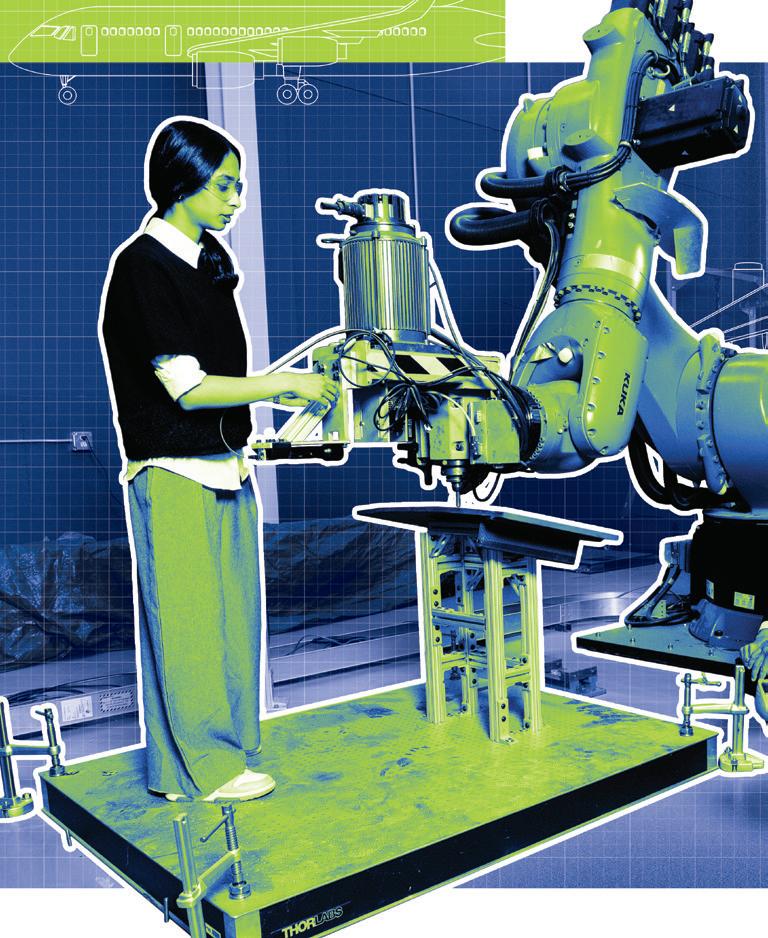
In a Boeing-funded lab at the Advanced Manufacturing Pilot Facility, researchers are working on a very different kind of manufacturing technology. They aim to replace large, expensive machine tools with highly accurate robotic systems to help lower the cost of aircraft production.
For about a decade, mechanical engineer Shreyes Melkote and his students have improved the accuracy of industrial robots so they can perform precise manufacturing operations, such as trimming metal and composite structures. In Boeing’s airplane plants, these precise operations require enormous machines that cost millions of dollars and can’t be easily reconfigured or repurposed for new uses.
Melkote — and Boeing — see potential for using robots to do some of this work. They’re less expensive, smaller, and reprogrammable for new tasks. And they could help the company work through a years-long backlog of orders by boosting the rate of production. The problem is, robots just aren’t accurate enough to meet the aerospace industry’s requirements.
“These are very large structures being assembled, and maintaining precision in terms of dimensions and shape is not easy at that scale,” said Melkote, Morris M. Bryan Jr. Professor in the George W. Woodruff School of Mechanical Engineering.
“If you can overcome the accuracy limitations of industrial robots, then you can take advantage of all of their pluses in terms of lower cost, flexibility, reconfigurability, and their ability to essentially take a process to the part as opposed to take the part to the process. You can’t transport a fuselage section easily to a machine. If something needs to be reworked, you’d like to be able to rework it right on the line.”
“A collaborative model with industry leaders is essential to meet the fast-paced demands of industry and best prepare future leaders.”
Arijit Raychowdhury
With Boeing’s support, Melkote and his students have developed real-time control systems and computer vision to clear the accuracy hurdles. Now they’re embarking on merging those systems with the goal of trimming large, molded composite parts.
This is how it would work: Using a camera mounted on an industrial robotic arm, Melkote and his team scan a part and use artificial intelligence algorithms they developed to identify specific features molded into the part. That information feeds a real-time control system that uses lasers to track exactly where the robot is in space and then commands the robot to trim the part.
“We’ve spent several years to get to this point, and our understanding has improved significantly,” Melkote said. “Now we are bringing the research to a point where we demonstrated this integrated capability, and Boeing can then take it and develop a production-grade system. That’s my hope.”
Along the way, he added, his students are learning and being trained in what works and what doesn’t. That primes them to potentially be recruited to implement these kinds of next-generation precision manufacturing robots.
“The best transfer of technology is people,” Melkote said. “They’re the ones who know it — even better than I do.”
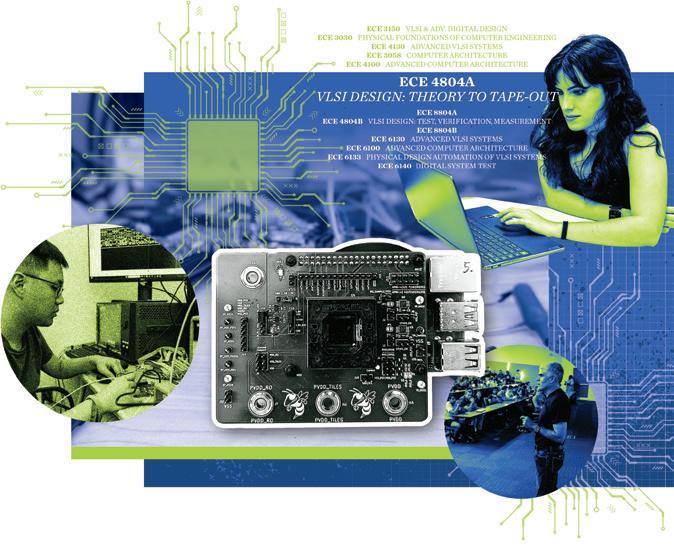
Aligning education with industry needs — and strengthening the nation’s workforce in critical technology fields — is why the School of Electrical and Computer Engineering (ECE) has created the Curriculum Partnership Initiative (CPI).
The program allows companies to contribute to course development and curriculum while giving students direct access to industry experts and industry-standard tools and methods.
“We are acutely aware of how rapidly our field evolves,” said Arijit Raychowdhury, Steve W. Chaddick School Chair of ECE. “A collaborative model with industry leaders is essential to meet the fast-paced demands of industry and best prepare future leaders. The CPI allows us to stay ahead by ensuring our curriculum is both current and forward-thinking, and providing our students with the tools and experiences they need to thrive in their careers.”
Ultimately, the goal is to reduce the time it takes for new employees to become fully productive in their roles. Shortening this period means recent graduates can make meaningful contributions from day one, Raychowdhury said: “Our students find that this hands-on approach not only prepares them for their
future careers but also deepens their understanding of essential engineering principles.”
About a year old, the initiative includes five focus areas that sync with the initial group of partners: Apple, Absolics, GlobalFoundries, Intelsat, and Texas Instruments.
Among the collaborations are new analog and digital “tapeout” courses developed with Texas Instruments and Apple, respectively. Tapeout is the final stage of the integrated circuit design process, where the completed design is sent to a fabrication facility for manufacturing. The courses offer undergraduate students the opportunity to explore the intricacies of the complete circuit design cycle, from system specification and architectural design to fabrication and testing.
With Absolics, ECE faculty members are collaborating on glass-based semiconductor packaging. GlobalFoundries lends expertise in 3D heterogeneous integration; Intelsat works with ECE on satellite communications.
“Working on industry-aligned projects in class was incredibly valuable and raised the stakes,” said Ethan Weinstock, who earned a bachelor’s and master’s in computer engineering in 2023 and 2024 and now works at NVIDIA. “It taught me the schedule, tone, and expectations of working in industry. The experience
significantly benefited my transition to a working engineer.”
The Semiconductor Industry Association projects demand for employees like Weinstock will only grow in the next few years, with companies needing to fill 115,000 more jobs by 2030. The CPI aims to ensure one of the nation’s largest ECE programs is primed to address the demand.
It also has strengthened ties to industry collaborators. For example, Georgia Tech has joined Apple’s New Silicon Initiative (NSI). More than a single course, NSI allows ECE students to learn directly from Apple engineers in a variety of ways, enhancing their skills in microelectronic circuits and hardware design.
Likewise, CPI partners engage outside the classroom, connecting students with mentors, hosting networking events, and inviting company employees to deliver guest lectures.
Expanding on CPI’s early foundation, Raychowdhury said the School is actively looking for new areas of focus, including circuits and systems for sensing and communication, computer architecture, intelligent platforms, machine learning, packaging, and more.
BY JASON MADERER
WITH THOUSANDS OF FACULTY AND STUDENT RESEARCHERS AND COUNTLESS RESEARCH AREAS SPREAD ACROSS EIGHT SCHOOLS, YOU NEVER KNOW WHAT YOU’LL SEE WHEN YOU VISIT A LAB SPACE.
Labs can be relatively simple: rows of desktop computers, microscopes, test tubes, fume hoods. They also can be remarkably complex, with machinery inscrutable to outsiders that’s tied to a specific field of study or even a single research project. It’s not unusual to find plants growing in a lab. Or robots polli nating them in another.
These spaces reflect each research er’s curiosity and their evolving pursuit of new ideas.
Every lab door leads to a different dis covery. We’re taking you behind a few of them to show off unique spaces most people can’t visit.
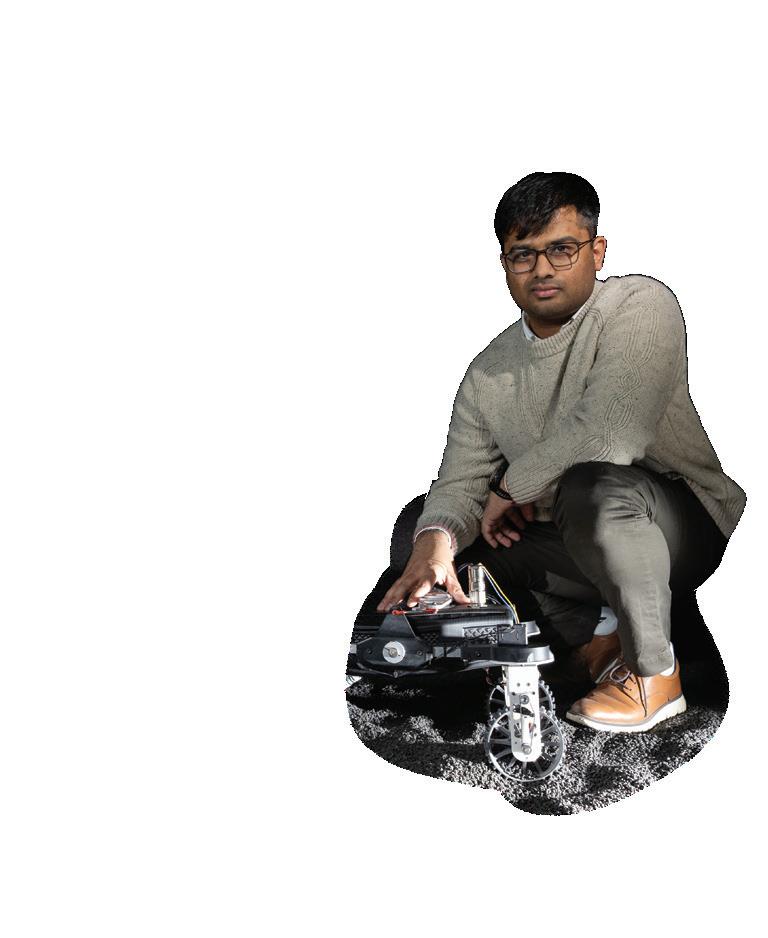
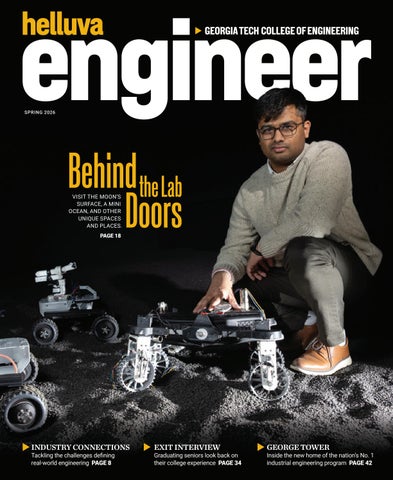
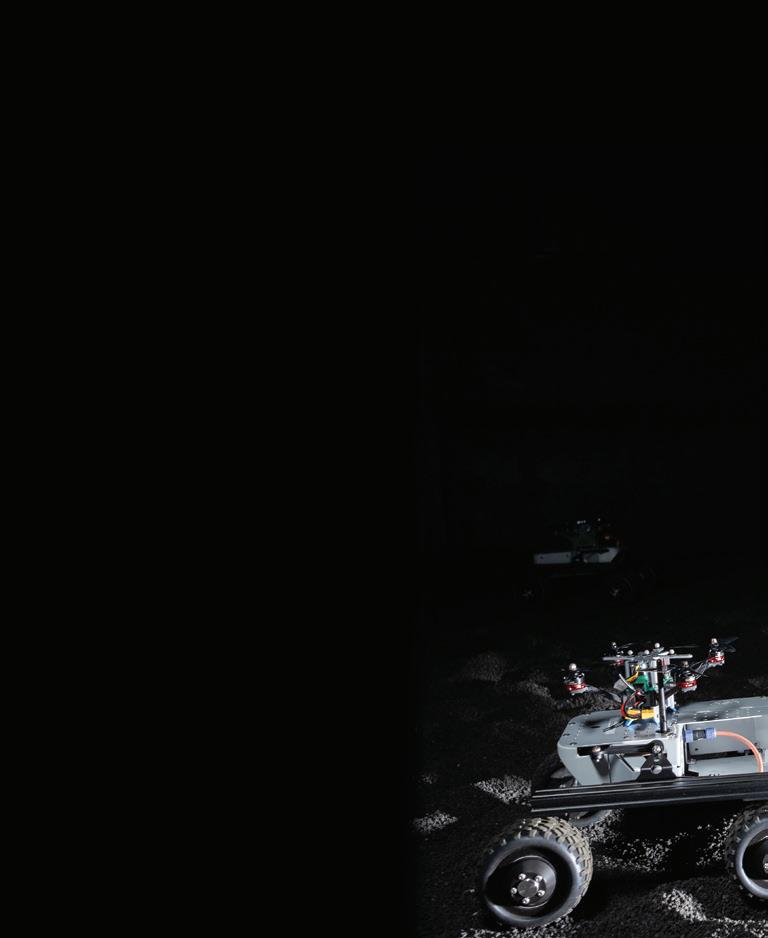
Seven tons of basalt rock cover the floor of Yashwanth Nakka’s lab, which is framed by walls painted black. Bright lights cast eerie shadows across the granular surface and the small robots that roll over its slopes.
It’s unlike anything in higher ed: a recreation of the moon’s surface. The gemsized basalt rocks, which are like the moon’s regolith but less harsh on equipment (and people), allow Nakka’s driving machines to experience the same shifts and movements they would crawling across the moon.
The lab’s lights mimic the sun’s glare. That’s important because lighting conditions on the moon can impact a rover’s cameras and its computer control systems.
Nakka is developing algorithms to allow rovers to operate in this challenging environment, including working together.
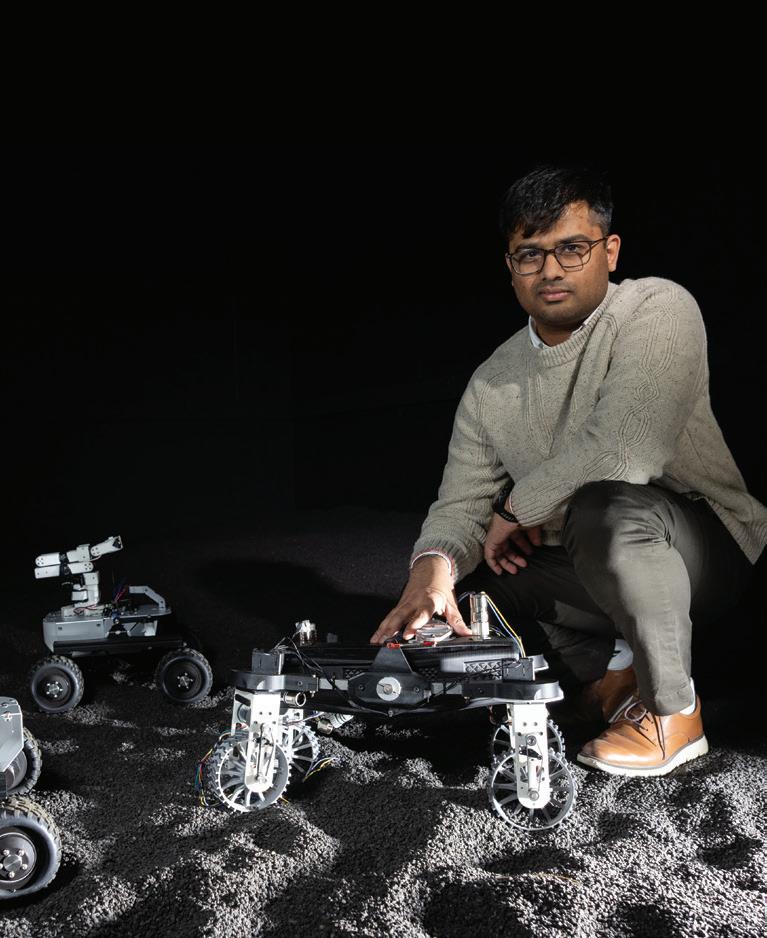
“Advancing autonomous systems is critical to enabling deep-space exploration, supporting resource utilization, and empowering scientists to investigate new frontiers such as icy moons that may harbor subsurface oceans,” said Nakka, an assistant professor in the Guggenheim School of Aerospace Engineering. “However, many of today’s space mobility solutions build upon algorithms developed two decades ago. Our lab positions us to pioneer the next generation of autonomous technologies that can overcome unstructured terrain as well as environmental and operational challenges.”
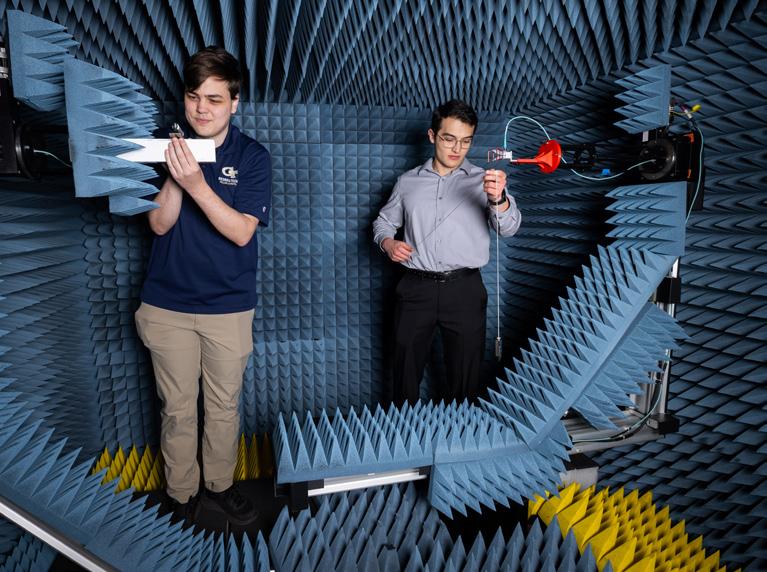
The two most common Wi-Fi bands operate at 2.4 gigahertz (GHz) and 5 GHz frequencies. Cell phones work, for the most part, in sub-3 GHz bands. But engineers need something at much higher frequencies for extremely wide communication channels capable of transferring huge amounts of data at high speeds. This includes satellites and next-generation 5G and 6G communications.
Nima Ghalichechian has two lab spaces. The first characterizes millimeter-wave (mmWave) antennas and arrays in the 30–300 GHz range. Their antenna chamber, which has a large wooden door and is about size of a child’s bedroom, conducts antenna pattern measurements for frequencies below 30 GHz.
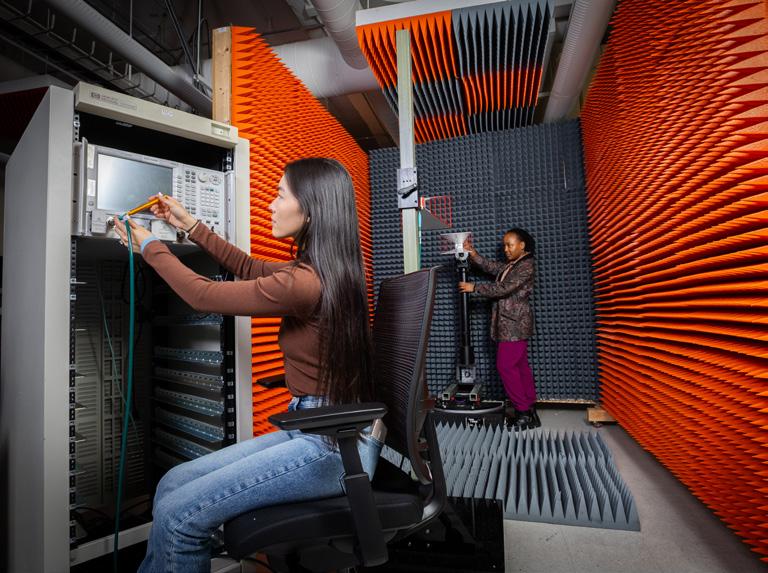
Wavelengths in mmWave can be as small as a few millimeters, requiring precise (on the order of micrometers) testing and instrumentation to overcome significant losses and errors. Ghalichechian’s walls of spiked, pyramidal absorbers — which can be wheeled around the larger lab and are embedded in the chamber — are designed in a shape and with a material that absorbs electromagnetic wave energy. This prevents undesirable wave reflections from impacting the measurements.
“Our team focuses on design, simulation, fabrication, and measurement of nextgeneration mmWave arrays. Specifically,
we perform research on mmWave phased arrays, reconfigurable antennas, on-chip antennas, and more,” said Ghalichechian, associate professor in the School of Electrical and Computer Engineering. “Our chamber also is used in antenna engineering and microwave design classes, giving students hands-on experience with antenna measurement practices.”
The chamber box doesn’t feel as claustrophobic as it might look, Ghalichechian said. After the initial setup of an antenna, researchers leave and spend the majority of their time behind a computer located just outside, using a camera for inspection.
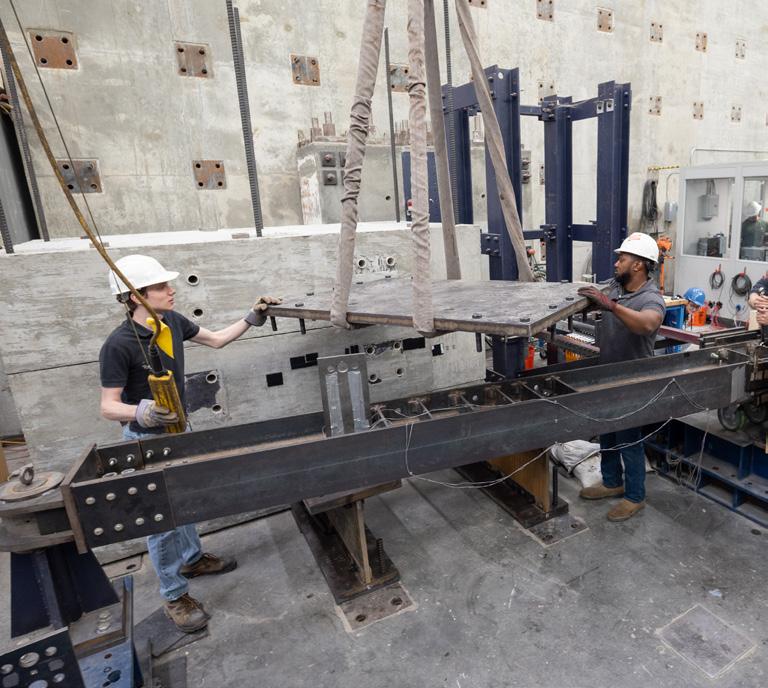
Inside an 18,000-square-foot space large enough to hold more than six tennis courts, three structural engineers have set up labs to conduct research on blasts, robotics, bridge designs, and more.
Ryan Sherman works in the front of the building on the lab’s strong floor. He’s currently testing a 17-foot-tall 3D printed bridge, part of research that explores the behavior and performance of metallic structures. His goal is to develop unique solutions that enhance the function and resilience of civil infrastructure through three major areas: evaluation of in-service performance,
rehabilitation strategies, and innovative design solutions.
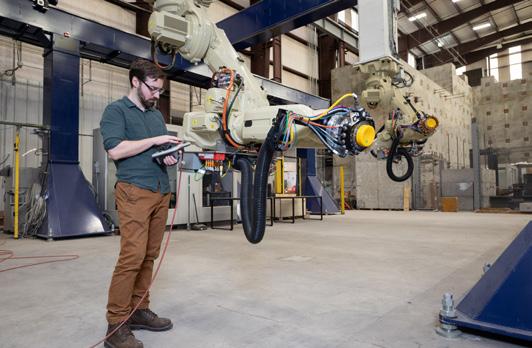
Edvard Bruun’s section of the lab features a pair of heavy-payload, six-axis robotic arms suspended from a gantry system spanning a 60x25-foot work area. The scale is the largest among North American universities. The system allows the robots to move freely through the workspace and operate on structures up to two stories tall. Bruun uses it to test and refine modular construction automation processes for timber, steel, concrete, and other structural materials at realistic building scales.
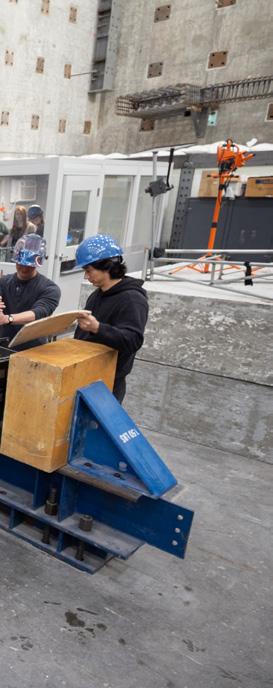
Lab director Lauren Stewart’s two labs are in the back of the building. The blast and ballistic labs study the effects of explosive, ballistic, and impact loads on civilian and military structures. Her group uses ultra-fast hydraulic and explosively driven actuators and projectile guns to test materials’ reliability and failure rates.
“Our Structures Lab takes traditional structural engineering and brings it into the future with state-of-the-art equipment that allows our researchers to explore new and emerging areas of infrastructure,” Stewart said.
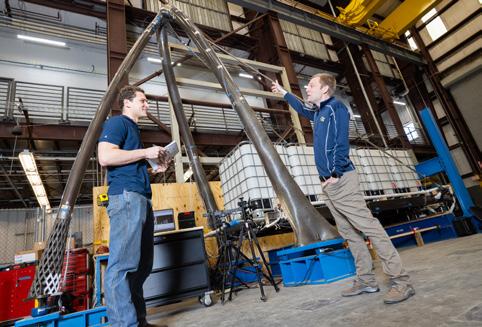
Above: Ryan Sherman (right) and Ph.D student Zachary de Haaff stand in front of a 17-foot-tall 3D printed modular section of a bridge that would be nearly 50 feet long. Sherman’s team conducted load testing to demonstrate that the new additive manufacturing technology could meet performance demands.
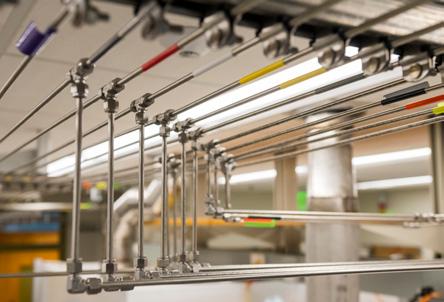
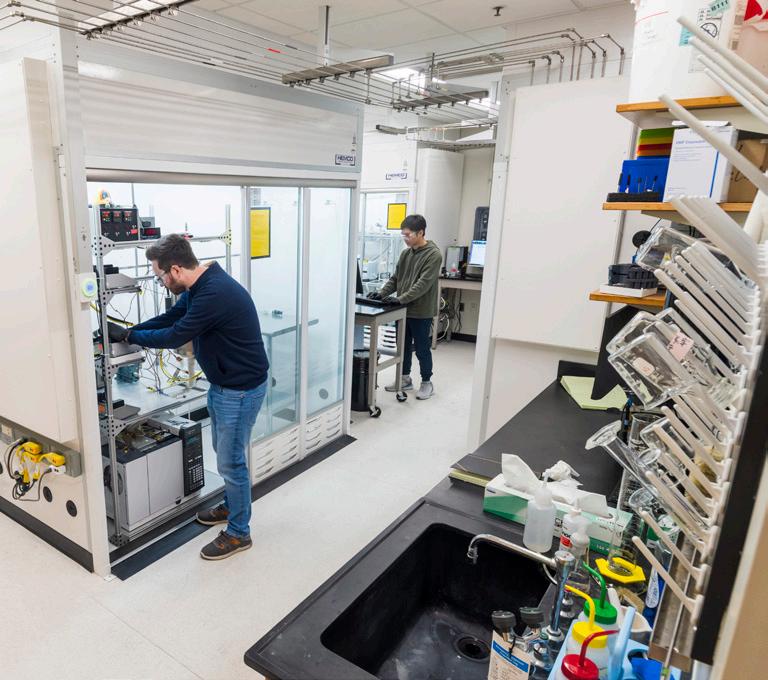
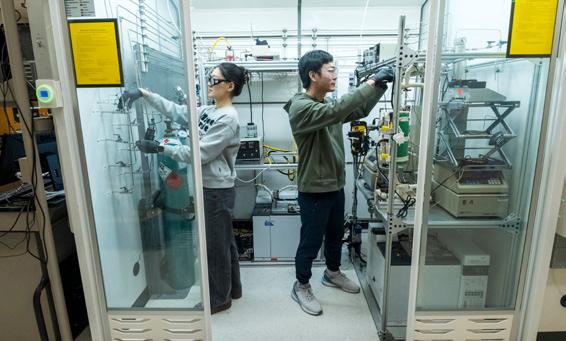
David Flaherty’s 3,400-square-foot space is filled with lasers, fume hoods, rows of ceiling-mounted steel gas lines, and equipment that can look unfamiliar to anyone who’s not a chemical engineer. The lab is focused on better understanding chemical reactions so everyday products — fuels, plastics, and other common materials — can be manufactured more efficiently and sustainably. The team also studies how to design better catalysts, chemicals that help reactions happen faster and with less waste, energy use, and cost.
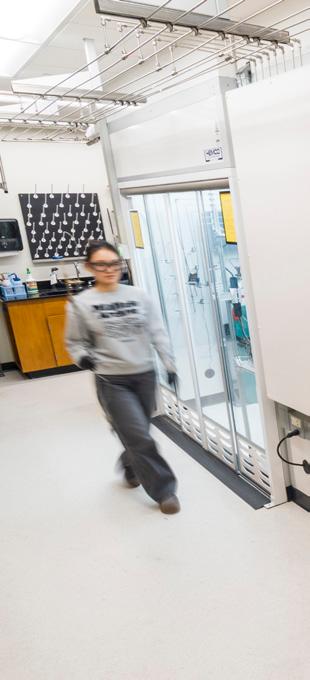
In the lab, researchers test new materials and observe how reactions change over time. The Flaherty group works with many different gases, including hydrocarbons, oxygen, and nitrogen, depending on the research.
“Our lab focuses on developing unique experimental methods to answer long-standing questions that limit progress in chemical manufacturing,” said Flaherty, who holds the Thomas C. DeLoach Jr. Endowed Professorship in the School of Chemical
and Biomolecular Engineering. “Our lab allows us to safely apply these methods to technically relevant materials and reaction environments. By doing so, we can develop accurate understandings for how to create more effective catalysts based on establishing relationships between structure and performance of materials. These capabilities allow us to collaborate with a growing number of industrial partners and federally sponsored projects.”
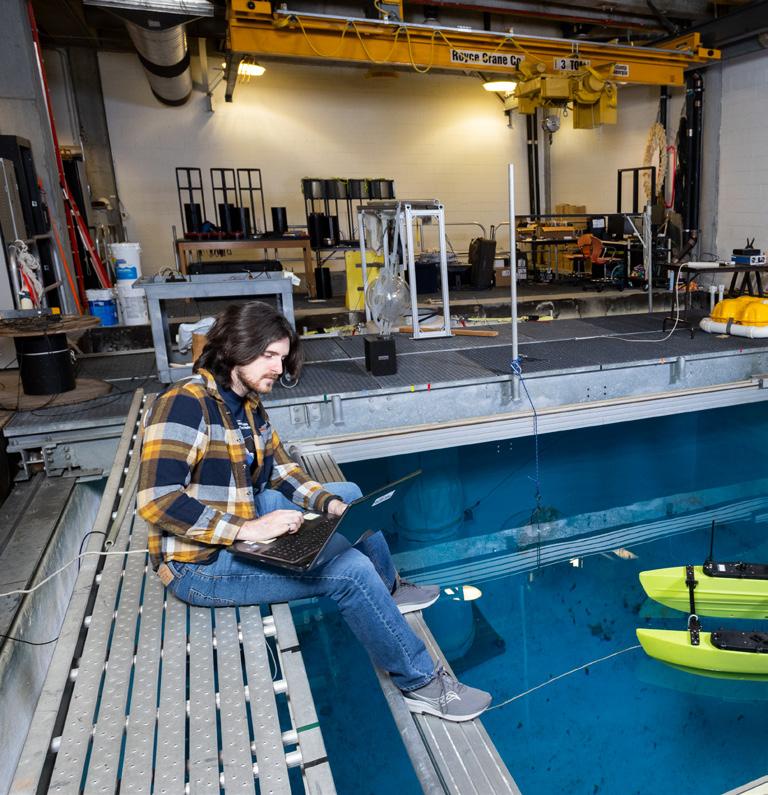
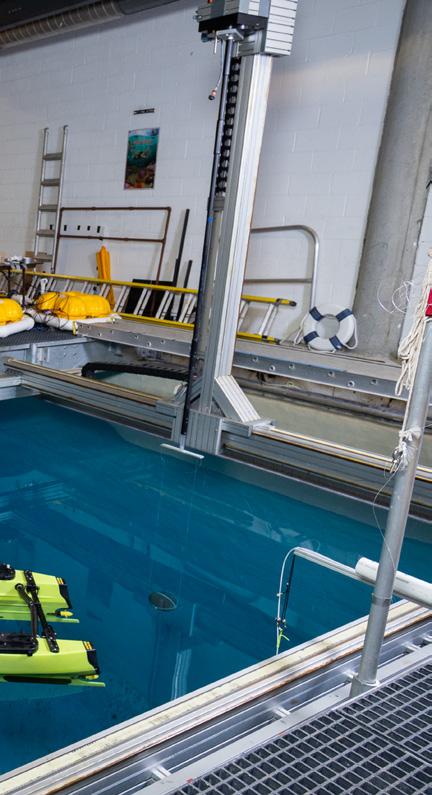
On one side of Georgia Tech’s Ferst Drive sits one of the most well-known pools in the nation: the Olympic pool inside the Campus Recreation Center. On the other side, tucked away in the Love Manufacturing Building, is a body of water unknown to much of campus.
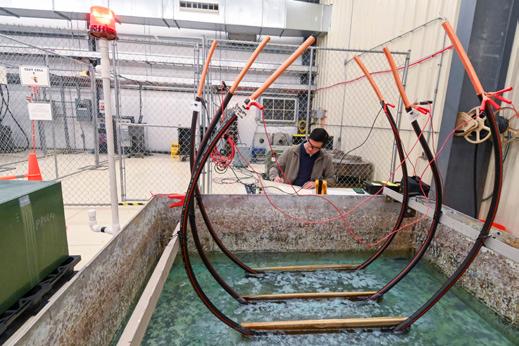
The Acoustic Water Tank is 40 feet long and 21 feet wide, plunging 24 feet from the first floor into the building’s basement. Professor Karim Sabra and his George W. Woodruff School of Mechanical Engineering research group oversee the facility. They can float small boats on the surface and use a 3-ton crane to submerge equipment for underwater acoustics experiments.
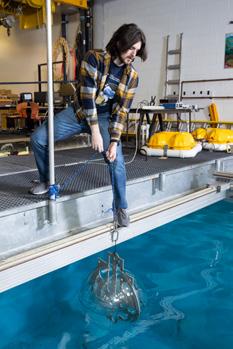
The facility also is available to industry, which has used it for projects ranging from marine robotics to underwater transducers and material characterization.
“This is our mini ocean. It allows us to test our hardware before going out to sea. If the tested hardware runs well and doesn’t sink in our tank, we take it to open waters,” Sabra said. “It’s a unique facility within the southeastern United States, and several other academic institutions and industry partners have benefited from it besides our own researchers.”
Unlike the pool across the street, the water tank is a “no swimming” zone. Sabra said the water is heavily chlorinated. And really cold.
Mechanical engineering graduate student August Menard pulls an acrylic and metal identification tag out of the water tank. The tag is used to help boats and autonomous vehicles verify their location when underwater, where GPS isn’t helpful.
Below: Research Coordinator Bryan Davant configures a 2.2-megavolt impulse generator for a high voltage impulse test. The equipment is used to mimic lightning and its effect on distribution and transmission-class overhead and underground equipment.
Right: Research Test Technician Spencer Payne prepares for a high voltage time test to evaluate the remaining service life in an aged underground cable sample.
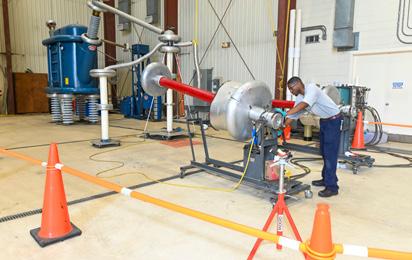
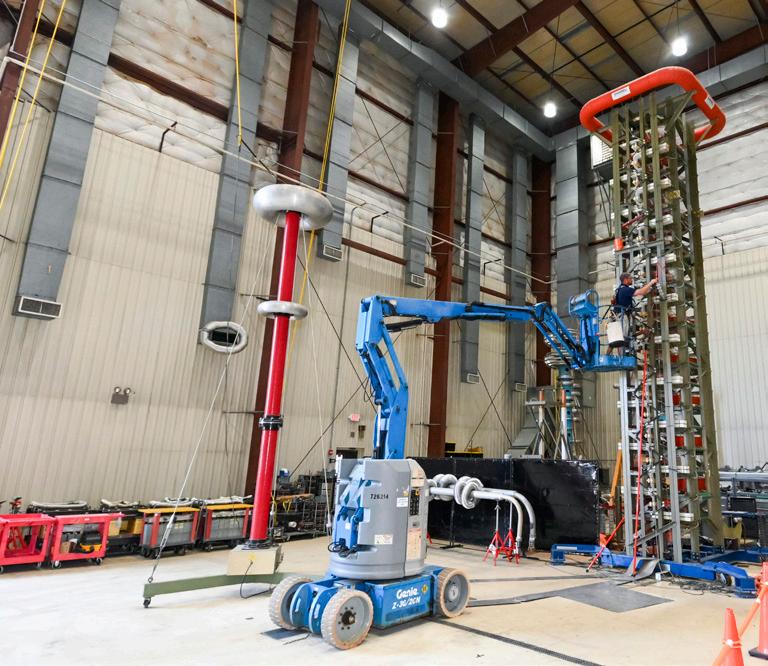
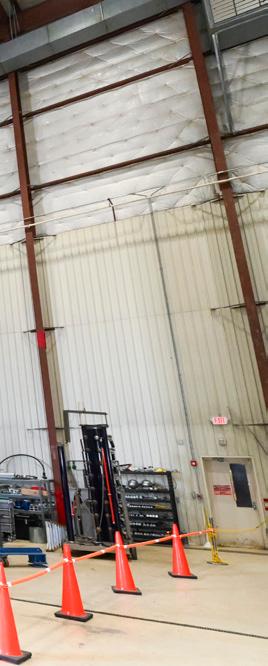
NEETRAC sits about 15 miles from campus in the shadow of Hartsfield-Jackson Atlanta International Airport. The School of Electrical and Computer Engineering’s membership-based research and testing center works with electric utilities and manufacturers to improve the quality of transmission and distribution systems.
Sometimes the center is checking the durability of power poles. Other experiments include high voltage and environmental testing, diagnostics for power cables and transformers, and lightning tests. Each project is designed to improve grid efficiency, resilience, reliability, and safety by creating
new solutions and knowledge for the power delivery industry.
“Our members are navigating an increasingly complex and rapidly evolving landscape. Practical, industry-focused research has never been more essential,” said NEETRAC Director David McDonald. “We are uniquely positioned to provide the trusted expertise and insights needed to help lead the industry into the future.”
Below: Research Coordinator Eduardo Contreras monitors the ongoing aging of the copper neutral of a distribution-class underground cable. The behavior of corroded neutrals under fault conditions is being studied to assist utilities and manufacturers in asset management of installed cable systems and improvements in cable diagnostic systems.
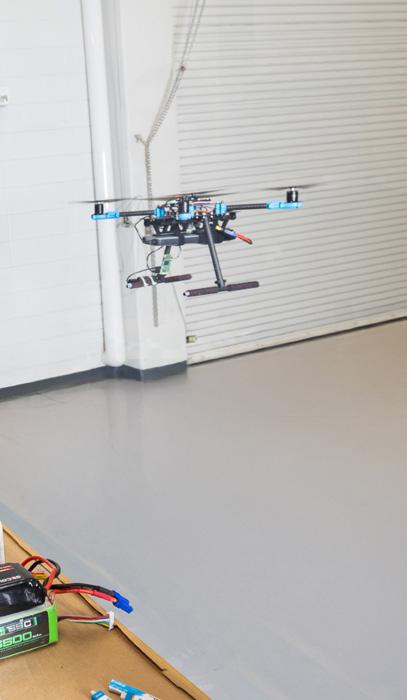
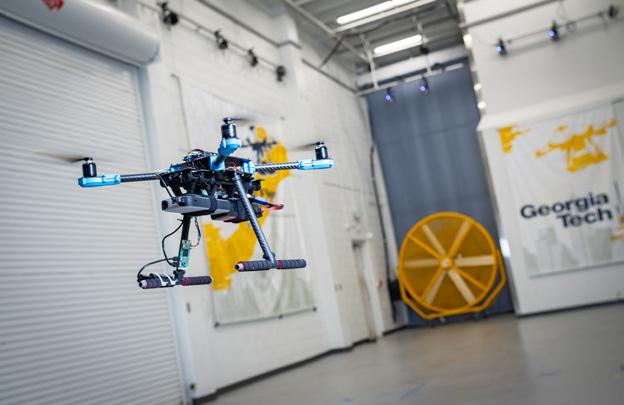
With 1,500 square feet of flight space and ceilings that soar more than 20 feet high, the IFL is one of the largest facilities of its kind at a university. It’s home to a range of vertical takeoff and landing (VTOL) drones, ranging from 1-pound vehicles to quadrotors and multi-rotors designed for carrying large objects or heavy payloads.
The IFL’s main purpose is to experiment with new types of drones or technology that
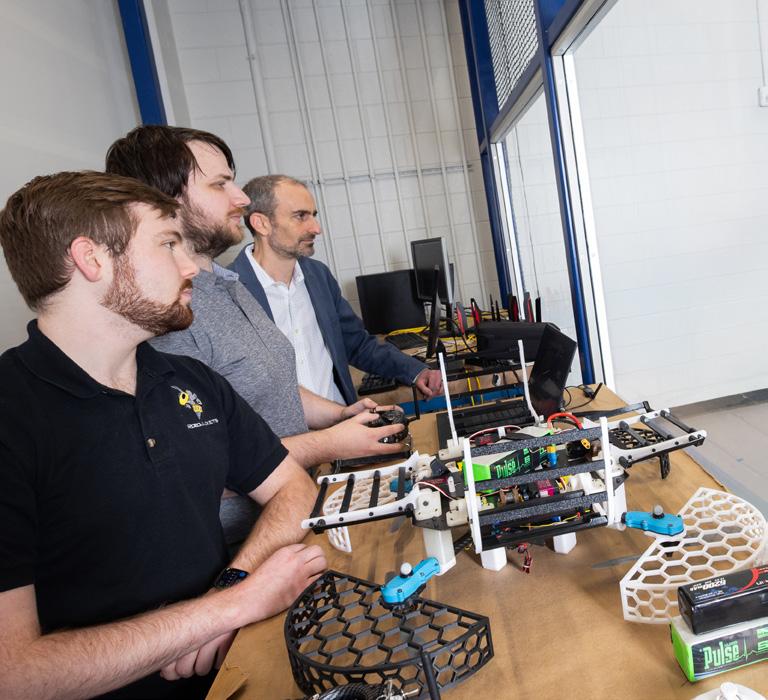
Ph.D. students Brian Epstein (left) and Jack Corbin (center) control an X500 drone with Jonathan Rogers. The machine is used in research projects and has been equipped with tools such as radiation detectors, cameras, and docking mechanisms.
allows them to perform new types of missions. Jonathan Rogers and other aerospace engineering faculty members are surrounded by 56 motion-capture cameras as they test flying machines in a climate-controlled environment.
“Without this space, it would be far more difficult to capture rigorous data about experimental drone flights. Small drones are highly affected by even light winds. Having to deal with gusts or extreme temperatures when flying an experimental vehicle for the first time muddies the waters when it comes to diagnosing what might have gone wrong,” said Rogers, the Lockheed Martin Professor of Avionics Integration. “The IFL allows us to first test and refine the system in a controlled, safe environment before going outdoors to a less controlled, more unpredictable setting. This improves safety and reduces the cost of new technology development.”
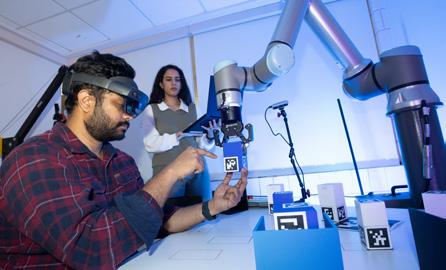
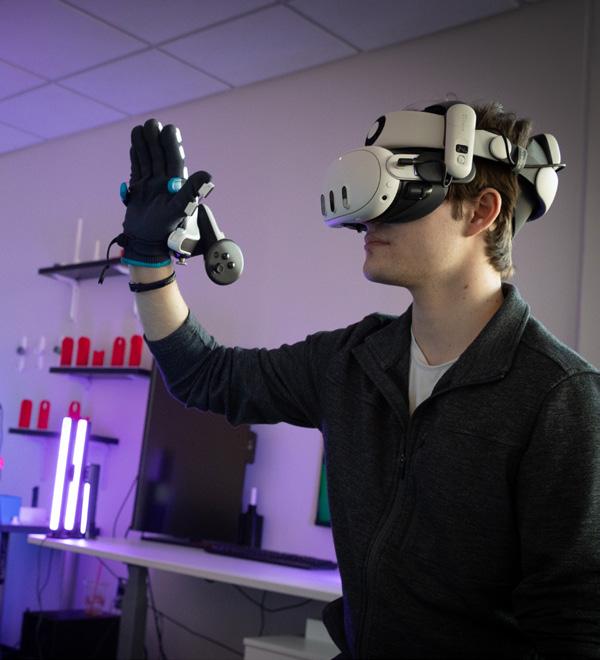
In a building filled with screens and computers churning out new theories and crunching analytics, Mohsen Moghaddam’s lab looks nothing like what you’d typically find in the H. Milton Stewart School of Industrial and Systems Engineering (ISyE). A robotic dog and humanoid stand in one corner. Across the room, a robotic arm hovers alongside virtual reality and augmented reality headsets and cameras.
Moghaddam’s team is creating immersive tools and algorithms that transform how people and intelligent machines work together. The goal is to design technologies that amplify human capabilities — both cognitive and physical — so people can thrive alongside AI and robotics.
Along the way, he’s aiming to define a new field of specialization within ISyE: human-centered systems engineering.
“Human factors have been a core area in industrial engineering. Our vision is to push that frontier forward by advancing extended reality, AI and machine learning, and robotics around humans to unlock their cognitive and physical potential and support meaningful coexistence not only with AI agents but also with intelligent machines and robots,” said Moghaddam, the Gary C. Butler Family Associate Professor.
“In a way, we are aiming for a Tony Stark plus JARVIS equals Iron Man future, not a Terminator one. And to get there, we need to move beyond purely computational models. That’s why we build and experiment with physical systems, not just simulations, so we can design technologies that truly integrate with human work and everyday life.”
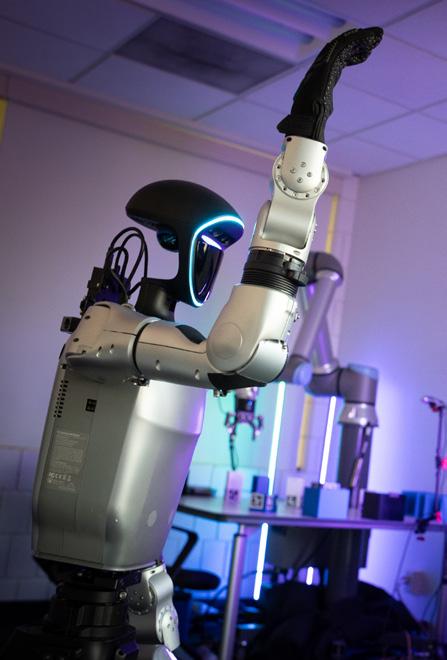
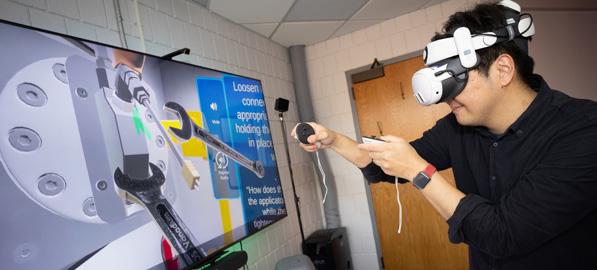
Left: Mechanical engineering Ph.D. student Austin Graves teleoperates a humanoid robot while wearing haptic gloves that provide tactile and kinesthetic feedback.
Opposite page: Mahya Qorbani logs user data as fellow ISyE Ph.D. student Akhil Ajikumar interacts with a robot via an AR headset. Ajikumar uses gazes and gestures to execute a joint manipulation task.
Left: ISyE Ph.D. student Steven Yoo wears a VR headset to experience an immersive industrial training game developed by SAIL and its partners for Naval Sea Systems Command.
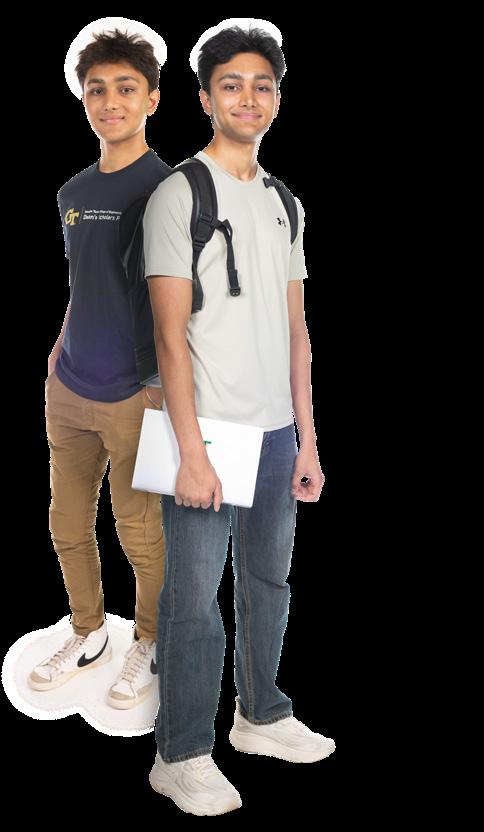
In 2022, we met a group of Dean’s Scholars in their first year of college and asked about their hopes and dreams for college and their lives. As their graduation approached, we invited them back to see how things had changed.
How much does a person grow in college? How do their plans shift as they gain more experiences and a wider perspective?
Four years ago, members of the new cohort of College of Engineering Dean’s Scholars agreed to help us find out. They spent a few minutes in their first semester on campus sharing their hopes and plans for life. As most of them prepared to graduate this spring, they revisited those thoughts and shared what’s changed in their lives.
As you might expect, they were a little wiser with age — though some found their younger selves had things pretty well under control from the beginning.
To read all six stories and hear the students in their own words, see the full feature at coe.gatech.edu
GHUFRAN BHATTI • CHEMICAL ENGINEERING
The path Ghufran Bhatti had laid out for himself was clear when he arrived at Georgia Tech. Whether he would be able to follow it felt less certain.
Bhatti chose to study chemical engineering with the goal of pursuing a career in the oil and gas industry. Chemistry always appealed to him, as did the potential to travel and experience more of the world. And he was attracted by the prospects of a stable financial future to help his mother finally retire.
But he worried. Tech’s reputation for challenging students was well-known — and he’d known people who struggled in engineering. That’s why, when we met in his first year, he left himself this message: “I would tell myself to not be so uncertain and doubt yourself so much. As of right now, I’m not sure if I can make it. But if I do make it, I would definitely tell myself to not worry as much.”
Four years later, message received. And honored.
Bhatti is finishing his chemical and biomolecular engineering degree and has a job lined up at ExxonMobil in Baton Rouge, Louisiana. After a few years, he might have the opportunity to work abroad for the company.
Pretty much exactly as he planned it. The difference, he says, is that he sees things as less black-and-white now — not just success or failure but shades of gray. Uncertainty isn’t gone; he’s learned how to carry it.
“I think I’ve come to accept that in life you’re going to be uncertain,” he says. “You can’t really know what’s going to happen tomorrow. It’s more so just learning to live with that and trying your best every single day. Sometimes you’ll still have a bad tomorrow. You just have to move through that and push through.”
Bhatti also says he’s learned to see himself more clearly, to appreciate the layers of his identity — a proud half-Pakistani, halfIndian chemical engineer who values the sacrifices of previous generations that have given him a world of opportunities. Someone who enjoys playing basketball and is trying to — but not making much progress at — learning to play piano. An optimist who worries less now about trying hard and failing.
“I’m not going to go to the NBA, even if I start training for basketball 10 hours a day. But for more realistic goals, I tend to think if I try my best, I can achieve it,” he says. “Back then, I didn’t think that way.”
“I think I’ve come to accept that in life you’re going to be uncertain. You can’t really know what’s going to happen tomorrow. It’s more so just learning to live with that and trying your best every single day.”
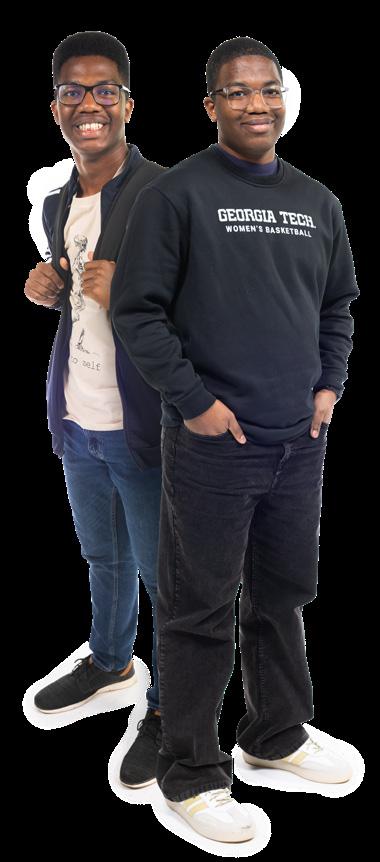
Looking back, Carson Veal suspects he might’ve been a little shellshocked when he first sat down with us. He didn’t really talk about it, but he recalls now that he was “going through it academically.” Those struggles were compounded by the social adjustment to college. He was trying to find his place and his people, and he remembers a lot of growing pains.
Then he started to get into more industrial engineering classes and enjoy what he was learning.
“I was doing better and then I really started to find my community, both in my church and throughout Georgia Tech’s campus,” Veal said. “I feel like Carson back then would be very happy with the friends I’ve made and all the things I’ve been able to experience.”
Veal came to Tech envisioning a career working for professional sports teams managing their travel and operations. He’s been able to pursue that passion for the last two
years as a student manager for Tech’s women’s basketball team. It’s a job he loves — but it’s also shown him the long hours, demanding schedules, and all-consuming lifestyle required in those roles.
Veal realized he has a different vision for his life. Plus, an internship at Boeing clicked with everything he loves about industrial engineering and helped him land a job at the company working on their internal supply chain team.
Boeing’s home outside of Seattle is a very different environment from Atlanta or his Oklahoma hometown, Veal says, and he wants to lean into the Pacific Northwest’s outdoorsy lifestyle. He wants to find a good church and learn more about music, an interest he’s developed in college.
“Work is important, but so is everything outside of that,” he says. “I want to build a really strong community where I’m living and find a good balance.”
Balance. Perspective. Resilience. Veal says he knew Tech would challenge him. Not always in ways he expected. But always in ways that have helped him grow.
“There are going to be more challenges throughout life, so getting to experience hard things now has prepared me for what’s to come,” he says. “It’s made me more excited for the future than scared.”
“I feel like Carson back then would be very happy with the friends I’ve made and all the things I’ve been able to experience.”
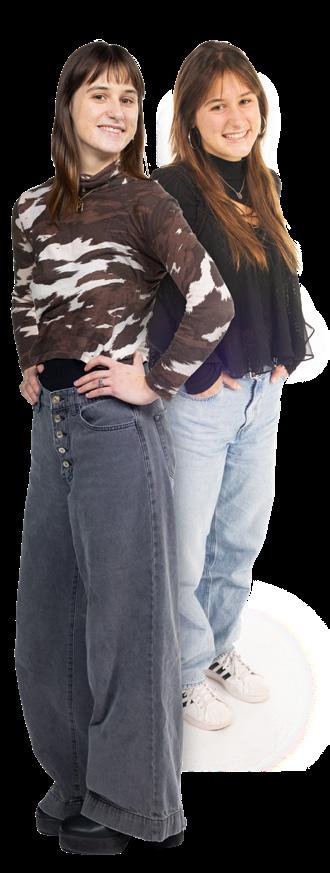
Music and meaning were core to Antonia Rabisheva’s plans as she started her electrical engineering degree at Georgia Tech in 2022. She wasn’t exactly sure where she was headed, but she hoped to blend engineering and music technology into a career.
She felt a bit intimidated by her major. But a mentor in high school convinced her she had what it took to succeed in electrical engineering and at Tech.
“He told me, ‘Don’t underestimate yourself. You can really do great things if you pursue it,’” she said. “So I took his word and decided to take the risk.”
After arriving on campus, Rabisheva wasn’t sure if she’d made the right choice. She struggled early on and felt out of place. In part, she attributes that to something she acknowledged back in 2022 — she has a hard time choosing just one thing to pursue. She wanted to try everything and explore new interests.
She says that’s still true now. But she’s learned to focus, and along the way found her place in electrical engineering.
“It’s not about holding onto everything that I identify with; it’s more that if I wanted to progress forward with my degree and become the engineer I always wanted to be, I would have to let go of a few things for now,” she says.
“That comes with advantages. It also comes with consequences. But I don’t think there was a better decision for me to have made than to invest in my engineering degree here at Tech.”
Some of the things Rabisheva invested in reflected what she’d imagined as a first-year student. She became a master peer instructor in benchtop electronics at the Hive makerspace. She writes music and performs
“... if I wanted to progress forward with my degree and become the engineer I always wanted to be, I would have to let go of a few things for now.”
regularly with a band. She also ended up in unexpected places, including on the Georgia Tech Solar Racing team. The younger version of herself would never have joined an engineering competition team. The older Rabisheva became a leader on the team and says it was very rewarding.
Rabisheva will spend the next year in back-to-back internships working on analog hardware design and radio frequency (RF) products. Then she’ll wrap up her degree and look for work in the RF industry.
Back in 2022, Rabisheva said she felt fresh, with a world of options and the opportunity to develop momentum anywhere she chose. And now?
“She was very fresh,” Rabisheva says. “I’m still very fresh. I can still do so much and have lots of choices available to me.”
As CEO of Stratolaunch, aerospace engineering alumnus Zachary Krevor is working to make hypersonic flight cheaper and more accessible so the U.S. can meet the demands of a Mach 5+ future.
When you run a company already working at the limits of human capability in flight, it might be hard to think beyond the leading edge. But for Zachary Krevor, opportunity is everywhere
It might be overstating things to call that idea Krevor’s mantra. However, as CEO of hypersonic flight company Stratolaunch, Krevor is constantly thinking about how to lay the groundwork for his team to make the next advance and deliver the capability his customers need — even if it’s just out of reach.
“I follow that famous Wayne Gretzky hockey quote and make sure our company is always skating to where the puck is going,” Krevor said, “but that takes work and deep thought. We have to piece together a variety of different bits of information like a puzzle, and then develop a concept that’s valuable to our customers. That value is where the puck is going.”
Krevor earned a master’s and Ph.D. in aerospace engineering at Georgia Tech in the early 2000s. At his
dad’s urging, he’d studied mechanical engineering as an undergrad at the University of California, Los Angeles. It was a hedge — his father was a chemical engineer who’d worked in aerospace for most of his career and worried about the boom-and-bust cycles he’d experienced in the field. He wanted his son to have as many options as possible.
But the truth was, the younger Krevor had always had his eyes on the sky and the stars. And he couldn’t shake it.
“I gobbled up every single aerospace engineering elective I could,” Krevor said, smiling. “I mean, the bug had gotten me. There was nothing I could do. The passion’s always been in aerospace.”
Krevor hoped to position himself for a career of leadership, and he felt the pull of graduate school so he’d be prepared to lead technically demanding organizations where engineering was at the fore. Of course, aerospace would be the focus this time.
As he started talking to trusted professors and people in the industry, Georgia Tech’s program kept coming up
as a clear leader. Krevor had never been to Atlanta or the South. But he applied, and had a phone interview with Dimitri Mavris, now a Regents’ Professor in AE.
“It was during the summer, and at the end of that interview, I was ready to crawl through the phone and start right then,” Krevor said. “I was so excited about what Georgia Tech was doing.”
Krevor joined Mavris’ Aerospace Systems Design Lab that fall, where he worked on design algorithms supporting the GE90 aircraft engine. He loved the work, but his passion had always been spaceflight, and it led him to the Space Systems Design Lab to study with Alan Wilhite and Bobby Braun.
Krevor jumped right into human spaceflight projects after he left Tech, joining Lockheed Martin and working on systems for the Orion capsule and Altair lunar lander craft the company was developing for NASA’s Constellation moon missions. After a few years, he moved to Sierra Nevada to work on their Dream Chaser space plane project. Then he joined Stratolaunch and became vice president of engineering.
At the time, the company was focused on hauling rockets into the air using the largest airplane ever assembled — a dual-fuselage behemoth with six engines and a wingspan longer than the field at Bobby Dodd Stadium. The idea was to drop the rockets, which would then fly to space to deploy a variety of payloads.
After years working on human spaceflight, it was a shift for Krevor. But still space-focused, and attractive: He saw a company tackling hard problems and founded by an engineer, whom Krevor called a visionary. The company had been started by Microsoft co-founder Paul Allen to make access to space easier than ever before.
After Allen died, his estate and foundation eventually sold the company, and the new owners saw an opportunity to pivot — to use the capabilities of Stratolaunch’s system to meet an unmet need: hypersonic flight capability. Krevor pivoted with them.
“I thought I could help,” said Krevor, who moved into the role of chief operating officer. “It became a way to answer the call for something our country needed, and I became excited and passionate about it.”
Hypersonic flight — five times the speed of sound and faster — presented Krevor and his team with a host of new challenges. Krevor admitted that was part of the allure. Traveling at roughly a mile a second is just a hard thing to do.
“I think once you go through Tech, you’re attracted to difficult things,” he said, and hypersonics qualifies. “The environment is extremely unforgiving. You’re flying in an environment where temperatures are 2,000 to 3,000 degrees. You’re moving so fast where a control surface in even a tiny, incorrect position can cause loss of the vehicle. You don’t have much time to react, and therefore you have to ensure all of the systems are working together at a very fast speed.”
The challenges are economic too, with a healthy dose of national security implications, Krevor said. Other countries are demonstrating sophisticated capabilities, and the U.S. hadn’t done much in the area over the last two decades. Now the Pentagon is calling for 50 hypersonic flights a year to get caught up.
Stratolaunch works to meet that call using its massive airplane, called Roc, to lift the company’s Talon-A hypersonic vehicle to altitude. Talon-A is a reusable autonomous plane that allows clients to test their technologies in real-world hypersonic conditions at a relatively affordable cost. That means they can develop, test, iterate, and test again.
“Simulations are great. Ground tests are great. They are all needed, and Stratolaunch uses both all the time. But the truth source is flight data,” Krevor said. “To be able to know that your products and your technology is working, you have to go fly. And that’s where Stratolaunch comes in.
“We’re able to accelerate the hypersonic flight cadence and replicate NASA’s X-15 program. We can’t quite answer the 50 hypersonic flights a year yet, but we’re getting there.”
Krevor isn’t running those flights or solving the myriad problems that flying at Mach 5 or 10 presents. But he is clearing the runway so his team can focus on those hard questions. And, as he put it, he’s keeping the lights on, delivering for customers and thinking about what clients or the country need that’s just around the corner. In fact, he said, being CEO is a lot like working on his doctorate 20 years ago.
“You must have initiative and make sure you’re adding value to the academic body or, as in business, for the customer. You have to define that value yourself. And, of course, work with your advisors, mentors, sponsors, who help you test that thesis a bit.”
In other words, you have to see where the puck is going. And get there. Something Krevor’s been working on — in the lab or in business — for a long time.
‣ JOSHUA STEWART
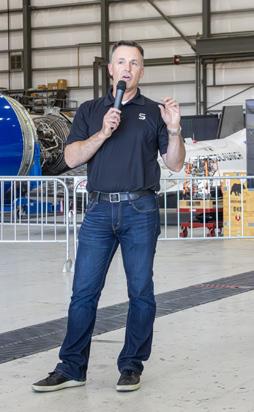
With automated drone battery swapping stations and drone-in-a-box systems, alumni Curt Lary and Nicholas Mulka are using their Georgia Tech knowhow to expand access to aerial data collection and security monitoring.
Nicholas Mulka was working on his master’s thesis when Curt Lary called and changed everything
The longtime friends met while studying mechanical engineering at Georgia Tech. They had joined the same fraternity, taken the same classes, studied together, and bonded over shared interests.
“Also, there was a little bit of healthy competition throughout undergrad,” Mulka recalled with a laugh. “Like in our circuits class, Curt would study less than me and get a better score on the test. And I would always be like, how did this happen?”
The two had remained close, even as Lary returned to his native Miami after graduating in 2020 and started working on an idea in his family garage that would upend the typical limits of operating autonomous drones. It was the outgrowth of his Capstone Design senior project, and Lary had decided to go all-in on it.
“Coming out of Capstone — and I’ve been through a lot of the different entrepreneurship courses at Georgia Tech, such as Idea to Prototype — I was clear about the path: find a customer and then solve the customer’s problem. That’s step one,” Lary said.
“I knew I wanted to make cool things with drones, but I needed to solve a critical problem. And everyone I talked to using a particular drone said, ‘If you can automate it so that our missions can be truly automatic, then we’ll buy.’”
What Lary ended up making in his garage sounds a bit like science fiction: An automated station where a drone lands, the station automatically swaps its depleted batteries for fully charged ones, and the drone takes off again to resume its mission. No human intervention required.
What Lary ended up making in his garage sounds a bit like science fiction: An automated station where a drone lands, the station automatically swaps its depleted batteries for fully charged ones, and the drone takes off again to resume its mission. No human intervention required.
With the customers’ problem solved, Lary sold his first units. And things started to take off.
Before long, he realized he needed help from good engineers to keep growing. That’s when he called Mulka, who soon moved to Miami with just a suitcase in hand and a thesis to finish.
The pair spent months grinding away in their warehouse-slash-manufacturing facility-slash-office. They worked to the point of exhaustion almost every day, collapsing onto air mattresses in the warehouse each night to sleep.
Now the company, called Hex, has dozens of clients and hardware deployed in 20 states and two dozen countries. They’ve grown to more than 30 employees working in a 10,000-square-foot facility in South Florida. And they’re shipping out up to five drone stations every week. Their customers use drones to inspect and monitor oil and gas facilities, critical infrastructure, train tracks, and railroad yards. Drones support private security teams and public safety — for example at large events or in emergency situations, where drones launch from a Hex station after a 911 call and can be at the scene in 90 seconds or less. That gives first responders nearimmediate eyes on a situation while they’re still en route.
“We allow our customers to get the maximum utility out of a drone,” Lary said. “They don’t want to wait 30 minutes for it to recharge, and so the battery can be swapped in two minutes and they’re ready to go. They can fly two or three times as long.
“It’s a hard problem — a lot of mechanical systems that need to work together continuously and reliably in a ton of different environments.”
Hex started as a hardware company, developing a station for larger drones and another for small ones.
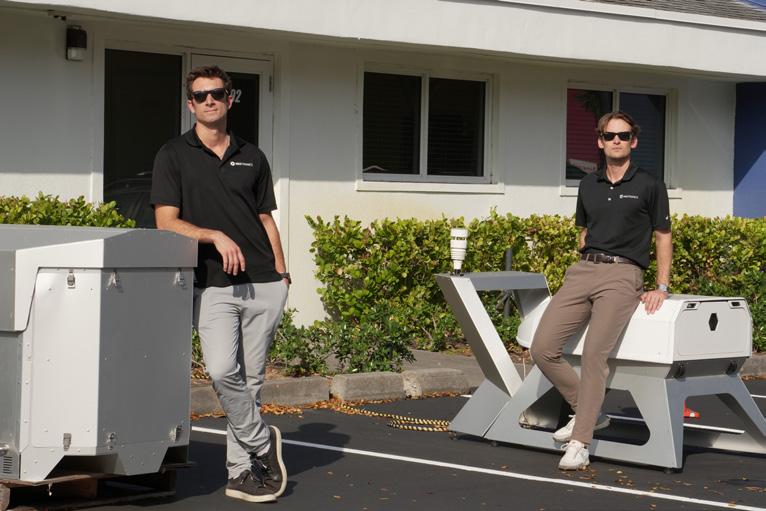
More recently, Lary and Mulka have expanded, developing software solutions to create what they call a dronein-a-box system — everything customers need to plan missions, capture and analyze data, and automatically deploy.
“We just want to make aerial data acquisition a lot more obtainable for a lot more people,” Mulka said. “Being able to have high-fidelity, high-frequency aerial data for the large industrials, but also for other clientele that might need it — real estate, insurance, agriculture, security — and then being able to provide a data acquisition layer potentially for AI-driven models, I think, is going to be a powerful future for us.”
Back in their undergrad days, one of the pair’s shared interests was entrepreneurship. Both seemed always to be building something.
“That is one of the things that made us friends — I would show off some of the projects I was building. And
we’d talk about entrepreneurship,” Mulka said. “I wanted to build something that was an electromechanical system of some sort. One of my projects was a game pad that would be paired with an iPhone. I had another project thinking about accessories that you could carry around. But nothing that was super serious.”
Still, Mulka’s dad had started his own business, so he’d always wanted to create.
“It really wasn’t until Curt came to me and was like, ‘Let’s make this happen,’ that I felt like, OK, this is something I can really sink my teeth into.”
Likewise, Lary had the startup bug from a young age. His grandfather had been a heart surgeon and inventor with dozens of patents for medical innovations.
“This is super cliché: in kindergarten, they asked what I wanted to be. I said, ‘An inventor, and I want to make a flying car,’” Lary said. “When you’re a kid, you set pretty high aspirations, and I’m trying to uphold them.”
‣ JOSHUA STEWART
we are MOVING UP
The Stewart School is preparing to move across campus and into a new tower in the heart of Tech Square.
The H. Milton Stewart School of Industrial and Systems Engineering (ISyE) is about to make a major transition. After 75 years on the west side of campus — the last 36 as the No. 1 ranked graduate program in the nation — the Stewart School is headed east across the Downtown Connector.
The School will move into a new home at the center of Georgia Tech’s innovation ecosystem later this summer. The 18-story George Tower marks phase three of Tech Square and a new era for ISyE’s students, faculty, and staff. After continually innovating itself and the field of industrial engineering for the past eight decades, the School’s leader said the move is the latest example of the forward-looking mindset that has defined ISyE’s history.
“Moving from a four-story building to a tower feels both exciting and a bit surreal,” said Pinar Keskinocak, the H. Milton and Carolyn J. Stewart School Chair. “It is a visible signal of confidence in the Stewart School’s future as we carry forward the collaborative culture we cherish and foster.”
That culture and a commitment to designing spaces that support it have guided the planning of George Tower from the start. Stewart School Facilities Manager Jonathan Etress is in charge of the move. He’s coordinating with Georgia Tech Move Management and a contracted vendor that’s providing all packing materials, labor, and resources to complete the transition. Etress expects the trucks to take only a few days to move an entire complex’s contents out of the Groseclose Building and ISyE Main and into George Tower.
Etress said the tower’s flexibility and function were central considerations in the School’s move and needs.
“From the beginning, the goal was to create spaces that support how ISyE actually works,” he said. “That
Being embedded in Tech Square and an innovation-district environment opens new possibilities. George Tower makes it easier for our faculty, students, and collaborators to connect both intentionally and informally.”
Alan Erera
meant designing environments that balance focused work with collaboration and can adapt as needs change over time.”
Keskinocak pointed to a collaborative ethos deeply woven into how the Stewart School advances education, research, and engagement that will be supported by the building’s design, which includes a range of common areas and collaboration spaces. And George Tower’s location in Tech Square supports the School’s strategic priorities around innovation, leadership, and entrepreneurship, she said.
“Proximity to industry partners, startups, policy conversations, and interdisciplinary initiatives is increasingly important,” Keskinocak said. “George Tower places ISyE closer to that ecosystem and creates more natural opportunities for engagement beyond our traditional academic boundaries.”

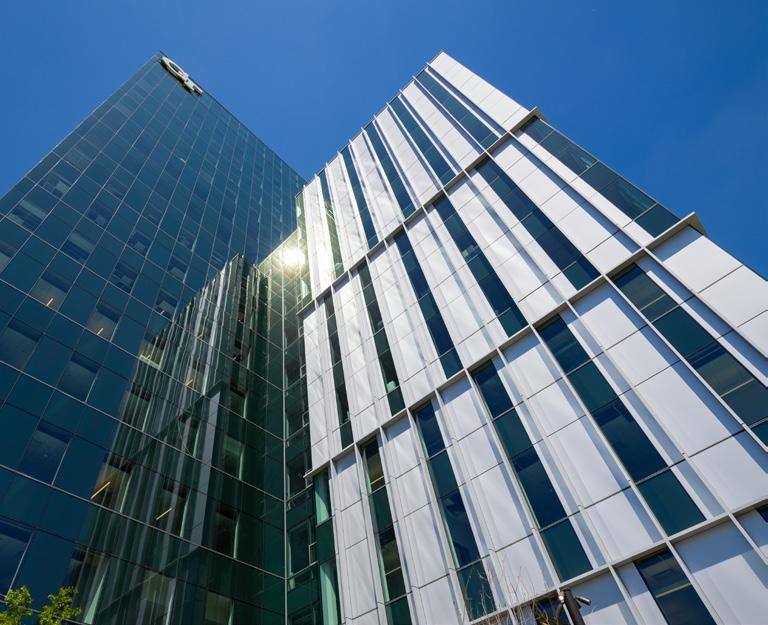
Tech Square is home to 35 corporate innovation centers from the likes of Accenture, AT&T, Chick-fil-A, Home Depot, and Siemens. Georgia Tech’s startup community — CREATE-X, ATDC, VentureLab, and other commercialization units — are in George Tower’s shadow.
“Being embedded in Tech Square and an innovation-district environment opens new possibilities. George Tower makes it easier for our faculty, students, and collaborators to connect both intentionally and informally,” said Alan Erera, the Manhattan Associates/ Dabbiere Chair and Professor and the School’s senior associate chair. “Those interactions often spark the most meaningful ideas.”
The building is named in honor of Penny and William “Bill” George, IE 1964, Hon. Ph.D. 2008, whose philanthropic support alongside many other donors made the
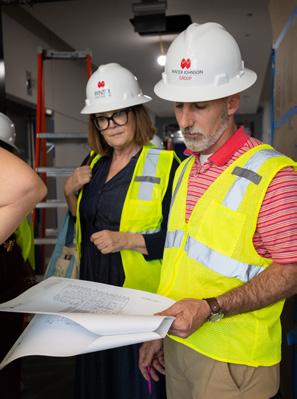
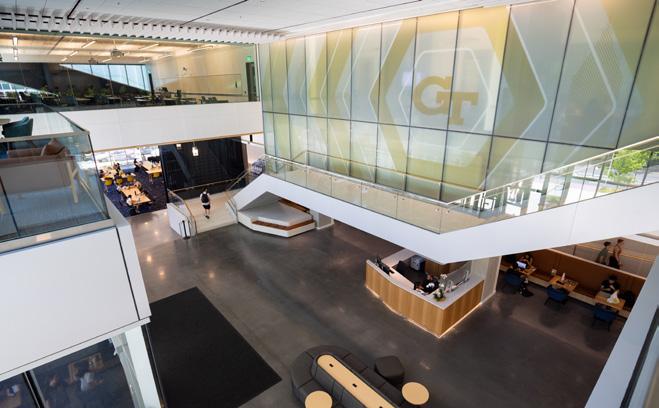
building possible. Its floors will feature new classrooms, offices, lab spaces, meeting rooms, dining, and retail.
“George Tower reflects extraordinary generosity and vision from the Georges, the Stewarts, and many others who invested in the building and the people and ideas it will support,” said Nancy Sandlin, ISyE senior director of development. “The Tower and its named spaces reflect not only amazing philanthropy, but confidence in ISyE’s mission and belief in its future.”
George Tower is seamlessly connected with the adjacent 14-floor Scheller Tower, which will house the MBA and executive education programs for the Scheller College of Business.
That makes the move to Tech Square a full-circle moment. The Stewart School and the College of Business were in neighboring buildings on the west side of campus until 2002, when Scheller moved to Tech Square. They’ll reunite next semester with the George and Scheller towers adding 416,500 square feet of space for Tech students.
“Calling George Tower home is both a privilege and a responsibility,” Keskinocak said. “It challenges us to be thoughtful about how we use the space to advance our education and research missions, support our students, engage meaningfully with partners and society, and grow our leadership and impact. The legacy of George Tower and the Stewart School will be defined by the people who made it possible and the community that brings it to life.”
‣ JASON MADERER
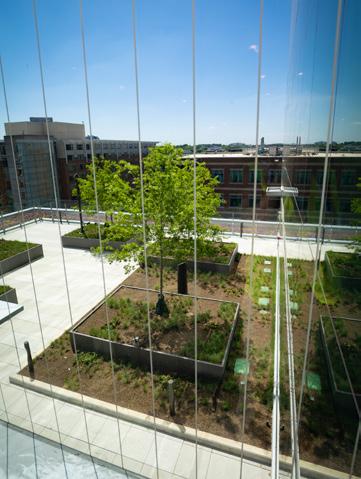
Jack Cebe’s day to day work is about nothing less than transformation in Downtown Atlanta. He’s the first president and CEO of Stitch Inc., an organization working to cover three-quarters of a mile of I-75 and I-85 with a 17-acre park and spur new development and affordable housing options. Cebe is a two-time Georgia Tech graduate with a master’s in civil engineering in 2017 and an MBA in 2019.

1 ‣ Capping 14 lanes of interstate highway is ambitious, to say the least. Where did the idea for The Stitch come from? The earliest proposal for capping the Downtown Connector I’ve found predates the 1996 Atlanta Olympic Games. In the early 1990s, Central Atlanta Progress and the City of Atlanta held an international competition for the redesign of Peachtree Street, Woodruff Park, and Edgewood and Auburn avenues. Many of the submissions, including the winner, proposed capping the Downtown Connector at Peachtree Street with a park.
The current vision for The Stitch began in the late ‘90s when Central Atlanta Progress led a neighborhood planning study for north Downtown. A cap and park over the Connector became a key recommendation and captured the imagination of the community.
2 ‣ How is this structurally possible, and how unique is it compared to other cities? It’s like a green roof you would find on a building, but on top of a highway bridge. While the permanent, stable loads are more significant than a typical vehicular bridge, the transient loads are much lighter due to infrequent cars and trucks in the park, so required beam sizes are not hugely different. There are 60+ capping projects similar to The Stitch across the U.S., and you may have visited one without even knowing! The Rose Kennedy Greenway in Boston is over an interstate. Chicago’s Millennium Park (home of “The Bean”) is built atop a parking deck and rail lines. Klyde Warren Park has transformed downtown Dallas from a sea of parking lots and office buildings into a vibrant, people-focused arts district.
We even have a local example, albeit at a muchsmaller scale. The 5th Street bridge connecting Georgia Tech to Midtown was key to the development and success of Tech Square.
3 ‣ How did you get involved with the project? I have been a fan of Downtown since my days as a Georgia Tech student. Atlanta’s most interesting architecture, history, and culture are all Downtown. There is huge potential to make it our region’s top destination and neighborhood. Throughout my career, I’ve worked on many design projects that focus on making public spaces more attractive and supportive of strong neighborhoods, including projects like The Stitch. After hearing about the project’s promise for many years, I was immediately excited to apply when the Atlanta Downtown Improvement District posted the opportunity.
4 ‣ What do you hope Atlantans will feel or experience the first time they walk across The Stitch someday? Aside from feeling happy, rejuvenated, inspired, and connected to Downtown Atlanta, I hope people see the immense transformation that thoughtful, civic-minded infrastructure can have on communities. Like the Beltline, The Stitch is a community-driven effort and would not be happening but for the many community members and project partners who have lent their time, energy, and resources. Ultimately, I would love to see it inspire visitors to support similar projects in their communities.
5 ‣ How do you stay motivated and energized throughout big multi-year efforts like this one? I think design professionals are drawn to the profession because they like to solve challenging problems and see tangible results from their efforts. While I’m no longer producing design drawings or plan sheets, I am constantly presented with new and interesting problems to solve that move the project forward bit by bit. Combined with working alongside amazing colleagues and partners who share my passion for Downtown Atlanta and The Stitch, that keeps me going despite the many challenges that arise.
6 ‣ What drew you to civil engineering? My career has been an evolution. After quickly realizing that I didn’t want to continue pre-med during my freshman year, I pivoted to landscape architecture not exactly knowing what the profession was — my justification at the time was that I enjoyed yard work. After realizing the science, horticulture, art, and design involved, I was hooked. I landed an internship at a firm that specialized in multimodal transportation. This introduced me to civil engineering, and I quickly found a passion and knack for bringing my skills as a landscape architect to solving engineering problems.
7 ‣ Why did you choose Tech for your master’s degrees? Georgia Tech’s reputation for civil engineering and the dual-degree master’s program focused on transportation planning and engineering were both a major draw. I was offered a graduate assistantship in Randall Guensler’s lab working on the Automated Sidewalk Safety and Quality Assessment System, which aligned with my passion for transportation accessibility for users of all abilities. I will never forget the looks I received pushing the sidewalk assessment tool, which looked like an empty wheelchair, to inventory sidewalks across Atlanta.
8 ‣ How did your Tech experience shape the engineer you are today? Georgia Tech’s program helped me fill fundamental engineering knowledge gaps and shaped me into a more well-rounded design professional. It also broadened my professional network in a major way. In addition to meeting new people in the program, many of whom I work with regularly today, it provided conduits to get involved with professional development opportunities locally and nationally like the Institute of Transportation Engineers Georgia Chapter, the Transportation Research Board, and the Eno Future Leaders Development Conference.
9 ‣ You paired a civil engineering master’s with an MBA. How do those skills mesh or complement each other? In addition to introducing me to core business competencies, the MBA program helped to hone my communications skills and expand my understanding of private
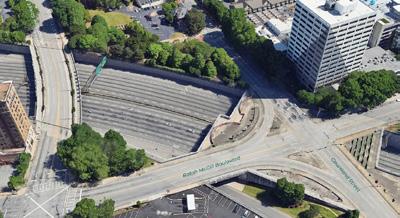

sector businesses related to engineering. For example, my classes in real estate development introduced me to Atlanta companies and professionals in this sector, who are critical partners in bringing The Stitch vision to life.
10 ‣ If you could instantly solve any transportation, connectivity, or urban issue, what would it be? One of the biggest issues facing our communities today that gets shockingly little attention is roadway safety. Year after year, traffic fatalities and serious injuries impact thousands of families across the Atlanta region. In recent years, the issue has worsened to the point where traffic fatalities outpace homicides as a cause of death. You should not have to take your life into your own hands just to go to work or walk across the street.
Most risk factors that lead to deaths and serious injuries can be solved through engineering. Several communities in Europe and the U.S. have done so — Hoboken, New Jersey, has achieved zero traffic deaths for the past seven years by prioritizing traffic safety when investing in their infrastructure.
One component of that is more public investment in transportation modes like walking, biking, scootering, and transit. They are inherently low risk when transportation systems are designed to prioritize safety. Investment in non-driving modes even benefits you if you never use them, as studies show that many drivers will switch to other modes if they are safe, convenient, and efficient, which reduces traffic congestion.
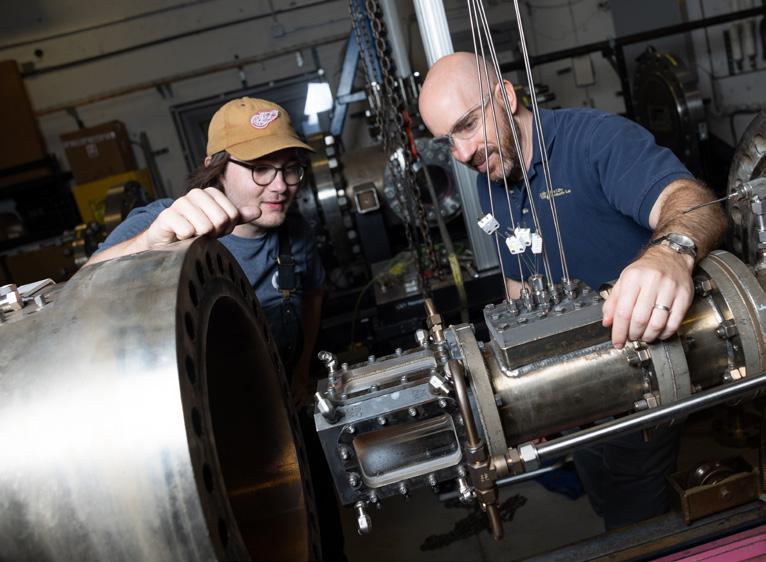

coe.gatech.edu