May/June 2026
May/June 2026




President/Publisher/Editor
Deborah Ally dally@gastonlifestyles.com
Advertising admin@gastonlifestyles.com
Art Director
Michele Warren
Digital Media admin@gastonlifestyles.com
Contributing Writers
Megan Baksh • Megan Zelask • Sarah Shriver
Ryan Schrift • Felicia Bittle • Caitlin Conner
Tony Miros • Sharon Heinrich
Michael McQuitter • Donyel B. Barber
Erica Taylor • Melissa Latin
Cover Story
Photographers
Gastonia Farmers Market
Gaston Business Association • Felicia Bittle
Gaston County Family YMCA • Marc Raboy
Daniel Stowe Conservancy • Gregory Harrison
Rotary Clubs in Gaston County • Sunpath, LLC
Michael McQuitter • Access and Engagement
Kintegra Health • Charlotte Fashion Plate
Nathan Crane • Todd Lewis
By Deborah Ally, Publisher, Gaston Lifestyles magazine
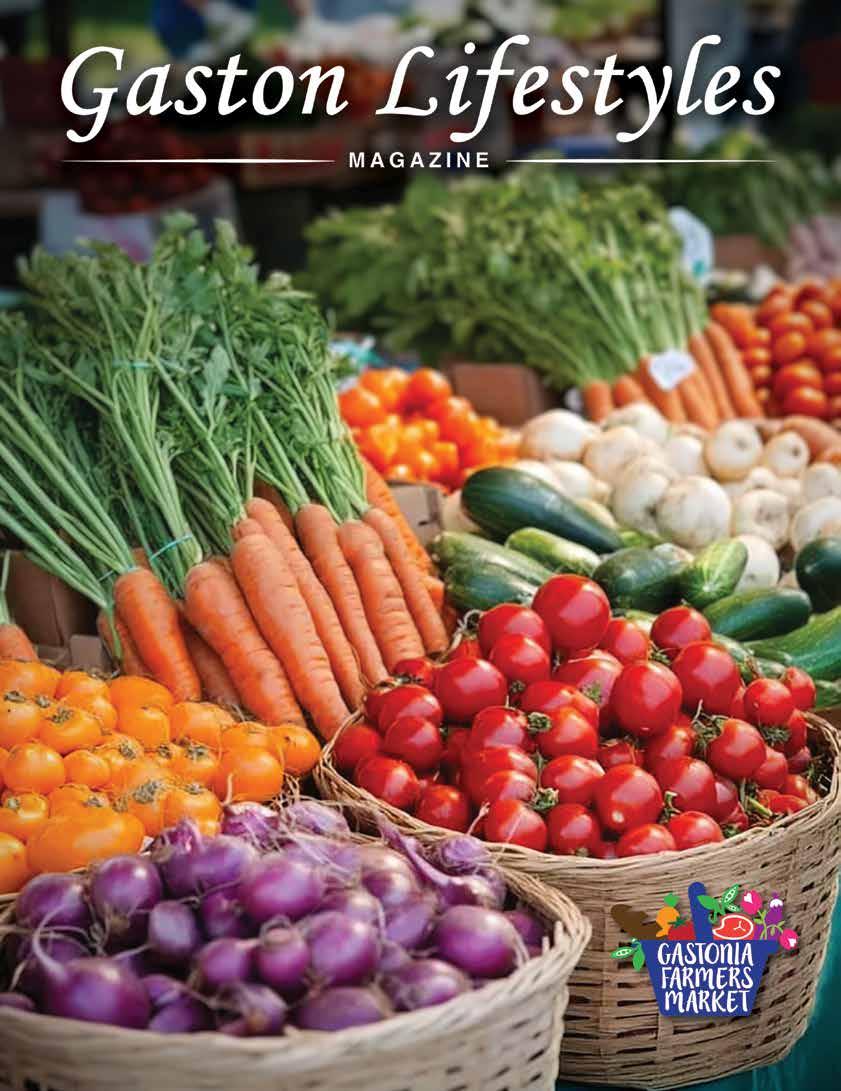
Inthis issue we feature a farmers’ market which offers a vibrant way to connect with local communities while supporting fresh, seasonal produce. Walking through colorful booths filled with fruits, vegetables, baked goods, and handmade items creates a sense of authenticity that grocery stores often lack. These markets also encourage healthier eating habits and give people the chance to meet the growers behind their food.
Daniel Stowes’ nature walks complement this experience by providing a peaceful escape from busy routines. Spending time in nature helps reduce stress and improve overall wellbeing. Observing wildlife, listening to birds, and breathing fresh air can refresh both mind and body.
And water safety is equally important, especially during outdoor activities. Wearing life jackets, supervising children closely, and being aware of water conditions are essential practices. Knowing how to swim and recognizing hazards like
The Gastonia Alumnae Chapter of
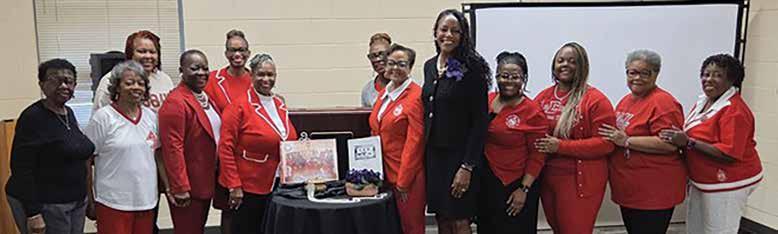
Theta Sorority, Inc. launched its 70th anniversary year with a Platinum Gala at the Gastonia Conference Center on February 10, 2024. That elegant celebration set the stage for a series of commemorative events, culminating in the public reveal of their Chapter History: Volume II (1979–2025) on March 21,

slippery surfaces can make a significant difference. Together, farmers’ markets, nature walks, and water safety highlight the importance of healthy living, community connection, and personal responsibility while enjoying the outdoors. Happy reading.

2026, at the Erwin Center. Sorority members, community partners, and local residents gathered to honor the chapter’s legacy and witness the unveiling of its newest historical record. Cheryl Perkins and Adrienne Perkins Singletary, co-chairs of the Heritage and Archives Committee and the mother-daughter team were responsible for producing the new volume.



By Megan Baksh
Courtesy of Gastonia Farmers Market
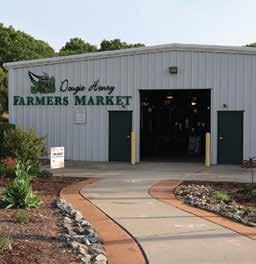
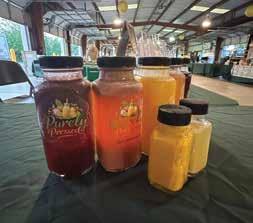
AnAnundeniable sense of connection and community can be felt throughout the Gastonia Farmers Market, whose rich history dates back to the 1970s. What was once a humble gathering of growers packing up their pickups with produce to sell has since flourished into a Saturday morning ritual, a spot where hundreds of families convene to not only shop but also make lasting memories.
“The market has changed physical location multiple times, until finally landing at our current spot in 1995,” explains the market’s manager, Emily Thomasson.
Since its inception, the market’s vendor base has reached exponential heights, as its expansion beyond North Carolina has provided an opportunity to partner with neighboring South Carolina growers, as well as various bakers and crafters, turning what was once a direct agricultural exchange into a diverse marketplace whose core identity is paramount and unmistakably local.
“Our market is Gastonia through and through,” says Thomasson, pointing to its deep ties to the community. The building itself bears the name of Dougie Henry, a local benefactor, and many vendors have generational roots in the market. In a city shaped by farmland before its textile boom, the market remains a living link to those origins. “We still, at our core, are a market of farmers selling what they grow. I don’t think it can get more Gastonia than that.”
The mission today is simple but intentional: “To provide our community with a place where you can buy and sell truly local produce and products.” That goal is made possible through a close partnership with the City of Gastonia, which
owns the property and provides critical infrastructure. “Without the city supporting us, we could not have such a great location,” notes Thomasson, adding that collaboration with organizations like Keep Gastonia Beautiful and an advisory committee helps shape programming and growth. “I feel nothing but support and encouragement, which gives me a foundation to grow the market and support my farmers.”
The market celebrates its vendors’ success while balancing farming tradition with newer artisan or niche items.
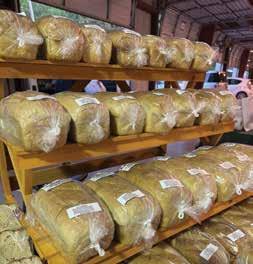
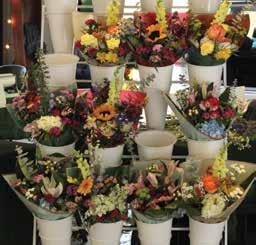
For first-time visitors, the experience often exceeds expectations. “If they come at peak market hours, they would be pleased and surprised at the variety of items,” says Thomasson. Beyond produce, shoppers find baked goods, soaps, jewelry, flowers, plants and food trucks. Yet the market also challenges modern shopping habits. “You won’t find oranges or kiwi. This is a different shopping experience from the grocery store.” Instead, the rhythm of the seasons dictates what’s available—tomatoes in May, watermelons in July— encouraging customers to rediscover freshness and timing and find joy in seasonal shopping.
The market’s dedication to preserving authenticity and upholding the standard of its products being vendor-grown or handmade is essential and deliberate. In a world where items are still mass-produced overseas and frequently recalled, the market is a place where customers can be assured that what they purchase is top quality. “At Gastonia Farmers Market, you can find vendors who have created that product, grown that tomato, baked that bread,” says Thomasson. “Our vendors are passionate about what they are selling and happy to chat and answer questions.”
The market celebrates its vendors’ success while balancing farming tradition with newer artisan or niche items. Some vendors, including Wild and Whimsy Living, which offers locally sourced food items like jams and jellies, as well as handmade jewelry and home décor, have grown from a booth into a brick-and-mortar establishment downtown while maintaining their market roots. Combining those newer ventures with long-standing farm vendors requires careful curation on Thomasson’s part. “I always welcome farmers since that is the base of our market, but I try to keep other categories balanced,” she says, favoring artisan goods with an agricultural connection.
Despite success rates, local growers still face many challenges, including unpredictable weather and crop loss. However, this is not something they face alone, as the market family supports each other wholeheartedly.
“This year we are having trouble with drought. I stay in communication with my vendors during the week, and if they have to drop out at the last moment due to crop issues, we understand,” explains Thomasson. The camaraderie between vendors defines the market as much as the products themselves. “I think having such a close-knit market family is good for morale, even if we can’t make it rain.”
Week after week, customers continue to flock to the market, not just for fresh produce and other goods; it’s a local gem where genuine relationships are formed. “As I walk through the market, I see friends and neighbors catching up, farmers who know their customers by name, preorders that were taken to ensure customers got what they needed, questions being answered, advice given on what product would be best, and just a whole lot of connection,” reflects Thomasson.
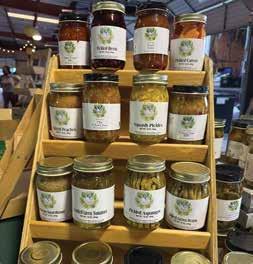
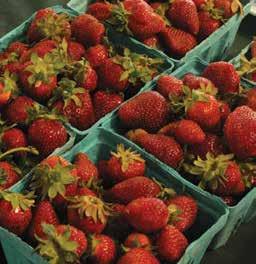
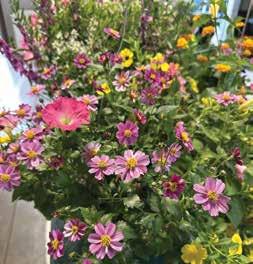
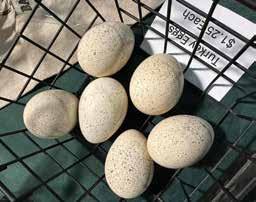
Beyond commerce, the market has become what Thomasson calls a “third space”—a place for people to gather and socialize. This year, she is working on several initiatives to promote a sense of community, including a community table featuring a nonprofit, the library or another community resource that can provide information to customers. While Thomasson loves hearing that it’s someone’s first time at the market, everyday encounters also spark reconnections. “I have seen childhood friends bump into each other again, teachers and former students reconnecting, and many other reunions happening in the middle of the market.”
Seasonal events and programming deepen that engagement by drawing new visitors, while initiatives like Young Entrepreneur Day invite children to step into the role of vendor. “This is an opportunity for our kids to sell their own homemade products,” she says. A free book exchange and small touches—like candy or stickers for young visitors— help make the space welcoming to visitors of all ages.
The market also aims to expand access to fresh food for everyone in the community. Although state grant funding is often limited, the market is sometimes able to double EBT dollars when available. EBT users may run their cards in the office, where they will receive tokens to use at the market. “If they run their card for $30, they will receive $60 in tokens,” explains Thomasson. These tokens are good for anything a grocery store would allow, including produce, meat, honey, vegetable plants, herbs and baked goods. These efforts not only support households but also circulate dollars locally. “This provides families with fresh local goods and puts the money back into the community.”
The impact extends into food security and public health. Unsold produce is donated to local food banks, and new programs aim to support seniors. She recalls one parent who shared that the market made it possible to serve betterquality food at home. “It was allowing her to offer meat and produce she felt good about serving her young daughter.”
From an economic standpoint, supporting the market strengthens the local economy more than shopping at a grocery chain ever could, something Thomasson knows firsthand. When she started out as a vendor herself, the money she earned from her candle business helped support her family’s needs. “Buying from the market supports your neighbors and keeps their business alive,” she says, emphasizing that the market is filled with vendors who are the actual growers or makers themselves. Having that direct connection ensures that farmland and agricultural traditions in Gaston County remain viable for future generations.
Behind the scenes, running the market is a hands-on endeavor. “Market days start at 5 a.m.,” says Thomasson, describing a routine that includes assigning vendor spots, managing logistics and staying connected with both sellers and shoppers. “I want to keep my finger on the pulse of the market—what is selling out, who may have a need, what customers are saying and buying.” By early afternoon, the market winds down—often with vendors sold out. She then wraps up the day before heading home to rest.
Looking ahead, Thomasson’s vision is rooted in community growth. “My goal is to grow the market’s regular customer base and make it part of the weekly tradition for the community. I think a lot of people feel tired of supporting bigbox stores and are more careful where their money is going,” she says.
If there is one takeaway she hopes readers carry, it is both practical and emotional: “Come early for the best selection because we are offering seasonal produce that is limited but absolutely worth the early morning.” More than that, she wants people to understand the sense of connection the market fosters. “The farmers market is for everyone.”
Personally, that connection runs deep for Thomasson. A secondgeneration participant whose grandparents once sold there as farmers, she began vending in 2022. After the loss of her husband, the market became something more profound. “It has helped heal me, given me so much focused purpose and expanded my personal circle in so many ways. For me, it’s never just the farmers market. It’s friends, community, love, support.”
Without it, Gastonia would lose more than a place to shop. “We would lose an important community hub and access to the freshest food in the county,” she says. The response to a recent funding gap— when residents donated to sustain EBT access—underscored that truth. “The incoming support was so moving and unbelievable. It was all just our Gaston County neighbors,” states Thomasson.
In that way, the Gastonia Farmers Market is both sustained by and sustaining its community—a cycle of connection, commerce and care that continues to grow with each passing season.
For more information, visit the Gastonia Farmers Market at 410 E. Long Ave., Gastonia, NC, or go to gastonianc. gov/farmers-market.
By Megan Zelaski Photographs Courtesy of Gaston Business Association
OnMay 21, business and community leaders from across Gaston County will gather at the Gaston Country Club for one of the region’s most anticipated celebrations—the Gaston Business Association’s Salute to Business Gala, presented by Key Street Advisors.
Since its inception in 2003, Salute to Business has served as a cornerstone event, recognizing individuals and organizations whose work is shaping Gaston County’s economic strength, community vitality, and overall quality of life. More than just an awards ceremony, the evening is a reflection of the people and projects driving the county forward.
This year’s event, held from 6:00 to 9:00 p.m., will once again highlight three distinguished honorees through the presentation of the Spirit of the Carolinas, Spirit of the Economy, and Spirit of Main Street awards—each representing a different but equally critical piece of Gaston County’s growth story.
The Spirit of the Carolinas Award
Sponsored by SouthState Bank, will be presented to Dr. John Hauser, President of Gaston College.
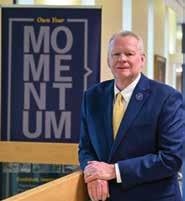
Since stepping into his role in 2020, Dr. Hauser has led the college through a period of remarkable growth and transformation. With more than three decades of experience in the North Carolina Community College System and a background in advanced manufacturing, he has brought a strategic, workforce-focused lens to higher education in Gaston County.
Under his leadership, Gaston College has expanded high-demand programs in healthcare, manufacturing, and

This year’s event, will highlight three distinguished honorees through the presentation of the Spirit of the Carolinas, Spirit of the Economy, and Spirit of Main Street awards—each representing a critical piece of Gaston County’s growth story.
cybersecurity—areas directly aligned with regional workforce needs. The college has also seen significant enrollment growth, secured substantial state funding, and launched major capital projects, including the Kimbrell Fiber Innovation Center and new workforce and health sciences facilities.
Dr. Hauser’s commitment to innovation, employer alignment, and student success has strengthened the college’s role as a key driver of economic mobility and talent development across the region—making him a fitting recipient of this year’s top honor.
The Spirit of the Economy Award
Sponsored by Webb Custom Kitchen, will recognize Southwood Realty for its longstanding contributions to economic development and housing across North Carolina.

Founded in 1977 by Gene Ratchford, Southwood Realty was built on a simple but powerful idea: people deserve a great place to call home. That philosophy has guided the company for decades, shaping its approach to multifamily development, property management, and resident experience.
Now led by the second and third generations of the Ratchford family, Southwood continues to grow while maintaining a strong commitment to quality, service, and
community. Their hands-on leadership style and people-first culture have not only delivered strong results for investors but have also helped create stable, well-managed housing options that support the broader economic ecosystem.
By investing in communities and maintaining a high standard of living for residents, Southwood Realty exemplifies the kind of business leadership that fuels sustainable growth.
Sponsored by MECA Commercial Real Estate, will be awarded to The Lofts at Osage Mill, developed by WinnResidential, for its transformative impact on downtown Bessemer City.
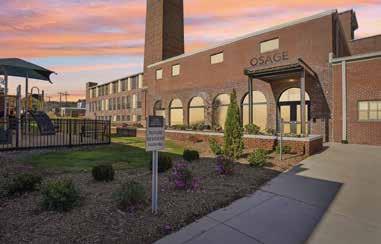
Once a cornerstone of the city’s textile economy, the historic Osage Mill has been reimagined through a $40+ million redevelopment into a vibrant mixed-use destination. The project preserved the character of the original structure while introducing 139 loft-style apartments and approximately 30,000 square feet of retail and commercial space.
This redevelopment has done more than restore a historic building—it has reignited activity in downtown Bessemer City. With new residents living in the heart of downtown, local businesses are seeing increased foot traffic, and the area is experiencing renewed interest and investment.
The Lofts at Osage Mill stands as a powerful example of how thoughtful redevelopment and historic preservation can work hand-in-hand to create lasting economic and community impact.
The Salute to Business gala, presented by Key Street Advisors, is a chance for the entire community to come together and celebrate the people and projects shaping Gaston County’s future. All are welcome to attend—tickets for the May 21 event can be purchased at www.gastonbusiness.com

By Sarah Shriver, VP of Marketing and Financial Development, Gaston County Family YMCA
Photographs Courtesy of Gaston County Family YMCA
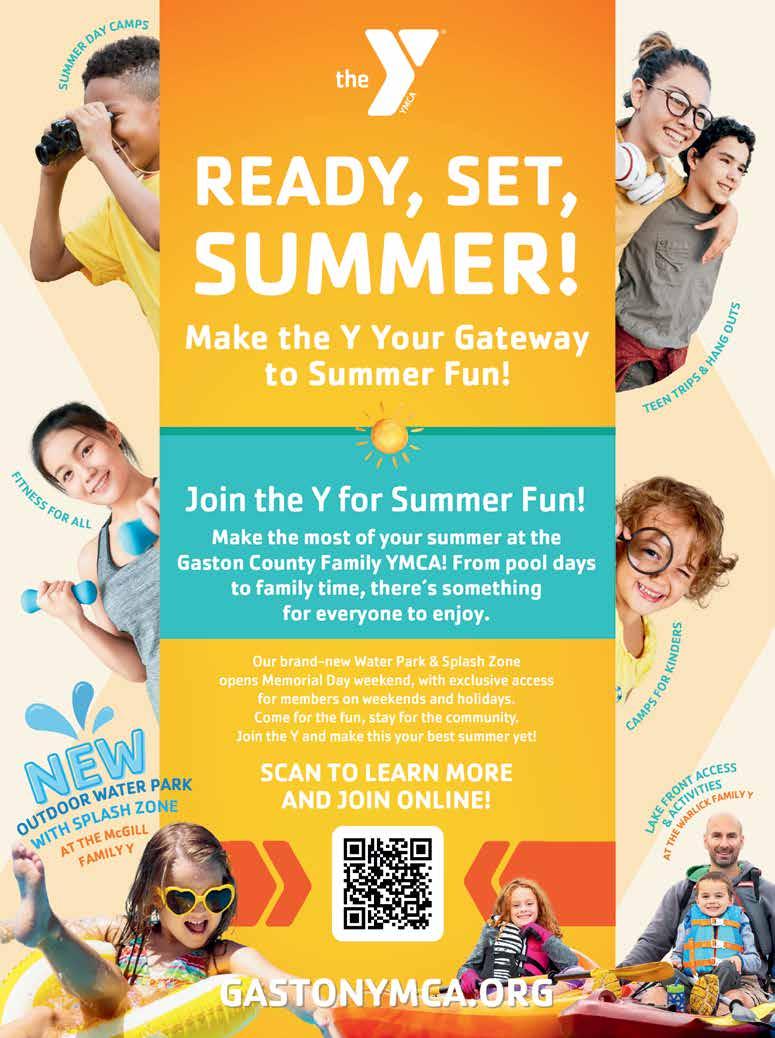
When summer arrives in Gaston County, families naturally gather around the water to cool off and spend time together. With local destinations like Robinwood Lake at the Warlick Family YMCA, the McGill Family YMCA Water Park (formerly the Stowe Family YMCA), and the Cherryville City Park Pool, our community has many wonderful places for families to enjoy the water. But for many children, water can also present serious risks if they have not been taught the basic skills needed to stay safe. That is why the Gaston County Family YMCA has made water safety a priority through its free Safety Around Water program, an initiative that brings lifesaving water safety lessons to local families at zero cost and is already making a meaningful, lifesaving impact in our community.
For years, the YMCA has been a leader in swim instruction, but the Safety Around Water program focuses on something even more critical: ensuring that children who may not otherwise have access to swim lessons learn the essential skills that can save their lives.
The YMCA’s Safety Around Water program is designed to help children develop confidence and competence in and around the water. Through a series of structured lessons, certified YMCA instructors teach children critical skills such as floating, reaching the wall, swimming short distances, and safely exiting the pool. These lessons are more than swim classes. They focus on building instincts that help children remain calm and react
correctly if they unexpectedly find themselves in the water. The program emphasizes two key survival skills: swimming, floating, and swimming again, and jumping in, pushing off the bottom, turning around, and grabbing the wall.
These simple but powerful techniques help children understand how to respond in real-life situations.
One of the most important aspects of the YMCA’s Safety Around Water program is meeting families where they are. Rather than expecting children to come to the YMCA, the Gaston County Family YMCA brings the program directly into the communities that need it most.
Safety Around Water lessons are hosted at the Cramerton City Pool and at the Erwin Program Center, both located within neighborhood settings that are easily accessible for families. By operating in these familiar community spaces, the YMCA is able to remove transportation and access barriers while bringing lifesaving skills directly to local children.
The program is completely free for participants, making accessibility a top priority and ensuring that every child has the opportunity to learn critical water safety skills, regardless of their family’s financial situation. It is one of the many ways the YMCA fulfills its commitment to “take the Y to where you are.”
For many families, the program has become a summer tradition.
Vivian Page, a local parent who has brought her daughter, Keilani, to the program for several years, says the impact has gone far beyond learning water safety skills.
“This program has given my daughter confidence in the water

and skills that could truly save lives,” Page shared. “It also opened the door for our family to become more connected to the YMCA. We’ve discovered so many other programs and opportunities through the Y, and now we feel like part of that community.”
Page has become passionate about helping more families learn about the program and making sure the opportunity reaches the people who need it most.

“I tell everyone I know about it because so many families just don’t realize these opportunities exist,” she said. “The YMCA is bringing something really important right into our community, and I want to help make sure more parents know about it.”
Page continues to bring her daughter back each year and plans to enroll her son in the program for the first time this summer. She remains a strong advocate for helping the YMCA spread the word so more children can gain the confidence and lifesaving skills Safety Around Water provides.
Since launching Safety Around Water in Gaston County, the YMCA has helped thousands of local children learn lifesaving water safety skills. Each year, hundreds of additional children participate in the program, building confidence in the water while gaining knowledge that could one day save a life.
As awareness grows, so does the need. Many families simply cannot afford traditional swim lessons, and others may not have regular access to safe aquatic environments. The YMCA works to remove those barriers so every child has the opportunity to learn.
Programs like Safety Around Water are made possible through the generosity of community partners who believe every child deserves the opportunity to learn lifesaving skills. Funding helps cover instructor training, pool time, transportation, and equipment so that families can participate at little or no cost.
This year, the Gaston County Family YMCA is proud to partner with Sunbelt Rentals as the Powered By sponsor of the Safety Around Water program. Sunbelt Rentals has a longstanding commitment to strengthening the communities where their employees live and work, and their support reflects a shared belief that investing in children’s safety and confidence in the water creates lasting impact for families across Gaston County. By stepping forward as a major sponsor, Sunbelt Rentals is helping ensure the program remains sustainable and continues to grow in the years ahead. Their support allows the YMCA to expand the program’s reach to more schools, more
neighborhoods, and more children who may not otherwise have access to swim safety education.
Beyond financial support, Sunbelt Rentals is also engaging their team in the mission, demonstrating a true commitment to community impact and helping ensure that the Safety Around Water program can continue protecting and empowering local children for years to come.
Sunbelt Rentals’ partnership extends beyond financial support, reflecting a shared commitment to community safety and youth development. This summer, the company is supporting the YMCA’s Safety Around Water program by helping provide essential resources that will benefit children participating in the program.
Through this partnership, Sunbelt Rentals is helping strengthen access to water safety education and critical skills that can help prevent drowning and keep families safer.
“Sunbelt Rentals is proud to support programs that make our communities safer and stronger,” said Tara Fletcher, Community Engagement Director for Sunbelt Rentals. “The YMCA’s Safety Around Water program teaches children skills that can truly save lives. When we learned how many families benefit from this program each year, it was an easy decision to get involved. We are honored to support this important work and the impact it has on local children.”
For the Gaston County Family YMCA, the mission is simple: every child deserves the opportunity to feel safe and confident around water.
Through strong partnerships, dedicated instructors, and the support of community champions like Sunbelt Rentals, the Safety Around Water program continues to expand its reach and its impact.
Each child who learns to float, swim, and stay calm in the water represents a safer future for families across Gaston County.
And as this program continues to grow, the ripple efects will be felt for generations to come.
By Ryan Schrift, Managing Director of R.J. Schrift Private Asset Management
Itis the middle of April as I write this, sitting in a McDonald’s in Catlettsburg, Kentucky with a black coffee and a window seat. Across the street a Speedway gas station sign glows over the pumps. The board reads unleaded $3.71, diesel $5.49, and a slurpee $1.00.
Those numbers reflect one of the most complex and global markets in the world.
Today crude oil is trading around $92.48 per barrel for the front month contract of West Texas Intermediate crude oil on the New York Mercantile Exchange. That leads to a simple question many people ask. What exactly does a barrel of oil mean?
A barrel is a standardized unit equal to 42 U.S. gallons. The term dates back to the early days of the American oil industry in the 1800s, when crude was stored and shipped in wooden barrels. Oil today moves mostly through pipelines, tanker ships, and large steel storage tanks, but the 42-gallon barrel remains the industry standard for pricing and trading.
Oil is primarily bought and sold through futures markets. These are contracts that allow buyers and sellers to agree on a


price for oil that will be delivered in the future. Most of these contracts never result in physical oil changing hands. Instead, they are traded by refiners, producers, and financial firms who are managing supply needs or speculating on future prices.
For WTI crude, the physical delivery point tied to those futures contracts is a major storage hub in Cushing, Oklahoma. Cushing holds tens of millions of barrels of crude in large tank farms connected by pipelines that stretch across the United States.
This system usually works smoothly. But sometimes the physical nature of oil creates unusual market behavior.
One of the strangest moments in commodity market history occurred during the early months of the pandemic in 2020. As travel stopped and economic activity slowed dramatically, global demand for oil collapsed. Airplanes were grounded, highways emptied, and refineries slowed their operations. Meanwhile oil wells kept producing and storage tanks began filling rapidly.

On April 20, 2020 the front month futures contract for WTI crude experienced something that had never happened before. Prices fell below zero. At one point traders were paying about negative $37 per barrel.
In simple terms, investors holding oil contracts were paying someone else to take the oil off their hands because there was nowhere left to store it. Storage tanks in places like Cushing were nearing capacity and the contracts required physical delivery.
It was a remarkable reminder that commodities are not just financial
Roughly twenty percent of the world’s oil supply moves through that passage each day.
instruments. They are physical goods that must be stored, transported, and consumed.
Today the situation is very different. Demand has recovered and oil markets are once again focused on geopolitical risks and supply constraints. One of the most important choke points in global energy markets remains the Strait of Hormuz, a narrow shipping lane between Iran and Oman.
Roughly twenty percent of the world’s oil supply moves through that passage each day. Even though the United States produces large amounts of oil domestically, crude is priced in a global market. Any disruption in that shipping route can ripple quickly through futures markets, refinery costs, and ultimately gasoline prices.
Which brings the story back to Catlettsburg, Kentucky. From a shipping lane in the Persian Gulf, to oil storage tanks in Oklahoma, to a futures contract traded in New York, the global energy market eventually finds its way to a roadside sign across the street from a McDonald’s. The slurpee may be the only price on the board that has nothing to do with geopolitics.
Ryan Schrift is the Managing Director of R.J. Schrift Private Asset Management, a Belmont based Financial Planning and Investment Advisory Firm. Securities are offered through LPL Financial, Member FINRA/ SIPC. R.J. Schrift Private Asset Management is an other business name of Independent Advisor Alliance, LLC. All investment advice is offered through Independent Advisor Alliance, LLC, a registered investment adviser. Independent Advisor Alliance, LLC is a separate entity from LPL Financial.






Activities (see story on page 22)
By Felicia Bittle, Fashion Contributor
Photographs Courtesy of Felicia Bittle
If your closet is full but you still feel like you have nothing to wear, the issue isn’t your wardrobe—it’s how it’s styled. You don’t need more clothes—you need a more intentional approach to how you wear them.
Many women are taught to shop, but not to style. They purchase pieces for isolated moments—an event, a trend, a mood—without considering how those pieces integrate into their everyday lives. Over time, this creates a closet full of individual items that don’t quite work together.
Style fatigue doesn’t come from a lack of options—it comes from a lack of intention
But the most stylish women don’t rely on more—they rely on intention. They understand how to build, style, and transform what they already own.
Start with a strong
set the tone

At the heart of this approach is a simple yet powerful concept: one base look can create multiple moments. With a few intentional adjustments, the same outfit can move seamlessly through your day— without sacrificing style or impact. A strong base look is clean, polished, and versatile. Think a tailored dress, a sleek jumpsuit, or a blouse paired with a well-fitting trouser. Neutral tones—black, white, denim, or soft earth hues—offer the most flexibility, allowing you to build and transform with ease. Piece: Black sleeveless midi dress (fitted or slightly structured) Why it works: Timeless, flattering, seasonless, and easy to elevate or tone down)

During the day, simplicity is key. Minimal accessories, a flat or low heel, and a structured tote create an effortless, polished look—perfect for meetings, errands, or a casual lunch.


• White sneakers or flat sandals
• Light denim jacket or soft cardigan
• Structured tote or crossbody
Minimal jewelry
Vibe: Casual, approachable, puttogether without trying too hard
For a more professional setting, structure changes everything. Adding a tailored blazer, a classic pump, and refined accessories instantly elevates your presence— communicating confidence, polish, and authority without requiring a full outfit change.



• Tailored blazer (black, white, or camel)
• Classic pumps or pointed-toe heels
• Leather handbag
• Belt (optional for waist definition)
Vibe: Confident, authoritative, polished
As the day transitions into evening, the shift is subtle— but powerful. Removing structured layers, introducing bold accessories, and incorporating texture through a statement shoe or handbag transforms the look entirely. A quick beauty adjustment—a deeper lip or a change in hairstyle—adds the finishing touch.

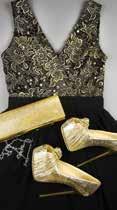
• Strappy or metallic heels
• Statement earrings or bold cuff
• Clutch (metallic or textured)
• Leather jacket or no layer
• Bold lip
Vibe: Elevated, intentional, effortlessly chic
What makes this approach so effective is not the clothing itself, but how it’s styled.
Accessories are not afterthoughts—they are tools. Shoes set the tone. Layers create dimension. Jewelry tells a story. When used intentionally, these elements allow one look to serve multiple purposes with ease.
In a fast-paced world, style should work for you—not against you. When your wardrobe is built with versatility in mind, getting dressed becomes less about searching for something new and more about maximizing what you already have.
Because true style isn’t defined by how much you own— But by how well you use it.
• Build from a Strong Foundation: Choose timeless, wellfitting pieces in versatile colors
• Shift the Shoes: Flats for day, pumps for work, statement heels for evening
• Layer Strategically: Blazers add polish; jackets and bold accessories add personality
• Elevate the Details: Jewelry, handbags, and even your lip color can redefine the look
By Caitlin Conner, Marketing and Communications Manager
Photographs Courtesy of Daniel Stowe Conservancy
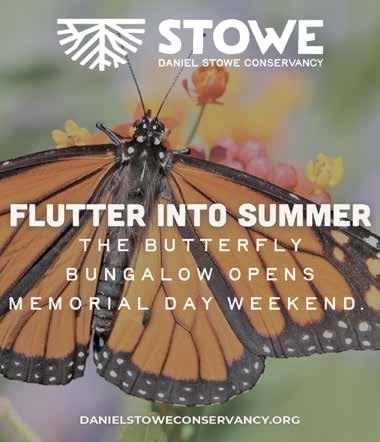
AtStowe, we’re all about getting outside and exploring. But we also know that trying something new can feel intimidating. There can be a lot of buzz around “outdoorsy” activities and all the necessary experience and gear and lingo that comes with activities like hiking, biking, kayaking and camping.

But at Stowe, we’re also all about removing any barriers to entry when it comes to getting out and enjoying the outdoors. Whether you climb mountains in your spare time or prefer your outdoor activities to include shade and a lawn chair, we’re here to help you find your own unique path to nature.
No matter what your path to nature looks like, you can find it at Stowe. Read on to discover the wide variety of ways you can begin your next outdoor adventure.
This idea of finding your path to nature at Stowe is often metaphorical, referring to these different ways that you can get out and enjoy nature, and that there’s no wrong way to find joy in being outside.
• Concrete – A completely paved, smooth path. Ideal for wheelchairs and strollers – most commonly found in the formal botanical gardens or the sidewalks that run the length of our property.
• Crushed concrete – A softer, gravel-like path, not quite as sturdy as concrete but still stroller and wheelchair-friendly.
• Natural trail – Dirt trails require more concentration. Your shoes will probably get dirty walking on a natural trail and you’ll have to watch your step for rocks and roots.
I thought it would be fun to suggest some outdoor activities that correlate to these types of paths, with concrete providing the gateway for outdoor fun, crushed concrete broadening your horizons and natural trails getting a little more wild.

If you’re most drawn to a paved path, prefer relaxing in nature to strenuous excursions or overall prefer to have an option to dip inside for an AC break, here are some new excursions to try.
Stop by our community hub for free fun with easy access to restrooms and several indoor spaces, including The Trailhead Store and The Farmhouse Garden Center. Experiences include:
• Sipping beer, wine or coffee on The Trailhead porch
• Shopping for plants, home decor and more at The Farmhouse
• Checking our Events Calendar to see if we’re hosting a Vino in the Village, Beer Tasting or Market soon
• Bring your pup and hang out in the Dog Park
Enjoy a beautiful day in The Gardens at Stowe! Everything is starting to come to a beautiful spring bloom and our Garden Curator provides a “What’s in Bloom?” guide on our homepage and in the Garden Pavilion so you can try to spot all the flowers at their best. Paved paths make for an easy walking experience, plus shaded areas and benches allow for breaks. The Prairie Castle Playground is the perfect place to let the kids run wild while you relax with a drink from the Prairie Canteen.
Interested in the history and background of Daniel Stowe Conservancy? We offer free guided docent tours to visitors and members during the warmer months.
Our monthly Leaves of Literature book club also gives you the chance to connect with other nature-lovers and enjoy conversations about outdoorsy books.
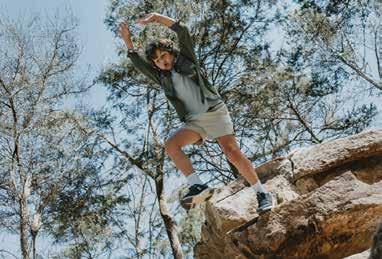
Crushed concrete trails offer expanded paths to explore, allowing you to get a little more up close and personal with the natural world.
The Pond Loop trails in front of The Trailhead Store offer a great gateway to our trail system. You can do as many loops as you’d like while staying in sight of The Village (and the delicious drinks at The Trailhead Store).
Want to experience The Gardens to their full potential? Don’t stop when you reach the end of the formal gardens. Walk past the Conifer Garden (to the left of the Prairie Castle)
and you’ll find the entrance to Meadowood Walk, a quick, half-mile loop that takes you close to the lake front! .
You’re ready to get a little lost…and you’re excited about it. Adventure is your middle name and you can’t stop thinking about your next hike. Here are some activities that get you into the heart of Daniel Stowe Conservancy.
Experienced hikers may enjoy starting on Stowe’s crushed concrete Connector Trail that leads you to the natural Duke Kimbrell Trail.
Join the Stowe volunteer crew! Our volunteers are at the heart of all we do at Stowe, providing crucial support and work that keeps our nonprofit conservancy thriving. While we have volunteer jobs for all levels, more outdoorsy volunteers would be a great fit to help remove invasive species, work on Garden project with our Horticulture team and contribute important data to our Phenology Citizen Science program.

At Stowe, we’re here to meet you where you’re at. Want to connect with local families in a community space or secure a relaxing spot to hang out after work? Visit The Village. Want to hit the trails and explore one of the area’s only conserved, natural spaces? C’mon over.
Want to spend more time in nature but don’t know where to start? Daniel Stowe Conservancy is the space for you. And everyone.
By Tony Miros
Photographs Courtesy of Gregory Harrison and Marc Raboy
Inthe glory days of the 1980s and ’90s television, when the “big three” networks ruled and primetime was packed with charismatic leading men, a select few rose above the rest. Among them was Gregory Harrison the effortlessly charming star of Trapper John, M.D. With his sun-kissed good looks and easy confidence, Harrison didn’t just win over audiences—he inspired full-on devotion. Women swooned, gay fans cheered, and pop culture took notice, especially when he boldly flipped his heartthrob image to play a male stripper in For Ladies Only. And yes, that iconic poster? It wasn’t just popular—it was practically required bedroom décor.

So when I recently sat down with this beloved TV icon— also known as Dr. “Gonzo” Gates on Trapper John, M.D , Michael Sharpe on Falcon Crest, and Phillip Buckley on 9-1-1—for a candid, two-part conversation (Episodes 159 & 160 of Hollywood Obsessed Podcast), I expected a hit of nostalgia. What I didn’t expect was how challenging it would be to separate the man from the myth I’d been watching since my early teens.
But once that larger-than-life image faded, something even more compelling emerged. Beyond the milliondollar smile and those famously seductive eyes, I discovered a grounded, thoughtful artist with a refreshingly genuine perspective on fame, craft, and longevity. What follows are highlights from our conversation—an intimate look at the man behind the legend. Enjoy.
The first time he knew he wanted to be an actor
Gregory Harrison: My father ran the glassbottom boat (in Catalina Island off the coast of California)—my grandfather started them—and I was supposed to be the third generation doing that. But they made a movie on my dad’s boat

(“The Glass Bottom Boat” 1966), and I watched them do it. I was 15. And I knew, from that moment on, that’s what I was going to do for the rest of my life.
Tony Miros: Really? That was the thing that made your desire for film and TV happen?
Gregory: It didn’t create the desire—I think I’d always loved the magic of movies and television.
The idea that these “magicians” could create something out of nothing… make you feel things, sometimes even change the world. It all starts with a thought—somebody imagines a story, and suddenly the world is different. I looked at those actors on screen and thought, man, those are magicians. I never imagined they were just mortals like me. I figured there was something about them I’d never be able to touch.
But then I watched Doris Day and Rod Taylor shooting scenes on my dad’s boat—messing up, dropping F-bombs, going back and doing it again until they got it right. And I thought, oh… I can do that. And I knew, in that moment.
It was another ten years before I got an agent, got a job, did it professionally.
But from 15 years old on, I knew that was my path. And I’m so lucky—at 75, I’ve been doing it all this time. Still doing what I love… and loving it as much, if not more, than I ever imagined.

On being offered “Trapper John MD” and the height of ‘80s TV fame
Gregory Harrison: So I took Trapper John, and I went in and auditioned with three different “Trappers” to play Gonzo. I kind of helped them figure out who their Trapper John was going to be—and it ended up being Pernell Roberts, which it absolutely should have been. He was by far the best, and we had the strongest chemistry.
That was at 20th Century Fox, all on the lot at the same time Charlie’s Angels was shooting next door. M*A*S*H was around the corner, and The Love Boat was right near them too.
Tony Miros: All my favorite shows.
Gregory: It was just such a wonderful time in Hollywood— late ’70s, early ’80s. So many great stars came out of that period. I don’t know what it was, but it felt like magic. It really did.
Tony: Watching you on Trapper John. You were a full-on superstar. Did that get to your head? What did that feel like?
Gregory: Yeah—of course it got to my head. As much as I tried not to let it… the money, the fame—all of it—it’s seductive. No matter how grounded you try to be.
I don’t think it ever fundamentally changed me, but… I had my struggles. I ended up with a drug problem for a while. As Robin Williams used to say, “Cocaine is God’s way of telling you you make too damn much money.” And he was right. Back then, it was seen as this social, non-addictive drug—and that wasn’t the case.
I eventually got help, went to rehab, and got humbled. Because when no one’s holding a mirror up to you—when everyone’s saying yes to everything you do—you can lose perspective. But I don’t think I ever lost my humanity. At my core, I was still the same guy—someone who believed in kindness, generosity, fairness. The values I was raised with stayed with me.

On “For Ladies Only” and turning an idea into a cult hit
Tony Miros: Am I the only one who remembers For Ladies Only?
Gregory Harrison: No, no, no—there are still some folks out there who remember it. That was an interesting project. I’d started my own production company and began producing films, and that was the first one I did.
I’d been thinking about that story for years. When I first got to Hollywood, I was playing guitar, singing, and studying acting all day and night. Every Monday, I’d go up to the Troubadour on Sunset Boulevard for their hootenanny nights—to perform my own songs.
I’d be up there singing, hoping some music producer would hand me a card and say, “We’d like to talk—maybe sign you, have you write for us, something.” And I did get cards. But I’d go home, look through them… and they were all from porn producers. (Laughs.)
I’d sit there and think, what if I did that? And then I’d start playing it out in my head—if I did that, it would lead to this…
and then this… and where does that end?
So instead of making For Ladies Only about porn, I shifted it. Around that time, Chippendales had just opened—the first male strip club we really knew of—and it was getting a ton of press in People magazine. Women were going crazy for it.
And I thought, what if I made a movie about a struggling actor—a guy in acting class, barely making rent—who takes a job as a waiter in a male strip club. One night, a dancer doesn’t show up, he gets pushed onstage… and he’s naturally great. He becomes a huge hit—ends up on the cover of People, becomes famous—but suddenly he can’t even get an audition for legitimate work. He’s completely delegitimized himself as the actor he wanted to be.
I set it in New York instead of L.A., and that became the story—what happens to a guy like that.
And of course, there was plenty of titillation—dancing, romance—and I worked with Patti Davis, Dinah Manoff, and Lee Grant. It was a fun project—but it all came from those early days, standing onstage at 1 a.m., just hoping someone would give me a shot.
On the success of “For Ladies Only” - and that iconic poster
Gregory Harrison: For Ladies Only was a huge hit. And of course,—we had that poster. I used to call it the “Z-string” poster, because I stripped down from Zorro to a G-string with a “Z” on it.
It was second only to Farrah Fawcett’s famous red bikini poster. It really was everywhere.
Tony Miros: I believe it—I mean, that’s all I remember seeing. You in that tiny bikini. And it wasn’t just women—gay men all over the country loved it.
Gregory: Well, that was the thing. We called it For Ladies Only, but it was far from that. I developed a huge gay following from that movie—which I hadn’t anticipated at all. I didn’t expect it, but I’ve been grateful for it ever since.
Tony: I have to ask about those dance scenes—how did you learn all that? Did you actually go to Chippendales?
Gregory: Oh yeah, absolutely. First, I worked with a dance coach for two or three months while I was still doing Trapper John, because we were going to shoot the film during my hiatus. We worked on everything—the grinding, the leaps, the tumbles, the whole seductive style. We choreographed all the routines and figured out the costumes: I had a cop, a cowboy, Zorro—three or four different numbers.
To listen to the rest of my fascinating conversation with the wonderful Gregory Harrison (Episodes 159 & 160), visit my podcast website: https://www. hollywoodobsessedthepodcast.com Enjoy!
By Sharon Heinrich, Rotary Club of Gastonia
Rotary is where members share service and fellowship, make connections, meet community needs and change lives. This issue, we focus on literacy and clubs caring for our communities.
“Learning to read, Reading to learn”
3 Rotary Club Projects Foster Literacy
Children learn to read, gain confidence, and discover values for life as Gaston County area Rotary clubs provide children with books of their own, read with them, and share the Rotary 4-Way Test and Rotary motto of “Service Above Self”.
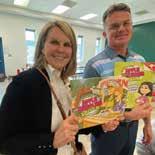
Gastonia East
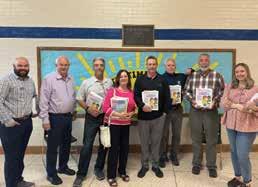
Rotarians nurtured a love of reading with students this spring, building on their long-standing partnership with three Boys’ and Girls’ Clubs in Bessemer City, Dallas, and West Gastonia. Kindergarten and 1st graders selected two books, while 2nd and 3rd graders were given 2 books written to introduce the Rotary 4-Way Test and Rotary motto of “Service Above Self” and each child received bookmarks to remember these ideas. Rotarians shared with them the simple but powerful ideas of truth, fairness, kindness, and thinking about how our actions affect others. Pam Aycock, the club’s Community Service Chair, noted that many children did not have books of their own at home and couldn’t believe they could put their name in their books and take them home. “The project created moments of joy, curiosity, and connection while encouraging a love of reading… (it) reflected what Rotary is all about: serving others in practical ways that make a real difference,” explains the club’s website. “The goal was not simply to give away books, but to share stories that remind children there is good in the world and that they can be part of it. By putting books into the hands of children and sharing messages of kindness, honesty, and care for others, Gastonia East Rotary Club helped create an experience the children are likely to remember long after the visit.” The project was awarded a matching grant from Rotary District 7680.

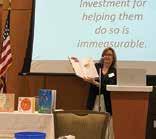
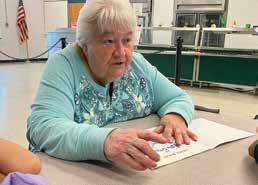
Children improve their reading ability and confidence as 9 members of the Rotary Club of Gastonia volunteer each week to read with 2nd graders as part of Gaston Literacy Council’s “Reading Soulmates”. At a recent club program, Jami Gibson with the Gaston Literacy Council explained that as children learn to read, they can then “read to learn”, demonstrating the importance of childhood literacy as a foundation of lifelong learning, health, and success.

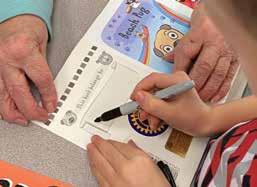
Cherryville Rotarians annually present “4-Way Test” coloring books sharing the “Rotary 4-Way Test” with 2nd graders at Cherryville Elementary in April.
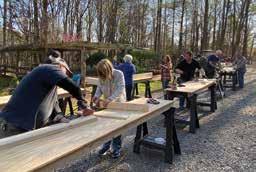
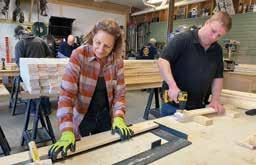
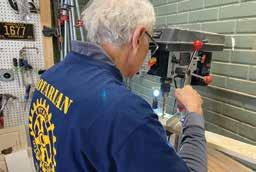
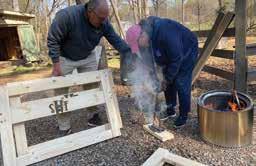
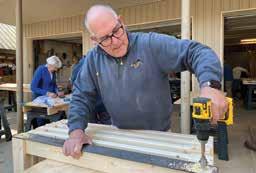
What’s the value of a child’s bed? Gastonia Rotarians turned care, compassion, construction, and club contributions into better bedtime for Gaston County children. On a Saturday morning in March, 16 members of the Rotary Club of Gastonia and 11 guests traded their usual routines for sanders, drills, and stacks of lumber— building beds for children who had been sleeping on the floor. Rotarians worked alongside volunteers with Sleep in Heavenly Peace, whose theme is “No kid sleeps on the floor in our town”. Rotarians and SHP volunteers delivered and assembled 32 beds in family homes 2 weeks later. Each new bed was dressed with a new mattress, pillow, sheets, and comforter, so children could
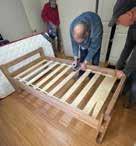
climb in that very night. Jim Morris, who led the project for a 3rd year as a member of The Gastonia Rotary Club, explained, “It was very heartwarming to see the joy on the kids’ faces.” SHP national data show about 2% of the population are without beds for kids to sleep, and in Gaston County, that percentage might be higher. Rotary’s support went beyond sweat equity, receiving a matching $4,000 grant from Rotary District 7680.

When Belmont Rotary Club learned of Boy Scout Grant McElyea’s plan to build an access ramp at the local Meals on Wheels distribution site for his Eagle Award project, they stepped in with support and help with contributions. Several Belmont Rotarians deliver for Meals on Wheels, and attested to how much the ramp was needed to increase access and serve the community.
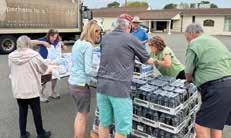
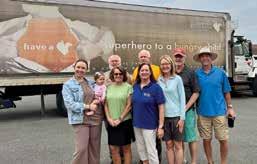
Cherryville Rotarians regularly support their local food pantries, volunteering with Cherryville Area Ministries and Second Harvest Food Bank in March.
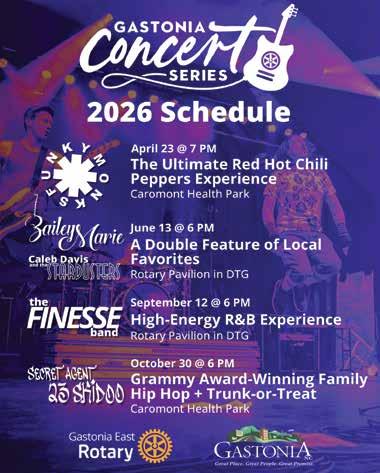
For Additional Photos See Photo Gallery - page 15
Gastonia – Thursday, 12:30 (except 5th), Gastonia Conference Center, https://rotaryclubofgastonia.com, Facebook
Gastonia East – Monday 12:00-1:30, Gastonia Conference Center, https://gastoniaeastrotary.org, Facebook
Gastonia Evening – Tuesday (2nd & 4th), 5:30, Durty Bull Brewery, Facebook
Belmont – Wednesday 12:30, First Presbyterian Church - Belmont, https://belmontrotaryclub.com, Facebook
Cherryville – Wednesday (1st & 3rd), 12:00 , Cherryville Community Building; Facebook
Mt Holly – Thursday 12:15 Mount Holly Municipal Complex; Facebook Kings Mountain – Thursday 12-1:30, Patrick Senior Center; Facebook
To learn more about Rotary International, visit www.Rotary.org
Rotary is a global network of 1.2 million members, with more than 45,000 clubs in more than 200 countries. Members share diverse experiences and perspectives, and are welcome in Rotary clubs around the world. We invite you to serve, learn, and connect with Rotary. Each club is unique, and welcomes new members.
The Rotary “4-Way Test”
“Of the things we think, say, and do: Is it the TRUTH? Is it FAIR to all concerned? Will it build GOODWILL and better friendships? Will it be BENEFICIAL to all concerned?”
The Rotary “4-Way Test” guides Rotarians in their personal and professional lives. It was created in 1932 by Herbert J Taylor, to guide his company, Club Aluminum, during the Great Depression. Taylor later served as President of Rotary International in 1954-55.
By Michael “Donovan” McQuitter, CC, IT and Specialist Photographs Courtesy of Nathan Crane and Todd Lewis
You’ve heard of it, haven’t you? On tv commercials, in stores, on your phones. Artificial intelligence or AI is everywhere. It’s the new fad that we can’t seem to get away from. Or, is it more? In the 70s and 80s multiple publications referenced the rise of the internet and personal computers as “information overload” and contained much negative rhetoric of its impact. However, society persevered and used these new digital tools to expand capabilities. AI has been said to be the next innovative wave for human civilization. So I went to the best place to see it for myself at the All Things AI Conference.
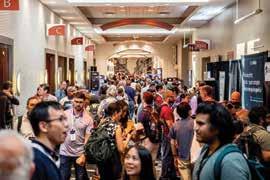
I find myself in the heart of the Bull City in Durham, NC. Over the course of only 2 days over 3,000 people representing 20 different countries flocked to the Durham Convention Center and The Carolina Theater to be a part of this growing community. And I use ‘community’ with purpose because the organizers of this event, Mark Hinkle and Todd Lewis, go out of their way to affirm that this event is one for the people. Age,

Over the course of only 2 days over 3,000 people representing 20 different countries flocked to the Durham Convention Center and The Carolina Theater to be a part of this growing community.
experience, industry… all irrelevant in this AI is for Everyone themed event. A major takeaway was the track structure where any attendee could follow a learning path or feel free to hop around to different talks of interest. Schedules filled with 85 speakers spanning 73 sessions to choose from. Needless to say, everyone had an opportunity to find something they could enjoy and dive deeper into AI.
Monday was workshop day. I kicked off my journey with the “AI for Business Professionals” workshop, led by co-organizer Mark Hinkle himself. Mark’s session was a practical deep-dive into four leading AI tools, ChatGPT, Claude, Gemini, and Copilot. What stuck out was Mark’s ability to speak to all experiences. New to AI? He covered definitions and best practices. Have over 1 million tokens used under your account? Here are ways to be more efficient in your prompting and context. Context was the major focus throughout the workshop. Similar to giving directions or writing a novel, the beauty is in the details. The crowd watched on

as Mark had Claude update his website live in the workshop just off a simple prompt. I think of the small businesses that this would have a major impact on. While the capabilities of these tools seemed endless, one takeaway stood out. There’s little to no barriers to entry. Practically every AI tool has a free version. Gemini and ChatGPT don’t even require signing up. Like watching a magician who would share how to do his act afterwards, I left awed and eager to learn more.
Augmented Imagination
Day two was filled with 15-45 minute sessions. The AI User Track was fantastic for anyone newer to the space. That’s what I chose. Regardless of whether you’re using AI for work or just curious at home, there were so many great presentations on how we can make the mundane, tedious tasks easier. While many of these changed the way I think of AI, here are my top takeaways:
1. AI is for everyone — and every age. Taylor Desseyn from Torc.dev gave a talk called “Looking Ahead: Navigating AI & Your Career” that reframed how I think about AI adoption. It’s not just for developers or tech workers but a tool for all of us, at any stage of life or career. The key is to get started now. Not to be a superuser, but to understand it.
2. Think about the community as you build. Sarah Chick from NPower delivered a thoughtful talk, “AI Deep Thoughts: Community Impact Focus”. The discussion honed in on asking who benefits and who gets left out as AI tools become more embedded in our daily lives. The action to take was that AI can be for everyone if it’s accepted by communities as an enablement tool rather than gatekeeping it.
3. Start small, use frameworks. Pam Didner’s session “Staying Relevant in the Age of AI, Simply & Quickly” was refreshingly practical for us newbies. Pick a framework, start with a smaller problem, and build from there.
Only in its second year, All Things AI has an energy that wants people to be excited and empowered by technology, specifically Artificial Intelligence. I left with a drive to learn more and to start building. A big thank you to Mark Hinkle, Todd Lewis, and the entire organizing team for pulling this off. For you readers, thanks for learning about my journey. Oh and there’s good news, All Things AI is returning on May 22, 2027. Go ahead and block that date now. If this year is any indication, it’s probably one you’ll start hearing about everywhere.












By Donyel B. Barber, Director of Access and Engagement Kintegra Health
Photographs Courtesy of Access and Engagement Kintegra Health
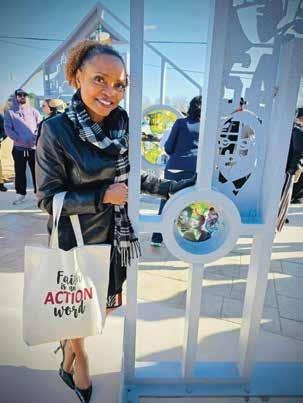
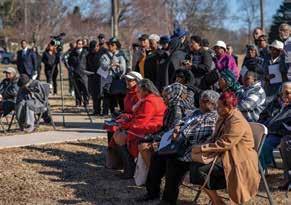
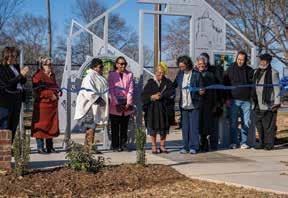
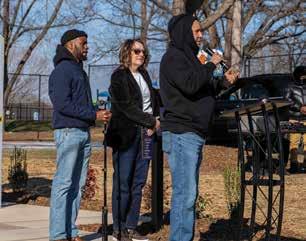
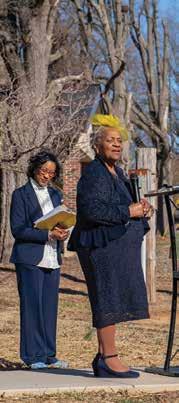
OnSunday February 22, 2026 at 3pm the Highland Neighborhood Association held a ribbon cutting and dedication ceremony for a new public art installation at the Erwin Center, 913 N. Pryor Street, Gastonia, NC.
The project celebrates the remarkable people, places, and stories that define the Highland community.
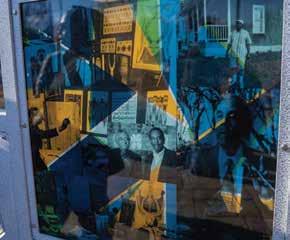
Community members collaborated with nationally recognized public artist David Wilson and local artists Pamela Underwood and Tykevious McDowell to collect oral histories and images reflecting Highland through the voices of those who live and work there.
The installation honors notable figures and landmarks including artists John Biggers and Jim Biggers; renown Gospel Music artists Donald Lawrence and Erica Bratton McCullough; Song Stylist and Actress Maria Howell; athletes Sleepy Floyd and James Worthy; Highland High School; Big Daddy’s; and the Elks Lodge.
“It was a dream of my husband Jim that his uncle John Biggers would be honored so that the community could understand more about his family,” said Ina Biggers. “For this project to reach this point, I am truly overwhelmed.”
Gastonia-born John Biggers is widely recognized for artwork celebrating African cultural traditions and ecological themes such as the “web of life.” The installation’s design
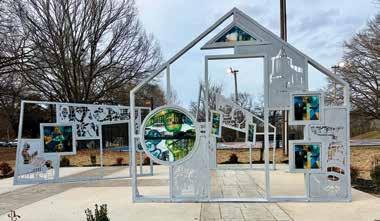

The outdoor art plaza features three free-standing metal sculptures inspired by Sacred Geometry and the shotgun-style architecture prominent in the neighborhood.
draws inspiration from his decades of artistic influence.
“This has been a 2 year process, and it would not be possible without the collaborative efforts of Z. Smith Reynolds Foundation, Kintegra Health, The Highland Neighborhood Association, The City of Gastonia, our artist team led by David Wilson and the Gaston County Museum of Art and History,” says Donyel Barber, Director of Access and Engagement at Kintegra Health.
She says “this art piece shares the story of Highland so that future generations will always know the rich history and legacy of the Highland Community and those who have called Highland home.”
The outdoor art plaza features three free-standing metal sculptures inspired by Sacred Geometry and the shotgun-style architecture prominent in the neighborhood.
Elements include custom ceramic-frit glass, laser-cut metal narrative panels, integrated seating, and a tiled pathway forming an “H” for Highland.
Sacred Geometry refers to the ancient study of universal design patterns that symbolize the interconnectedness of life.
Visitors can access a dedicated website through an on-site QR code to explore expanded histories and contribute their own stories and photographs. The digital platform is designed as a growing archive of Highland’s people, places, and events.
The project’s digital component will be managed by the Gaston County Museum of Art and History. Funding for the project was provided by the Z. Smith Reynolds Foundation through its Inclusive Public Art initiative.
By Erica Taylor, MA, LCMHCS, LCAS, CSI, NCC, ACS
Photographs Courtesy of Sunpath, LLC
Mental health affects every part of our everyday lives, from our physical and emotional health to our behaviors and relationships. It influences how we handle stress, the choices we make, and how we connect with others. When someone is struggling with their mental health, it can impact work, school, family life, and even increase the risk of chronic health concerns such as heart disease.
Many of us assume mental wellness means life should feel smooth and manageable all the time. Realistically, that is just not the case. Mental wellness is the ability to recover from stress and setbacks, stay connected with others, set healthy boundaries, and understand our thoughts, feelings, and values. It is also the ability to ask for help when needed, to rest without guilt, to speak kindly to ourselves during difficult moments, and to remain hopeful even when life feels uncertain. It means recognizing that we are human and imperfect, and that those imperfections are part of what make us unique and resilient.
Here in Gaston County, mental health continues to be an important community priority. Recent community health assessments have identified mental health and substance use as top concerns for local families. The encouraging news is that our community has already taken meaningful steps to respond.
As a lifelong resident of Gaston County, I have seen firsthand how our county continues to grow stronger through collaboration and care. Access to support during difficult times is critical. Along with the National Suicide and Crisis Lifeline 988, residents can also access the Partners Health Management Crisis Line, a twenty-four-hour resource for individuals experiencing mental health emergencies. Gaston County Schools partners with local agencies to provide school-based mental health clinicians so students can receive support where they learn each day. Across Gaston County, behavioral health organizations continue working together to increase access to care and support for individuals and families. These efforts reflect a community that cares deeply about the well-being of its people. That spirit of connection is one of Gaston County’s greatest strengths.

At Sunpath, LLC, we believe emotional wellness grows through connection, compassion, and accessibility. Supporting mental wellness does not only happen in counseling offices. It begins at home and within our everyday routines. Here are five simple ways families can encourage mental wellness together:

• Create daily check ins. Take a few minutes each day to ask family members how they are really doing and make space for honest conversation.
• Establish predictable routines. Shared meals, family game nights, or calming bedtime routines help create connection, safety, and stability for both children and adults.
• Spend time outside. Fresh air, movement, and sunlight can naturally improve mood, increase energy, and reduce stress.
• Practice gratitude. Sharing a few things you are thankful for each day helps shift focus toward the positive and builds emotional strength during challenging seasons.
• Listen and be present. Sometimes the most powerful support we can offer one another is our attention, patience, and willingness to simply sit beside someone who needs to be heard.
When we nurture our families, we strengthen our neighborhoods. When we strengthen our neighborhoods, we strengthen Gaston County. Mental wellness grows through everyday moments of connection, compassion, and support. Together, we can continue building a community where everyone has the opportunity to thrive.
Erica Taylor, LCMHCS, LPC, LCAS, CSI, NCC, ACS, is Clinical Director of Sunpath, LLC and a lifelong Gaston County resident committed to supporting emotional wellness for individuals and families across the community.
By Melissa Latin, Charlotte Fashion Plate
Photo by Melissa Latin, Charlotte Fashion Plate

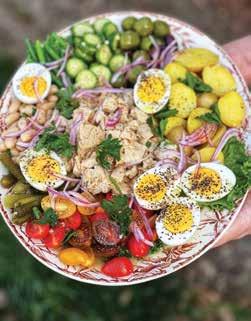
This Classic Tuna Niçoise Salad is a fresh, vibrant, and satisfying meal made with tender canned tuna in oil, crisp green beans, creamy gold potatoes, and a bright lemon vinaigrette. It’s balanced, full of texture, and finished with briny cornichons or capers for that classic French-inspired flavor. Perfect for a light lunch or an easy dinner, that still feels elevated.
• 2 (5–7 ounce) can tuna in oil
• 1/2 pound gold potatoes, halved
• 3 large eggs
• 1 cup fresh green beans, trimmed
• 1/2 cup cannellini beans, drained and rinsed
• 1/2 cup thinly sliced cucumbers
• 1/4 cup cornichons, sliced
• 3/4 cup cherry tomatoes, halved
• 1/4 small red onion, thinly sliced
• 3 leafy lettuce leaves (butter lettuce or mixed greens, lightly packed)
• 1/4 cup olives (Niçoise or Kalamata)
Lemon Vinaigrette:
• 1/3 cup olive oil
• 2 tablespoons fresh lemon juice
• 1 teaspoon Dijon mustard
• 1 teaspoon honey
• 1 small garlic clove, crushed
• 1/2 teaspoon salt
• 1/2 teaspoon black pepper
1. Bring a pot of salted water to a boil. Blanch the green beans for 2–3 minutes until bright green, and slightly tender. Transfer to ice water, then drain.
2. Add the halved gold potatoes to the same pot and cook for 10–12 minutes, or until fork tender. Drain and let cool slightly.
3. In a separate pot, boil the eggs for 9–10 minutes. Transfer to an ice bath, peel, and halve.
4. In a small bowl, whisk together olive oil, lemon juice, Dijon mustard, honey, garlic, salt, and black pepper.
5. Arrange the leafy lettuce on a platter.
6. Layer the potatoes, green beans, cherry tomatoes, cannellini beans, red onion, olives, cucumbers, and cornichons.
7. Break apart the tuna and place over the salad.
8. Add the halved eggs.
9. Drizzle with lemon vinaigrette and serve.