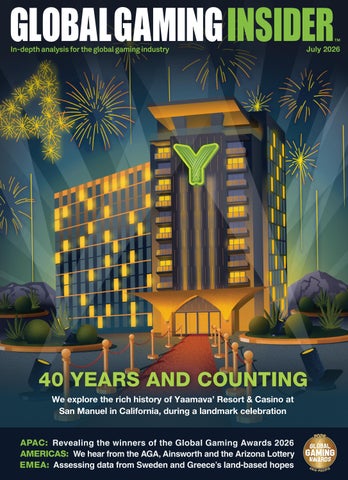
We explore the rich history of Yaamava’ Resort & Casino at San Manuel in California, during a landmark celebration
July 2026
APAC: Revealing the winners of the Global Gaming Awards 2026
EMEA: AMERICAS:
We hear from the AGA, Ainsworth and the Arizona Lottery
Assessing data from Sweden and Greece’s land-based hopes
EDITOR’S LETTER
Online casino this... iGaming that.
We hear a lot about digital developments in this industry. And, being honest, we're often right at the centre of telling that story.
But, at Global Gaming Insider , we are always keen to emphasise the land-based side of gambling too – and its resilient, resounding success.
In our May issue, for example, we highlighted the strength of land-based casinos in Asia, while our March edition celebrated competition in unity among Tribes in North America.
This July issue is once again Tribal themed, as it heads to the 'biggest little show in Indian gaming' at OIGA, although our focus is more specific on this occasion.
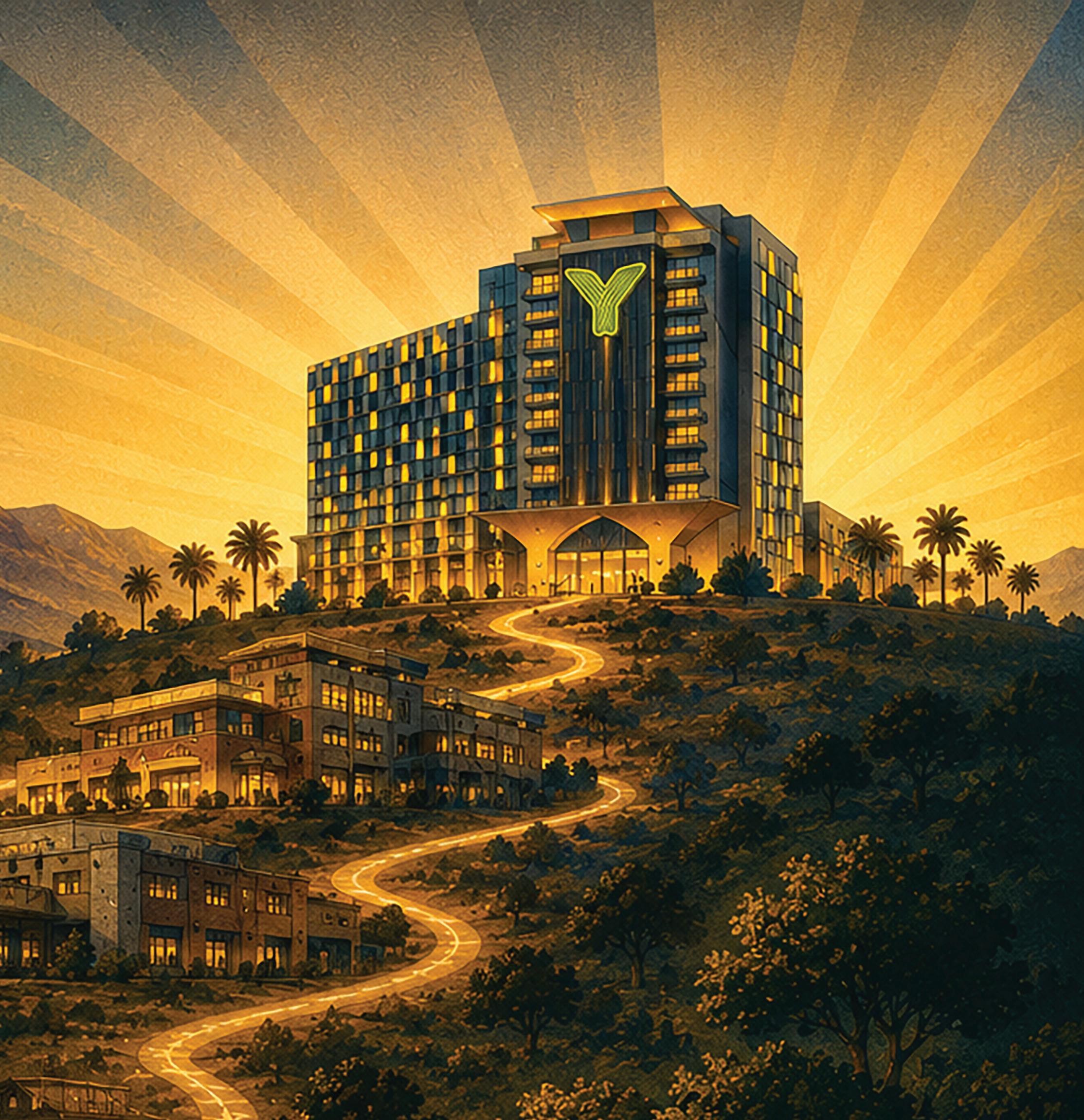
Indeed, Yaamava' Resort & Casino at San Manuel is this year celebrating its 40th anniversary, a true landmark for any property. But, of course, this isn't just any property.
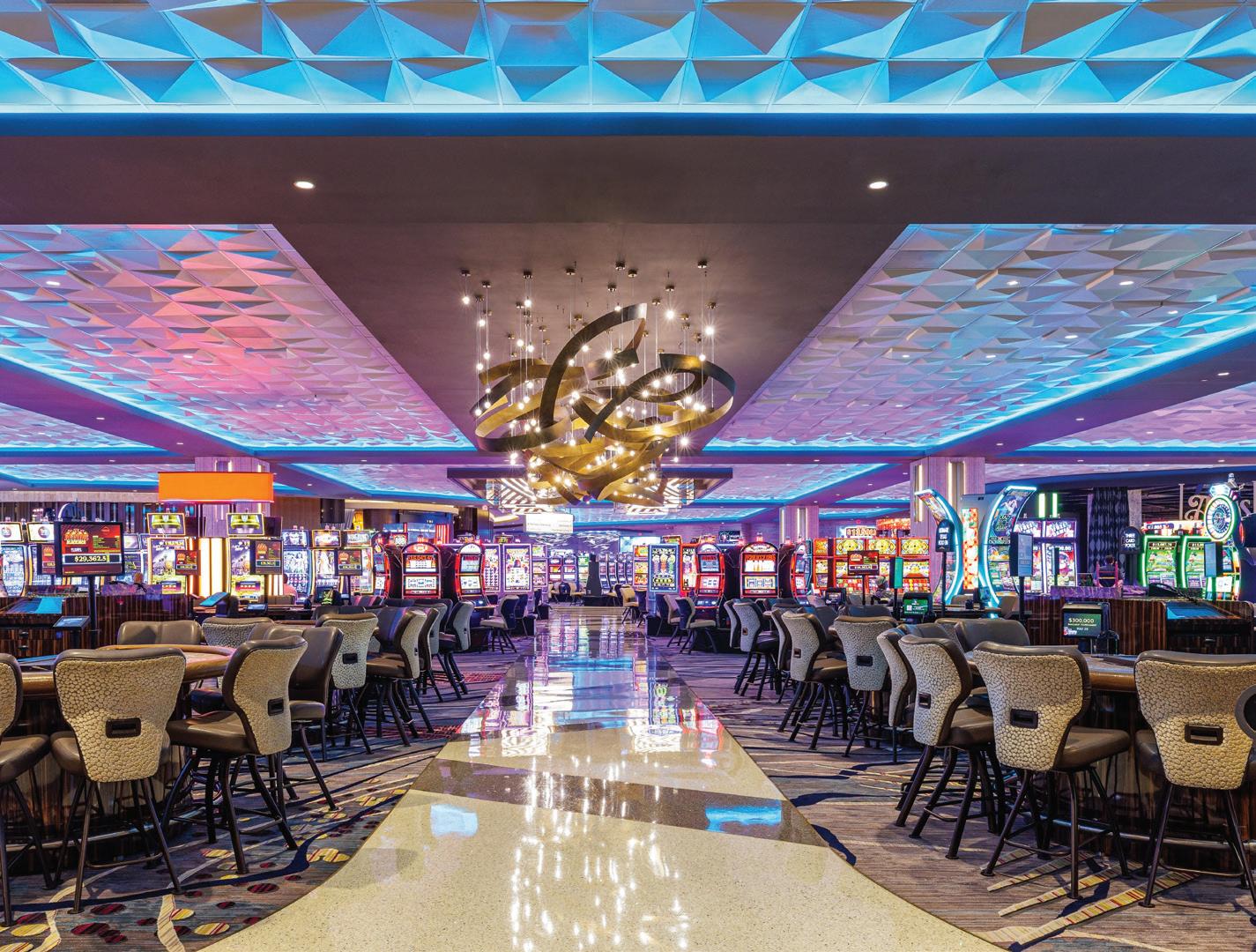
As Kirk Geller found out when he travelled to the California resort, there is an unbelievable history behind the casino itself, and the Yuhaaviatam of San Manuel Nation Tribe. Seeing the resort, which has over 7,400 slot machines by the way, for himself and speaking to Tribal leadership, Kirk was able to discuss some hugely important issues for the Tribe – and uncover the tapestry behind what makes Yaamava' Resort & Casino at San Manuel thrive today.
We break our deep dive into three parts, the property's journey, the property today and the journey of the wider Tribe. All three are well worth your time, as Yaamava' Resort & Casino at San Manuel hits a magical 40.
The celebration does not stop there, however, as we move into the APAC section of the issue – where we recognise the winners of this year's Global Gaming Awards Asia-Pacific. The June ceremony was a huge success and all the winners, from Galaxy Entertainment Group to Aristocrat Gaming, were truly humbled to receive recognition from their industry peers.
As already mentioned, Asian gaming is thriving despite a period of change across the region. Online gaming is adapting – land-based casinos are standing strong.
In our Americas section, the American Gaming Association continues its ever-presence in Global Gaming Insider magazine, this time looking at the data behind commercial gaming's growth in the US. We also dedicate a bespoke preview to the OIGA Convention & Trade Show, followed by Tribal-themed Q&As with Ivory Kelly and IGT.
In our EMEA section, we look at Greece's attempts to reinvent its land-based market, while speaking with iGP CEO Jovana Popovic Canaki about converting World Cup bettors to online casino (there it is again!).
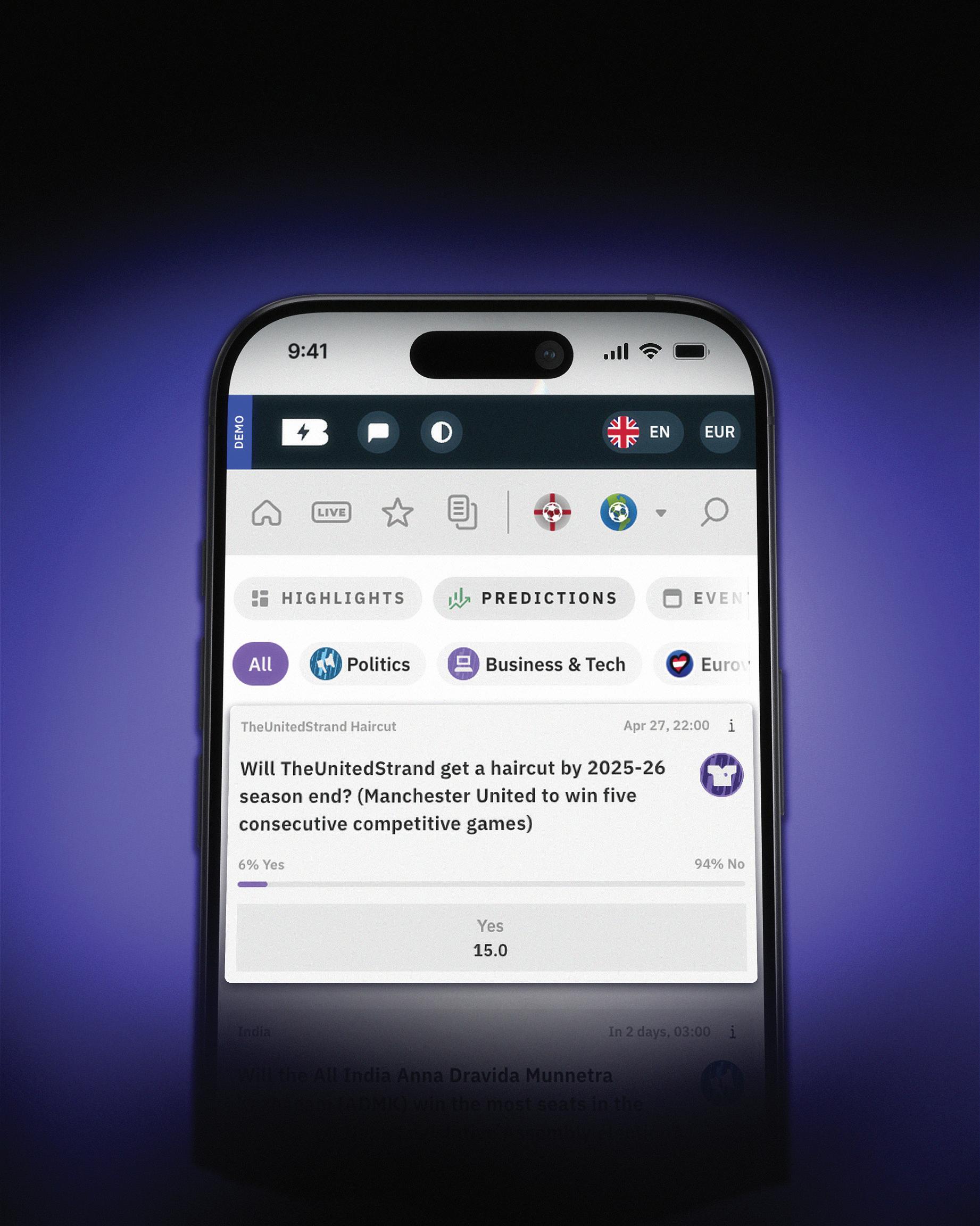
Elsewhere, legal expert Bruno Ascenção provides his lowdown on prediction markets and why the model is winning in the US. Equally, though, he comments on why that same model will not win in Europe.
Last but not least, we have our 'bonus bets' – the staple features that are Gaming in Pictures and our Events Calendar. We know how important events are to this industry and you may well be reading a copy of this magazine at OIGA.
If you are, we wish you the very best at the show, knowing full well that the coming months will bring SBC Lisbon and G2E, adding to a busy time in the schedule. The time is now!
TP, Editor
COO, EDITOR IN CHIEF
Julian Perry
EDITOR Tim Poole
Tim.Poole@globalgaminginsider.com
STAFF WRITERS
Will Underwood, Kirk Geller
CONTENT WRITER
Megan Elswyth
LEAD DESIGNER
Olesya Adamska DESIGNERS
Gabriela Baleva, Medina Mammadkhanova
JUNIOR DESIGNER
Monika Petrova
ASSISTANT DESIGNER
Tanya Aleksova
ILLUSTRATOR Christian Wüst
MARKETING DIRECTOR
Mariya Savova
FINANCE AND ADMINISTRATION OFFICER
Katherine Blakey
HEAD OF DIGITAL
Tom Powling
VIDEO PRODUCER
Callum Flett
COMMERCIAL DIRECTOR
Deepak Malkani
Deepak.Malkani@globalgaminginsider.com
Tel: +44 (0) 204 591 3117
ACCOUNT DIRECTOR
Michael Juqula
Michael.Juqula@globalgaminginsider.com
Tel: +44 (0) 207 039 9186
SENIOR ACCOUNT MANAGER
William Aderele
William.Aderele@globalgaminginsider.com
Tel: +44 (0) 203 884 9277
ACCOUNT MANAGERS
Irina Litvinova
Irina.Litvinova@globalgaminginsider.com
Tel: +44 (0) 203 855 0662
Serena Kwong
Serena.Kwong@globalgaminginsider.com
Tel: +44 (0) 203 787 4615
ACCOUNT EXECUTIVE
Joe Church
Joe.Church@globalgaminginsider.com
Tel: +44 (0) 203 882 9693
AWARDS SPONSORSHIP MANAGERS
Michelle Pugh
Michelle.Pugh@globalgamingawards.com
Tel: +44 (0) 207 360 7590
Ben Bannister
Ben.Bannister@globalgamingawards.com
Tel: +44 (0) 208 078 2453
CREDIT MANAGER
Rachel Voit
WITH THANKS TO: Kome Akpolo, Peter Arceo, Bruno Ascenção, Dan Farnon, David Forman, Ivory Kelly, Joe Maarango, Laura L. Mack, Paul Newson, Domenico Pastia, Jovana Popovic Canaki, Matt Smith, Chairwoman Lynn Valbuena
Global Gaming Insider magazine ISSN 2978-5723 (Print) ISSN 2978-5731 (Online)
Produced and published by Players Publishing Ltd
All material is strictly copyrighted and all rights reserved. Reproduction without permission is forbidden. Every care is taken in compiling the contents of Global Gaming Insider but we assume no responsibility for the effects arising therefrom. The views expressed are not necessarily those of the publisher.
Julian Perry, COO, Editor-in-Chief
Tim Poole, Editor
C ONTENTS
Global Gaming Insider’s Kirk Geller heads to California as Yaamava' Resort & Casino at San Manuel celebrates a landmark year for the Tribal property
Property review: Yamaava’ Resort & Casino
We provide an extensive review of what the historic property is like to visit at this very moment in time
Global Gaming Insider explores the Yuhaaviatam of San Manuel Nation’s rich history, diving into the unique and proud culture behind one of the US’ most historic Tribes
The winners revealed Global Gaming Insider provides a comprehensive list of the winners from the prestigious Global Gaming Awards Asia-Pacific 2026, which took place in Manila in June
Down Under Long-term contributor Paul Newson evaluates Australian tobacco regulation, exploring channelisation and the lessons learned here for gaming
48 AGA: Unpicking the numbers
The AGA’s VP of Research David Forman provides a numerical deep dive into the US’ H1 2026
Looking ahead to one of the key Tribal gaming conferences on the annual calendar, OIGA 2026 is just around the corner... 52 Ainsworth explores expansion
Speaking exclusively with Global Gaming Insider, Ainsworth VP of Marketing & Product Matt Smith
PAUL NEWSON
discusses the supplier’s growing presence in North America
54 A shared responsibility
Ivory Kelly, Tribal Council for Responsible Gaming Founder & CEO, outlines responsibility in the Tribal landscape
56 IGT at IGA
Kirk Geller caught up with IGT executives Dan Farnon and Domenico Pastia at IGA 2026, to discuss all things Tribal gaming
58 Goliath vs Behemoth
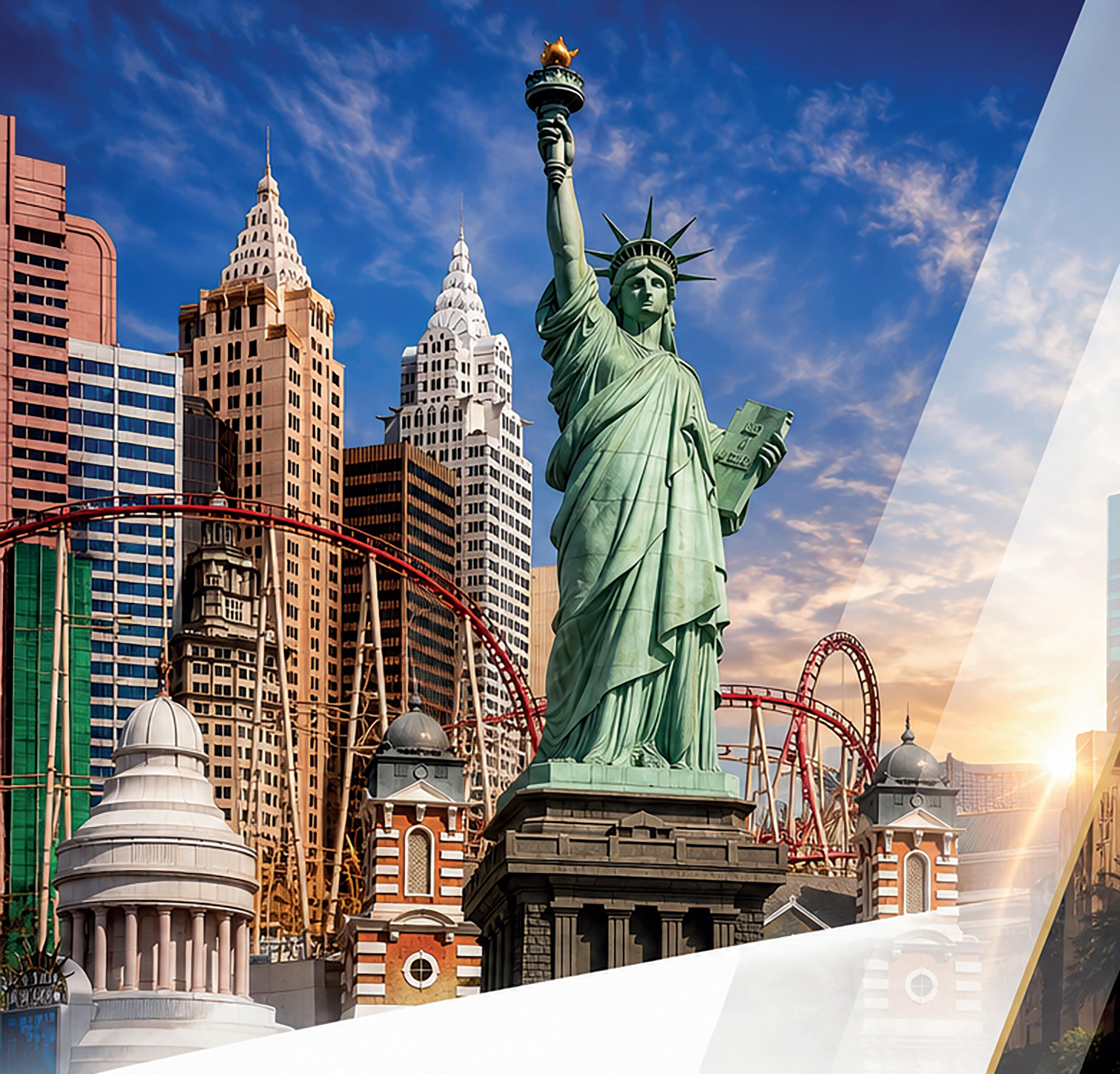
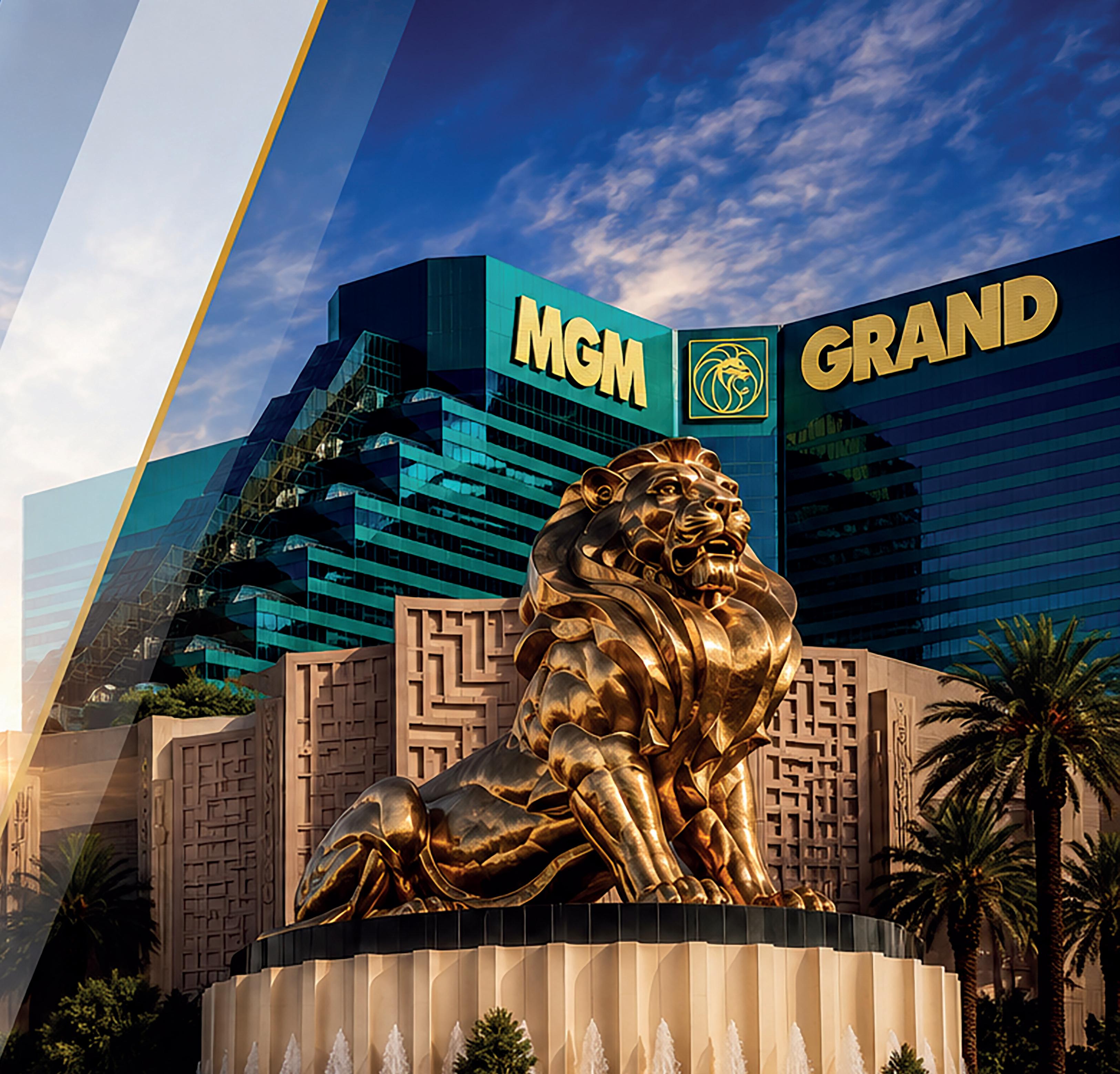
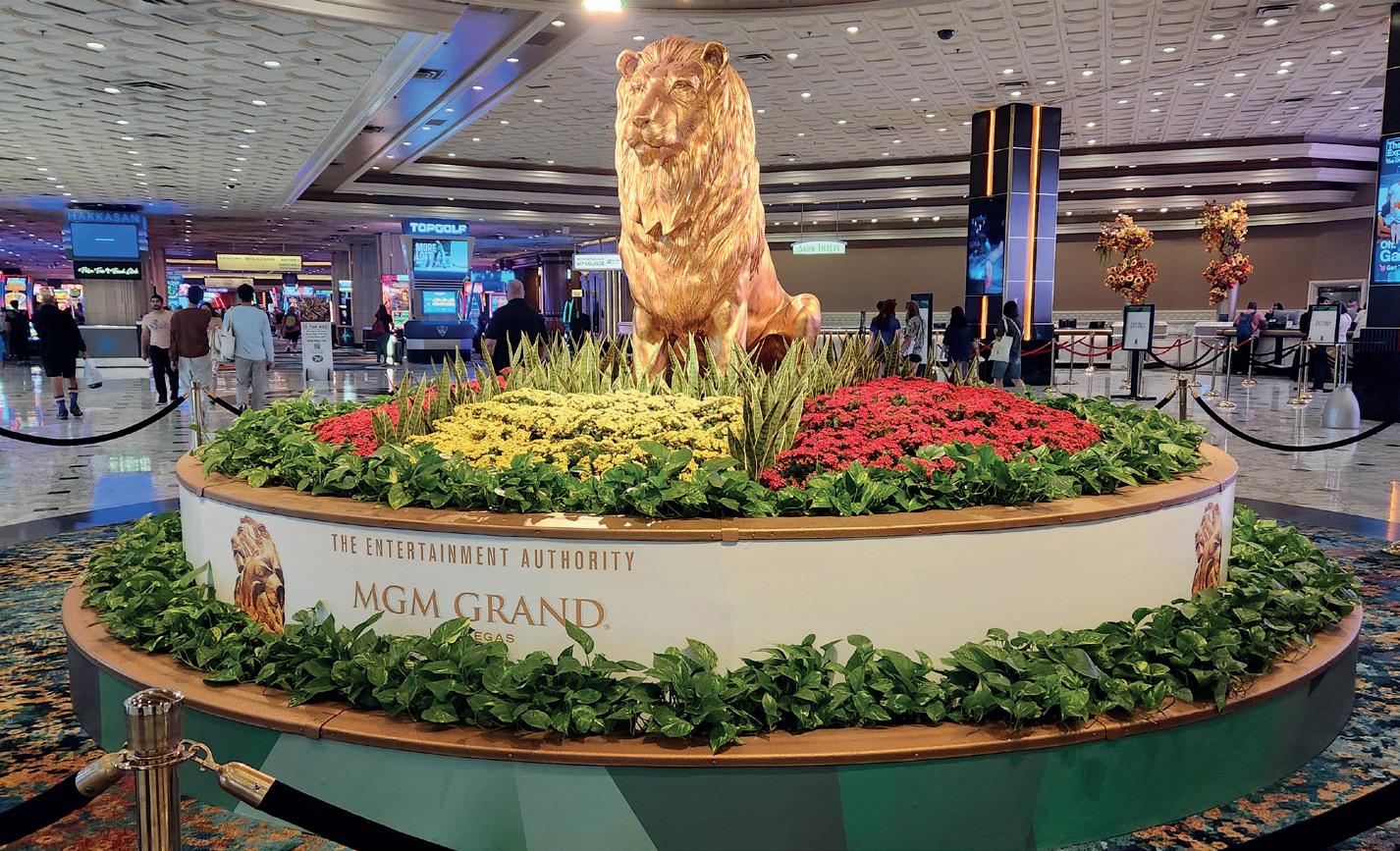
Laura Mack is on location in Las Vegas as she reviews both New York-New York and MGM Grand... who will come out on top?!
62 A 50-state market
Arizona Lottery CLO Kome Akpolo analyses the balance of free speech and consumer protection for regulators
Product reviews
EUROPE, MIDDLE EAST & AFRICA
76 The World Cup wave
IGP CEO Jovana Popovic Canaki speaks to Global Gaming Insider about how to retain online casino engagement, during the world’s biggest sporting event
78 Product reviews
72 Greek reinvention
Global Gaming Insider assesses Greece’s land-based casino industry and its recent bid for a fresh start
74 The Atlantic gap
Long-term contributor Bruno Ascenção assesses the (un) likelihood of prediction market success in Europe, despite its US growth
80 Gaming in pictures
82 Event calendar What's coming up?
40 YEARS & COUNTING
With Kirk Geller on location in California, Global Gaming Insider explores the rich history of Yaamava’ Resort & Casino at San Manuel, as the property celebrates a special landmark this year
In 1986, the Yuhaaviatam of San Manuel Nation – then known as the San Manuel Band of Mission Indians – launched its first foray into commercial gambling as a means to develop economic self-sufficiency across its Tribal community. Two centuries of surviving various attempts on its existence and culture had led the Tribe to Highland, California, and the surrounding mountains of San Bernardino. Looking to pique the interest of local residents, the Yuhaaviatam of San Manuel Nation introduced the San Manuel Indian Bingo Hall on July 24, which focused exclusively on bingo games.
BINGO BLISS
While more legal framework would be provided in 1988 with the Indian Gaming Regulatory Act (IGRA), the Tribe felt it was
necessary to establish economic independence after expanding the right to self-govern just over a decade prior. Described as a “landmark” era for the Yuhaaviatam of San Manuel Nation and other Tribes by Chief Gaming Officer Peter Arceo, the desire to “create opportunity for many generations” led to one of Southern California’s first gambling expansions since horseracing was legalized in 1933.
Even with the Tribe’s foothill reservation at the time extending to just 640 acres, the hindrance did little to suppress curious consumers from making their way to the bingo hall over the next few years. The venue’s success eventually translated to improved healthcare, education and emergency services for the Tribe, and allowed members to develop a healthy partnership with the cities of Highland and San Bernardino. While
Tribal leadership recounts early pushback with disrupting the area’s mountainous view, efforts to provide support for those outside the reservation helped form a relationship which still thrives today.
The San Manuel Indian Bingo Hall’s success also led to new expansion by 1994, as the Tribe converted the facility into a 100,000 sq ft casino featuring slot machines and a card room, while still managing to adhere to IGRA-compliant compacts negotiated with California. The project doubled the venue’s floor space and capitalized on the growth of new types of gaming, positioning the property as a regional draw with increased revenue potential. In 2000, new legislation would help the Yuhaaviatam of San Manuel Nation grow its business to an even higher degree, as Proposition 1A permitted Tribes to operate
limited casino-style gaming on Native lands.
GOING UP…
By 2001, further redevelopment included a proposed 41,950 sq ft addition to the casino structure and plans to extend the overall floor space to accommodate expanded slot machine capacity. These enhancements – which had been approved amid ongoing negotiations for gaming compacts – supported steady growth in visitor traffic, which was also enhanced by the introduction of new dining options. In the mid-2000s, a new era of the Tribe’s gambling operations would be ushered in, as the original bingo hall venue was converted into a parking structure for its San Manuel Indian Bingo and Casino property.
“In 2005, the Tribe had the forethought to build an expanded footprint,” Arceo shared with
Global Gaming Insider. “What that allowed the Tribe to do was really take the gaming offering to a whole new level. It was introduced into two floors, it was over 400,000 sq ft of facility in total. That’s where the next chapter expanded and continued to grow.”
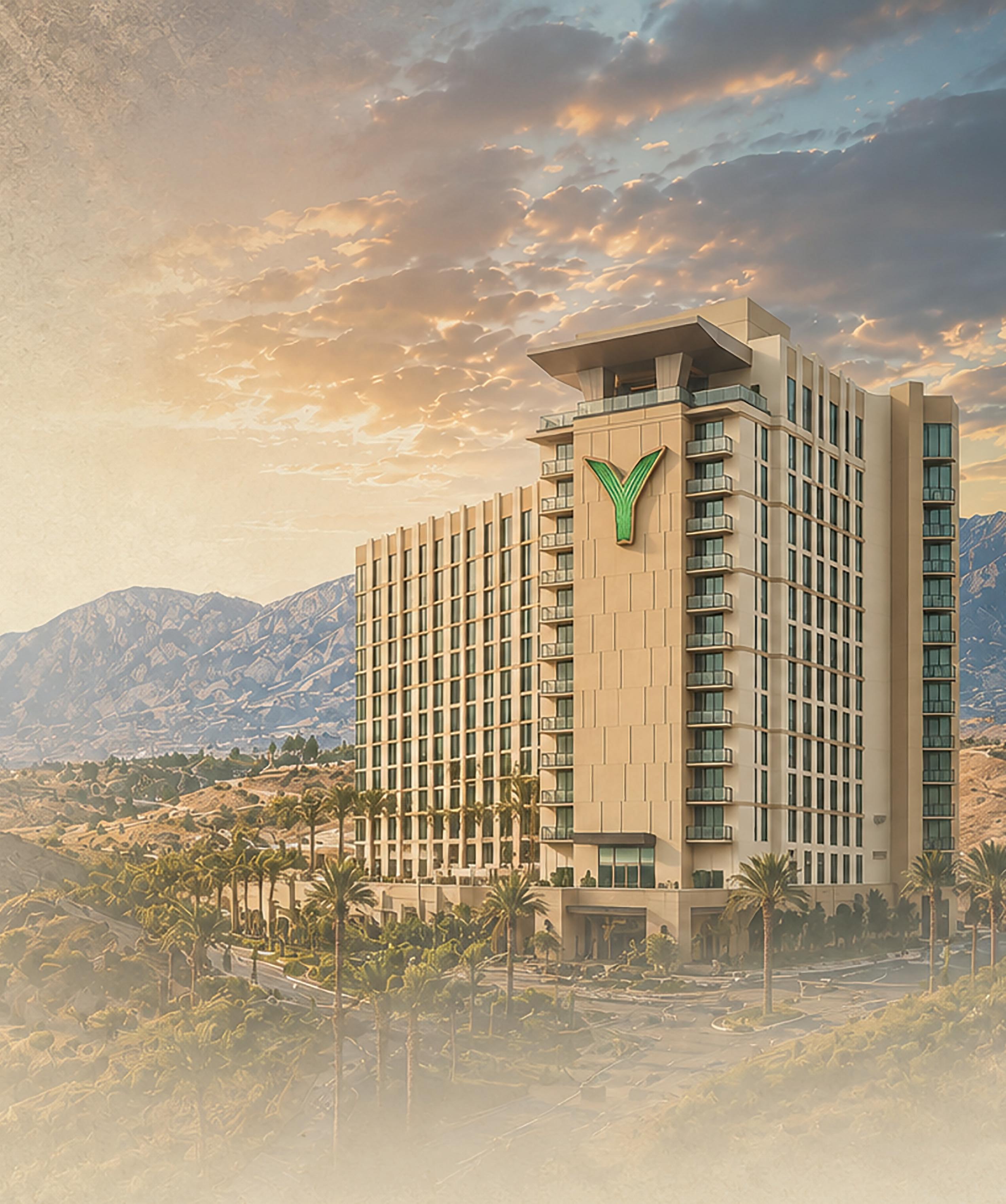
While the San Manuel Indian Bingo Hall had grown into southern California’s most prominent Tribal gaming venue in less than 20 years, its 2005 expansion was but a fraction of the overturn witnessed by 2021. Following a $760m development initiated in 2018, the Tribe rebranded the property to Yamaava’ Resort & Casino at San Manuel from the Serrano word for “spring” to honor its ancestral lands and cultural heritage.
The rebranding preceded the December 13, 2021, grand opening of a 17-story hotel tower – representing the first on-site lodging
launched by the Yuhaaviatam of San Manuel Nation – comprising 432 rooms, a pool deck and spa. On the gaming side, what started as a bingo operation to generate economic self-sufficiency had evolved into a multilevel offering with the largest number of slot machines available across the western US. Yaamava’ Resort & Casino at San Manuel GM Kenji Hall spoke with Global Gaming Insider on the “sense of pride” felt once the project was completed, even with difficulties faced due to the Covid-19 pandemic.
“When you see the project and understand the reasons behind it, how we were able to grow and just change to a whole different scenario, that was such a sense of pride for me personally, and what our teams committed to during one of the most difficult times to do construction,” Hall said.
“Building out during Covid, going through all of that chaos and knowing how hard the team worked to put it all together, being able to see it come to fruition was one of the coolest things. It’s been a good ride. And being able to turn out something as beautiful as we did during one of the most difficult times to be working in this industry, that’s super satisfying.”
VENTURES IN VEGAS
While growth across southern California was coming naturally for the Yuhaaviatam of San Manuel Nation, the Tribe’s gaming operations also began expanding to the gambling capital of North America. At the same time as its rebranding of Yaamava’ Resort & Casino at San Manuel, the San Manuel Gaming and Hospitality Authority, an instrumentality of Yuhaaviatam of San Manuel Nation, acquired The Palms Casino Resort in Las Vegas. The deal was worth $650m, purchasing from Red Rock Resorts, making it the first Las Vegas resort fully owned and operated by a Native American Tribe.
While forced to close its doors due to the pandemic, The Palms had undergone $690m in renovations as recently as April 2019, and concluded a yearslong quest for the Tribe to expand across the California/Nevada border.
To this day and even back when ownership of The Palms changed hands, the Yuhaaviatam of San Manuel Nation has been well-engrained across the Las Vegas area, forging partnerships with the city’s professional sports franchises and providing support for various local charities. When asked how the Tribe’s leadership differs to that of typical Las Vegas casino-resort ownership, Hall describes the “longer-term format” in which strategy is developed across both properties.
Hall explains: “When I compare it to corporate gaming, specifically, the decisions made from a Tribal perspective are generational in the way they plan. Oftentimes, when you’re at the beholden of shareholders, you have to make decisions that are very unpopular to get to a number. The Tribe isn’t about doing that.
“They’re looking at ‘how do we make decisions that are going to further our reputation,’ and those decisions allow us to create a different experience and not be so beholden to ‘I’ve got to get to this specific number.’ That gives us a lot more leeway than most other Tribes or every other corporate gaming place. It’s a different feeling.”
REACHING FOR THE STARS
In April 2022, the Yaamava’ Theater debuted as a 2,800-seat entertainment venue in partnership with Live Nation, marked by an opening performance from the Red Hot Chili Peppers and establishing the property as a regional hub for top musical and comedy acts.
With a reservation which now expands
“ The key strategy here is generational thinking and applying it to business ”
to over 1,100 acres, the Yuhaaviatam of San Manuel Nation has been able to expand its footprint to serve as a tantalizing middle ground between Las Vegas and the Los Angeles-San Diego region. Despite the rich successes that have stemmed from becoming a gaming powerhouse, the Tribe has yet to lose focus on its initial goal of preserving lifetime value for its community.
“It begins with the Tribe’s vision,” Arceo explains, “and they’re very clear in generationalstyle thinking. Not only thinking about today, but tomorrow, the day after, the next generation and so on and so forth. The key strategy here is generational thinking and applying it to business.
View south of the Reservation in the 1950s with no nearby homes or developments
The next chapter has arrived.
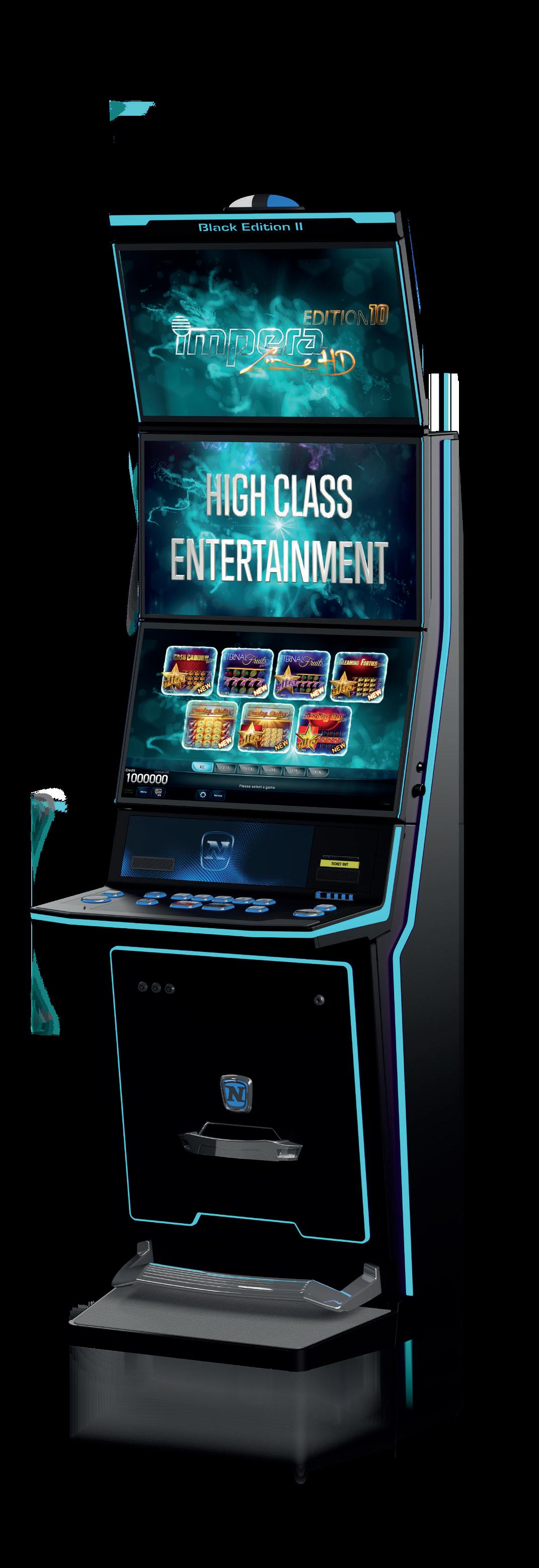
Built on the legacy of Impera 7 and 9 – the new Impera Line™ HD Edition 10 takes it further than ever. Seven all-new ultra & deluxe games with a fresh mechanic, a reimagined Roaring Forties™, and unmatched clarity from the very first spin.
Unmatched performance driven by innvation.
“By being able to do that, we’re able to think about what’s best for the long term, as opposed to a short-term gain that may yield negative long-term results. We’re able to build around a world-class guest service property, but that didn’t just happen overnight. That’s an investment in long-term thinking and having that sort of mindset is how we shape the business. We choose to think about governance and the impact these things could have in the future, as opposed to what it can do for me today.”
TRADING COMPETITION
Celebrating its 40th anniversary in 2026, Yaamava’ Resort & Casino at San Manuel is still not without threats, however, although most are products developed online rather than in the commercial space. The Tribe has helped deter opponents from sports betting and sweepstakes casinos in California, but a new challenge from prediction market operators has left many scrambling across the US. According to Vice Chairman Johnny Hernandez Jr., prediction markets have become a threat not just to the Yuhaaviatam of San Manuel Nation, but to Indian gaming as a whole.
“There’s a lot of threats coming along and prediction markets are one that’s not just affecting California, it’s affecting Indian country as a whole,” Vice Chairman Hernandez Jr. said.
“Whenever there’s a threat (to) all types of gaming, you see some strange bedfellows get together and they’re suing everybody to try and tie everything up in court. Tribes are really looking at how to best move forward with trying to get through their strategy. They have the resources, the money and it seems like they may have some type of support, but it’s just one of those great issues that came out of the blue. It’s a really confusing issue, so we have to continue to
“
Because we’re not just isolated. We’re not on an island here. When our time here is gone, we want to leave everything better than when we found it ”
educate, educate, educate.”
With a portfolio that also includes the Waldorf Astoria Monarch Beach Resort & Club, Bear Springs Hotel and fellow hospitality properties across the US, the Tribe may be better prepared to survive threats such as prediction markets as compared to other Native communities. However, the Yuhaaviatam of San Manuel Nation’s efforts to build a greater life for members of its community extends to all of Indian country, especially after requiring its own assistance prior to gaming development.
“We’ve come from a history of reciprocity, not just from our clans, but to neighboring communities. We’ve also been on the receiving end of that in times of hardship. As Chairwoman Valbuena mentioned, waiting for the Salvation Army, Goodwill and assistance from local hospitals. We’re more than happy to jump out and promote those philanthropic efforts and look for the needs of not just our local and neighboring communities, but in all of California and Indian country,” Culture Seat Member Joe Maarango shares with Global Gaming Insider. “Because we’re not just isolated. We’re not on an island here. When our time here is gone, we want to leave everything better than when we found it.”
WHAT COMES NEXT…
Following four decades of building its community into a thriving enterprise, the
Yuhaaviatam of San Manuel Nation’s work remains nowhere near complete. According to what should have become a noticeable theme by this point, Tribes don’t operate in a similar fashion to that of the corporate mindset which shapes areas such as Las Vegas and Atlantic City. While quarter-toquarter responsibilities certainly carry its own challenges, building for the next seven generations is a task only so many choose to take on in gaming.
What is undeniable, though, is that those who came before Hall, Arceo and even Chairwoman Valbuena would be astonished by what has been built on the same lands that once represented a forced shelter for the Tribe. Elders and members who helped organize the original bingo hall may still look up in disbelief at a property which now stands over 15 stories high and provides gaming offerings far beyond traditional games of chance.
As Hall tells Global Gaming Insider, the Tribe’s leadership maintains a “competitive” spirit even 40 years into an operation which has become a staple of southern California. While expansion remains “a little more difficult” due to the property’s mountainous residence, the Yaamava’ Resort & Casino at San Manuel GM spoke to the “diversification” in which the Tribal community has fostered over the past few years. Hall’s sentiment is attested by the Tribe’s commercial portfolio in the US, which may also represent an uplifting irony for a community whose original homeland was once reduced to a fraction of its original state.
As Yaamava’ Resort & Casino at San Manuel celebrates its 40th anniversary in 2026, the property represents more than just an evolution of Tribal gaming, but the 300-year survival of the Yuhaaviatam of San Manuel Nation. For as much success as the casino-resort produces each year, it still stands on the legacy and perseverance of the Tribe’s previous generations, and those who helped fight for its Native independence.
With four decades now in the books, Yaamava’ Resort & Casino at San Manuel marks an eternal flame that has routinely fueled the Tribe’s economic engine, and helped leadership look toward a brighter future than ever before.
THE MOUNTAINS ARE CALLING
Visiting Yaamava’ Resort & Casino at San Manuel to review the property for ourselves, Global Gaming Insider’s Kirk Geller recaps his stay at the property and the most notable amenities for guests
When traveling from Las Vegas to southern California, one must navigate through an endless stretch of sand in the Mojave National Preserve, all before eventually finding the greenery which surrounds San Bernardino. A surprisingly swift drive could take those residing in the desert to numerous hotspots in California, but none may be as underrated as the Tribal property nestled up against the San Bernardino mountains. Following the trip’s finale, which includes a path through the San Bernardino National Forest, Yaamava’ Resort & Casino at San Manuel awaits all visitors searching for entertainment, dining, hospitality and gaming.
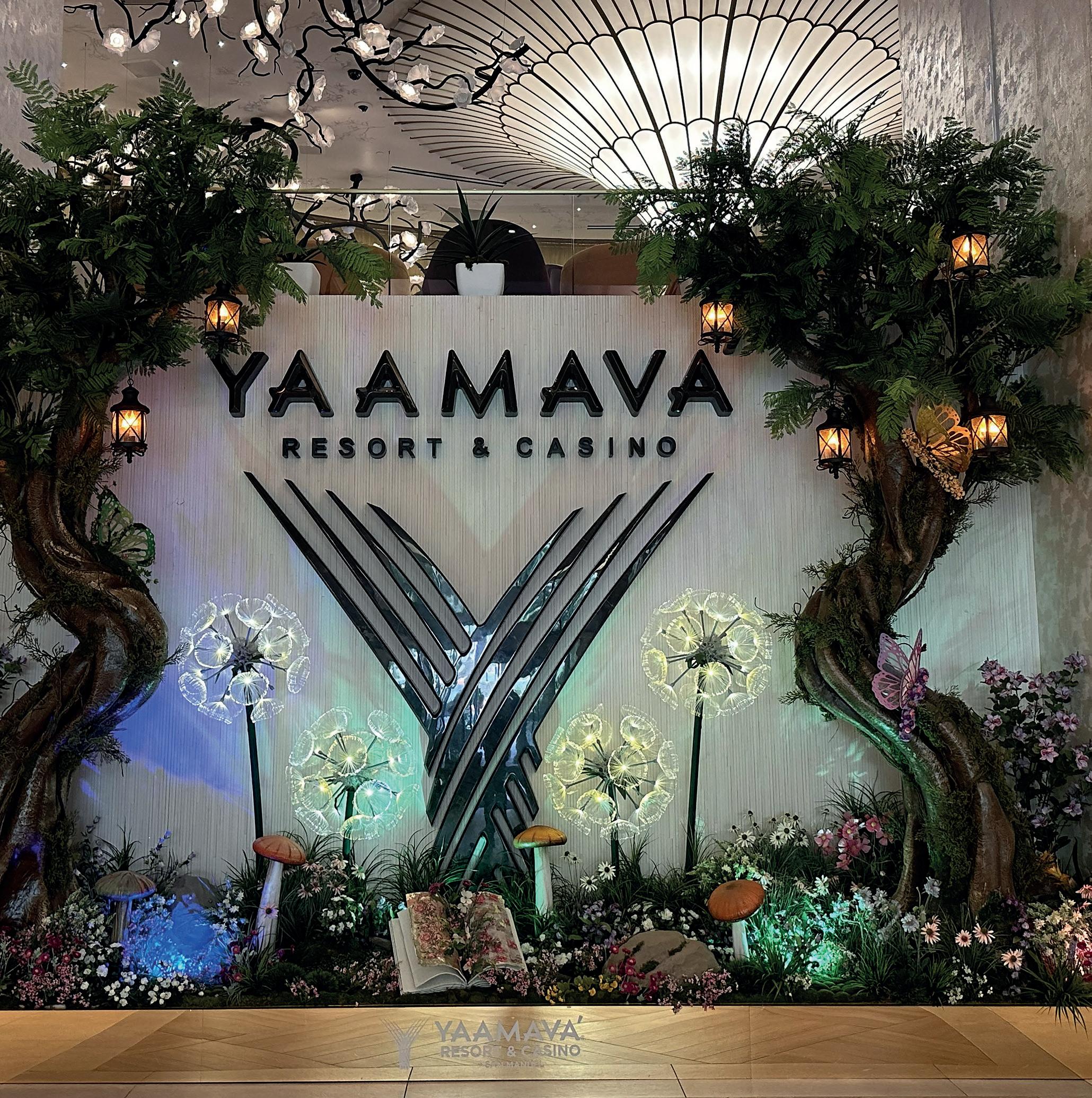
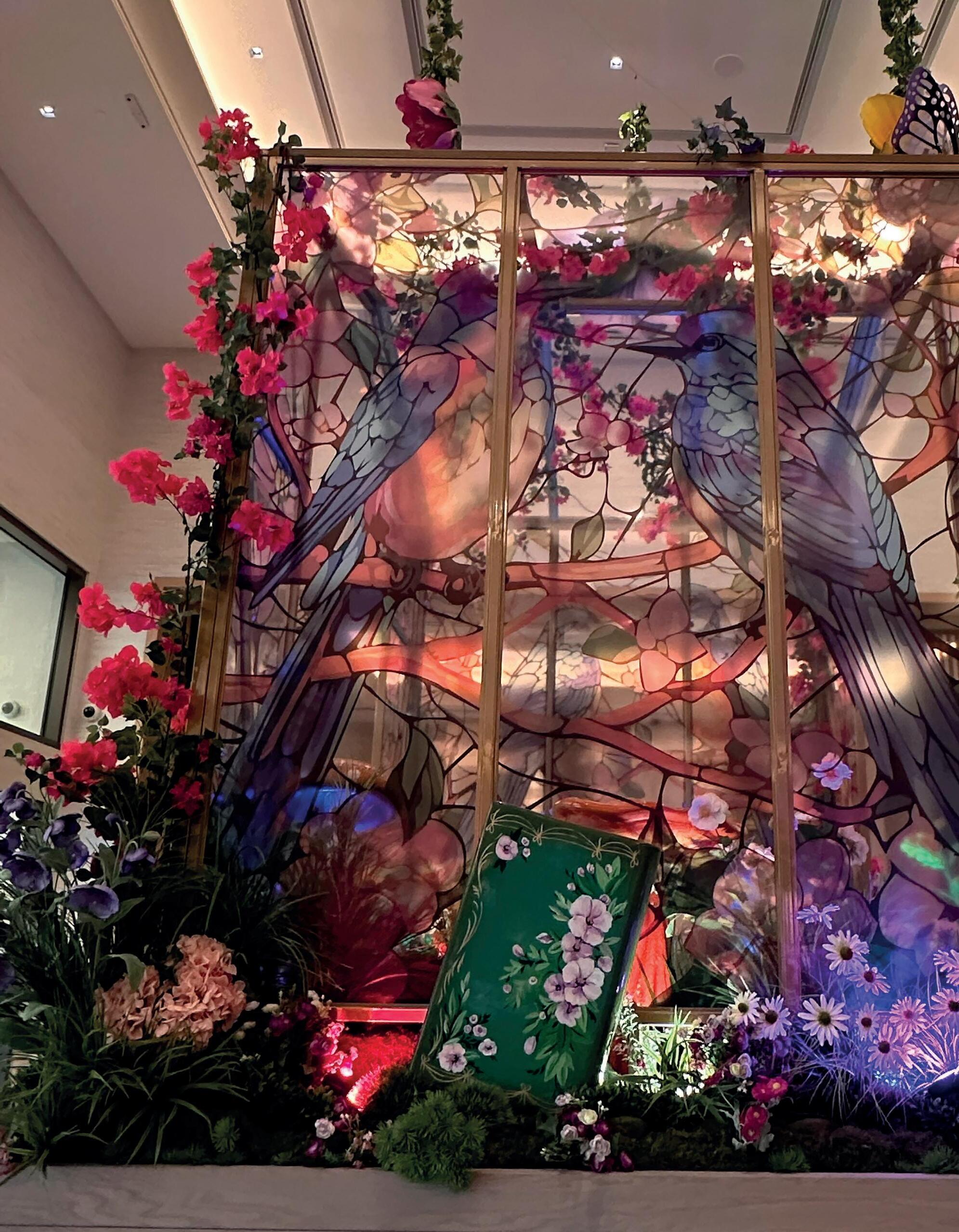
Once inside, guests are immediately drawn to multiple art displays dedicated to the history Yaamava’ Resort & Casino at San Manuel, as well as the Yuhaaviatam of San Manuel Nation Tribe.
An exhibit with hanging floral arrangements and cultural integrations is mirrored across the lobby by a stained glass feature, inspired by the local wildlife and surrounding nature of San Bernardino and Highland, California. Through May 2026, art displays focused on water, birds, books, clocks, mountains, butterflies and flowers will be prominently featured throughout the resort.
Following its arrival to the property, Global Gaming Insider was invited on a tour of the Yaamava’ Theater, which has played host to musical guests such as Ed Sheeran, Janet Jackson and The Killers. The theater, mainly due in part to its limited capacity of 2,500-2,800 guests, offers artists a more intimate experience than those found in typical stadium or major city environments, generating notable credibility
among the industry’s most prominent acts. Walking through backstage, it doesn’t take long to notice the hundreds – most likely thousands – of golden cymbals spread across the Theater’s walls in dedication of artists who have previously called the venue home.
Even without being able to offer the size of a Las Vegas or Los Angeles venue, it’s easy to discover why top artists, both musical and comedy, are drawn to the Yaamava’ Theater on an annual basis. Having been able to take center stage during the tour, there was certainly a temptation to belt out some of our favorite lyrics, although Global Gaming Insider would never want to outshine the acts which had stood in its place prior. Described as a “playground” by Yaamava’ leadership, getting to experience the inner workings of the property’s Theater
served as a small preview into how the property functions as a whole across each department.
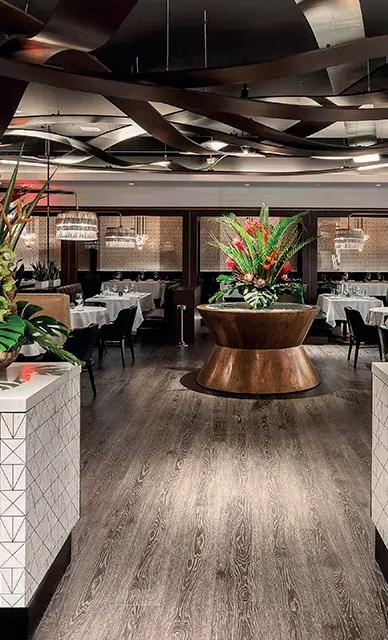
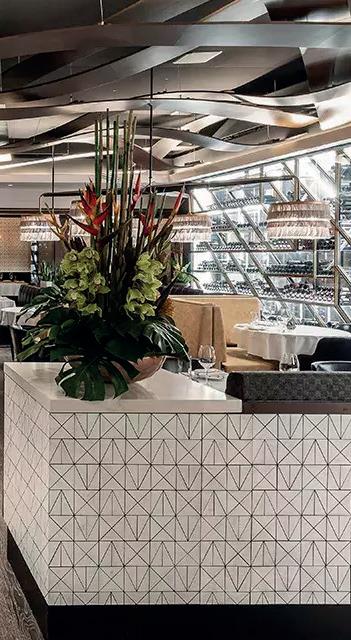
Next on the agenda was a trip to The Pines Modern Steakhouse, which offers an elegant design and an authentic dining experience for guests, including local wine and culinary selections from California suppliers. The restaurant made its debut at the property in 2008 when it was formerly known as San Manuel Casino, before eventually undergoing a planned renovation and reopening in 2021. Dishes enjoyed on the night consisted of filet mignon, tomato bisque, mac n’ cheese, lobster and Chilean Sea Bass, although talks of ordering the $200+ A5 wagyu selections were certainly had – especially when it features Versace dishware!
Overall, The Pines Modern Steakhouse offered incredible hospitality and service, coming as no surprise given the restaurant serves as the centerpiece of Yaamava Resort & Casino at San Manuel’s dining experience. The restaurant features artistry inspired by critical fragments of the Tribe’s history, including a swooping, bent
wood ceiling modeling an oversized basket weave pattern, along with stone tiles and metal to resemble its ancestral lands.
Prior to retiring for the evening, Global Gaming Insider took a stroll through the property’s casino floor, which currently maintains over 7,500 slot machines and 150 table games. Easily found on the casino floor is Yaamava’ Resort & Casino at San Manuel’s latest collaboration with Aristocrat Gaming,
featuring the world premiere of Monopoly Big Board Bucks. The team at Yaamava’ has also constructed a Monopoly-themed exhibit near the Aristocrat title, including its own reimagining of the game’s iconic board, but the display may be slightly overshadowed by the property’s latest giveaway.
Behind Yaamava’ Resort & Casino at San Manuel’s Monopoly exhibit sits a Ferrari 296GTS, part of the Own It All giveaway promotion
“ What was once a home forced upon the Tribe now represents one of the largest economic developments in southern California, including the resort in which one is standing in to oversee Tribal lands ”
which is valued at over $1.6m. While a test drive wasn’t in the cards for Global Gaming Insider’s trip to the southern California property, it’s not every day one gets to come across a $640,000 car up close and personal. A deeper look into the property’s casino floor would take place later in the trip, but an eventful first day eventually led Global Gaming Insider back to its accommodations for the evening.
Within the room, a small living area is first presented, accompanied by a bartop feature and simplified artistry as compared to the majority of the resort. Although it took longer to find where the refrigerator was than we’d prefer to admit (salute to the wonderful housekeeper who helped), the living area provided a wonderful space to jot down notes from the day and enjoy some
late night television.
Making our way around the exposed accent wall, the bedroom featured a king bed, a desk and workspace area along with perfect views of the San Bernardino Mountains. Guests are also offered a look into the Yuhaaviatam of San Manuel Nation community, including Tribal business developments and even former sites of where the Tribe first initiated gaming efforts. For as beautiful as the view is for guests, the sight also perfectly encapsulates the history of the Tribe and its perseverance to maintain culture and sovereignty. What was once a rocky hillside with limited resources forced upon the Tribe now represents one of the largest economic developments in southern California, including the resort in which one is standing in to oversee Tribal lands.
Not to be missed is the intellectual lounge chair providing comfort for one to enjoy the view, as well as a second television for when it was time to trade the couch for the king bed. The bathroom provides a second view of the San Bernardino Mountains and double vanities for multi-guest stays. Finally, the walkin shower includes a rainfall shower head – as well as a handheld attachment – with a small closet available to guests for hanging dress shirts or to provide additional storage for belongings.
To begin the morning, Global Gaming Insider was welcomed to the Cloud Villa suite at Yaamava’ Resort & Casino at San Manuel, typically reserved for special musical guests or select visitors. The space replicates an apartment-esque atmosphere with multiple bedrooms, a living area and full kitchen, along with elevated views of the San Bernardino mountains. After getting the opportunity to speak with Chairwoman Lynn Valbuena, Vice Chairman Johnny Hernandez, Jr. and Culture Seat Member Joe Maarango, a full property tour was next on the agenda.
The first stop included a visit to the Y Lounge, available exclusively for suitelevel guests and Turquoise and Diamondtier Club Serrano members. Offering indoor and outdoor views of the surrounding area, the Y Lounge also features a dedicated cigar smoking lounge, locked compartments to house various alcohol previously purchased by rewards members and a quiet dining experience for both breakfast and dinner. The space also contains multiple integrations of the property’s Collection 86, a curated selection of wines, spirits, beer and cigars. One journey to the outdoor patio deck had Global Gaming Insider ready to enjoy the California sun, but a trip down to the pool deck would still offer such opportunities.
On a sunny morning, Yaamava’ Resort & Casino at San Manuel’s pool deck served as a perfect escape for many of the property’s guests. Numerous lounge chairs, tables and cabanas surround the pool, with integrations such as a
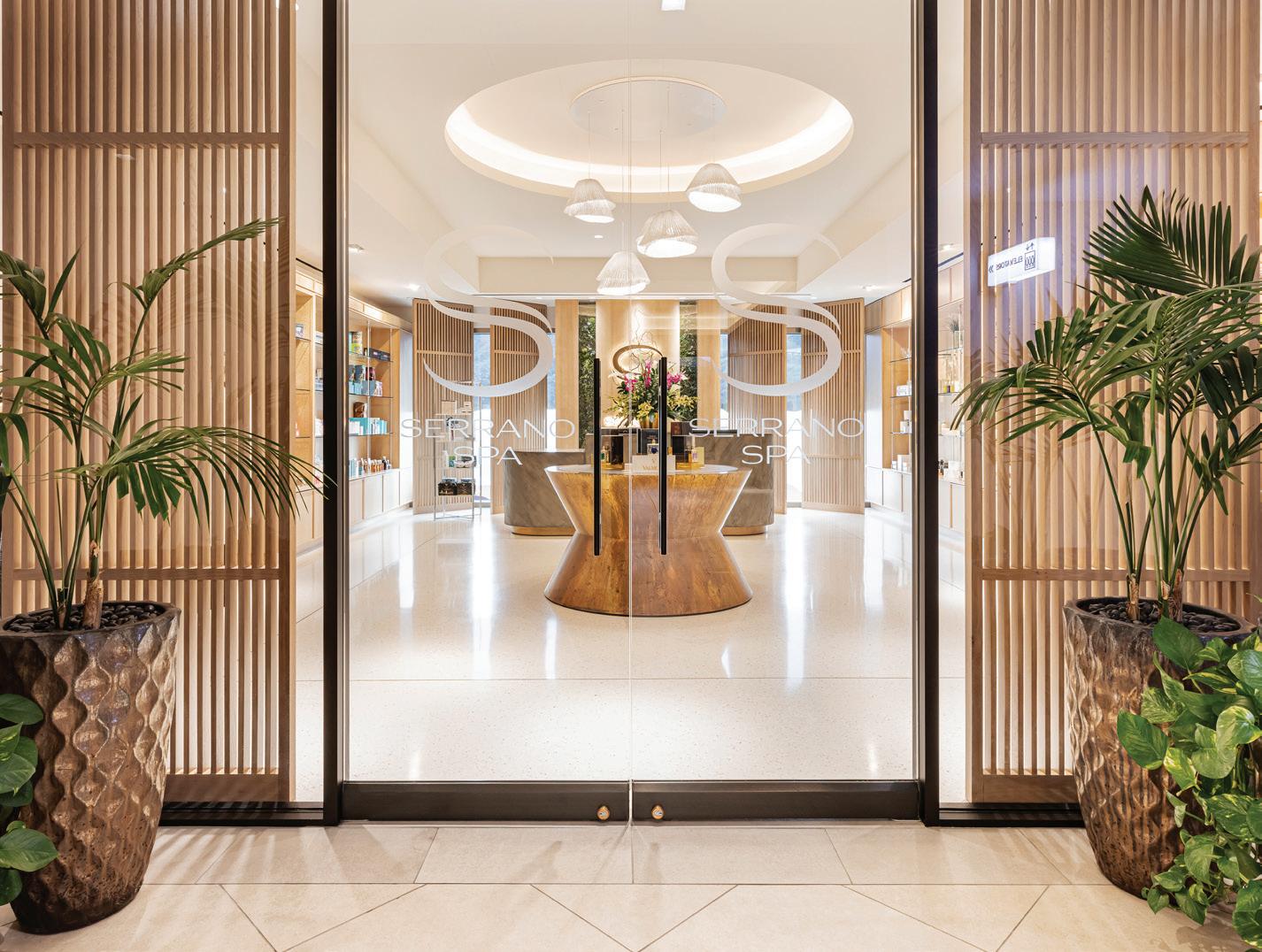
Serrano Spa
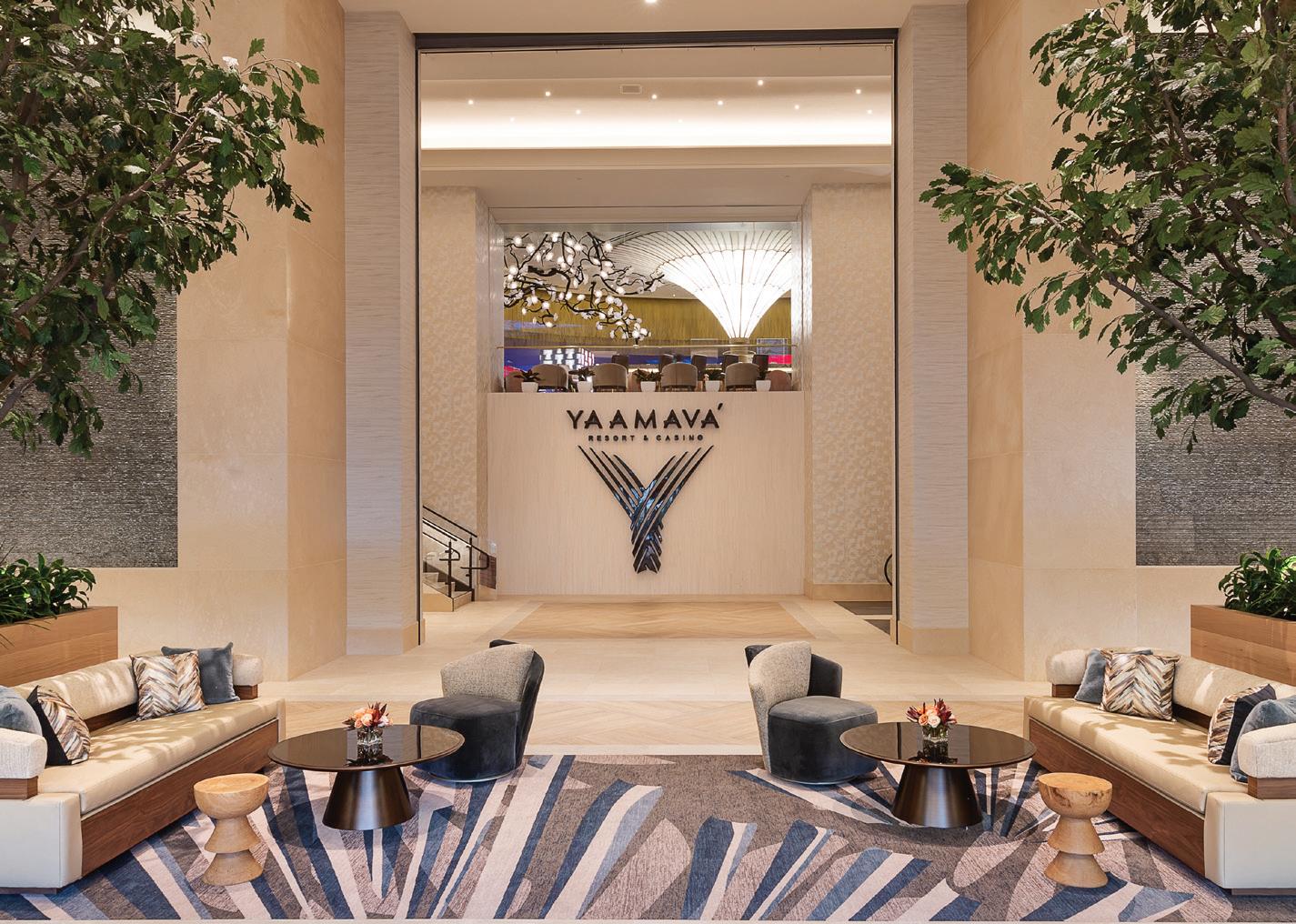
Resort Lobby
stage area for watch parties and performances, the Radiance Cafe and Helix Bar. The Tribe’s watch parties serve as extensions of its ongoing collaborations with professional sports franchises such as the Los Angeles Dodgers and Vegas Golden Knights.
Coming from Las Vegas, there can be times where the uncontrollable madness which stems from thousands of guests attempting to secure the best seating at resort-casino pool areas can act as a turn off for residents who desire a local weekend getaway. While the seemingly endless amenities offered on the Las Vegas Strip help account for such strenuous circumstances, Yaamava’ Resort & Casino at San Manuel appears to offer a tantalizing middle ground between high-demand and comfort.
Heading back inside, the next stop took Global Gaming Insider to the resort’s new Beats venue, which was originally unveiled in late August 2025. The space offers multiple dining concepts and eventually shifts into an entertainment venue at night, having already hosted multiple musical acts since its debut. A short walk took us to The 909, which acts as a sportsbookinspired restaurant and viewing experience for guests. Despite a disappointing check-in on this
writer’s favorite baseball team, the visit offered a glimpse into how California resort-casinos can still replicate a sportsbook experience even without the betting integrations.
Turning attention back toward the property’s gaming offerings, however, a trip to The Vault showcased a reserved experience for highertier members of Yaamava’ Resort & Casino’s rewards club. The space still offers over 200 slot machines and 10 table games, as well as dedicated artistry to the Tribe’s history and surrounding San Bernardino area throughout its design. One feature to point out which stands on its own though are the large safe-esque doors at the front of The Vault, certainly fitting given the $25,000 table limits available to players.
A second trip to view Yaamava’ Resort & Casino’s Monopoly activation offered yet another glimpse at the Ferrari 296GTS and the hundreds, if not thousands, of entries already placed in hopes of driving away in the luxury car. Even with the creative attractions scattered throughout the property, it’s easy to find guests entranced by the spring cultural displays showcased by Yaamava’ Resort & Casino. From water features to local wildlife to honoring the Tribe’s “People of the Pines” culture, each display
“The Yaamava’ Resort & Casino is synonymous with growth and development for the Tribe and the surrounding areas”
also offers insight into Yuhaaviatam of San Manuel Nation’s history, allowing guests to forge deeper connections with the local community.
The art displays also bring a resemblance of Las Vegas to Yaamava’ Resort & Casino at San Manuel, as one of the lead designers on the project brings experience from the Conservatory & Botanical Gardens found at Bellagio Resort & Casino. Indeed – much of the resort looks to appeal to those coming in from major cities where gaming is fruitful – while also maintaining the individuality which has allowed the Tribe to generate success across a four-decade period.
Back on the gaming side, additional offerings seen by Global Gaming Insider included The Enclave and trips to the property’s high-limit slots and table game lounges, each featuring enhanced and personalized designs. Even in the day’s early hours, each room contained players looking to step away from the larger casino floor. Although no bets were placed on this end, the private atmosphere offered high-limit gaming rooms at Yaamava’ Resort & Casino at San Manuel certainly matches the appeal witnessed at fellow casino-resorts.
Once the tour concluded with a return trip to the Yamaava’ Theater, Global Gaming Insider was able to explore the local San Bernardino area, witnessing first-hand the type of impact the Tribe has had over the years. In what almost acts as an entrance ramp to Yaamava’ Resort & Casino at San Manuel, the street leading up to the property contains artwork dedicated to the Tribe, featuring Native dancers surrounded by wildlife and nature from the local community.
Even without one of its more high-profile acts visiting on this particular weekend, the influence Yaamava’ Resort & Casino has built across the area was still on full display. What was supposed to be a quick trip to the closest convenience store turned into a 20-minute journey as traffic became backed up attempting to enter the property on a Friday night. While just over an hour drive to the bright lights of Los Angeles, it appears those in San Bernardino and Highland, California are more than content spending their weekend at the Tribal casino-resort.
Greater insight into the Tribe’s history and gaming enterprises will also be provided in the coming pages of this magazine, but the trip offered a look into what has helped Yuhaaviatam of San Manuel Nation become one of the most recognizable Tribes across the US. With a presence that reaches Las Vegas as well through Palms Casino Resort, the journey back to Sin City is not a goodbye to Yuhaaviatam of San Manuel Nation, but rather an extension to just how broad the Tribe’s endeavors have grown. Having been able to personally witness the motivation and responsibility felt across its most notable entity, I look forward to what could be next in line for the Tribe’s land-based operations.
Casino Floor
MIND OVER MATTER
Global Gaming Insider provides insight into the Yuhaaviatam of San Manuel Nation Tribe’s history, and its path to developing one of the largest gaming organizations in California
At the beginning of every life, one needs a place to call home. ‘Home sweet home.’ ‘There’s no place like home.’ ‘Home is where the heart is.’ There are countless phrases on the importance of developing a central environment of culture, love and continuity. Not every journey to finding one’s eternal setting is always equal, however, and the difficulties faced by those who came before may seem immeasurable at times to where we stand today.
In the case of the Yuhaaviatam of San Manuel Nation Tribe, establishing its modern home tells a story of perseverance, determination and a will to carry on the traditions of past generations. As early as the 1700s, the Tribe was threatened by initiatives such as the California Mission
System, which attempted to convert Native Americans to Christianity and expand Spanish colonial influence along the western coast. The missions resulted in the murder of thousands of Tribal ancestors, and forced those remaining to adapt to a new way of life to survive.
INVOLUNTARY REDISCOVERY
By 1771, many of Maara’yam – or Serrano people – were taken from their ancestral lands in the Antelope Valley, Mojave River region and Inland Empire and relocated to the San Gabriel Mission. What was once a Tribaldominated territory, where the Yuhaaviatam lived in peace with its surrounding land, had been reduced to a scene of violence and
remorselesness. Just under five years later, the missions established new rancho outposts, or estancias, in southern California, including one located in the Redlands which held many Serrano people and other Native Americans from nearby communities.
Even through the 1800s, the Tribe still faced daunting threats to its culture and livelihood due to opportunities related to mining and the California Gold Rush, as anti-Native American sentiment continued to run high across the region. In 1866, a conflict originating in the Summit Valley incited a month-long killing spree of Yuhaaviatam Tribe members by local militia, leaving almost 30 ancestors left to continue building upon its previous generations.
The Tribe’s Kiika’, or leader, Santos Manuel, went on to guide the remaining members away from their Yuhaaviatam summer home in the mountains, in favor of the San Bernardino Valley.
The Tribe spent decades living along Warm Creek in San Bernardino, beginning near what is currently known as the National Orange Show Event Center. After being forced to Meadowbrook Park and eventually making its way to the Harlem Springs area, the Yuhaaviatam Tribe was pushed to the rugged foothills and placed on the San Manuel Reservation in 1981.
While Santos Manuel could not yet foresee such a bright future, the San Bernardino
The San Bernardino Mountains have stood witness to centuries of Yuhaaviatam history, perseverance and progress
Valley eventually became the epicenter of Yuhaaviatam’s success, but not without first asserting its own independence. A quartercentury after the Summit Valley tragedy, the Act of Relief for Mission Indians was passed, recognizing the San Manuel Band of Mission Indians as a sovereign nation with the right to self-govern.
FORGING ITS OWN PATH
Despite such legislation, the US federal government would continue ‘insinuating its decisions upon Tribes well into the 1900s, eventually resulting in nationwide protests which actually helped fortify the relationship between Native Americans and political
administrations. After 200 years of fighting for its sovereignty, the Tribe was more fully empowered to exercise its right to self-govern once President Richard Nixon passed the Indian Self-Determination and Education Assistance Act in 1975.
The legislation affirmed the right of the Yuhaaviatam of San Manuel Nation, as well as fellow federally recognized Tribes, to exercise its retained inherent rights to self-governance to expand opportunities for economic development. Just a few years later, the Tribe would take its first steps into establishing a more secure economy, exploring business opportunities both on and off the reservation. Nestled in Highland, California,
the Tribe debuted its San Manuel Indian Bingo facility, which stood for just over 30 years. The Tribe’s introduction to gaming represented just a fraction of the enterprise it would go on to build, but one that also required educating US lawmakers in the significance of Tribal sovereignty, a job eventually fulfilled by members such as Chairwoman Lynn Valbuena.
“When we first decided to offer gaming, we saw the opportunity there and what it meant,” Chairwoman Valbuena tells Global Gaming Insider. “A lot of people didn’t understand what Tribal sovereignty meant, why we were doing this and wanted to know how it was going to be regulated. It was a lot of work. I remember traveling to Sacramento many times with other Tribal leaders, including my Tribal council back at that time, explaining to others what we needed to maintain selfsustainability and self-sufficiency.”
As the Yuhaaviatam of San Manuel’s first-ever Housing Commissioner – an appointment which came when Valbuena was just 20 years old – she worked to improve the Tribe’s livelihood in its first years of self-governance. Recalling the 500-600 sq ft homes Tribal citizens were forced to accommodate, Valbuena was one of several Tribal leaders to help expand the breadth of opportunities available to San Manuel. Perhaps none greater was the eventual passing of Prop 1A in California, which created a pathway for federally recognized Tribes to operate specific gaming verticals, including lottery games, slot machines and card games.
Even before Prop 1A had passed, the Tribe began extending its gaming operations for the first time, turning its inaugural bingo hall into a 100,000 sq ft casino with a card room and slot machines. What began as a method of establishing economic development also marked a growth opportunity for Tribal employment, the Chairwoman tells Global Gaming Insider , as well as an opportunity to connect with its local San Bernardino community. Despite a rather polarizing start to establishing such a connection, a more unified future would eventually be reached between San Bernardino and the Yuhaaviatam of San Manuel Nation.
Chairwoman Valbuena says: “We wanted involvement from our Tribal citizens that wanted to participate and be employed at our
bingo hall. I also worked there to learn the business, help get Tribal citizens involved with other boards and committees and to better understand Tribal government. What we had to do as a Tribe to move forward was build relationships, especially with where we’re located.
“A lot of our neighbors back then didn’t understand or realize what we were doing, and would tell us ‘we did not move to the north end of San Bernardino to see the walls of a bingo hall. We moved there to see the beautiful mountains.’ I said well those beautiful mountains are ours, that’s our reservation, all 640 acres. Even though some of them sold their homes and moved away, to this day we have very good relationships now with the community, as someone who’s been involved with the Tribe for almost 50 years.”
ONE FOR ALL
Much of the positivity built within the San Bernardino community stems from the Tribe’s philanthropic efforts, which call back to the days of members such as Valbuena waiting upon deliveries from the Salvation Army and Goodwill. The same young girl who would sort through boxes to try on shoes and clothes now oversees the financial assistance granted to both organizations from the Tribe. Since 2003, the Yuhaaviatam of San Manuel Nation has invested over $450m in philanthropy efforts and generated $1.6bn in annual economic activity across San Bernardino.
One of the most notable acts conducted by the Tribe was helping to reinforce San Bernardino’s economy in the mid-1990s, when the Norton Air Force Base’s closing left numerous residents out of work. Having just expanded its bingo operation, the Yuhaaviatam of San Manuel Nation helped replace over half the jobs lost in San Bernardino, and remain as intergovernmental partners to the city.
Perhaps driven by its own desire to create a better future for the next generation, the Tribe has also donated $151m to local and national high schools, community colleges/universities and educational causes. The mindset may have been best captured by Vice Chairman Johnny Hernandez Jr., who spoke on the legacy Tribal leaders are hoping to leave behind. He told us: “I’m a firm believer that, whether you serve on council or not, there’s no position
“ Despite all the efforts to take away our language, our culture and who we are as a people, it’s so important to reclaim that and move forward ”
within the Tribe that’s more important than the other. We all have an individual responsibility to the Tribe. When I talk to my kids, I always say I just want to leave the Tribe better off than when I came in. My legacy is, once my time on council or on this earth is done, there was a noticeable difference that was made under not only my leadership, but Tribal council leadership as a whole. We have the resources now to fight the good fight and continue in the footsteps of our ancestors and our elders.”
TURNING BACK THE CLOCK
Within its own community, the Tribe has also made efforts to reclaim many of the traditions that were almost entirely lost as a result of violence and suppression against Native American culture. Educating its youth on the Tribe’s historic struggles and perseverance is one way of growing the Yuhaaviatam spirit, but so too is rediscovering a native language that had once been on the verge of disappearance. To this day, the San Manuel Education Department operates the Serrano Language Revitalization Project, helping children learn the same language spoken by their ancestors hundreds of years prior.
Culture Seat Member Joe Maarango spoke on such efforts with Global Gaming Insider: “Work goes back to the early 1990s, when elders and leaders at the time were hungry to revitalize our language and incorporate it in our day-to-day lives once again. Despite all the efforts to take away our language, our culture, who we are as a people, the People of the Pines, it’s so important to reclaim that and move forward, because that’s who we’ve been for thousands of years.
“We carry our traditions from the past up until today and we still practice these day-byday. It’s a way to honor our ancestors before us and to anchor our future generations in a name that was bestowed upon us by our creator. It’s been such an important undertaking for us, and one that we’ve been waiting a very long time for.”
In 2021, San Bernardino County formally recognized the language for the first time, despite a history which can be traced back for approximately 300 years. The Tribe also works in collaboration with California State University – San Bernardino to offer courses which teach the Serrano language, all part of a long-term Tribal vision to foster more native speakers by 2040.
Along with initiatives to revitalize the Serrano language, Yuhaaviatam of San Manuel Nation youth are traditional music and dances, basket weaving and gourd rattle to help carry on vital elements of the Tribe’s history. Children learn their cultural origins, which are tied to the natural world, central to their identity as Yuhaaviatam (People of the Pines)’, Küktac, and how his death and the grief felt by his people would
COVER FEATURE YAMAVA’ HISTORY
help grow the same pine trees which surround much of southern California. They also learn of how Spanish settlers used the term Serrano to describe the Tribe’s first ancestors, given the word also means “highlander” in Spanish.
Of even greater significance than the Serrano language may be when the Tribe managed to reclaim its ancestral name in 2025, having gone under the San Manuel Band of Mission Indians since 1891 (provided by the US Government). While San Manuel pays homage to Santos Manuel and his leadership, the name reflected previously touched on colonization periods which triggered Tribal dispossession, trauma and genocide. Reclaiming the Yuhaaviatam name connects leaders such as Valbuena, Hernandez Jr. and Maarango to the Tribe’s original history, and celebrates the lineage forged by all those who came before.
STRENGTH IN UNITY
Throughout its own literature, the desire to continue telling the stories of its ancestors, its struggles and ability to build a brighter future is evident from the Yuhaaviatam of San Manuel. A purpose to “foster love, respect and humility” is translated across multiple enterprises that have been built under new leadership. With Chairwoman Valbuena at the helm, teamwork, education and inclusivity appear to be at the forefront of the Tribe’s current mission, and one Manuel would surely be proud to see continued year after year.
The Chairwoman states: “Like we always say to our employees, without them and without great teamwork, we would not be where we are today. It’s an effort by all of us in every department. Back in the 1980s, when we started with bingo, we only had 300 employees. Today at Yaamava’, we have almost 8,000... and keeping track of who’s who and what everyone does is a team effort. Communication is the best policy. You have to have that because, otherwise, things are not going to work.”
Along with its efforts to reclaim cultural identity, the Yuhaaviatam of San Manuel Nation continued growing its gaming enterprises, including a major expansion project that began in 2017 and eventually led to the transition away from the name San Manuel Indian Bingo & Casino. Shortened to San Manuel Casino, the property began reshaping into the southern California landmark it currently stands as today. By 2019, the Tribe had added a new high-limit room to San Manuel Casino, and began construction of its first hotel attachment, which eventually produced yet another name change for the establishment. Following a significant expansion project in 2021, San Manuel Casino became known as Yaamava’ Resort & Casino at San Manuel, while a new entertainment center was debuted the following year. What had originated as a single bingo operation had now grown into
one of the largest financial investments across all of California gaming.
Of greatest importance to the Tribe is the establishment of a safe, loving and hard-working environment that fosters contributions for its surrounding area, or a place to call home once again. After generations of being forcibly relocated a limited land base, effectively cutting the Tribe
off from its ancestral land base of over 7.4 million acres’, the Yuhaaviatam of San Manuel Nation managed to not only persevere through such hardships, but build an unimaginable enterprise rivaling – if not surpassing –many of the country’s greatest casino-resorts. With those who came before still watching over, there’s certainly no place like home for the southern California Tribe.
“ I just want to leave the Tribe better off than when I came in ” – Vice Chairman
Johnny Hernandez Jr.
TAKING STOCK
Global Gaming Insider highlights the monthly stock price from the opening day of the past six months across the APAC region, observing January – June 2026
• Six-month high: January (12.58 HKD)
• Six-month low: May (10.97 HKD)
• Market capitalization: US$5.32bn (as of June 1, 2026)
• Six-month high: January (2.42 HKD)
• Six-month low: June (1.93 HKD)
• Market capitalization: US$1.75bn (as of June 1, 2026)
• Six-month high: May (5.53 AUD)
• Six-month low: February (5.04 AUD)
• Market capitalization: US$8.37bn (as of June 1, 2026)
• Six-month high: March (17,750 KRW)
• Six-month low: June (15,030 KRW)
• Market capitalization: US$1.98bn (as of June 1, 2026)
MOVERS AND SHAKERS
New executive appointments unveiled by Sands China, The Star Entertainment Group and Okada Manila headline gaming personnel turnover across the APAC region
Hubert Wang COO, Sands China
Having previously served as MGM China President & COO following Grant Bowie’s retirement in 2020, Wang will now oversee Sands China’s gaming and resort operations, market development, international & loyalty marketing and strategic analysis. Wang is also set to join the operator’s Executive Committee, departing MGM China with immediate effect in December 2025 due to what the organization described as “personal aspirations.” Perhaps such aspirations can be met with his new employer, who continues to expand resort, gaming and non-gaming operations.
Representing one of the most significant leadership moves made by The Star Entertainment Group in recent months, Patel will oversee both important integrated resort properties and offer decades of experience in gaming, hospitality and operational management. His appointment comes as The Star Entertainment Group attempts to strengthen its leadership structure, and has also previously served with Bally’s Corporation, Penn National and Sun International.
Patel will hope to assist the operator in strategic growth, operational performance, financial management and workforce development, especially valuable during a time in which The Star Entertainment continues to focus on long-term business stability.
Tam previously served as SVP of Premium Marketing at Okada Manila from October 2018 to August 2021, officially re-joining the Philippines’ largest integrated resort in her new position. The executive previously served as the Chief Casino Marketing Officer at Inspire Entertainment Resort in Incheon, South Korea and has also held senior marketing roles at The Venetian Macao, Galaxy Entertainment Group, Wynn Macau, Genting Hong Kong and Caesars Windsor in Canada.
On social media, Tam stated she is “delighted” to re-join the operator, and “looks forward” to collaborating with sales & marketing teams to “leverage our strengths and synergies across various disciplines.”
Wang moved to the US during the 1980’s and worked as a property-level CFO for Harrah’s before returning to the APAC region in the mid-2000’s
Patel holds an MBA from Thomas Jefferson University in Philadelphia, which is also named after the third-ever US President
After departing Okada Manila in 2021, Tam checked off a ‘bucket list dream’ of attending culinary school in London, England
Ameet Patel CEO, The Star Brisbane & The Star Gold Coast
Shirley Tam EVP & CMO, Okada Manila
FACING FACTS
Global Gaming Insider examines outliers in the Asian casino market; while most operators enjoyed growth, we have highlighted those that were not so lucky
For Q1 2026, Macau’s gross gaming revenue (GGR) rose by over 14% year-on-year but declined by 0.3% compared to Q4 2025, according to government data.
• Most concessionaires recorded growth in either GGR or net/operating revenue
• SJM Holdings was the only operator to report a decline, reflecting the impact of the full exit of satellite casinos in December 2025
SINGAPORE IR PERFORMANCE (US$BN)
Marina Bay Sands delivered a 28% year-on-year increase in net revenue, reaching $1.49bn, while adjusted property EBITDA grew by 30% (to $788m).
• This growth is primarily attributed to higher spending from premium customer segments.
• By contrast, Genting Singapore (Resorts World Sentosa) reported Q1 declines in revenue, profit and adjusted EBITDA
• Q1 revenue fell 3% to $473.1m, while adjusted EBITDA declined by 24%
For Q1 2026, licensed casinos generated PHP 44.52bn ($725.9m) in GGR, while PAGCOR-operated casinos recorded PHP 3.17bn.
• Overall, total casino GGR declined by 9.45% year-on-year
• The Philippines remains among the few major Asian gaming jurisdictions experiencing a decline in its casino gambling market
Sands China (Net Revenue)
SJM Holdings GGR
Galaxy Entertainment Group GGR
Melco Resorts & Entertainment GGR
Wynn Macau (Operating Revenue)
MGM China Holdings (Net Revenue)
Global Gaming Awards Asia-Pacific 2026
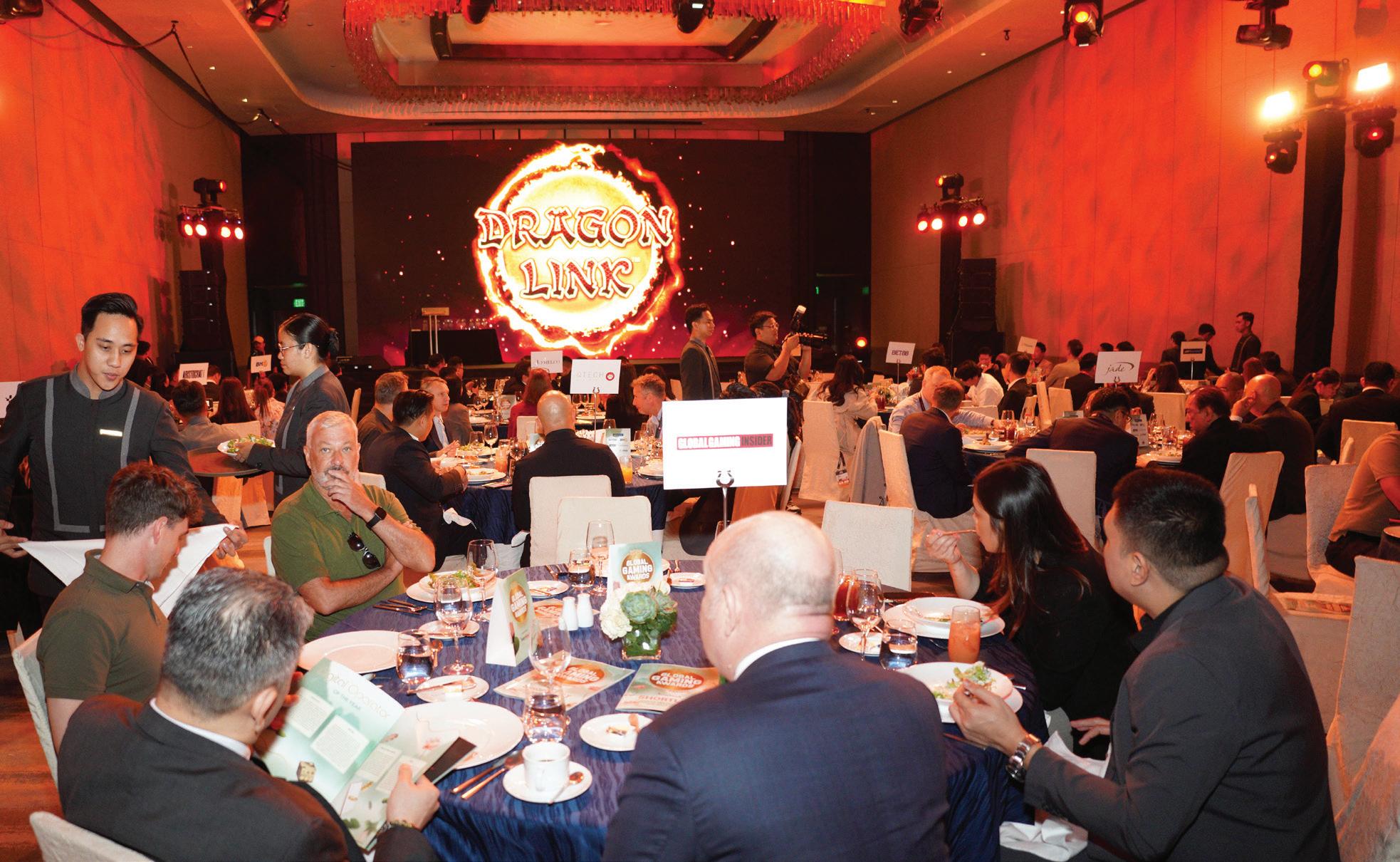
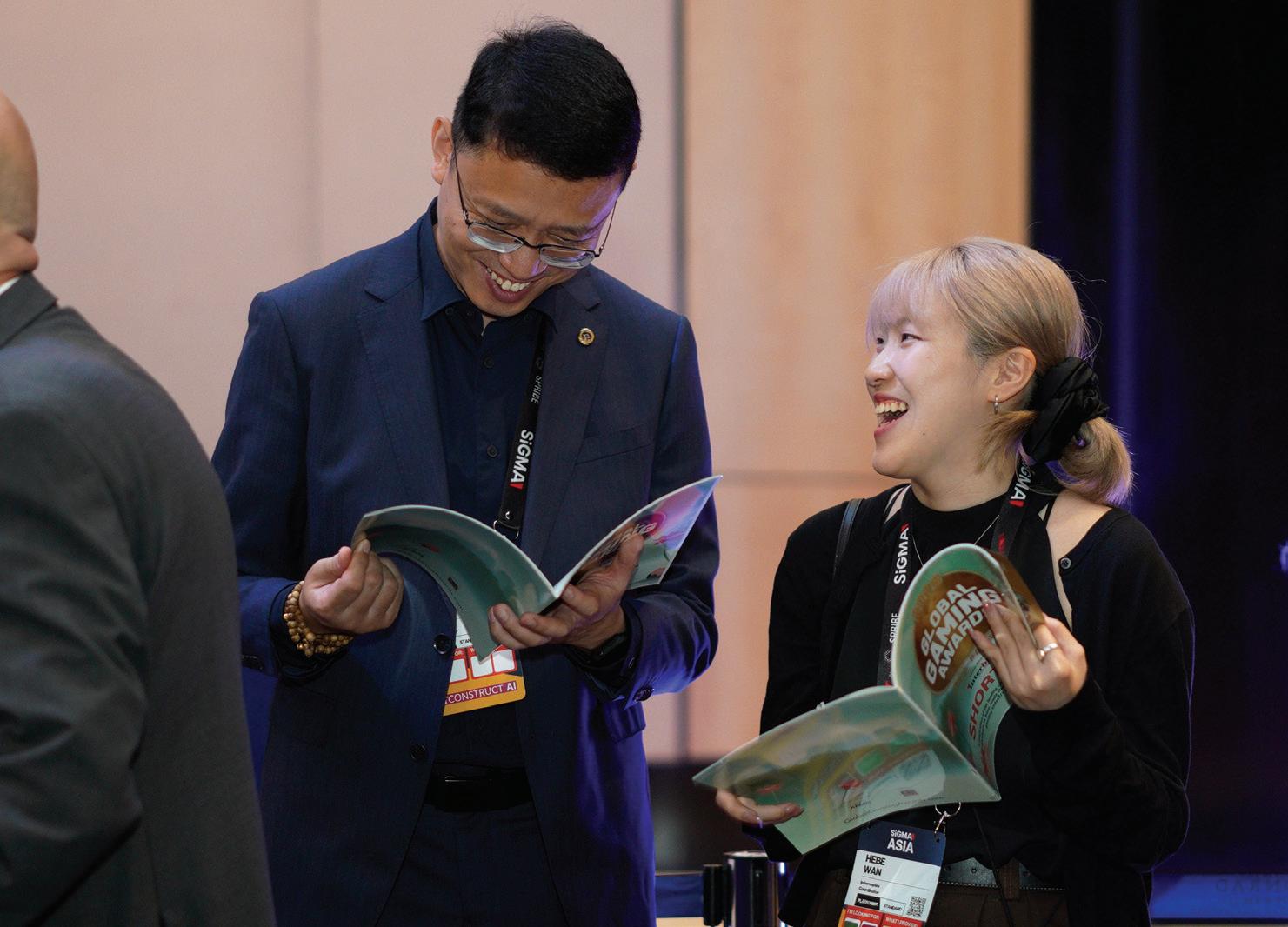
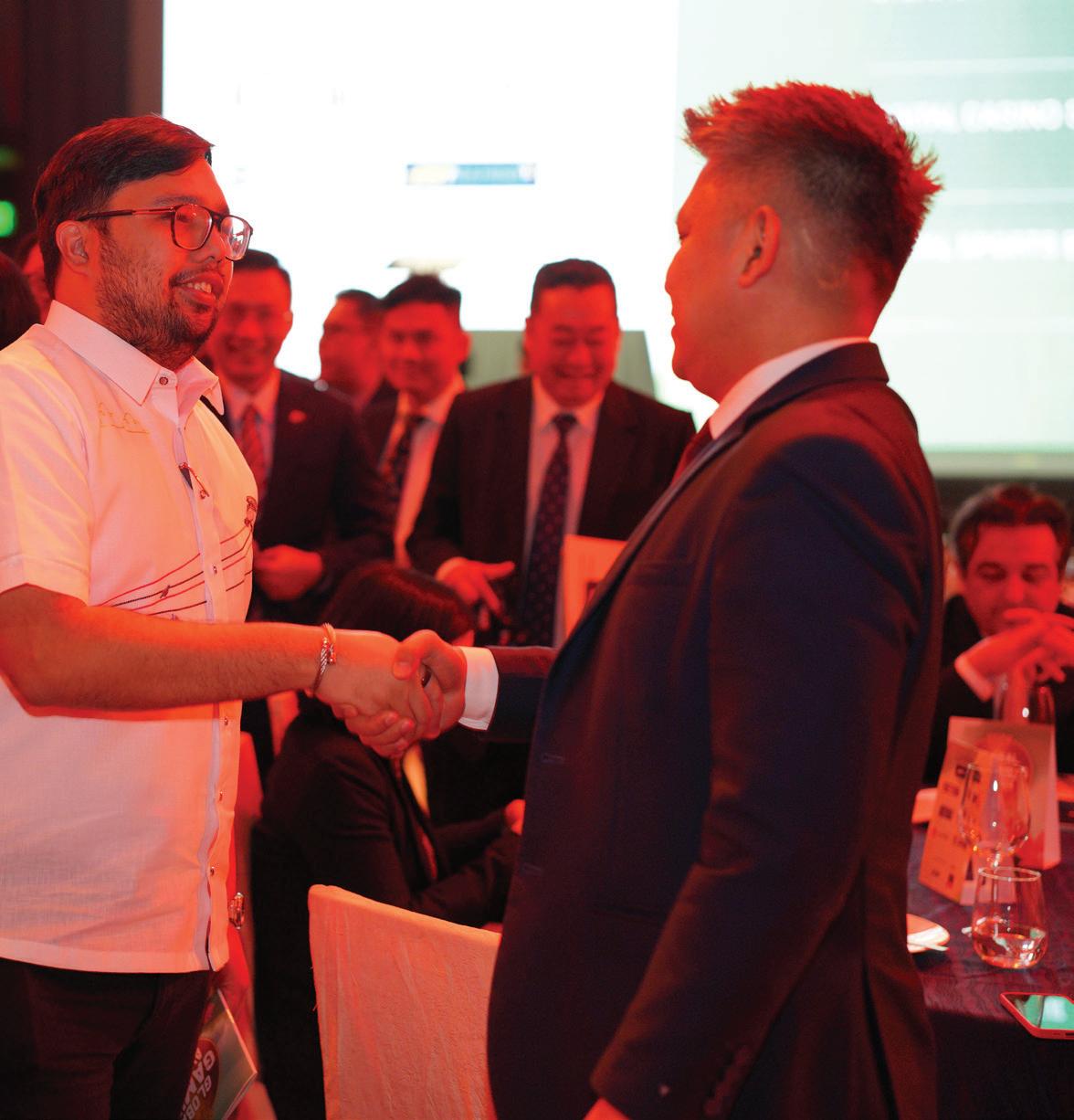
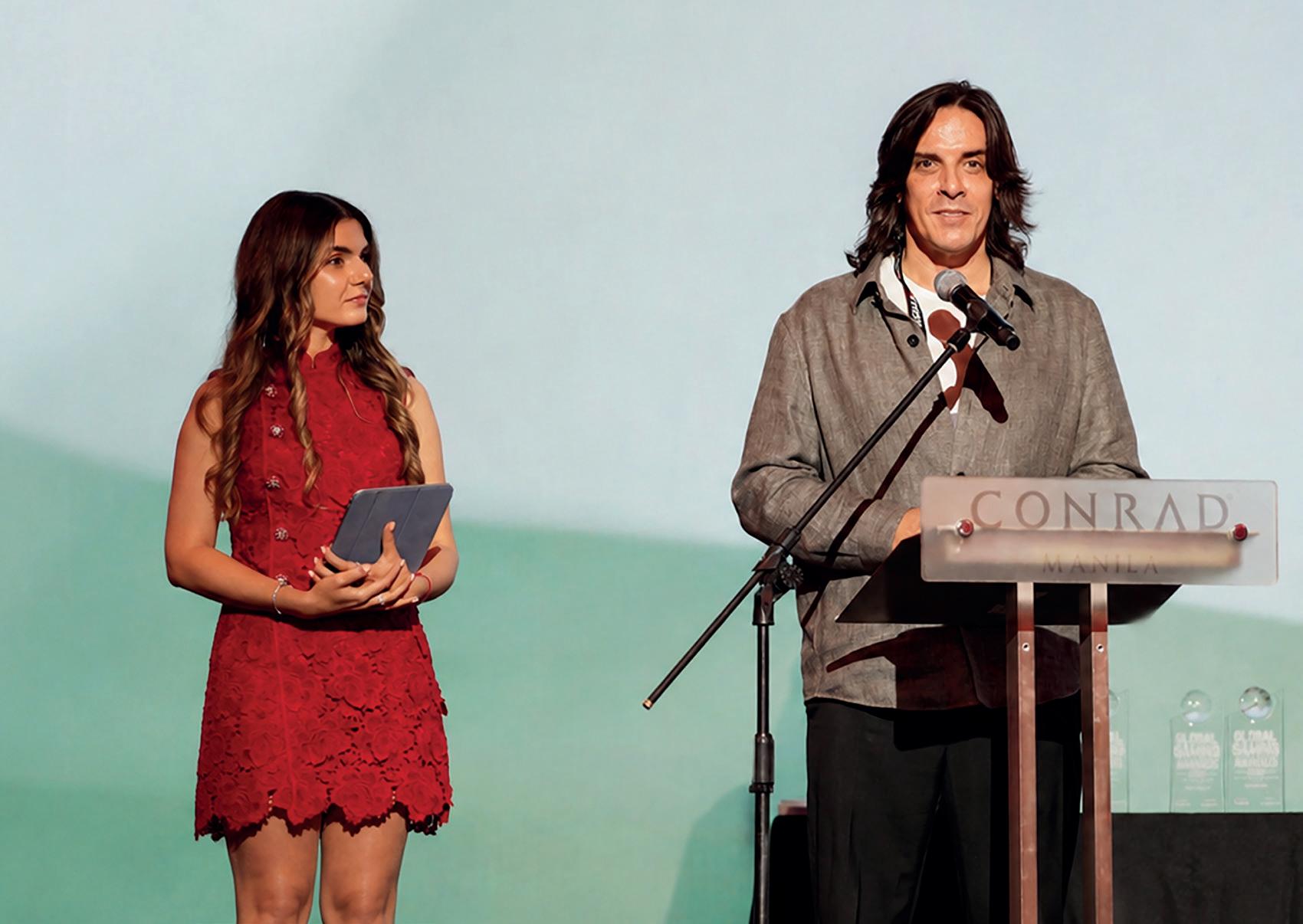
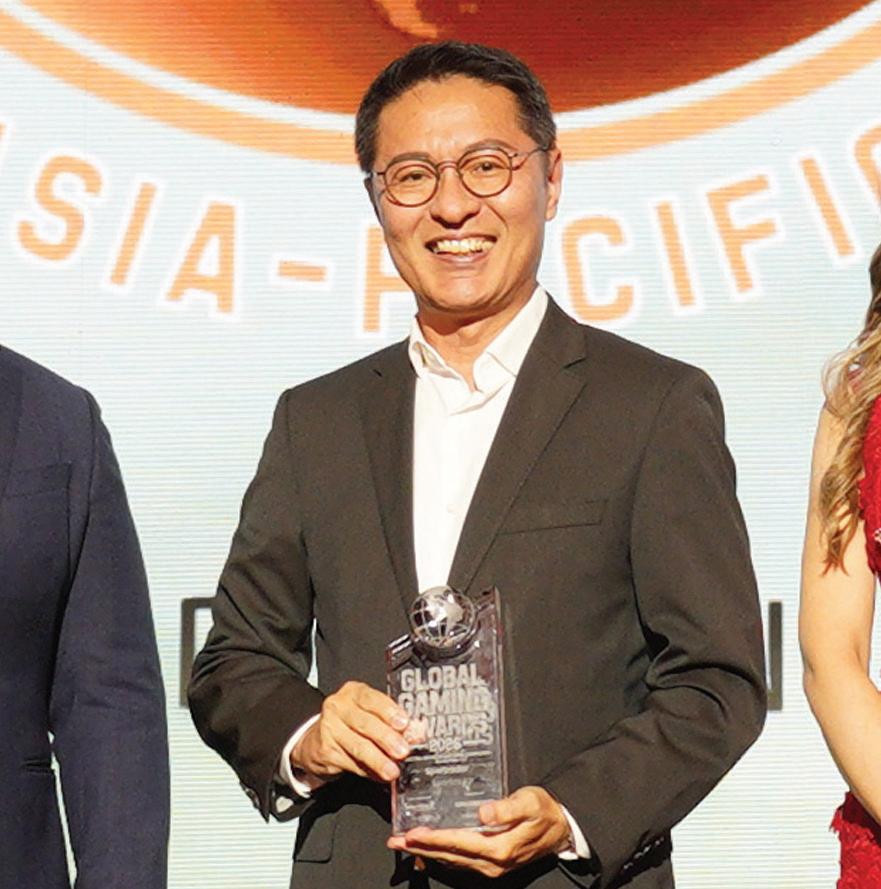
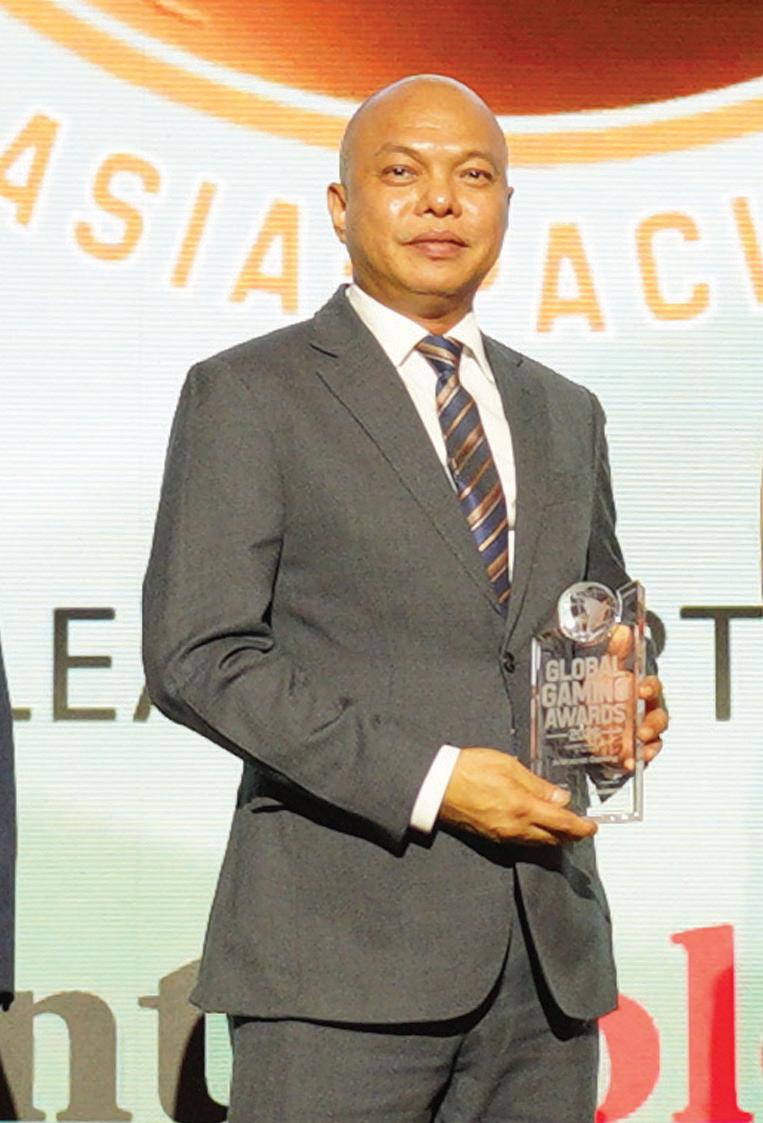
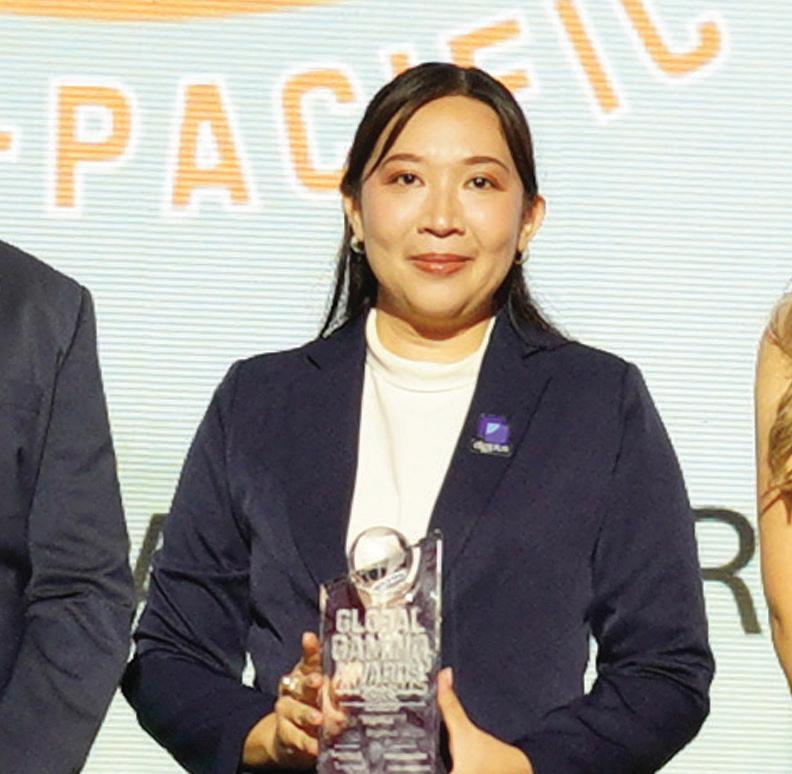
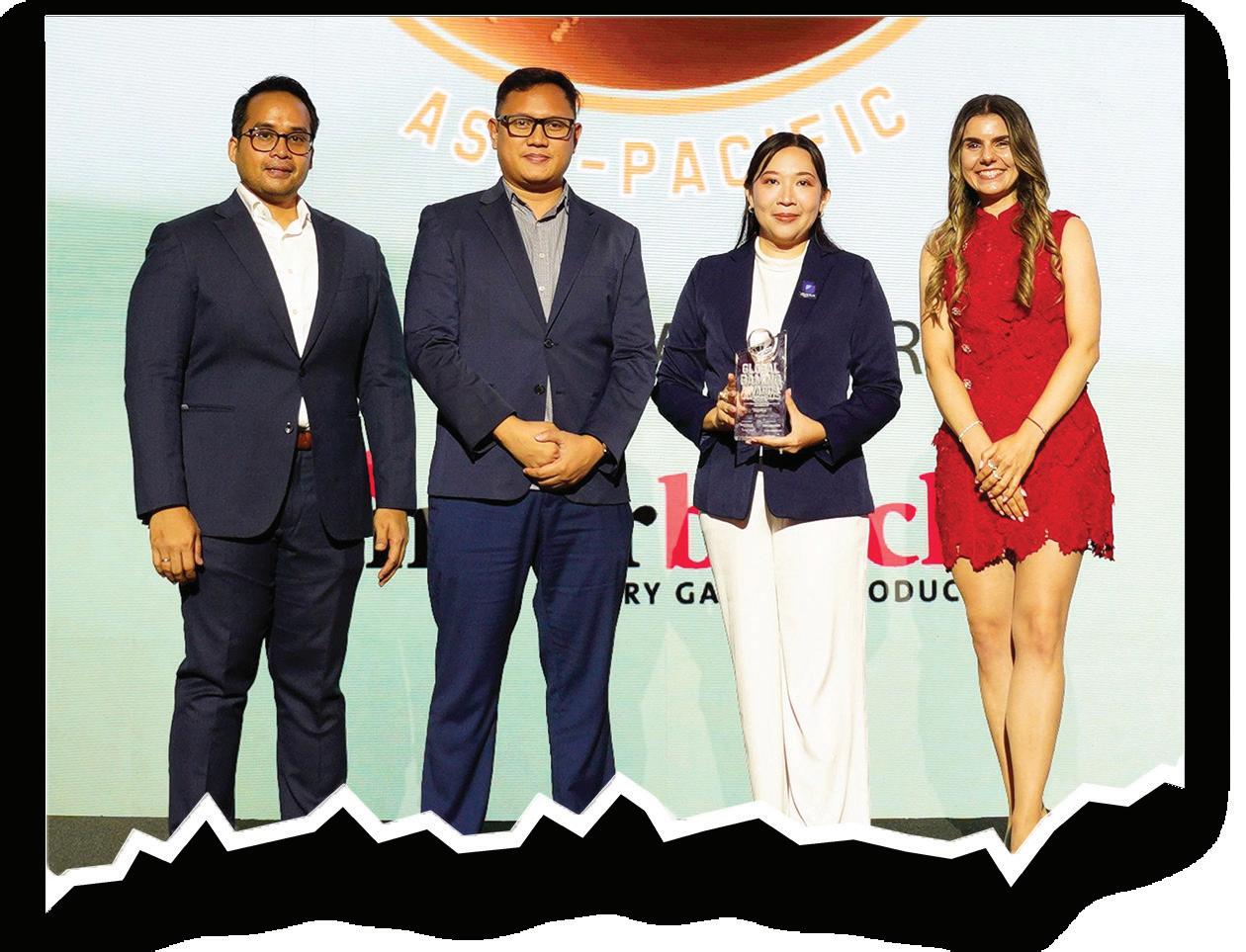
The Global Gaming Awards Asia-Pacific 2026 took place in June – and what a ceremony it was.
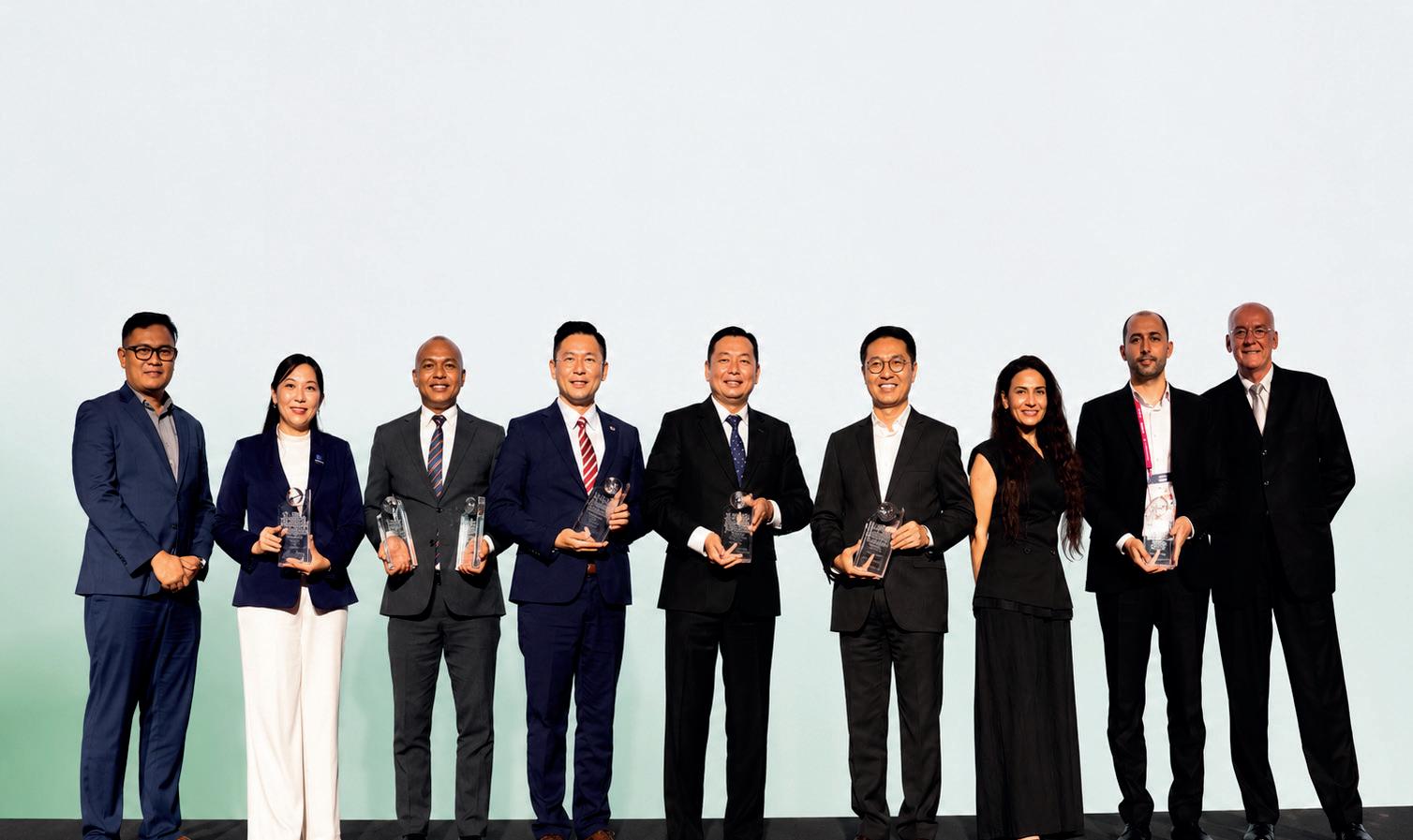
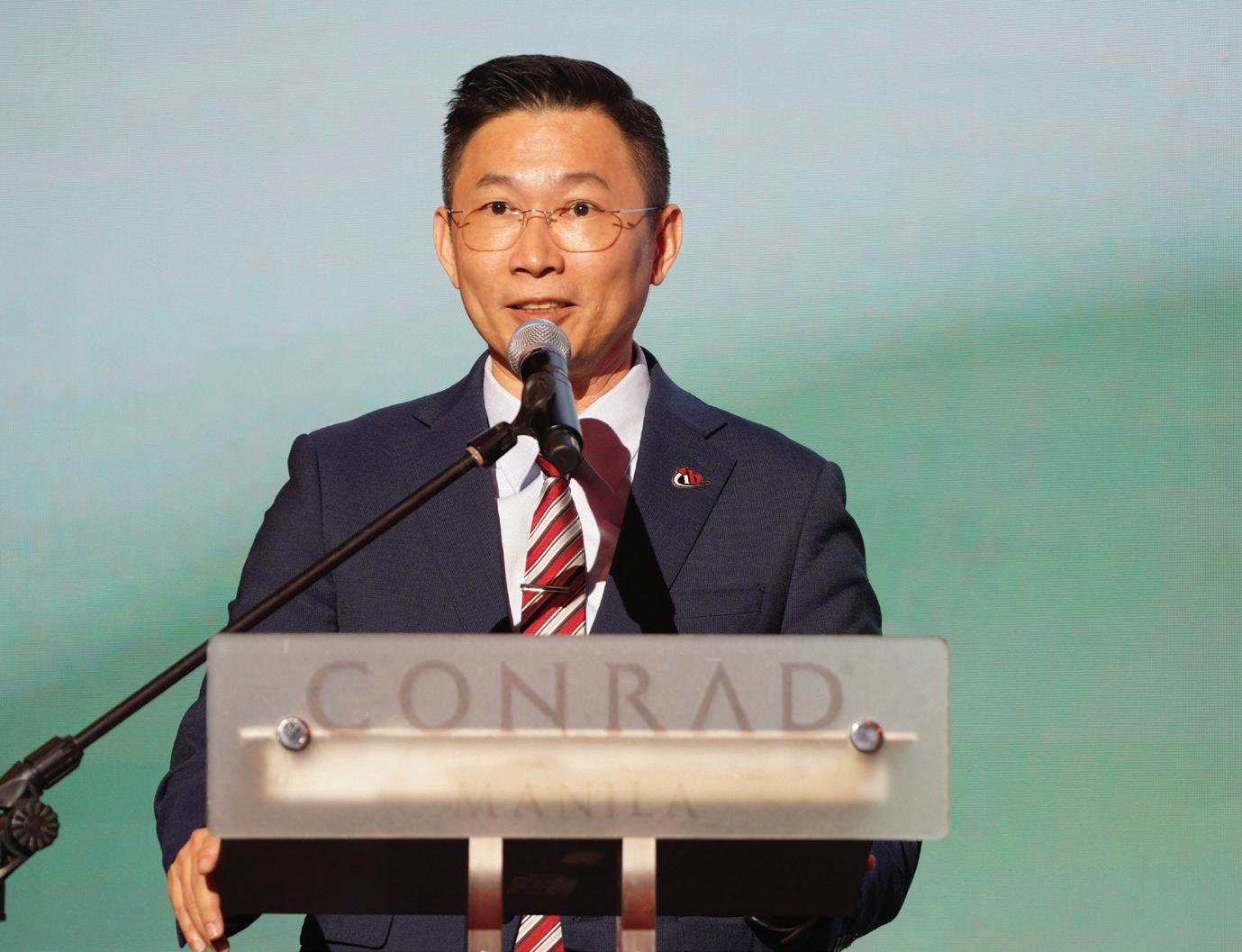
Crowning the region’s most prestigious winners, who we reveal in the coming pages, the Awards took place on 2 June at the Conrad Hotel in Manila during the 2026 SiGMA Asia Summit.
In attendance were some of the industry’s biggest names and most influential executives.
And how well-received the Awards were is true testament to the continued esteem in which they are held across the industry.
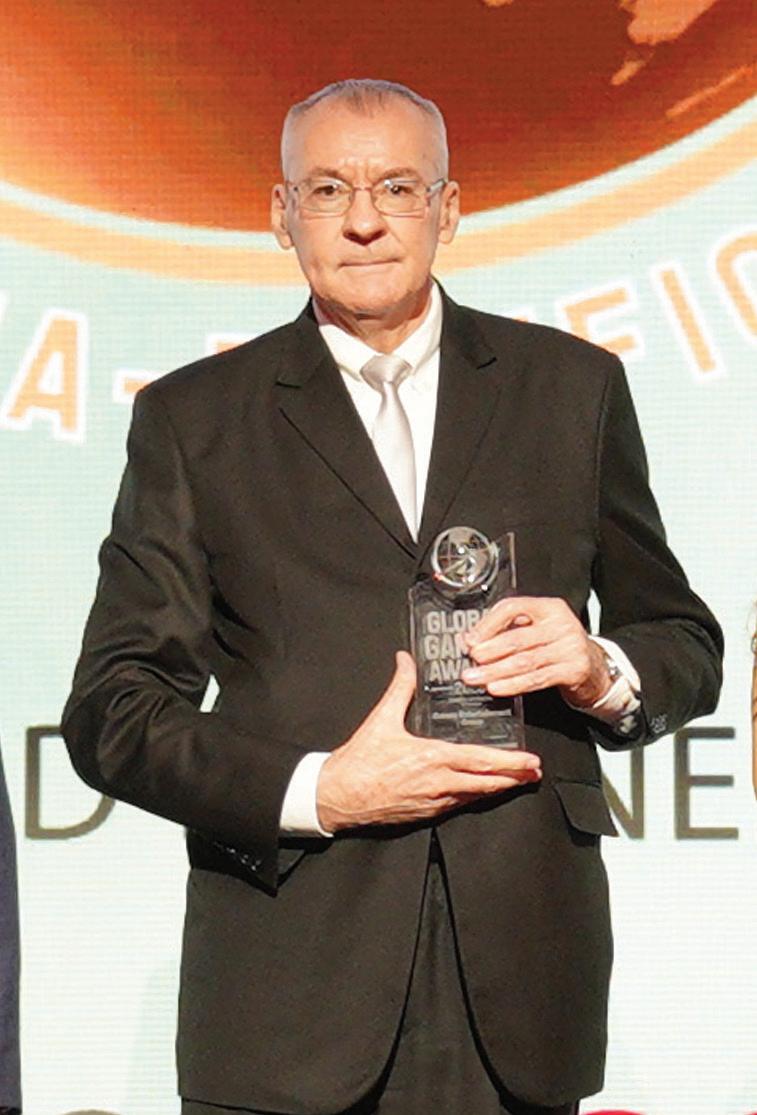
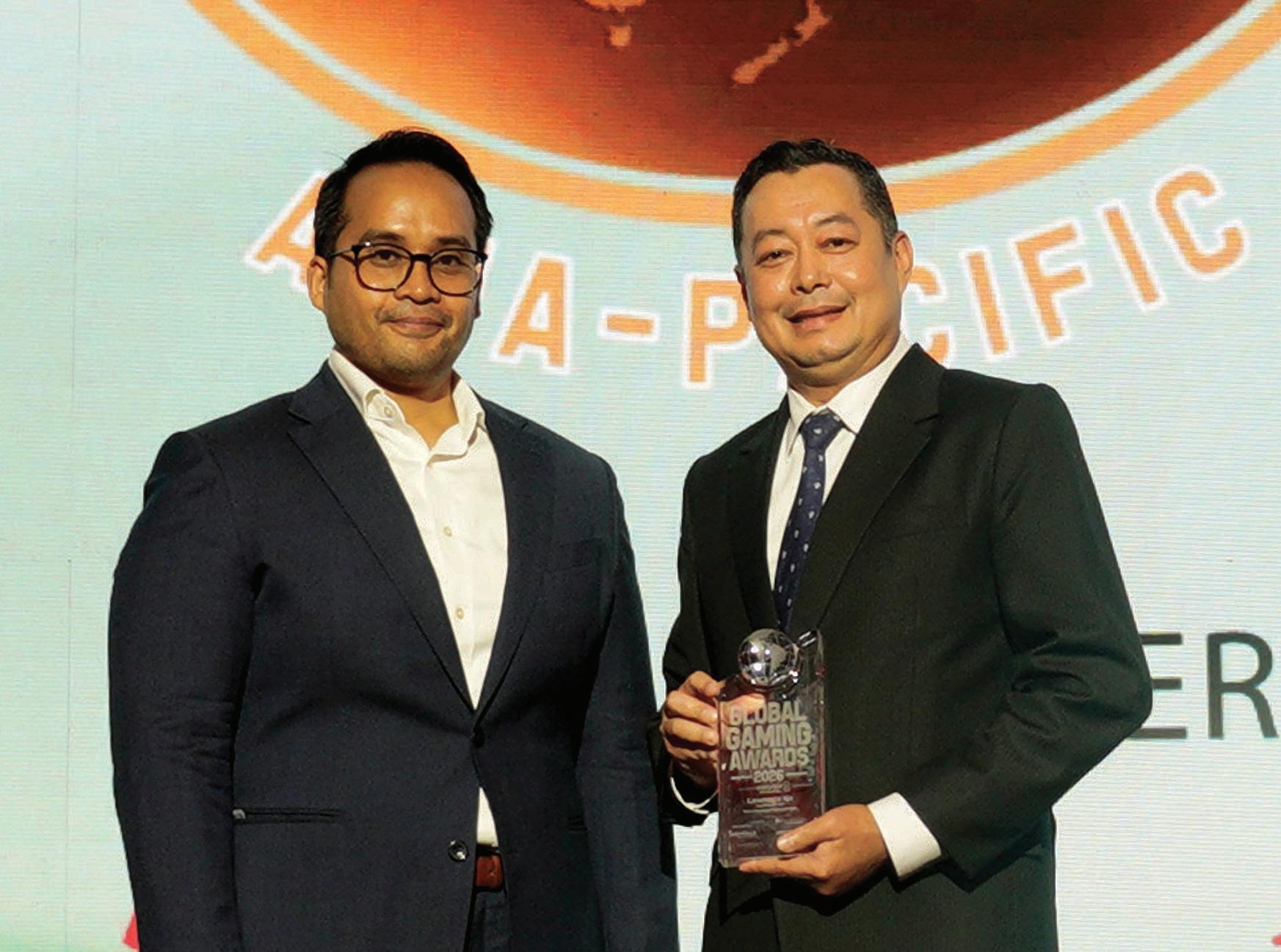
Winners including Galaxy Entertainment Group, Aristocrat Gaming and Lawrence Ho showcased the very best of Asian gaming, winning via the recognition of their peers, and our thorough voting system – independently adjudicated by KPMG US.
“We are honored to receive these
distinguished accolades, including ‘Integrated Resort of the Year’ for the second consecutive year and ‘Casino Operator of the Year’ for the third consecutive year. These awards underscore our unwavering commitment to delivering exceptional, world class experiences. Guided by our ‘World Class, Asian Heart’ service philosophy, we will continue to set new benchmarks for excellence, support Macau’s development as a world leading tourism destination, and contribute to the sustainable advancement of the industry,” said Kevin Kelley, Chief Operating Officer – Macau of Galaxy Entertainment Group.
It has been a time of change across Asia, and the most successful Asiabased companies are those that have kept pace and adapted.
In the Philippines, online gaming regulation is evolving all the time, while there is also change afoot in New
Zealand’s online space.
On the land-based side, South Korea has shown prominent development, but Macau and Singapore have continued to champion resilience.
Diversification has long been a central discussion in Macau; operators, though, have embraced this idea and are now reporting financial results that demonstrate the benefits of a refined approach.
All in all, it has been another year of fast-paced developments across the Asia-Pacific sector. Yet, as we have highlighted previously in Global Gaming Insider magazine, it has been another year of success that deserves recognition. For those who triumphed at the Global Gaming Awards, there is no better indication of that success.
So join us in celebrating these winners, the best in Asian gaming – as verified by their industry peers, who we recap in the dedicated section ahead.
WINNERS 2026
Casino Operator OF THE YEAR
Integrated Resort
GALAXY ENTERTAINMENT GROUP OF THE YEAR
GALAXY MACAU
Digital Sports
Betting Supplier OF THE YEAR
SPORTRADAR
LEAD PARTNER
Casino Supplier
ARISTOCRAT GAMING
Casino Product
DRAGON LINK™
DIGIPLUS OF THE YEAR OF THE YEAR
Digital Operator OF THE YEAR
*Accepting the award on Mr Ho’s behalf: Roger Lwin (right), Vice President, Gaming Operations, Melco Resorts & Entertainment
Executive OF THE YEAR
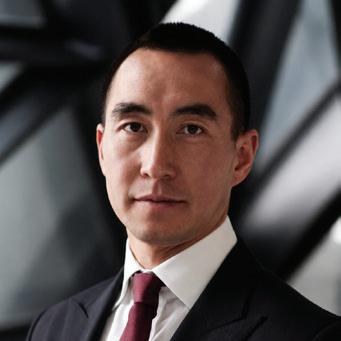
LAWRENCE
HO, CHAIRMAN & CEO, MELCO RESORTS & ENTERTAINMENT
TO ALL SPONSORS
LEAD PARTNER
EVENT SPONSORS
OFFICIAL ADJUDICATOR POWERED BY
LEGAL ON PAPER, LOST IN PRACTICE
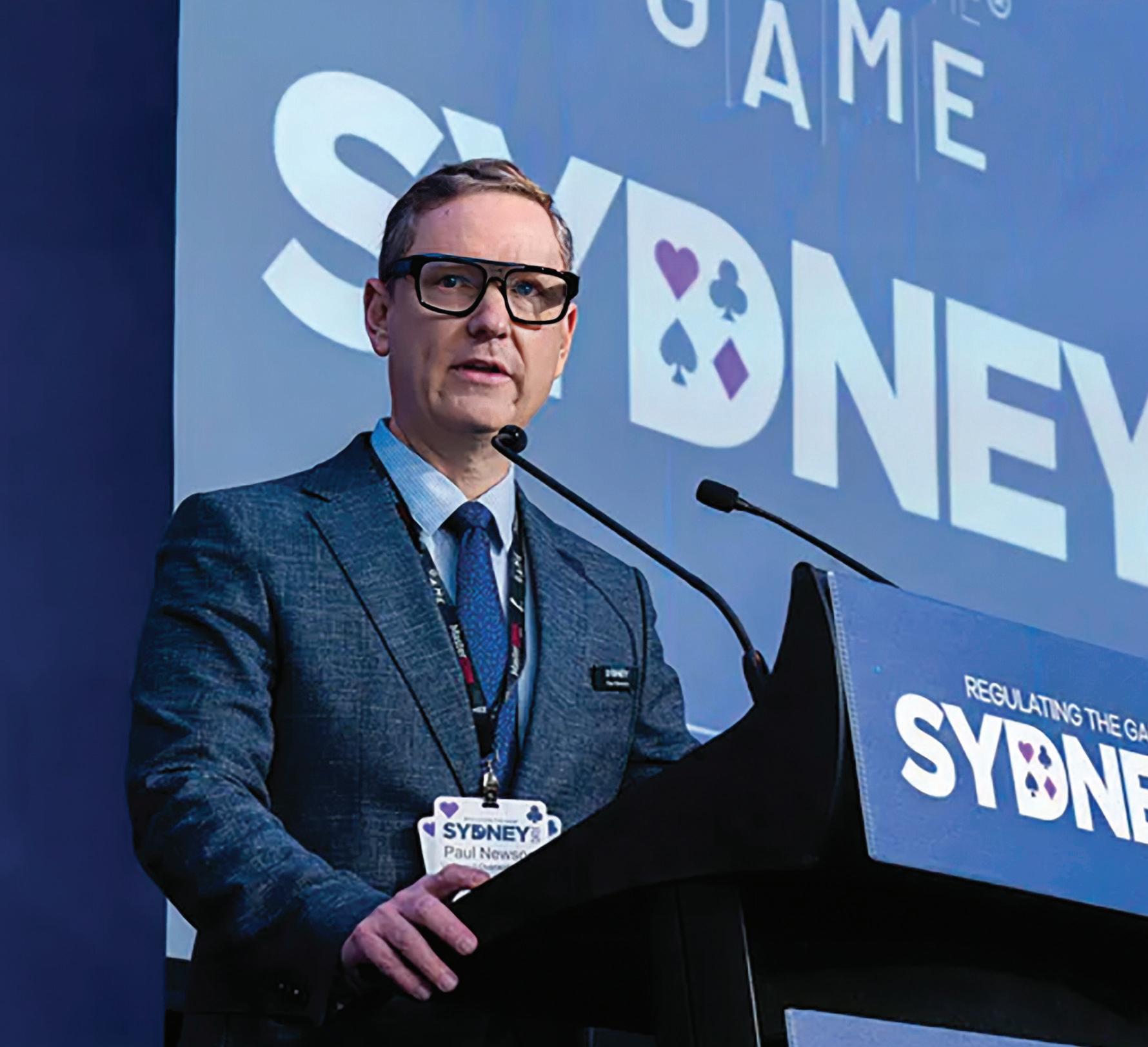
Paul Newson , long-time Global Gaming Insider contributor, analyses what gambling regulators should learn from a market the state has almost stopped governing
In March, New Zealand’s Racing Integrity Board put a number on a problem the gambling industry has spent years talking around. More than 50 operators dealing in cryptocurrency, the board found, now accept bets on New Zealand racing. They pay no product fees into the sport. They share no integrity data. Many shelter behind licences issued in Curaçao,
Anjouan and Costa Rica. Those jurisdictions lend a platform the appearance of legitimacy while asking almost nothing of it in return. The board’s chief executive, Dr Eliot Forbes, described a model that extracts value from racing without contributing to the systems that keep it honest.
The timing is pointed. New Zealand has just
legalised online casino gambling, partly on the logic that a licensed market can pull players back inside a regulated perimeter. That logic is sound. But the Racing Integrity Board’s warning is a reminder that legalisation, on its own, settles nothing. A market can be regulated on paper and still leak, and the question that actually matters is not whether an activity is
permitted, but how much of it stays within reach of the controls that make regulation mean something: consumer protection, money laundering controls, integrity monitoring and tax.
THE ROLE OF CHANNELISATION
Industry shorthand for this is channelisation, the share of activity that remains inside the licensed market. It is an unglamorous metric, but it is the one that determines whether a regime governs a market or merely presides over it. And the clearest contemporary illustration of what
happens when channelisation collapses is not a gambling market at all. It is Australian tobacco.
Australia spent two decades running one of the world’s most aggressive tobacco control regimes: plain packaging, advertising bans, and a relentless excise escalator that made its cigarettes the most expensive on earth. For years it worked, on both health and revenue. Then it tipped. As the legal price climbed past AU$50 (US$35) a packet, most of it tax, an illicit product selling under AU$20 became not a fringe option but the rational choice for a large share of smokers.
“ The measure of a gambling regime is not how tough it looks on the day it passes. It is how much of the market is still inside it five years later ”
The legal market did not shrink gracefully. It cratered.
The fiscal numbers are sobering. Tobacco excise raised more than A$16bn in 2020. The May 2026 federal budget wrote AU$6bn off the bottom line in five months, and the annual take is now forecast to fall to barely AU$2bn by 2030, with cumulative losses to the budget projected to reach around AU$65bn by the end of the decade. Illicit product already accounts for roughly half the market. One submission to a parliamentary inquiry, from Philip Morris, an interested party whose figures deserve scrutiny, projects illicit consumption passing 70% of the total as early as 2027, and organised crime supplying almost all of Australia’s tobacco and nicotine by 2030. Even discounted for the source, that trajectory is corroborated by the Government’s own collapsing forecasts and by a Border Force that concedes the black market cannot be arrested by enforcement alone. More than 200 arson attacks in 18 months, as criminal groups fight over the trade, are the market’s own commentary on who now controls it.
WORTHWHILE COMPARISONS
This is the part worth dwelling on, because it is easy to draw the wrong lesson. The tobacco story does not prove that public interest regulation is futile, and the parallel to gambling should be drawn with discipline rather than triumphalism. Smoking rates did fall; the goal of reducing harm was partly met. What Australia lost was not the policy goal but practical control of supply, and with it the revenue, the product safety and the ability to keep organised crime out of an everyday consumer market. Enforcement did not disappear; it expanded, reactively and at growing cost, into something that increasingly resembles a war on drugs. The state kept the vocabulary of control long after it had ceded the substance.
That is the precise risk gambling policy should take seriously, and it is more subtle than the familiar industry complaint that tight rules push players offshore. Black markets are not created by regulation alone. They are built: by payment processors willing to move the money, by affiliates and search intermediaries willing to market the product, by platforms that tolerate advertising whose entire pitch is that the operator sits outside national self-exclusion schemes; and by the offshore bodies that pose as regulators and sell the thin licences that make an unlicensed operator look respectable. Players, for their part, do not migrate for a single reason. Some chase products they cannot legally buy; some want better prices or crypto rails; some are evading the very controls a regime has built; some simply follow a link. Treating all of them as victims of over-regulation is as lazy as pretending none of them exist.
But the structural point survives the nuance. A regulated sector can remain formally intact while becoming strategically hollow: fully compliant, carefully supervised and steadily losing the activity that justifies the supervision. Once enough of the market sits outside the perimeter, a government is no longer the primary organiser of that market. It is competing with the actors who are.
A CAUTIONARY TALE
For regulators and serious operators, that reframing changes the list of priorities. It means treating shared commercial infrastructure between licensed and unlicensed operators (the
Paul Newson
same payment provider, the same affiliate, the same platform) as a compliance failure rather than a footnote in due diligence. It means naming, publicly, the banks, processors and hosts that keep illegal supply running, because reputational pressure does what enforcement correspondence cannot. And it means subjecting prohibitions to honest, periodic review on channelisation grounds: a ban that quietly sustains a durable offshore market is not protecting consumers, whatever its intent. Where a product category has been pushed entirely offshore, the relevant question is no longer whether the prohibition is well intentioned, but whether it still works. None of this points toward deregulation, and it would be a mistake to read it that way. The case is narrower and harder: a regime has to earn its authority in the market, not simply assert it in statute. Whether to ban an activity or allow it has always been the less interesting
“ Once enough of the market sits outside the perimeter, a government is no longer the primary organiser of that market. It is competing with the actors who are ”
question. The one that decides outcomes is whether the licensed offering stays good enough, and visible enough, that most players have no reason to look elsewhere, while the illegal alternative is squeezed on the things that actually sustain it, namely access to payments, ease of marketing and margin. A regime that gets that balance right governs its market. One that does not simply watches it leave.
Australia’s tobacco experience is the cautionary version of getting that wrong. New Zealand’s racing integrity warning is the early version: a market quietly filling with operators that take the bets, keep the data and pay nothing back. Both point to the same uncomfortable test. The measure of a gambling regime is not how tough it looks on the day it passes. It is how much of the market is still inside it five years later, and whether the state still governs the thing it claims to.
Paul Newson is a Principal at Vanguard Overwatch and the founder of Regulating the Game, an international conference on gambling law and regulation. He is a former Deputy Secretary of the NSW Department of Justice, where he oversaw liquor, gambling, and racing policy and regulation. Paul is a patron and former president of the International Association of Gaming Regulators and a former trustee of the NSW Responsible Gambling Fund
REVIEW: THE WINNING PRODUCTS
reviews the two WINNING products at the
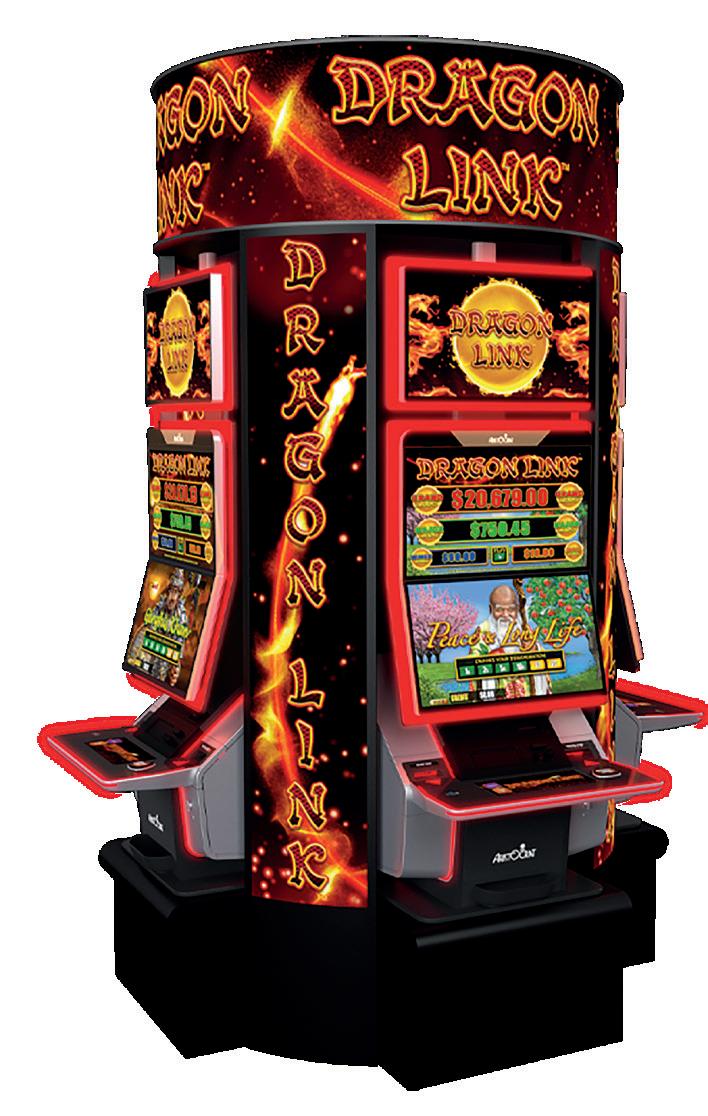
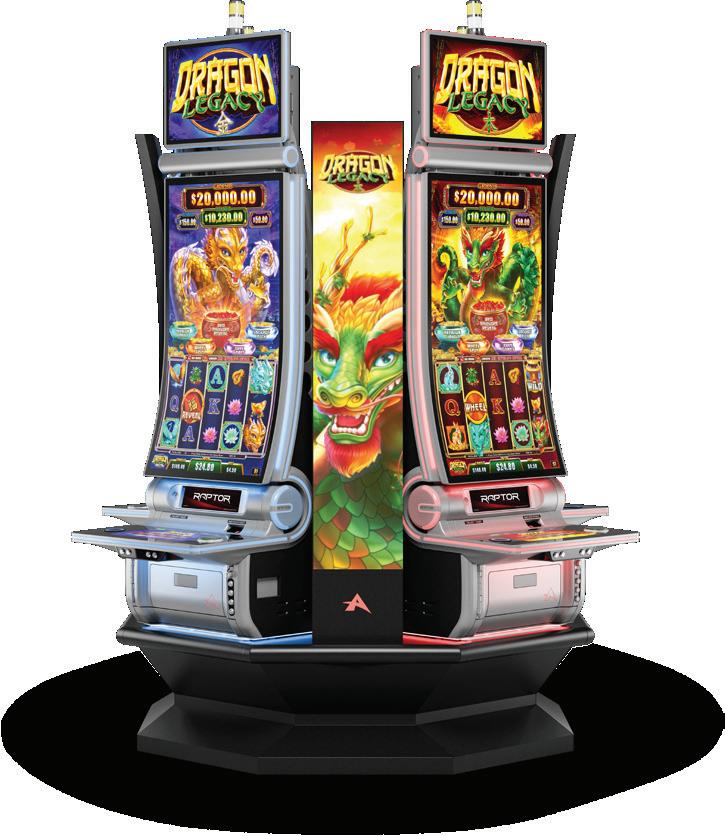
ARISTOCRAT GAMING: DRAGON LINK
Aristocrat Gaming’s Dragon Link, a Global Gaming Awards APAC winner for 2026, provides a gaming experience like no other.
land-based gaming in the APAC region.
Interblock’s Dragon Sic Bo delivers a visually striking and inherently Asianthemed take on the classic dice game, complete with a combination of engaging gameplay alongside a wide range of betting options and strong player appeal. This definitive table game experience comes packed with stunning, industrystandard visuals and state-of-the-art graphics, as well as a range of dragonthemed elements that add an extra layer of excitement to the gameplay. Furthermore, Dragon Sic Bo continues to expand its presence across Macau and Singapore, with more than 300
An international hit across the globe, Aristocrat Gaming’s Dragon Link has continued to go from strength-to-strength in the Asia-Pacific region in recent months – a face that was reflected through the supplier’s prestigious Global Gaming Award for Casino Product of the Year at this year’s APAC ceremony
With 3702 installations across the Asian continent, Dragon Link’s presence in the market has continued to grow exponentially since its release. Building off the back of the Lightning Link platform, Dragon Link takes the
seats installed in Macau and 96 seats added in Singapore in 2025. Its sustained development across these major gaming markets highlights the product’s continued appeal to both operators and players, alike.
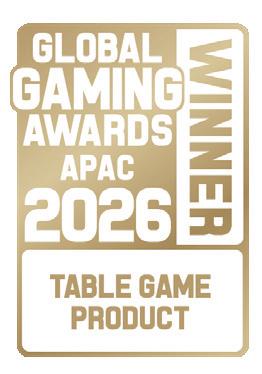
An immersive journey into the heart of the traditional Chinese dice game, Dragon Sic Bo’s growing popularity across the Asian continent has been reflected in its prestigious Global Gaming Award Table Game Product of the Year honor at this year’s 2026 ceremony in Manila. Complete with dynamic ergonomics, entertaining gameplay and immersive audio features, Sic Bo’s charm lies in its diverse betting options – making it the ultimate choice for any modern Asian casino floor.
Hold & Spin feature with the Golden Orb trigger symbol as pure gaming inspiration. Complete with Asianthemed artworks and animations, this stellar piece of gaming equipment has been designed exclusively for the Asian player. Indeed, this meticulous design has made Dragon Link Aristocrat’s record performer across Mass, Premium Mass and VIP across the Philippines, Macau, Singapore, Malaysia, Cambodia and Korea – with an index performance of 2.0x.
Optimized for a number of gaming title options, the thoughtful ergonomics, colorful design, engaging audio and intuitive gameplay make for an unforgettable and diverse casino experience – packed with plenty of bonuses!
WHAT’S NEW ON THE MARKET?
PRODUCT REVIEW: VIEN DISPLAY
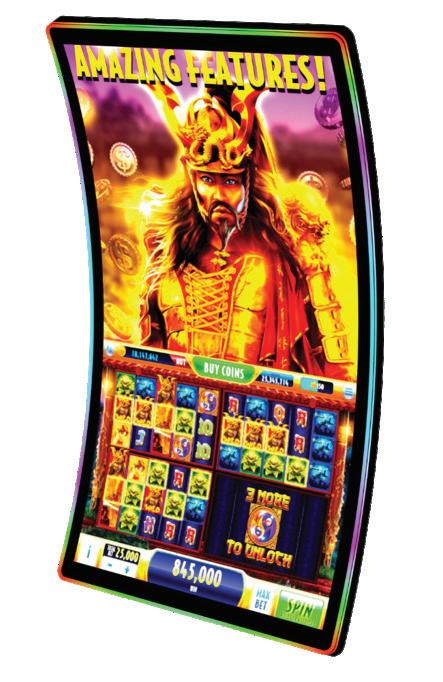
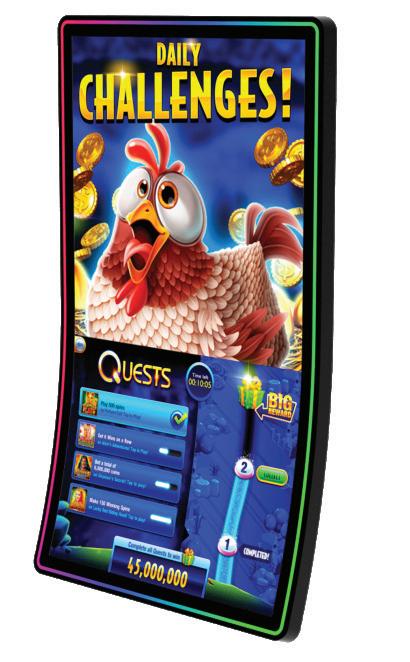
Elevate premium slot machines and electronic table games with Vien Displays’ custom-engineered 43-inch J-Type and C-Type curved touch displays. Purposebuilt for high-end casino floors, Vien’s displays feature 10-point multi-touch functionality and customizable curvatures of 1000R, 1200R and 1500R, delivering immersive, head-turning visual effects tailored to diverse game cabinet designs.
Boasting 600 nits high brightness and over 85% NTSC wide color gamut, our curved screens deliver vivid, trueto-life visuals that remain crisp and striking even under bright casino ambient lighting. Engineered for round-the-clock commercial operation, the full aluminium alloy enclosure optimizes heat dissipation while reducing overall weight, ensuring stable, consistent 24/7 performance for long-term gaming service.
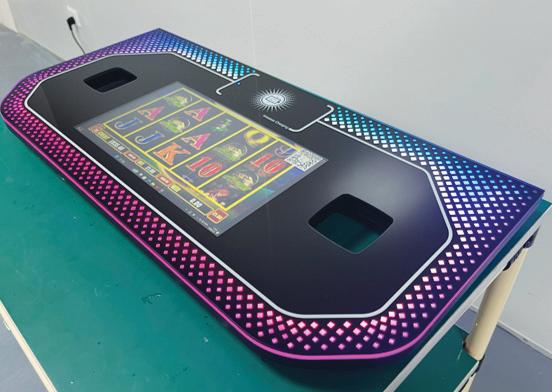
Equipped with a one-piece cut acrylic high-brightness LED lighting, the display achieves uniform light transmission and full programmable synchronization with ingame events, bringing dynamic, interactive visual feedback to every gameplay session. Complementing the display perfectly, our custom Button Deck adopts an exquisite dot-matrix silk-screen craft, presenting even, high-definition illumination. It supports fully customizable lighting patterns and game-linked programming, creating a unified, smooth and immersive player experience.
As a direct original manufacturer, Vien Displays provides full-process customized solutions covering curvature, brightness, light bar effects and Button Deck integration. Supported by in-house R&D and integrated manufacturing capabilities, we shorten production lead times, enabling fast launch of tailor-made gaming displays without compromising strict quality standards. Choose Vien Displays to empower your gaming equipment with premium, player-oriented curved touch display solutions.
TAKING STOCK
Global Gaming Insider highlights the monthly stock price from the opening day of the past six months across the Americas, observing January – June 2026
• Six-month high: January (121.98 USD)
• Six-month low: April (102.33 USD)
• Market capitalization: US$11.06bn (as of June 1, 2026)
• Six-month high: February (62.10 USD)
• Six-month low: May (52.78 USD)
• Market capitalization: US$5.75bn (as of June 1, 2026)
• Six-month high: June (86.32 USD)
• Six-month low: March (82.29 USD)
• Market capitalization: US$6.42bn (as of June 1, 2026)
• Six-month high: June (19.98 USD)
• Six-month low: February (12.60 USD)
• Market capitalization: US$2.66bn (as of June 1, 2026)
WYNN RESORTS RED ROCK RESORTS
MOVERS AND SHAKERS
From regulatory to supplier to Tribal backgrounds, there was no shortage of appointments declared in the Americas, including from Allwyn North America, RSI and Jamul Casino Resort
Khalid Reede Jones CEO, Allwyn North America
As the former Executive Director of the Virginia Lottery, Jones will bring experience in the regulatory oversight of traditional lottery, iLottery and gaming into his new role. Set to join Allwyn North America in early July, Jones will act as private manager of the Illinois Lottery, its technology and games provision to North American lottery customers and its wider lottery-sector expansion in the US.
Having led one of the more visible US iLottery jurisdictions in Virginia, Jones’ regulatory and digital lottery experience was viewed as particularly relevant to Allwyn’s strategic plans across North America. Following its majority stake acquisition of PrizePicks in January, Allwyn North America’s operations cover both state lottery management and fantasy sports.
Jones openly shares his fandom of the New York Knicks NBA franchise, which just defeated the San Antonio Spurs to win its first championship since 1973
Harper Stephens Director of Government Affairs, RSI
Stephens joins Rush Street Interactive (RSI) after spending close to four years with Aristocrat Gaming as both Manager and Senior Manager of Government Relations. Describing her tenure with Aristocrat as a “great run,” Stephens shares that she looks forward to “new challenges, new opportunities” and the chance to “tackle interesting policy issues across the country” with RSI.
The government affairs executive also served in various positions with the US House of Representatives during a five-year tenure, having first began as a Staff Assistant in August 2017 before eventually earning a promotion to Senior Policy Advisor. Stephens began her career as a Congressional Intern with the US Senate while studying at Auburn University in Alabama.
While Stephens has worked entirely for US organizations up to this point, she has managed to develop a “limited working proficiency” in speaking Russian
Marcus Lucero VP of Casino Operations, Jamul Casino Resort
Lucero’s experience across Tribal gaming extends far past his new appointment with Jamul Casino Resort, having most recently served as VP of Casino Operations at Morongo Casino Resort & Spa and in leadership positions with Soboba Casino Resort. With Jamul Casino Resort, Lucero will oversee all casino operations including slots, table games, poker and player development, as well as focus on driving revenue growth and enhancing guest experience. Jamul Casino Resort stated Lucero’s hiring comes at a “pivotal” time for the property as it continues to build on recent expansion and new amenities.
Prior to joining Sobobba Casino Resort in November 2018, Lucero began his career by serving as Director of Slots at Valley View Casino & Hotel in southern California.
Lucero joins Jamul Casino Resort during a period of expansion for the Tribal gaming property, having unveiled its new hotel tower in mid-2025
FACING FACTS
Gaming Insider examines US commercial gaming performance
ANNUAL US COMMERCIAL GAMING REVENUE (IN $BN)
• US commercial gaming revenue reached $78.62bn for 2025, up 9.1% year-on-year, driven by growth across traditional land-based casino, sports betting and internet gaming.
• The same year, 34 of 38 states, plus DC, set new annual records for commercial gaming revenue.
• Commercial gaming generated $17.86bn in tax revenue, a 12.3% increase compared with 2024.
US COMMERCIAL SPORTS BETTING GGR (IN $BN)
• Commercial sports betting GGR reached $16.89bn for 2025, up 22.6% year-on-year from 2024.
• The total includes both online and land-based sports betting revenue.
• The figures do not include revenue generated by sportsbooks operating in Tribal casinos or from mobile sports betting in Florida.
• But how will this year’s numbers be impacted by prediction markets?
COMMERCIAL IGAMING GGR (IN $BN)
• Internet gaming revenue across the seven states with legal online casinos exceeded $10bn for the first time in 2025, reaching a record $10.73bn.
• Overall commercial iGaming revenue increased by 27.6% year-on-year for 2025.
• Annual iGaming revenue surpassed commercial land-based casino revenue in both Pennsylvania and New Jersey for the first time in 2025.
STATE OF GAMING
Dave Forman, VP, Research at the American Gaming Association, returns to the pages of Global Gaming Insider with a research review into US gaming numbers
Numbers always tell a story, and as gaming enters the second half of 2026, the industry’s story remains one of sustained growth and consumer engagement.
More than half of Americans participate in some form of legal gaming, underscoring its place as mainstream entertainment activity. Built on consumer trust, responsible growth and significant community investment, the regulated gaming industry continues to generate record economic benefits for states, Tribes and local communities across the country.
Together, those factors continue to drive strong performance.
2026 OFF TO STRONG START IN Q1
The commercial gaming industry started 2026 with strong momentum as all three verticals – traditional gaming (land-based), sports betting and iGaming – posted yearover-year growth. Total commercial gaming revenue surpassed $20bn for the first quarter, a 6% increase over the same period last year.
Nearly 80 percent of commercial gaming jurisdictions reported revenue growth during the quarter, underscoring the industry’s broad-based strength.
Traditional gaming continued its steady trajectory, generating $12.5bn in revenue for the quarter, up more than 2% year-over-year. Meanwhile, iGaming remained the industry’s fastest-growing vertical, with revenue climbing approximately 20% from the previous quarter to exceed $3bn in first quarter.
The regulated market also generated a total of $4.67bn in gaming tax revenue for state and local governments during the first quarter – an 11% increase from the same period in 2025. That performance builds on another record-setting year for the industry. In 2025, commercial gaming generated an all-time high $78.62bn in annual revenue, producing a record $17.86bn in direct gaming tax revenue supporting public services, infrastructure, and community priorities across the country.
SPORTS BETTING LANDSCAPE AND “PREDICTION MARKETS’” ENCROACHMENT
As “prediction markets” continue to threaten state-regulated operators and state gaming tax revenue by offering backdoor sports wagers, the sports betting landscape presents a more nuanced picture. State-regulated sports betting revenue increased to $4.27bn in the first quarter, driven largely by a higher hold percentage. Handle, however, tells a different story, declining one percent during the first quarter and more than 3% compared to the same period last year.
The decline in handle illustrates the growing pressure that licensed sportsbooks are facing from “prediction market” operators attempting to position sports wagering as a financial product rather than gaming activity, and bypassing the regulations that state and Tribal sportsbooks are held to.
Our latest Gaming Industry Outlook showed that 81% of gaming executives identified “prediction markets” as a “very significant” threat to the regulated gaming industry, and that threat extends to state and Tribal tax revenue. While the state and Tribal-regulated industry continues to generate record funding for local public services and community investments, “prediction market”
operators avoid the tax requirements licensed sportsbooks are obligated to meet. We estimate that to date “prediction markets” have siphoned more than $1bn in potential state tax revenue nationwide
Consumer protection concerns are also mounting. Through May, nearly half of all digital sports betting advertisements viewed by consumers originated from “prediction market” operators, which lack the responsible gaming rules and safeguards required of legal sportsbooks. Consumers are increasingly exposed to more and more of these prediction market betting ads, with audiences seeing 72% more “prediction market” sports ads so far this year than they did in all of 2025.
EXECUTIVE OUTLOOK: LOOKING AHEAD
Industry executives remain optimistic around the broader outlook for gaming in 2026. The Gaming Industry Outlook’s executive sentiment rose 21.4%, its highest level since late 2022, reflecting growing confidence in the industry’s overall health. Executives expressed particularly strong expectations around revenue growth, customer activity, capital investment, and long-term investment opportunities.
While economic conditions remain uncertain, gaming operators and suppliers continue to signal overall confidence in the market’s longterm trajectory. Nearly two thirds of executives reported plans for continued capital investment this year.
The data reflects an industry that continues to demonstrate sustained growth while delivering meaningful economic benefits to states, tribes, and local communities. Supported by ongoing investment, consumer demand, and a resilient market, the gaming industry remains well-positioned to build on its momentum throughout 2026.
Simultaneously, preserving the integrity of the state and Tribal-regulated framework is essential to the industry’s long-term success. As “prediction market” operators continue to offer backdoor sports betting, ensuring the right regulatory oversight, consumer protections and tax accountability are critical to sustaining the benefits legal gaming provides to communities across the country.
Dave Forman
OIGA: NO SMALL FEAT
From July 20-22, the OIGA Conference & Trade Show will once again return to Oklahoma City, and build on discussions regarding how Tribal gaming can fight back against prediction markets
Having just celebrated its 30th anniversary in 2025, the Oklahoma Indian Gaming Association (OIGA) Conference & Trade Show has always been a central point for collaboration to help protect Tribal sovereignty across the US. Preparing to host its 2026 rendition from the Oklahoma City Convention Center, OIGA may bear witness to its most vital discussions yet, as the threat of prediction markets has risen to much greater heights over the past 12 months.
A FAMILIAR DISCUSSION
With multi-billion-dollar valuations having been set for the likes of Kalshi and Polymarket, operators providing event contract trading are doing little to slow business in favor of complying with stricter regulations. In states well-known for maintaining Tribal gaming operations, the fight to enforce stronger oversight of event contract trading continues. California, Arizona and Oklahoma have all watched as Kalshi, Polymarket and numerous other prediction market operators set up shop with no consideration for the effect on Tribal sovereignty.
But a big problem here is just how much has been discussed about prediction markets at
Tribal shows already – and how little that has amounted to in terms of practical resistance.
At the 2026 Indian Gaming Association (IGA) Tradeshow & Convention, prediction markets were by far the most pressing topic for Tribal leaders to address during various panels and discussions. Yuhaaviatam of San Manuel Nation VP Associate General Counsel for Gaming Michael Hoenig spoke on the “aggressive” legal approach prediction market operators have taken in the US, and how Tribes have a “long, long fight” ahead in litigation.
IGA Chairman David Bean addressed event contract trading during the conference, too, describing the vertical as “illegal gambling dressed up as finance” and “an outright blatant disrespect of Tribal sovereignty.” California Nations Indian Gaming Association (CNIGA) Chairman James Siva explained how Tribes might be “forced” to compete in the prediction markets space if courts side with operators, adding “we will do what we have to do.”
Ultimately, the battle against prediction markets has yet to reach a final verdict, and the OIGA Conference & Trade Show represents another opportunity for Tribal leaders to come together and decipher the best course of action
in protecting their Native communities.
WHAT CAN WE EXPECT THIS YEAR?
OIGA Trade Show Coordinator Sheila Morago spoke with Global Gaming Insider to touch on what to expect from the conference,.
“It’s one of those times where you get the top dogs on stage and let them speak on what they think is going on in our industry. At this point, we’ll obviously have conversations on prediction markets. We’ve got the NIGC going through some struggling times, as you might say, but we want to make sure everybody’s up to speed on what’s expected,” Morago said.
Described as the “biggest little show” in Indian gaming, OIGA is set to feature nearly 3,000 vendors, visitors and guest speakers from July 20-22 and host 40 panel sessions across the three-day event. The conference’s Annual Golf Tournament will once again benefit the John Marley Scholarship Fund, while female leaders in the Tribal space will also be celebrated during the show, an activation “near and dear” to Morago’s heart.
A notable development provided by the OIGA Trade Show Coordinator is the
conference’s growing popularity with international suppliers, as Morago confirmed attendance from organizations conducting business in Germany and Macau.
Morago shared: “The biggest deal is about wanting to make sure we’ve got options on the floor. When you go on our floor, we want you to see the latest and greatest from the gaming industry – and you can’t do that anymore without having some of those companies from the UK, Germany and Macau. Gaming is too international.
“(OIGA) is big enough to get those folks but it’s also small enough that everybody can see everything that’s on the floor. One of the good things about being ‘small’ is you’re not going to miss anything.”
IN LOCAL NEWS...
The Oklahoma conference may also look to address lawmakers’ recent decision to overrule
Governor Kevin Stitt’s veto of Senate Bill 1589, which banned the operation and promotion of sweepstakes casinos. While Stitt chose to veto Senate Bill 1589 on May 13, the state Senate eventually voted 34-10 to approve the override, as the Oklahoma House of Representatives joined by voting to a 68-19 majority.
Given the lengths Tribes have gone to
outlaw sweepstakes casinos, the victory in Oklahoma will most likely be celebrated at OIGA 2026 by Chairman Matthew Morgan and fellow leaders of the Association.
Choosing to prohibit sweepstakes casino gameplay was not the only prominent decision made by Oklahoma lawmakers, however, as the opportunity to delve into sports betting was brought forth yet again in the state legislature.
Despite optimism from Senator Bill Coleman and Representative Ken Luttrell, the Oklahoma Senate voted to reject House Bill 1047, which could have allowed Tribes to begin conducting retail betting operations and permitted a new online betting framework. Under the mobile framework, operators such as FanDuel and DraftKings would have been able to partner with Tribes to gain market access in Oklahoma.
Previously, Chairman Morgan has noted Tribes are the “ones that take the financial risk on any gaming extensions” and maintain “substantial exclusivity” to sports betting under existing gaming compacts. The OIGA Chairman also shared how Oklahoma Tribes don’t view sports betting “as a way to drive revenue,” but rather a means to “protect our interests and what we have.”
THE LEGAL SUBTEXT
With Kalshi, Polymarket and a number of additional prediction-market operators currently active in Oklahoma, it is only a matter of time until figures such as Chairman Morgan pursue legal action against the entities. Perhaps the 2026 OIGA event will serve as a launching point for Oklahoma Tribes to fight back against prediction markets, especially with momentum building from the fall of sweepstakes in the Sooner State.
The 2026 OIGA Conference & Trade Show will also showcase the continued growth of Tribal gaming, which has evolved into a $40bn+ industry since inception. Morago helped encapsulate how OIGA represents a “nice little snapshot” of Tribal gaming on a national level, offering an extended lens which stretches far outside its own market.
“If you look at everything Tribal gaming has done, not just in Oklahoma but all over the country, it’s a success story year after year,” Morago said. “It’s really nice to reach out to our friends and our gaming family, because that’s basically what it is. You see these folks more often than you see your extended family sometimes, and we’re always grateful that Tribal leaders and our friends in the industry come to OIGA and lend us their expertise.”
AMERICAS LAND-BASED
STANDARD OVER PREMIUM
Global Gaming Insider’s Kirk Geller speaks with Ainsworth’s new VP of Marketing & Product Strategy, Matt Smith, exploring plans to extend the supplier’s presence in North America
Following your appointment in late April, how have you found your settling in period at Ainsworth?
The first three or four weeks, I was basically drinking from a fire hose! I was in discovery mode. In my past experience, I worked on the vendor side at IGT for eight years – and there’s a huge difference going from a big company to a smaller company like Ainsworth. A lot of the resources you can take for granted at IGT, because you come over to Ainsworth and there’s less people who are wearing multiple hats. The communication is not as structured as it was at IGT. There’s good and bad to that.
The good thing is you can act and respond quicker and be nimbler compared to a bigger company like IGT, where there’s a lot more bureaucracy and more hoops you have to jump through. But, at the same time, documentation
“ You must have a stable core business before you can expand into that space ” – Matt Smith
of information was the hardest part for me. Working through all of the manual processes has been my focus for the first three or four weeks. Now that I’m starting to understand that, I’m finally able to jump into the roadmap planning for 2027, and I also feel really confident in the releases we have scheduled for the remainder of this year.
Having previously worked for MGM Resorts and IGT, which lessons from both the operator and supplier sides are you bringing into your new role?
I feel as if I got the customer service aspect and the data analytics side of working for an operator, and that set me up for the transition over to the manufacturer side. I was well rounded in my skill sets and I could apply each one from a different perspective over on the manufacturer side. So I moved over to IGT and I would go out with the sales team to talk to customers, gather feedback on what they thought of our games and find out which games were doing well in the market. I was the conduit between our sales and product teams, where I was essentially feeding information back and forth.
As I progressed, I focused specifically on the premium or gaming operations side of the business for around the last five years that I was with IGT. We grew the business pretty significantly, especially coming out of Covid-19, and from there I was able to learn what games worked and which didn’t – because I was solely responsible for optimizing the yields of each. I was responsible for understanding all the little idiosyncrasies that came with the product, and it was fascinating to me. It was something I really enjoyed. And now coming over to Ainsworth, I’m looking to help identify some of those regional gaps or regional areas where we aren’t performing. If we had different styles of products,
it could help our performance, especially in some of the bigger markets.
Focusing on Ainsworth specifically, how do you plan to expand the supplier’s presence in North America, as well as lead marketing and product strategy initiatives?
Again, I come from the premium side of the business at IGT, so I understand there is a lot of earnings potential in premium games, but you must have a stable core business before you can expand into that space. Ainsworth wasn’t there from a core gaming standpoint. If you think about Ainsworth, we make about 40-50 titles a year, and the hit rate in our industry needs to be between 10-15% to be considered successful. So, if you’re only making 40 games, you’re putting out three or four really good titles a year and the rest are mostly filler.
Because we were trying to split that number of titles between two different roadmaps, essentially we were just weakening both sides. Instead of having three or four hit games on one product line, we might only have one, and now the perception from operators is that our games are underperforming.
One of the first things I did was eliminate the premium product line and condense those roadmaps into one, so that we can have stronger support and more titles for the core business. Before we can dip our toes back into the premium side, we need to stabilize that core business, and I think we’re doing a good job with the recent release of Dragon Legacy. As a smaller manufacturer at Ainsworth, we need to be flexible in our pricing terms, because we don’t have the leverage of making 100 games a year. We have to be that easy-to-workwith vendor.
Matt Smith
AMERICAS PROBLEM GAMBLING
A RESPONSIBILITY FOR ALL
Global Gaming Insider is joined by Ivory Kelly , Founder & CEO of the Tribal Council for Responsible Gaming (TCRG). We discuss the best strategies to deal with problem gambling behavior, as well as which threats are most prominent to Tribes
What practices are being used to combat problem gambling in 2026, and which have you found to be most effective at the Tribal level?
In 2026, the biggest tool and resource used to combat problem gambling continues to be the self-exclusion program that many Tribes, as well as commercial operators, utilize with the patron. Even though they’re within the industry, vendors, Tribes and commercial gaming operators are starting to expand upon those resources when it comes to problem gambling, and what we can do inside and outside the casino. Certain operations now apply responsible gambling ambassadors on
the gaming floor, not necessarily to go up to patrons and identify them as someone having an issue, but to spark up a conversation and see if that patron may need assistance.
A patron can sit down and have a conversation with someone who is better trained to navigate them through their problem gambling, or help them identify what resources are best for them. Other things that we’re starting to see come up, but not necessarily widely implemented yet, are safe wallets where you can set a betting limit. I don’t know if that’s going to take place here in the US as much as it does in other parts of the world, but I think that’s a unique identifying tool. Something elseI’m curious about is how AI can be applied here and what those metrics actually look like, when it comes to identifying someone who may have a problem gambling habit.
How is the growth of sports betting, iGaming and even prediction markets influencing responsible gambling necessities for Tribes?
It enhances the need. It speaks louder to us more than ever because, as we continue to go digital, we begin to look at how it impacts our youth. Everybody has access to a digital device, whether that be a desktop, phone or iPad, so everybody has easy access to gaming in that sense. TCRG is positioning itself to be there for the Tribes when they’re ready to enhance those player protections and responsible gambling standards to the way they want them to be built. The conversation when we are meeting with Tribes is ‘if we don’t do it ourselves, at some point, the state or Federal Government is going to tell us how to do it.’
TCRG helps the Tribe determine how they want their program to work, set those standards and present them in a way where, as litigation and everything continues to move forward, the Tribes are already taking steps to
protect the community.
Having recently launched the nationwide self-exclusion program, why did you feel it was necessary to implement a Tribally controlled multi-property solution?
One of the reasons was so the Tribes maintain control of their data. The Tribes are then able to take it, analyze it and implement it to what their community actually needs or, as a whole, what we can build out as Tribal nations to better support one another. The data is always a sensitive talking point. ‘What’s done with it? How does it impact us?’ Tribes are in a better position to decide how they can use funding to grow resources within their community for mental health, awareness and building out responsible gambling educational training sessions. We’re then better positioned to use those funds the way we need to use them –and not be told how we should use them.
What do you believe are the most prominent threats to responsible gambling in Tribal communities as we sit here today?
I had to learn about prediction markets and I think that truly does serve as the greatest threat to Tribal gaming right now. They’re rapidly growing – and it’s an industry that is not well regulated at the moment. If we look at how regulated Tribal gaming is when it comes to integrity and safeguards, yet we still have problems with responsible gambling and player protections, I can’t imagine the massive intake which happens when you can bet on anything at any time. That’s just so crazy to me.
It almost feels illegal to me for prediction markets to be in existence, without knowing much about them or without having to run the tide with them. I just don’t know what to say, but I do think it’s the greatest threat to us right now. I think this is something we’ll prevail in – but it’s one of our biggest fights yet.
Ivory Kelly
AMERICAS TRIBAL FOCUS
FROM FEEDBACK TO CASINO FLOOR
IGT SVP of US Sales Dan Farnon, and Head of Global Commercial Gaming for Class III Domenico Pastia , joined Global Gaming Insider ’s Kirk Geller in San Diego
What strategies for servicing Tribal operators have proven most effective in years past for IGT and how are they potentially developing?
Dan Farnon: We’re acutely focused on servicing our Tribal customers as best we possibly can. Like in the commercial space, the Tribal space is so unique because every customer has its own fingerprint. Our servicing of any one account is so specific to the account that the coverage model we have, the service model and the way we approach any one customer, we take the time to really understand the needs of the casino operations.
Every Tribe, as you know, has a different philosophy on how they invest and how they manage their floors. Our focus is to give those Tribal operators the best possible performance through rapid innovation, strong strategic partnerships between the two of us and, frankly, probably the strongest and broadest product set we’ve ever had as a company.
How does IGT shape its product roadmap around the needs of Tribal operators, especially as the industry continues to grow?
DF: We spend a lot of time in the fields gathering feedback on what works, what’s working from the competitor set, feedback from customers, analyzing the data and we have several segments we focus on which are real core competencies. We try to deliver on what customers are telling us is working and then try to drive innovation based on what they think their needs are.
We spend a lot of time state-by-state, regionby-region and market segment-by-market
segment understanding the data and getting lifetime feedback. Obviously, we have time in the field and, from the sales perspective, our product team also spends an awful lot of time in the field gathering feedback so we can make the best products in the industry.
Which products have you found to be most popular within Tribal casinos?
Domenico Pastia: There are plenty of examples of successful games. The Rise 55, which is one of our most recently launched cabinets and the games featured such as Magic Treasures Gold that is here behind me and Wheel of Fortune Cash on Reels, all proved to be successful. We partnered with one of our key customers in Yaamava’ Resort & Casino at San Manuel to host a dedicated event, in which Vanna White attended for the Wheel of Fortune activation. We had a great response from the players and we are planning to do more in the future.
In what ways does developing strategy around Tribal operators differ to commercial casinos?
DP: Tribal properties are usually the first market where we place our products because the level of partnership with a Tribal operator is really high. We design products to ensure their feedback and the player feedback are incorporated. That’s our job, to funnel this feedback into our development teams, to the product group and shape up something that can be successful for them. Another important item to be mentioned is a disciplined cadence of release. Once we launch a new product, we need to make sure we support it over time because it’s a commitment
on our end, but it’s also a commitment to the Tribal customer.
Are there ways IGT’s merger with Everi has improved the supplier’s capability of servicing Tribal operators?
DP: Absolutely, we completed our portfolio. We can argue today that the combination of the two companies provides the full scope of gaming offerings. This is currently available to our Tribal customers. Between gaming and FinTech, there are major synergies and each customer is a consumer of both products, so this is a one-stop shop experience for them in the commercial interaction.
Finally, how does IGT stand out at events such as IGA?
DF: Firstly, when you look at the square footage of our stand here, we probably have the largest and, in my opinion, best-looking booth because the Tribal gaming space is one of the most important spaces for us. We take this show really seriously, we take the investment in it really seriously and, as you can tell from the product perspective, we have the best product in the industry.
At the end of the day, we continue to invest at a very deep level both in product and on the service side, but what I hope stands out the most from this show is how comprehensive our product portfolio is now. There is almost no sector we are not servicing on our customers’ floors. FinTech is incredible, our games portfolio is getting stronger and now we really are the one-stop shop for customers as Domenico said.
JUGGERNAUTS FACE OFF!
Our resident property reviewer, Laura L. Mack, returns! In this edition, she reviews New York-New York vs. MGM Grand in Las Vegas
On my last trip to Las Vegas, I visited several casinos and enjoyed some evenings out. And I’m glad I did!
Vegas has no shortage of excellent casino action on the Strip. In this match-up, New York-New York and MGM Grand will face off to see who will emerge the victor. Before we dive into the competition, let’s take a closer look at our two contenders…
New York-New York is part of MGM Resorts and is owned by Vici Properties. Construction on the property began in March 1995.
Sig Rogich and Mark Advent opted to go with an outdoor aesthetic reminiscent of New York City skyline, with replicas as several city staples, including the Statue of Liberty. Designers Neal Gaskin and Ilia Bezansky developed the look and feel of the resort’s exterior.
The casino resort debuted on January 3, 1997. Prior to 2005, New York-New York held the title of the tallest building in the state of Nevada. Following the September 11 attacks, the casino resort opened an official 9/11 memorial on the grounds, which opened to the public in 2003. However, the memorial was later removed when renovations and remodeling began at the property in 2013. MGM Grand has provided entertainment and gaming for its patrons for more than three decades. Yet, before the current destination existed, the site was the home for the Marina Hotel, which opened in 1975. Prior to the Marina Hotel, the property was home to the Tropicana County Club and the Golf Club Hotel. Both opened to the public in the 1960s. MGM Grand opened under its current
name on December 18, 1993. Planning for the resort began nearly four years earlier, under the direction of Kirk Kerkorian, who had developed another hotel on the Strip in 1973.
At the time of its opening, MGM Grand was the largest hotel in the world and offered more than 5,000 rooms. The destination was also the largest casino at the time of its opening.
MGM Grand had an attached theme park when it first opened, called MGM Grand Adventures. The park occupied 33 acres northeast of the resort.
Three years after its grand opening, MGM Grand launched a renovation project, which involved four phases during a 30-month period. The Wizard of Oz theme, which was part of the resort when it opened in 1993, was changed during this renovation.
As I have in past competitions, I’ll be scoring this match-up based on several categories, including look and layout, dining, cleanliness, variety of games and guest services.
Let the games begin!
HERE’S LOOKING AT YOU, KID
While New York-New York’s exterior has many eye-catching elements, I found what the casino has inside its doors just as appealing. Its setup reminded me more of an open concept, with the bulk of the slot cabinets
clustered together in the center. This is a nice layout because visitors don’t have to look far for the action.
The space at MGM Grand is organized well, and I especially appreciated how easy it was to
find dining, guest services, games and other entertainment options in this space. This venue also has an open concept and wide walkways once patrons enter the main resort area, which made walking through the venue easy.
AT A GLANCE
Although I loved the layout for both casinos, the first point goes to New York-New York because of its centralized gaming floor set up.
DINING
Guests at New York New York also won’t have a shortage of food and beverage options while visiting this casino. The destination is home to 18 dining options.
While visiting New York New York, I spent some time at Tom’s Watch Bar and enjoyed the fun and engaging atmosphere. This place had plenty of indoor and outdoor seating, as well as several flat-screen TVs for people to catch their sporting event of choice. I tried some of the finger foods and side dishes at Tom’s and enjoyed the variety of comfort foods the place offered. Tom’s serves a couple varieties of slider sandwiches, along with vegetarian options like humus, as well as chips, salsa and guacamole. Everything you could ask for in a sports bar!
MGM Grand offers several restaurants that serve a variety of cuisine options, including American, Asian, French, Italian. Steakhouse dining is also available in this casino.
I appreciated the resort providing dining with several price ranges. Spending less on food means it can add that expense to my bankroll for additional play, which is always a win in my book. But there can only be one winner for this category, and the point goes to New York-New York.
The score is now 2-0.
LET’S KEEP IT CLEAN, FOLKS!
Both casinos did well with keeping their gaming floors hygienic and tidy. I didn’t see any messy areas, and restrooms in both places were well kept and spotless.
Picking a winner in this category was difficult. That said, MGM Grand earns a point for cleanliness because of its brighter décor and lighter color scheme.
After two categories, the score is now 2-1.
GAME ON!
New York-New York has close to 84,000 square feet of gaming space and offers players access to 50 table games, 900 slots and a BetMGM sportsbook, along with its other non-gaming amenities.
And the slot game selection available here included well-known titles like Wheel of Fortune, Megabucks, Blazing 7’s, Top Dollar, Monopoly. Goldfish and Wizard of Oz. Players can choose from slot denominations ranging from a penny to $100.
New York-New York is also home to “The Big Apple Coaster,” a fascinating and thrilling addition to the property. Launched in 1997 and built by Japanese manufacturer TOGO, this roller coaster was known by a couple of other names, including “Manhattan Express” and “The Roller Coaster.”
“ MGM Grand had everything I wanted to do while visiting a casino resort all contained in one space” – Laura L. Mack
To date, this ride is the remaining TOGO rollercoaster operating in the US. Its trains are cars that resemble New York City cabs.
I didn’t ride this rollercoaster while visiting the casino, although now I wish I did! I have always enjoyed attractions like this and often visited theme parks when I was younger.
On the bright side, this gives me a reason to pay New York-New York another visit the next time I come back to Las Vegas.
Today, MGM Grand has nearly 170,000 square feet of gaming floor space, plenty for its more than 2,500 slots, table games options, poker room and BetMGM sportsbook.MGM Grand’s high limit room offers guests slot play in $5, $10, $25 and $100 denominations.The casino is also known for having a slot machine other destinations on the strip do not –Cherries Jubilee.
Avid players, social media slot influencers and novice slot fans can only find this game in Vegas at MGM Grand.
While visiting this casino, I made sure I stopped and played Cherries Jubilee for this reason. It was on my list of things to do while visiting Sin City while covering last year’s G2E.
Cherries Jubilee is known among players as a game that often pays out well. Landing three of the game’s namesake symbols awards the grand jackpot. And depending on the denomination, this can mean walking away with at least $1000. Did it ring true for me as well? Not this time. But not landing the grand jackpot gives me at least one reason to run to this casino.But even without this game, MGM Grand is worth the visit. However, the fact that MGM Grand has this slot game earns it the point for this category.
Our score is now tied at 2-2.
SERVING GUESTS WITH A SMILE
Staff at Tom’s Watch Bar were kind and accommodating, and despite how busy it was when I visited this restaurant, no one had to wait more than about five minutes to grab a drink at the bar. Tom’s is a great edition to New York-New York, and the friendly and helpful staff is a huge reason why.
Staff at MGM Grand were wonderful as well. As I was checking out my favorite games and walking around the gaming floor, staff members greeted me with warm smiles and checked on me often to see if I needed a drink.
MGM Grand wins the final point for this category, ending the face-off with a score of 3-2.
FINAL THOUGHTS
If I could sum up MGM Grand in one word: fun. The space has a lighthearted and playful vibe that puts it near the topic of my Vegas casino list. MGM Grand had everything I wanted to do while visiting a casino resort all contained in one space. And as someone who prefers a “one-stop” experience, this was grand.
An iconic welcome to MGM Grand Las Vegas
A 50-STATE MARKET
Kome Akpolo, Chief Legal Officer at Arizona Lottery and Global Gaming Insider contributor, analyzes the balancing act of commercial free speech and US regulators’ mandate for consumer protection
In the context of commercial speech, the US presents a uniquely complex landscape. Unlike jurisdictions governed by a centralized national gaming authority, the US requires operators to navigate a fragmented patchwork of 50 distinct regulatory regimes. This decentralized structure creates acute legal friction, particularly regarding advertising. A marketing campaign that is explicitly permissible in one jurisdiction may expose an operator to swift enforcement action in another.
As the gaming industry accelerates its digital footprint, this jurisdictional tension becomes more pronounced. While operators maintain a First Amendment right to advertise their products, sovereign states simultaneously wield
broad police powers to regulate how those products are marketed, to protect consumers and mitigate public harm.
The result is a perpetual, high-stakes balancing act between the constitutional protections afforded to commercial speech and a state’s mandate for consumer protection.
THE FIRST AMENDMENT AND THE CENTRAL HUDSON TEST
Advertising by gaming operators is classified as “commercial speech,” which enjoys protection under the First Amendment of the United States Constitution. However, it does not receive the strict scrutiny afforded to political or religious speech. This distinction is critical: while political
“ Ultimately, the most effective compliance strategy transcends meeting minimum legal standards; it views compliance as a competitive asset ”
and religious expressions form the core of First Amendment jurisprudence, commercial speech is, by its nature, inherently transactional. Rather than seeking to influence the electorate or advance a specific political ideology, commercial speech aims to influence the spending habits of American consumers.
Consequently, states possess significantly broader police powers to regulate gaming advertisements than they would other forms of speech.
The constitutional standard governing this regulation is the Supreme Court’s Central Hudson test, derived from Central Hudson Gas & Elec. Corp. v. Public Serv. Comm’n, 447 U.S. 557 (1980). Under this four-part framework, the Government may only restrict commercial speech if: (1) the speech concerns lawful activity and is not misleading; (2) the Government asserts a “substantial interest” in regulating the speech; (3) the regulation “directly advances” that governmental interest; and (4) the restriction is not “more extensive than is necessary” to serve that interest.
Within the gaming industry, those substantial interests are heavily tethered to consumer welfare. Regulators may seek
to prevent underage gambling, eliminate deceptive advertising practices or mitigate problem gambling behaviors. A state cannot restrict advertising simply because it holds a moral aversion to gambling activity – there must be a demonstrable, tangible harm that the regulation directly addresses. That legal distinction is important.
The modern gaming industry frequently views advertising through the lens of market acquisition and competitive engagement, whereas regulators evaluate it through the lens of public welfare and consumer protection. These perspectives naturally conflict. Operators strive to maximize visibility and participation; regulators scrutinize whether that visibility creates deceptive impressions regarding financial risk, return on investment or the likelihood of winning.
As a result, advertising compliance in the gaming sector is rarely a binary question of whether an operator can advertise. Instead, it is a highly nuanced legal analysis of whether the content, placement and presentation of the commercial speech satisfy the stringent regulatory framework of a specific jurisdiction.
THE RISE OF STRICT SCRUTINY
The tension between operators and regulators is most visibly manifested in the crackdown on phrases such as “risk-free,” “free bets” and “can’t lose.” Regulators have heavily scrutinized the above phrases, specifically in the online sports betting and digital gaming industry. The issue is not necessarily the promotion itself, but whether the language creates a misleading impression for the average consumer.
If a player needs to wager their own money,
“A state cannot restrict advertising simply because it holds a moral aversion to gambling activity – there must be a demonstrable, tangible harm that the regulation directly addresses. That legal distinction is important”
incur a loss first, or satisfy significant qualifying conditions before receiving a promotional benefit, regulators increasingly view terms like “risk-free” as potentially deceptive. From their perspective, the advertising may incorrectly minimize the actual financial risk associated with gambling.
This is fundamentally a truth-inadvertising issue. Real-world enforcement actions have made this abundantly clear across the country. In Ohio, for instance, the Casino Control Commission levied fines in January 2023, shortly after its sports betting launch, against major operators who promoted “free” or “risk-free” bets that actually required initial cash deposits or refunded losses in non-withdrawable site credit. Similarly, the Massachusetts Gaming Commission enacted strict prohibitions on the term “risk-free” if a player’s own capital is ever at risk, forcing an industry-wide pivot in marketing language.
As gaming becomes more digitized and accessible, especially to minors, regulators have become more sensitive to marketing that presents any sort of gambling as guaranteed, effortless or investment-like in nature. Certain advertising companies may unintentionally lower the perceived seriousness of gambling participation by emphasizing excitement and reward while minimizing the possibility of loss.
The friction frequently stems from treating legal compliance as a final hurdle rather than a foundational design element. Marketing teams are inherently incentivized to maximize engagement, while legal teams must mitigate regulatory exposure. If the legal review process is not integrated at the inception of a campaign, operators risk presenting a fundamentally misleading takeaway to the consumer.
BEST PRACTICES: RISK MITIGATION IN A FRAGMENTED MARKET
Given that the application of the Central Hudson test affords state regulators broad authority to restrict commercial speech regarding gamblingrelated activity, operators must operate under the assumption that their marketing campaigns will face intense regulatory scrutiny. Therefore, it is imperative to deploy proactive risk mitigation strategies to navigate this 50-state patchwork. For broad, multi-jurisdictional marketing
initiatives, operators seeking to mitigate risk should default to the most restrictive regulatory framework. By tailoring campaigns to satisfy the strictest state regulations in the jurisdictions operated in, operators establish a universal baseline. While this approach may require a sacrifice of some creative flexibility, it minimizes overall regulatory exposure and prevents the inadvertent publication of non-compliant materials across state lines.
Because a digital advertisement can cross state borders instantly, operators must also leverage geofenced compliance technology. What constitutes a permissible disclosure in one state may violate consumer protection laws in another. To navigate this, operators must utilize sophisticated geo-targeting tools and automated compliance systems to ensure that localized advertising, such as statespecific responsible gaming helplines, font size mandates or distinct disclosure language, is presented only to consumers within the appropriate legal boundaries.
Internally, navigating these requirements demands proactive alignment between legal and marketing teams. Advertising compliance cannot exist as an afterthought or a post-mortem review isolated within the marketing department. Operators must remove operational silos by ensuring continuous communication between legal, compliance, and marketing teams from a campaign’s inception. Furthermore, because gaming regulations are susceptible to change, legal teams must establish a rigorous process for the constant, consistent review of localized statutory and regulatory changes. A marketing campaign deemed fully compliant six months ago may trigger an enforcement action today due to amended administrative rules or shifting enforcement priorities.
Ultimately, the most effective compliance strategy transcends meeting minimum legal standards; it views compliance as a competitive asset. By cultivating public trust through responsible gaming, operators ensure their advertising reflects a genuine consideration for consumer well-being. Prominently featuring clear responsible gaming disclosures does more than simply avoid civil penalties; it builds the sustainable, defensible public trust that is foundational to long-term success in a heavily regulated industry.
Kome Akpolo
WHAT’S NEW ON THE MARKET?
Need to know the latest products on the gaming market? Global Gaming Insider has you covered
INTERBLOCK – DESTROYER NAVAL STRIKE
Destroyer Naval Strike makes waves on the casino floor, allowing players to tailor the experience to their preferred style of play.
As player expectations continue to evolve, casino operators are increasingly exploring new ways to diversify the gaming floor with experiences that are more interactive and entertaining. AMUSE by Interblock was created to support that shift, offering a lineup of entertainment-driven games designed to complement traditional casino products while appealing to both existing players and guests
seeking something different.
Among the titles in the AMUSE lineup is Destroyer Naval Strike, an experience that combines strategic gameplay, real mechanical dice and action unlike anything currently offered on casino floors.
The objective is simple: players strategically position four ships on a six-by-six grid and attempt to sink them before running out of missiles. Every missile strike is determined by two dice, one displaying a letter and the other a number, generating the target coordinate on the grid. Successful hits award additional missiles, extending gameplay and creating
more opportunities to continue the action, while optional missile purchases allow players to remain in the game.
Destroyer Naval Strike features two gameplay options, allowing players to tailor the experience to their preferred style of play. Precision Mode puts the outcome in the player’s hands, allowing them to press the Bash Button to shake the dice and determine the coordinate for each missile launch. Rapid-Fire Mode launches all available missiles in quick succession, creating a more action-packed experience.
Designed around a nautical theme, Destroyer Naval Strike features a vibrant blue cabinet, animated graphics, visible dice generators and a striking central display that captures attention from across the casino floor. Comfortable Luv Seats encourage friends and couples to enjoy the experience together, while the intuitive gameplay and screen layout make it easy to understand and enjoyable from the moment players sit down.
Destroyer Naval Strike is currently available at several Las Vegas properties, including The Cosmopolitan of Las Vegas, Circa Resort & Casino and Plaza Hotel & Casino, with additional installations rolling out across the US and Canada. Interblock is also preparing for the continued expansion of AMUSE across Europe, Asia and LatAm.
Early performance data and player feedback have been highly encouraging, suggesting Destroyer Naval Strike is already making waves with players and operators alike.
IBASE’S GAMING CONTROL SYSTEM
Lower power, stronger core, engineered for the next generation of gaming.
iBase Gaming is dedicated to delivering reliable, application-ready hardware platforms for game manufacturers, machine builders and gaming solution providers. Built around industrial-grade design, peripheral integration and long-term support, our solutions help customers turn complex game-to-machine requirements into stable, field-ready systems.
Ahead of G2E Las Vegas 2026, iBase Gaming is preparing to introduce its nextgeneration Gaming Control System. Powered by the Intel® Processor N150, based on the Twin Lake platform, the new system delivers quad-core performance up to 3.6GHz while reducing processor base power to 6W. This lower-power architecture supports cooler and more efficient system operation, making it well suited for space-conscious gaming cabinets and long-hour operating environments.
“Our solutions help customers turn complex game-to-machine requirements into stable, field-ready systems”
Beyond computational efficiency, the platform provides an updated foundation for multimedia gaming applications. DDR5-4800 memory increases system bandwidth, while HDMI 2.0 and DisplayPort 1.4 support highresolution 4K60 displays. VGA support is also retained for legacy or mixed-generation cabinet environments. Audio capability is expanded with 7.1-channel output and a Toslink connector, offering greater flexibility for different machine designs.
To simplify cabinet integration, the platform bridges legacy and modern connectivity. It maintains dedicated JAMMA slots, while supporting CFast/SATA storage, dual Gigabit Ethernet, USB, serial, ccTalk/TTL and SPI interfaces for flexible peripheral connection. Furthermore, security and monitoring functions include 8 intrusion inputs, dual iButton support, TPM 2.0, watchdog timer, 4MB/8MB battery-backed SRAM and 8-meter interfaces, supported by a flexible 12V/24V DC power input to accommodate different cabinet power architectures.
Visit iBASE Gaming at G2E Las Vegas 2026, Booth 2830, to preview this upcoming platform and explore our latest Gaming Control System solutions.
EUROPE, MIDDLE EAST & AFRICA
Bruno Ascenção on why prediction markets are winning in the US – but why they won’t in
TAKING STOCK
Global Gaming Insider highlights the monthly stock price from the opening day of the past six months across the EMEA region, observing January – June 2026
• Six-month high: January (218.27 USD)
• Six-month low: June (101.36 USD)
• Market capitalization: US$17.5bn (as of 1 June 2026)
• Six-month high: June (12.93 USD)
• Six-month low: February (9.34 USD)
• Market capitalization: US$6.57bn (as of 1 June 2026)
• Six-month high: March (23.87 EUR)
• Six-month low: February (20.58 EUR)
• Market capitalization: US$4.89bn (as of 1 June 2026)
• Six-month high: January (771.27 GBp)
• Six-month low: March (526.71 GBp)
• Market capitalization: US$4.82bn (as of 1 June 2026)
MOVERS AND SHAKERS
Global Gaming Insider highlights key executive appointments from the mature and diverse EMEA gaming landscape
Ciarán Carruthers CEO, GCGRA
Having served as COO of Wynn Macau and CEO of Crown Resorts, Carruthers will succeed Kevin Mullally to oversee the UAE’s growing gambling market as head of the nation’s regulator. Having begun his career as a VP of International Casino Services in the ‘90s, his expertise in cross-continental gaming markets now encases senior level experience in both mature and developing regions over the course of the past 40 years.
As part of his announcement of his new position, Carruthers underlined how his past industry experience has reinforced his desire to promote integrity, collaboration, responsible regulation and sustainable industry development. Now, he will help to mould the UAE’s evolving regulatory landscape as major developments continue to forge the nation’s developing gambling path.
Carruthers helped to steer Wynn Macau through the global Covid-19 pandemic, which had a severe and long-term effect on the Macanese land-based industry, which has only recently entered full recovery
Kirsty Ross COO, Super Group
Moving on from her previous role as Chief of Staff, Ross will now direct all operational strategy at the Super Group, having initially joined just under three years ago as Chief People Officer. As part of her new COO role, she will play an integral part in the core decision making process of the overall group, utilising her long-standing HR, finance and investment experience and expertise to help guide the operator through its latest phase of development.
Having worked in South Africa for a number of years as a Human Resources Director for the Bank of America and HR Business Partner for Investec, among other things, Ross gained her first C-Level experience as South Africa CEO for Renaissance Capital, a company she worked with for over 13 years before joining Super Group.
Super Group has previously outlined its intention to scale across the African continent, within which South Africa is a key mature marketplace
Marco Tasso EVP & COO, Global Lottery Brightstar Lottery
Taking over from the departing Renato Ascoli, who is stepping down from the CEO, Global Lottery, Tasso will move on from his previous position of COO, International and Italy Operations. With him, he brings over two decades of experience from both the lottery operator’s B2B and B2C businesses, as well as an in-depth and long-standing knowledge of the global lottery market.
Tasso held multiple senior roles at Brightstar’s predecessor, IGT, including CEO of the Northstar Lottery Group, where he led the company’s strategy and corporate direction, focusing on the first-ever private lottery management contract for the Illinois Lottery. In his new role, he will oversee Brightstar’s global lottery operations, including technology, product development, sales, marketing and product management, reporting directly to CEO Vince Sadusky.
Tasso played a vital role in helping to drive the campaign behind Brightstar’s successful bid to become the Italian National Lottery operator last year
FACING FACTS
Global Gaming Insider examines the latest Swedish gambling market data
SWEDISH GGR (SEK BN)
SEK 1 = $0.10
• The Swedish Gambling Authority reported Q1 2026 GGR of SEK 6.7bn ($713.6m), up 0.8% year-on-year but down 14.4% from Q4 2025
• Online gambling and betting remained the largest segment at SEK 4.43bn, up 3.4% yearon-year but down 10.4% quarter-on-quarter
• State lottery and slot machine games follow the same trend
SVENSKA SPEL QUARTERLY REVENUE AND PROFIT TRENDS (SEK M)
SEK 1 = $0.10
• In the first quarter of 2026, Svenska Spel’s net gaming revenue increased by 2% year-on-year, reaching nearly SEK 1.9bn (US$206.2m)
• However, the operator’s gaming revenue experienced a quarterly decline of 11.77%
ATG QUARTERLY REVENUE AND PROFIT TRENDS (SEK M)
SEK 1 = $0.10
• In Q1 2026, ATG reported net gaming revenue of SEK 1.21bn ($130.3m), representing an increase of approximately 0.5% year-on-year
• However, the operator reported a quarteron-quarter decline in net gaming revenue and operating profit, similar to the trends at Svenska Spel and the overall Swedish market
EMEA PREDICTION MARKETS
A MODEL FOR THE US, NOT EUROPE
Bruno Ascenção , gaming law expert and Global Gaming Insider contributor, reviews the regulatory arbitrage reshaping American sports wagering... but why the prediction-market model cannot be replicated in Europe
As the first 48-team World Cup progresses across North America, the most consequential contest in the gaming sector is not on the pitch. It is the regulatory rivalry between CFTC-regulated prediction markets, Kalshi and Polymarket, and the state-licensed sportsbooks that have dominated US wagering since Murphy v. NCAA returned the question to the States in 2018. This tournament is the clearest case study yet of why the predictionmarket model is winning.
THE STRUCTURAL ADVANTAGES
The decisive edge is jurisdictional. Prediction markets classify their products as “swaps” under the Commodity Exchange Act, placing them under the exclusive federal jurisdiction of the Commodity Futures Trading Commission rather than 50 separate state gaming regulators.
The practical consequences are profound. Kalshi operates in roughly 43 states plus DC, including California, Texas, Georgia and Florida – major World Cup host markets where traditional sportsbooks remain illegal. On 6 April 2026, the Third Circuit became the first federal appellate court to affirm that the Commodity Exchange Act (1936) likely preempts state gambling enforcement against these contracts.
The economic model compounds the regulatory advantage. Exchanges run peer-topeer order books and charge transaction fees rather than embedding a bookmaker’s vig, so prices reflect genuine consensus probability. Participants can exit positions mid-match. The minimum age is 18, not 21. And the tax treatment is potentially gentler: gains may qualify for Section 1256’s favourable 60/40 capital-gains treatment, though the IRS has issued no formal guidance and the classification remains contested; whereas bettors now face ordinary-income treatment and a 90% loss-deduction cap under the 2026 rules. Crucially, exchanges pay none of the state gaming taxes (ranging from 10% to over 50%) that licensed operators must absorb.
THE WORLD CUP AS PROOF OF CONCEPT
The numbers validate the thesis. DeFi Rate projects more than $2.5bn in World Cup trading across prediction markets, with Kalshi alone modelled at $1.47bn, surpassing March Madness. Polymarket and Kalshi together drew over $2bn in their tournament-winner markets before the opening kickoff. FIFA itself chose an official prediction-market partner, and in the US people can use it through Fanatics on a Crypto.com exchange, a level of institutional approval unimaginable two years ago. The American Gaming Association now estimates states have lost over $1bn in tax revenue, the price of regulatory asymmetry.
Can the model be replicated in Europe? Honestly, this system does not work well
outside its home country. Its main strength depends on having one national commodities regulator with overriding powers, and Europe does not have that kind of setup. Its entire advantage rests on a single federal commodities regulator with preemptive authority, a structure Europe lacks. The EU has no harmonised prediction-market framework and no MiFID II (Markets in Financial Instruments Directive – Directive 2014/65/EU) classification for event contracts. Gambling regulation remains a matter of national law. The result has been a wave of prohibitions: regulators in Belgium, Cyprus, France, Germany, Greece, the Netherlands, Poland, Portugal, Romania, Switzerland and Ukraine have classified these platforms as unlicensed online gambling.
The financial-instrument route offers no easy escape. Where the underlying event is financial, contracts resemble binary options, which European Securities and Markets Authority (ESMA) banned for retail investors in 2018. Where it is sporting or political, the contract falls outside MiFID II and back into national gambling law.
The UK illustrates the same dead end from a post-Brexit perspective. Some legal commentators argue operators might fit within existing financial-derivatives frameworks, yet the FCA, which made the EU’s binaryoptions ban permanent in UK law in 2019, characterising such products as “gambling products dressed up as financial instruments” works against that argument. The Gambling Commission, for its part, has stated that prediction markets offered to British consumers require a Gambling Act 2005 licence, most likely as a betting intermediary, the same category as betting exchanges such as Betfair.
Replication is therefore conceivable only via licensed jurisdictions such as Malta or Gibraltar, or eventual EU-level harmonisation under the Digital Finance Package. Until that happens, Europe’s patchwork of national gambling laws makes the American model impossible to replicate.
Bruno Ascenção
MASTERING ENGAGEMENT
iGP CEO Jovana Popovic Canaki speaks with Global Gaming Insider about engagement strategies around a major sporting tournament – and the common mistakes operators must avoid
Is it possible for operators to ensure an active and productive casino product portfolio during major sporting tournaments like the World Cup?
Like many things in business, success during an event as significant as the World Cup comes down to planning. This World Cup is especially notable – it’s the first to be hosted across three countries and features more participating nations than ever before. Because of its scale, operators need to prepare carefully.
A common misconception is that the casino product simply needs to survive while sports betting takes centre stage. I actually think the opposite is true. The World Cup represents one of the biggest acquisition opportunities operators get every four years. While many players arrive because of sports, a large proportion of them are
also open to exploring casino products. What changes during a tournament like this is the type of casino content that performs best. If you imagine yourself watching a football match, you don’t want a lengthy, highly immersive experience that distracts you from the game. You want something quick and entertaining while still allowing you to stay focused on the match. That’s why fast-paced products tend to perform well. Live game shows, crash games and other short-session experiences fit naturally around football viewing. The key is to schedule casino engagement around the sporting event itself. Operators should think about half-time, pre-match periods, breaks in play or moments when fans are waiting for a penalty decision. The main takeaway is that casino activity must be planned and scheduled around football. If
casino products are simply left available in their standard format and operators expect players to discover them on their own, the results are unlikely to be strong.
Is there potential for enhanced crossover between sports betting and online casino during the tournament? Absolutely. It’s the biggest crossover opportunity operators have every four years. However, I still see many operators getting the timing wrong. The most important thing is capturing a player’s attention while they are emotionally engaged with the tournament. Sports fans are highly invested during the competition. That excitement is valuable, and operators need to take advantage of it while it exists. Many operators wait until a
fan’s national team has been eliminated before promoting casino products. In my view, that approach is flawed.
By the time a player’s team is eliminated, much of the excitement has already disappeared. Excitement is what keeps players active and engaged with a brand. It’s also what makes them more willing to try new products. The real opportunity is during the tournament, while matches are still being played and while players remain emotionally invested. If you wait until after elimination, any casino offer can feel like a consolation prize. For example, telling a disappointed fan, “Your team is out, but here are some free spins,” is unlikely to have the desired impact.
The second important factor is that the crossover must feel natural. You cannot simply bombard sports bettors with casino promotions. The timing has to be right, and the transition must make sense from the player’s perspective. This is where the right tools become important. For example, at iGP we have features such as a multi-level jackpot system that can work across multiple verticals. Rather than aggressively pushing casino products, these tools naturally expose players to a broader entertainment offering. Game suppliers also play an important role by creating footballthemed or World Cup-themed casino content. These products provide a familiar connection between the sporting event and the casino experience, making the transition feel more relevant and engaging.
“ The World Cup is the biggest crossover opportunity operators have every four years ”
What role does localisation play during a global tournament like the World Cup?
To me, localisation is often somewhat misunderstood. Many companies think it simply means translating content into another language. In reality, it is much broader than that. Different markets require different experiences. Payment methods, regulations, game preferences and player behaviour can vary significantly from country to country. During a World Cup, operators may be serving audiences from dozens of regions simultaneously. The only way to manage this effectively is through technology and data. Platforms need to support multiple jurisdictions, payment methods, regulatory frameworks and localisation requirements, while content systems must deliver relevant experiences to specific audiences quickly and efficiently.
During a tournament as large as the World Cup, operators are dealing with audiences from dozens of countries. Players may support their own national teams, but they may also follow other countries for personal or cultural reasons. This creates a highly dynamic environment that changes constantly throughout the tournament. To manage this effectively, operators need systems that can respond quickly. Speed is critical. You cannot rebuild campaigns, content and configurations manually every few days. The platform itself must support multiple jurisdictions, regulatory frameworks, payment solutions and localisation requirements. On top of that, the content management system must be capable of delivering the right message to the right player at the right time.
The foundation for all of this is data.
Operators need access to highly granular player data so they can understand who the player is, where they are located, what market they belong to, what regulations apply to them and what content is most relevant for them. If you have an ecosystem that can segment players at a very detailed level and automate much of the decision-making process, then you can keep pace with the tournament.
What happens after the tournament ends? How can operators capitalise on the increased engagement?
We typically see a rise in casino activity after major sporting tournaments, but that increase is often short-lived. The challenge is turning a temporary spike into sustainable
engagement – and the key is understanding that successful post-World Cup retention starts during the tournament itself. Operators need to build a bridge between sports betting and casino products while the competition is still running.
The World Cup creates an exceptional acquisition window. If operators attract sports bettors and gradually introduce them to casino experiences in a natural and timely way, many of those players will continue engaging after the football ends. If that work is not done, the result is usually churn. Tournament-driven sports bettors often leave within a relatively short period once the event is over. The operators that succeed are those that use the tournament to build longer-term relationships rather than focusing solely on short-term activity.
Success during the World Cup does not depend solely on operators. It also relies on the wider supplier ecosystem. Aggregators, game providers, platform providers, CRM suppliers and data partners all play important roles by providing the tools, content and infrastructure needed to execute effective strategies. When the right systems are in place, operators can focus on delivering relevant experiences, maintaining engagement and converting short-term tournament interest into long-term player value.
Jovana Popovic Canaki
WHAT’S NEW ON THE MARKET?
Need to know the latest products on the gaming market? Global Gaming Insider has you covered
NOVOMATIC: V.I.P. X GALAXY LOUNGE 2.65
Novomatic’s V.I.P. X Galaxy Lounge 2.65 Mamba Seating variant burst onto the scene this year, building on the supplier’s most recent and formidable cabinet release.
The V.I.P. X Galaxy Lounge 2.65 commands attention in comfort and style. The latest Novomatic offering comes equipped with a striking presence and unmistakably premium feel. Designed to elevate the player experience, this latest addition to the Galaxy family combines sophisticated styling, immersive entertainment and exceptional comfort in a package – purpose-built for the modern casino floor.
A new feature on the most recent variant is the exclusive Mamba seating. More than just a seat, it transforms the gaming experience into a luxurious lounge environment, inviting players to settle in, relax and become fully immersed in the action.
The ergonomic design delivers outstanding comfort, while the cabinet’s stunning visual presentation and rich audiovisual effects ensure an atmosphere that is exciting and engaging in equal measure.
This balance of luxury and efficiency makes it an attractive proposition for operators looking to maximise both floor performance and guest satisfaction.
Novomatic has once again demonstrated its commitment to innovation, and the V.I.P. X Galaxy Lounge 2.65 stands as a shining example of how premium gaming can be reimagined. Stylish, comfortable and thoroughly immersive, it was undoubtedly one of the most talked-about product launches at ICE Barcelona 2026.
GAMING IN PICTURES
They say a picture paints a thousand words. Global Gaming Insider looks back at the events driving the gaming calendar in recent months, defined through their images
Female leaders within the industry in action, during a panel held at SIGMA Asia 2026 in Manila, Philippines
Winners from this year’s Global Gaming Awards Asia-Pacific 2026, with Global Gaming Insider Marketing Director, Mariya Savova (left)
Global Gaming Insider was present at the 19th International Conference on Gambling & Risk Taking event at the Bellagio Hotel & Casino in Las Vegas, US
UPCOMING EVENTS:
20 -22 JUL
OIGA CONFERENCE AND TRADE SHOW 2026
Oklahoma, US
Known as the “biggest little show in Indian gaming,” the Oklahoma Indian Gaming Association (OIGA) conference and trade show returns this year and will draw a crowd of nearly 3,000 visitors, vendors and guest speakers. With industry experts and successful business vendors in attendance, the atmosphere is lively and fun, but still informative, with discussions on educational growth and support of continued progress in Indian gaming.
Networking: High-profile meetings with revered Tribal members and professionals – present networking opportunities to learn and develop further in the gaming industry.
oiga.org/tradeshow
AUG
5 -7
SPiCE SOUTHEAST ASIA
Bangkok, Thailand
This edition of SPiCE will feature a gathering of the top industry professionals and decision makers from the gaming industry in Southeast Asia. Proceedings kick off with the official SP’iCE’ breaker welcome evening on Day 1, followed by the conference and expo on Day 2, and the final conference and farewell drinks on Day 3. this will surely be the Spiciest gaming industry event across Southeast Asia in August 2026.
Networking: The final farewell drinks event will be a relaxed but crucial opportunity to network, finalise partnerships and trade important contacts.
spiceseries.com/ssea
30-31 JUL
IGAMING STUDIO SUMMIT
Riga, Latvia
Taking place in Riga, Latvia, the iGaming Studio Summit brings together gaming studio professionals, product managers, game designers, marketing executives and seasoned gambling veterans. The summit aims to instruct and educate delegates on rapid changes being made across the iGaming sector, studio collaboration and cutting-edge tech insight are among the expected highlights.
Networking: An official welcoming evening on day one offers a chance for creative gaming discussion among leading delegates from all four corners of the gambling industry. Concluding on day two with an additional closing formal, iGaming Studio Summit provides ample networking opportunity.
eventus-international.com/igaming-studio
1-3 SEP
SIGMA NORTH AMERICA 2026
Mexico City, Mexico
Showcasing three days of curated content, interactive panels and expo floor showcases, SIGMA North America debuts in 2026 in Mexico City, highlighting the Spanishspeaking market across the continent. In response to the success of SIGMA South America in Brazil, the event will focus on Latin America’s second-largest economy and a gateway to the broader North American region. Attendees will have access to an official celebration event, VIP lounges, networking zones and chill-out areas.
Networking: There will be unparalleled opportunities with some of the most influential figures shaping the iGaming industry and future of the digital enterprise in North America.