
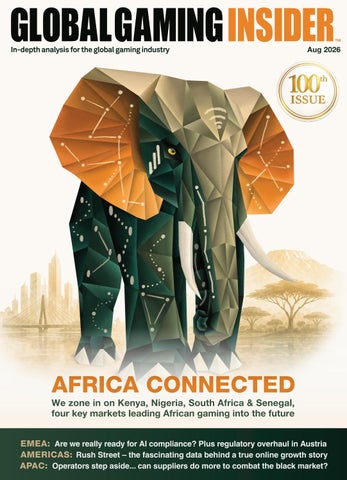
We zone in on Kenya, Nigeria, South Africa & Senegal, four key markets leading African gaming into the future
EMEA: Are we really ready for AI compliance? Plus regulatory overhaul in Austria APAC: AMERICAS:
Operators step aside... can suppliers do more to combat the black market? Rush Street – the fascinating data behind a true online growth story


Julian Perry

Welcome to this publication's 100th printed edition! Instead of a letter from the King (a longstanding UK tradition), I present you this letter from the Editor...
A lot can change in 100 issues. By the time you read this, I personally will have been here for eight years. In that time alone, we've seen the opening up of major markets across the globe in the US and Brazil, and shutdowns in India and China. The UK has gone from a pioneer of online gaming to a pioneer of gargantuan tax rates, while prediction markets have taken the US by storm more recently.
If you consider the above list, however, most of those headline events only took place within the last couple of years. That's just how fast-paced this industry is – bearing in mind only six years ago the whole land-based industry faced total closure due to the Covid-19 pandemic.
Looking beyond the eight years I've been here opens up a whole other time portal. Poker once ruled the world, before Black Friday (April 15 2011) changed everything, as online poker was banned in the US. Venture back to 2005 and the UK hadn't even passed the Gambling Act yet – and the Wynn Macau was not even open.
In short, things change. But we've been here to report on that change and analyse this industry ever since our very first issue. 100 editions later and we're still going, ready for whatever the gambling sector has in store for us next.
Celebrating those 100 issues, we look back at some of the biggest highlights in that time. And a key contributor with us over the years – Oliver Lovat – also looks at 21 (an obvious gambling number) key moments that define 100 years of Las Vegas history.
For our cover feature, we are looking ahead rather than in reflection, as we evaluate the technological and regulatory future of four key African markets: Kenya, Nigeria, South Africa and Senegal.
Much is often made of the promise of Africa, as connectivity constantly grows and a genuine appetite for gaming (a lot of it sports betting) continues to hold. Yet I've heard plenty in the industry complain of a 'generic' approach to African coverage. Some make the same mistake they do in Asia and the US: the Africa 'market.'
Of course, there is no such singular thing. So, in our efforts to dive as deep as we can, we've focused on four important individual markets in terms of size and promise, but also the regulatory trends they are experiencing. These are trends that all African markets will have to go through at one stage or another.
Elsewhere in our 100th printed magazine, our European analysis takes us to Germany and Austria, two markets in the midst of multiple court cases and regulatory overhauls. Regular contributor Marek Plota asks are we really ready for AI compliance?
Over in the Americas, we preview the Digital Supplier category for the Global Gaming Awards – which has seen record submissions this year.
And, in the APAC region, we ask whether suppliers can do more to combat the illegal market, while Christine Virardi argues that talent and leadership are far bigger factors than regulation. Nothing but the best 100 issues in.
TP, Editor
COO, EDITOR IN CHIEF
Julian Perry
EDITOR
Tim Poole
Tim.Poole@globalgaminginsider.com
STAFF WRITERS
Will Underwood, Kirk Geller
CONTENT WRITERS
Marieta Ležaić, Jack Found
LEAD DESIGNER
Olesya Adamska DESIGNERS
Gabriela Baleva, Medina Mammadkhanova
JUNIOR DESIGNER
Monika Petrova
ASSISTANT DESIGNER
Tanya Aleksova
ILLUSTRATOR
Christian Wüst
MARKETING DIRECTOR Mariya Savova
HEAD OF DIGITAL
Tom Powling
VIDEO PRODUCER Callum Flett
COMMERCIAL DIRECTOR
Deepak Malkani
Deepak.Malkani@globalgaminginsider.com
Tel: +44 (0) 204 591 3117
ACCOUNT DIRECTOR
Michael Juqula
Michael.Juqula@globalgaminginsider.com
Tel: +44 (0) 207 039 9186
SENIOR ACCOUNT MANAGER
William Aderele
William.Aderele@globalgaminginsider.com
Tel: +44 (0) 203 884 9277
ACCOUNT MANAGERS
Irina Litvinova
Irina.Litvinova@globalgaminginsider.com
Tel: +44 (0) 203 855 0662
Serena Kwong
Serena.Kwong@globalgaminginsider.com
Tel: +44 (0) 203 787 4615
ACCOUNT EXECUTIVE
Joe Church
Joe.Church@globalgaminginsider.com
Tel: +44 (0) 203 882 9693
AWARDS SPONSORSHIP MANAGERS
Michelle Pugh
Michelle.Pugh@globalgamingawards.com
Tel: +44 (0) 207 360 7590
Ben Bannister
Ben.Bannister@globalgamingawards.com
Tel: +44 (0) 208 078 2453
CREDIT MANAGER
Rachel Voit
WITH THANKS TO:
Oliver Lovat, Gregory Giordano, Dara Cohen, István Cocron, Razvan Glodea, Dr Christian Rapani, Felix Hohenthanner, Nicolo Cassettari, Christophe Casanova, Simas Denisovas, Nastia Karma, Lazarus Legal, Fisayo Oke, Marek Plota, Dan Spencer, Christine A. Virardi, Alfastreet, Ainsworth and FBM
Global Gaming Insider magazine

ISSN 2978-5723 (Print) ISSN 2978-5731 (Online)
Produced and published by Players Publishing Ltd
All material is strictly copyrighted and all rights reserved. Reproduction without permission is forbidden. Every care is taken in compiling the contents of Global Gaming Insider but we assume no responsibility for the effects arising therefrom. The views expressed are not necessarily those of the publisher.


Global
EvenBet’s
18 The RG priority
Gamble Alert Founder & CEO Fisayo Oke outlines responsible gaming challenges and shifting priorities
20 Diversity in progress
EPIC Global Solutions’ Principal Consultant Dan Spencer analyses harm prevention and safer gambling in Africa
22 Senegal focus
Honoré Gaming CEO Christophe Casanova breaks down the key themes in Senegal, a crucial market within Francophone Africa
23 Africa at iGB Live
Global Gaming Insider reflects on discussions from iGB Live 2026, as the Africa Summit talks all things taxation
28 100 years of Las Vegas
Continuing our special feature, who better than Oliver Lovat to look back on 21 key moments defining Las Vegas?
Logifuture
Aardvark
24 Look back...
As part of our 100th printed issue, we reflect on the highlights that shaped modern gambling history
40 AI in gambling
Marek Plota explores the pitfalls and poses the question: are we really ready for AI compliance?
44 David beating Goliath?
István Cocron discusses Germany’s new deposit limits and the recent trend of player-friendly court decisions


Gregory
Can suppliers do more?
Global Gaming Insider provides a deep dive into the role of suppliers in combatting the black market
Golden
How Golden Week became a definitive event for Macau’s economy
As jurisdictions across Africa enter a new phase of regulation and digital growth, Global Gaming Insider takes a closer look at the evolving markets of Kenya, Nigeria, South Africa and Senegal








REGULATORY EVOLUTION
Kenya tightens oversight as South Africa reviews tax and enforcement
DIGITAL EXPANSION
Connectivity and mobile adoption continue to fuel online gaming growth
RESPONSIBLE GAMING
Player protection and compliance are becoming key industry priorities
MARKET POTENTIAL
Innovation and sustainable growth are creating new opportunities across Africa
SOUTH AFRICA FOCUS
Greentube discusses strategy for one of Africa’s maturest gaming markets
NIGERIA FOCUS
Logifuture walks us through sports betting trends, in a football-mad, tipster-heavy market
SENEGAL FOCUS
Taxation is a key theme once again as we evaluate Francophone Africa
IGB LIVE REVIEW
What was the industry saying at iGB Live’s Africa Summit in London?
Africa is increasingly recognised as an emerging gaming region, driven by improving connectivity, digital adoption and favourable demographics. However, regulatory maturity varies across the continent, with some markets still developing frameworks while others move towards stronger oversight.
As a starting point, Kenya falls into the latter category, having recently introduced its most comprehensive gambling framework to date, reshaping licensing requirements through higher fees, increased capital requirements and stronger compliance obligations. Meanwhile, South Africa’s proposed 20% gross gaming revenue (GGR) tax on online gambling has raised concerns over its potential impact on the country’s already significant illegal betting market. Lawmakers are also considering tighter advertising controls and stronger enforcement against unlicensed operators. It’s all to play for right now.

Kenya has entered a new era of gambling regulation following the introduction of the Gambling Control Act, 2025. The newly formed Gambling Regulatory Authority (GRA) took over regulatory responsibilities on 30 June 2026, replacing the Betting Control and Licensing Board and marking a significant shift in the country’s approach to oversight. The Gambling Control (Licensing) Regulations 2026 have introduced stricter licensing requirements for operators. The new framework increases licensing costs, raises minimum capital requirements and expands licensing obligations to suppliers of gambling software, platforms, equipment and testing services.
Online bookmakers and online casino operators will each pay a licence fee of KES 50m ($387,500), while online lottery operators will pay KES 20m, in addition to application, renewal and annual operating fees. Furthermore, operators have to obtain separate licences for online sports betting and casino products rather than a single hybrid licence. A detailed pre-opening compliance process is now required before operations can begin. The regulations also establish a dedicated licensing regime for companies that provide gambling services exclusively to foreign markets.
One of the cornerstone provisions of the new framework is the requirement for real-time regulatory monitoring of online


gambling platforms. Operators must provide the GRA with realtime access through a secure application programming interface (API) and integrate their systems with both the Authority’s Central Monitoring System and the National Gambling Register. The regulations also raise technology and operational requirements, with operators required to strengthen data protection, maintain business continuity measures and store player data locally unless granted regulatory approval for an exemption.
Player protection measures have also been expanded, requiring operators to implement responsible gambling policies, stronger age verification systems and participate in a national self-exclusion programme. Separately, the Kenyan Government has further proposed allowing family members and other third parties to request gambling exclusions for individuals affected by gambling addiction through the GRA. Finally, operating an online gambling platform without regulatory approval would become a criminal offence, punishable by a fine of up to KES 1m, imprisonment for up to six months or both. As the new framework takes effect, Kenya is positioning itself as one of Africa’s most tightly regulated gambling markets, with stronger oversight, higher compliance standards and an increased focus on player protection set to shape the industry’s next phase.market.

On the other side of the coin, South Africa’s gambling sector –widely regarded as one of Africa’s largest regulated markets –has come under increasing regulatory scrutiny. Rapid market growth has prompted policymakers to push for reforms aimed at strengthening oversight, improving enforcement and addressing concerns around gambling-related harm. Among the most significant proposals is the National Treasury’s plan to introduce a national 20% tax on online gambling GGR, in addition to existing provincial taxes. Treasury says the measure is intended to address the rapid expansion of online gambling and its associated social impacts, while the industry has warned that increasing the tax burden on licensed operators could further strengthen the country’s already sizeable illegal market.
Those concerns have been reinforced by the South African Bookmakers Association (SABA), which estimates that illegal operators account for more than 62% of gambling activity nationwide. The association has backed the National Gambling Board’s (NGB) efforts to block unlicensed offshore gambling websites. However, it argues that while existing legislation prohibits illegal online gambling, regulators lack the enforcement powers needed to tackle the market effectively. Alongside these measures, it was previously reported that lawmakers are considering tighter gambling advertising rules as part of a broader effort to modernise South Africa’s regulatory framework. The coming months will be crucial in determining whether these reforms strengthen the regulatory framework or create further challenges for an industry already competing with a substantial illegal market.
NOTE: Just before press time, Kenya’s High Court suspended the new licensing regulations after a legal challenge claimed key licensing requirements, including higher capital thresholds, were introduced without the public consultation required under the Constitution. The ruling puts implementation of the new licensing framework on hold until the court hears the case, scheduled for 21 September.
As African gaming markets continue to mature, regulation, innovation and responsible gambling are becoming central to the industry’s next phase of growth. Across the following pages, Global Gaming Insider explores several key markets in greater depth through insights from industry leaders including Greentube, EvenBet Gaming, Logifuture, Aardvark Technologies, Honoré Gaming, EPIC Global Solutions and Gamble Alert.



Razvan Glodea, Sales and Key Account Manager at Greentube, speaks to Global Gaming Insider about the challenges, opportunities and evolution of the fast-growing South African market
Having been an early entrant to the South African market, what kind of changes have you seen in iGaming innovation and consumer demand?
Since launching, we’ve watched the market accelerate fast. The National Gambling Board’s own figures show gross gambling revenue climbing to R75bn ($4.59bn) for 2024/25, up from R59.3bn the year before, with online betting now the dominant driver of that growth. Mobile-led play has become the clear default. Player expectations have shifted alongside that momentum. Audiences are moving beyond purely land-basedstyle content toward more sophisticated mechanics, with strong interest in features like lock-and-spin and three-pot formats,

“South Africa’s scale and player volume make it a genuine proving ground”
while still showing real loyalty to proven classics. It is a market maturing in real time – and suppliers have to move quickly to keep pace.
Do you believe South Africa represents an achievable regulatory benchmark for other African markets?
South Africa’s regulatory picture is genuinely complex rather than exemplary. There’s still no dedicated online casino legislation, so games like slots and roulette are structured as betting events under existing law and licensing runs through nine separate provincial bodies, rather than one unified national framework. That patchwork has been navigatable for us because we invested early in compliance expertise and strong local partnerships. It would perhaps be prudent to avoid calling it a benchmark, given that South Africa hasn’t solved online gambling regulation so much as built a workable path through an outdated one. Other markets could learn more from that adaptability than from trying to copy the structure itself.
When you arrived in the market, what were the first strategies you realised were transferable from your experiences elsewhere?
Entering through Novomatic Africa gave us an immediate foundation. We were able to leverage existing operator relationships and real data on land-based player behaviour we could build from rather than starting cold. That meant our content strategy transferred
directly, leading with proven, land-basedfamiliar titles that gave us instant recognition with players. Our compliance-first approach to market entry, refined across many jurisdictions, also proved essential given how fragmented and provincially led South Africa’s licensing structure is compared with more centralised European markets.
On the other hand, were there any ways in which you had to localise your products that were perhaps unexpected?
The bigger adjustment wasn’t visual localisation, it was mechanical. While land-based players gravitate toward the classics, the online audience showed a broader appetite for innovation than we had assumed. Modern features like lock-andspin, three-pot mechanics and jackpot series have performed strongly, and crash games have emerged as a bigger opportunity than expected. It underlined that South African online players are a distinct, more experimental audience in their own right, rather than simply mirroring land-based tastes.
In what ways do you think South Africa is leading the way for sustainable regulated gambling industries across the continent?
South Africa’s scale and player volume make it a genuine proving ground. It’s the first regulated market where we fully rolled out our Mynt platform; stress-testing tools like free spins and our Bet Peak promo engine under real, high-volume conditions, which has directly shaped how confidently we can take those tools elsewhere. At the same time, regulators are showing real enforcement appetite by tightening advertising standards, increasing mandatory RG funding contributions, and cracking down on illegal and offshore operators. Legislation for online casino content is still catching up, but the seriousness with which player protection is being treated, alongside genuine innovation, offers a useful model for sustainable growth across the continent.


Nastia Karma, EvenBet Gaming’s Regional Team Lead for Africa, explores shifting strategies, evolving trends in online poker and RG potential across the continent
As the African landscape continues to develop, what evolving player trends have you observed across the markets in which you operate?
The African iGaming landscape is experiencing an incredibly exciting evolution, driven by a highly tech-savvy, mobile-first youth demographic. The most prominent trend we are observing is the demand for instant, low-friction entertainment.
Historically, the African market has been dominated by sports betting, but players are increasingly looking to diversify their sessions. However, they want to do so without heavy data consumption or complex learning curves. This has led to a massive surge in the popularity of fast-paced, crash-style games and lightweight, mobile-optimised content.
Another key trend is the social and competitive aspect of gaming. Players in regions like West and East Africa highly value community and peer-to-peer engagement. As a result, interactive features, real-time leaderboards and localised tournaments are no longer just value-adds but are
key tactical tools that operators must deploy to protect and improve retention rates.
What can you tell us broadly about the popularity of online poker in Africa?
Online poker in Africa has immense, yet historically underserved, potential. Traditionally, poker was perceived as a complex, high-data vertical that required a desktop setup and a deep understanding of intricate strategies.
But we are completely rewriting that narrative. By understanding that classic formats can be intimidating, we developed simplified, fast-paced games on a casino-style engine, such as One Click Poker and Spins Poker. These formats eliminate the need for advanced card skills or complex tactical decisions. Instead, they transform peerto-peer card gaming into an instant, actionpacked experience that runs seamlessly on budget smartphones and low-bandwidth networks. When you lower the barrier to entry this way, the appetite for card games skyrockets.
African sports betting and casino operators are realising that simplified card games bring a highly loyal audience with excellent lifetime value. It’s still about the thrill of the cards and community, which deeply resonates with the competitive spirit of local players, but in a format everyone can enjoy. Moving forward, we are planning to launch even more simplified titles of this kind, as EvenBet Gaming is set to position itself as a comprehensive, go-to card games provider in the very near future.
How have you navigated the growing adoption of online in Africa, both with regard to online poker and online casino – where you recently expanded?
Navigating this growth requires a blend of deep localisation and technological agility. On the poker front, we introduced formats designed specifically to eliminate traditional barriers. For instance, EvenBet Gaming’s solutions, like One Click Poker and Spins Poker, strip away complex lobbies and long waiting times. They allow sports bettors or casino players to jump into a live hand with a single click, making peer-topeer gaming as intuitive as spinning a slot.
Our business strategy reached a major milestone when we brought the Turnkey Casino Platform and Game Aggregator directly under the EvenBet Gaming brand.
This was a natural evolution for us.
In what way do you think Kenya’s recent decision to license its supplier market will benefit the nation’s growth?
The transition to the new Gambling Regulatory Authority (GRA) framework and the licensing of B2B suppliers is a massive leap forward for Kenya.
The primary benefit is market stability and quality control. By vetting and licensing software providers, Kenya is establishing a clean, structured ecosystem. For operators, this eliminates the risk of working with uncertified software, ensuring that the games delivered to Kenyan players are fair, secure and technologically robust.
Furthermore, a clear B2B licensing framework attracts premium, tier-one international suppliers who might previously have hesitated due to regulatory grey areas. This influx of high-quality technology drives healthy competition, elevates the standard of entertainment and ultimately boosts tax revenues for the state in a sustainable way. It positions Kenya as a sophisticated, mature iGaming hub in East Africa.
Do you think that cross-collaboration between suppliers and operators in Kenya’s changing market can help drive enhanced RG protections?
Absolutely. Responsible gaming is not a solo effort. It is a shared industry responsibility that requires a continuous feedback loop between the technology creators and the boots on the ground.
As a B2B supplier, we build the engine. We develop the advanced anti-fraud controls, the self-exclusion mechanics, the limits-setting tools, and the data analytics that flag anomalous player behaviour. However, it is the operators who directly hold the relationship with the player and understand local cultural nuances.
Under the new GRA regulations in Kenya, close collaboration allows us to customise our responsible gaming tools to the specific needs of Kenyan players. When operators share real-world insights on player habits and risk profiles, we can refine our algorithms and back-office tools to be more proactive rather than reactive. This synergy is the only way to build a safe, sustainable gaming environment that protects vulnerable players while allowing the industry to thrive.


Niccolo Cassettari, Chief Business Development Officer at Logifuture, analyses Nigeria: a sports betting, tipster-heavy market where bonusing alone isn’t the answer
The Nigerian market is hugely geared towards sports betting. How does a modern-day sportsbook capitalise on this?
Betting in Nigeria has always had a social side to it – the betting shop as a gathering point, people crowding round a screen, action always happening somewhere. Operators know that instinct better than anyone, but replicating it isn’t something you build alone

– it comes down to having the right content on the platform. Real fixtures dry up for hours at a time – early morning, midweek gaps between leagues – and that’s exactly when a bettor goes looking for somewhere else the action hasn’t stopped. As a provider, our job is making sure operators never face that gap: give them products that keep the platform live when the fixture list can’t, and that shop-floor energy keeps going around the clock.
In today’s industry, bonusing alone isn’t the answer. How does a brand avoid over-using bonuses, and what are the alternatives?
Bonusing buys you a login, not a habit. It’s expensive, it trains players to chase the next offer instead of the platform itself and margins can’t sustain it forever. The alternative is content that keeps people engaged without you having to pay them to stay – continuous betting markets, instantresult products for the moments between real matches, simplified casino titles with social features that catch sportsbook users who’d never open a full casino lobby. Retention should come from what’s on the app, not what’s in the promo code.
Walk us through the impact of tipsters. How important are they in the Nigerian market?
Tipsters are arguably the single biggest influence on staking behaviour in Nigeria, and it’s not hard to see why. They build huge, tightly-targeted follower bases around specific leagues or bet types, and in a market where trust in community and word-of-mouth is high, a tipster with a track record becomes a more credible voice than any odds board. A

well-followed tipster drops a pick and you’ll see stake volume move on that market within minutes – that’s the kind of reach most paid campaigns take months to build.
Given this background, what is one piece of advice you would give to anyone operating in Nigeria in 2026?
Get ready for everything around the 90 minutes, not just the 90 minutes itself –the pre-match wait, the fixture gaps, the moments a bettor has money in their account and nothing to bet on. That’s where retention is actually won or lost, and it’s exactly why our portfolio is built around covering those in-between moments rather than just the match itself.
Finally, what is the biggest trend to watch out for in Nigeria heading into 2027?
Sportsbook will remain the main vertical in Nigeria and everything we’ve talked about –the always-on content, the tipster dynamics, moving away from bonus dependency –still holds. But casino is the trend to watch. It’s already growing, and heading into 2027 the real opportunity is capitalising on the sportsbook audience that’s already there, cross-selling instead of chasing separate acquisition.
That’s how you build real loyalty and retain players without leaning on bonuses, especially in a market with 200+ licensed operators fighting for the same customer. Smart crosssell, not bigger bonuses, is what will separate the operators still standing in a few years, from the ones burning margin to stand still.


Aardvark Technologies Founder & CEO Simas Denisovas
As Africa’s landscape continues to develop, what kind of market trends have you observed around retail to online conversion?
With more than a few decades of experience across African markets, we’ve had a frontrow seat to the industry’s evolution. One of the most notable trends has been the gradual shift from purely retail operations to omnichannel experiences.
That said, the transition isn’t happening at the same pace everywhere. South Africa, for example, is considerably more mature than many neighbouring markets, while other countries are still heavily retail-driven. In many cases, retail remains the foundation of the customer journey, but digital channels are becoming increasingly important as smartphone adoption and internet accessibility continue to improve.
What we’re seeing is that operators are no longer asking whether they should be online – they’re asking how quickly they can build a sustainable digital presence, while maintaining their retail footprint. In my view, the future isn’t retail versus online. It’s about creating a seamless experience between the two.

Businesses that understand local consumer behaviour and adapt accordingly will be the ones that succeed over the next decade.
How should a total beginner to the African landscape approach localisation between its differing markets? What are the key points to understand?
The biggest lesson we’ve learned is simple: Africa is not one market. Every country has its own regulations, payment ecosystem, consumer habits and cultural nuances. A strategy that performs exceptionally well in South Africa may not necessarily work in Kenya, Tanzania or Nigeria.
My advice to anyone entering the region is to focus on three things: regulation, payments and local partnerships. Understanding the legal framework is essential, supporting the payment methods consumers already trust is critical and having people on the ground who understand the market is invaluable.
Another common mistake is trying to expand too quickly. Africa presents tremendous opportunities, but success requires patience and a willingness to learn. Many of the decisions we make today are shaped by the lessons we’ve learned throughout our journey across the continent. Localisation isn’t a project with an end date – it’s an ongoing commitment.
What makes payments challenging in the Africa’s online landscape?
Payments are arguably one of the most important considerations when operating across Africa. One of the continent’s greatest strengths is also one of its biggest challenges: diversity. Every market has its own preferred payment methods, whether that’s traditional banking, mobile money, digital wallets or local payment providers. There is no universal approach.
Over the years, we’ve learned that consumers expect payment experiences to be simple, secure and reliable. Trust plays a major role. Businesses that fail to understand local payment preferences often struggle to gain traction, regardless of how strong their product offering may be.
Fortunately, payment innovation across Africa continues to accelerate. Financial inclusion is improving, digital infrastructure is evolving and new technologies are creating exciting opportunities across the region. From my perspective, businesses that invest
in localisation – particularly when it comes to payments – will be significantly better positioned for long-term success.
What have been the key challenges in diversifying your product portfolio and offerings across Africa?
The biggest challenge has always been balancing scalability with flexibility. Different markets have different priorities. Some businesses are more retail-focused, others are investing heavily in digital channels, and customer expectations continue to evolve as markets mature.
As a technology provider, you have to continuously innovate while ensuring your products remain adaptable and relevant. That’s easier said than done. It requires longterm investment, strong partnerships and the ability to respond quickly to changing market conditions.
One thing I’m particularly proud of is that we’ve spent recent years building technology with local realities in mind rather than adopting a one-size-fits-all approach. That philosophy has been instrumental in helping us diversify our offerings over the years. Ultimately, diversification isn’t about having the largest portfolio – it’s about delivering products that genuinely address the needs of the markets and customers you serve.
Geographically, South Africa and Nigeria have become staple markets in Africa. Where do you identify other opportunities across the South and East of the continent?
South Africa and Nigeria will undoubtedly remain important markets, but we’re also seeing encouraging developments across East and Southern Africa.
Countries such as Kenya, Tanzania, Uganda and Zambia continue to make progress in areas such as digital adoption, connectivity and financial inclusion. While every market has its own opportunities and challenges, it’s clear that the region as a whole continues to evolve. That said, market size alone shouldn’t drive expansion decisions. Businesses should also consider factors such as regulatory stability, ease of doing business, and the strength of local partnerships.
Africa is home to one of the youngest populations in the world, and its long-term potential remains incredibly compelling. We’re excited about what the future holds.

Gamble Alert
CEO Fisayo Oke speaks to Global Gaming Insider about the challenges facing Nigeria and player protection across Africa, amid the continent’s rapid growth
What RG challenges has the retail-toonline casino conversion brought the Nigerian market in recent years?
I think this is a very important part of the responsible gaming (RG) conversation to have, especially currently, as a growing number of people are beginning to take RG more seriously across the continent. It goes without saying that the shift from retail betting to online casino and online gaming more broadly has fundamentally changed what RG looks like. Previously, the fact that people had to visit retail shops to place their bets meant a different approach to RG was needed. But now that accessibility is easier than ever, people have games in their hands 24 hours a day, and there are no longer any of the natural barriers that used to exist with retail locations. This means people can spend far more time gambling, with longer sessions on their phones at a higher betting frequency. With that longer engagement and increased frequency comes
more impulsive decision-making, simply because there is nothing stopping players from continuing.
Another point worth mentioning is speed. Many online games now come with an unprecedented pace – instant games, live casino and rapid betting cycles. The ease with which people can adjust their stakes at any moment leaves vulnerable individuals without any real safeguard, because they can keep playing even when results are not going their way. If operators fail to put safeguards in place, vulnerable players will simply sink deeper into gambling-related harm. We’ve also noticed that, although online access has increased significantly, awareness of safer gambling tools hasn’t kept pace. Some operators, now serving larger online customer bases, have introduced tools such as deposit limits, self-exclusion, cool-off periods and reality checks. Unfortunately, not enough awareness has been built around
these tools to ensure they’re actually used. While technology has evolved rapidly, customer education simply hasn’t kept up.
I’ve spoken about the challenges, but let’s also consider the opportunities this shift presents. While technology has made gambling more accessible, it also gives us the ability to analyse player behaviour in ways that weren’t possible in retail settings. This makes it far easier to identify patterns and say, based on these markers of harm, that a particular person may be heading towards trouble unless an intervention is introduced.
Have you begun to see increased crosscollaboration between operators and regulators on treatment and RG support in Nigeria?
I know there are people who might disagree with me here, but given where we’ve come from, there have certainly been changes –perhaps not significant enough to celebrate
outright, but enough to acknowledge that we’ve moved away from a time when responsible gaming wasn’t a fashionable topic. It used to feel as though operators were actively resistant to the subject, or that regulators simply didn’t view it as a serious conversation worth having.

In recent years, though, we’ve seen regulators – particularly at state level in Nigeria – bringing stakeholders together, especially gaming operators, to say, “We’re developing a selfexclusion solution; let’s work together on how it can function.” Rather than imposing something on operators, regulators are encouraging them to consider how such measures can be embedded into their own operations. Across the board, this means self-exclusion can work effectively, without someone simply moving from one platform to another because they’ve been locked out of one. That’s one clear example of the collaboration we’ve seen.
Gamble Alert has also, over the past few years, created a platform called the Responsible Gaming Symposium. This is a deliberate initiative to bring all stakeholders into the same room, whether they were actively seeking that conversation or not. Interestingly, we’ve seen genuine engagement from this – this will be the second year the symposium has taken place. What emerges from these conversations are concrete resolutions, with stakeholders agreeing on what they intend to achieve over the following year in terms of improving player protection. We’re also now seeing regulators requesting monthly reports on RG activity from gaming operators, which didn’t happen previously. So there has certainly been a level of improvement in collaboration. That
“ The industry across the continent is expanding faster than player protection frameworks can keep up with – and that is genuinely concerning ”
said, more still needs to be done. Honestly, at this stage, it remains largely a matter of individual will – political office holders who care about this subject choose to pursue it alongside gaming operators, but it hasn’t yet become a systematic requirement. That’s ultimately where we want to get to. We want this to move beyond a situation where progress depends on one person in a position of power pushing others to act. Instead, we want it to become standard operating procedure – where you simply cannot obtain a licence, let alone operate, without proper player protection measures in place.
What is the biggest challenge threatening the long-term sustainability of the Nigerian market?
For me, it’s still the fact that customer acquisition is viewed purely as a revenue stream. There isn’t yet a serious conversation happening around player education. Operators spend significant amounts on marketing to acquire new customers, but comparatively little is invested in educating players so that they can remain active –and stable – over the long term.
The result is that the entry point into the market is wide, but so too is the exit point. Given Nigeria’s large youth population, when one player leaves a platform, another quickly takes their place. That creates an illusion of activity without any real sustainability. Players come in, engage for a while, and then drop off, largely because so little has been invested in their education. We don’t believe that’s how you build a sustainable business.
Without loyal, returning customers –people healthy enough in their engagement to genuinely promote your platform to others by saying, “this is entertainment, let’s enjoy it for fun” – you don’t have a sustainable model. I think that’s the single biggest threat we’re currently facing.
More broadly across Africa, how do you assess the parallel between the rapid market growth and the still-evolving player protection infrastructure?
As we’ve touched on already, the African market continues to prioritise growth above all else. We’re increasingly seeing regulators view the gaming market in Africa as something of a
cash cow, recognising that a large proportion of the population is willing to engage with these products.
This creates a clear imbalance: as growth accelerates, corresponding player protection measures simply aren’t keeping pace. That’s a disaster waiting to happen, because focusing on growth without properly considering player protection is inherently risky. I’m not suggesting that no player protection measures exist at all – rather, that they don’t correspond to the scale of growth we’re seeing. The industry across the continent is expanding faster than player protection frameworks can keep up with, and that is genuinely concerning.
It often feels like a question of priorities. When regulators consistently place other matters ahead of responsible gambling, that – to me – signals a real problem. That’s the imbalance I see between industry growth and player protection across Africa. We are seeing improvements, but they simply aren’t happening at the same pace as the industry’s expansion, which continues at an extraordinary rate.

EPIC Global Solutions’ Principal Consultant Dan Spencer analyses harm prevention strategies, the diversity of progress and challenges facing safer gambling across Africa
Africa’s gambling sector is expanding rapidly, representingexciting new markets that have ultimately been enabled by widespread smartphone adoption, affordable data and the integration of mobile money into everyday life.
This growth has created new opportunities for operators and governments, but it has also heightened the need for effective playerprotection measures. The current state of safer gambling across the continent is therefore defined by a dual imperative: building sustainable industry while ensuring consumers are adequately protected. Like all new markets that came before it, we have an opportunity to create a fair, safe and enjoyable industry… will we take it?
RISE AND RISE OF MOBILE
The rise of mobile betting has introduced

“ African jurisdictions have the opportunity to build gambling sectors that are both commercially successful and socially responsible ”
gambling to millions of first-time customers. In maturing regulated markets such as Kenya and Nigeria, sports wagering is now accessible at any time through mobile devices and digital payment platforms. This accessibility underscores the importance of embedding safeguards from the outset, including deposit limits, self-exclusion tools and clear information about the risks associated with gambling.
Regulators across many African markets are increasingly recognising that playerprotection frameworks must be tailored to local circumstances rather than copied wholesale from mature European markets. In South Africa, provincial licensing authorities continue to refine responsible-gambling requirements, while Kenya has periodically reviewed advertising standards and youth-protection measures. The consensus here seems to be that we need to meet the players where they are, fine-tuning to local culture, preference and digital platform adoption behaviours.
Technology is also becoming a key enabler for safer gambling. Leading operators and suppliers have demonstrated how behavioural analytics can help identify customers who may be at risk of harm and trigger timely interventions. These technologies and expertise are slowly migrating to cover the African market and, as mobile channels dominate across Africa, the integration of such tools offer significant promise.
Collaboration beyond the industry itself remains essential. The longstanding work of the National Responsible Gambling Programme in
South Africa illustrates the value of combining public awareness campaigns, treatment services and research. Partnerships among operators, regulators, sporting bodies and community organisations can help ensure that prevention messages are culturally relevant and widely accessible.
Finally, governments face the challenge of balancing the economic benefits of a growing gambling sector with the need for robust consumer protections. Tax revenues and employment are important outcomes, yet the long-term health of the industry depends on maintaining public trust and minimising gambling-related harm.
Lessons must be learned from recent market expansion – and there is plenty to take note of. As a consultant in the safer gambling space, I’m seeing lots of enquiries into what works and what doesn’t, which is reassuring and shows the desire to learn and adapt. Localisation in safer gambling practices is particularly interesting and should yield some insightful case studies as things evolve.
The future of safer gambling in Africa will likely be shaped by locally informed regulation, responsible use of technology and sustained collaboration among all stakeholders. By embedding player protection into the foundations of market growth, African jurisdictions have the opportunity to build gambling sectors that are both commercially successful and socially responsible.


Christophe Casanova , Founder and CEO of Honoré Gaming, breaks down the lay of the land in Senegal – and the end of the protected hunting ground
Regulation is finally taking shape.
Senegal illustrates this shift well. LONASE, long the historical operator in a near-monopoly position over games of chance, now also acts as the regulatory authority licensing private operators — while deepening its cooperation with CENTIF on anti-money-laundering enforcement. This dual role signals a clear intent: to bring order to a sector that grew faster than the framework meant to govern it, and to reclaim some of the value currently leaking to offshore platforms.
That is precisely the paradox of this market: a large share of betting volume in Senegal, as in Côte d’Ivoire, Cameroon, Mali or Togo, still flows through internationally licensed offshore operators whose local footprint is often limited to a French-language interface and Mobile Money integration (Orange Money, Wave, MTN Money).
This coexistence of public monopoly, licensed local operators and loosely/un-regulated offshore players is not a Senegalese anomaly: it is the dominant configuration across Francophone Africa, from Dakar to Kinshasa.
And it is hardening, as authorities – under real social pressure around youth debt and gambling addiction – work to wrestle back control.
WHEN TAXATION BACKFIRES
Senegal also shows the limits of tightening the screw too fast. Law 17/2025 introduced a 20% withholding tax on player winnings, deducted automatically at payout, on top of a 20% levy on operator revenue and the standard 30% corporate tax. Licensed operators have publicly objected, some threatening to exit the market entirely over what they describe as a tax burden applied without real consultation and, in places, retroactively.
The effect on the ground is entirely predictable – and it is already being reported: bettors frustrated by a fifth of every win being clawed back are shifting toward unlicensed platforms that apply no such deduction. A tax designed to capture more public revenue and channel players toward the regulated market ends up doing the opposite – pushing volume toward operators who pay no tax at all, offer no consumer protection and sit entirely outside AML oversight. For a regulator trying to formalise the sector, an overcalibrated tax rate is as damaging as no tax rate at all – it simply relocates the informal market rather than shrinking it.
This is the tension every Francophone African regulator will have to manage over the next few years: taxation has to be high enough to fund public finances and justify formalisation, but low enough that staying within the legal, taxed perimetre remains the more attractive option for the player. Get that balance wrong – and the illegal market becomes the primary beneficiary of the very reform meant to eliminate it.
As in Brazil at the point of regulation, the first visible effect of this maturing market is mechanical: acquisition costs are rising. Sponsoring a local football club, running an activation around AFCON or the CAF Champions League, partnering with an influencer – all of it used to be cheap when two or three brands were competing for attention. Today it is priced very differently, in a landscape where a dozen international operators are fighting for the same screens.
This pressure exposes a real structural gap:
personalisation. Sports betting operators across Francophone Africa are broadly where their Brazilian counterparts were a few years back – largely the same experience for every player, little to no behavioural segmentation, minimal dynamic adjustment of odds, bonuses or content based on actual user profile. The gap with what mobile money platforms or e-commerce already do on the very same phones, with the very same data, is enormous –and represents one of the most underexploited differentiation levers in the market.
The range of markets on offer has never been wider, with sometimes over 1,000 markets on a single match with some operators. But that abundance primarily benefits the players who can afford that level of technological depth, leaving smaller or more locally focused operators with noticeably thinner catalogues – and therefore less competitive on pure experience. In this context, niche verticals – crash games, multiplayer betting formats, markets on local and secondary leagues (Ivorian Ligue 1, Senegalese championship, Botola) rather than only the European top five –become a genuine differentiation lever, provided they are invested in seriously rather than treated as an afterthought.
The market is entering a phase where regulatory proximity, mastery of local payment rails and deep knowledge of the Francophone African player will no longer be enough on their own to compete against offshore platforms able to spend heavily on marketing and content. The operators who win the next phase will be those who combine what remains their real advantage with the standards more mature industries have already adopted.
The margins that once seemed guaranteed no longer are. Competition is intensifying, regulation is sharpening and Senegalese and Francophone African players, increasingly connected and equipped, now have real choice. This is no longer a protected hunting ground. It is a market – and it needs to be treated like one.
Industry leaders at the Africa Summit, part of iGB Live London, examined the challenges shaping the region’s gambling future, from balancing tax revenue with market sustainability to improving regulation
As we have discussed in detail throughout this cover section, the African gambling region presents significant growth opportunities; but these opportunities are increasingly matched by the need for more sustainable regulatory frameworks. As markets across the region continue to develop, regulators, lawmakers and operators face the challenge of supporting growth while limiting the expansion of illegal gambling activity. These issues were at the centre of discussion during the Future of Taxation, Channelisation and Sustainable Market Growth panel at the Africa Summit, held during iGB Live in London. The first-ever Africa Summit in London brought together regulators, operators and industry leaders from across the continent. Together, they examined the key issues shaping the future of gaming.
Ed Birkin, Managing Director at H2 Gambling Capital, opened the panel by noting that, outside Africa, operators fall into two main categories: regulated businesses that pay taxes and meet consumer protection standards; and illegal operators that avoid both taxation and player protection measures. Africa, however, presents a more complex picture. Birkin pointed to a third category of operators: companies that hold licences but are still failing to make their full contribution through taxation. When combined with unlicensed activity, this creates a significant impact on government revenues and market integrity. Based on H2’s analysis, using a 20% gross gaming revenue (GGR) tax rate, which it estimates across 150 markets to be close to an optimal level, Africa is losing up to $11bn over five years.
Birkin concluded that GGR is the optimal taxation framework in practice, while warning that alternatives such as turnover taxes, withholding taxes on player winnings and excise taxes on deposits and withdrawals are suboptimal. The conversation then turned

The exhibition floor at iGB Live London 2026
to South Africa, which was highlighted as one of the best-performing African markets, with relatively low GGR taxes. However, the country is facing discussions around a proposed 20% national online tax on GGR, in addition to existing provincial taxes, while also dealing with challenges from the illegal market. One growing issue in South Africa is brand spoofing, where illegal operators clone legitimate websites. Consumers may believe they are using a recognised platform, only to later discover they cannot access their winnings or are asked to pay additional fees to receive their funds.
Indeed, as higher taxes can push more consumers towards illegal operators, the discussion concluded that taxation should not be viewed purely as a revenue measure. It must also have an economic and social rationale, with policy decisions considering the wider objectives of the gambling sector, including investment, consumer protection and market sustainability.

If regulated operators are placed at a disadvantage through excessive taxation or restrictive measures, players may naturally migrate towards illegal alternatives. However, South Africa and other African markets must consider their unique structures when benchmarking taxation policies. A tax rate that appears successful in one market may not deliver the same results elsewhere.
So, as we conclude our Africa section in this issue of Global Gaming Insider magazine, we can see that African markets are facing some of the very issues European nations are, with taxation sitting right at the top of that list. Here, the onus is on regulators and legislators to get things right (and we know how difficult that can be, even before we consider the pressure of various anti-gambling lobbies). For operators and suppliers, though, the practical advice here is to adapt cost structures where possible – and collaborate with authorities as best as you can. Any brands with a poor compliance history may realistically be excluded from the important legislative conversations thanks to their own actions. Get the basics right – and there will at least be a seat at the table.

We have been reporting on the gambling industry for what seems like time immemorial. Over that period, 100 magazine issues have been printed, covering everything from the poker boom to Malta, Las Vegas, Macau, Brazil, mergers and acquisitions, and the inescapable growth of online gaming.
Naturally, in that time, we’ve amassed plenty of incredible memories – and witnessed remarkable stories of both success and failure, prompting Global Gaming Insider Editor Tim Poole to look back at a few standout highlights that shaped modern gaming history. In our 100th issue, we invite you to reflect with us...
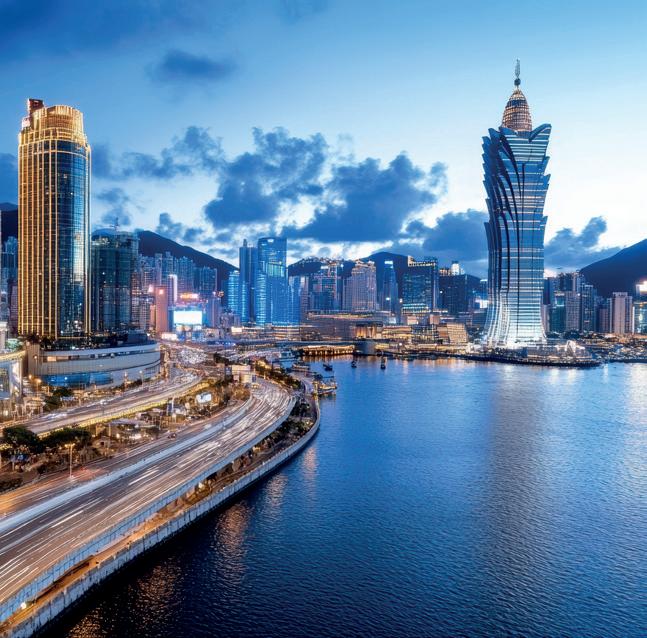
If popular culture is to be believed, Las Vegas is the home of gambling. In many ways, it still is – and our ‘100 years of Las Vegas’ feature on page 28 explores this journey in detail. But in pure gross gaming revenue (GGR) terms, there is a new king in town. And it’s been there for a while. Macau generated around double that of Nevada in 2025 GGR, with this gap proving even wider in previous years.
This, though, was not always the case. The Wynn Macau opened in September 2006, the Venetian Macao followed in 2007 and Galaxy Macau in 2011. While it’s true that the Las Vegas model inspired its success, Macau (alongside Marina Bay Sands in neighbouring Singapore) has become an industry unto itself.


Online activity – in any walk of life – has become so widespread that it barely seems worth discussing anymore. And yet that simply wasn’t the case mere decades ago – especially in gambling. A landmark moment arrived in February 2013, when Governor Chris Christie passed legislation regulating “internet gambling” in the state of New Jersey.
While online casino has only been legalised in a handful of US states since, outside the US, digital is king. Online dominates huge markets across the world: the UK, Brazil, the Philippines, the Netherlands, Spain, Italy and many more.



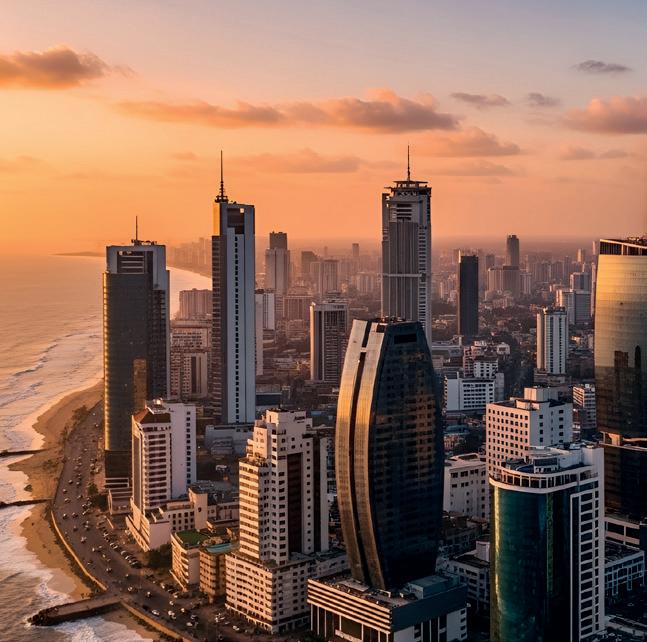


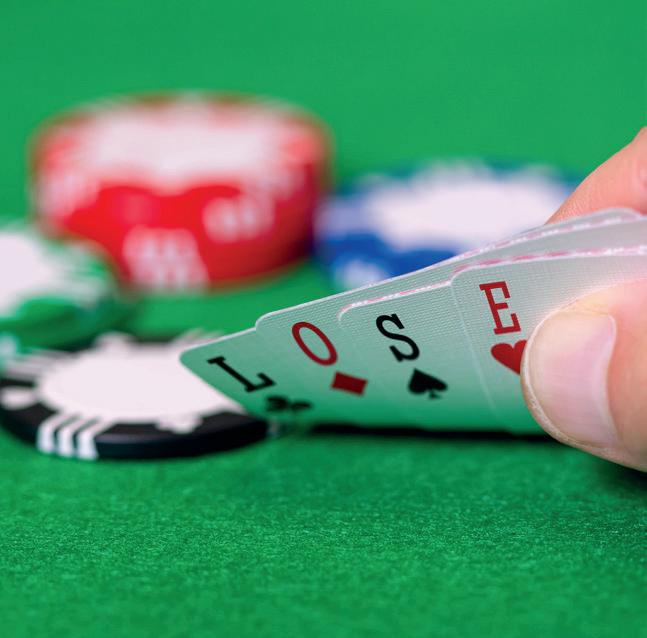
A more sombre occasion to reflect upon was the effective shutdown of US online poker in April 2011. Until then, the poker boom had taken gambling by storm. So much has the sector changed, however, that a similar landscape today would be unthinkable.
Poker was king back in the day – but the United States v Scheinberg ruling saw several domains seized and shut down, including Pokerstars.com, Fulltiltpoker.com, Absolutepoker.com and more. Poker players and providers alike were heavily impacted. Today’s industry contains far more casino and sports betting companies than it does poker as a long-term consequence.
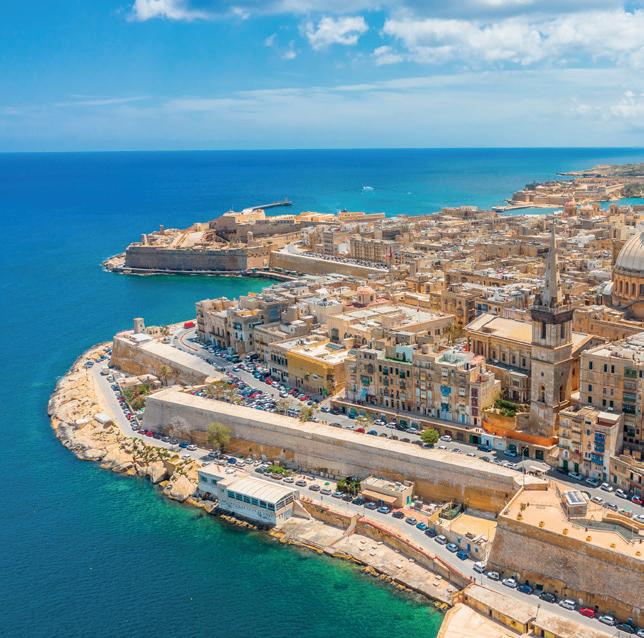
Still leading the make-up of this sector is Malta, the online gambling hub that is home to many of gambling’s big players, either via a Malta Gaming Authority licence or a head office on the archipelago. Before its dedication to the gambling industry, one could be forgiven for simply thinking of Malta as a popular British holiday destination.
Malta today, though, has embraced numerous technological and financial fields (like blockchain), with gambling in particular accounting for an approximate 10% of the country’s GDP. Over the years, numerous competing jurisdictions have emerged. But Malta remains synonymous with iGaming’s evolution.


Another entry that can’t necessarily be considered a “highlight,” the Covid-19 pandemic brought land-based casinos to a global standstill. The pandemic hit us six years ago, which now feels like a distant memory. But we can all remember being homebound for extended periods with nothing to do...
For the industry, Covid-19 had both near-term and long-term effects. Initially, online gaming surged and land-based casinos shut down. Once reopened, though, both Macau and Las Vegas saw huge volumes of “pent-up demand.” Verticals like esports betting and virtual sports saw short-term spikes – but have not been able to replicate such heights since.




Chronologically, PASPA was overturned well before the Covid-19 pandemic – May 2018 – but the stories of both are ultimately intertwined. Unlike online casino, sports betting is now legal in 39 states plus Washington DC. The removal of PASPA was crucial to this, as it struck down prior federal legislation, giving individual states the right to legalise sports wagering on their own turf.
Yet the timing of the Covid-19 pandemic certainly helped accelerate this spread (no pun intended), especially when it came to mobile sports betting. Sportsbooks generate billions in the US today; prediction markets may soon be generating more – if not already. But that’s another story...


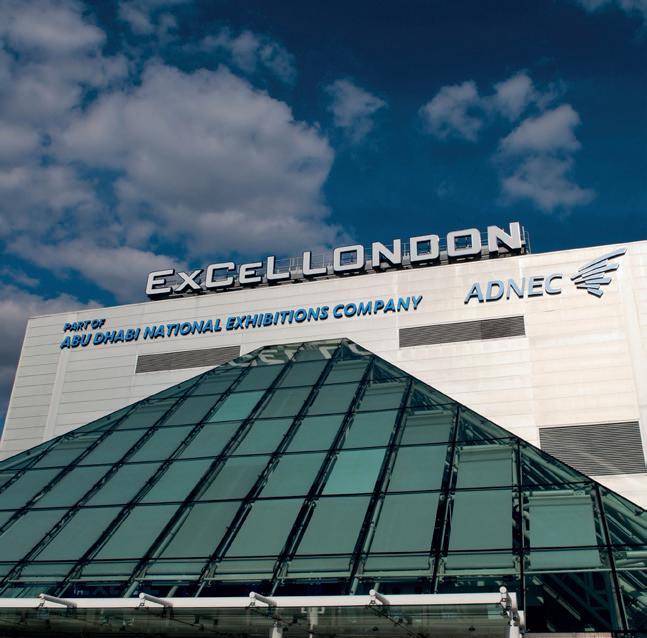
call : the rise of the trade
One industry trend you simply cannot fail to notice is the growth of gaming’s trade shows around the world. Not only do we have so many more of them today, individual shows are now hosted in arenas boasting huge capacities.
Just a few years ago, ICE was a reasonably sized London gathering, while G2E was the Las Vegas equivalent. Today, we have shows from Latin America to Asia, ICE has moved to Barcelona (recording over 60,000 attendees) and G2E welcomes over 25,000 guests from over 120 countries. Throw SBC Lisbon into the mix and you have a calendar unrecognisable from when conferences began.

Trade shows are not the only events to have evolved. Indeed, the highlight we are most proud to write about on these pages is the development of the Global Gaming Awards. Starting in Las Vegas in 2014, the Global Gaming Awards have become, without question, the most prestigious ceremony in gaming.
Today, there are three Global Gaming Awards ceremonies a year, each rewarding distinct global gaming regions. Las Vegas hosts the Americas, Barcelona hosts the EMEA Awards (which started in London in 2018) and Manila the APAC Awards (launched in 2022).

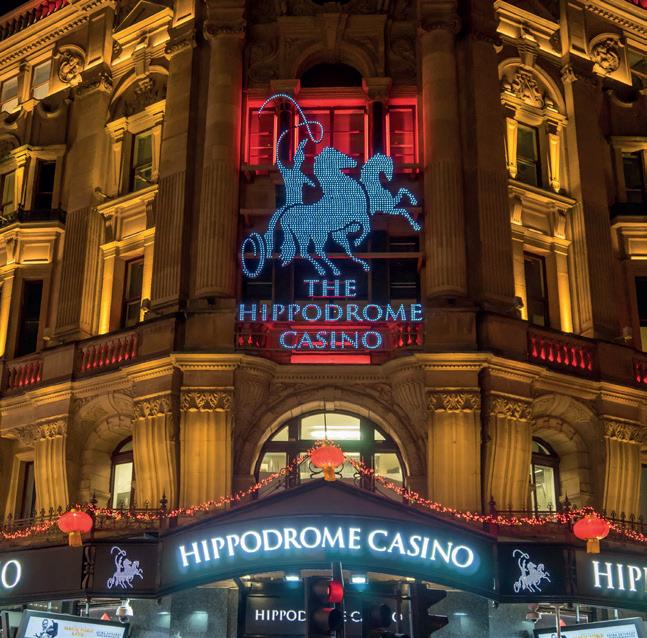
land - based legacy : the hippodrome opens
From 2018-2024, the Global Gaming Awards EMEA took place at the Hippodrome Casino. And, for all our discussion of iGaming, Macau and Las Vegas show us land-based gaming’s endurance. So too does the Hippodrome.
The casino opened in 2012 and, through a mixture of pandemics, regulation and simply being at the heart of a capital city like London, it has already been through a lot. But the property itself boasts over 100 years of history. If walls could talk, the Hippodrome’s would tell you some stories. Already guaranteed a rich legacy, it shows no signs of stopping just yet.

countless market launches and m &a
The most historic recent legalisation of online gambling came in Brazil, in January 2025. Already one of the world’s top five markets, Brazil’s regulation illustrated the wider growth of Latin America and globalisation of gambling.
Parallel to market launches, however, giants like Caesars, Flutter Entertainment and Entain are by-products of a series of M&A activity spanning decades. With that activity no doubt set to continue and another key market due to launch in the UAE, this – alongside AI, regulation and responsible gambling – will all play a part in moulding gambling’s future. Here’s to another 100 issues.





This issue marks Players Publishing’s 100th printed B2B issue.
As such, we’re looking back at 100 years of Las Vegas history – and lead contributor Oliver Lovat is on hand to provide his expertise once again. So how did we get here?
Congratulations to everyone at Players Publishing.
Being a regular contributor to the various magazines has been one of my great pleasures over the past 15 years – I have enjoyed both reading others’ views and relished the forum to research and opine on topics of personal interest, finding a community of like-minded professionals.
As we are celebrating landmarks this summer (and a notable birthday for me), I was asked to highlight the 10 key events in the Las Vegas journey. I settled, appropriately, on 21!
A lecture I often deliver to various groups is titled, “How We Got Here” – it’s a punchy and sometimes colorful exposition on how Las Vegas evolved from a minor settlement to a major global destination. In past columns, I

The land auction that started it all

have explored some of these in detail, so here I have just skipped to the fundamental points in certain cases. However, as the narrative builds in layers, it must be observed that few events exist in isolation without reference to the environment in which they occurred.
LAS VEGAS STORY
May 15, 1905
Although there was settlement in the area prior to William Clark’s 1905 land auction, much of it was literally “on the wrong side of the tracks.” The plots that were sold over two scorching May days form much of what we now know as Downtown Las Vegas, centered around Fremont Street. The Hotel Nevada, now The Golden Gate, opened in 1906. Las Vegas was born.

March 19, 1931
After a decade of prohibition across America, the Great Depression that had caused hardship, particularly in Nevada’s mining sector, created widespread economic malaise across the State. In a move that would secure his place in history, Republican Governor Fred Balazar signed Assembly Bill 98 into law, allowing licensed gaming in the State.
Although localized gaming permits were commonplace, in hindsight, the southern outpost of Las Vegas was to be the primary beneficiary. Local saloon owner Mayme Stocker, who moved to Las Vegas in 1911, was the first legal gaming operator at her Northern Club and Hotel found at 15 Fremont Street.

Legal gaming comes to Neveda Hoover Dam brings the crowds





Remarkably, Stocker lived until 1972, witnessing remarkable change in the city.
March 1, 1936
The Hoover Dam brought thousands of (male) construction workers to Southern Nevada for the largest construction project in the country from the late 1920s onwards. The transient population of Las Vegas was significant compared to the resident population, allowing the town to develop an early proficiency in gaming and hotel operations.
With Las Vegas’ railroad and the Dam site spur opening in 1931, the city’s drinking, gaming and “other” leisure amenities found an eager audience from the “dry” Boulder City.
After official completion in March 1936, at a cost of $49m, the Dam became an immediate attraction, leading tourists to travel across the nation to see this engineering marvel.
April 3, 1941
By 1941, 88% of US households were car owners, up from 60% a decade earlier. With a population of 1.5 million, Los Angeles had grown to be the fifth-largest city in the nation.
There is an apocryphal story that hotel developer Thomas Hull was driving to Las Vegas when his car broke down on Highway 91. Seeing the stream of automobiles passing towards the casinos, he should build a hotel on the southern outskirts, rather than in the center of town.
Like many Las Vegas myths, this is likely to be false, as not only had Hull built many of his properties on major US highways, along with architect Wayne McAllister, he had scouted the town for potential development sites some years before. Adopting a “Western Frontier” theme for the desert hotel, The El Rancho opened as the first resort on what we now know as The Strip on April 3 1941, featuring many aspects that would become common in future decades. The property was to feature 65 rooms and a swimming pool, latterly adding novelties, including cabaret entertainment and the first all-you-can-eat buffet.
December 26, 1946
When The Flamingo opened in 1946, Benjamin Siegel had assumed control of Billy Wilkerson’s development on Highway 91. Although Hull’s El Rancho was only 3.1 miles away, the two properties were worlds apart.
Unlike anything else in the desert, Siegel demanded the luxury, elegance and sophistication that could be found in Los Angeles. He also wanted LA’s celebrity, glamour and excitement. Like many resorts over subsequent decades, the opening was challenging; the 105 rooms were still under construction when the first guests arrived, and the property was to close in February
1947, before finally reopening the following month. The Flamingo brought glamour to the desert, brought mob money and management to The Strip, and with the very public demise of Bugsy, brought mobster mythology to early Las Vegas.
July 2, 1958
After the success of The Flamingo – and more importantly the Cuban Revolution that curtailed the casino business on that island – Las Vegas became the primary market for investment by mob interests in legal gaming.
Resort-style properties for American gamblers had appeared on The Strip throughout the 1950s, with The Sands, Dunes, Desert Inn, Sahara, Riviera and New Frontier operating as islands on the very-much-unwalkable Highway 91, but The Stardust was different.
Opening on July 2, The Stardust was built for the middle-class tourist, with a Greyhound bus terminal, drive-in movie theatre, production show as entertainment and 1,065 motel-style rooms, making it the largest hotel in the market. The ornate sign and stylized lettering set the template for branding and message within the competitive set.
The Stardust was by no means a luxury property, built with scale and priced below the major properties in market, it successfully encouraged broader customer appeal. The business model was clearly the template for some of the 1980s and 1990s programming in attracting broader tourist participation.
Part of the resort’s 1960s and 1970s history has entered notoriety, thanks to the movie Casino, but despite the criminality at the resort, it proved a fertile testing ground for new ideas and concepts, notably the first “Sportsbook” on the Strip and the introduction of a German duo of illusionists and their menagerie.
January 1, 1960
When the cast turned up to film the heist caper, Ocean’s 11, their legacy was to prove more enduring than the movie; the actors by day became performers by night.
Led by Frank Sinatra, Sammy Davis Jr and Dean Martin, all of whom had established reputations as individual performers, were joined on the Copa Room stage by associated “Rat Packers,” including Joey Bishop and Peter Lawford, as celebrities, politicians and industrialists came to Las Vegas to witness the five-week series of shows held during filming.
Not only did the shows capture headlines, associate the Rat Pack sound and style with Las Vegas, but associated the “headline residency’ model with Las Vegas.
August 5, 1966
When Jay Sarno and Stan Mallin begged
and borrowed to secure land, money and expertise to open Sarno’s ambitious hotel casino project, it was probably Las Vegas’ biggest bet.
In hock to Kirk Kerkorian, The Teamsters Union, and other less reputable financiers, Caesars Palace opened on August 5 1966 with a huge party and television exposure. Andy Williams played the Circus Maximus showroom in the Greco-Roman themed hotel, as guests experienced an entertainment escape of fantasy and delight. It changed Las Vegas, not just in casino design, but with a unique brand and as an “immersive experience” like no other, it became a must-see palace of fun and spectacle, attracting customers well outside the established gaming audience. Moreover, with Evel Kneviel’s 1967 failed fountain jump, Caesars Palace entered Americana, and to this day remains the most recognized original brand Las Vegas has produced.
November 24, 1966
Howard Hughes was a regular visitor to Vegas in the 1940s and 50s, producing the RKO movie, The Las Vegas Story in 1952.
On Thanksgiving eve 1966, Hughes’ private train rolled into town.
After receiving $500m from the sale of TWA, he deployed that capital in Las Vegas, taking out many of the original, mob-backed casino hotels, including The Desert Inn (where he did not leave his suite), Sands, Castaways, Frontier, Silver Slipper and Landmark. He also acquired mines, TV channels and land, including what is now the master-planned suburb of Summerlin, crucial for Las Vegas’ population growth recent decades.
On Thanksgiving eve 1970, Hughes quietly departed. He was virtually unseen during his entire stay.
Howard Hughes’ legacy is complex; none of his properties survive today, but the investments he made have paid dividends decades after his death. Outside his direct holdings, Hughes’ political muscle provided the catalyst for the changes in casino ownership laws and regulations, enabling corporate investment in Las Vegas and the exit of the original developers and operators.
July 31, 1969
Hughes’ great airline adversary, Kirk Kerkorian, had invested in Las Vegas since acquiring points in The Dunes in the 1950s, but it was his investment in Caesars Palace that had paid greatest dividends. He saw advantages in scale, the entertainment impact from the Rat Pack’s residency and profitability of a successful casino.
The International opened on July 2 1969, as the largest hotel in Las Vegas with 1,500 rooms, but the real legacy at that property began four weeks later. After an opening run by Barbra Streisand, the resident headliner, Elvis Presley, took to the stage for the first of his 636 shows over a seven-year period. Alongside Sinatra, Elvis was to become synonymous with the city; however, unlike many of the other entertainers in town, Elvis was aged just 34 when the residency commenced and (like Streisand, then aged 26) appealed to a much younger customer demographic than was typically found in Vegas’ casinos.
The residency affirmed Las Vegas as a premium destination for spectacular headline performers in a relatival intimate setting (arguably one created by Liberace in the 1950s) but, moreover, it marked the first transition from the first generation of customers to the next. The willingness and ability of Las Vegas operators to navigate demographic transition is a hallmark of its sustainability.
Kerkorian’s ownership was to last only two years as Hilton acquired the company yet, undeterred, Kerkorian was to return.
November 21, 1980
Kerkorian’s first MGM Grand followed the same strategy as The International; size, scale and entertainment. Opening in 1973, Dean Martin made the showroom his home. The property’s Las Vegas legacy, though, is somewhat darker.
Blame has been attributed to electrical causes, although some conjecture has suggested arson; the fire that occurred on the property in November 1980 killed 85 people, was the second-most lethal hotel fire in
American history, and the deadliest day in Las Vegas’ history. Insignificant to the terrible cost to those involved, the impact on the market was profound.
Already, visitation was falling, thanks to the competition from Atlantic City, New Jersey, the wider economic conditions in the US, and to have a visit to Las Vegas be a potential hazardous event, was damaging to tourism. The consequential changes to the fire code in Nevada were among the most stringent in the USA, and despite a second fire at The Hilton weeks later, Las Vegas’ fire safety codes have proved robust. For most of the 1980s, Las Vegas existed in the shadow of wider events, some even wondered whether it would ever recover.
November 22, 1989
If the opening of Caesars Palace wasn’t Las Vegas’ biggest bet, The Mirage certainly was.
As a guest, visiting Caesars Palace on opening night, Steve Wynn inhaled the energy and resolved to build a career in Las Vegas. After developing the Golden Nugget properties in Las Vegas and Atlantic City, building an impressive culture and management systems, a loyal customer base, a team of dedicated employees and executives, and empowered by an willing financing partner, The Mirage took all that had come before and brought it together for the most ambitious – and expensive – resort ever seen on the planet. Everything was planned, proved and perfected.
There was a Las Vegas before The Mirage… and a Las Vegas after.
The impact was transformative, breaking records in both gaming and non-gaming revenues, restating Las Vegas as a major destination. The megaresort boom followed, with over a dozen new properties opening over the next decade; visitation increased by 108%, room inventory by 102% and gaming revenue by 144%.
Steve Wynn reinvented the business model and redefined Las Vegas, with the opening of The Mirage being the seminal event in the history of the city.
December 14, 1995
With the growth of The Las Vegas Strip, there were winners and losers, with the Downtown Las Vegas market feeling the cost of competition. Although Wynn’s own Golden Nugget continued to grow and outperform the market, other properties, which had not seen reinvestment, were struggling. Indeed, local Laughlin, regional riverboat casinos and early tribal properties were challenging both Nevada and Atlantic City for gaming revenue.
There was a genuine fear of market obsolescence in Downtown and, in what was to prove a valuable case study, many of the competing operators in that market cooperated in developing a solution for the common good.
The Fremont Street Experience was formed, and the illuminated canopy was switched on in December1995. The market decline abated but, moreover, the lessons in placemaking (that Wynn had proved in The Mirage) have been applied to another location in Las Vegas. It is undoubted that without the action taken – or even with a different, less ambitious strategy – we would not have seen Downtown Las Vegas endure as a sustainable destination.
October 15, 1998
Having revived The Strip with The Mirage and the adjacent Treasure Island, Downtown at The Golden Nugget and with Biloxi’s Beau Rivage –the largest hotel in the USA outside of Las Vegas – under construction, Steve Wynn’s Bellagio was another huge gamble for Mirage Resorts.
There had always been wealthy people that liked to gamble, but Las Vegas was certainly not a destination of choice for those nongamblers that sought luxury vacations.
The Bellagio was to change that, bringing the world’s leading fashion brands and opulent restaurants to a 3,000-room resort, focused on high-end customers. At a cost of $1.6bn to build, it was the world’s most expensive resort; but notably not the largest, even on The Strip. The ambition to attract, and more importantly to deliver, luxury at scale showed how far Las Vegas had come.
May 4, 1999
The Sands Expo Convention Center opened in November 1990. Sheldon Adelson was a conventions guy – not a casino operator – but after imploding the Sands Hotel in 1996, work commenced on the Venetian, a conventioncentric hotel – with a casino.
Conventions were part of the business mix of Las Vegas since 1959 but were considered an amenity to boost mid-week occupancy.
Adelson saw it differently, believing Las Vegas was underserved as a convention destination.
It would be fair to state that the opening of The Venetian in May 1999 was not as smooth as at Bellagio, but the long-term impact was just as transformative, albeit for a different customer base.









In 1998, Las Vegas had 1.2 million visiting convention delegates, compared to 2025, with over 6 million and over 22,000 meetings and conventions. Not only is Las Vegas the leading convention and trade show market in the world, under the new ownership of VICI and Apollo, The Venetian was again ranked the leading convention hotel in the US.
For Sands, Adelson saw the profitability of the casino business and led the charge to Macau and Singapore for US operators, before his passing in 2021.
March 6, 2000
When it was announced on March 6 2000 that MGM was to acquire Mirage Resorts for $4.4bn, it was to change the nature of Las Vegas resort ownership.
It left Wynn to start all over again, albeit with $480m in his bank account, and MGMMirage with five and a half resorts on The Strip, an assortment of properties nationally and globally diversified. It also started the M&A boom of the period; MGM was to acquire Mandalay Resorts for $7.9bn in 2004, and Harrah’s, under the leadership of Phil Satre, was to embark on an acquisition spree, which ended in the company being taken private by Apollo and TPG in 2008 for nearly $30bn.
December 15, 2010
The decade had been an eventful one for Las Vegas. Steve Wynn had returned to market, repeating his Bellagio strategy at the architecturally iconic Wynn (2005) and Encore (2008), MGM had built City Center, the Las Vegas companies that achieved licensure had opened in Macau and were building in Cotai.
And of course there was the global financial crisis that hit Las Vegas hard. Projects under construction were left abandoned as credit dried
up. Some companies skirted with bankruptcy, others went under. Although spending and visitation were down, even in the nadir year of 2009, Las Vegas still attracted 36 million visitors.
It was one of those stalled properties that was to have an outsized impact to Las Vegas, as Deutsche Bank determined that it would realize greatest value by completing The Cosmopolitan, rather than leaving the project unfinished.
After opening on December 15, 2010, customers found the programming and experience was very different to the existing Las Vegas offer; it was aimed at and attracted a new, younger generation to the city. It worked.
In 2010, 29% of Las Vegas visitors were under 40, with the average age of visitor being 49.2.
A decade later, although somewhat exaggerated due to post-Covid behaviors, the comparison was 49% under 40, with average age of 42.3. Las Vegas was reinvented again and The Cosmopolitan was the most prominent symbol of this change, and “Cosmopolitan inspired” bars, clubs and dining options filled the market. Although it took time for these new customers to grow into gamers, the increased spending power of this customer segment on non-gaming experiences proved apparent.
Deutsche sold the property to Blackstone for $1.7bn in 2014, which subsequently invested further before exiting to a consortium, with MGM operating, for a total of $5.6bn in 2022.
April 6, 2016
AEG, which operated showrooms across the city, saw the value of an arena-sized venue in Las Vegas; the economics of developing such a building, versus adding additional casino spaces or guestrooms, were not compelling enough for the city’s gaming -focused operators.
MGM had proven the case for such a venue at the 17,000-capacity Grand Garden
Arena, servicing major artists and sporting events to boost secondary revenues, but to develop a standalone, competing venue was counterintuitive. It remained a gamble, with the potential of attracting a major sporting franchise, the upside was worth the risk.
Opening on April 6, 2016, The T-Mobile Arena became the largest entertainment venue on The Strip. Costing $375m and holding 20,000 people, entertainers that had bypassed Las Vegas’ showrooms, lined up to play at the multi-purpose venue.
Any concerns whether Las Vegas could support an arena-sized venue were allayed. True to the case that Kerkorian once advocated, Las Vegas proved it could go even bigger on entertainment, and the city finally getting sports team, although who played hockey in the desert?
October 1, 2017
By summer 2017, there was a sense that Las Vegas was finally becoming a real city. It was growing exponentially (again) and diversifying economically. The tourism market had bounced back from the financial crisis, with the 42.9 million visitors in 2016 remaining unsurpassed.

Stalled casino projects were again under construction, The Raiders were relocating from Oakland and, with a new generation of customers in place, events and programming, including large outdoor music festivals, had been curated nearly every other weekend.
It was at The Route 91 Music Festival, adjacent to Mandalay Bay, where a gunman (that I will not name) shot repeatedly through a hotel room window, killing 60 people and injuring over 800 in the worst mass shooting event in US history.
In a place where the currency is escape and fantasy, the reality that Las Vegas was not immune to the dangers of random gun violence, hit home. Unlike the MGM fire, visitation did not significantly decline, as enhanced security infrastructure was applied citywide.
The city came together as a community, in a way that only a tragedy can allow. 10 days later the Golden Knights made their home debut, with both Route 91 survivors and first responders present at the opening ceremony. For many, October 1, 2017 is the date when Las Vegas became a real city, with real city problems.
21,
The Raiders’ proposed relocation to Nevada was announced in March 2017 and, shortly after, construction began on a $1.7bn, 70,000 capacity stadium for both sports and large entertainment events.
It is easy to forget that, as recently as 2002, Las Vegas was not permitted to advertise during the Super Bowl, and casinos still weren’t allowed to use the trademarked
name of the NFL showpiece, instead inviting customers to “big game” viewings, lest the sport being tainted with the evils found in Las Vegas. As Las Vegas matured, so did America.
Everyone was prepared for 2020 to be a memorable year for Las Vegas and, as we know, 2020 was indeed a memorable year, but for a very different reason than anticipated. When the Allegiant Stadium opened on September 21, with a (rare) victory for The Raiders, spectators were absent.
However, as one of the finest venues in the country, in a city built for events, it would not take much time for the Allegiant to become a key part of the nation’s entertainment infrastructure.
Since 2020, the Allegiant has hosted global artists from Taylor Swift to Paul McCartney, from BTS to AC/DC, and events galore, including two WWE Wrestlemanias, soccer matches – notably the CONCACAF Gold Cup Final, rugby, UFC, boxing and the 2024 Super Bowl. The College Football Playoff National Championship (arguably the biggest game in the US sporting calendar outside the Superbowl) will be held at the stadium next year and The Super Bowl returns to Las Vegas in 2029.
By 2025, The Allegiant was the highestgrossing stadium in the US (for the second consecutive year) with $281m in gross entertainment revenue, and second-highest grossing entertainment venue in the country. It would take something really compelling to be able to top it in terms of both revenues and spectacle.
September 29, 2023
In 2018, just 3.3 miles away from The Allegiant (around the same distance from The El Rancho to The Flamingo) James Dolan secured a site for his MSG arena, a 20,000-capacity concert hall built primarily for live entertainment.
With a forecast cost of $1.2bn with no hotel, restaurants or casino, many in the city couldn’t see how the economics worked. Final costs were reported at $2.3bn. Even the optimists were pessimistic.
With a U2 residency opening The Sphere on September 29, global attention turned to the ultimate embodiment of the digital age. With specially produced immersive movies (and a remaster of The Wizard of Oz) playing daily on the screen, complemented by residencies from a select group of performers and occasional special events, it is has become instantly iconic, both inside and out, thanks to social media and unique customer experience. Every city (except for London, apparently) wants one!
Ticket prices and sponsorship have busted conventional financial models, making it the highest grossing venue in the nation, generating $781m in gross revenue in 2025. Despite
proclamations over decades, by the mid-2020s, Las Vegas really is the entertainment capital of the world.
Of course, this is not exhaustive; there are many other impactful events that could have made the list, but drawing on 21 surely is not a good idea! Missing from this list, although some are referenced, are The Cuban Revolution, Atomic Testing, Evel Knievel’s jump, UNLV, Bill Bennett taking over Circus Circus, Riklis at The Riviera, Wynn buying the Nugget, the legalization of gaming in Atlantic City, the takedown of organized crime, The Forum Shops, The Hard Rock and Palms, Celine at the Colosseum, The Hangover, The TPG/Apollo acquisition of Caesars, Wynn’s opening, Superbowl in Vegas and the impact of Formula 1. On another day, some of these would have made it.
In this list, we note that eight of these transformational events have been casino openings, two are non-gaming celebrity/ entertainment drivers (with a case for Celine to be a third), the development of five nongaming attractions (including The Hoover Dam as an attraction), four legislative and financial events, and two tragedies.
What makes Las Vegas unique is the relentless desire to compete and innovate in a market that generously rewards success unlike anywhere else. Moreover, considering the layers of infrastructure in place, economic resilience and unmatched ability to renew every generation, there are few destination locations (within segments) that share such inelasticity.
As a development professional, the value of knowing our history is that there are practical


Oliver Lovat
applications to this knowledge. Many of these events, sometimes decades apart, share remarkably similar pathways, deploying remarkably similar strategies, and have delivered remarkably similar outcomes.
As we mark this landmark anniversary at Players Publishing – and my own upcoming birthday – it seems appropriate to invoke the Las Vegas refrain, “Well done, that’s fantastic, but what’s next?”
Oliver Lovat is the CEO of the Denstone Group. He consults on development and the strategic positioning of casino resorts.

Global Gaming Insider highlights the monthly stock price from the opening day of the past six months across the EMEA region, observing February – July 2026
• Six-month high: February (16.71 EUR)
• Six-month low: May (12.79 EUR)
• Market capitalisation: US$12.91bn (as of 7 July 2026)
• Six-month high: June (25.33 EUR)
• Six-month low: March (20.11 EUR)
• Market capitalisation: US$6.88bn (as of 7 July 2026)
• Six-month
• Six-month
March (23.87 EUR)
February (20.58 EUR)
• Market capitalisation: US$4.76bn (as of 7 July 2026)
• Six-month high: March (48.56 EUR)
• Six-month low: July (43.20 EUR)
• Market capitalisation: US$1.09bn (as of 7 July 2026)
Global Gaming Insider recaps the most noteworthy appointments and departures across the EMEA region, including Rank Group, Gentoo Media and The Bingo Association
Richard Harris
Permanent
CEO,
Rank Group
After serving as Interim CEO since January, Harris saw his title moved to a permanent standing following an executive search conducted by the Board’s Nominations Committee. Harris took over the CEO role on an interim basis from John O’Reilly, who retired after nearly eight years of service with Rank Group.
Rank Group Chair John Ott confirmed Harris was the “outstanding choice” among a “strong field of candidates.” Rank Group’s new CEO originally joined the organisation in May 2022 as CFO and looks forward to “building on this momentum as we continue to drive growth and evolve the Group’s strategy.”
Harris’ previous experience includes Foxton’s a leading estate agency, and Marks & Spencer – the famous UK department store

Måns Svalborn
CFO, Gentoo Media
Following former Gentoo Media CFO Mads Haugegaard Albrechtsen’s decision to resign from the position in May, the affiliate hired Svalborn. Svalborn most recently served as Group CFO of Raketech Group Holding for over six years, where he played a “central role” in financial strategy, financing, capital markets activities and corporate governance.
Prior to joining iGaming, Svalborn built a career in banking and audit, including roles at Nordea Bank and Ernst & Young. Svalborn will look to strengthen Gentoo Media’s executive management team and is “delighted to join Gentoo Media at such an exciting stage of the company’s journey.”

Miles Baron Outgoing CEO, The Bingo Association
After serving as CEO of The Bingo Association, the National Bingo Game Association (NBGA) and Meeron for over 13 years, Baron chose to step down from his position and will now be succeeded by former Allwyn Group Head of Responsible Gaming Nicole Garrett. Each of his former organisations described Baron as a “strong advocate” for the industry, crediting the executive with delivering multiple reforms and achievements during his tenure.
Baron is “immensely proud” of his time with The Bingo Association and believes Garrett will “take the sector forward to a whole new level.” His time with The Bingo Association was highlighted by the sector securing the abolition of UK bingo duty.
You can always “count” on Svalborn, who has a Master’s degree in Accounting, and a Bachelor’s Degree in Accounting, Corporate Finance, Strategy & Management
Baron served as Captain of the The Bingo Association charity cricket day team in 2025, which helped raise £4,500 ($6,000) for multiple charity organisations
Global Gaming Insider examines key European markets: record growth in Ireland and Montenegro, plus mixed signals from Spain
IRISH ONLINE SPORTS BETTING
• Online betting turnover in Ireland reached nearly €1.2bn ($1.38bn) from Q1 2026, up from €874.8m in the previous quarter
• Q1 2026 marked the first time online betting turnover surpassed €1bn, ahead of Ireland’s new licensing framework coming into effect
• Over the multi-year period, the data shows that by 2025, budget revenue has approximately doubled compared to 2021
MONTENEGRO: STATE CONTRIBUTIONS
• In 2025, gambling revenue paid to the state reached a record €43.6m in Montenegro, a 28.9% year-on-year rise. State gambling revenue approximately tripled between 2021 and 2025
• The Montenegrin Gambling Authority attributed the results to the implementation of a centralised monitoring system and stricter gambling regulations
• However, the monitoring system was introduced in November 2024, while additional stricter measures only came into effect in H2 2025. So revenue growth cannot be attributed solely to the new rules
Q1: SPAIN ONLINE
• Spanish online gambling deposits reached a record €1.59bn in Q1 2026, while GGR eased to €445.4m after peaking at €485.4m in Q4 2025
• Online casino GGR increased slightly quarteron-quarter in Q1 2026, while sports betting GGR fell 17.2% despite the overall rise in deposits
• The decline in sports betting GGR suggests players won a larger share of their wagers, reducing bookmakers’ hold. Crucially, more deposits did not amount to greater losses...

Marek Plota , Founder of RM Legal and Gaming in Poland, returns for another Global Gaming Insider column. He asks: are we really ready for AI compliance?
Artificial intelligence is increasingly becoming embedded in the operational infrastructure of gambling businesses. In betting and online casino, AI-based tools are already used to predict player behaviour, personalise offers, detect fraud, support AML processes, identify responsible gambling risks, automate customer support and improve commercial performance.
Used properly, these tools may enhance the operator’s control environment. They can support earlier detection of harmful gambling patterns, improve fraud prevention, strengthen AML monitoring and allow customer support teams to handle routine cases more efficiently.
At the same time, the deployment of AI creates a distinct layer of legal and regulatory risk. AI systems may influence player behaviour, classify or profile users, determine the targeting of
offers, support risk scoring or affect access to an account. In a highly regulated gambling sector, such systems cannot be treated as merely technical or operational tools.
For operators and B2B suppliers, the first step should be a structured assessment of each AI system. This should include its intended purpose, the categories of data processed, the decisions or recommendations it supports, the level of automation involved, the role of human oversight and the potential impact on the player.
Although the EU AI Act was not designed specifically for gambling, it is highly relevant to the sector. Gambling businesses rely extensively on behavioural data, personalisation, financial transactions, risk scoring and player monitoring. These are precisely the areas in which the use
of AI may give rise to regulatory exposure.
For the purposes of legal and regulatory assessment, AI should be understood broadly. It should not be limited to generative AI tools. Depending on its functionality, it may also include machine learning models, predictive scoring tools, recommendation systems, automated classification tools, anomaly detection systems, chatbots, personalisation engines and decision support systems.
In sports betting, AI may support odds optimisation, trading processes, suspicious betting detection, customer segmentation, AML alerts, fraud scoring, bonus abuse detection, risk-based KYC and personalised recommendations. In online casino, AI may

be used for game recommendations, bonus targeting, responsible gambling monitoring, churn prediction, VIP segmentation, payment risk analysis, withdrawal risk scoring, customer support and behavioural profiling.
The legal qualification of such systems should be based primarily on their function, context of use and impact on the player. A tool used solely for internal analytics may present limited regulatory risk. The same tool may require a more detailed assessment where it affects a player’s account, funds, access to the service, risk classification or exposure to marketing.
The highest level of regulatory concern under the AI Act relates to prohibited AI practices. In the gambling sector, the principal risk arises where AI is used to manipulate player behaviour or exploit a player’s vulnerabilities.
This risk is particularly acute where an AI system identifies indicators of vulnerability and uses those indicators to increase engagement, play intensity or spending. Such indicators may include chasing losses, increased deposit frequency, repeated cancellation of withdrawals, late night play or other patterns suggesting impaired control. If these signals are used to trigger personalised bonuses, retention campaigns, targeted incentives or behavioural nudges, the operator may be exposed to significant regulatory risk.
Examples may include tailored promotions sent to players showing signs of harmful
gambling, online casino recommendations directing such players towards faster or higher volatility games, or AI-driven near miss mechanics activated when the system identifies emotional fatigue, loss aversion or similar behavioural patterns. Where such features are calibrated around player psychology, previous losses or vulnerability indicators, they may be assessed as exploitative design.
Personalisation becomes legally sensitive when it relies on behavioural or socio-economic signals in a manner that takes advantage of a player’s vulnerability. Operators should treat such use cases as highpriority red flags requiring legal, compliance and product review before deployment.
Operators and suppliers should adopt clear internal restrictions. AI should not be used to identify vulnerability for commercial exploitation. Responsible gambling indicators should trigger protective measures rather than marketing escalation. Players identified as at risk should be excluded from promotional targeting. AI-driven product design should be
assessed not only by reference to conversion or retention metrics, but also by reference to fairness, transparency and harm prevention.
Gambling is not automatically classified as a high-risk sector under the AI Act. However, this does not remove the need for a detailed assessment of individual use cases. Certain AI systems may fall within the high-risk framework or, as a minimum, require comparable governance because of their potential impact on players.
Attention should be paid to systems that affect access to gambling services, financial decisions, risk classification, player monitoring or decisions that may have serious consequences for the individual. This may include automated systems used to freeze accounts, refuse withdrawals, close accounts, restrict access, adjust player limits, escalate AML cases, classify users as fraudulent or impose responsible gambling interventions.
Responsible gambling tools require careful
“AI should not be used to identify vulnerability for commercial exploitation. Responsible gambling indicators should trigger protective measures rather than marketing escalation”
legal and operational review. Their purpose is protective, but their outputs may still materially affect the player. A system that recommends a cooling off period, triggers a limit, escalates a player for safer gambling review or restricts account functionality should be subject to appropriate governance. The operator should understand how the model works, what data it uses, how reliable it is, how false positives are managed and whether human review is genuine.
Fraud and AML systems raise similar concerns. AI may be used to detect suspicious betting patterns, multi-accounting, bonus abuse, unusual payment behaviour or collusive play. Where automated alerts lead to account restrictions, payment delays or refusal of withdrawals, the operator should be able to explain the basis of the decision, document the process, provide appropriate review routes and ensure effective human oversight.
As a practical rule, any AI system that may affect player rights, funds, access to the service or regulatory status should be treated as enhanced risk, even where the formal legal classification requires further analysis.
Some AI systems may not be prohibited or high risk, but they may still require transparency. This is especially relevant for chatbots, generative AI and AI-generated content. If players interact with an AI chatbot, they should be informed that they are dealing with an AI system unless this is obvious from the context. This matters in customer support, complaints handling, KYC assistance, safer gambling interactions and retention communication.
Generative AI used to create marketing content, images, game assets, synthetic voices, avatars, influencer style messages or automated player communications may also require transparency and governance. The more realistic or personalised the content, the greater the risk that users may be misled.
A player should not believe that a human safer gambling agent is speaking to them if the response is generated by AI. A customer should not receive personalised regulatory or financial information from a chatbot without proper controls. AI generated marketing should not hide its automated origin where disclosure is required.
Most AI use cases in gambling involve the processing of personal data. This may include registration data, payment data, gambling history, behavioural data, device data, location data, KYC information, responsible gambling records and customer support interactions.
For this reason, AI Act compliance should be aligned with GDPR requirements from the outset. Operators should identify the appropriate legal basis for processing, provide clear privacy notices, apply data minimisation, define retention periods, ensure appropriate security measures and respect data subject rights.
Many AI deployments in gambling are also likely to require a Data Protection Impact Assessment. This will be particularly relevant where AI is used for profiling, behavioural monitoring, risk scoring, fraud detection, responsible gambling assessments or other forms of systematic player evaluation.
Profiling and automated decision making require particular care. Where an automated decision produces legal effects or similarly significant effects for the player, GDPR Article 22 may become relevant. Examples may include automated account closure, refusal of withdrawal, severe account restrictions, automated risk classification or other decisions that materially affect access to gambling services.
Human oversight should be genuine and effective. A manual review will not be sufficient if the reviewer cannot understand the basis of the AI-generated result, challenge it in practice or change the outcome where appropriate.
The first step is to map AI use. Many organisations do not have a complete list of AI systems because AI features are often embedded in CRM tools, payment systems, AML platforms, game recommendation engines, analytics tools and customer support software.
The second step is classification. Each system should be assessed as a prohibited use risk, potential high-risk use, transparency
obligation use or lower risk internal use. This classification should be documented and reviewed when the system changes.
The third step is data review. Operators should know what data is processed, where it comes from, whether it includes sensitive or vulnerability related indicators, whether it is used for the original purpose and whether it may be lawfully used for AI training or inference.
The fourth step is governance. Operators should adopt AI policies, human oversight rules, escalation procedures, incident response mechanisms, audit trails and model monitoring. AI compliance should involve legal, compliance, product, data, security, responsible gambling and commercial teams.
The fifth step is supplier control. Contracts with AI vendors should cover permitted use, prohibited use, documentation, audit rights, explainability, logging, testing, bias monitoring, cybersecurity, data processing, model updates, subcontractors, regulatory assistance, incident notification and liability. Operators should be careful with black box systems if they may later need to justify the output to a regulator, player or court.
The sixth step is marketing separation. AI systems detecting responsible gambling risk should not feed commercial targeting without strict controls. At risk players should be removed from promotional campaigns. Vulnerability signals should be used to protect the player, not to sell more.
In most cases, probably not yet. The gambling sector is still at an early stage of formal AI governance. Many operators and suppliers already use AI based tools, often through existing platforms, CRM systems, AML tools, customer support solutions or marketing technology. In many organisations, however, these tools have not yet been formally mapped, classified or assigned to a clear internal owner.
This makes the current moment important. It is an opportunity to build the framework properly before regulatory expectations become more settled and before AI becomes even more deeply embedded in day-to-day operations.
Operators do not need to solve every issue at once. A sensible first step is to identify existing AI use cases, prioritise those that may affect players, and review the highest risk areas first. Suppliers should take the same approach from the product side. It is not too late. In fact, for many gambling businesses, this is probably the best time to act. The companies that start now will be better placed to use AI safely, explain their systems clearly and respond with confidence when regulators, partners or players begin to ask harder questions.

SCAN HERE for more info on

István Cocron , Global Gaming Insider contributor and Lawyer at Rechtsanwalt Cocron GmbH & Co. KG, discusses Germany’s €1,000 deposit limit and why courts keep backing players – even against licensed operators
Germany’s monthly deposit cap for online gambling has moved from a compliance footnote to one of the most litigated issues in the country’s regulated market. Three rulings handed down within the past few months –by the Munich I Regional Court, the Stuttgart Higher Regional Court and, most recently, the Munich Higher Regional Court – have converged on the same conclusion: operators who fail to enforce the limit remain liable for players’ losses, regardless of whether they hold a valid German licence.
THE RULE EVERYONE IS TALKING ABOUT
Since 1 July 2021, Section 6c(1) of the Interstate Treaty on Gambling (Glücksspielstaatsvertrag 2021, “GlüStV 2021”) has capped deposits across all German-facing online gambling products at €1,000 ($1,143) per calendar month – and that
cap applies across providers, not per platform. Compliance is meant to be enforced through LUGAS, the centralised limit file that operators must query before accepting any deposit. If a player has already hit the ceiling, the deposit is supposed to be rejected outright.
Section 4(5) No. 2 GlüStV 2021 ties this obligation directly to licensing: an operator that does not actively monitor and enforce the deposit limit cannot lawfully hold a German permit in the first place. That link between the limit and the licence is what now drives the litigation.
In a decision handed down on 19 June 2026, the Munich Higher Regional Court (Oberlandesgericht München) dismissed a sports betting operator›s appeal in full and
upheld an earlier Munich I Regional Court judgment in favour of a player. Between April and May 2022, the Malta-based operator had failed to set up any cross-provider deposit limit on the claimant’s account – a limit was only activated in mid-June 2022. During the unregulated period, the player lost €6,022.67.
The appellate court classified Section 6c(1) GlüStV 2021 as a prohibitory statute within the meaning of Section 134 of the German Civil Code (BGB): even though the provision is addressed to operators rather than players, the court held that its consumer-protection purpose can only be achieved if breaches render the underlying betting contracts void. On that basis, the player’s stakes were recoverable as unjust enrichment under Section 812(1) BGB.
Crucially, the court went further and

confirmed that Section 6c(1) GlüStV 2021 also qualifies as a protective statute (“Schutzgesetz”) for the purposes of Section 823(2) BGB –opening the door to tortious damages claims in addition to restitution. The court rejected the operator’s defence that the LUGAS system was not yet fully operational at the relevant time, holding that fault is irrelevant to an unjust-enrichment claim, and it dismissed the argument that a “legacy customer” registered before the treaty’s entry into force fell outside its scope: what matters is the law in force when the deposits were made.
The Munich ruling builds on an earlier landmark decision. On 27 February 2026, the Stuttgart Higher Regional Court (Oberlandesgericht Stuttgart) ordered an operator to repay a player’s full losses – around €15,000 accumulated between January 2022 and April 2023 – after the operator repeatedly accepted deposits above the statutory limit. The court held that breaching Sections 4(5) No. 2 and 6c(1) GlüStV 2021 constitutes a violation of a protective statute under Section 823(2) BGB, expressly independent of whether the operator held a licence at all. This was the first time an appellate-level German court had confirmed the protective character of the deposit limit, and it gave the numerous firstinstance rulings that preceded it (Munich II, Osnabrück, Mainz, Heidelberg, Stendal, among others) authoritative backing.
“ Germany’s courts are sending a clear message: compliance failures carry financial consequences, even for licensed operators ”
On 12 June 2026, the Munich I Regional Court (Landgericht München I) went further still, awarding a player more than €100,000.00 (case no. 40 O 12906/25). The claimant had deposited more than €140,000 with a licensed Maltese based operator in a single month in 2022, against the €1,000 statutory limit and suffered a net loss of more than €100,000. What makes the case notable is that the court explicitly distanced itself from an earlier, operator-friendly ruling of the Munich Higher Regional Court dated 5 January 2026; in which that court had held that Section 6c GlüStV 2021 was not a protective statute and that enforcement of deposit limits was a matter for the gambling regulator alone, not for private litigants. Munich I instead sided with a competing line of case law from the Memmingen Regional Court, and the underlying legal question is now pending before the Federal Court of Justice (Bundesgerichtshof, case no. I ZR 4/26).
Read together, the picture is now clearer than it has been at any point since 2021: the Munich Higher Regional Court’s June 2026 decision effectively supersedes its own January 2026 position and aligns Munich with Stuttgart, while the Federal Court of Justice is expected to deliver the final word on the point in due course.
Deposit limit above €1,000/month. If an operator allowed you to deposit more than €1,000 in a calendar month without properly verifying and approving a higher individual limit, the resulting losses – potentially all deposits made during the affected period – may be recoverable, whether the operator was licensed or not.
Two separate legal bases. Claims can rest on unjust enrichment (Section 812 BGB, where the contract is void) and/or statutory damages (Section 823(2) BGB, for breach of a protective statute) – the latter available even where the contract was formally valid.
Limitation periods are tightening. Claims relating to losses from 2021 and 2022 may already be time-barred or close to it. Losses from 2023 generally become statute-barred at the end of 2026 under the standard three-year limitation period (Sections 195, 199 BGB);
losses from 2024 remain open until the end of 2027. Enrichment claims may in some circumstances benefit from a longer, 10-year period under Section 852 BGB, though this depends on the facts of the individual case.
A licence is not a shield. All three courts confirm, in different ways, that holding a valid German gambling licence does not excuse an operator from enforcing the deposit limit –and does not protect it from liability where it fails to do so.
Players who deposited more than €1,000 in any month since July 2021 should gather account statements, deposit and withdrawal histories and any records of limit-increase requests. Given the approaching 2026 deadline for 2023 losses, an early legal assessment is advisable – pre-litigation demand letters rarely move operators; in practice, payment tends to follow only once litigation is genuinely on the table.
Rechtsanwalt Cocron GmbH & Co. KG, with offices in Munich and Berlin, represents players nationwide in deposit-limit proceedings and has obtained several of the rulings referenced above, including the Munich I and Munich Higher Regional Court decisions. An initial case assessment is available at www.ra-cocron.de.

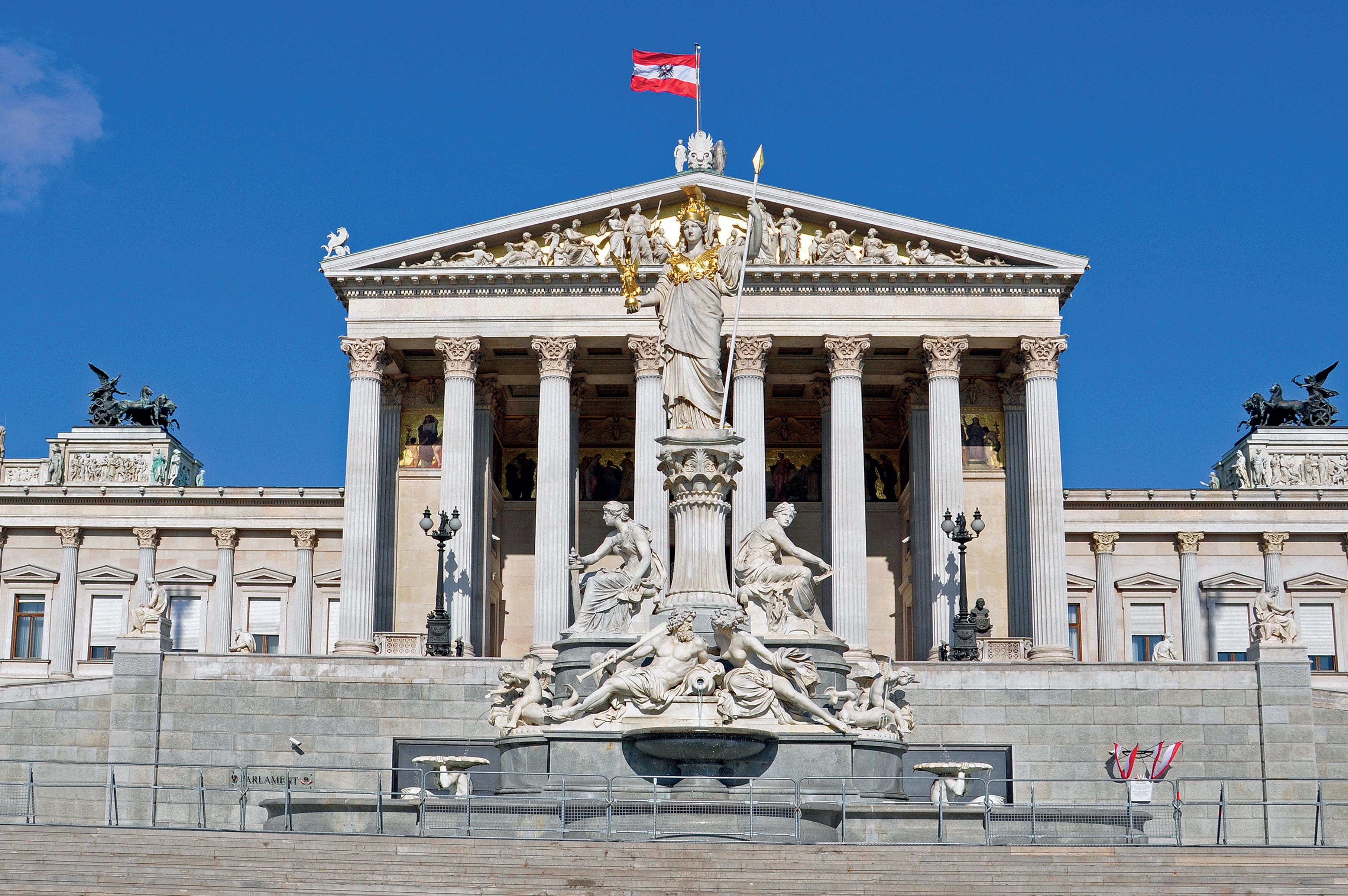
Christian Rapani, Attorney at Law, and Felix Hohenthanner , Associate, at Rapani Rechtsanwält, reflect on the opening of Austria’s online market – and the questions that still need answering
For more than a decade, all stakeholders involved in online gaming were facing a high degree of legal uncertainty in Austria. Demand was substantial and growing, yet the law reserved online casino and lottery products to a single concessionaire operating under the win2day brand. Everyone else served Austrian players from abroad, in a grey zone that generated a steady stream of player restitution litigation but left the monopoly with a shrinking market share of about 30-40%. The draft amendment now in consultation sets out to end that situation and to replace the monopoly with an open, licensed online market. It is the most significant recalibration of Austrian gaming law in a generation.
FROM MONOPOLY TO LICENSING
The core move is straightforward. Instead of a single online concession, the draft creates a licensing regime under which multiple operators can be authorised to offer online gaming in and into Austria, subject to strict player protection, supervisory and tax conditions. A dedicated independent gaming supervisory authority is to be established to run the system. Until that authority is operational, the transitional provisions keep the competent tax office, Finanzamt Österreich, in charge of issuing concessions. The existing monopoly concession is set to expire in September 2027, which is
the pivot around which the whole transition is organised.
The reform keeps faith with the objectives that have always underpinned Austrian gaming law and that the Court of Justice of the European Union has repeatedly held must justify any restriction on the freedom to provide services: player protection, the prevention of gaming-related crime and the containment of the black market. The draft adds an explicitly stated ambition that is worth quoting in substance, because it becomes the benchmark for everything else. The regime is meant to achieve a high level of channelisation into the regulated market by offering an attractive legal product, while maintaining the highest possible standard of player protection.
That single sentence carries a lot of weight. Channelisation is not one objective among several. It is the precondition for all of the others. A deposit limit, a (self-)exclusion register or a monitoring obligation protects only those players who actually play in the licensed market. Every player who stays with, or drifts to, an unlicensed operator is beyond the reach of all of it. Any measure in the draft, therefore, has to be assessed twice: once for its player-protection value, and once for its effect on channelisation. Where the two pull in opposite directions, the reform has a design problem to solve.
The draft assembles a comprehensive set of measures for player protection. Mandatory deposit limits are one economic part: a maximum of €250 ($285.80) per week for players up to the age of 26, and €1,680 per month for players from 26 onwards. Crucially, the law also allows a higher, individualised limit for players from the age of 23, where there is no indication of harm and graduated additional safeguards such as monitoring and feedback tools are in place. This is a sensible, proportionate structure that recognises that not every economically capable adult is a vulnerable player.
For online gaming offered in the form of slot machines, the draft imports the elements familiar from the land-based world: a maximum stake of five euro per game, a maximum prize of €10,000 per game, a minimum game duration of two seconds and a mandatory cooling-off. These limits do not apply to other game formats, which is good news, as this takes into account the fact that, for example, poker is a completely different game in terms of betting/winnings and game structure and cannot be treated with the same limits.
It also introduces two cross-operator registers. A blocking register consolidates self-exclusions and third-party exclusions
across all licensees and gaming forms. A limit register records and enforces deposit limits across operators, closing the obvious loophole of a player simply opening accounts elsewhere.
Alongside these sits a Safe-Server requirement, under which relevant gaming data is held in a form that allows the supervisory authority transparent, auditable and integrity-assured access. Taken together, overall it is a modern, credible playerprotection architecture that stands comparison with any regime in the European Union.
Also the fiscal side of the reform deserves a note, because it changes commercial planning materially. Under the new bonus rules, promotional credits, free spins and similar incentives count as stakes for tax purposes. Licensees are permitted to deduct bonuses only within capped limits. Refunds, including payments made on the basis of civil-law invalidity of a gaming contract, do not reduce the tax base. Operators modelling the Austrian market will need to price these mechanics in from the outset, as they directly affect the economics of player acquisition.
None of the above is the difficult part. The difficult part is a small number of design choices where the draft, as it stands, risks working against the channelisation objective it sets for itself. Four of these stand out from an advisory perspective.
The timing of the cooling-off. The transitional regime effectively requires prospective applicants to cease their offering by a fixed date, with a lengthy blocking period as the penalty for continuing. Yet the date from which a license can actually be obtained is not fixed anywhere. Neither the tender, nor the
procedure’s duration, nor the moment of the first license grant is settled. The expiry of the incumbent’s concession in September 2027 is not a guarantee that new licenses will be live by then. Operators are therefore asked to withdraw from the market on 1 January 2027 in exchange for an uncertain return, leaving the entire online market temporarily to the former monopolist and a possible black market.
The Netherlands offers a cautionary precedent: a cooling-off period imposed before market opening pushed a significant share of demand towards operators who never intended to seek a license, and that demand had to be won back afterwards. A cleaner design would attach the cooling-off to conduct rather than to a calendar date, so that it functions as a sanction for those who decline to enter the regulated framework, not as a precondition for entry that punishes the very operators willing to be licensed. Cooling-off, in other words, should follow from a lack of regulatory willingness, not stand in front of it.
Stake and prize limits: the right scope, and the case for keeping the figures adjustable. The draft deserves credit for how it scopes these limits. The five euro stake and €10,000 prize caps apply only to online gambling in the form of slot machines, while other games such as poker remain subject to the general playerprotection rules. That is a sound, risk-based call: a poker tournament, with a single buy-in and prizes drawn from a participant pool, does not carry the risk profile of a high-frequency slot game. The level of the slot limits derives from the already liberalized and regulated land-based slot industry and a strict line on high-frequency products is legitimate.
The narrower question is where such figures belong. Limits of this kind benefit from regular review against channelisation and harm data, which suggests they may sit more comfortably in an implementing ordinance than in primary legislation, without any loss of stringency. Germany, where stake limits are fixed in the State Treaty, illustrates how difficult adjustment becomes at that level. Implementation matters too: international studios certify their products for many jurisdictions at once, and parameters that depart substantially from prevailing technical norms require Austria-specific versions that some suppliers may be reluctant to implement. Neither point argues for less strict player protection, but only for parameters that can be calibrated, monitored, revisited and guarantee high channelisation at the same time.
The deposit-limit increase in practice. The statutory possibility of raising the limit for suitable players is welcome, but its value will be decided by its implementation. If the increase process is quick, fully digital and workable, it channels high-value players into the supervised environment. If it is slow, paper-bound or effectively unreachable, it does the opposite,
driving exactly those players to unlicensed sites where no limit, no monitoring and no protection exist at all. The ordinance should mandate clear, standardised and automatable processes in the limit register.
Calibrating to the market, not to the incumbent. A recurring temptation in reforms of this kind is to take the incumbent’s commercial parameters and impose them on every new licensee. That would be a mistake here. The reform rests on the finding that the monopoly product did not channel demand adequately despite its exclusivity. Parameters that failed to produce an attractive offer under monopoly conditions will not succeed under competition. The benchmark should be a genuine market standard, an offer that a competent, nonvulnerable player experiences as a real alternative to the black market.
Austria is doing the right thing – and doing most of it well. The structures are modern, the player-protection instruments are serious, and the direction of travel is plainly correct. The reservations set out above are not objections to the reform but to a handful of transitional and technical choices that could blunt it. Whether the new market channels demand from its first day will turn less on the ambition of the framework, which is not in doubt, than on the practicality of these final design decisions. That is where the consultation phase, and the ordinances still to come, will earn their keep.
This article was written while the public consultation on the draft amendment was still open, with a submission deadline of 15 July 2026. Individual provisions discussed here may therefore have been amended in the course of the legislative process by the time of publication.
Need to know what’s new in the EMEA land-based gaming market? Global Gaming Insider has got you covered, bringing you the latest product launches, cutting-edge technology and innovations from the industry’s leading suppliers
The V5 Wall Configuration is a premium gaming solution designed to maximise both player engagement and casino floor efficiency. By combining Alfastreet’s advanced gaming technology with a sophisticated wall-mounted layout, this configuration offers an elegant, spacesaving solution without compromising on comfort or performance.
Designed for casinos looking to optimise their gaming areas, the V5 Wall Configuration accommodates multiple player stations while maintaining a clean, organised footprint. Its ergonomic design provides players with a comfortable gaming experience, while the modern aesthetics and high-quality materials ensure it seamlessly integrates into a wide variety of casino interiors.
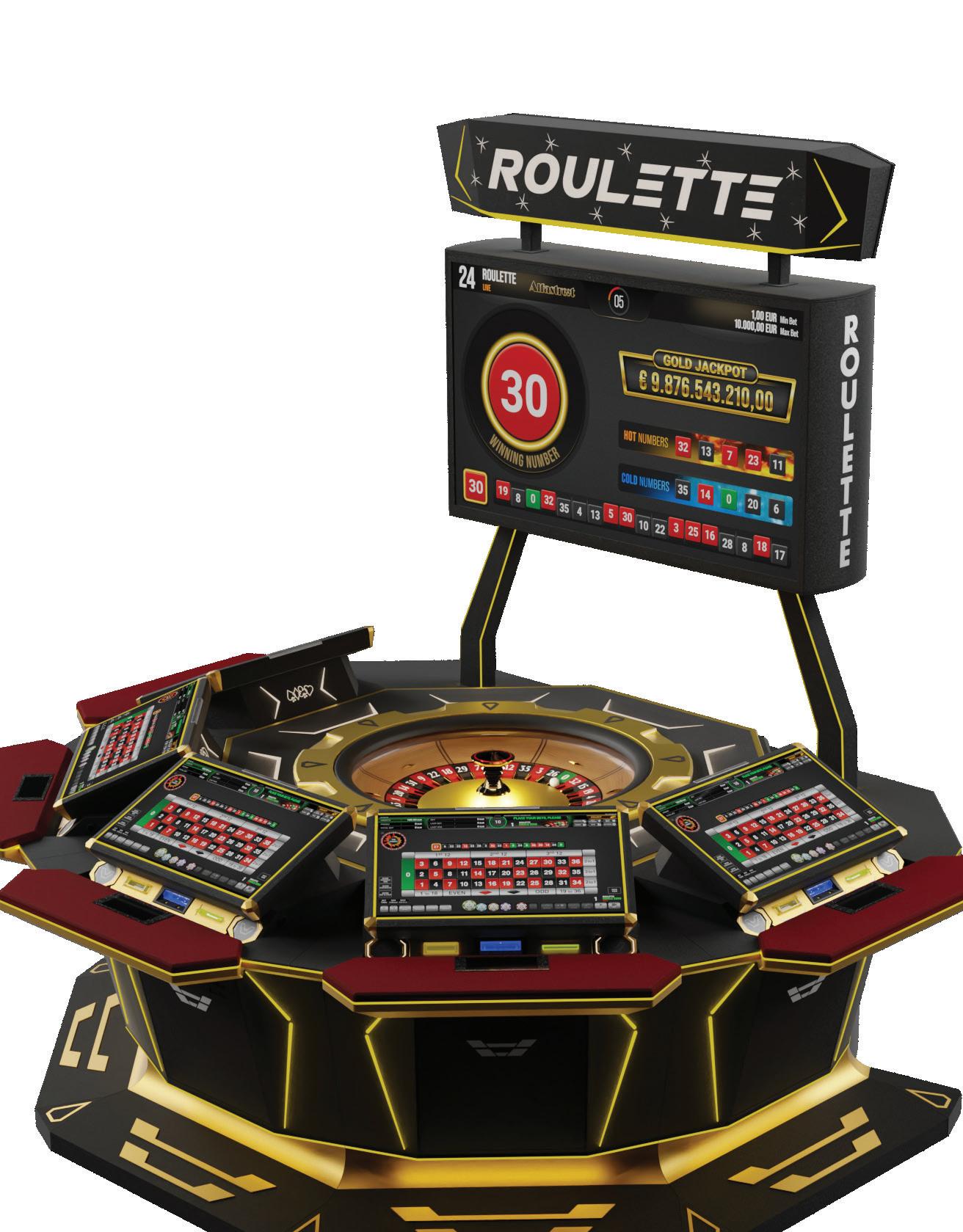
The configuration supports a broad selection of live and automated table games, allowing operators to tailor the setup to their specific market requirements. The modular design also offers exceptional flexibility, enabling customisation of player capacity, finishes, branding elements and display options to match the unique identity of each venue.
Powered by Alfastreet’s reliable and proven gaming platform, the V5 Wall Configuration delivers outstanding performance, intuitive operation and low maintenance requirements. It is an ideal choice for operators seeking a stylish, versatile and efficient gaming solution that enhances the player experience while making the most of available floor space.

































































































































































































Global Gaming Insider highlights monthly operator stock price from the opening day of the past six months across the Americas, observing February – July 2026
• Six-month high: February (27.42 USD)
• Six-month low: April (22.16 USD) • Market capitalization: US$13.55bn (as of July 7, 2026) • Six-month high: June (50.69 USD) • Six-month
February (33.49 USD)
• Six-month high: July (31.26 USD) • Six-month low: February (17.89 USD)
Market capitalization: US$7.45bn (as of July 7, 2026)
• Six-month high: July (30.41 USD)
Six-month low: February (20.59 USD)
Market capitalization: US$6.13bn (as of July 7, 2026)
Recent industry appointments have stretched from the US to LatAm, including those made by Novomatic Americas, Seneca Resorts & Casinos and PG Soft

Juergen Keller
Managing Director, Novomatic Americas
Keller originally joined Novomatic Americas in2025 as VP of Finance & Treasurer, but will now work with Sabine Stoppel in the Managing Director position – across North America and the Caribbean. Stoppel believes Keller has “made a significant impact in a very short time” and offers a “combination of international leadership experience, financial expertise and operational discipline.”
Addressing his appointment, Keller said it’s “an honor” to be promoted. The new Novomatic Americas Managing Director will succeed Jakob Rothwangl in the position, who is set to expand his leadership role with the supplier. Novomatic subsidiary Ainsworth also has a strong presence in Argentina.
Keller has at least an elementary proficiency in four different languages, including English, French, German and Italian


Lon O’Donnell
SVP of Gaming Operations, Seneca Resorts & Casinos
Building on a year of multiple new appointments, Seneca Resorts & Casinos has brought O’Donnell on to work across the operator’s three New York commercial properties. Prior to joining Seneca Resorts & Casinos, O’Donnell served as VP and GM of Bally’s Casino Black Hawk and VP of Gaming Strategy for Grand Casino Mille Lacs.
As Seneca Resorts & Casinos prepares for new competition in New York, O’Donnell’s focus will be on developing an enterprise-wide slot floor strategy and working with leaders to execute strategic plans. O’Donnell also served as Director of Gaming Operations for Aruze Gaming from February 2021 to May 2022, and in the same position with Scientific Games from August 2019 to November 2020.
O’Donnell enjoys hitting the road with his wife to visit their daughters in New York City and Reno, Nevada
Hugo Baungartner
General Manager – LatAm, PG Soft
PG Soft appointed Baungartner as GM of LatAm to help fulfill the supplier’s goals of expanding into regulated markets across the region. Baungartner said there is “enormous potential ahead,” and that he looks forward to working with PG Soft partners to “take the business to the next level.”
Baungartner most recently served as CBO at Grupo Esportes Gaming Brasil, where he previously discussed the country’s regulated betting market with Global Gaming Insider. While PG Soft failed to disclose further details of Baungartner’s remit or a start date for the role, the supplier has been increasing its international marketing activity in recent months.
PG Soft is the creator of the Fortune Tiger slot, which has been the center of influencer scandals and political scrutiny
With the 2026 Global Gaming Awards Americas quickly approaching, a record-breaking amount of nominations for Digital Supplier of the Year helped showcase the vertical’s impressive growth
Each year, the Global Gaming Awards Americas showcase the latest gambling innovation and expansion across multiple verticals associated with the industry. One that has managed to routinely generate noticeable growth in recent years is the digital side of gaming, even in spite of rather tepid iGaming expansion in the US up to this point. While land-based gaming provides consistent stability, the new launches commonly introduced by digital suppliers and operators help represent the industry’s ever-expanding capabilities.
Perhaps best exemplifying the growing positivity of iGaming’s reputation was the final tally for Digital Supplier of the Year nominations, which represented an alltime high for the Global Gaming Awards Americas. Now heading into its 13th year since origin, the Awards will once again be hosted at The Venetian Resort Las Vegas, with the official Shortlist set to be announced on September 1.

The record number of submissions for Digital Supplier of the Year not only marks yet another 12 months of impressive growth for the category, but the overall strength that has formed on a year-in, year-out basis. In 2025, White Hat Studios took home the Digital Supplier of the Year award, having provided new content for operators such as DraftKings, BetMGM and FanDuel while also reporting a 136% increase in gross gaming revenue (GGR). For the ceremony planned on September 28, there is clearly no shortage of organizations who could potentially find themselves honored at the Global Gaming Awards Americas.
Mariya Savova, Global Gaming Insider Marketing Director, said: “While online casino gaming is currently regulated in just eight US states, it has already established itself as one of the industry’s most valuable and resilient verticals. Unlike sports betting, it delivers consistent year-round revenue, making it an incredibly attractive market for suppliers. When you also consider the
momentum we’re seeing across Canada and Latin America, it’s no surprise this category attracted a record number of submissions. What’s particularly exciting is the diversity of companies entering, from slot studios and live casino providers to CRM specialists, geolocation technology and player engagement and retention solutions. It really showcases the breadth of innovation driving digital gaming across the Americas.”
While iGaming’s growth across the US has only reached eight states at the time of writing, little has been done to slow the success generated by respective operators currently licensed in each market. Across states such as New Jersey and Pennsylvania, iGaming revenue consistently increases yearover-year, assisted by the latest innovation offered by the same suppliers vying for the award set to be handed out on September 28. Maine was the most recent addition to the US iGaming scene, following Governor Janet Mills’ decision to allow Tribal governments across the state to begin conducting online gambling operations.











In New Jersey, iGaming managed to maintain its number one revenue position during May 2026, having produced $276.3m for growth of 11.9%, while casino win rose by 0.1% for a total of $265.6m. As part of a record monthly revenue for May, iGaming slots in Pennsylvania accounted for $202.5m and increased 14.3%, while total online gambling revenue rose 9.4% to $254.8m.
Of course, much of the success witnessed by iGaming operators in the US is also a factor of consistent triumphs for suppliers, helping to bring new games and titles to the vertical seemingly every month. New growth is expected to be seen from outside the US as well, given the anticipated market launch of iGaming in Alberta and the early results from Brazil’s online gambling market in South America.
Speaking on iGaming’s latest innovation – and an additional reason as to how Digital Supplier of the Year nominations have reached such heights – the use of familiarity has
become quite common in the development of new titles. Highlighted by the various arrivals of new Monopoly titles, producing games which utilize branding from television shows or films is not an updated concept across the industry, but one which has quickly become a reliable success for digital suppliers.
While coming up with fresh and previously unthought of ideas is a staple of the gaming industry, using titles which feature branding already recognized by gamblers can speed the process of trying a game for the first time. Whether it’s musical artists, television shows, films or board games, the use of recognition and familiarity has grown in popularity across the past 12 months and continues to expand as the industry prepares for G2E in Las Vegas this September.
For a category which has been growing in strength for quite some time already, 2026 represents an unprecedented year of success for digital suppliers. The category has not only stood out at the Global Gaming Awards Americas for over a half-decade, but helped the event become widely regarded as the most prestigious and trusted awards in the sector. The rise in prominence for Digital Supplier of the Year has mirrored that of the Global Gaming Awards, becoming a mainstay for operators, suppliers and key executives involved with gaming.
Savova added: “Without revealing too much ahead of the shortlist announcement, one trend that really stood out in this year’s submissions from online slot providers in particular, was the continued convergence of land-based and online gaming. Several companies highlighted that they have successfully brought legacy land-based titles into the digital space, creating seamless experiences for players across retail and online channels. It’s a clear indication that omnichannel is no longer just a buzzword, but a strategy that’s delivering real results.”
With the shortlist for the Global Gaming Awards Americas 2026 set to be announced on September 1, Digital Supplier of the Year has easily become one of the most anticipated categories across gaming. As digital suppliers continue to pump the iron on gaming innovation and online expansion, the strength of the category will only keep flexing its muscles in Las Vegas at the Global Gaming Awards Americas.











Dara Cohen
,
Senior Director,
Strategic Communications at the American Gaming Association, discusses the importance of a seat at the table
From the boardroom to the blackjack table, the best outcomes come when different voices have a seat at the table. Different experiences spark new ideas, better decision-making, and ultimately a stronger industry. That’s why the US gaming industry continues to invest in building collaborative workplaces, partnerships and products that reflect the communities we serve.
When people feel welcome and represented, employees are more likely to collaborate and innovate, while consumers are more likely to feel connected to the experiences we create, whether at a casino, in a sportsbook, or online.
“ The best outcomes come when different voices have a seat at the table ”

Throughout June, organizations across the country celebrated and supported the LGBTQ+ community. But, in gaming, inclusion extends well beyond Pride Month.
Creating an inclusive industry means building workplaces where employees feel comfortable bringing their authentic selves to work, ensuring leadership reflects diverse perspectives, and creating products and experiences where players see themselves represented.
To help advance these efforts, the AGA recently partnered with LGBTQ+ In Gaming to host a webinar focused on turning commitments into action. As one presenter noted, “The goal isn’t to move past the rainbow – it’s to build everything behind it.” That means building workplaces where inclusion is woven into everyday decisions.
Lasting inclusion is measured by the experiences we create for employees, consumers, and communities throughout the year.
Tribal nations have helped shape the US gaming industry and continue to play a vital role in its future. Since the passage of the Indian Gaming Regulatory Act in 1988, more than 240 Tribes have entered compacts with states, exercising their sovereign right to operate and regulate gaming on their terms and on their own land. In some states, Tribal gaming remains the exclusive form of legal casino gaming, reflecting this sovereign right.
Tribal gaming is a powerful economic engine, creating jobs, attracting tourism and generating revenue that supports essential government services, infrastructure, healthcare, education, housing and other local priorities.
The AGA has long partnered with Indian Country and the Indian Gaming Association to advance shared priorities that support a strong, resilient and responsible state and Tribal-regulated gaming industry. As the industry faces new challenges – from prediction markets offering illegal sports betting to other efforts that undermine state and Tribal authority – this partnership
remains as important as ever. Tribal nations helped lay the foundation for the modern US gaming industry and their leadership and expertise will remain essential as gaming continues to evolve.
For decades, women have helped shape the gaming industry as innovators, executives, mentors and pioneers. Leaders like Debi Nutton – the first female dice dealer on the Las Vegas Strip who rose through the ranks to become an industry executive –helped break barriers for women in gaming. Their contributions have paved the way and created opportunities for the next generation of women entering gaming.
This year, Global Gaming Women (GGW) celebrates its 10th anniversary as a nonprofit. Originally established as a development program by the AGA in 2011, GGW has become an important resource for women across the industry providing mentorship, education and professional development. As it approaches its goal of 10,000 members by 2026, GGW continues expanding opportunities for women at every stage of their careers.
One of my favorite parts of G2E is attending GGW’s annual event and connecting with women from every corner of the industry. No matter their role or experience, there’s a shared willingness to support one another. That spirit of mentorship and collaboration has become one of the industry’s greatest strengths.
Diversity in gaming extends far beyond these three examples, but they illustrate the many perspectives that strengthen our industry. Representation must also be woven into the products and experiences our industry creates. When people see themselves reflected in our industry, they’re more likely to feel welcomed, engaged, and connected. As gaming continues to grow – so do our efforts to ensure every voice has a seat at the table. It’s one of the many reasons our industry continues to innovate, strengthen communities – and succeed.


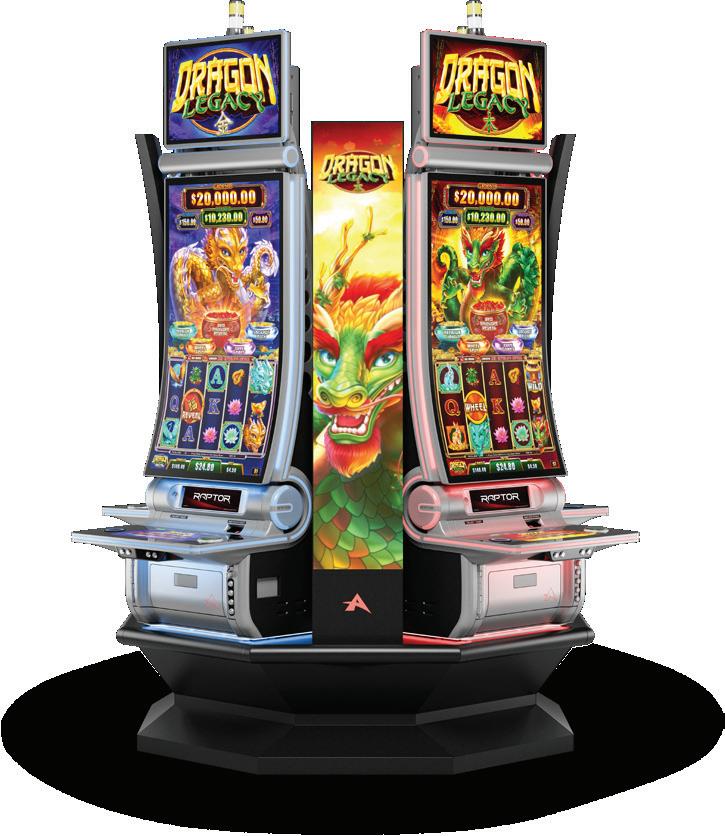

Global Gaming Insider ’s Kirk Geller speaks with McDonald Carano Partner Gregory Giordano , discussing the biggest legal and regulatory talking points in Nevada, as well as the role of private equity in gaming, and Tilman Fertitta...
Having worked for the Nevada Gaming Control Board and Nevada Gaming Commission before becoming a private practice attorney, how did that experience offer an introduction to gaming?
It was excellent. I first started out as a Deputy Hearing General in the Gaming Division back in November of 1986, so it’ll be 40 years this November of being involved in gaming law. I was there for about two and a half years and, at that time, the outgoing Chairman and incoming Chairman of the Gaming Control Board asked me to come
over from the AG’s office – and become the Chief of a new Corporate Securities Division they were forming.
I was the first Chief of the Board’s Corporate Securities Division for four years and today that’s now a section of the Investigation Division. It’s not a division itself anymore, but they conduct all the investigations and monitoring of publicly traded companies, mergers and acquisitions and financings. In 1993, I left the Board and became a private attorney with Lionel Sawyer & Collins, and that’s when I began my private practice of gaming law.
What first sparked your interest in gaming and eventually led to focusing your legal career around the industry?
I knew I wasn’t a government bureaucrat lawyer. I didn’t want to be a government lawyer forever! I was in the AG’s office, I was doing well… but I said, ‘well, where’s the best place to go that would be the most – frankly – financially rewarding and most viable in the private industry?’ And it struck me to work in gaming. That’s how I gravitated to the Gaming Division and became a gaming lawyer. It’s funny, a good friend of mine was
the Division Chief at that time and when I first came over he and the Attorney General asked ‘Are you willing to change your last name?’ Being Italian and Giordano, next year I could be a mobster. That was their joke.
As I got into gaming, it was really the best place for me to leave the AG’s office for and eventually land. When I was offered the Corporate Securities Division Chief position, that struck me as a really good opportunity, because then I’d have both the legal experience in gaming plus the practical experience of being a regulator, making me even more valuable to the private industry. And that turned out to be exactly the case. I was the only gaming attorney who also had experience as a regulator at that time.
How do your day-to-day responsibilities currently involve gaming and how have you seen the industry fluctuate since you first started?
It has fluctuated a lot. It’s still dominated by publicly traded companies, the standpoint of revenue, what balance they get a year compared to the non-private companies. I think around 64% of all gaming revenue comes from publicly held companies, so that’s been really good. But the industry’s changed. Now they’re splitting on private equity.
You’ve got private equity companies and private investors buying MGM and Caesars – if those get approved and go through. The biggest change, I think, is the involvement in the role of private equity companies in the gaming marketplace.
Which obstacles to gaming legality do you believe are the most threatening right now?
We are involved with some litigation and have filed amicus briefs on behalf of the Nevada Resort Association in the Kalshi prediction market industry in Nevada. I think that’s a very, very dangerous, very bad development with them thinking they can just run amok and not be involved in gaming regulation. There’s a whole bunch of protections of the public built into gaming regulation. And what they’re doing is saying, ‘hey, we can do anything we want, we’re going to take wagers from 18-year-olds’ and so on. It’s very, very dangerous. It should not be allowed, whether by courts or by Congress or whoever, but it shouldn’t be allowed. They’re just very, very dangerous activities.
Illegal offshore online gaming is another problem, it always has been. And people have called me on the phone and said, ‘hey, I didn’t get paid by these guys, what can I do?’ That’s the risk of doing business with an unregulated gaming company. Deal with regulated gaming companies, patronage procedures or anything else to protect you and your wager.
“ The biggest change, I think, is the involvement in the role of private equity companies in the gaming marketplace ”
Is it then fair to assume there’s no chance your law firm would ever work with a prediction-market operator?
We can’t right now because it’d be a conflict of interest. We represent the industry in respect to some of this litigation and all our attorneys in my gaming practice group are opposed. Prediction markets aren’t really illegal in Nevada. If they would come in and file an application to get licensed as a sportsbook, they’d be able to do that. But they refuse to do it thinking they only need to be federally regulated; what they’re doing constitutes federally controlled securities like swaps and commodities, which is BS!
Commodities are orange juice, pork bellies, gold, platinum, wheat, corn. Those are commodities, not gaming. It’s ridiculous. How did Congress intend for that to be a commodity? It’s just a real cowboy attitude. Anything goes in the wild, wild West.
Does your experience with Nevada regulators help provide a balanced understanding of gaming?
You know how the inner workings of the agencies work. How things happen, what type of things you’re looking for, what the procedures are, how the agents conduct their work and their investigations. My job as a gaming lawyer is to help structure transactions that receive approval and make them the least expensive, easiest possible to get through the system. Also, to then act as an intermediary between the licensee applicant, my client and the gaming authorities, to ensure that investigation goes smoothly. That their investigators’ requests are complied with quickly, completely and accurately. At the end of the day, we’re successful.
By knowing how the regulators work, my job acting as an intermediary is much easier because I can explain the process to applicants who have no clue what it’s required, why they need to act in certain ways and how they need to respond to requests for information and so forth. These people are my friends, as well; I’ve known them for years. Supervisors, Chiefs, Deputy Chiefs, there’s a degree of trust between me and them. I trust them to do a good job, but they also trust me as a straight shooter not to do anything like turn an agent around or embarrass them.
Which moments in your career helped deepen your knowledge of gaming? Through my involvement with some very good gaming law firms in Nevada, first Lionel Sawyer
& Collins, then other firms and now with McDonald Carano, I was able to work on all the biggest mergers and acquisitions with other partners and colleagues. Whether it be MGM acquiring Mandalay Bay, or IGT’s acquisitions, those are all clients my firm worked with. We still have clients that are involved in those, but more on the seller side, as opposed to buying. That’s been most gratifying to build those big transactions that really had an effect in Nevada.
Are you able to provide thoughts on the potential acquisition of Caesars by Fertitta Entertainment?
It’s interesting. I really can’t speak on it because Caesars is a client of our firm, but I think it’s kind of funny. Here you have Mr. Tilman Fertitta coming to Nevada, he’s got his cousins here running Red Rock Resorts. So you wonder how they’re going to deal with it. I’m not sure how they’ll get along with Tilman becoming a bigger player in Las Vegas.
Certainly, they’re in different markets. Red Rock Resorts focuses on the local market, so there’s not much overlap between the two of them, but it’s interesting how the family gets together and how they’ll get along in Las Vegas. All three of them in the room!
Gregory Giordano

The Lazarus Legal team returns to the pages of Global Gaming Insider, analyzing the next compliance frontier in Tribal gaming
The Tribal gaming industry is entering a new operational era – one defined not only by expansion into digital gaming environments, but by the increasing importance of payment infrastructure, digital identity verification and cryptocurrency oversight.
At the recent Indian Gaming Tradeshow & Convention in San Diego, CA, USA, one of the dominant themes emerging from regulators, operators, payment processors and technology providers was clear: payments have become the new centre of regulatory attention.
As Tribal gaming operations continue to modernize, the industry is confronting a fundamental shift. Historically, regulators focused primarily on licensing suitability, game integrity, and financial reporting.
Today, the regulatory lens has widened significantly to include:
• Digital wallets and identity verification
• Crypto-enabled transactions
• Real-time fund tracing and monitoring
• Biometric onboarding systems
• AML and KYC controls within digital ecosystems
This evolution reflects the broader convergence of financial technology and gaming technology. Increasingly, Tribal gaming operators are adopting systems that resemble sophisticated fintech platforms as much as traditional casino operations.
THE RISE OF CRYPTO WITHIN TRIBAL GAMING ECOSYSTEMS
Cryptocurrency is becoming an increasingly relevant topic across the gaming industry,
particularly among operators seeking greater transaction efficiency, reduced banking friction, and access to international player liquidity. For Tribal gaming stakeholders, crypto presents both opportunity and complexity.
Potential operational benefits include:
• Faster deposits and withdrawals
• Reduced dependence on traditional banking rails
• Lower transaction costs
• Increased interoperability across digital gaming environments
• Enhanced player convenience and mobility
Stablecoins, in particular, are generating increased interest because they may reduce volatility concerns while enabling near-instant settlement and lower cross-border payment friction. Some operators and payment providers are also exploring tokenized loyalty ecosystems and blockchain-based wallet infrastructures that can integrate directly into omnichannel gaming environments.
At the same time, global and Tribal regulators alike remain cautious. Crypto transactions introduce heightened scrutiny around:
• Source-of-funds verification
• Transaction traceability
• Jurisdictional compliance
• AML and sanctions exposure
• Consumer protection safeguards
Across multiple international jurisdictions, regulators are now grappling with similar questions. In the UK, policymakers and enforcement agencies have intensified scrutiny around unregulated payment channels and
black-market gaming activity. In Malta and Curaçao, discussions continue around how crypto operators should structure licensing, transaction monitoring and wallet oversight. Meanwhile, several Latin American markets are increasingly examining enhanced wallet verification requirements as digital gaming adoption accelerates.
The broader industry consensus emerging from the Indian Gaming Tradeshow & Convention was that cryptocurrency itself is no longer viewed as inherently problematic. Rather, the primary concern is whether operators and regulators possess sufficient visibility and control over the movement of funds.
One of the most discussed issues at the conference was wallet identification and the growing expectation that digital wallets be directly tied to verified player identities. In traditional payment environments, banks and card issuers typically serve as the primary gatekeepers for identity verification. In crypto ecosystems, that responsibility increasingly shifts to gaming operators and regulators themselves.
As a result, many stakeholders are moving toward:
• Permissioned wallet systems
• Closed-loop payment environments
• Enhanced onboarding verification protocols
• Continuous monitoring of wallet activity throughout the player lifecycle


Regulators are increasingly focused on ensuring that:
• The individual opening the account is properly verified
• The wallet being used belongs to that verified individual
• Transactions can be audited from deposit through withdrawal
This represents a major operational shift for gaming entities integrating decentralized technologies into regulated environments. Technology providers are responding with increasingly sophisticated tools. Wallet scoring systems, blockchain analytics platforms, and AI-powered transaction monitoring engines are being deployed to identify suspicious behavior patterns in real time. Some operators are also utilizing automated risk-rating systems capable of detecting anomalies such as rapid wallet cycling, unusual geographic transaction patterns, or potential layering activity associated with AML risks.
Another major topic at the conference was the growing role of biometric verification technologies. Facial recognition, liveness detection and biometric authentication tools are becoming more common in onboarding workflows across both gaming and financial services sectors. Their appeal is straightforward: they significantly reduce identity fraud and provide stronger certainty that the individual accessing an account is the verified account holder.
For Tribal gaming regulators, biometric technologies may offer several advantages:
• Reduced fraud and account sharing
• Stronger age and identity verification
• Improved integrity of self-exclusion systems
• Enhanced protection against synthetic identity abuse
Operationally, many technology providers argue that biometric onboarding can also reduce

registration friction and improve conversion rates by shortening onboarding times while increasing verification certainty. As digital gaming competition intensifies, operators are increasingly focused on balancing security with a seamless player experience. However, biometrics also raise important governance questions:
• Who owns and stores biometric data?
• How long is that information retained?
• What standards apply to consent and disclosure?
• How should Tribal data sovereignty principles apply to digital identity infrastructure?
As Tribal gaming operations continue expanding into online and mobile ecosystems, these issues are expected to become increasingly central to regulatory policy discussions.
Another emerging focus area is what happens after wagering activity concludes. Historically, much of gaming compliance concentrated on deposits and gameplay activity. Increasingly, regulators are examining outbound transactions with equal scrutiny.
Questions being raised across the industry include:
• Where withdrawals are being sent
• Whether funds are moving only to verified wallets
• Whether operators can identify unusual transfer patterns
• Whether transaction monitoring systems are capable of real-time intervention
This has accelerated interest in:
• Blockchain analytics tools
• Real-time and AI-driven transaction monitoring
• Automated AML flagging systems
• Velocity controls and withdrawal thresholds
• Risk-based wallet scoring
Many operators are now leveraging machine learning systems designed to reduce false positives while improving the accuracy of suspicious activity detection. These systems can identify behavioral inconsistencies far more efficiently than traditional rule-based monitoring models, allowing compliance teams to focus attention on genuinely elevated-risk transactions. The operational reality is that payments are no longer merely financial processes – they are becoming core compliance infrastructure.
An increasingly important aspect of payment modernization is its relationship to responsible gaming initiatives. Realtime payment monitoring and behavioral analytics are beginning to play a larger role in identifying markers of potential
gambling-related harm.
AI-driven systems can analyze:
• deposit frequency
• rapid changes in wagering behavior
• unusual funding patterns
• signs of compulsive transaction activity
Some industry stakeholders believe integrating financial intelligence with responsible gaming systems may ultimately allow operators to implement more proactive intervention strategies. This convergence between payments oversight and player protection is expected to become an increasingly important component of next-generation gaming regulation.
Tribal gaming has historically been at the forefront of innovation and regulatory adaptation. The industry’s increasing engagement with fintech, digital wallets and crypto infrastructure represents the next stage of that evolution. Importantly, many Tribal regulators are approaching these developments with a focus on preserving:
• Sovereign regulatory authority
• Data control and governance
• Economic independence
• Long-term operational sustainability
This is particularly relevant as global technology providers, payment processors, blockchain analytics firms, and crypto platforms seek partnerships within Tribal gaming ecosystems. Operators, suppliers and technology partners are increasingly aligned on one (1) point: efficiency, insight, and player engagement now depend heavily on payment innovation and real-time financial intelligence. The challenge moving forward will be balancing innovation with accountability.
The future of Tribal gaming will likely involve greater integration between:
• Digital payments
• Mobile gaming environments
• Biometric identity systems
• AI-driven fraud detection
• Blockchain-based transaction monitoring
• Omnichannel player ecosystems that bridge land-based and digital gaming experiences
For Tribal regulators and operators alike, the central issue is no longer whether these technologies will become part of the gaming ecosystems – they already are. The more pressing question is how to implement them in ways that preserve regulatory integrity, protect players, maintain Tribal sovereignty and support sustainable long-term growth in an increasingly digital gaming economy.
As the industry continues evolving, payment systems and digital identity infrastructure may ultimately become just as important to gaming regulation as the games themselves.
Visually, Train Heist captures the spirit of the frontier with vibrant environments, memorable characters and polished animations that bring each train robbery to life.
Train Heist delivers an action-packed premium gaming experience that combines cinematic presentation with innovative gameplay mechanics, creating a title that stands out on the casino floor. Set against the backdrop of the Old West, players join a trio of daring bandits as they attempt to pull off the ultimate train robbery across three unique themes: Rio Grande Pass, Robbers Roost and Jade Junction.
At the heart of the game is the Three-Pot Hold & Spin feature, where each pot unlocks a unique enhancement designed to build anticipation and maximize winning potential. The Stick ‘Em Upgrade locks coin values in place while giving players up to three opportunities to fill all 15 reel positions, with each locked coin increasing in value after every respin for a chance at the Grand jackpot.
Dynamite Boost adds another layer of excitement by introducing the Dynamite symbol, which blasts additional credits onto every held coin before locking them in place. Meanwhile, Twin Tracks raises the stakes by launching two Hold & Spin features simultaneously, allowing players to pursue multiple jackpot opportunities at the same time.
These complementary mechanics create a gameplay experience that feels fresh, rewarding and highly engaging, with each bonus feature delivering its own distinct style of excitement while maintaining a steady pace of anticipation.
Visually, Train Heist captures the spirit of the frontier with vibrant environments, memorable characters and polished animations that bring each train robbery to life. The immersive presentation is paired with energetic audio and seamless gameplay, ensuring players remain engaged from the first spin to the last.
By combining familiar Hold & Spin gameplay with creative feature innovations and strong entertainment value, Train Heist offers operators a premium title that is built to attract attention, drive player engagement and deliver lasting floor performance.
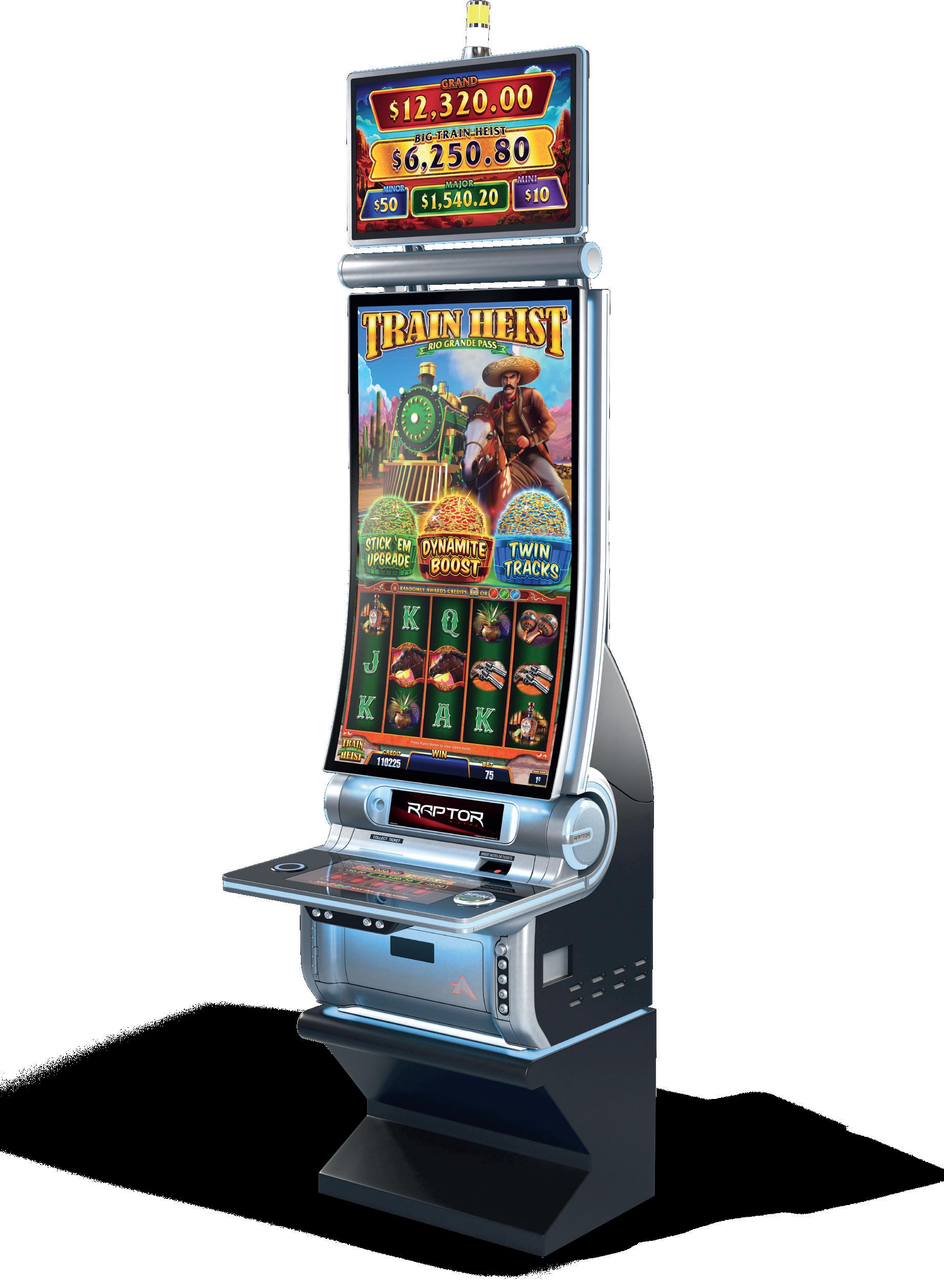




Global Gaming Insider highlights the monthly stock price from the opening day of the past six months across the APAC region, observing February – July 2026
• Six-month high: March (56.03 USD)
• Six-month low: July (46.27 USD)
• Market capitalisation: US$30.55bn (as of July 7, 2026)
• Six-month high: February (6.24 USD)
• Six-month low: July (5.24 USD)
• Market capitalisation: US$2.04bn (as of July 7, 2026)
• Six-month high: February (0.135 AUD)
• Six-month low: July (0.093 AUD)
• Market capitalisation: US$556.8m (as of 7 July 2026)
• Six-month high: May (1.17 AUD)
• Six-month low: June (0.78 AUD)
• Market capitalisation: US$1.28bn (as of July 7, 2026)
Marina Bay Sands, Zitro and SJM all unveiled new recent appointments, aiming to strengthen guest experience, strategic expansion and financial operations

Angelita Teo VP of Attractions, Marina Bay Sands
Teo joins Marina Bay Sands following her tenure as Director of the Olympic Foundation for Culture and Heritage. She will now oversee key attractions such as the ArtScience Museum, Digital Light Canvas and SkyPark Observation Deck. Teo originally led the National Museum of Singapore for seven years.
Marina Bay Sands COO Paul Town said Teo’s “rare combination of curatorial prowess, institutional leadership and global perspective” made her the perfect candidate to strengthen the “cultural bridge between Singapore and the world.”
Ángel Sueiro Regional Director – Asia, Zitro
In an effort to accelerate commercial growth across the APAC region, Zitro has appointed Sueiro as Regional Director for Asia, where he will lead the supplier’s sales strategy and deepen relationships with casino operators. Sueiro is currently based in Manila and previously served as COO of PH Resorts, where he spent more than nine years leading major tourism and gaming projects.
Zitro President of International Sebastian Salat confirmed the supplier’s products are “performing strongly in every market,” and believes Sueiro’s appointment “responds to that momentum.”

Czoon joins SJM after nearly 13 years with NagaCorp and will succeed Christopher Ip, who resigned to pursue other personal interests. The finance executive offers more than 25 years of experience in corporate finance, strategic management, investment banking and professional accounting.
Having been appointed as NagaCorp CFO in 2018, Czoon was eventually promoted to Chief Corporate Development Officer in 2025 where he oversaw broader strategic initiatives during his final year with the operator. SJM’s Board thanked Ip for his contributions and welcomed Tan as CFO.
Teo became the first Asian Director of the Olympic Foundation for Culture and Heritage in International Olympic Committee history during 2019
Sueiro is fluent in both English and Spanish, having been raised in Spain prior to attending schools in New York and Pennsylvania
Czoon holds a Bachelor of Commerce in Accounting and Finance from The University of Queensland and is a CFA charterholder
• The FIFA World Cup’s impact on Macau casinos is clear. 2026 GGR was consistently up year-on-year, until the industry recorded its first monthly decline for June. GGR fell to MOP18.52bn ($2.29bn), down 12.1% from the same month last year, as the World Cup kept bettors away from the tables
• The June result brought total GGR for the first half of the year to MOP126.9bn, still representing a 6.8% increase
• Analysts had forecast this decline ahead of the tournament, but expect Macau’s gaming demand to recover afterward, supported by major entertainment events
• Macau recorded its first year-on-year decline in monthly visitor arrivals for 2026 in June, with arrivals falling 3.1% to 2.8 million
• Once again, it would appear the impact of the World Cup is apparent here. Or perhaps some high-roller holidays in competing destinations?
• Nevertheless, the number of visitor arrivals increased by 9% to 20.9 million for H1 2026
• Macau’s Financial Intelligence Office (GIF) has reported that its six gaming concessionaires, Sands, Wynn, MGM, Galaxy, Melco and SJM, submitted 2,018 suspicious transaction reports for H1 2026, an 8.7% increase compared with the same period in 2025
• Between H2 2024 and H2 2025, the total stood below 2,000. However, H1 2026’s rise marks a backwards step
• Casinos remained the largest source of suspicious transaction reports, accounting for 73.3% of all filings for H1 2026

Christine A. Virardi, Founder of HRLadderBox and Global Gaming Insider contributor, argues that the biggest iGaming expansion risk in APAC isn’t regulation – it’s talent
For years, everyone in iGaming has talked about Asia-Pacific as the next big opportunity. The reality? It already is. As regulation becomes more complex in established markets and competition continues to intensify, operators, suppliers and technology providers are increasingly turning their attention eastward for new growth opportunities. With a mobilefirst population, accelerating digital adoption and significant long-term potential, APAC has become one of the industry’s most attractive regions.
But here’s what I find interesting... Companies spend months planning licenses, payments, localization and growth strategy. Yet whether they are entering APAC for the first time or scaling within the region, one of the biggest drivers of success – leadership – is often considered too late. That’s usually where the cracks begin to show. For CEOs and founders, success is often measured by licenses secured,
revenue growth and market share. But those are outcomes. The real competitive advantage is having the leadership team capable of delivering them.
After years working with companies and leaders across the global iGaming industry, one lesson continues to stand out: growth rarely fails because companies lack ambition. It fails when they underestimate the importance of the people leading it. Technology evolves. Products can be localized. Leadership is much harder to get right. Talent isn’t another HR conversation. It’s a commercial decision.
LESSON 1: EXPANSION STRATEGY IS ONLY AS STRONG AS THE PEOPLE EXECUTING IT
This isn’t unique to APAC. Any organization operating across international markets needs leaders who can navigate different cultures, regulatory environments and ways of doing
business. However, APAC brings that challenge into sharper focus because of the diversity across the region.
Japan is not the Philippines. Singapore is not India. Thailand presents different opportunities and challenges compared with South Korea. Every market has its own regulatory environment, customer expectations, hiring landscape and way of building relationships. A strategy that works brilliantly in Malta or London won’t automatically translate to Manila or Tokyo.
The companies that succeed are not simply those that enter a market first or expand the fastest. They are the ones that understand what leadership capability is required to operate and grow successfully in that environment.
LESSON 2: NEVER TREAT APAC AS ONE MARKET
One thing I’ve observed over the years is that
many companies oversimplify regions. They talk about “APAC,” “LatAm” or even “EMEA” as though each operates as one market with one way of doing business. The reality couldn’t be more different.

Some markets are highly regulated. Others remain more complex to navigate. Some rely heavily on local partnerships, while others require deep regulatory engagement. This is why localization is about much more than adapting a product or translating a website. It’s about understanding how things get done, how relationships are built and having people around you who already understand the environment. Simply put, the right strategy needs the right people behind it.
For many organizations, entering a new market or scaling an existing presence traditionally meant relocating senior leaders from headquarters to establish operations on the ground. There’s still value in that approach, and in some situations it remains the right decision. But in my experience, the companies that navigate new markets most successfully combine global expertise with experienced local leadership. Local leaders bring far more than market knowledge. They understand the culture, have established networks, know how decisions are made and can often identify opportunities and risks long before they become visible to outsiders.
Through my work in executive search, I’ve seen companies invest heavily in expansion
strategies only to realise that one exceptional local leader delivered more in six months than months of planning ever could. The right person doesn’t just fill a role. They build trust, open doors and help companies avoid costly mistakes. Whether you’re building a commercial team in Singapore, scaling operations in the Philippines or growing a technology hub in India, local expertise can be the difference between simply having a presence in a market and building a company that thrives.
AI is changing the way companies recruit. It can automate processes, improve efficiency and help organizations identify talent faster. But it cannot replace leadership, commercial judgement or the relationships that drive successful organizations. That is why experienced leaders remain one of the most valuable assets a company can invest in.
Across functions such as compliance, payments, product, commercial and technology, companies continue to compete for people who bring not only technical expertise, but also adaptability, communication and strategic thinking. LinkedIn’s Global Talent Trends research reinforces this shift, highlighting the growing importance of human skills alongside technical capability. At the same time, expectations have evolved on both sides of the hiring process.
Just as employers are looking for more than technical expertise, senior leaders are looking for more than compensation. They are evaluating the leadership they will work with, how quickly decisions are made, whether the company has a clear direction, the opportunity to make an impact and whether the culture presented during the hiring process reflects the reality of the organization.
Long before a contract is signed, candidates have already formed an opinion about the company they are considering joining. That’s why your employer brand starts long before someone signs a contract.
This is one of the most common frustrations I hear from candidates, and it becomes even more important in fast-moving growth regions like APAC.
• 4-5 interviews
• Weeks between conversations
• Long periods of silence
And then it happens: another company moves faster and secures the talent you were still evaluating. This is not just a candidate experience issue. It is a company decision issue. It’s something I often refer to as the Cost of Indecision (COI). Many organizations
focus on the cost of making the wrong hire. Far fewer consider the cost of not making a decision at all.
In APAC, where companies are often competing for a limited pool of experienced regional leaders, the cost of waiting can be even higher. Delay can slow growth plans, increase pressure on existing teams and allow competitors to secure the leadership talent needed to build momentum. The companies that succeed are not necessarily those that rush. They are the ones that create a clear hiring process, align stakeholders early and have the confidence to make decisions when the right person is identified.
LOOKING AHEAD: TALENT STRATEGY MUST COME BEFORE GROWTH
Asia-Pacific isn’t simply another region on an expansion roadmap. For many companies, it will shape the next chapter of global iGaming growth. The companies that succeed won’t necessarily be the ones with the biggest budgets or the fastest expansion plans. They’ll be the ones that recognize talent strategy is not something to consider after entering a market or after growth has already begun. It’s one of the first strategic decisions they make. Because ultimately: Markets create opportunity. Leadership turns opportunity into growth. People make it happen.
Building your iGaming leadership team in APAC? HRLadderBox partners with companies to identify and secure senior and C-Suite talent that drives growth. Get in touch to discuss your leadership strategy.

Once removed from the front line, suppliers are now being pulled into the centre of the gambling industry’s black-market debate. S hould they play a bigger role in the fight against illegal gambling? Jack Found explores...
The scale of the illegal gambling market is difficult to overstate. A report from Gaming Compliance International (GCI) published in May 2026 estimated that unregulated online gambling reached $5.9trn in global wagering value in 2025 – a figure the firm likened to the world’s third-largest economy. While that number reflects total handle rather than gross gaming revenue, the underlying picture is stark: unregulated operators seemingly account for about 78% of global online gaming GGR, with licensed
platforms making up just 22%. In the EU specifically, research commissioned by the European Casino Association found that illegal operators generated approximately €80.6bn in revenue in 2024 alone, representing 71% of total EU gambling market turnover.
But the black market, historically, has created an even bigger battle for the industry to fight in Asia. For licensed operators and regulators, the implications are significant – not only in terms of lost tax revenue and market share, but in the very real consumer protection failures that illegal platforms represent. Unlicensed sites operate without the safeguards that regulated markets mandate: no age verification, no responsible gambling tools, no AML oversight and no recourse for players in the event of a dispute.
It is against this backdrop that a new question has begun to surface: should suppliers – the game developers, platform providers and technology companies that power the online gambling ecosystem – bear

greater responsibility for ensuring their products do not end up in illegal hands?
THE CATALYST: EVOLUTION AND THE GAMBLING COMMISSION
The debate was crystallised in late 2024, when the Gambling Commission (GC) opened a formal review of Evolution’s UK operating licence after identifying that the supplier’s games were accessible to British consumers via operators that did not hold a GC licence. It was, by most accounts, the first time a B2B supplier had been formally placed under review by a major regulator for the downstream activities of its clients.
The review prompted Evolution’s CEO, Martin Carlesund, to state publicly that the company was “committed to support the licensed UK market as well as preventing unlicensed traffic” and that it was taking “forceful action using all technical tools
available” to ensure its games were only accessible through licensed operators in Great Britain. Crucially, Evolution also moved swiftly to remove its content from the flagged unlicensed platforms. The matter, at least in the immediate term, appeared to demonstrate that suppliers can act decisively when the regulatory pressure is sufficient.
The GC’s own position had been building throughout the year. Speaking at the Commission’s annual CEO briefing in November 2024, (now departed) CEO Andrew Rhodes told licensed operators to conduct due diligence on their supplier partners, stating
that the Commission’s strategy on combating illegal gambling was to “cause as much upstream disruption as we can – which is why we have focused on ISPs, payment providers, search engines, software suppliers and more.” The message was unambiguous: the regulator was extending its line of sight further up the supply chain. Last month, the Evolution case was concluded, as the supplier agreed a £4.75m ($6.4m) settlement with the UK regulator.
The argument for holding suppliers to a higher standard rests on several interconnected
“ In today's gambling industry, ignorance is no longer a defence ”
points. The first and most straightforward is commercial proximity. Suppliers are not passive bystanders in the gambling ecosystem; they are active participants whose technology and content make online gambling possible.
When an unlicensed operator runs a live casino or slots product built on a licensed supplier’s IP, that supplier is – whether by design or negligence – enabling an activity that undermines the very regulatory framework it ostensibly operates within. As Rhodes put it plainly: “I do not understand why anyone in the licensed industry would want to be in business with a company that is supporting illegal competition – it makes no sense to me at all.”
The second argument is technical capability. Unlike regulators, who must work through slow-moving legal and enforcement processes, suppliers have direct contractual and technical relationships with operators. As the Evolution case demonstrated, a supplier can, in principle, remotely disable its products on unlicensed platforms relatively quickly. That technical leverage is something regulators simply do not have – which makes suppliers unusually powerful actors in the enforcement chain.
The third is competitive integrity. Illegal operators carry none of the costs of the licensed market – no taxes, no licensing fees, no compliance overhead – allowing them to offer better odds and promotions than legitimate rivals. Suppliers that enable those operators are, in effect, subsidising the competition of their own clients.
In fact, the Betting and Gaming Council (BGC), whose membership includes supplier companies, has made clear that its members are committed to avoiding partnerships with entities linked to unlicensed operations. The commercial logic, the BGC implies, should align with the regulatory one. A growing number of regulators are now enshrining these expectations in formal frameworks.
The GC, for example, has introduced a ‘Jurisdiction Explanation Document’ requiring B2B licence applicants to disclose their due diligence criteria for selecting third-party partners, the contractual restrictions they place on resellers around territorial access, and the technological safeguards they deploy to prevent unlicensed gambling. Michigan’s Gaming Control Board now requires content providers to disclose any supply of games to unlicensed operators as part of their licensing application. Meanwhile, Sweden requires licensed game suppliers to work exclusively with regulated operators, and Denmark introduced mandatory supplier licensing from 2025.
“ The supply chain is only as clean as its weakest link – and it is no longer enough to simply not know where that link is ”
In other words, the direction of travel is consistent.
Despite the logic above, it would be reductive to cast suppliers as reluctant actors on a straightforward obligation. The reality of how the B2B gambling supply chain works presents genuine complexity that regulators and commentators do not always fully acknowledge. A major studio does not necessarily sell directly to every operator that ultimately carries its content. The iGaming supply chain frequently runs through aggregators, sub-aggregators, white-label platforms and resellers – layers of intermediaries through which a single game title may pass before reaching an end operator.
In fact, in many cases, the original supplier has no direct contractual relationship with the entity actually serving players. Thus, as legal commentators have noted, if a software developer supplies games to both licensed and unlicensed operators through an aggregator, the developer may have no practical visibility into what is happening further down the chain.
This is not a theoretical concern. It is the structural reality of how content reaches global markets at scale. Trade bodies have made the same point. Swedish trade body BOS secretary general Gustaf Hoffstedt argued that compliance enforcement is fundamentally the role of the lawmaker and regulator –and that the gambling sector’s substantial tax contributions across Europe entitle it to expect governments to do that job. Germany’s Deutscher Online Casino Verband VP Simon Priglinger-Simader was similarly direct: “It shouldn’t be up to licensed operators to check all their suppliers’ activity – it should be on the regulator.”
Both noted, however, that expanding B2B licensing requirements across more jurisdictions would be a practical step in the right direction, creating clearer lines of accountability. There is also a jurisdictional dimension that complicates the picture considerably. Suppliers operate in a global market, and the definition of “illegal”
varies significantly by territory – once again, especially in Asia where there can be far less regulatory certainty in certain jurisdictions.
A supplier licensed in multiple jurisdictions therefore faces an enormously complex compliance map when trying to assess whether any given operator – particularly one distributed through intermediaries – is or is not compliant in each of the markets it serves. Expecting real-time visibility across that entire landscape sets an extremely high bar, even for well-resourced compliance teams.
What this debate ultimately makes clear is that the question is not “either/or.” Responsibility for tackling illegal gambling is systemic; it does not sit neatly with any single actor, and any serious response will need to reflect that.
What is changing, however, is the expectation of what “responsible” looks like for a B2B supplier. Regulators are increasingly signalling that a supplier’s obligations do not end at the point of its direct contractual relationships – and that the multi-layered aggregator model can no longer function as a reliable shield against downstream accountability.
That does not mean the burden should fall on suppliers alone. There is a strong case for expanding direct B2B licensing obligations across more markets, creating clearer lines of accountability rather than leaving suppliers to operate under the indirect shadow of operator licences. Clearer rules here could benefit everyone – including the suppliers expected to follow them.
But the Evolution case has already changed the conversation – and the industry knows it. Regulators have demonstrated that supplier licences are not immune from scrutiny based on downstream activity. Suppliers, in turn, are reviewing their distribution frameworks and asking harder questions about who their content ultimately serves.
The supply chain is only as clean as its weakest link – and it is no longer enough to simply not know where that link is.




For years, May championed GGR figures – but this could be changing. Global Gaming Insider explores how Golden Week is affecting gambling tourism...
Golden Week is a week-long celebration observed in both Japan and China that creates massive spikes in international and domestic tourism figures. For many, these are the only times of the year they can reliably enjoy time off with their friends and family.
This year, Golden Week took place from 29 April to 6 May in Japan, while Labor Day Golden Week celebrations ran from 1 May to 5 May in nearby China. China has three Golden Weeks, technically, with the first being in January and the other beginning in October.
As one of the main gambling destinations in the area, resorts in Macau anticipate higher visitor numbers than usual. But are these visitors making it to the casinos, or has the demographic for May’s Golden Week shifted over time?
MACAU TOURISM FIGURES
This May, visitor arrivals increased 3.4% yearon-year to 3.5 million. Same-day visitors rose 7.9% to 2.1 million, while overnight visitors dropped 3.0% to 1.3 million. Visitors from the Chinese mainland increased 4.2% to 2.5 million with those travelling under the Individual Visit Scheme rising 5.2% to 1.4 million.
Elsewhere, visitors from Taiwan rose 18.9% to 93,701, while those from Hong Kong dropped
0.4% to 618,341. Visitors from Thailand went up 36.1% to 20,447; but visitors from the Philippines decreased 11.5% to 50,462, South Korea decreased by 14.6% to 35,663, and those from Japan decreased 8.1% to 12,409.
As for the overall figures, 2025 saw figures increase 25.3% year-on-year, in 2024 the figure was up 21.6% and in 2023 the figure skyrocketed by 268.5%. So while the increases are slowing down, it will be difficult to separate the post-Covid tourism boom and eventual plateau from declining interest.
Interestingly, gambling is banned in Taiwan and Thailand; while land-based casinos in both the Philippines and South Korea are currently in a state of revival as operators are investing heavily in their properties to stay competitive. Of course, this is only correlation and not causation, but felt apt to discuss all the same. Interestingly, the visitor figure of 3.5 million is nothing out of the ordinary for general tourism visitors. March and April had 3.4 million each, while February had 4.2 million.
HOW DOES THIS TRANSLATE TO GROSS GAMING REVENUE?
Although the visitor figures did not seem to fluctuate all that much, historically, gross
gaming revenue (GGR) figures do. In 2025, May’s GGR was MOP 21.2bn, the highest month that year so far. October would later prove to be the month with the highest GGR, coming in at MOP24.1bn.
Similar figures were seen in 2024. Only May and October recorded more than MOP20bn, coming in at MOP20.2bn and MOP20.8bn respectively, with the other months hitting between MOP17.2bn and MOP19.8bn. But, this year, the trends seemed to have changed. May did hit MOP22.6bn, but so did March and January.
While the month of May was in the top three months, usually alongside October and January in 2010, 2011, 2012, 2014, 2015, 2019, 2021, 2022 and 2024, its lead did noticeably weaken over time. May has slipped from podium position to being the sixth highest in 2023, and the third-highest so far in 2026 –with only six months reported so far.
HAS MAY LOST ITS SPARKLE?
As previously explained, May was the Golden opportunity for travel from Japan and mainland China. But, in the last few years, several more integrated casino resorts have opened up around Asia. Inspire Entertainment Resort opened

in South Korea in 2023; and City of Dreams Sri Lanka opened in 2025.
Meanwhile, several online platforms are being developed in the Philippines; Kangwon Land in South Korea has started a KRW200bn (US$136m) renovation project; and Resorts World Sentosa in Singapore (RWS) is undergoing a SGD6.8bn (US$5.3bn) renovation.
None of these were pitched individually as ‘Macau destroyers,’ as the destination itself is too strong, but they may have lent themselves to how holidays are spent during the month of May. As for future developments, Japan is set to open MGM Osaka in 2030; while Kazakhstan looks to open two casinos in 2027; Wynn Al Marjan Island in the UAE is set to open in 2027; and Georgia has begun construction on its inaugural integrated casino resort.
DOES MACAU STILL RELY ON VIP PLAYERS?
Zhonglu Zeng, President of the Asia-Pacific Association for Gambling Studies (APAGS), recently affirmed that VIP and high-end gaming has now officially become the “primary force” behind Macau’s ongoing recovery.Macau does have a structural advantage in catering to affluent players, but these are people who can afford to holiday no matter the time of year.
Although it is difficult to judge wealth through transport means, Macau does offer a table of those who arrived by helicopter. This May saw a 7.3% decrease in helicopter arrivals, with a 30.2% dip from Hong Kong arrivals, an 85.7% decrease from the Philippines, 57.1% less from India, 60% less from Switzerland, 75% fewer from France and 100% less from Canada.
As for people who rely on public holidays, such as those who are less affluent or more family-orientated, they may no longer be able to justify multiple trips to Macau for gambling each year. China is currently facing several economic challenges, and as youth employment wavers under 20%, many people are now focused on saving money rather than spending it.
As previously mentioned, China has three separate Golden Weeks, with May only being
one of them. It is still too early to tell, but if May continues to weaken on the GGR-front, then October and January may have to bear the responsibility for driving revenue in its place.
This may result in more targeted campaigns for VIP and high-roller play during the month of October, while pushing for more family or casual campaigns in May and perhaps more culturally significant events for the Chinese New Year celebrations in January.
Ultimately, the dip in May’s lead does not seem to be too catastrophic for Macau. The figures are still increasing year-on-year and it is not like May is performing poorly by any means. But as one Golden Week loses its shine, it will be interesting to see if it becomes reinvigorated, or whether it will have to settle as being comparatively duller versus its other two compatriots.
“ Golden Week is still bringing the crowds to Macau – but it’s no longer guaranteed to bring the biggest gaming revenues ”
FBM MEGAPOT AND FBM PLAY
The gaming industry is increasingly focused on creating seamless experiences that extend beyond a single channel. As player habits evolve, operators are looking for solutions that can strengthen engagement both inside and outside the gaming venue. FBM’s Megapot and FBM Play exemplify this approach by addressing two complementary aspects of the modern gaming journey.
Last year, FBM Megapot introduced a widearea progressive jackpot concept to electronic bingo, linking participating venues through a shared jackpot pool. The growing prize created a compelling proposition for players, encouraging repeat visits and sustaining excitement across multiple locations. FBM Megapot already made a
mark on the local bingo industry, rewarding the largest bingo jackpot prize ever of $22m to a lucky player in February this year.
This year, FBM launches FBM Play in collaboration with PhilWeb Corporation, extending player engagement into the digital space. The platform provides players with convenient access to an expansive catalogue of gaming experiences through an accessible and user-friendly environment. As digital channels continue to play a greater role in player acquisition and retention, FBM PLAY expands the reach of traditional gaming venues by providing an additional avenue for player engagement beyond the gaming floor.
This combination reflects FBM’s commitment to innovation and player satisfaction. By
delivering engaging products across multiple channels, FBM provides the tools for operators to strengthen customer loyalty, increase player participation, and create more opportunities for growth in an increasingly competitive market. Rather than viewing land-based and online gaming as separate verticals, FBM shows how both can work in sync to support longterm growth.
By combining the excitement of a progressive jackpot system with the accessibility of online gaming, FBM is positioning itself to support operators seeking to meet changing player expectations. As the industry continues to evolve, solutions that create engagement across multiple touchpoints are essential in shaping the future of gaming.


Say cheese! Global Gaming Insider goes behind the lens to recap the most exciting

Global Gaming Insider
Editor Tim Poole, Marketing
Director Mariya Savova and Lead Designer Olesya Adamska hit the floor at iGB L!VE 2026
Aristocrat Gaming unveiled a new installation of the industry’s first $5m links at The Cosmopolitan of Las Vegas
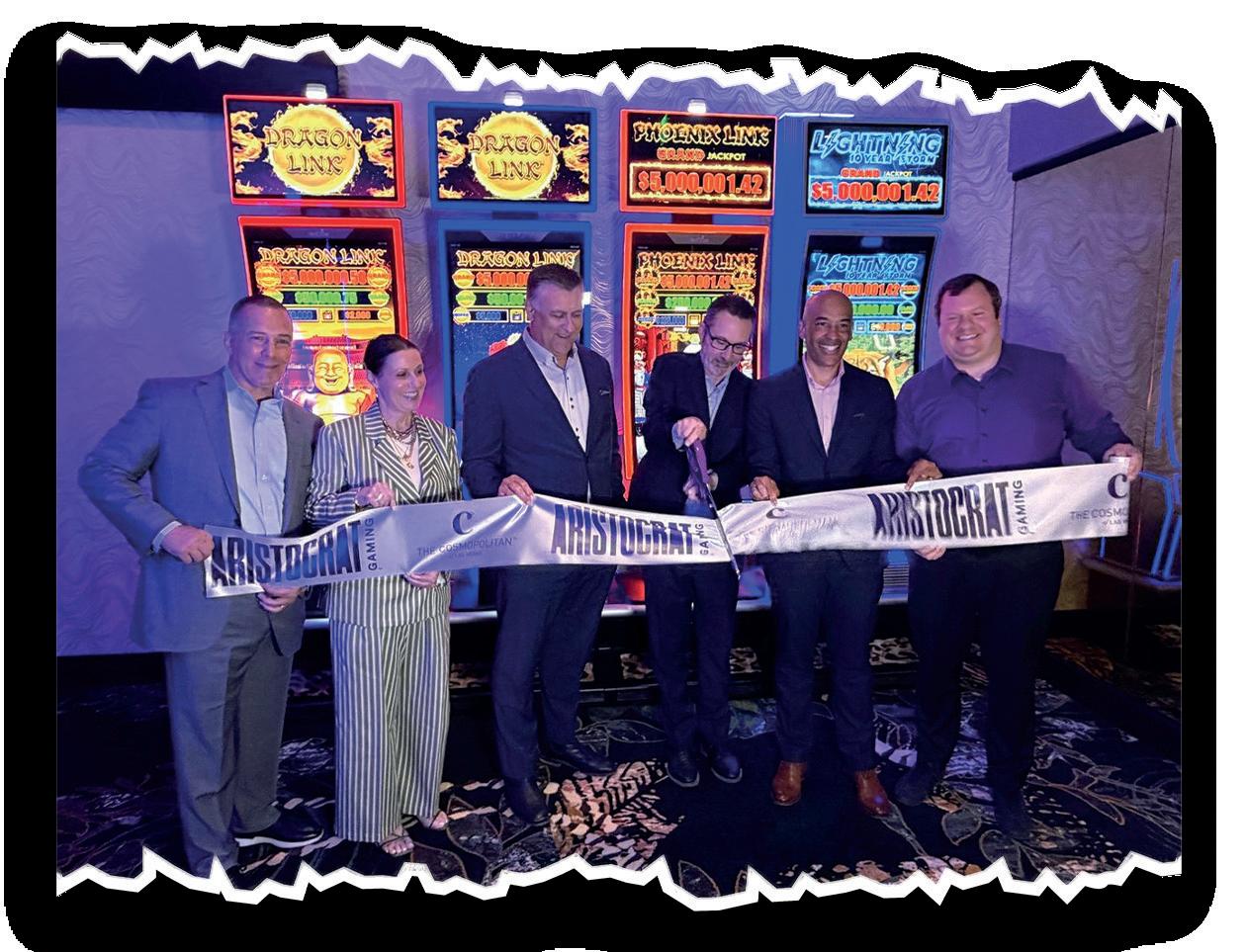



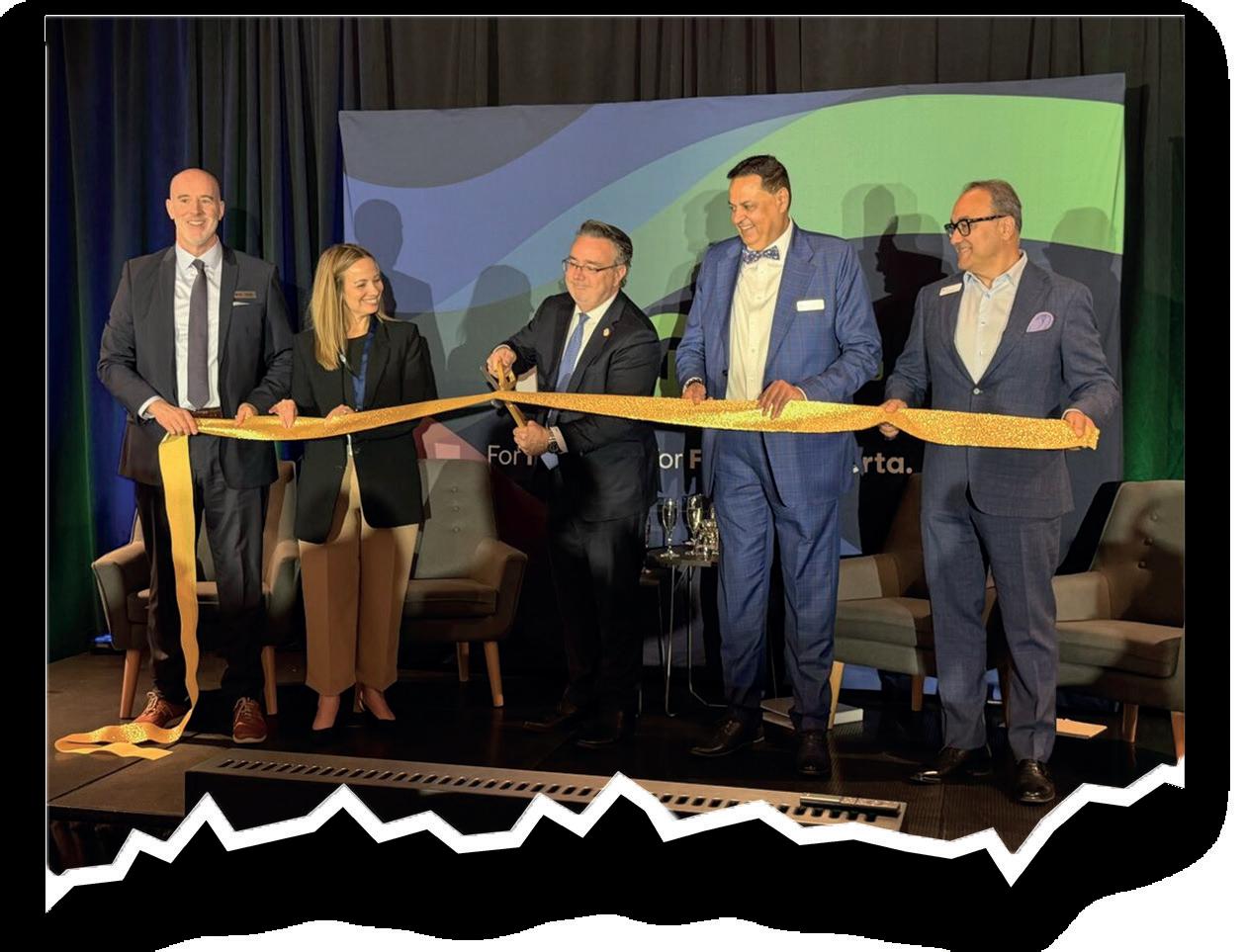
Officials from the Canadian Gaming Association and Alberta iGaming Corporation celebrate the province’s iGaming market launch
A new construction proposal in Maryland looks to begin development on the US’ second-ever Sphere entertainment venue
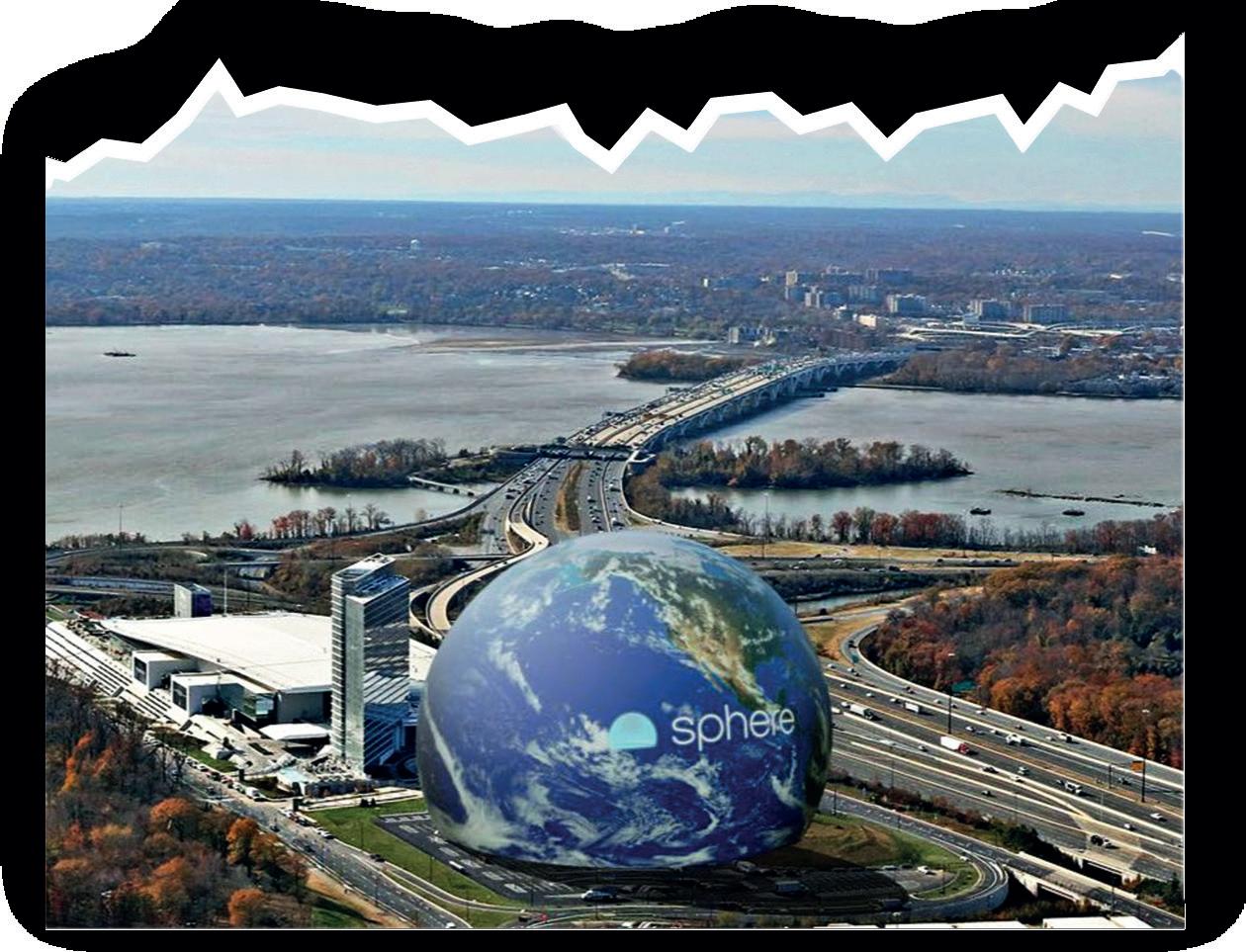
Bangkok, Thailand
The fifth edition of SPiCE Southeast Asia will feature a gathering of top stakeholders in gaming. It offers global providers the opportunity to showcase their latest innovations, products and technologies on the exhibition floor for potential collaboration with new and existing clients.
Networking: SPiCE Southeast Asia expects hundreds of attendees to participate in the event’s half-decade anniversary. At this year’s show, 40% of attendees will fall under the operator umbrella, followed by 25% suppliers, 15% affiliates, 11% regulators and 9% payment providers.

New York , US
The Racing and Gaming Conference at Saratoga is a forum for industry decision-makers, stakeholders and patrons to analyse trends from both New York and nationally. Panels currently scheduled at the conference will be focused on regulatory modernisation, prediction markets, the future of New York gaming, online gambling and propositional wagers.
Networking: Between a welcome reception at the Adelphi Hotel, The Finish Line Happy Hour event and “A Day at the Races” at Saratoga Race Course, attendees will have plenty of chances to mix with fellow gaming executives. All aboard, New York New York!
racingandgamingsaratoga.com

5-7 AUG
Ciudad del Este, Paraguay

As Paraguay continues advancing sports betting and online gambling regulation, SAGSE Paraguay 2026 will showcase the market’s new opportunities. Ciudad del Este connects three major markets across the region – Paraguay, Brazil and Argentina – facilitating access to a diverse audience in South America.
Networking: The Acaray Hotel Casino & Convention Center was selected due to its integrated profile, combining a hotel, casino, convention center and executive environment. SAGSE Paraguay 2026’s location serves as a natural meeting point for regional operators, regulators and suppliers.
sagselatam.com/sagse-paraguay

1-3 SEP
Mexico City, Mexico

At SiGMA North America 2026, North American and LatAm markets converge in a city that is hospitable, cultural and brimming with business opportunities. Expect three days of curated content, interactive panels and networking opportunities with influential figures shaping the future of iGaming and digital enterprise in North America.
Networking: The conference is expecting over 4,000 delegates at the 2026 edition, including more than 1,000 operators, 200 exhibitors and sponsors, 850 affiliates and 150 speakers. SiGMA North America 2026 will also host SiGMA Pitch North America.
sigma.world/summits/north-america/