In this issue
The Unconscious of the Screen
Mr. Hockey’s Bridge
The Ambassador of Ticinese Music
The Keeper of Time
Arctic Circle Tapas
Following the Tour de Suisse

In this issue
The Unconscious of the Screen
Mr. Hockey’s Bridge
The Ambassador of Ticinese Music
The Keeper of Time
Arctic Circle Tapas
Following the Tour de Suisse
#festival #locarno #movie
#bridge #engineering
#detroit #mrhockey #tapas
#greenland #arcticfood #cycling
#tourdesuisse #osi #ticino
#musicaclassica #innovation
#tradition #route26 #watch
#berna #zytglogge #grono
#moesano #santamariaincalanca
You can then listen to the playlist inspired by the article. All the playlists can be found at this address: https://spoti.fi/3ofTODK. Enjoy listening... and (enjoy) reading! 4 Editorial

If you have the Spotify application on your smartphone go to “search’ camera icon in the top right and enter the code that is found next to each article.
Impressum
Publisher Galli Group SA www.galligroup.ch
Graphic concept, (page) layout and text editing visiva.ch
For the photos, we thank: pages 6-11 Locarno Film Festival/ Ti-Press page 15 Arnie Lee pages 18-23 Orchestra della Svizzera italiana pages 28-32 Nivi Restaurant pages 26-27 Mario Marti pages 34-37 Mattia Galli
Salvioni arti grafiche SA
Any use of the contents (total or partial) shall be prohibited, without express consent of the publisher.
December 2025
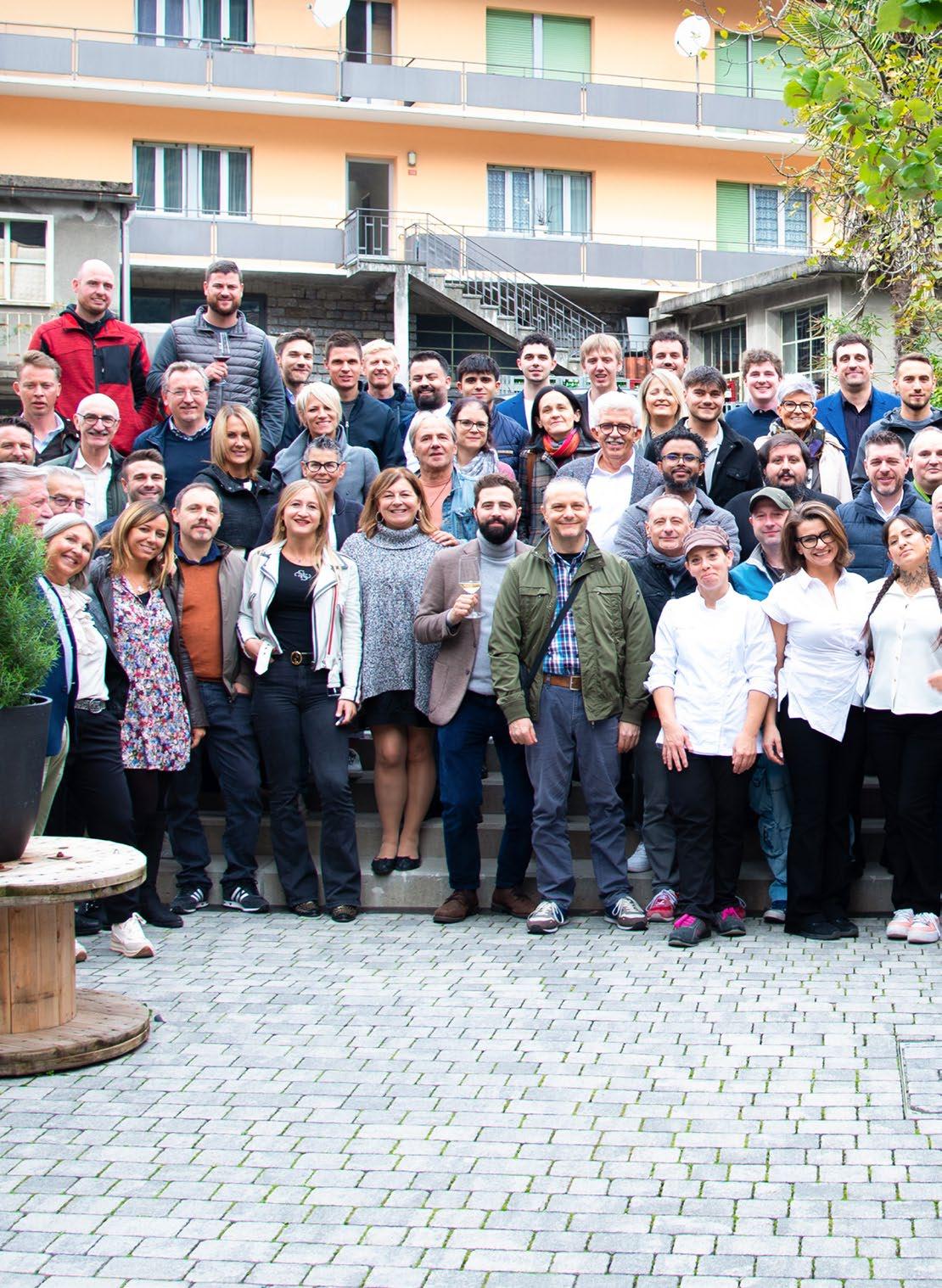
Being part of Galli Group also means sharing moments of joy together. Because the quality of our services stems from the quality of our relationships.
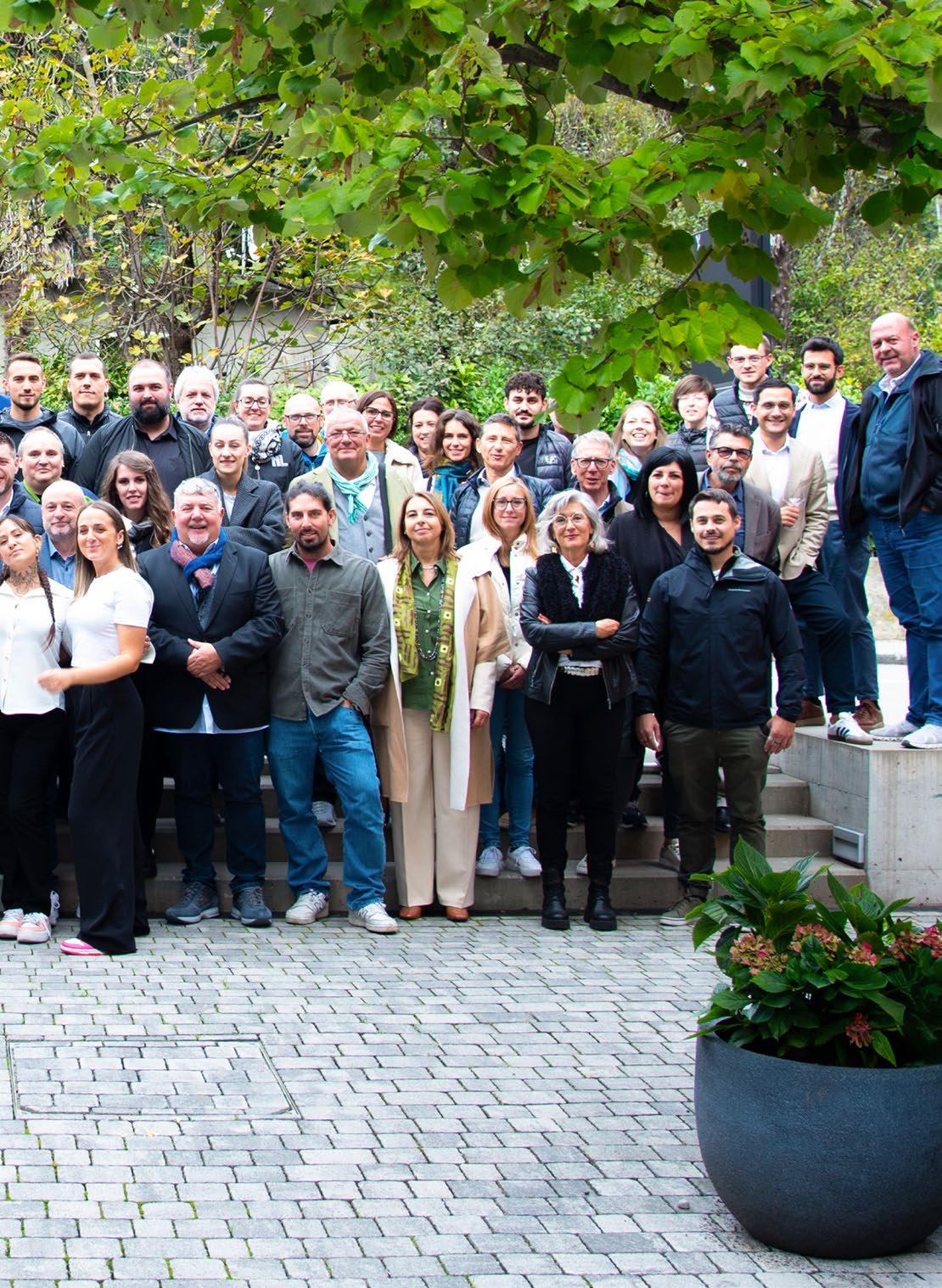
Genius Loci . How do we translate this expression inherited from Latin? We can say there’s a magical moment when a place stops being just geography and becomes biography. It happens when you meet that person who carries its essence within, who knows the secrets whispered by the wind through the alleys, who can decipher the silent language of a square and a bridge. That’s when you understand: places are never empty. They’re inhabited by invisible spirits waiting for just the right voice to tell their story. The Romans called this phenomenon genius loci : the spirit of place.
Download your digital copy!
You can download the free digital version (.pdf format) of Bistrôt at bistrot.digital
This isn’t about superstition, nor séances. Instead, we’re talking about a profound truth: every corner of the world holds a unique, unrepeatable soul that manifests through those who know how to listen and give it voice.
In this edition of Bistrôt, we’ll try to tell stories of places and experiences through some protagonists who know how to capture and interpret the “genius loci.” From the CEO of the Locarno Film Festival who openly speaks about valorizing the “spirit of Locarno” to the director of the Tour de Suisse who knows how to capture the soul of villages crossed by the race to tell it through helicopter images. And then there’s the Orchestra of Italian-speaking Switzerland, which after 90 years of activity has become an ambassador of culture on the shores of Lake Ceresio.
The spirit of Bern lives in the chimes of the Zytglogge, and Mario Marti is its guardian. Leaving Swiss borders, we find ourselves at table to breathe the spirit of Greenland with dishes from the Nivi restaurant in Nuuk. Meanwhile, a new bridge is uniting the two souls of the Detroit River (American and Canadian).
They will be the mediators between us and the secret soul of places. In these pages you’ll find voices as diverse as the places they represent. Some will shout their passion, others will whisper ancient wisdom. They all have one thing in common: the ability to transform geography into memory, space into emotion, place into home.
Because in the end, perhaps, the true genius loci doesn’t reside in a landscape or a building. In a monument, a square or a river. It resides in the people who know how to become its guardians, who know how to transform every corner of the world into a story worth living. Welcome to the journey. Enjoy the reading!
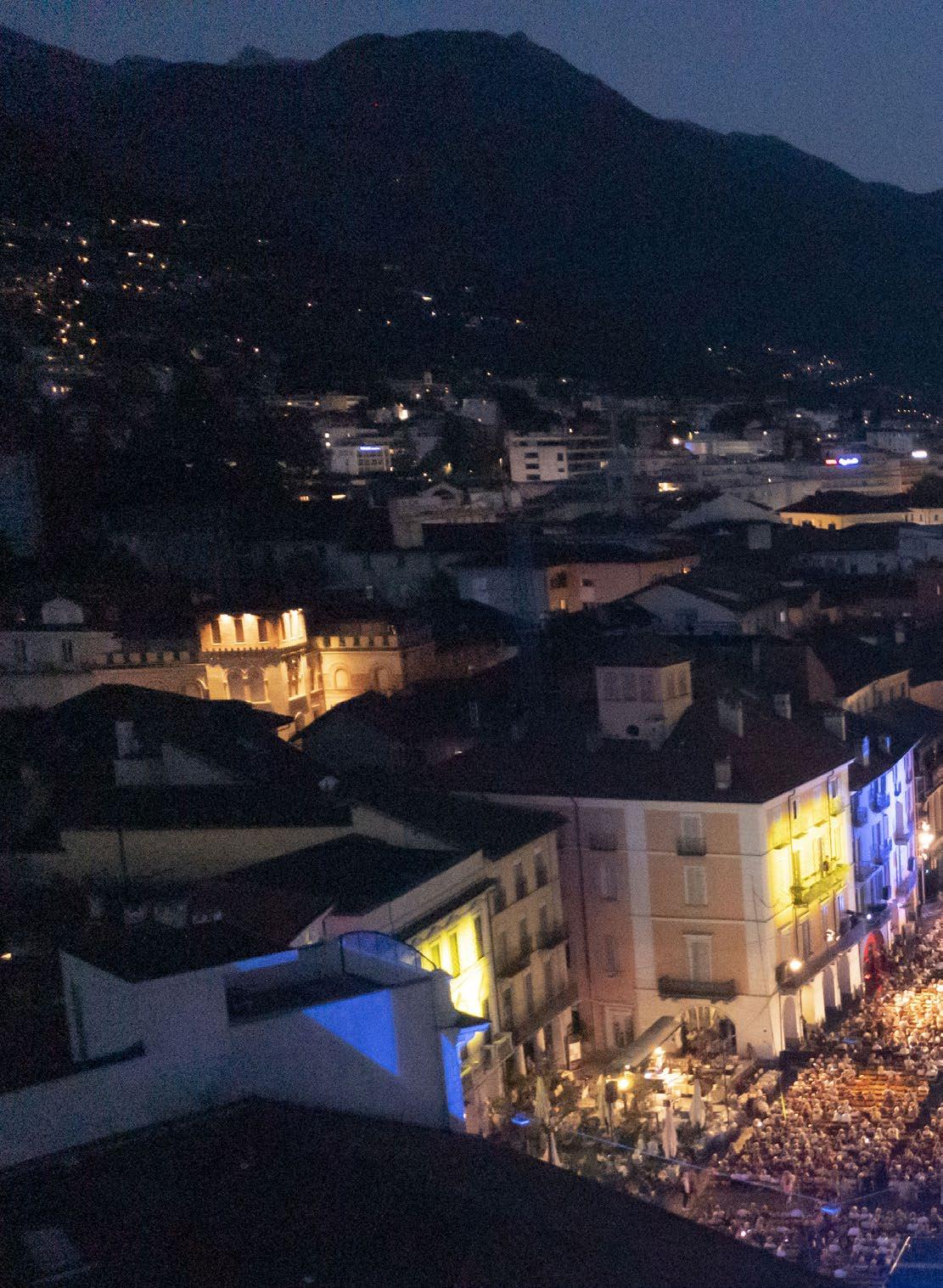
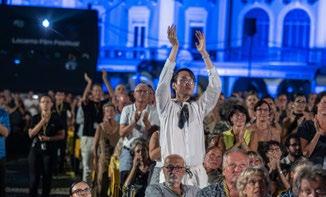
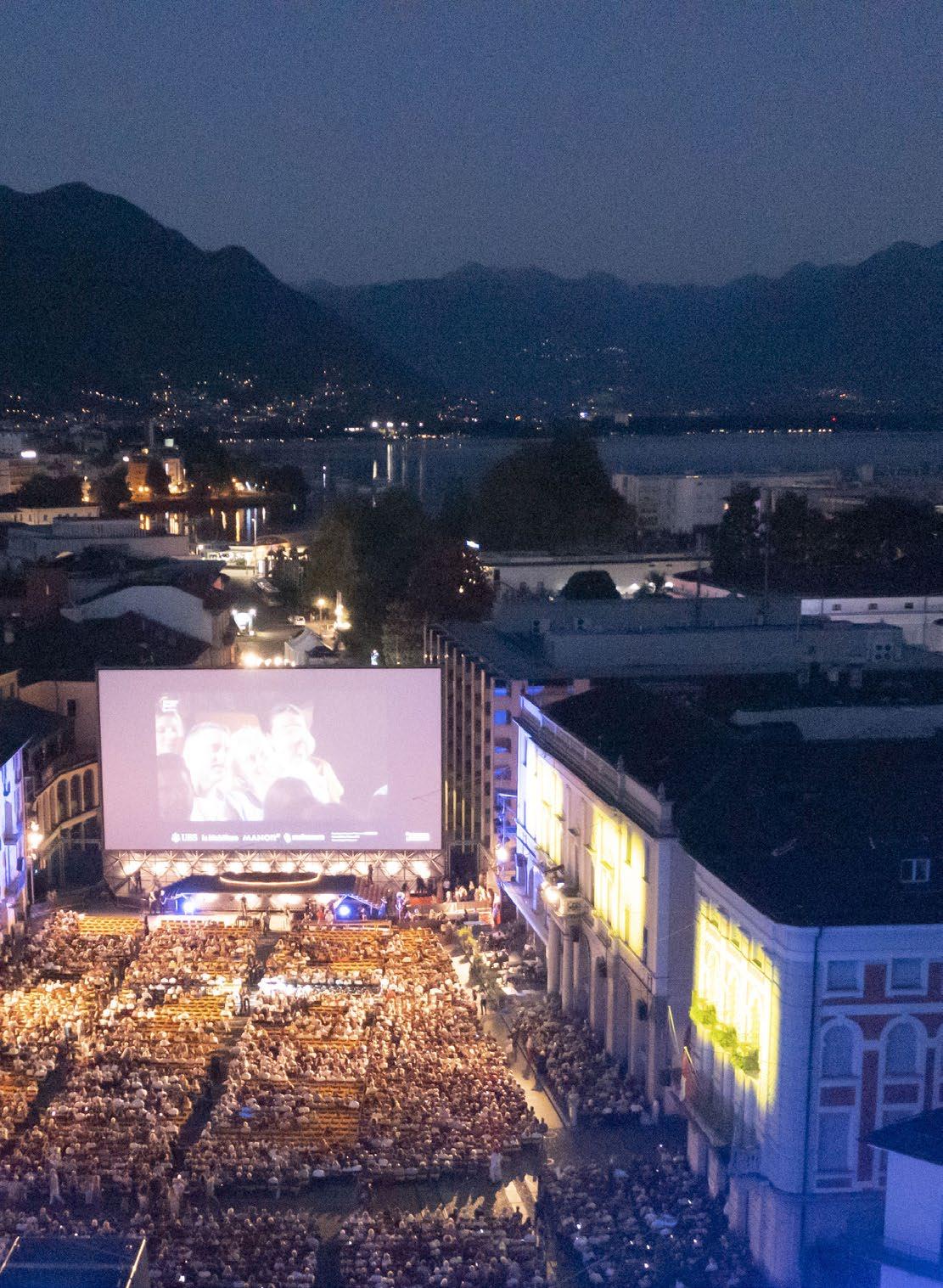
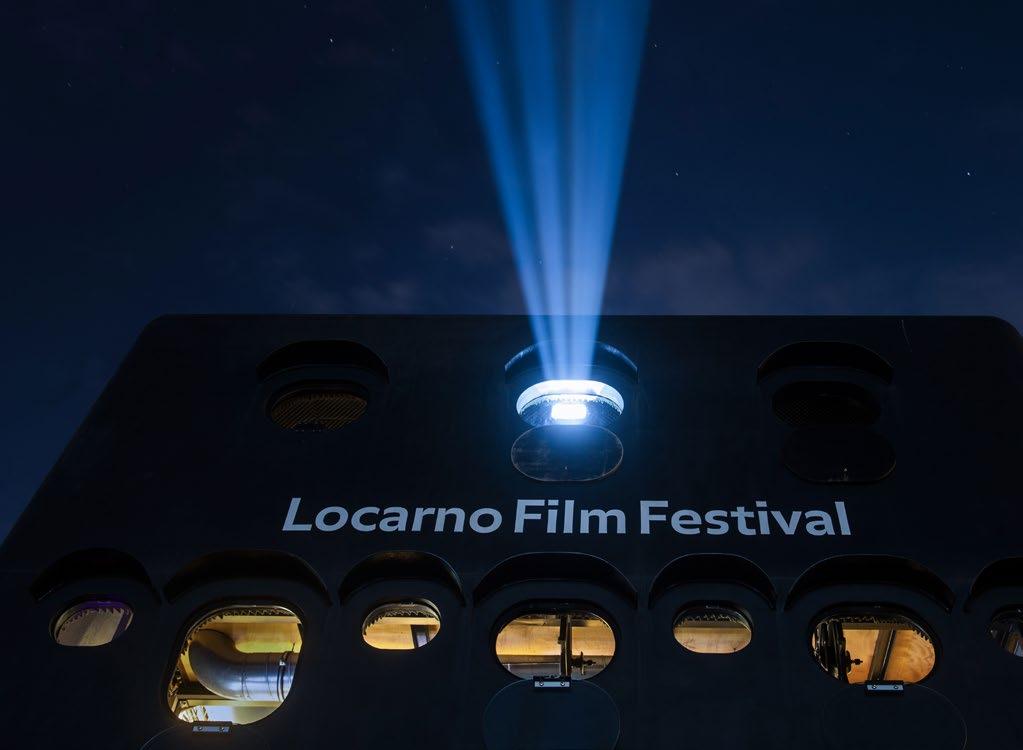
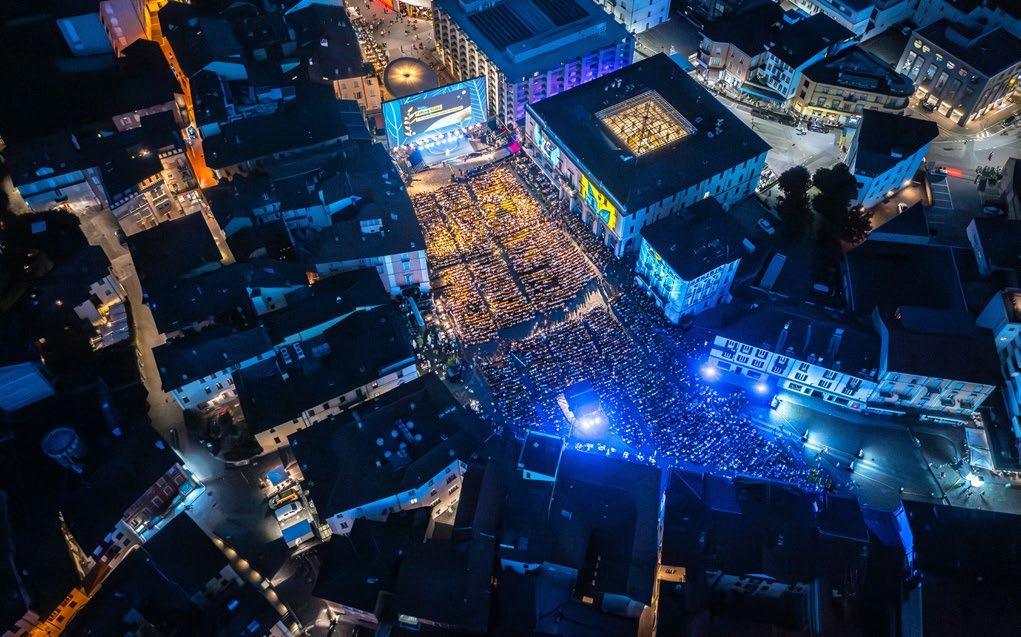
Slovenian philosopher and psychoanalyst Slavoj Žižek some years ago made a film titled “The Pervert’s Guide to Cinema.” He showed how a film is never just the visual telling of a story but reveals deep psychological and social dynamics, often hidden or repressed. Not everyone working in the film industry and its related sectors is aware of this. But a humanist manager like Raphaël Brunschwig is, CEO of the Locarno Film Festival that every year attracts tens of thousands of spectators to Piazza Grande. From childhood in Valcolla to the shores of Lake Verbano, Brunschwig arrived there through reading those authors who in the 20th century sought a third way, spiritual, between capitalism and communism. A scenario that seems to repeat itself in the “unnameable current” epoch, as the fortyyear-old manager likes to repeat, citing Roberto Calasso; an epoch founded on inconsistency. And the “spirit of Locarno,” that of the Pact marking its centenary, could prove to be an alternative path to continue walking. How? Brunschwig himself explains in this interview.
Why read this article?
To immerse yourself in the spirit of Locarno and experience a city that transforms into cinema.
#locarno #movie #filmfestival #pardo
The festival cannot stand still while everything around it changes.
Why is the Locarno Film Festival a “seismograph of reality”?
It was a definition by a former artistic director that I find very fitting. The festival can’t remain still while everything around changes. From film production to distribution, from consumption to financing mechanisms, to audience habits, to the media system: everything has changed. If in the good old days there was an audience that generated automatically because there was a reference system linked to theaters showing auteur cinema, and there was press that conveyed our messages with journalists who did it and especially readers who read and followed, now this dynamic has gone into crisis.
How has the festival adapted to these changes?
First, it should be said that our audience structure has three distinct components. We have 20% international, that’s not in crisis because it’s the B2B part, the industry that comes here to work. Locarno remains a relevant festival for a
certain type of industry, it’s among the ten most important in the world. Then there’s about 30% Ticinese who come because they’re interested in culture, or because it’s a big event, with a very strong experiential dimension: lounges, bars, nightlife. Finally, there’s 50% Swiss audience from German or French-speaking regions, and this is where we need to work most.
In what sense?
On this 50%, until a few years ago you had people who went to Arthouse cinemas several times a month and had the references to come here almost automatically. Generations of cinephiles for whom cinema had a clear role in education and intellectual formation. This thing no longer exists. More films are produced than ever, but they’re consumed in different ways. And above all there’s no longer a structured media system, just look at the near disappearance of film critics.
How have you responded to this challenge?
The festival had to become a media, take responsibility for this communication. But above all we had to ask ourselves very big questions about how to continue regenerating our audiences. This is how initiatives like Locarno Edu, Locarno Kids, cultural mediation were born, but also work on young creatives with Locarno Factory and Basecamp. The latter is one of the most beautiful projects we’ve done: initially born in a former barracks, now it continues to host young creatives to whom we solve not only the hospitality problem during the festival, but we make them an active community that—for example— creates art, produces magazines, makes music.
Are you also evaluating changing dates?
It’s one of the hypotheses. The reason is simple: at an international level, both artistic and economic growth is negatively conditioned by the fact that we’re in August weeks, during which all international professionals are on vacation. Including actors and directors. Given that the festival is primarily a B2B platform around which we build an event for the broadest possible audience, if we want to grow,
having at least one weekend in July becomes fundamental.
You’re also a member of the Ticino Film Commission. How do you see the relationship between film production and projection in the territory?
There’s obviously enormous potential. Film production is also a form of territorial marketing, promotion of a culture. Cinema is soft power. For a nation it’s important that cinematography of its own stories gets told in its own home. We have a tourist-oriented canton, but beyond this, a region’s prestige can be very strongly determined by film productions.
Do you have passions outside cinema?
I quote Solari: as a cardinal you must at least be Catholic. Obviously I frequent this world directly and indirectly, but it’s good not to share too many opinions: we have very clear governance where nobody enters the artistic director’s freedom. My true passion is literature, especially depth psychology, like Jung. I think it’s important, in a function like mine that has an impact on practical things, to have a conscious relationship with the symbolic, unconscious dimension.
Film production is also a form of territorial marketing.
We must continue to show the world’s diversity.
Because the less aware you are of it, the more you’re subjugated by it.
Interesting, this link between psychology and cultural management...
Yes, there are many contemporary authors on this. This year for the opening of literary events we invited Erik Davis, who over twenty years ago had written “Techgnosis,” putting together the relationship between technology and mysticism. He showed how everything that happened from Steve Jobs onwards is strongly influenced by a gnostic dimension. Even in our relationship with cellphones there’s something that transcends the utilitarian aspect.
How do you imagine the festival in ten years?
If there’s one thing we learned during the pandemic, it’s that the physical experience of community is irreplaceable. Locarno must continue to work on the magic and pleasure
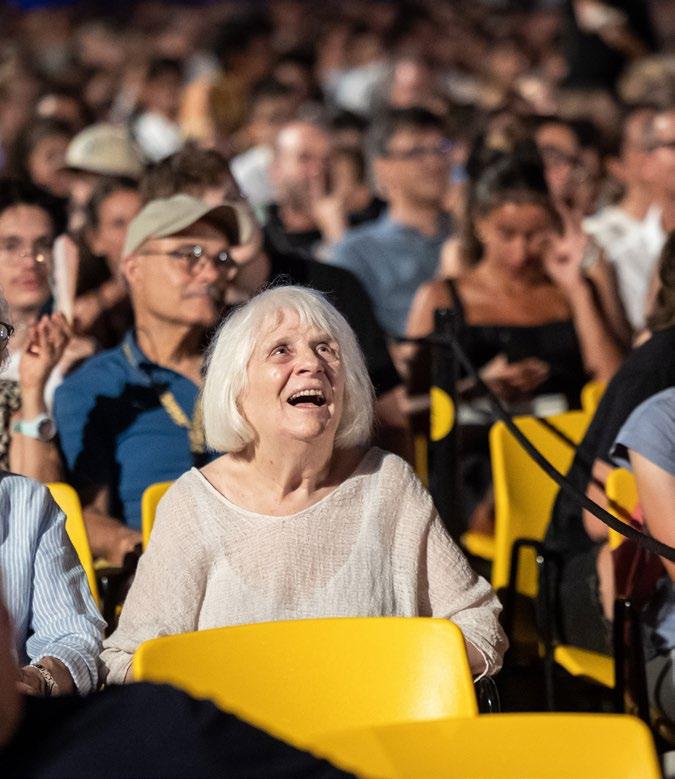
you feel being here. It’s a pleasant, fun festival, where you enjoy being, with the lake, the mountains, accessible. What can we improve? Ideally being capable of anticipating the Oscar season that now starts with Venice, even if just with one film a year, and thus elevate the Festival’s prestige through Piazza Grande, and create an active community that’s increasingly large and connected to us all year round, perhaps also through platforms in other realities, as Art Basel or Montreux are doing.
And the discovery mission remains central?
“Absolutely yes. We must continue to show the world’s diversity, doing research work on those emerging, less visible cinematographies, because this is part of Locarno’s DNA. I was reading a study on media and how much of their information they dedicate to the Global South: very little, and when it happens it’s mostly in negative terms. Actually, other realities and cultures have so much to teach us.
Raphaël Brunschwig represents a generation of cultural managers who must know how to combine artistic vision and economic sustainability, local territory and international scope. In his office, while describing the festival’s future challenges, it clearly emerges how the “seismograph of reality” he speaks of doesn’t just register changes, but anticipates them, interprets them and transforms them into creative opportunities. Because, as he says citing his artistic director, “last time I checked, films are made with money,” but with that money you can choose whether to tell an authentic reality or chase only commercial logic. Locarno, in Brunschwig’s vision, will continue to choose authenticity.
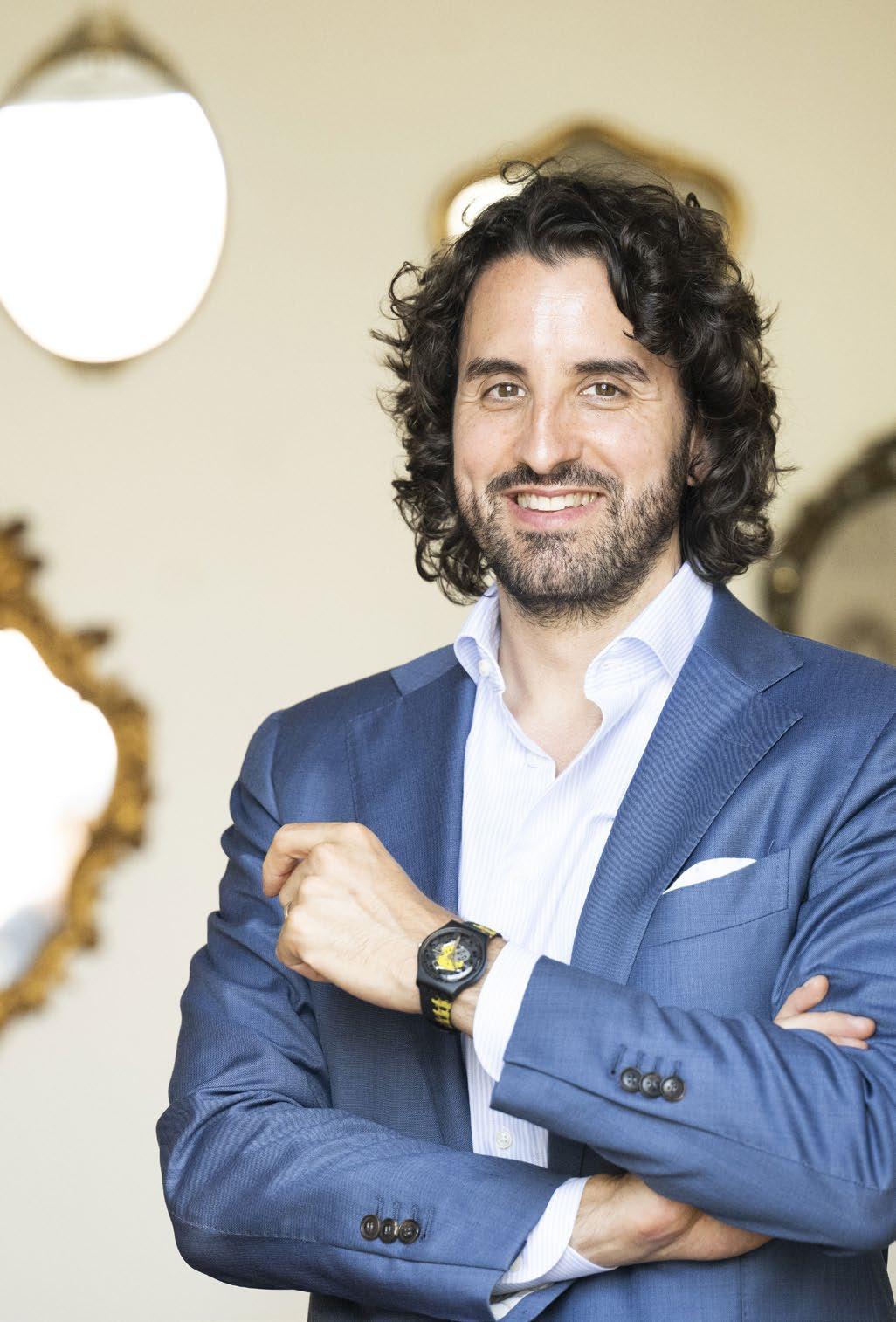
Raphaël Brunschwig
Year of birth: 1984
Profession: Cultural manager
He joined the Locarno Film Festival in 2013 and, since 2017, has headed its operational management. He currently holds the position of CEO of the Festival. He is also president of Monte Verità Literary Events and Co-President of Swiss Top Events, the association that brings together Switzerland’s nine main sporting and cultural events. He is also a member of various bodies and associations, including the Ticino Film Commission. He is also a member of the Board of Directors of the Eranos Foundation, known for its famous conferences that explore cultural, religious and spiritual themes through a multidisciplinary approach.
Why read this article?
To discover the unique features that make the bridge over the Detroit River extraordinary and the passion of those who built it.
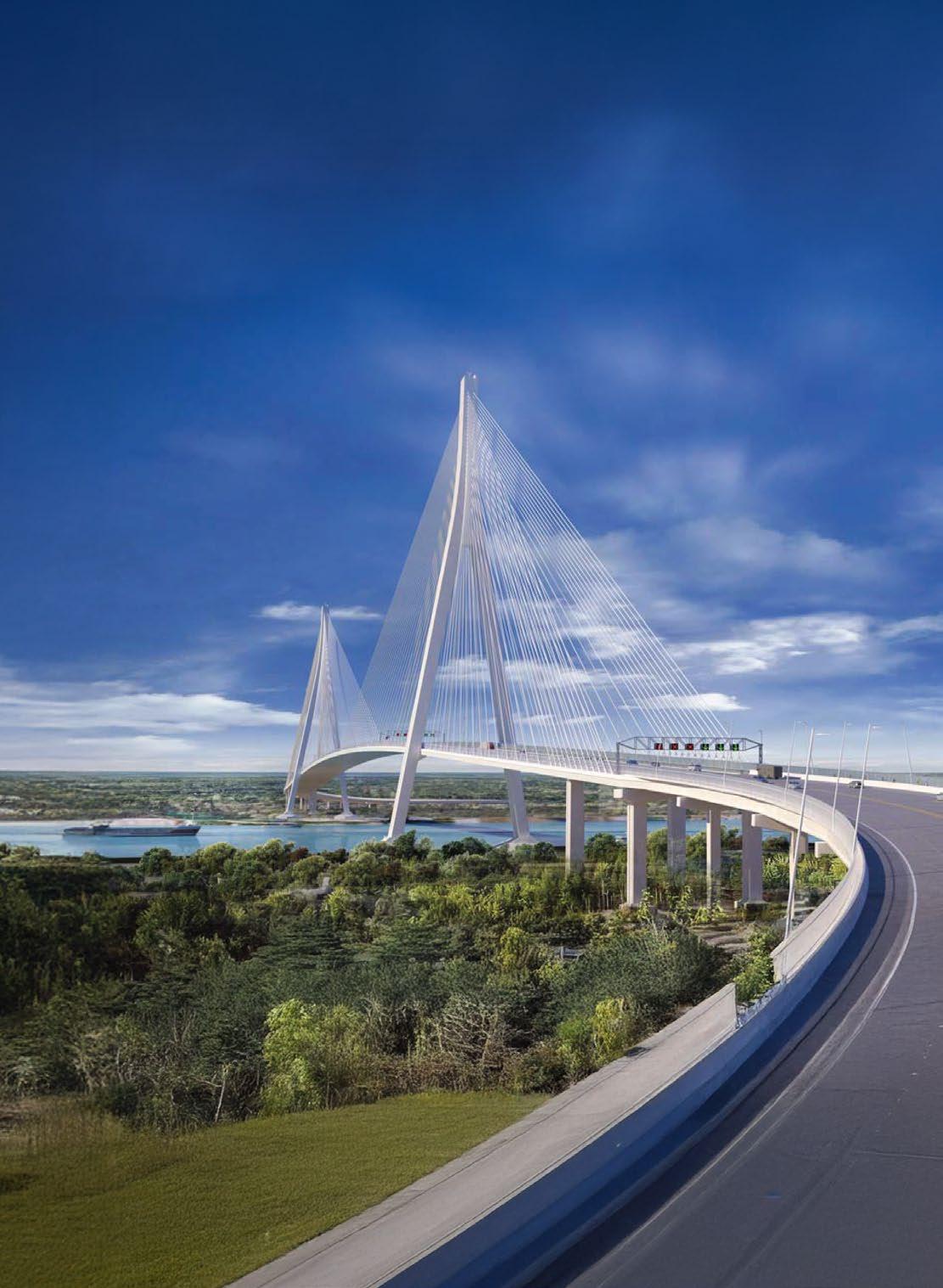

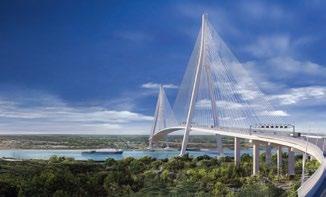
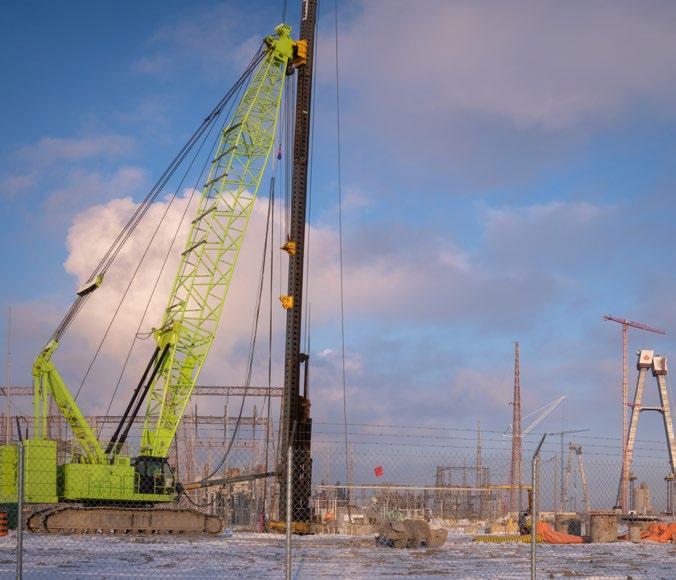
2025 marks a crucial milestone for modern engineering and cross-border relations between Canada and the United States. The Gordie Howe International Bridge, a monumental work built over the Detroit River, is now nearing completion, promising to redefine mobility and economy in one of North America’s most vital regions. The Gordie Howe Bridge is not just a bridge, but a symbol of progress and international collaboration, destined to become a new iconic landmark. To explore the challenges and innovations behind this extraordinary project, we had the opportunity to interview the chief bridge engineer Juan Antonio Navarro Gonzalez-Valerio, one of the brilliant minds behind this impressive achievement.
The Detroit-Windsor corridor is one of the busiest border crossings between Canada and the United States.
Engineer, how did the idea for such an imposing bridge between Canada and the United States come about? What strategic needs was it designed to meet? How do you think it will change mobility and economy in the two regions it connects?
Most of North America’s major bridges were built in the first half of the 20th century. While they remain iconic landmarks for communities, their maintenance has become increasingly challenging and their design standards are now obsolete. The Detroit-Windsor corridor is one
of the busiest border crossings between Canada and the United States, with over 16 million vehicles per year. Yet the Ambassador Bridge, currently one of North America’s busiest international border crossings, is a suspension bridge that opened in 1929. The Gordie Howe International Bridge was conceived to strengthen this vital connection and modernize the corridor, ultimately improving mobility and stimulating economic growth on both sides of the border.
What were the main inputs and requirements that emerged during the international design phase? CFC-ARX participated in the project during the design-build competition, working for contractor Bridging North America—a joint venture between Dragados, Aecon and Fluor—as a subconsultant to AECOM, alongside Fhecor company. Most design criteria had already been defined through extensive prior studies. The main objectives were aesthetics, durability and performance. For example, no piers were allowed in the Detroit River to avoid interfering with heavy commercial traffic, and all bridge reinforcements are made of stainless steel, an exceptional feature that highlights the project’s attention to longevity and quality.
What were the greatest engineering challenges in designing a bridge with such a long span in an area known for its extremely variable climate?
One of the main challenges in a design-build competition is finding the right balance between costeffectiveness, crucial for winning the contract, and strict adherence to design criteria established by the Authority. At the same time, construction uncertainties must be minimized. This required extraordinary collaboration between contractor and designer for over a year to arrive at the optimal solution. Ultimately, a highly innovative longspan design was developed that set a world record, securing the contract against other competitors.
How did you work to ensure seismic safety and resistance to wind and ice loads?
Environmental loads did not represent this project’s most critical challenge. Ice loads and direct ship impacts were not considered, as there are no piers within the channel. Wind loads, while significant, are considerably lower than those in hurricane-prone regions. Similarly, seismic forces were sufficiently reduced that they did not influence the design of any bridge component. By strategically leveraging these factors, we were able to develop a world-record design.
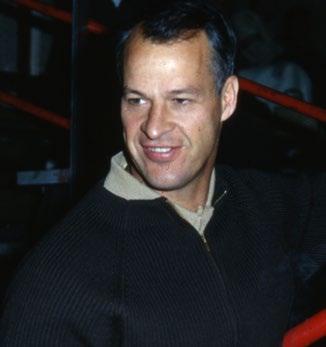
Gordon Howe OC (1928-2016) was one of the most celebrated Canadian professional ice hockey players, considered among the most complete ever and earned the nickname Mr. Hockey. From 1946 to 1980, he played 26 seasons in the National Hockey League (NHL) and six seasons in the World Hockey Association (WHA); for 25 seasons he wore the Detroit Red Wings jersey.
Was there a particularly innovative technical or design choice that, in your opinion, distinguishes this project from other similar bridges worldwide?
The Gordie Howe International Bridge is the largest composite deck (concrete + steel, or concrete only) of any type in the world. All the world’s longest spans are made only of steel. Additionally, it uses an open cross-section composed of longitudinal and transverse beams— known as a ladder structure—rather than a closed box section. This approach significantly reduces the amount of welding required. The combination of these two distinctive features makes the bridge truly unique on a global scale.
Has the bridge adopted solutions for environmental sustainability and impact reduction? Which do you consider most significant?
The most significant contribution to reducing environmental impact is maximizing the bridge’s useful life—125 years—while minimizing maintenance requirements. To achieve this goal, an extremely detailed durability plan was developed, including the use of stainless steel reinforcements in critical areas, among other longlasting design features. Additionally, the proposed solution required no demolition; instead, a new bridge was added to the existing corridor to increase its capacity, further reducing environmental impact.
has the largest composite deck of any kind in the world.
As an engineer and as a person, what does it mean for you to see this project finally near completion? What human and professional lessons will you take from this experience to future projects?
This bridge was the result of collaboration by hundreds of people from around the world. Each brought their own ideas and work methods and, while aligning these perspectives wasn’t easy, through open dialogue and determination we managed to reach the necessary agreements, first to achieve optimal design and then to ensure safe, efficient and economically advantageous construction. I’m particularly proud of how, despite difficulties, we managed to achieve success together. This experience has reinforced the value of teamwork, patience and the strength of a shared goal: lessons I’ll carry with me into every future project.
If you could speak to your younger self, who just started this project, what advice would you give him? I would tell myself to stay calm and confident, and to enjoy the journey more. With strong teamwork, every challenge can be overcome, so there’s no need to let stress disperse the experience. This type of project is a long-term commitment, lasting almost seven years, and it’s important to find satisfaction not only in the final result, but during the entire design and construction process.
Is there a detail, a view, a moment of the Gordie Howe bridge that will always remain with you, or an unexpected or deeply human story that emerges from the construction phase?
The closure of the intermediate span was truly magical. We all stayed up all night to prepare for the operation. It was a calm and beautiful night, and at dawn, with a breathtaking view of sunrise, all the bolts fit perfectly into the junction plate, closing the bridge with surprising ease and connecting the two shores, Canada and the United States. The atmosphere was euphoric: about two hundred people standing on the bridge, all together. It was a moment of pure silent joy, a powerful reminder of what we can achieve when we work as one team.
In your opinion, why do bridges continue to fascinate us so much, well beyond their practical function?
Bridges often become iconic landmarks within the communities they serve. It’s not just that they can be beautifully designed, but also their grandeur and presence that fascinate us. They capture attention and inspire awe. This is what drove me to design bridges as a child. I still remember being fascinated by their size and elegance. Today it’s hard to imagine San Francisco without the Golden Gate Bridge or New York without the Brooklyn Bridge, and over time, I hope the Cádiz Bay Bridge—another monumental project I had the fortune to work on with CFC-ARX—will become just as closely linked to its city. Sometimes bridges go beyond mere infrastructure: they become symbols.
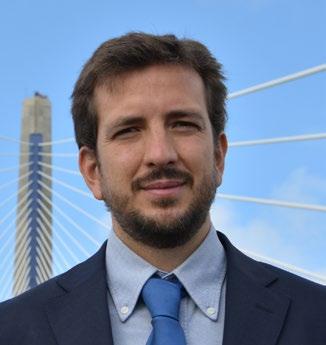
Juan Antonio Navarro
Year of birth: 1977
Profession: Civil engineer
Bridge designer at CFC-ARX since 2004. After his Master’s degree at the Polytechnic University of Madrid, he has worked on the detailed design and construction of over 25 bridges, including the Cádiz Bay cable-stayed bridge (540 m), the Contreras arch bridge (261 m), the Gordie Howe cable-stayed bridge (853 m) and the Bizerte steel truss bridge (292 m). He is currently operations manager at CFC-ARX, vice president of CFC-USA Corp and responsible for project management in Texas and Maryland.
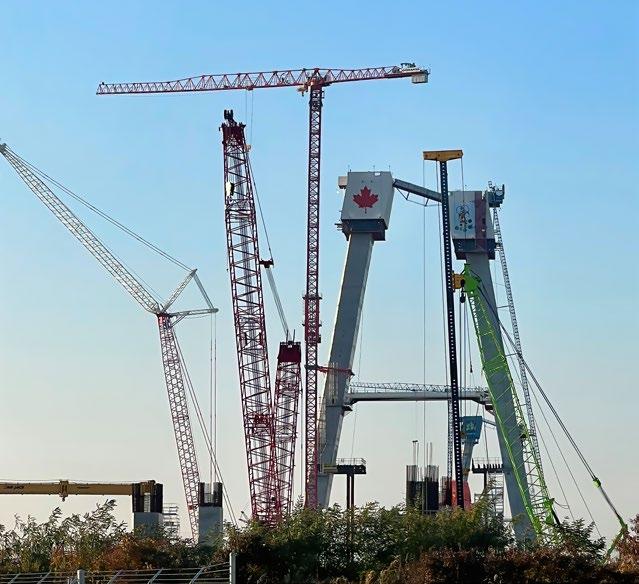
The Gordie Howe International Bridge is a cross-border infrastructure of strategic importance, designed to modernize and strengthen the Detroit-Windsor corridor, one of North America’s busiest border crossings. Here are the project’s key data:
• Bridge type: Cable-stayed bridge, with support cables connected directly to the towers
• Total length: Approximately 2.5 kilometers (1.5 miles), including the main bridge over the Detroit River and two approach bridges
• Main span length: 853 meters (2,800 feet), the longest among cable-stayed bridges in North America
• Tower height: Two “A”-shaped towers, each about 220 meters (722 feet) tall
• Number of lanes: 6 vehicle lanes (three toward Canada and three toward USA), with provision for future expansion to eight lanes
• Additional features: Includes a pedestrian and cycling path nearly 3.6 meters (12 feet) wide
Why read this article?
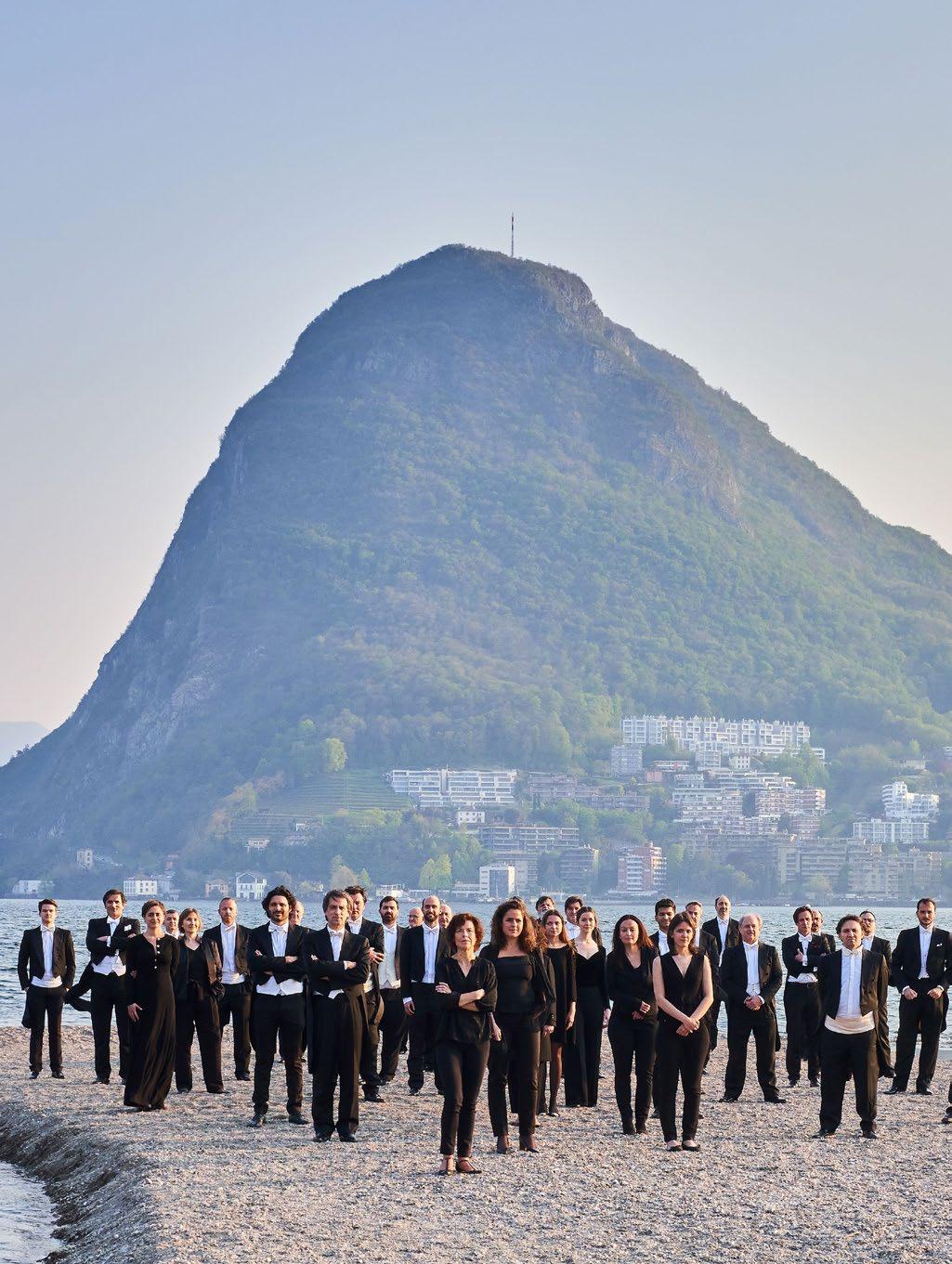
To discover behind the scenes of a cultural institution celebrating its 90th anniversary and bringing great music from Ticino to the world.
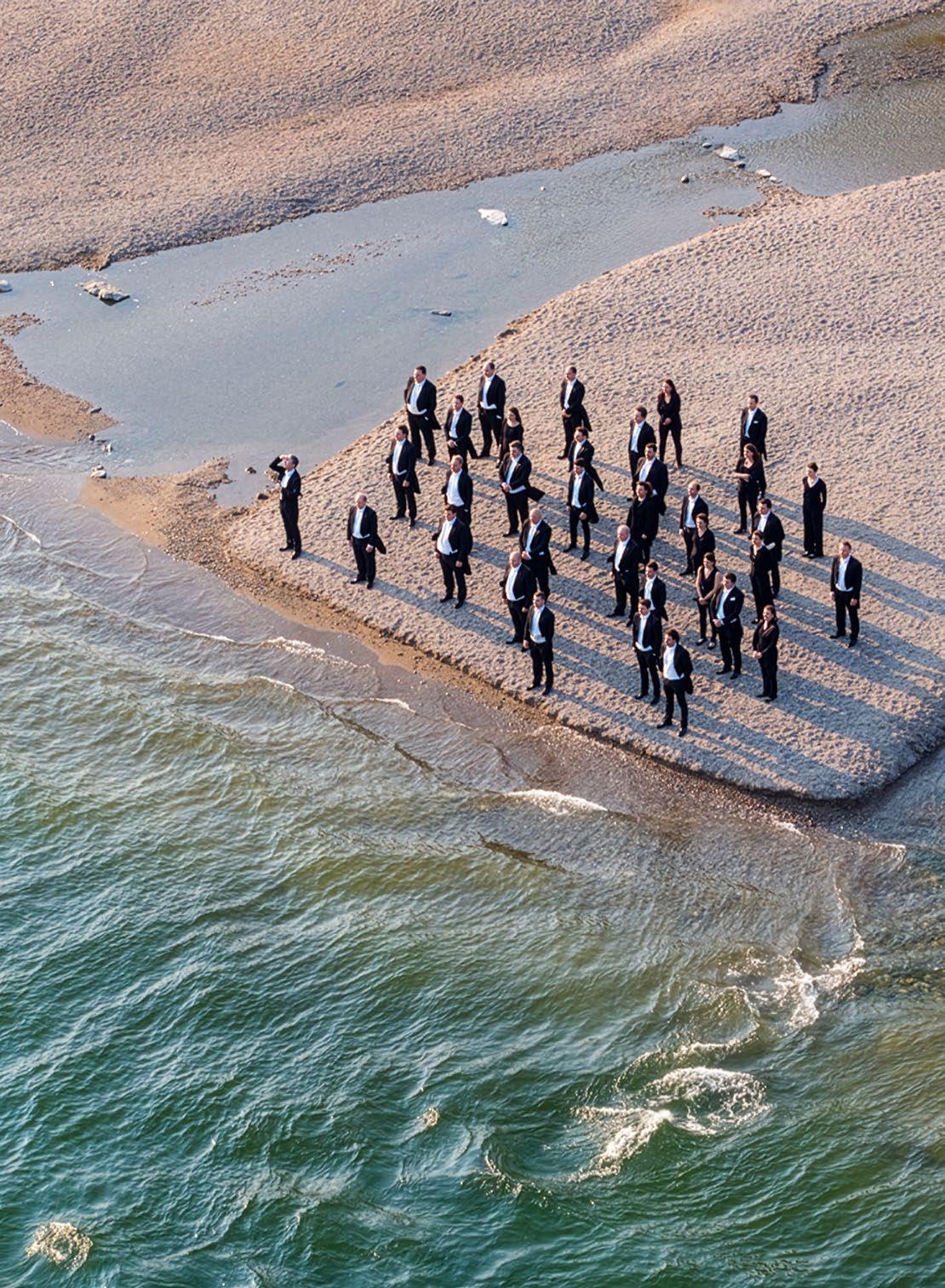
#OSI #classicalmusic #BarbaraWidmer #beconnected

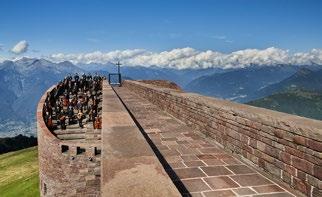
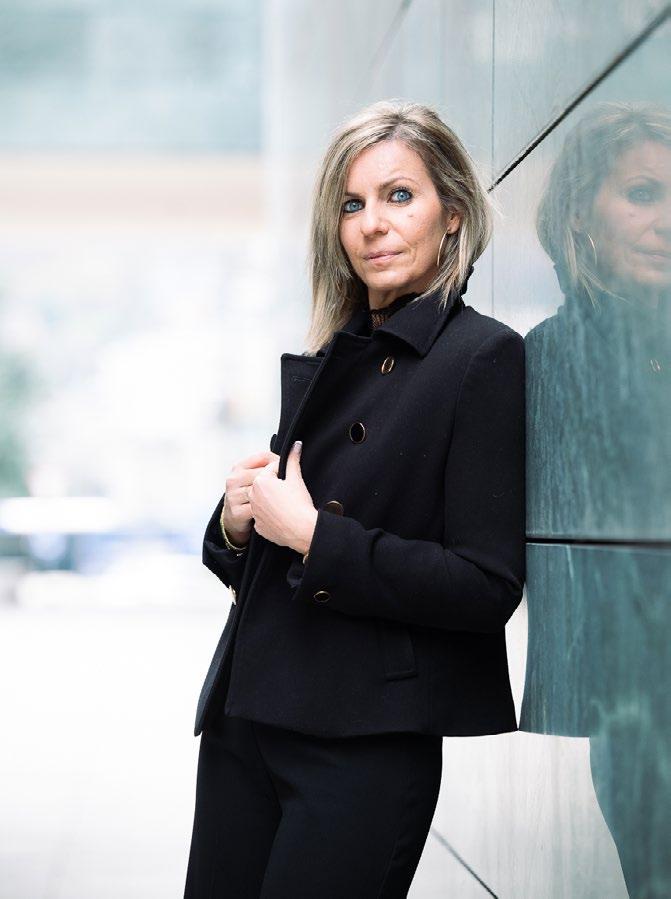
The path of the Orchestra della Svizzera italiana crossed that of Barbara Widmer 15 years ago. Then still a student in Zurich, studying Musicology and Italian Literature as well as singing, she was invited by Denise Fedeli (at the time Artistic Director of OSI) to join as an artistic assistant. It was the discovery of a vocation which, over the years, led her to become Head of Artistic Production, then a member of the FOSI management, and, since September 2023, Artistic Director of OSI.
We spoke to her about the challenges facing an orchestra that is celebrating its 90th anniversary and is determined to be an ambassador of the musical spirit of Italianspeaking Switzerland in the world.
Barbara Widmer
Profession: Artistic director
Graduate in Musicology and Italian Literature in Zurich, with a Master’s in Cultural Management, Widmer began at OSI in 2010 as artistic assistant, progressing to direction. Creator of the “be connected” program, she guides the orchestra from 2023, promoting accessibility of classical music and the ensemble’s international expansion.
Speaking about the “be connected” project, what are the most surprising experiences to have emerged from this initiative, designed to break down barriers and reach new audiences? Which “non-conventional” venues have responded best to your proposals? Among the most original and successful events, I would mention Lunch with OSI, our “lunches with the Orchestra”: special rehearsalconcerts at midday at the LAC, with a takeaway lunch included. The conductor explains what lies behind the performance of a piece, alternating anecdotes and dialogue
with the audience with musical moments with the Orchestra. And the audience responds with great enthusiasm.
Thinking of non-conventional venues, I recall the OSI @Vanilla club concert in March 2023: a spectacular show of lights and video under the direction of Markus Poschner, pairing a Tchaikovsky symphony with minimalist music. The venue exceeded our expectations and allowed us to connect with a completely new audience.
Then there was the “Io, tu e l’OSI” initiative a year ago, when fifty non-professional musicians played alongside the orchestra’s players in two concerts at the LAC: an exceptional experience for them, made up of rehearsals, emotion and personal growth, and a great success in the hall.
Lastly, I recall the concerts for schools, particularly those for primary schools in May, which were previously spread across the whole of Ticino.
OSI has tackled international tours in recent years. What challenges and satisfactions does bringing Ticinese musical identity beyond national borders entail? How does international audiences react to the Orchestra’s peculiarities?
For OSI, being invited to perform on the world’s most important stages, from the golden hall of Vienna’s Musikverein to Berlin’s Philharmonie, from Salzburg’s Grosses Festspielhaus to Cologne’s Kölner Philharmonie, in equal comparison with the great international orchestras it is an indispensable opportunity for artistic growth, as well as a source of great pride.
We shouldn’t forget that the Orchestra has an essential role as cultural ambassador: OSI spreads a prestigious image of Italianspeaking Switzerland in the rest of
Switzerland and the world, enjoying international recognition. It’s also beautiful, when we play abroad, to be followed by a real fans club that accompanies us and, a bit like football teams, cheers for us.
OSI’s relationship with Ticinese territory is expressed through multiple collaborations. How do you balance the local dimension with international ambition? How important is it for you to maintain strong roots in communities?
For us, community roots are central: we’ve been deeply anchored in the territory for 90 years, since that distant 1935 when the Orchestra of Italian Swiss Radio was born, today one of Europe’s most interesting orchestras. We constantly collaborate with the territory, with always new proposals and ideas, to favor the spread of classical music and our identity in every social sphere, in the conviction that a high-level musical offering can bring tangible well-being to everyone’s life. In Italian-speaking Switzerland, OSI consolidates day after day an increasingly broad and widespread community, between faithful audiences and people coming to concerts for the first time, with particular attention to young people.
OSI has undergone notable evolution in recent years. What do you consider the most significant achievement reached, both from artistic and human perspectives?
In recent years, OSI has undergone an evolution that goes well beyond the artistic aspect. If I had to indicate a particularly significant achievement, I would say without hesitation: our ability to become a unique voice, while remaining an ensemble of strong artistic individualities. On the musical level, one of the highest moments was undoubtedly the collaboration
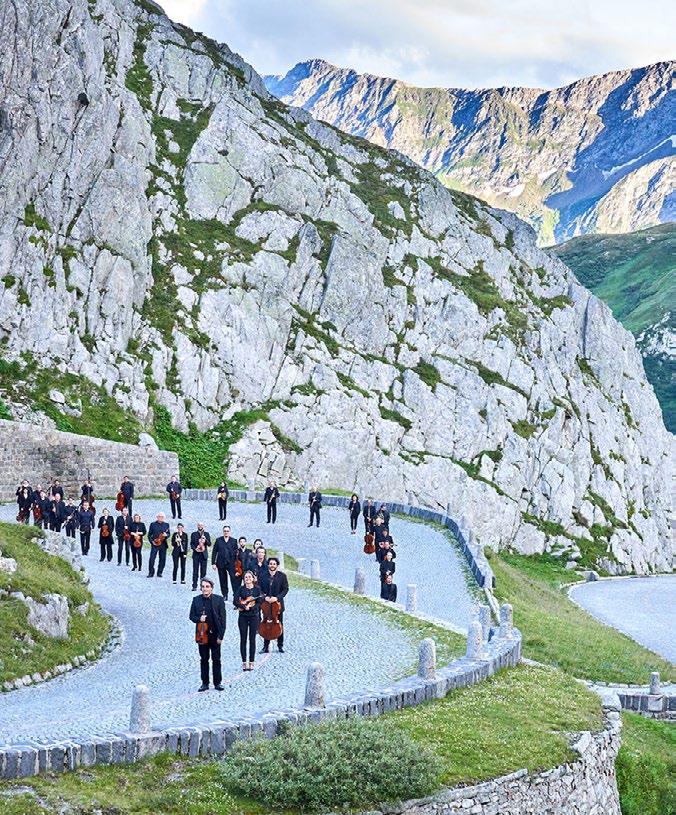
For us, community roots are central: we have been deeply anchored in the territory for 90 years.
I want to significantly expand the Orchestra’s international reach, taking it beyond our borders to introduce it to an ever wider audience.
with Markus Poschner. With him, the orchestra found a new sound identity: more refined, more compact, but also more courageous. But among the achievements that touch me most on a personal level are certainly the initiatives aimed at younger audiences. Seeing children’s eyes light up the first time they enter a concert hall, listening in silence, with attention, with dedication... is something that moves me every time. In those moments, music reveals all its strength: that of speaking directly to the heart, without need for words.
Is there a “heart” of OSI, a soul that defines its essence beyond musical performances? How would you describe this more intimate aspect of the Orchestra to someone who doesn’t know it?
This heart is made of a deep cultural identity, a sense of belonging, cohesion between musicians, direction and audience, a true Credo that comes from Music itself. At the base of everything is a strong passion that I myself try to transmit. I know this passion is shared by
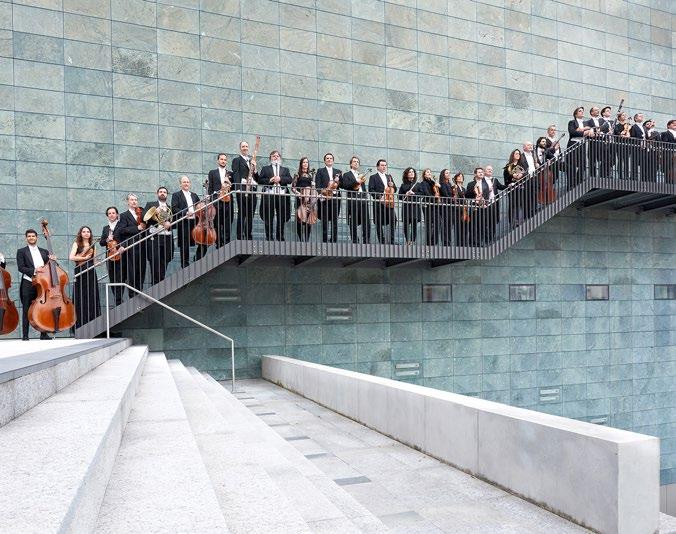
all musicians: we have a common vision, objectives we want to achieve. And when you have clear objectives and a strong credo, I think it comes naturally to achieve them together and transmit them naturally to those who come to our concerts. This is where our audience comes from, from that experience that only in a concert hall, in a single moment, can be lived collectively.
Looking to the future, what are your most ambitious dreams for OSI in the next five years? What new horizons would you like to explore together with the Orchestra?
I have a clear vision: I want to significantly develop the Orchestra’s internationality, that is, make it emerge even more from our borders to make it known to an increasingly broad audience. Because for the value that OSI has from musical and artistic profiles—a very high value—it’s still too little known. I’m convinced this is absolutely necessary, not only to have external and international recognition, but to ensure our region is proud of its Orchestra, like when the National football team emerges victorious from a match at the Bernabeu. Clearly, the other parallel challenge is identifying the new principal conductor, after Markus Poschner’s departure in June: we’re working on it, with the natural objective of maintaining this high quality, which is already a significant challenge in itself.
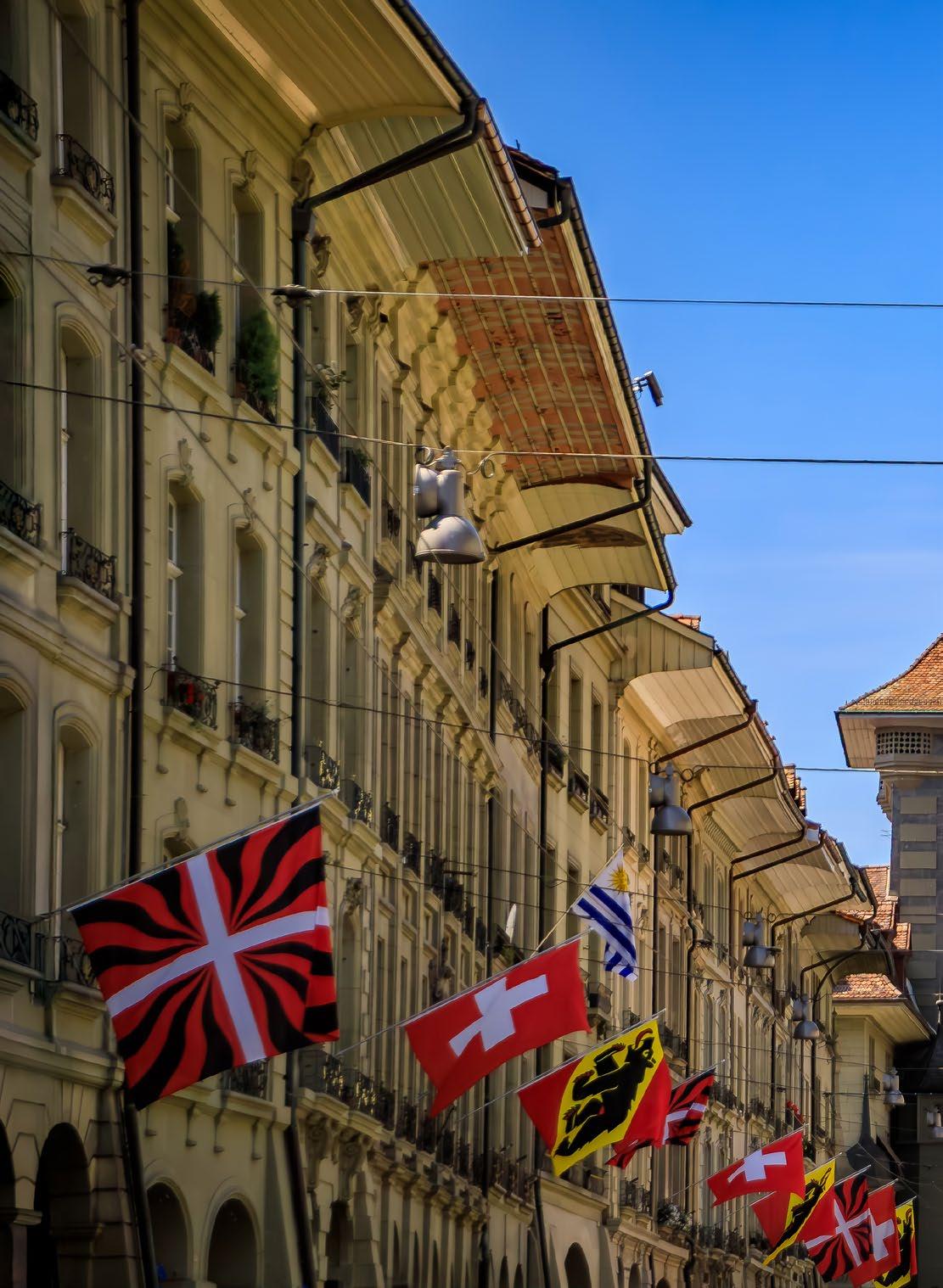
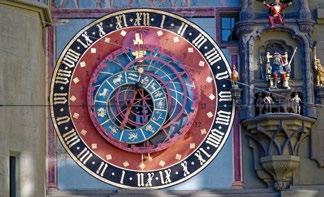
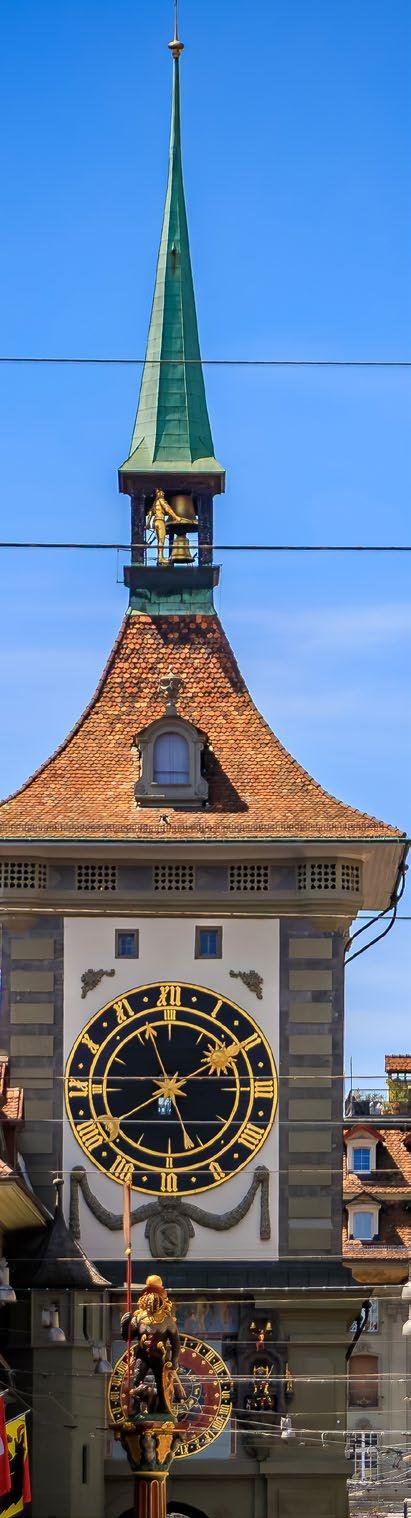
In the heart of Bern, where time flows to the rhythm of centuries-old gears, lives an extraordinary story of passion, tradition and dedication. It’s the story of Mario Marti, lawyer by profession but keeper of time by vocation, who every day climbs the steps of the Zytglogge to keep alive one of the most precious symbols of the Swiss capital. A role inherited from his father and which he carries forward with competence, precision and pride. But what lies behind the most famous astronomical clock dating back 495 years? We asked him.
Why read this article?
To be amazed by the world of gears, passion and dedication hidden behind Bern’s Zytglogge.
#MarioMarti # Zytglogge
#Bern #Unesco
Your father, Markus Marti, took care of the Zytglogge for over 40 years. What does it mean for you personally to have inherited this important role?
It’s naturally a great honor and joy. The role didn’t come unexpectedly, but was always foreseeable. What was surprising was the timing: my father died too soon and so I had to assume the task practically from one day to the next, without being able to carry out a gradual handover. This is sad. But it’s beautiful that the activity in the tower always reminds me positively of my father.
What are the daily tasks necessary to keep the Zytglogge clock running? Are there specific rituals or gestures you perform regularly? The clock is composed of 5 separate mechanisms—each with its own function: main movement, quarter hours, hours, figure play, rooster. Each mechanism has a weight that must be pulled up manually through a pulley. This work must be carried out daily, the power reserve is about 28 hours. You have to manually wind each of the 5 mechanisms with a crank. The whole thing takes about 10-15 minutes. In total it’s about 400 kilos that are lifted 20 meters high. Besides the daily winding of the clock mechanism, I take care of checking the clock’s precision, setting daylight/ solar time and further adjustments. And finally, I organize the semi-annual maintenance, cleaning, lubrication and greasing.
What technical challenges do you encounter in maintaining a mechanical clock that’s almost 500 years old?
The clock works extremely reliably and precisely. Only with strong temperature fluctuations is an adjustment necessary: when it’s cold, the clock goes faster; when it warms up, it slows down. This can be compensated by adjusting the pendulum length. Other important work includes setting daylight and winter time or correcting the date indication in leap years. If there are mechanical breakdowns, we call a
specialized company that can carry out the work.
The Zytglogge is a symbol of Bern. How do you experience your role in preserving this cultural heritage? It’s a great honor to be able to carry out this task and fills me with pride. The daily winding is a sort of lived culture. I would strongly oppose electrifying the clock; manual winding necessarily belongs to the clock.
In an era of digital technologies— how do you reconcile caring for historical mechanics with modern developments?
The clock is a perfect counterweight against the frantic development of our time. Everything works purely mechanically, without electricity, chips, AI, etc. I find this very beneficial. The encounter with the clock is an excellent balance to everyday life.
What projects or wishes do you have for the future of the Zytglogge and its conservation for future generations?
The clock will turn 500 years old in 2030. I hope this will be celebrated worthily in Bern. I hope that even more tourists, but also Bernese, will visit and admire the clock. Otherwise I don’t wish for changes. The mechanism should continue to work exactly as it has for another 500 years! As guardian of the Zytglogge, I hope for few breakdowns. And who knows: maybe one day my children will take my place, that would be beautiful.
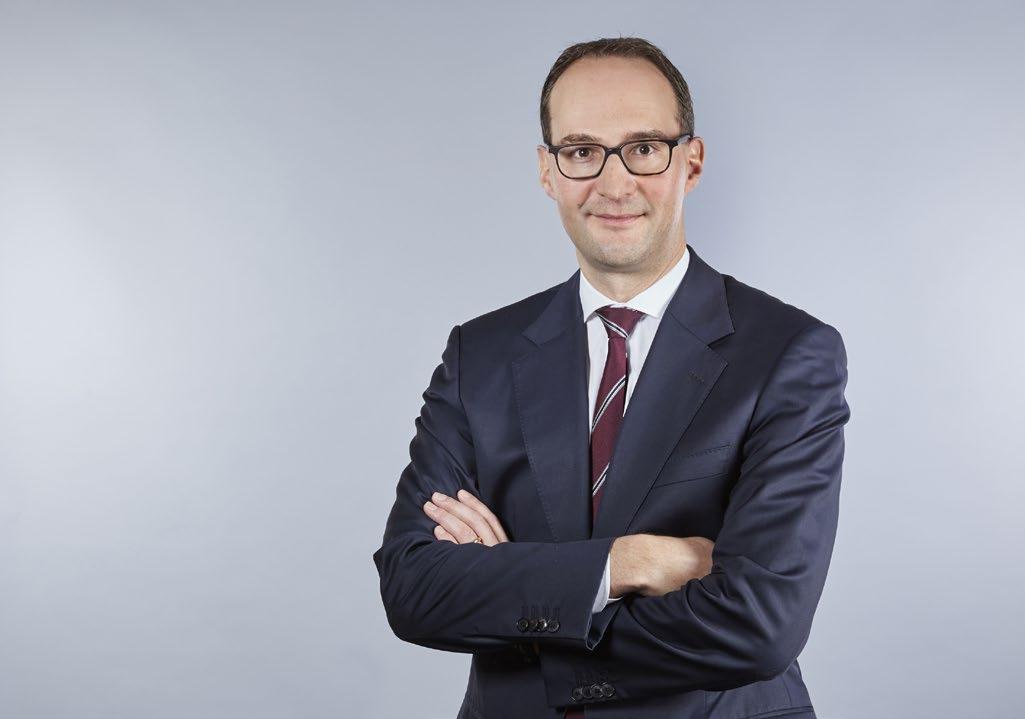
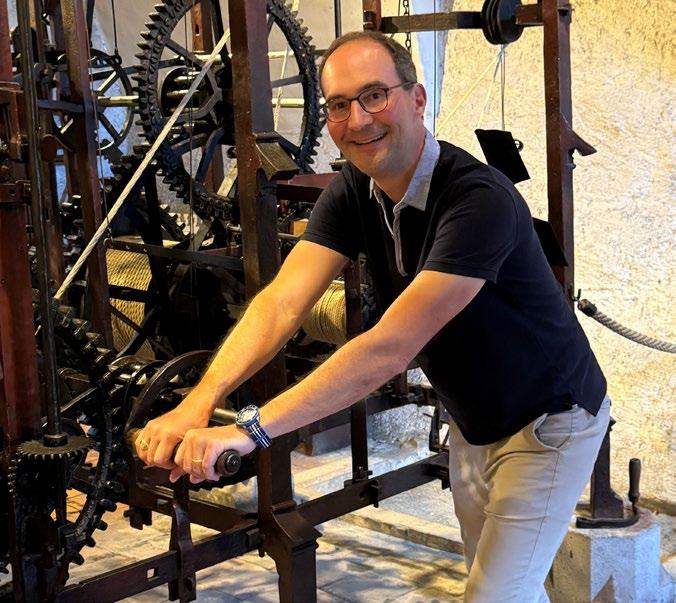
Mario Marti Year of birth: 1973
Profession: Lawyer
Raised in Bern, he studied Legal Sciences at the University and in 2000 obtained his lawyer’s license, beginning his legal activity. In 2003/2004 he completed a post-graduate specialization course at Oxford University (United Kingdom) earning the title of Magister Jurist (MJur). He is a partner at the law firm Kellerhals Carrard, where he currently directs the Bern office. He mainly deals with private law matters, particularly in the construction sector. Mario Marti lives in Bern, is married and has two children (13 and 16 years old).
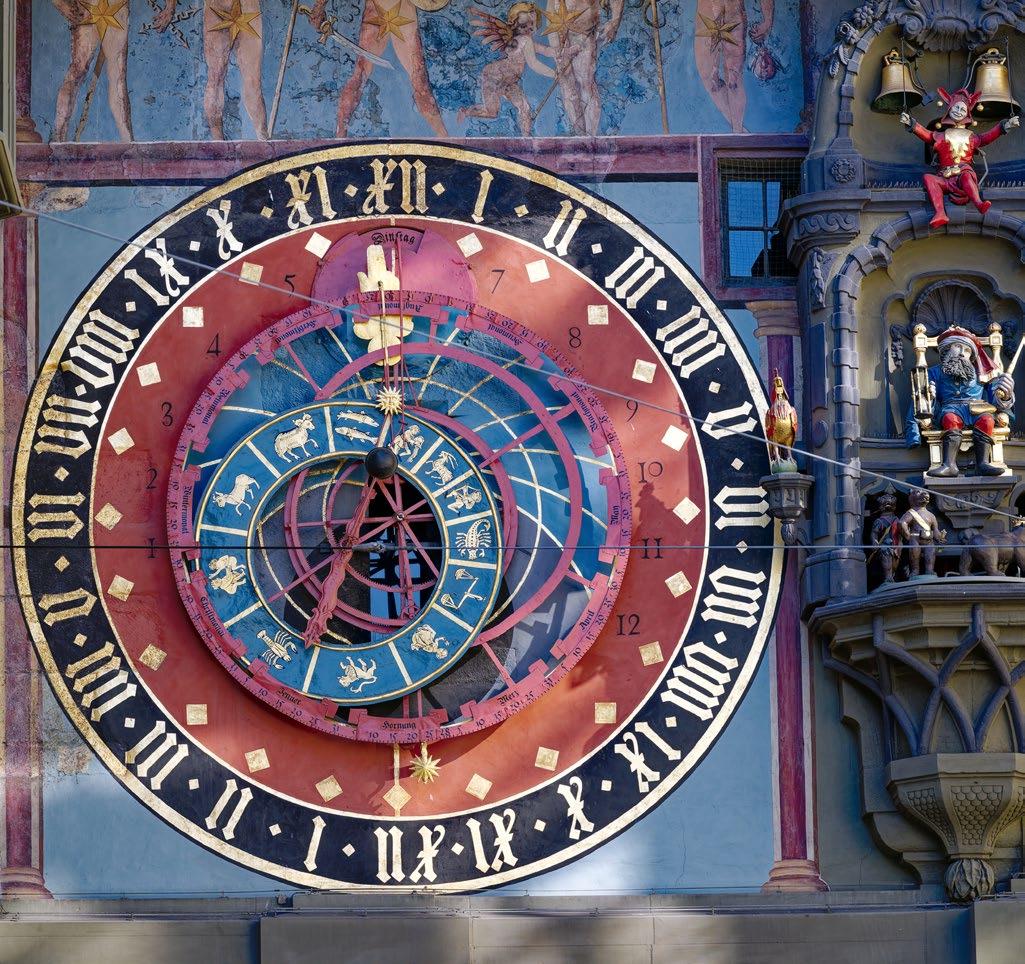
The Zytglogge, literally “time bell” in Bernese dialect, is much more than a simple clock. Built at the beginning of the 13th century, it has served the city as watchtower, prison, clock tower, center of urban life and civic memorial. Despite eight centuries of decorations and renovations, it remains one of Bern’s most recognizable symbols and the city’s oldest monument. Erected around 1218-1220 as a watchtower of Bern’s western fortifications, the structure was initially a squat building of only 16 meters. Only after the extension of the city’s western defenses in 1344-1346 was the Zytglogge
converted into a women’s prison, housing the “Pfaffendirnen”— women condemned for sexual relations with clergy.
The turning point came with the great fire of 1405, when the tower burned completely. The cells were abandoned and the first clock was installed, which together with the great bell cast in 1405 gave the tower its current name.
The real masterpiece is the 15thcentury astronomical clock: built in the form of an astrolabe, it’s supported by a planisphere with stereographic projection divided into three zones: the black night sky, the deep blue dawn zone and the azure day sky. The astrolabe faithfully represents the stars, with Earth at the center.
But the Zytglogge is famous above all for its hourly show: the carillon of characters with a procession of bears, court jester, golden rooster and Chronos (god of time) who, shortly before the hour change, sees the bears dance by turning on themselves, a court jester intentionally sound the hour early and the golden figure of Chronos strike the hour bell.
Why read this article?
To dream of a journey to a land yet to be discovered, starting from its New Arctic Cuisine.
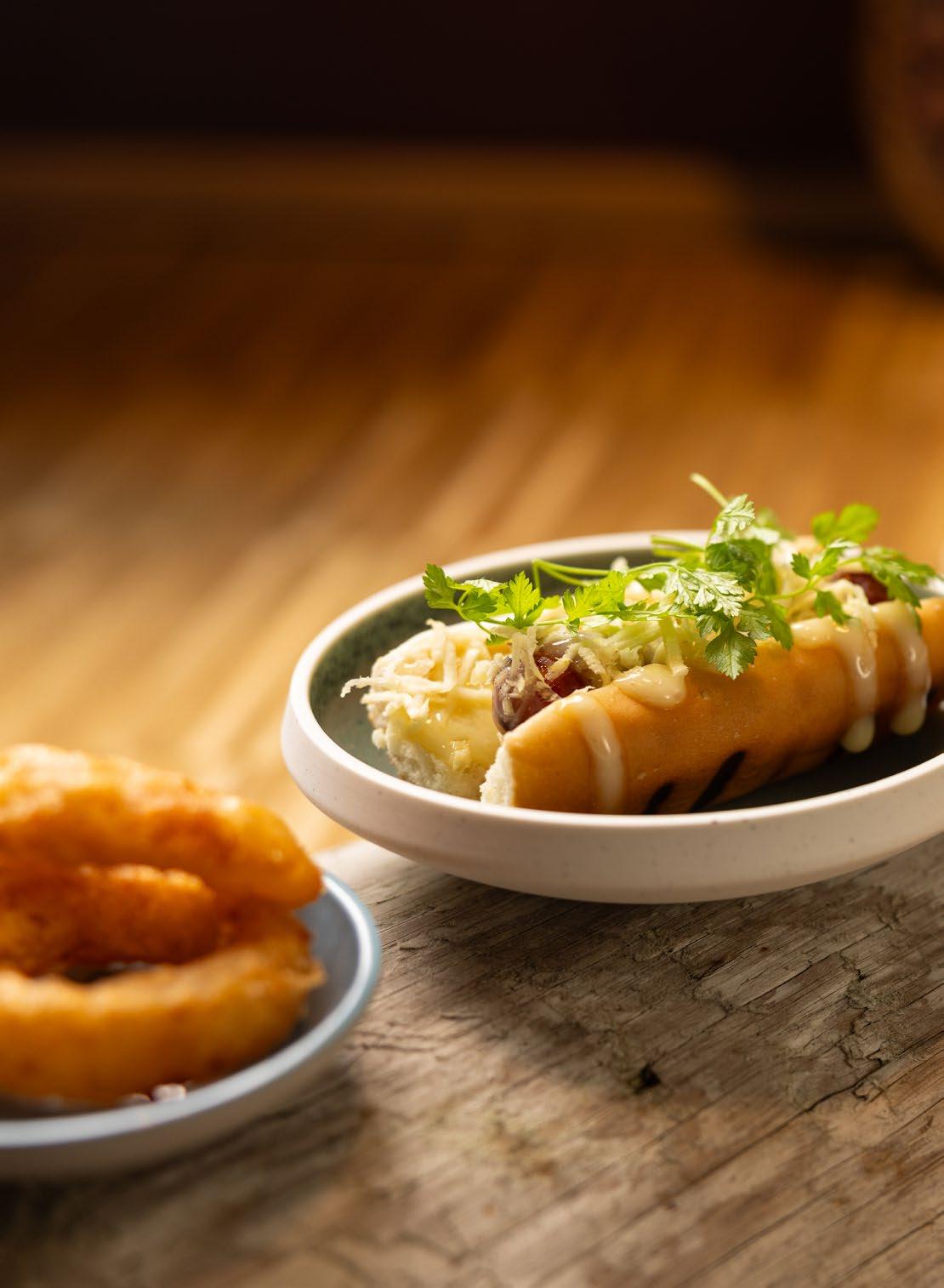
#Greenland #Nuuk #Nivi
#Tapas #RikkePedersen
Rikke and Jørgen Pedersen
Year of birth: 1964 and 1951
Profession: Restaurant owners
Having moved to Greenland in 1989, they both gained great experience in the hospitality sector. Over the years they have managed “Crazy Daisy,” subsequently renamed “Café Chili,” (19992016), Restaurant Charoen Porn, since 2003, Café Iggu, since 2016. Previously also Café Prego, Godthåb Bryghus. Given the enormous success of Tapasimut, opened in 2000, construction of Nivi Restaurant began, opened in October 2023.
Rikke Pedersen has transformed Nuuk’s gastronomic landscape (Greenland’s capital) over two decades, culminating with the opening of Nivi restaurant in October 2023, which masterfully fuses Greenlandic tradition and international modernity. Together with her husband Jørgen, she has built what is defined as “Greenland’s largest restaurant group” under the umbrella of Nuuk Café company, demonstrating an entrepreneurial vision that has known how to adapt and reinvent itself over more than twenty years. Their story represents an extraordinary example of Danish entrepreneurial success in Greenland, where they have known how to combine culinary innovation, respect for local culture and commercial intuition in a particularly challenging Arctic environment. A reserved woman, who doesn’t like spotlights and photos, she agreed to tell Bistrôt about her new creation.
Nivi has quickly established itself as “Nuuk’s new flagship restaurant,” embracing a “Modern Tapas Dining” concept with a “Sharing is Caring” philosophy. What was the driving vision behind introducing this innovative approach to Nuuk’s culinary scene?
Our vision with Nivi was to create a unique and welcoming restaurant in Nuuk that embraced our wild Arctic environment, while remaining a place where every guest would immediately feel welcome and at home. The idea of modern tapas dining emerged as a way to encourage sharing, conversation and connection. We saw a unique opportunity to bring something new to Nuuk’s gastronomic scene, something that respected our environment while inviting a broader and more global approach to enjoying food and good company together.
Your menu uniquely fuses indigenous Greenlandic ingredients like musk ox, seal and whale with global influences. How do you balance tradition and innovation in your dishes, and what kind of culinary journey do you aim to offer your guests?
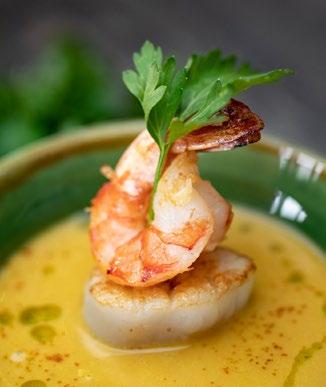
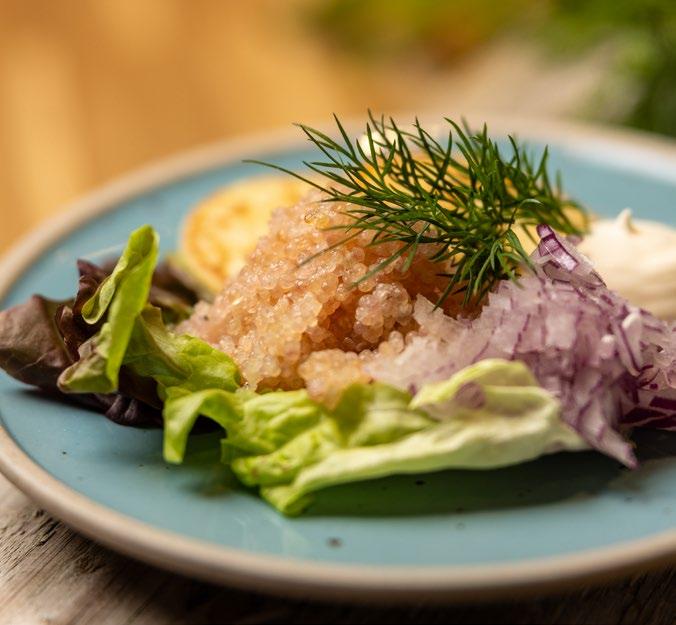
Balancing tradition and innovation is the heart of our culinary philosophy. We deeply respect Greenland’s culinary heritage and are proud to work with ingredients like musk ox, scallops and reindeer. Not only for their cultural and environmental importance, but because they offer truly distinctive flavors. Our approach is to use these ingredients in unexpected ways, combining them with international techniques and influences to create something special. We want our guests to feel grounded in place, while also being surprised and inspired. It’s a journey that invites reflection as much as pleasure.
The restaurant’s architecture and interior design are deeply inspired by Greenland’s natural landscape and cultural heritage. How does this architectural storytelling enrich the
gastronomic experience, and which specific elements do you feel best capture Greenland’s essence?
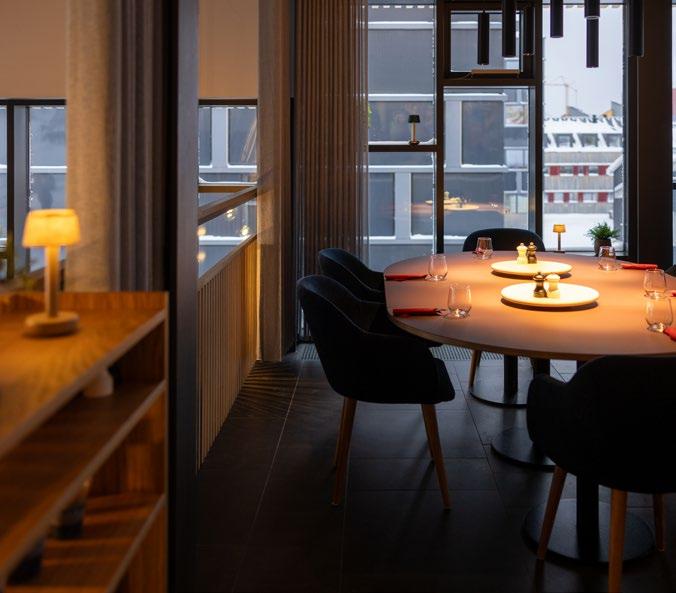
The restaurant’s design plays an essential role in the overall experience. Inspired by the Greenlandic landscape, like the wild coast, soft light, warmth of traditional materials, the space is designed to feel like a natural extension of our environment. Every element, from the textures and colors to the materials we chose, reflects aspects of Greenlandic identity and narrative. We believe this strengthens the connection between what’s on the plate and what surrounds us, helping guests feel immersed in both culture and landscape.
Beyond the business opportunity, what personal passion or connection with Greenland has fueled your dedication in bringing this ambitious project to life?
This project is deeply personal for us, because Nivi is much more than a commercial enterprise. It’s our way of expressing our love, pride and commitment to Greenland. We wanted to create something meaningful, something lasting and something rooted in place. And we wanted to share it with all of Nuuk.
The passion comes from the desire to contribute positively to Nuuk’s cultural and culinary life and to show the world the richness and depth of Greenlandic creativity. The project was enormously inspired and guided by KHR architects, who did a fantastic job and supported us at every stage of the journey. They realized our dream and walked hand in hand with us throughout the entire journey. Janina Zerbe has a God-given creative ability while maintaining a firm eye on every detail, and Henrik Danielsen simply makes things work. Thanks to both for this. And thanks for all the priceless (and sometimes just a bit crazy) moments along the way.
Establishing a restaurant of this caliber in a unique location like Nuuk must have presented its challenges and rewards. What has been the most surprising or personally gratifying aspect of this journey so far?
Oh yes, we certainly faced some challenges along the way, but somehow they were always overcome by all the joy and fun we shared with all the wonderful people involved in creating this home. Without exception, everyone immediately fell in love with the project, and their
For us, the frontier extends beyond cuisine. Building bridges between tradition and innovation is equally important.
dedication, availability and kindness are literally built into its foundations. One of the most gratifying aspects is undoubtedly the constant response from both our precious team and our guests. As the most natural thing, they immediately embrace the concept and take pride in what we’re creating. Together. From day one there’s been an exceptional sense of shared ownership around Nivi, and for this Jørgen and I can only be immensely grateful.
Looking to the future, what are the next frontiers for Nivi in terms of culinary or experiential innovation? Are there particular new concepts or experiences you’re excited to explore?
Looking ahead, we’re excited to continue evolving, both in the kitchen and beyond. We’re exploring ways to deepen the connection between food, nature and storytelling. Sustainability and local collaboration will remain central, and we’re also curious about how we can bring elements of Greenlandic culture to international audiences in new ways. The frontier for us isn’t just culinary, it’s equally important to continue building bridges between tradition and innovation, to encourage all of us to create new relationships and take care of old ones. Both in our community and outside. And this is what Nivi is about. Sharing is caring. At every level.
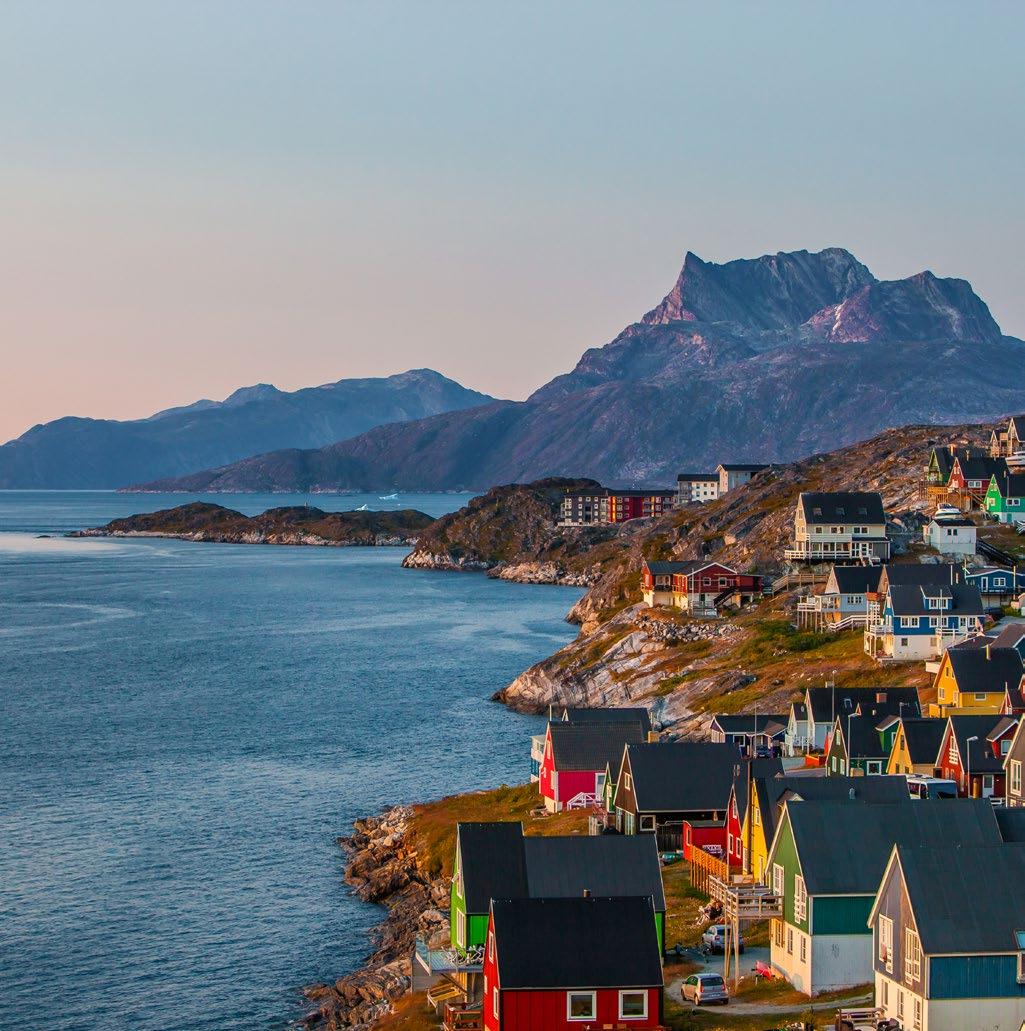
Greenland is the world’s largest island (2.2 million km², seven times Italy) but has barely 57,000 inhabitants. An autonomous territory of Denmark since 2009, it enjoys broad self-government with competencies in health, education and natural resources.
Nuuk, the Arctic capital, hosts 20,000 inhabitants—a third of the total population—and is the country’s political and economic heart. The opening of the new international airport (at the
end of 2024) has revolutionized connections, with direct flights from Copenhagen and Newark.
The economy is based on fishing (90% of exports, especially shrimp) and Danish subsidies, but tourism is growing rapidly: 40,000 visitors by air in 2023, +9% in one year. The goal is to triple tourism revenue by 2035.
The restaurant sector is experiencing a gastronomic revolution: “New Arctic Cuisine” fuses Inuit traditions with modern techniques, valorizing unique
ingredients like Arctic fish, seal, reindeer and local berries. The official language is Greenlandic (kalaallisut), while Danish remains widespread in business.
The Arctic climate presents temperatures from -7°C in winter to +7°C in summer in the south, with two months of midnight sun. An extreme environment that shapes a unique cultural identity, where millenary traditions coexist with contemporary innovation.
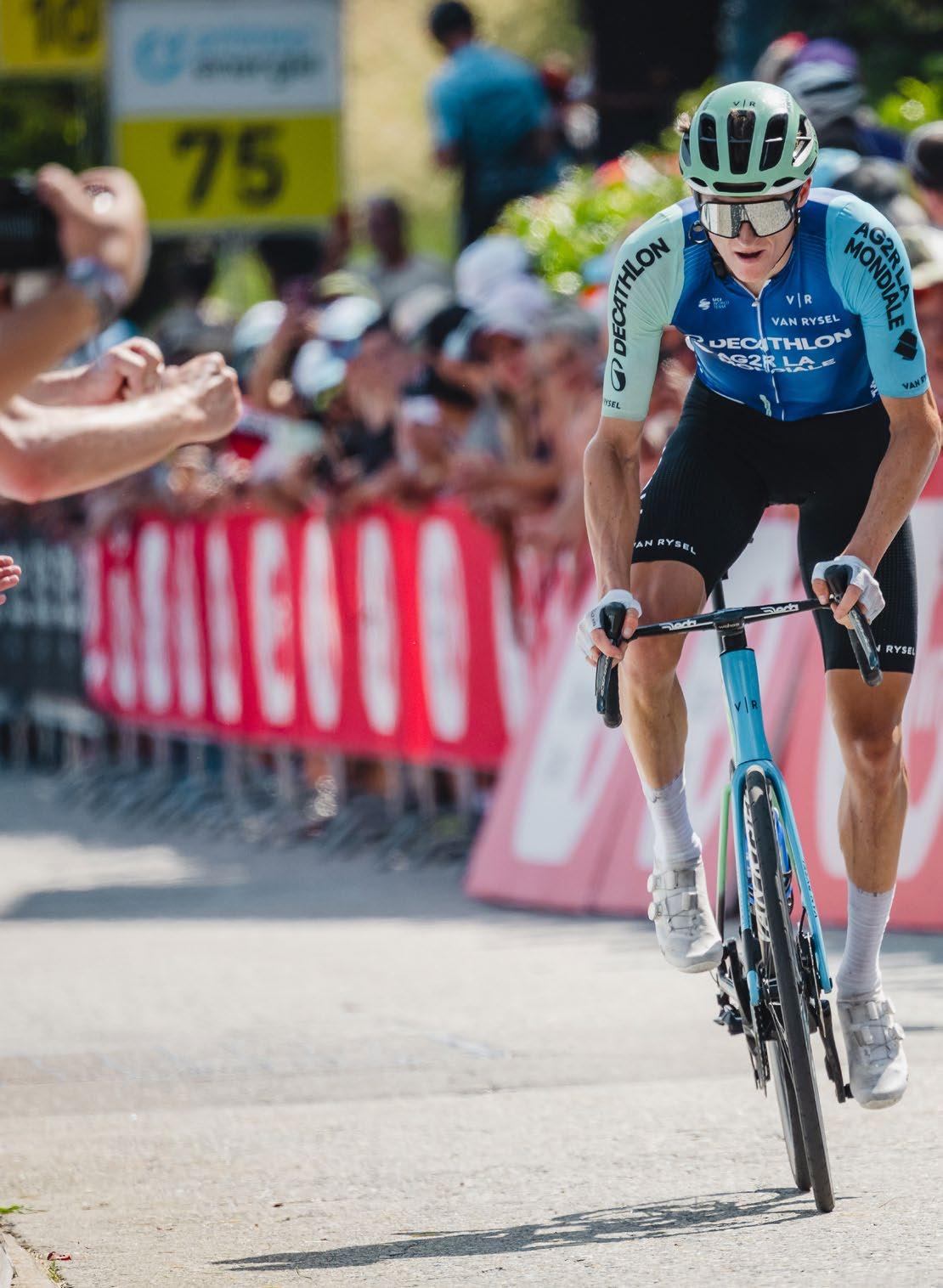
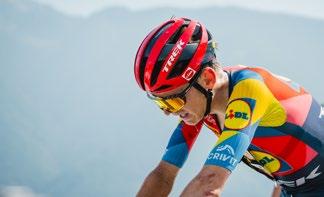
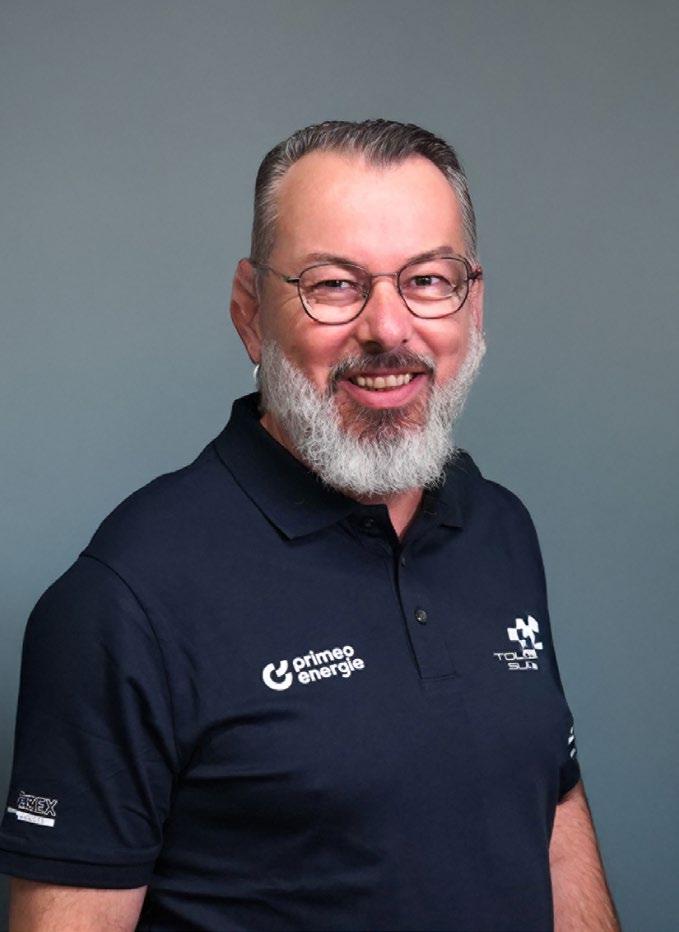
Olivier Senn has mountains in his eyes and cycling adrenaline in his blood. At 55, this son of Gansingen—a small municipality in Aargau—has transformed his youthful passion for two wheels into a mission: making the Tour de Suisse not only one of the most prestigious races in the international panorama, but also a true manifesto of Swiss beauty. Because the Tour de Suisse is not just a race: it’s a showcase that brings Switzerland to 140 countries worldwide through television, an opportunity to show hidden valleys and local traditions to millions of viewers. But how does one organize and promote a professional stage cycling race? We asked Senn.
Why read this article?
Because it lets you travel by bike through some of the most picturesque villages in Switzerland.
Olivier Senn
Year of birth: 1970
Profession: Tour de Suisse Director
Senn was an elite cycling competitor in the 1990s. Currently Head of Operations of Cycling Unlimited AG, the organizing company of the Tour de Suisse, where he serves as Director for Tour de Suisse. He also represents prominent Swiss riders including Stefan Küng and Stefan Bissegger. From 2014 to 2018, he served as general director of the event, before fully resuming the role in the post-pandemic period. He holds and has held numerous positions in international cycling.
How did your passion for cycling begin and how did it evolve to become your profession?
“I grew up with cycling, it was in the air in our village. As a child, I watched races on television and dreamed of those landscapes, those climbs. Then I started pedaling seriously, but I realized that my talent wasn’t sufficient to reach the top. However, my love for this sport remained, and when I was presented with the opportunity to work in organizing cycling events, I understood that I could contribute to cycling in a different but equally important way.”
The Tour de Suisse is not just a race, but also a major territorial promotion project. How do you balance the sporting aspect with the tourism aspect?
“It’s the real challenge of our work. We have all of Switzerland before us and we must choose a route that is spectacular for television, challenging for riders, but also sustainable for local communities. We bring a few thousand people in our entourage, we need hotels and services, but ultimately the real value is communication, the presentation of the region, village, or city at national and international levels.”
This year you brought the Tour to Italy as well, to Valchiavenna. How do you choose these cross-border routes?
“We don’t actively seek it out, it was the administrators of Valtellina who came to us. However, we only have 8 days of racing, we’re not a grand tour with 21 stages. At most we can do one stage crossing into another country. I think it’s good for the internationality of the Tour de Suisse, but it’s not the essential thing.”
Are there locations you dream of including in the route?
“For me, reality is more important than dreams. Certainly, for cycling, climbs like the Tremola are spectacular and we can plan them every 3-4 years. Even if I could, I’d include it always: the Gotthard is important in Switzerland and the Tremola is very beautiful, very scenic.”
Does the Tour also help promote new routes for amateur cyclists?
“We hope so! This is a good example: you create a new road for cyclists and we can provide national and international communication for it. For us, the most important thing is that many Swiss people cycle, and that they come to the Tour de Suisse by bicycle, not by car.”
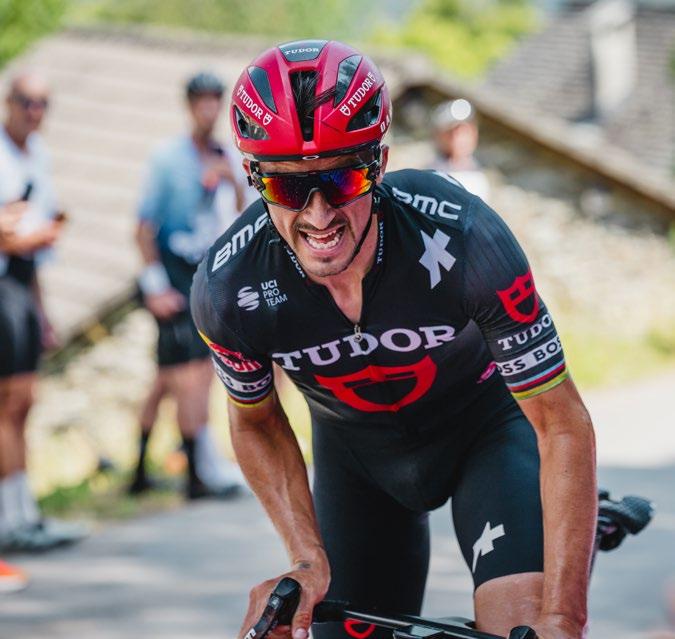
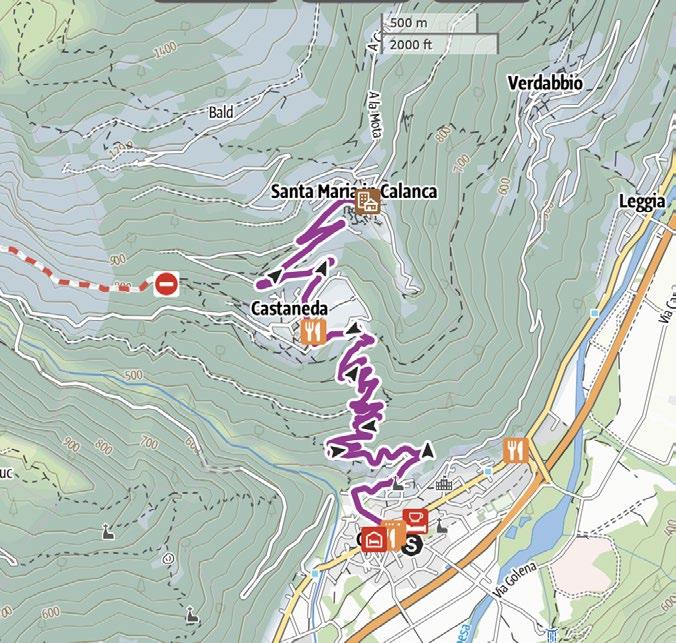
Do you know Route 66? You’ve certainly heard of it—novels and films have chosen it as the setting for coast-to-coast adventures across the USA. #route26 may never become quite as famous, but the slogan “Ventisei. Poi ci sei” (Twenty-six. Then you’re there), like all creative ideas born from Lulo Tognola, certainly promises to turn it into a dream (or nightmare) for cyclists willing to tackle its 26 hairpin turns from Grono to Santa Maria in Calanca. Tognola, an exuberant graphic designer, cartoonist and illustrator, shows no signs of retiring his sense of humour despite his 78 years. With an eye on marketing. “The Tour de Suisse passing through was great for giving visibility to the Moesano,” Tognola explains, “but we also need to think about how to communicate a climb in a memorable way, to make it a reference point for amateur cyclists. That’s where the idea for Route 26 and the slogan came from.”
In Grono, attention to two wheels runs high. A splendid 6.6 km cycle path along the former Rhaetian Railway route has already been inaugurated, starting from Lumino. And for several years now, “Temperature in sella” (Temperatures in the saddle) has been running: a climate-sport alliance with the municipality of La Brévine. Fifty cyclists cover the distance between the two municipalities in five stages, for solidarity and to raise awareness about the health of our planet.
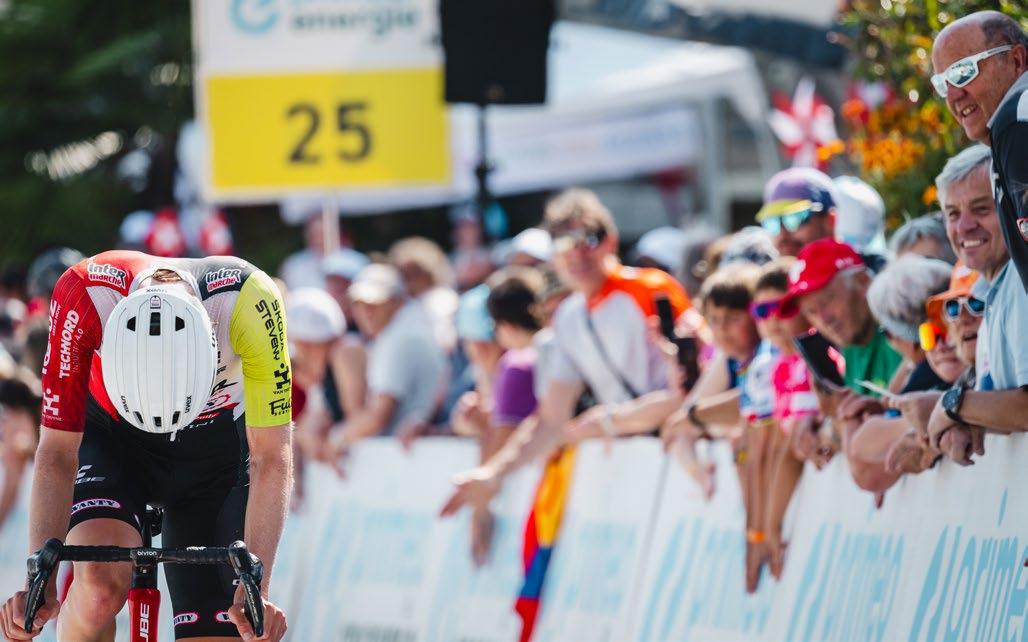
The #route26 was finally christened on 19 June, the feast of Corpus Domini. The Tour de Suisse arrival at Santa Maria in Calanca was a great sporting celebration, with fans cheering their favourites along the 26 hairpin turns to be ridden twice. The spectacle delivered, with Onley victorious by just seconds over Almeida, who in the Grisons launched the first of a series of attacks that would lead him to triumph at the Tour de Suisse the following Sunday. The Swiss stage race provided an excellent showcase for the region, with panoramic helicopter footage of the San Bernardino, Mesocco castle and the other natural beauty of the Moesano.
ROUTE 26 in numbers
Length: 6,51 km
Elevation gain: 605 metri
Hairpin turns:: 26 tornanti
Gradient: numerous stretches above 10%
How does the television machinery of the Tour de Suisse work?
“Swiss Television has two helicopters, one for the race, one for images. Further 4 motorbike cameras and 7 fixed cameras at the finish. In the end, we say that the Tour de Suisse is the best advertising for Switzerland because we take many images of all regions and then we’re broadcast in 140 countries worldwide. We try to showcase the beauty of Switzerland and its Cantons.”
Has it ever happened that someone told you they discovered an area thanks to the Tour’s images?
“Yes. And sometimes watching on television I myself say ‘I didn’t know that place was so beautiful,’ maybe I’ve passed through but hadn’t noticed. The Tour is a way to discover the territory in a different way as well.”
Do you have fans who follow the race like at the Tour de France?
“Yes, but not many. Normally from the Bern area, 20-30 campers that follow the race. It’s not like at the Galibier. But there’s a passionate following.”
How do you see the future of Swiss cycling and the Tour de Suisse?
“Cycling in Switzerland has a long and consolidated tradition. Our objective is to keep it alive, make it accessible to new generations and at the same time respect the environment.”
A final message for cycling enthusiasts?
“The Tour de Suisse is much more than a race: it’s a celebration of Switzerland, cycling, and the beauty that surrounds us. Every year we try to offer eight days of pure emotions, where sport and territory merge into a unique experience. And remember: the bicycle is the best way to discover our country!”
Olivier Senn peers out from the car leading the Tour caravan, gazing toward the mountains of Moesano. He knows that every curve, every climb, every descent carries with it immense responsibilities, but also the possibility of gifting unique emotions to riders and spectators alike. Ultimately, this is the true spirit of cycling: the capacity to transform passion into a shared journey through beauty.
All with pergola and garden
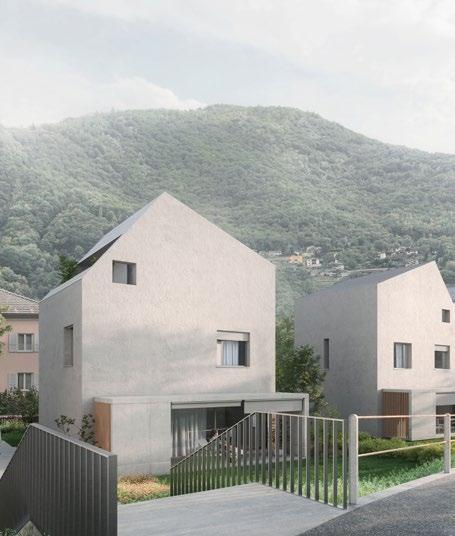
5 rooms + 3 bathrooms
Laundry and cellar
Green energy with geothermal system