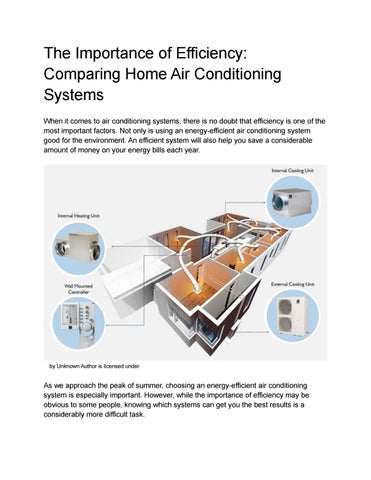
The Importance of Efficiency: Comparing Home Air Conditioning Systems When it comes to air conditioning systems, there is no doubt that efficiency is one of the most important factors. Not only is using an energy-efficient air conditioning system good for the environment. An efficient system will also help you save a considerable amount of money on your energy bills each year.
by Unknown Author is licensed under
As we approach the peak of summer, choosing an energy-efficient air conditioning system is especially important. However, while the importance of efficiency may be obvious to some people, knowing which systems can get you the best results is a considerably more difficult task.
Naturally, there are many things you will need to think about when comparing different air conditioning systems. In addition to efficiency, factors such as costs and the unique dynamics of your home will also need to be accounted for. For example, the air conditioning system that makes the most sense for a studio apartment will not necessarily be the best for a home with multiple stories. In this article, we will discuss the most important things to know about choosing an air conditioning system that is both energy-efficient and cost-effective. We will also discuss some of the ways that you can improve the efficiency of your current system without needing to start from scratch. By making the choice that is right for your home, you’ll be able to get the most out of your summer. Newer Really is Better According to recent reports, modern air conditioning units are able to produce the same amount of cooling with up to 50 percent less energy as air conditioning units that were made in the 1970s. If you are a homeowner, the age of your air conditioning unit was likely provided by your realtor. Even compared to units from just ten years ago, a new air conditioning unit may be between 20 and 40 percent more efficient. Air conditioning units quickly wear out over time, especially if they are not regularly maintained. Generally speaking, it is recommended that you have your HVAC system maintained twice per year—once at the beginning of the summer before you turn on your AC and once at the beginning of winter before you turn on your heating unit. The question that remains, it seems, is when is the right time to purchase a new air conditioning unit? While having a new unit is a better option, it obviously would not be cost effective to install a new unit each year. As a general rule of thumb, the lifespan of an air conditioning unit is about 15 to 20 years. If the unit is well maintained and only used occasionally, the lifespan may be a little bit longer. If the unit has a SEER (seasonal energy efficiency ratio) of 6 or less, then your unit will likely need to be replaced. The cost of a new air conditioning unit should be distributed over time—instead of needing to spend money on a new unit all at once, you can save for 5 percent of the unit each year and create less of a financial burden. Comparing Types of Central Air Conditioning Units As you would probably expect, central air conditioning units are more energy-efficient (in terms of cooling per cubic foot) than the individual units you might find in an
apartment or other small spaces. However, even within the broad category of central air conditioning units, there are still multiple different subcategories. Central air conditioning units come in two primary forms: packaged units or split systems. In a split-system unit, the components are split between indoor and outdoor spaces. They are often combined with an already existing heating unit. Usually, if your home does not currently have an AC unit but does have a furnace, a split-system unit will be the most affordable option.
by Unknown Author is licensed under
With a packaged unit, every component—including the condenser, evaporator, and compressor—can all be found in the same centralized location. If the furnace and the air conditioning unit are being installed at the same time, a package unit will make the most sense. These HVAC systems are also a superior option for larger homes or commercial spaces. Ways to Improve Air Conditioning Efficiency Even if you are not planning on upgrading your air conditioning unit this year, there are still quite a few things you can do to ensure you are maximizing your level of energy efficiency. By being proactive, you will be able to reduce the cost of keeping your home cool and further extend the life of the unit itself.
● Have your unit serviced on a regular basis: an HVAC specialist will be able to test the efficiency of your unit and check for potential problems. ● Clean both the indoor and outdoor components of your unit: making sure the vents are clean will improve airflow and efficiency. ● Keep your thermostat away from heat sources: things such as ovens, lamps, and other sources of heat will “trick” your unit into doing more work than it needs to. ● Be willing to keep things slightly warmer: each degree colder you make your home creates exponentially more work for your unit. If you are willing to keep your home at 72 degrees, rather than 69 degrees, you will be able to significantly save. Keeping these things in mind, you will be able to immediately reduce the amount of energy you spend on cooling. Choosing the Air Conditioning System That’s Right for You The air conditioning unit that makes the most sense for you will depend on many different factors. Before making a final purchase, ask yourself the following questions: ● How many rooms are in your home? How much space do you have for a unit? ● What are the dynamics (and age) of your current HVAC system? ● Are you willing to invest more upfront in order to reduce the cost of having an AC unit? ● What climate do you live in? How many days per year do you need to use your AC unit? There are many different brands and types of air conditioning units to choose from. Speaking directly with an HVAC professional can help you narrow down your options. Conclusion Energy efficiency is one of the most important things to consider when choosing an air conditioning unit. After all, an energy-efficient unit may reduce your annual costs by as much as 50 percent. If you’re looking to increase the efficiency of your air conditioning system, contact an Denver air conditioning service to help you explore your options. By carefully considering the tips mentioned in this article, you’ll be able to maximize efficiency and prolong the life of your unit.