
gair rhydd
“What’s more dangerous in the media: lying or omitting facts?”
Peter Oborne Speaks in Cardiff Read on page 7

Complete Lack of Transparency
Staff speak out following our interview with Wendy Larner and reveal a schism between management and staff.
In Gair Rhydd’s last edition, we spoke to Cardiff University’s President and Pro Vice-Chancellor, Wendy Larner. The interview covered many topics, including university finance changes, the “enormous success” of the Kazakhstan campus, proposed cost-cutting measures, and the university executives’ de facto bible—Vision 2035—referenced to as the document de-
tailing the university’s direction. I spoke with staff whose picture of the university’s internal workings was painted in far darker hues, and the executive board’s bible, supposedly “our future, together”, was hardly known to students. This article is, therefore, a response to VC Larner’s account of how our university has been run and will be run.
Read the report on page 25
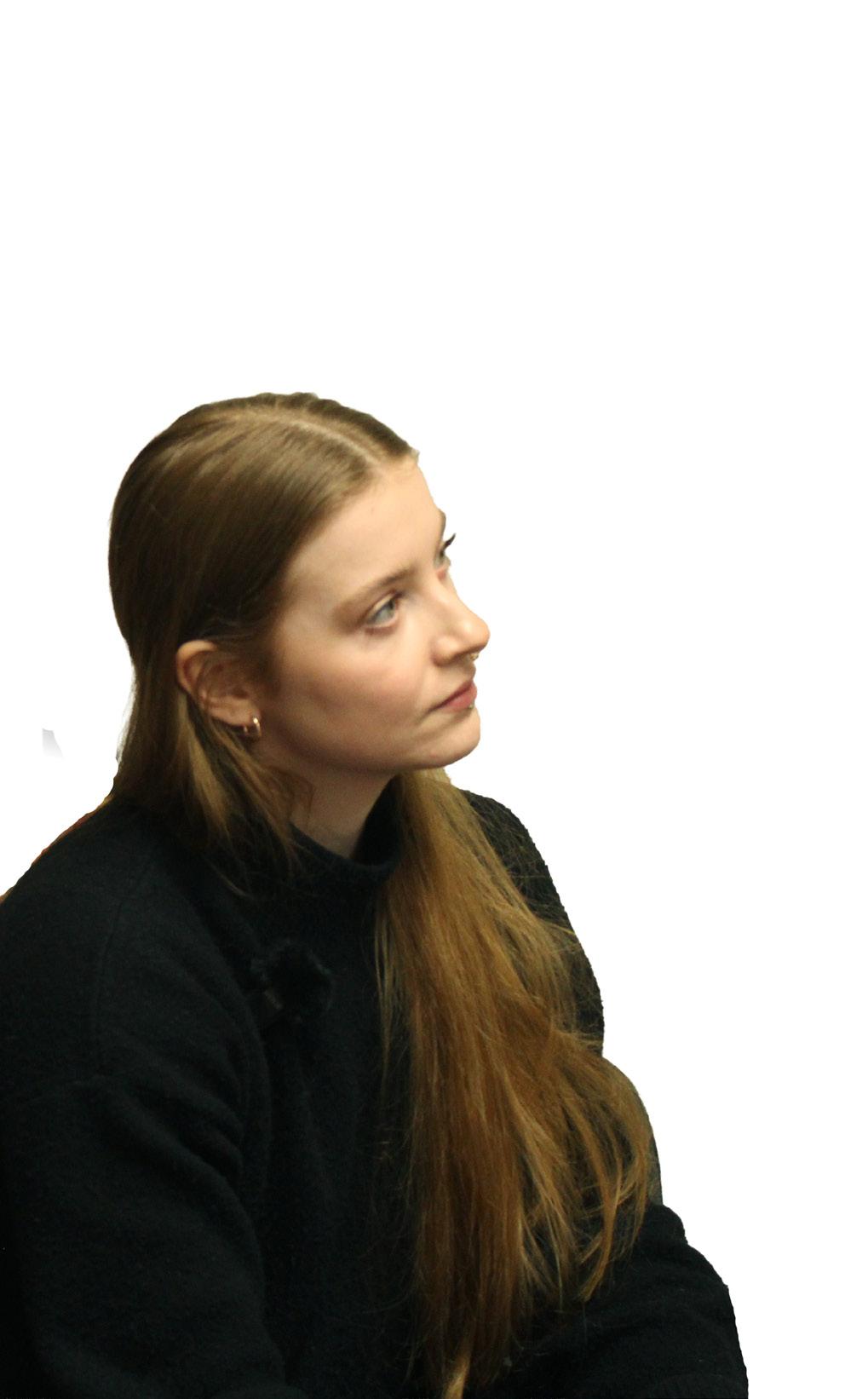
“Now I just feel pure rage. At first I wanted to hide myself—I still feel a bit unsafe—but I also just feel pure rage.”
Read Our Interview With Dr Daisy Dixon on page 16
Editor-in-Chief:
James Roberts
Deputy Editors: Bhamini Khandige
Aneurin Davies
Head of Design: Olivia Nilsen Design: Seven Standen
Elisa Main
Head of Social Media:
Bella Jane
Head of Opinion: Miriam Southall Opinion: Bethan Jones
Ffion Perkins
Helen Turnbull
James Kittering
Oliver Hanlon
Head of Review: Ruby Collins Review: Andrew Stewart
Kit Robinson
Thomas Cunnick
Head of Taf-Od:
Hannah Williams
Taf-Od: Ela Rhys
Elen Williams
Erin Davies
Gwenno Davies
Hanna Morgans Bowen
Ifan Meredith
Head of News:
Ella Simons News:
Alicia Tariq
Gabriela Hunt
James Burns
Kani Abdullah
Emma Mathews
Elizabeth Ounsworth
Meghan O’Niel
Head of Spotlight: Rachel Bedding Spotlight: Ellie Evans
Eve Harris
Eve Yates
Molly Spencer
Head of Powlitics: Ruaidhrí Gillen Lynch Politics: Oliver Dermody
Rowan Stanger
Sophie Scott
Areille Melamed
Hugo Keenan
Head of Sport:
George Jones Sport:
Harvey Knowles
Luke James
Mael le Paith
Head of Puzzles: Daniel Raybould
Proofreaders: Polly Loveday
Ethan Gerrard
Ellie Gale
Emily Martin-Jones
Ariana Rohgar
Student Media
Co-ordinator
A Note From the Editor
Now cometh the end, my last semester at university. As I draw to the end of my degree I have too many thoughts to express in so short a space.
The modern university is a place of great potential, but also rife with problems and challenges. The de-personalised nature of much of the teaching can, at times, make one feel alone or irrelevant and too many people fail to engage with their degrees properly, coming like me, from the low quailty British eductation system.
I have, nonetheless, enjoyed my degree (English Liturature and History) a lot, and I would recommend it to someone thinking of taking it, if they wish to approach it with enough passion and insight to draw their own meaning from the teaching and content.
Our University is dealing with many difficulties, some of which you will read about in this edition. From my perspective these have only been an opportunity. Students and staff seem to have re-awakened a sense of their own position within our wider insititution. In a world suffering from increased anti-intellectualism, we (those who strive to learn) have relearned that we must stand up for ourselves. Thus, commentary and reporting on Univerity affairs have gained a renewed interest.
You may have missed our last edition as it was only online, our budget does not cover a fourth print edition for the first semester (blame our illustrious Students’ Union, that seems to think Tik Tok is the only medium of communication). We will not be in print again until towards the end of this term.
We will, however, be producing digital editions until that time, and we will be active on social media, especially on Instagram. Follow us on there to recive campus news and other student content.
I want to say thank you to Dr Daisy Dixon, who agreed to speak to us on a range of subjects, including her recent dealings with X and her career as a female academic.
This is a bumper, 32 page, edition with the largest news section in years, it is a great testament to the effort and dedication of our team. From section heads to proofreaders, from news writers to designers, I am so proud of what we have achieved, and our increased impact on the student community.
If you are interested in getting involved in Gair Rhydd, email me at editor@gairrhydd.com.
We are always looking for news writers as we build upon our successes in the last few months, re-establishing our paper as a source of original, cmapus centred news. You do not have to be experienced, the only requirements are passion and a drive to inform and get to the truth.
Thank you for reading, and...
Elaine Morgan At Gair Rhydd we take seriously our responsibility to maintain the highest possible standards. We may occasionally make mistakes, however, if you believe we have fallen below the standards we seek to uphold, please email editor@gairrhydd.com. You can view our Ethical Policy Statement and Complaints Procedure at cardiffstudentmedia.co.uk/complaints. Opinions expressed in editorials and opinion pieces are not reflective of Cardiff Student Media, who act as the publisher of Gair Rhydd in legal terms, and should not be considered official communications or the organisations stance.
Gair Rhydd is a Post Office registered newspaper.
Follow us on Instagram @gairrhydd
(Above) Photo by Kas Bayat

Cathays Station: A 20-Year Fight for Access, Still Without a Start Date
Olivia Griffin News Editor
Cathays railway station sits in one of the most visible corners of Cardiff, wedged between the university’s main buildings, the Students’ Union and the civic centre. Each year, close to a million passengers pass through its platforms. For disabled travellers, however, the station has long been defined not by where it leads, but by where it stops.
In May 2023, BBC News reported that disabled people had been struggling to use Cathays Station for more than 20 years. At the time, it was already one of Wales’ busiest stations, yet wheelchair users and people with reduced mobility could not cross between platforms independently.
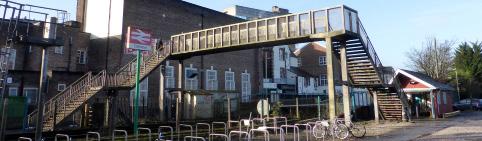
The footbridge connecting the platforms has no lift and steep steps, with Transport for Wales itself describing the station as only partially step-free. On its website, TfW states that, while both platforms are step-free, ‘there is no facility for wheelchair users, mobility scooter users or persons with reduced mobility to cross between Platform 1 and 2 due to a steep footbridge.’ Passengers are advised to travel to Cardiff Queen Street and double back if they need to reach the university or civic centre.
The advice given to disabled passengers was, and remains, to travel past Cathays to Cardiff Queen Street, cross platforms there, and then travel back in the opposite direction. No extra ticket is required. What is required is extra time, extra energy and a willingness to accept a workaround that campaigners have challenged for decades.
The BBC report made clear the issue was not new. Disabled students had been raising concerns since the late 1990s. Funding to improve access had been announced in 2019 as part of the UK Government’s Access for All programme. Transport for Wales said a new accessible bridge was ‘proposed’ as part of the South Wales Metro. Cardiff University said it shared students’ concerns and would work with partners to deliver a fully accessible station ‘as
soon as practicably possible.’ Two months later, the paperwork appeared to catch up with the promises.
In June 2023, detailed supporting documents were submitted to Cardiff Council outlining plans to replace the existing footbridge at Cathays. The documents are striking in their clarity. The current bridge, built in 1969, is described as offering ‘no facilities for persons of limited mobility,’ with a stair pitch so steep and movement so pronounced that it could give users the impression it is unsafe. Modifying the existing structure, the documents conclude, is not feasible. ‘A new one is required.’
Seven viable options were considered, including standalone footbridges and designs integrated into the university’s Centre for Student Life building. The preferred option –known as the ‘Integrated University Option’ – proposed removing the existing bridge and replacing it with a single-span structure linking Senghennydd Road directly to the Centre for Student Life. The design included a fully enclosed lift tower, step-free access to both platforms, CCTV, lighting, help points and a lift capable of accommodating wheelchair users and mobility scooters.
The documents also reveal how long this solution has been in the making. Land adjacent to the station had been purchased several years earlier specifically to enable an Access for All compliant footbridge. The Centre for Stu-
dent Life building had been designed with ‘passive provision’ to allow the bridge to connect directly into it. In other words, the surrounding infrastructure had already been shaped around a future that has yet to arrive.
On 27 July 2023, Cardiff Council granted prior approval for the works. The planning officer’s report concluded that the development could not reasonably be carried out elsewhere, would not harm the Cathays Park Conservation Area, and would enhance the area by providing ‘a more accessible footbridge at this station.’ In planning terms, the path appeared clear. Nearly three years later, construction has not begun.
For Millie Davies, Cardiff University Students’ Union’s Accessibility Officer, the delay is not an abstract one. ‘Accessibility goes so much beyond just being in a lecture theatre,’ she says. ‘For students to fully engage with university life, transport has to be accessible too.’ Davies holds the role on a voluntary, part-time basis alongside her degree, and says Cathays’ position at the heart of campus makes its inaccessibility especially stark.
The advice to divert via Queen Street, she says, feels unnecessary and exclusionary. ‘You’re being pushed away from where you actually need to be,’ she explains. ‘It’s extra time, extra energy – and for a lot of disabled people, energy is limited.’ For many disabled students, university is their first real experience of independence. Not being able to use the same sta-
tion as everyone else, she says, takes that autonomy away.
The impact is cumulative. Repeated access barriers affect confidence, mental health and a sense of belonging, and can shape whether students feel able to take on part-time work, placements or social opportunities. Watching others disembark at Cathays while having to remain on the train reinforces a sense of being peripheral, rather than part of the flow of campus life.
What makes Cathays increasingly difficult to defend is not disagreement, but consensus. Campaigners, planners and transport bodies appear aligned on the nature of the problem and the shape of the solution. The planning documents are explicit. The approval is in place. The need has been recognised for more than two decades.
With passenger numbers continuing to rise, reaching 933,746 entries and exits in 2024/25, Cathays Station has become one of Wales’ busiest gateways. Yet disabled passengers remain unable to use it independently. After a 20-year campaign and nearly three years since planning permission was granted, the question is no longer whether Cathays can be made accessible. It is why, despite so much agreement and preparation, it still has not been.
Image:Train Photos via Wikimedia
Will There Be a New Chapter of Devolution in Wales?
Daisy Davies Contributor
It needs no repeating that May 7th 2026 will be an historic day in Wales. The country is now in agreement that over a century of Labour dominance in Wales, it is set to end.
First Minister Eluned Morgan’s claim that we need a new chapter of devolution is completely correct. However, she is correct for all the wrong reasons. After May, Welsh Government policy must change and develop the settlement which continues to hold Wales back. There would not be calls for a new chapter of devolution from the very people who have held the power for the last 27 years unless something more fundamental had to change.
Writing a new chapter of devolution in Wales is not simply about who is in charge, but on what policies the Welsh Government can legislate. This is perhaps best exemplified through the ongoing debate around devolution of policing and justice in Wales, which has only intensified since the Commission on Justice in Wales in 2017. In January 2026, Home Secretary Shabana Mahmood rejected calls for the devolution of policing in Wales. This has quite
rightly caused outrage across the political spectrum in Wales. Notably, policing is devolved in Scotland and Northern Ireland. But the need for the devolution of justice and policing goes further than just being level with Scotland and Northern Ireland. To properly support those being released from prison, and crucially, young offenders, devolving justice is imperative. Without properly pursuing this critical issue, we cannot begin to consider there being a new chapter of devolution in Wales.
The current nature of youth justice in Wales is incredibly unbalanced. Criminal justice is a reserved matter, but because the Welsh Government has legislative powers on education, health and social services, there lacks a coordinated strategy across all levels of government to best support young offenders. In June 2025, the Welsh Government published their framework on prevention of youth offending, emphasising the importance of children having contact with the youth justice system in Wales. Welsh Government is encouraging interaction with the youth justice system despite having no power over the youth justice system. The very existence of a framework on a matter over which they have no control seems entirely unhelpful; demonstrating the split between Welsh
and UK Government policy, except without the power to do anything about it.
We cannot afford to play politics on an issue like this. Data to highlight the needs of children who have been sentenced by courts in England and Wales found that 72% faced mental health issues, 68% faced education and employment issues, and 50% faced accommodation problems. If these issues are not properly addressed when the young people first interact with the youth justice system, we cannot adequately support them on a path to a safe and sustainable future. The impact of this uneven devolution of youth services is now becoming clear. The responsibility of the Welsh Government is effectively to pick up the pieces after children return to, what should be, a normal life.
New chapters of devolution aren’t about which party leads the government. The 7th of May will be historic, and a pathway for change, certainly. But a new chapter of devolution in Wales must involve action, and this is a matter which certainly needs addressing but it paints the questions of who and how.

Welsh Man Jailed for Sexual Attack 30 Years Ago
Mischa Denney-Richards Contributor
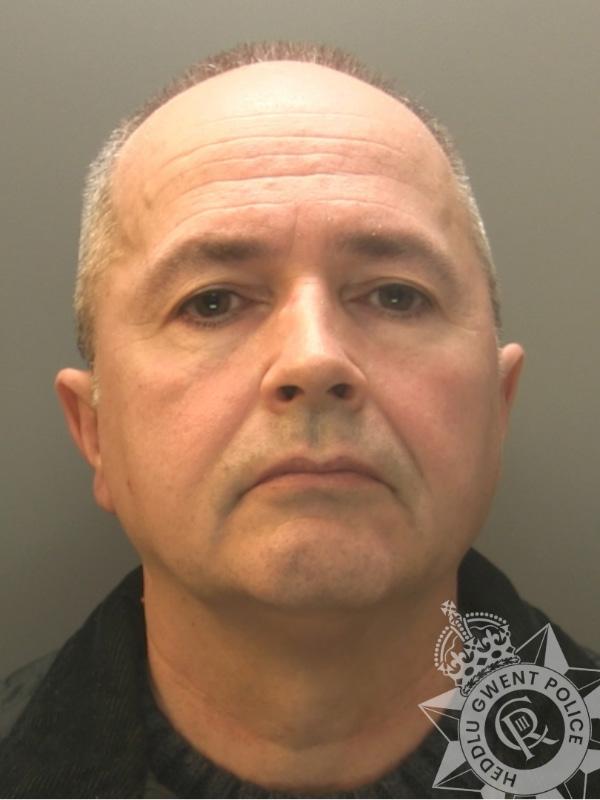
AWelsh man has been jailed for eight years for a 1997 sexual attack on a 13-year-old. Richard Downey, now 55, has been identified in a new DNA ‘breakthrough’ which found his semen on the victim’s shoe nearly thirty years after the crime was committed. The assault itself took place in 1997, where Downey followed a thirteen-yearold girl home from school on a footpath near Wyllie in Caerphilly County.
In Newport County Court, on Friday 23 January, it was revealed that Downey approached the young girl, who was dressed in her school uniform, from behind and dragged her to the ground, armed with a screwdriver. At the time of the attack, the semen on the young victim’s shoe did not trace back to Downey.
Prosecutor James Wilson explained how DNA was taken from Downey on February 25, 2022, in relation to an ‘unrelated child sex matter that did not proceed.’ It was then when Downey admitted engaging in sexual activities with a 14-year-old girl he had previously met online, who he claimed, thought was eighteen. The DNA sample retrieved ‘provided a hit on the database,’ connecting him to the 1997 attack, leading to his arrest.
Jurors of the court heard how the victim, at the time, assumed that a jogger was passing her from behind down the ‘secluded’ alley, before Downey pulled over his T-shirt, to conceal his identity, and attacked. Judge Daniel Williams expressed: ‘you must have been lying in wait to find your victim ... who you intended
to terrorise.’ The fifty-five-year-old was found guilty after his December trial on two counts of indecent assault, and one count of committing an act of indecency on a child.
In the victim’s statement, she said that ‘while the attack lasted only a few minutes, the impact it has had on me has lasted a lifetime.’ She continued: ‘I was so much smaller than my attacker and in no ways was able to defend myself. The only thing I will never forget is the fishy smell of his hands as he put his hand over my mouth to stifle my screams.’
The victim revealed how from then on she was no longer able to walk to or from school alone, or walk down the footpath where her assault took place. Despite the ‘immeasurable’ impact the attack had on her, she ‘had to continue living with what had happened.’
‘I wasn’t sexually active; I’d never had a boyfriend or kissed a boy. The attack took something from me that day – I’m not sure quite what, maybe innocence. Nothing was the same after that.’
Downey will have to serve two thirds of his eight-year sentence in custody before being eligible for parole. He will be subject to a sexual harm prevention order and restraining order, for life.
Francis Fitzgibbon, defending, explained that although the accused has accepted his punishment, imprisonment, he was a ‘responsible family man’, and had ‘lived an otherwise decent, responsible life. He has worked hard, and it’s all been for nothing now.’ However, after being sentenced to eight-year imprisonment, Judge Williams added: ‘you were a twenty-six-year-old who had a two-
year-old daughter. No doubt, after you had done what had done, you went home to your family, presenting as if nothing had happened,’ whilst the victim had to live with ‘what you did to her.’
Catherine Miles of the Crown Prosecution Service said: ‘Richards Downey ... might have thought that after all these years he could get away with his crime but DNA evidence ... was able to prove that he was the culprit. We hope that knowing her attacker has finally been brought to justice gives the victim some comfort.’
Human Remains Discovered on Christmas Day Walk Along Welsh Coastal Path
Reuben Badman Contributor
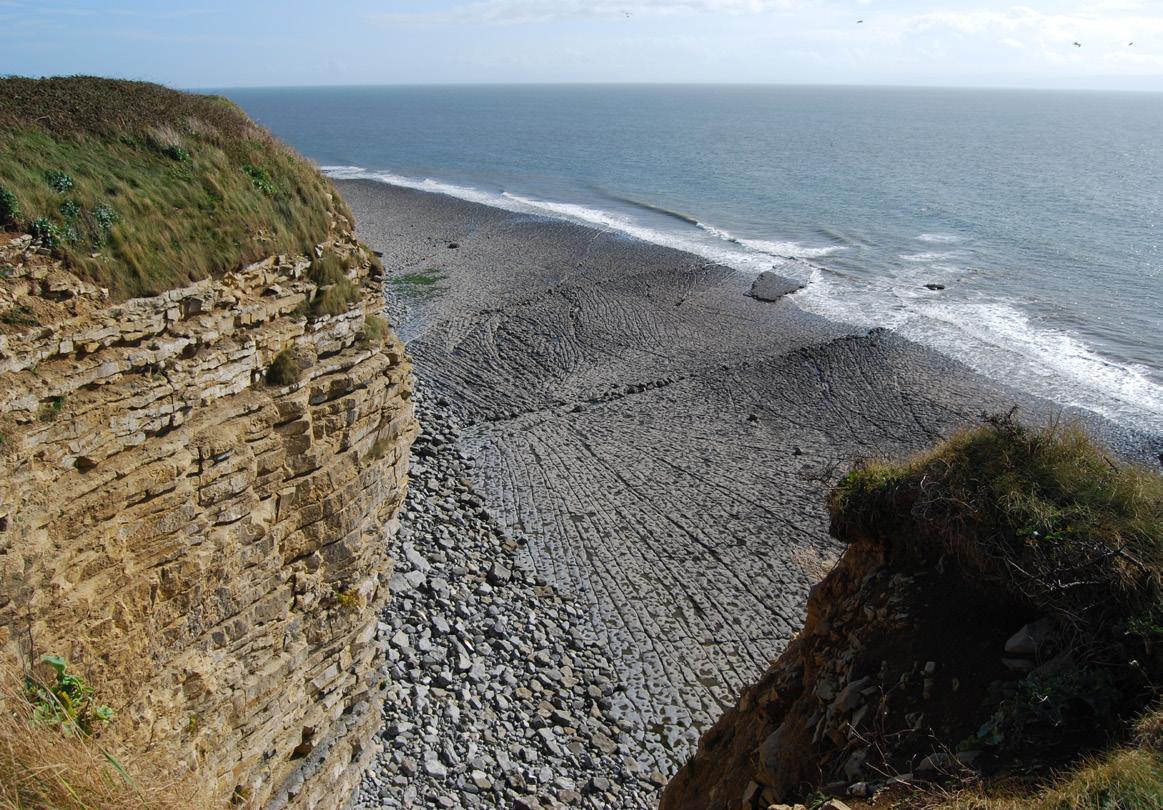
Human remains have been exposed along the Wales Coastal Path near the Nash Point Lighthouse, in the Vale of Glamorgan. On the 25th of December, Geraint Lewis, from Llanharan, was enjoying a Christmas day walk along the coastal path, when his day would suddenly change due to a shocking discovery.
A set of pearly white teeth sticking up from the earth grabbed Geraint's attention. Upon further inspection, he found not only teeth but a skull and many more bones, all revealed by the eroding landscape.
The remains were well preserved and largely intact, with sections of the skeleton, such as the vertebrae of the neck and rib bones, clearly visible. Swiftly, Geraint took pictures and phoned our very own Cardiff University, before he contacted South Wales Police.
Geraint, with knowledge of the area, contacted the University as he knew these remains would likely carry archaeological significance. South Wales Police echoed a similar message, reporting that the remains were located within a recognised burial site, hushing away any worry.
Geraint then returned on the 14th of January, where the gleaing teeth and bones remained. However, he believes some of the remains may have been taken following his initial report. Upon his return, he had expected a specialist response to the discovery. ‘I'd like to think there would be an archaeological dig’ he explained. Despite Geraint contacting Cardiff University, it is clear no action has taken place.
Gair Rhydd have contacted the university, enquiring whether any action has been taken, but have yet to receive a response. This has left important, unanswered questions, who did this skeleton belong to and how did they pass?
Despite all this, such discoveries are not uncommon along the Vales coastline. The natural erosion of the landscape has frequently revealed forgotten burial sites, largely those of ancient sailors who were laid to rest along the vales coast.
In April 2024, only 5km up the coast at Dunraven Bay, human remains believed to be victims of historic shipwrecks were discovered on the beach. South Wales Police confirmed, again, these were bones of historical significance and posed no concern to the public.
These discoveries highlight the Vales’ coastlines long and historical connection to the sea, an area known for shipwrecks in the age of sail. Treacherous rocks, fierce storms and harsh nights claimed countless
vessels and sailors over the centuries, and those who perished were often buried in simple graves near the coast.
‘On my walk along the coats I found ancient bones corroded into the Vale of Glamorgan Coastline’ Geraint said of his Christmas Day find. ‘They Appear to be from an ancient sailor's burial’.
The frequency of such discoveries raises questions about how coastal erosion is managed and whether more proactive measures should be taken to protect and document these historical burial sites before they are lost to the sea forever.
UNESCO has warned that accelerating coastal erosion driven by climate change is likely to expose more human remains in the coming years, undermining the urgent need for clear archaeological resources and agreed protocols to manage such sensitive discoveries responsibly.
For now, the remains at Nash Point continue to sit exposed, awaiting professional attention that may help to unlock the story and provide dignity to this individual who rests along the Vales coast.
Candidates in Upcoming Union Elections Will Be Allowed a Budget of ONLY 20 POUNDS
Oliver Hanlon Opinion Editor
Candidates who stand in the upcoming Cardiff University Students’ Union elections will be subject to the Union’s new fit-to-stand policy for the first time. The policy states that the requirements ‘exist to protect students from the continuous or potential harm that could be caused by a candidate who is either under investigation or who has had complaints upheld against them in matters relating to harassment, assault, and sexual violence.’ This change in the Union’s policy came about after pressure from the local student campaign group, Time To Act.
The policy will require candidates to confirm that they are not under investigation by the university or police and that they have never had any complaints upheld against them regarding harassment, assault, or sexual violence. The policy also prohibits candidates who are under investigation for, or found guilty of bullying, hate crimes, or discrimination. The Union’s rules also state that any candidate who is found to have lied or misled the Students’ Union Election Team regarding the policy may be disqualified from the election or removed from their position, should they win.
The candidates running will still be held to the £20 allowance for campaign spending, meaning that they cannot spend more than £20 on campaign activity or resources. There are exemptions to this rule; spending on items such as costumes, clothing and consumables is not counted. The reasoning given for this is that candidates could reasonably be expected to own these items before their candidacy, and their primary function is not to be used for campaigning. The Union also states that ‘to promote sustainable methods of campaigning, candidates may not print their own printed materials.’ This has meant that for elections, the Union has been responsible for printing campaign materials, with all campaigns receiving the same amount of posters. Candidates found to be in breach of these rules may be sanctioned by the Returning Officer or Deputy Returning Officer and possibly removed from the election. Nominations for the 2026 Leadership Elections are currently open and are set to close at 18:00 on Monday, 16 February. Once the list of eligible candidates is confirmed, the official campaigning period will begin. Students will then be able to cast their votes online from 10:00 on Monday, 9 March, until 18:00 on Thursday, 12 March, with the final results announced on Friday, 13 March.
The impact of the new fit-to-stand policy remains to be seen, particularly as it may act primarily as a formalisation of a standard that was previously implied. This raises the question of whether the student body will feel these measures go far enough to ensure safety on campus, or if reforms beyond codification of standards will be sought in future election cycles.
“Don’t believe everything you read in the newspapers” Says Wendy Larner
Alicia Tariq News Editor
Following the proposals from last year, Wendy Larner, Vice-Chancellor of Cardiff University, has spoken out about her struggles from the backlash she’s received from the public on the university’s redundancies and the misinformation that was shared online.
Although, Cardiff University’s proposals changed during the consultation process. In January 2025, the institution announced 400 academic redundancies were to necessary but this was later reduced to 138, planning to be carried out over a span of a few years.
The voluntary severance scheme saw 133 staff members leaving. Schools including nursing, music, and modern languages were no longer under heavy threat of closing courses. However, the Annual Report and Financial Statements found that The Voluntary Severance and Voluntary Redundancy Scheme from last year cost more than £24m to deliver in 2024/25.
Throughout last year's stresses, Wendy Larner had reached a low until something unexpected occurred. According to The Times Higher Education, Wendy Larner was met with a positive exchange at her doorstep after facing scrutiny over the board’s recent decisions.
Her neighbour, a Cardiff graduate, approached the Vice Chancellor after listening to his daughter’s request of inviting her over to play with toys. He offered his own support by opening a sincere conversation with her telling Larner ‘I know you’ve had a really hard week...here’s a bottle of wine.’
Touched by the moment, Larner shared ‘I’m never going to forget that [conversation] I almost cried on him.’ She went on to say, ‘that
understanding and sympathy – not for me, but for what we were going through as a university – was something that I heard over and over again.’
Larner spoke to Gair Rhydd in November of last year on the media coverage of the Academic Futures process and the misinformation that was shared online. She reassured that it will be ‘actively monitored where a Joint Working Group will be in place between senior leadership and the unions will be managing it – as well as we can – during a very stressful time.’
The scrutiny that Larner faced increased to a drastic level of negativity. A transcript of comments she made in 2018 about epigenetics were revealed where she had suggested poverty may be caused by genetics. Larner cleared the confusion and stated that her words had been ‘grossly and wilfully misinterpreted.’
She stated, ‘it is not easy to have your personal integrity impugned in the way that my personal integrity was,’ she said. “While I was prepared for that, I wasn’t prepared for some of the more outrageous commentary, and I remain appalled by that.’
‘It was quite extraordinary to me: both the opinions that you saw in the media, but also the number of people who just came up quietly to me in the street or in the supermarket, let alone on campus, saying, ‘Look, I know what you’re doing is really hard, but I also know that it has to be done because we really need Cardiff University to be successful,’ she said.
‘I would not read a few loud voices as being representative of the wider discussion. It was hard; everyone understood it was hard. It was deeply emotional; these are people’s lives. But don’t believe everything you read in the newspapers.’
Cardiff’s Bike Theft Crisis
James Burns News Editor
Cardiff has a bike theft problem. 1074 bike thefts reported to South Wales police alone in 2024, with 421 of these occurring in the city centre. This leaves the Welsh capital as the third worst city for bike burglary in England and Wales.
With the main campus and student accommodation primarily located in Cathays, which lies at close proximity to the city centre, cycling is often the chosen method of transport for many students trying to get around quickly and cost effectively. However, an investigative look at the state of student cycling gives unfavourable readings. Cardiff University itself recording 92 cycle thefts throughout selected ‘student’ areas in the 18-month period between July 2024 and December 2025.
South Wales Police’s statistics were even more damning with 216 cycle thefts recorded in similar student areas in the two-year period between 2023 and 2025. A deeper look at the statistics reveals intriguing insights into the type of student dominated locations that have been targeted by Cardiff’s bike burglars. Cardiff University’s statistics revealed that 62 of the 92 robberies took place at Cardiff University owned accommodation, with 56 at the large Talybont complex alone.
Home to over 2,500 students, the Taly-
bont complex has clearly been a hotspot for opportune thieves, with South Wales Police also reporting 32 thefts at Cardiff’s largest student halls between 2023 and 2025, as well as a staggering 71 thefts on North Road as a whole.
Moving closer to campus, a whistle stop tour of two-wheeled crime does not faulter. South Wales Police’s statistics show 37 thefts on Maindy Road and 27 on Senghennydd Road respectively. Such roads are integral gateways between home and campus for many students.
Even streets within the Cathays Park Campus have seen their fair share. Museum Avenue has 5, City Hall Road has 13, and Park Place has 9 reported thefts within South Wales Police’ two-year period. Even King Edward VII Avenue, home to Cardiff Central Police Station, has 19. It is important to highlight that all the police statistics are reports, and that many more unreported bike thefts will have come and gone in the same time period.
The high rates of bike theft just a stone’s throw from the main campus raises significant questions regarding the security and safety of the area for students simply trying to reach campus. It is worth noting that as a citybased campus, Cardiff University is within the grasp of the petty theft criminals as much as anywhere else in the city centre.
Remedying this problem is an ongoing issue for the university and for South Wales Police who must find a sufficient solution to the
high amounts of bicycle theft. The police suggest securely locking your bike with a quality lock that costs ‘at least 10%’ of the value of the bicycle. In addition, registering the bike online and leaving it well-lit CCTV served areas with both frame and wheel secured together.
JOMEC student Reuben became aware of the cycling crisis for students when his bike was stolen in the city centre last year. ‘Tak ing my bike to university, I was aware of the potential dangers of bike theft. However, I thought if I left it in public places, near CCTV and in safer areas I would have no issue. Oh, how I was wrong.’
‘I cycled to university leaving my bike by The Betty Campbell Monu ment. I came back to my bike 3 or 4 hours later to see it gone. I filed a police report and then was responded with ‘as there was no CCTV in this area,’ something I find hard to believe consid ering there was a CCTV camera right
above where it was stolen.’ ‘I now have a bike again, which I use on short visits to places. The high risk of theft makes it difficult to truly rely on cycling to university/work.’
Evidently students in and around campus, or those who venture boldly into the city centre on two wheels must be astutely aware of sharing Reuben’s experience, and becoming a part of a crime statistic, that appears to be

Man’s Prison Sentence Suspended Following Involvement in £32k Pensioner Scam
Jack Pawson Court Reporter
Nawaf Abdullahi, 20, travelled from London to Cardiff twice in September 2025 to collect cash from two men aged 78 and 80. He was acting as the courier within a large fraudulent operation in which the pensioners were persuaded to withdraw large sums of money to assist fictional police investigations. Abdullahi was sentenced at the start of December and narrowly escaped prison, receiving a suspended sentence.
The first victim (80) received a telephone call in early September from fraudsters posing as police from New Scotland Yard. The caller manipulated the pensioner into thinking his cash was needed for a police investigation with further phone calls legitimising the scam. The victim initially withdrew £9,000 cash followed by a purchase of £7,000 worth of Euros, he was told that a courier, Abdullahi, would arrive at his Riverside address to collect the money.
On September 3rd the courier arrived via Uber wearing a Covid-style mask and ‘snatched’ the cash from the victim, something which the court heard he was instructed to do. The nature of this transaction led the victim to realise he might have been conned and he alerted the police.
The second victim (78) was persuaded to withdraw a total of £16,000 in cash. He grew suspicious and contacted the HSBC fraud line. Subsequently the 9th of September Abdullahi was arrested at Cardiff Central Station en route to collect the second lot of cash. He was carrying £403.42 as well as two iPhones.
Upon his arrest, Abdullahi admitted that he had been paid to make the two trips but stated he never knew what was inside the
packages. He told police that he had made between 5 and 10 similar trips to places such as Portsmouth, Peterborough and Oxford. He explained that upon arriving back in London from such excursions he would drop the packages at a location near King’s Cross. The admission of such details left the young man feeling scared about how hostile bosses might react, given they knew his family address.
Defence counsel, Alex Krikler, told the court that his client had written letters to the two victims expressing his remorse. He went on to say that Abdullahi was regarded by many as being of good character and that in his 3 months in custody he had obtained several certificates as well as having served the equivalent of a 6-month sentence. Mr Krikler made the court aware of the presence of Abdullahi’s older brother, a chartered accountant, who was prepared to provide £10,000 in compensation if the court held it were necessary.
On December 4th, HHJ Hobson awarded compensation of £403.42 to the first victim; ordered that Abdullahi do 100 hours unpaid work and handed him a 15-month sentence suspended for a period of 18 months. The nature of a suspended sentence is that were Abdullahi to re-offend within the 18-month period he would risk immediate imprisonment. The judge emphasised Adbullahi’s relative youth and that he was capable of ‘taking a positive turn in life’ by starting a railway engineering course later in the month. The judge noted in his sentencing remarks that the total sum defrauded, including the extra trips, would have been in excess of £50,000.
Instances of fraud like this are, unfortunately, very common in the UK. Professor Nicholas Ryder, an internationally renowned researcher in financial crime, told Gair Rhydd that fraud now accounts for over 40% of the
UK’s reported crime. He cited an increase in fraud in the last few years, stating that technological advances and the widespread use of social media have made people more susceptible to becoming victims. Ryder said that the use of vulnerable people, like Abdullahi, as cash couriers is a result of the current industrial scale of fraud, which allows organisations to operate in “hierarchical corporate models”.
This, along with the fact that around 70% of fraud originates overseas makes it incredibly difficult to police. In December of last
year, the City of London Police established a new service for reporting fraud, Report Fraud. Ryder welcomes the establishment of this centralised reporting system but said it remains unclear whether it “will have necessary funding and technology to actually make a real difference to the 4.3 million people that reported fraud last year”.
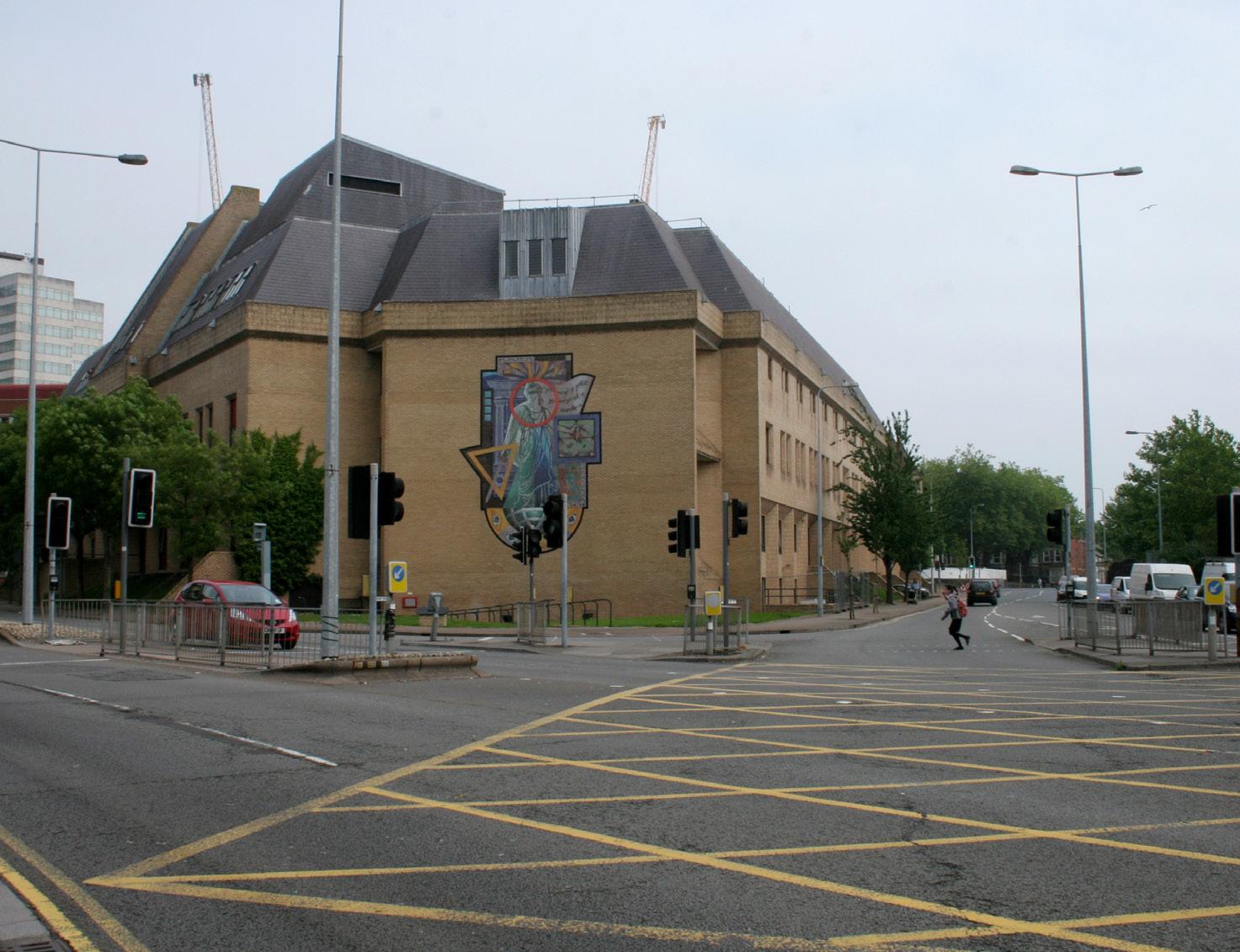
Student Sentor James Scott Attempts to Block University Apointee from Union Board of Trustees, Amid A Campaign Agianst Cuts
Elisabeth Ounsworth News Editor
In December 2025, the University Council nominated Liz McKenzie as a new University Nominated Trustee on the University Executive Board. McKenzie has worked mainly in management and business roles before starting a non-executive career “focused on organisations delivering societal value”, according to the Student Senate meeting Agenda for December 11th.
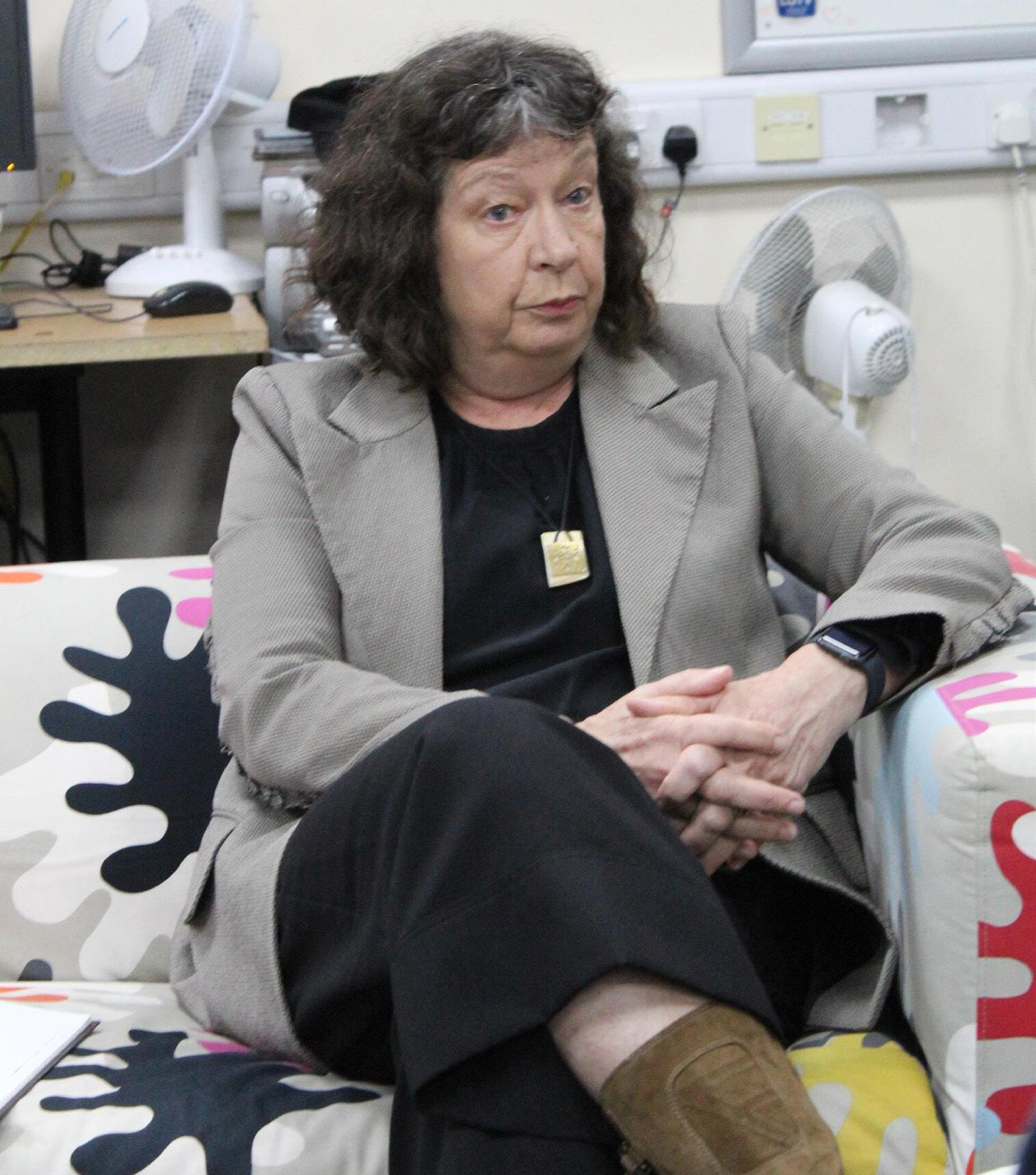
When her appointment was voted on at this meeting, Student Senator and member of Cardiff Students Against Cuts (CSAC) James Scott argued that her background did not make her the best candidate to represent students and university staff. He claimed that as a wealthy “angel investor” McKenzie may not be relatable to the student body, and cited concerns about salary discrepancies at companies she has previously worked for: at Monmouthshire Building Society, of which McKenzie was Non-Executive Director, the CEO was paid seven times the median salary of employees. Scott alleged that this is roughly the same ratio that exists between Cardiff University’s ViceChancellor and the salary of a median staff member, and expressed concerns that having “more management types” on the board could worsen this imbalance. He also raised concerns regarding McKenzie’s lack of experience working with universities. These queries come amid
the fallout of the Academic Futures proposal. Released in January 2025 to fill a £30 million budget hole, it has since caused 41% of staff to experience job insecurity. This plan was approved by the Council despite a unanimous vote against it by the University Senate, a fact Scott described as a “fundamental disregard by University management of the interests of students and staff.”
Although the decision to appoint McKenzie was approved, Scott hopes that voicing his concerns will begin a process of change. He aims to amend protocol so that the Senate nominates trustees instead of the Council, giving academics themselves a voice on the Board.
At the same meeting, Scott proposed a ‘Campaign to open the books and improve the university’s financial strategy’ motion, which was approved by the Senate with 88% of the vote. This new proposal mandates that Sabbatical Officers of the Student’s Union must press the university to release any incorrect or previously unreleased analyses used in decisionmaking regarding the cuts. They must also resist university plans to operate a 12 percent budget surplus and urge them to use its £184 million of unallocated reserve funds to alleviate the cuts, along with requesting an external consultation on the cuts programme and campaigning against the university’s “neoliberal ideology” by highlighting incidents in which such viewpoints were expressed. Scott points out for example that the university’s 2035 vision sug-
gested the solution to the mental health crisis should be “exponential…en-mass support from AI”.
The Student Senate believes that deci sions about cuts were made on ideological grounds as well as financial ones, and the passing of this motion calls for transpar ency regarding ideologies behind budget decisions.
Going forward, Scott plans to put forward more motions, including “one to cut the salary of top earners at the university and another to ad dress concerns around the campus in Kazakhstan in February.”
(Left) Liz McKenzie,
appointed by the university to the baord of trustees in Decemeber

Image, Richard Sutcliffe, via Wikimedia
Gair Rhydd Meets Peter Oborne
Helen Turnbull Opinion Editor
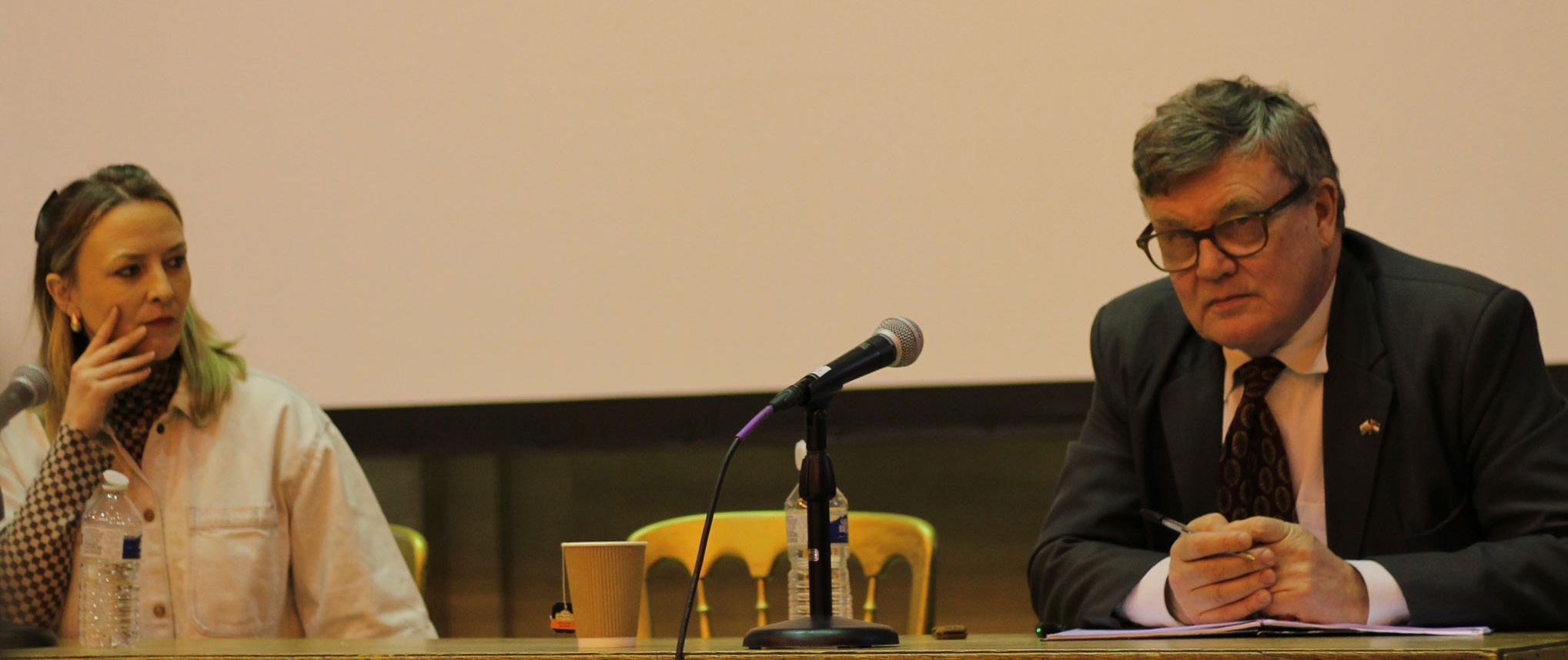
On the 20th January, Cardiff Palestine Support Campaign hosted Peter Oborne to discuss his new book, Complicit: Britain’s Role in the Destruction of Gaza Oborne, former chief political commentator for The Daily Telegraph, released this exposé on the 30th September 2025. Praised by Jeremy Corbyn as ‘a masterclass in truth-telling’ Complicit examines the British government’s response to the events from 7th October 2023, alongside misreporting and pro-Israeli bias in the media and branding of pro- Palestinian protestors as ‘extremists’. This book concludes with a brutal condemnation of politicians and media figures who Oborne argues are accomplices in the destruction of Gaza.
The event was hosted by Bethan Sayed, current co-chair of the Cardiff Palestine Solidarity Campaign and former Plaid Cymru Member of the Senedd representing South Wales West. Oborne attributed his inspiration for the book to a hostel stay in Nablus, anger at Rishi Sunak’s ‘green light to Israel,’ and a desire to expose the workings of Western imperialism. Reflecting on his visit to the Senedd earlier that day, Oborne described it as ‘a reminder that there is a decent world that we belong to’ as well as celebrating that ‘Wales can set the world order.’ He also criticised US involvement in Gaza, stating that ‘Trump knows he can do what he wants with no recognition to international law,’ a comment met with several nods of agreement across the audience at the Temple of Peace.
Oborne discussed the section of his book titled ‘The Pro-Israel Lobby in Britain’, which investigates the influence of the Conservative Friends of Israel and the marginalisation of Palestinian voices. Oborne stated that ‘there is no question that the Labour Friends of Israel and the Conservative Friends of Israel at Westminster are very powerful forces. My own view is not that they shouldn’t exist […] but they should ban all donations into British poli-
tics because they are all bribes.’
The former journalist not only focused on matters examined in Complicit, but he commented broadly on the current British government. He described Starmer as ‘an inept Prime Minister’ who missed a key opportunity after replacing the ‘useless, unpatriotic, awful Tory government.’ Following the question-and-answer portion, Gair Rhydd representatives Mael Le Paih, James Roberts, and Helen Turnbull interviewed Oborne. He rejected the claims of a ceasefire in Gaza, describing it as a ‘fantasy’ as well as regarding Trump’s Board of Peace as ‘gangster politics,’ highlighting that this board includes no Palestinians. He argued that the process of Western governments profiting from what’s regarded as a genocide is ‘cynical’ and ‘disgusting.’ When asked about the professional consequences of publishing Complicit, Oborne recognised that he has been ostracised by much of the British media: ‘I’ve been blanked, which is pathetic.’
‘What’s more dangerous in the media: lying or omitting facts?’ Oborne responded that omission is highly dangerous, as suppressing information allows false narratives to flourish. He cited the lack of coverage of Israeli-run torture camps and the BBC’s ‘deliberate’ omission of historian Avi Shlaim. Oborne described Shlaim, Jewish and previously served in the IDF, as ‘the most distinguished historian on modern Israel, yet he is excluded because he criticises Israel. That’s a disgrace.’
Throughout Oborne’s talk, he celebrated the pro-Palestinian protestors as ‘British heroes.’ Oborne also expressed concerns about attitudes to student protesting saying ‘we should welcome young people taking an active interest in politics.’ He stated how horrified he was to hear that there is an authoritarian attitude with regards to student protestors ‘in a time where we claim to celebrate free speech and a freedom to protest. This fits into this troubling pattern of authoritarianism that we are seeing in the current government against protestors nationally.’

Till Debt do us Part , Two-Thirds of Graduates Can’t Even Pay off the
Oliver Hanlon Opinion Editor
Acombination of high interest rates and massive amounts of debt means that 67% of graduates’ repayment balances are rising, despite them paying at least 9% of their income each year.
A statistic released by the Student Loans Company has shown that in 2024-25, 2.73 million graduates’ loan balances grew faster than they were repaid, which means that 67% of these graduates were shackled with more debt than they started with. During this period, graduates repaid £5 billion of their student loans; however, interest accrued on these loans increased by £15.2 billion.
Those most affected are those with plan 2 loans who started university between 2012 and 2023; these graduates had tuition of £9,250 and will repay their loans over 30 years. Those earning £28,470 or less accrue interest at the Retail Price Index (RPI) rate, currently 3.2%.
Those who earn over that amount but below £51,245 accrue interest at RPI plus up to 3% based on a sliding scale, meaning the higher their income, the more interest they accrue.
Interest on Their Student Loans
That means that those earning over £51,245 currently accrue interest at a rate of 6.2%.
Oliver Gardner, from the campaign group Rethink Repayment, said to Gair Rhydd that he “is not at all surprised to see that such a high proportion of young people are not even able to cover the interest added to their student loans, given the punishingly high interest that many graduates are faced with. This is not only hugely demoralising as people see their balances soar whilst making regular repayments, but it also means that middle earners are likely to end up paying back far more than they borrowed initially. This is not how an educational loan, which has significant wider economic benefits, should be structured. There needs to be a cap on interest charged on student loans to help us prevent this situation occurring in the future”.
Those who started university after 2023 are on plan 5 loans, and they also pay 9% of their income, but their interest rate is capped at the aforementioned RPI. However, plan 5 loans have a lower threshold of £25,000, and these repayments last for 40 years (after leaving university), ten years more than plan 2. Meaning that whilst those on plan 5 loans are spared from the high interest rates, those
on lower incomes will end up paying more under this plan. The Institute for Fiscal Studies estimated in 2022 that middle earners would pay £30,000more under plan 5 than under plan 2. They also estimated that the highest earners would be £20,000 better off due to the lower interest rates.
students are struggling to survive university, and then not even paying off the interest on their loans after graduation, it is clear we need to be reassessing the loan system in its entirety.”
The rising cost of education has many graduates questioning whether their degree is worth it. It is yet to be seen how graduates on the plan 5 loan will cope with student loan repayments and whether they will feel the debt was worthwhile. What is clear is that the cost of education is rising rapidly, and that future graduates will be paying more of their incomes for the most part.

Deio Owen, NUS-Cymru President, when asked by Gair Rhydd, said that “University changed my life for the better, and I don’t regret going at all. But I will admit each time I check my student loan balance, I wince at the number, which is rising quicker than I can pay off. The first step is for the Government to raise the repayment threshold. Very soon, graduates earning minimum wage will be repaying on their loans. Raising the thresholds would give graduates the breathing space they need to find their feet in the workplace after university, before the repayments start. When
“I will admit each time I check my student loan balance, I wince at the number, which is rising quicker than I can pay off.”
NUS
Cymru President Deio Owen
Numbers Fall for Welsh Speakers in Wales
Ava Venter Contributor
According to the latest Welsh language data from the Annual Population Survey, published in early 2026, in the past 2 years, there has been a decline in the number of Welsh, or Cymraeg, speakers in Wales. Although, this is not the only case of a decrease in Welsh speakers in the country’s history. As Britain’s oldest language, Cymraeg is native to the British Isles, originating from a Celtic language spoken by the ancient Britons. Welsh holds archaic, and long-lasting ties to the land of Britain, but has not always been given the respect that the language deserves.
Historically, the Welsh language has come under serious threat and has struggled to survive against England’s colonialism and imperialism. Under Henry VIII’s rule, the language's official status was removed. The Welsh people endured a ban of the language in public administration and the legal system, extending into education, commonly referred to as the ‘Welsh Not.’
During the mid 20th century, the discrimination of the Welsh language was recognised and addressed. Since the 1940’s, laws and legislations have re-instated the official equal status of the language and re-introduced it into the educational curriculum to keep the language alive. Despite the history of subjugation, the Welsh language and culture have shown resilience against brutality. The Welsh have fought back and not let their history prohibit the sanctity of their language, customs and traditions. However, it is undeniable the language has been affected by a history of suppression.
In 2001, for the first time in over a century, the estimated number of recorded Welsh speakers in Wales began to increase and generally continued until 2023. At the end of 2025,
there was an estimated 828,500 Welsh speakers recorded living in Wales, which means 26.9% of the population claimed to be able to speak Welsh. A remarkable increase from 2021’s estimated 17.3%. Following the survey, the Welsh Government responded: ‘we’re working on a wide range of actions to achieve our aims of a million Welsh speakers by 2050, and to increase opportunities for people to use their Cymraeg.’
In 2025, they introduced the Welsh Language and Education Act, which aims to boost Welsh in education and public life, encouraging the language in areas with fewer Welsh speakers. Alongside free Welsh lessons for 16 to 25-yearolds and increasing the availability of Welsh language technology. As a result, it was found that children and young people of Wales were more likely to report that they could speak Welsh than any other age group, with 46.5% being Welsh speakers.
Owain Meirion, the Chair of Cymdeithas yr Iaith, commented ‘we often hear from politicians that the Welsh language belongs to everyone, but this rhetoric is not realised. The result of that is the continuous decline in the number who can speak Welsh.’ Meirion advocates that to improve the use of the Welsh language in Wales, the government should, ‘set a target for the number of children in Welshmedium education, restore and increase the amount of Welsh content in the media and expand and strengthen the legal rights of the people of Wales to use the language.’
In Wales, despite a decrease in the number of Welsh speakers since 2023, the progress made is an achievement to be recognised. The endurance of the language remains prominent for many and has become a true testament to the pride of Welsh identity. This reflects the hard work of the Welsh people to keep their language and legacy well and truly alive.

JP Building Renovations Cost One Million Pounds
Meghan O’Neil News Editor
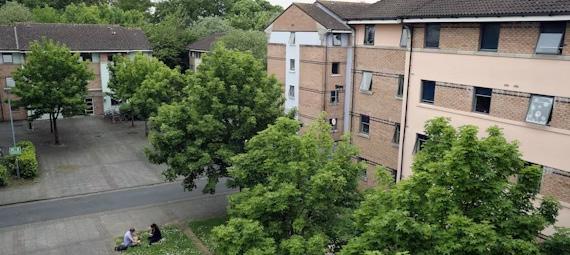
Cardiff University’s John Percival Building went through a series of renovations to construct a new HYB during June to October 2025 costing approximately £1,095,541.
Cardiff University has opened twelve HYB spaces across its campuses which provide tailored support for specific degree disciplines. This includes professional support about placements, assessments and student records.
One of these HYB’s is located in the John Percival building where students from English, Communication and Philosophy, Archaeology and Religion, Welsh, The Business School, and Music can access tailored support for their degrees.
The John Percival HYB provides access to study spaces, study booths, 1-2-1 meeting rooms and meeting booths as well as access to mental health and wellbeing services.
A Cardiff University Spokesperson said that ‘our HYB spaces also offer a welcoming place
to talk things through.’ According to an FOI request the renovations approximately cost £1,095,54, which took place in order for the HYB to be built in the John Percival Building. However, during the construction, it was found that the walls in the HYB would need to be demolished and need reconstruction because of ‘structural issues and the quality of the existing walls.’ It was agreed that the best solution for cost and performance was to remove them and rebuild, this cost £50,500. It was rumoured that this was because the removal broke fire regulation standards. However, when asked about the reasoning behind the demolition of the walls, a Cardiff University Spokesperson said ‘the walls were removed to facilitate the new HYB. All of the changes comply with our fire strategy.’
As well as the walls, the reception was removed and rebuilt, and an additional glazed screen was added. Further renovations will be taking place this summer to the roof of the John Percival building as the patch repairs that took place during the HYB renovation need ‘further work.’
Cardiff University Spent Almost £70,000
Control Last Year
collect the rubbish often, to deal with the problem, it might be worth them [the University] moving the bins away from the buildings.’
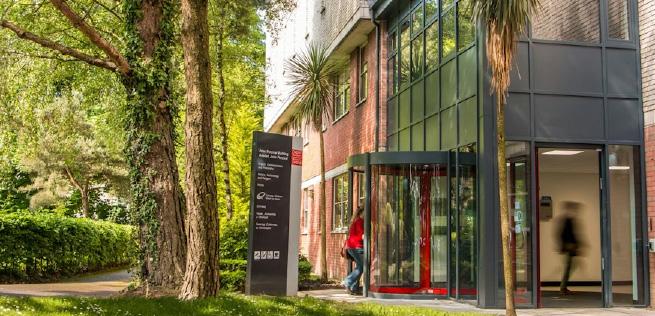
Afreedom of information request by Gair Rhydd revealed that the university spent £67,826 on pest control between April 2024 and March 2025. It also revealed that the highest number of pest control matters occur in the Talybont residences area where some 3,000 students reside.
Rats are a regular sighting for students in Cathays and beyond, with concerns often being raised by students in the University’s Halls of Residences. Bethan Rosser, a first year student living in Senghennydd Court, was relocated from her flat after she found a rat in her room. ‘After calling reception, they said that they could not do anything about it other than relocate me to another flat with pest control not able to attend the flat to inspect for two working days.’ According to her, the team did not follow up to check on the issue following the incident. ‘The poison was only put down in my kitchen, not in my room where I found the rat’ she told Gair Rhydd. She added that the University had ‘failed to deal with the issue in my room.’ She added ‘after the Christmas break, I got back to my flat to find another rat dead in the kitchen.’ Frustrated, as ‘although the bin lorries come to
While Cardiff University spent £67,826 on pest control in 2024/25, Cardiff Metropolitan University spent a total of £16,000 – over £50,000 less. Cardiff University does not have a contractor to deal with pests and therefore issues the jobs ‘when required.’ A Cardiff University spokesperson said that ‘we don’t comment on individual cases or unsubstantiated claims.’ They said that they ‘aim to visit within 24 working hours to investigate the issue. If needed, we will arrange for Pest Control to attend.’ Adding, ‘we recognise this is a matter of great concern for those students impacted. We are committed to doing what we can to manage any reported incidents as soon as practicable.’ Cardiff University stressed that complaints are ‘not necessarily internal and include the grounds and surrounding areas’ and that ‘waste collection points are regularly checked, emptied and cleaned to minimise the risk of pests.’ The University also said, ‘we have preventative and proactive pest control measures in place throughout our campus, as well as regular reactive maintenance works.’ Yet this ongoing issue persists and is affecting student lives.
An Unwanted Resident, A Rat Found In Senghenedd Halls
Ifan Meredith News Editor
Sbotolau
Meet Gair Rhydd’s Hidden Gems

WMolly Spencer Spotlight Editor
ith exam season over, it’s time we power through the last of the winter blues and rain by getting down to these hidden gems found by our very own Gair Rhydd writers. From all different roles across GR, here are some of those gems that will get you out in the rain and make the most of this second semester.
Starting off strong with our very own head of spotlight Rachel. If it’s hot drink you are looking for to keep you warm in this February weather then she suggests checking out Corner Coffee, found on the High Street or Barker Teahouse which is in the High Street Arcade. For those looking to spice up their evening meals, Rachel’s go-to is Jashaan for their pistachio curry. Only a short walk from the Students’ Union, you can find this restaurant on Crwys Road in Cathays.
“A walk around Roath Park is free and accessible”
Following on we have our deputy editor Bhamini with plenty of suggestions. On Church Street you’ll find Café Citta, a quaint family-run Italian restaurant
that has something to offer for everyone. Coffee #1 for anyone who is looking to switch up their daily sweet treat as I am sure many are partial to, with a variety of pastries and cakes as well as various teas, coffees and other drinks. If you are like me and just trying to make your student loan last, then a walk around Roath Park is free and accessible to clear your mind from assignments, see the wildlife and get some fresh air.
“Everyone knows the best fix for a hangover is a full English breakfast”
News editor Ella has recommendations for any time of the day! Starting off with her favourite breakfast at Milkwood in Pontcanna followed by Blwm in Roath for all their pastries and a variety of daily specials from chilled drinks to coffee. If you are looking somewhere for lunch, check out Fresh the Baguette Bar in the Royal Arcade for a fresh made sandwich that will last you till dinner. If it’s evening plans you are looking to make, then Ella suggests getting a drink at The Dock in Cardiff Bay for their live music and 2-for1 cocktails available every day 4–8pm as well as an added student discount on bottled beer, house wine, and 10% off food. To end the perfect day, check out Clwb Ifor Bach for their amazing club nights, gigs, and more with that added splash of Welsh culture to get you in the Cardiff mindset.
Is it really Too Good to Go?
Eve Yates Spotlight Editor
Too Good to Go are a company that pride themselves on reducing food waste nationwide, through shops, restaurants and cafés signing up to give away food that is about to expire at amazingly discounted prices. This sounds like student heaven, with it being a great way to get a large amount of food for a great price. However, it can be a mixed bag (pardon the pun), so, this week, I ordered some bags from local businesses and chains to see if the Too Good To Go bags are worth the money for students.
“It can be a challenge to eat it all before it goes off”
Too Good to Go has been fighting food waste since 2016, and they are on a mission to inspire and empower people to do the same. Now, more and more businesses are signing up to Too Good To Go to help tackle food waste; Aldi, Costa, Starbucks, Marks and Spencers, Café Nero, Spar, Pizza Express and Chop Stix are just some of the businesses now available.
As a uni student who has a passion for environmental issues, it can be
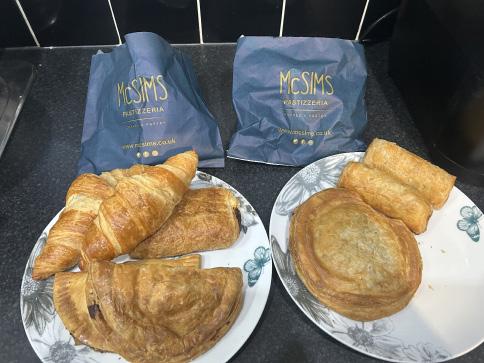
hard to buy sustainably grown or produced products while on a budget. This makes Too Good To Go an affordable option for doing your bit for the environment while being cost effective. Firstly, I ordered a Too Good To Go bag from McSims in the Students’ Union. As it was only 10 minutes away from where I live, this was a great option for me, and I got to collect it early at 16:30. I paid £3.50 and was pleasantly surprised how much food I got.
Overall, I got pasties in different flavours, one steak and cheese pie, two croissants, one pain au chocolat, and two sausage and cheese rolls. The collection process was simple and some of the food was still warm when I collected it. The great thing about ordering Too Good To Go food from bakeries is that the food can be frozen, giving me an easy, quick breakfast, snack, or meal.
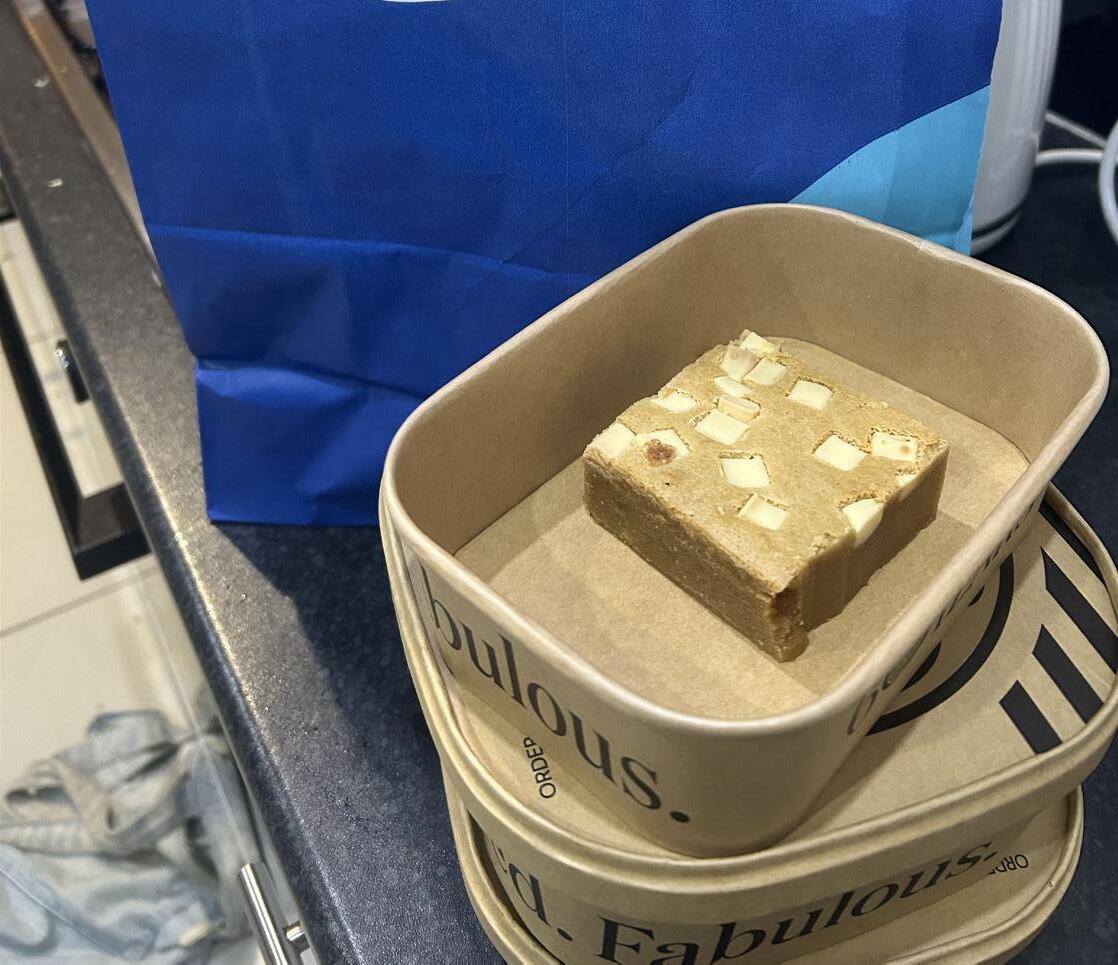
The second Too Good To Go bag was from Pizza Express in St Davids. I paid just under £5 and I got two white chocolate blondies, a garlic and mozzarella bread and a portion of chocolate fudge cake. All these items would have been more expensive than what I paid all together, so was quite happy with what I got.
My only criticism would be that unlike McSims, the cakes don’t freeze as well, meaning I would have to eat them the next day or within the next few days.
But like most food, you can usually push it a few days after its sell-by date.
“The only problem I have is the late pick up times”
While the sentiment of Too Good To Go is excellent, the only problem I have is the late pick up times. Because all of the food given away is what is left at the end of the day, you have to wait for a restaurant or shop to close before collecting. This meant I had to walk into town by myself at 20:30, which was fine, and worth it for those blondies, but some pickup times were as late as 23:00, which is not ideal. Secondly, obviously you can get quite a lot of food for your money. However, in spite of these negatives, I do think Too Good To Go bags are worth the money; they are a great way to not only do your bit for the environment, but you get so much food for your money, with all the items being more than half price off. You can share the food with housemates if you have too much of it, and most food, like baked goods can be frozen.
In my opinion, Too Good To Go bags are a great way to save some money at uni.
Spotlight editor Eve also endorses Blwm as perfect for reasonably priced drinks as well as a cute environment. She has also recently discovered Castell Coch, which is just a short 15-minute drive away for anyone looking for a walk around a fairytale castle. Everyone knows the best fix for a hangover is a full English breakfast and Eve suggests checking out Café 37 on Salisbury Road for a cheap breakfast to get you ready for the day. Our head of design Liv regularly checks out Nighthawks for their wine and tiramisu followed by Poutine Box on Woodville Road for the perfect post-night-out treat. For those who love to chef up a storm, look out for Spice of Life on Albany Road for all the spices to make your dishes top tier. Everyone loves art to decorate their rooms with, so head over to Canton to ArtHole for a local artist’s handicrafts that will make your room that much more alive. Finally, from our one and only editorin-chief James. He has just one hidden gem to share: Porter’s. With great music, a great atmosphere and interesting people, Porter’s is shaped through the people. Down Barrack Lane, there are options of different music, theatre showsn and comedy, every night is different to keep everyone entertained.
A Future in Archaeology?
Rachel Bedding Head of Spotlight
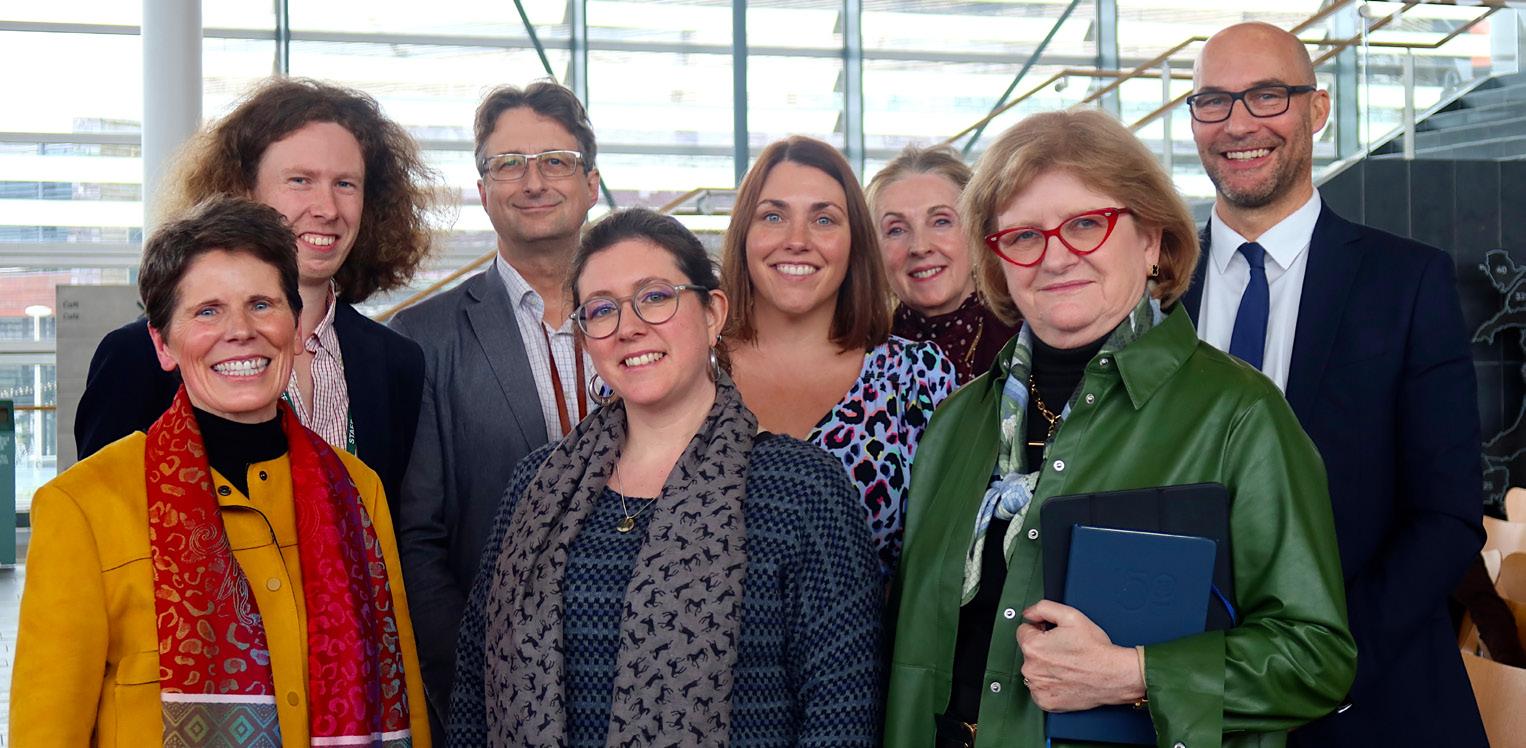
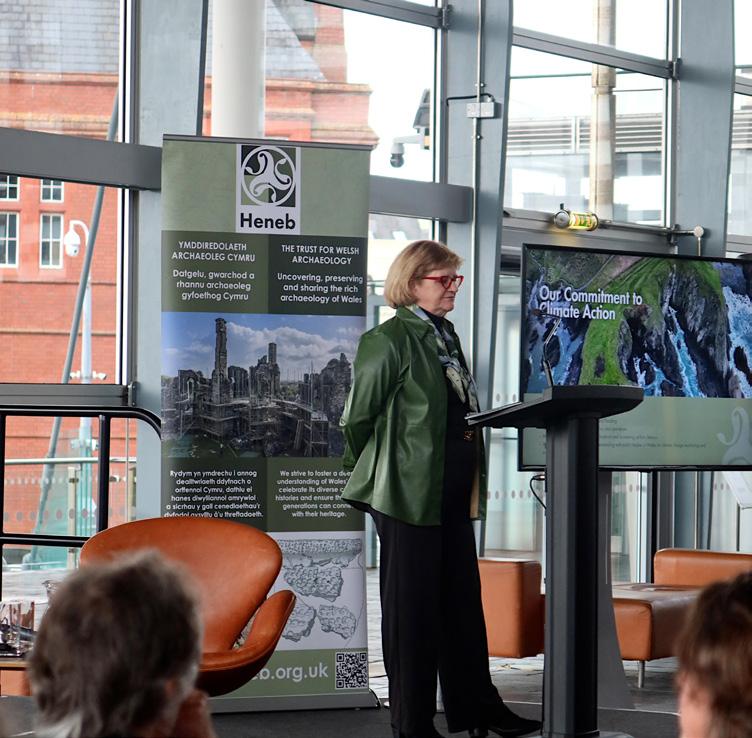
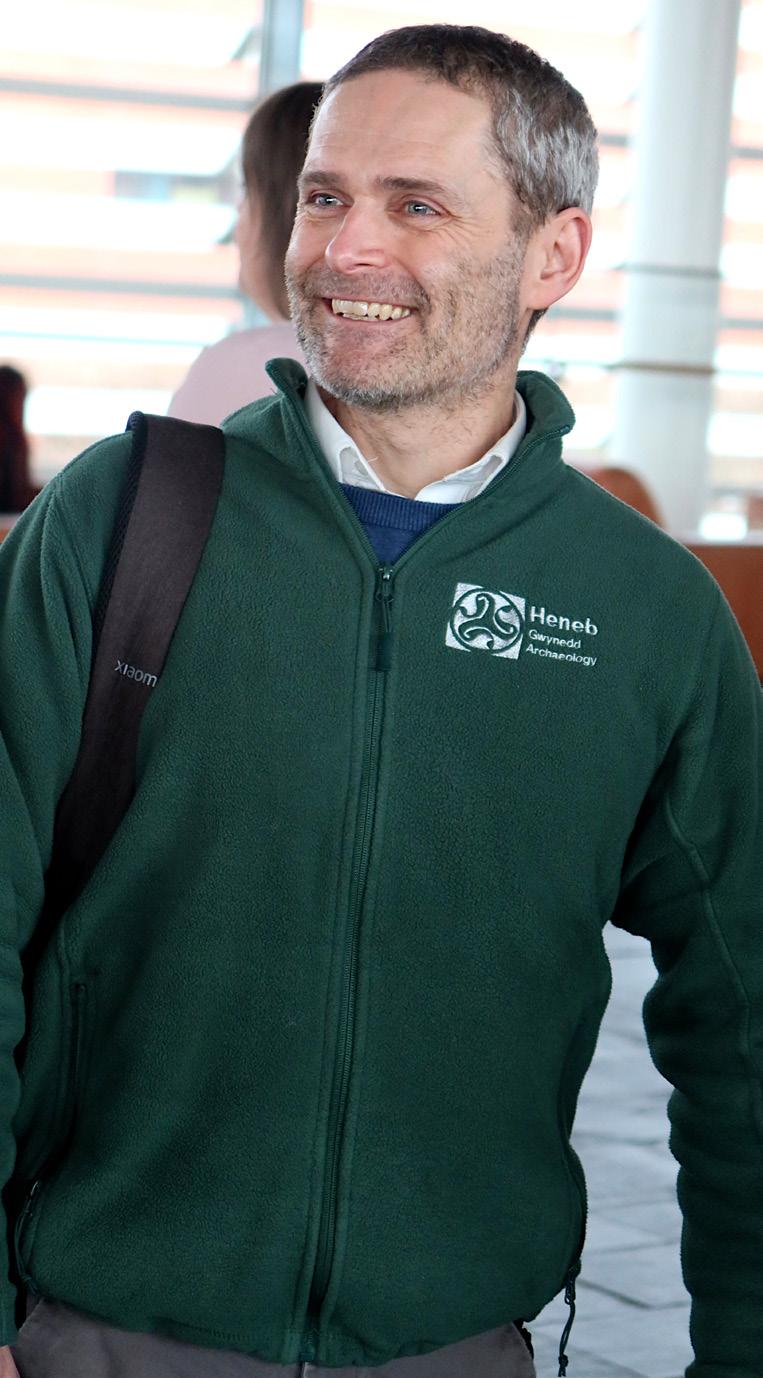
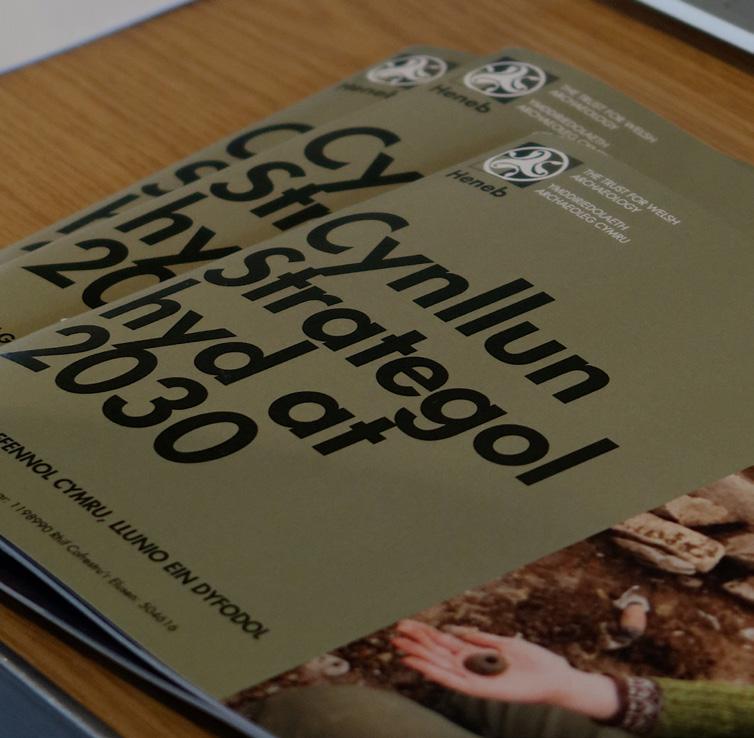
Funding cuts to the humanities subjects have been in the mind of every student who calls John Percival home since last year. But Heneb is creating a new future for Wales’ past, and with the recent launch of their five-year plan they show us the ways on how they plan to achieve this and secure the future of Welsh archaeology.
But what is Heneb? Well, Heneb: the Trust for Welsh Archaeology, is the successor of four regional archaeological trusts that was created in 2024 to protect and conserve Welsh archaeology. Made up of two parts, field services and the advisory services, Heneb’s main goal is to protect and promote the heritage of Wales and support communities and education with their work. With Welsh archaeology projects being some of the most important in the UK, preserving the history for generations is key to incorporating heritage into our daily lives.
In the UK there are over 2,500 museums, with the heritage sector employing over
200,000 people in 2023, with many opportunities for graduate jobs included. The expansion of Heneb will increase employment opportunities and introduce a pathway into Welsh archaeology and heritage post-graduation.
Working with Cadw and Amgueddfa Cymru, Heneb launched five ambitious goals this year: to strengthen public services, to grow income and resilience, to engage and include communities in projects, to lead innovation and research in Wales, and finally, to continue their growth as a new professional organisation. All of these goals point to an exciting and inclusive future in the Welsh heritage sector. And so, what does this mean for students?
With an increased interest in heritage in Wales, the opportunities to involve yourself in projects across the country will increase as well, and not just for those who are studying an adjacentcourse. With one of Heneb’s main goals being to increase community projects, they aim to achieve this by introducing archaeology into the Welsh school curriculum, but prior to that by creating spaces to educate communities on their heritage, allowing anyone with an interest tohelp
Blue Monday
Evie Harris Spotlight Editor
Blue Monday marks the third Monday of January, infamously known as the gloomiest day of the year. Certainly, the winter months can be a challenge for us all. With a flurry of exams and a lack of Vitamin D, it’s safe to say we’re not exactly thriving, reminiscing on those summer months and putting the world on Do Not Disturb.
In discussion with my housemates, we all shared the ways in which we cope with the notorious SAD, or Seasonal Affective Disorder. Simple things such as exercise, Vitamin D supplements and meeting up with friends can loosen the burden of seasonal depression. I find that personally, keeping myself busy and active goes a long way in keeping my mind and my body happy and healthy.
However, on this Blue Monday, which marked the 19th of January, I noticed something quite bizarre. The sheer quantity of emails I received from large companies using the concept of Blue Monday and Seasonal Depression as a marketing hook felt strange and morally questionable. Rather than spreading awareness, or offering help,
them support this goal through outreach programs in schools, festivals and communityspaces.
They are also aiming to create a bili gual program to support Welsh speakers andconnect the language to the past. “We are looking to make Gen A, Gen Archaeology in Wales. Gen Z makes it sound like it’s the final generation for children, but we want to create something new and exciting [for them],” says Dr Kate Roberts, chief executive of Cadw. Dr Carol Bell, Chair of Heneb, said “the interdisciplinarity of archaeology makes it accessible to everyone, and it can bring communities together, and it is essential to make archaeology accessible in schools, so people can explore what really makes Wales, Wales.”
With the recent funding cuts to many humanitarian projects and programs in Wales, Heneb’s plans for the future promise to be bright for the heritage and archaeology of Wales.
Images: Heneb
Is It Just a Marketing Technique?
it felt like opportunism. If only seasonal depression could be cured with a new pair of trainers.
Seeing this prompted me into thinking about how capitalism is constantly adapting and finding new ways to target consumers. Through creating new pressures to buy, we are tricked into thinking we can solve emotional distress with “retail therapy”. This is an unhealthy habit that feeds into the hands of large corporations.
Mind Charity shared a message on their Instagram account, @mindcharity, claiming “Blue Monday is a pseudoscience marketing gimmick that was made up in 2005 by a travel company to sell more holidays. Depression doesn’t care what day it is”.
This interesting perspective again encourages us to consider the ever-growing ways in which companies target us and disguise spending as a necessity. Therefore, we all may, in one way or another, suffer with seasonal depression to different extents. However, Blue Monday appears to be becoming another date in the diary, alongside the countless other made-up days that sway us into opening up our wallets...

Panic Shack Live at the Great Hall
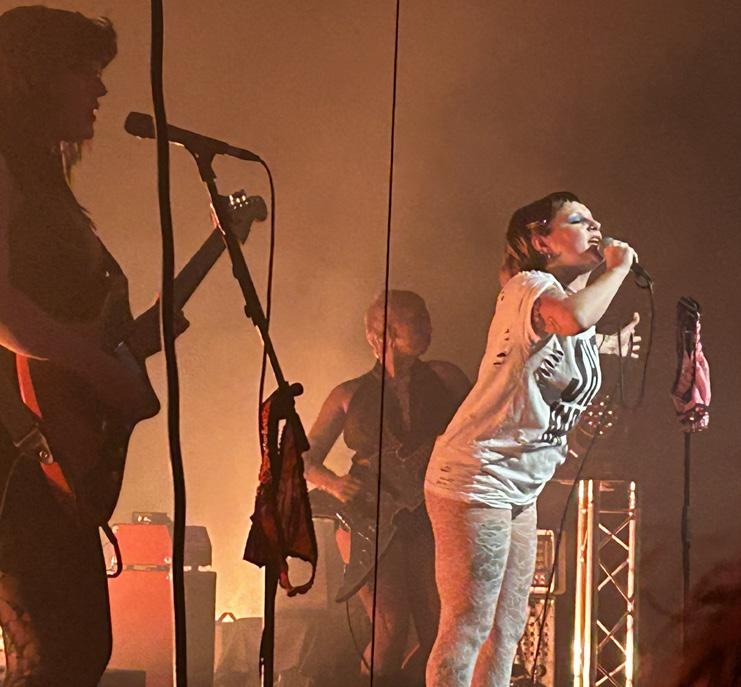
FEllie Evans Spotlight Editor
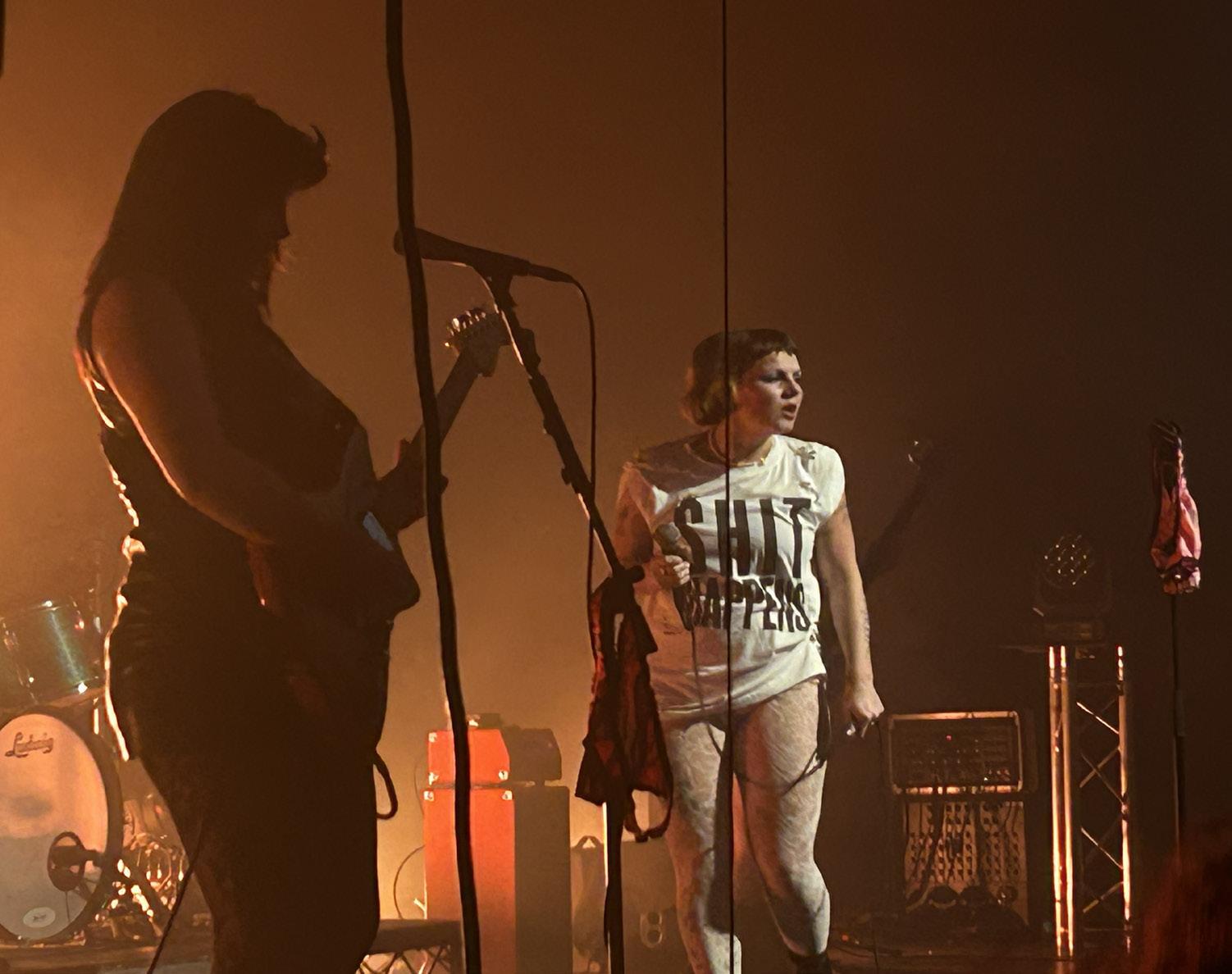
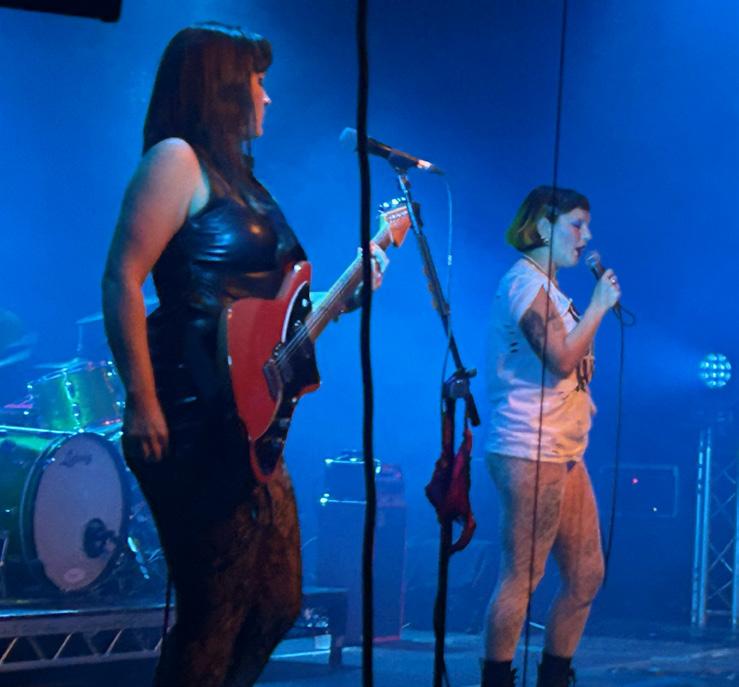
riday night in early December, The Great Hall welcomed Cardiff’s very own Panic Shack to play the biggest hometown show of their careers yet. Comprising Sarah Harvey (lead vocals), Meg Fretwell (guitar and backing vocals), Romi Lawrence (guitar and backing vocals), Emily Smith (bass) and touring drummer Nick Doherty-Williams, Panic Shack has been busy evolving punk in the modern music scene. Known for their fun ferocity, as they rise through the alternative music scene, they bring along with them a refreshing new sound that is equally as empowering as it is addictive.
“It was exactly how live music should bring people together. ”
Since forming in 2018, the Cardiff band have conquered Swn Festival, Reading and Leeds Festival, In It Together festival, and of course, their Glastonbury debut in 2023 on the Truth Stage. Their punchy feminist anthems ignite a liveliness in their crowd of dedicated fans.
Dressed in Panic Shack merchandise with every colour of hair in the rainbow, the crowd did not stand still for a single strum. Bringing humour to deeper topics, Panic Shack offers a progressive stance against the misogynistic hate they receive. Whether you like or dislike their music, you cannot deny that they are masters of their own vision. They seem to know just what they want to say, and they aren’t afraid to say it however they like. Best known for their track “Girl Band
Starter Pack”, the band has curated such an intensely loyal fanbase that the concert felt like it had its own community. As a frequent concertgoer, standing next to a group of grandads with their teenage daughters, it was poignant to me how many different age groups came together with equal passion for the same music.
“The
type of band that is impossible to see live and not leave
as a fan.
Being from South Wales myself, it was similarly touching to hear Welsh accents through the speakers for once, shining through each syllable; it was clear they were proud to call Cardiff their home. Panic Shack, to me, is the type of band that is impossible to see live and not leave as a fan. The point of no return for me was “Thelma & Louise”, their third song of the night, which can be described as a love song to the band and their friendship and love for one another. So unapologetically themselves, each member shines their own personality through witty delivery and impressively selfaware lyrics that you just can’t help but laugh along to. If you’re on the search for a new punk band to listen to, Panic Shack really is the one to watch.

Pick Your Poison With CU’s Real Ale Festival
Rachel Bedding Head of Spotlight
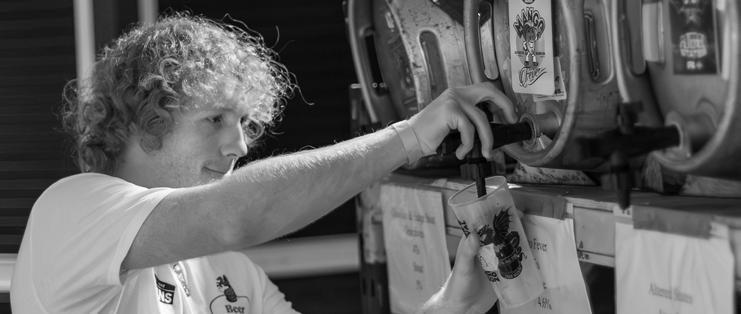
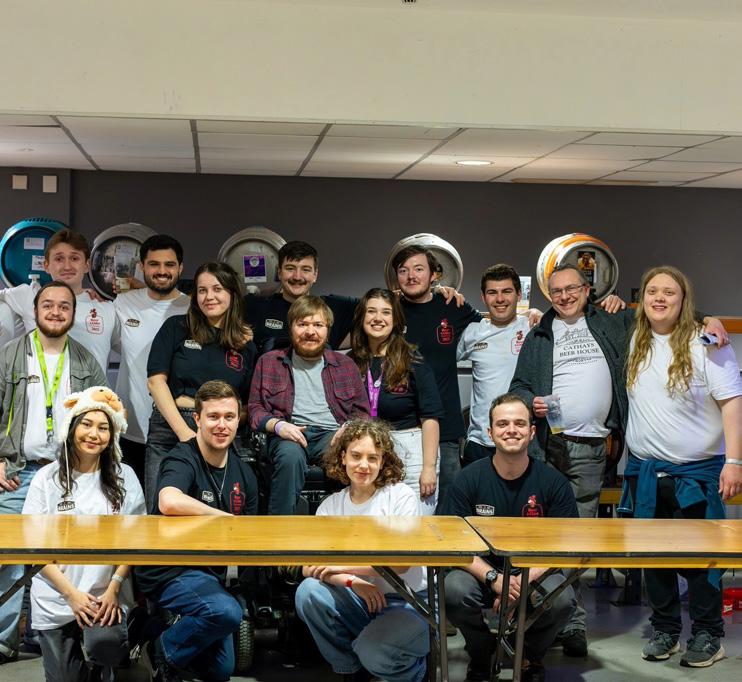
The Real Ale and Cider Society is back with their much-loved Cardiff Beer and Cider Festival, restocked and ready to make 2026 their best year yet. Every year the society hosts their festival in collaboration with MIND, and having raised £35,000 last year, are hoping to raise this threshold and the roof of the SU, in support of bettering mental health across Wales and the UK.
The 2026 festival will take place on the
“20th–21st of February across Y Plas, the Lodge, and Cwtch”
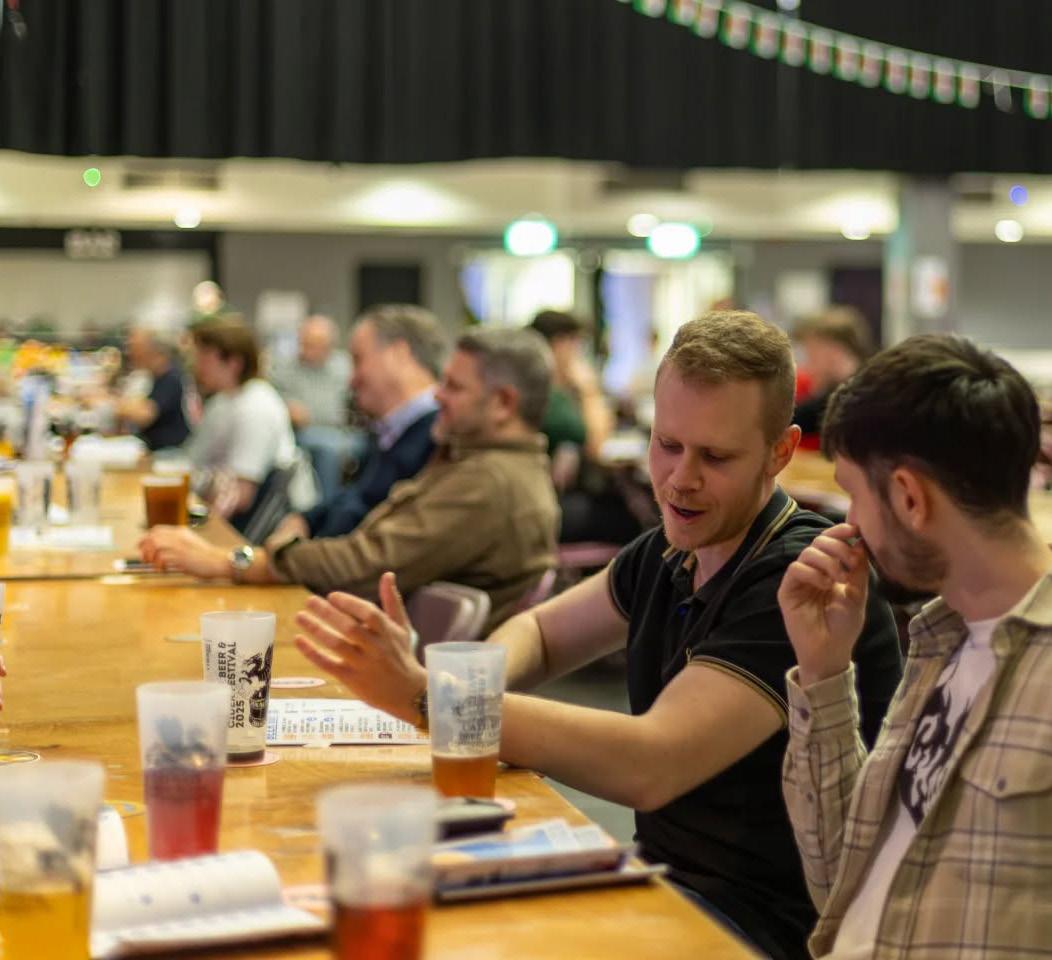
which will play host to an estimate of 35 different ales, 40 different ciders, honey mead, a spirit bar, and a new selection of non-alcoholic beers too. Every year, the Real Ale and Cider Society work tirelessly to expand the event, and so the lineup for 2026 will include keg beer, a spirit and cocktail bar, and live entertainment from student-run societies, including the Live Music Society. And specially, this year the festival will also be showing Six Nations games on the Sat-
urday, so you don’t have to miss out on either of these important Welsh events—rugby and drinking. But the excitement doesn’t end there, as the sponsors of the event include a star-studded squad of Tiny Rebel, PULP Cider, Grey Trees and the well-loved Cathays Beer House (which should ring a bell even if you’re just dipping your toes into the world of real ale and cider).
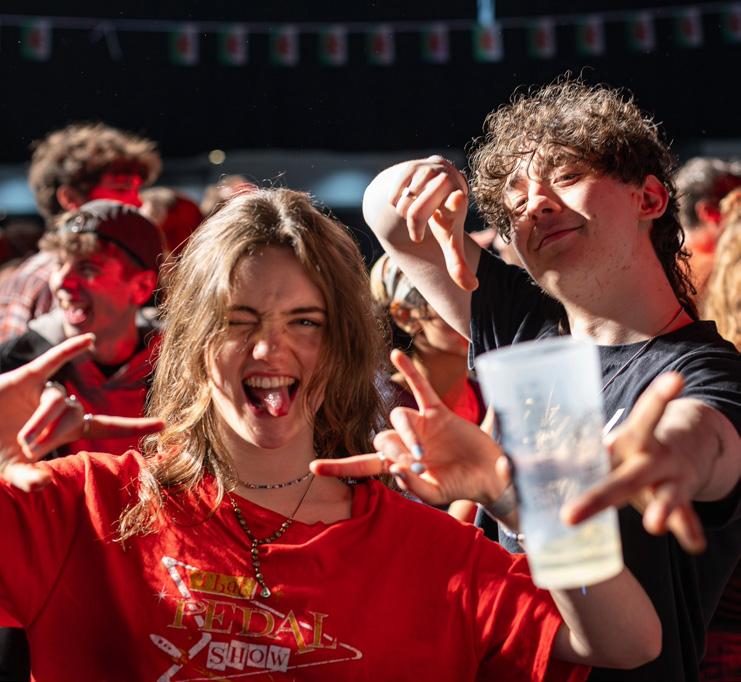
Having won the SVMAs’ Big Event of the Year prize, and inviting over 750 students alongside local brewdogs, the atmosphere of this event promises to deliver as much as the guest lineup; including beer and cider from breweries like Llanbethian Orchards, Brains, Bluestone Brewing, and more. The society is also thrilled to share that there will be limited edition drinks available too, so scouting out to secure a one-of-a-kind experience for your tastebuds at this festival is a must.
For an entirely student-run event, the Beer Festival is looking to be a highlight of February for Cardiff. Tickets can be purchased through the Cardiff Students’ Union Website, and range from weekend tickets for £15 or day tickets for £9, available for either Friday or Saturday. So clear your calendars, as the Real Ale and Cider Society have promised what may be the student run event of the year, but you’ll just have to head on down and find out for yourself whether that’s true.

Etholiad Seneddol 2026: Bethyw\BarnMyfyrwyr?
Hannah Williams Pennaeth Taf-Od
Ar y 7fed o Fai eleni, bydd gan y cyhoedd gyfle i bleidleisio dros Lywodraeth nesaf Cymru. Dyma fydd yr Etholiad Seneddol cyntaf o’i math, gyda llawer o newidiadau i’r drefn ers yr un diwethaf yn 2021. O hyn ymlaen bydd 16 etholaeth mewn etholiadau Llywodraeth Cymru, a bydd chwe aelod Seneddol yn cael eu hethol i gynrychioli pob un ohonynt. Bydd hynny’n ffurfio Senedd o 96 aelod – cynnydd sylweddol o’r 60 aelod presennol. Byddant hefyd yn cael eu hethol drwy system bleidleisio newydd, sef y system rhestr gyfrannol gaeedig, sy’n golygu mai pleidleisio dros blaid wleidyddol yn hytrach nag unigolyn bydd pleidleiswyr yn ei wneud.
Ers dechreuad datganoli yng Nghymru y Blaid Lafur sydd wedi bod mewn grym, ond am y tro cyntaf eleni mae disgwyl newid mawr gyda’r arolygon barn diweddaraf yn rhoi Plaid Cymru ar y blaen o ran bwriadau pleidleisio’r cyhoedd, a Reform UK yn agos ar eu hôl.
Beth mae myfyrwyr am ei weld? Wrth i’r dyddiad pleidleisio agosáu, mae myfyrwyr y Brifysgol wedi bod yn ystyried beth yr hoffen nhw ei weld gan y Llywodraeth newydd.
Hanna Morgans-Bowen Golygydd Taf-Od
Mae mis Ionawr a Chwefror yn nodi blwyddyn newydd ac yn gyfle am ddechreuad ffres, gyda sawl sialens yn annog pobl i herio eu hunain o Vegananuary i heriau ffitrwydd. Un o’r sialensiau mwyaf poblogaidd yw Ionawr Sych (Dry January), sef i beidio ag yfed alcohol drwy gydol y mis. O roi cynnig ar dreulio cyfnod heb yfed alcohol, mae dwy fyfyrwraig Prifysgol Caerdydd wedi datgan nad oes angen diodydd alcoholig er mwyn iddynt gael hwyl drwy gymdeithasu. Pobl ifanc 18-24 oed yw’r grŵp oedran fwyaf sobr yn ôl ystadegau YouGov. Un fyfyrwraig a gwblhaodd Ionawr sych yn anfwriadol eleni oedd Ela Rhys. Yn siarad gyda Taf-Od am ei phrofiad, dywedodd hi: “Ma’ dry Jan unintentional heb os wedi atgyfnerthu a wir wneud i fi sylweddoli bod ‘night out’ da ddim yn hollol ddibynnol ar alcohol o gwbl. Dwi’n joio drinc yn amlwg, ond yn ben dant dim y ddiod sy’n diffinio trywydd y noson, y cwmni a’r bobl sydd bwysicaf.”
“Yn bendant dwi wedi teimlo’n ysgafnach yn feddyliol... hynny ydi, mai ‘di bod yn hyfryd peidio gorfod deffro ar ôl noson o gymdeithasu gyda’r hangxiety sydd yn aml yn dod law yn llaw ag yfed alcohol. Hefyd, bod ‘na ddim oblygiadau’r diwrnod canlynol o ran bod modd deffro’n gwbl ffres heb yr un sgil-effaith a pharhau gyda’r diwrnod.”
Yn ôl astudiaeth llynedd gan YouGov, mae dros 39% o bobl 18-24 oed y DU ddim yn yfed alcohol o gwbl, a throi at ddiodydd alcohol isel neu ddi-alcohol yn hytrach.
Dywedodd Owain Siôn, myfyriwr yn ei drydedd flwyddyn, “Fel person ifanc sydd eisiau byw yng Nghymru ar ôl graddio, byddwn i’n gwerthfawrogi pe byddai’r llywodraeth yn rhoi mwy o sylw i reoleiddio’r farchnad dai. Rhwng rent anfforddiadwy mewn dinasoedd, a cael ein prisio allan o’r farchnad nôl adref, mae pobl ifanc yn cael eu cymryd yn ganiataol pan mae’n dod i ffeindio tŷ yng Nghymru.”
Yn debyg, dywedodd Efa Jones, myfyrwraig yn ei hail flwyddyn, “Hoffwn i weld y Llywodraeth nesaf yn blaenoriaethu costau byw, tai fforddiadwy ac iechyd meddwl. Mae’r pwysau ariannol ar fyfyrwyr a phobl ifanc yn enfawr ar hyn o bryd, ac mae hynny’n cael effaith uniongyrchol ar les a chyfleoedd pobl. Hefyd, mae buddsoddi mewn addysg a sicrhau bod y Gymraeg yn cael ei chefnogi’n ymarferol ym mhob rhan o fywyd cyhoeddus yn hynod bwysig i ddyfodol Cymru.”
Hefyd yn fyfyrwraig yn ei hail flwyddyn, mae Betsan Griffiths yn galw am “fwy o gyfleoedd i bobl ifanc a graddedigion yng Nghymru, fel swyddi da a hyfforddiant, fel bod pobl ddim yn teimlo bod rhaid symud i ffwrdd i gael dyfodol. Mae hefyd angen gwella trafnidiaeth gyhoeddus yn enwedig y tu allan i’r dinasoedd, er mwyn gwneud bywyd yng Nghymru’n fwy hygyrch a chynaliadwy.”
Image, The Wub, Via Wikimedia
“Mi fydden i’n hapus i ddim yfed eto”
Aeth Anest Cunliffe, myfyrwraig yn y drydedd flwyddyn, gam ymhellach nag Ionawr sych, drwy ddewis mynd heb alcohol am flwyddyn gyfan y llynedd. Yn siarad gyda Taf-Od dywedodd hi, “Penderfynes i wneud e am lot o resymau, o’n i ddim yn hoffi sut oedd e’n neud i fi deimlo, colli’r diwrnod ar ôl, a gorfod gwario llawer o arian.”
“O’n i ddim wedi teimlo gormod yn wahanol, jest o’n i byth yn teimlo’r angen i yfed nac yn gweld ishe fe.”
Dywedodd fod disgwyliadau ar fyfyrwyr i yfed alcohol wrth gymdeithasu yn y Brifysgol, ond nad oedd hi wedi cael unrhyw brofiadau ne gyddol tra’n sobor y llynedd.
Gan rannu profiad tebyg, dywedodd Ela, “Yn y flwyddyn gyntaf, dwi yn teimlo bod yna lawer o bwysau cymdeithasol i yfed, yfed ac yfed. Ond erbyn hyn, mi ydw i wedi sylweddoli bod pob no son allan yn be wyt ti fel person am iddo fo fod boed hynny’n cynnwys alcohol neu beidio.
Y misoedd tyngedfennol o’n blaenau
Bydd y misoedd nesaf o ymgyrchu yn allweddol ar gyfer y canlyniadau’r etholiad. Dywedodd Owain, “Mae wir angen i bleidiau roi’r gorau i drîn yr etholiad hwn fel ‘midterm’ ar gyfer San Steffan. Pwy bynnag fydd yn arwain y llywodraeth nesaf, mi fydd ganddynt gyfrifoldeb dros gymaint o faterion sydd yn effeithio bywyd dydd-i-ddydd pobl Cymru. Siomedig felly yw gweld gymaint ohonynt yn methu trafod polisi yn glir, neu’n trîn yr etholiad fel refferendwm ar boblogrwydd Keir Starmer.”
Hoffai Efa a Betsan weld cyfathrebu cliriach
gan wleidyddion. Eglurodd Efa, “Byddai llai o sloganau gwag yn helpu pobl i deimlo bod gwleidyddiaeth yn berthnasol i’w bywydau bob dydd, ac efallai’n annog mwy o bobl ifanc i gymryd rhan yn yr etholiad a pleidleisio”. Yn ôl Betsan, “Weithiau mae addewidion yn teimlo’n bell o realiti pobl ifanc, felly byddai mwy o onestrwydd a llai o or-werthu’n helpu i ailadeiladu ymddiriedaeth mewn gwleidyddiaeth.”
Mae hon yn sicr yn etholiad â’r potensial i newid trywydd gwleidyddiaeth Cymru yn llwyr, ac amser yn unig a ddengys beth yw’r dyfodol honno.
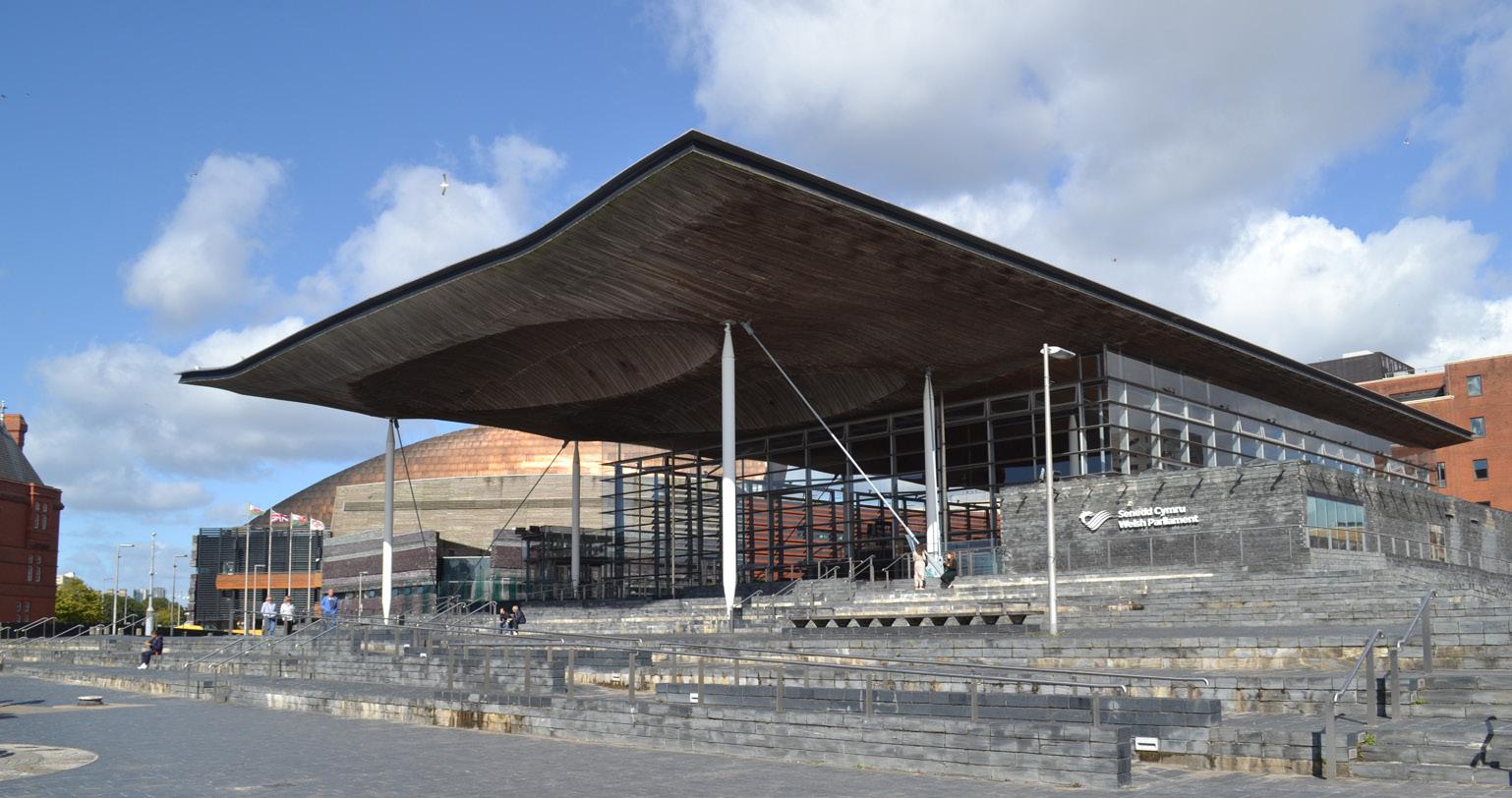
Eleni mae cymde ithas newydd wedi’i sefydlu
Brifysgol - Y Gymdeithas Sobr. Bwriad y gymdeithas yw creu man diogel a hollol sobr lle gall myfyrwyr gael hwyl heb unrhyw bwysau i yfed alcohol.

Pencampwriaeth y 6
Gwlad i Gymru ar y Gorwel
Depot, Uned 8, Curran Road:
AEla Rhys Golygydd Taf-Od
r y 7fed o Chwefror bydd Pencampwriaeth y 6 Gwlad yn dechrau i dîm rygbi Cymru wrth iddynt wynebu Lloegr draw yn stadiwm Allianz. Mae perfformiad diweddar Cymru yn y bencampwriaeth wedi bod yn hynod aflwyddiannus. Mae hynny gan y bu iddynt gipio’r lwy bren ym mhencampwriaeth 2024 a 2025 am y tro cyntaf mewn dros 20 mlynedd.
Nid perfformiad y chwaraewyr yn unig sydd wedi dirywio. Mae Undeb Rygbi Cymru eu hunain wedi wynebu ystod o rwystrau trwy gydol y flwyddyn ddiwethaf. Uchafbwynt yr wythnosau yma yw bod yr Undeb wedi cytuno mai perchnogion tîm y Gweilch, Y11 Media and Sport yw’r bidwyr sy’n cael eu ffafrio i brynu tîm Caerdydd. Mae hyn wedi arwain at ymateb chwyrn gan gefnogwyr y Gweilch ac yn ychwanegu rhagor o bryderon am ddyfodol rygbi Cymru.
Ynghanol y ddinas dyma un o’r lleoliadau mwyaf poblogaidd i wylio gemau’r bencampwriaeth. Yno, mae sawl sgrîn anferth, torfeydd o gefnogwyr brwd a digonedd o opsiynau bwyd a diod. Yn sicr, ni wnewch chi golli eiliad o’r chwarae na’r awyrgylch yno.
Walkabout, St Mary Street:
Os am wylio’r gêm mewn man hwyliog, cynhyrfus sy’n orlawn o gefnogwyr balch i’ch paratoi ar gyfer noson wyllt yn y ddinas, nid oes unman gwell. Walkabout yw cartref chwaraeon byw y ddinas gyda chwrw oer a sawl sgrîn yn amgylchynu pob cornel o’r adeilad i sicrhau bod eich llygaid yn dal y cyfan.
Llywodraeth y
DU yn Ystyried Gwahardd y Cyfryngau Cymdeithasol i
Drigolion dan 16

Er hynny, ni olyga hyn nad yw chwaraewyr y dyfodol yn edrych ymlaen tuag at gynnwrf y bencampwriaeth a dyfodol rygbi Cymru. Un o’r rheini yw Gwern, 18, maswr tîm Rygbi Gogledd Cymru. Dywedodd: “Er gwaethaf pob dim, dwi wir yn meddwl bod Cymru am synu pawb eleni. Bydd y frwydr yn galed fel arfer ond, dwi yn meddwl y gallai’r bechgyn guro Lloegr a brwydro’n ddewr yn erbyn Iwerddon a Ffrainc. Efallai nad ydi’r Gamp Lawn o fewn cyrraedd ond, mi ydw i yn rhagweld gorffeniad cryf yn y tabl, balchder wrth wisgo’r crysau cochion ac y bydd yr egni yn Stadiwm Prinicpality yn arbennig. Fel chwaraewr fy hun, mae cael cynrychioli rhan o Gymru’n rywbeth wnai fyth gymryd yn ganiataol a dwi mor ddiolchgar o’r profiadau ydw i wedi gael hyd yn hyn ac yn edrych ymlaen yn arw i weld beth ddaw nesaf.”
Cawn weld felly a wnaiff carfan y Prif Hyfforddwr, Steve Tandy, ar ei newydd wedd lwyddo i ail-gynnau’r fflam yn nyfodol tîm rygbi Cymru.
Cyfnod o gymdeithasu, dathlu a gorfoleddu yw’r misoedd nesaf i fyfyrwyr Prifysgol Caerdydd hefyd wrth i’r penwythnosau nesaf gael eu llenwi gyda cyffro’r rygbi. Ond, ble yw’r mannau gorau i fyfyrwyr ymgolli yn y bencampwriaeth eleni?
Tafarn Pontcanna, 36 Cathedral Road: Tafarn gysurus a delfrydol yw Tafarn Pontcanna i amsugno cynnwrf gwirioneddol y bencampwriaeth. Gyda chwrw da a chynulleidfa gyfeillgar, ni wnewch chi fethu yr un dacl na chais.
The Old Arcade, Church Street: Dyma leoliad hynod boblogaidd arall i ymgolli’n y bencampwriaeth yn enwedig i gefnogwyr rygbi angerddol. Nid yn unig bod sawl sgrîn mawr i ddal pob symudiad o’r gêm, ond hefyd mae digon o brydau ysgafn cartref, fforddiadwy ar gael i gynnal yr egni o’r gic gyntaf hyd at y munudau ychwanegol.
Am fwy o wybodaeth am y bencampwriaeth a gemau rygbi Cymru’n benodol, ewch i ymweld â: https://www.wru.wales
MRhodri Jenkins Cyfrannwr
ae’r Llywodraeth Lafur yn sôn am wahardd trigolion dan 16 y Deyrnas Unedig rhag defnyddio’r cyfryngau cymdeithasol yn dilyn y gwaharddiad hwn yn Awstralia. Er bod y gwaharddiad wedi sbarduno llawer o wrthwynebiad, yn bennaf gan unigolion dan 16, honna’r Llywodraeth y bydd y gwaharddiad yn fanteisiol iawn. Cafodd y gwaharddiad ei gyhoeddi ar y 10fed o Ragfyr yn Awstralia. Mae’r gwaharddiad wedi bod yn llwyddiant hyd yn hyn wedi i gwmnïoedd fedru cau 4.7 miliwn o gyrifau gan sicrhau bod dim ffordd o gwmpas hyn. Er bod y gwaharddiad yn Awstralia wedi ysbrydoli’r Deyrnas Unedig, nid hwn oedd y sôn cyntaf am waharddiad i unigolion dan 16 y wlad. Mae aelodau seneddol y DU wedi cael eu boddi gyda gorchmynion gan rieni i wahardd y cyfryngau cymdeithasol ers misoedd gyda nifer yn gwreiddio o’r perygl i blant ar lein. Soniodd y llywodraeth ym mhellach am hyn drwy gynnig byddai’r gwaharddiad yn lleihau’r effeithiau negyddol mae’r cyfryngau cymdeithasol yn cael ar blant megis y nodweddion sy’n annog pobl i dreulio mwy o’u hamser ar lein a’r cynnwys amhriodol gall arwain at niwed i feddyliau plant. Yn sicr, gellir dilysu’r pwyntiau hyn drwy edrych ar y trafodaethau diweddar yn y Senedd am y cynnwys pornograffiaeth a’r “deepfakes” sy’n lledaenu ar draws yr ap X sydd ar gael i bawb (gwelir tudalen 16 am fwy!), er i’r llywodraeth wahardd ar gynnwys amhriodol i unigolion dan 18.
Dywedir bod defnydd y cyfryngau cymdeitha-
sol mewn pobl dan 16 bron yn gyffredinol gyda 96% o blant 12-16 oed yn y DU yn defnyddio’r cyfryngau cymdeithasol, ac maent sicr wedi defnyddio efallai eu cyfle olaf am bach i leisio’u barn am y gwaharddiad. Mae nifer o unigolion dan 16 wedi sôn am sut all y gwaharddiad greu colled mewn cysylltiad â hunaniaeth drwy ynysiaeth rhag y cyfryngau cymdeithasol. Er hyn, mae nifer o oedolion wedi canfod y gwrthwynebiad hwn yn annilys gan iddyn nhw fyw eu harddegau heb y cyfryngau cymdeithasol, a chynnig bod yr apiau fel messages, a phone dal i fod ar gael i bawb. Nid hyn oedd yr unig wrthwynebiad gan y trigolion dan 16, mae nifer wedi sôn am sut mae adnabod y risg o sgamiau ac yn y blaen yn hanfodol iddynt wrth gamu mewn i’r byd sy’n digideiddio mwy bob dydd, ac yn cynnig efallai byddai cyfyngiadau caletach ar gwmnïoedd cyfryngau cymdeithasol yn fwy effeithiol na gwaharddiad cyfan.
Mae’r gwaharddiad yn sicr yn mynd ar y trywydd cywir i gael ei gyflwyno ac er y bydd yn stopio unigolion dan 16 rhag defnyddio’r cyfryngau cymdeithasol, mae’n debyg bod yna ffyrdd o gwmpas y gwaharddiad yma. Gyda ‘VPN’s’, gellir lleoli cysylltiad dy ffôn symudol i wlad arall sydd felly yn gwneud y gwaharddiad yn ddiwerth, heb sôn am gyfrifau ffug a defnyddio cyfrifau eraill. Beth ydych chi’n meddwl am y gwaharddiad hwn?
A hoffech chi gael eich holl gyfrifau cyfryngau cymdeithasol wedi eu gwahardd?

Gwenno Davies
Golygydd Taf-Od
Yn dilyn llwyddiant ysgubol Amour a Mynydd ar ddechrau 2025, bydd y gyfres garu boblogaidd yn dychwelyd i S4C ar 10 Chwefror eleni. Bydd criw newydd o unigolion sengl yn teithio bob cam i’r Alpau Ffrengig i chwilio am gariad, ac efallai darganfod mwy amdanynt eu hunain ar hyd y ffordd.
Bydd y criw yn treulio deuddeg diwrnod mewn chalet moethus, sy’n newydd i’r gyfres eleni. Mae’n cynnwys pwll nofio, sawna, ardal ymlacio, campfa, ystafell chwaraeon, bar, ystafell ddirgel, a hyd yn oed llithren sy’n cysylltu’r lloriau.
Gyda chast newydd, a chalet newydd, yr un cyflwynydd, Elin Fflur, fydd yn arwain y criw drwy’r profiad yng Nghyfres 2. Dywedodd, “Mae’r gyfres yma’n brysur, yn symud yn gyflym, yn gyffrous.”
“Mae ‘na twists bach difyr yn digwydd. Mae’r castio’n wych – mae’r criw wir wedi prynu fewn i’r syniad o pam oedden nhw yna, a maen nhw’n creu adloniant arbennig iawn.”
Après: Amour a Mynydd
Ar 3 Chwefror, cyn i’r gyfres ddechrau’n swyddogol, bydd rhaglen arbennig Entrée Amour & Mynydd yn rhoi cipolwg i’r gwylwyr o’r gyfres sydd o’u blaenau. Bydd y rhaglen yn dilyn Mari Beard a Meilir
Rhys Williams wrth iddynt fusnesu yn y chalet newydd, a chwrdd ag ambell aelod o’r cast ac Elin Fflur.
Bydd y deuawd doniol hefyd yn dychwelyd i gario clecs ar fodcast wythnosol y rhaglen, Après: Amour a Mynydd. Wrth i’r pâr ddweud eu dweud mewn awyrgylch fywiog, anffurfiol, caiff y gwylwyr, hefyd, “deimlo yn rhan o’r sgwrs,” yn ôl Meilir.
“Mae ‘na elfen fwy cystadleuol i’r gyfres yma a dwi’n meddwl bod hi’n ddatblygiad llwyddiannus iawn o gyfres un, yn y ffaith bod bob dim yn fwy,” ychwanegodd.
“Mae’r chalet yn fwy, mae’r cast yn fwy, ac mae’r cynnwys yn mynd i fod yn fwy amrywiol o ran drama, serch, a lleoliad newydd. Felly mae o i gyd yn ffresh, ond yn cadw naws y gyfres gynta’.”
Felly fyfyrwyr, pan fyddwch chi’n ymlacio ar y soffa ac yn chwilio am rywbeth i’w wylio ar ddiwedd y dydd, beth am roi cynnig i’r gyfres gyffrous hon? Ewch i nôl paned o de, rhowch eich traed i fyny, a mwynhewch - mae’n addo digon o ddrama, emosiwn, a throeon annisgwyl i’ch cadw ar flaenau eich sedd!
“Nes i joio’r gyfres ddwetha shwt gyment, a fi’n credu bydd yr un ma hyd yn oed yn well – ma fe’n edrych fel ‘se nhw ‘di upgrado tipyn! Fi ffili aros i wylio fe yn gegin y fflat gyda fy ffrindie i unwindo ar ôl diwrnod hir o ddarlithoedd!” – Cadi Davies, myfyriwr Blwyddyn 1af.
Marwolaeth Terry Yorath
Kieran Miller
Cyfrannwr
Ar y 7fed o Ionawr, daeth y newyddion trasig bod cyn-chwaraewr a rheolwr Cymru, Terry Yorath, wedi marw yn 75 oed yn dilyn salwch byr. Enillodd Yorath 59 o gapiau dros Gymru yn ystod ei yrfa a rheolodd 42 gêm fel capten, gan gynnwys buddugoliaeth gofiadwy o 1-0 dros bencampwyr presennol Cwpan y Byd, yr Almaen.
Chwaraeodd ran hanfodol yn nhîm eiconig Leeds o dan Don Revie yn yr 1970au, a gwnaeth hanes Cymru fel y Cymro cyntaf i ymddangos mewn rownd derfynol Cwpan Ewrop. Ar ôl gyrfa drawiadol a llwyddiannus, daeth Yorath yn chwaraewr-hyfforddwr yn Bradford City, yna symudodd i Abertawe i ddod yn rheolwr wrth reoli Tîm Cenedlaethol Cymru. Yn ystod ei deyrnasiad fel rheolwr Cymru, arweiniodd Yorath Gymru i Gwpan y Byd 1994, ond collodd 2-1 i Romania yn rownd derfynol y rownd ragbrofol.
Cynhaliwyd angladd Yorath ar 26 Ionawr yn Eglwys Gatholig Immaculate Heart of Mary yn Leeds, ac yna cynhaliwyd yr wylnos yn stadiwm Elland Road yn Leeds. Daeth tua 100 o alarwyr ynghyd yn yr angladd i ddathlu bywyd Terry Yorath, lle mynychodd llawer o’i gyn-gydchwaraewyr a chwaraewyr hefyd. Disgrifiodd y cyn-bêl-droediwr a sylwebydd, Chris Kamara, y gwasanaeth fel “gwasanaeth prydferth” ac aeth ymlaen i ganmol gyrfa Yorath a’i ddioddefaint yn nhân Valley Parade ym 1985, lle cafodd Yorath anafiadau wrth geisio achub cefnogwyr o far.
“Terry - am yrfa ryfeddol. Gwnaeth bopeth a dioddefodd hefyd - tân Bradford a’i fab Daniel. Am ddyn,” meddai Ka mara.
Disgrifiodd cyn-flaenwr Lerpwl a Chymru, Ian Rush, y dylanwad a gafodd Yorath ar ei yrfa, “Gyda chymorth Terry, gwnaed i mi deimlo’n hyderus ac mae hynny’n rhy wbeth na fyddaf byth yn ei anghofio”.
Roedd y sylwebydd teledu, Gabby Logan, a oedd hefyd yn ferch i Terry Yorath, yn fyw ar yr awyr yn adrodd ar Match of the Day pan ddaeth y newyddion am farwola eth ei thad i’r amlwg ac mae disgwyl iddi ddychwelyd i’r sylw yn yr wythno sau nesaf.
Image, Terry Yorath, Croes, Rob C via Wikimedia
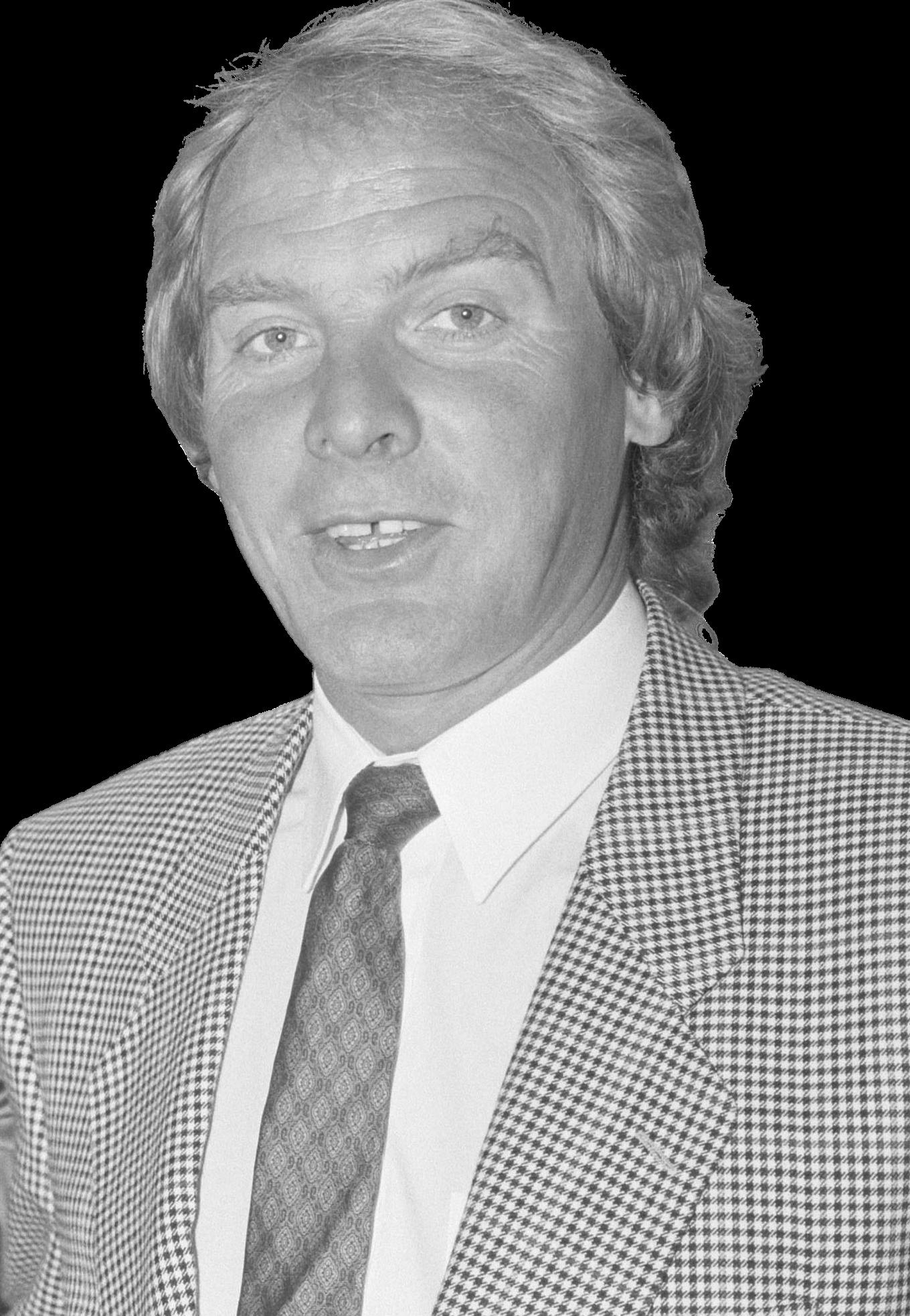
Ehangu Gorwelion y Sîn Roc Gymraeg
Fflur James Cyfrannwr
Mae cynllun ‘Gorwelion’, neu Horizons wedi hen-wneud ei farc ar y Sîn Roc Gymraeg, ers dros 10 mlynedd erbyn hyn gan gefnogi dros 450 o artistiaid gwreiddiol o Gymru. Cynllun gan BBC Cymru mewn partneriaeth â Chyngor Celfyddydau Cymru i ariannu newydd-ddyfodiaid ar y sîn yw’r cynllun, er mwyn ‘datblygu cerddoriaeth gyfoes annibynnol, newydd yng Nghymru’. Eleni, mae’r cynllun wedi dyfarnu 32 o artistiaid a labeli recordio annibynnol o Gymru, gan rannu cronfa gwerth £60,000 rhwng yr artistiaid i gyd. Mae’r 32 artist yn hannu o bob cwr o Gymru ac yn ymgorffori pob math o genres cerddorol- o indie i werin, i electronig i hip hop. Hanfod y cynllun hwn yw ‘buddsoddi mewn doniau cerddorol gwreiddiol’ drwy eu hariannu er mwyn ffynnu, datblygu a thyfu o fewn y Sîn Roc yma yng Nghymru.
Mae’r artistiaid sydd wedi manteisio ar gronfa Gorwelion y gorffennol yn cynnwys Buddug, LEMFRECK ac Adwaith. Dyma ddangos felly beth yw ffrwyth llafur y cynllun, gydag enwau mor nodedig yn rhan o alumni Gorwelion.
Mae’r artistiaid sydd wedi eu dyfarnu’n llwyddiannus yn enw’r cynllun eleni yn cynnwys Tai Haf Heb Drigolyn, Betsan, Dafydd Owain a Martha Elen i enwi ond ychydig. Dyma ond llond dwrn o’r 32 artist Cymraeg fydd yn cael eu grymuso i ffynnu gyda chefnogaeth ariannol Gorwelion. Bydd yr artistiaid amrywiol yn rhoi arian y gronfa ar waith mewn ffyrdd amrywiol hefyd- o gost cyfarpar, i recordio ac i gyfrannu at gostiau teithio.
Dywedodd Bethan Elfyn, Uwch Gynhyrchydd Gorwelion yn BBC Cymru ei bod hi’n fraint gallu cefnogi talent newydd sy’n ‘torri drwodd o bob cwr o Gymru’ drwy gynnig cymorth ariannol i ‘leisiau newydd ac ifan ffres’.
Dywedodd MORN, band o Sir Fynwy, sydd wedi derbyn y cymorth ariannol eleni, nad yw hi’n hawdd ar bobl ifanc sydd eisiau gwneud eu marc
ar y Sîn Roc i gael eu gweld na’u clywed. Yn ôl y band ôl-pync, mae ‘na rwystrau lu i’r rhai hynny sydd eisiau ‘dilyn eu breuddwydion’ ym myd y celfyddydau yma yng Nghymru, ac felly mae’r cynllun hwn yn garreg-lamu berffaith iddynt.
Mae’n deg dweud felly, ei bod hi’n don cyffrous yn hanes llanw’r Sîn Roc Gymraeg, gyda’r sîn yn fwy amrywiol, iachus a byrlymus nag y buodd erioed. Mae gorwelion artistiaid, bandiau a labeli Cymru felly, yn ddiogel.
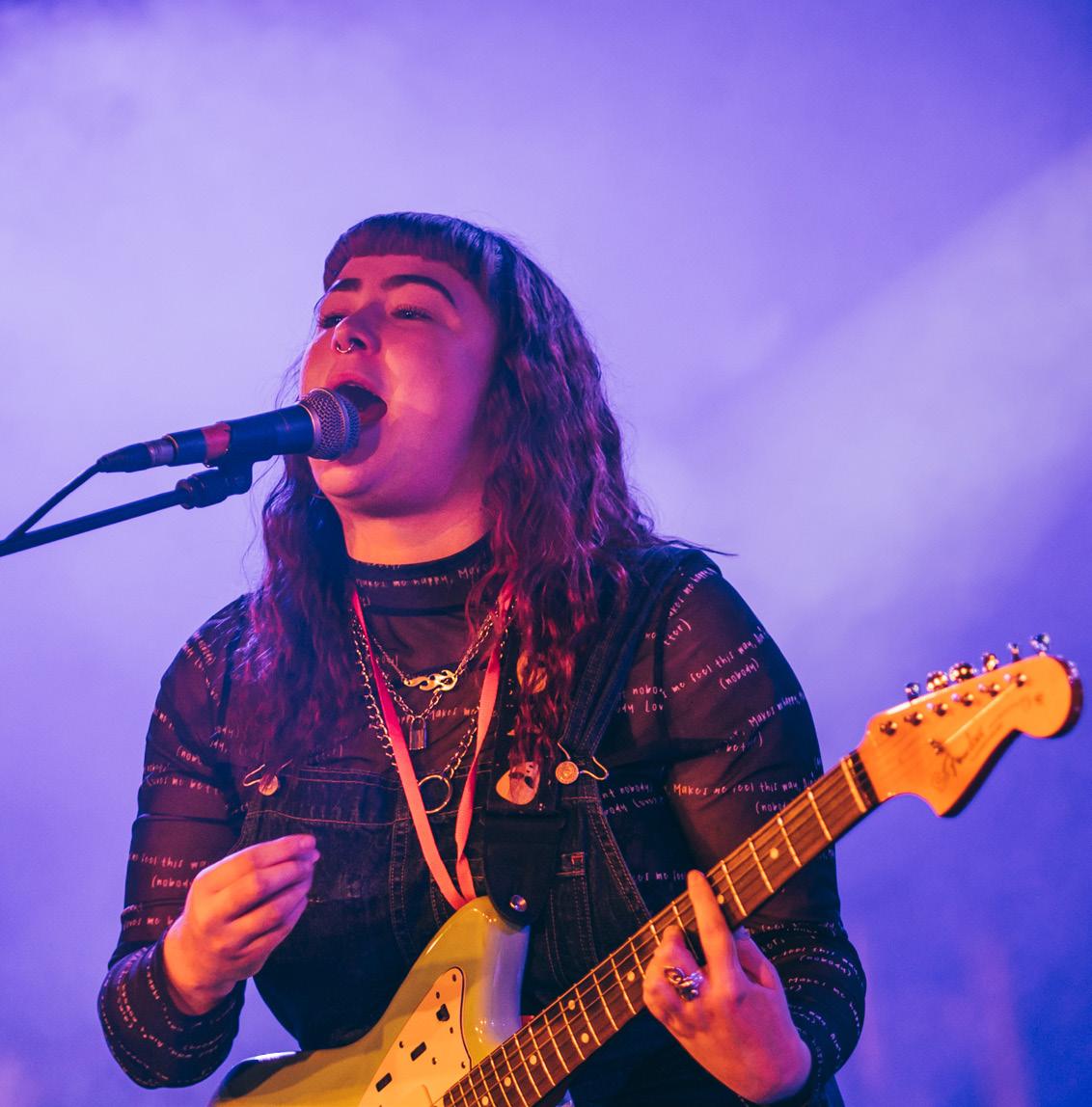
Tour de France yn Dod i Gymru am y Tro Cyntaf Erioed!
Gwenllian Mason Cyfrannwr
Cyhoeddwyd ychydig wythnosau yn ôl gan drefnwyr un o gystadlaethau beicio mwyaf adnabyddus y byd, y bydd rhan o lwybr ras Tour de France 2027 yn teithio drwy Gymru am y tro cyntaf erioed. Ar y 4ydd o Orffennaf, bydd y trydydd Cymal - y cymal olaf, yn dechrau. Yn teithio o Gastell Powis (Y Trallwng) i Gaerdydd, a dilyn llwybr trwy ganolbarth Cymru, gan gynnwys ardaloedd fel Llandrindod, Llanelwedd, Aberhonddu, Merthyr Tydfil a Chaerffili. Dyma foment hanesyddol i’n gwlad, ac yn bendant yn foment i’w drysori.
Yn ôl Wales.com, “Dyma fydd y digwyddiad chwaraeon mwyaf erioed i’w wylio am ddim a gynhelir yn y DU”, gan roi cyfle gwych i’r economi, busnesau lleol a thwristiaeth. Bydd hefyd yn gyfle i arddangos rhai o’n tirluniau mwyaf trawiadol, ynghyd â diwylliannau’r wlad a’r iaith, ac yn ffordd o ymestyn gorwelion beicio Cymru i gynulleidfa eang.
Nid mewn person yn unig fydd modd gwylio’r Tour de France, mae biliynau o gefnogwyr o dros 100 o wledydd gwahanol am fod yn ei ddilyn ar y teledu. Bydd Cymru felly a’r lwyfan byd-eang. Un o arwyr chwaraeon Cymru a’r DU, ydy Geraint Thomas, OBE, y Cymro cyntaf i ennill y gystadleuaeth nôl yn 2018. Mae ef eisoes wedi cystadlu mewn 4 gemau Olympaidd, ac ennill dwy fedal aur, ac wedi ennill 4 medal aur a 2 arian yng nghystadleuaeth pencampwriaethau’r byd dros y blynyddoedd. Mae ei angerdd, ei waith caled a’i falchder tuag at gynrychioli Cymru yn golygu ei fod yn gwbl haeddiannol i gael bod yn ‘Lysgennad beicio Cymru’ ar gyfer y gystadleuaeth flwyddyn nesaf. Dywedodd Thomas, “Alla i ddim aros i chwarae fy rhan yn croesawu’r Tour, ysbrydoli beicwyr hen ac ifanc, a helpu i wneud hyn yn foment na fydd Cymru byth yn ei anghofio”. Mi fydd yn gweithio’n agos gyda chorff ‘Croeso Cymru’, gyda’r bwriad o hyrwyddo’r wlad, ac nid anodd fydd hyn chwaith yn ôl Thomas a fynegodd fod holl “ffyrdd a dringfeydd” sy’n amgylchu mynyddoedd Cymru, “wedi’u gwneud ar gyfer beicio”.
Eluned Morgan gyhoeddodd fanylion y daith yng nghwmni Geraint Thomas, gan gyfeirio at y digwyddiad fel “dathliad a chyfle i ni arddangos ein cenedl”, ac yn ffyddiog y bydd yn llwyddo i ysbrydoli’r genhedlaeth nesaf.
Os ydych chi’n beicio’ch hun, gwylio rasys seiclo ar y teledu neu mewn person, neu heb ddim diddordeb o gwbl yn y gamp, dyma’n bendant gystadleuaeth fydd yn dwyn eich diddordeb chi, a phawb arall yng Nghymru. Ewch i gefnogi a gwneud y mwyaf o’r cyfle euraidd hwn, ac efallai mai chi fydd yn gwisgo crys Melyn mewn ychydig o flynyddoedd i ddod!
Image, Paul Hudson, via Wikimedia
Cyn-fyfyriwr Prifysgol Caerdydd yn Codi Proffil y Gymraeg ar TikTok
DElen Morlais Williams Golygydd
Taf-Od
ros y blynyddoedd diwethaf, mae Tiktok wedi prysur droi o fod yn blatfform llawn dawnsfeydd a lip-syncs i fod yn safle digidol lle mae ieithoedd lleiafrifol yn ffynnu. Gyda phobl ifanc yn treulio cyfran sylweddol o’u hamser ar gyfryngau cymdeithasol, mae ymchwil diweddar yn dangos bod presenoldeb y Gymraeg ar blatfformau fel Tiktok yn hollbwysig i dwf yr iaith ymhlith pobl ifanc.
Mae’r Gymraeg bellach yn cael ei ddefnyddio, ei ddysgu, a’i hyrwyddo ar Tiktok gyda’r hashnodau #Cymraeg â 26.3 mil o bostiadau a #Welshtiktok â 139.5 mil o bostiadau yn dangos twf y gymuned Gymraeg arni. Un o’r rhai sy’n arwain y twf yma yw Alys-Mai, cyn-fyfyriwr Prifysgol Caerdydd. Yn wreiddiol o Rydaman, mae Alys, sydd â bron 5,000 o ddilynwyr ar Tiktok, wedi cyfrannu at wneud y Gymraeg yn fwy gweledol ar yr ap. “Ges i ysbrydoliaeth organig o influencers Saesneg ar Tiktok ond wedyn ‘nath e ddod yn naturiol i fi neud e yn Gymraeg. Byse fe ddim yn neud synnwyr i fi neud e yn Saesneg achos fi’n siarad Cymraeg yn rhugl bob dydd” meddai. Ychwanegodd ei bod hi wedi datblygu ei chynnwys i gynnwys mwy o Gymraeg gan fod pobl yn mwynhau’r cynnwys hwnnw. Gyda mwy yn troi at greu cynnwys yn y Gymraeg, mae Alys yn teimlo bod twf sylweddol wedi bod o siaradwyr a dysgwyr Cymraeg ar-lein dros y blynyddoedd diwethaf.
“Fi’n credu bod y bobl sydd yn ddigon hyderus i rannu eu siwrne nhw ar Tiktok wedi ysbrydoli pobl arall i neud e, a ma’ fe jyst wedi datblygu a datblygu a datblygu. Mae bron â bod fel trend” meddai. Mae hi’n gobeithio bod y defnydd o’r Gymraeg ar-lein yn annog pobl i ddysgu’r iaith neu i’w ddefnyddio yn amlach yn eu bywyd bob dydd. Yn ogystal ag annog y defnydd o’r Gymraeg, yn ôl Alys mae cynnwys Cymraeg ar Tiktok yn newid agwedd pobl tu hwnt i Gymru am yr iaith Gymraeg. “Fi di cael rhywun yn commentio ar Tiktok fi o’r Almaen a dweud wow pa iaith yw hwn? Felly, ma’ fe yn dangos i bobl tu hwnt i Gymru bod iaith a diwylliant gyda ni” meddai. Er hyn, mae hi dal yn her i gynnwys Cymraeg gyrraedd cynulleidfaoedd mawr gyda rhai crewyr cynnwys yn penderfynu peidio defnyddio’r iaith ar eu sianeli. Soniodd Alys “Nawr ac yn y man, fi’n neud Tiktoks Saesneg achos allen i ddadle mai dyna sydd eisiau neud i gyrraedd cynulleidfa ehangach. Ond fi’n gobeithio, os mae rhywun am ddilyn fi taw cynnwys Cymraeg ma nhw’n gweld y mwyaf ohono a bo’ fi’n gysylltiedig gyda chreu cynnwys Cymraeg.”
Mae Tiktok felly wedi datblygu bellach fel arf bwerus i’r Gymraeg, platfform lle mae pobl ifanc yn defnyddio’r iaith yn naturiol ac yn hyderus, o bob safon. Mae crewyr cynnwys fel Alys-Mai yn profi bod yr iaith yn perthyn i’r byd digidol ac y gall cynnwys Cymraeg chwarae rhan bwysig yn nyfodol yr iaith Gymraeg.

Llais Cenedl ar y Llwyfan
AErin Davies
Golygydd Taf-Od
r adeg pan fo’r celfyddydau yng Nghymru yn wynebu heriau sylweddol, o bwysau ariannol i ansicrwydd ynghylch y dyfodol, mae lansiad cynhyrchiad cyntaf Theatr Genedlaethol Cymru yn teimlo’n arbennig o arwyddocaol. Ar ddechrau 2025, cymerodd Michael Sheen yr awenau fel cyfarwyddwr creadigol y cwmni, gan nodi pennod newydd i’r sefydliad. Dan ei arweiniad, mae cynhyrchiad cyntaf y Theatr Genedlaethol, Our Town, yn ddatganiad artistig clir ac yn arwydd o obaith i sector greadigol sy’n wynebu pwysau parhaus.
Pennod newydd i Theatr Genedlaethol Cymru
Bydd Our Town, drama glasurol gan Thornton Wilder sydd wedi ennill Gwobr Pulitzer, yn cael ei llwyfannu am y tro cyntaf erioed gan gwmni llawn o actorion a thîm
creadigol o Gymru. Mae’r penderfyniad hwn yn tanlinellu ymrwymiad y Theatr Genedlaethol i adrodd straeon cyffredinol drwy lens Gymreig, gan eu gwneud yn berthnasol i gynulleidfaoedd ar draws y wlad.
Wrth siarad am y cynhyrchiad, dywedodd Michael Sheen: “Mae hwn yn gyfle anhygoel i gyflwyno dehongliad Cymreig o’r clasur sy’n teithio ein cenedl ac yn mynd â’n llais i Lundain, gan roi llwyfan i dalent Cymru berfformio.”
Bydd y cynhyrchiad yn teithio i sawl lleoliad ledled Cymru, gan gychwyn yn Abertawe, cyn symud i ymlaen i Venue Cymru yn Llandudno a Theatr Clwyd yn yr Wyddgrug ddechrau fis Chwefror, cyn gorffen ei daith yn Rose Theatr yn ne-orllewin Llundain.
Yn ogystal â Our Town, mae’r cwmni hefyd wedi cyhoeddi ail gynhyrchiad fel rhan o’r weledigaeth greadigol newydd. Owain & Henry yw drama newydd gan Gary Owen sy’n dychwelyd at wrthryfel Owain Glyndŵr yn y 15fed ganrif, gan archwilio un o straeon mwyaf arwyddocaol Cymru. Bydd Michael Sheen yn portreadu Owain Glyndŵr, Tywysog olaf Cymru, mewn gwrthdaro
dramatig â’r Brenin Harri IV. Mae’r cynhyrchiad wedi cael ei greu ar y cyd â Chanolfan Mileniwm Cymru, a bydd yn cael ei llwyfannu yn Theatr Donald Gordon ym mis Tachwedd 2026, un o’r llwyfannau mwyaf yn Ewrop. Mae’r cynhyrchiad yn tanlinellu’r uchelgais i greu Theatr Gymreig o raddfa fawr sy’n adrodd straeon o hanes cenedla ethol.
Wrth sôn am y cynhyrchiad dywedodd Sheen: “Bydd chwarae rhan y tywysog eiconig o Gymru ar un o lwyfannau mwyaf Ewrop, yn ein prifddinas, yn eiliad hollbwysig i ni fel pobl ac fel diwylliant rwy’n gobeithio. Dyma hanfod y Theatr Genedlaethol Cymru.”
Image, Micheal Sheen, Gage Skidmore Wikimedia
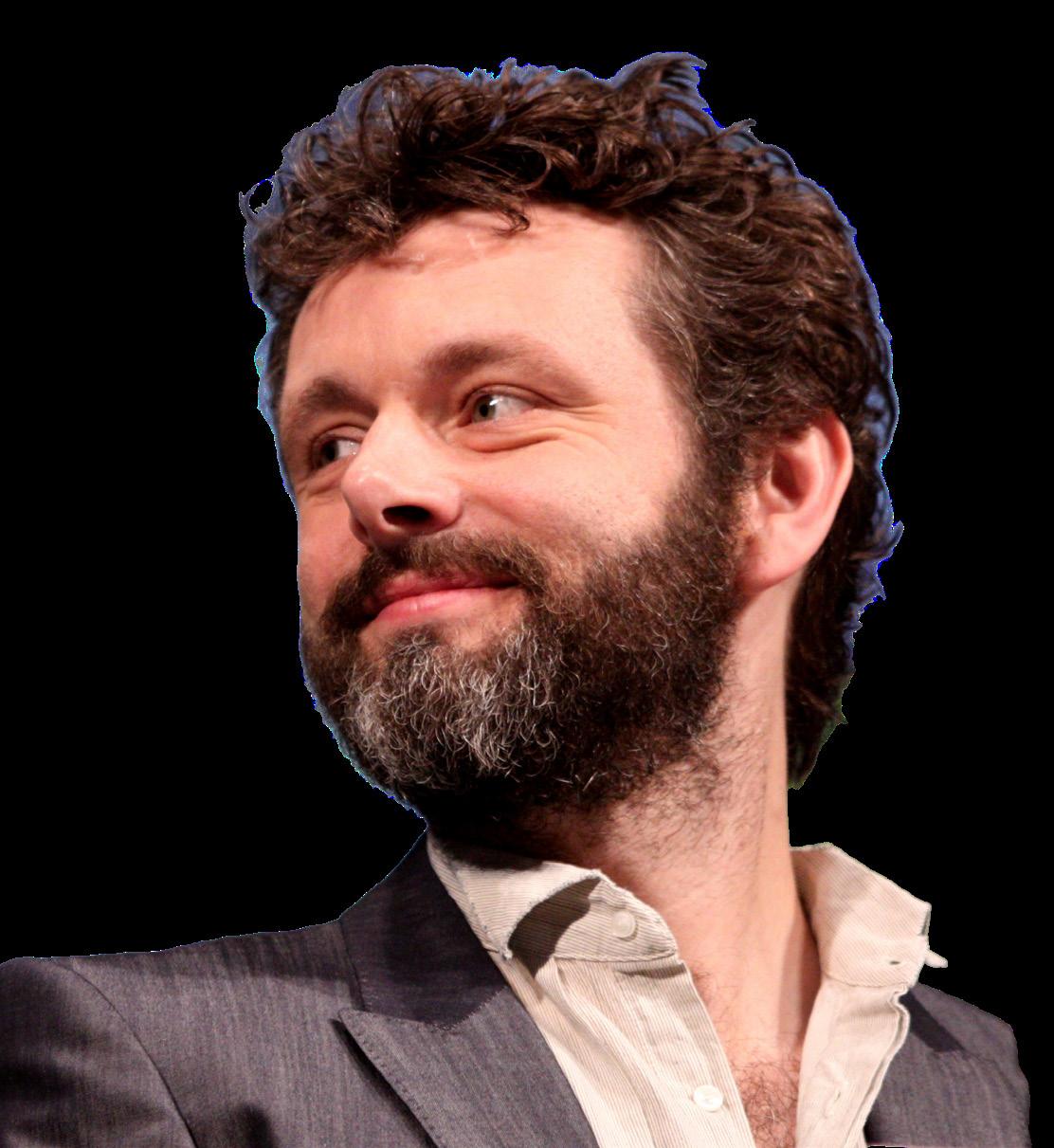
DAISYDIXON
Hi, Daisy, would you like to tell us a little bit about yourself? How you got into philosophy and a little bit about your background. I don’t know how far back you want me to go, but I started more in like a fine art background. I did my undergrad in fine art with a minor in philosophy. I was most of the time in the studio making artworks and then doing a little bit of philosophy. Then I just thought about doing post-grad, and I didn’t really know what that meant. I didn’t have any sense of what academia looked like as a career. But I knew I wanted to keep doing more of what I’ve been doing, and then ended up doing a master’s in philosophy and I went to Cambridge for that. It’s kind of been, what I describe it as like falling up the stairs and I never had any intention to be an academic as I said, I didn’t really know what that even was. But the Master’s was under a year, so I just found myself applying for a PhD. I managed to get funding for that, which is so difficult anyway, but especially now, so I feel like I was lucky in that respect. Then I just stayed on doing philosophy. I stayed in Cambridge again for a post-doc. By this point I was kind of doing philosophy of language, but I was moving into aesthetics and kind of made sense because of my art background, so it was nice to bring the two together. And then by some miracle, after being on a horrible job market for a while—I don’t know, possibly up to a hundred rejections—Cardiff gave me this job and I started here in 2022. So, yeah, I’m very happy to be here as long as they want to keep me.
I have heard that you have written a book. Yes, I’ve got the proof. Right there. The red book there is a sort of pretend proof, it’s like a pretend book for now. I’ve just written this book called Depraved, the Story of Dangerous Art, and it’s kind of a culmination of fifteen years’ worth of my career, I guess. It’s an art history, but it’s written by a philosopher. It starts in pre-history artworks, looking at how artworks can be immoral and how they can be dangerous to society and things like that. I don’t think I can talk a huge amount about it. It’s coming out in June and I’ll have to have you back in and talk about the book then.
ON GROK AS A VEHICLE FOR SEXIST ABUSE
kitchen, women can’t be philosophers. I think that was around 2021. And yeah, and then before this whole recent Grok stuff, I’d had different swathes of misogynistic abuse.
like me now. That’s when I started getting rape threats and death threats and that was that. Then I started to think, okay, I can’t laugh this off any more, like, this is getting extreme.
Could you talk about your previous experiences with social media and if you have encountered large volumes of hate prior to more recently? Yeah, I got what was then known as Twitter during my art degree. Our art professors told us we should get it as a way to get our art out there, but I didn’t actually start using it until the pandemic. So, around 2021 is when I started tweeting. And even in the early days, this was obviously before—I can’t remember what year Elon Musk bought it—but it was before Elon Musk came along and even then there was some bizarre kind of sexism that I had, you know, this was my first foray into how misogyny exists in online spaces. And initially, the first kind of barrage of hate I remember was when I commented on my dating experiences and I was surprised as this was offline, but using dating apps, how a lot of men thought my PhD was fake and they didn’t think it was real or they’d get very defensive. They’d make assumptions about my class and background and stuff like that because I had a PhD. So, I just made a comment about that on X and I just got the most insane wave of hate from men telling me I should be the classic stereotype, like I should be in the
“Men on X seemed to get extremely upset about me just existing because of what I do for a living. It’s the idea of women being philosophers. They say it’s an oxymoron, like their brains implode because in their eyes, it’s a contradictory thing.
It seems to be that philosophy, specifically, is something that a lot of people still think is something that old, old white men with beards do. I think the way I dealt with it is that, if anything, in this cynical way, it built my following.
It was the way I responded, I would often troll back. I would engage and sometimes it would be just jokey trolling back, which would just make them more angry. And that was sort of energising and I enjoyed seeing them humiliate themselves and things like that. But quickly, things turned more sinister, like it was about a year ago—over a year ago. I’d just post a meme related to the fact that philosophers can look
But I carried on tweeting, this was after Elon Musk as well. Mainly because X was still a good network for me. You know, if you don’t come from academic or literary worlds, it did open up. The only reason I’m publishing that book is because I met popular historians on there, which I would never have met inside the university spaces. I’ve made some lovely friends as well on X, so that’s why I’ve stayed up until recently. Well, that’s why I’m still on there at the moment.
For anyone who’s unsure on the chronology of what’s been going on—as much as you’re willing to share or talk about—could you give us a bit of a synopsis of what you’ve been experiencing recently with Grok? It may have started at the very end of December 2025. I started noticing it in very early January. I was aware that Grok was something on X and I was aware that people could use it to generate images and videos. But it was only in early January that I started noticing lots of men were in my replies to other posts, other random things I was saying—I tend to tweet like several times a day. And completely unrelated users were asking Grok to put me in a bikini, but Grok was taking my profile picture, so it wasn’t even a picture I posted. Sometimes I have a lot of replies and I’m not always able to engage all the time with all of them.
These were just ones I started noticing. I then posted a gym progress picture where I’m fully clothed and I’m showing off my biceps because it was in response to another tweet about women showing off biceps, so I did. And that’s when I really saw an escalation of Grok putting her in a bikini, lingerie, and then they got more and more specific. It actually started off with just having Grok put me in clown makeup and changing the colour of my hair, which still felt weird.
“ But not quite as violating as starting to be digitally undressed, and they also altered parts of my body.
One person was asking to decrease my biceps, but then others were increasing other parts of me in this very sexualised way. But this is the thing. There are so many, because it happens in replies to replies to replies. They were sort of a Russian doll situation where there were so many and—I haven’t actually gone through them. I did see one recently where a user asked to make me pregnant with their child, put a wedding ring on my finger, delete my body count—you know, so much you can say about that—and revoke my licence as well. So, the prompts were getting—even just the bikini ones were bad enough—but they got very elaborate and I know some women went through even worse, like extremely violent ones as well.
Are the people who send them usually followers or are they just random strangers?
Seems to be a combination. A lot of men are doing it. There was one that said some violent language. It’s not nice. One said “Grok put her in a rape factory”. He, I believe, follows me. A lot of the others were following me. So, it’s this weird sadomasochistic situation going on. But a lot of them were just random people. I think it’s because I’ve got a relatively big following—not huge, but enough to get other people who don’t follow me to see my tweets. Some of them might have been bots as well, but a lot of them seem to be real people.
How has this changed your relationship with AI? Obviously, it has been a thing, but imaging AI specifically becoming so accessible has changed people’s interaction with it. Has it changed your opinion in any way?
I think I’ve been aware for several years about the tireless campaigning that many people, especially women, have been doing for image-based abuse more generally. If I’m totally honest, for all the colleagues I have here and at Exeter and other places who work on AI, I have tried to avoid it. In my day-to-day life, I don’t use it. I might use it if it just comes up on Google and gives you something. But I’ve never used it to write anything or talk to a chatbot or anything like that.
I’ve tried to avoid it. Even in my research. AI art and stuff like that—I just wasn’t interested. Not that it wasn’t important. I just feel like the universe dropped me into this. I had to learn about AI very quickly. And I do think the difference with Grok is that whilst women and children have been subjected to this kind of abusive AI generation on other platforms, I think Grok was slightly different because of its highly accessible nature and the fact that it’s public.
The strange aspect of this was that—not that it’s okay to generate these images for private use, because that is also illegal now—but there was an added power move that you’d see the prompt and then the image would appear within minutes underneath it. So, you’ll see that’s what I’ve described as the kind of effects it has on the victims. It alienates you from your own body, because whilst you know it’s not you, you’re not just seeing the prompt and then thinking “Oh well, an image has been generated of me. That’s not nice”, but you’re then also seeing the image. And that has this horrid effect where you experience this kind of destabilised sense of self because the inputs for these images are your photographs. They have this transparency. The photographs have a privileged, direct visual contact with the thing in the photograph.
“
There’s a heightened realism about photographs, so even though you know it’s not you, you’re still seeing yourself in a non-consensual situation, which I think is why people feel like there is a violation, there is an assault. I think that’s what AI is doing. Because of its realism, it’s able to do that.
Do you feel like you have to change how you post on things you might normally interact with a lot?
Yeah, sadly. I started getting a lot of harassment from real people, so not just bots, not random people. But there was a user on X with a huge following—and he’s known for being misogynistic, although he says he’s not a misogynist—who got really obsessed and started taking images from my Instagram and there was one or two where I had willingly posted a photo of myself in a bikini on
holiday and he started harassing me. He kept sending that image back to me about five times a day for over a week, saying that I was a massive hypocrite because he’d seen me on TV talking about this. And he called me a hypocrite and that my existence in public, if I show skin, as well as posting images of me in a bikini, amounts to a sexual assault on men.
This goes back to the original question about how I used to engage with stuff like that. When they say women can’t be philosophers, I feel like I can respond playfully back to that because it’s just an easier thing to get your head around. And it’s also something we grew up with. I never grew up thinking a woman could be a philosopher. But now, this discourse has got so absurd that philosophically, it’s almost like philosophers are the worst people to engage with because we assume other people are thinking logically. We’re presented with completely illogical, fallacious statements and you can’t respond—it’s a completely bad-faith debate and you can’t respond. So, not only didn’t I feel like I could engage with him on any level, but because he’s got such a big following, loads of other people started mining my online presence for other photographs that I’d posted. So, my initial response was sadly one of self-policing. I deleted a photo on my Instagram from a really cute solo Greece holiday of me in a bikini. I deleted it and I was thinking that’s really sad because I started to get frightened. But the government eventually moved quite quickly, and all the other amazing campaigners and I felt like we weren’t alone.
“ Now I just feel pure rage. At first I wanted to hide myself—I still feel a bit unsafe—but I also just feel pure rage.
I’m definitely not going to stop posting myself online, but I think a lot of victims did feel like that, and understandably.
How do you feel about the way that the government and police have responded to this issue? That’s the controversy around all of this. A lot of campaigners—like I’m aware of one such project by Glamour—have been working on imagebased abuse against women for years—because it does disproportionately affect women and girls. I forget the stages in legislation, but a bill was passed back in July about creation of these images being unlawful, but it wasn’t actually enforced as legislation. A lot of campaigners—quite rightly—said that the victory felt bittersweet because the government had been dragging its heels. One response I had to that was that it was already illegal to share these images. And yet that’s what was happening. A lot of people asked why we’re focusing on Grok, because this has been happening for years. It might be because of the public sharing aspects. And because while it was already illegal, there was a lot of vagueness around how that legislation would be enforced. I was really pleased to see the UK government get Ofcom involved and give them the right to use their full powers. I think the threat to ban X was an extreme thing to do, but I think it was right that it was an option on the table. It would have been problematic if they had done that, but money talks. Fines first would make more sense, as 18 million—or whatever it was—is an amount that even someone like Elon Musk would feel. I was generally pleased with how quickly they moved,
but in the grand scheme of things, this is part of Labour’s ongoing crackdown—or at least strategy—against violence against women and girls. I think they were looking at other chatbots as well. The media storm was around Grok, but I don’t think that was entirely Grok that was being focused on.
Do you think this experience has changed how you think about aesthetics injustice in language and do you think AI is something we should be considering more in these fields?
As I said, I’ve avoided AI in my research, and now I feel like there has been a weird silver lining in the fact I learnt about image-based abuse by being a victim of it rather than doing the philosophy first and then looking. Aesthetic domination is a concept I’ve been using to describe what this has felt like. It stems from the fact that many men for thousands of years have felt a natural entitlement to women and girls’ bodies, as well as that women and girls are inherently sexualised or maternalised—-think the Madonna-whore complex. All those patriarchal concepts are seen in artworks, especially in Greek sculptures of women, where women’s bodies were available for male viewers but they had to be shown as if they were ashamed of their nudity. We see sexual objectification from classical sculpture all the way to Renaissance nudes, where women are always shown as white, young, soft-skinned, and in passive and docile situations. This led to an aesthetic discourse where seeing women represented in that objectified, docile way entrenches women’s inferior status in society. So, this AI image view is the logical endpoint of this aesthetic domination where women’s bodies are not ours. Many male users feel this natural entitlement to women and girls’ bodies; they know that we’re not consenting, but they’re enjoying the fact that they’re violating it. I do think that is the case, but I also think there are a lot of men who do not understand consent. A woman refusing them is an act of agency and autonomy. But if they don’t think that women generally have that, then it doesn’t make sense to them. This comes into philosophy of language as well. Feminist speech act theory has been doing this since the ’90s with Ray Langton’s work on women’s refusal of sexual contact. It’s not that no gets taken as a yes. It can also sometimes be the case that the refusal doesn’t even make sense— it’s not even registered as a no. With Grok and everything, we’ve reached this dystopian, futurist point of more than just historic aesthetic domination, where it’s not just our physical bodies being represented without agency, but our digital selves too. Our very digital existence is under attack. There’s so much more to say about it. I need to think about it.
Thank you very much.
Interview by, Olivia Nilson, Bethan Jones, Arielle Melamed, Ruaidhrí Gillen Lynch
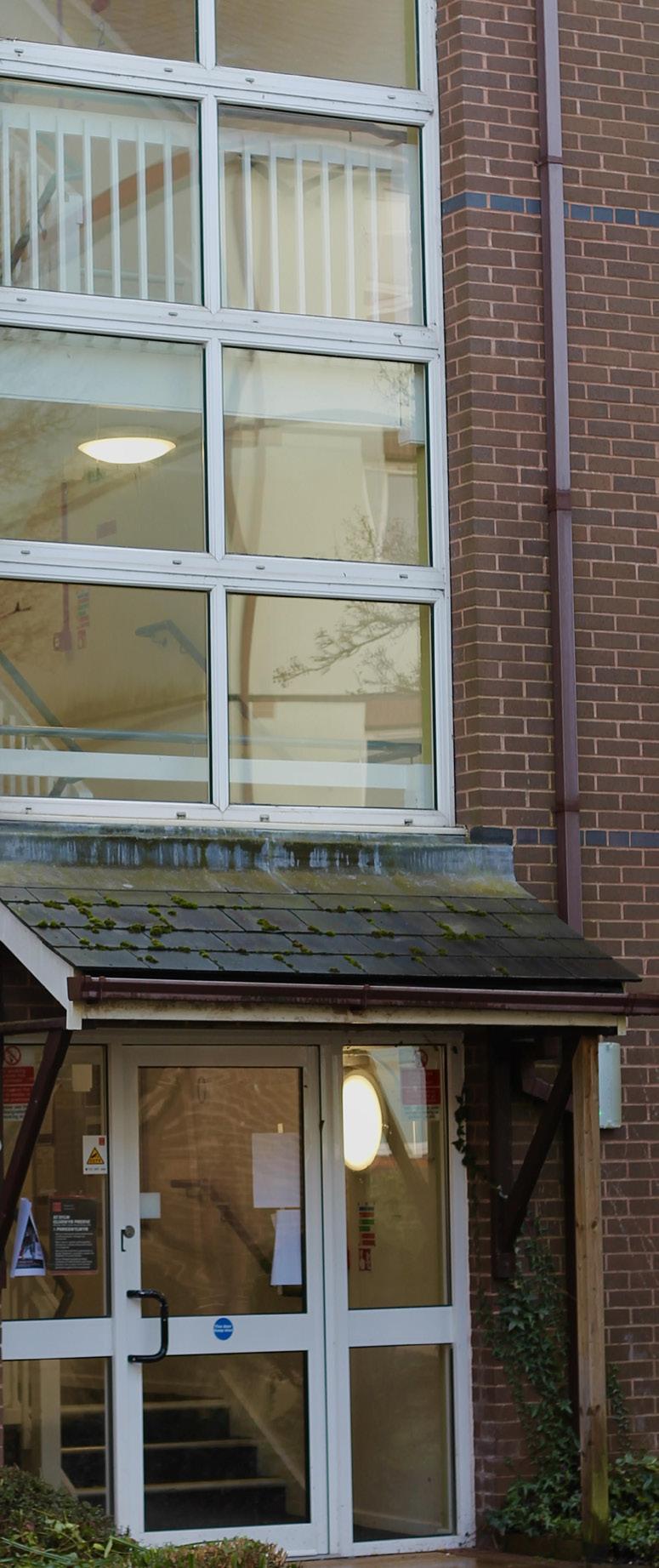
‘Senghetto’ or Cultural Court?
Helen Turnbull Opinion Editor
At the end of last semester, Cardiff Students’ Union Instagram account posted that for the 2026/27 academic year Senghennydd Court’s previously scattered Welshspeaking flats will be placed into one block. Despite this collation in Senghennydd Court the option to have a Welsh flat in Talybont North and Clodien House will continue. This revision of the accommodation process includes mainstreaming Welsh language options under ‘Cymuned Gymraeg’, translating to ‘Welsh Language Community’. However, will this create a cultural hub for Welsh-domiciled students or a segregated ghetto?
With 32% of students at Cardiff University who are Welsh-domiciled, it is important to support and recognise those Welsh-speakers. The university prides itself as ‘a Welsh institution with a global perspective, and the Welsh language is woven into the fabric of our institution’. By enacting this movement in Senghennydd court, this vision could be further realised. This aim to nurture Welsh-speakers at university could also be beneficial for sustaining a vulnerable language. Whilst it’s estimated that 828,600 people speak Welsh in 2025, that only accounts for 26.9% of
the population in Wales. Providing a space for students to continue practicing their home language can only help the fragility of the Welsh language.
“Creating this space would empower a Welsh identity at Cardiff University”
Plus, this reform of Senghennydd Court may help Welsh students to create communities and build friendships. Comparing this accommodation initiative for 2026/27 with other universities, Aberystwyth University’s Neuadd Pantycelyn has been celebrated as a vibrant home for Welsh speakers. Housing the Union of Aberystwyth’s Welsh Students, Neuadd Pantycelyn even received a mention in the UK Houses of Parliament recognising the ‘role Neuadd Pantycelyn Hall has played in promoting the Welsh language.’
As a non-Welsh speaker myself, I reached out to Welsh-speakers about the proposal. One noted that ‘whilst there are obvious efforts to support the Welsh language, like bilingual signs and student societies like Gymdeithas Gymraeg, English still dominates.’ This person further commented that collating Welsh speakers into one block would ‘be beneficial for first year students to feel more at home.’
However, already nicknamed ‘Senghetto’ by some students, the university’s move to combine Welsh-speaking flats into one block poses the danger of creating a Welsh clique. In my opinion going to university is a time to meet people from all backgrounds and cultures. By segregating Welsh-speakers, Seng-
hennydd reforms have the potential to hinder social development for Welsh students at Cardiff University. Not only do these reforms have the potential to negatively impact residents of Senghennydd Court, but external students may also label this accommodation as ‘Welsh-only’, creating a divide rather than a hub. What started as an initiative of community-building could prove the nickname ‘Senghetto’ as prophetic. Whilst I think these dangers are plausible, I feel that the possibility of a negative response is more unlikely than the benefits. One Welsh-speaker mentioned that they weren’t always aware of other Welsh-speaking students, so creating this space would empower a Welsh identity at Cardiff University.
“These reforms will be positive for first year Welsh students”
Crucially, the option living in a Welshspeaking block is just that: optional. No student is forced into linguistic isolation, and those who are looking for fellow Welsh-speakers can feel empowered. It’s hard to determine the fate of these reforms until they are implemented in September, but I feel confident and hopeful that these reforms will be positive for first year Welsh students.
Image: Helen Turnbull.
Are Parasocial Fans Forcing Celebrities to Come Out?
lar relationship of all time on the entire website. Overall, it seems that these piecesnity that they represent. However, there is a concerning side to fan interactions, which stems from the rise of parasocial relationships. Fans have formed connections with famouslems in the future due to over-sexualisation.
Image: Heated Rivalry (2025), IMDB.

Barn 19
Should the UK Create its Own Version of ICE?
Ryan Greenhall Contributor
Every so often, a new story lands with such force that it knocks the breath out of you. Over the past week, several reports from the United States have done exactly that. The American immigration enforcement system, ICE, is so dehumanising, and so casually violent that it becomes impossible to imagine why anyone would suggest the UK should emulate it. Yet as Britain debates its own approach to immigration, where according to news outlets, Reform and Conservative parties are beginning to pledge a similar model (Bloch, 2025), the American system is being floated as a potential blueprint. It should not be. The American model stands as a warning, not an example.
“Americans are being wrongfully detained due to database errors, mistaken identities, and racial profiling”
It is embarrassing, frankly, that this is even a point of negotiation in a country that prides itself on fairness and justice. One of the most devastating accounts I came across this morning reported that an intensive care nurse, Alex Pretti, was shot dead by federal immigration agents in Minneapolis . A healthcare worker, someone whose job is literally to preserve life, killed during an enforcement operation. Another report described a mother being deported and separated from her child while breastfeeding. The image alone is almost unbearable, a moment of profound intimacy and vulnerability shattered by state intervention. Cases like these are not “accidents.” They are not unfortunate
one offs. They are the predictable outcomes of a system that has allowed harm to become routine.
“The American experience shows us exactly what happens when enforcement eclipses humanity”
Investigations by multiple news outlets have documented that Americans are being wrongfully detained due to database errors, mistaken identities, and racial profiling. This is disgusting. When citizens can be swept into detention because an algorithm misfires or an officer makes an assumption, the issue is no longer immigration. It becomes a question of civil liberties, of state power, and of how easily rights can be eroded when fear becomes policy. Entire communities now live in fear of raids that can, as we have seen, happen anywhere. Workplaces, homes, hospitals, even outside schools. So, the question becomes unavoidable. Why is harm so normalised today? The United States has become so militarised, so insulated from oversight, and so driven by political theatre that cruelty is no longer an aberration. It is embedded. It is operational. And it is defended. This is not a model the UK should aspire to. It is heartless and cruel, and the public deserves a serious, evidence-based conversation about how to address immigration, not a rushed import of tactics that have already failed elsewhere.
Importing these approaches would simply replicate the failures of a country still struggling to reckon with the consequences of its own policies. We cannot build a system on fear. It will not produce safety, and it never will. The American experience shows us exactly what happens when enforcement eclipses humanity. We should not have to learn that lesson the hard way.
Pantonedeaf
PClub or Pub?
What to do with Wendy Larner’s mansion
Anonymous Contributor
As Cardiff University faces a financial crisis, Vice Chancellor Wendy Larner sits in her lavish home rent-free, making decisions to cut courses and make 138 redundancies. On top of her 290k salary, she watches out the windows of the estimated £1 million property that sits quietly within the gates of Queen Anne’s Square. Cardiff University’s website states their values include creating an ‘inclusive, encouraging and supportive community built on trust’, yet the lack of transparency around this property simply insults this delusion of trust. To the students and staff at the university, it’s a kick in the teeth and I think it is only right that we reclaim the property for the use of the university.
So what should happen to it?
Ideas spring to mind about a possible club or bar. This might be a groovy way to shape up the university’s night life further down the road from the SU, as well as provide a great opportunity to make a profit. But the novelty of this may wear off within months. Students may refuse to abandon their beloved YOLO. A grand Wetherspoons style pub would take pressure away from the Taf and give more space for a Friday night. But with disputes over residential refurbishments, it is not in the university’s best interests to splurge on expensive renovations on a whim. Other ideas, such as study spaces,
libraries, and classrooms, obviously adhere to the academic focus of the university and prioritise the quality of education. With the likes of John Percival in mind, there’s the opportunity for a more updated establishment with a café or dining area to make some sort of profit. However, we already have these spaces and, with the tensions on jobs, the maintenance and keeping of this would be another demanding expense. Could it be turned into accommodation? An upmarket, very central accommodation, possibly targeted toward postgraduate or PhD students. Maybe we should just turn it into a bowling alley. Or, to really throw the ball out the park, we could have a crazy golf course. Maybe the whole place should be transformed into a games den.
Liquidising the property itself will send a message that the university is taking its financial debt seriously. Although £1 million only scratches the surface of the £33.4 million deficit, it offloads the unnecessary and outdated expenses which could be used elsewhere, instead of catering to the plush life of VC Wendy Larner.
The Cardiff University website states: “we work together towards a better future for all. We believe that greatness comes from collaboration and diversity of opinion.” With that in mind, we should vote on what to do with the VC’s mansion.
Image (Right): David Martin Via Wikimedia Commons
The Colour of 2026 is... WHITE?
Samira Abbey Contributor
antone’s decision to name Cloud Dancer, a shade of white, as its Colour of the Year for 2026 has been presented as a response to uncertainty. The colour is framed as calm, imaginative and restorative, described as a “blank slate” that invites renewal in a turbulent world. Yet in a political moment defined by rising nationalism, racialised violence and increasingly hostile immigration regimes, the promise of neutrality feels uneasy. The idea that whiteness can operate as a clean starting point demands closer scrutiny.
The Colour of the Year holds cultural authority precisely because it claims to capture the mood of the moment. Colours do not simply reflect taste; they absorb social meaning, history and power. Treating white as culturally defining is
not a neutral decision, particularly considering its historical associations with purity and order. Neutrality itself is unevenly experienced. What reads as calm or minimal to some can register as exclusionary or dismissive to others. In that sense, the discomfort surrounding Cloud Dancer is not about personal offence, but about symbolism. Much of that symbolism is bound up in Pantone’s emphasis on the “blank slate”. The language gestures towards tabula rasa, the philosophical idea that it is possible to start anew, unmarked by what came before. While appealing, this logic collapses when applied to the colour white. White is not neutral or unmarked. It comes with history attached. Treating it as restorative suggests that moving forward requires erasing the past rather than confronting it. This tension becomes clearer when considering who is able to access the kind of calm Cloud Dancer promises. Writer and pod-
caster Nicole Ocran has noted that the calm this colour promises is only really available to certain people, those who can step back from political anxiety rather than live with it. For many, that kind of distance does not exist. Additionally, the language used to describe Cloud Dancer mirrors a common trend: framing progress as something clean and effortless. It uses a sanitised aesthetic to signal progress, quietly filtering out anything that feels too messy or human. Content creator Gabrielle Minoli argues that this is exactly how generative AI is sold to us—as a frictionless creative miracle that conveniently hides the human labour and environmental impact behind it. At the end of the day, particularly in the current political climate, a shade of white should not have been chosen as Colour of the Year. It reads badly, looks out of step, and feels disconnected from the realities many people
face. In a moment shaped by rising racial tension and hostility towards marginalised communities, framing whiteness as calm and restorative was always going to land uncomfortably. It is difficult not to ask whether this decision would have been made if more people of colour had been involved in the process. That question alone points to a wider failure to properly consider how the public would receive Cloud Dancer. Colour of the Year is not just an aesthetic exercise; it is a cultural statement. In this case, it suggests that insufficient thought was given to context, consequence, and reception. In its pursuit of a restorative calm, Pantone has instead provided a stark reminder: a blank slate is only comforting to those who do not fear being erased from the page.
Gen Z’s Glamorisation Of Smoking
Mischa Denney-Richards Contributor
Smoking has made a cultural resurgence, or at least that’s what the majority of my friends and I tell ourselves. Living in a media savvy society, our mood is decided by what this week’s ‘ins’ and ‘outs’ are, according to Charli XCX. And now, cigarettes have seemingly been ‘in’ longer than the Joni Topshop skinny jean. Wait no, those are making a comeback too.
In an era of wasteful consumerism, smoking has become a trend, an aesthetic. One where people engage in the leisure as a way of being perceived as ‘cool’. No matter how much we deny that this is who we are, and it’s our individual choice, I highly doubt that half of our student finance would be going towards nicotine if Addison Rae didn’t purse her lips to take that drag on the cover of Aquamarine. The very real addiction has been normalised for some, and even glamourised by others.
To understand this, the 90s and early 2000s, in some ways influencers of the time, paved the way for the Gen Z ‘it girls’ of now. A social movement in some cases, the Ladettes fronted a liberating revolution for
women, covered in a cloud of smoke. When men were macho, sexually promiscuous (or whatever that means), chopping pints and chain smoking after work, women were apparently watching in awe, asking why can’t we do that?
These Ladettes, with stereotypically masculine energies, were liberating themselves in a way which kept people talking. This transition of womanhood and what femineity is, was disguised by the statement of smoking as a form of female liberation. Taking something created to be inherently masculine and flipping it on its head.
“Smoking has become an aesthetic thanks to capitalist consumerism”
Parallels between the times have been established, with Skins in the early 2010s, and now with Euphoria The glamourisation of these lifestyles is palpable. Their tears are glitter, Labrinth narrates with the groundbreaking soundtrack providing a sense of disassociation from the pressures of being a young person. And smoking is no exception, being the side ‘not that bad’ habit. I guess compared to cocaine or ecstasy… Go on then, hand me a cigarette, I’m in a pub garden and it’s
above 10 degrees, or it’s -5 degrees and it’s going to warm me up. A trend on TikTok, of course, there are apparently times and situations where taking that drag doesn’t always count. Topping the list we have, that cigarette you smoke with a pint or on a night out. Another solid contender, cigarettes on holiday, apparently, they don’t count. No wonder more people are smoking.
2026 Will Be The Year Of Whimsy
Miriam Southall Head of Opinion
2for a more care free life rather than a career driven life?

of the unhealthy habits which construct the ‘party girl’, brat summer aesthet ics consume the media. And therefore, consume us. Glamourisation in an age of consumerism is striking, and these cigfluencers seduce us down that road. From the YSL 2005 smoking suit exhibition Laurent Smok Charli XCXs’ summer essentials, “a pack of cigs, and a Bic lighter.” Smoking aesthetic thanks to capitalist consumerism, ability for individuality. Influencers our likes dislikes, now, able to dictate our health habits.
Why are we so Obsessed with the Beckhams Drama?
Advait Gangawanwale Contributor
On a Sunday morning, as a young Emily picks up the newspaper in her family home by a busy neighbourhood in suburban London, she is appalled by the horrifying news coming out from Iran, Ukraine, and Palestine. The death toll and increasing violence seems to have badly affected the 20-year-old girl’s mood on a bright weekend.
With a heavy heart, she turns the page of the newspaper hoping to read something less stressful, and her optimistic eyesight falls on the news about the Beckham family’s feud. After a good five minute read, she jogs to her elder brother George’ room who was in the middle of his daily dose of GB News. Seeing David Beckham’s photo, he mutes the video to read what’s happening with his favourite celebrity’s family.
In today’s world, Emily and George are just a mere representation of what the young audience at large prefers in terms of content - celebrity gossips over war and political news. According to Ofcom’s 2025 report, motivations for consuming news among 16-24-year-olds are less driven by a desire to stay informed about national or global affairs, and are instead driven by entertainment, time-passing and personal utility. This helps explain younger audiences’ greater engagement with softer, celebrity-focused news content
compared to traditional political reporting.
Firstly, celebrity news is quick and easy to consume. Audiences can grasp the story within minutes, with little effort or prior knowledge. In contrast, political and war reporting is often complex, constantly evolving, and requires significant background understanding, making it mentally demanding and timeconsuming. This accessibility makes celebrity news far more appealing for audiences seeking immediate and effortless engagement.
“Celebrity stories offer comfort, familiarity, and easy social currency”
A key researcher in media psychology, DC Giles, pointed in his research in 2002 that Parasocial interaction (PSI) is the key psychological mechanism that explains why audiences prefer celebrity news. PSI are relationships that the public establishes with characters in the media.
PSIs create the feeling of a personal relationship with a media figure, even though the interaction is one-sided.
This can apply to actors, musicians, sportspersons and influencers alike. This kind of relationship is not possible when reading news about political and war- related developments. To readers, it can feel like studying through complex structures instead of relating with a
person and their story. There is also this factor about de-stressing after a hectic day or week. “When life is overwhelming, focusing on celebrity gossip can be a way to numb out our feelings of dissatisfaction, unhappiness or stress,” said Britt Frank, LCSW, a psychotherapist and the author of The Science of Stuck as reported by Everyday Health.
“Scrolling through celebrity gossip puts us in a dissociated state where we can take breaks from difficult feelings,” he added.
Moreover, humans have always been wired for gossip. Anthropologists like Robin Dunbar argue that it is our modern version of primate grooming, a way to stay connected, share news and keep social bonds strong. Gossip gives people a common language, sparks conversation and even activates the brain’s pleasure centers.
Today, celebrity gossip plays the same role, letting audiences talk about familiar faces, swap stories, and bond over shared fascination, all while being entertaining and easy to follow.
Ultimately, the preference for celebrity news over political or war reporting reflects something quietly human rather than merely superficial. Celebrity stories offer comfort, familiarity, and easy social currency. There is also a more uneasy appeal: watching powerful figures or famous families unravel can bring a voyeuristic sense of relief, a reminder that wealth and status do not protect anyone from failure or pain.
026 brings yet another new year, filled with the promises of new beginnings, fresh starts, and the prospect of endless adventures. Alongside these New Year’s resolutions comes a tidal wave of new trends. However, rather than a trending audio or TikTok dance, one single word has seemingly captured the interest of content creators and their viewers: “whimsy.”
“It is interpreted as acting delightfully unpredictably”
This word has surged through online culture, with everyone either wanting or describing how to live a life of whimsy. But what does this trending word mean? Whimsy is often used as a more playful version of the term “whimsical,” which means imaginative, light-hearted, and delightful. The word carries additional shades of meaning; for example, it may refer to a quirky charm, something or someone eccentric and magical. Additionally, it can imply a playful imagination with ideas that are more fanciful than realistic. Finally, it is interpreted as acting delightfully unpredictably, guided by impulse and enjoyment rather than a plan. Therefore, if a person is described as living a whimsical life, it means they live in the moment, driven by a creative spark and not controlled by the judgment of others. But why has living a whimsical life become the latest New Year trend? To help figure out this puzzle, we have an interview with content creator IsamariesCorner. She has gathered over 7,000 followers on Instagram with her page and content promoting the idea of living a whimsical life.
What does living a whimsical life mean to you?
To me, living a whimsical life means embracing a child like spirit. Having a curiosity for the world. Playing for fun. Seeing with eyes of possibility.
Why do you feel like the beginning of 2026 has seen a rise in people wanting to live a whimsical life?
I think people are embracing a whimsical life in 2026 because they’re tired of striving for an unattainable level of perfection displayed on social media. People want to reconnect with a sense of childlike joy.
Do you feel the rise speaks about how the younger generation wish
I do think the rise in this trend gives us insight into what the younger generation is feeling. I think many of us are fed up with hustle culture and want to embrace the one life we have to the fullest!
Do you feel everyone should try and add a whimsye to there? If so, why?
I think everyone could benefit from adding a bit of whimsy in their lives! Although that will look different from person to person.”
What does it mean to live a whimsical life?
To me having a whimsical life means embracing a child like spirit!
What do you hope to achieve by spreading whimsey and joy in your contents?
I hope to encourage young women to embrace fun over perfection and performance.
Clearly, from this interview and the number of followers Isa has gained, there is a shared longing to break free from the built-up expectations of perfection on social media. People yearn to return to being carefree and less fixated on the pressures of the world, just like we were as children—unburdened by societal judgment and simply embracing each day with joy and happiness.
“We all need to embrace the idea of whimsy”
As Isa pointed out, whimsy can look different for everyone; it doesn’t have to be all bright colors and art. Ultimately, the idea of living a whimsical life means living for yourself and not anyone else’s timetable. It involves letting go of rigid planning and embracing the art of spontaneity. Everyone carries stress in their life, whether it comes from a job, the ticking deadline for assignments, or the worries that accompany being a parent. In today’s climate, we all need to embrace the idea of whimsy and move forward in 2026 by putting time aside for our own spark.
Image: Unsplash.
IIs Cardiff University a University for Wales or The World?
Oliver Hanlon Opinion Editor
n our last edition, Gair Rhydd interviewed Wendy Larner. After reading that interview, I, like many, questioned: Who is Cardiff University for? Its staff? Students? Wales? The world? To answer a question like this, we need to look at the facts. Cardiff University has opened its first overseas campus in Kazakhstan. Who does this benefit? Well, when asked by Gair Rhydd about the material benefits of the venture for Cardiff, Wendy Larner responded: “The New Futures curriculum, for example, has been piloted with the Kazakh students,” and the ability to “explore some of the wider opportunities for Cardiff and Wales that will arise through our relationship in Kazakhstan. Business-to-business opportunities, organisation-to-organisation opportunities.”
“Is Cardiff University taking the education and well-being of their Kazakh students seriously?”
Frankly, it is worrying that the first benefit given by Larner is the ability to trial a new curriculum; you do not open a new branch of a university in a country that has just passed an anti-gay propaganda law simply to trial a new curriculum. This could just as easily be trialled in Cardiff. Unless the point of Cardif University Kazakhstan is to use Kazakh students as guinea pigs for the New Futures curriculum, it leads me to ask the question: Is Cardiff University taking the education and well-being of their Kazakh students seriously? Well, if the point of the venture is just to trial the new curriculum, and there continues to be little pushback on the anti-homosexual propaganda law passed recently, it’s hard to argue that they are. On the trade front, Kazakhstan’s main export is crude oil (53.8%); it is yet to be seen what benefits this could have for Cardiff, but what is clear is the
Bethan Jones Opinion Editor
Deepfakes are not a new concern. We’ve been dealing with CGI and face swapping tools as early as the 90s. But it was only five years ago that governments started legislating against the use of deepfakes, primarily focused on their relationship surrounding the integrity of elections or political campaigns. As these tools slowly seep into public hands, becoming cheaper and faster to produce, the speed at which this technology accelerates carries with it our current attitudes and morals that are embedded in our society.
“Misogyny has seeped into our algorithms”
Between 2023-2024, schools around the world were faced with a crisis that they had not prepared for. Boys as young as 13 were creating images of their female classmates and teachers, using apps like ClothOff to spread deepfake pornography. Recently, this type of abuse has shape-shifted, infiltrating into social media platforms where you no longer need to pay to demean and intimidate women. Whilst it is
Barn 21
downsides for the climate, with the New Futures curriculum claiming to address climate change.
“The
future likely shows a shift away from Cardiff for Cardiff University”
Whilst Larner was flying out to Kazakhstan at great expense to the university, the financial situation in Cardiff was growing bleak.
It was not long ago that 400 compulsory redudancies were proposed for university staff at Cardiff; whilst these are now no longer planned, they created a climate of fear and job insecurity for lecturers, which can only have harmed the education of students at Cardiff. This climate has not totally gone away, with voluntary redundancies still on the cards; lecturers at Cardiff do not feel safe in their jobs. If no one takes voluntary redundancy, will mass lay-offs be back on the menu? The UCU
shares this scepticism; the prospect of more job cuts still lingers and perhaps shows that Cardiff University’s priorities lie elsewhere, in other countries, getting questionable regimes to open trans-national branches of Cardiff University, rather than finding a way to save more jobs. The future likely shows a shift away from Cardiff for Cardiff University; the university is already planning for further ventures into the Philippines and Indonesia. This will bring the material benefit of fancy flights and university funded trips abroad for the higher-ups at Cardiff University. On the other hand, the financial situation in Cardiff will remain bleak. It may only be a matter of time before the £30 million deficit is cited again to justify mass job losses, whilst university bosses are on all expenses-paid trips to Indonesia to promote trans-national branches in countries where promoting trans rights is a criminal offence.
Image: Cardiff University.

Misogyny Has Been Upgraded
typically politicians and celebrities, we fail to remember that the majority of these cases involve ordinary women and girls.
“Throwing AI into the mix of lonesome imbeciles and porn-crazed weirdos creates a new type of violence”
I spoke to Daisy Dixon, a professor at Cardiff University who was subject to the Grok AI scandal over the Christmas Period. Users were taking women’s profile pictures online and using them to generate AI images of them in bikinis. Dixon describes this as a ‘Russian Doll situation’, where the images are not only sent to her, but spiral deep within the comments on her posts. Whilst these images can be removed, the intricate layers of social media make it a terrifying place for images to get lost forever. Misogyny has seeped into our algorithms, getting lost in the dark corners of the internet.
This goes beyond the typical realm of the manosphere, revenge porn and image-based violence have long circulated incel chat forums. Throwing AI into the mix of lonesome imbeciles and porn-crazed weirdos creates a new type of violence. This one can’t be hidden behind the familiar cries of victim-blaming.
It is no surprise when money-crazed white men, like Elon Musk, get their hands on this technology, they induce misogynistic harm into the virtual world. His wimpy reaction (calling it an attack on free speech) is not a coincidence. Instead, his strategised response allows him to perpetuate sexually violent online spaces as a mere by-product. In response, Keir Starmer calls it ‘disgusting’ and ‘shameful’. But his words are (yet again) feeble and useless, offering no support or push for change when regulation is absolutely necessary.
“It is yet another dimension of misogyny to control through fear”
This isn’t to install worry or to stop individuals from posting on social media. Not only is that exactly what they want, it is yet another dimension of misogyny to control through fear. Whilst it is possible to create ethical AI, when it accelerates at such a rate, we don’t stop to think what kind of inbuilt biases it may regurgitate. Or what kind of oppression it may continue to produce.
Image: Unsplash.
Escapism Is Destroying Our Mental Health
Ffion Perkins Opinion Editor
For the longest time, people have used movies and television shows as a form of escapism. It’s understandable, of course. I have a bad day and immediately want to immerse myself in my favourite show. But how far is too far?
In the early 2000s, a forum was created for fans of the hit movie Avatar (2009) to connect, post, and share about the movie and its fictional setting of Pandora. However, Pandora was almost too perfect. This led to a phenomenon known to be ‘Post-Avatar Depression Syndrome’. Whilst it is not an official diagnosable condition, it has its own concerns and very real symptoms. Surely, this is a cry for help. Whilst we all have our comfort shows and consume media that makes us feel better in times of distress, these forums went so far as people threatening to take their own lives. Nothing could satisfy them in the way that living in these fictional environments could.
This concept isn’t entirely unique to Avatar. During the pandemic, when everyone’s only source of entertainment was Disney or Netflix, similar sentiments arose. Posts across platforms such as Instagram, X (formerly Twitter), and TikTok saw its users attempting to immerse themselves in these fictional worlds.
During Covid-19, we saw the emergence of concepts such as ‘reality shifting’ and ‘desired realities’. These were attempts at immersing oneself into the mindset they were in a fictional world until it felt real. This idea was popular amongst teenagers. Franchises like Harry Potter and the Marvel Cinematic Universe were ‘desired realities’ people would attempt to shift to.
Is this inherently harmful? No. Many people saw it as another form of daydreaming. Others who claim to have done it describe it like a lucid - or more ‘planned out’- dream.
Whilst the acts of shifting or desiring to be in a fictional world are not necessarily harmful or dangerous, the root issue as to why these feelings may exist are definitely cause for concern. Overdependence on television and movies stem from people wanting to escape reality. This is understandable, given the state of the modern world. For the same reason, many people are turning to AIpowered versions of fictional characters and immersing themselves in a different world. Sadly, such as in the case of 14-year-old Sewell Garcia, this can lead to suicide. Today, an unstable relationship between media and its consumers has developed. Whilst there is nothing wrong in seeing the beauty Pandora offers, overindulging in escapism can have a dangerous impact on people’s mental health - and should not be taken lightly.
Adolygiadau
Stranger Things: A Finale So Bad Fans Developed Mass Psychosis
Ruby Collins Head of Review
With Stranger Things rapidly becoming one of Netflix’s biggest global hits—inspiring a screenplay, immersive experiences, and potentially an upcoming animated adaptation—finding a way to draw the series to a close was always going to be challenging. Unsurprisingly, its final episodes incited incredibly mixed reactions, with some left in awe and others claiming it was so miswritten that there must have been another classified episode yet to be released.
For clarity, the season consists of Vecna, in order to become more powerful than ever, kidnapping 12 children, including Holly Wheeler. Crucial to this plot is the effective revelation that the Upside Down is not actually a parallel universe, but a tunnel through to “the Abyss” which Vecna determines to combine with Hawkins—a major realisation which landed incredibly well. To defeat Vecna, the gang travel into the Abyss and succeed, with virtually all the characters surviving to their graduation.
Unsurprisingly, a final episode
“They are forced to come to grips with the reality that Chapter Eight’s inconsistencies were not subtle hints”
was not the case, and “ConformityGate believers were left in tumult. Audiences will never know if Eleven is alive and in refuge, if she is truly lost or if Vecna is still alive and constructing narratives in Mike’s mind. Instead, they are forced to come to grips with the reality that Chapter Eight’s
inconsistencies were not subtle hints for the most determined viewers. These gaping plot holes were, as Netflix’s following documentary revealed, not purposeful but from lack of thought.
A non-exhaustive list must include the disappearances of principal and secondary characters such as Robin’s girlfriend Vickie, then Murray and Suzie in the finale. The lack of ramifications for the gang’s war crimes—specifically the sidelining of Dr Kay—and the reinstating of Hopper back into the police force (despite having been dead for several years) feels similarly unbelievable. Alongside this, the absence of Vecna’s minions (demogorgons, demo-dogs or bats) in he Abyss appears as an oversight adjacent to Nancy’s ability to outrun a 700-foot spider.
Alongside these criticisms, popular discourse notes Milly Bobby Brown’s—the show’s youth star—unfortunately timed filler injections which, ultimately, result in an emotionally dulled and visually aged Eleven. Despite this, the Duffers’ soundtrack rallies to sustain this finale, with Prince’s “Purple Rain” accompanying El and Mike’s heartbreaking goodbye and somewhat compensates for El’s lack of emotional presence in the majority of the episodes.
Besides the technical flaws, the series did manage to evoke sweet nostalgia and heartache, with Dustin’s valedictorian speech leaving viewers reminiscing of fanfavourite Eddie Munson. Hand in hand, a cleverly constructed final scene between the main gang uses a similar effect to echo the beginning of this long journey—D&D in the Wheeler basement—and remind audiences of how far these kids have come.
While the artistry of an ambiguous ending did not resonate for all viewers, Stranger Things’ final episodes do manage to revive the heart of its earlier seasons.
Hamnet: A Film That Must Be Cruel To Be Kind
Lillia Walne Contributor
Chloé Zhao’s 2026 adaptation of Maggie O’Farrell’s Hamnet provides a detailed and touching encapsulation of nature and human connection. Drawing on the novel’s key storylines, Zhao crafts an intimate cinematic experience, elevated by Oscar-worthy performances from Jessie Buckley (Chernobyl) and Paul Mescal (Normal People). While the film occasionally collapses with minor plot inconsistencies and underdeveloped characters, its emotionally powerful atmosphere provides life-changing insights, firmly establishing it as a must-see.
Set in rural England during the late 16th century, Hamnet explores a fictional story of William Shakespeare and his wife Agnes. It traces the beginning of their marriage, their children, and the devastating loss of their 11-year-old son Hamnet, becoming the tragedy that inspired Shakespeare’s iconic play Hamlet. The film fosters feelings of emotional realism and intimacy, drawing viewers into universally relatable themes of grief, marital issues, and familial bonds, encouraging a responsive involvement from the viewer. These elements are evidently portrayed through the gutwrenching death of Hamnet, marital dynamics between William and Agnes, and the power of the connections among their children.
“Buckley’s performance is more than worthy of an Oscar”
Jessie Buckley’s portrayal of grief touches you in ways unfathomable, connecting the rawness of her passionate responses to the values of the audience, sensitively impacting viewers through her lingering reactions, encouraging levels of emotional involvement. Buckley’s performance is more than worthy of an Oscar, fostering Agnes’ deep connection with nature and the spiritual values passed down from her mother, creating a powerful bond with the audience. Paul Mescal brings a surprising vulnerability to William, contrasting his usual roles, building on the emotional depth seen in Aftersun (2022) while differentiating from more brute roles like Lucius in Gladiator II (2024) Together, these two actors create a realistic interpretation of marital ten-
sion and loss. The casting of Jacobi and Noah Jupe as Hamnet and Hamlet increases the sentimental value of the film, allowing us to sympathise with Agnes, and exemplify the sorrow of Hamnet’s death.
“Zhao’s film delivers on every level”
Zhao’s collaboration with cinematographer Łukasz Źal constructs an effortless dreamlike vision of the English countryside, employing natural light sources and earthy tones to reflect Agnes’ inner thoughts and contrast it to William’s more grounded state of living. The score by composer Max Richter adds a level of depth to the film by accentuating grief and tension, using Renaissance-inspired styles to emphasise both emotion and the time period, incorporating his famous “On the Nature of Daylight” into the final scene to foster sensitivity. Costume design not only felt realistic but also added a level of colour association to the narrative. Agnes’ evolving shades of red foreshadowed levels of grief and transformation, altering throughout the film to underscore her character. William’s light blue highlights his emotional serenity throughout the film, despite severe life transformations and stressful environments, enriching the film’s atmosphere and how it is perceived.
However, the adaptation neglects several significant elements from O’Farrell’s novel, sometimes diminishing how certain insistances are understood, minimising its emotional complexity and the ability to connect with the audience. Agnes’ mystical, witchlike nature has been notably subdued, significantly altering her character by making her less distinctive, and weakening viewer connection. Consequently, the film’s pacing can feel rushed at times, glossing over fundamental moments and potentially leaving those who are unfamiliar with the book somewhat confused. Hamnet is an essential viewing for both devoted readers and casual moviegoers, capturing the spirit of Maggie O’Farrell’s novel while providing a compelling grasp of love, loss, and resilience, fostering emotional intimacy. Whether you seek tentative analysis of its features, or simply want a good cry, Zhao’s film delivers on every level, making it definitely worthy of five stars. Let your life be altered through Chloe Zhao’s vision, as it will capture your heart—the rest is silence.
The Night Manager Season 2 : James Bond has competition
Thomas Cunnick Review Editor
Season two of The Night Manager, currently being shown on the BBC, follows the well received first season from 2016. Based on the 1993 Le Carré novel of the same name, it sees Tom Hiddleston reprise his role as Johnathan Pine, originally the night manager of a hotel who is recruited by the Foreign Office to take down the notorious arms dealer Richard “Dickie” Roper (Hugh Laurie).
“The higher production values and more immersive action sequences does the series credit”
In season two, Pine has relinquished his hospitality career for full-time work in a government task force, initially nocturnal observation then a mission in Spain and Colombia on the trail of Richard Roper’s “True Disciple”, Teddy, who is now the head of Roper’s operations and Roper’s son. Things get murky with revelations over Roper’s presumed death and the exposition of undercover dealings within the intelligence services and Pine’s superiors.
Over time, Pine’s carefully constructed plans begin to fall apart, as trust from Teddy erodes and hidden agendas come to light. Through surveillance work, he uncovers a complex conspiracy involving multiple parties across different countries and different agendas, including unexpected betrayals from within his own organisation.
Here is where I would say the main part of the series happens. Pine and the audience’s original assumption of Roper being deceased proves to be false as he is seen very much alive, now under an alias of “Gilberto Hanson” and planning an armed insurgency in Colombia using his arms shipments to invite chaos and eventually lead to his return to Britain.
Pine’s attempts to intervene and seize
“This might be the best shot that Hiddleston has at playing the Bond role”
the arms shipment ultimately backfire due to elaborate counterplans he, and frankly the audience, hadn’t foreseen. Roper’s failsafe plan involving multiple shipments, with some posing as decoys to fool his adversaries, results in catastrophic consequences for Pine, his allies, his organisation and potentially himself, while Roper’s associates ap-
pear on the surface at least to escape unharmed. This end-of-series conclusion, which feels open-ended and unresolved, felt more satisfying than the usual plotlines that we are used to in shows these days and to some extent matches Le Carré’s own sophisticated writing and plotting.
The higher production values and more immersive action sequences does the series credit and also reminds me a lot of a modern James Bond film: a familiar graphic style in the opening titles, a plot revolving around armed rebel forces in a South-American country, and an agent seemingly undercover only reinforces this tale of intercontinental espionage.
This might be the best shot that Hiddleston has at playing the Bond role, but with a third series already confirmed, it might be that the BBC have their own and comparable franchise gaining a similar momentum. Swapping Fleming for Le Carré might yet see Hiddleston achieve a similar status. You could argue then, that with The Night Manager, the BBC is seemingly turning Hiddleston into their own James Bond, and here it really works.

Image: Penguin

Marty Supreme: A compelling and genredefying twist on Marty Reissman’s life
Kit Robertson Review Editor
Afictionalised rendition of real-world sporting icon Marty Reissman’s overpowering determination, Marty Supreme (2026) is an engaging drama with exceptional casting, performances, wardrobe, cinematography and directing, all of which aid a thoughtful and quirky screenplay.
“Timothee Chalamet delivers a subtle, consistently funny and deeply
nuanced performance”
Limited means and increasingly suffocating personal circumstances constantly anchor Marty to the mundanity of his workingclass background. He is stuck in a funnel-sighted scramble to fulfil a potential everyone around him seeks to deny. The film highlights corporate interest, class corruption, and the influence of commercial spectatorship in professional athleticism. These themes are explored with an even-
National Theatre’s Hamlet
A contemporary take on a longstanding favourite
Ruby Collins Head of Review
This January, cinemas opened their doors to the National Theatre’s live recording of Robert Hastie’s Hamlet. First performed in September 2025 at the Lytellon theatre, this play is now accessible to audiences in the UK and beyond.
realistic renditions of King Hamlet’s ghostly apparition, only amplified in a silent, dark cinema. Increasingly common, this production follows the trend of blind casting — the play ignores Shakespeare’s disability, race and gender constrictions, instead opting for the most effective and charismatic actors. This directive choice
tempered consideration for humour, drama, and genuinely entertaining table-tennis duels.
But the film’s true strength is undeniably the flawless casting and the powerful performances heralded by it. Timothee Chalamet and blossoming internet sensation Odessa A’Zion are the truest examples of this. They convey the anarchy and danger of a constant, manic hustle in a world between New York and New Jersey which is, for characters with drive such as theirs, often cynical and conniving. Marty is an eccentric talent who has been made self-centred and somewhat tactless by his obsession with reaching the pinnacle of his fantasies, not unlike the man who plays him. In this regard, Timothee Chalamet delivers a subtle, consistently funny and deeply nuanced performance.
The cast is a staggeringly diverse roster of established Hollywood talent, TV-business personalities, and superstar rappers. The cast and crew have been assembled and refined to enhance the American consumerist buzz around the film online. To that extent, Kevin O’Leary’s and Gwyneth Paltrow’s turns as Milton Rockwell and Kay Stone, respectively, are refreshing in their
“The
narrative bounces like a table-tennis ball”
sustained excellence.
The crazed, uneven hunger of the titular protagonist is mirrored by the admittedly entertaining and persistently amusing screenplay. The narrative bounces like a table-tennis ball between disparate settings, genres, and subplots. However, the precision and style of these jumps are a testament to the consummate skill and experience of director Josh Safdie. In this regard, the film can be credited as being unique and original.
Indeed, Marty Supreme—nominated for nine Academy Awards—pursues a vein of character dissection which shirks cinematic convention and repeatedly defies expectations. The realm of ethical nuance and moral ambiguity explored is discernibly ’70s in sentiment and tone. The film successfully emulates clear inspirations such as Taxi Driver (1976) and The King of Comedy (1982). However, the film is ultimately an imitation of this ’70s-renaissance approach rather than a true continuation of it. Marty Supreme is limited by a desire to appeal to a broad audience, in order to attain critical and commercial success. This restriction allows the film to be great but never really outstanding.
Iron Lung: Trapped in an iron tomb for two hours?
Hannah David Contributor

Video game adaptations of movies have a long, if not quite storied history. Starting with Super Mario Bros. (1993), adaptations of popular video games have become common, particularly in recent years. However, beyond select adaptations like The Last of Us (2023), Super Mario Bros. (2023) or Fallout (2024), they have typically been known more for being poor. Even movies that somewhat break that mould can often be an initial source of mockery; just look at the backlash to how Sonic the Hedgehog (2020) initially designed the main character. YouTubers moving careers or diversifying is a much more common development. With YouTube being over twenty years old, a lot of historically major creators have now either retired, have heavily wound down their output, or have attempted to diversify.
“For a first film, it was highly experimental”
Although he has started branching out into acting, Markiplier, otherwise known as Mark Fischbach, has remained a mainstay of YouTube’s landscape for the past decade, notable for his let’s-plays of video games, especially horror games. The movie adaptation of Iron Lung arose shortly after his playthrough of the game in 2022, written, directed, and edited by Markiplier, was finished in 2024 and released after two years. Iron Lung is an indie horror game, set in a postapocalyptic future in which all planets and stars had, without warning, been destroyed in an event known as the Quiet Rapture. Shorn of anything but a few space stations and desperate for resources, the main character, a Convict (Mark Fischbach) has been welded into a submarine to explore a blood ocean.
Iron Lung succeeds in its framing. Beyond a handful of different angles, we never get an idea of what the sub looks like from the outside, no clue of the blood lake beyond see-

ing it submerged, and beyond a brief window into (but not from) the base itself and some flashbacks, there’s no sign of the outside world, and beyond one scene and conversations with a few others, predominantly mission leader Ava (Caroline Kaplan), there is no other character. There are brief references to a destroyed satellite, or to the surviving satellite being moved, or to a religious cult, Eden, but no actual evidence of their existence, and the convict’s hallucinations later in the movie reduces the reliability of even that. With some editing, you could easily erase any evidence that any being exists other than the Convict, and the entities within the lake. The film thrives here. The set design succeeds in improving the fidelity of the once low-quality graphics, making each creek or beep feel punchier.
The film’s meandering helps to build tension over time, but does drag in places. It doesn’t fully align with the original plot, especially by the end, but remains aligned enough to the original game for it to work. The main character has understandable fears, but the writing does drift, at times, towards being amateurish, and his reactions generally feel one-note. Markiplier’s acting does need some work, and with how focused the film is on one character, this makes the damage much greater, limiting just how far Iron Lung succeeds in providing a compelling narrative by itself. Adding more characters, or even more engagement, likely would’ve dragged the movie down, but could have at least given new depth, or at least offered room for the other characters to avoid being too one-note.
For a first film, it was highly experimental, and in areas, especially with how little input it received beyond Markiplier himself, this experiment was a step too far. But for a first film as daring as this, it could have gone far worse. With the movie’s success where it has been aired—my showing of this movie had almost all the seats booked and filled—it seems that, whether due to genuine interest in the film or the fame of its creator, the film has done enough to succeed.
Adolygiadau
Kit’s Classic Corner
Five Easy Pieces (1970)
Tamsin O’Neill Contributor
Bob Rafelson’s New Hollywood road drama has been my favourite film for almost a decade, and I can’t see that changing anytime soon.
When you think of “Jack Nicholson”, his performances in The Shining (1980), One Flew Over the Cuckoo’s Nest (1975), and A Few Good Men (1992) are probably what come to mind. I can’t argue that these aren’t fantastic films with seminal performances from Nicholson, but they pale in comparison to his portrayal of Bobby Dupea in Five Easy Pieces (1970), an understated ’70s gem directed by the guy who created The Monkees.
“The film feels constantly on the brink of collapse”
Nicholson storms through a turbulent post-Vietnam USA as the musical prodigy turned-oil-rig-worker, desperate to escape his bourgeois upbringing but dissatisfied with his working-class life. Unable to find happiness in bowling, drinking, womanising, or his girlfriend Rayette (played by a superb Karen Black, who was nominated alongside Nicholson for an Oscar), Dupea decides to embark on a cross-country journey to visit his dying father. However, a return to his affluent upbringing in a family of classical musicians only torments him further.
The film feels constantly on the brink of collapse; every outburst of anger, of which there are many, makes for an increasingly unsettling watch. It is these outbursts that the film is best known for; from him barking at a dog during a traffic jam, to his argument with a waitress over
the breakfast menu (by far the film’s most famous scene), the audience becomes trained to highly anticipate Nicholson’s final meltdown, which is delivered through an explosive monologue at the film’s climax. These moments of rage provide a perfect contrast for the film’s quieter moments, particularly Nicholson’s devastating second monologue to his father, which prepares us for a truly brutal ending.
“The use of a female screenwriter in such a film was incredibly necessary”
Many kitchen sink dramas centred on angry, young men tend to lean towards the objectification of their female characters—women are either sexualised or laughed at. I believe the use of a female screenwriter in such a film was incredibly necessary, and Carole Eastman does a fantastic job of writing female characters with enough sensitivity to allow for a nuanced criticism of misogyny. Indeed, the Dupea family functions as a symbol of the chauvinism prevalent in Hollywood at the time; they ridicule the blue-collar Rayette for her appearance and anti-intellectualism in a way reminiscent of a protagonist in a Woody Allen film. Only this time, the joke is not at her expense, but a lens to highlight the elitism of those who demean her. Although nominated for four Academy Awards, Five Easy Pieces has remained a littletalked-about touchstone of American cinema. It’s simplistic but wretchedly affecting, to the point that I couldn’t imagine another film topping it. If you like character studies, it would be hard to find anything half as memorable as Jack Nicholson’s haunting performance as Bobby Dupea.
Soul Mass Transit System: Basslines, Bargain Nights, and Why Students Need Better Club Spaces
Huda Malik Contributor
Last weekend, I went to a club night that reminded me why student nights out are supposed to feel exciting—not financially devastating.
Down in the heart of the city, at District, a proper underground-style event was brewing. Headlining was Soul Mass Transit System, with N4TEE setting the tone early on—this wasn’t a chart remix, sticky-floor kind of night. This was basslines, fast breaks, and the kind of crowd that needed to dance.
Being a student has always meant hunting for the best cheap night out. That’s basically a rite of passage. You find the weird little venues, the niche DJs, the themed nights where tickets are under a tenner and the vibes are unmatched. But lately, it feels harder. A lot of music culture in the UK right now revolves around massive festivals and huge touring events. Don’t get me wrong—festivals are incredible. Big sound systems, stacked lineups, chaotic groupchats trying to find your friends in a field... standard. But they’re also extremely expensive, overwhelming, and not exactly an everyday option when your maintenance loan is keeping you afloat.
Students still want good music. We just need it in places we can actually afford and access on a random Friday, not only after saving for six months. That’s why nights like those at District
matter. There’s a seriously strong underground scene bubbling in Wales, especially around electronic music—garage, jungle, drum and bass, UK garage, the kind of sounds that make you feel like you’ve discovered something before it blows up.
The problem isn’t that the music doesn’t exist. It’s that it can feel hidden unless you’re already in the loop. At District, you could feel that energy straight away. No VIP sections, no one pretending they’re too cool to dance. Just people locked into the music. When Soul Mass Transit System came on, the whole room flocked inwards, with faster mixes and a heavy bass. It didn’t feel like a commercial night trying to sell you an “experience”. It felt like a space built around the music first.
There’s always been something special about finding your spot as a student, but now, with mainstream nightlife getting pricier and more polished, those niche spaces feel less like a quirky bonus and more like a necessity—there’s a neverending search for like-mindedness.
Underground nights remind you that music is meant to be felt in your chest, not just used for social points. This isn’t a dig at big festivals or large-scale events. They have their place, and, when done right, they’re unforgettable. But student music culture can’t survive on one huge weekend a year. We need regular, affordable, genre-pushing nights in local venues. And if a bass-filled night with Soul Mass Transit System pumping garage proves anything, it’s this: the underground isn’t gone. Students just need more doors into it.
28 Years Later: The Bone Temple Is A Fun But Generic Zombie Flick
Seven
Standen
Design Deputy
The latest instalment in Danny Boyle’s 28 Days Later saga, released 14 January 2026, paints a desolate picture of humanity in post-apocalyptic Britain. Despite being shot back-to-back with 28 Years Later (2025), Nia DaCosta creates a more feverish and dreamlike atmosphere than its questlike predecessor. Although 28 Years Later: The Bone Temple features a stunning cast (Ralph Fiennes and Jack O’Connell give incredible performances) and hits the mark several times, it relies too heavily on clichés and winks to the camera.
As a direct sequel, viewers are keen to know what becomes of “Sir Lord” Jimmy Crystal (O’Connor) and his gang of Jimmys, modelled after notorious paedophile Jimmy Savile. The 2025 movie set up the significance of Crystal as a cult-of-personality figure who dominates the desolate countryside. He loomed over 28 Years Later as an unseen threat—“behold Jimmy, he is coming” reads ominous graffiti on the side of a barn—and anticipation built over whether the villain would measure up.
“It is anticlimactic and a betrayal to the source material”
Unsurprisingly, O’Connor delivers the characteristic charm and alarming unpredictability of a cult leader, keeping the audience constantly on their toes. His character is given dimension through mentions of his early trauma and schizophrenia, in addition to being shaped by the world he lives in. Many of the remaining humans are brutalised and anti-social. The Jimmys represent a perversion of childhood innocence, obsessed with Teletubbies and dressing up in costumes. The titular Jimmy and his gang were children when the virus wreaked havoc and their ability to grow into functional adults has been severely stunted by society’s collapse.
However, it is disappointing to see a character with a stigmatised mental illness being depicted as violent and relishing the pain of others. This perception of schizophrenia is harmful, especially given people with the condition are 14 times more likely to be victims of violence than perpetrators.
The revelation the “rage virus” is largely driven by psychosis reinforces this
the source material—the rage virus was terrifying because it was impossible to explain or control. Now, Samson just needs to pick up a prescription at his local Boots to erase his “zombie” status.
“The Bone Temple fails to do anything we haven’t seen already”
DaCosta does her best with the material she has, trying to depict Samson as a normal human caught in the throes of the virus. But there is something uncomfortable about the only Black character being characterised as a savage, uncontrollable monster, who needs to be rescued by a clever white doctor. This feels deeply colonialist. You’ve got to wonder how we got to this point when 28 Days Later (2002) had a smart and strong Black woman as a lead role.
Bone Temple is the first in the series to attempt humour. There are funny moments, mostly references to normal life which are absurd in context, such as Ian Kelson (Fiennes) saying he’s a NHS doctor. It provides a light contrast to the people being skinned alive. While I was thrilled to see Fiennes perform a satanist-inspired drag show to Iron Maiden, pyrotechnics included, it detracts from the serious tone of the film. It feels very “Hollywood” in a way 28 Days never did.
Speaking of, 28 Days presented an unique dystopia, destroyed by rage, which remained down-to-earth and commented on the evils which lie within humanity itself. The success of the film came from how different it was to pre-existing zombie films. In contrast, The Bone Temple fails to do anything we haven’t seen already. Every character is a well-known trope: a boy becoming a man, a cult born from the disaster, a seemingly “crazy” but intelligent old man, a pregnant woman, and a “special” zombie. The bone temple itself is the only interesting aspect, but it served its function in 28 Years. It is nothing more than elaborate set dressing here. Repeatedly, Bone Temple breaks the established rules of its own universe. It stamps on the original ending of 28 Days for the sake of a cheap cameo. I’m willing to suspend my disbelief—after all, we saw the infected die at the end of the first movie but they are miraculously revived in the sequels—but they’re asking me to throw away the whole rulebook at this point. They even refer to the infected as “zombies”. Honestly, it feels like they slapped the number “28” on a generic apocalypse

Gwleidyddiaeth
IIn Response to Vice-Chancellor Larner
Ruaidhrí Gillen Lynch Head of Politics
n Gair Rhydd’s last edition, we spoke to Cardiff University’s President and Pro Vice-Chancellor, Wendy Larner. The interview covered many topics, including university finance changes, the “enormous success” of the Kazakhstan campus, proposed cost-cutting measures, and the university executives’ de facto bible—Vision 2035—referenced to as the document detailing the university’s direction. I spoke with staff whose picture of the university’s internal workings was painted in far darker hues, and the executive board’s bible, supposedly “our future, together”, was hardly known to students. This article is, therefore, a response to VC Larner’s account of how our university has been run and will be run.
“Collaboration is my preferred way of doing things.”
In the interview, VC Larner paints herself as a collaborative force who values staff input, but that isn’t what Gair Rhydd was told. In anonymous discussions with academic staff, we heard a story of a complete lack of communication and transparency, and of top-down decision-making in which staff are informed of decisions after the fact. In the worst cases, we heard that staff discovered they were at risk of losing their jobs through online media rather than from the university. How can VC Larner expect students and staff to believe that collaboration is her “preferred way of doing things” when contrary evidence is slapping campus in the face? Perhaps the answer lies in her careful wording, emphasising a preference for collaboration rather than a recognition of its necessity.
Readers will remember the confusion and stress of department cuts, structural changes, and course drops. However, in the interview, VC Larner didn’t know what we meant by costcutting measures, preferring to call mass firings and shrinkages restructuring. During that time, when VC Larner and the rest of the executive board seemed to think cutting nursing courses was a good idea, staff reported that no coherent justification was provided. Cutting staff while opening a campus in Kazakhstan might show where the executive board’s priorities lie, even if VC Larner denies such an emphasis in her interview.
Staff told Gair Rhydd that the consultation systems which do exist, exist as checkbox exercises, where the university asks for input without taking it into account; they are “backwards legitimisation, not forward planning”.
One academic described this culture of top-down leadership as “trickling down to colleges, giving individuals the ability to treat schools as their own personal theocracies.”
Another said that staff believed VC Larner doesn’t have the knowledge to decide what is or isn’t academically valid. All we need to prove the university is not being run collaboratively is that staff were willing to articulate these opinions to Gair Rhydd. They want what is best for the university, so if they genuinely felt their voices were being heard, they wouldn’t feel the need to vocalise them through the media. According to Nation Cymru (which VC Larner said reported “fake news”), VC Larner’s response was to threateningly email staff, warning them away from speaking to the media.
“The initiative in Kazakhstan is an enormous success” The interview and Vision 2035 share an enormous emphasis on making Cardiff University a transnational institution. A great title – but what it means exactly is unclear. That many universities are expanding through projects abroad does not make the decision to open Cardiff University Kazakhstan any less puzzling. It is a country with deep human rights issues, casting doubt on its alignment with purported univesity values like inclusivity. Gair Rhydd has previously reported on the unjust arrest, imprisonment, and abuse of a young Kazakhstani and the arcane laws which enabled it. When asked about this, VC Larner spoke about Kazakh culture. Needless to say, this raises serious questions about the university’s values and ethics.
University Finances
In the interview, VC Larner rejected accusations of costcutting, claiming that while other universities are trying to do more with less, Cardiff University is taking a different approach, which is implied to be a more realistic one. No one can deny that there are financial issues; we have been running a deficit,
and Larner herself suggested we will continue to do so for some time. Consequently, many departments are valued by how much money they bring in, not how core they are to the university. According to a School of Law and Politics staff member, the department’s low overheads relative to its income have enabled it to avoid cuts, which have resulted in courses being oversubscribed. In effect, Law and Politics has become a “cash cow”. Staff say this oversubscription means they cannot give students the attention they deserve, undermining the integrity and quality of the education. Let that sink in: more money is such a priority that it will be had, even if it means worse education from a third-level institution.
Ignoring VC Larner’s £290,000 salary and the executive board’s extensive spending on the university card (visible online), the core question becomes whether we are an academic institution or a business first. Of course, a university must be both in today’s climate, but being an educational institution requires integrity. The artist and philosopher are no less valuable than the lawyer or mathematician, especially not in a university, where unrestricted knowledge acquisition is a core purpose. So, is that integrity present? Do university leaders share the same values and priorities as the rest of the university? Given the attempt to remove vital courses like nursing, other
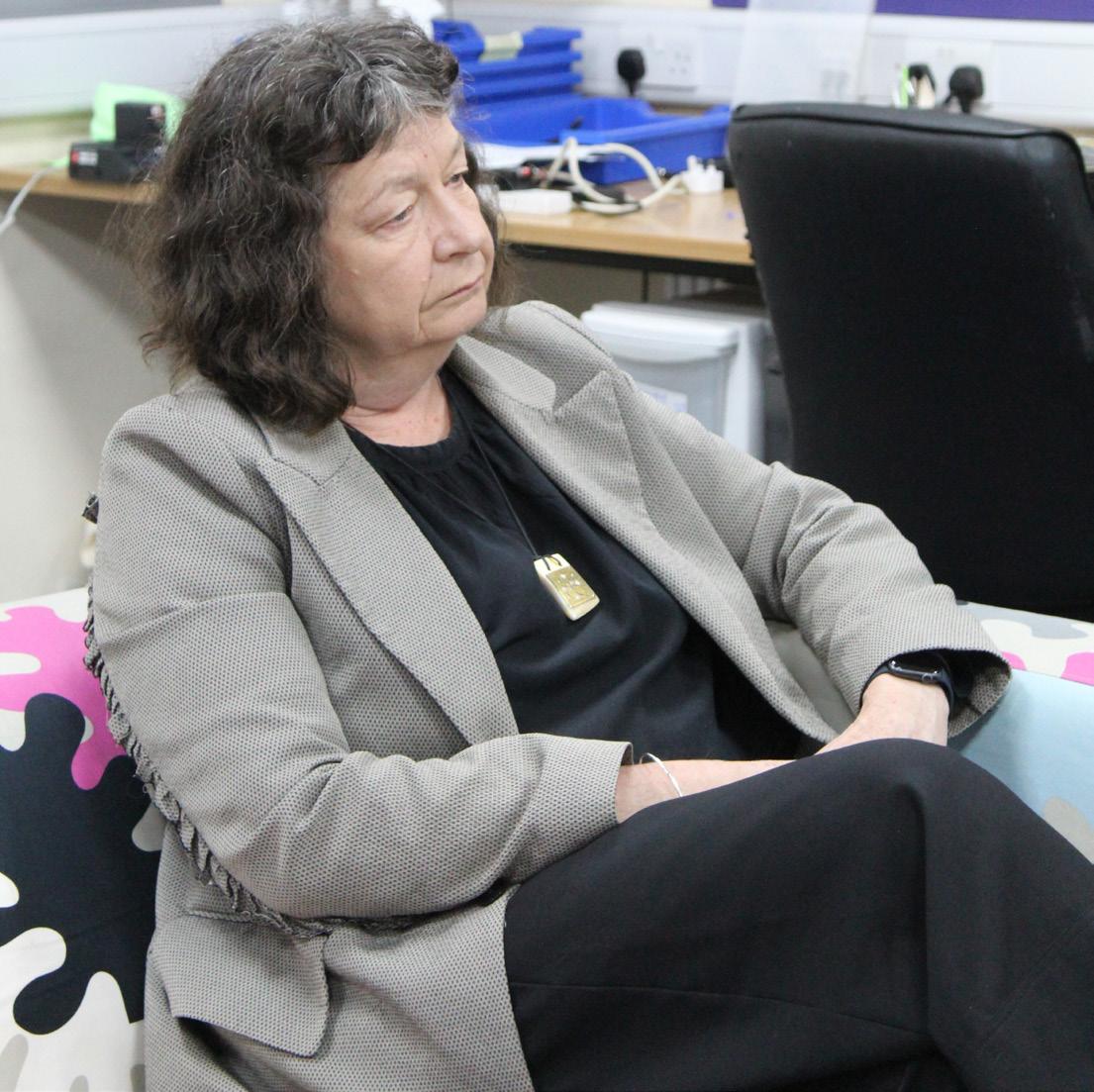
proposals only prevented by union pressure, and the decision to open a campus in a country that is not uncontroversial, it is sadly all too easy to answer these questions with a no.
If VC Larner can’t even give a clear answer on whether she, as the leader of this financially strained university, is justified in being paid £290,000, ought she to be its leader? Staff at her previous university in New Zealand might argue no, having been in touch with Cardiff’s UCU to offer solidarity and share information on her track record, as reported by Nation Cymru.
Vision 2035
For a document VC Larner portrays as a good, clear, and authoritative source on the university’s direction, it is remarkably good at using flowery language while being thin on actual policy. The document’s most shocking aspect is its indirectness. It does, however, give a Labour-esque set of numbered priorities, delivery strategies, and other categorisations that say little in themselves. Past the “our mission” and “our vision” sections are the “strategic priorities”, which are the first points of substance.
The first priority concerns actions that engender trust and respect among students and staff. VC Larner and the executive board cannot expect such an environment to flourish while job and course cuts appear ever-looming and staff and students feel completely unheard. The second strategic priority speaks about nurturing homegrown talent, which should be a top priority for Wales’ premier university. However, in the same document, there is a much greater emphasis on attracting global talent. While Welsh and Welsh-speaking students told Gair Rhydd of a net positive experience of nurturing from the university, some pointed out simple issues, such as the lack of some forms being in Welsh, as failures of its commitment to bilingualism. Perhaps actually being a Welsh university ought to be prioritised before being a global one. The third strategic priority speaks of “cocreating” alongside staff and students. Again, the top-down approach staff describe is hardly reflective of this priority, nor is it so for students, if protests asking for their voices to be heard receive no support
but rather pressure and removal, as with the injunction used against the encampment protesting university ties to weapons companies.
After the strategic priorities are four categories for “how we get there”. The first of these is about delivering efficiently: “We will do things once.” Except, it wasn’t only once the univesity had to tear down and rebuild a wall in the John Percival building because it failed to comply with fire regulations, though perhaps this £1 million error doesn’t count. There will be an “organisational approach to simplify functions”. This has manifested as the mass centralisation of control, including timetabling, which in itself was such a disaster that some students were scheduled to attend lectures in toilets. It also speaks about “delivering estates rationalistion [and] commercialisation”, which hopefully will include a look at whether VC Larner, with a salary of £290,000, ought to be living on a university property estimated to be worth £1 million, paying only bills and tax. The second point on “how we get there” speaks of “working collaboratively” with staff and students to “codesign” the future of student processes (an empty promise based on VC Larner’s track record). Vision 2035 then circles back to speak about “empowering” staff and students with a culture of trust, transparency, and accountability, but again, if there were ever a time it could be said this is not the case, it’s today. Staff and students don’t feel listened to, and the higher-ups seem to be taking an aggressive approach, exemplified by Larner’s threatening email to staff. Most importantly, they discuss a new approach to diversifying recruitment to attract the best staff and students. Is this a signal of a future where Cardiff University focuses more on profitable international students than on the homegrown talent they emphasise as a priority? Only time will tell.
As I read through Vision 2035 and became increasingly frustrated by its lack of specificity, I hoped the delivery section would explicitly tell us something. It does not. It simply describes three “timelines” with little detail about, ironically, how it would actually be delivered. The details of how this vague vision will be delivered will be laid out in transformation roadmaps, and the executive board will have complete oversight of the whole transformation programme, in line with the theme of centralisation and top-down leadership.
Besides its contents, what is telling of the irrelevance of Vision 2035’s flowery language is how few know much about it. Gair Rhydd attempted to obtain a physical copy like the one VC Larner brought to the interview and took away with her, but when asking staff in the Centre for Student Life and the main building, no one knew what Vision 2035 was, let alone where we could find a physical copy.”
Furthermore, Gair Rhydd’s own polling of students on campus found not one student who could confidently say what Vision 2035 is, let alone what it says.
As one academic put it: “Larner is banking on students not caring enough.”If we, as students, genuinely care about the direction the university is taking and if our voices are to be heard, we must stand with academic staff, stay informed, and be loud. Another academic stressed the importance of Gair Rhydd getting the following message to students: “Staff across the university, both professional and academic, are committed to the well-being (both pastoral and educational) of students, though their ability to action positive changes in the face of increasing centralisation as well as broader job insecurity and institutional structures may be strained”. Fellow students, stand alongside staff and stay informed.
Gair Rhydd reached out to Cardiff University for comment, but, as of publication, has yet to receive a reply. If comment is given, GR will update our live online article and post it on our socials.
Reuben Badman Contributor
The Liberal Democrats achieved something remarkable in the 2024 election, surging from 11 seats in 2019 to 72, their best ever result. Ed Davey’s unconventional campaigning, from slip and slides to paddleboarding, captured attention while delivering serious messaging about the NHS, social care and equality. The party swept through the Conservative stronghold of the Southwest, turning blue seats comfortably democrat orange. Local election success has followed, with the Liberal Democrats winning 23% of available seats, compared with 20% for the Conservatives and 6% for Labour. Despite this, turning electoral success into political influence, is a completely different challenge.
The Liberal Democrats have not been idle. Ed Davey has proposed ‘war bonds’ (loans the public or institutions could purchase to fund national defence), he estimates this could raise up to £20 billion. He has linked the proposal to concerns about US reliability, saying that ‘because of Donald Trump, there has to be a question about whether we can rely on the United States’. More significantly, in December the party secured a major parliamentary victory, which brought forward a UK-EU customs union, bringing the UK closer to Europe again. 65 Liberal Democrat MPs voted in favour of the motion, resulting in a 100-100 tie, which the Deputy Speaker then broke by casting the deciding vote in favour. This underlines the genuine power that 72 MPs can wield in a fragmented Parliament. The party has also championed democratic accountability, vocally opposing government delays to 2026 scheduled local elections, demanding peoples voice at this years local elections. Ed Davey has even contacted the Equalities and Human Rights Commission, asserting that 10 million peoples democratic rights have been ‘ripped away’. Despite their seat gains, the Liberal Democrats face a sobering reality in the vote counts. They secured 3.5 million votes compared to Reform UKs 4 million votes in the 2024 general election. Current YouGov polling
The Invisible 72 Labour’s Personality Crisis
suggests 25% of people would likely vote Reform, while only 14% intend to back the Lib Dems. In addition, as Kemi Badenoch rebuilds the Conservative Party, some voters who temporarily defected may return home. Britains political landscape has become a five-party system, with everyone competing for limited airtime. Media coverage is given to parties who fit three categories: the governing party (Labour), the official opposition (the Conservatives) and those generating the most controversy (mainly Reform and the Greens). Therefore, the pragmatic, pro-institutional and centrist approach of the Liberal Democrats means they largely go unnoticed. This means success, like their customs union victory, wasnt clearly attributed to them within public consciousness. Meanwhile Reform dominates headlines by appointing controversial figures like GB News presenter Matt Goodwin as their candidate in the Gorton and Denton by-election. As neither the governing party nor the main opposition, the Liberal Democrats struggle massively against populist opponents who deeply understand sensationalism, which attracts coverage. Sensible pragmatists will never gain the same media space as incendiary populists.
The 2026/2027 local elections represent a crucial test. Was the success of the 2024 general election a genuine realignment or merely a protest vote against an exhausted Conservative government? Only time will tell. However, the opportunity for gain does exist. Labour faces approval issues and Reform, despite gaining votes, are polarising the country. The Liberal Democrats have leadership, coherent policies and parliamentary seats, a strong foundation.
Do not forget about the Lib Dems. Their 72 MPs plays an important role in our governance, and while they may not gather controversy or generate constant media coverage, they represent constituencies and the country with genuine concerns that deserve attention, beyond the news cycle. In a fragmented political landscape, their pragmatic, progressive and people first message matters now more than ever.
Image, House of Commons

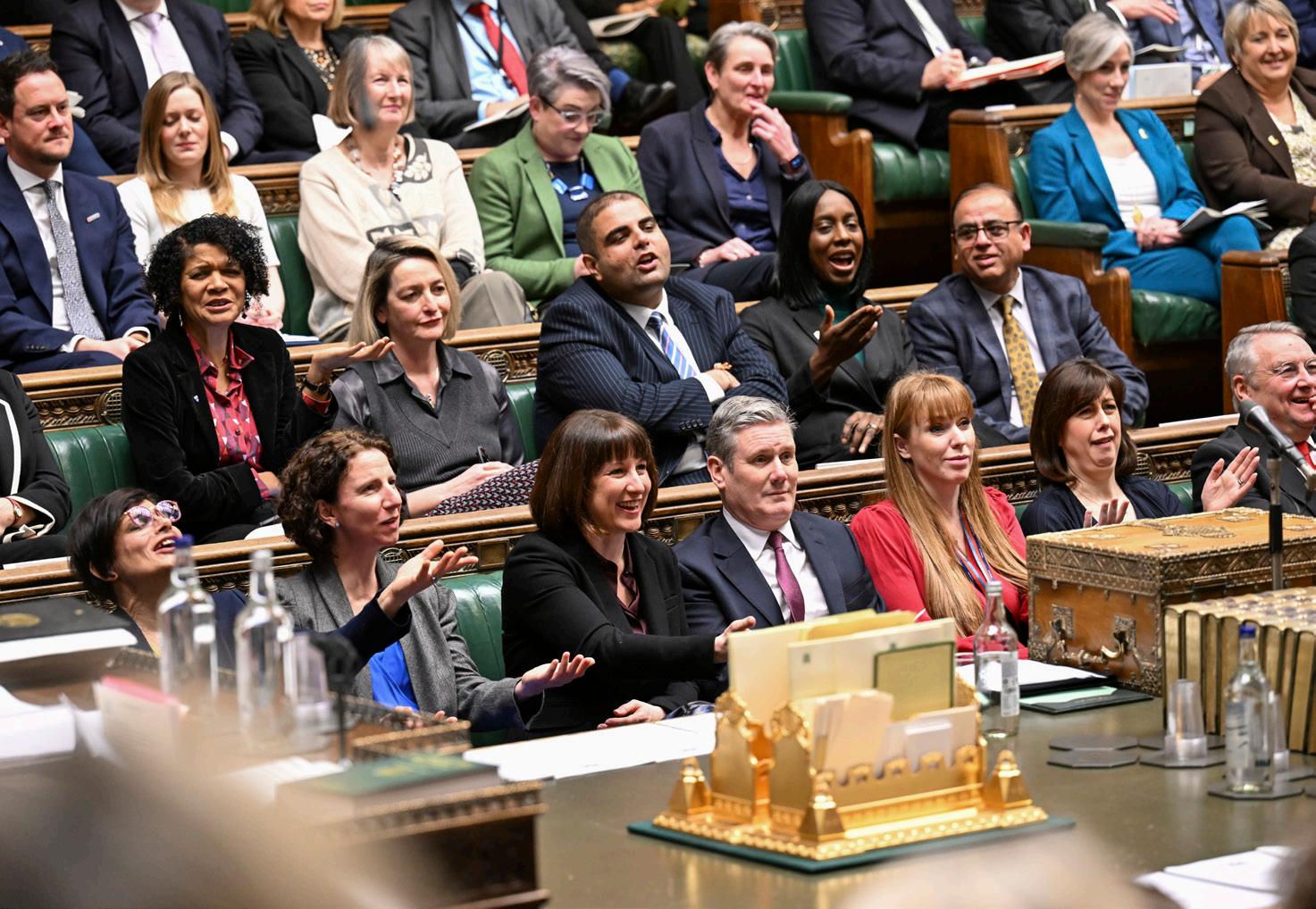
Barney Sturt-Bennett Contributor
There is a common comparison drawn between democracy and a popularity contest. The candidate with the capacity to draw the greatest crowds will in turn draw the greatest numbers to the polling booth. We can see this trend in the rise of populism, politicians transitioning from dull characters to celebrities in their own rights. Trump and Mamdani in America; Farage and, increasingly, Polanski in the UK. With the Greens and Reform biting at the heels of the party in power, and outcompeting Labour’s traditional rival in the Conservatives, what lessons should the Labour party be learning from this new era of social- media politics?
Frankly, there isn’t a drop of personality in Keir Starmer. It is unclear if it was rinsed from him before or during his general election campaign, but the warning signs were there; Starmer’s flat delivery and overuse of certain phrases (“My father was a toolmaker”) were immediately points of parody, but they highlight his real flaws, they’re just not interesting. Successful campaigners have their moments, key traits or events that can be referenced and drawn upon. Boris Johnson had his bumbling demeanour, odd haircut, and classic gaffs like his being stranded on a zipline holding a pair of Union Jacks; Blair had a slick and carefully managed communications machine, good looks, experience as a lawyer and parliamentarian to fall back upon and his attempts to be a rockstar parodied. Starmer has some of these traits, its true, his communication is odd and stilted, occasionally veering towards the peculiarities of the Johnsonian style but never actually crossing the barrier between dull and strange into interesting and strange. Starmer has a background as a lawyer to draw upon, an internationally respected human rights lawyer at that, but he never seems to display those skills outside of the occasional attack or insult at PMQs. Successful campaigners are also able to bank on their track-record where they have one. Mark Carney, PM in Canada, was able to use his experience as director at the Bank of England as evidence of his competence and executive ability. Starmer had this in his first campaign, his experience as a prosecutor and administrator was apparent. Labour’s failures since his incumbency have washed those good marks off his record.
Starmer is unwatchable, lacking the
oddity to generate intrigue or the charisma to generate confidence. This isn’t entirely his fault; his social media posts are dull, flat and often incoherent, lacking direction and reading as simple addresses to camera, rather than attention-grabbing attempts at engaging with the voting public. They lack both production value and kinetic flow, in the attention economy of social media they fail completely. This is a failure of direction and a result of a poor social media team. Recently successful campaigning leaders from the centre and left have been able to rely on strong communication and delivery to distribute their policy message, Starmers social media posts border on the unwatchable, and he feels so controlled and managed as to leave a viewer incredulous at the idea that he so much as believes a word he is saying. Juxtapose this with a campaigner like Zohran Mamdani, whose snappily delivered and well edited promos delivered both punch and policy. In the era of attention politics, politicians must be able to draw eyes and interest. The issue isn’t solely at the very top; most of labour’s cabinet lack in both charisma and social media competence, but its not cabinets that win or lose elections. Starmer’s image is bad, he is widely disliked and generally mismanaged. To appeal to the increasingly online voters of the UK, Labour must make changes to their communication, they need to produce better posts and keep ahead of the competition, they need younger talent in those communications roles.
Labour also needs a new leader, one untainted by the wretched performance of this current government to have a fighting chance at the next election. What Labour needs is a leader with a personality, able to appeal to the public. Labour needs a leader with charm; it currently lacks one with a personality. Labour needs a popular leader, with a strong track-record in delivery and without the reputational damage of this government. Labour needed someone like Andy Burnham, the Greater Manchester mayor their executive committee just blocked from running.
The reality is that these changes won’t win Labour the election, but they will put them at less of a disadvantage than the one they currently face. Labour will need all the help it can get to fight off the tide of populism, a fact the government does not seem to realise.
Image, House of Commons
Gwleidyddiaeth
big ideas...
In 2026, Britain Must Stop Following in America’s Footsteps
Isaak Hewitt Contributor
Maybe it has taken some people a little longer to get here than others, but at the least in the UK, it’s reasonable to say that most people do not like Donald Trump or the direction he is taking the USA in. Indeed, a YouGov UK poll in December 2025 found 77% of participants have a negative view of him. It’s also a fair assessment that our government’s actions do not reflect this statistic. Sir Keir Starmer emphasised his desire for “calm discussion” with the US president and a “pragmatic, sensible and sustained” attitude towards UK–US relations at a Downing Street press conference on the 19th. Starmer's reluctancy to damage this productive working relationship is understandable. However, given that relationship has become counterproductive, we have no other choice but to go our own way.
With America hurtling towards fascism under the Republicans, there is a legitimate fear that our country might follow in their footsteps—as it so often does. When we see the US in the news today, stories of United States Immigration and Customs Enforcement (ICE) and Border Patrol arresting innocent civilians, forcefully deporting immigrants, and shutting down student protests dominate the headlines. Furthermore, under the European Convention of Human Rights, which we have been subject to since its initial enforcement in 1953, we are obliged to defend the rights of all our citizens. We also have the Equality and Human Rights Commission (EHRC), created in 2006 to reinforce equality and minimise discrimination towards the British people. If Starmer intends to again parallel Trump’s actions in the US and implement equivalents to ICE and Border Patrol, irreparable damage would be done. As much as Starmer may want to protect our relationship with America, this should not come at the cost of our moral and legal duty to protect our own people and their human rights.
Beyond this moral factor, forging our
own path apart from Trump would additionally benefit our country from an economic pe spective. The new Republican government has demonstrated a callous disregard for our previously prosperous trade relationship, imposing a 10% tariff on UK imports last May—25% for steel and aluminium enforced in July, and with the UK’s agreement, charging 25% more for new medicines, to come into effect in 2035. Whilst the argument of the economic advantages of our relationship with the USA might previously have held weight, considering recent actions since Trump took office, these said advantages have waned significantly. Should they continue to do so, which evidence supports, our domestic economy will be notably worsened; for our domestic benefit, we must act before this happens.
In lieu of America, where do we turn? I would argue the European Union provides a clear alternative. Regarding human rights, as subjects of the European Convention of Human Rights, our morals are aligned. Moreover, the EU already accounted for 51.7% of the UK’s foreign trade in 2024; leaning further into this existing economic relationship, particularly considering less extreme tariffs on imports than across the pond, would serve us well. Evidence suggests a referendum to rejoin the EU may provide a different result; a YouGov poll from the 29th of January found 55% of participants felt Brexit was a mistake. Although, some may feel rejoining would render the past decade’s intense focus on the Brexit process useless. In that stead, an alternative would be to follow the path of Iceland, Lichtenstein, Norway and Switzerland in joining the European Single Market (a trading market free from tariffs across Europe) without being an EU member state. This would satisfy our economic quotas for our domestic benefit and strengthen international relations with our European allies without the qualms some may have with being part of the EU itself.
There’s a famous phrase used amongst economists that applies here too: “when America sneezes, the rest of the world catches a cold.” Perhaps, if Britain takes the proper precautions, we don’t have to.
Oliver Dermody Politics Editor
The National Executive Committee’s blocking of Burnhams bid to stand in the Gorton and Denton by-election was received by many negatively, former shadow chancellor McDonnell describing it as “factionalism gone wild” and Labour MP Richard Burgon stating that it was “weak leadership” and “will only deepen the crisis the party is in.” However, the decision should be seen as an important moment that shows Starmer’s commitment towards remaining control of the PM job and his party.
The by-election, scheduled for the 26th of this month and triggered by the resignation of Andrew Gwynee, was seen by Andy Burnhan as a way to get back into parliament.
Jog on Jenrick
Alex Portman Ross Contributor
This Christmas many of us will have found ourselves in pubs where mention of Reform UK is rife. These conversations often lead to the criticism that rather than a new party, Reform are a bunch of failed Conservatives. While previous defections by Lee Anderson, Nadine Dorries and Nadhim Zahawi give this argument merit, it’s been cemented by the botched defection and subsequent firing of failed Conservative leadership candidate Robert Jenrick.
So why did the Tories tell Jenrick to jog on? While rumours had been swirling for some time, they were confirmed when his resignation speech was left out for all to see by Jenrick’s team. When this was discovered, Kemi Badenoch had no choice other than to remove the whip. Like in the worst type of Cathays romance, the Conservative party had to dump Jenrick before he dumped them. This was especially the case following the member for Newark’s history of jockeying for Badenoch’s job, with a supposed WhatsApp- based coup last year. The leader of the opposition is also currently boasting her highest ever approval ratings, making dismissing her biggest rival less risky than it might have been last year.
Reform and Jenrick’s mishandling of the defection further sells the ‘failed Tories’ argument. As does the fact that Jenrick was complicit in the Conservative mismanagement of this country that helped propel Reform to their current polling highs. Jenrick was even the minister for immigration under the last government. So, does his defection really help his new party? After Reform’s first drop in polling, maybe this is exactly what they need. Jenrick was one of the most popular Conservative figures, winning nearly half of the Conservative party member’s votes in 2024’s leadership contest meaning it is possible that his defection becomes the final push needed for many Conservative voters to make the jump to Reform as well.
Despite thinking Farage would ‘struggle to run a 5-a-side team’ when he was still wearing a Conservative rosette, Jenrick claims he has no ambitions to run for the leadership of his new party. But with his history of loyalty (or lack thereof) do we really believe this? Perhaps Badenoch’s rising popularity having ending any talk of her being replaced before suggesting she won’t last to fight the next general election scared Jenrick?
Polling indicates a Conservative-Re-
form coalition has a very real chance of being our next government. But as Reform are set to be the senior partner in the coalition, they would decide the Prime Minister. It’s feasible that the top job wouldn’t go to Farage though. The Reform UK leader’s polarising nature may see him subjected to the Geert Wilders treatment. The Dutch right winger, whose coalition was contingent on the agreement that he wouldn’t be PM to appease the junior parties of the coalition. If the Conservatives were to demand such a deal who would Reform deploy as PM? They’d probably choose the second most known figure in their party, who is also well liked by Conservative voters and politicians. That’s right, Robert Jenrick. While this could sound farfetched, Jenrick is one of few Reform politicians with ministerial experience and by the time the next election is contested Jenrick could have as long as three years under his belt as a Reform MP.
In this saga where MPs are acting like they’re in an episode of ‘The Traitors,’ time can only tell how things will unfold and whether Jenrick will help or hinder Reform UK. Readers shouldn’t be surprised if we see Prime Minister Jenrick and Deputy Prime Minister Badenoch in 2029 though. But with the right-wing parties of Westminster behaving like a fresher’s friend group with failed 5 aside plans and messy break-ups, such a government is a scary prospect. However, with all this in mind one question emerges above all others: would the Conservative party accept such a deal, or would they tell Jenrick to jog on?

What would normally have been a shoe in for the ‘King of the North’ because of his massive popularity was blocked by the NEC in an 8 to 1 vote, with Labour deputy leader Lucy Powell being the only member of the board voting in his favour, and with Kier Starmer being amongst those voting against. The reason given by the NEC was that his resignation of Manchester mayor would cost the party and taxpayers unnecessary expenses in the subsequent mayoral election, and risk losing the mayoral position to Reform. However, the real reason is to block a candidate who clearly has his eyes set on number 10. Burnham’s comments at the Labour Party conference in Liverpool in September were clearly designed as a jab towards Starmer’s government, and fuelled speculation that he was mounting a leadership challenge. If
he was allowed to stand, and potentially win the by-election, he couldn’t be counted as a Starmer ally, and it might have only been a matter of time until he launched a bit to oust the PM and secure the top job for himself. Therefore, it was clearly right to block Burnham. Starmer promised a return to stable leadership, and not the merry-go-round of PMs that we saw with the final years of the Conservatives, this decision will help fulfil this promise. This will however make the by-election harder to win for the Labour Party, infighting is never a good look and will make voters think twice about re-electing a Labour MP in Gorton and Denton. Having been a Labour stronghold for many years, polling suggests that Labour could lose this seat to either Reform, who hold a polling lead on 32%, or the Greens, who trail La-
bour’s 26% by four points. Losing this seat will further inflame the already angry Labour MPs who disagreed with the NEC’s ruling, a supposed 50 MPs have already written to Starmer to encourage the NEC to change their decision and will further add speculation on whether Starmer’s time is running out to fix the polling deficit to Reform.
This upcoming by-election might be the most important one under Starmer’s tenure as leader, the result might tip the Labour party towards seeking a new leader, so as Starmer’s allies and enemies hold their breath awaiting the result, the NECs decision might have political ramifications that go far beyond Andy Burnham and might decide Starmer’s entire political career.
Politics
The New Senedd Budget
Oscar Hyams Politics Editor
On Tuesday Labour’s Welsh Government made a budget agreement with Plaid Cymru, ensuring that the £27 billion budget will pass in January. This follows a budget compromise which saw Labour’s First Minister Eluned Morgan agree to increases in budgets for NHS Wales and local councils in exchange for Plaid Cymru’s abstention during January’s vote. The Welsh Conservatives immediately hit back, branding the proposed budget “another Plaid-Labour stich up”. So, why can’t Labour pass the budget alone, what does the budget proposal contain and how have other Senedd Parties reacted, as they prepare for the Senedd elections in 2026?
Labour’s struggle to pass bills and budgets in the Senedd can be mainly attributed to their lack of a majority. The first cause of this was the 2021 election, which saw Labour fall one seat short of a majority, with a total of 30 Labour MSs elected. Then First Minister Drakeford’s remedy to this was to enter into a co-operation agreement with Plaid, effectively giving them a working majority. This saw Plaid and Labour work together to legislate on 46 policy areas for a minimum of 3 years. This agreement, however, expired in 2024 and Plaid declined to re-enter negotiations. This was mainly due to concerns over then First Minister Gething receiving £200,000 for his leadership campaign from a company owned by a man who had been twice convicted of environmental offences. This left Labour as a minority Government. However, Labour’s situation was further compounded by their defeat in the Caerphilly by-election which saw Plaid win the seat with 47% of the vote, allowing them to win where Labour had won every election for half a century. This led to Labour being left with 29 Members of the Senedd, 2 short of a majority, hence the need for compromise with Plaid for the budget. So, what exactly is the compromise that Plaid Cymru and Labour have come to for the proposed budget? The first is an extra £113 million in funding for local government. This is a 4.5% increase in local governments budget and with a 3.6% inflation rate, that is a real term increase of 0.9%. While not all councils will receive a 4.5% increase, all councils will receive a minimum increase of 4%, ensuring a minimum real-term increase of 0.4% for all councils in Wales. The health and social care budget will also see an increase of £180 million, an overall increase of 3.6%.
First Minister Eluned Morgan argues that the proposed budget will avoid ‘catastrophic’ cuts to public service funding. However, the First Ministers plan to ‘deliver for Wales’ may be hampered by the fact that the rate of inflation matches the planned increase in the health and social care budget, meaning there will be no real term increase in NHS Wales’s budget for the next fiscal year. Serious doubts remain as, if no real term increase is expected to the NHS Wales’s budget, one must contemplate if this is enough investment to tackle the 73,200-wait list of people who are being forced wait to over a year for an NHS outpatient appointment in Wales.
As the 2026 election approaches, opposition parties have wasted no time to shape their own narrative surrounding the
proposed budget. The Welsh Conservatives leader Darren Millar claimed that the budget was ‘another Plaid-Labour stitch up’. He further argued that he had reached out to the Welsh Labour Party, offering to help to put together a low tax budget, which aimed to cut ‘wasteful spending in order to get the Welsh economy moving again’. Reform UK Wales was also quick to criticise the proposed budget. They attempted to highlight a contradiction in Plaid Cymru policy by arguing they were helping ‘prop up Starmer’s Welsh Government by voting for the budget’ despite Plaid’s position that ‘Starmer was calling the shots in Welsh Government’. However, Plaid Cymru leader Rhun Ap Iorwerth stated that Labours original budget had proposed major job losses in local government and a ‘low settlement’ for the NHS, and so he entered budget negotiations to prevent ‘harm’ to Welsh public services. However, he was also quick to qualify that it was Labours budget to defend and although he was allowing it to pass, it was ultimately Labour’s responsibility to advocate for it. First Minister Morgan also pointed swiftly towards the bipartisan nature of the budget by stating that ‘This agreement shows the strength of the Senedd parties working together on shared priorities to deliver for Wales’.
As the 2026 election looms with Reform UK and Plaid Cymru leading in the polls, it remains to be seen if this budget will be enough to turn Labour’s fortunes around in Wales. With less than 6 months remaining, this attempt to steady the ship may be too little, too late for Welsh voters from the Labour Party.

Turning Tides: Shifting Political Powers
Sophie Scott Politics Editor
Welcome to 2026 and welcome to the future. The smoke of the fireworks has cleared, the confetti has been swept away, and with it has gone the image we once held of what this year was supposed to look like. We are meant to be four years away from carbon-neutral 2030 plans, yet that goal has never felt more distant or more fantastical. The future we imagined has gone missing, and we are left dealing with a malevolent doppelgänger instead.
That sense of uncertainty stretches far beyond climate targets and into global politics. As the year begins, the international system feels strained. No single defining crisis can be blamed for this, but the structures that once provided stability have been worn down and now seem ready to crumble. Alliances once treated as permanent feel conditional and transactional, like a school bully swapping lunch money for temporary protection. Commitments that were once assumed are now openly questioned. The world is dipping its toes into chaos in ways we have not seen before.
This shift has become increasingly apparent in the relationship between the United States and Europe. For decades, this partnership formed a backbone of global security and political alignment. NATO was the world’s
strongest military alliance and a symbol of shared responsibility and trust. Recently, however, that trust has begun to fray. Political rhetoric in the United States has grown increasingly inward-looking, with authoritarian tendencies becoming harder to ignore. Citizens are killed without accountability, lawlessness is carried out by those meant to enforce the law, denial and division appear to define the political climate moving into the new year. With long-standing commitments abroad framed as burdens rather than obligations, Europe has been left questioning the reliability of its strongest ally and whether political and moral priorities still align closely enough to sustain the relationship.
This leaves an uncomfortable question bubbling up, elephant-shaped and filling the room. What happens if the United States leaves NATO altogether? While still unlikely, the idea no longer feels unthinkable. Years of scepticism have laid the groundwork for a future in which withdrawal could be framed as pragmatic rather than shocking. The red flags are there, the foreshadowing already cast. If this were to happen, Europe would face a difficult and uneven transition. Larger states may be able to adapt, but smaller countries, particularly those closer to Russia, would find themselves more exposed even without direct conflict. An invisible border would crumble and the wary would turn scared. Europeans have
seen what has happened in Ukraine, and they do not want that instability to spread.
The implications would extend far beyond Europe. Russia would gain greater freedom to exert influence through energy dependence, cyber pressure, and regional leverage. China would likely view a weakened transatlantic alliance as proof that Western unity is fragile. This perception could embolden its global ambitions and encourage a more assertive role on the world stage, particularly in response to America’s increasingly conquest-focused political discussions. In both cases, uncertainty becomes an opportunity. As 2026 unfolds, the real danger lies in what uncertainty allows it to grow. Weakened global cooperation creates space for opportunists, reactionary politics, and inward-looking policies that prioritise self-interest over collective responsibility. One of the first casualties of this shift is often international aid. When nations retreat into themselves, support for humanitarian assistance, climate funding, and development programmes is framed as optional rather than essential. Yet international aid is not charity, it is a stabilising force. It prevents crises from escalating, supports vulnerable populations, and reduces the conditions in which conflict, displacement, and extremism thrive.
Gwleidyddiaeth
The P in Peace Stands for Paternalism in Gaza
Advait Gangawanwale Contributor
As Donald Trump, Israel and other powerful countries advance a Gaza peace plan without Palestinian involvement, how much peace can we expect in the region? The Gaza peace plan, formally the Comprehensive Plan, was launched in late 2025 to end the Gaza conflict and ease the wider regional crisis. Led by U.S. President Donald Trump, the agreement between Israel and Hamas took effect on October 10, 2025 and was endorsed by the UN Security Council on November 17.
Three months later, the ongoing “peace” efforts in Gaza are under scrutiny. Despite the agreement, violence continued. UNRWA reported airstrikes, shelling and gunfire across Gaza in early December 2025, particularly near the so-called “Yellow Line,” resulting in further casualties. According to OCHA (Office for Coordination of Humanitarian Affairs), 379 Palestinians have been killed and nearly a thousand injured since the ceasefire took effect, with hundreds of bodies recovered from the rubble. Such violations are
not unprecedented. The ceasefire violations in September 2023, with accusations from both Hamas and Israel, resulted in hundreds of deaths in the region.
Similarly, after the January 2025 ceasefire and completion of the first phase of a three-stage plan, Israel launched surprise airstrikes on Gaza on the 18th of March, citing Hamas’s refusal to release hostages and extend the ceasefire. This history raises an important question: what kind of peace is possible when those most affected are excluded from shaping it? Dr. Mike Berry, a media researcher from Cardiff University’s School of Journalism says that there are some key issues with this peace framework. “What’s most shocking is the lack of any Palestinian input into the whole process that’s supposed to be about managing Palestinians lives,” he says. The plan was met with support from many countries, including France, Germany, Russia, Italy, Spain, the UAE, Egypt, Turkey, Qatar, Jordan, Indonesia, Pakistan, Canada, and the United Kingdom. The State of Palestine was not involved in the negotiations, although the governing Palestinian Authority expressed
support for the deal. Dr. Mike says, “The nature of some of the people on the board is very problematic. People like President Putin, who you wouldn’t necessarily put on a board intended to be related to peace.” He also warns that the current approach appears to abandon decades of international consensus rooted in international law and the two-state solution. “There’s been a very long-term international consensus on how you deal with the IsraelPalestine conflict based on the idea of the two-state solution,” Dr. Mike says. He adds that this framework is “embodied in international law and many, many UN resolutions.”
Without it, he says that peace efforts risk entrenching the conflict rather than resolving it. “I imagine the conflict will just grind on.”
With respect to the current demilitarisation and rebuilding plan, it lacks concrete provisions for a single Palestinian state encompassing both the West Bank and Gaza, instead focusing on interim governance of Gaza alone. Many experts including Dr. Mike believe that Palestinians would not see Gaza as separate from the West Bank. Moreover, polling and public debate within Israel in-
dicate significant support for the transfer of Palestinians from Gaza. But, according to former Israeli negotiator Daniel Levy, the Israeli government is more interested in maintaining settlements in the West Bank rather than coming to a long-term solution. Dr. Mike also refers to his core research area and says that the Palestinian perspective has not been featured prominently in Western news accounts. “The Israeli perspective dominates the news, while the Palestinian view of resisting military occupation is largely marginalized.”
The future peace and stability of Gaza’s residents remains uncertain. But Dr. Mike says that he is clearly skeptical in the short to medium-term, primarily due to the current framework. He says that any agreement needs to be based within international law. “International law is under unprecedented strain and needs to be strengthened and supported.” The second phase of the plan has been underway since its announcement on 14 January 2026. This phase marks a shift from the initial ceasefire to demilitarisation, technocratic governance, and reconstruction.
ICE in Minnesota, A Chilling Development
Keenan Politics Editor
As the upper mid-western state of Minnesota goes into 2026 bracing for deep freeze, for the people of the blue state, a different kind of ICE has set in.
The situation has been rapidly developing in Minnesota; since the tragic death of Renee Nicole Good in Minneapolis on January the 7th, a new ICE memo directly from the federal government in D.C. essentially permits officers to enter homes without warrant from a state judge, expanding its interpretation of arrest and property authority. To add to this, with the shooting of Alex Pretti more recently, ICE is seemingly becoming more violent and unhinged by the day. For the citizens of Minnesota, this marks an alarming, unprecedented attack by the Trump administration on not only citizens of its own country, but fundamental Fourth Amendment rights which limit state intrusion without cause on citizens' private property. The backbone of this memo
is to do with warrants in the United States. The warrant protection has long been a thorn in the side of immigration officers, it actively limits perusal of targets on private property. In the US, there are two kinds of warrants that can be attained by officials, an administrative warrant and a court issued warrant. The latter gives law enforcement the right to enter and search a home address, whilst the former doesn’t. Crucially, most of the immigration arrests carried out are under the less facilitating, administrative warrants as they are granted at a lower standard, ideal for a rampant and unlawful federal body. ICE routinely pushes the boundaries of what's allowed under the administrative warrant after it's been granted, taking it as a mandate to act in a forceful way that infringes on citizens rights. But at its core, this warrant protection has long frustrated the efforts of ICE, so this development which erodes Fourth Amendment rights is a show of both force and frustration from D.C. downward.
There were ten amendments on the Bill of Rights, but as we are now seemingly
whittled down to 9, we are faced with a slippery slope. This phenomenon (under different circumstances) has surfaced before, notably under G.W. Bush, stunting search efforts associated with his War on Terror. However, today paired with such violent attacks on citizens of its own country, it certainly remains a horrifyingly unique case.
To cast our minds back 10 years, under the administration of Barack Obama, the yearly budget allocation for ICE was less than $6 billion. Pegged well below funding for departments like Homeland Security for example. But since Trump has resumed office for a second time, ICE's budget has skyrocketed, becoming the highest-funded U.S. law enforcement agency, with a whopping $85 billion at its finger tips.
By now you’d have thought that we can safely say that we’re largely used to the Trump administration's expansive vision on its law enforcement authority. His grand claims about a wall and immigration policy on the US-Mexico border in his first term being the most renowned example. But this develop-
ment is different in its nature. It voices fundamental disregard from the Trump administration of constitutional prohibitions of the state meant to protect the people.
An unconstitutional force of terror is setting root in the north, and with the best part of three years remaining on Trump’s term, it's not unreasonable to forecast the continued erosion of these fundamental principles which protect people's democratic freedoms.
However, with the most recent development of commander Gregory Bovino, who oversaw this aggressive expansion of ICE in the state of Minnesota, being expected to leave Minneapolis, will a change of stance be seen? This development paired with Trump’s supposed aim to ‘de-escalate’ the rising tensions in Minneapolis certainly makes this a possibility. Or will it be the case that the succeeding border tsar, Tom Homan, doubles down on efforts, entrenching what has been an already authoritative stance by the administration in Washington. A one to watch undoubtedly.
How America Could Turn Against its Allies
Arielle Melamed Politics Editor
For years, the United States has occupied a powerful position in global politics. Besides its military prowess, it also serves as the backbone of many of the systems that enable the world to function today. From international finance to communications infrastructure, US control is often so entrenched that it largely remains unnoticed.
When an ally of the Americans purchases an F-35 fighter jet they receive not only a plane but the accompanying, parts, technologies, technical support and the suite of communications. When big businesses go global, they will regularly route their transactions through the ‘dollar clearing system’, a platform that is operated by several US-linked institutions. Allies of the states may have initially accepted US domination of these systems, due to the firm belief that America would continue to accept a ‘rules-based in-
ternational order’. A world that was idealised after the Second World War, with multilateral institutions such as the United Nations and the World Health Organisation, international law, human rights, democracy and open trade. This no longer remains to be the case, with Trumps repeated pledge to occupy Greenland and his threats of annexing Canda. As Mark Carney the prime minister of Canada described it “The United States is beginning to monetize its hegemony”.
The dangers tend to be invisible, until the infrastructure is turned against you. As Wired magazine outlined in September of 2025, “Trump has wasted no time weaponizing the dollar clearing system against a host of targets.” While these individuals have historically been Russian oligarchs, industrialists and Iranian officials, Trump has also imposed sanctions on the ICC’s chief prosecutor after the court charged Israel’s prime minister Benjamin Netanyahu with committing war crimes, reportedly blocking his email and freezing his bank account.
Whilst rumours swirl in various reddit chat threads about the possibility of F-35's having a ‘Kill Switch’ several sources indicate that this is not the case. However, this does not eliminate the dangers of the Americans severing their allies' access to cutting edge military technology. In essence the F-35 fighter jets rely on software support from American defense corporations, if the Trump administration decided that it was no longer in their best interests for any country to operate these jets they could withhold that support, gradually rendering the F-35s unusable. Case in point: In late February of 2025 whe Trump cut off the state's intelligence stream to Ukraine after a disastrous meeting with Zelensky, dealing a serious blow to Kyiv in the war with Russia. As American hegemony only grows, there have been serious discussions amongst world leaders as to the possibility of allies distancing themselves from the United States. The dilemma remains that due to the majority of the West’s infrastructure being built atop US platforms, if leaders did break those ties, then everyone stands to be poorer.
The idea for an independent European supply chain and European digital independence had been discussed at a meeting at the European Parliament attended by politicians, technologists, and business leaders. The conclusions of the meeting were bleak, as Cristina Carrafara an economist who helped organise the meeting wrote later “Everything that lies below and supports the apps and services we use every day (from chips to compute to cloud to software to connectivity) is built on non-European (American) infrastructure.” This does not stop the EU leaders from seriously considering the possibilities of an independent Europe, a mark of how grave things have become.
Hugo
Sport
Worrying Injury for Cardiff Starman as Spoils are Shared Between Bluebirds and Hatters
George Jones Head of Sport
On Saturday 24th January, the Cardiff City Stadium was all set for an early kick off at 12.30 and a huge clash between the South Walian, league leaders Cardiff City and the ambitious Stockport County. The teams coming into this fixture sat 1st and 4th in the League One table respectively and both play some of the most attractive brands of football that the division has to offer.
In the minutes approaching up to kick off, excitement was building in every corner of the stadium with both sets of fans in full voice, there was certainly an energy and tension in the air indicating the importance of the fixture. A classic, but spine-tingling rendition of Men of Harlech was belted out by the home end just prior to the players coming out of the tunnel.
“Yousef Salech goes down with what looks to be a serious head or neck injury”
After somewhat of a slow, cagey beginning to the game, a sudden burst forward from the attack minded County right wing-back, Dacres-Cogley put Challinor’s men on the offensive. Dacres-Cogley cleverly carves his way through the City defence managing to get a shot off at Trott, who parries it into the path of Kyle Wootton who slots home
as Stockport took the lead in the 10th minute sending the packed out away end into raptures.
County continued the following periods with momentum from their lead and were slowly getting under the skin of the Cardiff fans by nicking little fouls and being quite physical in the approach to challenging for the ball. Thanks to an array of lacklustre passing and some questionable calls from the officials, the City fans turned against their own and the man in the middle by the half an hour mark with audible groans being heard throughout the crowd every few minutes as frustration grew.
In the 27th minute, the Bluebirds Danish striker, Yousef Salech goes down with what looks to be a serious head or neck injury. There was serious worry emerging across the Cardiff City Stadium from both the players and staff as well as in the stands. A short while after going down, a neck brace and oxygen mask had both been deployed by the medical department for Salech who’s condition was not looking in a good state at all. After around 13 minutes of receiving treatment from both teams’ physios and other medical staff present, in the 39th minute and thankfully Yousef Salech is stretchered off the pitch and is replaced by Callum Robinson. As the stretcher leaves the field, boos ring around the CCS directed at the referee and his officials who missed the Salech incident.
The home fans also started showing their hostility to County’s number 33, Brad Hills, the culprit of injuring Yousef Salech during an aerial collision. Due to Salech being down for a long time, a lengthy period of additional
Emiliano Sala: Seven Years On
Mael le Paih Sport Editor
Seven years after the tragic death of Emiliano Sala, the legal battle between Cardiff City and FC Nantes continues to divide two clubs and the footballing world. The Argentine striker died aged 28 when the plane carrying him from France to Wales crashed into the English Channel on January 21, 2019. Just two days earlier, he had completed his record £15 million transfer to Cardiff. Following a court hearing in December 2025, Cardiff are seeking €120.2 million in damages from Nantes, claiming the French club were negligent in the transfer arrangements. A verdict is expected on March 30, 2026.
Career
Emiliano Sala was born in Cululú, Argentina, on October 31, 1990. His European career began in Bordeaux’s youth system before successful loan spells at Orleans, Niort, and Caen. FC Nantes signed him permanently in 2015 for just €1 million where he became a prolific goal scorer and a fan favourite. Over four seasons, Emiliano Sala became FC Nantes’ star striker, netting 42 league goals in 120 Ligue 1 appearances, finishing as Nantes’ top scorer for three consecutive campaigns. The 2018-19 season saw him hit his peak form with 12 goals in 19 games. In early 2019 Cardiff City were struggling in the Premier League and believed Emiliano Sala was the solution.
time was imminent with the 4th official holding up the board to signal for 14 minutes added on.
“County will be the happier of the two sides”
Halfway through the 14 minutes, a good move from Cardiff’s attackers sees Ollie Tanner set up Joel Colwill, who through a stroke of luck with slight deflection, rifles it into the top left corner. 1-1, game on. Brian Barry-Murphy’s Bluebirds had their tails up and were looking to build on that equaliser and fire themselves into the lead before the interval. Despite an onslaught of pressure for the remainder of the added-on time, the man in the middle blew his whistle as the teams went into half time drawing 1-1.
Following an action packed first 45, the second half had a lot to live up to but unfortuantely did quite the opposite. City had the better of the play, accumulating more shots and possession than their opposition and were quite clearly the team who looked most likely to go on and win the game. However, Challinor’s men went back to their non-league roots and dug in to put out a resolute, physically strong defensive performance which saw them earn a point on the road in South Wales and are only the third team this season to not lose at the CCS with Bradford City and Burton Albion claiming wins in the capital earlier in the season.
County will be the happier of the two sides as they take a point back to Cheshire, but Cardiff City remain top of the league, 4 points clear of Lincoln City in second place.

The Tragedy
The transfer to Cardiff was confirmed on January 19, 2019, for a fee of £15m making Sala the club’s record signing. Two days later, the single-engine Piper Malibu aircraft carrying Sala and pilot David Ibbotson lost contact and crashed north of Guernsey. Tragically both men were killed. The wreckage was located on February 3, 2019. Emiliano Sala’s body was recovered four days later, though Ibbotson’s remains were never found. David Henderson, who organized the flight, was sentenced to 18 months in prison for endangering aircraft safety and arranging an unlicensed commercial flight. Henderson was found guilty of a flagrant breach of safety regulations, as he endangered the life of Sala and David Ibbotson, the pilot.
Cardiff’s
Case
Cardiff’s claim centres on the allegation that banned agent Willie McKay organized the fatal flight while acting on behalf of Nantes. In 2026, the Welsh club is seeking damages that include the transfer fee, lost revenue from Premier League relegation, and diminished club value. They finished 18th in the 2018-19 season and were relegated. Evidence from FC Analytics, presented by Cardiff, suggests Sala could have increased their survival chances by 62%. In February 2024, Cardiff reached an out-of-court settlement with McKay that secured key documents and emails for their case. Cardiff argue Nantes failed in their duty of care during the transfer process.

Nantes’ Defense
Nantes strongly reject any liability for the tragedy. The club maintains that only Mark McKay, Willie’s son, was their authorized agent for the transfer. They argue Willie McKay was simply helping his son due to his experience in football transfers. Nantes’ lawyer has described Cardiff’s case as a “legal farce” that exploits a tragedy for financial gain. The French club insists they played no role in arranging Sala’s travel and cannot be held responsible for decisions made by others. Nantes have already won significant legal victories. The Court of Arbitration for Sport ruled in 2022 that the transfer was completed, and FIFA subsequently ordered Cardiff to pay the outstanding €11 million of the transfer fee in 2023.
What’s Next?
A hearing was held at Nantes Commercial Court on December 8, 2025, before a single judge. No witnesses appeared in court. Both clubs had submitted all evidence beforehand. The verdict is scheduled for March 30, 2026, though appeals are likely regardless of the outcome. The case will
have significant implications for how football clubs handle transfer arrangements and duty of care responsibilities. The negligence of protocol from all parties resulted in the disaster, and due diligence is necessary when handling footballers.
Beyond the Courtroom
Seven years on, the human cost of this tragedy extends far beyond legal arguments and financial claims. Both clubs have suffered. Cardiff now compete in League One, three divisions below where they were when Sala signed. FC Nantes fans famously bellow their Emiliano Sala chant in the ninth minute of every game at La Beaujoire. A mural dedicated mto Sala and his legacy is on display at local club USJA Carquefou, where his legacy will live on forever. The case has prompted calls for improved safety standards in football transfers, though concrete regulatory changes remain limited. Whatever the court decides, Emiliano Sala’s death serves as a stark reminder of the responsibilities clubs hold when bringing players across borders. His legacy deserves more than legal battles.

Gair Rhydd’s Six Nations 2026 Preview



liams is one of the best scrum halves in the northern hemisphere and probably starts for every other 6 Nations side bar France and Ireland. Taine Plumtree and Aaron Wainright are lethal around the breakdown, and the Welsh pack isn’t shy of a maul. Structurally, Wales thrive in broken play, particularly when Williams is on the field. With a set piece developing, and an ability to force pressure and score against tough opposition (including the All Blacks) shows signs of development. Wales could well upset Italy and will most certainly push Ireland at least for a half. Scotland is always hard to talk about. Gregor Townsend has had what should be perceived as a golden generation for the last four years, and yet has no major silverware (excluding the Calcutta Cup).

Players like Huw Jones, Finn Russell, and Sione Tuipulotu have displayed themselves as some of the best in the world on their day. Pierre Schoeman is undoubtably one of the best scrummaging looseheads this side of the equator. But Scotland never seems to convert this to victory when required. Sloppy game management around the final quar-
could rise to even the challenge of the Springboks in the scrum. If they can utilise their power and scrum to their advantage, the Azzurri have potential to threaten any opponent. Gonzalo Quesada has brought about a structure that suits Italy’s style. Fast, aggressive, and with a fantastic flair, they provide a tough challenge to overcome. The intensity is going to pressure France in particular and could be the antidote to the DuPont gameplan. Italy used to have a problem that they could not keep up with opponents, or just could not close out games, but that seems to have gone. Gone are the days where they were a tier 2 side, they are right in the mix where they should be, and potential victory against Scotland, Wales, or France is on the table. Ireland is an interesting side. Bundee Aki’s suspension from the side for ill-treatment towards officials is a welcome precedent. However, Andy Farrell’s men are in for a rough tournament. An ageing side with far too few young replace- ments coming through, as well as a prop injury crisis can only lead to issues. Not only was the scrum destroyed during the Autumn Series, but ill-discipline was a key reason for the loss to the All Blacks in Chi-
Image: Unsplash
mistakes. Irish rugby is in a bit of a predicament; a golden generation of talent came through but the system did not generate anyone to follow after, and now the shortfall is going to harm the national side for the coming couple of years. Andy Farrell may have to make some audacious selections in the future for the side to develop.
“It is exciting to see how close it will be this year”

France is just a joy to watch. Their flair, coupled with DuPont’s brilliance is just a fantastic rugby sight every time they play. But will they win a championship back-to-back? Fabien Galthié’s side is probably the second favourite to take the crown and are clearly developing depth and talent. The Top 14 has helped this for years now, but greater progress has come from Galthié letting his side play a fluid, natural game. The tragic shock loss of Uini Antonio to a medical retirement will force greater prop depth development, and DuPont’s injury last season showed how well the scrum halves could adapt under pressure. The omittance of Damian Penaud and Gael Fickou from the squad is strange and
unexpected to say the least, but Louis BielleBiarrey and Yoram Moefana are sure to pick up the slack. France’s ruck speed and clearing has been impressive, and tactical kicking is a clear strong point, especially from Thomas Ramos. However, upfront there is worry around the scrum and maul. The power is strong, but will it be able to deal with England? Le Crunch will be the biggest game of the tournament, and France will enter it as the underdogs. It will take some might to get on top of England, but if they can take victory, the path to the title grows greatly. France are far stronger and faster than Ireland and Scotland, however Italy’s intensity could provide potential for a slip up. Chances of a Grand Slam are minimal but ever-present. If France can keep its intensity and ingenuity, it has plenty of space to break through and harass any backline. For the first time in a couple of years, Steve Borthwick’s England are clear favourites. A strong game plan based on aggressive kicking and power provides a platform where even sides like New Zealand crumble. Some analysts put this current squad as the World Number Two, and it seems apt. Sam Underhill is definitely the best threat to any ruck in the tournament, and Henry Pollock, although divisive, is showing the excellence of the next generation. Henry Arundell being back in the side will also provide pace on the wing that England needs to counter Louis Bielle Biarrey, and George Ford is probably the best fly half in the tournament alongside Finn Russell. England’s rucking and scrum are probably the best in the Northern Hemisphere, but the open play and situational adaptability is where the real potential lies. Aggression and enthusiasm can be overdone, like the “plastic energy” around celebrating knock-ons like their trophy wins, but there is still much to be celebrated with this side. France will most likely be the toughest opponents, but Scotland is always one to watch out for. Can pressure be sustained for the full 80 in Murrayfield? Will the scrum provide a platform for potential penalties and attack?

Much is to be learned from this campaign, as the World Cup is less than two years out, but England’s draw is heavily favourable. Where England could mess up is overconfidence and if the wrong fly half is selected on the day. Borthwick will have to decide which gameplan to implement each match, and if either Smith or Ford is given the wrong set piece to work with, loss will become more likely. So, all being said, it has to be England, doesn’t it? Or does it? France are right on their tail and I personally believe Le Crunch will decide the victor. Ireland and Scotland provide outside chances, but will they stand up when the pressure gets too much? The Six Nations always surprises us, and it is exciting to see how close it will be this year.
Crossword

ACROSS DOWN
1. Legendary box-opener (7)
1. Sushi palate cleanser (7,6)
9. Looks at lustfully (5)
12. Sir Francis’ egg accompaniment? (5)
14. Belly button–based meditation (5,6)
15. Often with A (3)
16. Shit minced oath (5)
17. Brackish; vexed (5)
18. Multiple Personality Disorder today (3)
19. Fake ID finder (7)
22. Annual pledge (10)
24. Tokyoite’s terse verse (5)
25. Leave a one-star review (3)
26. Chem. unit (3)
27. Aussie boomerang and pop star (5)
28. Gamboling addict? (9)
34. Cricket, for example (6)
37. They might need palette cleansers (7)
39. First method of locomotion? (5)
41. Vague notion or slight intimation (7)
44. A choice word (2)
45. Squealer, more or less literally (3)
47. Guiding light (6)
49. It’s left out (8)
51. “Oops” evoker (7)
54. You’re up to it (9)
55. Opinion pieces (6)
58. Bribe to a DJ, say (6)
59. A stand-up saboteur (7)
63. Broadcasts (4)
64. Good occasion for lighting candles (7)
65. Skulduggery or subterfuge (9)
66. Fleecy female (3)
67. “Smooth Operator” star or mean marquis (4)
68. Dembélé disciplinarian (7)
71. Oat cuisine? (8)
74. Pallet cleanser? (5)
75. Make right (7)
78. Grants mail privilege? (6,5)
82. Brisbane bouncer (8)
83. February flirtations (10)
84. Keepsake; Nolan’s second silver screener (7)
85. Book identifier (4)
2. Polite butler? (5,7)
3. Bring to rest by soothing influence (4)
4. Many a hyperglycaemia sufferer (8)
5. Gender not exclusively man or woman (3,6)
6. Fast month, for some (7)
7. Share a border with (4)
8. Dembélé discipline (8)
10. Wildebeest; free OS (3)
11. To go out with online (1,4)
13. Refugee’s sanctuary (6)
16. Courage; come... (5)
18. Tour-de-France felony (4)
20. Ristorante squid (8)
21. Whiskey or bread type (3)
23. Cyberchuckle (3)
29. XXX / X (3)
30. Tacky art (6)
31. (Highly-nomination) ne’er-do-wells (7)
32. Sacred hymn (5)
33. Indistinct Britpop act (4)
35. Pro opposite (3)
36. Lateral meat or military formations (6)
38. Bigger leg bone (5)
40. Thorny subjects? (5)
42. Main mother lode mineral (4)
43. Silent actor (4)
46. Muhammad or Baba (3)
48. Polaris; bygone boozer by Talybont (5,4)
50. Stick together (6)
51. Ecstasy, for short (4)
52. Before “the night before Christmas...” (4)
53. Copenhagen coin (5)
56. Mail for King Arthur and his knights? (6)
57. Au naturel; “very” in MLE (4)
58. Come before; prey upon (7)
60. Thick, creamy soup (4)
61. Add some booze to (4)
62. Literal eye sore (4)
64. Hamlet’s conundrum (2)
67. Cut, as a log (4)
69. Bangs in Britain (6)
70. Scandinavian sea monster (3)
71. Mint and mallows; magician’s mates (6)
72. Bravo or Grande; bird animation (3)
73. Signal to come (6)
76. Tall tales; twisted fibres (5)
77. In the Matrix there is none; cuddle? (5)
79. Not Scary or Ginger (4)
80. Colliery; cornucopia; claymore (4)
81. WALL-E’s crush; forenight (3)