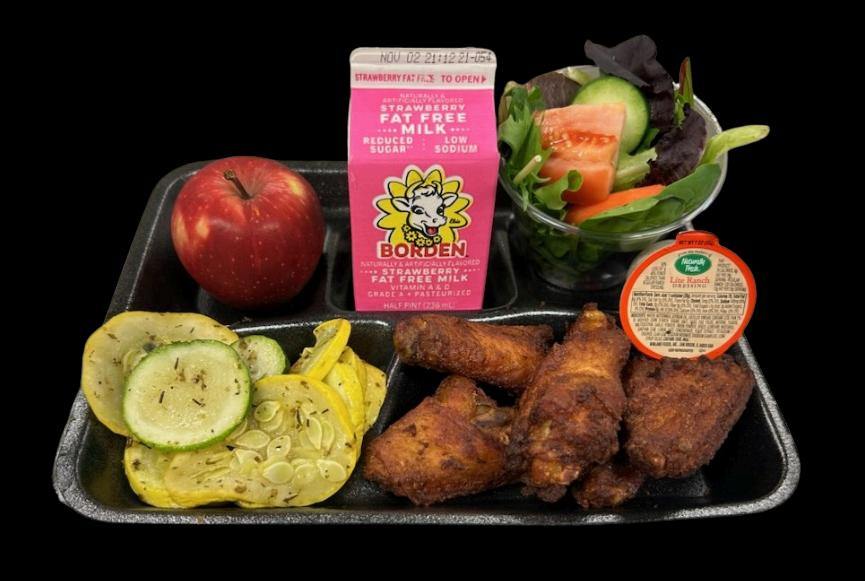
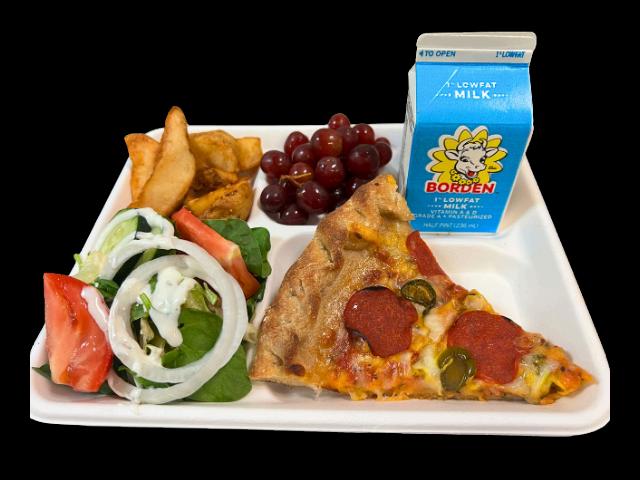
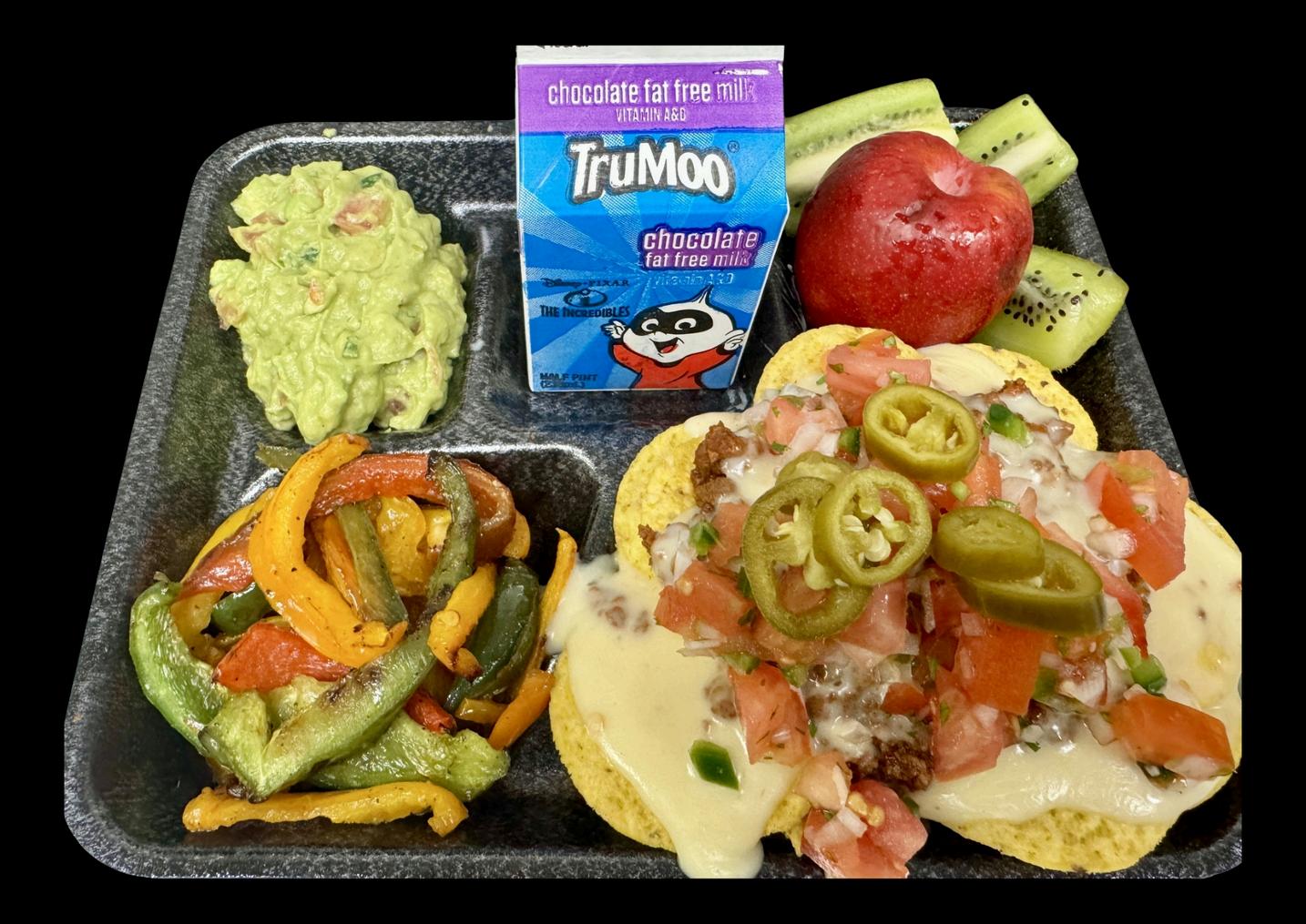
Let’s Talk About Let’s Talk About School Meals School Meals
A Discussion Guide for Parents and Families
In accordance with Federal civil rights law and U S Department of Agriculture (USDA) civil rights
regulations and policies, the USDA, its Agencies, offices, and employees, and institutions participating in or administering USDA programs are prohibited from discriminating based on race, color, national origin, religion, sex, disability, age, marital status, family/parental status, income derived from a public assistance program, political beliefs, or reprisal or retaliation for prior civil
rights activity, in any program or activity conducted or funded by USDA (not all bases apply to all programs). Remedies and complaint filing deadlines vary by program or incident.
Persons with disabilities who require alternative means of communication for program information
(e.g., Braille, large print, audiotape, American Sign Language, etc.) should contact the State or local Agency that administers the program or contact USDA through the Telecommunications Relay
Service at 711 (voice and TTY) Additionally, program information may be made available in languages other than English.
To file a program discrimination complaint, complete the USDA Program Discrimination Complaint Form, AD-3027, found online at How to File a Program Discrimination Complaint and at any USDA
office, or write a letter addressed to USDA and provide in the letter all of the information requested in the form. To request a copy of the complaint form, call (866) 632-9992. Submit your completed form
or letter to USDA by: (1) mail: U S Department of Agriculture, Office of the Assistant Secretary for
Civil Rights, 1400 Independence Avenue, SW, Mail Stop 9410, Washington, D.C. 20250-9410; (2) fax: (202) 690-7442; or (3) email: program.intake@usda.gov.
USDA is an equal opportunity provider, employer, and lender
Let’s Talk About School Meals
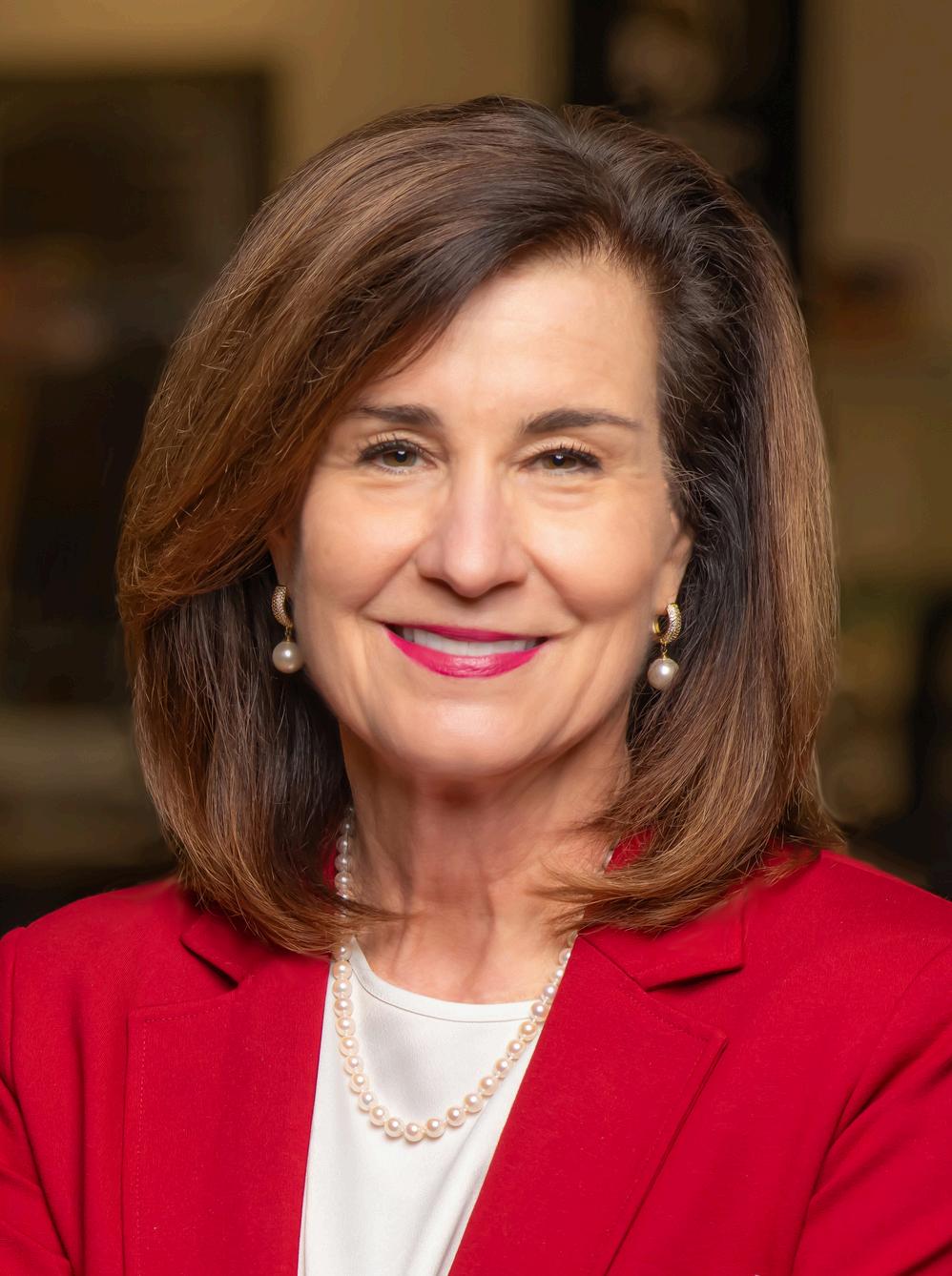
Dr. Linette Dodson Deputy Superintendent, Georgia School Nutrition
Welcome to "Let'sTalkAbout School Meals," a resource designed to provide parents and families with valuable insights into Georgia school nutrition. Our goal is to foster meaningful conversations between parents, students, and local school nutrition programs. We encourage you to reach outto your local school nutrition directorfor any questions and to make connections to the school meals in your area. We hope you find this resource informative and engaging as we worktogetherto supportthe wellbeing of our students.
Included in this Guide:
School Meal Conversation Starters for Parents & Students
School Meal Engagement Opportunities & Checklist
Supporting Health & Wellness in School Nutrition
Sustainability in School Nutrition
School Nutrition & AllergyAwareness
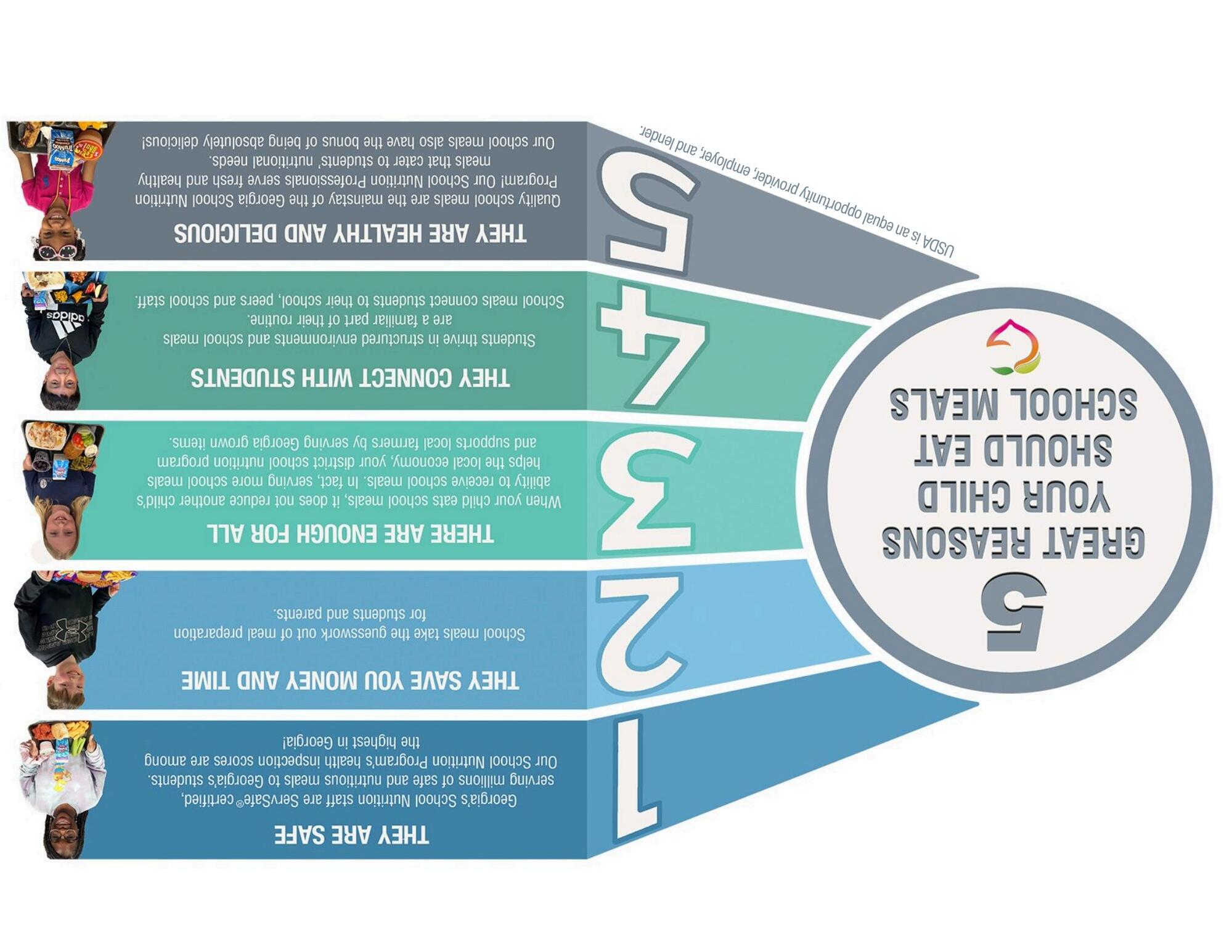
5 Reasons to Eat School Meals
5 Reasons to Complete Free & Reduced Meal Applications
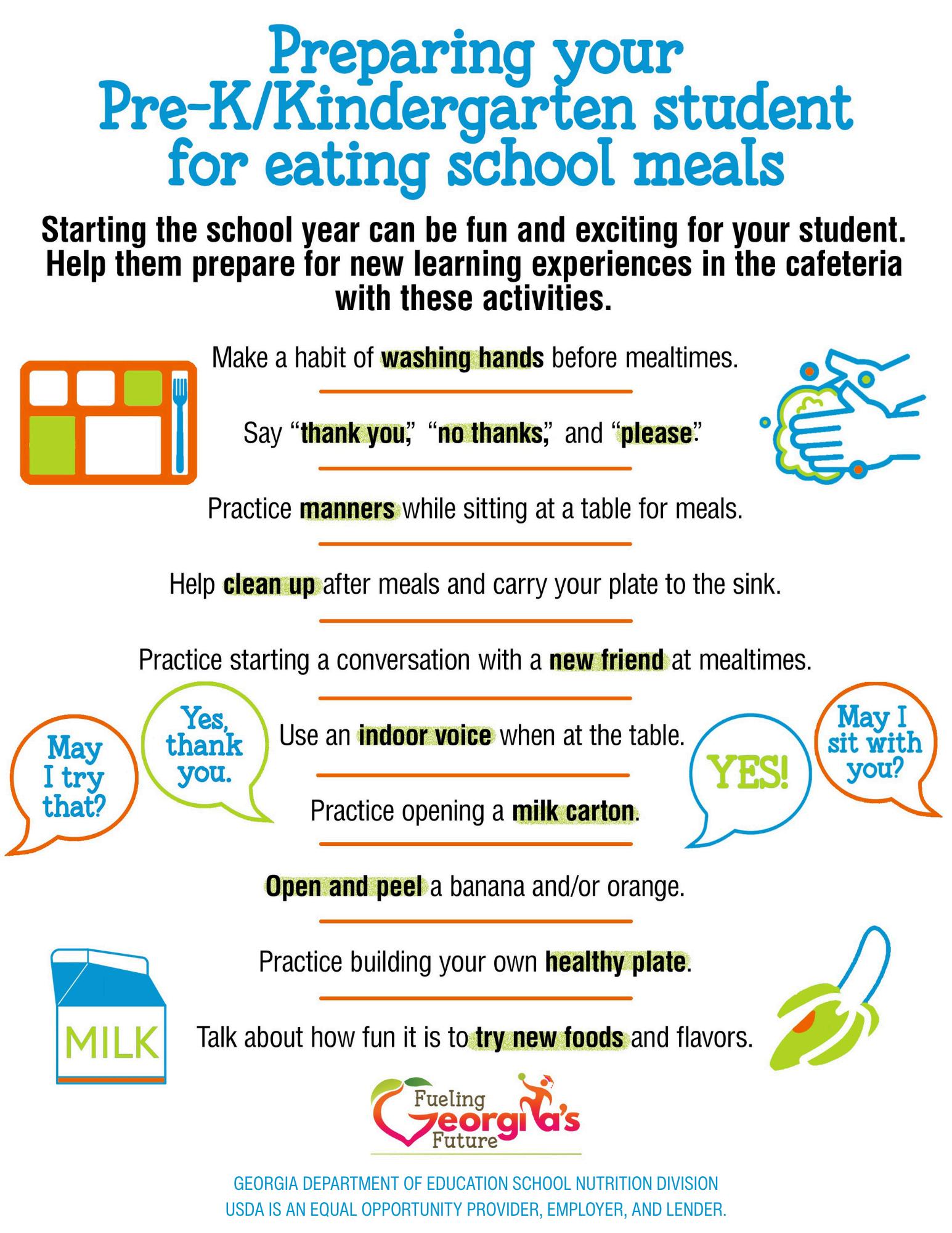
Preparing your PreK/Kindergarten Studentfor Eating School Meals
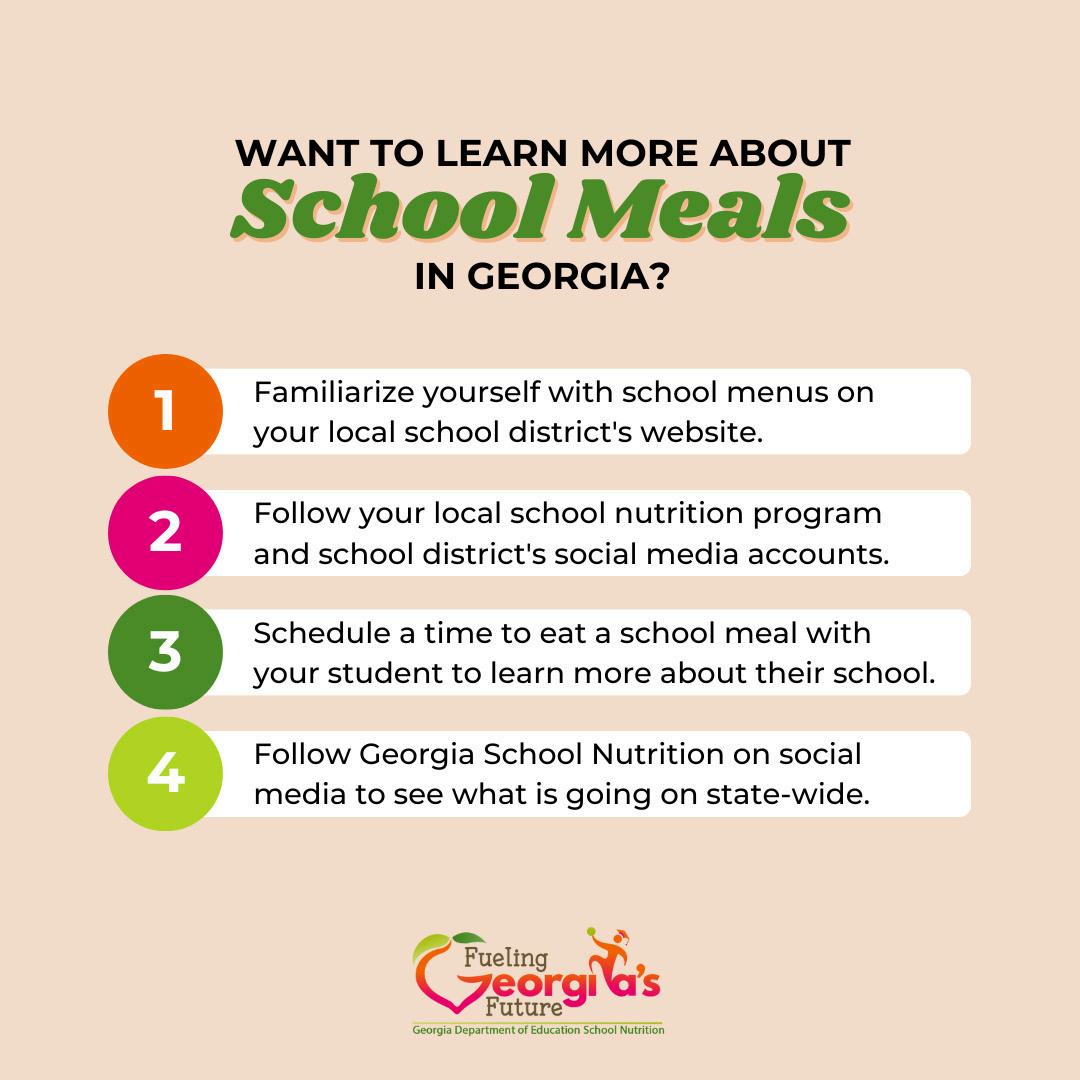
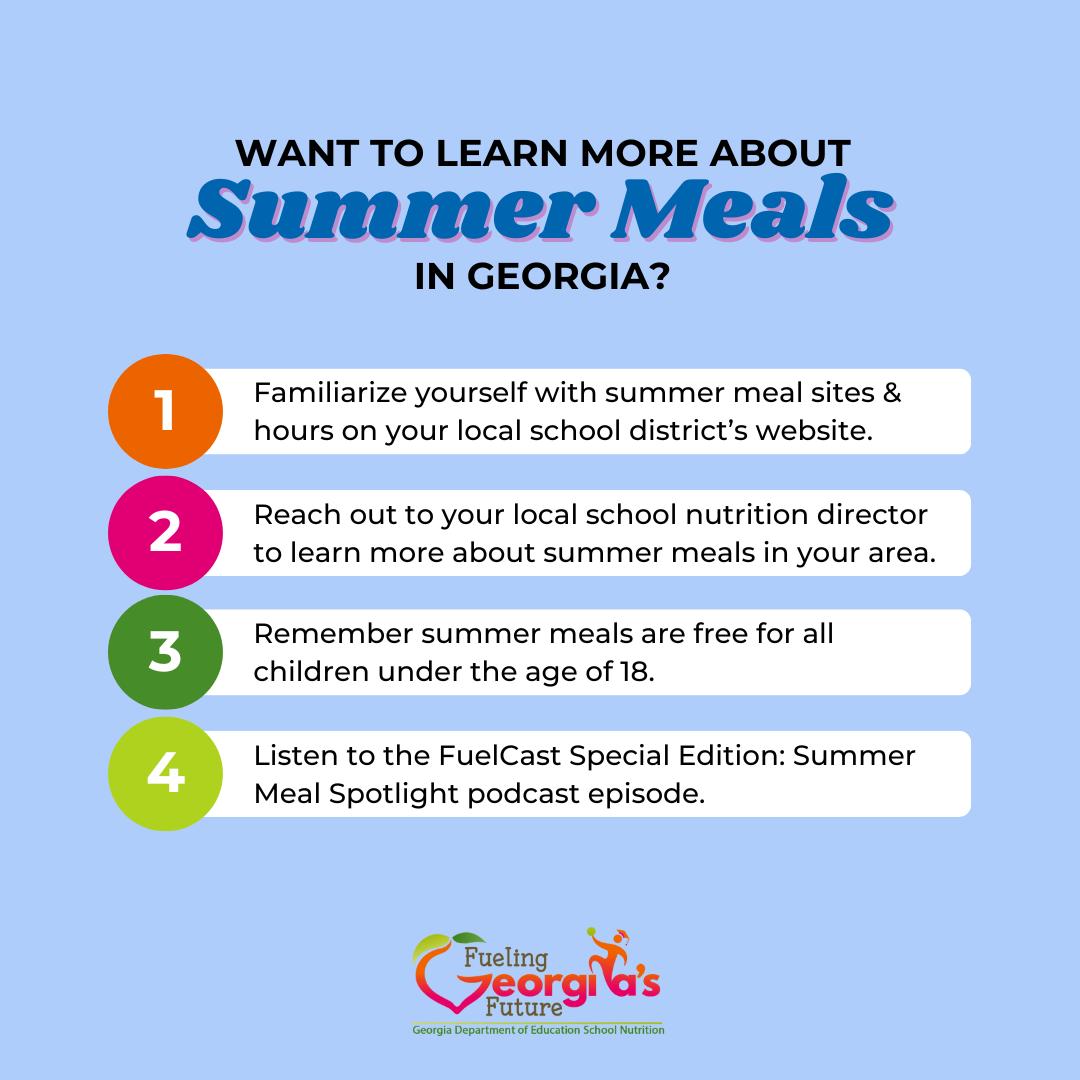
Howto Learn More About School Meals & Summer Meals
Let’s Talk Abou School Meals
Did you know?
All students have access to Georgia grown foods and seasonal menu options
Participation in school meals supports academic performance
Eating school meals boosts the brain and provides energy to help students stay focused and ready to learn
Questions to Ask Your Student
What did you have for lunch today?
Did you try any new foods at school today? What did you like or dislike about them?
What vegetables and fruits did you eat today?
What options did you have to choose from? Which items did you select and why?
What was offered that you did not select?
What was your favorite thing that you ate today?
Who did you eat lunch with?
Is there a food you tried at school that you would like to eat at home? Is there a school recipe that you would like to prepare at home?
Let’s Talk About School Meals
Engagement Checklist
Join your school wellness committee and participate in school activities
Connect with your local school nutrition director to learn more about school meals. Review school menus with your student and discuss the available food choices
Follow your local school nutrition program on social media or visit their website for more information.
Questions to Ask Your Local School Nutrition Director
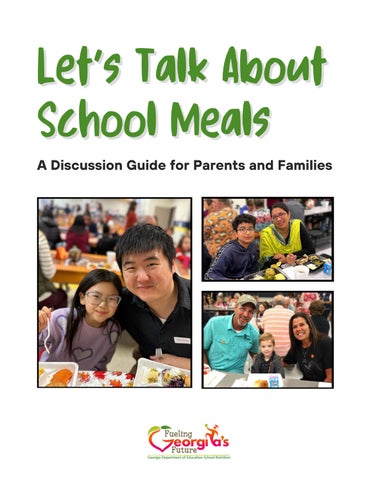
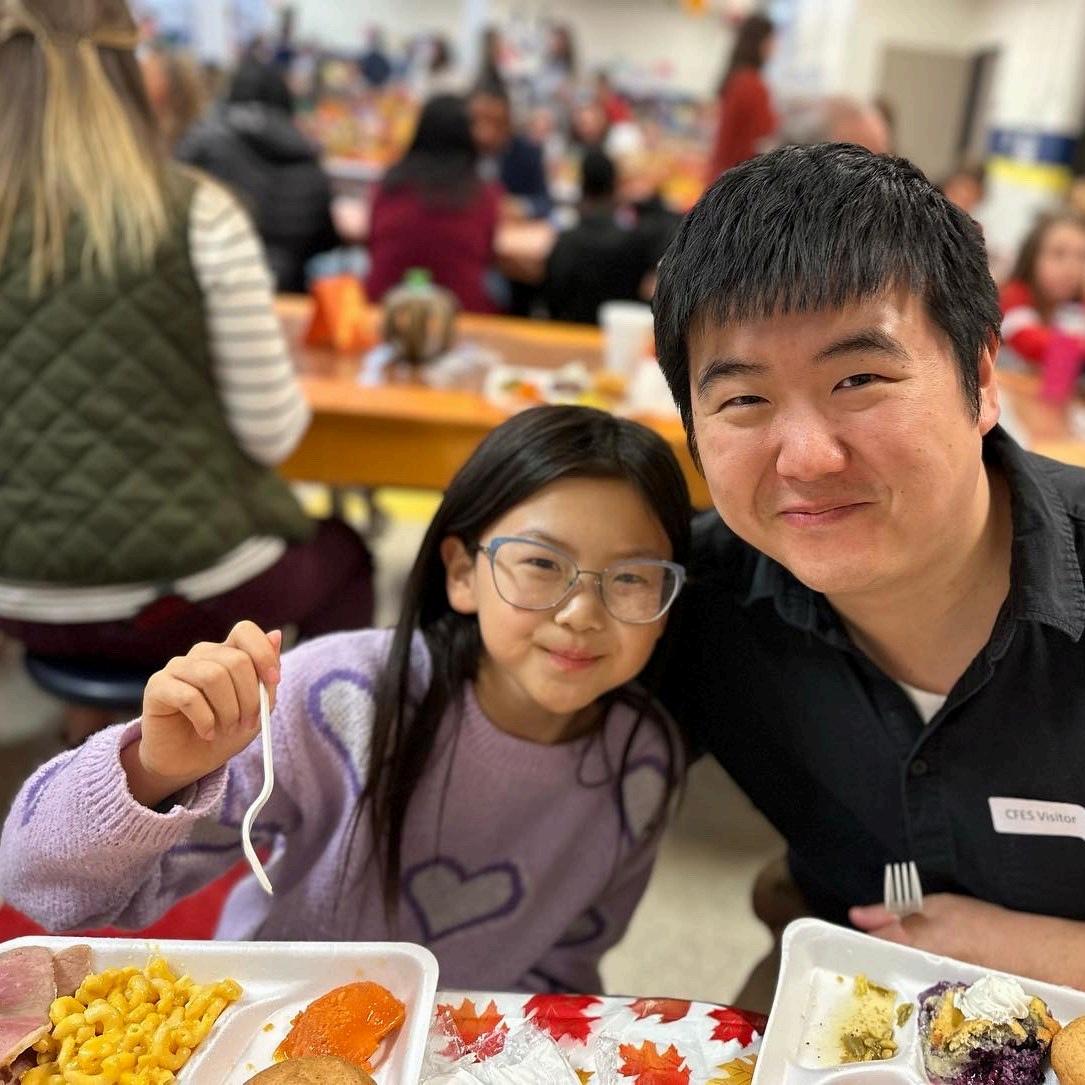
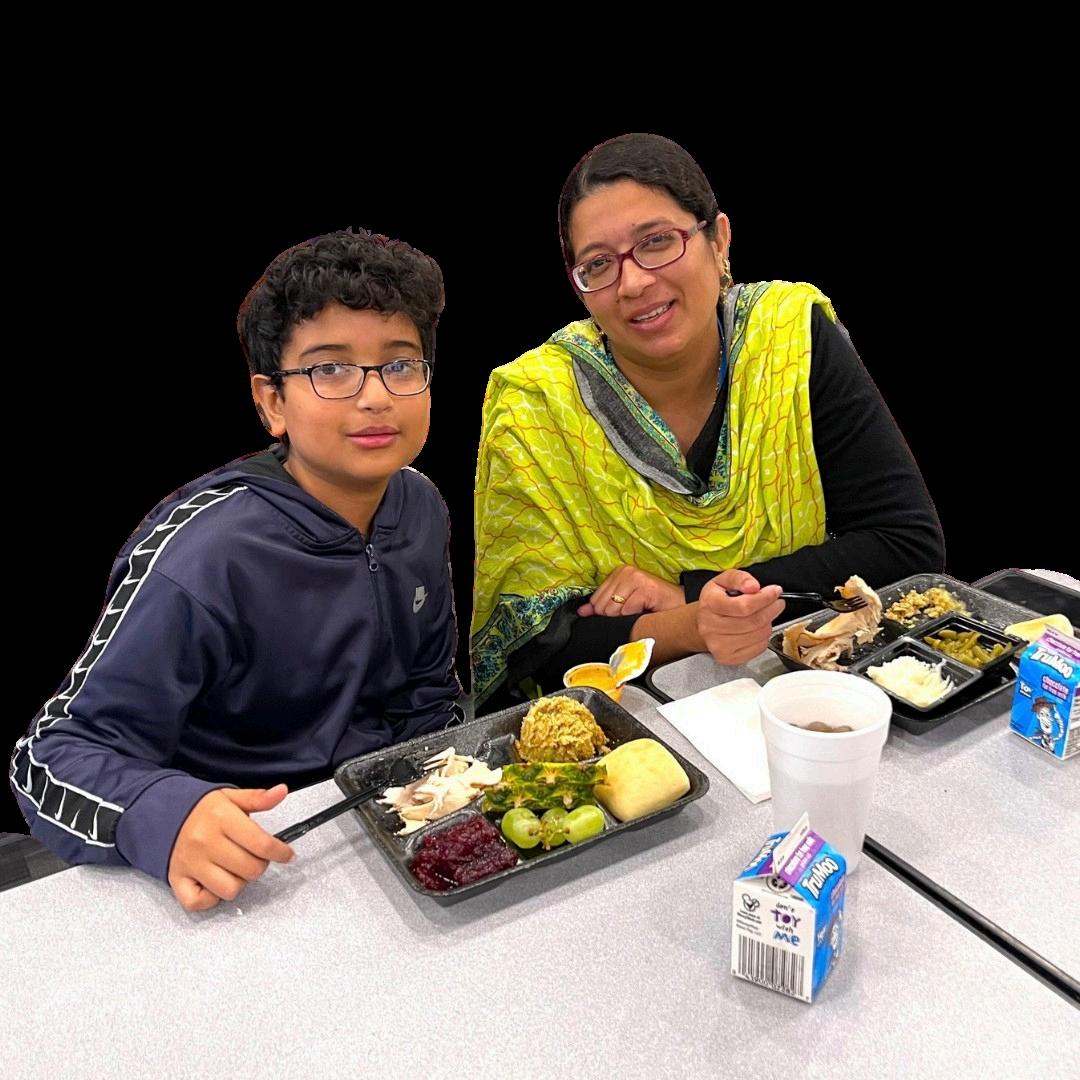
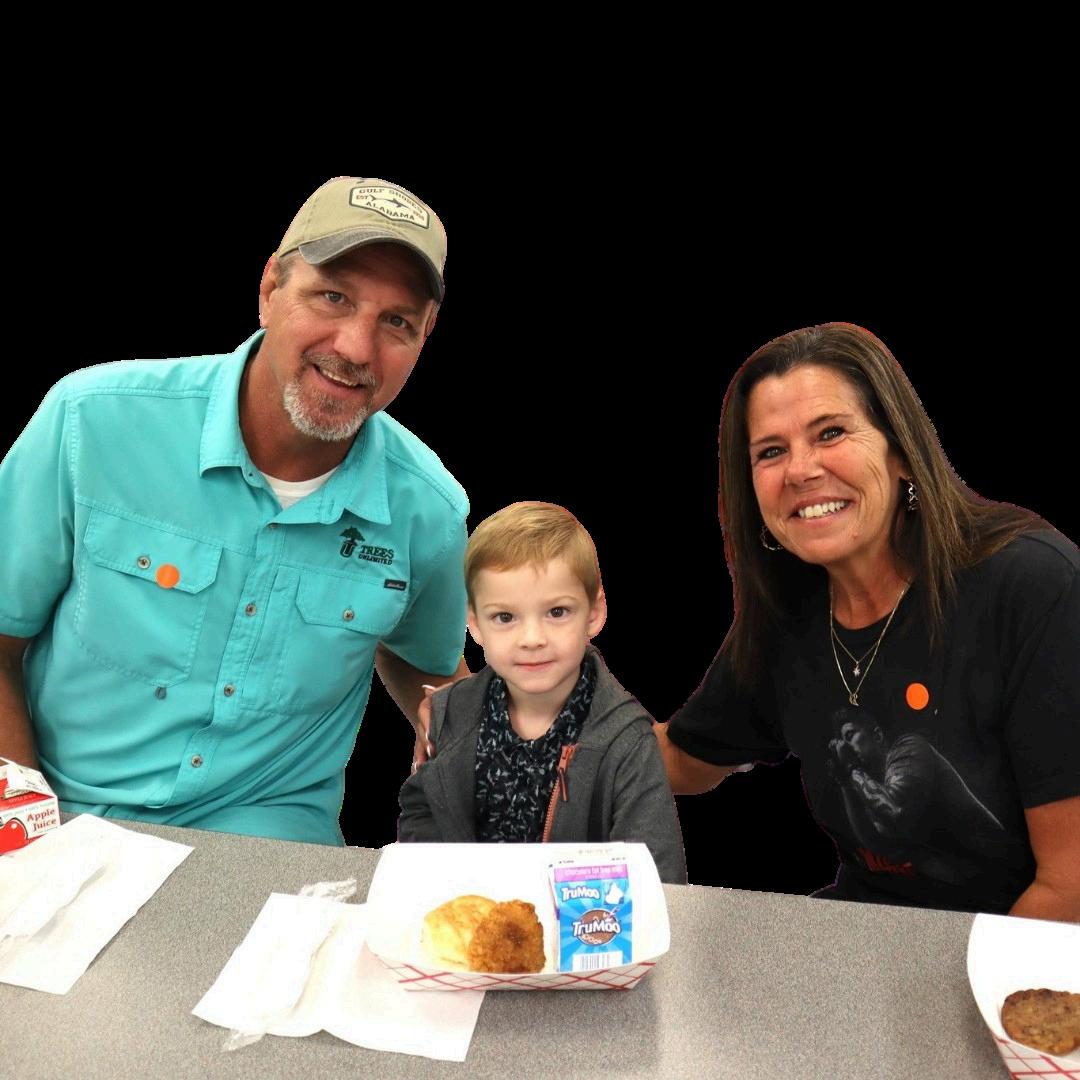
Can I visit my child’s school and eat a school meal with them at breakfast or lunch?
How do you decide what is served to students each day? Who does the menu planning?
Where does the food come from? Do you serve any locally sourced or Georgia grown products?
How can I support my student in making good choices in their school cafeteria?
How do you handle food allergies at my child’s school?
Let’s Talk Abo School Meals
Health & Wellness in School Nutrition
Did you know?
School nutrition programs are committed to promoting student health and wellness through nutritious meals, balanced menus, food-based learning and wellness initiatives.
School nutrition programs follow USDA nutrition guidelines to ensure meals are balanced with whole grains, lean proteins, fruits, vegetables, and low-fat dairy School meals support students’ physical and cognitive growth and development.
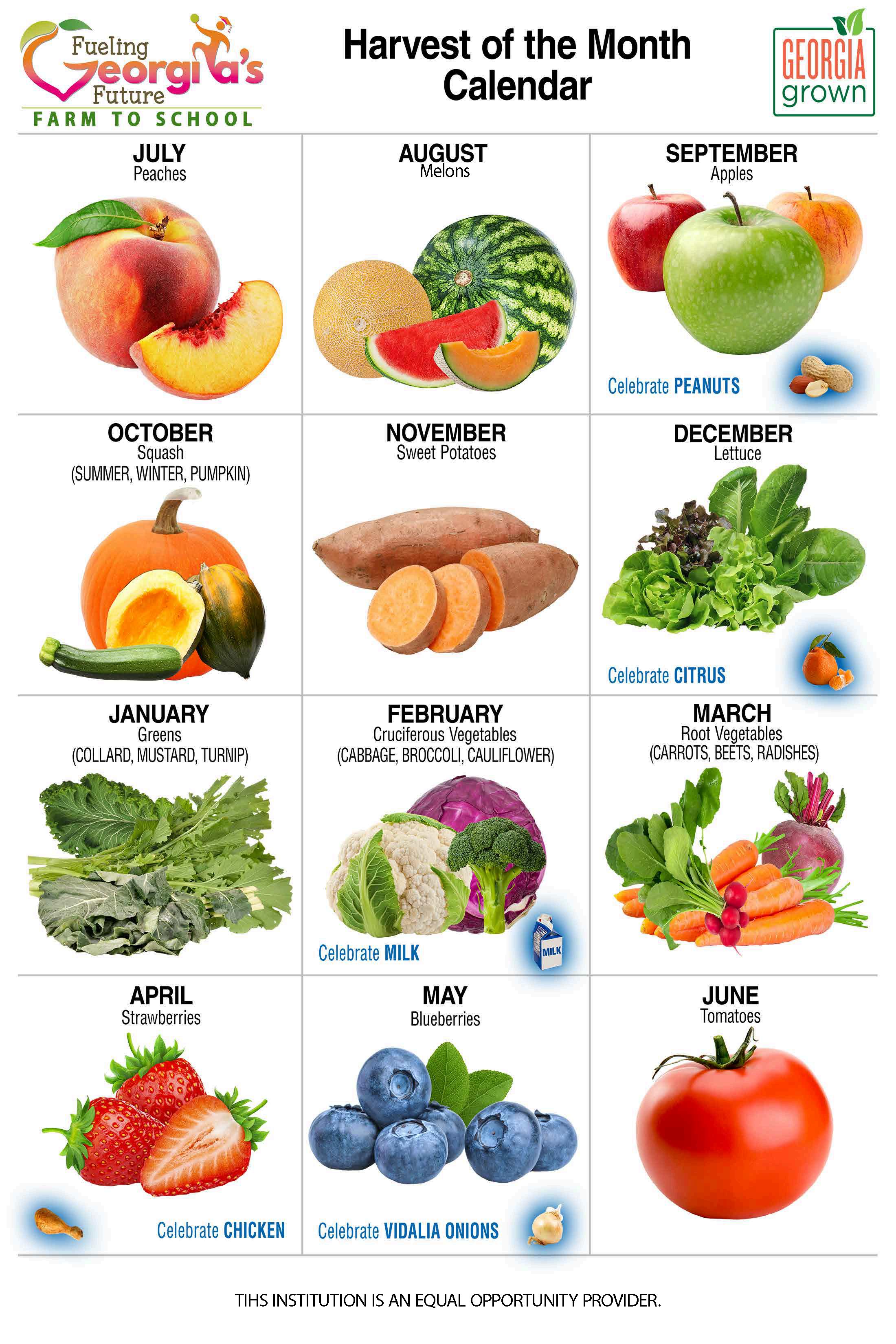
Schools feature a variety of fresh, seasonal produce on menus and participate in farm to school programs to source local ingredients.
Supporting Health and Wellness
Stay involved with school wellness initiatives by:
1 Participating in your school's wellness committee or activities
2 Encouraging your child to try newfoods offered as part of school meals
3. Contacting your school nutrition directorfor more details on wellness initiatives in your school.
Let’s Talk Abou School Meals
Sustainability in School Nutrition
Did you know?
Sustainability is a key part of school nutrition, helping reduce waste, conserve resources, and support environmentally responsible practices
Students can choose what they take from the school meal options, preventing unnecessary food waste
Some schools participate in composting programs, turning kitchen food scraps into soil for school gardens
Recycling efforts help reduce waste from packaging and single-use plastics
Supporting Sustainability
Stay involved with sustainability by:
1 Talking with your child about only taking what they will eat in the cafeteria
2. Volunteering with school garden programs or farm-to-school and wellness initiatives in your district.
3 Contacting your local school nutrition director to learn more about sustainability programs in your system
Let’s Talk Abou School Meals
School Nutrition & Allergy Safety
Did you know?
Ensuring a safe and healthy mealtime experience for students with food allergies is a priority in school nutrition programs
School cafeterias follow strict protocols to prevent cross-contact, check ingredient labels, and provide allergen-free options when needed.
School nurses and cafeteria staff collaborate to support students with allergies
Action Items for Students with Food Allergies
1. Inform the school nurse and cafeteria manager of your child’s allergies and submit a Medical Statement for Special Dietary Needs if accommodation is required
2. Review school menus to help your student make informed meal choices.
3 Contact your school nutrition director for more details about allergy safety