
A Complete Guide to Medical Gas Pipeline Systems in Healthcare
What is a Medical Gas Pipeline System?
A medical gas pipeline system (MGPS) is one of the most critical yet often overlooked components of modern healthcare infrastructure. Think of it as the invisible lifeline of a hospital quietly working behind walls and ceilings, ensuring that essential gases like oxygen and medical air reach patients exactly when needed. Without this system, hospitals would rely heavily on individual gas cylinders, which are not only inefficient but also risky in emergency situations.
Simply saying, a medical gas pipeline system is a comprehensive and centralized network that transports medical gases including oxygen, nitrous oxide, carbon dioxide and vacuum suction directly to specific hospital areas of patient treatment facilities like ICUs, operation theaters, wards. These gases have various clinical applications ranging from life support, anesthesia administration, respiratory therapy to surgical procedures. As per recent market data from the industry, the global medical gas pipeline systems market was accounted at $6.83 billion in 2025 and is expected to grow at a slow pace on account of growing healthcare infrastructure.
Where MGPS comes to its own is supplying gases in a continuous, safe and controlled way. Imagine the scenario where a patient suddenly requires oxygen there is little time to replace cylinders. The pipeline gives you something that’s in-queue, like power from a power grid.
Components of a Medical Gas Pipeline System
A medical gas pipeline system is not simply a collection of pipes; it is an engineered network consisting of many different components that must integrate and interact both properly and safely. Every component is crucial to maintaining safety, precision, and reliability.
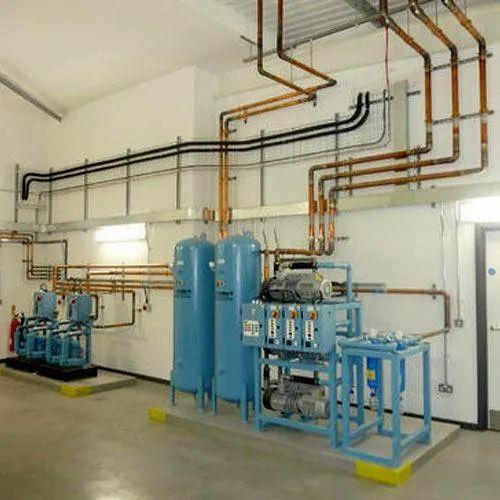
Liquid oxygen tanks, gas cylinders or air compressors form the supply source at the center of this system. These sources produce or hold the gases needed for medical usage. From there, gases flow into the pipeline network and are distributed throughout the facility.
The controller (another key element) manages pressure and flow. If not properly controlled, gas delivery could be unsafe or inconsistent. The system is complemented by zone valves that enable the isolation of certain areas in the hospital for maintenance or emergencies.
The alarm and monitoring system is one of the most essential safety features. Such alarms alert staff to pressure drops, leakage or system failure. Newer systems even offer digital monitoring, which allows for instantaneous tracking.
Lastly, gases are provided to terminal units or outlets for doctors and nurses to use directly. A full MGPS include supply, distribution and monitoring and alarm system to feed the international standard like ISO 7396.
How Medical Gas Pipeline Systems Work?
MGPS Similarity With A Water Supply System In Your Home As its Working Operation These pipelines don’t carry water but life-saving gases maintained under controlled pressure.
It all starts where the gases are stored or generated, the supply source. These gases are then passed through pressure regulators, so they can the be delivered at the correct pressure. From there, they traverse a network of copper pipelines that crisscross the building.
The gas is monitored throughout the system for pressure and purity. If there’s any problem — a leak, say, or a drop in pressure the alarm system immediately alerts the medical staff. This enables timely intervention and minimizes possible dangers.
At the endpoint, those gases have outlets near patient beds or in operating rooms. These outlets facilitate the easy connection of equipment like ventilators or anesthesia machines by medical staff.
This smooth transition ensures uninterrupted critical care, that can be crucial in the middle of surgeries or emergencies.
Importance of
Medical
Gas Pipeline Systems in Healthcare
Medical gas pipeline systems are not a luxury; they are a necessity. They even have a direct role in saving lives daily.
Continuous Supply of gases is one of the Major advantages of MGPS. Seconds matter in emergencies, they can be life or death. A centralised system means that gas cylinders are not handled manually, decreasing both human error and delays.
The second big reason is increased safety. They contain gas under high pressure, and individual cylinders can leak. Properly installed pipeline systems help eliminate these risks and provide controlled delivery.
MGPS also streamlines efficiency and workflow in hospitals. It has allowed medical staff to take care of their patients, not worrying about gas supply. This also translates into saving storage space as cylinders are no longer needed in large numbers.
On the other hand, from an economic viewpoint centralized systems are less expensive in the
long term. They help to minimize waste, make energy use more efficient and reduce the need for manual labor.
The need for quality medical gas systems has grown accordingly with the rapid addition of hospitals across the world. Traditionally, governments and healthcare providers paid little attention to upgrading legacy systems until they were forced to bring things up-to-date with modern safety standards in order to provide patients with better care.
Safety Standards and Regulations
A medical gas pipeline system is only as strong as its safety measures. Since these systems involve gases that support life, even minutiae of errors can have disastrous effects.
MGPS standards International standards such as ISO 7396 detail personal guidelines for the design, installation, testing and maintenance of MGPS. These standards help ensure that systems dispense gases at the appropriate pressure, maintain purity qualifications, and avoid cross contamination.
A gasflow non-interchangeable socketsare quyosgas having different un interconnected connectors. Oxygen outlets, for instance, are not shaped the same as nitrous oxide outlets to prevent fatal mix-ups.
Also important are alarm systems that notify personnel of system failure.[1] It requires periodic maintenance and inspection to maintain this reliability over time, too.
The safety has now moved into the next phase with digital monitoring systems. Such systems offer real-time information, early leak detection and even predictive maintenance.
Complying with these standards is far more than a mandate it’s about ensuring patients have safe and uninterrupted care.
Final Words
A medical gas pipeline system is truly the backbone for every health care facility. It underlies essential medical procedures, provides safety for patients and vastly improves the overall efficiency within a hospital environment. From delivering oxygen in emergency rooms to
powering intricate operations, its place is invaluable.
As the healthcare infrastructure develops, high-performance and optimal MGPS will become even more important. Thanks to advances in technology, along with tougher safety regulations and a growing awareness of the importance of these systems, they are getting smarter, safer and more efficient.
MGPS, in some sense, is the circulatory system of a hospital constantly transporting what’s necessary to keep everything running. Without it, the contemporary healthcare system would not function as it does.