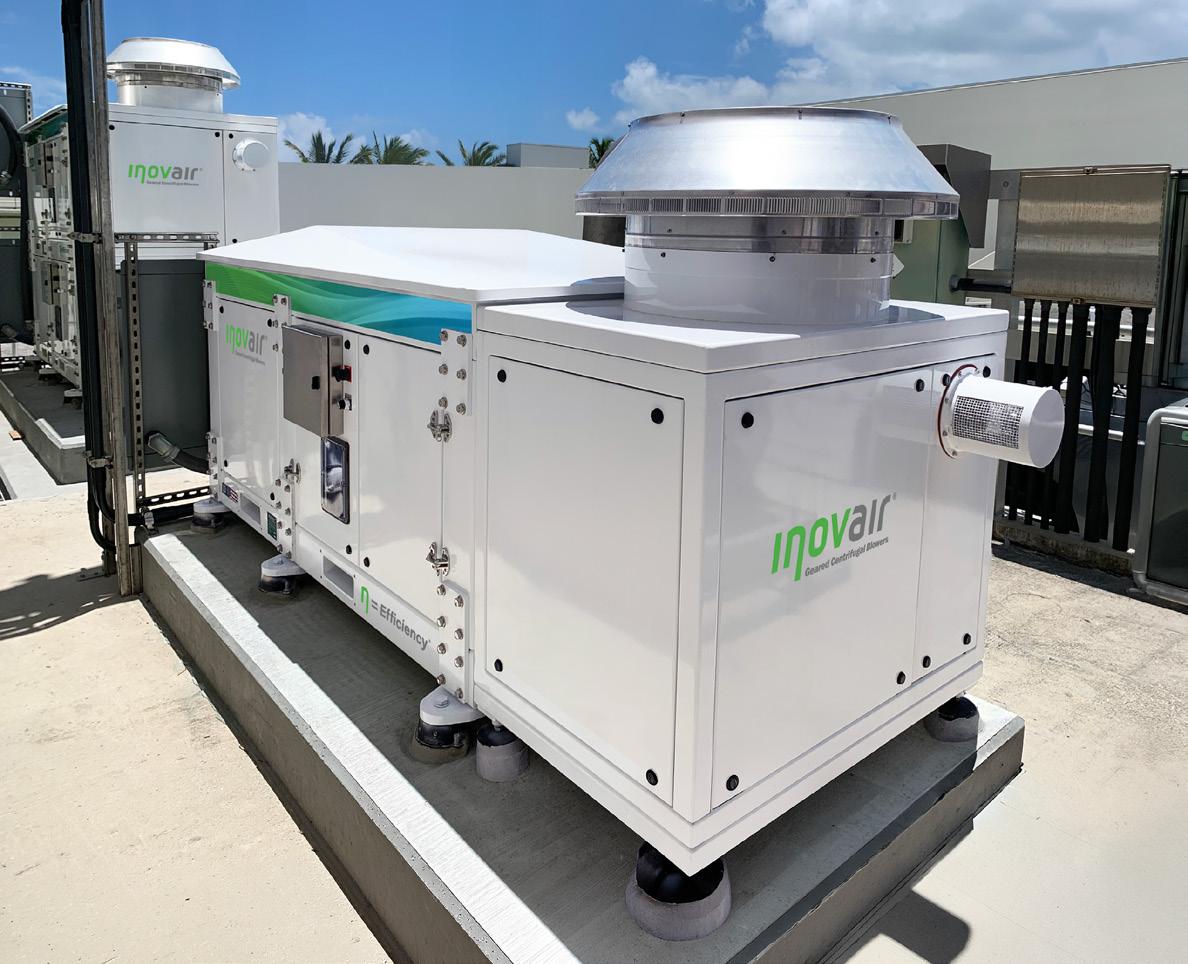
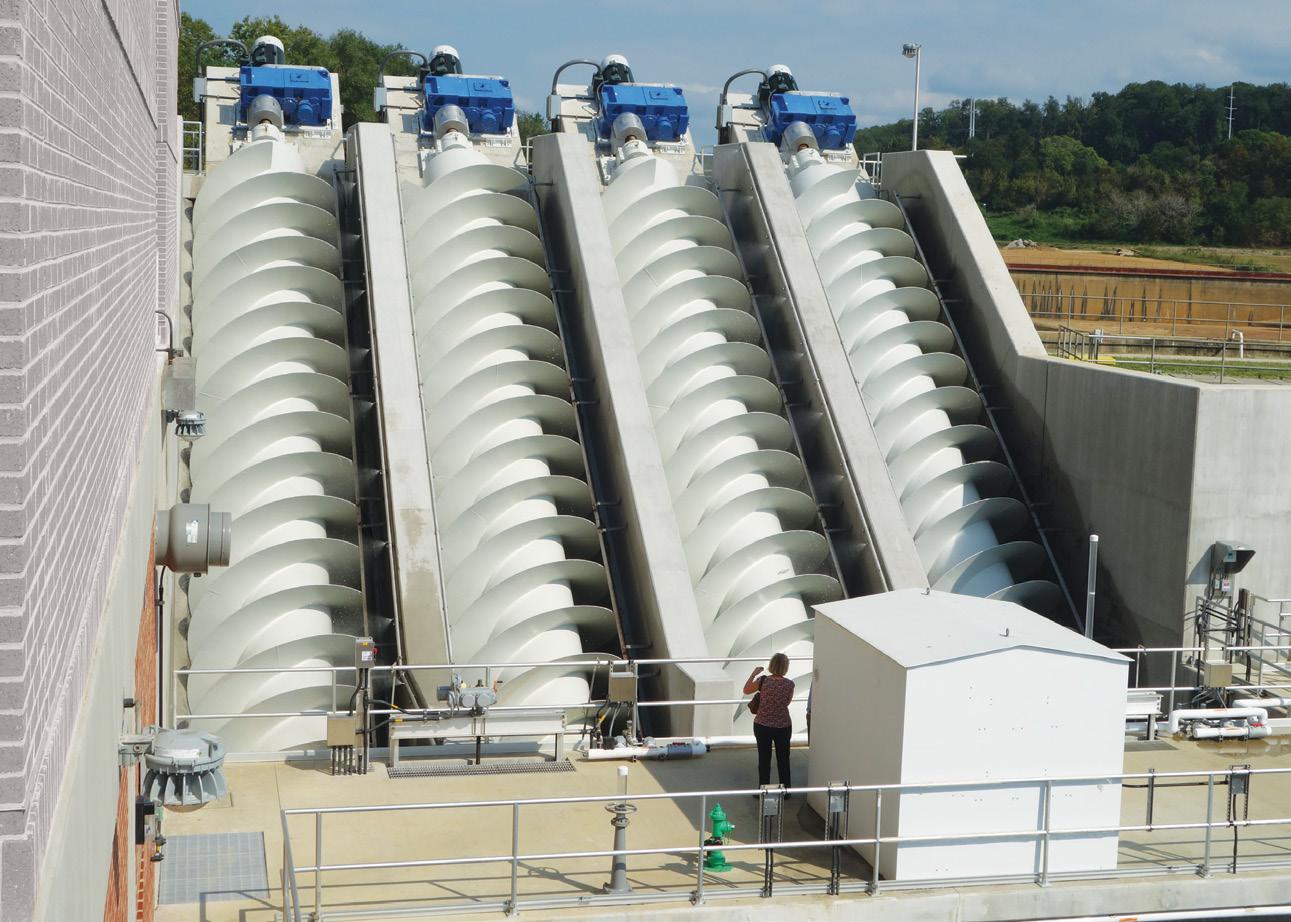
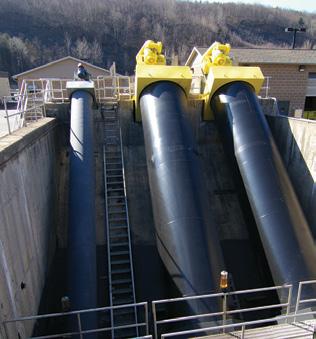
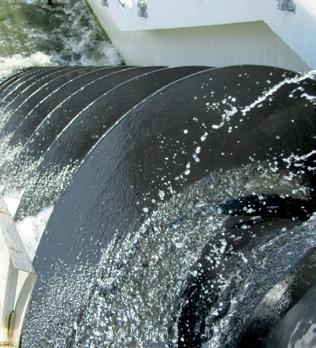
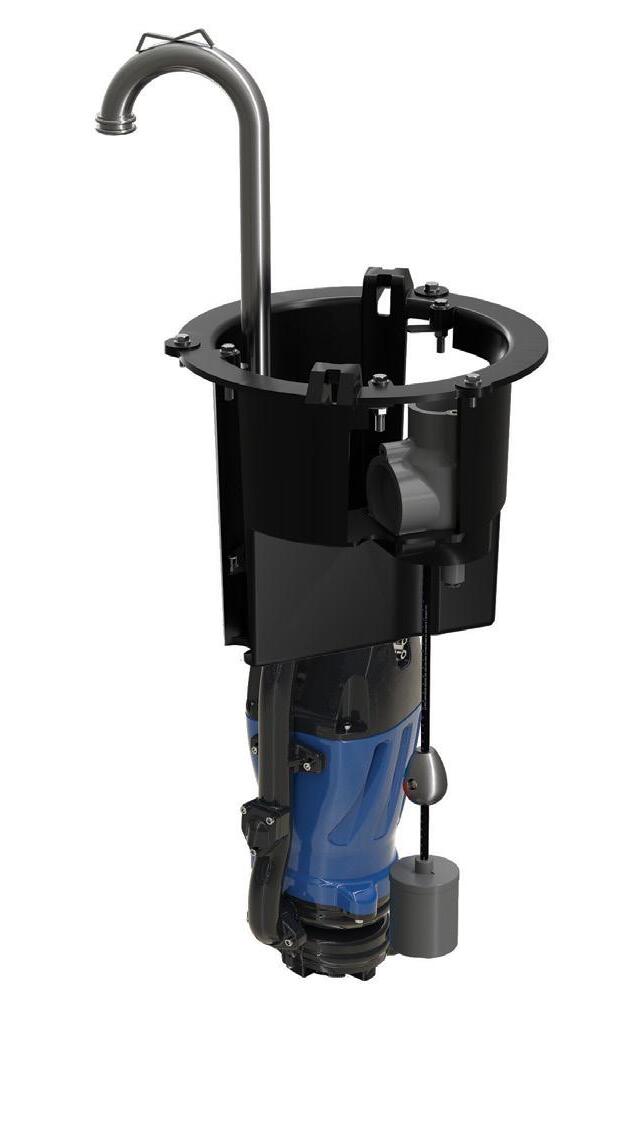
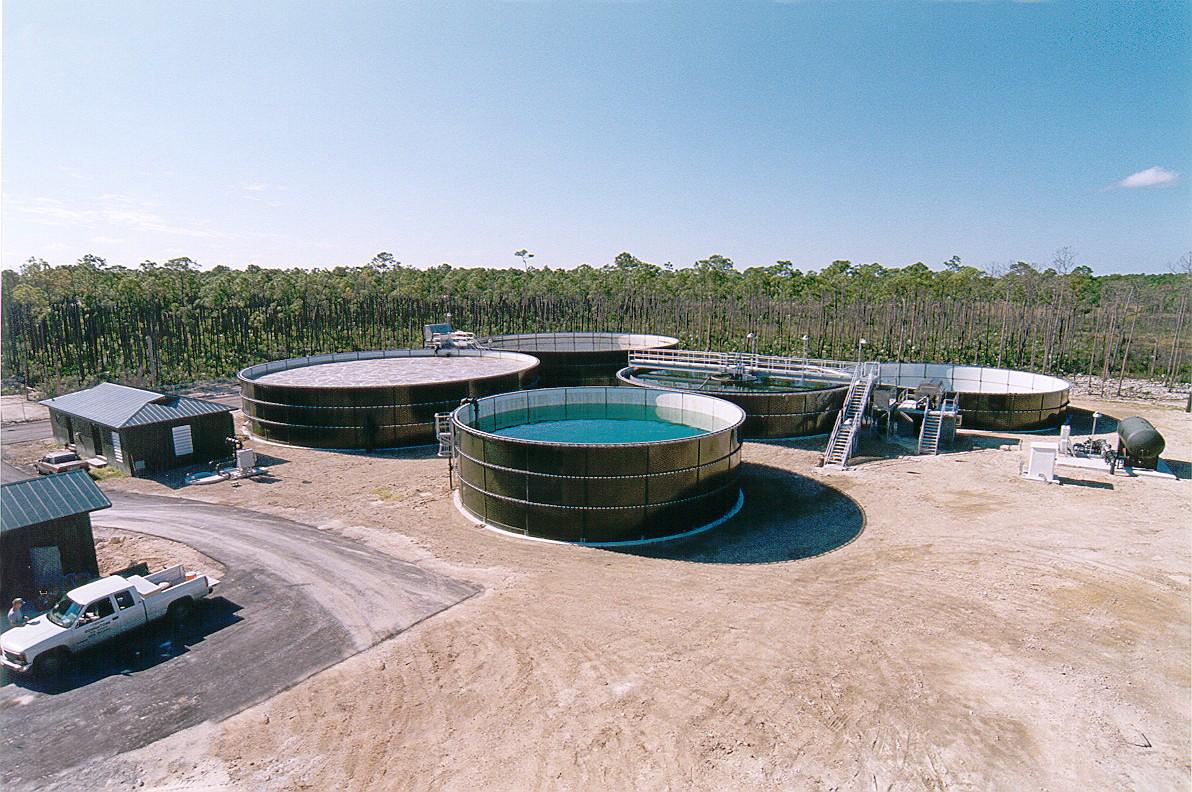
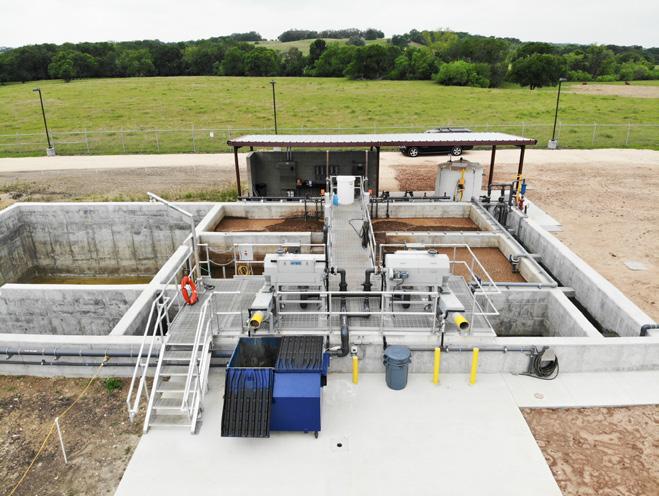
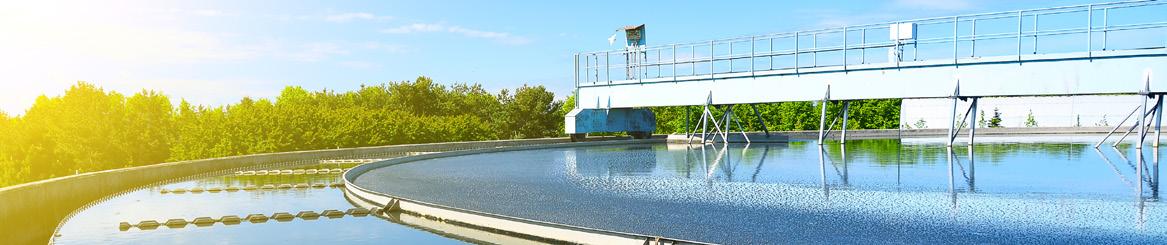
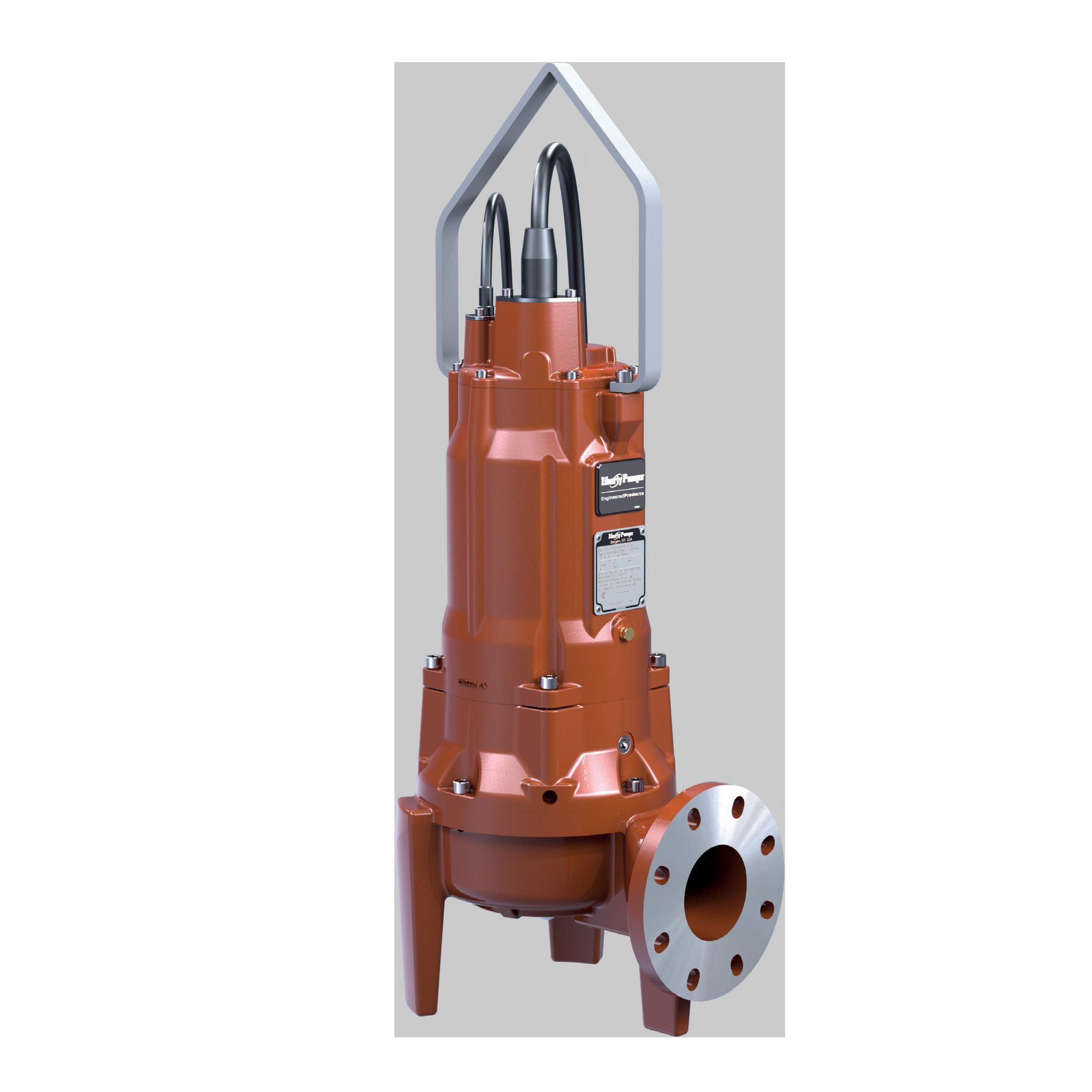
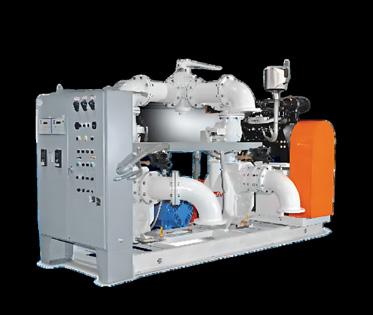
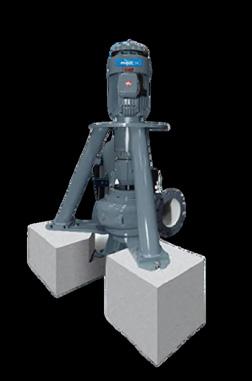
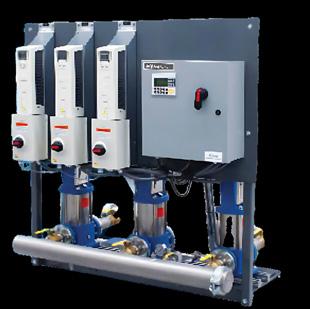
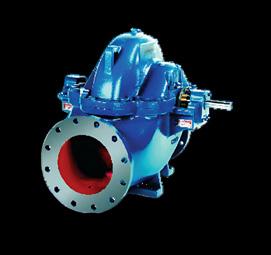
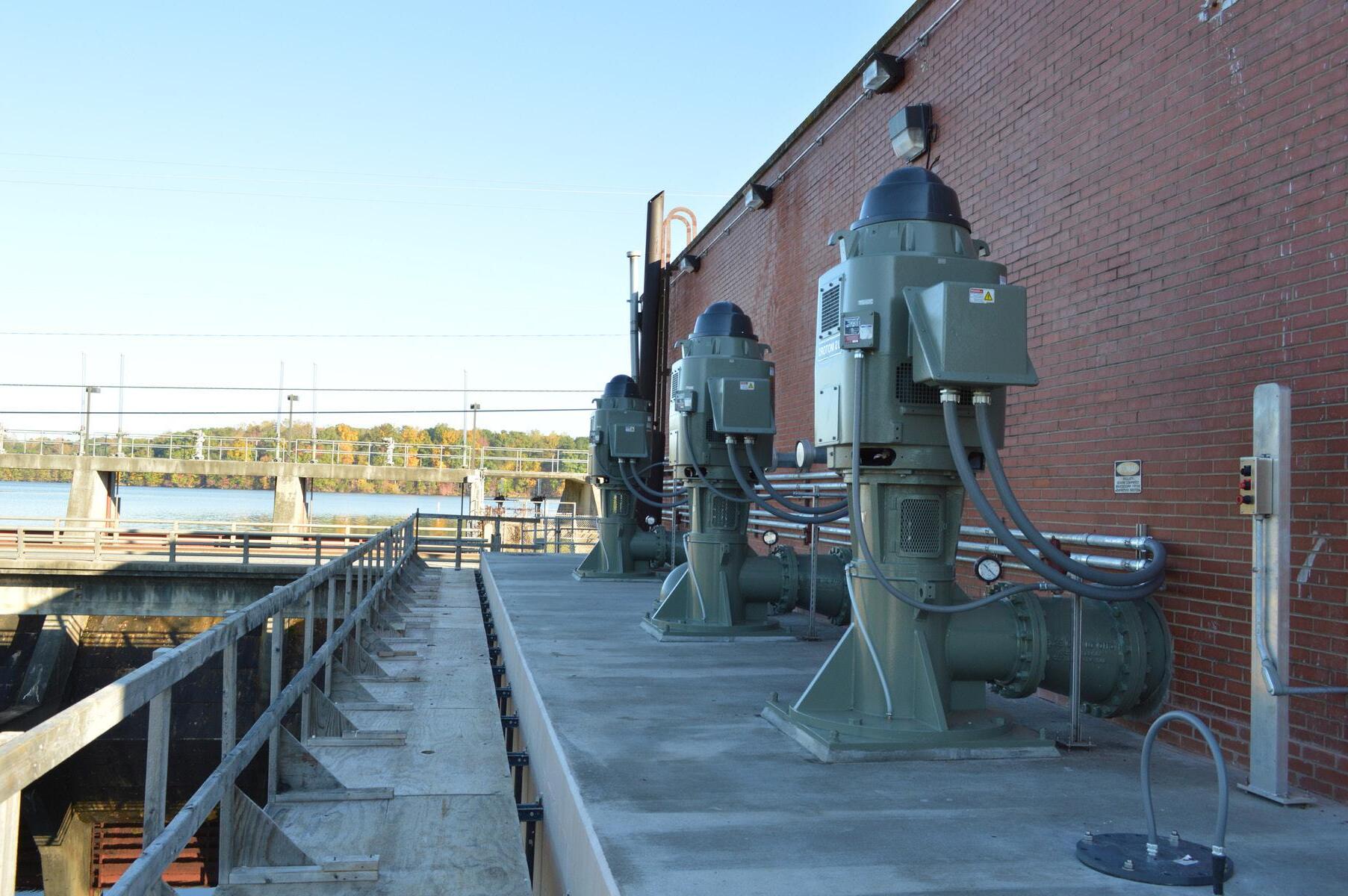
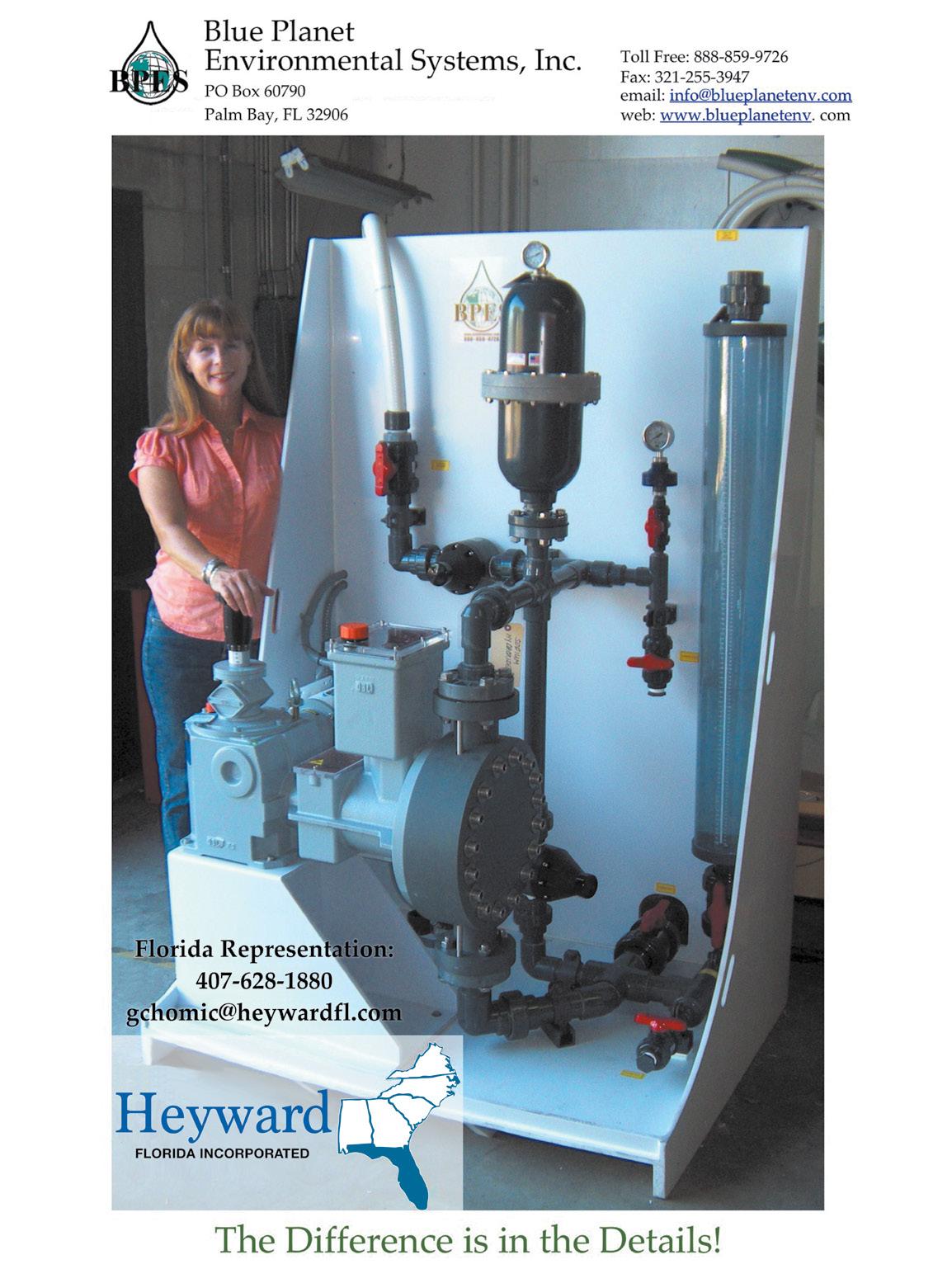
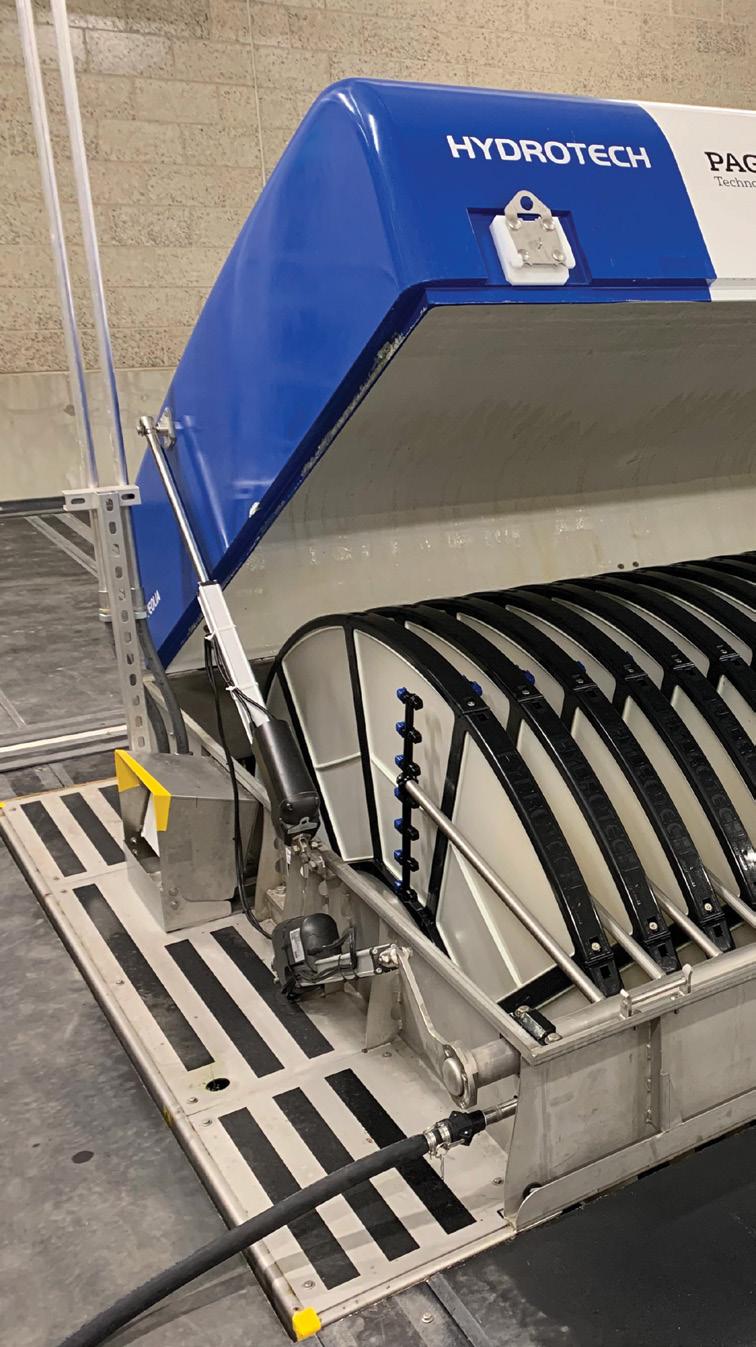
Designed for reliable operation across all wastewater processes, seasons, and WWT environments—supporting continuous duty in hot climates, high-humidity blower rooms, and challenging, dusty conditions.
• Proven in Variable Pressure Applications
• Unmatched Combination of Reliability and Turndown
• 99.6% Uptime with Unlimited Start-Stop
• Up to 45% Energy Savings, Owner Serviceable
Editor’s Office and Advertiser Information:
Florida Water Resources Journal
1402 Emerald Lakes Drive
Clermont, FL 34711
Phone: 352-241-6006
Editorial, editor@fwrj.com
Display and Classified Advertising, ads@fwrj.com
Business Office: 1402 Emerald Lakes Drive, Clermont, FL 34711
Web: www.fwrj.com
General Manager: Michael Delaney
Editor: Rick Harmon
Graphic Design Manager: Patrick Delaney
Mailing Coordinator: Buena Vista Publishing
Published by BUENA VISTA PUBLISHING for Florida Water Resources Journal Inc.
President: Richard Anderson (FSAWWA) Peace River Manasota Regional Water Supply Authority
Vice President: Joe Paterniti (FWEA) Clay County Utility Authority
Treasurer: Rim Bishop (FWPCOA) Seacoast Utility Authority
Secretary: Rim Bishop (FWPCOA) Seacoast Utility Authority
Moving?
The Post Office will not forward your magazine. Do not count on getting the Journal unless you notify us directly of address changes by the 15th of the month preceding the month of issue. Please do not telephone address changes. Email changes to changes@fwrj.com or mail to Florida Water Resources Journal, 1402 Emerald Lakes Drive, Clermont, FL 34711
Membership Questions
FSAWWA: Casey Cumiskey – 407-979-4806 or Casey@fsawwa.org
FWEA: Laura Cooley, 407-574-3318, admin@fwea.org
FWPCOA: Darin Bishop – 561-840-0340
Training Questions
FSAWWA: Donna Metherall – 407-979-4805 or Donna@fsawwa.org
FWPCOA: Shirley Reaves – 321-383-9690
For Other Information
FDEP Operator Certification: Ron McCulley – 850-245-7500
FSAWWA: Kim Kowalski – (407) 979-4814
Florida Water Resources Conference: 267-884-6292
FWPCOA Operators Helping Operators: John Lang – 772-559-0722, oho@fwpcoa.org
FWEA: Laura Cooley – 407-574-3318, admin@fwea.org
Websites
Florida Water Resources Journal: www.fwrj.com
FWPCOA: www.fwpcoa.org
FSAWWA: www.fsawwa.org
FWEA: www.fwea.org and www.fweauc.org
Florida Water Resources Conference: www.fwrc.org
News and Features
Practices and Strategies for a Sustainable Water Future
Researchers Create DNA Detection Tool to Stop Spread of Invasive Asian Swamp Eels, Bullseye Snakeheads
Building Public Trust: How to Communicate Water Reuse Effectively to Any Audience— Diana Leonard and Pranjali Kumar
The AI Skepticism That Won’t Age Out—Troy Harrison
News Beat
Technical Articles
30 Water Conservation Through a Stormwater Augmentation Program—Weston Haggen, Emily Williamson, Robert Bolton, and David Sackett
Education and Training
FWPCOA Region 4 Short School
CEU Challenge
FSAWWA Fall Conference Call for Papers
Columns
Speaking Out—Tyler Tedcastle
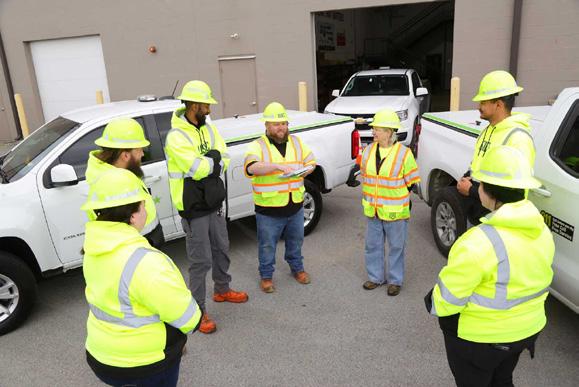
Let’s Talk Safety: How to Conduct a Safety Tailgate
Test Yourself—Charles Lee Martin Jr.
FWEA Focus—Joan Fernandez
C Factor—Kevin G. Shropshire
Reader Profile—Brittany Bassett
FSAWWA at 100: Our Story Begins in 1926
100 years goes faster than you think!
As the Florida Section of the American Water Works Association (FSAWWA) celebrates is 100th anniversary this year, we’ll be publishing several articles in the magazine in 2026 to give you some history of the section, highlight several important people, and take a step back in time to explore some fun facts and milestones about what was happening in Florida and across America during FSAWWA’s 100-year journey.
Start of the Section
The FSAWWA was established in 1926 during an organizational meeting in Tampa. This milestone was the culmination of two years of tireless effort by a dedicated group of water works professionals. Although many individuals contributed significantly, a few key figures played pivotal roles in bringing this vision to life.
Fred Lane, superintendent of the St. Petersburg Water Department, was crucial in leading Florida’s break from the Southeastern Section of AWWA. In July 1925, H. T. Oberly, assistant superintendent at St. Petersburg, along
with fellow water works experts, collaborated to form the Florida Section. These industry leaders were supported and encouraged by E. L. Filby, chief engineer of the Florida State Board of Health. The collective efforts of these individuals, along with the enthusiasm of others. including Anson W. Squires, A. F. Michaels, and C. C. Brown, drove this significant transition forward.
The creation of the Florida Section was not the work of a few, but a collective effort spearheaded by a group of sponsors. They prepared and signed a petition, endorsed by 25 sponsors, and presented it at an AWWA meeting, requesting in the formation of a new section.
Filby, alongside several water works equipment salespeople who traveled extensively across the state, gathered input from other water works personnel. Their findings were consolidated by the St. Petersburg Water Department. Lane, Oberly, and Filby managed much of the clerical work and financed some of the travel expenses out of their own pockets.
In June 1926, a delegation from Florida presented the petition to AWWA at its annual meeting in Buffalo, N.Y., requesting a charter to form the Florida Section. This pivotal moment marked the beginning of a new chapter for the section, where there were just 19 active AWWA members eager to start this new venture.
Where Were You 25 Years Ago in 2001?
Here are some interesting facts from that year.
S Larry Ruffin was Florida Section chair
S Wikipedia was launched
S The first Apple iPod was released
S “Sex and the City” won the Emmy for Outstanding Comedy Series
S On September 11, terrorists hijacked four commercial airplanes, attacking the World Trade Center and the Pentagon
S AOL.com was the most popular website
S Joshua and Ashley were favorite baby names
S The Baltimore Ravens were the Super Bowl XXVX champs
S Gasoline cost $1.46 a gallon
S Eggs cost 90 cents a dozen
S Florida’s population was 16.4 million people
S 584 million gallons per day of reclaimed water were used on average in Florida
S The Florida Section had 2800 members
S Replacement of water mains with prechlorinated pipe using pipe bursting was approved by the Florida Department of Environmental Protection
S FSAWWA Legislative Day was inaugurated
S FSAWWA Regions IX (Florida Panhandle) and X (Sarasota area) were formed
Next Article Coming
The second article in this series will provide more section information and take a look back 50 years. S
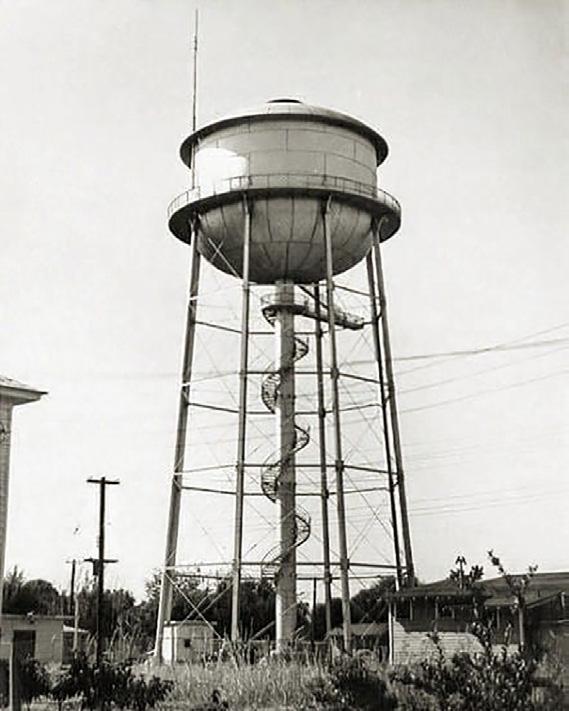
City of St. Petersburg’s Cresent Lake Water Tower, constructed in 1926, the year of the Florida Section’s inception.
Larry Ruffin
Energy and Sustainability Landscape: A Fundamental Rethinking of How Energy
is Produced, Stored, Distributed, and Managed
Going beyond renewables into the next phase of energy innovation
Renewable energy has emerged as one of the most transformative forces shaping the world’s transition toward a cleaner, more resilient future. As communities confront the realities of climate change, resource scarcity, and aging infrastructure, technologies such as solar, wind, hydropower, and bioenergy offer a path toward sustainable growth without compromising environmental integrity. Beyond reducing greenhouse gas emissions, renewable energy strengthens energy security, diversifies supply portfolios, and stimulates economic innovation. Together, these benefits position renewables not simply as an alternative to traditional power sources, but as a cornerstone of long-term environmental and economic stewardship.
Across industries and governments, the focus has moved from long-term ambition to near-term execution when is comes to energy use.
The Energy Transition is Gaining Momentum
Renewables are expanding, but the story is no longer just about adding capacity; it’s about integration. Solar, wind, and other clean energy sources are being combined with smarter grid systems, storage technologies, and digital
controls to create more resilient energy networks. The conversation has shifted from “alternative” energy to a “primary” energy strategy.
Energy Storage is Becoming Central to Reliability
As renewable adoption grows, energy storage is playing a critical role in stabilizing supply. Advances in battery technologies, flow batteries, and grid-scale storage solutions are helping utilities and businesses manage intermittency while improving long-term efficiency. Storage is no longer a supporting technology—it’s a cornerstone of modern energy infrastructure.
Carbon Management is Moving From Concept to Deployment
Carbon capture, utilization, and storage, along with carbon dioxide removal technologies, are gaining commercial traction. Companies and utilities are investing not only to meet regulatory requirements, but also to align with investor expectations and corporate sustainability goals. Decarbonization strategies are becoming measurable, operational initiatives.
Hydrogen and Alternative Fuels are Expanding Their Footprint
Clean hydrogen, biofuels, and other alternative energy carriers are advancing beyond pilot projects. Infrastructure development and policy support are accelerating adoption in heavy industry, transportation, and power generation. These markets are still evolving, but their strategic importance continues to grow. Strategic investments and collaborations among hydrogen providers are influencing business dynamics. For instance, in February 2026, Maserfrakt, a logistics service provider
in the construction, retail, and food industries, partnered with Norwegian Hydrogen to supply green hydrogen for Maserfrakt’s vehicle operations.
The Growth of Autonomous Operations in Smart Manufacturing
Industries is moving beyond automation toward fully autonomous and smart operations. Autonomous operations are the future of smart manufacturing and represent a shift toward autonomy that enhances efficiency and improves results. In addition, industrial autonomous operations are integrating artificial intelligence to enable smarter, faster, and more efficient processes.
Sustainability is Reshaping Industrial Decision Making
Sustainability considerations now influence supply chains, material sourcing, manufacturing processes, and capital investment decisions. Companies are evaluating not just cost and performance, but environmental impact, lifecycle emissions, and long-term resilience.
Water management has become a critical part of this shift, with growing focus on water efficiency, wastewater treatment, and recycling to address scarcity risks and regulatory pressures. Effective water stewardship is now seen not only as an environmental responsibility, but also as a key factor in operational continuity and long-term competitiveness.
Taken together, these developments point to a more diversified and technology-driven energy ecosystem — one shaped by innovation, regulation, and rising global demand.
For more information contact bccResearch at info@bccresearch.com.
LOOKING FOR A SCREW PUMP UPGRADE THAT’S BABA-COMPLIANT?
LAKESIDE REPLACES ALL BRANDS & TYPES… AND MEETS REQUIREMENTS.
Lakeside’s screw pumps offer the ideal and cost-effective “drop in” replacements for less reliable designs. Improve pumping performance and reduce maintenance costs with our superior dual upper bearing design and heavy-duty self-aligning lower bearing designs. For decades we’ve been the go-to source for replacing all screw pump brands. Replacements typically require little or no structural modifications. It’s what you expect from Lakeside Equipment—known for nearly a century for efficient and dependable operation in all wastewater, drainage and industrial applications.
Cleaner Water for a Brighter Future®
Speak to one of our experts at 630.837.5640, email us at sales@lakeside-equipment.com, or visit www.lakeside-equipment.com for more product information.
Tampa Bay Water has announced funding for seven projects through its 2026 Water Conservation and Protection Mini Grant Program—each bringing creative, communitydriven solutions to protect and conserve the region’s most precious resource: water. Grants ranging from $4,000 to $10,000 will help launch educational programs, art festivals, mobile aquariums, native landscaping projects, and more across the Tampa Bay area.
“This program is about education through collaboration,” said Brandon Moore, public communications manager at Tampa Bay Water. “By partnering with community organizations, we can amplify education and outreach efforts that inspire our community to conserve and protect water every day.”
Nearly Half a Million Invested
Since 2008, Tampa Bay Water’s grant program has invested more than $450,000 into community initiatives. Funding supports a wide spectrum of projects that strengthen a culture of sustainability throughout the region.
The 2026 grants were awarded by Tampa Bay Water’s board of directors at its January meeting where organizations were recognized and presented their award checks.
List of Recipients
Organizations receiving funding are:
Florida Polytechnic University — $5,000
The We-Go program delivers science, technology, engineering, and mathematics (STEM)-based water education through classroom lessons, hands-on experiments, and facility tours. Students learn about Tampa Bay’s water sources, treatment, and conservation using real-world equipment. The project will reach hundreds of students directly and tens of thousands indirectly, promoting long-term water stewardship.
From Kayaks to Classrooms, Tampa Bay Water Invests in Seven Water Education Projects
Girl Scouts of West Central Florida — $10,000
This project expands the Water Conservation Academy with interactive labs, leadership training, and community events like Earth Day. Activities teach practical watersaving strategies through DIY filters, runoff simulations, and drought-tolerant gardening. Thousands of Girl Scouts and their families will be engaged, fostering sustainable habits and advocacy for clean water.
Pinellas Diaspora Arts Project —
$8,000
The Tampa Bay Chalk Festival will use public art to highlight water conservation, climate resilience, and estuary health. Activities include live murals, youth art zones, and an environmental education panel. With more than 700 attendees expected, the event combines art and science to inspire community stewardship of local waterways.
Tampa Bay Times in Education —
$10,000
This project creates a curriculum supplement using Tampa Bay Times reporting to teach water conservation and source protection. With 34,000 copies distributed to 100 high schools, it includes citizen science activities and teacher training. The effort connects classroom learning to real-world issues, increasing student understanding of drinking water resources.
Marine Exploration
Center — $7,200
The mobile aquarium brings marine science and water conservation education to schools and public events across Tampa Bay. New features include a digital quiz station and a pet waste awareness campaign, alongside hands-on exhibits. The program will reach tens of thousands, including underserved students, to promote watershed protection and personal responsibility.
Tampa Bay Waterkeeper — $8,800
Colors of The Bay offers kayak tours for students, blending art and environmental education to build connections to local waterways. Participants learn about watershed health, pollution prevention, and conservation while creating watercolor sketches. The program fosters stewardship and advocacy for clean water through experiential learning.
Wellswood Civic Association — $4,000
This project restores native landscaping and installs a drip irrigation system with rain barrels at the Wellswood Community Center. It includes a community planting day and workshop on sustainable practices. Outreach to 1,500 households will promote water savings and environmental stewardship while reducing potable water use.
For more information about the program visit tampabaywater.org/grant
Water Reuse and Water Conservation in Florida: Practices and Strategies for a Sustainable Water Future
Florida’s water utilities operate within one of the most challenging hydrologic and regulatory environments in the United States. The combination of rapid population growth, climate-driven variability, saltwater intrusion, and limits on traditional groundwater withdrawals has made water reuse and water conservation essential components of long-term water supply planning.
Florida now leads the U.S. in reclaimed water use, supported by a mature regulatory framework and a strong emphasis on
conservation as a first-order supply strategy. This article examines the regulatory drivers, operational practices, environmental benefits, and strategic pathways that define Florida’s integrated approach to reuse and conservation.
Regulatory and Policy Framework
Florida’s regulatory structure explicitly positions reclaimed water and conservation as public-interest strategies. State statutes, Florida
Department of Environmental Protection (FDEP) rules, and water management district (WMD) requirements collectively shape how utilities design, operate, and expand reuse and conservation programs.
Legislative and Regulatory Drivers
Florida law recognizes reclaimed water as an environmentally acceptable and beneficial resource. Key drivers include:
S Reuse declared in the public interest, establishing reclaimed water as a preferred supply option.
S Ocean Outfall Law, requiring southeast Florida utilities to:
• Eliminate nonbeneficial ocean discharges
• Reuse at least 60 percent of wastewater flows
• Establish potable reuse-enabling legislation, creating a pathway for purified water
S FDEP Chapter 62-610 of the Florida Administrative Code, which pertains to the reuse of reclaimed water and land application, establishes:
• Treatment and reliability requirements
• Pathogen reduction and monitoring standards
• Operator certification and reporting obligations
S WMD consumptive use permitting (CUP) requirements, which:
• Mandate conservation and reuse feasibility before new withdrawals
• Protect minimum flows and levels (MFLs)
• Require demand management and efficiency programs
Water Reuse in Florida
Florida reuses more than 900 million gallons per day of reclaimed water, with more than 380 utilities operating reuse systems. The state’s reuse portfolio includes public access irrigation, agriculture, industrial uses, groundwater recharge, and emerging potable reuse pathways.
Reuse Applications and System Dynamics
Florida’s reuse systems support a wide range of beneficial uses.
S Public access irrigation, serving:
• Residential neighborhoods
• Parks and athletic fields
• Schools and municipal landscapes
• Golf courses and large turf areas
S Agricultural irrigation, providing:
• Nutrient-rich water for citrus, sod, and specialty crops
• Reduced fertilizer requirements
• Large, consistent demand centers that stabilize system flows
S Industrial reuse, supporting:
• Power plant cooling
• Manufacturing processes
• Year-round, stable demand profiles
S Groundwater recharge, implemented through:
• Rapid infiltration basins
• Wetland recharge systems
• Aquifer storage and recovery wells
S Potable reuse enabled by:
• Microfiltration and ultrafiltration
• Reverse osmosis
• Advanced oxidation processes
• Real-time monitoring and multibarrier treatment
Water Conservation in Florida
Water conservation is a foundational component of Florida’s water supply strategy. Conservation reduces potable demand, supports MFLs, and improves reclaimed water reliability by reducing peak irrigation loads.
Conservation Strategies
Florida utilities deploy a comprehensive suite of conservation measures.
S Tiered or seasonal rate structures, which:
• Discourage excessive irrigation
• Align customer behavior with resource constraints
S Irrigation restrictions, including:
• Year-round watering schedules
• Seasonal drought restrictions
• Enforcement and public outreach programs
S High-efficiency fixture and appliance rebates, supporting:
• WaterSense toilets and showerheads
• High-efficiency washing machines
• Direct installation programs for low-income households
S Florida-Friendly Landscaping™ promoting:
• Drought-tolerant plantings
• Reduced turf areas
• Efficient irrigation design
S Advanced metering infrastructure (AMI), enabling:
• Hourly consumption data
• Leak alerts and customer notifications
• Targeted conservation messaging
S Utility-scale leak detection and pressure management that:
• Reduces nonrevenue water
• Improves system efficiency
• Extends asset life
Environmental and Economic Benefits
Environmental Outcomes
Integrated reuse and conservation strategies provide multiple environmental benefits:
S Reduced groundwater withdrawals, slowing saltwater intrusion
S Lower nutrient loads to impaired water bodies
S Improved spring flows, wetland hydrology, and estuarine salinity regimes
S Enhanced aquifer resilience under drought and climate variability
S Reduced surface water discharges, improving ecological health
Economic and Operational Outcomes
Utilities realize significant economic and operational advantages:
S Deferred capital costs for new supply development
S Reduced energy use from lower pumping and treatment volumes
S Reliable irrigation supply for agriculture, golf courses, and municipalities
S Improved system efficiency, including:
• Lower peak demand
• Reduced nonrevenue water
• Enhanced reuse reliability
• Support for industrial development, reducing dependence on potable water
Implementation Challenges and Opportunities
Challenges
Florida utilities face several reuse and conservation implementation challenges:
S Seasonal demand variability, with high irrigation peaks
S Limited storage capacity, especially in urban areas
S High capital costs for pipelines, storage, and advanced treatment
S Evolving potable reuse regulations, requiring:
• New monitoring systems
• Operator training
• Multibarrier treatment validation
• Public acceptance barriers, particularly for potable reuse
• Land availability constraints for recharge and storage facilities
Opportunities
Despite many challenges, Florida has significant opportunities to expand its reuse and conservation efforts.
S Potable reuse, offering:
• Drought-resilient supply
• Reduced reliance on groundwater
• Multibarrier treatment reliability
S Regional interconnects, enabling:
• Flow balancing across utilities
• Shared storage and treatment capacity
S Nature-based solutions, such as:
• Wetland recharge
• Infiltration basins
• Aquifer replenishment
S Digital optimization, using:
• Sensors and real-time monitoring
• Supervisory control and data acquisition integration
• Predictive analytics
S State and federal funding, supporting:
• Reuse infrastructure
• Conservation incentives
• Advanced treatment pilots
Strategic Pathways for Florida Utilities
Florida utilities can strengthen long-term water security through coordinated strategies:
S Expand conservation programs using AMI analytics, targeted customer outreach, and landscape transformation
S Increase reclaimed water distribution capacity, including seasonal storage and system interconnects
S Pilot advanced purification technologies to prepare for potable reuse
S Integrate reuse and conservation into long-term supply and CUP planning
S Enhance public communication emphasizing transparency, water quality, and multibarrier treatment
S Trust and transparency in advanced treatment technologies
S Develop regional partnerships to optimize flows, storage, and infrastructure
Public Involvement in Florida’s Water Reuse and Water Conservation Programs
Public involvement is one of the most important—and often under-leveraged— drivers of successful water reuse and conservation in Florida. The state’s long history with reclaimed water and the transition toward potable reuse make community engagement essential for public trust, regulatory acceptance, and long-term program stability. Public involvement supports:
S Regulatory confidence, especially as FDEP continues rulemaking for potable reuse
S Community buy-in for capital investments and long-term planning
S Behavioral adoption, such as proper irrigation practices, cross connection awareness, and use of water conservation devices
How Public Involvement Typically Occurs in Florida
Public involvement can take many forms:
Utility‑Led Outreach and Education
Utilities and regional water authorities routinely conduct:
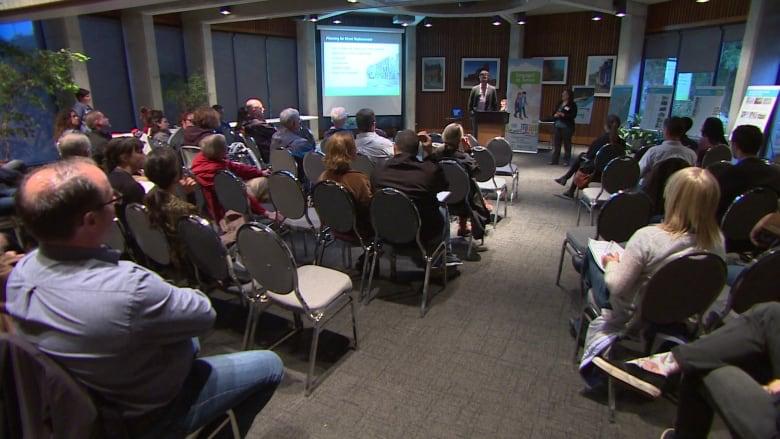
S Public workshops and open houses explaining treatment and reuse processes and benefits of conservation
S Facility tours of advanced wastewater treatment and reuse systems
S School and community presentations on water conservation and reuse
S Reclaimed water customer guides and irrigation best-practice materials
These efforts help demystify reuse and reclaimed water and build familiarity with its safety and benefits.
State‑Level
Engagement
and Rulemaking Participation
The FDEP engages stakeholders during rule development, including potable reuse regulations and updates to reuse and Continued on page 14
conservation guidelines. Public involvement includes:
S Comment periods on draft rules
S Technical advisory committees
S Public hearings and workshops
This ensures that utilities, environmental groups, and residents can influence policy direction.
Industry‑Supported Public Communication Organizations, such as the WateReuse Association Florida Section and the Florida Water Environment Association (FWEA) Utility Council, produce public materials, videos, and outreach campaigns to explain reclaimed water benefits and safety. The FWEA Utility Council notes that conservation and use of reclaimed water offset potable demand and support aquifer recharge and environmental restoration, helping Floridians understand the value of conservation and reuse.
Local Government and Planning Processes
Counties and municipalities integrate public involvement into:
S Comprehensive planning and water supply planning
S Capital improvement program hearings
S Environmental restoration and wetland recharge projects
S Rate-setting and reclaimed water service expansion decisions
These forums allow residents to weigh in on priorities and funding.
Key Themes in Public Perception and Acceptance of Reuse
Public perception and acceptance of reuse measures can be accelerated using the following:
Familiarity With Nonpotable Reuse
Florida’s long history with irrigation reuse—serving over 500,000 residences and more than 500 golf courses—has created a baseline level of public comfort with reclaimed water.
Clear Communication on Potable Reuse
As potable reuse expands, public involvement must address:
S Treatment barriers and multistage purification
S Monitoring and regulatory oversight
S Comparisons to existing drinking water sources
S Environmental and supply-reliability benefits
Environmental Stewardship Messaging
Floridians respond strongly to messages about:
S Protecting springs, wetlands, and estuaries
S Reducing nutrient discharges
S Enhancing aquifer recharge and resilience
These themes align well with reuse program goals.
Effective Strategies for Strengthening Public Involvement
Strategies for utilities to employ include:
S Early engagement during planning, not after decisions are made
S Transparent communication about treatment processes and monitoring
S Visual storytelling, including videos, infographics, and facility tours
S Partnerships with schools, homeowner associations, environmental groups, and local businesses
S Pilot projects that allow the public to see potable reuse in action
S Consistent branding of reuse as a safe, sustainable, Florida-specific solution
What This Means for Florida’s Water Future
Public involvement is not just a communication task—it is a core component of Florida’s water supply strategy. As potable reuse and conservation become more prominent, utilities that invest in sustained, transparent, and community-centered engagement will be best positioned to secure public trust and regulatory support.
Conclusion
Florida’s long-term water security depends on a coordinated strategy that integrates water reuse, water conservation, advanced treatment, and adaptive planning. The state’s regulatory framework—anchored by FDEP rules, CUP, and legislative mandates—has created a strong foundation for utilities to expand reclaimed water systems and implement meaningful conservation programs.
As population growth, climate variability, and aquifer stress continue to challenge traditional supply sources, reuse and conservation provide reliable, cost-effective, and environmentally protective pathways for meeting future demand. Utilities that invest in advanced purification, regional interconnects, AMI-driven conservation, and nature-based recharge solutions will be best positioned to maintain supply reliability while protecting Florida’s springs, wetlands, estuaries, and groundwater resources.
Continued collaboration among utilities, regulators, and communities will be essential to advancing these strategies and ensuring that Florida’s water systems remain resilient, sustainable, and capable of supporting the state’s economic and environmental future. S
FWPCOA REGION IV IS PLEASED TO ANNOUNCE
OUR JUNE 2026 SHORT SCHOOL
WILL BE OFFERING CERTIFICATION AND CEU COURSES
Maintenance Level 1
Cost: $405 for the Supervision Course and Exam
Cost: $375 for all other Course and Exams/$100 Exam Only (if applicable)
All training manuals will be provided when checking in for your class.
Wastewater Collection 3 & 2 and Stormwater 3 & 2 classes will be held at
City of St. Petersburg Water Resources
Operations Building: 1701 Burlington Ave. No., St. Petersburg, Fl. 33713
Supervision Level 1 classes, Water Distribution 3 & 2, Utilities Maintenance 3 & 2 will be held at
City of Pinellas Park Utilities Complex 6250 82nd Avenue, Pinellas Park, FL 33781
Classes 7:30 AM – 4:00 PM, Exam 8:00 AM – 11:00 AM
Room assignment given at registration.
All Exams - Friday 8:00 A.M. – 11:00 A.M. Pinellas Park, 6250 82nd Ave. Pinellas Park, FL 33781
For questions, please contact Bob Case or Ray Bordner
Robertcase1952@gmail.com Raybordner@aol.com
Phone 727-430-1349 Phone 727-798-3969
Public Affairs Council: Outreach to Youth, Utilities, and the Public
TTyler Tedcastle Chair, FSAWWA
o help promote the messaging that our drinking water is safe and reliable to our membership, and the public in general, FSAWWA provides public outreach in various ways. The Public Affairs Council (PAC) assists FSAWWA in enhancing awareness of the water industry and the wealth of knowledge that our industry provides in the stewardship of Florida’s water resources. The PAC takes pride in providing various marketing, communication, education, and outreach resources to all members while developing and maintaining relationships with the public.
Public Affairs Council Focus
The PAC focuses on two primary subjects for outreach: youth education and utilities public affairs.
Youth Education and Outreach
With the continuous conversations on workforce development, FSAWWA’s PAC helps put together programs to educate those who are not currently in the water industry. This outreach includes partnering with elementary, middle, and high schools across Florida to increase public recognition of the Florida Section, its membership, and AWWA as authorities on drinking water issues.
The primary activities for youth education and outreach are:
S Model Water Tower Competition
The Model Water Tower Competition (MWTC) is a scholarship contest for students to create a usable water tower out of recycled materials. The objective of MWTC is to make participants aware of the importance of reliable drinking water and the rewarding opportunities available in the water profession. The 2024 PAC goal was to update the MWTC lesson plans for 6th, 7th, 8th, and high school (9-12th) grades to reflect the changes in standards set forth by the Florida Department of Education CPALMS, which stands for collaborate, plan, align, learn, motivate, and share. This will provide educators the most up-to-date standards.
Having participated in MWTC in multiple regions across the section, this is one of the “funnest” events to volunteer for. I highly recommend our volunteers take part in this event at your local region.
S Drop Savers Contest
The FSAWWA sponsors the statewide Drop Savers Water Conservation Poster Contest every year. With collaboration between utilities and their local schools, the contest gives students from kindergarten through high school the opportunity to design a poster about water conservation. Students are encouraged to create a poster depicting a water conservation idea, in slogan form, drawing form, or both. The contest allows students to promote water awareness and the importance of water conservation in their daily routines.
S High School Operator Academies
The objective of the high school academies, supported in part with an annual grant from FSAWWA, is to help cultivate the next generation of high school students to actively work toward a career after graduation in drinking water and/or wastewater treatment systems.
There are currently three approved FSAWWA academies:
• Heritage High School, Academy of Environmental Water Technology (City of Palm Bay)
• Seminole High School, Water Resource Sustainability (City of Seminole)
• University HS Academy - H2O Pipeline: Classroom to Career (City of Orlando)
S Project WET
Project WET is a new program that empowers educators to engage youth to understand water and solve local and global challenges. By partnering with Project WET, FSAWWA can help provide additional training, activities, and programs for schoolaged children. This partnership is new and there will be more information to come.
Utilities Public Affairs and Outreach
Providing our utilities additional tools and resources they can use to help promote awareness in the water industry has always been at the heart of FSAWWA’s mission.
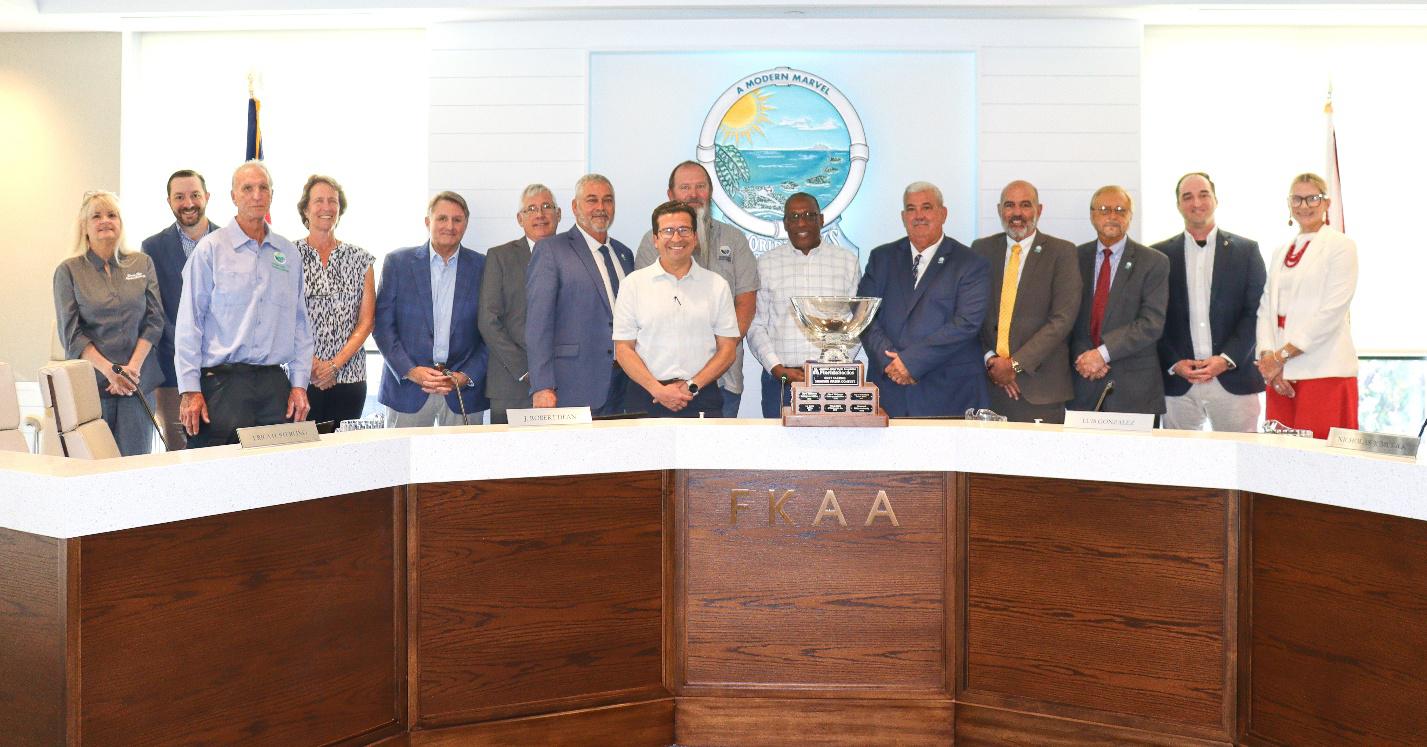
The FSAWWA “Best of the Best” Drinking Water Contest brings together local utilities to participate in the taste test for recognition in their region. All 12 regions send their winners to the state contest, which is held annually at the Fall Conference in December. This year, Florida Keys Aqueduct Authority won the contest and will be representing the Florida Section at the AWWA Annual Conference and Exposition (ACE) in June 2026.
S Water Monster Tank
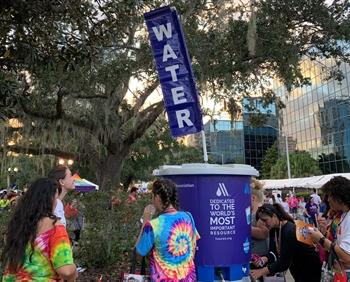
The section provides each region with a cost-effective solution in providing a potable water drinking station at public events. This allows for collaboration between local regions and utilities to assist in the participation for these events. The Water Monsters allow attendees free access to water, with the ability to fill their water bottles without the need for purchasing disposable plastic bottles.
S Awards
The FSAWWA also provides the following annual awards to utilities to recognize their achievements in the water sector in Florida:
• Landmark Awards Public Affairs Council Award of Excellence
• Public Advocate of the Year
• Industry Advocate of the Year
Get Involved!
As we approach the Fall Conference be on the lookout for the PAC awards nomination forms. We will be looking for
great submissions highlighting passionate industry champions, as well as facilities and utility assets that have been in operation for 50 years or more!
If you are looking for resources in planning your region’s model water tower competition or drop savers contest, or if your organization is looking for resources to make
your next education/outreach event more engaging, visit the section website at www. fsaawwa.org; it can be your guide for all the information you need. And never hesitate to contact the current PAC chair with questions: Keeli Carlton, water policy program manager at Seminole County (kcarlton@ seminolecountyfl.gov). S
Best Tasting Water Contest winner: Florida Keys Aqueduct Authority.
Region III Water Monster at a public event.
Operators: Take the CEU Challenge!
Members of the Florida Water and Pollution Control Operators Association (FWPCOA) may earn continuing education units through the CEU Challenge! Answer the questions published on this page, based on articles in this month’s issue. Circle the letter of each correct answer. There is only one correct answer to each question! Answer 80 percent of the questions on any article correctly to earn 0.1 CEU for your license. Retests are available.
This month’s editorial theme is Water Conservation and Reuse. Look above each set of questions to see if it is for water operators (DW), distribution system operators (DS), or wastewater operators (WW). Mail the completed page (or a photocopy) to: Florida Environmental Professionals Training, P.O. Box 33119, Palm Beach Gardens, Fla. 33420-3119, or scan and email a copy to memfwpcoa@ gmail.com. Enclose $15 for each set of questions you choose to answer (make checks payable to FWPCOA). You MUST be an FWPCOA member before you can submit your answers!
Water Reuse and Water Conservation in Florida: Practices and Strategies for a Sustainable Water Future
see page 10 (Article 1: CEU = 0.1WW02015466)
1. What is a major requirement of Florida’s Ocean Outfall Law for southeast Florida utilities?
a. Reuse at least 60 percent of wastewater flows
b. Convert all irrigation systems to potable water
c. Discontinue all coastal discharge monitoring
d. Eliminate all groundwater withdrawals
2. Which Florida regulation establishes treatment, monitoring, and reliability standards for reuse systems?
a. Florida Department of Environmental Protection (FDEP) Chapter 62 610
b. Chapter 40 2, Florida Administrative Code
c. U.S. Environmental Protection Agency (EPA) Clean Water Act
d. Safe Drinking Water Act
3. Approximately how much reclaimed water does Florida reuse daily?
a. 300 million gallons per day
b. 500 million gallons per day
c. Over 2 billion gallons per day
d. More than 900 million gallons per day
4. What benefit does agricultural reuse provide beyond water supply?
a. Reduced pesticide use
b. Elimination of irrigation infrastructure
c. Increased crop export revenue
d. Reduced fertilizer requirements
5. Which operational benefit do utilities realize from reuse and conservation?
a. Deferred capital costs for new supply development
b. Increased energy consumption
c. Reduced monitoring requirements
d. Higher peak demand
Researchers Create DNA Detection Tool to Stop Spread of Invasive Asian Swamp Eels, Bullseye Snakeheads
In the canals, marshes, and swamps of the Florida Everglades, invasive fish are silently slipping into new waterways. Among them are the Asian swamp eel and the bullseye snakehead, two airbreathing predators that live in the region and pose growing risks to native wildlife and fragile ecosystems like the Everglades.
To uncover these elusive invaders, scientists at the University of Florida Institute of Food and Agricultural Sciences (UF/IFAS) have developed a breakthrough approach to detect the cryptic species before they spread farther. The findings, published in Ecology and Evolution, have broad implications for wildlife conservationists.
The research was funded through a UF/ IFAS grant initiative, Support for Emerging Enterprise Development Integration Teams. It was also funded by the U.S. Army Corps
of Engineers and the South Florida Water Management District.
New Environmental Test
At the UF/IFAS Fort Lauderdale Research and Education Center (FLREC), the Croc Docs Wildlife Research Lab team worked closely with the Bahder Vector Ecology Lab to create a novel environmental DNA-based test that can find these invaders without ever seeing them.
“In this study, we were able to take this new approach and apply it to real-world situations that gave positive results on both species,” said Brian Bahder, associate professor of vector entomology at the UF/ IFAS FLREC and the senior author who developed the methodology.
The approach relies on environmental DNA, or eDNA, which refers to tiny genetic clues that animals shed naturally into water, such as waste, flakes of skin, mucus, and other biological material. By collecting small water samples and analyzing them in the laboratory, researchers can identify which species have been in an area, like detecting footprints long after the animal has passed through.
Capable of detecting both species from a single water sample, the test can detect their presence while they remain hidden in the murkiest of waterways. The new tool also has implications for Everglades restoration, one of Florida’s largest ecological recovery efforts.
“A big concern for Everglades restoration is what will happen with invasive species when we succeed; when we get the water right, it
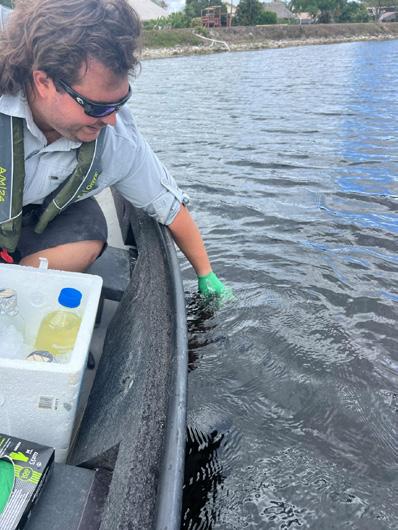
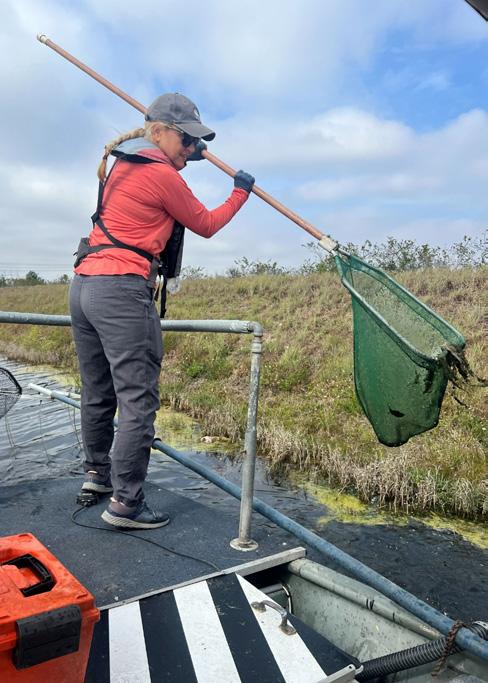
Kevin Olejniczak, wildlife biologist, takes water samples to detect the presence of Asian swamp eels via environmental DNA testing along the C-14 canal in Broward County. (photo: Croc Docs)
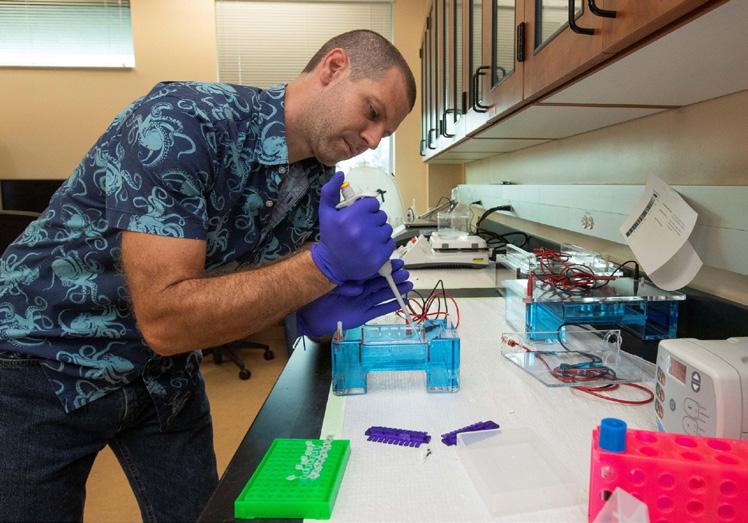
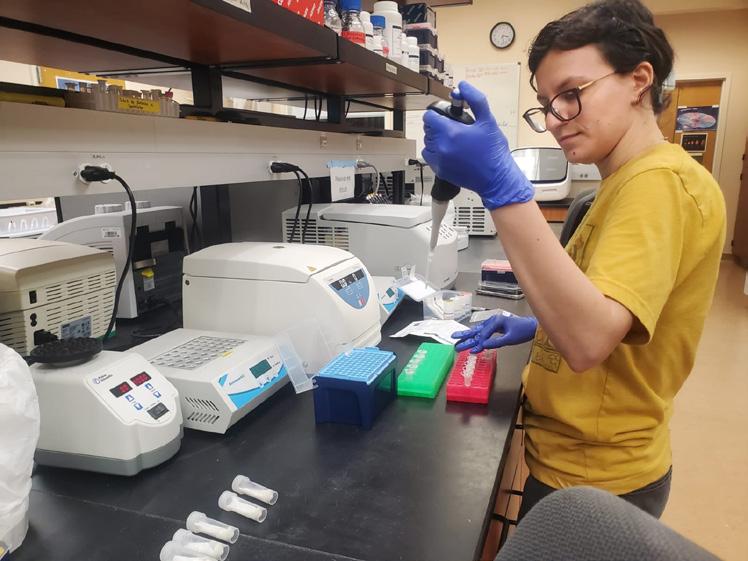
Brian Bahder, lead author, in the Vector Entomology Lab at the UF/IFAS Fort Lauderdale Research and Education Center. (photo: Tyler Jones)
could boost them to the point we can’t eradicate them,” said Sergio Balaguera-Reina, a research assistant scientist and a member of Croc Docs. “This is why detecting them, followed by eradication and control efforts as soon as possible, is paramount.”
First Sightings in Florida
The Asian swamp eel, native to East and Southeast Asia, was documented in the United States in the 1990s. First observed in the southern Everglades in 2007, it has since spread across south Florida. In parts of the Everglades, the species has caused crustacean and amphibian populations to decline, through hunting and competition for food.
The bullseye snakehead, first documented in Florida in 2000, is another large, carnivorous fish capable of breathing air and surviving in low-oxygen waters. Like the swamp eel, it can survive in canals, marshes, and swamps and may move short distances over land to new habitat.
Detection and Removal Challenges
Detecting and removing these fish has long challenged wildlife managers. Asian swamp eels are primarily nocturnal and spend much of the day burrowed into muddy canal bottoms and shallow wetlands.
“Daytime electrofishing, a technique that uses a mild electric current to temporarily stun fish so they can be collected, is the most common
method used to detect and remove them, but its effectiveness can be limited because the fish are often hidden during daylight hours,” said Melissa Miller, a research assistant scientist of invasion ecology and one of the leaders of Croc Docs.
To address this gap, researchers joined forces to design and validate a digital polymerase chain reaction (PCR) approach, a laboratory technique that copies and counts small amounts of DNA with high precision to detect extremely minute traces of genetic material shed into the water.
In controlled experiments, scientists detected bullseye snakehead DNA within five minutes of placing a fish in water. Field tests in canals where the species has been observed confirmed that the test accurately identified the species targeted while avoiding cross detection of other common fish and wildlife.
“The eDNA analysis by digital PCR is an incredibly powerful approach to invasive species monitoring due to the efficient workflow and high level of sensitivity that allows detection of a single cell in a water sample,” said Bahder.
Because the new test can screen for both Asian swamp eels and bullseye snakeheads simultaneously, it offers a cost-effective complement for detection to traditional surveys that require crews, boats, and specialized equipment. It can also help wildlife managers evaluate whether removal efforts are working by tracking changes in genetic signals over time. Understanding how invasive species move
through the Everglades is a matter of using the right tools.
“Given the strong validation results, we plan to deploy an eDNA sampling network throughout the Everglades ecosystem to evaluate the presence of other invasive species of interest,” said Balaguera-Reina. “Scientists, however, cannot always sample everywhere; public involvement in reporting sightings of invasive wildlife and fish remains critical and every report from the public matters.”
Help From Citizens
Florida residents can help slow the spread of Asian swamp eels and other invasive aquatic wildlife by reporting sightings, refraining from releasing exotic species into local waterways, and supporting effective invasive species management policies.
Anyone who encounters an Asian swamp eel or other invasive aquatic species is encouraged to report it to 1-888-IVEGOT1, online at IveGot1.org, or through the IveGot1 mobile app.
For more information, contact Lourdes Mederos, UF/IFAS public relations manager, at 954-242-8439 or rodriguezl@ufl.edu. S
Melody Bloch, a Ph.D. student, is filtering, extracting, and testing filters from Asian swamp eels to confirm their presence in various sampled sites. (photo: Brian Bahder)
Melissa Miller with a net of Asian swamp eels from the canal. (photo: Croc Docs)
• Water quality and treatment – Addressing PFAS, lead, and regulatory advancements
• Water resilience – Strategies for sustainability and the future of the Colorado River
• Infrastructure and innovation – Exploring intelligent water systems and cutting-edge technologies
•
LET’S TALK SAFETY
This column addresses safety issues of interest to water and wastewater personnel, and will appear monthly in the magazine. The Journal is also interested in receiving any articles on the subject of safety that it can share with readers in the “Spotlight on Safety” column.
How to Conduct a Safety Tailgate
The first step to being injury free in the workplace (and anywhere) is knowing that you can be injured, regardless of how safe you think you might be. On-the-job safety is not your only work goal, but it must be the highest work priority—for you, your coworkers, and the public at large.
Employees are often forced to reconcile between competing goals: timeliness versus safety. There really isn’t a choice. You must always choose your safety and the safety of others ahead of everything else. If you see an unsafe work situation, you owe it to yourself and to your coworkers to immediately stop the work until the situation is made safe.
Most jobsite injuries happen with new workers who don’t know the safety rules and with older workers who become complacent about established safe work practices. These veteran workers have learned over the years to take shortcuts in established safety procedures. These shortcuts eventually become the working norm and get passed through the workplace, making it less safe.
Tailgates for Safety
Within the water and wastewater utility industry, a standard work practice for field crews is to conduct a safety tailgate session before the work begins. While the focus here is on field crews, the basic principles apply to many office workers and other projects as well.
A safety tailgate session is about good
the project fully understand the processes and procedures, and it can effectively reduce injuries. These meetings—whether called job briefings, tailboards, or tailgates—are intended to let utility and other work crews acknowledge potential hazards, review work procedures, and address safety measures before starting a job. The Occupational Safety and Health Administration (OSHA) requires that these meetings be held.
How to Plan an Effective Tailgate
The tailgate is conducted by the employee in charge. Consider these items when planning your talk:
S Before the meeting, research the topic. Use materials such as the manufacturer’s operations manuals for machinery and other tools, or safety data sheets. Your insurance carrier and OSHA are other valuable sources of information.
S Hold the meeting at the jobsite, preferably where everyone can relax and become familiar with their surroundings.
S Choose topics that directly relate to the project and job tasks. Make a short list of key points to cover.
S Make a safety plan and an emergency plan— even if people are working alone!
S Have enough copies if written materials will be distributed.
S Develop questions about work practices to encourage discussion and input.
S Pick personal experiences or ask a worker
beforehand to tell a story about a near miss or injury.
S Plan to keep the meeting short—usually 10 to 15 minutes.
How to Run an Effective Tailgate
These items will help make your tailgate more productive:
S Use simple and plain language so that everyone knows and understands exactly what is being said. Encourage questions.
S Hold the meeting just before work begins and again if any significant changes to the jobsite occur.
S Review all applicable safety rules regarding your company’s procedures and the required personal protective equipment (PPE).
S Review the job’s processes and procedures and discuss what safety and rescue issues could come into play if there is an accident.
S Discuss everyone’s assignment. Make sure all know their jobs and the jobs of their coworkers.
S Establish a worker buddy system where coworkers are assigned to watch out for each other, especially when in a remote location.
S Ensure that those with new job assignments, or new tools or equipment, are properly and completely trained on the safety processes, procedures, and operation. Ensure that all PPE is up to standard and safe to use.
S Determine if there are any hazards before work begins.
S Discuss unusual and nonroutine situations.
S Discuss emergency procedures. Determine ahead of time who is in charge in an emergency situation and who is the backup.
S Know where all emergency resources are located: emergency plans, fire extinguishers, first aid and burn kits, and communication devices, such as a phone, cell phone, or radio.
S Discuss how to direct emergency help to get to your location.
After the Tailgate
After the meeting, consider the following:
S Did the topic fit the job?
S Did the crew participate?
S Did someone demonstrate safety equipment or safety practices correctly?
S Are employees now able to recognize and correct hazards?
S Walk the jobsite, ask questions, and observe work procedures.
S Document the meeting topic, date, attendees, and any actions taken.
S If there is a safety violation, determine what happened, when and how it happened, who was involved, and how can it be prevented from happening again.
Building a Safety Culture
It’s unfortunate that employees are reluctant to warn coworkers when they observe risky behaviors, especially considering that most injuries have a behavioral component. Ironically, people underestimate others’ willingness to receive safety feedback. In fact, 74 percent of workers in a recent safety survey confirmed that they welcome peer observations for the purposes of receiving safetyrelated feedback, but only 28 percent believe other employees feel the same way.
Employees will be more open to safety-related feedback if coworkers do a better job of providing and receiving it.
If giving feedback, do the following:
S Don’t make it personal—focus on the behavior.
S Ask questions to facilitate discussion, and don’t lecture.
S Give feedback immediately and one-on-one, while showing genuine concern for others’ feelings and well-being.
S Offer the opportunity to work together to find better solutions.
S Finally, thank the person for listening.
If receiving feedback, do the following:
S Actively listen and don’t interrupt.
S Remain open and receptive and don’t get defensive.
S Discuss better ways of doing the task.
S Thank the person for providing feedback.
Safety Reinforcement
Most employees say they almost never receive one-on-one praise or appreciation for their safety-related behaviors. In addition to cautioning coworkers demonstrating at-risk actions, it’s important to praise employees (individually and as a group) who regularly do their jobs safely. This builds a more open and positive safety culture and increases the likelihood that these work practices will be performed safely in the future.
The short time it takes to conduct a safety tailgate will provides benefits beyond measure.
Resources
For more information go to:
S www.safetytalklibrary.com
S www.toolboxtopics.com
S www.safetytalkideas.com
S www.osha.gov S
Water Conservation Through a Stormwater Augmentation Program
Weston Haggen, Emily Williamson, Robert Bolton, and David Sackett
The City of Vero Beach (city), located in Indian River County, has multiple ongoing projects to improve long-term resiliency, including a unique retirement of an existing wastewater treatment facility and relocation further inland, as well as other sustainabilityfocused utility projects. A nearby private utility, with significant water usage for irrigation of golf courses and other public access irrigation needs, was interested in conserving this irrigation water. The city proposed a solution to pump reuse water from the Indian River Farms Water Control District Main Relief Canal (canal), adjacent to the city’s water treatment plant, to the utility,
requiring extensive piping installations across state roads, a federal waterway, and sensitive wetland areas. This solution, while uniquely challenging, would support potable water conservation with augmentation of stormwater reuse for irrigation and repurposing of existing unused infrastructure at the water treatment plant. Additionally, this project supports the reduction of nutrient loading on the Indian River Lagoon to support the regulatory-required improvements in the Central Indian River Lagoon basin management action plan (BMAP).
Weston Haggen, P.E., ENV SP, DBIA, is a senior project manager and Emily Williamson, P.E., is a project manager with CHA Consulting Inc. in Tampa. Robert Bolton, P.E., is director, water and sewer department, at City of Vero Beach. David Sackett, PG, is chief operations officer with Brierly Associates in Tampa.
Intake Station Design
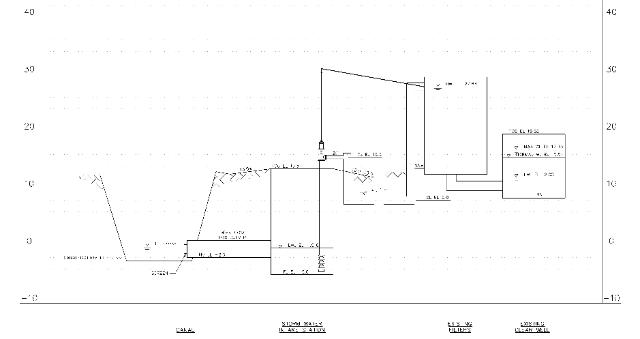
The intake station was proposed to be located near the canal, which abuts the south side of the property where the city’s water treatment plant is located. A 4-ft by 3-ft box culvert (Figure 1) was constructed from the canal to the intake station. The box culvert included grating and a trash skimmer to prevent large debris from reaching the clearwell. At the connection of the box culvert to the clearwell, there was an additional 1/8-in. mesh screen with a lifting hook to allow for regular maintenance and cleaning.
The clearwell was sized to be 23.5 ft wide and 20 ft deep to allow for four vertical turbine pumps (each pumping approximately 1 mil gal per day) with a 4-ft by 6-ft double door aluminum hatch for maintenance access purposes. Each vertical turbine pump was designed with an 8-in. column and 14.5-in. clearance between the bottom of the vertical turbine pump stage and the base of the clearwell. The stations were designed for a low water elevation of -0.16 ft. On the discharge side, the vertical turbine pumps connected via a common 16-in. ductile iron pipe header for subsequent filtration via existing unused filters at the city’s lime softening plant.
Throughout the project, multiple cost-saving measures were considered and implemented. The use of the existing unused filters avoided increased costs associated with filtering the water from the intake station. Additionally, the original design also included a repump station; however, this was able to be eliminated due to a hydraulic evaluation, confirming that the available head from the intake station alone was sufficient to convey flows through filtration and into the transmission system without the need for a secondary repump station. Eliminating the
Continued on page 32
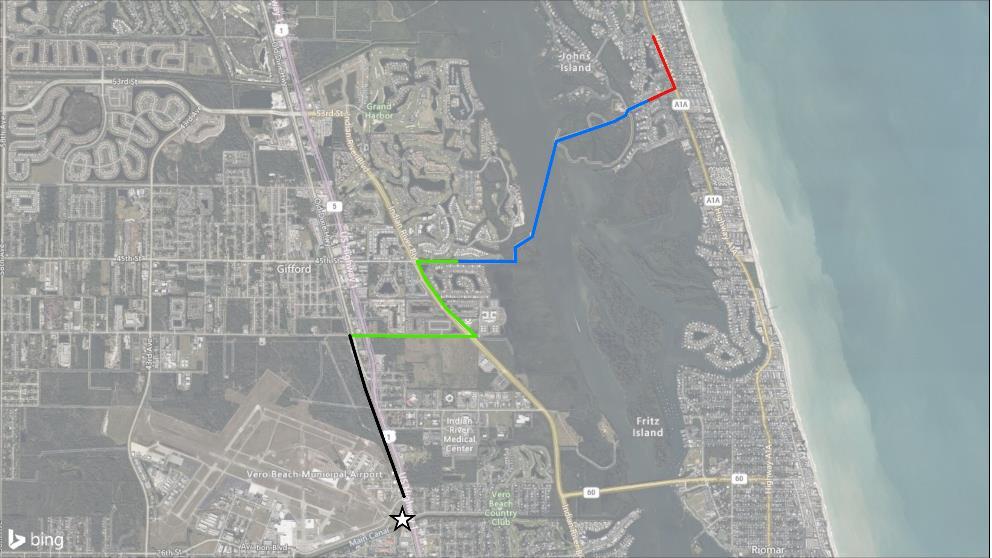
Figure 2. Pipeline alignment.
Figure 1. Hydraulic profile of canal intake station.
Continued from page 30
repump station reduced capital cost, operational complexity, and long term maintenance while improving overall system reliability.
Pipeline Alignment and Preliminary Evaluations
To connect the intake station to the utility, approximately 26,000 ft of pipeline, including a critical 3,600 ft of subaqueous crossing beneath the Indian River Lagoon, was used (Figure 2). The phasing for the pipeline was separated into five phases to allow for concurrent pipe installations by separate contractors. The pipeline alignment also included other challenges, including wetland crossing, Florida Department of Transportation corridor alignment and crossing, and railroad crossings.
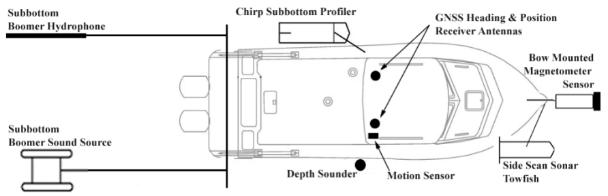
A multisensor marine geophysical survey (Figure 3) was performed in the Indian River as part of an investigation conducted in support of a proposed subaqueous crossing. Water depths within the survey area were generally shallow, less than 10 ft outside of the federal channel. Side scan sonar imagery recorded variable reflectivity with no large-scale bedforms. A total of 17 individual sonar targets and 32 anomalies were identified within the survey area. Most of the sonar targets are small, described as oblong or linearly shaped, and exhibit only minimal relief (<1 ft). While many magnetic anomalies exhibited less than 100 gammas in amplitude, several larger amplitude anomalies were identified.
Average Depth to Bottom of Stratum (ft)
35 to 40
50 to 70
80 to 100
100 to 130
Boring termination depths of 140 ft
Material Description
Mostly sand, sand with silt, and silty sand (SP, SP-SM, SM) with clayey sand and/or sandy clay (SC, CL); trace to some shell lenses
Mostly shell with varying amounts of sand and silt (SP, SPSM, SM); occasional layers of sand with varying amounts of silt (SP, SP-SM, SM) with lenses of shell, cemented sands, and phosphates
Alternating layers of sand with varying amounts of silt (SP, SP-SM, SM), clayey sand (SC), and sandy clay to clay (CL, CH), with inclusions of trace to some shell, calcareous nodules (cemented sands), and phosphate. Occasional lenses of cemented sands, shells and limestone
Alternating layers of sand with varying amounts of silt (SP, SP-SM, SM), clayey sand (SC), and sandy clay to clay (CL, CH) with some to abundant shell, and calcareous nodules. Some borings found lenses of calcareous gravel and limestone
Mostly clayey sand (SC) and sandy clay to clay (CL, CH) with occasional trace shell and silty sand (SM) lenses
Consistency/ Density
Mostly loose to medium dense sand, stiff clay
Medium dense to very dense
Medium dense to very dense sands, stiff to hard clays
Medium dense to very dense sands, stiff to very stiff clay
Medium dense sands, stiff to very stiff clay
Magnetic data and side scan sonar imagery were reviewed with the intent to identify features or alignments suggestive of utility crossings, especially since a section of the survey area is within a National Oceanic and Atmospheric Administration-charted cable area. One linear alignment of anomalies was identified that likely represents a buried utility within the charted cable area. This feature appeared to cross the northern corner of the survey corridor, but did not cross the proposed route centerline. Additionally, a temporary pump-pipe apparatus was observed along the northeastern shoreline with the intake pipe also resolved nearshore in the side scan sonar imagery. The boomer subbottom profiler resolved several prominent, generally flat-lying reflectors down to a depth of 280 to 320 ft below the riverbed, documenting a thick sequence of unconsolidated sediments in the area.
Geotechnical Analysis
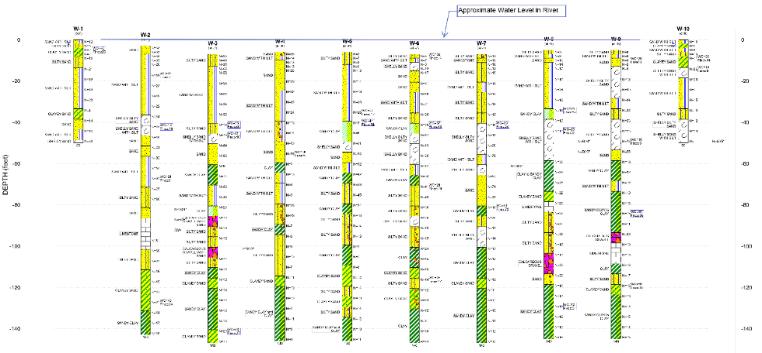
Eighteen geotechnical borings (Figure 4), ranging from 50 to 140 ft in depth, were completed along the proposed alignment of the subaqueous crossing to characterize subsurface conditions and support horizontal directional drilling (HDD) design. Subsurface conditions
Figure 4. Geotechnical borings.
Figure 3. Marine geophysical survey equipment.
Table 1. Soil Layer Summary Indian River
beneath the Indian River Lagoon generally consist of alternating layers of sand with varying amounts of silt and shell, and with localized inclusions of clayey sand, clay, and cemented sands within the upper 100 ft.
Very dense shelly sands and cemented sands were encountered with increasing frequency below approximately 50 ft, while clayey sands and clays became more prevalent at depths greater than 100 ft. These conditions were a key consideration in evaluating bore stability, formation strength, and allowable drilling pressures for the HDD installation. A summary of generalized soil stratigraphy along the crossing alignment is provided in Table 1.
Permitting and Environmental Impacts
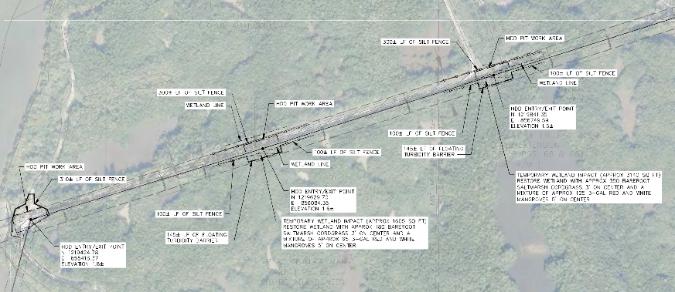
An Environmental Resource Permit (ERP) was completed for the Indian River shoreline and wetland areas (Figure 5). The areas were delineated with an approximate temporary impact to 6,648 sq ft of wetland and surface waters. The approved ERP required specific requirements for removal of existing vegetation and subsequent restoration requirements of saltmarsh cordgrass, red mangrove, and white mangrove. The ERP permit also required erosion control practices throughout the project area using best management practices.
A U.S. Army Corp of Engineers (USACE) permit was required for the subaqueous crossing of the Indian River. The permit application required provision of detailed information, including detailed design plans, HDD design parameters (including, but not limited to, depths, diameter of reams, mud weight, maximum mud pressure, etc.), and a frac out plan. The approved permit included general and special project conditions. Most specifically, the permit included specific parameters for the HDD path to be no less than 57 ft below the federal channel bottom, drill pressure to remain below 90 pounds per sq in. (psi), and maximum ream size to be 30 in.
In addition to the noted potential impacts, the preliminary studies also identified up to six animal species that could be impacted by the project, with the highest risk for the West Indian
manatee. The project permitting required specific adherence to the standard manatee conditions for in-water work, where work would be halted if manatees came within specific distances of the project area.
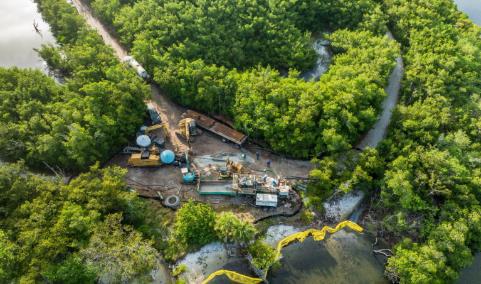
Construction was ultimately completed without inadvertent returns, and all wetland and
submerged vegetation restoration requirements were successfully implemented (Figure 6). The completed program is estimated to reduce nitrogen loading to the Indian River Lagoon by approximately 17,000 lbs per year.
The subaqueous crossing required a 40-ftwide submerged land easement across the Indian River from Gifford Dock Road to Bee Gum Point. The submerged land easement was documented as part of the Florida Department of Environmental Protection submerged lands and environmental resources coordination program, which is responsible for the implementation of the ERP program and State 404 program. For the HDD entry and exit pits along Gifford Dock Road and Bee Gum Point, easements were procured with the respective property owners, Indian River County, and the Indian River Land Trust. Additionally, easements were also coordinated on Bee Gum Point along Fred Tuerk Drive for the portion crossing the wetland area.
Pipeline Design
The data collected from the land survey, ocean survey, and geotechnical analysis were incorporated to design the unique subaqueous pipeline. Specific design parameters were defined during the USACE permit process, including requiring the drill to be a minimum of 57 ft below the federal channel bottom, maximum ream size of 30 in., and maximum drill pressure of 90 psi to mitigate inadvertent returns.
Entry and exit angles were designed at 12 degrees and 10 degrees respectively, with a design bend radius of 1200. The depth of the subaqueous bore was chosen by repeatedly comparing the pressure needed to drill with how much annular
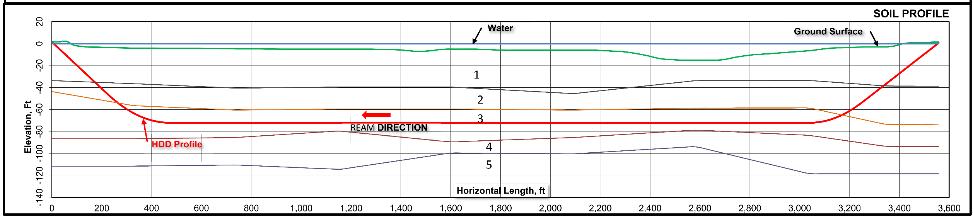
pressure for drilling compared to the theoretical formation strength to confine the annual pressure using detailed information from the preliminary design studies. The annular pressure calculations used bore geometry combined with assumed expected drill fluid properties and pumping rates. The formation pressure calculations used the geotechnical boring data combined with the bore depth to establish the formation strength. Additionally, the preferred approach was also to maintain the drill path within the same layer of soil throughout the entirety of the drill (Figure 7).
When annular pressure exceeds formation pressure it significantly increases the risk of inadvertent returns, and as such, three failure methods were used to design the mitigation of fluid loss, including hydraulic fracturing, leakage, and hydraulic jacking. In all cases, the drill fluid finds an alternative path to the ground surface other than the design drill path that requires a lower static and dynamic pressure to move the drill fluid.
Hydraulic Fracturing
Hydraulic fracturing occurs when the annular pressure exceeds the confining pressure and forms a crack in the side of the bore that is generally orientated parallel to the direction of principal stress, typically vertical for flat terrain. The Delft equation, as modified by USACE described in Engineer Manual 1110-2-2902a and the previous USACE approach, called for minor stress plus strength approaches, based on the same assumptions for materials and used to assess the risk of this occurrence.
Hydraulic Jacking
Hydraulic jacking occurs when there are cracks in the formation, such as rock joints or relatively high permeability zones, as gravel seems contained within a relatively low permeability zone into which the drill fluid can flow in from the bore and exert hydraulic pressure against the confinement provided on either side of the high permeability zone. The total stress calculations suggested that there may be a higher risk of occurrence of this failure mode toward the center of the river. This risk may be managed by careful monitoring and maintaining lower-density return drill fluid weight or reduced pumping volume during pilot drilling and is not anticipated to be an issue during reaming or carrier pipe installation when using industryaccepted practices.
Leakage
Leakage results when the bore path intersects or comes in close proximity to a preferred pathway, such as an open joint or manmade feature that short circuits the ability of the formation pressure to contain the annular pressure, resulting in the only confining pressure remaining that would be applied by groundwater. This feature can occur along any bore path and cannot be mathematically predicted, like fracturing or jacking. During construction, the contractor will be required to regularly visually assess the site for any unusual drilling fluid loss. The detailed drill calculations and failure method assessment indicated that the subaqueous bore profile was constructable; however, it was specifically noted that the selected
contractor would be required to monitor drilling conditions and be aware of potentially necessary adjustments to mitigate fluid loss, adjust the depth of the drill path in problem areas, or reduce drill fluid pressure by various methods, such as reduction of drill fluid weight, use of drill foam, and reduction in the elevation head pressure. This may be accomplished by pumping the drill fluid elevation in the hole down to a lower elevation.
Construction
The construction drawings were bid in multiple packages, which allowed for morestrict prequalification requirements for the most complicated and critical portion of the project— the subaqueous crossing—while allowing for other contractors to bid on the more typical work. Ultimately, the construction phases were competitively bid and a single contractor was the low bidder for all bid packages.
The most critical phase of pipeline construction was the subaqueous crossing and wetland crossings and their potential impacts to environmentally sensitive areas (Figure 8). For the subaqueous installation, an 8.5-in.-diameter pilot bore was completed across a period of two weeks using the intersect method, a process where two pilot holes are drilled from each side of the proposed drill. The pilot drill was ultimately completed by drilling 2,900 ft from the south side and 800 ft from the north side.
A wireline was used to track the horizontal alignment of the pilot bore and ensure it remained within the 40-ft-wide submerged land easement. To mitigate the potential for inadvertent returns, the contractor was required to perform work within specifically defined areas for HDD pits, settlement monitoring, pressure monitoring, and other on-call support, such as divers. The contractor also installed steel casings on each end of the drill to prevent borehole collapse, control fluid return, and contain drilling pressure.
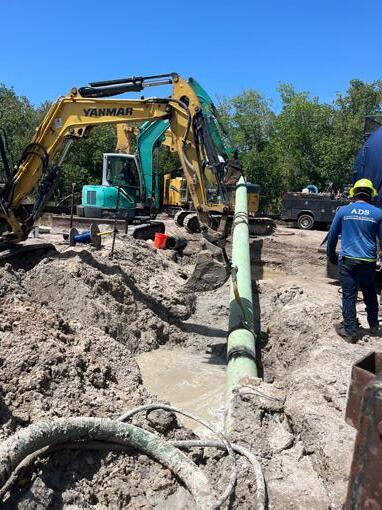
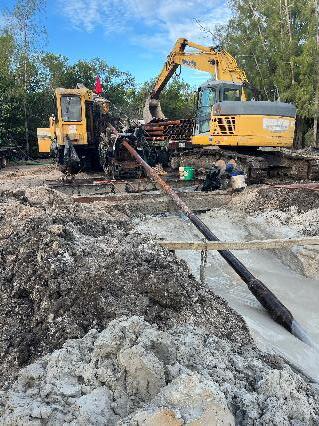
Subsequent reaming after the pilot bore was completed across a period of three weeks, with a 18-in. ream, followed by a 30-in. ream, totaling ~144 rods. For preparation of pullback of the high-density polyethylene (HDPE) 18-in. DR9 pipe, laydown and fusing were completed along Gifford Dock Road. After fusing and pressure testing were completed, pullback started and was completed over a period of 18 hours. During the pipe pull, forces increased from 30,000 psi at commencement to a maximum of 75,000 psi in the final 25 pipe joints; however, an inspector observation noted that the pull force did not increase sharply during this time.
Across the wetland areas on Bee Gum Point, the contractor was able to consolidate three bores into two, further reducing the area of temporary
wetland impacts. Similar to the subaqueous bore, pilot hole operations used wireline tracking to control the horizontal location and depth of the drill for the entirety of the drill, aside from some of the mangrove areas, to avoid any damage. Pullback of 1,315 ft of the 18-in. DR11 HDPE was executed across a period of approximately five hours, with maximum recorded pullback forces of ~65,000 psi. Throughout the drill, fluid was contained within the strictly defined pits and silt fence-protected areas to avoid any impacts to the wetlands.
Construction of the intake station was sequenced to support concurrent progress with pipeline installation while minimizing impacts to ongoing water treatment plant operations. Work included excavation and construction of a cast-in-place reinforced concrete clearwell approximately 20 ft deep, requiring localized dewatering and coordination with adjacent canal water levels.
The 4 ft by 3 ft box culvert was constructed to convey stormwater from the canal to the clearwell, incorporating debris exclusion features, including the grating, a trash skimmer, and a fine mesh screen at the clearwell interface. At the canal following the box culvert installation, the drainage canal bank was restored with 12 to 18 in. of limerock rubble to match the existing slope.
Following completion of the clearwell structure, the four vertical turbine pumps were installed and connected to a common discharge header. The intake station (Figure 9) was integrated with existing, unused filtration infrastructure at the city’s water treatment plant, allowing the project to repurpose previously constructed assets and avoid additional
capital investment. Electrical, controls, and instrumentation systems were installed to support variable flow operation and remote monitoring. Startup and testing were coordinated with downstream pipeline completion to ensure reliable delivery of stormwater for beneficial reuse.
Conclusions
The city’s stormwater augmentation program demonstrates how alternative water supply projects can be successfully implemented to support water conservation, environmental protection, and long term system resiliency. By repurposing stormwater for irrigation use, the project reduces potable water demand while contributing to measurable reductions in nutrient loading to the Indian River Lagoon. Key elements contributing to the project’s success included strategic use of existing infrastructure, phased implementation to align with funding and permitting requirements, and application of advanced trenchless construction techniques for the subaqueous crossing. The use of the HDD intersect method enabled installation of a long and environmentally sensitive crossing while minimizing surface disturbance and construction risk.
Collectively, the project provides a scalable model for municipalities seeking to integrate stormwater reuse into a broader One Water framework, particularly in coastal and environmentally constrained settings. S
Figure 9. Intake station pumps and piping.
Broward County and Junior Achievement Create a Pipeline to Water and Wastewater Operator Careers
The public works and water utility industries are struggling to find qualified people to fill an ever-increasing number of vacancies, mostly due to employee retirements. This is not a new issue, as evidenced by Congress directing the U.S. Environmental Protection Agency to establish a Federal Interagency Working Group to study the drinking water and wastewater workforce. The working group studied workforce changes and presented its findings in the “2024 Interagency Water Workforce Working Group Report to Congress.” This report noted that “according to the Brookings Institute, roughly one third of water and wastewater treatment plant and system operators were reported to be 55 years old or older in 2021” (Kane, 2022).
The Broward County Water and Wastewater Services Operations Division (division) experienced staffing shortages, as did most other treatment plants across Florida. In southeast Florida, there were no programs to help young people become aware of water and wastewater careers and enter into these careers as trades. By creating this occupation pipeline, the staffing shortage could be mitigated.
Creating a Partnership
The division staff discovered the Junior Achievement of South Florida (JA) had a successful six-month preapprenticeship program,
leading Broward County high school seniors and recent graduates, ages 17 to 24, into rewarding and profitable careers, such as:
S Electrician
S Heating, ventilation, and air conditioning (HVAC) technician
S Roofer
S Plumber
S Yacht services technician (maritime)
S Telecommunications tower technician
The JA provides 20 hours of soft-skills training (ethics, assembling your career, critical thinking, how to be successful in your career, and personal finance). It also provides 20 hours of safety and industrial certifications (Occupational Safety and Health Administration [OSHA] classes, forklift training, and CPR). For the remaining 50 hours it provides specialized trade and technical training in the student-selected area.
The division approached JA about creating a career track for water and wastewater operators. In less than nine months, the Water and Wastewater Operations Specialist Preapprenticeship Program had approval from the State Department of Education, industry support, and grant funding.
The Florida Rural Water Association (FWRA) provided the curriculum and instruction so that graduates of the two-week water or wastewater operations boot camp
would be eligible to sit for their Florida level D examination. Taylor Randolph, manager of the JA program, said, “At Junior Achievement, our preapprenticeship program is designed to be the bridge between industry and young talent. Many students simply don’t know the opportunities that exist in essential fields like water and wastewater management. Our role is to expose them to these career pathways, equip them with foundational skills, and connect them directly to employers who are ready to invest in the next generation. Our partnership with FWRA has opened incredible doors for our students, creating realworld experiences and meaningful opportunities within water facilities throughout south Florida.”
After the boot camp, the new graduates could be hired directly by a water or wastewater plant, or go into an apprenticeship program.
The Program Begins
The water and wastewater JA program started in January with almost 400 students throughout Broward County schools and provided each student with a one-day “onsite experience” at a water plant and a wastewater treatment plant. This experience involved a local water or wastewater plant providing a guided walking tour through the facility and a presentation about the plant. The utility staff spoke to the students about the benefits and challenges in water and wastewater operations.
Seventeen students who selected water or wastewater operations specialist careers received a two-week boot camp using the Florida Department of Environmental Protection (FDEP) and FRWA training materials and took their level D examinations from FDEP. To date four graduates have been hired by local utilities as operator trainees, with one graduate hired out of state.
Broward County hired three graduates, one as a wastewater plant operator trainee in November 2025, and recently, two as water treatment plant operator trainees. The wastewater trainee just sat for his FDEP C level wastewater operator exam and passed with an outstanding score. The dedication and commitment demonstrated by these young people, along with the high quality of their work, is truly inspiring and a testament to the effectiveness of the program.
The second year of the program has just begun, with 311 students ready to evaluate career
possibilities. Twenty water and wastewater plant tours have been scheduled, and a new training process using the University of Sacramento books and correspondence course is under development.
Mark Darmanin, division director, was asked about the program and said, “We are extremely proud to see this concept come to fruition. It is exciting to share the benefits of an industry that I have been a part of for 35 years and we hope to bring another group of motivated young professionals into this field.”
The following cities and utilities have provided plant tours or presentations:
S City of Boca Raton
S City of Boynton Beach
S City of Coral Springs
S City of Cooper City
S City of Fort Lauderdale
S City of Margate
S City of Pembroke Pines
S City of Plantation
S City of Pompano Beach
S Coral Springs Improvement District
S North Springs Improvement District
S Town of Davie
Getting Involved
Innovative processes to solve workforce challenges don’t need to cost much money, and they don’t need to be complicated. The only requirement is a group of people who care about the future of the industry and want to bring the next generation of young adults into the careers they are leaving behind. The division has encouraged and embraced this simple effort as a way to develop the talent needed for tomorrow.
Join this program by hiring one of these incredible young people or by providing a training presentation.
For more information, contact Maria Loucraft with Broward County, at mloucraft@ broward.org. or Taylor Randolph with Junior Achievement of South Florida, at Taylor@ jasouthflorida.org. S
What Do You Know About Primary Drinking Water Standards? Test Yourself
Charlie Lee Martin Jr., Ph.D.
1. Total trihalomethanes, with potential health effects of liver, kidney, or central nervous system problems, and may increase risk of cancer, have a maximum contaminant level (MCL) of
a. 0.090 mg/l.
b. 0.010 mg/l.
c. 0.050 mg/l.
d. 0.080 mg/l.
2. Haloacetic acids, with a potential health effect of an increased risk of cancer, have an MCL of
a. 0.010 mg/l.
b. 0.020 mg/l.
c. 0.040 mg/l.
d. 0.060 mg/l.
3. Chlorite, with a potential health effect of an increased risk of cancer, has an MCL of
a. 1 mg/l.
b. 2 mg/l.
c. 0.5 mg/l.
d. 1.5 mg/l.
4. Bromate, with a potential health effect of an increased risk of cancer, has an MCL of
a. 0.020 mg/l.
b. 0.015 mg/l.
c. 0.010 mg/l.
d. 0.030 mg/l.
5. Antimony (the chemical element of atomic number 51), with potential health effects of an increase in blood cholesterol and decrease in blood sugar, has an MCL of
a. 0.002 mg/l.
b. 0.003 mg/l.
c. 0.006 mg/l.
d. 0.007 mg/l.
6. Arsenic, with potential health effects of skin damage or problems with circulatory systems, and may increase risk of cancer, has an MCL of
a. 0.014 mg/l.
b. 0.010 mg/l.
c. 0.015 mg/l.
d. 0.012 mg/l.
7. Asbestos, with a potential health effect of an increased risk of developing benign intestinal polyps, has an MCL of
a. 7 minimum flows and levels (MFLs).
b. 10 MFLs.
c. 5 MFLs.
d. 3 MFLs.
8. Barium, with a potential health effect of an increase in blood pressure, has an MCL of
a. 11 mg/l.
b. 3 mg/l.
c. 5 mg/l.
d. 2 mg/l.
9. Beryllium, with a potential health effect of intestinal lesions, has an MCL of
a. 0.002 mg/l.
b. 0.003 mg/l.
c. 0.004 mg/l.
d. none of the above.
10. Cadmium, with a potential health effect of kidney damage, has an MCL of
a. 0.002 mg/l.
b. 0.005 mg/l.
c. 0.001 mg/l.
d. 0.004 mg/l.
Answers on page 58
References used for this quiz: Formulas can be found at www.epa.gov/ground-water-and-drinking-water/ national/-primary-drinking-water-regulations
Readers are welcome to submit questions or exercises on water or wastewater treatment plant operations for publication in Test Yourself. Send your question (with the answer) or your exercise (with the solution) by email to: charmartin@msn.com
2026 FWEA Leadership Development Workshop: Guiding and Strengthening the Organization
SJoan Fernandez President, FWEA
trong leadership is the foundation of any successful organization, and FWEA is no exception. As we continue to advance our mission of protecting Florida’s water environment, the strength of our chapters, committees, and volunteer leaders plays a critical role in shaping our impact statewide. In this month’s column, I am pleased
provided an opportunity to reflect on our progress, strengthen our understanding of FWEA’s structure and priorities, and align around a shared vision for the year ahead. What follows is a summary of the key discussions, insights, and momentum generated during this important leadership event that took place at The Shores Resort in Daytona Beach on February 1 and 2.
Two Days of Connection, Review, Inspiration, Strategizing, and Planning
The 2026 Leadership Development Workshop began with a strong focus on connection, reflection, and organizational awareness. Day one centered on welcoming new and returning leaders, reviewing FWEA’s year in review, and walking through the organizational structure to ensure clarity in
roles and responsibilities. A meaningful session with past FWEA presidents reinforced the importance of honoring FWEA’s legacy while continuing to move the organization forward with bold vision. The afternoon featured an inspiring keynote presentation, followed by networking and social time designed to strengthen relationships among chapter and committee leaders.
Day two shifted toward operational insight and strategic planning. Participants received updates on scholarship initiatives, mentorship programs, sponsorship efforts, and the Students and Young Professionals Committee, highlighting FWEA’s commitment to leadership continuity and workforce
FWEA volunteers from CDM Smith at the Sunday dinner.
Volunteers of the Manasota Chapter.
Members preparing S’mores on Sunday night.
Member from the West Chapter. Jerome Rand (left), keynote speaker, and Sondra Lee, past FWEA president.
on successes and challenges created space for collaboration and idea sharing, reinforcing the workshop’s core goal: equipping FWEA leaders with the knowledge, tools, and connections needed to successfully guide the organization throughout the year.
Keynote Presentation: The Power of Resilience
One of the most memorable moments of the workshop was the inspiring keynote presentation by Jerome Rand, titled Sailing Into Oblivion. Rand is a seasoned sailor who achieved an extraordinary feat: in October 2017 he set out from Gloucester, Mass., aboard a Westsail 32 named The Mighty Sparrow with the goal of sailing solo and nonstop around the world. Over the course of 271 days and nearly 29,807 miles, he navigated the North Atlantic, the tempestuous Southern Ocean, and the Pacific before returning safely home. His adventure stands as one of the most challenging
nonstop solo circumnavigations undertaken on a vessel of that size.
Rand’s journey was not just a test of seamanship; it was also a testament to perseverance, resilience, and the power of setting ambitious goals. During his presentation, he shared vivid stories about battling fierce winds, isolation, and the mental and physical demands of life at sea, offering lessons that resonated deeply with our leaders about facing uncertainty and pushing through challenges. Today Rand shares his experiences through inspirational speaking, coaching, and storytelling, drawing parallels between his ocean voyage and the leadership journeys we all undertake in our professional and personal lives.
The Workshop: A Photo Gallery
As the saying goes, a picture is worth a thousand words, so I’ll stop writing and let the photos tell the rest of the story from the 2026
Leadership Development Workshop. From moments of thoughtful discussion to the shared smiles among new and returning leaders, the images here capture the energy, engagement, and connection that made this year’s workshop truly special. They bring to life the teamwork, inspiration, and camaraderie that define FWEA’s leadership community. I hope they inspire you as much as the event inspired me.
As always, I welcome your questions, ideas, and collaboration on any initiative you’re passionate about. Whether you want to discuss a column or article topic, get involved with FWEA activities, or simply connect, feel free to reach out. You can contact me anytime at fernandezji@cdmsmith.com or at 954.882.9566. S
Not all is serious work at the workshop. We also know how to have fun!
Members of the Central Chapter.
Above: Members of the Students and Young Professionals Committee.
At left: The whole crew at the 2026 workshop.
Thank you notes from our members at the end of the workshop.
Building Public Trust: How to Communicate Water Reuse
Effectively to Any Audience
Diana Leonard and Pranjali Kumar
Have you ever walked into a public meeting feeling completely prepared to discuss your water reuse project, armed with technical knowledge and detailed process diagrams, only to realize your audience wasn’t following along as you provided thorough, accurate answers to their questions? We’ve all experienced the feeling of struggling to connect with lay audiences, even when we know our technical content inside and out. This challenge becomes particularly acute with potable reuse projects, where topics are often both scientifically complex and emotionally charged.
This scenario plays out often across the water industry. We possess excellent water reuse technology and engineering expertise, yet water reuse projects may face delays or opposition due to communication barriers, rather than technical limitations. Despite advancing water treatment capabilities and proven safety records, public understanding of water reuse continues to lag behind technological development, creating a barrier to implementing essential water infrastructure projects that communities need for long-term water security.
Carollo Engineers witnessed this persistent gap firsthand across multiple client engagements. Utilities possessed excellent water reuse technology, yet didn’t have the resources to communicate complex treatment processes effectively to stakeholders. This observation sparked a strategic communication initiative with specific objectives:
S Make water reuse science accessible to various
S Educate communities about rigorous treatment processes.
S Address misconceptions and myths about recycled water.
S Help build trust and confidence about using and reusing purified recycled water.
The solution emerged as “The ABCs of Water Reuse”—a unique educational resource that uses an alphabetical format to explain 26 key water reuse concepts from A to Z: aquifers to zero wasted water. The concept crystallized during preparation for a public event at an advanced water purification facility, where the utility needed clear, engaging explanations that wouldn’t confuse the audience with technical jargon.
The challenge extends beyond simple public education. Water reuse projects require support from multiple stakeholder groups—community members, elected officials, regulatory agencies, and utility staff—who must explain complex technical concepts to nontechnical audiences. Traditional approaches often rely on industry jargon and complex diagrams that inadvertently create barriers to understanding, rather than building confidence in essential water infrastructure investments.
This article examines how strategic collaboration between technical experts, communications professionals, and illustrators can produce educational resources that effectively bridge the gap between engineering excellence and public understanding, ultimately supporting broader adoption of water reuse technologies.
Problem Statement
Water reuse technology has matured significantly, but public understanding has not kept pace with this advancement. This disconnect creates implementation obstacles, even when engineering solutions are proven and reliable, manifesting in several critical ways.
Technical Translation Challenge
Water utilities typically employ engineers and operators who excel at designing and operating treatment systems, but may lack training in public communication. When asked to explain complex treatment processes at community meetings, technical staff often default to engineering terminology that confuses or intimidates nontechnical audiences. For smaller utilities
lacking resources for specialized communications staff, this challenge becomes particularly acute.
Crisis Driven Communication
Public discourse around water reuse frequently occurs in crisis contexts or through sensationalized media coverage. Headlines featuring “toilet to tap” shape public perception before utilities have opportunities to provide accurate, balanced information about treatment processes and safety standards. This reactive environment makes it difficult for utilities to build proactive community support for water infrastructure investments.
Molecular Level Complexity
Modern water treatment systems present legitimate communication challenges. Advanced treatment processes involve multiple barriers, including membrane filtration, reverse osmosis, and advanced oxidation, operating at molecular levels. Explaining these processes requires translating concepts that operate at scales invisible to the naked eye into language that nontechnical people can understand and trust.
The Messenger Gap
Water reuse projects often require significant capital investments and public support through municipal financing mechanisms. Elected officials, utility management, and the media serve as crucial messengers, but they need accessible information and talking points to communicate effectively with constituents about technical projects. Without these tools, even technically sound projects can struggle to gain the necessary political and community support for implementation.
The ABCs of Water Reuse
“The ABCs of Water Reuse,” as shown in Figure 1, was developed as an educational resource specifically designed to address these communication challenges. As mentioned, it uses an alphabetical format to explain 26 key water reuse concepts.
The book tackles core concepts that utilities consistently need to explain about water reuse technologies, regulatory frameworks, and community benefits. For instance, key entries include:
S “Q is for Quality” addresses public concerns
Continued on page 42
Figure 1. “The ABCs of Water Reuse” presents 26 water reuse concepts using an alphabetical format with artistic illustrations and accessible language.
about safety standards by explaining how recycled water treatment often involves more-rigorous monitoring and testing than conventional drinking water systems.
S “D is for Drink It” acknowledges the evolution from nonpotable to potable applications while explaining in a simple way the technological advances that make drinking recycled water safe and practical.
Rather than using traditional technical diagrams or treatment facility photographs, artistic illustrations and carefully crafted analogies are prevalent throughout. For example, the letter “I” for the entry of “Indirect Potable Reuse,” shown in Figure 2, is described
as “purified recycled water taking the scenic route through nature.” This is intended to help people understand that treated water first goes underground or into lakes, where natural processes provide additional purification. The analogy of taking a longer route helps audiences visualize the concept while understanding that the destination remains the same, with additional beneficial steps along the way.
Each water reuse concept was designed for deployment across multiple communication platforms. Individual entries can be used as standalone social media content, website materials, presentation slides, or print materials. This flexibility allows utilities to maintain consistent messaging across various channels without recreating content for each
application—providing particular value for resource-constrained utilities.
The book was designed as a gift to the industry, rather than a commercial product. It is available as a free digital download, and print copies are available for purchase at cost, with no profit to Carollo. This approach reflects our authentic commitment to industry advancement and public service.
Development Process
The development process for the book required a close partnership between water reuse experts, communications professionals, and graphic designers.
The team compiled a comprehensive collection of topics, including treatment technologies, regulatory requirements, environmental benefits, economic considerations, and public health protections. The alphabetical format provided a familiar organizational structure appealing to diverse audiences while ensuring comprehensive coverage—though it required creative problem solving to address important concepts while meeting the constraint of covering all 26 letters (like the letter X).
Each concept underwent a systematic development process. Technical experts provided detailed explanations, including scientific principles, regulatory standards, and operational considerations. Communications professionals translated these explanations into accessible descriptions using metaphors and analogies, followed by technical expert reviews for accuracy.
One particularly challenging example involved explaining membrane technologies (Figure 3). Our first attempts used terms like “osmotic pressure” and “biological treatment.” After several rounds of refinement, we landed on describing membranes as working “like a bouncer at an exclusive club, where only the purest water molecules get through”—language that conveys the selective nature of the technology through a familiar social situation.
Rather than traditional technical diagrams, artistic illustrations capturing each concept’s essence through creative imagery were chosen. Communications professionals collaborated with illustrators to design vibrant, sometimes unexpected graphics that would encourage continued reading—making the resource a “page turner” that motivates readers to explore additional concepts.
Industry Response and Impact
The response to the book has been very positive, demonstrating there is significant interest and a need for accessible technical communication resources within the water industry:
S When introduced at the 2025 WateReuse
Figure 2. Imagery and metaphors aid comprehension and include visual illustrations and carefully crafted analogies to help people more easily understand complex water reuse concepts.
Figure 3. This before and after example comparison shows how technical engineering terminology can be transformed into accessible communication using metaphors, graphics, and simplified language.
Symposium, all 250 copies were distributed within hours, with utilities from multiple states and countries subsequently requesting copies for their community outreach programs.
S Geographic reach extended far beyond initial expectations (Figure 4). Utilities from Arizona, Florida, Kansas, and international locations, including Australia, have requested copies for community engagement efforts. Regional water associations in Iowa, South Carolina, Kansas, and other states have expressed interest in using the resource for public education initiatives.
S Professional endorsement from industry leadership further validated the resource’s value to the sector. Brian Biesemeyer, interim executive director of the WateReuse Association, endorsed the book as filling a critical industry need for accessible communication tools, saying, “I expect this book to become an essential resource for communities working to advance the public acceptance of water recycling.”
S Media coverage has included interviews with multiple industry publications and outlets, including:
• AWWA Water Connections
• www.waterloop.org
• Water Online
• Treatment Plant Operator
• Streaming Water podcast
Mainstream science communicators, including prominent science influencers, have expressed interest in the resource, indicating potential for broader public engagement beyond traditional water industry audiences.
S The educational/communication framework has generated speaking opportunities at industry conferences and requests for bulk orders from utilities implementing water reuse projects.
S Professional organizations, including the Water Environment Federation, have expressed interest in including the resource in its educational materials distribution, including at its technical and education conference.
S A glowing review (Figure 5) by the American Society of Civil Engineers (ASCE) stated the book “…represents a unique addition to the existing literature and ongoing effort to educate the public about some of the most important tools available to ensure access to our most precious natural resource at a time when it is increasingly needed.”
Practical Applications
Water utilities can implement these communication strategies through several practical applications.
Staff Training and Capacity Building
Public Engagement Tool
The book is designed to complement existing public engagement materials and can be used at
Utilities can train technical personnel to communicate more effectively with community members by using language that is more easily relatable. By providing regular training, utilities will also benefit from consistent messaging as their staff engages with different audiences in a range of situations.
Continued on page 44
Figure 4. This map shoes the geographic reach and distribution of utilities and water associations across the United States that requested copies of “The ABCs of Water Reuse” immediately after the book launch.
Figure 5. An excerpt from ASCE’s review of “The ABCs of Water Reuse.”
public open houses; groundbreakings; ribbon cuttings; facility tours; demonstration facilities; public schools and libraries; science, technology, engineering, and mathematics (STEM) events; and student science demonstrations.
Multiple Communication Platforms
The resource has been designed to be used in a variety of applications (Figure 6). The full book and individual concepts can be distributed in print, and by email and social media. It can also be included in website materials, newsletter articles, or presentation slides without requiring separate content development for each application. This multiplatform adaptability allows utilities to deploy consistent messaging across various outreach channels.
A Ready to Use or Customized Resource
The resource provides a foundation for developing utility-specific communication materials. It can be used as is or as a model for developing customized materials. Rather than starting from scratch, utilities can adapt the explanations to address local conditions, regulatory requirements, or project specifications. The resource was designed with minimal company branding—Carollo’s logo only appears on the back cover of the book. This allows utilities to freely incorporate content into their own materials and communications without prominent corporate messaging.
Proactive Communication Strategy
The framework helps utilities in proactive rather than reactive communication strategies. By providing positive, informative content about water reuse, utilities can build
community understanding before projects become controversial or before crisis situations require immediate public response.
Political and Leadership Support
Elected officials, utility staff, and the media can use the resource as a reference for accurate talking points when discussing water infrastructure projects with constituents. The explanations help officials communicate confidently about technical topics while maintaining credibility with both technical experts and community members.
Lessons Learned and Strategic Insights
Several key insights emerged from this project:
S Effective technical communication requires a genuine partnership between subject matter experts and communications professionals.
S Metaphors and relatable references can enhance technical understanding. The most effective comparisons help audiences visualize complex processes while maintaining accuracy about actual system function.
S Visual design improves communications and how well a message is received. Creative illustrations make technical topics more approachable, while traditional technical diagrams may inadvertently create barriers for nontechnical audiences.
S Content designed for multiple purposes and platforms from the outset provides better return on development investment than resources serving only single applications.
S The water industry has a significant appetite for improved communication resources. Industry data supports this observation: AWWA’s 2025
State of the Water Industry report found that public trust ranks as the fourth top challenge facing water utilities, while 60.6 percent of utilities have customer communication plans implemented or in progress. Additionally, with 73 percent of utilities planning rate increases, effective communication becomes critical for gaining public support. The response to our resource indicates many utilities recognize communication challenges, but may lack resources or expertise to develop solutions independently.
Implications Beyond Water Reuse and Implementation Recommendations
Beyond Water Reuse
This case study demonstrates the potential for creative communication to support water infrastructure development. The approach has broader applications beyond water reuse, including other complex infrastructure topics that require public engagement and support.
Investing in Communication Expertise
The success of collaborative development suggests that water utilities and engineering firms should consider investing in communication expertise as an essential tool for public engagement. Technical excellence alone does not ensure project success when public support is required for implementation. Communities require an understanding of what they are supporting and why such investments matter for their long-term welfare.
Industrywide Collaboration
The geographic reach achieved indicates the potential for industrywide collaboration on communication challenges. Rather than individual utilities developing independent solutions, coordinated efforts could provide higher-quality resources while reducing costs and improving messaging consistency across the sector.
Multiplatform Adaptability
The multiplatform adaptability of educational content provides economies of scale for communication investments. Rather than developing separate materials for each communication need, utilities can create comprehensive resources that serve multiple purposes while maintaining consistent messaging.
Private Sector Helping Public Entities
The gift-to-industry model demonstrates how private sector organizations can help advance public infrastructure development beyond traditional commercial relationships. By sharing resources without commercial objectives,
Figure 6. Multiplatform content adaptability means individual concepts can be adapted across multiple communication channels, including print, digital, social media, and presentation applications, without requiring separate development processes.
organizations can help build sector capacity while demonstrating an authentic commitment to public service.
Implementation Recommendations
Recommendations for implementation include the following:
S Invest in communication training for technical staff who regularly engage with public audiences.
S Develop partnerships with communications professionals who understand both technical accuracy requirements and public engagement best practices.
S Prioritize multiplatform content development over single-use materials.
S Implement proactive communication strategies that build understanding before crisis situations arise.
S Consider collaborative industry approaches to communication resource development.
Conclusion and Future Vision
As water challenges intensify due to climate variability, population growth, and aging infrastructure, the ability to communicate
effectively with communities about technical solutions becomes increasingly critical for utility success.
The development and adoption of “The ABCs of Water Reuse” demonstrate that strategic collaboration between technical experts and communications professionals can create educational resources, effectively bridging the gap between engineering excellence and public understanding. The significant industry response validates substantial demand for improved technical communication tools within the water sector.
This case study provides a replicable framework for addressing communication challenges extending beyond water reuse to other complex infrastructure topics requiring public engagement and support. The success suggests water utilities should consider communication capability as an essential tool for public engagement, similar to technical and operational capabilities.
The project demonstrates how engineering firms can contribute to industry advancement beyond traditional technical services, supporting broader sector goals while demonstrating an authentic commitment to public service.
Future Research Directions
Directions for the future include:
S Examine long-term impacts of improved technical communication for water reuse on project approval rates by boards and commissions, community support levels, and public trust in water infrastructure investments.
S Adapt and test this framework for other complex infrastructure topics requiring public understanding and support for successful implementation.
The water industry stands at a communication crossroads. We can continue with technical excellence alone, or we can pair that excellence with equally sophisticated communication strategies. “The ABCs of Water Reuse” suggests the latter path offers great potential for advancing the critical infrastructure our communities need.
Diana Leonard, CPSM, is communications director with Carollo Engineers in Walnut Creek, Calif. Pranjali Kumar, P.E., is a senior engineer with Carollo Engineers in Orlando. S
The AI Skepticism That Won’t Age Out
Troy Harrison
Here’s something nobody saw coming: The generation most skeptical of artificial intelligence (AI) isn’t the one that doesn’t understand it. It’s the one that understands it best.
Every new technology faces resistance. The internet? A fad. Smartphones? Unnecessary. Social media? A waste of time. But tech skepticism has always followed the same pattern—older workers resisted, younger workers embraced, and eventually the skeptics retired and adoption became universal.
Not this time.
The Tech Skepticism Script has Flipped
Traditional technology skepticism was driven by unfamiliarity. Baby Boomers didn’t grow up with computers. Gen X had to learn the internet as adults. They both resisted because the technology was foreign. As digital natives entered the workforce, resistance faded.
And AI flips this script entirely.
Sixty-two percent of Gen Z express skepticism toward artificial intelligence—higher than any other generation. Sixteen percent explicitly don’t want AI on their phones, compared to only 9 percent of older users. Forty-nine percent believe AI will harm their critical thinking skills.
This isn’t ignorance; it’s educated wariness. Gen Z grew up watching social media algorithms manipulate behavior, mine personal data, and damage mental health. They understand how “engagement optimization” created filter bubbles and monetized attention at the expense of wellbeing. They’ve seen technology companies prioritize profit over users and they figure (correctly) that it will keep happening.
When it comes to AI, Gen Z isn’t asking “How does this work?” They’re asking “Who does this benefit, and at what cost?” And they can spot AI-generated content instantly. Years of exposure to algorithmic manipulation have given them sophisticated internal detectors.
Here’s the Impact for Your Company
You already know that generational dynamics in business-to-business (B2B) and other customer relations have gotten complex. Older workers struggle to connect with younger customers and buyers who communicate differently and research differently. Younger workers face challenges communicating to managers and executives who expect traditional relationship-building. And AI adds another layer of complexity to this already delicate situation.
Consider this common scenario: Your customer service and sales teams deploy AIpowered email outreach, chatbots for qualification, or AI-generated proposals. The goal is efficiency— reach more prospects, respond faster, scale the process. But when that AI touches a Gen Z buyer, it triggers immediate skepticism.
An AI-written email isn’t just impersonal—it’s a signal that you chose efficiency over authenticity. An AI chatbot isn’t helpful—it’s a barrier between the buyer and real human expertise. An AIgenerated proposal tells the customer or buyer you couldn’t be bothered to understand their specific situation.
Here’s the mismatch: Millennial and Gen X leaders view AI pragmatically as a productivity tool, which it can and should be when used correctly. They don’t realize their AI-enhanced outreach is actively repelling their youngest prospects and customers. They see time savings;
Gen Z members see corporate shortcuts that signal low prioritization of genuine relationships.
Authenticity is Everything— and This Time, You
Can’t Fake It
When buyers and customers doubt the authenticity of your communication, they doubt the authenticity of your company.
This hits B2B particularly hard because customer relationships depend on trust. The B2B buying decisions involve long-term commitments, significant investment, and organizational risk. Buyers and other customers need confidence that you’ll deliver, support, and stand behind your product or service over time.
The AI-generated content undermines that confidence.
S When a prospect receives an AI-written email, the subtext reads: “This company would rather automate than understand our needs.”
S When an AI chatbot handles an initial qualification, the message becomes: “Our time is more valuable than yours.”
S When an AI system generates proposals, buyers wonder: “If they’re using AI for this, where else are they cutting corners?”
And guess what? These messages are correct interpretations.
Gen Z interprets AI deployment as a values statement. They’ve watched tech companies claim to prioritize user experience while optimizing for ad revenue. They’ve seen platforms promise connection while fostering division. If your technology serves your interests at the customer’s expense, trust evaporates.
AI Skepticism Will Age In, Not Out
Here’s the critical difference: Internet skepticism aged out. AI skepticism will age in.
Gen Z is entering the workforce now. Within a decade, they’ll hold senior leadership roles. Their sophisticated understanding of AI’s capabilities and limitations will shape how organizations approach it. And their skepticism isn’t going away—it’s informed by direct experience with technology’s dark patterns.
The choices you make today about AI deployment will determine whether future decision makers view your organization as trustworthy or opportunistic. Companies that use AI thoughtfully, transparently, and in service of genuine customer value will differentiate themselves. Those that deploy AI primarily for internal efficiency will find themselves shut out.
What You Should Do
Don’t abandon AI—use it, but use it well. The technology offers legitimate value for data analysis, research, ideation, and productivity. But deployment must be strategic and behind the curtain.
Distinguish between internal AI use and customer-facing AI deployment. Using AI to analyze customer data and identify patterns? That’s smart. Using AI to generate customer communications? That’s dangerous. The former enhances human decision making; the latter replaces human connection.
When AI does touch customer interactions, be transparent. Don’t try to make AI-generated content indistinguishable from human communication. Acknowledge the tool’s role while demonstrating human oversight. Let customers know that AI helped research their industry, but a human shaped the insights specifically for their situation. Remember: AI is your intern, not your manager, salesperson, or decision maker. As an intern, it’s great—it has a high IQ, it has 20 degrees, but it has no street smarts whatsoever. Your job is to give it the street smarts.
Most importantly, recognize that generational differences in AI perception aren’t temporary.
Gen Z’s skepticism reflects a permanent shift in how customers evaluate vendor authenticity. Companies that double down on genuine human relationships, transparent processes, and customerfirst values will thrive. Those that view AI primarily as a cost-cutting tool will become irrelevant to the generation they’re trying to reach.
The question isn’t whether to use AI. It’s whether you use it in ways that build trust or destroy
it. Gen Z’s skepticism provides the answer—and it’s not going away.
Troy Harrison is the sales navigator and the author of “Sell Like You Mean It” and “The Pocket Sales Manager.” He helps companies navigate the elements of sales on their journey to success and can be reached at Troy@TroyHarrison.com. S
Conservation, and Where it Begins, as an Organization
Kevin Shopshire President, FWPCOA
he term “water conservation” can be defined as taking action to improve the effectiveness of water use through
What about the “conservation” of our organizations? Our organization of FWPCOA, as well as others, is a voluntary group. Few employers will pay you to attend our meetings, unless you’re actively on the clock during meeting times. It’s on us, as members, to “conserve” our organization. We all lead busy lives. More families have less time to attend voluntary meetings, whether locally or somewhere in the state. I know how it is; with my family activities, and since my elevation to the state level, I don’t seem to get to many of my regional meetings either.
These regional meetings are critical to our organization. The meetings are “where it begins.” Our general membership—and
its needs—start locally. Training needs, employment needs, are all handled locally; the ideas that are gathered are addressed locally, too. If members need assistance, then the ideas can be moved up to the state level, at our board of directors or education meetings.
But we cannot address local needs without input from the regions. All of our regions have their own boards, executives, training requirements, and budgets, and they are all voluntarily run. Each region has a small group of volunteers that try to figure out what training is needed, where would be the place to host a meeting, who can attend, and how to get members involved. They need your help.
Getting Involved: What’s Your Reason?
I’ve beaten on this drum before, as have many presidents before me. It’s been a common topic at the state level: How do we get more people to come to meetings?
There are many benefits to volunteering your time, as a member of our organization. What’s important to you personally?
Power/control? You have the power to
decide, as a person at the meeting, the best course of action of your region, be it location, times, offerings, special events.
Education? Your involvement determines which courses your region hosts, maybe even a regional short school.
Employment? Your involvement could increase your chances of improving your employment status, whether where you are or elsewhere else, by stepping up and making a name for yourself.
Resumé? Getting involved could give you resumé credentials for your own personal advancement.
Helping others? I’ve said it before; these courses were at one time written by someone else, to educate you and others. What can you contribute to help the next colleague who comes along?
We have ideas, procedures, and education offerings to help regions. We have many members who have decades of experience running things at the state level, and at most regions. We need your new ideas—or new takes on existing ideas.
In nature, wildebeests eat a lot of grass; however, even they prefer the sweet grass sprouts, not the longer, bitter old grass. So, what type of grass (ideas) do you want to offer your region?
Make Your Voice Heard
How do you find out what may or may not work? No one will fault you if your idea doesn’t pan out. In my youth soccer coaching, I remind my players: You miss 100 percent of the shots you don’t take. Every quarter, regional directors submit their reports to the state. In these reports are the accomplishments and activities within the regions. Read them. If you don’t have access, ask your regional director to bring them to your regional meetings, or email them. Borrow and improve on an idea you find and help your region.
You, as a member of our great organization, have a voice. Your voice, along with 6,000 others, can help make
Continued on page 50
View all courses and register online at go.ufl.edu/FWRJTREEO
I nstructor Highlight
PHILLIP BROWN
Water & Wastewater Instructor at the University of Florida TREEO Center
Phillip is an instructor with the University of Florida TREEO Center and a dedicated water and wastewater professional with more than 26 years of service with the City of Jacksonville Beach. He began his career with the city as a Lift Station Mechanic, gaining hands-on experience with critical wastewater infrastructure before advancing to Plant Mechanic and ultimately to his current role as Water/ Wastewater Deputy Superintendent.
Phillip discovered his passion for the industry after earning his Wastewater C license and continued expanding his knowledge and certifications until achieving his Wastewater A license. He also holds a Bachelor of Arts degree in Leadership with a minor in Business, strengthening his ability to lead teams and support effective utility operations.
At TREEO, Phillip teaches courses including Basic Pump Maintenance, Pumping Systems Operations, and Introduction to Lift Station Maintenance, sharing practical, real-world experience with water and wastewater professionals. His next course, Introduction to Lift Station Maintenance, will be held on June 9. He is committed to supporting the continued education and professional development of operators in the water and wastewater industry.
April 6-10 | Water Class A Certification Review
Virtual | $720
April 13-15 | Water Distribution Systems Operator Level 1 Training Course
Virtual | $575 | CEUs 2.4 DS DW WW
April 16 | Introduction to Lift Station Maintenance
Virtual | $325 | CEUs 0.8 DS DW WW
April 30 | Water Distribution Systems Pipes & Valves
Virtual | $199 | CEUs 0.5 DS DW WW
May 11-14 | Water Distribution Systems
Operator Level 2 & 3
Gainesville, FL | $699 | CEUs 4.0 DS DW WW
May 18-22 | Wastewater Class A Certification Review
Gainesville, FL | $720
June 1-5 | Wastewater Class C Certification Review
Virtual | $730
June 9 | Introduction to Lift Station Maintenance
Gainesville, FL | $325 | CEUs 0.8 DS WW
our organization continue to advance. You can lead the “organization conservation” of FWPCOA, by “taking action to improve the effectiveness of regions through various means.”
FWPCOA Committee Spotlight
This month I’d like to spotlight our FWPCOA Education Committee. Mr. Jim Parrish, of Region 9, heads up our largest committee.
According to our bylaws:
“It shall be the duty of this committee to work with government agencies, training institutions, and other organizations to coordinate training and the preparation of study materials for operator certification. The committee shall review and make recommendations for changes to certification exams. The committee shall establish and maintain the standards for the content and delivery of regional short schools. The chair of this committee shall serve as the association representative on the FDEP Operator Training Advisory Committee.”
This committee meets every quarter, along with our board of directors meetings. The
meetings gather information from all of the following subcommittees:
S Backflow
S Industrial Pretreatment
S Reclaimed
S Stormwater
S Utilities Maintenance
S Customer Relations
S Training/Certification
The educational direction and needs of our entire organization are gathered, discussed, and decided on at these meetings.
If you’re interested in getting involved with the Education Committee, or any of the subcommittees, you can email Jim Parrish (Education@fwpcoa.org). You can also find a list of subcommittee contacts on our website (www.fwpcoa.org): select the menu items “About” and “Committees” and you’ll see the Education Committee listed, along with our other committees.
Finally, I’ll be attending the Florida Water Resource Conference at the end of April in Daytona Beach. Please make sure to say hi and introduce yourself if you see me! S
ONLY ONE COMPANY BRINGS IT ALL TOGETHER.
ALL THE MATERIALS YOU NEED. ALL THE EXPERTISE YOU NEED. The surest way to ensure your project is a success? Call on AMERICAN for an expansive range of best-in-industry products, all delivered with worldclass service. After all, we’re the source for everything from ductile iron pipe, valves, hydrants, and remote pressure monitoring to spiral-welded steel pipe up to 12 feet in diameter--not to mention unmatched expertise. From products to people, we’ll make certain things get done The Right Way, right from the start.
DUCTILE IRON PIPE FLOW CONTROL
INTERNATIONAL
SPIRALWELD PIPE
STEEL PIPE
Work title and years of service.
I am assistant director of the utilities and solid waste department at Martin County Board of County Commissioners and my office is located in Jensen Beach. In May of 2026 I will have 10 years with Martin County.
What does your job entail?
In my role, I help lead and support the daily operations of our water and wastewater systems to ensure our community receives safe and reliable service. I work closely with our team
FWRJ READER PROFILE
to manage operations, develop staff, and plan for future needs, while also focusing on safety, compliance, and continuous improvement. I regularly collaborate with leadership, regulators, and the public, and support emergency response efforts when needed.
What education and training have you had?
I have a Florida Department of Environmental Protection Class A drinking water and Class A wastewater treatment operator license. I have a bachelor’s degree in water resources management from Florida Gateway College and a master’s degree in hydrology and water security from the University of Oklahoma.
What do you like best about your job?
I enjoy the opportunity to lead, mentor, and help others grow in their careers. Watching our team members develop their skills and take pride in their work is the most fulfilling part of my role.
What professional organizations do you belong to?
How have the organizations helped your career?
The FWPCOA, FSAWWA, and FWEA have played a significant role in my career growth. They have provided valuable training and access to current industry knowledge that has helped me stay up to date with evolving regulations and best practices.
Beyond technical development, these organizations have created opportunities for me to connect with other professionals across the state. Through conferences, like the Florida Water Resources Conference, I’ve been able to share experiences, learn from others, and bring new ideas back to my team.
Through these organizations I have strengthened my leadership skills, first as the chair of the FWEA Treasure Coast Chapter, and now having the opportunity to serve on the FWEA board of directors as a director at large.
What do you like best about the industry?
What I love most about this industry is the purpose behind everything we do. It’s easy to take clean water and reliable wastewater services for granted, but I’m proud to be part of something that protects public health and the environment every single day. There’s a deep sense of responsibility that comes with this work, and that’s what makes it so meaningful.
Continued on page 54
At the FWEA Leadership Development Workshop in February 2026.
FSAWWA Region VIII Model Water Tower Contest in November 2025.
Tropical Farms Wastewater Treatment Plant during Wastewater Treatment Plant Operator Days in April 2018.
FWEA Treasure Coast Chapter, Islamorada Brewery Fort Pierce Social in July 2025. Vietnam in January 226.
I also value the people in this field; there’s a shared dedication and pride that you don’t find everywhere. We’re constantly adapting, solving problems, and finding better ways to serve our communities and being part of that progress is incredibly rewarding.
What do you do when you’re not working?
When I am not working (I am still working, LOL!), I am an adjunct instructor for Florida Gateway College in its water resources
department. I teach various associate- and bachelor’s degree-level courses online related to water treatment, wastewater treatment, and environmental topics to students at the college and at the Columbia Correctional Institution.
I love to travel and explore new cities; most recently I went on a 12-night cruise to Vietnam and Thailand in January of 2026. I am also an avid reader, and I love to crochet. I enjoy spending time outdoors, especially if it involves paddleboarding. My personal goal for myself this year is to get back into roller skating! S
•
• SCADA radio preventative maintenance audits reduce annual down time dramatically.
• Considering an update of your SCADA communications, ACI evaluates current networks & recommends future technology solutions, #futureproof.
• With 33 years’ experience, ACI=high competency, mission critical, professional RF consultants.
• We’ve designed, built and maintained thousands of SCADA radio networks for water, wastewater, reuse water, drainage water, flood water + oil, gas and power throughout Florida & SE US.
At Wat Arun, the Temple of Dawn, in Bangkok, Thailand, with my brother, Matthew, in January 2026.
Harry Potter crochet collection I made displayed in my office.
Robert Spottswood Jr. had been appointed to the South Florida Water Management District governing board.
Robert is the president of Spottswood Companies Inc., Spottswood Management, and Keystar Construction. Additionally, he is a partner at Spottswood & Sterling PPLC. He currently serves as a member of the South Atlantic Fishery Management Council and is a board member of the Nature Conservancy and the Fish and Wildlife Foundation of Florida. Spottswood earned his bachelor’s degree in food and resource economics from the University of Florida and his juris doctor from Nova Southeastern University.
His appointment, subject to confirmation by the Florida Senate, continues to offer a drastic change for the district and the board toward sound minds over emotional decision making and environmental rhetoric. Farm Bureau staff and others in the agricultural industry are optimistic about the atmospheric change of the governing board over the past several months with recent appointments and reappointments.
While Robert is still a new face on the board, he has a good reputation in the south Florida agricultural sector and has already proven himself to be a thoughtful and sciencedbased decision maker.
R
Carollo Engineers, in association with CDM Smith, has been selected by Broward County to design comprehensive water treatment and transmission infrastructure upgrades to address per- and polyfluoroalkyl substances (PFAS) in the county’s groundwater supplies. The multifaceted project will enable compliance with the U.S. Environmental Protection Agency (EPA) National Primary Drinking Water Regulation for PFAS ahead of the proposed April 2031 compliance date.
Representing one of Florida’s largest PFAS treatment initiatives to date, the project includes installation of state-of-the-art nanofiltration treatment systems, as well as approximately six miles of large-diameter potable water transmission main to enhance system redundancy and reliability across the service area.
“We applaud Broward County for taking decisive action to address PFAS ahead of the EPA deadline,” says Elizabeth Fujikawa, a principal at Carollo. “By implementing stateof-the-art nanofiltration systems, the county
NEWS BEAT
demonstrates an unwavering commitment to safe drinking water while building resilient infrastructure designed to meet both current and future regulatory requirements.”
The fluorinated, synthetic chemicals of PFAS, with many uses and unique properties, including stain-repellent, flame-resistant, nonstick, and water-resistant coatings, have entered groundwater through widespread domestic and industrial use of consumer products, rather than from water utility operations. Water systems throughout the country are now implementing advanced treatment technologies to address PFAS levels and protect public health. The county’s treatment approach will address this critical, emerging contaminant challenge, delivering these advanced capabilities through upgrades at both of its water treatment plants.
Constructed in 1960, Water Treatment Plant (WTP) 1A in Lauderdale Lakes currently operates with a rated capacity of 16 million gallons per day (mgd). Constructed in 1975, WTP 2A in Pompano Beach maintains a rated capacity of 30 mgd. Both plants currently utilize conventional lime softening with dual media filtration and obtain raw water from Biscayne Aquifer wells. The plants will remain fully operational throughout the construction process to maintain uninterrupted, reliable service.
The new transmission main will interconnect the two plants and provide increased redundancy across the District 1A and 2A service areas. This infrastructure is designed to avoid interruption to the delivery of safe, high-quality drinking water to the served communities.
The Carollo/CDM Smith team brings over 20 years of onsite knowledge at both WTP 1A and 2A to this critical project. Leveraging this extensive historical knowledge, the team developed an innovative approach that includes concurrent construction of improvements at both facilities. This will allow the county to meet the proposed regulatory compliance deadlines.
The scope of work includes design, permitting, contractor bidding and award assistance, and engineering services during construction. The team will provide a full range of services across all engineering disciplines, including basis of design reports, treatability pilot studies, transmission main route analysis, site investigations, surveying, hydraulic analysis, preliminary and final designs, and coordination with regulatory agencies, municipalities, utilities, and the public.
RYardney Water Filtration Systems has appointed Specified Sales Associates as its manufacturing representative in Florida,
supporting agriculture, golf, turf, and landscape applications across the state. The partnership strengthens Yardney’s regional presence in a market where water quality, system reliability, and long-term performance are critical.
Founded in 1965, Yardney designs and manufactures durable, USA-made filtration systems engineered to specification and built to perform for decades. Expanding its representative network reflects Yardney’s commitment to working closely with experienced regional partners who understand local water challenges and deliver responsive, knowledgeable support.
“Florida is a key market for Yardney, particularly in irrigation-driven applications where system uptime and durability matter,” said Chris Phillips, president of Yardney Water Filtration Systems. “Specified Sales Associates brings deep regional expertise, strong customer relationships, and a service-first mindset that aligns with how we work. Their team strengthens our ability to support customers with filtration solutions built to last.”
Specified Sales Associates is known for representing trusted manufacturers and building long-term customer partnerships through technical expertise and hands-on service. With a strong understanding of Florida’s various landscape markets, it will help ensure customers have reliable access to Yardney’s engineered filtration solutions and local support.
“We’re proud to represent Yardney in Florida,” said Joel Marmion, sales director of Specified Sales Associates. “Yardney’s reputation for durable, custom-engineered filtration systems and long-term reliability aligns closely with our approach. We look forward to supporting customers across the state with solutions designed specifically for their applications.”
R
Tampa Bay Water recently broke ground on the expansion of its Tampa Bay Regional Surface Water Treatment Plant, a major regional infrastructure project that will increase drinking water supply and strengthen long-term reliability of the region’s drinking water.
The $181 million expansion will increase the plant’s treatment capacity by up to 12.5 million gallons per day, meeting the drinking water needs of a growing population across the counties and cities served by Tampa Bay Water, including Hillsborough, Pasco, and Pinellas counties, and the cities of New Port Richey, St. Petersburg, and Tampa. The expansion will be online in 2028 and meets the region’s drinking water demands through 2033.
The project is being delivered through a public-private partnership with Veolia Water North America and CDM Smith. The cost of the expansion is being funded with existing
(photo: South Florida Water Management District)
C L A S S I F I E D S
CLASSIFIED ADVERTISING RATES - Classified ads are $22 per line for a 60 character line (including spaces and punctuation), $60 minimum. The price includes publication in both the magazine and our Web site. Short positions wanted ads are run one time for no charge and are subject to editing. ads@fwrj.com
POSITIONS AVAILABLE
Utilities Plans Examiner Coordinator
$72,705 - $112,531/yr.
Chief Utilities Treatment Plant Operator
$71,970 - $101,269/yr.
Utilities Treatment Plant Operator II
$62,171 - $87,479/yr.
Utilities Treatment Plant Operator I or Trainee
$53,705 - $86,314/yr.
Utilities Treatment Plants Mechanic I
$51,148 - $71,970/yr.
Apply Online At: http://pompanobeachfl.gov
Open until filled
City of New Port Richey –Assistant Public Works Director
Please visit our website for complete job description and to apply. https://www.cityofnewportrichey.org/Departments/HumanResources/Careers/Job-Opportunities
Water Treatment Plant Operators
The Water Treatment Plant at the Village of Wellington is currently accepting applications for full-time WATER OPERATOR positions. Apply online. Job postings and applications are available on our website: https://wellingtonfl.munisselfservice.com/employees/ EmploymentOpportunities/
We are located in Palm Beach County, Florida. The Village of Wellington offers great benefits. For further information, call Human Resources at (561) 753-2585.
Public Works Planning & Engineering Director
City of Naples, FL
Lead engineering, capital improvement planning, and infrastructure strategy for a premier coastal community. $133K–$209K annually | Apply: naplesgov.com
NOW HIRING!
Water & Wastewater Positions
• Utilities Director
• Operations Manager
• Utilities Maintenance Supervisor
• Plant Operator I -II
Apply Online Today! -www.davie-fl.gov
or issued revenue bonds and federal and state grants.
“We continually plan for the future so residents can turn on their taps with confidence,” said Chuck Carden, Tampa Bay Water general manager. “You can always count on a reliable supply of drinking water.”
Tampa Bay Water’s enhanced surface water system is the cornerstone of its diverse supply system. It’s been a major contributor to reducing dependence on groundwater, which allowed once-damaged regional lakes and wetlands to fully recover.
“The plant played a major role in the unprecedented environmental recovery of lakes and wetlands in our area,” said Carden. “When we reduced groundwater pumping, we replaced much of that supply with river water from this
plant, while still meeting the drinking water needs of a growing region.”
The expansion will optimize the existing facility to produce additional drinking water without increasing permitted river withdrawals, maximizing the use of rainfall when it is available.
RThe South Florida Water Management District has released its “2026 South Florida Environmental Report,” which documents an important year of restoration, water quality, scientific, and engineering accomplishments in the Kissimmee Basin, Lake Okeechobee, Everglades, and south Florida coastal areas. The report also provides the public with the science and data used to drive decisions at the district.
The full report is a three-volume publication complemented by the report’s consolidated project database. Volume I covers findings derived from regional monitoring and research projects during the 2025 Water Year (May 1, 2024 - April 30, 2025) reporting period. Volume II provides an annual update on the project status during Fiscal Year 2025 (Oct. 1, 2024 - Sept. 30, 2025) and planning for Fiscal Year 2026 (Oct. 1, 2025 - Sept. 30, 2026) for 10 annual reports required of all water management districts and two annual reports required by the district. Volume III expands on Volume I by further streamlining unified reporting and fulfilling various state and federal permit-related reporting requirements.
The full report is available at sfwmd.gov/ sfer. S
January
February
March
April
May
June
July
August
September..........Emerging
October
November...........Water
December ...........Distribution and Collection
Technical articles are usually scheduled several months in advance and are due 60 days before the issue month (for example, January 1 for the March issue).
The closing date for display ad and directory card reservations, notices, announcements, upcoming events, and everything else including classified ads, is 30 days before the issue month (for example, September 1 for the October issue).
For further information on submittal requirements, guidelines for writers, advertising rates and conditions, and ad dimensions, as well as the most recent notices, announcements, and classified advertisements, go to www.fwrj.com or call 352-241-6006.
Test Yourself Answer Key
Continued from page 37
1. D) 0.80 mg/l.
Total trihalomethanes, with potential health effects of liver, kidney, or central nervous system problems, and may increase risk of cancer, has an MCL of 0.080 mg/l.
2. D) 0.060 mg/l.
Haloacetic acids, with a potential health effect of an increased risk of cancer, have an MCL of 0.060 mg/l.
3. A) 1 mg/l.
Chlorite, with a potential health effect of an increased risk of cancer, has an MCL of 1.0 mg/l.
4. C) 0.010 mg/l.
Bromate, with a potential health effect of an increased risk of cancer, has an MCL of 0.010 mg/l.
5. C) 0.006 mg/l.
Antimony, with potential health effects of an increase in blood cholesterol and decrease in blood sugar, has an MCL of 0.006 mg/l.
6. B) 0.010 mg/l.
Arsenic, with potential health effects of skin damage or problems with circulatory systems, and may increase risk of cancer, has an MCL of 0.010 mg/l.
7. A) 7 MFL
Asbestos, with a potential health effect of an increased risk of developing benign intestinal polyps, has an MCL of 7 MFL.
8. D) 2 mg/l.
Barium, with a potential health effect of an increase in blood pressure, has an MCL of 2 mg/l.
9. C) 0.004 mg/l
Beryllium, with a potential health effect of intestinal lesions, has an MCL of 0.004 mg/l.
10. B) 0.005 mg/l.
Cadmium, with a potential health effect of kidney damage, has an MCL of 0.005
Veolia’s Hydrotech Discfilter contributes to the global Ecological Transformation, reducing backwash waste, reducing solids discharge and minimizing footprint.
>Proven technology
>Cost effective
>Simple to operate
>Meets stringent effluent requirements
With over 350 Hydrotech Discfilter installations in the United States, over 60 in Florida, pilot testing and site visits are available in your area.
Hydrotech Discfilter is exclusively represented in Florida by MTS Environmental.