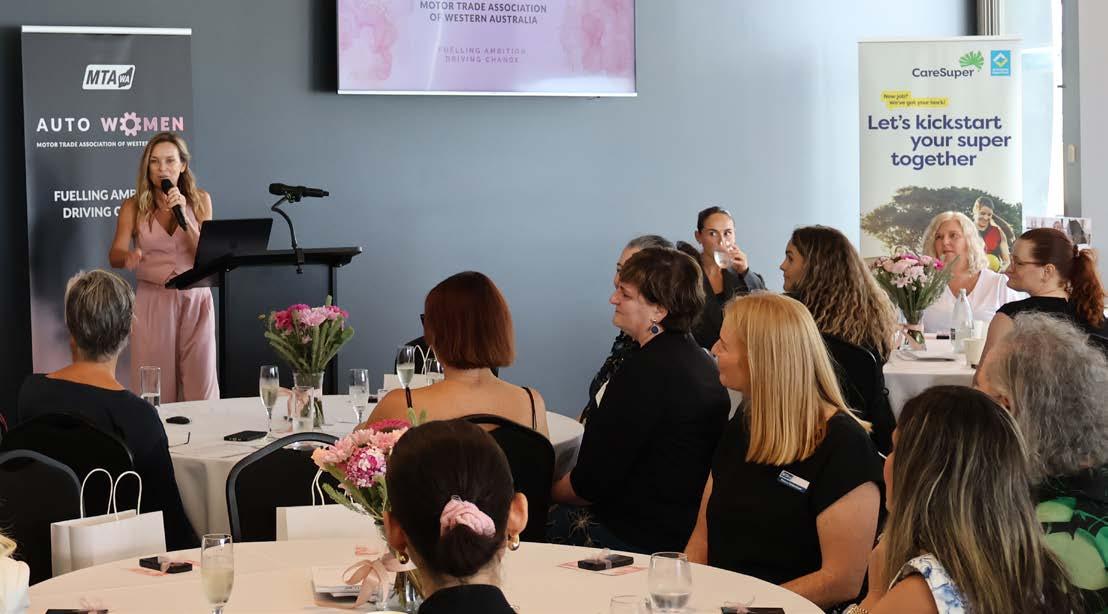
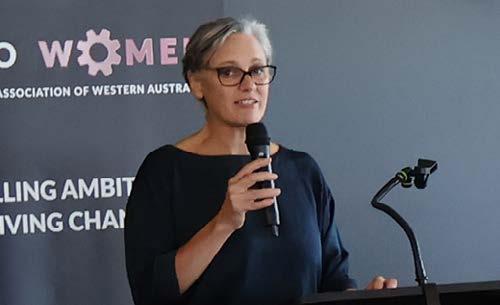
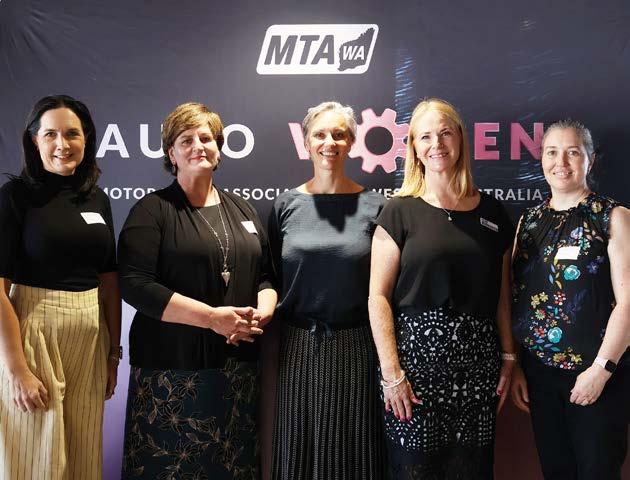
One of the major highlights for the MTA WA in 2025 was the launch of the Auto Women brand in Western Australia – a commitment to supporting women in the automotive industry. At the sold-out event launch in February, attendees joined Indigenous artist Tanya Mooya from Mooya Creative to create a Yarning Circle. The Yarning Circle is a gathering where stories and knowledge are shared and connections are built in a respectful and inclusive manner in order to inspire one another. Now displayed prominently in the MTA WA Boardroom, this lasting symbol of the importance of inclusivity and innovation in our industry recognises the connection, culture and inspirational shared stories of women in the automotive sector.
PRESIDENT’S REPORT
It gives me enormous pleasure to table the President’s Annual Report for the 2024/25 reporting year, in this, the 91st year of operation for the Motor Trade Association of Western Australia (MTA WA).
And what a year it has been. We have had a State and Federal election, a new President in the White House continually disrupting international markets and, closer to home, the introduction of policies with a direct impact on our industry including the National Vehicle Efficiency Standards. This period of change has created a challenging environment, and it is pleasing that the Association has performed very well throughout this period.
Sadly, our long-term Group Chief Executive Officer, Stephen Moir, announced in June that he would be leaving the Association after 15 years of service. Whilst this presents a significant challenge for the Board, I want to assure members that our focus is on recruiting the best possible candidate to fill this important role and we have put in place appointments that will ensure that services are maintained at the highest level.
In the short term, we are fortunate that our Chief Financial and Operating Officer, Rhona Varkevisser, will take up the role whilst we complete the recruitment process, and we anticipate having a new CEO in place by the start of 2026.
Obviously, the Board and I want to thank Steve for his extraordinary commitment to the Association, and we wish him every success for his future.
The Association returned a healthy operating surplus for the reporting period – well above what was forecast. The investment account has performed well despite a high degree of volatility in the markets during the year and this, along with positive reviews of our property valuations, have all contributed to this excellent result.
At the Annual General Meeting in 2024, members approved amendments to the MTA WA’s Constitution and these were formally approved by the Commissioner in January 2025. This year’s AGM will be the first utilising the revised format which requires that half the Board positions be spilled and the subsequent necessity of reelection by members.
The ongoing work on the strategic direction of the Association has continued and we are now seeing the results of this work following the restructuring of business units. This will lead to improvements for members and a growth in the overall business.
The work completed during the reporting period on business planning and structural improvements has laid a solid foundation for the Association’s continued success. The timing of this could not be more appropriate as the industry enters a sustained period of change. Whether that is due to the introduction of policies such as the National Vehicle Efficiency Standards or the emergence of new entrants to the new car market with advanced technologies, change will be the Association’s greatest challenge. It is imperative that we have an Association that can work closely with Government to ensure our members’ interests are protected and promoted.
The CEO maintained a very high level of political engagement throughout the reporting period, greatly aiding the Association in ensuring that issues of relevance to our members are tabled with Ministers. It is pleasing to note that we have achieved several significant outcomes, the details of which are contained within this report.
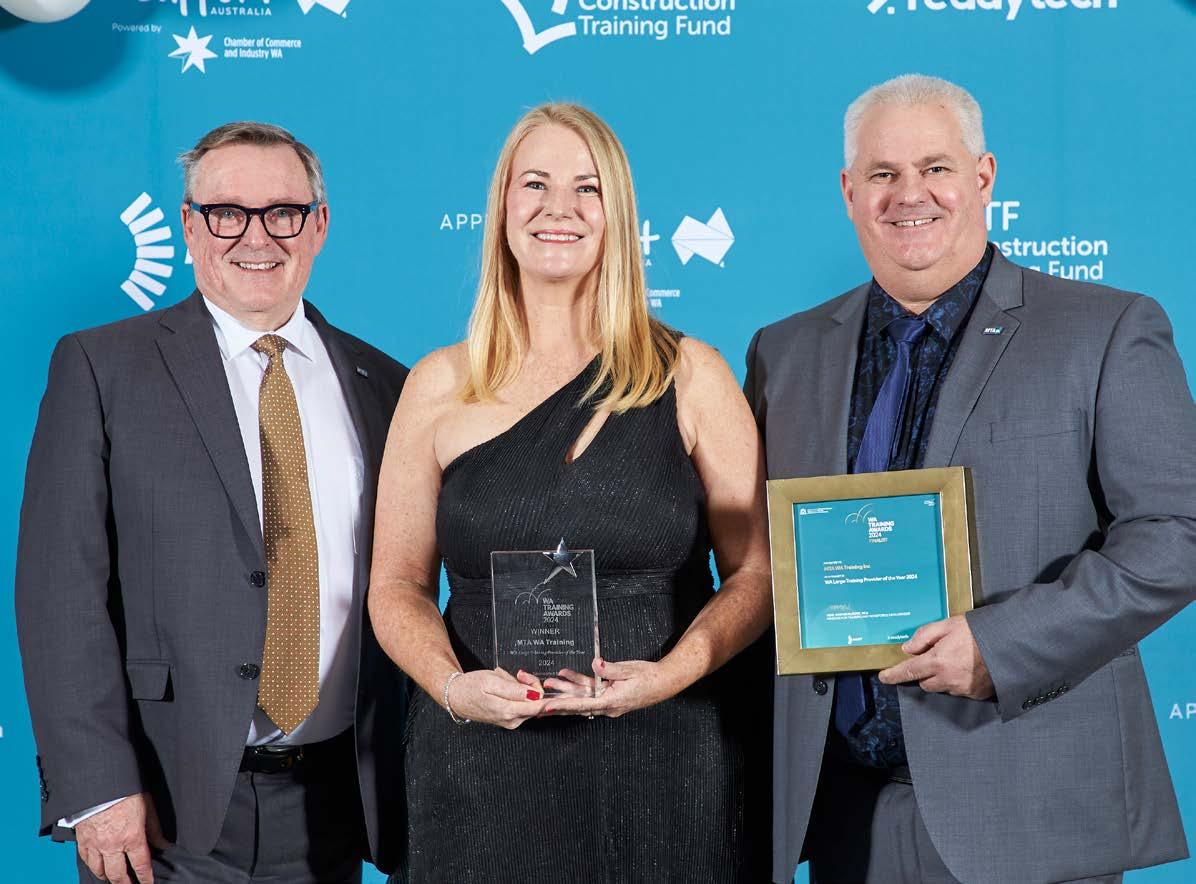
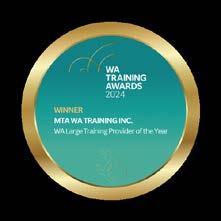
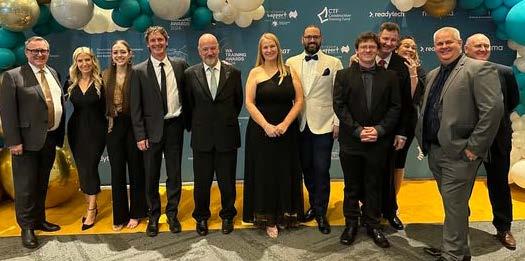
Arguably, the greatest achievement during the reporting period was the recognition, both at a state and national level, of the quality of training that the MTA WA delivers. MTA WA Training was recognised as the Large Training Provider of the Year at the WA Training Awards and was also awarded Bronze at the Australian Training Awards, beaten only by TAFE South Australia and the Charles Darwin University. The commitment to providing our industry with high quality technicians is a key pillar of the MTA WA and we will continue to grow this critical function into the future. We will do this by continuing to provide industry-leading training, as well as supplying the industry with quality apprentices through our apprentice employment service. The MTA WA today trains more than 800 apprentices as well as employing 350 apprentices. This makes the Association the largest trainer and the largest employer of light vehicle trainees and apprentices in Western Australia, a position we intend to maintain.
A further highlight was the launch of our Auto Women Forum in February of this year and from the feedback received we know there is a strong appetite for more forums and the continual growth of this initiative.
In April this year, I had the opportunity to join the Australian Automotive Dealer Association (AADA)’s Study Tour to Shanghai for Auto China, one of the world’s largest automotive events. There can be little doubt that China is the epicentre of automotive manufacturing, and the range and quality of vehicles is simply amazing. The Australian market can expect to see at least 10 new entrants over the next 12 months, giving consumers far greater choice in buying more affordable electric vehicles. This increase in manufacturers, and therefore vehicle models, will, of course, present challenges to automotive dealers who already operate in one of the most competitive markets in the world. When we consider that the Australian market has five manufacturers with a market share of five per cent or greater, there is a lot of stress on dealers operating on tight margins and increased competition to survive long term.
We also had a chance to see what consumer behaviour and dealerships may look like in the next few years. Dealer hubs located within shopping malls, the rise of
robotics and the importance of apps in determining how consumers interact with retailers all featured strongly during our four days in China and I want to thank the AADA for organising this tour.
A further highlight was the launch of our Auto Women Forum in February of this year with a sold-out luncheon at the Scarborough Surf Club and from the feedback received we know there is a strong appetite for more forums and the continual growth of this initiative.
I am immensely proud of the work that the Board and the Management Team have accomplished this past year in charting a very clear course for the Association’s future. While there is no doubt that challenges lie ahead, we are confident that we have developed an organisation that is not only responsive to our members’ needs, but also capable of addressing external challenges as they arise.
In closing, I thank the Board for their support over the past year. I think we can all agree that we are now witnessing the fruits of our labour over the past decade and we have a clearer pathway forward.
To our team, led by our CEO Stephen Moir and Rhona Varkevisser, thank you for your commitment to our members and the Association. Your perseverance through numerous challenges has brought us to where we are today, and the Board and I are very excited about the future.
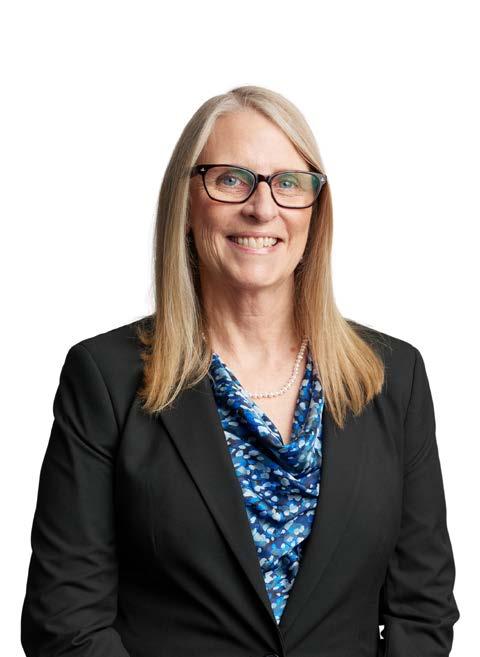
JODI KERR PRESIDENT
The Inaugural Auto Women Luncheon at Scarboro Surf Lifesaving Club.
BOARD OF DIRECTORS
Your Board is composed of at least four Members and two independent Board Directors, who are elected at the Annual General Meeting (AGM). They have the power to manage the affairs of the Association and are responsible for making sure the Association stays true to its purpose and values, acting in the best interests of the members. The Board has the authority to make decisions and take actions needed to manage the Association, complying with the law (Associations Incorporation Act 2015), any by-laws, our rules, and decisions made at general meetings.
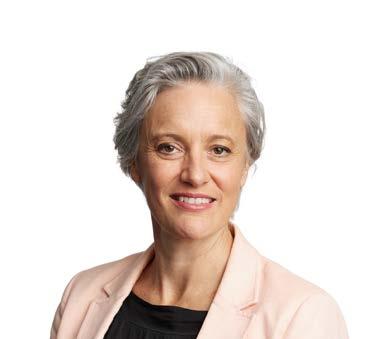
Jodi Kerr, President
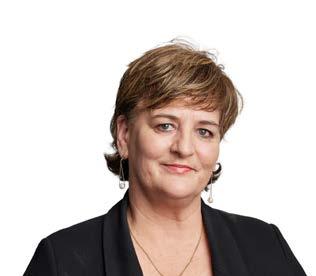
Moira D’Cruze, Treasurer
Robyn Cook, Director
Andrew Houghton, Director
Peter Coupland, Director
Dr Irene Ioannakis, Director resigned 31st January 2025
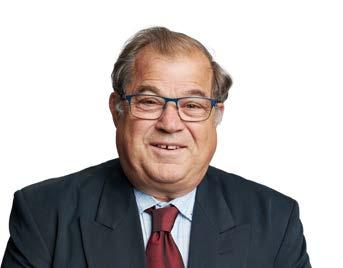
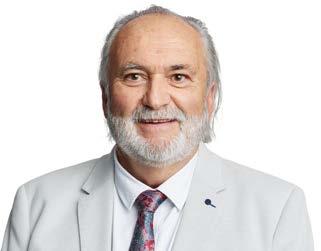
Joe Giura, Vice President
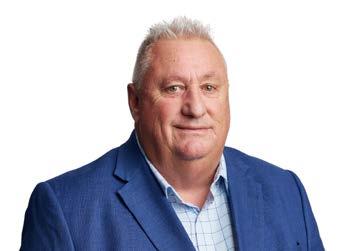
Garry Spouge, Director
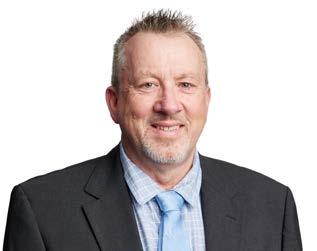
Pat Browne, Director
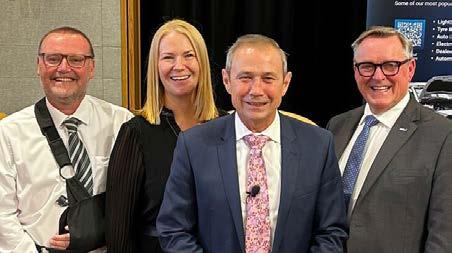
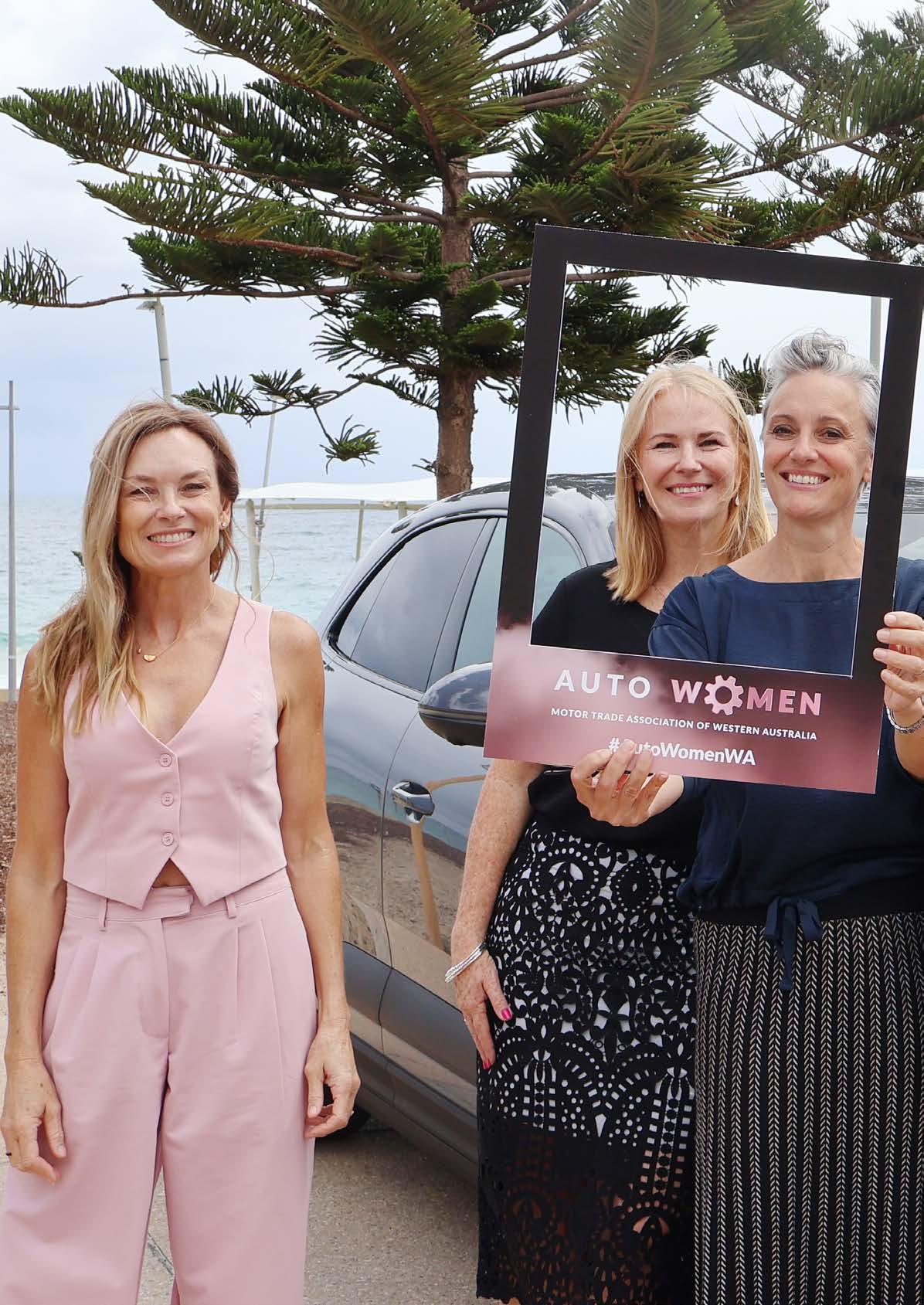
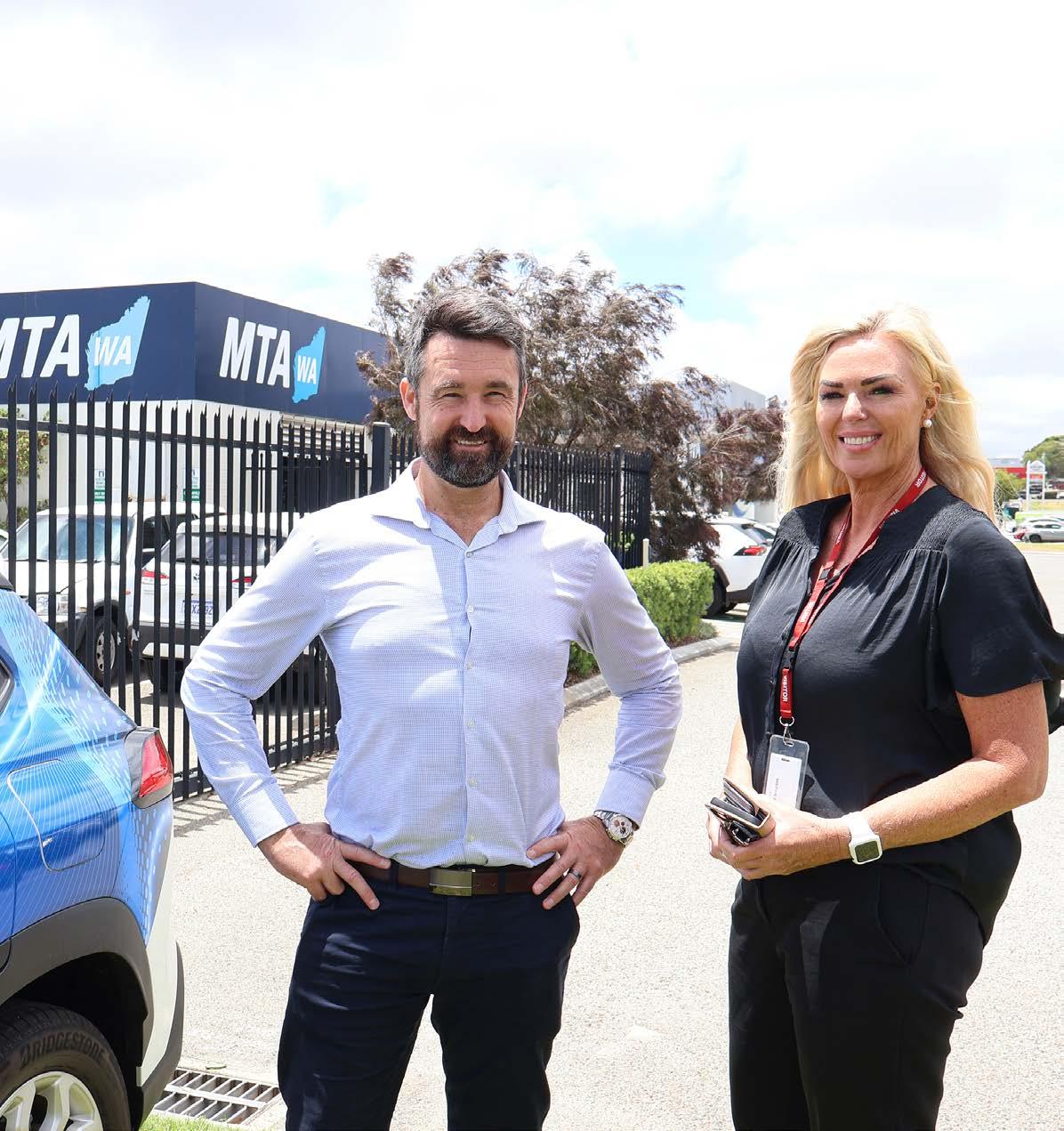
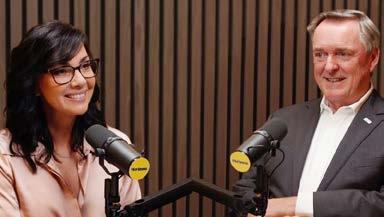
MTA WA President Jodi Kerr (right) pictured with MTA WA Group Chief Finance and Operations Officer Rhona Varkevisser (centre) and event MC Christina Morrissy at the official launch of Auto Women in Feburary 2025.
GROUP CHIEF EXECUTIVE OFFICER’S REPORT
I am very pleased to be able to table the 2024-25 Annual Report of the Motor Trade Association of Western Australia (MTA WA).
The Association has again returned a solid financial result for the reporting period, and this, along with our investment portfolio, places the Association on a sound footing for the future.
During the reporting period, we have continued to deliver high-value services to our members including business support tools, providing a one-stop-shop for the recruitment and placement of apprentices and delivery of Australia’s leading automotive training programs. Our focus is and always will be on enhancing the services we offer to members.
The Association is seeing the benefits from the extensive work undertaken following the implementation of the 2024-26 Strategic Plan and the subsequent development of comprehensive business plans for each operational unit.
MEMBERSHIP ENGAGEMENT
This year marked a shift in our member engagement approach as the Membership and Industry Engagement (MIE) team launched a series of industry forums to replace the traditional sector committee meetings. Engaging as many members as possible, these forums bring together members, industry experts and stakeholders to review existing policies and continue advocacy efforts. Designed to foster open dialogue, share insights, and drive collaborative solutions across key areas of the automotive and mobility industries, the forums have been highly successful in shaping the MTA WA’s policy positions on significant issues affecting our members and the wider automotive community. There is no doubt that the new structure of MIE enhances our ability to engage directly with members on issues that matter to them and the running of their businesses.
One of the year’s most significant initiatives was the launch of Auto Women in February 2025 – a platform that celebrates and supports women in the automotive industry through networking, mentorship and leadership development. The inaugural event was a sold-out event with 85 attendees and included strong partner engagement.
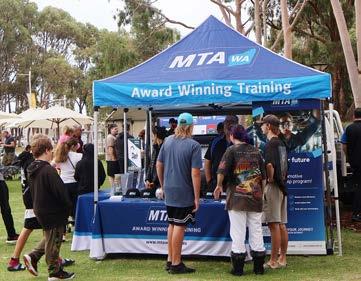
We also broadened our promotional efforts to raise the profile of the MTA WA, including sponsorship of the
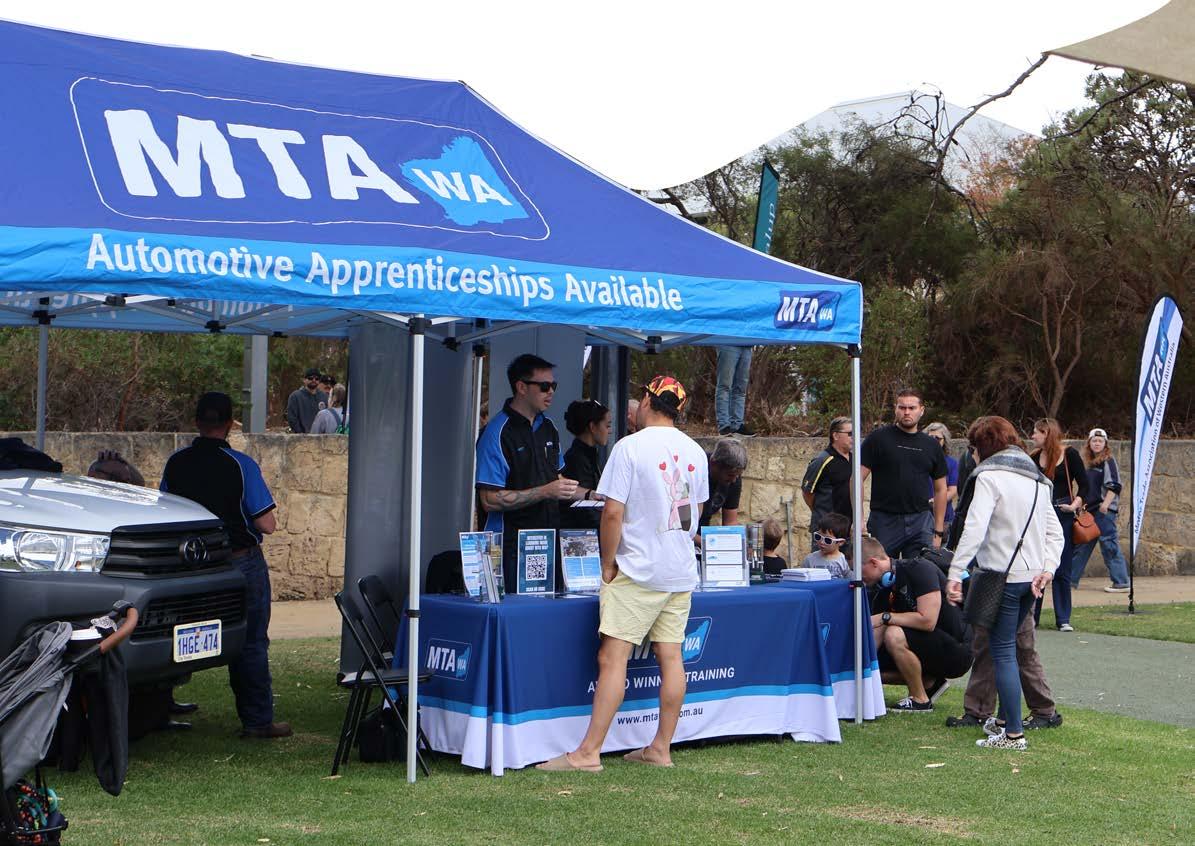
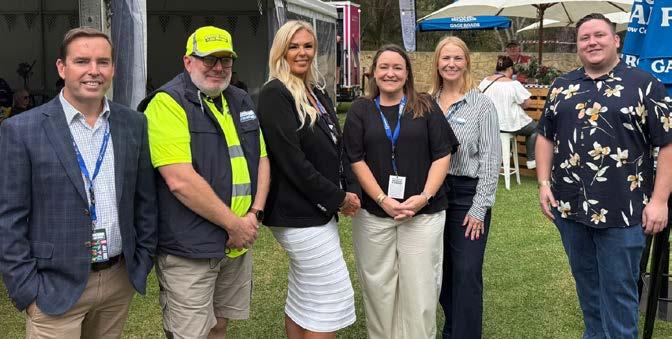
third annual Joondalup Festival of Motoring. The festival allowed us to promote the MTA WA brand, membership benefits and training and apprenticeship pathways to a broad and engaged audience.
The MIE team continued to advocate strongly on behalf of members and in doing so achieved a significant number of outcomes including reducing congestion at Department of Transport (DoT) licensing centres for motor vehicle dealers, influencing the expansion of off-road motorcycle areas, addressing jurisdictional inconsistencies in licensing, tyre age policy and brake towing capacity variations for in-service vehicles.
REGISTERED TRAINING ORGANISATION
The MTA WA has maintained its position as the largest provider of light vehicle training in Western Australia and at the end of the reporting period had 903 apprentices and trainees enrolled.
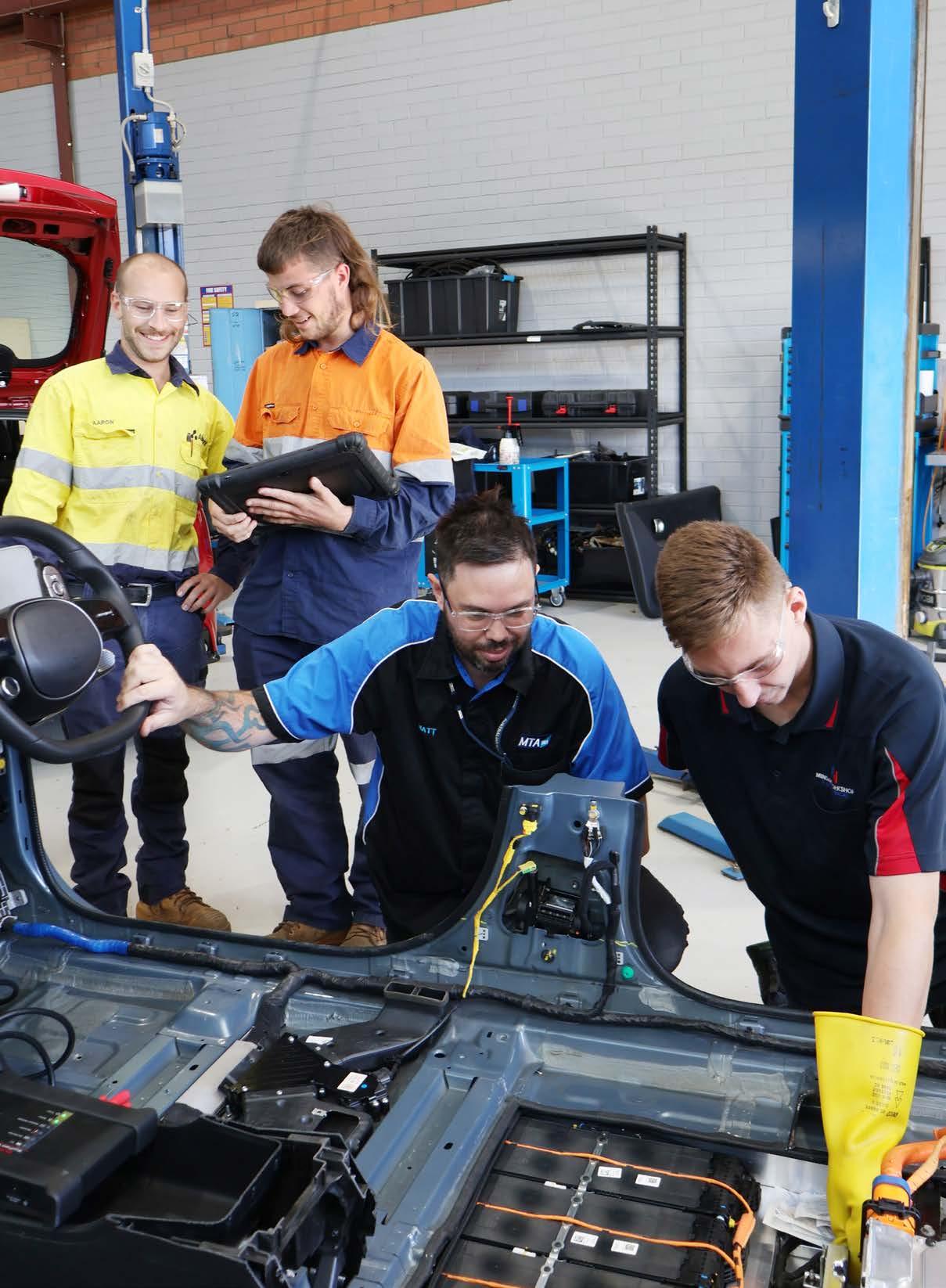
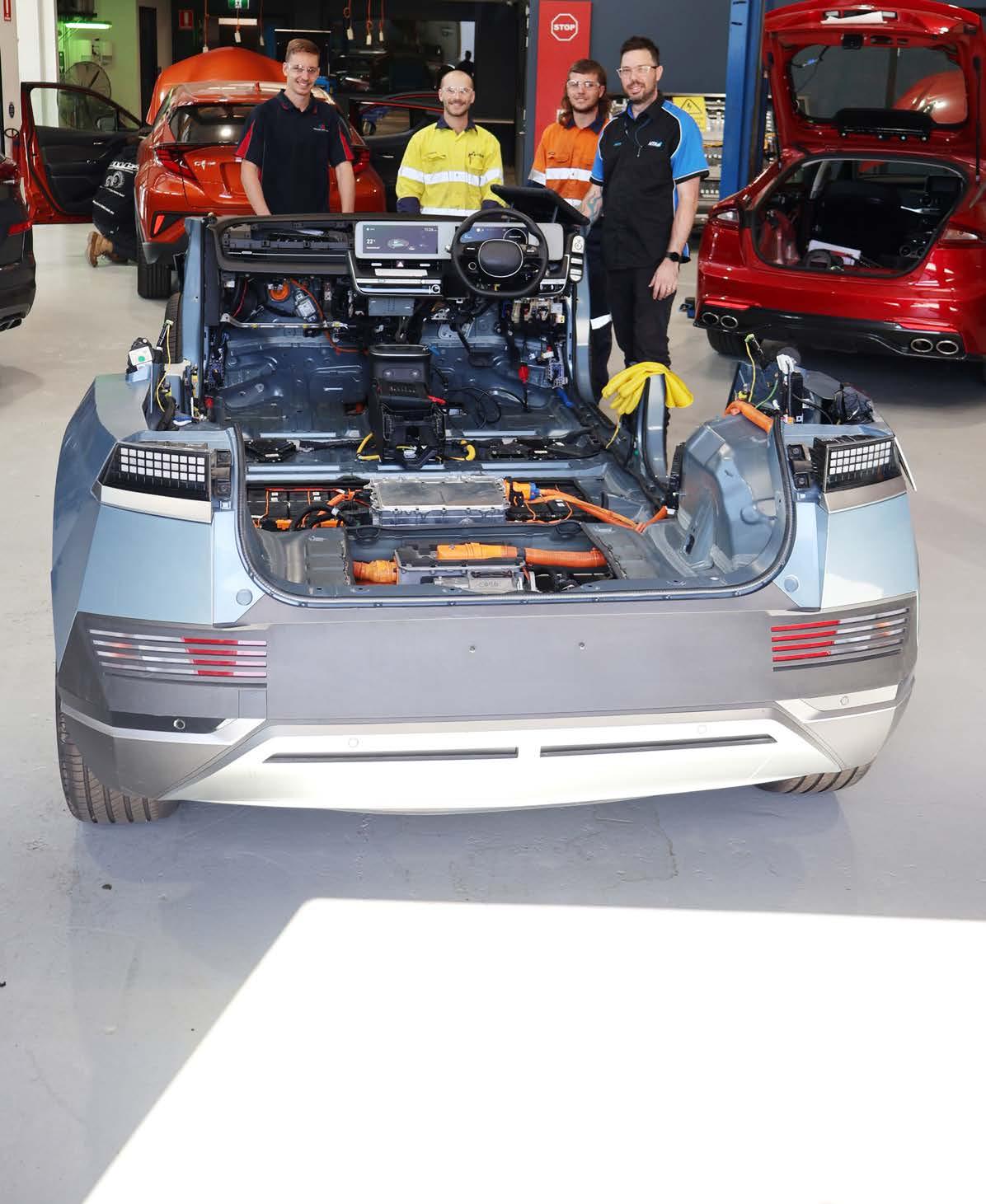
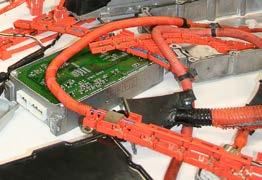
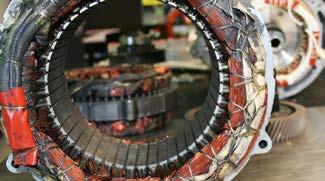
As a Registered Training Organisation (RTO), MTA WA Training has maintained its reputation as an innovative training provider with the expansion of its Electric Vehicle (EV) programs. Our existing five-day EV and online safety program continues to be in high demand and is now complemented by an additional one-day EV Safety program designed to allow workshops to access resources via the Right to Repair network.
Such is the reputation of MTA WA Training, several resource companies, including FMG, are now engaging the Association to provide training.
A standout achievement for MTA WA Training during the reporting period was being named as the Large Training Provider of the Year – the state’s highest training award – at the Western Australian Training Awards. The MTA WA is the first private RTO to win this category in its 30 year history, further validating our unique approach to industry-based training. This was followed by a Bronze Award at the National Training Awards.
Looking ahead, the biggest challenge for MTA WA Training over the next 12 months will be to establish a new training facility in the southern metropolitan corridor to replace our existing Maddington site, with the current lease from the Catholic Education Office set to expire in December 2026. This provides the opportunity to develop a facility with capacity for
program expansion into areas such as heavy diesel and plant. Work will be undertaken to develop a business case to ensure that any decision made is commercially sound.
The MTA WA works closely with the current State Government and we enjoy a very effective working relationship across the Ministry. In all, over 70 individual meetings were held with members of the State Government during the reporting period, reflecting the excellent access to political leaders afforded to the Association.
APPRENTICE EMPLOYMENT SERVICE
The restructuring of the previously named Group Training Organisation into the MTA WA’s Apprentice Employment Services (AES) continued at pace with the appointment of a General Manager, Amanda Dawes, in March 2025 and the successful implementation of key initiatives under the strategic plan.
The MTA WA works closely with the current State Government and we enjoy a very effective working relationship across the Ministry.
Additional resources have now been added to the AES which has further enhanced our operational capacity and maintained our objective of delivering cost-effective, well supported apprentices to our host employers.
While the labour market has undoubtedly softened compared to previous years – not to mention the impact following the withdrawal of government incentives – it is encouraging that the AES had 333 apprentices employed across 184 host employers at the end of the reporting period.
MTA WA Group CEO Stephen Moir pictured with Hon Roger Cook MLA, Premier of Western Australia.
WORKPLACE RELATIONS
There is no doubt that one of the most valued services provided to members is workplace relations support. Today’s complex employment laws mean employers are at a heightened level of risk and I am pleased to report that our team responded to in excess of 150 enquiries per month. This is an extraordinary workload and I want to acknowledge and thank Michael Kar and his team for the manner in which they manage this demand.
During the reporting period, new laws came into effect which will challenge employers. These include the right to disconnect, psychosocial work health and safety and casual employment changes.
Our human resources team have also worked tirelessly on a number of significant initiatives including the organisational redesign of our AES, the MTA WA’s Marketing and Events division and a review of the RTO. All of this work is in line with the 2024/26 Strategic Plan and is designed to improve service delivery to members.
We have also invested heavily over the reporting period in the development of our management team to build capability and skills in leadership and people management.
CONCLUSION
The work completed by the team over the past twelve months has been exceptional and I would like to acknowledge and thank the whole team for their efforts in achieving the results highlighted in this report. I particularly want to acknowledge the outstanding work of my Chief Financial and Operating Officer, Rhona Varkevisser, and her executive team – Tony Cawley, Mel Greenhow, Graham Cawley, Michael Kar and Amanda
Dawes. Their commitment to implementing restructure plans, developing business plans and leading their teams has been instrumental in achieving our excellent results. I also extend my gratitude to my Executive Officer, Larni Doherty, for her great support, not only throughout the reporting period, but also for the past four years that we have worked together.
The MTA WA has greatly benefited from the dedication of our members who give their time to serve on the Board of Directors and I want to thank the Directors for their wise counsel and guidance over the past year.
Finally, I want to thank the members for entrusting me as the Group CEO for the past 15 years.
This is an industry that I am truly passionate about and it has been an enormous honour to serve in this role and to work with the incredible team at the MTA WA.
STEPHEN MOIR GROUP CHIEF EXECUTIVE OFFICER
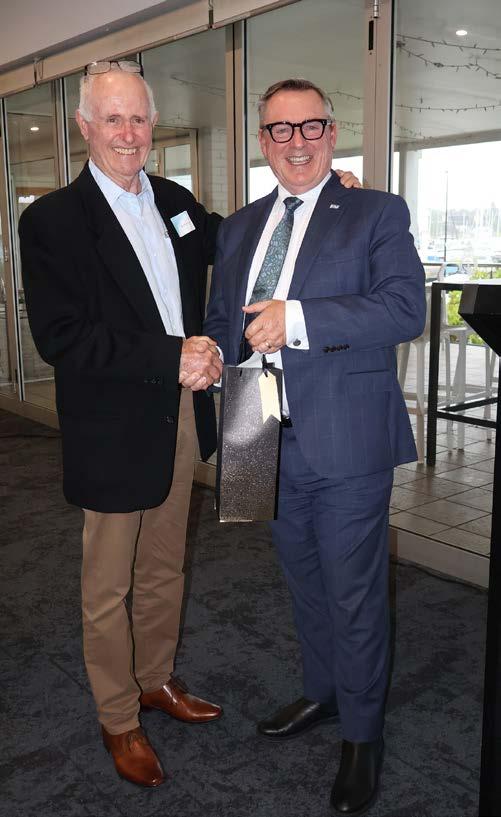
TOP LEFT: MTA WA Group CEO Stephen Moir with past President Ray Mountney at the 2024 MTA WA Annual General Meeting.
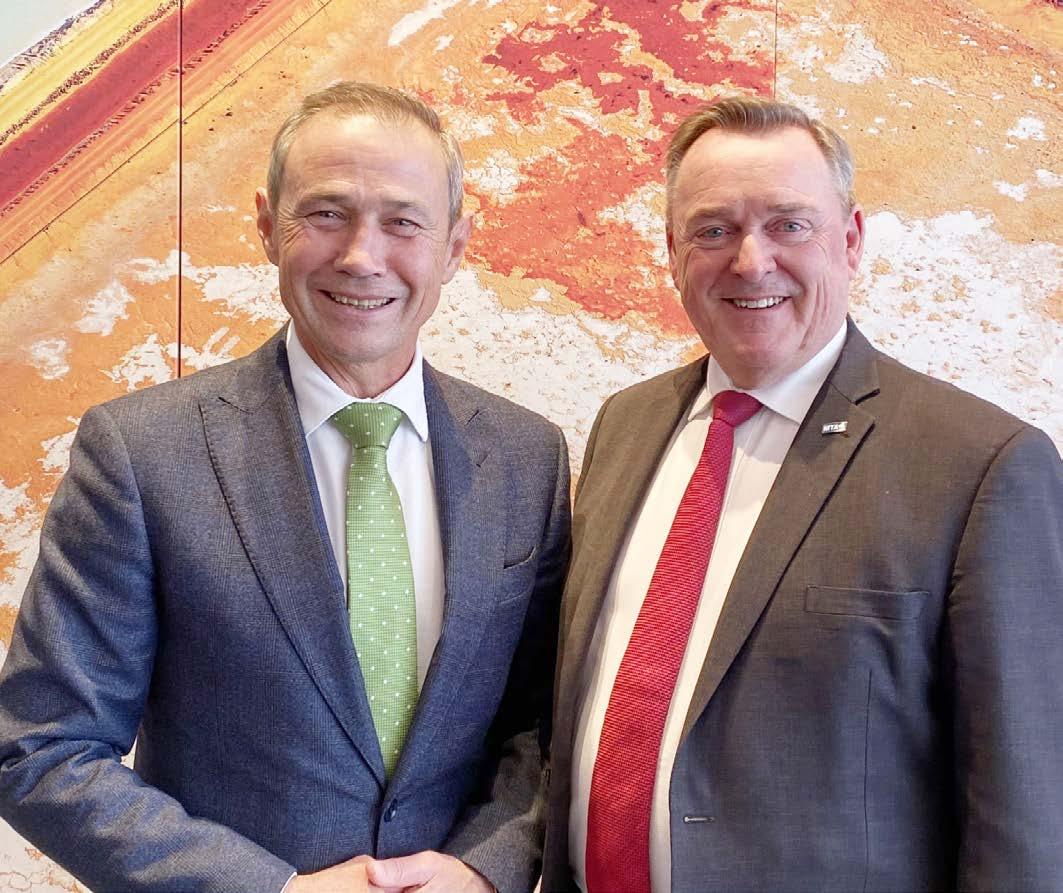
ABOVE: Motor Trades Association of Australia Chief Executive Officer Matt Hobbs (right) pictured with MTA WA Group CEO Stephen Moir.
GROUP CHIEF FINANCE AND OPERATIONS OFFICER’S REPORT
The financial statements and accompanying notes for the year ending 30 June 2025 are presented in this Annual Report for review.
The 2025 financial year was one of transition, growth and consolidation for the Motor Trade Association of Western Australia (MTA WA) Group. Despite the challenges typically associated with organisational change and growth, the Group achieved a strong financial result, expanded its training footprint and further strengthened its role as the leading voice of the automotive industry in Western Australia.
The consolidated total comprehensive profit for the year was $2,143,770 (FY2024: $955,365), supported by a six per cent increase in revenue to $27,615,324. An independent revaluation of the Group’s land and building assets in June 2025 delivered a fair value increase of $1,261,247, while reinvested net investment income and portfolio gains contributed to strengthening Net Assets to $26,468,768 (FY2024: $24,324,997).
OPERATIONAL HIGHLIGHTS
• Membership & Advocacy – Revenue from membership and related services was $1,374,074. The Group invested in immediate Return on Investment (ROI) initiatives, including new member benefits and the recruitment of a dedicated acquisition officer, providing confidence in future growth. Initiatives such as decentralised engagement, industry forums, technical bulletins, business courses, and regional events ensured that member feedback directly informed policy, further strengthening the MTA WA’s advocacy efforts.
• Apprentice Employment Services (AES) – Revenue from Apprentice Time Sold grew five per cent yearon-year to $18,537,915. A restructure in early 2025 improved alignment, providing a greater focus on mentoring, host engagement and apprentice recruitment.
• Training – Training revenue increased by 12 per cent to $5,609,584, with learner numbers surpassing 1,000 for the first time in the MTA WA’s history. The MTA WA’s Registered Training Organisation (RTO) further cemented its reputation, winning awards for Large Training Provider of the Year at both state and national levels. Milestones included the launch
of the EV Technology Certificate III, full digitisation of assessments, new industry partnerships and the recruitment of additional high-calibre trainers.
• People and Culture – Significant investment was made in leadership and compliance training. Restructuring the Apprentice Employment Services (AES) and MTA WA Training addressed growth and cultural challenges, leading to improved alignment and momentum. Staff attraction and retention remained strong, supported by initiatives such as a nine-day fortnight and family-friendly policies.
• Marketing, IT and Facilities – The rebrand to MTA WA Training reinforced the organisation’s identity, while expanded campaigns and event participation lifted apprentice and member engagement. IT modernisation projects enhanced workflows and cybersecurity, preparing for a secure passwordless environment. Facility upgrades at Balcatta improved sustainability and member-facing services and included the installation of EV charging stations.
• Financial Management – Expenditure was closely managed, with resources directed to initiatives aligned with strategy. Projects to identify efficiencies and savings further strengthened financial sustainability.
INVESTMENT PERFORMANCE
• Rental income was $316,207, lower than the prior year, reflecting the sale of the Rivervale property in May 2024.
• Dividends received and reinvested totalled $495,970.
• Unrealised gains on managed funds amounted to $735,941.
• No withdrawals were made from the investment portfolio during 2024–25.
LOOKING AHEAD
The Group enters the 2026 financial year with renewed optimism. A stronger culture, investment in systems and people and national recognition as a leader in training provide a solid platform for growth.
With net assets of $26.5 million and a sound financial base, the MTA WA is well-positioned to further expand
its advocacy, membership base and training and employment services to ensure the delivery of even greater value to members and stakeholders.
I extend my heartfelt thanks to our dedicated team for advancing our strategic priorities while maintaining strong day-to-day operations. Looking ahead, the Board and Management remain committed to investing in the organisation to deliver on the objectives of the Strategic Plan and to continue providing outstanding service and value to our members.
RHONA VARKEVISSER
GROUP CHIEF FINANCE AND OPERATIONS OFFICER
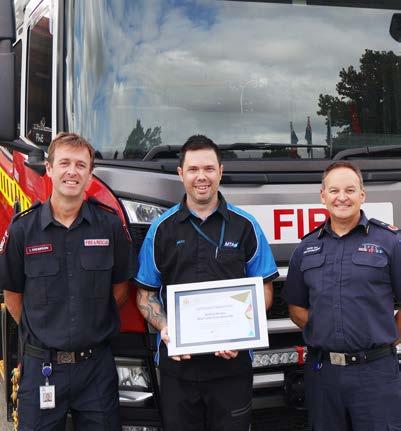
MTA WA Group CEO Stephen Moir (left), MTA WA Group Chief Finance and Operations Officer Rhona Varkevisser and General Manager Training Mel Greenhow pictured with the WA Large Training Provider of the Year Award.
PEOPLE AND CULTURE REPORT
Organisational development and redesign have been the main focus points of human resources management activities during this reporting period with the key aims of supporting business growth while improving the organisation’s value proposition to members and business stakeholders.
Throughout the first half of the year a redesign of Apprentice Employment Services (the Group Training Organisation) was implemented to enable the business to focus on apprentice mentoring and to strengthen partnering relationships with host employers. Staffing, work practices and organisational structures were aligned to achieve these aims and this has positioned the GTO for continued growth and improved apprenticeship outcomes.
A structural review of the Marketing Department was undertaken to strengthen its digital marketing capabilities and expand its capacity to plan and deliver a wider range of member events. The resulting increase in resourcing and redesign of roles has enabled the business to build a stronger digital presence and enhance member engagement across multiple channels and experiences.
An external review of the Registered Training Organisation (RTO) was undertaken, identifying opportunities to strengthen management processes and enhance operational efficiency through targeted system improvements that support the delivery of quality training.
Work on implementing the review recommendations is being carried out and will continue into 2026. The recommendations from this review will ensure that we continue to build on the standards that have made MTA WA Training an award-winning training provider.
During the year, the business also invested heavily in the development of our management teams in the RTO and the GTO in order to build capability and skills in leadership and people management.
An external consultant was engaged to provide a program of training to all our team leaders and apprentice employment consultants to support the development of a culture of performance and trust, and to build stronger relationships within teams.
External coaching was also used to support various levels of leadership in developing key management skills. A program of training for compliance and building staff capability will continue to be an important and ongoing element of our human resources plans.
STAFF TURNOVER AND RECRUITMENT
Over the reporting period, the MTA WA experienced a lower staff turnover than seen during the previous year. Staff separations that occurred did not have an adverse impact on the business and were due to a variety of reasons not attributable to any specific organisational cause.
Retention initiatives such as the nine-day fortnight, reasonable working hours and family-friendly work arrangements are conditions of employment that continue to be offered to staff, and which remain significant factors in securing strong retention and attraction outcomes.
Staff recruitment to fill vacancies that have occurred throughout the year has not been as challenging as in previous years with a greater number of quality candidates applying for all roles across the business, including trainer roles, and vacancies being filled on average within a period of six to eight weeks.
STAFF TURNOVER RATE
MICHAEL KAR GENERAL MANAGER WORKPLACE
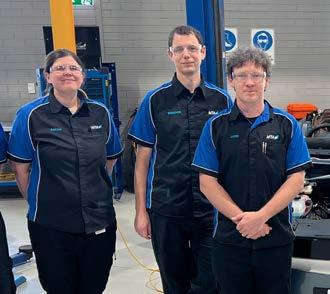
Luke Rowe and Melanie Pool.
ORGANISATIONAL STRUCTURE
GRAHAM CAWLEY General Manager Membership & Industry Engagement
AMANDA BASSON Training Admin. Officer – Post Trade
PRISCILA ALVES DE SOUZA Training Admin. Officer
BRIANNA WHELAN Training Admin. Officer
VERITY HO (12 month contract) Training Admin. Officer
FAY WANG Finance Manager
JAMES WELLS Management Accountant
TERESA TUCKER Senior Payroll Officer
SUMITA RABADIA Payroll & Accounts Assistant
JOTHY BABU Accounts Receivable Officer
JANET MOY RTO Invoicing Officer
TONY CAWLEY Chief Information & Digital Officer
ZARA FINLAYSON Marketing & Events Manager
ISAAC SEIDNER Marketing Coordinator (Digital)
RAQUEL RABE Marketing Coordinator (Events)
MATTHEW WEMYSS KEVIN ELLEMENT BRAD GAMEL JUSTIN BROWNE
Lead Trainer/Assessor - Mechanical/EV Lead Trainer/Assessor - Mechanical Lead Trainer/Assessor - Auto Electrical Lead Trainer/Assessor - Curriculum
Trainer / Assessors
TOMMI AHO BRIDGET BELL
BRENDEN COSGROVE
ADAM FARMER
LEE FERGUSON
PADDY FIUMANO
JARED GOULD
ROBBIE GIVEN
MAARTEN HARDY
MATTHEW JENKINS
ANGELA JOYCE
SARAH KNIPE
BRENDON MCCARROL
RYAN META
IAN SHELDON
CLIFF TINDALL
BRIAN UREN
MARK WASTALL
MEMBER SERVICES
MEMBERSHIP
The 2024–2025 financial year was a period of renewal, reconnection and measurable progress for the MTA WA’s Membership and Industry Engagement team. Our focus was clear; to strengthen relationships, grow membership and enhance the value we deliver to automotive businesses across Western Australia.
1533
TOTAL MEMBERS
as at 30 June 2025
BUILDING A STRONGER TEAM
This year, we welcomed two new team members, Luke Rowe and Melanie Pool, who joined in June 2024. They have already contributed significantly thanks to their industry experience and fresh perspective. Alongside them, Marie Donato, who has served with the MTA WA for over 24 years and brings more than 35 years of automotive industry knowledge, has played a pivotal mentoring role. Together, the team has driven a proactive and coordinated engagement program that reflects our commitment to supporting members and strengthening our industry network.
MEMBER ENGAGEMENT AND SUPPORT
In 2024–2025, we introduced a new Industry Forum model to broaden participation and improve engagement, replacing our traditional divisional meetings. This approach has brought together members, experts and stakeholders to share insights, debate policy and collaborate on solutions to industry challenges. The forums have been highly effective, leading to the development of 11 formal policy positions that now guide the MTA WA’s advocacy efforts.
(incl. Peel)
91 NEW MEMBERS
1 July 2024 – 30 June 2025
Nine Industry Forums were held across key sectors, including Caravan Dealers, Body Repairers, Motorcycles, Rental Vehicles, Commercial Vehicles, 4WD, Licensed Dealers, Auto Women and Automotive Part Recyclers. This structure allows members to have a direct influence on policy and ensures that the Association’s priorities are shaped by those working on the front line of the industry.
Committee representation also continued at both state and national levels, ensuring Western Australian perspectives remain well represented across the Automotive Repair, Body Repair, Tyre Dealer, Commercial Vehicle, and Parts Recycling sectors.
CONNECTING WITH MEMBERS STATEWIDE
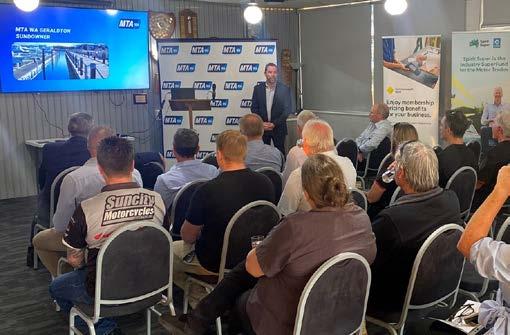
Engagement with regional members remained a strong focus. A highlight was the Geraldton Member Sundowner held at the Geraldton Yacht Club in September 2024. The event provided an excellent opportunity for members to connect directly with the MTA WA leadership team, including Group CEO Stephen Moir, and to hear from business partners Commonwealth Bank and CareSuper.
We were also proud to host the inaugural Auto Women event at Scarboro Beach Surf Club – a sold-out evening celebrating and supporting women in the automotive industry. The event brought together 85 attendees for a night of networking, mentorship and inspiration, marking the beginning of what will become an important fixture in our annual calendar.
Our involvement in the Joondalup Festival of Motoring in early May provided a great opportunity to showcase the MTA WA’s strong connection to community and to promote our core services, including training and apprenticeship and employment pathways.
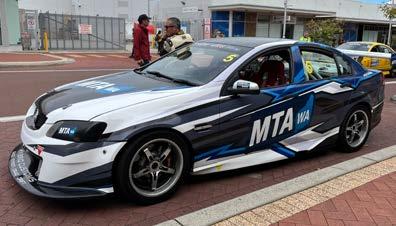
The MTA WA V8 Drive Day car took to the track to promote our brand, while apprentices played an important hands-on role as scrutineers for the competition cars participating in the Sprint.
UPSKILLING AND CAPABILITY BUILDING
This year, we launched the Business Accelerate Program, a professional development initiative designed to help members strengthen their business capability. Delivered in collaboration with the Small Business Development Corporation (SBDC), three online workshops were held focusing on digital marketing, website design and customer service. The program design ensures easy accessibility, allowing participation from regional members and providing practical, business-focused learning outcomes.
Finally, an internal structural realignment brought together the Membership and Divisional teams under one unified structure. This integration has enhanced communication, improved coordination and created a seamless link between member engagement and industry advocacy, ensuring our members’ needs directly inform our policy and representation work.
Our involvement in the Joondalup Festival of Motoring in early May provided a great opportunity to showcase the MTA WA’s strong connection to community and to promote our core services, including training and apprenticeship and employment pathways.
ADVOCACY AND INDUSTRY ENGAGEMENT
Advocacy is at the heart of what we do. Throughout 2024–2025, the MTA WA continued to represent the interests of Western Australia’s automotive industry with strength and credibility by working collaboratively with government, regulators and industry partners to drive positive change.
A STRATEGIC AND COLLABORATIVE APPROACH
Our advocacy work is underpinned by evidencebased policy, informed directly by member feedback through our new Industry Forum model. As a Western Australian–owned and operated association, one of our most valuable advantages is the strength of local relationships. By decentralising industry engagement, our team has developed stronger connections across departments and regions, ensuring that member concerns reach the right decision-makers at both state and national levels.
ADVOCACY PRIORITIES
Our key priorities this year included:
Reducing red tape and improving regulatory efficiency
Supporting skills development and workforce attraction
Ensuring a fair and competitive business environment
Supporting industry transition to electric vehicles and emerging technologies
REPRESENTATION AND CONSULTATION
Over the reporting period, the MTA WA participated in: 14 external committee meetings, including the Off-Road Vehicle Ministerial Advisory Committee, WorkSafe Working Group, and State Training Board
12 targeted stakeholder meetings with key agencies including:
• Road Safety Commission – on e-rideable regulation
• Department of Transport – addressing jurisdictional inconsistencies and service delivery improvements
• Consumer Protection – on classes of repair and legislative updates
• South Metropolitan TAFE – to align body building apprenticeships with Vehicle Standards Bulletin 6 (VSB6)
KEY OUTCOMES AND WINS
Our efforts delivered several notable achievements for members this year:
• Consumer protection reforms: In collaboration with the Department of Transport, we successfully advocated for amendments to vehicle transfer forms (MR9 and MR9B) to include written-off vehicle declarations, enhancing consumer transparency and protecting reputable dealers.
• Expansion of off-road vehicle areas: The State Government announced $4.8 million in grants for local governments to improve off-road vehicle (ORV) facilities, providing a boost for motorcycle dealerships and associated industries.
• EV readiness support: Through the Charge Up EV charging grants, eligible businesses accessed up to 50 per cent co-funding for EV charger installations, helping members prepare for the future of mobility.
• Reducing DVS centre congestion: Our ongoing engagement with the Department of Transport resulted in extended trading hours at three Driver and Vehicle Services (DVS) centres (June–August 2025) and the announcement of a $4 million investment to establish a new DVS centre in the Armadale/Byford region.
SUPPORTING THE BODY REPAIR SECTOR
This year also saw significant progress within the body repair sector, with the development of a new education series designed to clarify legal obligations and strengthen compliance. The first three guides released included:
• Guide 1 – Using Non-Genuine Parts: Outlining the legal rights and risks for collision repairers when using non-genuine parts.
• Guide 2 – Defective Parts: Explaining repairers’ rights and obligations when parts used in a repair are later found to be defective.
• Guide 3 – Repair Work and Insurance: Defining legal rights and obligations when commencing repair work without prior insurer agreement on payment or “items on report.”
These guides provide practical, accessible information to help repairers make informed business decisions and maintain high professional standards.
The Code Administration Committee (CAC), comprising representatives from the Motor Trades Association of Australia (MTAA) and the Insurance Council of Australia, has also worked closely with industry stakeholders to refine the Motor Vehicle Insurance and Repair Industry Code of Conduct. The Australian Motor Body Repairers Association (AMBRA), a committee of the MTAA, played a vital role in this update by providing subject-matter expertise throughout the review process.
The revised code aims to enhance clarity, fairness and effectiveness in key areas, including sanctions and penalties, assessment and estimation times, methods of repair and dispute resolution processes. Importantly, consultation on the revised code also includes proposed
changes to the governance structure, formalising the CAC as an incorporated association – a step that will strengthen accountability and long-term oversight of code compliance.
FUTURE POLICY DEVELOPMENT
We have also developed 11 new policy positions to guide future advocacy efforts. These include:
• Aligning heavy vehicle qualifications with real-world applications
• Establishing a nationally consistent road user charge
• Prohibiting non-compliant e-rideables
• Reviewing brake towing capacity variations
The MTA WA also made a formal submission to the WA Government’s Waste Avoidance and Resource Recovery Strategy 2030, reinforcing our commitment to sustainability and the circular economy.
LOOKING AHEAD
Our advocacy success is built on relationships with our members, policymakers, and partners. As we move into the new financial year, our focus will remain on ensuring Western Australia’s automotive industry continues to be heard, respected and supported through evidencebased policy and active representation.
GRAHAM CAWLEY GENERAL MANAGER, MEMBERSHIP & INDUSTRY ENGAGEMENT
WORKPLACE RELATIONS
During FY 2024-2025 the workplace relations team received approximately 150 telephone and email enquiries per month from members on a wide range of matters arising under federal and state employment laws.
In this period, the following employment law changes came into effect:
• The employer’s duty to eliminate sexual harassment, discrimination, hostile workplace environments and victimisation
The following are the key areas in which advice and assistance was sought by members:
• Wages and entitlements
• Discipline and performance management
• Unfair dismissal and general protection claims
• Employment contracts
• Award interpretation
Throughout the year the MTA WA also worked with its MTA state counterparts across the country to make submissions to government on the Secure Jobs, Better Pay Review, the right to disconnect, the small business definition in the Fair Work Act and superannuation contributions. Ensuring that the automotive industry is heard on workplace relations matters has been, and continues to be, a key priority for the Association.
WORK HEALTH AND SAFETY
The organisation’s safety performance has improved significantly over the past five years, with the current incidence rate now less than a quarter of what it was in 2021. Early 2025 data shows a strong downward trend, reflecting the impact of system improvements, tighter procedures, and more proactive injury management.
An incident is recorded as an LTI when it results in a worker missing at least one full shift/day.
Michael Kar, General Manager Workplace Relations & WHS
TRAINING AND APPRENTICE EMPLOYMENT SERVICES
MTA WA TRAINING
LIGHT VEHICLE TRAINING AND AUTO ELECTRICAL PROGRAMS
Our Registered Training Organisation (RTO), MTA WA Training, has solidified its position as the preferred provider of light vehicle (LV) and auto electrical (AE) apprenticeship training in Western Australia. Maintaining our strong hold on approximately 40 per cent of the WA LV apprentice market, 678 learners were enrolled in the LV program as of 30 June 2025 –a one per cent increase from the previous year’s total of 672.
The AE program saw another year of growth, growing nine per cent from 161 learners in 2023–24 to 176 in 2024–25. Now in its third year, the program has established a solid 27 per cent market share.
Across all qualifications, MTA WA Training had a total of 906 active learners during the reporting period, up from 864 the previous year, again demonstrating consistent growth despite broader industry workforce challenges.
AWARD RECOGNITION AND NATIONAL ACHIEVEMENT
A key highlight of the year was being named WA’s Large Training Provider of the Year at the 2024 WA Training Awards – the first time in the 30-year history of the award that a non-government agency has taken out this honour. This accolade was followed by national recognition, with MTA WA Training selected as a finalist in the Australian Training Awards, proudly securing the Bronze award.
These major achievements underscore the strength, resilience and excellence of a privately operated, industry-focused RTO competing at the highest levels against well-resourced public providers.
EV TRAINING EXPANSION AND INNOVATION
Building on our established success in EV training, MTA WA Training introduced a new one-day Depower and Reinitialise Electric Vehicle (EV) course during the year. This course was designed to support workshops with basic EV safety skills and help them access resources via the right-to-repair network. The course received strong interest, with all advertised sessions quickly booked and a total of 25 enrolments, indicating a strong market appetite for practical EV-focused micro-credentials.
Our five-day EV course and online safety program also remained in high demand with 178 participants (61 FFS plus 117 SS) completing the HEV/BEV 5-Day Course and 32 students participating in the EV Online Program.
We are also proud to report that a new Advanced Diagnose and Repair EV Training Course is nearing completion ahead of its scheduled release in October 2025. This course will be the first of its kind in Western Australia – if not nationally – and further cements our reputation as the leader in EV training.
Preparations are also well underway for the introduction of WA’s first-ever EV trade qualifications with delivery anticipated within the next reporting period.
STAFFING AND OPERATIONAL UPDATES
Staffing levels began strongly this year and included the appointment of a full-time trainer at our south of the river site in Maddington which enabled the expansion of class offerings at that location.
However, industry-wide skills shortages impacted staffing in the latter half of the year, with several trainers transitioning to alternative roles. Proactive recruitment efforts are underway, and we anticipate the majority of vacant roles will be filled early in the 2025–2026 reporting period.
From increased learner numbers across our core qualifications to expanded offerings in electric vehicle training and prestigious accolades at both State and National levels, the year has further cemented our position as the leading automotive RTO in Western Australia.
TRAINING ADMINISTRATION HIGHLIGHTS
The administration function of MTA WA Training underwent significant development this year, achieving increased accuracy, efficiency and system alignment. Key highlights included:
• Transition of the RTO Administration Role: New Administration team leader successfully onboarded and trained in RAPT reporting, reconciliation and VETtrak workflows.
• New RAPT Reconciliation Reporting: Discrepancies were identified and resolved early through the introduction of the Reconciliation RAPT Report.
• Streamlining of Accounts Support: RTO invoicing team member resumed duties after extended leave with streamlined processes in place, reducing duplication and improving efficiency.
• MTA WA Server to Online SharePoint Migration: Folder structures were finalised and are now in the implementation phase to ensure controlled and current document access.
• Training Plans Now Display Real-Time Data: These now reflect accurate training schedules rather than using static templates.
• Bulk Distribution of 2025 Timetables: Enabled via VETtrak’s “Relationships” function, saving weeks of administrative time.
• Interstate RTO Support: Provided advisory support to MTA SA/NT on data reporting and RAPT processes.
• Contract Term Adjustment: Contracts were aligned to four-year durations with DTWD approval, reducing manual adjustments and admin hours.
FINAL SUMMARY AND LOOKING AHEAD
The 2024–2025 reporting period has seen another year of steady growth, strategic innovation and sector recognition for MTA WA Training. From increased learner numbers across our core qualifications to expanded offerings in electric vehicle training and prestigious accolades at both State and National levels, the year has further cemented our position as the leading automotive RTO in Western Australia.
Our visit to the 2025 Shanghai Motor Show provided valuable insight into the rapid advancements and future trends emerging from the Chinese automotive market. This experience directly supports our ongoing commitment to staying informed and responsive to global technology shifts – particularly in areas such as electrification, diagnostics and digital systems – in order to ensure our training continues to meet the needs of tomorrow’s workshops.
We also made strong progress in strengthening operational systems, rolling out new EV micro credentials and finalising the State’s first Advanced Diagnose and Repair EV course, ahead of its October 2025 launch. These efforts, along with our preparation to deliver WA’s first EV trade qualifications, position us well for the year ahead.
As we move into 2025–2026, MTA WA Training remains committed to being the trusted provider of choice for automotive skills development in Western Australia. Through our future-focused mindset, strong employer connections and industry-led training programs, we continue to shape the State’s automotive workforce.
MTA WA Training is – and will remain – the premier destination for training automotive technicians.
MEL GREENHOW GENERAL MANAGER, TRAINING
Matt Wemyss (right)
APPRENTICE EMPLOYMENT SERVICES
The MTA WA’s Apprentice Employment Services (AES) has continued to successfully implement key initiatives under its strategic plan, resulting in notable developments within the department over the reporting period.
A significant milestone was the appointment of a General Manager in March 2025, tasked with leading the business unit and overseeing strategic growth. Additionally, allocating further resources to the AES has enhanced operational capacity, reinforcing our commitment to delivering well-mentored, highly supported apprentices to our host employers, while also strengthening support for our hosts and members.
During the reporting period, the AES placed particular emphasis on the following strategic initiatives:
• Enhancement of safety practices for both apprentices and host employers.
• Improved apprentice retention through a comprehensive review and subsequent refinement of support and mentoring processes.
• Evaluation of an apprentice management system to ensure ongoing compliance with Group Training Organisation (GTO) requirements.
• Implementation of a schools’ engagement program, including participation in 12 school expos during the latter part of the year.
• Industry-specific research into automotive trades such as Heavy Diesel and Auto Electrical aimed at expanding hosting opportunities in these areas.
• Collaboration with the Membership and Industry Engagement team to encourage more young people to pursue apprenticeships in trades such as vehicle body building, panel beating and spray painting. This initiative is being developed in consultation with employers to align with industry needs and to ensure suitable candidates are identified.
Over the reporting period, AES conducted more than 150 interviews with potential candidates and commenced 134 apprentices. Reflecting a softening of the market and a reduction in government incentives at the start of the period, this figure falls slightly short of the 2024/25 target. However, the latter part of the year saw a strong resurgence in applications across all the automotive trades, largely due to our proactive engagement with jobseekers and school leavers. This surge prompted the early rollout of a host employer marketing campaign to meet the growing interest in apprenticeship opportunities.
Seventy-nine apprentices completed their qualification in the reporting period and as at 30 June 2025, there were 333 apprentices employed across 184 host employers.
• Targeted marketing campaigns aimed at promoting apprenticeship hosting to employers in response to increased candidate interest during the second half of the year.
Looking ahead, new federal funding will become available to host employers who have not previously employed an apprentice in the last two years –provided they host through AES – further incentivising participation.
AMANDA DAWES GENERAL MANAGER, APPRENTICE EMPLOYMENT SERVICES
Apprentice Jacob Whiteside who was awarded the gold medal in the Western Australian Perth North Regional Worldskills competition in the automotive mechanics division.
ASSOCIATION HIGHLIGHTS
CEO MEDIA PRESENCE
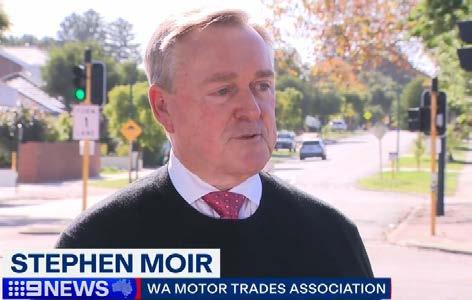
Group CEO Stephen Moir again maintained a strong and consistent media presence throughout the year, ensuring the MTA WA was the recognised voice of the Western Australian automotive industry. From his TV and radio interviews to print and digital commentary, Stephen provided trusted and influential insights on the issues that matter most to our members.
LAUNCH OF AUTO WOMEN
In February 2025, we proudly introduced Auto Women to Western Australia – a new platform dedicated to supporting and celebrating women in the automotive space.
The sold-out inaugural event brought together 85 participants for networking, mentorship, and leadership opportunities and, importantly, enabled us to collect insights into the challenges faced by women in the industry.
These understandings will guide future advocacy and initiatives as we continue working with MTA Queensland, the program’s founders, as Auto Women is rolled out nationally.
HISTORIC APPOINTMENT OF JODI KERR AS MTA WA PRESIDENT
In a milestone moment for both the MTA WA and the national industry, Jodi Kerr was appointed as our first female President. Jodi is the first woman to lead an MTA board anywhere in Australia. Her leadership reflects our commitment to diversity and progression across the automotive sector.
AWARD-WINNING TRAINING EXCELLENCE
MTA WA Training was recognised as the Large Training Provider of the Year at the WA Training Awards. This was the first time in the award’s 30-year history that a private Registered Training Organisation (RTO) has received this honour. We then went on to secure Bronze at the Australian Training Awards.
Judges highlighted our unique training model as a key point of difference. By enabling apprentices to spend more time in their workplaces than competing providers allow, we minimise disruption to business operations while strengthening on-the-job learning.
Together with our pioneering Electric Vehicle (EV) training options, state-of-the-art facilities,
access to the latest technologies and strong industry partnerships, we continue to deliver training that is genuinely tailored to industry needs.
NEW EV TRAINING OFFERINGS
MTA WA Training expanded its pioneering electric vehicle training portfolio with the launch of a new EV apprenticeship pathway and a one-day Depower and Reinitialise EV safety course, which quickly sold out.
These initiatives build on our reputation as the State’s leader in EV skills development, providing workshops and technicians with practical safety knowledge while supporting the transition to future mobility options. Further programs are already in development, including an advanced diagnose and repair course and WA’s first dedicated EV trade qualifications.
REGIONAL MEMBER ENGAGEMENT
Building on the success of our regional member events during the previous financial year, we continued the series with the Geraldton Sundowner in September 2024. Hosted at the Geraldton Yacht Club, the evening featured presentations from CEO Stephen Moir, General Manager, Membership & Industry Engagement, Graham Cawley, and business partners Commonwealth Bank and CareSuper. Alongside valuable conversations with local members in a welcoming setting, the event was well received by attendees.
SHOWCASING OUR INDUSTRY
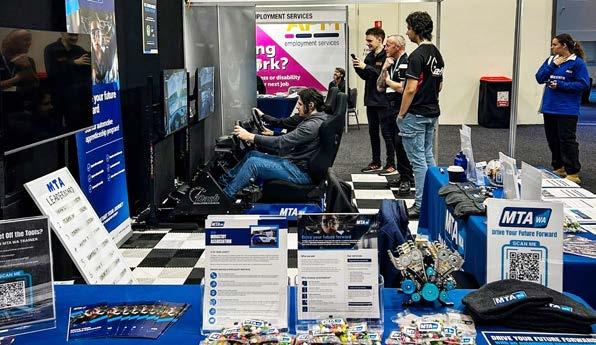
We significantly increased our community and industry presence this year, attending the SkillsWest Careers and Employment Expo, the Perth Tradie Expo and the Joondalup Festival of Motoring, as well as multiple school career fairs across the Perth metropolitan area.
These events allowed us to promote MTA WA membership, training and apprenticeship pathways to a wider audience including students, jobseekers, families and the wider
ADVOCACY WINS
Our new Industry Forum model created stronger engagement by bringing members and stakeholders together to shape advocacy priorities. This collaborative approach has delivered real outcomes, including reducing Department of Transport Licensing Centre congestion for motor vehicle dealers, expanding off-road motorcycle areas and addressing inconsistencies in tyre age policy, licensing and towing capacity rules.
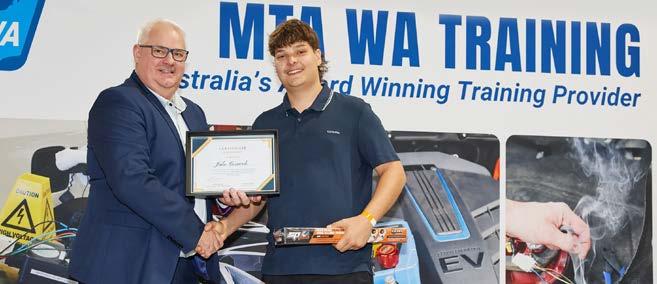
STUDENT GRADUATION –CLASS OF 2024
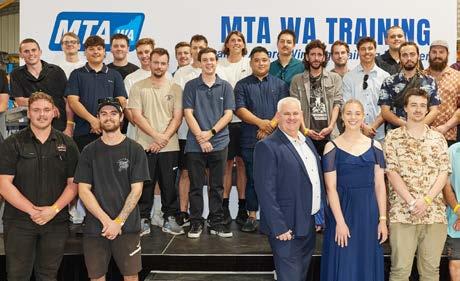
In January 2025, we proudly celebrated the achievements of the latest graduating class of apprentices and trainees. The ceremony recognised the dedication and hard work of students across multiple disciplines, with families, trainers, and industry representatives joining to mark the milestone.
ENHANCED MEMBER BENEFITS
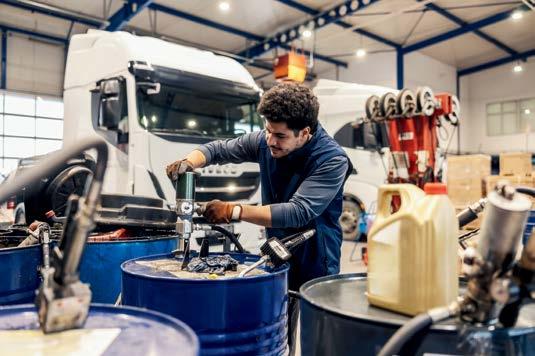
Members gained access to new benefits this year, including the Bunnings Trade PowerPass discount program and free Chemwatch chemical management system access.
Combined with our broader suite of benefits and managed service offerings, these initiatives deliver tangible cost savings and efficiencies, providing members with a strong return on their annual membership investment.
FINANCIAL STATEMENTS
These financial statements are consolidated financial statements of the consolidated entity consisting of Motor Trade Association of Western Australia Inc. and the MTA WA Training Inc. The financial statements are presented in the Australian currency.
Motor Trade Association of Western Australia is a not-for-profit association, incorporated and domiciled in Australia. Its registered office and principal place of business is:
Motor Trade Association of Western Australia 253 Balcatta Road Balcatta, Western Australia
A description of the nature of the consolidated entity’s operations and its principal activities is included in the Board of Management’’s report on page 34, which is not part of these financial statements.
The financial statements were authorised for issue by the Board of management on 24 September 2025.
The Board of management has the power to amend and reissue the financial statements.
BOARD OF MANAGEMENT’S REPORT
Your Board of management presents their report on the consolidated entity (referred to hereafter as the ‘Group’) consisting of Motor Trade Association of Western Australia and the entities it controlled at the end of, or during, the year ended 30 June 2025.
BOARD OF MANAGEMENT MEMBERS
The following persons held office as Board of Management of Motor Trade Association of Western Australia during the financial year:
Ms Jodi Kerr, President
Mr Ray Mountney, President – resigned 19 November 2024
Mr Joe Giura, Vice President
Mrs Moira D’Cruze, Treasurer
Mr John Patrick Browne
Mr Andrew Houghton
Mrs Robyn Cook
Dr Irene Ioannakis – resigned 31st January 2025
Mr Garry Spouge
Mr Peter Coupland – appointed 20th November 2024
PRINCIPAL ACTIVITIES
The principal activities of the Group during the year were to provide a wide range of services and representation to its members in the motor industry, including providing training to apprentices.
SIGNIFICANT CHANGES
No significant change in the nature of these activities occurred during the year.
OPERATING RESULTS
The surplus for the year was $882,523 (2024: surplus of $970,115). Included in the gain for the year was a net fair value gain of $735,941 in relation to the Group’s financial assets (managed funds) (2024: $944,882).
MATTERS SUBSEQUENT TO THE END OF THE FINANCIAL YEAR
No matter or circumstance has arisen since 30 June 2025 that has significantly affected the Group’s operations, results or state of affairs, or may do so in future years.
LIKELY DEVELOPMENTS AND EXPECTED RESULTS OF OPERATIONS
The likely developments in the operations of the Group and the expected results of operations are that the Group will continue with its current activities, and the expected results will be consistent with historical performance.
AUDITOR’S INDEPENDENCE DECLARATION
A copy of the auditor’s independence declaration as required under the Associations Incorporation Act 2015 is set out on page 35.
This report is made in accordance with a resolution of the Board of Management.
Mrs Moira D’Cruze Treasurer
Mr Joe Giura
Vice President
Perth, Western Australia 24 September 2025
DECLARATION OF INDEPENDENCE BY GLYN O'BRIEN TO THE BOARD OF MANAGEMENT OF
TRADE ASSOCIATION OF WESTERN AUSTRALIA
I declare that, to the best of my knowledge and belief, there have been no contraventions of any applicable code of professional conduct in relation to the audit of Motor Trade Association of Western Australia for the year ended 30 June 2025.
This declaration is in respect of Motor Trade Association of Western Australia and the entities it controlled during the period.
Glyn O'Brien Director
BDO Audit Pty Ltd Perth 24 September 2025
STATEMENT OF
OR LOSS AND OTHER COMPREHENSIVE INCOME FOR THE YEAR ENDED 30 JUNE 2025
The above consolidated statement of financial position should be read in conjunction with the accompanying notes.
CONSOLIDATED STATEMENT OF CHANGES IN EQUITY FOR THE YEAR ENDED 30 JUNE 2025
CONSOLIDATED STATEMENT OF CASH FLOWS FOR THE YEAR ENDED 30 JUNE 2025
Note 30 June 2025 30 June 2024 $ $
Cash flows from operating activities
Receipts from customers and government 27,529,425 25,580,349 Payments to suppliers, staff and employees (27,204,327) (25,302,882)
Payment of finance costs (86,857) (80,866)
Net cash inflow / (outflow) from operating activities 24 238,240 196,601
Cash flows from investing activities Payments for property, plant and equipment (480,354) (363,566) Proceeds from sale of property, plant and equipment 55,455 5,091,271
Net cash inflow / (outflow) from investing activities (424,899) 4,727,705
Cash flows from financing activities Repayment of lease liability (principal) (62,433) (59,792)
Net cash inflow / (outflow) from financing activities (62,433) (59,792)
Net increase / (Decrease) in cash and cash equivalents (249,092) 4,864,513 Cash and cash equivalents at the beginning of the financial year 6,618,975 1,754,462 Cash and cash equivalents at the end of the financial year 6 6,369,883 6,618,975
The above consolidated statement of cash flows should be read in conjunction with the accompanying notes.
1 MATERIAL ACCOUNTING POLICIES
The accounting policies that are material to the consolidated entity are set out below. The accounting policies adopted are consistent with those of the previous financial year, unless otherwise stated. The financial statements are for the consolidated entity consisting of Motor Trade Association of Western Australia and the association MTA WA Training Inc.
(a) New or amended Accounting Standards and Interpretations adopted
The incorporated association has adopted all of the new or amended Accounting Standards and Interpretations issued by the Australian Accounting Standards Board (‘AASB’) that are mandatory for the current reporting period.
Any new or amended Accounting Standards or Interpretations that are not yet mandatory have not been early adopted.
For the year ended 30 June 2025, all new and effective Accounting Standards or Interpretations were adopted. There was no impact on the Association’s financial statements as a result of adoption.
(b) Basis of preparation
These general purpose financial statements have been prepared in accordance with the Australian Accounting Standards - Simplified Disclosures issued by the Australian Accounting Standards Board (‘AASB’) and the Associations Incorporation Act 2015, as appropriate for not-for-profit oriented entities.
(c) Revenue recognition
Revenue from contracts with customers
Revenue is recognised at an amount that reflects the consideration to which the Association is expected to be entitled in exchange for transferring goods or services to a customer. For each contract with a customer, the Association: identifies the contract with a customer; identifies the performance obligations in the contract; determines the transaction price which takes into account estimates of variable consideration and the time value of money; allocates the transaction price to the separate performance obligations on the basis of the relative stand-alone selling price of each distinct good or service to be delivered; and recognises revenue when or as each performance obligation is satisfied in a manner that depicts the transfer to the customer of the goods or services promised.
Revenue is recognised for the major business activities as follows:
(i) Training
Training revenue is recognised upon delivery of the training to the participant.
(ii) Australian Apprenticeships Incentive Program
Australian Apprenticeships Incentive Program revenue is recognised when the entity has completed the agreed program service.
(iii) Apprentice and trainee time sold
Revenue from rendering of these services is recognised when the time has been worked by the trainee or apprentice, this being, the service has been provided.
(iv) Rental income
Rental income is recognised as it is earned over the lease term. This applies to all leases, licenses and casual rental usage of facilities.
(v) Interest income
Interest revenue is recognised as interest accrues using the effective interest method. This is a method of calculating the amortised cost of a financial asset and allocating the interest income over the relevant period using the effective interest rate, which is the rate that exactly discounts estimated future cash receipts through the expected life of the financial asset to the net carrying amount of the financial asset.
(vi) Government grants and assistance programs
Refer to note 1(d) below.
(vii) Other sales of goods and rendering of services
Other revenue is recognised when it is received or when the right to receive payment is established.
All revenue is stated net of the amount of goods and services tax (GST).
(d) Government grants and assistance programs
Grant revenue is recognised in profit or loss when the Association satisfies the performance obligations stated within the funding agreements.
If specifically sufficient conditions are attached to the grant which must be satisfied before the Association is eligible to retain the contribution, the grant will be recognised in the statement of financial position as a contract liability until those conditions are satisfied.
1 MATERIAL ACCOUNTING POLICIES (CONT.)
(e) Cash and cash equivalents
For the purpose of presentation in the statement of cash flows, cash and cash equivalents includes cash on hand, deposits held at call with financial institutions, other shortterm, highly liquid investments that are readily convertible to known amounts of cash and which are subject to an insignificant risk of changes in value, and bank overdrafts.
(f) Trade and other receivables
Trade receivables are generally due for settlement within 30 days, unless specific deferral plans have been agreed between the Group and the customer.
The Group applies the simplified approach to measuring expected credit losses, which uses a lifetime expected credit loss allowance.
(g) Investments and other financial assets
Investments and other financial assets are initially measured at fair value. Transaction costs are included as part of the initial measurement, except for financial assets at fair value through profit or loss. Such assets are subsequently measured at either amortised cost or fair value depending on their classification. Classification is determined based on both the business model within which such assets are held and the contractual cash flow characteristics of the financial asset unless, an accounting mismatch is being avoided.
Financial assets are derecognised when the rights to receive cash flows have expired or have been transferred and the Association has transferred substantially all the risks and rewards of ownership. When there is no reasonable expectation of recovering part or all of a financial asset, its carrying value is written off.
(i) Financial assets at fair value through profit or loss
Financial assets not measured at amortised cost or at fair value through other comprehensive income are classified as financial assets at fair value through profit or loss. Typically, such financial assets will be either: (i) held for trading, where they are acquired for the purpose of selling in the short-term with an intention of making a profit, or a derivative; or (ii) designated as such upon initial recognition where permitted. Fair value movements are recognised in profit or loss. The Group’s managed funds are recognised at fair value through profit or loss.
(h) Property, plant and equipment
Land and buildings are shown at fair value, based on periodic, but at least triennial, valuations by external independent valuers, less subsequent depreciation for
buildings. Any accumulated depreciation at the date of revaluation is eliminated against the gross carrying amount of the asset and the net amount is restated to the revalued amount of the asset. All other property, plant and equipment is stated at historical cost less depreciation.
Depreciation on other assets is calculated using the straight-line method to allocate their cost or revalued amounts, net of their residual values, over their estimated useful lives or, in the case of leasehold improvements and certain leased plant and equipment, the shorter lease term as follows:
Buildings
40 years
Light vehicles 8 years
Plant and equipment 7 – 20 years
Furniture, fixtures and fittings 7 – 8 years
Computer equipment 3 years
The assets’ residual values and useful lives are reviewed, and adjusted if appropriate, at the end of each reporting period.
An asset’s carrying amount is written down immediately to its recoverable amount if the asset’s carrying amount is greater than its estimated recoverable amount (note 1(i)).
Gains and losses on disposals are determined by comparing proceeds with carrying amount. These are included in profit or loss. When revalued assets are sold, it is Association policy to transfer any amounts included in other reserves in respect of those assets to surplus funds.
(j) Trade and other payables
These amounts represent liabilities for goods and services provided to the group prior to the end of financial year which are unpaid. The amounts are unsecured and are usually paid within 30 days of recognition. Trade and other payables are presented as current liabilities unless payment is not due within 12 months from the reporting date. They are recognised initially at their fair value and subsequently measured at amortised cost using the effective interest method.
(j) Contract liabilities
Contract liabilities represent the Association’s obligation to transfer goods or services to a customer and are recognised when a customer pays consideration, or when the incorporated association recognises a receivable to reflect its unconditional right to consideration (whichever is earlier) before the incorporated association has transferred the goods or services to the customer.
(k)
Provisions
Provisions are measured at the present value of management’s best estimate of the expenditure required to settle the present obligation at the end of the reporting period. The discount rate used to determine the present value is a pre-tax rate that reflects current market assessments of the time value of money and the risks specific to the liability. The increase in the provision due to the passage of time is recognised as interest expense.
(l)
Employee benefits
Provisions are recognised for the Group’s liability for employee benefits arising from services rendered by employees to balance sheet date. Employee benefits expected to be settled within one year together with benefits arising from wages, salaries and annual leave which may be settled after one year, have been measured at the amounts expected to be paid when the liability is settled. Employee benefits payable later than one year have been measured at the present value of the estimated future cash outflows to be made for those benefits. In determining the liability, the consideration is given to employee wage increases and the probability that the employee may not satisfy vesting requirements. Those cash outflows are discounted using market yields on national government bonds with term to maturity that match the ten-year bond rate.
Contributions are made by the Group to an employee superannuation fund and are charged as expenses when incurred.
(m)
Fair value measurement
When an asset or liability, financial or non-financial, is measured at fair value for recognition or disclosure purposes, the fair value is based on the price that would be received to sell an asset or paid to transfer a liability in an orderly transaction between market participants at the measurement date; and assumes that the transaction will
take place either: in the principal market; or in the absence of a principal market, in the most advantageous market.
Fair value is measured using the assumptions that market participants would use when pricing the asset or liability, assuming they act in their economic best interests. For non-financial assets, the fair value measurement is based on its highest and best use. Valuation techniques that are appropriate in the circumstances and for which sufficient data are available to measure fair value, are used, maximising the use of relevant observable inputs and minimising the use of unobservable inputs.
(n) Income tax
The incorporated association is exempt from paying income tax under subsection 50-4 of the Income Tax Assessment Act 1997, as amended.
(o)
Current and non-current classification
Assets and liabilities are presented in the statement of financial position based on current and non-current classification.
An asset is classified as current when: it is either expected to be realised or intended to be sold or consumed in the incorporated association’s normal operating cycle; it is held primarily for the purpose of trading; it is expected to be realised within 12 months after the reporting period; or the asset is cash or cash equivalent unless restricted from being exchanged or used to settle a liability for at least 12 months after the reporting period. All other assets are classified as non-current.
A liability is classified as current when: it is either expected to be settled in the incorporated association’s normal operating cycle; it is held primarily for the purpose of trading; it is due to be settled within 12 months after the reporting period; or there is no unconditional right to defer the settlement of the liability for at least 12 months after the reporting period. All other liabilities are classified as non-current.
2 CRITICAL ACCOUNTING ESTIMATES AND JUDGEMENTS
Estimates and judgements are continually evaluated and are based on historical experience and other factors, including expectations of future events that may have a financial impact on the entity and that are believed to be reasonable under the circumstances.
Critical accounting estimates and assumptions
The Group makes estimates and assumptions concerning the future. The resulting accounting estimates will, by definition, seldom equal the related actual results. The estimates and assumptions that have a significant risk of causing a material adjustment to the carrying amounts of assets and liabilities within the next financial year are discussed below.
Estimation of useful lives of assets
The Group determines the estimated useful lives and related depreciation and amortisation charges for its property, plant and equipment and finite life intangible assets. The useful lives could change significantly as a result of technical innovations or some other event. The depreciation and amortisation charge will increase where the useful lives are less than previously estimated lives, or technically obsolete or non-strategic assets that have been abandoned or sold will be written off or written down.
Impairment of non- assets
The Group assesses impairment of non-financial assets at each reporting date by evaluating conditions specific to the Group and to the particular asset that may lead to impairment. If an impairment trigger exists, the recoverable amount of the asset is determined. This involves fair value less costs of disposal or value-in-use calculations, which incorporate a number of key estimates and assumptions.
Fair value of land and buildings
During the reporting period, the Board obtained an independent external valuation on the organisation’s land and building asset to determine the fair value at 30 June 2025. In the preparation of this valuation, significant estimate was applied, including but not limited to forecast rental incomes and market capitalisation yields.
Allowance for expected credit losses
The allowance for expected credit losses assessment requires a degree of estimation and judgement. It is based on the lifetime expected credit loss, grouped based on days overdue, and makes assumptions to allocate an overall expected credit loss rate for each group. These assumptions include recent sales experience and historical collection rates.
3 REVENUE FROM CONTINUING OPERATIONS
from members and other divisional activities
4 OTHER INCOME
4(a)
TO THE CONSOLIDATED FINANCIAL STATEMENTS 30 JUNE 2025 (CONTINUED)
5 EXPENSES
Operational surplus/ (deficit) includes the following specific expenses:
6 CURRENT ASSETS – CASH AND CASH EQUIVALENTS
Classification as cash equivalents
Term deposits are presented as cash equivalents if they have a maturity of twelve months or less from the date of acquisition and are repayable with 24 hours’ notice with no loss of interest.
7 FINANCIAL ASSETS AT FAIR VALUE THROUGH PROFIT OR LOSS
at
The managed funds are recognised at fair value, on the level 1 fair value hierarchy based on quoted market prices of the equities held at 30 June 2025
8 CURRENT ASSETS – TRADE AND OTHER RECEIVABLES
11 NON-CURRENT ASSETS – PROPERTY, PLANT AND EQUIPMENT
Year End 30 June 2024
Year End 30 June 2025
As at 30 June 2025
Reserve
17 COMMITMENTS
The group does not have any commitments as at 30 June 2025 (30 June 2024: Nil)..
18 CONTINGENT LIABILITIES
The Group does not have any other contingent liabilities as at 30 June 2025 (30 June 2024: Nil).
19 RELATED PARTY TRANSACTIONS
Key management personnel
Disclosures relating to key management personnel are set out in note 20.
Transactions with related parties
There were no transactions with related parties during the current and previous financial year.
20 KEY MANAGEMENT PERSONNEL DISCLOSURE
Compensation
The aggregate compensation made to officers and other members of key management personnel of the Association is set out below:
21 SURPLUS FUNDS
Movements in surplus funds were as follows: 30 June 2025 30 June 2024 $ $ Balance 1 July 23,959,534 22,989,419 Net surplus for the year 882,523 970,115 Balance 30 June 24,842,057 23,959,534
22 REMUNERATION OF AUDITORS
During the year the followings fees were paid or payable for services provided by the auditor of the parent entity, its related practices and non-related audit firms:
23 EVENTS OCCURRING AFTER THE REPORTING PERIOD
No matter or circumstance has arisen since 30 June 2025 that has significantly affected the Group’s operations, results or state of affairs, or may do so in future years
24 CASH FLOW INFORMATION
Reconciliation of surplus/(deficit) after income tax to net cash inflow/(outflow) from operational activities
Net fair value (gain) / loss on other financial assets (735,941) (944,882)
/ loss on sale of non-current assets
Change in operating assets and liabilities: (Increase) / decrease in assets: (Increase) / decrease in trade debtors and prepayments
BOARD OF MANAGEMENT’S DECLARATION 30 JUNE 2025
In the Board of Management opinion:
(a) the financial statements and notes set out on pages 36 to 52 are in accordance with the Associations Incorporation Act 2015 including:
(i) complying with Australian Accounting Standards, the Associations Incorporation Act 2015 and other mandatory professional reporting requirements, and
(ii) giving a true and fair view of the consolidated entity’s financial position as at 30 June 2025 and of its performance for the financial year ended on that date, and
(b) there are reasonable grounds to believe that the entity will be able to pay its debts as and when they become due and payable..
This declaration is made in accordance with a resolution of the Board of Management.
Mrs Moira D’Cruze
Mr Joe Giura Treasurer Vice President
Perth, Western Australia 24 September 2025
INDEPENDENT AUDITOR'S REPORT
To the members of Motor Trade Association of Western Australia (Inc)
Report on the Audit of the Financial Report
Opinion
We have audited the financial report of Motor Trade Association of Western Australia (Inc) (the registered Entity) and its subsidiaries (the Group), which comprises the consolidated statement of financial position as at 30 June 2025, the consolidated statement of profit or loss and other comprehensive income, the consolidated statement of changes in equity and the consolidated statement of cash flows for the year then ended, and notes to the financial report, including material accounting policy information and the declaration by those charged with governance.
In our opinion the accompanying financial report presents fairly, in all material respects, the financial position of the Group as at 30 June 2025, and its financial performance and its cash flows for the year then ended in accordance with Australian Accounting Standards - Simplified Disclosures.
Basis for opinion
We conducted our audit in accordance with Australian Auditing Standards. Our responsibilities under those standards are further described in the Auditor’s responsibilities for the audit of the Financial Report section of our report. We are independent of the Group in accordance with the ethical requirements of the Accounting Professional and Ethical Standards Board’s APES 110 Code of Ethics for Professional Accountants(including Independence Standards) (the Code) that are relevant to our audit of the financial report in Australia. We have also fulfilled our other ethical responsibilities in accordance with the Code.
We believe that the audit evidence we have obtained is sufficient and appropriate to provide a basis for our opinion.
Emphasis of matter – Basis of accounting
We draw attention to Note 1 to the financial report, which describes the basis of accounting. The financial report has been prepared for the purpose of fulfilling the Group financial reporting responsibilities under the Associations Incorporation Act 2015 . As a result, the financial report may not be suitable for another purpose. Our opinion is not modified in respect of this matter.
Responsibilities of management and those charged with governance for the Financial Report Management is responsible for the preparation and fair presentation of the financial report in accordance with Australian Accounting Standards - Simplified Disclosures and for such internal control as management determines is necessary to enable the preparation and fair presentation of a financial report that is free from material misstatement, whether due to fraud or error.
In preparing the financial report, management is responsible for assessing the Group’s ability to continue as a going concern, disclosing, as applicable, matters related to going concern and using the going concern basis of accounting unless management either intends to liquidate the Group or to cease operations, or has no realistic alternative but to do so.
Those charged with governance are responsible for overseeing the Group’s financial reporting process. Auditor’s responsibilities for the audit of the Financial Report
Our objectives are to obtain reasonable assurance about whether the financial report as a whole is free from material misstatement, whether due to fraud or error, and to issue an auditor’s report that includes our opinion. Reasonable assurance is a high level of assurance, but is not a guarantee that an audit conducted in accordance with the Australian Auditing Standards will always detect a material misstatement when it exists. Misstatements can arise from fraud or error and are considered material if, individually or in the aggregate, they could reasonably be expected to influence the economic decisions of users taken on the basis of this financial report.
A further description of our responsibilities for the audit of the financial report is located at the Auditing and Assurance Standards Board website (http://www.auasb.gov.au/Home.aspx) at: https://www.auasb.gov.au/media/apzlwn0y/ar3_2024.pdf
This description forms part of our auditor’s report.