+ + STATE LAUNCH OF NATIONAL SKILLS WEEK STATE LAUNCH OF NATIONAL SKILLS WEEK STATE LAUNCH OF NATIONAL SKILLS WEEK
Explore the world of automotive careers,
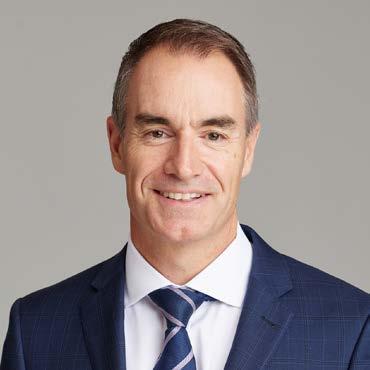
Since stepping into the role of CEO of the MTA WA, one of the things that has struck me most is the strength of this industry—not just in what we do, but in who we are.
The MTA WA has a proud history and a strong foundation. My role is to build on that foundation and ensure we continue providing the leadership, support and advocacy our members need not just today, but for what is coming next.
Over recent months, I have had the opportunity to meet many members, both at the coalface and at industry events. Firstly, I want to start by saying a thank you. Thank you to our members, our Board and our MTA WA team for the warm welcome and for the openness in sharing your views about where our industry is heading and the MTA WA’s role in that future.
STEPPING INTO A NEW CHAPTER – TOGETHER
Those conversations have been invaluable. They have reinforced the importance of listening to members in order to understand the challenges faced and ensuring the Association remains firmly focused on meeting members’ needs.
The automotive industry contributes more than $6 billion to the WA economy each year and employs over 35,000 people across more than 8,000 businesses. However, we are about much more than that: we are the industry that keeps people, goods and services moving throughout the state and beyond.
Due to fuel supply concerns, we’ve all been reminded in recent months just how critical this industry is: when fuel supply becomes uncertain, the entire economy feels it. The reality is simple — if the automotive industry stops, the economy stops.
With that level of responsibility comes a clear expectation: we need to take a lead, not just react.
We are at a pivotal moment in the history of our industry for what we are witnessing right now is not incremental change but structural, global disruption happening at speed. Electric vehicle sales alone surpassed 20 million worldwide in 2025, representing around one in four new vehicles sold.
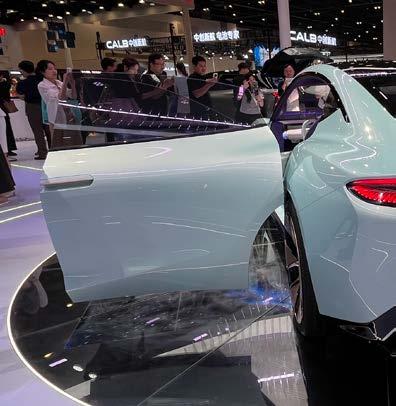
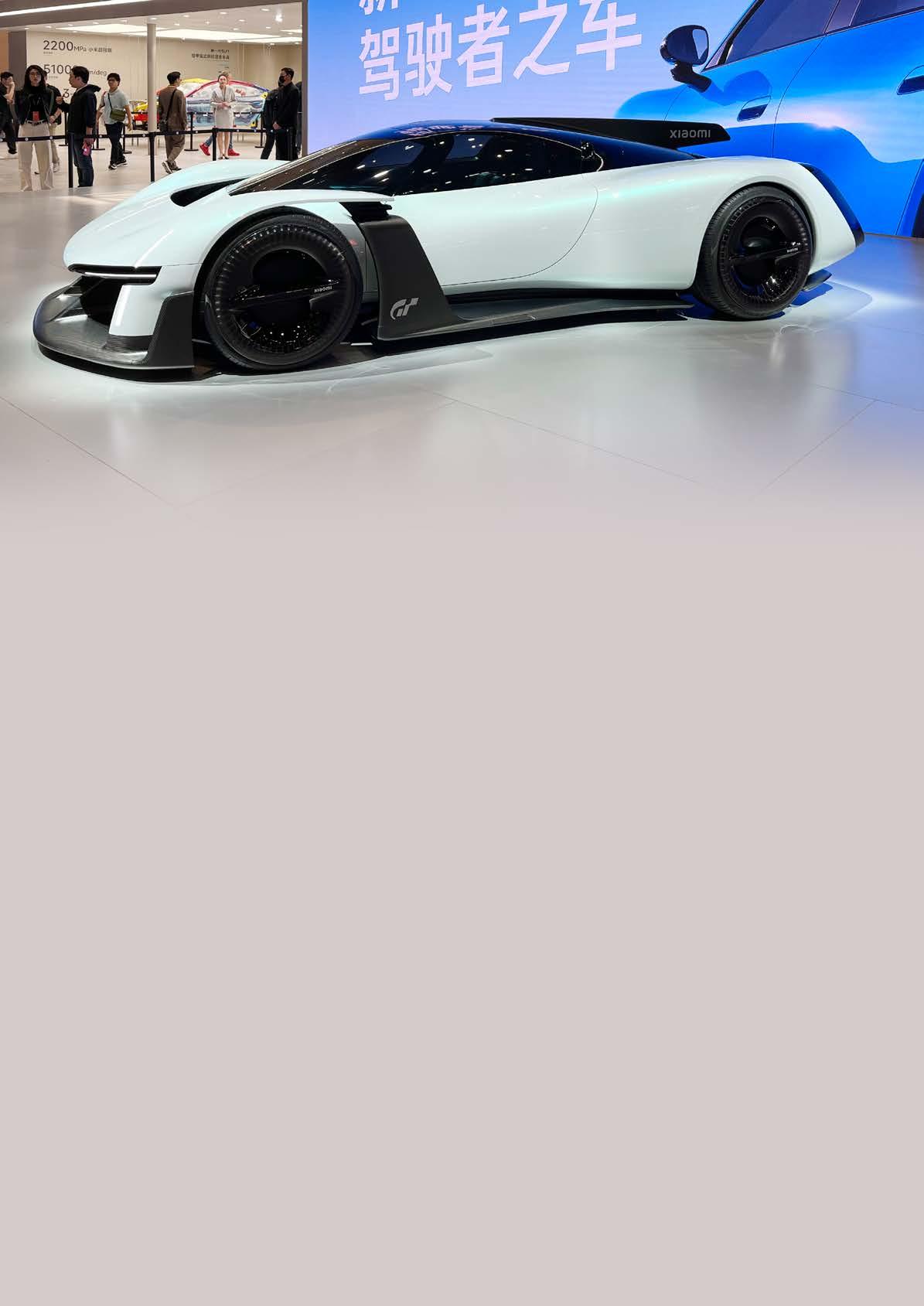
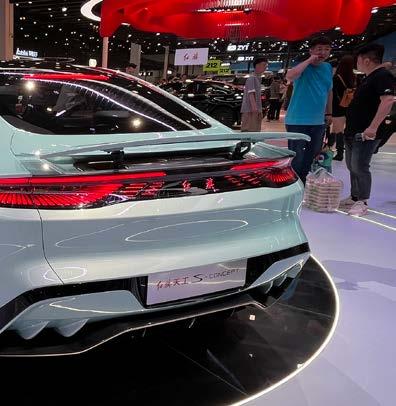
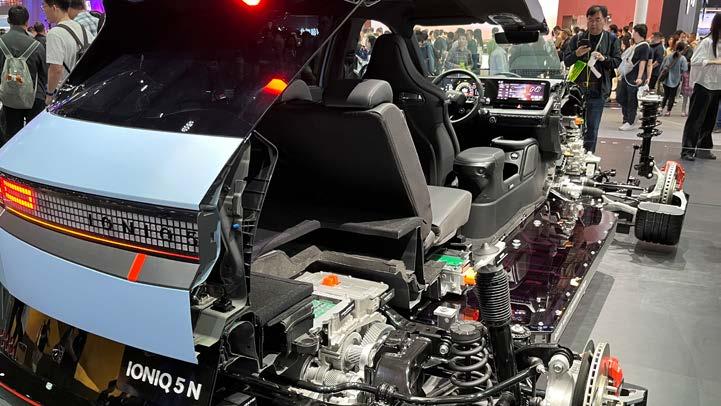
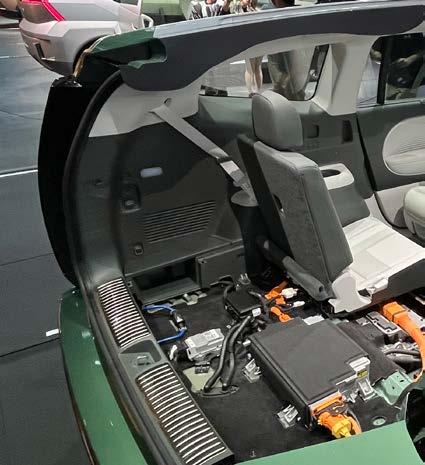
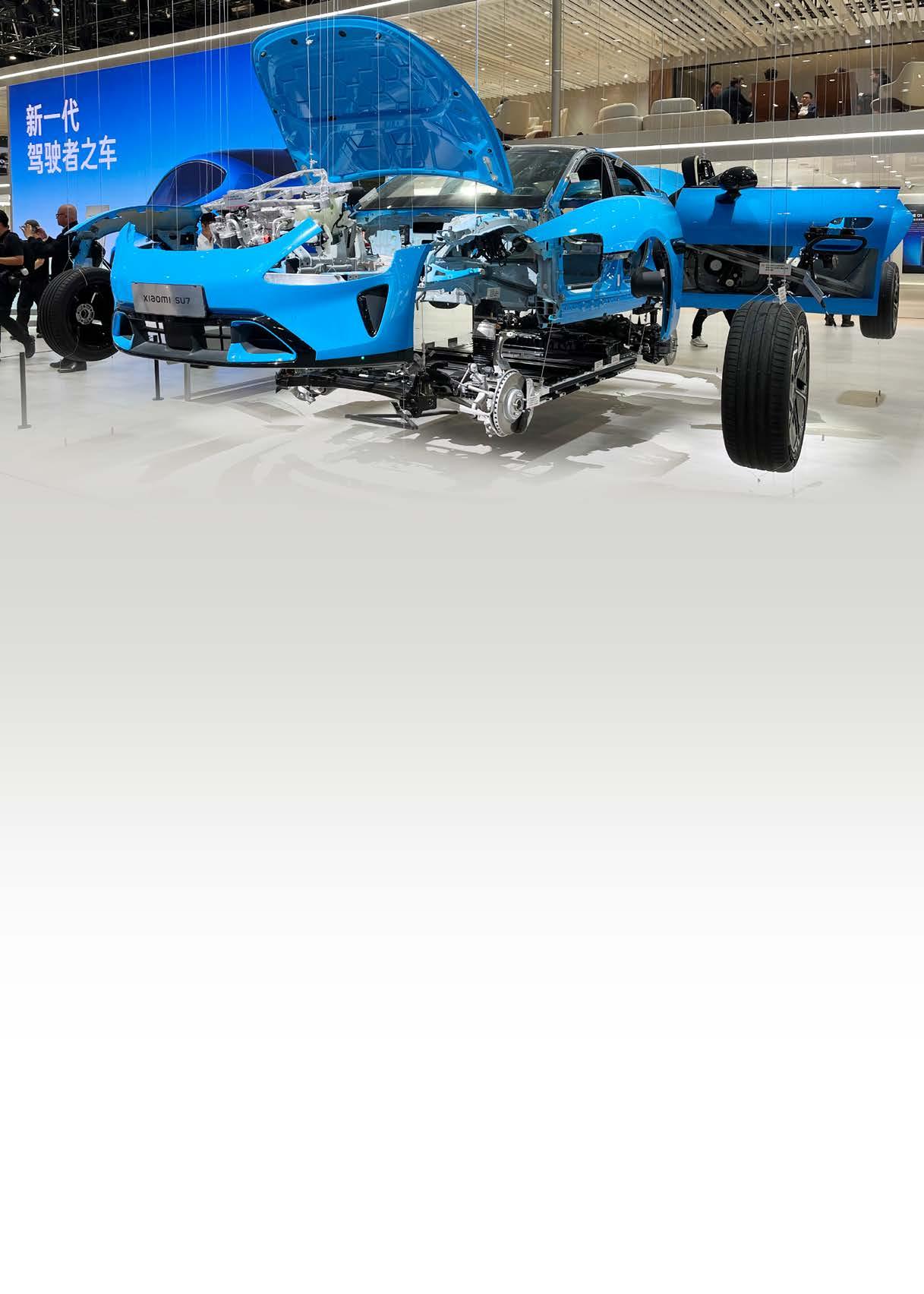
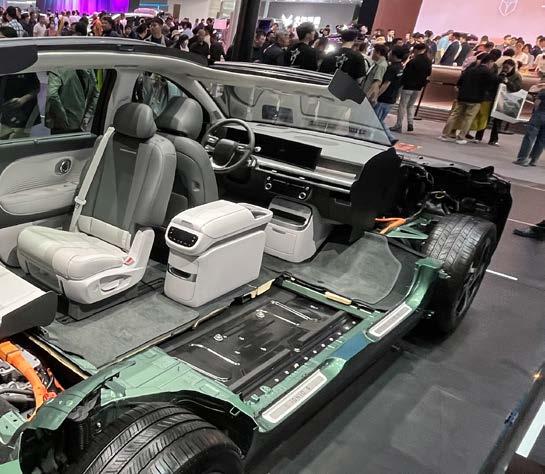
However, this shift goes well beyond powertrains. A walk around the Auto China show in Beijing at the end of April highlighted to me the extraordinary pace of innovation in areas such as Advanced Driver Assistance Systems (ADAS), artificial intelligence, Light Detection and Ranging (LiDAR) and vehicle operating systems.
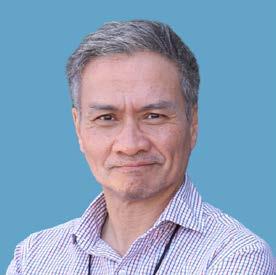
With MTA WA Group CEO Neil Le Febvre
Vehicles are rapidly becoming integrated, software-driven platforms featuring continuous updates and connected services leading to entirely new business models emerging. This industry is not evolving, it is being reshaped. And it is changing what it means to service and repair a vehicle.
What this means for our industry in WA
We are now beginning to experience the effects of this new global disruption on our own doorstep.
Local EV uptake is accelerating. In WA, battery electric vehicle sales doubled from 7.5 per cent in January 2026 to 15 per cent in April. When combined with hybrids and plug-in hybrids, electrified vehicles now make up 46 per cent of new car sales. That is not gradual change, that is a step change.
At the same time, we are facing what is arguably our biggest immediate challenge – a declining workforce and the ongoing skills shortage.
The data is confronting.
We currently have 14,000 apprentice vacancies and a shortfall of 28,000 skilled technicians nationally. More broadly, over 150,000 people are working in the automotive industry nationally and a large portion of those will require upskilling as vehicles continue to rapidly evolve.
In the emerging EV space, only 41 percent of technician roles are being filled. That gap is where the real risk sits because without the workforce, we cannot service the fleet and we cannot adopt new technologies that align to government policies and targets. Ultimately, we cannot grow.
We are hearing consistently from you – our members – that staffing shortages are constraining business performance today.
This is where the MTA WA has an important role to play and why I have been leading a body of work that is reshaping the strategic direction of the Association.
Workforce shortages continue to bite
Recent industry research and consultation undertaken by the MTA WA found workforce shortages and cost pressures remain the two most significant challenges facing businesses. More than 70 per cent of respondents identified a need for greater funding support for training and upskilling while 68 per cent detailed workforce shortages as a having a major impact on business performance.
Compounding these challenges are growing compliance obligations, accelerating technological change and persistent cost pressures.
As the state’s largest employer of automotive apprentices and an industry-supported registered training organisation, we are focused on strengthening workforce pipelines, expanding training opportunities and ensuring businesses have access to the skilled people they need to grow.
At the same time, we continue to represent members’ interests with government, regulators and industry stakeholders.
Over recent months, we’ve been actively advocating on workforce issues, government department processes, fair competition, regulation and emerging technologies affecting the industry, ensuring your voice is represented where decisions are being made.
We’ve also been contributing to national discussions across a variety of networks on the important issue of fuel security to ensure positive outcomes for both businesses and consumers including providing media commentary reflecting industry concerns.
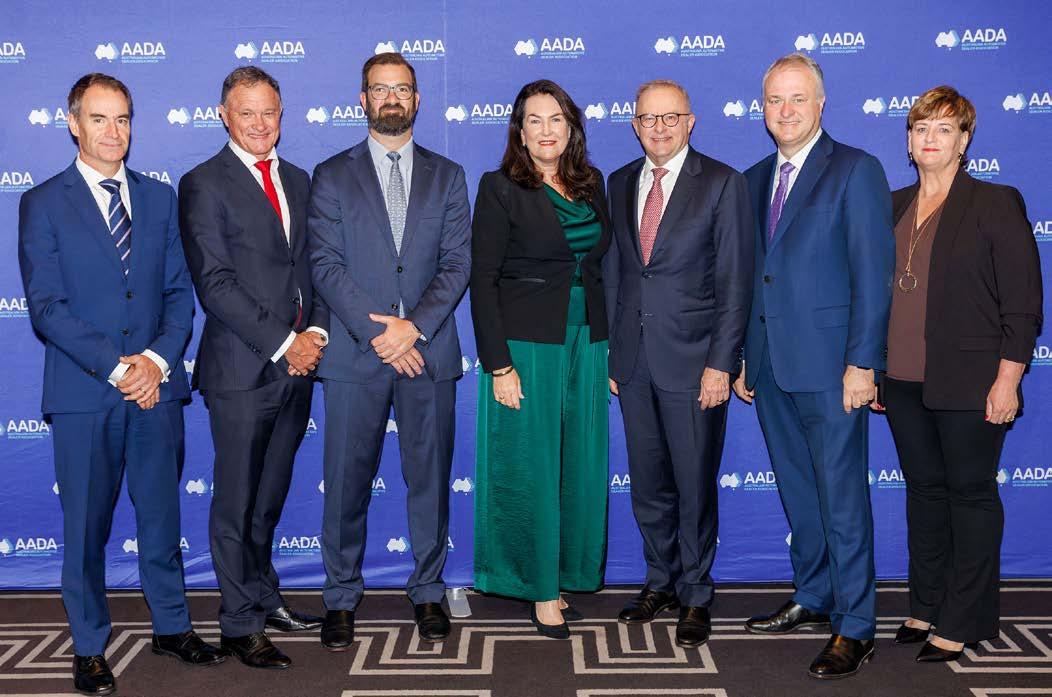
(l-r) MTA WA’s CEO Neil Le Febvre, MTA Queensland’s CEO Rod Camm, AADA’s CEO James Voortman, Senator Deborah O’Neill, Australian Prime Minister Anthony Albanese, VACC’s CEO Peter Jones, MTA WA President Robyn Cook at the Australian Automotive Dealer Association (AADA)’s State of the Industry briefing held in Sydney in late March. Participants discussed the reforms that will shape the future of new car retailing in Australia.
There is no doubt that while the future continues to evolve at pace, the present still matters. Traditional fuels and vehicles, particularly diesel, remain critical to keeping the economy moving and we need to maintain policy settings reflect that reality.
In this regard, we also contribute at a national level through our work with the Motor Trades Association of Australia, ensuring Western Australia has a strong voice in shaping federal policy and investment.
A critical part of that role is ensuring policy remains practical.
On issues such as EV-related electrical licensing, our position is crystal clear. Work on electric vehicles is already being carried out safely by qualified automotive technicians, supported by nationally recognised training and clear regulatory frameworks.
Our focus is to ensure that any future policy settings remain aligned to how work is actually performed in workshops and on-site, protecting safety without creating unnecessary barriers to capability and productivity.
Where To From Here
If there is one message I would leave you with, it is this: standing still is not an option.
The automotive industry is changing rapidly, and our purpose at the MTA WA is clear — to help members navigate that change with confidence and position their businesses for longterm success.
While the pace of change is significant, so too are the opportunities before us: to strengthen our workforce, embrace new technologies, modernise our businesses and lift capability across the industry.
By doing so, we can position the automotive sector as a leading, futurefocused industry and build a stronger, more resilient future for both our members and Western Australia.
At the MTA WA, we are committed to ensuring our members are not simply responding to change, but leading through it.
I look forward to meeting many more of you in the months ahead and discussing these issues further.
On issues such as EV-related electrical licensing, our position is crystal clear. Work on electric vehicles is already being carried out safely by qualified automotive technicians, supported by nationally recognised training and clear regulatory frameworks.
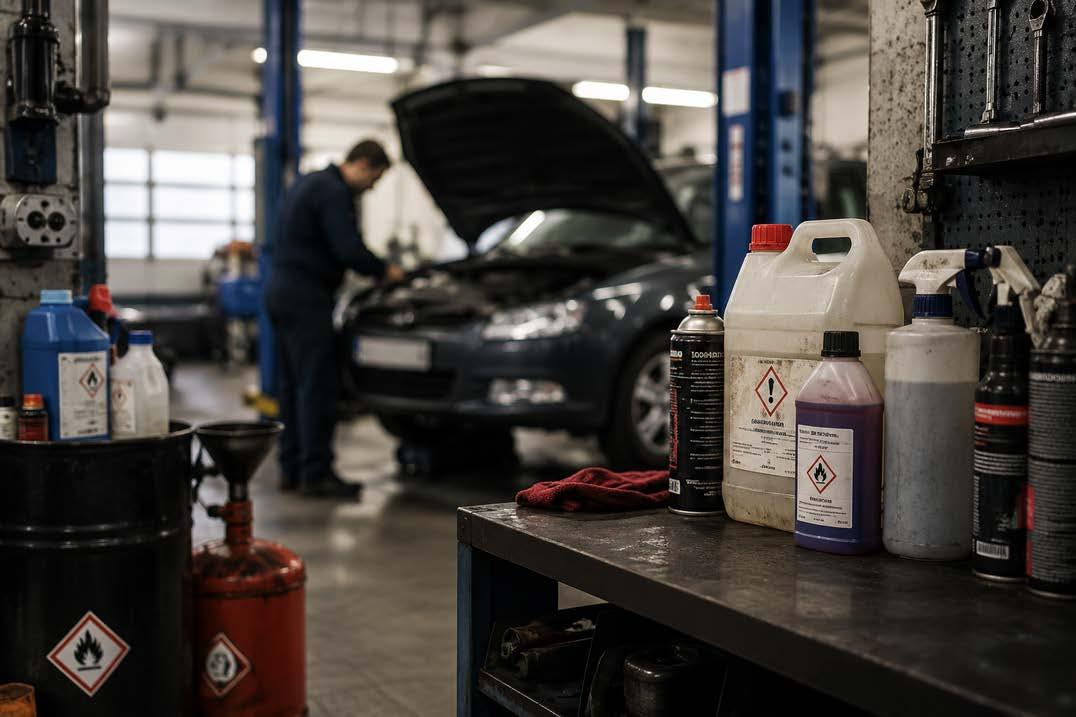
Protect your Business with Chemwatch
Safety at Your Fingertips
Get detailed chemical information, including hazards, emergency procedures, and storage guidelines, wherever you are.
Up-to-Date SDS Access
Access the latest safety data sheets (SDS) for every chemical you handle.
Reduce Compliance Risks
Stay informed and manage chemicals in line with safety regulations, avoiding potential risks.
Mobile App Access
Quickly retrieve SDS information on your phone or tablet.
MTA WA Members Get Free Access!
Valued at $800 annually, Chemwatch Gold FFX is available at no cost to MTA WA members.
INDUSTRY MATTERS
With Graham Cawley General Manager
Membership and Industry
Engagement
Caravan training survey – key findings
The recent caravan and trailer repair sector survey, conducted by the MTA WA collaboration with the Caravan Industry Association WA, has confirmed there is strong industry support for the development of structured training pathways and formal qualifications.
Many businesses indicated they would enrol multiple staff in funded programs, particularly at Certificate II and III levels.
Priority skills areas include electrical diagnostics, braking systems, structural repairs, compliance requirements and mechanical servicing as well as plumbing, gas, and heating systems.
Demand is also strong for Recognition of Prior Learning pathways to formally acknowledge existing skills. In response, the MTA WA is exploring a staged training model, combining short courses, skills assessments and advocacy for supported qualification pathways.
Undertaken to better understand workforce challenges, training needs and regulatory pressures across Western Australia, the findings highlight an industry under increasing strain.
Businesses are facing persistent skills shortages and report ongoing difficulties in attracting and retaining qualified technicians.
At the same time, limited entry level pathways are restricting the flow of new workers into the sector, compounding workforce pressures and constraining business growth.
Regulatory compliance has emerged as a significant concern. Members identified challenges in navigating complex and evolving requirements, particularly in relation to 12-volt electrical systems.
Increasing vehicle weights, along with obligations under the Road Vehicle Standards Act and inconsistent manufacturer standards were also factors that are increasing both operational risk and administrative burden.
Overall, the survey confirms the sector
is at a critical juncture, with targeted training seen as essential to improving capability, managing risk and supporting long-term sustainability.
The MTA WA would like to thank members for their valuable input to the caravan and trailer repair sector survey.
ACCC takes closer look at IAG–RAC
insurance deal
The ACCC’s decision to move to a Phase 2 assessment of IAG’s proposed acquisition of RAC Insurance highlights the seriousness of the competition concerns at play in Western Australia.
Further consolidation in the insurance market has the potential to reduce consumer choice and increase pressure on independent automotive repairers, particularly smash repair businesses across the state.
The MTA WA has engaged constructively with the ACCC throughout the process and will continue to monitor the situation.
The release of the Notice of Competition Concerns Summary underscores the depth of scrutiny being applied to the proposed transaction and its potential market impacts and that should give some assurance to industry and consumers that the proposed acquisition hasn’t been taken lightly.
WA vehicle modification delays
Key developments and the impact
Securing approval for modified vehicles in Western Australia is becoming increasingly challenging, particularly for vehicles already engineered and registered interstate.
The MTA WA continues to actively work with Department of Transport and Major Infrastructure (DTMI) and Vehicle Safety Services (VSS), including facilitating a recent roundtable to identify solutions and reduce approval delays.
Under current DTMI policy, many of these vehicles are failing initial inspections and are required to undergo the full WA approval process from the beginning.
This includes submitting a new application and completing a full reassessment, even where comprehensive engineering approvals already exist.
This results in significant delays across the system.
Approval timeframes stretching to three months are now common, with more complex applications taking six months or more.
These delays are impacting both businesses and consumers, creating uncertainty and added cost.
A key factor is the tightening of previously accepted approval pathways. Historical type approvals and precedent-based decisions that were once recognised are now frequently rejected, forcing applicants to resubmit under stricter requirements.
This shift has driven a sharp increase in applications and contributed to what many are describing as a “perfect storm” of backlogs.
While Western Australia operates under the national Vehicle Standards Bulletins 14 (VSB14) guidelines, the state’s interpretation has become increasingly conservative.
This is occurring alongside a broader national review, prompting regulators to adopt a more cautious stance which is limiting flexibility and reducing the recognition of interstate approvals.
There are, however, encouraging signs of progress.
A national VSB14 Harmonisation Committee has been established to deliver consistent, Australia-wide rules for vehicle modifications. Its focus is on streamlining approval processes, improving interstate recognition and introducing a more practical, risk-based framework.
At a state level, engagement between industry and regulators is gaining momentum.
With industry now represented in national discussions, there is growing confidence that meaningful reform is within reach, and that a more efficient, harmonised system can be delivered.
At the end of the day, we are one country, and we need to be able to accept another state or territories’ assessment and approval of a modified vehicle as the relevant authority.
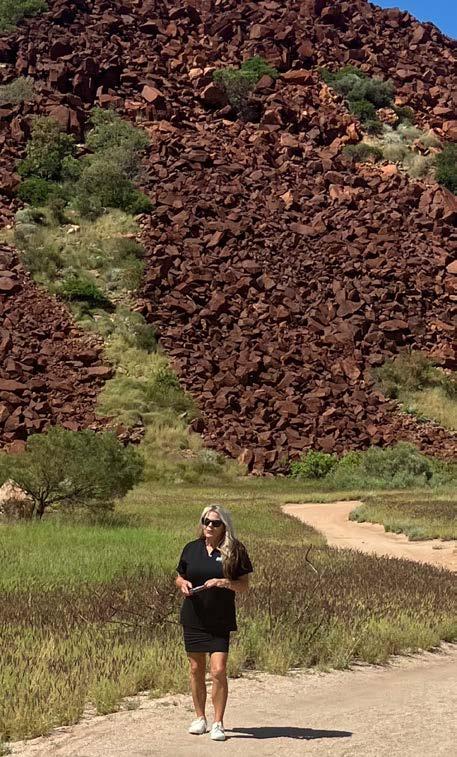
MTA WA connects with members in the Pilbara
The MTA WA recently visited members across the Pilbara, gaining valuable firsthand insight into the challenges and opportunities facing regional businesses.
The visit highlighted a network of well-run, highly professional operations, but also the unique pressures that come with operating in remote WA.
A key concern raised was the growing presence of unlicensed operators, who avoid compliance obligations while legitimate businesses meet all regulatory requirements.
This imbalance is creating real strain in the marketplace, and the MTA WA will work with members to compile this information and report it to Consumer Protection. Workforce challenges also remain front of mind. Attracting skilled staff to regional areas is difficult and retention is an ongoing struggle.
Many businesses spoke of the cycle of investing in training, only to lose employees soon after leading to constant pressure on operations.
Despite these challenges, the Pilbara Industry Breakfast provided a valuable forum for members to share experiences, discuss solutions and strengthen connections.
The positive response has reinforced the MTA WA’s commitment to expanding engagement opportunities for regional members, both through in-person events and regular online forums.
To hear more about MTA WAs’ policy development and advocacy, ensure that you are receiving our Engine Room e-news and check out the new MTA WA website.
Stirling Festival of Motoring a huge success
MTA WA partners with major event
While Cyclone Narelle in March may have delayed the inaugural Stirling Festival of Motoring, the wait proved worthwhile, with perfect autumn weather greeting one of Western Australia’s largest celebrations of automotive culture over the weekend of April 18–19.
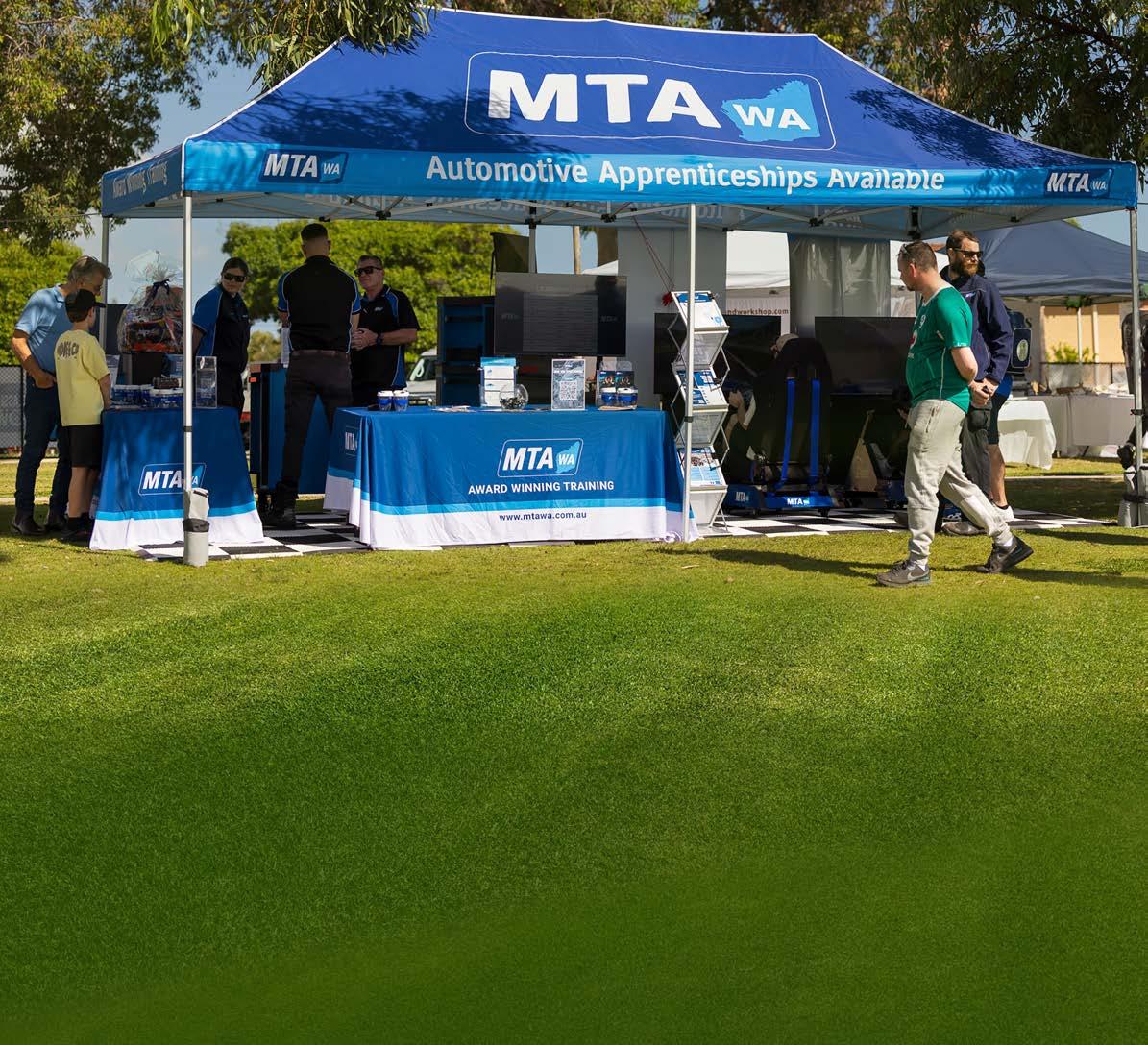
The MTA WA was the naming sponsor of the Cars and Culture showcase at Robinson Reserve in Tuart Hill on Saturday, using the festival as a platform to promote the Association and the diverse apprenticeship and career pathways available within the automotive industry.
Cars and Culture featured three immersive pop-up museums designed to bring the City of Stirling’s rich local history to life alongside vehicle displays representing different automotive eras.
More than 12,000 attendees passed through the gates across the weekend, creating a valuable opportunity for the MTA WA to showcase the critical role the automotive sector plays in Western Australia’s economy and future workforce development.
Importantly, the event provided the
MTA WA with a unique opportunity to connect directly with young people, families and automotive enthusiasts at a time when attracting and retaining skilled workers remains one of the industry’s greatest challenges.
As rapid technological advancements reshape traditional perceptions of careers in the automotive industry, attracting the next generation of technicians remains one of the MTA WA’s highest priorities, underscoring the importance of participating in events such as this.
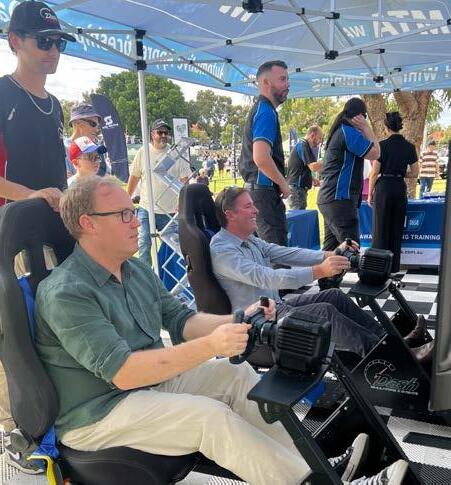
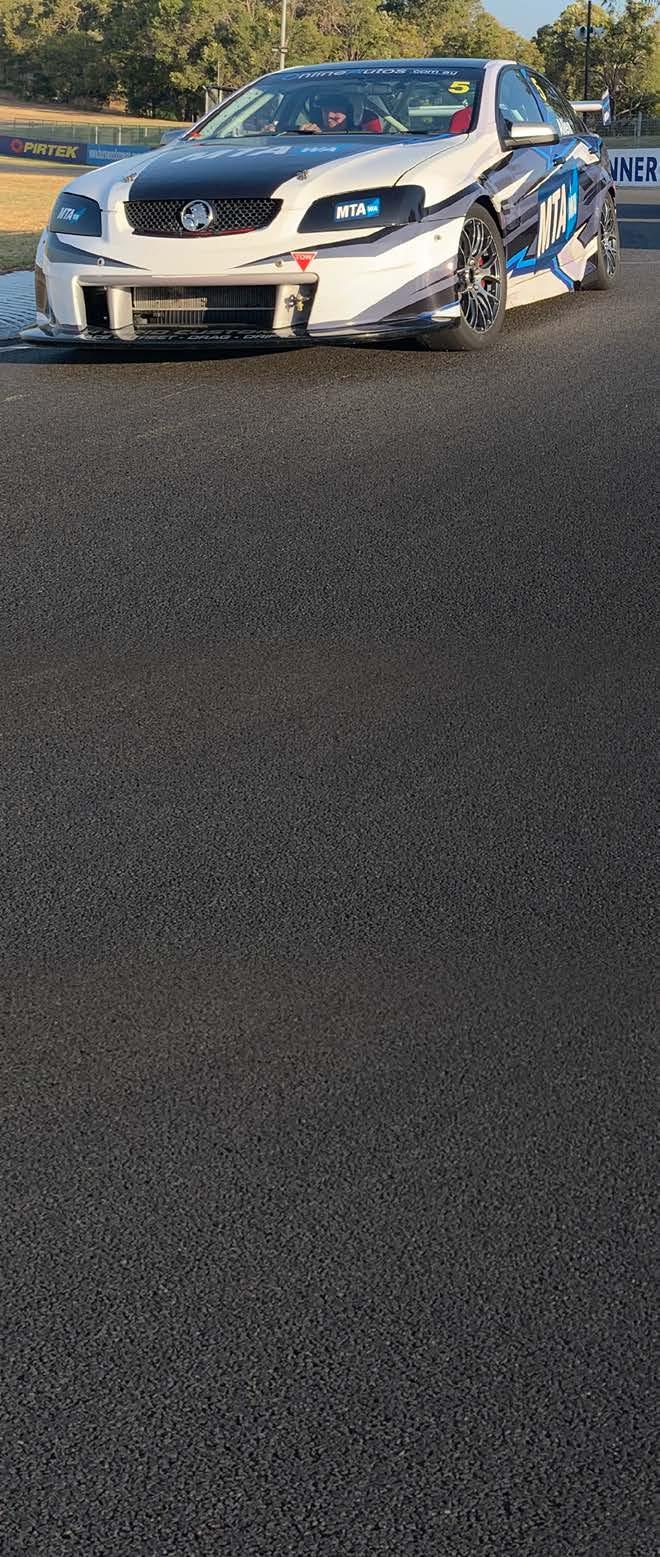
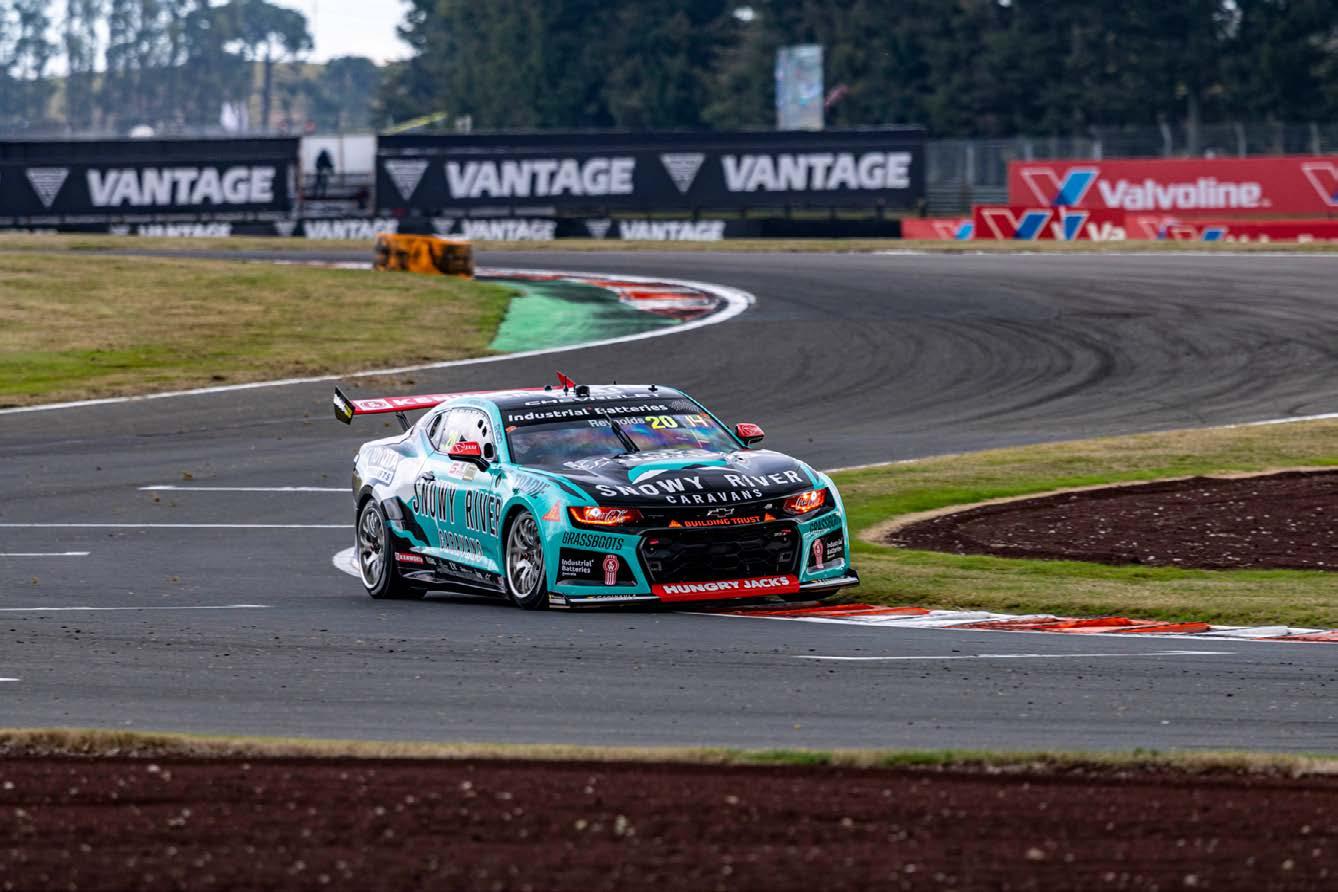
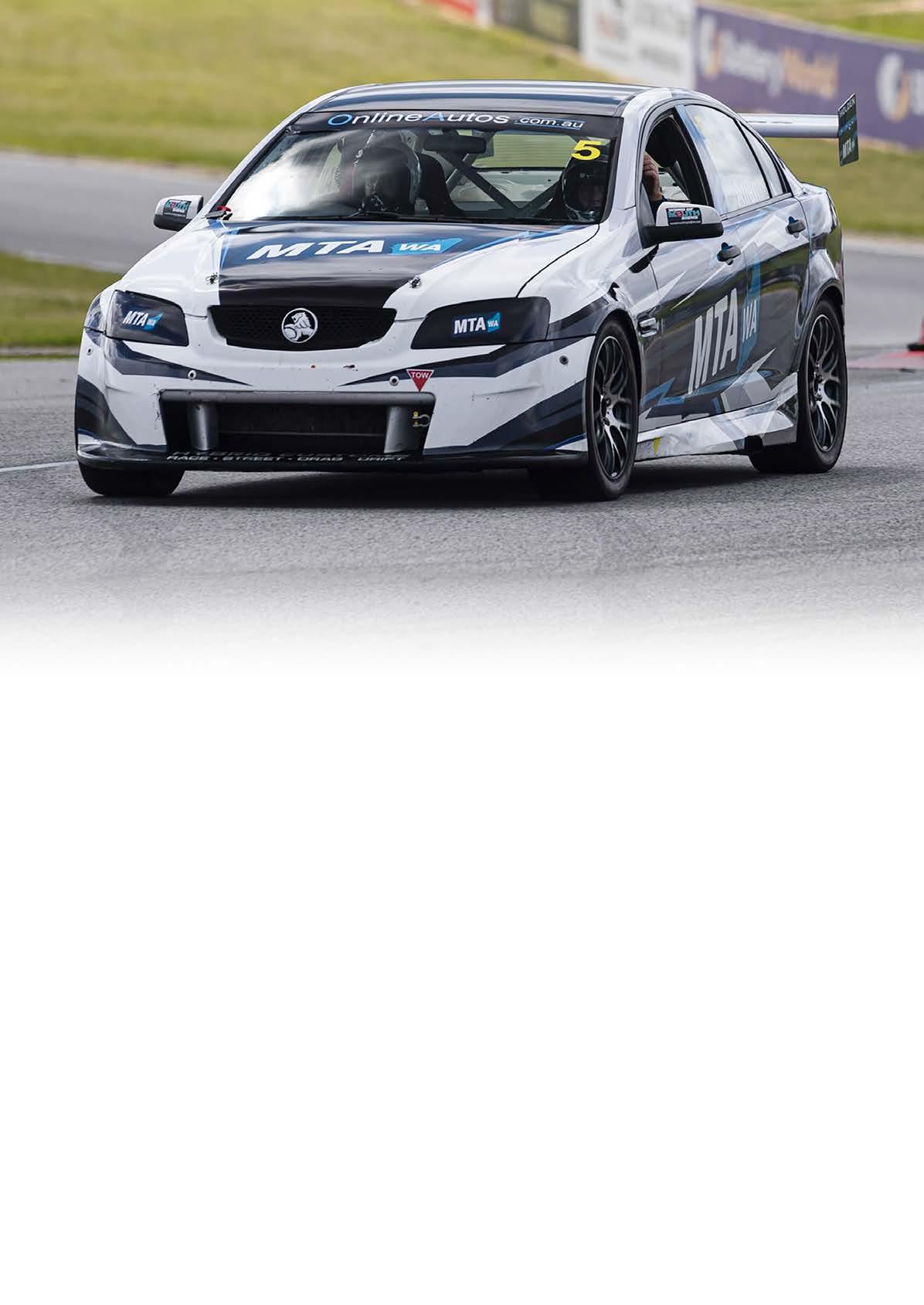
Interactive racing simulators supplied by Dash Simulators, alongside the V8 Drive Day MTA WA-branded race car, proved a major drawcard, helping to drive strong community engagement throughout the weekend.
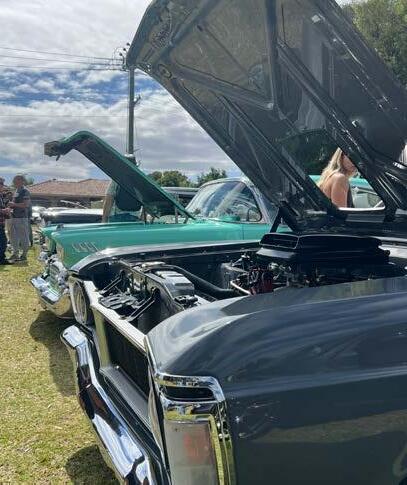
On Sunday, Robinson Reserve was once again transformed as the Shannons Perth Classic Car Show brought together more than 65 car clubs and some of Western Australia’s finest vintage and classic vehicles.
Displays also featured modern collectables, rare sports and luxury vehicles, hot rods, motorcycles, trucks and buses.
With a history dating back to 1971, the Shannons Perth Classic Car Show is one of Western Australia’s largest motoring showcases. This year, the event celebrated 55 years with a special display of vehicles from 1971.
Planning is already underway for 2027, and the MTA WA is proud to continue playing a leading role in its success.
THE MTA WA IS DELIGHTED TO WELCOME OUR NEWEST MEMBERS
911 Mechanical Services
Affordable Autos
AMA Collision Joondalup
Associated Tyre and Wheel
Auto Masters - Baldivis
Back on Trak
Booragoon Autocare
Borrello Auto
Bridgestone Select - Bayswater
Bridgestone Select - Joondalup
Pro Motion Autos
Prospark Auto Electrics
PVR Mechanical
Fremantle Diesel Services
GN Automotives
The MTA WA and its business partners provide exclusive discounts on a range of products and services that aim to keep more money in your pocket and make it easier to operate your business.
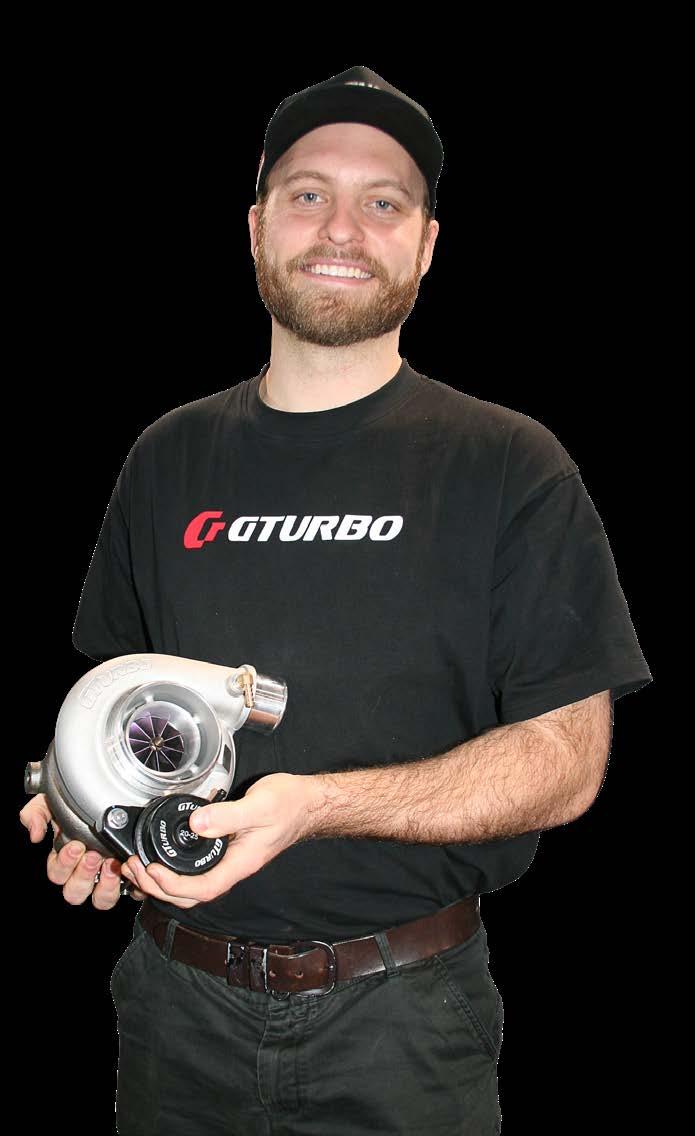
GTurbo
Ineos Grenadier Perth
Jax Tyres & Auto Dayton
Ready Automotive Repairy
RFA Mundaring (Rohan Fox Automotives)
Roleystone Auto Centre
Route 1 Mechanical & Automotive
Royal Auto Group
INDUSTRY FORMS & STATIONERY
Bridgestone Select - Madeley/Kingsway
BYD - Osborne Park
BYD Cannington
BYD Fremantle
BYD Midland
BYD Wangara
BYD West Perth
Calm Garage Neerabup
Canning Motor Trimmers
JM & Sons Auto
Joondalup 4x4
Lew’s Auto Repairs
Sell My Car Pro
Order business stationery and industry forms from our online shop at heavily reduced rates with the option to customise items such as contracts of sale, appraisal forms and sellers declaration forms.
MACROVAN
TRAINING & LICENSING
Maddington Mechanics / Warren’s Tyre and Brake Service
Maddington Smash Repairs
Statham’s Mechanical Services
Swank Fabrication
Techtronic Services
Titan Euro & Titan Autos WA
Receive discounts on our range of post-trade upskilling courses in areas such as electric vehicles, parts, electrical and mechanical accessory fitting and air conditioning technology, as well as our popular salesperson and yard manager licensing courses.
Meadow Springs Motors
Mick’s Auto Works
BANKING SERVICES
Cannington Performance Service & Repairs
CHD Hire and Sales/Mil & Co Auctions
Dowerin Tyre Exhaust & Mechanical
DRD 4X4
Easyauto 123 Balcatta
Midas Cockburn Tyre & Auto Service
Myaree Tyre & Mechanical
Off Track RV
TrackRight Wangara
Trailit Trailers
True Bolt Mechanical
Tukzar Auto
Tyrepower - Merredin
MTA WA members may be eligible for preferential rates on merchant fees. Customised comparisons on current merchant services to Commonwealth Bank’s merchant solutions and a free business financial health check can also be requested.
Open Circuit Auto Electrical
Perth Truck Transmission Services
OFFICE ESSENTIALS
Pinjarra Total Mechanical
Unimec Rollers
Van Master Repairs
Vanswest
Woody’s Mechanical Services
Your Local Mechanical
Secure exclusive Business Pricing on a range of office essentials when signing up for an Officeworks 30-Day Business Account via the MTA WA.
Capricorn is a member-based organisation committed to h business owners streamline their business operations. credit for more than 2,000 Preferred Suppliers, rewar dedicated Area Manager, it‘s easy to see the benefit for MTA WA services through your trade account, or j
Arns & Associates is a progressive Perth-based law fir specialising in commercial dispute resolution and corpo insolvency. MTA WA members can be referred to Arns &
Access discounts on legal fees from our allied workpl firm, Panetta McGrath. MTA WA members can also be refer firm for a free consultation on more complex employme
pmlawyers.com.au
Celebrating the Class of 2025
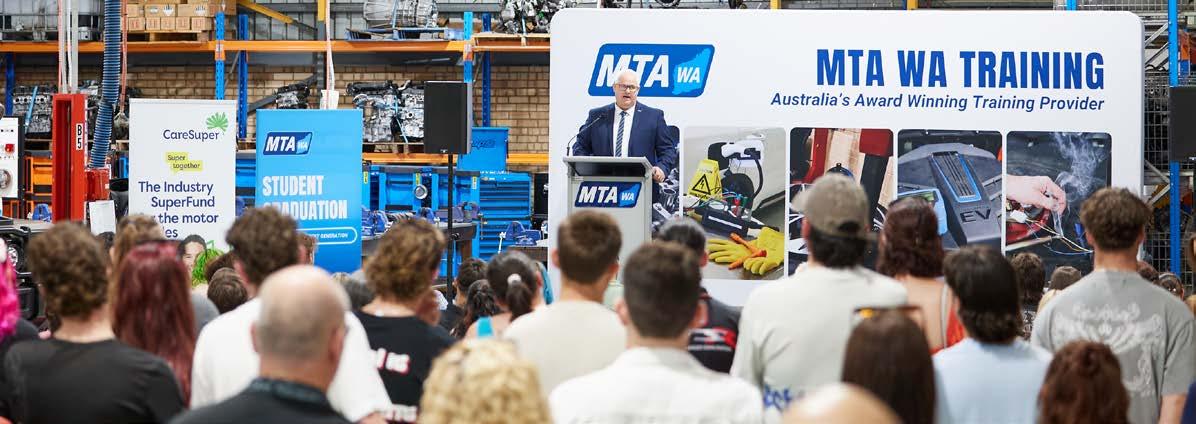
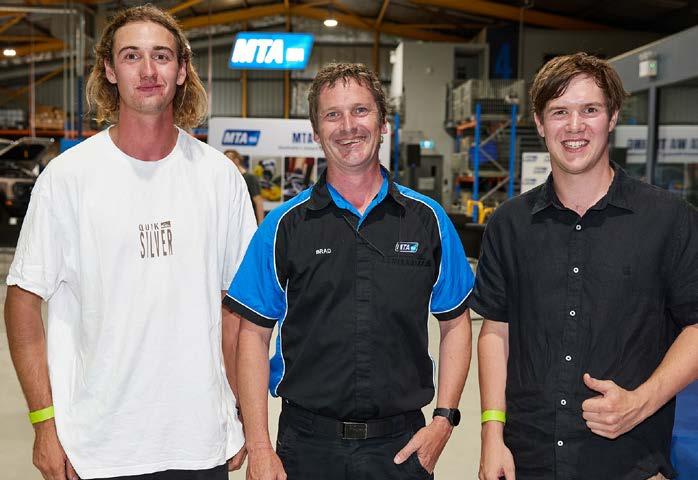
Highlighting the future inherent strength of the Western Australian motor trades, the MTA WA proudly welcomed graduates, families, industry partners and special guests to celebrate the achievements of the Class of 2025 at the annual Student Graduation Ceremony.
Held at the MTA WA’s Balcatta training facility in mid-January, the evening celebrated the dedication and hard work of apprentices, pre-apprentices and CareerLink students.
With their training journey completed, the event highlighted the strength of the automotive community and the important role mentorship, collaboration and industry support play in developing the next generation of skilled, future-ready technicians.
In his address to graduates, General Manager of Training, Mel Greenhow, reflected on the significance of the occasion and the exciting opportunities ahead for those beginning their career in the industry.
“You are entering the automotive sector at one of the most dynamic and exciting times in its history,” Mel said. “Your apprenticeship is not the destination – it is the foundation on which your future will be built.”
He encouraged graduates to approach their careers with curiosity, pride, initiative and a commitment to lifelong learning – qualities that continue to underpin successful careers across the automotive sector.
A particularly meaningful moment of the evening – and a reflection of the long-term opportunities within the automotive industry – was the recognition of the MTA WA’s trainers
and educators, many of whom began their own careers as apprentices through the organisation when it was formerly known as MITA.
The event also reinforced the MTA WA’s commitment to future-focused education and workforce development, with the organisation continuing to lead the way in electric vehicle training and emerging automotive technologies across Western Australia.
In December 2025, the MTA WA became the first Registered Training Organisation in Australia to issue a qualification in the new AUR32721 Certificate III in Electric Vehicle Technology (Heavy Vehicle option) – a milestone achievement reflecting its leadership in advanced automotive training.
The ceremony also recognised outstanding student performance with
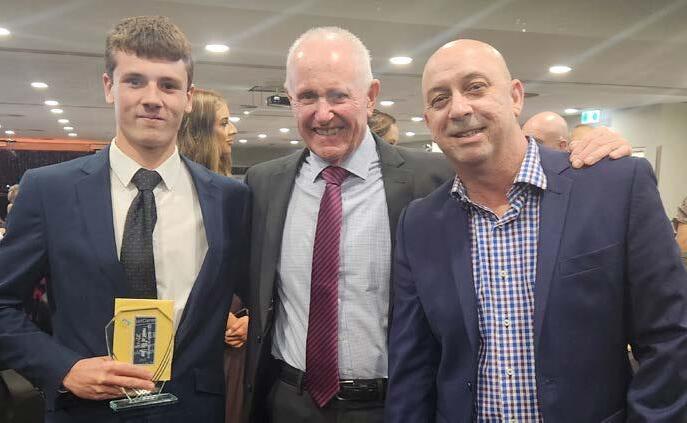
the Trainers’ Choice Awards presented to the apprentices who consistently demonstrated exceptional dedication, professionalism and commitment throughout their studies.
Congratulations to the 2025 Trainers’ Choice Award recipients:
• Baily Halden
• Joshua Drayton
The MTA WA was proud to be joined by valued partners CareSuper and SP Tools, whose continued support helps strengthen opportunities for learners and the broader industry.
As the Class of 2025 begin the next chapter of their careers, they do so with the skills, confidence and support to make a lasting impact in the automotive industry.
Congratulations to the MTA WA Class of 2025 - your future starts now.
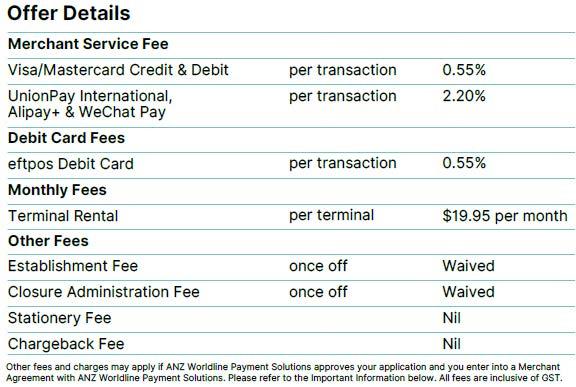
ANZ Worldline Payment Solutions has now par tnered with MTA WA to offer members a special offer on a range of reliable and intuitive EF TPOS Terminals
To take advantage of this special price offer, scan the QR code or call ANZ Worldline on 1300 366 988 Monday - Friday 8:30am-6pm (AEST) Quote GD MTAWA
INDUSTRY MATTERS
With Michael Kar General Manager Workplace Relations & WHS
Managing bullying risks to apprentices
Apprenticeships in the automotive trades offer young people a valuable pathway from school-based education to meaningful employment. However, data from the National Centre for Vocational Education Research (NCVER) reveals that nearly half of all apprentices fail to complete their training.
Research points to several factors contributing to incompletion, including long working hours, low wages, job insecurity and unrealistic expectations.
In addition, young apprentices are particularly vulnerable to bullying and harassment —risks amplified by their age, limited experience, and junior status within workplace hierarchies. Bullying is frequently cited as a primary reason for discontinuing apprenticeships.
These challenges can have serious consequences, including poorer mental health and substance related harm, often exceeding those faced by peers in other work environments.
This article draws upon research undertaken by NCVER and other industry bodies. It aims to support employers in recognising and addressing the unique vulnerabilities of young apprentices in relation to bullying. It outlines key risk factors and emphasises the vital role employers play in creating safe, inclusive and supportive work environments in which apprentices can succeed.
Understanding workplace bullying
Workplace bullying is defined as repeated, unreasonable behaviour which is directed at a worker or group of workers that creates a risk to health and safety. Common forms include:
• Aggressive behaviour
• Teasing or practical jokes
• Pressure to engage in inappropriate conduct
• Exclusion from work-related events
• Unreasonable work demands. Bullying is a serious psychosocial hazard. It has been linked to a range of mental health issues, and can result in anxiety, depression, post-traumatic stress disorder (PTSD), and sleep disorders. According to SafeWork Australia, 27% of the 10,000 serious mental stress claims in 2021-22 were due to work-related bullying or harassment.
In the construction sector alone, 27.3% of apprentices experienced bullying in the previous six months. Apprentices aged between 18 and 25 years were particularly affected with female apprentices reporting higher level of psychological distress than their male counterparts.
Why apprentices are at greater risk of bullying
Apprentices are at higher risk of experiencing bullying, due to:
• their limited workplace experience,
• underdeveloped communication skills,
• pronounced power imbalances in the workplace
• reluctance to report bullying due to fear of retaliation
• exposure to male dominated work cultures that discourage speaking up
• difficulty transitioning from school to the workforce.
This combination of factors contributes to apprentices feeling unsupported, exacerbating mental health risks and workplace disengagement.
Legal responsibilities of employers
Workplace bullying is a major legal issue for employers. Under work health and safety legislation, persons conducting a business or undertaking (PCBU’s) are obligated to ensure, as far as reasonably practicable, the health and safety of all workers. Bullying is a psychosocial hazard which must be managed like any other health and safety risk.
A recent case in Victoria highlights the seriousness of workplace bullying. The case resulted in the director of a glass company being convicted and fined $60,000, after two apprentices were subject to prolonged bullying, physical violence, and verbal abuse. Both apprentices suffered significant mental harm. Following the case, WorkSafe Victoria outlined six key preventative actions for employers:
1. Establish clear behavioural standards and lead by example
2. Model respectful workplace behaviour
3. Include psychosocial risk in routine discussions and meetings
4. Encourage and support reporting of concerns in the workplace
5. Train supervisors to respond effectively to complaints
6 . Monitor workforce wellbeing and identify early warning signs before incidents or injuries arise.
How can employers prevent workplace bullying?
To effectively manage bullying risks, employers must identify existing risks or signs of bullying and implement controls to eliminate or reduce these risks. Employers should have a clear anti-bullying policy and let employees know about the policy. Managers must understand what constitutes bullying and how to prevent and respond to it. A robust anti-bullying policy helps foster safe and supportive environment where apprentices can feel confident that their concerns will be taken seriously.
Helping apprentices to succeed
Research increasingly highlights the critical role of peer support, mentoring and pastoral care in maintaining apprentice well-being and retention. A recent report found that employers who prioritise these factors, create supportive workplaces where apprentices are more likely to succeed.
Conclusion:
Employers can support apprentices by fostering a ‘quality approach’ to apprenticeship training. A quality approach to apprenticeship training includes:
• Valuing both on and off the job training – to ensure apprentices have time to learn and apply new skills
• Supporting gradual skill development so apprentices can build confidence and competence
• Promoting teamwork and knowledge sharing which strengthens learning
• Valuing time for innovation and growth, encouraging apprentices to think creatively and contribute
• Encouraging apprentices to tap into wider support networks, including mentors, trainers, and industry communities
• Helping apprentices build strong peer networks, to provide support, practical advice and a sense of belonging.
Employers play a vital role in supporting apprentices as they move from school to the workplace. Due to their age and inexperience, apprentices face a greater risk of bullying which can lead to poorer mental health outcomes and incompletion of the apprenticeship.
By understanding these risks, and implementing anti-bullying policies and programs, employers can create safe and inclusive environments where apprentices can succeed. Informal mentoring and ongoing support are also critical to ensuring that apprentices develop confidence, gain skills and feel valued in their role. These measures not only protect apprentices but also lay the foundation for their long-term success and engagement in the workforce.
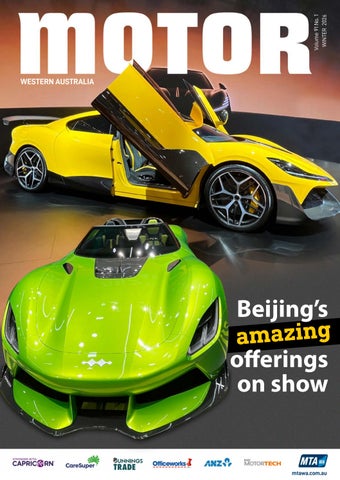
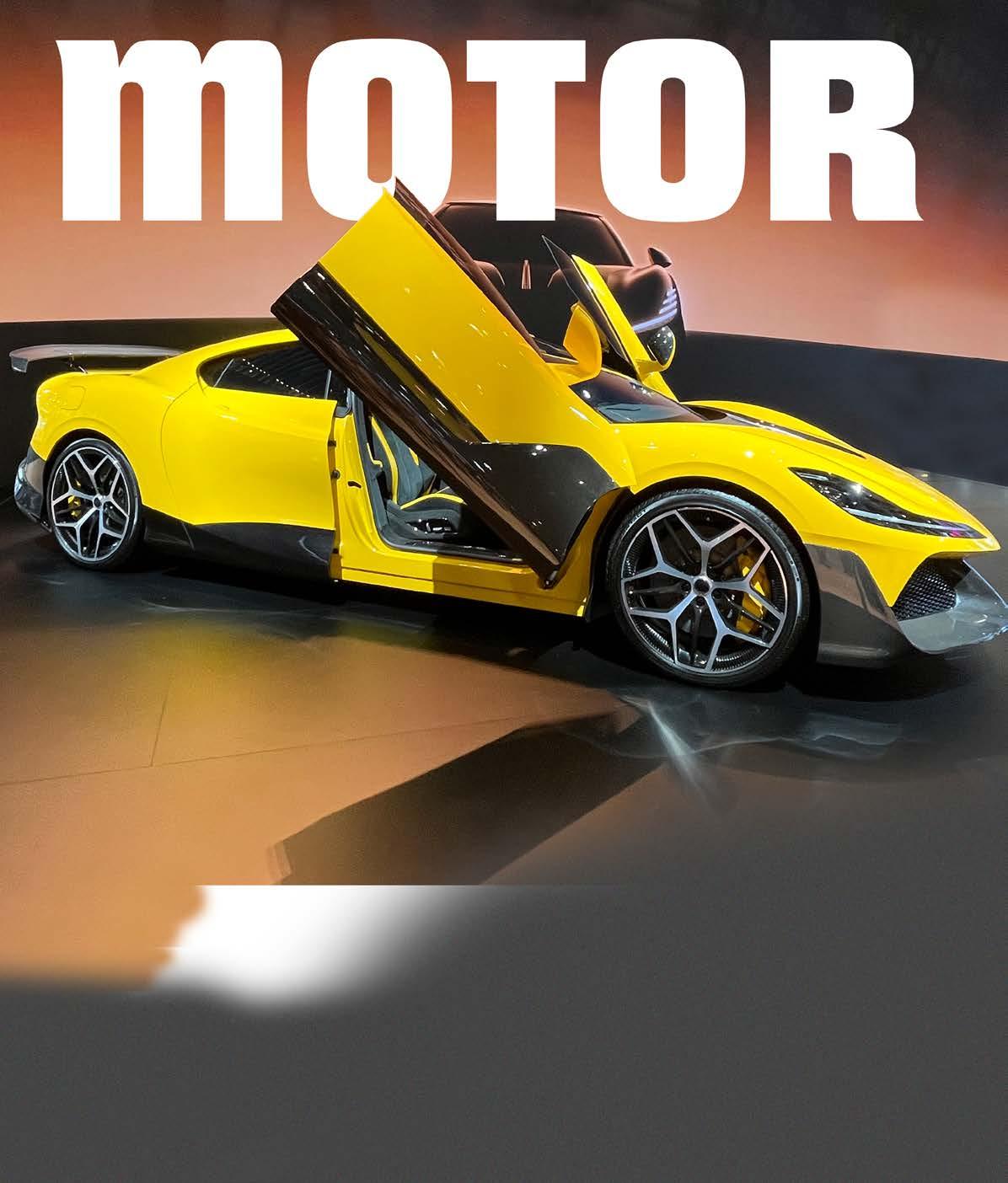
Beijing, batteries and the battle for the future
REFLECTIONS FROM AUTO CHINA AND WHAT IT MEANS FOR AUSTRALIA’S AUTOMOTIVE INDUSTRY
There’s a moment at Auto China when the immense scale of the event becomes impossible to ignore.
WORDS AND PICTURES:
NEIL LE FEBVRE
MTA WA GROUP CEO WHO ATTENDED AUTO CHINA ON BEHALF OF THE ASSOCIATION.
Surrounded by brands you’ve never heard of showcasing production-ready vehicles packed with technology, beautifully finished and priced at levels that would have seemed impossible just a few years ago, it’s easy to assume most of what you’re seeing is still at the concept stage.
But as you walk into yet another exhibition hall – one of what feels like dozens – a different reality emerges. This isn’t a glimpse of the future of automotive; it is the future, and it’s already here.
This year I had the opportunity to attend Auto China in Beijing alongside Rhona Varkevisser, MTA WA Group Chief Finance and Operations Officer, and colleagues from across the Australian automotive industry.
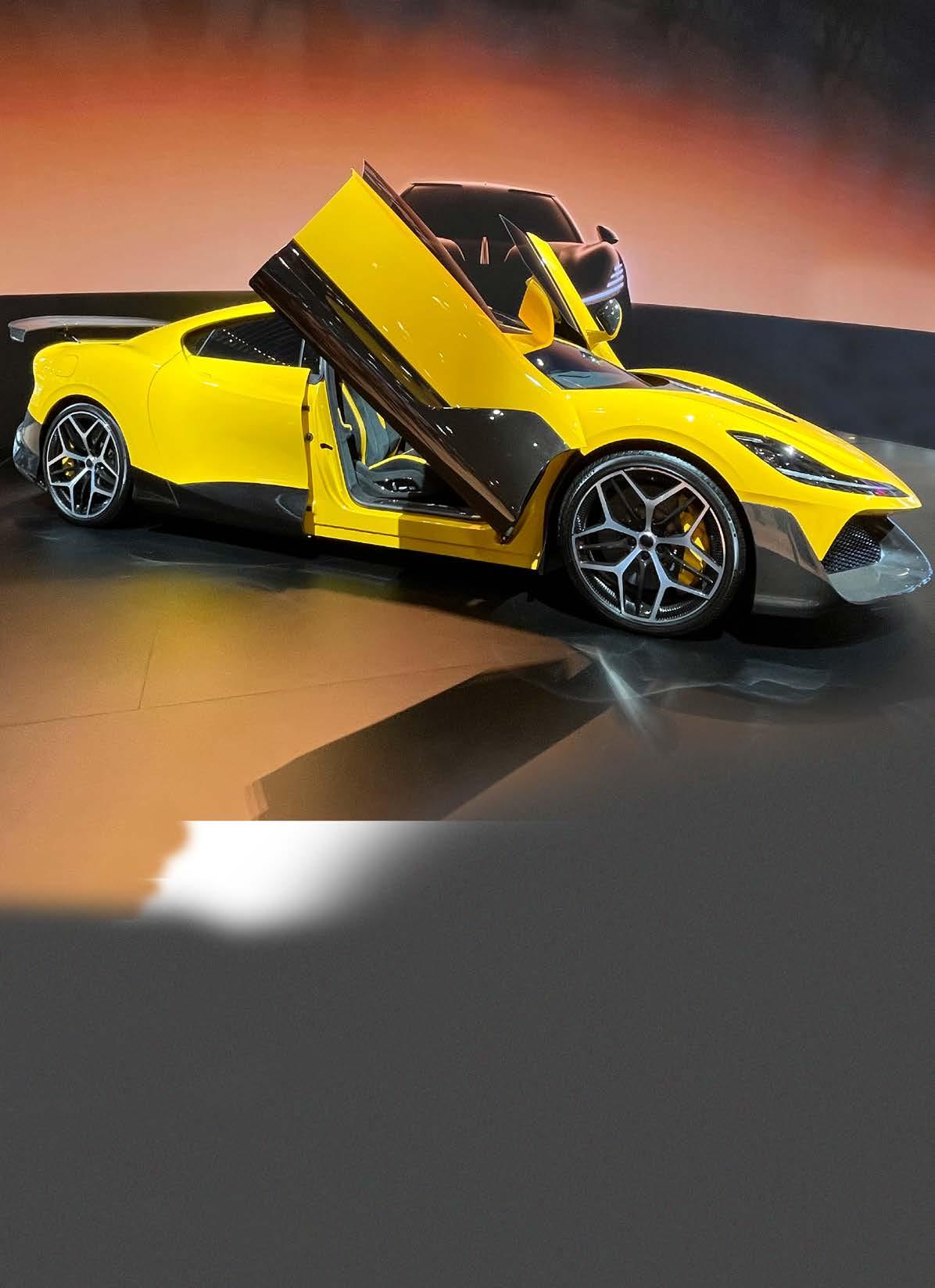
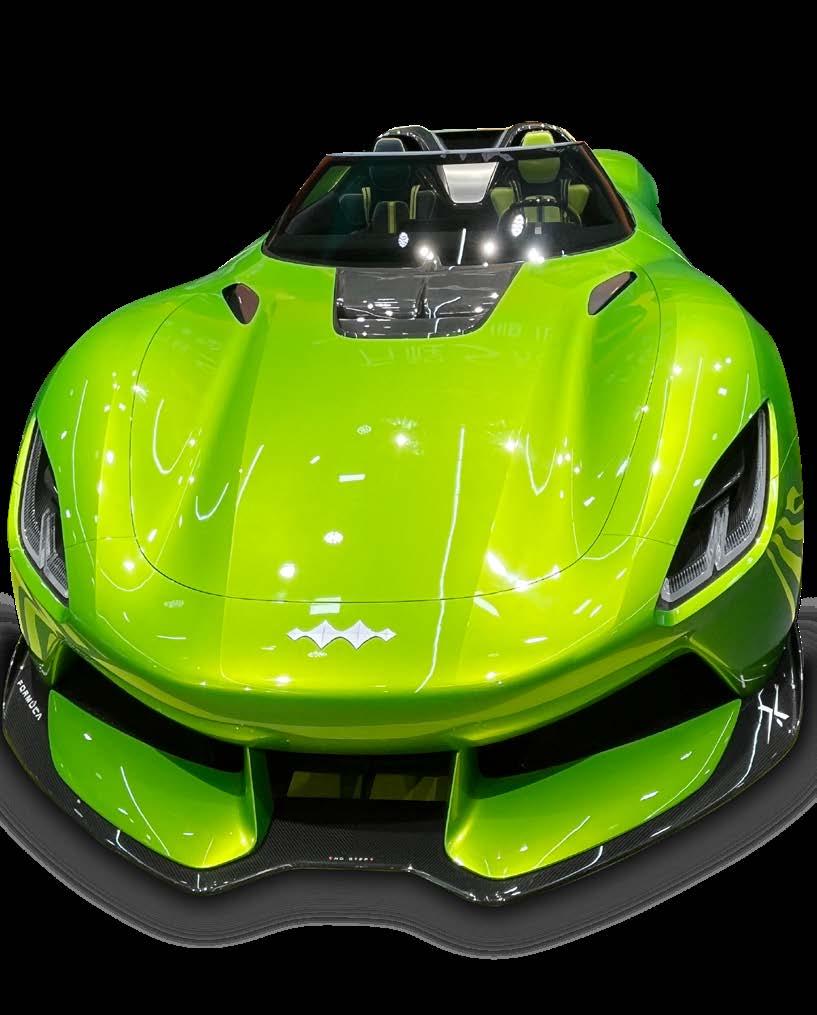
Billed as the largest automotive show in the world, the numbers behind it are staggering: more than 1,450 vehicles on display, 181 world premieres, 71 concept cars, nearly 1,000 exhibitors from 21 countries and an exhibition space spanning 20 football fields. Organisers reported attendance of nearly 1.3 million visitors across the event.
However, the statistics only tell part of the story.
For me, what stood out most wasn’t simply the scale – it was the speed of change and innovation I was witnessing. The pace of industrial transformation and the intensity with which China is reshaping the global automotive landscape is extraordinary.
China’s automotive rise is impossible to ignore
For years, many people have viewed Chinese vehicles through the lens of affordability alone. Auto China demonstrated just how outdated that thinking has become.
Overwhelmingly, the show demonstrated that the quality, safety, sophistication and technology of the
vehicles on display were, in many cases, not merely comparable with established global brands, but cutting edge.
Chinese manufacturers are no longer trying to catch up. In many areas, particularly electrification, battery technology, software integration and AI-enabled vehicle systems, they are driving the pace.
“China speed” is a real thing. Whilst the traditional model for vehicle development is concept cars that then may take four or five years to come to market, there were very few ‘concepts’ from the Chinese manufacturers. They’re virtually taking ideas straight into production almost akin to fast fashion.
It was clear that Chinese companies have become exceptionally responsive to consumer expectations — rapidly iterating products, embracing digital ecosystems and integrating technology in ways that feel intuitive to users.
Interestingly, while brands like BYD, NIO, XPeng, Geely, Li Auto and Xiaomi dominated attention across the event, it was very apparent that more established global manufacturers are also increasingly tailoring vehicles specifically for the Chinese market.
One of the major themes emerging from the show was that the industry is now moving beyond electrification alone and into what many described as the “era of intelligence” where software, AI, connectivity and autonomous systems become the defining competitive battlegrounds. It was impossible to walk the show floor without recognising that software capability is rapidly becoming as important as mechanical engineering.
Overwhelmingly,
the show demonstrated that the quality, safety, sophistication and technology of the vehicles on display were, in many cases, not merely comparable with established global brands, but superior.
That shift was visible everywhere: vehicles capable of advanced autonomous functions; AI-powered cabin systems that monitor driver behaviour and wellbeing; and voicecontrolled systems integrated deeply into the user experience.
This technology is providing digital ecosystems in which the vehicle increasingly behaves like a connected smart device rather than a traditional car.
The investment behind the transformation
The opportunity to visit the BAIC Group provided a particularly stark reminder of the seriousness with which China is approaching industrial transformation.
Like many Chinese manufacturers, the scale of their investment in research and development was remarkable. BAIC alone has around 5,000 staff dedicated to R&D, with approximately 80 per cent holding a master’s degree or doctorate qualification.
That statistic stayed with me.
The extent to which advanced manufacturing, software engineering, battery development and AI are now deeply integrated into vehicle manufacturing highlights something Australia must continue to focus on: capability development.
The future automotive workforce will require a very different mix of skills than the industry demanded even a decade ago.
More than an auto show
One of the real benefits of attending an event like Auto China isn’t only the vehicles on display – it’s the conversations happening around them.
Over the course of the week, we had the opportunity to talk with industry people attending from throughout Australia about what they were seeing, what concerned them and where they thought opportunities may emerge. There was a strong sense that Australia’s automotive industry is entering another period of profound change.
We also spent time at the Australian Embassy with government representatives discussing both the importance of the automotive sector to the Australian economy and the disruption that lies ahead.
Encouragingly, there was genuine engagement around the scale of global change and what it could mean for Australian industry capability, workforce requirements and policy development.
Those conversations reinforced something important: Australia
cannot afford to sit on the sidelines while the global industry evolves around us.
And while we cannot compete directly against Chinese manufacturing might, Australia’s opportunity may lie in leaning into what differentiates us: trusted service, technical expertise, strong regulatory frameworks, safety standards, customer relationships and workforce capability.
That feels particularly relevant for the automotive retail and service sectors.
AI is reshaping the industry faster than many realise
AI is no longer a peripheral conversation in automotive. The reality is that AI is becoming central to the industry’s future direction.
At Auto China, AI wasn’t only appearing in autonomous driving demonstrations, it was embedded throughout the customer experience, manufacturing systems, diagnostics, supply chains and retail ecosystems.
Some analysts described the vehicle of the future as part transport device, part software platform and part intelligent assistant.
For automotive businesses, this raises significant questions.
How do dealerships evolve customer experiences in increasingly digital environments? How does workshop productivity change through AIenabled diagnostics? What happens to workforce capability requirements as software becomes more dominant? How should training systems evolve?
These are not distant theoretical issues anymore. They are emerging operational realities.
International
conversations matter
Another valuable aspect of the trip was the opportunity to engage with industry leaders and stakeholders from around the world.
These conversations provided useful perspectives on everything from global supply chain dynamics through to dealership models, data ownership, agency structures and geopolitical considerations.
One particularly fascinating observation came from the Chair of the Chinese Automotive Dealers Association, who reinforced that many of the challenges facing Australia’s automotive industry are global in nature.
This reinforced the importance of collaboration and knowledge sharing as the industry worldwide navigates this transformation.
So what does all this mean for Australia?
Auto China left me optimistic — but also clear-eyed.
The global automotive industry is changing faster than at any time in recent history. Electrification is accelerating. AI and software are transforming vehicles into intelligent platforms. Chinese manufacturers are becoming major global players. Competitive dynamics are shifting rapidly.
For Australia, this presents both disruption and opportunity.
Key priorities for our market must include continued investment in training and apprenticeships, building advanced technical capability, helping workshops and dealerships adapt to this changing landscape and ensuring our regulatory settings remain fit for purpose.
Critically, we must make sure Australia remains an attractive market for innovation and investment.
Most importantly, however, it means remaining open to change rather than resisting it because after walking the halls of Auto China, one thing became very clear: the future of the automotive industry isn’t approaching slowly. It has already arrived.
EV capability is no longer optional
For MTA WA members, one issue became even clearer after attending Auto China: investment in EV and advanced technology training is no longer a future consideration, it is a current necessity.
Electric vehicles represented close to 80 per cent of new models presented at the show. China alone produced more than 16.5 million new energy vehicles in 2025.
Whether Australian consumers transition to EVs quickly or gradually almost becomes secondary to the broader point: the technology entering our market is becoming increasingly electrified, software-defined and highly sophisticated.
That has direct implications for workshops, technicians, dealerships, training providers and the broader aftermarket sector.
Servicing high-voltage systems safely demands specialised EV automotive skills while working with AI-enabled autonomous features and increasingly connected vehicles will reshape the nature of automotive work itself.
This is why MTA WA’s investment in training and workforce development matters so much.
If Australia wants a safe, capable and competitive automotive industry into the future, we need technicians trained not only for today’s vehicles, but for the vehicles now emerging globally.
The MTA WA has led the way in EV training in this State. We are still the only Registered Training Organisation that offers the Cert III Apprenticeship in EV technology, and there is a huge demand for our EV upskilling courses. This is only going to grow over the coming decade.
Return to racetrack for survey winner
Alan Burn, owner of Welshpool Auto Repairs, has been a long-time supporter of the MTA WA and the industry more widely as a former committee member and past president of the Engine Reconditioning Association.
Such is Alan’s passion for the industry that he was one of the 80 members and 29 non-members who responded to a survey designed to establish the future focus of the MTA WA and to provide a clearer understanding of challenges facing members.
So it was a fitting reward for his industry advocacy when Alan was announced as the winner of the survey contribution prize – a V8 Drive Day experience, valued at $369, along with a $500 gift voucher.
“I’ve never won anything before so I was absolutely over the moon when the phone call came through,” said Alan, explaining the gift voucher was very quickly utilised on some quality fishing gear.
Although Alan plans to wait until the winter rains have disappeared, it’s the V8 Drive Day prize that really excites him given his passion for motorsport.
“It’s been a long time since I’ve driven around Wanneroo in a racecar, but I have in the past spent a lot of time in the local motor racing scene and I can’t wait to revisit the track,” Alan said.
Having worked for local racing royalty Trevor Hine for nine years in the 1990s, including a long time as the workshop manager of Hine Motors, Alan was heavily involved with the preparation of Trevor’s legendary Lotus Elan and the ex-Dick Johnson Racing Ford Sierra he later raced.
“I am thoroughly looking forward to the opportunity to get back behind the wheel because that motorsport passion stays in your blood forever,” Alan said.
As well being extremely appreciative for the prize, Alan, who has been an MTA WA member since 2002, was full of praise for the Association.
“The training is second to none and over the years we have taken several second and third year apprentices through to qualification as well as enrolling in various MTA WA courses to advance our capability,” he said.
Fuelling ambition and driving change
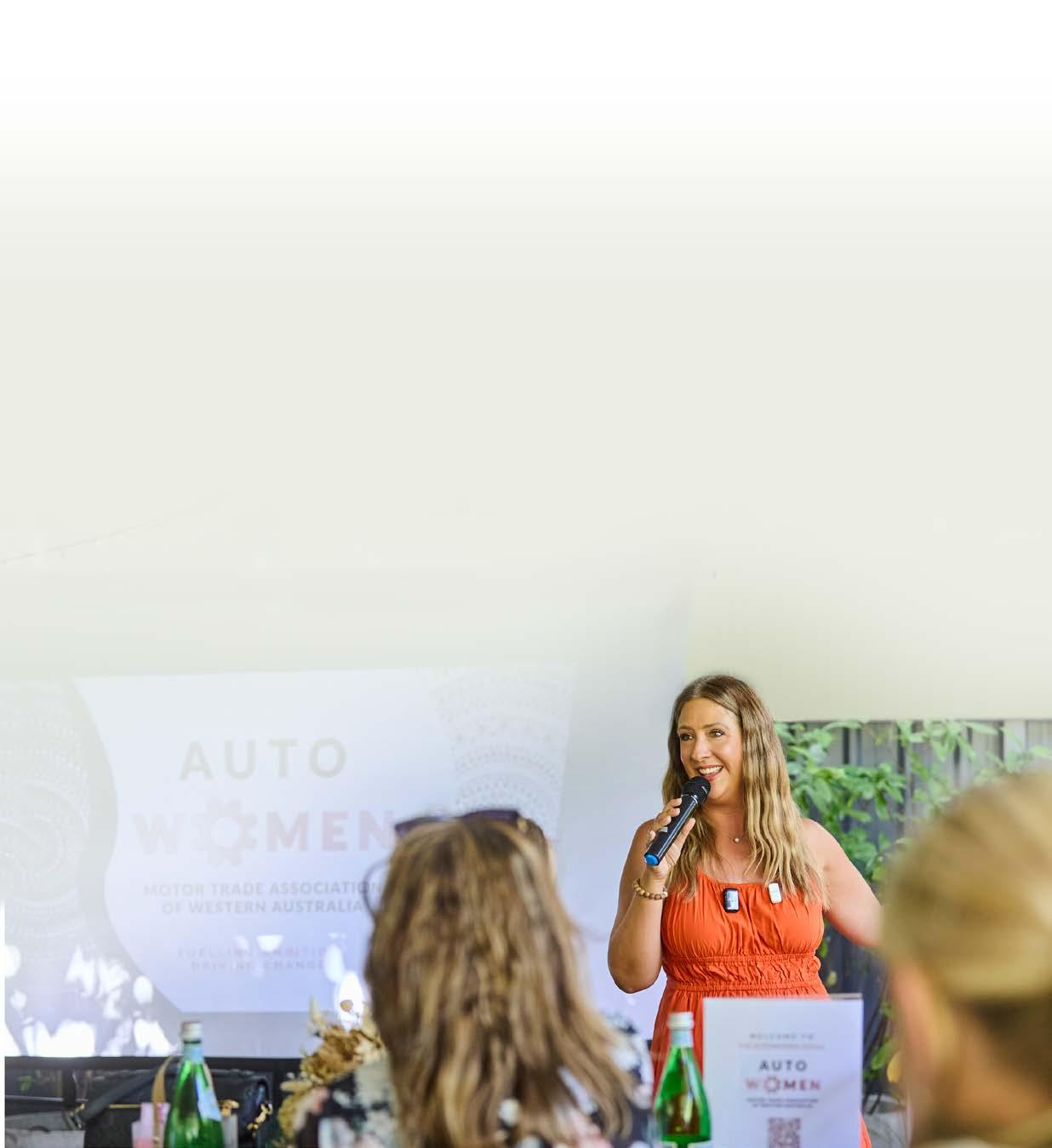
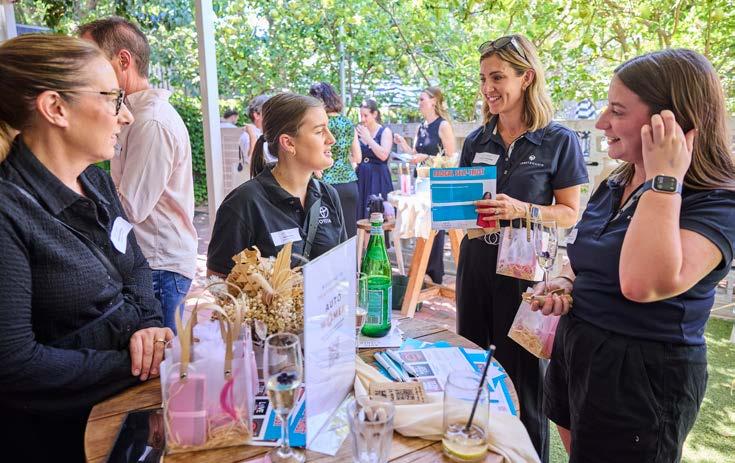
The Auto Women Social returned to Western Australia on 20 March 2026, marking International Women’s Day with an afternoon that brought together women from across the automotive industry.
Held at The Little Way in Nedlands, the event created a relaxed space for a diverse community of apprentices, technicians, business professionals and industry leaders to connect, share experiences and build new relationships.
While the setting was informal, the purpose was clear – to support greater representation, strengthen networks and create more opportunities for women across the sector. The Auto Women initiative continues to provide a platform for connection, visibility and practical support for women at every stage of their careers.
MTA WA Group CEO Neil Le Febvre, warmly welcomed guests and set a positive tone for the Auto Women event, sharing a personal reflection on why celebrating and supporting women in the automotive industry matters.
Drawing from his own career experience, Neil spoke about the strong influence women have had on his leadership journey, from outstanding female mentors and managers to highperforming team members who brought organisation, diligence and balance to the workplace.
He reflected on the privilege of working in environments where diversity fostered trust, compassion and authenticity, allowing people to bring their whole selves to work. His message reinforced the value of inclusive and balanced teams, and the important role initiatives like Auto Women play in attracting, supporting and recognising women across the industry.
Master of Ceremonies and MTA WA President, Robyn Cook, opened the event by sharing her leadership journey, including the path to becoming the owner of Peel Tyre Service and her desire to become MTA WA President following many years serving on the Board of Directors, including several as Treasurer.
Her story reflected resilience, persistence and a commitment to building a successful business and supporting her wider community. As a long-standing industry participant and mentor, Robyn’s experience resonated with attendees at all stages of their careers, reinforcing that leadership paths are rarely linear and often shaped by both challenge and opportunity.
Rhona Varkevisser, the Chief Finance and Operations Officer of the MTA WA, delivered an inspiring reflection on fuelling ambition and driving change as she shared her journey from growing up in Zimbabwe to embracing a global leadership career shaped by resilience, determination and lifelong learning.
Beginning her professional life straight out of school and funding her own education, Rhona described how early responsibility ignited a strong sense of independence that continues to drive her today. Her career has taken her across continents and industries, ultimately leading to a leadership philosophy grounded not just in results, but in values, inclusion and impact.
With honesty and optimism, she spoke about overcoming self-doubt and the importance of backing oneself, highlighting that confidence grows through action, not permission. Passionate about unlocking potential, Rhona emphasised the importance of women having visibility, voice and control over their futures. She reinforced that initiatives like Auto Women are vital in empowering women to step forward, reminding the audience that women belong wherever decisions are made, and that stronger representation leads to better outcomes for organisations, industries and communities alike.
Closing the formalities, keynote speaker Carmen Braidwood delivered a session on Radical Self Trust. Known to many
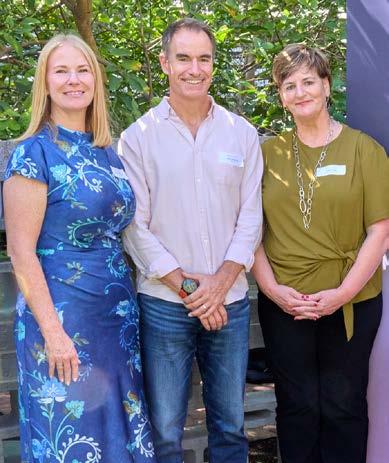
Rhona Varkevisser (left), MTA WA Chief Finance and Operations Officer, MTA WA Group CEO Neil Le Febvre and MTA WA President Robyn Cook.
Media personality Carmen Braidwood inspired the Auto Women audience.
‘‘Confidence isn’t something you wait to feel. It’s something you choose – and then build the evidence for.
Carmen Braidwood, media
personality
from her media career with 96FM and Channel 9’s Destination WA, Carmen brought a practical and engaging perspective to the conversation.
She spoke about the importance of backing yourself, even before you feel fully ready, and trusting your own judgement in environments where women are often quick to second-guess themselves. Her message focused on taking action, building confidence through experience and letting go of the need for external validation.
“Confidence isn’t something you wait to feel,” Carmen said. “It’s something you choose – and then build the evidence for.”
Throughout the afternoon, there was a strong sense of shared experience and mutual support. Conversations were open, practical and grounded in real career journeys across the industry.
For those in attendance – from apprentices and technicians to business owners and emerging leaders – the event provided both connection and recognition, reinforcing the value of investing in women across all areas of the automotive sector.
The Western Australian Auto Women Chapter is continuing to build momentum, with future activities shaped by feedback from attendees and a focus on practical impact. Planned initiatives include:
• Professional networking events to support ongoing industry connection
• Leadership development opportunities for current and emerging leaders
• Scholarships and mentoring programs in partnership with Busy Sisters and Women’s Network Australia
• Campaigns to highlight and celebrate women working across the automotive sector
Future events will also welcome allies, partners and advocates. Building a more inclusive industry is a shared responsibility - and one that benefits the sector as a whole.
the original auto woman
There is no doubt that much of the gender-based discrimination women have endured since the invention of the motorcar in the late 19th century has now largely become a thing of the past.
Ironically, however, one of the most important figures in the history of the motorcar was a woman whose vision, courage and ingenuity helped ensure the success of what would become one of humanity’s greatest inventions.
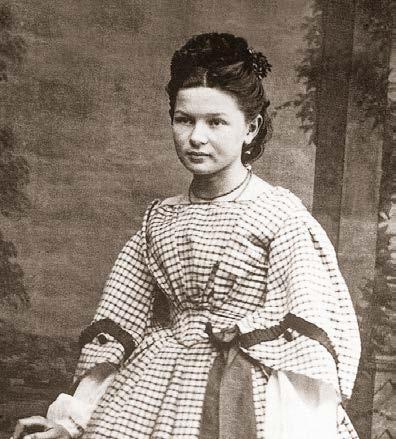
German engineer Karl Benz is generally credited with inventing the car, patenting his three-wheeled “Benz Patent-Motorwagen” on January 29, 1886. However, without the support and daring exploits of his wife Bertha, Benz may well have abandoned the concept.
As well as financially backing her husband’s venture with her dowry, Bertha was instrumental in making the contraption more practical.
However, just as women in automotive have faced uphill battles to be recognised, so did Benz. His car was seen as little more than a highly dangerous novelty and some religious groups associated it with the devil and witchcraft.
As the story goes, Karl Benz was ready to give up but his wife refused to watch their invention fade into obscurity.
In the early hours of 5 August 1888, Bertha set out in secret with her two sons Eugen (15) and Richard (13) and drove approximately 100 kilometres from Mannheim to Pforzheim. Leaving a note saying she was visiting her mother, she failed to mention she was using the automobile to get there.
With no marketing for the invention, Bertha’s primary motive was to prove to her husband that the automobile which they had both heavily invested in could become a financial success once it was shown to be useful to the general public.
However, in so doing she became the first person in the world to drive an automobile a significant distance. Prior motorised drives had been very short trials returning to the point of origin with the assistance of a mechanic.
It was a journey of several firsts. As well as being the world’s first road trip, Bertha could be said to be the world’s first car thief!
Demonstrating her significant technical capabilities, she resolved numerous problems along the way. With only a 4.5-litre supply of petrol, she had to find ligroin, a petroleumbased cleaning agent that was only available at apothecary shops. Stopping in Wiesloch at the city chemist to purchase the fuel, the pharmacy can be considered the world’s first fuel station.
Bertha cleaned a blocked fuel line with a hat pin and she used a garter as insulation material for a frayed ignition lead. A blacksmith had to help mend a chain at one point and when the wooden brakes began to fail, Benz visited a cobbler to install leather, making the world’s first pair of brake linings.
Bertha reached Pforzheim soon after dusk, notifying her husband of her successful journey by telegram. She drove back to Mannheim several days later.
Officially forbidden by the authorities,
‘‘Before me, no automobile existed.
Bertha Benz
Bertha had risked a penalty, not to mention her life and the lives of her two sons because of the totally unsuitable road conditions and the fragility of the three-wheel car.
However, Bertha’s stunt brought global attention to the Benz PatentMotorwagen and was a key event in the technical development of the automobile.
Despite her remarkable contribution, she was only inducted into the Automotive Hall of Fame in 2016, while husband Karl was inducted in 1984 – a good 32 years before her.
In 2019, Mercedes-Benz produced an advertisement cinematically imagining what Bertha’s journey must have been like and how inspiring she might have looked to young women who witnessed her bravery.
The advertisement ends with: “She believed in more than a car. She believed in herself.”
Driven service.by Committed to care.
Real people, real results, real super.
We’re here for you
As an Industry SuperFund, we’re run only to benefit members, not shareholders.
Super at your fingertips
Manage your super anytime with our highly rated mobile app.
Local support
We’re here with awardwinning customer service when you need it.1
Find out more or get in touch with us at caresuper.com.au
Support for employers
All industries. All sizes. We care about you, your business and employees.
Super savvy
Level up your super knowledge at our online or in person super seminars.
Advice just for you
Simple, straightforward advice at no extra cost.²
Remedy crowned SW’s top apprentice
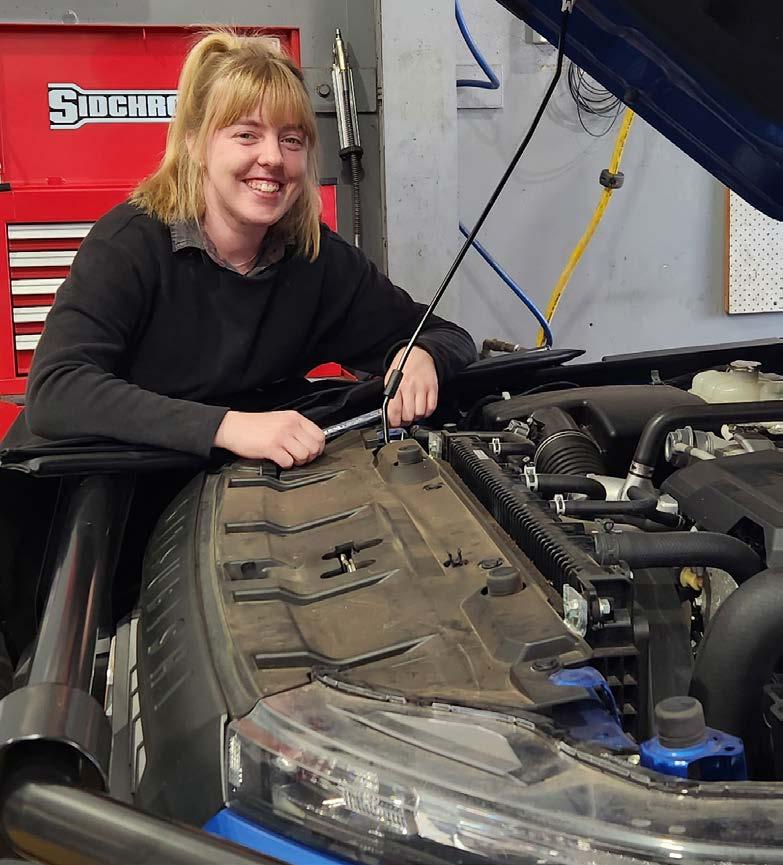
Remedy Host has a clear message for young girls wishing to break into the motor trades: follow your heart, demonstrate your ambition, and don’t be put off by gender stereotypes. With ambition and talent in spades, the 27-year-old Bunbury technician has recently been named overall Apprentice of the Year by Get Careers, a south-west based apprenticeship and training organisation providing career opportunities in a wide variety of industries.
The crowning award came on top of being named fourth year Apprentice of Year against students from all trades.
Having just completed her apprenticeship with Bunbury Mitsubishi in conjunction with the MTA WA, Remedy’s path from high
school student to receiving this major accolade wasn’t always clear.
“I had always enjoyed mucking around with cars when I was growing up, but I saw it more as a hobby than a career,” she explained.
“I tried a few things after finishing school, including university, but nothing really gelled and I began to realise that what I really wanted was a hands-on job.”
Although Remedy admits that she was unsure about her suitability for a career in the motor trades, encouragement from her mechanic father sowed the seeds of what has turned out to be a defining vocation choice.
“I actually began an apprenticeship as an auto electrician, but that was fly-in, fly-out and I was never particularly
comfortable with the FIFO lifestyle,” she said, explaining that beginning her light vehicle apprenticeship with Bunbury Mitsubishi in 2021 was immediately a perfect career fit.
Her experience has been nothing but positive.
“Everybody has been incredibly supportive and even though I am the only girl in the workshop, I can genuinely say that I have always been treated with the same respect as the boys,” Remedy said.
“I think that if you show that you are willing to give things a go and that you are serious about your job, gender does not even enter the conversation.”
Remedy has more than proved she is serious about progressing in the trade, continuing with Bunbury Mitsubishi as a fully qualified technician and proactively advancing her skills through additional MTA WA courses and OEM training.
“The dealership has also recently taken on BYD and Chery so I am also getting to work with those manufacturers and with a lot of their models being hybrid and electric, that’s providing a whole new skillset,” she explained.
“Learning new skills is really the most enjoyable part of this job for me. There is always more training to embrace or a new job to tackle that you’ve never done before, which means every day is an exciting new challenge.
“I absolutely love this job.”
The MTA WA’s south-west assessor Robbie Given has played an important part in Remedy’s development and says that he derived great satisfaction witnessing Remedy’s growth from a shy young girl to an extremely competent technician.
“She really came out of her shell and became very comfortable with her abilities and her place in the workshop,” Robbie said.
“It’s a definite highlight of my job watching these young people with little or no skills grow and mature into highly confident technicians who are genuinely excited about their future in the automotive world.”
Robbie regularly travels vast distances across the south-west of the State to train and assess apprentices, with his work taking him from major
Having
apprenticeship at Bunbury Mitsubishi, Get Careers Apprentice of the Year Remedy Host will continue her career as a technician with the same employer.
regional centres such as Bunbury to farms scattered throughout the lower Wheatbelt.
Another of Robbie’s apprentices was also recognised at the 2026 Get Careers Awards.
Lionel Byrne Colclough, a current Year 12 student who completed his Cert II ahead of the prescribed period working one day a week at Muirs Busselton, was named as the Trainee of the Year.
“I’ve always been passionate about cars and knew from an early age that I wanted to be part of the automotive industry,” Lionel said, explaining that he had yet to decide exactly which apprenticeship pathway he would take upon completing school.
Having already finished his Cert II training, such was his desire to keep learning that Muirs agreed to continue providing work experience once a week.
“I just love the problem solving and not just replacing a part, but learning how it works and trying to fix it,” Lionel said.
As his MTA WA trainer, Robbie was full of praise for the attitude and maturity of his young charge.
“Even when performing the most menial of tasks such as floor sweeping or cleaning up, Lionel was very enthusiastic and just wanted to soak up as much from the technicians as he could about cars and components,” Robbie said.
“Cert II training is very much one on one and, much like Remedy, Lionel was not only an outstanding student but also a very nice person.
GET READY GET READY GET READY
TO ROAR TO ROAR TO ROAR
“That’s almost a sad thing about my job. Spending a lot of time with trainees over a long period, you build up these great relationships and then they qualify and it’s like letting one of your children leave the nest.
“And then before you know it, you’ve got new students on your list for another couple of years and fantastic new relationships are formed,” Robbie concluded.
Get Careers Trainee of the Year Lionel Byrne Colclough pictured at the awards with Muirs Busselton owner Ray Mountney and MTA WA trainer Robbie Given.
WORDS: PAUL ROBERTS
Special addition to EV training resources
MTA WA members show their appreciation for the association in many ways, but it’s not every day that someone donates a unique EV for training purposes.
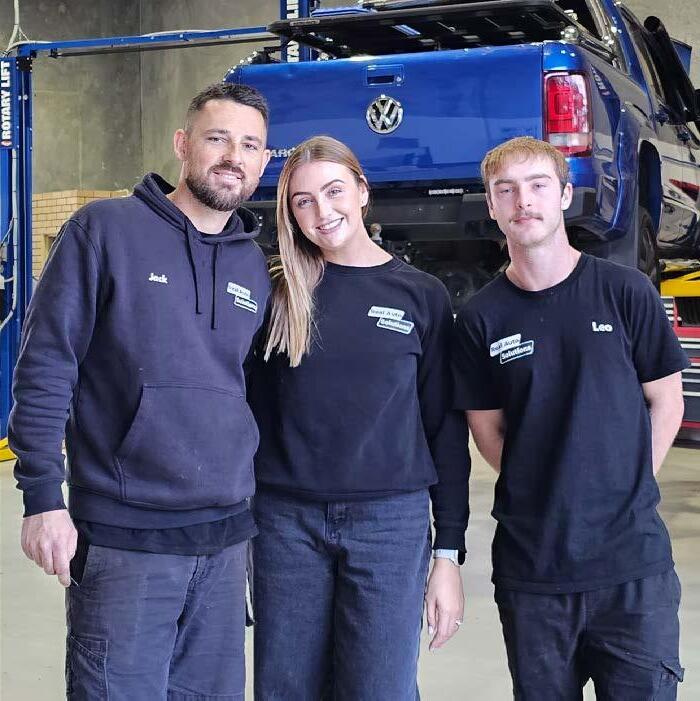
However, that’s exactly what happened earlier this year when Jack Mackay and his wife Amber, owners of Real Auto Solutions in Jandakot, reached out to the MTA WA with a very generous offer.
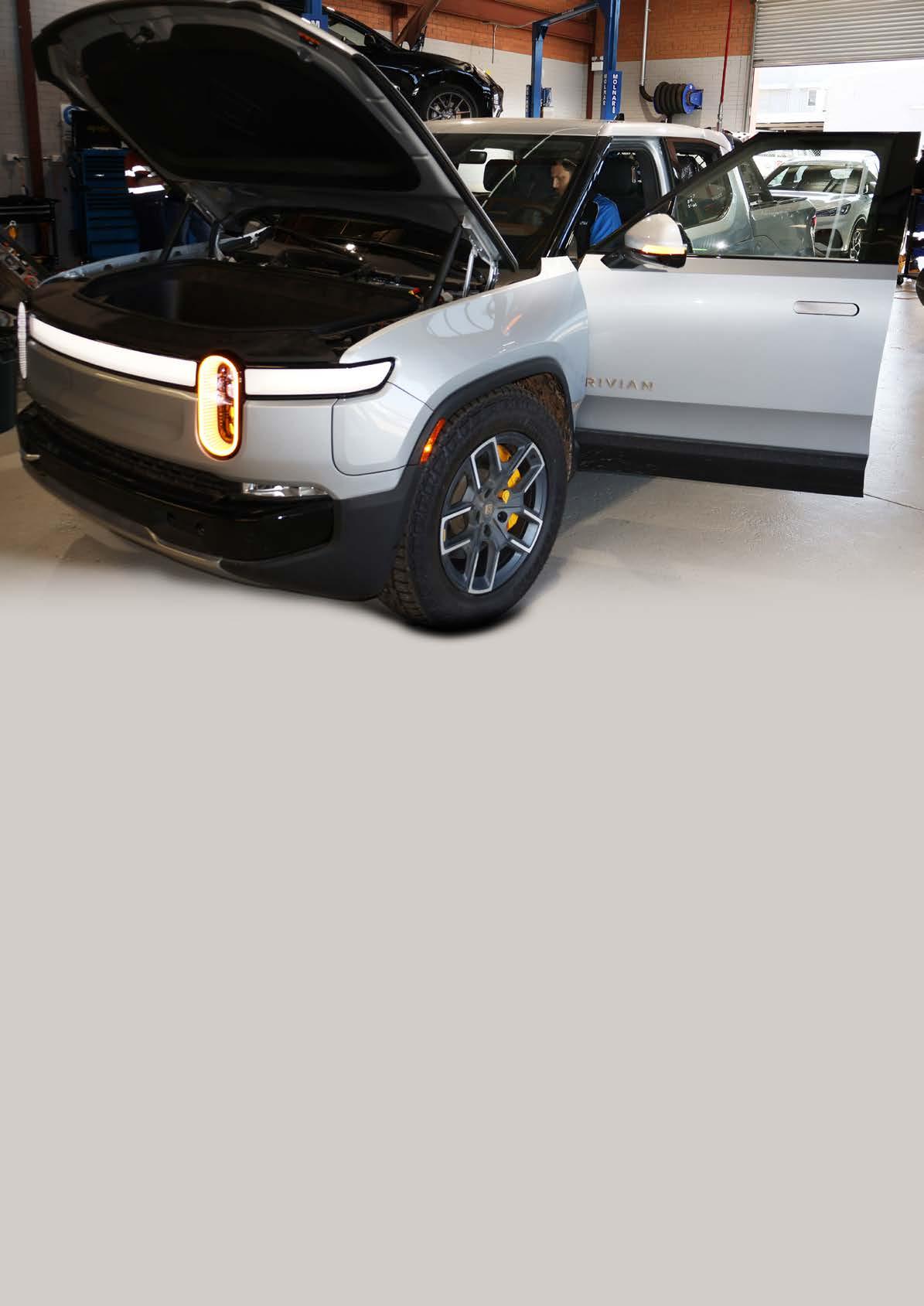
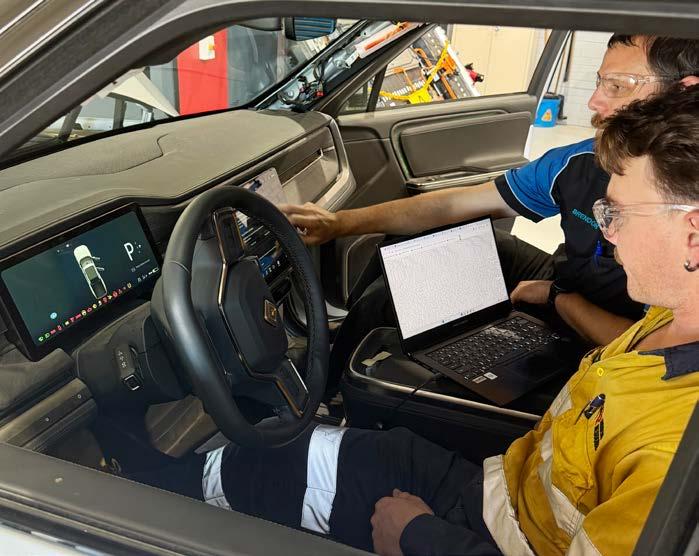
The vehicle in question is a Rivian R1T — a fully electric, dual-cab ute designed and manufactured in the United States. Established in 2009, the company’s first vehicles rolled off the production line in late 2021. It now
has a three per cent market share in its native country.
While the brand has no official consumer presence in Australia, the upcoming Rivian R2 SUV is rumoured to be manufactured in both left- and right-hand drive, making an Australian launch possible.
The donated Rivian R1T adds to MTA WA’s extensive fleet of modern EV and hybrid training vehicles and was one of 20 imported into Australia last year by MEVCO (Mining Electric Vehicle Company).
MEVCO was a Perth-based start-up founded in 2022 to supply electric vehicles to the mining sector,
initially converting Toyota Hilux and LandCruiser models. However, the company entered administration in September last year owing millions of dollars.
MEVCO’s Rivian vehicles underwent performance and suitability testing with several major companies prior to the company’s collapse as part of its attempt to break into into the lucrative Western Australian mining industry.
Jack explained that Real Auto Solutions’ connection to the Rivian was a serendipitous, “purely by chance” situation.
“The 20 vehicles were in a holding yard in Jandakot destined to be returned to Rivian in the US,” he said.
“The shipping company, based in New South Wales, used ChatGPT to find a suitably qualified local workshop to inspect and check the high-voltage batteries prior to their journey home, and we just happened to be that workshop.”
Jack said the vehicle that has ultimately been given a new lease on life at the MTA WA training facility in Balcatta was a “test mule” and, having little to no value, it was gifted to the workshop rather than being returned to the US.
“I was never going to say ‘no thank you’ but it wasn’t a vehicle we could use,” Jack said. “It’s left-hand drive, was missing a few bits and pieces and without meeting Australian Design Rules would never be able to be registered,” he said.
“However, I immediately thought the Rivian would be a great addition to MTA WA’s EV training fleet.”
MTA WA Training General Manager Mel Greenhow agrees, commenting that it was important to have access to a variety of different vehicles for learners to interact with during their training courses.
“The Rivian is a great addition to our EV training resources and we are very appreciative that Jack provided this opportunity,” Mel said.
Australia has a strong appetite for big utility vehicles and Jack said the presence of several Rivian R1Ts parked outside the Real Auto Solutions workshop created a great deal of interest from would-be customers.
“We must have had at least 10 people come into the workshop purely to ask about those cars and two were genuinely interested in purchasing,” Jack said, explaining that, in his view, the vehicles look very smart while not overtly showing their electric credentials.
Jack’s connection to MTA WA — and to Mel Greenhow personally — goes back to his apprenticeship training with Booragoon Autocare more than 18 years ago.
“Mel was my trainer and assessor when I first started my journey in the motor trades and from those early days as an apprentice to now running my own business, we’ve always stayed in touch,” he said.
Jack began his foray into small business ownership working from his home garage after hours. Now fully established with a dedicated workshop, Real Auto Solutions is in its third year of operation and Jack’s connection to the MTA WA has come full circle with the business hosting a second-year MTA WA-trained apprentice, Leo Lewis.
“I have always had a great deal of respect for the work Mel and the MTA WA do so it was nice to be able to give something back with this donation.
“I know the car has gone to a fantastic organisation.”
‘‘
The Rivian is a great addition to our EV training resources and we are very appreciative that Jack provided this opportunity with such a generous donation.
Mel Greenhow, General Manager MTA WA Training
Real Auto Solutions owners Jack and Amber Mackay pictured with second year apprentice, Leo Lewis.
EV Myths Busted: Separating fact from fiction
Electric vehicles are not a perfect solution for every motorist or every application, and challenges remain around charging infrastructure and regional accessibility. However, many of the myths that dominated public discussion during the early years of EV development no longer reflect the realities of today’s technology.
WORDS: PAUL ROBERTS
Having been on the Australian market for about 16 years, electric vehicle technology is not ‘new’. However, take up by the motoring public was initially slow due to cost blow outs when compared to their ICE competitors and some general misconceptions.
Today, EVs have exploded in popularity. Latest figures show that fully electric vehicles represented 20 per cent of total new car sales in May 2026 and, when combined with PHEV & Hybrid variants, EVs accounted for 46 per cent of new car sales.
However, misconceptions about EVs still exist – both in the eyes of potential consumers as well as some businesses yet to prepare for the industry’s transition. Here are some of the most common EV myths — and the facts behind them.
Myth 1: EV batteries only last a few years
One of the most persistent misconceptions is that EV batteries have a lifespan of 10 years or less.
A study by GeoTab Australia earlier this year analysed 22,700 EV’s and found degradation at approximately 2.3 per cent per year suggesting batteries were likely to last between 15 to 20 years. After 10 years EV batteries retain well over 75% of their original capacity.
In reality, modern EV batteries are designed to last the life of the vehicle and most manufacturers provide battery warranties of between eight and 10 years. Advances in battery chemistry, thermal management systems and software controls are continuing to improve battery longevity with each new generation of vehicles.
Myth 2: EVs don’t have enough range for everyday use
Range anxiety remains a major concern for many motorists, despite the fact that most Australians drive relatively short distances each day.
According to transport studies, the average Australian motorist travels less than 40 kilometres per day. Even entrylevel EVs now commonly offer ranges exceeding 300 kilometres, while several current models provide more than 600 kilometres on a single charge.
Maximum driving ranges are only expected to extend further as battery technology evolves.
Long-distance travel still requires more planning than with a conventional petrol or diesel vehicle, but Western Australia’s public charging network continues to expand rapidly, making regional journeys increasingly unlikely to induce stress.
Myth 3: EVs are more likely to catch fire
Research conducted internationally has consistently found that EV fires occur less frequently than fires involving petrol or diesel vehicles. Internal combustion vehicles contain highly flammable liquid fuels and operate with numerous heatgenerating components that can create fire risks.
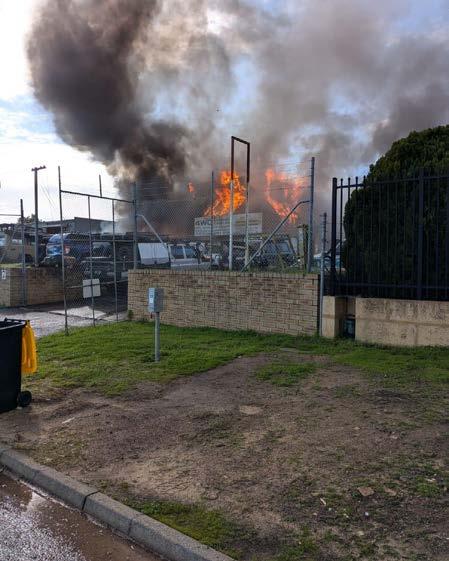
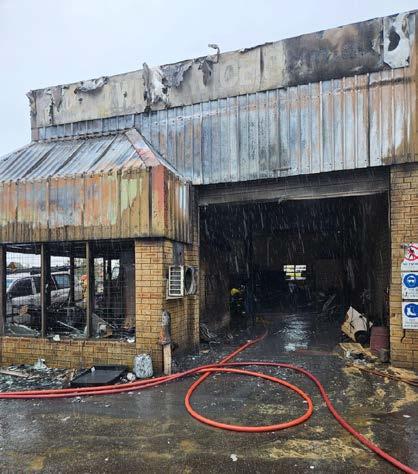
That said, when battery fires do occur, they present unique challenges for emergency responders due to the potential for thermal runaway events and prolonged extinguishment times, as
witnessed in the lithium-ion battery at a Maddington recycling facility in April this year.
However to date, there have been no recorded EV battery fires in Western Australia while Australia-wide EV FireSafe notes 14 such fires since 2021, albeit with some attributed to arson or house fire spread. None can be directly related to the battery alone as the cause. Currently there are more than 500,000 EVs on Australian roads.
Automotive manufacturers, battery suppliers and emergency services, in conjunction with assistance from the MTA WA, continue to develop improved safety systems, training and response procedures to address potential risks.
Myth 4: EVs are worse for the environment because of battery production
It is true that manufacturing an EV battery requires significant energy and resources, resulting in higher emissions during the production phase compared with a conventional vehicle.
However, numerous lifecycle analyses have shown that EVs generally produce lower overall greenhouse gas emissions across their entire lifespan, particularly when charged using low-emission electricity sources.
As electricity grids incorporate greater levels of renewable energy and battery manufacturing processes become more efficient, the environmental advantages of EVs are expected to increase further.
The key point is that environmental impact should be assessed over the vehicle’s entire life, not simply during manufacturing.
A further misconception that once an EV battery reaches the end of its life, it simply gets thrown away. The reality is very different.
EV batteries contain valuable materials such as lithium, nickel, copper and aluminium that can be recovered and reused. Before recycling, many batteries are also given a second life in large-scale energy storage systems, helping store electricity for homes, businesses and renewable energy projects.
As battery recycling technology continues to improve, more materials are being recovered and returned to the manufacturing process.
Rather than ending up in landfill, EV batteries are increasingly becoming part of a circular economy where valuable resources are reused again and again.
Myth 5: EVs will overwhelm the electricity grid
Another common concern is that widespread EV adoption will cause electricity networks to collapse under increased demand.
Energy experts generally agree that while EV adoption will increase electricity consumption, the transition is occurring gradually, allowing utilities time to upgrade infrastructure as necessary.
Smart charging technology and consumer education is also helping address potential challenges by enabling vehicles to charge during offpeak periods when electricity demand is lower.
Future vehicle-to-grid technology may even allow EVs to act as mobile energy storage units, supporting electricity networks during peak demand periods.
Myth 6: EVs require no maintenance
While EVs have fewer moving parts than internal combustion vehicles and eliminate many routine servicing requirements such as oil changes, they are not maintenance-free.
Tyres, suspension components, brakes, steering systems, cabin filters and cooling systems still require regular inspection and maintenance.
In addition, EVs require specific servicing procedures related to the correct handling of high-voltage systems and battery management systems.
Looking Ahead
As EV adoption continues to grow, this evolving technology is creating significant opportunities for workshops and technicians who invest in the training, equipment and safety procedures needed to service electric vehicles.
Getting on board with the EV training opportunities available through the MTA WA is a critical piece of the puzzle as the industry continues its transition towards an increasingly electrified future.
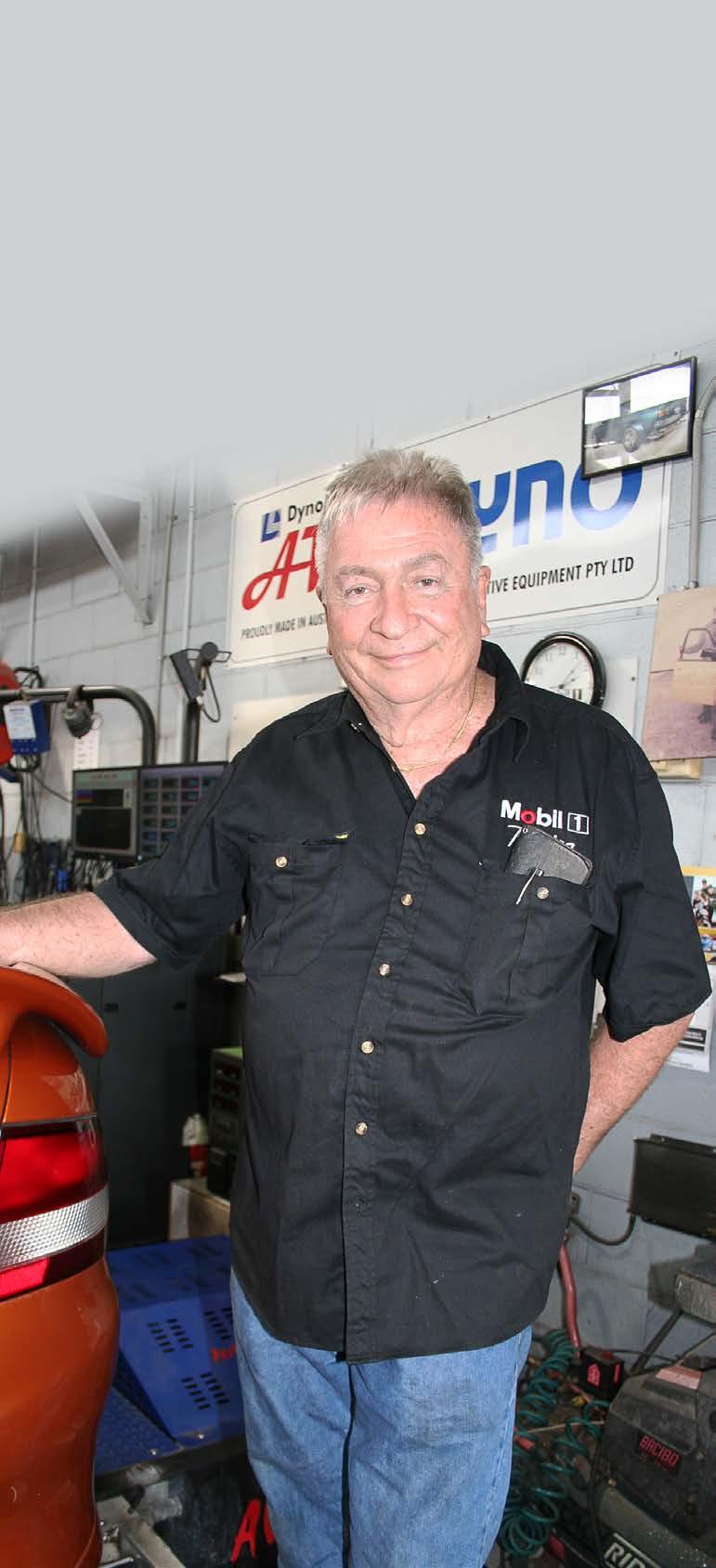
Tuning guru Bill Lee still fuelled by passion
WORDS:
PAUL ROBERTS
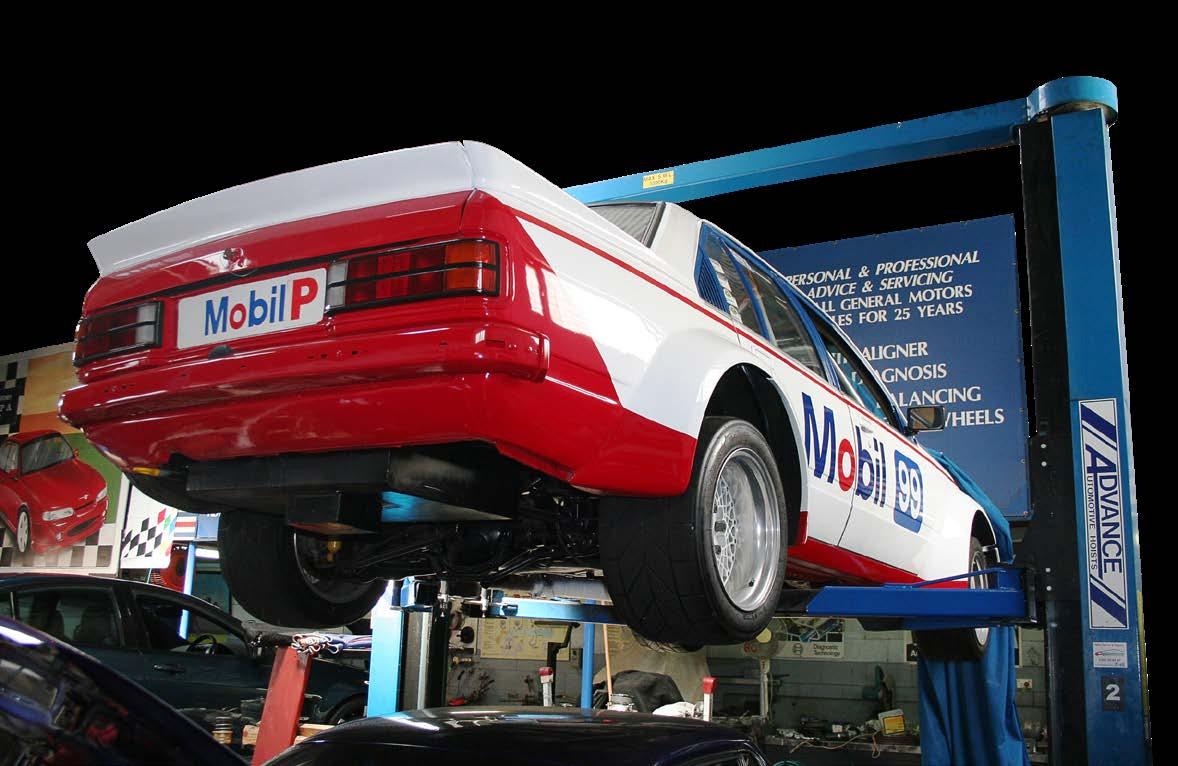
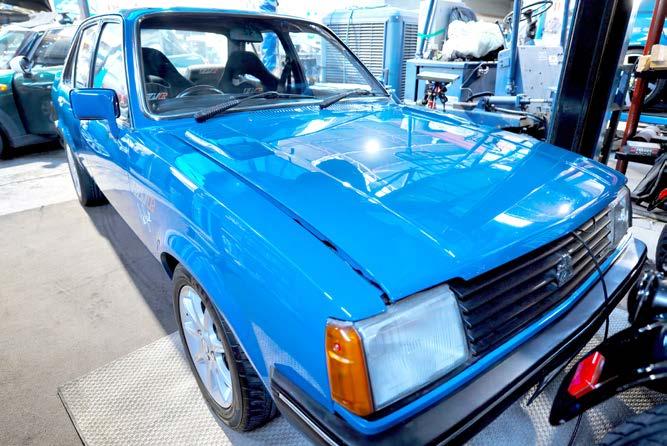
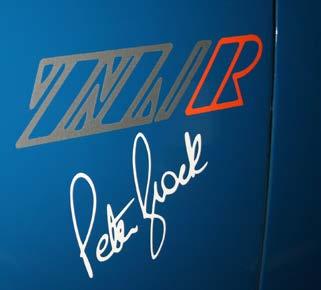
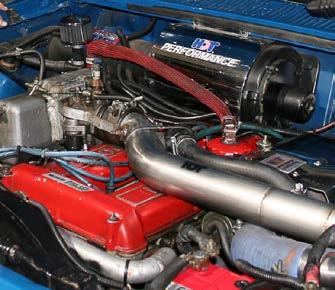
Best known for building and tuning high-performance General Motors products, and for his association with Peter Brock and the Holden Dealer Team, Bill Lee fully admits to having gone to the ‘dark side’ when it comes to his favourite car.
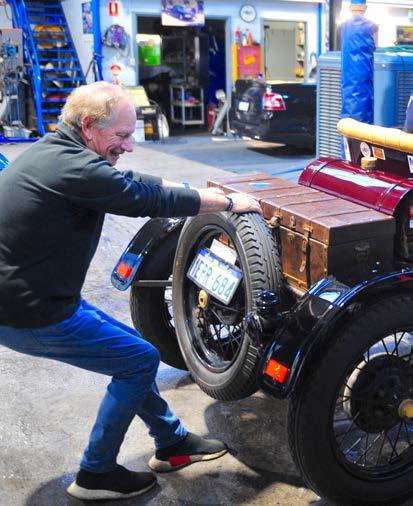
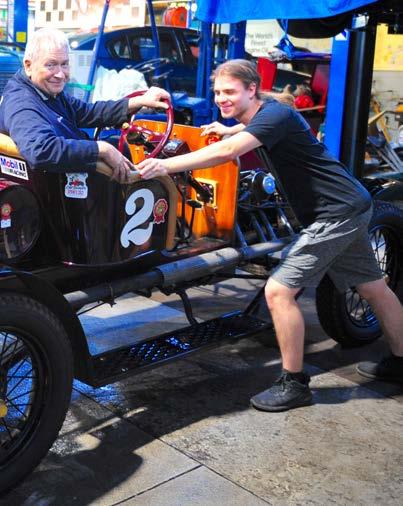
Seemingly as far removed as a car could be from the hot Commodores he is synonymous with, the 1915 Model T Ford that sits proudly in his Osborne Park workshop does have one thing in common with the newer models Bill tunes – power in spades.
“The Model T ticks all the boxes for me,” said Bill. “We beach race it, we play polo with it, and it’s been to several of the Lake Perkolilli races since 2019, including last year’s Red Dust Revival.”
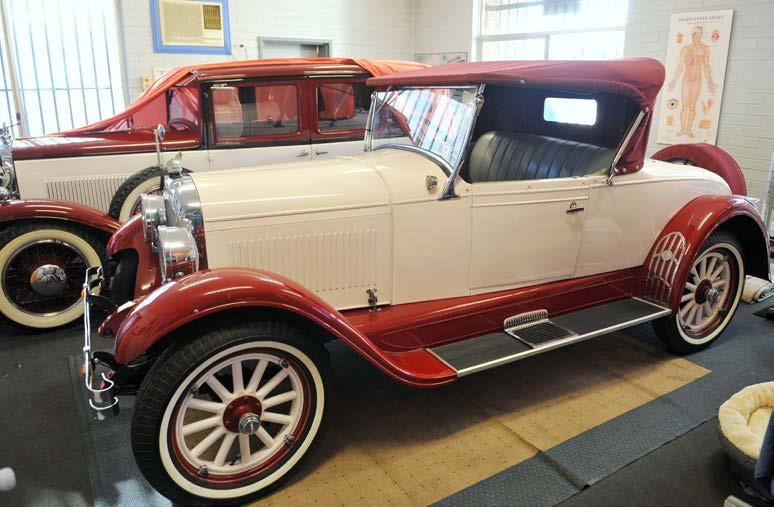
Restored to an exacting standard and capable of performance that would have its original creator smiling in his grave, the Model T is one of a number of stunning vintage and veteran vehicles in Bill’s collection, including an extremely rare 1927 Pontiac – one of only 44 made and thought to be the only one left in existence – and a 1929 Hupmobile.
“An old friend of mine restored the Model T in 2014, but it wasn’t great. I offered to sort it out so we could take it to the Lake Perkolilli revival in 2019, and it’s been here ever since,” Bill explained.
“We found this 90-year-old guy in the US who is a world-renowned Model T genius, and he built the engine and gearbox for us. While it may have cost an arm and a leg, it’s got all the trick Model T gear on it.”
Having fitted twin SU carburettors and
made some modifications to overcome oil pressure problems, the Model T hit the dyno for some final tuning and revealed, in Bill’s own words, what a weapon it is.
“I phoned the engine builder and asked what sort of power it should be producing, and the answer was around 40 horsepower. I told him I was getting 83bhp at the rear wheels (approximately 120bhp at the flywheel), and I’ve hit 130km/h—and that’s still not flat out,” Bill says with a laugh.
“There was silence on the end of the line for a few moments before the old fella said, ‘Well, you must be a good tuner.’”
Now 77 and with 60 years’ experience in the industry, Bill suggests he is nothing special. “I’m just a simple spark plug remover,” he says modestly.
A one-man band for many years now after having “had enough of dealing with employees who don’t care in the same way I do”, his story is a fascinating tale of a passionate man equally as enthusiastic today about his work as he was all those years ago.
Looking back, Bill says his father was the prime motivational force behind his love of cars and motors – and pivotal in his strong association with vehicles produced by General Motors.
“Dad was a mechanic and a passionate Holden man, so perhaps I was always destined to follow in his footsteps,” Bill said.
Reflecting on his childhood growing up in Wembley, Bill has very fond memories of watching with great
‘‘ My apprenticeship with Attwood Motors was fantastic. I really enjoyed the trucks and I used to go in there on Sundays and work for nothing just to learn something. However, when they transferred me to working on cars I really discovered my true passion.
Bill Lee, Bill Lee Automotives
interest as hotted-up FJ and EH Holdens, as well as an assortment of Fords and Valiants, gathered at a coffee shop at the end of his street every Friday evening.
Bill’s other defining childhood memory, which helped set his future career in stone, was the enjoyment he derived from helping service his father’s truck on weekends.
Despite enjoying school, the then 16-year-old Bill asked a family relation who worked at Attwood Motors, a major General Motors dealership in Perth, about apprenticeship opportunities and he was soon taken on by the truck division.
“I really enjoyed the trucks and I used to go in there on Sundays and work for nothing just to learn something. However, when they transferred me to working on cars I really discovered my true passion,” Bill explained.
“Attwood Motors had various departments to train a young mechanic in all aspects of vehicles, including paint and panel, electrical and machining and I have to say that
during my five-year apprenticeship there I learnt so much that would help me in the future.”
By the age of 20, Bill had left Attwood Motors to set up his first business, R.A.W. Motors, in partnership with a couple of friends. His talents as a high-performance engine builder and tuner began to shine and the team ran several very successful drag racing cars at Ravenswood International Raceway. In fact, they built the first mechanical workshop at the venue that could house both rails and street cars. Also handling general mechanical work, the business was employed by John Hughes during his Motorama days for used-car overhauls. This was an enduring relationship that would see Bill establish and run a workshop for John’s expanding used-car enterprise when a race parts business venture in the early 1970s proved unsuccessful.
“John Hughes looked after me very well, and I have a huge ongoing respect for his approach to business,” Bill said.
However, Bill was always destined to be his own man and, despite the opportunity to remain in the John Hughes fold with the Mitsubishi brand, he again established a new business in Hutton Street, Osborne Park, with lefthand to right-hand drive conversions providing much of his work.
Bill’s first dyno was purchased and installed at this workshop with financial assistance from local motorsport identity Bill Nitschke, then racing a Torana XU-1 which Bill Lee helped prepare.
“I built the engines and we competed at Bathurst several times, which put me in touch with some of the legendary Australian tuning gurus of the day,” Bill explained. “Ultimately, the additional knowledge I gained really allowed my tuning business to take off as I knew exactly how to get the best out of engines by expertly using the dyno.”
Explaining that tuning carburettors is “just like mother’s milk to me,” Bill is perhaps one of the few people left in Perth practising this ‘black art’.
“I do a lot of tuning of Ferraris with Weber carburettors and recently I’ve had several Maseratis in the workshop for tuning, each worth well over half a million dollars,” Bill explains. Many years ago he was witness to Weber tuning at the end of the production line at the Maserati factory in Italy while pursuing a dealer license to sell the de Tomaso brand in Australia.
Among Bill’s many claims to fame is being the first accredited Bosch fuel injection specialist in the world.
‘‘ The Brock connection opened the door to General Motors for me. If I hadn’t had the HDT franchise, I would never have had access to the contacts I developed.
Bill Lee, Bill Lee Automotives
Having heard that Holden was to use Bosch fuel injection on the new VK Commodore, he encouraged the local Bosch manager to investigate training opportunities in Germany and subsequently spent three weeks at Bosch HQ near Stuttgart in 1984.
“I was treated like royalty while there and came back to Australia with a phenomenal amount of knowledge about fuel injection technology,” Bill said. That trip to Germany also planted the seed of an idea that ultimately produced the only left-hand-drive VK V8 Commodore in the world.
While in Germany, he befriended two mechanics from Egypt, as well as several Middle East Bosch representatives, who told stories of exotic supercars essentially considered scrap by their owners because they had stopped running.
“Back in the mid-1980s, you could pick up a supercar for peanuts in the Middle East because if they broke down, they were often just abandoned and the owners would go and buy another one,” Bill explained.
“However, you’ve got to get onside
with the people, and I thought if I could get a foothold there with a lefthand-drive V8 Commodore—which they absolutely loved when we showed it at the Dubai Motor Show in 1986— that would provide the opportunity to bring some of these supercars back into Australia and really make some money.”
Bill believes the Australian car would have been an absolute winner in the Middle East and would have sold for around $120,000—double the price the car was selling for in Australia.
“My idea was never to make a zillion of them but to get in there with a unique product I knew would be popular in order to gain access to some of the exotica that was just sitting around,” Bill said.
Unfortunately, the car was to be a one-off despite receiving a very enthusiastic reception at the 1986 Dubai Motor Show.
“While never an officially sanctioned project, Holden’s marketing manager was very supportive and suggested that if we could get one up there and
get everyone excited about it, there was a good chance of corporate support.
“I received plenty of help from Holden management, including gaining access to the Opel factory in Rüsselsheim in Germany to source necessary left-handdrive parts including the dashboard, but it was all through the back door, as it were.
“Holden had a great deal of respect for the way I worked and my integrity and honesty,” Bill said.
While he did have additional investors for the project, financial difficulties stopped the plan progressing any further after the first car was built and shipped to Dubai.
“I have no idea what happened to the car… all I know is that I lost a lot of money on the project. Unfortunately, it was one of those things that you try that didn’t quite work out, but if we hadn’t pulled the pin on it, I wouldn’t be sitting here today,” Bill said.
Ultimately, the assistance Bill received from Holden for building this one-off Commodore came from his strong association with racing legend Peter Brock. Bill was appointed by Brock as the Western Australian agent for the Holden Dealer Team (HDT) high-performance road-going Brock Commodores and continues to look after many these highly sought-after cars today.
“The Brock connection opened the door to General Motors for me. If I hadn’t had the HDT franchise, I would never have had access to the contacts I developed,” Bill explained.
However, while acknowledging that his association with the Brock brand was life changing, Bill’s passion is for the cars more so than the man.
“While Brock was undoubtedly a motorsport god, he was often extremely difficult to deal with,” Bill explained.
Interestingly, he says that Peter Brock thought the left-hand-drive V8 Commodore was a complete waste of time.
“However, once I had finished it, he got in touch with me asking for all the information—I gave him only enough to light the fire, as it were—and then started doing his own VL version. This was about the same time as Brock’s relationship with General Motors soured, and the project was never completed,” Bill said.
Unsurprisingly, given his love for Australian muscle cars and his soughtafter expertise in tuning such beasts – not to mention the Brock HDT
The sleeper Gemini Holden never built
It’s a little-known piece of Australian automotive history that Peter Brock’s Holden Dealer Team produced two very special Geminis in the early 1980s.
Based on the Japanese Isuzu ZZ version of the car, modifications made to the Australian version of the popular small car were extensive.
Featuring the Isuzu twin-cam 1.8-litre engine, a five-speed close-ratio gearbox, four-wheel disc brakes, a limited-slip differential, and revised suspension, the HDT car was a very different beast from the ‘shopping’ version.
While Peter Brock was very keen to put his name to this sporting Gemini, the economics just did not add up for the Holden bean counters. It would have retailed for close to $14,000 at a time when the base Australian model was selling for around $4,000.
Bill Lee used the ZZ Gemini during several of his regular trips to Melbourne to meet with Brock and, once he had fixed a massive engine flat spot, found the car to be a fantastic drive—so much so, in fact, that he built his own.
Given the original two Brock cars were apparently destroyed, the blue car in the pictures above represents the ultimate road-going Gemini—particularly considering Bill has turbocharged the Isuzu twin-cam.
“I built the Gemini about 20 years ago and it is definitely one of my all-time favourite cars,” Bill said.
“And I’m obviously not alone in thinking that, for whenever I take it to Coffee and Cars or similar events, it gets more attention than most of the exotica on display.”
connection and his reputation for building and tuning Holden race cars – motorsport has been pivotal in Bill’s career and it remains a passion today.
Race-ready, a genuine Group C VC Commodore wearing iconic Mobil livery – a nod to his very long-standing relationship with Western Australian Mobil distributor Statewide Fuels – sits proudly among Bill’s collection.
Subject to an extensive nut-andbolt restoration several years ago, the car is in fact Graeme Hooley’s (featured in the Summer 2025/26 edition of MOTOR) Commodore, which competed in rounds of the Australian Touring Car Championship for several years in the early 1980s. In Bill’s hands, the car has competed in several of the Albany and Northam “Around the Houses” re-enactments.
Despite a few setbacks along the way, along with the many successes, Bill has lived a working life that has brought him great satisfaction and he is proud to be testament to the old-school work ethic that anything is possible if the desire to learn and achieve is strong enough.
Sixty years on, he still describes the workshop as his “happy place,” and he has no intention of even thinking about retirement while “the passion for work is strong and I’m still sharp.”
“I’m going to work until they put me in a box,” Bill says with a laugh, “because I absolutely love what I do and, in particular, I love the wonderful people that come through the workshop who trust me with their cars.
“I really am very lucky and truly blessed.”
Building cars for the King of Malaysia
Among Bill Lee’s many interesting life stories is his association with Sultan Ibrahim of Johor, the current King of Malaysia.
Educated at Trinity College, the Sultan is a Malaysian billionaire royal and a frequent visitor to Perth following his purchase of a riverside mansion in Dalkeith.
He is also a car enthusiast with a particular penchant for fast Holden products.
Bill Lee takes up the story of the day he first met the Sultan of Johor in the mid 1990s at his O’Malley Street Osborne Park workshop.
“One day three white Fairlanes pulled up outside the workshop and a number of men in black start pouring out of the cars. From the middle car comes just one man and he walks up to me and asks if I’m Bill Lee.
“I say ‘yes, who are you?’ and he says ‘call me Tunku. I want to look at your workshop.’
“He starts walking around looking at some of the cars I’m building with all the men in black trailing behind and when he comes into the showroom where I had a VN Group
A Commodore that I was selling he says ‘I’ve got one of them and I want you to supercharge it.’
“I replied ‘well you going to have to to bring it here.’ That wasn’t an option for the car was in Malaysia
he wanted it done in his workshop in Singapore.
“After a bit of thought I said the only way I could do the job was to supercharge a friend’s Group A Commodore here in Perth using that car as the test bed and then take all the gear off and bring it up to fit to his car.
“Tunku asked how much was it going to cost to which I replied ‘I haven’t got a clue’. Without a second’s hesitation he says to one of the men in black ‘put $20,000 into his bank account immediately.’”
This was to be the first of many trips Bill made to Singapore and Malaysia over a 20 year period, working on many of the cars in the Sultan’s extensive collection, including a HK Monaro his father gave him for his seventeenth birthday which Bill restored and extensively modified.
“I clicked with him straight away and we developed a great friendship,” said Bill.
“Once the supercharged Commodore was completed he wanted me to test it while he watched from his car on the way to a monthly ruler’s meeting in Kuala Lumpur.
“We’re driving on the unrestricted speed limit freeway and I’m sitting on about 200kph with a Ferrari behind me that couldn’t keep up. He was very happy about that,” Bill says with a laugh.
Western Australia has largely built its economy – and its global reputation – on exporting its vast resource deposits and farming its expansive tracts of productive land.
However, beneath this layer of primary industry wealth creation sit small local companies punching well above their weight and manufacturing goods that rival the very best the rest of the world has to offer.
Diesel turbocharger manufacturer GTurbo and Gotya Covered Seat Covers both started life as passion projects in suburban backyard sheds.
GTurbo delivers significant performance gains for diesel-powered 4WDs, while Gotya Covered ensures the seats in those vehicles are protected from the harshest conditions.
The real similarity, however, is that both businesses are Western Australian manufacturing success stories.
Built from next to nothing, they are a testament to the dedication, belief and sheer hard work of their respective founders, as well as a resolute commitment to maintaining the highest quality standards through in-house manufacturing.
WORDS AND PICS: PAUL ROBERTS
GTurbo World leaders in turbo tech
GTurbo currently operates from a large workshop in Balcatta, employs more than 40 highly skilled designers and engineers, and exports its world-class products to every corner of the globe.
However, less than 20 years ago it was one man in his shed looking to improve the lacklustre performance of his 80 Series Toyota LandCruiser before a planned family trip around Australia.
That man was Graeme Bentink, a mining process engineer and metallurgist with a passion for turbocharged diesel engines. The phenomenal growth of the business is testament to his ongoing development of solutions that outperform anything else available in the market.
WORDS AND PICTURES: PAUL ROBERTS
His son, GTurbo Operations Manager Rhys Bentink, takes up the story.
“Dad thought the factory turbo on the LandCruiser was rubbish, so he began experimenting with different compressor wheels, turbines and other components, producing some really outstanding results,” Rhys explained.
Posting those results on a 4WD forum generated remarkable interest from fellow enthusiasts keen to
‘‘
We’re in a niche position now because we’ve developed packages for specific vehicles that are effectively perfected, delivering guaranteed and repeatable results every time.
GTurbo Operations Manager Rhys Bentink
purchase the product he had developed, and for several years evenings and weekends were taken up with manufacturing turbos.
By 2013, demand for Graeme’s expertise had grown to the point where he rented one of three adjoining units in Balcatta. Today, GTurbo has outgrown the entire building, with expansion into a second premises imminent.
While Toyota-branded products account for the bulk of orders, GTurbo has developed aftermarket turbos for most popular diesel 4WDs.
Their growth is hardly surprising given the unique position they occupy in the market.
“No other company manufactures turbochargers from scratch in Australia, and we don’t believe anyone else in the world has engineered a product to the same level that we have,” Rhys said.
“Every GTurbo system is designed, developed, manufactured and tested entirely by our team. The only element that comes from outside our business is the raw material used to create the finished product.
“There can be no compromises in this process if you want proper control over your product and to provide customers with the highest possible quality and guaranteed, measurable results.”
And the results are impressive.
“We comfortably make 400 horsepower and huge torque from 200 Series and 79 Series LandCruisers,” Rhys explained.
“And they’re 100 per cent reliable, with no requirement to upgrade any internal components, while producing more than three times the power they left the factory with.”
Results like these don’t happen by accident. Rhys explains that developing a GTurbo for a specific engine involves countless design iterations, from refining turbine sizes and blade angles to testing alternative compressor cover configurations.
“We never just sit there and say, ‘That’s great,’” he said. “Everything we do is a process of constant development and improvement and spending hundreds of hours on the dyno with our test vehicles to achieve the very best result possible.”
“We’re in a niche position now because we’ve developed packages for specific vehicles that are effectively perfected, delivering guaranteed and repeatable results every time,” Rhys said, explaining that remote tuning is also a big part of their business.
It’s little wonder, then, that GTurbo has cornered a worldwide market for its products, generating multimillion-dollar export sales.
Demand from within Australia is also very strong and GTurbo has established dealer programs in several States.
“We export to every part of the world where Toyota 4WDs are popular. We have a big market in South Africa, Saudi Arabia, the UAE and South America. We’ve even sent turbos to Réunion Island and Madagascar,” Rhys said.
Gotya Covered Seat Covers
Unrivalled quality
When you’re fortunate enough to do what you love and love what you do, work becomes more than a job – it becomes a passion.
That is certainly true for Josie Levitt, owner of Gotya Covered Seat Covers.
Combining a genuine passion for sewing with a lifetime of experience in automotive seating, she has carved out a niche business in Western Australia renowned for manufacturing premium-quality seat covers.
Like GTurbo, Gotya Covered began life in the backyard shed of Josie’s home when she immigrated from the United Kingdom in 2005.
“I’d spent most of my working life in the automotive seating industry, particularly with Ikeda Hoover / Johnson Controls Automotive Seating Systems, suppliers to Nissan,” Josie said, explaining that the later years of her career took her to a number of different countries helping automotive plants with setup issues and training.
“When I came to Perth, I decided I just wanted to work for myself in my garage, doing what I absolutely love to do, which is sewing,” she said.
“I know car seats like the back of my hand, and I can find my way around a sewing machine blindfolded,” Josie added with a laugh, explaining that her skillset led to a significant amount of contract work with a number of Perth seat cover manufacturers and motor trimming companies.
Recognising that others were benefiting more from her expertise than she was, she established her own
‘‘The level of skill, precision and dedication our sewing machinists bring to their work is incredible, and every seat cover that leaves our workshop reflects their craftsmanship and attention to detail.
Josie Levitt, owner of Gotya Covered Seat Covers
brand, despite acknowledging that starting a business had never been part of the plan.
Today, with customers ranging from mums and dads to mining companies and car hire firms, across Australia and New Zealand, Gotya Covered is another fantastic Western Australian success story.
However, as time goes on Josie is dealing with several major hurdles. “Fabric mills in Australia are slowly disappearing, and I’m having to face the prospect of bringing in materials from overseas, which I really don’t want to do,” she said, explaining that she had already experienced quality control issues with some Chinese products.
Josie Levitt, owner of Gotya Covered Seat Covers
“We’re exporting Australian cotton to India and China to be woven into fabric before it comes back to Australia to be dyed and waterproofed. However, there is so much demand for the product that the one remaining operating mill in Melbourne struggles to keep up with supply.
“Further to that, there’s now only one Australian company capable of laminating the foam to the fabric, which is an essential part of the process and must provide an unbreakable bond in order to achieve the quality we demand.”
And it’s the premium quality that Josie and her team of highly skilled machinists consistently achieve that has made Gotya Covered a benchmark in the industry.
With more than 4,500 custom patterns on file, Gotya Covered can create perfectly fitted seat and console covers for just about any make or model of 4WD. With new models coming to market regularly — not to mention the number of variants within a single model range — keeping on top of often subtle design changes is a significant challenge.
Much like dressmaking, the process involves having the vehicle at the workshop and painstakingly pinning together a clear plastic template, paying particular attention to seams, before the pattern is digitised.
“Sometimes it’s just a small adjustment for the addition of, say, an electric switch, whereas other times a completely new pattern is required,” Josie explained.
“We have a great relationship with many car dealerships, but occasionally I have to put a call out on Facebook for a particular model. In return for providing their vehicle for a few days, we’ll supply the owner with a free set of seat covers,” she said.
Producing more than 100 sets of seat covers each day, the speed and dexterity of the six female sewing machinists — all from different cultural backgrounds — has to be seen to be truly appreciated.
“Our sewing machinists are the backbone of this business,” Josie said.
“The level of skill, precision and dedication they bring to their work is incredible, and every seat cover that leaves our workshop reflects their craftsmanship and attention to detail.
“And then there’s the girls cutting, packing and providing administration support.
“They’re all far more than employees — they’re family, and I’m incredibly grateful to have such a talented team behind me.
“Quite literally, I couldn’t do what I do without them.”
However, alongside raw material
supply issues, a skills shortage remains one of the biggest challenges Josie faces, and she dreads the thought of losing any member of her team.
“I need qualified production sewing machinists to do this job, and the reality is that this is not a skillset that is easily found in Australia. The government doesn’t recognise a sewing machinist as a skilled worker, which means we can’t sponsor and bring in people from overseas,” she explained.
“I can’t wait four years for someone to be trained, and even then, how do you substitute years of experience?
“I need skilled people right now, and no one is going to tell me that this is not a highly skilled industry,” Josie concluded.
Already working in the tyre industry? This assessment formally documents and evaluates your existing competency for the purpose of obtaining a WA Motor Vehicle Repairer's Cer tificate. Combines written, third-par ty and practical work-based components.
A comprehensive nationally accredited qualification for both existing workers and new entrants to the tyre fitting industry. All training and assessment are conducted on the job. Successful graduates receive a qualification recognised across all states, enabling application for a WA Motor Vehicle Repairer's Cer tificate.
Tyre expert now passionate trainer
WORDS: PAUL ROBERTS
If qualifications, combined with passion, experience, and a friendly and understanding disposition, are the cornerstones of being a successful educator, then Motor Trade Association of WA tyre servicing trainer Yoan Ross has more than ticked all the boxes.
In fact, Yoan, originally hailing from the island paradise of Mauritius, is actually doubly qualified.
“When I first arrived in Melbourne looking to start a new life with my family in 2015, my qualifications as a South African-trained mechanic were not immediately recognised,” Yoan explained.
“I continued to pursue having my overseas education and work experience validated while at the same time gaining my Australian Cert III and Cert IV diplomas and my permanent visa.
“Two months after I had the necessary qualifications to work in this country, I received an email from Trade Recognition Australia informing me that they had finally accepted that my original qualifications were valid,” he said.
However, for Yoan, who has now been part of the MTA WA team for nine months, it was an experience that has enriched his ability to train the Western Australian tyre technicians of tomorrow.
“I completed my mechanical apprenticeship in Cape Town in 2004,” Yoan explained. “The way we approach training here today is vastly different from my experience in South Africa.
“The first thing we look to instil in our students is an understanding of the importance of safety in the workplace environment and the maintenance of tools.
“In my four years of learning to be a mechanic in South Africa, I was never encouraged to wear safety boots or safety glasses. However, it’s that sort of experience that has really galvanised within me the importance of such protocols,” Yoan said.
Despite spending a few days initially in Perth with a friend, the Rosses began their Australian life in Melbourne, enjoying the vibrancy and lifestyle the city offered but not the climate.
After five years in Melbourne, with Yoan working as a store manager for
mycar Tyre and Auto (formerly Kmart Tyre and Auto), the family had had enough of Melbourne’s inclement weather and moved north to Sydney in early 2020.
“Arriving one month prior to the pandemic, I began working for mycar Tyre and Auto in Sydney as second in charge,” Yoan explained. “We were so lucky, as all the stores in Melbourne were forced to shut, but there was no such ruling in Sydney.”
While Sydney proved to be a place the Rosses loved, the cost of living – and rent in particular – forced the family to consider new options.
“I was working 40-plus hours six days a week at mycar and, even with my wife working, we couldn’t get close to buying a house and the rent we were paying was just extortionate,” Yoan explained.
“Perth had always been on our radar because it is so quiet and clean by comparison to Sydney or Melbourne and people here are much friendlier and far more appreciative of your efforts than in those big cities.”
The move to Perth in 2024 has proved to be a win-win for both Yoan and his
‘‘During my workshop career, I always found apprentices looked to me for assistance in how to do something, and I must confess I derived great satisfaction in helping them. It seemed like a logical next step to become a teacher and getting this job with MTA WA Training is like a dream come true.
Yoan Ross, lead tyre servicing trainer MTA WA Training
family as well as the MTA WA.
After 20 years loving life ‘on the tools’ but feeling dispirited by customers and their lack of appreciation, Yoan completed his Cert IV in Training and Assessment and was immediately offered a teaching position with TAFE New South Wales – one he declined due to the imminent move to Perth.
“During my workshop career, I always found apprentices looked to me for assistance in how to do something, and I must confess I derived great satisfaction in helping them by trying to explain things in a friendly and easily understandable way,” Yoan said.
“It seemed like a logical next step to become a teacher and getting this job with the MTA WA is like a dream come true.
“I loved being on the tools, but the lack of validation and respect from customers wore me down. The feedback I get from the students –and even their parents via messages – is awesome and makes the job so rewarding.”
Currently, Yoan is responsible for training approximately 30 apprentices in tyre servicing technology – a oneyear course with an additional sixmonth grace period.
Having “fallen into the tyre trade” while working as a mechanic for mycar, Yoan’s experience with tyre technology is extensive.
“Just as the mechanical side of vehicles is evolving rapidly so is tyre innovation, including the development of tyres specifically designed for EVs due of their increased weight with batteries,” he explained.
“The actual process of fitting and balancing tyres has pretty well remained the same, although new machine technology has made the job slightly easier.
“The problem the tyre industry faces is that the majority of customers are unwilling to spend money on goodquality rubber for their cars, preferring cost savings over safety and long-term durability.”
Yoan admits that he was initially a little daunted by the position of lead tyre trainer but now feels completely at home teaching.
“One of the other great things about this job is getting out on the road to help students in the south-west region and every workshop I visit is very welcoming and appreciative of our efforts,” Yoan said, explaining that he travels to Bunbury and Albany, and towns in-between, on a regular basis.
“The MTA WA method, which focuses more on practical training rather than books in the classroom, is fantastic and I was an advocate of that system well before I started this job, based on my personal experience as an apprentice.
“If a student is struggling, hands-on training provides the opportunity to help them one on one with 100 per cent focus.
“Seeing students gain confidence and helping them succeed — that means a lot to me.”
Making it easy to get the right apprentice
Perth Truck Repairs owner Mitch Lohrentz doesn’t mince his words when he talks about the importance of motivation and personality fit when it comes to taking on an apprentice.
“In a small workshop such as ours, it’s critical to have a person who demonstrates a strong desire to learn and, just as importantly, gels with the team, or both the apprentice and me as the employer are on a hiding to nowhere,” Mitch said.
And it is precisely for this reason that Perth Truck Repairs utilises the MTA WA’s Apprentice Employment Services (AES).
“I probably get around 10 to 20 phone calls a year from kids asking about apprenticeship opportunities with the business and I direct them all to the MTA WA,” Mitch said.
“Leaving everything in the hands of the Association in terms of the administration, vetting of the trainees, wages and so on just makes it so easy and, if things don’t work out, it’s a simple conversation and they will find me someone more suitable.”
That said, Mitch could not be happier as the host employer of 20-yearold second-year apprentice Ben Kurthy, who has been with Perth Truck Repairs for approximately 18 months.
With Mitch on the tools, as well as assisting in the administration of the business alongside his wife Carmen, Ben is a critical part of the small team.
“Ben would have to be an exception because his ability as a first-year apprentice far exceeded some of my previous experiences with young kids coming into the industry,” Mitch said.
“It is initially quite difficult with young apprentices because you are attempting to teach them brand new skills and then having to tail them and watch what they do all the time, and this obviously has a negative effect on business efficiency.
“However, the importance of helping these young kids cannot be overstated because without good, well-trained apprentices, there are no tradespeople into the future, and I know this is an industry role the MTA
WA takes very seriously,” he said.
As a further example of Mitch’s strong desire to future-proof the industry by training the technicians of the future, Perth Truck Repairs also hosts Year 12 student Nate Bevilaqua one day a week as part of a work experience program.
“Nate has been with us since late last year and, once his schooling has finished, it’s highly likely that he’s going to start a career in the heavy automotive industry with us,” Mitch said.
Unlike Nate, Ben’s introduction to the motor trades came sometime after he had completed Year 12.
“I really had no clear direction for what I wanted to do once I finished school, so I ended up spending a year working in fast-food outlets, which I will admit was mind-numbingly boring while also not offering a great career path,” Ben explained.
“Both my two older brothers are mechanics and having done some automotive work experience during my last years of school, including a stint at Major Motors working on
Second-year apprentice Ben Kurthy struggled to find an apprenticeship position before making contact with the MTA WA’s Appentice Employment Services.
‘‘Leaving everything in the hands of the MTA WA in terms of the administration, vetting of the trainees, wages and so on just makes it so easy and, if things don’t work out, it’s a simple conversation and they will find me someone more suitable.
Mitch Lohrentz, owner Perth Truck Repairs
Isuzu trucks, maybe I was always destined to end up in this industry.”
However, it wasn’t until Ben approached the MTA WA that his dream was realised.
“I called up so many businesses in an attempt to get an apprenticeship and there were occasions when I was one of 300 young people applying for the same position,” he said.
“I had all the pre-qualifications I could possibly get, had done my pre-apprenticeship and had 500 to 600 hours of work experience under my belt but because I was often against people who may have already completed a year or two of their training, it seemed I couldn’t compete.
“However, I can’t say enough good things about Vanessa Howard at the MTA WA. At the initial interview, she was incredibly supportive and fully appreciated the effort I had already put into trying to get a start in the industry,” Ben enthused.
Placing Ben with Perth Truck Repairs has been a win-win for both the business and its young apprentice.
“I love the variety of work we get through the workshop – and the fact we work on all truck brands – because every day there is always something new to learn and a different challenge to overcome,” Ben explained.
“And I also love the scale. I’ve done a lot of work on my own car, and sometimes it drives me insane as the space can often be so confined and the work so fiddly.”
“Always something broken to fix...”
Mitch Lohrentz knows that his young apprentice Ben has a job for life because of the skills he is learning working in the heavy automotive sphere.
“I’ve lived and worked in many countries and the demand for good mechanics means you are never going to be short of work,” Mitch said.
“There’s always something broken to fix!”
Hailing originally from South Africa, where he gained his trade qualifications, Mitch has called Perth home since 2011, establishing Perth Truck Repairs approximately six years ago.
“I wanted to go out on my own and initially started running a mobile service,” Mitch explained.
Ideally, Mitch would like to resurrect that side of the business but a shortage of qualified heavy diesel mechanics due to the financial allure
of the mining industry has put that plan on hold for the time being.
“We have a great variety of customers from industries as varied as food and beverage delivery and heavy industrial to the aged care sector with their buses, and that is the key to the business’ success as we are not locked into one sector,”
Mitch explained.
“We’re also very proud that our reputation brings referrals because that means you must be doing a good job if a customer is happy to recommend you.”
Interestingly, he says that a basic lack of driving skills in the trucking industry is providing a good deal of their business.
“Some of the unnecessary damage we see is just shocking – we are doing repairs or replacing parts that should be lasting much longer purely because of poor driving skills,”
Mitch said.
Mitch Lohrentz, owner Perth Truck Repairs
Staying the distance
Former apprentice now workshop head
Having completed his apprenticeship just over 10 years ago, Liam Sharp’s progression through the ranks of Transperth bus operator Swan Transit has been meteoric.
Recognised early in his career as an outstanding mechanic with excellent people skills, he was soon promoted to the position of leading hand at the company’s Mount Claremont and Shenton Park depots.
More recently, he has taken on the role of workshop manager at those depots, ensuring the ongoing reliability of the bus fleet with a team of four mechanics and two apprentices.
Liam has no doubt that his decision to stay with Swan Transit has been the right one.
“Of course, I could have gone to the mines and I understand the
attraction,” he said. “However, there’s also a great deal of disincentive, and I do try to make sure the young guys I look after here understand the benefits of staying.
“Perth has a fantastic public transport system that is constantly expanding, so one of the real benefits is the certainty of a job for life, not to mention seeing your family at the end of every day and getting to sleep in your own bed every night.”
Liam is one of many training success stories resulting from a strong and longstanding relationship between the MTA WA and Swan Transit.
“Working in public transport, Swan Transit is mandated to comply with Public Transport Authority (PTA) requirements, where safety and correct procedure are of the utmost importance,” explained Swan Transit Area Manager Steve Henderson.
“Partnering with the MTA WA as a host employer for apprentices provides us with fully vetted applicants and avoids the potential pitfalls of employing trainees directly.
“Liam, like a lot of the young guys who have come through the system via the MTA WA, has stayed with us after qualifying and, while we are to some extent in competition with the mining industry, the majority can see the benefits of staying in Perth.
“It’s very much the ideal scenario for us as the people we have trained know our systems and procedures inside out. Consequently, we endeavour to provide outstanding working conditions and great opportunities for career advancement,” Steve said.
Career progression is a very important part of the apprenticeship journey for both the MTA WA and Swan Transit and, in Liam’s case, it has proved lifedefining.
“I love the responsibility and the challenge of this job,” Liam explained.
“I will never miss an opportunity to get back on the tools to help out, but one of the things I am now very passionate about is mentoring apprentices to ensure they’re on the right track with their training and emotionally in a good place.
“Swan Transit has given me a fantastic career and I am very proud of what we do.
“I want to pass on my personal experience to the next generation of technicians here because it’s a big investment training someone for four years and we don’t want to lose good people as soon as they are qualified.”
Choose Officeworks as your partner in business
Develop Local Talent. Build your Workforce. Strengthen our Industry.
Our Apprentice Employment Services (AES) make it easy to recruit, train and support your apprentices, saving you time, cost and administrative effort - all backed by the trusted expertise of Western Australia’s peak automotive industry body
Ready to Host an Apprentice?
Your future workforce, fully managed
Need an Apprentice? Host one with MTA WA!
Comprehensive Recruitment
We take care of everything: advertising, interviews, shortlisting and reference checks, then present you with 2-3 qualified candidates for you to meet before making your decision
Cost Efficiency
You only pay for hours worked on the job - our simple charge-out rate covers everything including:
Wages
Superannuation
Workers compensation Insurance
Workers compensation management
Training Fees
Annual leave
Public holidays
All personal leave
All other award-based entitlements are taken care of and we'll ensure you receive all government incentives you are entitled to without having to lift a finger
Flexibility
Because AES is the employer and you are the host, If business conditions change or an apprentice isn’t the right fit, you can request a placement change with just 5 days’ notice - no long-term commitment required
Risk Management
We handle all workers’ compensation claims and compliance requirements, giving you peace of mind and reducing administrative burden.
Mentoring & Support
Our Field Officers are always available to support you and your apprentice, providing ongoing mentoring and support through regular site visits to ensure your apprentice stays on track
Training with less time off the job
Our Registered Training Organisation delivers specialised Light Vehicle and Auto Electrical Apprentice training in your workplace where possible - ensuring minimal disruption and maximum productivity
Regional expansion provides new apprentice opportunities
Growing up in the vast landscapes of Western Australia’s Pilbara region, Vanessa Howard understands better than most the challenges and opportunities that come with living and working in regional WA.
Now leading the MTA WA Apprenticeship Employment Services (AES) field team, Vanessa is drawing on her regional experience and her passion for workforce development to help more automotive businesses discover the benefits of hosting apprentices in order to build the skilled workforce the industry needs for the future.
Having seen first-hand the critical role local businesses play in regional communities, Vanessa is particularly focused on increasing apprenticeship opportunities across regional Western Australia.
“I was born in Port Hedland and spent the first 15 years of my life growing up in the former iron ore mining town of Shay Gap while
my father worked for BHP,” Vanessa said, explaining that her visits back to the Pilbara definitely feel like a homecoming.
“We’ve all seen and heard of people making snow angels. I make red dirt angels every time I get back up there,” she said with a laugh.
Vanessa believes there is enormous potential for employers in regional centres to develop home-grown talent, strengthen their businesses and create rewarding career pathways for young people who want to live and work in their local communities.
Her message to employers is simple: support is available and taking on an apprentice through MTA WA is often easier than many businesses realise.
A recent successful trip to the Pilbara involved follow-up visits with current host employers and apprentices as well as cold-calling workshops to promote the benefits of the MTA WA Apprenticeship Employment Service.
The MTA WA is also expanding its apprentice program in the South West and the Goldfields as it looks to address the skills shortages that continue to challenge businesses across the state.
Through the AES, host employers are paired with applicants who have already undergone a rigorous selection process and demonstrated a strong commitment to building a career in the motor trades.
“Further to this, MTA WA manages all the administration, paperwork, classroom training schedules, ongoing assessments, wages and so forth. If, for any reason, things don’t work out, we will source a more suitable candidate,” Vanessa explained.
“Busy workshops definitely appreciate the reduction in administrative burdens and, at the same time, we ensure apprentices receive the training and mentoring they need to succeed.”
However, for Vanessa it is about more than filling vacancies. It is about creating sustainable careers and ensuring the automotive industry in regional communities has the workforce it needs to meet future challenges.
Vanessa Howard, MTA WA Apprenticeship Employment Services (AES) field team leader (left) with AES General Manager Amanda Dawes.
‘‘Busy workshops definitely appreciate the reduction in administrative burdens and, at the same time, we ensure apprentices receive the training and mentoring they need to succeed.
Vanessa Howard, MTA WA Apprenticeship Employment Services field team leader
Vanessa is no stranger to advocating for apprenticeship opportunities, having previously worked for Busy At Work as a field officer in the Pilbara, as well as spending time with other employment agencies.
“I’ve always had a passion for working with people, particularly young people, and helping them achieve their goals,” she said.
“It’s very hard being a young apprentice and it can be quite overwhelming when you’re starting from a potentially low skill level and not earning a great wage. We attempt to give our apprentices as much support and pastoral care as humanly possible.
“Everyone in the team has that nurturing personality and a strong desire to build great relationships not only with the apprentice but also with the host employer.
“We’re on the journey with them, and there is no better feeling than when, at the end of four years, we can present a trade certificate to the trainee and a certificate of appreciation to the host.
“It’s a wonderful thing to be a part of, and I can genuinely say, hand on heart, that my passion for helping people makes this my dream job.”
Vanessa pictured during a recent trip to the Pilbrara.
The ultimate adrenaline rush
If your inner Brodie Kostecki, Broc Feeney or Chaz Mostert is looking to reveal itself, then there is no better time than now to enjoy the thrill of driving a V8 Supercar around Wanneroo Raceway.
V8 Drive Day, in conjunction with the MTA WA, is offering 50 members the opportunity to experience the ultimate adrenaline rush at a special discounted price.
There are few experiences in life that can truly overwhelm the senses. However, driving a 500-plushorsepower V8 race car around a racetrack at more than 200km/h is certainly one of them.
Guaranteed to raise the hairs on the back of your neck, this is clearly no ordinary driving experience.
And while the driver’s briefing creates a sense of deep excitement and anticipation, it’s not until the sixpoint harness belts pull you tightly against the racing seat that the reality of what you are about to experience kicks in.
Your breathing quickens and a slight nervousness creeps into your stomach as the engine fires into life and the deep, thunderous bark of a naturally
aspirated V8 reverberates through your chest. It’s all very analogue — noisy, raw, mechanical and brimming with the promise of outrageous power.
As you roll out of pit lane and squeeze the throttle for the first time, the instant response of the car can’t help but induce a huge smile. The acceleration is ferocious and your body is pushed hard into the seat as the V8 delivers its linear power through the rear wheels.
Speed climbs with astonishing urgency and, by the time you’re headed down Wanneroo’s back straight towards the braking point for the final 90-degree corner, the car is travelling at more than 200km/h.
Braking zones arrive with startling speed, but when you stand on the middle pedal, the immense stopping power of the race car is almost as impressive as its acceleration.
Then comes the turn-in.
The steering is razor-sharp and, running on grippy slick racing rubber, the tyres generate cornering forces that can only truly be appreciated from behind the wheel. Your neck muscles strain against the g-forces as the car clings to the racing line.
With an intercom helmet and a professional instructor in the passenger seat helping you get the most out of the experience, each lap is an exhilarating adventure as your senses become hyper-focused on the task at hand.
For a few unforgettable laps, the act of driving a car takes on a whole new meaning and produces an adrenaline rush that won’t leave you for days.
But be warned — driving a dedicated race car at Wanneroo can be highly addictive.
V8 Drive Day offers a variety of options, starting with a three-lap driving experience through to the ultimate VIP package — 11 laps in the driver’s seat and three hot laps with a professional race driver. And, depending on where your allegiance lies, your V8 race car can be either a Holden or a Ford.
For a somewhat different, but no less exhilarating experience, V8 Drive Day also has a beautiful 2019 Aston Martin twin-turbo V8 Vantage available to hustle around the 2.5km Wanneroo circuit.
Discounted MotorTech invaluable resource
AVictorian Automotive Chamber of Commerce (VACC) resource providing instant access to technical support is proving to be a real boon for MTA WA members who have signed up to the initiative.
The MTA WA has negotiated a significant discount for members who subscribe to MotorTech, Australia’s most comprehensive automotive technical information platform.
As well as a substantial online database of information, a subscription to MotorTech also includes phone and email access to the VACC Technical Advisory Service — Australia’s largest automotive technical call centre.
Staffed by qualified technicians who have access to the largest automotive manual library in the southern hemisphere, the call centre can provide individualised answers to queries, resulting in greatly improved workshop efficiency and considerable cost savings.
One long-time MTA WA member who believes MotorTech is an absolute must for any workshop is Armadale 4WD owner Richard Ward.
MotorTech first came to Richard’s attention approximately 18 months ago when he was searching for information to solve a transmission issue on a Ford Ranger.
“Mel Greenhow (MTA WA General Manager of Training) alerted me to the MotorTech resource and an article in the monthly VACC Tech Talk magazine provided me with all the necessary information to fix the problem,” Richard explained.
MTA WA Training is a great advocate for MotorTech having utilised it for approximately five years to support apprentice training.
“I use the resource several times a week and I honestly think MotorTech is outstanding value for money as it can prevent so much wasted time chasing your tail while struggling to diagnose a problem,” Richard said, explaining this is ultimately a winwin for both the workshop and the customer.
“I’m a little bit of an old-school mechanic and my stock-in-trade is mostly Land Cruisers, Patrols and the like which is all familiar territory.
“But where MotorTech really comes into its own is the diagnostic
Armadale 4WD Service Centre owner Richard Ward would not be without the technical support provided by MotorTech.
I use the resource several times a week and I honestly think MotorTech is outstanding value for money as it can prevent so much wasted time chasing your tail while struggling to diagnose a problem.
Richard Ward, owner Armadale 4WD
information for more modern vehicles, including wiring diagrams and an excellent faults database.
“There is a whole world of information available online, including little tips and tricks, and everything is well worded with step-by-step instructions that are very clear and easy to understand,” he said.
Richard was also full of praise for the quick responses provided by the technical advisory arm of MotorTech and the monthly Tech Talk magazine, which features useful and informative articles.
“Not all questions can be answered immediately — and unfortunately it is Melbourne time, of course — but within 15 minutes or so, the team will phone or email you back with the information you were seeking, which is just outstanding,” he said.
Citing a recent example of a Mitsubishi Triton without front differential drive and no obvious fault, Richard explained that a MotorTech bulletin advised that a wire not directly related to the fourwheel drive system must have power in order for the differential to work.
“Informative knowledge like that is absolute gold,” Richard said.
“I also really appreciate the continual updating of the resource, with a query and the subsequent answer leading to additional information on a particular vehicle becoming available for all subscribers to access.”
Costs for members vary depending on workshop needs, but the table illustrates the considerable discounts available.
benefits at a glance
Save time and increase workshop efficiency
• WorkshopData Tech – Service schedules, technical specs and repair procedures for cars, motorbikes, and trucks
* MTA Member price correct at time of publication.
VACC Technical Advisory Service is staffed by highly qualified and trained technical experts and backed by the largest automotive technical library in the Southern Hemisphere.
Technical Updates
• Monthly Tech Talk magazine with new tips and insights
• Access to exclusive technical events and online resources
• Regular updates on new technologies and regulations
• New vehicles and data added every month
From the ashes – with ongoing help
Armadale 4WD proudly lays claim to being the longest-surviving independent four-wheel drive service centre in Perth, having first opened its doors in 1986.
However, in July 2024, it all came crashing down when a battery fire quickly engulfed the workshop, destroying the building and everything within.
Richard Ward, who had been working in and managing the business for the previous 10 years, had only just committed to purchasing Armadale 4WD from the original owner — his former father-in-law, Michael Clode — when his dreams and hopes went up in smoke.
“It was very sad because that building — just down the road from where we are now — was where everything had started,” Richard said.
“I was extremely proud of the reputation Michael and his wife Julie had established and the continued growth after we took over the day-to-day running.”
However, with tremendous support from a loyal customer base — and ongoing practical assistance from the MTA WA — Richard and his wife and business partner, Rachel, have ensured the survival of Armadale 4WD, albeit in a new location.
Currently employing two second year MTA WA trained apprentices, Zaydn Collins and Jeremy Muscat, Richard is
full of praise for the Association and its approach to fostering new talent for the industry.
“I love the way the MTA WA goes about the business of training young apprentices by limiting the amount of time spent in the classroom and allowing the practical development of skills to occur in the workplace,” Richard said.
“I get fantastic feedback from the MTA WA trainers on how the boys are going when they visit the workshop to conduct assessments, and their genuine passion for developing really good mechanics is obvious.”
As well as advocating for the apprenticeship program, Richard said he derived a great deal of comfort from knowing legal and dispute resolution support from the MTA WA was only a phone call away if required.
“We’ve just settled a $20,000 dispute with a customer, which was all aided by the MTA WA,” Richard explained. “Until a situation arises, you don’t realise the value of that backup and support from people who really know their stuff.
“Aside from providing validation that you are doing the right thing, having that level of expertise on your side is very reassuring.
“I think anyone in this industry would be mad not to be a member of the MTA WA,” Richard concluded.
United by 50 years of
dedication
United Fuel Injection, one of the largest diesel fuel injection specialists in Australia, has been through many transitional phases in its 50-plus years of operation, including several name and location changes.
However, there is one constant in the history of the company – the presence of current Workshop Foreman Greg Wellington, who recently racked up 50 years of service with the Redcliffebased company.
And while ‘like father, like son’ may be an oft-used cliché, Greg’s son Daniel has followed in his father’s footsteps, notching up close to 20 years with United Fuel Injection since beginning his apprenticeship.
Like his son, Greg’s journey in the industry also started with an apprenticeship.
With a strong desire to become a light vehicle mechanic, and with school holiday work experience under his
belt, Greg approached the Guildfordbased small diesel specialist firm Puseys fresh out of school in 1976.
“I put the necessary paperwork in and, two hours later, once I was home, the phone rang offering me an opportunity,” Greg said, explaining that although he was working, he was officially unable to start his apprenticeship until 1977 due to applying in the month of March.
“Initially there were just three of us and we worked six days a week because the volume of work was just incredible.”
With strong demand from the transport and agricultural sectors, the business, in Greg’s words, “went from a tiny workshop to a bigger workshop and then an even bigger workshop with more and more employees.”
Following the business through its transitions and a change of ownership, Greg is very proud to be “the only original left.”
“I’ve butted heads with the boss many times,” Greg says with a laugh. “I’ve been ‘sacked’ once and threatened to hand my notice in on at least one occasion, but a few seconds later we’re talking again and getting on with the job.”
Greg suggests that his extraordinary tenure with the one employer comes from a high level of mutual respect from both management and the people he works alongside. It’s a culture United Fuel Injection Accounts Manager Allye Bushby proudly advocates when she describes the company as “one big family.”
“When we recruit, we recruit not only for skills and the ability to perform, but also for personality and cultural fit,” she explained. “It makes for a very friendly workplace.”
Aside from the great workplace culture, Greg gets a great deal of satisfaction from the specialist work he undertakes diagnosing issues with diesel machinery and rebuilding fuel pumps and injector units.
And with 50 years’ experience, Allye maintains Greg has probably seen or worked on just about every diesel pump system produced and that “what he doesn’t know isn’t worth knowing.”
“I always wanted to be a car mechanic,
building engines and the like, so I guess you could say I fell into this particular side of the industry by default, not design,” he says.
“But I do love the challenge of solving problems methodically by pulling things apart, working out how they operate, rebuilding and testing.
“You can have two pumps come in with a similar problem, but it doesn’t mean that a fix for one will be the same for the other – often the same symptoms can have a completely different cause.
Trial and error
“A lot of the knowledge I have gained is from teaching myself through trial and error – just playing with pumps and working out how all the components work together to produce the exact fuel requirements,” Greg said.
However, he says one of the great strengths of the company is the depth of knowledge amongst the eight technicians and two apprentices under his charge.
“Some problems you just can’t seem to solve, but I can approach anyone in the workshop, just as they will often come to me, and ask, ‘What am I doing wrong?’ and we’ll work it out together.
“If you don’t work together, you’re not going to get anywhere and, conversely, if you keep your knowledge to yourself, it doesn’t help anybody else. I’m here to learn what I can learn and I will pass my expertise on to whoever wants to know it.”
“I am extremely proud of Greg for achieving this milestone. This sort of commitment to one employer is very rare in these modern times. Greg is the most skilled technician in our group of technicians and continues to outperform all in the workshop. He does not hesitate to pass on his wealth of knowledge to the younger members of the team and all our apprentices. There is, however, little tolerance for non-performers which is a testament to his extremely high work standard. Well done Greg on this outstanding achievement.”
Ken Ringrose, Managing Director United Fuel Injection
Greg says that the greatest change he has witnessed during his 50 years working in the industry is the introduction of electronics.
“However, even though there is an electronic signal activating the internals of a pump, the mechanical aspect internally is essentially the same as it has always been,” he said.
After half a century, Greg is still not quite ready to retire. However, he does admit that his body is starting to show the strains of working for so long in the motor industry and he plans to slowly transition away from full-time work.
“I’m not the sort of person who could just potter around the garden – it would drive me insane,” he says.
However, after five decades in the trade, Greg greatest asset may not just be the machinery he has kept working, but the knowledge and experience he is always willing to pass on to the next generation.
“The day I do decide to walk away and say I’ve done my bit, I will still be available to help when there is a problem the team can’t solve.
“Sometimes you just have to think outside the box in order to make something work and that is knowledge that isn’t written in the manuals and that only experience can give you.
“After all this time, there is a lot in my head on how to fix things when the prescribed methods just won’t work.”
Greg Wellington (left) pictured with his son Daniel. With both completing their appenticeships with United Fuel Injection connected companies, they have amassed almost 70 years of continuous service.
Not just a car, an experience
Review by Luke Rowe
MTA WA Membership Service Manager
From the moment I picked up the Zeekr 7X Performance, I knew this vehicle was going to change the way I viewed motoring forever.
The handover alone told me this wasn’t going to be a normal car review. It wasn’t a quick “here are the keys, good luck”. Instead, it was a full introduction to an entirely different driving experience.
From the way the doors open to setting up the seats and steering wheel, through to the ambient interior lighting and even how the cabin lights dance to the beat of the music, everything about this vehicle feels designed around the driver.
As I dove deeper into the features, I started to understand what’s
happening to the simple act of driving. Comfort has moved from economy class to first class in an incredibly short period of time.
Then it was finally time to drive — or, more accurately, low-level fly.
I promised myself I wouldn’t make this review all about speed and power, but this aspect of the car deserves more than just a passing mention. The quietness, the smoothness and the completely insane acceleration of this SUV are impossible to ignore.
0–100km/h in just 3.8 seconds. Yes, really!
And trust me — when you put your foot down, you will smile. There’s a genuine moment of shock, followed by a high-pitched giggle, as this full-sized SUV launches forward like a supercar.
But straight-line performance isn’t even the best part of this car.
The brakes feel strong enough to stop a train, while the steering is so smooth and direct you’d swear you were driving a much smaller sports car. The active air suspension works overtime to disguise the size and weight of the vehicle, making the 7X feel smaller and more agile than any large SUV has a right to.
And then there’s the comfort.
The rear cabin space is enormous. The back seats don’t feel like they belong in the rear of an SUV — they feel more like a luxury lounge suite. There’s room to properly stretch out and relax, while the reclining rear seats and soft interior materials make long trips feel effortless.
The storage space is equally impressive. Whether it’s work gear, shopping or family luggage, the Zeekr swallows it all with ease. It has the practicality of a full-sized family SUV without ever feeling bulky or clumsy to drive.
One feature that really stood out to me as a parent was the rear occupant monitoring camera system. If you’ve got young kids in the back, being able to safely keep an eye on them through the centre screen without physically turning around is a genuinely brilliant idea. It’s one of those features you don’t realise you need until you use it. And then there’s the charging.
The Zeekr’s 800V ultra-fast charging system completely changes your understanding of EV ownership. On a compatible ultra-fast charger, the 7X can charge from 10 per cent to 80 per cent in under 20 minutes.
That means that, by the time you grab a coffee and enjoy a few minutes of downtime, the car is basically ready to go again. The old fear around charging times simply disappears.
Safety is another area where this vehicle feels incredibly advanced.
The Zeekr 7X carries a fivestar ANCAP safety rating and is packed with technology, including 360-degree active safety systems, multiple cameras and radar systems, autonomous emergency braking, blind-spot monitoring, rear crosstraffic alert, lane-keeping assistance, emergency lane assist, occupant monitoring systems and seven airbags as standard.
Having the keys to this vehicle for several days, I used the Zeekr as part of my normal working life — visiting members, running errands and generally performing everyday tasks. What stood out most was how effortlessly it transformed those ordinary trips into something a little more special and enjoyable. The heated massage front seats, for example, had me taking the long way home just to spend a little more time with the car.
The comfort and drivability of the Zeekr is difficult to fully put into words. It’s something you genuinely need to experience for yourself.
At the end of the two days, I returned the vehicle to Zeekr Victoria Park with nothing but praise for both the car and the overall experience.
It was hard climbing back into my normal car afterwards. Suddenly, the interior felt basic, the screens looked small, and the seats felt ordinary. The effortless power was gone, along with that heart-racing performance.
I didn’t expect to walk away from an EV feeling genuinely excited about driving again, but that’s exactly what happened. The experience wasn’t just about speed, technology or luxury; it was a glimpse into where motoring is heading and how quickly that future is arriving.
It will be a hard act to follow, but the Zeekr has left me looking forward to the next EV review as I chase that same feeling of experiencing the next generation of driving firsthand.
Evolving future needs skilled techs
From a technician’s point of view, vehicles like the Zeekr 7X are a real reminder of just how quickly the automotive industry is evolving.
After speaking with our trainers, who have spent the past six years delivering EV upskilling across Western Australia, it’s clear our team has had a front-row seat to the rapid advancement of vehicle technology.
The integration of high-voltage systems, intelligent safety features, advanced diagnostics, connectivity and performance engineering is rapidly changing the skillset required in modern workshops.
What excites our training team most is seeing how these technologies are reshaping the future of the trade. Modern technicians are no longer working solely with mechanical systems — they are becoming highly skilled specialists working across electrical, electronic, software-driven and integrated vehicle systems every day.
Vehicles like the Zeekr 7X highlight not only where the industry is heading, but also the importance of ensuring technicians continue to evolve alongside the technology as the next generation of vehicles continue to push boundaries.
your
The MTA WA and its Business Partners provide exclusive discounts for members on a range of products and services that aim to keep more money in your pocket and make it easier to operate your business.
MTA WA DISCOUNTS
Order customised business stationery and industry forms at discounted rates from our online shop, and access discounted post-trade upskilling courses, including EVs, parts fitting, air conditioning, and licensing courses for salesperson and yard manager roles
CHEMICAL MANAGEMENT
Stay compliant with WorkSafe codes and simplify hazardous chemical management with Chemwatch Gold FFX, free for MTA WA members (valued at $800 annually) Access safety data sheets, a mobile app, a chemical register, and proper labelling – all in one tool!
COMPLETE TECHNICAL DATABASE
Members receive exclusive discounted access to VACC MotorTech, Australia’s leading automotive technical information platform for workshops, including expert phone and email support from qualified technicians.
TRADE SUPPLIES
As a member, you and your team can access exclusive trade pricing and support through the Bunnings Trade PowerPass program Whether you ' re fitting out a new workshop or managing day-to-day maintenance, Bunnings offers tailored business solutions, flexible fulfilment options, and dedicated account tools to help you get the job done You’ll also benefit from customised pricing, access to a wide product range, and the convenience of locations across WA
BANKING SERVICES
Access a member-exclusive special offer on a suite of merchant payment solutions designed to simplify transactions and support business growth on a range of reliable and intuitive EFTPOS Terminals
OFFICE ESSENTIALS
Secure exclusive Business Pricing on a range of office essentials when signing up for an Officeworks 30Day Business Account via the MTA WA
ACCOUNTS MANAGEMENT
Capricorn is a member-based organisation committed to helping business owners streamline their business operations With instant credit for more than 2,000 Preferred Suppliers, reward points and a dedicated Area Manager, it‘s easy to see the benefits of joining Pay for MTA WA services through your trade account, or join today
SUPERANNUATION
As a member, you and your family – including partner, children, parents and parents-in-law – can benefit from a range of virtual health and medical services through MetLife 360Health You’ll also enjoy discounted health insurance options from a variety of insurers, and personalised super advice. Additionally, you’ll have access to a wealth of online tools, resources, and educational seminars and webinars designed to support you
WORKPLACE RELATIONS CONSULTATION
Access discounts on legal fees from our allied workplace relations firm, Panetta McGrath MTA WA members can also be referred to the firm for a free consultation on more complex employment matters
LEGAL ADVICE
Arns & Associates is a progressive Perth-based law firm specialising in commercial dispute resolution and corporate insolvency MTA WA members can be referred to Arns & Associates for a free phone consultation
With Commissioner for Consumer Protection Trish Blake
Reminder to
dealers
Use build date in sale ads
How are you advertising the age of the vehicles you sell? Are you using the build date, compliance date or model year?
The build date refers to when the vehicle was manufactured and is generally considered the true indicator of a vehicle’s age. The compliance date reflects when the vehicle was approved for sale in Australia, while the model year is a marketing term used to distinguish different editions or specification updates.
Although we know the motor vehicle industry understands what each of the dates mean, the Australian Competition and Consumer Commission (ACCC) says many consumers do not.
As you are aware, motor vehicle
dealers are required to use the compliance date on the Form 4, but are free to use either the build, compliance or model year when advertising a vehicle for sale.
Because these dates can differ by several months, and sometimes even cross calendar years, consumers could feel misled about the true age of a car. For example, a vehicle advertised as a “2023 model” may actually have been manufactured in 2022.
This confusion can have real financial consequences. Consumers may pay more for a vehicle than they otherwise would have if they had known the earlier build date. Later, when the vehicle is resold, owners may discover the market values the car according to its build year rather than its compliance or model year.
While the issue does not appear to be widespread in Western Australia, complaints are still received. Consumers often seek a refund of the difference in value as a remedy.
Advertising practices must not mislead consumers, otherwise it could be a breach of the Australian Consumer Law. While using a model year can be a legitimate way to differentiate vehicle variants, care should be taken to ensure customers clearly understand what that term means.
Transparency and trust in your advertising is more important than ever for the dealership’s reputation. Where possible the build date should be used to advertise the correct age of a vehicle. It will help avoid misunderstandings and disputes, and that’s just good business.